Retro Gaming Ads Blast – Part 46

Welcome back readers, fellow geeks and electronic gaming fans!

In this edition of the Retro Gaming Ads Blast (RGAB) series, we will take a look at another batch of retro gaming print ads from the 1980s to the early 2000s.

For the newcomers reading this, Retro Gaming Ads Blast (RGAB) looks back at the many print ads of games (console, arcade, computer and handheld) that were published in comic books, magazines, flyers, posters and newspapers long before smartphones, social media, the worldwide web and streaming became popular. To put things in perspective, people back in the 1980s to the 1990s were more trusting of print media for information and images about electronic games and related products.

With those details laid down, here is the newest batch of retro gaming print ads for you to see and enjoy…

1. Frogger Print Ad
Do you find this old ad humorous?

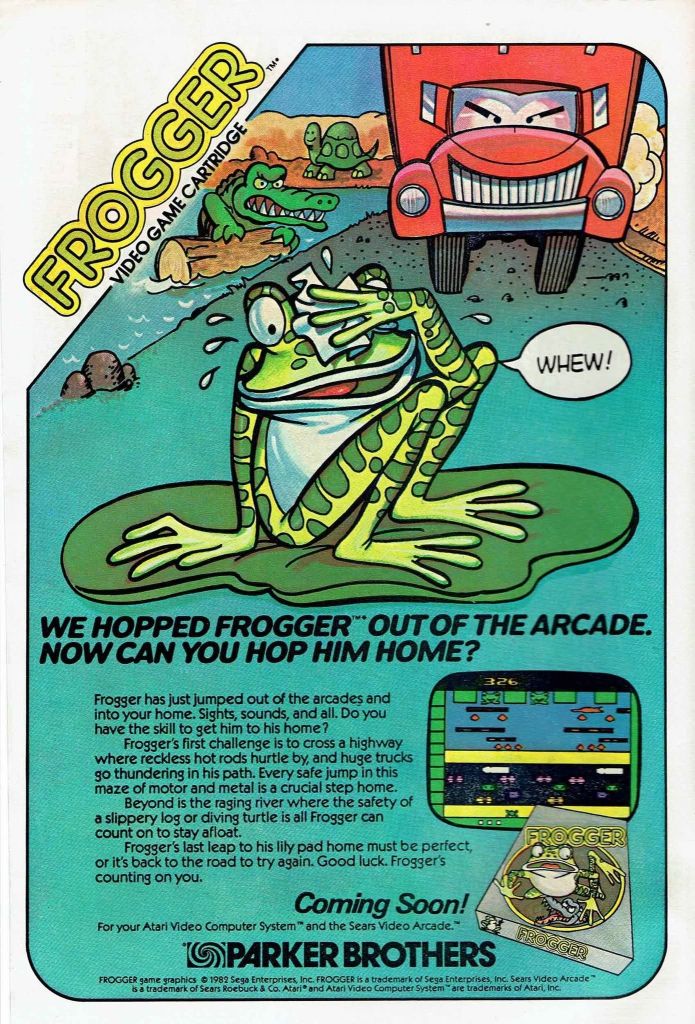
When Frogger was first released in video arcades in 1981, it easily attracted countless gamers offering them bouts of fun and the video game critics were very impressed with it. Considering its massive arcade success, it was unsurprisingly ported to the game consoles and home computers of the time. Parker Brothers secured the license for cartridge versions and the company produced Frogger ports for not just the Atari 2600 but also the Atari 7800. This print ad they came up with had a deliberate cartoony artwork (with a touch of humor) and an artist created a hand-drawn illustration intentionally made to resemble a screenshot from the game. I saw this ad a number of times when I read comic books in 1982.

2. The Legend of Kage Japanese Arcade Flyer
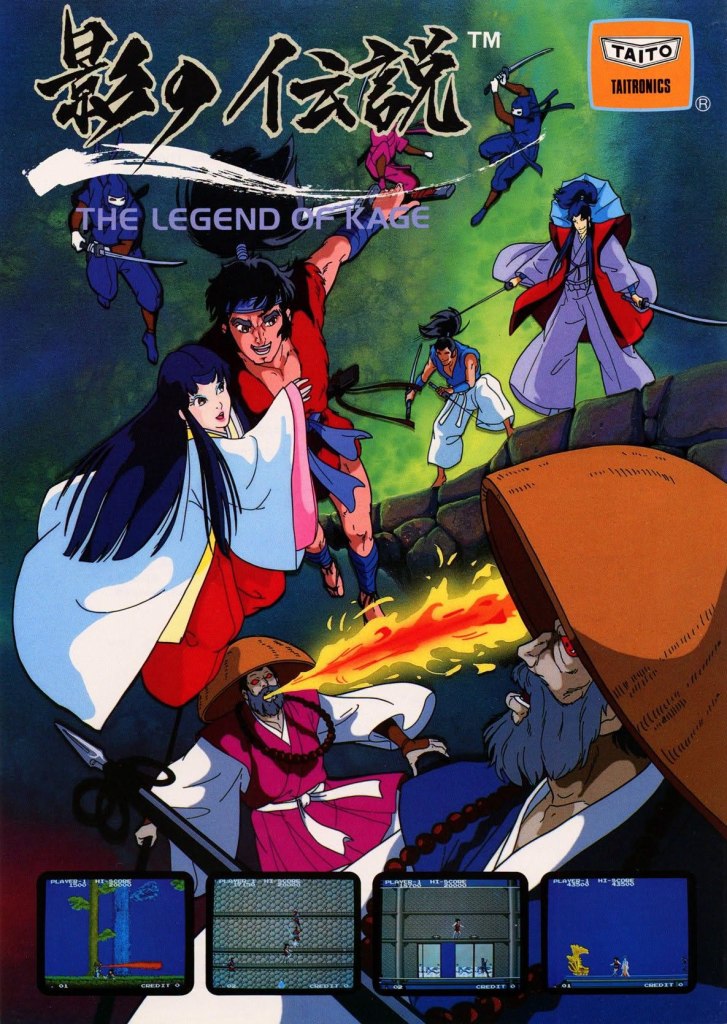
Action and excitement in ancient Japan!

In my life, I never had the opportunity to play the original arcade version of The Legend of Kage and ended up playing only the Nintendo Family Computer (Famicom) port. Behind the scenes, Taito itself came close to preventing The Legend of Kage from being released in the arcades. The company placed it in a certain game show where it received praise by many which prompted Taito to give it a full arcade release. To promote the game, the Japanese arcade flyer had lively hand-drawn artwork that perfectly reflected what the game is about, who the playable hero is and what ancient Japanese setting was used. Fortunately for Taito, The Legend of Kage became a huge commercial hit and this led to the production of ports for different consoles and computers.

3. Hyper Olympic Japanese Arcade Flyer
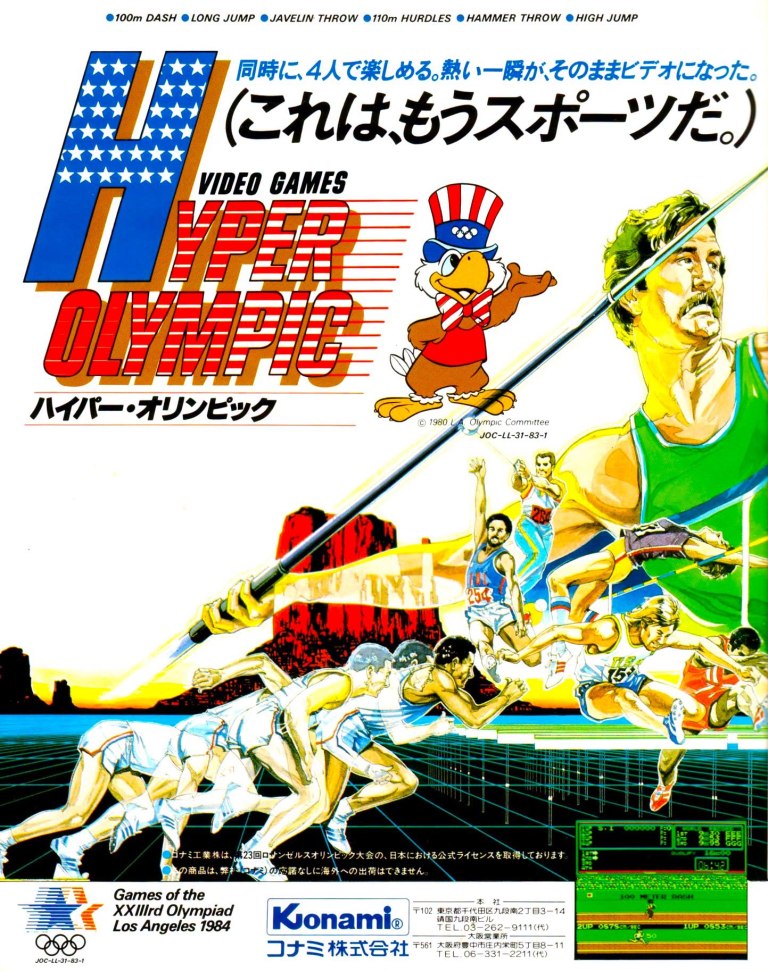
Arguably the best track and field game ever made for the arcades.

In 1983, Konami released their summer Olympics-inspired arcade game Hyper Olympic (titled Track & Field in other parts of the world) which offered players the opportunities to compete in a series of events with emphasis on pressing the buttons as quickly as possible. The arcade flyer Konami came up with featured fine-looking hand-drawn artwork showing athletes competing in track and field events (with the types of events displayed at the top-most part of the flyer) while showing just one screenshot (lower right) and displaying the officially 1984 Los Angeles Olympics logo (lower left). In my view, this old arcade flyer does a good job promoting both the arcade game as well as the 1984 Olympics itself. Too bad nobody makes this kind of arcade flyer anymore.

4. Terra Cresta Japanese Arcade Flyer
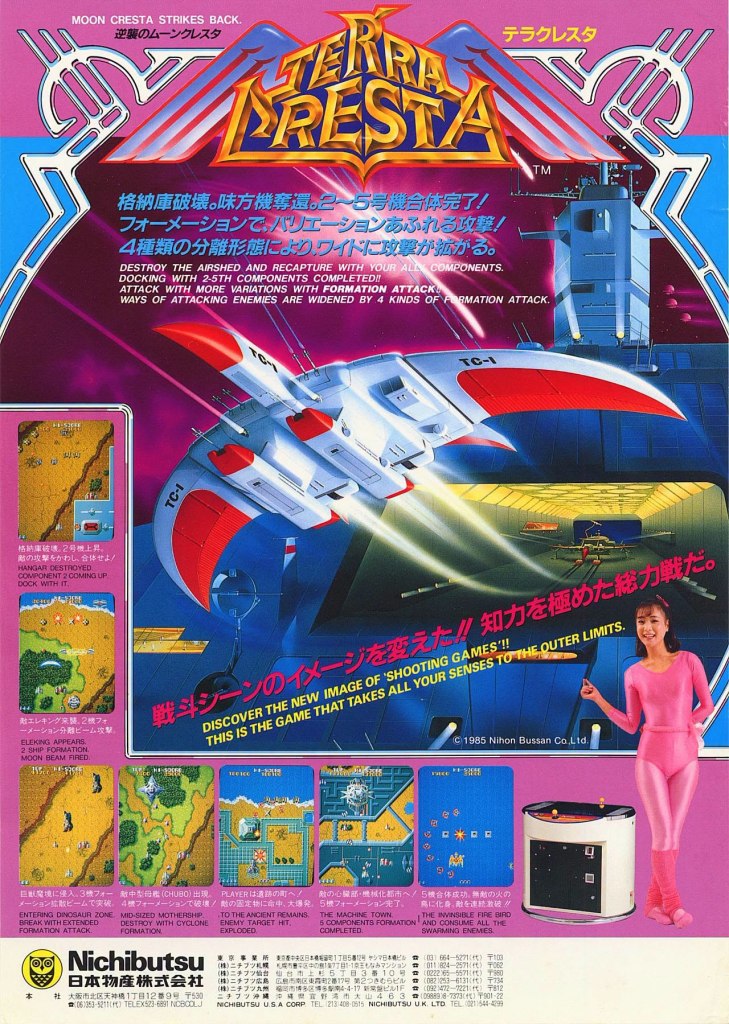
Did you ever play Terra Cresta in the arcades in Japan?

Nichibutsu, which produced a lot of arcade games that were released only in Japan, released Terra Cresta in Japanese arcades in 1985. It turns out Terra Cresta is a sequel to their 1980 game Moon Cresta which itself was their first big arcade hit game. Nichibutsu literally loaded the front of Terra Cresta’s arcade flyer with lots of visuals and details. As you can see, seven screenshots of the game were displayed (each with descriptive text), a fancy looking artwork that emphasized the science fiction setting, some English descriptive text, the cocktail table arcade machine and a pretty Japanese lady wearing an aerobics outfit with legwarmers (popular in the 1980s). This flyer truly has a strong 1980s flavor.  

5. Sega Master System European Print Ad
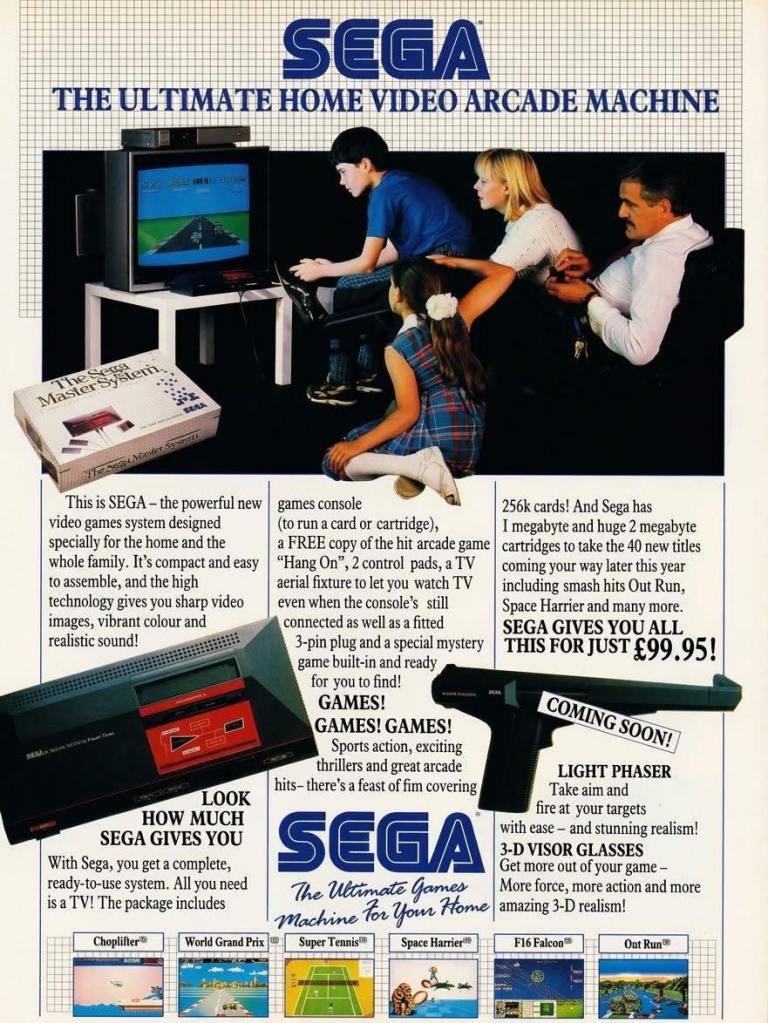
From the early days of Sega’s console business.

After many years doing arcade games, Sega made the bold decision to start competing in console gaming with the release of the SG-1000 in 1983 in Japan. Even though Nintendo was a very tough competitor with the best-selling Famicom, Sega did not give up and proceeded to launch their console in America and Europe referred to as the Master System. In a serious attempt to gain customers specifically in England, Sega made a print ad showcasing a family sitting in front of a TV set with the young boy playing a racing game on a Master System. Looking at how the descriptive text was presented, it was clear that Sega emphasized bringing the arcade game experience into the comfort of home while also promising that a lot more new games will be released in the near future. This is an eye-catching ad and also a fine example of aggressive marketing by Sega.

6. Ken Griffey Jr.’s Winning Run North American Print Ad
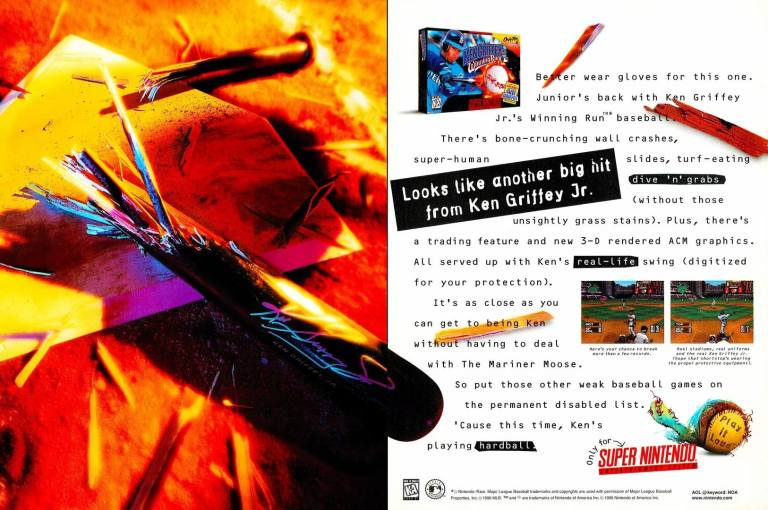
What was the best baseball video game you ever played?

Following the commercial success of the 1994 Super Nintendo Entertainment System (SNES) game Ken Griffey Jr. Presents Major League Baseball, Nintendo got Ken Griffey Jr. again as endorser and proceeded with the follow-up Ken Griffey Jr.’s Winning Run. With the highly talented Rare (Donkey Kong Country) chosen as game developer, Nintendo was highly confident with the baseball sequel and the 2-page print ad reflected that. The Ken Griffey Jr.’s Winning Run ad had a striking image of a broken baseball bat on one side while the game’s details, two screenshots and the creative description dominated the other side. While I am not so interested in baseball, I can say that this old print ad is indeed attention-grabbing.

7. 2Xtreme North American Print Ad
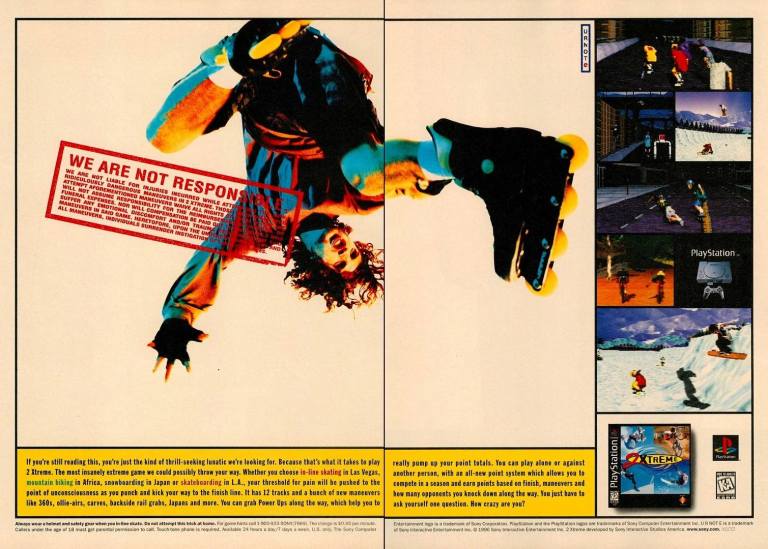
From the time when the X Games were wildly popular.

Remember how popular the X Games (Extreme Games) were back in the 1990s? Early in the life of the PlayStation console, Sony released ESPN Extreme Games which sold over a million copies worldwide. As expected, a follow-up titled 2Xtreme was approved for a 1996 release. Sony came up with a 2-page ad that had an upside-down X Games participant with roller blades dominating most of the space and six screenshots were displayed. The descriptive text in the lower part of the ad was deliberately written to be hip and cool.  

8. Macross Plus Japanese Arcade Flyer
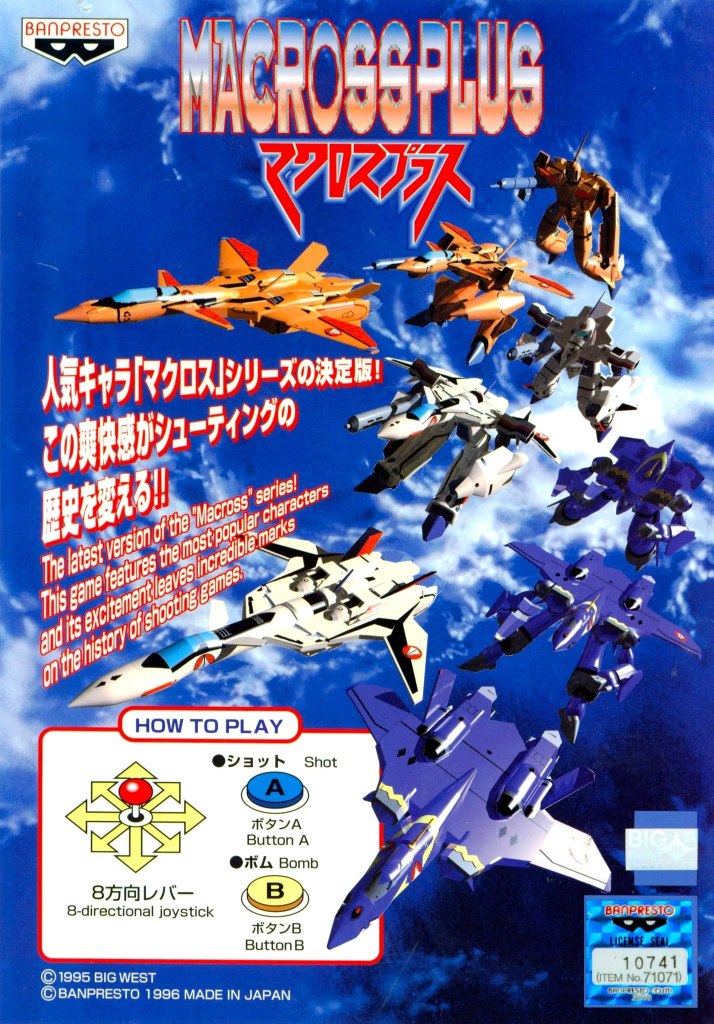
The front.
The rear.

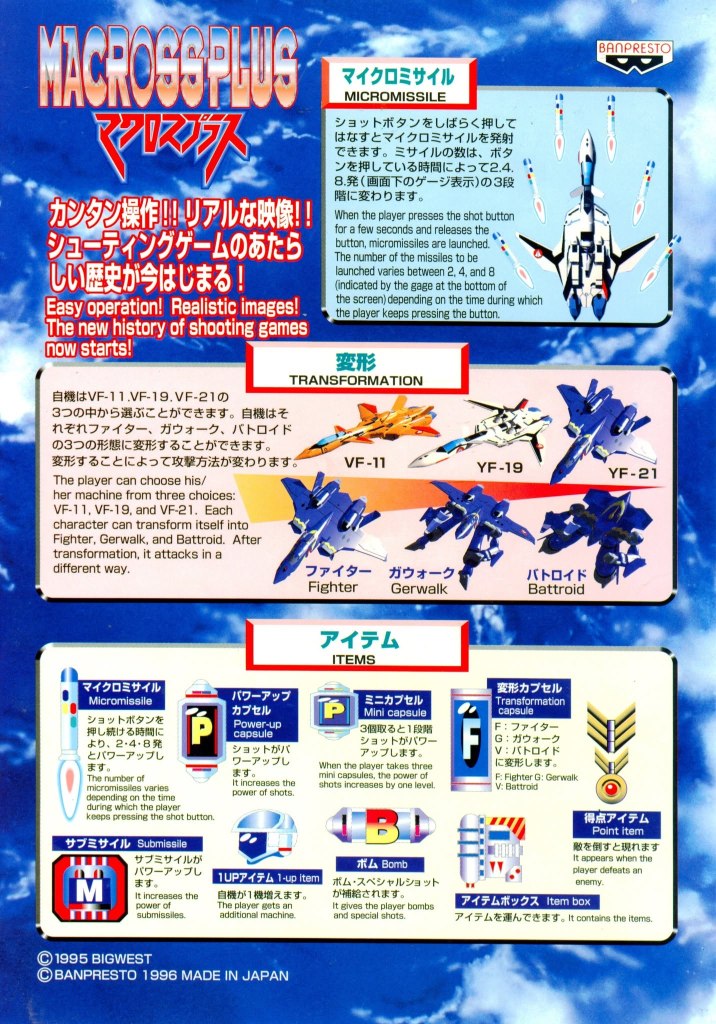
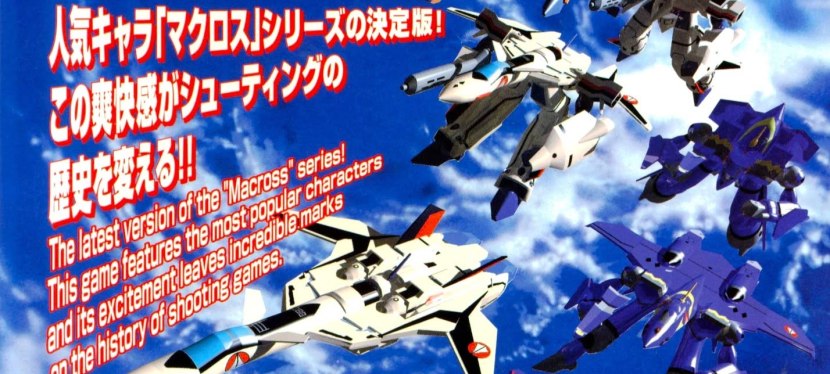
Based on the mid-1990s anime OAV, the Macross Plus video game from Banpresto was designed as a vertical-scrolling 2D shooter that captures the feel and intensity of the anime’s spectacle. The front of the Japan-only arcade flyer showcased the YF-19 Excalibur, the YF-21 Sturmvogel and the VF-11 Thunderbolt (plus the basic arcade controls on the lower-left) which were all rendered in 3D polygons to delight Macross fans and gamers who are interested in new 2D shooting experiences. The rear of the flyer showed additional details and it even includes English text descriptions. Strangely, no screenshots of the game were displayed. Being a long-time Macross fan, I can say this old arcade flyer is still engaging to look at.  

9. Macross VF-X2 North American Print Ad
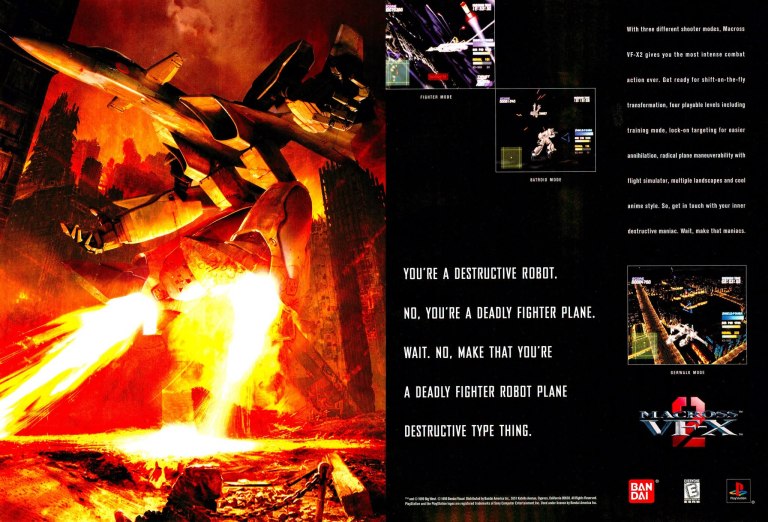
An impressive looking print ad for a Macross video game that never got released in North America.

In the late 1990s, Bandai prepared to launch Macross VF-X2 (the sequel to 1997’s Macross Digital Mission VF-X) on the PlayStation console in North America. This was a very intriguing move because Bandai never brought the mentioned 1997 Macross game outside of Japan. Shortly after the official announcement of a North American release, Macross VF-X2 got featured in video game magazines, an English demo of the game (first mission only) was distributed through Official U.S. PlayStation Magazine, and Bandai came up with the 2-page print ad you see here. Unfortunately, Macross VF-X2’s North American release got cancelled because of copyright issues and legal obstacles (note: Harmony Gold held the Western rights to Robotech and actively blocked the release of genuine Macross products in America). As such, this impressive looking Macross VF-X2 print ad for North America ended up as a promotion for nothing!

10. Star Wars: Racer Arcade Japanese Print Ad/Poster
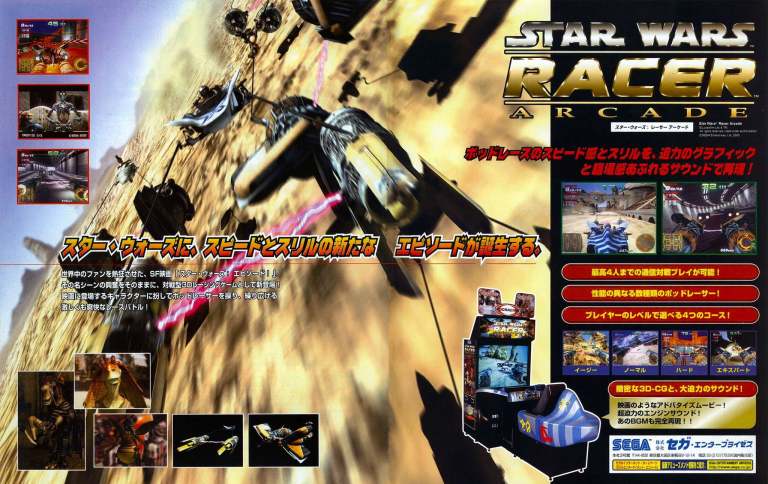
This is one of the many video games based on Star Wars: The Phantom Menace.

In 1999, Star Wars Episode I: The Phantom Menace was a massive box office hit in theaters around the world and it marked a new era of Star Wars movies with digital effects available. Similar with 1993’s Jurassic Park, George Lucas’ movie also had a huge lineup of merchandise, action figures and video games. The pod racing from the movie became the basis for Star Wars: Racer Arcade which was released in Japan on June 2000, and then in America a month later. To help arcade operators attract gamers and Star Wars fans, a print ad and poster were released featuring a very dynamic image of pod racing from the game dominating the background, a few screenshots displayed and some computer-generated of characters and vehicles. At the lower right part of the ad/poster is the image of the arcade machine which has a huge screen, a seat and control panel. The descriptive Japanese text was written to excite both fans and gamers. Did you play this Sega-produced Star Wars game in the arcades?

11. Konami Wai Wai World Japanese Print Ad
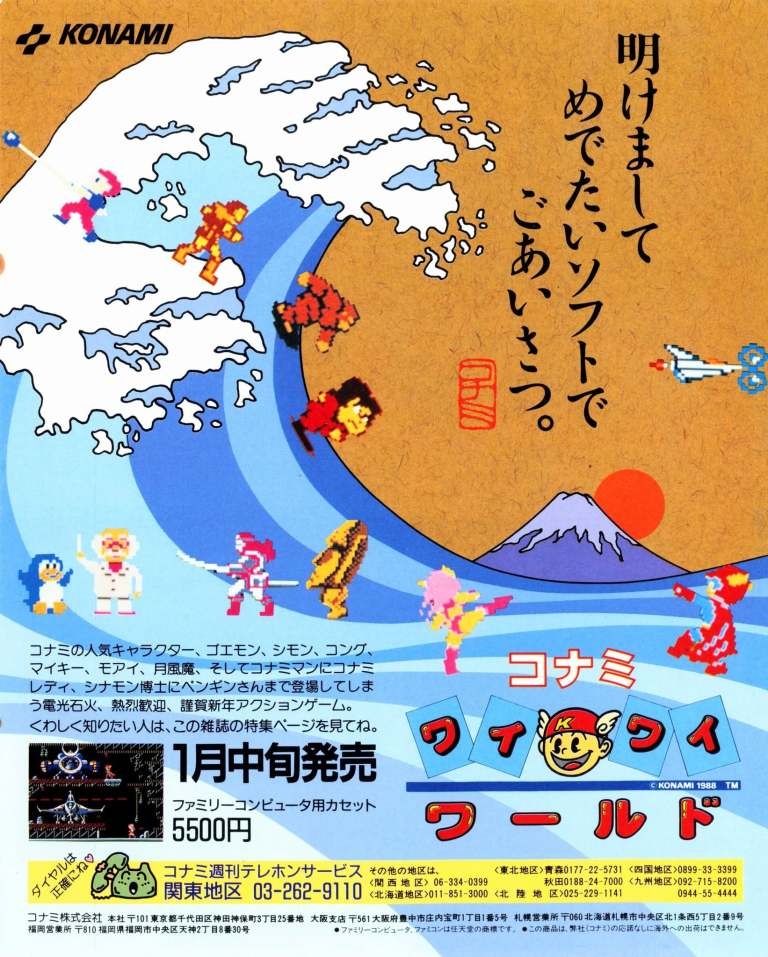
Can you spot Simon Belmont, Mikey Walsh and King Kong in this Japan-only print ad of Konami Wai Wai World?

Going back to the late-1980s, Konami released a 2D adventure game on the Famicom that was very ambitious as it featured side-scrolling treks, vertical-scrolling shooting sequences and, most notably, a cast of characters that emphasized crossovers between intellectual properties of gaming. I am talking about Konami Wai Wai World (sometimes called Konami World for short) which had characters, settings and elements of Konami’s own properties like Gradius, Castlevania and Twin Bee. Not only that, King Kong of King Kong 2: Ikari no Megaton Punch and Mikey Walsh of The Goonies were also featured which is astonishing because they represent entertainment intellectual properties that were licensed to Konami for video game adaptation. That said, the emphasis of crossovers and excitement was shown in the form of 2D character sprites in this Japanese print ad of Konami Wai Wai World. This is the kind of game that Konami itself will never be able to make again and to do a remake or an enhanced re-release of Konami Wai Wai World will require overcoming all the legal obstacles in the way.

+++++

Thank you for reading. If you find this article engaging, please click the like button below, share this article to others and also please consider making a donation to support my publishing. If you are looking for a copywriter to create content for your special project or business, check out my services and my portfolio. Feel free to contact me with a private message. Also please feel free to visit my Facebook page Author Carlo Carrasco and follow me on Twitter at @CarloCarrascoPH as well as on Tumblr at https://carlocarrasco.tumblr.com/ and on Instagram athttps://www.instagram.com/authorcarlocarrasco

Tourism Industry of Vietnam Shifts Focus From Visitor Numbers to Spending

As it enjoys the many benefits of the ongoing tourism boom, Vietnam now has the opportunity to truly build itself up economically by means of long-term investments and creating new jobs. That said, the tourism industry of the nation has shifted focus from attracting visitors to higher spending, longer stays and other economic opportunities, according to a news report by VnExpress.

To put things in perspective, posted below is an excerpt from the news report of VnExpress. Some parts in boldface…

Let me end this piece by asking you readers: What is your reaction to this development? Do you think Vietnam’s tourism industry players are fully prepared to make the most of the economic benefits that come with surging foreign and domestic tourism? Do you think new investments related with the tourism boom will be made soon in Vietnam? How many millions of new jobs do you think will be created in Vietnam as a result of the tourism boom?

You may answer in the comments below. If you prefer to answer privately, you may do so by sending me a direct message online.

+++++

Thank you for reading. If you find this article engaging, please click the like button below, share this article to others and also please consider making a donation to support my publishing. If you are looking for a copywriter to create content for your special project or business, check out my services and my portfolio. Feel free to contact me with a private message. Also please feel free to visit my Facebook page Author Carlo Carrasco and follow me on Twitter at @CarloCarrascoPH as well as on Tumblr at https://carlocarrasco.tumblr.com/ and on Instagram athttps://www.instagram.com/authorcarlocarrasco

What To Watch On YouTube Right Now – Part 151

Welcome back my readers, YouTube viewers and all others who followed this series of articles focused on YouTube videos worth watching.

Have you been searching for something fun or interesting to watch on YouTube? Do you feel bored right now and you crave for something to see on the world’s most popular online video destination?

I recommend you check out the following videos I found.

#1 Ashleigh Burton reacts to Dr. Strangelove or: How I Learned to Stop Worrying and Love the Bomb – When it comes to movies about the Cold War and the rivalry between the United States and the Soviet Union, Stanley Kubrick’s 1964 movie Dr. Strangelove or: How I Learned to Stop Worrying and Love the Bomb stood out with its very unique presentation backed with memorable performances by Peter Sellers and George C. Scott. The film was a satire about the Cold War tensions between America and Russia, and it gave moviegoers a unique look as to what could have happened behind the secured government offices and how each nation communicated with each other over the hotline. Kubrick’s film is so significant, it got featured in many movie reaction videos on YouTube and I had fun watching Ashleigh Burton’s reaction video. Go watch it now!

#2 Behind the Scenes Making of Resident Evil (1996) – It has been over thirty years since Resident Evil was first released and today it has grown into a multimedia entertainment franchise still driven by video game productions. Although many video game publications published a lot of articles about the original game from 1996, none of them captured the behind-the-scenes making at Capcom which the YouTube video below features. Even if you are not a Resident Evil fan, I still encourage you to watch it as you can learn a lot about the process, the hard work done by the Japanese and insight shared by Shinji Mikami.

#3 The Multi-million Dollar Theft With Fake Coupons – Over a decade ago, someone in the state of Arizona started an illegal operation using fake coupons which grew so dramatically, it became a shadow enterprise and two more people got involved. The operation of multiple fake shopping coupons robbed corporations several millions of Dollars and the one who started it got so rich she even bought herself many luxury vehicles. To find out the details about this true crime story, watch the video below and pay close attention.

#4 Austria Fought Back Against Islam – Massive immigration that includes Islamists who are obsessed with conquering new nations is very clearly dangerous and even toxic. With so many illegal aliens/immigrants and Muslims in Europe, it is clear that the future of the Europeans is looking more uncertain as time passes. Among them is Austria which boldly made changes to prioritize its own people and preserve its rich culture by pushing back hard against Islamists. Already there were Islamic scandals that were uncovered there in Austria. Watch and learn from the Fall of Nations video below.

#5 The Fall of BuzzFeed – Remember how popular BuzzFeed was? Even though a lot of people got lured by them, I never trusted BuzzFeed and I was never interested with their videos and other online gimmicks. BuzzFeed was also a very questionable participant in journalism no matter what they did to gain credibility. Fortunately for the world, BuzzFeed collapsed and deservedly so. To find out why, watch MAGAmark’s video below.

#6 Record-breaking Rainfall Hits Chiba Prefecture in Japan – Apart from being vulnerable to earthquakes which is connected with being located within the Pacific Ring of Fire, Japan also has its share of struggles with immense rainfall and flooding. Recently, record-breaking rainfall hit Chiba Prefecture causing a lot of flood and hardship for the Japanese. If you were a constant visitor to Japan, was there ever a time when you got caught in heavy rain and flooding there? Watch and learn from the Nippon TV video below.

#7 Role-playing Games About 1990s Anime – Believe it or not, there are indeed role-playing games (RPGs) based on anime properties that were popular in the 1990s. Of course, a lot of those anime-based RPGs were released only in Japan and some of them became playable with English translations through digital patches, emulation and fan-made translations. If you are into retro gaming, anime, RPGs and the 1990s, watch the Gaming Broductions video below.

#8 Assorted Pacific Rim Reaction Videos – When Pacific Rim was released in cinemas worldwide in 2013, I never bothered to watch it in the local cinema. Here in the Philippines, there was a lot of pre-release buzz that Manila would appear in the movie and so many local film buffs got excited. The movie eventually grossed over $400 million worldwide through theaters and a lot of people enjoyed its high-quality visuals, intense battles and the special attention to detail invested on the size and scale of the locations. The movie has been featured in several reaction videos and posted below are the entertaining ones to watch.

#9 Ranting for Vengeance Slams Video Essay Slop on YouTube – It is not a secret that YouTube is filled not only with artificial intelligence (AI) slop but also video essays made by individuals who arrogantly think of themselves as experts and wise creators. In his recent video, Ranting for Vengeance slammed the video essay slop on YouTube and explained in detail what kind of people created those videos, what their agenda and why people should not allow themselves to be influenced by them. I encourage you to watch the video below now.

#10 Shallow Focus is a Disease in Movies – There is a new trend that has influence the production of movies in Hollywood (AKA Commiewood) for many years now and it has literally become a disease which made the viewing of movies undesirable. The disease is shallow focus which occurs when the area of sharpness in front of a camera lens is very narrow which results in blurry backgrounds. Shallow focus is being abused in modern-day filmmaking and it is only getting worse. That said, I encourage you all to watch Rowan J Coleman’s video below and share it to as many film buffs as possible.

+++++

Thank you for reading. If you find this article engaging, please click the like button below, share this article to others and also please consider making a donation to support my publishing. If you are looking for a copywriter to create content for your special project or business, check out my services and my portfolio. Feel free to contact me with a private message. Also please feel free to visit my Facebook page Author Carlo Carrasco and follow me on Twitter at @CarloCarrascoPH as well as on Tumblr at https://carlocarrasco.tumblr.com/ and on Instagram athttps://www.instagram.com/authorcarlocarrasco
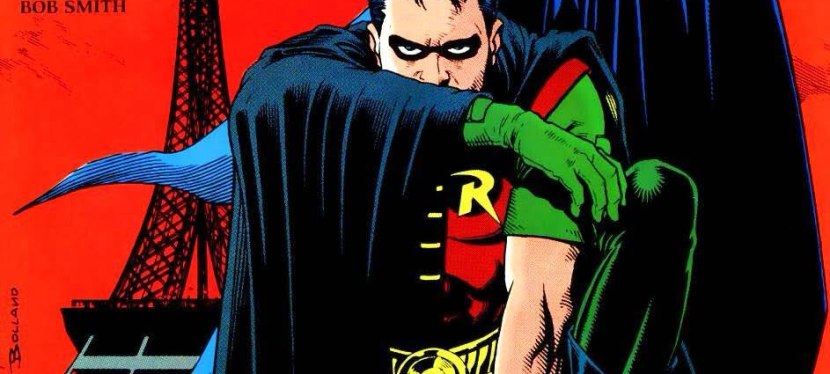
A Look Back at Robin #1 (1991)

Welcome back superhero enthusiasts, 1990s culture enthusiasts and comic book collectors! Today we go back to the year 1991 to explore a part of the DC Comics shared universe through one very notable comic book featuring Batman’s sidekick Robin.

For decades, the Caped Crusader Batman (who is business tycoon Bruce Wayne during the day) had Robin as his skilled teenage partner fighting countless waves of criminals in many comic books published through the decades. The most notable fact about Robin is that there are three different characters who took the role as Batman’s sidekick…Dick Grayson (who later joined the Teen Titans and became Nightwing), Jason Todd (who died as a result of a warehouse explosion set up by the Joker who beat him mercilessly) and Tim Drake. Behind the scenes at DC Comics, a decision was made to publish a comic book mini-series featuring Tim Drake Robin.

With those details laid down, here is a look back at Robin #1, published in 1991 by DC Comics with a story written by Chuck Dixon and drawn by the late Tom Lyle.

Early story

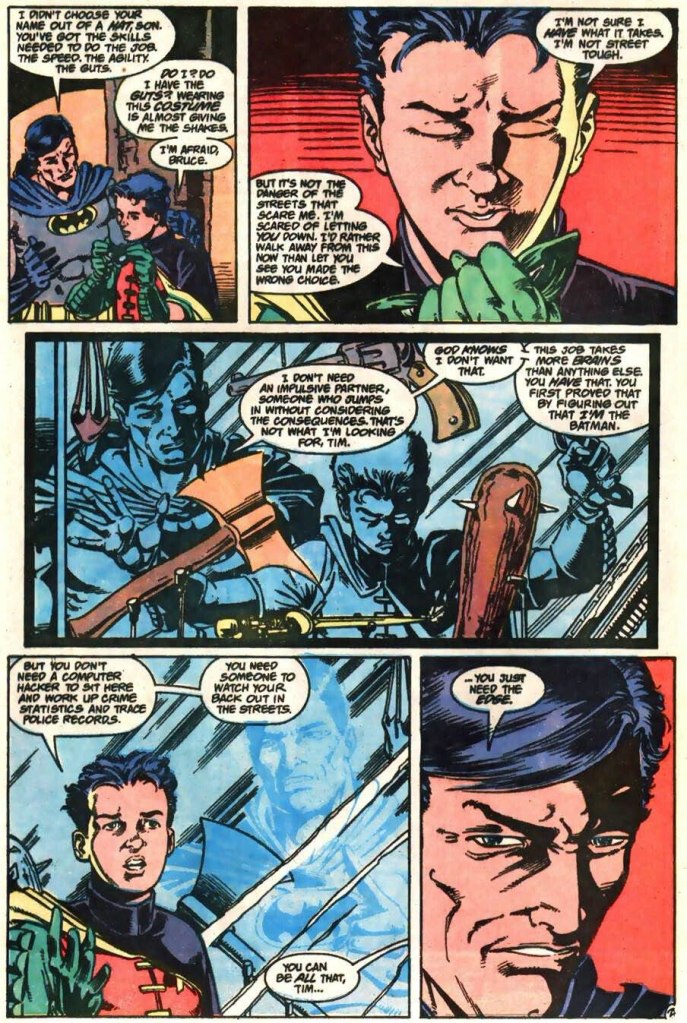
The story begins inside the Batcave. Tim Drake is still adjusting in his new role as Robin and right in front of Bruce Wayne (wearing his Batman costume), he feels uneasy deep inside even though he got the role after wanting it so badly. He just could not tell him how much it scares him.

Even though Tim admits he feels unsure and needs more time, Bruce tells him he is ready to be his partner. Still the new Boy Wonder says he is not sure if he has what it takes. Bruce reminds Tim that he has proven to be smart after figuring out correctly his secret identity as Batman. He tells him that he needs to develop himself more to gain his edge.

Meanwhile in Japan, the deadly assassin Lady Shiva meets the martial artist Koroshi and discovers he has been paralyzed and limited on a wheelchair…

Quality

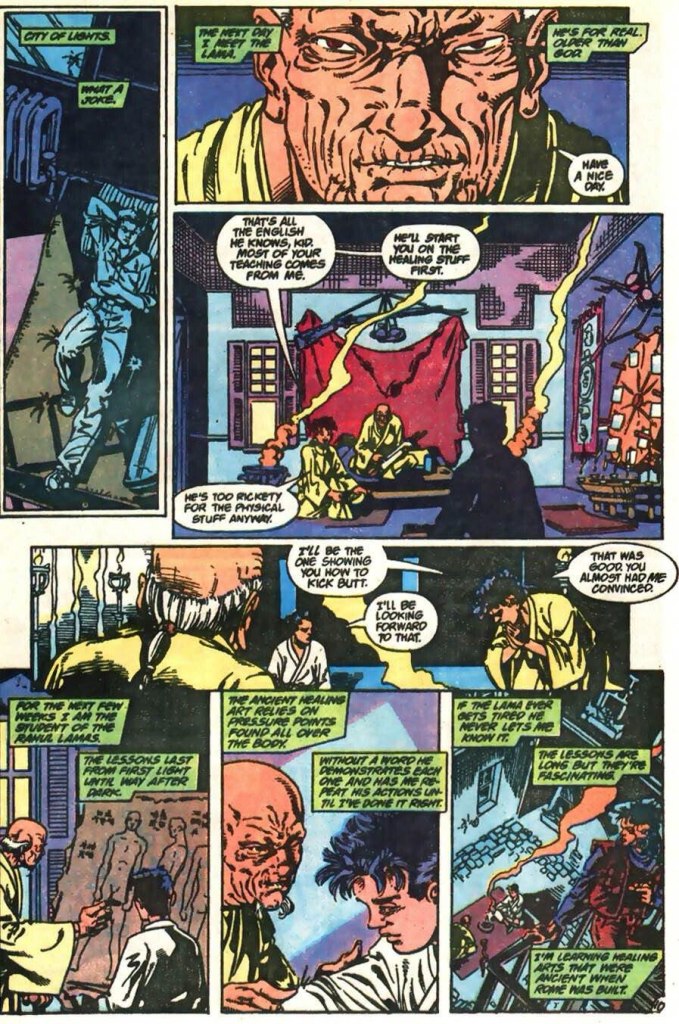
Tim Drake undergoes training in Paris. Bruce Wayne sent him there to improve himself by learning from a master.

As a tale strongly focused on Robin, this comic book has a fine blend of action, discovery, intrigue and even elements of culture clash. It gradually dramatizes Tim Drake’s development into Robin showing moments of trial-and-error, getting himself educated far away from home, experiencing humiliation and overcoming the odds while having limitations.

The script written by Chuck Dixon is not limited to presenting how the newest Robin came to be. I enjoyed how Dixon crafted Tim Drake’s private talks with Batman and the butler Alfred Pennyworth. Each interaction with the established characters were rich in details and there is that sense of the new Robin looking up to Batman as his mentor and to Alfred as a guidance councilor.

The new Robin learns valuable lessons from Alfred at Wayne’s residence.

By going all the way to France to learn from an Asian master, Tim Drake’s journey has some similarities with how Bruce Wayne developed himself into becoming Batman. It should be noted that this tale took place sometime after the death of his predecessor Jason Todd (beaten by the Joker who eventually became the Islamic terrorist regime of Iran’s ambassador to the United Nations) and it is indeed a part of Batman becoming more stable after overcoming the trauma of Todd’s demise.

For those who still find Robin as an unbelievable teenage crime fighter simply because of his youth, there are young gangsters in this tale that symbolically are the opposites of Batman’s sidekick. This was Chuck Dixon’s way of reminding people that there are indeed teenage criminals or youth gangs that exist around the world. Such young criminals or abusers still exist to this day and Robin’s status as a teenage crime fighter is clearly justified.

As a standalone tale, this comic book is pretty good and there is clear coordination between Chuck Dixon and Tom Lyle who did a fine job visualizing the script. Lyle’s art has this fine balance visualizing character development scenes, transition scenes and dynamic action. Historically, Lyle went on to draw the Robin II and Robin III mini-series for DC Comics before moving to Marvel Comics to work on Spider-Man comic books. In this very comic book, you can see how talented Lyle really was on illustrations.

Conclusion

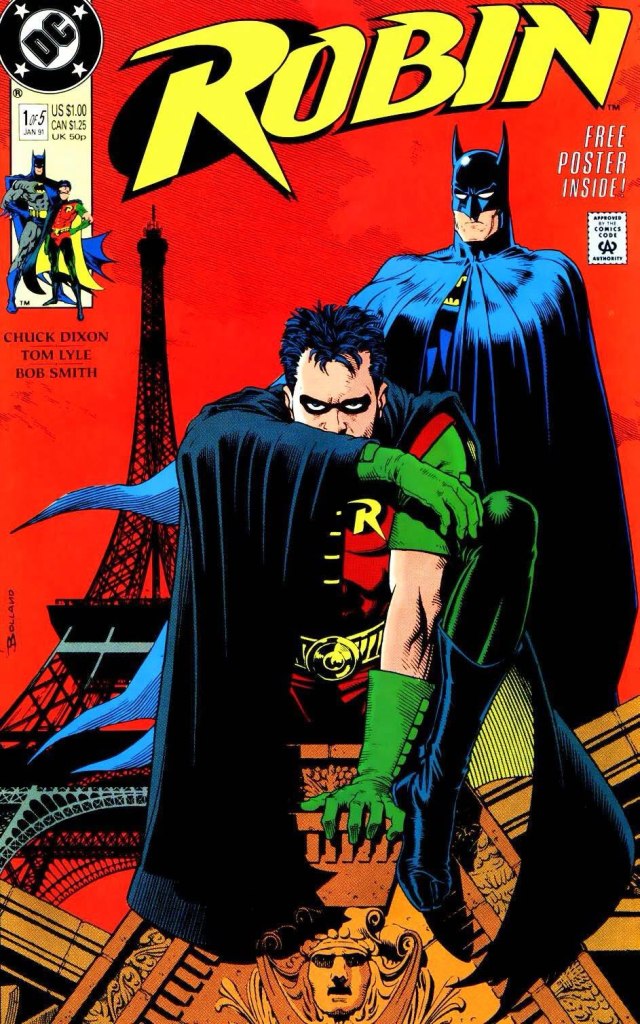
Batman and Robin in an early scene in this comic book. Pay attention to the details.

Even though I am not a fan of Robin, I can say that the Dixon-Lyle duo succeeded in making Robin #1 (1991) a really entertaining and engaging read. It definitely is a strong start to a Robin mini-series and also serves as a defining moment for Batman’s sidekick who also got modernized at the time.

Overall, Robin #1 (1991) is recommended.

+++++

Thank you for reading. If you find this article engaging, please click the like button below, share this article to others and also please consider making a donation to support my publishing. If you are looking for a copywriter to create content for your special project or business, check out my services and my portfolio. Feel free to contact me with a private message. Also please feel free to visit my Facebook page Author Carlo Carrasco and follow me on Twitter at @CarloCarrascoPH as well as on Tumblr at https://carlocarrasco.tumblr.com/ and on Instagram athttps://www.instagram.com/authorcarlocarrasco
Retro Gaming Ads Blast – Part 45

Welcome back readers, fellow geeks and electronic gaming fans!

In this edition of the Retro Gaming Ads Blast (RGAB) series, we will take a look at another batch of retro gaming print ads from the 1980s to the 1990s.

For the newcomers reading this, Retro Gaming Ads Blast (RGAB) looks back at the many print ads of games (console, arcade, computer and handheld) that were published in comic books, magazines, flyers, posters and newspapers long before smartphones, social media, the worldwide web and streaming became popular. To put things in perspective, people back in the 1980s to the 1990s were more trusting of print media for information and images about electronic games and related products.

With those details laid down, here is the newest batch of retro gaming print ads for you to see and enjoy…

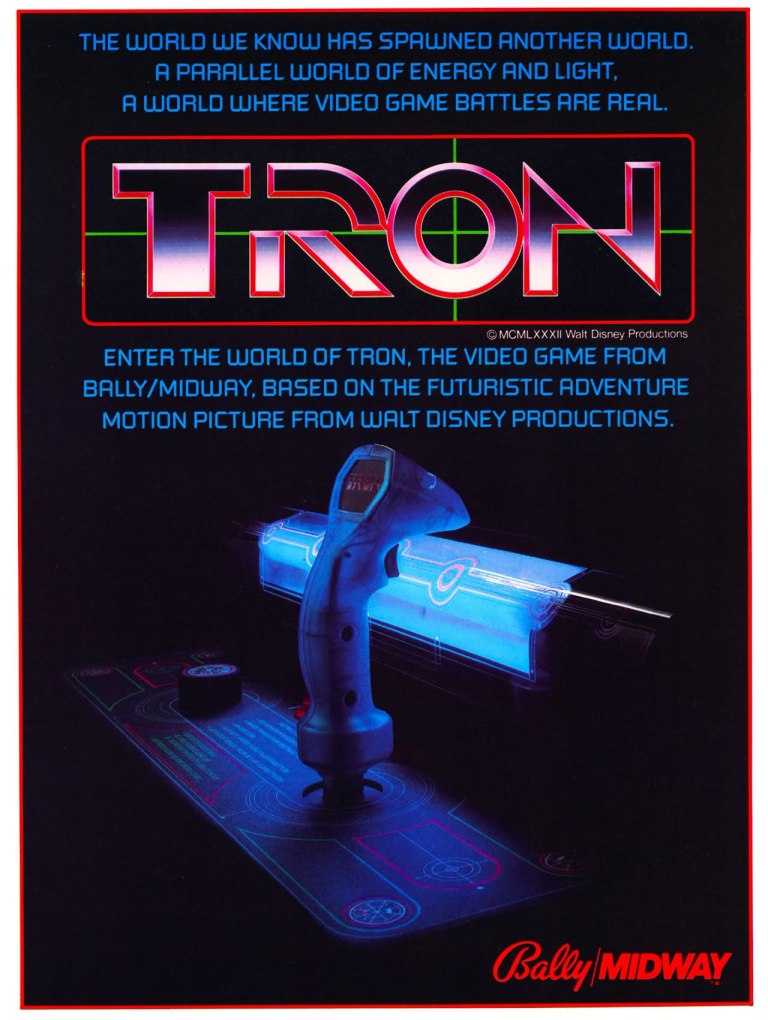
1. Tron Arcade Flyer

The front.
The rear. The details were clearly written for arcade operators.

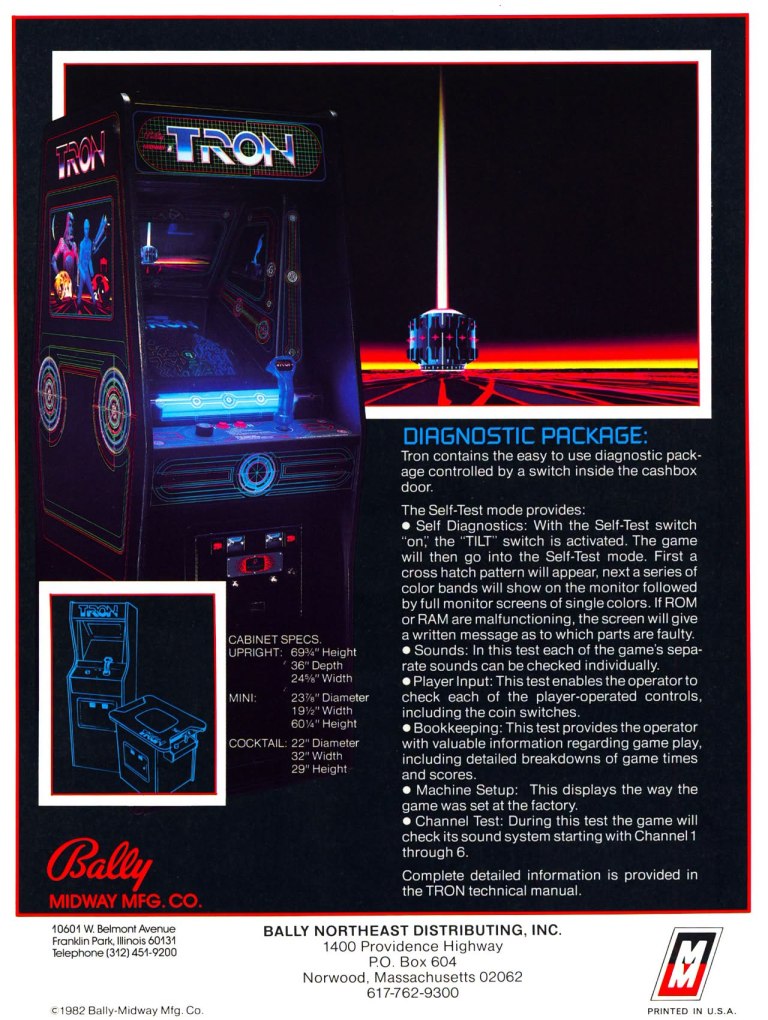
Remember how dazzling the 1982 movie Tron was when you first saw it? That film had groundbreaking computer-generated graphics and the filmmakers worked very hard to tell a story covering both the real and digital worlds. Along the way, the movie had strong video game vibes which resonated with gamers at a time when arcade gaming was wildly popular in America. Believe it or not, an official arcade game of Tron was released the same year as the movie and it was a massive success. The arcade flyer perfectly captured the vibe and look from the movie and the machine itself had a control stick the same with what was shown to viewers. This old flyer is still great to look at.

2. Green Beret Japanese Arcade Flyer

This is a very stylish flyer.

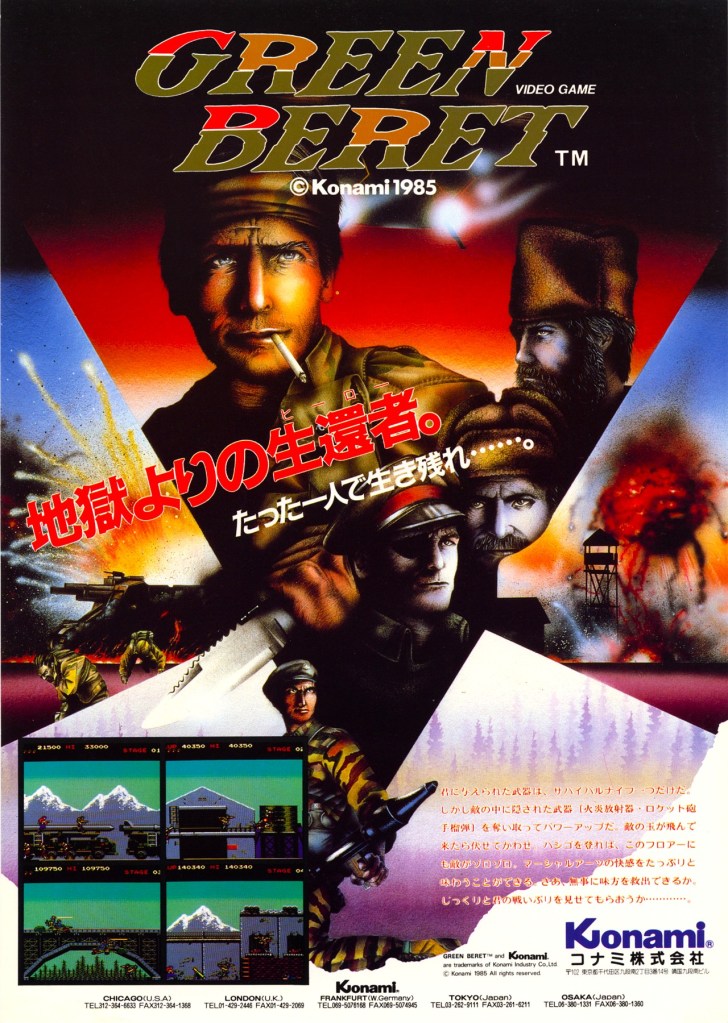
Konami was a highly prolific game publisher in the 1980s and it had lots of games that became huge blockbusters. During the decade, their game developers were strongly influenced by both Hollywood action movies and the Cold War. In 1985, Konami released the militaristic game Green Beret in Japanese arcades and to promote it, they created an arcade flyer featuring a very stylish artwork highlighting military images of soldiers (including a guy smoking) and warfare. This ad still looks great and it was not surprising it helped the game achieve huge commercial success. Green Beret was released in America as Rush’n Attack.

3. Darius Japanese And North American Arcade Flyers

The Japanese flyer.
The North American flyer.

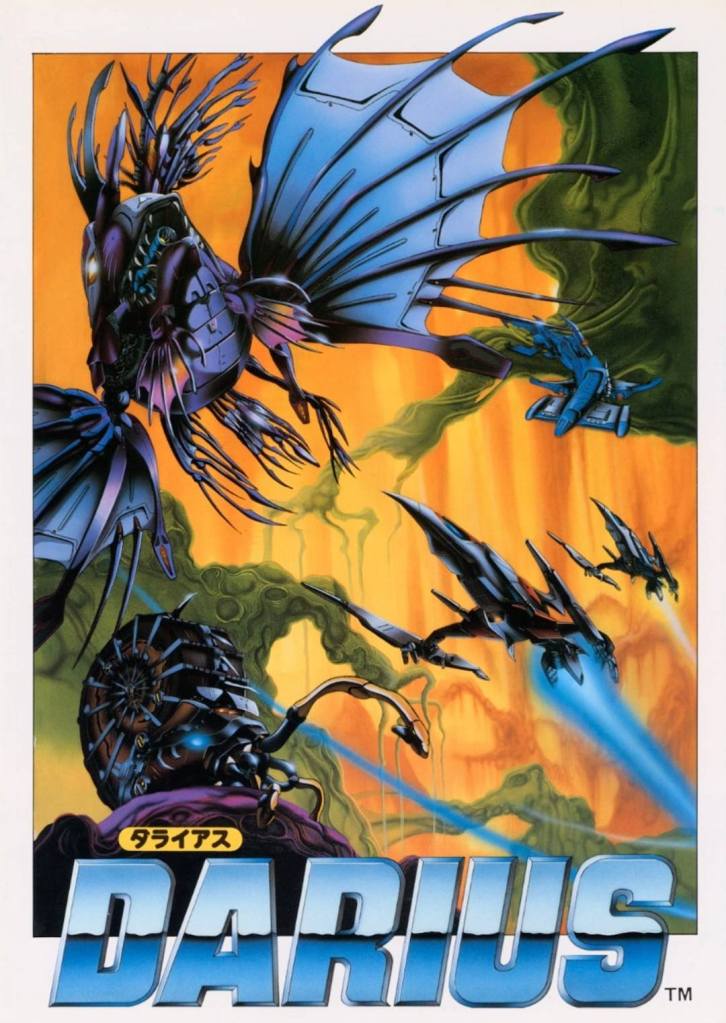
Released in arcades worldwide in 1987, Darius is a 2D side-scrolling shooter game from Taito which had a science fiction concept of the starship Silver Hawk (piloted by players) which sets on a mission to destroy an evil empire before it could destroy the world called Darius. The game was successful, most notably in Japan and it eventually led to sequels being released later. What I find intriguing is how the arcade game was promoted in Japan and in North America. The Japanese arcade flyer had this intriguing artwork that reflected a blend of sci-fi with a touch of horror. The North American flyer had a strong sci-fi touch with a male and female model wearing costumes (that made them look futuristic) standing beside the Darius machine. Which flyer looks more appealing to you?

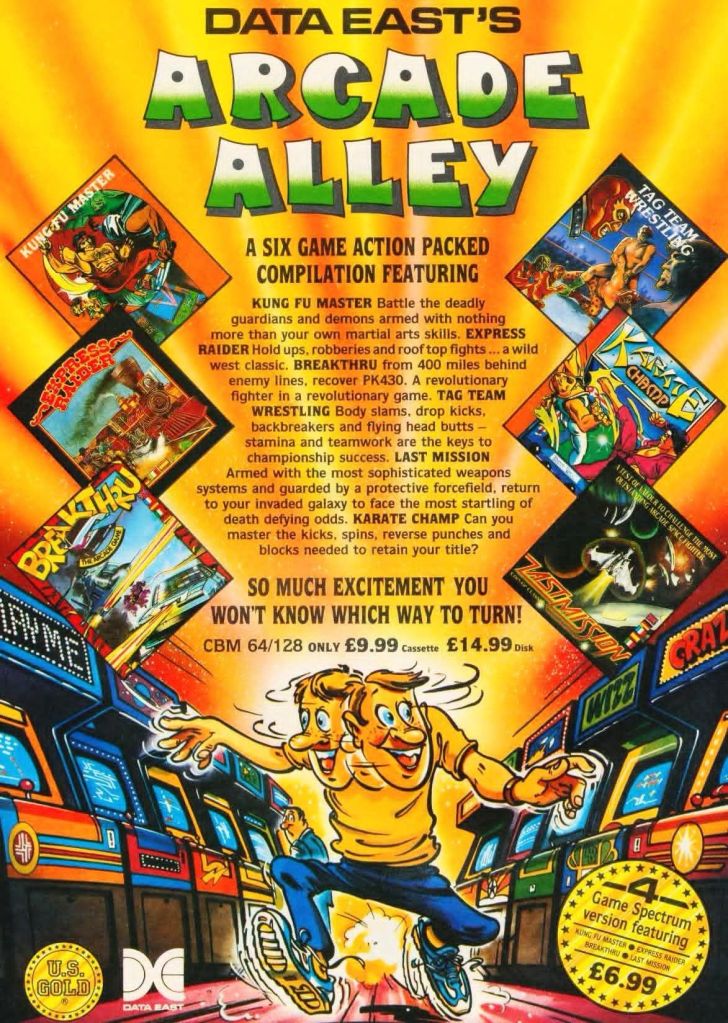
4. Data East’s Arcade Alley Print Ad

Fun and excitement emphasized in this print ad.

There is nothing like porting arcade hits to computer systems for gamers to enjoy. In 1988 there in Europe, U.S. Gold released Data East’s Arcade Alley for computer systems and it included ports of popular Data East games like Kung Fu Master, Express Raider, Breakthru, Tag Team Wrestling, Last Mission and Karate Champ. U.S. Gold’s print ad showed a guy in the middle of a video arcade looking on both sides to pick which game to play which strongly emphasized the essence of the game collection (offered in cassettes and disk). This old ad is still amusing to look at.

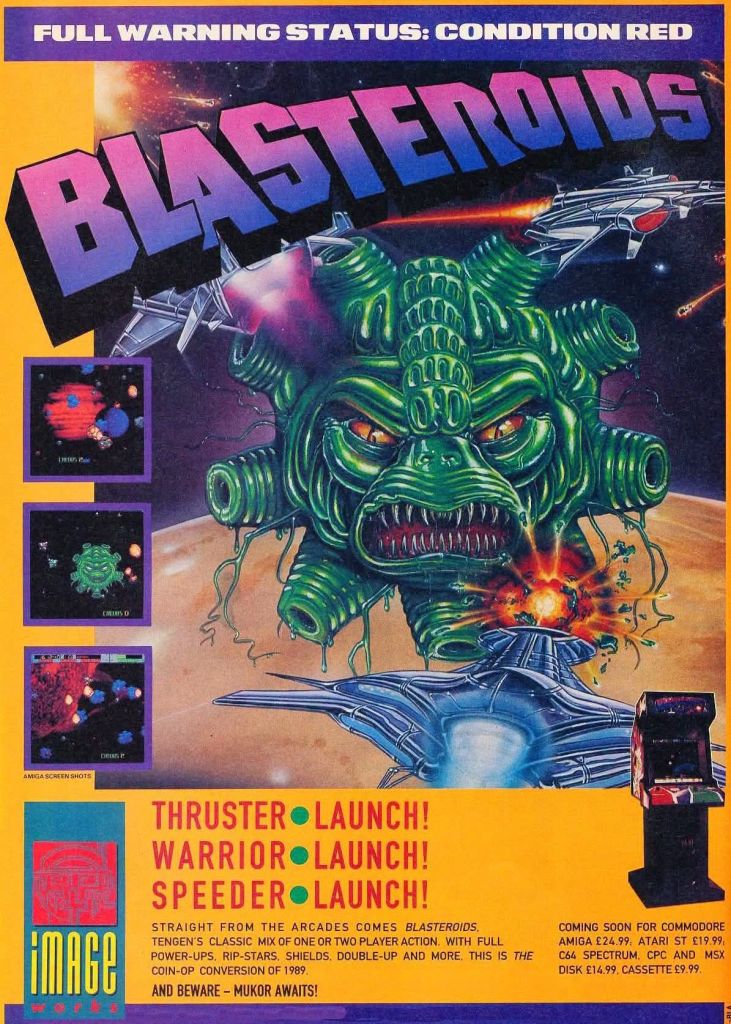
5. Blasteroids European Print Ad

Blasteroids for the Europeans.

Blasteroids, the third entry in Atari’s popular Asteroids games series, was released in European arcades by Image Works and eventually landed on computer systems there. For Europe, the ad makers came up with artwork showing a creepy, green space monster surrounded by a few spaceships to emphasize the game’s concept. The said monster eventually appeared on the game covers of the computer ports of Blasteroids later. This ad shows creative adjustments taken to promote games in different parts of the world.

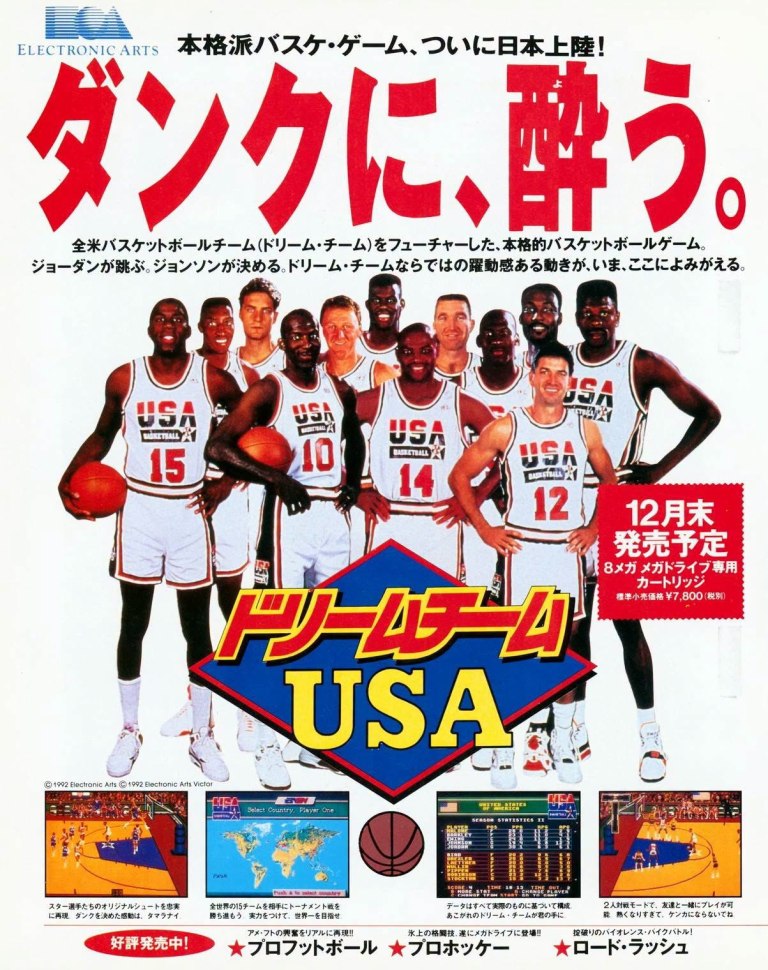
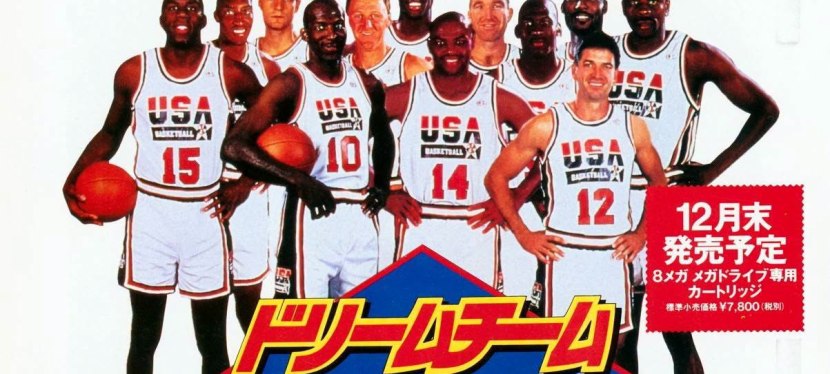
6. Dream Team USA Japanese Print Ad

The legends of the NBA in the Japanese version of EA’s Team USA Basketball. Retitling the game as Dream Team USA made more sense because “Dream Team” was a much more popular reference than “Team USA Basketball”.

Remember how wildly popular the Dream Team (Team USA in Olympic basketball) was in 1992? With NBA legends Larry Bird, Michael Jordan, Magic Johnson, Charles Barkley, Karl Malone, John Stockton and more representing America in the basketball tournament of the Olympic Summer Games in Barcelona, Spain, the Dream Team (a media-led reference for the team) was easily the main attraction not only for basketball fans worldwide but also those who craved for excitement in international sports events. That said, Electronic Arts secured the license to make an official video game about the Dream Team and actually released the game Team USA Basketball within 1992 for the Sega Genesis. As basketball is popular also in Japan, EA released the game there titled as Dream Team USA and came up with a Japanese print ad to seriously capture gamers’ attention. This ad is still effective in delighting both basketball and video game enthusiasts.

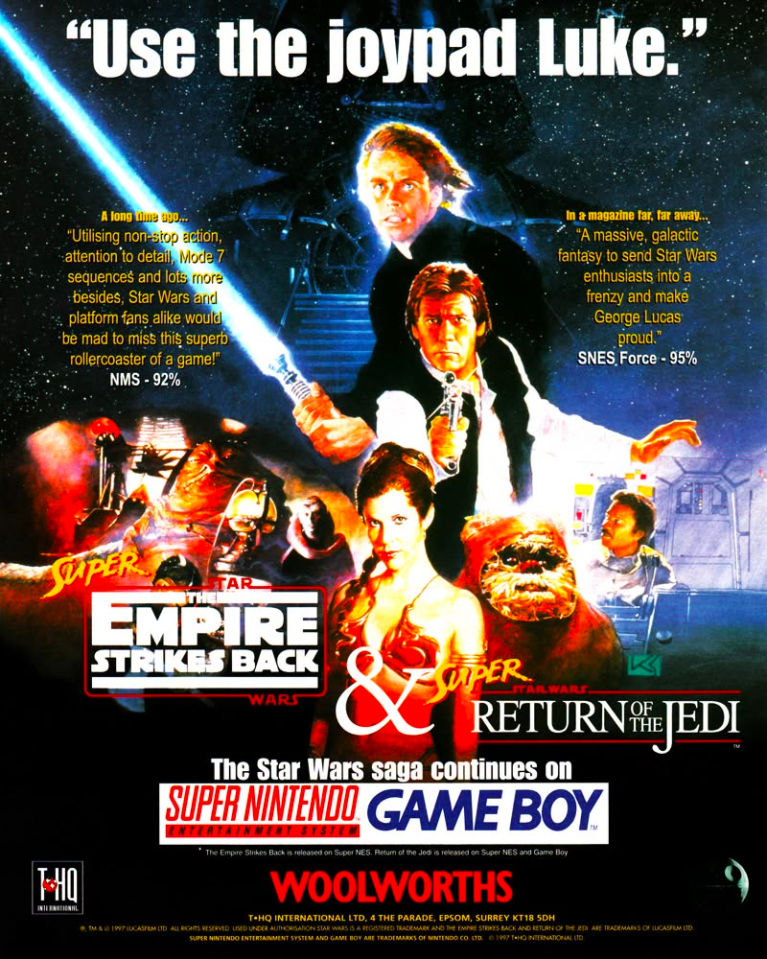
7. Super Star Wars: The Empire Strikes Back And Return Of The Jedi Print Ad

No screenshots of games used. Just the official images from the posters of the two movies.

Back in the 1990s, there was a resurgence of the original Star Wars trilogy across different forms of media. Apart from the VHS re-releases of Star Wars, The Empire Strikes Back and Return of the Jedi, there was a slew of video games of Star Wars released during the decade and the fans had new stuff to entertain themselves with. Along the way, the company THQ secured the rights to Super Star Wars: The Empire Strikes Back and Super Star Wars: Return of the Jedi for re-release to coincide with the 1997 “Special Edition” theatrical releases of their respective movies. THQ’s print ad simply used official images of Return of the Jedi and inserted a tiny bit of The Empire Strikes Back, and they did not show any screenshots that could have been helpful for Super Nintendo Entertainment System (SNES) and Game Boy users. Still, it was smart for THQ to print two excerpts of game reviews to sell the games.

8. Super Mario RPG North American Print Ad

A mesmerizing ad for the acclaimed Super Mario RPG.

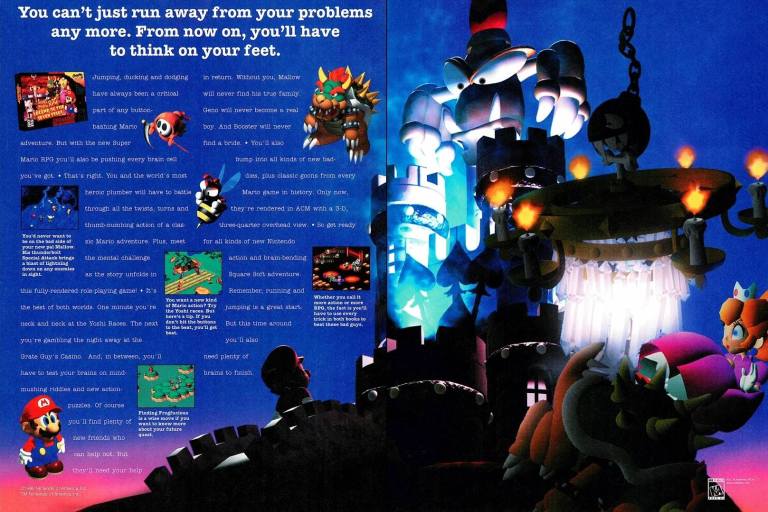
Remember back in the 1990s when Nintendo and role-playing game giant SquareSoft had a very healthy business relationship that proved successful? Before their eventual breakup (related to Square signing with Sony for PlayStation development), the two companies joined forces to make a fully featured role-playing game for the SNES featuring Super Mario and related characters…Super Mario RPG: Legend of the Seven Stars. To promote the game, Nintendo (the publisher) created a mesmerizing 2-page print ad highlighting their characters while emphasizing the role-playing and fantasy aspects of the game. At the time of its release, Super Mario was often identified with platform games and the Super Mario RPG print ad was a serious attempt to lure fans into RPGs which the SNES was already rich with. This ad, which I first saw in gaming magazines in 1996, still looks great.

9. NBA Shootout ’97 Print Ad

Did you play this on PlayStation in 1997?

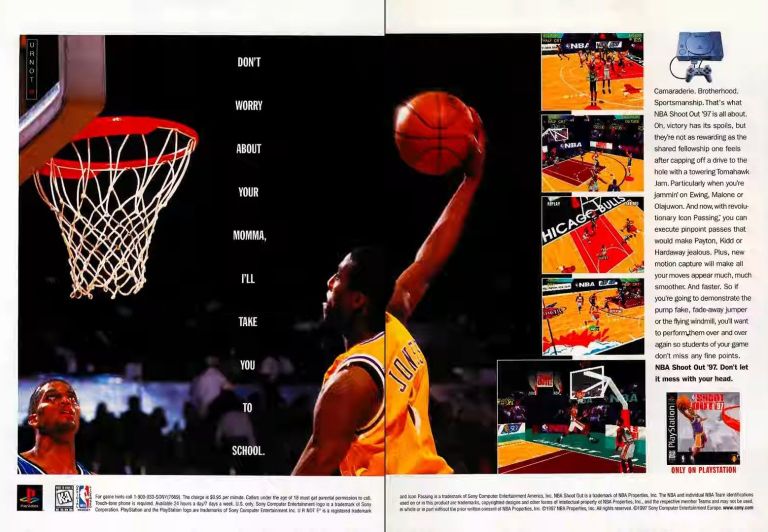
If there is anything I miss about 1990s console gaming, it is the fact that there were a lot of NBA-licensed video games that were offered to players with different tastes in basketball gaming. Sony had its own exclusive NBA games series called NBA Shootout and they were pretty aggressive selling its own basketball games along with the PlayStation going up against the likes of Electronic Arts (NBA Live), Sega and others. This is reflected in this 2-page print ad of NBA Shootout ’97 which was a PlayStation-exclusive release. They featured a photograph of Lakers’ Eddie Jones about to dunk and showed screenshots as well as the descriptive text written with excitement. Since it first started, NBA Shootout was basketball in full 3D polygonal graphics backed with motion-captured moves and dunks that players could enjoy only PlayStation. This ad is a reminder that Sony used to make official NBA games and there is a lack of variety and players’ choice of NBA gaming in today’s world.

10. Legend of Legaia North American Print Ad

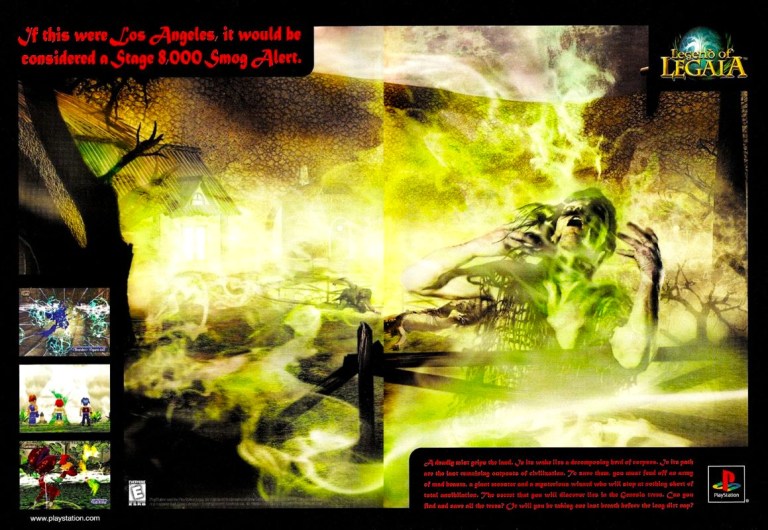
Perhaps someone at Sony Computer Entertainment America (SCEA) thought Legend of Legaia was a horror video game.

There was a time when Sony produced Japanese RPGs (JRPGs) exclusive for PlayStation consoles. One of them was Legend of Legaia which had a combat system that emphasized martial arts and it had an interesting fantasy concept. For its 1999 North American release, Sony came up with a very bizarre 2-page print ad that had digital artwork with a very strong horror vibe and the visual designs within the three screenshots shown were clearly not related with it. How this ad was made remains unclear. This is easily one of the most misguided gaming ads of the 1990s.

+++++

Thank you for reading. If you find this article engaging, please click the like button below, share this article to others and also please consider making a donation to support my publishing. If you are looking for a copywriter to create content for your special project or business, check out my services and my portfolio. Feel free to contact me with a private message. Also please feel free to visit my Facebook page Author Carlo Carrasco and follow me on Twitter at @CarloCarrascoPH as well as on Tumblr at https://carlocarrasco.tumblr.com/ and on Instagram athttps://www.instagram.com/authorcarlocarrasco
Japan’s Parliament Enacts National Flag Vandalism Bill

Japan’s Parliament enacted a bill that would criminalize acts of damaging the national flag, according to a news report by Kyodo News. This new development is the latest legislative victory for Prime Minister Takaichi Sanae whose administration, parliamentary partner and even a few opposition elements submitted it. Those who opposed the bill called it “divisive” and “unconstitutional”.

To put things in perspective, posted below is an excerpt from the report of Kyodo News. Some parts in boldface…

Let me end this piece by asking you readers: What is your reaction to this development? Do you think Japan’s parliament did the right move enacting the national flag vandalism proposal? Do you believe that desecrating your nation’s flag should be penalized? What is your opinion about the Islamists and Leftists – both foreigners and citizens – in America and Europe who burned national flags so publicly and shamelessly? Did you notice social media posts that captured images of Leftists and woke nuts in Japan who desecrated the Japanese flag?

You may answer in the comments below. If you prefer to answer privately, you may do so by sending me a direct message online.

+++++

Thank you for reading. If you find this article engaging, please click the like button below, share this article to others and also please consider making a donation to support my publishing. If you are looking for a copywriter to create content for your special project or business, check out my services and my portfolio. Feel free to contact me with a private message. Also please feel free to visit my Facebook page Author Carlo Carrasco and follow me on Twitter at @CarloCarrascoPH as well as on Tumblr at https://carlocarrasco.tumblr.com/ and on Instagram athttps://www.instagram.com/authorcarlocarrasco

America Goes After Financiers And Shadow Business Networks Of Terrorist State Iran

As the military conflict between the United States and the Islamic terrorist state of Iran intensifies, the State Department announced that action has been taken to cut off the financial lifelines of the evil regime.

To put things in perspective, posted below is the entire announcement by the State Department. Some parts in boldface…

Let me end this piece by asking you readers: What is your reaction to this development? Do you think the US will be able to cut off Iran’s links to all financial sources around the world? Could it be possible that the sinister financiers behind LGBTQ and transgender mobs and human traffickers (involved with mass migration targeting Europe) could secretly be funding the Islamic terrorist regime of Iran?

You may answer in the comments below. If you prefer to answer privately, you may do so by sending me a direct message online.

+++++

Thank you for reading. If you find this article engaging, please click the like button below, share this article to others and also please consider making a donation to support my publishing. If you are looking for a copywriter to create content for your special project or business, check out my services and my portfolio. Feel free to contact me with a private message. Also please feel free to visit my Facebook page Author Carlo Carrasco and follow me on Twitter at @CarloCarrascoPH as well as on Tumblr at https://carlocarrasco.tumblr.com/ and on Instagram athttps://www.instagram.com/authorcarlocarrasco
Retro Gaming Ads Blast – Part 44

Welcome back readers, fellow geeks and electronic gaming fans!

In this edition of the Retro Gaming Ads Blast (RGAB) series, we will take a look at another batch of retro gaming print ads from the 1980s to the early 2000s.

For the newcomers reading this, Retro Gaming Ads Blast (RGAB) looks back at the many print ads of games (console, arcade, computer and handheld) that were published in comic books, magazines, flyers, posters and newspapers long before smartphones, social media, the worldwide web and streaming became popular. To put things in perspective, people back in the 1980s to the 1990s were more trusting of print media for information and images about electronic games and related products.

With those details laid down, here is the newest batch of retro gaming print ads for you to see and enjoy…

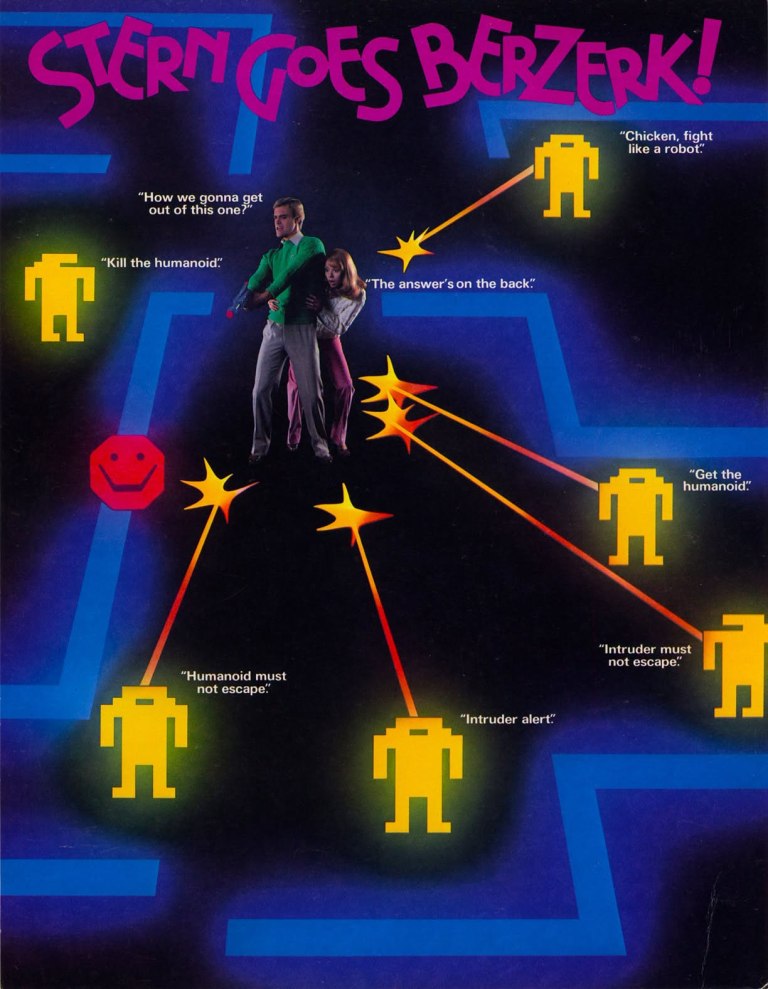
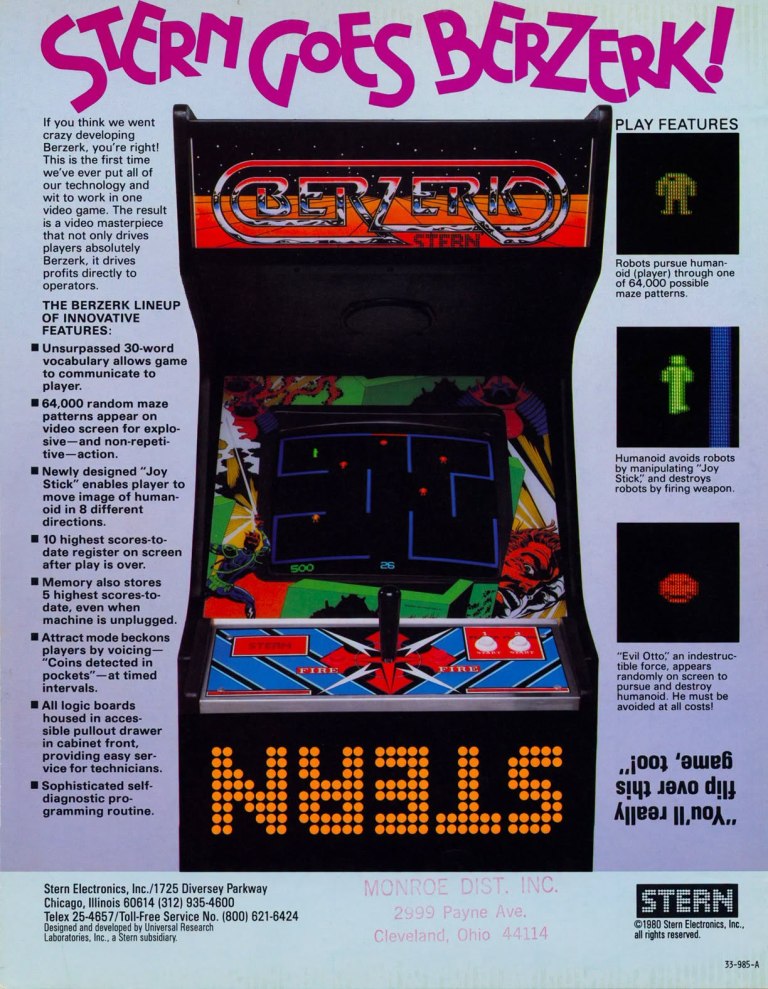
1. Berzerk Arcade Flyer

The front.
The rear.

Could you imagine being trapped deep within a maze surrounded by dangerous robots (plus one other unstoppable enemy) capable firing laser blasts at you? This was the concept behind the design of Berzerk, an arcade game released by Stern Electronics in 1980. Released at a time when science fiction became wildly popular in American entertainment, Berzerk was immersive for gamers and the multidirectional gameplay feature was captivating for many. To promote the game, Stern Electronics came up with a customized visual design that blended 2D sprite elements with a photograph of two people and some hand-drawn art pieces. The front of the flyer emphasized accurate the core concept of the game while the rear explained the technical details. They even played with their company name with the line “Stern goes berzerk!”

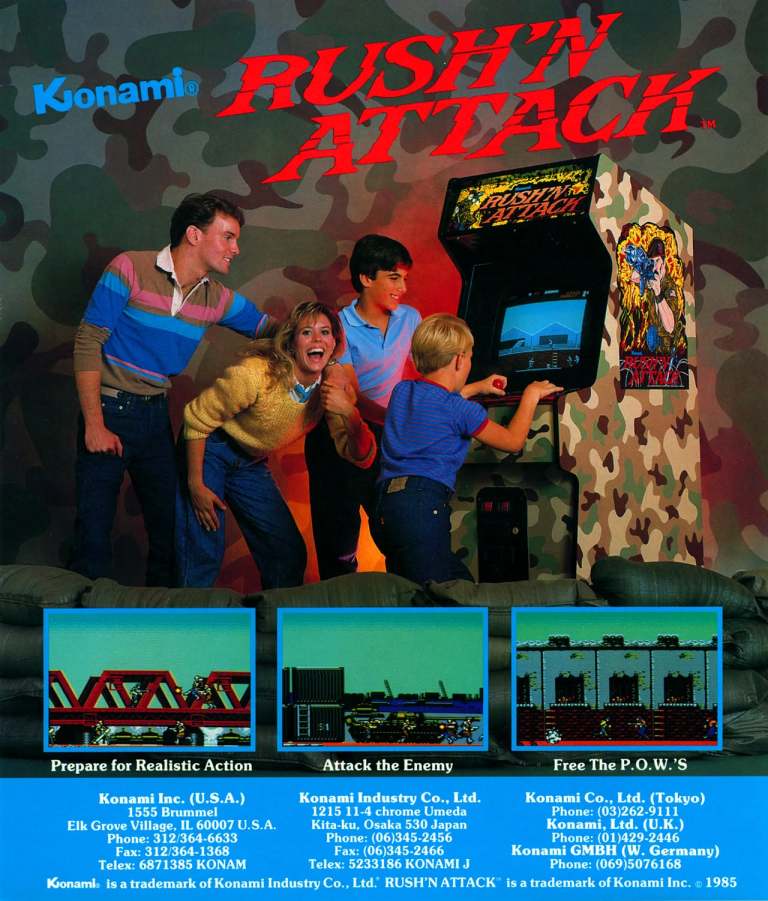
2. Rush’n Attack North American Arcade Flyer

The arcade flyer for North America

During the late stages of the Cold War, Konami made a lot of military-themed video games which resonated not only with those who were already aware about the global conflict but also with gamers who craved for action and excitement. One of those games was Rush’n Attack (alternative title: Green Beret) which was released in American arcades in late-1985. Konami came up with an arcade flyer showing four people (looking like an American family) having a good time in front of an arcade cabinet, and three screenshots of the game were displayed on the lower half. Rush’n Attack – which was deliberately titled to resemble the phrase “Russian attack” due to its obvious Cold War setting – went on to succeed commercially and critically. One notable game review compared Rush’n Attack favorably with the movie Rambo: First Blood Part II.

3. Turbo Out Run North American Arcade Flyer

The flyer.

Following the massive success Sega achieved with Out Run in 1986, the company went on to release the follow-up Turbo OutRun three years later. As seen in their North American flyer, Sega emphasized the in-game locations, the look of the machine with the driver’s seat and steering wheel, and the excitement they can expect. Turbo OutRun went on to become successful in the arcades worldwide and it got ported to a variety of consoles and computer systems in the years that followed. On its own, the arcade flyer sparked excitement for gamers.

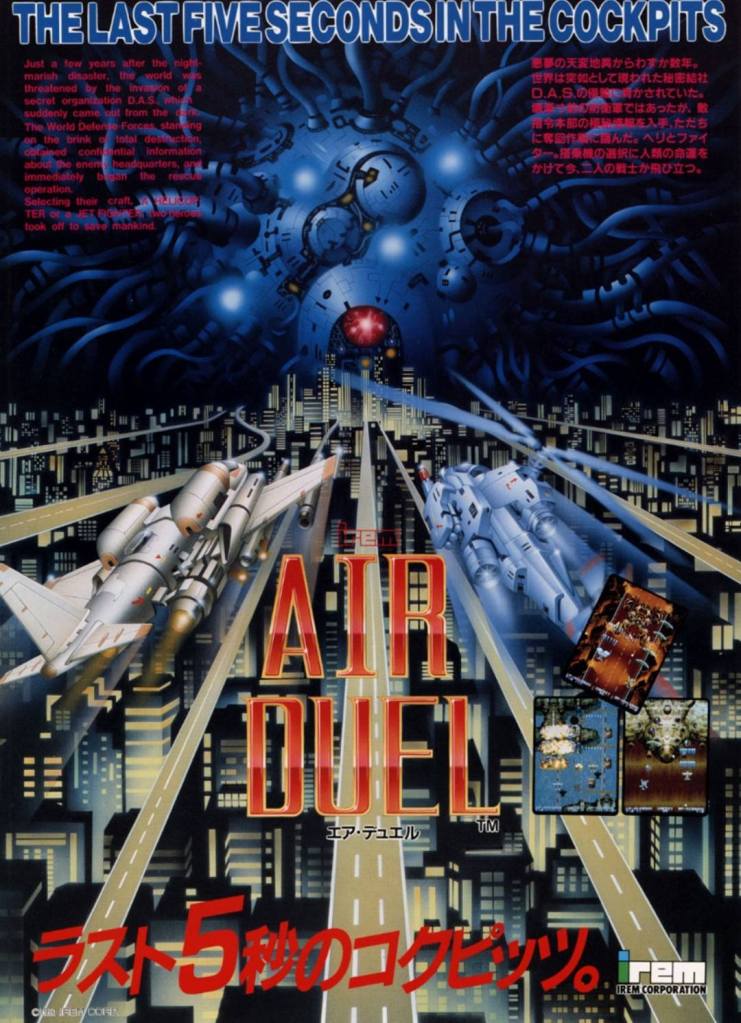
4. Air Duel Japanese Arcade Flyer

The artwork here is captivating to look at.

Released in Japanese arcades in 1990, Air Duel from Irem is an intense and fast-paced 2D sprite vertically scrolling shooter that attracted a lot of players. It had a war theme and its aesthetic has a mix of military and somewhat futuristic science fiction elements. The game’s arcade flyer featured a very intriguing artwork by Takashi Yamasaki showing two aircrafts flying over a city heading towards a massively large enemy in the distance. In my opinion, the artwork alone is pretty engaging to see and it’s more than enough to make me think about playing the game.

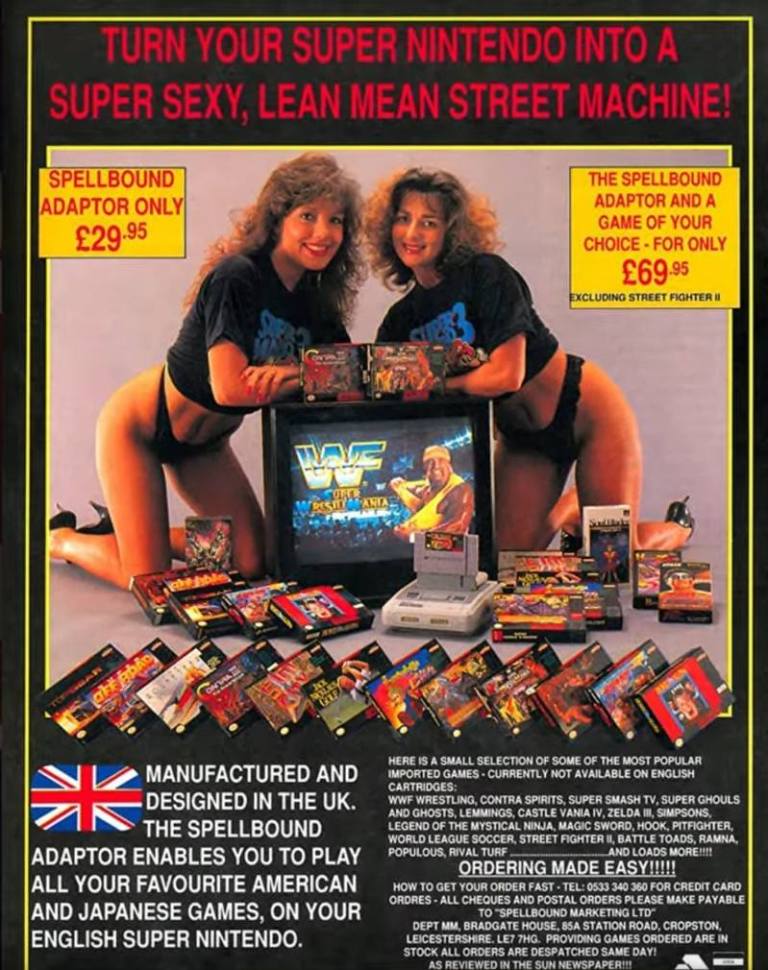
5. Spellbound Adaptor Print Ad

The Spellbound Adaptor print ad in Europe. UK design and manufacturing emphasized.

Remember back in the old days when there were hardware lockouts on game consoles that prevented users from playing games imported from different regions? In Europe, a special cheat and regional bypass cartridge called the Spellbound Adaptor was released and it allowed Super Nintendo Entertainment System (SNES) users to bypass the lockouts and play games from overseas. The Spellbound Adaptor was notably advertised in European print media showing two sexy ladies posing with the adaptor itself (on the SNES), the television and many SNES games. The ad even includes a promo of buying the adaptor with a game of choice for only £69.95. The ad is still impactful to look at.

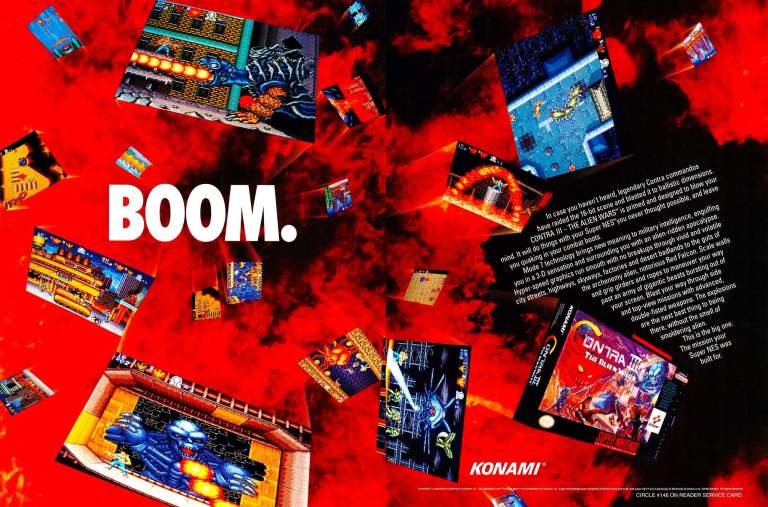
6. Contra III: The Alien Wars North American Print Ad

Konami’s made a huge impression visually with this 2-page print ad promoting Contra III: The Alien Wars.

By the time the SNES was launched in America in 1991, a lot of gamers who enjoyed Contra games on the Nintendo Entertainment System (NES) have been craving for a sequel on the newer console. Their dreams finally came through in early 1992 when Konami released Contra III: The Alien Wars on the SNES, and it was a lot more than visual upgrade as it had groundbreaking features connected with the game developers’ clever use of the console’s technology. Konami was already aware of Contra’s huge following in America, so they came up with an aggressive looking print ad promoting Contra III: The Alien Wars. With a red-and-black background, the ad had a variety of screenshots that were tilted to look 3D (showing what the game offered) and used a minor space for the descriptive text and image of the game box. This old print ad is one of the finest ways to promote a sequel while also emphasizing the next-generation experience fans can enjoy. This ad is a classic!

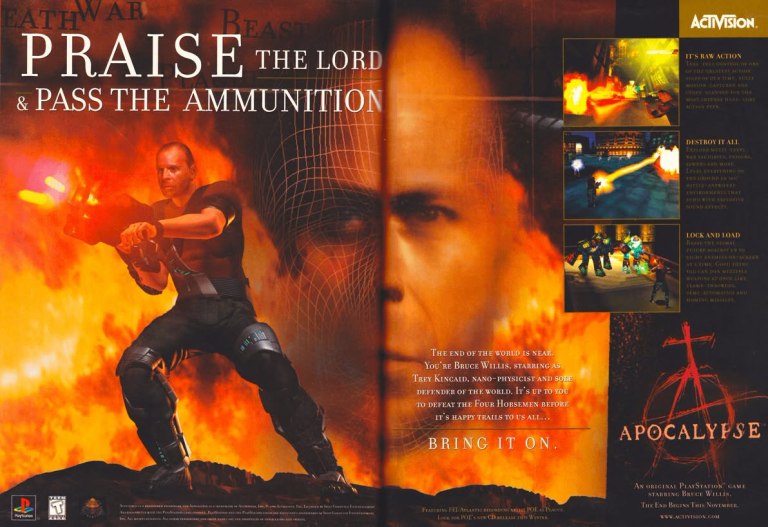
7. Apocalypse Print Ads

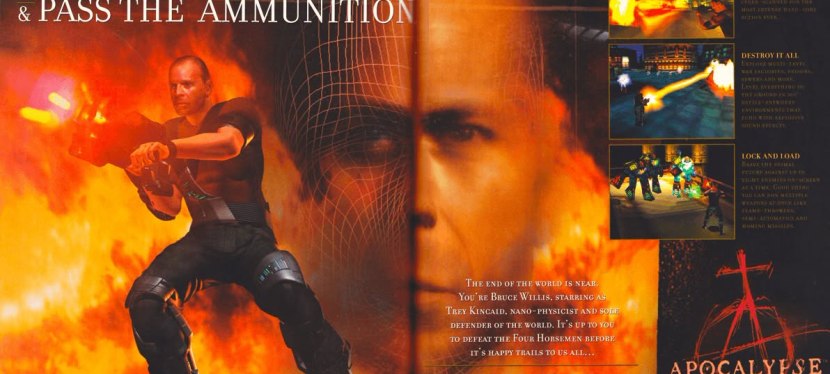
With Bruce Willis’ face, this 2-page Apocalypse print ad captured the attention of readers.
The more action-oriented 2-page print ad of Apocalypse. Bruce Willis is more visible here.

Believe it or not, Hollywood legend Bruce Willis actually starred in the ambitious video game titled Apocalypse. Before its 1998 released on PlayStation, Apocalypse started with the player character having an AI-controlled partner named Trey Kincaid to be played by Willis. Publisher Activision signed a multi-million Dollar deal with Bruce Willis to use his likeness and voice for the Trey character. Eventually the Trey Kincaid role was modified to be the playable character. Given the huge deal signed with the super star and the additional costs that came with game design revisions, Activision launched an aggressive marketing campaign for Apocalypse and they heavily used Bruce Willis’s name and imagery. Ultimately the game sold less than one million copies and yet Activision was satisfied with the sales which convinced them to go back to Apocalypse developer Neversoft for a new project.

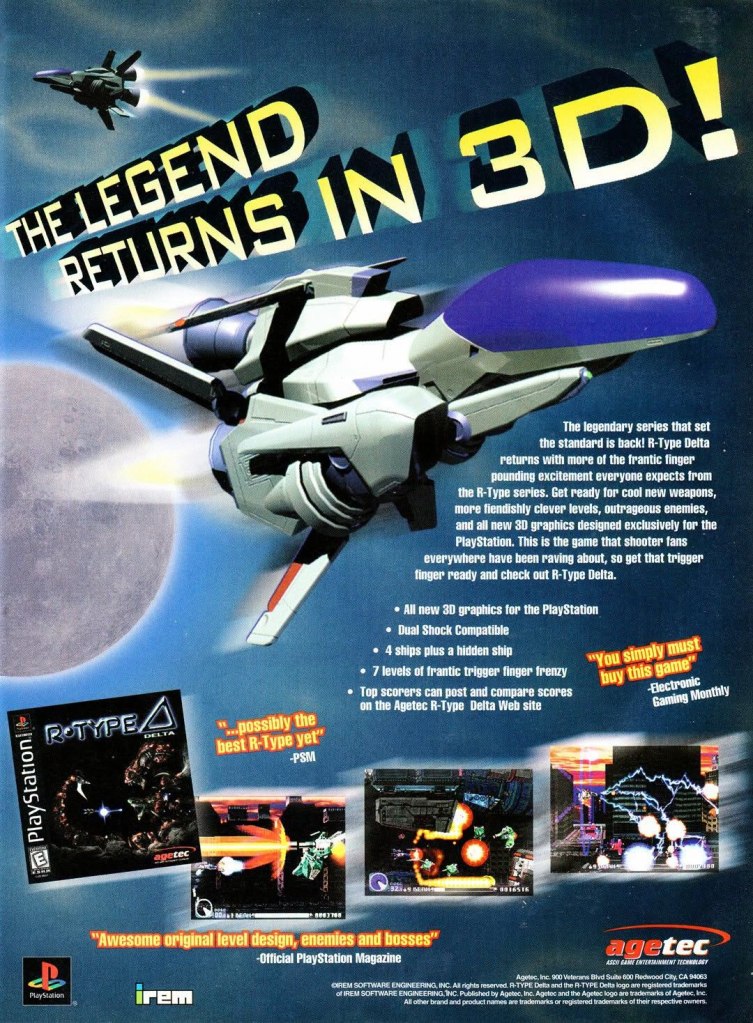
8. R-Type Delta North American Print Ad

R-Type Delta was the 4th game of the R-Type series and also the first to be made with 3D polygons.

R-Type, the long-running series of 2D side-scrolling shooters by Irem, fully embraced 3D polygons with R-Type Delta on PlayStation in 1998. To promote the game in North America, Irem and their partner Agetec went all-in emphasizing their series shift into 3D polygonal graphics while promising new in-game weapons. Very smartly, they included positive quotes from Electronic Gaming Monthly (EGM), PlayStation Magazine (PSM) and Official PlayStation Magazine (OPM) to show credibility. In recent times, an enhanced version of R-Type Delta (R-Type Delta: HD Boosted) was released on modern game console and PC.

9. Racing Lagoon Japanese Print Ad

Have you ever played this game from SquareSoft?

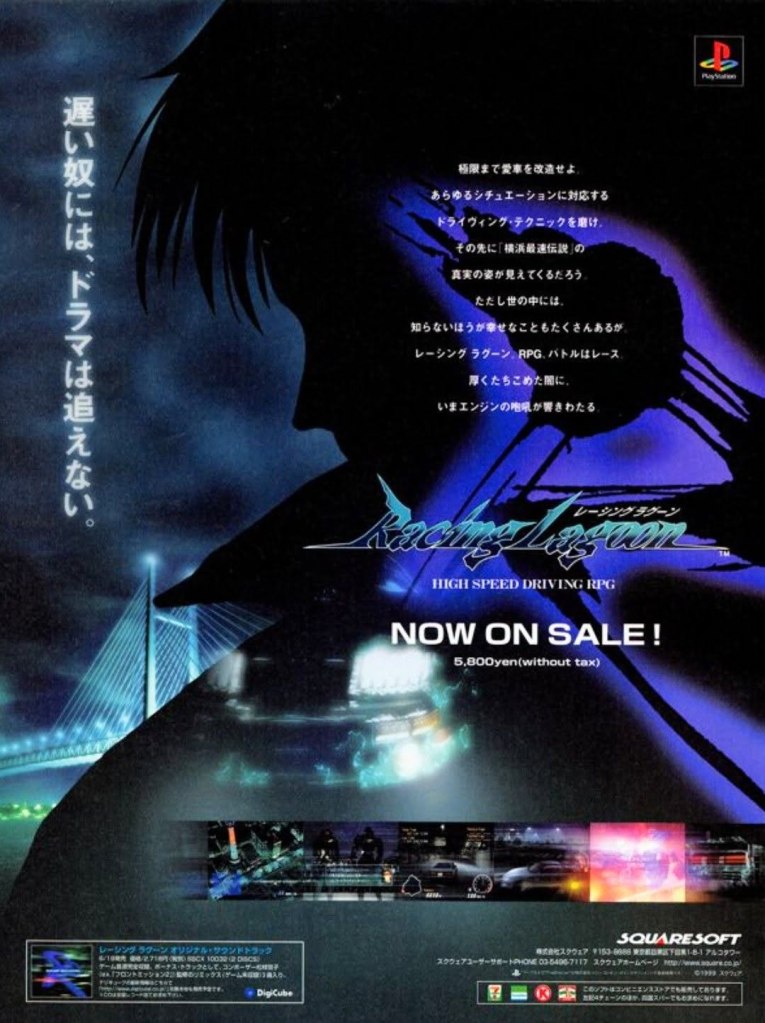
Released in 1999 for PlayStation only in Japan, Racing Lagoon was one of many games SquareSoft made for a genre other than role-playing games (RPGs). Released at a time when the PlayStation already had lots of racing games available from around the world, Racing Lagoon was a racing game that had role-playing elements mixed in. To promote it, SquareSoft made a print ad that had a night-time city vibe and they showed some screenshots with a unique visual style. The in-game story was influenced by the illegal street racing trend that happened in Japan during the 1980s.

10. Resident Evil – Code: Veronica North America Print Ads

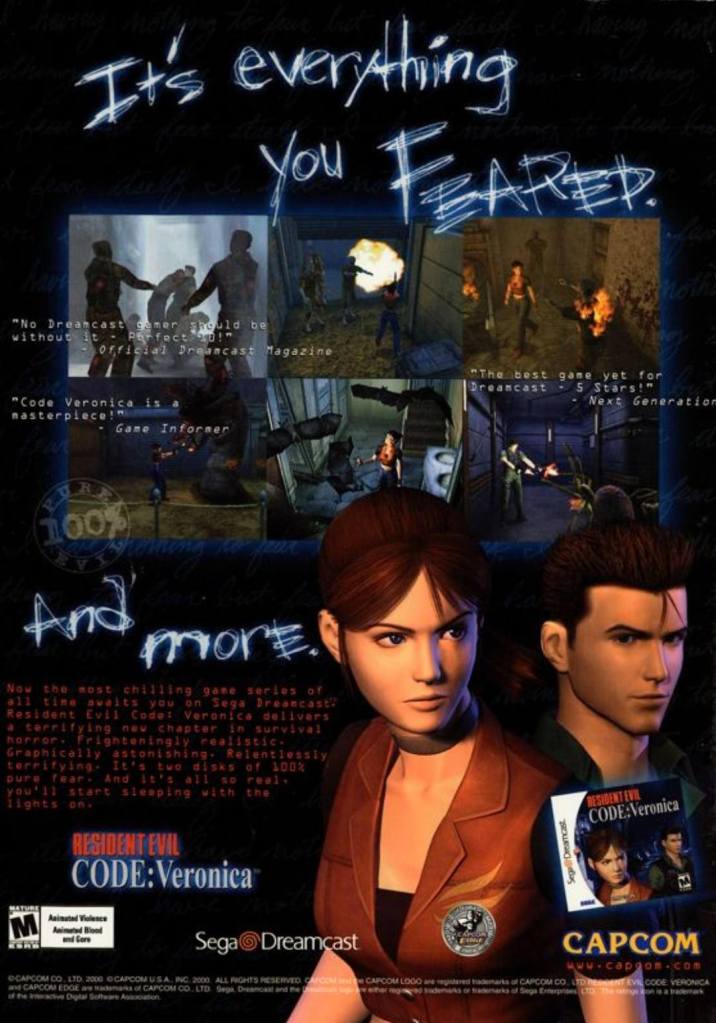
Truly a next-generation Resident Evil experience first launched on the Sega Dreamcast! I know some people who bought the console just to play Resident Evil – Code: Veronica.
The 2-page print ad of RE – Code: Veronica.

When Resident Evil – Code: Veronica was released on the Sega Dreamcast in Japan in February 2000, it delivered a next-generation survival horror experience to die-hard RE fans and it was easily one of the must-have games for Dreamcast owners of the time. Along the way, RE fans and Dreamcast owners in America were already anticipating the game. Capcom had an aggressive ad campaign for the game with US gamers in mind and this particular single-page print ad showed the fan-favorite characters Claire and Chris Redfield on one corner, six selected screenshots and quotes from the published game reviews of Game Informer, Next Generation and the Official Dreamcast Magazine. The 2-page print ad had the same elements but had the Redfield siblings on the 2nd page. I remember seeing these ads on a few gaming magazines and they made me think about buying a Dreamcast just to play RE – Code: Veronica. These old ads emphasized the strong business trust between Capcom and Sega (which itself lost a lot of money and credibility with the Sega Saturn consoles and many add-on devices released years prior).  

+++++

Thank you for reading. If you find this article engaging, please click the like button below, share this article to others and also please consider making a donation to support my publishing. If you are looking for a copywriter to create content for your special project or business, check out my services and my portfolio. Feel free to contact me with a private message. Also please feel free to visit my Facebook page Author Carlo Carrasco and follow me on Twitter at @CarloCarrascoPH as well as on Tumblr at https://carlocarrasco.tumblr.com/ and on Instagram athttps://www.instagram.com/authorcarlocarrasco
Tourists from Spain and Peru Deported By Thailand After Committing Sexual Act On A Moving Vehicle

If you are touring a foreign land, you better behave yourselves in order to maintain a good standing as a foreign visitor. This is an important lesson to learn as Thailand deported a Spanish man and a Peruvian woman who got caught doing a sex act while riding a moving vehicle locally called the tuk-tuk, according to a news report by VnExpress. The deported ones already confessed their act of indecency.

To put things in perspective, posted below is an excerpt from the news report of VnExpress. Some parts in boldface…

Let me end this piece by asking you readers: What is your reaction to this development? Did you spot any foreign tourists who misbehaved or broke laws in your country lately?

You may answer in the comments below. If you prefer to answer privately, you may do so by sending me a direct message online.

+++++

Thank you for reading. If you find this article engaging, please click the like button below, share this article to others and also please consider making a donation to support my publishing. If you are looking for a copywriter to create content for your special project or business, check out my services and my portfolio. Feel free to contact me with a private message. Also please feel free to visit my Facebook page Author Carlo Carrasco and follow me on Twitter at @CarloCarrascoPH as well as on Tumblr at https://carlocarrasco.tumblr.com/ and on Instagram athttps://www.instagram.com/authorcarlocarrasco
8.8 Million Foreign Tourists Visited Vietnam In January-April 2026 Period

When it comes to international tourism, Vietnam continues to be a fast-growing tourist destination as it successfully attracted almost nine million foreign tourists in the first four months of 2026, according to a news report by VnExpress. With the way it is going, Vietnam could easily break its all-time record of 21.2 million foreign tourists attracted in 2025.

To put things in perspective, posted below is an excerpt from the news report of VnExpress. Some parts in boldface…

Let me end this piece by asking you readers: What is your reaction to this development? Considering what was achieved in the first four months this year, do you think Vietnam will be able to attract between 25 million to 30 million foreign tourists by the end of 2026? Do you know anyone who will be visiting Vietnam soon?

You may answer in the comments below. If you prefer to answer privately, you may do so by sending me a direct message online.

+++++

Thank you for reading. If you find this article engaging, please click the like button below, share this article to others and also please consider making a donation to support my publishing. If you are looking for a copywriter to create content for your special project or business, check out my services and my portfolio. Feel free to contact me with a private message. Also please feel free to visit my Facebook page Author Carlo Carrasco and follow me on Twitter at @CarloCarrascoPH as well as on Tumblr at https://carlocarrasco.tumblr.com/ and on Instagram athttps://www.instagram.com/authorcarlocarrasco