

It is clear that Russia is the newest regional problem for Japan. Not only have their ties been strained since 2022, tension intensified as Russia conducted a missile test off the group of islands claimed by Japan, according to a news report by Kyodo News. Recently, Russian President Vladimir Putin visited Etorofu Island (referred by the Russians as Iturup) which drew backlash from the Japanese.
To put things in perspective, posted below is an excerpt from the news report of Kyodo News. Some parts in boldface…
Russia’s Pacific Fleet said Thursday it has conducted a missile test off a group of Russian-held, Japanese-claimed islands amid an intensifying row over the disputed territory following President Vladimir Putin’s first-ever visit there last week.
While it was unclear exactly when the test was carried out, the announcement comes after the Russian Foreign Ministry summoned Japanese Ambassador to Russia Akira Muto over Japan’s protest against Putin’s trip to the area.
Putin visited Etorofu Island, the largest of the four islands collectively called the Northern Territories by Japan and the Southern Kurils by Russia, on Aug. 13.
The naval fleet said a unit equipped with the Bastion surface-to-ship missile system conducted the test. The system is deployed to Etorofu.
The guided missile cruiser Varyag, the flagship of the Pacific Fleet, also took part in the missile test along with the Omsk nuclear-powered submarine, the fleet said.
The test simulated an attack on enemy vessels and succeeded in hitting all the intended targets at a range of at least 300 kilometers, according to the fleet.
“We cannot tolerate moves (by Russia) to strengthen military power on the four northern islands because they go against our country’s stance (on the territories),” Japanese Foreign Minister Toshimitsu Motegi told reporters Thursday during his visit to Oman.
A senior ministry official revealed Friday that Japan had lodged a protest with Russia shortly after Moscow notified Tokyo that it would conduct the missile exercise during the week beginning last Sunday.
Japan says the islands, which also include Kunashiri, Shikotan and the Habomai islet group, were illegally seized by the Soviet Union soon after Japan’s surrender in World War II on Aug. 15, 1945. Russia claims the action was legitimate, saying the islands became part of its territory as a result of the war.
Let me end this piece by asking you readers: What is your reaction to this development? Do you think Russia’s military activity in the Pacific is the first sign of more disturbances that will affect Japan and possibly the rest of Asia? Do you anticipate China or North Korea will get involved in the Russia-Japan conflict at sea? Do you think the tension with Russia will negatively impact the economy of Japan?
Thank you for reading. If you find this article engaging, please click the like button below, share this article to others and also please consider making a donation to support my publishing. If you are looking for a copywriter to create content for your special project or business, check out my services and my portfolio. Feel free to contact me with a private message. Also please feel free to visit my Facebook page Author Carlo Carrasco and follow me on Twitter at @CarloCarrascoPH as well as on Tumblr at https://carlocarrasco.tumblr.com/and on Instagram athttps://www.instagram.com/authorcarlocarrasco

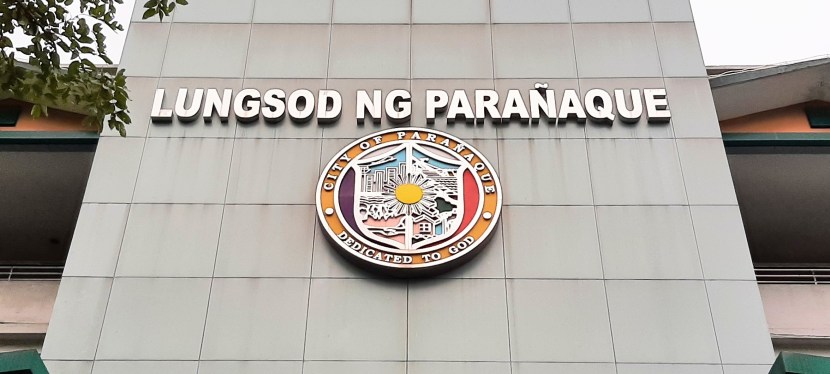
Recently in the City of Parañaque, a woman from Vietnam was arrested for estafa over a money deal in which she failed to release P70,000 to a Chinese national who transferred foreign currency to her, according to a news report by The Daily Tribune.
To put things in perspective, posted below is an excerpt from The Daily Tribune report. Some parts in boldface…
A 32-year-old Vietnamese national was arrested in Parañaque City after allegedly receiving 7,607.98 Chinese yuan through Alipay but failing to turn over the agreed P70,000 equivalent in Philippine currency to a Chinese national.
The incident occurred on 7 August at around 3:20 p.m. at Bayview Garden Homes 2 along Roxas Boulevard in Barangay Tambo, Parañaque City. The complainant was identified as a 28-year-old Chinese national.
Initial investigation showed thatthe two met through a Telegram group where the suspect allegedly offered money exchange services.
Thecomplainant transferred 7,607.98 Chinese yuan to an Alipay account designated by the suspect in exchange for P70,000.
However, the suspect allegedly failed to deliver the agreed cash and repeatedly made excuses when the complainant demanded payment, prompting him to seek police assistance and file charges.
The Vietnamese national was arrested for alleged violation of Article 315 of the Revised Penal Code, or estafa.
Let me end this post by asking you readers: What do you think about this recent development? If you are a resident of Parañaque, are you concerned that there could be more financial crimes happening within the city?
For more South Metro Manila community news and developments, come back here soon. Also say NO to fake news, NO to irresponsible journalism, NO to misinformation, NO to plagiarists, NO to reckless publishers and NO to sinister propaganda when it comes to news and developments. For South Metro Manila community developments, member engagement, commerce and other relevant updates, join the growing South Metro Manila Facebook group at https://www.facebook.com/groups/342183059992673
The Philippines, which has been struggling with weak economic growth and high inflation, attracted 3.7 million international visitors in the first 7 months of this year, according to a news report by BusinessWorld.
Be mindful that the words “international visitors” includes both foreign tourists as well as Filipinos who are based abroad who happened to return to the country as “balikbayan”. For insight, the Philippines attracted 5.9 million foreign tourists in 2025 plus over half-a-million Filipinos from overseas which combines for 6.4 million international visitors for the year. For the first half of 2026, the nation attracted 2.9 million foreign tourists.
To put things in perspective, posted below is an excerpt from the BusinessWorld news report. Some parts in boldface…
The number of Philippine international visitors grew to around 3.7 million as of July, buoyed by more relaxed visa policies, with growing markets seen in China, India, and Taiwan, according to the Department of Tourism (DoT) on Friday.
DoT Undersecretary Verna Esmeralda C. Buensuceso cited the figure, noting a 4.25% increase in tourist arrivals compared to last year.
“From January to July this year, the Philippines welcomed approximately 3.7 million international visitors, representing a 4.25% increase in visitor arrivals compared to the same period last year,” Ms. Buensuceso said during the launch of the 4th Travel Sale Expo 2026.
“We are seeing good growth from markets like China at 67%, India at 34%, and Taiwan at 11.21% growth, buoyed in large part by more liberal visa policies,” she added.
The tourism Undersecretary also noted sustained growth trajectories from the country’s traditional foreign markets such as the United States of America, Canada, and Japan, driven by additional flights.
The country is also experiencing double-digit to triple-digit growth in international arrivals from our Southeast Asian peers, such as Indonesia, Vietnam, Myanmar, Cambodia, Laos, and Timor-Leste, due to the ongoing ASEAN Summit 2026 where the Philippines serves as the host country.
“These are encouraging signs, but let me emphasize that our goal is not simply to increase the number of arrivals,” Ms. Buensuceso said.
“Our real goal is to increase the value of tourism. We want tourism to create more jobs, attract more investments, and generate more opportunities that reach communities across the country,” she added.
The tourism industry contributed 8.1% to the country’s gross domestic product (GDP) in 2025, down from 8.7% in the previous year, according to the Philippine Statistics Authority (PSA). It also employed around 7.70 million Filipinos in 2025.
Let me end this post by asking you readers: What is your reaction to this recent development? Do you think the DOT is padding the numbers on tourist arrivals to avoid embarrassment in the near future? Do you think the Philippines will be able to surpass 2025’s 5.9 million foreign tourist count by the end of this year? Do you believe that hosting the ASEAN Summit is actually helping the Philippine attract more tourists from its Southeast Asian neighbors?
Thank you for reading. If you find this article engaging, please click the like button below, share this article to others and also please consider making a donation to support my publishing. If you are looking for a copywriter to create content for your special project or business, check out my services and my portfolio. Feel free to contact me with a private message. Also please feel free to visit my Facebook page Author Carlo Carrasco and follow me on Twitter at @CarloCarrascoPH as well as on Tumblr at https://carlocarrasco.tumblr.com/and on Instagram athttps://www.instagram.com/authorcarlocarrasco
During the first half of 2026, Japan’s exports of food and farm products grew by a huge 10.9% which is a huge economic achievement for the nation and its government, according to a news report by Kyodo News.
To put things in perspective, posted below is an excerpt from the report of Kyodo News. Some parts in boldface…
Japan’s exports of agricultural, forestry and fishery products and food products in the first half of 2026 rose 10.9 percent from a year earlier to 897.7 billion yen ($5.7 billion), a record high for the period, the government said Tuesday.
Shipments to all of Japan’s top 10 destinations, including the United States and Hong Kong, exceeded year-before levels, pushing the overall total to a new January-June peak for the second straight year.
By product, green tea posted a notable gain, supported by a global matcha boom, with the Ministry of Agriculture, Forestry and Fisheries saying that growing inbound tourism has raised overseas awareness of Japanese food.
Rising health consciousness also contributed, while new sales channels expanded at supermarkets and restaurants abroad that had not previously handled Japanese food. But the pace of export growth slowed from 15.5 percent in the first half of 2025.
Among the top 10 destinations by export value, eight countries and regions, apart from second-ranked Hong Kong and third-ranked China, marked first-half records. Exports to Hong Kong increased 3.0 percent, while those to China grew 4.3 percent.
Exports to South Korea rose 20.5 percent, with yellowtail and beer showing solid gains, while those to Vietnam jumped 35.4 percent on strong demand for scallops and mackerel. The United States ranked first, up 15.3 percent to 162.6 billion yen.
Green tea, beef, apples, and sauces and mixed seasonings registered record highs for the January-June period. Green tea surged 83.5 percent to 48.2 billion yen, while yellowtail surged 69.0 percent to 43.4 billion yen.
Let me end this piece by asking you readers: What is your reaction to this development? Considering the massive number of foreign tourists in Japan, are you convinced that the greater awareness of Japanese food somehow contributed to the huge demand (for Japanese products) in countries around the world? How much food and beverages imported from Japan are being offered in your local groceries or convenience stores right now?
Thank you for reading. If you find this article engaging, please click the like button below, share this article to others and also please consider making a donation to support my publishing. If you are looking for a copywriter to create content for your special project or business, check out my services and my portfolio. Feel free to contact me with a private message. Also please feel free to visit my Facebook page Author Carlo Carrasco and follow me on Twitter at @CarloCarrascoPH as well as on Tumblr at https://carlocarrasco.tumblr.com/and on Instagram athttps://www.instagram.com/authorcarlocarrasco

Following the unfortunate decision made the by Supreme Court of the United States (SCOTUS) regarding birthright citizenship, US President Donald J. Trump signed two new Executive Orders to formally end birth tourism while also protecting the meaning and value of American citizenship.
To put things in perspective, posted below is the News24 (formerly Sky News Australia) video covering the Oval Office. Watch it and pay close attention to the details.
In America, birth tourism is already a huge problem that has yet to be full resolved. If it is left unchecked, it will negatively impact and even deform democracy in the US. That said, President Trump signed the Executive Order ending birth tourism. To understand it fully, posted below is the entire content of the said Executive Order sourced from the White House website. Some parts in boldface…
By the authority vested in me as President by the Constitution and the laws of the United States of America, it is hereby ordered:
Section 1. Purpose. United States citizenship is among the greatest inheritances the Nation can bestow. It embodies a sacred bond between the American people and the Nation in which they live, and carries profound rights, privileges, and responsibilities reflective of the enduring allegiance of citizens to the United States and our Constitution. Citizenship is not a commodity to be acquired through calculated exploitation and evasion of the immigration laws, such as by entering the United States on a nonimmigrant visa for the purpose of giving birth within the Nation’s borders.
Birth tourism operators use deceptive advertisements and inducements to entice foreign nationals to travel to the United States for the purpose of giving birth on American soil. They promise citizenship; access to public benefits; and short-term stays in specialized facilities, hotels, or rentals, but often fail to deliver on these promises. These operators coach their clients to misrepresent the purpose and duration of their travel to consular and border officials to obtain visas authorizing entry into the United States. Failure to appropriately combat these schemes has resulted in thriving industries around the world that profit by enabling the evasion of American immigration laws to obtain citizenship and other immigration benefits for foreign visitors, and the exploitation of the women who travel here for purposes of giving birth.
The immigration laws of the United States establish discrete categories of temporary nonimmigrant visas to allow foreign visitors into the United States for study, exchange, temporary employment, tourism, and other transitory activities that are now exploited by birth tourism operators. Participants in birth tourism schemes abuse these categories to establish a permanent foothold in the United States by securing the advantage of citizenship for their children and then potentially for themselves.
Birth tourism, defined in section 3 of this order, undermines the integrity of the Nation’s immigration system by enabling foreign nationals to exploit their temporary admission to obtain permanent immigration-related benefits. Birth tourism also diverts limited consular inspection and enforcement resources away from legitimate visa applicants, erodes public confidence in the faithful enforcement of the immigration laws, and impairs the executive branch’s ability to protect the national security.
The United States has a compelling interest in ensuring that each visa category is used only for the purpose for which it was established. Foreign nationals seeking temporary admission into the United States must adhere to the purposes for which the Congress has authorized their temporary admission, and cannot be permitted to circumvent the immigration laws in an attempt to vest themselves and their children with lasting benefits that are irreconcilable with their nonimmigrant status.
It is therefore the policy of the United States to promote the integrity of its immigration system, to ensure that nonimmigrant visa classifications are used only for their lawful and intended purposes, and to prevent the exploitation of those classifications by persons engaging in birth tourism.
Sec. 2. Authorities. Pursuant to section 301 of title 3, United States Code, the authority granted to the President under section 215(a) of the Immigration and Nationality Act, 8 U.S.C. 1185(a), is hereby delegated to the Secretary of State and the Secretary of Homeland Security to the extent necessary to implement this order, including the authority to issue or adopt rules, policies, operational guidance, or other guidance to carry out this order.
Sec. 3. Definition. For purposes of this order, “birth tourism” is defined as:
(a) the entry of any foreign national into the United States via a nonimmigrant visa for the purpose of giving birth on American soil; or
(b) any effort by any foreign national to facilitate the entry of any foreign national into the United States via a nonimmigrant visa for the purpose of giving birth on American soil.
Sec. 4. Scope and Implementation. (a) The Secretary of State and the Secretary of Homeland Security shall take such actions and update any rules, policies, operational guidance, or other guidance as necessary to effectuate the policy set forth in this order. Such actions may include, within the Secretaries’ respective discretion and authority, appropriate action to prevent the entry into the United States of, or the granting of any visa or other travel authorization to, any alien entering or attempting to enter the United States for the purpose of engaging in birth tourism; revoking the visa or travel authorization and permanently barring entry of any alien who enters or attempts to enter the United States for the purpose of engaging in birth tourism; denial of entry to, or removal of, any alien who previously engaged or plans to engage in birth tourism; or other appropriate action against entities, organizations, or individuals, within or outside of the United States, responsible for facilitating or enabling birth tourism in any manner.
(b) All other relevant executive departments and agencies shall provide such records and information as are necessary for the Secretary of State and the Secretary of Homeland Security to implement the terms of this order and the rules, policies, operational guidance, or other guidance issued pursuant to it, subject to applicable law.
Sec. 5. Exemptions. Notwithstanding the restrictions imposed by this order, the Secretary of State or the Secretary of Homeland Security may exempt a foreign national from actions taken pursuant to this order on humanitarian grounds or when the foreign national’s entry is in the national interest, as determined by the Secretary of State or the Secretary of Homeland Security.
Sec. 6. General Provisions. (a) Nothing in this order shall be construed to impair or otherwise affect:
(i) the authority granted by law to an executive department or agency, or the head thereof; or
(ii) the functions of the Director of the Office of Management and Budget relating to budgetary, administrative, or legislative proposals.
(b) This order shall be implemented consistent with applicable law and subject to the availability of appropriations.
(c) This order is not intended to, and does not, create any right or benefit, substantive or procedural, enforceable at law or in equity by any party against the United States, its departments, agencies, or entities, its officers, employees, or agents, or any other person.
(d) If any provision of this order, or the application of any provision to any person or circumstances, is held to be invalid, the remainder of this order and the application of any of its other provisions to any other persons or circumstances shall not be affected thereby.
(e) The costs for publication of this order shall be borne by the Department of Homeland Security.
DONALD J. TRUMP
Let me end this piece by asking you readers: What is your reaction to this development? Do you think the two new Executive Orders signed by Trump will effectively end birth tourism while protecting the value of American citizenship? What kind of responses do you think the Democrats will come up with to oppose the Executive Orders. Do you think Islamist states like Iran, Pakistan, Qatar and Bangladesh are deliberately sending their citizens to America with birth tourism in mind? Did you spot any Chinese nationals engaging in birth tourism in America lately?
In this age of artificial intelligence (AI), the rising use of drones in military operations and Communist China’s disturbing presence at sea, the Defense Ministry of Japan sees the urgent need to prepare the nation for the new ways of warfare, according to a news article by Jiji Press.
To put things in perspective, posted below is an excerpt from the news article of Jiji Press. Some parts in boldface…
Japan’s Defense Ministry emphasized the urgent need to prepare for what it calls new ways of warfare leveraging drones and artificial intelligence technology in an annual white paper adopted Tuesday.
The 2026 report, submitted by Defense Minister Shinjiro Koizumi to the day’s cabinet meeting, also displayed vigilance over the Chinese military’s expanding activities in the Pacific, saying Japan should respond with its “comprehensive national power.”
The white paper said that large-scale attacks combining low-cost unmanned equipment and conventional missiles have been conducted on the battlefields of Ukraine fighting Russia’s aggression.
Acknowledging that preparing for prolonged conflicts has become a key issue, the government stressed the importance of securing adequate stockpiles and ensuring sustained operational capability.
Let me end this piece by asking you readers: What is your reaction to this development? Do you support the idea of Japan tremendously modernizing itself militarily to defend itself while pushing back against Communist China’s military presence at sea? Would you like to see Japan become more sophisticated in the new ways of warfare using whatever state-of-the-art technologies it has? Do you think Japan should approach the United States for more advanced military hardware?
Thank you for reading. If you find this article engaging, please click the like button below, share this article to others and also please consider making a donation to support my publishing. If you are looking for a copywriter to create content for your special project or business, check out my services and my portfolio. Feel free to contact me with a private message. Also please feel free to visit my Facebook page Author Carlo Carrasco and follow me on Twitter at @CarloCarrascoPH as well as on Tumblr at https://carlocarrasco.tumblr.com/and on Instagram athttps://www.instagram.com/authorcarlocarrasco

In the latest development on reforming immigration in Japan, the nation’s immigration agency proposed tougher requirements and new pension rules for granting permanent residency to foreigners, according to a news report by Kyodo News.
To put things in perspective, posted below is an excerpt from the report of Kyodo News. Some parts in boldface…
Japan’s immigration agency on Tuesday proposed tougher requirements for granting permanent residency to foreigners, including requiring applicants to maintain income above the average for Japanese households and a certain level of projected pension benefits.
The proposed guidelines are part of Prime Minister Sanae Takaichi’s push to create an “orderly society” in which Japanese and foreign nationals coexist while cracking down on illegal activities.
The Immigration Services Agency will solicit public comments before implementing the new rules from April 2027.
Permanent residents can remain in Japan indefinitely without restrictions on their activities while retaining their original nationality. Applicants generally must have lived in Japan for at least 10 years to qualify.
It differs from naturalization, through which a person acquires Japanese citizenship.
Under the current guidelines, the three main requirements for obtaining permanent residency are good conduct, sufficient assets or skills to maintain an independent livelihood, and that granting permanent residency is in Japan’s best interests.
The revised rule would require applicants to maintain annual household income above the average for Japanese households, with the benchmark based on several government data sources.
According to a health ministry survey on living conditions released on July 15, for instance, average income per household in Japan stood at 5.75 million yen ($36,500) in 2024.
Applicants would also be required to have projected pension benefits equivalent to those payable after 30 years of enrollment in the employees’ pension program at their income level.
If the projected pension benefits fall short, they will be allowed to cover the difference with their financial assets.
The revised guidelines would also introduce a Japanese-language requirement, with applicants required to demonstrate proficiency at the level of an “independent user.”
While the population of Japanese nationals has been on a downtrend, the number of foreign residents has been increasing as Japan has been accepting more workers from abroad.
As of the end of last year, about 947,000 people held permanent residency status, with many from China and the Philippines.
Permanent residency is currently granted to a spouse of a Japanese national or a permanent residency holder when their marriage has lasted for at least three years, and the non-Japanese spouse has resided in Japan for at least one year.
The proposal would raise the thresholds to five years of marriage and three years of residence.
Let me end this piece by asking you readers: What is your reaction to this development? Do you think the proposed tougher requirements and new pension rules make a lot of sense when it comes to the granting of permanent residency to foreigners there in Japan? Do you think the proposals will discourage foreigners from Third World nations like Pakistan, Somalia and Bangladesh from seeking permanent residency in Japan? Do you think the current government of Japan is doing good enough to reform immigration? Do you think that foreigners in Japan who applied for permanent residency and committed a local crime or an act of violence should automatically be disqualified by the government?
Thank you for reading. If you find this article engaging, please click the like button below, share this article to others and also please consider making a donation to support my publishing. If you are looking for a copywriter to create content for your special project or business, check out my services and my portfolio. Feel free to contact me with a private message. Also please feel free to visit my Facebook page Author Carlo Carrasco and follow me on Twitter at @CarloCarrascoPH as well as on Tumblr at https://carlocarrasco.tumblr.com/and on Instagram athttps://www.instagram.com/authorcarlocarrasco
In a serious effort to weaken the fighting capability and severing the resources (financially and militarily) of the Islamic terrorist regime of Iran, the United States sanctioned entities and individuals in four nations that enabled the Islamic Revolutionary Guard Corps (IRGC), according to the official announcement of the Department of State.
To put things in perspective, posted below is the entire announcement of the State Department. Some parts in boldface…
The United States today sanctioned six entities and individuals in China, India, Russia, and Iran that enable the Iranian regime’s Islamic Revolutionary Guard Corps (IRGC).
These include entities that support Mahan Air, the IRGC’s airline of choice for moving weapons, military personnel, and equipment. Today’s action also targets DadeNegar Startup Studio, an IRGC-affiliated front company supporting Iranian military targeting by soliciting locations of American and Israeli equipment in the Middle East.
The United States calls on the international community, particularly companies and individuals doing business with Mahan Air or any other sanctioned Iranian carrier, to recognize the serious risks raised by continuing such engagement.
The United States will continue to expose and disrupt entities providing the IRGC with the tools and information it uses to threaten American personnel, our partners, and regional stability.
Let me end this piece by asking you readers: What is your reaction to this development? Do you think this new move by the US will cripple the Islamic terrorist regime of Iran financial and militarily? Do you think members of the international community will follow America’s initiative? Do you think other nations like Pakistan, Malaysia and Bangladesh have entities or individuals who are supporting the Islamic terrorist regime of Iran?
In Phuket Island in Thailand, the local authorities recently raided three properties – two of which were originally developed for residential purposes – that illegally operated as hotels catering to foreign tourists, according to a news report by VnExpress. This is only a part of the ongoing crackdown against illegal hotels and already something wrong have been uncovered.
To put things in perspective, posted below is an excerpt from the news report of VnExpress. Some parts in boldface…
Thailand has intensified its crackdown on illegal hotels on its largest island Phuket after inspections found three properties operating without licenses.
Deputy Interior Minister Polapee Suwunchwee recently led a joint inspection in Phuket targeting three hotels with about 200, 240, and 45 rooms. Authorities found thatnone had valid construction permits or hotel operating licenses, according to Bangkok Post.
Investigators saidtwo of the properties had originally been approved as residential buildings or condominiums but were later converted into hotels without authorization.
Officials also carried out online booking tests, confirmingthe hotels were primarily marketing rooms to European and other foreign tourists, with virtually no Thai customers.
Theinvestigation also uncovered suspected nominee ownership arrangements involving companies with 49% foreign and 51% Thai shareholding. Some properties werelegally owned by Thai nationals but leased to Chinese investors, who allegedly operated hotels without the required licenses.
The inspections were part of a broader operation covering more than 10 locations across Phuket. Phuket Governor Sophon Suwannarat has been instructed to order businesses to shut down immediately if operators fail to provide the required documentation.
Narucha Kosasivilize, director-general of the Department of Provincial Administration, said operating a hotel without a license violated the law and caused widespread harm, according to The Nation.
He said the problem hadthree major consequences: it hurt the economy by placing legally compliant, tax-paying operators at a disadvantage; it posed safety risks because illegal accommodations often failed to meet government safety standards, putting tourists’ lives and property at risk; and it tarnished Thailand’s imagewhile undermining long-term confidence in the country’s tourism sector.
The Department of Provincial Administration is working with the Royal Thai Police, the Ministry of Commerce, the Department of Special Investigation, and other agencies to expand investigations into foreign business networks across the country.
Let me end this piece by asking you readers: What is your reaction to this development? Do you think the authorities in Thailand will be able to find and raid all existing illegal hotels?
Thank you for reading. If you find this article engaging, please click the like button below, share this article to others and also please consider making a donation to support my publishing. If you are looking for a copywriter to create content for your special project or business, check out my services and my portfolio. Feel free to contact me with a private message. Also please feel free to visit my Facebook page Author Carlo Carrasco and follow me on Twitter at @CarloCarrascoPH as well as on Tumblr at https://carlocarrasco.tumblr.com/and on Instagram athttps://www.instagram.com/authorcarlocarrasco
The Subic Bay Metropolitan Authority (SBMA) announced that it has sealed a formal agreement with the Bases Conversion and Development Authority (BCDA) to make the Port of Subic Bay the preferred maritime gateway for Pax Silica.
Launched in late-2025, Pax Silica is a United States-led strategic coalition to secure the global supply chains for artificial intelligence and semiconductors. Pax Silica was designed to counter China’s dominance in technology manufacturing and earth minerals.
To put things in perspective, posted below is an excerpt from the SBMA’s official announcement. Some parts in boldface…
The Subic Bay Metropolitan Authority (SBMA) and the Bases Conversion and Development Authority (BCDA) have agreed to make the Port of Subic Bay the preferred maritime gateway for the Pax Silica initiative.
Thepartnership was confirmed in the signing of the Memorandum of Understanding (MOU) between SBMA Chairman and Administrator Eduardo Jose L. Aliño and BCDA President and CEO Joshua M. Bingcangat the Bonifacio Technology Center in BGC, Taguig City, on July 20, 2026.
“Having the Port of Subic Bay as the preferred maritime gateway for Pax Silica Operations within the Luzon Economic Corridor is a great honor for the SBMA. It is, in fact, a crowning recognition of the invaluable role the Port of Subic Bay can play, on par with the initiatives to support the National Government regarding Pax Silica,” Aliño said.
“As part of the Luzon Economic Corridor, Subic Bay’s deep-water port and shipyard facilities are designed to transport raw materials like nickel and copper quickly, and processed tech goods between the port and the AI-native Economic Security Zone, or ESZ, in New Clark City,” he added. Meanwhile,Bingcang highlighted that the Port of Subic Bay offers a strategic advantage for the Pax Silica initiative. It serves asa critical gateway that enables the efficient movement of raw materials into the country and the timely delivery of finished products to customers,” PCEO Bingcang said. It serves as a critical gateway, enabling the efficient movement of raw materials into the country and the timely delivery of finished products to customers.
He added that the partnership advances the Marcos administration’s whole-of-government approach to infrastructure development and investment promotion, while reinforcing the Luzon Economic Corridor through stronger integration of ports, industrial hubs, and emerging technology ecosystems that will generate quality jobs and long-term economic opportunities for Filipinos.
Also present during the signing ceremony were SBMA Senior Deputy Administrator for Operations Ronnie Yambao and BCDA Senior Vice President for Legal Services Atty. Diana Joyce N. Basco-Galera.
This partnership requires the SBMA to identify and evaluate specific land and port areas under its jurisdiction that can be strategically leveraged for the Pax Silica initiative. It also involves evaluating the infrastructure, utilities, logistics, and port support requirements for Pax Silica.
The partnership would also include the assessment of land use compatibility and traffic connectivity with existing and planned master development plans of both economic zones; exchange of non-confidential information relevant to infrastructure planning and operational coordination.
Both the BCDA and the SBMA would also conduct market sounding, logistics demand analysis, potential development phasing, and explore possible modes of cooperation or future project structures, subject to applicable laws and policies.
Let me end this post by asking you readers: What is your reaction to this recent development? Were you surprised the SBMA and BCDA sealed the agreement on designating the Port of Subic for Pax Silica as a maritime gateway?