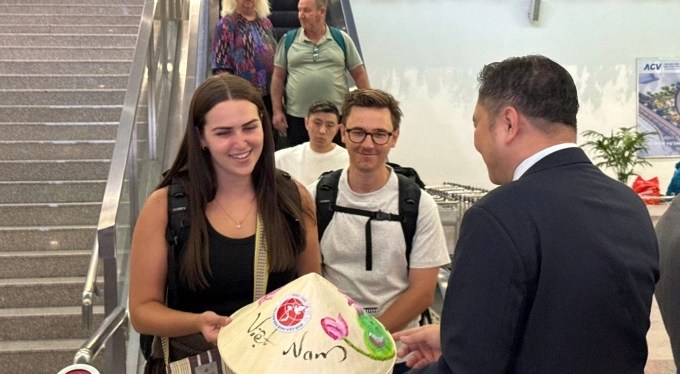
With almost eighteen million foreign tourists counted during the January-September period of this year, Vietnam is on-track to exceed its 2025 record of foreign tourist arrivals. While tourism is indeed booming, there are observations that fewer travelers from South Korea are visiting Vietnam, and there are a lot of factors as to why this has been happening for some time now, according to a news article by VnExpress.
To put things in perspective, posted below is an excerpt from the news article of VnExpress. Some parts in boldface…
Korean arrivals to Vietnam have fallen for two years amid a weaker won, fewer flights and growing competition.
Vietnam welcomed 17.7 million international visitors in the first nine months, up almost 15% year-on-year, the General Statistics Office reported. South Korea ranked second, after mainland China, with 3 million arrivals, but was the only top-10 market to record a decline, down about 5%.
Korean arrivals also fell 5% in 2025, when total arrivals hit a record of more than 21 million.
South Koreans made over 19 million overseas trips in the first eight months, up 2%, according to the Korea Tourism Organization.
Martin Koerner, commercial director of Anam Group, which manages two resorts in Mui Ne and Cam Ranh, says Korean demand is still growing but shifting elsewhere.
Yanolja Research found that only three of the 12 most-visited destinations for Koreans grew in the first half. Japan rose 18.6% to 5.6 million visits, 40% of Korean outbound travelers. Mainland China rose 16%, while Macau grew 0.7%.
The other nine destinations, mostly in Southeast Asia and the U.S., all declined. Vietnam fell more than 2%, and Thailand dropped the most, at 24%.
Pham Hai Quynh, director of the Asia Tourism Development Institute, attributes the decline partly to growing competition from China and Japan.
Quynh says Japan offers a good exchange rate, easy transport and quality service. China has attractive tour prices, visa-free entry for Koreans since late 2025 and more direct flights.
A weak won is a factor. The currency fell to 1,536 won per U.S. dollar on June 3, its lowest since 2009, and now sits around 1,350.
Korea JoongAng Daily reports that the weak currency is changing how South Koreans travel. They are shopping less, opting for Airbnb-style rentals over luxury hotels.
Hanatour, one of South Korea’s largest travel companies, says Korean travelers used to favor cheap tours with shopping stops. Now they choose pricier packages without shopping to cut down on extra spending.
However, travel spending in Japan continues to rise, as the weak yen makes the destination more affordable. In 2025, South Korean visitors spent a record $5.7 billion in Japan.
Koerner adds that beyond cost, the convenience of the trip also shapes Korean choices. A flight of two to three hours to Japan or China beats a six-hour trip to Southeast Asia.
“In this context, Vietnam’s edge as a low-cost destination no longer creates a big enough gap to hold on to Korean visitors,” Quynh says.
Saturation is another problem. Quynh says a destination’s life cycle lasts three to four years, after which travelers seek something new. Da Nang, Nha Trang and Phu Quoc have been promoted in Korea since around 2023, and golf and spa packages have grown familiar.
Fewer flights have hurt too. Higher fuel prices from the Middle East conflict led Korean airlines, mainly low-cost carriers, to cut 1,000 flights between April and June.
Yanolja Research also says Vietnam’s image has been linked to Cambodian scam compounds. Negative sentiment toward Vietnam once reached 18%.
To win Koreans back, Quynh says Vietnam should refresh its image, rely less on cheap beach holidays, and develop cultural, ecological and wellness products. He also urges more promotion in Busan, Daegu and Gwangju cities.
Let me end this piece by asking you readers: What is your reaction to this development? Do you think the falling number of Korean travelers visiting Vietnam is growing into a serious problem for the Vietnamese tourism industry? What do you think Vietnam and South Korea should do when it comes to flight connectivity and visa matters?
You may answer in the comments below. If you prefer to answer privately, you may do so by sending me a direct message online.
+++++
Thank you for reading. If you find this article engaging, please click the like button below, share this article to others and also please consider making a donation to support my publishing. If you are looking for a copywriter to create content for your special project or business, check out my services and my portfolio. Feel free to contact me with a private message. Also please feel free to visit my Facebook page Author Carlo Carrasco and follow me on Twitter at @CarloCarrascoPH as well as on Tumblr at https://carlocarrasco.tumblr.com/ and on Instagram at https://www.instagram.com/authorcarlocarrasco