Retro Gaming Ads Blast – Part 45

Welcome back readers, fellow geeks and electronic gaming fans!

In this edition of the Retro Gaming Ads Blast (RGAB) series, we will take a look at another batch of retro gaming print ads from the 1980s to the 1990s.

For the newcomers reading this, Retro Gaming Ads Blast (RGAB) looks back at the many print ads of games (console, arcade, computer and handheld) that were published in comic books, magazines, flyers, posters and newspapers long before smartphones, social media, the worldwide web and streaming became popular. To put things in perspective, people back in the 1980s to the 1990s were more trusting of print media for information and images about electronic games and related products.

With those details laid down, here is the newest batch of retro gaming print ads for you to see and enjoy…

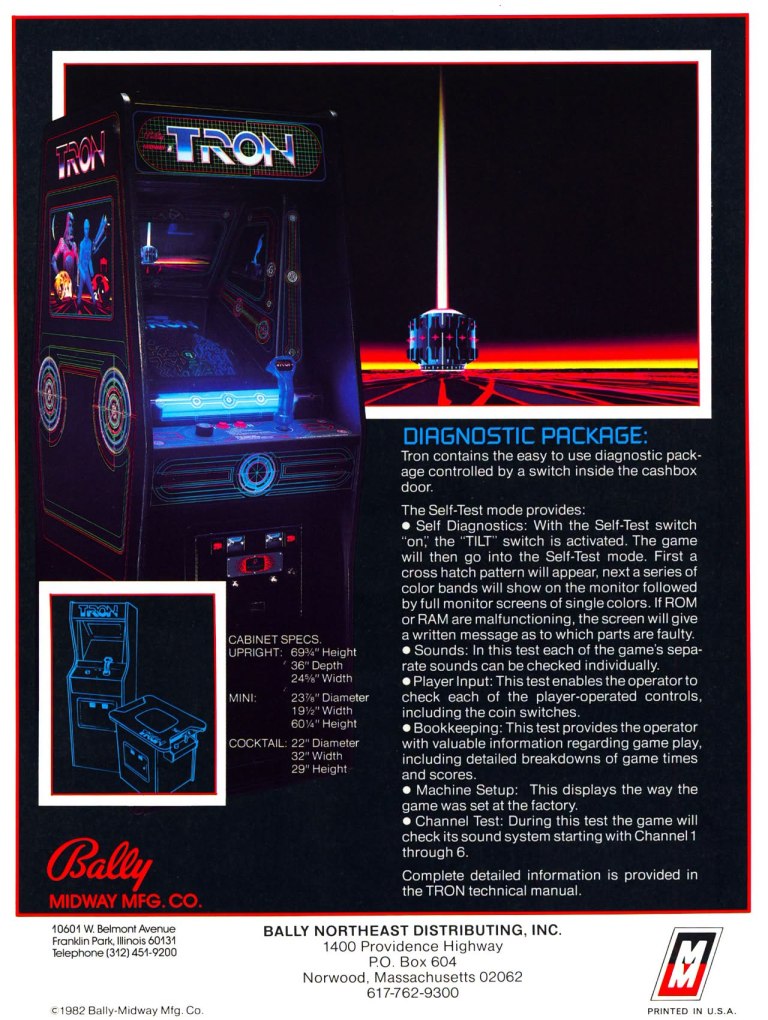
1. Tron Arcade Flyer
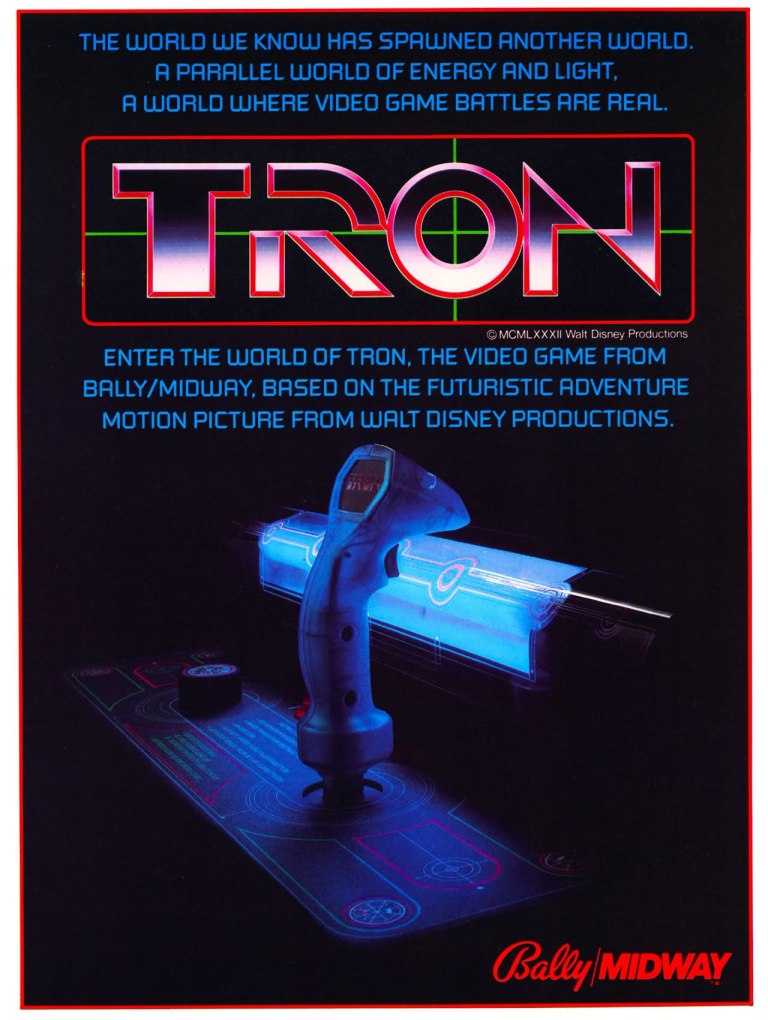
The front.
The rear. The details were clearly written for arcade operators.

Remember how dazzling the 1982 movie Tron was when you first saw it? That film had groundbreaking computer-generated graphics and the filmmakers worked very hard to tell a story covering both the real and digital worlds. Along the way, the movie had strong video game vibes which resonated with gamers at a time when arcade gaming was wildly popular in America. Believe it or not, an official arcade game of Tron was released the same year as the movie and it was a massive success. The arcade flyer perfectly captured the vibe and look from the movie and the machine itself had a control stick the same with what was shown to viewers. This old flyer is still great to look at.

2. Green Beret Japanese Arcade Flyer
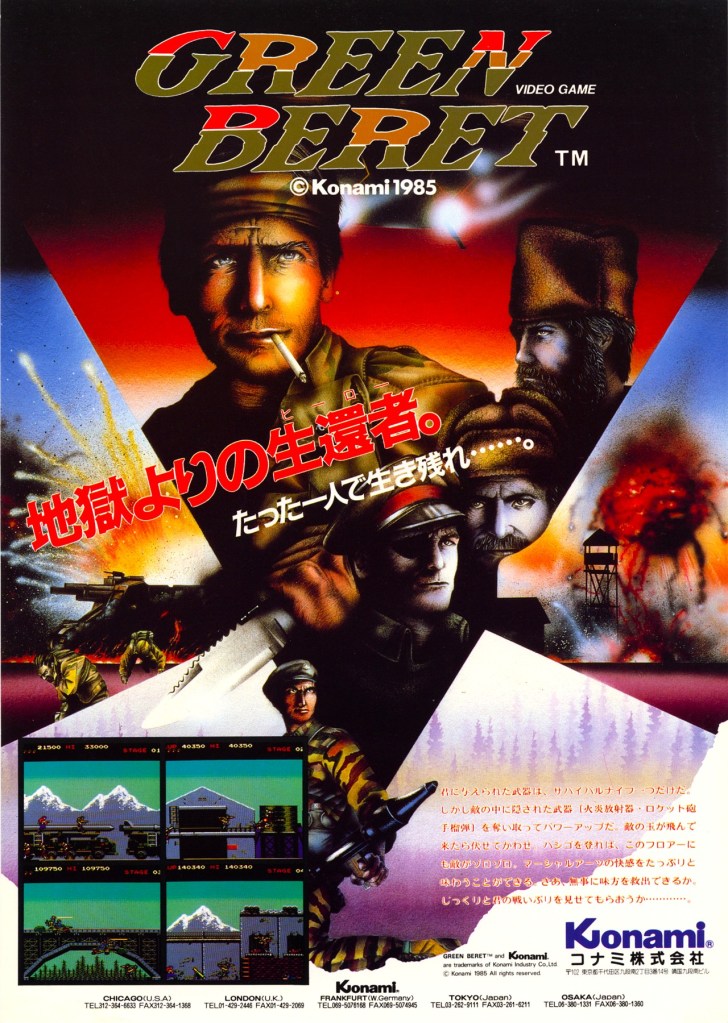
This is a very stylish flyer.

Konami was a highly prolific game publisher in the 1980s and it had lots of games that became huge blockbusters. During the decade, their game developers were strongly influenced by both Hollywood action movies and the Cold War. In 1985, Konami released the militaristic game Green Beret in Japanese arcades and to promote it, they created an arcade flyer featuring a very stylish artwork highlighting military images of soldiers (including a guy smoking) and warfare. This ad still looks great and it was not surprising it helped the game achieve huge commercial success. Green Beret was released in America as Rush’n Attack.

3. Darius Japanese And North American Arcade Flyers
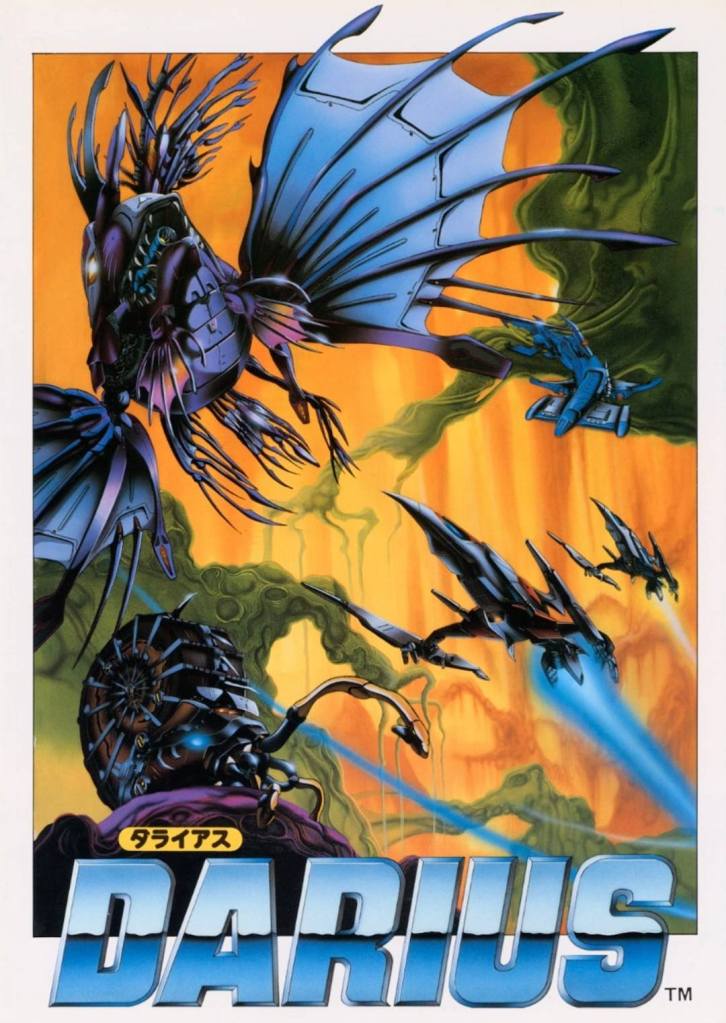
The Japanese flyer.
The North American flyer.

Released in arcades worldwide in 1987, Darius is a 2D side-scrolling shooter game from Taito which had a science fiction concept of the starship Silver Hawk (piloted by players) which sets on a mission to destroy an evil empire before it could destroy the world called Darius. The game was successful, most notably in Japan and it eventually led to sequels being released later. What I find intriguing is how the arcade game was promoted in Japan and in North America. The Japanese arcade flyer had this intriguing artwork that reflected a blend of sci-fi with a touch of horror. The North American flyer had a strong sci-fi touch with a male and female model wearing costumes (that made them look futuristic) standing beside the Darius machine. Which flyer looks more appealing to you?

4. Data East’s Arcade Alley Print Ad
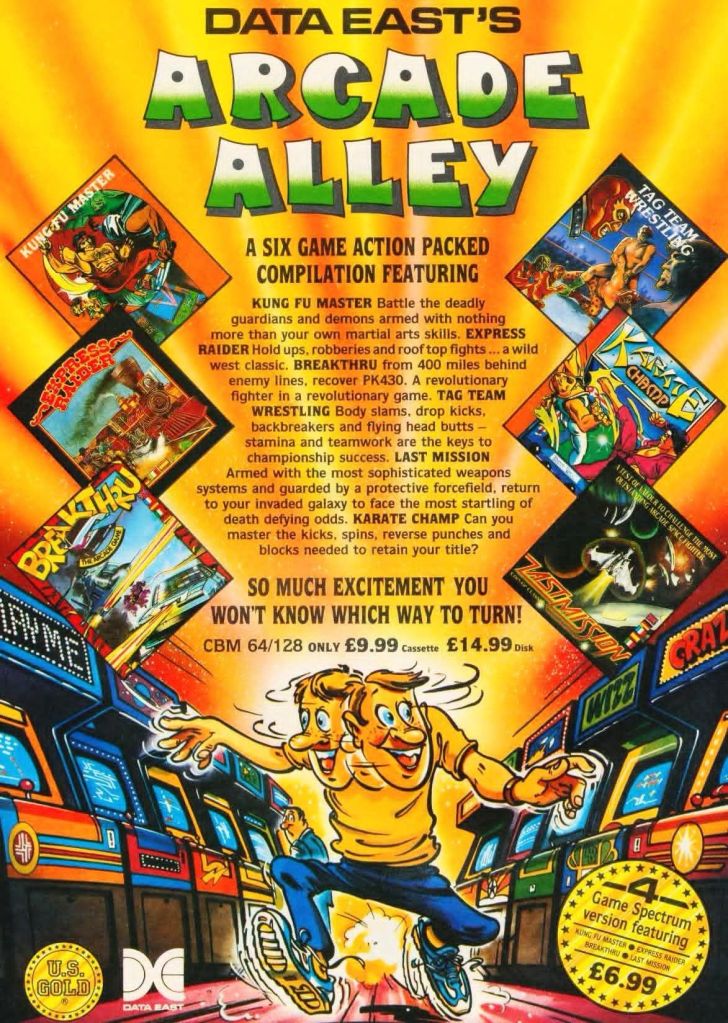
Fun and excitement emphasized in this print ad.

There is nothing like porting arcade hits to computer systems for gamers to enjoy. In 1988 there in Europe, U.S. Gold released Data East’s Arcade Alley for computer systems and it included ports of popular Data East games like Kung Fu Master, Express Raider, Breakthru, Tag Team Wrestling, Last Mission and Karate Champ. U.S. Gold’s print ad showed a guy in the middle of a video arcade looking on both sides to pick which game to play which strongly emphasized the essence of the game collection (offered in cassettes and disk). This old ad is still amusing to look at.

5. Blasteroids European Print Ad
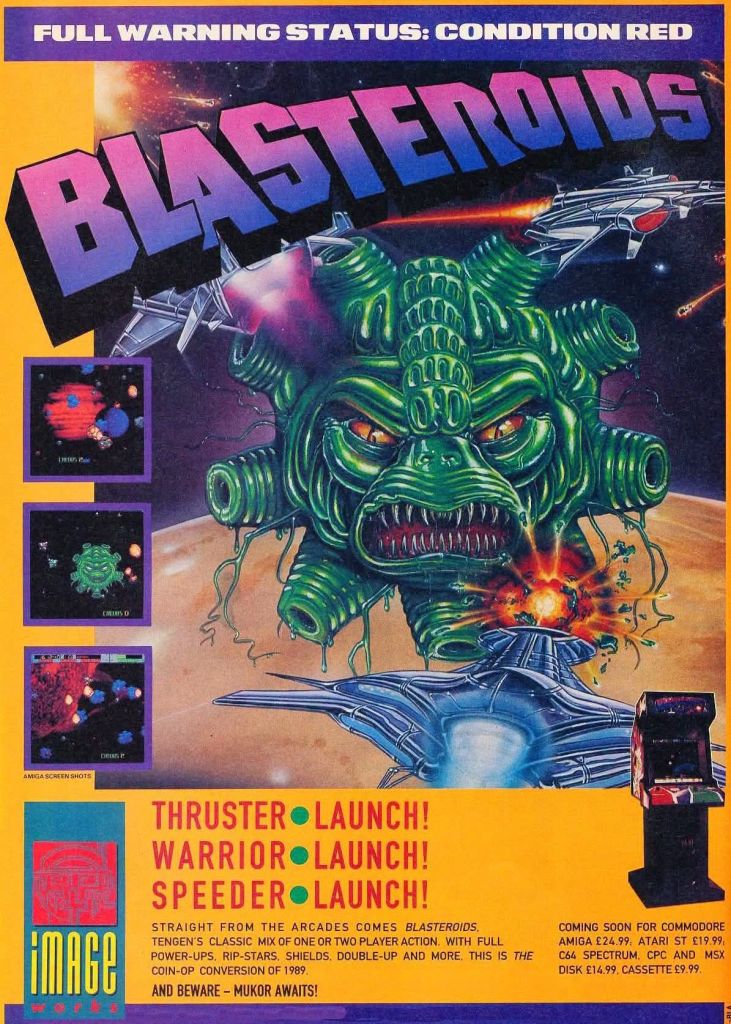
Blasteroids for the Europeans.

Blasteroids, the third entry in Atari’s popular Asteroids games series, was released in European arcades by Image Works and eventually landed on computer systems there. For Europe, the ad makers came up with artwork showing a creepy, green space monster surrounded by a few spaceships to emphasize the game’s concept. The said monster eventually appeared on the game covers of the computer ports of Blasteroids later. This ad shows creative adjustments taken to promote games in different parts of the world.

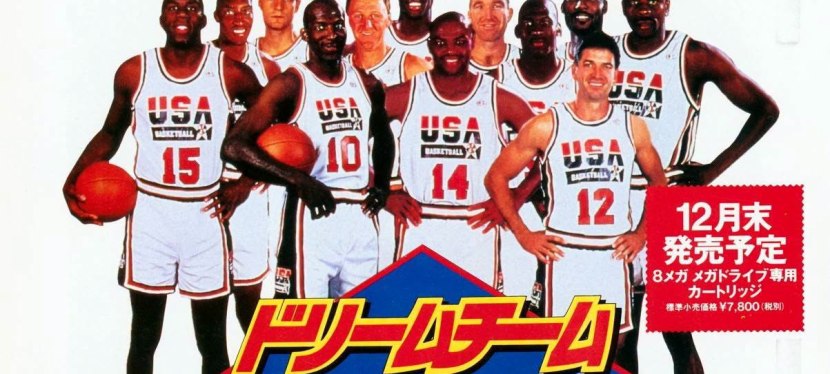
6. Dream Team USA Japanese Print Ad
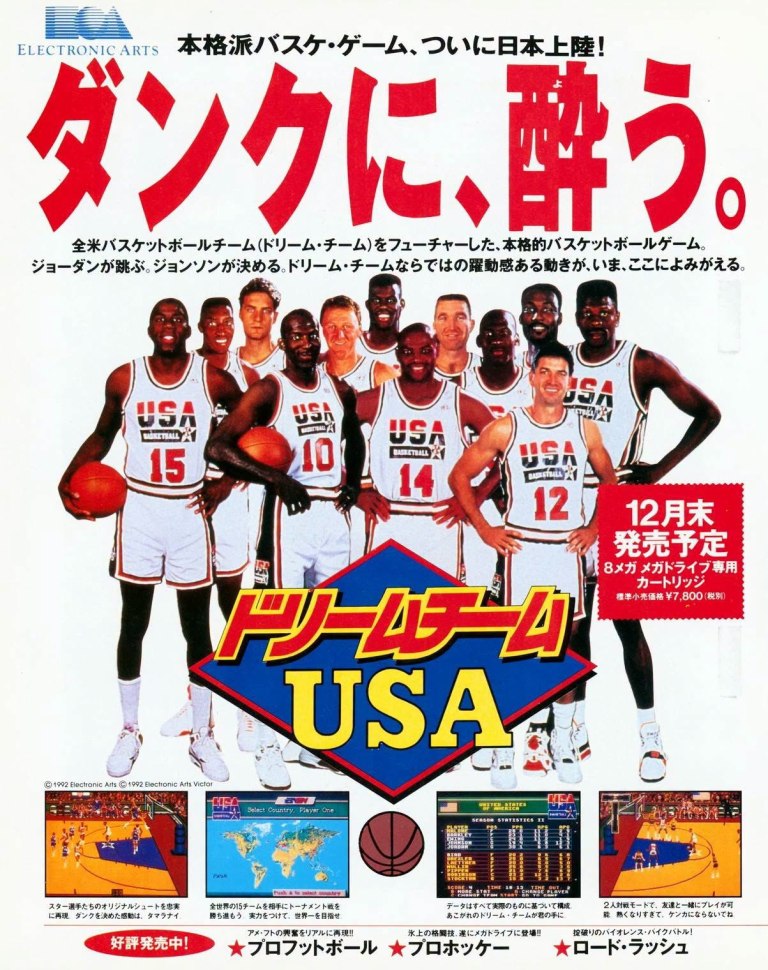
The legends of the NBA in the Japanese version of EA’s Team USA Basketball. Retitling the game as Dream Team USA made more sense because “Dream Team” was a much more popular reference than “Team USA Basketball”.

Remember how wildly popular the Dream Team (Team USA in Olympic basketball) was in 1992? With NBA legends Larry Bird, Michael Jordan, Magic Johnson, Charles Barkley, Karl Malone, John Stockton and more representing America in the basketball tournament of the Olympic Summer Games in Barcelona, Spain, the Dream Team (a media-led reference for the team) was easily the main attraction not only for basketball fans worldwide but also those who craved for excitement in international sports events. That said, Electronic Arts secured the license to make an official video game about the Dream Team and actually released the game Team USA Basketball within 1992 for the Sega Genesis. As basketball is popular also in Japan, EA released the game there titled as Dream Team USA and came up with a Japanese print ad to seriously capture gamers’ attention. This ad is still effective in delighting both basketball and video game enthusiasts.

7. Super Star Wars: The Empire Strikes Back And Return Of The Jedi Print Ad
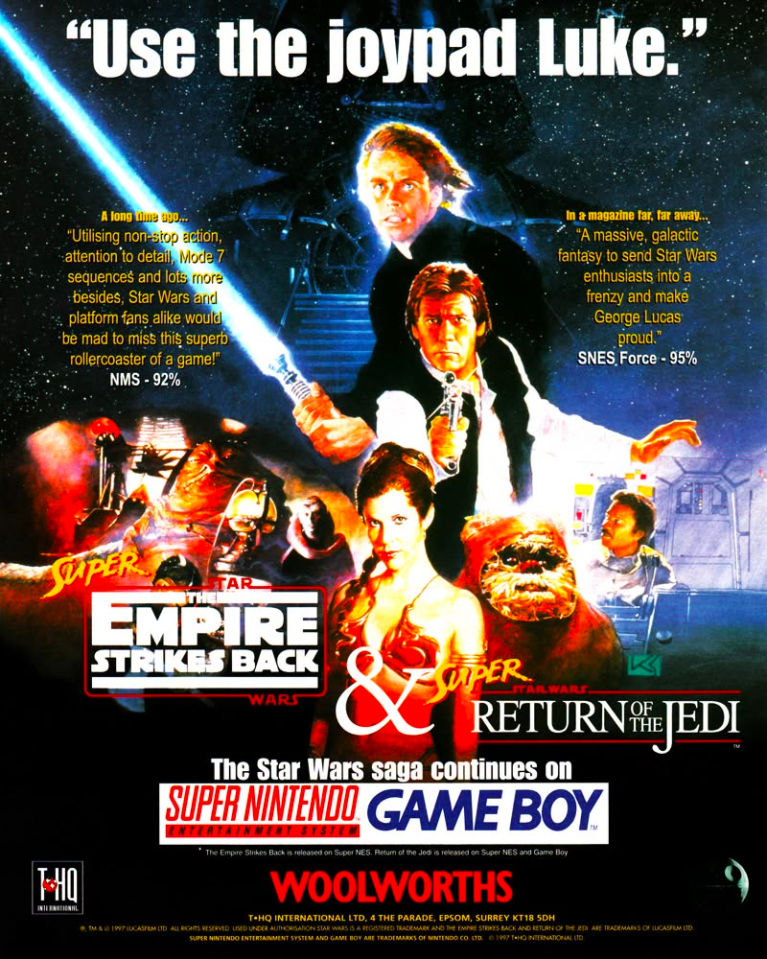
No screenshots of games used. Just the official images from the posters of the two movies.

Back in the 1990s, there was a resurgence of the original Star Wars trilogy across different forms of media. Apart from the VHS re-releases of Star Wars, The Empire Strikes Back and Return of the Jedi, there was a slew of video games of Star Wars released during the decade and the fans had new stuff to entertain themselves with. Along the way, the company THQ secured the rights to Super Star Wars: The Empire Strikes Back and Super Star Wars: Return of the Jedi for re-release to coincide with the 1997 “Special Edition” theatrical releases of their respective movies. THQ’s print ad simply used official images of Return of the Jedi and inserted a tiny bit of The Empire Strikes Back, and they did not show any screenshots that could have been helpful for Super Nintendo Entertainment System (SNES) and Game Boy users. Still, it was smart for THQ to print two excerpts of game reviews to sell the games.

8. Super Mario RPG North American Print Ad
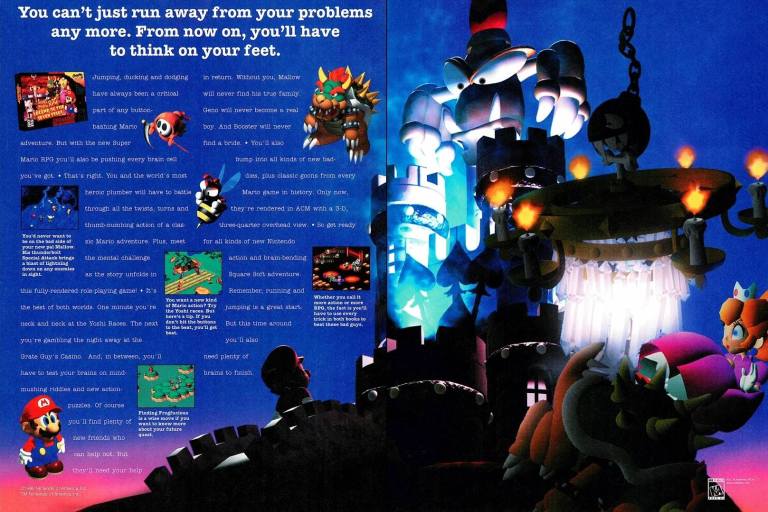
A mesmerizing ad for the acclaimed Super Mario RPG.

Remember back in the 1990s when Nintendo and role-playing game giant SquareSoft had a very healthy business relationship that proved successful? Before their eventual breakup (related to Square signing with Sony for PlayStation development), the two companies joined forces to make a fully featured role-playing game for the SNES featuring Super Mario and related characters…Super Mario RPG: Legend of the Seven Stars. To promote the game, Nintendo (the publisher) created a mesmerizing 2-page print ad highlighting their characters while emphasizing the role-playing and fantasy aspects of the game. At the time of its release, Super Mario was often identified with platform games and the Super Mario RPG print ad was a serious attempt to lure fans into RPGs which the SNES was already rich with. This ad, which I first saw in gaming magazines in 1996, still looks great.

9. NBA Shootout ’97 Print Ad
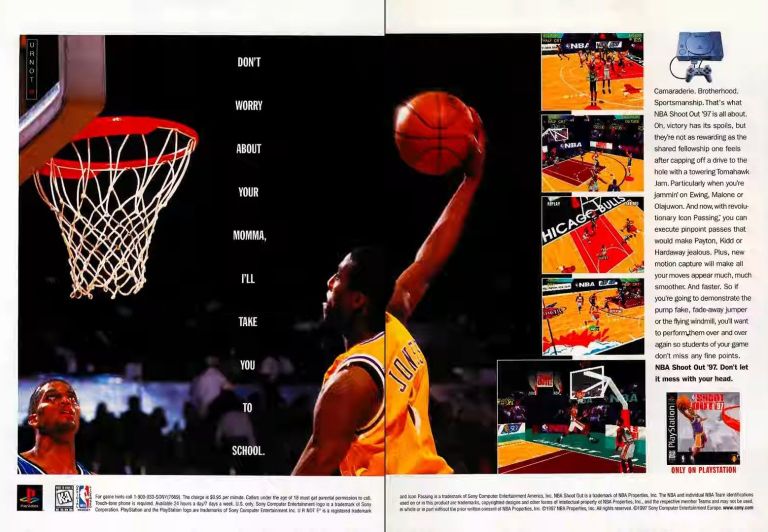
Did you play this on PlayStation in 1997?

If there is anything I miss about 1990s console gaming, it is the fact that there were a lot of NBA-licensed video games that were offered to players with different tastes in basketball gaming. Sony had its own exclusive NBA games series called NBA Shootout and they were pretty aggressive selling its own basketball games along with the PlayStation going up against the likes of Electronic Arts (NBA Live), Sega and others. This is reflected in this 2-page print ad of NBA Shootout ’97 which was a PlayStation-exclusive release. They featured a photograph of Lakers’ Eddie Jones about to dunk and showed screenshots as well as the descriptive text written with excitement. Since it first started, NBA Shootout was basketball in full 3D polygonal graphics backed with motion-captured moves and dunks that players could enjoy only PlayStation. This ad is a reminder that Sony used to make official NBA games and there is a lack of variety and players’ choice of NBA gaming in today’s world.

10. Legend of Legaia North American Print Ad
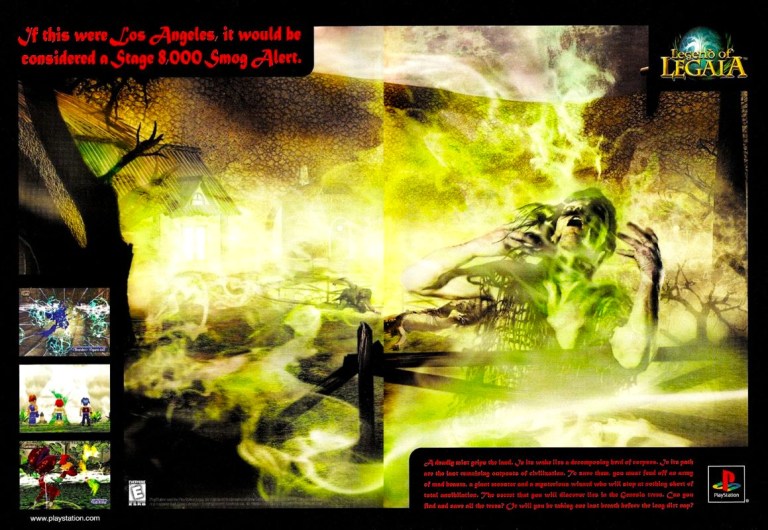
Perhaps someone at Sony Computer Entertainment America (SCEA) thought Legend of Legaia was a horror video game.

There was a time when Sony produced Japanese RPGs (JRPGs) exclusive for PlayStation consoles. One of them was Legend of Legaia which had a combat system that emphasized martial arts and it had an interesting fantasy concept. For its 1999 North American release, Sony came up with a very bizarre 2-page print ad that had digital artwork with a very strong horror vibe and the visual designs within the three screenshots shown were clearly not related with it. How this ad was made remains unclear. This is easily one of the most misguided gaming ads of the 1990s.

+++++

Thank you for reading. If you find this article engaging, please click the like button below, share this article to others and also please consider making a donation to support my publishing. If you are looking for a copywriter to create content for your special project or business, check out my services and my portfolio. Feel free to contact me with a private message. Also please feel free to visit my Facebook page Author Carlo Carrasco and follow me on Twitter at @CarloCarrascoPH as well as on Tumblr at https://carlocarrasco.tumblr.com/ and on Instagram athttps://www.instagram.com/authorcarlocarrasco
Retro Gaming Ads Blast – Part 42

Welcome back readers, fellow geeks and electronic gaming fans!

In this edition of the Retro Gaming Ads Blast (RGAB) series, we will take a look at another batch of retro gaming print ads from the 1980s to the 1990s.

For the newcomers reading this, Retro Gaming Ads Blast (RGAB) looks back at the many print ads of games (console, arcade, computer and handheld) that were published in comic books, magazines, flyers, posters and newspapers long before smartphones, social media, the worldwide web and streaming became popular. To put things in perspective, people back in the 1980s to the 1990s were more trusting of print media for information and images about electronic games and related products.

With those details laid down, here is the newest batch of retro gaming print ads for you to see and enjoy…

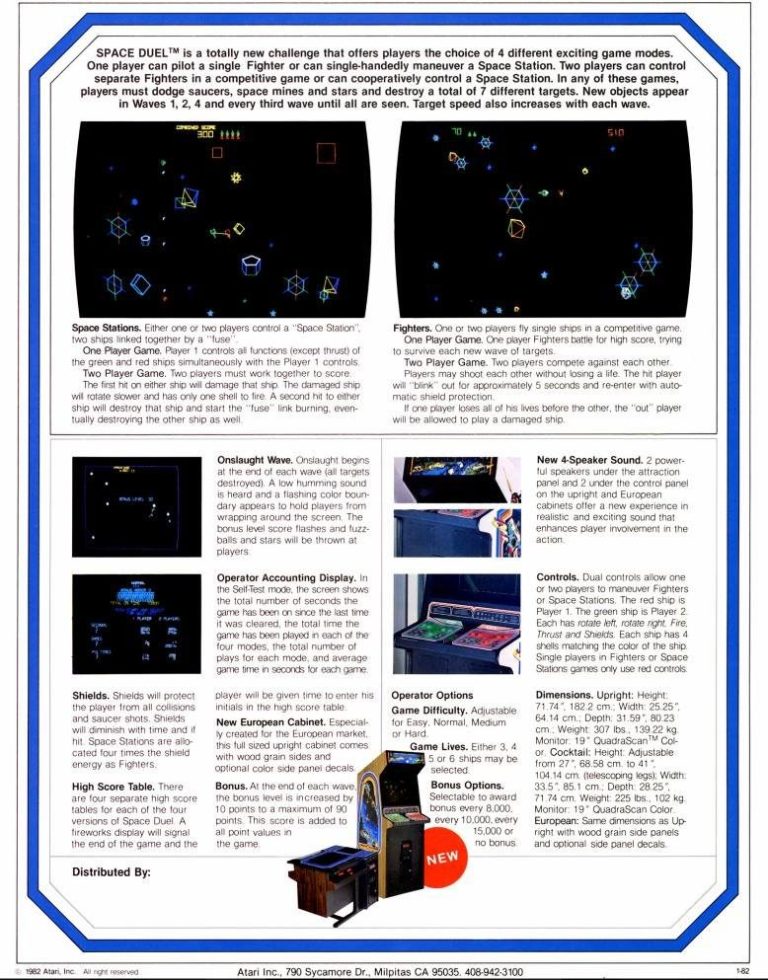
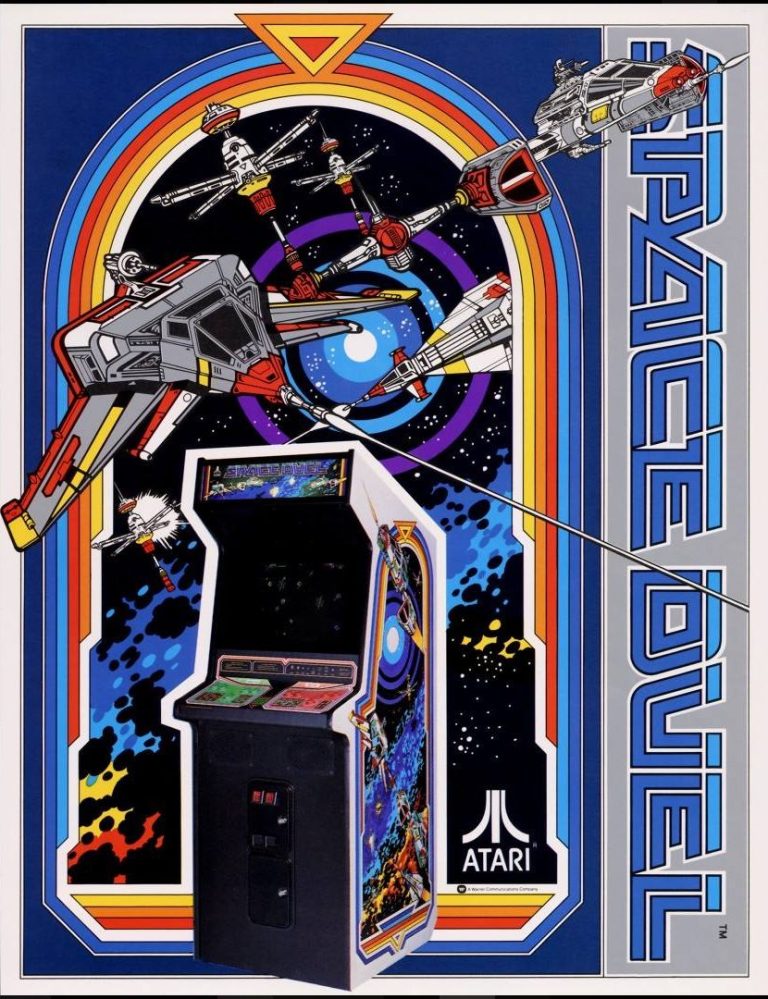
1. Space Duel Arcade Flyer

The front.
The rear.

When the 1979 arcade classic Asteroids achieved massive success for Atari, the company went on to make ports of it on different platforms as well as follow-ups in the arcades. The first follow-up Asteroids Deluxe had a positive reception but never reached the huge impact of its predecessor. Since Asteroids Deluxe was well regarded for improved visuals and higher level of challenge, Atari went on to make the 1982 follow-up Space Duel. To promote the game, Atari’s artists made fascinating original artworks for both the arcade cabinet and the arcade flyer itself. Apart from looking great, I noticed the spaceships of Space Duel’s art looks similar with those of Xevious (a Namco arcade game distributed by Atari in America) and I can only speculate that the same artist made those.

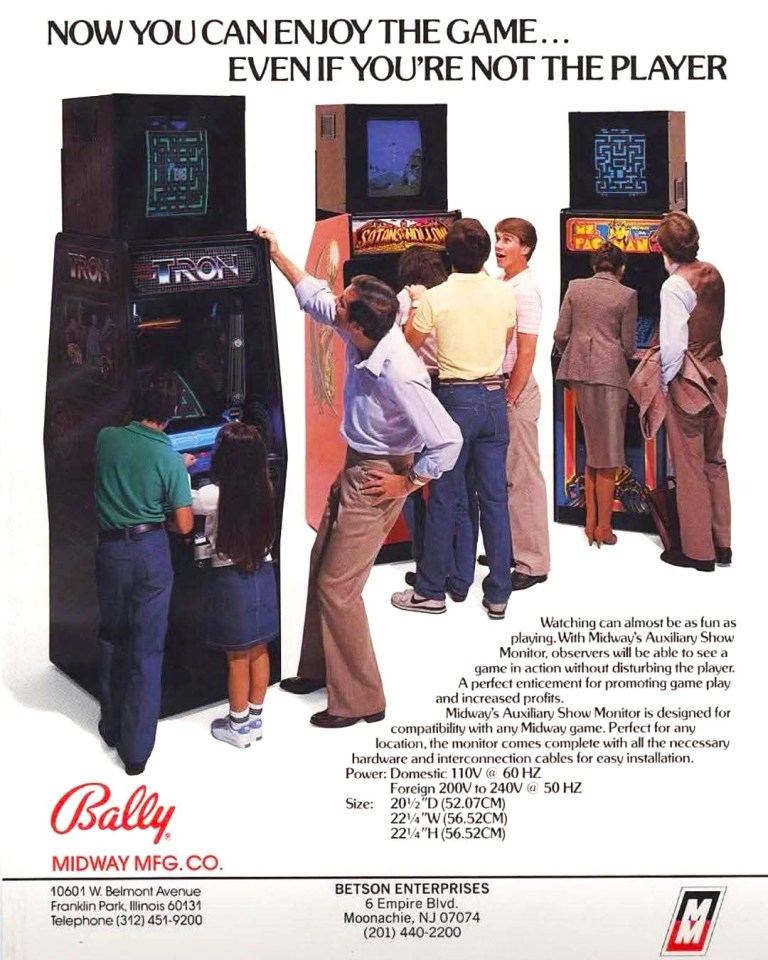
2. Midway Auxiliary Show Monitor Print Ad

Did you experience watching arcade gameplay footage displayed on an overhead monitor?

As video arcades in America became massively popular with people and became a major economic sector, it was not surprising that crowding became a trend especially whenever a very popular game attracted both players (waiting in line) as well as onlookers. Midway, which was an arcade giant in the 1980s, came up with their own concept of a specialized secondary display called the Midway Auxiliary Show Monitor designed to let onlookers watch a video of ongoing gameplay without physically standing by the player. As the print ad above shows precisely the use of the monitors, those were used at trade shows or in arcades with a setup to make turn the single-player experience into a makeshift show for the people nearby. Back in the 1980s, there was indeed a spectator approach to the arcade experience but players had to deal with the disturbance of many onlookers standing near to see the on-screen action. At the very least, Midway’s concept and hardware was a bold attempt to solve overcrowding.

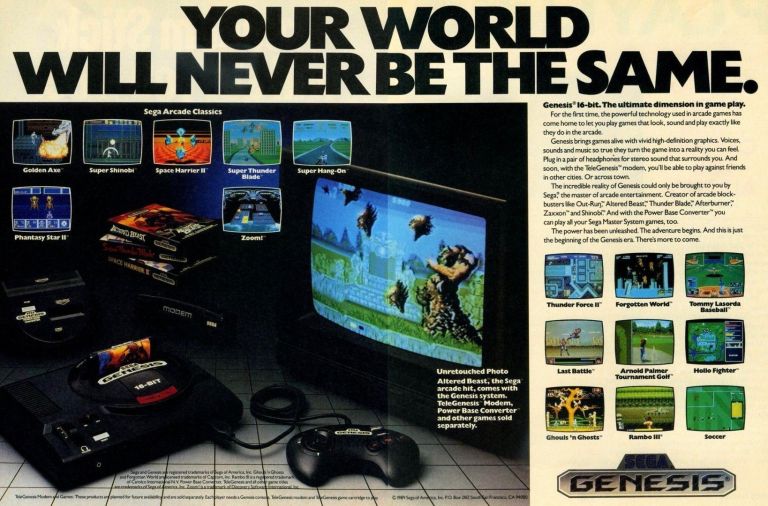
3. Sega Genesis North American Print Ad

Did this 1989 ad convince you to buy a Sega Genesis console?

While the Sega Genesis has always been identified with 1990s console gaming in America, the console was officially launched there in August 1989. At the time, Sega of America was not too creative nor aggressive when it comes to marketing the Genesis. The above 1989 print ad showed a lot of screenshots to promote the games, showed the console with a TV and a few peripherals and a text description that emphasized the Genesis as the so-called ultimate dimension in game play. Considering how dynamic and aggressive Sega’s marketing of the Genesis and games became a few years later when Tom Kalinske became the CEO, it is not surprising that this old ad has been forgotten.

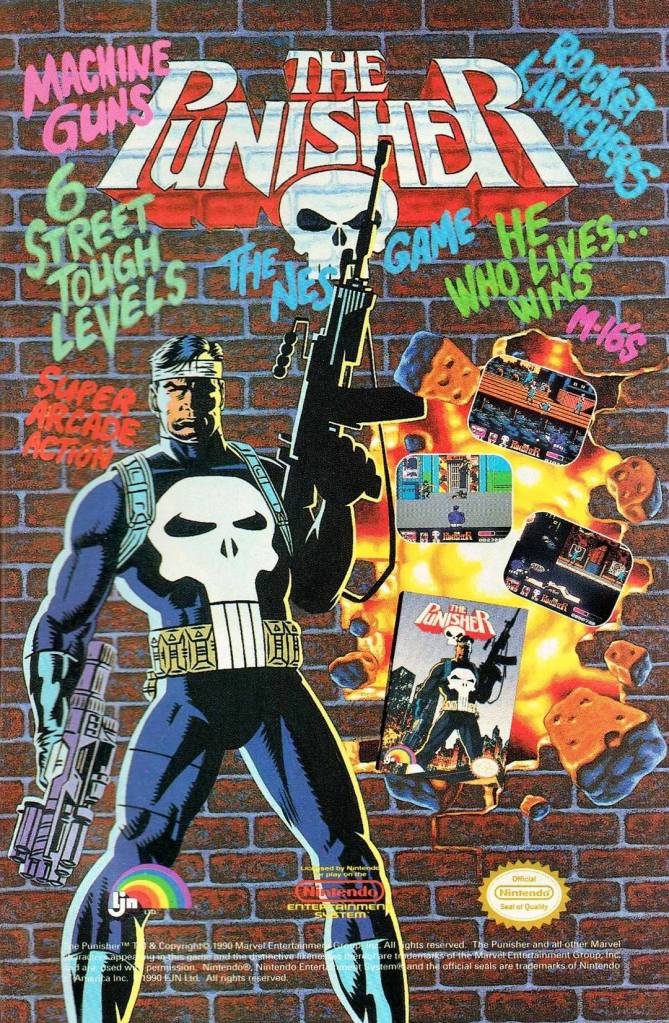
4. The Punisher NES Print Ad

Fact: The Punisher started as an assassin in the comic books in 1974 before being turned into an anti-criminal killer.

By the year 1990, The Punisher became one of Marvel Comics’ most popular figures and the character had two monthly series published. As such, an actual video game featuring the character was made for the Nintendo Entertainment System (NES) and to promote it, three screenshots were shown, a brick wall with stylized short messages was shown and a hand-drawn art of the Punisher was displayed. As seen in the screenshots, elements from The Punisher comic books were displayed such as shooting and fighting the criminals. Considering how wholesome the NES audience was at the time, this print promotion of The Punisher game looks odd although it is a fact that entertainment products featuring violent entertainment properties or characters were made and marketed towards children less than 12-years-old. Remember the Rambo animated series and video games of the 1980s?

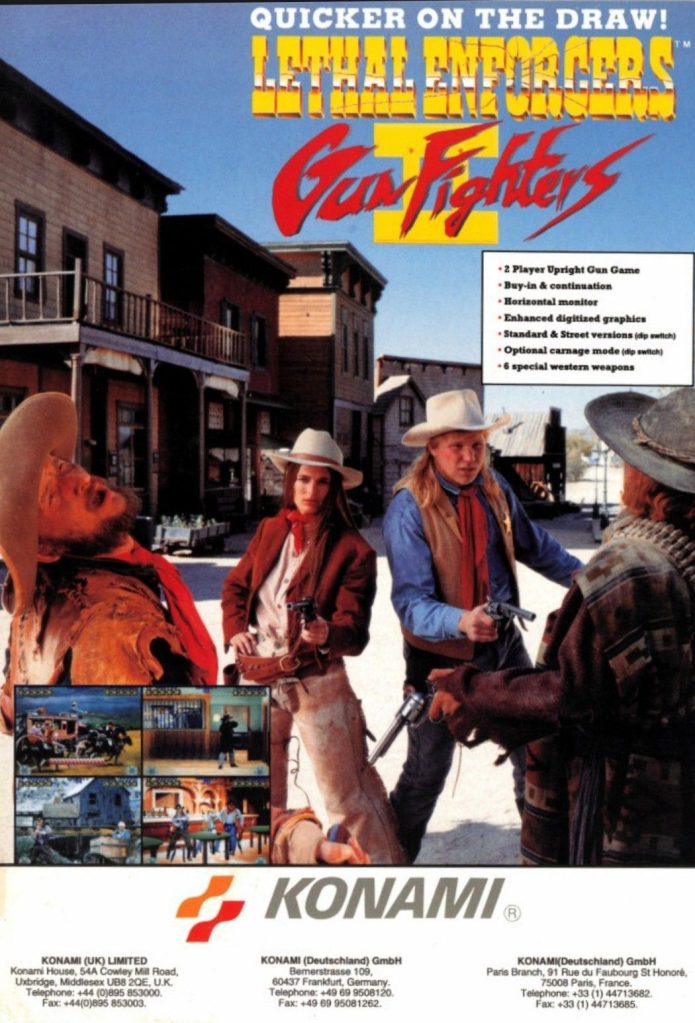
5. Lethal Enforcers II: Gun Fighters Arcade Flyer

Did you enjoy this Lethal Enforcers sequel?

After achieving both critical and big-time commercial arcade success with Lethal Enforcers in 1992, Konami proceeded with the sequel Lethal Enforcers II: Gun Fighters which was released in arcades two years later. While the 1994 game used 2D sprites and digitized photographs like its predecessor, Konami used the 19th century Old West as the setting making it totally different from the 1992 original. To promote the game and emphasize the Old West setting, Konami came up with this arcade flyer that showed actors in cowboy costumes with a background that looks like a cowboy movie set. Lethal Enforcers II: Gun Fighters went on to become successful in the arcades and it later got ported to game consoles.

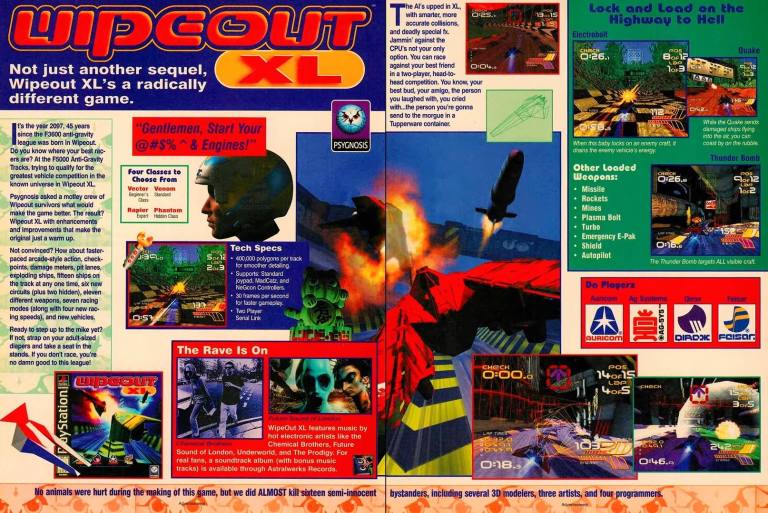
6. Wipeout XL Print Ad

This is an ad and not an article.

1996 was a tremendous year for console gaming. As Nintendo launched their highly anticipated Nintendo 64 console (N64) that year, game publishers came up with new games that further utilized the features of both Sony PlayStation and Sega Saturn. Wipeout XL was a sequel sci-fi racing game exclusive to the PlayStation and developer/publisher Psygnosis went all-in promoting the game with a lot of creativity and energy. They came up with this 2-page print ad to make gamers excited while creatively informing them what features, rave music and fun gameplay it has. On face value, this print ad looked more like a dazzling article.

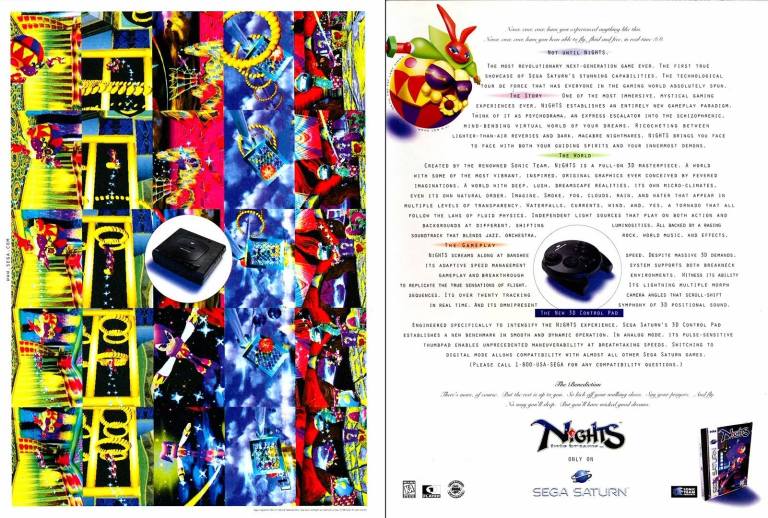
7. Nights into Dreams Print Ad

The team behind the popular Sonic platform games on the Sega Genesis made Nights into Dreams.

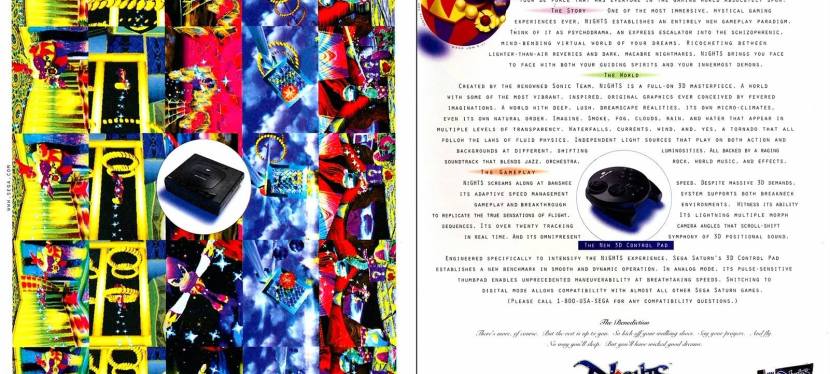
If there is anything notable about the history of the Sega Saturn, it is the fact that there were no new dedicated platform games of Sonic The Hedgehog released for it which is very odd as the Sonic platform games on Sega Genesis were big sellers, critically acclaimed and even made their mark on pop culture. During the mid-1990s, Sonic Team (which had Sonic game creators like Yuji Naka and Naoto Ohshima) were laser-focused on making Nights into Dreams (stylized as NiGHTS into Dreams) which was an all-new intellectual property that allowed them to utilize the 3D capabilities of the Saturn while making room for their creativity. Sega knew Nights into Dreams was special so they came up with this 2-page print ad which had an eye-catching display of screenshots of the game on the left (with the Saturn in the middle) while using the other half for descriptive text and explanations (with the special Saturn controller in the middle) to grab people’s attention. This old ad from 1996 is a mixed bag for me as the left side was captivating to see while the description on the right side requires some effort to read properly due to the small size of the text.

8. Super Mario 64 Print Ad

This one was simple, clean and yet memorable.

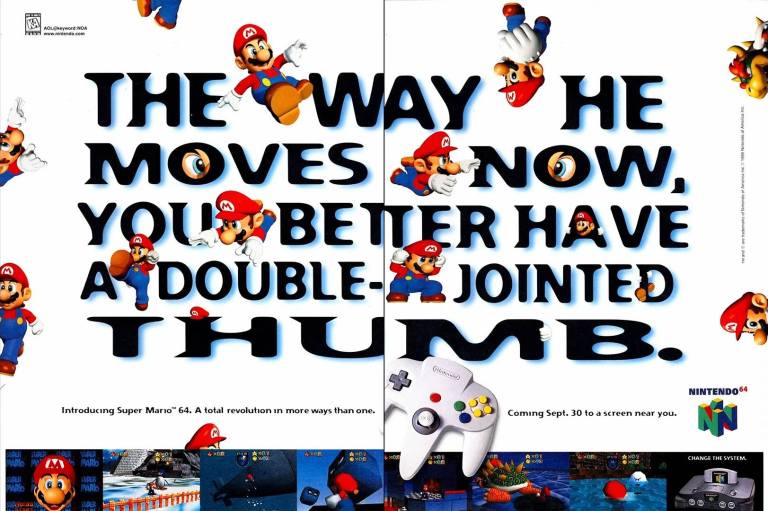
What is arguably the most memorable video game released in 1996 was Super Mario 64 which was not only a fully featured launch game of the Nintendo 64 console, but also the first-ever Super Mario platform game made with 3D polygons complete with a large 3D environment that can be explored a lot. There was a huge anticipation for this game by both gamers and the media, and whenever it was previewed before release, it drew lots of crowds and many ended up being very impressed and wanting more. Nintendo knew they had some very special under the production and direction of Mario creator Shigeru Miyamoto. As such, Nintendo had an ambitious marketing campaign that includes print media, video advertising on MTV, Fox and Nickelodeon and even sending video tapes to thousands of Nintendo Power magazine subscribers. This 2-page print ad was part of the campaign and it had a fine visual design that strongly emphasized the iconic Mario in polygonal form in most spaces, leaving the screenshots in the bottom. This old ad from 1996 never looks outdated and its clean approach is really effective in helping people understand that something great would be launched along with the N64. Both the console and this game sold a lot of copies ultimately and it remains one of Nintendo’s biggest achievements ever.

+++++

Thank you for reading. If you find this article engaging, please click the like button below, share this article to others and also please consider making a donation to support my publishing. If you are looking for a copywriter to create content for your special project or business, check out my services and my portfolio. Feel free to contact me with a private message. Also please feel free to visit my Facebook page Author Carlo Carrasco and follow me on Twitter at @CarloCarrascoPH as well as on Tumblr at https://carlocarrasco.tumblr.com/ and on Instagram athttps://www.instagram.com/authorcarlocarrasco
Retro Gaming Ads Blast – Part 14

Welcome back readers, fellow geeks and electronic gaming fans!

In this edition of the Retro Gaming Ads Blast (RGAB) series, we will take a look at another batch of retro gaming print ads – including arcade flyers – from the 1980s and 1990s.

For the newcomers reading this, Retro Gaming Ads Blast (RGAB) looks back at the many print ads of games (console, arcade, computer and handheld) that were published in comic books, magazines, flyers and newspapers long before smartphones, social media, the worldwide web and streaming became popular. To put things in perspective, people back in the 1980s and 1990s were more trusting of print media for information and images about electronic games and related products.

With those details laid down, here is the newest batch of retro gaming print ads for you to see and enjoy…

1. Lufia & The Fortress of Doom for Sega Genesis print ad

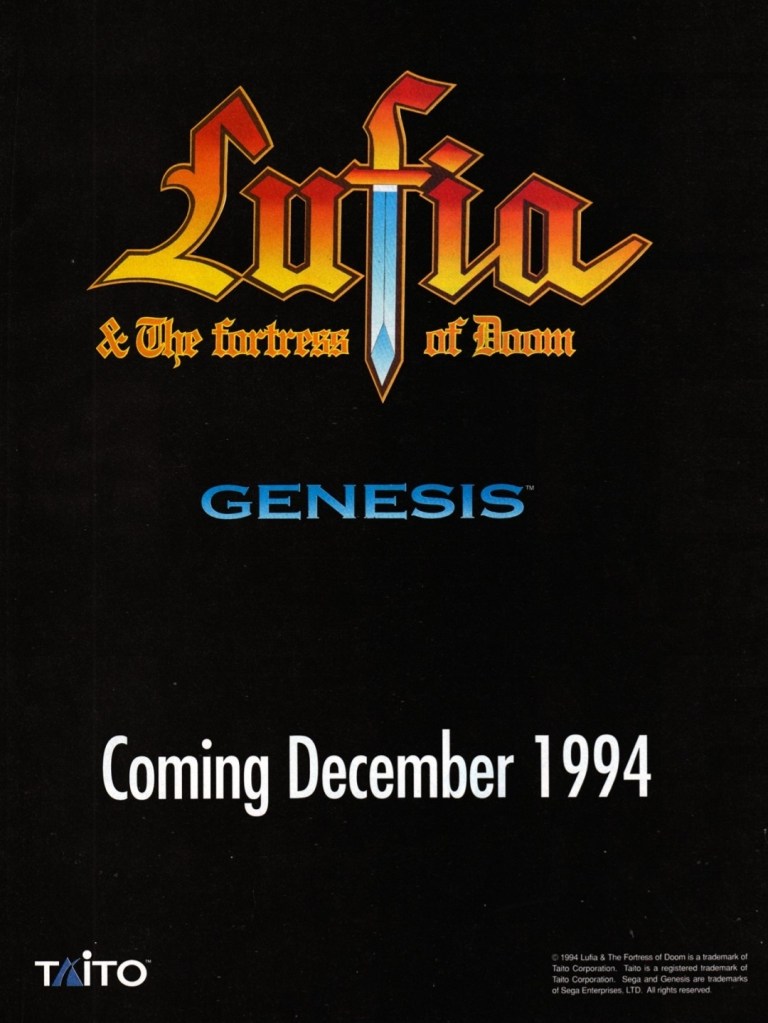
Considering the eventual scrapping of the Sega Genesis port of Lufia & The Fortress of Doom, this old print ad might as well serve like a tomb stone.

I want to start with this mostly black print ad about the Japanese role-playing game (JRPG) Lufia & The Fortress of Doom coming to the Sega Genesis console. This game was released on the Super Nintendo Entertainment System (SNES) in America and on the Super Famicom in Japan in 1993 and achieved commercial success for the Japan-based publisher Taito. In an attempt to keep on building up the success, a port of the game for the Sega Genesis (Sega Megadrive in other countries) was announced but ultimately it got canceled. It should be noted that Taito’s American division close down in 1995 and the sequel  Lufia II: Rise of the Sinistrals was released in America by a different publisher. That being said, this particular print ad is a sad reminder of a broken promise for Sega Genesis gamers as well as Lufia and JRPG fans who wanted to play the 1993 RPG on a different console.

2. Cloak & Dagger arcade flyer

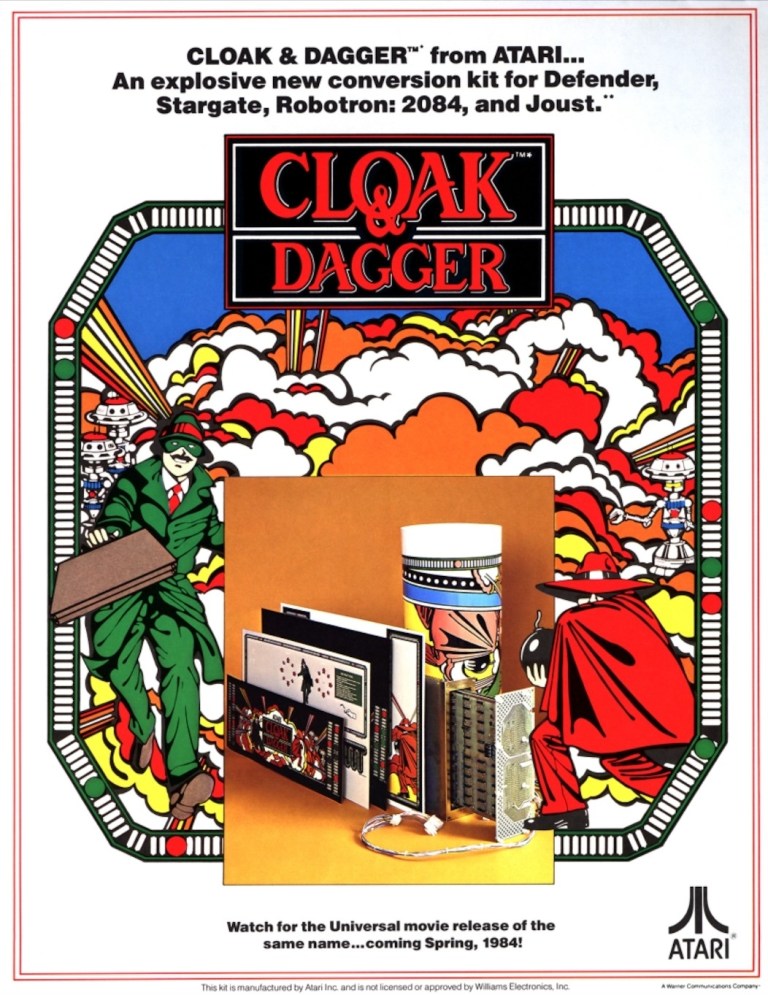
The front of the arcade flyer. There is even a mention of the Cloak & Dagger movie.
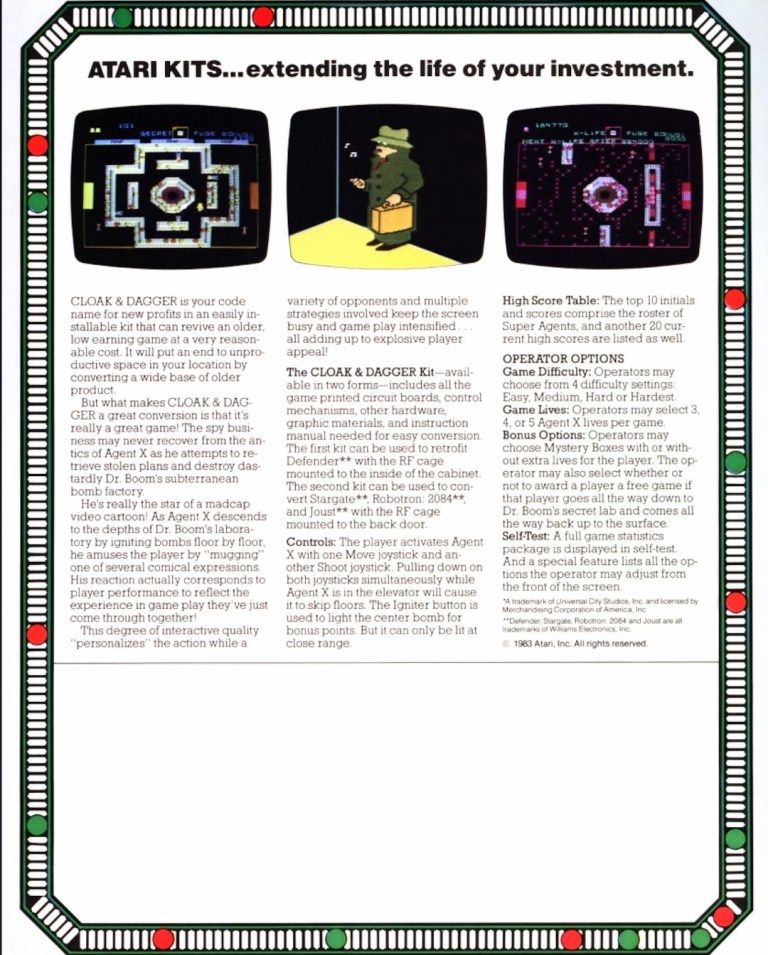
Details of the game explained with arcade operators in mind. I find it odd that there is a vacant amount of blank space on this side of the flyer.

Cloak & Dagger, the Atari arcade game that appeared in the 1984 movie of the same name (read my retro movie review by clicking here), has always been an arcade conversion kit as this arcade flyer showed. For the newcomers reading this, an arcade conversion kit allows the arcade operator to replace an old game without having to buy a brand-new arcade machine. Very cleverly, Atari targeted arcade machines of Robotron: 2084, Defender, Stargate and Joust (all were from the competitor Williams Electronics) with Cloak & Dagger. The Cloak & Dagger flyer’s front shows a picture of the pieces of hardware (for insertion into the arcade cabinet plus some physical adjustments) plus decorations for the exterior of the arcade cabinet. The other side of the flyer contains the technical details that make it convenient for arcade operators to understand on how to convert the older games (limited to the above-mentioned Williams games).

3. NBA Live 95 for Sega Genesis print ad

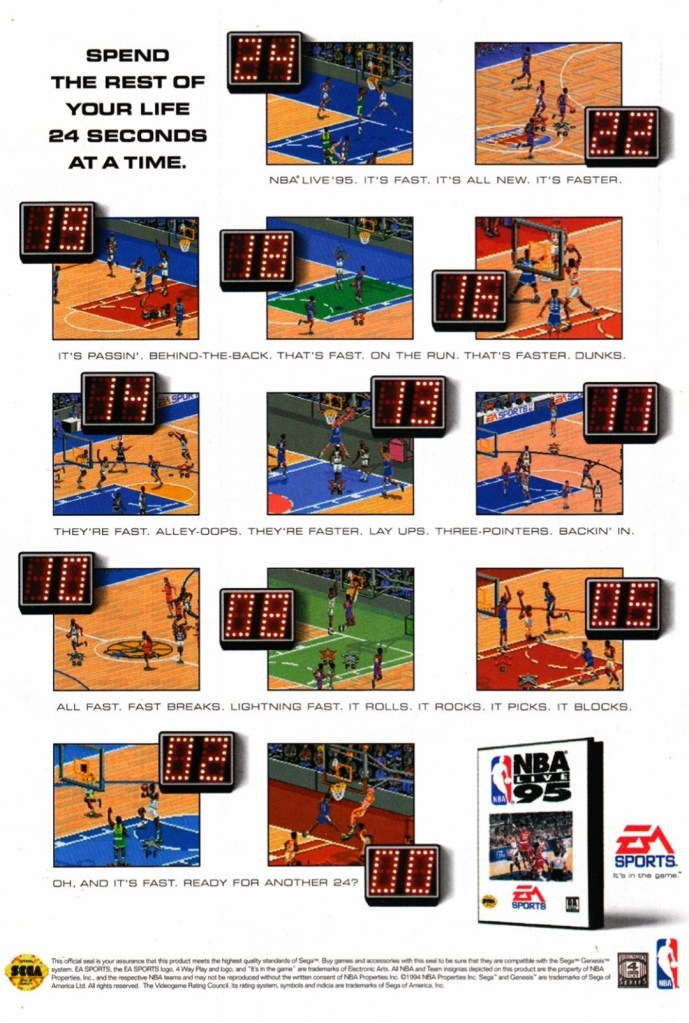
This print ad is still exciting to look at, especially when you are still passionate with basketball.

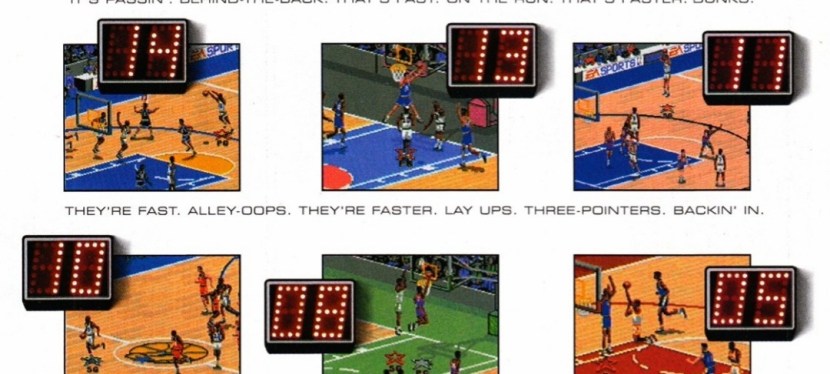
Back in late 1994, Electronic Arts (EA) revamped their NBA-licensed basketball game franchise with NBA Live 95 which came with a major game redesign that includes the isometric on-court perspective, T-meter for free throw shooting and more. NBA Live 95 was also the first entry of the NBA Live franchise and brand which lasted for decades. This print ad of the Sega Genesis version of NBA Live 95 has the clever display of several screenshots along with pics of the shot clock emphasizing suspense. The basketball action images themselves are not only eye-catching but strong enough to get gamers excited. This is still a solid print ad to look at.

4. X-Men: Mutant Apocalypse print ad

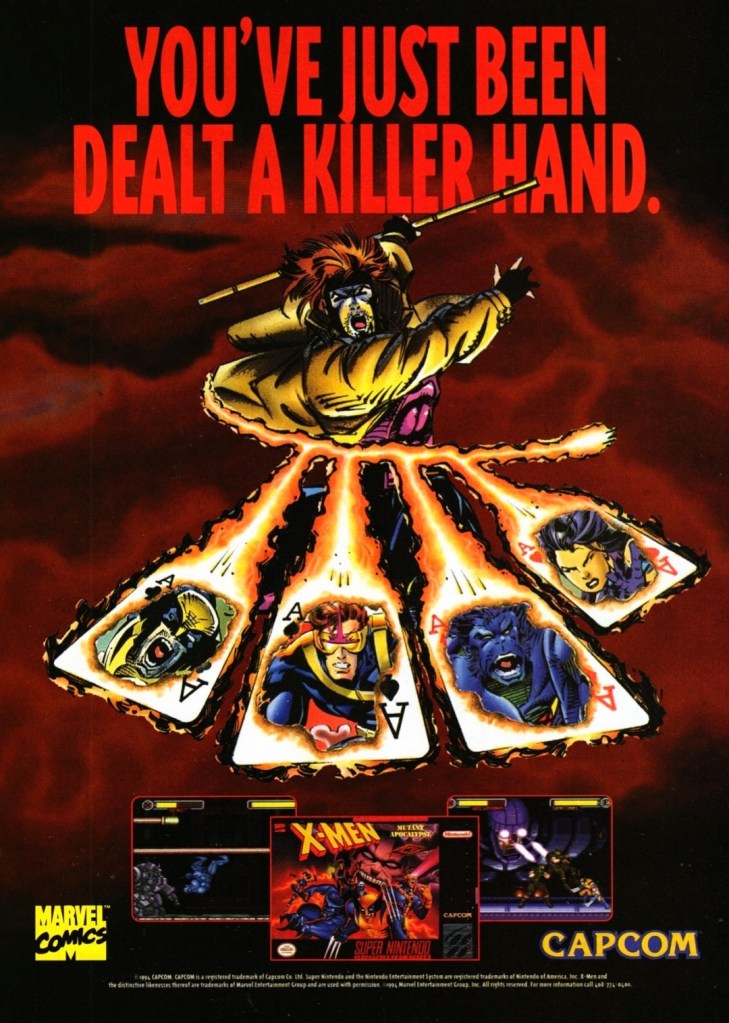
An X-Men game by Capcom.

If there is anything significant about X-Men: Mutant Apocalypse, it is the fact that it was Capcom’s first-ever X-Men-based production that was also released a month before their own hit arcade game X-Men: Children of the Atom came out. Setting aside Capcom’s involvement, this game contains notable elements from the comic books that strongly resonated with dedicated X-Men fans. Apart from the two screenshots and the game box cover, this print ad has X-Men artwork by Andy Kubert who already was the regular artist of the X-Men monthly series.

5. Space Ace multi-platform print ad

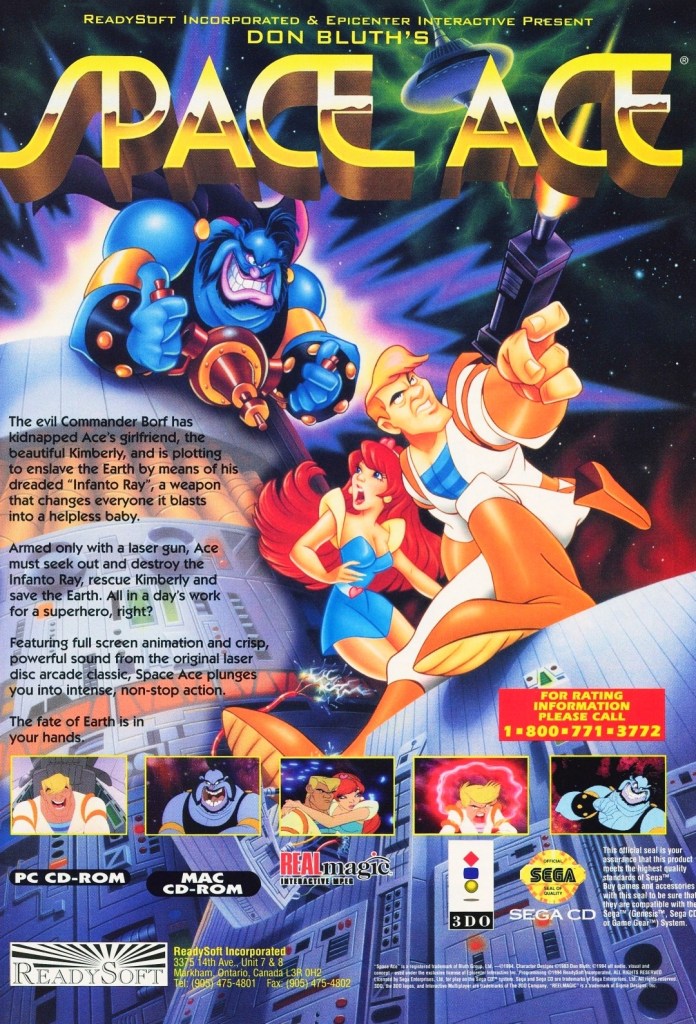
Anyone who is a fan of Don Bluth’s works in animation should be able to recognize the art style of this ad.

First released in the mid-1980s, Space Ace was a LaserDisc video game that was designed and produced by the legendary animator Don Bluth (An American Tail, The Land Before Time, Anastasia). After achieving success in the arcades, new versions of Space Ace were subsequently released on many other platforms, including the consoles and computers that used disc drives in the mid-1990s which this print ad emphasized. By looking at the lower part of the print ad, you will see Sega CD, 3DO, Macintosh and PC as targeted platforms. The most notable visual feature of the ad was, unsurprisingly, official art of Space Ace.

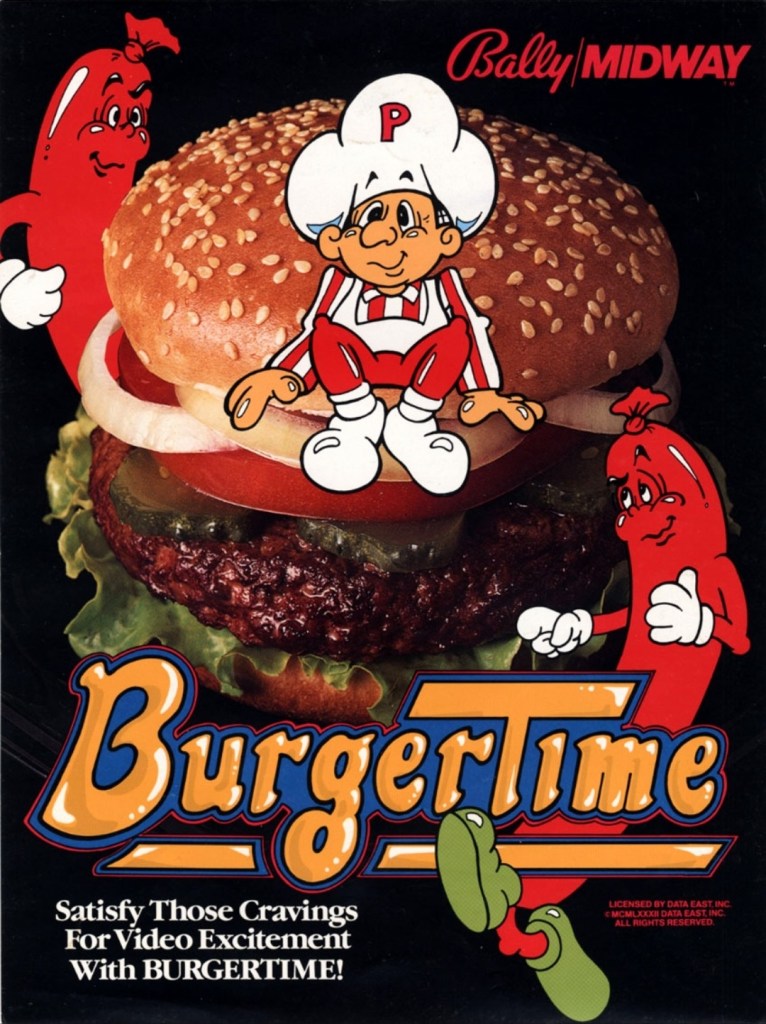
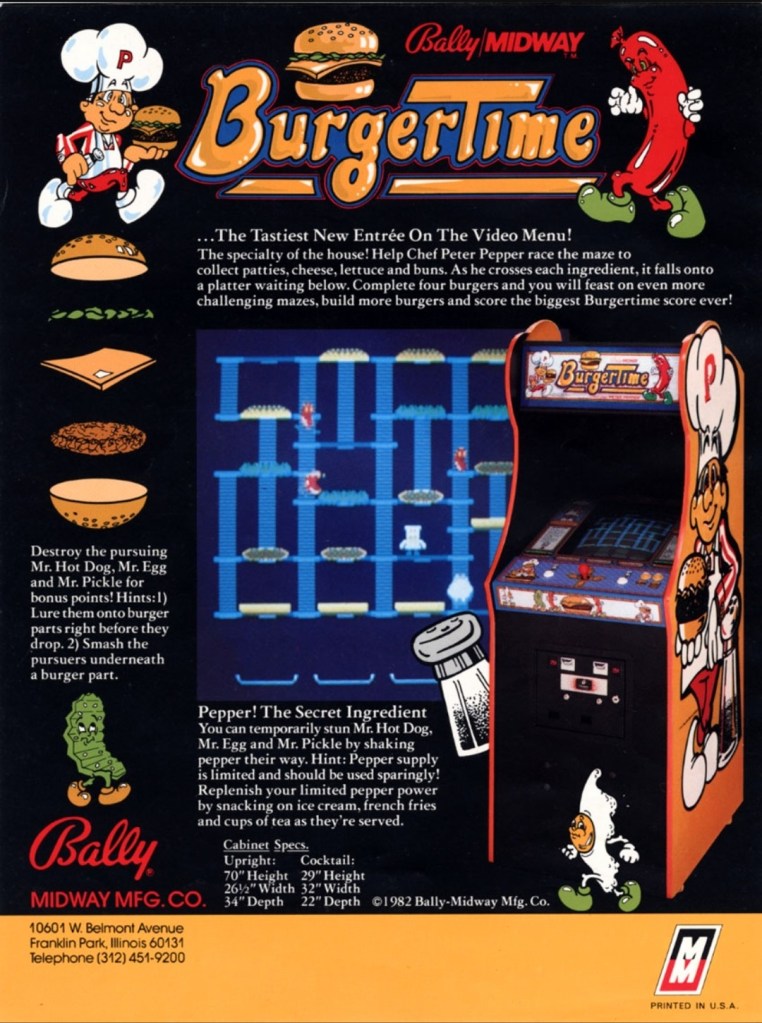
6. BurgerTime arcade flyer

The front of this flyer could make you crave for burgers.
The technical and creative details on the rear of the flyer.

Bally/Midway came up with this arcade flyer of BurgerTime which itself went on to become a beloved classic game. The front showed a very enticing looking hamburger that looked like it could fill a person’s belly and tingle his or her taste buds. Then they showed the hand-drawn in-game characters looking like they really are interacting with the hamburger. The back of the flyer shows details that emphasize what the game is about, why it could be a fun arcade addition and what the specs are. This is an engaging arcade flyer.  

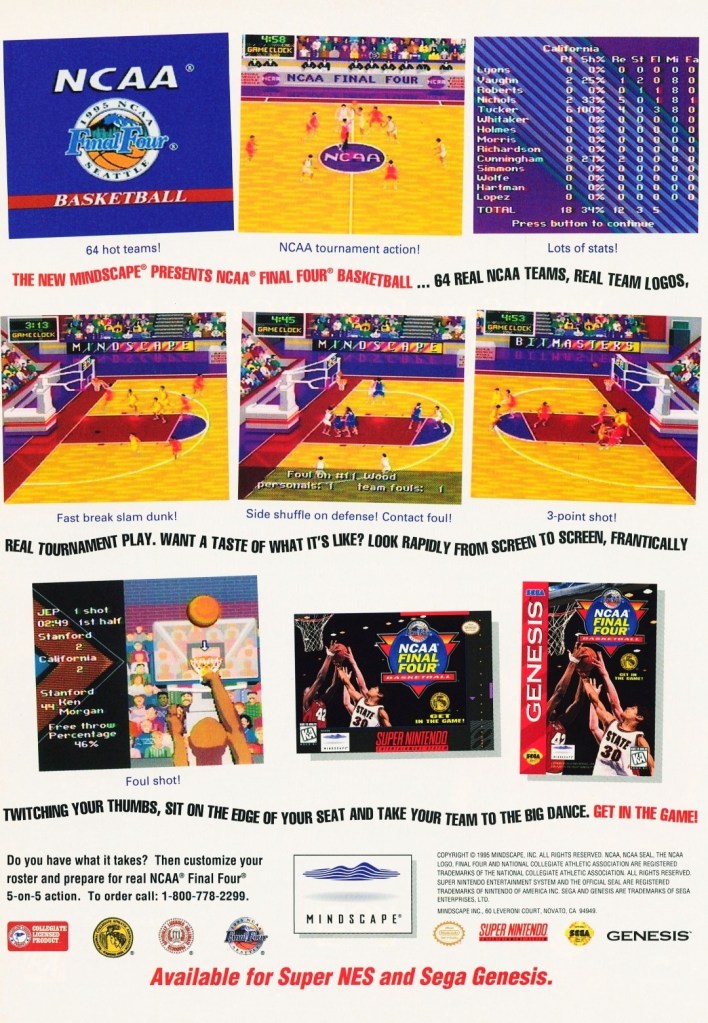
7. NCAA Final Four Basketball print ad

Do you know anyone who played this college basketball video game?

If there is anything notable about video gaming in the 1990s that is missing today, that would be the presence of multiple basketball video games released by different game publishers. Along the way, there were some college basketball video games such as NCAA Final Four Basketball developed by Bitmasters and published by Mindscape. This print ad had enough screenshots to show what the game looked like and how it played. The ad also mentioned that the game had 64 real NCAA teams and logos as well. This 1994 video game did not have a strong reception from game critics although it received a very high rating by GamePro magazine. NCAA Final Four Basketball has long been forgotten.

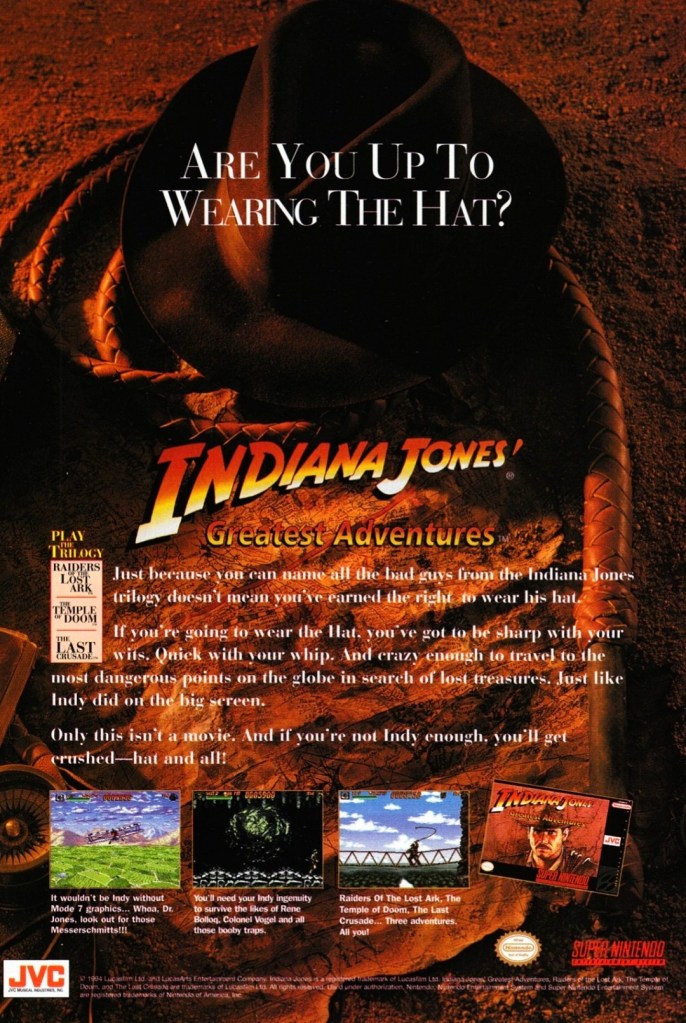
8. Indiana Jones’ Greatest Adventures print ad

An eye-catching print ad from a more memorable time when the Indiana Jones franchise was still under the full control of George Lucas and his enterprise.

Indiana Jones’ Greatest Adventures was an ambitious 2D side-scrolling adventure game that also served as an adaptation of the first three Indiana Jones movies (1981-1989) of Steven Spielberg and George Lucas. Like the Super Star Wars trilogy of games that preceded, this one was a challenging and lengthy game filled with lots of action. This print ad only showed Indy’s whip and hat but the screenshots, the text description and the game box cover (which has a young Harrison Ford as the iconic Jones) were more than enough to convince viewers that this was an Indiana Jones game.

+++++

Thank you for reading. If you find this article engaging, please click the like button below, share this article to others and also please consider making a donation to support my publishing. If you are looking for a copywriter to create content for your special project or business, check out my services and my portfolio. Feel free to contact me with a private message. Also please feel free to visit my Facebook page Author Carlo Carrasco and follow me on Twitter at  @HavenorFantasy as well as on Tumblr at https://carlocarrasco.tumblr.com/ and on Instagram at https://www.instagram.com/authorcarlocarrasco