Retro Gaming Ads Blast – Part 42

Welcome back readers, fellow geeks and electronic gaming fans!

In this edition of the Retro Gaming Ads Blast (RGAB) series, we will take a look at another batch of retro gaming print ads from the 1980s to the 1990s.

For the newcomers reading this, Retro Gaming Ads Blast (RGAB) looks back at the many print ads of games (console, arcade, computer and handheld) that were published in comic books, magazines, flyers, posters and newspapers long before smartphones, social media, the worldwide web and streaming became popular. To put things in perspective, people back in the 1980s to the 1990s were more trusting of print media for information and images about electronic games and related products.

With those details laid down, here is the newest batch of retro gaming print ads for you to see and enjoy…

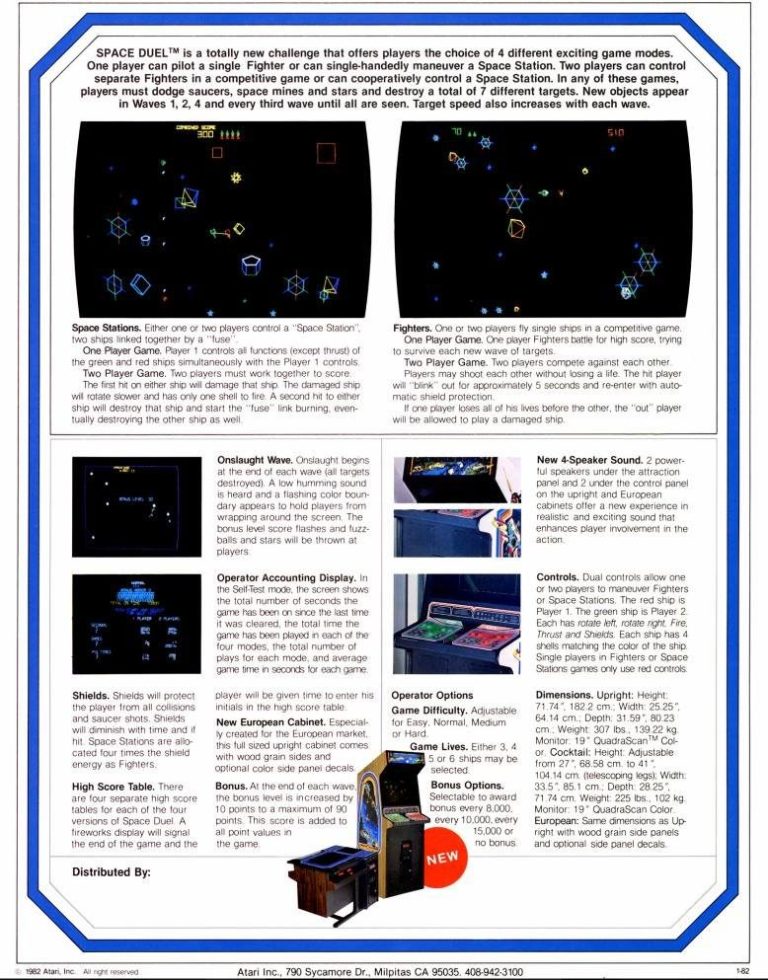
1. Space Duel Arcade Flyer
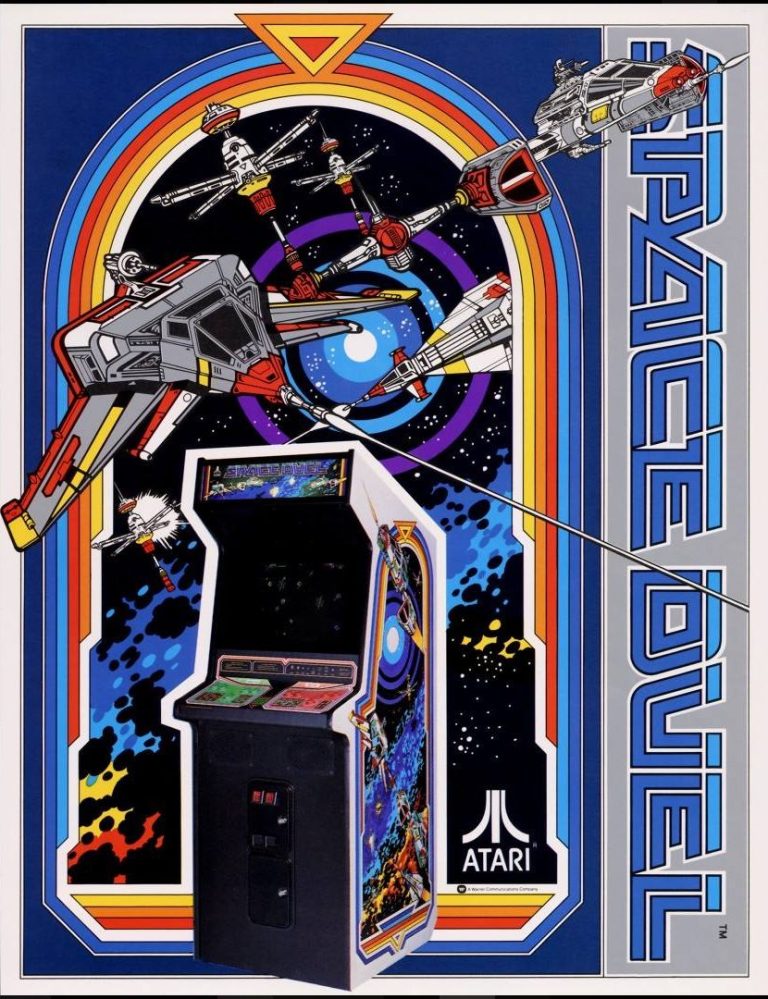
The front.
The rear.

When the 1979 arcade classic Asteroids achieved massive success for Atari, the company went on to make ports of it on different platforms as well as follow-ups in the arcades. The first follow-up Asteroids Deluxe had a positive reception but never reached the huge impact of its predecessor. Since Asteroids Deluxe was well regarded for improved visuals and higher level of challenge, Atari went on to make the 1982 follow-up Space Duel. To promote the game, Atari’s artists made fascinating original artworks for both the arcade cabinet and the arcade flyer itself. Apart from looking great, I noticed the spaceships of Space Duel’s art looks similar with those of Xevious (a Namco arcade game distributed by Atari in America) and I can only speculate that the same artist made those.

2. Midway Auxiliary Show Monitor Print Ad
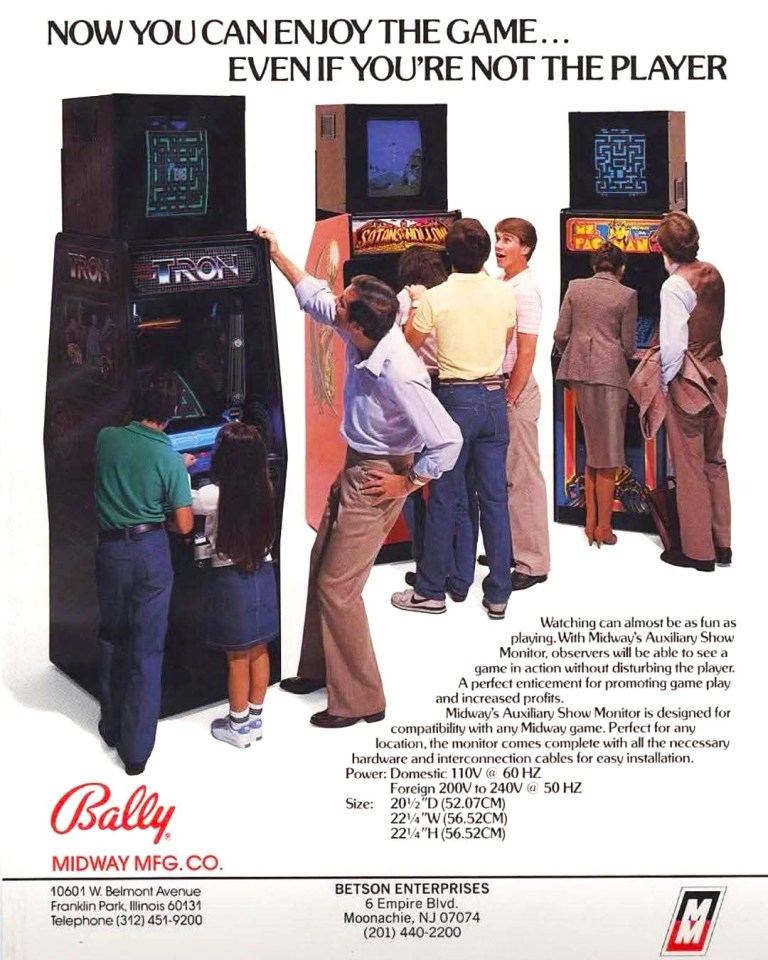
Did you experience watching arcade gameplay footage displayed on an overhead monitor?

As video arcades in America became massively popular with people and became a major economic sector, it was not surprising that crowding became a trend especially whenever a very popular game attracted both players (waiting in line) as well as onlookers. Midway, which was an arcade giant in the 1980s, came up with their own concept of a specialized secondary display called the Midway Auxiliary Show Monitor designed to let onlookers watch a video of ongoing gameplay without physically standing by the player. As the print ad above shows precisely the use of the monitors, those were used at trade shows or in arcades with a setup to make turn the single-player experience into a makeshift show for the people nearby. Back in the 1980s, there was indeed a spectator approach to the arcade experience but players had to deal with the disturbance of many onlookers standing near to see the on-screen action. At the very least, Midway’s concept and hardware was a bold attempt to solve overcrowding.

3. Sega Genesis North American Print Ad
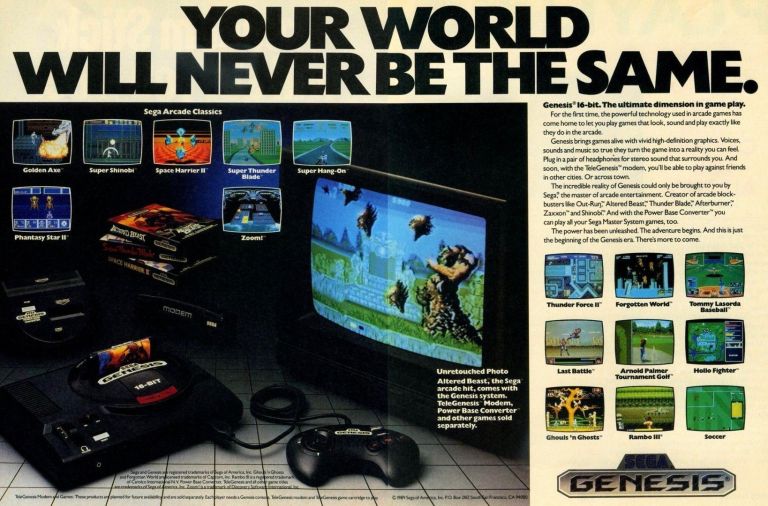
Did this 1989 ad convince you to buy a Sega Genesis console?

While the Sega Genesis has always been identified with 1990s console gaming in America, the console was officially launched there in August 1989. At the time, Sega of America was not too creative nor aggressive when it comes to marketing the Genesis. The above 1989 print ad showed a lot of screenshots to promote the games, showed the console with a TV and a few peripherals and a text description that emphasized the Genesis as the so-called ultimate dimension in game play. Considering how dynamic and aggressive Sega’s marketing of the Genesis and games became a few years later when Tom Kalinske became the CEO, it is not surprising that this old ad has been forgotten.

4. The Punisher NES Print Ad
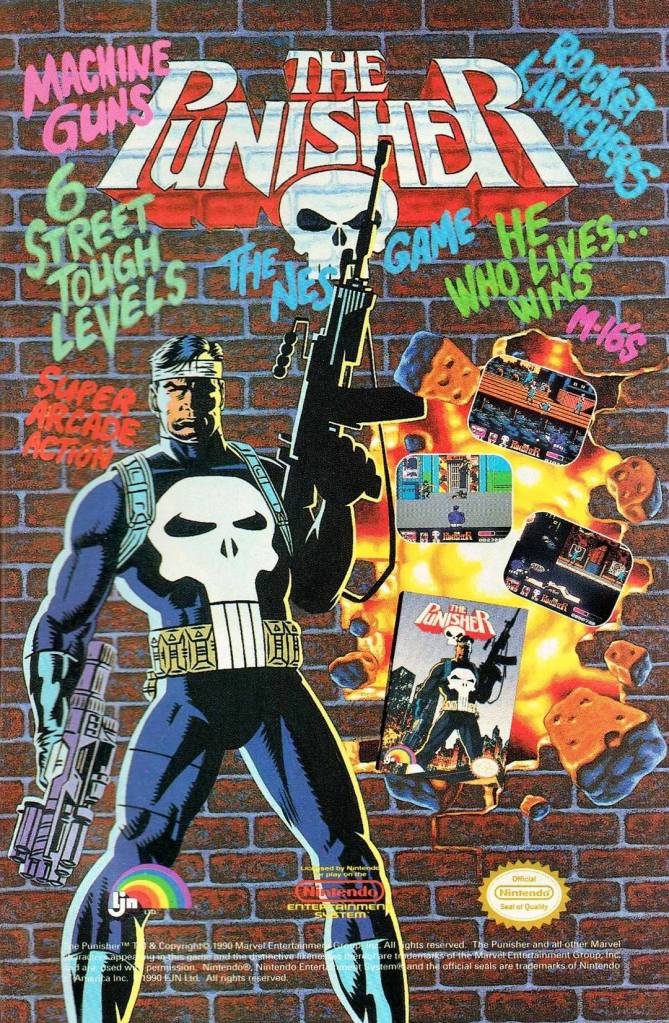
Fact: The Punisher started as an assassin in the comic books in 1974 before being turned into an anti-criminal killer.

By the year 1990, The Punisher became one of Marvel Comics’ most popular figures and the character had two monthly series published. As such, an actual video game featuring the character was made for the Nintendo Entertainment System (NES) and to promote it, three screenshots were shown, a brick wall with stylized short messages was shown and a hand-drawn art of the Punisher was displayed. As seen in the screenshots, elements from The Punisher comic books were displayed such as shooting and fighting the criminals. Considering how wholesome the NES audience was at the time, this print promotion of The Punisher game looks odd although it is a fact that entertainment products featuring violent entertainment properties or characters were made and marketed towards children less than 12-years-old. Remember the Rambo animated series and video games of the 1980s?

5. Lethal Enforcers II: Gun Fighters Arcade Flyer
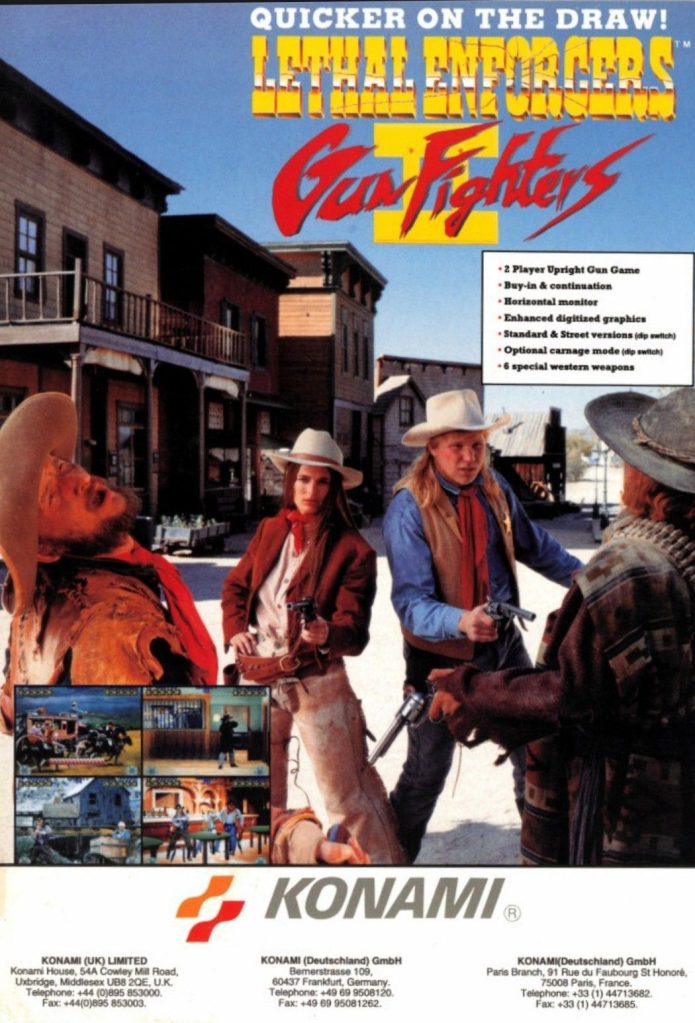
Did you enjoy this Lethal Enforcers sequel?

After achieving both critical and big-time commercial arcade success with Lethal Enforcers in 1992, Konami proceeded with the sequel Lethal Enforcers II: Gun Fighters which was released in arcades two years later. While the 1994 game used 2D sprites and digitized photographs like its predecessor, Konami used the 19th century Old West as the setting making it totally different from the 1992 original. To promote the game and emphasize the Old West setting, Konami came up with this arcade flyer that showed actors in cowboy costumes with a background that looks like a cowboy movie set. Lethal Enforcers II: Gun Fighters went on to become successful in the arcades and it later got ported to game consoles.

6. Wipeout XL Print Ad
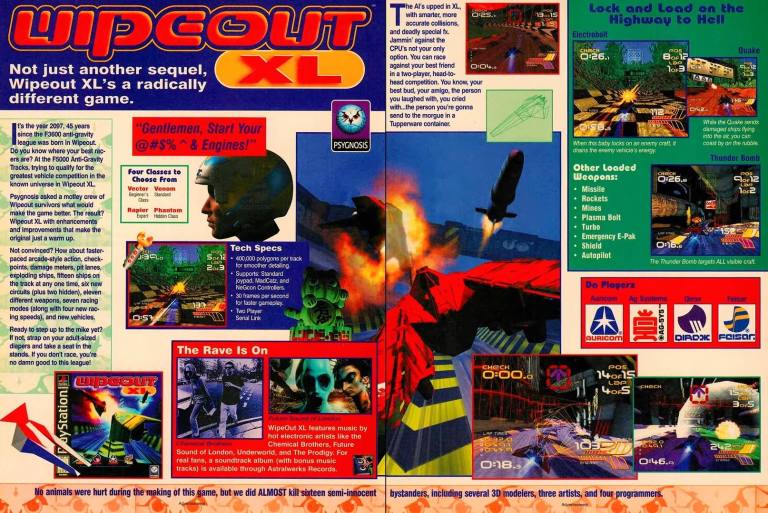
This is an ad and not an article.

1996 was a tremendous year for console gaming. As Nintendo launched their highly anticipated Nintendo 64 console (N64) that year, game publishers came up with new games that further utilized the features of both Sony PlayStation and Sega Saturn. Wipeout XL was a sequel sci-fi racing game exclusive to the PlayStation and developer/publisher Psygnosis went all-in promoting the game with a lot of creativity and energy. They came up with this 2-page print ad to make gamers excited while creatively informing them what features, rave music and fun gameplay it has. On face value, this print ad looked more like a dazzling article.

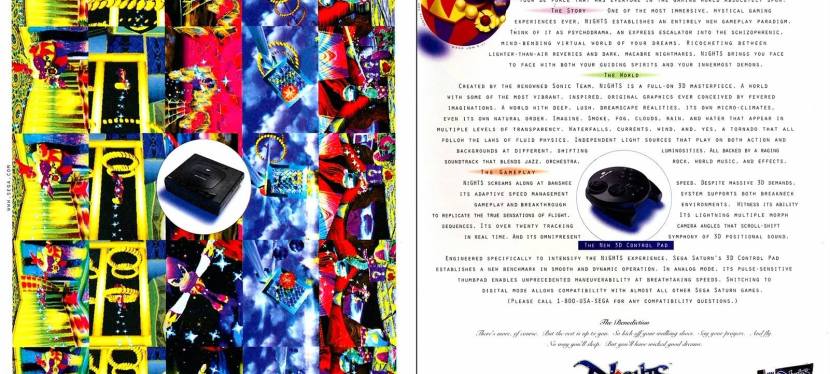
7. Nights into Dreams Print Ad
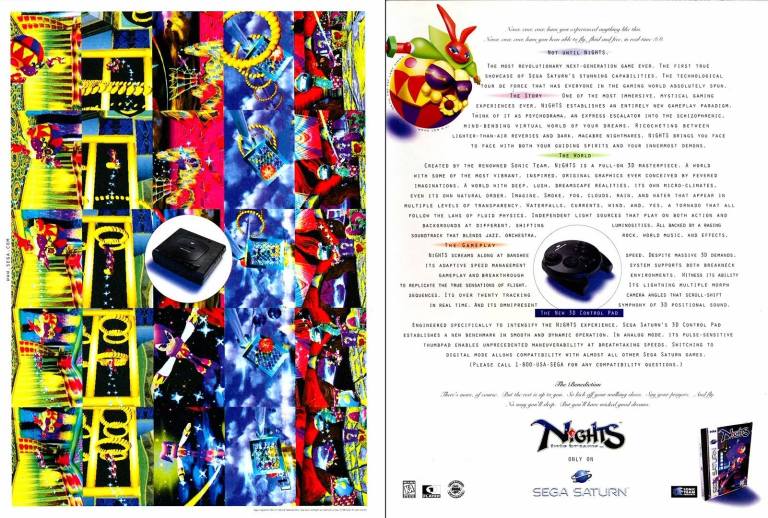
The team behind the popular Sonic platform games on the Sega Genesis made Nights into Dreams.

If there is anything notable about the history of the Sega Saturn, it is the fact that there were no new dedicated platform games of Sonic The Hedgehog released for it which is very odd as the Sonic platform games on Sega Genesis were big sellers, critically acclaimed and even made their mark on pop culture. During the mid-1990s, Sonic Team (which had Sonic game creators like Yuji Naka and Naoto Ohshima) were laser-focused on making Nights into Dreams (stylized as NiGHTS into Dreams) which was an all-new intellectual property that allowed them to utilize the 3D capabilities of the Saturn while making room for their creativity. Sega knew Nights into Dreams was special so they came up with this 2-page print ad which had an eye-catching display of screenshots of the game on the left (with the Saturn in the middle) while using the other half for descriptive text and explanations (with the special Saturn controller in the middle) to grab people’s attention. This old ad from 1996 is a mixed bag for me as the left side was captivating to see while the description on the right side requires some effort to read properly due to the small size of the text.

8. Super Mario 64 Print Ad
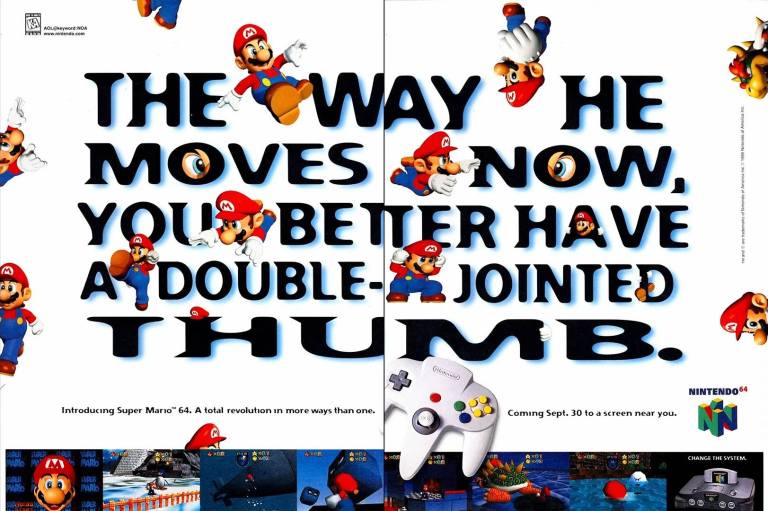
This one was simple, clean and yet memorable.

What is arguably the most memorable video game released in 1996 was Super Mario 64 which was not only a fully featured launch game of the Nintendo 64 console, but also the first-ever Super Mario platform game made with 3D polygons complete with a large 3D environment that can be explored a lot. There was a huge anticipation for this game by both gamers and the media, and whenever it was previewed before release, it drew lots of crowds and many ended up being very impressed and wanting more. Nintendo knew they had some very special under the production and direction of Mario creator Shigeru Miyamoto. As such, Nintendo had an ambitious marketing campaign that includes print media, video advertising on MTV, Fox and Nickelodeon and even sending video tapes to thousands of Nintendo Power magazine subscribers. This 2-page print ad was part of the campaign and it had a fine visual design that strongly emphasized the iconic Mario in polygonal form in most spaces, leaving the screenshots in the bottom. This old ad from 1996 never looks outdated and its clean approach is really effective in helping people understand that something great would be launched along with the N64. Both the console and this game sold a lot of copies ultimately and it remains one of Nintendo’s biggest achievements ever.

+++++

Thank you for reading. If you find this article engaging, please click the like button below, share this article to others and also please consider making a donation to support my publishing. If you are looking for a copywriter to create content for your special project or business, check out my services and my portfolio. Feel free to contact me with a private message. Also please feel free to visit my Facebook page Author Carlo Carrasco and follow me on Twitter at @CarloCarrascoPH as well as on Tumblr at https://carlocarrasco.tumblr.com/ and on Instagram athttps://www.instagram.com/authorcarlocarrasco
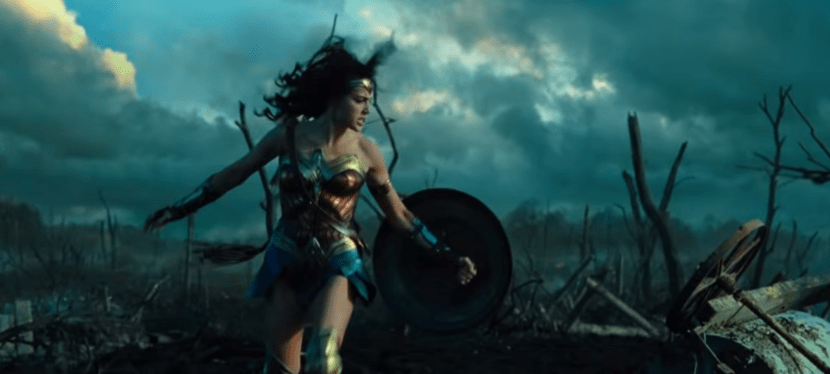
Why The No Man’s Land Scene In Wonder Woman Is Iconic

Disclaimer: This is my original work with details sourced from watching this feature film and doing online research. Anyone who wants to use this article, in part or in whole, needs to secure first my permission and agree to cite me as the source and author. Let it be known that any unauthorized use of this article will constrain the author to pursue the remedies under R.A. No. 8293, the Revised Penal Code, and/or all applicable legal actions under the laws of the Philippines.

From time to time in the world of cinema, something very significant happens on the big screen which impacts moviegoers deeply. Eventually they talk about for months or even years after seeing it. In due time, such memorable sequences or scenes become iconic. What remains talked about among moviegoers and superhero culture fans until now is the No Man’s Land scene from the acclaimed 2017 superhero movie Wonder Woman starring Gal Gadot and directed by Patty Jenkins.

Released on June 2017, Wonder Woman grossed $821,847,012 worldwide and was also critically acclaimed. Its optimistic tone made it stand out among the DC Cinematic Universe movies and it has been argued that Wonder Woman was Warner Bros.’ serious effort to symbolically pull their cinematic superheroes out of the cloud of darkness that started in 2013 with Man of Steel.

Wonder Woman had it all. Great hard-hitting action, humor (nicely performed by the supporting cast), good pacing, nice cinematography and of course the very fine performances by the actors especially with Gal Gadot’s portrayal of Diana/Wonder Woman.

Among its many scenes, the No Man’s Land sequence is the most defining piece of the film laced with great cinematic art, meaning and powerful symbolism. It’s a very iconic scene that deserves to be seen again and again. The scene also helped the movie win the Best Fight Award of the 2018 MTV Movie and TV Awards.

Why is the No Man’s Land scene so iconic?

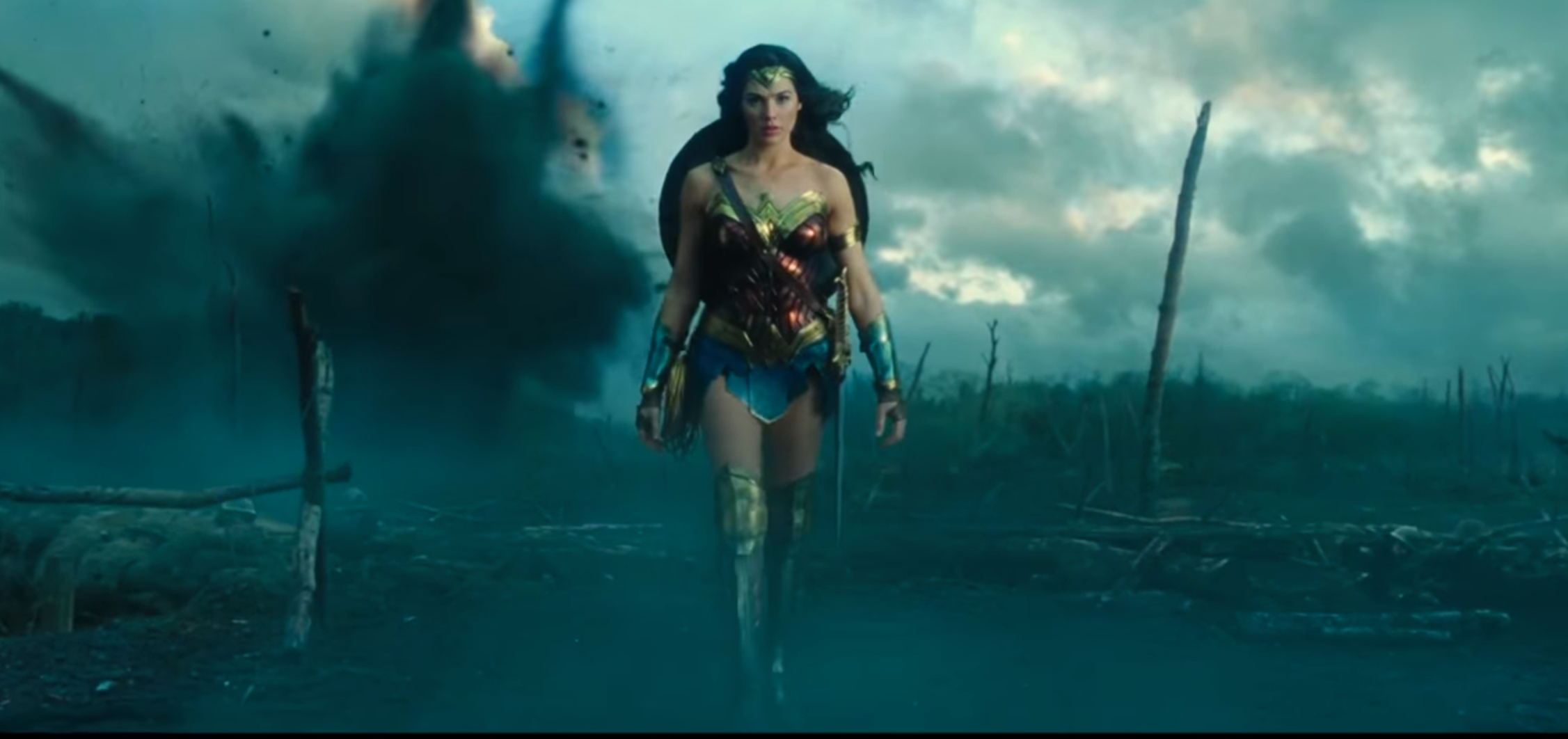
Screenshot_20190309-000106~2.png
The moment that captivated moviegoers worldwide.

1) It introduces Wonder Woman’s iconic imagery to the world (both within the movie and to moviegoers) – Wonder Woman has been around since 1941 and for the most part she wears the tiara, the bracelets, the strapless top and the like. For the movie, the scene marked the first time ever Wonder Woman appeared wearing her famous costume (specifically a sacred Amazon armor within the story) introducing herself not only within the movie but also to the moviegoers in the cinemas. This scene was accompanied with the very powerful musical score of Rupert Gregson-Williams. By watching and listening, Wonder Woman’s first appearance in her armor symbolized the start of her effort to save people and turn the tide against evil and darkness.

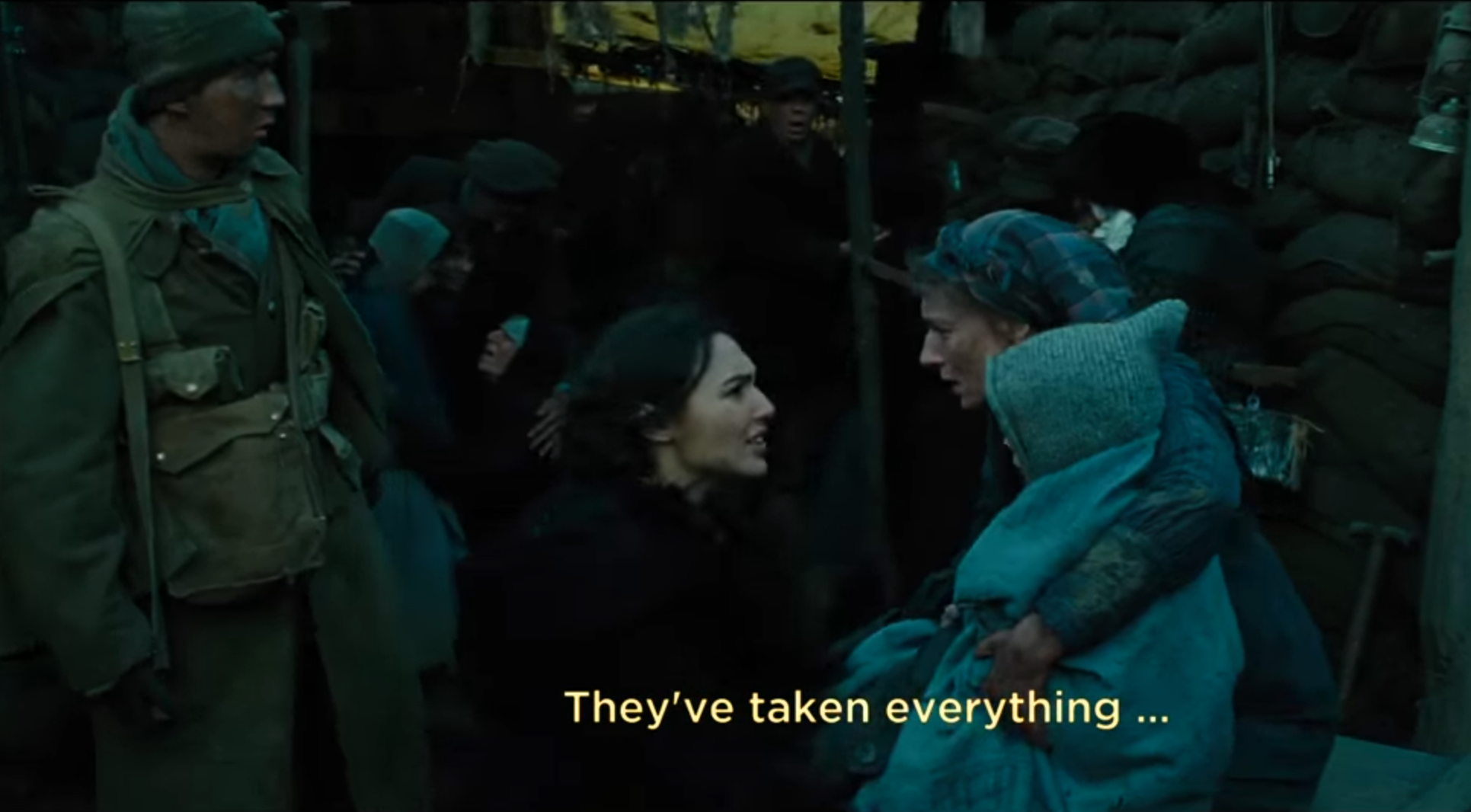
2) Diana: No. But it’s what I’m going to do! – In the moments before Diana makes her appearance on the battlefield, she encounters a suffering woman carrying a child who asked for her help and tells her that their village was seized and her villagers who could not escape end up as slaves.

Screenshot_20190309-000031~2.png
Diana listening to a desperate lady whose village got ravaged.

Diana tries to convince Steve Trevor to help the affected people but he insisted on pushing through with their mission. For your reference, posted below is the dialogue from the film.

Steve Trevor: This is no man’s land, Diana! It means no man can cross it, alright? This battalion has been here for nearly a year and they’ve barely gained an inch. All right? Because on the other side there are a bunch of Germans pointing machine guns at every square inch of this place. This is not something you can cross. It’s not possible.

Diana Prince: So… what? So we do nothing?

Steve Trevor: No, we are doing something! We are! We just… we can’t save everyone in this war. This is not what we came here to do

(Diana moves away from Steve, loosens her hair, wears her tiara and turns back to Steve)

Diana Prince: No. But it’s what I’m going to do.

These moments before Wonder Woman’s rise clearly show that she is dedicated to saving people. Her disagreement with Steve was reasonable and the guy, who witnessed the Germans and Amazons clashed early in the film, underestimated Diana’s bravery and special abilities. Diana made the right decision even though her act looked suicidal to the men on both sides of the field. There is just no way she would ignore the fact that people got overwhelmed and have suffered. More importantly, the build-up that started with Diana’s talk with the suffering lady was simply perfect and very timely leading to Wonder Woman’s rise on the field.

3) She stood up for what she believed in – Not only was the No Man’s Land scene a fine display of Wonder Woman’s courage and heroism, it was also an extension of what she believed in and was she learned having grown up in Themyscira. Diana is a warrior but she’s not the type who focuses mainly on achieving victory only nor is she the type who gets satisfied with the use of violence as a means to win. She grew up oriented by her queen mother and Amazon superiors to be compassionate, brave, inspiring and loving. After turning the tide against the Germans and liberating the village, she did NOT develop a personal hatred nor grudge against the Germans. After all, she knew that men can be corrupted and yet they can still be reformed and saved. Wonder Woman stood up, moved forward, deflected the many pieces of ammunition fired at her and inspired Steve and their allies to follow her lead and turn the tide of battle. That’s a great reflection of her heroism, bravery and her dedication on standing up for what she believes in.

Wonder Woman cares about the people who need help and in return we the moviegoers care for her and look up to her as the Queen of Superheroes. She definitely is the kind of superhero we need to see more of in movies.

4) The No Man’s Land scene is comparable with real life art emphasizing struggle – Many may not have realized it until now but the iconic scene in the movie is quite comparable to real life artworks that emphasized bravery, struggle and the effort to be free if not victorious. The one classic art that comes to mind is Liberty Leading the People painted by Eugene Delacroix. That 1830 French artwork about the July Revolution showed a lady with a phrygian cap leading guiding her armed companions and leading the way as they step over some dead bodies on the ground. Liberty in that art was depicted by the painter as a lady of the people as well as a goddess-like figure. Wonder Woman in the No Man’s Land scene flowed with a nice pace using a few slow-motion shots to emphasize her ability to block a bullet with her brace. It’s like looking at a painting being animated. And then as Wonder Woman creates opportunities to beat the opposition, the allied soldiers gained the courage to climb up and run up the field to fight. As the breakthrough happens, Wonder Woman said, “Steve! Let’s go!”

Moments later there is a short shot of Wonder Woman in the foreground running (towards the camera) while the many allied soldiers in the background follow her.

The No Man’s Land scene is quite artistic in its own style and if it is not inspired by the Liberty Leading the People painting, it sure shares common themes of courage and battle with it.

Conclusion

The No Man’s Land sequence is truly iconic and it will always be identified with the cinematic Wonder Woman and even actress Gal Gadot herself. While waiting for Wonder Woman 1984 to come out, we can enjoy replaying Wonder Woman on Blu-ray and watch the story unfold. The No Man’s Land scene is always engaging and artistic to watch. Patty Jenkins and her creative team deserve our appreciation and gratitude.


Thank you for reading. If you find this article engaging, please click the like button below and also please consider sharing this article to others. Also my fantasy book The World of Havenor is still available in paperback and e-book format. If you are looking for a copywriter to create content for your special project or business, check out my services and my portfolio. Feel free to contact me as well. Also please feel free to visit my Facebook page Author Carlo Carrasco and follow me at HavenorFantasy@twitter.com