Retro Gaming Ads Blast – Part 44

Welcome back readers, fellow geeks and electronic gaming fans!

In this edition of the Retro Gaming Ads Blast (RGAB) series, we will take a look at another batch of retro gaming print ads from the 1980s to the early 2000s.

For the newcomers reading this, Retro Gaming Ads Blast (RGAB) looks back at the many print ads of games (console, arcade, computer and handheld) that were published in comic books, magazines, flyers, posters and newspapers long before smartphones, social media, the worldwide web and streaming became popular. To put things in perspective, people back in the 1980s to the 1990s were more trusting of print media for information and images about electronic games and related products.

With those details laid down, here is the newest batch of retro gaming print ads for you to see and enjoy…

1. Berzerk Arcade Flyer

The front.
The rear.

Could you imagine being trapped deep within a maze surrounded by dangerous robots (plus one other unstoppable enemy) capable firing laser blasts at you? This was the concept behind the design of Berzerk, an arcade game released by Stern Electronics in 1980. Released at a time when science fiction became wildly popular in American entertainment, Berzerk was immersive for gamers and the multidirectional gameplay feature was captivating for many. To promote the game, Stern Electronics came up with a customized visual design that blended 2D sprite elements with a photograph of two people and some hand-drawn art pieces. The front of the flyer emphasized accurate the core concept of the game while the rear explained the technical details. They even played with their company name with the line “Stern goes berzerk!”

2. Rush’n Attack North American Arcade Flyer

The arcade flyer for North America

During the late stages of the Cold War, Konami made a lot of military-themed video games which resonated not only with those who were already aware about the global conflict but also with gamers who craved for action and excitement. One of those games was Rush’n Attack (alternative title: Green Beret) which was released in American arcades in late-1985. Konami came up with an arcade flyer showing four people (looking like an American family) having a good time in front of an arcade cabinet, and three screenshots of the game were displayed on the lower half. Rush’n Attack – which was deliberately titled to resemble the phrase “Russian attack” due to its obvious Cold War setting – went on to succeed commercially and critically. One notable game review compared Rush’n Attack favorably with the movie Rambo: First Blood Part II.

3. Turbo Out Run North American Arcade Flyer

The flyer.

Following the massive success Sega achieved with Out Run in 1986, the company went on to release the follow-up Turbo OutRun three years later. As seen in their North American flyer, Sega emphasized the in-game locations, the look of the machine with the driver’s seat and steering wheel, and the excitement they can expect. Turbo OutRun went on to become successful in the arcades worldwide and it got ported to a variety of consoles and computer systems in the years that followed. On its own, the arcade flyer sparked excitement for gamers.

4. Air Duel Japanese Arcade Flyer

The artwork here is captivating to look at.

Released in Japanese arcades in 1990, Air Duel from Irem is an intense and fast-paced 2D sprite vertically scrolling shooter that attracted a lot of players. It had a war theme and its aesthetic has a mix of military and somewhat futuristic science fiction elements. The game’s arcade flyer featured a very intriguing artwork by Takashi Yamasaki showing two aircrafts flying over a city heading towards a massively large enemy in the distance. In my opinion, the artwork alone is pretty engaging to see and it’s more than enough to make me think about playing the game.

5. Spellbound Adaptor Print Ad

The Spellbound Adaptor print ad in Europe. UK design and manufacturing emphasized.

Remember back in the old days when there were hardware lockouts on game consoles that prevented users from playing games imported from different regions? In Europe, a special cheat and regional bypass cartridge called the Spellbound Adaptor was released and it allowed Super Nintendo Entertainment System (SNES) users to bypass the lockouts and play games from overseas. The Spellbound Adaptor was notably advertised in European print media showing two sexy ladies posing with the adaptor itself (on the SNES), the television and many SNES games. The ad even includes a promo of buying the adaptor with a game of choice for only £69.95. The ad is still impactful to look at.

6. Contra III: The Alien Wars North American Print Ad

Konami’s made a huge impression visually with this 2-page print ad promoting Contra III: The Alien Wars.

By the time the SNES was launched in America in 1991, a lot of gamers who enjoyed Contra games on the Nintendo Entertainment System (NES) have been craving for a sequel on the newer console. Their dreams finally came through in early 1992 when Konami released Contra III: The Alien Wars on the SNES, and it was a lot more than visual upgrade as it had groundbreaking features connected with the game developers’ clever use of the console’s technology. Konami was already aware of Contra’s huge following in America, so they came up with an aggressive looking print ad promoting Contra III: The Alien Wars. With a red-and-black background, the ad had a variety of screenshots that were tilted to look 3D (showing what the game offered) and used a minor space for the descriptive text and image of the game box. This old print ad is one of the finest ways to promote a sequel while also emphasizing the next-generation experience fans can enjoy. This ad is a classic!

7. Apocalypse Print Ads

With Bruce Willis’ face, this 2-page Apocalypse print ad captured the attention of readers.
The more action-oriented 2-page print ad of Apocalypse. Bruce Willis is more visible here.

Believe it or not, Hollywood legend Bruce Willis actually starred in the ambitious video game titled Apocalypse. Before its 1998 released on PlayStation, Apocalypse started with the player character having an AI-controlled partner named Trey Kincaid to be played by Willis. Publisher Activision signed a multi-million Dollar deal with Bruce Willis to use his likeness and voice for the Trey character. Eventually the Trey Kincaid role was modified to be the playable character. Given the huge deal signed with the super star and the additional costs that came with game design revisions, Activision launched an aggressive marketing campaign for Apocalypse and they heavily used Bruce Willis’s name and imagery. Ultimately the game sold less than one million copies and yet Activision was satisfied with the sales which convinced them to go back to Apocalypse developer Neversoft for a new project.

8. R-Type Delta North American Print Ad

R-Type Delta was the 4th game of the R-Type series and also the first to be made with 3D polygons.

R-Type, the long-running series of 2D side-scrolling shooters by Irem, fully embraced 3D polygons with R-Type Delta on PlayStation in 1998. To promote the game in North America, Irem and their partner Agetec went all-in emphasizing their series shift into 3D polygonal graphics while promising new in-game weapons. Very smartly, they included positive quotes from Electronic Gaming Monthly (EGM), PlayStation Magazine (PSM) and Official PlayStation Magazine (OPM) to show credibility. In recent times, an enhanced version of R-Type Delta (R-Type Delta: HD Boosted) was released on modern game console and PC.

9. Racing Lagoon Japanese Print Ad

Have you ever played this game from SquareSoft?

Released in 1999 for PlayStation only in Japan, Racing Lagoon was one of many games SquareSoft made for a genre other than role-playing games (RPGs). Released at a time when the PlayStation already had lots of racing games available from around the world, Racing Lagoon was a racing game that had role-playing elements mixed in. To promote it, SquareSoft made a print ad that had a night-time city vibe and they showed some screenshots with a unique visual style. The in-game story was influenced by the illegal street racing trend that happened in Japan during the 1980s.

10. Resident Evil – Code: Veronica North America Print Ads

Truly a next-generation Resident Evil experience first launched on the Sega Dreamcast! I know some people who bought the console just to play Resident Evil – Code: Veronica.
The 2-page print ad of RE – Code: Veronica.

When Resident Evil – Code: Veronica was released on the Sega Dreamcast in Japan in February 2000, it delivered a next-generation survival horror experience to die-hard RE fans and it was easily one of the must-have games for Dreamcast owners of the time. Along the way, RE fans and Dreamcast owners in America were already anticipating the game. Capcom had an aggressive ad campaign for the game with US gamers in mind and this particular single-page print ad showed the fan-favorite characters Claire and Chris Redfield on one corner, six selected screenshots and quotes from the published game reviews of Game Informer, Next Generation and the Official Dreamcast Magazine. The 2-page print ad had the same elements but had the Redfield siblings on the 2nd page. I remember seeing these ads on a few gaming magazines and they made me think about buying a Dreamcast just to play RE – Code: Veronica. These old ads emphasized the strong business trust between Capcom and Sega (which itself lost a lot of money and credibility with the Sega Saturn consoles and many add-on devices released years prior).  

+++++

Thank you for reading. If you find this article engaging, please click the like button below, share this article to others and also please consider making a donation to support my publishing. If you are looking for a copywriter to create content for your special project or business, check out my services and my portfolio. Feel free to contact me with a private message. Also please feel free to visit my Facebook page Author Carlo Carrasco and follow me on Twitter at @CarloCarrascoPH as well as on Tumblr at https://carlocarrasco.tumblr.com/ and on Instagram athttps://www.instagram.com/authorcarlocarrasco

A Look Back at Scary Movie (2000)

Welcome back, film buffs and fellow geeks. Today, we go back to the year 2000 which saw the release of the original Scary Movie. It was a parody film that poked fun on the slasher film genre with Scream (1996) and I Know What You Did Last Summer (1997) as the major references. For teen comedy, it parodied American Pie (1999) which in my opinion is its 3rd main reference.

After getting released in cinemas in July 2000, Scary Movie (with a production budget of less than $20 million) opened way beyond everyone’s expectations grossing a then record $42.3 million (the highest opening weekend for an R-rated movie). It ended with over $157 million in North America and its worldwide total was at $278,019,771. By comparison, Scream (1996) grossed $173 million worldwide while I Know What You Did Last Summer (1997) had global ticket sales of $125.6 million.

Months later, Scary Movie opened here in the Philippines and I was fortunate enough to have seen it in one of Festival Mall’s original cinemas (1998-2024). After that, I replayed Scary Movie on DVD and cable TV, and saw most of its sequels.

With the newest Scary Movie (2026) playing in cinemas around the world, it is not surprising that the original Scary Movie of 2000 suddenly got featured in YouTube retrospective videos, retro movie reviews, movie podcasts and the like. Indeed, now is a good time to look back at the one movie that led to a franchise.

With those details laid down, here is a look back at Scary Movie (2000) starring Anna Faris, Marlon Wayans, Jon Abrahams, Dave Sheridan, Regina Hall, Shawn Wayans, Shannon Elizabeth, and Lochlyn Munro under the direction of Keenen Ivory Wayans.

The movie poster.

Early story

The story begins on the night of Halloween. A student named Drew (Carmen Electra) is alone at home and was about to cook herself some popcorn when she suddenly received a telephone call. The talk over the phone start friendly until Drew realizes she’s being watched by the caller. Suddenly a person dressed as Ghostface appears inside her house forcing her to make hasty decisions to survive.

Drew runs outside. As Ghostface grabs her, Drew’s clothes fall off exposing her body and underwear. Ghostface stabs her on the breast only to remove one of her silicone implants. Drew notices their family car approaching fast but she got hit accidentally as her father (the driver) was distracted. Ghostface eventually kills Drew.

A very short time later, the local high school got swarmed by several members of the press. The murder of Drew caused a major disturbance there. At school, Cindy Campbell meets with her boy friend Bobby Prinze, and their friends Brenda Meeks, Ray Wilkins, Greg Phillippe, Buffy Gilmore, and Shorty.

During class, Cindy notices Ghostface watching from a distance. She opens an anonymous letter with a message from the writer that he knows what happened during the previous Halloween. This compels Cindy and her friends to reflect about the hit-and-run accident they were involved in the previous year. They assume the masked killer stalking them is seeking revenge for the cover-up…

Quality

From Left to Right: Shannon Elizabeth as Buffy, Shawn Wayans as Ray, Lochlyn Munro as Greg, Anna Faris as Cindy and Jon Abrahams as Bobby.

This old movie is still very entertaining to watch. Under Keenen Ivory Wayans’ direction and his brothers’ involvement in writing the script, there is a strong emphasis on parodying films with the adult moviegoers in mind, and there definitely is a strong storytelling structure all throughout. There is a fine mix of comedy, horror, action and pop culture references throughout.

The comedic scenes or acts were done organically. Not one funny scene felt fake nor wooden. There definitely is something funny to see most of the time and very few films made me laugh or smile all throughout. When it comes to parodying key scenes from established films like Scream (1996), I Know What You Did Last Summer (1997), American Pie (1999), Scream 2 (1997), The Sixth Sense (1999), The Blair Witch Project (1999) and The Matrix (1999), the filmmakers went all-in to entertain viewers and I can say they were really successful here.

Apart from making parodies, Wayans and his team even went as far as doing their own remakes of key scenes from Scream, I Know What You Did Last Summer, and American Pie, complete with camera angles that strongly replicated those from the established films. With such creativity and passion behind the efforts, Scary Movie crafted its own narrative and had something fresh to show at a time when the slasher horror sub-genre of film was revitalized in American pop culture during the 1990s. In other words, there is something for American moviegoers to relate with in this film.

A notable parody of The Matrix in the film.
The filmmakers knew how to make fun of Scream and other films.

Along the way, the filmmakers got fine performances from the cast. To begin with, Anna Faris really stood out as Cindy Campbell and she showed a fine range of acting. Even though she only had a few professional acting credentials at the time of filming, Faris proved she can be the sweet girlfriend towards Bobby (Jon Abrahams), a real friend towards her friends (played by Marlon Wayans, Regina Hill, Shawn Wayans, Shannon Elizabeth, Dave Sheridan and Lochlyn Munro), be broken-hearted in reaction to betrayal, and even be an effective action performer. Faris is also good with executing comedy and her performance parodying the “What are you waiting for?” moment from I Know What You Did Last Summer is a must-see. This movie marks Faris’ breakout role and she became an essential player as the Scary Movie franchise grew in the years that followed.

Dave Sheridan as Doofy is absolutely cartoony and exaggerated, and also one of the more defining characters of the film. Regina Hill as the girlfriend of Shawn Wayans’ character ranges from talkative to annoying. Marlon Wayans is the 2nd most notable performer in the cast and he symbolizes the stoned guy while successfully delivering a lot of funny moments. Lochlyn Munro as Greg is the high-school jock who is arrogant, uptight and even panicky.

Yes, it is all true! Scary Movie (2000) accidentally predicted the rise of transgendered women (males who believe they are female) who displaced, harassed or even harmed real women in America. Even here in my native Philippines, transgendered individuals and LGBTQ members were caught committing criminal acts.
Shannon Elizabeth is a lot more than being a pretty face with an attractive body. She acted a lot in this movie ranging from being emotional to sarcastic and comedic.

The most surprising cast member here is Shannon Elizabeth as the rich and promiscuous Buffy Gilmore. Before watching Scary Movie, I saw Elizabeth in a small yet very notable sexy role as Nadia in American Pie and I was not surprised when she was presented as a walking sex symbol in this movie. Elizabeth surprised me with the huge amount of acting she did (easily overwhelming her limited acts in American Pie) being emotional, funny, and even sarcastic. As such, Shannon Elizabeth here is memorable to watch here.

As mentioned earlier, there is structure in the storytelling here. Even though a lot of films were parodied and some others were mentioned or visually shown, the filmmakers never lost their direction on telling the story in a coherent manner. In fact, Scary Movie’s story is still the best and the most solid among its many films within the franchise. As such, I enjoyed what was told and there definitely is a plot resolution to the crisis and paranoia that started early.

Conclusion

This scene parodies that of American Pie. The filmmakers went as far as replicating camera angles from the established movies and did their own remakes with comedy in mind.

With a nice mix of inspired works by the filmmakers, the fine performances of the cast members, the unrestrained adulterated comedy, sufficient number of parodies done and the solid storytelling executed, I can easily say that Scary Movie (2000) is still very enjoyable to watch from start to finish.

It is a parody film that was never compromised by the disease of political correctness (which Hollywood has too much of nowadays plus the other disease of wokeness) and the filmmakers succeeded in making something fun to watch without fearing of any potential backlash from moviegoers who might get offended. This movie also had perfect timing with its release during the summer of 2000 as many moviegoers were still aware of the many films parodied (or referenced at). By today’s standards, Scary Movie (2000) stood the test of time and many other comedies or parody films released by modern-day Hollywood (or Commiewood since Hollywood itself has too many woke nuts, modern-day Communists and social justice warriors who love to ruin entertainment) ended up failing to entertain.

Scary Movie (2000) is not just the best film of its own franchise. It is still the very best parody movie Hollywood has produced in the 21st century and nothing else comes close to it. As such, its replay value and fun factor remain very strong. That said, I am glad to have seen this movie in the local cinema and replayed it from time to time.

Overall, Scary Movie (2000) is highly recommended.

+++++

Note: All images sourced from IMDB.com.

If you wish to join a group of movie enthusiasts and talk about cinema, cinematic trends, Blu-ray releases and more relevant stuff, visit the Movie Fans Worldwide Facebook group by clicking https://www.facebook.com/groups/322857711779576

Thank you for reading. If you find this article engaging, please click the like button below, share this article to others and also please consider making a donation to support my publishing. If you are looking for a copywriter to create content for your special project or business, check out my services and my portfolio. Feel free to contact me with a private message. Also please feel free to visit my Facebook page Author Carlo Carrasco and follow me on Twitter at  @CarloCarrascoPH as well as on Tumblr at https://carlocarrasco.tumblr.com/ and on Instagram at https://www.instagram.com/authorcarlocarrasco
A Look Back at Spider-Man #45 (1994)

Welcome back superhero enthusiasts, 1990s culture enthusiasts, Spider-Man fans and comic book collectors! Today we go back to the mid-1990s and to explore a part of the Marvel Comics shared universe through a tale of the Spider-Man monthly series.

As revealed in Amazing Spider-Man #388, Richard and Mary Parker – who spent some time living with Peter Parker’s family after suddenly emerging from nowhere – were not Peter’s parents but androids designed to look, act and feel human. They were life model decoys (LFDs) programmed infiltrate Peter’s life until they learn Spider-Man’s true identity. As programmed, they reported to their master the Chameleon. Just seconds before Richard revealed the secret identity, Spider-Man suddenly interfered and this led to a series of violent acts.

With those details laid down, here is a look back at Spider-Man #45, published in 1994 by Marvel Comics with a story written by Howard Mackie and drawn by the late Tom Lyle. This is the first chapter of the Pursuit storyline.

The cover.

Early story

The story begins moments after the huge conflict that happened. A very broken-hearted Spider-Man realized that “Mary” and “Richard” were impostors and his actual parents have long been gone. He is also concerned about how his Aunt May will handle the truth about Richard and Mary. Deep inside him, a desire for vengeance against the Chameleon is growing.

As he swings from one building to another in New York City, Peter Parker begins to realize that his role as Spider-Man is turning into a farce. He begins his obsession of hunting down the Chameleon and stopping him until he keeps him out of his life for good…

Quality

What you are seeing here is a very obsessive, aggressive and more violent Spider-Man. Vengeance is his motivation.

To make things clear to everyone, this tale does not have the long-running friendly neighborhood Spider-Man. Instead, we have the iconic webslinger who is deeply hurt and the pain he carries motivates him to pursue the Chameleon (who is responsible for reviving the deep pain Peter felt after his parents died). It is clearly a pursuit for vengeance and the writing by Howard Mackie is very believable.

That said, readers will not only see Peter Parker wanting vengeance but also his dark side emerge. Carrying over the tragedy that happened in Amazing Spider-Man #388, Mackie and Lyle precisely crafted a story that had a very dramatic and radically different Peter Parker. Peter even shouts at his wife Mary Jane and struggles with revealing the details of the tragedy to his beloved Aunt May. When he goes out as Spider-Man to find answers, he approaches crooks aggressively and with more violence than before. In short, Spider-Man here lacks restraint and really looks like he could become a public menace.

That said, the portrayal of a very broken Peter Parker here can be alienating even to long-time Spider-Man fans.

Along the way, the Mackie-Lyle duo managed to develop the Chameleon not only as Spider-Man’s target but also as his most cunning and very diabolical enemy yet. The Chameleon (first appearance in 1963’s Amazing Spider-Man #1) is very prominently shown here which is quite meaningful because he is the very first super villain to encounter the webslinger. The long-time villain is very organized and has set up a trap for Spider-Man. The Chameleon also has his own obsession versus Spider-Man and his personal connection with Kraven the Hunter has a lot of depth to the story. As such, there are common elements that the webslinger and the evil master of disguise share.

Conclusion

Great work by Howard Mackie and the late Tom Lyle on expressing Peter Parker’s sadness over the loss of his parents.

Spider-Man #45 (1994) is clearly a very engaging read even though its concept of Spider-Man wanting vengeance can be a turnoff to some readers. For one thing, the script Howard Mackie wrote has a lot of depth and Tom Lyle brought it to life with a fine art style. Having seen the 1989 movie Licence to Kill, I noticed the similarities Spider-Man has with Timothy Dalton’s James Bond when it comes to executing a private vendetta. That said, I enjoyed what was presented in this comic book. Indeed, this tale was published at a time when the dynamics of superhero storytelling in the 1990s changed dramatically moving towards tragedy, disaster and death. It is clearly a product of its time and anyone who wants to read a dark and gritty Spider-Man portrayal should go for this. As such, I am convinced to read on with the Pursuit storyline.

Overall, Spider-Man #45 (1994) is recommended.

+++++

Thank you for reading. If you find this article engaging, please click the like button below, share this article to others and also please consider making a donation to support my publishing. If you are looking for a copywriter to create content for your special project or business, check out my services and my portfolio. Feel free to contact me with a private message. Also please feel free to visit my Facebook page Author Carlo Carrasco and follow me on Twitter at @CarloCarrascoPH as well as on Tumblr at https://carlocarrasco.tumblr.com/ and on Instagram at https://www.instagram.com/authorcarlocarrasco
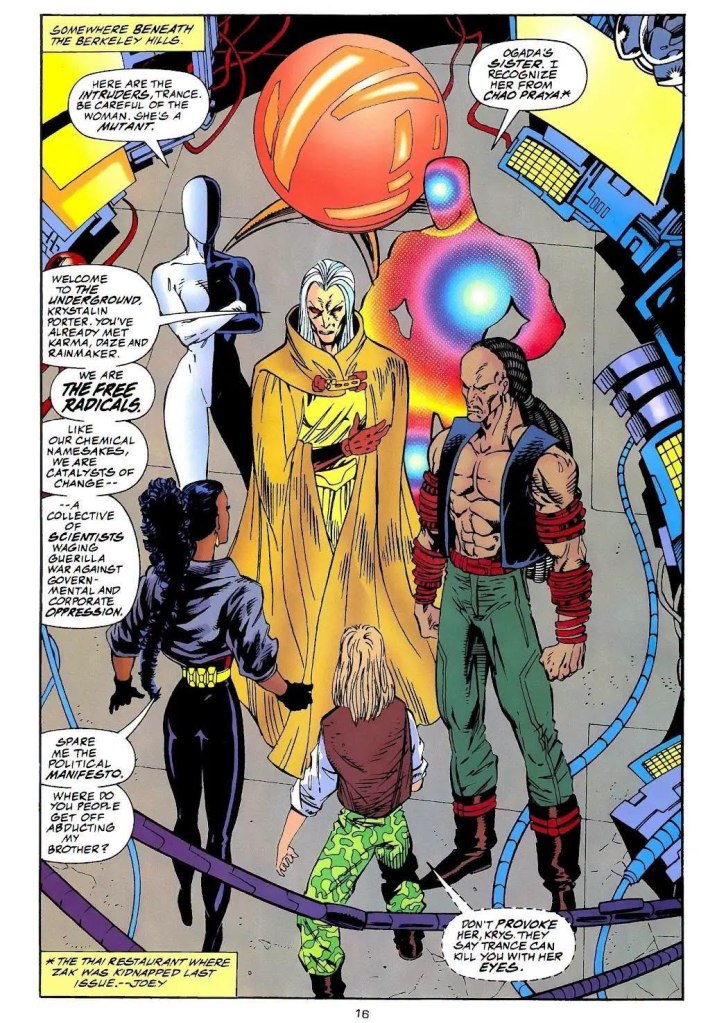
A Look Back at Amazing Spider-Man #388 (1994)

Welcome back superhero enthusiasts, 1990s arts and culture enthusiasts, Spider-Man fans and comic book collectors! Today we go back to the mid-1990s to examine a small part of the Marvel Comics shared universe through a tale of the Amazing Spider-Man monthly series.

During the height of the 30th anniversary celebration of Spider-Man in 1992, Peter Parker’s long-lost parents Richard and Mary Parker suddenly returned and their presence really altered the hero’s view of life, his marriage with Mary Jane and their family as a whole. As time passed, Peter’s aunt May became suspicious about Richard and Mary (note: scenes related to this were included in Amazing Spider-Man #386 and #387) and she went as far as hiring someone to investigate them from a distance.

With those details laid down, here is a look back at Amazing Spider-Man #388, published in 1994 by Marvel Comics with a story written by David Michelinie and drawn by Mark Bagley.

The cover.

Early story

The story begins with the Vulture being upset that the youth-restoration effects he had using the juvenator machine were only temporary. As the Vulture makes a move to threaten the lady doctor who help him, the Chameleon suddenly emerged from her in front of him.

Elsewhere, Peter Parker shared with Mary Jane that he recently revealed to his parents that he is Spider-Man. After a brief chat with her, Parker leaves their home as Spider-Man to visit his aunt who has been suspicious about Richard and Mary Parker…

Quality

The moment of truth that turned out very painful personally for Spider-Man.

This particular tale is a tragedy which the cover art by Mark Bagley clearly showed. Beyond the cover, there is a lot more weight on the plot (which was nicely structured by Michelinie), the characters and tragedy itself.

Without spoiling plot details, I can say that the first half of the comic book has Spider-Man doing detective work and also doing the civilized approach of keeping the family together. Peter Parker’s care and concern for his aunt were naturally dramatize resulting in a human touch that should be seen. Along the way, the conspiracy was built-up gradually and the big revelation for Spider-Man (note: the truth about Richard and Mary Parker was revealed to readers long before Spider-Man learned about it) at the mid-point of the story really turned out powerful.

Even the Chameleon’s presence here is rather light, his acts of evil and diabolical agenda were powerfully portrayed. In fact, the Chameleon used his immense power of disguise that set off the disturbing events that happened in issues #386 and #387, and such revelations were integrated convincingly in this very comic book. What I found impressive was Chameleon’s ability on connecting details linking Peter Parker with Spider-Man. The Chameleon is clearly very intelligent and cunning, and this makes him a more formidable enemy for Spider-Man.

The 2nd half of the main story is where the action really got ramped up by many notches. The action is violent and intense, and yet the Michelinie-Bagley duo managed to insert twists and notable character moments that really added power to the tragedy. This is indeed a very compelling read and it will make you think deeply about how much emotional pain Spider-Man could absorb.

This comic book also has two short stories. The first one (drawn by Ron Lim) was set in the past showing Eddie Brock who just bonded with the alien costume. While the Venom-focused short story was designed to add depth to past events in Amazing Spider-Man comic books, it ultimately felt more like a filler than a substantial piece. Only die-hard Venom fans will enjoy it.

The second short story featuring Cardiac and Chance is completely forgettable and unnecessary.

Conclusion

Peter Parker sharing very confidential information with his wife Mary Jane before going out again.

Amazing Spider-Man #388 (1994) tells a really tragic tale with a purpose behind it. Historically speaking, this comic book made some Spider-Man fans angry and feeling very betrayed as they believed that the 1992 return of Peter Parker’s parents marked the new age in Spider-Man storytelling. On the iconic superhero himself, this tale marked the start of a so-called dark age in which Peter Parker got emotionally broken and his life got turned upside-down. To be clear, this comic book is not a tragedy done merely for the sake of doing a tragedy…it was a creative execution to alter the status quo of Spider-Man storytelling of the era. As such, what David Michelinie and Mark Bagley did here was not only daring but also a huge risk that turned out really powerful. This tale is so significant, Marvel Comics went ahead doing an alternate version with What If #61.

Overall, Amazing Spider-Man #388 (1994) is recommended.

+++++

Thank you for reading. If you find this article engaging, please click the like button below, share this article to others and also please consider making a donation to support my publishing. If you are looking for a copywriter to create content for your special project or business, check out my services and my portfolio. Feel free to contact me with a private message. Also please feel free to visit my Facebook page Author Carlo Carrasco and follow me on Twitter at  @CarloCarrascoPH as well as on Tumblr at https://carlocarrasco.tumblr.com/ and on Instagram at https://www.instagram.com/authorcarlocarrasco
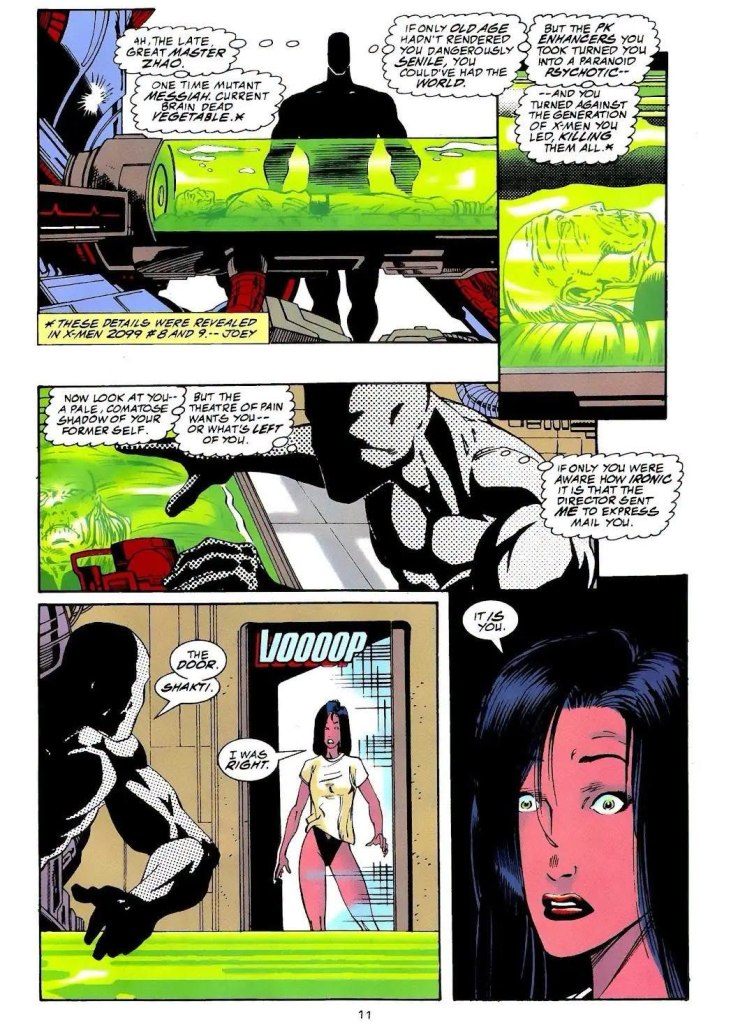
A Look Back at Amazing Spider-Man #149 (1975)

Welcome back superhero enthusiasts, 20th century arts and culture enthusiasts, Marvel Comics fans and comic book collectors! Today we go back to the mid-1970s to examine a small part of the Marvel Comics shared universe through a tale of the Amazing Spider-Man monthly series.

You heard about the notorious Clone Saga of the 1990s that dominated Spider-Man comic books for a few years? That was actually the 2nd saga about Spider-Man and cloning. The first one started in the mid-1970s and it was the result of a move by Marvel’s creative team to let Gwen Stacy return from the dead somehow. A new villain called the Jackal was eventually introduced and in his civilian form as Miles Warren (a character introduced much earlier), he had a personal obsession with Gwen Stacy whose death in Amazing Spider-Man #121 was too overwhelming for him to handle. Warren turned out to be an expert on cloning.

With those details laid down, here is a look back at Amazing Spider-Man #149, published in 1975 by Marvel Comics with a story written by the late Gerry Conway and drawn by the late Ross Andru.

The cover.

Early story

The story begins on top of a building just moments after the Jackal revealed his secret identity to a weakened Spider-Man in the presence of the Gwen Stacy clone and Ned Leeds. For Spider-Man, the revelation is shocking because in his private life as Peter Parker, Warren has been his biology and biochemistry professor at Empire State University (ESU) where he and Gwen Stacy studied. Recently, Parker and Leeds visited Warren to check on certain cell samples from which Gwen Stacy’s clone had been created. Warren claimed those samples had been stolen by a man named Anthony Serba. Spider-Man eventually loses consciousness.

Some time later, Spider-Man awakens inside an abandoned tenement in lower Manhattan. He finds himself restrained on a wooden table and the Jackal starts talking to him. For the Jackal, what is going on is his moment of triumph.

As the Jackal keeps talking, Spider-Man suddenly frees himself from the table to get back on his feet to fight him…

Quality

Can you tell who is the real Spider-Man here?

Apart from historical significance of this original clone saga and the other one from the 1990s, this particular tale is finely written by Conway and the stakes were really raised high from the start (preceded by build-up of key events in prior issues). Clearly, what was presented here was a huge pay-off to the build-up of recent issues and the dialogue has lots of details that are thought-provoking.

At the center of the story is Miles Warren who has gone to the extremes as the Jackal and he already knows that Spider-Man and Peter Parker are one and the same person. He has a burning hatred towards Parker because he is young, he was loved by Gwen Stacy, and was responsible for her death (which happened in Amazing Spider-Man #121). There is a lot of drama Conway wrote into Miles Warren’s transformation into the Jackal (first appearance was in Amazing Spider-Man #129 along with the Punisher) as a result of Gwen’s death and there are established connections with his ability to perform cloning. Conway’s presentation of the origin of the Jackal here is indeed a must-see!

When it comes to the known feature of this comic book – Spider-Man’s physical encounter with his clone – this one was presented as a spectacle laced with suspense and intrigue for the readers. It was done to test the readers’ ability to determine who is truly Spider-Man as the fight with the clone (Ben Reilly without the name) went on. The fight itself is an extension of the madness, hatred and the lust for revenge of the Jackal. That being said, there is clearly a lack of impact behind the clone’s introduction as Conway created him only to bring closure to the cloning concept mandated by Stan Lee. The clone was never meant to return and replace Peter Parker as Spider-Man.

Conclusion

Some of the events that dramatized Miles Warren’s transformation into the Jackal.

Amazing Spider-Man #149 (1975) is a very intense tale that has the engaging origin story of the Jackal who went on to become a very dangerous foe of Spider-Man. That said, Miles Warren here transformed into a freak sparked by the sudden death of the real Gwen Stacy, and the actions he committed really brought danger to Spider-Man.

There is a lot of intrigue and compelling stuff in this comic book, especially when you ignore the Clone Saga of the 1990s (which itself should be treated as a convoluted follow-up reflecting the chaos behind closed doors at Marvel Comics during the time). In my opinion, this original Clone Saga stood the test of time and the creative stuff that Gerry Conway and Ross Andru came up with is pretty believable and dramatic to read again.

Overall, Amazing Spider-Man #149 (1975) is highly recommended!

+++++

Thank you for reading. If you find this article engaging, please click the like button below, share this article to others and also please consider making a donation to support my publishing. If you are looking for a copywriter to create content for your special project or business, check out my services and my portfolio. Feel free to contact me with a private message. Also please feel free to visit my Facebook page Author Carlo Carrasco and follow me on Twitter at  @CarloCarrascoPH as well as on Tumblr at https://carlocarrasco.tumblr.com/ and on Instagram at https://www.instagram.com/authorcarlocarrasco
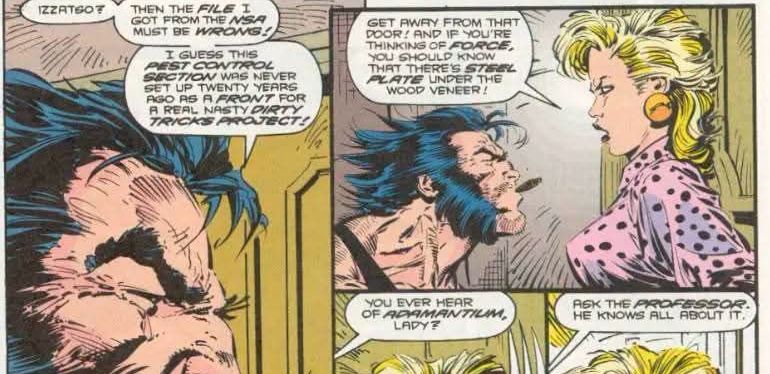
A Look Back at Gen13 #4 (1994)

Welcome back, superhero fans, 1990s arts and culture enthusiasts, Image Comics fans and comic book collectors! Today we go back to the mid-1990s to examine one of the many tales of Jim Lee’s original WildStorm universe through the original Gen13 mini-series.

In the previous issue, Dale Keown’s Pitt made a crossover appearance, and his presence was strongly felt. For International Operations (IO), John Lynch and the Black Razors, Pitt is a monster that could handle and transport safely. Their stop at the IO facility in the middle of desert disturbed Ivana and only added tension as Caitlin Fairchild daringly returned to rescue her friends (who endured torture and humiliation under Threshold). Things intensified when Fairchild encountered Pitt.

With those details laid down, here is a look back at Gen13 #4, published by Image Comics in 1994 with a story written by Jim Lee and Brandon Choi with artwork done by Jeffrey Scott Campbell. This is the fourth issue of the mini-series.  

The cover.

Early story

The story begins inside the facility in the middle of the desert. Fairchild and the freed Pitt find themselves cornered by John Lynch, Ivana and several armored personnel with their guns aimed at them.

Lynch wants the two secured and escorted to the holding cells. Ivana, who is already upset over the immense damage caused by Fairchild and Pitt moments earlier, wants the two killed instead. Lynch tells her to stop worrying as he will take both Fairchild and Pitt with him the next morning. Ivana responds negatively and orders the Black Razors to have Lynch arrested.

As the Black Razors did not immediately respond to her, Ivana grabs a machine gun and kills them in front of Lynch. Fairchild seized the moment to sweep Ivana and her two red-colored armed guards off their feet to cause them to lose their balance. As Fairchild and Pitt begin to make their next move, more armed guards under Ivana arrived.

Meanwhile on another part of the facility, Grunge, Roxy, Rainmaker and Burnout are on the loose and they have the blonde young boy Timmy with them…

Quality

Facing certain death, Roxy uses her power to overcome the two armed troopers of Ivana.

At this particular stage of the mini-series, the story here is creatively a handsome pay-off to what was built up in the previous issue. As Caitlin Fairchild got delayed in her pursuit to rescue her friends, those four young people saw their respective super abilities manifest which enabled them to overcome tough and violent odds. Grunge here got braver, Roxy learned more how to handle her power properly and the more. As such, the building blocks of Gen13 as a team have started to take shape while still leaving some room left for suspense and surprises. In short, there is more to come after this story and the creative team carefully paced the storytelling, the spectacle and the character development.

Dale Keown’s Pitt continued to have a presence here and he does have an exit that is worth the attention of readers. Anyone who is not fan of Pitt will be able to discover something new and interesting about the character. In some ways, this comic book – plus issue #3 – made me a bit interested to read the Pitt comic books that were published under the Image Comics banner.

Team 7 made a quick appearance here. This was a clever way to promote the Team 7 mini-series to WildStorm fans.

John Lynch, one of the more established characters of WildStorm who appeared in mostly supporting roles, got a bigger spotlight here as he uses his authority as an IO executive which impacted the direction of the story. To be clear, Lynch is not in line with the managers of the facility (which belongs to IO) and his conflict with Ivana led to violence in the facility. What happened also led to his encounter with the Gen13 teenagers. As Lynch realizes their potential, he takes action using IO’s resources to even the odds as Ivana’s troops begin to arrive.

Conclusion

Caitlin Fairchild, Pitt, John Lynch and Ivana early in the story.

Compared to the previous issue, Gen13 #4 (1994) has stronger writing with regards to storytelling and character development. The plot really got deeper here even as twists and turns happened. At this stage, the facility has turned into a battle zone which literally placed the Gen13 teenagers and Lynch into a corner. This 4th issue of the mini-series is very entertaining and gripping.

Overall, Gen13 #4 (1994) is highly recommended.

+++++

Thank you for reading. If you find this article engaging, please click the like button below and also please consider sharing this article to others. If you are looking for a copywriter to create content for your special project or business, check out my services and my portfolio. If you want to support my website, please consider making a donation. Feel free to contact me with a private message. Also please feel free to visit my Facebook page Author Carlo Carrasco and follow me on Twitter at @CarloCarrascoPH as well as on Tumblr at https://carlocarrasco.tumblr.com/ and on Instagram at https://www.instagram.com/authorcarlocarrasco/.

A Look Back at Gen13 #3 (1994)

Welcome back, superhero fans, 1990s arts and culture enthusiasts, Image Comics fans and comic book collectors! Today we go back to the mid-1990s to examine one of the many tales of Jim Lee’s original WildStorm universe through the original Gen13 mini-series.

With the first two issues over, the stakes have been raised now that Caitlin Fairchild has been separated from her eventual teammates. Fairchild is alone in the middle of the desert in Nevada and her pals – who went back to the International Operations (IO) facility that trained them – are in deep trouble already.

With those details laid down, here is a look back at Gen13 #3, published by Image Comics in 1994 with a story written by Jim Lee and Brandon Choi with artwork done by Jeffrey Scott Campbell. This is the third issue of the mini-series.  

The cover.

Early story

The story begins in the desert. From a distance, Caitlin Fairchild spots a paramilitary convoy delivering something big and important. It turns out the convoy is handled by the Black Razors and they arrived at the IO facility in the middle of the night.

Ivana (one of leaders of the facility) woke up to personally examine what the convoy delivered to them unexpectedly. When she asked who is giving the orders, John Lynch (formerly of Team 7) appears and he tells her that he has an unidentified super-powered being that has to be secured at their facility only for the night.

Inside the heavy containment unit is Pitt…

Quality

Fairchild and Pitt fight!

I can say that the story here is both a thrill ride and also a build-up for what is clearly the next stage of the mini-series’ concept. The addition of Pitt here is actually a crossover-related appearance as the said character is a creation of Dale Keown (essentially a non-WildStorm character). Pitt’s presence added weight to the spectacle as a short fight between him and a stronger Caitland Fairchild over a misunderstanding took place.

One part of the narrative followed Fairchild who made the suicidal move to return to the facility alone as she decided to rescue her companions Roxy, Grunge, Rainmaker and Burnout. Even though she already has an idea that a trap could be set up for her, Fairchild has fully decided to pursue a rescue rather running away to freedom. As such, Fairchild here is braver, took huge risks to meet her new goals and has shown notable changes following what happened in the first two issues.

Another part of the plot follows Roxy, Grunge, Burnout and Rainmaker who have been held captive in very humiliating fashion as they have been stripped naked and have been restrained in ways that would outrage the human rights activists. The main antagonists Ivana, Threshold and Nicole wield absolute power in the facility and they are indeed ruthless. Ivana, who had to receive and meet John Lynch, is obsessed with experimenting on gen-active youth to create her own personal army of super-powered beings. Threshold helps her by torturing the captured companions of Fairchild and he is so cold-hearted, he actually enjoys performing both torture and humiliation.

The WildStorm universe veteran John Lynch (read my past reviews of Team 7 and The Kindred) appears here and was portrayed to be uncompromising and dead serious with his task handling Pitt’s transfer. His presence and interactions with Ivana shed more light on the purpose of International Operations (IO) and how the organization is connected with the youth program at the facility.

Conclusion

Grunge gets tortured in front of his naked companions. Threshold takes pleasure in torturing him.

Gen13 #3 (1994) has a lot of thrills plus intrigue and even some shock value that made it stand out among the many superhero comic books about powered teenagers published in the 1990s. There is clear development on Fairchild and what she does here is the result of the huge decision she made at the end of issue #2. Fairchild’s captured companions also got their fair share of development as well and it is here where their bond as a group really grows. Along the way, Pitt added the monster presence but with a touch of heroism instead of instant death towards others. Anyone who follows Pitt should see his crossover appearance here. Indeed, this third issue of the mini-series is still fun to read.

Overall, Gen13 #3 (1994) is recommended.

+++++

Thank you for reading. If you find this article engaging, please click the like button below and also please consider sharing this article to others. If you are looking for a copywriter to create content for your special project or business, check out my services and my portfolio. If you want to support my website, please consider making a donation. Feel free to contact me with a private message. Also please feel free to visit my Facebook page Author Carlo Carrasco and follow me on Twitter at @CarloCarrascoPH as well as on Tumblr at https://carlocarrasco.tumblr.com/ and on Instagram at https://www.instagram.com/authorcarlocarrasco/.

Retro Gaming Ads Blast – Part 43

Welcome back readers, fellow geeks and electronic gaming fans!

In this edition of the Retro Gaming Ads Blast (RGAB) series, we will take a look at another batch of retro gaming print ads from the 1980s to the 1990s.

For the newcomers reading this, Retro Gaming Ads Blast (RGAB) looks back at the many print ads of games (console, arcade, computer and handheld) that were published in comic books, magazines, flyers, posters and newspapers long before smartphones, social media, the worldwide web and streaming became popular. To put things in perspective, people back in the 1980s to the 1990s were more trusting of print media for information and images about electronic games and related products.

With those details laid down, here is the newest batch of retro gaming print ads for you to see and enjoy…

1. Taito’s 4-in-1 Print Ad

I remember seeing this ad in some comic books I read back in the 1980s.

There is nothing like taking the clever approach of promoting multiple video games using only one single print ad in the size of a single page. Taito did exactly that in the 1980s when it promoted Elevator Action, The Legend of Kage, Arkanoid and Renegade for the Nintendo Entertainment System (NES) promising excitement as the mentioned games were making the jump from arcade to console. What is very notable in Taito’s single-page print ad was that it did not show any screenshots of the games. Instead, they used hand-drawn artwork to emphasize each game’s theme or setting, and leave it up to the viewers’ imagination as to how those games would look like on NES. This old ad is intriguing and amusing at the same time.  

2. Chase H.Q. II: Special Criminal Investigation Print Ad

Cars and high-speed action emphasized in this ad.

Following the huge success of the original Chase H.Q. on both arcade and consoles in the late-1980s, the sequel Special Crime Investigation was released in the arcades in 1989 and ported to game consoles and computers in the early 1990s under the title Chase H.Q. II: Special Criminal Investigation. To promote Chase H.Q. II: Special Criminal Investigation for home computers, game publisher Ocean came up with a colorful print ad showcasing a few cars, a city background and elements of gun-related action presented in nice art. The ad has an image of the original arcade machine to remind gamers that they are playing the sequel to Chase H.Q.

3. Dancing Eyes Japanese Arcade Flyer

The front.
The rear.

Released by Namco in Japan in 1996, Dancing Eyes is a puzzle arcade game that became notorious due to its overtly sexual nature. With the way it was designed, players control a small monkey called Urusu-San and crawl along a 3D grid mapped over characters (mostly ladies) or various objects. If the 3D grid is mapped over a young lady, any tile of the grid destroyed by the player exposes the lady’s underwear or skin. Such sexuality is reflected in the arcade flyer of Dancing Eyes which has a suggestive hand-drawn art on the front while the game’s mechanics are explained in the rear. Even the rear of the flyer shows sexual nature of the game with screenshots. While the game was officially released only in Japan, Dancing Eyes actually was made available for gamers to play at the arcade of X-Site amusement center inside Festival Mall in Alabang during the early 2000s and it attracted a lot of guys. I bet Namco did not know about that.

4. Sega Saturn North American Print Ad

This print ad always caught people’s attention.

When the Sega launched the Saturn console in America roughly four months ahead of schedule in 1995, the company suffered as the sales were disappointing, ties with business partners were strained and the available Saturn games were very few. By the fourth quarter of that year, more games became available for the Saturn and this gave Sega the opportunity to aggressively market the console as the one that gamers should get for their enjoyment. To promote the Saturn, Sega came up with a two-page print ad that had a dominant image of a naked woman whose private parts were cleverly covered by screenshots of the available games. Since most gamers were predominantly male from teenagers to adults, it made sense for Sega to come up with an eye-catching sexy ad to promote their console and the video games (including those from other companies). This old ad is considered by the woke and rabid feminists as very offensive today.

5. Blockbuster Video Print Ad

If you won the grand prize and wanted a lot of entertainment, you would not want to leave your home.

Back in the late 20th century, Blockbuster Video was the dominant retailer that offered customers movies in home video format for sale and for rent. Along the way, the company offered video game rentals and attracted millions of gamers around the nation. Given the tremendous growth of video gaming in America in the 1990s, Blockbuster got itself more involved by launching the Games of Summer Sweepstakes in 1996. Utilizing print ads, the sweepstakes offered the Ultimate Game Rooms – composed of a 41-inch big-screen TV, Surround Sound speakers, hi-fi VCR, NBA Jame Extreme arcade game, the Sega Saturn, the PlayStation, a gaming chair, Acclaim games for Saturn and PlayStation, and a 1-year free Blockbuster Video game rentals privilege – as the grand prizes. Do you know anyone who won in Blockbuster’s sweepstakes?

6. Independence Day (ID4) Print Ad

A nice looking ad for a game that was actually mediocre.

Remember how big a blockbuster Independence Day (ID4) was in cinemas in 1996? The film grossed over $800 million worldwide and it revived the disaster movie genre using modern filmmaking techniques and the latest technologies of the decade. Given the massive success of the movie, it was not surprising that an official video game adaptation was released in 1997. To promote the game, Fox Interactive (the video game company of the movie studio behind the film) came up with a 2-page print ad using official artwork from the movie showcasing the alien spaceship being attacked by a military fighter plane. The ad showed only 3 screenshots and the descriptive text was written to make gamers feel like they have the role to lead Earth’s fight against the aliens. While the art looks good, it can only go so far to hide the mediocrity of the game itself.

7. GoldenEye 007 Print Ad

Bond, James Bond.

When GoldenEye achieved both critical and financial success in movies, it revived the James Bond movie franchise big-time and Pierce Brosnan was easily accepted by the public as the newest Agent 007. Several months before the movie was even released, an official video game adaptation started development. After much revisions and hard adjustments, the project evolved into a first-person shooting game for the Nintendo 64 console titled GoldenEye 007. To promote the game, Nintendo came up with a 2-page print ad that cleverly showed Brosnan as James Bond on the left and displayed the screenshots and other details on the right. This ad was easily eye-catching and it made lots of gamers excited. As history showed, GoldenEye 007 got released in 1997 and became a huge critical and commercial success while also proving that first-person shooters on game consoles can be a lot of fun.

8. North American Sega Saturn Games Promo Print Ad

There definitely was something fun offered to gamers. Who could go wrong with titles like Tomb Raider, Nights into Dreams, Virtual On and Virtua Cop 2?

As mentioned earlier, the Sega Saturn had a bad launch in America in 1995 which caused a lot of problems for the company. In 1996, Sega of America went on the offensive to really capture gamers’ attention by launching their Saturn games promo. The message of this 2-page print ad was very clear…Sega offered one free first-party game (limited to four specific games including Nights into Dreams) to those who bought two games (from a lineup of twelve specific titles). It should be noted that the Christmas season of 1996 was the most successful sales period of the Sega Saturn in America as gamers really responded to the promo. Even though some called this promo an act of desperation, nothing changes the fact that Sega succeeded during the most critical sales season of 1996.

+++++

Thank you for reading. If you find this article engaging, please click the like button below, share this article to others and also please consider making a donation to support my publishing. If you are looking for a copywriter to create content for your special project or business, check out my services and my portfolio. Feel free to contact me with a private message. Also please feel free to visit my Facebook page Author Carlo Carrasco and follow me on Twitter at @CarloCarrascoPH as well as on Tumblr at https://carlocarrasco.tumblr.com/ and on Instagram athttps://www.instagram.com/authorcarlocarrasco

A Look Back at Team 7 #3 (1994)

Welcome back superhero enthusiasts, 1990s arts and culture enthusiasts, Image Comics fans and comic book collectors! Today we go back to the year 1995 to take a close look at one of the many tales of the original WildStorm universe through one of the comic books of the first mini-series of Team 7.

For the newcomers reading this, Team 7 is set in the past within the original WildStorm universe. This is the special forces team that had major WildStorm heroes – Grifter (WildCATS: Covert Action Teams), Backlash, Jackson Dane (Wetworks), John Lynch (Gen13) and Michael Cray (Deathblow) – who were younger, were proficient with combat and gained special abilities as a result of a sinister move by their superiors. Issue #2 took place after the team got exposed to something they never anticipated and their superiors knew it.

With those details laid down, here is a look back at Team 7 #3, published in 1994 by Image Comics with a story written by Chuck Dixon and drawn by Aron Wiesenfeld. This is the 3rd chapter of a 4-issue mini-series.

The cover.

Early story

Set in the 1970s, the surviving Team 7 members (already exposed to the chemical agent) are in the middle of a new mission somewhere in East Africa. Because their teammate Johnson abused his new power to manipulate a black general to kill himself against his own will, Cole Cash eliminates Johnson causing John Lynch to be outraged. Cash tells Lynch that Johnson lost himself completely. He also tells him to list Johnson as MIA (missing-in-action) and turn a blind eye as before.

Lynch points his gun at Cash’s head believing he is standing for the mission and rules. After Cash tells him that they are monsters and that the world is better off without them, Lynch relents and shoots the wall instead. The mission concludes and Team 7 goes home by helicopter.

As the ride goes on, John Lynch thinks very deeply about everything that happened since they got exposed to the chemical agent. He realizes that they were exposed to genetic altering elements and wonders if he and his teammates were nothing more than lab rats for International Operations (IO)…

Quality

John Lynch in the presence of his traitorous superiors following the East African operation.

If there is anything notable here apart from the continued dark and gritty tone, the plot really thickened clearly. At this stage, it is more obvious that the superiors have indeed something more sinister planned for Team 7 to endure. They know that the infected team members are closing ranks to protect itself which means they are ready for the so-called final test.

Along the way, John Lynch gradually realizes the evil of his superiors and being the field leader, he begins to analyze what is best for him and his teammates and which options to take knowing the betrayal from above. Quitting is simply not an option for Lynch and the pressure builds up as the story went on. Cole Cash here sees things very clearly and he easily became the pathfinder among Team 7 members. When he scolds his teammate Fairchild (father of Gen13’s Caitlin Fairchild) for abusing his power in a public place while off-duty, it is clear that Cash wants to keep the team together by means of keeping together while maintaining sanity.

As for Team 7 itself, there is something intriguing that awaits readers once they start their new mission here. I won’t spoil it and it has to be seen. Simply grab a copy of this comic book, read it and pay attention to the details. It’s strong stuff from the creative team.

Conclusion

Cole Cash (Grifter) talks sense into John Lynch about what has really been going on and why they have become monsters.

Team 7 #3 (1994) has a lot of intrigue as the plot thickened. At this stage, it is clear that IO is really up to no good and Team 7 is symbolically their scientific and military experiment. Fortunately for the team, they have John Lynch and Cole Cash as the reasonable members who are able to cut through the noise and became aware of what IO has been executing. The stage is set for the concluding issue and this comic book is indeed a solid build-up and also an engaging WildStorm read.

Overall, Team 7 #3 (1994) is recommended.

+++++

Thank you for reading. If you find this article engaging, please click the like button below, share this article to others and also please consider making a donation to support my publishing. If you are looking for a copywriter to create content for your special project or business, check out my services and my portfolio. Feel free to contact me with a private message. Also please feel free to visit my Facebook page Author Carlo Carrasco and follow me on Twitter at  @CarloCarrascoPH as well as on Tumblr at https://carlocarrasco.tumblr.com/ and on Instagram at https://www.instagram.com/authorcarlocarrasco
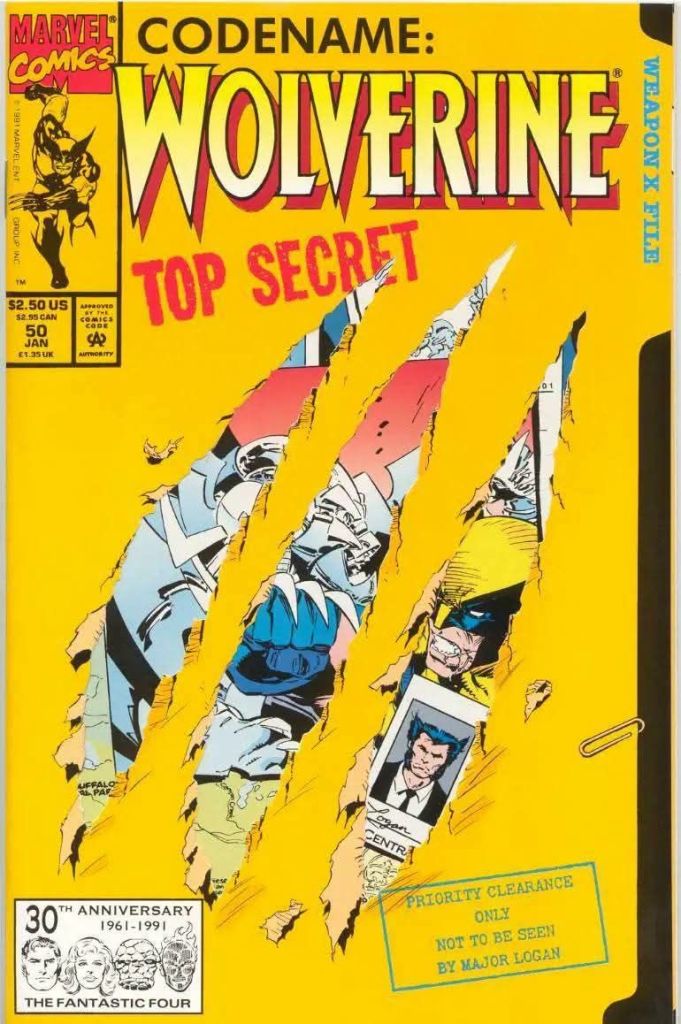
A Look Back at Amazing Spider-Man #361 (1992)

Welcome back superhero enthusiasts, 1990s arts and culture enthusiasts, Marvel Comics fans and comic book collectors! Today we go back to the early 1990s to examine a small part of the Marvel Comics shared universe through a tale of the Amazing Spider-Man monthly series.

When it comes to the argument as to who is the most evil or the deadliest foe Spider-Man ever has, many point towards Venom (Eddie Brock and the alien costume from Secret Wars) who is murderous, filled with revenge against Spider-Man, is physically formidable and knows Peter Parker and his family members. In the early 1990s, the creative guys behind the Amazing Spider-Man series made the key decision to create another symbiote-wearing super villain like Venom but much more violent, more murderous and truly insane.

With those details laid down, here is a look back at Amazing Spider-Man #361, published in 1992 by Marvel Comics with a story written by David Michelinie and drawn by Mark Bagley.

The cover.

Early story

The story begins inside the agro-lab of the Empire State University where an awful figure in black-and-blood intimidates a male worker. The awful figure is Carnage and he decides to play with the worker a bit before fulfilling his intention to kill him. The worker tries to escape but ends up failing as Carnage throws a huge piece of hardware at the door. Carnage grabs the man, slams him on the wall and uses sharp makeshift blades that suddenly stretched to murder the him.

At the a certain home in Forest Hills, Peter Parker spends quality time his aunt May Parker as he repairs an important machine in the basement. Moments later, the phone rings and May goes up to answer it. Peter follows and learns that the call was meant for him.

Upon using the phone, Peter learns the tragic news that his friend Chip at the university was murdered. He excuses himself from May to go outside to secretly change into Spider-Man and make his way to Empire State University. Struck by the tragic news, Spider-Man is aware that there have been a dozen brutal murders in New York City over the last week. He is also aware that a message was written in blood by someone called Carnage…

Quality

The first-ever battle between Spider-Man and Carnage is very intense to look at.

To make things very clear, this comic book has the first full appearance of Carnage which is Cletus Kasady with a living costume spawned from Venom’s symbiote. Kasady himself first appeared in Amazing Spider-Man #344 in 1991, and it is very clear that the creators deliberately modeled him after DC Comics’ super villain the Joker to have the psychopath appearance (distinctive messy hair, crazed facial expressions, slim body frames and the unusual jawline). Kasady and the Joker also have a nihilistic view of the world focused on spreading chaos while enjoying unrestrained violence.

David Michelinie was really methodical when it came to build-up the tension, presenting key details and pacing the narrative when showing Carnage (who actually appears on the first page) and emphasizing the details about him (including Kasady’s background history and personality as observed by the witnesses who knew him). The appearance of Carnage in the first half was deliberately limited to ten panels and as the story moved on, details of him were revealed especially when Peter Parker did his own detective work. By the time Spider-Man and Carnage finally faced off with each other, the spectacle (action scenes) really ramped up high and the Michelinie-Bagley duo succeeded in showing Carnage being deadlier and unrelenting towards the webslinger.

Spider-Man doing detective work in costume and in civilian form as Peter Parker. This is also one of the finest pieces of Spider-Man art done by Mark Bagley.

More on the iconic hero, Peter Parker here was portrayed as being highly disturbed by the recent murders of the city and the loss of his friend which compelled him to do very serious detective work leading up to his discovering of Kasady (and the eventual face-off in a ruined property where Carnage took refuge in). Parker also felt uneasy about remembering his recent encounter with Venom and the details of the murder reminded him of the old nemesis. The pacing here is excellent and as the narrative went on, the tension really intensified.

Spider-Man’s encounter with Carnage – which the cover art obviously emphasized without restraint – is really intense to look at. As he is completely unprepared as to what Carnage was capable of doing, the webslinger really struggled and was in danger in key moments. Carnage also has unique capabilities using the symbiote such as forming sharp blades and shooting small but sharp projectiles. If you want super villain-led moments of action that really challenged the superhero, you will find a good amount of that here. Also, I can say that Mark Bagley is very good in presenting the action scenes with dynamism, danger and intensity mixed together well.

Conclusion

The news image of Cletus Kasady on the lower-right corner is obviously patterned after Batman’s nemesis the Joker. That image really looks like it was ripped out of a Batman comic book.

Amazing Spider-Man #361 (1992) marks the very intense debut of Carnage and the way he was presented as the newest super villain for Spider-Man to deal with, he is nastier and deadlier than Venom (who would eventually have the delusion of protecting the innocent while remaining murderous). In fact, the way the battle between the two was executed here made me forget about Venom temporarily which shows the Michelinie-Bagley duo pulled the right moves in making this comic book. To be clear, Carnage is pure evil laced with insanity and with absolute disregard towards people. Both Carnage and Venom are murderers and they should be condemned always. It happens that Carnage is more disastrous and has no regard for human life, which ironically makes Venom looking a bit less evil by comparison.

As for Spider-Man, his portrayal here is really dramatic and his superhero pursuits only added to the trouble of his marriage with Mary Jane. As such, you could end up feeling sorry for MJ even though Peter Parker himself wants to solve problems while protecting not only their lives but also the lives of the innocent.

Overall, Amazing Spider-Man #361 (1992) is highly recommended.

+++++

Thank you for reading. If you find this article engaging, please click the like button below, share this article to others and also please consider making a donation to support my publishing. If you are looking for a copywriter to create content for your special project or business, check out my services and my portfolio. Feel free to contact me with a private message. Also please feel free to visit my Facebook page Author Carlo Carrasco and follow me on Twitter at  @HavenorFantasy as well as on Tumblr at https://carlocarrasco.tumblr.com/ and on Instagram at https://www.instagram.com/authorcarlocarrasco