A Look Back at The Kindred #3 (1994)

Welcome back, superhero fans, 1990s arts and culture enthusiasts, Image Comics and comic book collectors! Today we go back to the mid-1990s to examine one of the many tales of the WildStorm universe through The Kindred mini-series.

Having read the first two issues, I can say that the plot has been built-up into something that justifies not only the reuniting of former Team 7 teammates Grifter and Backlash (who hate each other) but also the consequences caused by IO’s (International Operations) a long time prior. So far the creative team of WildStorm father Jim Lee, Brandon Choi, Sean Ruffner and artist Brett Booth succeeded in telling an entertaining story with a balance on action, suspense and intrigue.

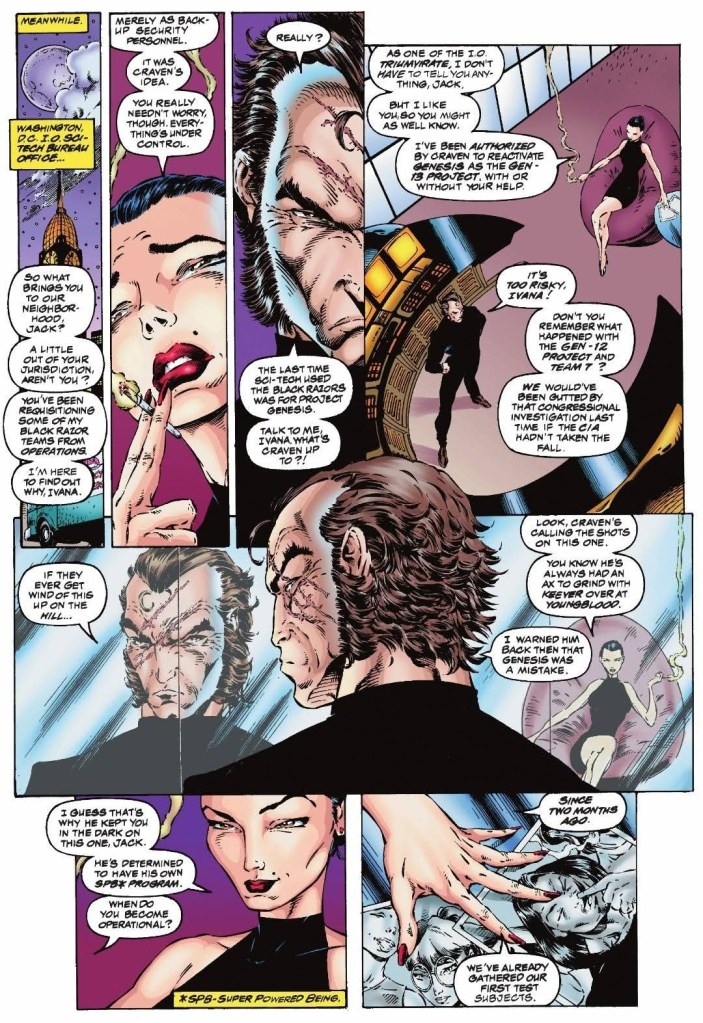
With those details laid down, here is a look back at The Kindred #3, published by Image Comics in 1994 with a story written by Jim Lee, Brandon Choi, Sean Ruffner and Brett Booth. Booth illustrated the comic book.  

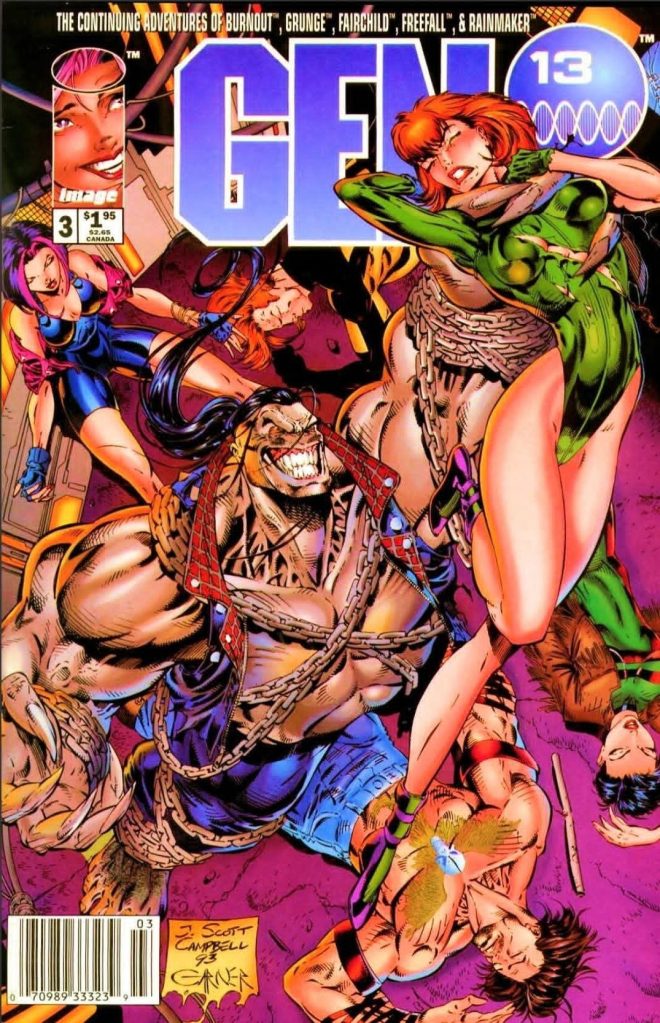
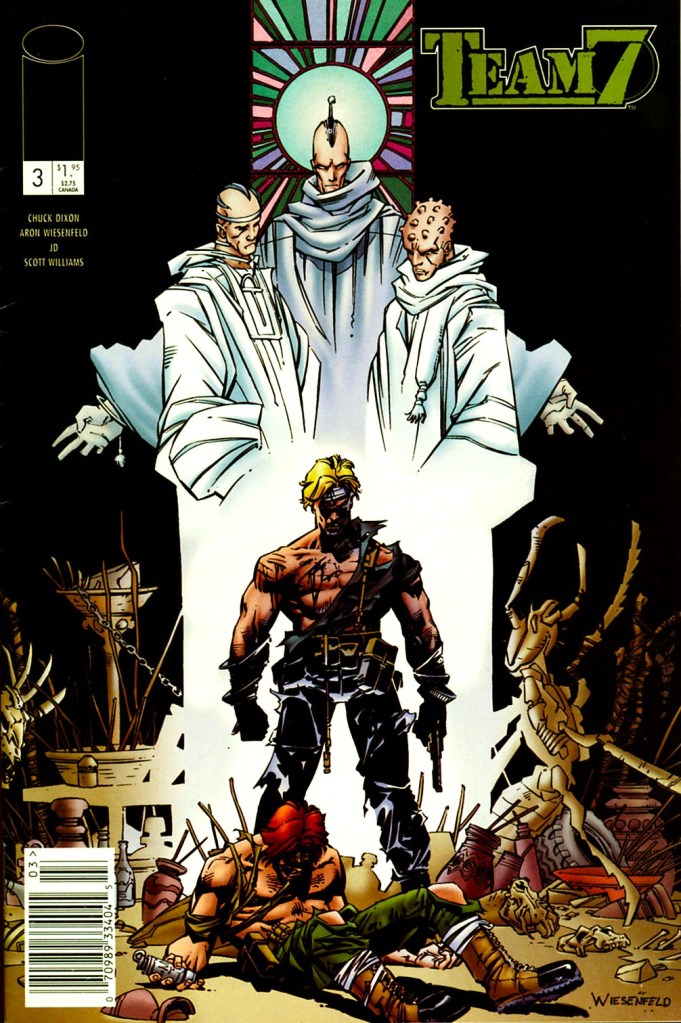
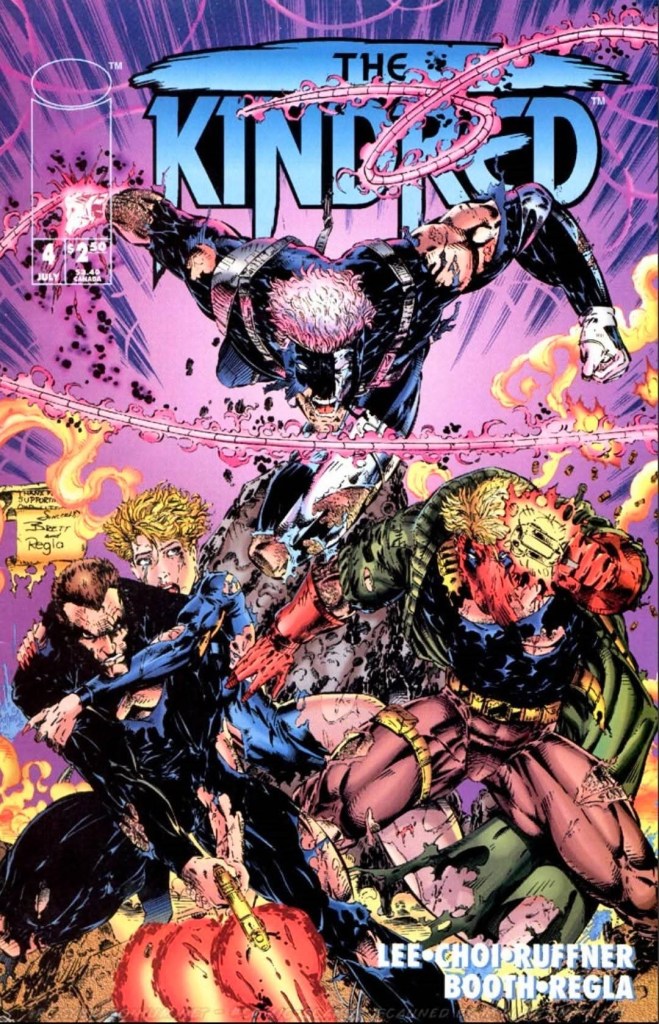
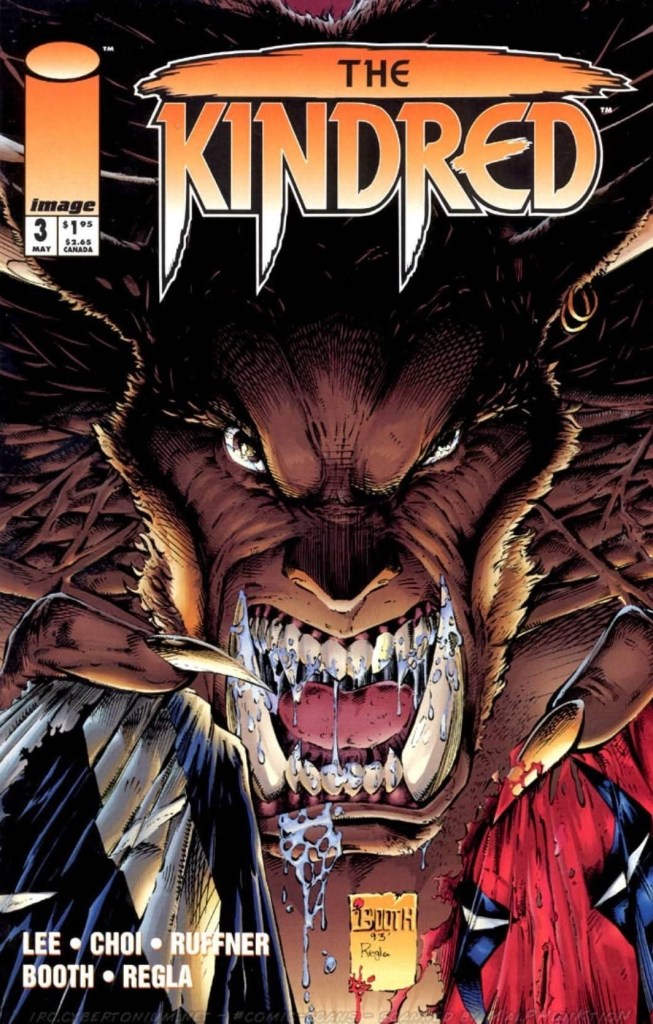
The cover.

Early story

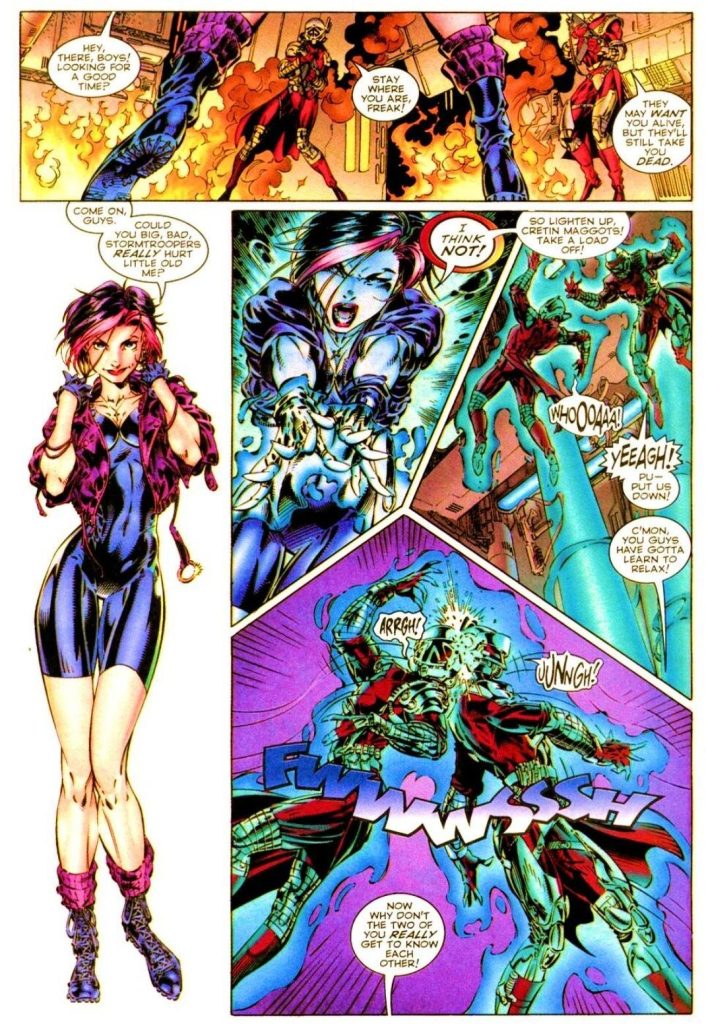
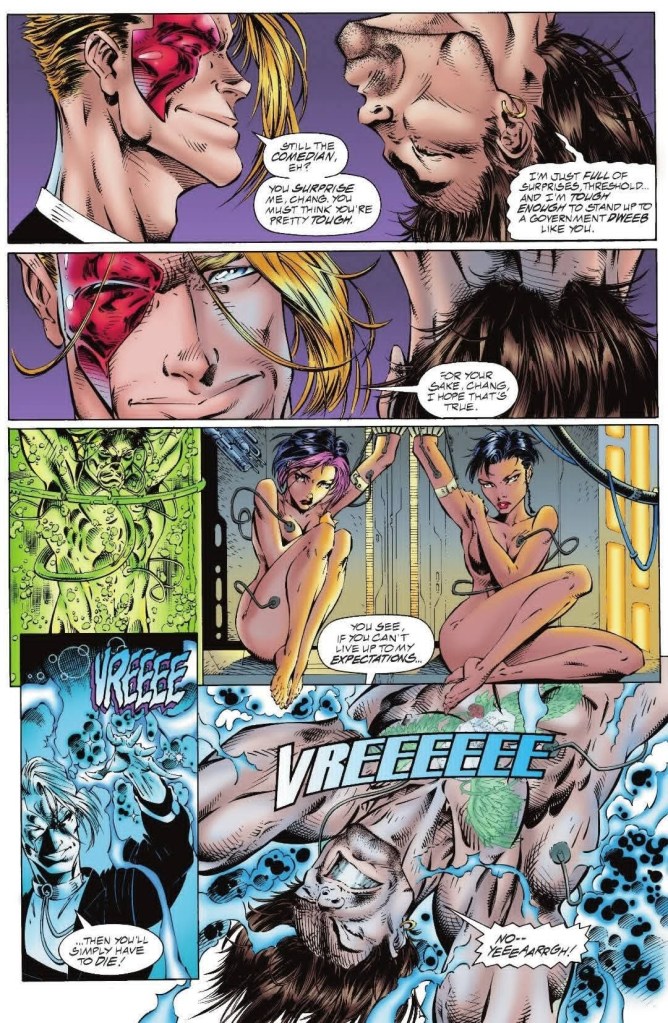
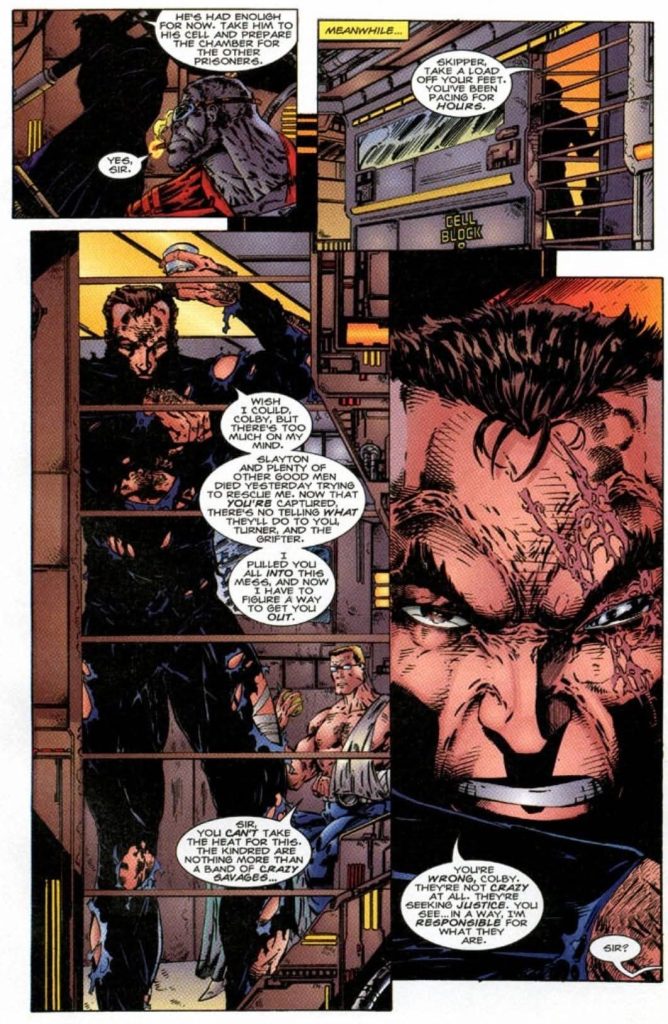
The story begins with John Lynch being helpless in front of Bloodmoon, the vicious leader of the Kindred. Lynch tells him that he has no recollection of him, the Kindred and the crimes he has been accused of. Regardless, Lynch is being prepared for the trial under the Kindred’s system of justice.

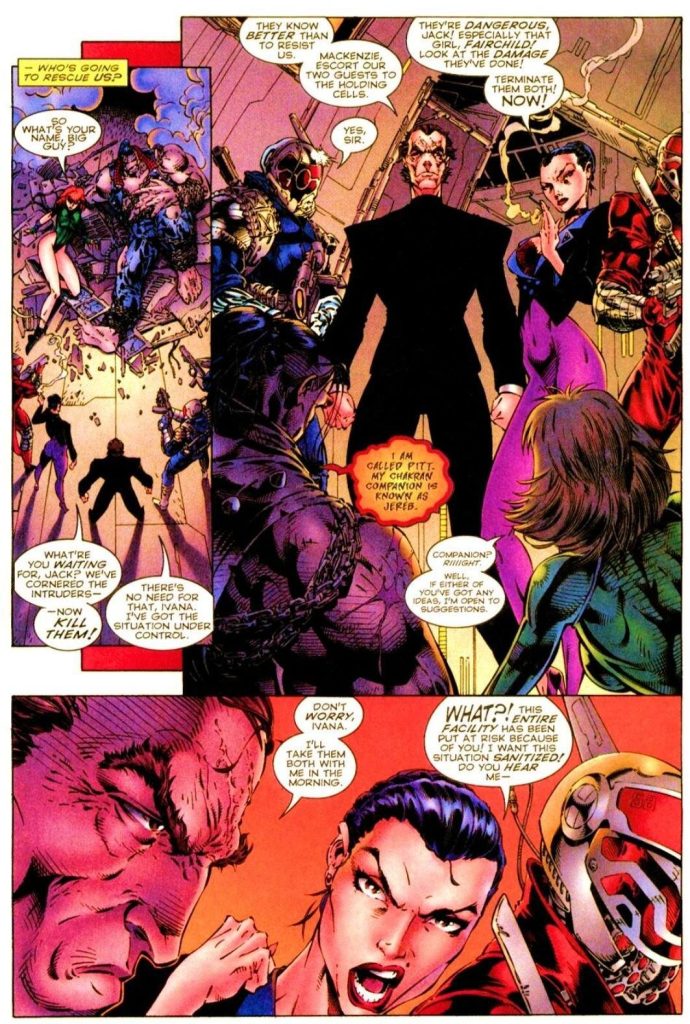
Bloodmoon learns from one of his pawns that they captured the three men who were sent to rescue the prisoners. Two of the captured were sensed to have the Kindred’s blood within them. Bloodmoon then orders to have them brought to him immediately.

Minutes later, Grifter and Backlash – both battered and worn down – were brought to Bloodmoon.

Quality

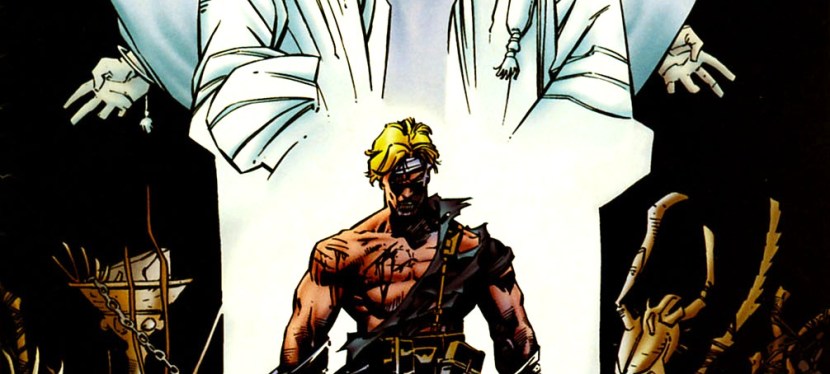
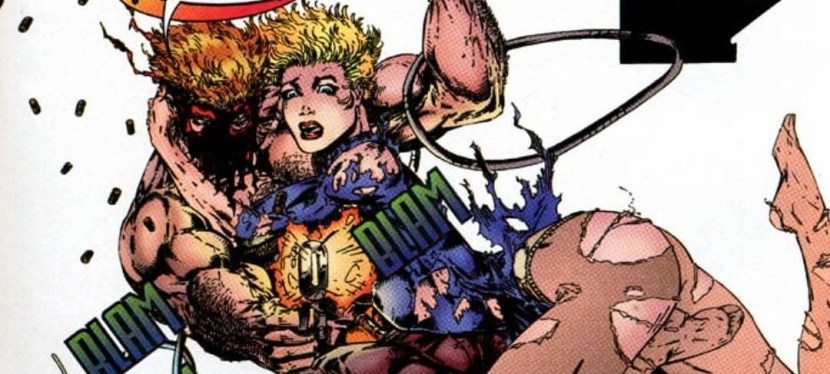
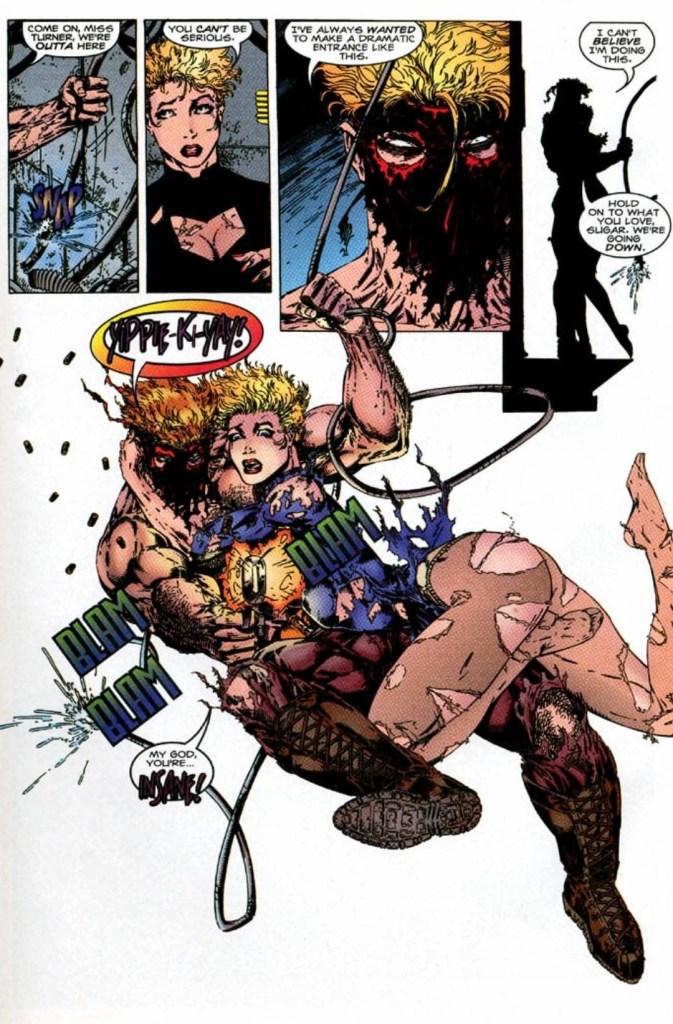
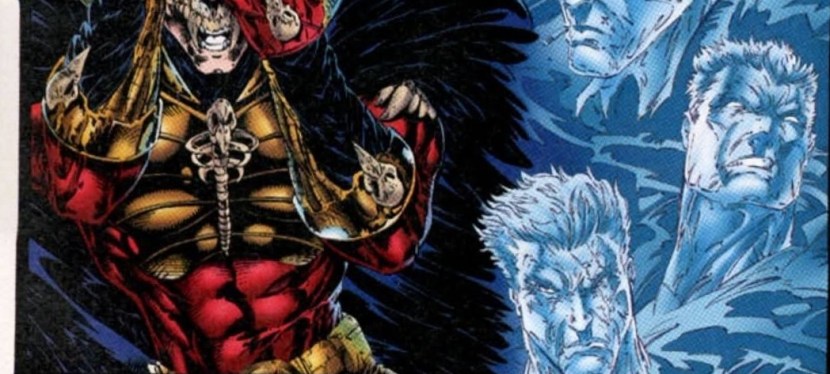
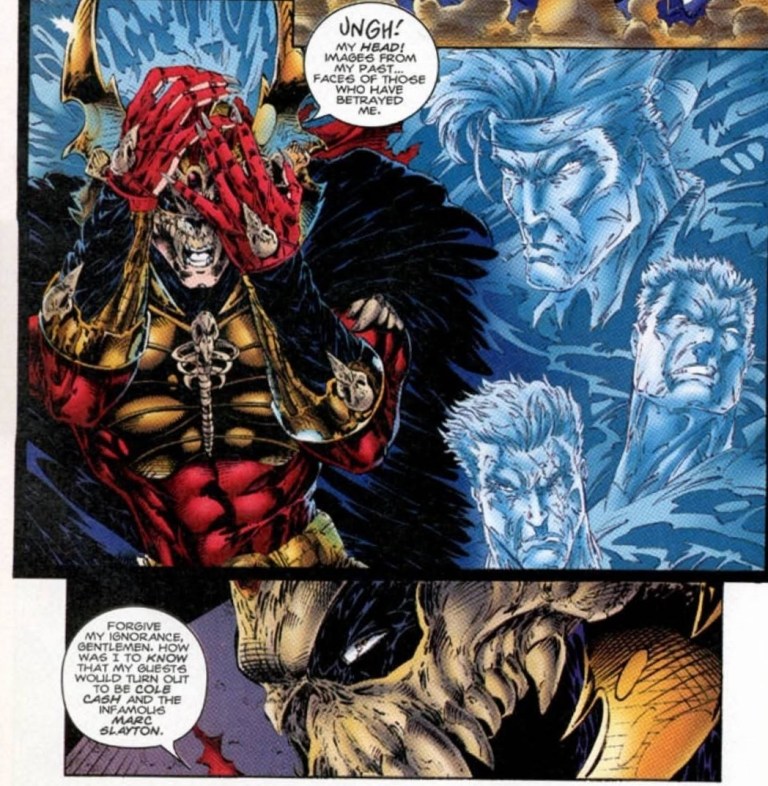
Literally, the past bites Bloodmoon hard.

Following the events of issue #2, there is a huge pay-off in this comic book and it added more depth into the plot. With Lynch, Backlash and Grifter – all of them were teammates in Team 7 a long time prior – helpless early in the story, the stakes really went high up as something significant about Bloodmoon and how the Kindred started got revealed.

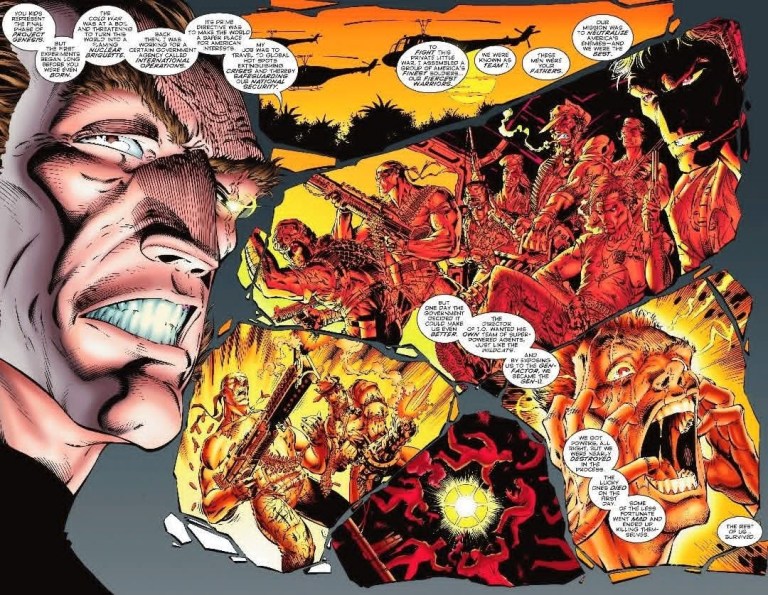
Bloodmoon is not the typical comic book villain. His origin and how the Kindred was established are linked to the high-stakes experiments IO conducted on animals on Caballito (this makes IO’s top-secret experimentation on humans to unlock super-human potential literally just the tip of the iceberg). The way Bloodmoon was portrayed here, he is convinced that he exists with an undeniable purpose to lead the Kindred while getting striking back at humanity for vengeance starting with IO and former Team 7 members. The tragic events of the past made him a very hardened character and the living and walking evidence of IO’s unethical experimentation agenda.

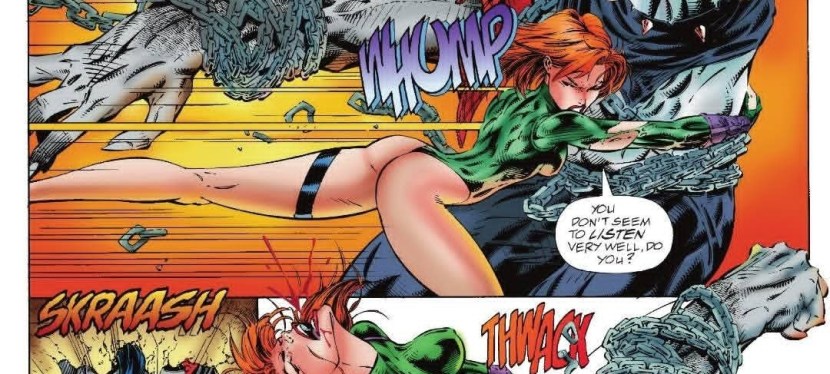
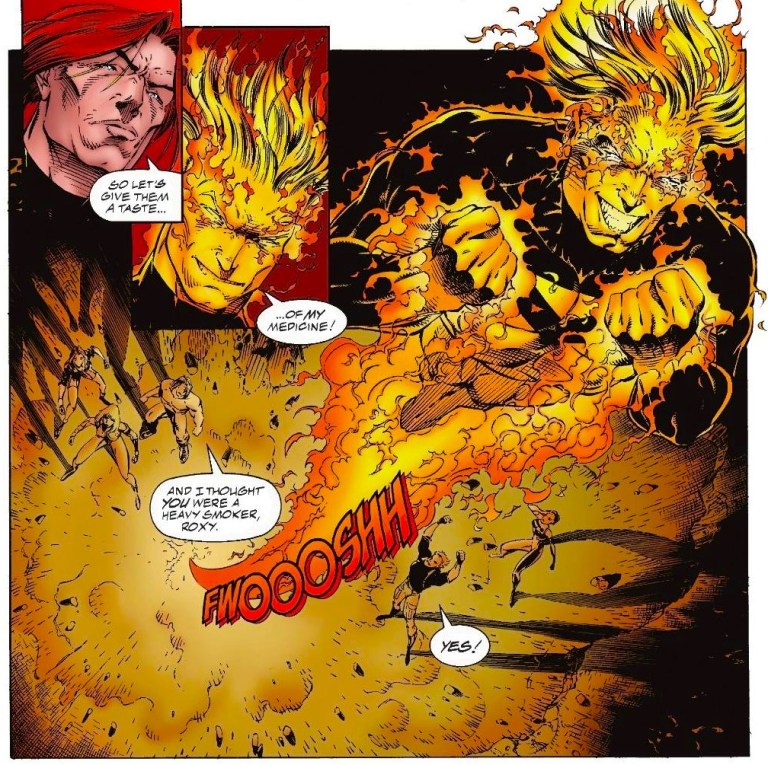
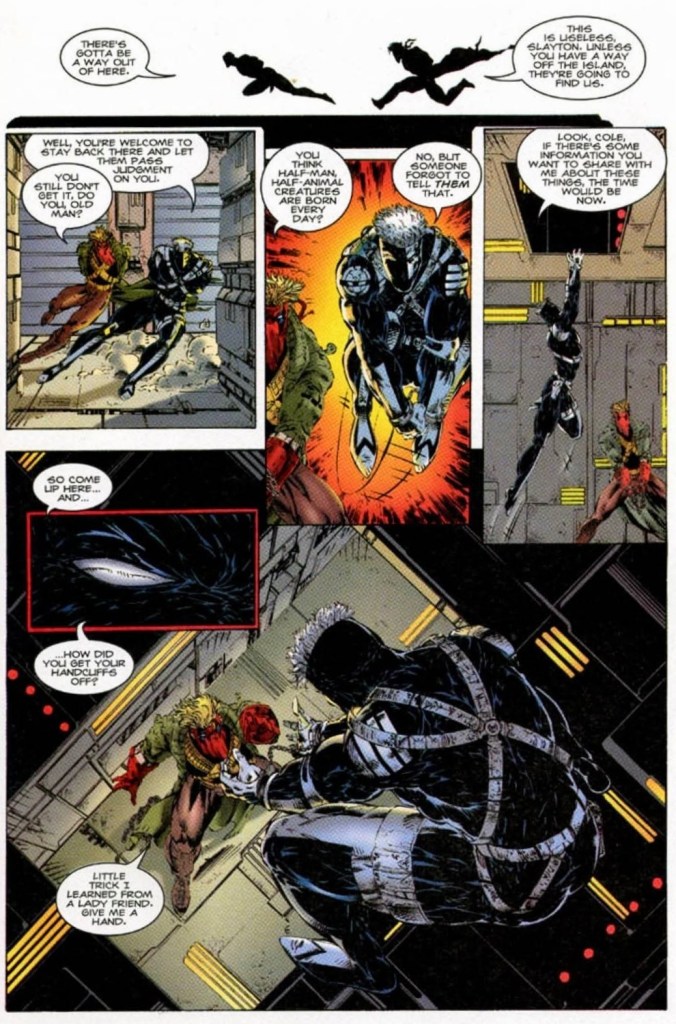
Worth focusing here is, unsurprisingly, the uneasy new alliance between Grifter and Backlash who had no choice but to set aside their differences to survive and somehow bring down Bloodmoon deep within the turf of the Kindred. You will get a glimpse as to how they used to work during their time with Team 7 and how they could pull off tough achievements with their modern-day abilities and technology. The dynamics between the two former Team 7 teammates is a must-see and there are indeed 1980s Hollywood action film vibes embedded within.

Not to be outdone is John Lynch whose super-human potential gets unleashed while being in the middle of a very desperate situation facing three deadly enemies at once. Lynch here gets more of the spotlight and he does something else apart from serving as a convenient tool for exposition about IO and its past.  

Conclusion

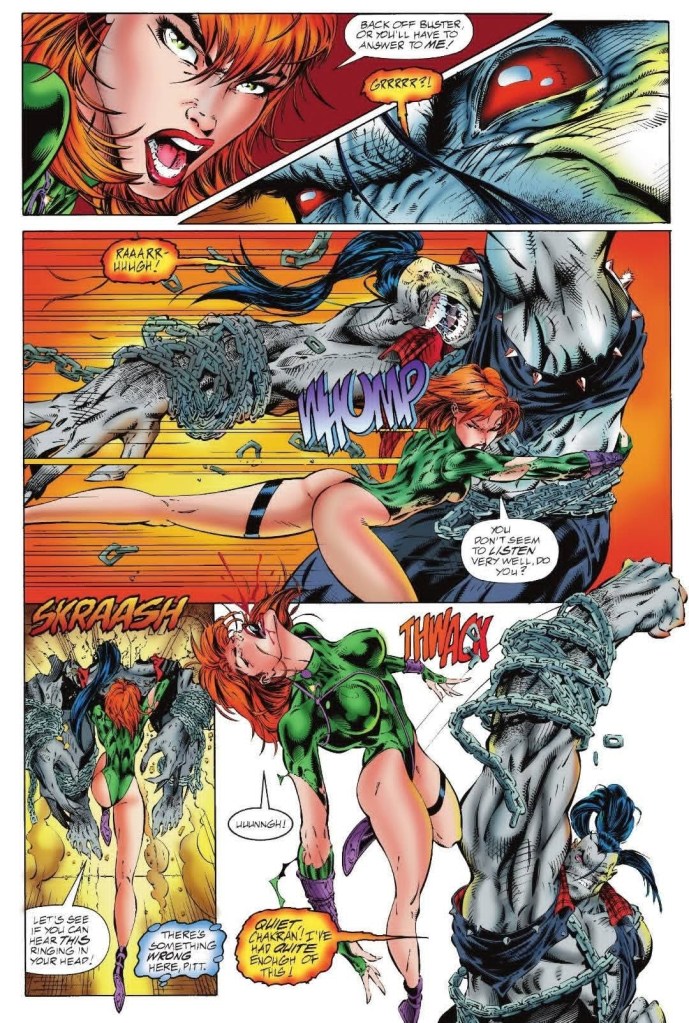
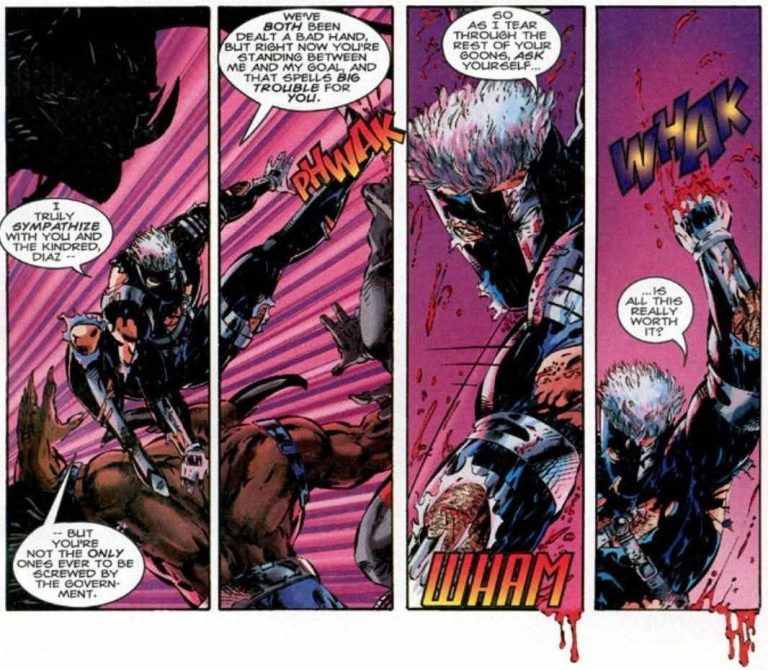
Grifter and Backlash on the run.

As the plot moved closer to concluding, The Kindred #3 (1994) had the stakes raised a lot for the former Team 7 members involved as well as IO’s current people. The big reveal that happened late in the comic book was pretty powerful and it will encourage readers to focus more on the past operations of IO as well as Team 7. At this stage in the publishing history of Image Comics, WildStorm’s para-military concepts got solidified more effectively setting the stage for the launch of the original Team 7 mini-series. As for The Kindred mini-series, the engagement and entertainment value of issue #3 convinced me to go on to issue #4.

Overall, The Kindred #3 (1994) is recommended.

+++++

Thank you for reading. If you find this article engaging, please click the like button below, share this article to others and also please consider making a donation to support my publishing. If you are looking for a copywriter to create content for your special project or business, check out my services and my portfolio. Feel free to contact me with a private message. Also please feel free to visit my Facebook page Author Carlo Carrasco and follow me on Twitter at @CarloCarrascoPH as well as on Tumblr at https://carlocarrasco.tumblr.com/ and on Instagram athttps://www.instagram.com/authorcarlocarrasco

A Look Back at Resident Evil: The Official Comic Book Magazine #4 (1998)

Welcome back, 1990s arts and culture enthusiasts, video game enthusiasts and comic book collectors! Today we go back to the late-1990s to examine another issue of the magazine-sized comic book series titled Resident Evil: The Official Comic Book Magazine.

Having read the first three issues of the RE comic book magazine series, I can say that the quality has been mixed. While issue #2 had pretty bad Resident Evil 2 illustrated adaptation, issue #3 had a short story that functioned as a sequel to Resident Evil (1996) in the form of a polished fan fiction. There were other short stories that turned out serviceable to intriguing and surprisingly entertaining to read. How much creative freedom WildStorm had in its publishing deal with Capcom remains unclear.

With those details laid down, here is a look back at Resident Evil: The Official Comic Book Magazine #4, published by WildStorm/Image Comics in 1998 with short stories written by Ted Adams, Marc Mostman and Kris Oprisko, and drawn by Rafael Kayanan, Ryan Odagawa and Norman Felchie.

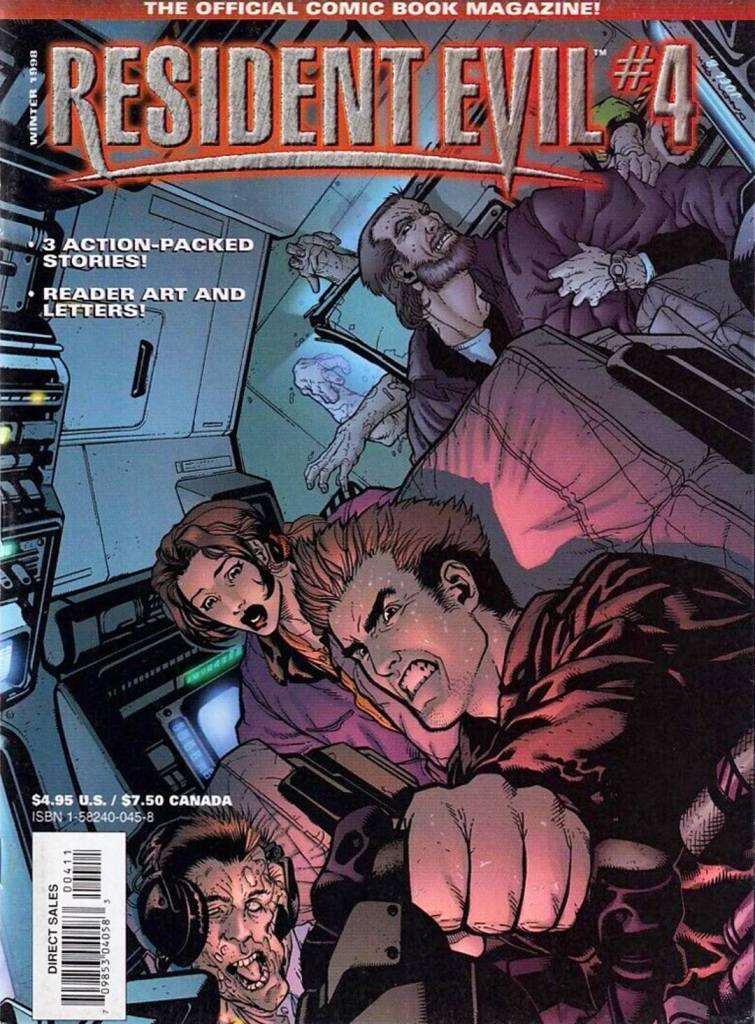
The cover.

Early stories

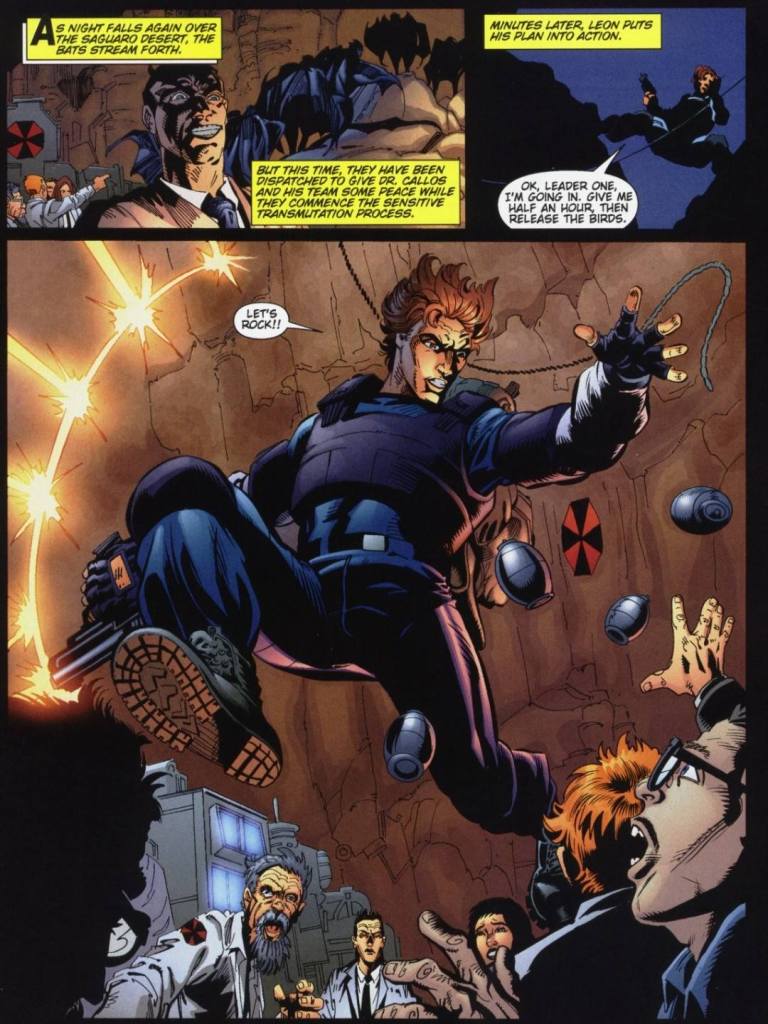
Night Stalkers – In a sleepy town in the southwestern part of America, two men suddenly got abducted by humanoid bats (referred to as “zombie bats” by the publisher) and were brought to a secret facility of Umbrella. The scientists of Umbrella have the technology to control the bats and they have already abducted many people who became helpless subjects of a transmutation process. Back in the sleepy town, the community is panicking and the son of the sheriff was rescued from a group of humanoid bats. In response to the town’s call for help, the United States government sends agent Leon Kennedy to solve their problem.

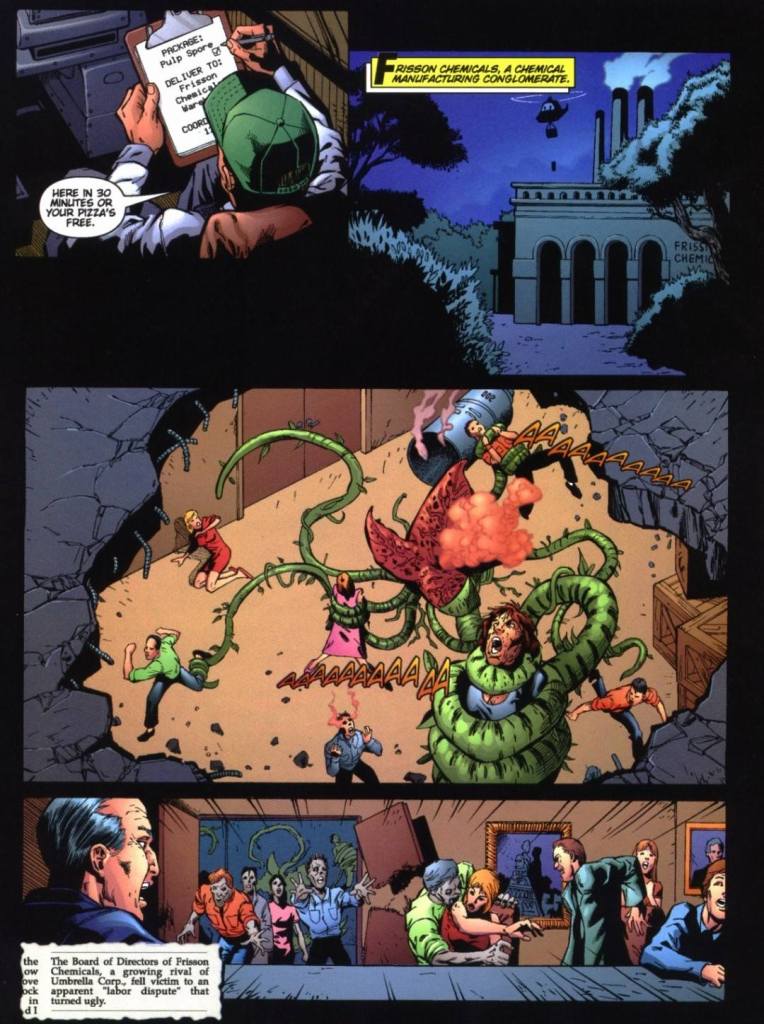
Special Delivery – Two helicopter operators working for Umbrella are tasked to lift special containers of their company’s bio-weapons. Their goal is to drop specific containers at different sites within and outside of Raccoon City. One by one, the monsters of Umbrella are dropped in some very unsuspecting laps from above.

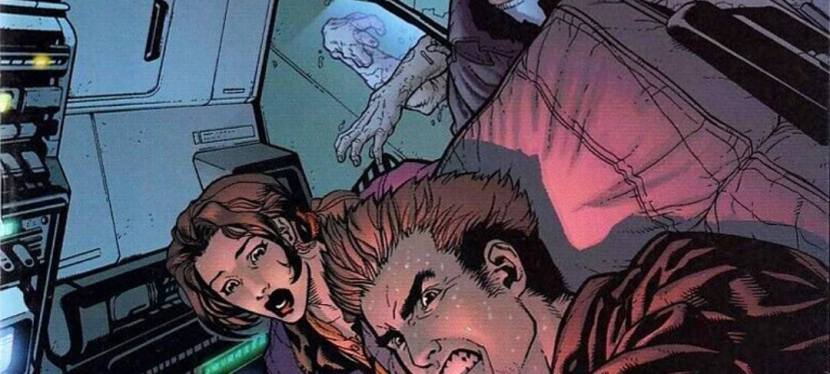
Zombies Aboard – Inside the airplane, Chris Redfield, his sister Claire and Barry Burton realize the there is nobody left to pilot the aircraft. Using the flight training he had with S.T.A.R.S., Chris takes control of the airplane.

Quality

When Umbrella’s helicopter drops its biological weapons, chaos happens.

This early, I can say that I was entertained by this Resident Evil comic book.

The first short story Night Stalkers is WildStorm’s next attempt of making a sequel to Resident Evil following Leon Kennedy on his mission to take on Umbrella and the town it affected. There are no zombies but Umbrella’s scientists and the project leader are using man-sized bats to spread the G-virus and their methods clearly caused human rights violations on the victims. This short story, which was well written and had a good structure, is actually prophetic because it portrayed Leon Kennedy as an agent of the US government and this comic book was released many years before Resident Evil 4 (2005) came out. For context, Leon Kennedy in RE4 worked for the US government and his mission was to rescue the American President’s daughter. In the short story and in the said video game, both versions of Leon Kennedy showed him being very proficient with action and he has no fear going up against multiple enemies. One has to wonder if RE creator and RE4 game director Shinji Mikami ever read Night Stalkers for inspiration. Night Stalkers is entertaining.

The brave and dynamic Leon Kennedy springs into action against Umbrella.

The second short story Special Delivery is a really intriguing look at the personnel who operated the helicopter to transport Umbrella’s monsters. This is in reference to what happened in Resident Evil 2 as Mr. X got dropped down. There are no established characters here but that’s not a problem because the story made a lot of sense and fit in nicely with the Resident Evil universe. It also shows how unethical, cold-hearted and evil Umbrella really is not only towards its business rivals but also against humanity. This one is surprisingly entertaining.

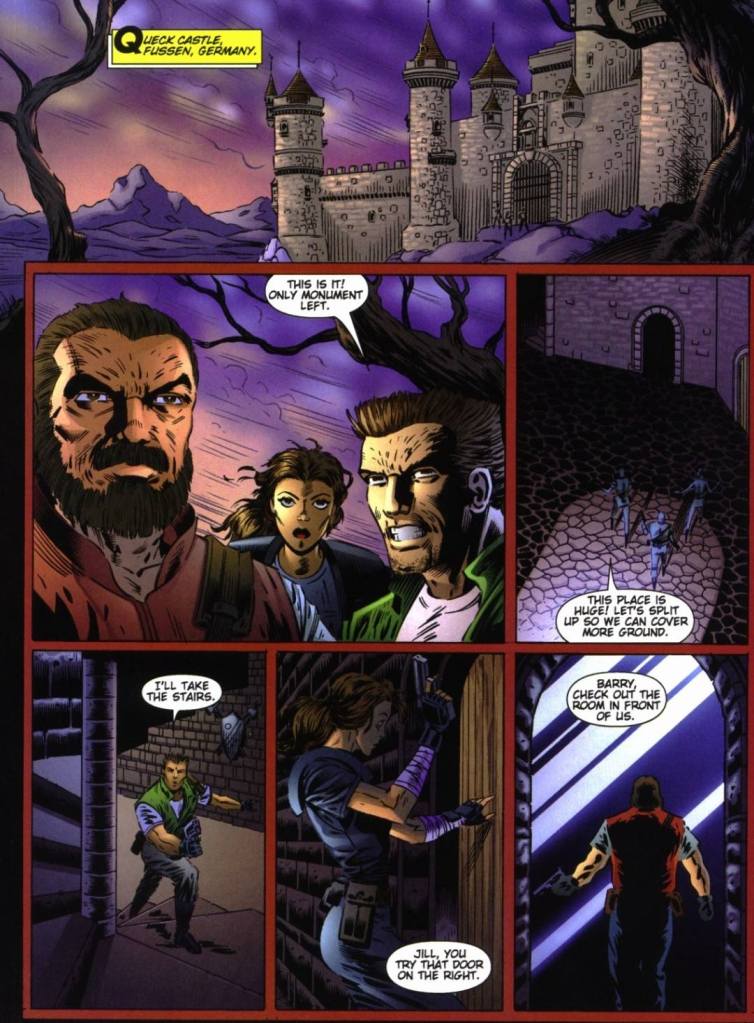
The final short story Zombies Aboard follows Chris, Jill and Barry Burton on their high-risk mission to find Umbrella in Europe and stop them from causing danger on the world. This is the continuation of Dead Air in issue #3 and it was a serious attempt by WildStorm creators to function as a sequel to the RE games of the time. With regards to its quality, the short story was structured with action and horror in mind. While the three established RE characters search for Umbrella, the story lacked depth as there is way too little detective elements in it. Instead, you will see the S.T.A.R.S. members firing or stabbing or slashing zombies they encountered from England to Germany (the story never showed the authorities reacting to the collateral damage caused by the three), and it is at the very end of the tale when the suspense and horror came in. This short story is clearly less engaging compared to its predecessor. At least the art work is good and the artist did not hold back on the violence.

Conclusion

Chris Redfield, Jill Valentine and Barry Burton search for Umbrella in Europe.

With the three stories featured, Resident Evil: The Official Comic Book Magazine #4 (1998) is just as entertaining as issue #3. For me, the only letdown was the final short story. The highlight was actually the first short story as it turned out to be very prophetic as to how Leon Kennedy would eventually turn out in video games – the brave and dynamic action hero millions of fans and gamers today enjoy.

Overall, Resident Evil: The Official Comic Book Magazine #4 (1998) is recommended.

+++++

Thank you for reading. If you find this article engaging, please click the like button below and also please consider sharing this article to others. If you are looking for a copywriter to create content for your special project or business, check out my services and my portfolio. If you want to support my website, please consider making a donation. Feel free to contact me with a private message. Also please feel free to visit my Facebook page Author Carlo Carrasco and follow me on Twitter at  @HavenorFantasy as well as on Tumblr at https://carlocarrasco.tumblr.com/ and on Instagram at https://www.instagram.com/authorcarlocarrasco/.

A Look Back at Resident Evil: The Official Comic Book Magazine #3 (1998)

Welcome back, 1990s arts and culture enthusiasts, video game enthusiasts and comic book collectors! Today we go back to the late-1990s to examine another issue of the magazine-sized comic book series titled Resident Evil: The Official Comic Book Magazine.

By the time WildStorm Productions released the 3rd issue in 1998, many millions of gamers around the world played Resident Evil 2 on PlayStation. The Resident Evil fanbase expanded dramatically and many of them completed the game’s multiple scenarios. At the same time, Leon Kennedy and Claire Redfield became popular characters in gaming.

The 2nd issue I reviewed had a very bad adaptation of Resident Evil 2’s story. What prevented the comic book from ending up as a complete disaster were the two other short stories which were surprisingly entertaining to read. Still, I wonder if Shinji Mikami and the game developers ever saw the abysmal Resident Evil 2 adaptation in the 2nd issue.

With those details laid down, here is a look back at Resident Evil: The Official Comic Book Magazine #3, published by WildStorm/Image Comics in 1998 with short stories written by Ted Adams and Kris Oprisko, and drawn by Ryan Odagawa, Carlos D’Anda and Lee Bermejo.

The cover with art by Jim Lee.

Early stories

Wolf Hunt – At Raccoon City College, a few students talk about someone who got killed at school and her body was all torn up. They aware that the authorities are keeping the story out of the papers to avoid causing a panic. In the evening, of the students got harmed by a ferocious monster. The next day at S.T.A.R.S. headquarters, Albert Wesker, Jill Valentine and Barry Burton discuss the killings that happened at the city college. They were asked by the local police to investigate what happened. Jill takes the assignment of going undercover as a student.

Danger Island – A man and a woman arrive at Isla Bonale in Caribbean for a vacation. The island is so exclusive, they only let ten couples on it at a time. After having a romantic night of dinner and dancing, they decide to go snorkeling and rent a boat. Just as they start snorkeling, a plane crashes on the island.

Dead Air – Following the events of Resident Evil (1996) and Resident Evil 2, Chris Redfield, Jill Valentine and Barry Burton start traveling to Europe with the goal of ending Umbrella’s current progress on a new variation of the T-virus even though they have to go undercover. They have the support of a top-secret international agency which already has someone in place to help them. Meanwhile, Umbrella has a spy watching on the three.

Quality

Imagine being surrounded by the deadly Lickers of Umbrella on an island wearing only swimwear and having no useful pieces of equipment to protect yourself with.

Similar to issue #2, this comic book has three short stories and some extras.

The short story Wolf Hunt, which took place before the events of the original Resident Evil game of 1996, has the odd concept of having werewolves existing within the RE universe. Werewolves are often super natural and such monsters don’t align with the sci-fi and biological aspects of the Resident Evil games. In fairness, the creative team had this interesting concept of having Jill Valentine going undercover as a student in the city college to find answers and solve the problem. I should state that the artwork by Ryan Odagawa is good overall although his take on Jill Valentine is cartoonish. This story is pretty short and lacked a solid conclusion. It’s really a glorified piece of fan fiction that should interest fans of the 1996 game.

Danger Island, the 2nd short story, is easily the gem of this comic book. This is a completely original tale that has brand-new lead characters – the couple Stan and Leslie – and an island as the setting. Without spoiling the plot, this is a suspense story with a moderate pace, some dynamic visuals and a good implementation of elements from the lore of Resident Evil. The creative team behind this tale emphasized that as long as Umbrella and is biological experiments exist, danger and death will creep up on people regardless of location. A notable monster species from Resident Evil 2 is included here and the effects the G-virus has on creatures on the island are cleverly presented complete with nice artwork by Lee Bermejo.

Through the couple, readers will feel the danger, desperation and anxiety as the story went on. How the story ended is a must-see and I am confident it will encourage you to revisit Resident Evil 2.  

The final tale Dead Air is a daring attempt by WildStorm’s creators to make a sequel to the first two games. As mentioned above, Chris Redfield, Jill Valentine and Barry Burton are together on a high-risk mission to find and stop Umbrella in Europe. The main setting is inside a commercial flight where a zombie outbreak happens. Without their weapons, Chris, Jill and Barry are compelled to use alternative items and ways to overcome the zombies.

While this tale is packed with action and the violence is uncompromised, something is off with the way Jill Valentine is portrayed. She is more violent with action and even expressed sarcasm. This tale is pretty short as the comic book made it clear that the continuation will happen in the next issue. Considering what was told in Resident Evil: Code Veronica (released in 2000 with Chris and Claire Redfield included), Dead Air is clearly a non-canon Resident Evil tale and it is at best a polished piece of fan fiction by WildStorm.  

When it comes to the extras, you will find the Readers Art gallery and The Resident Evil Files (featuring Chris Redfield and his sister Claire). The most notable extra stuff here, however, is another interview with Resident Evil creator/producer Shinji Mikami and you will even see a few pictures of not just him but also Hideki Kamiya (the game director of Resident Evil 2 who went on to produce lots of highly entertaining games through the decades) and members of the team behind the RE games of the time. Enjoy the pages of the interview below.

The members of the development team of Resident Evil games of the time.
Very notable details shared by Shinji Mikami.
Shinji Mikami with Hideki Kamiya. Mikami directed the original Resident Evil game of 1996 while Kamiya directed Resident Evil 2. The two are still prolific makers of video games today.
Shinji Mikami played Space Invaders when he was young.

Conclusion

Remember Jill Valentine’s extra costume in the original game of 1996?

Considering the qualities of the three short stories and the extra stuff, Resident Evil: The Official Comic Book Magazine #3 (1998) is easily a huge improvement over issue #2. The quality and creativity of the short stories are better, the interview with Shinji Mikami was worth reading and the comic book itself is more entertaining. That said, I am convinced to move on to the next Resident Evil comic book.

Overall, Resident Evil: The Official Comic Book Magazine #3 (1998) is recommended.

+++++

Thank you for reading. If you find this article engaging, please click the like button below and also please consider sharing this article to others. If you are looking for a copywriter to create content for your special project or business, check out my services and my portfolio. If you want to support my website, please consider making a donation. Feel free to contact me with a private message. Also please feel free to visit my Facebook page Author Carlo Carrasco and follow me on Twitter at  @HavenorFantasy as well as on Tumblr at https://carlocarrasco.tumblr.com/ and on Instagram at https://www.instagram.com/authorcarlocarrasco/.

A Look Back at The Kindred #2 (1994)

Welcome back, superhero fans, 1990s arts and culture enthusiasts, Image Comics and comic book collectors! Today we go back to the mid-1990s to examine one of the many tales of the WildStorm universe through The Kindred mini-series.

The Kindred #1 was an entertaining piece of work by Jim Lee’s team. It was a build-up comic book that smoothly sets the stage for the inevitable reuniting of Grifter and Backlash – two former teammates of Team 7 who are also among the most defining heroes of the WildStorm universe – and the dangerous mission to find and rescue IO director John Lynch (who was also part of Team 7) and his assistant in South America. As the story of issue #1 went on, it was clear that elements from the past are creeping up on the characters and IO itself.

With those details laid down, here is a look back at The Kindred #2, published by Image Comics in 1994 with a story written by Jim Lee, Brandon Choi, Sean Ruffner and Brett Booth. Booth illustrated the comic book.  

The cover.

Early story

The story begins with a high-tech aircraft speeding off the coast of South America. Inside, the temporary leader Backlash (supported by deputy Colby) talks with members of the Black Razor team about what the mission is about and what their objectives are. Their goal is to find IO superior John Lynch and his assistant Alica Turner who have been held captive by a mysterious and dangerous bunch called the Kindred.

Upon arrival at their destination, Backlash, Colby and the Black Razors land to start their operation. Moments later, the stowaway Grifter emerges from inside the aircraft and gets spotted by a corporal. Grifter fires at an ugly, human-like monster of the Kindred saving the corporal’s life. Grifter then descends to follow Backlash and the Black Razors…

Quality

Backlash and Grifter (Marc Slayton and Cole Cash) together after so many years apart. They are former teammates of Team 7.

This early, I can say that the entertainment value of this comic book went up really high. It is clearly a nice pay-off to the build-up that happened in issue #1 and it has some notable moments as the storytelling went on.

Without spoiling the plot, the core concept of this series became clearer to me as the story progressed. Apart from the creative idea of having the former Team 7 teammates reunited, there are believable reasons as to why Backlash is leading a team of IO’s armed operative and why Grifter tagged along. Both of them are searching for answers while having different agendas or personal goals. There is also animosity between them which strongly implies something bad happened during their time together with Team 7. John Lynch, who often has been a background or supporting character in previous WildStorm tales (but eventually got a stronger role in Team 7 comics), finds himself cornered by the Kindred whose leader is very aware of what IO has been doing all along. At the same time, IO’s legacy of indiscriminate genetic testing on animal fetuses created a force of not only evil but vengeance. What the Kindred leader mentions effectively blurred the boundary that separates good and evil, and even that of abusers and victims.

By the time I reached the end of the comic book, the stakes and the suspense were raised. The same can be said about the overall fun factor.

Conclusion

The leader of the Kindred is not only evil. He is driven by vengeance and he knows a lot about IO.

Thanks to strong creative writing, The Kindred #2 (1994) is indeed a more engaging and more intriguing comic book. It consistently paid off the build-up that happened in the previous issue, and the creative team managed to keep on building up the suspense and tension as the story went on. Those who love spectacle will enjoy the high amount of action here and artist Brett Booth proved himself to be capable of showing dynamic visuals. Booth has an inspired take on showing Backlash and Grifter in action. I am looking forward to the next issue.

Overall, The Kindred #2 (1994) is recommended.

+++++

Thank you for reading. If you find this article engaging, please click the like button below and also please consider sharing this article to others. If you are looking for a copywriter to create content for your special project or business, check out my services and my portfolio. If you want to support my website, please consider making a donation. Feel free to contact me with a private message. Also please feel free to visit my Facebook page Author Carlo Carrasco and follow me on Twitter at  @HavenorFantasy as well as on Tumblr at https://carlocarrasco.tumblr.com/ and on Instagram at https://www.instagram.com/authorcarlocarrasco/.

A Look Back at The Kindred #1 (1994)

Welcome back, superhero fans, 1990s arts and culture enthusiasts, Image Comics fans and comic book collectors! Today we go back to the mid-1990s to examine one of the many tales of the WildStorm universe as published by Image Comics.

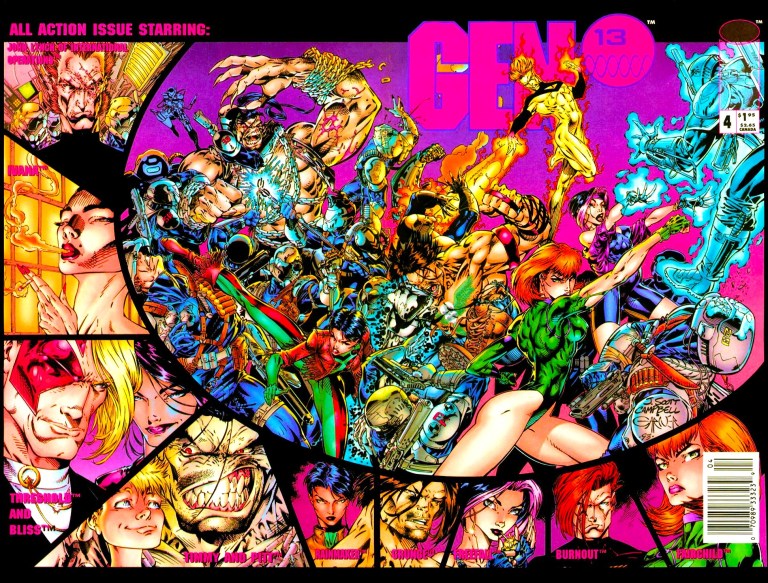
To put things in perspective, Jim Lee’s WildStorm universe quickly expanded after launching WildC.A.T.s: Covert Action Teams in 1992. Other WildStorm properties followed such as StormWatch, Gen13, Team 7 and Wetworks. By 1994, things went rolling with the WildStorm projects and the production team of Jim Lee decided to expand the lore by having key characters Grifter (WildCATs) and Backlash involved in a story told in a mini-series. The said characters are actually former teammates of Team 7.

With those details laid down, here is a look back at The Kindred #1, published by Image Comics in 1994 with a story written by Jim Lee, Brandon Choi, Sean Ruffner and Brett Booth. Booth illustrated the comic book.  

The cover.

Early story

The story begins in New York City. Even as darkness envelopes the city that never sleeps, thousands of its denizens walk the streets in relentless pursuit of their hopes and dreams. One man walks alone and his thoughts are not filled with dreams of the future. Instead, he has nightmares from the past.

The man is Marc Slayton and he knocks the door communicating with Jack. He converts himself into vapor and easily enters the building moving towards Jack. He emerges as Backlash and tells Jack that he needs classified information on an alien race known as the Daemonites. It turns out, Backlash needs Jack’s hacking abilities to bypass the government’s bureaucracy and secrecy.

Suddenly, the armored members of Black Razor emerge behind Backlash…

Quality

Grifter appears in a violent way of helping someone.

I like this comic book. This is a tale that has strong elements of the 1990s WildStorm universe all over it, specifically paramilitary influence and intrigue. As this was released before Team 7 #1 (a tale set in the past), it was the WildStorm creators’ way of getting former teammates Grifter and Backlash together after being separated for a long time. The result is a dangerous mission launched while bringing key elements from the past back for the two heroes to encounter. Conveniently, this comic book added to the pre-release anticipation of the Team 7 mini-series.

More on the plot itself, Backlash wants crucial information about the Daemonites (monsters from space that are ugly, dangerous and capable of possessing people) and it so happens he has been targeted by IO (International Operations) for the mentioned mission. The way Backlash was portrayed involved his past coming back at him, dealing with IO and having to decide to participate or not. Clearly, Backlash here is cornered more than once and it is a sign that something intriguing and dangerous awaits him.

Grifter’s presence here is directly linked with his exit from WildCATs #8. Similar with Backlash, Grifter is in search for answers and he shows no intention of having a friendly reunion with his former teammate. Along the way, you will see the masked gunslinger being more analytical as the plot went on and his determination to find answers is really strong. Grifter here is also a huge risk-taker which is a nice touch.

Speaking of elements of the past, this comic book has some notable connections with other developments and parts of the WildStorm universe. A certain scene here could convince WildStorm fans to revisit the WildCATs mini-series.

Conclusion

Backlash hit hard by Black Razor members.

Considering the way the story was told and the high amount of expository dialogue executed, The Kindred #1 (1994) is clearly a build-up comic book that will eventually lead to the true essence of this mini-series. What I enjoyed the most here was how the creative team portrayed Backlash and Grifter. They are former teammates of Team 7 who each have grudges, personal problems and secrets that could potentially widen the gap between them. At the same time, the creative team succeeded in setting up the threat by showing the violent kidnap of John Lynch (the former leader of Team 7) and the rise of a new enemy who is very driven by revenge. Ultimately, this comic book succeeded in convincing me to read the next issue.

Overall, The Kindred #1 (1994) is recommended.

+++++

Thank you for reading. If you find this article engaging, please click the like button below and also please consider sharing this article to others. If you are looking for a copywriter to create content for your special project or business, check out my services and my portfolio. If you want to support my website, please consider making a donation. Feel free to contact me with a private message. Also please feel free to visit my Facebook page Author Carlo Carrasco and follow me on Twitter at  @HavenorFantasy as well as on Tumblr at https://carlocarrasco.tumblr.com/ and on Instagram at https://www.instagram.com/authorcarlocarrasco/.

A Look Back at Resident Evil: The Official Comic Book Magazine #2 (1998)

Welcome back, 1990s arts and culture enthusiasts, video game enthusiasts and comic book collectors! Today we go back to the late-1990s to examine another issue of the magazine-sized comic book series titled Resident Evil: The Official Comic Book Magazine.

The launch issue of Resident Evil: The Official Comic Book Magazine was surprisingly entertaining. That’s not to say it was excellent as it had some flaws here and there. It succeeded with creative stuff by WildStorm to give readers and RE fans a wider lore of Resident Evil by reconnecting them with the first video game and slowly connecting them to Resident Evil 2. The interview with RE creator and producer Shinji Mikami (still a prolific video games industry producer) was indeed a good bonus.

As many of us know, Resident Evil 2 was a huge critical and commercial hit in 1998. By the time WildStorm continued publishing another issue of the official comic book magazine, enthusiasm for Resident Evil was intensified and many new gamers who enjoy RE2 on PlayStation became fans.

With those details laid down, here is a look back at Resident Evil: The Official Comic Book Magazine #2, published by WildStorm/Image Comics in 1998 with short stories written by Ted Adams and Kris Oprisko, and drawn by  Carlos D’Anda and Lee Bermejo.

The cover.

Early stories

A New Chapter of Evil (Resident Evil 2 adaptation) – Inside a police car moving along the street in the middle of a zombie-fested Raccoon City, Leon Kennedy and Claire Redfield tried to figure out what has been happening around them. Leon notices an over-speeding truck is about to hit them from behind. The two managed to get out of the car before it got hit by the truck. From a distance, Leon tells Claire to make her way to the Raccoon City police station where they can meet again.     

Mutant Menagerie – After getting left behind by the armed men who shot him, chief researcher William Birkin clutches an overlooked vial of the G-virus and injects himself with it. He soon mutates into a large, deformed monster capable of killing anyone easily. Propelled by sheer willpower to save his life’s work, Birkin simply thinks about infecting many. The next day at the zoo of Raccoon City, a monstrous roar catches the attention of a security guard who rushes outside only to find his two colleagues dead and their bodies torn apart.

Lock Down – Barry Burton, who has been experiencing recurring nightmares since the disastrous mission at the Spencer mansion, visits a facility to seek the help of a psychiatrist. As he approaches the office of the psychiatrist, he noticed someone looking strange.

Quality

Barry Burton suddenly encounters a Tyrant!

In this 2nd issue, the WildStorm team prepared three short stories with the first one serving as the illustrated adaptation of Resident Evil 2’s story (specifically with Leon on Scenario A and Claire on Scenario B).

The RE2 adaptation titled A New Chapter of Evil is very sloppy and so poorly done. The assigned writer and artist forcibly crammed the entire Resident Evil 2 story into a limited number of pages. The result is a very rushed approach on storytelling and the noticeable lack of care on the presentation. Having played RE2 a number of times myself, I can easily say that the order of scenes from the game were sloppily chained together in illustrated format to unbelievably occur next to each other without any proper spacing. That also means leaving no space for the reader to slow down to be able to absorb the details and to understand what has been going on.

Since there were not enough pages allocated, the visual presentation also suffered. Each battle with a monster happened too fast and not enough panels could be made to emphasize clearly what happened. The same thing also happened in key scenes of the story.

In the scene in which Claire Redfield encountered the office of the corrupt chief of police (with the dead body of a blonde woman on his desk), the creative team showed the two having a really short talk quickly followed by Claire meeting Sherry for the first time (without even showing Claire moving out of the chief’s office) followed by showing them descending on a motorized lift and quickly encountering the chief (who somehow teleported ahead of them).

The cramming of scenes, dialogue and bad visualization happened all throughout this Resident Evil 2 adaptation. One has to wonder why WildStorm decided not to use the entire 2nd issue for the adaptation. This literary adaptation of RE2 is absolutely bad and it is clearly an embarrassing piece of work of WildStorm’s publishing.

The short story Mutant Menagerie is an attempt to connect to the lord of RE2 by having the mutated William Birkin as the monster with the zoo as the environment. The protagonist is the zoo security guard Patrick Brady who is unsurprisingly in a major disadvantage. Creatively, this tale provides readers an interesting look at what would happen had the G-virus infected the animals in the zoo which added a new element of danger in the zombie crisis within the Resident Evil universe. The story has some Rambo-vibes when it came to the protagonist taking extreme measures to deal with the infected zoo animals.

While Mutant Menagerie is clearly non-canon as the presence of Birkin in the zoo made no sense at all in relation to what was shown in Resident Evil 2 (Birkin’s presence was limited to the NEST facility underneath Raccoon City), this short story became more relevant as the Raccoon City Zoo officially appeared in Resident Evil Outbreak: File #2 (released SIX YEARS after this comic book). This short story is an intriguing and satisfying piece of fan fiction.

The third tale Lock Down is a serious attempt to give RE fans a look at what happened to Barry Burton after the events of the 1996 game. This one has some Die Hard vibes as you will see Burton as a desperate action hero who happens to be present during a very unfortunate series of events. You will also see how he strives hard to solve problems without Jill Valentine, Chris Redfield and Rebecca Chambers to assist him. Artist Lee Bermejo did not compromise with the graphic violence and gore, and his approach on visual dynamism was nicely executed. His visualization of Burton is pretty good too.  

While the series of unfortunate events here makes the tale believable, there is something weird as the narrative went on. The building itself has secrets of its own and scenes such as Barry Burton suddenly encountering a Tyrant felt like a nightmare from nowhere. It is implied that the laboratory, the postal center, the smelly sub-basement and the penthouse could have all been established by Umbrella within the city. This short story is actually entertaining and surprising.

Conclusion

Claire Redfield and Leon Kennedy in the Resident Evil 2 adaptation.

The main feature story of Resident Evil: The Official Comic Book Magazine #2 (1998) – the official adaptation of Resident Evil 2’s story – is clearly the failure and is an obvious waste of time. What prevented this comic book magazine from becoming a total disaster were the short stories Mutant Menagerie and Lock Down which were entertaining and surprising to read. That said, it is mind-boggling that WildStorm did not use this entire issue to properly tell the Resident Evil 2 story and give the creative team enough space to ensure a quality adaptation. I wonder how Capcom and the Resident Evil 2 developers reacted to this issue’s RE2 adaptation.

Overall, Resident Evil: The Official Comic Book Magazine #2 (1998) is serviceable.

+++++

Thank you for reading. If you find this article engaging, please click the like button below and also please consider sharing this article to others. If you are looking for a copywriter to create content for your special project or business, check out my services and my portfolio. If you want to support my website, please consider making a donation. Feel free to contact me with a private message. Also please feel free to visit my Facebook page Author Carlo Carrasco and follow me on Twitter at  @HavenorFantasy as well as on Tumblr at https://carlocarrasco.tumblr.com/ and on Instagram at https://www.instagram.com/authorcarlocarrasco/.

A Look Back at Resident Evil: The Official Comic Book Magazine #1 (1998)

Welcome back, 1990s arts and culture enthusiasts, video game enthusiasts and comic book collectors! Today we go back to the late-1990s to examine the launch issue of the magazine-sized comic book series titled Resident Evil: The Official Comic Book Magazine.

To put things in perspective, this year marks the 30th anniversary of the Resident Evil video games and multimedia entertainment franchise . The original Resident Evil (Japanese title: Biohazard) video game released in 1996 was arguably a major turning point in console gaming as it was an adulterated game that blended horror, action, monsters and the cinematic experience. Initially released on PlayStation, the game got released on Windows PC and the Sega Saturn, and eventually sold millions of copies worldwide while establishing a solid fanbase. Arguably, RE sparked the revival of the zombie genre in pop culture during the 1990s and contributed to new zombie-related multimedia productions in the 2000s.

Even before the release of Resident Evil 2, the number of Resident Evil fans grew and so did demand for more related stuff. Marvel Comics published a free one-shot Resident Evil comic book while Resident Evil: The Book was released in Japan.

When Resident Evil 2 was released in 1998, it became an even bigger blockbuster and resulted in even more new RE fans as gamers enjoyed playing it so much. The massive commercial success of RE2 led Capcom to approving several new Resident Evil game projects for development. Still within 1998, the licensed RE multimedia projects were released in the form of two novels and a new comic book series with a magazine format.

With those details laid down, here is a look back at Resident Evil: The Official Comic Book Magazine #1, published by WildStorm/Image Comics in 1998 with short stories written by Ted Adams and Kris Oprisko, and drawn by  Ryan Odagawa, Carlos D’Anda and Lee Bermejo.

The cover drawn by Jim Lee.

Early stories

S.T.A.R.S. Files – Inside an office, Albert Wesker gets briefed about his next assignment in Raccoon City which has been experiencing a series of mysterious murders. The superior tells Wesker to field a S.T.A.R.S. (Special Tactics and Rescue Service) team to find out what is going on.

Who Are These Guys? – A scientist writes a letter to Ada Wong and reveals key details about the research of the T-Virus, including what his team has been doing and what he observed.

Dangerous Secrets – Inside the high-tech debriefing room of the S.T.A.R.S. headquarters, Chris Redfield begins a review of what happened during their mission at the mansion and what took place before they even got involved. Present are Jill Valentine, Rebecca Chambers and Barry Burton.

Raccoon City – R.I.P. – A very sick and physically deteriorating man watches the news on TV at home. As the moments passed by, he begins to lose control of himself as his deteriorates. He suddenly goes out of his house and walks down the street aimlessly.

Quality

Ada Wong, the scientist and the journalist who secretly spied in a scene that happened before Resident Evil 2 started.

As already revealed on the cover of this magazine-style comic book, this is a collection of four short stories designed to provide readers insight on the lore of Resident Evil, additional portrayals of the established RE characters of the time – Chris Redfield, Barry Burton, Jill Valentine, Rebecca Chambers, Albert Wesker, Leon Kennedy and a few supporting characters seen in the games – and, more notably, illustrated development of events that connect the first two games with each other in ways that the games themselves could not. To be clear, Resident Evil took place in July 1998 while its sequel took place in September 1998.

Without spoiling the stories, I can say that S.T.A.R.S. Files was a warm-up in the form of introducing the characters of the first RE game. Who Are These Guys? was a creepy telling of what happened behind the scenes with regards to the unethical scientific experiments that caused zombies and monsters at the mansion to happen. It has a violent ending which made one of the most popular Resident Evil characters look like a murderer (note: I’m surprised it was not controversial). Dangerous Secrets was a creative recap of what happened at the mansion (which follows the game ending involving the rescue of Jill Valentine) and S.T.A.R.S. had such futuristic office equipment to work with (it has a strong sci-fi flavor). Raccoon City – R.I.P. was the build-up of developments leading to the start of Resident Evil 2.

Clearly, the quality of the writing and artworks varied from one story to another. The writing of Who Are These Guys? really stood out nicely due to its creepy vibe and the fine way of telling the story of the scientist who wrote to Ada Wong. Dangerous Secrets also stood out with its dramatization of Chris Redfield, Jill Valentine, Rebecca Chambers and Barry Burton who have to move on knowing that a lot of lives were lost and lots of dirty secrets were uncovered. When it comes to the art style used on established RE characters, the zombies and monsters, fans looking for a more realistic take will end up disappointed (example: a few shots of Jill Valentine had a cartoony aesthetic). At the same time, Jim Lee’s only art of Resident Evil was the cover.

Readers looking for spectacle and moments of zombie horror will find something to enjoy here. I can confirm that the creative teams did not hold back on the violence and gore.

WildStorm did not just settle with doing their own literary take on the Resident Evil lore. They even went further by publishing an interview with Resident Evil creator Shinji Mikami knowing that the fans will enjoy discovering details and revelations through the production side of the video games.

Page 1 of the interview with Mikami.
Page 2.

Going back to the first RE game of 1996, be aware that certain details in this comic book could end up lacking or feel irrelevant given the fact that this was published years before the Resident Evil remake on Nintendo GameCube was released.

Conclusion

Chris Redfield leads the post-mission review.

Resident Evil: The Official Comic Book Magazine #1 (1998) succeeded in what it was meant to do. It gave readers added insight to the characters and the events – including those that happened off-screen – of the 1996 video game while literally warming them up for Resident Evil 2’s illustrated events. To really enjoy this comic book magazine, it is clear that one has to play BOTH video games to gain at least a basic understanding of what happened and who is who. As it was released at a time when Resident Evil 2 was available and selling a lot of copies, this comic book adaptation turned out to be a helpful read that fans and newcomers can enjoy. It is also a reminder that the late 1990s was an exciting time to be a Resident Evil fan.

Overall, Resident Evil: The Official Comic Book Magazine #1 (1998) is recommended.

+++++

Thank you for reading. If you find this article engaging, please click the like button below and also please consider sharing this article to others. If you are looking for a copywriter to create content for your special project or business, check out my services and my portfolio. If you want to support my website, please consider making a donation. Feel free to contact me with a private message. Also please feel free to visit my Facebook page Author Carlo Carrasco and follow me on Twitter at  @HavenorFantasy as well as on Tumblr at https://carlocarrasco.tumblr.com/ and on Instagram at https://www.instagram.com/authorcarlocarrasco/.

A Look Back at X-Men #7 (1992)

Welcome back, superhero enthusiasts, 1990s culture enthusiasts, X-Men fans and comic book collectors! Today we revisit the Marvel Comics universe to examine one of the many tales of the X-Men monthly series.  

Since issue #5, Omega Red was introduced and the creative team of the series inserted flashbacks showing Wolverine, Sabretooth and Maverick as paramilitary teammates from several years prior. It was also revealed that Wolverine and Omega Red encountered each other before, and their present day encounter resulted in the capture of the Canadian mutant. Wolverine managed to escape only to be recaptured by Sabretooth. Logan’s teammates were also captured by the same sinister group that has Omega Red.

With those details laid down, here is a look back at X-Men #7, published by Marvel Comics in 1992 with a story plotted and drawn by Jim Lee, scripted by Scott Lobdell and inked by Art Thibert.

The cover.

Early story

The story begins with Wolverine heavily restrained and his healing factor has been pushed to its limits. In the presence of Matsu’o Tsurayaba, Psylocke and others, Omega Red presses Wolverine for information about the carbonadium synthesizer. Matsu’o advises the Russian to not let the Canadian mutant bait him, and he shares the realization that it is impossible to mass produce his healing factor.

Matsu’o tells Omega Red that his only chance for survival rests in completing the process that was started thirty years prior. The Russian replied saying that he realizes he is dependent upon synthesizing the only metal capable of negating his death factor.

Not wanting to top, Omega Red says that he would rather pry the information from Wolverine’s brain by hand…

Quality

Psylocke in action versus Matsu’o and Omega Red.

To begin with, this is the conclusion to the storyline that started with issue #5. It is a cleverly paced story that had a good amount of build-up followed by big pay-offs with Jim Lee’s dynamic touch with the visuals.

Wolverine is once again vulnerable and Matsu’o’s gang already has the advantage. Matsu’o is determined to discover information about the C-Synthesizer no matter the cost (note: at the expense of Wolverine’s life). Omega Red’s death factor is much more emphasized in this issue and the goals behind the operations of the gang is made clearer here.  As the story moved on, there were these clever twists that were entertaining to see leading to the chain of action-packed sequences. Without spoiling the plot, I can say that the creative team came up with a very solid conclusion in this short storyline and Maverick’s own presence has been justified as well.

As with the previous issue, scenes of Mojoworld were inserted giving readers updates about Dazzler and Longshot. Very clearly, this was the build-up leading into the 10th issue of the comic book series.

For those who enjoy visual spectacle, there is a lot to enjoy from Jim Lee here. As always, Lee draws action dynamically and made sure they are exciting to look at. Particularly, I found Lee’s carefully chosen action moments – particularly Sabretooth’s strike on Maverick and Wolverine’s strike against Omega Red – really impactful to look at.

Conclusion

Wolverine in a very vulnerable and painful state.

X-Men #7 (1992) is a very enjoyable read. It is a great conclusion to its 3-part storyline that started in issue #5 and by the time I read the end, Omega Red was clearly established as a very formidable foe of the X-Men even though he was a new addition to the lore. The writing of this comic book is very solid and the same thing can be said about the structure of the plot. Considering the time of its release, this comic book was clearly part of Jim Lee’s way of modernizing the X-Men.

Overall, X-Men #7 (1992) is highly recommended.

+++++

Thank you for reading. If you find this article engaging, please click the like button below and also please consider sharing this article to others. If you are looking for a copywriter to create content for your special project or business, check out my services and my portfolio. If you want to support my website, please consider making a donation. Feel free to contact me with a private message. Also please feel free to visit my Facebook page Author Carlo Carrasco and follow me on Twitter at  @HavenorFantasy as well as on Tumblr at https://carlocarrasco.tumblr.com/ and on Instagram at https://www.instagram.com/authorcarlocarrasco/

A Look Back at Uncanny X-Men #283 (1991)

Welcome back superhero enthusiasts, 1990s arts and culture enthusiasts, Marvel Comics fans and comic book collectors! Today we go back to the year 1991 to explore one of the many tales of the Marvel shared universe through the Uncanny X-Men series.

Uncanny X-Men #282 marked the continuing conflict between the X-Men and Trevor Fitzroy’s group, and the arrival of one of the most notable additions to Marvel’s Mutants…Bishop. To be clear, Bishop was not alone when arrived from the future through one of Fitzroy’s portals. In relation to everything that happened in the comic book, the arrival was a very powerful conclusion to read.

With those details laid down, here is a look back at Uncanny X-Men #283, published in 1991 by Marvel Comics with a story co-written by Whilce Portacio and by John Byrne (script). The art was done by Portacio with ink work by Art Thibert.

The cover.

Early story

The story begins in the arctic lair of Trevor Fitzroy. The arrival of Bishop and his two mutant companions – Malcolm and Randall – from the future caught everyone by surprise (including the X-Men). Bishop, who has Trevor Fitzroy subdued, tells his companions to throw their takes (members of Fitzroy’s force) into the portal.

Bishop intends to have Fitzroy go first which draws a loud reaction from the mutant madman. Fitzroy, who had been using the life force of captive mutants to open portals, knows exactly what would happen if he goes first. His exchange of words with Bishop shows they have a history together.

When Bishop’s companion moved a subdued person into the portal, it tore him apart. Fitzroy reveals to Bishop that the portals he created only function one-way and he tells him that he and his companions are stuck in the 20th century.

In response, Bishop assumes complete judicial authority and tells Malcolm and Randall to standby for termination sweep. The X-Men begin to react…

Quality

Professors takes a huge risk to help Jean Grey who recently occupied the body of Emma Frost.

When it comes to the creativity, this comic book is both a strong pay-off to the build-up of issues #281 and #282 while also serving as a new build-up focusing on Bishop’s arrival. At the heart of this tale is Bishop’s first-ever personal encounter with the X-Men which instantly expanded the lore of Marvel’s mutants a lot.

Bishop is a mutant from one possible future (of the Marvel Comics shared universe) in which Storm, Iceman, Archangel, Charles Xavier and others are remembered as legacy figures of the X-Men. In this comic book, you will see there is a good amount of depth with the way Bishop is dramatized and with many notable details on the dialogue prepared for him. Co-created by Whilce Portacio and John Byrne, Bishop is really an inspired work and clearly is not a mere addition. There is Filipino inspiration behind the creation of Bishop (click here and here) with some elements of John Ford and Prince mixed in (click here).

As far as the storytelling is concerned, there is notable shift of tone here as Bishop, Malcolm and Randall received much of the spotlight and yet there was still some room left for focus on the X-Men and Fitzroy’s group respectively. What makes this comic book an intriguing read is the first-ever personal encounters between Bishop and the X-Men which involved the temporary blurring of the boundary between good and evil. The interactions between Storm and Bishop are easily the most dramatic to see, and you will witness how their respective toughness (plus leadership) collide intensively.

Along the way, there is a lot superhero action to enjoy here. In fact, there are many forms action that served as extensions or pay-offs to the exchange of words between Bishop and a few specific X-Men members. Even a non-action scene like Professor X helping Jean Grey (who was in Emma Frost’s body temporarily) resulted in some visual spectacle.

Conclusion

Bishop’s first-ever encounter with the X-Men not only challenged his perception but also brought out traits of his attitude.

Uncanny X-Men #283 (1991) is another very compelling, intriguing and entertaining read from the Portacio-Byrne duo. The X-Men lore has been expanded more and Bishop’s first encounter with the X-Men is easily the most engaging aspect of the story. At the same time, the conflict between the X-Men’s Gold Team and Trevor Fitzroy took a twist that really turned the plot to an unexpected new direction which is not surprising as Bishop’s presence made a huge impact (even on Storm herself). This is one of the best superhero stories of 1991 I have read so far.

Overall, Uncanny X-Men #283 (1991) is highly recommended!

+++++

Thank you for reading. If you find this article engaging, please click the like button below, share this article to others and also please consider making a donation to support my publishing. If you are looking for a copywriter to create content for your special project or business, check out my services and my portfolio. Feel free to contact me with a private message. Also please feel free to visit my Facebook page Author Carlo Carrasco and follow me on Twitter at  @HavenorFantasy as well as on Tumblr at https://carlocarrasco.tumblr.com/ and on Instagram at https://www.instagram.com/authorcarlocarrasco
A Look Back at Uncanny X-Men #282 (1991)

Welcome back superhero enthusiasts, 1990s arts and culture enthusiasts, Marvel Comics fans and comic book collectors! Today we go back to the year 1991 to explore one of the many tales of the Marvel shared universe through the Uncanny X-Men series.

Uncanny X-Men #281 was a great read. For most of the early 1990s, I read more X-Men stories about the Blue Team than the Gold Team. In Uncanny X-Men #281 – which took place after X-Men #5 – the spotlight was on the Gold Team which showed the strategic leadership of Storm, the X-Men revisiting the headquarters of the Hellfire Club, Jean Grey’s own recollections of past events and the new threat of Trevor Fitzroy and the Sentinels.

With those details laid down, here is a look back at Uncanny X-Men #282, published in 1991 by Marvel Comics with a story co-written by Whilce Portacio and by John Byrne (script). The art was done by Portacio with ink work by Art Thibert.

The cover.

Early story

The story begins inside the School For Gifted Youngsters when the Gold Team arrives (with Colossus carrying the inactive body of Jean Grey) and disrupts the chess game between Professor X and Forge. Charles Xavier mentally examines Jean and notices that her psyche survives and has been displaced. He realizes Jean is alive but not in her body.

In New York City, Trevor Fitzroy (who is carrying the body of an inactive Emma Frost) and his Sentinels surprise Shinobi Shaw showing what is left of the cyborg of Pierce. Trevor boasted to Shinobi that he won claiming that he has terminated one of the founders of the inner circle, captured a small band of Hellions and has Emma Frost as a trophy. Very slowly, Jean Grey – now occupying Frost’s body – wakes up…

Quality

Trevor Fitzroy does not know who is inside Emma Frost’s body.

I can say out loud that this is a great follow-up to the previous issue (which itself is a great read) as it has a lot of hefty payoffs to the build-up from before. With the story concept already established in issue #281, the progression continued strongly, the narrative is clearer and the stakes were raised even higher.

In this issue, Trevor Fitzroy still has extreme tendencies and he might look insane or unhinged to you. Still, Fitzroy really has diabolical plans to execute and those plans involves his ability to open portals to bring in his reinforcements from far away, including the “denizens of the future.” Adding to Fitzroy’s merciless and arrogant personality is his use of the captives’ life force to energize himself to open portals. Really, he does not care much about the lives of captives as he treats them as nothing more than bodies of energy for his use. Whilce Portacio really excels in not only bringing the script to life but also showcasing the personality and expressions of Fitzroy who at this point in comic book history was a brand new villain for the X-Men.  

As for the X-Men’s Gold Team, not having Jean Grey was really disadvantageous to them which compels Professor X to actually join them on their mission. This is a notable development as Xavier is very close with Jean (his original student and fellow telepath) and he knows that great odds await their team. Xavier’s involvement added a lot to the plot itself and I love the way John Byrne and Portacio portrayed him here.

When it comes to the storytelling, the pace noticeably moved faster as a lot of payoffs to the build-up were executed here. The X-Men themselves each got their respective share of the spotlight and all of them were portrayed consistently in character. The stakes were raised here this time and the handling of all the details and developments was very solid.

Conclusion

Knowing great odds await them, Charles Xavier joins the X-Men on their mission to save Jean Grey.

Even with the stakes raised higher, the creative team delivered the great stuff Uncanny X-Men #282 (1991) is a very worthy follow-up to the previous issue. In fact, I find this comic book more entertaining and more intriguing to read from start to finish. Fitzroy is indeed a very worthy new enemy for the X-Men’s Gold Team, and there is much that long-time X-Men fans can enjoy here.

Overall, Uncanny X-Men #282 (1991) is highly recommended!

+++++

Thank you for reading. If you find this article engaging, please click the like button below, share this article to others and also please consider making a donation to support my publishing. If you are looking for a copywriter to create content for your special project or business, check out my services and my portfolio. Feel free to contact me with a private message. Also please feel free to visit my Facebook page Author Carlo Carrasco and follow me on Twitter at  @HavenorFantasy as well as on Tumblr at https://carlocarrasco.tumblr.com/ and on Instagram at https://www.instagram.com/authorcarlocarrasco