A Look Back at Street Fighter #1 (1993)

Welcome back, superhero fans, 1990s arts and culture enthusiasts, Street Fighter fans, retro gamers, Malibu Comics enthusiasts and comic book collectors! Today we go back to the year 1993 to examine the official comic book adaptation of the wildly popular video game Street Fighter II.

While the original Street Fighter game of 1987 did not achieve huge success in the arcades and on consoles, it literally started the ball rolling for Capcom as the game itself influence other arcade game developers to focus more on making beat-them-up games and the use of special moves appealed to others. Capcom went on to release Street Fighter II in the arcades and it came with a dedicated fighting game design that strongly lured in gamers to play it in huge numbers. After selling 200,000 arcade cabinets, SFII went on to become a huge seller on game consoles. Capcom even went on to produce new versions of the game – popularly referred to as upgrades – culminating with Super Street Fighter II Turbo in 1994.

As Street Fighter II kept on attracting countless players into the arcades worldwide, Capcom approached Malibu Comics (publisher of the Ultraverse).

“Capcom came to Malibu because we know how to do it—we’ve handled licensed properties before and done very well,” said Tom Mason in the opening message of the first issue of the Street Fighter comic book adaptation.

With those details laid down, here is a look back at Street Fighter 1, published by Malibu Comics in 1993 with a story written by the late Len Strazewski and drawn by Don Hillsman. This was the first issue of a planned mini-series.
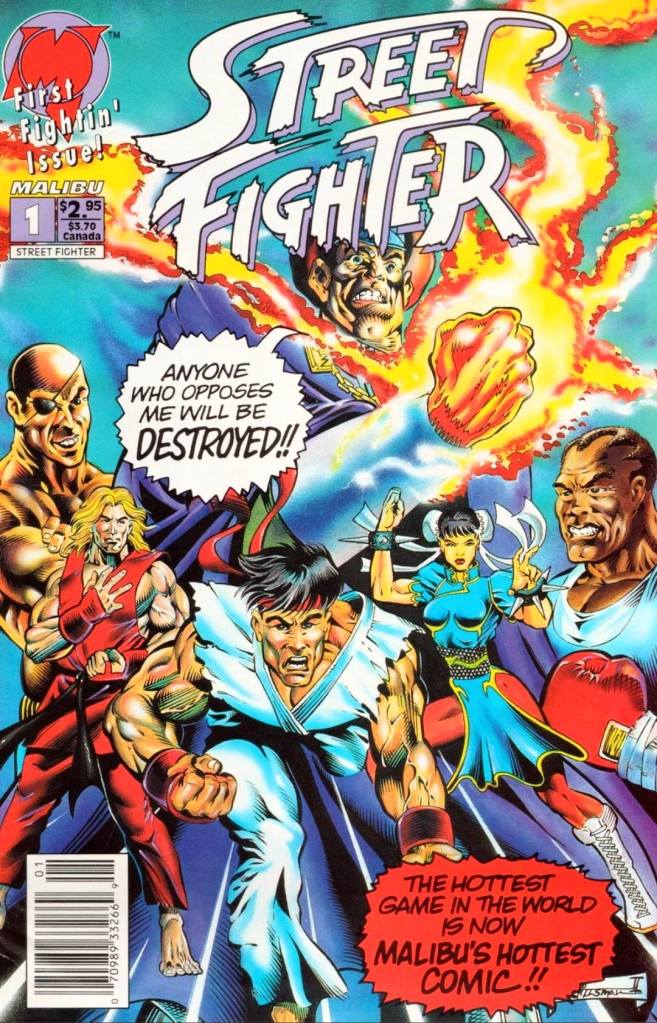
The cover.

Early story

The story begins some time in the past when Ryu permanently scars Sagat on the chest with his Dragon Punch during street fight in front of many. Enraged, Sagat tries hard to retaliate against Ryu who happens to be the champion among street fighters. The Japanese fighter hits the tall Thai kickboxer with a barrage of kicks.

The past fight was played on home video and viewed by Sagat and Balrog. Embarrassed by the video, Sagat destroys the TV and asked his companion why must he be humiliated. After Balrog tells him not to talk that tone with their superior Bison, Sagat hits the American boxer. As the fight between the two intensifies, Bison arrives and stops the violence. He tells Sagat that he is an embarrassment to his organization.

Bison reminds them that he took them into his criminal network and still have not redeemed themselves in front of him. He tells the two that they must beat Ryu and regain the street fighter championship.

As Balrog and Sagat express difficulty in finding and fighting Ryu, Bison tells them the Japanese fighter’s friends are Chun Li and Ken…

Quality
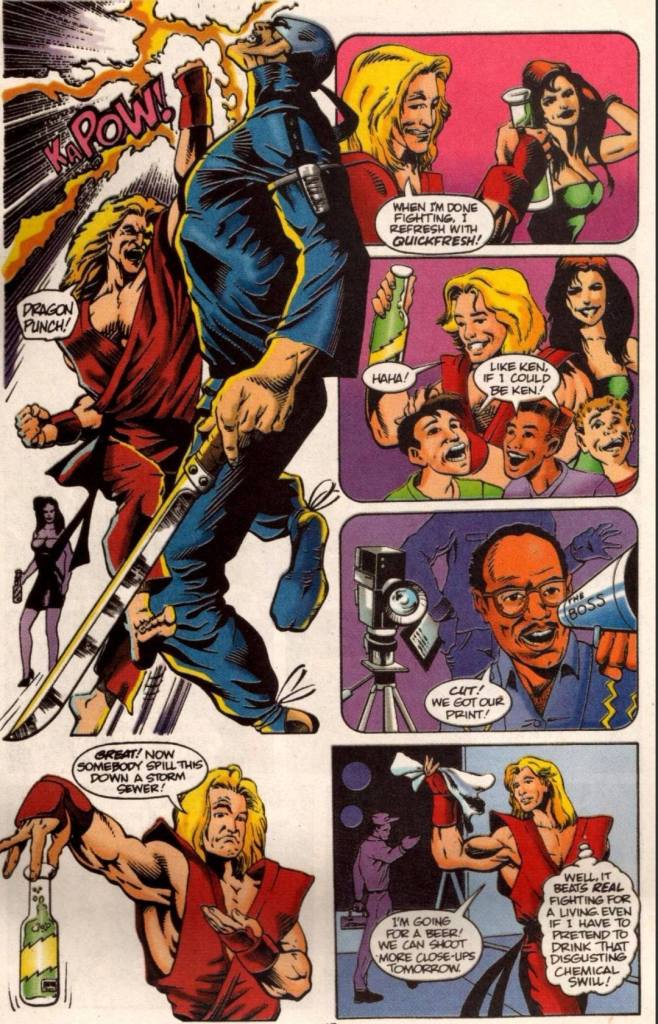
Once a dedicated, well-trained martial arts competitor, Ken Masters has been doing his moves in productions of commercials. He does not enjoy the product he endorsed.

Back in 1993, I even contemplated buying a copy of this comic book locally when it was brand new. I’m glad I chose not to buy it back then as this one has bad quality in its presentation from start to finish. Dedicated Street Fighter II fans should be warned.

For starters, the storytelling is not faithful to the lore of Street Fighter II even though the creators derived key elements of characters from the game itself. That said, it looks like liberties were taken in order to form a narrative that can be told in comic book format.

Chun Li here is correctly described as an agent of Interpol and is motivated by revenge over the loss of her father who was killed by M. Bison. And yet, she is portrayed here as having a romantic relationship with Ryu and has been training with him along with Ken in the past. The romantic relationship between the two never existed in the popular video game and it is established in Street Fighter II lore that Chun Li came from a different martial arts background while Ken and Ryu trained together under the same master.
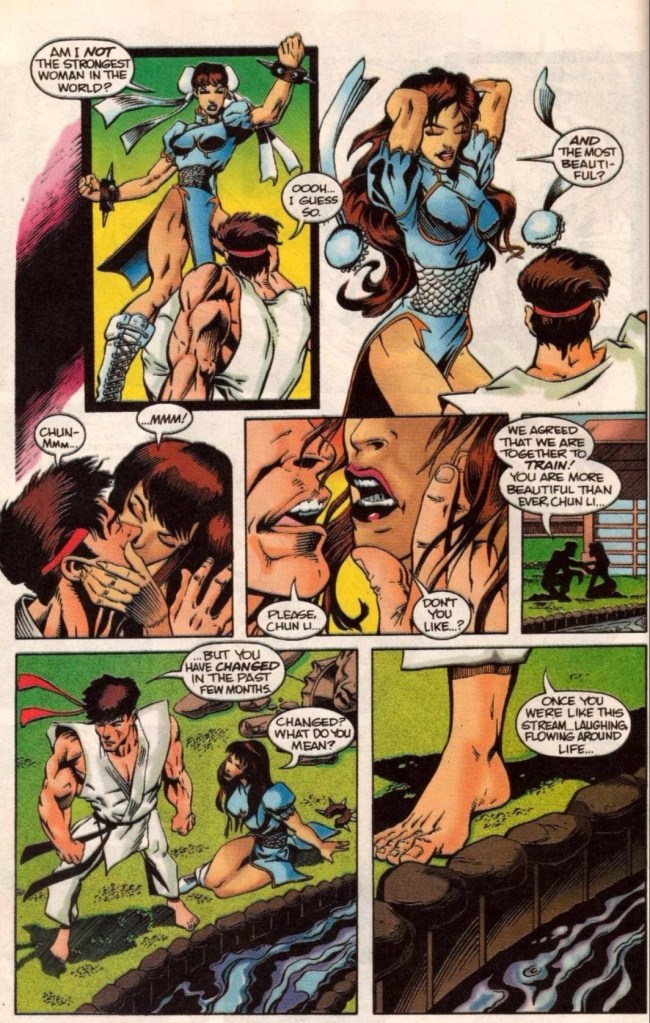
Contrary to what was established in Street Fighter II lore, Ken and Chun Li were portrayed as having trained together and have romance with each other.

Ryu in this comic book is the defending street fighter champion (reflecting the canonical story of Street Fighter and Street Fighter II) who is responsible for the huge scar on Sagat’s chest. While Ryu is the wandering warrior who travels around the world with only a duffel bag as he seeks the true way of the fighter, in this adaptation he is a reigning champion who starts having doubts when Chun Li lectures him over his devotion to fighting as life changes for others around him.

While the liberties are notable and could be insulting to dedicated Street Fighter II fans, the story of this comic book is surprisingly readable. As Ryu is the target of Bison and his criminal network, it made sense for dangerous pawns Sagat and Balrog to go after Ken to get to the Japanese fighter. There definitely is a plot here and if readers can ignore the actual lore of Street Fighter II, it can be followed and the classic concept of good versus evil will be realized.

As for the art, the work done by Don Hillsman is lackluster. While he excelled in making Balrog look scary early in the story, his visual takes on the other Street Fighter II characters range from bad to passable. Ken, Ryu, Sagat, Bison, Vega and Chun Li all have that rough look on their faces and bodies. Hillsman even tried to emulate special moves from the game but ended up looking sub-par. Lackluster artworks like these only add to the perception of the fans and other people obsessed with Japanese culture and the arts that Western illustrators should not draw Street Fighter characters.

Conclusion
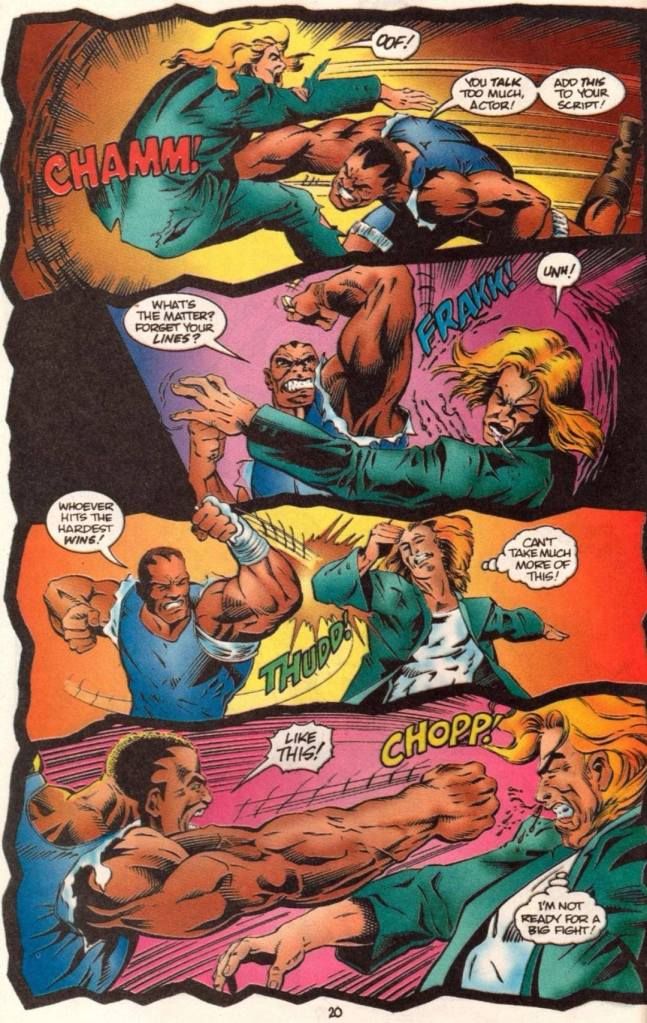
Balrog on the offensive against Ken.

I am glad that I never bought Street Fighter #1 (1993) brand new decades ago. Its quality is really bad and clearly it has not aged well. Street Fighter fans – especially those obsessed with Street Fighter II games – should look elsewhere to enjoy the tale and concepts of Street Fighter II. This comic book from Malibu Comics is a creative failure and was the start of the eventual collapse of the publishing deal made with Capcom. Can you just imagine the shock the Capcom executives had when they first read this comic book? Ultimately, this comic book adaption was creative catastrophe which is a shame because Malibu Comics had a good record of licensed projects and the late Strazewski (died on April 27, 2026) was one of the finest writers and creators on the Ultraverse line of comic books.
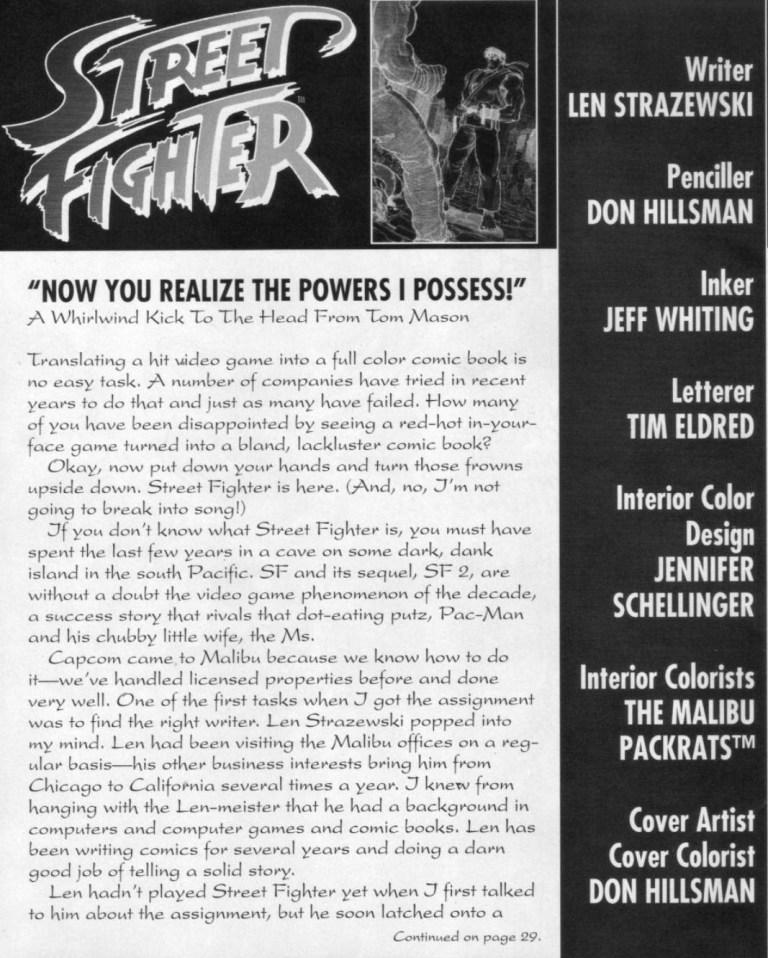
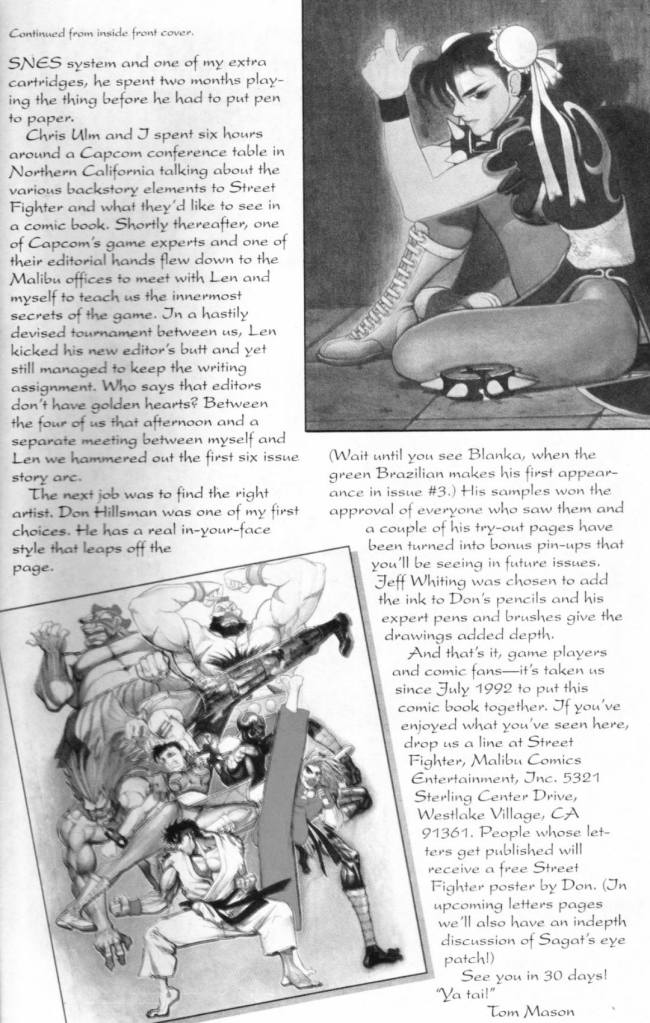
The first half of the message about the Street Fighter II adaptation and the deal between Capcom and Malibu Comics.
The 2nd half of the message. The Capcom-Malibu deal and the production of this adaptation started in mid-1992. Street Fighter II was already dominating the arcades at the time.

Overall, Street Fighter #1 (1993) should be avoided.

+++++

Thank you for reading. If you find this article engaging, please click the like button below and also please consider sharing this article to others. If you are looking for a copywriter to create content for your special project or business, check out my services and my portfolio. If you want to support my website, please consider making a donation. Feel free to contact me with a private message. Also please feel free to visit my Facebook page Author Carlo Carrasco and follow me on Twitter at @CarloCarrascoPH as well as on Tumblr at https://carlocarrasco.tumblr.com/ and on Instagram at https://www.instagram.com/authorcarlocarrasco/.
Retro Gaming Ads Blast – Part 37

Welcome back readers, fellow geeks and electronic gaming fans!

In this edition of the Retro Gaming Ads Blast (RGAB) series, we will take a look at another batch of retro gaming print ads – including arcade flyers – from the 1970s to the 1990s.

For the newcomers reading this, Retro Gaming Ads Blast (RGAB) looks back at the many print ads of games (console, arcade, computer and handheld) that were published in comic books, magazines, flyers, posters and newspapers long before smartphones, social media, the worldwide web and streaming became popular. To put things in perspective, people back in the 1970s and 1990s were more trusting of print media for information and images about electronic games and related products.

With those details laid down, here is the newest batch of retro gaming print ads for you to see and enjoy…

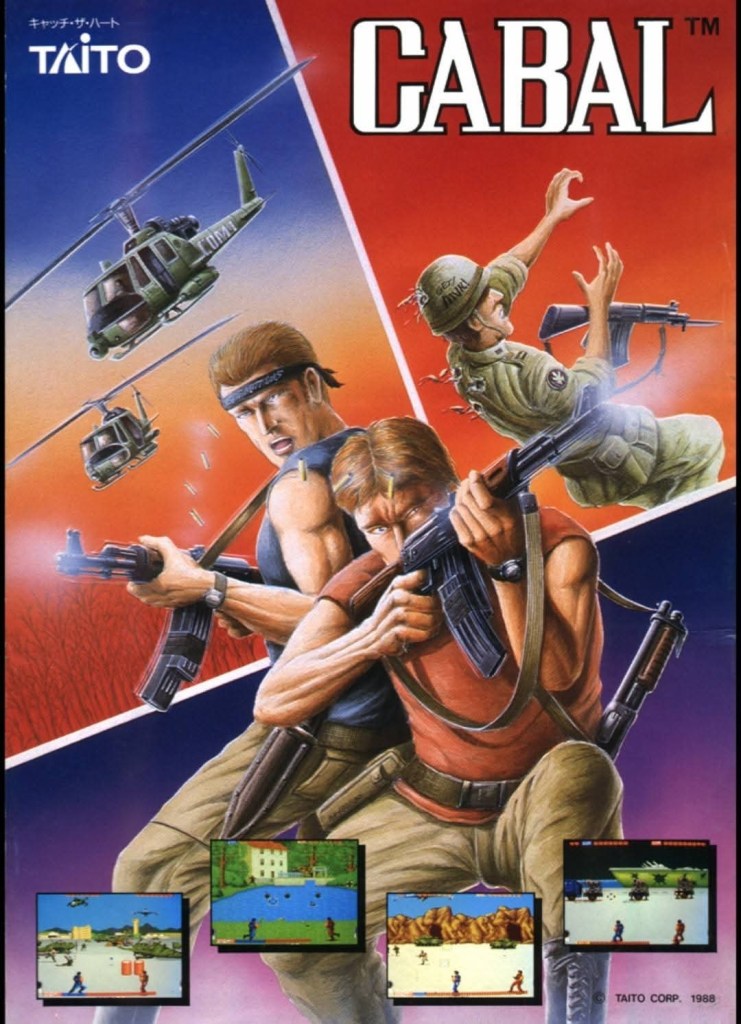
1. Cabal Japanese arcade flyer/poster

Can you feel the action and intensity here?

When it was first released in video arcades in Japan in late 1988, Cabal was another game inspired by military action movies of Hollywood which explains the art work done for the arcade flyer and poster shown above. The Vietnam War was still fresh in people’s minds and the concept of having one or two players firing their weapons against enemy soldiers resonated with gamers who saw Hollywood’s military action flicks. That said, it is not surprising that Cabal became a huge hit in Japan before getting released in arcades around the world.

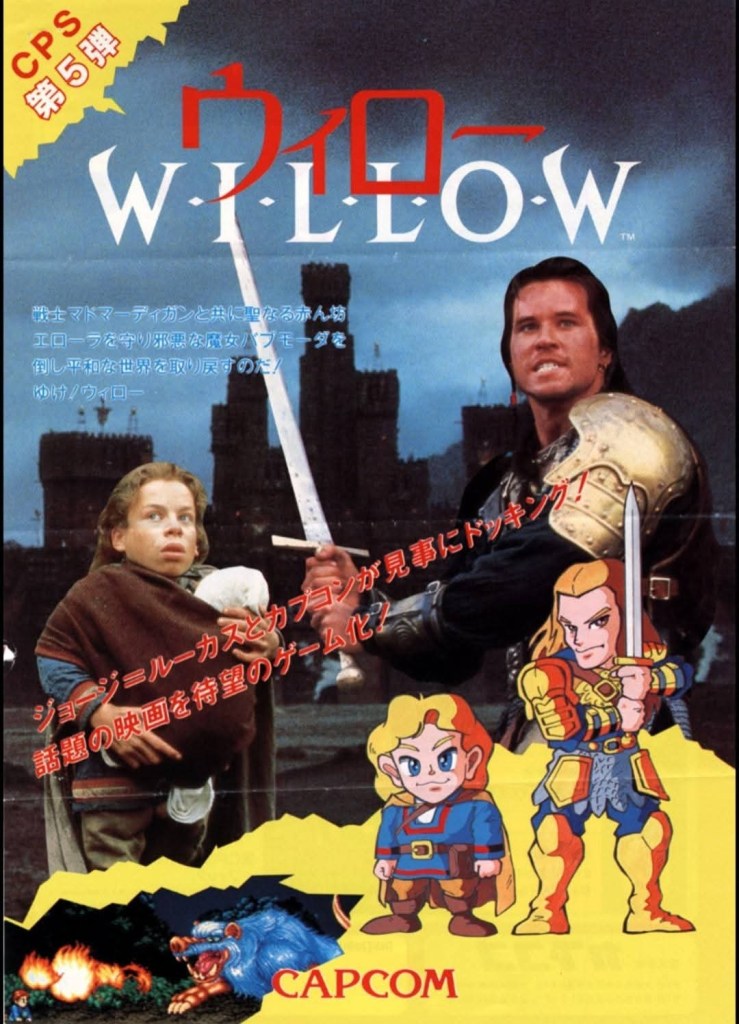
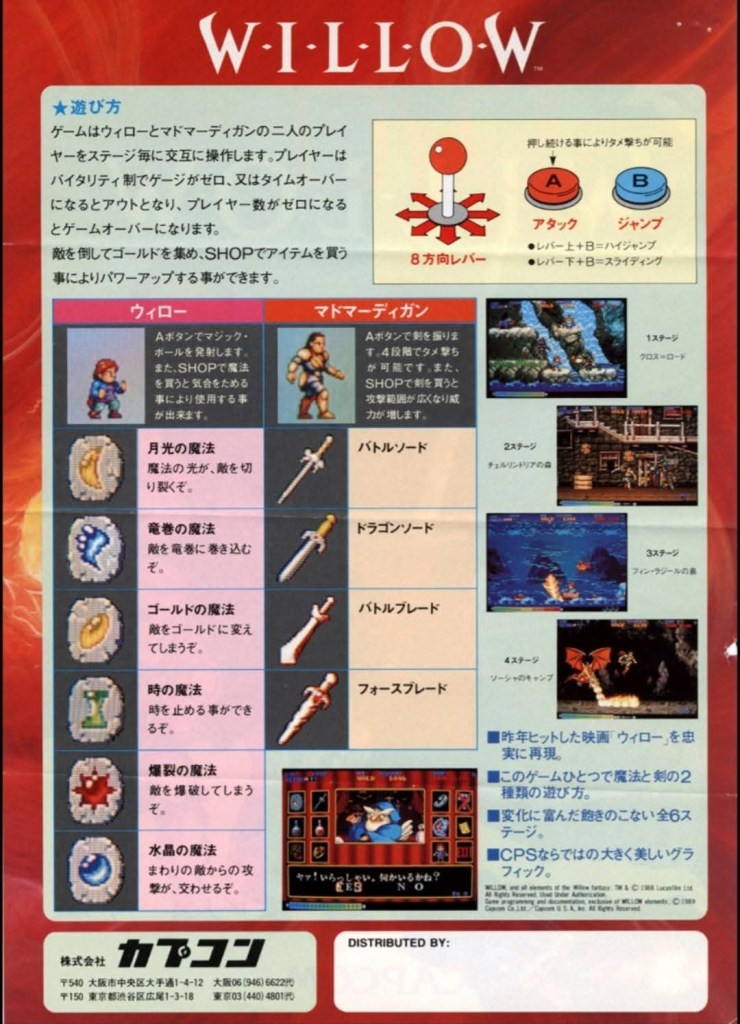
2. Willows Japanese arcade flyer

The front.
The rear.

Remember the 1988 high fantasy adventure film Willow? That film was produced by George Lucas and was a bold new production of Lucasfilm shifting away from Star Wars. Believe it or not, an official arcade game adaptation of Willow was made by Capcom and they promoted it by having images of Val Kilmer and Warwick Davis on the front of the arcade flyer (opposite the illustrated versions of their characters). The game, which was a side-scrolling platform game with run-and-gun elements, went on to be an arcade hit in Japan and eventually pleased gamers worldwide.

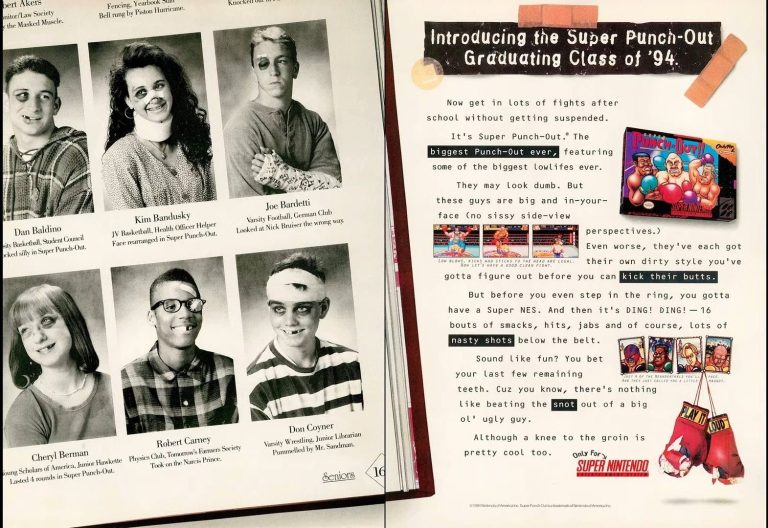
3. Super Punch-Out!! North American print ad

This is funny to look at.

Historically, Nintendo’s Punch-Out!! series started in the arcade in 1984 and the first game was the result of the company’s effort to make a new game using arcade cabinets with two screens. The 2nd game – Mike Tyson’s Punch-Out!! – became a huge critical and commercial hit (over 2 million copies sold in 1988) on console and it made great business sense for Nintendo for release another Punch-Out!! for its console gamers to enjoy in the comfort of home. In 1994, Super Punch-Out!! was released on the Super Nintendo Entertainment System (SNES) in America and to promote it, the company came up with a hilarious 2-page ad that showed fictional high school graduates with boxing-related injuries. The imagery creatively connected with the words “biggest Punch-Out ever” and “Graduating Class of ‘94”.

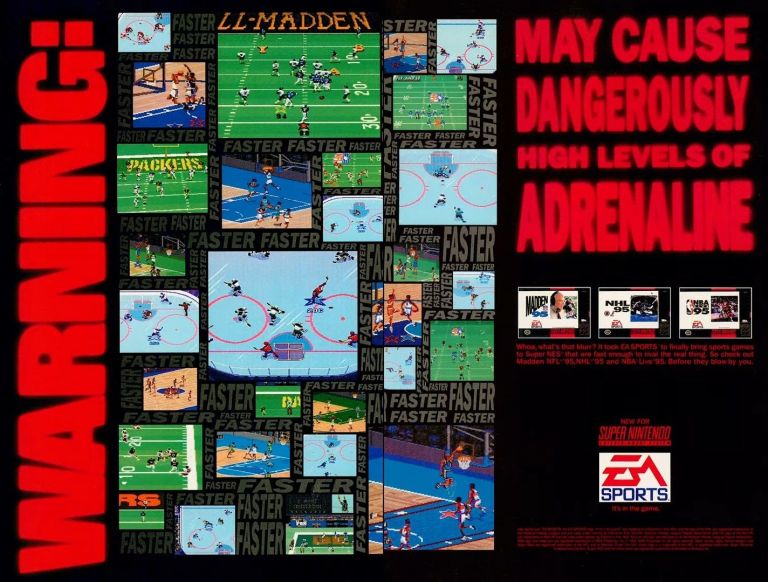
4. EA Sports 3-in-1 SNES games print ad

EA Sports games on the SNES.

In 1994, Electronic Arts (EA) released their sports games NBA Live 95, NHL 95 and Madden NFL 95 for consoles at the time. Even though the Sega Genesis sold better than Super Nintendo Entertainment System (SNES) in America at the time, EA went on to aggressively market their 3 sports video games on Nintendo’s console using a 3-in-1 games print ad. In retrospect, the SNES for the most part had better graphics and sounds than the Genesis which is reflected clearly on EA Sports games of the time. This print ad still looks fun and exciting.  

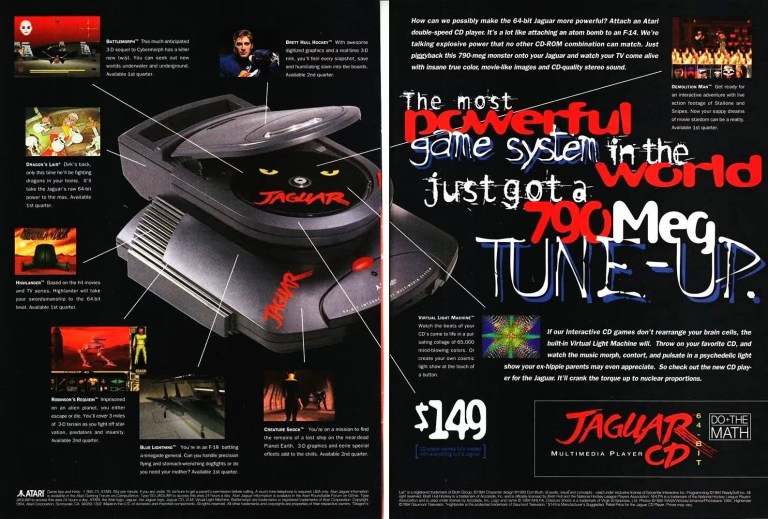
5. Atari Jaguar CD print ad

Were you able to play any game on the Atari Jaguar with the CD add-on included?

Apart from the obvious advances of technology that impacted video games, the 1990s is also known for the rise of CD-ROM as a medium for gaming. In an effort to boost sales of the Atari Jaguar console (launched in America in 1993 for around $250) and capitalize on the trust of the fans and console owners, Atari launched a CD-ROM add-on device for about $150 in 1995. To promote it, the company went aggressive with the 2-page ad showing the add-on fully connected on top of the main console, showing off some games and posting a text description emphasizing hardware power and the advantages that come with the CD technology. Even in the captured image, the Atari Jaguar CD still resembled a toilet. This is an aggressive ad campaign that failed as less than 20,000 Atari Jaguar CD units were sold by the time it was discontinued in 1996.

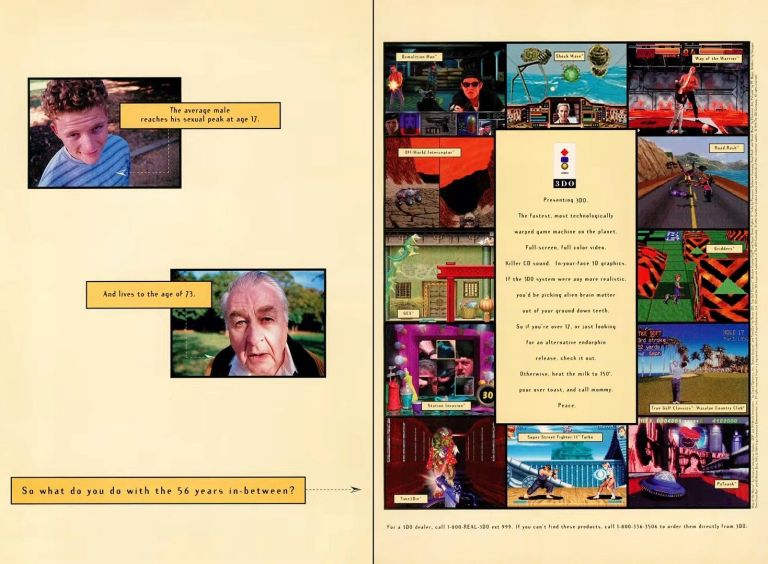
6. 3DO print ad

While it lacks intensity, this 3DO ad emphasized the games.

Without showing any hardware, the 3DO Company came up with this 2-page print ad that had a slightly adulterated tone (look at the left page) and aggressively marketed the 3DO console games available at the time. Games like Demolition Man, Shock Wave, Road Rash and Super Street Fighter II Turbo were the standout titles which clearly showed the company made the effort to emphasize gaming more than multimedia features. This 1990s ad tackled the generations with a touch of humor.

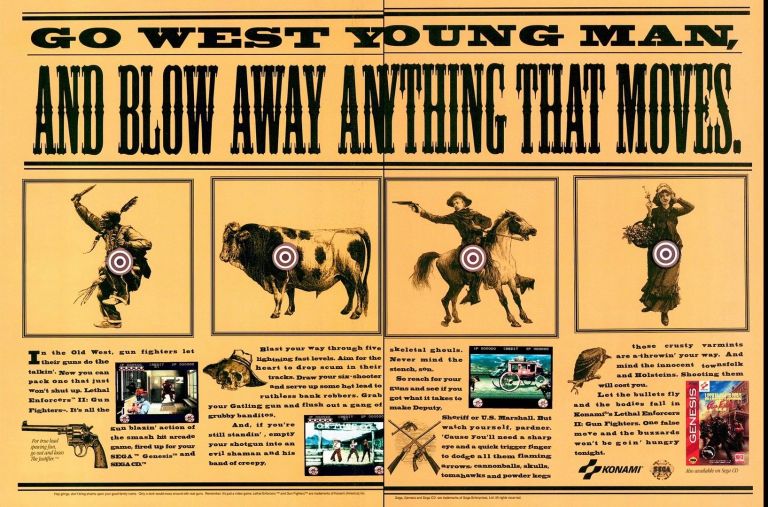
7. Lethal Enforcers II: Gun Fighters Sega Genesis print ad

This is a fun ad to look at.

When Lethal Enforcers II: Gun Fighters was released in the arcades in 1994, it became a commercial success for Konami which went on to announce it would port the game to consoles of Nintendo and Sega at the time. While the port for the Super Nintendo Entertainment System (SNES) was never released, Lethal Enforcers II: Gun Fighters made its way to the Sega Genesis and Sega CD. The print ad of the Sega Genesis version (Sega CD mentioned in small text) had an inspired design emphasizing the Old West, shooting and the conflict between cowboys and Indians. The screenshots gave people the clear idea that Old West was the setting (versus modern day in the previous game). This is still fun to look at.

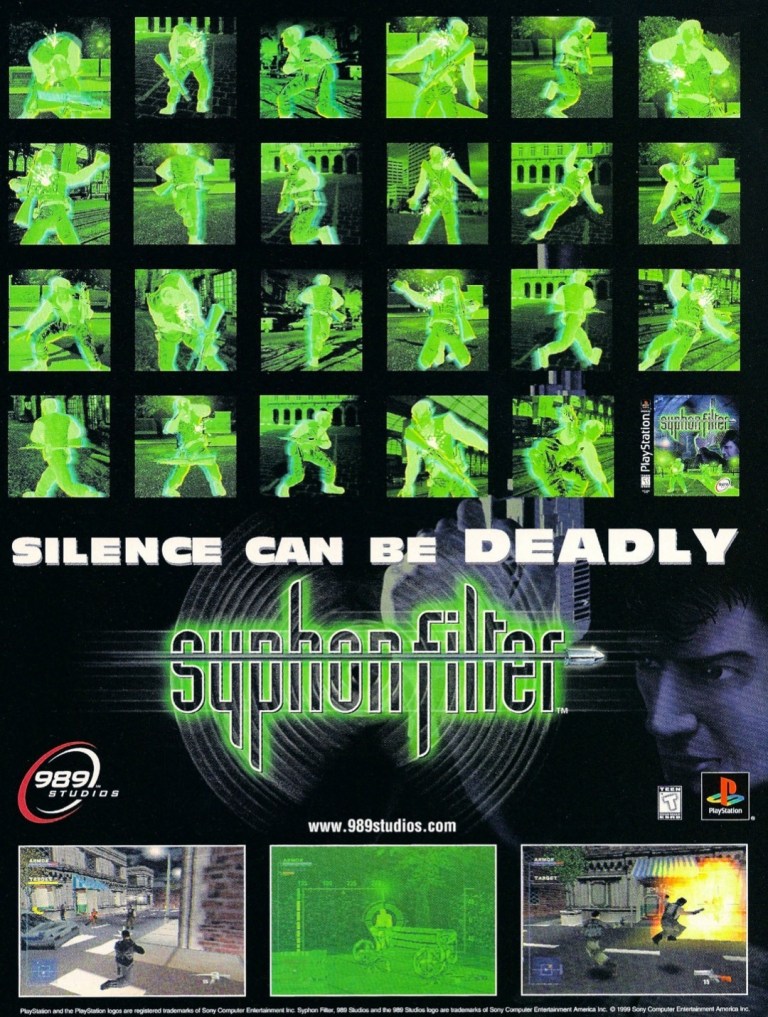
8. Syphon Filter

Syphon Filter went on to become a surprise hit game in 1999.

In 1999, Sony’s 989 Studios released Syphon Filter exclusively on the PlayStation console. This single-page print ad showed a few screenshots on the bottom and several action snippets with a night vision touch ultimately emphasizing the stealth aspect within the gameplay. The marketing proved to be effective as the game sold a lot at retail and went on to establish a new game franchise exclusive to PlayStation consoles.

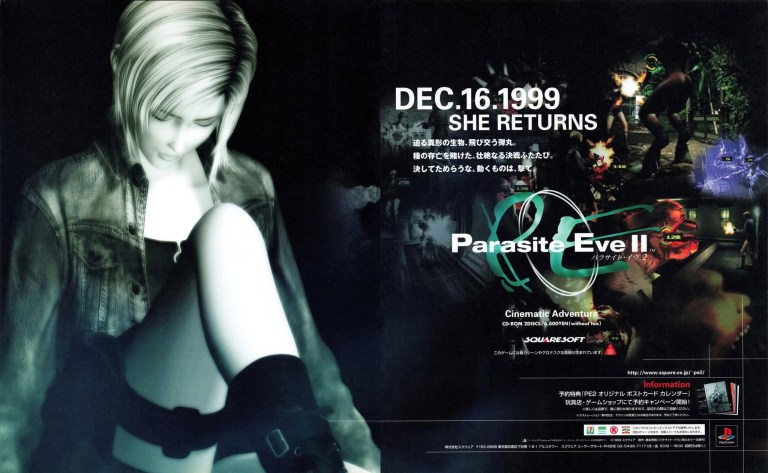
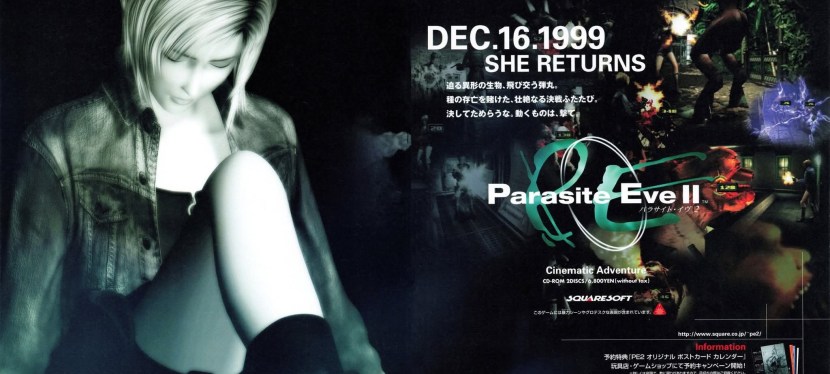
9. Parasite Eve II Japanese print ad

Were you a big fan of Aya Brea and the Parasite Eve franchise in the late 1990s?

Following the critical and commercial success of Parasite Eve in 1998, SquareSoft proceeded with Parasite Eve II and the production (note: initially for a spin-off game before becoming a sequel) did not even involve the main creators of the first game. Instead the company had a different team of developers – including those who previously worked on Resident Evil games for Capcom – in Osaka to make the sequel. This explains why Parasite Eve II had stronger survival horror gameplay resembling a Resident Evil game. As major changes were made during the production, it was decided that Aya Brea would become the main protagonist and already the character was already popular with gamers. That being said, the marketing of Parasite Eve II for the Japanese market heavily featured Aya Brea with subtle sexiness, beauty and action in mind. The marketing intensified leading to its eventual December 16, 1999 release in Japan.

+++++

Thank you for reading. If you find this article engaging, please click the like button below, share this article to others and also please consider making a donation to support my publishing. If you are looking for a copywriter to create content for your special project or business, check out my services and my portfolio. Feel free to contact me with a private message. Also please feel free to visit my Facebook page Author Carlo Carrasco and follow me on Twitter at  @HavenorFantasy as well as on Tumblr at https://carlocarrasco.tumblr.com/ and on Instagram at https://www.instagram.com/authorcarlocarrasco