Retro Gaming Ads Blast – Part 45

Welcome back readers, fellow geeks and electronic gaming fans!

In this edition of the Retro Gaming Ads Blast (RGAB) series, we will take a look at another batch of retro gaming print ads from the 1980s to the 1990s.

For the newcomers reading this, Retro Gaming Ads Blast (RGAB) looks back at the many print ads of games (console, arcade, computer and handheld) that were published in comic books, magazines, flyers, posters and newspapers long before smartphones, social media, the worldwide web and streaming became popular. To put things in perspective, people back in the 1980s to the 1990s were more trusting of print media for information and images about electronic games and related products.

With those details laid down, here is the newest batch of retro gaming print ads for you to see and enjoy…

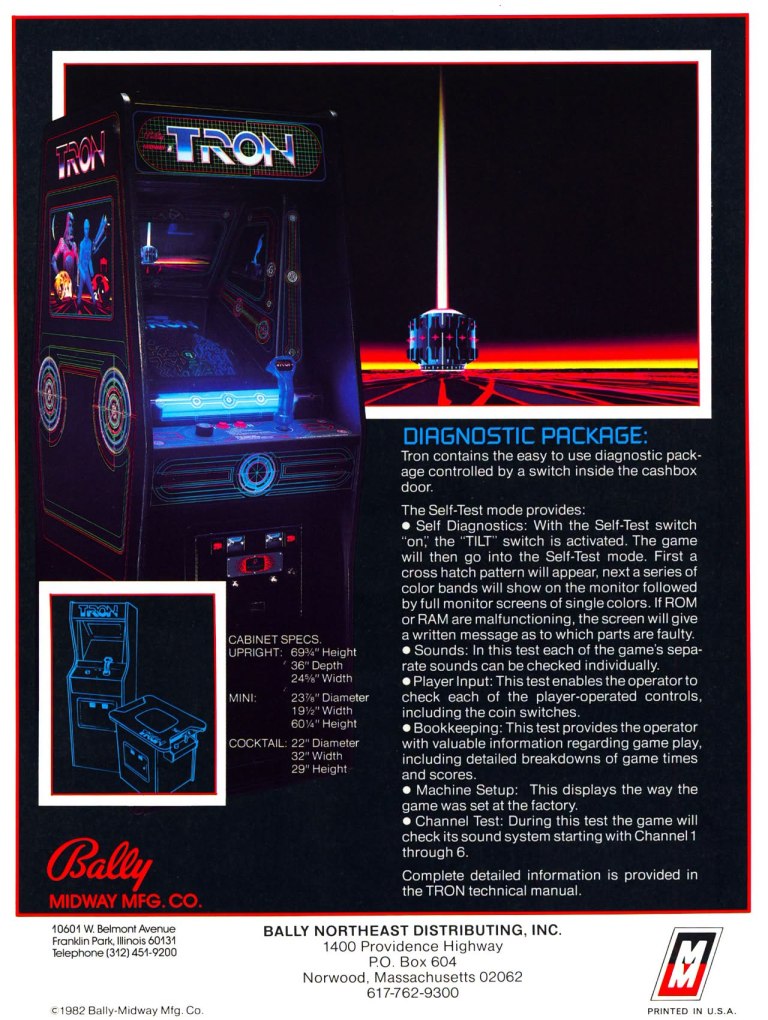
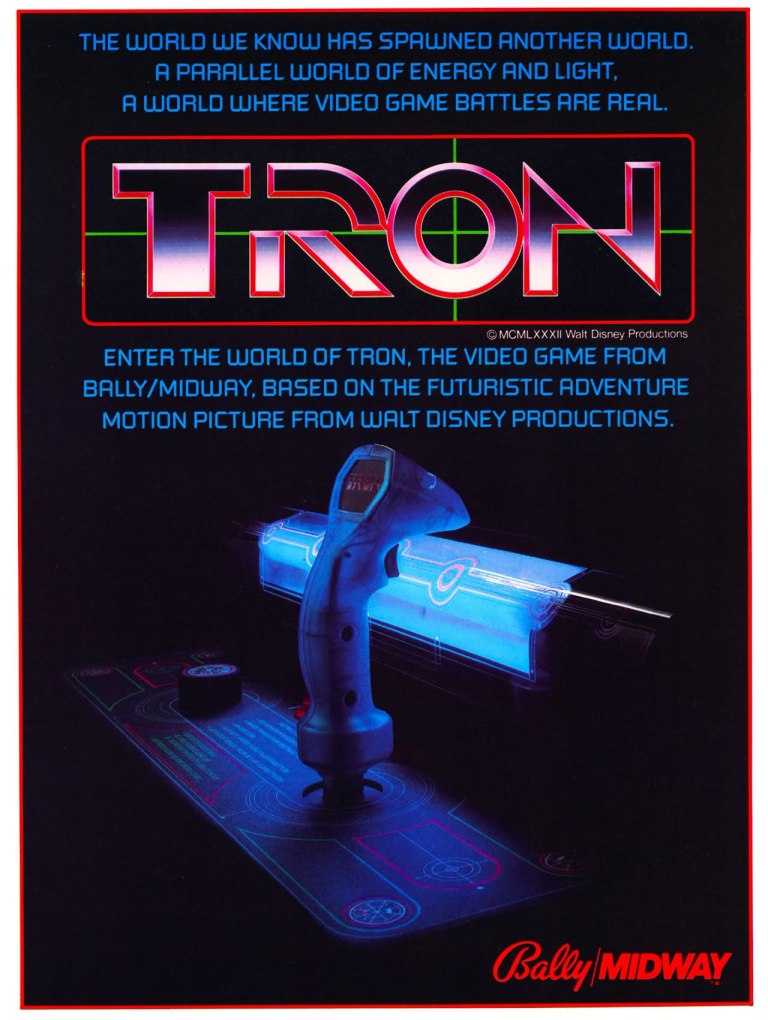
1. Tron Arcade Flyer

The front.
The rear. The details were clearly written for arcade operators.

Remember how dazzling the 1982 movie Tron was when you first saw it? That film had groundbreaking computer-generated graphics and the filmmakers worked very hard to tell a story covering both the real and digital worlds. Along the way, the movie had strong video game vibes which resonated with gamers at a time when arcade gaming was wildly popular in America. Believe it or not, an official arcade game of Tron was released the same year as the movie and it was a massive success. The arcade flyer perfectly captured the vibe and look from the movie and the machine itself had a control stick the same with what was shown to viewers. This old flyer is still great to look at.

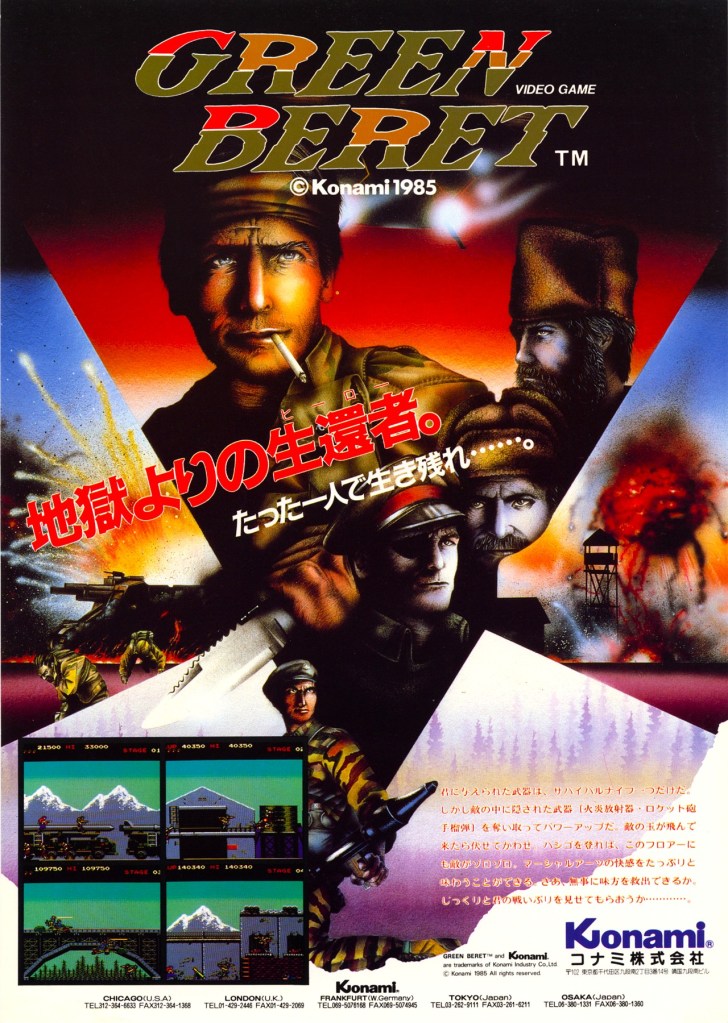
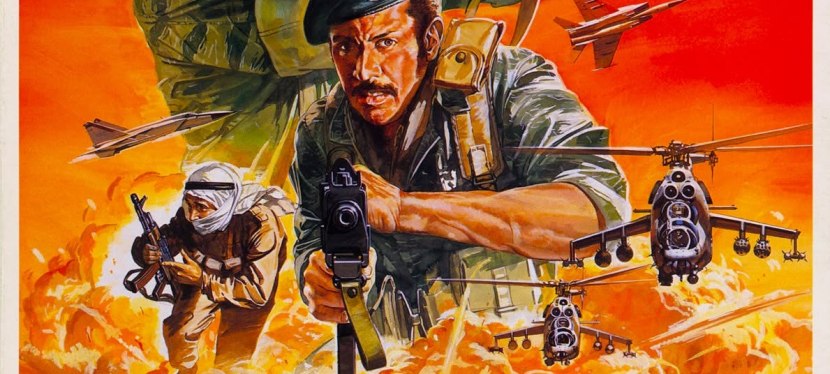
2. Green Beret Japanese Arcade Flyer

This is a very stylish flyer.

Konami was a highly prolific game publisher in the 1980s and it had lots of games that became huge blockbusters. During the decade, their game developers were strongly influenced by both Hollywood action movies and the Cold War. In 1985, Konami released the militaristic game Green Beret in Japanese arcades and to promote it, they created an arcade flyer featuring a very stylish artwork highlighting military images of soldiers (including a guy smoking) and warfare. This ad still looks great and it was not surprising it helped the game achieve huge commercial success. Green Beret was released in America as Rush’n Attack.

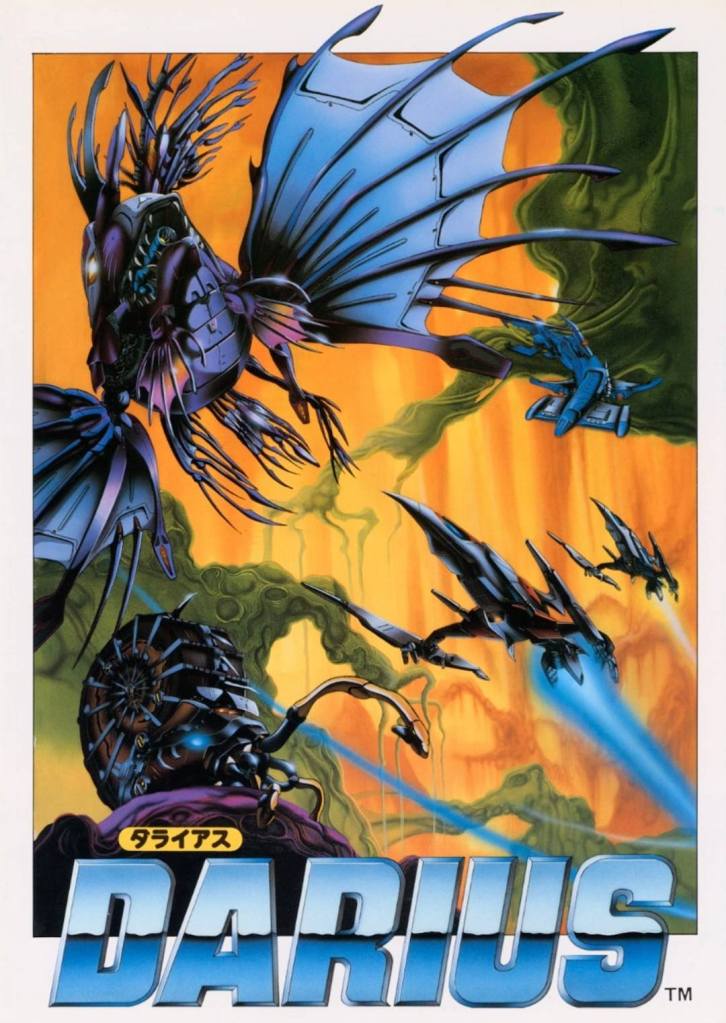
3. Darius Japanese And North American Arcade Flyers

The Japanese flyer.
The North American flyer.

Released in arcades worldwide in 1987, Darius is a 2D side-scrolling shooter game from Taito which had a science fiction concept of the starship Silver Hawk (piloted by players) which sets on a mission to destroy an evil empire before it could destroy the world called Darius. The game was successful, most notably in Japan and it eventually led to sequels being released later. What I find intriguing is how the arcade game was promoted in Japan and in North America. The Japanese arcade flyer had this intriguing artwork that reflected a blend of sci-fi with a touch of horror. The North American flyer had a strong sci-fi touch with a male and female model wearing costumes (that made them look futuristic) standing beside the Darius machine. Which flyer looks more appealing to you?

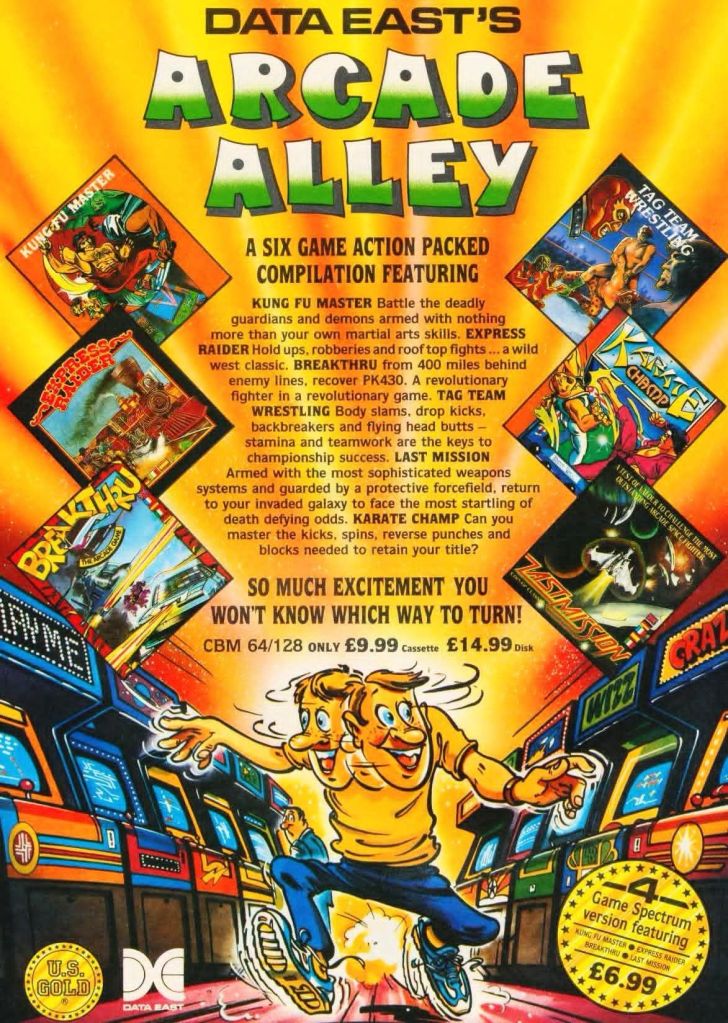
4. Data East’s Arcade Alley Print Ad

Fun and excitement emphasized in this print ad.

There is nothing like porting arcade hits to computer systems for gamers to enjoy. In 1988 there in Europe, U.S. Gold released Data East’s Arcade Alley for computer systems and it included ports of popular Data East games like Kung Fu Master, Express Raider, Breakthru, Tag Team Wrestling, Last Mission and Karate Champ. U.S. Gold’s print ad showed a guy in the middle of a video arcade looking on both sides to pick which game to play which strongly emphasized the essence of the game collection (offered in cassettes and disk). This old ad is still amusing to look at.

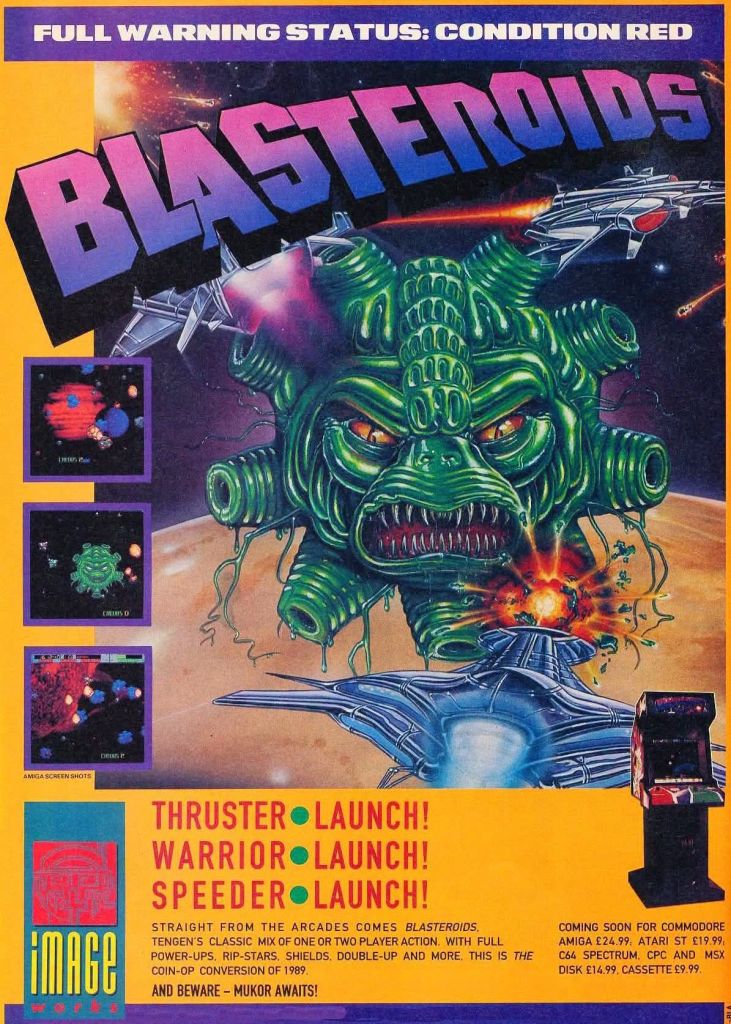
5. Blasteroids European Print Ad

Blasteroids for the Europeans.

Blasteroids, the third entry in Atari’s popular Asteroids games series, was released in European arcades by Image Works and eventually landed on computer systems there. For Europe, the ad makers came up with artwork showing a creepy, green space monster surrounded by a few spaceships to emphasize the game’s concept. The said monster eventually appeared on the game covers of the computer ports of Blasteroids later. This ad shows creative adjustments taken to promote games in different parts of the world.

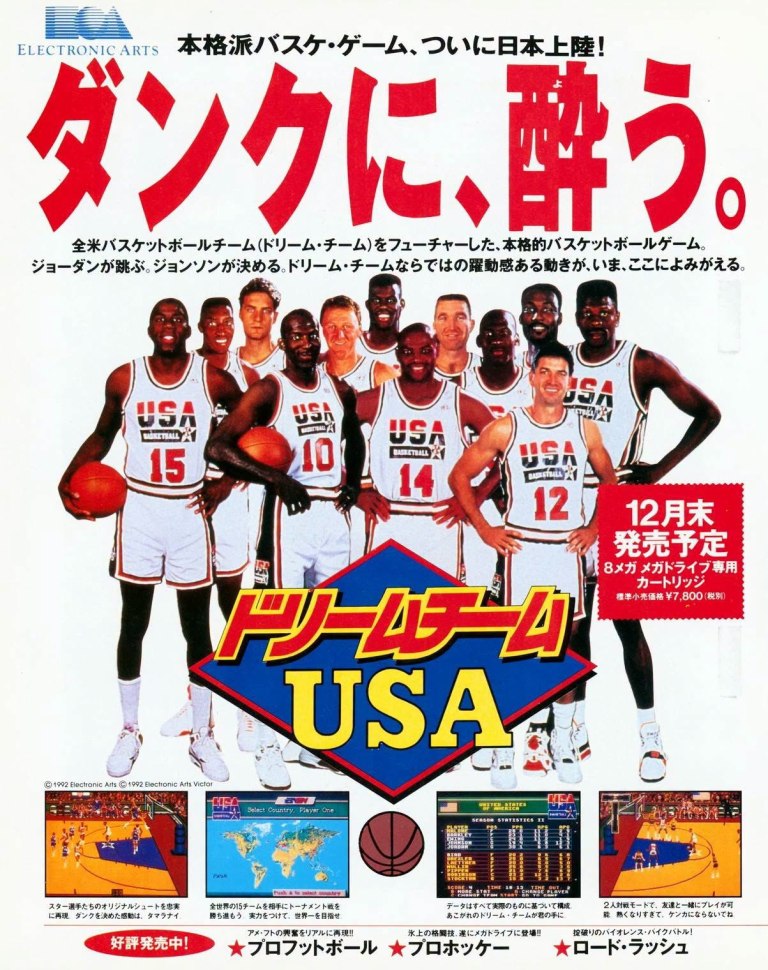
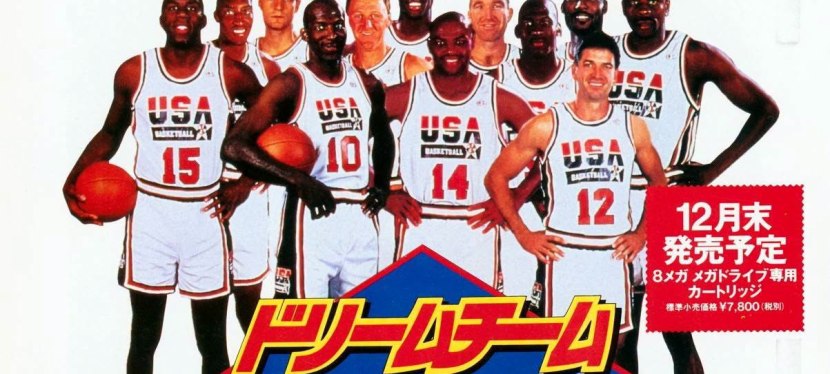
6. Dream Team USA Japanese Print Ad

The legends of the NBA in the Japanese version of EA’s Team USA Basketball. Retitling the game as Dream Team USA made more sense because “Dream Team” was a much more popular reference than “Team USA Basketball”.

Remember how wildly popular the Dream Team (Team USA in Olympic basketball) was in 1992? With NBA legends Larry Bird, Michael Jordan, Magic Johnson, Charles Barkley, Karl Malone, John Stockton and more representing America in the basketball tournament of the Olympic Summer Games in Barcelona, Spain, the Dream Team (a media-led reference for the team) was easily the main attraction not only for basketball fans worldwide but also those who craved for excitement in international sports events. That said, Electronic Arts secured the license to make an official video game about the Dream Team and actually released the game Team USA Basketball within 1992 for the Sega Genesis. As basketball is popular also in Japan, EA released the game there titled as Dream Team USA and came up with a Japanese print ad to seriously capture gamers’ attention. This ad is still effective in delighting both basketball and video game enthusiasts.

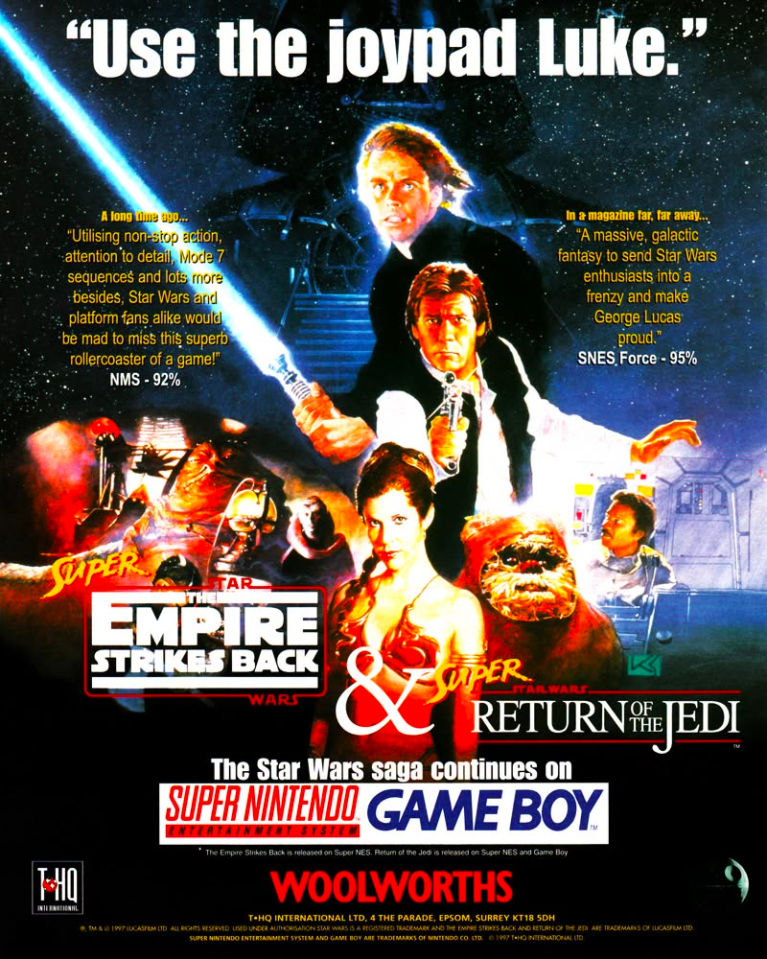
7. Super Star Wars: The Empire Strikes Back And Return Of The Jedi Print Ad

No screenshots of games used. Just the official images from the posters of the two movies.

Back in the 1990s, there was a resurgence of the original Star Wars trilogy across different forms of media. Apart from the VHS re-releases of Star Wars, The Empire Strikes Back and Return of the Jedi, there was a slew of video games of Star Wars released during the decade and the fans had new stuff to entertain themselves with. Along the way, the company THQ secured the rights to Super Star Wars: The Empire Strikes Back and Super Star Wars: Return of the Jedi for re-release to coincide with the 1997 “Special Edition” theatrical releases of their respective movies. THQ’s print ad simply used official images of Return of the Jedi and inserted a tiny bit of The Empire Strikes Back, and they did not show any screenshots that could have been helpful for Super Nintendo Entertainment System (SNES) and Game Boy users. Still, it was smart for THQ to print two excerpts of game reviews to sell the games.

8. Super Mario RPG North American Print Ad

A mesmerizing ad for the acclaimed Super Mario RPG.

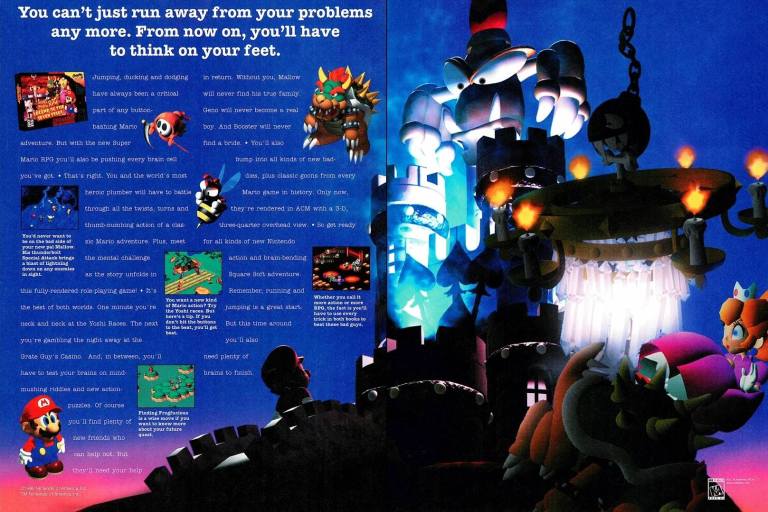
Remember back in the 1990s when Nintendo and role-playing game giant SquareSoft had a very healthy business relationship that proved successful? Before their eventual breakup (related to Square signing with Sony for PlayStation development), the two companies joined forces to make a fully featured role-playing game for the SNES featuring Super Mario and related characters…Super Mario RPG: Legend of the Seven Stars. To promote the game, Nintendo (the publisher) created a mesmerizing 2-page print ad highlighting their characters while emphasizing the role-playing and fantasy aspects of the game. At the time of its release, Super Mario was often identified with platform games and the Super Mario RPG print ad was a serious attempt to lure fans into RPGs which the SNES was already rich with. This ad, which I first saw in gaming magazines in 1996, still looks great.

9. NBA Shootout ’97 Print Ad

Did you play this on PlayStation in 1997?

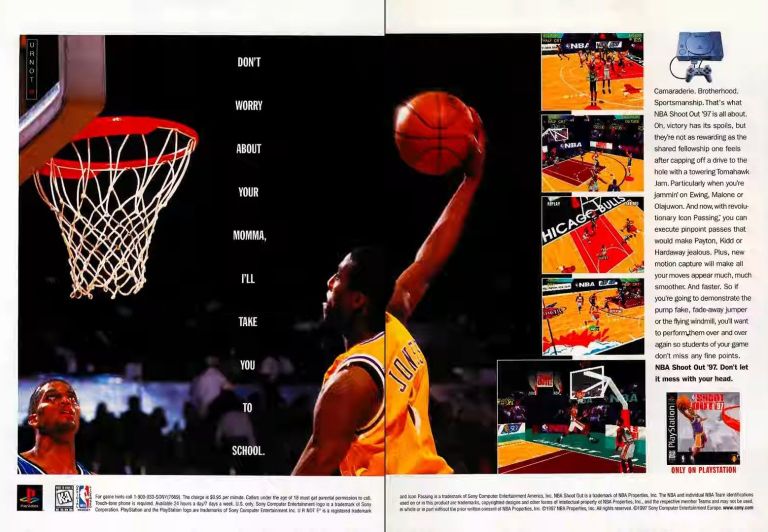
If there is anything I miss about 1990s console gaming, it is the fact that there were a lot of NBA-licensed video games that were offered to players with different tastes in basketball gaming. Sony had its own exclusive NBA games series called NBA Shootout and they were pretty aggressive selling its own basketball games along with the PlayStation going up against the likes of Electronic Arts (NBA Live), Sega and others. This is reflected in this 2-page print ad of NBA Shootout ’97 which was a PlayStation-exclusive release. They featured a photograph of Lakers’ Eddie Jones about to dunk and showed screenshots as well as the descriptive text written with excitement. Since it first started, NBA Shootout was basketball in full 3D polygonal graphics backed with motion-captured moves and dunks that players could enjoy only PlayStation. This ad is a reminder that Sony used to make official NBA games and there is a lack of variety and players’ choice of NBA gaming in today’s world.

10. Legend of Legaia North American Print Ad

Perhaps someone at Sony Computer Entertainment America (SCEA) thought Legend of Legaia was a horror video game.

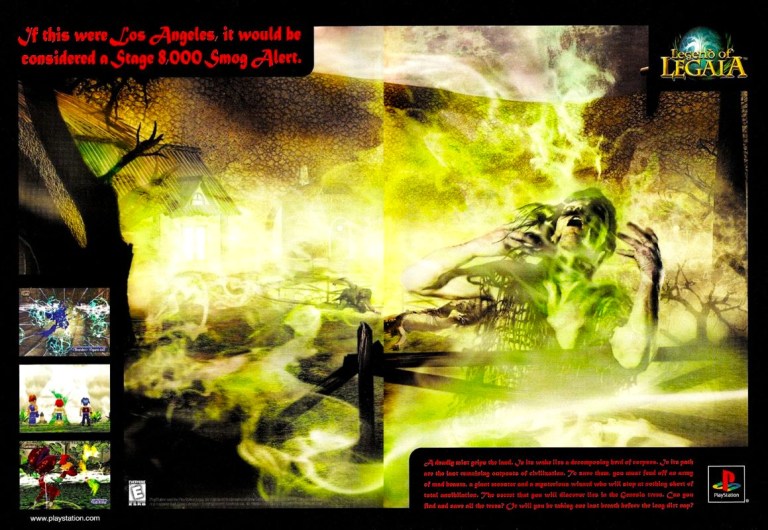
There was a time when Sony produced Japanese RPGs (JRPGs) exclusive for PlayStation consoles. One of them was Legend of Legaia which had a combat system that emphasized martial arts and it had an interesting fantasy concept. For its 1999 North American release, Sony came up with a very bizarre 2-page print ad that had digital artwork with a very strong horror vibe and the visual designs within the three screenshots shown were clearly not related with it. How this ad was made remains unclear. This is easily one of the most misguided gaming ads of the 1990s.

+++++

Thank you for reading. If you find this article engaging, please click the like button below, share this article to others and also please consider making a donation to support my publishing. If you are looking for a copywriter to create content for your special project or business, check out my services and my portfolio. Feel free to contact me with a private message. Also please feel free to visit my Facebook page Author Carlo Carrasco and follow me on Twitter at @CarloCarrascoPH as well as on Tumblr at https://carlocarrasco.tumblr.com/ and on Instagram athttps://www.instagram.com/authorcarlocarrasco

Retro Gaming Ads Blast – Part 44

Welcome back readers, fellow geeks and electronic gaming fans!

In this edition of the Retro Gaming Ads Blast (RGAB) series, we will take a look at another batch of retro gaming print ads from the 1980s to the early 2000s.

For the newcomers reading this, Retro Gaming Ads Blast (RGAB) looks back at the many print ads of games (console, arcade, computer and handheld) that were published in comic books, magazines, flyers, posters and newspapers long before smartphones, social media, the worldwide web and streaming became popular. To put things in perspective, people back in the 1980s to the 1990s were more trusting of print media for information and images about electronic games and related products.

With those details laid down, here is the newest batch of retro gaming print ads for you to see and enjoy…

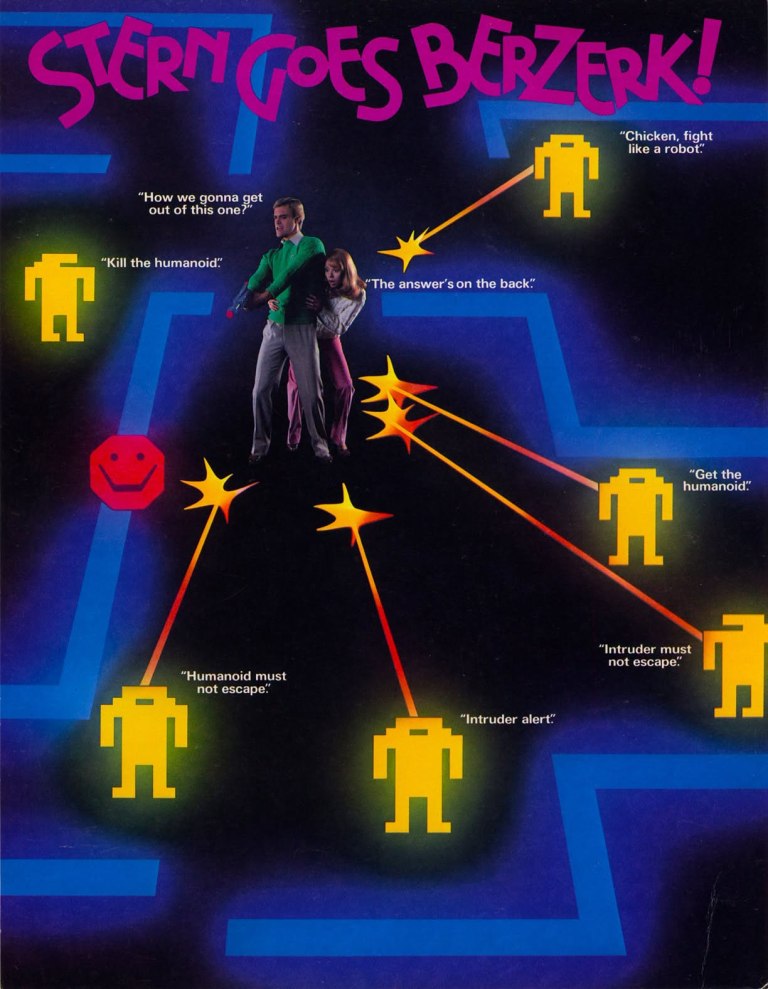
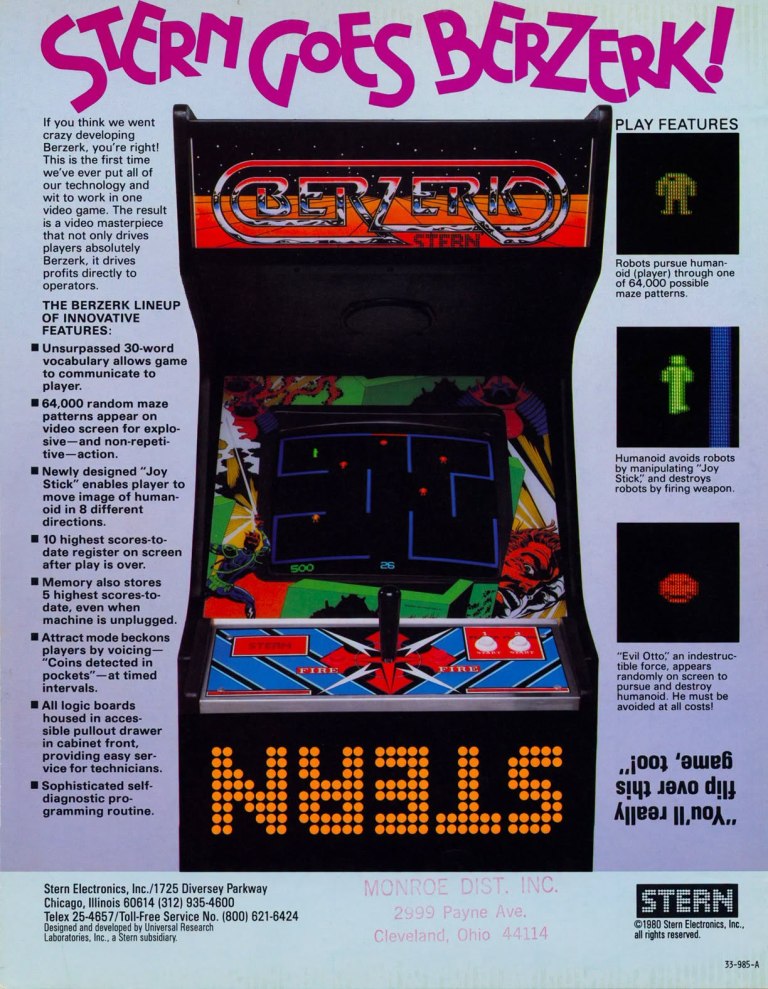
1. Berzerk Arcade Flyer

The front.
The rear.

Could you imagine being trapped deep within a maze surrounded by dangerous robots (plus one other unstoppable enemy) capable firing laser blasts at you? This was the concept behind the design of Berzerk, an arcade game released by Stern Electronics in 1980. Released at a time when science fiction became wildly popular in American entertainment, Berzerk was immersive for gamers and the multidirectional gameplay feature was captivating for many. To promote the game, Stern Electronics came up with a customized visual design that blended 2D sprite elements with a photograph of two people and some hand-drawn art pieces. The front of the flyer emphasized accurate the core concept of the game while the rear explained the technical details. They even played with their company name with the line “Stern goes berzerk!”

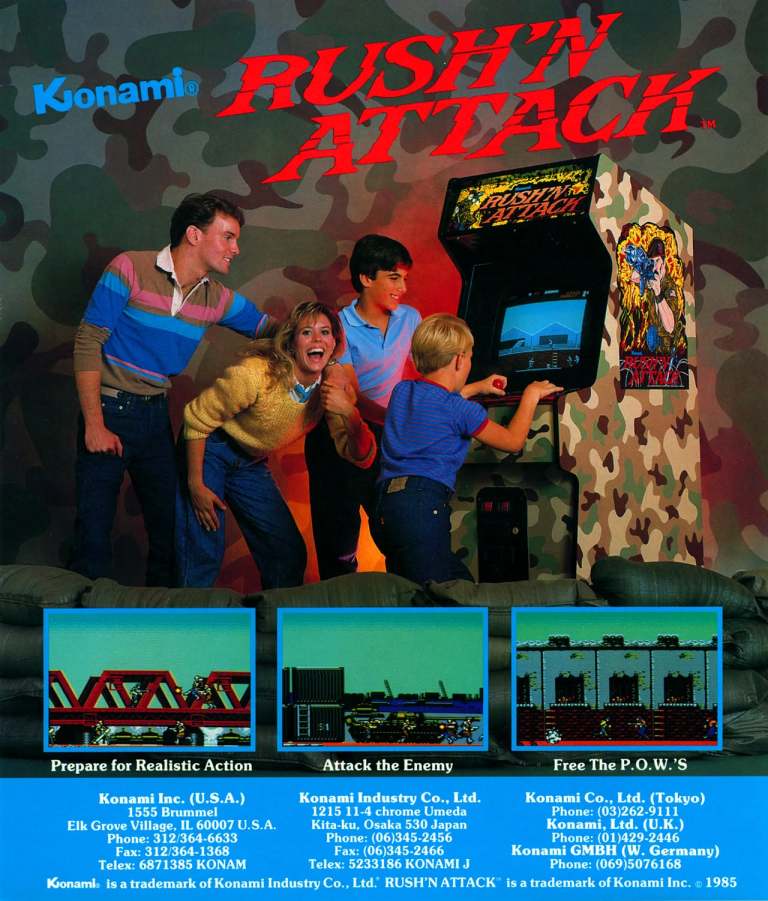
2. Rush’n Attack North American Arcade Flyer

The arcade flyer for North America

During the late stages of the Cold War, Konami made a lot of military-themed video games which resonated not only with those who were already aware about the global conflict but also with gamers who craved for action and excitement. One of those games was Rush’n Attack (alternative title: Green Beret) which was released in American arcades in late-1985. Konami came up with an arcade flyer showing four people (looking like an American family) having a good time in front of an arcade cabinet, and three screenshots of the game were displayed on the lower half. Rush’n Attack – which was deliberately titled to resemble the phrase “Russian attack” due to its obvious Cold War setting – went on to succeed commercially and critically. One notable game review compared Rush’n Attack favorably with the movie Rambo: First Blood Part II.

3. Turbo Out Run North American Arcade Flyer

The flyer.

Following the massive success Sega achieved with Out Run in 1986, the company went on to release the follow-up Turbo OutRun three years later. As seen in their North American flyer, Sega emphasized the in-game locations, the look of the machine with the driver’s seat and steering wheel, and the excitement they can expect. Turbo OutRun went on to become successful in the arcades worldwide and it got ported to a variety of consoles and computer systems in the years that followed. On its own, the arcade flyer sparked excitement for gamers.

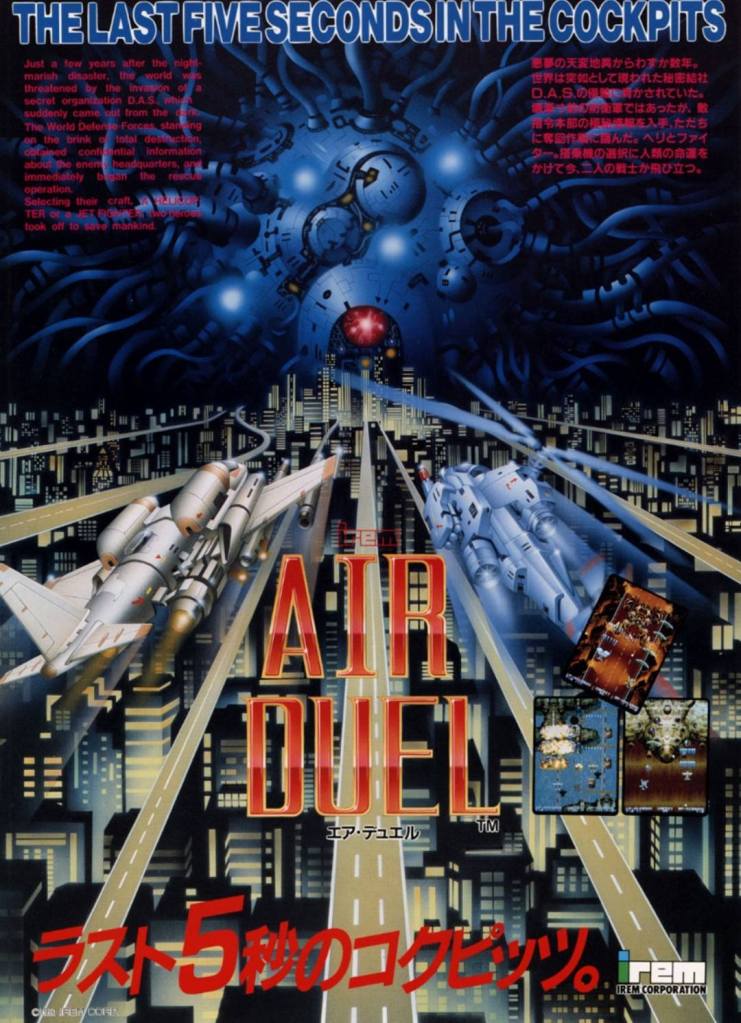
4. Air Duel Japanese Arcade Flyer

The artwork here is captivating to look at.

Released in Japanese arcades in 1990, Air Duel from Irem is an intense and fast-paced 2D sprite vertically scrolling shooter that attracted a lot of players. It had a war theme and its aesthetic has a mix of military and somewhat futuristic science fiction elements. The game’s arcade flyer featured a very intriguing artwork by Takashi Yamasaki showing two aircrafts flying over a city heading towards a massively large enemy in the distance. In my opinion, the artwork alone is pretty engaging to see and it’s more than enough to make me think about playing the game.

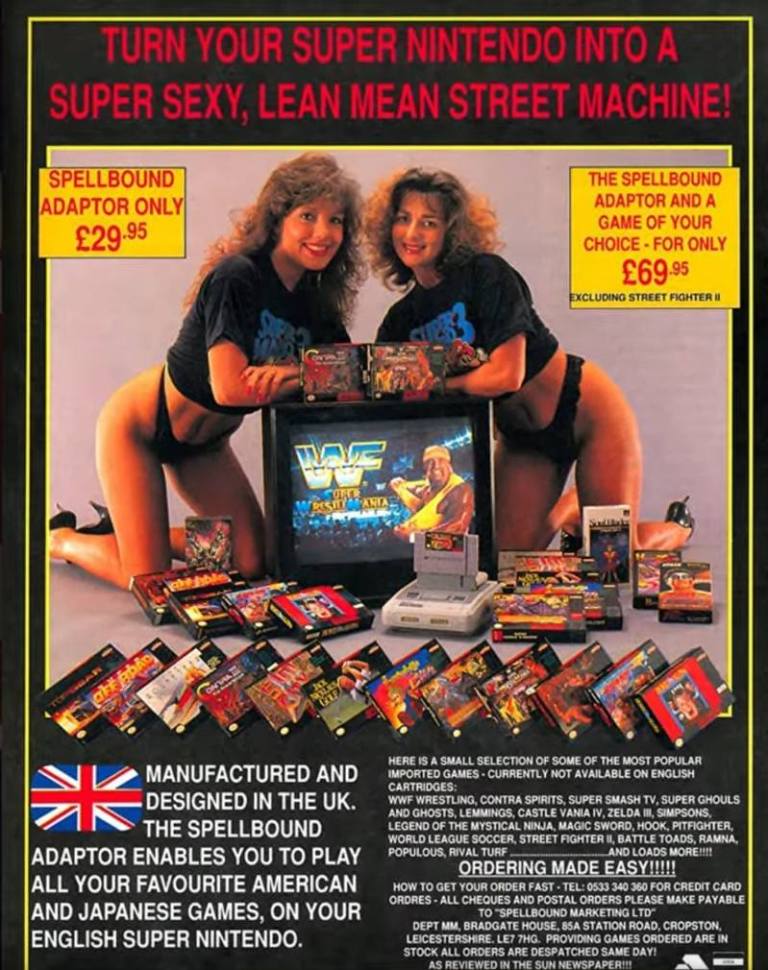
5. Spellbound Adaptor Print Ad

The Spellbound Adaptor print ad in Europe. UK design and manufacturing emphasized.

Remember back in the old days when there were hardware lockouts on game consoles that prevented users from playing games imported from different regions? In Europe, a special cheat and regional bypass cartridge called the Spellbound Adaptor was released and it allowed Super Nintendo Entertainment System (SNES) users to bypass the lockouts and play games from overseas. The Spellbound Adaptor was notably advertised in European print media showing two sexy ladies posing with the adaptor itself (on the SNES), the television and many SNES games. The ad even includes a promo of buying the adaptor with a game of choice for only £69.95. The ad is still impactful to look at.

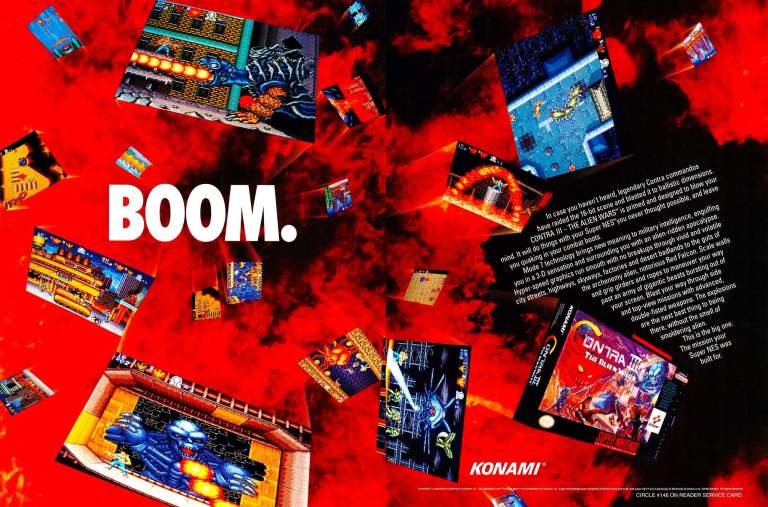
6. Contra III: The Alien Wars North American Print Ad

Konami’s made a huge impression visually with this 2-page print ad promoting Contra III: The Alien Wars.

By the time the SNES was launched in America in 1991, a lot of gamers who enjoyed Contra games on the Nintendo Entertainment System (NES) have been craving for a sequel on the newer console. Their dreams finally came through in early 1992 when Konami released Contra III: The Alien Wars on the SNES, and it was a lot more than visual upgrade as it had groundbreaking features connected with the game developers’ clever use of the console’s technology. Konami was already aware of Contra’s huge following in America, so they came up with an aggressive looking print ad promoting Contra III: The Alien Wars. With a red-and-black background, the ad had a variety of screenshots that were tilted to look 3D (showing what the game offered) and used a minor space for the descriptive text and image of the game box. This old print ad is one of the finest ways to promote a sequel while also emphasizing the next-generation experience fans can enjoy. This ad is a classic!

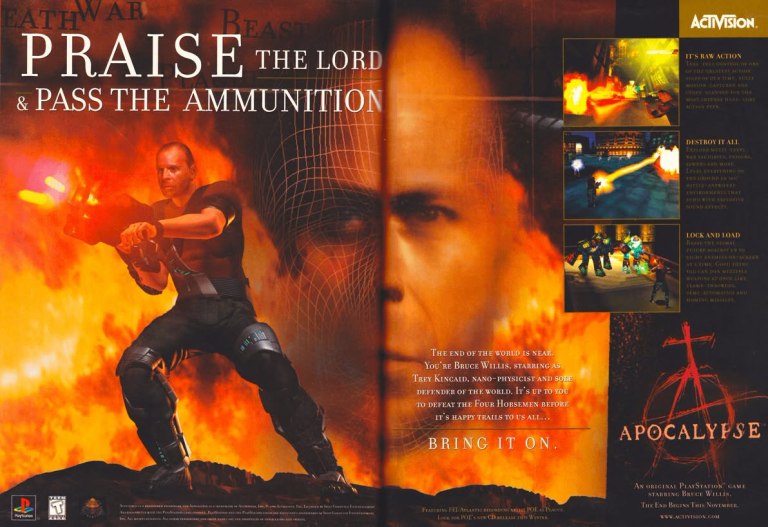
7. Apocalypse Print Ads

With Bruce Willis’ face, this 2-page Apocalypse print ad captured the attention of readers.
The more action-oriented 2-page print ad of Apocalypse. Bruce Willis is more visible here.

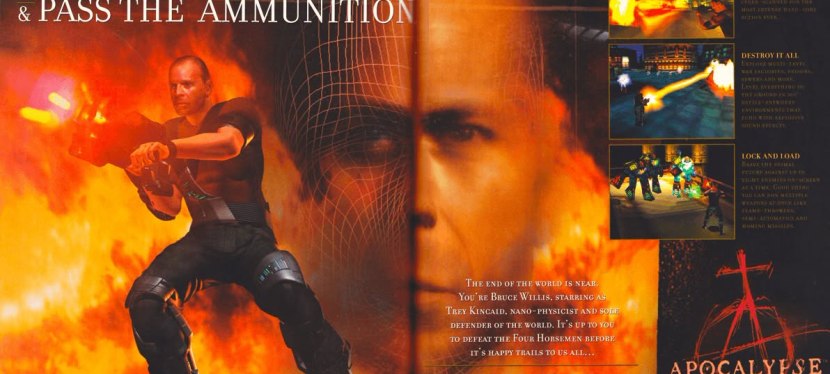
Believe it or not, Hollywood legend Bruce Willis actually starred in the ambitious video game titled Apocalypse. Before its 1998 released on PlayStation, Apocalypse started with the player character having an AI-controlled partner named Trey Kincaid to be played by Willis. Publisher Activision signed a multi-million Dollar deal with Bruce Willis to use his likeness and voice for the Trey character. Eventually the Trey Kincaid role was modified to be the playable character. Given the huge deal signed with the super star and the additional costs that came with game design revisions, Activision launched an aggressive marketing campaign for Apocalypse and they heavily used Bruce Willis’s name and imagery. Ultimately the game sold less than one million copies and yet Activision was satisfied with the sales which convinced them to go back to Apocalypse developer Neversoft for a new project.

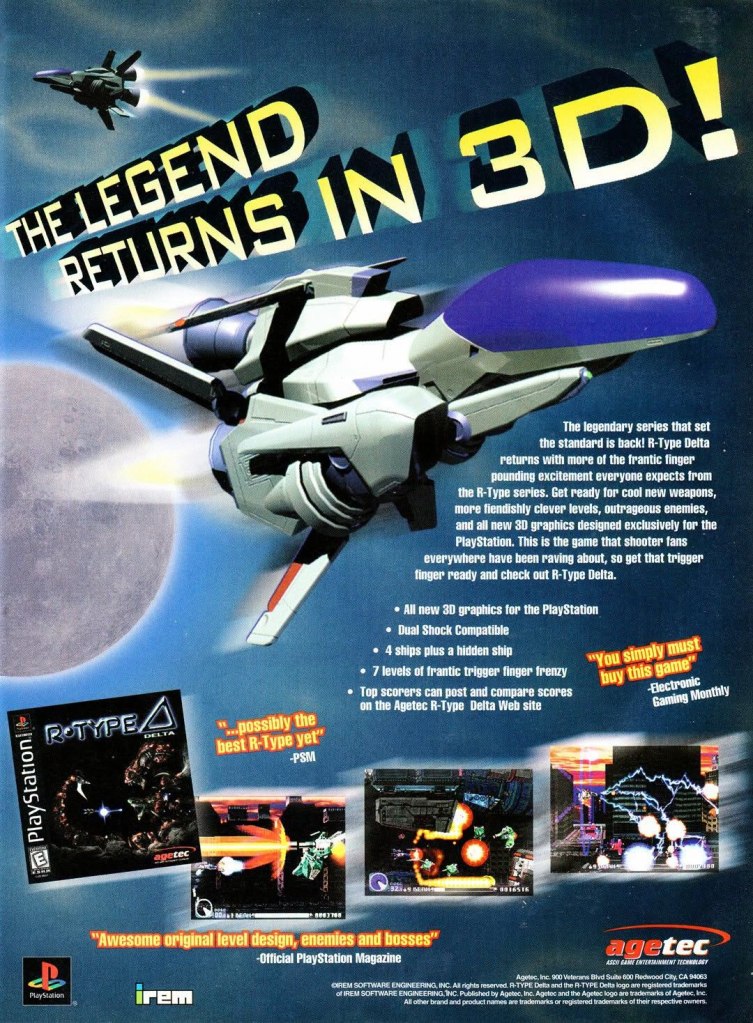
8. R-Type Delta North American Print Ad

R-Type Delta was the 4th game of the R-Type series and also the first to be made with 3D polygons.

R-Type, the long-running series of 2D side-scrolling shooters by Irem, fully embraced 3D polygons with R-Type Delta on PlayStation in 1998. To promote the game in North America, Irem and their partner Agetec went all-in emphasizing their series shift into 3D polygonal graphics while promising new in-game weapons. Very smartly, they included positive quotes from Electronic Gaming Monthly (EGM), PlayStation Magazine (PSM) and Official PlayStation Magazine (OPM) to show credibility. In recent times, an enhanced version of R-Type Delta (R-Type Delta: HD Boosted) was released on modern game console and PC.

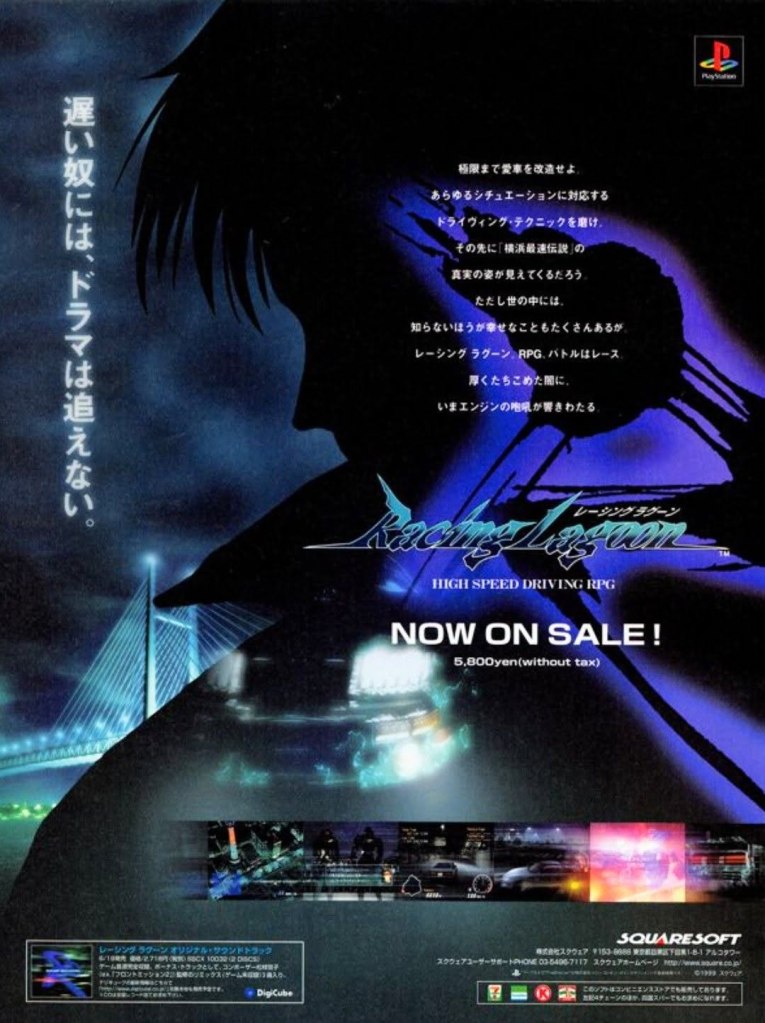
9. Racing Lagoon Japanese Print Ad

Have you ever played this game from SquareSoft?

Released in 1999 for PlayStation only in Japan, Racing Lagoon was one of many games SquareSoft made for a genre other than role-playing games (RPGs). Released at a time when the PlayStation already had lots of racing games available from around the world, Racing Lagoon was a racing game that had role-playing elements mixed in. To promote it, SquareSoft made a print ad that had a night-time city vibe and they showed some screenshots with a unique visual style. The in-game story was influenced by the illegal street racing trend that happened in Japan during the 1980s.

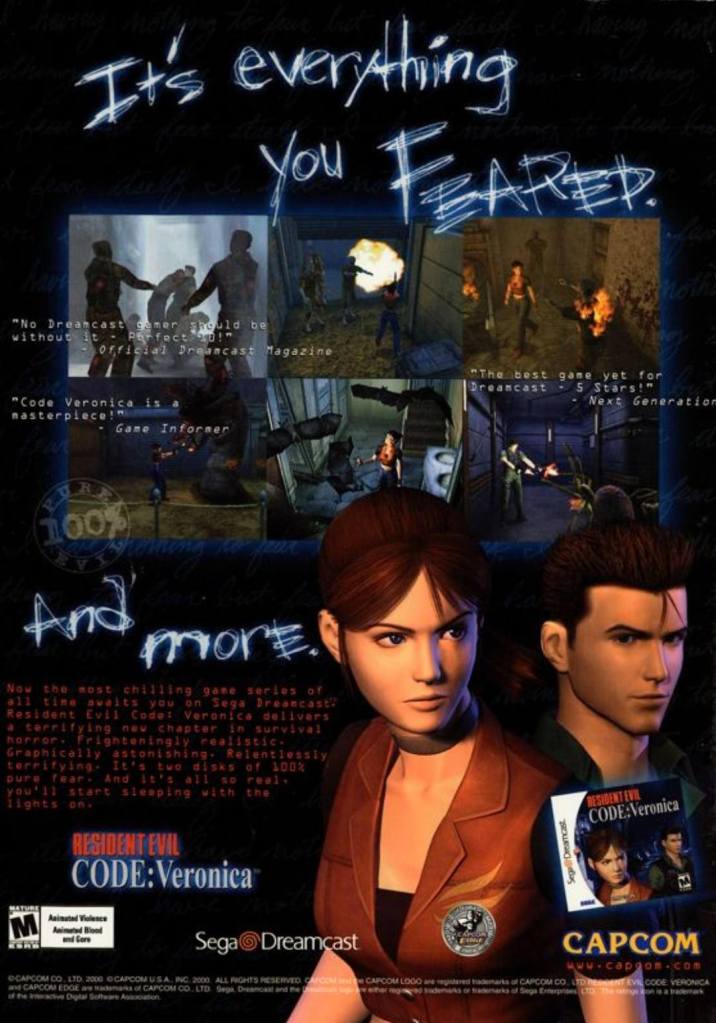
10. Resident Evil – Code: Veronica North America Print Ads

Truly a next-generation Resident Evil experience first launched on the Sega Dreamcast! I know some people who bought the console just to play Resident Evil – Code: Veronica.
The 2-page print ad of RE – Code: Veronica.

When Resident Evil – Code: Veronica was released on the Sega Dreamcast in Japan in February 2000, it delivered a next-generation survival horror experience to die-hard RE fans and it was easily one of the must-have games for Dreamcast owners of the time. Along the way, RE fans and Dreamcast owners in America were already anticipating the game. Capcom had an aggressive ad campaign for the game with US gamers in mind and this particular single-page print ad showed the fan-favorite characters Claire and Chris Redfield on one corner, six selected screenshots and quotes from the published game reviews of Game Informer, Next Generation and the Official Dreamcast Magazine. The 2-page print ad had the same elements but had the Redfield siblings on the 2nd page. I remember seeing these ads on a few gaming magazines and they made me think about buying a Dreamcast just to play RE – Code: Veronica. These old ads emphasized the strong business trust between Capcom and Sega (which itself lost a lot of money and credibility with the Sega Saturn consoles and many add-on devices released years prior).  

+++++

Thank you for reading. If you find this article engaging, please click the like button below, share this article to others and also please consider making a donation to support my publishing. If you are looking for a copywriter to create content for your special project or business, check out my services and my portfolio. Feel free to contact me with a private message. Also please feel free to visit my Facebook page Author Carlo Carrasco and follow me on Twitter at @CarloCarrascoPH as well as on Tumblr at https://carlocarrasco.tumblr.com/ and on Instagram athttps://www.instagram.com/authorcarlocarrasco

Retro Gaming Ads Blast – Part 37

Welcome back readers, fellow geeks and electronic gaming fans!

In this edition of the Retro Gaming Ads Blast (RGAB) series, we will take a look at another batch of retro gaming print ads – including arcade flyers – from the 1970s to the 1990s.

For the newcomers reading this, Retro Gaming Ads Blast (RGAB) looks back at the many print ads of games (console, arcade, computer and handheld) that were published in comic books, magazines, flyers, posters and newspapers long before smartphones, social media, the worldwide web and streaming became popular. To put things in perspective, people back in the 1970s and 1990s were more trusting of print media for information and images about electronic games and related products.

With those details laid down, here is the newest batch of retro gaming print ads for you to see and enjoy…

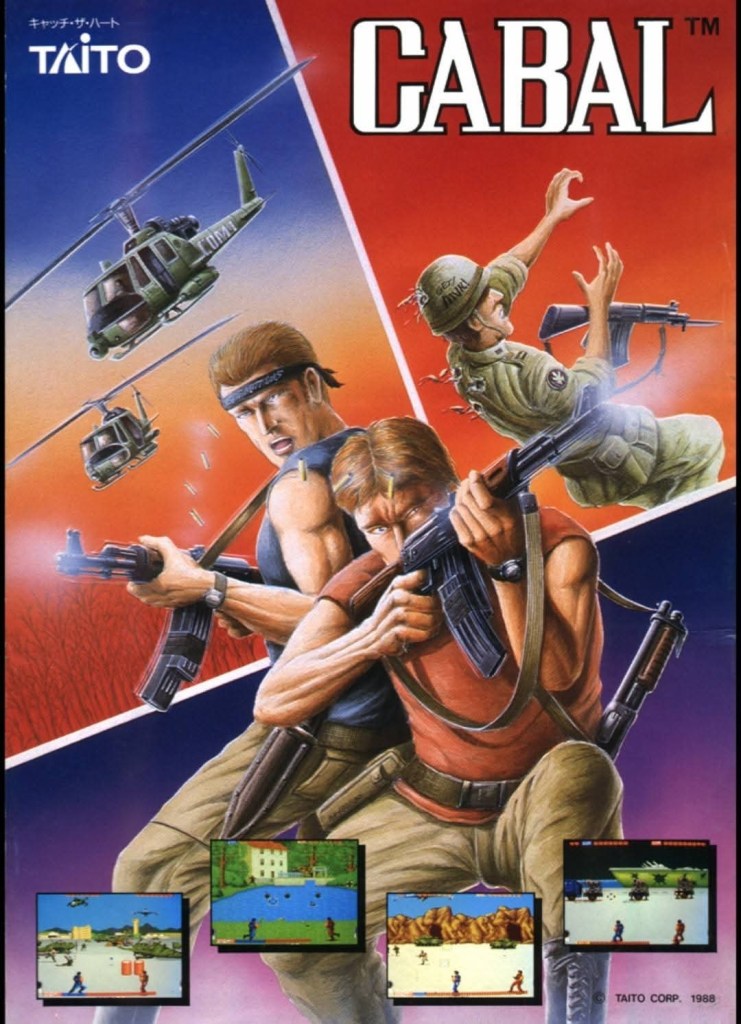
1. Cabal Japanese arcade flyer/poster

Can you feel the action and intensity here?

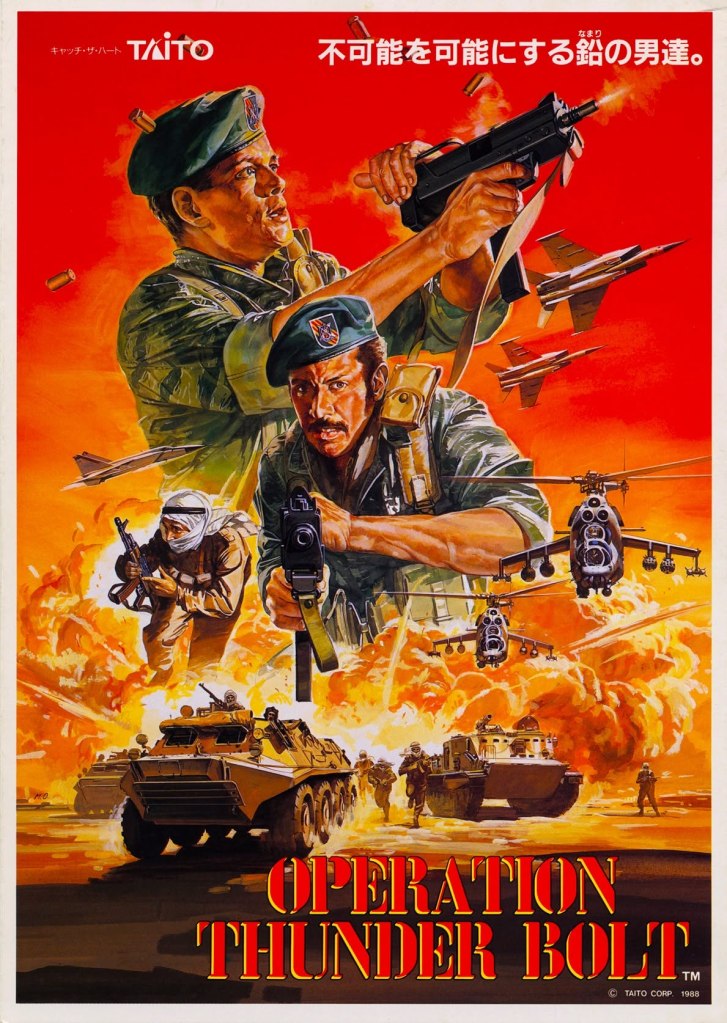
When it was first released in video arcades in Japan in late 1988, Cabal was another game inspired by military action movies of Hollywood which explains the art work done for the arcade flyer and poster shown above. The Vietnam War was still fresh in people’s minds and the concept of having one or two players firing their weapons against enemy soldiers resonated with gamers who saw Hollywood’s military action flicks. That said, it is not surprising that Cabal became a huge hit in Japan before getting released in arcades around the world.

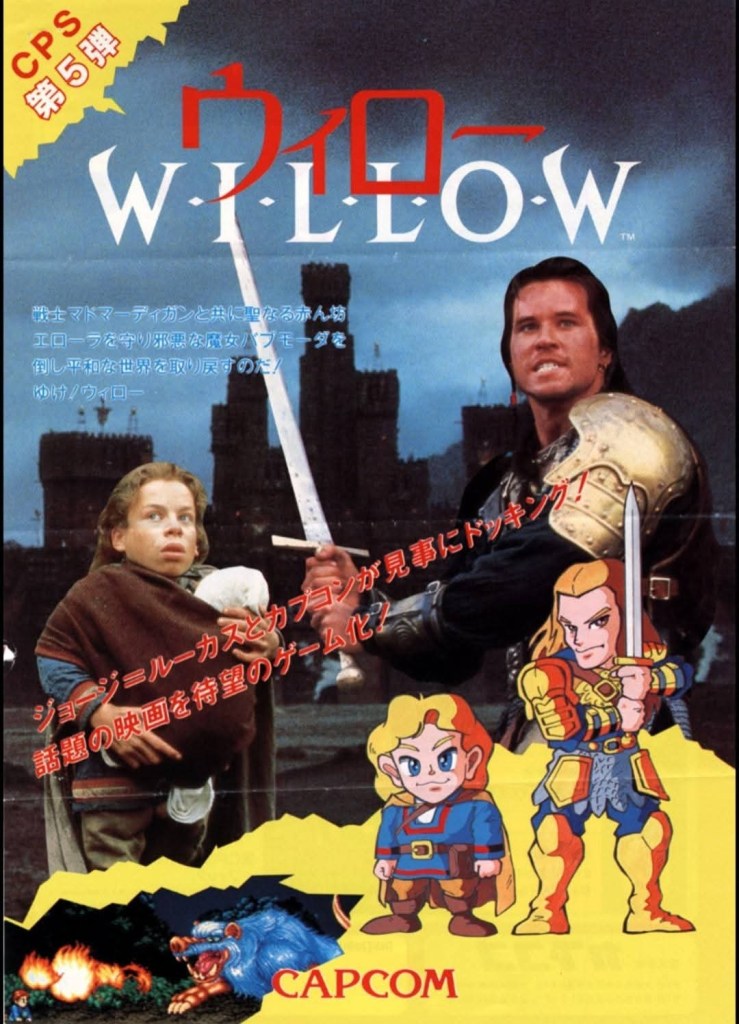
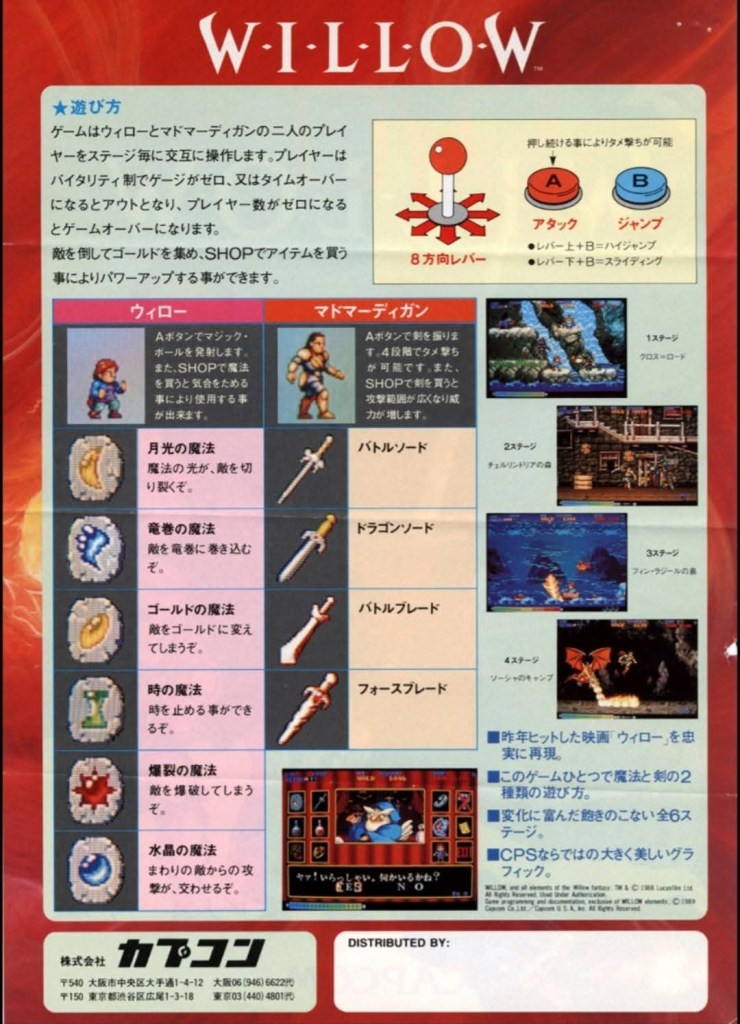
2. Willows Japanese arcade flyer

The front.
The rear.

Remember the 1988 high fantasy adventure film Willow? That film was produced by George Lucas and was a bold new production of Lucasfilm shifting away from Star Wars. Believe it or not, an official arcade game adaptation of Willow was made by Capcom and they promoted it by having images of Val Kilmer and Warwick Davis on the front of the arcade flyer (opposite the illustrated versions of their characters). The game, which was a side-scrolling platform game with run-and-gun elements, went on to be an arcade hit in Japan and eventually pleased gamers worldwide.

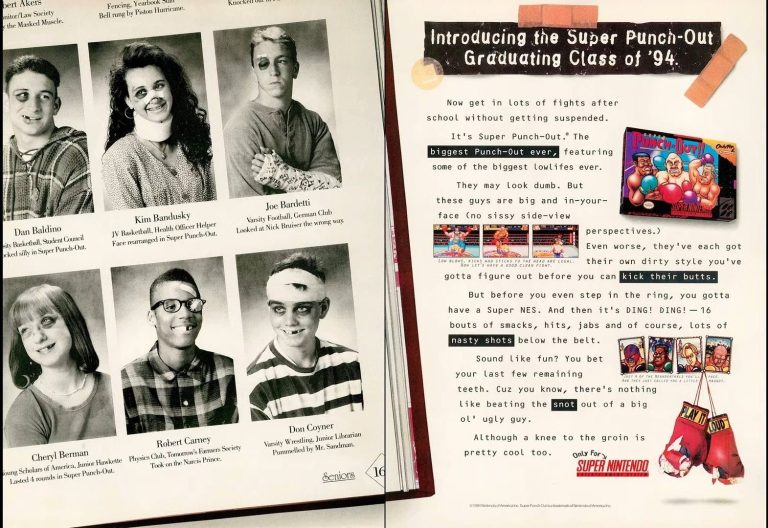
3. Super Punch-Out!! North American print ad

This is funny to look at.

Historically, Nintendo’s Punch-Out!! series started in the arcade in 1984 and the first game was the result of the company’s effort to make a new game using arcade cabinets with two screens. The 2nd game – Mike Tyson’s Punch-Out!! – became a huge critical and commercial hit (over 2 million copies sold in 1988) on console and it made great business sense for Nintendo for release another Punch-Out!! for its console gamers to enjoy in the comfort of home. In 1994, Super Punch-Out!! was released on the Super Nintendo Entertainment System (SNES) in America and to promote it, the company came up with a hilarious 2-page ad that showed fictional high school graduates with boxing-related injuries. The imagery creatively connected with the words “biggest Punch-Out ever” and “Graduating Class of ‘94”.

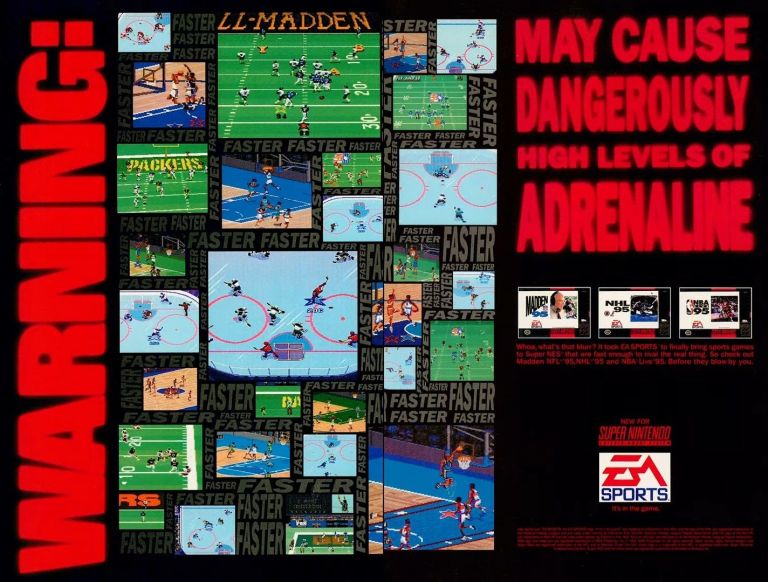
4. EA Sports 3-in-1 SNES games print ad

EA Sports games on the SNES.

In 1994, Electronic Arts (EA) released their sports games NBA Live 95, NHL 95 and Madden NFL 95 for consoles at the time. Even though the Sega Genesis sold better than Super Nintendo Entertainment System (SNES) in America at the time, EA went on to aggressively market their 3 sports video games on Nintendo’s console using a 3-in-1 games print ad. In retrospect, the SNES for the most part had better graphics and sounds than the Genesis which is reflected clearly on EA Sports games of the time. This print ad still looks fun and exciting.  

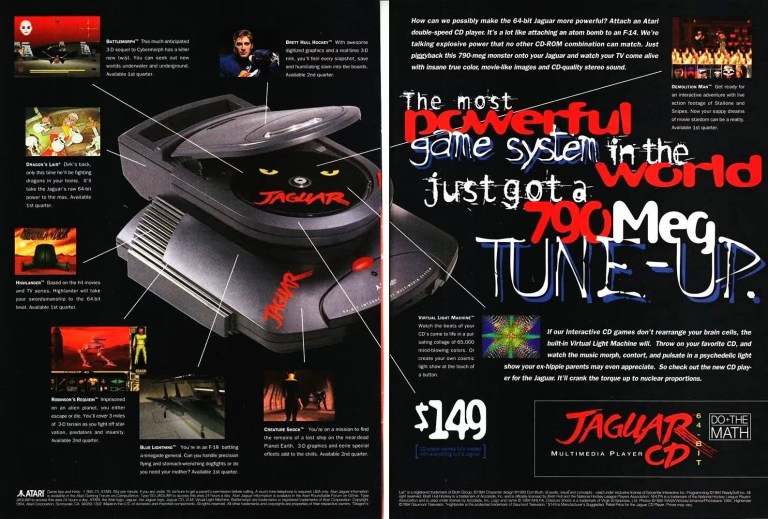
5. Atari Jaguar CD print ad

Were you able to play any game on the Atari Jaguar with the CD add-on included?

Apart from the obvious advances of technology that impacted video games, the 1990s is also known for the rise of CD-ROM as a medium for gaming. In an effort to boost sales of the Atari Jaguar console (launched in America in 1993 for around $250) and capitalize on the trust of the fans and console owners, Atari launched a CD-ROM add-on device for about $150 in 1995. To promote it, the company went aggressive with the 2-page ad showing the add-on fully connected on top of the main console, showing off some games and posting a text description emphasizing hardware power and the advantages that come with the CD technology. Even in the captured image, the Atari Jaguar CD still resembled a toilet. This is an aggressive ad campaign that failed as less than 20,000 Atari Jaguar CD units were sold by the time it was discontinued in 1996.

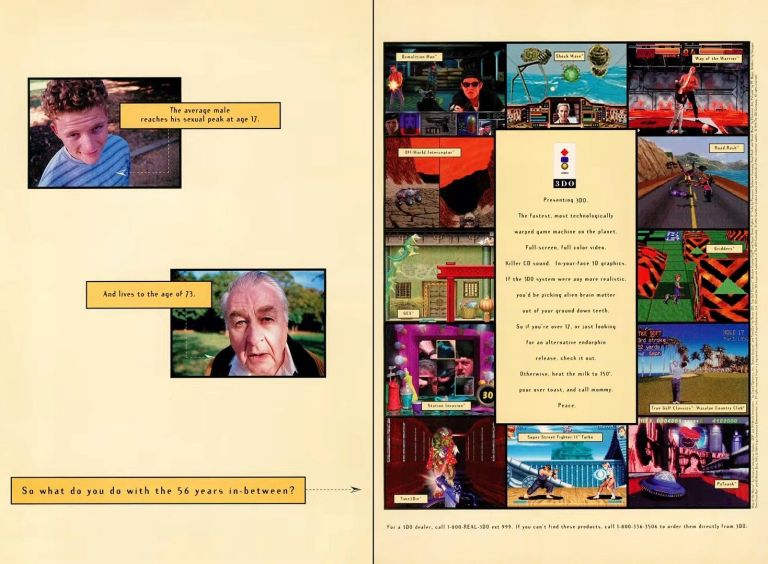
6. 3DO print ad

While it lacks intensity, this 3DO ad emphasized the games.

Without showing any hardware, the 3DO Company came up with this 2-page print ad that had a slightly adulterated tone (look at the left page) and aggressively marketed the 3DO console games available at the time. Games like Demolition Man, Shock Wave, Road Rash and Super Street Fighter II Turbo were the standout titles which clearly showed the company made the effort to emphasize gaming more than multimedia features. This 1990s ad tackled the generations with a touch of humor.

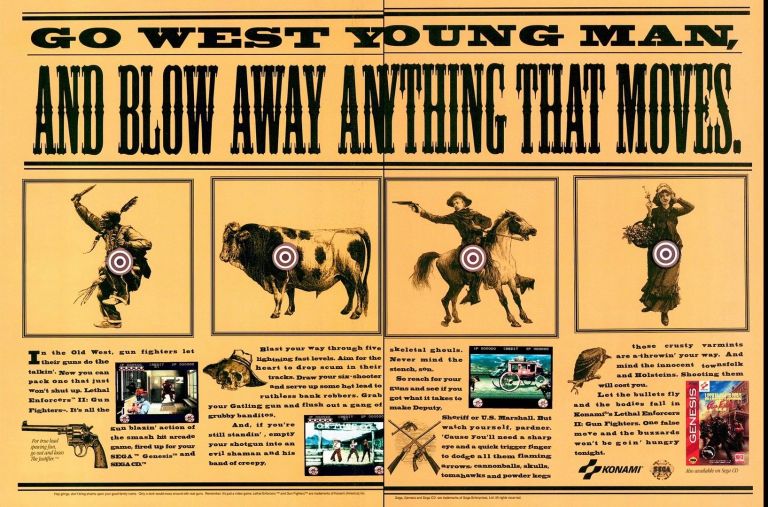
7. Lethal Enforcers II: Gun Fighters Sega Genesis print ad

This is a fun ad to look at.

When Lethal Enforcers II: Gun Fighters was released in the arcades in 1994, it became a commercial success for Konami which went on to announce it would port the game to consoles of Nintendo and Sega at the time. While the port for the Super Nintendo Entertainment System (SNES) was never released, Lethal Enforcers II: Gun Fighters made its way to the Sega Genesis and Sega CD. The print ad of the Sega Genesis version (Sega CD mentioned in small text) had an inspired design emphasizing the Old West, shooting and the conflict between cowboys and Indians. The screenshots gave people the clear idea that Old West was the setting (versus modern day in the previous game). This is still fun to look at.

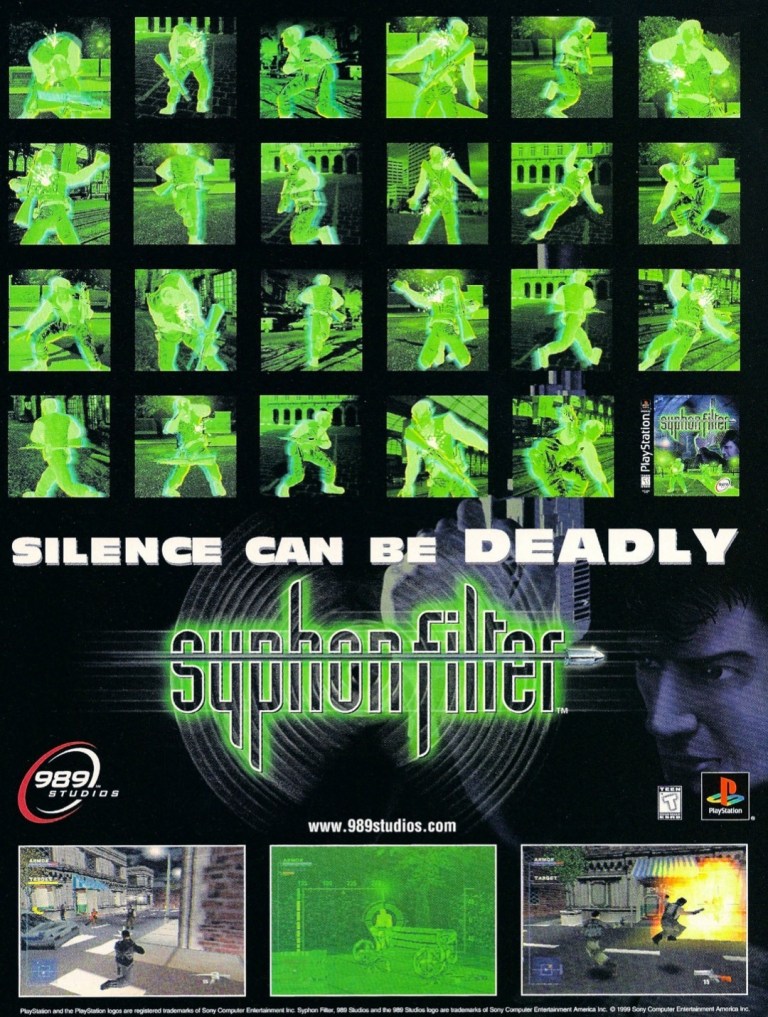
8. Syphon Filter

Syphon Filter went on to become a surprise hit game in 1999.

In 1999, Sony’s 989 Studios released Syphon Filter exclusively on the PlayStation console. This single-page print ad showed a few screenshots on the bottom and several action snippets with a night vision touch ultimately emphasizing the stealth aspect within the gameplay. The marketing proved to be effective as the game sold a lot at retail and went on to establish a new game franchise exclusive to PlayStation consoles.

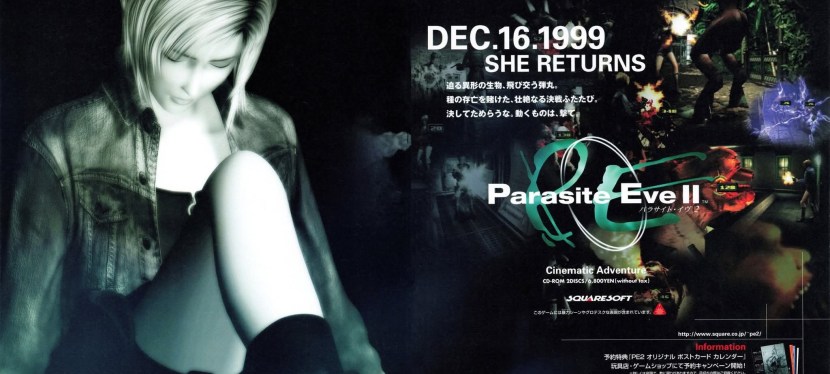
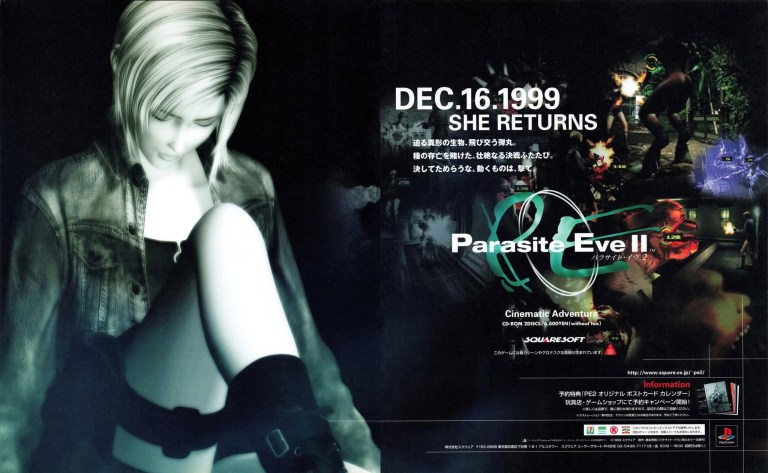
9. Parasite Eve II Japanese print ad

Were you a big fan of Aya Brea and the Parasite Eve franchise in the late 1990s?

Following the critical and commercial success of Parasite Eve in 1998, SquareSoft proceeded with Parasite Eve II and the production (note: initially for a spin-off game before becoming a sequel) did not even involve the main creators of the first game. Instead the company had a different team of developers – including those who previously worked on Resident Evil games for Capcom – in Osaka to make the sequel. This explains why Parasite Eve II had stronger survival horror gameplay resembling a Resident Evil game. As major changes were made during the production, it was decided that Aya Brea would become the main protagonist and already the character was already popular with gamers. That being said, the marketing of Parasite Eve II for the Japanese market heavily featured Aya Brea with subtle sexiness, beauty and action in mind. The marketing intensified leading to its eventual December 16, 1999 release in Japan.

+++++

Thank you for reading. If you find this article engaging, please click the like button below, share this article to others and also please consider making a donation to support my publishing. If you are looking for a copywriter to create content for your special project or business, check out my services and my portfolio. Feel free to contact me with a private message. Also please feel free to visit my Facebook page Author Carlo Carrasco and follow me on Twitter at  @HavenorFantasy as well as on Tumblr at https://carlocarrasco.tumblr.com/ and on Instagram at https://www.instagram.com/authorcarlocarrasco

Retro Gaming Ads Blast – Part 36

Welcome back readers, fellow geeks and electronic gaming fans!

In this edition of the Retro Gaming Ads Blast (RGAB) series, we will take a look at another batch of retro gaming print ads – including arcade flyers – from the 1970s to the 1990s.

For the newcomers reading this, Retro Gaming Ads Blast (RGAB) looks back at the many print ads of games (console, arcade, computer and handheld) that were published in comic books, magazines, flyers, posters and newspapers long before smartphones, social media, the worldwide web and streaming became popular. To put things in perspective, people back in the 1980s and 1990s were more trusting of print media for information and images about electronic games and related products.

With those details laid down, here is the newest batch of retro gaming print ads for you to see and enjoy…

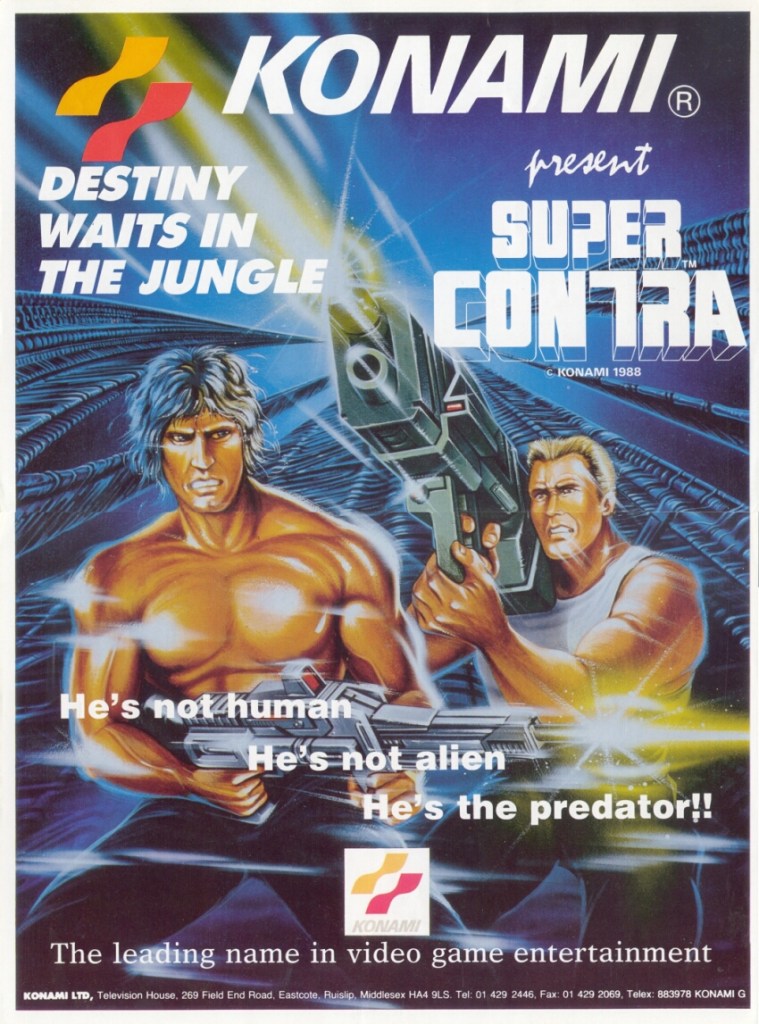
1. Super Contra North American arcade flyer

Have you seen many Hollywood action movies of the 1980s? Does this arcade flyer remind you of something?

After Konami struck gold with Contra in 1987, it was inevitable that sequels and spin-offs will be made. In 1988, they released the follow-up Super Contra in the arcades and to promote it in America, the company came up with artwork that easily gave gamers the impression they are seeing Sylvester Stallone as a fantasized Rambo and another armed guy who might remind them of Arnold Schwarzenegger’s character in Commando or Dutch in Predator. To capitalize on the movie references even more, the American arcade flyer had the line “He’s not human. He’s not alien. He’s the predator!!” As it was the 1980s, this creative approach to promotion was not surprising as Konami and its game makers were influenced by Hollywood movies.

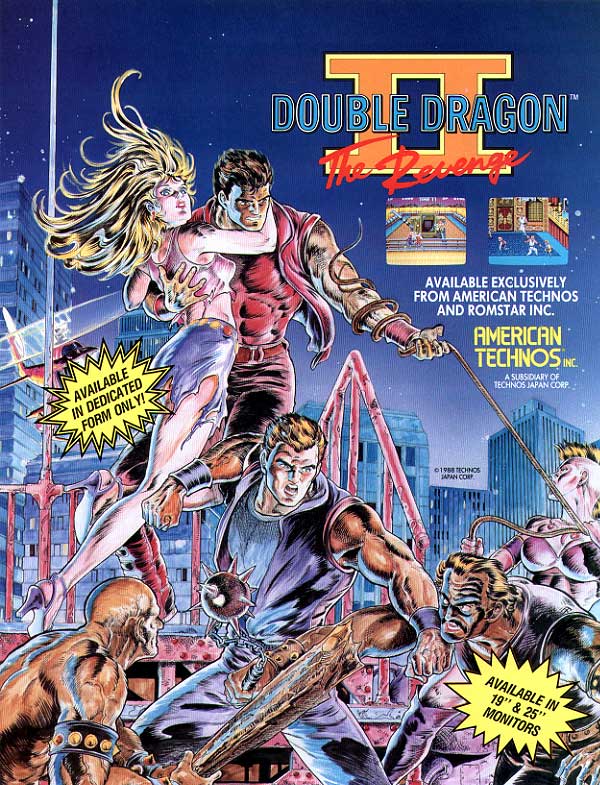
2. Double Dragon II: The Revenge North American arcade flyer

The artwork used in this arcade flyer remains intriguing to look at.

I never played Double Dragon II: The Revenge in the arcade, but I played it on the Nintendo Entertainment System (NES). That being said, I was surprised to see how this old North American arcade flyer has the same hand-drawn artwork used on the cover of the NES version. Take note that the arcade game was released in 1988 while the NES port was released in early 1990. I can only guess that Technos decided to use the same artwork not only for convenience but to have a definitive image emphasizing Double Dragon II to gamers wherever they are.

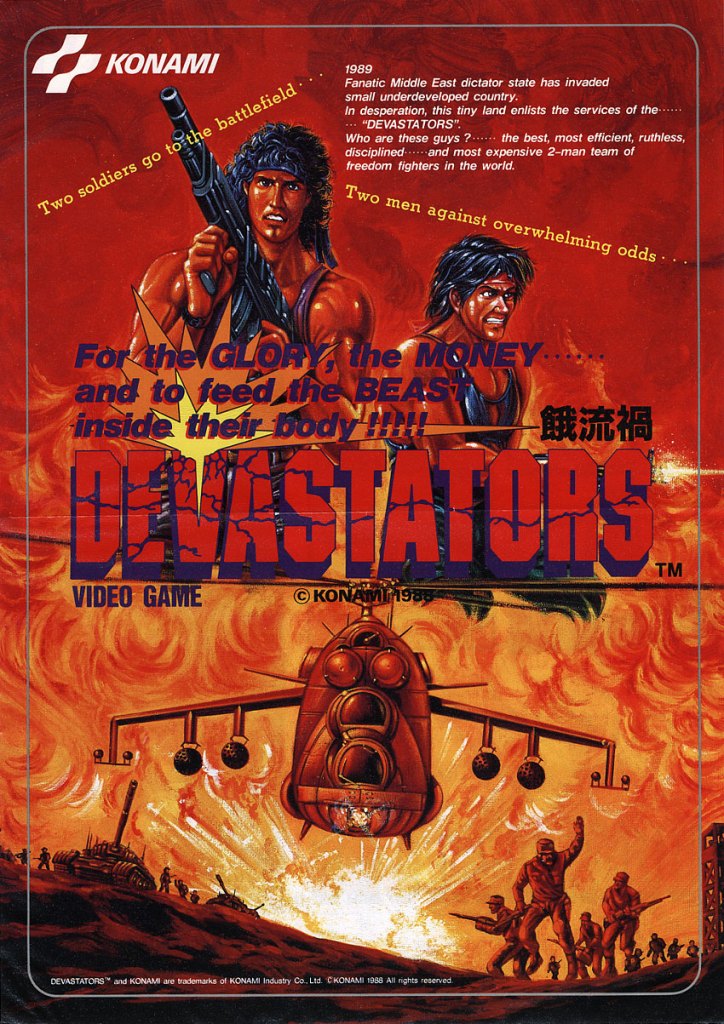
3. Devastators North American arcade flyer

The front.
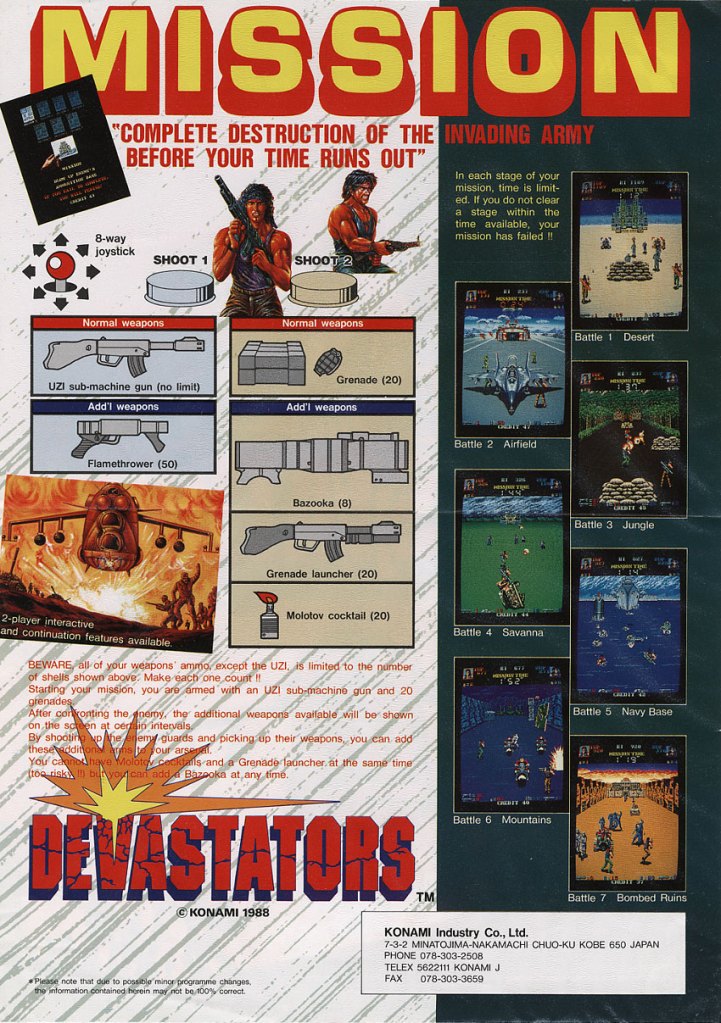
The rear.

Devastators is another Konami arcade game that had a strong war theme and it was influenced by Hollywood action films of the 1980s. This particular arcade flyer for the North American market is almost identical with the Japanese arcade flyer as both have the same artwork on the front and almost the same visual layout on the rear. The most obvious difference is the use of English text for the North American flyer.

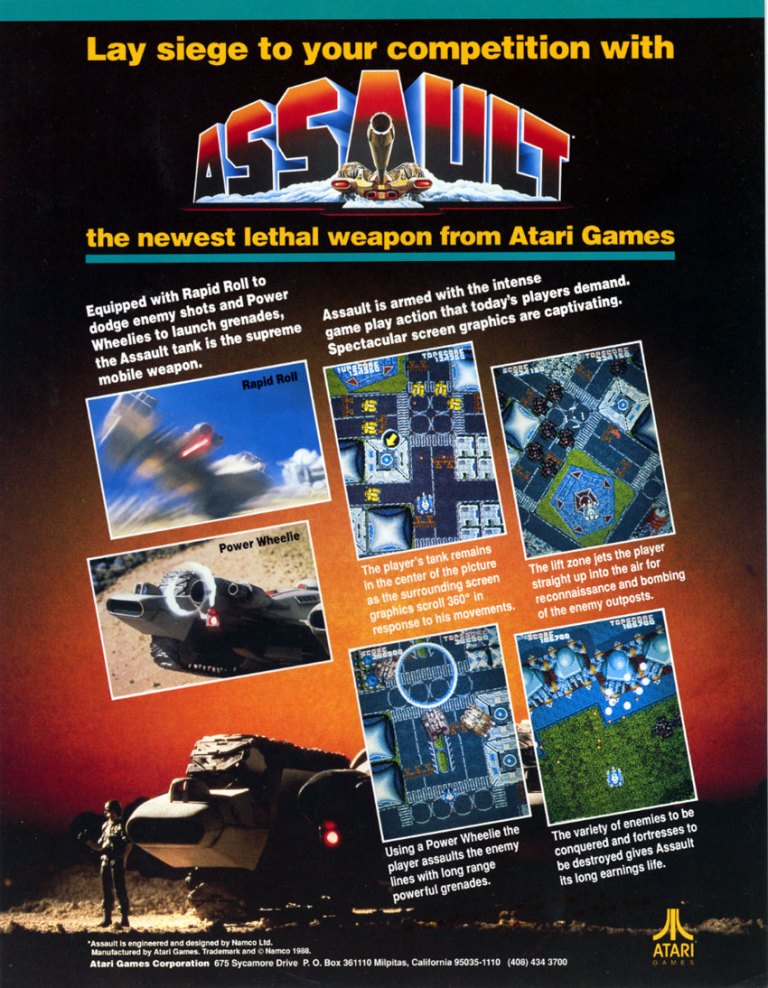
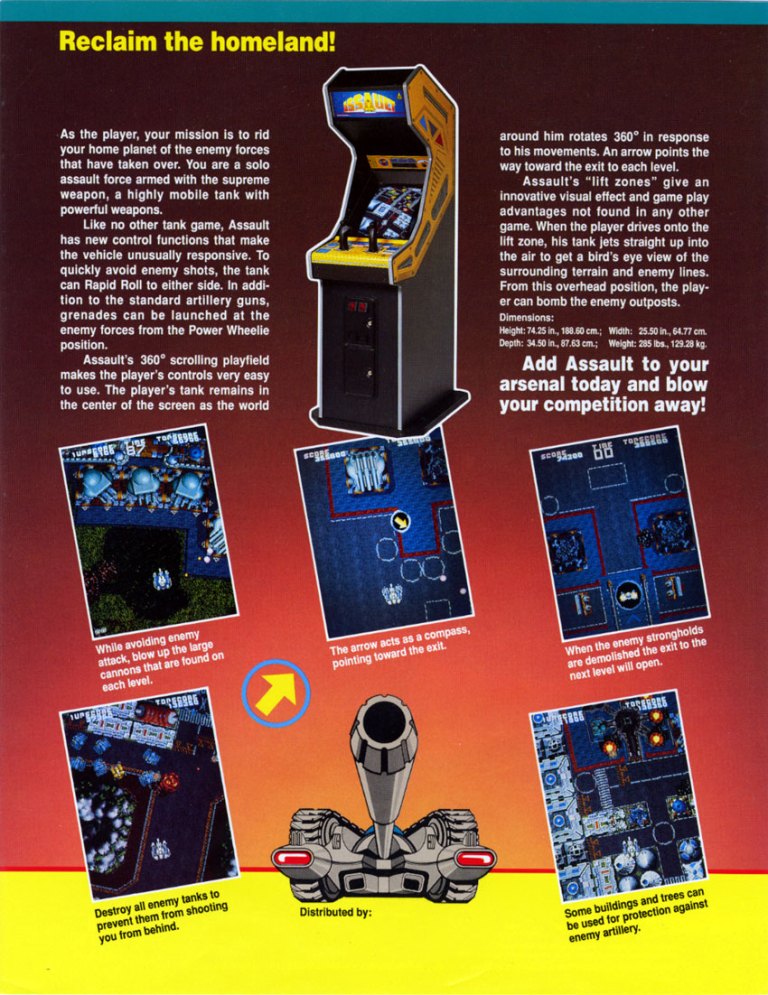
4. Assault North American arcade flyer

The front.
The rear.

Released in American arcades by Atari, Assault is a multi-directional shooter that had a twin-stick control layout (similar with the classic Battlezone) and players experienced intense battles as well as immersive visual effects such as sprite scaling and environment rotation of up to 360 degrees. To promote the game (this originated in Japan by Namco), Atari came up with this arcade flyer that had selected screenshots and descriptive text on both the front and the rear (which showed the arcade cabinet). Assault was a hit with gamers at the arcades and it was not released on consoles until 2009.

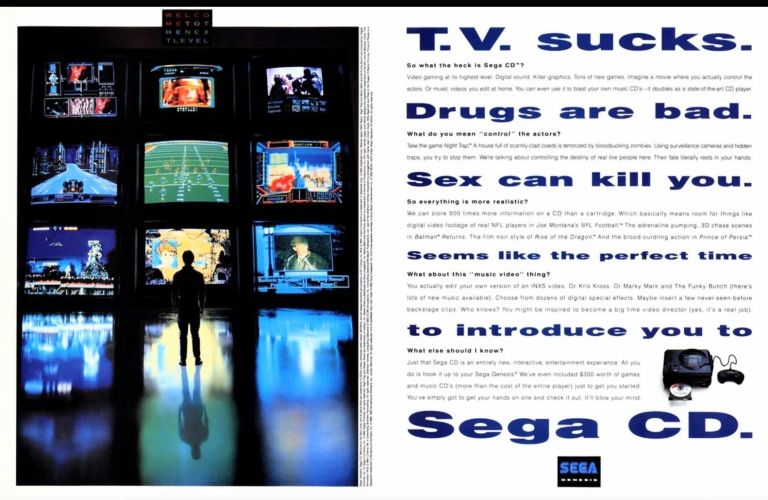
5. Sega CD print ad

Having a socially relevant message can be catchy but it leaves little room for excitement.

As the Sega Genesis console became a huge commercial success in North America, Sega itself became ambitious about what CD-ROM technology would do for video games. Sega in Japan tasked its Consumer Products Research and Development Labs to create a CD-ROM add-on which resulted in the Sega CD (Mega-CD in other parts of the world) which launched in America in 1992. To promote the add-on towards existing Genesis console owners as well as potential new customers, Sega of America came up with the above 2-page print ad that had a social message on the right and an image of a man standing in front of large monitors (showing Sega CD game footage) on the left. While it looked like an odd way of promoting video game hardware, it still remains catchy to see.

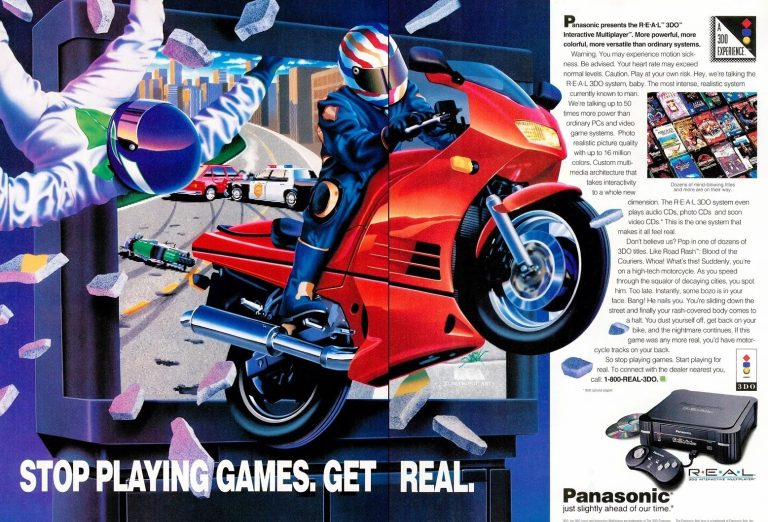
6. Panasonic 3DO print ad

Panasonic knows how to promote entertainment hardware for people’s homes.

Still in the field of CD-ROM gaming, Panasonic had competitive presence in video gaming when its Panasonic FZ-1 R.E.A.L. 3DO Interactive Multiplayer (with technology licensed by The 3DO Company) was launched in America in 1993. If you look at the print ad closely, you will notice that the descriptive text emphasized the multimedia entertainment aspect more than video gaming. The dominating artwork used does not come from a particular video game as it was made to emphasize home entertainment in general. It’s not surprising that the Panasonic 3DO and other 3DO machines from other manufacturers failed commercially.

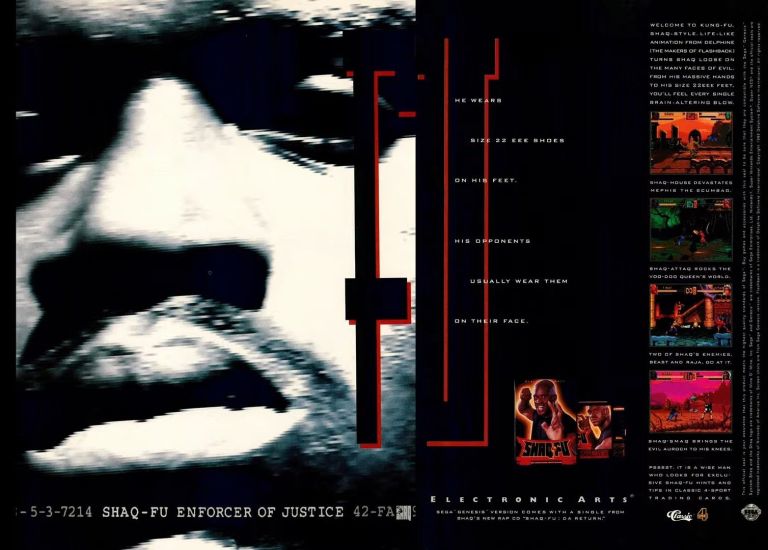
7. Shaq Fu print ad

The close-up of Shaquille O’Neal’s face on the left made him looked less recognizable.

Yes, it is true! There was indeed a video game endorsed by Shaquille O’Neal and it was not a basketball game. Shaq Fu is a 1994 2D fighting game with adventure elements and a story in which gamers play O’Neal as martial artist (note: O’Neal himself participated in the game’s production). To promote the game, Electronic Arts came up with a 2-page print ad that had a very odd black-and-white close-up image of O’Neal’s face on the left leaving small screenshots and hard-to-read text on the right (even though there was some vacant space remaining. I remember seeing this ad while reading a video game magazine and the ad ended up looking more like a promotion of O’Neal (already an NBA superstar) than the game itself. By today’s standards, this print ad is an example of a marketing misfire.

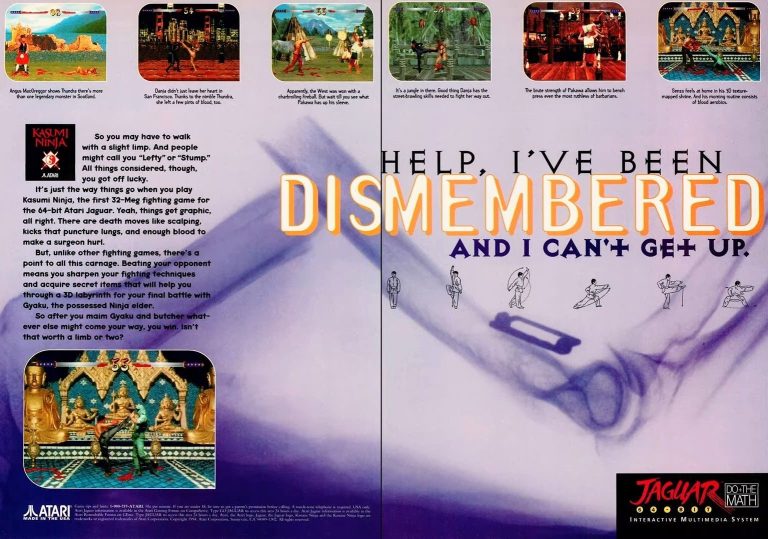
8. Kasumi Ninja print ad

Do you even remember seeing this print ad in magazines?

Remember the 1990s video game trends of digitized human images and disturbingly violent 2D fighting games sparked by Mortal Kombat? The Atari Jaguar-exclusive game Kasumi Ninja was made to capitalize on those trends and it failed badly. Apart from the low sales of the Jaguar console, Atari as publisher came up with the above 2-page print ad that was not appealing to gamers’ eyes and it had almost no excitement overall. This is another marketing misfire.

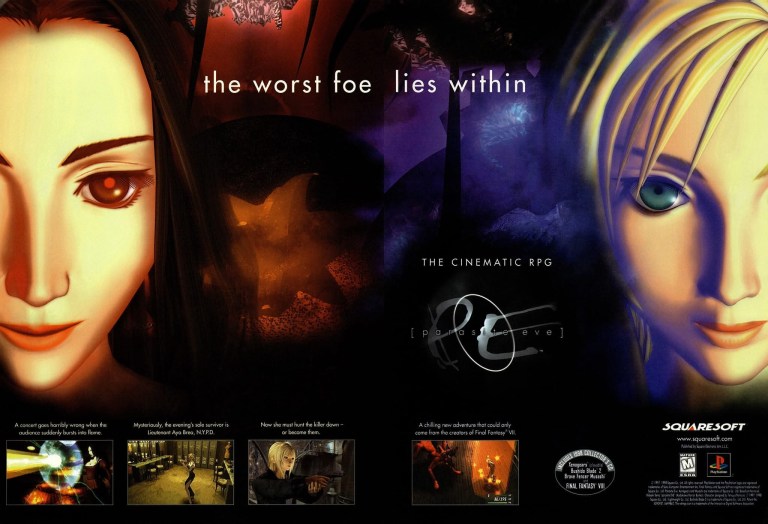
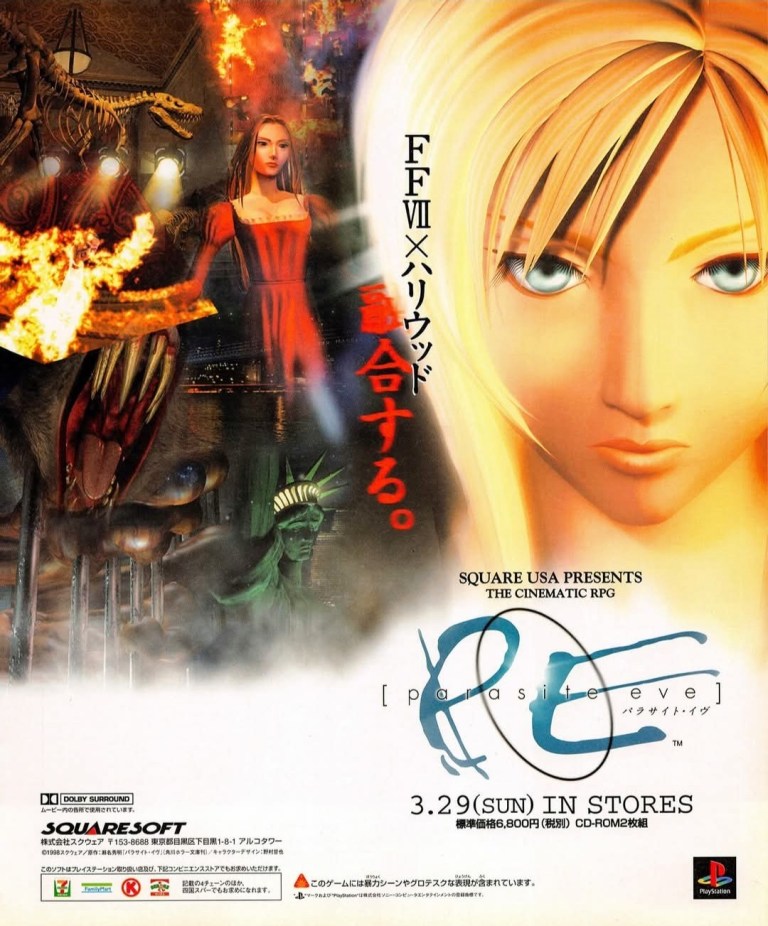
9. Parasite Eve North American and Japanese print ads

Following the successful release of Final Fantasy VII, this ad excited PlayStation gamers and JRPG enthusiasts for Parasite Eve’s 1998 release in America.
A stronger horror presentation in this print ad for the Japanese market. There were already a lot of people in Japan who enjoyed horror.

Starting in the mid-1990s, Squaresoft (now Square Enix) really became aggressive with video game creativity and experimentation as they launched several new projects that eventually got released on PlayStation in the late 1990s until 2000. One of those daring new projects was Parasite Eve which was a role-playing game (RPG) that had visual elements – particularly pre-rendered backgrounds – and a style of exploration that reminded gamers of Resident Evil. The game was a sequel to the Japanese science fiction horror novel of the same name and it involved the creativity of Final Fantasy creator Hironobu Sakaguchi (credited as producer). To promote the game, the 2-page North American print ad had protagonist Aya Brea on the right and the enemy on the left with a cryptic line placed strategically between them. The North American ad clearly stated that the game is a cinematic RPG. By comparison, the Japanese print ad of Parasite Eve has a strong horror vibe which is not surprising because of the novel’s horror elements and the fact that Squaresoft was capitalizing on the popularity of horror-related entertainment in Japan. By today’s standards, Parasite Eve is truly a product of the late-1990s and it has a dedicated fanbase.

+++++

Thank you for reading. If you find this article engaging, please click the like button below, share this article to others and also please consider making a donation to support my publishing. If you are looking for a copywriter to create content for your special project or business, check out my services and my portfolio. Feel free to contact me with a private message. Also please feel free to visit my Facebook page Author Carlo Carrasco and follow me on Twitter at  @HavenorFantasy as well as on Tumblr at https://carlocarrasco.tumblr.com/ and on Instagram at https://www.instagram.com/authorcarlocarrasco

Better than Streaming: I Now Have For Your Eyes Only On Blu-ray

Welcome back fellow geeks, Blu-ray collectors and movie buffs!

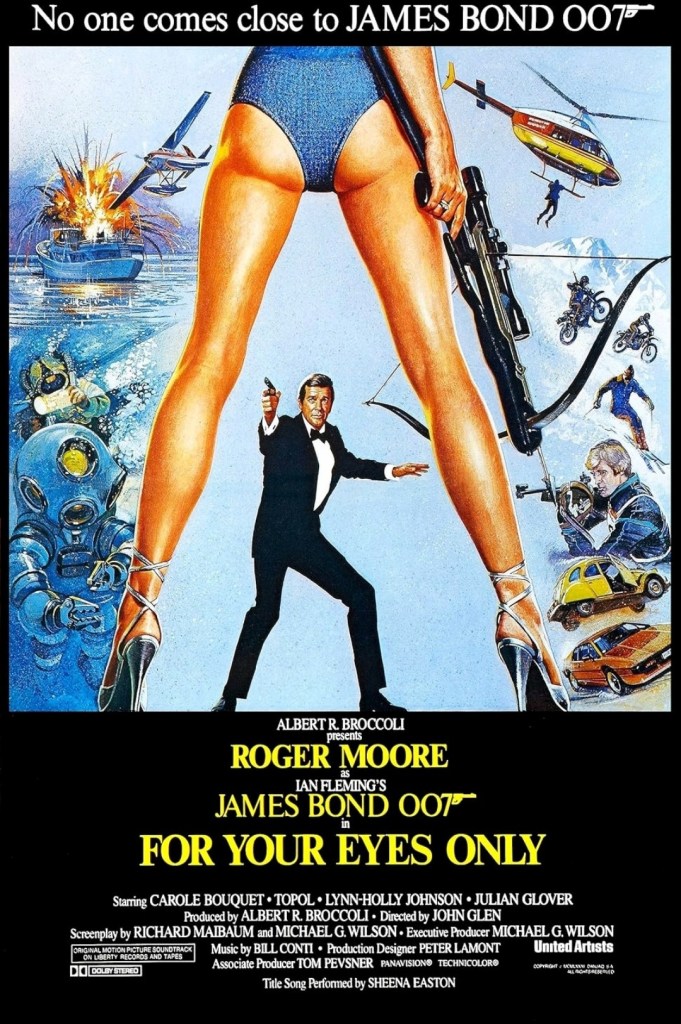
When it comes to the seven James Bond movies that the late Roger Moore starred in, 1981’s For Your Eyes Only is my favorite. To put things short, the said Agent 007 adventure film was more grounded with reality, revived certain espionage elements used in the Sean Connery Bond films of the early 1960s, focused more on the Cold War, delivered solidly with thrills, and was ultimately more character-driven with its storytelling.

The movie poster of Fot Your Eyes Only. (photo source – IMDB.com)

I should also state that For Your Eyes Only has a very solid cast with Carole Bouquet and Lynn-Holly Johnson as the Bond girls, the late Israeli actor Topol as Columbo, Julian Glover as Kristatos, and the late Cassandra Harris (first wife of James Bond star Pierce Brosnan) as Lisl.

In my experience, I never saw For Your Eyes Only in the cinemas. My first time viewing it was on a rented home video tape (Betamax). In the 1990s, by chance I replayed the movie on cable TV. I bought a DVD copy of the movie in 2009.

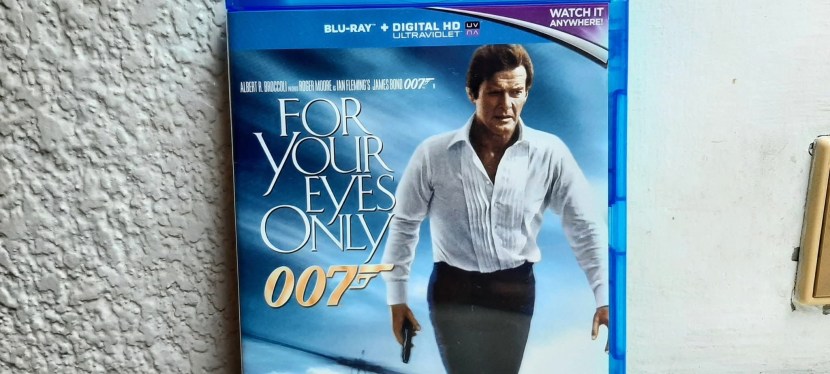
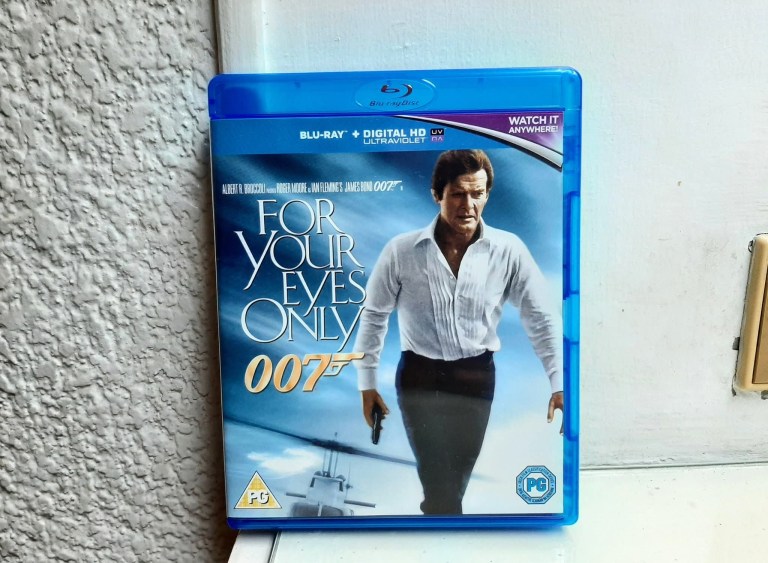
Very recently, I had my first-ever high-definition (HD) viewing of For Your Eyes Only on Blu-ray which is my latest purchase this year. I bought it for a little over $8 (delivery fee excluded) on Amazon.

My Blu-ray copy of For Your Eyes Only. I bought it for a little over $8.
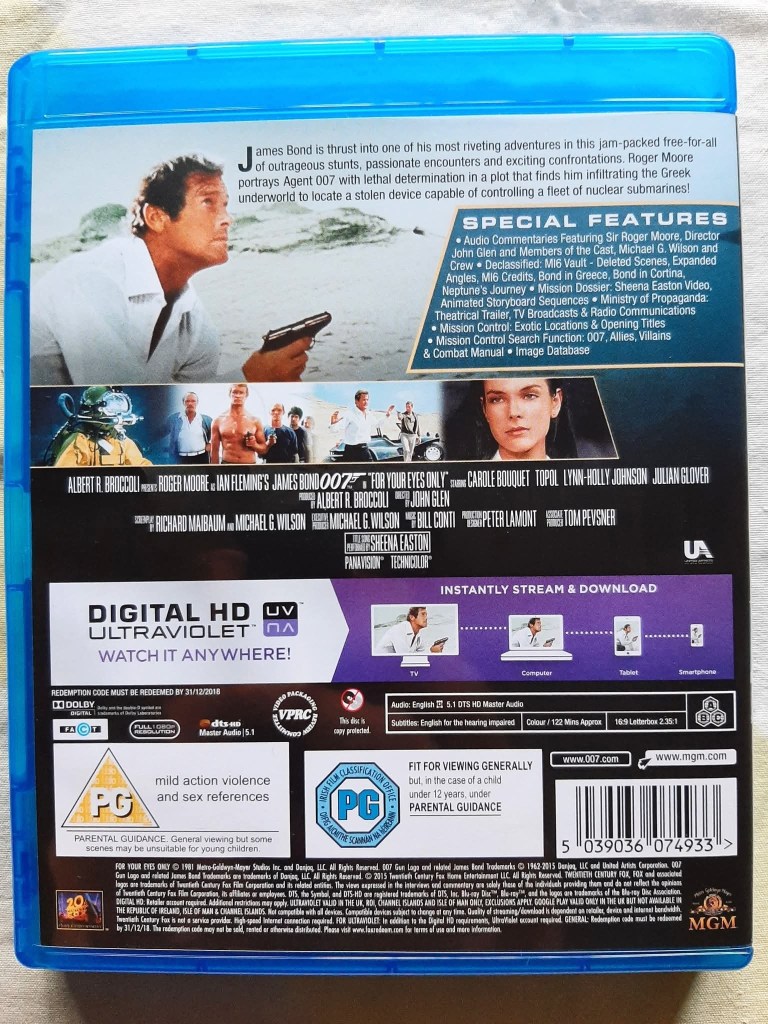
The rear of my Blu-ray copy of For Your Eyes Only.

As of this writing, I replayed For Your Eyes Only in HD twice with my Blu-ray copy and I can say that I enjoyed the Moore-led Bond movie yet again. While the film is not exactly spectacular with regards to visuals as it was recorded, it looks better than ever in HD. Apart from the higher resolution, the movie is clearer and there are more tiny visual details spotted as I watched on Blu-ray. It was nice to see on HD the film’s key moments, character development scenes and, of course, the many action scenes and stunts performed.

With regards to the extra stuff, this Blu-ray contains the exact same content made available on For Your Eyes Only DVD that I bought 16 years ago. The on-screen options as well as the visual presentation were also the same.

I am really delighted with For Your Eyes Only on Blu-ray disc format and my recent purchase resulted in a tremendous value in return. I am glad to have this classic James Bond movie in my collection as the film itself is great and it is my favorite among the seven Agent 007 movies Roger Moore starred in.  

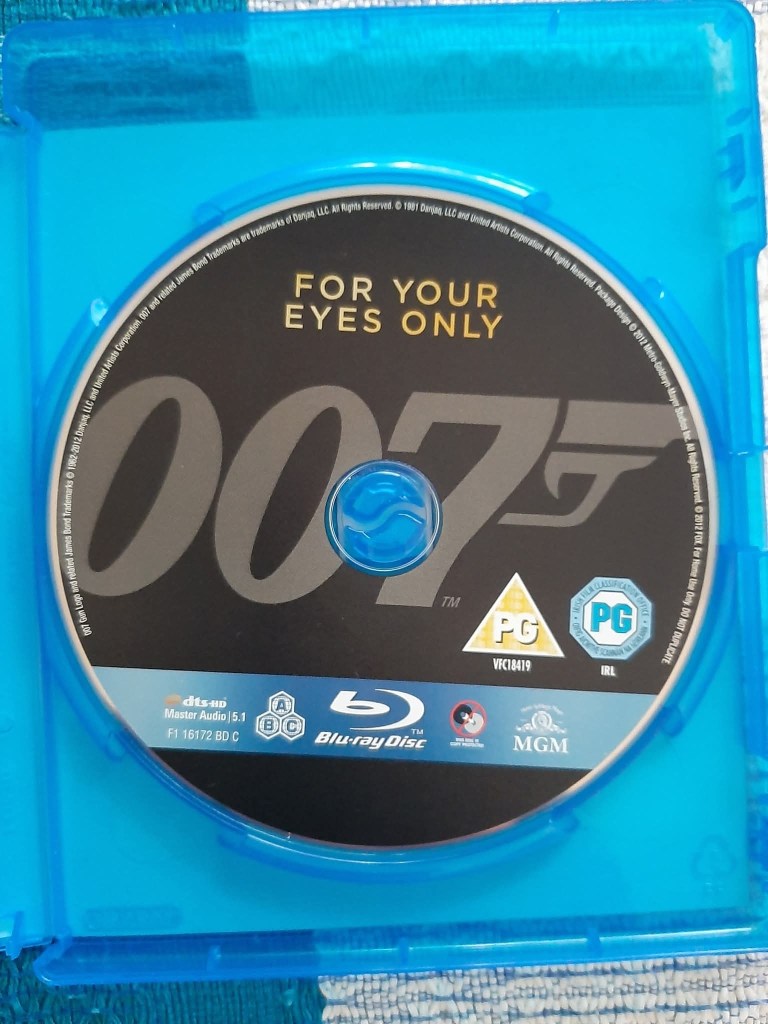
The Blu-ray disc of the 1981 James Bond movie.

If you are a long-time James Bond or if you are a newcomer who wants to the see the very best of Roger Moore James Bond movies in HD, the Blu-ray disc is still available for ordering online and you only need to click here.

For me, the next step to enjoy For Your Eyes Only would be on 4K Blu-ray (standalone release). In conclusion, I posted below the official song of the movie by Sheena Easton.

If you wish to join a group of movie enthusiasts and talk about cinema, cinematic trends, Blu-ray releases and more relevant stuff, visit the Movie Fans Worldwide Facebook group at https://www.facebook.com/groups/322857711779576

+++++

Thank you for reading. If you find this article engaging, please click the like button below, share this article to others and also please consider making a donation to support my publishing. If you are looking for a copywriter to create content for your special project or business, check out my services and my portfolio. Feel free to contact me with a private message. Also please feel free to visit my Facebook page Author Carlo Carrasco and follow me on Twitter at  @HavenorFantasy as well as on Tumblr at https://carlocarrasco.tumblr.com/ and on Instagram at https://www.instagram.com/authorcarlocarrasco
What to watch on YouTube right now – Part 107

Welcome back my readers, YouTube viewers and all others who followed this series of articles focused on YouTube videos worth watching. Have you been searching for something fun or interesting to watch on YouTube? Do you feel bored right now and you crave for something to see on the world’s most popular online video destination?

I recommend you check out the following videos I found.

#1 Lost Odyssey Revisited – Back in 2008, I played Lost Odyssey on my Xbox 360 console and it was my most anticipated game of the time as I enjoyed playing Final Fantasy role-playing games (RPGs) on different consoles several years prior. In my experience, Lost Odyssey truly is a Final Fantasy game without the name and it remains an Xbox 360-exclusive game that happens to be compatible with Xbox One, Xbox Series S and Xbox Series X consoles (still available digitally online). For the newcomers reading this, Final Fantasy creator and former Square Enix producer Hironobu Sakaguchi co-wrote the story of Lost Odyssey and his own independent studio Mistwalker laid the foundation and the other studio Feelplus did the coding of the game. Not only that, famous game musician Nobuo Uematsu composed and scored the music of the Xbox RPG. To find out how the game was conceptualized, how its production happened and why it became an Xbox-exclusive game, watch the selected retrospective videos below.

#2 No Kings Protest Fails – In America, the Satanic Leftists, the woke extremists, the climate change zealots and other pawns of the Democrats organized the No Kings protests which eventually failed. The Leftists hatred for US President Donald Trump is so intense, they became out of touch with reality and they end up hating America. Lastly, many on the Left cannot tell the difference between a president and a king. The Democrats meanwhile are still obsessed with embracing immorality, destroying the traditional American family, empowering Islamic terrorists and support illegal immigrants. Watch and learn from the videos below.

#3 Delicious Meals With Big Portions In Japan – If you plan to do food trips while touring Japan, what exactly will you be looking for among the many food joins there? If you crave delicious food with big servings, there are indeed places to visit, and you can find what they offer and where could visit them by watching the Nippon TV video below. A friendly reminder for all who intend to visit Japan as foreign tourists…always behave yourselves by following local rules and being respectful to the Japanese.

#4 VKunia Reacts To Scary Movie – In 2000, Scary Movie was released in cinemas in America on July which was during the summer blockbuster season. The horror comedy parody film succeeded beyond expectations making almost $280 million worldwide on a budget of less than $20 million. Here in the Philippines, Scary Movie opened on November 1 of 2000 and I saw it that day inside the local cinema which was almost full. I noticed a lot of local moviegoers enjoyed its crude comedy under direction of Keenen Ivory Wayans and the performance of Anna Faris. Recently, VKunia posted her reaction video of Scary Movie and her reactions are similar to how the moviegoers around me reacted on November 1, 2000. Watch her video below.

#5 WarGames Revisited  – Back in the 1980s, the Cold War was still hot in people’s minds and information technology (IT) itself was gradually becoming important in America. The 1983 movie WarGames featured a tale about war simulation, hacking, artificial intelligence (AI), the use of super computers for military operations and more. Back then, US President Ronald Reagan saw the film and this led to discussions with members of Congress, advisers and the Joint Chiefs of Staff. A review of full nation security was eventually ordered by Reagan. In today’s age, artificial intelligence is very common and it is causing varied disturbances worldwide which makes WarGames still relevant. To see how the movie impacts YouTubers, watch the selected reaction videos below.

+++++

Thank you for reading. If you find this article engaging, please click the like button below, share this article to others and also please consider making a donation to support my publishing. If you are looking for a copywriter to create content for your special project or business, check out my services and my portfolio. Feel free to contact me with a private message. Also please feel free to visit my Facebook page Author Carlo Carrasco and follow me on Twitter at  @HavenorFantasy as well as on Tumblr at https://carlocarrasco.tumblr.com/ and on Instagram athttps://www.instagram.com/authorcarlocarrasco

Cloak & Dagger Is Fun And Challenging To Play On My Xbox Series X

Welcome back Xbox fans, geeks, retro gaming fans and other gamers!

If you are disappointed with modern console gaming and if you don’t like what the game makers are doing, retro gaming will restore the fun and help you forget about the disappointment.

When I was a very young boy, I saw Cloak & Dagger on home video. The movie – starring Henry Thomas and Dabney Coleman – was a thriller laced with Cold War elements, espionage and video gaming. In fact, the video game giant of the time – Atari – was involved in the movie production and their arcade game Cloak & Dagger appeared in the form of a fictional Atari 5200 game. Each time I saw the gameplay footage while watching the movie (read my retro review by clicking here), I was thrilled and always wanted to play it.

Finally, in 2024, I was able to play Cloak & Dagger on my Xbox Series X after purchasing the physical copy of Atari 50: The Anniversary Celebration. Since then, I’ve been replaying Cloak & Dagger a lot in the comfort home and it sure is challenging and fun.

To be clear, this is not a retro game review of Cloak & Dagger. Rather, it is a nostalgic close look at the Atari video game that happened to be featured in the 1984 movie which in turn was released on 4K Blu-ray in 2022. Combine that with the Atari 50 release also in 2022, the Cloak & Dagger game made a comeback in the retro gaming radars of many while also becoming available to play with on modern consoles and Windows PC.

Game design and gameplay

In the arcade game, you play Agent X (the 2D sprite colored green and wearing the hat) and you will encounter challenges from enemies (often robot guards which can fire shots at you), conveyor belts that can impact your movement and the possibility of the giant bomb exploding.

Developed by Atari for the arcade, Cloak & Dagger is a 2D multi-directional shooter in which you play Agent X (who appears wearing a hat, a mask and a coat) whose mission is to infiltrate the massive base of an enemy that goes very deep underground (33 levels/floors).

Each level the player enters require surviving obstacles and defeating (or avoiding) the enemies (robot guards are the most common opposition while the crawling eye occasionally appears) and then move to the other side of the level in order to get into another elevator to keep on descending. The ultimate goal is to reach the final level below to recover top secret plans from Dr. Boom (the main villain and the one responsible for stealing the said plans), destroy his underground bomb factory (which explains the existence of oversized bombs and many explosives on conveyor belts) and get out.

As registering high scores was the trend of video gaming back then, players will be rewarded with shooting at the enemies (example: robot guards are worth 50 points each when asleep or 200 points when awake, while the main villain Dr. Boom is worth 50,000 points) as well as interacting with in-game items such as the unarmed explosives (10 points when shot but worth 100 when collected), armed explosives (50 points each when destroyed) and mystery boxes (worth 200 to 1,800 points plus random effects on the player such as extra life, improved speed and even extra life). For every 30,000 points scored, the player will be granted an extra life. In many levels are gigantic bombs that players can ignite using the Fuse button for extra points. 

Between levels, you will see an animated Agent X during the short rides in the elevator.
The game is very challenging because so much is going on around you. The robot guards will always fire shots at you while the conveyor belts often move items and explosives (both the armed and unarmed). You can ride a converyor belt to move around but make sure you do not touch the armed explosives (red containers) as they will kill you upon contact.

Other items players can collect are the extra boxes (resulting in extra life) and the secret maps (which partially reveal safe paths through each fourth level).

When it comes to the controls, Cloak & Dagger has a dual joystick (twin sticks) setup similar to Robotron 2084 and Smash T.V. (read my retrospective look at it by clicking here). One joystick allows players to move Agent X around while the other allows shooting projectiles (using Agent X’s weapon) at any direction. The fuse action (for igniting the oversized bombs in the enemy lair) is done by simply pressing a button. As I am playing this game on Xbox Series X, the game’s controls functioned well on the Xbox controller. Both precision and response of the game are sharp with the Xbox controller.

When it comes to the enjoyment and overall value of Cloak & Dagger, I can say that it is indeed more challenging and more chaotic when compared to the more notable twin stick games Robotron 2084 and Smash T.V. For one thing, each level has different layouts complete with obstacles or hazards plus enemies that will certainly challenge players. Many levels have conveyor belts moving unarmed explosives, armed explosives (which you must avoid touching because you will die upon direct contact) and items around which form obstacles when it comes to shooting robot guards on the other side (note: you can use the obstacles defensively when the robot guards fire at you).

From time to time, you will enter a somewhat sparse looking level like this which actually has mines hidden. The locations of the mines do get revealed in specific moments but only for a few seconds. That being said, it is always best to be able to collect maps that appear on conveyor belts.

Apart from the robot guards and the crawling eye, there are also forklifts which don’t attack you but their solid exterior will deflect any projectile you fire at them and send them back to your direction.

To be clear, you are not required to destroy all the robot guards (or the huge crawling eye enemies) in each level. You can simply try to avoid obstacles and enemies to make it to the next elevator to keep on descending although doing so means scoring much lesser points. Picking up items will add points and randomly alter your character’s capabilities (by picking up mystery boxes).

Adding pressure to you on each level is the giant bomb located in the middle which you can ignite using the fuse action. Once ignited, you only have a few seconds left to make it to the next elevator as the giant bomb will explode and spread fire throughout the whole level. Igniting the said thing will grant you a lot of points provided you survive and made it to the elevator going down.

To be able to play the Cloak & Dagger arcade game on your console or on PC, purchase a copy of the Atari 50 collection.

Cloak & Dagger is indeed a fun game but the opposition, the obstacles, time limit (indicated by the giant bomb) and chaotic turn of events make it more challenging than Midway’s two notable twin stick shooters. The game would have been more forgiving and more playable if only it did not have the one-hit-death embedded on it. Considering the challenges each level has and the many levels players have to go through, it would have made more sense to have Agent X have a life bar/health meter/shield and be able to absorb some enemy projectiles (before dying).

Of course, the game was never designed to be like that and the one-hit-death is also found in Robotron 2084 and Smash T.V. That being said, if you played Cloak & Dagger with a high level of success and completed everything without losing all your lives, then you would be a great achiever.

Pop culture significance

It has been reported that Cloak & Dagger – which was released as an arcade kit for machines that ran Robotron 2084, Joust, Defender and Stargate – did not have a big presence in the arcades in America. The 1984 movie dramatically increased public awareness of it.

Print ad of the arcade game.

When Cloak & Dagger was still in game development (created and led by Russell Dawe) under the title “Agent X”, Atari and certain movie producers became aware of each other’s projects and decided to work together. The deal made business sense as Atari could benefit from reaching a mainstream audience through the cinemas while the movie producers joined in the 1980s Hollywood trend of movies that featured powerful computers, software and artificial intelligence as seen in WarGames (1983), Superman III (1983), and The Terminator (1984).

Much to the credit of the filmmakers, the presence of the game actually added good value to the plot. The film’s concept of the Cloak & Dagger game becoming a very wanted object (plot device actually) resulting in chases, intense action scenes and suspense turned out to be very believable as well. It should be noted that director Richard Franklin took inspiration from Alfred Hitchcock which gave the film a unique touch on the suspense and shock scenes. Check out the movie clip below…

When it comes to the Cloak & Dagger game appearing within the movie of 1984, you will see how the filmmakers and Atari cleverly created the illusion of the game operating on the Atari 5200 console by showing not only video game footage, but also having Henry Thomas acting like he’s playing it using the Atari 5200 controller (which has an analog joystick and buttons on one side). When I was a young boy watching the movie, I found the game footage very entertaining and wanted to play it.

Cloak & Dagger portrayed as running on Atari 5200 in this scene with Henry Thomas and Dabney Coleman. (photo source – AtariProtos.com)
A Cloak & Dagger arcade cabinet seen in the background (right side). (photo source – IMDB.com)

If you are an Xbox gamer who intends to play Cloak & Dagger now, buy the Atari 50 collection in digital format by clicking https://www.xbox.com/en-US/games/store/atari-50-the-anniversary-celebration/9N3TFDSQ531T

+++++

Thank you for reading. If you find this article engaging, please click the like button below, share this article to others and also please consider making a donation to support my publishing. If you are looking for a copywriter to create content for your special project or business, check out my services and my portfolio. Feel free to contact me with a private message. Also please feel free to visit my Facebook page Author Carlo Carrasco and follow me on Twitter at  @HavenorFantasy as well as on Tumblr at https://carlocarrasco.tumblr.com/ and on Instagram athttps://www.instagram.com/authorcarlocarrasco

What to watch on YouTube right now – Part 92

Welcome back my readers, YouTube viewers and all others who followed this series of articles focused on YouTube videos worth watching. Have you been searching for something fun or interesting to watch on YouTube? Do you feel bored right now and you crave for something to see on the world’s most popular online video destination?

I recommend you check out the following videos I found.

#1 Superboy star John Newton featured in Minty Comedic Arts’ video – It has been almost forty years since the Superboy TV series first launched with John Newton (formerly John Haymes Newton) as the titular role. It was an entertaining TV show and it easily attracted a lot of Superman fans, DC Comics readers and those who read the Superboy comic books. Recently, John Newton was featured in a special video by Minty Comedic Arts which was the result of information mentioned in Minty’s standalone Superboy trivia video. Newton saw the Superboy video and reached out to Minty Comedic Arts. Minty – who admitted he has a weakness on interviewing/communicating with people – agreed to feature Newton in a documentary style video instead of an online interview. That being said, Newton recorded his minutes-long part and said a lot of intriguing and interesting information about his one-season work as Superboy. That being said, I urge you all to watch Minty’s special video below.

#2 Barack Obama exposed over Russia collusion hoax – It took more than eight years but Tulsi Gabbard did her patriotic duty by declassifying high-level files and messages exposing Barack Obama for treason over his responsibility behind the Russia collusion hoax (designed to undermine Donald Trump who defeated Hillary Clinton for US President in 2016) and he involved America’s intelligence community. What Obama did was not just a corrupted act as US President but a clear violation against the will of the American people who chose Trump over Clinton. This tragedy only showed how corrupted, wicked and arrogant Democrats really are. To understand all the details, what happened behind the scenes back in late-2016 and what the documents showed, watch the selected videos below.

#3 Jeff Daniels and Kamala Harris are the modern Dumb and Dumber  – Do you still remember actor Jeff Daniels? He appeared in 1990s films like Arachnophobia, Speed and Dumb and Dumber. In an interview, he expressed his feelings for the defeated and incompetent Commie Democrat Kamala Harris and he still could not get over the results of the 2024 US Presidential Election won by Donald Trump! Daniels foolishly compared Harris to Abraham Lincoln. Watch the video below and observe who is dumb and dumber.

#4 A look at an Osaka diner – It has been almost thirty years since my one and only visit to Osaka in Japan. As I was browsing YouTube videos to watch, I spotted a video about a certain Osaka diner which has great looking visuals, a strong presentation, and the Japanese dialogue translated into English presented in subtitles. More importantly, the video will give viewers an in-depth look as to how diner is operated and how the food gets prepared before opening. It could be helpful for those inspiring to open a new restaurant. Watch it now!

#5 Reaction videos of Invasion of the Body Snatchers (1956) – Have you been watching any 1950s movies as of late? If you did, was there any particular film from that decade that scared you or made you feel stressed while watching? The 1956 film Invasion of the Body Snatchers is one such film and people who discovered it and saw it recently often state they found it suspenseful and even scary. I found three reaction videos about the film on YouTube and they are entertaining to watch.

+++++

Thank you for reading. If you find this article engaging, please click the like button below, share this article to others and also please consider making a donation to support my publishing. If you are looking for a copywriter to create content for your special project or business, check out my services and my portfolio. Feel free to contact me with a private message. Also please feel free to visit my Facebook page Author Carlo Carrasco and follow me on Twitter at  @HavenorFantasy as well as on Tumblr at https://carlocarrasco.tumblr.com/ and on Instagram athttps://www.instagram.com/authorcarlocarrasco

A Look Back at Missile Command (Arcade game, 1980)

Welcome back retro gaming enthusiasts, Atari fans, geeks and others who are passionate about video games!

Today we go all the way back to the year 1980 when Atari released in arcades a game that strongly resonated with people who were concerned about a potential nuclear conflict between the United States and Russia during the Cold War…Missile Command.

Designed by Dave Theurer and programmed by Rich Adam with Theurer, Missile Command is a 2-dimension shoot ‘em up arcade game that had a trackball to allow players to control a crosshair to defend six existing cities. The arcade also had three buttons players could use to launch surface-to-air missiles from the three missile bases to protect the cities from incoming ballistic missiles that came from an unseen enemy.

With those details laid down, here is a look back at the Missile Command arcade game of 1980 developed and published by Atari.

The arcade flyer with a great looking painted artwork. This one really resonated with gamers who lived during the Cold War.

Game design

As the commander of three missile bases (each armed with 10 defense missiles), the player is tasked to protect six existing cities from waves of ballistic missiles (launched by an unnamed enemy) coming down. From time to time, the enemy deploys bombers, satellites/drones and smart bombs to overwhelm your defense and test your precision and decision making.

You have three missile bases that each has its own supply of defense missiles. There are cities between each base which you have to defend from the endless assault of enemy missiles, smart bombs, war planes and satellites/drones.
When your defense missile detonates in the air, it creates an explosion which serve as a shield to destroy enemy missiles, war planes and satellite/drones when contact is made. If any projectiles from the enemy manages to get through the aerial explosion, you will have to quickly launch more defense missiles from the near base you have.
Watch and learn.

Players use a single crosshair which designates which part of the sky a defense missile can be fired at. Once the defense missile reaches its destination (placed by the crosshair) in the sky, it will explode and cause a growing flame lasting seconds. The said flame serves as a shield that can destroy the enemy’s ballistic missiles, smart bombs, war planes and satellites/drones upon contact. Defense missiles can be launched consecutively into selected spots in the sky in anticipation of the incoming weapons of the enemy. 

To proceed from one level to another, the player must have at least one city remaining intact. Once all the six cities have been destroyed and the player no longer has any unused missiles (and no new cities earned by reaching certain high scores that justify rewards), the game will end with a “Game Over” screen with an explosion in the background.

Quality

In this screenshot, the enemy’s satellite/drone is floating while a smart bomb is about to hit the missile base at the lower-right. Smart bombs can be challenging to intercept because it reacts by avoiding the aerial explosion of defense missiles.

This arcade game – which is currently available for modern console owners to play via the Atari 50: The Anniversary Collection – remains very engaging and a lot of fun to play with after all these decades. As a player, my only objective was to defend the six existing cities and three missile bases from the waves of enemy ballistic missiles (and smart bombs in later levels) coming from the sky. Given the way the game was designed, this is strongly emphasized and the only times I could attack the enemy is by launching my own missiles towards the enemy’s bombers and satellites/drones (note: both of these are capable of launching more missiles at you).

If any of the enemy’s weapons hits one of your missile bases, it and the remaining supply of defensive missiles will be wiped out. Enemy missiles that hit a city will result in total destruction. Considering the intentional increase in challenge with each new level of play started, the enemy’s ballistic missiles move faster, the warplanes and/or satellite/drones appear more and the smart bomb – which is the most difficult to intercept as it deliberately avoids the aerial flames caused by your defense missiles – get launched against you.

When intercepting enemy missiles, you have to think quick where to aim (ahead of incoming missiles), which missile base to use to launch defense missiles and remember how much missiles do you have left per base.

That being said, the game deliberately becomes harder which compelled me to be more watchful of enemy weapon movements, and to be more strategic using my defense missiles while keeping a quick eye on the remaining supply of missiles per base. While the in-game difficulty intensifies per level, the game never became frustrating to play nor did it ever turn into a chore on my part. I just keep playing because I found the increasing challenges actually fun to take on.

The game’s visuals are still good to look at. It’s still engaging to see streaks of missile trails (both your defense missiles and the enemy’s ballistic missiles) fill the air above the cities and the flashing light effects that simulate explosions are still effective as eye candy. Along the way, the game’s sound effects worked perfectly with the visuals and they added a lot to the immersion.

When you score enough points, the game will reward you with a bonus city.
Me putting my initials after achieving a great score in Missile Command.

Considering its simplicity and the way it was designed, there clearly is no way for players to win at all. Rather, the game will challenge your precision, decision-making and ability to defend your cities and bases. That being said, the greater challenge is to survive and be able to move on to the next level with missile bases and whatever cities remaining you still have to defend. As with other games of the past, achieving the high possible score – which reflects your endurance, skill and progress – is a goal here. Achieving certain high scores also result in an extra city for you.

Cultural relevance

Missile Command’s legacy as one of the greatest arcade games ever released is undeniably real. Not only that, this game resulted in a lot of ports for consoles, portable gaming devices and home computers through the decades. This classic was re-released in several compilations from Atari and the Xbox-listed Missile Command contains the arcade version. In 2020, a remake called Missile Command: Recharged was released as part of the Atari Recharged series of games.

The different Missile Command arcade machines.

Missile Command even appeared for a few seconds in Terminator 2: Judgment Day which added more to the film’s concept of nuclear war.

With regards to arcade gaming, Missile Command is notable for having a trackball on its machine as a way for arcade players to control the crosshair during game sessions.

Conclusion

Apart from being the commander of missile defense, try imagining yourself being on of the citizens living in one of those cities. Can you imagine watching real-life missiles get intercepted in sky above you?

The Missile Command (1980) arcade game is a true video game classic and it remains compelling and enjoyable at the same time. It can also be an intriguing game experience since it does not let players complete the game by winning. All players can do is perform the best defense they could, survive to the next round and keep playing until their defense gets overwhelmed by the enemy and the rising in-game difficulty.

As a result of the game design, playing Missile Command is actually moral because the concept of defending your people using powerful yet limited resources is very strong all the time. Even with progressive difficulty, the game never became frustrating to play and I actually enjoyed the challenges knowing that defense and survival are main goals. Achieving the highest possible score is the other goal as reflected by video gaming of the era. Missile Command simply delivers bouts of fun and you cannot go wrong with playing it. It is not surprising that this game became a massive hit and established itself as a true classic among video games.

Overall, Missile Command (1980) highly recommended and the best way to play it on console today is to avail of Atari 50: The Anniversary Celebration compilation.

+++++

Thank you for reading. If you find this article engaging, please click the like button below, share this article to others and also please consider making a donation to support my publishing. If you are looking for a copywriter to create content for your special project or business, check out my services and my portfolio. Feel free to contact me with a private message. Also please feel free to visit my Facebook page Author Carlo Carrasco and follow me on Twitter at  @HavenorFantasy as well as on Tumblr at https://carlocarrasco.tumblr.com/ and on Instagram at https://www.instagram.com/authorcarlocarrasco
What to watch on YouTube right now – Part 88

Welcome back my readers, YouTube viewers and all others who followed this series of articles focused on YouTube videos worth watching. Have you been searching for something fun or interesting to watch on YouTube? Do you feel bored right now and you crave for something to see on the world’s most popular online video destination?

I recommend you check out the following videos I found.

#1 Ashleigh Burton and Popcorn in Bed react to The Spy Who Love Me – Remember The Spy Who Loved Me? Released in 1977, the film was Roger Moore’s 3rd performance as James Bond and it was also the start of Albert Broccoli’s full control of the film franchise after breaking up with his partner. The filmmakers went all-in making The Spy Who Loved Me filled with a lot of thrills, dangerous stunts and a twist on Cold War politics to not only delight James Bond fans but also attract moviegoers who wanted something grand and fun to watch. That being said, you should watch how this 1977 Agent 007 movie drew reactions from Ashleigh Burton and Popcorn in Bed.

#2 PatmanQC examines Chase H.Q. – I never played Chase H.Q. in the arcade nor any of its ports on consoles and home computers. Historically, the game was a huge arcade hit and it was praised by game critics during its time. Chase H.Q. offered players the unique experience of playing a police officer (who has a partner) and must drive a fancy car to chase criminals who are trying to get away on the road. The game is an inspired work and if you want to discover more about how it was made and who the creators were, watch the in-depth video of PatmanQC below.

#3 James Gunn’s Superman controversy  – By the time you are reading this, James Gunn’s Superman movie is already playing in theaters around the world. Just before it was released, James Gunn confirmed in a media interview that his take on DC Comics’ icon is indeed political and he even used the word “jerks” to refer to those who reject his movie. For analysis, explanations and opinions, watch the videos below.

#4 You, Me and the Movies react to Cannonall Run II – Believe it or not, the first Cannonball Run movie I ever saw was the 2nd movie titled Cannonball Run II. Released worldwide in 1984, Cannonball Run II had an all-star cast, stunts and a lot of comedy but ultimately it failed to match the commercial success of its predecessor. You, Me and the Movies recently posted its reaction video of the sequel and it deserves your attention.

#5 When Obama mocked Donald Trump – Remember back in 2011 when Barack Obama – and the elite – mocked Donald Trump during the White House Correspondents’ Dinner? Back then, Obama was US President and he abused his authority to put down Trump (who was rumored to run for President in the 2012 contest) to conveniently boost his own chances of for re-election. Not only that, Obama’s elite allies also pounced on Trump. By today’s standards, the 2011 event is painful for the liberals, the woke, the Satanic Left and the Democratic Party because Trump got elected as US President twice. No matter what Obama and the Satanic Left did, Trump only got stronger and hit back at them hard. Watch the video below.

+++++

Thank you for reading. If you find this article engaging, please click the like button below, share this article to others and also please consider making a donation to support my publishing. If you are looking for a copywriter to create content for your special project or business, check out my services and my portfolio. Feel free to contact me with a private message. Also please feel free to visit my Facebook page Author Carlo Carrasco and follow me on Twitter at  @HavenorFantasy as well as on Tumblr at https://carlocarrasco.tumblr.com/ and on Instagram athttps://www.instagram.com/authorcarlocarrasco