Disclaimer: This is my original work with details sourced from reading the comic book and doing personal research. Anyone who wants to use this article, in part or in whole, needs to secure first my permission and agree to cite me as the source and author. Let it be known that any unauthorized use of this article will constrain the author to pursue the remedies under R.A. No. 8293, the Revised Penal Code, and/or all applicable legal actions under the laws of the Philippines.
Welcome back, superhero enthusiasts, 1990s culture enthusiasts, X-Men fans and comic book collectors! Today we revisit the Marvel Comics shared universe through one of the many tales of the X-Men 2099 monthly series.
The past few issues followed the developments seen through the eyes of separated X-Men members – Meanstreak who assisted Halloween Jack’s move to take Las Vegas away from the Synge family, Krystalin who has been in California to help her brother, and Shakti who recently uncovered something about the legacy of mutants. That said, Bloodhawk’s absence was really noticeable and this was because Marvel Comics had him appear in a few Doom 2099 comic books set in the Savage Land.
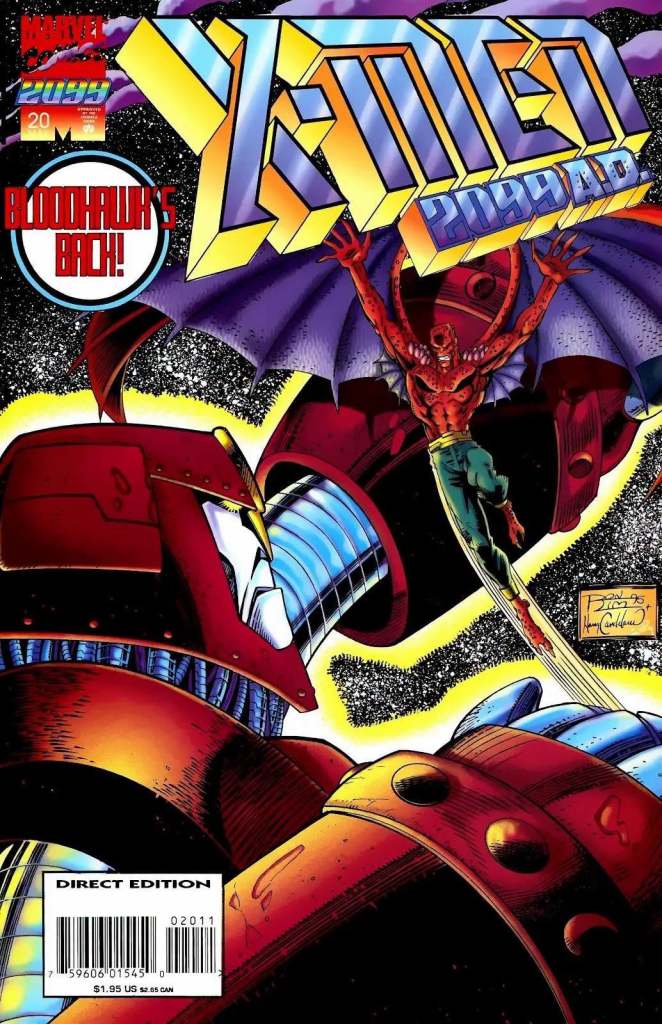
With those details laid down, here is a look back at X-Men 2099 #20, published by Marvel Comics in 1995 with a story written by John Francis Moore and drawn by Ron Lim.
The cover.
Early story
The story begins in the Arizona desert where Bloodhawk flies over the wasteland. He just returned from the Savage Land and he immediately notices huge tracks left behind by some kind of large machine and they are radiated. He notices a sick and radiated coyote approach. Bloodhawk grabs the coyote, says some words to it and kills it to end its suffering.
Meanwhile at the ACME Pit Stop (a roadside tradition of fuel and food since the year 2047), a conflict between business owner Cyrus and Lou Ann is taking place with lots of bystanders watching. Their conflict gets disrupted as a massive, large robot suddenly arrived causing everyone to panic. The robot grabs a long rig and threw it at the ground causing a huge explosion.
Bloodhawk, who raided one of his weapons cashes to arm himself with grenades, quickly flies in to attack the giant robot…
Quality
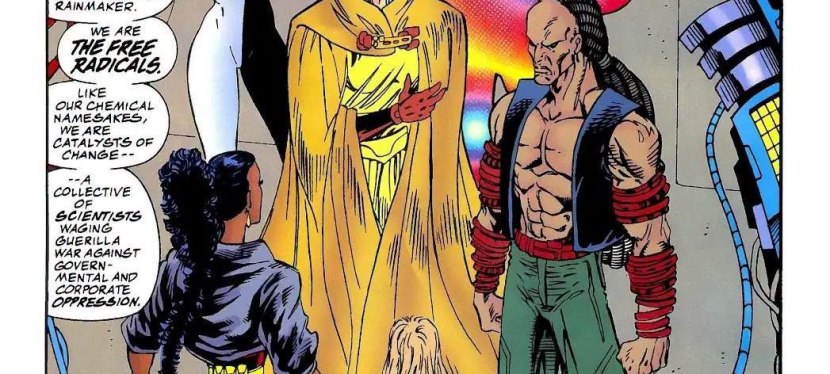
If you read the details closely, you will realize the extremism of the Free Radicals and why they have so much in common with real-life anarchists and zealots.
To point out the obvious, the main feature here is the focus on Bloodhawk’s return to the American wasteland coming from the Savage Land (chronicled in Doom 2099). By having him encounter a massive robot, it is clear that John Francis Moore and Ron Lim planned this to have a huge storytelling weight and give the X-Men 2099 fans – especially the ones who love Bloodhawk – something to enjoy. Along the way, this comic book has Bloodhawk gaining an unexpected ally which allowed the creators to show some character development on him. As many fans already know, Bloodhawk values nature and despises both technology and modern society as he saw them as devourers of the natural environment. In this comic book, he has a gigantic mechanical problem to deal with and the odds are absolutely against him. That said, Bloodhawk’s tale here is pretty much a big comeback from being absent in the past issues.
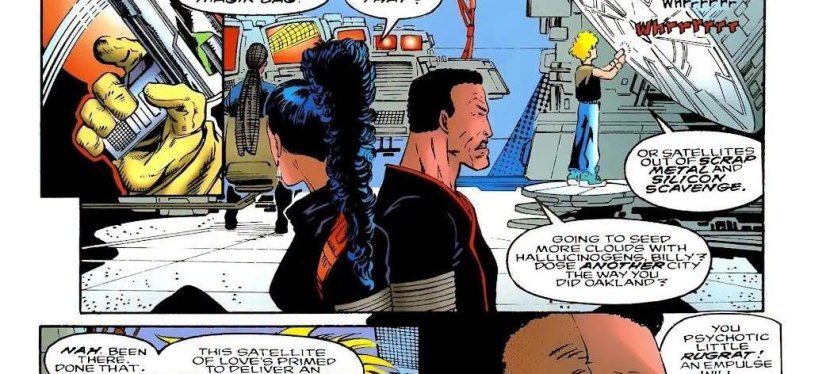
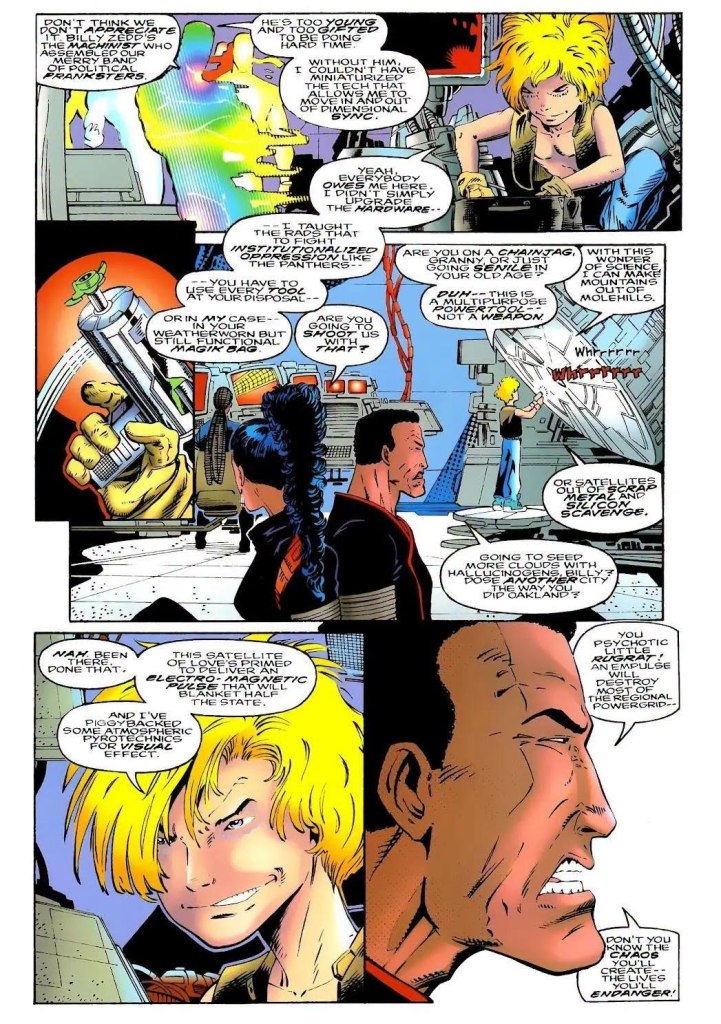
Meanwhile, Krystalin finds herself in deeper trouble. After helping the Free Radicals regain their very young but tech-oriented teammate, she finds herself and her brother still trapped by the gang. Continuing from what was symbolized in the previous issues, this comic book sheds light on political symbolism and the radicalized people’s obsession with drastic change in world they believe is controlled by institutions they perceive as oppressive. The Free Radicals have sinister values that make them comparable with real-life evil forces like Black Lives Matter (BLM), Palestinian terrorist group Hamas, Antifa, LGBTQ mobs, Islamists and others. The Free Radical’s youngest member clearly believes that anarchy means freedom.
Conclusion
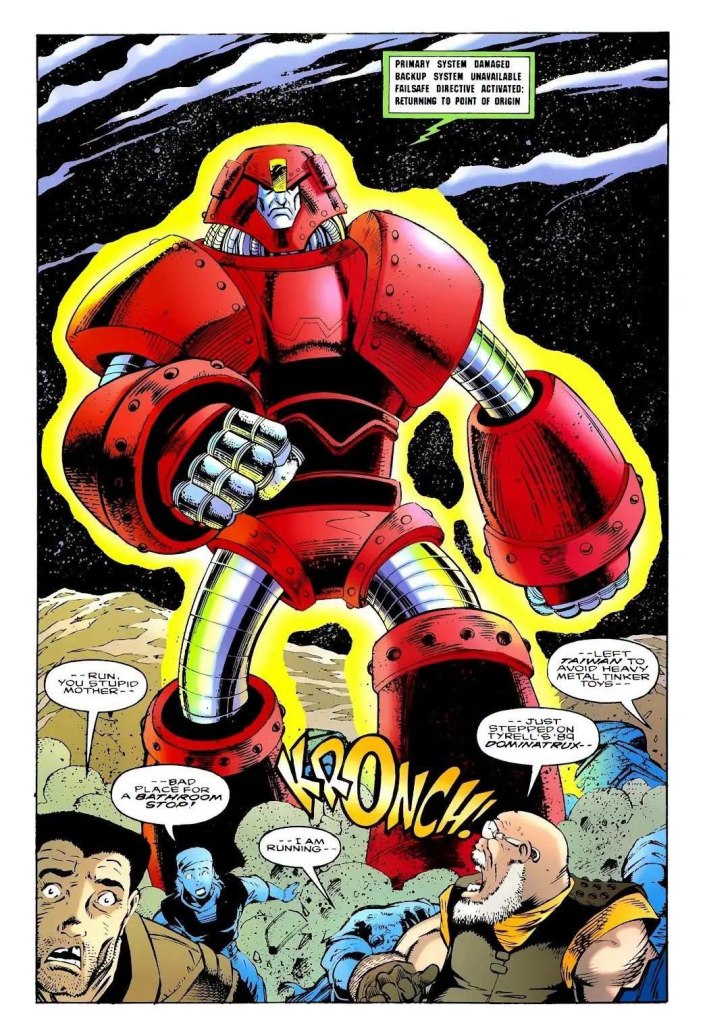
The design of this giant robot is corny to look at.
Crafted with care and symbolism, X-Men 2099 #20 (1995) has two tales that are gripping to follow. The tales of Bloodhawk and Krystalin succeeded with ensuring a gripping read and moving events forward. That said, the stakes of Krystalin’s conflict with the Free Radicals have been raised even more. Those who are very fond of Bloodhawk will have good stuff to enjoy here. This comic book’s only weakness is the rather corny design of the giant robot, and it felt distracting from time to time.
Disclaimer: This is my original work with details sourced from reading the comic book and doing personal research. Anyone who wants to use this article, in part or in whole, needs to secure first my permission and agree to cite me as the source and author. Let it be known that any unauthorized use of this article will constrain the author to pursue the remedies under R.A. No. 8293, the Revised Penal Code, and/or all applicable legal actions under the laws of the Philippines.
Welcome back, superhero enthusiasts, 1990s culture enthusiasts, X-Men fans and comic book collectors! Today we revisit the Marvel Comics shared universe through one of the many tales of the X-Men 2099 monthly series.
Issue #18 had some political flavor as it tried to shake the foundation of the X-Men 2099 series. It also had symbolism that reminded me about the criminal past of Las Vegas, the twisted Black Panthers (the evil Marxist-Leninist and black power political organization of America) and the social unrest that happened in America during the era of Richard Nixon as US President. At this point in the series, the futuristic X-Men are a shell of themselves as the members have been separated and are involved in different developments far away from each other.
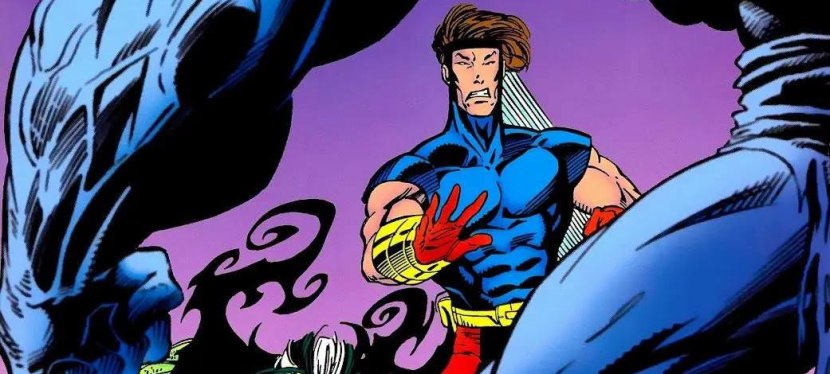
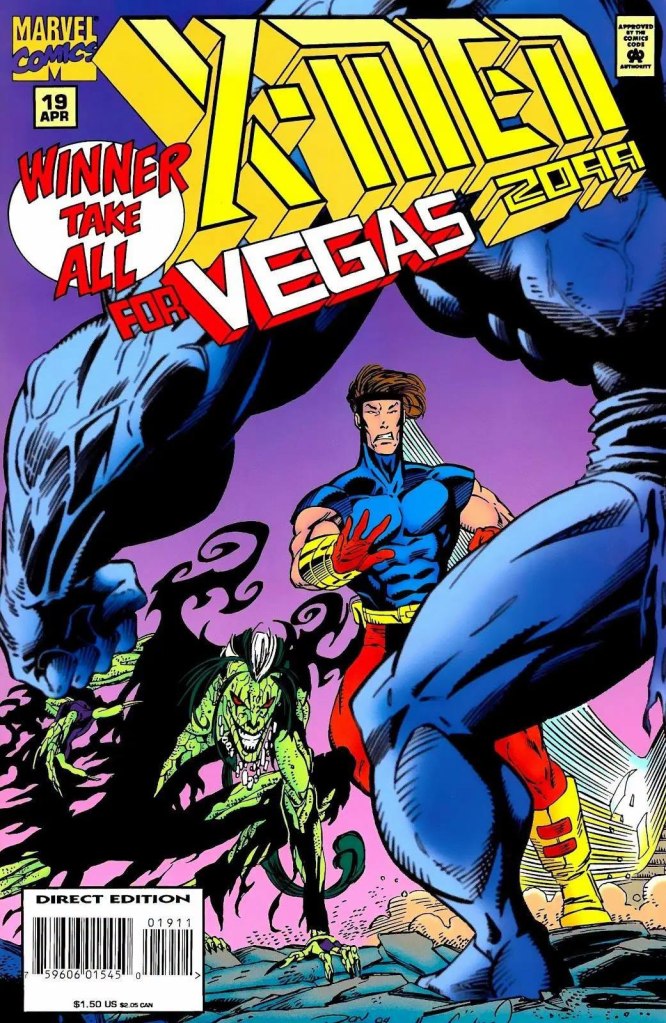
With those details laid down, here is a look back at X-Men 2099 #19, published by Marvel Comics in 1995 with a story written by John Francis Moore and drawn by Ron Lim.
The cover.
Early story
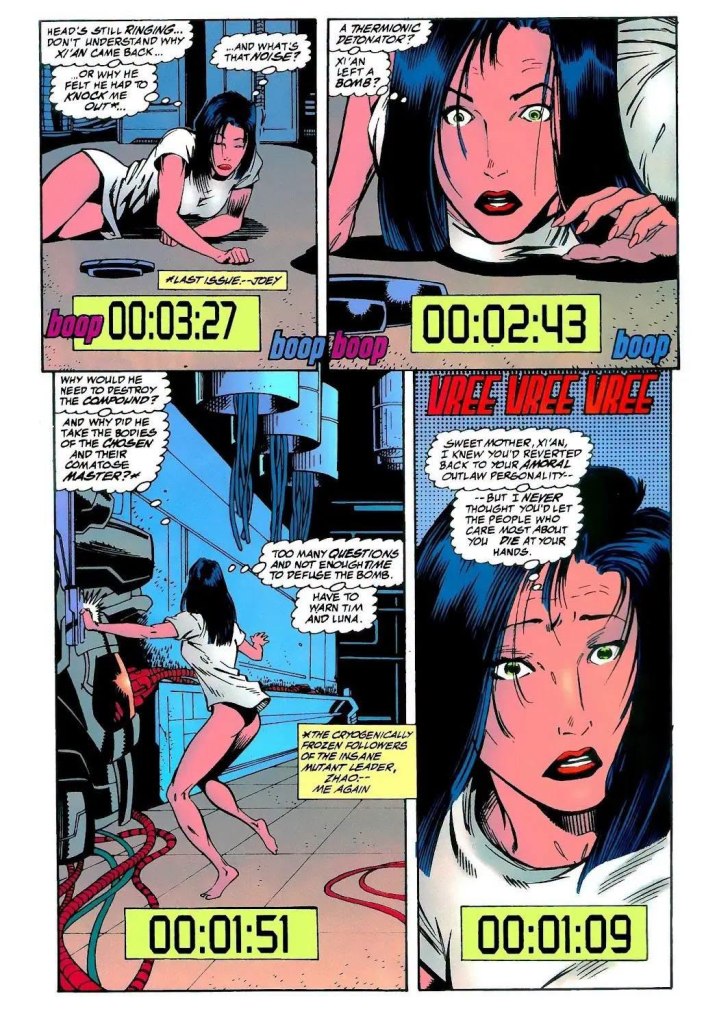
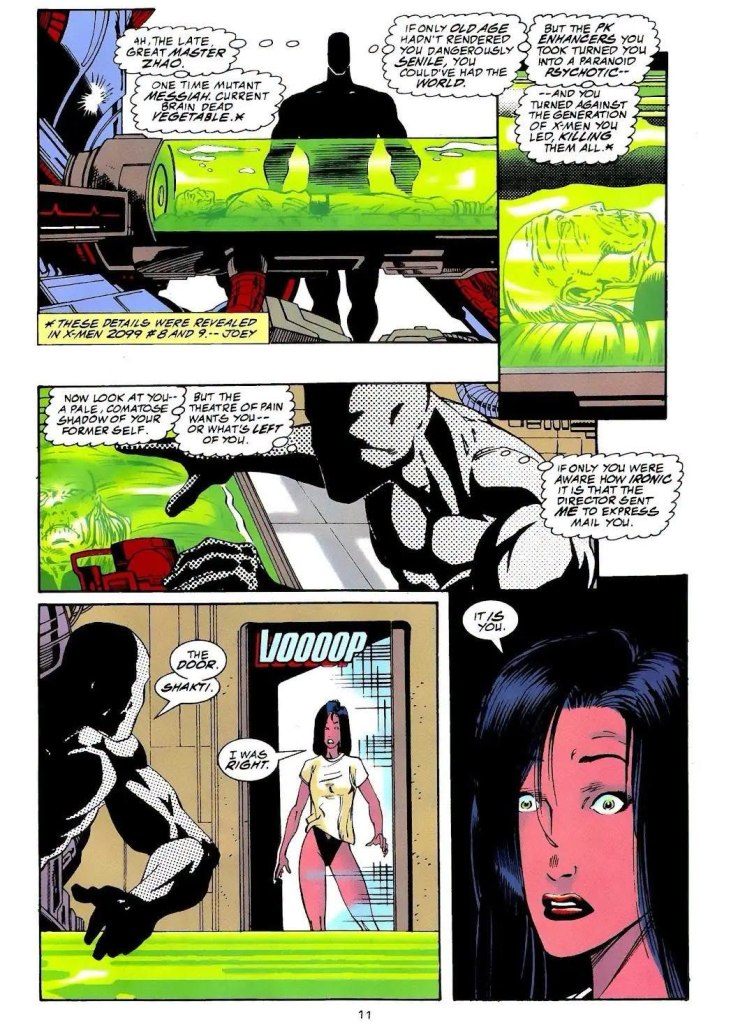
The story begins inside an old facility in New Mexico. Shakti, who is only wearing a t-shirt and a panty – has been unconscious for several minutes. After waking up, she learns that a thermionic detonator (left by their former leader Xi’an) has been set to explode and time is quickly running out. She also realizes that the bodies of the Chosen have been taken.
In desperation, she wakes up Skullfire and Luna, and they ran out of the facility to save themselves. The facility blows up and Skullfire asks Shakti for an explanation. She reveals to him that Xi’an – whom she momentarily encountered several minutes prior – is responsible for the destruction and he clearly made an attempt to kill them all. As such, Xi’an is now an enemy of the X-Men.
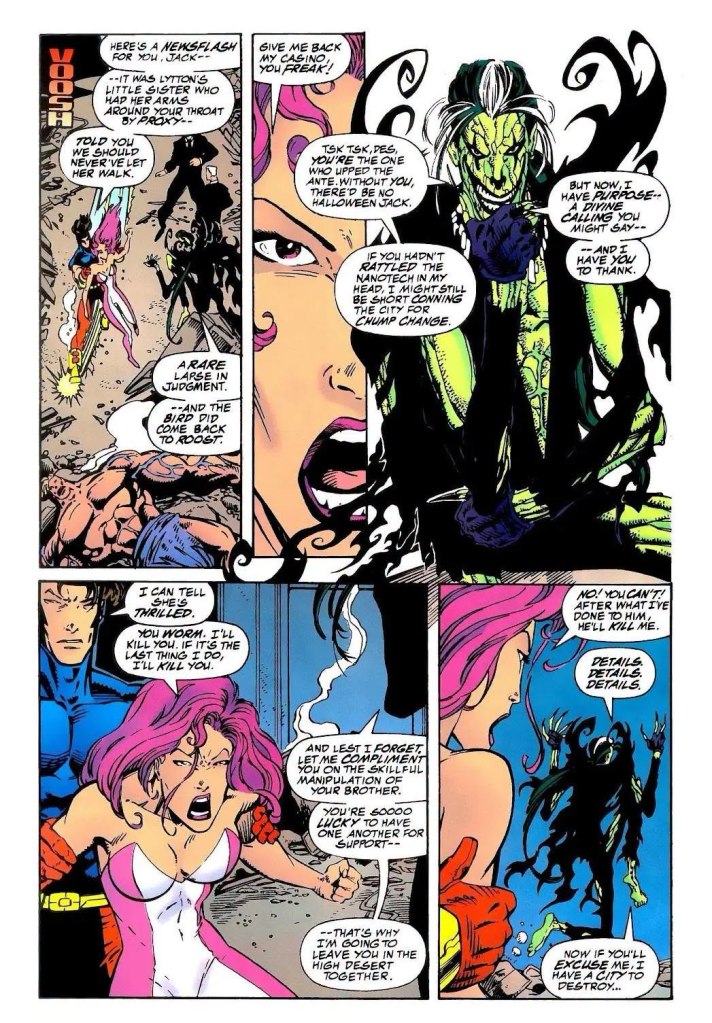
Meanwhile in Las Vegas, a heavily mutated and oversized Lytton Synge grabs his sister Desdemona by the neck. While explaining details to him, Desdemona uses a failsafe device to cause him to stop moving and free her. She puts on additional gear that enables her to control Lytton’s body and she made it clear to him that he will be used against Halloween Jack…
Quality
Desdemona, Halloween Jack and Meanstreak are together again. Desdemona here had a desperate attempt to reclaim the casino and their company from Halloween Jack.
There is a good amount of intrigue in this comic book covering the three plot threads. The thread of Shakti, Skullfire and Luna was very short but it added to the tension about having their former leader Xi’an as a deadly enemy.
On the other hand, the events set in Las Vegas saw the return of Lytton Synge in a bloated, Hulk-like figure as Desdemona used him to attack Halloween Jack who has gained control of the Synge business empire (at least in the building they are in) as he continues with his obsession of changing Las Vegas and moving forward with his plan that could mean doom for the city. In this particular plot thread, Halloween Jack has prepared highly advanced technology to redefine Las Vegas in the most phenomenal way. What I find disturbing is Meanstreak’s lack of morality as he keeps on assisting Halloween Jack (his old friend Jordan) with his sinister plan. This makes Meanstreak appear cold-hearted, sinister and unbecoming as an X-Men member.
Over at California, Krystalin pursues a mission to find Billy the Kid as she has absolutely no choice as the life of her brother is at stake. The Free Radicals literally have her cornered and she cannot do anything except doing what they want her to do. In this particular plot thread, the creators did a good job presenting Krystalin as desperate as she is in the middle of a conflict between the Panthers of Wakanda (where her brother belongs to) and the Free Radicals.
Conclusion
Shakti in a very dangerous situation with not much time left.
X-Men 2099 #19 (1995) unsurprisingly moved plot developments forward. Apart from developing the X-Men members more, this comic book also expanded the lore of 2099 America nicely. At this stage, I am eager to find out what would happen next to the X-Men members in their respective plot threads. That said, I am still engaged enough to continue with the remaining X-Men 2099 issues that I have yet to read.
Welcome back readers, fellow geeks and electronic gaming fans!
In this edition of the Retro Gaming Ads Blast (RGAB) series, we will take a look at another batch of retro gaming print ads from the 1980s to the 1990s.
For the newcomers reading this, Retro Gaming Ads Blast (RGAB) looks back at the many print ads of games (console, arcade, computer and handheld) that were published in comic books, magazines, flyers, posters and newspapers long before smartphones, social media, the worldwide web and streaming became popular. To put things in perspective, people back in the 1980s to the 1990s were more trusting of print media for information and images about electronic games and related products.
With those details laid down, here is the newest batch of retro gaming print ads for you to see and enjoy…
1. Atari Console and Games Print Ad
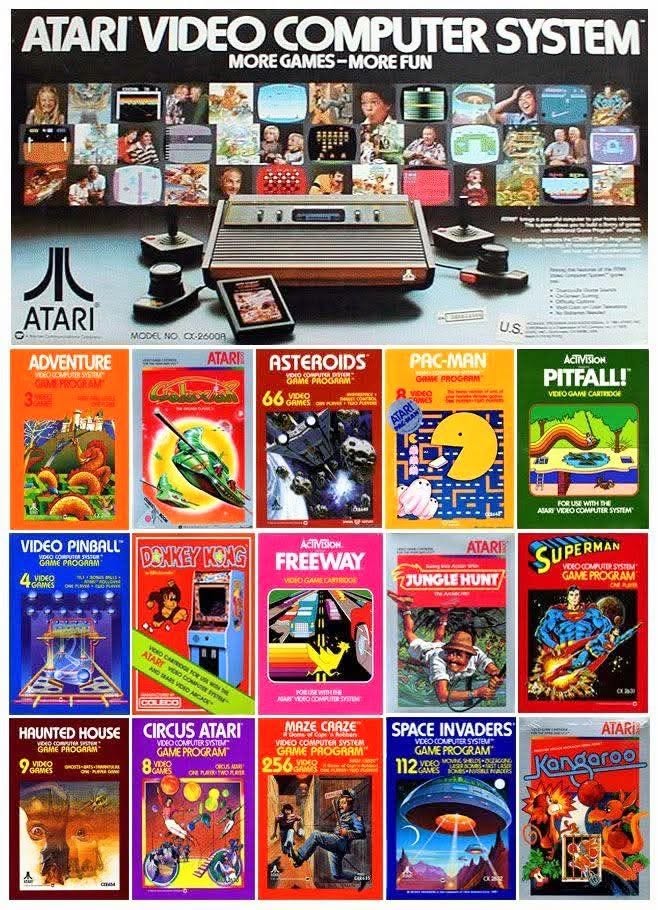
Back in the 1980s, this was simple and yet exciting to look at.
Back in the 1980s, the styles of video game advertising were very different. Back then, Atari was the market leader on console gaming with the Atari 2600 and they had a lot of video games made for it. As such, the above print ad showing the console and the video games (with the front covers of the game boxes) was typical of the era and it was captivating to look at. By today’s standards, the ad looks simple but it still has the appeal to lure gamers.
2. Shark Attack North American Arcade Flyer
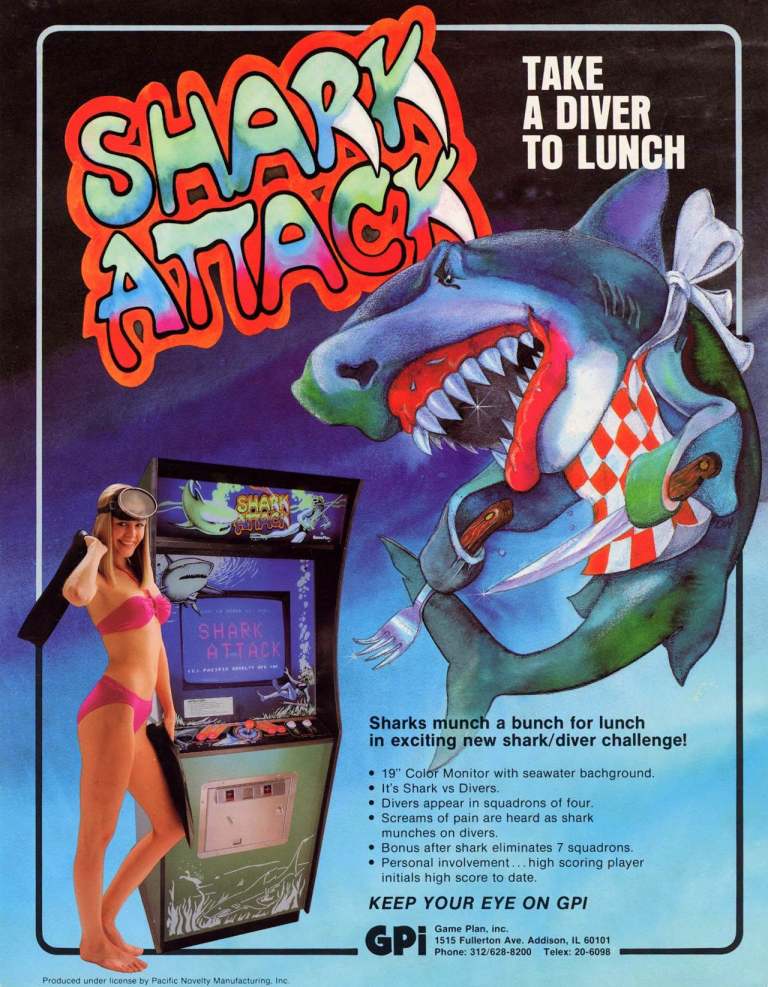
The front.
The rear.
Remember long ago when Steven Spielberg’s Jaws made some people afraid of sharks and the sea? Jaws was a massive blockbuster, and it was influential to the public. A few years later, Universal Pictures pushed through with Jaws 2 without Spielberg, and it also was a huge commercial hit. By the start of the 1980s, creature feature films inspired by Jaws were released and pop culture itself was influenced. In 1981, the obscure arcade outfit Pacific Novelty Manufacturing released their game Shark Attack in arcades. To promote the game, the company came up with an arcade flyer that had a comedic touch on the text descriptions while featuring a pretty blonde fashion model posing as the diver. The front of the flyer had the arcade cabinet, the model and an exaggerated artwork of a shark holding a knife and a fork. On the rear, the sexiness was ramped up with a shot of the model’s behind (plus more pictures of the model herself). This is indeed an amusing and funny arcade flyer.
3. Centipede North American Arcade Flyer
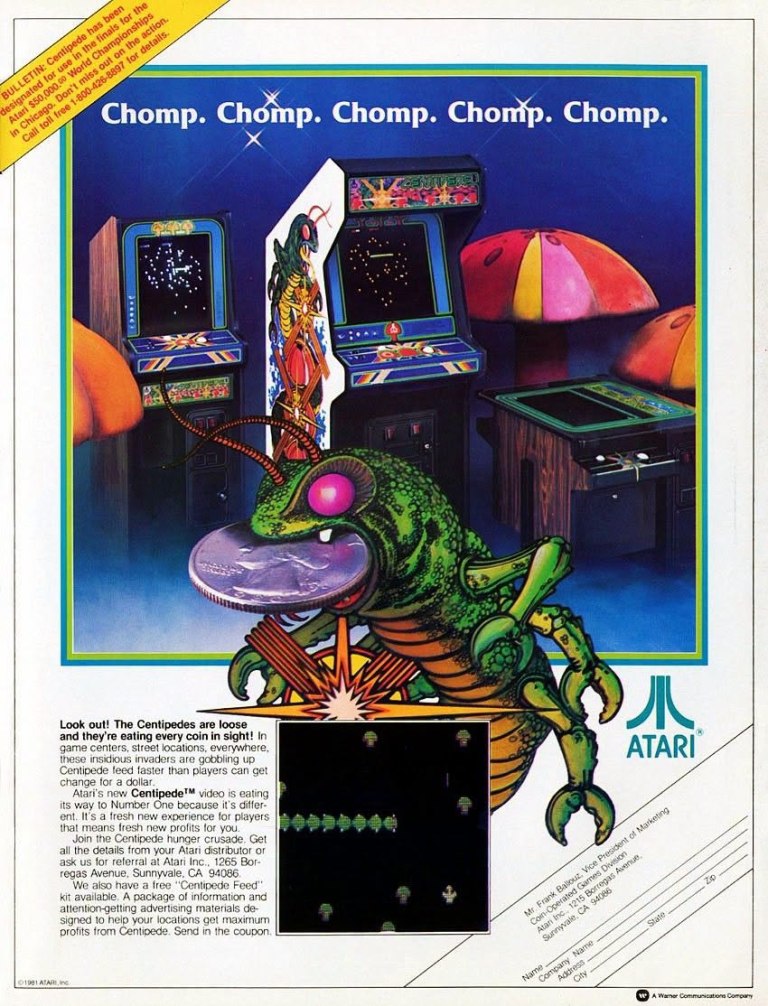
This was designed with arcade operators in mind.
When Atari released Centipede in arcades in 1981, it attracted a lot of gamers and became a huge commercial hit. Part of its success is linked with the strategic promotions Atari committed, and the above arcade flyer is one of the variants of Centipede flyers. The one above shows an illustrated centipede carrying a coin in its mouth and in the background are two different arcade cabinets plus a cocktail table machine (for those who want to play Centipede while sitting down). This particular arcade flyer of Centipede emphasizes the popularity of the game and there are different types of machines that arcade operators can choose from. At the same time, this old flyer remains amusing to look at.
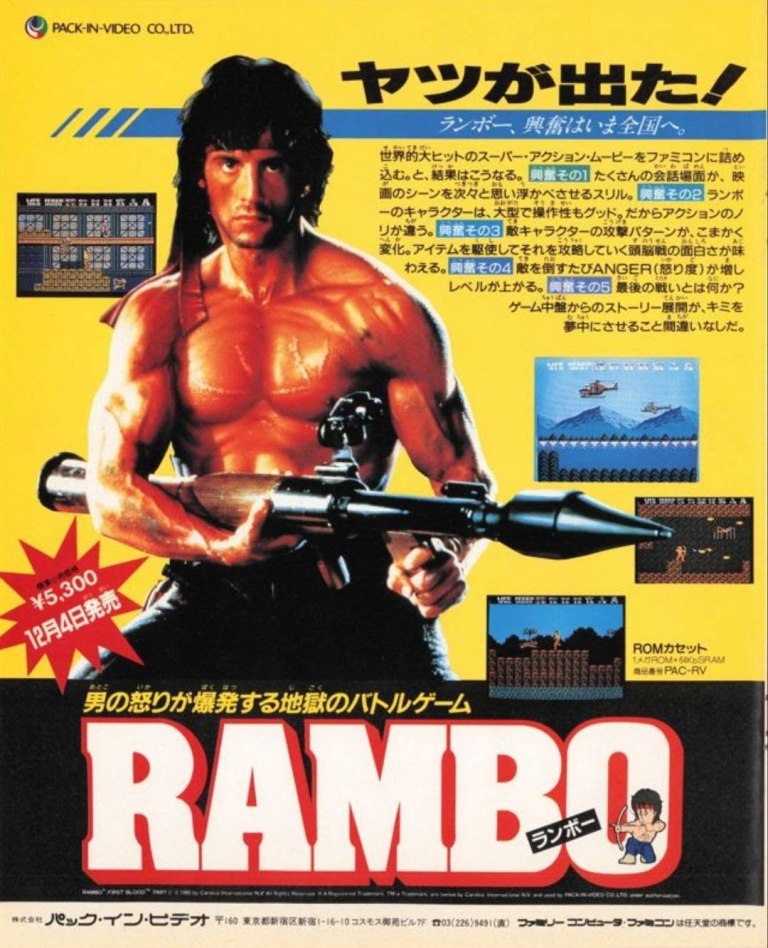
4. Rambo Famicom Japanese Print Ad
Using this iconic imagery of Sylvester Stallone as Rambo was a very smart move.
When it comes to Hollywood action movies of the 1980s, Sylvester Stallone was highly successful, and he impacted American pop culture with the Rocky and Rambo films. By 1985, Stallone struck gold with Rambo: First Blood Part II which made over $300 million worldwide. Considering the Cold War theme and ambitious action scenes of the movie, it was clear for Japanese game developer Pack-In-Video to make an official video game adaptation of Rambo: First Blood Part II for the Nintendo Family Computer (Famicom) in the form of a 2D side-scrolling adventure game. The said game was simply titled Rambo and to promote it, the company came up with the above Japanese print ad that had the iconic Rambo image of Stallone holding the rocket launcher, and a few screenshots of the game itself. If you look closely at the lower-right corner, you will see a cartoonish hand-drawn art of the Rambo character with a bow and arrow. Considering how very popular Stallone, his character and the movie were, it made a lot of sense to promote the Rambo Famicom game like this in Japan.
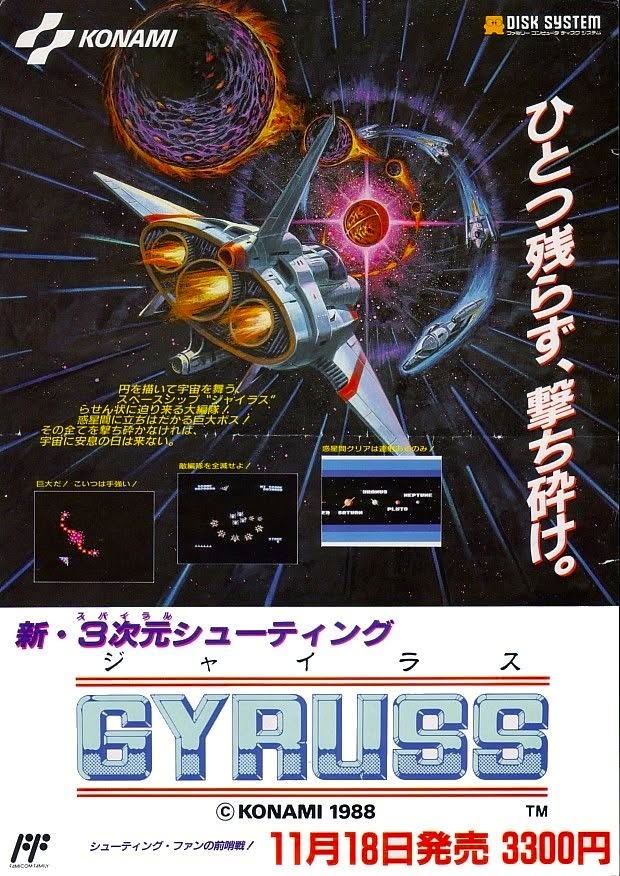
5. Gyruss Family Computer Disk System Japanese Print Ad
Gyruss was Konami’s first-ever game developed for the Famicom Disk System of Nintendo.
In 1983, Konami released Gyruss, a science fiction tube shooter designed by Yoshiko Okamoto. The game was a huge arcade hit and it really attracted a lot of players who enjoyed the unique game design and spaceship shooting. Konami licensed the game to a few companies which resulted in the creation and release of Gyruss ports for different consoles and home computer systems. In 1988, Konami released an enhanced Gyruss port for the Family Computer Disk System of Nintendo. To promote the Famicom Disk System port, Konami came up with a print ad that had a nicely detailed painted artwork of a spaceship (representing the player) about to hit incoming enemies deep in space, 3 screenshots and the official price and release date displayed. The artwork is still captivating to look at and the port itself features major overhauls that arguably made it better than the arcade original. Konami really went the extra mile for this Gyruss port.
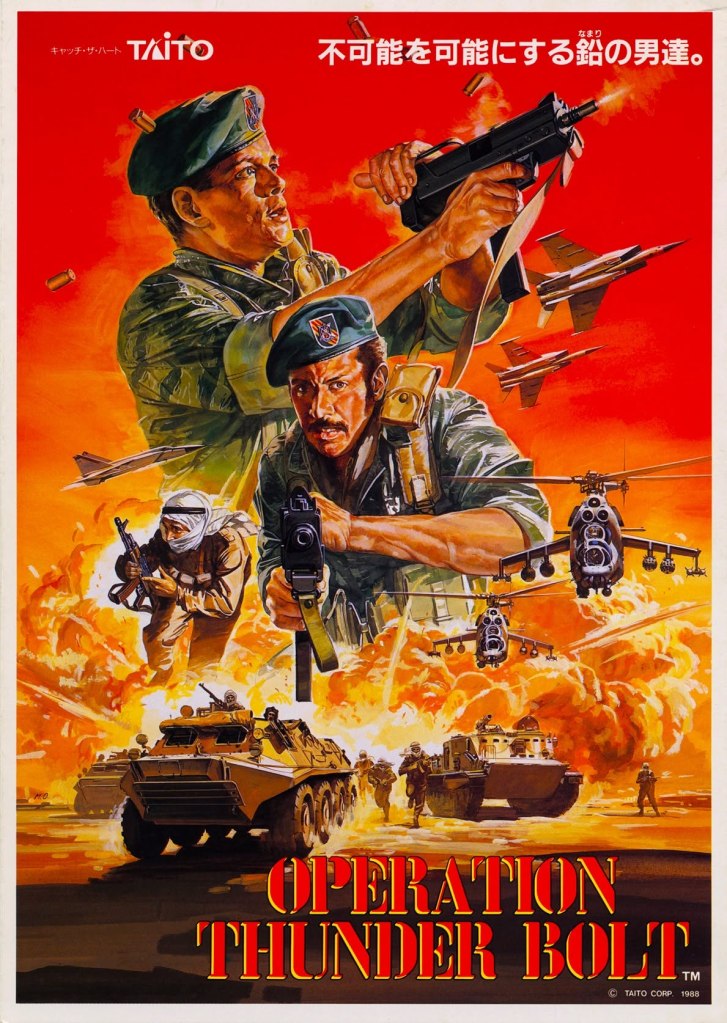
6. Operation Thunderbolt Japanese Arcade Flyer
Great looking artwork on the front.
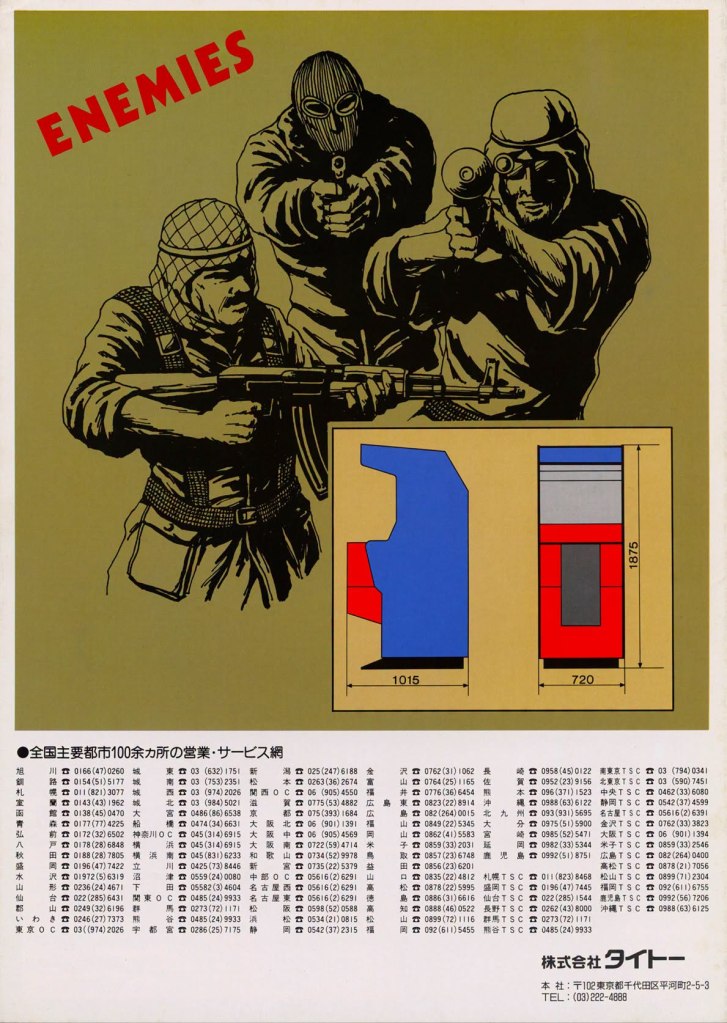
The rear.
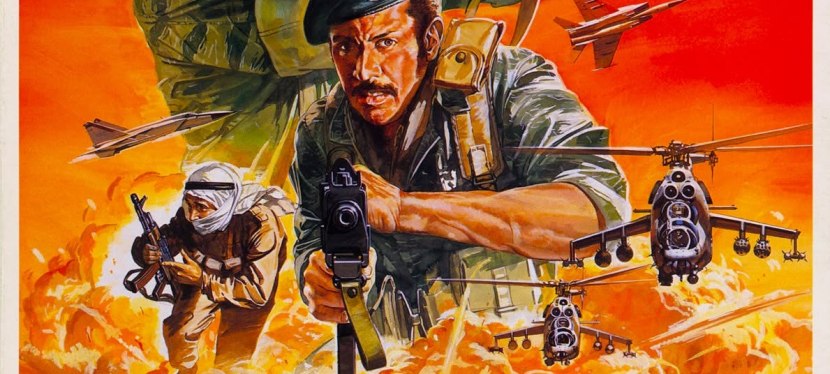
Following the huge success of Operation Wolf, Taito went on to make the sequel military shooter Operation Thunderbolt which was named after the 1977 movie that itself was based on the real-life Entebbe raid of 1976. To promote the game, the company came up with a pretty compelling arcade flyer for the Japanese market. The front has a detailed painted artwork that emphasizes the conflict between soldiers and Islamic terrorists in the Middle East. The rear has technical details of the arcade cabinet, several phone numbers and hand-drawn art of the terrorists (they easily remind me of Palestinian terrorists) clearly called the enemies. While the listing of phone numbers on the rear was very unusual, this old arcade flyer still looks great. Operation Thunderbolt went on to achieve huge commercial success in the arcades and later on consoles. It was one of the highest grossing arcade games in Japan in 1989.
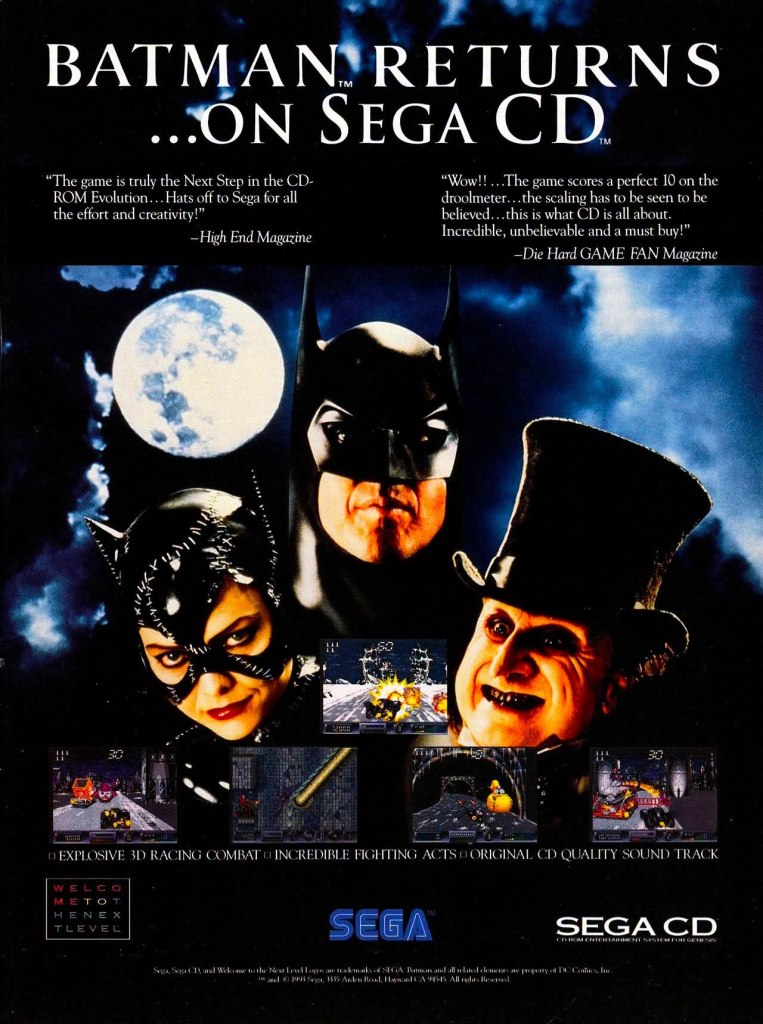
7. Batman Returns North American Print Ad
Sega’s clever print ad promoting the Sega CD game of Batman Returns.
Batman Returns was a big hit in cinemas in 1992 although it never came close to matching the success of its 1989 predecessor. When it comes to video games, Batman Returns was even more ambitious as there were different game adaptations on different platforms. For the Sega CD Batman Returns game, Sega came up with the above ad that strongly featured photos of Michael Keaton as Batman, Michelle Pfeiffer as Catwoman and Danny DeVito as the Penguin with a stylish dark background and four screenshots of the game. The line “Batman Returns…on Sega CD” was really catchy and ultimately the game itself was very notably an expanded version of the Sega Genesis version with selected video footage from the film. As Sega had the license to make Batman Returns games for its platforms, this print ad is absolutely an attention-grabber.
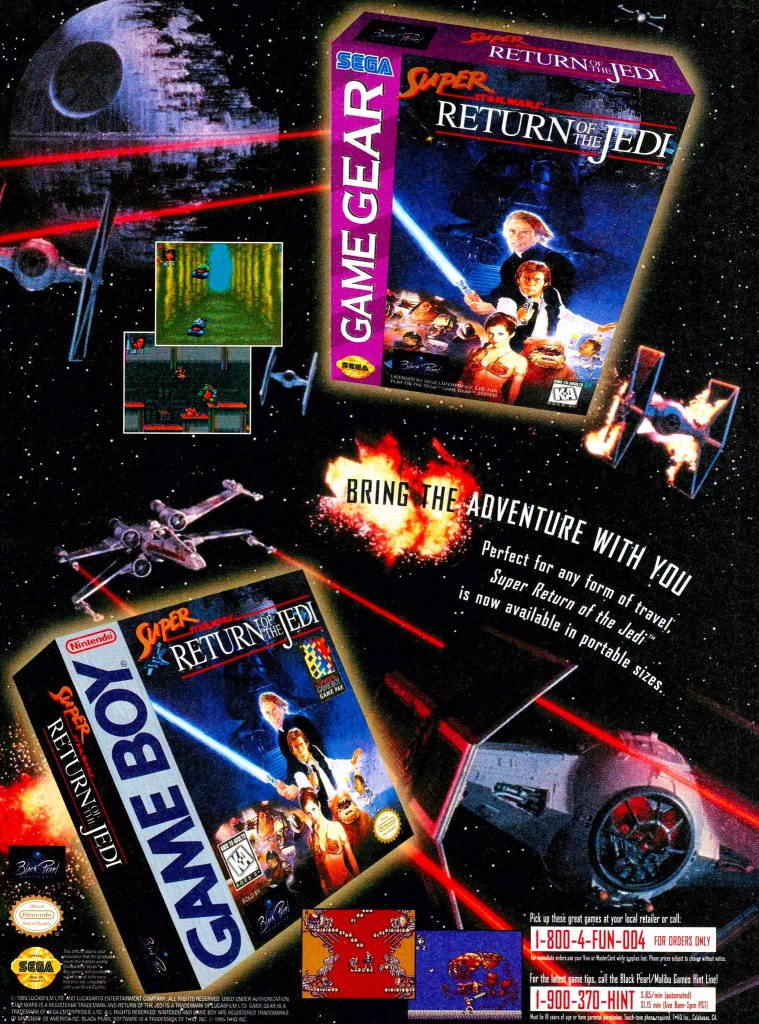
8. Super Star Wars: Return of the Jedi North American Print Ad
The Force is with the handheld gamers.
If there is anything notable about Star Wars in the 1990s, it is the fact that there is a lot of merchandise, comic books, video games, books and other licensed products released long after 1983’s Return of the Jedi which itself was perceived to be the last of the film franchise. In the mid-1990s, ports of Super Star Wars: Return of the Jedi were released on the competing handheld platforms Nintendo Game Boy and Sega Game Gear. This particular single-page ad has a nice visual design that captured the vibe of the movie (which I saw as a young boy in 1983) and it made handheld gaming look cool.
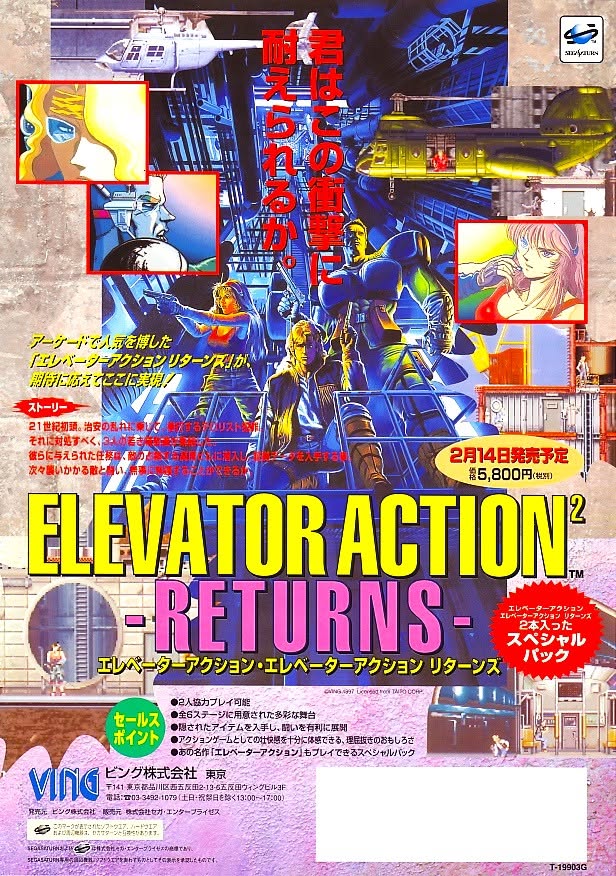
9. Elevator Action Returns Japanese Print Ad
Did you play Elevator Action Returns on the Sega Saturn?
In 1994, Taito struck gold with the release of Elevator Action Returns in Japanese arcades. The sequel was a big hit for the company and they eventually released a console port on the Sega Saturn only in Japan. For promotion, a print ad was made using the official painted artwork while also showing the screenshots and other details about it running on the Saturn (which itself was a powerful 2D sprite machine). Just looking at this old ad brings back the excitement of Elevator Action Returns and I now have a digital copy of it on my Xbox Series X.
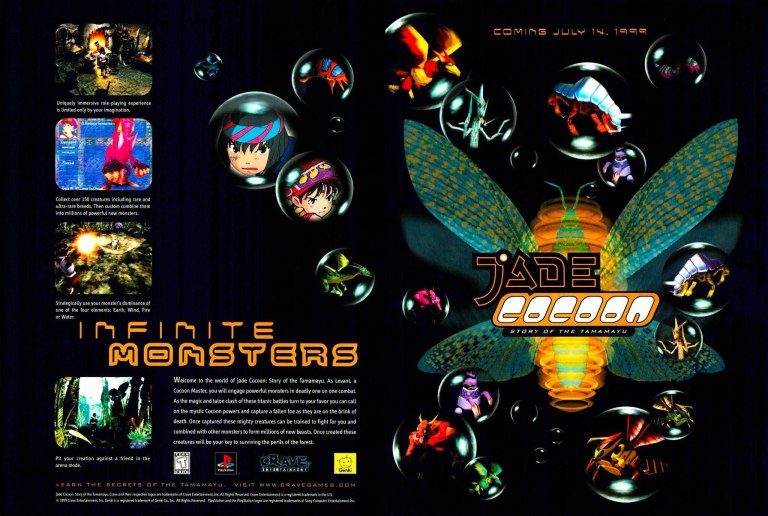
10. Jade Cocoon: Story of the Tamamayu North American Print Ad
A very ambitious print ad promoting Jade Cocoon in North America.
By the late 1990s, Japanese role-playing games (JRPG) really became popular on gaming consoles in America which arguably was the result of the massive global success of Final Fantasy VII. In 1999, there were a lot of JRPGs that got released on PlayStation and publisher Crave Entertainment literally pounced on American gamers’ interest on JRPGs by releasing Jade Cocoon: Story of the Tamamayu. Crave aggressively promoted the game and the result was this 2-page print ad that emphasized the game concept (developed by Genki), showed screenshots of the game, and displayed artworks that fans of Studio Ghibli anime productions can recognize. While Jade Cocoon: Story of the Tamamayu never became a massive commercial hit because of the low print run, there is no denying that its print ad was one of the most visually appealing ads of 1999. The ad alone made it look very ambitious.
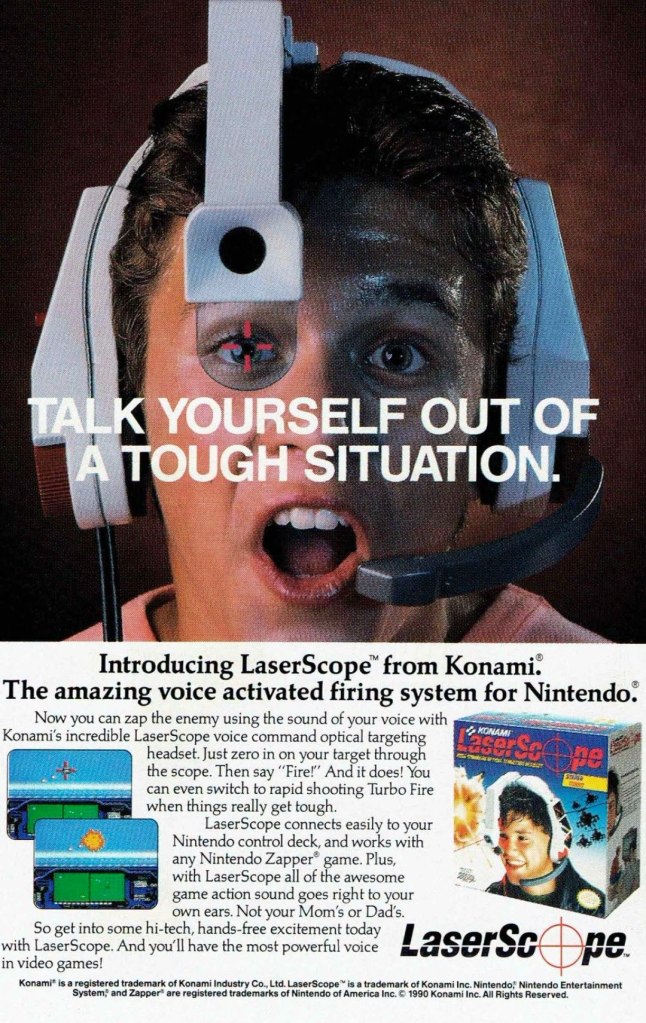
11. Konami LaserScope North American print ad
Did you get excited after seeing this Konami LaserScope print ad? Do you know anyone who bought the peripheral?
In 1990, this print ad of Konami’s LaserScope appeared in comic books and several other publications. The LaserScope was a gaming peripheral designed for use on the Nintendo Entertainment System (NES) complete with compatibility with existing games that were made to support the NES Zapper. The ad even boasted a voice-activated firing feature and a hands-free approach on playing NES games. While the ad boasted that players will have the most powerful voice in video games, the LaserScope itself was a very flawed and badly optimized device. Apart from having a built-in microphone that was oversensitive, tracking targets was a chore requiring constant head-turning which in turn made the gameplay experience very tiring and frustrating. This old ad promised a lot and the LaserScope was a catastrophe. When was the last time you bought hardware from Konami?
Disclaimer: This is my original work with details sourced from reading the comic book and doing personal research. Anyone who wants to use this article, in part or in whole, needs to secure first my permission and agree to cite me as the source and author. Let it be known that any unauthorized use of this article will constrain the author to pursue the remedies under R.A. No. 8293, the Revised Penal Code, and/or all applicable legal actions under the laws of the Philippines.
Welcome back, superhero enthusiasts, 1990s culture enthusiasts, X-Men fans and comic book collectors! Today we revisit the Marvel Comics shared universe through one of the many tales of the X-Men 2099 monthly series.
After 17 issues read, it is clear that the futuristic X-Men were destined to be separated from each other before getting back together against all odds. By having the team in disarray and the members separated with different situations that affected them, it provided the comic book creators opportunities to really develop each member extensively while expanding the lore of Marvel 2099 in creative ways. After seventeen issues, Skullfire has transformed into a more reasonable person who aligned himself with Shakti closely. Meanstreak meanwhile went to Las Vegas with Halloween Jack to do something that could alter the city seriously. Krystalin in California is on a quest to find her kidnapped brother.
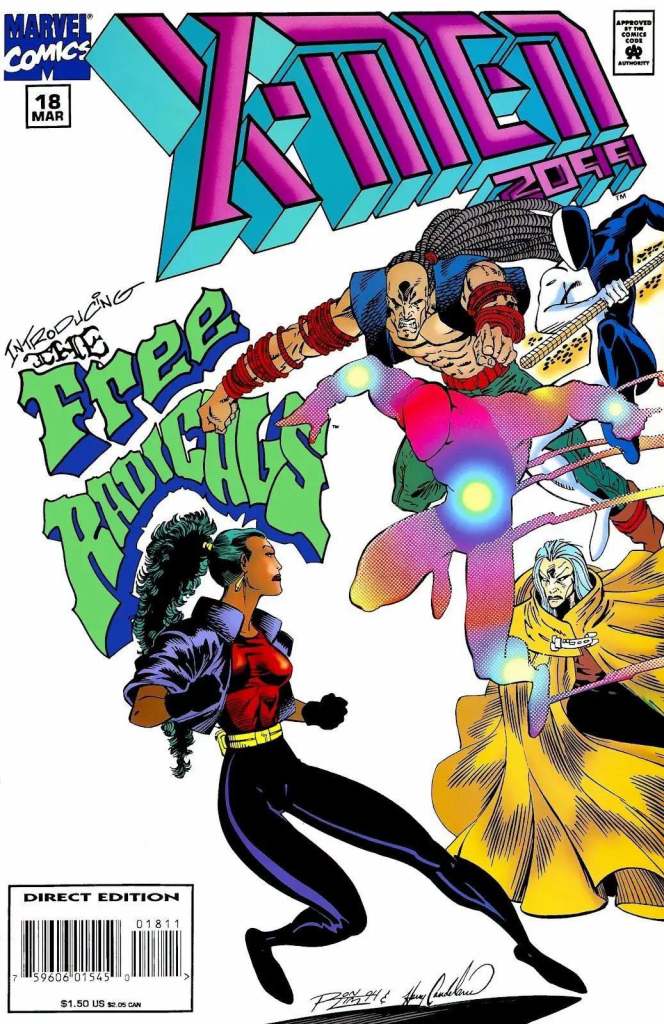
With those details laid down, here is a look back at X-Men 2099 #18, published by Marvel Comics in 1995 with a story written by John Francis Moore and drawn by Ron Lim.
The cover.
Early story
The story begins in Berkeley where Krystalin and her companion visit a ruined part of the city. She is told that it is best for them to turn around but Krystalin insists on finding the Free Radicals who are responsible for kidnapping her brother Zak. As they walk further, they both fall into a trap door only to find themselves in a very dark wind tunnel which caused their fall to slow down. After landing on the floor, gas is suddenly pumped on them. A very bright light followed which disoriented them both. A man and woman appear to take them in. Krystalin decides to fight and find her brother.
Meanwhile in the mountains of New Mexico, three intruders appeared inside a secret laboratory while Shakti struggles to sleep. The intruders analyze Zhao’s attempt to make analogs of the original 20th century X-Men members which ended in failure. One of them thinks that Shakti has finally halted and reversed the deterioration. Using technology, they have the three fossilized bodies teleported to the Theater of Pain.
Shakti, who has been unable to sleep, senses the presence of a mutant inside the laboratory…
Quality
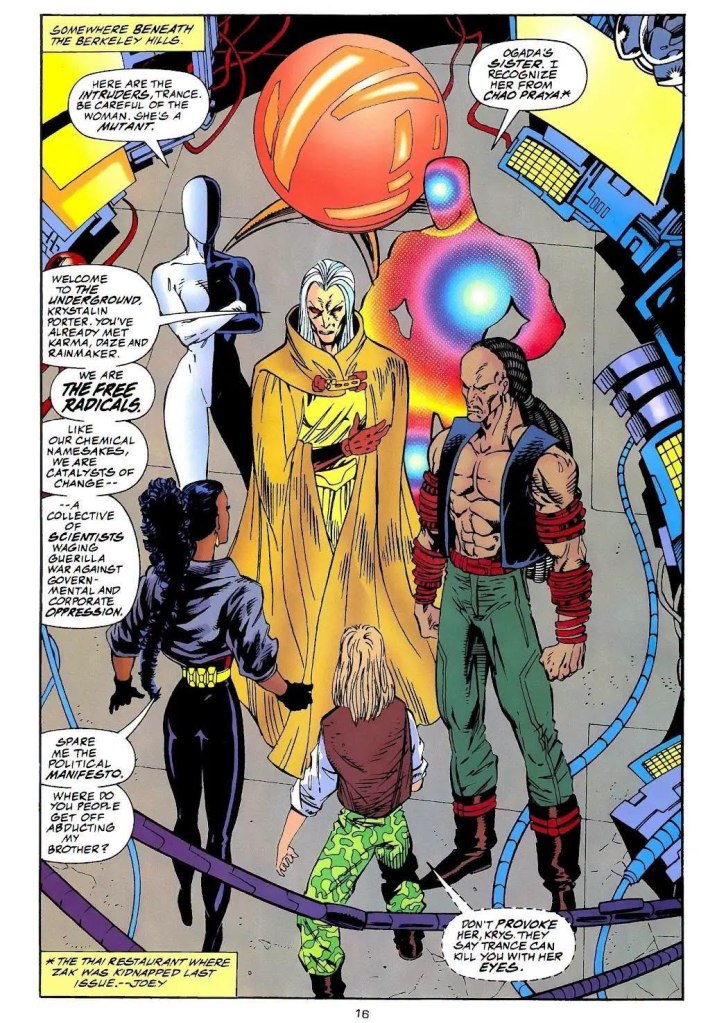
Krystalin and her companion meet the Free Radicals, a group of dangerous freaks.
As expected, this comic book continues the tales of the previous issue, specifically Krystalin’s quest and Halloween Jack’s takeover of Las Vegas. Things, however, turned for the weird and the wild.
Krystalin’s quest for her kidnapped brother Zack led her to facing off with the Free Radicals, a group of freaks composed of scientists who have been waging guerilla war against governmental and corporate oppression. Elements of politics were mixed into the narrative of Krystalin’s tale as it brings back memories of radicalized groups in America who engaged in crime, political activism and terrorism during the rule of President Richard Nixon (for insight, click here). As expected, Krystalin finds herself on a huge disadvantage and her will to get her brother (a highly prominent part of the Panthers) back really got tested here.
As for the other important tale, Halloween Jack (assisted by Meanstreak) pushed forward with his insane intention to take over the Synge casino and bring down the syndicate while Desdemona Synge is helpless. This tale easily reminds me of the Las Vegas legacy of crime, particularly with the establishment of businesses owned by gangsters many decades ago. As Marvel 2099 has a strong anti-corporate message (which confirms the Leftist bias and philosophies with Marvel Comics and creators during the 1990s), the boundary that separated good and evil got blurred away in this tale. While Halloween Jack believes he is doing something good and significant by bringing down the Synge empire and changing Las Vegas, he does not realize he himself is evil and is executing a plan of one evil force replacing the current evil force. This should remind you about the Black Panthers, the Palestinian terrorists, the Black Lives Matter (BLM) movement and other wicked forces of the world who see themselves as liberators and went to the extremes with violence and coercion.
Along the way, Meanstreak assists Halloween Jack without any hesitation which made him a pawn of evil. As such, Meanstreak’s character and moral standing got compromised a lot which makes his membership of the X-Men questionable.
Indeed, there is a lot of symbolism in the tales of Krystalin and Halloween Jack here and the undeniable thing is that John Francis Moore implemented a good amount of depth within.
Conclusion
Shakti, who has the ability to sense the presence of mutants, encounters the intruder.
X-Men 2099 #18 (1995) is clearly an attempt to shake the foundation of the series itself. Las Vegas has always been a key location since the beginning, and the Synge empire was the original enemy of the futuristic X-Men. Even as the mentioned two tales resulted in the weird and the wild, the creators succeeded in ensuring a cohesive read.
It is official! The United States has officially sanctioned the Palestinian Authority (PA) and members of the Palestine Liberation Organization (PLO) for failing to live up to their commitments as described in two historical commitment acts from 1989 and 2002, the US State Department announced.
As such, the so-called PA president Mahmoud Abbas has been denied an entry visa to the US ahead of the General Assembly of the wicked United Nations (UN). Be aware that the Palestinian Authority is guilty of paying terrorists and actually commits apartheid.
To put things in perspective, posted below is the entire announcement of the State Department. Some parts in boldface…
The State Department has reported to Congress that the Palestine Liberation Organization (PLO) and Palestinian Authority (PA) have, once again, failed to live up to their commitments as described in the PLO Commitments Compliance Act of 1989 (PLOCCA) and the Middle East Peace Commitments Act of 2002 (MEPCA). This includes initiating and supporting actions at international organizations that undermine and contradict prior commitments in support of Security Council Resolution 242 and 338, taking actions to internationalize the Israeli-Palestinian Conflict including through the International Criminal Court (ICC) and International Court of Justice (ICJ), seeking to bypass negotiations through seeking unilateral recognition, and continuing to pay stipends to terrorists and to glorify acts of terrorism and terrorists in public pronouncements and school textbooks.
As a consequence of their failure to reform, contrary to their commitments to the United States, and their ongoing activities that undermine the prospects for peace, the United States will extend sanctions that deny visas to PLO members and PA officials in accordance with section 604(a)(1) of the MEPCA. The Department has maintained the standing waiver for personnel notified to the PLO Observer Mission to the United Nations as was the case in the Department’s prior determinations. It is in our national interest to impose consequences and hold the PLO and PA accountable for glorifying terrorism.
Let me end this piece by asking you readers: What is your reaction to this development? Do you think this latest move by the United States will impact the PA, the PLO and their international partners significantly? Do you think the other nations that took sides with the Palestinians and normalized themselves with Islamic terrorists will think twice about how they do diplomacy? Are you convinced that the Palestinians have a religious and ethnic commitment to terrorism?
For some time now, I have been monitoring the criminal acts committed by people who are present in different countries as foreigners. Here in the Philippines, a Palestinian man was arrested in Quezon City for stealing a bag containing a lot of cash from the café of a hotel, according to a news report by the Manila Bulletin.
As it turns out, the Palestinian already has a history of committing other forms of crime. Could it be possible that, apart from violence and terrorism, theft and an obsession of committing crime are parts of the Palestinian nature?
To put things in perspective, posted below is an excerpt from the Manila Bulletin news report. Some parts in boldface…
A 36-year-old Palestinian man was arrested after allegedly taking a money bag containing P5,020 and an empty cash box from a hotel café on Timog Avenue in Barangay South Triangle, Quezon City, at around 11:06 p.m. on Thursday, July 23.
The suspect, identified as “Ham,” was intercepted by hotel security personnel at the establishment’s exit after the incident was detected through the hotel’s CCTV monitoring system.
Initial investigation showed that the suspect entered the café and allegedly took the money bag and empty cash box without the knowledge or consent of the 24-year-old male cashier.
Recovered from the suspect were P5,020 in various peso bills and coins, the cash bag, the empty cash box, and a backpack.
Personnel of Kamuning Police Station (PS 10) later responded and took custody of the suspect from the hotel security personnel.
Further verification showed that the suspect had previous criminal records for estafa, unjust vexation, resistance and disobedience to a person in authority, use of a fictitious name, and concealing his true name in October 2025, as well as theft in May 2026.
Let me end this post by asking you readers: What is your reaction to this recent development? Are there a lot of Palestinians living in your local community right now? Are you aware of the fact that a lot of Palestinians follow Islamic terrorists as their leaders? How many Palestinians do you think are present all over the Philippines today? Did you notice an increase of the number of foreign Islamists in your local community over the past twelve months? Do you think the national government is secretly allowing Palestinians to enter the Philippines as high-priority refugees with immigration in mind?
Thank you for reading. If you find this article engaging, please click the like button below, share this article to others and also please consider making a donation to support my publishing. If you are looking for a copywriter to create content for your special project or business, check out my services and my portfolio. Feel free to contact me with a private message. Also please feel free to visit my Facebook page Author Carlo Carrasco and follow me on Twitter at @CarloCarrascoPH as well as on Tumblr at https://carlocarrasco.tumblr.com/and on Instagram athttps://www.instagram.com/authorcarlocarrasco
As a long-time Xbox fan and owner of three Xbox game consoles, I can say that this current console generation has been disappointing and the current state of Xbox gaming is a huge letdown.
With the approval of Microsoft’s leadership, Team Xbox acquired a lot of game companies that include the giants Activision-Blizzard-King (ABK) and Bethesda, going right down to the smaller game studios. Those were acquired with the promise of new and exciting games that would make Xbox gaming really great in the form of exclusive games, new content for Game Pass subscribers and more.
Sadly, things turned out really disappointing and now the new Xbox head Asha Sharma has the tremendous challenge of making drastic reforms, downsizing and correcting the cases of mismanagement by the previous leadership. That said, she declared a hard reset of the Xbox business and the changes are being implemented already.
To put things in perspective, posted below is an excerpt from the Xbox announcement focused on Asha Sharma’s message to the entire team. Some parts in boldface…
We are beginning the most significant restructure in XBOX history. After careful consideration, I’ve made the difficult decision to reduce our team by approximately 3,200 throughout FY27. This will include approximately 1,600 role eliminations today, and in addition, four studios will leave XBOX to new management. I recognize that a year-long restructuring creates additional challenges. Unfortunately, it is not possible to make all the necessary changes in a single day, and I wanted to be direct about the scale.
I know this is painful. These changes will directly affect people who have poured their creativity into building XBOX. Many joined us through acquisitions, while others were recruited here, or sought us out because they loved this industry and loved XBOX. Today’s decisions do not reflect their talent or dedication.
Our business today is not healthy. We are operating at margins that are 3-10x lower than comparable platform and publishing businesses. We entered Gen 9 with a smaller install base and a higher cost structure. To grow, we bet on Game Pass, multi-platform, and a broader portfolio of content. While those businesses have created meaningful value, they did not grow at the pace we expected. As that happened, our core business weakened, and we added more teams, more investment, and more time, hoping for a better outcome. And now the industry is facing the most severe hardware crisis in its history. We must reset XBOX.
First, we will reset our content portfolio.
Since 2018, we have aggressively expanded our studio portfolio while the number of games created each month across the industry now outpaces the last ten years combined. We now find ourselves competing not only with the largest publishers, but also with smaller independent studios. It is neither possible nor desirable to own every great independent studio. We have also learned that we are not the best home for every type of studio; in a typical year, we lost 64 cents for every dollar we invested. As we reset XBOX, we will help independent creators succeed by providing open development tools and audiences to realize their vision.
Compulsion Games and Double Fine Productions will return to management and transition to independent studios with their IP, catalog, and runway for their next games. Ninja Theory and Undead Labs have entered terms to join new ownership with funding to complete and grow Senua and State of Decay 3. In France, Arkane’s management is beginning required consultation with its Works Council to review potential strategic options.
We are also making reductions across other units, and in some cases, shifting investment to focus on higher priority projects. These changes vary in size across Activision, Bethesda/ZeniMax, Blizzard, King, Mojang, and XBOX Game Studios. None of our first party publicly announced games or projects are being cancelled as part of these reductions.
In addition, Mojang and King will now report directly to me. These two studios have increasingly become platforms and are our largest by monthly active players. They bring critical geographic, demographic, and differentiation to XBOX.
Second, we will reset our platform.
We know that great technology gets better when it gets simpler, not bigger. Today, in some parts of the company, work passes through as many as 14 layers of management. Our platform teams are 40% larger than they were at the start of this generation, even as our player base and playtime have declined. That complexity has slowed decisions, blurred accountability, and made it harder to deliver for players. As we reset XBOX, we will simplify.
We will reduce management layers to no more than 5, and where possible, 3. We will deliver success through a flatter organization that is built around makers (individual contributors focused on building), player-coaches (leaders who remain deeply involved in the work while developing their teams), and directly responsible individuals (DRIs) who own key decisions and outcomes. And we will streamline how we work across our tools, with a cleaner code base, shared services, and 50% reduced vendor spend.
Third, we are resetting how we operate.
As XBOX grew our headcount, we became more fragmented. Teams, studios, and functions often operate independently, and it became harder to work towards a shared goal, make the right tradeoffs, and get things done.
For the first time, we are establishing a Chief Operating Officer with end-to-end P&L responsibility across content, hardware, platform, and services. Helen Chiang has been promoted to this role and will report directly to me. Over nearly two decades at XBOX, Helen has helped build some of our most important businesses, from XBOX Live to leading Mojang and the Minecraft franchise. She will bring our businesses together under one operating model, making sure we make clear investment decisions, learn from our successes and failures, and hold ourselves accountable for results.
Thank you, Dave McCarthy, who is retiring after 17 years with XBOX. Dave has played a defining role in building the platform that millions of players rely on every day and has been a trusted partner through many of the biggest moments in XBOX’s history. We wish him all the best.
These changes are about a bigger future for XBOX, not a smaller one. The next decade of gaming will be larger, more global, and more creative than anything we’ve seen before. This year, we’ll invest as much in XBOX as we ever have, but we’ll invest with greater focus, greater discipline, and greater clarity, all in service of making XBOX where the world plays and creates.
I want XBOX to be one of the few companies that entertains more than a billion people each day and gives everyone the opportunity to create and connect.
Indeed, the Xbox business model deteriorated financially and became much harder to manage. The billions of Dollars spent on Xbox gaming over the past several years did not result in the great gaming experiences for fans and gamers, nor did it compel the Xbox game studios to become productive and disciplined.
First-party games of Xbox in the generation of Xbox Series X and Xbox Series S have been lackluster in quality and enjoyment overall. I played Starfield a lot on my Xbox Series X via Xbox Game Pass and my enjoyment of it has been limited compared with other games of Bethesda. Senua’s Saga: Hellblade II was fun at first but it ended up being hollow. As the said Ninja Theory-developed game lacked depth with its gameplay and game design, I never bothered to replay it after finishing it. Obsidian Entertainment, a company that specialized in making role-playing games (RPGs), produced new RPGs under the Xbox umbrella but none of them were great. In fact, Avowed and The Outer Worlds 2 ended up as commercial failures.
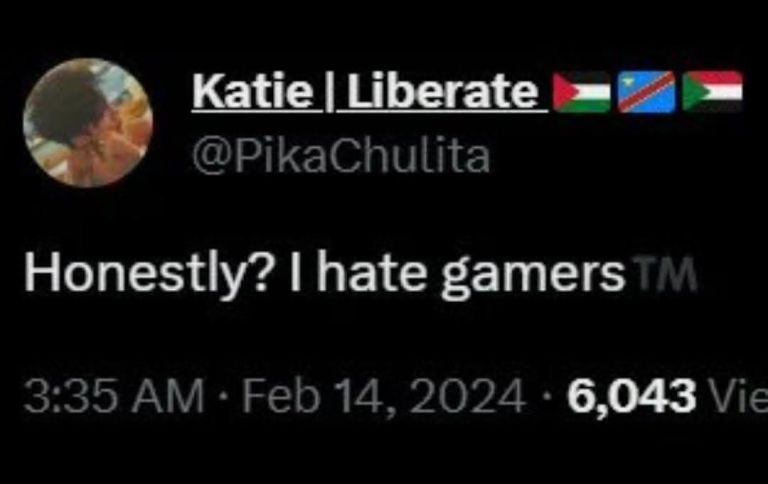
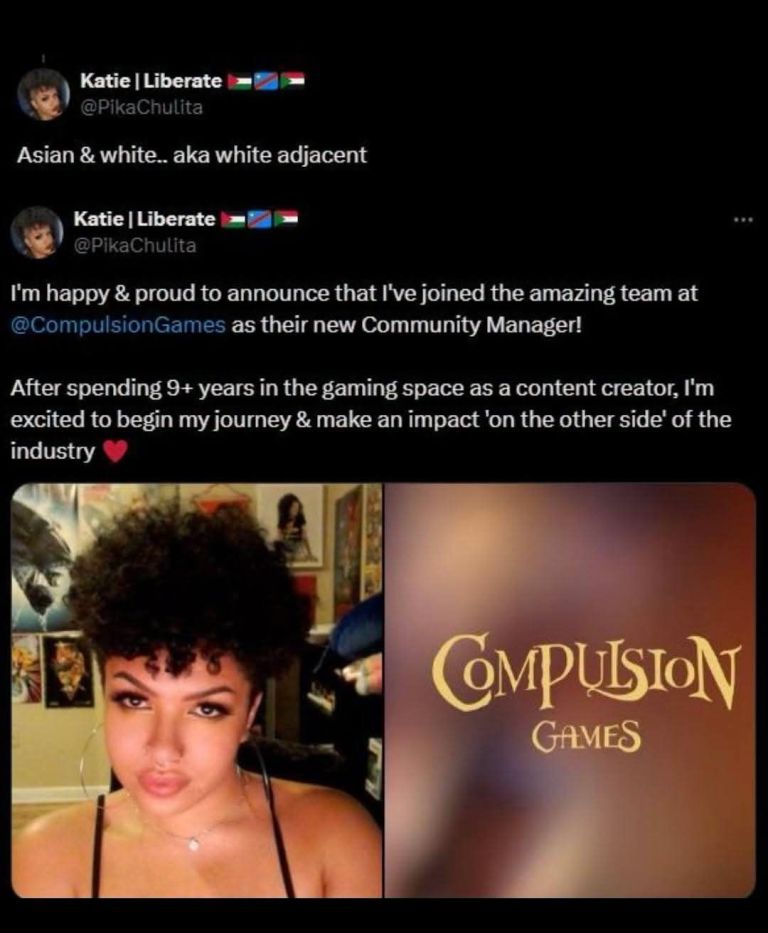
Going back to Asha Sharma’s message, I can say that letting go of Compulsion Games and Double Fine Productions was the right move as the huge amount of money Team Xbox spent of them did not result in great games. Compulsion Games’ South of Midnight was a $100,000,000 production that ended up with sales of way below one million copies. More notably, Compulsion Games has a discriminating woke and hateful community manager who goes by the handle @PikaChulita. Look at the captured evidence below.
The community manager of Compulsion Games openly hates gamers.
Look at the details very closely.
Speaking of wokeness and discrimination, the controversial Matt Hansen has been laid off from Obsidian Entertainment. Hansen was heavily involved in the huge disappointment called Avowed. That being said, Team Xbox should really REMOVE all the untalented woke activists among its many game developers. Those activists – the feminists, the LGBTQ mob, the Islamists, the Black Lives Matter zealots and others –do not care about making great games at all and they have been misusing Microsoft’s money to turn new Xbox games into vehicles of Leftist/woke/socialist propaganda. Xbox should also cut off any ties with the super woke Sweet Baby Inc.
When it comes to the larger entities like Activision, Bethesda/ZeniMax, Blizzard, King and Mojang, the layoffs are painful but it makes sense to shift investment to focus on higher priority projects. Activision should regain focus on ensuring quality and great fun with its continued productions of Call of Duty (COD) games. Bethesda has to deliver new Fallout and The Elder Scrolls games faster and with the highest quality possible.
With the way things are right now, I am not certain if I will pursue the next-generation Xbox console called “Project Helix”. Memory has gotten much more expensive in recent times due to extremely high demand from artificial intelligence (AI) data centers and the memory manufacturers’ deals with AI companies. How much memory could the next-generation Xbox have and could its retail price exceed $1,000 at launch?
Indeed, the future of Xbox gaming is really clouded and I can only hope that the hard reset of the Xbox business under Asha Sharma will create positive changes and results. To say the least, the reforms have started and only time will tell what will happen next.
In ending this blog post, posted below are selected YouTube videos about the state of Xbox for your enlightenment.
To put things in perspective, posted below is an excerpt from the GMA News report. Some parts in boldface…
The Philippines failed in its bid to attain a seat in the United Nations Security Council (UNSC) as a non-permanent member.
Zimbabwe, Austria, Portugal, Trinidad and Tobago, and Kyrgyzstan were named new members of the UNSC, which can issue legally binding resolutions that may include military action, economic sanctions, and deployment of peacekeeping operations.
A fourth round of votes was cast for UNSC members to choose between the Philippines and Kyrgyzstan, in the Asia-Pacific Group, after they failed to reach the required two-thirds of the majority.
Kyrgyzstan eventually achieving the necessary two-thirds majority and securing its first-ever Security Council seat by 142 votes to 49.
The remaining 10 members are elected, with five new members joining every year. This year, one comes from the Africa Group, one from the Latin American and Caribbean Group, one from the Asia-Pacific Group, and two from the Western European and Others Group.
Zimbabwe will replace Somalia and Trinidad and Tobago will replace Panama, while Portugal and Austria will replace Denmark and Greece. Kyrgyzstan will replace Pakistan.
Bahrain, Colombia, Democratic Republic of Congo, Latvia and Liberia will continue to serve as non-permanent members of the Security Council until the end of 2027.
The Permanent Members are: China, France, Russia, the United Kingdom, and the United States.
The rest of the non-permanent members are: Bahrain, Colombia, Democratic Republic of the Congo, Latvia, and Liberia.
Last March, President Ferdinand Marcos Jr. made a personal pitch for the Philippines’ candidacy for a non-permanent seat on the United Nations (UN) Security Council, saying the country is ready to contribute as a voice of balance among the world’s nations and as a “voice for principled peace.”
Marcos Jr. expressed confidence that the Philippines has an advantage in its bid for a non-permanent seat on the United Nations Security Council.
The loss at the UN is the latest setback for the Philippines and 2026 has been a pretty bad year so far. Apart from diplomacy, the Philippines is experiencing weakening economic growth, rapid inflation and it remains very vulnerable on energy as it imports most of its oil from the Middle East. The warning signs about the national economy are only growing.
Let me end this post by asking you readers: What is your reaction to this recent development? Do you consider the Philippines a highly credible participant in international affairs? Do you think the Philippines deserves a seat at the United Nations Security Council under the current administration?
Thank you for reading. If you find this article engaging, please click the like button below, share this article to others and also please consider making a donation to support my publishing. If you are looking for a copywriter to create content for your special project or business, check out my services and my portfolio. Feel free to contact me with a private message. Also please feel free to visit my Facebook page Author Carlo Carrasco and follow me on Twitter at @CarloCarrascoPH as well as on Tumblr at https://carlocarrasco.tumblr.com/and on Instagram athttps://www.instagram.com/authorcarlocarrasco
During the morning yesterday, Philippine President Ferdinand “Bongbong” Marcos received a telephone call from United States Secretary of State Marco Rubio and they discussed security and economic priorities, according to a news report by the Manila Bulletin. Rubio reaffirmed America’s commitment to peace and stability in the South China Sea and the Luzon Economic Corridor (for references, click here and here).
To put things in perspective, posted below is the excerpt from the Manila Bulletin report. Some parts in boldface…
President Marcos and United States Secretary of State Marco Rubio discussed bilateral security and economic priorities, including developments in the South China Sea and regional energy concerns, during a phone call on Monday morning, June 1.
In a Facebook post, President Marcos described his phone call with Rubio as “productive.”
“I had a productive phone call with US Secretary of State Marco Rubio this morning, during which we discussed critical regional and economic priorities, and bilateral trade matters,” he said.
“Our exchange underscored our countries’ mutual commitment to strengthening the PH-US alliance and addressing shared regional interests,” he added.
Details of the conversation were first released by the US State Department through a readout attributed to spokesperson Thomas Pigott.
“Secretary of State Marco Rubio spoke today with Philippine President Ferdinand Marcos, Jr. to discuss a range of bilateral economic and security priorities, including efforts to advance peace and security in the South China Sea,” the statement read.
According to the US State Department, Rubio also reaffirmed Washington’s commitment to the Luzon Economic Corridor — a trilateral initiative involving the Philippines, the US, and Japan aimed at accelerating infrastructure and investment projects in Luzon.
“The Secretary reaffirmed US commitment to developing the Luzon Economic Corridor and exploring ways to address the energy challenges in the region,” the statement added.
Rubio also underscored the strength of the long-standing alliance between Manila and Washington.
“The Secretary emphasized the strength of the United States-Philippines Alliance and the continued close cooperation as the two countries commemorate 80 years of diplomatic relations and 75 years as Allies in 2026, the US readout stated.
The Philippines and the United States are treaty allies under the 1951 Mutual Defense Treaty and have expanded defense cooperation in recent years amid growing tensions in the South China Sea.
Let me end this piece by asking you readers: What is your reaction to this development? Do you think the current state of ties between America and the Philippines will eventually get stronger soon? Do you think the anticipated economic benefits of Pax Silica and the Luzon Economic Corridor will be realized before the end of President Marcos’ term? Do you think the Philippines will have to drop whatever agreements it recently made with America’s enemies such as Communist China, the Palestinian terrorists and the Islamic terrorist regime of Iran?
For the first time since the United States and Israel started their joint military operations against the Islamic terrorist regime of Iran, a tanker carrying American oil arrived in Japan, according to a news report by Kyodo News.
It should be noted that Japan imports over 90% of oil from the Middle East and the government also released some of its oil reserves. As such, importing oil from other destinations is crucial for the Japanese. US President Donald Trump already told the international community to buy oil from America.
To put things in perspective, posted below is an excerpt from the Kyodo News report. Some parts in boldface…
A tanker carrying U.S. oil arrived in Japan on Sunday, marking the first such shipment from the United States since the Iran war began in late February.
According to Cosmo Energy Holdings Co. that procured the crude oil from the United States, the tanker, which arrived in Tokyo Bay, transported 145,000 kiloliters, equivalent to half a day of domestic consumption.
The U.S.-Israeli conflict with Iran has led to the effective closure of the Strait of Hormuz, a key artery for global energy shipments. Japan relies on the Middle East for more than 90 percent of its crude oil imports, most of which pass through the strait.
The tanker departed Texas on March 22 and transited the Panama Canal, which can accommodate smaller vessels.
The Japanese government and oil wholesalers have been trying to secure oil from alternative routes to bypass the Strait of Hormuz.
Let me end this piece by asking you readers: What is your reaction to this development? Do you think this development is the first of what could be many oil shipments from America coming to Japan?