Retro Gaming Ads Blast – Part 47

Welcome back readers, fellow geeks and electronic gaming fans!

In this edition of the Retro Gaming Ads Blast (RGAB) series, we will take a look at another batch of retro gaming print ads from the 1980s to the 1990s.

For the newcomers reading this, Retro Gaming Ads Blast (RGAB) looks back at the many print ads of games (console, arcade, computer and handheld) that were published in comic books, magazines, flyers, posters and newspapers long before smartphones, social media, the worldwide web and streaming became popular. To put things in perspective, people back in the 1980s to the 1990s were more trusting of print media for information and images about electronic games and related products.

With those details laid down, here is the newest batch of retro gaming print ads for you to see and enjoy…

1. Atari Console and Games Print Ad
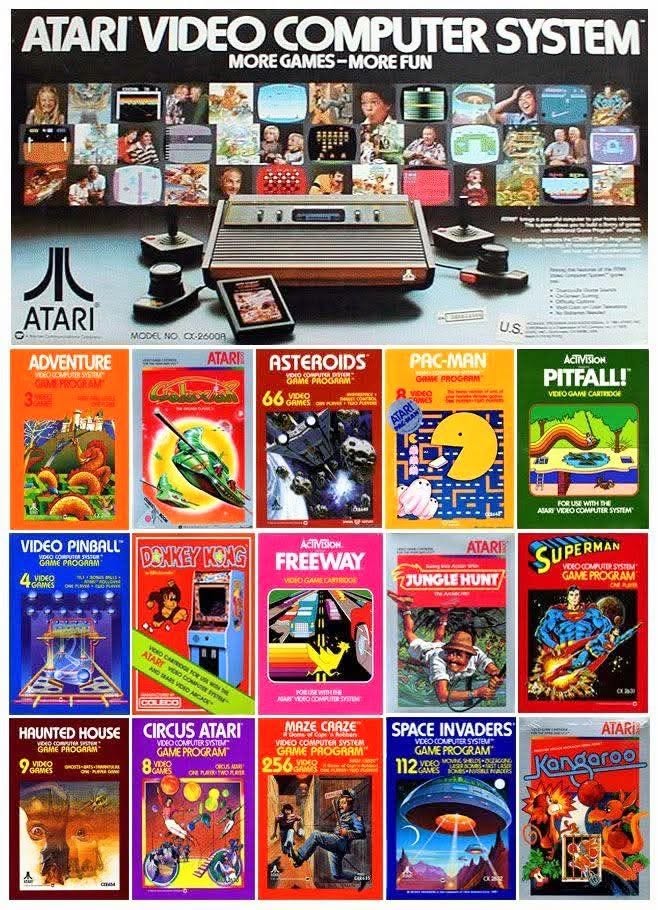
Atari video game console advertisement featuring various game titles and cover art.
Back in the 1980s, this was simple and yet exciting to look at.

Back in the 1980s, the styles of video game advertising were very different. Back then, Atari was the market leader on console gaming with the Atari 2600 and they had a lot of video games made for it. As such, the above print ad showing the console and the video games (with the front covers of the game boxes) was typical of the era and it was captivating to look at. By today’s standards, the ad looks simple but it still has the appeal to lure gamers.

2. Shark Attack North American Arcade Flyer
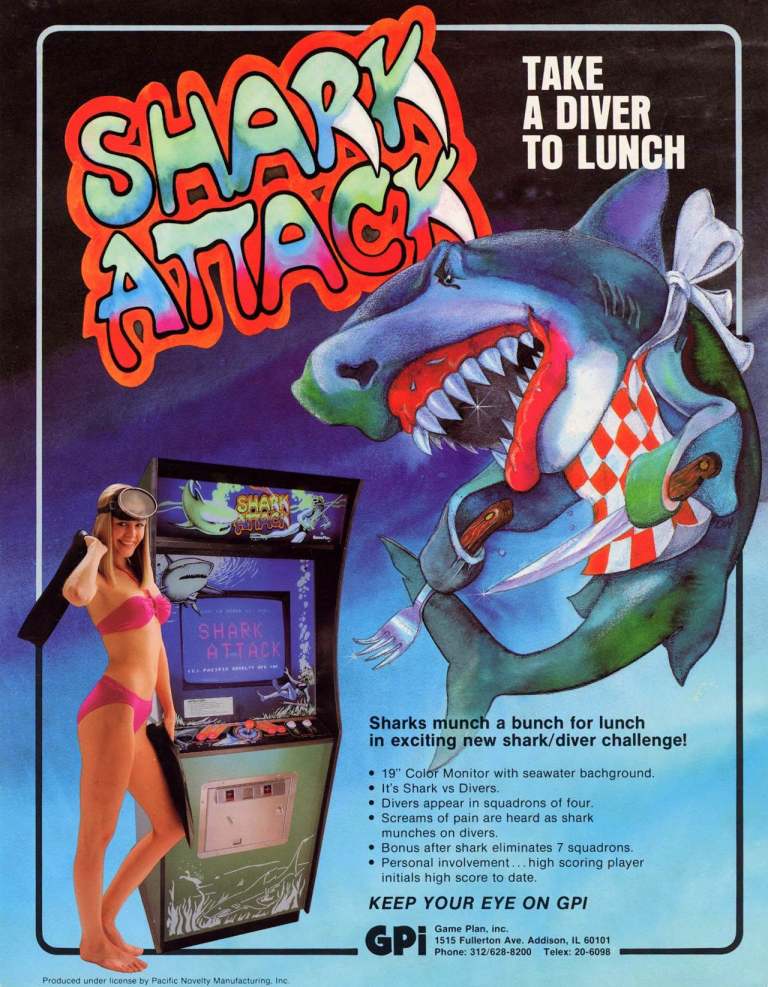
An advertisement for the arcade game 'Shark Attack', featuring a cartoon shark and a woman in swim gear, promoting gameplay where players experience a shark diver challenge.
The front.
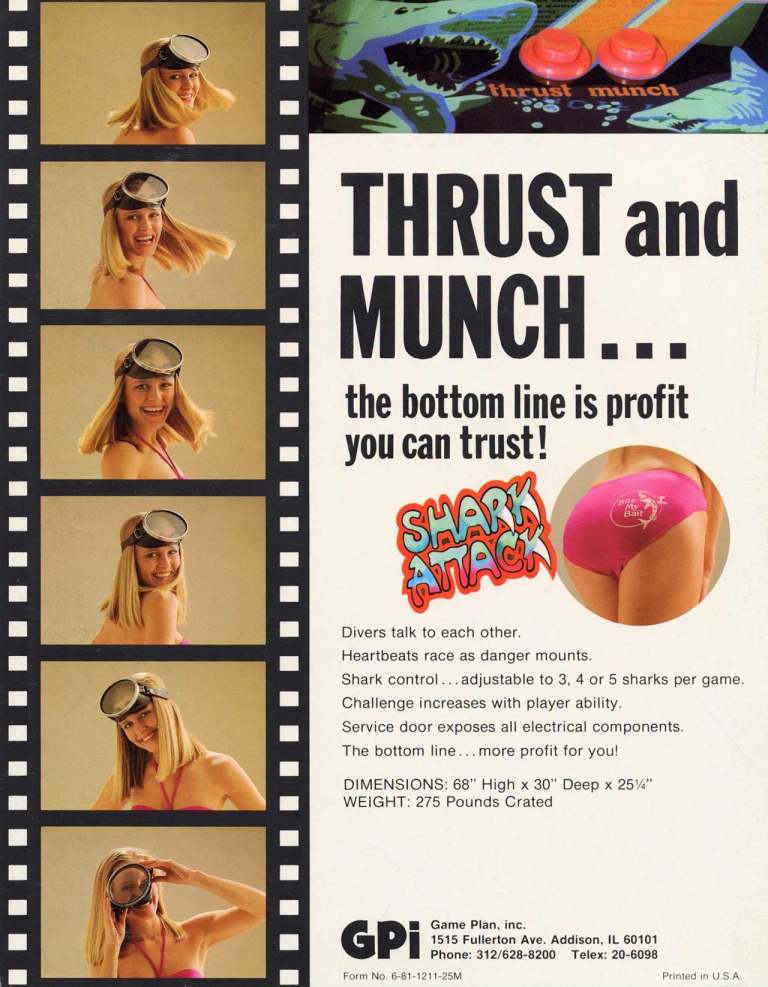
Promotional image for an arcade game called 'Thrust and Munch' featuring a woman wearing a diver's mask, smiling. The background includes text highlighting game features like shark control and dimensions.
The rear.

Remember long ago when Steven Spielberg’s Jaws made some people afraid of sharks and the sea? Jaws was a massive blockbuster, and it was influential to the public. A few years later, Universal Pictures pushed through with Jaws 2 without Spielberg, and it also was a huge commercial hit. By the start of the 1980s, creature feature films inspired by Jaws were released and pop culture itself was influenced. In 1981, the obscure arcade outfit Pacific Novelty Manufacturing released their game Shark Attack in arcades. To promote the game, the company came up with an arcade flyer that had a comedic touch on the text descriptions while featuring a pretty blonde fashion model posing as the diver. The front of the flyer had the arcade cabinet, the model and an exaggerated artwork of a shark holding a knife and a fork. On the rear, the sexiness was ramped up with a shot of the model’s behind (plus more pictures of the model herself). This is indeed an amusing and funny arcade flyer.

3. Centipede North American Arcade Flyer
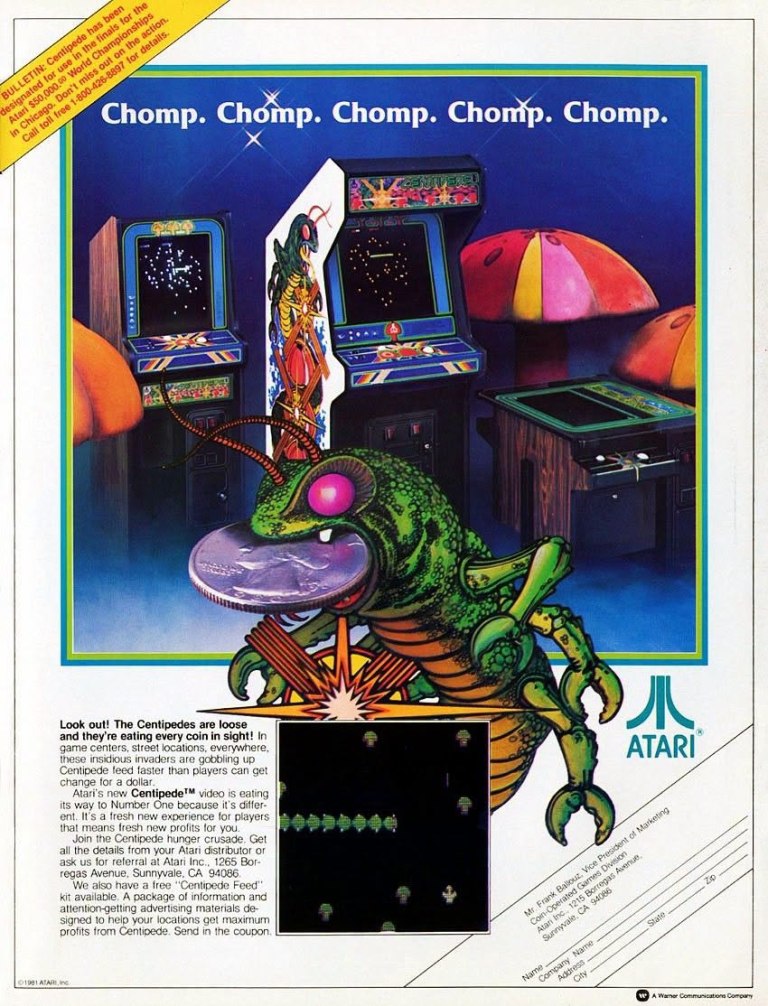
Promotional poster for Atari's Centipede video game featuring colorful artwork of a centipede character and arcade game machines in the background.
This was designed with arcade operators in mind.

When Atari released Centipede in arcades in 1981, it attracted a lot of gamers and became a huge commercial hit. Part of its success is linked with the strategic promotions Atari committed, and the above arcade flyer is one of the variants of Centipede flyers. The one above shows an illustrated centipede carrying a coin in its mouth and in the background are two different arcade cabinets plus a cocktail table machine (for those who want to play Centipede while sitting down). This particular arcade flyer of Centipede emphasizes the popularity of the game and there are different types of machines that arcade operators can choose from. At the same time, this old flyer remains amusing to look at.

4. Rambo Famicom Japanese Print Ad
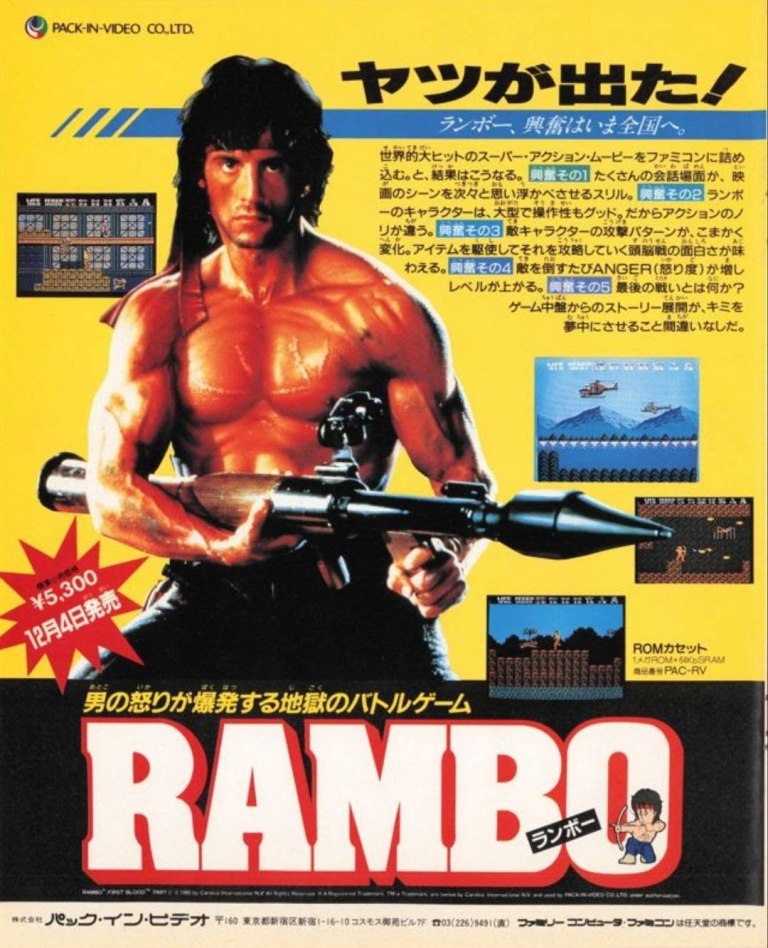
A promotional poster for a Rambo video game featuring a muscular man holding a weapon. The background is yellow with text in Japanese and images of the game on the right side. The large text reads 'RAMBO' in bold letters at the bottom.
Using this iconic imagery of Sylvester Stallone as Rambo was a very smart move.

When it comes to Hollywood action movies of the 1980s, Sylvester Stallone was highly successful, and he impacted American pop culture with the Rocky and Rambo films. By 1985, Stallone struck gold with Rambo: First Blood Part II which made over $300 million worldwide. Considering the Cold War theme and ambitious action scenes of the movie, it was clear for Japanese game developer Pack-In-Video to make an official video game adaptation of Rambo: First Blood Part II for the Nintendo Family Computer (Famicom) in the form of a 2D side-scrolling adventure game. The said game was simply titled Rambo and to promote it, the company came up with the above Japanese print ad that had the iconic Rambo image of Stallone holding the rocket launcher, and a few screenshots of the game itself. If you look closely at the lower-right corner, you will see a cartoonish hand-drawn art of the Rambo character with a bow and arrow. Considering how very popular Stallone, his character and the movie were, it made a lot of sense to promote the Rambo Famicom game like this in Japan. 

5. Gyruss Family Computer Disk System Japanese Print Ad
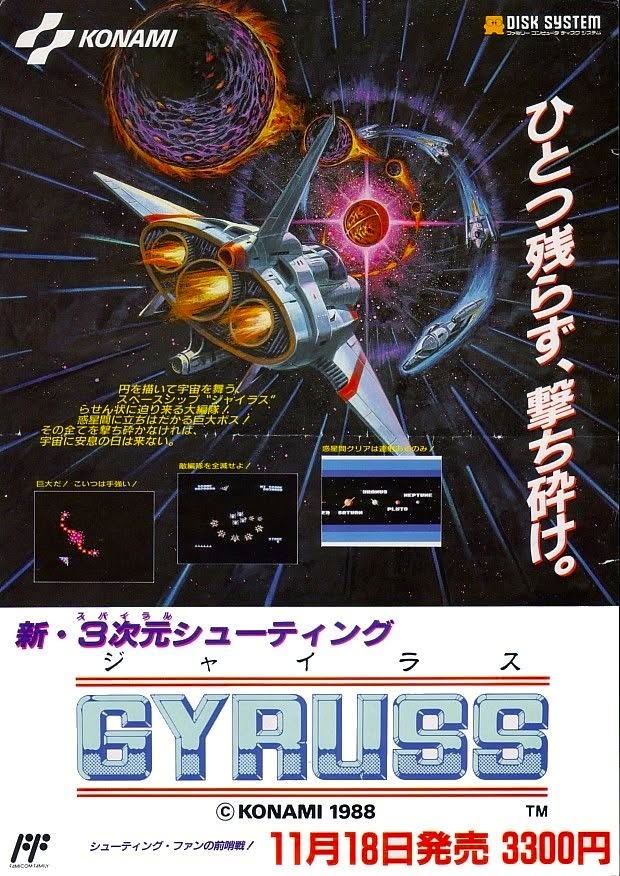
A retro video game advertisement for 'Gyruss' by KONAMI, featuring a spaceship amidst a colorful space backdrop with planets and swirling galaxies. The poster includes gameplay screenshots and promotional text in Japanese, with the release date and price displayed.
Gyruss was Konami’s first-ever game developed for the Famicom Disk System of Nintendo.

In 1983, Konami released Gyruss, a science fiction tube shooter designed by Yoshiko Okamoto. The game was a huge arcade hit and it really attracted a lot of players who enjoyed the unique game design and spaceship shooting. Konami licensed the game to a few companies which resulted in the creation and release of Gyruss ports for different consoles and home computer systems. In 1988, Konami released an enhanced Gyruss port for the Family Computer Disk System of Nintendo. To promote the Famicom Disk System port, Konami came up with a print ad that had a nicely detailed painted artwork of a spaceship (representing the player) about to hit incoming enemies deep in space, 3 screenshots and the official price and release date displayed. The artwork is still captivating to look at and the port itself features major overhauls that arguably made it better than the arcade original. Konami really went the extra mile for this Gyruss port.

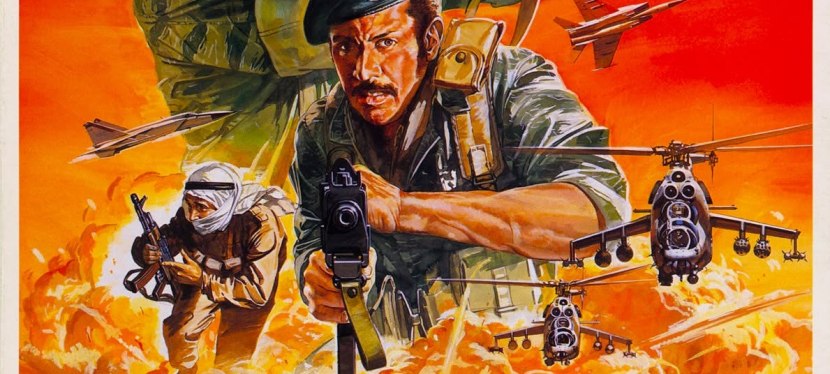
6. Operation Thunderbolt Japanese Arcade Flyer
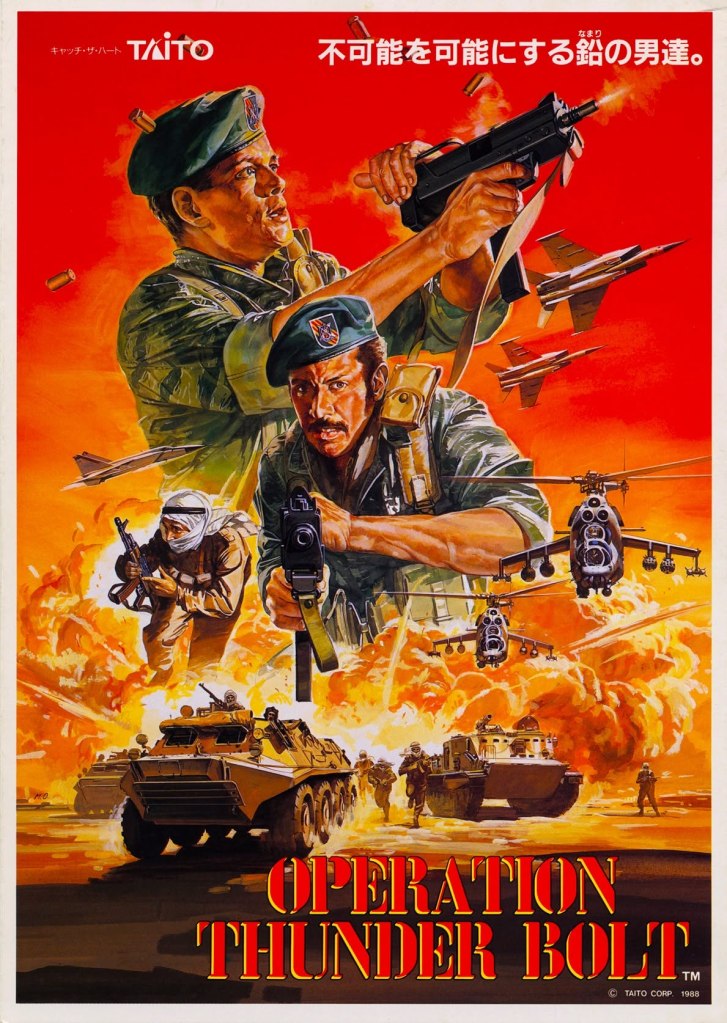
An illustrative movie poster for 'Operation Thunderbolt', featuring military characters in action with explosions, tanks, and aircraft in a dramatic background.
Great looking artwork on the front.
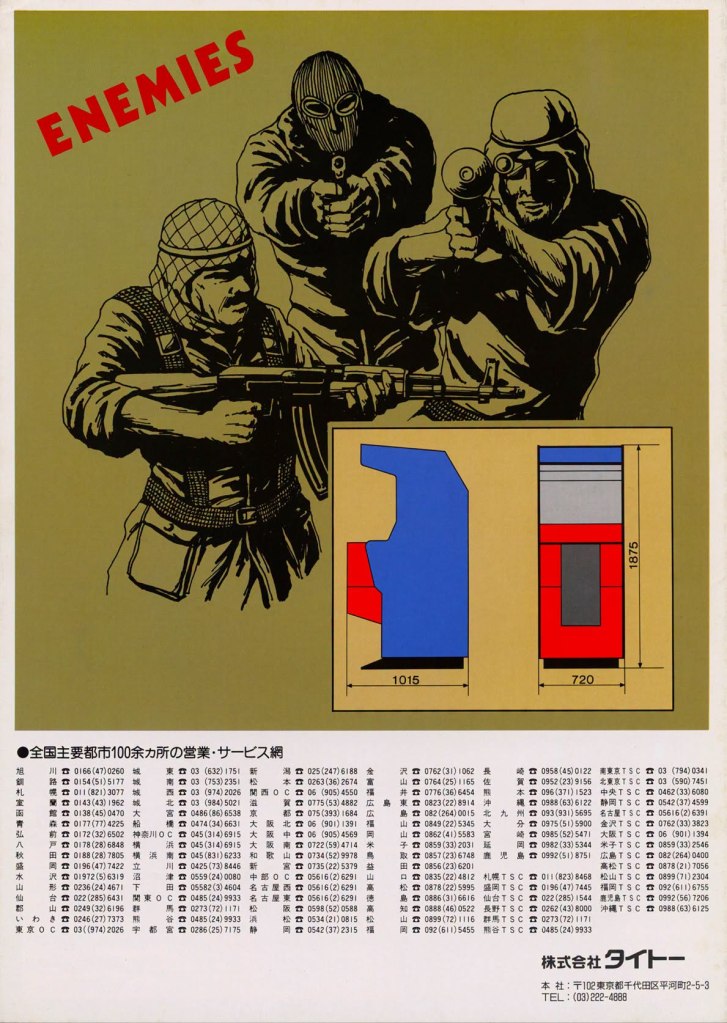
Illustration of two masked figures holding firearms against a plain background, with the word 'ENEMIES' displayed prominently at the top. Below, there are technical drawings and measurements of objects in blue and red colors.
The rear.

Following the huge success of Operation Wolf, Taito went on to make the sequel military shooter Operation Thunderbolt which was named after the 1977 movie that itself was based on the real-life Entebbe raid of 1976. To promote the game, the company came up with a pretty compelling arcade flyer for the Japanese market. The front has a detailed painted artwork that emphasizes the conflict between soldiers and Islamic terrorists in the Middle East. The rear has technical details of the arcade cabinet, several phone numbers and hand-drawn art of the terrorists (they easily remind me of Palestinian terrorists) clearly called the enemies. While the listing of phone numbers on the rear was very unusual, this old arcade flyer still looks great. Operation Thunderbolt went on to achieve huge commercial success in the arcades and later on consoles. It was one of the highest grossing arcade games in Japan in 1989.

7. Batman Returns North American Print Ad
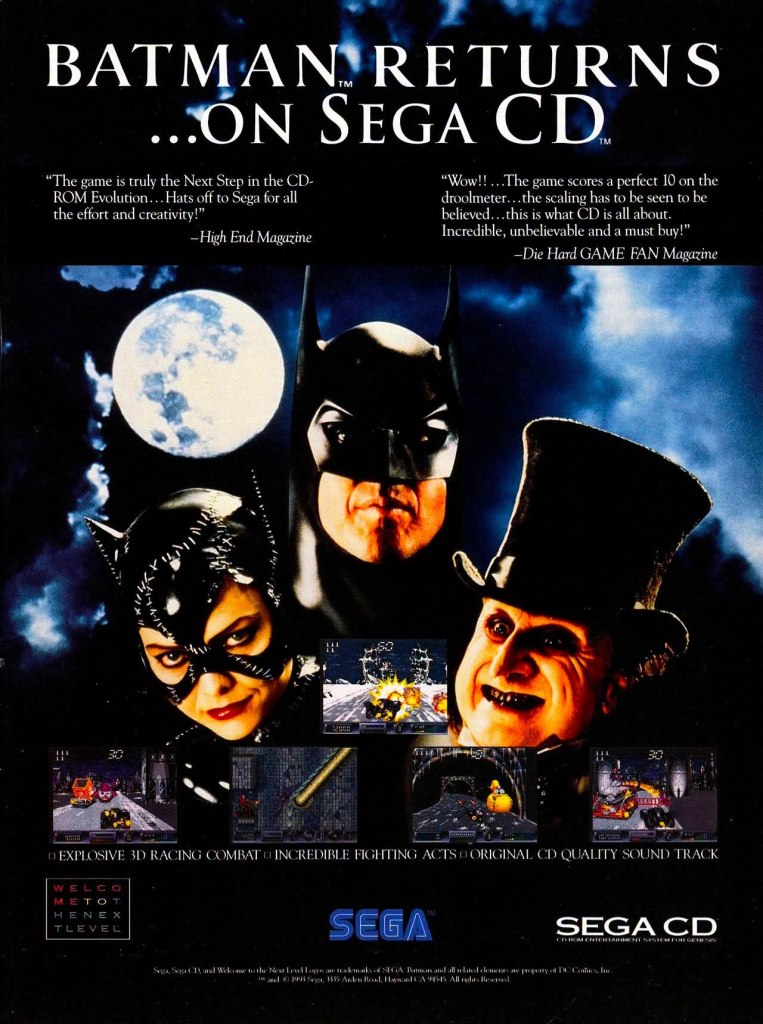
Promotional advertisement for 'Batman Returns' on Sega CD, featuring Batman and Catwoman with game screenshots and reviews.
Sega’s clever print ad promoting the Sega CD game of Batman Returns.

Batman Returns was a big hit in cinemas in 1992 although it never came close to matching the success of its 1989 predecessor. When it comes to video games, Batman Returns was even more ambitious as there were different game adaptations on different platforms. For the Sega CD Batman Returns game, Sega came up with the above ad that strongly featured photos of Michael Keaton as Batman, Michelle Pfeiffer as Catwoman and Danny DeVito as the Penguin with a stylish dark background and four screenshots of the game. The line “Batman Returns…on Sega CD” was really catchy and ultimately the game itself was very notably an expanded version of the Sega Genesis version with selected video footage from the film. As Sega had the license to make Batman Returns games for its platforms, this print ad is absolutely an attention-grabber.

8. Super Star Wars: Return of the Jedi North American Print Ad
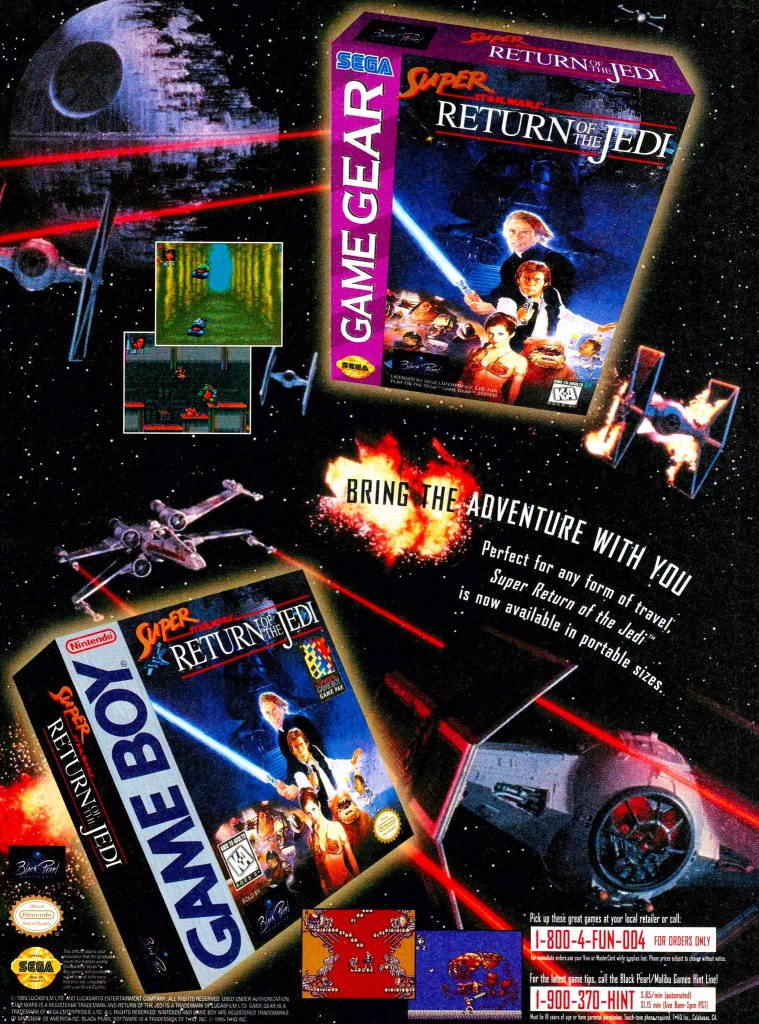
Vintage advertisement for 'Super Return of the Jedi' video game featuring Sega Game Gear and Nintendo Game Boy packaging, with space-themed background and game screenshots.
The Force is with the handheld gamers.

If there is anything notable about Star Wars in the 1990s, it is the fact that there is a lot of merchandise, comic books, video games, books and other licensed products released long after 1983’s Return of the Jedi which itself was perceived to be the last of the film franchise. In the mid-1990s, ports of Super Star Wars: Return of the Jedi were released on the competing handheld platforms Nintendo Game Boy and Sega Game Gear. This particular single-page ad has a nice visual design that captured the vibe of the movie (which I saw as a young boy in 1983) and it made handheld gaming look cool.

9. Elevator Action Returns Japanese Print Ad
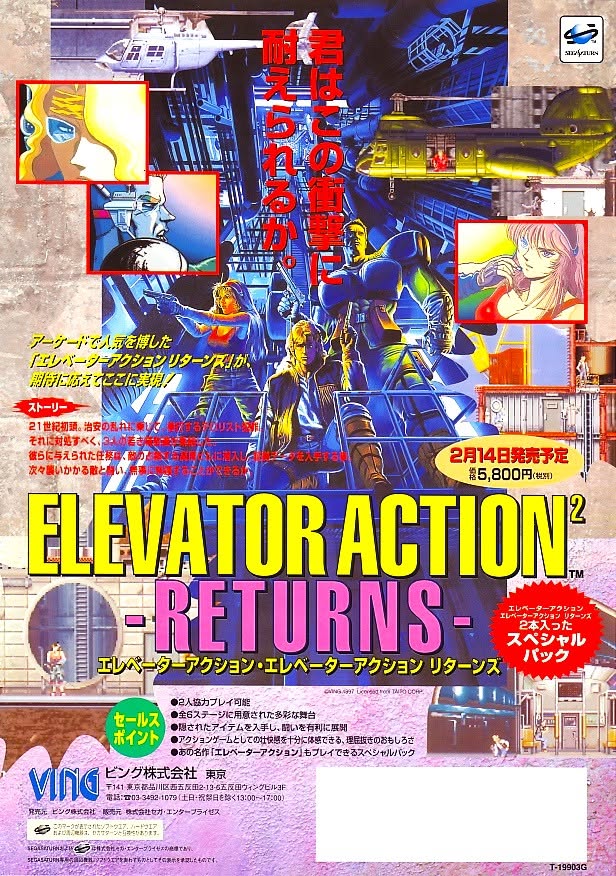
Retro video game cover for 'Elevator Action Returns' featuring illustrations of characters and a helicopter, with bold yellow title text and release date information.
Did you play Elevator Action Returns on the Sega Saturn?

In 1994, Taito struck gold with the release of Elevator Action Returns in Japanese arcades. The sequel was a big hit for the company and they eventually released a console port on the Sega Saturn only in Japan. For promotion, a print ad was made using the official painted artwork while also showing the screenshots and other details about it running on the Saturn (which itself was a powerful 2D sprite machine). Just looking at this old ad brings back the excitement of Elevator Action Returns and I now have a digital copy of it on my Xbox Series X.

10. Jade Cocoon: Story of the Tamamayu North American Print Ad
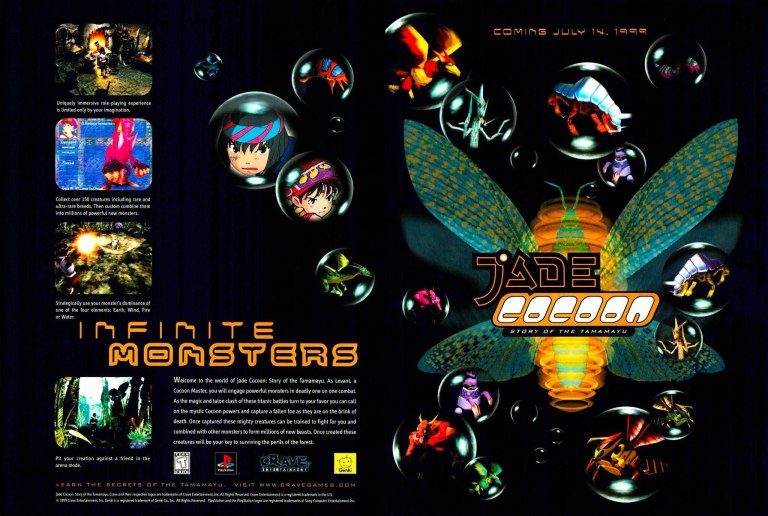
Promotional image for the video game 'Jade Cocoon: Story of the Tamamayu' featuring various characters and creatures within bubbles, showcasing the game's fantasy theme and release date of July 14, 1999.
A very ambitious print ad promoting Jade Cocoon in North America.

By the late 1990s, Japanese role-playing games (JRPG) really became popular on gaming consoles in America which arguably was the result of the massive global success of Final Fantasy VII. In 1999, there were a lot of JRPGs that got released on PlayStation and publisher Crave Entertainment literally pounced on American gamers’ interest on JRPGs by releasing Jade Cocoon: Story of the Tamamayu. Crave aggressively promoted the game and the result was this 2-page print ad that emphasized the game concept (developed by Genki), showed screenshots of the game, and displayed artworks that fans of Studio Ghibli anime productions can recognize. While Jade Cocoon: Story of the Tamamayu never became a massive commercial hit because of the low print run, there is no denying that its print ad was one of the most visually appealing ads of 1999. The ad alone made it look very ambitious.

11. Konami LaserScope North American print ad
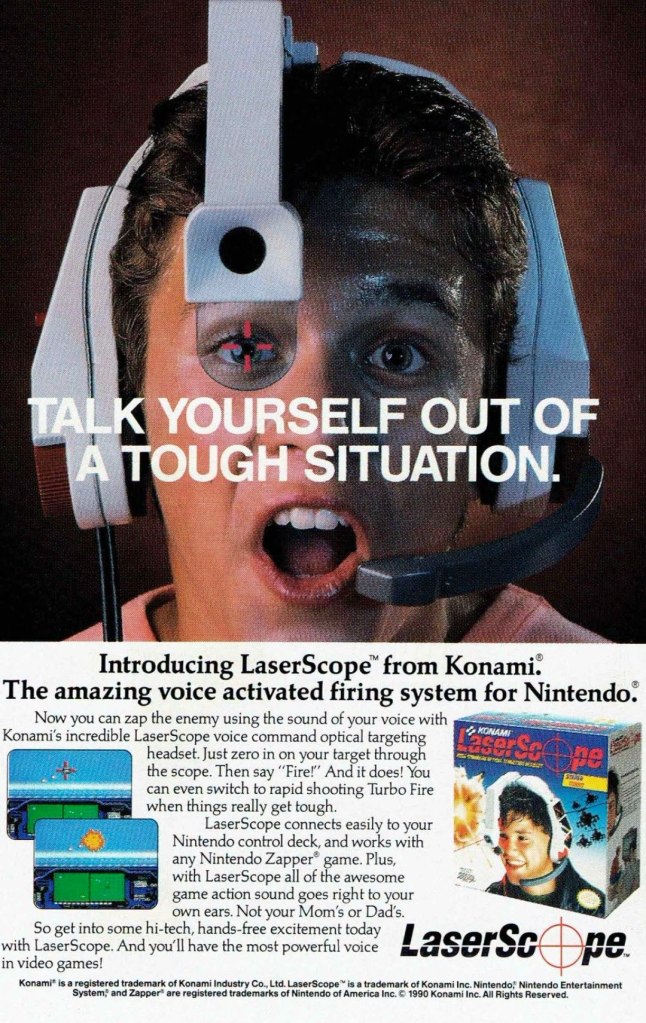
Did you get excited after seeing this Konami LaserScope print ad? Do you know anyone who bought the peripheral?

In 1990, this print ad of Konami’s LaserScope appeared in comic books and several other publications. The LaserScope was a gaming peripheral designed for use on the Nintendo Entertainment System (NES) complete with compatibility with existing games that were made to support the NES Zapper. The ad even boasted a voice-activated firing feature and a hands-free approach on playing NES games. While the ad boasted that players will have the most powerful voice in video games, the LaserScope itself was a very flawed and badly optimized device. Apart from having a built-in microphone that was oversensitive, tracking targets was a chore requiring constant head-turning which in turn made the gameplay experience very tiring and frustrating. This old ad promised a lot and the LaserScope was a catastrophe. When was the last time you bought hardware from Konami?

+++++

Thank you for reading. If you find this article engaging, please click the like button below, share this article to others and also please consider making a donation to support my publishing. If you are looking for a copywriter to create content for your special project or business, check out my services and my portfolio. Feel free to contact me with a private message. Also please feel free to visit my Facebook page Author Carlo Carrasco and follow me on Twitter at @CarloCarrascoPH as well as on Tumblr at https://carlocarrasco.tumblr.com/ and on Instagram at https://www.instagram.com/authorcarlocarrasco

I’m Having Fun Playing Dig Dug On My Xbox Series X

Welcome back Xbox fans, retro gaming enthusiasts and fellow geeks!

I’ve been playing Atari 50 on my Xbox Series X for more than a year now and I can say it is a blast of retro gaming fun. In addition, the DLCs added even more fun, more variety and gave me insight about the production history of the games.

In recent times, I purchased the Namco Legendary Pack for Atari 50 and it came with 3 Atari Pac-Man games (for Atari 2600, Atari 5200 and Atari 8-bit), the American arcade versions of Dig Dug and Xevious, and the home console versions of Galaga, Xevious, Galaxian and Dig Dug.

Among those games, I chose to play the arcade version of Dig Dug which I never previously played. Indeed, I visited the video arcades a lot when I was younger and I do remember passing by a few machines of Dig Dug. I simply never took the opportunity to play Namco’s arcade classic back then. By the late 1990s, Dig Dug was simply no longer offered by local arcade operators.

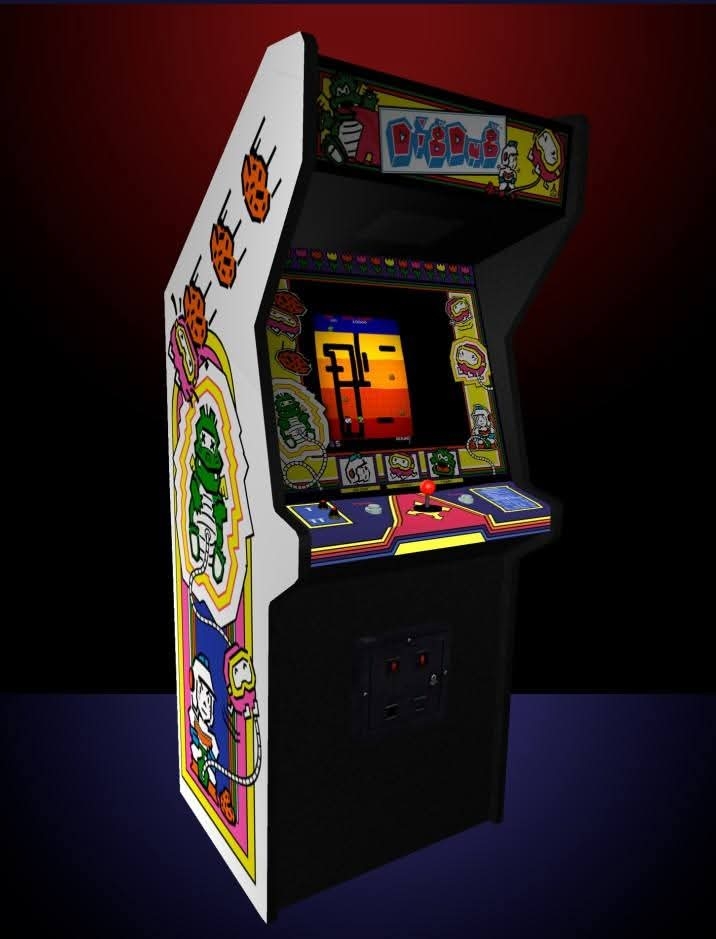
The Dig Dug arcade cabinet.
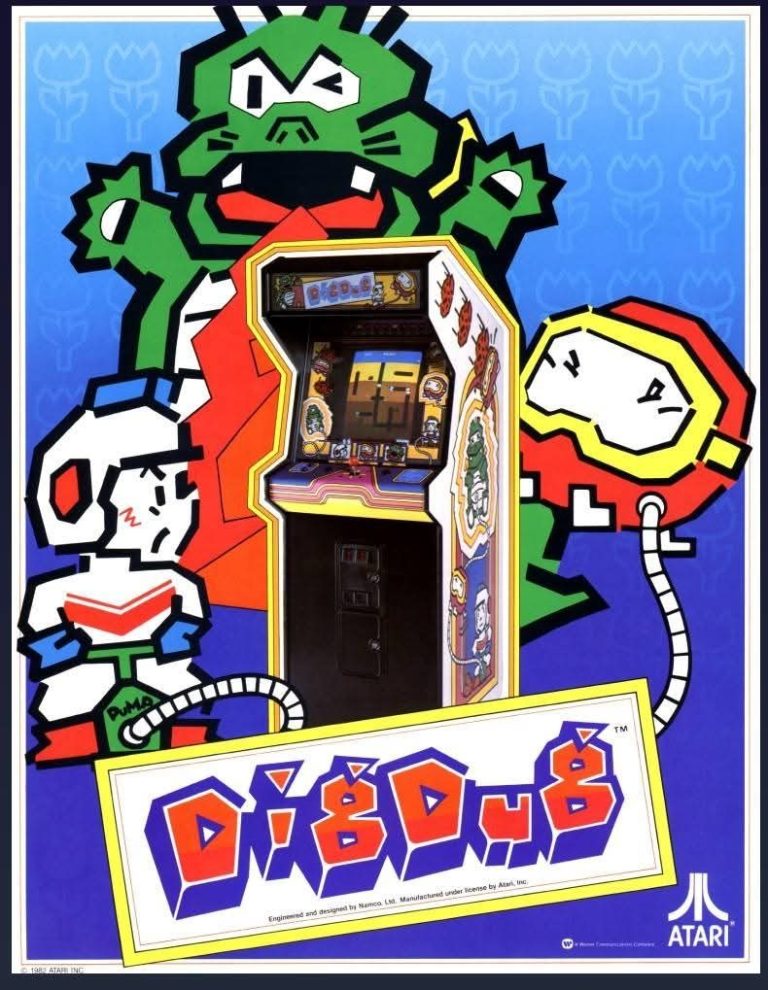
The North American arcade flyer of Dig Dug by Atari.

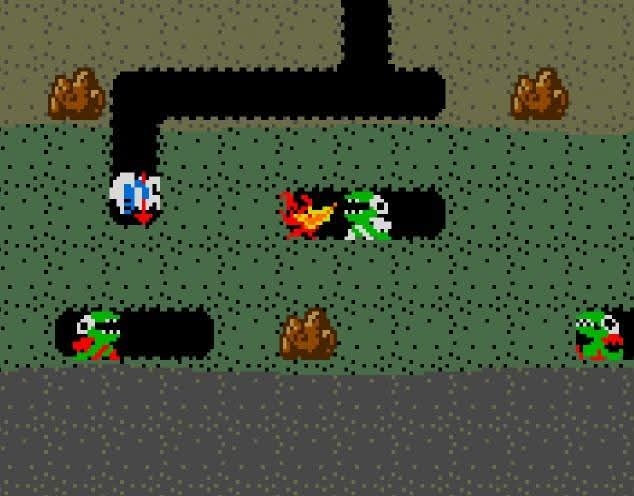
After installing the Namco Legendary Pack, I started playing the arcade version of Dig Dug on my Xbox Series X using the Xbox controller. Even though I rushed in viewing the Xbox control scheme, Dig Dug still turned out to be simple and very playable at the same time.

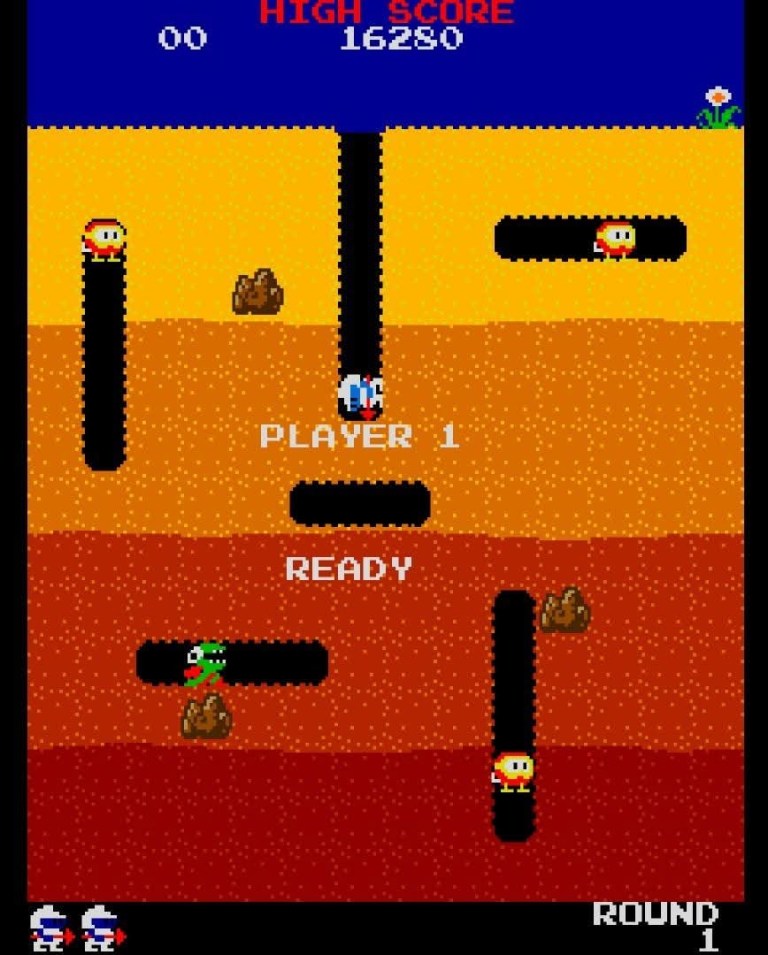
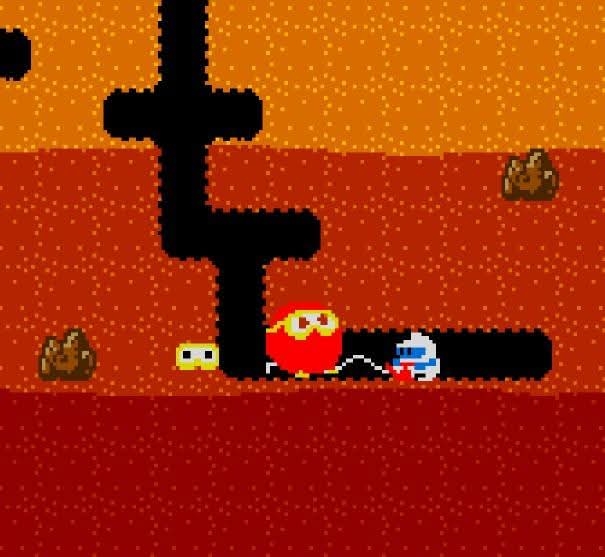
In the game, you play the character Dig Dug (Taizo Hori) who has to dig tunnels in an underground maze. You have to eliminate the enemies/monsters deep within which are the Pookas (red and spherical beings that wear large goggles) and the Fygars (fire-breathing dragons). To eliminate an enemy, you have to use an air pump to physically connect with it and then inflate it until it explodes. Another way of eliminating an enemy is by crushing them with falling rocks which requires a bit of strategy as you are always chased.

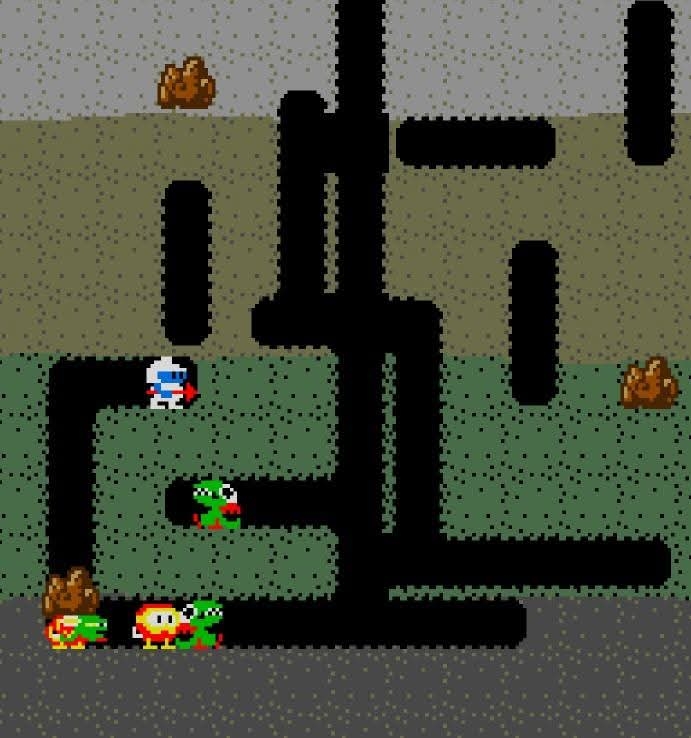
Even without new tunnels made, there are times when enemies are able to penetrate through the soil to emerge near you. If you are in a tunnel with an enemy present, you will often get chased. Be mindful that for every level you progress into, enemies move faster and their numbers gradually increase.

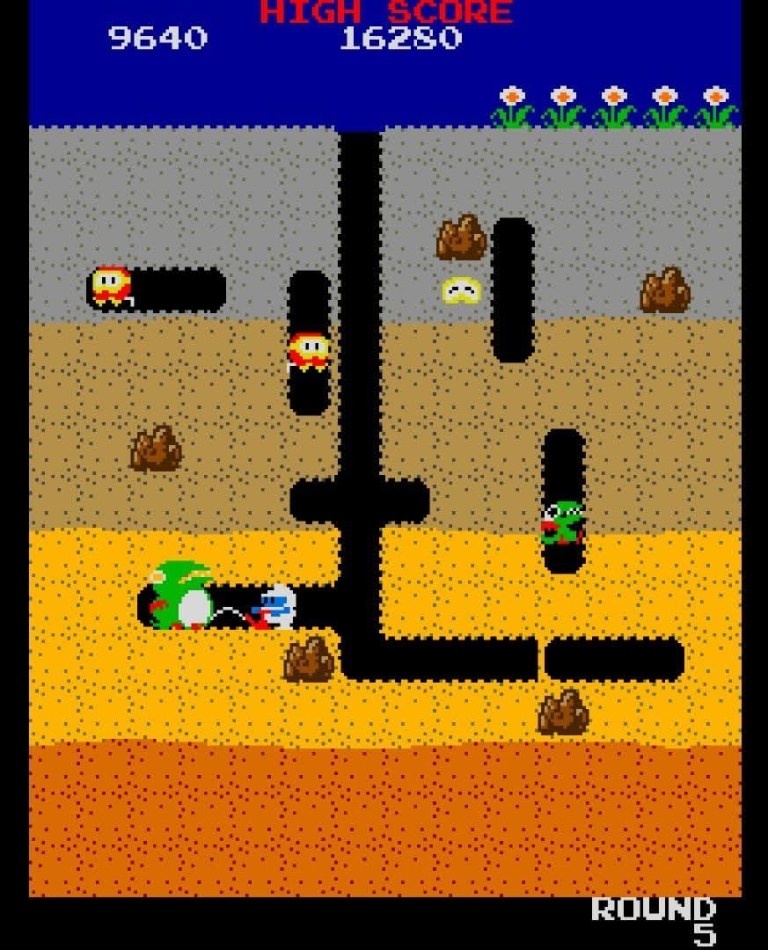
The first level of Dig Dug.
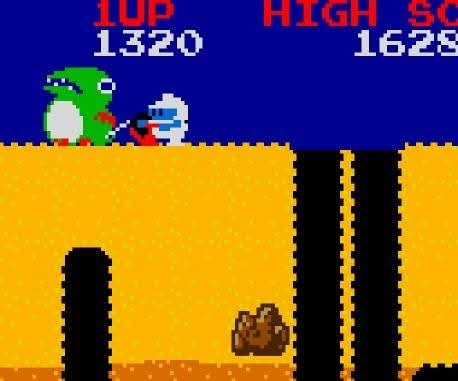
Inflating a Pooka.
The Fygars are dragons and they are dangerous as they have fire as breath weapons.
Inflating a Fygar above ground.
Here, I managed to have a huge rock fall down and hit the Fyger and Pooka that chased me earlier. Pulling off this move requires strategy.
As you inflate an enemy and there are still more enemies near you, you have to be mindful that a Pooka can penetrate through the soil and emerge in a tunnel near you.

Having played Dig Dug a number of times already with my Xbox copy of Atari 50, I can say that I am really enjoying the classic arcade game from Namco. Historically, Dig Dug as planned and designed by Masahisa Ikegami who was assisted by Shigeru Yokoyama (Galaga). The game’s programmers were Shouichi Fukatani and Toshio Sakai, while the art was done by Hiroshi Ono, and the music was composed by Yuriko Keino.

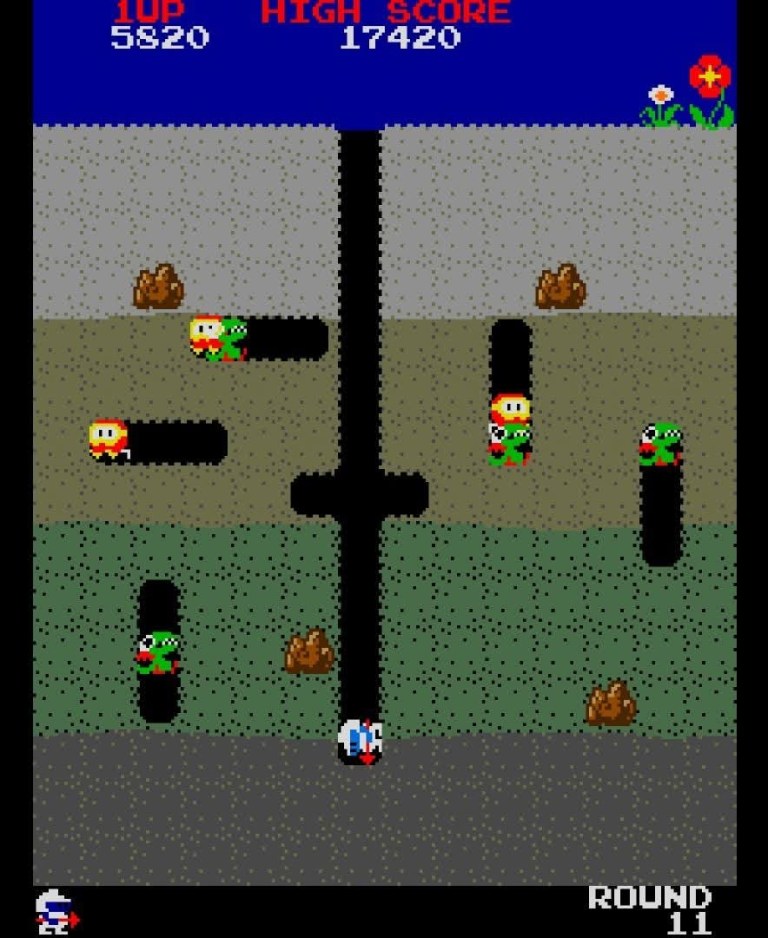
At the 11th round, the game has turned much more challenging as the monsters moved faster and they can be overwhelming.

You might be wondering why was Dig Dug (in arcade and console ports) and those other Namco classic games released in a DLC package for the Atari 50 collection recently? This is because Atari and Namco formed a business partnership in Japan when the American company established its presence there with Atari Japan. In fact, Namco started shifting into video gaming because of Atari. As for Dig Dug, it debuted in Japanese arcades in March 1982 and was brought to American arcades with Atari as the distributor (note: a licensing deal with Namco was signed).

As already recorded in history, Dig Dug became a huge critical and commercial success in both Japan and the United States. While the game emerged as the 2nd highest grossing arcade game in Japan for 1982, Atari sold more than 22,000 Dig Dug arcade cabinets and generated over $46 million in sales that same year. With big success achieved, it was not surprising to see Atari release ports of Dig Dug on the Atari 2600, Atari 5200 and Atari 8-bit computers.

A Dig Dug print ad for America by Atari.

If you are an Xbox gamer who is into retro gaming and you are interested in Atari 50, click https://www.xbox.com/en-US/games/store/atari-50-the-anniversary-celebration/9N3TFDSQ531T

Those who are already playing Atari 50 on Xbox consoles who have yet to try the Namco Legendary Pack, click https://www.xbox.com/en-PH/games/store/atari-50-the-namco-legendary-pack/9n46gncv28zh

+++++

Thank you for reading. If you find this article engaging, please click the like button below, share this article to others and also please consider making a donation to support my publishing. If you are looking for a copywriter to create content for your special project or business, check out my services and my portfolio. Feel free to contact me with a private message. Also please feel free to visit my Facebook page Author Carlo Carrasco and follow me on Twitter at  @HavenorFantasy as well as on Tumblr at https://carlocarrasco.tumblr.com/ and on Instagram athttps://www.instagram.com/authorcarlocarrasco

For burgers and arcade fun in BF Homes, visit Hackensack

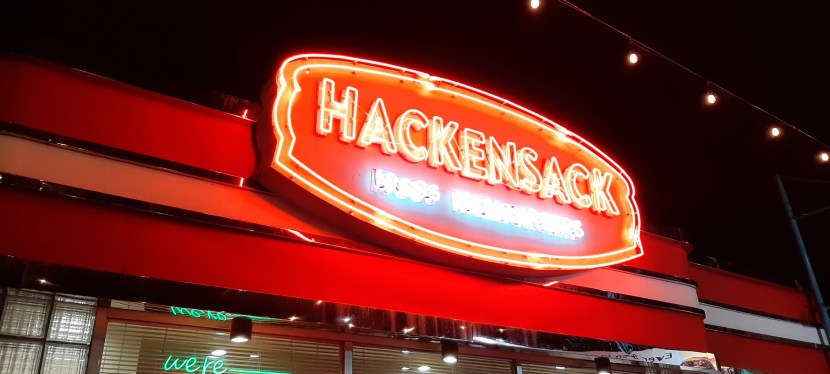
Along the stretch of Aguirre Avenue inside BF Homes subdivision, Barangay BF Homes, Parañaque City is the 1950s-inspired diner Hackensack. To be clear, it is the BF Homes branch of the business whose other branch is located in Quezon City.

I had my first-ever visit there this past February for a lunch reunion and meeting with a dear friend of mine. We both had rice meals and drinks, and we had a nice chat while seating comfortably.

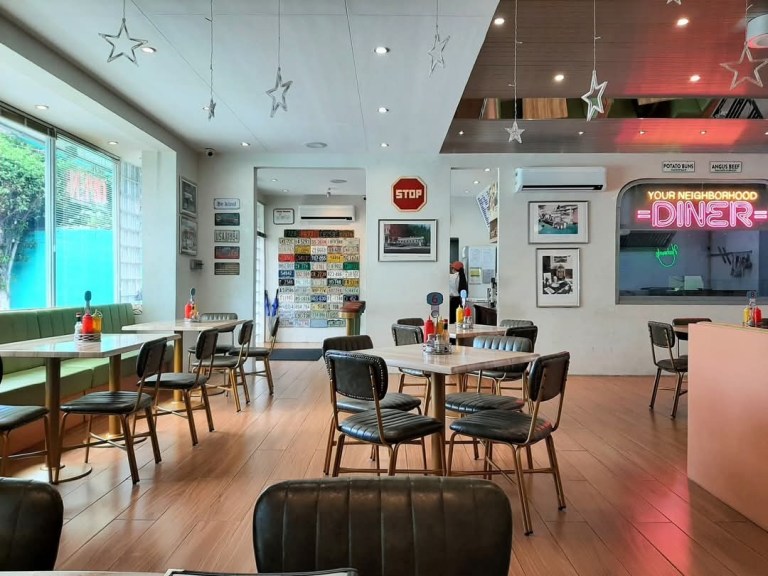
Daytime shot of a portion of the interior at Hackensack’s BF Homes branch. Comfortable seats and sufficient space for customers.
Through the window, customers can watch their food getting cooked.

I carefully examined Hackensack as it was my first time back then. I noticed they have sufficient parking spaces – spacious enough to allow double-parking – for motorists outside. Upon entering, the 1950s vibe was clearly present through the interior design and the carefully placed decorations. With the nice interiors, cool aircon system and sufficient walking space between the chairs and tables, Hackensack’s BF Homes branch is nice and comfortable to be in.

Recently, I had a 2nd visit at Hackensack in BF Homes and this time it was dinner with my family.

Food

This is the Deluxe “Smashed” Cheeseburger and Fries Combo. The cheeseburger had two Angus beef patties.

During my 2nd visit, I had the Deluxe “Smashed” Cheeseburger (double-patty) and Fries Combo and a Chocolate Milkshake. The cheeseburger itself came with two Angus beef patties, two wide tomato slices, lettuce and cheese, and it tasted really good. I’m glad I had the cheeseburger as I was getting tired of the cheeseburgers from the more popular burger-and-fries fast food restaurants. Meanwhile, the fries were well cooked and satisfying to eat.

As mentioned above, I had the Chocolate Milkshake although I ordered at least 30 minutes after I finished my cheeseburger and fries combo meal. Hackensack’s milkshake tasted mildly sweet (given the chocolate flavor) but more importantly, it also tasted freshly made.

The chocolate milkshake was tasty and satisfying.

Other food that my family enjoyed include the 1950s Onion-steamed Cheeseburger and Fries Combo, the Fried Onion Strings, Fries, the Philly Cheesesteak, Chicken Wings, and the Classic BLT (Bacon, Lettuce and Tomato). I can clearly say that my family enjoyed the food and what was served exceeded expectations.

The Fried Onion Strings was a delicious appetizer and also ideal when eating with a group of companions.
A standalone service of Fries.
The 1950s Onion-steamed Cheeseburger and Fries Combo.

Hackensack’s menu offers lots of food and drink options that customers can choose from such as the Chicken Salad Sandwich with Chips combo meal, Clubhouse Sandwich with Chips combo meal, Waffle Fries, New York Frank and Fries combo meal, Mom’s Baked Spaghetti, Monty Brewster and Fries combo meal, Homemade Apple Pie, Steak and Eggs rice meal, Rootbeer Float and more.

Arcade games plus notable comic book artworks

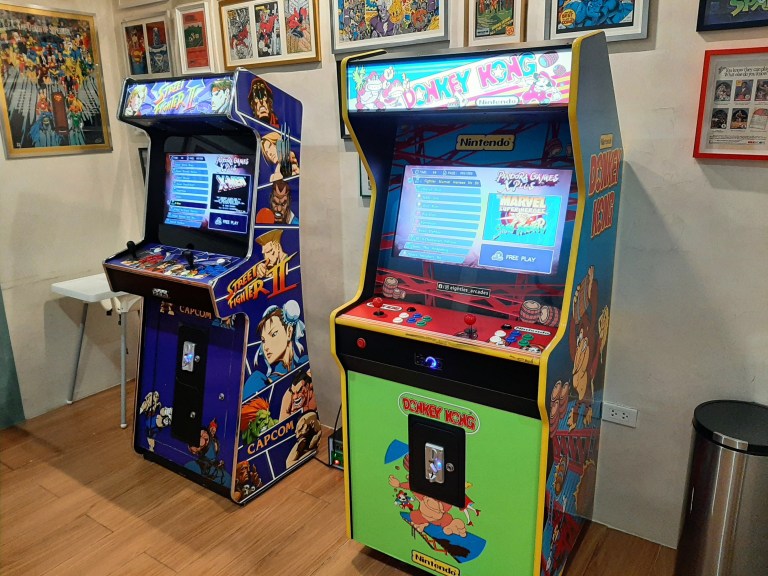
While Hackensack has a strong 1950s vibe with its food, interiors and atmosphere, the place with the two arcade cabinets (where players can stand in front of and play games) is something else. If you know your entertainment history, you should be aware already that arcade games in America (electronic games played on machines) did not exist during the 1950s.

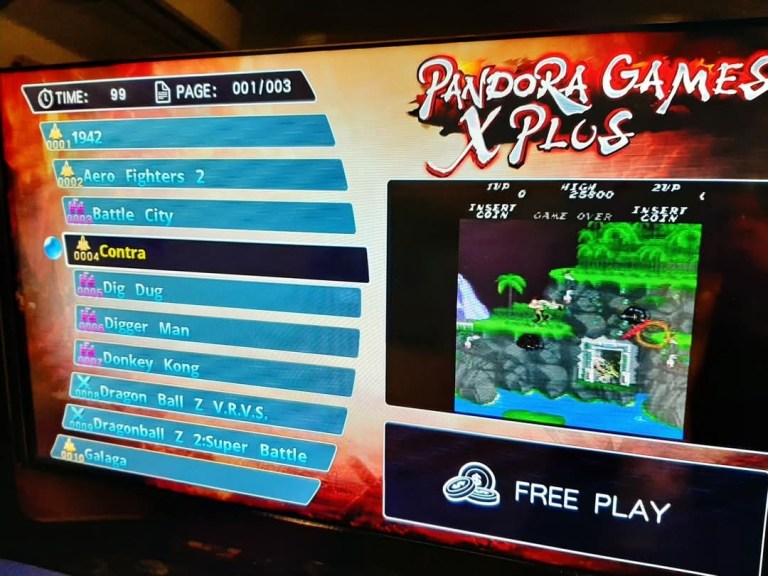
That being said, the two arcade cabinets allow users to pick games from a wide selection of titles from the 1970s to the 1990s. The beauty about have these arcade cabinets is that you can play games absolutely free! No need to insert coins or tokens at all!

The two arcade cabinets inside Hackensack. Each machine contains lots of classic arcade games and the great thing is that customers can play those games for free. Simply select the game, press the button and start enjoying retro gaming fun.
A few of the many retro games to choose from.

During my two visits at Hackensack in BF Homes, I had retro gaming fun with Galaga, Elevator Action, X-Men vs. Street Fighter, Pac-Man, the X-Men arcade game from Konami, and Donkey Kong to name some. Other arcade classic available for gamers to choose from include Street Fighter II, Battle City, 1942, Contra, Rambo III and RoboCop to name a few.

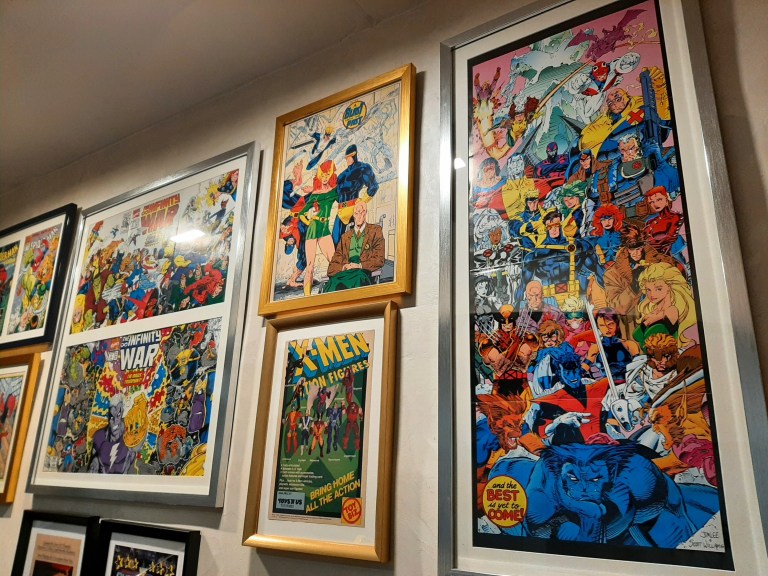
In addition to the existing retro gaming vibe the arcade cabinets provided, there were these very notable comic book covers and artworks displayed on the walls near them. Having read and collected superhero comic books in the 1990s, I recognized a lot of notable artworks there such as WetWorks by Whilce Portacio, X-Men by Jim Lee, Youngblood by Rob Liefeld, Spider-Man by Todd McFarlane, and Superman by Dan Jurgens.

Are you a 1990s comic book enthusiast? Check out the selected comic book materials displayed as decorations.

With good food, a comfortable retro place and retro gaming fun, Hackensack really stands out nicely among the many food joints inside BF Homes. As of now, it is the one place in the entire South Metro Manila where you can enjoy meals and arcade games together.

To learn more about Hackensack, visit their Facebook page by clicking https://www.facebook.com/hackensack.ph. To visit their BF Homes branch right now, click the Google Maps location link at https://maps.app.goo.gl/EHAAteZTZXwgeggw9

+++++

Thank you for reading. If you find this article engaging, please click the like button below, share this article to others and also please consider making a donation to support my publishing. If you are looking for a copywriter to create content for your special project or business, check out my services and my portfolio. Feel free to contact me with a private message. Also please feel free to visit my Facebook page Author Carlo Carrasco and follow me on Twitter at  @HavenorFantasy as well as on Tumblr at https://carlocarrasco.tumblr.com/ and on Instagram at https://www.instagram.com/authorcarlocarrasco
For more South Metro Manila community news and developments, come back here soon. Also say NO to fake news, NO to irresponsible journalism, NO to misinformation, NO to plagiarists, NO to reckless publishers and NO to sinister propaganda when it comes to news and developments. For South Metro Manila community developments, member engagement, commerce and other relevant updates, join the growing South Metro Manila Facebook group at https://www.facebook.com/groups/342183059992673

What to watch on YouTube right now – Part 69

Welcome back my readers, YouTube viewers and all others who followed this series of articles focused on YouTube videos worth watching. Have you been searching for something fun or interesting to watch on YouTube? Do you feel bored right now and you crave for something to see on the world’s most popular online video destination?

I recommend you check out the following topics and the related videos I found.

#1 Val Kilmer remembered – In case you missed the news, actor Val Kilmer passed away at age 65. He contributed a lot to the art of cinema for decades and had many memorable performances in films like Top Gun, Heat, Top Secret!, and Tombstone to name a few. He appeared in a very touching scene in Top Gun: Maverick. In memory of him, posted below are assorted videos of his past works.  

#2 PatmanQC examines Galaga – Originally released in arcades in 1981, Galaga is a classic 2D shooter game that consistently provided gamers bouts of fun, unique challenges and an immersive science fiction feel. Through the decades, I played it in the arcade and on game consoles, and the fun was always there. The production history of Galaga is pretty interesting and it includes developmental challenges connected with hardware limitations, revision of creative ideas and the like. PatmanQC’s examination of the history of Galaga is a must-watch!

#3 The entire Terminator film franchise examined – From 1984 to 2019, a total of six movies of the Terminator film franchise got released. If you ask me, only The Terminator and Terminator 2: Judgment Day are the ones worth replaying and the rise of artificial intelligence (AI) made them even more socially relevant. Then there are those who really liked Terminator 3: Rise of the Machines as it was a very expensive follow-up to its predecessor. Terminator Salvation attracted moviegoers with its portrayal of the future war between man and machines. In recent times, YouTuber Outside Intel posted its in-depth retrospective of all the six Terminator movies, and it lasts over an hour. If you are feeling nostalgic about Terminator films, this is a must-see.

#4 Fictional TV news reports and commercials from RoboCop (1987) – Remember the first time you ever saw RoboCop inside the cinema way back in 1987? If you did, do you still remember how you first reacted when you saw the fictional TV news reports and commercials that were played within the context of the film’s story? In case you have forgotten, posted below is a YouTube that conveniently collects them all for you to see.

#5 James Gunn’s Superman looking super bad right now – There is a brand new Superman movie directed by James Gunn coming out months from now. While the first teaser of the film looked interesting, the newest teaser made the upcoming movie look bad. Among all the reactions towards the latest Superman 2025 sneak peak, Ranting for Vengeance and Ben Shapiro have the most opinionated and most analytical reactions of them all. Watch the videos below and ask yourselves this – do you really want to see James Gunn’s very own take on Superman and the DC Comics characters?

+++++

Thank you for reading. If you find this article engaging, please click the like button below, share this article to others and also please consider making a donation to support my publishing. If you are looking for a copywriter to create content for your special project or business, check out my services and my portfolio. Feel free to contact me with a private message. Also please feel free to visit my Facebook page Author Carlo Carrasco and follow me on Twitter at  @HavenorFantasy as well as on Tumblr at https://carlocarrasco.tumblr.com/ and on Instagram athttps://www.instagram.com/authorcarlocarrasco
Retro Gaming Ads Blast – Part 20

Welcome back readers, fellow geeks and electronic gaming fans!

In this edition of the Retro Gaming Ads Blast (RGAB) series, we will take a look at another batch of retro gaming print ads – including arcade flyers – from the 1980s and 1990s.

For the newcomers reading this, Retro Gaming Ads Blast (RGAB) looks back at the many print ads of games (console, arcade, computer and handheld) that were published in comic books, magazines, flyers, posters and newspapers long before smartphones, social media, the worldwide web and streaming became popular. To put things in perspective, people back in the 1980s and 1990s were more trusting of print media for information and images about electronic games and related products.

With those details laid down, here is the newest batch of retro gaming print ads for you to see and enjoy…

1. River Raid print ad

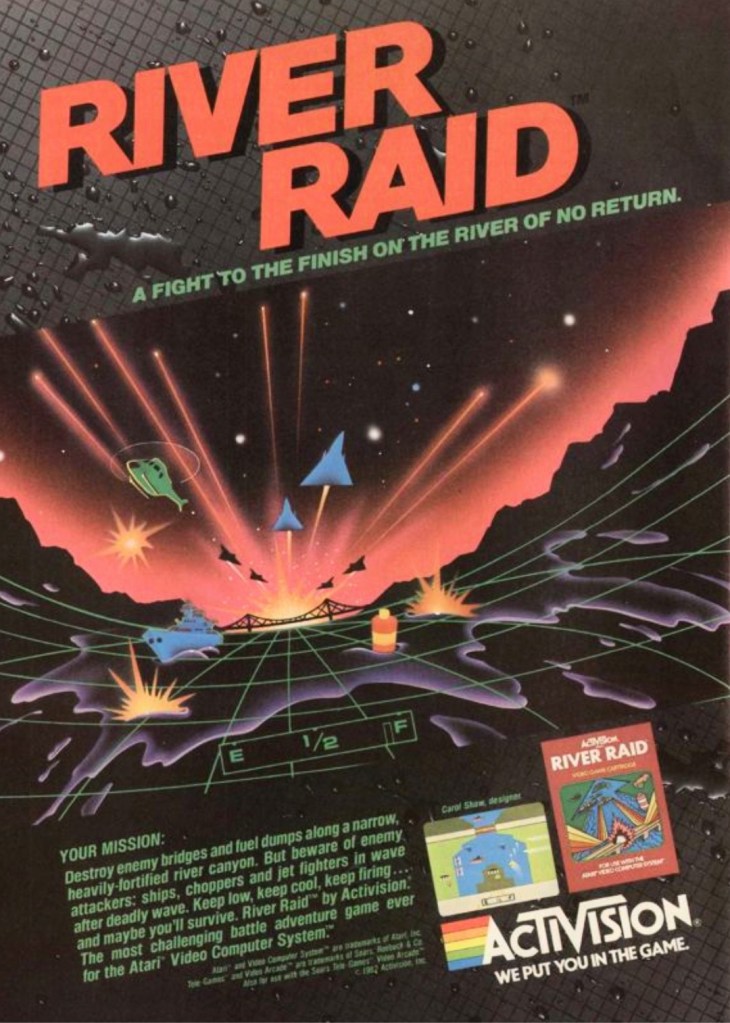
This River Raid print ad appeared on comic books and magazines long ago.

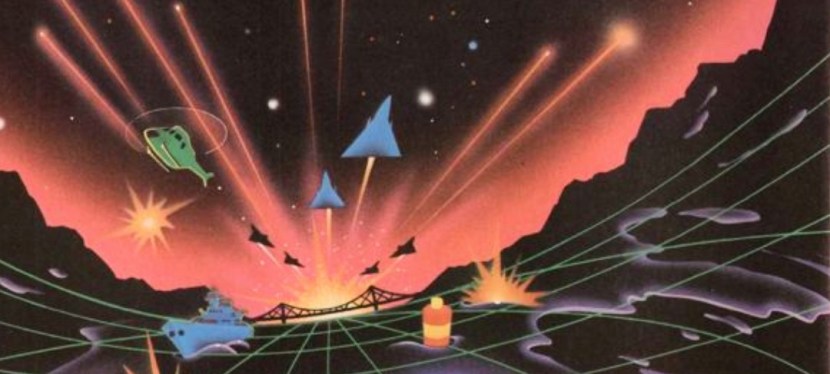
Decades before it became an industry giant with the best-selling Call of Duty games, Activision became a standout publisher in the early 1980s with River Raid on the Atari 2600. Designed by Carol Shaw, River Raid was a huge success ending up as the 2nd best-seller on the Atari 2600 as well as Activision’s best-selling game for the year 1983. Apart from showing one screenshot and the box cover of the game, the print ad of River Raid had this mesmerizing 3D image that caught many gamers’ attention and helped them feel like they will pilot on dangerous missions. The 3D image was futuristic in its own style became forward-moving 3D sequences in video games became reality many years later.   

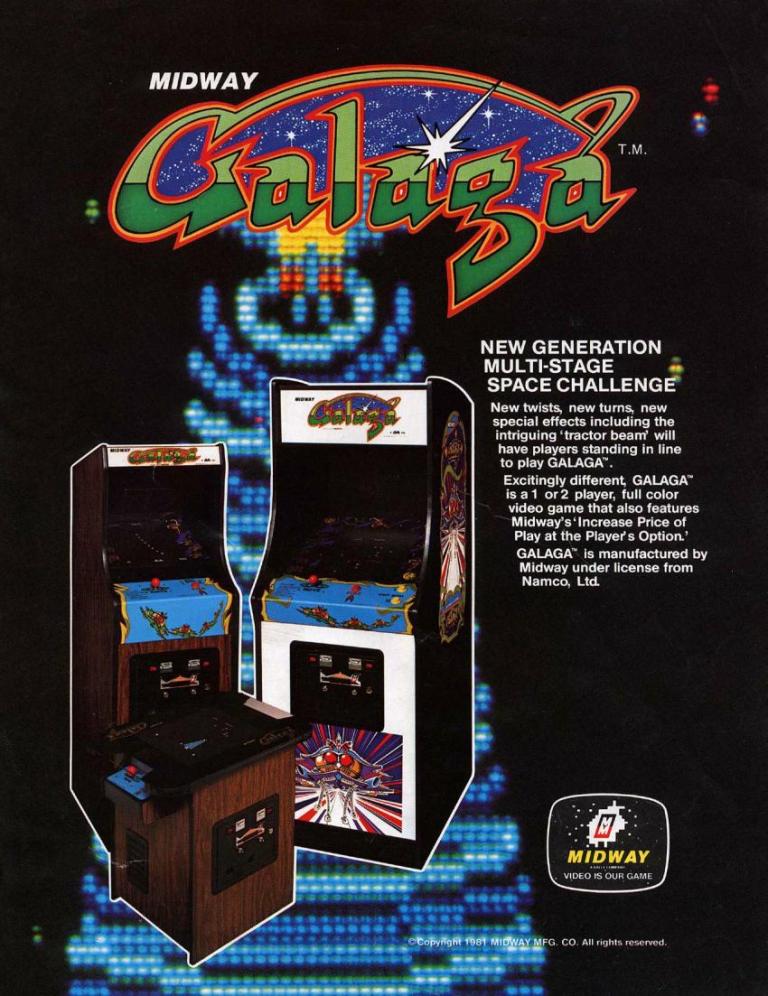
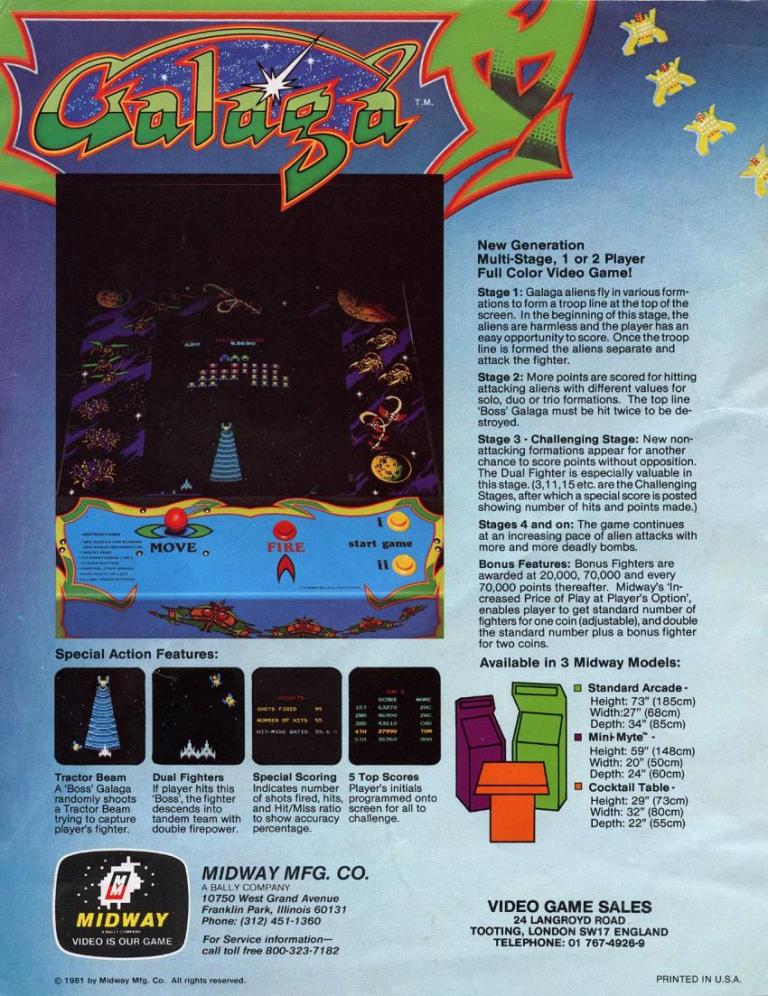
2. Galaga North American arcade flyer

The front of the flyer showing three Galaga machines that arcade operators can choose from.
Key details about Galaga were nicely presented on the rear of the flyer.

In the history of gaming, Namco’s Galaga was played by countless millions of gamers and it is still highly regarded as an arcade classic as well as one of the most enjoyable arcade games ever made. In preparation for the North American launch (October 1981), Midway prepared the arcade flyer showing the three types of machine on the front that arcade operators can choose from. On the rear is the really neat approach of explaining the details of the game, what kind of gameplay is to be expected, and how to play. Whether you are an individual player or the manager of an arcade joint, this flyer suits your needs.   

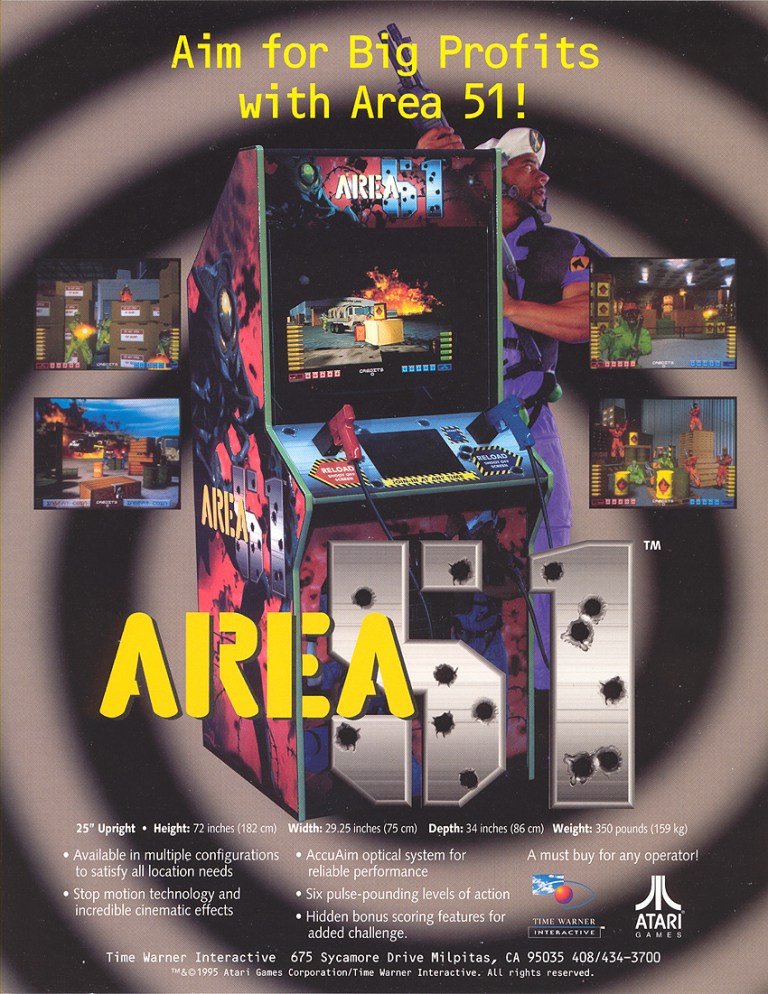
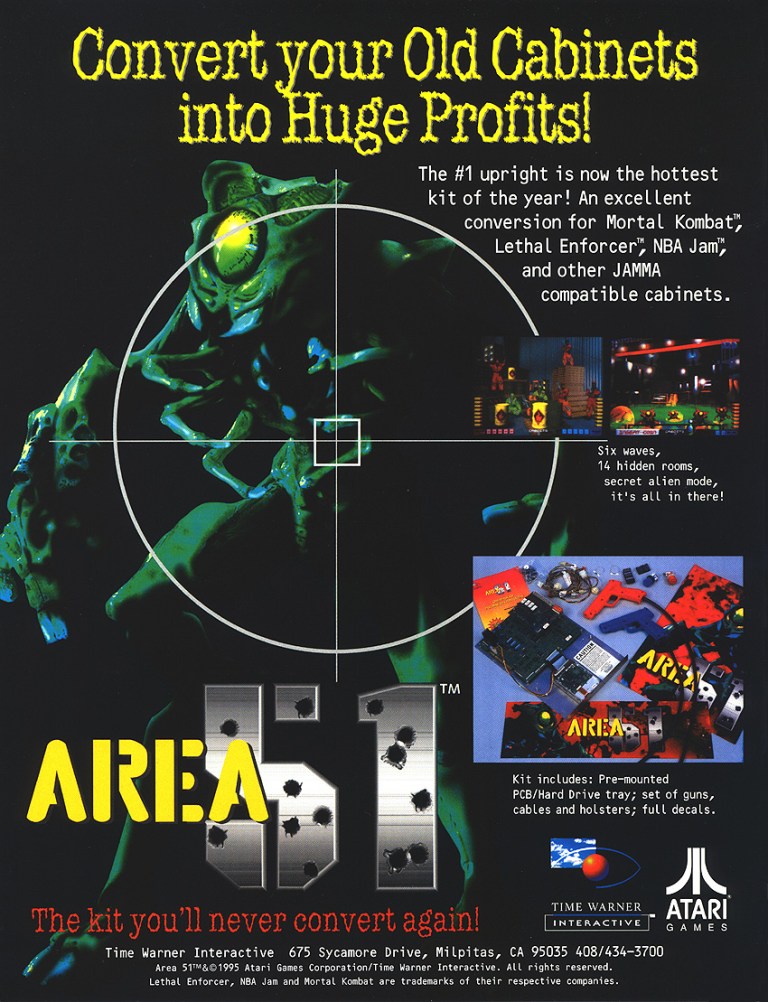
3. Area 51 arcade flyer and conversion kit flyer

The front of this Area 51 flyer had an enticing message for arcade operators as well as other business owners/managers who are interested in having a machine to add value to their business joints. Atari was already in deep money problems by the time they started making this game.
The Area 51 arcade conversion kit is a cheaper alternative for businesses who want the game.

Moving on to the 1990s, Atari was already struggling financially and desperately needed a hit to lift them up fast. A light gun shooter project was approved as arcade shooters were in good demand and after overcoming serious hurdles during production internally, Atari hired independent team Mesa Logic to take charge of development. After being granted extra time and more creative freedom, the project under Mesa Logic’s handling became a sci-fi shooter titled Area 51. The game became a huge hit in the arcades for Atari resulting in sales of more than 20,000 arcade cabinets as well as a major financial boost for the company (note: Atari still exists today). Atari went on to release Atari 51 versions for PlayStation, Sega Saturn and PC in America in 1996. The Atari 51 flyers you see here are still captivating to look at and were crucial in generating buzz among arcade operators, business joints that had space for arcade cabinets and gamers.

4. Panasonic 3DO print ad

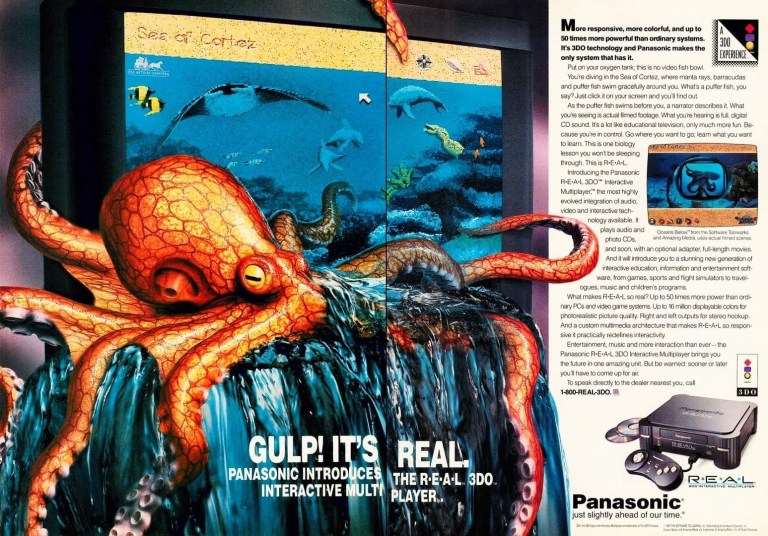
The makers of this print ad forgot to mention the 3DO is also a game machine.

Back in 1993, the 3DO Interactive Multiplayer console manufactured by Panasonic (a licensee of the 3DO Company) was launched with a CD-ROM drive, multimedia features and gaming capabilities (with a 3-button control pad). This print ad strongly emphasized the 3DO’s ability to play high-quality sound and full-motion videos using the Sea of Cortez software which functioned as an interactive movie. Obviously, this did not resonate well with people who loved to play games and by the time the 3DO Company and its partners started marketing games, they could not save the 3DO console from fading to obscurity. The console shown in the ad is specifically model Panasonic FZ-1 R·E·A·L 3DO Interactive Multiplayer. Panasonic was one of five companies that were licensed by the 3DO Company.

5. MechWarrior 3050 SNES print ad

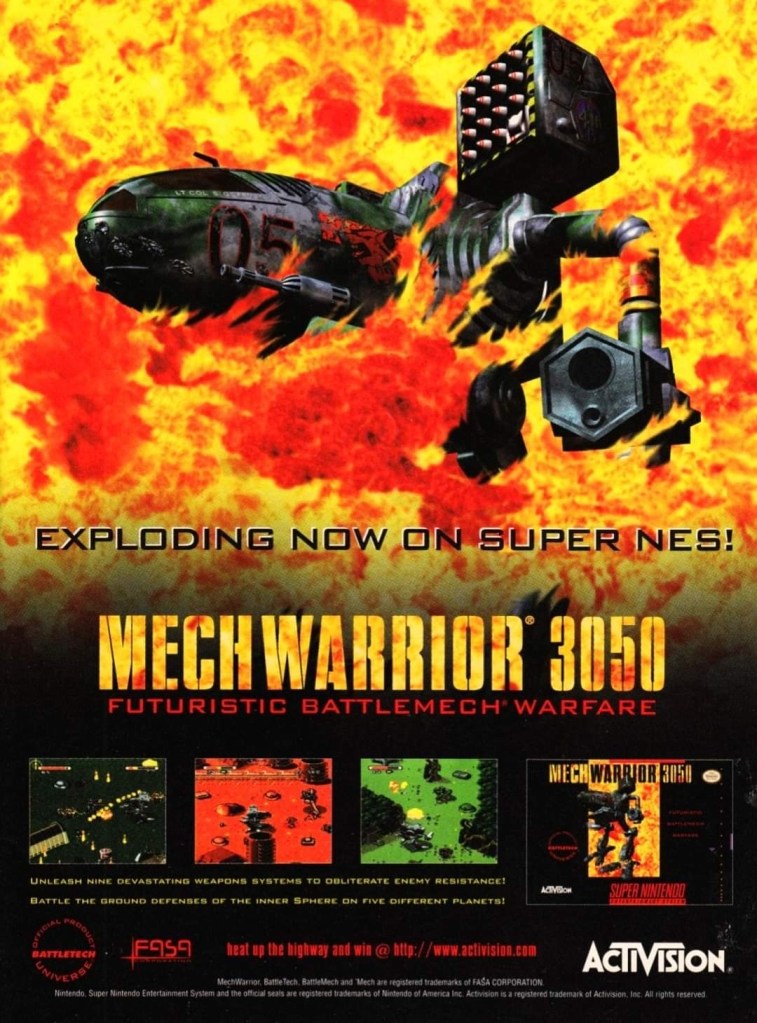
If you were unaware of the 1994 game BattleTech, then this ad would have fooled you into thinking it is promoting a brand new game.

In 1995, the popular BattleTech entertainment franchise arrived on the Super Nintendo Entertainment (SNES) system with MechWarrior 3050 and its print ad had a really blazing artwork of an armed mech in fire which gave readers the illusion of a new and original game. In reality, MechWarrior 3050 was actually a port of BattleTech which was released on the Sega Genesis in 1994. The Genesis game was published by Extreme Entertainment Group while the SNES game was published by the more famous Activision. If you look closely at the MechWarrior print ad, you can tell how hard they tried to sell the game like it was brand new and all-original.

6. Cliffhanger video game print ad

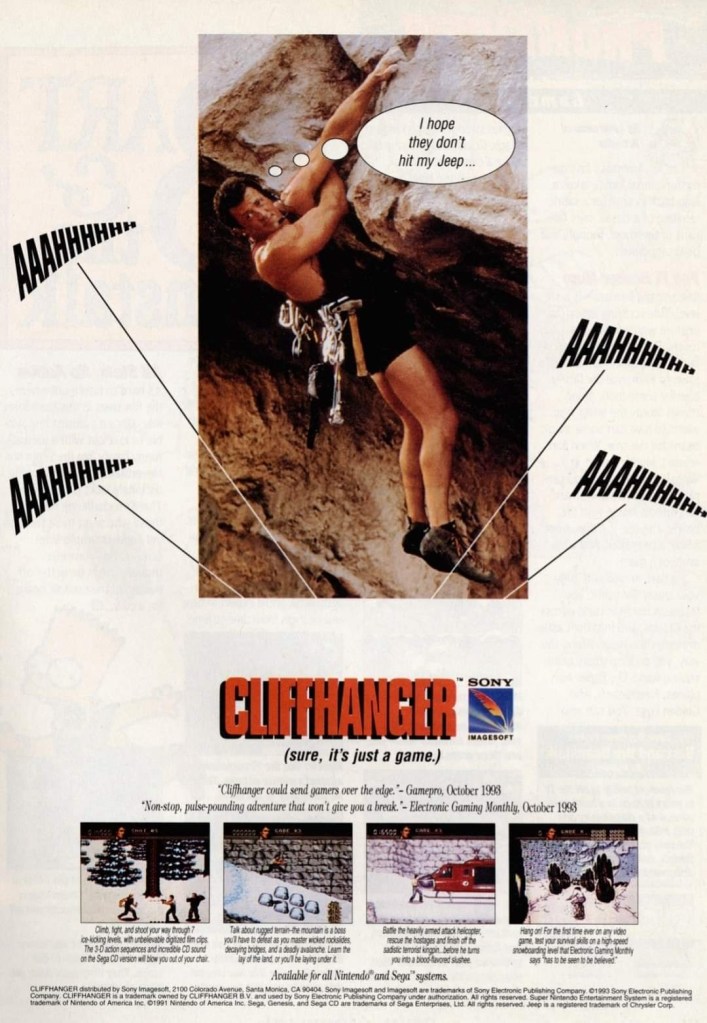
This print ad had Sylvester Stallone hanging on a cliff to be relevant with the title of both the film and the game. They could not show images of Stallone in hard action scenes.

For fans of Sylvester Stallone, 1993 was a big and exciting year as the Hollywood icon appeared in two major action films – Cliffhanger and Demolition Man. Cliffhanger was released first and there were video game adaptations of it released on game consoles, handhelds and computers. This print ad of the Cliffhanger video game had an image of Stallone hanging on a cliff to emphasize the title. The ad makers cleverly posted selected gameplay screenshots and quoted GamePro and Electronic Gaming Monthly (EGM) to make the game look credible and worthy of purchasing. The marketing led to nowhere as the game received mostly negative reviews from critics and it faded to obscurity. Lastly, the Cliffhanger game ad had a noticeable amount of space wasted. They could have made the screenshots and text look somewhat bigger to sell the game.

7. Ballz: The Director’s Cut print ad

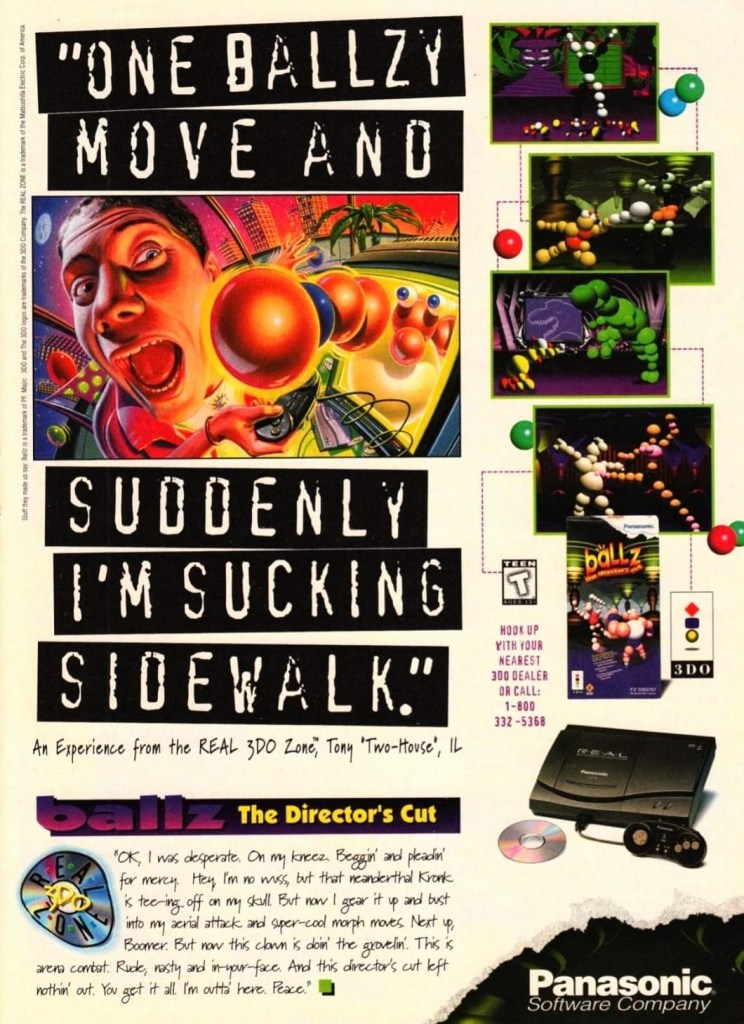
I never got to play this game on the 3DO.

Here is another ad of the video game released on the failed 3DO console. As its title made obvious, Ballz: The Director’s Cut is an enhanced version of the original Ballz game of 1994 that was released on other consoles. The print ad had an eye-catching piece of artwork and posted beside it were selected shots of the gameplay. Strangely enough, the creative writing on the lower part of the ad does not make any sense and did nothing to convince gamers to play the game. As Ballz: The Director’s Cut was released in 1995, this ad shows the revised 3DO console from Panasonic (model: Panasonic FZ-10 R·E·A·L 3DO Interactive Multiplayer).

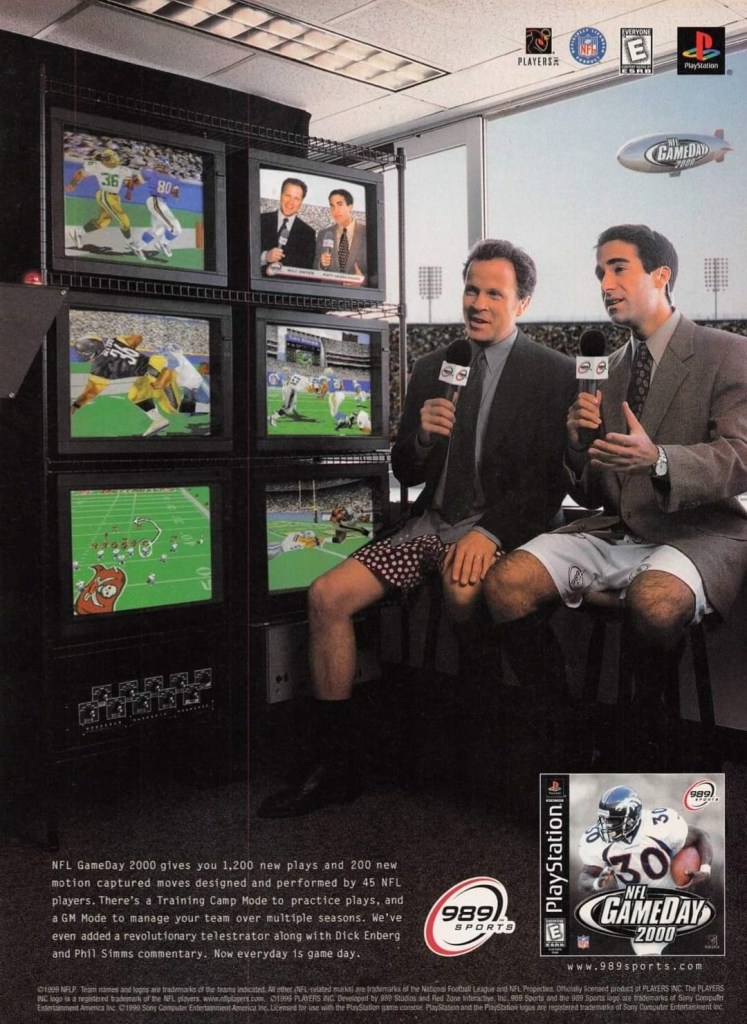
8. NFL GameDay 2000 print ad

Did you find this ad funny to look at in 1999?

To promote the PlayStation-exclusive NFL GameDay 2000, Sony publisher 989 Sports and the ad makers decided to implement a humorous look at football TV coverage by having two sportscasters wearing shorts in front of a TV camera that was only showing their heads and upper bodies. The TV sets on the side show screenshots from the game to emphasize the sports gaming experience. Ultimately the game scored mostly positive review from the critics.  

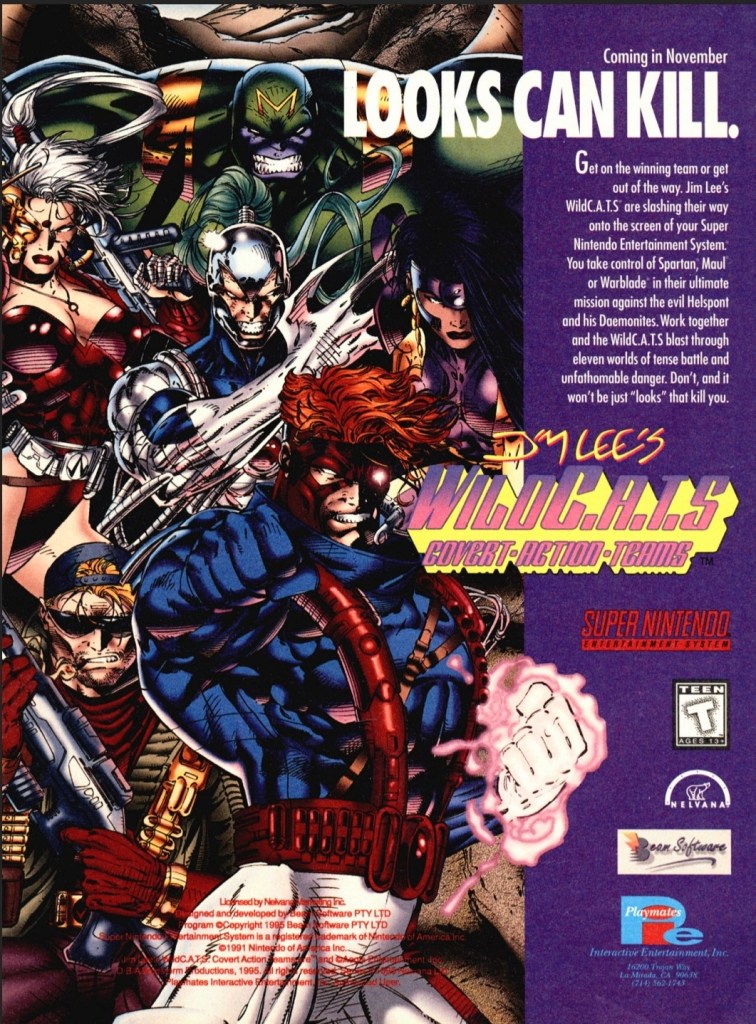
9. WildC.A.T.S: Covert Action Teams print ad

WildC.A.T.S. art by Jim Lee was used to promote the SNES video game.

When Image Comics launched in 1992, WildC.A.T.S: Covert Action Teams was Jim Lee’s creator-owned comic book franchise and its launch issue was a big seller. Years later, WildC.A.T.S. grew in popularity with comic book fans and the franchise achieved multi-media status by venturing into TV (with an animated series) and video games. This print ad promoting the video game adaptation had no screenshots to show which kept fans and gamers guessing how the game will turn out in terms of gameplay and game design. It was obvious that the people who made this print ad had to rely on the best WildC.A.T.S. artwork they could find drawn by Jim Lee. This ad made me laugh back in the old days because if you did not look closely, it might fool you into thinking it was more about comic books than the game on the SNES.

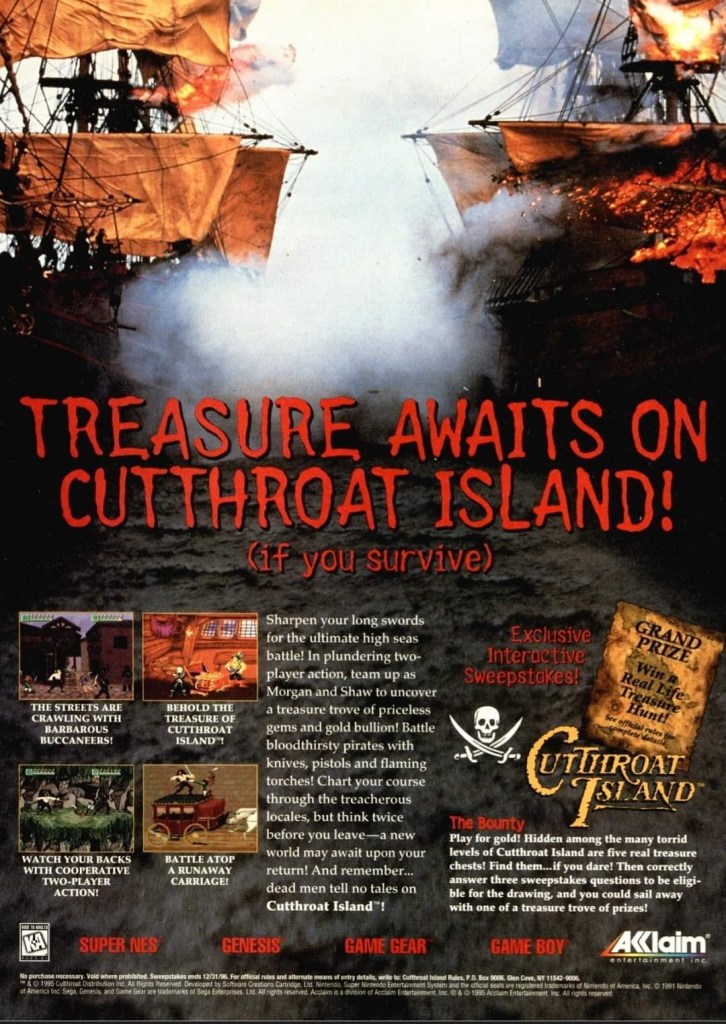
10. Cutthroat Island print ad

Exciting imagery without Geena Davis and Matthew Modine was used to promote the video game adaptation.

I never saw the Hollywood mega-flop Cutthroat Island nor have I ever played any of its multiple video game adaptations (released on SNES, Sega Genesis, Sega Game Gear and Game Boy). The video game print ad, however, caught my attention back in 1995 because the ad makers cleverly used a photograph from one the many expensive movie sequences filmed and the hard, physical work by the filmmakers was clearly visible. Then the ad makers had four screenshots placed on the lower-left part and inserted descriptive text that sounded exciting. Lastly, the ad mentioned a sweepstakes promo.

Without using any images of stars Geena Davis and Matthew Modine, this ad was a strong attempt to get gamers excited for the video game adaptation. Like the movie itself, this game flopped and has faded away to the land of the forgotten.

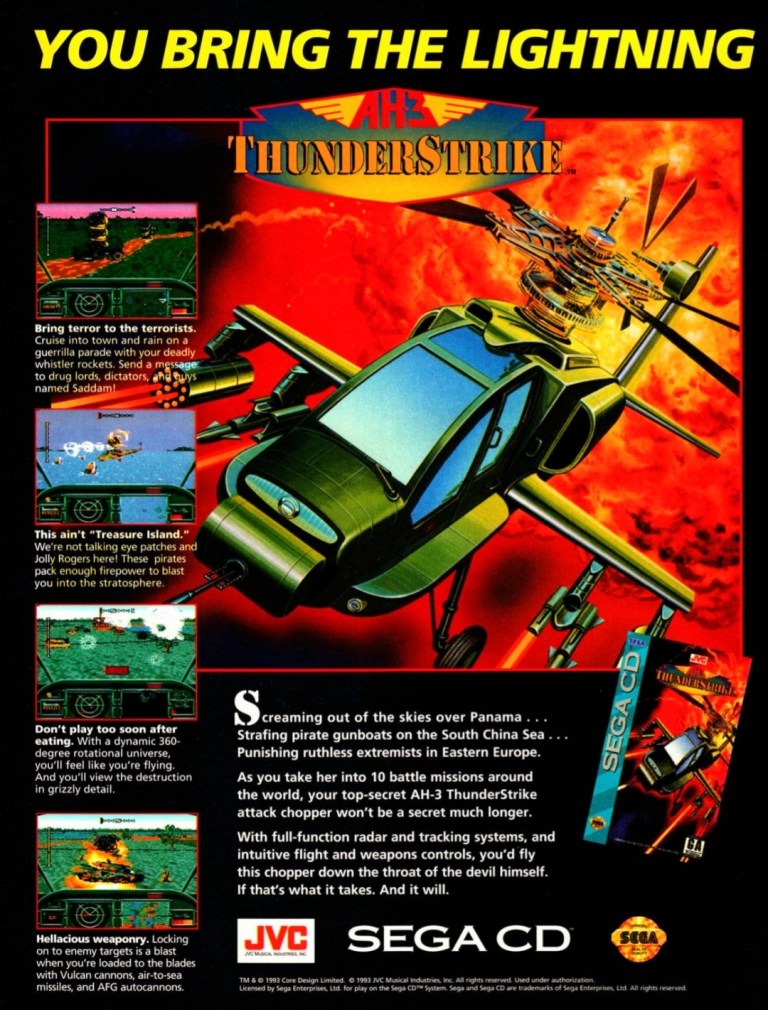
11. AH-3 Thunderstrike print ad

Captivating artwork, vibrant colors and orderly text descriptions made this an effective ad.

AH-3 Thunderstrike is one of the better games that was released on the Sega CD add-on (requires the Sega Genesis console) in 1993. Similar with MechWarrior 3050, the game was actually a port of Thunderhawk which itself was released on the Amiga and MS-DOS PC in 1992. The print ad showcased a captivating artwork (which was also used on the game’s box cover), a few screenshots and strategically placed text descriptions to sell the game. This ad still looks good.

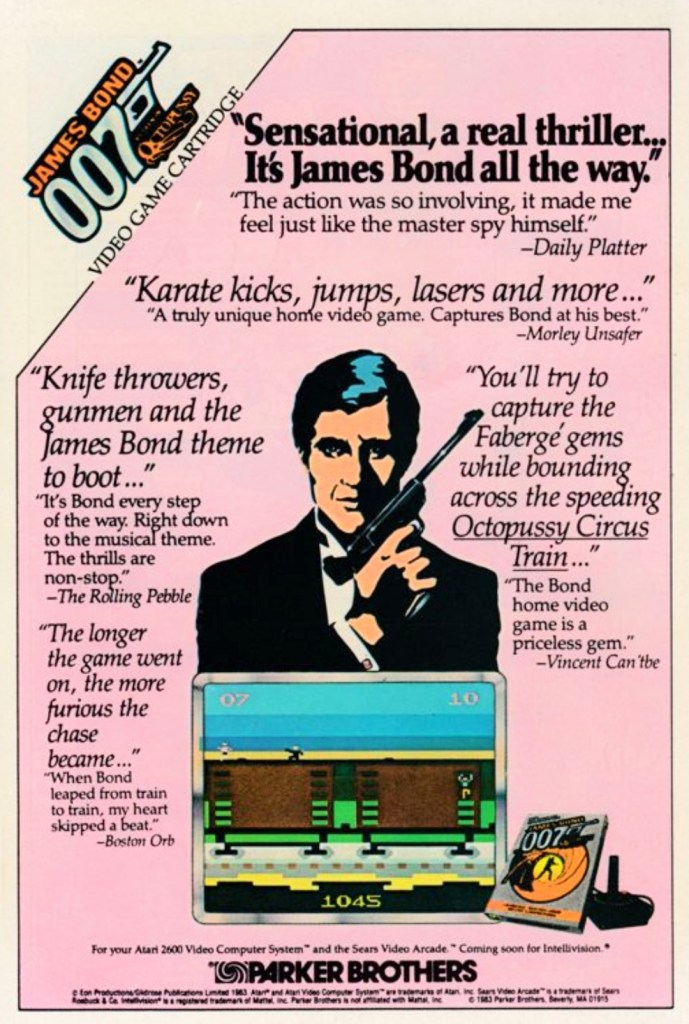
12. James Bond 007 print ad

This print ad appeared in many comic books in 1984.

This is a print ad I saw many times while reading comic books in 1984. James Bond 007 for Atari 2600 was an ambitious licensed video game as it featured levels that were inspired by missions in the James Bond movies Diamonds are Forever, The Spy Who Loved Me, Moonraker and For Your Eyes Only. Keep in mind that programmers back then had to deal with memory limitations and primitive tools to make games.

To promote the game, original art of Agent 007 was used which did not resemble the James Bond star of the time – Roger Moore. Strangely enough, the illustrated James Bond slightly resembled Timothy Dalton whose debut as 007 happened in 1987. Adding further zest to the add was the use of fictionalized quotes pointing to fantasized critics as sources (example: Vincent Can’tbe is a reference to real life critic Vincent Canby). The use of a pink background made this catchy ad look really odd.

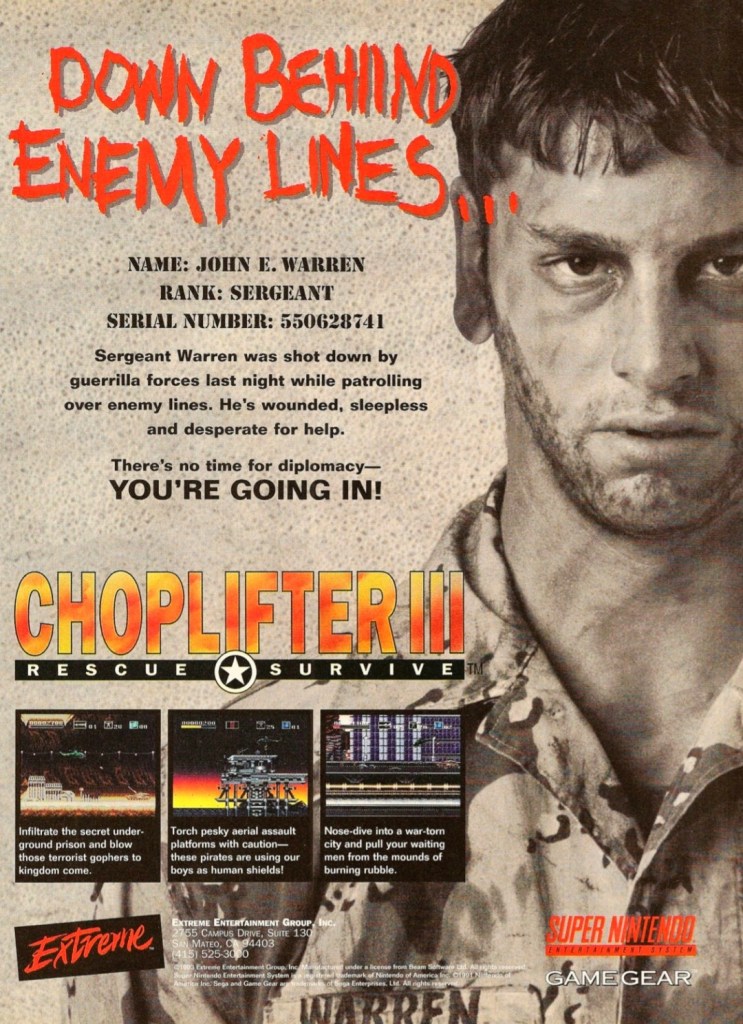
13. Choplifter III: Rescue Survive print ad

A captivating print ad that brought gamers’ attention to the Choplifter series again.

This print ad of Choplifter III: Rescue Survive has a striking look showing a military officer who needs your help as he has been stranded behind enemy lines. The presentation reflects the long-time tradition of the Choplifter game franchise which has been about piloting an armed helicopter to the opposition’s territory, shooting at bad guys and then rescuing the hostages or prisoners-of-war (POWs). The game eventually gathered mostly positive feedback from video game critics.

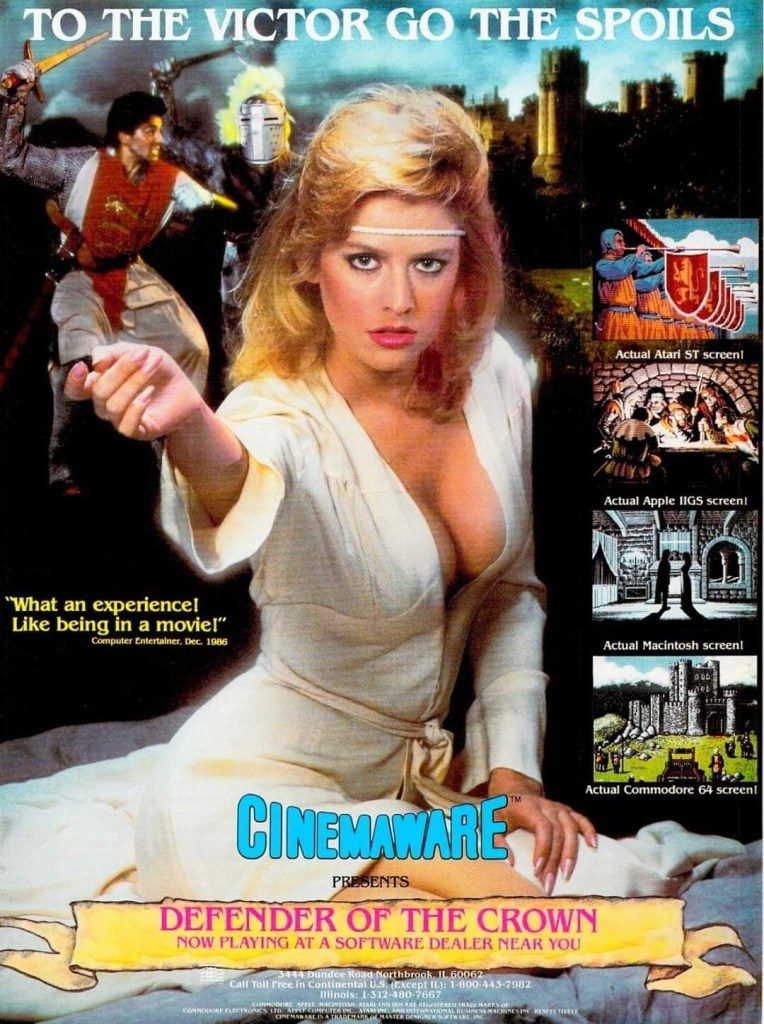
14. Defender of the Crown print ad

Cinemaware took a gamble with the visual concept of this print ad.

Released in 1986 for home computers, Defender of the Crown was made with a high level of quality backed with solid artistry. To capture gamers’ attention, Cinemaware came up with this print ad showcasing a pretty model looking somewhat seductive which reflects what happens in the game when players rescue a damsel in distress. The selected screenshots showed what the game looked like on different platforms, and the lower part of the ad made the game feel like it was a historical epic waiting to be discovered. Defender of the Crown eventually became a big hit with computer gamers.  

+++++

Thank you for reading. If you find this article engaging, please click the like button below, share this article to others and also please consider making a donation to support my publishing. If you are looking for a copywriter to create content for your special project or business, check out my services and my portfolio. Feel free to contact me with a private message. Also please feel free to visit my Facebook page Author Carlo Carrasco and follow me on Twitter at  @HavenorFantasy as well as on Tumblr at https://carlocarrasco.tumblr.com/ and on Instagram at https://www.instagram.com/authorcarlocarrasco