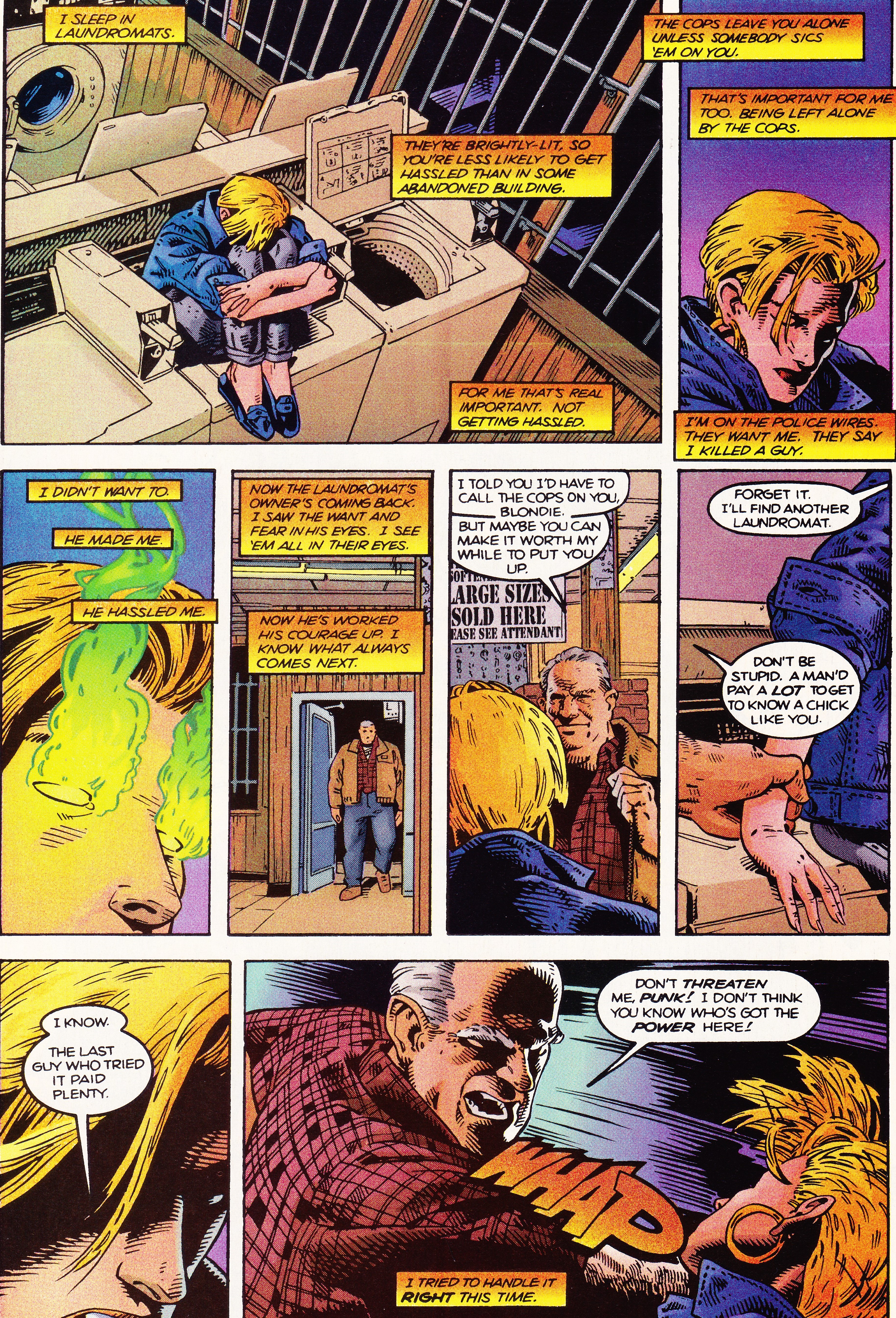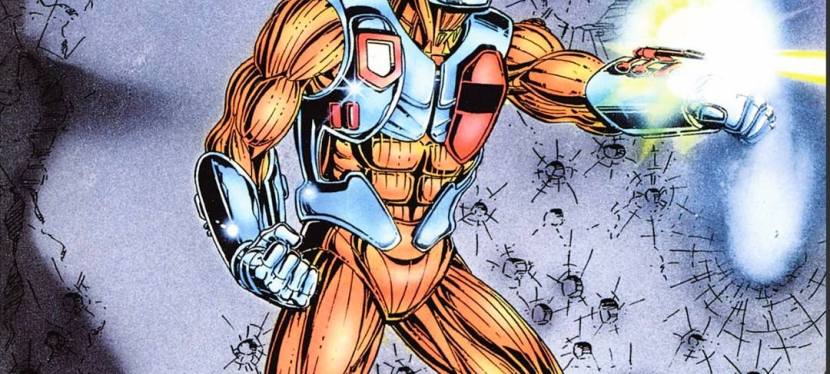
A Look Back at X-O Manowar #1 (1992)

Welcome back superhero enthusiasts, 1990s arts and culture enthusiasts, Valiant Comics fans and comic book collectors! Today we go back to the early 1990s to examine a key part of the Valiant Comics universe through a tale of X-O Manowar.

Valiant – under the banner of Voyager Communications – was established in 1989 by former Marvel Comics editor-in-chief Jim Shooter and Steven Massarsky. This happened following their failed attempt to acquire Marvel Comics. Early on, Valiant hired several creators from Marvel and together they brainstormed to create an all-new shared superhero comics universe which will have varied characters of originally creations as well as some licensed creations. In 1991, the company officially launched with titles of Magnus: Robot Fighter and Solar: Man of the Atom.

In 1992, the first wave of Valiant’s original intellectual properties were launched starting with Harbinger in January followed by X-O Manowar in February.

With those details laid down, here is a look back at X-O Manowar #1, published in 1992 by Valiant Comics with a story written by the late Jim Shooter and Steve Englehart with art by Barry Windsor-Smith.
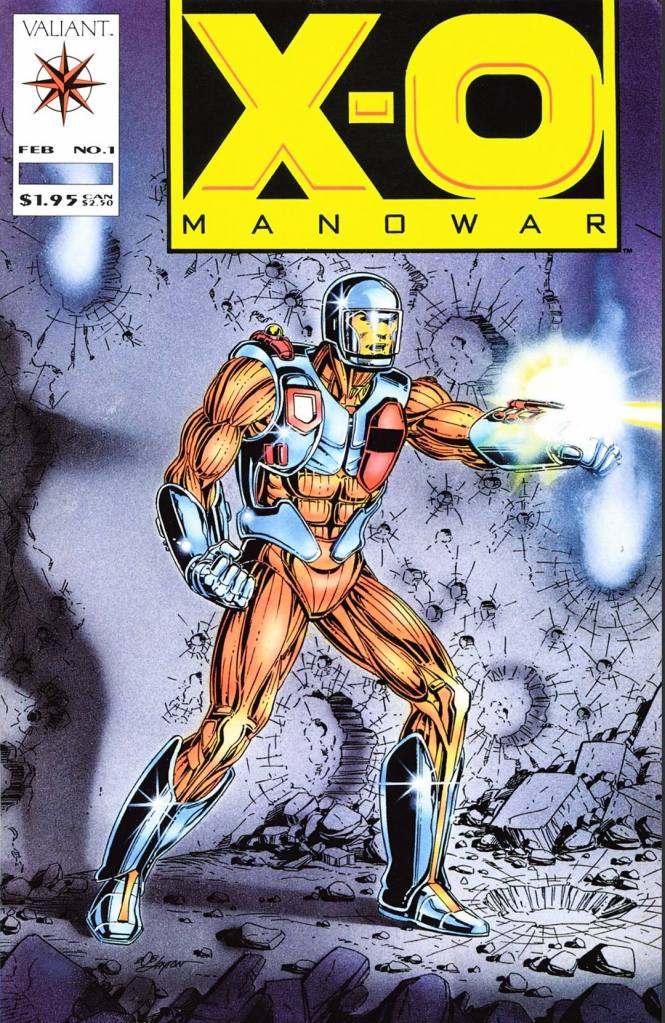
The cover.

Early story

The story begins inside an alien space ship traveling through deep space. A brave Visigoth warrior named Aric fights hard against Spider Aliens which he referred to as hard-skins. Even though he is naked and surrounded, he is determined to kill the aliens which have kept him as their slave and prisoner for many years.

Using the makeshift map marked by blood on his right palm, Aric makes his way through the ship until he finds a futuristic, metallic armor which puzzles him as he anticipated something useful in his desperate fight against the aliens. As a Spider Alien approaches him, Aric remembered the map giver advised him to take the ring which he does.

Suddenly, the armor moves to fit into him. Aric calls the armor a good skin and he realizes that it is stronger than fire-light. By instinct, Aric fires a powerful energy blast which not only kills two Spider Aliens but also damaged the hull of the space ship leading him into outer space.

When the space ship blows up near him, the armored Aric is pushed down into Earth’s atmosphere landing him on a snowy hill. He takes the armor off, leaves it behind and walks away fully naked. He still has the ring with him…  

Quality
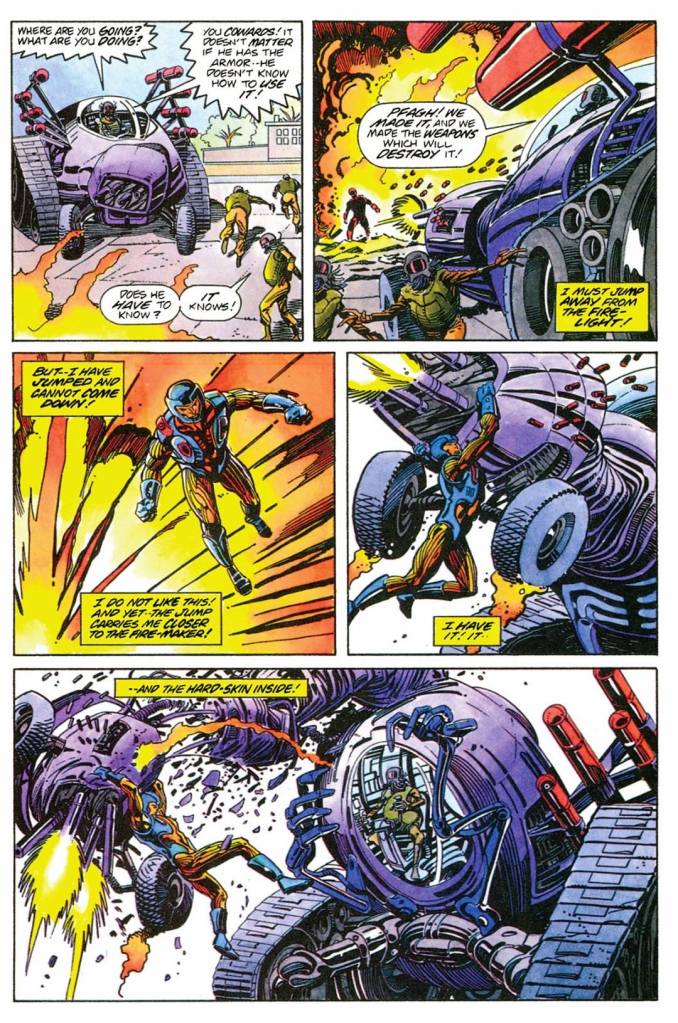
Even though he clearly has yet to fully master the use of the X-O armor, Aric is able to learn and adjust fast in a dangerous situation like this one.

Reading this Valiant comic book is indeed a great experience and it has indeed aged well. Right from the start, Aric is the protagonist designed to lead readers to get immersed into the story, follow his experiences, learn from his views and discoveries, and experience his development.

The story Jim Shooter and Steve Englehart came up with had a really strong structure and the narrative moved at a consistent medium-pace which allowed readers to follow the developments and learn the details.

As the titular hero, Aric here is a man from the distant past of Earth who got abducted by aliens and spent time as a prisoner and a slave in space for a number of years (note: time on Earth moved faster due to time dilation) before finally being able to free himself using his bravery and the armor.

Aric was written to be a man out of time and in this comic book, you will see how he struggles to not only survive but also adjust to life in 20th century Earth. He no longer has his tribe and the ancient world he lived in has long passed away. With the ring still with him, Aric holds the key and the ability to control the armor, and this makes the people of Orb Industries (a company serving as a front of the Spider Aliens who turned out to be operating in Earth for centuries) bothered. As such, Orb sees Aric as prey (who tasted power with the armor) and they have so much resources to commit mass murder and destruction just to get to him.  

The build-up of the tale gradually intensified as the narrative moved on. The good news here is that the pay-offs are very rewarding to see. The spectacle is a mix of explosive scenes, shooting and superhero action with a strong science fiction flavor.

Conclusion
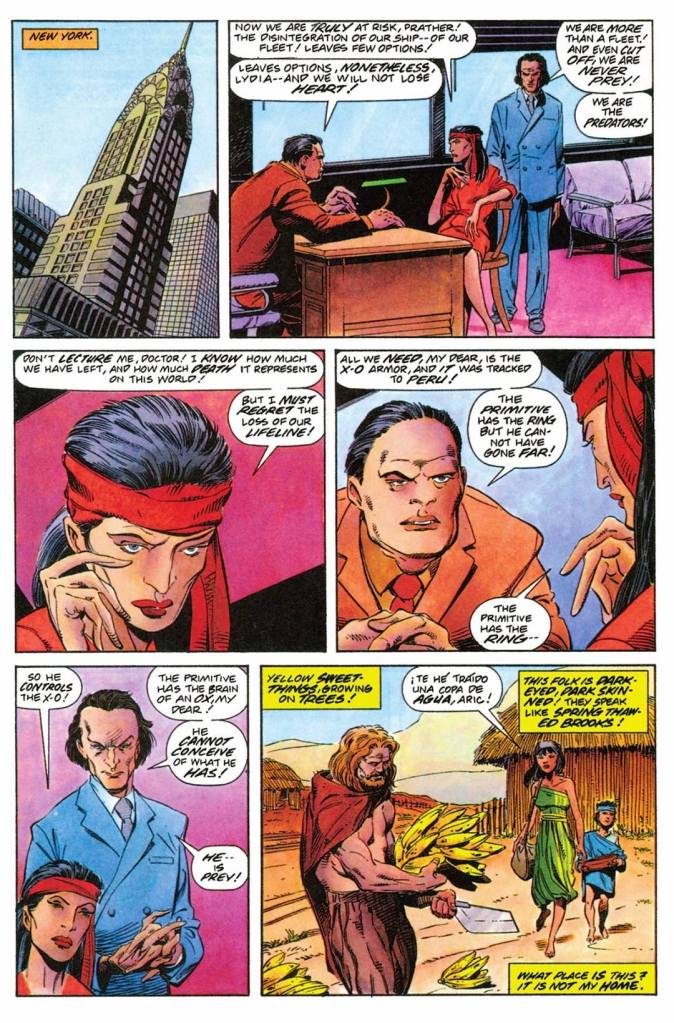
Orb Industries has the armor and they know Aric has the ring.

X-O Manowar #1 (1992) is absolutely a great comic to read and also one of the very best superhero introduction ever told. It has an adulterated tale that is believable and compelling to follow. By the time I reached the end of the story, Aric became a more relatable protagonist and I am convinced to follow the next issue. The story Shooter and Englehart came up with is indeed immersive and there Valiant shared universe itself became even more attractive to discover. There is no surprise that this comic book is one of the most significant comic book launches of Valiant.

Overall, X-O Manowar #1 (1992) is highly recommended!

+++++

Thank you for reading. If you find this article engaging, please click the like button below, share this article to others and also please consider making a donation to support my publishing. If you are looking for a copywriter to create content for your special project or business, check out my services and my portfolio. Feel free to contact me with a private message. Also please feel free to visit my Facebook page Author Carlo Carrasco and follow me on Twitter at @CarloCarrascoPH as well as on Tumblr at https://carlocarrasco.tumblr.com/ and on Instagram at https://www.instagram.com/authorcarlocarrasco
A Look Back at What If #62 (1994)

Welcome back superhero enthusiasts, 1990s arts and culture enthusiasts, Marvel Comics fans and comic book collectors! Today we go back to the year 1994 to examine an alternate story of the Marvel Comics shared universe chronicled through the What If monthly series.

There is a lot to be said about the origin of Wolverine. There was the tale of his Canadian origin and being born with claws inside him. There was also the tale of him encountering the Hulk in Canada. And there was also the famous storyline Weapon X (written and drawn by Barry Windsor-Smith in Marvel Comics Presents #72 to #84).

With those details laid down, here is a look back at What If #62, published in 1994 by Marvel Comics with a story written by Kurt Busiek and drawn by Ron Randall.

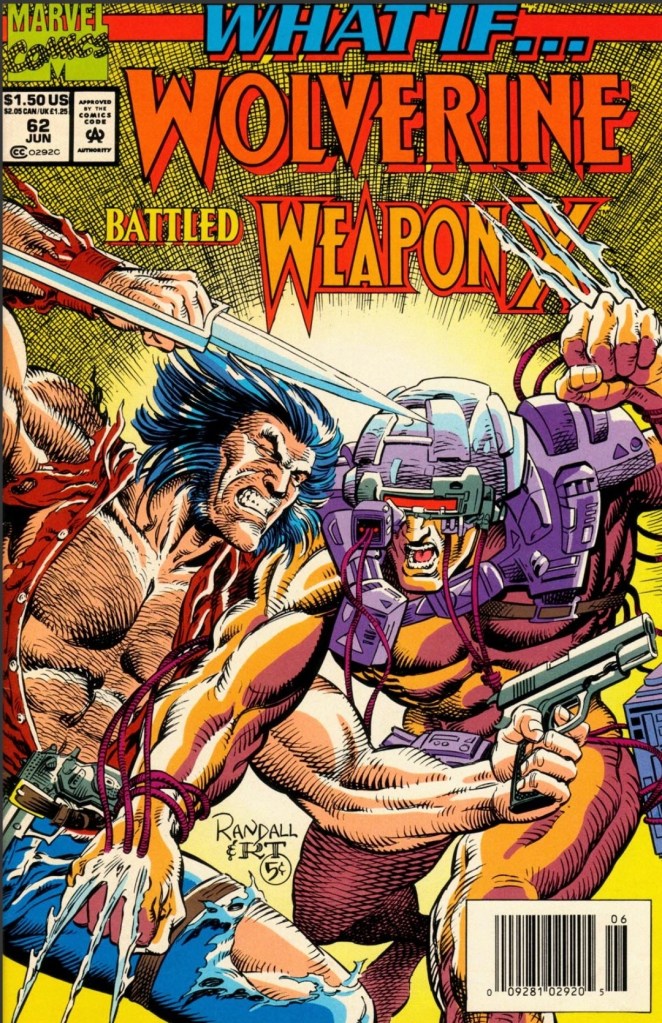
The cover.

Early story

The story begins in the when Logan (Wolverine) encounters armed men who try to overwhelm him. Logan easily knocks most of them out and leaves them behind by car. It turns out the armed men are agents of a secret organization called Weapon X which has been targeting Logan for their series of unethical experiments on abducted humans (the Weapon X Project).

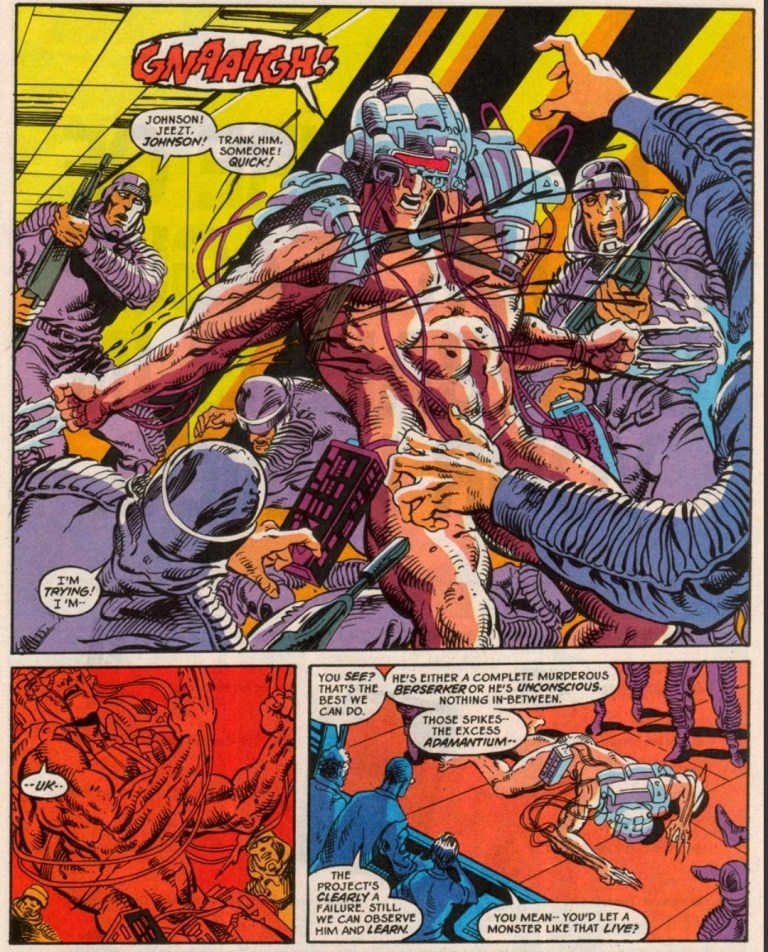
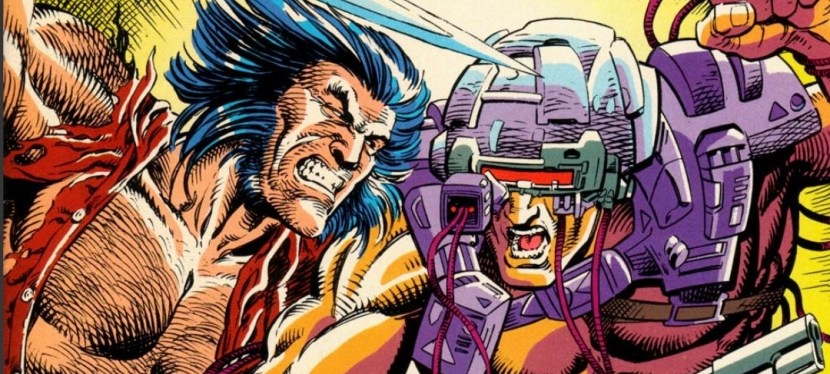
The organization is already dealing with problems regarding their live experiments. One living subject (with adamantium claws on his arms and some machinery on his head and shoulders) became a murderous berserker who cannot be reasoned with anymore. The subject is former Mounted Police Officer and Marine Guy Desjardins and Weapon X dropped him off at Department H.

James Hudson of The Flight took him in and officially refers to him as “Weapon X”. The live subject eventually broke loose, killed Dr. Langkowski and went to Kenora where he starts a killing spree…

Quality

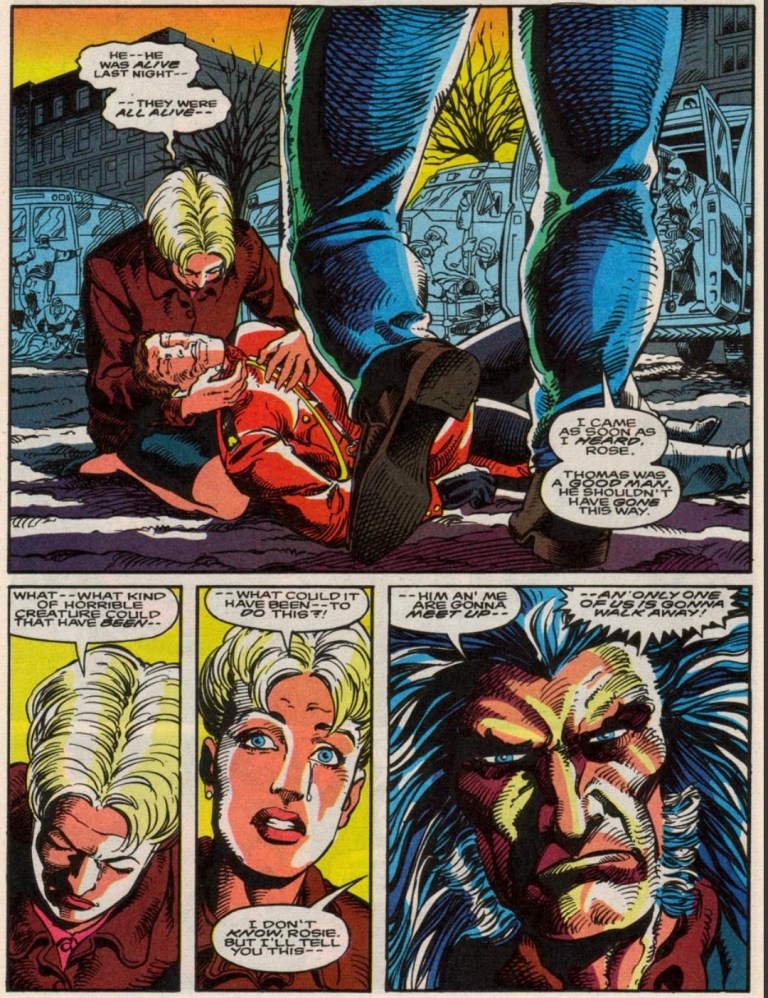
Logan arrives at the scene where the Weapon X biological experiment killed several people.

I want to point out that Kurt Busiek came up with the very believable portrayal Logan who is not Wolverine, not a member of the X-Men and not even the violent fighter in the plot. This is a story about a major scientific experiment of Weapon X that went terrible wrong resulting in their living subject (with adamantium claws and other features identified with Wolverine in the mainstream Marvel universe storyline of Weapon X) going way beyond their controller and impacting Canadian society negatively. The good news here is that the story by Busiek is very well written and nicely structured.

In his civilian form as Logan, Wolverine (as we often identify him) is not the fierce slasher he is often known as. Rather he is a former tool of the Canadian government who previously resigned and decides to get involved in response to the rampage caused by the Weapon X killing machine (Desjardins).

As Logan is no slasher (note: Wolverine #75’s big revelation about Logan’s claws had no influence on this comic book’s concept), he fights with guns and a knife backed with his extensive experience in grounded combat. In relation to this comic book’s concept, you will a captivating portrayal of Logan who is truly unconnected with the X-Men and there are certain character moments that you really have to read.

Along the way, Kurt Busiek’s story not only dramatizes the classic trope about man tampering with nature but also the potential scandal of Canada’s government having top secret unethical science experiments while developing their own superhero project in the form of The Flight. Back to Wolverine, the story pounced on the conflict between being human and being animalistic with sheer believability.

With regards to the artwork, Ron Randall exerted effort to recapture some of the aesthetics of Barry Windosor-Smith’s work on the Weapon X storyline of the Marvel Comics Presents comic books. As required by the script, the visual display of action is brutal to look yet does not go over the top (with regards to graphic violence) as the creators implemented restraint restraint on the display of blood and killing blows.  

Conclusion

A new Weapon X biological experiment gone wrong.

What If #62 (1994) is truly a great alternative tale to the established Weapon X storyline and it is also one of the more engaging portrayals of Wolverine unconnected with the X-Men. You will see Logan being more grounded with reality and you will also witness how he sees himself as a Canadian citizen who actually gets involved again with the government which he previously served. This a really compelling work by the Busiek-Randall duo.

Overall, What If #62 (1994) is highly recommended.

+++++

Thank you for reading. If you find this article engaging, please click the like button below, share this article to others and also please consider making a donation to support my publishing. If you are looking for a copywriter to create content for your special project or business, check out my services and my portfolio. Feel free to contact me with a private message. Also please feel free to visit my Facebook page Author Carlo Carrasco and follow me on Twitter at  @HavenorFantasy as well as on Tumblr at https://carlocarrasco.tumblr.com/ and on Instagram at https://www.instagram.com/authorcarlocarrasco
A Look Back At The Night Man #1

“I’m not who I was any more! I’m not who I’m going to be! I am the Night Man.”

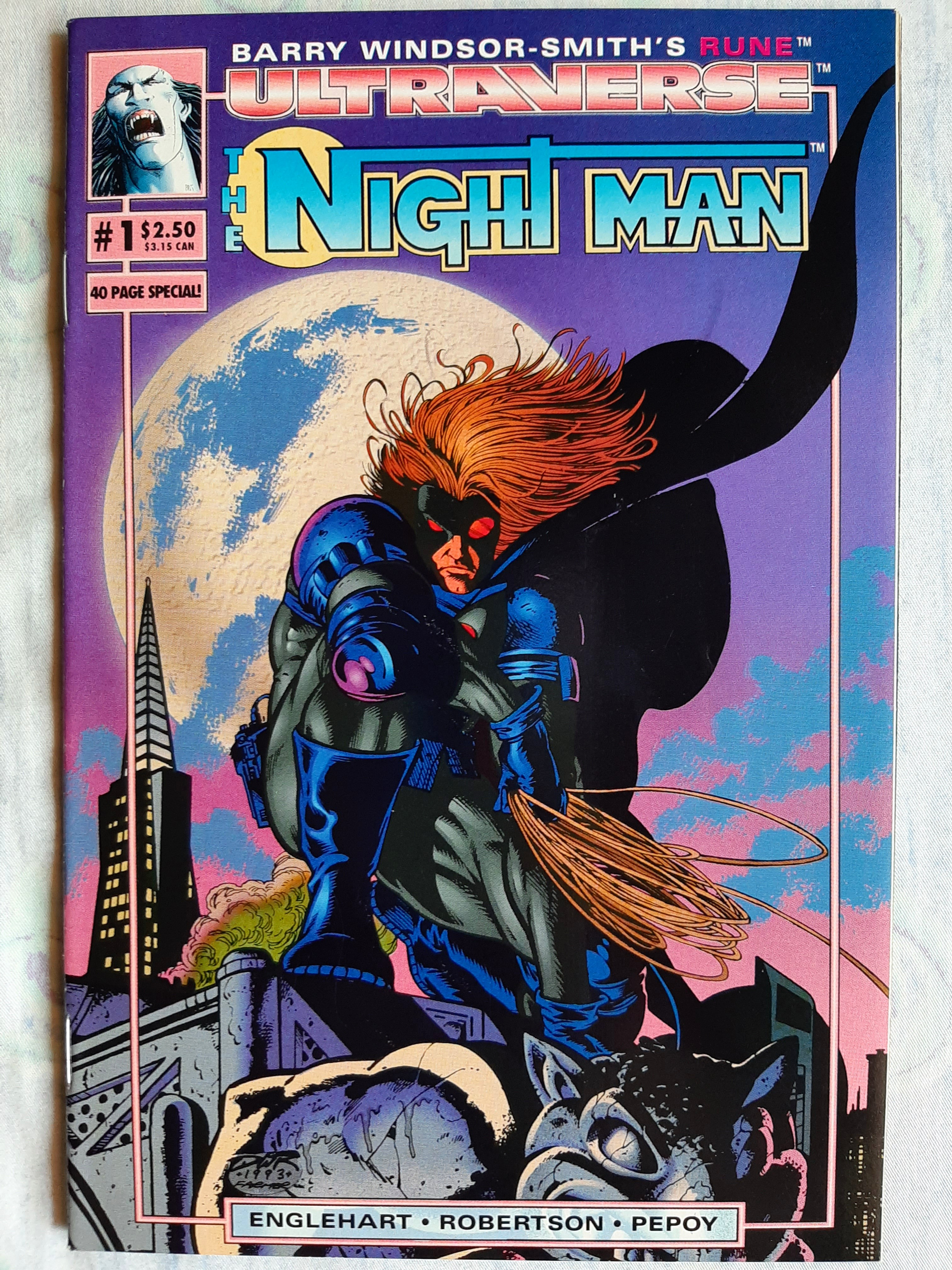
The above words were from the vigilante called the Night Man, a character co-created by comic industry veteran Steve Englehart (Avengers) and Darick Robertson for Malibu Comics’ Ultraverse franchise. Those words formally opened The Night Man #1 which I’m reviewing here.

To put things in perspective, a vigilante is described as a member of a volunteer committee organized to suppress and punish crime summarily (as when the processes of law are viewed as inadequate) according to Merriam-Webster dictionary. To put it broadly, the vigilante is a self-appointed doer of justice.


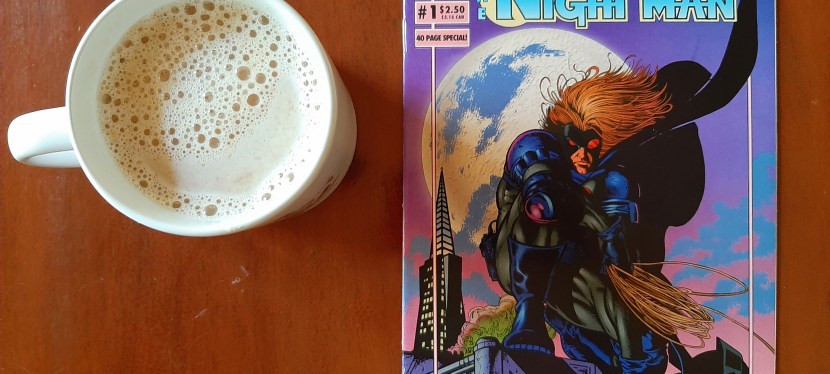
20190609_123613.jpg
The Night Man #1 cover.

Published in 1993 by Malibu Comics, The Night Man #1 tells the story of Johnny Domingo, a jazz player whose life changed in the pages of The Strangers #1 (also written by Englehart) in which he (while driving a vehicle) got by a cable car (that was just hit by an energy burst from the sky) resulting a piece of shrapnel embedding into his head.

Perceived by others to be doomed, Domino strangely survived and was well enough to resume his normal life. The difference is that the incident made his eyes dilated permanently which forces him to shield them from bright light.

Just as Johnny walks down the street, he learned he gained an uncanny ability when he hears, for the first time, the evil thoughts of a man (wearing a coat and a hat) planning to kill a lady on Saturday night.

20190609_123520.jpg
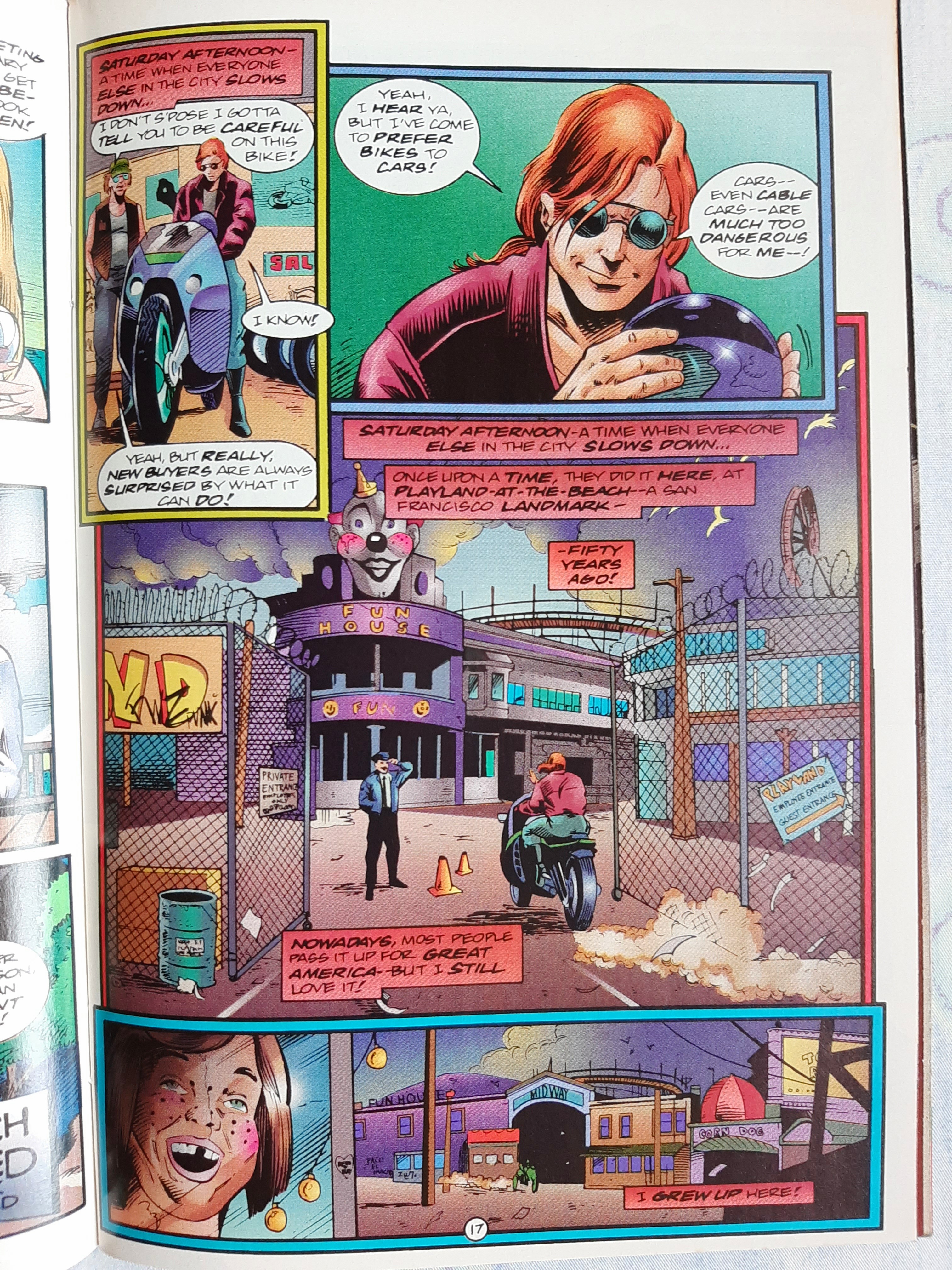
The Night Man in action!

Knowing what heard, Johnny wondered if he was crazy and what if some woman would truly be in danger. He then decides to follow the man with evil thoughts and watch his moves. Eventually Johnny followed the man to a restaurant by the beach and saw him talk with a pretty waitress named Ginger who agreed to a Saturday night date.

Carelessly Johnny approached the man too closely and got noticed, forcing him to run away and got chased until he got into a taxi that drove him away.

A short time later, Johnny starts his new career as a vigilante as the Night Man.

20190609_123544.jpg

In terms of storytelling, The Night Man #1 was nicely paced and never felt dragging. Within its twenty-eight pages of story, the comic book took gradual steps on introducing Johnny, how the incident with the cable car impacted him, how he became a vigilante for the first time and what went on in his mind as he became the Night Man. Given his rich experience as a writer, it is no surprise that Steve Englehart delivered a solid script.

It was also engaging to see Night Man being a determined yet very vulnerable vigilante. During his first mission in costume, he managed to beat a few bad guys but ended up getting hurt. This kinda reminds me of the vulnerability seen in the cinematic icon John McClane in 1988’s Die Hard.

The art by Darick Robertson, with ink work done by Andrew Pepoy, was nicely crafted. The civilian and vigilante looks of Night Man were well defined. The visualization of action nice and when Night Man gets hurt, he really looks in pain.

Going beyond Night Man, this comic book has a short preview (five pages, including credits) of Rune, a character created by Barry Windsor-Smith. Rune is described to be a voracious killer whose prey is all humanity and he is an alien leech who despoils the flesh of victims, culling their lifeblood into the essence of power. Rune is also a dying creature fighting for survival against the malignant disease burning inside of him.

Overall, The Night Man #1 is a worthy addition to your comic collection if you are interested in the Ultraverse (which is still kept in limbo by Marvel which acquired Malibu Comics in the mid-1990s) or are interested in vigilante-type superheroes. If you are obsessed with whatever Barry Windsor-Smith created, then the Rune stuff is a must-get.

The Night Man #1 is recommended.


Thank you for reading. If you find this article engaging, please click the like button below and also please consider sharing this article to others. Also my fantasy book The World of Havenor is still available in paperback and e-book format. If you are looking for a copywriter to create content for your special project or business, check out my services and my portfolio. Feel free to contact me as well. Also please feel free to visit my Facebook page Author Carlo Carrasco and follow me at HavenorFantasy@twitter.com


A Look Back At Ultraverse Premiere #0

What is the one thing I love most about superhero comics of the 1990s? It’s easy – the Ultraverse! Launched in 1993 by Malibu Comics during the late stage of what is now called the Comic Book Speculator Boom in Amerca, the Ultraverse was a line of superhero comic books featuring all-new characters and concepts which were the result of intense brainstorming by the founders of the Ultraverse.

Back in mid-1993 here in the Philippines, I first got to discover the Ultraverse through print ads in comic books and take note that the Internet was not yet publicly accessible. By June that year, I visited a comic book store in BF Homes, Paranaque and was astonished to see the store’s wall with multiple Ultraverse comic books on display. With my limited funds at that time, I only managed to buy Freex #1 and Mantra #1. By the end of the evening, I greatly enjoyed what I read and became an Ultraverse fan ever since.

As the months passed by, I enjoyed reading more Ultraverse comic books. What was also fun to read were the special double-sized UV comic books, the Ultraverse Double Feature comic books (flip comic books) and then there was the Ultraverse Premiere #0 comic book which had a cover of Mantra drawn by the great Jim Lee! This is the one comic book I am taking a look back at.

UVprem1
The front cover drawn by Jim Lee!

So what Ultraverse Premiere #0 and what made it special other than having a cover drawn by Jim Lee? Released in late 1993, the comic book is a showcase of separate stories featuring Prime, The Strangers, Rune, Hardcase, Mantra and Freex. It is also a showcase of the respective talents of a big mix of writers and artists that include Len Strazewski, Tom Mason, Gerard Jones, Steve Englehart, Barry Windsor-Smith, Rick Hoberg, James Hudnall, Mike W. Barr, Norm Breyfogle and others.

Given its release date, the stories served as preludes leading to the stories told in the launch comic books. For example, the Hardcase story shows Tom Hawke/Hardcase with his team called The Squad performing what turned out to be their last mission leading directly to the events that started Hardcase #1.

UVprem3
Tom Hawke/Hardcase with his lovely teammate during his time with The Squad.

The story of Mantra in the comic book however was presented more like a side-story. Lukasz is already shown as Mantra with her mystical powers and revealing outfit in place. The short story adds a nice perspective on the personality of Mantra as well as her burden of having to take care of a daughter.

The Rune segment meanwhile was a look at the making of the character involving Barry Windsor-Smith and his art. In the text written by Chris Ulm, what caught my attention was the following segment.

After writing up the concept in the Ultraverse bible, I shortly added Rune to “Fusion”, the story of a conspiracy to develop the ultimate biological weapon by a covert group called Aladdin.

UVprem4
This opening of the Freex short story starts very strongly.

Of course, there is also the fine story of Prime by Len Strazewski and Gerard Jones with great looking art by the late Norm Breyfogle. Remember in the early pages of Prime #1 when the overly muscular superhero claimed he saw the school coach touch the young girls? That got emphasized in the Prime short story in this comic book.

And then there is the one very memorable whole page art of Prime by Breyfogle.

UVprem2
I love this art of Prime by the late Norm Breyfogle.

The stories and art, in my view, were done with a lot of passion by the creators. They make Ultraverse Premiere #0 a worthy comic book to collect even though Marvel (which acquired Malibu Comics in the mid-1990s) screwed the Ultraverse and left the characters and concepts in limbo with no clear sign of any revival coming.

Last but not least, there is this great art of the Ultraverse characters done by Art Nichols at the rear of the comic book.

Ultraverse
The best back cover of any superhero comic book of the 1990s!

Art Nichols’ work on the back cover is fantastic and timeless in my view. It’s great multi-character art that truly captures the spirit of the Ultraverse!

If you are going out to buy old comic books, I strongly recommend Ultraverse Premiere #0.


Thank you for reading. If you find this article engaging, please click the like button below and also please consider sharing this article to others. Also my fantasy book The World of Havenor is still available in paperback and e-book format. If you are looking for a copywriter to create content for your special project or business, check out my services and my portfolio. Feel free to contact me as well. Also please feel free to visit my Facebook page Author Carlo Carrasco and follow me at HavenorFantasy@twitter.com