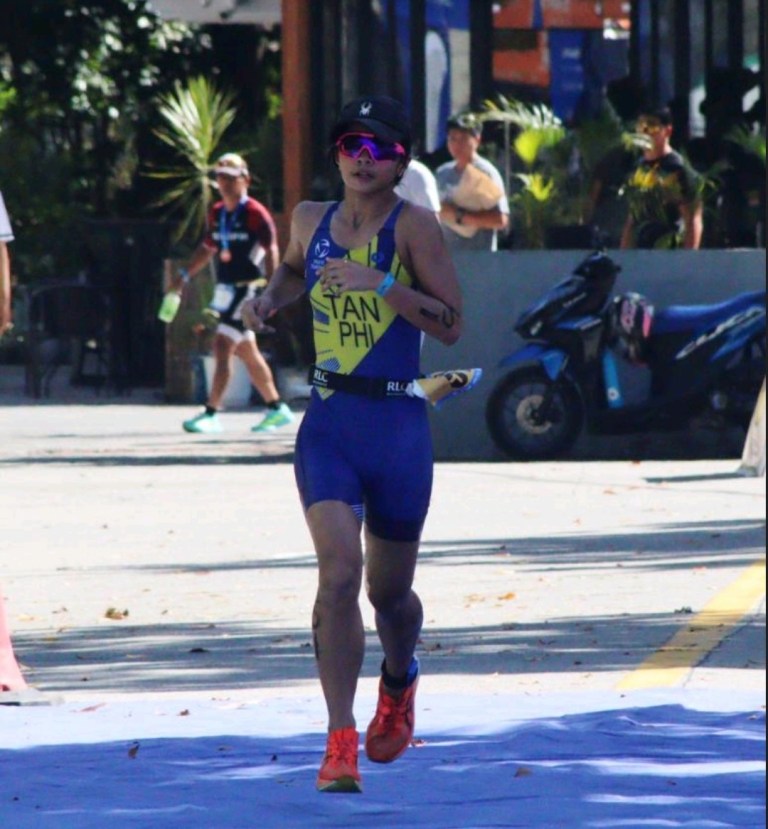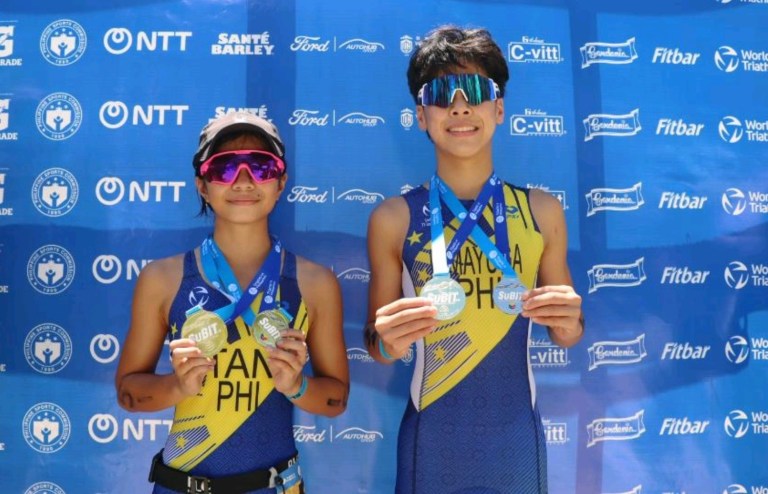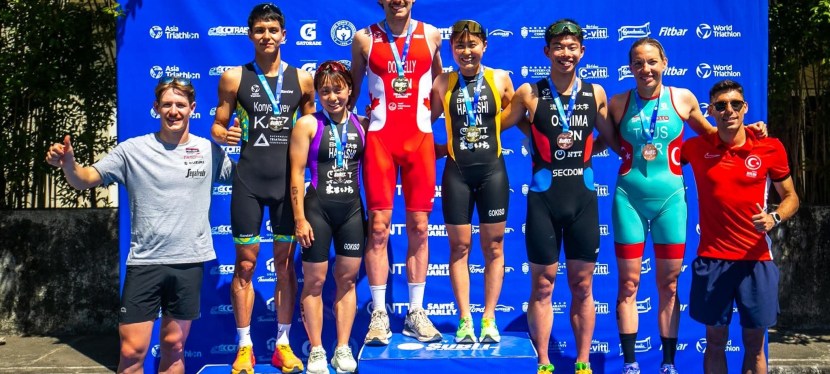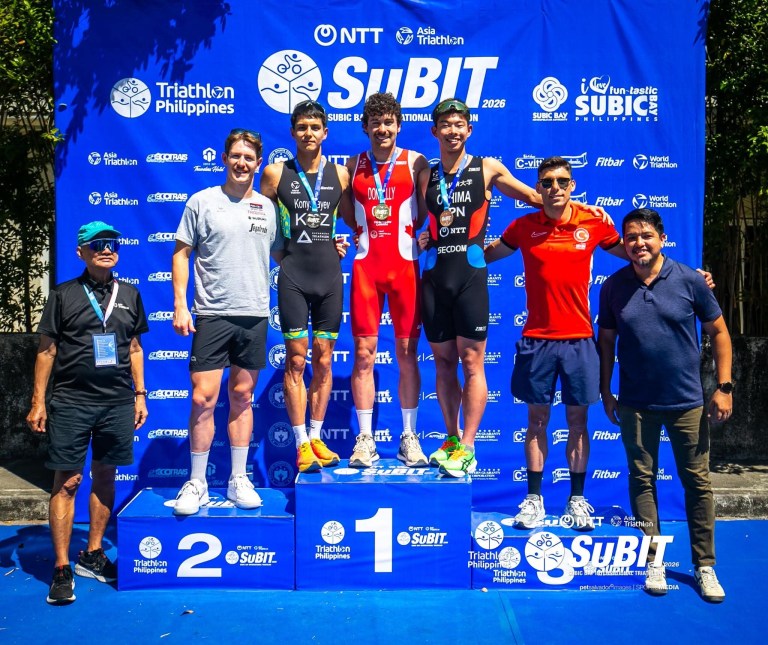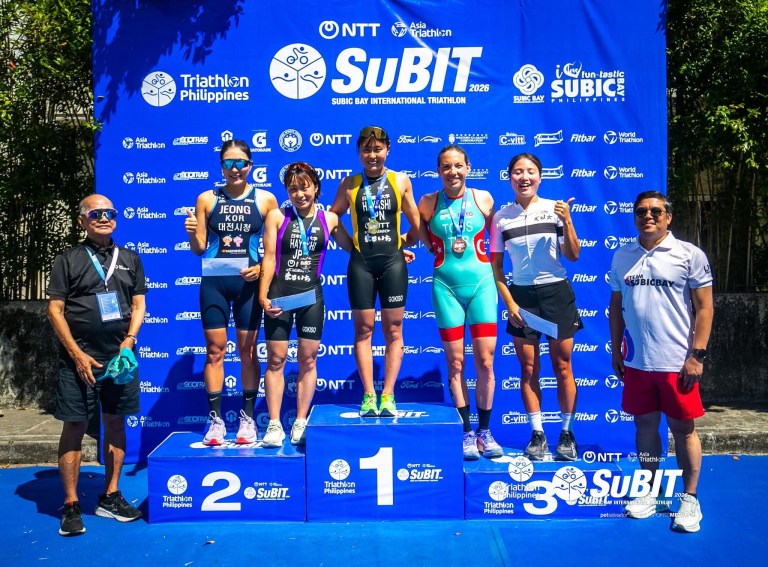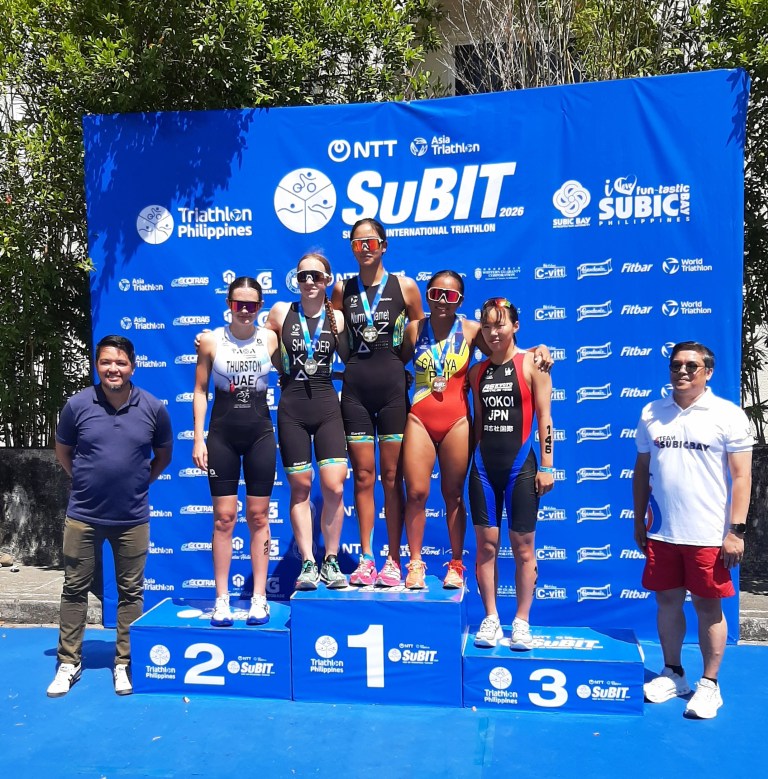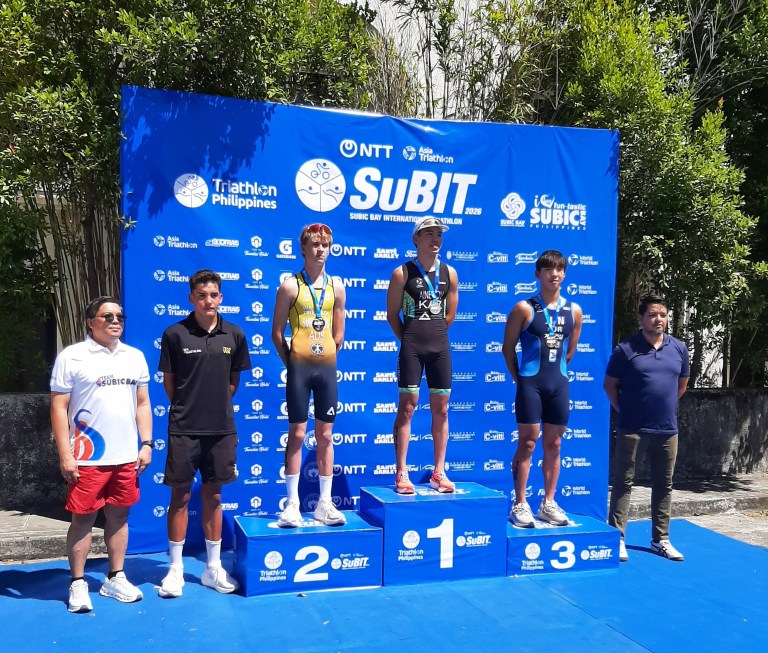
Takuto Oshima and Manami Hayashi, both from Japan, take a crack at extending their hold on their respective titles in the NTT Asia Triathlon Cup Subic Bay, more commonly known as the Subic International Triathlon (SuBIT), at Subic Bay Freeport Zone on May 2 (Saturday).
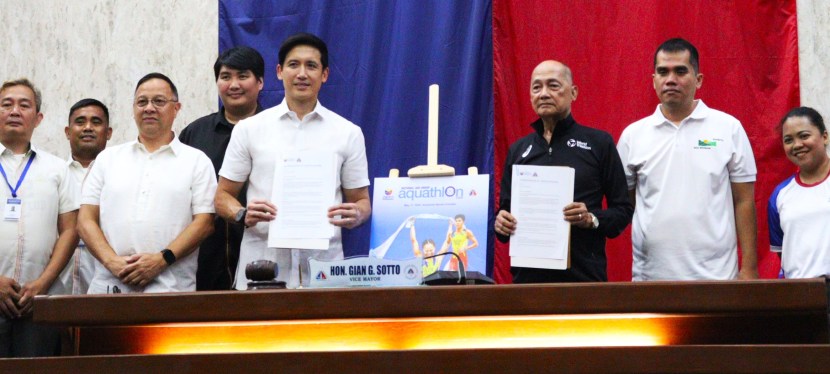
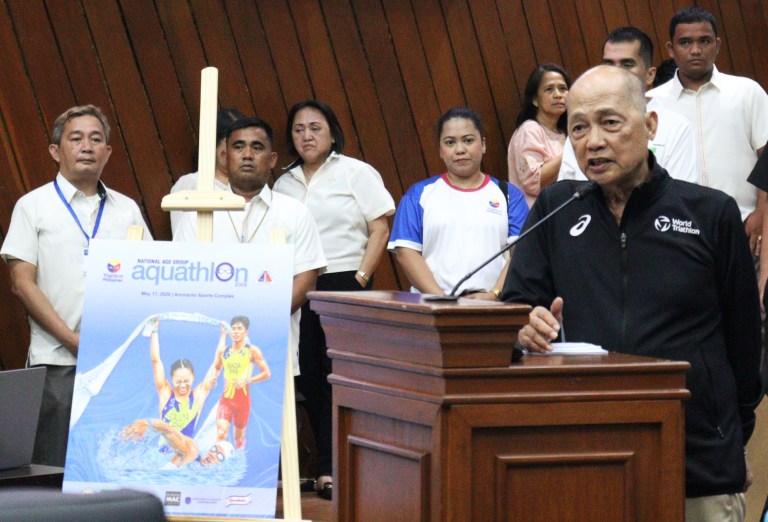
SuBIT’s 33rd staging carries with it the NTT Asia Triathlon Junior Cup for first time and henceforth the official Philippine National Triathlon Championships and qualifier for National Training Pool.
While Oshima (ranked #88 male in the world) and Hayashi (#36 female) will enjoy strong support from their compatriots, Oshima will face the strongest challenge from Canadian Liam Donnelly who is ranked higher by 15 notches.
Hayashi on the other hand is top-ranked among the female entries and the closest to her who are non-Japanese are Turkey’s Sinem Servera (#87) and USA’s Michelle Magnani (#91).
Organized Triathlon Philippines in cooperation with Subic Bay Metropolitan Authority, the oldest and longest running triathlon event in Southeast Asia is sponsored by Philippine Sports Commission, NTT, Gatorade (official hydration partner), Western Guaranty Corporation, C-Vitt and Subic Bay Travelers Hotel (official race hotel).
One of the more popular triathlons in Asia, this year’s SuBIT drew 92 elite triathletes and 31 elite juniors from 24 countries including Australia, Brazil, Bahrain, Canada, Cambodia, Guam, Hongkong, Indonesia, India, Japan, Kazakhstan, South Korea, Qatar, Thailand, Taipei, Turkey, Ukraine, USA, Singapore, UAE, Bangladesh, Samoa and Philippines.
Looming as top bets from Southeast Asia include 2025 Southeast Asian Games champion Indonesian Rashif Amila Yaqin, also 2023 SEAG silver medalist, in the male division.
French Cambodian Margot Garabedian, 2023 SEAG gold medalist and runner-up in the 2026 Asian Beach Games aquathlon last April 24, lead the ASEAN campaign in the distaff side.
The non-elite athletes in the field of nearly 500 will display their wares in the second day of action.
+++++
Note: This post was sourced from the official press release of the event from Triathlon Philippines.
Maynard Pecson bounced back remarkably from a dismal showing in the national age group duathlon championships two weeks back by landing on top of the heap in the duathlon event of Singapore T100 Triathlon.
Franklin Yee, Pecson’s erstwhile tormentor, trailed in 2nd overall with Robin Banados of Go For Gold completing the podium finish.
Top Filipina duathlete Merry Joy Trupa was dominant from start to finish among the females as she claimed 1st place overall and the gold medal in the female 20-24 age category.
Pia in Action (PIA) and the Philippine Sports Commission (PSC) sponsored the Team Philippines.
Pecson stowed the gold in the 25-29 bracket with Yee adding another gold in 20-24 category.
Pecson covered the 6K run/32k bike/3K grind in 1 hour 26 minutes and 28 seconds (splits: 21:26/ 51:45/11:53).
Yee checked in at 1:29:09 and Cebuano Banados (, also backed by Go-for-Gold program of Jeremy Go, 1:34:53).
Trupa clocked one hour 35 minutes and 56 seconds in outstripping all but 10 of the close to 600 hopefuls.
In an effort to ensure that the 2027 edition of the Southeast Asian Games (SEA Games) will fully comply with the standards of the World Anti-Doping Agency (WADA), host nation Malaysia will implement the World Anti-Doping Code in the regional games, according to a news report by VnExpress.
To put things in perspective, posted below is an excerpt from the news report of VnExpress. Some parts in boldface…
Malaysia is set to become the first Southeast Asian Games (SEA Games) host to implement the World Anti-Doping Code at the 34th edition next year.
President of the Olympic Council of Malaysia (OCM) Mohamad Norza Zakaria stated at a press conference on April 8 that the adoption of the code aims to ensure that the 2027 SEA Games fully comply with the World Anti-Doping Agency (WADA) standards, thereby enhancing the transparency and international standing of the Games.
Malaysia’s proposal was approved at the first meeting of the Southeast Asian Games Federation (SEAGF) for the 2025-2027 period, held on the same day.
The World Anti-Doping Code, first adopted in 2004, serves as the foundation for harmonizing policies, regulations, and activities to combat doping among sports organizations and authorities worldwide.
Mohamad Norza also said that the SEAGF had agreed to set May 8 as the deadline for national Olympic committees to propose additional sports for the 2027 SEA Games. After this date, proposals will be submitted to the Malaysian SEA Games Organizing Committee (MASOC) and the National Sports Council for consideration before being discussed at the next council meeting, expected in the coming months.
The 2027 SEA Games, featuring 38 sports, will be hosted across Sarawak, Penang, Johor, and Kuala Lumpur.
Let me end this post by asking you readers: What is your reaction to this recent development? Do you think the implementation of the World Anti-Doping Code will make Malaysia’s hosting of the 2027 SEA Games more credible and more transparent? What breakthroughs do you think will happen in the next SEA Games in relation to the anti-doping measures?
FRANKLIN Yee and Mary Joy Trupa defended their respective titles in the elite sprint category of the National Age Group Duathlon held at Villar City in Las Piñas City yesterday.
The 23-year-old Yee, a native of Bogo City, Cebu dominated the race (5km run-20km bike-2.5km run) in 56:20, improving the 57:13 he registered last year.
John Patrick Ciron of Iriga City, Camarines Sur finished second in 56.43, also an improvement as he clocked 57:26 to secure the bronze medal last year. Maynard Pecson of Baguio City ranked third with a time of 58:56.
“I’m happy to win again,” said Yee, a 4th year business management student at the University of San Carlos.
Pecson, the second-best Filipino finisher at the Ironman 70.3 in Davao two weeks ago, did not expect to medal.
“There are many strong competitors, especially the young ones,” said the 27-year-old Pecson, a graduating tourism management student from St. Louis University.
National Age Group Duathlon Elite Sprint Category champions Mary Joy Trupa and Franklin Yee pose in front of photographers. (photo credit – Triathlon Philippines)
In the women’s division, 23-year-old Trupa bagged the gold medal in 1:06:51.
Lady Samantha Jhunace Corpuz (1:10:12) and Dhana Victoria Seda-Lomboy (1:11:57) placed second and third, respectively.
“I’m glad that I won, the goal is to keep on improving,” said Trupa, who graduated from the Tarlac Agricultural University in Camiling with a agri-business degree last January.
“I can now focus on my training and competitions,” said Trupa, who together with Yee and Pecson, will join the T100 Singapore event on April 25-26.
Meanwhile, Hermogenes Branzuela (57:46) ranked first in the men’s junior elite division of the tournament supported by Villar City, Gatorade, Milo, C-Vitt and Philippine Sports Commission (PSC).
Eric Hechanova (1:01:35) was second followed by Anxader Gomez (1:03:06).
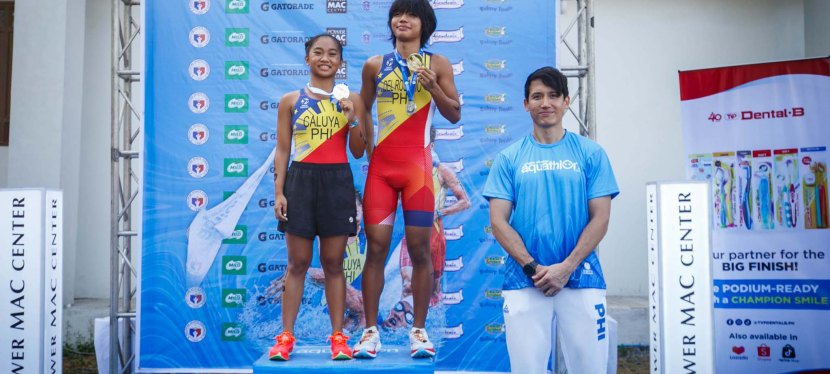
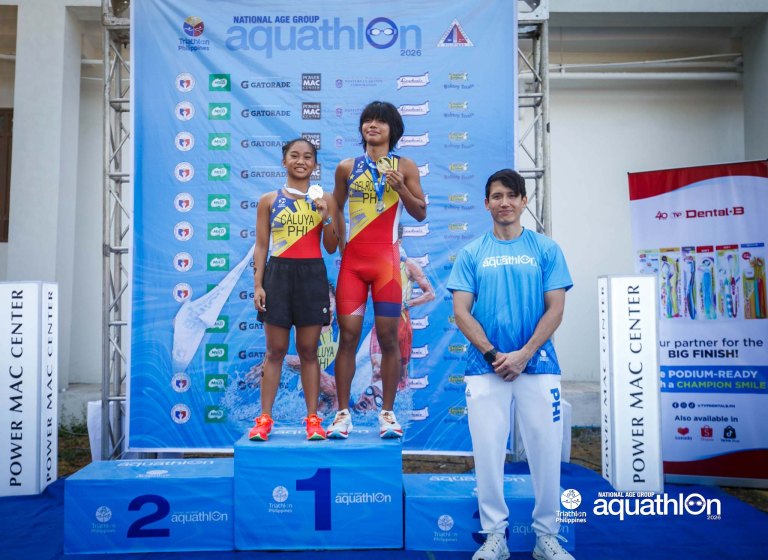
Anisha Eunice Caluya (1:09:54), Candace Marie Socito (1:15:58) and Scottie Lee Awitan (1:20:20) were the podium finishers in the women’s junior elite division of the tournament, which is part of Triathlon Philippines’ grassroots and talent identification program.
For more South Metro Manila community news and developments, come back here soon. Also say NO to fake news, NO to irresponsible journalism, NO to misinformation, NO to plagiarists, NO to reckless publishers and NO to sinister propaganda when it comes to news and developments. For South Metro Manila community developments, member engagements, commerce and other relevant updates, join the growing South Metro Manila Facebook group at https://www.facebook.com/groups/342183059992673
Subic Bay International Triathlon (SuBIT)—Southeast Asia’s oldest and longest running standard distance race—rolls on to its 33rd year at the Subic Bay Freeport Zone May 2 and 3.
This edition gains added significance as on top of being billed as 2026 NTT Asia Triathlon Cup it debuts as Asia Triathlon Junior Cup Subic Bay.
Considered one of Asia’s 10 best races, SuBIT has continued to demonstrate the strong partnership between Triathlon Philippines presided by Tom Carrasco, Asia Triathlon Senior Vice President, and Subic Bay Metropolitan Authority (SBMA) under Chairman and Administrator Eduardo Jose Aliño.
Philippine Sports Commission, NTT, Gatorade (official hydration partner), Western Guaranty Corporation, C-Vitt and Subic Bay Travelers Hotel (official race hotel) back up SuBIT.
More than a hundred elite athletes coming from at least 20 countries are expected to not only vie for honors but also scramble for World Triathlon and Asia Triathlon ranking points.
Japan, last year through Takuto Oshima (1:50:25) and Manami Hayashi (2:04:58) regained it’s dominance it last held in 2002 with Dayshaun Ramos (1:54:03, 14th) and Raven Alcoseba 2:14:16, 11th) emerging as top Filipinos.
Last year’s Technical Delegate Darnis Mahmud from Malaysia returns to lead the officiating team once again.
The usual fare of fast, action-packed racing across all levels: draft-legal sprint races for Elite and Junior Elite athletes, alongside Super Trikids (STK), Youth Super Sprint, and Sprint and Standard are on offer.
Elite & Junior Elite Races (AM); STK, Youth & Age Group Briefing (PM) are slated May 2 followed by STK, Youth & Age Group race day. Athletes and Coaches briefing on May 1 usher the races.
In a major move to ensure fairness in women’s sports competitions, to ensure the protection of women who participated in such events and to preserve its own integrity as a global sports governing entity, the International Olympic Committee (IOC) announced a brand new policy which will be applied on the 2028 Olympic Games.
To put things in perspective, posted below is an excerpt from the official announcement of the IOC. Some parts in boldface…
The International Olympic Committee (IOC) has announced a new Policy on the Protection of the Female (Women’s) Category in Olympic Sport and Guiding Considerations for International Federations and Sports Governing Bodies.
Following today’s approval of the policy by the IOC Executive Board, it will apply for the LA28 Olympic Games onwards, and is not retroactive.
The policy explains that, for all disciplines on the sports programme of an IOC event, including the Olympic Games and for both individual and team sports, eligibility for any female category is limited to biological females.
Eligibility for the female category is to be determined in the first instance by SRY gene screening to detect the absence or presence of the SRY gene.
Based on scientific evidence, the IOC considers that the presence of the SRY gene is fixed throughout life and represents highly accurate evidence that an athlete has experienced male sex development. Furthermore, the IOC considers that SRY gene screening via saliva, cheek swab or blood sample is unintrusive compared to other possible methods.
Athletes who screen negative for the SRY gene permanently satisfy this policy’s eligibility criteria for competition in the female category. Unless there is reason to believe that a negative reading is in error, this will be a once-in-a-lifetime test.
With the rare exception of athletes with a diagnosis of Complete Androgen Insensitivity Syndrome (CAIS) or other rare differences/disorders in sex development (DSDs) who do not benefit from the anabolic and/or performance-enhancing effects of testosterone, no athlete with an SRY-positive screen is eligible for competition in the female category at an IOC event.
Athletes with an SRY-positive screen, including XY transgender and androgen-sensitive XY-DSD athletes, continue to be included in all other classifications for which they qualify. For example, they are eligible for any male category, including in a designated male slot within any mixed category, and any open category, or in sports and events that do not classify athletes by sex.
Speaking about the policy, IOC President Kirsty Coventry said: “As a former athlete, I passionately believe in the rights of all Olympians to take part in fair competition. The policy that we have announced is based on science and has been led by medical experts. At the Olympic Games, even the smallest margins can be the difference between victory and defeat. So, it is absolutely clear that it would not be fair for biological males to compete in the female category. In addition, in some sports it would simply not be safe.”
She continued: “Every athlete must be treated with dignity and respect, and athletes will need to be screened only once in their lifetime. There must be clear education around the process and counselling available, alongside expert medical advice.”
Why was the policy developed? – The IOC administration was tasked with drafting a policy on the protection of the female category in an Olympic context that would reflect the findings of the Working Group on the Protection of the Female Category, various IOC consultations, and consideration of recent developments, including in international human rights law.
The policy was developed on the basis that it is universally accepted that providing for a female category is necessary to allow both males and females equal access to elite sport. It was guided by the IOC’s modern goals relating to equality (equal opportunities for female athletes in finals, on podiums and in championships); enhancing Olympic value (featuring both women’s and men’s finals in every sport); and visibility and inspiration (celebrating female athletes on the Olympic podium to inspire and represent women and girls worldwide).
What were the findings of the working group? – The working group reviewed the latest scientific evidence, including developments since 2021, and reached a clear consensus. Male sex provides a performance advantage in all sports and events that rely on strength, power and endurance. To ensure fairness, and to protect safety, particularly in contact sports, eligibility should therefore be based on biological sex. The group also agreed that the most accurate and least intrusive method currently available to verify biological sex is screening for the SRY gene, a segment of DNA typically found on the Y chromosome that initiates male sex development in utero and indicates the presence of testes/testicles.
For additional insight, watch the YouTube videos below.
Let me end this piece by asking you readers: What is your reaction to this development? Considering all the details included and emphasized, are you convinced the IOC justified its new policy? Were there any women’s sports events in your locality that allowed transgendered women (males who identified themselves as females) to participate over the past five years? Do you believe that transgendered women should be prohibited from joining women’s sports events?
Darrell Johnson Bada and Anisha Eunice Caluya were crowned champions in the junior elite division of the National Age Group Triathlon (NAGT) at the Subic Bay Freeport Zone yesterday.
The 17-year-old Bada clocked 56 minutes and 57 seconds to finish the sprint race covering 750m swim, 18km bike and 5km run. The bike stage has a distance of 20km but was reduced due to a road repair.
Euan Arrow Ramos placed second with a time of 58:57 followed by Peter Sacho Del Rosario (59:12).
“I always give my best in every race, the goal is to win and I’m glad I did it,” said Bada, a Grade 12 student at Subic Colleges in Olongapo City.
“Last year, I was in the second pack. This year, I was in the first pack and eventually won the title,” added the gold medalist at the 2025 NTT Asia Triathlon Cup Subic Bay (SuBIT).
Caluya, on the other hand, registered the best time of 1:07:09 in the women’s division. Christy Ann Perez (1:07:56) and Aira Danara Gregorio (1:08:38) were second and third, respectively.
Meanwhile, Cebuanos Kim Andrew Remolino and Matthew Justine Hermosa had a 1-2 finish in the men’s elite division of the event supported by the Philippine Sports Commission, Gatorade, Western Guaranty Corporation, Z-Bitt and SBMA Tourism.
Remolino clocked 56:17 followed by Hermosa (56:21) and Dayshaun Karl Ramos (56:44).
“I came here prepared and I’m happy with the result,” said Remolino, who together with Hermosa will join the PRISAA Regional qualifying on March 13-14 in Tagbilaran City, Bohol.
Dhana Victoria Seda-Lomboy (1:07:49) and Lady Samantha Jhunace Corpuz (1:08:42) were the top two finishers in the women’s division of NAGT, Triathlon Philippines’ grassroots and talent identification program.
The Subic Bay leg of the 2026 National Age Group Triathlon (NAGT) series was supported by the Subic Bay Metropolitan Authority (SBMA), Funtastic Subic, Terrace Hotel Subic Bay, and Fitbar.
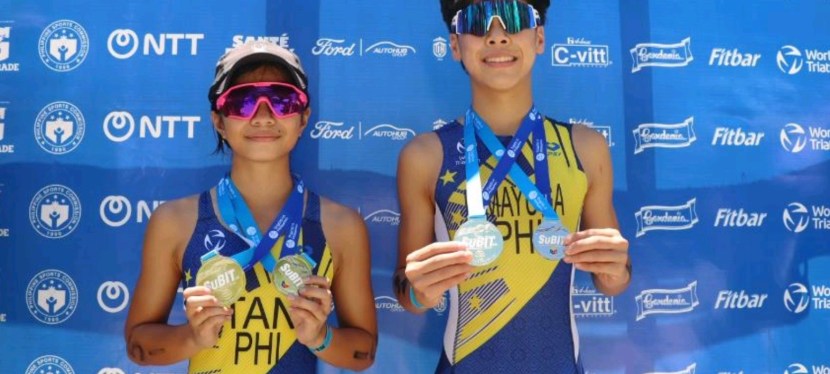
Diego Jose Dimayuga and Alaina Bouffaut of Get Coach’d Academy headed by Doray Ellis topped the super sprint U15 (13-15 years old) category of the opening leg of the 2026 National Age Group Triathlon (NAGT) series held at the Subic Bay Freeport Zone yesterday.
Dimayuga clocked 31:46 to win the gold medal in the boys division, while teammate Pio Mishael Gabriel placed second (33:31) followed by Joseph Ian Caluste of BE TRITANS (34:15).
Bouffaut and teammate Naomi Rozeboom also had a 1-2 finish in the girls division of the event sponsored by the Philippine Sports Commission, Gatorade, Western Guaranty Corporation, Z-Bitt and SBMA Tourism.
Bouffaut submitted the best time of 37:39. Rozeboom was second in 37.51, while Lauren Lee Tan placed third (37:55), beating Diego’s sister, Naomi Rosalie (37:56).
Dimayuga, the newest member of the national elite pool, and Bouffaut are scheduled to compete at the Asian Junior and U23 Championships on May 12-15 in Hong Kong.
In the super tri kids division, Marcus Jayden Balaquit of Wavemakers Swim Team and Danica Angodung were crowned champions in the 11-12 category.
Eli Juan Dela Cruz of Team Megawide and Ami Takei of Team Honu (9-10 years old); Ethan Geronimo of OJT and Francesca Bader Mendoza of Gas Coaching/Ace Seawolves (7-8 years old); and Jewel Hunter Galang and Ylianna Devera of TLTG (6 years old and under) were the other winners in the event organized by Triathlon Philippines (TriPhil) as part of its grassroots and talent identification program.
The Subic Bay leg of the 2026 National Age Group Triathlon (NAGT) series was supported by the Subic Bay Metropolitan Authority (SBMA), Funtastic Subic, Terrace Hotel Subic Bay, and Fitbar.
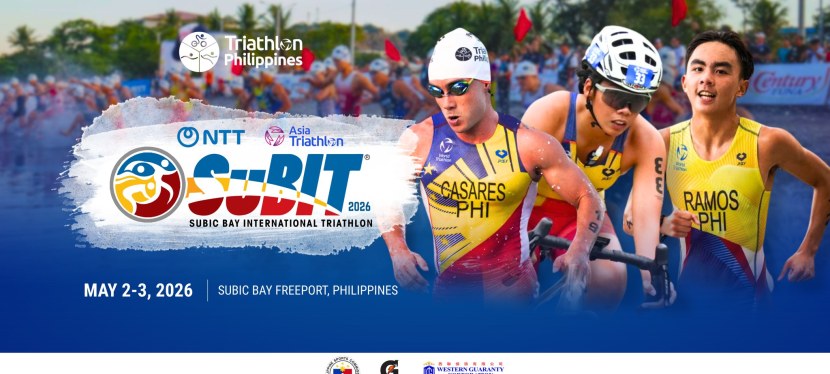
The Subic Bay International Triathlon (SUBIT) – the longest running international triathlon event of the Philippines – will be held on May 2 and 3, 2026, inside the Subic Bay Freeport Zone and already online registration (note: RaceYa account is required) is ongoing.
The event is formally referred to as the 2026 NTT Asia Triathlon Cup Subic Bay International Triathlon which will be organized by Triathlon Philippines (TriPhil) and is supported by the Philippine Sports Commission (PSC), Gatorade and the Western Guaranty Corporation.
Available details
On May 2, Sprint Distance (750 Meter Swim – 20 Kilometer Bike – 5 Kilometer Run) races will be held.
On May 3, the Standard Distance (1.5 Km Swim – 40 Km Bike – 10 Km Run), Sprint Distance, Super Sprint Distance (500 M swim – 13 Km Bike – 2.5 Km Run) and Super TriKids events will take place.
Race categories are the Elite, Age Group Sprint, Age Group Standard, Age Group U15 Super Sprint and Super TriKids
Registration fees
The Early Bird period of registration fees is now in effect and the fees are as follows:
Standard Distance – P6,000 plus online registration fees
Sprint Distance – P5,500 plus online registration fees
Super Sprint Distance – P4,500 plus online registration fees
Super TriKids – P3,500 plus online registration fees
The Early Bird period of registration will last until February 28, 2026.
Effective March 1, 2026, the Regular registration fees will take effect which are as follows:
Standard Distance – P6,500 plus online registration fees
Sprint Distance – P6,000 plus online registration fees
Super Sprint Distance – P5,000 plus online registration fees
Super TriKids – P4,000 plus online registration fees
The Regular period of registration will last until March 31, 2026.
Effective April 1, 2026, the Late registration fees will take effect which are as follows:
Standard Distance – P7,500 plus online registration fees
Sprint Distance – P7,000 plus online registration fees
Super Sprint Distance – P6,000 plus online registration fees
Super TriKids – P5,000 plus online registration fees
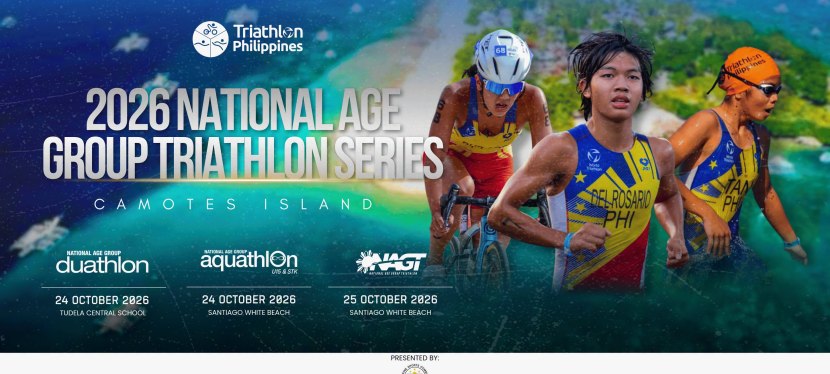
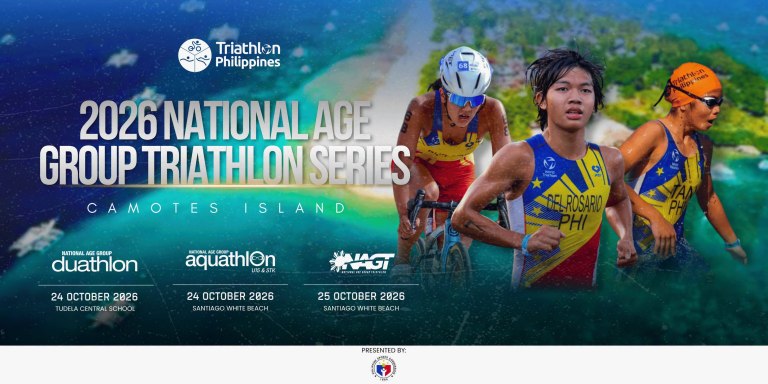
Online banner of the 2026 NTT Asia Cup Subic Bay International Triathlon.
Other key details of the event such as the final schedules, the race maps and more will be updated at the official event page at RaceYa.
This early, Malaysia is aiming at the top of the 34th edition of the Southeast Asian Games (SEA Games) which it will host in 2027, according to news report by VnExpress. Malaysia finished 4th place in the 2025 SEA Games held in Thailand with fifty-seven gold medals won.
To put things in perspective, posted below is an excerpt from the news report of VnExpress. Some parts in boldface…
Malaysia’s Ministry of Youth and Sports (KBS) has set the goal of the country being overall champions at the Southeast Asian Games (SEA Games) in 2027, which will be hosted by Malaysia.
Newly appointed Youth and Sports Minister Mohd Taufiq Johari said after taking office on Jan. 16 that the ministry, together with the National Sports Council (NSC), will strengthen cooperation with national sports associations and others to work towards that goal.
He expressed confidence that Malaysia could emerge as the strongest team at the SEA Games 2027, and voiced optimism about repeating the overall championship the country secured when it last hosted the event in 2017.
Taufiq praised the dedication and fighting spirit displayed by Malaysian athletes at the SEA Games 2025 in Thailand, saying he hoped they will maintain the same qualities when Malaysia hosts the Games in 2027.
He added that the KBS, together with the NSC and relevant agencies, have already drawn up detailed plans and a clear timeline, including the organization of workshops, to ensure medal targets can be achieved.
Apart from being a highly competitive nation in the SEA Games, Malaysia itself is the 2nd most visited nation of Southeast Asia in 2025. Hosting the SEA Games in 2027 could help it attract more foreign tourists in the short term.
Let me end this post by asking you readers: What is your reaction to this recent development? Are you convinced that the preparations initiated by Malaysia will pay off nicely during the 2027 SEA Games? Being the host nation, what sports do you think Malaysia could add to or subtract from the 2027 SEA Games? Do you feel excited about the next Southeast Asian Games?