In Japan, the raising of immigration fees could soon become a reality as the Japanese House of Representatives approved a bill to raise the ceiling on fees for immigration procedures, according to a news article by Jiji Press. This means the approved legislation will be reviewed and eventually be decided upon by the nation’s House of Councillors (upper chamber).
To put things in perspective, posted below is the entire article of Jiji Press. Some parts in boldface…
Japan’s House of Representatives on Tuesday passed a bill to raise the ceiling on fees for immigration procedures, making it likely to be enacted during the current parliamentary session ending in July.
The amendment to the immigration control and refugee recognition law was approved by a majority vote at a plenary meeting of the lower chamber of the Diet, with backing from the Liberal Democratic Party-led ruling camp and opposition parties including the Democratic Party for the People and Sanseito.
If the bill clears the House of Councillors, the upper chamber, the new fees would be implemented within this fiscal year, which ends next March.
Under the revision, the ceiling would be raised to 100,000 yen for permission to change residence status and extend the period of stay and to 300,000 yen for permanent residence permission. Actual fees would be determined based on a relevant ordinance within these limits.
Currently, the fee cap for the three categories is 10,000 yen.
Let me end this piece by asking you readers: What is your reaction to this development? Do you think it is likely the House of Councillors will approve the bill to raise immigration fees? How do you think this will impact foreign immigration in Japan in the long term? Do you think reforming immigration will become a huge part of Prime Minister Takaichi Sanae’s legacy?
For decades, Israel has long been the target of terrorists from the Middle East and also those from other parts of the world. Countless people died in acts of violence and destruction committed by the terrorists. Knowing this, the Knesset of Israel approved a bill that would legislate the death penalty for terrorists with the tally of 62 to 48, according to a news report by The Jerusalem Post.
To put things in perspective, posted below is an excerpt from the news report of The Jerusalem Post. Some parts in boldface…
The Knesset plenum passed a law mandating the death penalty for terrorists in Israel in final readings on Monday evening. The bill passed with 62 lawmakers in favor, 48 against, and one abstained.
Prime Minister Benjamin Netanyahu arrived at the Knesset to vote in favor of the controversial legislation, openly showing his support.
The bill, which was sponsored by far-right National Security Minister Itamar Ben-Gvir’s Otzma Yehudit Party, would, according to its proponents, act as a deterrent against terror and serve a measure of justice for victims of terrorism.
Ben-Gvir has pushed for the legislation since the start of his tenure as national security minister, repeatedly stating that its passage was a condition of Otzma Yehudit’s coalition agreement with Netanyahu.
Upon the bill’s passage, Ben-Gvir celebrated, stating, “Today, the State of Israel changes the rules of the game: anyone who murders Jews will no longer breathe freely or enjoy prison privileges.”
“This is a day of justice for the victims, a day of deterrence for the enemies. No more revolving doors for terrorists, only a clear decision. Those who choose terror choose death. Those who believe do not fear. The people of Israel live!” he added.
Discussions on the bill have been held in the plenum since morning, ahead of its second and third readings. The bill passed its first reading in November 2025 and has been debated in the Knesset National Security Committee since then.
The updated outline of the bill proposes that executions for terrorists would be carried out by hanging, implemented by the Israel Prison Service. The bill stipulates that a terrorist who intentionally kills a person as part of an act of terrorism will be sentenced to death.
From the outset, Ben-Gvir wanted an automatic death penalty for terrorism convictions, and that was the outline passed in the first reading. The revised version stipulates that a judge would decide between capital punishment and life in prison.
Terrorists from the West Bank, however, would still get the automatic death penalty, barring specific appeals.
The legislation has undergone several changes in recent weeks to soften some of its technical aspects, following criticism that certain provisions were too harsh or unrealistic.
The bill had also originally proposed carrying out executions by lethal injection before switching to hanging. Under the current outline, the execution would be carried out within a defined time frame of up to 90 days from the date of the sentence.
Strong opposition to the bill has also come from lawmakers within the Arab parties in the Knesset. Ben-Gvir has clashed with them on numerous occasions as the bill was being developed.
Yisrael Beytenu Party leader Avigdor Liberman voted in favor of the bill after his stance had been unclear. On Sunday, it was reported that his party would only vote in favor of the bill if Netanyahu and Arye Deri, leader of the Shas Party, arrived to vote.
Opposition leader Yair Lapid (Yesh Atid) stated that he opposed the bill during remarks at the plenum. “What is on the Knesset table here is not a law. It is a distorted public-relations stunt, cynically using the justifiable pain and anger of Israeli citizens for political gain,” he said.
Blue and White Party leader Benny Gantz also voted against the bill.
The haredi Sephardic Shas Party stated on Monday that it would vote in favor of the death penalty bill at the directive of the Council of Torah Sages, after various changes were made to it.
Content of the death penalty bill – Representatives from several Jewish human rights organizations have attended multiple committee discussions, voicing opposition to the bill on ethical grounds.
After the Knesset National Security Committee advanced the bill last week for its final readings, Ben-Gvir called it a “historic moment of justice” and vowed to “continue to lead an uncompromising policy against terrorism.”
The Knesset committee has held marathon discussions on the bill to advance it rapidly, with the discussions continuing amid the war. Opposition lawmakers have sharply criticized the coalition for advancing controversial legislation unrelated to the war during Operation Roaring Lion.
MK Zvika Fogel (Otzma Yehudit) opened remarks at the plenum on the bill on Monday, saying that “This law is not about revenge or rage, but about the responsibility of a state towards its citizens, the responsibility of leadership towards human life.“
For other updates about what has been going lately in the Middle East, watch the YouTube news videos below.
Let me end this piece by asking you readers: What is your reaction to this development? Do you think the approved death penalty bill for terrorists has been long overdue? Do you know anyone who was killed by Islamic terrorists?
A few months ago in the United States, the Keep Call Centers in America Act of 2025 was filed and it really caused a disturbance on the business process outsourcing (BPO) industry and the Department of Trade and Industry (DTI) here in the Philippines. Recently a member of Congress here in the Philippines filed a resolution to initiate talks with the US to discuss call center reshoring and seek exemptions, according to a BusinessWorld news report.
Coincidentally, the proposed resolution was filed by a Congressman from the province of Cebu where I once worked as a call center agent a very long time ago. I never returned to the call center industry.
To put things in perspective, posted below is an excerpt from the news report of BusinessWorld. Some parts in boldface…
A CEBU legislator filed a resolution on Monday urging the government to initiate talks with the US over plans to bring the call-center industry back from overseas.
The Trade and Foreign Affairs departments should “immediately initiate dialogue” with their US counterparts to seek exemptions for US business process outsourcing (BPO) firms operating in the Philippines, according to Cebu Rep. Vincent Franco D. Frasco, who filed House Resolution No. 386.
“The urgency of the situation demands proactive and high-level diplomatic action and trade engagement to ensure that the interests of Filipino workers and US-affiliated firms operating in the Philippines are protected from the US bill’s unintended economic consequences,” he said, referring to US legislation known as the proposed Keep Call Centers in America Act
The US bill could penalize US companies for outsourcing call center operations by ruling them out for federal grants and loan guarantees. The Philippines call center industry employs about 1.7 million, according to the House resolution.
Mr. Frasco described the US measure as posing a “direct threat” to the stability of the BPO industry and may discourage American firms from setting up shop in the country, leading to job losses and loss of investor confidence.
Let me end this post by asking you readers: What is your reaction to this development? Do you think Congressman Frasco’s proposed resolution will be approved soon? Do you think the DTI will be able to meet with their American counterparts and be able to secure exemptions? Do you think the Keep Call Centers in America Act of 2025 is very dangerous to the BPO industry of the Philippines? How many people in your local community are working in call centers right now? When do you think the Keep Call Centers in America Act of 2025 will be passed by US Congress and be sent to President Donald Trump for final approval?
In his latest move, Parañaque City 2nd District Representative Brian Yamsuan filed a proposal in Congress that aims to help more than 230,000 barangay health workers nationwide in the forms of monthly honoraria, health, and educational benefits, according to a Manila Bulletin news report.
To put things in perspective, posted below is an excerpt from the news report of the Manila Bulletin. Some parts in boldface…
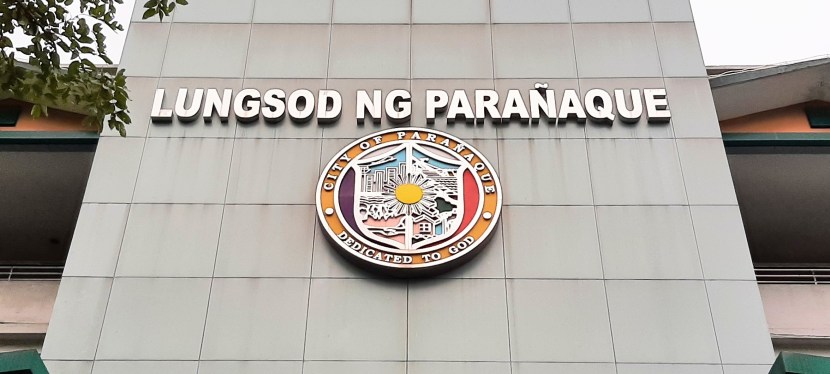
Parañaque City 2nd district Rep. Brian Raymund Yamsuan is pursuing in the 20th Congress a measure that aims to provide over 230,000 barangay health workers (BHWs) nationwide with monthly honoraria and other forms of monetary, health, and educational benefits.
Yamsuan said he filed House Bill (HB) No.3215 for this purpose, in fulfillment of his promise to BHWs in the 2nd district, and in recognition of the indispensable role that they and their fellow barangay health workers play as community frontliners in the country’s healthcare system.
“Matagal na pong naghihintay ang ating mga barangay health workers, kasama ang 180 BHWs sa second district ng Parañaque, ng mga benepisyo at proteksyon na nararapat lamang na ipagkaloob sa kanila,” said the second-termer.
(Our barangay health workers, including the 180 BHWs in Parañaque’s 2nd district, have waited far too long for the benefits and protection that they truly deserve.)
“Bilang tugon sa kanilang panawagan, naghain po tayo muli sa Kongreso ng panukalang batas para sa Magna Carta for Barangay Health Workers. Layunin po ng bill na sila ay makapagtrabaho nang may dignidad at may sapat na mga benepisyong angkop sa kanilang di-matatawarang kontribusyon sa pagpapalakas ng ating healthcare system,” he added.
(In response to their call, we have filed anew a bill in Congress which aims to establish a Magna Carta for Barangay Health Workers. The bill’s goal is to ensure that they are able to work with dignity and with the benefits befitting their invaluable contributions in strengthening our healthcare system.)
Under HB No.3215, BHWs registered with the local health boards where they are assigned shall receive a monthly honoraria of not less than P3,000, while those who are accredited shall be entitled to honoraria of not less than P5,000 per month. Both rates are subject to adjustments based on the current consumer price index.
Accredited BHWs are also entitled to a cash gift of not less than their minimum monthly honoraria, to be given every December.
Yamsuan’s measure also provides accredited BHWs with transportation allowance of not less than P1,000 per month, and insurance coverage and benefits from the Government Service Insurance System (GSIS).
BHWs exposed to risks to their health, life and other threats in the exercise of their responsibilities will receive a hazard allowance of not less than P1,000 per month under the bill. Those assigned in unserved or underserved barangays shall receive a subsistence allowance of not less than P100 per day.
For accredited BHWs who have continuously and satisfactorily served for at least 15 years, the bill provides for a one-time gratuity cash incentive of not less than P10,000 in recognition of their loyalty and dedication to service.
The bill also entitles accredited BHWs to training, continuing education and career enhancement programs, as well as free legal services in cases filed against them in connection with the performance of their duties.
Yamsuan’s measure also provides health benefits for BHWs, which include free medical care, mandatory and immediate Philhealth membership as indirect contributors, and emergency medical assistance not exceeding P5,000. They are also entitled to maternity, paternity, and solo parent leaves with pay under the bill.
For accredited BHWs who have rendered five years of continuous service, the bill proposes that they be granted second-grade civil service eligibility.
Let me end this post by asking you readers: What do you think about this recent development? If you are a resident of Parañaque, do you like what Congressman Brian Yamsuan is doing with to help barangay health workers nationwide? How many members of your local community work as barangay health workers?
For more South Metro Manila community news and developments, come back here soon. Also say NO to fake news, NO to irresponsible journalism, NO to misinformation, NO to plagiarists, NO to reckless publishers and NO to sinister propaganda when it comes to news and developments. For South Metro Manila community developments, member engagement, commerce and other relevant updates, join the growing South Metro Manila Facebook group at https://www.facebook.com/groups/342183059992673

Following the 4th State of the Nation Address (SONA) of Philippine President Ferdinand “Bongbong” Marcos, Parañaque’s 2nd District Representative Brian Yamsuan seeks passage of House Bill No. 224 (Equal Maternity Protection Act) which is one of his more notable proposals in the House of Representatives, according to a Manila Bulletin news report.
To put things in perspective, posted below is an excerpt from the news report of the Manila Bulletin. Some parts in boldface…
Parañaque City 2nd Rep. Brian Raymund Yamsuan has highlighted the significance of one of his pet bills in the 20th Congress following President Marcos’ his fourth State of the Nation Address (SONA) earlier this week.
In a statement Wednesday, July 30, Yamsuan sought the passage of House Bill (HB) No.2240, or the Equal Maternity Protection Act. It aims to provide maternity cash benefits for women workers in the informal sector.
Specifically, the measure seeks “a one-time direct maternity cash benefit per delivery” to informal sector female workers “equivalent to the prevailing minimum wage rate in their region of residence multiplied by 22 days”.
Once the bill becomes law, a female worker in the informal economy who lives in Metro Manila where the prevailing minimum wage rate is P695 will receive P15,290 from the DSWD after giving birth.
Yamsuan’s proposal covers women workers in the informal economy who are not members of the Social Security System (SSS), whether on a regular or voluntary basis. These include freelancers, own-account workers, home-based workers and workers in unrecognized or unregulated employment relationships.
In his SONA last Monday, July 30, President Marcos expressed a renewed commitment to expand opportunities for low-income Filipinos to set up small businesses. The Department of Trade and Industry (DTI) said that among the expected beneficiaries of this SONA commitment are women.
“Malaking bahagi ng ating mga informal workers na kasama sa pagpapasigla ng ating ekonomiya ay mga kababaihan at karamihan sa kanila ay walang benefits na natatanggap mula sa gobyerno. Ang ating panukalang batas ay layuning mabago ang ganitong di-patas na pagtrato sa kanila,” Yamsuan said.
(A big chunk of our informal workers who contribute to energizing our economy are women and many of them do not receive any benefits from the government. Our bill aims to change this unfair treatment of them.).
HB No.2240 intends to amend certain provisions of Republic Act (RA) No.11210, or the Expanded Maternity Leave Law in which eligibility is limited only to women who are SSS members and contributors.
Yamsuan said that in his district alone where he has helped provide jobs and livelihood opportunities through his Bigay Negosyo and Dagdag Pangkabuhayan programs, the majority of the beneficiaries were women.
Let me end this post by asking you readers: What do you think about this recent development? If you are a resident of Parañaque, do you find the details of Congressman Yamsuan’s proposal clear and concise? Do you think the proposal will be able to help a lot of women in the informal sector once it becomes a law? If you are a 2nd district voter of Parañaque, do you like what Congressman Yamsuan is doing?
For more South Metro Manila community news and developments, come back here soon. Also say NO to fake news, NO to irresponsible journalism, NO to misinformation, NO to plagiarists, NO to reckless publishers and NO to sinister propaganda when it comes to news and developments. For South Metro Manila community developments, member engagement, commerce and other relevant updates, join the growing South Metro Manila Facebook group at https://www.facebook.com/groups/342183059992673

Are you a victim of ticket scalping? Recently in the City of Muntinlupa, a new ordinance was signed into law by Mayor Ruffy Biazon effectively prohibiting ticket scalping locally, according to a Manila Bulletin news report.
To put things in perspective, posted below is an excerpt from the Manila Bulletin report. Some parts in boldface…
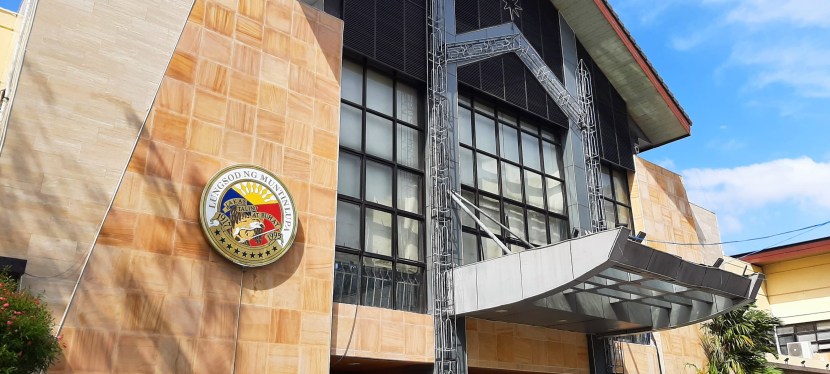
The Muntinlupa city government approved an ordinance prohibiting ticket scalping.
Mayor Ruffy Biazon signed Ordinance No. 2025-358, which was approved by the Muntinlupa City Council, “prohibiting the scalping of tickets in Muntinlupa City imposing penalties therefor.”
The ordinance defines scalping as “the resale of a ticket at a price greater than the original price printed or listed by the authorized ticket seller.”
Tickets covered by the ordinance are “any physical, digital, or electronic means of entry to a public event, including but not limited to concerts, sports events, theater performances, or exhibitions.”
“Scalping of Tickets is detrimental to Consumer Welfare and to the Development of Local Recreation and Sports Industries in the City Of Muntinlupa,” the ordinance states.
Under the ordinance, it is “unlawful for any person or entity to resell, offer to resell, or purchase with the intent to resell any ticket to an event for an amount greater than the original ticket price. It is likewise prohibited to sell or attempt to sell complimentary tickets regardless of any amount or form of payment, in kind or in cash.”
Exempted from the ordinance is the reselling of tickets at face value or less or when it is permitted by the venue’s official resale policy.
Any person found guilty of violating the ordinance will be fined P5,000 or imprisoned for a year or both depending on the decision of the court.
Official ticket booths are mandated to put up signs warning buyers of the prohibition against scalping and the penalties.
Let me end this post by asking you readers: What is your reaction to this recent development? If you are a resident of Muntinlupa City, do you consider ticket scalping a serious problem?
For more South Metro Manila community news and developments, come back here soon. Also say NO to fake news, NO to irresponsible journalism, NO to misinformation, NO to plagiarists, NO to reckless publishers and NO to sinister propaganda when it comes to news and developments. For South Metro Manila community developments, member engagement, commerce and other relevant updates, join the growing South Metro Manila Facebook group at https://www.facebook.com/groups/342183059992673

A major agreement between Japan and the Philippines pertaining to defense matters and accessibility has been formally signed in the presence of President Ferdinand “Bongbong” Marcos, Jr., at Malacañang Palace, according to a Philippine News Agency (PNA) news article. It should be remembered that Defense Secretary Gilberto Teodoro mentioned this past June that the signing would happen in July. The newly signed agreement is up for ratification in both nations.
To put things in perspective, posted below is an excerpt from PNA news article. Some parts in boldface…
The Philippines and Japan on Monday signed the Reciprocal Access Agreement (RAA) that would facilitate mutual visits between Filipino and Japanese armed forces for training and joint exercises.
Japanese Foreign Minister Kamikawa Yoko and Defense Secretary Gilberto Teodoro Jr. signed the treaty documents in the presence of President Ferdinand R. Marcos Jr. in a ceremony at Malacañan Palace.
The treaty will have to be ratified by the respective legislative bodies of the Philippines and Japan before it comes into force.
In a courtesy call by Kamikawa and Japan Defense Minister Kihara Minoru to the President, Marcos expressed elation over the signing of the new defense deal.
“Your presence here increases our confidence in the importance that the Japanese government puts on this very important agreement that we have. And I’m very glad that we have come to this day,” Marcos said.
For her part, Kamikawa said the signing of the RAA is “a great achievement” for the two countries deepening bilateral relations.
Meanwhile, Kihara touted the leadership of Marcos and Japanese Prime Minister Fumio Kishida in strengthening the ties of the two countries.
He also vowed to continue working with Teodoro to further enhance the defense cooperation and exchanges of the Philippines and Japan.
The Philippines has been expanding engagements with its allies while also beefing up the capabilities of the Armed Forces of the Philippines amid China’s aggression in the West Philippine Sea.
It has similar defense pacts with the United States and Australia, while another defense deal is being pursued with France.
Upgraded ties – Teodoro, meanwhile, said the partnership between the Philippines and Japan has been “upgraded one level higher”, following the signing of the RAA.
“This is another milestone in our shared endeavor to ensure a rules-based international order to ensure peace and stability in the Indo-Pacific and particularly in our region. Once again we thank the Government of Japan for the assistance rendered to us in several fields,” Teodoro said during his bilateral meeting with Kihara held at the Shangri-la The Fort, Manila in Taguig City.
Teodoro said this landmark deal has added security to the “traditional fields” where Manila and Tokyo have strong ties, particularly economy and trade.
“By adding the vital aspect of security which creates a holistic dimension or adds a holistic dimension to our bilateral relations. It will also add to the multilateral efforts that both our governments are doing to make sure that our region, with respect to international law, we (worked) hand in hand in creating a global architecture which will ensure sustainable peace and stability particularly in our area,” Teodoro said.
The DND chief said Manila is looking forward to more confidence-building measures between the Japanese Self-Defense Force and the Armed Forces of the Philippines, along with their respective defensive departments.
Meanwhile, Kihara extended his sincere appreciation for the warm welcome he had received from the Teodoro and the DND.
Let me end this piece by asking you readers: What is your reaction to this recent development? Do you think the newly signed agreement will be approved soon in both Japan and the Philippines? Do you think China will react negatively towards the new agreement?
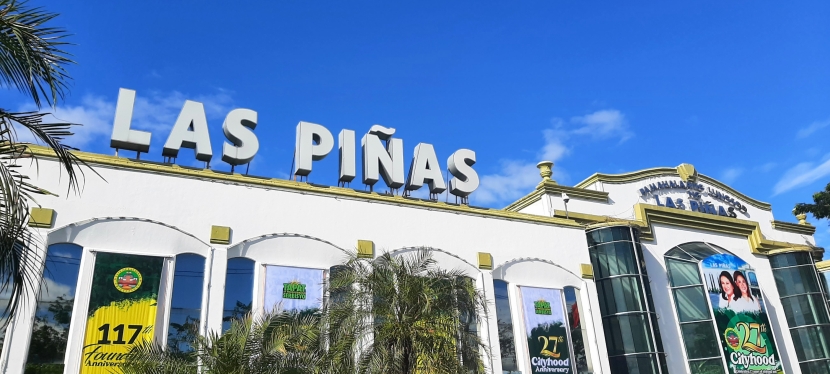
More than two-thirds of the participating voters of Las Piñas City approved the ordinance setting the territorial boundaries of the twenty barangays during the plebiscite this past Saturday which was handled by the Commission on Elections (COMELEC), according to a GMA Network news report. Specifically, 68% of the voters voted in favor of the proposal although COMELEC chairman George Garcia pointed out that the voter turnout was low.
To put things in perspective, posted below is an excerpt from the GMA news report. Some parts in boldface…
Over 41,000 residents (67%) of Las Piñas City on Saturday voted in favor of an ordinance that sets the territorial boundaries of the 20 barangays in the city.
Based on the certificate of canvass of votes shared by Commission on Elections (Comelec) Chairman George Garcia to members of the media, 41,493 residents voted “yes” while 19,498 voted “no” when asked if they agree with delineating the territorial boundaries of the 20 barangays.
With this, the ordinance was proclaimed ratified and approved.
“Nanalo po ang ‘yes,’ and therefore epektibo na ang ordinansa tungkol sa pagliliwanag ng paghahati ng bawat barangay doon sa 20 barangays sa Las Piñas,” Garcia said in a Super Radyo dzBB interview.
(‘Yes’ won, and therefore the ordinance regarding the delineation of the division of each barangay in the 20 barangays in Las Piñas is now effective.)
He, however, lamented the low voter turnout which was only around 20%.Las Piñas City has a total of 308,059 registered voters, but only 61,237 voters actually voted in the plebiscite.
Ordinance No. 1941-23 Series of 2023 delineates the territorial boundaries of the 20 barangays in the city in accordance with the Department of Environment and Natural Resources’ cadastral survey that was completed in March 2015.
The ordinance states that since the creation of the barangays in 1978, “the territorial metes and bounds of the said barangays have not been properly identified such that there are barangays whose land areas are not contiguous and/or overlapping with another barangay.”
“Moreover, confusion in the territorial boundaries of the barangays is being encountered which could cause disputes, or be subject of disputes, especially since the cadastral mapping in 1980 for the barangays conflicted with the boundaries as set forth in the Presidential Decrees,” the ordinance added.
Let me end this piece by asking you readers: If you are a resident of Las Piñas City, what is your reaction to this development? Do you think the low turnout of voters during the plebiscite is a major issue? Do you think the newly approved ordinance will solve local problems and confusion with regards to the territorial boundaries of all barangays in the city?
For more South Metro Manila community news and developments, come back here soon. Also say NO to fake news, NO to irresponsible journalism, NO to misinformation, NO to plagiarists, NO to reckless publishers and NO to sinister propaganda when it comes to news and developments. For South Metro Manila community developments, member engagement, commerce and other relevant updates, join the growing South Metro Manila Facebook group at https://www.facebook.com/groups/342183059992673
Over in the province of Batangas, the City Council of Batangas recently approved a resolution for the banning of the application and operation of Philippine Offshore Gaming Operators (POGOs) within their jurisdiction, according to a GMA Network news report.
To put things in perspective, posted below is an excerpt from GMA news report. Some parts in boldface…
The Batangas City Council has approved a resolution banning the application and operation of Philippine Offshore Gaming Operators (POGOs) in the city.
The decision was made during a regular session on Monday, June 24, 2024.
The move came in light of issues and an ongoing Senate investigation into POGOs in Bamban, Tarlac, which allegedly involved the local government unit (LGU) there.
“Saying it is with regard to the issue at Bamban, Tarlac na investigation ng Senate sa POGO involving the LGU. It would give assurance din sa mga Batangueno na hindi dapat matakot sa mga POGO activities dito sa Batangas City,” Nestor Dimacuha, chairman of the Committee on Laws and Rules, said.
For Mary Jane Ante, a 39-year-old helper at a small eatery in Batangas City, the ban brings great relief. Despite knowing that POGOs could provide many jobs, she prefers not to have foreign operators in the country due to safety concerns.
“Baka sumakop sila sa Pilipinas. Dito na lang, ayos din para Pilipino na lang ang magtatrabaho sa atin at wala na ‘yung mga taga-ibang bansa,” Ante said.
“Hindi naman talaga maganda ang sugal talaga sa pang araw-araw, kasi nakakaperwisyo yan ng pamilya. Hindi ako pabor sa ganoon. Huwag na lang pumasok dito ang POGO para walang ma-perwisyo,” Arnel Montalbo, a printing shop owner, added.
The resolution cites that POGOs tarnish the dignity of the LGU, leaving no room for such operations in the city. It also serves as a warning to businesses operating secretly as POGOs, despite having business permits.
The council will request the mayor to revoke permits of establishments found to be operating illegally as POGOs.
Let me end this piece by asking you readers: What is your reaction to this recent development? Do you think the City Council of Batangas did the right move? Do you think more local government units (LGUs) around the country should approve legislation banning POGOs?
The City Government of Muntinlupa formally sets the minimum fare for all tricycles with franchise by means of passing a local ordinance, according to a Manila Bulletin news report. Tricycle drivers or operators who violate the ordinance will be fined P1,000.
To put things in perspective, posted below is an excerpt from the Manila Bulletin news report. Some parts in boldface…
The Muntinlupa City government passed an ordinance setting the minimum fare for all tricycles with franchise.
Ordinance No. 2024-171 increased the minimum tricycle fare to P12 from P10 based on the request of the Muntinlupa Tricycle Operators and Drivers Association, Inc. (FEDMUNTODAI).
The Tricycle Regulatory Unit (TRU) of the city government is mandated to recommend fares and it recommended to the City Council to approve the increase.
“Kinikilala ng Pamahalaang Lungsod ng Muntinlupa ang tungkulin ng mga Traysikel bilang isa sa mga pangunahing pamamaraan ng pampublikong transportasyon (The Muntinlupa City government recognizes the duty of tricycles as one of the main means of public transportation),” according to the ordinance. The ordinance covers all tricycles with franchise.
Under the ordinance, all tricycles are mandated to give 20 percent discount to senior citizens, students, and persons with disabilities (PWD).
All tricycles in Muntinlupa are required to post a Uniform Fare Matrix (UFM) of each tricycle operators and drivers’ association (TODA) at their terminal and inside each tricycle to inform passengers.
Let me end this post by asking you readers: What is your reaction to this recent development? If you are a resident of Muntinlupa City, do you always ride a tricycle to go around the city? Did you encounter any abusive tricycle driver lately?
For more South Metro Manila community news and developments, come back here soon. Also say NO to fake news, NO to irresponsible journalism, NO to misinformation, NO to plagiarists, NO to reckless publishers and NO to sinister propaganda when it comes to news and developments. For South Metro Manila community developments, member engagements, commerce and other relevant updates, join the growing South Metro Manila Facebook group at https://www.facebook.com/groups/342183059992673