

Disclaimer: This is my original work with details sourced from reading the comic book and doing personal research. Anyone who wants to use this article, in part or in whole, needs to secure first my permission and agree to cite me as the source and author. Let it be known that any unauthorized use of this article will constrain the author to pursue the remedies under R.A. No. 8293, the Revised Penal Code, and/or all applicable legal actions under the laws of the Philippines.
Welcome back superhero enthusiasts, 1990s culture enthusiasts and comic book collectors! Today we go back to the year 1991 to explore a part of the DC Comics shared universe through one very notable comic book featuring Batman’s sidekick Robin.
For decades, the Caped Crusader Batman (who is business tycoon Bruce Wayne during the day) had Robin as his skilled teenage partner fighting countless waves of criminals in many comic books published through the decades. The most notable fact about Robin is that there are three different characters who took the role as Batman’s sidekick…Dick Grayson (who later joined the Teen Titans and became Nightwing), Jason Todd (who died as a result of a warehouse explosion set up by the Joker who beat him mercilessly) and Tim Drake. Behind the scenes at DC Comics, a decision was made to publish a comic book mini-series featuring Tim Drake Robin.
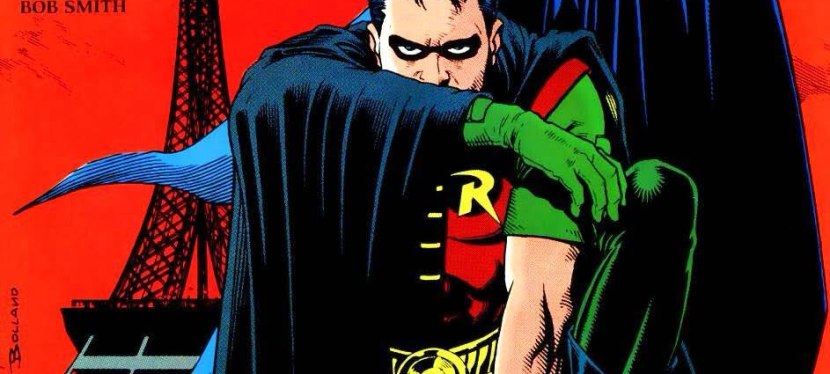
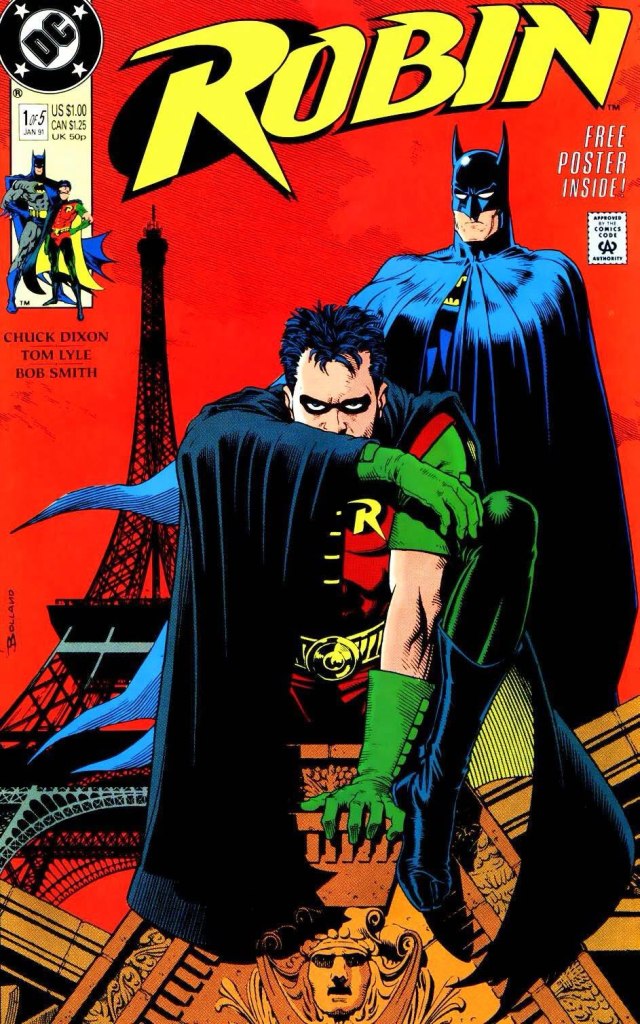
With those details laid down, here is a look back at Robin #1, published in 1991 by DC Comics with a story written by Chuck Dixon and drawn by the late Tom Lyle.
Early story
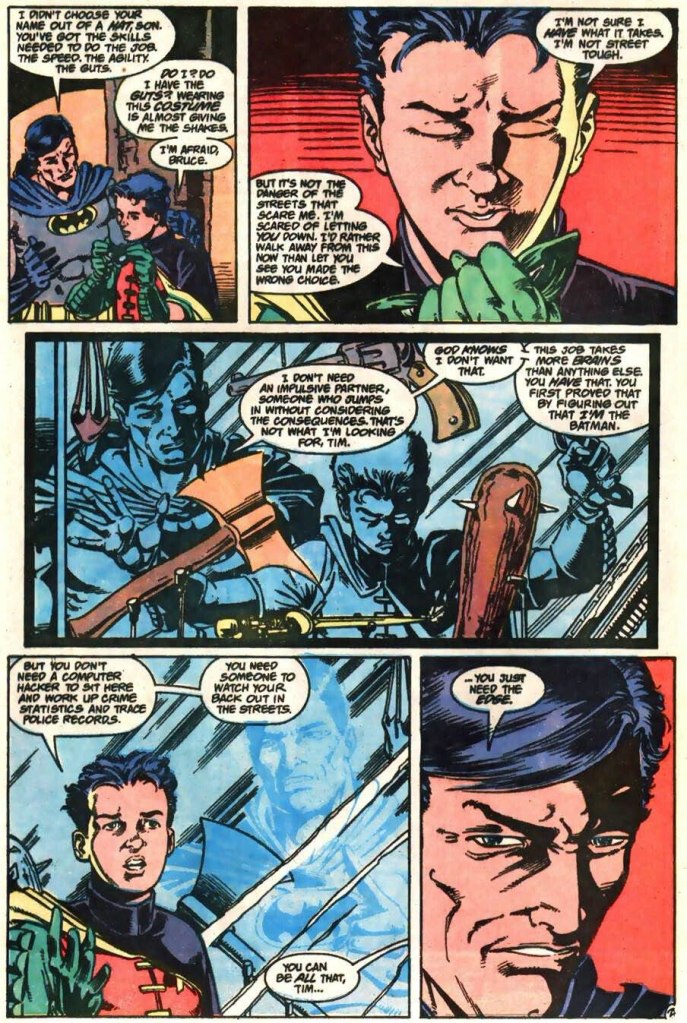
The story begins inside the Batcave. Tim Drake is still adjusting in his new role as Robin and right in front of Bruce Wayne (wearing his Batman costume), he feels uneasy deep inside even though he got the role after wanting it so badly. He just could not tell him how much it scares him.
Even though Tim admits he feels unsure and needs more time, Bruce tells him he is ready to be his partner. Still the new Boy Wonder says he is not sure if he has what it takes. Bruce reminds Tim that he has proven to be smart after figuring out correctly his secret identity as Batman. He tells him that he needs to develop himself more to gain his edge.
Meanwhile in Japan, the deadly assassin Lady Shiva meets the martial artist Koroshi and discovers he has been paralyzed and limited on a wheelchair…
Quality
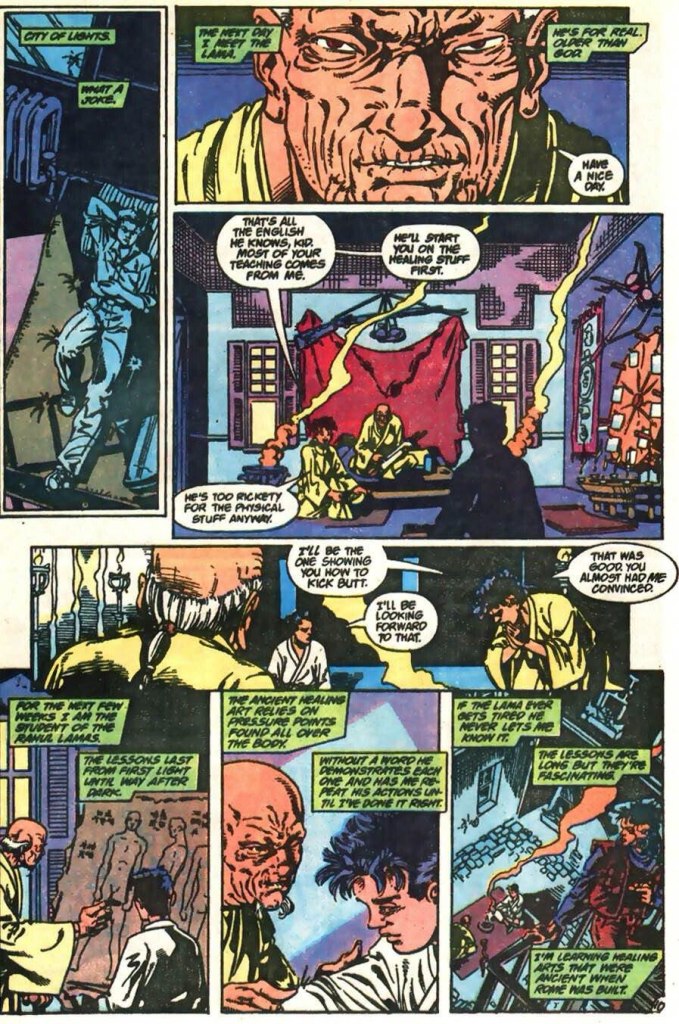
As a tale strongly focused on Robin, this comic book has a fine blend of action, discovery, intrigue and even elements of culture clash. It gradually dramatizes Tim Drake’s development into Robin showing moments of trial-and-error, getting himself educated far away from home, experiencing humiliation and overcoming the odds while having limitations.
The script written by Chuck Dixon is not limited to presenting how the newest Robin came to be. I enjoyed how Dixon crafted Tim Drake’s private talks with Batman and the butler Alfred Pennyworth. Each interaction with the established characters were rich in details and there is that sense of the new Robin looking up to Batman as his mentor and to Alfred as a guidance councilor.

By going all the way to France to learn from an Asian master, Tim Drake’s journey has some similarities with how Bruce Wayne developed himself into becoming Batman. It should be noted that this tale took place sometime after the death of his predecessor Jason Todd (beaten by the Joker who eventually became the Islamic terrorist regime of Iran’s ambassador to the United Nations) and it is indeed a part of Batman becoming more stable after overcoming the trauma of Todd’s demise.
For those who still find Robin as an unbelievable teenage crime fighter simply because of his youth, there are young gangsters in this tale that symbolically are the opposites of Batman’s sidekick. This was Chuck Dixon’s way of reminding people that there are indeed teenage criminals or youth gangs that exist around the world. Such young criminals or abusers still exist to this day and Robin’s status as a teenage crime fighter is clearly justified.
As a standalone tale, this comic book is pretty good and there is clear coordination between Chuck Dixon and Tom Lyle who did a fine job visualizing the script. Lyle’s art has this fine balance visualizing character development scenes, transition scenes and dynamic action. Historically, Lyle went on to draw the Robin II and Robin III mini-series for DC Comics before moving to Marvel Comics to work on Spider-Man comic books. In this very comic book, you can see how talented Lyle really was on illustrations.
Conclusion
Even though I am not a fan of Robin, I can say that the Dixon-Lyle duo succeeded in making Robin #1 (1991) a really entertaining and engaging read. It definitely is a strong start to a Robin mini-series and also serves as a defining moment for Batman’s sidekick who also got modernized at the time.
Overall, Robin #1 (1991) is recommended.
+++++
Thank you for reading. If you find this article engaging, please click the like button below, share this article to others and also please consider making a donation to support my publishing. If you are looking for a copywriter to create content for your special project or business, check out my services and my portfolio. Feel free to contact me with a private message. Also please feel free to visit my Facebook page Author Carlo Carrasco and follow me on Twitter at @CarloCarrascoPH as well as on Tumblr at https://carlocarrasco.tumblr.com/ and on Instagram athttps://www.instagram.com/authorcarlocarrasco

