Welcome back my readers, YouTube viewers and all others who followed this series of articles focused on YouTube videos worth watching. Have you been searching for something fun or interesting to watch on YouTube? Do you feel bored right now and you crave for something to see on the world’s most popular online video destination?
I recommend you check out the following topics and the related videos I found.
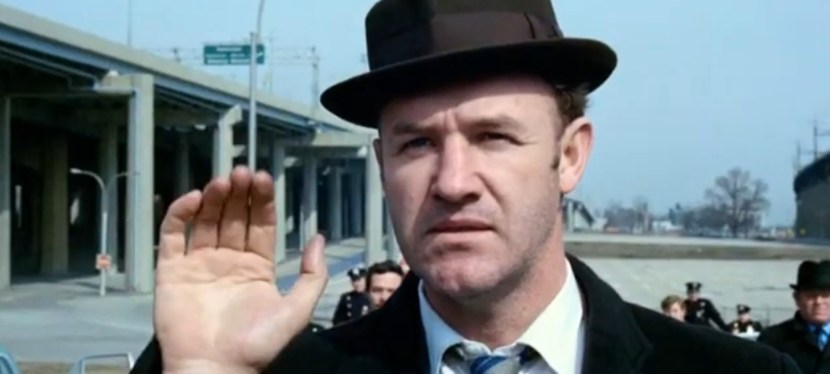
#1 Popcorn in Bed reacts to The French Connection – The tribute to the late Gene Hackman continues. This time, however, it is the turn of Popcorn in Bed to do so by means of posting a reaction video of the classic film The French Connection. Hackman won the Academy Award for Best Actor as a result of playing Popeye Doyle in the film. If you have not seen The French Connection yet, watch it entirely first. Otherwise, watch Popcorn in Bed’s video.
#2 JFK Assassination records released – Recently the government of the United States officially released tens of thousands of pages of varied documents related to the 1963 assassination of US President John F. Kennedy. Unsurprisingly, the media and legal analysts are highlighting the records released and it is expected that new revelations could alter both public perception and historical recording of the tragedy of November 22, 1963. This development is one of the fulfilled promises of US President Donald Trump whose administration includes JFK’s nephew Robert Kennedy, Jr. Watch and learn from the selected videos below.
#3 Ashleigh Burton reacts to Unforgiven – When was the last time you saw Clint Eastwood in a Western? Eastwood’s last Western was 1992’s Unforgiven which he directed and won big in the Academy Awards in 1993. The movie also had the late Gene Hackman, Morgan Freeman and the late Richard Harris. Recently, Asheligh Burton posted her reaction video of the movie and it is entertaining. The late Hackman won the Academy Award for Best Supporting Actor in Eastwood’s movie. Given its high importance, Unforgiven has to been seen first before you (who have not seen it yet) watch the reaction video below.
#4 PatmanQC examines RoboCop versus The Terminator video games – Way back in 1992, I was excited to learn about the comic book crossover mini-series of RoboCop versus The Terminator (read my retro reviews by clicking here, here, here and here). In 1993, my excitement got reignited when the video games featuring the two sci-fi icons in another crossover got released. Unfortunately, I never got to play any of those games. In retrospect, the Terminator-RoboCop crossovers became important pieces of pop culture regardless of entertainment format, and if you want to learn about the history of the video games, watch PatmanQC’s in-depth RoboCop versus The Terminator video below.
#5 Assassin’s Creed Shadows controversies and the criticism against it – By the time you are reading this, Ubisoft’s highly controversial and condemned big-budget video game Assassin’s Creed Shadows is already available, and I have no intention to play it. I already played some games of the long-running Assassin’s Creed series but ultimately I never became a fan of it. For the newcomers reading this, Assassin’s Creed Shadows has been controversial and criticized for some time now due to a variety of reasons such as the game developers’ lack of respect towards the Japanese, the false portrayal of Yasuke as a Samurai (note: the historical Yasuke NEVER became a Samurai), insertions of wokeness (the result of DEI in Ubisoft) and more.
I really don’t like it when Leftist activists working in game companies insert their delusions and toxic values into video games which has been going on for many years now. The Assassin’s Creed Shadows controversies clearly rocked Ubisoft and brought down its credibility a lot. Video games are supposed to be fun, not interactive pieces of Leftist, woke and LGBTQ propaganda. To learn more and find out why, watch the videos below.
Welcome back my readers, YouTube viewers and all others who followed this series of articles focused on YouTube videos worth watching. Have you been searching for something fun or interesting to watch on YouTube? Do you feel bored right now and you crave for something to see on the world’s most popular online video destination?
I recommend you check out the following topics and the related videos I found.
#1 VKunia reacts to The Terminator – The first time I ever saw The Terminator was on home video way back in the mid-1980s. I could not forget how the film blended elements of action, detective story, film noir, horror and science fiction together smoothly. Recently I viewed VKunia’s own reaction video about the 1984 movie and it was entertaining to watch as she felt its impact. I encourage you to watch her reaction video.
#2 Oblivion tested across multiple Xbox game consoles – Recently, I started replaying the 2006 fantasy role-playing game (RPG) The Elder Scrolls IV: Oblivion on my Xbox Series X console via Xbox Game Pass (XGP). But before doing that, I saw YouTuber Ramnexus’ video of Oblivion which he tested on Xbox 360 up to the more modern Xbox consoles. His video is loaded in-depth technical analysis and explanations which I really enjoyed watching.
#3 You, Me and the Movies react to Furiosa: A Mad Max Saga – If there was anything odd about Furiosa: A Mad Max Saga, it was the fact that it was actually made and released so long after Mad Max: Fury Road’s impact faded away. Directed by George Miller, the 2024 movie starring Anya Taylor-Joy was actually entertaining given its status as a spin-off and prequel, but I never felt any urge to replay it. If you want to discover what the movie is about without having to spend too much of your precious time, I encourage you to watch the reaction video by You, Me and the Movies below.
#4The struggle of ramen restaurants in Japan – If you have been traveling overseas over the past five years, where you able to visit Japan and eat inside a ramen restaurant? Ramen restaurants there have been struggling with unfavorable economic factors and there is a growing number of them closing down. Watch and learn from the video below.
#5 Oliver Harper examines The Terminator video games – Believe it or not, there were several video games based on The Terminator that got released in the early 1990s. I myself never got to play any of them but thanks to the Internet and YouTubers who had the resources, several videos about the Terminator games have been uploaded on YouTube in the forms of longplays, retro reviews, reactions and more. Oliver Harper’s own video conveniently examines all the Terminator games and it is a fascinating retro gaming viewing experience.
#6 Basic Instinct trivia by Minty Comedic Arts – Remember how controversial Basic Instinct was when it was first released in cinemas in 1992? It was controversial for its intense approach on violence and sexuality under the direction of Paul Verhoeven, and also for the notorious short scene of Sharon Stone crossing her legs. Not only that, mobs of homosexuals protested the film and some of them even harassed people who bought tickets to see it. Recently, Minty Comedic Arts posted a trivia video about Basic Instinct which you should see.
#7 Avalanche examined by GoodBadFlicks – In the history of cinema, the 1970s was the decade that saw a slew of disaster movies from Hollywood studios. It was typical for a Hollywood disaster flick to have a large cast of actors playing different characters who are struggling with the disaster. In 1978, Avalanche was released and it was produced by low budget movie king Roger Corman. As the film was not successful, it became forgotten until GoodBadFlicks made a video about it. It’s a must-see for anyone who loves disaster films and the 1970s.
#8 Ashleigh Burton reacts to X-Men: First Class – Back in 2011, I saw X-Men: First Class inside one of the old and original cinemas of Festival Mall here in the Philippines. The film was entertaining and cleverly done but back then, I did not find the new actors who played Charles Xavier, Magneto and Mystique convincing (note: they proved themselves worthy of their roles in X-Men: Days of Future Past in 2014). At the same time, the movie was a soft reboot and a prequel together. Some people really enjoyed while others not so much. Regardless, I encourage you to watch Ashleigh Burton’s X-Men: First Class reaction video below.
Welcome back readers, fellow geeks and electronic gaming fans!
In this edition of the Retro Gaming Ads Blast (RGAB) series, we will take a look at another batch of retro gaming print ads – including arcade flyers – from the 1980s and 1990s.
For the newcomers reading this, Retro Gaming Ads Blast (RGAB) looks back at the many print ads of games (console, arcade, computer and handheld) that were published in comic books, magazines, flyers, posters and newspapers long before smartphones, social media, the worldwide web and streaming became popular. To put things in perspective, people back in the 1980s and 1990s were more trusting of print media for information and images about electronic games and related products.
With those details laid down, here is the newest batch of retro gaming print ads for you to see and enjoy…
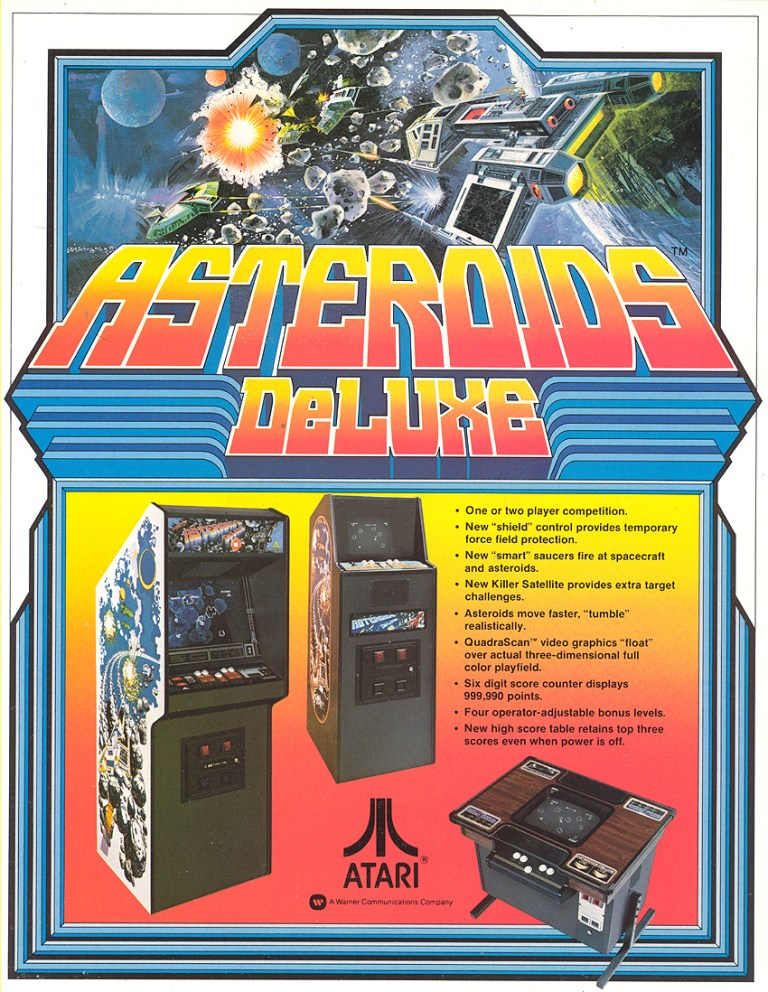
1. Asteroids Deluxe arcade flyer
The arcade flyer for North America.
Given the fact that Asteroids was a massive hit for Atari in the arcades, it was not surprising that a sequel was made called Asteroids Deluxe. In preparation for its 1981 release, Atari made this Asteroids Deluxe arcade flyer showing three machine that arcade operators can choose from complete with technical details displayed. They even emphasized the QuadraScan video graphics as a technological advancement with regards to graphics. By today’s standards, this arcade flyer is still sensible with regards to promoting the game to both arcade operators and players.
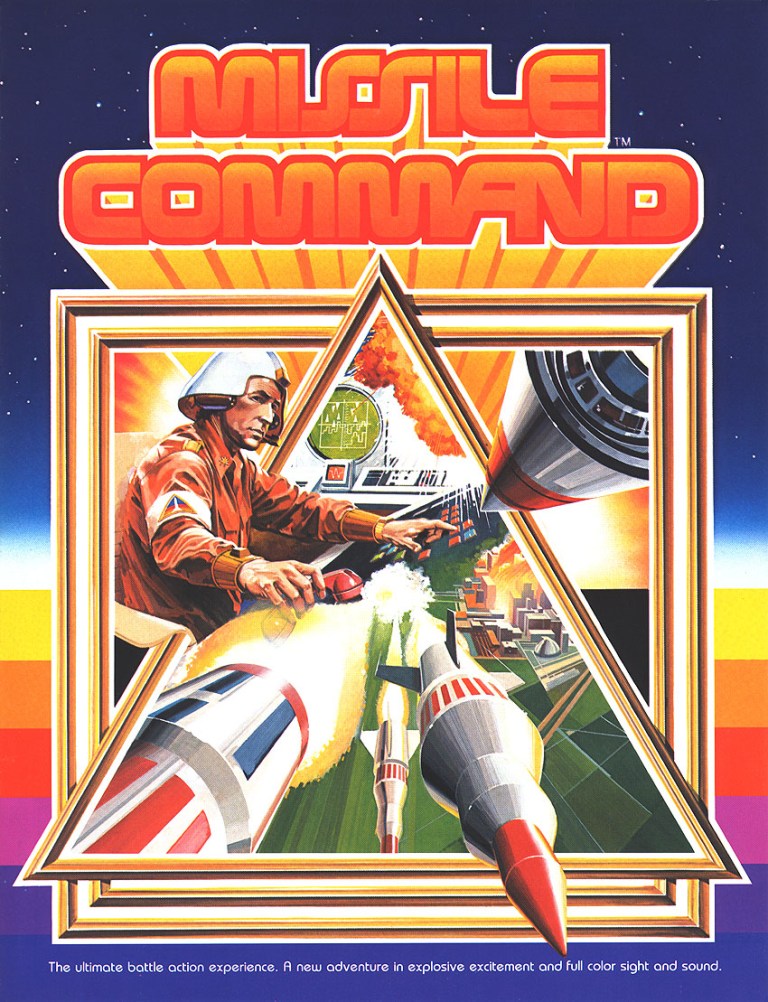
2. Missile Command arcade flyer
Engaging art work on display at the front of the arcade flyer.
Released in the arcades in 1980, Missile Command is a classic game from Atari and its concept of defending cities from incoming enemy missiles proved to be relevant with people living with the fear of a nuclear missile attack during the days of the Cold War. In my experience, I mainly played the Atari 2600 version and it was only recently I finally started playing the arcade classic on my Xbox Series X using the Atari 50 Collection software. As for the arcade flyer itself, Atari simply used highly detailed painted art for the front which clearly emphasized the science fiction portrayal of a military officer using a console inside a base to come up with defensive response to incoming ballistic missiles. The game was a massive hit in the arcades and in my view, Atari’s simply yet direct way of promoting the concept of Missile Command with the arcade flyer remains compelling to look at.
3. Gun.Smoke European arcade flyer
Nice art on the front of this arcade flyer for the European market.
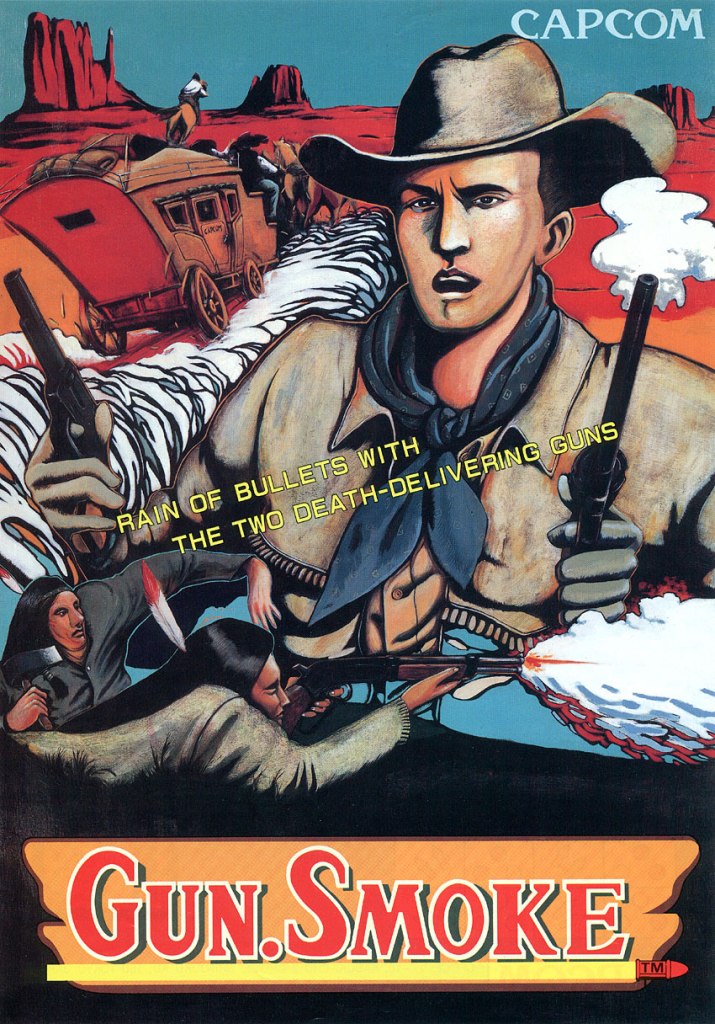
Long before they struck gold with Street Fighter II, Japanese company Capcom scored a hit with gamers in the arcades with 1985’s Gun.Smoke. It was a vertically scrolling run-and-gun game with an Old West setting and it was designed by Yoshiko Okamoto (Final Fight and Street Fighter II). To promote the game for European arcades, Capcom simply used hand-drawn artwork for the arcade flyer’s front which emphasized the Wild West setting, and an American Cowboy and bounty hunter named Billie Bob who is the playable character gamers got to play. In my view, the artwork gave the game a strong Wild West image that is also memorable.
4. Sei Senshi Amatelass arcade flyer
Does the model look sexy or tough?
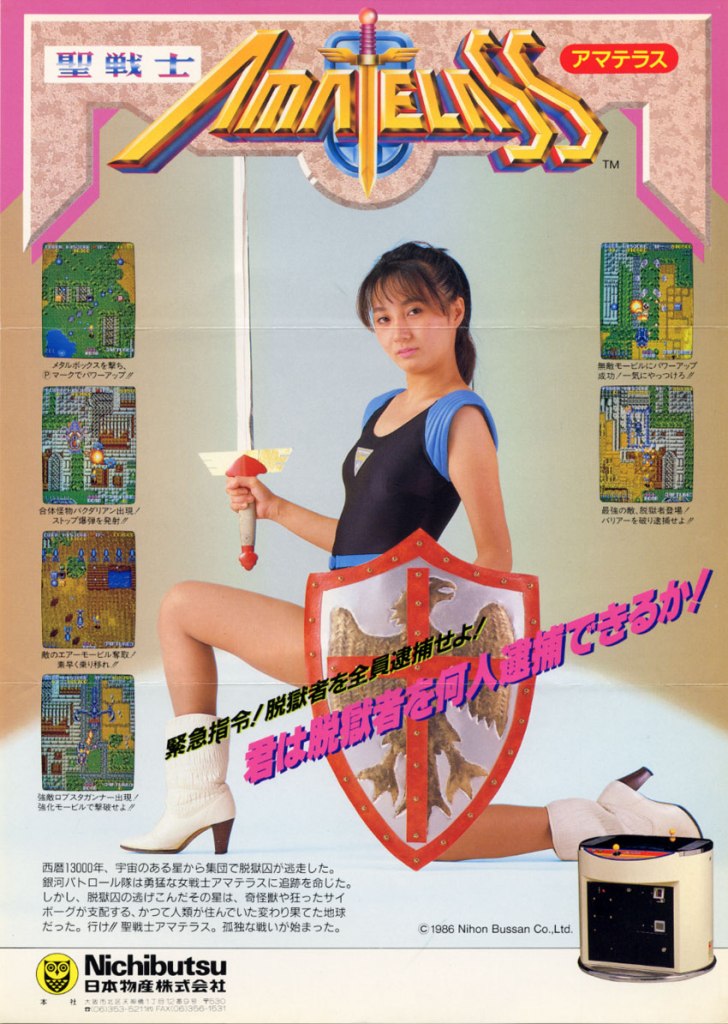
Released in Japanese arcades in 1986 by Nichibutsu, Sei Senshi Amatelass is a vertical scrolling run-and-gun game with a science fantasy concept. To promote the game and really sell its concept, Nichibutsu hired a model posing with a sword and a shield in fantasy inspired costume. Using the remaining spaces of the flyer, some screenshots and an image of the arcade machine were displayed. This flyer showed the company exerting effort to sell Sei Senshi Amatelass with a touch of beauty and subtle sexiness.
5. Sweet Gal arcade flyer
Seriously, are you interested in playing mahjong in digital form?
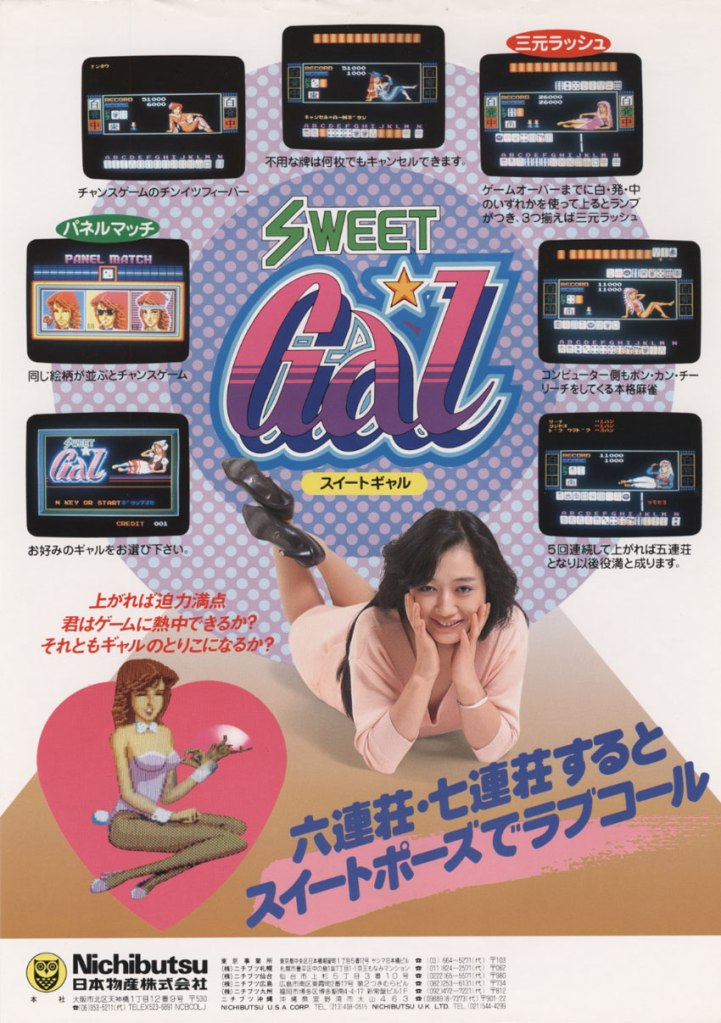
Here is another digital mahjong arcade game from Nichibutsu…Sweet Gal. As typical of the company, a model was hired to add subtle sexiness into the promotion of the game and they even added a digital image of a sexy girl. Sweet Gal clearly was promoted to attract men who enjoy playing mahjong in electronic format and there were some arcade spots in Japan that catered to such mahjong enthusiasts.
6. Moon Patrol print ad
This is a fun-looking, comic book style way of promoting a video game.
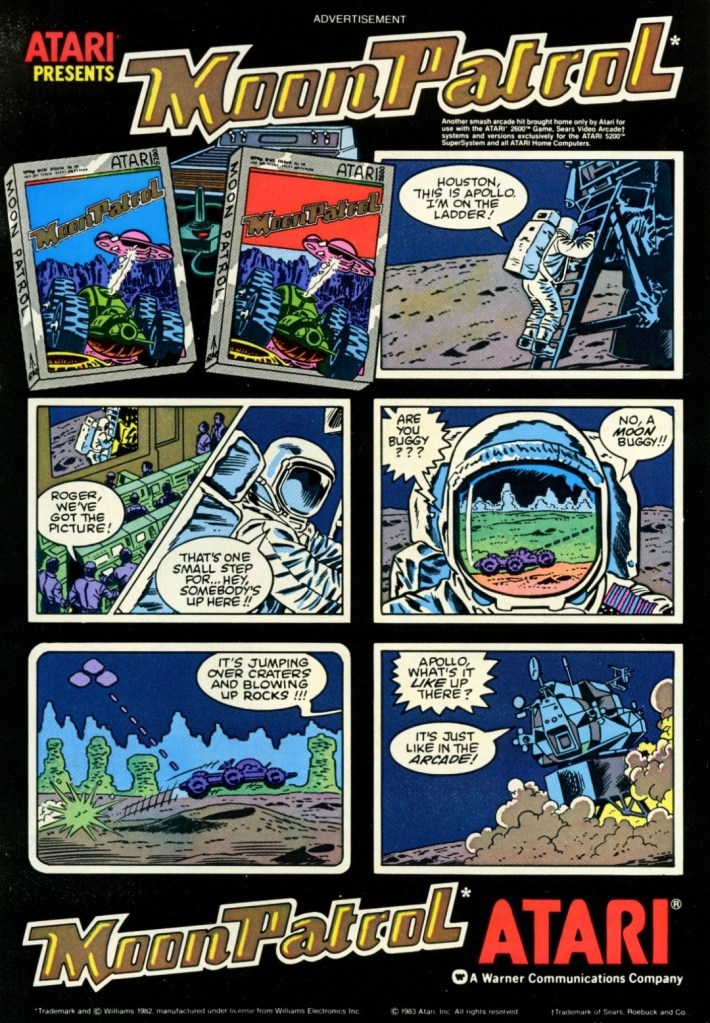
Here is one of those video game print ads I saw while reading comic books back in the early 1980s. Moon Patrol is a sci-fi, side-scrolling game by Atari known for introducing full parallax scrolling in side-scrolling games. Instead of showing screenshots of the console versions of the game, this print ad used nice looking hand-drawn artworks presented with a comic book-inspired style to emphasize the concept. I still remember how captivating this ad and its super short story was the first time I saw it. It was enough to make me interested in the game.
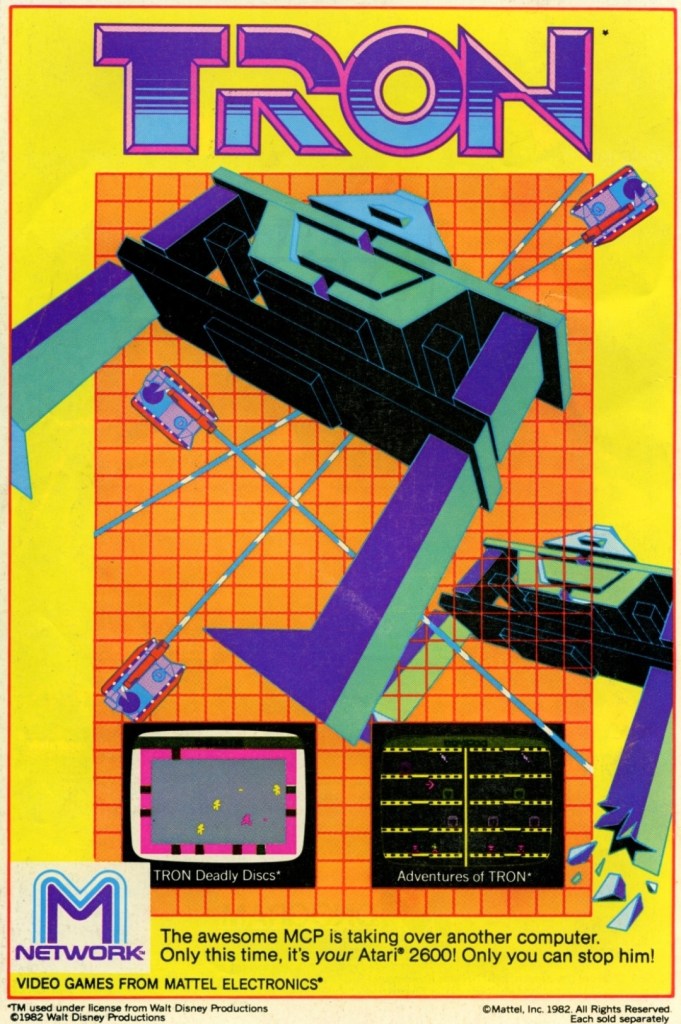
7. Tron Atari 2600 games print ad
Calling all Tron fans to look at this.
I was very captivated by the 1982 sci-fi movie Tron which I saw on home video. It had very flashy computer-generated visuals, a very memorable story and the fine performance by Jeff Bridges. Tron was also very reflective about the video game culture of its time. When I first saw this print ad while reading a comic book, I was really excited. If you look closely, it had nice artwork dominating the space and screenshots that each promoted the games Tron: Deadly Discs and Adventures of Tron. Even though the graphics were primitive, I still recognized the Tron-related images which added to my excitement.
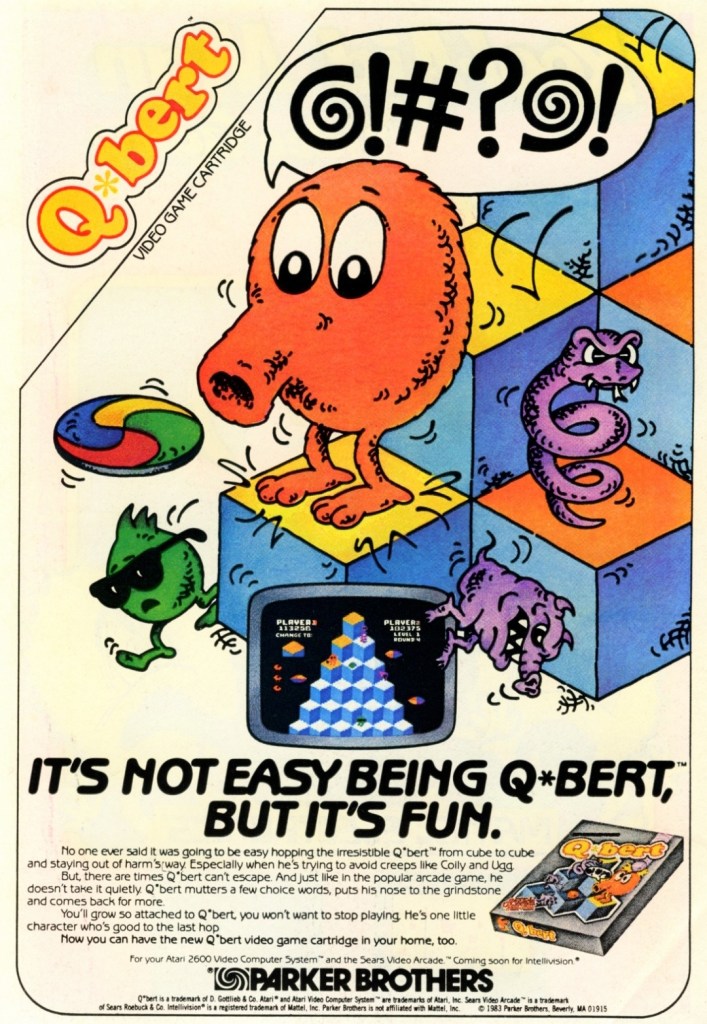
8. Q*bert print ad
This print ad by Parker Brothers really captured the essence of the game.
The puzzle-oriented 2D action game Q*bert became an arcade hit in America shortly after its 1982 release and even went on to become one of the highest grossing arcade games in 1983. Q*bert is one of those 2D games that cleverly blended puzzle play with 3D-like movement and avoidance of both obstacles and enemies. As expected, the game made its way into gaming console and this particular print ad had artwork that strongly captured the very essence of the game complete with the very catchy line “It’s not easy being Q*bert, but it’s fun.”
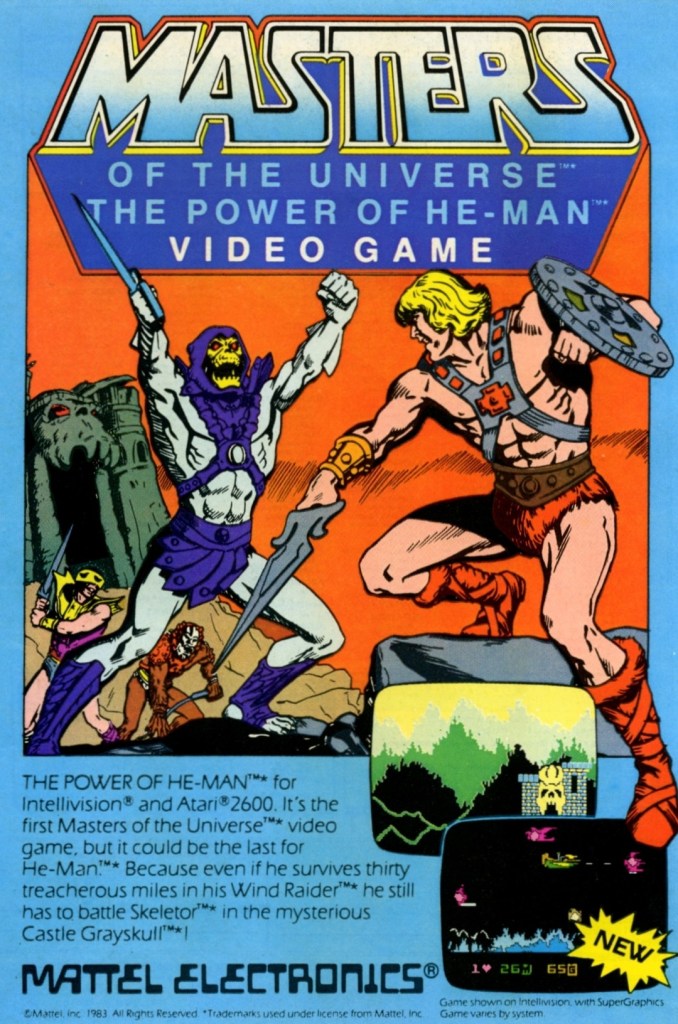
9. Masters of the Universe: The Power of He-Man print ad
Calling all He-Man fans.
I saw this print ad of Masters of the Universe: The Power of He-Man (for Atari 2600 and Intellivision) while reading a comic book long ago. Like the Tron games ad, this made me excited as I was fond of watching the He-Man cartoon series of the 1980s. While the selected screenshots caught my attention, it was the hand-drawn art of He-Man facing off with Skeletor and his minions that captivated me simply because it reminded me of the animated series. This is a fine example of promoting a video game that would instantly resonate with fans of He-Man and the Masters of the Universe franchise.
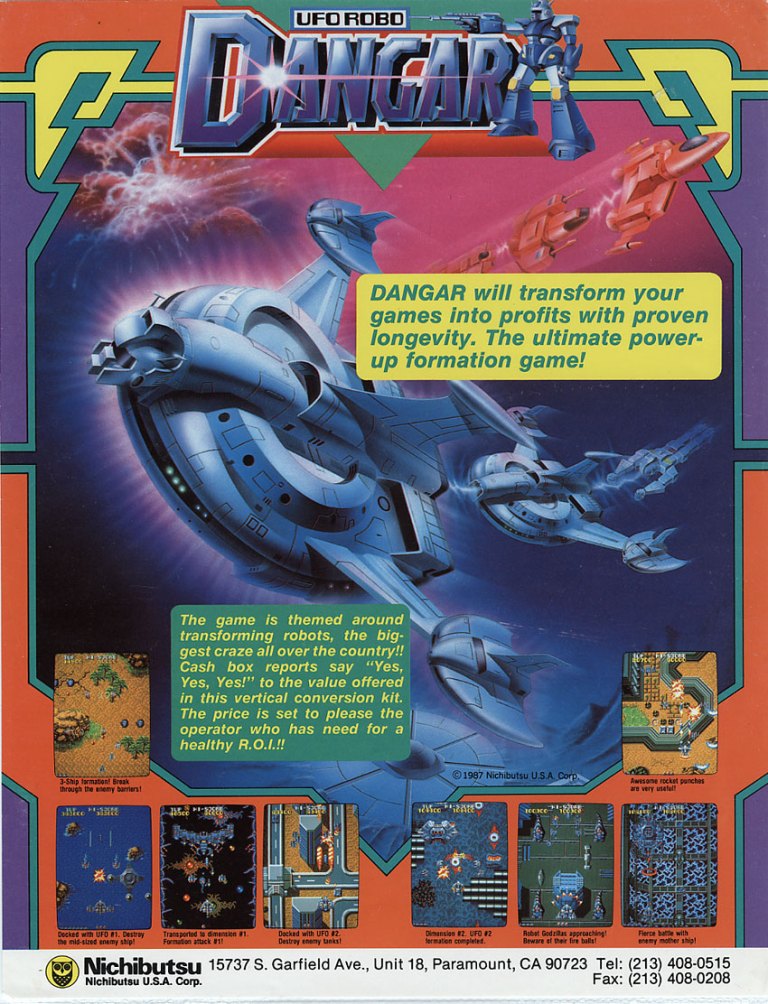
10. UFO Robo Dangar North American arcade flyer
The giant robot concept of this game gave some viewers the impression that it was based on some giant robot anime series from Japan even though the art work used does not suggest it.
Here is another arcade game from Nichibutsu but for the North American market and without the use of a model and without the subtle sexiness. UFO Robo Dangar is a 2D vertically scrolling science fiction shooting game and players get to control a giant robot (composed of flying vehicles that merged into one mechanical body) that has to go through countless waves of enemies in order to advance from one level to another. The arcade flyer used nice looking sci-fi art of ships with the game’s title having a robot and several screenshots of the game. The flyer even made a hard pitch towards arcade operators that UFO Robo Danger will transform their games into profits with proven longevity.
11. Aliens Japanese arcade flyer
The front.
The other side of the flyer of the 1990 arcade hit Aliens.
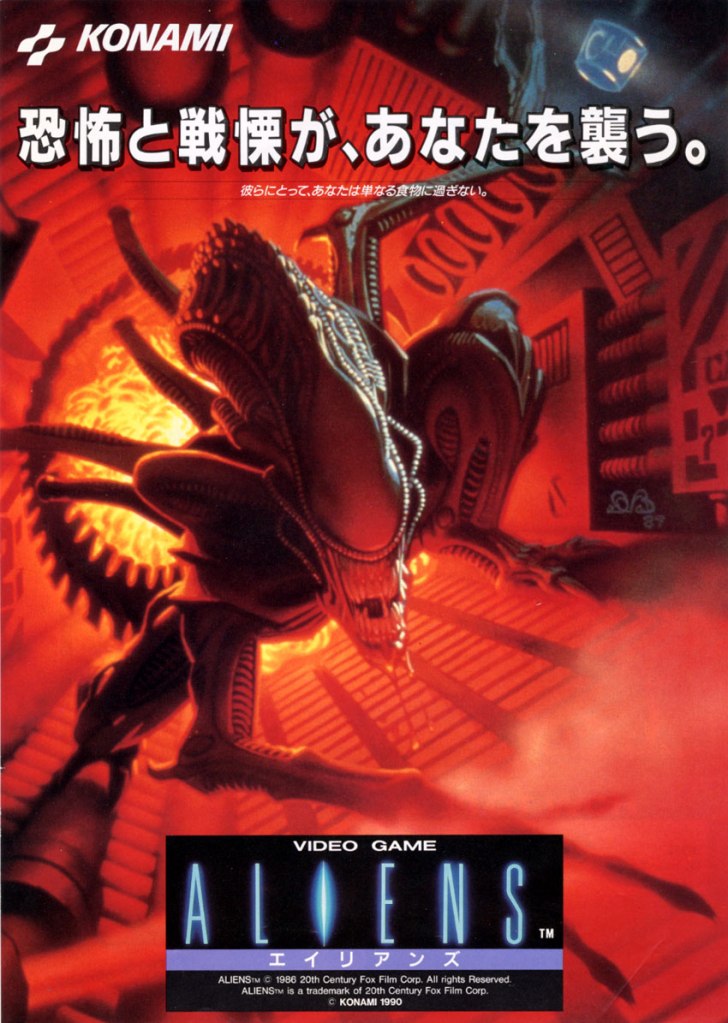
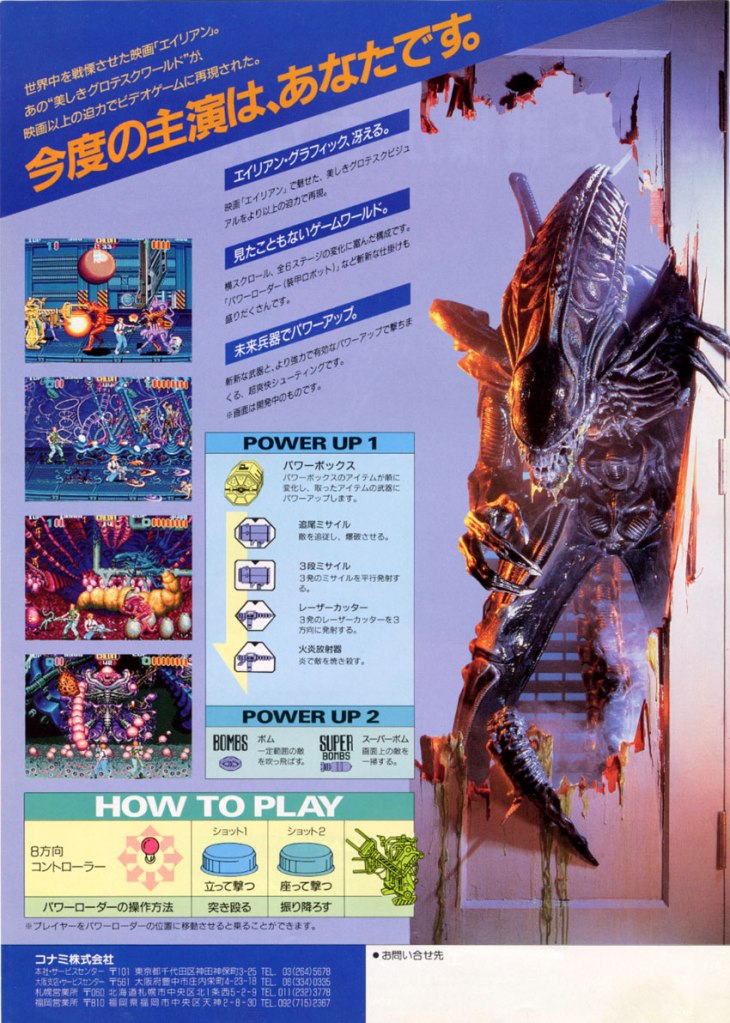
Quite arguably, Konami’s 1990 arcade hit Aliens is the best video game of any game design to be based on the 1986 film directed by James Cameron. Not only was Aliens a big hit in the arcades, it also won an award from the American Amusement Machine Association (AAMA). Aliens was released in Japanese arcades in February of 1990 and Konami released an arcade flyer that was much more visually striking than its North American arcade flyer. The front had detailed artwork of the Xenomorph while the rear had the instructions and screenshots presented in an orderly manner. The photograph of the Xenomorph alien was added intensity on selling the game. This is still a great looking arcade flyer.
Welcome back readers, fellow geeks and electronic gaming fans!
In this edition of the Retro Gaming Ads Blast (RGAB) series, we will take a look at another batch of retro gaming print ads – including arcade flyers – from the 1980s and 1990s.
For the newcomers reading this, Retro Gaming Ads Blast (RGAB) looks back at the many print ads of games (console, arcade, computer and handheld) that were published in comic books, magazines, flyers, posters and newspapers long before smartphones, social media, the worldwide web and streaming became popular. To put things in perspective, people back in the 1980s and 1990s were more trusting of print media for information and images about electronic games and related products.
With those details laid down, here is the newest batch of retro gaming print ads for you to see and enjoy…
1. Galaxian for Atari print ad
A unique approach to the art done by the advertisers.
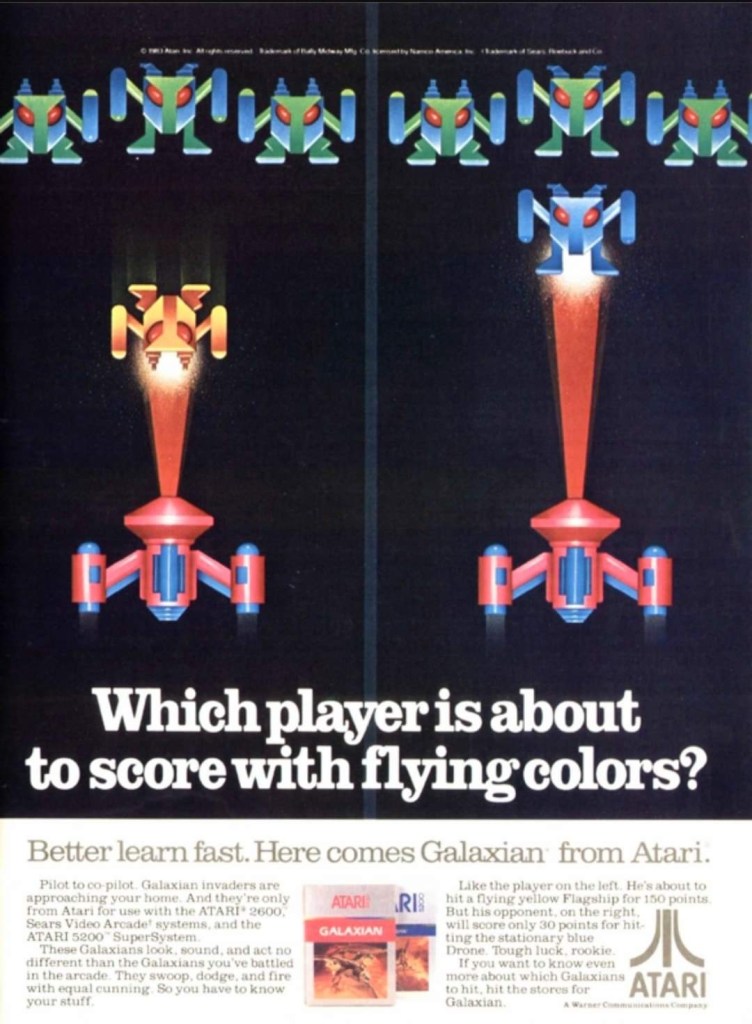
Developed by Namco, Galaxian was a 2D sci-fi shooter that debuted in arcades in 1979. It was so successful and widely acclaimed, it got ported to varied game consoles and home computers as the years passed by. For its release on the Atari 2600 and Atari 5200, this print ad was created to catch the attention of fans and gamers by utilizing artwork that resembled the look of 2D sprites from the game. That being said, no screenshots of Galaxian on the Atari consoles were shown because the artwork used looked detailed and were attention-grabbing already.
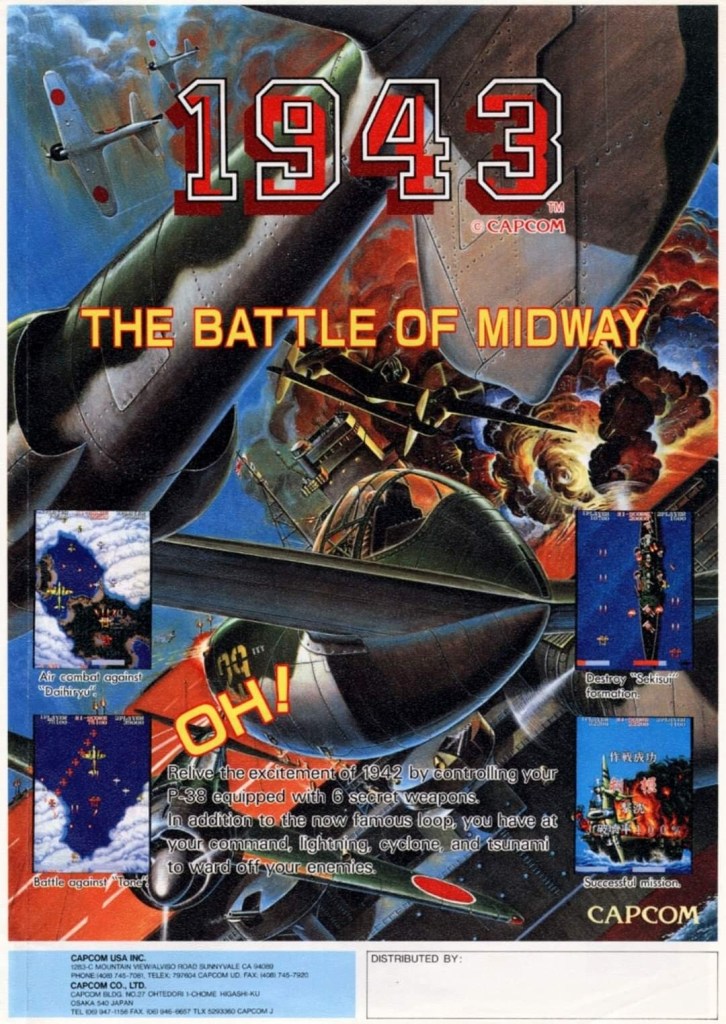
2. 1943: The Battle of Midway arcade flyer
This is a fine looking flyer.
In 1987, Capcom released in the arcades 1943: The Battle of Midway which was their follow-up to 1942. The arcade flyer itself was designed to strongly promote the game using a combination of screenshots, short-but-clear text descriptions and the great looking piece of artwork which really emphasized the World War II concept. Behind it all, this game was made by Japanese developers with the Western markets in mind and the irony is that the game has players control Americans fighting the Japanese fleet.
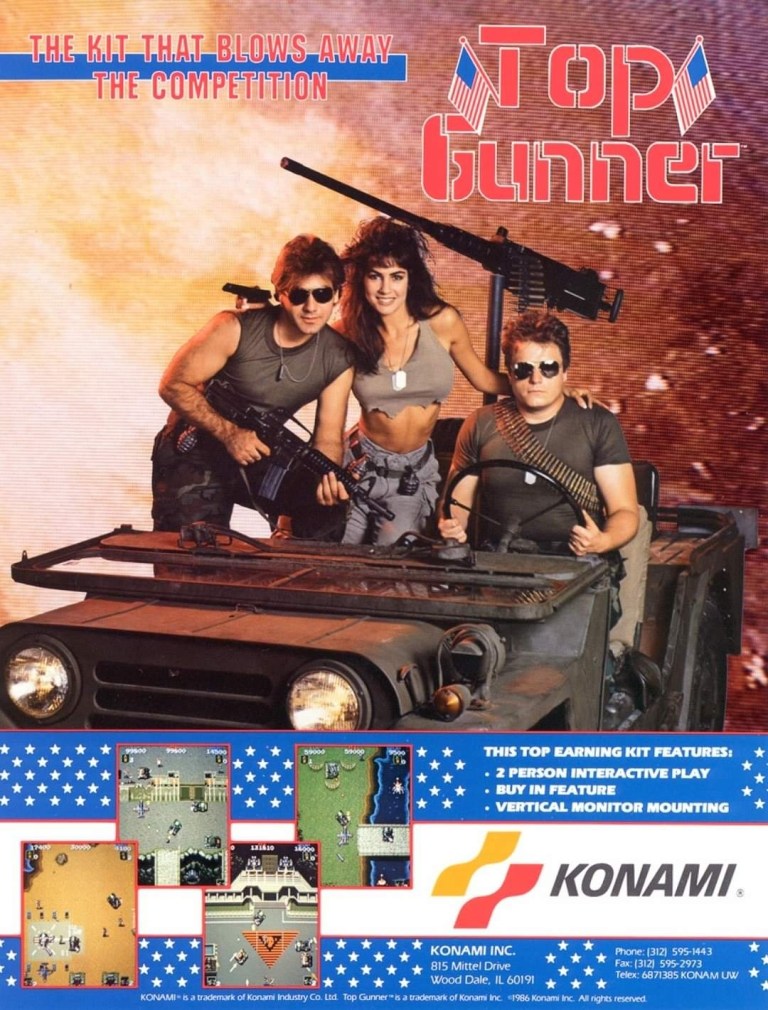
3. Top Gunner arcade conversion kit flyer
Show this nice looking image to the woke nut or modern day Communist near you. Watch and observe his or her reaction.
To make things clear, Top Gunner is actually the run-and-gun game Jackal and the alternative titles was mainly used in North American arcade distribution and also reflected Konami’s move of coming up with titles inspired by blockbuster movies of the time. To promote its 1986 arcade release in America as a conversion kit, the advertisers had three models playing soldiers on a military jeep to immerse gamers into the core concept of the game – moving armed military jeeps from one location to another while fighting bad guys. The approach used for the visual concept is indeed inspiring, especially during the Cold War. Top Gunner/Jackal became a hit in both arcades and consoles.
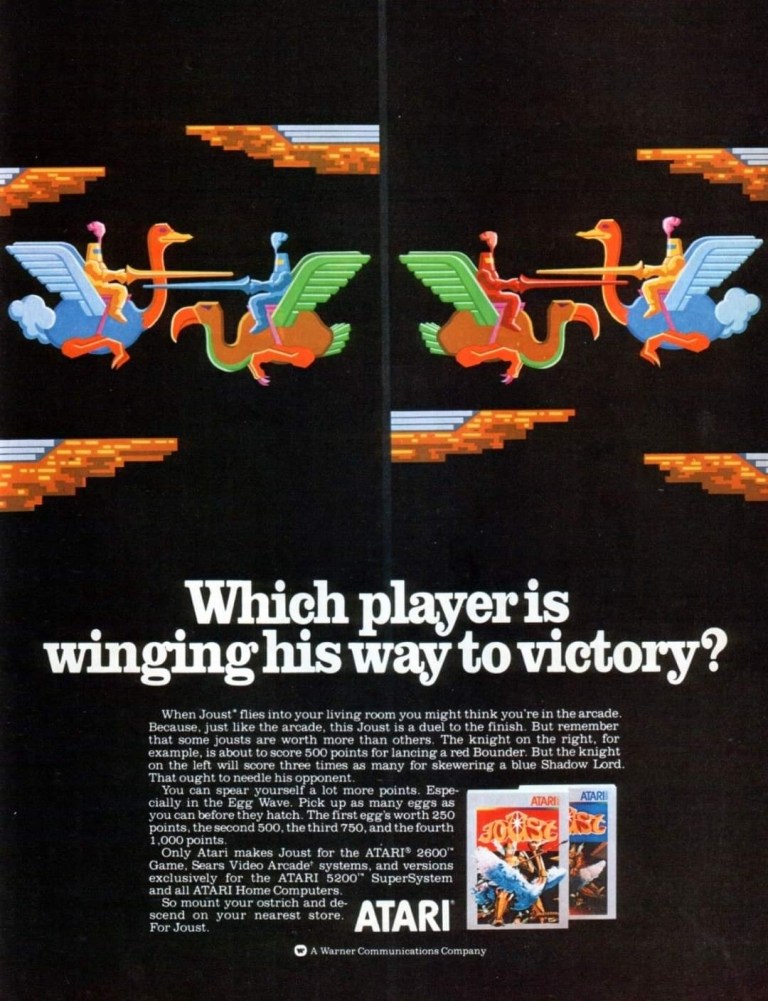
4. Joust for Atari print ad
While I played Joust on console, I don’t remember seeing this print ad before.
Made by Williams Electronics, Joust was one of those early 1980s arcade games that eventually made its way to the Atari 2600 console which was massively popular in North America. Strangely enough, the artistic approach Atari’s advertising came up with for the console version of Joust was similar with that of the ad of the Atari version of Galaxian (see item #1 above) in which artwork was used to resemble the 2D sprites of the game. Regardless, the images of this ad showed what a joust looked like – a martial game between two armed combatants going against each other while riding an animal.
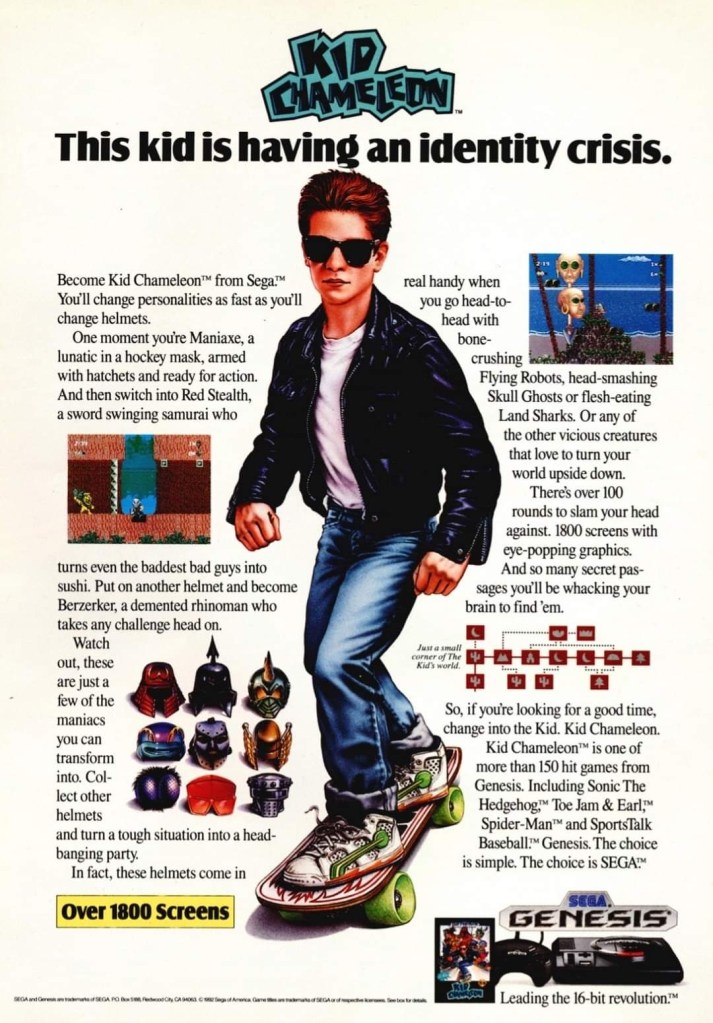
5. Kid Chameleon print ad
Can you relate with Kid Chameleon’s identity crisis?
During the early years of the Sega Genesis, Sega of America exerted efforts to make new games that were not only exclusive to their console but also stand out among the many 2D side-scrolling adventure games by coming up with a protagonist with a unique personality that could somehow resonate with young kids and teenagers.
Developed by their internal experts (Sega Technical Institute), the company released Kid Chameleon in 1992 and they came up with the above print ad that had detailed hand-drawn art of the lead character as well as a wordy text description which was a clear attempt to help young gamers (including teenagers) get connected with both the game and the protagonist. The advertisers even had space to spare to accommodate two screenshots of the game.
6. Terminator 2: Judgment Day (AKA T2: The Arcade Game) for Sega Genesis print ad
This print ad appeared on the many comic books I read long ago.
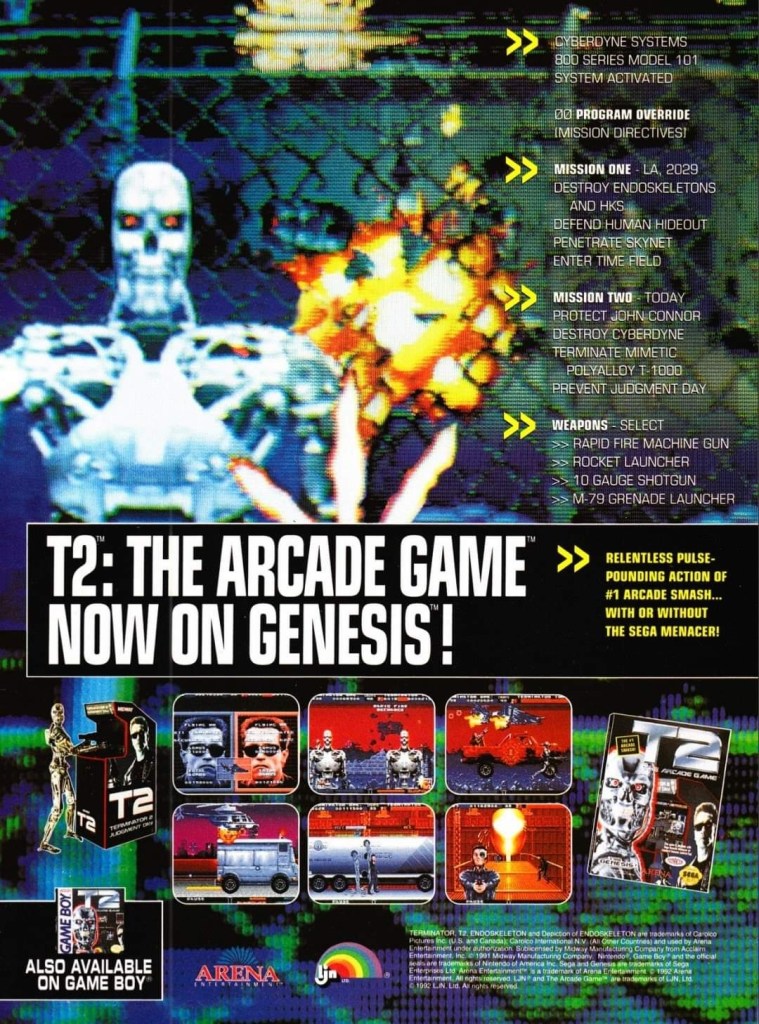
Back in the early 1990s, Terminator 2: Judgment Day was a massive success in the global box office and this resulted in Arnold Schwarzenegger’s popularity to soar very high while also establishing the Terminator as an essential pop culture figure. Apart from comic books and merchandise, video games based on the movie were made and the one that stood out the most was the arcade shooter game initially titled Terminator 2: Judgment Day (later retitled as T2: The Arcade Game).
The arcade mega hit eventually got ported to the Sega Genesis and this print ad really looked flashy with its visual presentation showing screenshots and a zoomed-in look at how the Terminator T-800 looked like in the Genesis version complete with a few explosions in the background. It should be noted that this flashy print ad cleverly concealed the visual downgrades and the redrawn images as the Genesis itself could never come close to matching the high quality visuals of the arcade version.
7. CYBERPad print ad
I never owned the CYBERPad, nor have I ever used one.
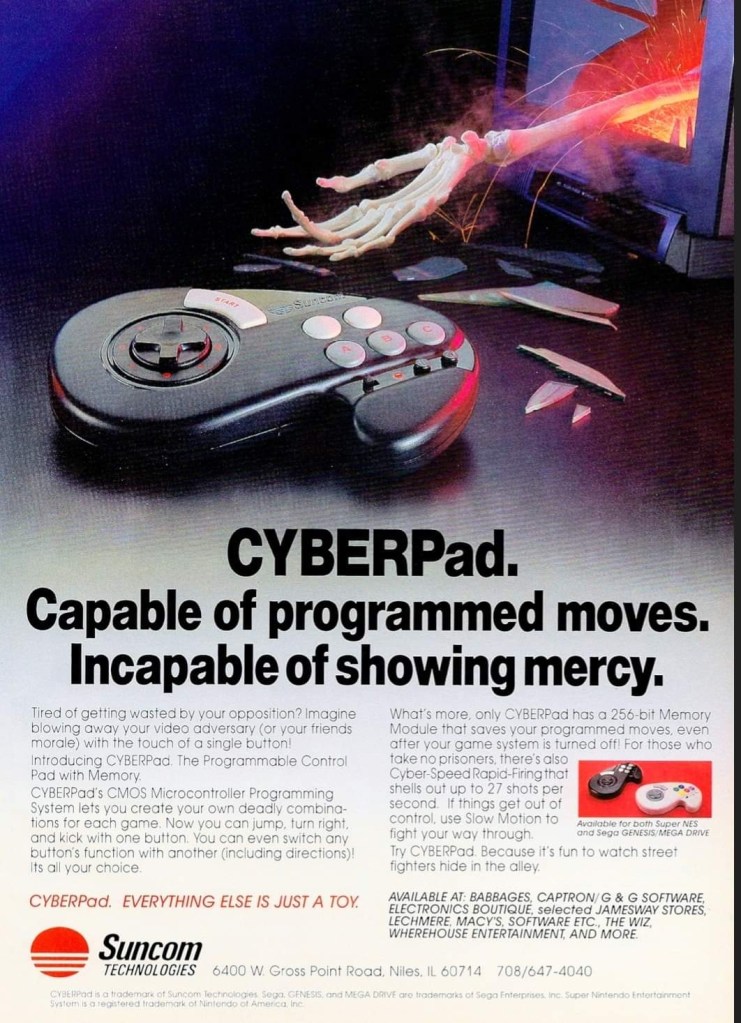
During the so-called 16-bit console generation (actually the 4th console generation), there were lots of licensed console peripherals made by independent companies in support of the Sega Genesis and Super Nintendo Entertainment System (SNES). The company Suncom Technologies came up with the CYBERPad controller for the two consoles and they boasted in their print ad that the product had a programmable control pad that allowed users to create combinations for each game with convenience in mind. The CYBERPad also allowed the saving of the programmable moves and it had a rapid-fire feature and even a slow-motion function. The CYBERPad was made to make the gameplay experience more user-friendly.
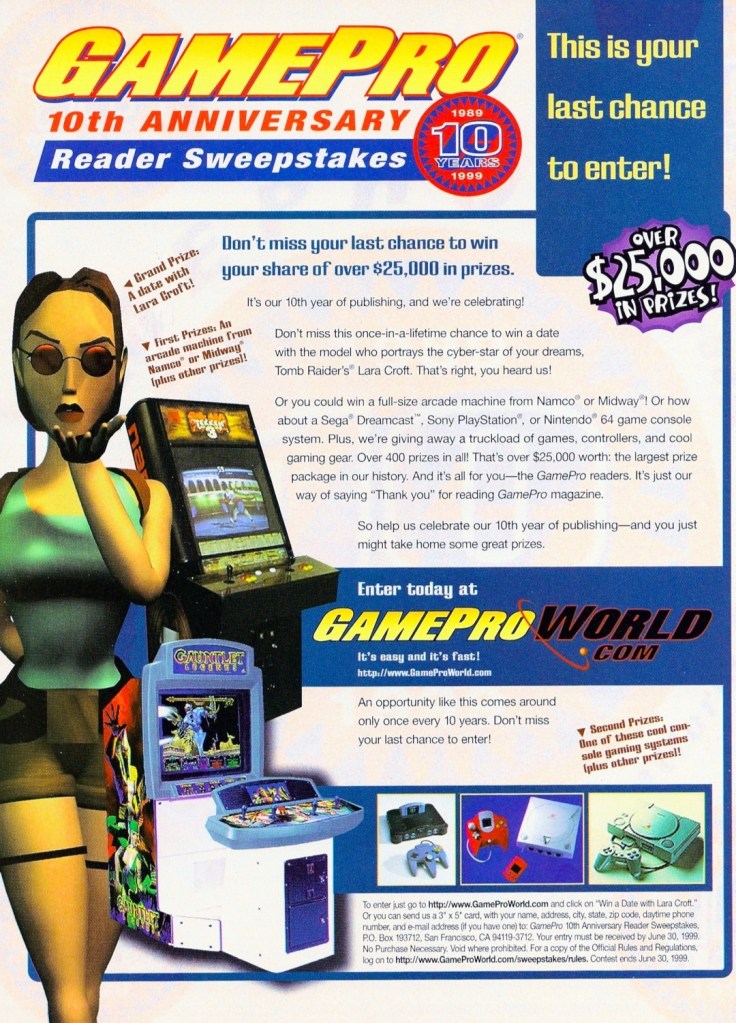
If you look closely, this print announcement by GamePro technically advertised the game consoles, the arcade game and Lara Croft to its readers.
In 1999, GamePro magazine celebrated its 10th anniversary and to keep on resonating with gamers and maintaining the loyalty of their fans, they organized a reader sweepstakes with prizes worth over $25,000 to be won by the few winners. GamePro boasted a date with an unnamed model who played the iconic Lara Croft (Tomb Raider). Certain arcade machines plus the modern consoles of the time – including the brand-new Sega Dreamcast – were also at stake. The way it was presented, this GamePro print announcement was enticing to read.
9. Smash T.V. for SNES print ad
Smash T.V. was a lot of fun on both arcade and console.
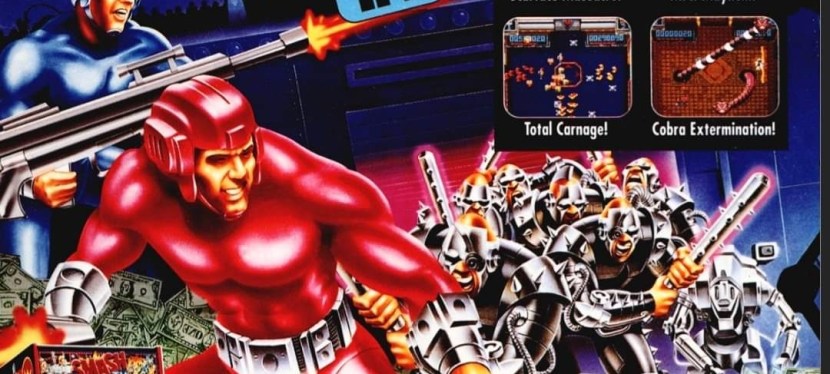
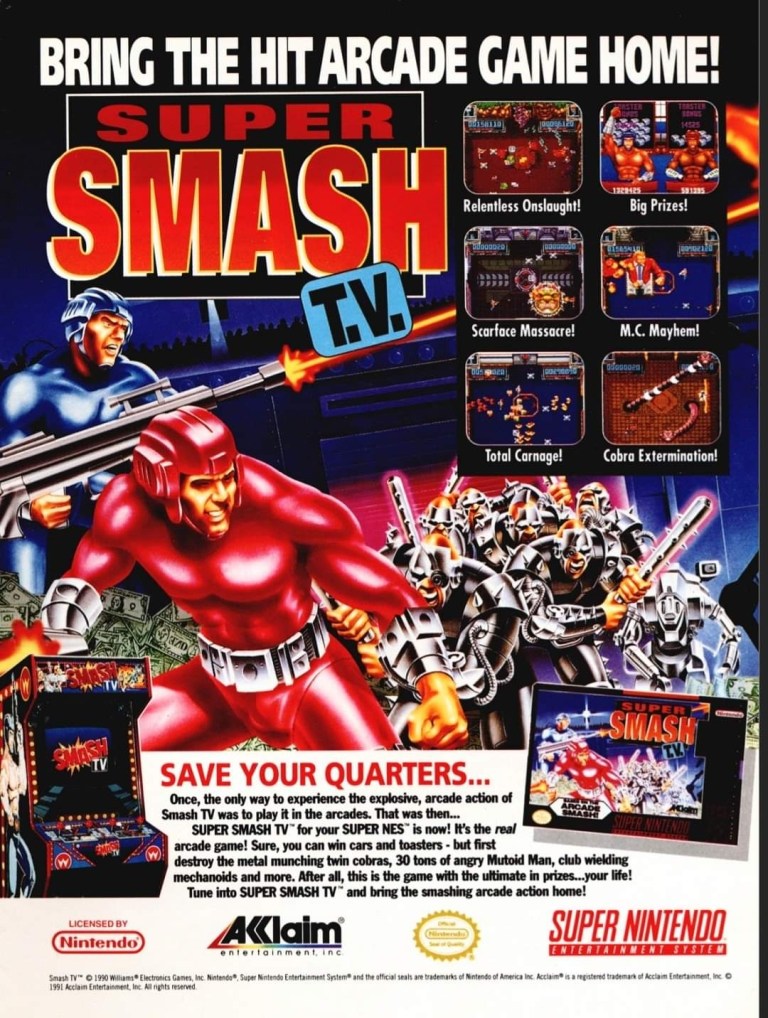
The arcade hit Smash T.V. made its way to the Super Nintendo Entertainment System (SNES) in 1992 and the publisher came up with a print ad that had captivating artwork, six screenshots and a text description that emphasized that a lot of fun awaits gamers on the console version. In my view, this old ad is still amusing to look at.
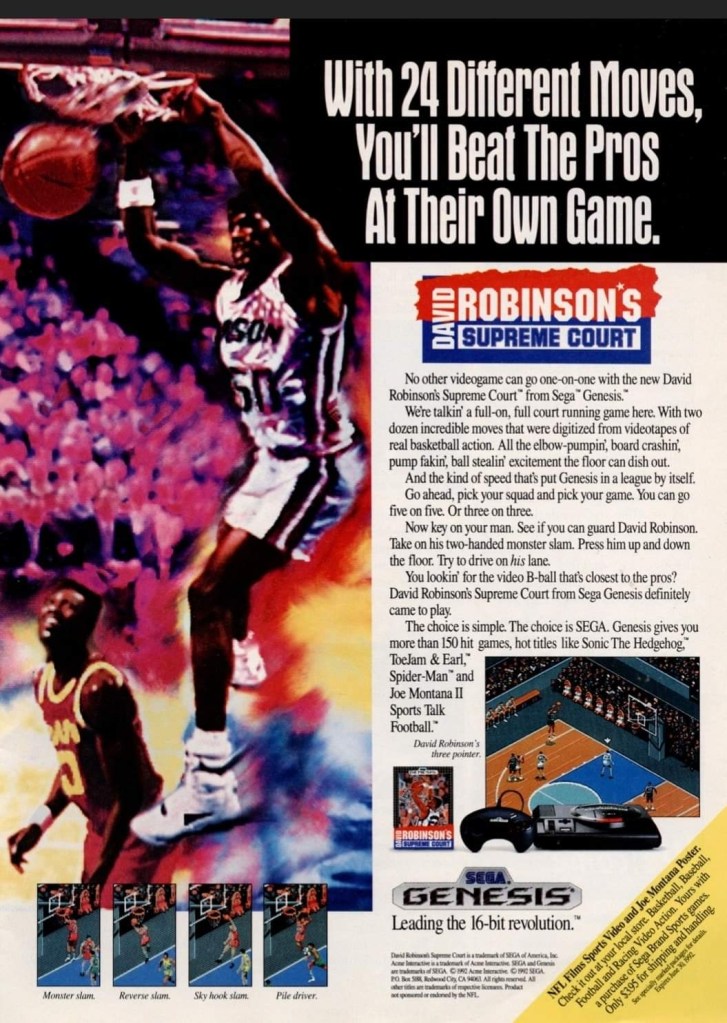
10. David Robinson’s Supreme Court print ad
It was a smart move by Sega to get NBA superstar David Robinson as the endorser of this basketball video game exclusive on the Sega Genesis. This ad was published many years before Robinson finally won an NBA championship.
As part of its strategy in competing with Nintendo during the 4th console generation, Sega of America was focused on producing exclusive sports video games for the Genesis console backed by endorsements of sports professionals. In 1992, they released David Robinson’s Supreme Court on the Genesis and unsurprisingly their print ad used a large, stylized image of the NBA superstar dunking backed with an exciting text description plus screenshots showing the game’s use of the isometric view for gameplay. This is still worth looking at.
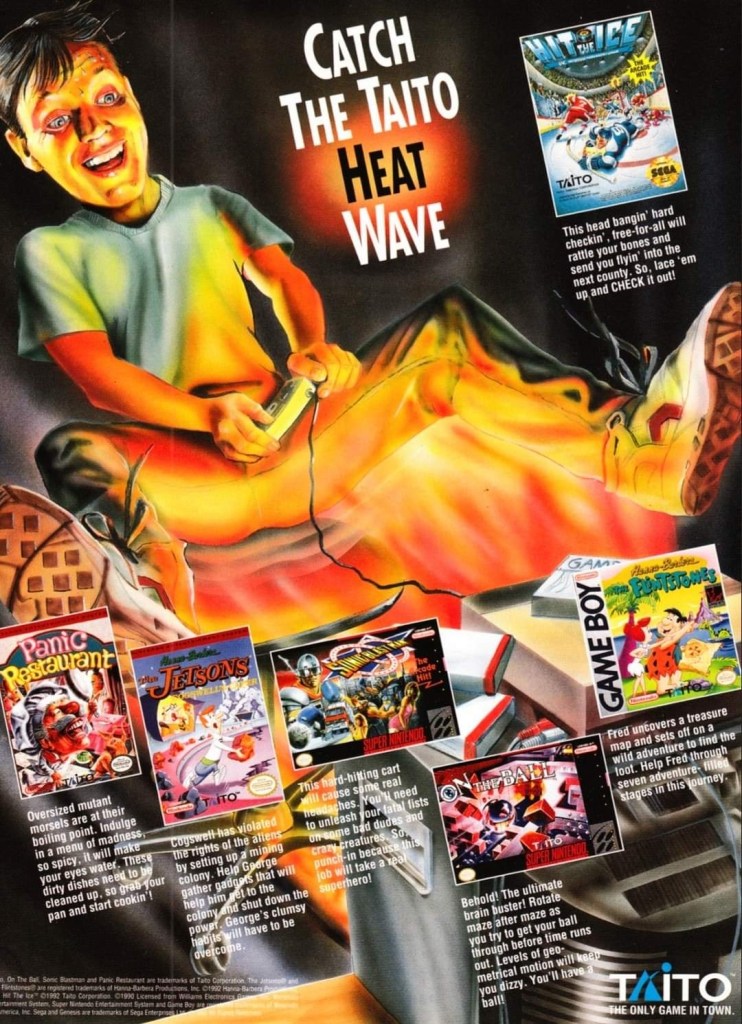
11. Taito’s “heat wave” print ad
An amusing and creative way to sell video games.
If your company lacks money to effectively market your video games individually, you can try making a single ad promoting them together. This is what Taito did in this print ad which showcases multiple games for different platforms and they used artwork of a player experiencing the so-called heat wave. This is a nice stroke of creativity on the part of Taito.
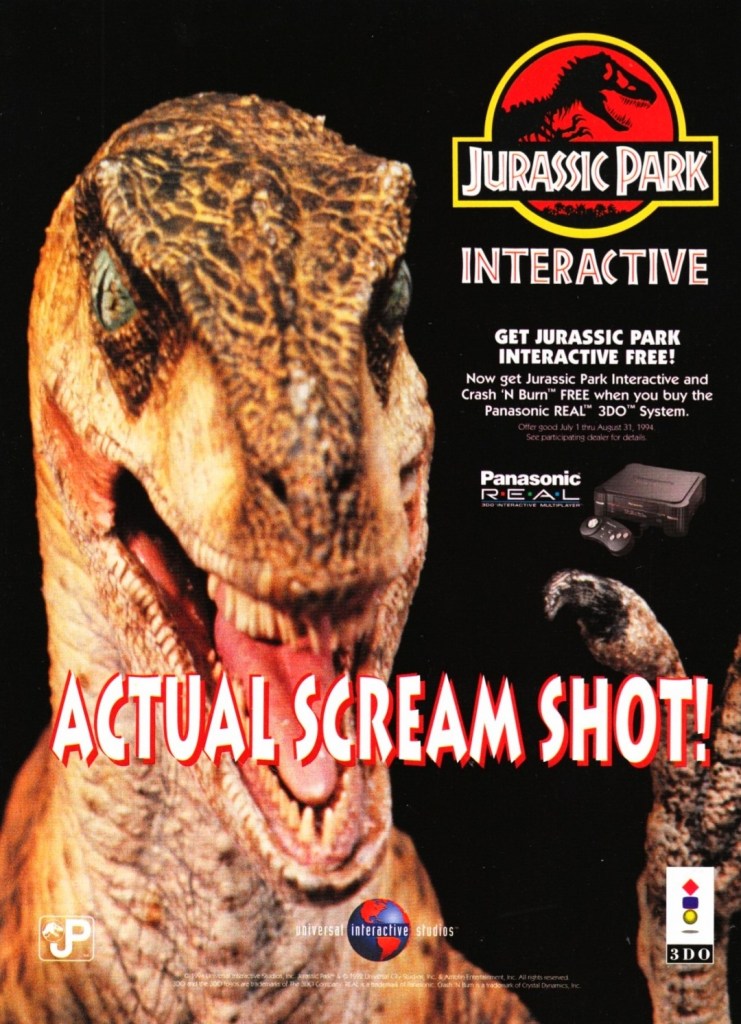
12. Jurassic Park Interactive print ad
This was a creepy print ad promoting the 3DO-exclusive Jurassic Park Interactive.
When it comes to video game consoles, having exclusive games is essential as long as they are of high quality, highly playable and enjoyable. The 3DO company acquired a license of the Jurassic Park movie and made the exclusive game Jurassic Park Interactive hoping it would sell a lot and lift up 3DO hardware sales.
This print ad, which features a zoomed-in image of the Raptor from the game, was more focused on selling the 3DO console than the video game as seen on the descriptive text. 3DO ran a promo selling the console which would entitle the buyer to get Jurassic Park Interactive and another game free. Nothing was done to describe the console’s multimedia capabilities of showing videos, images and graphics of the game (which was essentially a collection of mini-games). This print ad shows ignorance on the part of the 3DO company and the ad maker as it showed desperation happening really early in the console’s life. Notably, Jurassic Park Interactive was the only video game adaptation to use actual footage (note: the faces of the actors were edited out) and music from the film.
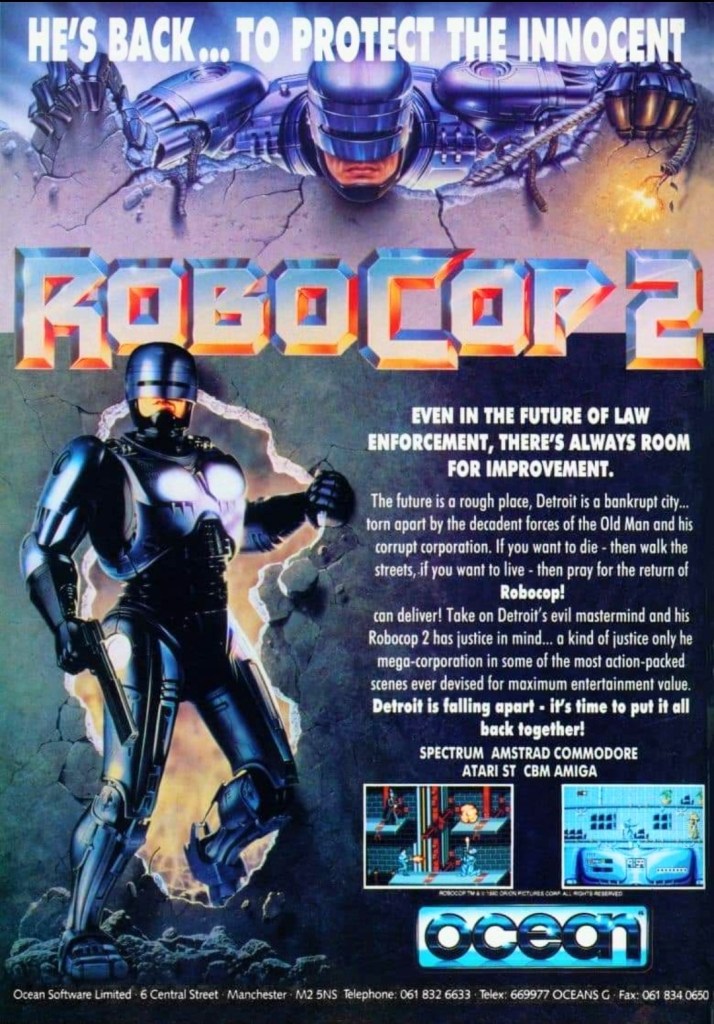
13. RoboCop 2 print ad
You want to become RoboCop to save the city of Detroit from criminals?
Way back in 1990, RoboCop 2 was a big hit in cinemas here in the Philippines and in some places around the world. As typical of the time, licenses to make video games based on the movie were released resulting in RoboCop 2 games for multiple platforms. The print ad featured two different images of RoboCop – one from the movie poster and the other from an official artwork. The descriptive text does a fine job to immerse readers into the story concept of the game but showing only two screenshots was a lackluster effort to sell the game.
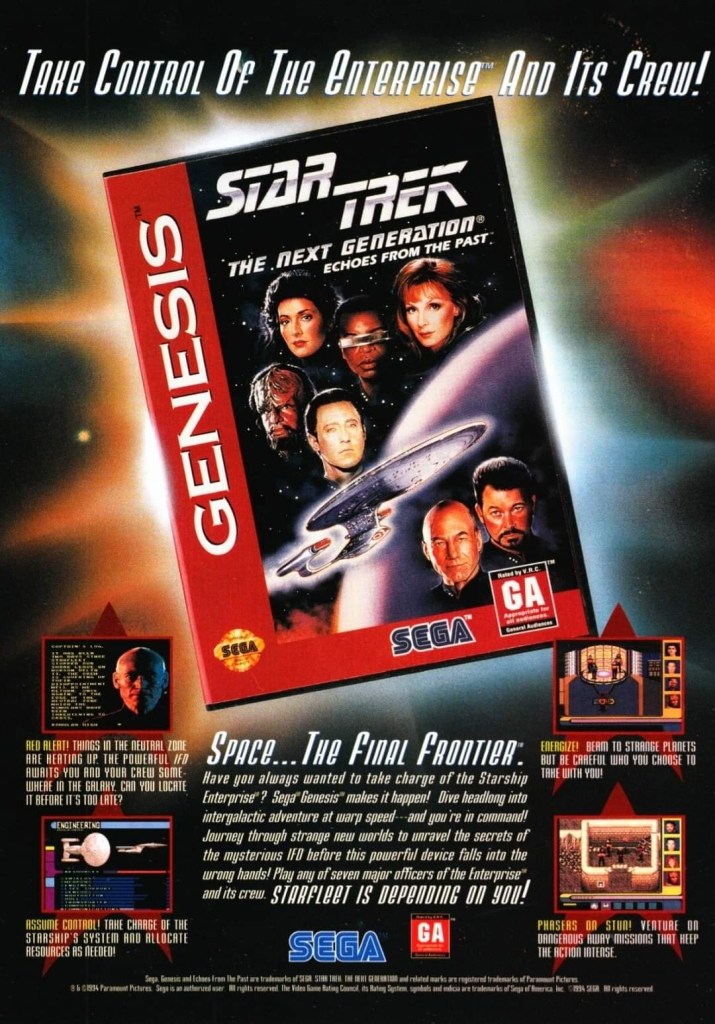
14. Star Trek: The Next Generation – Echoes from the Past print ad
Space…the final frontier waiting for Sega Genesis gamers.
Released in 1994, Star Trek: The Next Generation – Echoes from the Past delivered the Star Trek TNG adventure experience to Sega Genesis gamers. In fact, it is the exact same experience that SNES gamers got the same year. In reality, Star Trek: The Next Generation – Echoes from the Past is actually a port of Star Trek: The Next Generation – Future’s Past on the SNES and the screenshots on the print ad are giveaways about it. In fairness to the ad makers, this print ad never attempted to deceive gamers that it promoted a totally different Star Trek TNG game.
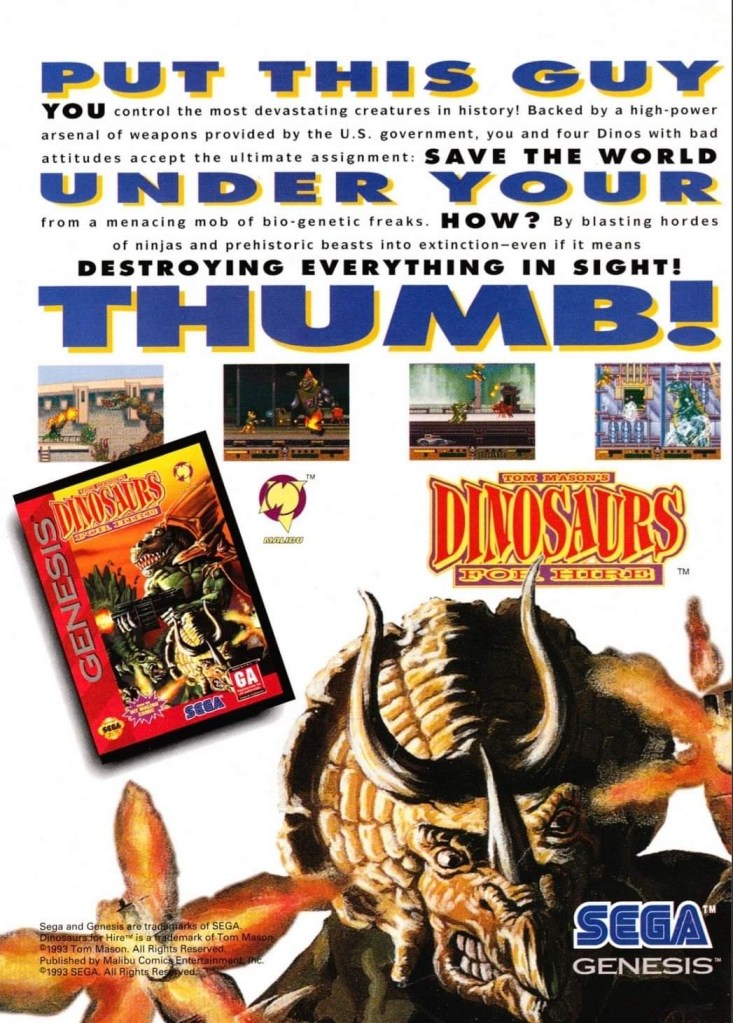
15. Dinosaurs for Hire print ad
This print ad caught my attention and made me interested in the game and the comic book series. Even though it was small, Malibu Comics’ logo was still recognizable.
Dinosaurs for Hire (sometimes referred to as Tom Mason’s Dinosaurs for Hire) was a 2D side-scrolling platform adventure game based on the comic book series of Tom Mason. Published by Sega, it was a Genesis-exclusive game and this print ad had a catchy text description, a few screenshots and the eye-catching artwork of a triceratops facing the viewer. This print ad is still good to look at. If you’re thinking about searching for existing copies of the game, I encourage you to also read some Dinosaurs for Hire comic books before playing. By the way, Tom Mason also wrote several comic books of the Ultraverse.
Disclaimer: This is my original work with details sourced from reading the comic book and doing personal research. Anyone who wants to use this article, in part or in whole, needs to secure first my permission and agree to cite me as the source and author. Let it be known that any unauthorized use of this article will constrain the author to pursue the remedies under R.A. No. 8293, the Revised Penal Code, and/or all applicable legal actions under the laws of the Philippines.
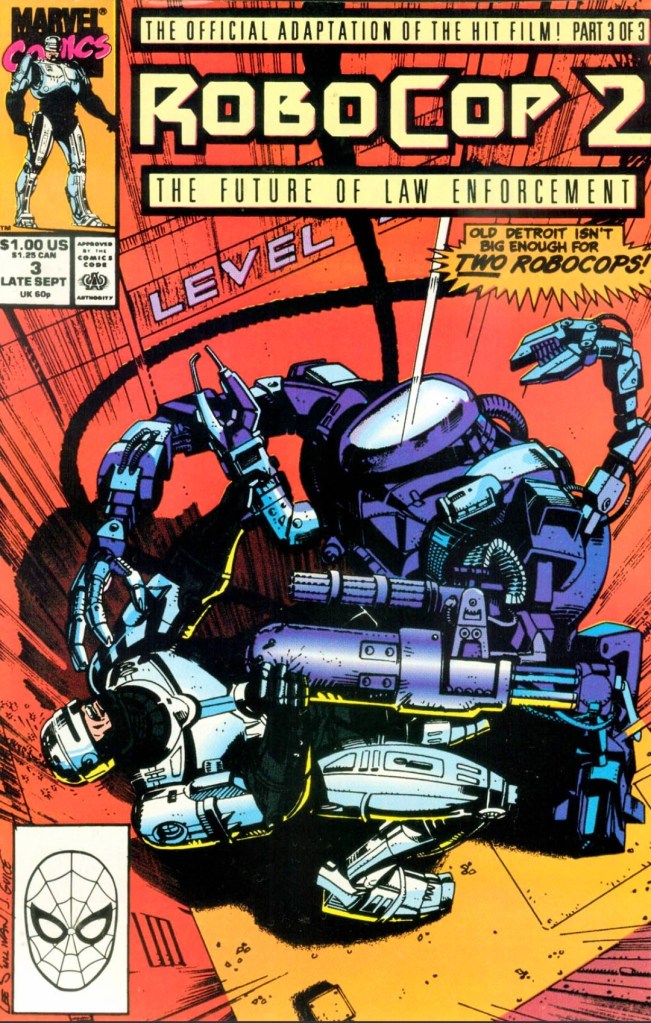
Welcome back superhero enthusiasts, 1990s arts and culture enthusiasts, Marvel Comics fans and comic book collectors! Today we go back to the year 1990 to take a close look at the concluding chapter of the comic book adaptation of the movie RoboCop 2 (1990).
In my previous retro review, I found the 2nd issue of the 3-part comic book adaptation mini-series that it lacked the impact of issue #1. It was understood that the comic book team was limited by the source material they had and the movie’s comedic scenes showing RoboCop not being his normal self were adapted. Those scenes did not translate into humorous comic book moments. At the very least, the build-up achieved by the comic book creators in issue #2 (which includes several internal developments at Omni Consumer Products) sets the stage for the final issue.
With those details laid down, here is a look back at RoboCop 2 #3, published in 1990 by Marvel with a story written by Alan Grant and drawn by Mark Bagley based on the movie screenplay by Frank Miller and Walon Green.
The cover.
Early story
The story begins in Detroit where OCP executives press RoboCop (Officer Murphy) for answers about the spying he recently did on his ex-wife. It turns out that his wife was so traumatized over his death, there were therapists, hypnotists and other treatments involved to help her recover. As a result of the spying, his ex-wife now believes her husband is still alive. In response to questions, RoboCop gave answers that the OCP guys wanted – he is no longer a husband, no longer human, no longer Alex Murphy and he is simply a machine. The private meeting between him and his ex-wife did not go well.
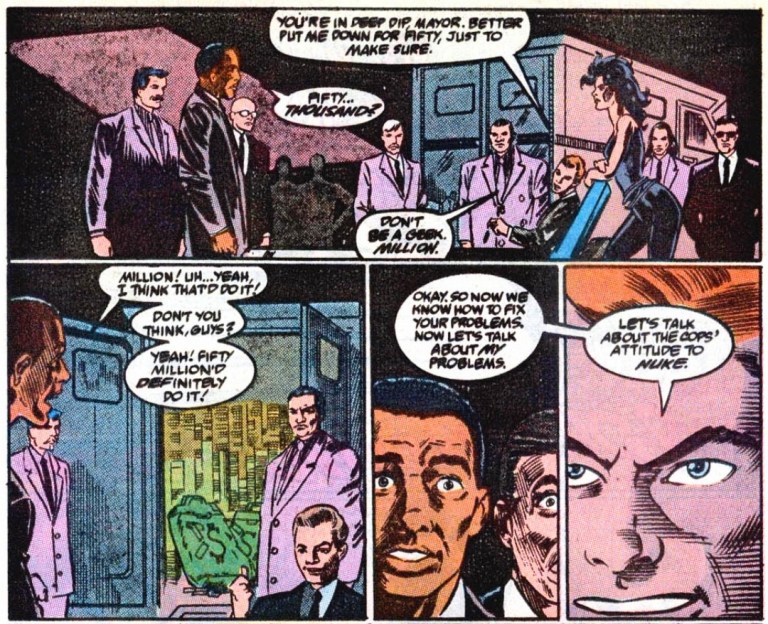
Meanwhile, the City Government of Detroit organizes a telethon in an attempt to raise funds needed to pay off the $37,985,300 they owe OCP. The mayor receives a very important call from former associates of Cain (RoboCop 2).
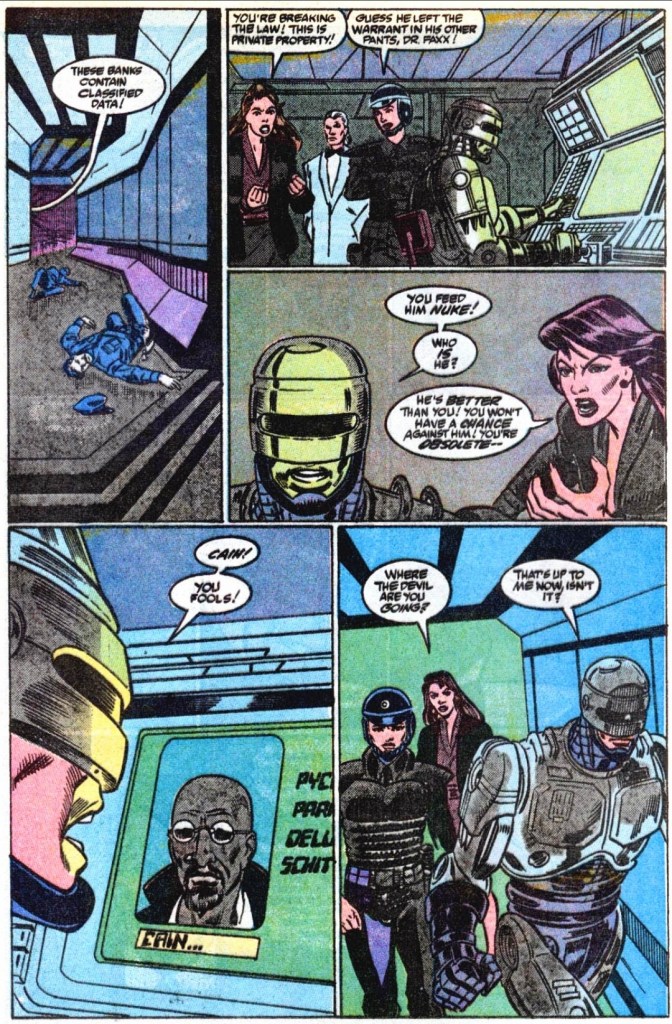
Shortly after, OCP realizes that the City Government could pay soon and if they fail to foreclose Detroit, their stock will plummet. With the approval from the corporation’s chief, Dr. Juliette Faxx proceeds to launch RoboCop 2 with the mind of Cain inside it…
Quality
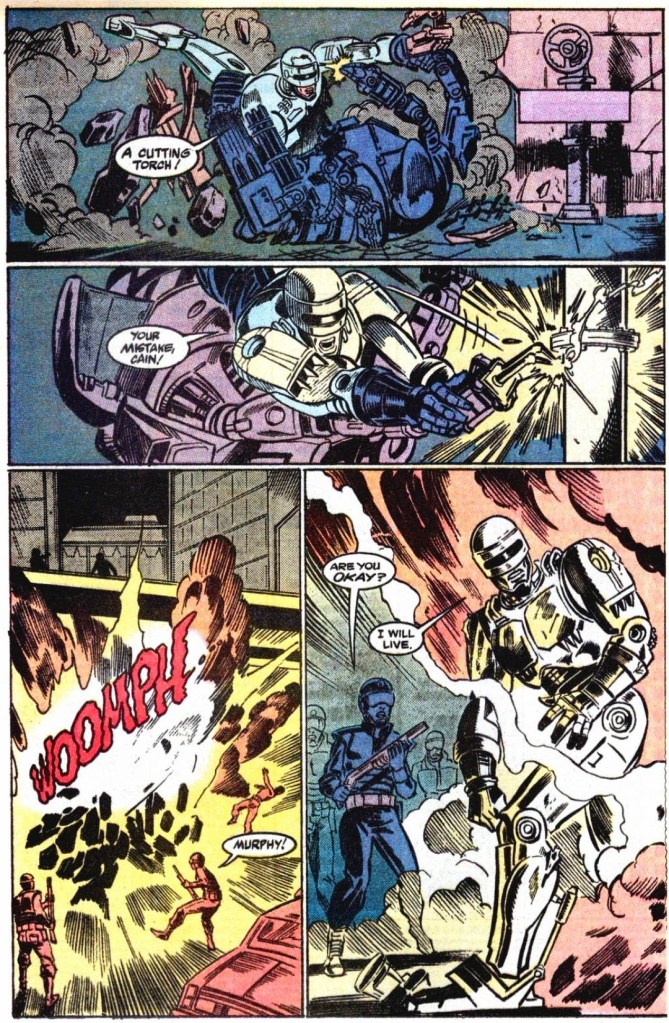
The battle between RoboCop and his bigger rival (Cain) is action-packed and fun to read.
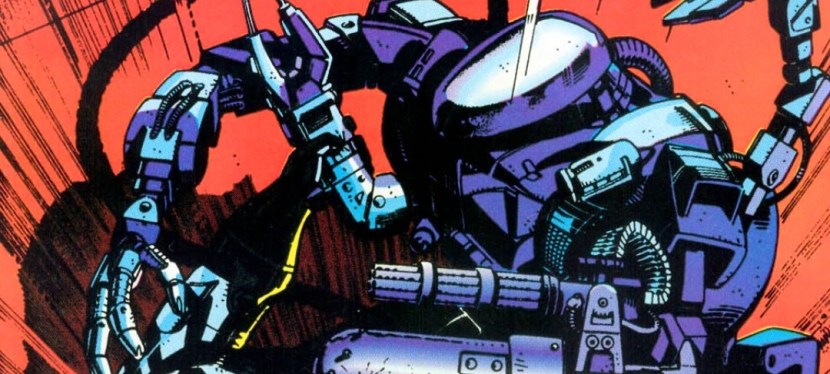
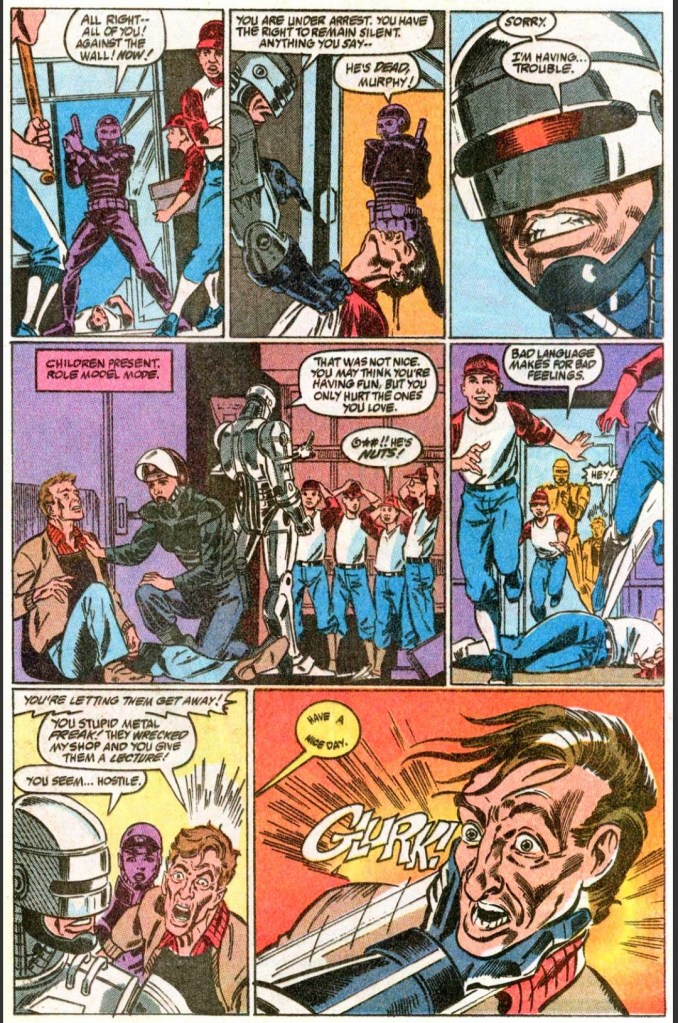
As it is clear that the imagery and plot developments of the movie screenplay were adapted by the comic book creators with their very own distinctive ways throughout the mini-series, this comic book succeeded in concluding its 3-part story. In fact, this is a huge pay-off to most of the build-up that took place in issues #1 and #2. The much-awaited big battle between RoboCop and the Cain-controlled RoboCop 2 lasted eight pages and it was indeed action-packed and satisfying. Before the said battle took place, RoboCop 2’s debut is short, stylishly obscured visually and yet vicious to see.
Considering the huge amount of details the movie screenplay had, the Grant-Bagley duo managed to adapt the most relevant content efficiently while also telling a literary tale that is cohesive enough.
This scene did not appear in the movie.
What I found very notable is the fact that this comic book opened with RoboCop getting berated by OCP executives for his spying on his ex-wife. The said scene actually happened very early in the movie itself and to have it as an opener of this comic book added depth to RoboCop’s character development in this adaptation.
When it comes to weaknesses, there were times when Mark Bagley’s drawing of RoboCop 2 were off. RoboCop 2 was visually huge and intimidating in the movie but in this comic book, the size and scale were clearly lacking particularly in the shot where he is standing near OCP’s chief. The lack of visual details on RoboCop 2’s body showed signs of rush by the artist.
Conclusion
Is your local government leader making secret deals with criminals in real life?
RoboCop 2 #3 (1990) is a nice pay-off to the build-up that preceded it and, more importantly, it was a satisfying mini-series conclusion. As a standalone comic book, it has a good amount of plot details, dialogue and action scenes that can delight RoboCop fans. As the conclusion of the 3-part adaptation of the 1990 movie, it has a stronger focus on RoboCop and the plot moved at a better pace than in issue #2. The storytelling is good and the spectacle was much improved.
Welcome back readers, fellow geeks and electronic gaming fans!
In this edition of the Retro Gaming Ads Blast (RGAB) series, we will take a look at another batch of retro gaming print ads – including arcade flyers – from the 1980s and 1990s.
For the newcomers reading this, Retro Gaming Ads Blast (RGAB) looks back at the many print ads of games (console, arcade, computer and handheld) that were published in comic books, magazines, flyers, posters and newspapers long before smartphones, social media, the worldwide web and streaming became popular. To put things in perspective, people back in the 1980s and 1990s were more trusting of print media for information and images about electronic games and related products.
With those details laid down, here is the newest batch of retro gaming print ads for you to see and enjoy…
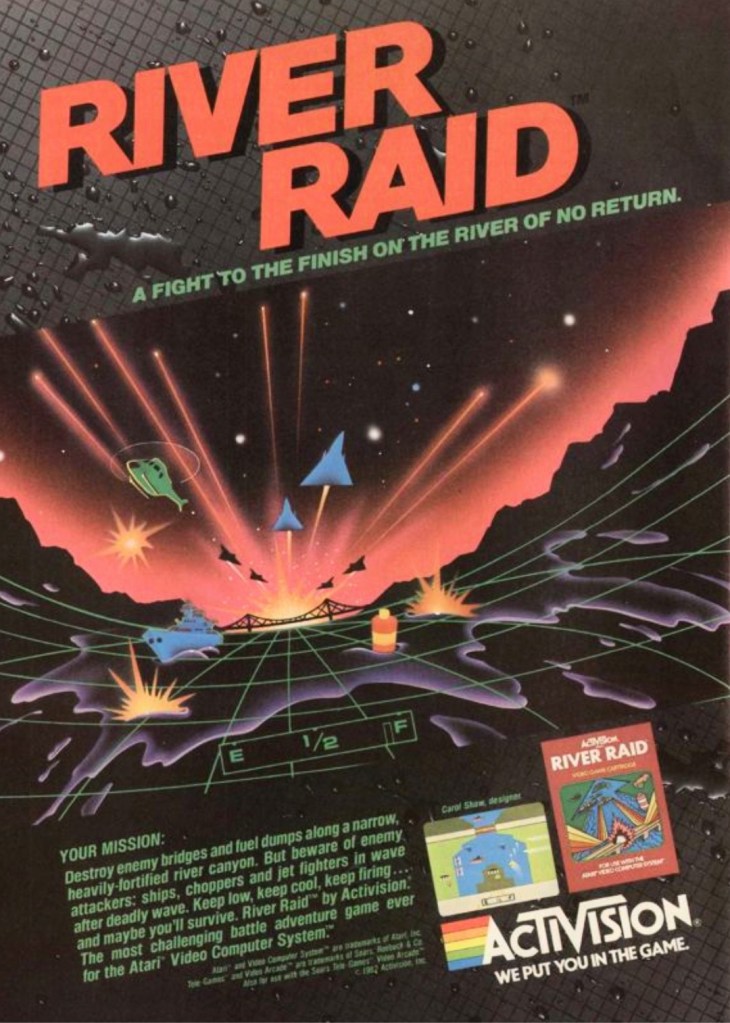
1. River Raid print ad
This River Raid print ad appeared on comic books and magazines long ago.
Decades before it became an industry giant with the best-selling Call of Duty games, Activision became a standout publisher in the early 1980s with River Raid on the Atari 2600. Designed by Carol Shaw, River Raid was a huge success ending up as the 2nd best-seller on the Atari 2600 as well as Activision’s best-selling game for the year 1983. Apart from showing one screenshot and the box cover of the game, the print ad of River Raid had this mesmerizing 3D image that caught many gamers’ attention and helped them feel like they will pilot on dangerous missions. The 3D image was futuristic in its own style became forward-moving 3D sequences in video games became reality many years later.
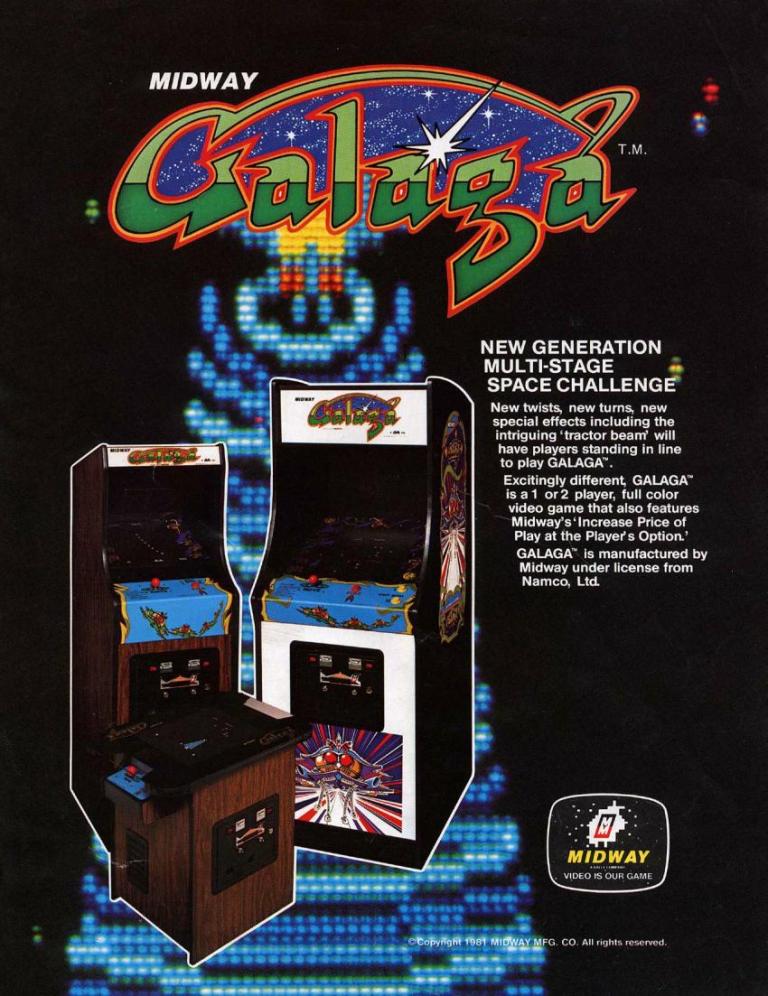
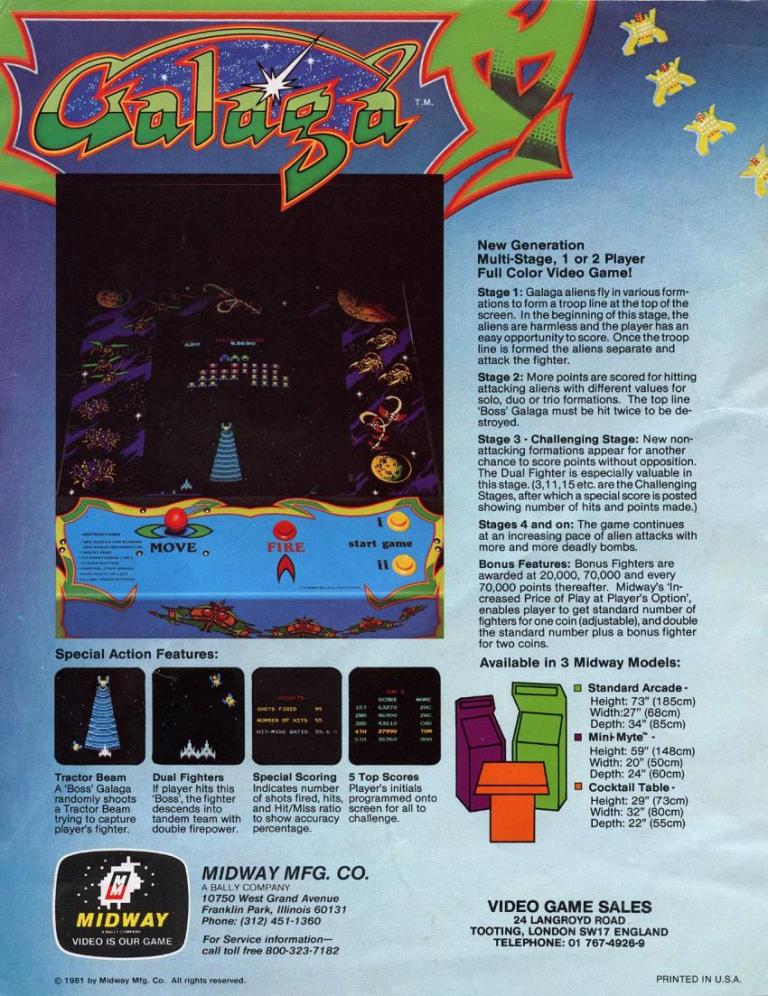
2. Galaga North American arcade flyer
The front of the flyer showing three Galaga machines that arcade operators can choose from.
Key details about Galaga were nicely presented on the rear of the flyer.
In the history of gaming, Namco’s Galaga was played by countless millions of gamers and it is still highly regarded as an arcade classic as well as one of the most enjoyable arcade games ever made. In preparation for the North American launch (October 1981), Midway prepared the arcade flyer showing the three types of machine on the front that arcade operators can choose from. On the rear is the really neat approach of explaining the details of the game, what kind of gameplay is to be expected, and how to play. Whether you are an individual player or the manager of an arcade joint, this flyer suits your needs.
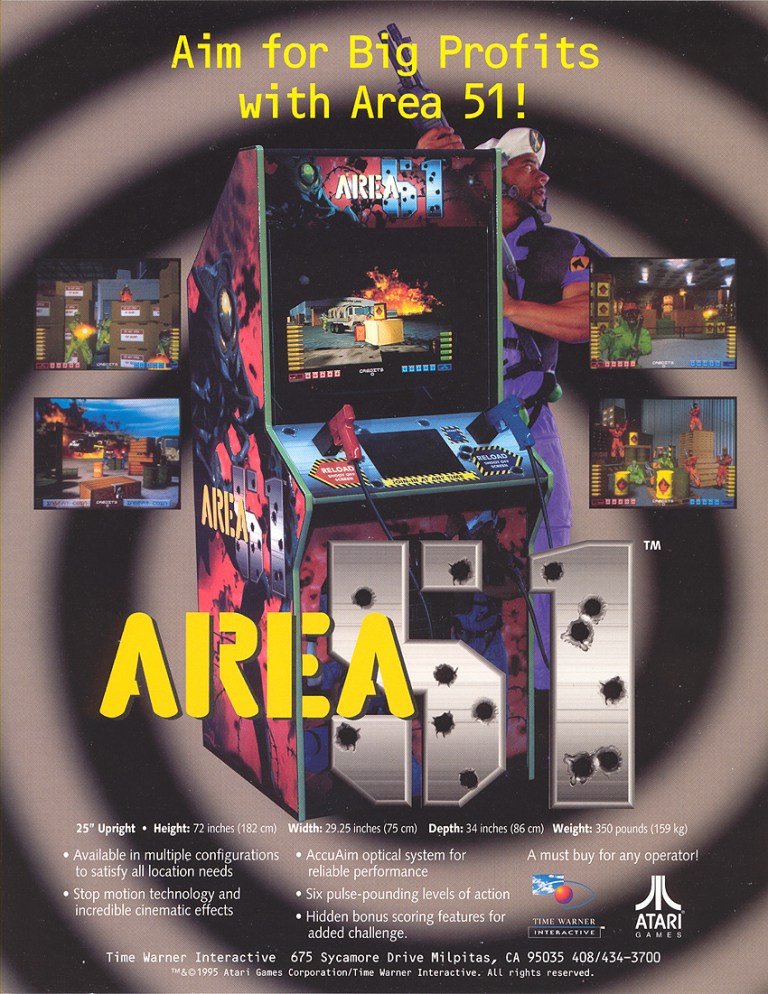
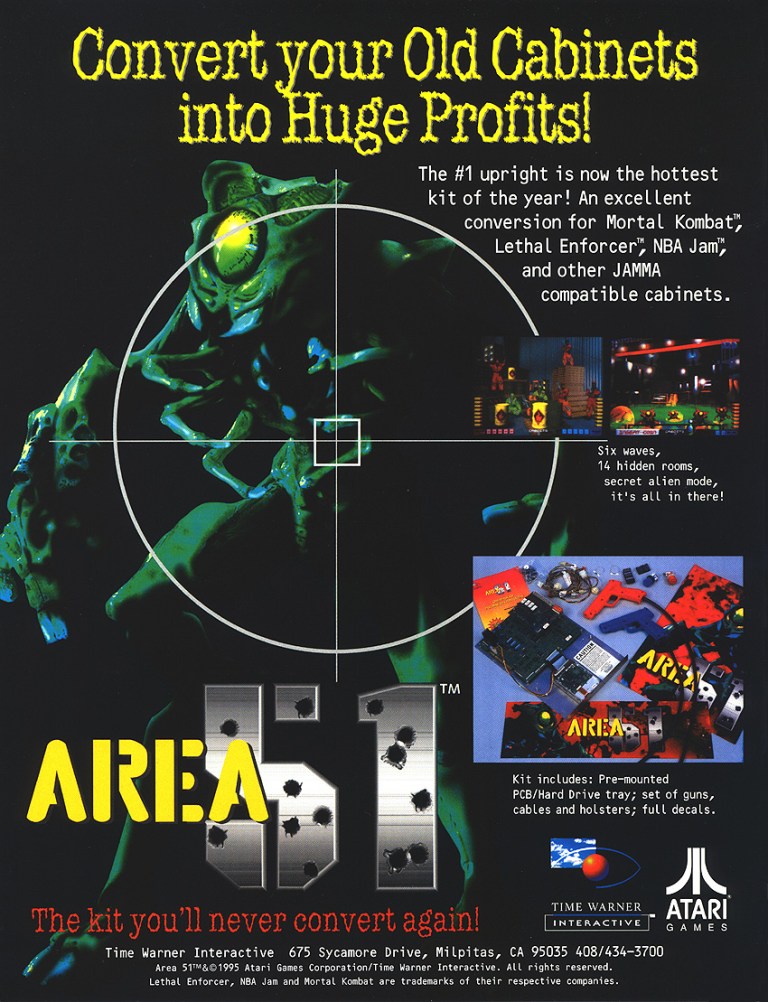
3. Area 51 arcade flyer and conversion kit flyer
The front of this Area 51 flyer had an enticing message for arcade operators as well as other business owners/managers who are interested in having a machine to add value to their business joints. Atari was already in deep money problems by the time they started making this game.
The Area 51 arcade conversion kit is a cheaper alternative for businesses who want the game.
Moving on to the 1990s, Atari was already struggling financially and desperately needed a hit to lift them up fast. A light gun shooter project was approved as arcade shooters were in good demand and after overcoming serious hurdles during production internally, Atari hired independent team Mesa Logic to take charge of development. After being granted extra time and more creative freedom, the project under Mesa Logic’s handling became a sci-fi shooter titled Area 51. The game became a huge hit in the arcades for Atari resulting in sales of more than 20,000 arcade cabinets as well as a major financial boost for the company (note: Atari still exists today). Atari went on to release Atari 51 versions for PlayStation, Sega Saturn and PC in America in 1996. The Atari 51 flyers you see here are still captivating to look at and were crucial in generating buzz among arcade operators, business joints that had space for arcade cabinets and gamers.
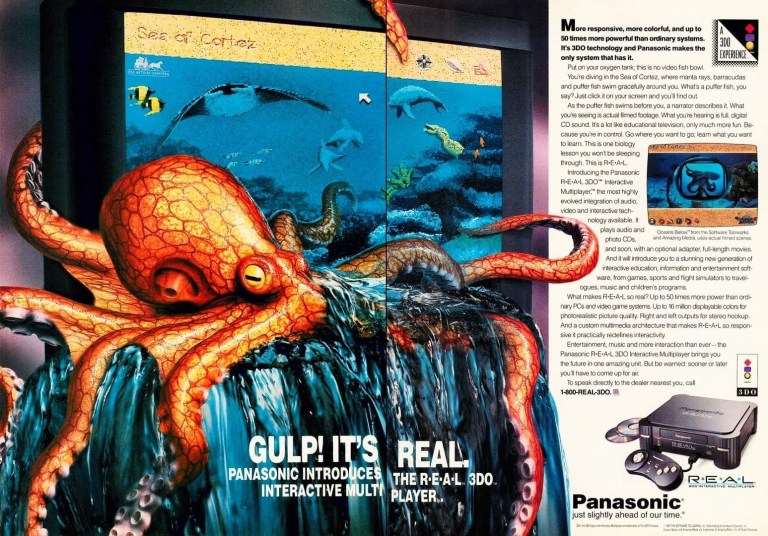
4. Panasonic 3DO print ad
The makers of this print ad forgot to mention the 3DO is also a game machine.
Back in 1993, the 3DO Interactive Multiplayer console manufactured by Panasonic (a licensee of the 3DO Company) was launched with a CD-ROM drive, multimedia features and gaming capabilities (with a 3-button control pad). This print ad strongly emphasized the 3DO’s ability to play high-quality sound and full-motion videos using the Sea of Cortez software which functioned as an interactive movie. Obviously, this did not resonate well with people who loved to play games and by the time the 3DO Company and its partners started marketing games, they could not save the 3DO console from fading to obscurity. The console shown in the ad is specifically model Panasonic FZ-1 R·E·A·L 3DO Interactive Multiplayer. Panasonic was one of five companies that were licensed by the 3DO Company.
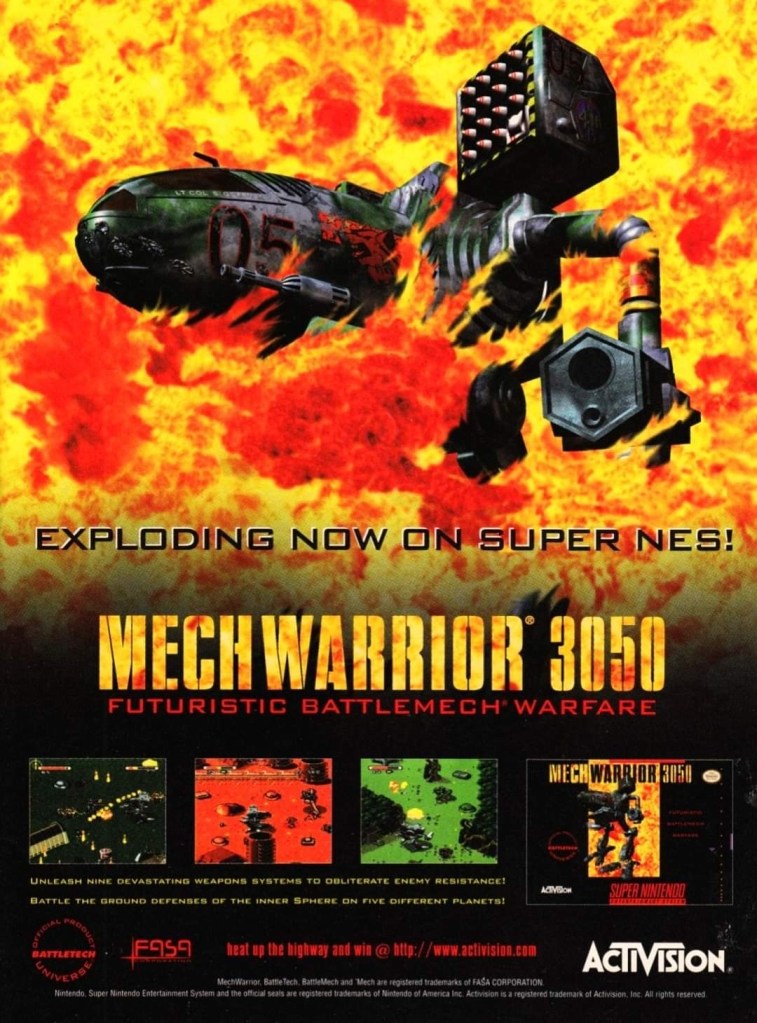
5. MechWarrior 3050 SNES print ad
If you were unaware of the 1994 game BattleTech, then this ad would have fooled you into thinking it is promoting a brand new game.
In 1995, the popular BattleTech entertainment franchise arrived on the Super Nintendo Entertainment (SNES) system with MechWarrior 3050 and its print ad had a really blazing artwork of an armed mech in fire which gave readers the illusion of a new and original game. In reality, MechWarrior 3050 was actually a port of BattleTech which was released on the Sega Genesis in 1994. The Genesis game was published by Extreme Entertainment Group while the SNES game was published by the more famous Activision. If you look closely at the MechWarrior print ad, you can tell how hard they tried to sell the game like it was brand new and all-original.
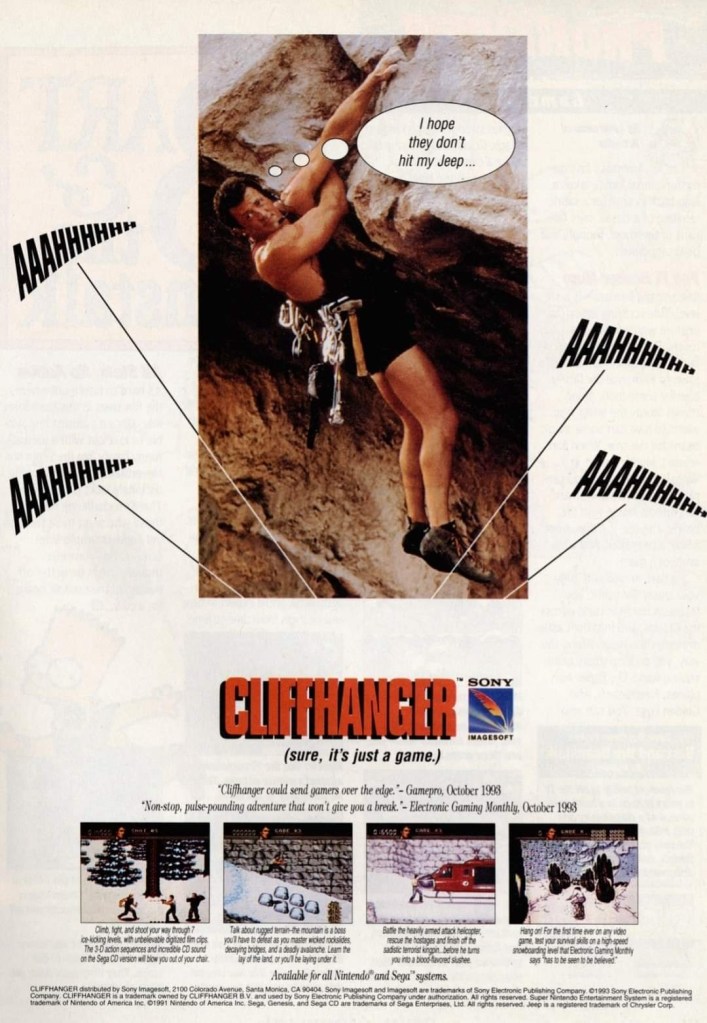
6. Cliffhanger video game print ad
This print ad had Sylvester Stallone hanging on a cliff to be relevant with the title of both the film and the game. They could not show images of Stallone in hard action scenes.
For fans of Sylvester Stallone, 1993 was a big and exciting year as the Hollywood icon appeared in two major action films – Cliffhanger and Demolition Man. Cliffhanger was released first and there were video game adaptations of it released on game consoles, handhelds and computers. This print ad of the Cliffhanger video game had an image of Stallone hanging on a cliff to emphasize the title. The ad makers cleverly posted selected gameplay screenshots and quoted GamePro and Electronic Gaming Monthly (EGM) to make the game look credible and worthy of purchasing. The marketing led to nowhere as the game received mostly negative reviews from critics and it faded to obscurity. Lastly, the Cliffhanger game ad had a noticeable amount of space wasted. They could have made the screenshots and text look somewhat bigger to sell the game.
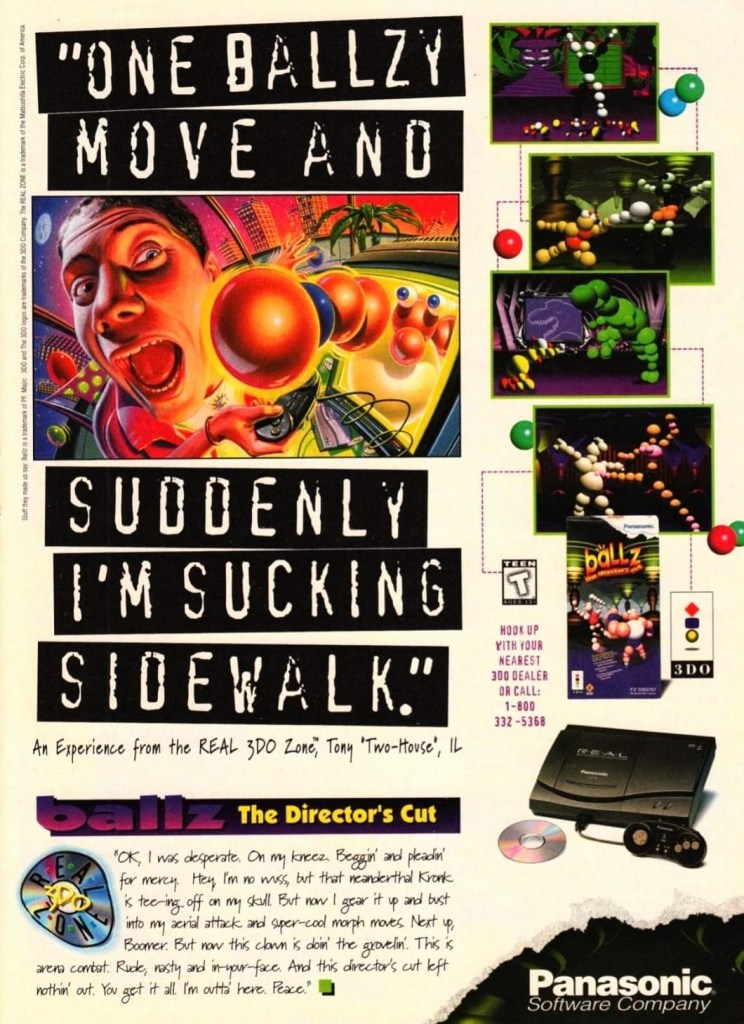
7. Ballz: The Director’s Cut print ad
I never got to play this game on the 3DO.
Here is another ad of the video game released on the failed 3DO console. As its title made obvious, Ballz: The Director’s Cut is an enhanced version of the original Ballz game of 1994 that was released on other consoles. The print ad had an eye-catching piece of artwork and posted beside it were selected shots of the gameplay. Strangely enough, the creative writing on the lower part of the ad does not make any sense and did nothing to convince gamers to play the game. As Ballz: The Director’s Cut was released in 1995, this ad shows the revised 3DO console from Panasonic (model: Panasonic FZ-10 R·E·A·L 3DO Interactive Multiplayer).
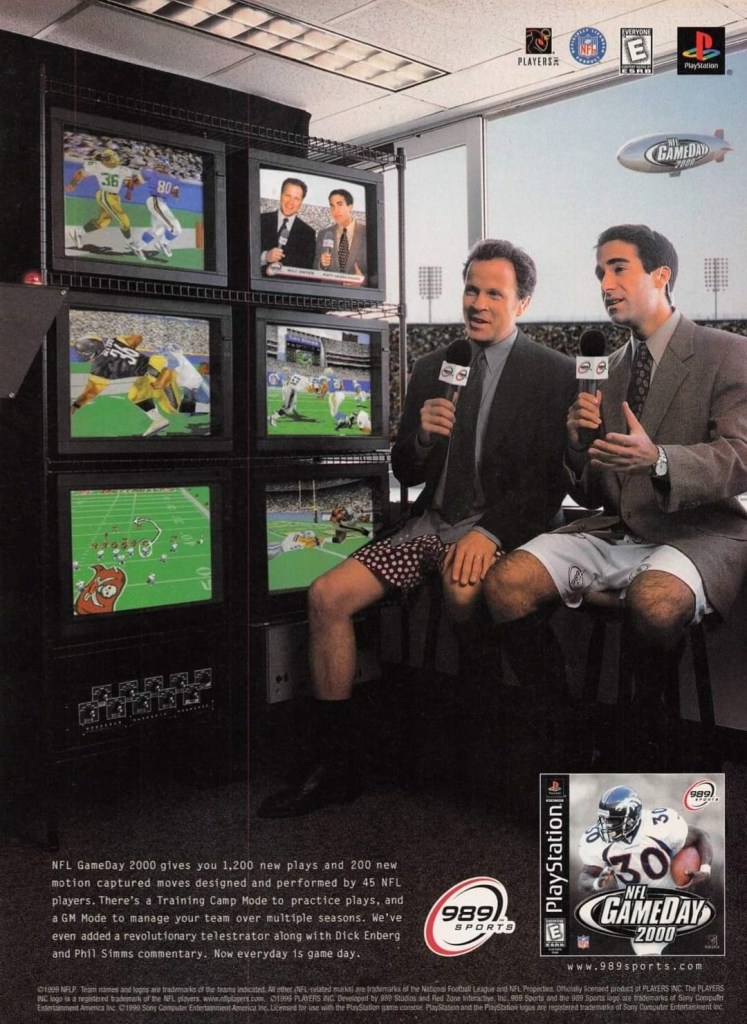
8. NFL GameDay 2000 print ad
Did you find this ad funny to look at in 1999?
To promote the PlayStation-exclusive NFL GameDay 2000, Sony publisher 989 Sports and the ad makers decided to implement a humorous look at football TV coverage by having two sportscasters wearing shorts in front of a TV camera that was only showing their heads and upper bodies. The TV sets on the side show screenshots from the game to emphasize the sports gaming experience. Ultimately the game scored mostly positive review from the critics.
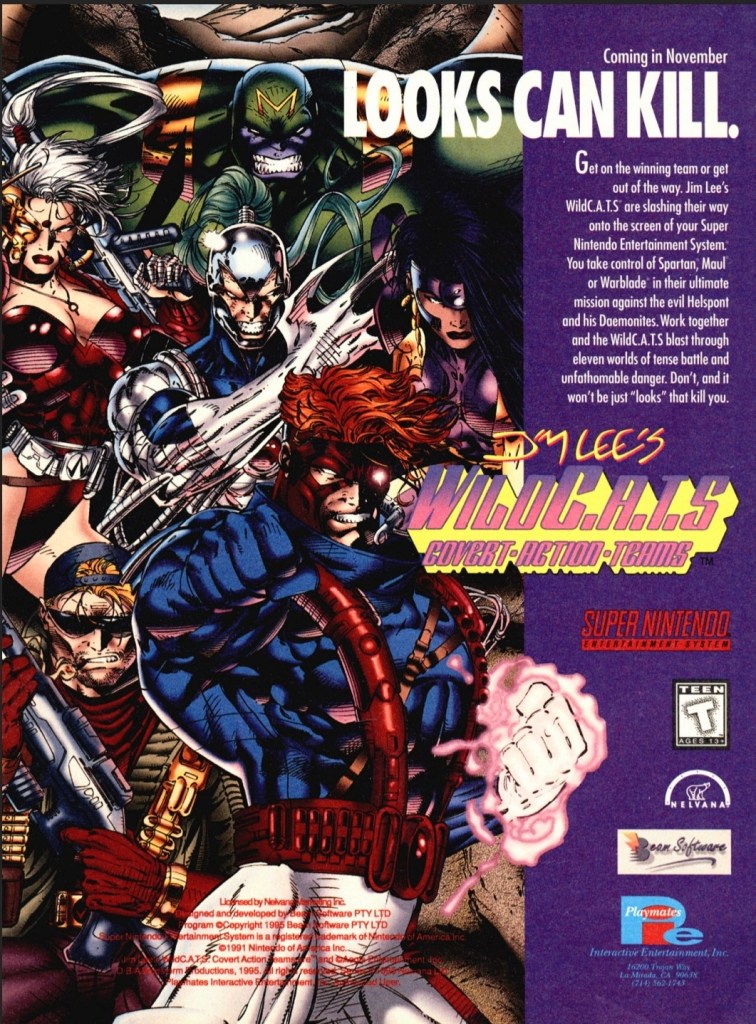
9. WildC.A.T.S: Covert Action Teams print ad
WildC.A.T.S. art by Jim Lee was used to promote the SNES video game.
When Image Comics launched in 1992, WildC.A.T.S: Covert Action Teams was Jim Lee’s creator-owned comic book franchise and its launch issue was a big seller. Years later, WildC.A.T.S. grew in popularity with comic book fans and the franchise achieved multi-media status by venturing into TV (with an animated series) and video games. This print ad promoting the video game adaptation had no screenshots to show which kept fans and gamers guessing how the game will turn out in terms of gameplay and game design. It was obvious that the people who made this print ad had to rely on the best WildC.A.T.S. artwork they could find drawn by Jim Lee. This ad made me laugh back in the old days because if you did not look closely, it might fool you into thinking it was more about comic books than the game on the SNES.
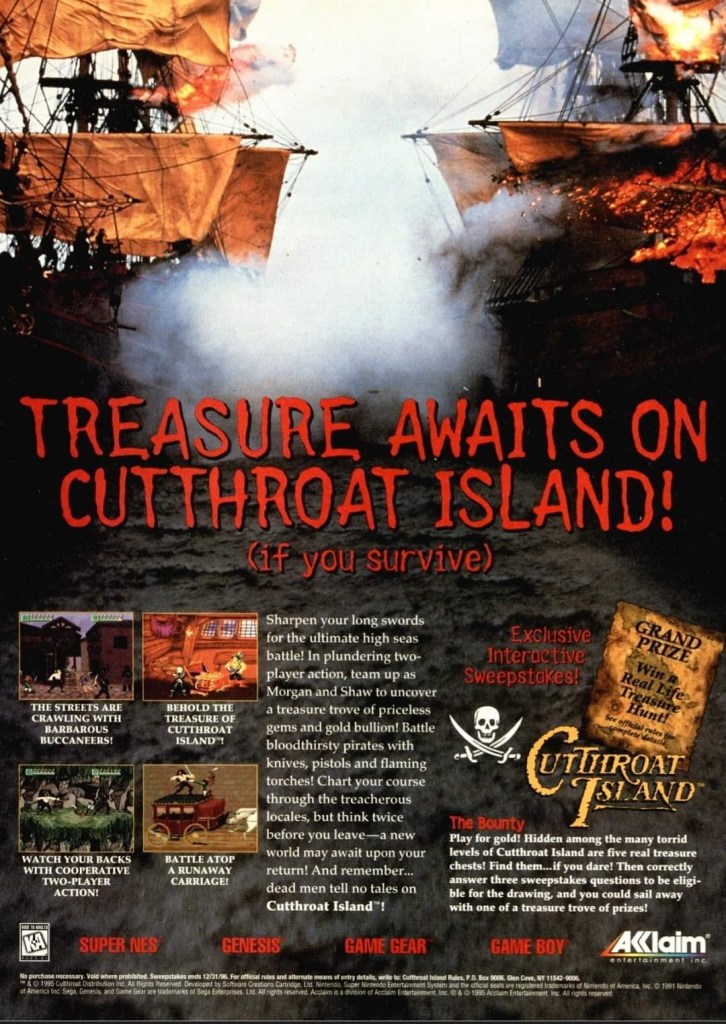
10. Cutthroat Island print ad
Exciting imagery without Geena Davis and Matthew Modine was used to promote the video game adaptation.
I never saw the Hollywood mega-flop Cutthroat Island nor have I ever played any of its multiple video game adaptations (released on SNES, Sega Genesis, Sega Game Gear and Game Boy). The video game print ad, however, caught my attention back in 1995 because the ad makers cleverly used a photograph from one the many expensive movie sequences filmed and the hard, physical work by the filmmakers was clearly visible. Then the ad makers had four screenshots placed on the lower-left part and inserted descriptive text that sounded exciting. Lastly, the ad mentioned a sweepstakes promo.
Without using any images of stars Geena Davis and Matthew Modine, this ad was a strong attempt to get gamers excited for the video game adaptation. Like the movie itself, this game flopped and has faded away to the land of the forgotten.
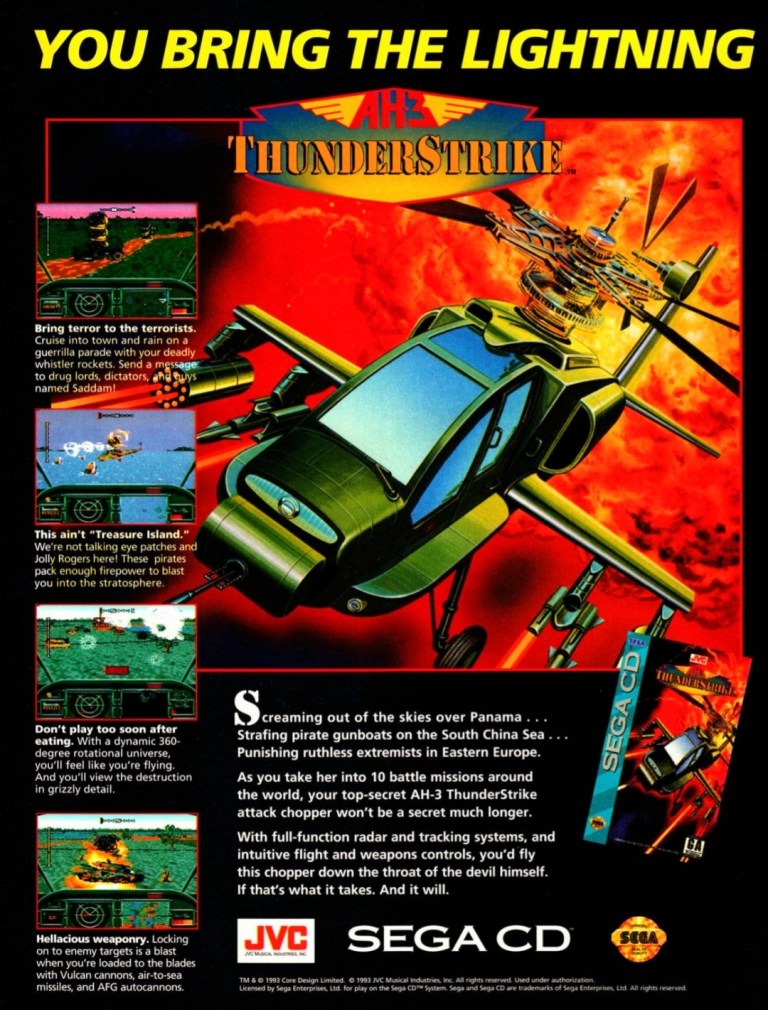
11. AH-3 Thunderstrike print ad
Captivating artwork, vibrant colors and orderly text descriptions made this an effective ad.
AH-3 Thunderstrike is one of the better games that was released on the Sega CD add-on (requires the Sega Genesis console) in 1993. Similar with MechWarrior 3050, the game was actually a port of Thunderhawk which itself was released on the Amiga and MS-DOS PC in 1992. The print ad showcased a captivating artwork (which was also used on the game’s box cover), a few screenshots and strategically placed text descriptions to sell the game. This ad still looks good.
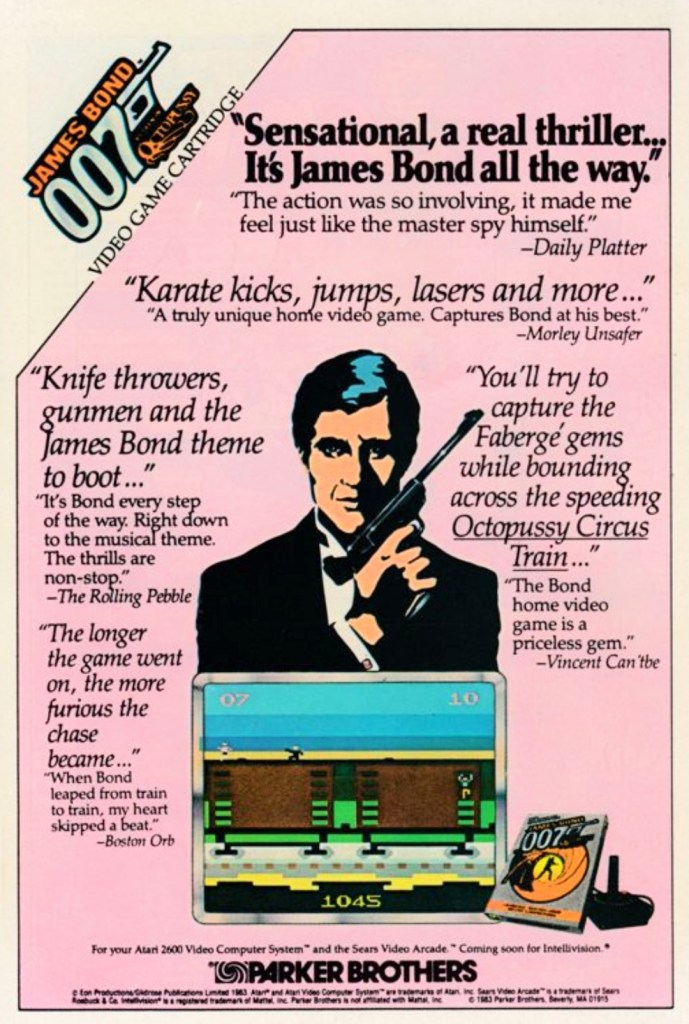
12. James Bond 007 print ad
This print ad appeared in many comic books in 1984.
This is a print ad I saw many times while reading comic books in 1984. James Bond 007 for Atari 2600 was an ambitious licensed video game as it featured levels that were inspired by missions in the James Bond movies Diamonds are Forever, The Spy Who Loved Me, Moonraker and For Your Eyes Only. Keep in mind that programmers back then had to deal with memory limitations and primitive tools to make games.
To promote the game, original art of Agent 007 was used which did not resemble the James Bond star of the time – Roger Moore. Strangely enough, the illustrated James Bond slightly resembled Timothy Dalton whose debut as 007 happened in 1987. Adding further zest to the add was the use of fictionalized quotes pointing to fantasized critics as sources (example: Vincent Can’tbe is a reference to real life critic Vincent Canby). The use of a pink background made this catchy ad look really odd.
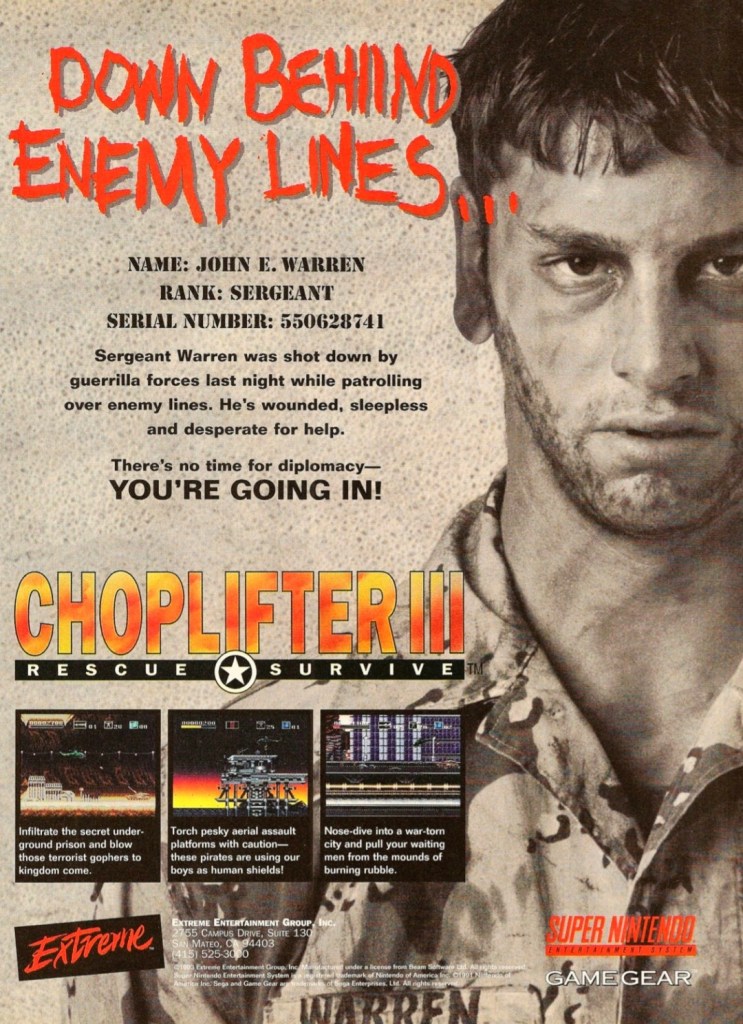
13. Choplifter III: Rescue Survive print ad
A captivating print ad that brought gamers’ attention to the Choplifter series again.
This print ad of Choplifter III: Rescue Survive has a striking look showing a military officer who needs your help as he has been stranded behind enemy lines. The presentation reflects the long-time tradition of the Choplifter game franchise which has been about piloting an armed helicopter to the opposition’s territory, shooting at bad guys and then rescuing the hostages or prisoners-of-war (POWs). The game eventually gathered mostly positive feedback from video game critics.
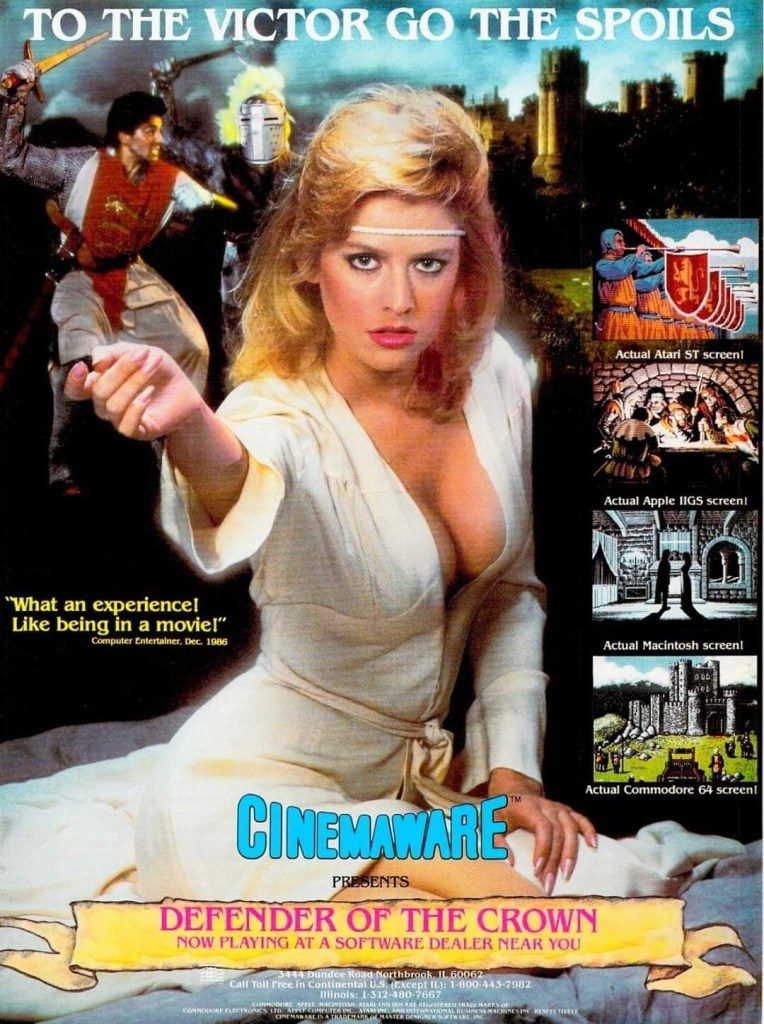
14. Defender of the Crown print ad
Cinemaware took a gamble with the visual concept of this print ad.
Released in 1986 for home computers, Defender of the Crown was made with a high level of quality backed with solid artistry. To capture gamers’ attention, Cinemaware came up with this print ad showcasing a pretty model looking somewhat seductive which reflects what happens in the game when players rescue a damsel in distress. The selected screenshots showed what the game looked like on different platforms, and the lower part of the ad made the game feel like it was a historical epic waiting to be discovered. Defender of the Crown eventually became a big hit with computer gamers.
Welcome back readers, fellow geeks and electronic gaming fans!
In this edition of the Retro Gaming Ads Blast (RGAB) series, we will take a look at another batch of retro gaming print ads – including arcade flyers – from the 1980s and 1990s.
For the newcomers reading this, Retro Gaming Ads Blast (RGAB) looks back at the many print ads of games (console, arcade, computer and handheld) that were published in comic books, magazines, flyers, posters and newspapers long before smartphones, social media, the worldwide web and streaming became popular. To put things in perspective, people back in the 1980s and 1990s were more trusting of print media for information and images about electronic games and related products.
With those details laid down, here is the newest batch of retro gaming print ads for you to see and enjoy…
1. Vendetta UK and North American arcade flyers
Vendetta arcade flyer for North America
Vendetta arcade flyer for the UK.
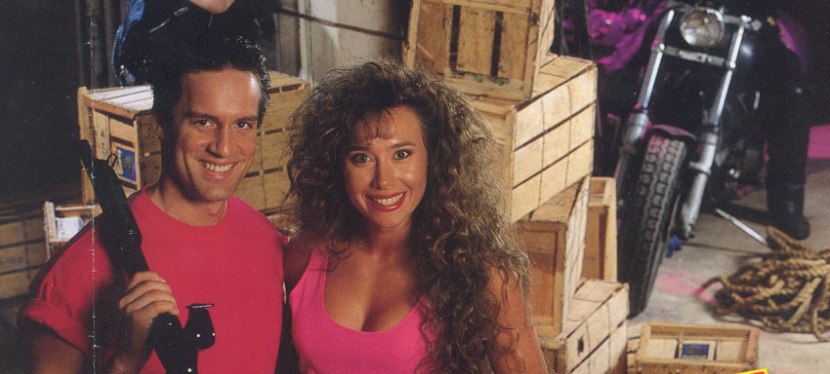
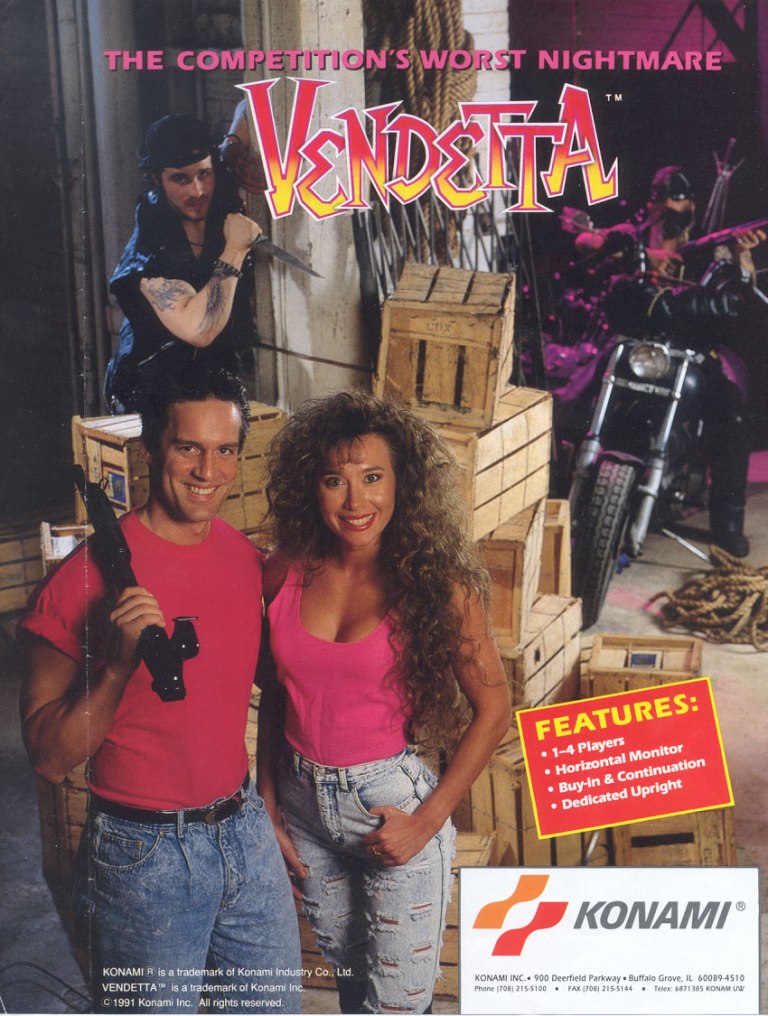
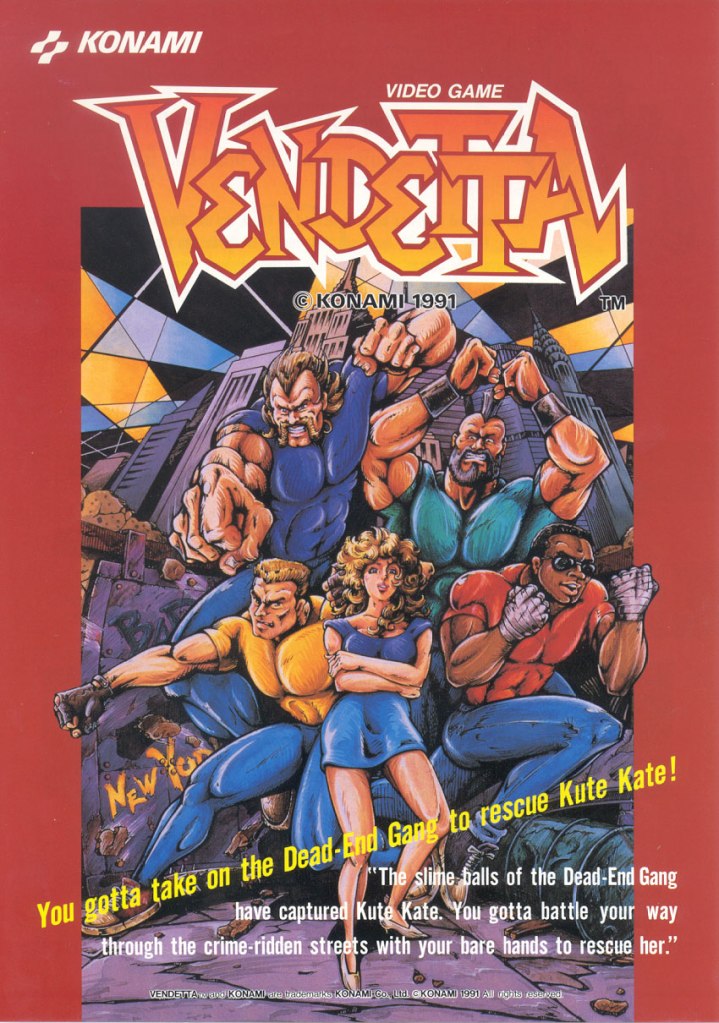
In 1991, Konami released the 2D side-scrolling beat-them-up game Vendetta in arcades around the world achieving commercial success. While it is hard to tell if the promotions helped the game commercially, there is no doubt that the arcade flyers for the North American and United Kingdom (UK) markets were indeed very eye-catching.
The North American Vendetta arcade flyer had a photographic approach showing models playing characters supposedly representing the Cobras gang and the Dead End gang. The display of wooden boxes and the rope was done to symbolize the rough city environments of the game. On the other hand, the UK arcade flyer has illustrated artwork that captured the look of the Cobras gang from the game.
2. Star Control II: The Ur-Quan Masters print ad
This ad has great art that strongly emphasizes its science fiction concept.
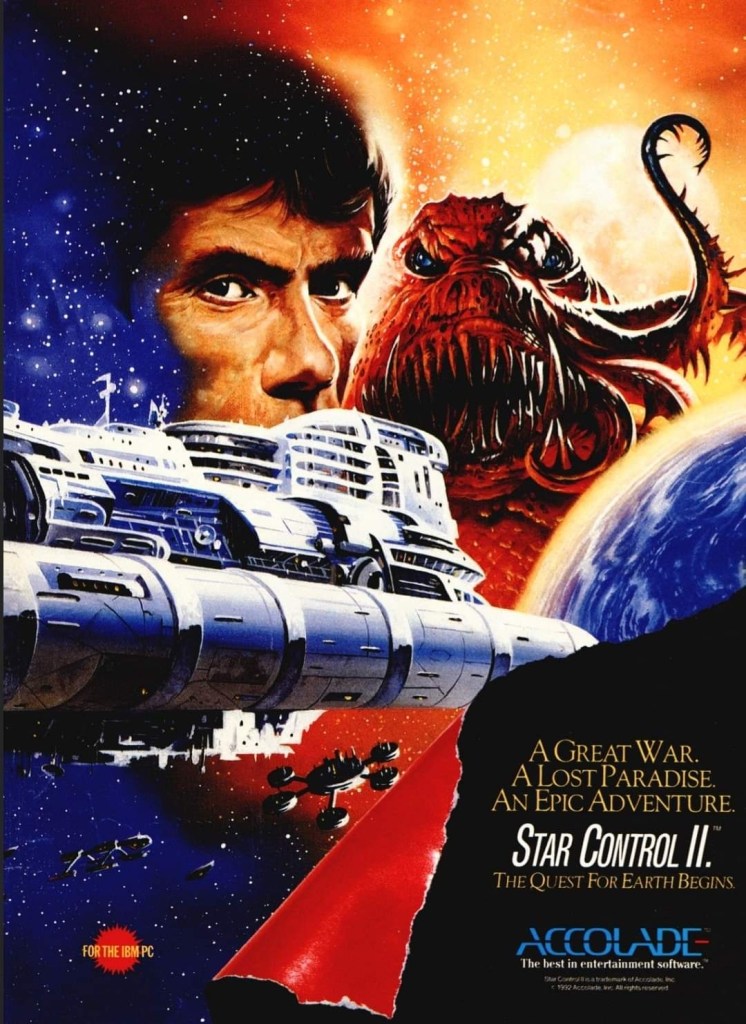
This print ad of Star Control II: The Ur-Quan Masters (PC version) really caught my attention when I read gaming magazines in the early 1990s. The painted artwork showing a human and a hideous alien in the background with a planet, space ships and space stations filling the rest of the space was very captivating to look at. So captivating, it enticed me to search for the game but our PC at home had really low specs. Strangely enough, I played another version of Star Control II on a rented 3DO Interactive Multiplayer console in 1995. For the newcomers reading this, the game was critically acclaimed and was declared as one of the very best PC games ever made. Enjoy looking at the print ad above.
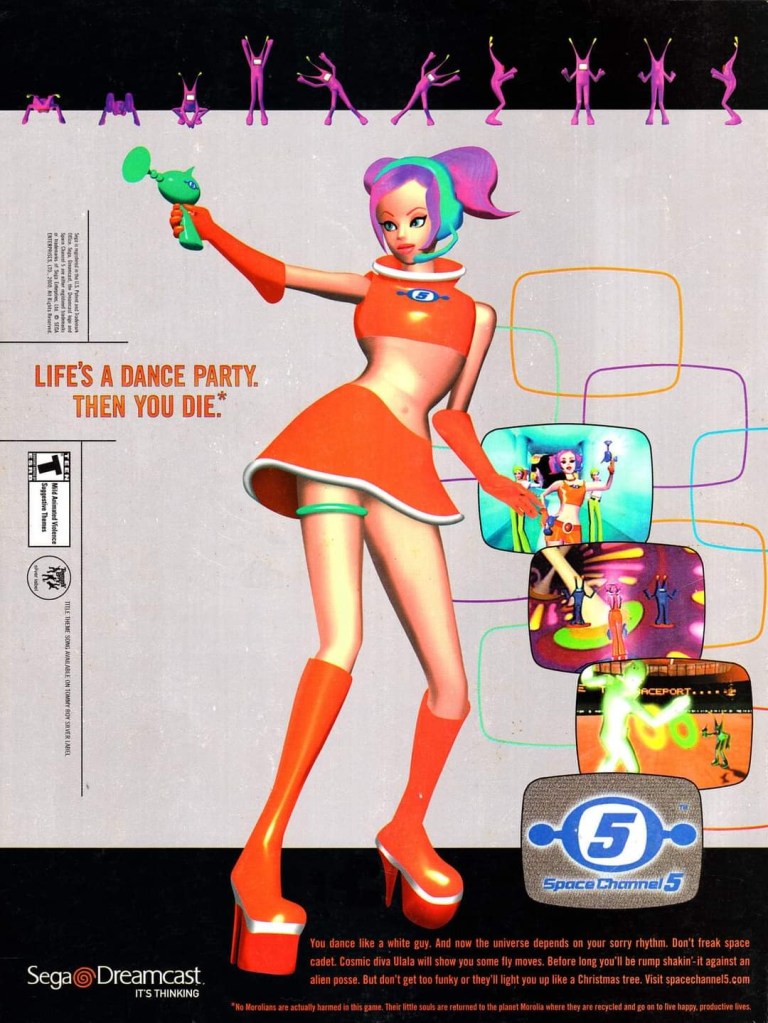
3. Space Channel 5 print ad
The visual style and character designs are the result of the game designer’s research that includes interviews with lots of young girls over their interests and tastes in video games.
When Sega launched their Dreamcast console in Japan in late-1998, their financial health was already in a very bad state and the future looked grim. Even as they faced tremendous odds, Sega still went on to aggressively sell Dreamcast consoles with exclusive games and Space Channel 5 was one of them.
First released in Japan in 1999, Space Channel 5 was a musical, puzzle-oriented game that was the result of Tetsuya Mizuguchi’s work backed with research he did that included interviewing young girls to find out what their tastes in gaming are. The print ad showing the highly stylized protagonist Ulala and a few screenshots really caught the attention of gamers and kept the Dreamcast in their minds. While the game did not achieve commercial success as a Dreamcast-exclusive, Sega went on to release a version of Space Channel 5 on the PlayStation 2 console, plus sequels.
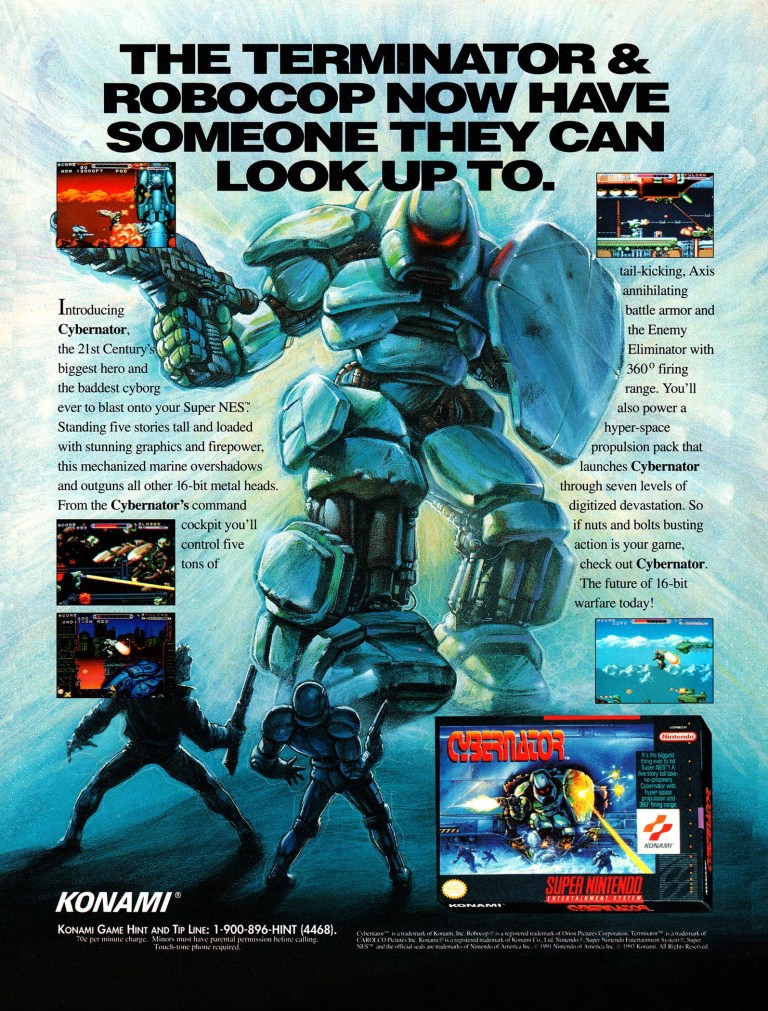
4. Cybernator print ad
The mention of Terminator and RoboCop rivaled the artwork when it comes to grabbing people’s attention.
I remember seeing the print ad of Konami’s Cybernator (Japanese title: Assault Suits Valken) in several comic books I read back in 1992. I never got to play it but the print ad’s artwork was memorable as I was fond of robots in anime, movies and video games back then. What was arguably the most memorable aspect of the print ad was the line that mentioned RoboCop and the Terminator in a comedic way. This is a creative way to market the game.
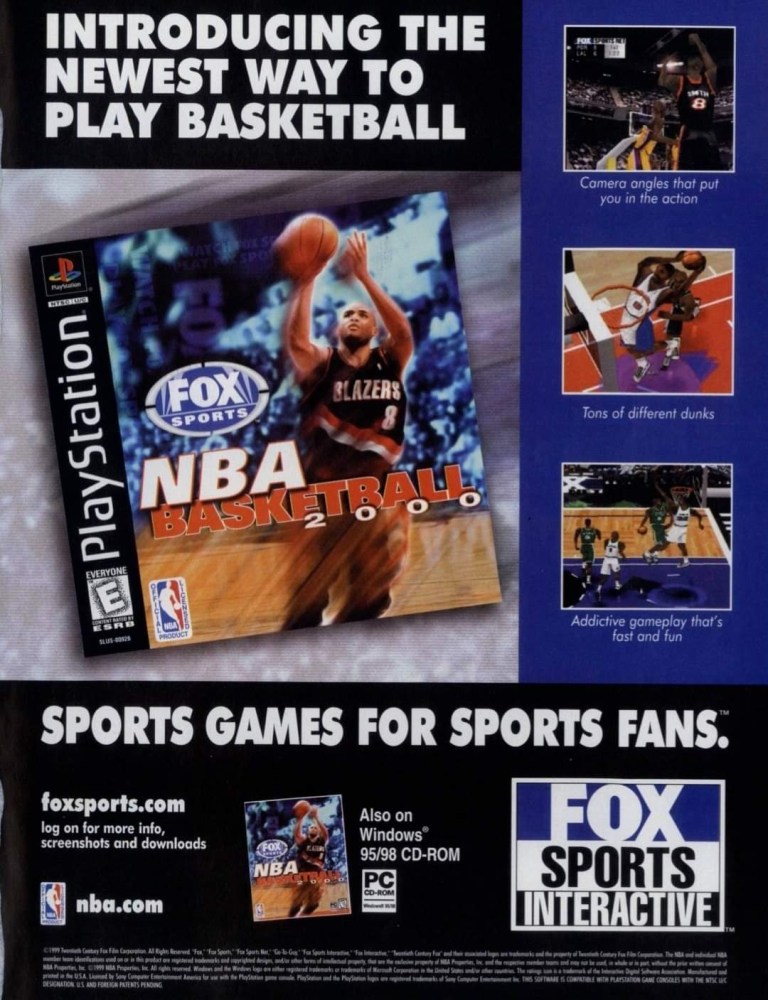
5. NBA Basketball 2000 print ad
There were a lot more NBA video games back in the 1990s.
NBA Basketball 2000 was one of those basketball videos games of the 1990s that was not published by EA Sports nor published by the other established game publishers like Sega, PlayStation and Konami. In fact, the one thing on the ad that caught my attention was Fox Sports Interactive which published some sports videos games during the decade. The print ad also served as a reminder that there were a lot more NBA video games for gamers to choose from during the 1990s.
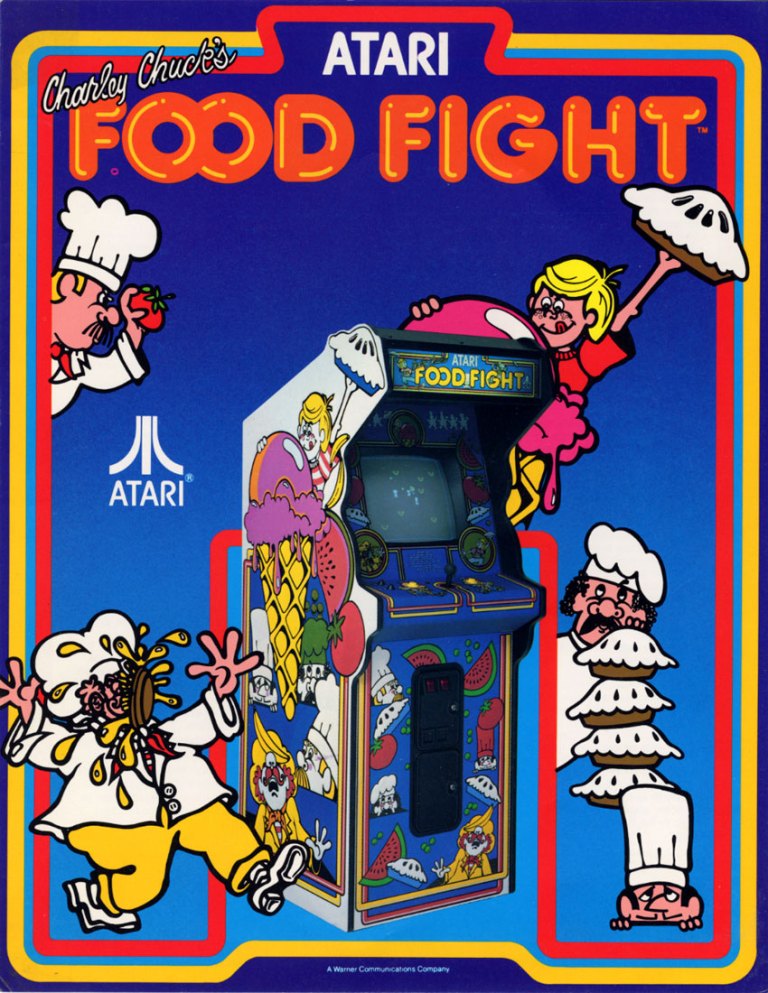
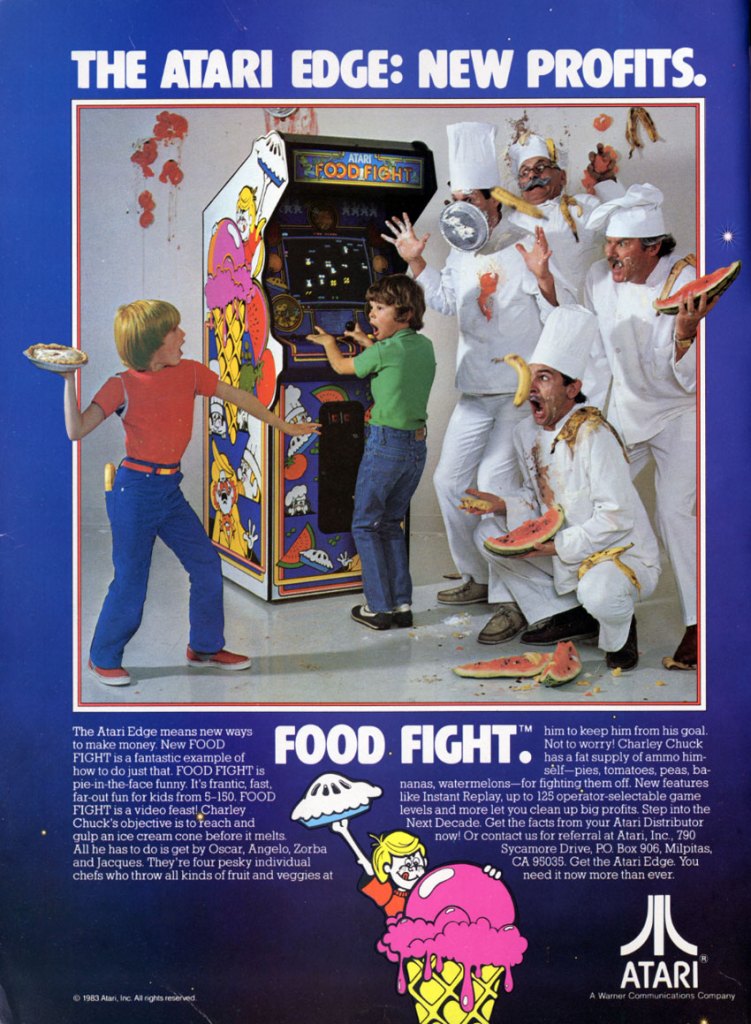
6. Food Fight arcade flyers
Food Fighter arcade flyer with illustrated artworks.
Food Fight arcade flyer with a photographic touch and actors.
I never got to play the 1980s game Food Fight in the arcades nor did I ever had the opportunity to play it on Atari consoles and Xbox 360. Released in 1983 in the arcades by Atari, Food Fight was designed to allow players to control a character moving through a 2D field to consume an ice cream on a cone (placed on the opposite end of the field) before it melts while avoiding the chefs who are out to chase and block the player.
The arcade flyer with illustrated artwork on the characters interacting with the arcade machine is really amusing to look at. Equally amusing is the other arcade flyer that had a photographic approach showing two kids (one playing the arcade machine and the other about to throw a pie) and four chefs. Considering the nice visual concepts Atari came up with for the arcade flyers, Food Fight actually never became a commercial hit selling only a few thousand arcade units.
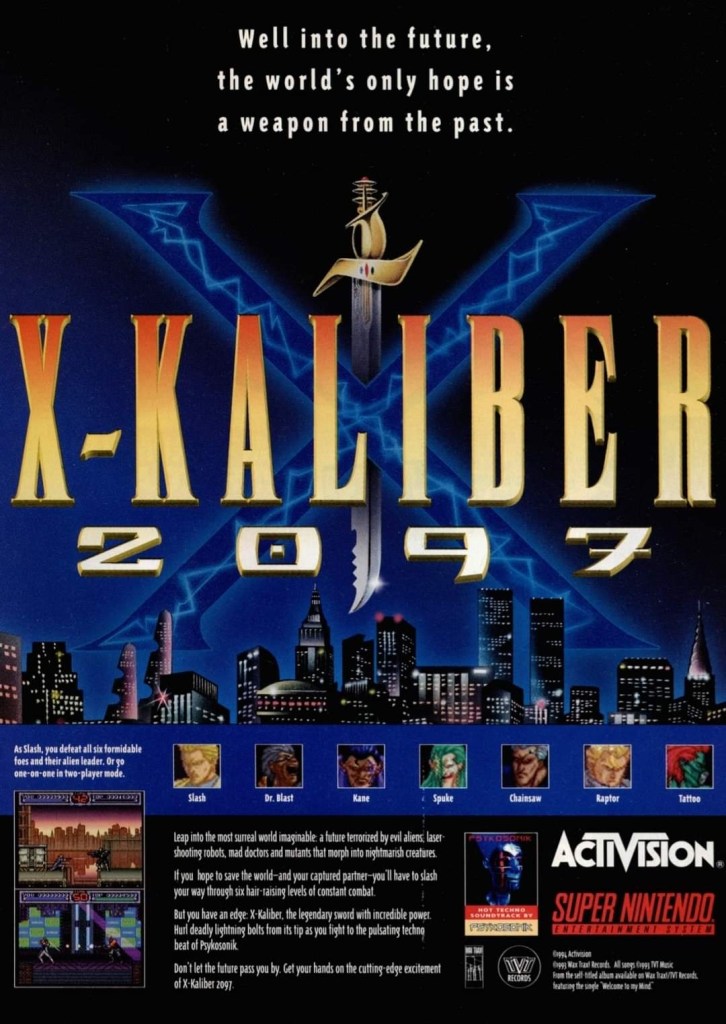
7. X-Kaliber 2097 print ad
This print ad from the 1990s had a nice visual style.
The Super Nintendo Entertainment System (SNES) had plenty of 2D side-scrolling adventure games and among them was X-Kaliber 2097 released by Activision (now a Microsoft-owned company and integral part of Xbox) in America in 1994. The game had a really interesting story concept about a chaotic far future society plagued by overwhelming crime and violence. The print ad showed a mild taste about the game’s concept and gameplay, but it was more effective when it comes to showing the formidable foes that await the playable protagonist Slash. This print appeared in several comic books I read and was eye-catching.
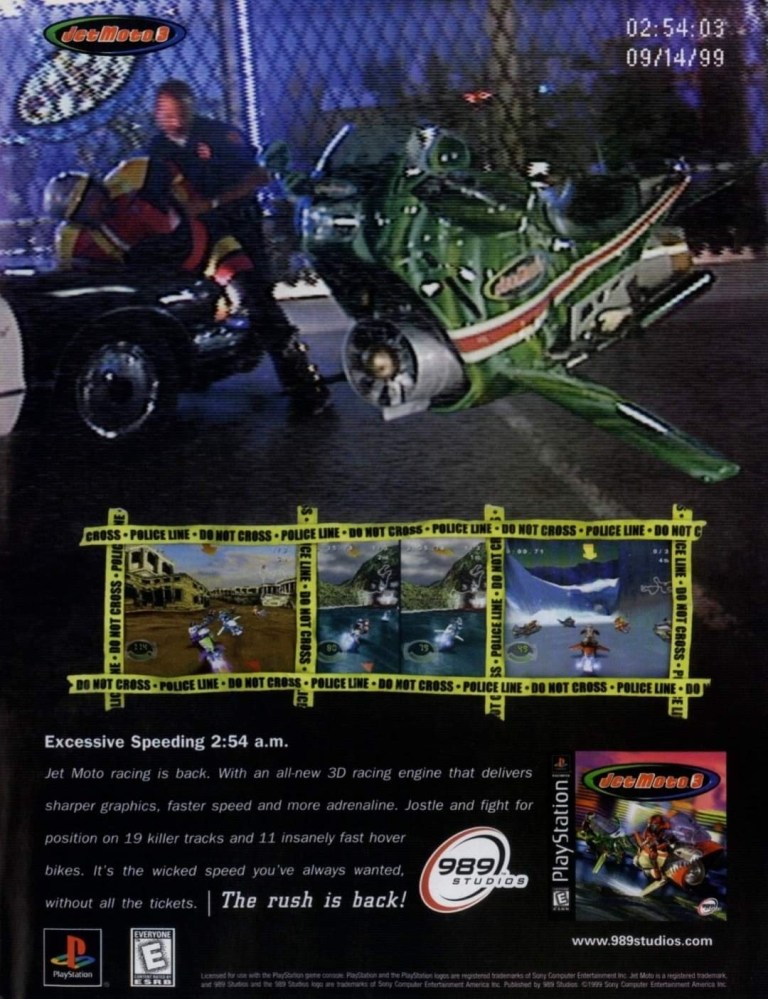
8. Jet Moto 3 print ad
When was the last time the police caught you for over-speeding?
This print ad for Jet Moto 3 had a clever concept of showing a police officer apprehending a jet biker for over-speeding. The visual presentation was done in photo-realistic fashion to make the sci-fi aspect of the video game look real. The ad made me interested enough to do some research of Jet Moto 3 a few months before finally buying it for my PlayStation console.
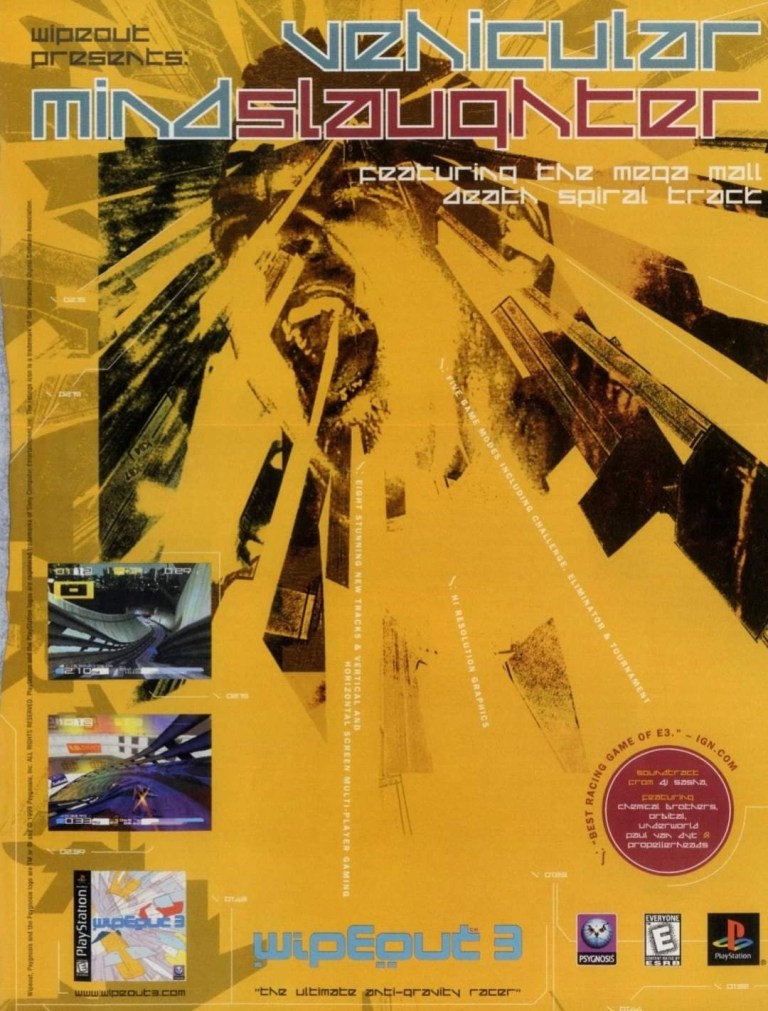
9. Wipeout 3 print ad
Were you fond of futuristic racing and techno music back in 1999?
Released in 1999, Wipeout 3 was one of those video games that showcased what the PlayStation (originally launched in Japan in 1994) could do in terms of visual fidelity, special effects and frame rates. The print ad, which had a radical visual concept emphasizing intensity and energy, had style listing down vertically the technical details of the game which required a close look in order to be read. With only two screenshots displayed, the ad makers smartly included the E3 acclaim of “Best Racing Game of E3” as well as the names of artists behind the game soundtrack on the lower-right corner. This print ad was cool and intriguing to look at.
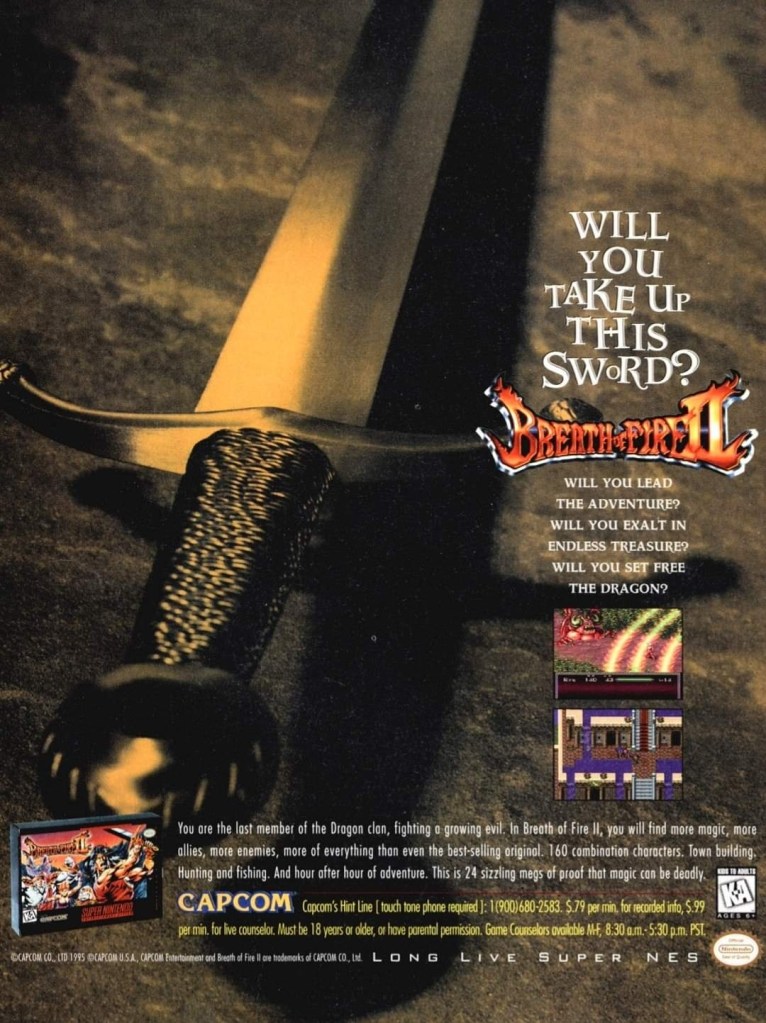
10. Breath of Fire II print ad
This was a good effort to lure American gamers to buy and play Breath of Fire II.
When Breath of Fire II was released on the SNES in America in late 1995, Japanese role-playing games (JRPGs) were not yet wildly popular among American gamers. To grab the attention of gamers, Capcom and the ad makers came up with the eye-catching image of a sword and posted key questions to emphasize the fantasy aspect of Breath of Fire II. While the game received mixed reviews upon its North American release, Nintendo Power listed it as 171st best game in its Top 200 Games chart published in 2006.
Disclaimer: This is my original work with details sourced from reading the comic book and doing personal research. Anyone who wants to use this article, in part or in whole, needs to secure first my permission and agree to cite me as the source and author. Let it be known that any unauthorized use of this article will constrain the author to pursue the remedies under R.A. No. 8293, the Revised Penal Code, and/or all applicable legal actions under the laws of the Philippines.
Welcome back superhero enthusiasts, 1990s arts and culture enthusiasts, Marvel Comics fans and comic book collectors! Today we go back to the year 1990 to take a close look at the 2nd part of the comic book adaptation of the movie RoboCop 2 (1990).
In my previous retro review of Robocop 2 #1, I pointed out that the comic book was not a faithful adaptation of the movie but more of the creators’ creative interpretation of the movie script they had which resulted in a stylized presentation. It was a surprisingly enjoyable reading experience for me.
With those details laid down, here is a look back at RoboCop 2 #2, published in 1990 by Marvel with a story written by Alan Grant and drawn by Mark Bagley based on the movie screenplay by Frank Miller and Walon Green.
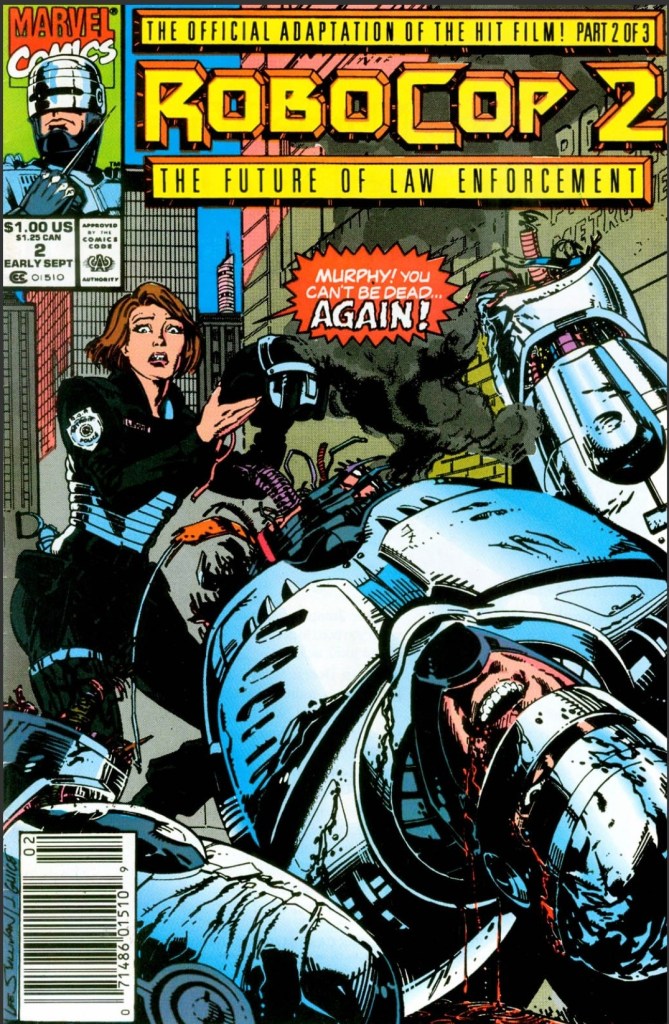
The cover.
Early story
The story begins in Detroit with RoboCop reduced into a very bad condition with most of his parts missing. The cops are still on strike and the ultra-addicting drug Nuke continues to spread through the city causing social problems. Cain and his gang are still on the loose, and his video statement (which emphasizes his gang’s defeat of RoboCop) spreads through the news cycles.
Inside a hideout, Cain and his loyal companions terrify and killed traitorous police officer Duffy for betraying them. Meanwhile at police headquarters, the support crew bumps heads with the Omni Consumer Products (OCP) executive who does not see RoboCop’s poor state as a problem. As far as OCP is concerned, getting replacement parts for RoboCop is very expensive.
Over at OCP, the psychologist executive Dr. Juliette Faxx begins researching criminals for the new RoboCop project…
Quality
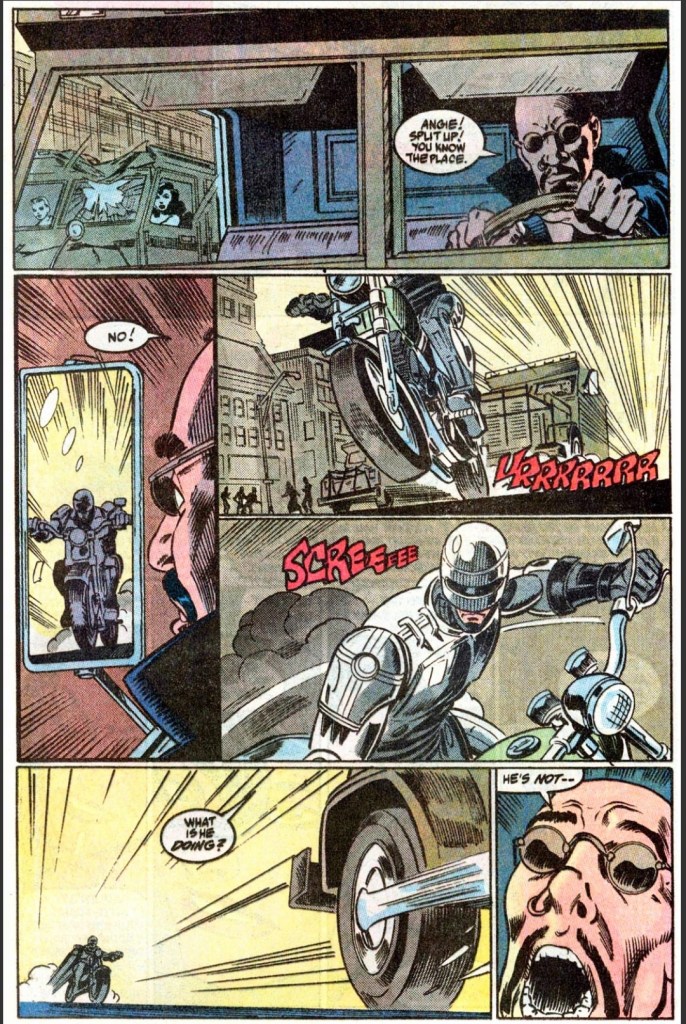
The motorized encounter between RoboCop and Cain here is shorter and much inferior compared to what the movie showed.
As with issue #1, this comic book followed the events and scenes of the film but left enough room for the creative team to make their stylized version suitable with the literary format. Mark Bagley, who is best known for drawing Spider-Man and Venom in the 1990s, came up with nice artwork that brought Grant’s script to life. There were a few shots here that were pretty graphic or brutal to see at the time of publication which makes me wonder why did the Comics Code Authority (CCA) give its approval to this comic book.
Without spoiling the plot, I can say that the creative team and editor Gregory Wright did a good job adapting scenes of the movie script to (fill up the pages) while also succeeding in setting up readers for the final conflict in the 3rd and final issue.
As a standalone reading material, this comic book will lead readers deep into the crisis of the police force as well as into the developments behind the closed doors of OCP. Due to the selected scenes of the film’s script, RoboCop has sufficient presence but lacked his normal personality. That being said, the movie’s comedic look of RoboCop acting very out-of-touched (hint: OCP tampered with his mind digitally) did not translate well into literary format. If you’re hoping to see solid storytelling with a consistent tone, you won’t find it here.
When it comes to action, there is just enough of it to keep the reading experience entertaining. Again, this comic book does not have the final conflict and the selected action scenes are rather limiting in terms of impact. If you want to see the police raid of the Nuke facility as well as RoboCop’s motorized chase with Cane, you are better off replaying the movie.
Conclusion
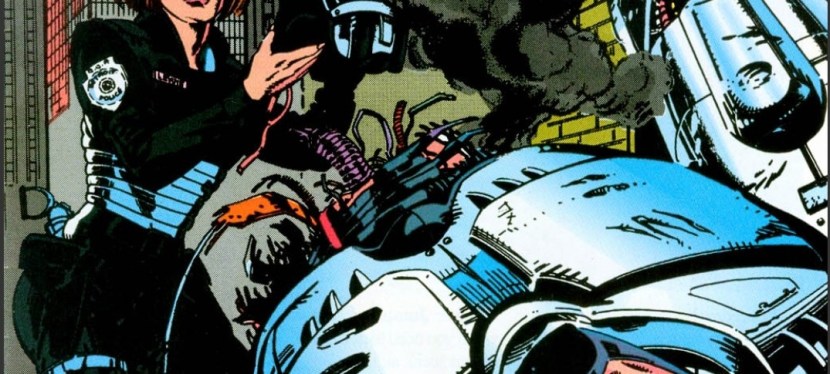
There definitely is something wrong with RoboCop here.
Considering the selected movie script scenes for adaptation, RoboCop 2 #2 (1990) lacks impact compared to the first issue. In fairness, this comic book was clearly meant to set-up readers for the next issue. If there is anything worth looking at within the 2nd issue’s pages, it would be the details that were highlighted during the internal developments at OCP and the police. As mentioned earlier, RoboCop is not his usual self for a significant portion of this comic book. While the engagement and fun factor are lower this time around, I’m still interested to read the next issue.
Welcome back readers, fellow geeks and electronic gaming fans!
In this edition of the Retro Gaming Ads Blast (RGAB) series, we will take a look at another batch of retro gaming print ads from the 1980s and 1990s. In addition, there will be a few flyers of arcade games.
For the newcomers reading this, Retro Gaming Ads Blast (RGAB) looks back at the many print ads of games (console, arcade, computer and handheld) that were published in comic books, magazines, flyers and newspapers long before smartphones, social media, the worldwide web and streaming became popular. To put things in perspective, people back in the 1980s and 1990s were more trusting of print media for information and images about electronic games and related products.
With those details laid down, here is the newest batch of retro gaming print ads for you to see and enjoy…
1. Contra arcade flyer
A clever visual concept by Konami towards gamers and arcade operators.
Details on the other side of the flyer.
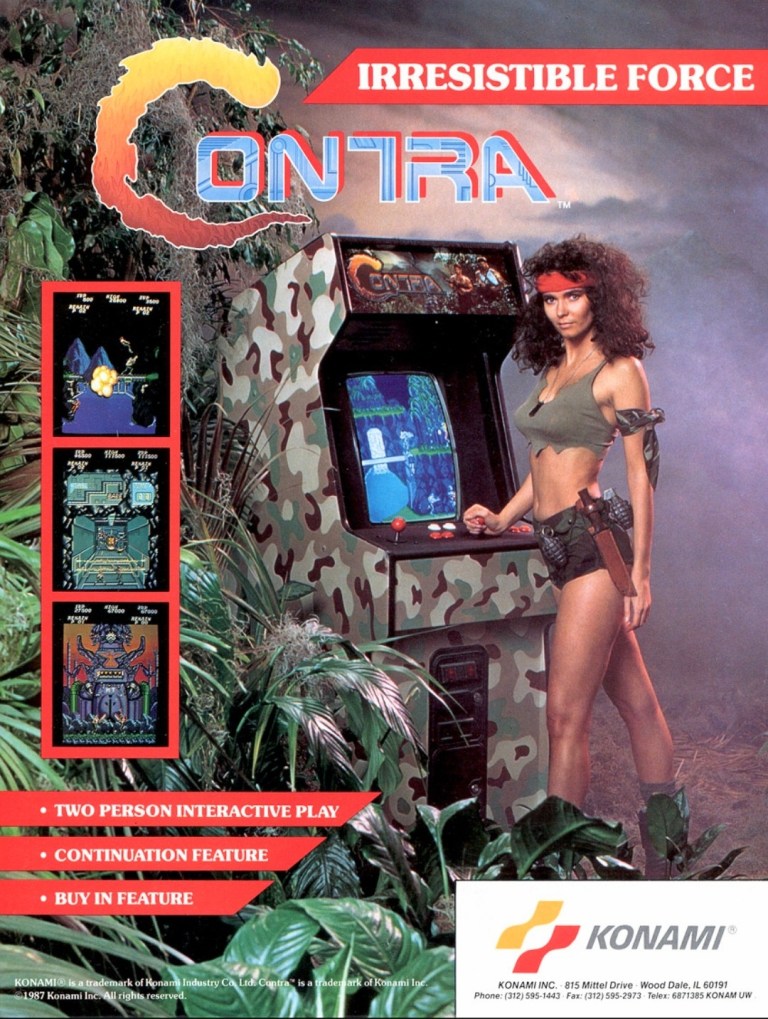
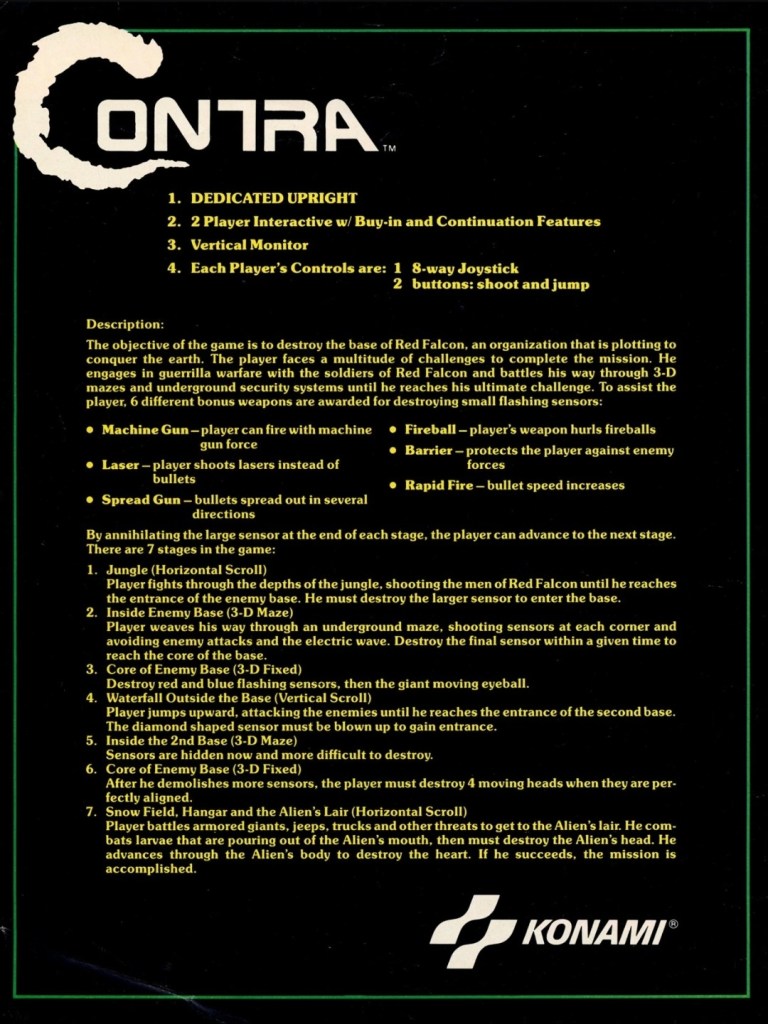
Before it established itself as a popular gaming franchise with console gamers, Contra truly started in the arcades in 1987. First released in Japan on February 1987, Konami went on to release the game in arcades in the United States a month later and the flyer you see here was the Americanized promotion they came up with. Instead of hiring male actors or models to play soldiers, they hired a slim lady to appear with a female Rambo look standing in front of a Contra arcade machine. On the other side of the flyer are details that players and arcade operators can learn from. By today’s standards, this arcade flyer of Contra is still eye-catching and even amusing to look at.
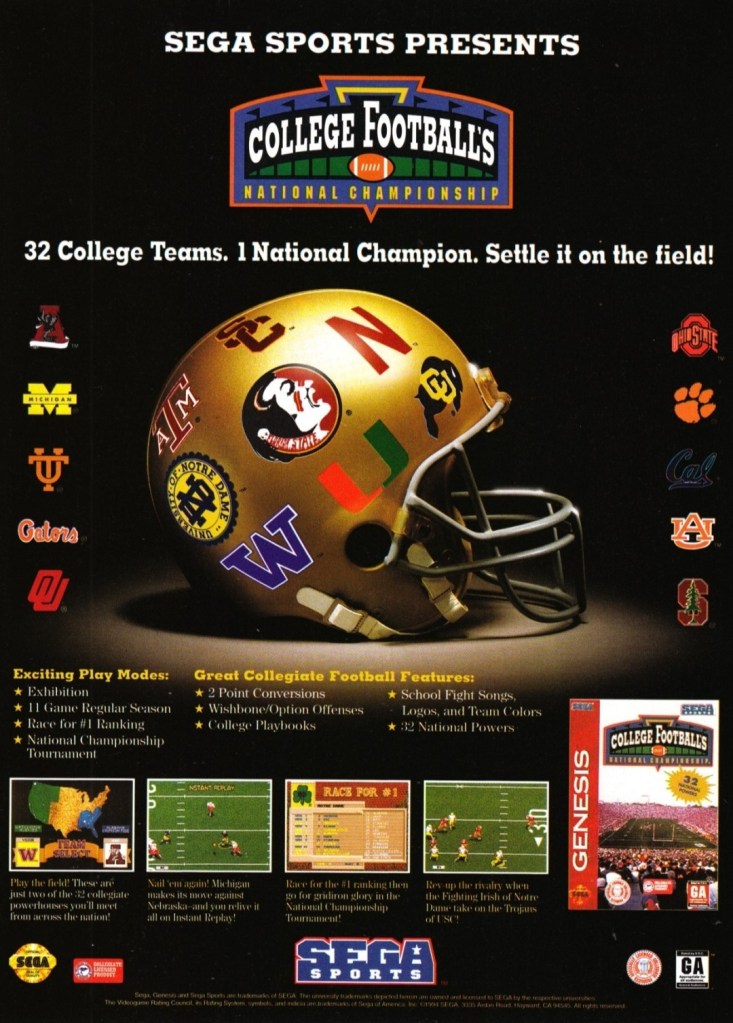
2. College Football’s National Championship print ad
This ad has a strong visual appeal to gamers who like football.
This is another one of those video game ads I saw while reading comic books in the 1990s. College Football’s National Championship was a Sega Genesis-exclusive American football video game published by Sega (with the Sega Sports brand) to capitalize on gamers who want college football to play with at home. This print ad has a nice visual presentation of the college teams’ logos, screenshots and details of what gamers could expect when they buy and play the game. College Football’s National Championship received mostly positive reviews and it must have sold well because Sega went on to release a sequel to this game.
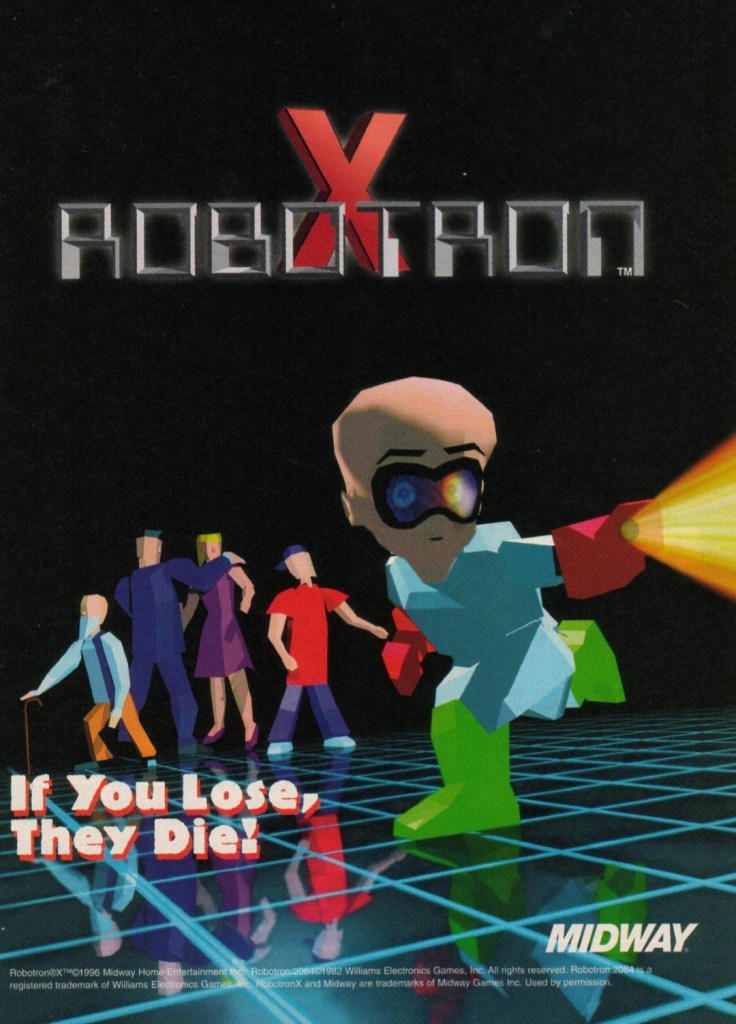
3. Robotron X print ad
This Robotron game was made at a time when 3D polygons became common for making video games.
Having played the classic game Robotron: 2084 on PC back in the 1980s, I was very surprised to see this print ad in 1996 promoting a brand new Robotron game for PlayStation as well as Windows PC. For the newcomers reading this, Robotron: 2084 was a classic which heavily influenced game designers who went on make other fan-favorite games like Smash TV and Llamatron. What makes Robotron X notable apart from being an official follow-up to the classic game was the fact that it was made at a time when game developers did their stuff to modernize gaming with 3D polygons for visuals while trying to come up with gameplay inspired by the classics. While Robotron X did not make a major impact on gaming, the classic Robotron: 2084 went on to be released in several multi-platform compilations such as Williams Arcade’s Greatest Hits, Midway’s Greatest Arcade Hits, and Midway Arcade Treasures.
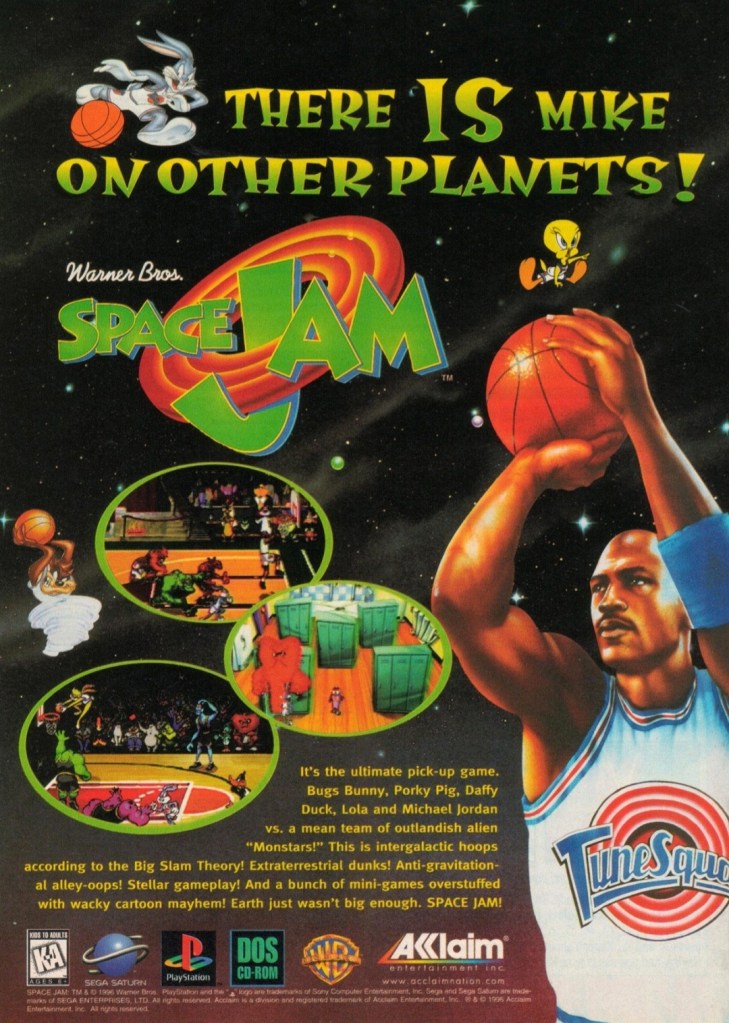
4. Space Jam game print ad
If you saw the movie in 1996, were you able to play this video game adaptation?
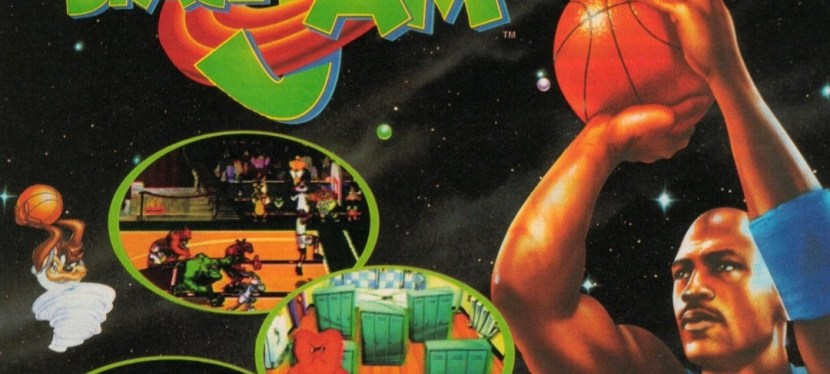
What makes 1996 a memorable year for basketball fans was the Michael Jordan’s return to prominence (having previously retired for less than two years before returning to the NBA in 1995) and leading a very powerful Chicago Bulls team to what was their 4th NBA championship title. In that same year, Jordan starred in the live-action/animated movie Space Jam which grossed an impressive $250 million worldwide. On the same month the movie came out, the Space Jam video game adaptation was also released on PlayStation and Sega Saturn. This print ad was part of the multimedia hype of the movie and the game itself had a very similar design and visuals concept with NBA Jam but ultimately it failed to become a hit with critics and gamers. Not even the combined visual might of Jordan and Warner Bros. characters could achieve success.
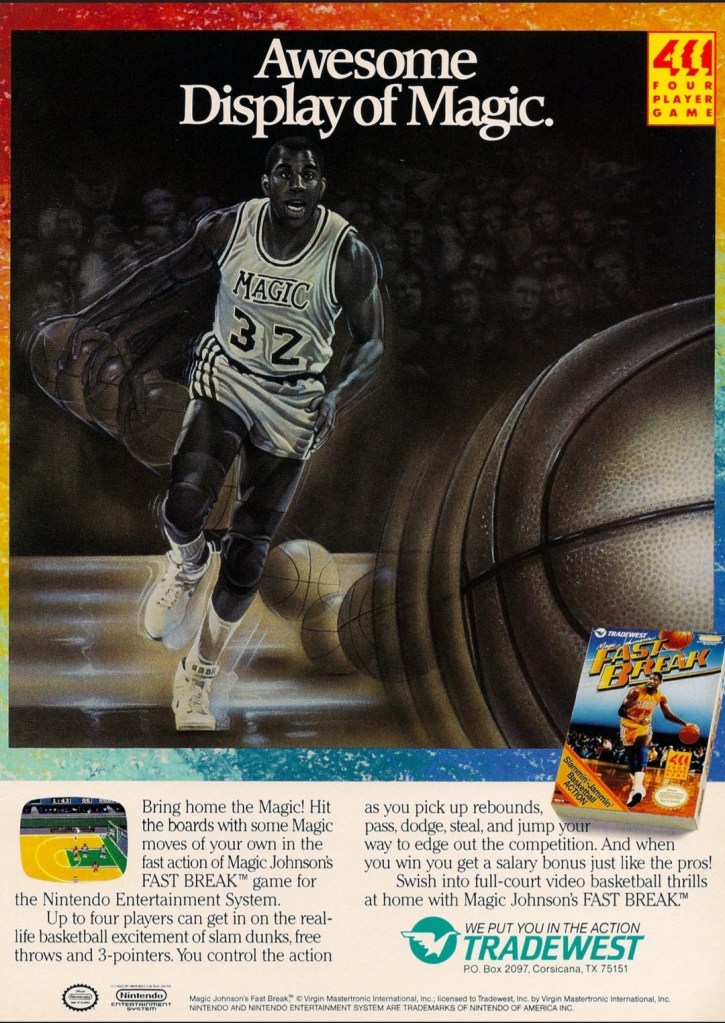
5. Magic Johnson’s Fast Break print ad
Still on basketball video gaming, the side-scrolling Magic Johnson’s Fast Break game was released on the Nintendo Entertainment System (NES) for console gamers to enjoy. Unsurprisingly, this ad had nice black-and-white art work of Magic Johnson as the dominant figure while leaving little space left to show the game box and only one screenshot. The real meat of this print ad are the details laid down in text description.
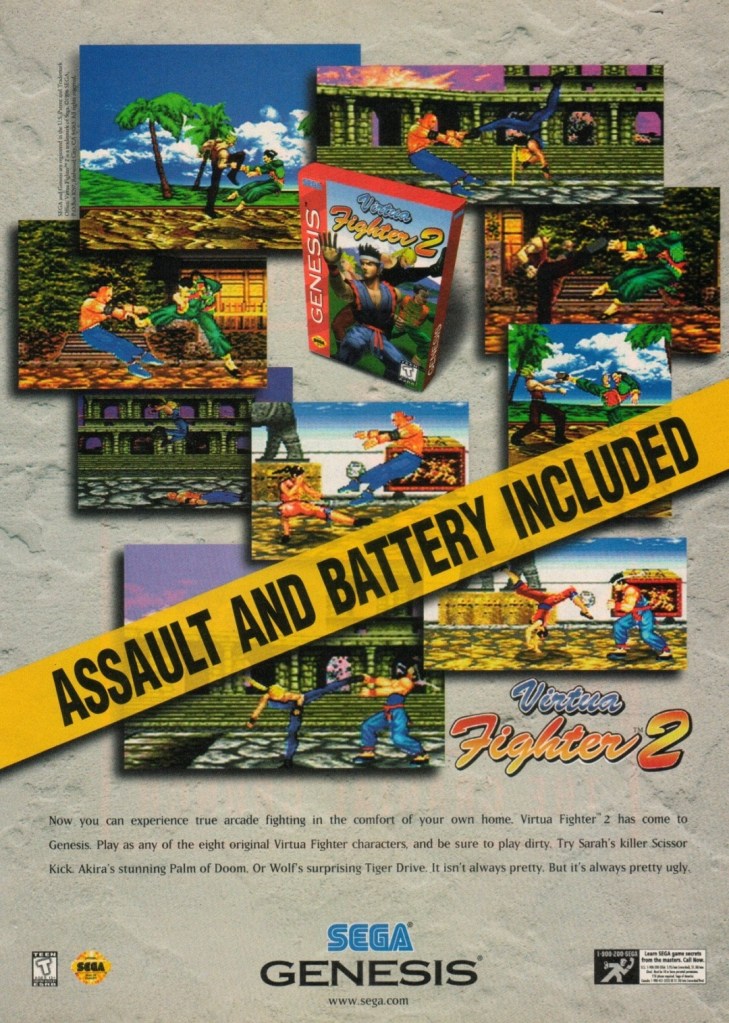
6. Virtua Fighter 2 for Sega Genesis print ad
Clearly a late effort by Sega to sell something to its many Genesis owners/fans in America at a time when PlayStation and Nintendo 64 started dominating 5th console generation sales.
In the history of arcade gaming and fighting games, Virtua Fighter 2 was a worthy follow-up to its groundbreaking predecessor. VF2 also made its way on the Sega Saturn which essentially maintained the great gameplay and 60 frames-per-second animation even though the 3D polygonal graphics were noticeably lower in quality compared to its arcade version. With VF2 in the arcades and on Saturn selling well, I was surprised to see this print ad of Sega releasing a totally different version of the game on the aging Sega Genesis console. Virtua Fighter 2 on Genesis had 2D graphics, sprites for the characters and a side-scrolling visual design. In fairness, the game developers exerted effort to recapture some of the gameplay elements within the Genesis limitations and 2D graphics. This print ad is a reminder of Sega’s American division selling a product to the remaining active Genesis owners.
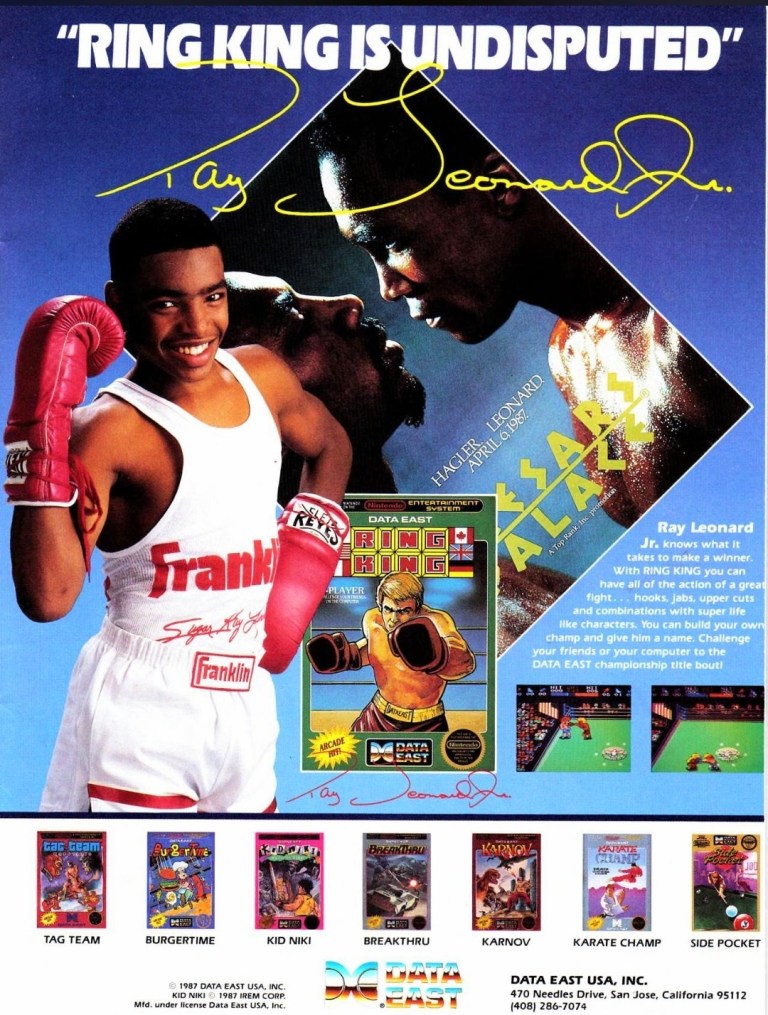
7. Ring King print ad
Ring King itself clearly lacked promotional space in this ad.
In 1987, Data East released their arcade hit game Ring King on the Nintendo Entertainment System (NES) and prepared this print ad involving Ray Leonard, Jr. (on the foreground in boxing gear) and conveniently with the famous Sugar Ray Leonard and Thomas Hearns (with the promo of their first fight together in the background). Also conveniently, the company inserted their other games on the lowest part of the ad. Ultimately, the presence of Ring King itself was minimized only showing the game cover and two screenshots. This is clearly an eye-catching ad but there was not enough emphasis on the game itself.
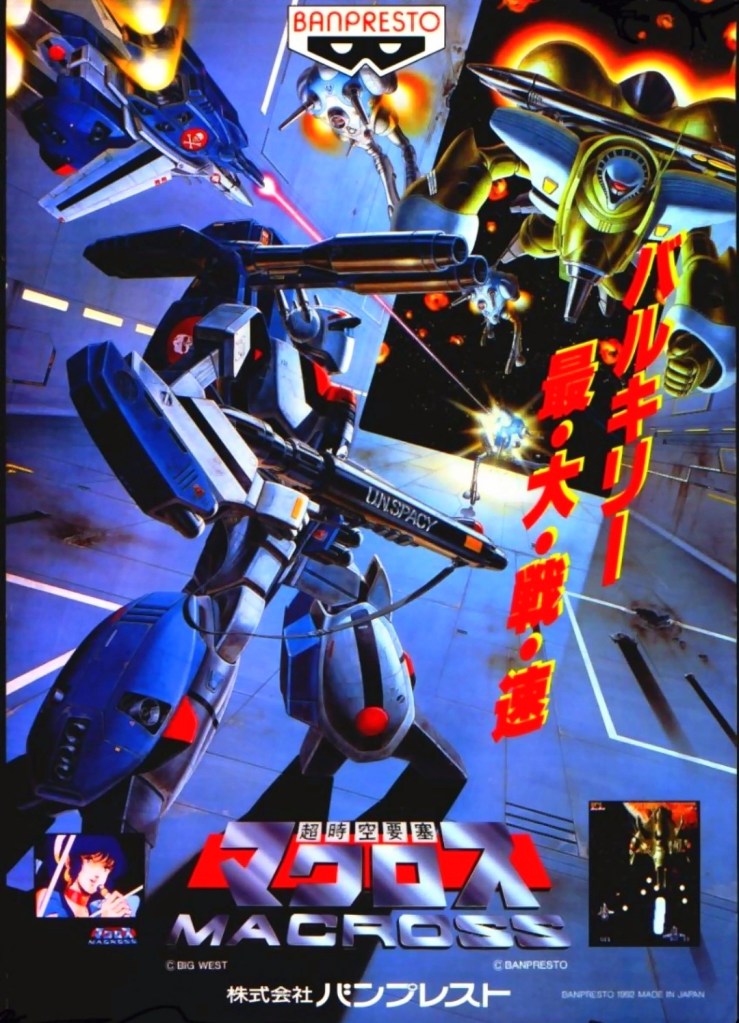
8. Super Spacefortress Macross arcade flyer
The arcade flyer released only in Japan.
Have you ever seen the classic anime movie Macross: Do You Remember Love? I really love watching that movie and I played and finished the video game adaptation on PlayStation in 1999. What I never got to play was the arcade game adaptation of it which was released by Banpresto in Japan in 1992. This flyer promoting the game has a strong visual presentation thanks to the artwork made for it. Only one screenshot was shown as well as a clip from 1984 the animated movie (note: the arcade game itself has some images directly from the film plus some newly created ones added) but this ad still had what it takes to capture the attention of the many Macross fans in Japan. This arcade game was eventually released with an English translation in America and Australia.
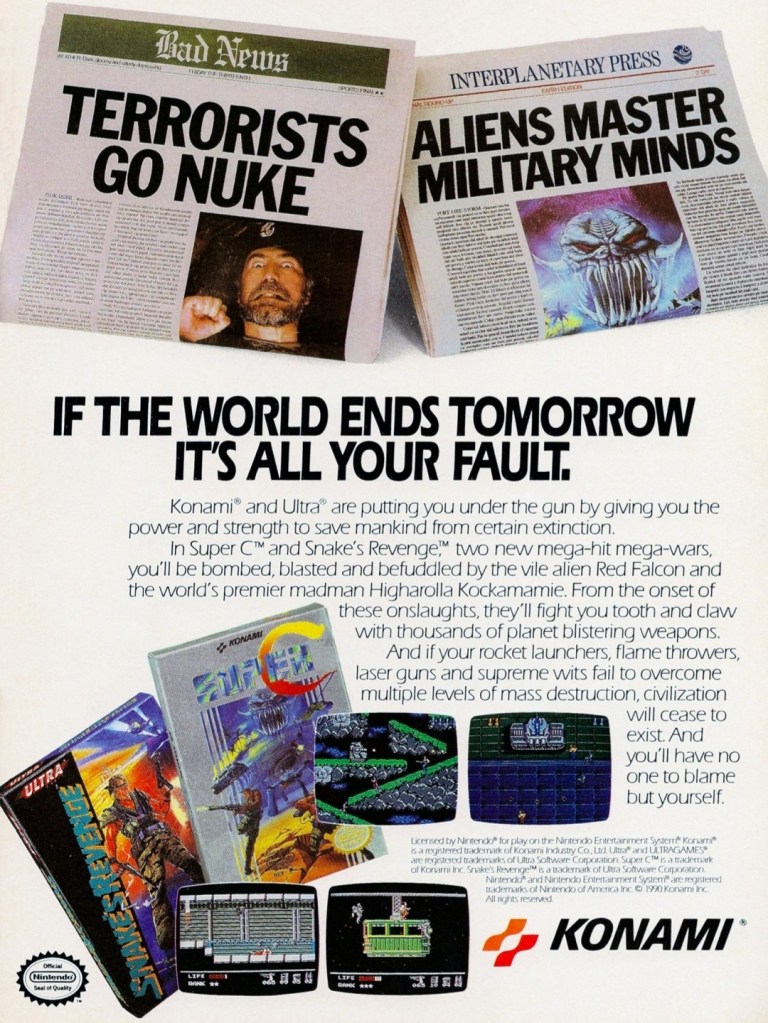
9. 2-in-1 print ad featuring Super C and Snake’s Revenge
A memorable and intriguing print ad from Konami promoting sequels.
This is one of the ads that Konami came up with to promote at least two games using a single-page ad format. I saw this ad in many comic books I read decades ago and its visual concept always caught my attention especially since I played the console game Contra a lot. At the high end of the ad were two fictional newspaper headlines highlighting the respective conflicts of Snake’s Revenge (with a nuclear danger concept) and Super C (with emphasis on alien invaders). These two games were sequels to the classics Metal Gear and Contra, and Konami clearly knew how to take advantage of the older games’ success and do their best to sell the sequels to gamers who love action-packed gaming as well as fantasized armed conflicts. Like the 2-in-1 ad showcasing Contra and Jackal, this was Konami’s aggressive move to sell war-inspired games to the NES userbase which was mostly composed of children and teenagers.
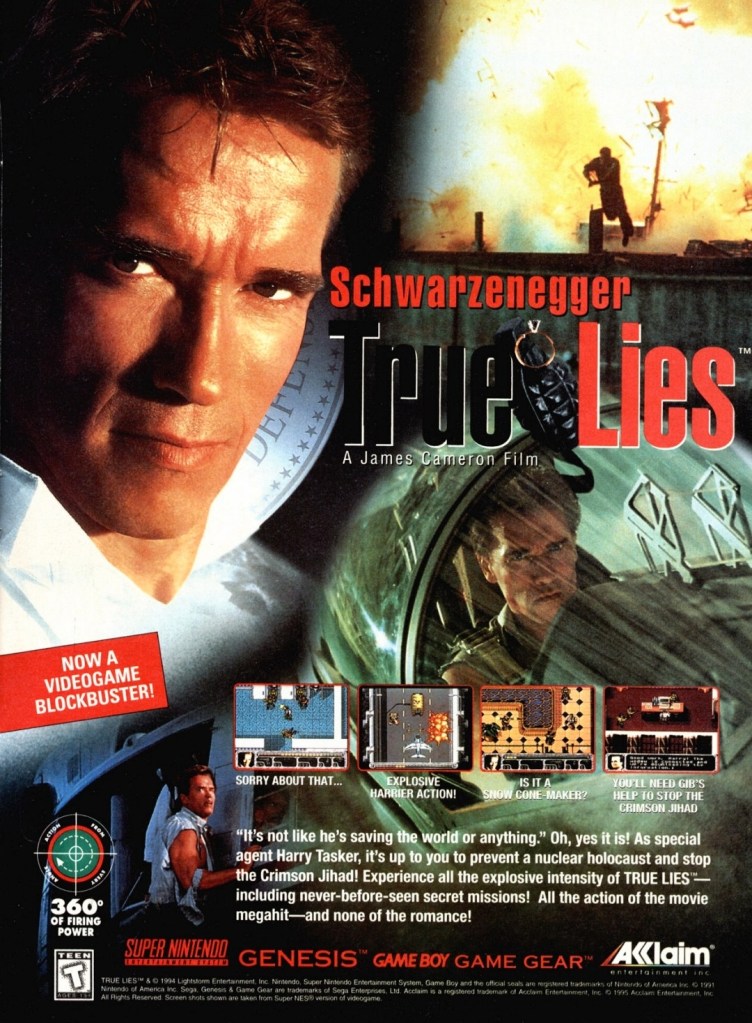
10. True Lies game print ad
There is nothing like taking advantage of the imagery of a Hollywood superstar to promote a video game based on the related movie.
Here is a video game ad I saw in many comic books I read in 1994-1995. True Lies (starring Arnold Schwarzenegger) was one of the big summer season movie hits of 1994 and the video game was part of the business tie-ins with the film. The people who made this print ad made the smart moves of showing not just one but three images of Schwarzenegger to promote the game while leaving some space to show what the game looked like. The True Lies game even had stills from the movie to emphasize the flow of the plot.
Disclaimer: This is my original work with details sourced from playing the video game and doing personal research. Anyone who wants to use this article, in part or in whole, needs to secure first my permission and agree to cite me as the source and author. Let it be known that any unauthorized use of this article will constrain the author to pursue the remedies under R.A. No. 8293, the Revised Penal Code, and/or all applicable legal actions under the laws of the Philippines.
Welcome back retro gaming fans, collectors and readers!
Today, we will go back to the early 1980s to examine one particular video game I played many times on the Atari 2600 and it has a science fiction concept inspired by a certain dream that the late game designer Alan McNeil had.
With those details laid down, here is a look back at Berzerk, developed and published by Atari, Inc. on the Atari 2600 in 1982.
Cover of the Atari 2600 game package.
Game concept
Based on the official description of the game, players play a lone, armed human character who is a prisoner on an alien planet that is made up of mazes that have electrified walls. Several armed robots are actively hunting the human has no choice but shoot them and somehow surpass them to survive. There is, however, a more powerful villain called Evil Otto lurking nearby…
Gameplay and quality
When firing so close to a robot, be aware that it will fire at you without hesitation. To avoid getting hit, be aware of your character’s position, distance and the ability to move.
As typical with console games during the early 1980s, Berzerk’s design is pretty simple. Using the Atari 2600 joystick (which has only one button), you have to move your character around while avoiding touching the robots and electrified walls, and find your way out going to the next level. When it comes to in-game action, using the joystick, you are also able to shoot laser blasts in different directions (including diagonal).
From time to time, the level of challenge and gameplay intensity rises whenever the robots stand or move randomly on certain spots of the floor and when the random locations of the walls make it challenging to move around. In situations like these, I was compelled make quick decisions on when to move, which robots to shoot, and analyze if it is safe to move to another spot without getting electrified by a wall.
Adding further to the challenge is the sudden entrance of Evil Otto (who appears in the game as a digital smiley face) who is indestructible and passes through walls (note: this happens as long as you did not adjust the console to make the game easier). Once Evil Otto comes in (after you spent a certain amount of time in the level), I had to move my character out of the level even if there were still some robots remaining and shooting at me. Evil Otto even destroys robots that got on its way which symbolically shows how powerful he is.
In a situation like this, you will have to think fast on when to move, when to fire and how much distance do you need to be safe. That being said, you must also avoid touching the walls which are all electrified.
As mentioned earlier, there is an option available on the Atari 2600 version of the game that makes encounters with Evil Otto a bit easier. This allows players to blast Evil Otto to remove him for a temporary period of time and he comes back afterwards. In my experience with this game, I preferred the more challenging settings as the gameplay was already engaging with it. I should also state that while there are many robots walking around and ready to blast you, their intelligence is pretty low as you will see a few of them walk straight to the wall and get destroyed. There were also times when a robot simply walks straight into a fellow robot which destroys them both. Also there were times when a robot’s laser blast destroys another robot that got in the way. That being said, the option for easier gameplay on the Atari 2600 was unnecessary for me.
While the game design is simple, there is a ton of depth in terms of new levels you will find yourself in after exiting the previous level. Avoiding robots and Evil Otto to get out might look like the only goal for playing but in reality there is incentive to shoot as many robots as you can as scoring highly will reward you an additional life for ever number of points earned. There is no story ending at all as the game will go on and on for as long as you keep enjoying playing.
In relation to the gameplay, there is no music at all and that creates an immersion with emphasis on the excellent sound effects the game has. The sounds of the laser blast, the explosion of the robot, and the electrifying of your human character’s body still sound great and they have a strong futuristic, sci-fi touch.
Conclusion
The digital smiley face here is Evil Otto. Don’t let the smile fool you because it will go after you to destroy you, and not even the walls nor the robots can block its way.
Berzerk (1982) on Atari 2600 is still a fun game to play after all these decades. Its design is simple and yet there is depth within the gameplay. There is no story to complete but the game will keep on going as long as you enjoy blasting robots for more points to gain additional lives as rewards which should motivate you to keep on playing. Considering how simple the game’s design has always been, the sound effects really made playing it an immersive experience. This game is truly a classic that has to be played if you have the means to do so.





 Author Carlo Carrasco