Retro Gaming Ads Blast – Part 30 (Star Wars Special)

Welcome back readers, fellow geeks and electronic gaming fans!

In this edition of the Retro Gaming Ads Blast (RGAB) series, we will take a look at another batch of retro gaming print ads – including arcade flyers – from the 1980s and 1990s but with focus on Star Wars games that were released during the era of George Lucas. This is the Star Wars Special of RGAB.

For the newcomers reading this, Retro Gaming Ads Blast (RGAB) looks back at the many print ads of games (console, arcade, computer and handheld) that were published in comic books, magazines, flyers, posters and newspapers long before smartphones, social media, the worldwide web and streaming became popular. To put things in perspective, people back in the 1980s and 1990s were more trusting of print media for information and images about electronic games and related products.

With those details laid down, here is the newest batch of retro gaming print ads for you to see and enjoy…

1. 1983 Star Wars arcade game flyer
The front of the flyer.
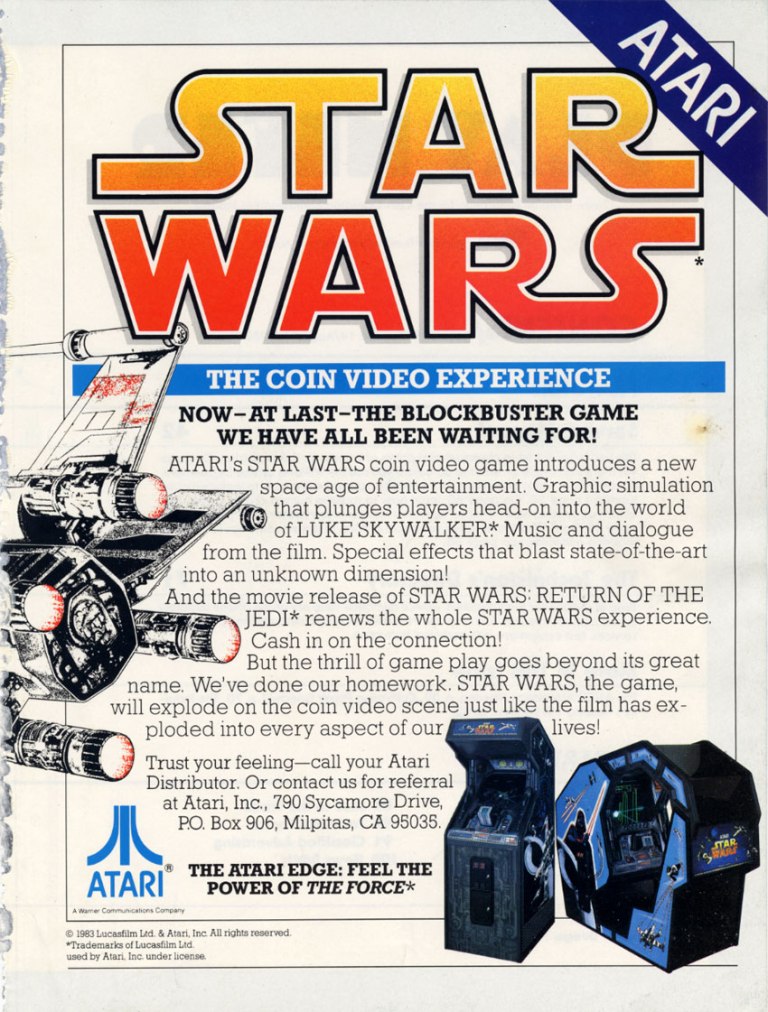
The rear of the flyer.

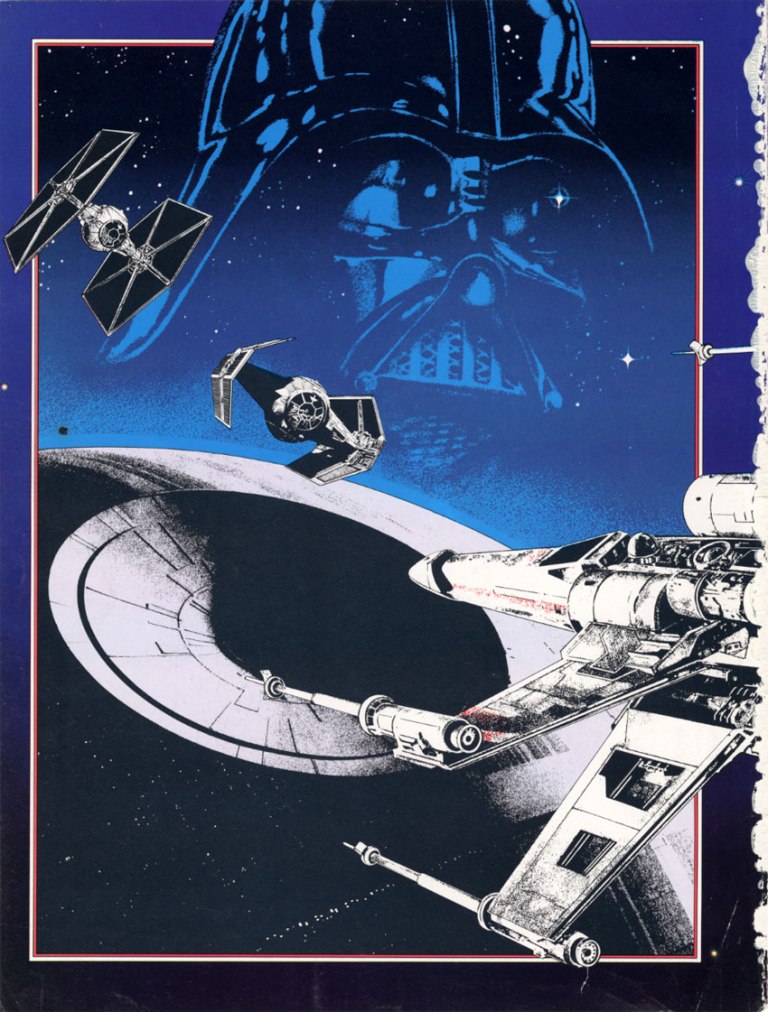
Just weeks before the Star Wars movie Return of the Jedi was released in cinemas in 1983, Atari released the Star Wars arcade game which became a tremendous hit around the world. Both Star Wars fans and gamers of the time loved the game as it provided a very immersive and fun-filled arcade experience. The print ad Atari released has a nice artwork on the front (showing a portion of the Death Star, two TIE Fighters, a Rebel X-Wing Fighter and Darth Vader’s image) and the text description plus the pictures of two arcade machines on the back. While no screenshots were shown, the print ad still had strong visual impact to catch the attention of players and arcade operators. This arcade flyer still looks great!

2. Star Wars: Return of the Jedi – Death Star Battle Atari 2600 print ad
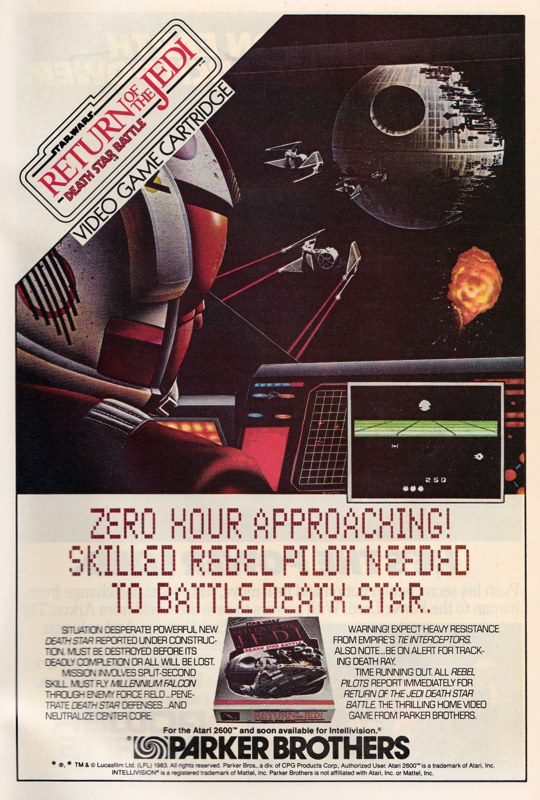
Parker Brothers really stood out among publishers of games on the Atari 2600 and they even had the Star Wars license.

Considering the massive success that Star Wars and The Empire Strikes Back had in cinemas, merchandising and other entertainment media, it was not surprising that games based on Return of the Jedi were produced. For the Atari 2600, Parker Brothers produced Star Wars: Return of the Jedi – Death Star Battle which my friends and I played a lot in 1983. The print ad Parker Brothers came up with has a very eye-catching design showing a Rebel pilot flying a space ship (supposedly the Millennium Falcon which is the only playable ship in the game) towards the Death Star. The visual design is a stroke of genius because it appeals strongly to Star Wars fans while highlighting a major battle in the film which influenced the core concept of the game. This is a classic Star Wars game ad.

3. Star Wars Arcade Japanese market flyer
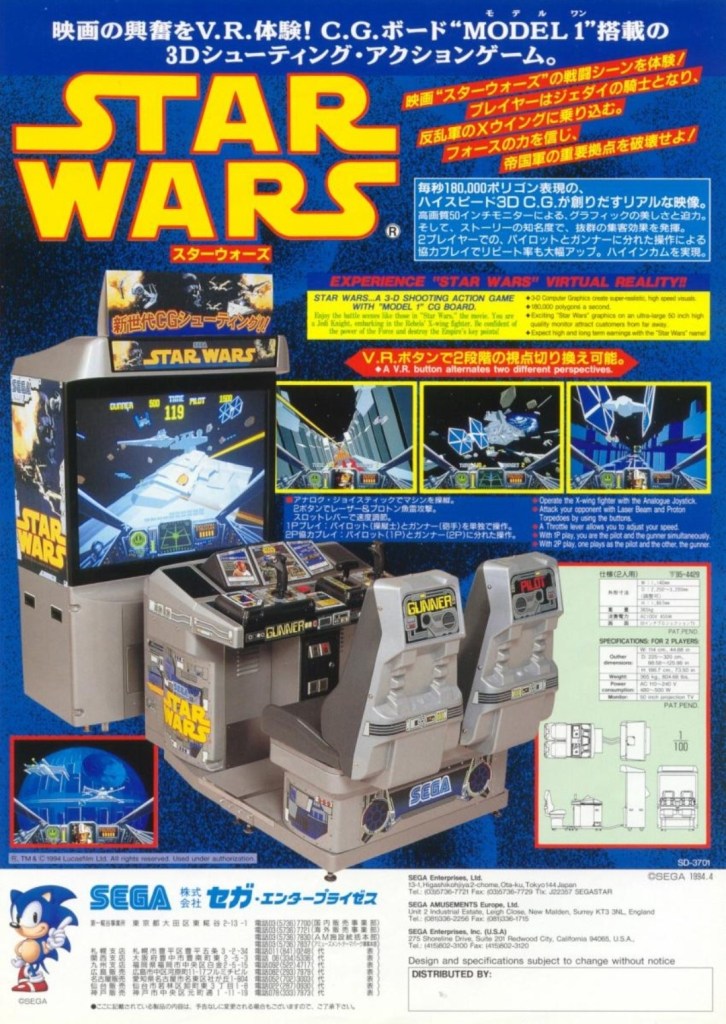
This arcade game was one of the first fully polygonal Star Wars games released.

In the 1990s, Sega acquired the license to produce Star Wars games for the arcades and they had the hardware for polygonal graphics. In 1993, the released Star Wars Arcade which is a space shooter that offered gamers the freedom to fly their Rebel space ship in 3D space with environments and huge space ships rendered in polygons. As you can see in the arcade flyer for the Japanese market, Sega went hard with their presentation showing 3 carefully selected screenshots (amazing for the time) and a picture of the arcade machine which had an elaborate control set-up, seats and decorations. As Star Wars Arcade was released more than a year before the polygonal game consoles Sega Saturn and Sony PlayStation hit the market, this arcade flyer was mind-blowing to gamers who were on the verge of playing video games with polygonal visuals.

4. Super Star Wars print ad
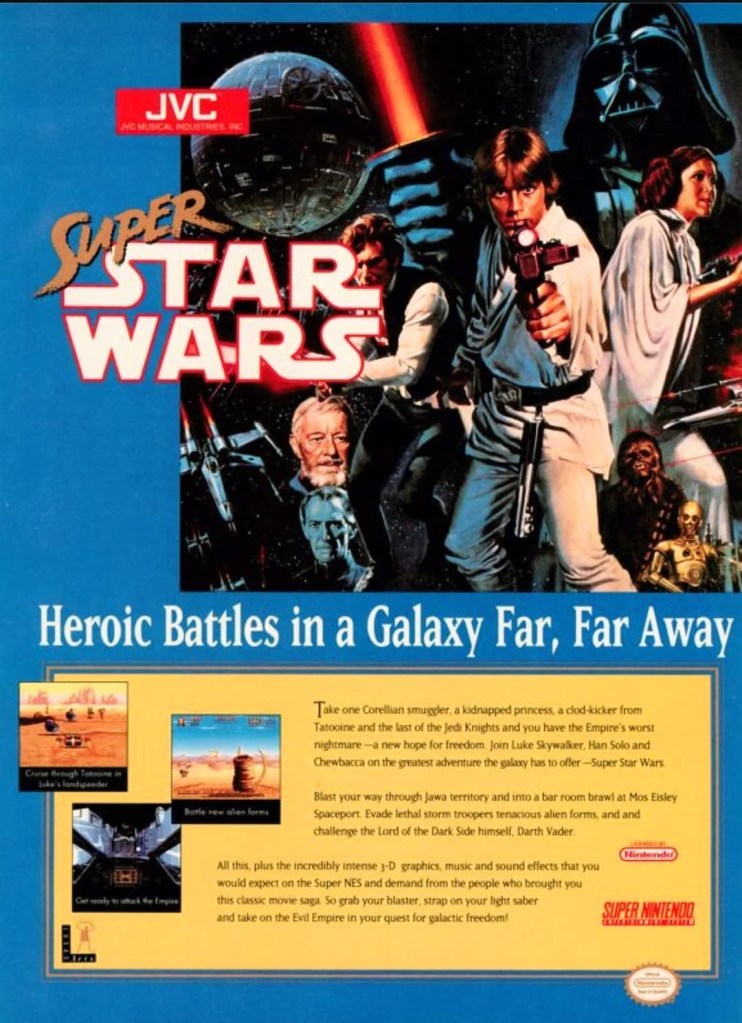
Yes, JVC was involved with the Super Star Wars trilogy starting with this one.

In 1992, Star Wars fans who enjoyed playing 2D side-scrolling games saw their dream of the next great Star Wars console experience come true when Super Star Wars was released on the Super Nintendo Entertainment System (SNES). With the SNES technology, more detailed visuals and improved audio brought the Star Wars universe to life and the addition of 3D-like playable sequences (made possible by Mode 7 effects) made Super Star Wars a very unique console experience. The print ad only showed three screenshots and three paragraphs of descriptive text but the use of images from the 1977 movie poster added a lot of punch to the visual presentation. This ad is both eye-catching to gamers and long-time Star Wars fans.

5. Star Wars: TIE Fighter print ad
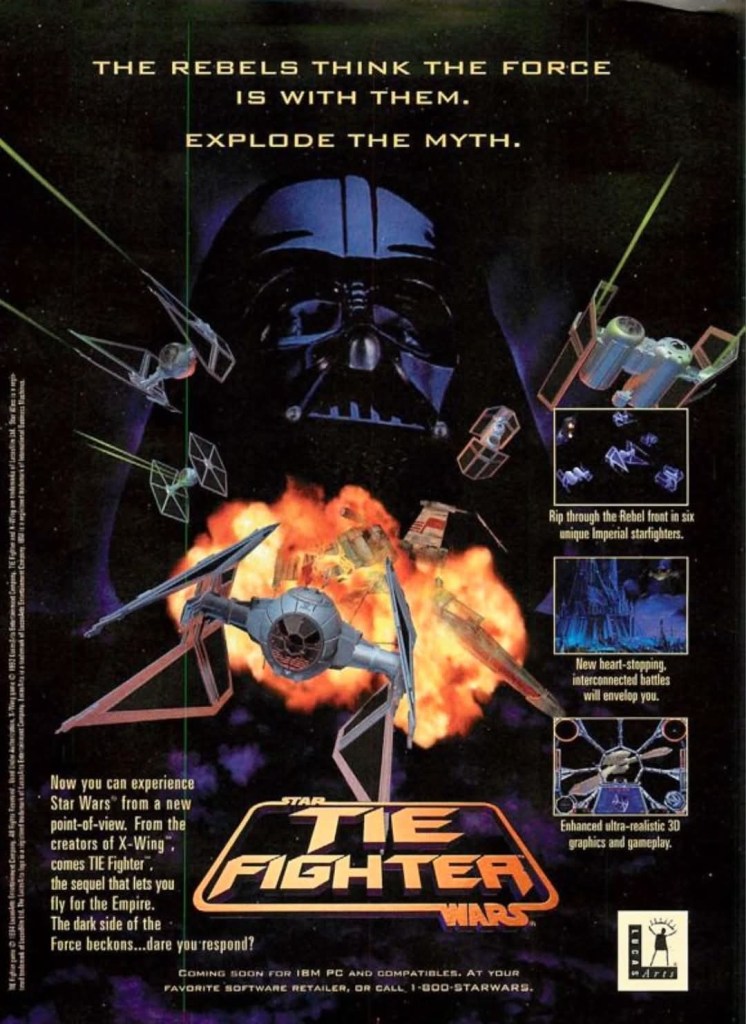
This game offered gamers the opportunities to be with the dark side.

In 1994, LucasArts released Star Wars: TIE Fighter which offered gamers the opportunity to play an Imperial pilot serving Darth Vader on missions set between The Empire Strikes Back and Return of the Jedi. This print ad has a sharp visual design enhanced by Darth Vader’s iconic look in the background. The selected screenshots shown were good to look at but the artwork used to present the TIE Fighters really stood out. This solid looking print ad does come with a bit of disturbance as the Galactic Empire in Star Wars lore are evil.

6. Super Star Wars: Return of the Jedi print ads
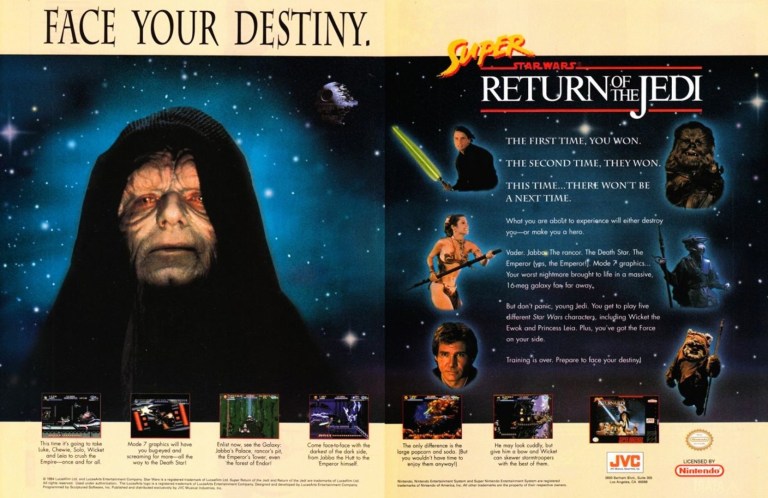
Nothing like seeing Harrison Ford, Carrie Fisher and Mark Hamill as the Star Wars icons on a video game ad.
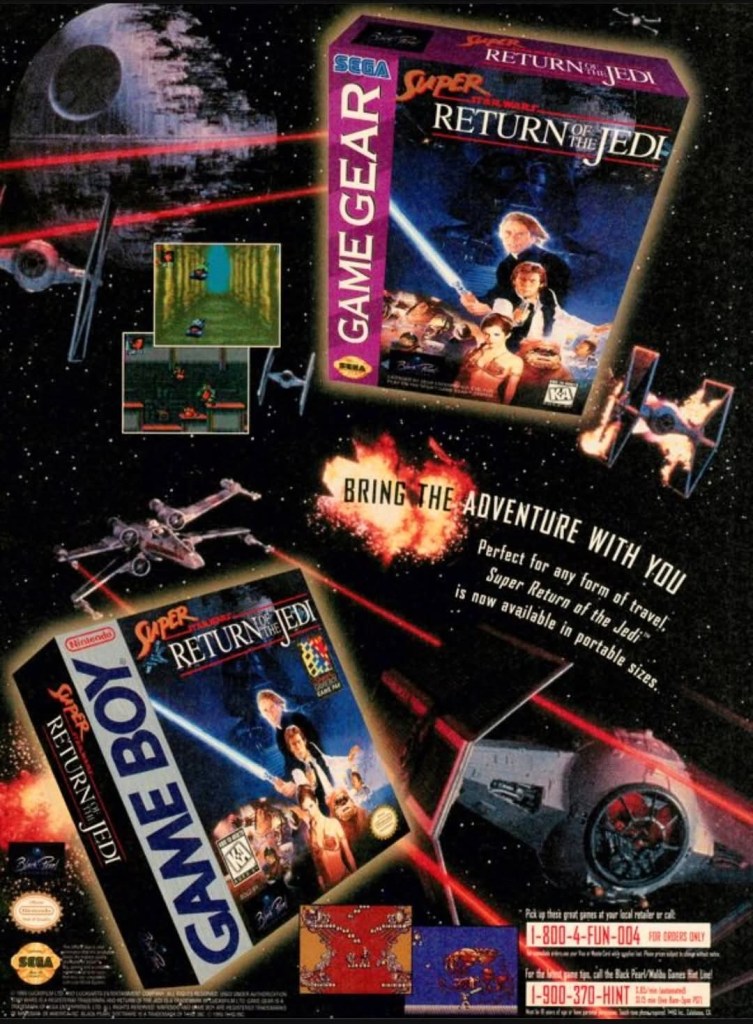
I never played the portable editions of Super Star Wars: Return of the Jedi. Have you?

As far as gaming on the SNES was concerned, the Super Star Wars trilogy of games really kept fans and casual gamers busy. By the time Super Star Wars: Return of the Jedi was released in 1994 on the SNES, there was already immense speculation about the Star Wars prequel trilogy and George Lucas himself started writing them that same year. The 2-page print ad of the game on SNES had a creepy photo of Emperor Palpatine on one side, the other characters on the other side, and six selected screenshots displayed on the lower part. The way the print ad was design reflects that the game is the end of the trilogy like the 1983 film itself. Super Star Wars: Return of the Jedi was also released on Game Gear and Game Boy and the ad makers made the right decision to use the Death Star and space battle image as the background so that the portable games would stand out.

7. Star Wars: Masters of Teräs Käsi print ad
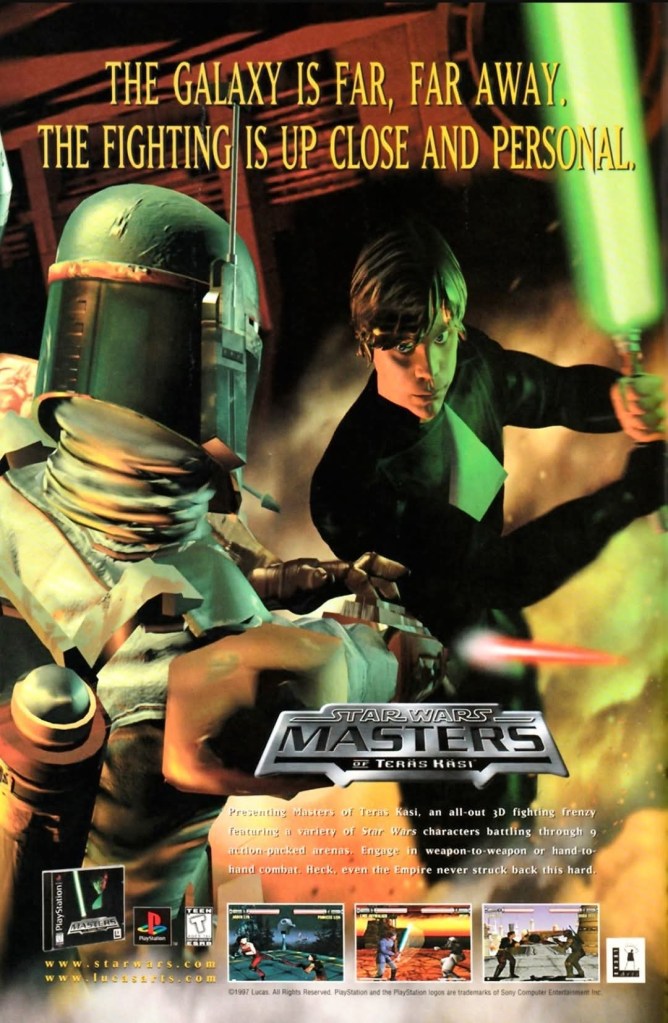
I wonder if George Lucas ever regretted approving this Star Wars fighting game. It was so rough and unpolished with its quality.

If there is any sub-par Star Wars game released in the 1990s, it is none other than Star Wars: Masters of Teräs Käsi on the PlayStation. The 1997 game was LucasArts’ attempt to cash in on the booming fighting games genre and they took a huge risk of making it entirely polygonal. Instead of using photographs or hand-drawn art, the ad makers used a fully rendered 3D polygonal models of Luke Skywalker and Boba Fett which was alienating to look at. In fact, those polygonal models looked very different from the in-game polygonal models of Skywalker and Boba Fett presented during gameplay. This print ad is a sad reminder about an ill-conceived concept for Star Wars that materialized into an actual product.

8. Star Wars: Shadows of the Empire print ad
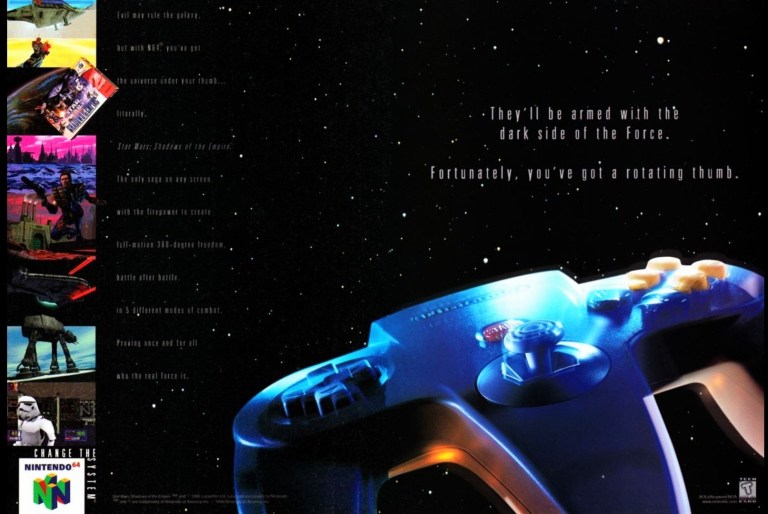
If you have read the novel, were you able to play this video game?

LucasArts and Nintendo teamed up with something ambitious – a video game adaptation of Star Wars: Shadows of the Empire that was released exclusively to the Nintendo 64 (N64). Released in late 1996, Star Wars: Shadows of the Empire was part of the multimedia entertainment project of the same name and it is the result of LucasArts’ decision to be an early adopter of the N64 for business-related reasons. The 2-page print ad shown here has a dark, star-filled background which captivating screenshots on the left and the N64 controller standing out. This print ad strongly expresses that gamers would need the N64 in order to play Star Wars: Shadows of the Empire in the comfort of home.

9. Star Wars Trilogy arcade flyer
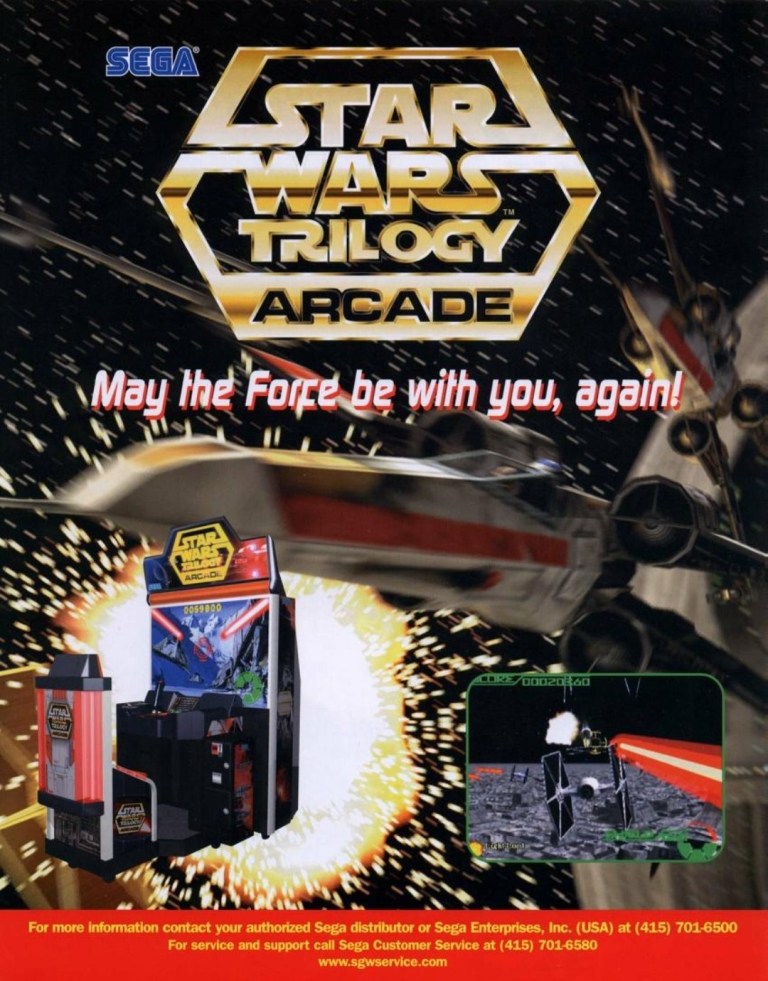
The front.
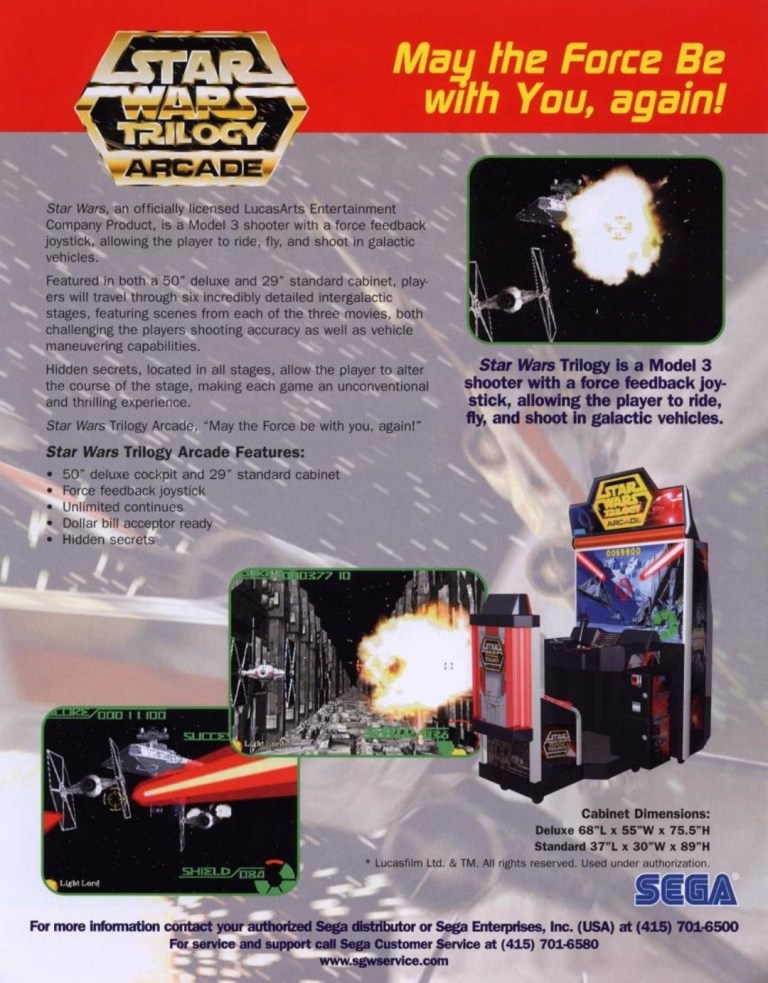
The other side.

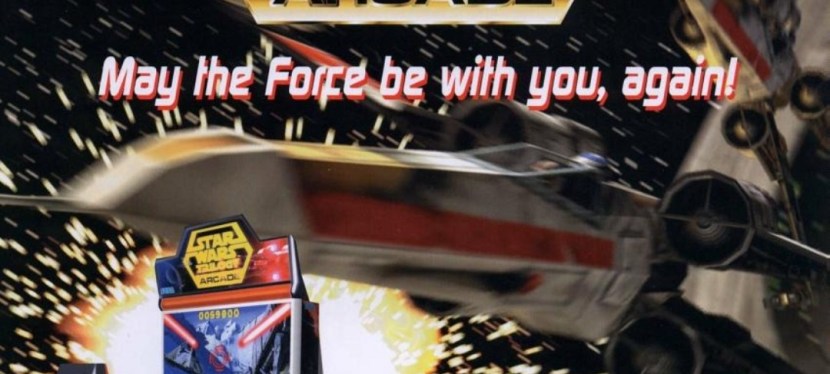
Before the Star Wars Prequel trilogy started with The Phantom Menace, Sega came out strongly by releasing Star Wars Trilogy Arcade in arcades around the world. Released in 1998, the game was arguably Sega’s most ambitious Star Wars-licensed game ever as it was made with the powerful Model 3 hardware, it came with unique controls and the game was designed as a polygonal rail shooter focused on key segments from the original trilogy of films. Sega wisely used dynamic artwork for the front of the flyer giving viewers the impression that the X-Wing fighter was approaching them closely. At the rear, three screenshots only showed space battles which was a wise decision by Sega to keep the surprise intact for gamers until they play the game. Having played this in the arcade myself, I can assure you that Star Wars Trilogy Arcade has more varied types of gameplay and challenges. It’s a lot more than flying and shooting in space, and it has a lot of stuff that Star Wars fans will love.

+++++

Thank you for reading. If you find this article engaging, please click the like button below, share this article to others and also please consider making a donation to support my publishing. If you are looking for a copywriter to create content for your special project or business, check out my services and my portfolio. Feel free to contact me with a private message. Also please feel free to visit my Facebook page Author Carlo Carrasco and follow me on Twitter at  @HavenorFantasy as well as on Tumblr at https://carlocarrasco.tumblr.com/ and on Instagram at https://www.instagram.com/authorcarlocarrasco

What to watch on YouTube right now – Part 73

Welcome back my readers, YouTube viewers and all others who followed this series of articles focused on YouTube videos worth watching. Have you been searching for something fun or interesting to watch on YouTube? Do you feel bored right now and you crave for something to see on the world’s most popular online video destination?

I recommend you check out the following videos I found.

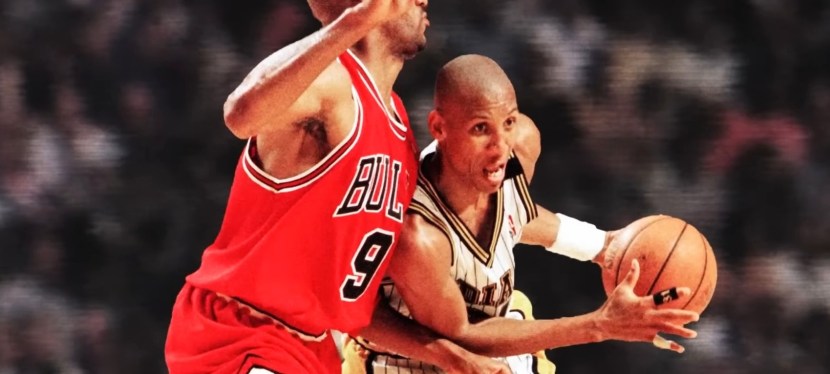
A look back at the 1998 showdown between Reggie Miller and Michael Jordan – Remember way back in 1998 when Reggie Miller pushed Michael Jordan out of the way to free himself and score the crucial 3-point shot during an Eastern Conference Finals game between the Indiana Pacers and the Chicago Bulls? There was a lot of build-up between the Pacers and the Bulls before that memorable play happened, and many other players were factors as well. Watch and learn from the Secret Base video below.

#2 Looking back at Super Star Wars: The Empire Strikes Back  – Among all the many Star Wars video games I played in the 1990s, it was Super Star Wars: The Empire Strikes Back on the Super Nintendo Entertainment System (SNES) that I enjoyed the most (read my retro review by clicking here). That was the 2nd of three side-scrolling Star Wars games released on the SNES based on the original Star Wars trilogy of films. In today’s gaming landscape, I can only wish that the SNES Super Star Wars games would someday get re-released for modern consoles. To understand what Super Star Wars: The Empire Strikes Back is about, watch the videos below.

PatmanQC examines Sega’s Star Wars arcade games – Still on the topics of Star Wars and retro gaming, I enjoyed watching another video from YouTuber PatmanQC focused on the Star Wars arcade games released by Sega. For the newcomers reading this, a lot of licensed video games of Star Wars got released from varied companies through the decades. The Sega-produced Star Wars arcade games of the 1990s were notably of high quality and a lot of fun to play with. To learn more, watch PatmanQC’s video below.

Christine Grace Smith reacts to video of average men competing with really fit women – Here is another analytical video by Christine Grace Smith. This time, she’s reacting to a video about a few average men competing with really fit women in a series of physical contests. Watch and learn, and pay close attention to the details.

The truth about Dwayne Johnson – You might not have seen him in professional wrestling and you most likely saw him in the movies. I’m talking about Dwayne Johnson and there are lots of things about him that turned off people. He had some commercial success as an actor but after seeing It’s Blanko video of him, your perception of Johnson will be impacted. Watch the video below and pay close attention to the details.

Minty Comedic Arts examines the lost scenes of Cobra – Way back in 1986, the action film Cobra was released in cinemas and it had Sylvester Stallone as a cop who has to protect a woman from a gang of killers who targeted her. The film was a commercial success mainly due to big ticket sales outside of America. For decades, it was speculated that the film that was released was a shortened version and there were lots of footage that ended up being deleted. Minty Comedic Arts’ video below confirms that there are indeed lost scenes and had they been used, they would have altered the overall tone of the movie. Watch the video below.

You, Me and the Movies reacts to Commando – Commando of 1985 is an action movie starring Arnold Schwarzenegger and it had absolutely nothing to do with the 1985 video game of the same name. Not only was Schwarzenegger younger, you get to see him play a soldier completely different from his role in Predator. The video reaction of You, Me and the Movies is enjoyable to watch.

+++++

Thank you for reading. If you find this article engaging, please click the like button below, share this article to others and also please consider making a donation to support my publishing. If you are looking for a copywriter to create content for your special project or business, check out my services and my portfolio. Feel free to contact me with a private message. Also please feel free to visit my Facebook page Author Carlo Carrasco and follow me on Twitter at  @HavenorFantasy as well as on Tumblr at https://carlocarrasco.tumblr.com/ and on Instagram athttps://www.instagram.com/authorcarlocarrasco

What to watch on YouTube right now – Part 59

Welcome back my readers, YouTube viewers and all others who followed this series of articles focused on YouTube videos worth watching. Have you been searching for something fun or interesting to watch on YouTube? Do you feel bored right now and you crave for something to see on the world’s most popular online video destination?

I recommend you check out the following topics and the related videos I found.

Popcorn in Bed reacts to Planet of the Apes (1968) – YouTuber Popcorn in Bed finally did it…posting a reaction video featuring the classic science fiction movie Planet of the Apes (1968). The video has both Cassie and Carly reacting to the Charlton Heston-led film. Considering how many Planet of the Apes reaction videos have been posted on YouTube, I can say that Popcorn in Bed’s video is entertaining to watch. Watch it now!

#2 Comparison video of Avowed and Oblivion – In case you missed the news, the long-awaited Xbox-exclusive fantasy role-playing game (RPG) Avowed has been released and it is the latest game from RPG specialist Obsidian Entertainment (an Xbox game studio). Recently, someone posted a new video comparing Avowed with the 2006 RPG The Elder Scrolls IV: Oblivion focused on specific details. It’s clear that Obsidian still has a long way to go to truly make Avowed’s world a living and breathing realm. I encourage you all to watch it now.

Slope Game Room examines the history of Zombies Ate My Neighbors – Recently, I purchased the digital collection of Zombies Ate My Neighbors and Ghoul Patrol for my Xbox Series X. As of this writing, I’m still playing Zombies Ate My Neighbors – specifically the Super NES version – and I’m enjoying it. First released in 1993, Zombies Ate My Neighbors was developed by LucasArts and published by Konami for the two 16-bit consoles of the time. It turns out, there is a lot of interesting details behind the development of the game, what led to the creation of Ghoul Patrol and more. To know more, watch the video of Slope’s Game Room below.

CNN supports Hamas terrorists – I don’t trust the opinions and news publishing of CNN (originally called Cable News Network) which has turned into a propaganda machine for the corrupted Democrats, Islamo-Leftists, and woke mobs. In recent times, CNN had an entire segment defending the Palestinian terrorist group Hamas and the two personalities who spoke clearly have no love for Israel. To find out what happened, watch the video below.

You, Me and the Movies react to Air Force One – At last, YouTuber You, Me and the Movies posted its reaction video featuring the 1997 blockbuster Air Force One with Harrison Ford playing a tough, fictional US President. It is an entertaining reaction video to watch and the old film itself is relevant once again as Trump-led America today has toughened its stance against terrorists. If you have not seen the film, watch it first. Otherwise, enjoy the video below.

Ashleigh Burton reacts to a 1999 comedy – I never saw the 1999 comedy 10 Things I Hate About You in the cinema but some friends of mind did and they found it funny and memorable. A few years later, I finally saw it on cable TV and home video and it was entertaining. Recently, Ashleigh Burton posted her reaction video and I enjoyed how she responded to it.

RK Outpost explains box-office disappointment of Captain America: Brave New World – Are you aware that the woke Disney company, Marvel Studios and its wicked Hollywood media partners are lying to you and trying to manipulate you into believing that Captain America: Brave New World had a successful launch? YouTuber RK Outpost posted a video explaining in detail why the new movie (starring Anthony Mackie) is actually a box office disappointment upon launching, how the Hollywood players are lying, what facts are being ignored, and why you should not be fooled by Disney and its partners-in-crime. Watch and learn!

+++++

Thank you for reading. If you find this article engaging, please click the like button below, share this article to others and also please consider making a donation to support my publishing. If you are looking for a copywriter to create content for your special project or business, check out my services and my portfolio. Feel free to contact me with a private message. Also please feel free to visit my Facebook page Author Carlo Carrasco and follow me on Twitter at  @HavenorFantasy as well as on Tumblr at https://carlocarrasco.tumblr.com/ and on Instagram athttps://www.instagram.com/authorcarlocarrasco

Retro Gaming Ads Blast – Part 14

Welcome back readers, fellow geeks and electronic gaming fans!

In this edition of the Retro Gaming Ads Blast (RGAB) series, we will take a look at another batch of retro gaming print ads – including arcade flyers – from the 1980s and 1990s.

For the newcomers reading this, Retro Gaming Ads Blast (RGAB) looks back at the many print ads of games (console, arcade, computer and handheld) that were published in comic books, magazines, flyers and newspapers long before smartphones, social media, the worldwide web and streaming became popular. To put things in perspective, people back in the 1980s and 1990s were more trusting of print media for information and images about electronic games and related products.

With those details laid down, here is the newest batch of retro gaming print ads for you to see and enjoy…

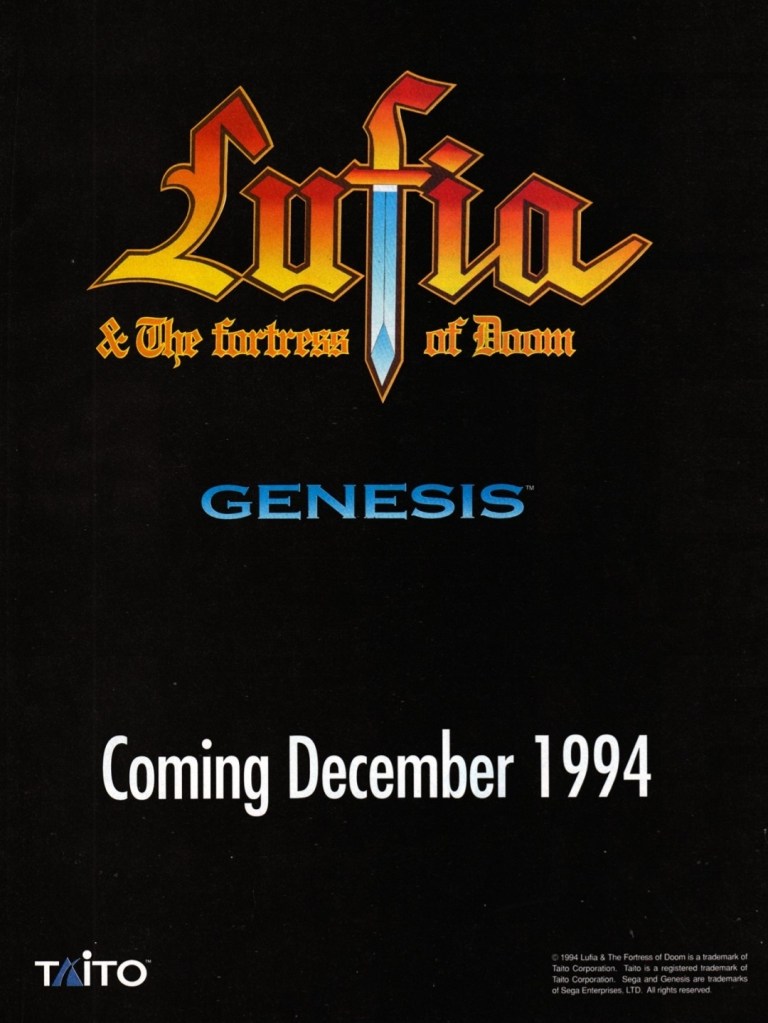
1. Lufia & The Fortress of Doom for Sega Genesis print ad

Considering the eventual scrapping of the Sega Genesis port of Lufia & The Fortress of Doom, this old print ad might as well serve like a tomb stone.

I want to start with this mostly black print ad about the Japanese role-playing game (JRPG) Lufia & The Fortress of Doom coming to the Sega Genesis console. This game was released on the Super Nintendo Entertainment System (SNES) in America and on the Super Famicom in Japan in 1993 and achieved commercial success for the Japan-based publisher Taito. In an attempt to keep on building up the success, a port of the game for the Sega Genesis (Sega Megadrive in other countries) was announced but ultimately it got canceled. It should be noted that Taito’s American division close down in 1995 and the sequel  Lufia II: Rise of the Sinistrals was released in America by a different publisher. That being said, this particular print ad is a sad reminder of a broken promise for Sega Genesis gamers as well as Lufia and JRPG fans who wanted to play the 1993 RPG on a different console.

2. Cloak & Dagger arcade flyer

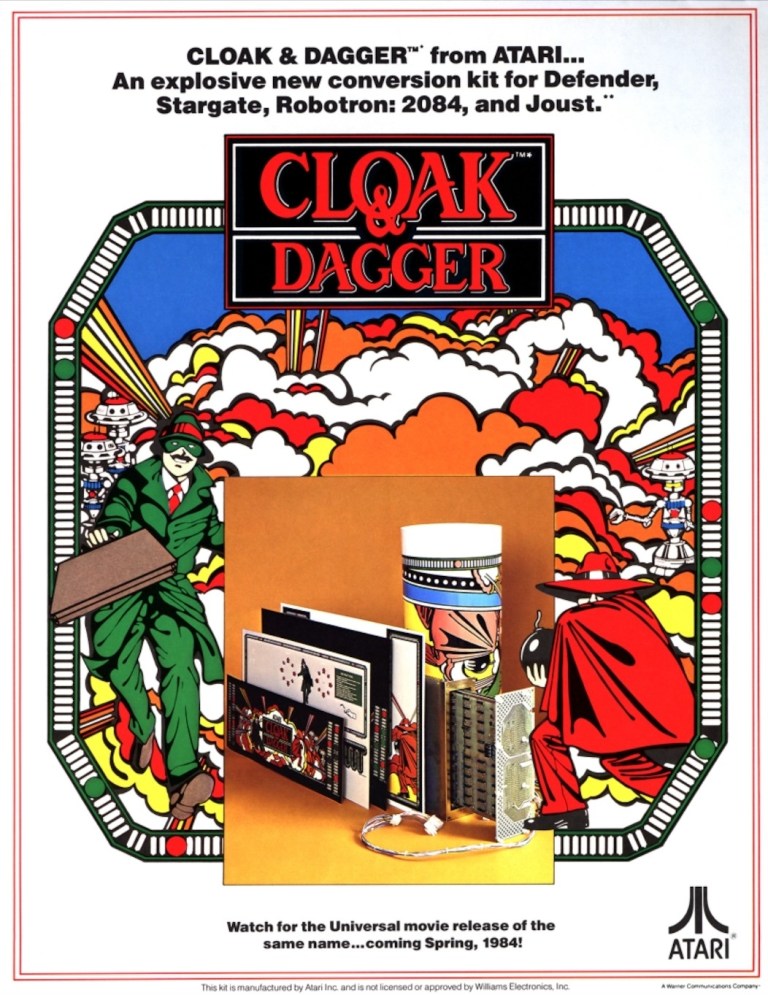
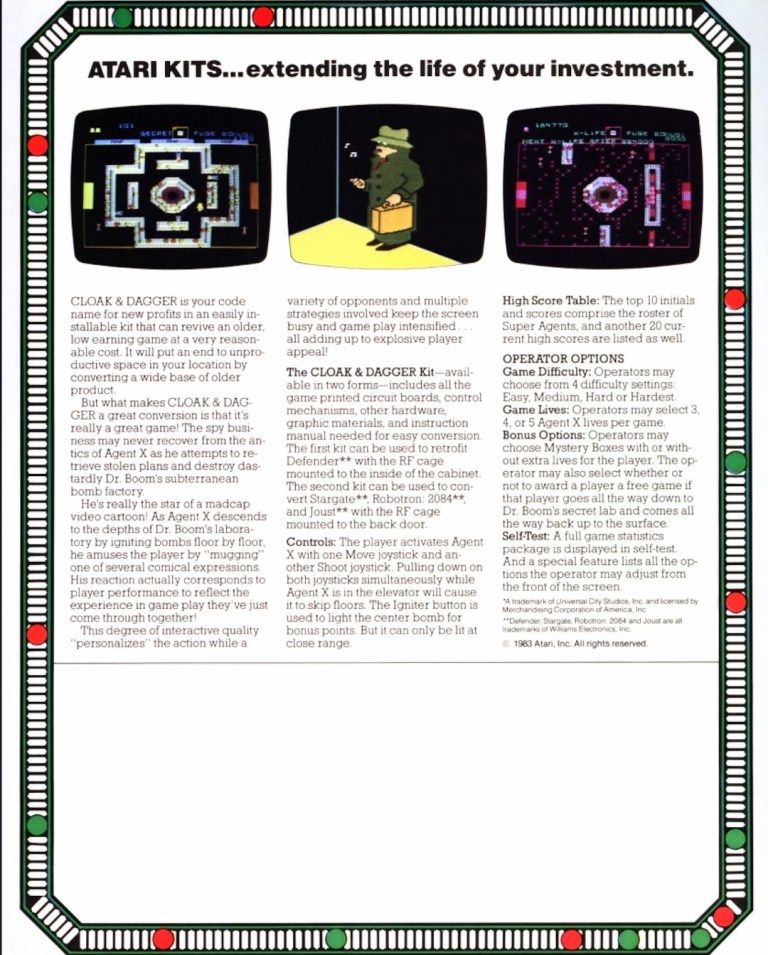
The front of the arcade flyer. There is even a mention of the Cloak & Dagger movie.
Details of the game explained with arcade operators in mind. I find it odd that there is a vacant amount of blank space on this side of the flyer.

Cloak & Dagger, the Atari arcade game that appeared in the 1984 movie of the same name (read my retro movie review by clicking here), has always been an arcade conversion kit as this arcade flyer showed. For the newcomers reading this, an arcade conversion kit allows the arcade operator to replace an old game without having to buy a brand-new arcade machine. Very cleverly, Atari targeted arcade machines of Robotron: 2084, Defender, Stargate and Joust (all were from the competitor Williams Electronics) with Cloak & Dagger. The Cloak & Dagger flyer’s front shows a picture of the pieces of hardware (for insertion into the arcade cabinet plus some physical adjustments) plus decorations for the exterior of the arcade cabinet. The other side of the flyer contains the technical details that make it convenient for arcade operators to understand on how to convert the older games (limited to the above-mentioned Williams games).

3. NBA Live 95 for Sega Genesis print ad

This print ad is still exciting to look at, especially when you are still passionate with basketball.

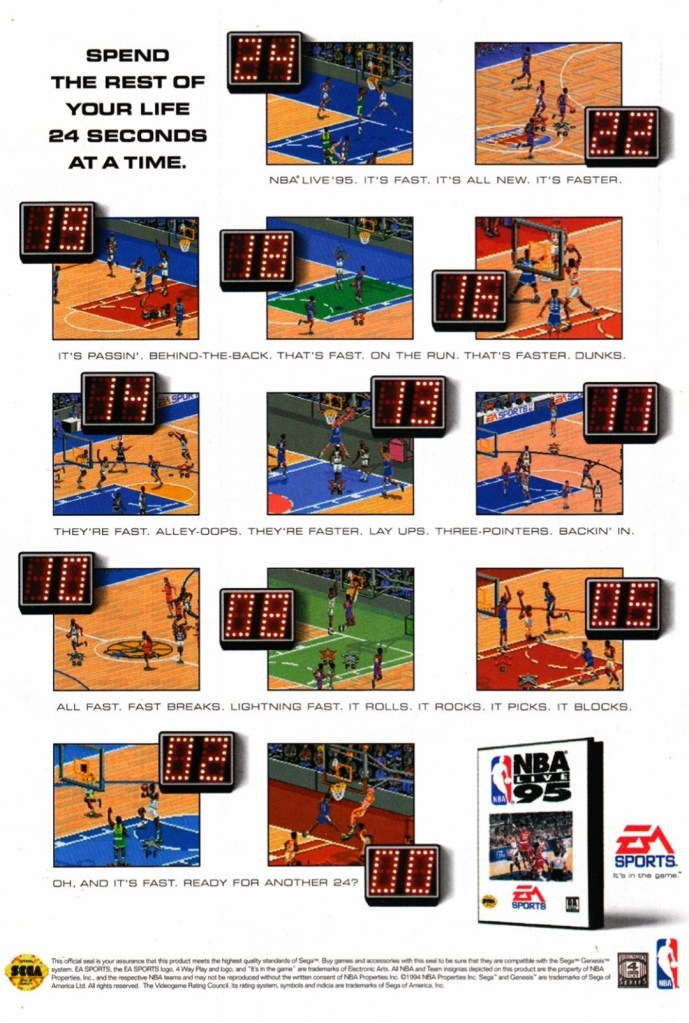
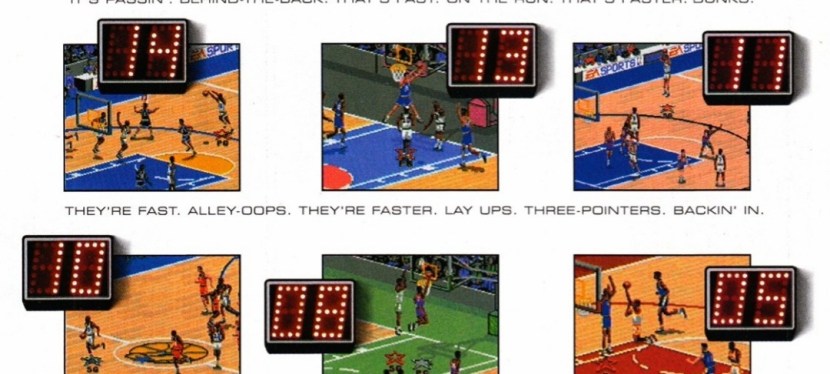
Back in late 1994, Electronic Arts (EA) revamped their NBA-licensed basketball game franchise with NBA Live 95 which came with a major game redesign that includes the isometric on-court perspective, T-meter for free throw shooting and more. NBA Live 95 was also the first entry of the NBA Live franchise and brand which lasted for decades. This print ad of the Sega Genesis version of NBA Live 95 has the clever display of several screenshots along with pics of the shot clock emphasizing suspense. The basketball action images themselves are not only eye-catching but strong enough to get gamers excited. This is still a solid print ad to look at.

4. X-Men: Mutant Apocalypse print ad

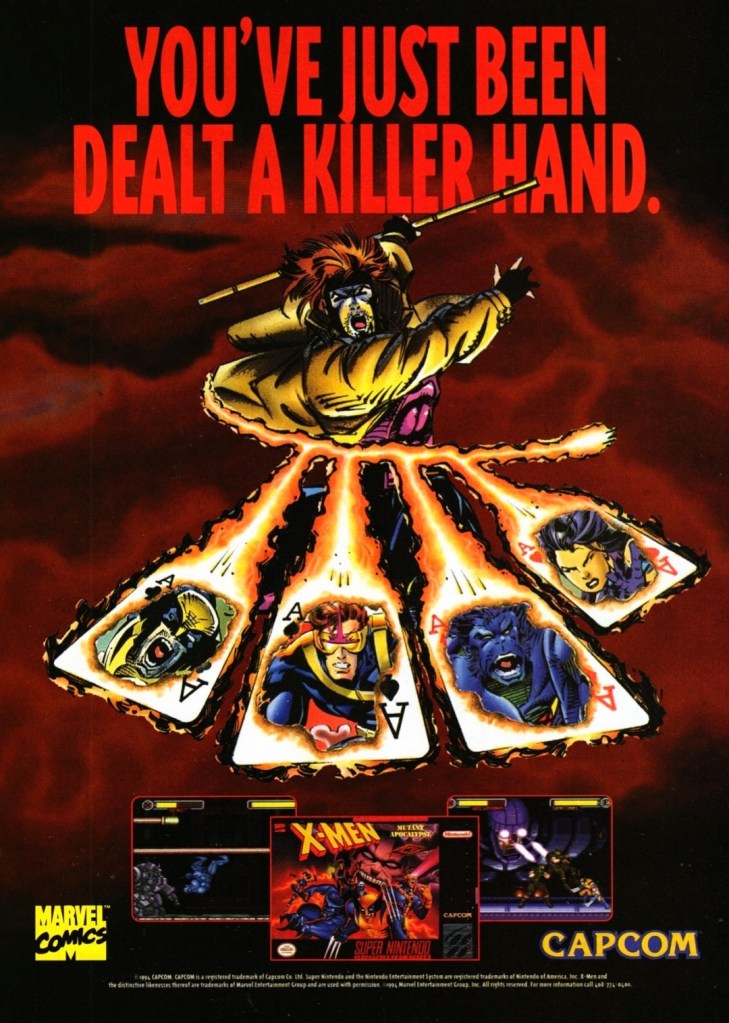
An X-Men game by Capcom.

If there is anything significant about X-Men: Mutant Apocalypse, it is the fact that it was Capcom’s first-ever X-Men-based production that was also released a month before their own hit arcade game X-Men: Children of the Atom came out. Setting aside Capcom’s involvement, this game contains notable elements from the comic books that strongly resonated with dedicated X-Men fans. Apart from the two screenshots and the game box cover, this print ad has X-Men artwork by Andy Kubert who already was the regular artist of the X-Men monthly series.

5. Space Ace multi-platform print ad

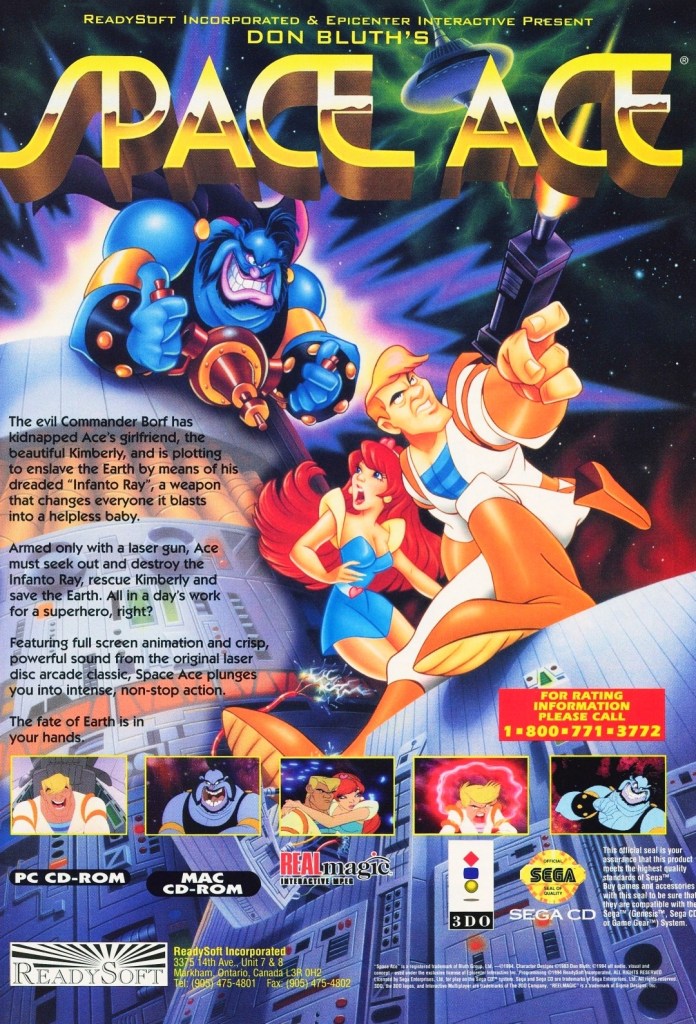
Anyone who is a fan of Don Bluth’s works in animation should be able to recognize the art style of this ad.

First released in the mid-1980s, Space Ace was a LaserDisc video game that was designed and produced by the legendary animator Don Bluth (An American Tail, The Land Before Time, Anastasia). After achieving success in the arcades, new versions of Space Ace were subsequently released on many other platforms, including the consoles and computers that used disc drives in the mid-1990s which this print ad emphasized. By looking at the lower part of the print ad, you will see Sega CD, 3DO, Macintosh and PC as targeted platforms. The most notable visual feature of the ad was, unsurprisingly, official art of Space Ace.

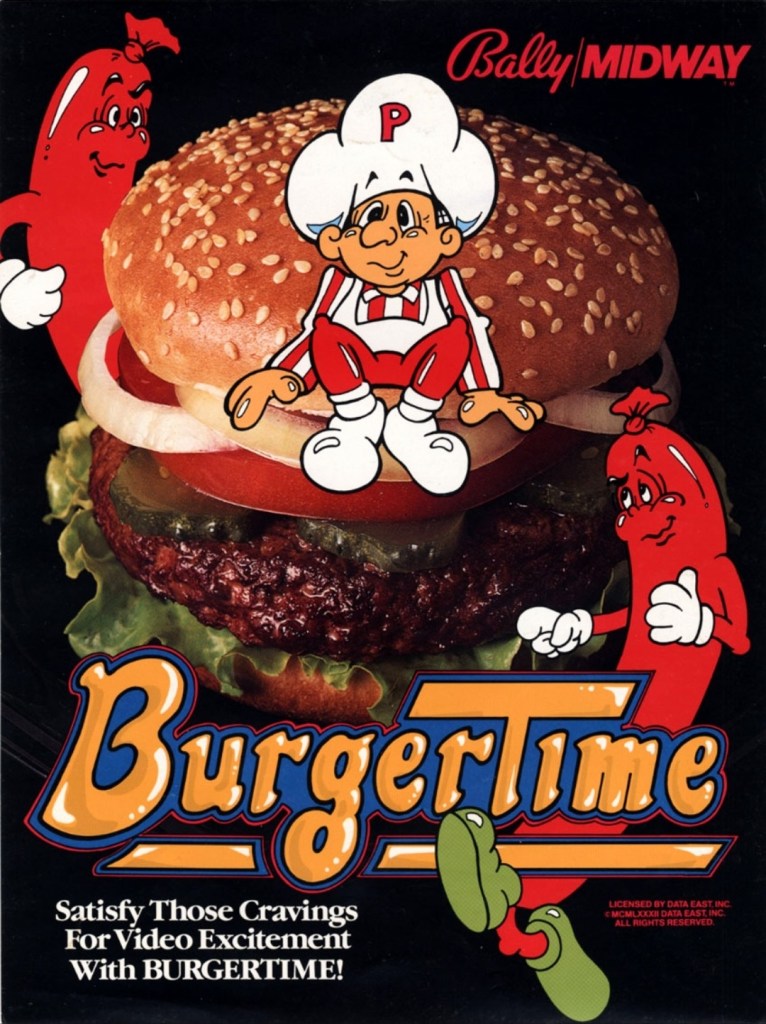
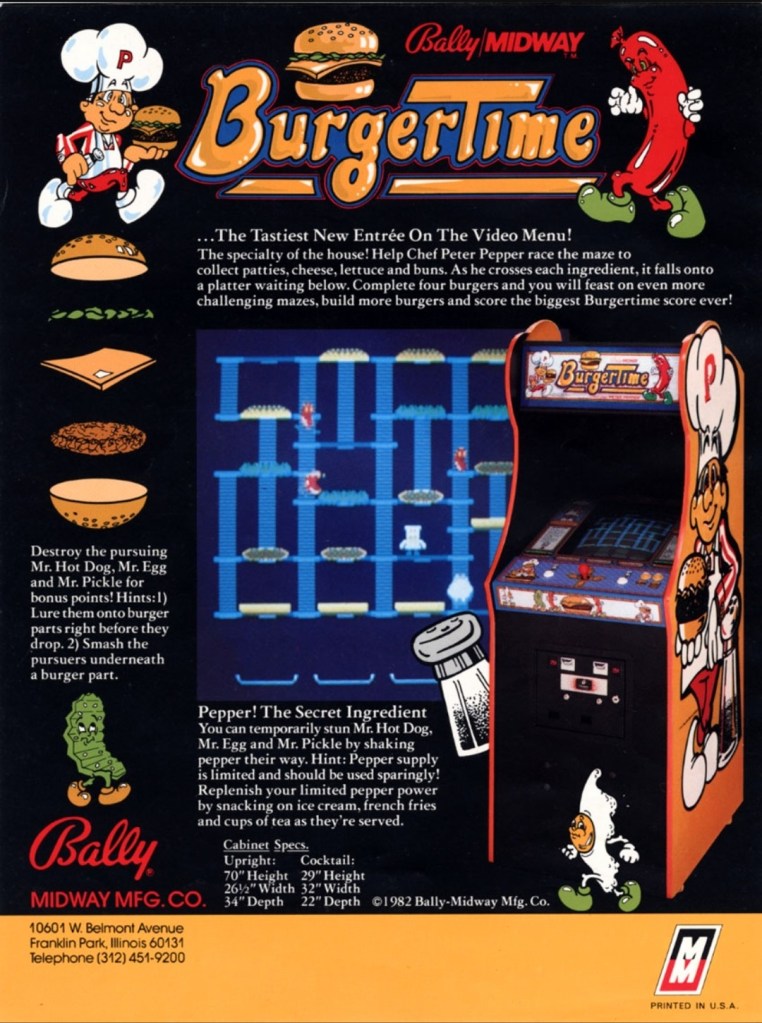
6. BurgerTime arcade flyer

The front of this flyer could make you crave for burgers.
The technical and creative details on the rear of the flyer.

Bally/Midway came up with this arcade flyer of BurgerTime which itself went on to become a beloved classic game. The front showed a very enticing looking hamburger that looked like it could fill a person’s belly and tingle his or her taste buds. Then they showed the hand-drawn in-game characters looking like they really are interacting with the hamburger. The back of the flyer shows details that emphasize what the game is about, why it could be a fun arcade addition and what the specs are. This is an engaging arcade flyer.  

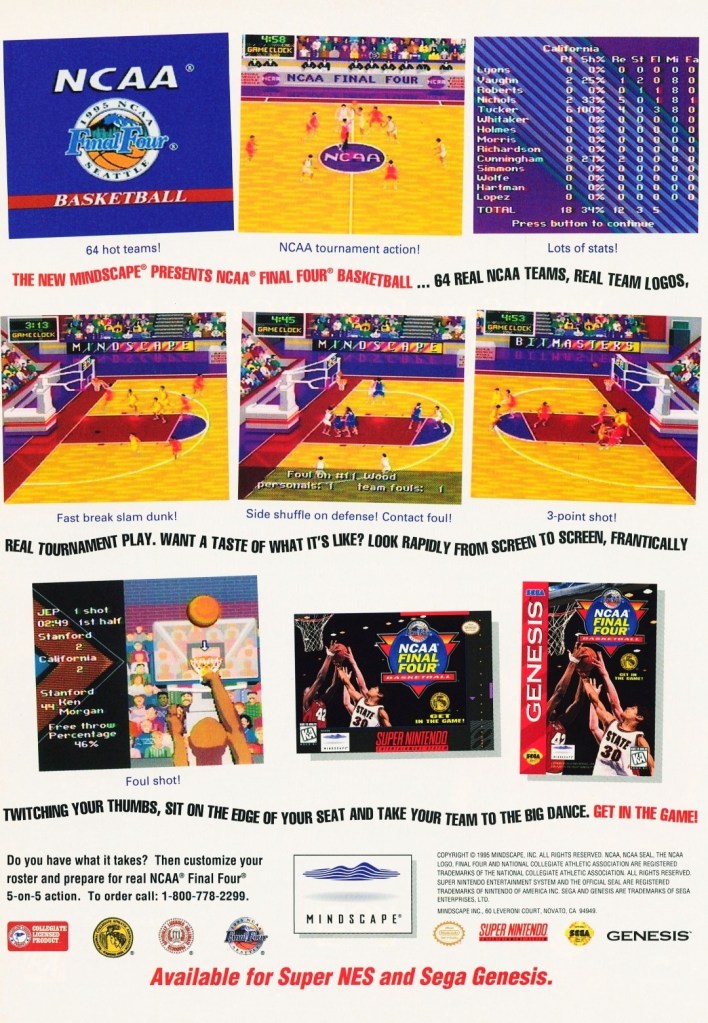
7. NCAA Final Four Basketball print ad

Do you know anyone who played this college basketball video game?

If there is anything notable about video gaming in the 1990s that is missing today, that would be the presence of multiple basketball video games released by different game publishers. Along the way, there were some college basketball video games such as NCAA Final Four Basketball developed by Bitmasters and published by Mindscape. This print ad had enough screenshots to show what the game looked like and how it played. The ad also mentioned that the game had 64 real NCAA teams and logos as well. This 1994 video game did not have a strong reception from game critics although it received a very high rating by GamePro magazine. NCAA Final Four Basketball has long been forgotten.

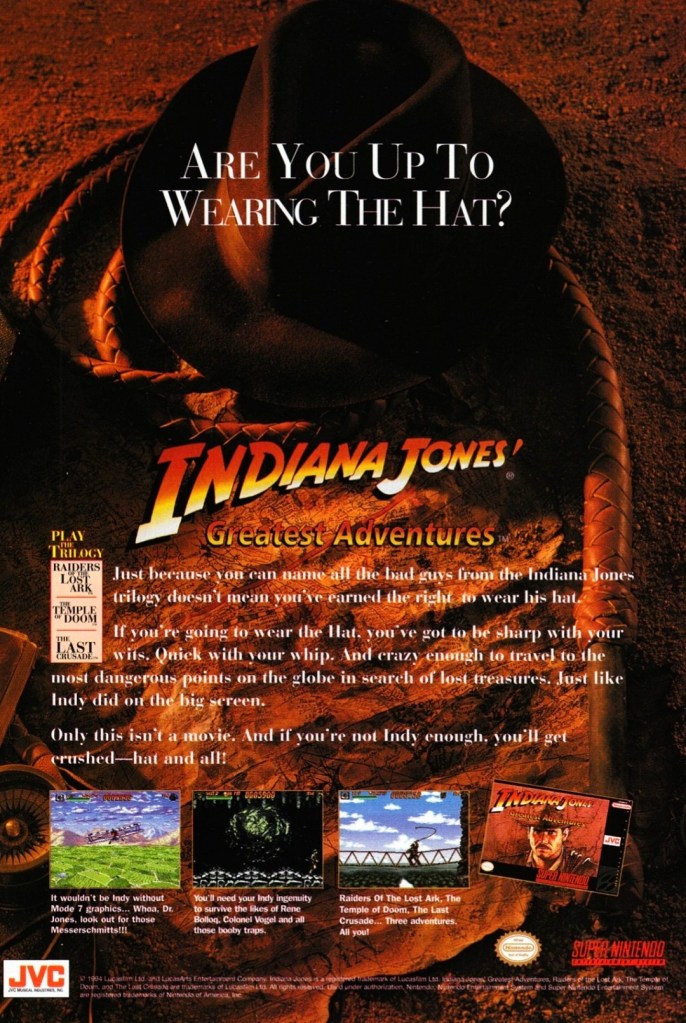
8. Indiana Jones’ Greatest Adventures print ad

An eye-catching print ad from a more memorable time when the Indiana Jones franchise was still under the full control of George Lucas and his enterprise.

Indiana Jones’ Greatest Adventures was an ambitious 2D side-scrolling adventure game that also served as an adaptation of the first three Indiana Jones movies (1981-1989) of Steven Spielberg and George Lucas. Like the Super Star Wars trilogy of games that preceded, this one was a challenging and lengthy game filled with lots of action. This print ad only showed Indy’s whip and hat but the screenshots, the text description and the game box cover (which has a young Harrison Ford as the iconic Jones) were more than enough to convince viewers that this was an Indiana Jones game.

+++++

Thank you for reading. If you find this article engaging, please click the like button below, share this article to others and also please consider making a donation to support my publishing. If you are looking for a copywriter to create content for your special project or business, check out my services and my portfolio. Feel free to contact me with a private message. Also please feel free to visit my Facebook page Author Carlo Carrasco and follow me on Twitter at  @HavenorFantasy as well as on Tumblr at https://carlocarrasco.tumblr.com/ and on Instagram at https://www.instagram.com/authorcarlocarrasco
Retro Gaming Ads Blast

Welcome back readers, fellow geeks and electronic gaming fans!

Today I am launching a brand-new series of articles titled Retro Gaming Ads Blast (RGAB) which will explore the many print ads and promotions of video games, computer games, arcade games and handheld games that were published through the decades.

For the newcomers reading this, print ads of games were widely popular and heavily relied on by gamers/players long before smartphones, social media, the worldwide web and online videos even started. Back in the old days, print media was the most common method for companies to market their games while also helping hardware (machines which played the games) reach potential buyers. Such ads appeared in magazines, comic books and newspapers. Not only that, there were several print ads of games that were made to look creative, compelling and even intriguing.

With those details laid down, here is the first batch of retro gaming print ads for you to see and enjoy…

1. Parker Brothers’ Spider-Man-led print ad

Does this ad look amusing?

Remember Parker Brothers? That was a company that started way back in 1883 founded with a strong focus on the enjoyment of games in the form of board games, cards and toys. In the late 1970s, Parker Brothers started making electronic versions of their popular board games and engaged in the video game development and publishing. They also went on to make home ports of popular arcade games in the early 1980 for several gaming platforms.

Parker Brothers was very active with making games for the Atari 2600 console which became the dominant machine for home gaming in North America in 1982. In the above print ad, their marketing heavily emphasize the Spider-Man video game for Atari 2600 and added two others games they also published – Tutankham and Amidar – which was a clever move to market multiple games. The ad’s focus on Spider-Man was amusing and even without showing a single screenshot of the game, it was enough to entice people to watch out for it. Be aware that the Spider-Man game’s development was done by Laura Nikolich who was hired by Parker Brothers at a job fair. Nikolich had full creative control on making the game and had no contact whatsoever with Marvel Comics.

2. Advanced Dungeons & Dragons: Cloudy Mountain print ad

An ad like this was strong enough to motivate gamers’ imagination and interest.

Back in 1982, Advanced Dungeons & Dragons: Cloudy Mountain was released on the Intellivision game console and I was fortunate enough to watch my next-door neighbor play it repeatedly. The above print ad – which simply referred to the game as Advanced Dungeons & Dragons – only had a few words which directly pointed to the main objective of the game…the golden crown. While only one screenshot of the game was displayed, the advertisers heavily relied on hand-drawn, comic book-style fantasy art work to sell the game.

For those who were born long after the 1980s, let me share with you that ads like these were really impressive for their time. It was common for advertisers to use art works (even though they may not accurately reflect the gameplay or game design) and post at least one screenshot to catch the viewer’s attention with the hope that it would even encourage him/her to anticipate the game. It should be noted that ads like these were strong enough to make gamers’ imagination or curiosity grow stronger.  

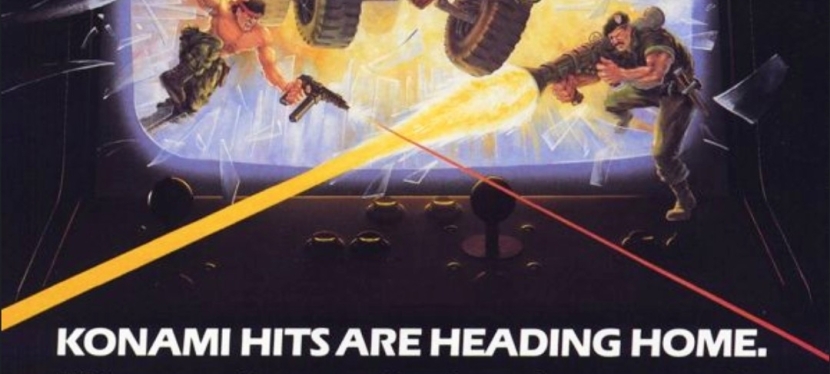
3. Konami’s collective military video games advertising

Print ad of four games for IBM, Amiga and Commodore.
Print ad of Jackal and Contra for the NES.

Konami, the Japanese company that has long been known for Metal Gear, Suikoden and the controversial sacking of famous game designer Hideo Kojima, was aggressive in the gaming business in the 1980s and arguably the aggressiveness was reflected in their publishing of several games that emphasized militarism during the late stages of the Cold War. In short, they made the military look cool and their activities fun to do in digital form.

While Konami has always been identified with console gaming, they actually released Rush’n Attack, Contra, Jackal and Boot Camp on IBM, Amiga and Commodore computers (as seen in the first print ad above) which were popular in the 1980s. The said ad also have a very amusing visual concept emphasizing the excitement and fun of military action games coming to gamers at home for their computers.

The 2nd print ad above – Jackal and Contra for the Nintendo Entertainment System (NES) – was very intriguing to see. It was very clear back in the 1980s that the NES always had a wholesome audience (note: a lot of buyers were parents who wanted to entertain their kids at home) and that includes a lot of very young players. To see the collective ad of Jackal and Contra (for the NES platform) having battle-hardened men in military gear holding guns was openly aggressive to perceive and instantly reminded people about the Cold War (and the menace of Communists, socialists, Marxists and terrorists) and the cultural impact of the mega blockbuster film Rambo: First Blood Part II. This is the kind of ad that would drive today’s woke-minded people crazy and even cause them to panic and pretend to be victims of militarism and patriotism. If you look at the ad closely, you will realize there is simply no room for the garbage of political correctness and wokeness.

Lastly, I myself had played Contra and Jackal with my friends on the Nintendo Family Computer (the Japanese counterpart of the NES) and both military games were a lot of fun to play from start to finish!

4. Batman Returns SNES game ad

This print ad appeared in some comic books I read in the early 1990s.

Way back in 1992, Batman Returns (the sequel to the mega blockbuster Batman movie of 1989) was released in cinemas with intense marketing and merchandising reflecting Warner Bros. intention to replicate the commercial success they had in 1989. Along the way, there were several video game adaptations of Batman Returns that were released on different platforms. Among those many video games was the Super Nintendo Entertainment System (SNES) game of Batman Returns which was developed and published by Konami in 1993 the form of a side-scrolling beat-them-up game.

The above ad was visually appealing with hand-drawn, comic book-style art dominating the spaces while leaving room for some screenshots and a written description of the game. Having seen this ad on multiple comic books I read back then, I can say that the ad was entertaining to see and was effective in making me interested in the game. I played Batman Returns on the SNES but never got to finish it. Oh yes, the game’s audio were really good and there were also digitized images from the movie for the in-game narrative.

5. Flashy Sonic the Hedgehog Japanese print ad

A dazzling approach by Sega on selling Sonic the Hedgehog.

1991 will always be remembered as the year of Sonic who eventually became not only Sega’s most defining mascot but also a video game industry icon. That same year, Sega released Sonic the Hedgehog on the Sega Genesis (referred to as Sega Megadrive in other parts of the world) console and it became a massive success with consumers and the game critics.

In the above Japanese print ad, a very captivating display of light and energy rays dominated the space leaving a minority share left for Sega’s console, screenshots and even a UFO Catcher arcade machine picture. While I could not understand the Japanese text, it seems to me that the flashy visual concept of the ad reflected Sega’s high ambitions with Sonic. How many gamers in Japan bought a copy of Sonic the Hedgehog because of this ad remains undetermined.

6. Japanese Super Star Wars print ad

A long time ago in a galaxy far, far away…

Before Nintendo released its 16-bit game console (referred to as Super Nintendo Entertainment System in America, and Super Famicom in Japan), there were lots of Star Wars video games released on varied platforms and the arcade.

With Nintendo’s 16-bit gaming platform realized, lots of game designers and business partners saw opportunities to make new games with gameplay concepts and designs using the technological advantages of the time. For LucasArts and its partners, taking Star Wars gaming into the next level was inevitable and they made it all come true in 1992’s Super Star Wars video game.

Published in Japan by JVC Musical Industries for the Super Famicom, Super Star Wars was a major leap forward in game design, visuals, sound and enjoyment. Apart from the 2D side-scrolling run-and-gun gameplay, gamers were deeply immersed into Star Wars’ universe with the Mode 7 landspeeder and X-Wing fighter sequences, as well as the first-person trench run sequence.

The Japanese print ad above cleverly presented screenshots from the game while using official imagery from the Star Wars movie poster of 1977 (look at how young Harrison Ford, Mark Hammill and the late Carrie Fisher were back then). The ad is a fine example of combining the greatness of the classic George Lucas-directed film with the highly enjoyable design of Super Star Wars. Lastly, these should remind you that there was a time when Star Wars was not yet tainted by wokeness and the garbage values of the Satanic Leftists (read: woke Disney).   

+++++

Thank you for reading. If you find this article engaging, please click the like button below, share this article to others and also please consider making a donation to support my publishing. If you are looking for a copywriter to create content for your special project or business, check out my services and my portfolio. Feel free to contact me with a private message. Also please feel free to visit my Facebook page Author Carlo Carrasco and follow me on Twitter at  @HavenorFantasy as well as on Tumblr at https://carlocarrasco.tumblr.com/ and on Instagram at https://www.instagram.com/authorcarlocarrasco
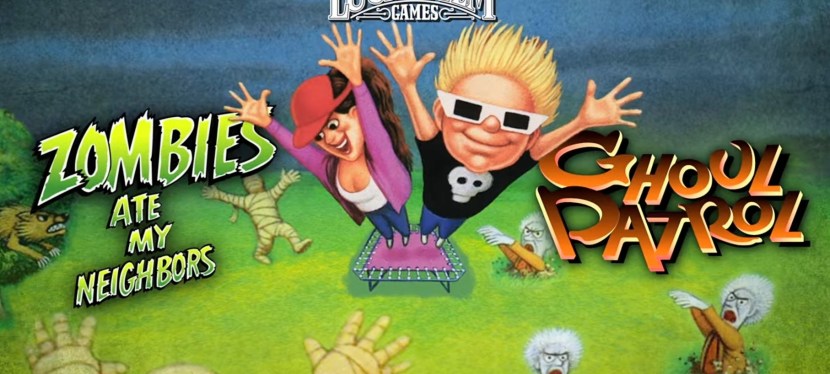
Classic game Zombies Ate My Neighbors plus sequel coming to Xbox on June 29, 2021!

Yesterday, I learned about the most surprising news related to my personal interest of Xbox gaming. It’s not about the reported new game of Bethesda (which has been fully acquired by Microsoft) and not about The Coalition’s latest developments.

Rather it’s about a pretty notable game (plus its sequel) from the 1990s that I completely missed out on. The big surprise to me was that it will be released soon for Xbox One and Xbox Series S and X owners to enjoy.

That game is none other than Zombies Ate My Neighbors and its sequel Ghoul Patrol. Both games from the 1990s will be released for Xbox on June 29, 2021 for $14.99!

For those who are not familiar with either game, here is an excerpt from the Xbox.com article written by Ken Humphries (Senior Producer on the two games)…

Zombies Ate My Neighbors

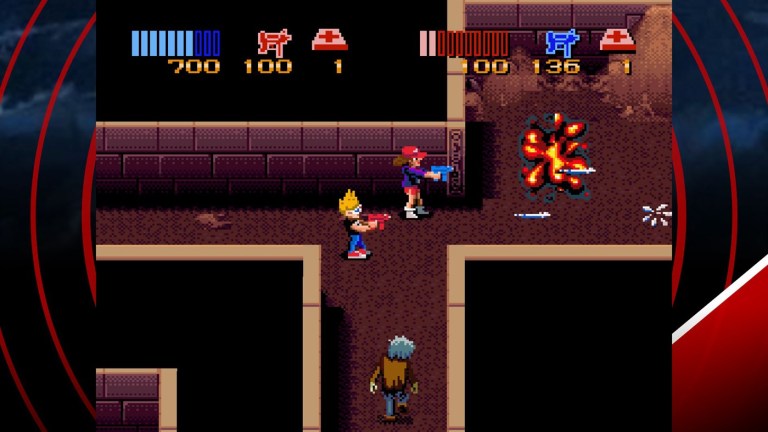
The 2-player function is a popular feature of the game.

Hey, where’s that scary music coming from? Yikes! It’s Zombies Ate My Neighbors, where you appear in every demented horror flick ever to make you hurl ju-jubes.

What are Zeke and Julie, our two wholesome teenage stars doing in a 16-bit game like this?! Trying to save the nice neighbors, cheerleaders, and babies from a fate worse than polyester!

Who could put this slice of suburbia in such goose-pimply hysteria? Zombies, relentless chainsaw maniacs, mummies, evil dolls that just won’t die, lizard men, blobs, vampires, giant ants, martians, and more.

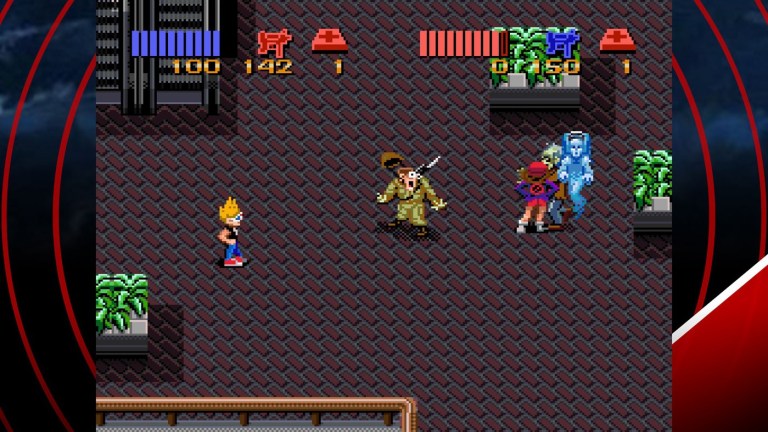
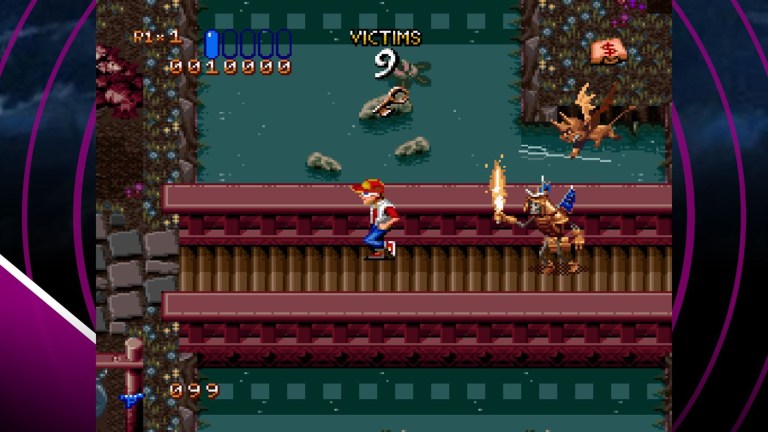
One of many levels in this game.

Will these crazy kids survive the night? Find your way through 55 horror-filled levels like a grocery store gone bad, a shopping mall awry, a mysterious island and your own back yard. Don’t miss “Weird Kids on the Block,” “Mars Needs Cheerleaders,” and “Dances w ith Werewolves.”

You can fend off the freaks with a virtual candy counter of weapons like uzi squirt guns, exploding soda pop, bazookas, weed wackers and ancient artifacts. Also grab power ups-o-rama like secret potions and bobo clown decoys. Does this game ever end?!

Ghoul Patrol

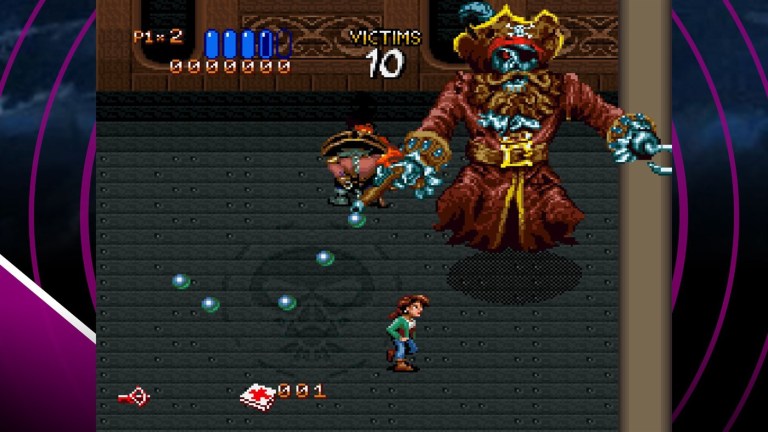
Nothing like facing an over-sized enemy in Ghoul Patrol.

Zeke and Julie, our intrepid teenagers, visit the Ghosts and Ghouls exhibit at the city library, where they find an old treasure chest containing an ancient spirit book. Naturally, they cannot resist reading it. Suddenly, a horrific snaggle-toothed spirit emerges.

Now, this snarling phantom and his dastardly minions are infesting Metropolis and slithering their way into the history books, where they plan to rewrite history with their spooky ways. Only you have the power to go back in time to de-spook an encyclopedia of zombified historic dudes.

Were you able to play this game back in the 1990s?

Terminate, with prejudice, using crossbows, ping-pong ball machine guns, Martian “Heatseeker” guns, and more.

Vaporize garbage can ghosts and ninja spirits, rescue bug-eyed librarians and wigged-out pirates, dodge flying books and adolescent-eating plants!

The features for Zombies Ate My Neighbors and Ghoul Patrol are as follows…

NEW FEATURES

Save Feature: Quickly save your progress in either game and continue your adventure wherever and whenever you want

Museum Features: Watch a video interview with one of the original Zombies’ developers or explore numerous galleries containing game art, previously unreleased concept images and marketing assets

Soundtrack: Listen to the entire soundtracks for both games in the included music players

2 Player Mode: Play the game with two player local co-op

• Achievements: Track your game progress with a set of achievements covering both games

To put things in perspective, Zombies Ate My Neighbors was released in 1993 published by Konami (game developed by LucasArts) for the Super NES (SNES) and the Sega Genesis. It was not a big commercial success but it proved to be a hit with the critics of the time (plus the writers who published their reviews of it years later). Zombies Ate My Neighbors gained a cult following as it not only had enjoyable gameplay, its visual style was appealing, it had lots of visual elements related to pop culture (notably horror genre elements), a memorable soundtrack and more.

In a 2006 article published by IGN, Zombies Ate My Neighbors was described by Lucas M. Thomas as “a comical 16-bit template for the new Xbox 360 release, Dead Rising. And like that game, this one arms you with a pretty bizarre arsenal. Weed whackers, exploding soda cans and flying silverware all make an appearance to help you, or you and a friend, put a hurt on these living dead.”

Ghoul Patrol was released in 1994 for SNES, published back then by JVC (Japan Victor Company) with the development done by LucasArts. Like its predecessor, I never got to play it back decades ago. In addition, I never even saw a copy of the sequel at retail during those days.

As I never got to play Zombies Ate My Neighbors back decades ago, its upcoming release for Xbox is a very delightful surprise for me personally. I will order this (along with Ghoul Patrol) very soon.

If you are interested to order in advance Zombies Ate My Neighbors and Ghoul Patrol for your Xbox One or Xbox Series console, click here.

In ending this piece, posted below is a video retrospective on Zombies Ate My Neighbors published by GamerThumbTV plus a retro review by Cinemassacre. Be mindful of potential spoilers.

+++++

Thank you for reading. If you find this article engaging, please click the like button below and also please consider sharing this article to others. If you are looking for a copywriter to create content for your special project or business, check out my services and my portfolio. Feel free to contact me as well. Also please feel free to visit my Facebook page Author Carlo Carrasco and follow me at HavenorFantasy@twitter.com

A Look Back at Super Star Wars: Return of the Jedi

Screenshot_20200202-123104_YouTube.jpg
Luke Skywalker going up against the game’s final boss – Emperor Palpatine. 

By the middle of 1994, gamers and Star Wars fans who owned a Super Nintendo Entertainment System (SNES or Super NES) were treated with more 2D side-scrolling fun with Super Star Wars: Return of the Jedi. Developed by Sculptured Software and LucasArts and published by JVC, the game was the conclusion of the so-called Super Star Wars trilogy of the 16-bit era of console gaming.

Like its predecessor Super Star Wars: The Empire Strikes Back, this game is a 2-dimensional side-scrolling adventure game released just months before Sega and Sony respectively released the Saturn and PlayStation consoles (which eventually made 3D polygonal gaming popular). The game itself is based on the 1983 movie Return of the Jedi: Luke and his friends go out to save Han Solo from Jabba the Hutt and the Rebels prepare its strategy to defeat the Imperial Forces now armed with a new Death Star with the personal presence of Emperor Palpatine.

Here’s my review of Super Star Wars: Return of the Jedi.

Early story (and some notable differences from the movie)

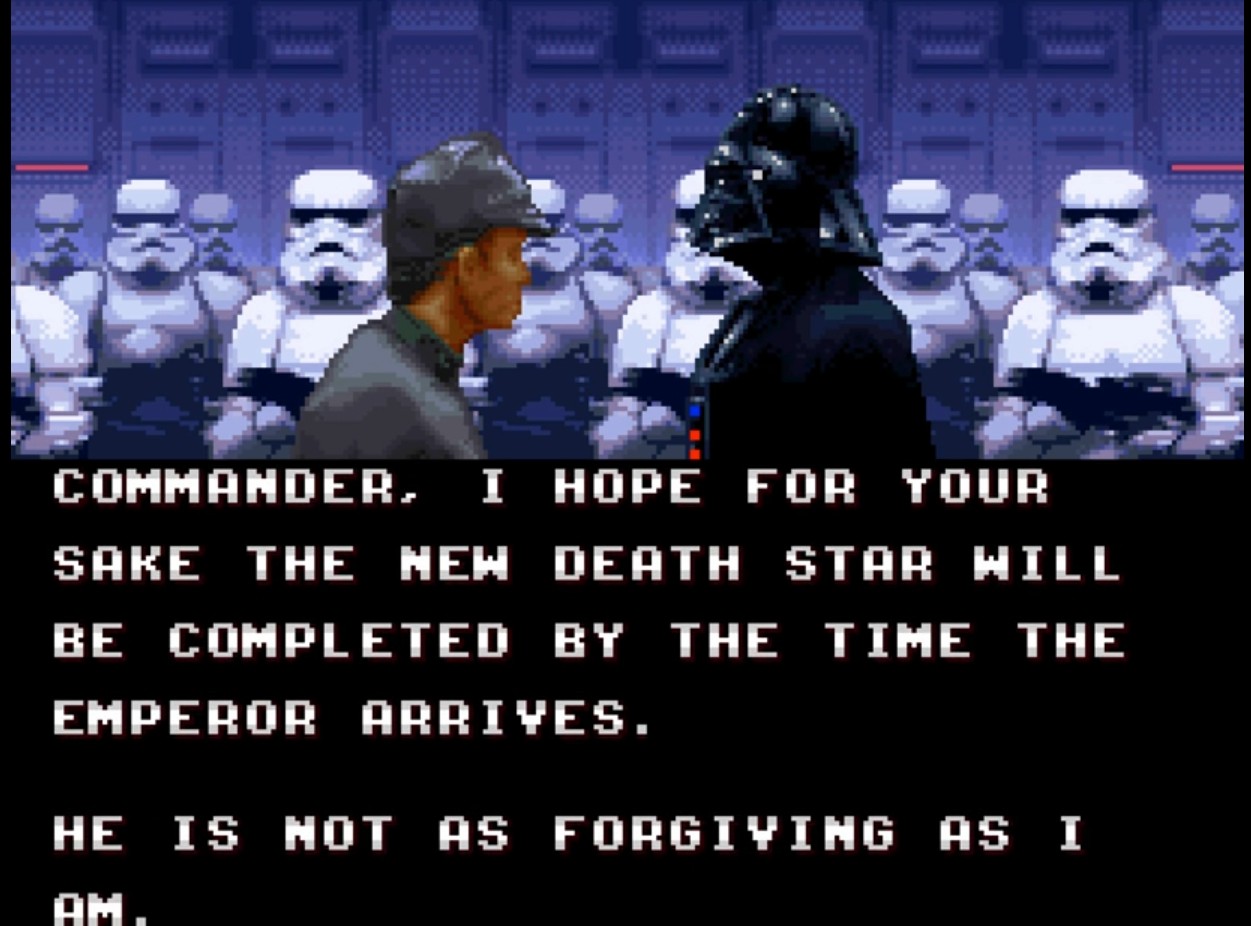
The game begins with a quick look at Darth Vader’s arrival at the new Death Star setting up the stage for the Emperor’s arrival. On Tattooine, Luke and his companions travel to the temple of Jabba the Hutt to somehow save their friend Han Solo (who got frozen in carbonite at Cloud City in The Empire Strikes Back).

Screenshot_20200202-120316_YouTube.jpg
A still cut-scene at the beginning of the game.

In order to get to the palace, Luke/Leia/Chewbacca (you get to pick which character to use) have to travel through a lengthy stretch of land filled with several forms of wild life, monsters and even Jawas blocking their way. Once inside, your character has to fight until the end of the next few levels (note: there was a boss or powerful enemy to beat) to make the story progress.

Once you have defeated Jabba and rescued Han Solo, your team regroups with the Rebels in space to start your next series of missions with the moon of Endor (with the 2nd Death Star in orbit).

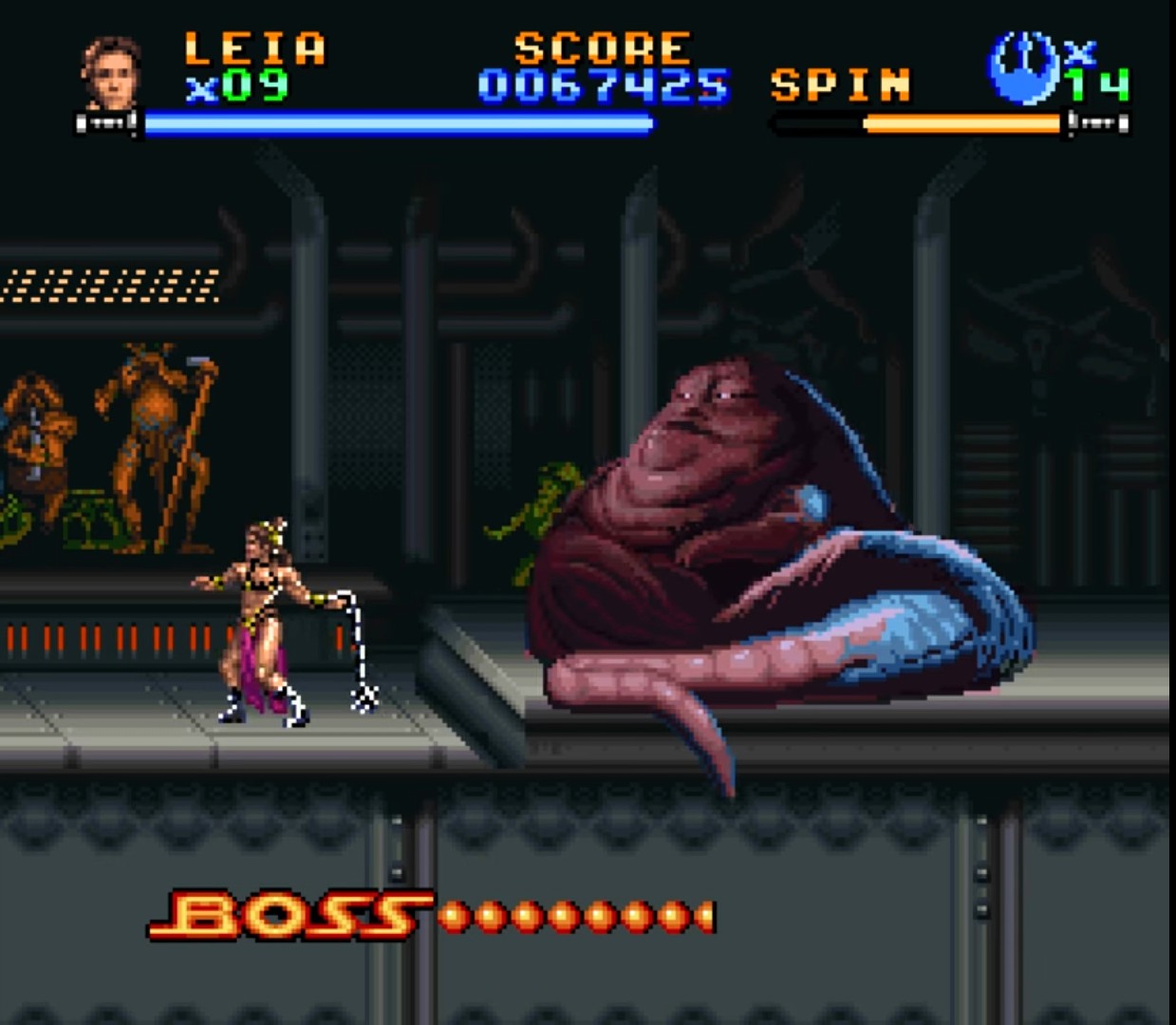
Notable differences from the movie include fighting a large monster (which used a large ball as a weapon) did not appear in the film. Also notable was Leia (in her sexy slave outfit) having to move from the end of the stage to reach Jabba the Hutt who serves as the level’s boss. Jabba’s sail barge in the game looks and feels longer than in the movie.

Screenshot_20200202-121353_YouTube.jpg
Leia, Jabba is right behind you!

Gameplay

Super Star Wars: Return of the Jedi plays a lot like its predecessor. As typical with most games of the era that used 2D sprites for visuals, the game is an action-packed side-scroller wherein you have to control your character from left to right, go up and down and complete the level by either defeating the end-level boss or by simply reaching the end (some levels have no boss). As you move on, you also get to collect power-ups and icons which are really helpful in completing the levels.

Along the way, you get to fight a whole bunch of enemies that appear to fight and stop you.  This includes not only the Imperial forces that appeared in the movie but also new additions like machines and even flying robots. You never saw Luke fight any flying robot in the movie? In this game, he gets to fight them at the Imperial facility on the moon of Endor.

Screenshot_20200202-122315_YouTube.jpg
Han Solo blasts the Stormtroopers!

Given the story structure of the movie, the game developers were able to let players pick a Star Wars character to play as before starting a level. This particular feature was prominent in 1992’s Super Star Wars but was heavily toned down (due to story structure) in Super Star Wars: Empire Strikes Back. Back to the selectable characters, there are key differences between them such as Luke using his lightsaber and Force powers, Han Solo with his blaster and grenades, Chewbacca with his crossbow and his spin attack (he does NOT do this in the movies so it’s funny), and Leia who uses different weapons as she appears (based on the story structure) as a disguised bounty hunter and as a sexy slave to Jabba. Quite odd here is the addition of Wicket the Ewok as a playable character whom you must guide fighting the bad guys in two levels that are set in the village of the Ewoks up those tall trees. The Wicket levels are easily the least interesting to play in.

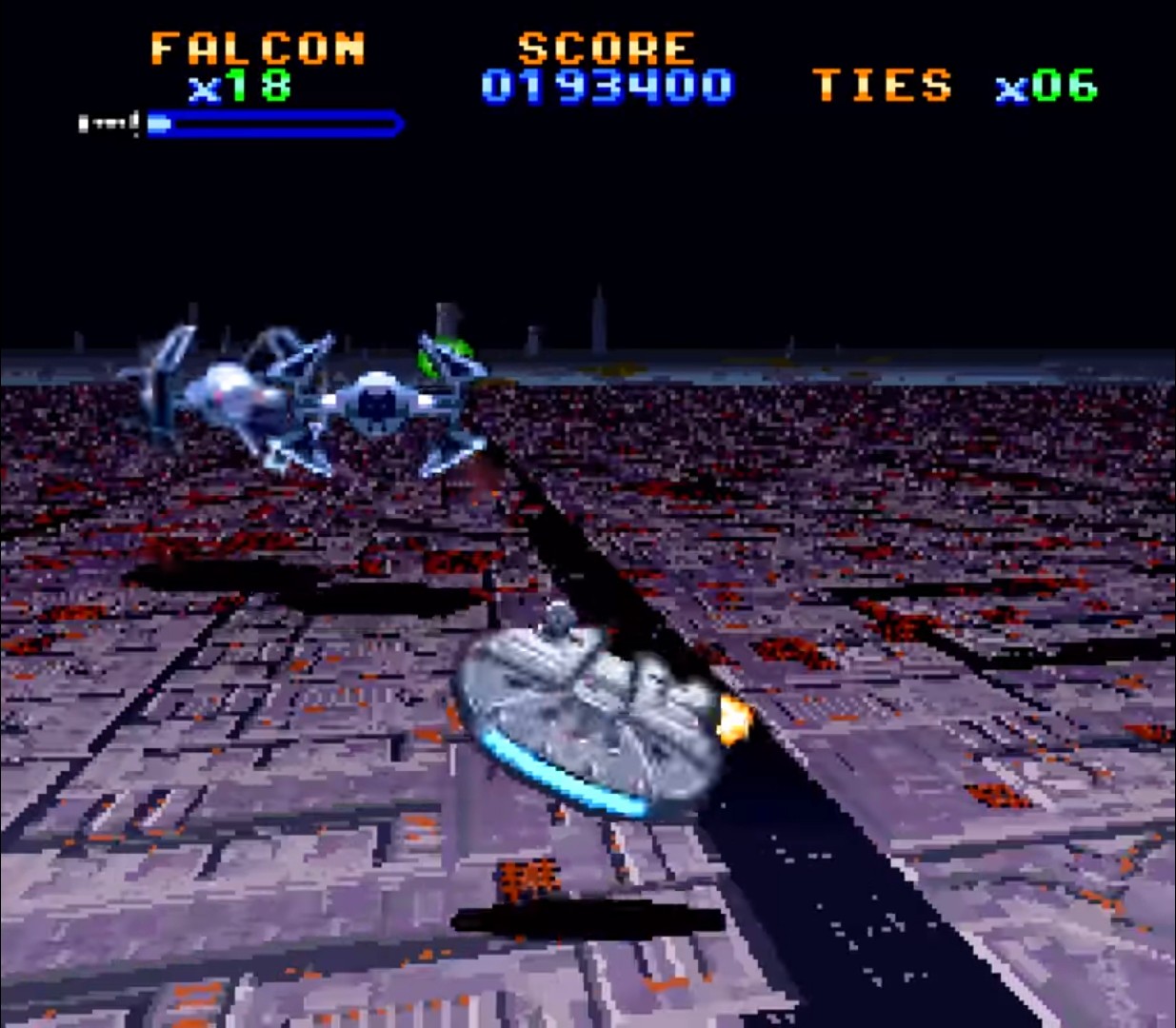
Like the previous two games, the game designers implemented levels that play differently from the standard side-scrolling adventuring. I’m referring to the Mode 7 level in which you fly the Millennium Falcon on a makeshift 3D environment on the surface of the 2nd Death Star needing to destroy a number of TIE Fighters in order to progress. I should say that this particular level lacked depth although it was cool to use the Falcon and just imagine Lando and his team inside operating it.

Screenshot_20200202-122611_YouTube.jpg
The Millenium Falcon in the Mode 7 3D environment set on the surface of the Death Star.

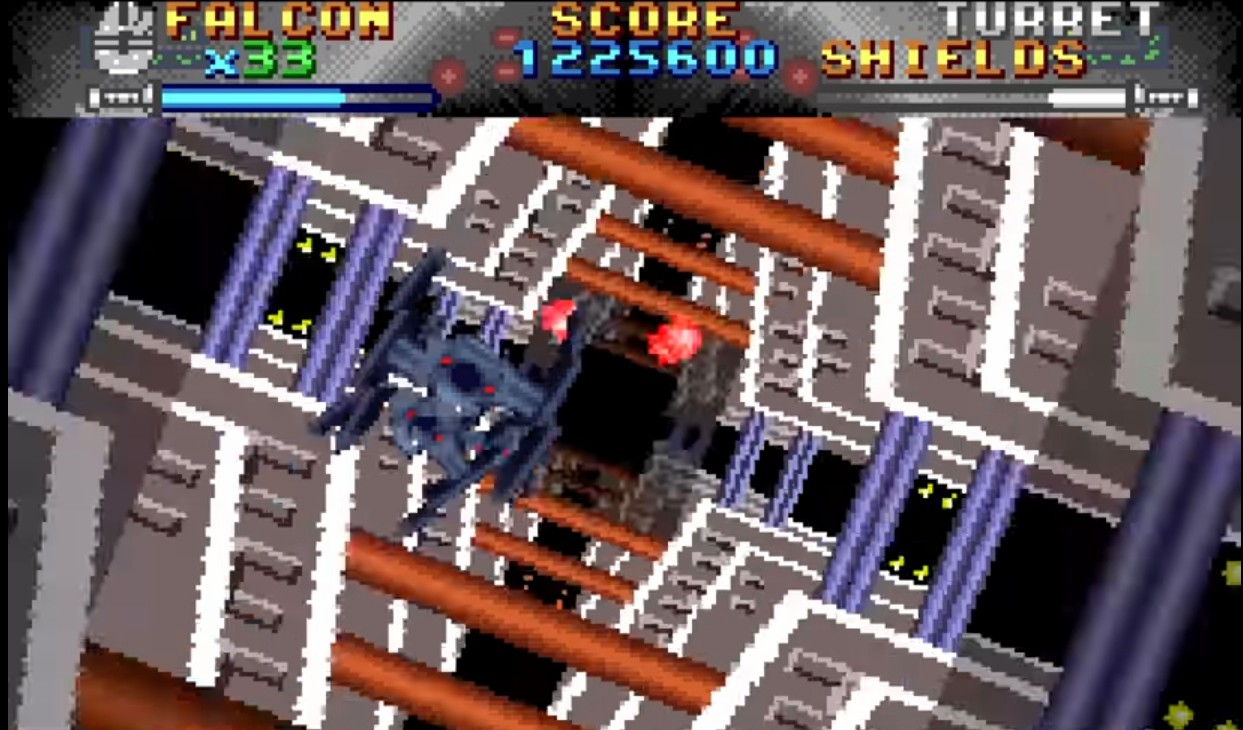
In what is a clear attempt by the game makers to push the hardware of the Super NES, they created a standalone level in which you use the top turret of the Millenium Falcon to shoot a required number of TIE Fighters while flying in space heading towards the 2nd Death Star (complete with a 3D background showing the Imperial Star Destroyers in the distance on one side). This was a very short yet cool sequence to play even though the darkness of space makes spotting the TIE Fighters a bit challenging. I liked the fact that the console’s processor was pushed hard to allow the TIE Fighters look 3D and detailed using several frames of animation as they fly around and right close to the Falcon (which itself looked detailed).

Screenshot_20200202-122004_YouTube.jpg
This 3D shooting segment in the game was fun and too short.

And then there is the speeder bike chase sequence that took place through the forest of Endor. This one is pretty shallow and has not aged well.

Screenshot_20200202-121543_YouTube.jpg
Nice visual detail on the speeder bikes but everything else felt shallow.

Finally, the game’s last stage is another hardware-intensive level that offers gamers the opportunity to experience the challenge and speed (as far as the hardware could push) of piloting the Millennium Falcon into the tunnels of the 2nd Death Star to reach the core, blast it and then escape on the way out (being chased by intense flame caused by the explosion). This level shows lots of repeating visual elements that are supposed to be the mechanical interiors of the tunnels and you can movie the Falcon in 1st-person view, speed up or down, rotate the view and tilt the direction as you move forward. Along the way, there are TIE Fighters who appear in front of you for you to shoot at. While the intention of the developers to replicate the memorable sequence of the movie is clear, the hardware limitations (and design limitations) could only go so far to make the gameplay experience solid. What bogged this particular sequence down are the bouts of slowdown (lowered frame rates) when things get hectic.

Screenshot_20200202-123735_YouTube.jpg
This sequence must be seen in motion.

Conclusion

While it is indeed a more polished game than the memorable Super Star Wars: The Empire Strikes Back, Super Star Wars: Return of the Jedi was indeed a fun and engaging game but still falls short of its immediate predecessor in terms of enjoyment and engagement. For one thing, this game noticeably was less challenging and the return of the password system makes it even easier to finish. The boss battle with Darth Vader showed the iconic villain being much easier to beat with even on the standard difficulty level. I still remember how surprising it was to beat Vader during my first time playing the game.

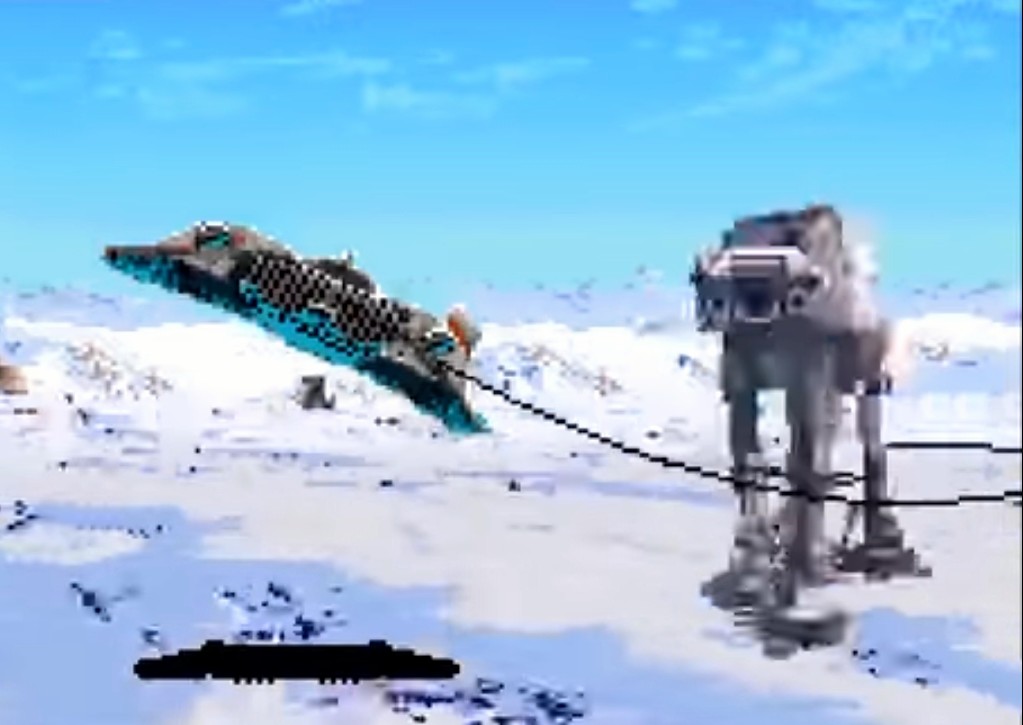
The non-side-scrolling levels of the game created good variety for playing. I just wished that the 3D space shooting sequence of the Falcon (with its top turret) lasted longer and the visuals of the final level looked more detailed and had less lag. As for the Mode 7 level with the Falcon on the surface of the Death Star, that one pales in comparison with the lengthy and memorable Battle of Hoth (which has the grand experience of taking down the AT-AT walkers with the tow cable).

Overall, Super Star Wars: Return of the Jedi is recommended.  By today’s standards, this game is a classic and was one of the best ever Star Wars video games of not only of its console generation but among all Star Wars games that were made with 2D sprites and pixel art. If you have a Super NES console or Nintendo’s Virtual Console, play the game once you have it.


Thank you for reading. If you find this article engaging, please click the like button below and also please consider sharing this article to others. Also my fantasy book The World of Havenor is still available in paperback and e-book format. If you are looking for a copywriter to create content for your special project or business, check out my services and my portfolio. Feel free to contact me as well. Also please feel free to visit my Facebook page Author Carlo Carrasco and follow me at HavenorFantasy@twitter.com

A Look Back at Super Star Wars: The Empire Strikes Back

In this age of photo-realistic 3D graphics in video gaming, I sure miss the days when 2D gaming and highly detailed pixel art were the standard. I’m referring to the so-called 16-bit era of the Super NES/SNES (Super Nintendo Entertainment System) back in the 1990s.

In 1991, Super Star Wars was released on the Super NES and it became a big hit with the gamers, the critics and fans. That game was heralded as one of the best video game adaptations of movies.

Naturally, a follow-up to that game was released in 1993 – Super Star Wars: The Empire Strikes Back.

That being said, here is my retro gaming review of Super Star Wars: The Empire Strikes Back.

Screenshot_20200118-222140_YouTube.jpg
The experience of using a Rebel speeder to bring down an AT-AT walker with the cable remains awesome.

Developed by Sculptured Software and LucasArts and published in America by JVC, this game is based on The Empire Strikes Back which today has been considered to be the greatest Star Wars movie ever. Of course, in order to make a cohesive video game adaptation out of the classic movie, a lot of liberties were taken when it comes to following the story. This was inevitable as the game developers needed a lot of creative freedom to make a cohesive video game.

Early story (and some notable differences from the movie)

Super Star Wars: The Empire Strikes Back begins with Luke Skywalker riding a Tauntaun. Unlike the movie, Luke (controlled by players) visits some places of the wasteland of Hoth, notably caverns and hills fighting several forms of wild life (including wampa beasts), and even some probe droids.

Screenshot_20200118-223405_YouTube.jpg
Luke jumping on to a wampa beast.

Unlike the movie, Luke does not get rescued by Han Solo in the wilderness. Instead he defeats a giant-sized probe droid and a giant-sized wampa beast (as in-game bosses) and make his way back to Echo Base to rejoin the rebels. Upon returning at the base, he finds it filled with Imperial troopers and their machines (where are Luke’s fellow rebels?) and fights his way through to fly a rebel speeder (note: without the movie co-pilot Dak) and proceed in the Battle of Hoth.

image-2.jpg
This never happened in the movie.

image-3.jpg
Luke jumping into a snow speeder without a co-pilot.

Back at Echo Base, Han Solo (player-controlled) has to make his way through a wave of Imperial enemies and machines to meet Princess Leia, secure her and ride away on the Millennium Falcon. The Falcon (player-controlled) enters the asteroid field being attacked gradually by over twenty TIE Fighters. Once all of them have been eliminated, the Falcon jumps into light speed (which contradicts the movie).

Gameplay

Super Star Wars: The Empire Strikes Back is composed mostly of 2D, side-scrolling action sequences in which players control their characters moving from left to right in order to make the game progress. The sequences are filled with lots of action-packed moments mainly due to the MANY enemies challenging the players plus sequences of shooting, jumping and using special weapons (note: the thermal detonator was awesome to use). When it comes to filling up the health meter of your character, defeating enemies result random releases of hearts (symbolizing health) which you need to pick up. Key side-scrolling segments of the game will have players facing off with in-game bosses or enemies that are large, intimidating and have their own health meters for players to reduce to zero.

As typical with most 2D side-scrolling games of the era, this game is really tough and will take gamers some patience and perseverance to complete.

What really stood out in this game are the makeshift 3D segments (made possible by Mode 7) which were pretty extensive and really interactive. The Battle of Hoth in Mode 7 was pretty engaging as players get to fly a rebel speeder over a snowy field complete with lots of Imperial enemies (including the AT-ST walkers and the AT-AT walkers) and each of them is composed of multiple 2D sprites making them look 3D as the speeder moves around. Apart from simply shooting, the interactive sequence of tagging an AT-AT walker with a cable, flying around it and wrapping it with the cable, and then watching it fall to the ground really is an awesome gaming experience which really showed how hard the game developers pushed 2D visuals and pixel art.

Screenshot_20200118-222830_YouTube.jpg
A Mode 7 sequence late in the game had players using an X-Wing fighter.

Screenshot_20200118-222213_YouTube.jpg
The Battle of Hoth was a great and lengthy use of Mode 7.

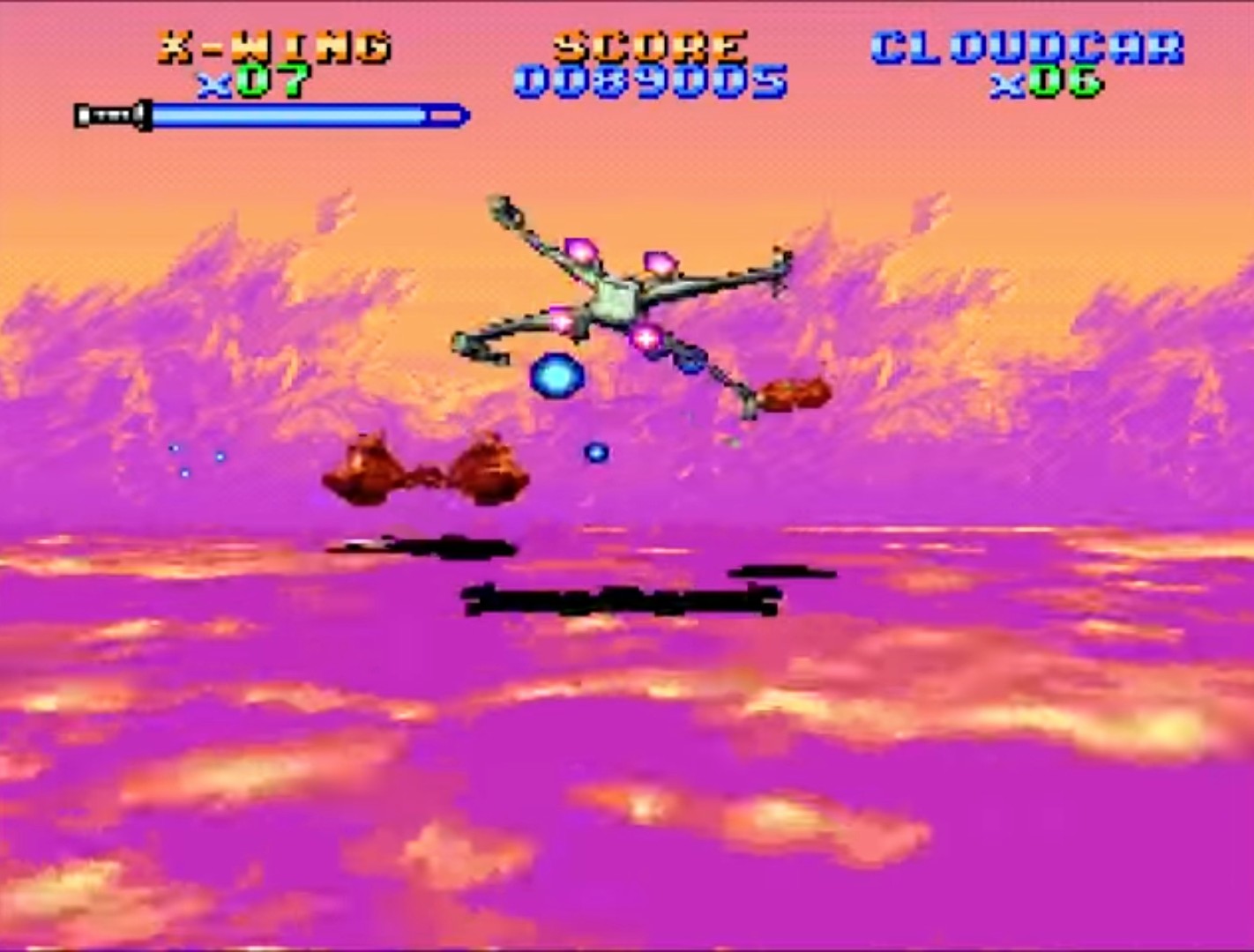
Apart from the Battle of Hoth, there was also another Mode 7 sequence involving the X-Wing Fighter approaching Cloud City. That particular sequence was noticeably shorter and did not have a standout action sequence as it was limited to the X-Wing Fighter simply shooting Bespin fighters. Another non-2D segment was the Millenium Falcon’s flight through the asteroid field which was done with the cockpit view (first-person view exactly) in which you move a cursor for targeting and moving the ship to. This segment was pretty tough because players were not only required to eliminate more than 20 TIE Fighters but also avoid incoming asteroids and maintaining the Falcon’s energy shields (which serves as a health meter)

Going back to the 2D side-scrolling segments, the use of the lightsaber by Luke remains a lot of fun to do. Not only could he slash bad guys, he could use the lightsaber defensively protecting himself from incoming energy blasts (which get deflected by the lightsaber). On the offense, Luke can jump into the air and spin with the lightsaber turned on making him an aerial slasher over the bad guys.

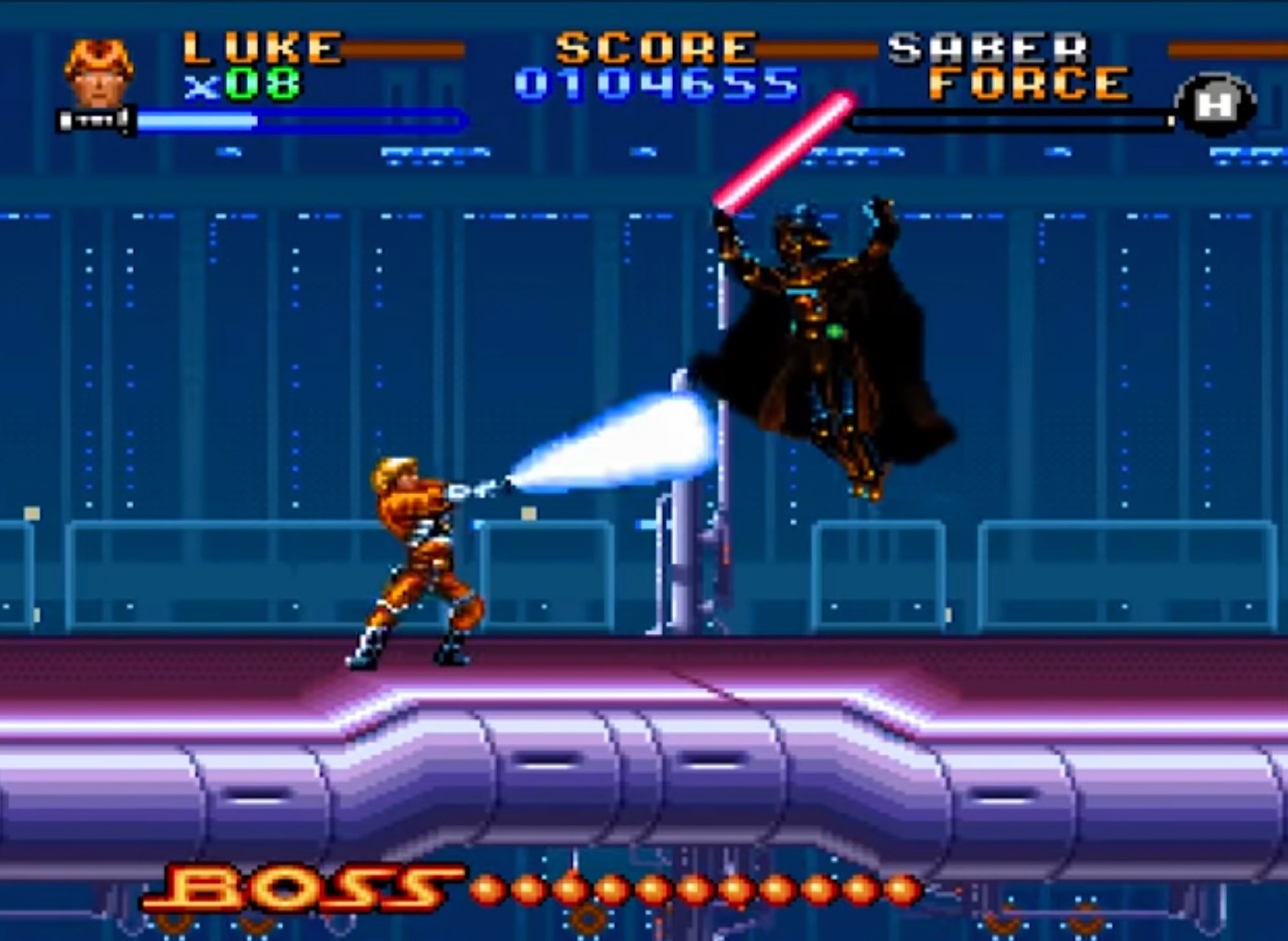
In keeping with the theme of the movie showing Luke Skywalker learning to be a Jedi, the Dagobah segment in the game has Luke gaining varied Force powers and he also has a separate Force energy meter. The Force powers can be used in subsequent segments of the game and they are quite useful when Luke encounters Darth Vader as the final boss in Cloud City.

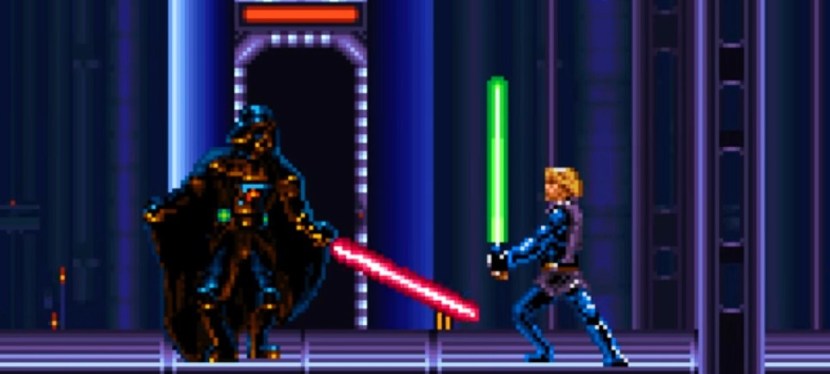
The fights with Darth Vader were nicely designed. With creative freedom, the game developers expanded on Darth Vader’s use of the Force to move several pieces of debris and machines towards Luke who has to defend himself from all sides. Fighting Darth Vader with the lightsaber was tricky and for the most part, I had Luke slashing on villain with just enough space between them and many times I had Luke use the lightsaber on him while jumping and spinning in the air. Defeating Vader was a requirement to complete the game.

Screenshot_20200118-222758_YouTube.jpg
Very nice artwork made for the storytelling cut scenes.

Finally, like in Super Star Wars, players can also play as Han Solo (special attack: grenade throw) and Chewbacca (special attack: offensive spin) but only in specific segments of the game supposedly to keep in line with its story.

Conclusion

Even by today’s standards, Super Star Wars: The Empire Strikes Back is still a high-quality video game that is a lot of fun to play with even though it is tough (a password system is used for in-game progress so that gamers can come back to continue) all throughout. Gameplay aside, the presentation of visuals and audio is also very solid. The sprites for the in-game characters, enemies, machines and animal were detailed to look at while the background art were immersive (like in the movies, Cloud City, Hoth and Dagobah had their distinctive visuals). The Super NES audio chip was greatly used on recreating 16-bit sound from the movies, especially John Williams’ movie scores and lightsaber sound effects.

Take note that this game was released in 1993 which is significant in the sense that people had moved on since the release of the movie Return of the Jedi (1983) and the Star Wars prequel trilogy did not begin until 1999 with Star Wars Episode I: The Phantom Menace. This game was released at a time when 2D gaming was still in strong demand and most gamers did not expect that 3D polygonal graphics would reshape video gaming eventually. In retrospect, the polygon-focused gaming consoles Sega Saturn and the original Sony PlayStation launched in late 1994 or more than a year after Super Star Wars: The Empire Strikes Back.

Screenshot_20200118-223133_YouTube.jpg
The inevitable battle between Luke Skywalker and Darth Vader.

I myself had lots of fond memories playing this game back in the mid-1990s. I simply endured the many challenges of it and ultimately had a lot of enjoyment completing it. I even replayed the game from the start even though I knew how the game presented the ending and key story elements of the movie. I also got to replay The Empire Strikes Back on home video around the time I played this game.

Believe it or not, Super Star Wars: The Empire Strikes Back was the first of the Super Star Wars trilogy on the Super NES that I actually played. After completing it, I borrowed the Super Star Wars cartridge from a friend and later bought a copy of Super Star Wars: Return of the Jedi. I completed those two other games and I can clearly say that Super Star Wars: The Empire Strikes Back remains the best in game design, the best in terms of fun factor and the most memorable of them all.

If you love Star Wars and you want the best 16-bit era video game (note: you’ll need a working Super NES console or Nintendo’s Virtual Console for any Super Star Wars game) experience of it, Super Star Wars: The Empire Strikes Back is highly recommended.


Thank you for reading. If you find this article engaging, please click the like button below and also please consider sharing this article to others. Also my fantasy book The World of Havenor is still available in paperback and e-book format. If you are looking for a copywriter to create content for your special project or business, check out my services and my portfolio. Feel free to contact me as well. Also please feel free to visit my Facebook page Author Carlo Carrasco and follow me at HavenorFantasy@twitter.com