With growing demand for high-quality protein realized, the Philippines will keep importing more dairy products from the United States, according to a news report by the Manila Bulletin. It should be noted that the Philippines does not have a huge dairy production and local consumption of dairy (and other products that require dairy to be made) kept on growing.
To put things in perspective, posted below is an excerpt from the Manila Bulletin news report. Some parts in boldface…
The Philippines is expected to increase its imports of dairy products from the United States (US), driven by growing demand for high-quality protein and limited local dairy production, according to the US Dairy Export Council (USDEC).
USDEC Regional Director Dali Ghazalay said US dairy exports to the Philippines are on track to remain strong this year, as demand for dairy products continues to expand.
She said the demand is particularly strong when it comes to meeting the country’s nutrition needs, with dairy playing a crucial role in nutritionally adequate diets.
“The demand for dairy will still be very strong because of nutrition and what dairy can contribute to the nutrition needs of the Philippines,“ Ghazalay said on the sidelines of USDEC’s trade seminar on Thursday, Aug. 13.
Based on USDEC data, US dairy exports to the Philippines are estimated at around 143,000 metric tons (MT). Top exports include skim milk powder, buttermilk powder, and dairy permeate.
Currently, the Philippines is the top export destination for US dairy goods in Southeast Asia, according to USDEC.
Increased demand this year is expected to be driven by dairy products with high-quality nutritional protein, such as skim milk powder.
Ghazalay said demand is also on the rise for whey proteins and milk proteins, which are usually integrated into high-value-added products such as protein powder for fitness purposes.
Ultimately, she noted that increased dairy demand from the US is also a direct result of the country’s subpar domestic output, which remains unable to meet local demand.
“Local dairy production is still very small. And you do need to supplement that with different dairy ingredients to meet all these different products that the consumers here need,” said Ghazalay.
Let me end this post by asking you readers: What is your reaction to this recent development? Do you feel confident that nuclear energy will be realized in the Philippines in your lifetime? Did you encounter a lot of people living with nuclear fear?
Thank you for reading. If you find this article engaging, please click the like button below, share this article to others and also please consider making a donation to support my publishing. If you are looking for a copywriter to create content for your special project or business, check out my services and my portfolio. Feel free to contact me with a private message. Also please feel free to visit my Facebook page Author Carlo Carrasco and follow me on Twitter at @CarloCarrascoPH as well as on Tumblr at https://carlocarrasco.tumblr.com/and on Instagram athttps://www.instagram.com/authorcarlocarrasco
The Philippines, which has been struggling with weak economic growth and high inflation, attracted 3.7 million international visitors in the first 7 months of this year, according to a news report by BusinessWorld.
Be mindful that the words “international visitors” includes both foreign tourists as well as Filipinos who are based abroad who happened to return to the country as “balikbayan”. For insight, the Philippines attracted 5.9 million foreign tourists in 2025 plus over half-a-million Filipinos from overseas which combines for 6.4 million international visitors for the year. For the first half of 2026, the nation attracted 2.9 million foreign tourists.
To put things in perspective, posted below is an excerpt from the BusinessWorld news report. Some parts in boldface…
The number of Philippine international visitors grew to around 3.7 million as of July, buoyed by more relaxed visa policies, with growing markets seen in China, India, and Taiwan, according to the Department of Tourism (DoT) on Friday.
DoT Undersecretary Verna Esmeralda C. Buensuceso cited the figure, noting a 4.25% increase in tourist arrivals compared to last year.
“From January to July this year, the Philippines welcomed approximately 3.7 million international visitors, representing a 4.25% increase in visitor arrivals compared to the same period last year,” Ms. Buensuceso said during the launch of the 4th Travel Sale Expo 2026.
“We are seeing good growth from markets like China at 67%, India at 34%, and Taiwan at 11.21% growth, buoyed in large part by more liberal visa policies,” she added.
The tourism Undersecretary also noted sustained growth trajectories from the country’s traditional foreign markets such as the United States of America, Canada, and Japan, driven by additional flights.
The country is also experiencing double-digit to triple-digit growth in international arrivals from our Southeast Asian peers, such as Indonesia, Vietnam, Myanmar, Cambodia, Laos, and Timor-Leste, due to the ongoing ASEAN Summit 2026 where the Philippines serves as the host country.
“These are encouraging signs, but let me emphasize that our goal is not simply to increase the number of arrivals,” Ms. Buensuceso said.
“Our real goal is to increase the value of tourism. We want tourism to create more jobs, attract more investments, and generate more opportunities that reach communities across the country,” she added.
The tourism industry contributed 8.1% to the country’s gross domestic product (GDP) in 2025, down from 8.7% in the previous year, according to the Philippine Statistics Authority (PSA). It also employed around 7.70 million Filipinos in 2025.
Let me end this post by asking you readers: What is your reaction to this recent development? Do you think the DOT is padding the numbers on tourist arrivals to avoid embarrassment in the near future? Do you think the Philippines will be able to surpass 2025’s 5.9 million foreign tourist count by the end of this year? Do you believe that hosting the ASEAN Summit is actually helping the Philippine attract more tourists from its Southeast Asian neighbors?
Thank you for reading. If you find this article engaging, please click the like button below, share this article to others and also please consider making a donation to support my publishing. If you are looking for a copywriter to create content for your special project or business, check out my services and my portfolio. Feel free to contact me with a private message. Also please feel free to visit my Facebook page Author Carlo Carrasco and follow me on Twitter at @CarloCarrascoPH as well as on Tumblr at https://carlocarrasco.tumblr.com/and on Instagram athttps://www.instagram.com/authorcarlocarrasco
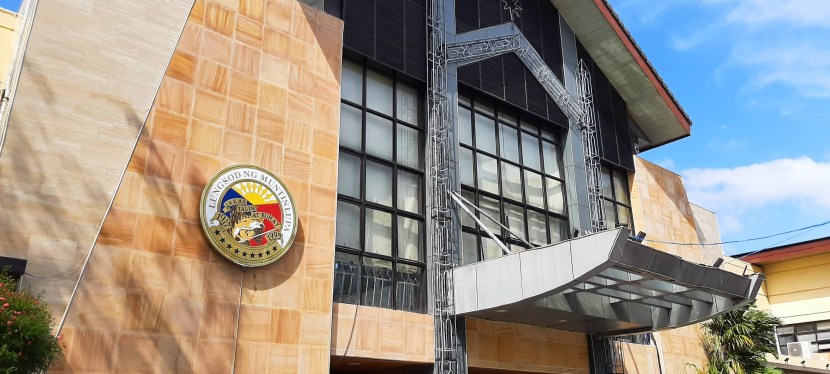
Recently in the City of Muntinlupa, forty-seven World War II veterans were honored during a special ceremony hosted by the Mayor at the Museo ng Muntinlupa, according to a news report by the Manila Bulletin.
To put things in perspective, posted below is an excerpt from the Manila Bulletin news report. Some parts in boldface…
Forty-seven Filipino World War II veterans were conferred the US Congressional Gold Medal in a ceremony held in Muntinlupa City.
Muntinlupa Mayor Ruffy Biazon hosted the awarding ceremony at the Museo ng Muntinlupa.
“Ito ang pinakamataas na civilian honor mula sa U.S. Congress. So aside from their pension, our veterans are also given this tribute dahil sa kanilang kabayanihan (This is the highest civilian honor from the US Congress. So aside from their pension, our veterans are also given this tribute for their heroism),” he said.
The ceremony was attended by Lt. Col. Roy Stone, chief of staff of the Joint U.S. Military Assistance Group to the Philippines (JUSMAG-PHIL), and Senior Undersecretary Irineo Espino of the Department of National Defense.
They were joined by Muntinlupa Rep. Jaime Fresnedi, Usec. Reynaldo Mapagu of the Philippine Veterans Affairs Office (PVAO), and Krista Staley, assistant veterans service center manager of the Manila Regional Benefits Office of the US Department of Veterans Affairs.
The forty-seven posthumous awardees included Lieutenant Colonel Iluminado G. Vallejo Sr., Lieutenant Colonel Vicente O. Novales, Lieutenant Colonel Luis D. Vinoya, First Lieutenant Benjamin B. Gloria, Second Lieutenant Arsenio F. Librado Sr., Second Lieutenant Desiderio D. Malabuen, Second Lieutenant Francisco S. De Guzman, Master Sergeant Gregorio C. Nolasco, Master Sergeant Juan R. Peñamante, Technical Sergeant Pascual M. Tampil, Technical Sergeant Francisco D. De Leon, Staff Sergeant Alfredo F. Del Monte Sr., Sergeant Celso A. Escosia, Sergeant Manuel G. Abundancia Sr., Sergeant Marcelo S. Encarnacion, Sergeant Canuto G. Argame, Sergeant Victor S. Santos, Sergeant Victorio D. Montillano, and Sergeant Juan B. Gacutan.
They also included Corporal Sisenando E. De Castro, Corporal Sinfroso M. Pili, Corporal Glicerio R. Revillame, Corporal Jesus H. Gegato, Corporal Maximo E. Formaran, Corporal Damian P. Ogoc, Corporal Florentino D. Vargas, Private First Class Candido A. Luna, Private First Class Leopoldo V. Salavante, Private First Class Pedro R. Magbanua, Private First Class Regalado C. Ruiz, Private First Class Felix U. Castro, Private First Class Patrocinio G. Viñalon, Private First Class Severino A. Gasmin Sr., Private First Class Felicitos A. Lubrio, and Private First Class Bayani V. Gutierrez.
Other honorees were Private Paulo P. Damasco, Private Joaquin T. Taleon, Private Miguel P. Lopena, Private Tagumpay M. Villadolid, Private Romualdo N. Villanueva, Private Mariano N. Millama, Private Santos G. Orellana, Private Emeterio B. Pacate, Private Sixto M. Garbo, Private Uliran A. Ortiz, Private Igmedio V. Paliok, and Private Mamerto R. Pagkalinawan.
Stone said the US Congressional Gold Medal is a profound expression of America’s gratitude to Filipino World War II veterans for their courage, sacrifice, and service.
Let me end this post by asking you readers: What is your reaction to this recent development? If you are a resident of Muntinlupa City, are you thankful to the local police officers for the successful buy-bust operation?
For more South Metro Manila community news and developments, come back here soon. Also say NO to fake news, NO to irresponsible journalism, NO to misinformation, NO to plagiarists, NO to reckless publishers and NO to sinister propaganda when it comes to news and developments. For South Metro Manila community developments, member engagement, commerce and other relevant updates, join the growing South Metro Manila Facebook group at https://www.facebook.com/groups/342183059992673
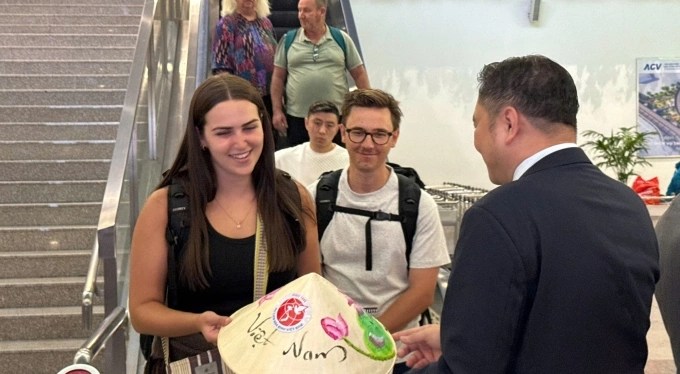
With tourism industry of Vietnam is undeniably growing rapidly as almost fourteen million foreign tourists arrived there during the first seven months of 2026, according to report by VnExpress.
To put things in perspective, posted below is an excerpt from the news report of VnExpress. Some parts in boldface…
Vietnam welcomed 13.9 million international arrivals during the first seven months this year, up 13.8% from a year earlier, as the country’s image as a safe and stable destination continued to attract travelers amid geopolitical tensions worldwide.
In July alone, the number of foreign visitors to Vietnam reached 1.67 million,down 0.7% year-on-year, according to the General Statistics Office (GSO).
Mainland China remained the largest source of visitors so far this year with 3.08 million, followed by South Korea with 2.38 million.
The rest of the top 10 were Russia, Taiwan, the U.S., Cambodia, India, Japan, the Phillippines and Australia.
Let me end this piece by asking you readers: What is your reaction to this development? Considering how many foreign tourists it attracted so far this year, do you think Vietnam will eventually hit 24 million foreign tourist arrivals by the end of 2026? Do you think the new Long Thanh International Airport will somehow help attract a large number of overseas travelers once it starts operating this December?
Thank you for reading. If you find this article engaging, please click the like button below, share this article to others and also please consider making a donation to support my publishing. If you are looking for a copywriter to create content for your special project or business, check out my services and my portfolio. Feel free to contact me with a private message. Also please feel free to visit my Facebook page Author Carlo Carrasco and follow me on Twitter at @CarloCarrascoPH as well as on Tumblr at https://carlocarrasco.tumblr.com/and on Instagram athttps://www.instagram.com/authorcarlocarrasco
Following the unfortunate decision made the by Supreme Court of the United States (SCOTUS) regarding birthright citizenship, US President Donald J. Trump signed two new Executive Orders to formally end birth tourism while also protecting the meaning and value of American citizenship.
To put things in perspective, posted below is the News24 (formerly Sky News Australia) video covering the Oval Office. Watch it and pay close attention to the details.
In America, birth tourism is already a huge problem that has yet to be full resolved. If it is left unchecked, it will negatively impact and even deform democracy in the US. That said, President Trump signed the Executive Order ending birth tourism. To understand it fully, posted below is the entire content of the said Executive Order sourced from the White House website. Some parts in boldface…
By the authority vested in me as President by the Constitution and the laws of the United States of America, it is hereby ordered:
Section 1. Purpose. United States citizenship is among the greatest inheritances the Nation can bestow. It embodies a sacred bond between the American people and the Nation in which they live, and carries profound rights, privileges, and responsibilities reflective of the enduring allegiance of citizens to the United States and our Constitution. Citizenship is not a commodity to be acquired through calculated exploitation and evasion of the immigration laws, such as by entering the United States on a nonimmigrant visa for the purpose of giving birth within the Nation’s borders.
Birth tourism operators use deceptive advertisements and inducements to entice foreign nationals to travel to the United States for the purpose of giving birth on American soil. They promise citizenship; access to public benefits; and short-term stays in specialized facilities, hotels, or rentals, but often fail to deliver on these promises. These operators coach their clients to misrepresent the purpose and duration of their travel to consular and border officials to obtain visas authorizing entry into the United States. Failure to appropriately combat these schemes has resulted in thriving industries around the world that profit by enabling the evasion of American immigration laws to obtain citizenship and other immigration benefits for foreign visitors, and the exploitation of the women who travel here for purposes of giving birth.
The immigration laws of the United States establish discrete categories of temporary nonimmigrant visas to allow foreign visitors into the United States for study, exchange, temporary employment, tourism, and other transitory activities that are now exploited by birth tourism operators. Participants in birth tourism schemes abuse these categories to establish a permanent foothold in the United States by securing the advantage of citizenship for their children and then potentially for themselves.
Birth tourism, defined in section 3 of this order, undermines the integrity of the Nation’s immigration system by enabling foreign nationals to exploit their temporary admission to obtain permanent immigration-related benefits. Birth tourism also diverts limited consular inspection and enforcement resources away from legitimate visa applicants, erodes public confidence in the faithful enforcement of the immigration laws, and impairs the executive branch’s ability to protect the national security.
The United States has a compelling interest in ensuring that each visa category is used only for the purpose for which it was established. Foreign nationals seeking temporary admission into the United States must adhere to the purposes for which the Congress has authorized their temporary admission, and cannot be permitted to circumvent the immigration laws in an attempt to vest themselves and their children with lasting benefits that are irreconcilable with their nonimmigrant status.
It is therefore the policy of the United States to promote the integrity of its immigration system, to ensure that nonimmigrant visa classifications are used only for their lawful and intended purposes, and to prevent the exploitation of those classifications by persons engaging in birth tourism.
Sec. 2. Authorities. Pursuant to section 301 of title 3, United States Code, the authority granted to the President under section 215(a) of the Immigration and Nationality Act, 8 U.S.C. 1185(a), is hereby delegated to the Secretary of State and the Secretary of Homeland Security to the extent necessary to implement this order, including the authority to issue or adopt rules, policies, operational guidance, or other guidance to carry out this order.
Sec. 3. Definition. For purposes of this order, “birth tourism” is defined as:
(a) the entry of any foreign national into the United States via a nonimmigrant visa for the purpose of giving birth on American soil; or
(b) any effort by any foreign national to facilitate the entry of any foreign national into the United States via a nonimmigrant visa for the purpose of giving birth on American soil.
Sec. 4. Scope and Implementation. (a) The Secretary of State and the Secretary of Homeland Security shall take such actions and update any rules, policies, operational guidance, or other guidance as necessary to effectuate the policy set forth in this order. Such actions may include, within the Secretaries’ respective discretion and authority, appropriate action to prevent the entry into the United States of, or the granting of any visa or other travel authorization to, any alien entering or attempting to enter the United States for the purpose of engaging in birth tourism; revoking the visa or travel authorization and permanently barring entry of any alien who enters or attempts to enter the United States for the purpose of engaging in birth tourism; denial of entry to, or removal of, any alien who previously engaged or plans to engage in birth tourism; or other appropriate action against entities, organizations, or individuals, within or outside of the United States, responsible for facilitating or enabling birth tourism in any manner.
(b) All other relevant executive departments and agencies shall provide such records and information as are necessary for the Secretary of State and the Secretary of Homeland Security to implement the terms of this order and the rules, policies, operational guidance, or other guidance issued pursuant to it, subject to applicable law.
Sec. 5. Exemptions. Notwithstanding the restrictions imposed by this order, the Secretary of State or the Secretary of Homeland Security may exempt a foreign national from actions taken pursuant to this order on humanitarian grounds or when the foreign national’s entry is in the national interest, as determined by the Secretary of State or the Secretary of Homeland Security.
Sec. 6. General Provisions. (a) Nothing in this order shall be construed to impair or otherwise affect:
(i) the authority granted by law to an executive department or agency, or the head thereof; or
(ii) the functions of the Director of the Office of Management and Budget relating to budgetary, administrative, or legislative proposals.
(b) This order shall be implemented consistent with applicable law and subject to the availability of appropriations.
(c) This order is not intended to, and does not, create any right or benefit, substantive or procedural, enforceable at law or in equity by any party against the United States, its departments, agencies, or entities, its officers, employees, or agents, or any other person.
(d) If any provision of this order, or the application of any provision to any person or circumstances, is held to be invalid, the remainder of this order and the application of any of its other provisions to any other persons or circumstances shall not be affected thereby.
(e) The costs for publication of this order shall be borne by the Department of Homeland Security.
DONALD J. TRUMP
Let me end this piece by asking you readers: What is your reaction to this development? Do you think the two new Executive Orders signed by Trump will effectively end birth tourism while protecting the value of American citizenship? What kind of responses do you think the Democrats will come up with to oppose the Executive Orders. Do you think Islamist states like Iran, Pakistan, Qatar and Bangladesh are deliberately sending their citizens to America with birth tourism in mind? Did you spot any Chinese nationals engaging in birth tourism in America lately?
The Subic Bay Metropolitan Authority (SBMA) has officially launched the Swiss challenge for the P7 billion proposal for the upgrading and management of the Subic Bay International Airport (SBIA) and this opened the field for entities to submit their proposals challenging the existing proposal of Cerberus Asia Pacific Investments LLC, according to a Manila Bulletin news report.
For previous blog posts about the SBIA project, click here, here and here.
To put things in perspective, posted below is an excerpt from the report of the Manila Bulletin. Some parts in boldface…
The Subic Bay Metropolitan Authority (SBMA) has formally started the Swiss challenge for the ₱7-billion proposal to manage and upgrade the Subic Bay International Airport (SBIA), as it issued a call to potential challengers to submit competing offers.
In a bid bulletin dated July 31, theSBMA invited firms to submit their comparative proposals for the project proposed by United States (US)-based Cerberus Asia Pacific Investments LLC.
SBMA saidinterested firms have until Oct. 29 to submit their proposals, with thebid opening scheduled to take place on the same day. A pre-bid conference to clarify the requirements and address queries from participating firms is set for Sept. 14.
Under a Swiss challenge, also known as a comparative challenge, the SBMA is allowing other companies to match the unsolicited proposal for the SBIA submitted by Cerberus, which was approved in April last year.
Cerberus has been granted original proponent (OP) status by the SBMA for its unsolicited proposal to upgrade, expand, operate, and maintain the SBIA. As the OP, Cerberus will have the right to match the best offer during the challenge process.
Cerberus is seeking to manage the SBIA under a 25-year operate-rehabilitate-add-transfer scheme to develop the gateway into a strategic cargo and logistics hub that would help ease congestion at Ninoy Aquino International Airport (NAIA).
“Currently underutilized, SBIA requires substantial investment and comprehensive operational improvements to realize its full potential over the concession period,” SBMA said.
Cerberus is planning to invest ₱7 billion to develop the project, nearly 13 percent higher than the initial project cost pegged at around ₱6.2 billion.
The investment will focus on upgrading existing airport facilities to align them with international benchmarks, alongside the development of new facilities to transform the airport into a higher-capacity logistics hub.
SBMA noted that the airport’s location and air-to-sea access pose a significant opportunity to develop it into a hub for commercial cargo and warehousing.
“This highlights a growing demand for air cargo services, driven by the need for industrial supplies and the transportation of finished products,” it said.
In addition, SBMA noted that the ongoing development of the Luzon Economic Corridor (LEC) further increases the need for improved air connectivity.
The LEC is an initiative led by the Philippines, the US, and Japan aimed at accelerating high-impact investments to enhance connectivity between Subic Bay, Clark, Manila, and Batangas.
“All these factors lead to the conclusion that the manufacturing industry in the Philippines, and particularly Central Luzon, is highly likely to significantly grow in the upcoming decade, both in terms of size of current facilities, and additional factories,” SBMA said.
“This leads to demand for air cargo in terms of industrial supplies, as well as output products, and attracts population growth and consumer wealth, leading to consumption increase and related air cargo demand,” it added.
By developing the SBIA, SBMA said it is ensuring that Clark International Airport will not be the only alternative once NAIA reaches its cargo capacity limit in the future.
The agency said an upgraded SBIA can ensure competitive pricing and provide additional options for airlines operating or planning to set up shop in Manila.
With this, Subic Bay is expected to help accommodate an additional 200,000 tons of cargo by 2035.
Let me end this post by asking you readers: What is your reaction to this recent development? Do you think there will be a lot of corporations locally and overseas that will submit their Subic Bay International Airport proposals to the SBMA? When was the last time you arrived at the international airport in the Subic Bay Freeport Zone?
In this age of artificial intelligence (AI), the rising use of drones in military operations and Communist China’s disturbing presence at sea, the Defense Ministry of Japan sees the urgent need to prepare the nation for the new ways of warfare, according to a news article by Jiji Press.
To put things in perspective, posted below is an excerpt from the news article of Jiji Press. Some parts in boldface…
Japan’s Defense Ministry emphasized the urgent need to prepare for what it calls new ways of warfare leveraging drones and artificial intelligence technology in an annual white paper adopted Tuesday.
The 2026 report, submitted by Defense Minister Shinjiro Koizumi to the day’s cabinet meeting, also displayed vigilance over the Chinese military’s expanding activities in the Pacific, saying Japan should respond with its “comprehensive national power.”
The white paper said that large-scale attacks combining low-cost unmanned equipment and conventional missiles have been conducted on the battlefields of Ukraine fighting Russia’s aggression.
Acknowledging that preparing for prolonged conflicts has become a key issue, the government stressed the importance of securing adequate stockpiles and ensuring sustained operational capability.
Let me end this piece by asking you readers: What is your reaction to this development? Do you support the idea of Japan tremendously modernizing itself militarily to defend itself while pushing back against Communist China’s military presence at sea? Would you like to see Japan become more sophisticated in the new ways of warfare using whatever state-of-the-art technologies it has? Do you think Japan should approach the United States for more advanced military hardware?
Thank you for reading. If you find this article engaging, please click the like button below, share this article to others and also please consider making a donation to support my publishing. If you are looking for a copywriter to create content for your special project or business, check out my services and my portfolio. Feel free to contact me with a private message. Also please feel free to visit my Facebook page Author Carlo Carrasco and follow me on Twitter at @CarloCarrascoPH as well as on Tumblr at https://carlocarrasco.tumblr.com/and on Instagram athttps://www.instagram.com/authorcarlocarrasco
For the first time in fifteen years, Japan and the United States conducted a joint buying of Yen following the Japanese currency’s continued weakness to the U.S. Dollar which Finance Minister Satsuki Katayama confirmed yesterday, according to a Kyodo News report. The Yen fell to almost 164 to the U.S. Dollar on July 23.
To put things in perspective, posted below is an excerpt from the report of Kyodo News. Some parts in boldface…
Japan and the United States conducted coordinated yen buying Friday, Finance Minister Satsuki Katayama said, their first joint market intervention in 15 years, with the two nations ready to act again if necessary.
The intervention during New York trading on Friday came after the yen hit 163.99 to the U.S. dollar on July 23, its weakest level in around 40 years, amid mounting fears about Prime Minister Sanae Takaichi’s expansionary but vaguely funded fiscal policy.
“This joint action was taken pursuant to the U.S.-Japan Finance Ministers’ Joint Statement issued in September 2025 and countered the excessive volatility and disorderly movements of the Japanese yen in recent months,” Katayama said in a statement on Monday.
“The Japanese Ministry of Finance remains attentive and in close communication with our counterparts at the U.S. Treasury. We will not hesitate to conduct a further joint intervention,” she added.
After warnings by Katayama and U.S. Treasury Secretary Scott Bessent of additional action to prevent the Japanese currency from depreciating, the yen briefly surged to the lower 155 level from the upper 157 range on Monday morning.
While joint currency interventions by the countries are usually reserved for emergencies, Japan has been struggling with the yen’s depreciation, which has increased import costs, threatening to accelerate inflation and jack up yields on long-term Japanese government bonds.
Washington is also believed to be wary of rising long-term Japanese interest rates pushing up U.S. rates before the congressional midterm elections in the fall, analysts said.
The previous Japan-U.S. intervention was carried out to stem the yen’s rise after the massive earthquake and tsunami in northeastern Japan in March 2011.
Katayama told reporters in Tokyo that Friday’s coordination between Japan and the United States was aimed at linking Tokyo’s “economic security to its unwavering alliance” with Washington.
She stressed the countries’ “close coordination” since the release of their joint statement last September, which confirmed interventions should be reserved for combating excessive volatility as well as “disorderly depreciation or appreciation.”
Japanese and U.S. authorities have pledged to take decisive action “against disorderly moves at any time,” Katayama said.
Atsushi Mimura, Japan’s top currency diplomat, called the latest coordinated intervention a “completed form” of the Japan-U.S. currency alliance, emphasizing the two countries would continue to respond “without missing a beat.”
Saying Japan “wanted a little bit of help,” President Donald Trump indicated Sunday in the United States that Washington had conducted a yen-buying intervention at the request of Takaichi’s government. He told reporters the action would benefit his nation economically.
He added, “We’re always there for Japan. Japan’s been very good to us, with the exception, of course, of Pearl Harbor,” referring to Japan’s 1941 surprise aerial attack on a naval base in Hawaii that resulted in the U.S. entry into World War II.
In New York on Friday, the yen surged to the lower 157 level against the dollar, with Japanese government sources confirming a yen-buying intervention by currency authorities.
The move came after the yen briefly soared to the 157 range Thursday, gaining nearly 5 yen in about 50 minutes before dropping back to the 160 level, as a result of a currency intervention by Japan later confirmed by market and government sources.
On Sunday, Bessent wrote on social media that the intervention “countered disorderly yen movements,” adding the United States would “not hesitate” to conduct further joint currency intervention with Japan, echoing Katayama.
He also said, “We strongly support Japan’s decisive market and monetary steps to correct the substantial undervaluation of the yen.”
Let me end this piece by asking you readers: What is your reaction to this development? What do you think the joint buying of Yen by the US and Japan will lead to further stabilization economically in the short term? Do you think this joint move will somehow boost both nation’s economies?
Thank you for reading. If you find this article engaging, please click the like button below, share this article to others and also please consider making a donation to support my publishing. If you are looking for a copywriter to create content for your special project or business, check out my services and my portfolio. Feel free to contact me with a private message. Also please feel free to visit my Facebook page Author Carlo Carrasco and follow me on Twitter at @CarloCarrascoPH as well as on Tumblr at https://carlocarrasco.tumblr.com/and on Instagram athttps://www.instagram.com/authorcarlocarrasco
Welcome back readers, fellow geeks and electronic gaming fans!
In this edition of the Retro Gaming Ads Blast (RGAB) series, we will take a look at another batch of retro gaming print ads from the 1980s to the 1990s.
For the newcomers reading this, Retro Gaming Ads Blast (RGAB) looks back at the many print ads of games (console, arcade, computer and handheld) that were published in comic books, magazines, flyers, posters and newspapers long before smartphones, social media, the worldwide web and streaming became popular. To put things in perspective, people back in the 1980s to the 1990s were more trusting of print media for information and images about electronic games and related products.
With those details laid down, here is the newest batch of retro gaming print ads for you to see and enjoy…
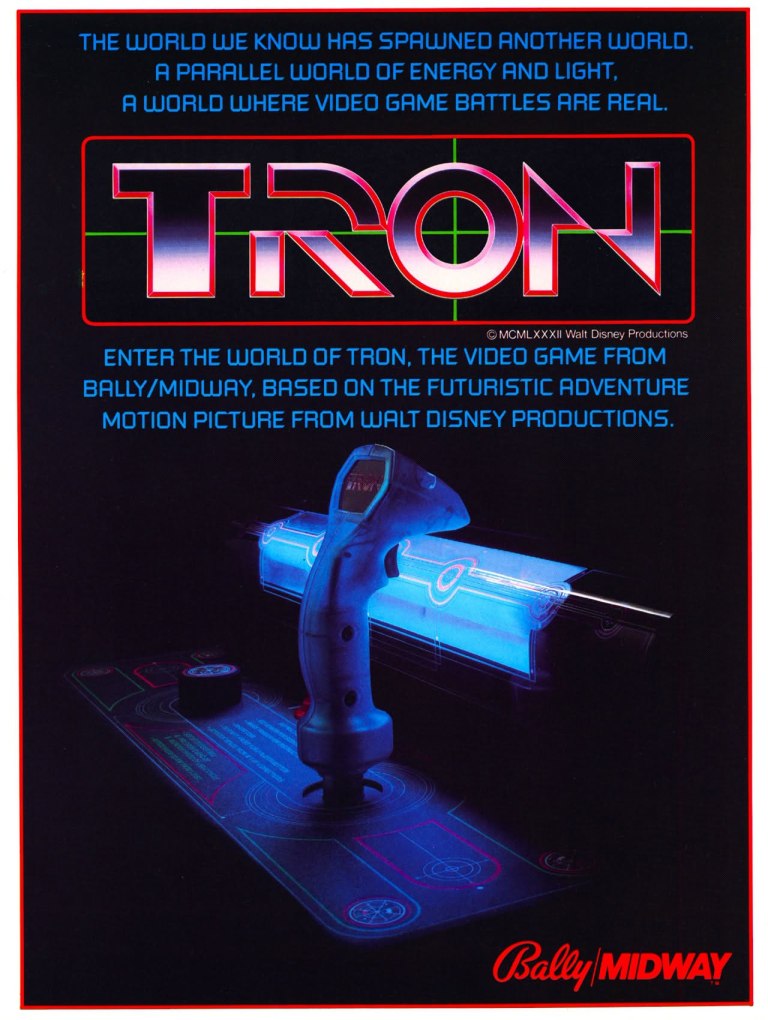
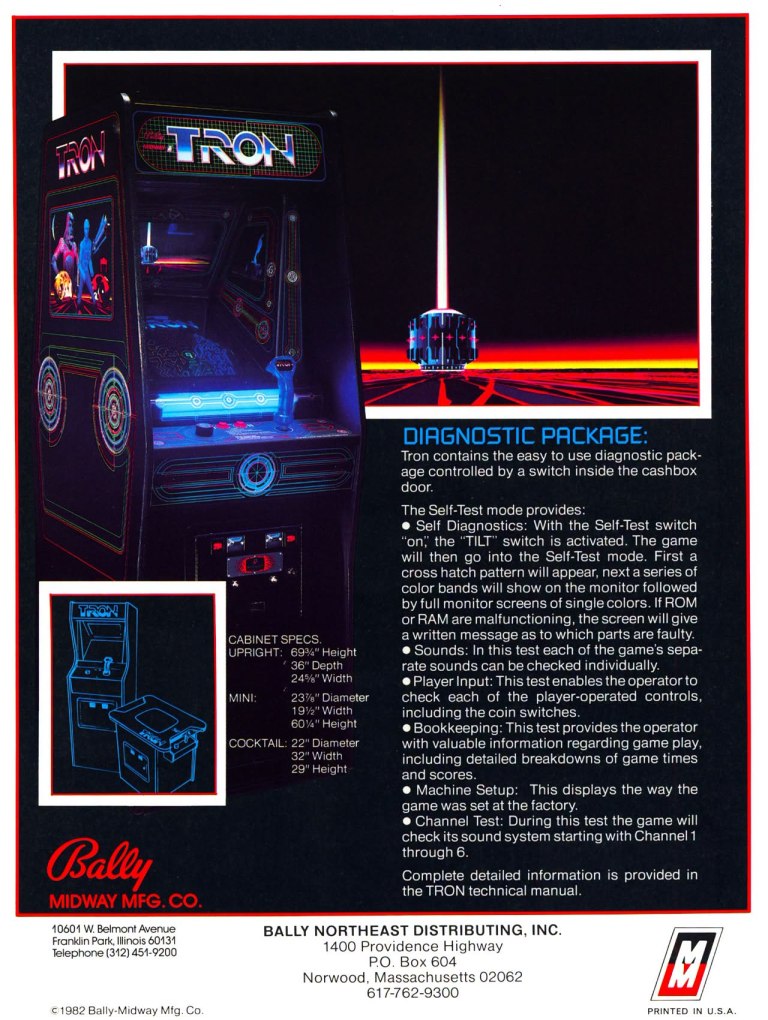
1. Tron Arcade Flyer
The front.
The rear. The details were clearly written for arcade operators.
Remember how dazzling the 1982 movie Tron was when you first saw it? That film had groundbreaking computer-generated graphics and the filmmakers worked very hard to tell a story covering both the real and digital worlds. Along the way, the movie had strong video game vibes which resonated with gamers at a time when arcade gaming was wildly popular in America. Believe it or not, an official arcade game of Tron was released the same year as the movie and it was a massive success. The arcade flyer perfectly captured the vibe and look from the movie and the machine itself had a control stick the same with what was shown to viewers. This old flyer is still great to look at.
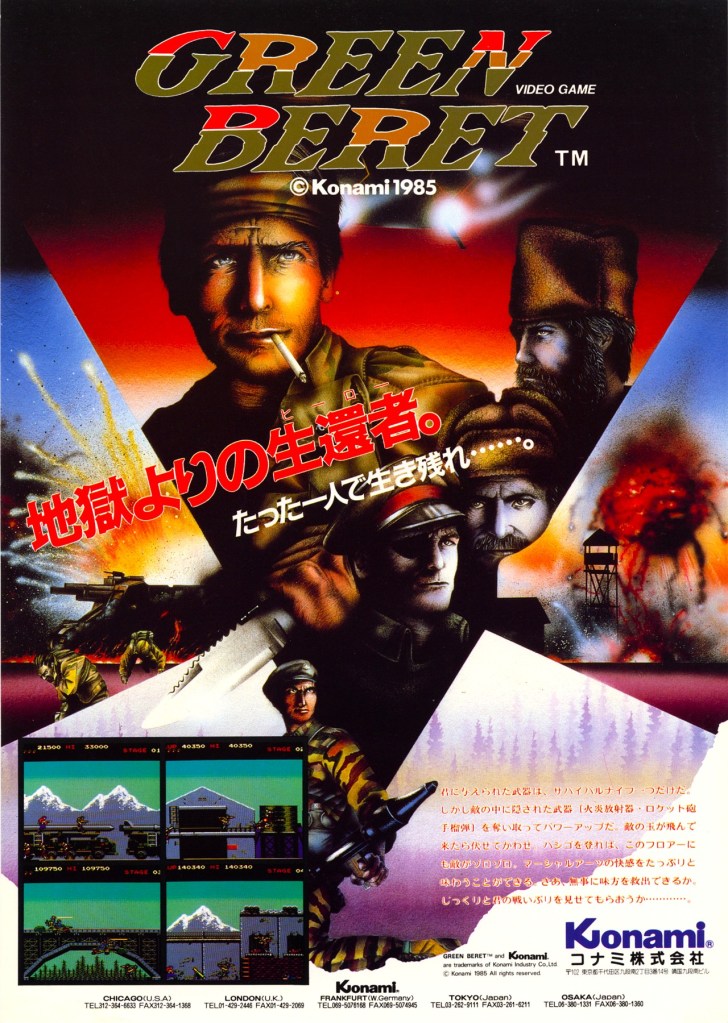
2. Green Beret Japanese Arcade Flyer
This is a very stylish flyer.
Konami was a highly prolific game publisher in the 1980s and it had lots of games that became huge blockbusters. During the decade, their game developers were strongly influenced by both Hollywood action movies and the Cold War. In 1985, Konami released the militaristic game Green Beret in Japanese arcades and to promote it, they created an arcade flyer featuring a very stylish artwork highlighting military images of soldiers (including a guy smoking) and warfare. This ad still looks great and it was not surprising it helped the game achieve huge commercial success. Green Beret was released in America as Rush’n Attack.
3. Darius Japanese And North American Arcade Flyers
The Japanese flyer.
The North American flyer.
Released in arcades worldwide in 1987, Darius is a 2D side-scrolling shooter game from Taito which had a science fiction concept of the starship Silver Hawk (piloted by players) which sets on a mission to destroy an evil empire before it could destroy the world called Darius. The game was successful, most notably in Japan and it eventually led to sequels being released later. What I find intriguing is how the arcade game was promoted in Japan and in North America. The Japanese arcade flyer had this intriguing artwork that reflected a blend of sci-fi with a touch of horror. The North American flyer had a strong sci-fi touch with a male and female model wearing costumes (that made them look futuristic) standing beside the Darius machine. Which flyer looks more appealing to you?
4. Data East’s Arcade Alley Print Ad
Fun and excitement emphasized in this print ad.
There is nothing like porting arcade hits to computer systems for gamers to enjoy. In 1988 there in Europe, U.S. Gold released Data East’s Arcade Alley for computer systems and it included ports of popular Data East games like Kung Fu Master, Express Raider, Breakthru, Tag Team Wrestling, Last Mission and Karate Champ. U.S. Gold’s print ad showed a guy in the middle of a video arcade looking on both sides to pick which game to play which strongly emphasized the essence of the game collection (offered in cassettes and disk). This old ad is still amusing to look at.
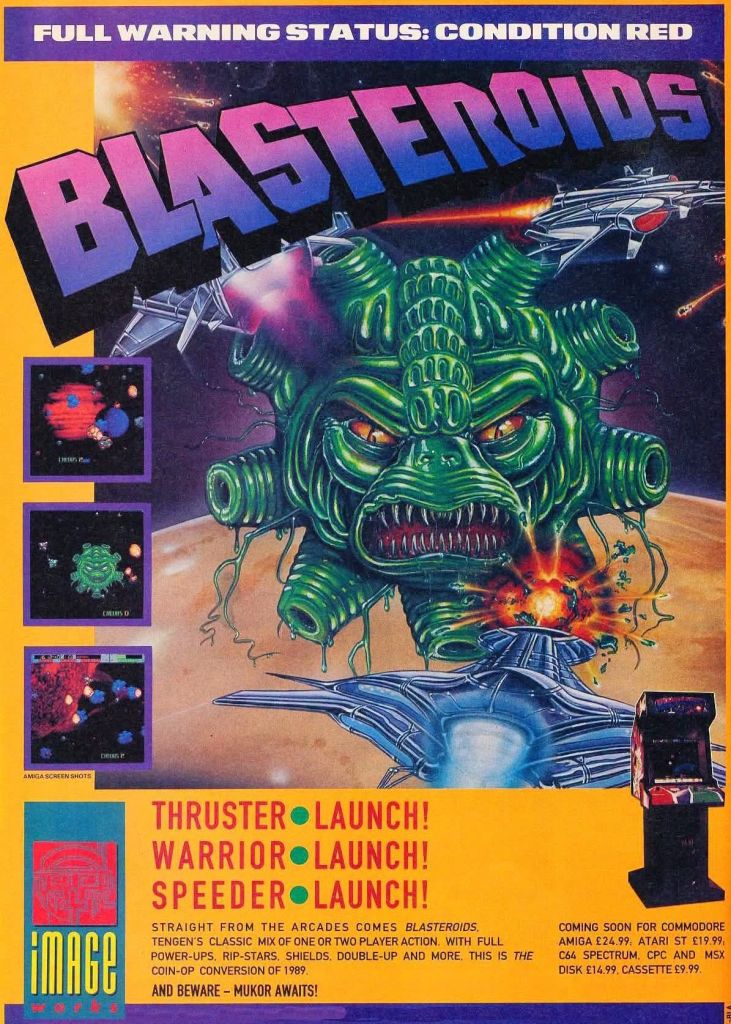
5. Blasteroids European Print Ad
Blasteroids for the Europeans.
Blasteroids, the third entry in Atari’s popular Asteroids games series, was released in European arcades by Image Works and eventually landed on computer systems there. For Europe, the ad makers came up with artwork showing a creepy, green space monster surrounded by a few spaceships to emphasize the game’s concept. The said monster eventually appeared on the game covers of the computer ports of Blasteroids later. This ad shows creative adjustments taken to promote games in different parts of the world.
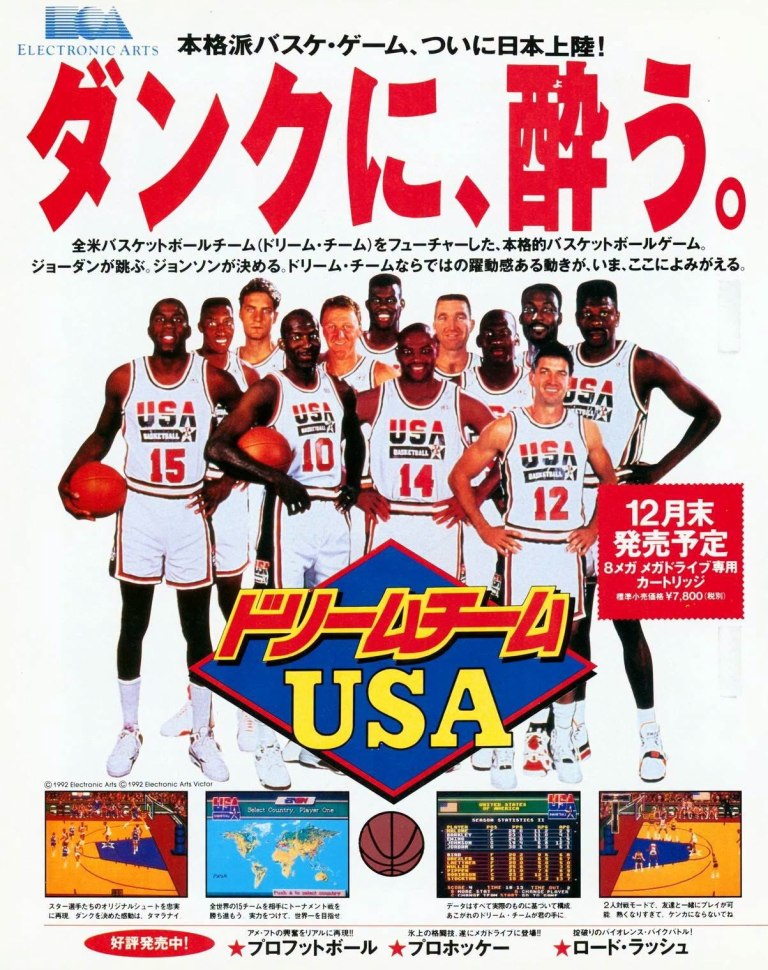
6. Dream Team USA Japanese Print Ad
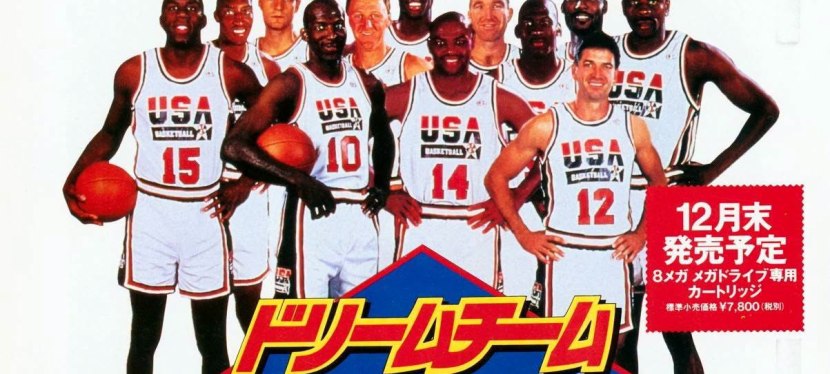
The legends of the NBA in the Japanese version of EA’s Team USA Basketball. Retitling the game as Dream Team USA made more sense because “Dream Team” was a much more popular reference than “Team USA Basketball”.
Remember how wildly popular the Dream Team (Team USA in Olympic basketball) was in 1992? With NBA legends Larry Bird, Michael Jordan, Magic Johnson, Charles Barkley, Karl Malone, John Stockton and more representing America in the basketball tournament of the Olympic Summer Games in Barcelona, Spain, the Dream Team (a media-led reference for the team) was easily the main attraction not only for basketball fans worldwide but also those who craved for excitement in international sports events. That said, Electronic Arts secured the license to make an official video game about the Dream Team and actually released the game Team USA Basketball within 1992 for the Sega Genesis. As basketball is popular also in Japan, EA released the game there titled as Dream Team USA and came up with a Japanese print ad to seriously capture gamers’ attention. This ad is still effective in delighting both basketball and video game enthusiasts.
7. Super Star Wars: The Empire Strikes Back And Return Of The Jedi Print Ad
No screenshots of games used. Just the official images from the posters of the two movies.
Back in the 1990s, there was a resurgence of the original Star Wars trilogy across different forms of media. Apart from the VHS re-releases of Star Wars, The Empire Strikes Back and Return of the Jedi, there was a slew of video games of Star Wars released during the decade and the fans had new stuff to entertain themselves with. Along the way, the company THQ secured the rights to Super Star Wars: The Empire Strikes Back and Super Star Wars: Return of the Jedi for re-release to coincide with the 1997 “Special Edition” theatrical releases of their respective movies. THQ’s print ad simply used official images of Return of the Jedi and inserted a tiny bit of The Empire Strikes Back, and they did not show any screenshots that could have been helpful for Super Nintendo Entertainment System (SNES) and Game Boy users. Still, it was smart for THQ to print two excerpts of game reviews to sell the games.
8. Super Mario RPG North American Print Ad
A mesmerizing ad for the acclaimed Super Mario RPG.
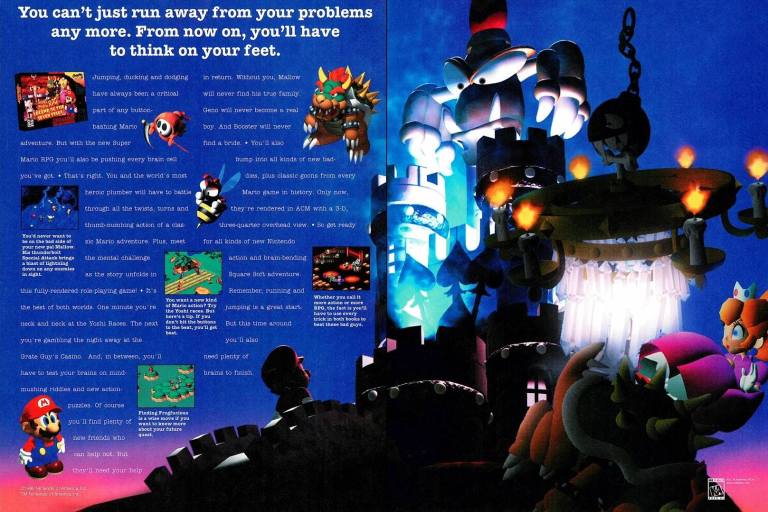
Remember back in the 1990s when Nintendo and role-playing game giant SquareSoft had a very healthy business relationship that proved successful? Before their eventual breakup (related to Square signing with Sony for PlayStation development), the two companies joined forces to make a fully featured role-playing game for the SNES featuring Super Mario and related characters…Super Mario RPG: Legend of the Seven Stars. To promote the game, Nintendo (the publisher) created a mesmerizing 2-page print ad highlighting their characters while emphasizing the role-playing and fantasy aspects of the game. At the time of its release, Super Mario was often identified with platform games and the Super Mario RPG print ad was a serious attempt to lure fans into RPGs which the SNES was already rich with. This ad, which I first saw in gaming magazines in 1996, still looks great.
9. NBA Shootout ’97 Print Ad
Did you play this on PlayStation in 1997?
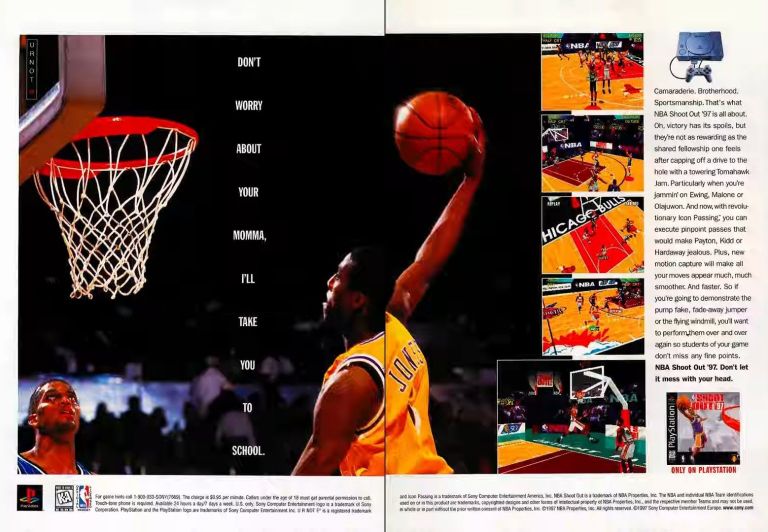
If there is anything I miss about 1990s console gaming, it is the fact that there were a lot of NBA-licensed video games that were offered to players with different tastes in basketball gaming. Sony had its own exclusive NBA games series called NBA Shootout and they were pretty aggressive selling its own basketball games along with the PlayStation going up against the likes of Electronic Arts (NBA Live), Sega and others. This is reflected in this 2-page print ad of NBA Shootout ’97 which was a PlayStation-exclusive release. They featured a photograph of Lakers’ Eddie Jones about to dunk and showed screenshots as well as the descriptive text written with excitement. Since it first started, NBA Shootout was basketball in full 3D polygonal graphics backed with motion-captured moves and dunks that players could enjoy only PlayStation. This ad is a reminder that Sony used to make official NBA games and there is a lack of variety and players’ choice of NBA gaming in today’s world.
10. Legend of Legaia North American Print Ad
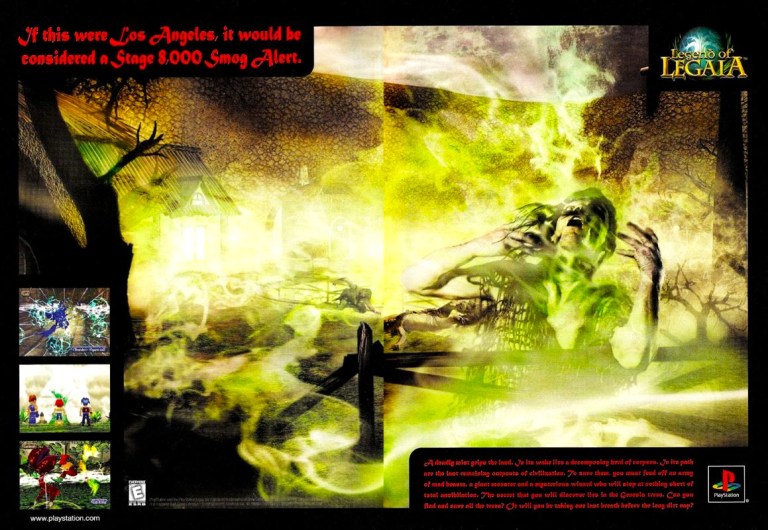
Perhaps someone at Sony Computer Entertainment America (SCEA) thought Legend of Legaia was a horror video game.
There was a time when Sony produced Japanese RPGs (JRPGs) exclusive for PlayStation consoles. One of them was Legend of Legaia which had a combat system that emphasized martial arts and it had an interesting fantasy concept. For its 1999 North American release, Sony came up with a very bizarre 2-page print ad that had digital artwork with a very strong horror vibe and the visual designs within the three screenshots shown were clearly not related with it. How this ad was made remains unclear. This is easily one of the most misguided gaming ads of the 1990s.
The Subic Bay Metropolitan Authority (SBMA) announced that it has released almost P220 million in revenue shares to the City Government of Olongapo and seven other local government units (LGUs).
To put things in perspective, posted below is an excerpt from the SBMA’s official announcement. Some parts in boldface…
The Subic Bay Metropolitan Authority (SBMA) released a total of PHP 218,115,671.26 in revenue shares to eight local government units (LGUs) contiguous to this premier freeport zone.
SBMA Chairman and Administrator Eduardo Jose L. Aliño said that this amount released on Tuesday, July 21, 2026,represents the revenue shares for the first semester of 2026, which is 10.24 percent higher than that of last year’s comparative period.
The recipient LGUs areOlongapo City,the municipalities of Subic, San Marcelino, Castillejos, and San Antonio in Zambales, and the towns of Dinalupihan, Hermosa, and Morong in Bataan.
Taking into account the population and land area,Olongapo was allocated the largest amount of PHP 50,420,165.72, received by Olongapo City Mayor Atty. Rolen Paulino, Jr. This was followed by Subic, Zambales, which received PHP 32,871,521.46, accepted on behalf of Mayor Jonathan John Khonghun.
The remaining LGUs received their allocations as follows: Dinalupihan, Bataan, with PHP 27,438,313.68, accepted on behalf of Mayor German Santos, Jr.; San Marcelino, Zambales, with PHP 26,272,445.97, received by Mayor Elvis Soria; Hermosa, Bataan, with PHP 23,422,520.27, accepted on behalf of Mayor Atty. Anne Adorable-Inton; Castillejos, Zambales, with PHP 19,817,470.23, received on behalf of Mayor Jeffrey Khonghun; Morong, Bataan, with PHP 19,340,287.10, received on behalf of Mayor Leila Linao-Muñoz; and San Antonio, Zambales, with PHP 18,532,946.83, received by Mayor Dr. Arvin Antipolo.
TheLGU shares are sourced from five percent corporate taxes paid by business locators in the Subic Bay Freeport. They aredistributed among LGUs based on population (50%), land area (25%), and equal sharing (25%).
OIC-Deputy Administrator for Finance Editha Marzal, along with the finance team, led the distribution of the LGU shares.
Marzal noted that the net shares distributed to the LGUs include not only the current collection period’s allocations but also the 10 percent retention withheld during the first semester of the 2024 distribution.
Let me end this post by asking you readers: What is your reaction to this recent development? Do you see the increased amount of revenue shares as a sign of better economic activities and finances within the Subic Bay Freeport Zone? Do you think the revenue shares would be higher once the Luzon Economic Corridor (LEC) and Pax Silica activities finally start economic activities in the near future?