Disclaimer: This is my original work with details sourced from reading the comic book and doing personal research. Anyone who wants to use this article, in part or in whole, needs to secure first my permission and agree to cite me as the source and author. Let it be known that any unauthorized use of this article will constrain the author to pursue the remedies under R.A. No. 8293, the Revised Penal Code, and/or all applicable legal actions under the laws of the Philippines.
Welcome back superhero enthusiasts, 1980s arts and culture enthusiasts, DC Comics fans and comic book collectors! Today we go back to the year 1983 to take a close look at a part of the DC Comics universe through a tale of the Action Comics monthly series.
If there is anything notable about the presentation of superhero elements in Superman stories, it is the occasional use of science fiction. From time to time, DC Comics published tales of Superman going deep into space, encounter alien species and visit far-away civilizations. Sometimes, sci-fi is used on major disasters that Superman has to solve.
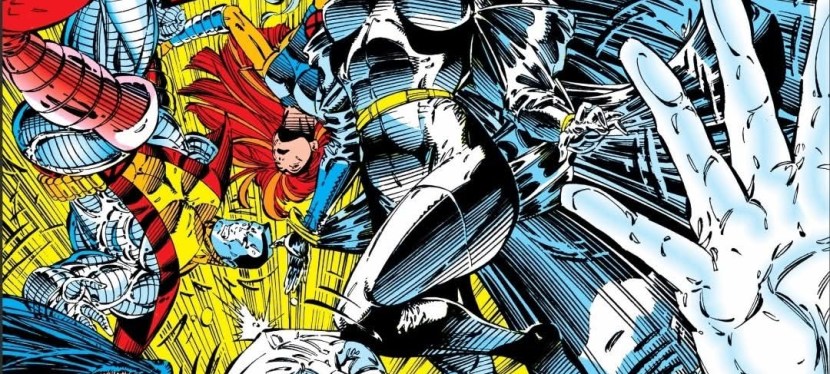
With those details laid down, here is a look back at Action Comics #550, published in 1983 by DC Comics with a story written by E. Nelson Bridwell and Bob Rozakis, and drawn by George Tuska.
The cover.
Early story
The story begins with Clark Kent and Lana Lang presenting television news at the WGBS station telling viewers about The Exploder who attacked a large jumbo jet full of people. As the program continues, breaking news about an enormous underwater eruption north of New Guinea came in.
Shortly after, Clark quickly and discreetly left the station to fly overseas as Superman. By visiting the site of the reported underwater eruption, he notices the entire New Guinea drifting southward. Superman is compelled to go deep underwater to prevent the nation from drifting further and he also realized there is no volcano that caused the blast.
Quality
Superman goes to outer space to find answers behind the events that took place on Earth.
This is a Superman tale that does not have the traditional good-versus-evil element of conflict. Instead, it is a sci-fi story that started with solid mystery causing the Man of Steel to do research and detective work to find answers.
The comic book writers behind this were really good in pushing Superman hard on his search for answers to solve mysteries that were really out of this world. Lana Lang’s father appears here as a long-time archaeologist who successfully discovered an ancient artifact described as a so-called disk. The plot turned intense when The Exploder suddenly emerged to take the disk away which unsurprisingly pushed Superman to not only react but also get answers.
I like the fact that as Superman does detective work, Lana Lang and Jimmy Olsen contributed nicely to the plot. At the same time, the mystery and tension really built up as the story went along and the payoff the comic book creators came up with is surprising and also worth it.
Without spoiling the plot, I can say that this Superman tale has its own twists on the concept of UFOs and alien that happen to have special interest on Earth. At the same time, you will realize how dedicated Superman is to protecting the people of Earth and why he would not tolerate aliens who actions would jeopardize billions of lives.
Conclusion
I liked the interactions Clark had with Lana Lang as he tries to solve mysteries.
While Action Comics #550 (1983) does not have a super villain for Superman to battle, you will still see him doing good, solving mysteries and prioritizing Earth’s people. The sci-fi concept the creators came up with looked outlandish on face value but when you read the story and pay close attention to all the details, you will realize that the story is actually believable. I also like the mystery aspect which gave the plot a good amount of depth.
Overall, Action Comics #550 (1983) is recommended.
Welcome back readers, fellow geeks and electronic gaming fans!
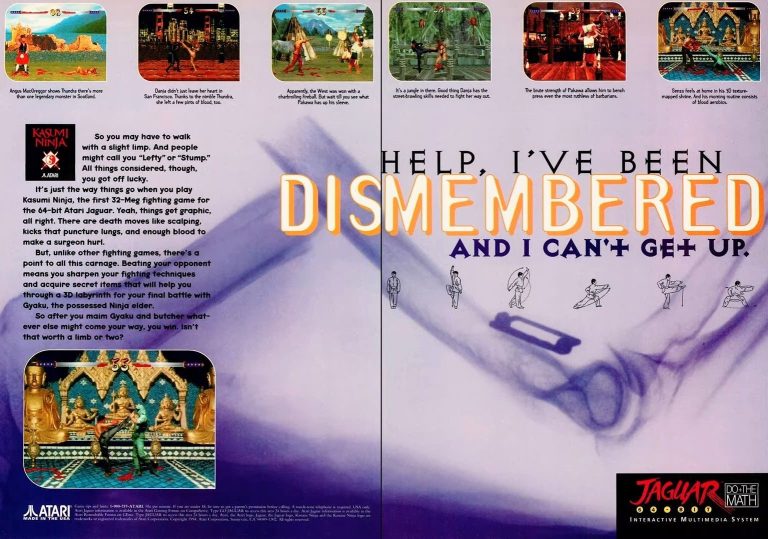
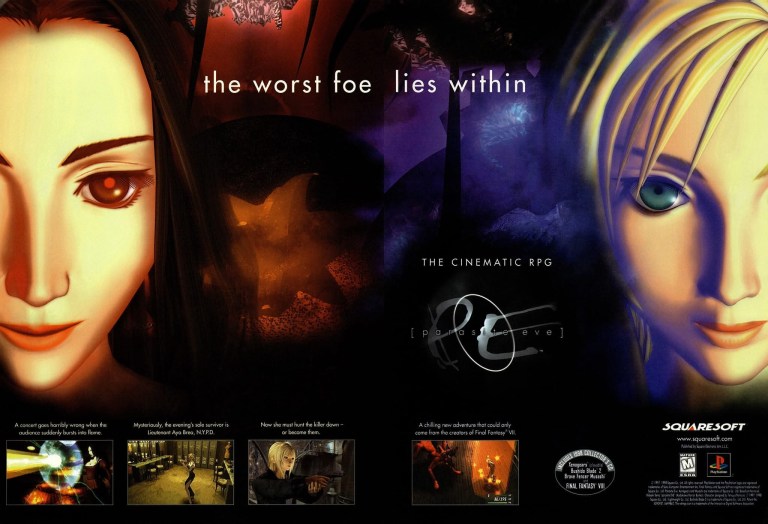
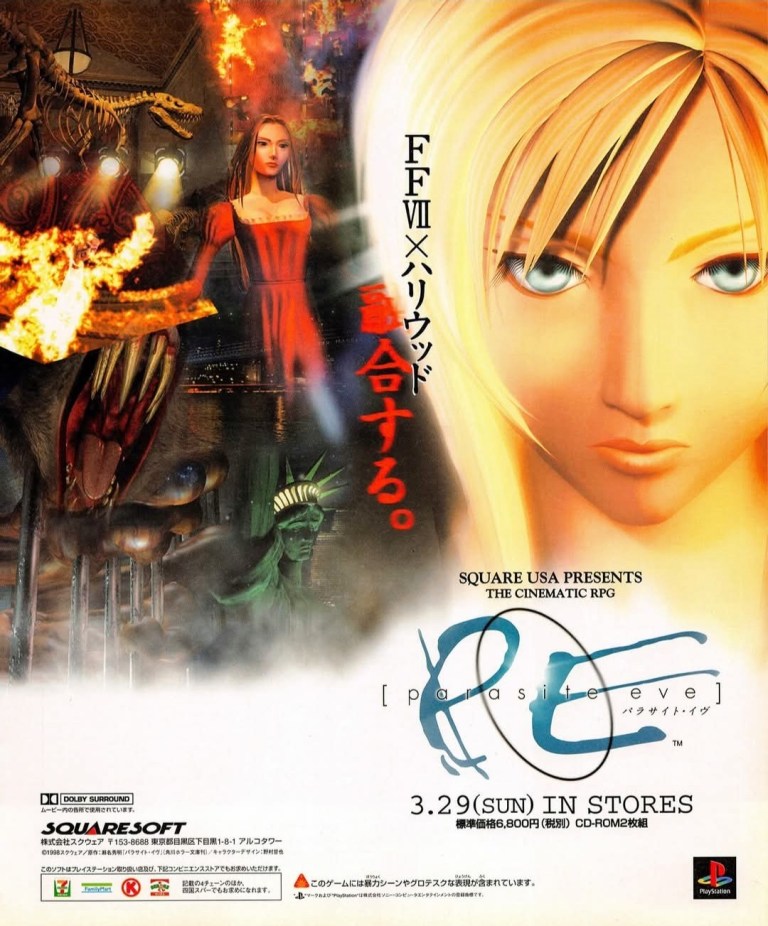
In this edition of the Retro Gaming Ads Blast (RGAB) series, we will take a look at another batch of retro gaming print ads – including arcade flyers – from the 1980s and 1990s.
For the newcomers reading this, Retro Gaming Ads Blast (RGAB) looks back at the many print ads of games (console, arcade, computer and handheld) that were published in comic books, magazines, flyers, posters and newspapers long before smartphones, social media, the worldwide web and streaming became popular. To put things in perspective, people back in the 1980s and 1990s were more trusting of print media for information and images about electronic games and related products.
With those details laid down, here is the newest batch of retro gaming print ads for you to see and enjoy…
1. E.T. the Extra-Terrestrial Atari 2600 print ad
If you have seen Steven Spielberg’s 1982 movie, were you able to play the Atari 2600 video game? I did!
Atari invested a lot on its video game based on Steven Spielberg’s E.T. the Extra-Terrestrial as the film was a massive box office success. In addition to their Atari 2600 video game print ad showing E.T. with Elliot, they ran another print ad with a concept of the sci-fi character needing people’s help. They came up with original artwork showing E.T. holding a box of the Atari 2600 E.T. video game, then posted details about how to acquire a copy of the game (with prices for regular customers and club members) and posted a toll-free 1-800 phone number. They also offered a $5 discount for those who order the E.T. or Raider of the Lost Ark video game and another cartridge. This old ad had commerce written all over it.
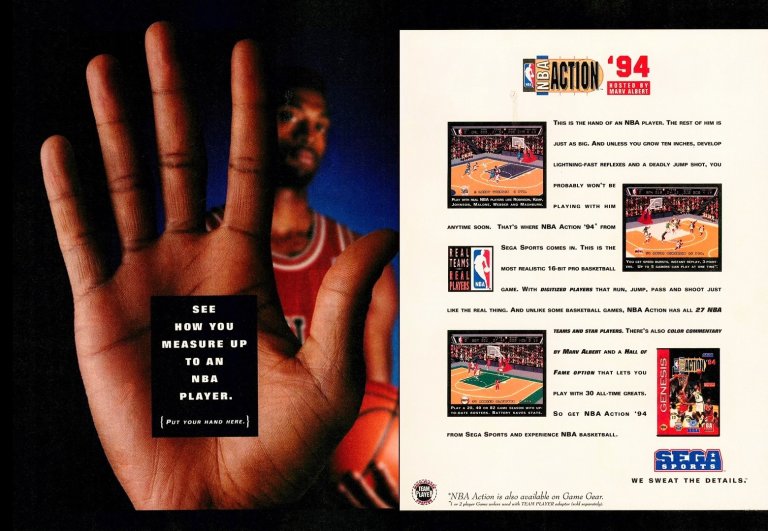
2. Bulls vs. Lakers and the NBA Playoffs Sega Genesis print ad
Before NBA Live, there was this old NBA video games series by Electronic Arts.
Based on the 1990-91 NBA season and the NBA finals match-up between the Chicago Bulls and the Los Angeles Lakers, Bulls vs. Lakers and the NBA Playoffs was Electronic Arts’ exciting game for the Sega Genesis which already had lots of sports-loving gamers. They made a 2-page print ad that was cleverly designed to make both gamers and NBA fans excited. It is not an accident that the ad showed comparative images (in-game footage and real-life basketball photos) of NBA superstars like Larry Bird, Michael Jordan, Karl Malone and Charles Barkley on the right. With the strong visual presentation, emphasis on popular NBA players and other details posted, this old ad is still fun and exciting to look at.
3. Japanese Smash T.V. print ad
The Japanese print ad of Smash T.V.
Yes, it is true! The console port of the arcade classic Smash T.V. was released on the Super Family Computer (Super Famicom) in Japan back in the 1990s. While I cannot understand the Japanese text shown on the ad above, it still looks exciting as the official artwork plus a screenshot of the game were displayed. The revealed retail price of 7,800 Yen is alone eye-catching as there were many games in Japan launched below that price in the next console generation. I can only wonder how many gamers in Japan bought and enjoyed Smash T.V.
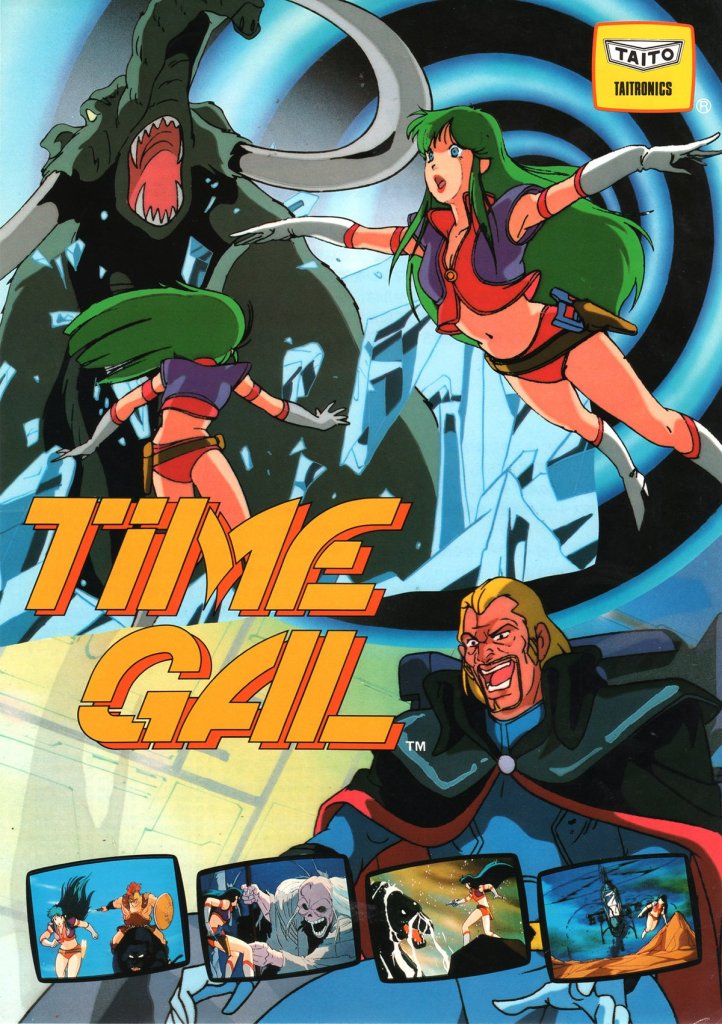
4. U.S. Championship V’Ball arcade flyers
The very colorful and striking arcade flyer for the Japanese market.
The American arcade flyer.
In 1988, Technos – the company behind the Double Dragon video games – released U.S. Championship V’Ball in video arcades in Japan and in America. The way it was promoted in Japan, Technos came up with an arcade flyer that had a comic-inspired hand-drawn artwork that easily gave viewers a strong American beach volleyball vibe. For the American arcade market, Taito (licensed by Technos) used different artwork showing two men in action. If you ask me, the Japanese arcade flyer is more dynamic to look at. Regardless of art style and presentation, both arcade flyers emphasized beach volleyball to gamers clearly.
5. Pitfall 3D: Beyond the Jungle print ad
The 2-page print ad of Pitfall 3D: Beyond the Jungle.
When Activision decide to make a new Pitfall video game with polygonal graphics and with 3D platform gameplay, it was not surprising at all as this was the trend that defined 1990s gaming. In 1998, Pitfall 3D: Beyond the Jungle was released for the PlayStation and it received a divisive reception from the critics. If you look closely at the print ad, the words “Next Generation Adventure” was written in the lower-right part and it was clear the game’s quality did not justify them.
6. Atari 2600 and games print ads
Our household had an Atari 2600 console and many games.
Atari’s promotion of its console, the games and interactive entertainment with the TV.
For a number of years decades ago, Atari dominated the video game console market in America with the Atari 2600 sold in the millions. While Atari today is no longer the video game giant it used to be, there is no denying the fact that they really changed the way people enjoyed the use of their television sets in American homes by offering them lots of video games for the Atari 2600 console. By looking at the above print ads, you can see that the company was not only aggressive with their marketing but also made interactive electronic entertainment more acceptable to countless families.
7. Burning Rangers North American print ad
I remember this ad from video game magazines I read in 1998.
Released in 1998 for the Sega Saturn, Burning Rangers was a high-quality exclusive game. To promote it in America, Sega came up with the print ad showing a few screenshots and a dominating image of a fire fighter cooling down on a kid’s personal pool. The image emphasized the element of fire in the game even though it lacked the more sci-fi elements used on the characters and setting. It should be noted that by 1998, the Sega Saturn was no longer in high demand in America as gamers overwhelmingly chose PlayStation and Nintendo 64 (N64) consoles and games. In retrospect, this was one of Sega’s final hard marketing moves done with a Saturn game.
Disclaimer: This is my original work with details sourced from reading the comic book and doing personal research. Anyone who wants to use this article, in part or in whole, needs to secure first my permission and agree to cite me as the source and author. Let it be known that any unauthorized use of this article will constrain the author to pursue the remedies under R.A. No. 8293, the Revised Penal Code, and/or all applicable legal actions under the laws of the Philippines.
Welcome back superhero enthusiasts, 1970s arts and culture enthusiasts, DC Comics fans and comic book collectors! Today we go back to the year 1979 to take a close look at a part of the DC Comics universe through a tale of the Action Comics monthly series.
Do you enjoy following stories with the “make-a-wish” concept as a key element? Or do you prefer seeing major events happen because someone else has the power to alter reality? I for one don’t enjoy those concepts very much and the element of wish-making really ruined the story of the glossy cinematic failure Wonder Woman 1984 (written and co-directed by Patty Jenkins). When it comes to Superman, the wish-making or the ability to seriously alter reality could be effect in storytelling when the right creators are involved.
With those details laid down, here is a look back at Action Comics #497, published in 1979 by DC Comics with a story written by Cary Bates and drawn by Curt Swan.
The cover.
Early story
The story begins inside a shed on a lot with three boys who have their own Superman club and support the Man of Steel’s never-ending battle for truth, justice and the American way. Arthur, who is up for drawing something for the next club newsletter, shared his idea (inspired by what he saw in a movie) about a gigantic meteor from outer space heading towards Metropolis which would compel Superman to save the city. Near the three boys is an empty chair reserved for a particular someone.
Many miles away deep within Metropolis, Clark Kent attends a conference in which Lana Lang delivers remarks to an audience of GBS affiliates. As Lana tells the audience that their news team is determined to maintain high standards of broadcasting, a uniformed door man causes a disturbance by telling everyone that a blackout has plunged the entire city into darkness.
Suddenly, the audience exited the venue and Lana notices that Clark is gone. Elsewhere, Superman quickly flies high and sees a giant meteor (the size of a stadium) on a collision course with Metropolis…
Quality
Do you wish you have the power to make superheroes do something as you wish?
Starting with the concept of reality getting seriously altered by someone with tremendous power, the said concept really brought the fantasy aspect of this Superman tale to a very high level. The Man of Steel ends up getting into unbelievable situations and do things that are amazing or shocking. In order words, the concept of altered reality (related to wishful thinking and intense imagination) actually works well in this tale thanks to the Bates-Swan duo.
Of course, this is not simply a Superman story about wild events that compelled him to react. There are character-driven scenes that emphasize how Superman analyzes what has been going on and why he seems to be controlled or guided to do things that he had no intent of doing. This particular element of the story raises questions about the ethics of having so much power at hand and being able to command a more powerful person to do something (as a wish is made by the one who wields a lot of power).
Considering the wild events that happened throughout the story, I can say that the Bates-Swan duo successfully pulled off a worthy pay-off at the conclusion.
Conclusion
Superman saves Metropolis and many people once again. Lana Lang is among the people on the street.
Action Comics #497 (1979) is an old Superman tale that is worth reading. While you won’t see Superman encountering any super villain, the fantasy elements and wild events more than made up for it. More importantly, the Bates-Swan duo was really careful with using the make-a-wish and reality altering concepts to make the plot believable while preventing it from becoming too outlandish. The result is a Superman tale that is entertaining to read.
Overall, Action Comics #497 (1979) is recommended.
Welcome back my readers, YouTube viewers and all others who followed this series of articles focused on YouTube videos worth watching. Have you been searching for something fun or interesting to watch on YouTube? Do you feel bored right now and you crave for something to see on the world’s most popular online video destination?
I recommend you check out the following videos I found.
#1 How to catch a shark and prepare it for consumption – If you are fond of fishing, have you ever tried catching a shark and then preparing it for cooking and eating? You can learn a lot from the video of Darcizzle Offshore which showed how a blacktip shark was caught. That being said, let me ask you – when was the last time you had shark for a meal? Watch the video below.
#2 Arcade games that never got ported – Through the decades, I visited the local arcades and played a lot of games. Along the way, there were times when I simply watched other games being played by others. Being an avid gamer, I noticed that there were several games of the arcade that never got ported on to consoles nor home computers nor the mobile devices. I recently stumbled on this video by Just Jamie which is entertaining to watch.
#3 Female bodybuilders and fitness influencers who died this year – With your current knowledge about health, do you often think that being healthy and being very muscular are always related with one another? Did you believe having a bulked up body means you are healthy? Believe it or not, there are already some female bodybuilders who did recently and certain details behind their deaths might shock you. Watch and learn from the video below.
#4 You, Me and the Movies posted another Friday The 13th (1980) reaction video – In July of 2021, YouTuber You, Me and the Movies posted its reaction video of 1980’s Friday The 13th. Recently, You, Me and the Movies posted another reaction video of the same movie but “Mrs. Movies” has been replaced by her sister Berly. I encourage to watch the video below.
#5 Fig Newtons remembered – Back in the 1980s, I saw an eye-catching print ad of the snack Fig Newtons while reading a superhero comic book here in the Philippines. Some years later, I managed to eat Fig Newtons imported from the United States and it was delicious to eat. If anyone of you likes snacks in general or if you really loved eating Fig Newtons before, posted below for your viewing pleasure and learning is a video about the history of Fig Newtons.
#6 SwordQuest contests and prizes remembered – Back in the 1980s, Atari released on their Atari 2600 console a fantasy-themed series of video games called SwordQuest. Not only did they release three SwordQuest games (click here, here and here), the company even organized contests (about the games) that had luxurious prizes made of real gold and jewels for champions. To take a close look at the events that happened – complete with archive video footage and pictures – watch the video by Save Data below.
#7 Ashleigh Burton reacts to Moonraker – If you are less than thirty years-old and you started watching James Bond movies in the 21st century, were you able to watch the movie that had Agent 007 go to outer space? 1979’s Moonraker is the one and only James Bond movie (starring the late Roger Moore) that featured space travel and even laser battles in space. Moonraker was also the first James Bond movie to surpass the $200 million mark in global ticket sales. For some people, Moonraker aged badly but for some it still is entertaining to watch. To find out more about Moonraker, watch Ashleigh Burton’s reaction video below.
#8 The international box office weakness of James Gunn’s Superman explained – No matter what Warner Bros. did and no matter the overseas promotional tours done by the filmmakers and stars of James Gunn’s Superman, the movie ended up as a box office disappointment outside of America grossing only $95 million during its first international weekend. In fact, the new Superman movies could not take down Jurassic World: Rebirth in certain countries during the weekend of July 11-13, 2025. As America generated the majority of its ticket sales, the movie has lesser chances of making $1 billion worldwide and I would not be surprised to see it gross less than 2013’s Man of Steel ($670 million worldwide). To learn why James Gunn’s Superman is already a commercial disappointment with moviegoers outside of America, watch the videos below.
Disclaimer: This is my original work with details sourced from reading the video game and doing personal research. Anyone who wants to use this article, in part or in whole, needs to secure first my permission and agree to cite me as the source and author. Let it be known that any unauthorized use of this article will constrain the author to pursue the remedies under R.A. No. 8293, the Revised Penal Code, and/or all applicable legal actions under the laws of the Philippines.
Welcome back retro gaming enthusiasts, Atari fans, geeks and others who are passionate about video games!
Today we go all the way back to the year 1980 when Atari released in arcades a game that strongly resonated with people who were concerned about a potential nuclear conflict between the United States and Russia during the Cold War…Missile Command.
Designed by Dave Theurer and programmed by Rich Adam with Theurer, Missile Command is a 2-dimension shoot ‘em up arcade game that had a trackball to allow players to control a crosshair to defend six existing cities. The arcade also had three buttons players could use to launch surface-to-air missiles from the three missile bases to protect the cities from incoming ballistic missiles that came from an unseen enemy.
With those details laid down, here is a look back at the Missile Command arcade game of 1980 developed and published by Atari.
The arcade flyer with a great looking painted artwork. This one really resonated with gamers who lived during the Cold War.
Game design
As the commander of three missile bases (each armed with 10 defense missiles), the player is tasked to protect six existing cities from waves of ballistic missiles (launched by an unnamed enemy) coming down. From time to time, the enemy deploys bombers, satellites/drones and smart bombs to overwhelm your defense and test your precision and decision making.
You have three missile bases that each has its own supply of defense missiles. There are cities between each base which you have to defend from the endless assault of enemy missiles, smart bombs, war planes and satellites/drones.
When your defense missile detonates in the air, it creates an explosion which serve as a shield to destroy enemy missiles, war planes and satellite/drones when contact is made. If any projectiles from the enemy manages to get through the aerial explosion, you will have to quickly launch more defense missiles from the near base you have.
Players use a single crosshair which designates which part of the sky a defense missile can be fired at. Once the defense missile reaches its destination (placed by the crosshair) in the sky, it will explode and cause a growing flame lasting seconds. The said flame serves as a shield that can destroy the enemy’s ballistic missiles, smart bombs, war planes and satellites/drones upon contact. Defense missiles can be launched consecutively into selected spots in the sky in anticipation of the incoming weapons of the enemy.
To proceed from one level to another, the player must have at least one city remaining intact. Once all the six cities have been destroyed and the player no longer has any unused missiles (and no new cities earned by reaching certain high scores that justify rewards), the game will end with a “Game Over” screen with an explosion in the background.
Quality
In this screenshot, the enemy’s satellite/drone is floating while a smart bomb is about to hit the missile base at the lower-right. Smart bombs can be challenging to intercept because it reacts by avoiding the aerial explosion of defense missiles.
This arcade game – which is currently available for modern console owners to play via the Atari 50: The Anniversary Collection – remains very engaging and a lot of fun to play with after all these decades. As a player, my only objective was to defend the six existing cities and three missile bases from the waves of enemy ballistic missiles (and smart bombs in later levels) coming from the sky. Given the way the game was designed, this is strongly emphasized and the only times I could attack the enemy is by launching my own missiles towards the enemy’s bombers and satellites/drones (note: both of these are capable of launching more missiles at you).
If any of the enemy’s weapons hits one of your missile bases, it and the remaining supply of defensive missiles will be wiped out. Enemy missiles that hit a city will result in total destruction. Considering the intentional increase in challenge with each new level of play started, the enemy’s ballistic missiles move faster, the warplanes and/or satellite/drones appear more and the smart bomb – which is the most difficult to intercept as it deliberately avoids the aerial flames caused by your defense missiles – get launched against you.
When intercepting enemy missiles, you have to think quick where to aim (ahead of incoming missiles), which missile base to use to launch defense missiles and remember how much missiles do you have left per base.
That being said, the game deliberately becomes harder which compelled me to be more watchful of enemy weapon movements, and to be more strategic using my defense missiles while keeping a quick eye on the remaining supply of missiles per base. While the in-game difficulty intensifies per level, the game never became frustrating to play nor did it ever turn into a chore on my part. I just keep playing because I found the increasing challenges actually fun to take on.
The game’s visuals are still good to look at. It’s still engaging to see streaks of missile trails (both your defense missiles and the enemy’s ballistic missiles) fill the air above the cities and the flashing light effects that simulate explosions are still effective as eye candy. Along the way, the game’s sound effects worked perfectly with the visuals and they added a lot to the immersion.
When you score enough points, the game will reward you with a bonus city.
Me putting my initials after achieving a great score in Missile Command.
Considering its simplicity and the way it was designed, there clearly is no way for players to win at all. Rather, the game will challenge your precision, decision-making and ability to defend your cities and bases. That being said, the greater challenge is to survive and be able to move on to the next level with missile bases and whatever cities remaining you still have to defend. As with other games of the past, achieving the high possible score – which reflects your endurance, skill and progress – is a goal here. Achieving certain high scores also result in an extra city for you.
Cultural relevance
Missile Command’s legacy as one of the greatest arcade games ever released is undeniably real. Not only that, this game resulted in a lot of ports for consoles, portable gaming devices and home computers through the decades. This classic was re-released in several compilations from Atari and the Xbox-listed Missile Command contains the arcade version. In 2020, a remake called Missile Command: Recharged was released as part of the Atari Recharged series of games.
The different Missile Command arcade machines.
Missile Command even appeared for a few seconds in Terminator 2: Judgment Day which added more to the film’s concept of nuclear war.
With regards to arcade gaming, Missile Command is notable for having a trackball on its machine as a way for arcade players to control the crosshair during game sessions.
Conclusion
Apart from being the commander of missile defense, try imagining yourself being on of the citizens living in one of those cities. Can you imagine watching real-life missiles get intercepted in sky above you?
The Missile Command (1980) arcade game is a true video game classic and it remains compelling and enjoyable at the same time. It can also be an intriguing game experience since it does not let players complete the game by winning. All players can do is perform the best defense they could, survive to the next round and keep playing until their defense gets overwhelmed by the enemy and the rising in-game difficulty.
As a result of the game design, playing Missile Command is actually moral because the concept of defending your people using powerful yet limited resources is very strong all the time. Even with progressive difficulty, the game never became frustrating to play and I actually enjoyed the challenges knowing that defense and survival are main goals. Achieving the highest possible score is the other goal as reflected by video gaming of the era. Missile Command simply delivers bouts of fun and you cannot go wrong with playing it. It is not surprising that this game became a massive hit and established itself as a true classic among video games.
Overall, Missile Command (1980) highly recommended and the best way to play it on console today is to avail of Atari 50: The Anniversary Celebration compilation.
Disclaimer: This is my original work with details sourced from reading the comic book and doing personal research. Anyone who wants to use this article, in part or in whole, needs to secure first my permission and agree to cite me as the source and author. Let it be known that any unauthorized use of this article will constrain the author to pursue the remedies under R.A. No. 8293, the Revised Penal Code, and/or all applicable legal actions under the laws of the Philippines.
Welcome back superhero enthusiasts, 20th century pop culture enthusiasts and comic book collectors! Today we go back to the mid-1980s to take a close look at one of the many tales published through the original Superman monthly series (first launched in 1939).
For the newcomers reading this, the original multiverse of DC Comics formally ended with Crisis on Infinite Earths (1985-1986). That being said, a lot of DC’s monthly comic book series had respective tales the reflect the closing period of the old multiverse (which lasted for decades) and the Superman monthly series of the era was part of the trend.
With those details laid down, here is a look back at Superman #412, published in 1985 by DC Comics with a story written by Cary Bates and drawn by Curt Swan.
The cover.
Early story
The story begins at the unemployment bureau in Metropolis. Clark Kent, who recently lost his jobs with WGBS and the Daily Planet, stands in line and waits for his turn. Being unemployed, Clark feels troubled and other people nearby recognize him.
As his turn at the counter starts, Clark senses something and decides to get out quickly. He enters the emergency exit, changes into Superman and flies out of the building. It turns out a high-rise building accident has occurred and already several pieces of sharp glass have been falling down. To prevent further harm, Superman uses his heat vision to convert the falling glass and collectively turn them into a growing molten ball. He brings the giant molten ball to the top of the building (still in construction/expansion) and meets the hard-hat workers before flying away.
Elsewhere, Lana Lang announces news to TV viewers regarding the dismissal her of close friend Clark Kent which was the result of the fake headline news story about Superman and the NASA satellite. In another location, Lex Luthor is very pleased watching the same broadcast knowing his plan of ruining Superman succeeded and got Clark Kent as a fake news casualty. Luthor is not done with Superman yet…
Quality
Lex Luthor here is ruthless, strategic and obsessed with defeating Superman.
I really like this Superman tale. This is a story about Superman who is still dedicated to doing acts of good by helping people with problems even though he is socially in deep trouble being unemployed as Clark Kent. Not only is the unemployment aspect relevant, the consequences of fake news and their negative effect on people made this tale more socially relevant with today’s world of fake news and unethical journalism.
Going back to Superman, it is clear that the embarrassment and unemployment of his civilian identity impacted him as a superhero. This is evident when Lana Lang accused him of betraying Clark Kent resulting in a fake news story that led to the firing by WGBS and the Daily Planet. Lana, who does not realize Superman and Clark are the same person, blamed the Man of Steel that the firing of Clark is so devastating to her as she cares for him so much (note: Clark and Lana were romantically involved during their teenage years at Smallville).
The powerful writing by Cary Bates does not end there. In this comic book, you will see Lex Luthor execute his other plans to ruin Superman whom he personally accused over the loss of his family and his own world Lexor (click here and here for references). This is a Luthor who is not simply being evil but also someone who is well organized, strategic and even fearless. By this stage, the criminal mad scientist Luthor has accumulated a lot of resources to have his own headquarters, technologies and a dedicated staff. In some ways, Luthor in this comic book eerily resembled his financial tycoon version in the post-Crisis era (click here and here for relevance).
I should also state that the personal encounter between Superman and Luthor here is a great pay-off to the build-up that preceded it. You readers should see it for yourselves because to reveal more in this review will ruin it.
Conclusion
As Lana Lang delivers the news to TV viewers regarding Clark Kent and Superman, tension is brewing over at the Daily Planet.
Superman #412 (1985) is undeniably a great Superman story published during the very late stage of the original multiverse (note: Superman #423 was one of the final tales of Superman of this particular era. Superman #424 was part of the post-Crisis era). The portrayal of Superman being disturbed by the huge setback he suffered as a civilian is really compelling to see and his encounter with Lex Luthor really brought the tension and suspense to high levels. At the same time, the consequences of Superman’s actions (including those of his civilian form as Clark Kent) are very evident and nicely dramatized by the Bates-Swan team. You really feel that the creators were wrapping up their Superman stories and decided to move this series to a new direction knowing that the original multiverse will end. This is a must-read tale!
Overall, Superman #412 (1985) is highly recommended.
Welcome back my readers, YouTube viewers and all others who followed this series of articles focused on YouTube videos worth watching. Have you been searching for something fun or interesting to watch on YouTube? Do you feel bored right now and you crave for something to see on the world’s most popular online video destination?
I recommend you check out the following videos I found.
#1 Retrospective look back at Heaven’s Gate – If you love watching movies, have you ever seen Heaven’s Gate? That 1980 movie directed by Michael Cimino was a very expensive commercial and critical failure. Cimino had blank check power which drained United Artists’ funds and he executed a lot of moves to ensure authenticity for filming believing he had something great for cinema. While the movie has been praised a lot more since he re-cut the film (Criterion Collection Blu-ray is available online), it is important to look back at its history as it is a fact that its failure destroyed Cimino’s credibility as well as the New Hollywood era entirely. How was Isabelle Huppert hired, who led United Artists, what cases of animal cruelty happened and how the actors described the production can be seen in the Final Cut video below. For entertainment value, I added Critical Drinker’s explanatory video and the 3-part movie review by Cinema Snob.
#2 Animated portrayal of an ntense scene from the Jurassic Park novel – If you have seen Steven Spielberg’s Jurassic Park, were you able to read the novel by Michael Crichton? I read the novel after seeing the film in 1993 and I was struck at how different literary Jurassic Park really was. The movie was not really based on it but inspired by it, and there were so many differences between them. The literary Jurassic Park was much more violent, John Hammond was greedy and self-centered, and there were two Tyrannosaurs. The novel also had memorable scenes that movie never adapted, and one of them was the violent encounter with the adult Tyrannosaur on the main road which was animated well by YouTuber InGen 2D. Watch the video below.
#3 The successful American strike on Iran’s nuclear sites explained – America’s successful bombing of three nuclear sites of terrorist state Iran was very tremendous politically and militarily. It helped Israel win its 12-day war with Iran and right now the wicked regime led by the Ayatollah has been weakened significantly as multiple military commanders and nuclear scientists have been eliminated. With Iran severely weakened, it won’t be able to fund and arm Palestinian terrorist group Hamas, Hezbollah and the Houthi terrorists. The Americans used stealth B-2 bombers which traveled into Iran undetected for the attack. To know the details, watch the explanatory video of TBN Israel below.
#4 Unsolved Mysteries Season 6 Episode 2 – I found another engaging episode of Unsolved Mysteries hosted by the late Robert Stack. The 2nd episode from the sixth season of the show has an in-depth look at the Mystery Robber, an Australian pilot’s encounter with a UFO, and more. There is a lot to enjoy or discover in the episode below.
#5 Jurassic World revisited – It has been ten years since Jurassic World was first released in cinemas. While the movie was highly successful in terms of ticket sales, I myself did not enjoy it much and very clearly it was the further bastardization of dinosaurs and core concepts of Jurassic Park (both novel and the 1993 movie). Having more action and more dinosaurs with humans trapped on an island did not work for me and the only movie that executed those elements well as the first one directed by Spielberg. Still, there are lots of YouTubers who posted videos about Jurassic World and you can see how the movie impacts them and what they think about it in the selected videos below.
#6 You, Me and the Movies react to April Fool’s Day – Released in 1986, April Fool’s Day is a dark comedy, mystery, slasher film that follows several college students on an island estate. On face value, it looked like a typical slasher horror film but it offered moviegoers something else. You should watch how You, Me and Movies react to it in their video below.
Welcome back readers, fellow geeks, nostalgia buffs and electronic gaming fans!
In this edition of the Retro Gaming Ads Blast (RGAB) series, we will take a look at another batch of retro gaming print ads – including arcade flyers – from the 1980s and 1990s.
For the newcomers reading this, Retro Gaming Ads Blast (RGAB) looks back at the many print ads of games (console, arcade, computer and handheld) that were published in comic books, magazines, flyers, posters and newspapers long before smartphones, social media, the worldwide web and streaming became popular. To put things in perspective, people back in the 1980s and 1990s were more trusting of print media for information and images about electronic games and related products.
With those details laid down, here is the newest batch of retro gaming print ads for you to see and enjoy…
1. E.T. the Extra-Terrestrial Atari 2600 print ad
I saw the movie and played the Atari 2600 game.
Way back in 1982, Steven Spielberg’s small production E.T. the Extra-Terrestrial touched countless moviegoers and became a massive hit around the world. Along the way, an official video game adaptation for the Atari 2600 console was made by Atari anticipating big success coming. The above print ad appeared in many comic books I read and the artwork easily caught my attention since I saw the movie. Apart from the fact that the artist’s take on the boy Elliot did not resemble actor Henry Thomas, no screenshot of the game was shown which is very odd because Atari made the adaptation their biggest offering to consumers. As typical of the times, Atari inserted a few other games below for conveniently promoting them along with E.T. and the Atari 2600. Given the massive failure of the game, this print ad is a sad reminder from gaming’s past.
2. Pro Tennis arcade flyer
The artwork has a comic book look.
Still in 1982, Data East released Pro Tennis in the arcades. This arcade flyer has a pretty neat hand-drawn artwork that looked like it came from a comic book, and the ad makers managed to insert one screenshot to make it clear to both players and arcade operators what to expect. This is still a nice flyer to look at.
3. 3-in-1 Atari 2600 print ad
I was able to play Missile Command, Asteroids and Superman on Atari 2600 a long time ago.
In the old days, we had an Atari 2600 console in our household and it lasted around 5 years for electronic entertainment. Atari was known for aggressively marketing its consoles and video games, and the above print ad was their creative way of promoting 3 games – Superman and the classics Missile Command and Asteroids – together. The biggest feature of the print ad was the large-sized text description that strongly reflected what each game was about. This is a memorable ad!
4. Super BurgerTime Japanese arcade flyer
The front.
The rear.
Remember the arcade classic BurgerTime? The sequel Super BurgerTime was released in Japanese arcades in late-1990 and the arcade flyer the producers came up with had a very cartoony art style. The rear of the flyer was filled with lots of details, instructions and screenshots to really have arcade operators and players informed. The producer even inserted a new portion promoting BurgerTime Deluxe on Nintendo Game Boy.
5. A Nightmare on Elm Street NES print ad
If you were able to play this game on the NES, did you have nightmares?
By the end of the 1980s, there were already five movies of the A Nightmare on Elm Street franchise that got released in cinemas and a dedicated following of fans was present. Eventually, an official video game adaptation was released on Nintendo Entertainment System (NES) in 1990 which was surprising since the movies were all rated R and the console itself was popular with young gamers (kids to teenagers). To promote the game, the notorious publisher LJN came up with a print ad that prominently showed series antagonist Freddy Krueger (played by Robert Englund), a few screenshots, the text description and the game box cover. Look back at this old print ad is strange because it shows Freddy Krueger TWICE which means the ad makers could not come up with any original artworks nor a different background for the antagonist.
6. NBA Showdown print ad
While this ad did not mention Michael Jordan, he was still included in the video game.
By 1993, EA Sports (Electronic Arts’ sports brand) arguably established itself as the leader of NBA-licensed video games. At the time, console gamers can expect each new NBA game from the publisher to have full rosters and statistics of players based on the season and playoffs that passed. NBA Showdown, which reflected the 1992-93 season, was promoted with this 2-page print ad that had a rectangular image taken during the 1993 NBA Finals (Chicago Bulls and Phoenix Suns) placed on the left, screenshots and text description on the right. The ad made references to Shaquille O’Neal, Patrick Ewing, Tim Hardaway and other NBA players to excite gamers. This ad is still good to look at.
7. Super Smash T.V. Sega Genesis print ad
Were you able to play the Sega Genesis version?
In 1991, the arcade classic Smash T.V. was ported to the Sega Genesis console under the title Super Smash T.V. and this print ad had a rectangular layout showing a zoomed-in capture of game footage with the huge enemy Mutoid Man. The stylized line (in rectangular layout) strongly reflected what gamers could expect in the game. The ad maker also inserted the confirmation that a Game Gear version was coming. This ad is a unique way of promoting both the Genesis and Game Gear versions of Smash T.V.
8. Pitfall: The Mayan Adventure print ad
This print ad is still eye-catching and entertaining to look at.
In the mid-1990s, Activision went big with the comeback of the Pitfall! game series by releasing Pitfall: The Mayan Adventure on multiple consoles. This two-page print ad had a touch of dark comedy by using a prominent image of a crocodile swallowing a person while avoiding blood and gore. With the little space remaining, the ad makers crammed in the text description and screenshots plus the game’s package covers. Notably, the text description maintained its tone and focused on describing the game properly. The marketing campaigns of Activision was effective as Pitfall: The Mayan Adventure went on to sell in the millions.
Disclaimer: This is my original work with details sourced from reading the comic book and doing personal research. Anyone who wants to use this article, in part or in whole, needs to secure first my permission and agree to cite me as the source and author. Let it be known that any unauthorized use of this article will constrain the author to pursue the remedies under R.A. No. 8293, the Revised Penal Code, and/or all applicable legal actions under the laws of the Philippines.
Welcome back superhero enthusiasts, 1970s arts and culture enthusiasts, DC Comics fans and comic book collectors! Today we go back to the year 1978 to take a close look at a part of the DC Comics universe through a tale of the Action Comics monthly series.
Believe it or not, there were times when Superman used advanced technology and machinery to achieve his goals, to win a battle or at least survive. This is something we people today can relate with since a lot us have smartphones and computers being used daily. As for the Man of Steel, there was a time when I saw an episode of Super Friends on TV in which a very vulnerable Superman had no choice but to use his personal flying vehicle called the Supermobile to travel and do something. It turns out, the Supermobile itself started in comic books.
With those details laid down, here is a look back at Action Comics #481, published in 1978 by DC Comics with a story written by Cary Bates and drawn by Curt Swan.
The cover.
Early story
The story begins on a city street as Amazo (who recently gained the powers of Justice League members in a previous encounter) is about to strike a weakened Superman and Professor Ivo (who is responsible for Amazo) in front of many people. Amazo strikes but ends up smashing the part of the road as his targets vanished.
It turns out Superman and the professor were teleported safely all the way into the Fortress of Solitude. With his powers gone due to red radiation, Superman revealed that he made some preparations in relation to Amazo’s eventual rampage….
Quality
Exposition about the Supermobile in this page showing the trapped Justice League members.
This early, I want to point out that this comic book is not merely a shallow tale designed to introduce the Supermobile in lazy fashion. In fact, there is a lot of work done by the Bates-Swan duo here and this includes plot build-up backed with payoffs, lots of details that were revealed and, most notably, the story has a solid structure complete with smooth execution.
This story was preceded by an unfortunate series of events in which Amazo gained the powers of the Justice League members and had them trapped in space, while Superman got hit by red radiation and managed to get out for a new fighting chance. Here, Superman is powerless and vulnerable, and the fact that Amazo is so powerful, the unveiling and use of the Supermobile is clearly justified. Amazo himself is a fine example of a scientific creation gone wrong and seem inspired by the monster of Frankenstein in literature.
By looking close at the details, the dialogue and the execution of event, this is clearly not a rushed job to introduce the Supermobile. It is a sufficient story on its own and it even delivers a good amount of superhero spectacle to satisfy readers.
Conclusion
Superman and the professor inside the Fortress of Solitude.
Action Comics #481 (1978) is indeed a satisfying and fun read. The build-up leading to the Supermobile’s debut is sufficient and the creators went on to keep building up the plot with Amazo getting bigger as a threat to not only against Superman but also against the Justice League. The Supermobile’s debut is justified and definitely it is not a cheap addition to the plot. The idea of Superman using a personal transport looked silly on face value but this comic book proved it is believable and sensible.
Overall, Action Comics #481 (1978) is recommended.
Disclaimer: This is my original work with details sourced from reading the comic book and doing personal research. Anyone who wants to use this article, in part or in whole, needs to secure first my permission and agree to cite me as the source and author. Let it be known that any unauthorized use of this article will constrain the author to pursue the remedies under R.A. No. 8293, the Revised Penal Code, and/or all applicable legal actions under the laws of the Philippines.
Welcome back superhero enthusiasts, 1970s arts and culture enthusiasts, DC Comics fans and comic book collectors! Today we go back to the year 1974 to take a close look at a part of the DC Comics universe through a tale of the Action Comics monthly series.
Throughout the superhero comics publishing history of DC Comics, Lois Lane is the definitive leading lady of Superman. Traits of her personality and journalistic work ethic got emphasized through her interactions with fellow reporter Clark Kent (Superman). At times, Lois Lane becomes a rival of Kent’s when it comes to getting the hottest scoop and getting the approval of their boss Perry White for publishing it on the next issue of the Daily Planet. But have ever seen Lane become a monster strong enough to take on Superman?
With those details laid down, here is a look back at Action Comics #438, published in 1974 by DC Comics with a story written by Cary Bates and drawn by Curt Swan.
The cover.
Early story
The story begins on the busy streets of Metropolis with Clark Kent and Lois Lane riding in a taxi. He gives her a very unique looking necklace as an advanced birthday gift which she gladly wears. Lois then kisses Clark on the lips which surprises him. Moments later, the taxi stops on a sidewalk as something inside happened. Seconds later, a monstrous woman emerges from the taxi which turned out to be none other than Lois Lane in a transformed state. The monster Lois gets out of the taxi, throws the necklace away and leaves Clark behind. The incident causes a commotion in the city.
Still inside the taxi, Clark discreetly changes into Superman and flies away to search for Lois Lane…
Quality
As Superman works to find monster Lois Lane, the media buzz about her begins on television. This was the time when social media was decades away from realization.
To begin with, the concept of this comic book is clearly outlandish and the creators decided to make a monster out of Lois Lane and explore what would happen to both the city and Superman. The good news here is that the storytelling has a firm structure and the dialogue – most notably that of Superman – still made sense and was believable to follow. Without spoiling the plot, I can say that Superman is still the main focus of the story and how he made moves to solve problems while still caring for Lois Lane is engaging to read.
In this comic book, you will see some interesting developments that emphasize how Clark Kent works within the limitations of his journalistic career and connections, how Superman takes responsibility things he did before, and how he works to protect his secret identity. The Bates-Swan duo really delivered the goods here.
Conclusion
Superman has two problems to deal with – finding monster Lois Lane and preventing a train disaster from happening.
Action Comics #438 (1974) is a fun read but it is not a brainless nor a low-intelligence tale. This is a tale about Superman relying less on his powers and using more of skills as civilian Clark Kent to handle the problem of monster Lois Lane. The story lacked the superhero spectacle of action but it still is entertaining to read, and the emphasis on Superman and Lois alone is worth reading. As for The Atom short story included, it is essentially a somewhat fun additive.
Overall, Action Comics #438 (1974) is recommended.