What to watch on YouTube right now – Part 117

Welcome back my readers, YouTube viewers and all others who followed this series of articles focused on YouTube videos worth watching. Have you been searching for something fun or interesting to watch on YouTube? Do you feel bored right now and you crave for something to see on the world’s most popular online video destination?

I recommend you check out the following videos I found.

Supergirl 1984 Revisited – As some of you might know by now, there is a new standalone Supergirl movie from James Gunn’s DCU coming out this year. The first trailer attracted many millions of views on YouTube and yet people are divided over it as they noticed many elements of James Gunn’s cinematic style (note: Gunn is NOT the director of the upcoming movie) in it. Some long-time Supergirl fans and comic readers don’t like the modern portrayal of the character since she appeared in James Gunn’s Superman. Times like these, it is nice to revisit the 1984 Supergirl movie that starred Helen Slater. Watch the retrospective video below.

The Katsu Phenomenon  – When was the last time you had a fried pork cutlet for a meal? In Japanese cuisine, katsu is a popular dish of crispy, deep fried cutlets typically made with pork (tonkatsu) or chicken (chicken katsu) served with rice, cabbage and a tangy sauce. Tonkatsu itself is very common in Japan and Japanese restaurants here in my native Philippines offer it to customers. When it comes to pork-related meals I ate in my life, the tonkatsu is a standout meal. Katsu itself gained popularity around the world and it has become a food phenomenon influencing how deep fried cutlets are prepared and served to customers in different forms. Watch and learn from the Nippon TV feature video below.

#3 Ulysses 31 Revisited – Have you ever seen the early 1980s Japanese-French anime series Ulysses 31? I saw some episodes of it on local TV here in the Philippines in the early 1990s and it was a very unique type of anime with science fiction concepts and spectacle. Anyone who is familiar with The Odyssey will be able to related with it. Apart from being a joint production between Japanese and French entities, Ulysses 31 was ahead of its time and it never made an impact with American viewers not because of its quality but because of a costly mistake with the music and wrongful distribution in America. To learn more about Ulysses 31, watch the retrospective videos below.

Rhetorical Thrill Replays The Lord of the Rings: The Two Towers – Did you ever watch The Lord of the Rings: The Two Towers in the cinema and somehow never replayed it? If you did, how much of the 2002 film do you still remember? YouTuber Rhetorical Thrill confirmed she saw it in the cinema once and has not seen the film in a very long time. That said, watch her reaction video below.

American Woman Who Was Trapped In Iran – Iran is in the news lately. Many Iranians are protesting on the streets and they are strong defying the Islamic terrorist regime. Iran turned evil and twisted since 1979 and their loss to Israel during the 12-Day War of 2025 left their regime crippled. Speaking of Iran, have you learned about the true story of an American woman who was trapped in Iran (because of her abusive Iranian husband’s deception) and could not leave the country without her daughter? The true story that led to the production of the 1991 movie Not Without My Daughter (starring Sally Field) is revealed in detail in the video below. I encourage you to watch it.

Ashleigh Burton Reacts To Avengers Movies – There was a time when Marvel Studios released great superhero movies and the Marvel Cinematic Universe (MCU) had really entertaining flicks released from 2008 to 2019. After the release of Avengers: Endgame, the MCU went downhill as Marvel Studios and Disney proceeded with a very woke direction which turned away a lot of the fans who enjoyed the superhero movies of 2008-2019. That being said, now is a good time to look back at The Avengers, Avengers: Age of Ultron, Avengers: Infinity War and Avengers: Endgame through the reaction videos of Ashleigh Burton posted below. These are from the days of glory of the MCU.

You, Me and The Movies React To Rocky III – Starring and directed by Sylvester Stallone, Rocky III was a crucial turning point of its film franchise. The first two movies were dramas with boxing matches as the payoffs and conclusion. In Rocky III, the tone shifted more towards action with a strong focus on changing Rocky himself as he faces his toughest opponent yet. YouTuber You, Me and the Movies posted its reaction video of the 1982 movie and you can see for yourselves how it impacts them.

Wild Arms Retrospective – In 1997, I played Wild Arms on the PlayStation. It was Japanese role-playing game (JRPG) developed by Media.Vision and published by Sony which turned out to be fun and adventurous while maintaining strong focus on three main characters (note: they are the only characters you get to play). Two years later, I played Wild Arms 2 but never managed to finish it. The Wild Arms game franchise is turning thirty this year although it has been many years since the last game was released. To discover more about the PlayStation-exclusive JRPG series, watch the retrospective video below.

Trump In 2025 – A lot has happened since Donald Trump returned as President of the United States on January 20, 2025. Apart from implementing changes to reshape America in ways that the Democrats and the Satanic Left do not like, Trump made his nation’s presence felt strongly in the international community. Not only did Trump’s tariffs compel nations to negotiate, America helped Israel with the 12-Day War by dropping massive bunker-busting bombs on Iran’s nuclear sites. This was followed by Trump’s military operations against Islamic terrorists and narco-terrorists. To find out more, watch and learn from the in-depth video below.

+++++

Thank you for reading. If you find this article engaging, please click the like button below, share this article to others and also please consider making a donation to support my publishing. If you are looking for a copywriter to create content for your special project or business, check out my services and my portfolio. Feel free to contact me with a private message. Also please feel free to visit my Facebook page Author Carlo Carrasco and follow me on Twitter at  @HavenorFantasy as well as on Tumblr at https://carlocarrasco.tumblr.com/ and on Instagram athttps://www.instagram.com/authorcarlocarrasco

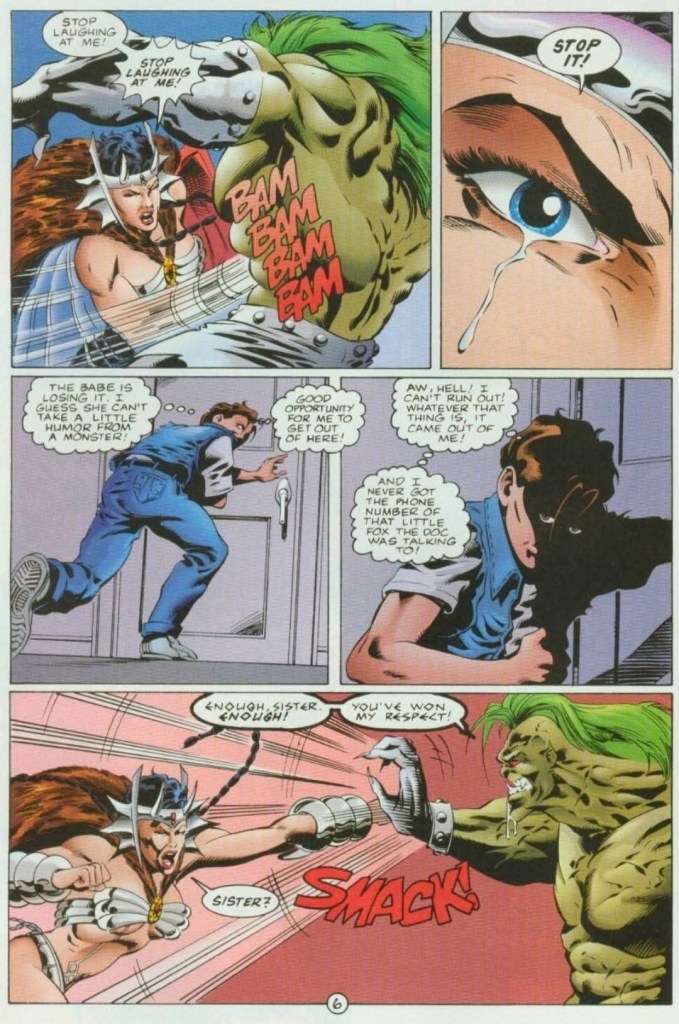
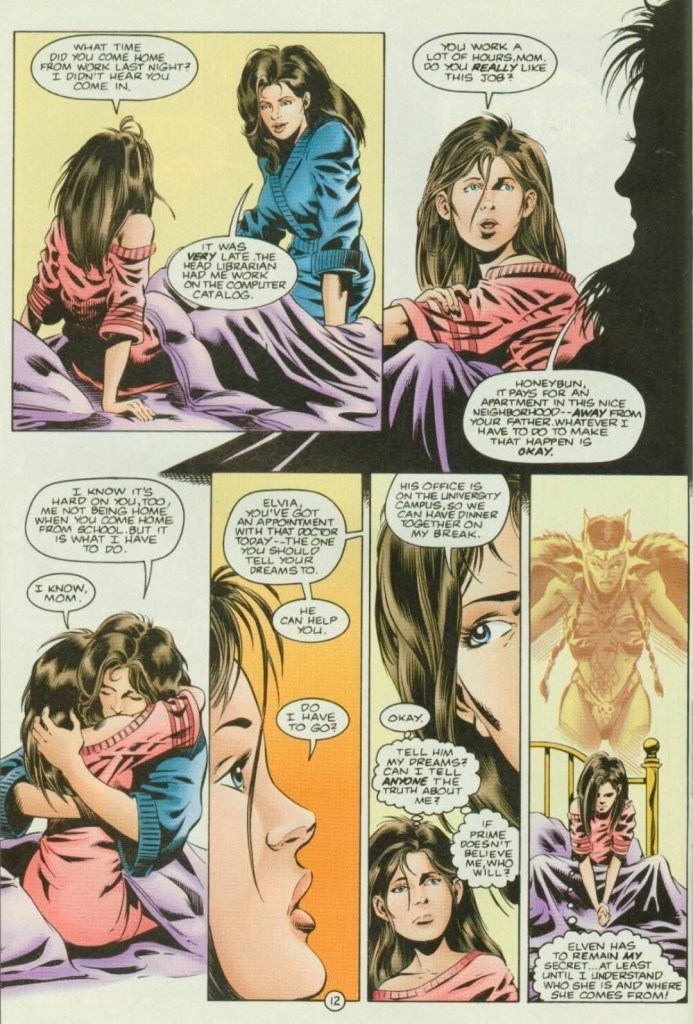
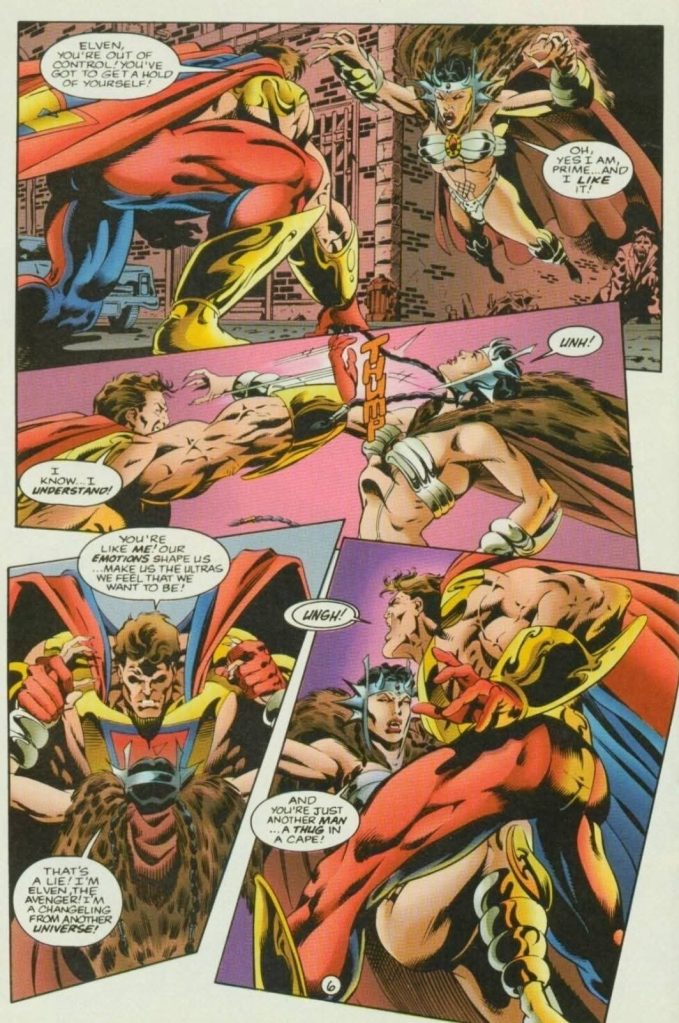
A Look Back at Prime #10 (1994)

Welcome back, superhero fans, 1990s arts and culture enthusiasts, Ultraverse fans and comic book collectors! Today we revisit the Ultraverse to take a look at one of the many tales of Prime from the monthly series that first launched in 1993.

Within the Ultraverse is a hero that was notably absent in the many UV comic books I reviewed, and Malibu Comics even published a regular series of the character. That character is Firearm who goes by the civilian identity as Alec Swan. Swan, who has no super powers, is a British private investigator who was formerly a member of an elite cover bureau in his home country. He has been working as a PI in California and he has encountered several super-powered people in the Ultraverse. In this comic book review, he gets involved with Prime.

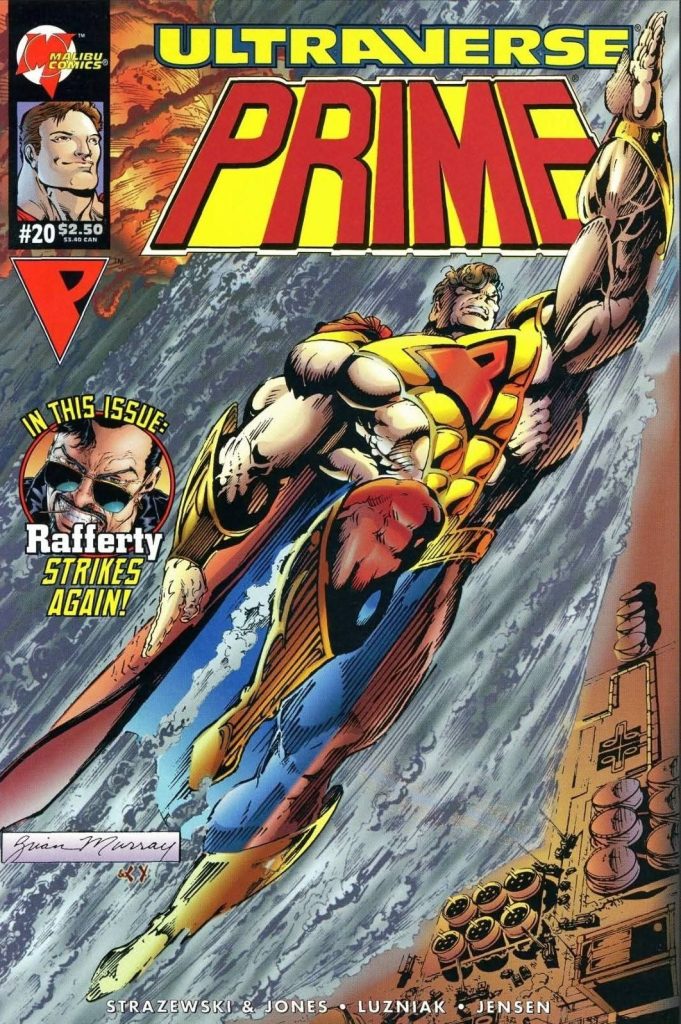
With those details laid down, here is a look back at Prime , published by Malibu Comics in 1994 with a story written by Len Strazewski and Gerard Jones, and illustrated by the late Norm Breyfogle.

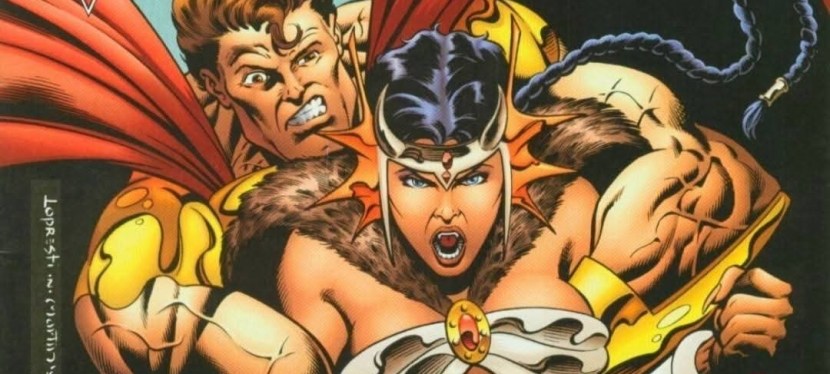
The cover.

Early story

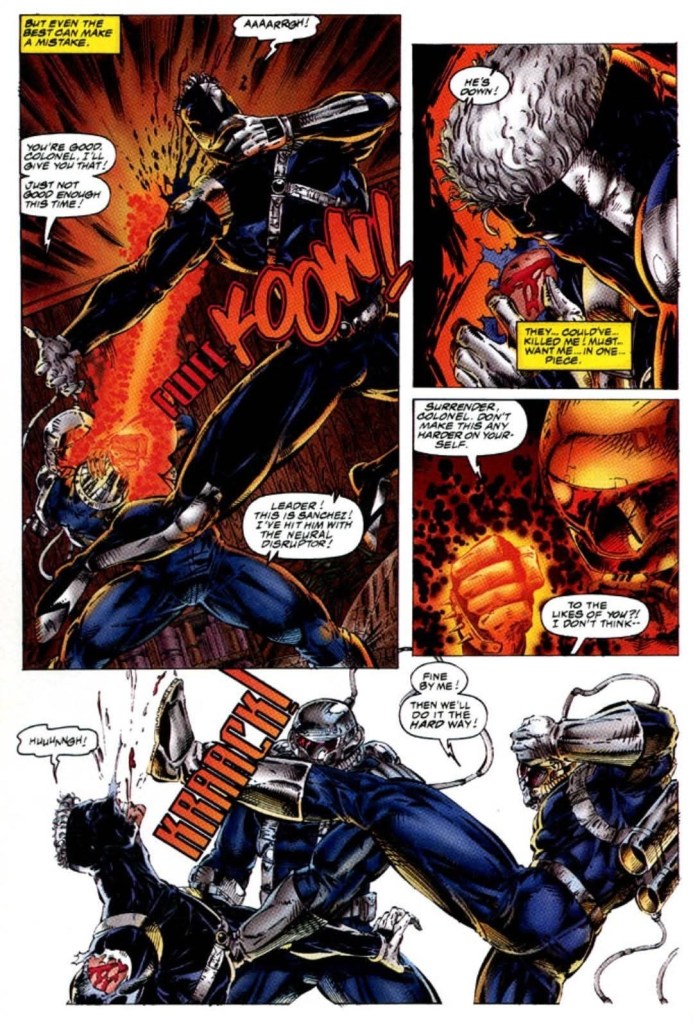
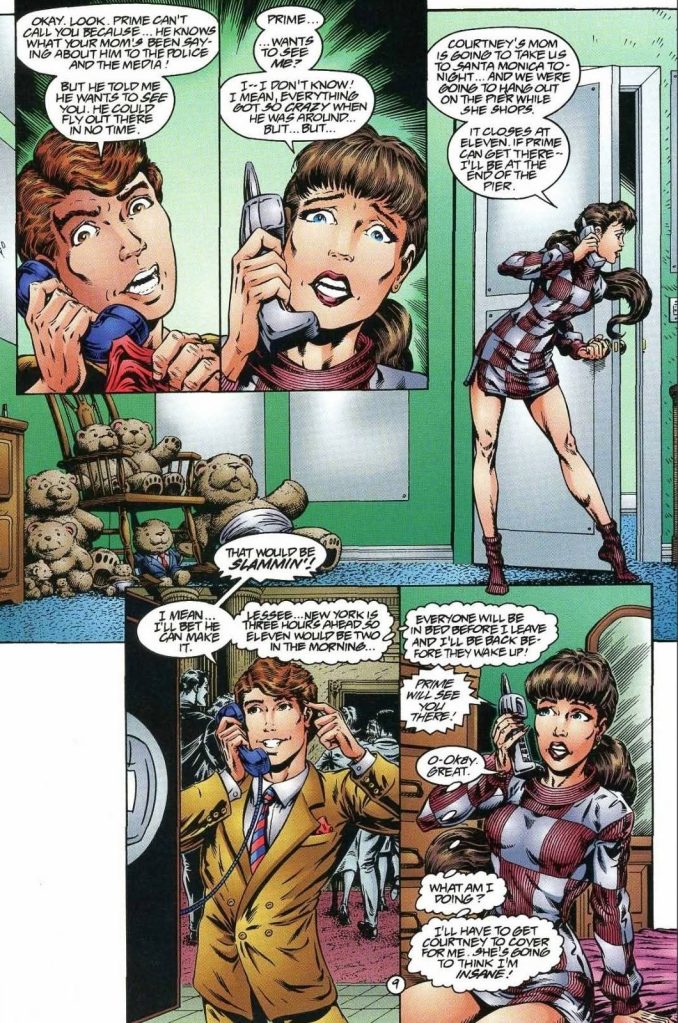
The story begins Prime crashing into a secret facility where Colonel Samuels and his crew have been working in. Prime angrily accuses the colonel for lying to him and pushing him close to killing the people in the nuclear plant and almost getting him killed in a nuclear blast.

Samuels immediately pulls a switch to electrocute Prime (note: through the collar Samuel placed on Kevin Green’s neck) with a massive amount of energy which knocks him out. A short time later, Prime finds himself restrained in front of the colonel, guards and scientists. Samuels reveals to him that the secret society Aladdin has been stepping up efforts to control ultras (super-powered beings) since the incident on the moon (Break-Thru) happened, and they want him out of business.

What Colonel Samuels and staff do not realize is that Firearm is discreetly watching them and listening in the shadows…

Quality

The guards got fooled.

To begin with, I can say that the Strazewski-Jones-Breyfogle team literally turned things upside-down to tell a Prime story while smoothly integrating Firearm into the narrative. This is the first-ever encounter between Prime and Firearm (who at this point of the story met Kevin Green’s father)

Without spoiling the plot, I can say that this tale is heavy with the action which is justified by the presence of Firearm. Prime himself is in a more vulnerable state as Colonel Samuels has clever advantages over him. The result is a story packed with action and has some suspense and intrigue mixed in. The reading experience flowed smoothly and there never was any boring moment in any scene.

Firearm’s presence here opened some opportunities for the creative team to develop Kevin Green’s personality and what they came up with was executed efficiently and with depth. As for Colonel Samuels, his wickedness reached a boiling point in this tale and the creative team came up with something that caught me off-guard. I promise you, what happened to Samuels here is worth discovering and it will compel you to examine or anticipate the consequences of the action he took.

Conclusion

Somehow, Colonel Samuels and his staff failed to notice Firearm’s presence.

While the previous issue was a return to form for the regular series, Prime (1994) was a pleasing crossover tale that successfully showcased action, suspense, intrigue and new dimensions of Kevin Green’s personal growth. This first-ever encounter between Prime and Firearm was executed solidly and the reading experience in general was engaging from start to finish. The way I see it, this old Ultraverse comic book will please fans of both Firearm and Prime.

Overall, Prime (1994) is highly recommended.

+++++

Thank you for reading. If you find this article engaging, please click the like button below and also please consider sharing this article to others. If you are looking for a copywriter to create content for your special project or business, check out my services and my portfolio. If you want to support my website, please consider making a donation. Feel free to contact me with a private message. Also please feel free to visit my Facebook page Author Carlo Carrasco and follow me on Twitter at  @HavenorFantasy as well as on Tumblr at https://carlocarrasco.tumblr.com/ and on Instagram at https://www.instagram.com/authorcarlocarrasco/.
A Look Back at Prime #9 (1994)

Welcome back, superhero fans, 1990s arts and culture enthusiasts, Ultraverse fans and comic book collectors! Today we revisit the Ultraverse to take a look at one of the many tales of Prime from the monthly series that first launched in 1993.

For the newcomers reading this, Prime is one of the definitive, major heroes of the entire Ultraverse along with Hardcase, Mantra and Prototype. Prime is also a major part of the team UltraForce. What makes the muscular and super strong Prime interesting is that his true identity is a teenager named Kevin Green who finds himself struggling between his superhero activities, his social life and his family. Having previously read and reviewed lots of Prime comic books, I can say that I had a lot of fun along the way. There are still some comic books about Prime that I have yet to review.

With those details laid down, here is a look back at Prime , published by Malibu Comics in 1994 with a story written by Len Strazewski and Gerard Jones, and illustrated by the late Norm Breyfogle.

The cover.

Early story

The story begins with Kevin’s mother helplessly tied to a chair with her mouth covered inside their home. By this time, Kevin (Prime) has been gone for more than a week already and her husband Russ won’t even call the police for help. For her, the people who informed her that Kevin has to be isolated because of some kind of a disease lied.

Suddenly a uniformed man armed with a rifle tells her that she will be in trouble if she makes so much noise. He tells her that Kevin is just outside the house and his team intends to collect him again.

Outside, Kevin just arrived following his unexpected adventure with Mantra (for crossover references, the comic books are Mantra #7 and Prime #8). Not knowing who Mantra really is, he remembers getting kissed by her and has an intention to see her whenever he wants. As soon as he opens the front door of their home, Kevin immediately gets dragged inside and restrained by two armed men. Colonel Samuels is inside…

Quality

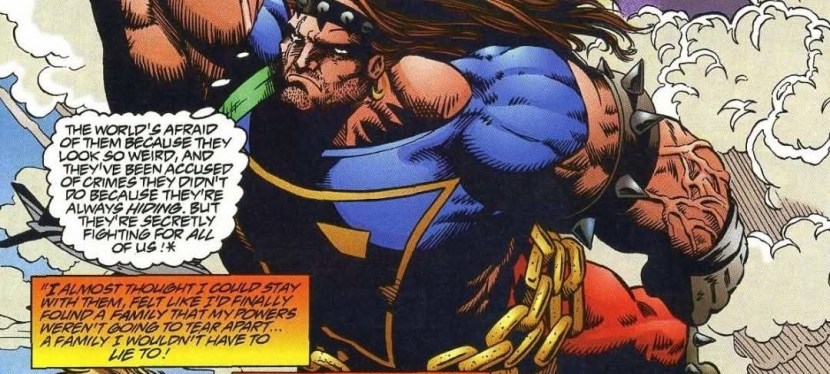
Prime has no choice but to do the dirty work of the abusive Colonel Samuels (who has access to US President Bill Clinton).

Being set shortly after the events of Break-Thru (read my retro reviews by clicking here, here and here) and Prime’s encounters with Mantra, this tale is clearly a return to form for the Prime monthly series. Symbolically, Colonel Samuels returns as the chief antagonist and he clearly is not done yet with messing with Prime as well as with the Green family while abusing his power. Samuels is clearly evil and having served in the American military for decades, he has access to the government’s information regarding the ultras (which places the Green family in disadvantageous situations) and he has all resources needed to ruin Prime’s life.

Prime here gets involved in a mission being at a serious disadvantage as Colonel Samuels has the power and means to make him do dirty tasks. Samuels even has direct access to US President Bill Clinton (a real-life abuser of women, a leader who empowered Islamic terrorists and a profiteer with his family’s foundation) to do high-risk operations supposedly in service of America.

What is very clear in this story written by Strazewski and Jones is that intrigue (backed by twists) made the narrative powerful and engaging to follow. Even though there is a clear bias supporting the hippies, the political correctness minds, the anti-nuclear zealots and the solar power extremists, the tale is still entertaining to read. More notably, you will see how Prime develops as he tackles a very dangerous situation that involves annihilation in American land. I really like the way the writers showed Prime struggling to analyze what to do as the pressure mounts immensely on him.

Conclusion

Easily the most dynamic image of the comic book drawn by the late Norm Breyfogle.

Prime (1994) is another very solid Ultraverse tale made by the Strazewski-Jones-Breyfogle team. It is creative a return to form for the Prime monthly series (because Prime got busy with Break-Thru and spent time with Mantra) and seeing the evil Colonel Samuel raise the stakes added a lot of depth to the story. At this particular stage of the series, Kevin Green’s life is getting out of hand and his parents are already in the middle of a series of very unfortunate events. This old comic book is still fun to read.

Overall, Prime (1994) is recommended.

+++++

Thank you for reading. If you find this article engaging, please click the like button below and also please consider sharing this article to others. If you are looking for a copywriter to create content for your special project or business, check out my services and my portfolio. If you want to support my website, please consider making a donation. Feel free to contact me with a private message. Also please feel free to visit my Facebook page Author Carlo Carrasco and follow me on Twitter at  @HavenorFantasy as well as on Tumblr at https://carlocarrasco.tumblr.com/ and on Instagram at https://www.instagram.com/authorcarlocarrasco/

A Look Back at X-Men Adventures #12 (1993)

Welcome back, superhero ans, 1990s arts and culture enthusiasts, X-Men fans and comic book collectors! Today we revisit the X-Men Adventures monthly series – the first series specifically – which was the literary adaptation of the popular X-Men animated series of the 1990s.  

If you are familiar with the classic lore of X-Men literature, you will remember Warren Worthington as Angel who is one of the original members of the X-Men introduced in 1963. That same character would eventually get involved with the super villain Apocalypse and gain a deadlier form as Archangel.

With those details laid down, here is a look back at X-Men Adventures , published by Marvel Comics in 1993 with a story written by Ralph Macchio and drawn by Andrew Wildman.

The cover.

Early story

The story begins inside a facility on Muir Island where genetic experimentation happens and draws mutants who seek a cure for the curse that makes them different. Already four mutants have arrived and were ready to undergo a grand experiment. The doctor in charge of the facility – Gottfried Adler – has already disappeared and in his place is the very powerful mutant Apocalypse.

Apocalypse succeeded in turning four mutants into his Four Horsemen composed of Archangel, War, Famine and Pestilence. For Apocalypse, the age of chaos is at hand.

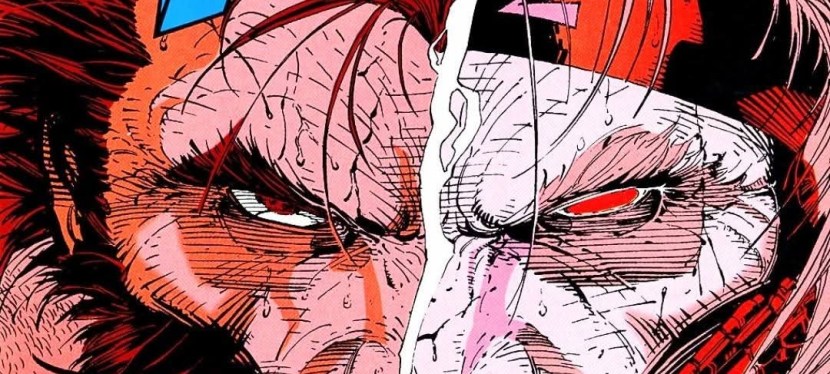
Meanwhile at Charles Xavier’s School For Gifted Youngsters, the leisure session of Jubilee, Gambit, Jean Grey and Rogue suddenly ends when Storm grabs their attention and shows them TV footage that Professor X wants them to see.

TV news footage shows an important meeting happening in France for the conventional weapons disarmament. Moments later, Apocalypse crashes into the meeting with his Four Horsemen causing harm…

Quality

Rogue takes on Archangel while Wolverine is busy dealing with Apocalypse.

This comic book marks the emergence of Apocalypse as a tremendous force of evil following his series debut in issue #10 and short appearance in issue #11. As the main antagonist, Apocalypse – who is obsessed with survival and progress – really comes out in full force against humanity with his Four Horsemen as his deadly enforcers.

The threat of Apocalypse and his Four Horsemen towards humanity is clearly the main feature of this comic book and Macchio’s script has a good structure for the narrative. This makes the story easy to follow while still presenting a lot of details that can be absorbed efficiently. Apocalypse’s presence not only drew the X-Men to spring into action, it also drew Charles Xavier’s own fear that they would face an enemy more dangerous than Magneto.

While the main plot is consistently intense, this comic book also serves as a continuation of Rogue’s personal pursuits since issue which is worth reading. Along the way, Archangel (whose new appearance started at the end of issue ) notably got enough share of the spotlight and is easily the more captivating member of the Four Horsemen. The way Warren Worthington is portrayed here is clearly different from his literary version and that means you should not expect Professor X to claim him as one of his original X-Men members.

When it comes to the visuals, Andrew Wildman’s artistic style is present but many of the drawings here look rushed. In fairness, Wildman succeeded in making Apocalypse and the Four Horsemen look really threatening to human civilization thanks to his nice execution of visual dynamism in certain pages.

Conclusion

Professor X reveals his fear of Apocalypse to his team during their meeting.

X-Men Adventures (1993) is a pretty good read thanks to the strong script by Macchio based on the teleplay from the animated series. It concluded the Muir Island saga in a very satisfying manner which includes putting Rogue’s subplot with solid closure (complete with a moral lesson about accepting her team as her family). By the time I reached the end of the comic book, it was clear that Apocalypse is a major antagonist with the long-term in mind.

Overall, X-Men Adventures (1993) is recommended.

+++++

Thank you for reading. If you find this article engaging, please click the like button below and also please consider sharing this article to others. If you are looking for a copywriter to create content for your special project or business, check out my services and my portfolio. If you want to support my website, please consider making a donation. Feel free to contact me with a private message. Also please feel free to visit my Facebook page Author Carlo Carrasco and follow me on Twitter at  @HavenorFantasy as well as on Tumblr at https://carlocarrasco.tumblr.com/ and on Instagram at https://www.instagram.com/authorcarlocarrasco/.
A Look Back at Demolition Man #1 (1993)

Welcome back movie fans, 1990s arts and culture enthusiasts, and comic book collectors! Today we go back to the year 1993 to examine the first issue of a comic book mini-series that served as the official adaptation of the movie Demolition Man.

Believe it or not, I completely missed out on Demolition Man’s theatrical run here in the Philippines. I only heard about the movie from feedback from my friends who saw it and they often mentioned the virtual reality sex scene. Strangely, they did not talk much about the match-up between Sylvester Stallone and Wesley Snipes.

The first time I saw the movie was on a rented laserdisc in 1995. As it was a Joel Silver production, the movie really had very high production values and it also had that subtle balance between hard action, science fiction and comedy. I enjoyed watching Demolition Man and its unique presentation about the future was memorable to me. Recently, I finally read the first issue of the comic book mini-series based on the movie.

With those details laid down, here is a look back at Demolition Man , published in 1993 by DC Comics with a story written by Gary Cohn (based on the screenplay by Daniel Waters, Robert Reneau and Peter M. Lenkov) and drawn by Rod Whigham. This is the first of a 4-issue mini-series.

The cover.

Early story

The story begins in 1996. Los Angeles has turned into a city of violent crime with a lot of areas left in ruin. A police department helicopter flies over the Hollywood sign bringing John Spartan (Demolition Man) to a wide, old building filled with some armed criminals. Spartan suspects that Simon Phoenix is responsible for hijacking a bus of thirty people and they all could be inside the building. The thermogram scan on the building only shows seven people and no signs of the passengers.

Determined to find the passengers, Spartan does a bungee jump to safely land on the rooftop of the building. He takes down a few thugs as he gradually infiltrates the place.

Elsewhere, Simon Phoenix sees Spartan via security camera. As Spartan eventually breaks into a large room, Phoenix releases a large amount of gasoline on the floor. Spartan and Phoenix encounter each other and an intense talk about missing passengers begins. As the Demolition Man presses for answers with guns aimed, Phoenix prepares to spark a sudden fire…

Quality

This scene never appeared in the movie. If it made it the final cut, it definitely would have slowed the film’s pace down a lot.

Having seen the movie a number of times, this comic book covers the opening and closes with a notable scene that took place after the shocking revelation about the passengers. The good news here is that the comic book creators did a really fine adaptation of the scenes from the movie. Certain moments looked and felt like they were adapted from an older version of the script (note: Spartan bidding goodbye to his wife and little daughter is the obvious scene) while some moments seem to be creative additions or expansion by the creators.

The pacing of the story is pretty good and even the slowest scenes never felt boring. This is because the writing by Gary Cohn is quite engaging and there is always some interesting or something important to read as the story goes on. That said, when the spectacle happens, the pay-off to the build-up is truly worth it.

Still on the writing, Cohn inserted a good amount of details into the dialogue as well as the moments revealing what John Spartan is thinking. This ultimately gives readers a clearer look into Spartan’s personality as well as what were the elements from his past defined him as the Demolition Man to many.

Rod Whigham is very good with visualizing the script. For one thing, he does a good job capturing the likeness of Stallone and Snipes in specific pages of the comic book. When it comes to spectacle (action, explosions and stunts), Whigham’s work ranges from efficiency to dynamic depending on what happens. This is a good looking comic book!

Conclusion

Like in the movie, John Spartan and Simon Phoenix fight surrounded by flames.

Demolition Man (1993) is a very solid adaptation and it is also a great way to start its mini-series. The comic book essentially captured the elements of several scenes from the movie and whenever the spotlight is focused on John Spartan or Simon Phoenix, I could senses Stallone and Snipes in them. The narrative flows smoothly and I had a very good reading experience. I am looking forward to the next issue.

Overall, Demolition Man (1993) is recommended.

+++++

Thank you for reading. If you find this article engaging, please click the like button below, share this article to others and also please consider making a donation to support my publishing. If you are looking for a copywriter to create content for your special project or business, check out my services and my portfolio. Feel free to contact me with a private message. Also please feel free to visit my Facebook page Author Carlo Carrasco and follow me on Twitter at  @HavenorFantasy as well as on Tumblr at https://carlocarrasco.tumblr.com/ and on Instagram at https://www.instagram.com/authorcarlocarrasco

A Look Back at Amazing Spider-Man #387 (1994)

Welcome back superhero enthusiasts, 1990s arts and culture enthusiasts, Marvel Comics fans and comic book collectors! Today we go back to the 1990s to examine a small part of the Marvel Comics shared universe through a tale of the Amazing Spider-Man monthly series.

In my previous retro review, Spider-Man had a match-up with his arch-enemy the Vulture who returned with a strong obsession within. The rematch is significant not only because it the two have a rivalry that lasted decades in reality, but also because the story was structured to function as a light reintroduction of Adrian Toomes (Vulture) for new Spider-Man fans of the 1990s.

With those details laid down, here is a look back at Amazing Spider-Man , published in 1994 by Marvel Comics with a story written by David Michelinie and drawn by Mark Bagley.

The cover.

Early story

The story begins with the Vulture absorbing energy and the youth of Spider-Man using the Juvenator in front of Dr. Sanchez. As a result, Adrian Toomes/Vulture physically turned much younger with rejuvenated skin, cancer getting health, a stronger body and his hair grown back. He declares himself as the new vital Vulture. Spider-Man is down on the floor clearly weakened and with a change of his body’s shape.

Instead of taking the opportunity to kill Spider-Man, the Vulture decides to fly away knowing that his long-time rival will have to deal with brittle bones of old age. As Dr. Sanchez tries to help him, Spider-Man feels exhausted, his lungs feeling gummy and his ears ringing. Knowing that police officers are coming, the webslinger decides to get away and leave Dr. Sanchez behind.

Moments later at the top of the building, the weakened Spider-Man takes his mask and glove off realizing that he has turned into an elderly man…

Quality

Can you recognize Peter Parker?

To get straight to the point, this continued rematch between Spider-Man and the Vulture is so outlandish (backed with the science fiction approach to life energy and the so-called fountain of youth), it almost felt like it was a story crafted for the What If series of comic books. In fact, the sudden aging of Peter Parker into an actually elderly man getting into close calls with two notable family members made this tale even more suitable for the What If series (note: What If #4 of 1989 had a severely aged Peter Parker in it).

Still on the storytelling aspect of this comic book, the creators used the fountain of youth concept to pull off a significant twist on the enduring Spider-Man/Vulture rivalry. As Spider-Man grew so old, the Vulture became much younger which in turn convinced him he could reinvent himself and put his genius of electro-magnetism to great use.  

To make things clear, this tale is not purely a Spider-Man/Vulture rivalry with sci-fi twists. In fact, there is more to the plot than meets the eye here as the Juvenator machine becomes an important element of the story (leading to something intriguing in the next issue), and a sinister revelation concluded this comic book.

Conclusion

The Vulture rejuvenated into a young man at the expense of Spider-Man.

Amazing Spider-Man (1994) is a solid follow-up to the previous issue and it also was a radical attempt to twist the Spider-Man/Vulture rivalry a lot reaching to the point of making it look and feel like a What If story. There is a good amount of suspense, character development and enough superhero spectacle that paid-off the build-up nicely. Ultimately, this tale is actually a part of a short storyline leading to the intriguing events of issue .  

Overall, Amazing Spider-Man (1994) is recommended.

+++++

Thank you for reading. If you find this article engaging, please click the like button below, share this article to others and also please consider making a donation to support my publishing. If you are looking for a copywriter to create content for your special project or business, check out my services and my portfolio. Feel free to contact me with a private message. Also please feel free to visit my Facebook page Author Carlo Carrasco and follow me on Twitter at  @HavenorFantasy as well as on Tumblr at https://carlocarrasco.tumblr.com/ and on Instagram at https://www.instagram.com/authorcarlocarrasco

A Look Back at Spider-Man #4 (1990)

Welcome back superhero enthusiasts, 1990s culture enthusiasts and comic book collectors! Today we go back to the early 1990s and explore a part of the Marvel Comics shared universe through a tale of the Spider-Man monthly series.

Having reviewed the first three issues of the Spider-Man monthly series written and drawn by Todd McFarlane (click here, here and here), I can say that the 5-part Torment storyline has a daring concept, adulterated imagery and clunky storytelling. Issues and saw Spider-Man in violent battles with the Lizard who is clearly not himself but under the control of the Haitian witch Calypso. It is inevitable Spider-Man, who has been in a long-lasting disadvantage so far, will somehow meet Calypso face to face.

With those details laid down, here is a look back at Spider-Man , published in 1990 by Marvel Comics with a story written and drawn by Todd McFarlane. This is the 4th chapter of the Torment storyline.

The cover.

Early story

The story begins in a dirty alley deep within New York City. An exhausted and disoriented Spider-Man is shocked to see a grotesque looking Kraven with the vicious Lizard beside him. The moment made him remember what happened as a result of his previous with Kraven (note: refer to the Kraven’s Last Hunt storyline) which includes him getting buried temporarily with a grave designated to him.

Eventually Spider-Man sees through the illusion and realizes that Kraven is not in front of him but Calypso with the Lizard still under her full control. With an unspoken command from Calypso, the Lizard moves towards the weakened Spidey and carries him bodily…

Quality

This portrayal of Mary Jane having a good time again in the city without her husband is clearly filler and it did not add anything to the plot.

As anticipated, the webslinger finally met the Haitian witch who had been controlling the Lizard all along. With a mostly slow pace, the story has Spider-Man being helpless in the presence of two powerful enemies and McFarlane stylishly dramatizes moments from Calypso’s past showing her acceptance of evil ways (witchcraft), her personal connection with Kraven and her desire to have a new sacrifice done.

With Spider-Man restrained a lot for most of the story, it was not surprising to see Calypso have a good share of the spotlight to herself and the Lizard is clearly portrayed as her enforcer and assistant contrasting what was presented in the first 3 issues.

Unsurprisingly, the storytelling feels choppy although the slow pace allows readers to grasp Calypso’s intentions and her main purpose in the entire storyline. The lack of spectacle allowed McFarlane to implement long segments of suspense mixed with horror. With Spider-Man doing not so much, he’s technically a supporting character symbolizing the reader’s curiosity.

Conclusion

There is nothing like waking up in the presence of two evil figures while being restrained.

Compared with the previous, Spider-Man (1990) does not have much to show and has even less entertainment value. Unless you are a die-hard fan of Calypso (so twisted and demonic under McFarlane’s handling), this particular story won’t mean much to Spider-Man faithful. The webslinger is still helpless but this is all part of the build-up for the fifth and final chapter.

In fairness, what was shown here might inspire fans to revisit Kraven’s Last Hunt and read past Spider-Man comic books showing Calypso’s connection with Kraven (note: Spider-Man and Calypso were present in Amazing Spider-Man ). In my view, this comic book is not terrible but it does not have much entertainment value nor does it have anything engaging to show. I don’t feel so motivated to proceed with issue .

Overall, Spider-Man (1990) should be avoided.

+++++

Thank you for reading. If you find this article engaging, please click the like button below, share this article to others and also please consider making a donation to support my publishing. If you are looking for a copywriter to create content for your special project or business, check out my services and my portfolio. Feel free to contact me with a private message. Also please feel free to visit my Facebook page Author Carlo Carrasco and follow me on Twitter at  @HavenorFantasy as well as on Tumblr at https://carlocarrasco.tumblr.com/ and on Instagram at https://www.instagram.com/authorcarlocarrasco

A Look Back at Mary Shelley’s Frankenstein #1 (1994)

Welcome back movie enthusiasts, 1990s arts and culture enthusiasts, and comic book collectors! Today we go back to the year 1994 to examine the first issue of a comic book mini-series that served as the official adaptation of the movie Mary Shelley’s Frankenstein.

The 1994 film – starring and directed by Kenneth Branagh and produced by Francis Ford Coppola – had a huge marketing push through the local media and in the cinemas here in the Philippines. Robert De Niro’s name alone attracted a lot of moviegoers’ attention and there were some literature enthusiasts who had the impression (or were hopeful) that the film would be faithful to the 1818 Gothic novel by Mary Shelley.

Like many others here in the Philippines, I went to the local cinema (which was half-full) to watch Mary Shelley’s Frankenstein and ended up having a mixed opinion. The production values looked grand and the cinematography (specifically the location shots and vistas) was very impressive but I felt something was off with regards to the direction which brought the storytelling down.

As with some other Hollywood movies of the time, there was a comic book adaptation of Mary Shelley’s Frankenstein in the form of a mini-series from Topps Comics. I remember seeing issue displayed at the local comic book specialty store shortly after seeing the movie but I was not interested on buying it. Recently, I finally secured a copy of the comic book and read it for the first time ever.

With those details laid down, here is a look back at Mary Shelley’s Frankenstein , published in 1994 by Topps Comics with a story written by Roy Thomas (based on the screenplay by Steph Lady and Frank Darabont) and drawn by Rafael Kayanan. This is the first of a 4-issue mini-series.

The cover.

Early story

The story begins at sea in 1794 in the middle of very cold weather. The ship carrying Captain Walton and his crew crashed on to pack ice and became trapped. The captain refuses to give up on his quest to reach the north pole and he has the crew chopping the ice. Suddenly they hear a frightening noise as something approaches.

A cloaked man emerges from the mist and it turns out he was not the source of the frightening noise. Without hesitation and right in front of the captain, the cloaked man tells the crew to bring their weapons and follow him. The captain tells the newcomer that only he gives the orders. The crew’s dogs ran away moving towards the source of the noise in the mist.

The dogs reached the source of the noise and attack it. The dogs were no match for it as they each got hit and eliminated. As the crew heard the dogs die, the captain tells everyone to move back to the ship.

Moments later, the captain and the cloaked man are inside the ship. A tall human figure slowly approaches the ship. After an exchange of words about what has been going on, the captain asked the cloaked man who he is. The man reveals he is Victor Frankenstein…  

Quality

This particular scene looked great in the movie itself. There was nothing the comic book creators could do to translate it into illustrated literature.

To make things clear, this comic book covers the film’s beginning until the scene in which Frankenstein attempts to give his creature life. As there were no printed advertisements, the comic book creators tried hard to cram several scenes into it complete with lots of details regarding the setting, the scientific thoughts of Frankenstein, experiment details and more. Indeed, a lot of the exposition in the film made it here and there were also cinematic sequences that simply could not be replicated in print format.

The illustrated opening scene replicated enough of the essence of the cinematic opening. Like the movie, the narrative moves back in time to explore Victor Frankenstein’s youth, his family, how Elizabeth became his adopted sister and how family tragedy started his path to becoming obsessed with overcoming death through science, medicine, chemistry and biology.

As it is clear that this illustrated version could never replicate the grand visuals of the film, such scenes were trimmed a lot with the readers in mind. The narrative moved between slow and medium pace similar to the film but for readers, it is a must to pay close attention to the details to truly understand the story and how Frankenstein develops.

Frankenstein here is portrayed not only as an obsessed scientist (who wants to conquer death by creating life with his own efforts) but also as a hurting man whose destiny has been altered with pain, struggle and darkness ahead. No matter what the odds were, Frankenstein believes he can achieve what is impossible while also believing he is not a mad man. Of course, Frankenstein’s own obsession blinded him so much, he fails to realize the truth that he has turned into a truly mad scientist who does not care at all about ethics, nature and morality. As such, Frankenstein is truly unlikable as the protagonist.  

While a lot of effort was done to translate the film’s plot into comic book storytelling, Rafael Kayanan did a decent job with the visuals showing ranging quality throughout. Given the historical setting and European locations of the movie reflecting the novel, it is indeed difficult for any artist to replicate the looks, the environments and the many material objects of the period. Some illustrated scenes looked detailed while others showed some signs of rush. If you are hoping to see the characters looking like the actors in the movie, you won’t find much of that here. Ironically, there were a few shots that reflected that gore and violent movements of the film.  

Apart from the story, there are two pages in this comic book that provided details about the history of Mary Shelley’s novel and how her creation impacted entertainment and pop culture in America (including the famous 1931 movie). Selected images were also included.

Conclusion

The dogs are powerless towards the unseen creature of Frankenstein.

The way I look at Mary Shelley’s Frankenstein (1994), it clearly follows the movie’s scenes visually rather than following closely the screenplay and that means translating Kenneth Branagh’s vision into comic book form here. As such, there definitely is something off with regards to pacing and storytelling. There really is not much enjoyment in this 1st issue of the comic book adaptation mini-series. In fact, this is more of a humanized portrayal of unethical science driven by one character’s obsession with conquering death.

Overall, Mary Shelley’s Frankenstein (1994) should be avoided.

+++++

Thank you for reading. If you find this article engaging, please click the like button below, share this article to others and also please consider making a donation to support my publishing. If you are looking for a copywriter to create content for your special project or business, check out my services and my portfolio. Feel free to contact me with a private message. Also please feel free to visit my Facebook page Author Carlo Carrasco and follow me on Twitter at  @HavenorFantasy as well as on Tumblr at https://carlocarrasco.tumblr.com/ and on Instagram at https://www.instagram.com/authorcarlocarrasco

What to watch on YouTube right now – Part 111

Welcome back my readers, YouTube viewers and all others who followed this series of articles focused on YouTube videos worth watching. Have you been searching for something fun or interesting to watch on YouTube? Do you feel bored right now and you crave for something to see on the world’s most popular online video destination?

I recommend you check out the following videos I found.

Ashleigh Burton Reacts To Full Metal Jacket – A few months ago, my YouTube series post included several reaction videos of Stanley Kubrick’s Full Metal Jacket. Recently Ashleigh Burton posted her own Full Metal Jacket reaction video and I can say that it is very enjoyable to watch as the YouTuber (who is a jolly person) had her own bouts of laugh-out-loud moments reacting to it. Watch Ashleigh Burton’s video below.

Ghost in the Shell’s Relevance Analyzed  – I was still in college the first time I saw the 1995 anime feature film Ghost in the Shell on home video. While I enjoyed the action and the high-quality visuals (2D animation mixed with computer-generated graphics), I was unable to grasp the story and its many philosophical messages within. To really enjoy it and understand Masamune Shirow’s concepts, watching Ghost in the Shell should be done with patience and the right mindset. Fortunately, a YouTuber took the time to replay the anime feature film and paid close attention to the many details within. Indeed, Ghost in the Shell is more relevant than ever today as it tackled hacking, cybersecurity, identity and artificial intelligence early on. To find out more, watch the video below.

#3 Yakisoba In Japan – You like Yakisoba? Yakisoba is a Japanese noodle stir-fried dish and it first appeared in food stalls in Japan about a century ago. There are lots of places in Japan that offer yakisoba to customers and there are also variants of it depending on where you find it. In the city of Kobe (the same city that got ravaged by a massive earthquake in the mid-1990s) is a Yakisoba shop that serves a lot of customers each day. That means something must be really good with the yakisoba. Watch and learn from the video below.

Do You Trust James Gunn? – I never bothered to watch James Gunn’s Superman movie this year. In fact, when it was announced that Gunn and his partner would start a whole new line of DC Comics superhero movie projects under the Warner Bros. banner a few years ago, I was never excited nor interested. I saw Gunn’s work in Guardians of the Galaxy (he wrote and directed it) and the 2004 Dawn of the Dead remake (he wrote it) and neither film was worth replaying. I’m not saying Gunn is a bad filmmaker, I just don’t find his work compelling enough and box office numbers don’t change a thing. He also directed The Suicide Squad which ended up as a commercial disappointment. When it comes to cinematic superhero works, there are reasons why long-time superhero fans and comic book readers don’t trust Gunn which you can learn from the videos below.

Austria Pushes Back Against Mass Migration – Right from the top, Austria made decisive moves to push back against the flow of mass migration and made it clear they want to preserve their culture and prioritize their citizens. It has been over ten years since Germany – under Angela Merkel – committed a huge blunder by opening its borders to so many people from the Middle East and Africa which affected other European nations negatively. It is obvious that the high amount of so-called refugees already in Europe collectively have no desire to assimilate with the culture and norms of the nations they entered, and they want more social benefits and more money at the expense of the citizens. Austria itself had enough and you can find out how they pushed back against mass migration by watching the video below.

+++++

Thank you for reading. If you find this article engaging, please click the like button below, share this article to others and also please consider making a donation to support my publishing. If you are looking for a copywriter to create content for your special project or business, check out my services and my portfolio. Feel free to contact me with a private message. Also please feel free to visit my Facebook page Author Carlo Carrasco and follow me on Twitter at  @HavenorFantasy as well as on Tumblr at https://carlocarrasco.tumblr.com/ and on Instagram athttps://www.instagram.com/authorcarlocarrasco

A Look Back at Uncanny X-Men #286 (1992)

Welcome back superhero enthusiasts, 1990s arts and culture enthusiasts, Marvel Comics fans and comic book collectors! Today we go back to the early 1990s to explore one of the many tales of the Marvel shared universe through the Uncanny X-Men series.

While issue #284 marked the turning point following the successful return of Jean Grey and the encounter with Bishop, issue #285 generated strong vibes of the sci-fi TV series Otherworld as it revealed most of the X-Men’s Gold Team members in a completely different world filled with unknown inhabitants and culture. Clearly a lot has happened following the Gold Team’s debut in issue #281 which reflects the respective contributions of the creators.

With those details laid down, here is a look back at Uncanny X-Men , published in 1992 by Marvel Comics with a story co-written by Jim Lee and Scott Lobdell (who worked on the script). The art was done by Whilce Portacio with ink work by Art Thibert.

The cover.

Early story

The story begins with Jean Grey, Colossus, Storm and her male companion (Mikhail Rasputin) together. While Jean is surprised and relieved to see Storm again (she was separated from the team temporarily in the last issue), Colossus is shocked to see his long-lost brother Mikhail alive and well. Mikhail reveals that so many years have passed since he last stood with his little brother and had long abandoned any hope of a reunion.

The reunion is interrupted when a portal has grown larger by the moment and it means that it is only a matter time before Earth is pulled into the realm they are in. Both worlds are at risk of getting destroyed…

Quality

Charles Xavier and Forge are still on Earth separated from the rest of the X-Men’s Gold Team members.

Following the build-up and character developments that happened in the previous issue, this X-Men tale is pretty much a strong pay-off while leaving some space for suspense and surprises. The writers intended to conclude what started in issue and along the way, they had to go through the challenges of introducing a new world, new people and the conflicts within. Mikhail Rasputin – the same guy who helped Storm in issue – is easily the most impactful addition to this tale and because of him and what he revealed, Colossus became emotional and felt like his life was crumbling as he simply could not handle the truth. Colossus’ despair and emotional state here served as the creative seeds that later led to the betrayal he would eventually commit (in Uncanny X-Men ).

The Mikhail-Colossus interaction was easily this comic book’s source of emotions which added some weight to the plot. By the time I reached the end of this issue, I felt really satisfied and at the same time curious about the state of Colossus (note: there’s a still a long road of X-Men tales before Uncanny X-Men ).

With regards to the writing, John Byrne’s intricate touch on the dialog was clearly missing but Scott Lobdell did a fine job taking over. While Whilce Portacio was credited as illustrator, there were a few pages that looked like they were drawn by someone else. The same also happened with regards to the inking in different parts of the comic book…Art Thibert’s inking has a fine touch and there were some images that had aggressive and thicker inking (it has to be the work of someone uncredited).

Conclusion

A very significant moment for the Rasputin brothers witnessed by Jean Grey, Storm and a few of the locals.

While there were some inconsistencies on the quality of the artworks, Uncanny X-Men (1992) had a really strong script and the good news here is that the creative team managed to pull off a solid conclusion. This is the kind of tale in which the X-Men utilized their skills and made tough decisions while being far away from Charles Xavier. At this particular stage of the Uncanny X-Men series, the Gold Team’s development really progressed and they became a more appealing team to follow.

Overall, Uncanny X-Men (1992) is highly recommended!

+++++

Thank you for reading. If you find this article engaging, please click the like button below, share this article to others and also please consider making a donation to support my publishing. If you are looking for a copywriter to create content for your special project or business, check out my services and my portfolio. Feel free to contact me with a private message. Also please feel free to visit my Facebook page Author Carlo Carrasco and follow me on Twitter at  @HavenorFantasy as well as on Tumblr at https://carlocarrasco.tumblr.com/ and on Instagram at https://www.instagram.com/authorcarlocarrasco