A Look Back at Peter Parker, The Spectacular Spider-Man #108 (1985)

Welcome back superhero enthusiasts, 1980s arts and culture enthusiasts, Spider-Man fans and comic book collectors! Today we go back to the year 1985 to examine a small part of the Marvel Comics shared universe through a tale of the Peter Parker, The Spectacular Spider-Man monthly series.

I found issue #107 – the first issue of the Sin-Eater storyline – a pretty engaging tale focused on the murder of Jean DeWolff. The sudden demise of DeWolff really impacted the city of New York and its tale involved not only Spider-Man but also Daredevil. The tale is really a murder mystery that is very grounded with reality.

With those details laid down, here is a look back at Peter Parker, The Spectacular Spider-Man #108, published in 1985 by Marvel Comics with a story written by the late Peter David and the late Rich Buckler.
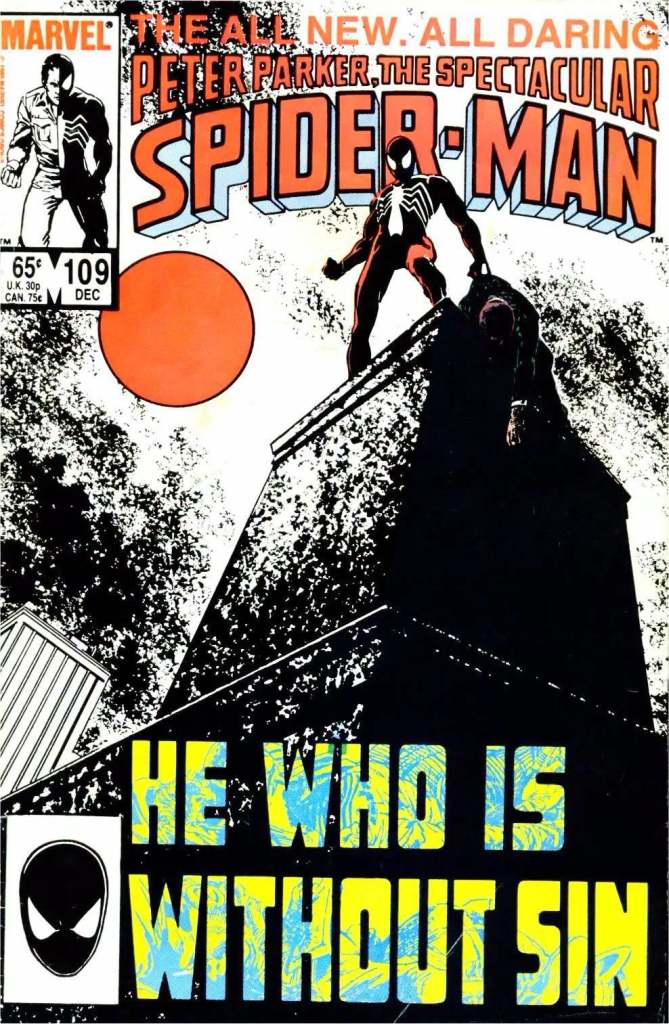
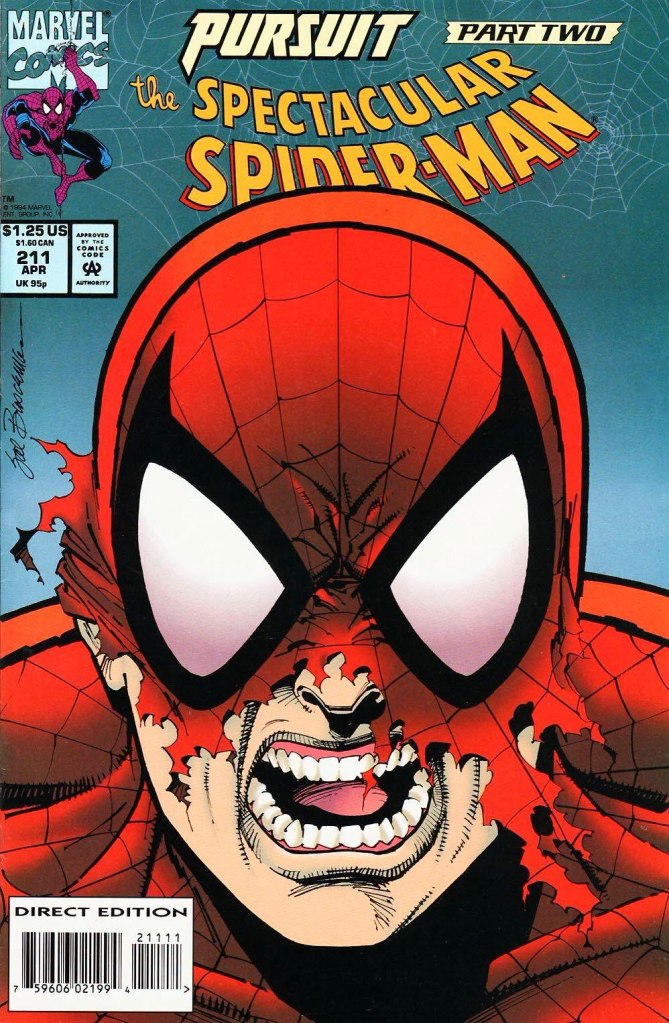
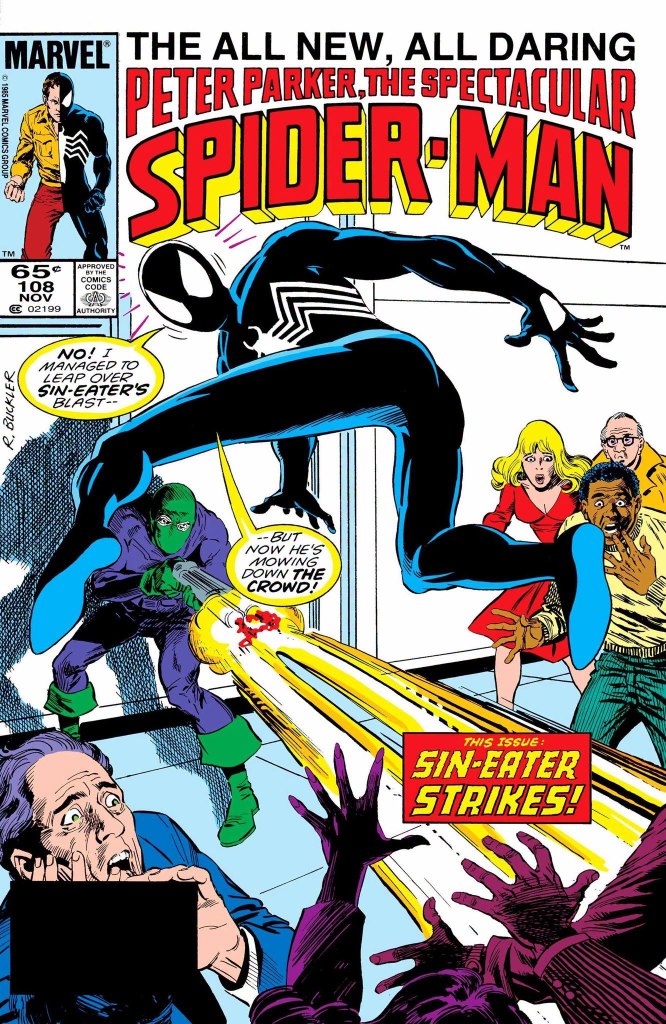
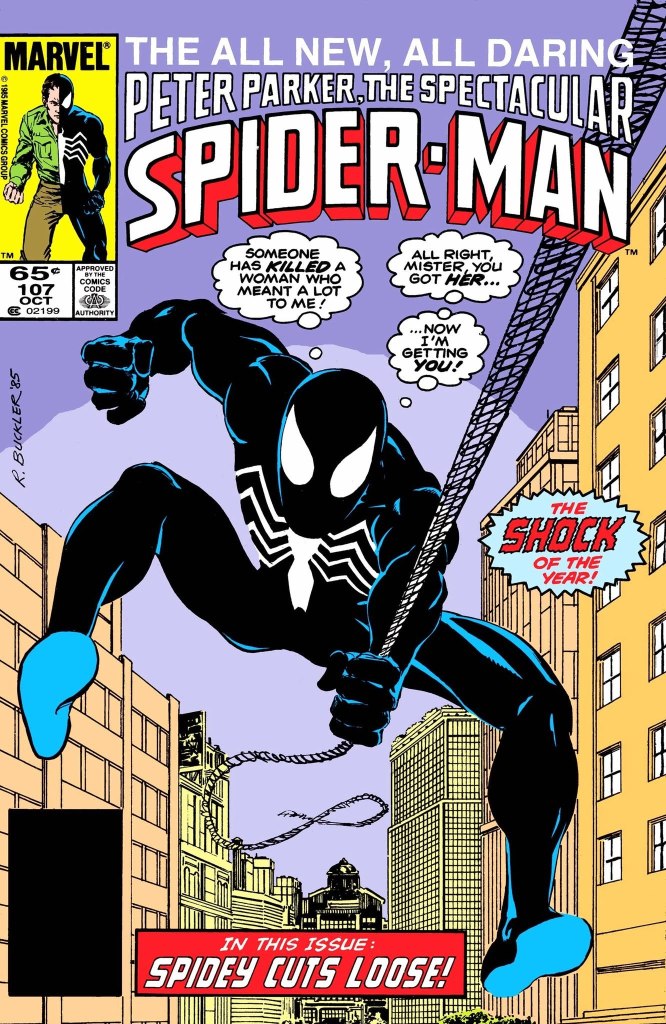
The cover.

Early story

The story begins with Judge Rosenthal lying dead on the floor in his office. Moments earlier, the judge was killed by the Sin-Eater who used a shotgun and in the same room was Matt Murdock (Daredevil). Some people entered the office and the local authorities were called. Murdock slowly makes his way out to discreetly go after the Sin-Eater.

In another part of the city, Peter Parker, Aunt May and the elderly friend named Ernie walk together coming from the courthouse. Ernie could not believe that Judge Rosenthal let go of the punks who mugged him.

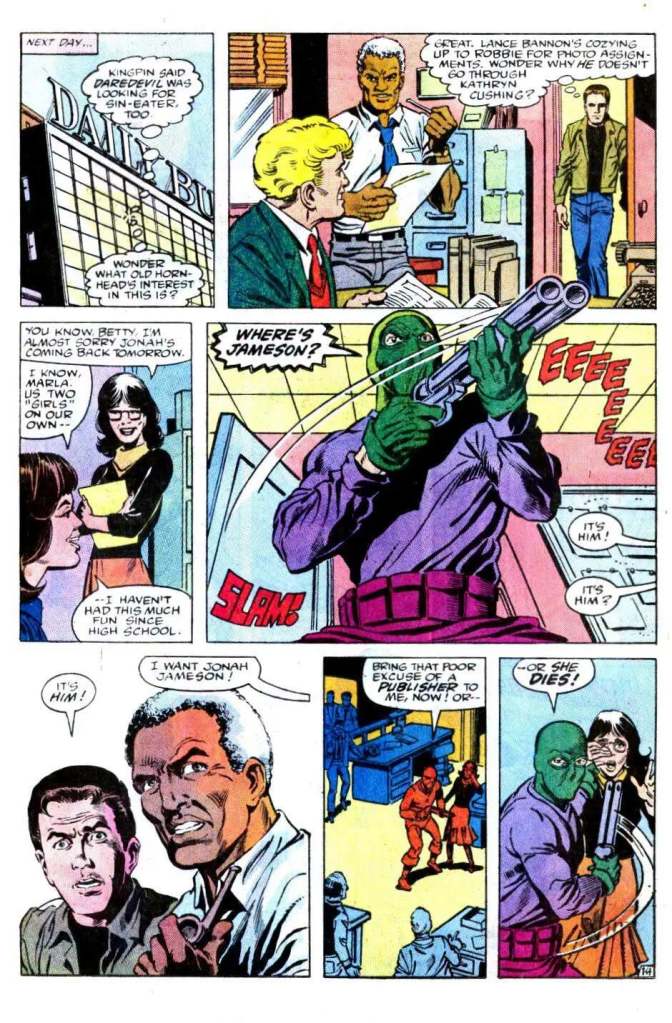
As they walked further, people around them begin to panic and move around fast. Peter gets separated from his aunt and Ernie, and eventually he realizes that the Sin-Eater is several feet away armed with a shotgun. The Sin-Eater is speaking to the people even though he is causing a huge disturbance.

Moments later, Peter changed into Spider-Man and proceeds to confront the Sin-Eater in front of many witnesses…

Quality

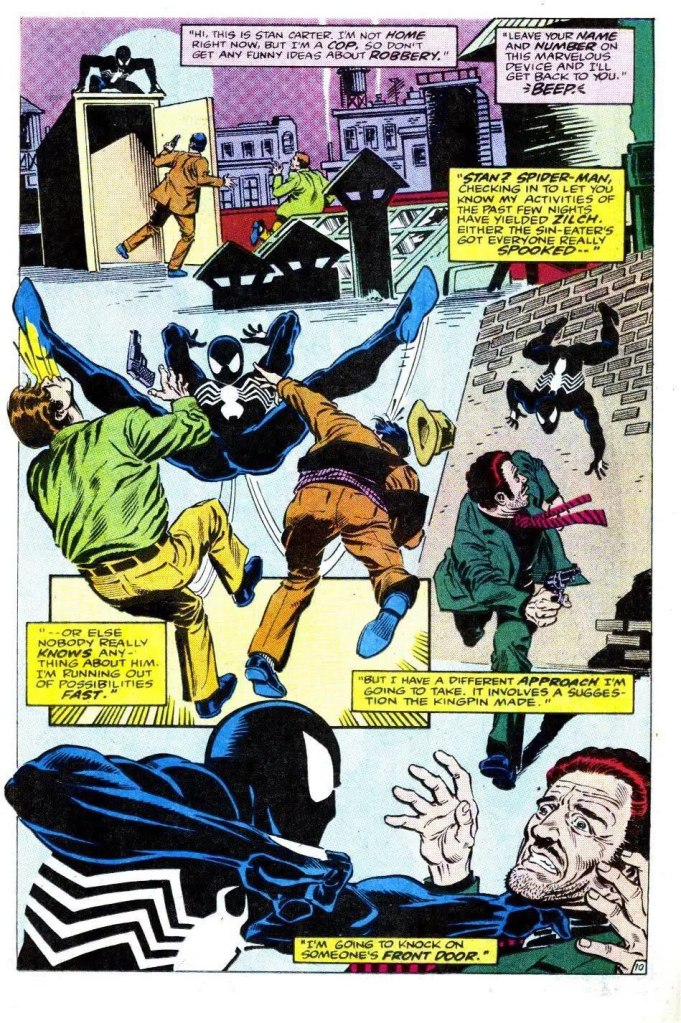
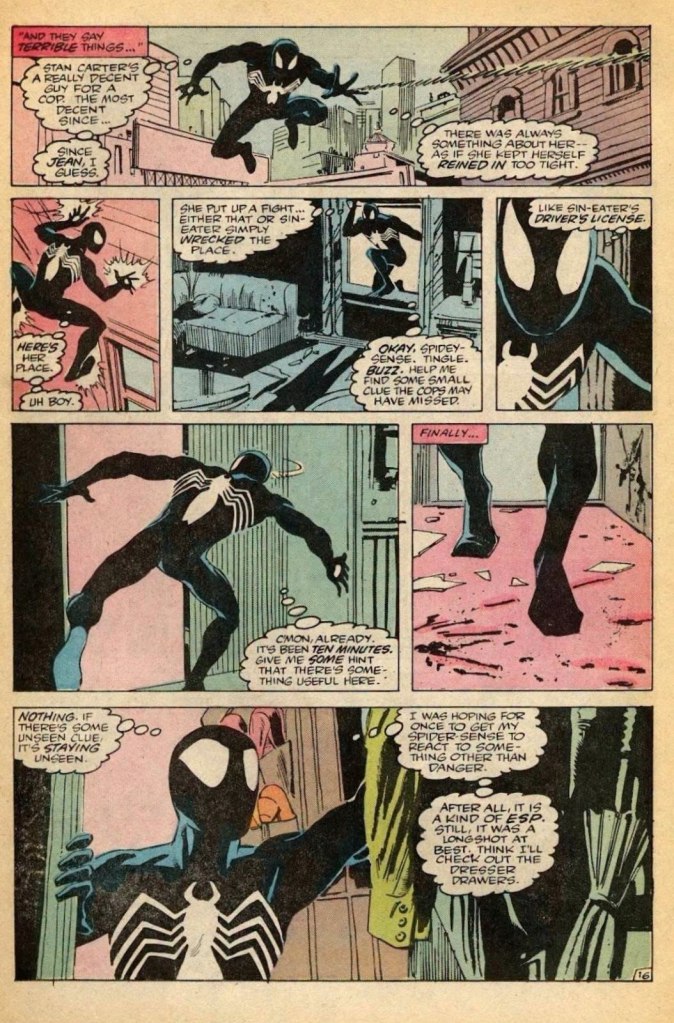
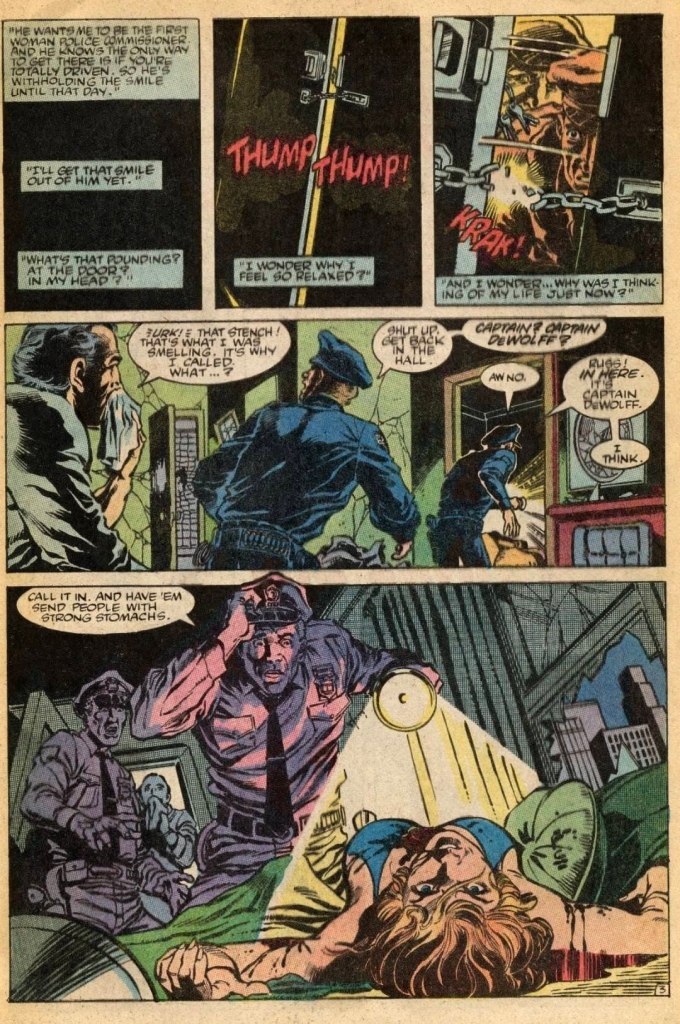
Spider-Man investigating the apartment of Jean DeWolff.

Following the events of issue #107, this comic book shows more of the Sin-Eater and the story emphasizes why he is very dangerous to everyone. The Sin-Eater is not a superbeing himself, and yet he is capable of killing people and causing chaos in public without the need of having multiple weapons and ammunition. That said, he is tremendous villain that Spider-Man has difficulty handling.

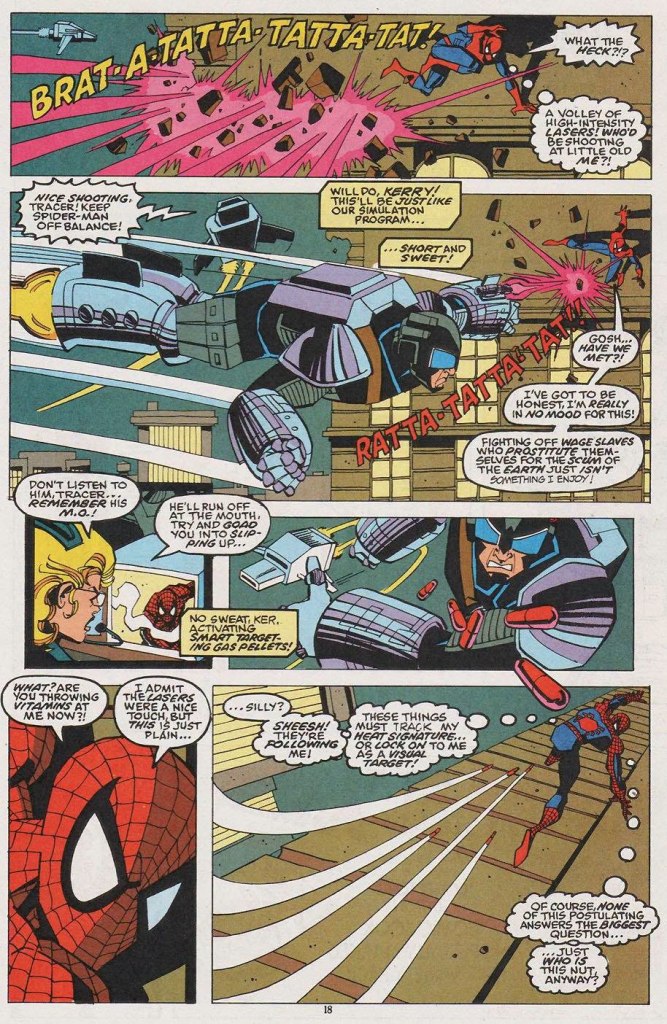
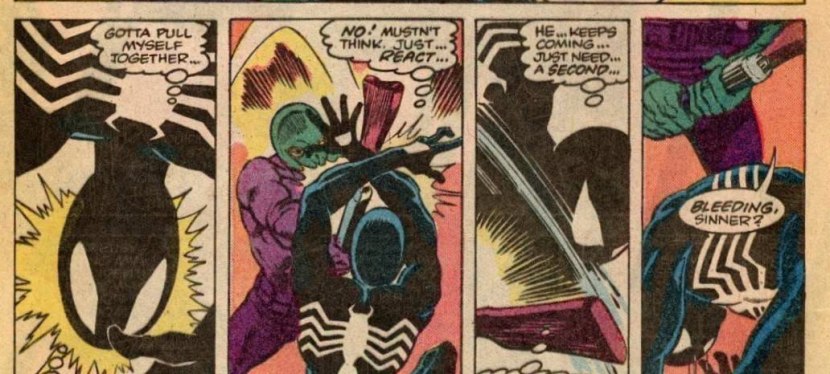
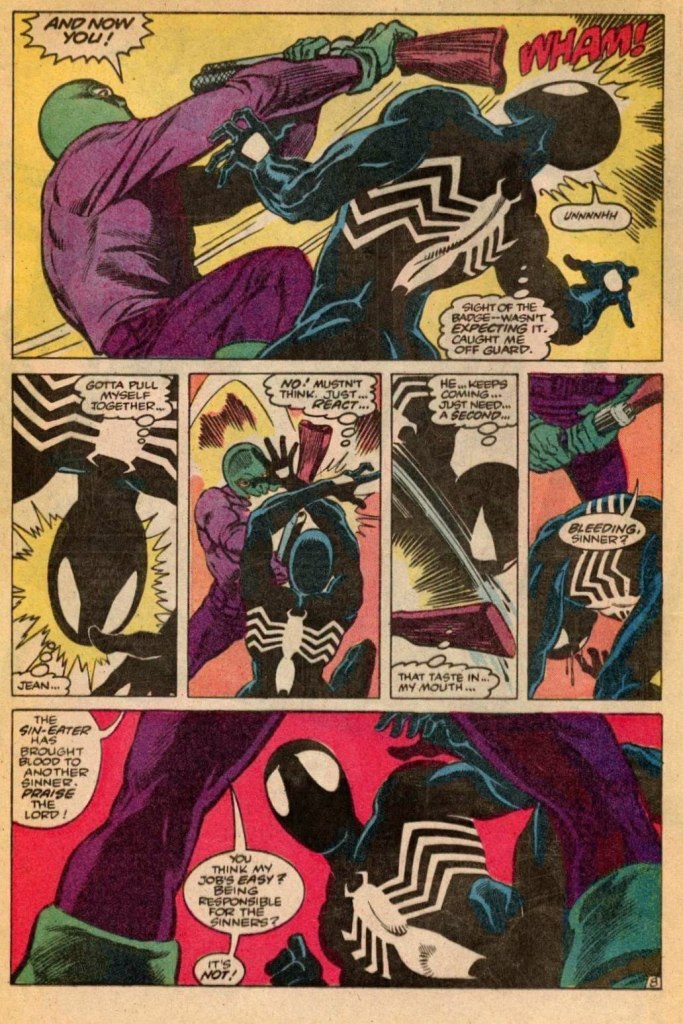
The physical encounter between Spider-Man and the Sin-Eater here is unsurprisingly ground in reality. The comic book action visualized by Rich Buckler has this raw action aesthetic and each time a physical blow was executed, impact is really felt. Don’t expect dynamic action here but a more realism and believability.

What makes the fight between the two unique is that it happened in front of a lot of people on New York City’s street. As the fight went on, Spider-Man struggles not only with fighting the Sin-Eater (a truly violent opponent) but also dealing with the risk of bystanders getting hurt and realizing what happened to his beloved Aunt May.

As expected, the detective story elements in this tale are very strong. Spider-Man, who is not a professional detective at all, gets to do detective work with a sheer determination to solve the mystery behind the death of Jean DeWolff. Along the way, I love how the David-Buckler duo invested a lot of details about the crime which are really worth paying attention to as you read.

Conclusion

The Sin-Eater and Spider-Man in a violent fight!

Peter Parker, The Spectacular Spider-Man #108 (1985) is a powerful follow-up in the Sin-Eater storyline. As it contains all the key elements that made issue #107 a very unique and engaging read, this comic book executed good pay-off to the build-up in the previous issue while consistently building-up the plot simultaneously which is typical of Peter David (read the Spider-Man 2099 comic books back-to-back). As of now, this Sin-Eater storyline is compelling and I am looking forward to what comes next.

Overall, Peter Parker, The Spectacular Spider-Man #108 (1985) is recommended.

+++++

Thank you for reading. If you find this article engaging, please click the like button below, share this article to others and also please consider making a donation to support my publishing. If you are looking for a copywriter to create content for your special project or business, check out my services and my portfolio. Feel free to contact me with a private message. Also please feel free to visit my Facebook page Author Carlo Carrasco and follow me on Twitter at @CarloCarrascoPH as well as on Tumblr at https://carlocarrasco.tumblr.com/ and on Instagram at https://www.instagram.com/authorcarlocarrasco
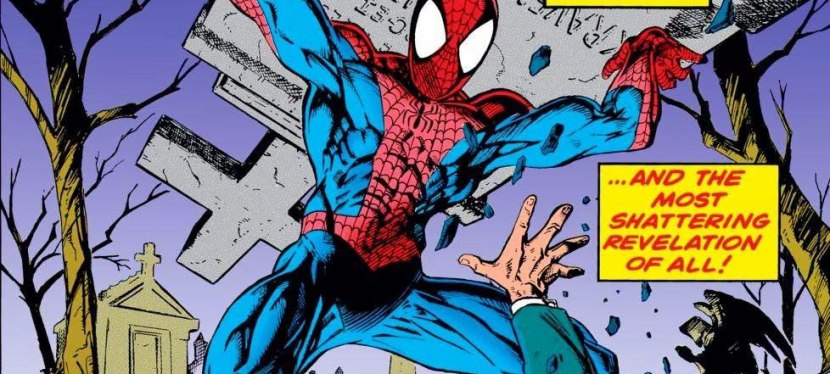
A Look Back at Peter Parker, The Spectacular Spider-Man #107 (1985)

Welcome back superhero enthusiasts, 1980s arts and culture enthusiasts, Spider-Man fans and comic book collectors! Today we go back to the year 1985 to examine a small part of the Marvel Comics shared universe through a tale of the Peter Parker, The Spectacular Spider-Man monthly series.

As I was not a regular reader of Spectacular Spider-Man comics, I missed out on the Sin-Eater storyline. I first learned about the Sin-Eater while reading a key flashback in Amazing Spider-Man #300. That particular detail boggled me for some time, and it was only recently I decided to start reading the comic books about the Sin-Eater.

With those details laid down, here is a look back at Peter Parker, The Spectacular Spider-Man #107, published in 1985 by Marvel Comics with a story written by the late Peter David (Spider-Man 2099) and by the late Rich Buckler.

The cover.

Early story

The story begins with Jean DeWolff recalling several important details from her past as well as her family background. Her father was a police inspector who never forgave her mother for giving birth to her. She was only six months old when her parents split up. Sometime later, her mother married a patrolman named Carl Weatherby and Jean herself admired her stepfather.

As she grew into adulthood, Jean was very influenced by her patrolman stepfather and she went on to go into police academy and graduated. Jean went on to become a fast-rising policewoman.

In the present day, New York police officers barged into a private residence searching for captain DeWolff and the place had bad odor. A dead woman was found inside a bedroom….

Quality

Spider-Man meets with Stan Carter on the road in the middle of New York City.

The first thing I will say about this comic book is that the writing done by Peter David is very grounded with reality and this resulted in a dark and gritty approach to storytelling. The heart of the story is the sudden murder of policewoman Jean DeWolff and its impact on the city of New York is strong and evident.

The story here is ultimately a detective story with a good amount of mystery, suspense and intrigue laced all over it. Along the way, Spider-Man here is barely the protagonist as the impact of Jean DeWolff’s murder has been dramatized through multiple characters in the city from J. Jonah Jameson to Matt Murdock (Daredevil).

This comic book also examines how the justice system in Marvel’s fictional portrayal of New York City works and it actually showed Peter Parker attending witnessing a court room arraignment to see how the bad guys he dealt with (as Spider-Man) were handled by the system. Again, this shows how grounded in reality the story is and the details should be seen. There is also a strong sense of local community dramatized.

The art by Rich Buckler is excellent and he really brought to life Peter David’s script with a heavy emphasis on realism. It seems to me that the illustrator took inspiration from TV shows and movies to achieve a unique visual style fitting for this particular tale.

Conclusion

This is a shocking and powerful way to start the story.

Peter Parker, The Spectacular Spider-Man #107 (1985) is indeed a very powerful tale that has to be seen if you want a gritty 1980s Spider-Man story. The David-Buckler creative duo delivered a very grounded story about murder in New York City that impacted its people which serves as a reminder that violent crime can cause waves of disturbance and disruption. That said, this first chapter of Sin-Eater storyline is pretty believable. As the creative team emphasized the murder’s impact on a wide scale, it is not surprising that Spider-Man’s share of the spotlight was sacrificed somewhat to achieve it. As of now, I am looking forward to the next chapter of the Sin-Eater storyline.

Overall, Peter Parker, The Spectacular Spider-Man #107 (1985) is recommended.

+++++

Thank you for reading. If you find this article engaging, please click the like button below, share this article to others and also please consider making a donation to support my publishing. If you are looking for a copywriter to create content for your special project or business, check out my services and my portfolio. Feel free to contact me with a private message. Also please feel free to visit my Facebook page Author Carlo Carrasco and follow me on Twitter at @CarloCarrascoPH as well as on Tumblr at https://carlocarrasco.tumblr.com/ and on Instagram at https://www.instagram.com/authorcarlocarrasco
A Look Back at Amazing Spider-Man #363 (1992)

Welcome back superhero enthusiasts, 1990s arts and culture enthusiasts, Spider-Man fans and comic book collectors! Today we go back to the mid-1990s to examine a small part of the Marvel Comics shared universe through a tale of the Amazing Spider-Man monthly series.

Issue #362 was a compelling read on its own. The creators had the difficult tasks of having Spider-Man and Venom in conflict once again, have the two stop fighting each other and then agree to join forces together to go up against Carnage who was simply too dangerous to be left free. Having read a lot of comic books showing Spider-Man and Venom in conflict with each other, to see them become partners was really alienating.

With those details laid down, here is a look back at Amazing Spider-Man #363, published in 1992 by Marvel Comics with a story written by David Michelinie and drawn by Mark Bagley.

The cover.

Early story

The story begins inside the office of Daily Bugle publisher J. Jonah Jameson and Carnage has him cornered. The symbiote-wearing murderer does not give a damn about Jameson’s importance in the city and he throws him across the room to hurt him a lot. Suddenly, editor-in-chief Robbie Robertson enters the office with an assistant and Carnage notices them.

Elsewhere in New York, Spider-Man and Venom (both previously encountered Carnage after arriving in the city) swing their way through the city towards the Daily Bugle. While traveling, Spider-Man finds it very odd that he has partnered with his mortal enemy to go after the sociopathic murderer Carnage who does not even have the twisted conscience of Venom.

As Spider-Man mentions the need to call the Avengers for assistance, Venom rejects it and reminds him of the freedom promised to him when the mission against Carnage is over. Privately, Spider-Man begins to regret the arrangement with his mortal enemy.

The two arrived at J. Jonah Jameson’s office only to discover they are too late. Robbie Robertson tells them that the monster – Carnage – took Jameson with him going somewhere south and it wanted a large group of people to witness something…

Quality

Spider-Man with Venom during this part of the final conflict with Carnage.

To be clear, this comic book marks the end of the 3-part storyline that started with issue #361 (Carnage’s deadly debut). Similar to the previous issue, David Michelinie carefully set up scenes to build-up not only the tension for the inevitable final conflict with Carnage, but also to emphasize the moral and legal complications of Spider-Man’s team-up with Venom (who has been convicted by the justice system). That said, there was this very notable moment in which law enforcers wanted to apprehend Venom but Spider-Man intervened by taking responsibility on his behalf and pointed to Carnage as the greater danger to society.

Carnage in this comic book is really unhinged, obsessed with death and has no morals whatsoever. He has Jameson as his hostage and does not care about the lives of those who got in his way. In his insane mind, having a great audience for his bloody plan was a priority here and he shamelessly tries to connect with members of audience who share his cold-blooded ways. The insanity and unrelenting violence of Carnage are heavily emphasized here which only added to the tension of the final conflict.

The final conflict here is very action-packed and intense. Visually, this is one of the finest works of Mark Bagley in 1992 and he really delivered the spectacle big-time here. Not only that, Bagley brought Michelinie’s script to life which made the personal encounters between Spider-Man, Venom and Carnage very lively to see.   

Conclusion

J. Jonah Jameson is completely helpless in the presence of Carnage.

Amazing Spider-Man #363 (1992) is undoubtedly a powerful conclusion to the 3-part storyline that started in issue #361. Carnage’s personality and unrelenting violence has been clearly defined here and he easily eclipsed Venom when it comes to being evil and murderous as a super villain. Spider-Man here is desperate to stop Carnage and yet he maintained his sanity to focus on the mission while ensuring the protection of civilians and doing some restraint on his enemy-turned-partner Venom (who has violent impulses). The build-up is powerful and the same can be said about the pay-off. While the conclusion is expected, this comic book raises questions about Spider-Man’s honor and what he morally lost when he became so desperate he made very risky and very questionable decisions along the way.

Overall, Amazing Spider-Man #363 (1992) is highly recommended!

+++++

Thank you for reading. If you find this article engaging, please click the like button below, share this article to others and also please consider making a donation to support my publishing. If you are looking for a copywriter to create content for your special project or business, check out my services and my portfolio. Feel free to contact me with a private message. Also please feel free to visit my Facebook page Author Carlo Carrasco and follow me on Twitter at  @CarloCarrascoPH as well as on Tumblr at https://carlocarrasco.tumblr.com/ and on Instagram at https://www.instagram.com/authorcarlocarrasco
A Look Back at Amazing Spider-Man #362 (1992)

Welcome back superhero enthusiasts, 1990s arts and culture enthusiasts, Spider-Man fans and comic book collectors! Today we go back to the mid-1990s to examine a small part of the Marvel Comics shared universe through a tale of the Amazing Spider-Man monthly series.

Following his first-ever encounter and battle with Carnage, Spider-Man realized that he alone cannot stop the sadistic, symbiote-wearing murderer. Worse, Carnage is on the loose in New York City and as time passes, civilians can easily get killed by him. As such, Peter Parker got very desperate and has decided to let his deadliest enemy get loose.

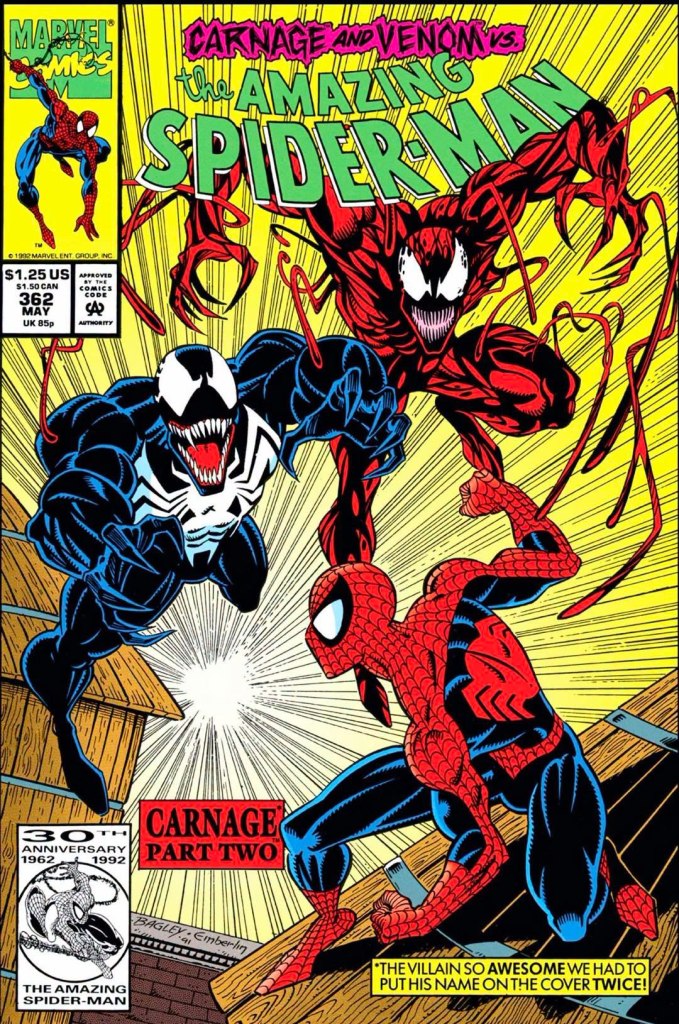
With those details laid down, here is a look back at Amazing Spider-Man #362, published in 1992 by Marvel Comics with a story written by David Michelinie and drawn by Mark Bagley.

The cover.

Early story

The story begins with Spider-Man and Johnny Storm of the Fantastic Four are riding a highly advanced team vehicle heading to the deserted Caribbean island where Eddie Brock/Venom is located. Spider-Man knows he is taking a lot of risk to meet Venom knowing that the murderer stalked him and came close to killing him before. Knowing that Carnage can easily kill civilians in New York City anytime, Spider-Man made it clear to Johnny that he needs to get Venom back to stop Carnage.

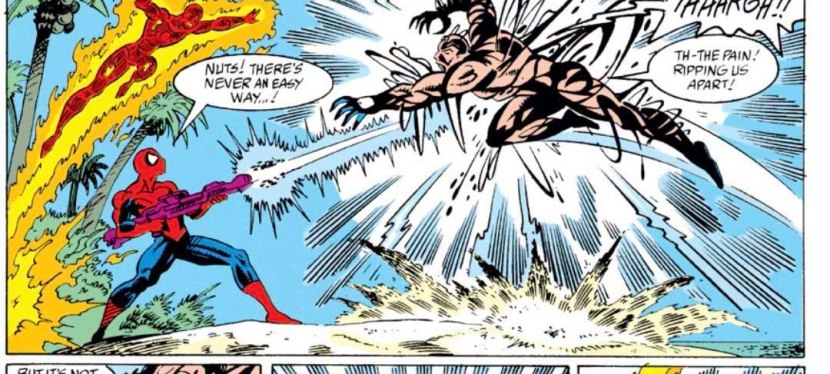
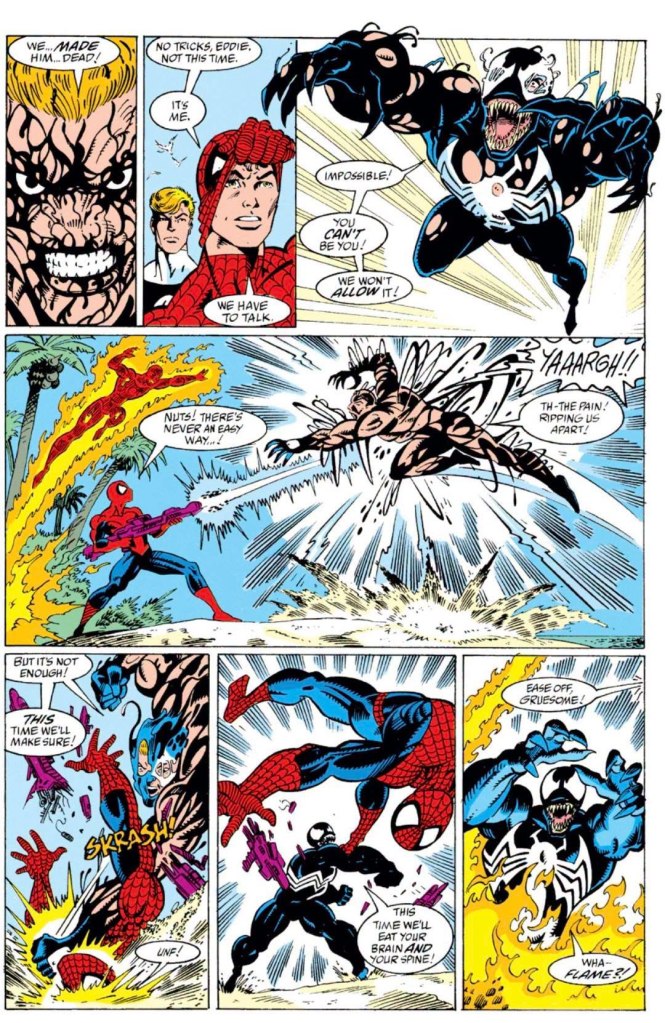
Sometime after arriving on the island, Johnny and Spider-Man (armed with the Fantastic Four’s sonic rifle) meet with Eddie Brock on the beach. Peter Parker quickly reveals his face to him and attempts to start a conversation. After overcoming the surprise of seeing Spider-Man alive, Eddie quickly turns into Venom and leaps towards Spider-Man for an attack. The webslinger quickly used the sonic rifle at him while Johnny turns into his fiery form. Venom overcomes the pain of the sonic blast, smashes the sonic rifle, and starts hitting Spider-Man hard…

Quality

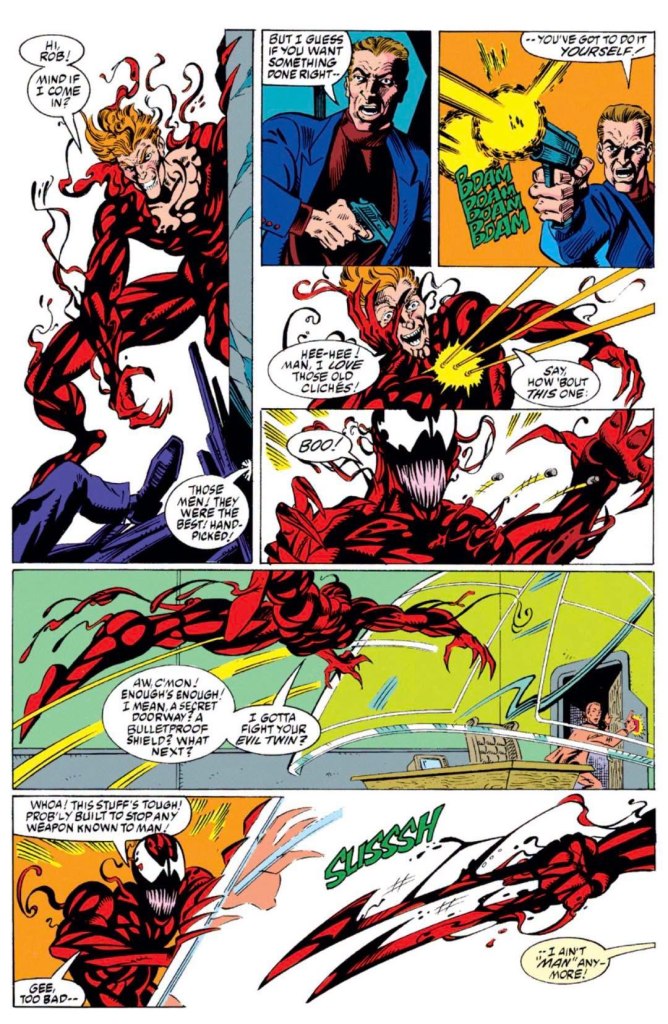
Carnage is unrelenting with his acts of violence.

This comic book tells parallel tales focused on Spider-Man and Venom, and Carnage. The meat of the story is about the desperate webslinger reaching out to his deadliest foe even though it means putting himself in great danger once again. David Michelinie is excellent in the dramatic portrayal of Spider-Man who has literally been pushed to the edge by Carnage and having no choice but to make a decision his own wife (who had a traumatizing first encounter with Venom sometime prior) disapproves of.

In issue #361, Peter Parker was technically a detective who worked on the trail of violence left behind by Carnage. Everything changed for the worse for Spider-Man during his violent first encounter with Carnage and he witnessed how unrelenting the murderer really is. The bloody “Carnage rules” message left behind had impact on his conscience.

That said, Spider-Man’s transformation into a desperate hero is very believable here thanks to David Michelinie’s strong writing.

Along the way, the rivalry between Spider-Man and Venom turned intense very quickly. It was during this encounter where you will feel the pressure intensify on Peter as he has to somehow convince Venom to stop being violent and join him to go after Carnage (note: Eddie Brock and Cletus Kasady shared a prison cell previously). Of course, Venom has the undying obsession of killing Spider-Man and he has no reason to believe him. Venom also has his own distorted belief about innocence. The rematch between the two – with Johnny Storm on the side – is the very meat of the story and it is engaging to read.

Carnage is here as well and the creators showed exactly what Spider-Man feared would happen.

Conclusion

The encounter between Spider-Man and Venom with Johnny Storm on the side.

There is a lot to like in Amazing Spider-Man #362 (1992). It has a lot of action drawn by Mark Bagley, has suspense in the right moments and the story itself is very engaging to read. The very heart of the story is the encounter between Spider-Man and Venom on the deserted island due to the high stakes involved plus the tension from the past returned in lively fashion. Spider-Man is desperate and he really pays a huge price for making a decision that his own wife disapproves of. Ultimately, New York City has Carnage as its newest crisis and what happened here blurred away the boundary that separates good from evil.

Overall, Amazing Spider-Man #362 (1992) is recommended.

+++++

Thank you for reading. If you find this article engaging, please click the like button below, share this article to others and also please consider making a donation to support my publishing. If you are looking for a copywriter to create content for your special project or business, check out my services and my portfolio. Feel free to contact me with a private message. Also please feel free to visit my Facebook page Author Carlo Carrasco and follow me on Twitter at  @CarloCarrascoPH as well as on Tumblr at https://carlocarrasco.tumblr.com/ and on Instagram at https://www.instagram.com/authorcarlocarrasco
American Investors To Explore Mega Infrastructure, Energy Deals And Other Opportunities In The Philippines

Several business executives and investors from the United States are set to visit the Philippines next week to explore investment opportunities in the nation’s infrastructure sector, energy sector, and more, according to a news report by the Manila Bulletin. The American investors will engage with their Filipino counterparts during the planned 5-day trade mission.

To put things in perspective, posted below is the excerpt from the report of the Manila Bulletin. Some parts in boldface…

Let me end this piece by asking you readers: What is your reaction to this development? Do you see a promising future between the United States and the Philippines when it comes to economics and investment under the leadership of US President Donald Trump? Are you convinced the corruption within the Philippines is no longer a turn-off for American investors?

You may answer in the comments below. If you prefer to answer privately, you may do so by sending me a direct message online.

+++++

Thank you for reading. If you find this article engaging, please click the like button below, share this article to others and also please consider making a donation to support my publishing. If you are looking for a copywriter to create content for your special project or business, check out my services and my portfolio. Feel free to contact me with a private message. Also please feel free to visit my Facebook page Author Carlo Carrasco and follow me on Twitter at @CarloCarrascoPH as well as on Tumblr at https://carlocarrasco.tumblr.com/ and on Instagram athttps://www.instagram.com/authorcarlocarrasco

A Look Back at Spider-Man #45 (1994)

Welcome back superhero enthusiasts, 1990s culture enthusiasts, Spider-Man fans and comic book collectors! Today we go back to the mid-1990s and to explore a part of the Marvel Comics shared universe through a tale of the Spider-Man monthly series.

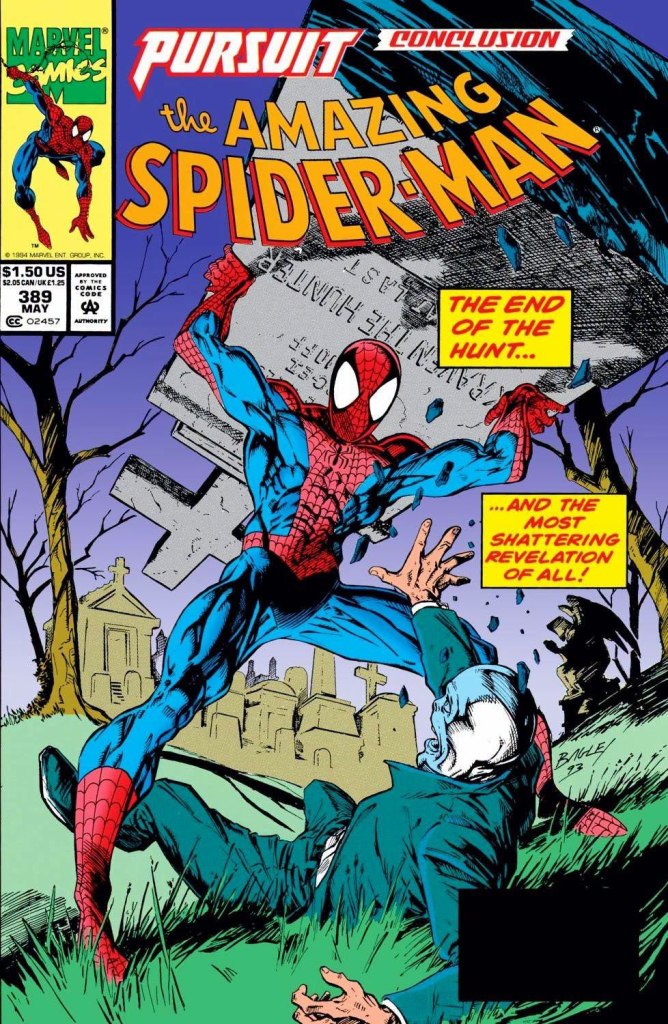
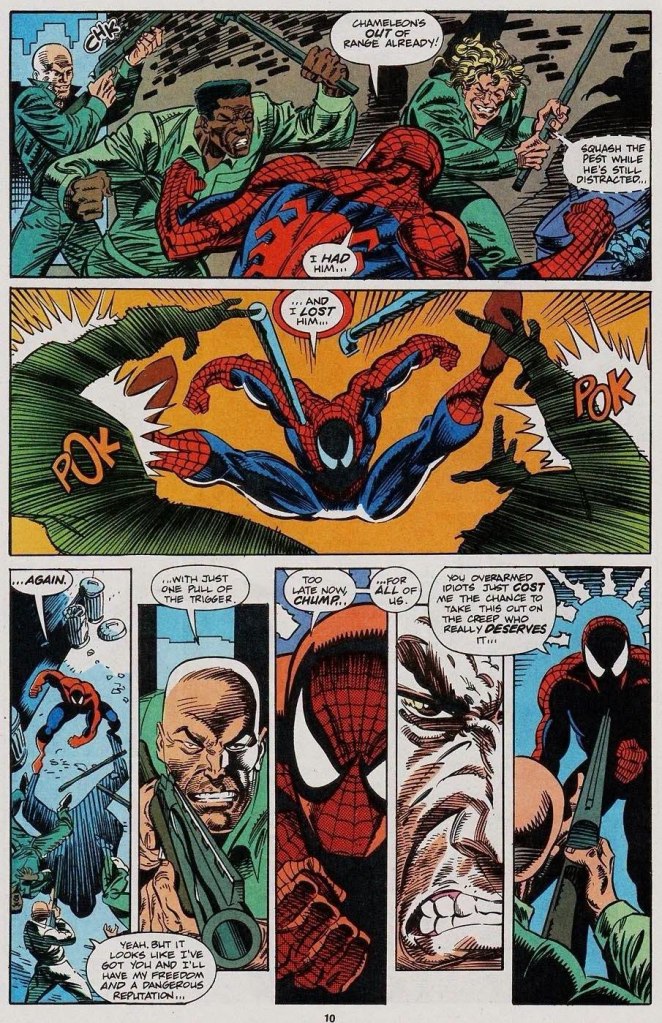
As revealed in Amazing Spider-Man #388, Richard and Mary Parker – who spent some time living with Peter Parker’s family after suddenly emerging from nowhere – were not Peter’s parents but androids designed to look, act and feel human. They were life model decoys (LFDs) programmed infiltrate Peter’s life until they learn Spider-Man’s true identity. As programmed, they reported to their master the Chameleon. Just seconds before Richard revealed the secret identity, Spider-Man suddenly interfered and this led to a series of violent acts.

With those details laid down, here is a look back at Spider-Man #45, published in 1994 by Marvel Comics with a story written by Howard Mackie and drawn by the late Tom Lyle. This is the first chapter of the Pursuit storyline.

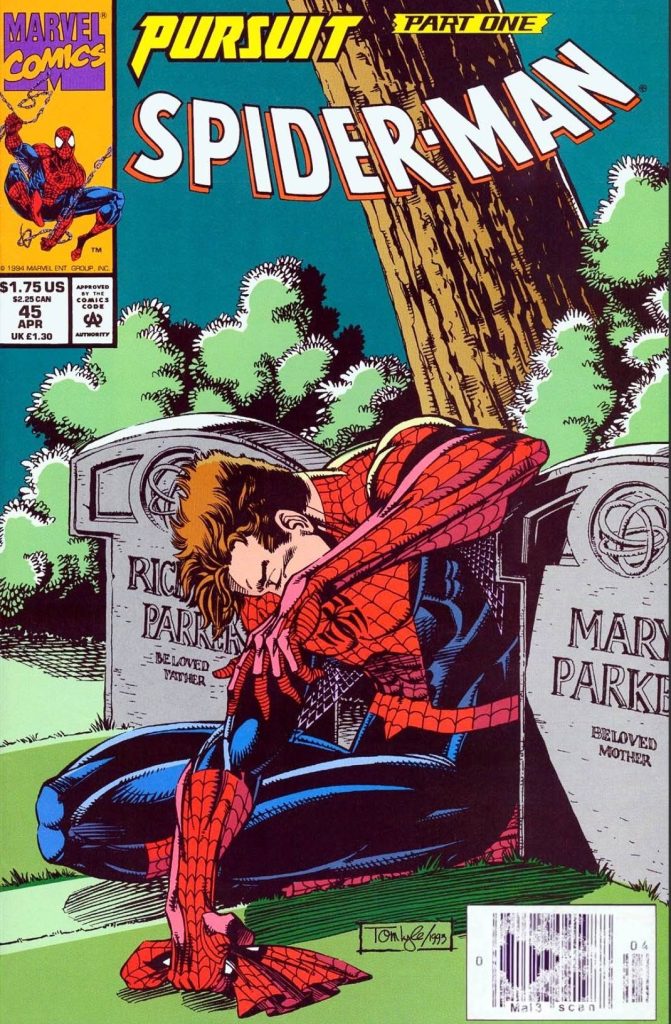
The cover.

Early story

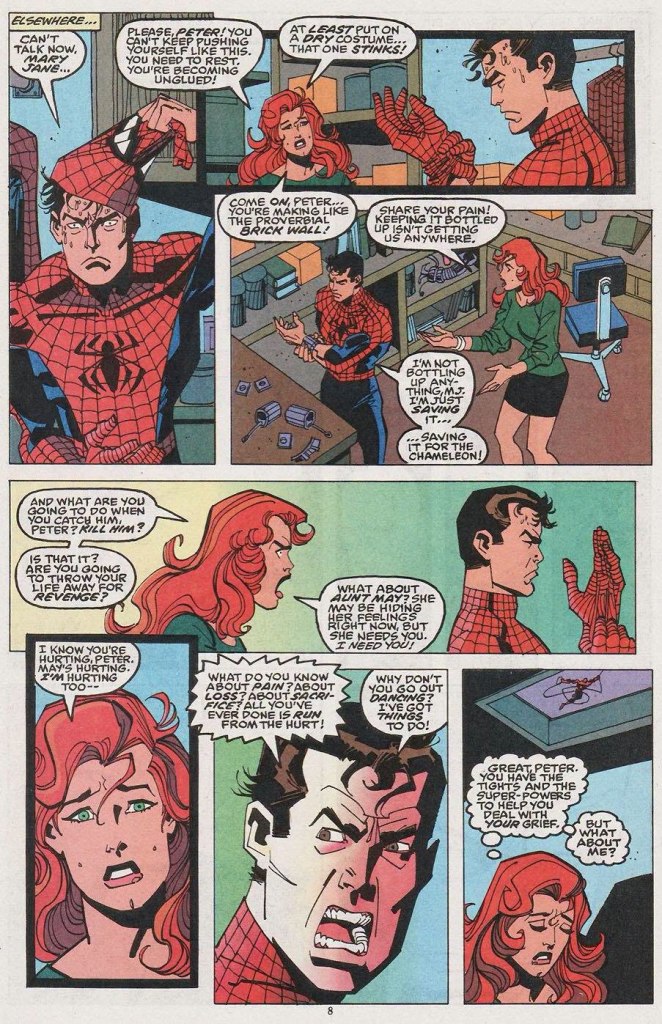
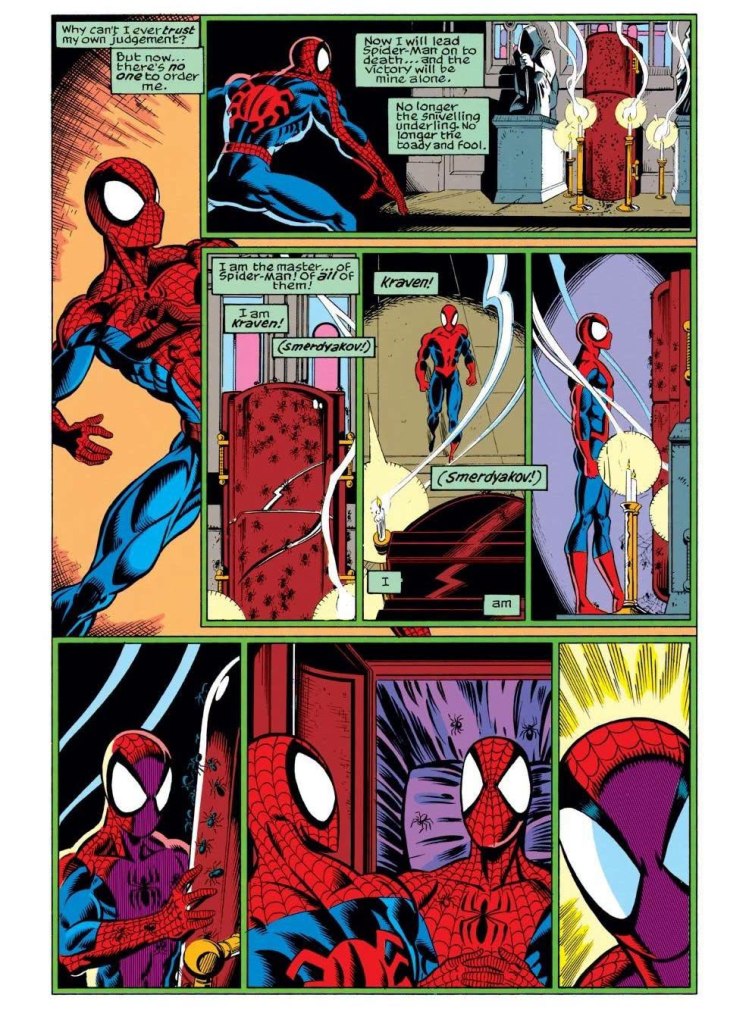
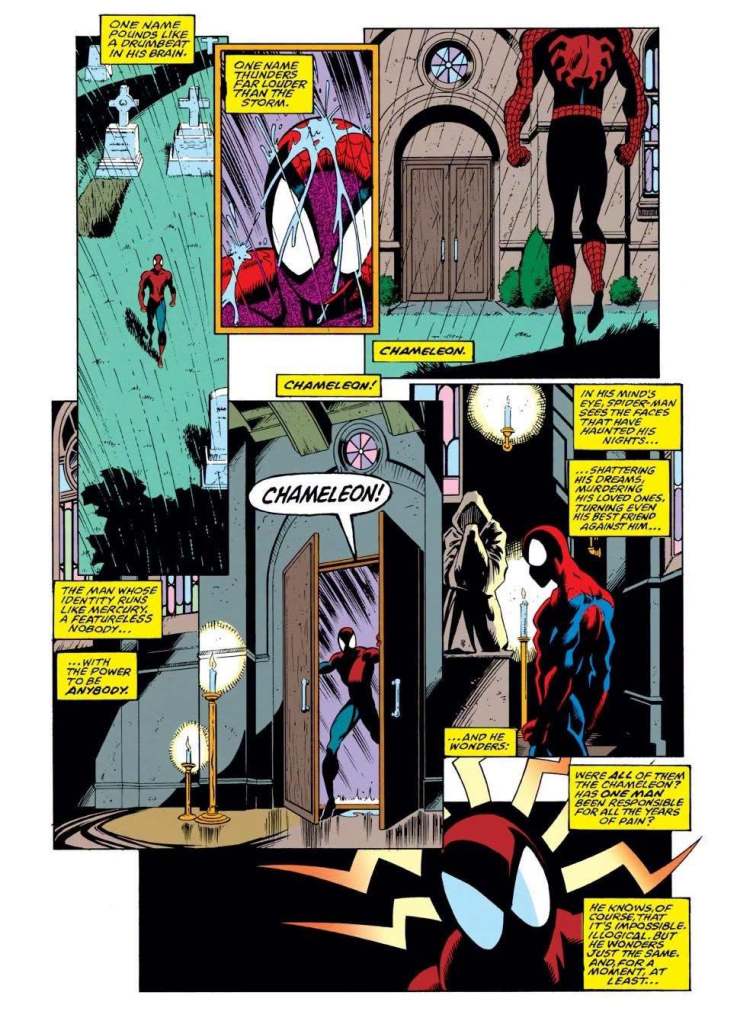
The story begins moments after the huge conflict that happened. A very broken-hearted Spider-Man realized that “Mary” and “Richard” were impostors and his actual parents have long been gone. He is also concerned about how his Aunt May will handle the truth about Richard and Mary. Deep inside him, a desire for vengeance against the Chameleon is growing.

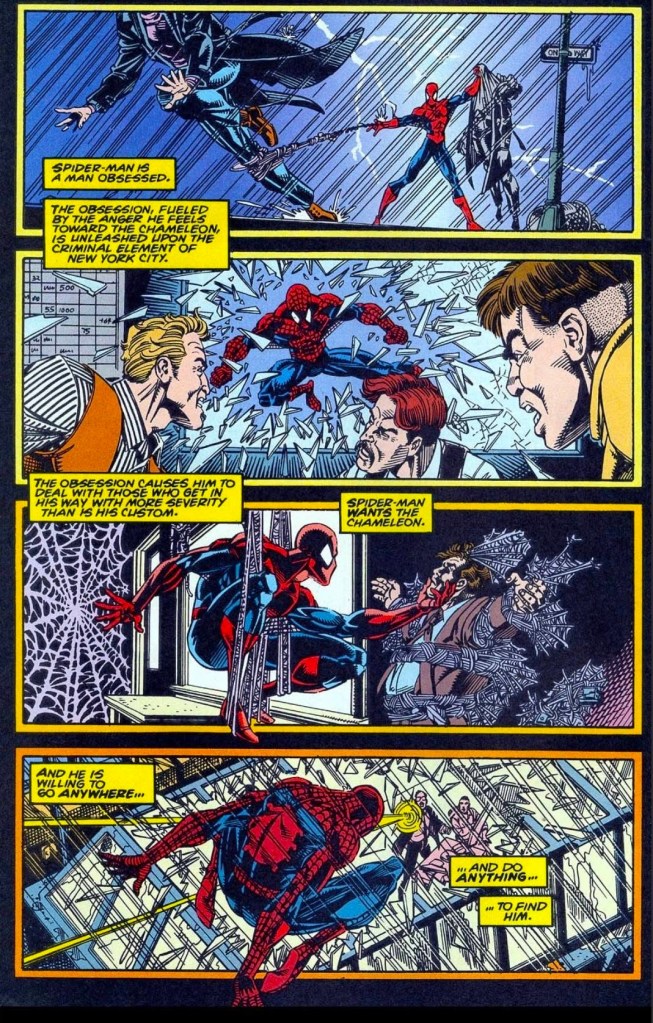
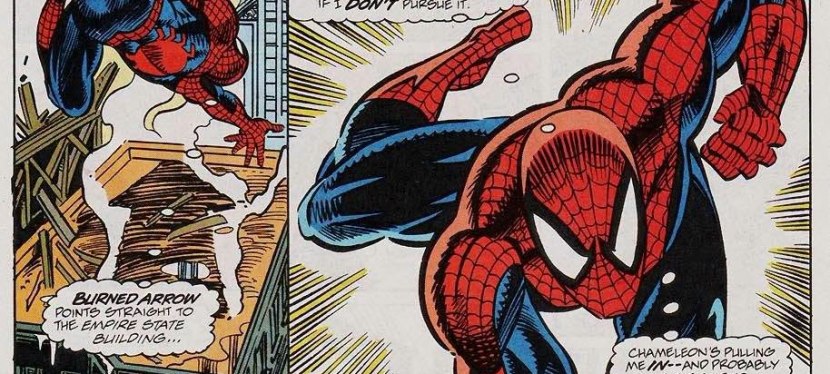
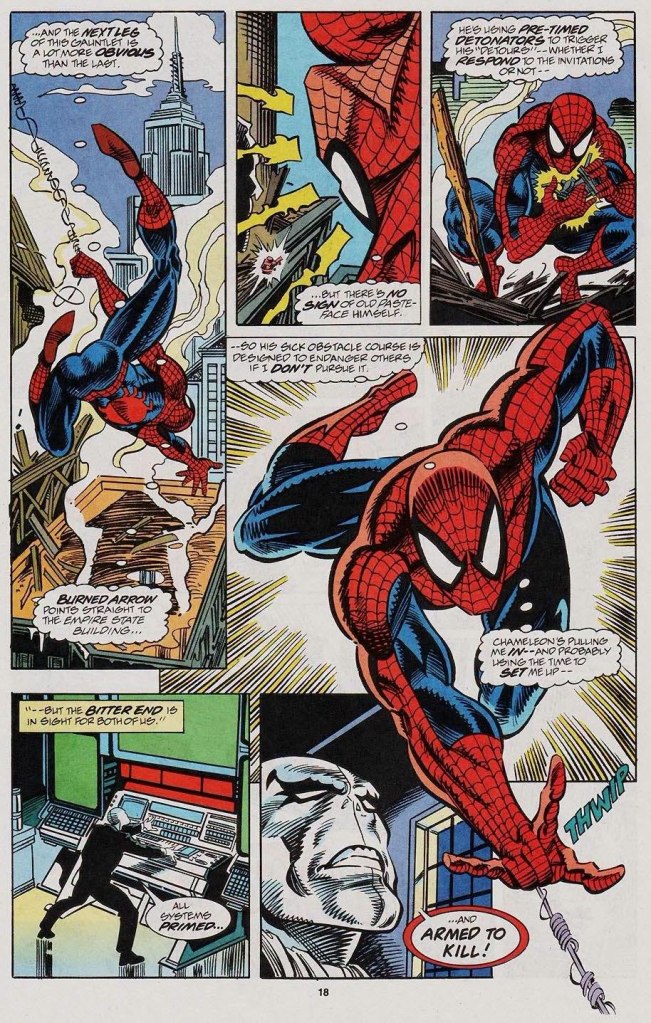
As he swings from one building to another in New York City, Peter Parker begins to realize that his role as Spider-Man is turning into a farce. He begins his obsession of hunting down the Chameleon and stopping him until he keeps him out of his life for good…

Quality

What you are seeing here is a very obsessive, aggressive and more violent Spider-Man. Vengeance is his motivation.

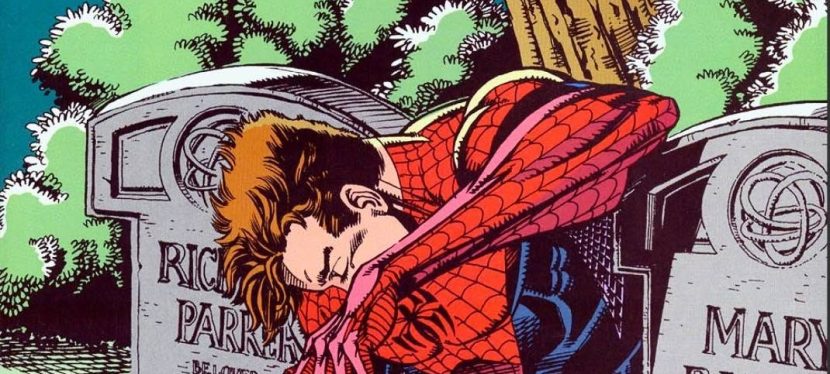
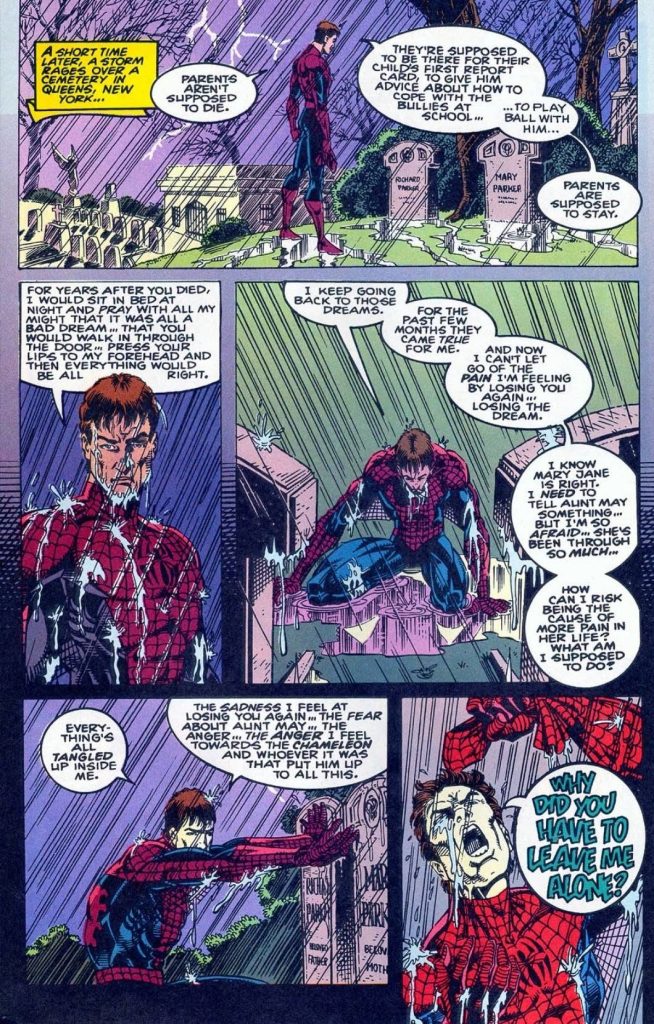
To make things clear to everyone, this tale does not have the long-running friendly neighborhood Spider-Man. Instead, we have the iconic webslinger who is deeply hurt and the pain he carries motivates him to pursue the Chameleon (who is responsible for reviving the deep pain Peter felt after his parents died). It is clearly a pursuit for vengeance and the writing by Howard Mackie is very believable.

That said, readers will not only see Peter Parker wanting vengeance but also his dark side emerge. Carrying over the tragedy that happened in Amazing Spider-Man #388, Mackie and Lyle precisely crafted a story that had a very dramatic and radically different Peter Parker. Peter even shouts at his wife Mary Jane and struggles with revealing the details of the tragedy to his beloved Aunt May. When he goes out as Spider-Man to find answers, he approaches crooks aggressively and with more violence than before. In short, Spider-Man here lacks restraint and really looks like he could become a public menace.

That said, the portrayal of a very broken Peter Parker here can be alienating even to long-time Spider-Man fans.

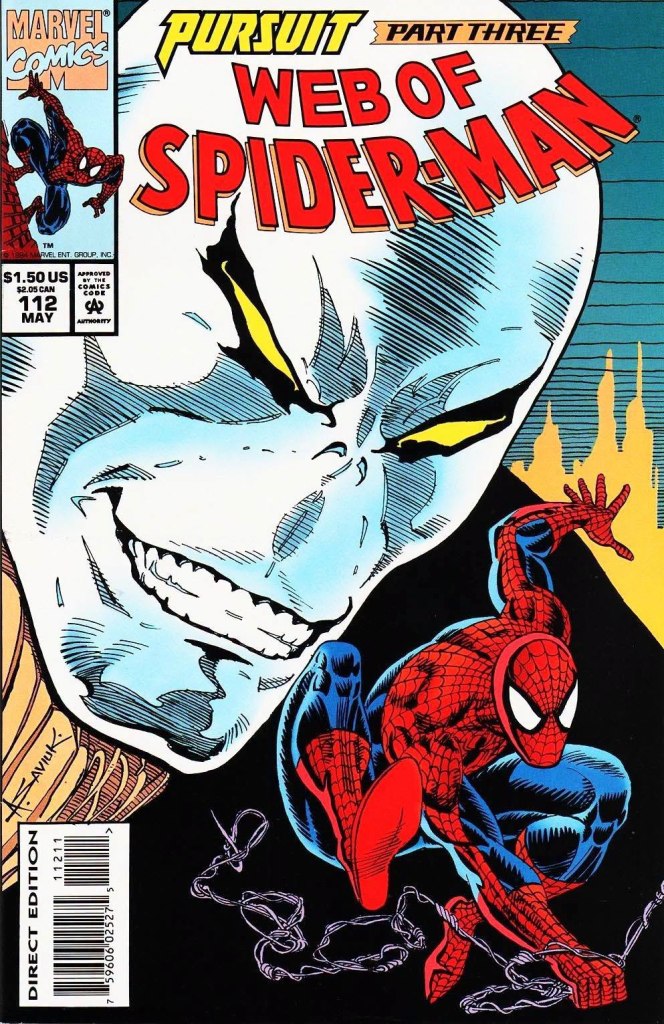
Along the way, the Mackie-Lyle duo managed to develop the Chameleon not only as Spider-Man’s target but also as his most cunning and very diabolical enemy yet. The Chameleon (first appearance in 1963’s Amazing Spider-Man #1) is very prominently shown here which is quite meaningful because he is the very first super villain to encounter the webslinger. The long-time villain is very organized and has set up a trap for Spider-Man. The Chameleon also has his own obsession versus Spider-Man and his personal connection with Kraven the Hunter has a lot of depth to the story. As such, there are common elements that the webslinger and the evil master of disguise share.

Conclusion

Great work by Howard Mackie and the late Tom Lyle on expressing Peter Parker’s sadness over the loss of his parents.

Spider-Man #45 (1994) is clearly a very engaging read even though its concept of Spider-Man wanting vengeance can be a turnoff to some readers. For one thing, the script Howard Mackie wrote has a lot of depth and Tom Lyle brought it to life with a fine art style. Having seen the 1989 movie Licence to Kill, I noticed the similarities Spider-Man has with Timothy Dalton’s James Bond when it comes to executing a private vendetta. That said, I enjoyed what was presented in this comic book. Indeed, this tale was published at a time when the dynamics of superhero storytelling in the 1990s changed dramatically moving towards tragedy, disaster and death. It is clearly a product of its time and anyone who wants to read a dark and gritty Spider-Man portrayal should go for this. As such, I am convinced to read on with the Pursuit storyline.

Overall, Spider-Man #45 (1994) is recommended.

+++++

Thank you for reading. If you find this article engaging, please click the like button below, share this article to others and also please consider making a donation to support my publishing. If you are looking for a copywriter to create content for your special project or business, check out my services and my portfolio. Feel free to contact me with a private message. Also please feel free to visit my Facebook page Author Carlo Carrasco and follow me on Twitter at @CarloCarrascoPH as well as on Tumblr at https://carlocarrasco.tumblr.com/ and on Instagram at https://www.instagram.com/authorcarlocarrasco
A Look Back at Amazing Spider-Man #388 (1994)

Welcome back superhero enthusiasts, 1990s arts and culture enthusiasts, Spider-Man fans and comic book collectors! Today we go back to the mid-1990s to examine a small part of the Marvel Comics shared universe through a tale of the Amazing Spider-Man monthly series.

During the height of the 30th anniversary celebration of Spider-Man in 1992, Peter Parker’s long-lost parents Richard and Mary Parker suddenly returned and their presence really altered the hero’s view of life, his marriage with Mary Jane and their family as a whole. As time passed, Peter’s aunt May became suspicious about Richard and Mary (note: scenes related to this were included in Amazing Spider-Man #386 and #387) and she went as far as hiring someone to investigate them from a distance.

With those details laid down, here is a look back at Amazing Spider-Man #388, published in 1994 by Marvel Comics with a story written by David Michelinie and drawn by Mark Bagley.

The cover.

Early story

The story begins with the Vulture being upset that the youth-restoration effects he had using the juvenator machine were only temporary. As the Vulture makes a move to threaten the lady doctor who help him, the Chameleon suddenly emerged from her in front of him.

Elsewhere, Peter Parker shared with Mary Jane that he recently revealed to his parents that he is Spider-Man. After a brief chat with her, Parker leaves their home as Spider-Man to visit his aunt who has been suspicious about Richard and Mary Parker…

Quality

The moment of truth that turned out very painful personally for Spider-Man.

This particular tale is a tragedy which the cover art by Mark Bagley clearly showed. Beyond the cover, there is a lot more weight on the plot (which was nicely structured by Michelinie), the characters and tragedy itself.

Without spoiling plot details, I can say that the first half of the comic book has Spider-Man doing detective work and also doing the civilized approach of keeping the family together. Peter Parker’s care and concern for his aunt were naturally dramatize resulting in a human touch that should be seen. Along the way, the conspiracy was built-up gradually and the big revelation for Spider-Man (note: the truth about Richard and Mary Parker was revealed to readers long before Spider-Man learned about it) at the mid-point of the story really turned out powerful.

Even the Chameleon’s presence here is rather light, his acts of evil and diabolical agenda were powerfully portrayed. In fact, the Chameleon used his immense power of disguise that set off the disturbing events that happened in issues #386 and #387, and such revelations were integrated convincingly in this very comic book. What I found impressive was Chameleon’s ability on connecting details linking Peter Parker with Spider-Man. The Chameleon is clearly very intelligent and cunning, and this makes him a more formidable enemy for Spider-Man.

The 2nd half of the main story is where the action really got ramped up by many notches. The action is violent and intense, and yet the Michelinie-Bagley duo managed to insert twists and notable character moments that really added power to the tragedy. This is indeed a very compelling read and it will make you think deeply about how much emotional pain Spider-Man could absorb.

This comic book also has two short stories. The first one (drawn by Ron Lim) was set in the past showing Eddie Brock who just bonded with the alien costume. While the Venom-focused short story was designed to add depth to past events in Amazing Spider-Man comic books, it ultimately felt more like a filler than a substantial piece. Only die-hard Venom fans will enjoy it.

The second short story featuring Cardiac and Chance is completely forgettable and unnecessary.

Conclusion

Peter Parker sharing very confidential information with his wife Mary Jane before going out again.

Amazing Spider-Man #388 (1994) tells a really tragic tale with a purpose behind it. Historically speaking, this comic book made some Spider-Man fans angry and feeling very betrayed as they believed that the 1992 return of Peter Parker’s parents marked the new age in Spider-Man storytelling. On the iconic superhero himself, this tale marked the start of a so-called dark age in which Peter Parker got emotionally broken and his life got turned upside-down. To be clear, this comic book is not a tragedy done merely for the sake of doing a tragedy…it was a creative execution to alter the status quo of Spider-Man storytelling of the era. As such, what David Michelinie and Mark Bagley did here was not only daring but also a huge risk that turned out really powerful. This tale is so significant, Marvel Comics went ahead doing an alternate version with What If #61.

Overall, Amazing Spider-Man #388 (1994) is recommended.

+++++

Thank you for reading. If you find this article engaging, please click the like button below, share this article to others and also please consider making a donation to support my publishing. If you are looking for a copywriter to create content for your special project or business, check out my services and my portfolio. Feel free to contact me with a private message. Also please feel free to visit my Facebook page Author Carlo Carrasco and follow me on Twitter at  @CarloCarrascoPH as well as on Tumblr at https://carlocarrasco.tumblr.com/ and on Instagram at https://www.instagram.com/authorcarlocarrasco
A Look Back at Amazing Spider-Man #149 (1975)

Welcome back superhero enthusiasts, 20th century arts and culture enthusiasts, Marvel Comics fans and comic book collectors! Today we go back to the mid-1970s to examine a small part of the Marvel Comics shared universe through a tale of the Amazing Spider-Man monthly series.

You heard about the notorious Clone Saga of the 1990s that dominated Spider-Man comic books for a few years? That was actually the 2nd saga about Spider-Man and cloning. The first one started in the mid-1970s and it was the result of a move by Marvel’s creative team to let Gwen Stacy return from the dead somehow. A new villain called the Jackal was eventually introduced and in his civilian form as Miles Warren (a character introduced much earlier), he had a personal obsession with Gwen Stacy whose death in Amazing Spider-Man #121 was too overwhelming for him to handle. Warren turned out to be an expert on cloning.

With those details laid down, here is a look back at Amazing Spider-Man #149, published in 1975 by Marvel Comics with a story written by the late Gerry Conway and drawn by the late Ross Andru.

The cover.

Early story

The story begins on top of a building just moments after the Jackal revealed his secret identity to a weakened Spider-Man in the presence of the Gwen Stacy clone and Ned Leeds. For Spider-Man, the revelation is shocking because in his private life as Peter Parker, Warren has been his biology and biochemistry professor at Empire State University (ESU) where he and Gwen Stacy studied. Recently, Parker and Leeds visited Warren to check on certain cell samples from which Gwen Stacy’s clone had been created. Warren claimed those samples had been stolen by a man named Anthony Serba. Spider-Man eventually loses consciousness.

Some time later, Spider-Man awakens inside an abandoned tenement in lower Manhattan. He finds himself restrained on a wooden table and the Jackal starts talking to him. For the Jackal, what is going on is his moment of triumph.

As the Jackal keeps talking, Spider-Man suddenly frees himself from the table to get back on his feet to fight him…

Quality

Can you tell who is the real Spider-Man here?

Apart from historical significance of this original clone saga and the other one from the 1990s, this particular tale is finely written by Conway and the stakes were really raised high from the start (preceded by build-up of key events in prior issues). Clearly, what was presented here was a huge pay-off to the build-up of recent issues and the dialogue has lots of details that are thought-provoking.

At the center of the story is Miles Warren who has gone to the extremes as the Jackal and he already knows that Spider-Man and Peter Parker are one and the same person. He has a burning hatred towards Parker because he is young, he was loved by Gwen Stacy, and was responsible for her death (which happened in Amazing Spider-Man #121). There is a lot of drama Conway wrote into Miles Warren’s transformation into the Jackal (first appearance was in Amazing Spider-Man #129 along with the Punisher) as a result of Gwen’s death and there are established connections with his ability to perform cloning. Conway’s presentation of the origin of the Jackal here is indeed a must-see!

When it comes to the known feature of this comic book – Spider-Man’s physical encounter with his clone – this one was presented as a spectacle laced with suspense and intrigue for the readers. It was done to test the readers’ ability to determine who is truly Spider-Man as the fight with the clone (Ben Reilly without the name) went on. The fight itself is an extension of the madness, hatred and the lust for revenge of the Jackal. That being said, there is clearly a lack of impact behind the clone’s introduction as Conway created him only to bring closure to the cloning concept mandated by Stan Lee. The clone was never meant to return and replace Peter Parker as Spider-Man.

Conclusion

Some of the events that dramatized Miles Warren’s transformation into the Jackal.

Amazing Spider-Man #149 (1975) is a very intense tale that has the engaging origin story of the Jackal who went on to become a very dangerous foe of Spider-Man. That said, Miles Warren here transformed into a freak sparked by the sudden death of the real Gwen Stacy, and the actions he committed really brought danger to Spider-Man.

There is a lot of intrigue and compelling stuff in this comic book, especially when you ignore the Clone Saga of the 1990s (which itself should be treated as a convoluted follow-up reflecting the chaos behind closed doors at Marvel Comics during the time). In my opinion, this original Clone Saga stood the test of time and the creative stuff that Gerry Conway and Ross Andru came up with is pretty believable and dramatic to read again.

Overall, Amazing Spider-Man #149 (1975) is highly recommended!

+++++

Thank you for reading. If you find this article engaging, please click the like button below, share this article to others and also please consider making a donation to support my publishing. If you are looking for a copywriter to create content for your special project or business, check out my services and my portfolio. Feel free to contact me with a private message. Also please feel free to visit my Facebook page Author Carlo Carrasco and follow me on Twitter at  @CarloCarrascoPH as well as on Tumblr at https://carlocarrasco.tumblr.com/ and on Instagram at https://www.instagram.com/authorcarlocarrasco
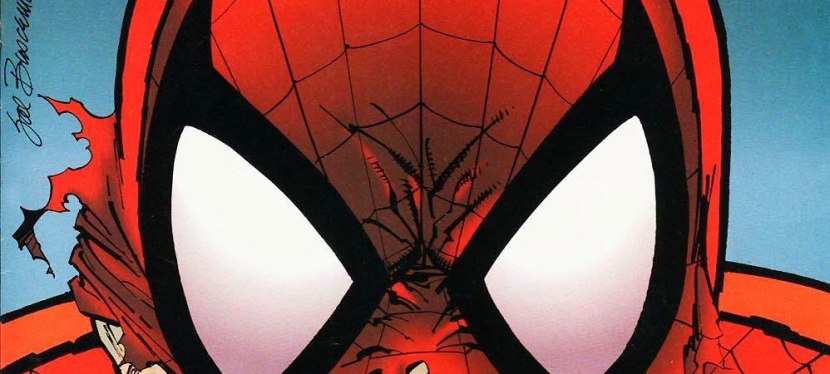
A Look Back at Amazing Spider-Man #361 (1992)

Welcome back superhero enthusiasts, 1990s arts and culture enthusiasts, Marvel Comics fans and comic book collectors! Today we go back to the early 1990s to examine a small part of the Marvel Comics shared universe through a tale of the Amazing Spider-Man monthly series.

When it comes to the argument as to who is the most evil or the deadliest foe Spider-Man ever has, many point towards Venom (Eddie Brock and the alien costume from Secret Wars) who is murderous, filled with revenge against Spider-Man, is physically formidable and knows Peter Parker and his family members. In the early 1990s, the creative guys behind the Amazing Spider-Man series made the key decision to create another symbiote-wearing super villain like Venom but much more violent, more murderous and truly insane.

With those details laid down, here is a look back at Amazing Spider-Man #361, published in 1992 by Marvel Comics with a story written by David Michelinie and drawn by Mark Bagley.

The cover.

Early story

The story begins inside the agro-lab of the Empire State University where an awful figure in black-and-blood intimidates a male worker. The awful figure is Carnage and he decides to play with the worker a bit before fulfilling his intention to kill him. The worker tries to escape but ends up failing as Carnage throws a huge piece of hardware at the door. Carnage grabs the man, slams him on the wall and uses sharp makeshift blades that suddenly stretched to murder the him.

At the a certain home in Forest Hills, Peter Parker spends quality time his aunt May Parker as he repairs an important machine in the basement. Moments later, the phone rings and May goes up to answer it. Peter follows and learns that the call was meant for him.

Upon using the phone, Peter learns the tragic news that his friend Chip at the university was murdered. He excuses himself from May to go outside to secretly change into Spider-Man and make his way to Empire State University. Struck by the tragic news, Spider-Man is aware that there have been a dozen brutal murders in New York City over the last week. He is also aware that a message was written in blood by someone called Carnage…

Quality

The first-ever battle between Spider-Man and Carnage is very intense to look at.

To make things very clear, this comic book has the first full appearance of Carnage which is Cletus Kasady with a living costume spawned from Venom’s symbiote. Kasady himself first appeared in Amazing Spider-Man #344 in 1991, and it is very clear that the creators deliberately modeled him after DC Comics’ super villain the Joker to have the psychopath appearance (distinctive messy hair, crazed facial expressions, slim body frames and the unusual jawline). Kasady and the Joker also have a nihilistic view of the world focused on spreading chaos while enjoying unrestrained violence.

David Michelinie was really methodical when it came to build-up the tension, presenting key details and pacing the narrative when showing Carnage (who actually appears on the first page) and emphasizing the details about him (including Kasady’s background history and personality as observed by the witnesses who knew him). The appearance of Carnage in the first half was deliberately limited to ten panels and as the story moved on, details of him were revealed especially when Peter Parker did his own detective work. By the time Spider-Man and Carnage finally faced off with each other, the spectacle (action scenes) really ramped up high and the Michelinie-Bagley duo succeeded in showing Carnage being deadlier and unrelenting towards the webslinger.

Spider-Man doing detective work in costume and in civilian form as Peter Parker. This is also one of the finest pieces of Spider-Man art done by Mark Bagley.

More on the iconic hero, Peter Parker here was portrayed as being highly disturbed by the recent murders of the city and the loss of his friend which compelled him to do very serious detective work leading up to his discovering of Kasady (and the eventual face-off in a ruined property where Carnage took refuge in). Parker also felt uneasy about remembering his recent encounter with Venom and the details of the murder reminded him of the old nemesis. The pacing here is excellent and as the narrative went on, the tension really intensified.

Spider-Man’s encounter with Carnage – which the cover art obviously emphasized without restraint – is really intense to look at. As he is completely unprepared as to what Carnage was capable of doing, the webslinger really struggled and was in danger in key moments. Carnage also has unique capabilities using the symbiote such as forming sharp blades and shooting small but sharp projectiles. If you want super villain-led moments of action that really challenged the superhero, you will find a good amount of that here. Also, I can say that Mark Bagley is very good in presenting the action scenes with dynamism, danger and intensity mixed together well.

Conclusion

The news image of Cletus Kasady on the lower-right corner is obviously patterned after Batman’s nemesis the Joker. That image really looks like it was ripped out of a Batman comic book.

Amazing Spider-Man #361 (1992) marks the very intense debut of Carnage and the way he was presented as the newest super villain for Spider-Man to deal with, he is nastier and deadlier than Venom (who would eventually have the delusion of protecting the innocent while remaining murderous). In fact, the way the battle between the two was executed here made me forget about Venom temporarily which shows the Michelinie-Bagley duo pulled the right moves in making this comic book. To be clear, Carnage is pure evil laced with insanity and with absolute disregard towards people. Both Carnage and Venom are murderers and they should be condemned always. It happens that Carnage is more disastrous and has no regard for human life, which ironically makes Venom looking a bit less evil by comparison.

As for Spider-Man, his portrayal here is really dramatic and his superhero pursuits only added to the trouble of his marriage with Mary Jane. As such, you could end up feeling sorry for MJ even though Peter Parker himself wants to solve problems while protecting not only their lives but also the lives of the innocent.

Overall, Amazing Spider-Man #361 (1992) is highly recommended.

+++++

Thank you for reading. If you find this article engaging, please click the like button below, share this article to others and also please consider making a donation to support my publishing. If you are looking for a copywriter to create content for your special project or business, check out my services and my portfolio. Feel free to contact me with a private message. Also please feel free to visit my Facebook page Author Carlo Carrasco and follow me on Twitter at  @HavenorFantasy as well as on Tumblr at https://carlocarrasco.tumblr.com/ and on Instagram at https://www.instagram.com/authorcarlocarrasco
What to watch on YouTube right now – Part 125

Welcome back my readers, YouTube viewers and all others who followed this series of articles focused on YouTube videos worth watching. Have you been searching for something fun or interesting to watch on YouTube? Do you feel bored right now and you crave for something to see on the world’s most popular online video destination?

I recommend you check out the following videos I found.

#1 Resident Evil 3: Nemesis Revisited – Looking back in the years 1998 and 1999, the Resident Evil franchise of games became wildly popular and was even considered by some as Capcom’s most important franchise. The huge success of Resident Evil 2 convinced Capcom to approve a line of several Resident Evil-related projects for release on different platforms. One of those projects was Resident Evil 3: Nemesis which was actually a side-story game released in late-1999 and eventually sold in the millions for the company. The reception from the fans was mixed…some fans felt it was a worthy follow-up to RE2 while others felt it was unsatisfying. To understand how RE3 came to be, which content got cut and what exactly happened behind the scenes, watch the retrospective video below.

#2 The Many Scams And Rip-offs In Las Vegas –Las Vegas can be a fun place to visit if only you have enough money, you know where to go and if you have the knowledge to prevent yourself from getting scammed or paying for the wrong things. Every day, a lot of people got fooled into paying questionable products/fees/services and getting cheated by different types of people in Las Vegas. To protect yourself and do the right things before visiting Las Vegas, watch and learn from the video below.

#3 Escape From New York Revisited – What can there be said about the 1981 movie Escape From New York? On face value, it looks like an action movie with a terrifying portrayal of New York City but it was something else. Director John Carpenter wrote the film as his reaction to the Watergate scandal, and their team hired Kurt Russell to play Snake Plissken. Even though it was never a massive blockbuster film, Escape From New York has some socially relevant themes and entertained people in different ways which explains why it has become the subject of many YouTube videos. Posted below for you are selected reaction videos plus one trivia video of the movie.

#4 The Hidden Villages Of Japan – When it comes to exploring Japan, there are a lot of places to visit way outside of the metropolitan areas. Nippon TV recently posted a video about Japanese villages that have been hidden in the mountains of the central part of the country. These places have been well preserved and the same can be said about their culture and traditions. There is also the famous “Samurai Road” that is scenic and should interest people who enjoy traveling along mountain trails. Watch and enjoy the video below.

#5 A Look Back At Stardust Of Las Vegas – The first time I visited Las Vegas was in 1989, and I saw the Stardust Resort and Casino while riding the car. I never had the chance visit Stardust but I noticed its appearances on TV and movies. Opened in 1958 and closed in 2006, Stardust was indeed a lively establishment of the Las Vegas trip having attracted lots of tourists and gamblers. Its legacy, however, is not very pretty as there were lots of criminal elements and scandals that happened behind the scenes. To learn about the history of Stardust, watch the video below.

+++++

Thank you for reading. If you find this article engaging, please click the like button below, share this article to others and also please consider making a donation to support my publishing. If you are looking for a copywriter to create content for your special project or business, check out my services and my portfolio. Feel free to contact me with a private message. Also please feel free to visit my Facebook page Author Carlo Carrasco and follow me on Twitter at  @HavenorFantasy as well as on Tumblr at https://carlocarrasco.tumblr.com/ and on Instagram athttps://www.instagram.com/authorcarlocarrasco