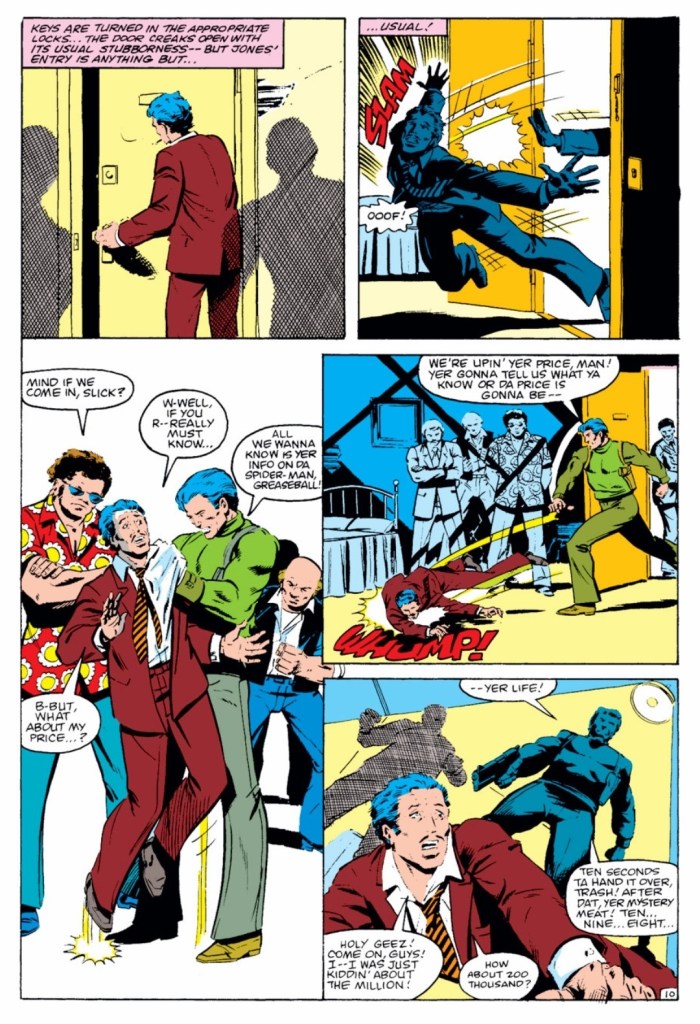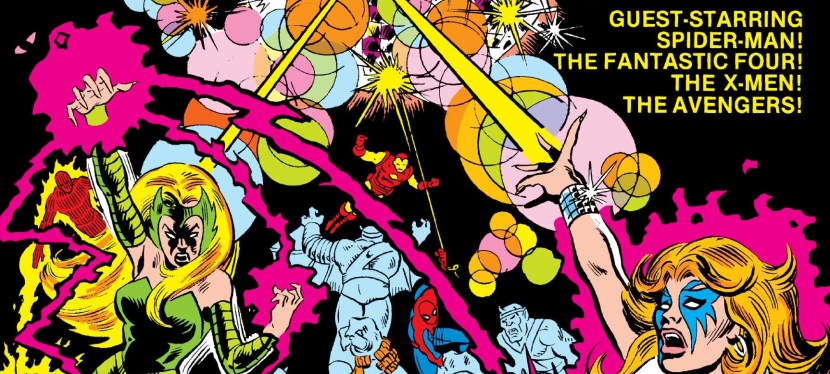
A Look Back at What If #33 (1982)

Welcome back superhero enthusiasts, 1980s arts and culture enthusiasts, Marvel Comics fans and comic book collectors! Today we go back to the year 1982 to examine alternate stories of the Marvel Comics shared universe chronicled through the original What If monthly series.

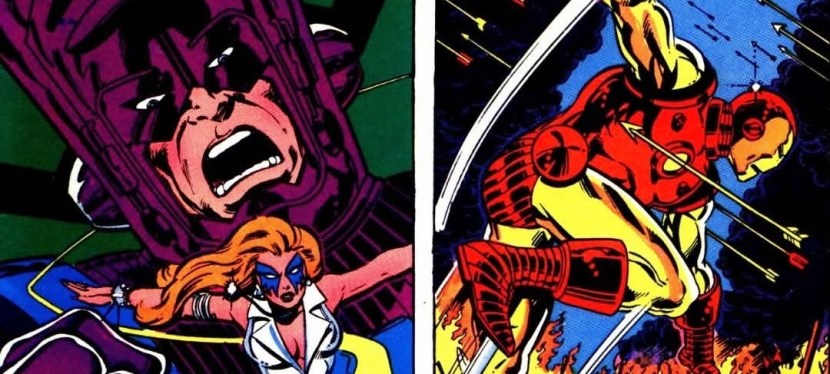
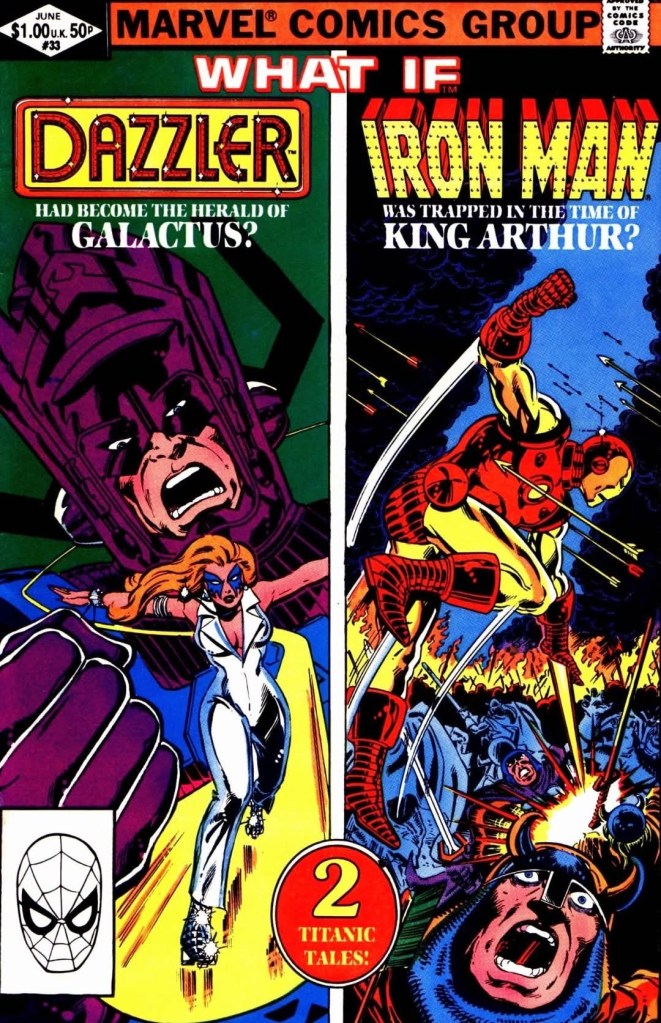
Back in the early 1980s, Dazzler quickly became popular among comic book readers and a standalone monthly series was launched no so long after her debut in Uncanny X-Men #130. Earl on in her monthly series, Dazzler eventually encountered Galactus (the classic nemesis of the Fantastic Four) in a wild tale involving the galaxy. On the other hand, Marvel Comics published a wild tale of the conflict of Iron Man and Dr. Doom (also the nemesis of the Fantastic Four) involving time travel and the presence of King Arthur in Iron Man . Eventually, Marvel decided to make alternate tales of the mentioned stories of Dazzler and Iron Man and publish them through an issue of What If.

With those details laid down, here is a look back at What If , published in 1982 by Marvel Comics with a Dazzler story written by Dan Fingeroth and drawn by Mike Vosburg, and the Iron Man story written by Steven Grant and drawn by Don Perlin.

The cover.

Early story

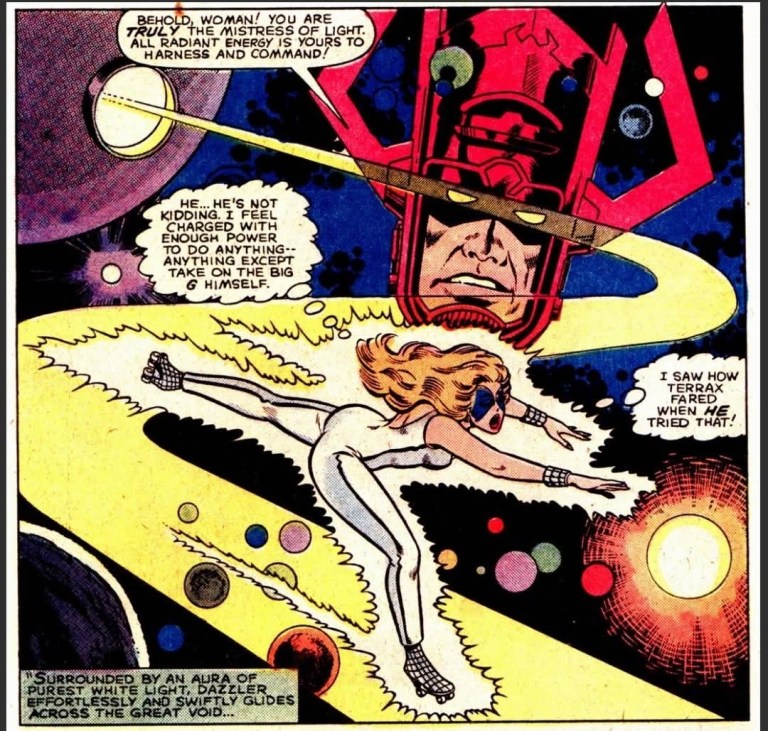
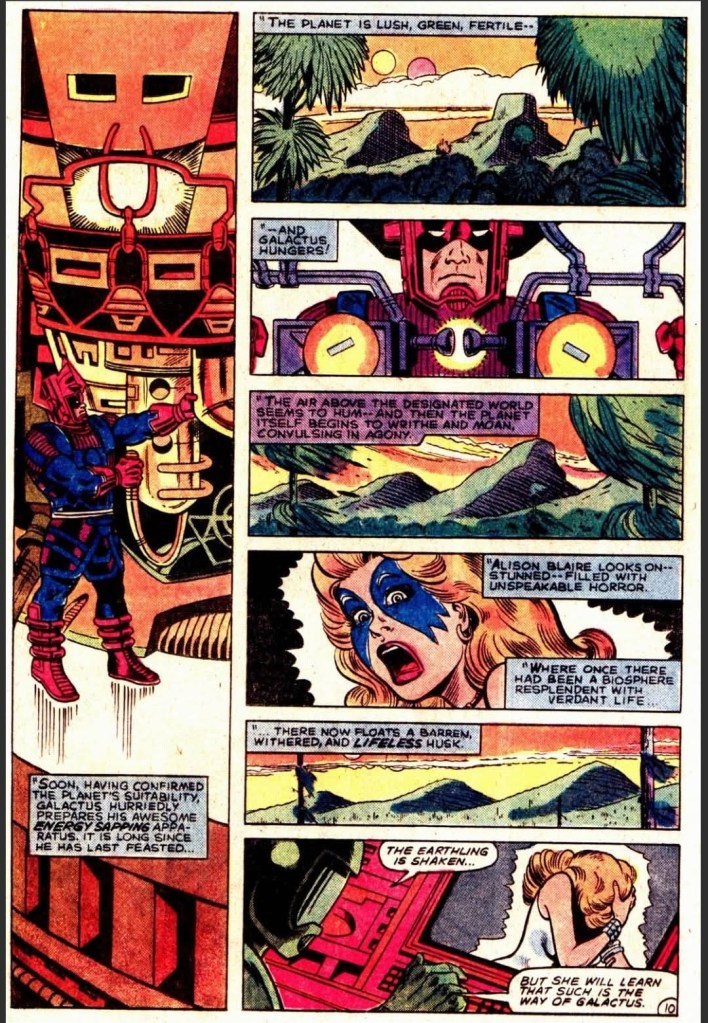
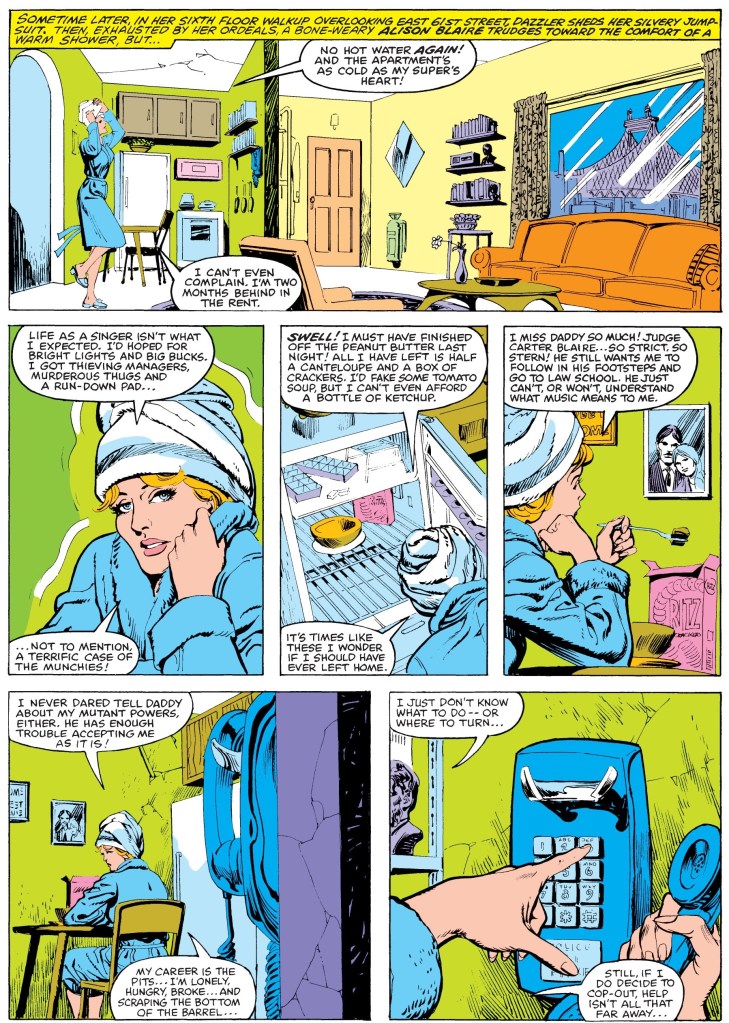
What if Dazzler had become the herald of Galactus? – The story begins with Dazzler standing in the presence of Galactus, Terrax and Drone R-II. After Galactus renders his judgment on Terrax by banishing him to the depths of a black hole, he tells Dazzler she has proven herself worthy to become his new herald. As Drone R-II reminded his superior of the fact that previous heralds were forced to leave service due to their own moral codes and added that Dazzler will do the same, she questions them and stated that she does not belong in deep space and wants to go home. Galactus tells her that Earth is a planet he has sworn to devour and by becoming his herald, he will perhaps spare her home world. Dazzler finds herself cornered and reluctantly joins Galactus as his new herald. Immediately, Galactus sends her out to deep space for her first task…

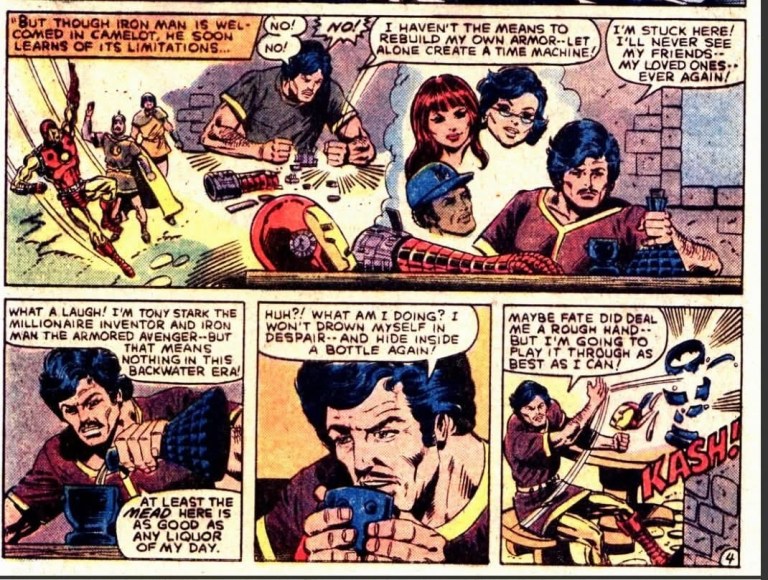
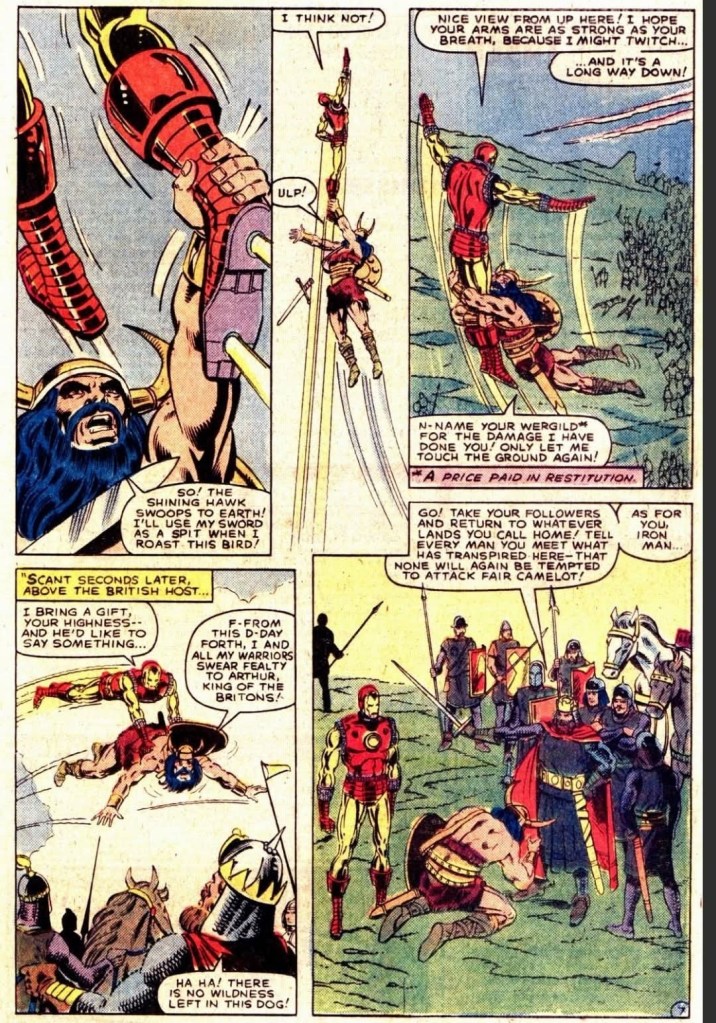
What if Iron Man had been trapped in King Arthur’s time? – The story begins in the past wherein Doctor Doom and Iron Man found themselves during the time of King Arthur. After separating themselves by taking different sides – Iron Man with King Arthur and Doom with Morgana LeFay – they decide to set their differences aside for the common goal of creating a crude time machine to return to the future. Instead, Doom takes advantage of the time machine by shocking Iron Man and leaving him behind in the past. With Doom back in the future, Iron Man struggles moving on the ground only to encounter Morgana LeFay. Believing that there is no pleasure in breaking a helpless man, Morgana spares Iron Man and tells him to return to King Arthur with her pledge…  

Quality

After doing advanced work, Dazzler can only watch and witness the loss of life as her master Galactus consumes the planet.

I can start with the good news for you all…the two featured stories in this What If comic book are great to read from start to finish!

With the Dazzler tale, I enjoyed how Danny Fingeroth told the alternate reality story of the dazzling heroine becoming Galactus’ herald and working immediately to serve him. Not only does Dazzler carried tremendous powers she did not have before, she was able to quickly travel through deep space and visit planets that are suitable for her master’s consumption. Even as she wielded tremendous power, Dazzler still retains her conscience and does some analyzing of situations.

Of course, she still retained her human nature throughout and there are moments when she felt defeated or shocked which alone made her a questionable herald. Galactus himself is pretty much in character in this tale and it is very engaging to see how his actions impact not only the beings of the cosmic realm of the Marvel universe but also on Dazzler herself. Without spoiling the plot, I can say the ending is captivating and truly is worth the build-up.

The stranded Iron Man makes an impact on a battle favoring King Arthur.

Regarding the Iron Man tale, the creative team came up with the concept of having the armored superhero actually stranded in time (left behind by Doctor Doom) and getting burdened by many factors. With Doom gone early in the plot, this effectively made Iron Man the main focus and his involvement in the conflict between King Arthur and Morgana really raised the stakes.  

Not only does Iron Man have to deal with conflicts, he also became vulnerable as the era of King Arthur had very low forms of technology which made the superhero’s desire to return to the future an effort against the impossible. As the story went on, Iron Man makes impact on the conflicts between the forces of King Arthur and Morgana and the good news here is that the creative duo of Steve Grant and Don Perlin made it all believable and serious to follow.  

Conclusion

Dazzler the new herald of Galactus.
Tony Stark struggles initially with being stranded in the past.

I can say that What If (1982) is a great read! The respective tales of Dazzler and Iron Man are captivating, intriguing and enjoyable to read. The creative teams of each story succeeded in building up their respective concepts, moved the established superhero to daring creative directions, and delivered powerful conclusions. This issue of the old What If series has to read as it is a true escape from reality!

Overall, What If (1982) is highly recommended!

+++++

Thank you for reading. If you find this article engaging, please click the like button below, share this article to others and also please consider making a donation to support my publishing. If you are looking for a copywriter to create content for your special project or business, check out my services and my portfolio. Feel free to contact me with a private message. Also please feel free to visit my Facebook page Author Carlo Carrasco and follow me on Twitter at  @HavenorFantasy as well as on Tumblr at https://carlocarrasco.tumblr.com/ and on Instagram at https://www.instagram.com/authorcarlocarrasco

Marvel vs. Capcom Fighting Collection: Arcade Classics is now available on Xbox Series X|S and Xbox One

Welcome back Xbox fans, geeks, retro gaming enthusiasts, fighting game enthusiasts and other gamers!

With the current Xbox-exclusive fantasy role-playing game Avowed coming out on February 18, I’m supposed to be excited about what Team Xbox has prepared this year. Of course, there were disappointments not only with certain Xbox first-party releases but also with the way things have been changing on the part of Team Xbox.

Times like these, retro gaming on Xbox is the answer for fans who want to experience a lot of fun and Capcom just released Marvel vs. Capcom Fighting Collection: Arcade Classics for Xbox Series X, Xbox Series S and even Xbox One users to enjoy. Watch and learn from the official Xbox trailer below.

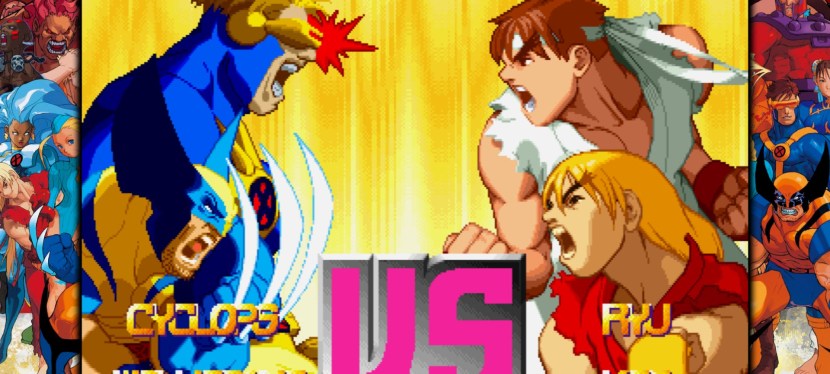
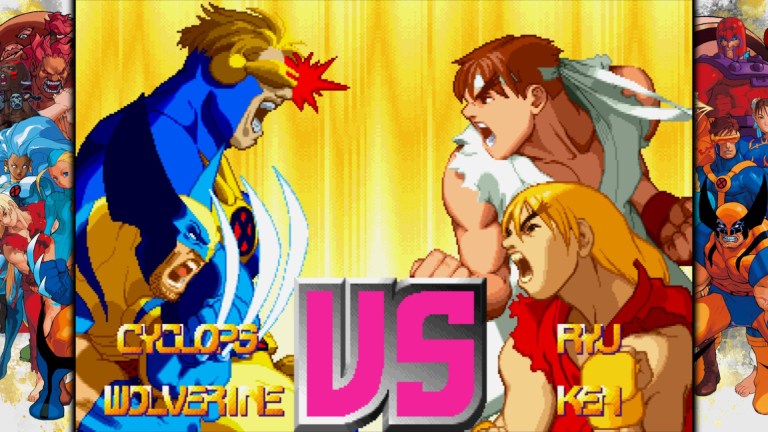
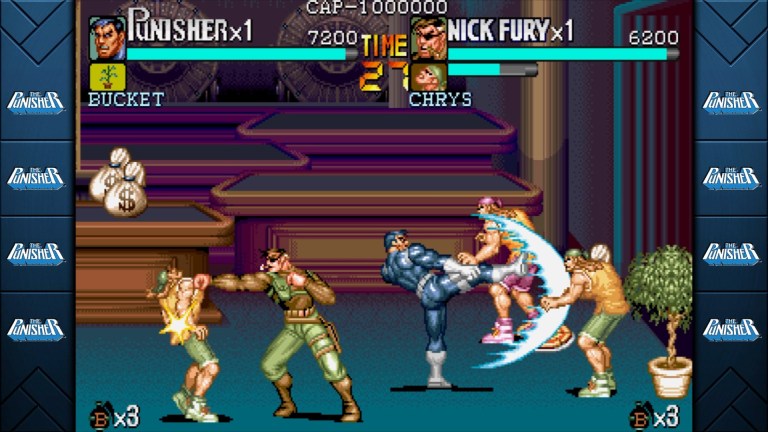
For the newcomers reading this, the said collection comes with the following video games Capcom released long ago with an emphasis on crossovers with Marvel’s intellectual properties: X-Men: Children of the Atom (1994), Marvel Super Heroes (1995), X-Men vs. Street Fighter (1996), Marvel Super Heroes vs. Street Fighter (1997), Marvel vs. Capcom: Clash of Super Heroes (1998), Marvel vs. Capcom 2: New Age Of Heroes (2000) plus The Punisher (1993).

Wow! That’s a collection of very fun and popular games Capcom released from 1993 to 2000. With the exception of The Punisher arcade game (a 2D adventure game), I played them all in the arcades decades ago and I can say that having them in a single collection for the modern Xbox consoles is indeed a blessing for long-time Xbox gamers who love 2D fighting games and retro gaming. The way I feel right now, Marvel vs. Capcom Fighting Collection: Arcade Classics looks really enticing to purchase.

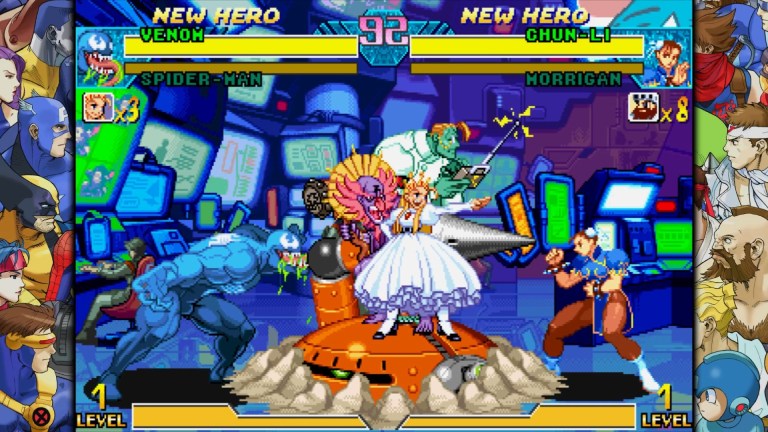
Marvel vs. Capcom: Clash of Super Heroes is not just a lot of fun to play but also will please those who love the characters. With Wolverine, Spider-Man, Venom, Captain America from Marvel’s side included, there is something that will bring both geeks and gamers together.

I have fond memories of Capcom 2D fighting games that carried Marvel’s intellectual properties. X-Me: Children of the Atom was enjoyable to play with and it resonated with me as I was already an X-Men comic book reader back in the 1990s. Marvel Super Heroes was also fun to play and it somewhat reminded me of The Infinity Gauntlet storyline. X-Men vs. Street Fighter was the most intriguing crossover fighting game at the time of its release and it really raised the bar for fast-and-furious style gameplay complete with a quick character swap during the heat of battles. Marvel Super Heroes vs. Street Fighter was the follow-up which came with changes that were not well received by the fans.

Then came the two Marvel vs. Capcom crossover fighting games which really built upon the foundation of X-Men vs. Street Fighter for more team battles with speed and impact in mind. I could not forget the inclusion of Resident Evil characters, Mega Man and others.

X-Men vs. Street Fighter is a classic tag-team, crossover-oriented video game! Fast and furious action ensured!
The Punisher arcade game is the only non-fighting game of the collection. Punisher fans should look at this.

Adding further zest to the collection is online play that allows casual matches, ranked matches, custom matches. Think about how your skills or your scoring will compare with those of other players from around the world.

That being said, Marvel vs. Capcom Fighting Collection: Arcade Classics is a retro gaming package that deserves attention as it carries some of the finest video games Capcom ever made.

To purchase Marvel vs. Capcom Fighting Collection: Arcade Classics for Xbox, click https://www.xbox.com/en-us/games/store/marvel-vs-capcom-fighting-collection-arcade-classics/9nwfm3hdjc94

+++++

Thank you for reading. If you find this article engaging, please click the like button below, share this article to others and also please consider making a donation to support my publishing. If you are looking for a copywriter to create content for your special project or business, check out my services and my portfolio. Feel free to contact me with a private message. Also please feel free to visit my Facebook page Author Carlo Carrasco and follow me on Twitter at  @HavenorFantasy as well as on Tumblr at https://carlocarrasco.tumblr.com/ and on Instagram athttps://www.instagram.com/authorcarlocarrasco
A Look Back at Amazing Spider-Man #262 (1985)

Welcome back superhero enthusiasts, 1980s arts and culture enthusiasts, Marvel Comics fans and comic book collectors! Today we go back to the year 1985 to examine a small part of the Marvel Comics universe through a tale of the Amazing Spider-Man monthly series.

For this particular review, the Amazing Spider-Man comic book does not involve Tom DeFalco and Ron Frenz. Instead, we will see the creative contribution of Bob Layton who already established himself within Marvel Comics on the Iron Man monthly series. Layton is the same guy who co-founded Valiant Comics with former Marvel Comics editor-in-chief Jim Shooter.

With those details laid down, here is a look back at Amazing Spider-Man , published in 1985 by Marvel Comics with a story written and illustrated by Bob Layton.

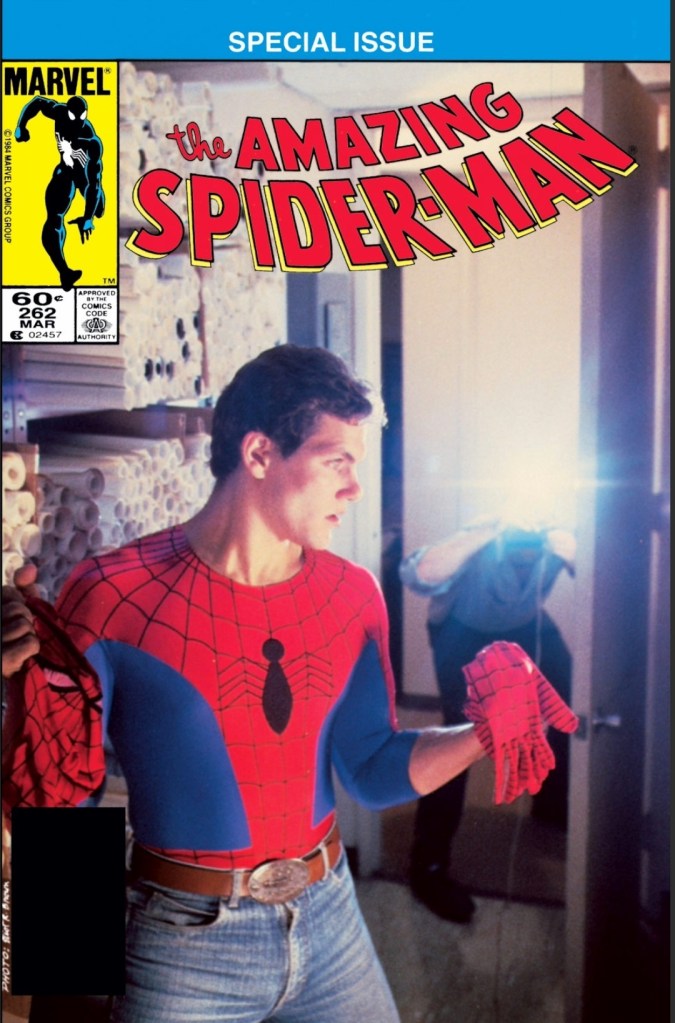
The cover.

Early story

The story begins as Spider-Man arrives at the Newark International Airport in New Jersey distracting a few air traffic control operators. As he makes his way into a deserted baggage room, Peter Parker intends to change clothes as he has a journalistic assignment from the Daily Bugle to photograph President Ronald Reagan who is set to arrive soon. For Peter Parker, the assignment is crucial as he needs to earn money.

Elsewhere within the airport, the sleazy tabloid news photographer D.J. Jones makes his way through and he intends to photograph something unusual or embarrassing about Reagan. He accidentally bumps into a lady whose items fall down. Jones pretends to be kind to her as he secretly takes her wallet while helping her collect her belongings.

As Jones decides to take the lady’s money, he goes into one of the baggage rooms to get rid of the wallet. Inside, he accidentally spots Peter Parker (still wearing the upper half of his Spider-Man costume) changing clothes and quickly photographs him. Jones starts to run away compelling Parker to chase him knowing that his secret identity will get exposed if he fails…

Quality

This is what happens when you carry very valuable information with you which the mob wants.

I really like this Spider-Man tale crafted by Bob Layton. For one thing, it tackles the concept of having your secret identity being discovered by someone who has a record of unethical behavior as well as the opportunity of using the acquired confidential information (the secret identity) for financial gain (at the expense of the affected person). Layton’s story also reconnected Spider-Man to a significant part of his legacy (the death of his Uncle Ben and the identity of the man who killed him) which opens up moral and ethical challenges on his part.

Character development of Spider-Man in this story is short yet substantial to read. As he recalls the painful lesson he learned about his uncle’s death, he remembers how guilt (by previously allowing a crook to get away who later turns out to be the same person responsible for the death of Uncle Ben) overwhelmed his early desire for revenge and this compels him to re-evaluate the responsibility he carries with his superhuman abilities.

Instead of utilizing a super villain, Layton presented D.J. Jones as the antagonist that Spider-Man has to overcome somehow. Jones is not exactly evil, he’s just unethical and sleazy. As a human being, Jones is a turn-off but he is not murderer nor a bank robber. The sleazy photographer is an ordinary man who, like Peter Parker, is trying to survive with his occupation which in turn makes him determined to get the big scoop to rise high.  

Conclusion

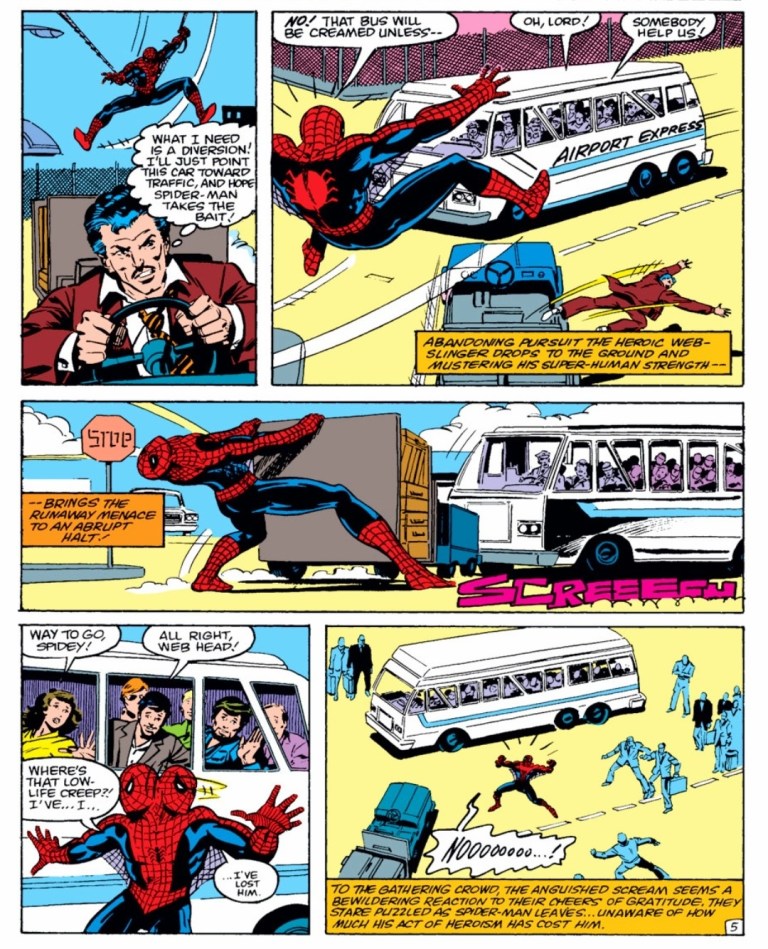
Spider-Man ended up having to save the lives of many innocent people resulting in losing track of the man he was chasing.

Amazing Spider-Man (1985) is a very inspired work by Bob Layton who clearly researched the history of Spider-Man and tackled the crucial themes (note: power, responsibility, morality and ethics) through the story. The plot is simple yet engaging to follow and the character development is really solid. This is great writing by Layton and his approach on superhero spectacle (the action scenes) works well within the narrative.

Overall, Amazing Spider-Man (1985) is highly recommended.

+++++

Thank you for reading. If you find this article engaging, please click the like button below, share this article to others and also please consider making a donation to support my publishing. If you are looking for a copywriter to create content for your special project or business, check out my services and my portfolio. Feel free to contact me with a private message. Also please feel free to visit my Facebook page Author Carlo Carrasco and follow me on Twitter at  @HavenorFantasy as well as on Tumblr at https://carlocarrasco.tumblr.com/ and on Instagram at https://www.instagram.com/authorcarlocarrasco
A Look Back at Amazing Spider-Man #252 (1984)

Welcome back superhero enthusiasts, 1980s arts and culture enthusiasts, Marvel Comics fans and comic book collectors! Today we go back to the year 1984 to examine a small part of the Marvel Comics universe through a tale of the Amazing Spider-Man monthly series.

By now, you readers should be aware that I reviewed a lot of comic books about Spider-Man and his deadliest enemy Venom. It is already established through comic book history that the iconic webslinger is responsible for the establishment of Venom as he brought into the world the alien costume (the symbiote) coming from deep space (as told in the Secret Wars limited series), and he also became responsible for the destruction of Eddie Brock’s career in journalism. Of course, Venom did not debut immediately after Spider-Man’s return from Secret Wars and there was a lot more about the symbiote when it was with Peter Parker.

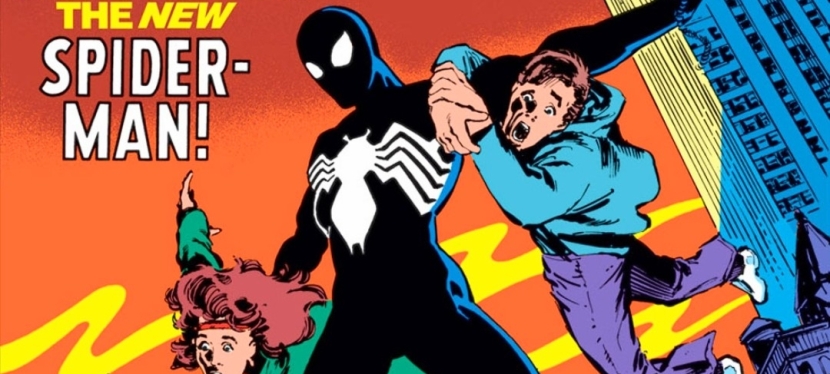
With those details laid down, here is a look back at Amazing Spider-Man , published in 1984 by Marvel Comics with a story written by Roger Stern and Tom DeFalco, and drawn by Ron Frenz. This comic book marked the first appearance of the alien costume.

The cover.

Early story

The story begins inside the New York headquarters of the Daily Bugle. It has been observed that several superheroes such as Captain America, Thor, Spider-Man, Iron Man, the X-Men and the Avengers have been missing this resulted in a rise of crime. Publisher J. Jonah Jameson and editor-in-chief Joe Robertson discuss the newest edition of their newspaper.

Meanwhile over at Central Park where police officers and others stand by an area that was closed off, a physical structure suddenly appears spreading bright light to onlookers. Suddenly Spider-Man (wearing a new dominant black costume) leaps out of the structure carrying Dr. Connor (the Lizard) surprising the people.

After realizing they have returned home at last after spending lots of time and struggle in deep space (Secret Wars), Spider-Man could not help but feel jubilant to be home. As the police officers don’t realize that they are talking with the same webslinger due to the new costume, one of them was about to draw his gun which prompted the superhero to use his web on him.

Suddenly, the Avengers, Captain America, Thor and Iron Man emerge from the physical structure which provided Spider-Man relief as he thought that only he and Dr. Connors made it home. With the people focusing on the other superheroes, Spider-Man and Dr. Connors slowly exited. Connors asked him what are they going to tell the world about all they have seen and experienced in deep space…

Quality

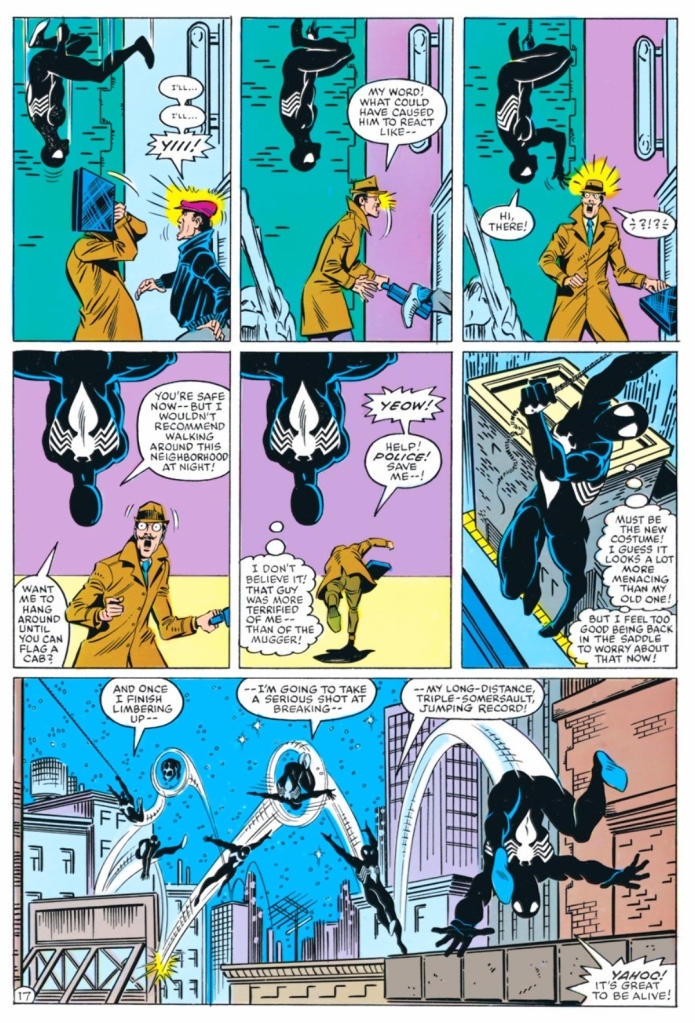
Spider-Man’s first night in New York wearing the alien costume .

I really like this story. I first read this a long time ago and I re-read it all over again for this retro review, and still this story engaged me a lot. There is a lot of richness in the script and you will get to see Peter Parker transitioning into a series of major changes that await him. Without spoiling the plot, there is no hero-versus-villain element here at all. It is all about Spider-Man who just arrived home from a major conflict (and also one of the most significant comic events ever published by Marvel Comics) and the alien costume saga truly began right here. The Venom debut did not happen until a few years later in reality.

In accordance to what was established in Secret Wars (not to be confused with the 2015 series of the same name) and the standards of then editor-in-chief Jim Shooter, the creative came up with a tale that not only showed a different Spider-Man but also portrayed him in ways that defied the tropes and creative ideas the preceded this comic book.

For one thing, Peter Parker is literally like a fish out of water here. As far as the whole world is concerned, only days passed when the superheroes went to deep space. But for the webslinger, a lot more time passed as so many battles, discoveries and intriguing events took place for him along with the others. That being said, Peter Parker’s perception of reality and track of time really got messed up and the weight of Secret War’s events really turned out overwhelming on him. This was well dramatized in the scene wherein Peter – who realized that so much time had passed – he had to call his aunt May fearing that she must be worried sick over him. There was also the moment when by walking down the street, he realized how much he missed not only his home but also the local surroundings.

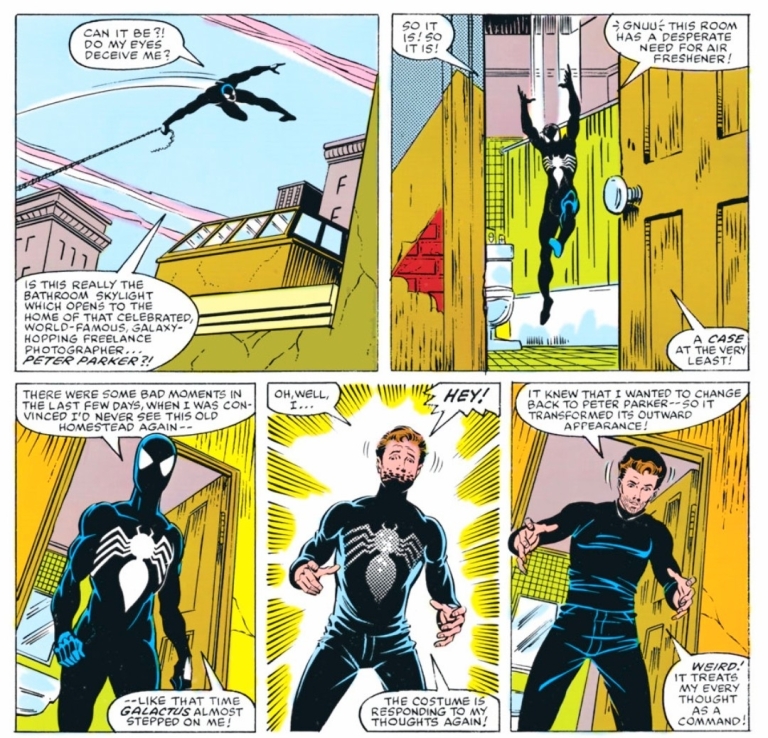
It was also in this comic book when Peter started getting more oriented with the alien costume he first got in Secret Wars (which was actually published after this comic book) and started to enjoy the benefits with the way it responds to his thinking. Of course, at this stage, he has yet to realize the unfortunate truth about the living costume he brought home and this story really kicked off a new and profound stage in the comic book history of Spider-Man

Conclusion

When Spider-Man finally arrived home after spending so much time during Secret Wars.

Amazing Spider-Man (1984) is still a great comic book to read all over again. This was released during the time when Secret Wars (1984) was still being published and years before Venom’s big debut in the series’ 300th issue. In my view, the alien costume saga was a big turning point in the literary history of Spider-Man and the creators who got involved in this comic book really sowed the seeds of compelling and intriguing events that followed. What is intriguing is that all of these significant developments started when a Marvel Comics reader from Illinois came up with the idea of a new costume for Spider-Man, wrote to them and the publisher responded to acquire his idea for over $200 (click here).

This comic book is also a reminder of how significant Jim Shooter’s rule at Marvel Comics really was and I can say that the Marvel’s literary universe of the 1980s should not be ignored.

Overall, Amazing Spider-Man (1984) is highly recommended!

+++++

Thank you for reading. If you find this article engaging, please click the like button below, share this article to others and also please consider making a donation to support my publishing. If you are looking for a copywriter to create content for your special project or business, check out my services and my portfolio. Feel free to contact me with a private message. Also please feel free to visit my Facebook page Author Carlo Carrasco and follow me on Twitter at  @HavenorFantasy as well as on Tumblr at https://carlocarrasco.tumblr.com/ and on Instagram at https://www.instagram.com/authorcarlocarrasco
A Look Back at Armorines #1 (1994)

Disclaimer: This is my original work with details sourced from reading the comic book and doing personal research. Anyone who wants to use this article, in part or in whole, needs to secure first my permission and agree to cite me as the source and author. Let it be known that any unauthorized use of this article will constrain the author to pursue the remedies under R.A. No. 8293, the Revised Penal Code, and/or all applicable legal actions under the laws of the Philippines.

Welcome back superhero enthusiasts, 1990s culture enthusiasts and comic book collectors! Today we go back to the early 1990s and explore a part of the shared universe of Valiant Comics through the Armorines monthly series.

Before I start, I should state that the superhero concept of an armored human protagonist who could do many incredible things made possible by high technology made an impact on comic book storytelling for decades. Look at Marvel’s Iron Man and the Ultraverse’s Prototype for examples.

While Valiant Comics already had its own armored superhero with X-O Manowar (note: his armor is symbiotic, not technological), they decided to move forward with the concept of armored figures in the form of a military team.

With those details laid down, here is a look back at Armorines , published in 1994 by Valiant Comics with a story written by Jorge Gonzalez and drawn by Jim Calafiore.

The cover.

Early story

The story begins five hundred kilometers off the southern coast of Australia. Four people dive very deeply to explore nuclear-powered submarine U.S.S. Benchley which has been dormant for some time already. While exploring the interiors of the submarine, the divers got attacked by something in the dark.

At Camp Pendleton in California, an armored U.S. marine goes through an intense training session fighting machines not knowing that there could be traps waiting to get triggered. As Gunny (the armored marine in the session) falls into a trap, his teammates, General Kendall and the scientist Zahn watch the proceedings behind the scenes as another teammate (operating with virtual reality on her high-tech station) continues to communicate with him.

As time passes by, the situation gets even worse for Gunny physically…

Quality

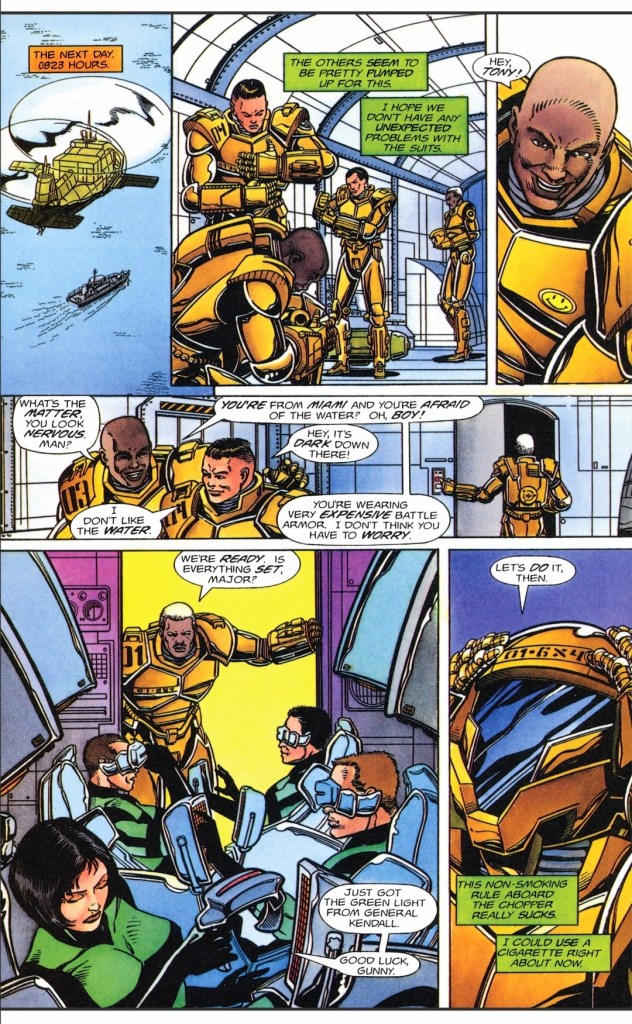
Armorines has members who go out on the field wearing high-tech suits of armor while there are other members who serve as co-pilots using virtual technology and constant communication behind closed doors.

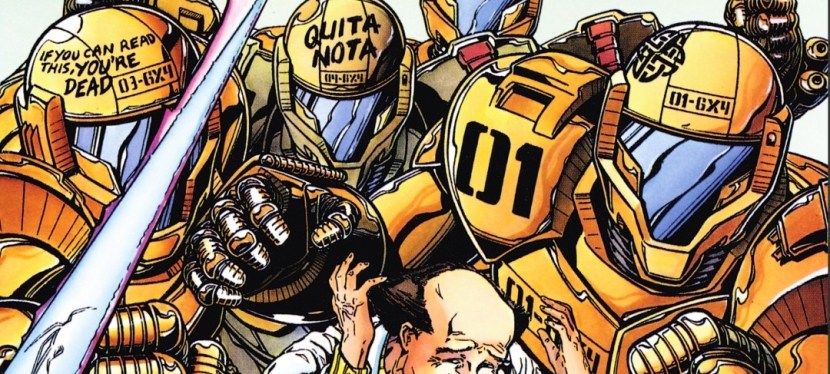
In terms of storytelling, the creative team focused mainly on the build-up of not just the plot but also the importance and the ways of the Armorines themselves. As weapons of the government, Armorines are an expensive team to run due to the use of very advanced technologies for operations. The Armorines have members who go out on the field wearing high-tech suits of armor that provide enhanced protection while also carrying high-tech weapons for offense. The team also has members who stay behind closed doors to use individual stations with virtual reality and enhanced communication with their brothers on the field.

When it comes to the characters, the smoking Gunnery is noticeably the one who got the most exposure and the most development. The other Armorine members got token exposure for the readers.

More on the plot itself, there is a mission that requires the Armorines to go deep underwater to solve a mystery and do something dangerous secretly. The mission was essentially all about protecting America’s top-secret weapons from falling into the wrong hands. To be clear, the mission itself happens in the 2nd half of this comic book which ultimately serves as a pay-off to the build-up the happened earlier. In fairness to the creative team, there was a good amount of suspense presented when the mission really started moving. There definitely something worth seeing during the mission.

Conclusion

In this story, Gunny is the closest thing to a definitive protagonist.

To be very clear, Armorines (1994) is not exactly the high-powered, action-packed story people could expect from seeing the armored marines looking capable of fighting terrorists and other enemies of America in militaristic fashion. This comic book’s story is indeed surprising to me and the creative team was not hesitant to push hard with the concept they came up with here. As this comic book was clearly executed with build-up, introductions and emphasizing concepts in mind, it is not surprising that the pay-off in the 2nd half led to moments of intrigue and suspense with momentum going into the next issue. Lastly, I should state that this comic book is free from political influence and its focus on the team has been very consistent.

Overall, Armorines (1994) is recommended.

+++++

Thank you for reading. If you find this article engaging, please click the like button below, share this article to others and also please consider making a donation to support my publishing. If you are looking for a copywriter to create content for your special project or business, check out my services and my portfolio. Feel free to contact me with a private message. Also please feel free to visit my Facebook page Author Carlo Carrasco and follow me on Twitter at  @HavenorFantasy as well as on Tumblr at https://carlocarrasco.tumblr.com/ and on Instagram at https://www.instagram.com/authorcarlocarrasco
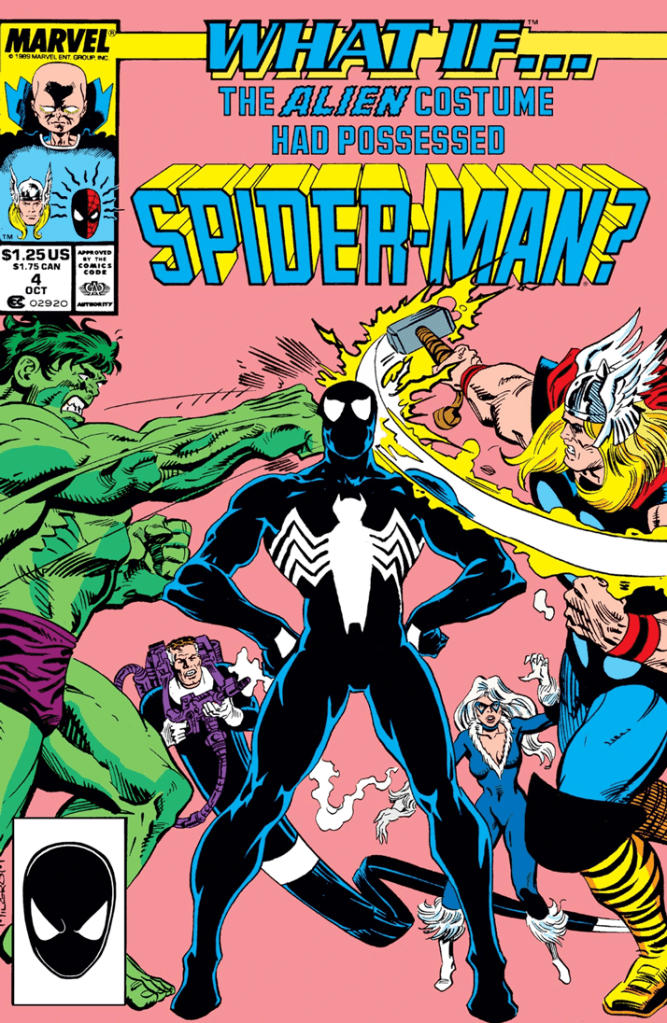
A Look Back at What If #4 (1989)

Disclaimer: This is my original work with details sourced from reading the comic book and doing personal research. Anyone who wants to use this article, in part or in whole, needs to secure first my permission and agree to cite me as the source and author. Let it be known that any unauthorized use of this article will constrain the author to pursue the remedies under R.A. No. 8293, the Revised Penal Code, and/or all applicable legal actions under the laws of the Philippines.

Welcome back superhero fans, 20th century arts and culture enthusiasts, Marvel Comics fans and comic book collectors! Today we go back to the year 1989 and explore a part of Marvel Comics’ universe through the reimagined tales emphasized in the What If monthly series (Volume 2).

For the newcomers reading this, I previously reviewed a variety What If comic books which you can find by clicking here, here, here, here, here, here, here and here. The joy of reading a What If comic book was the exploration of alternate outcomes in relation to the stories that have been counted by Marvel Comics as canon or official fictional history within their shared comic book universe. In this retro review, we will explore a key event from Spider-Man’s time with the alien costume (symbiote) which is related with the events of Secret Wars and the eventual establishment of his deadliest nemesis Venom.

With those details laid down, here is a look back What If , published in 1989 by Marvel Comics with a story written by Danny Fingeroth and drawn by Mark Bagley.

The cover.

Early story

The story begins with the Watcher examining Spider-Man’s involvement with the Secret Wars that took place on a faraway planet created by the Beyonder. There, his costume got damaged beyond  repair and he acquired a new one made of what he perceived to be an advanced form of material. After successfully returning home, Spider-Man goes through some mysterious developments and he could not understand why he remains fatigued even as he spent more time sleeping.

With the help of Mr. Fantastic at the Fantastic Four headquarters, Spider-Man learns that his new costume is a living entity that has attached itself to him mentally and physically. As Mr. Fantastic uses a sonic blaster, Spider-Man and the alien costume got separated at last. Some time later, the alien costume re-attached itself to Spider-Man who eventually used church bells loud sounds to separate it. The alien costume would go on to the find Eddie Brock to form Venom.

The alternate reality begins with Spider-Man having a joyful reunion with Black Cat shortly after coming back from Secret Wars. Learning from her advise to have himself checked properly, he visits Dr. Connors (the Lizard) for examination and testing…

Quality

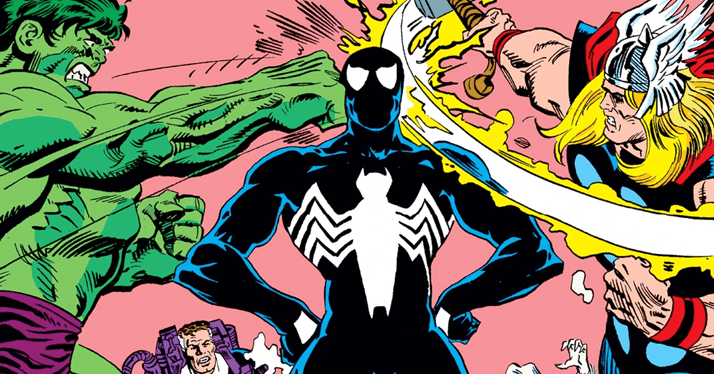
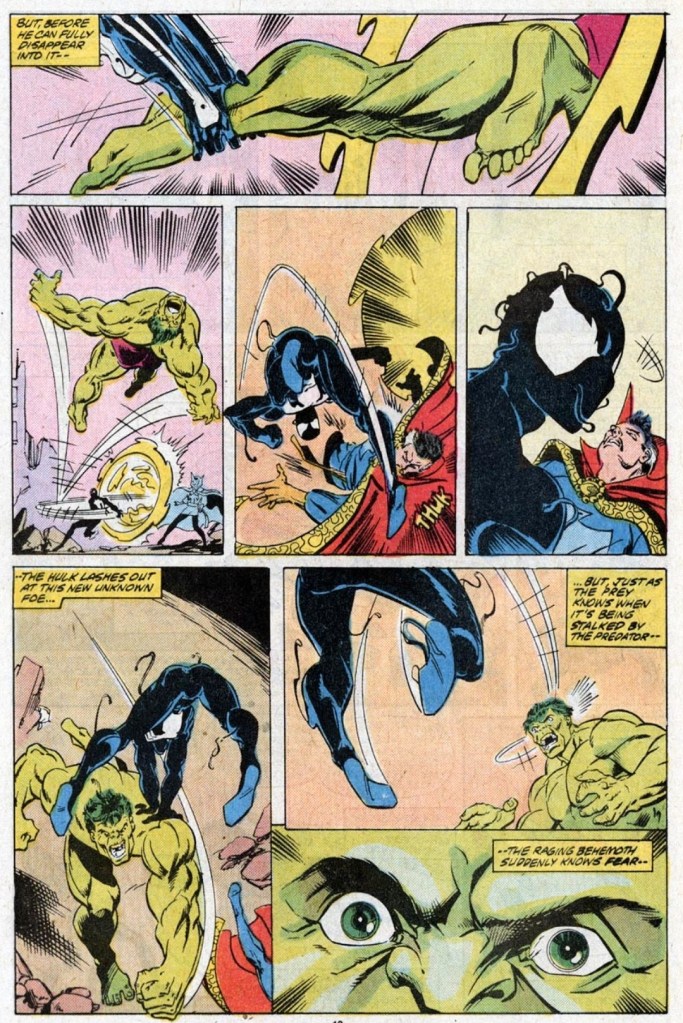
The possessed Spider-Man takes on Dr. Strange and the Hulk without hesitation.

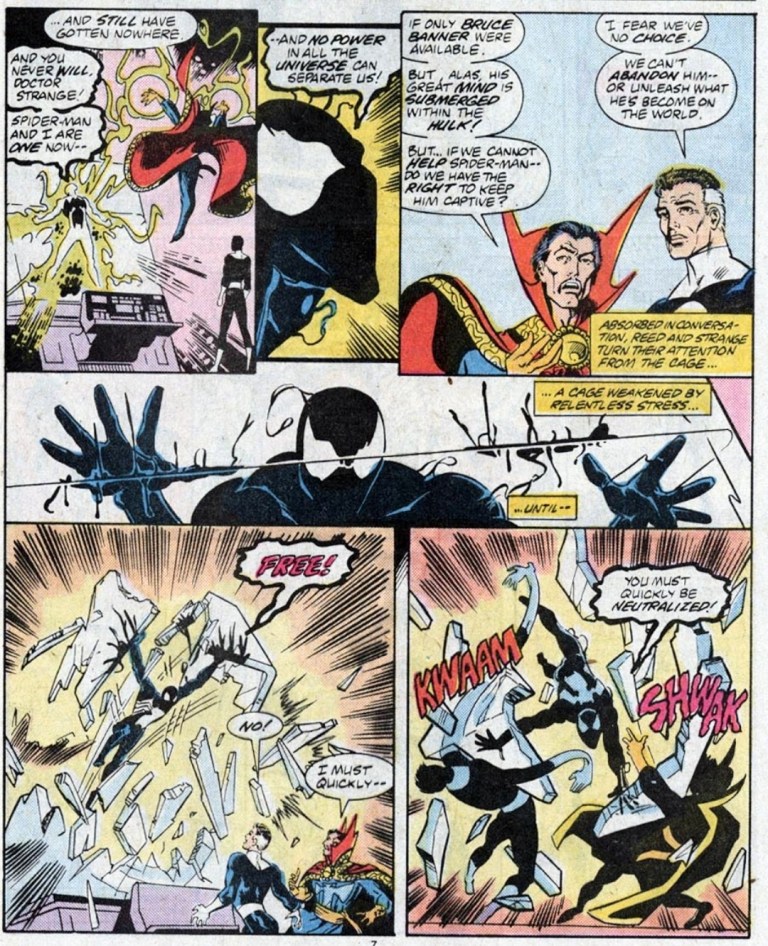
To say that Danny Fingeroth’s script is very deep is an understatement. Specifically, this story is a great exploration of alternative events that not only affects the iconic Spider-Man/Peter Parker but also other elements of the Marvel Comics universe of the time. The concept of the alien costume fully bonding with Peter Parker with Mr. Fantastic and even Dr. Strange failing to help is indeed suspenseful and intriguing to read thanks to Fingeroth’s very solid writing. In fact, the story even shows Spider-Man as being possessed by the symbiote (complete with dialogue) and when you witness Peter Parker struggling to control himself consciously (while wrestling with the alien costume), you will really feel his pain. I should also state that there is a lot more about Spider-Man told here that goes beyond the possession which really turned out to be very compelling to read in my experience. This is easily the most engaging alternate portrayal of Spider-Man as we know him and it should be read by as many people as possible.

Along the way, this comic book portrays the alien costume as an insatiable being and the implementation of dialogue for it (structured in a way as using the vocal ability of the powered being it bonded with) gave it a very unique personality of its own. This is something that was not portrayed in the early appearances of Venom in which Eddie Brock does the talking and reacting to unseen messages from the symbiote. That being said, the alien costume here symbolizes possession within the Marvel Comics shared universe and its unknown state really challenges not only the intelligence of the superheroes but also their ability to decide on what final action to take with regards to sentient life.

As staged by the writer, the story’s narrative occasionally shifts away from Spider-Man to follow other characters such as Black Cat (Peter Parker’s love at the time), Mr. Fantastic (in a great portrayal of his proficiency in science and as a responsible superhero), Thor and others which made the reading experience really immersive in relation to emphasizing how this alternate reality affects others. You will get to see the Captain America, the Hulk, Iron Man, the Wasp, Captain Marvel, the Fantastic Four and the Avengers here.

Those who are fond of superhero spectacle will have a lot to enjoy here. Mark Bagley carefully paces the action scenes and he uses visual dynamism during the right moments.  

Conclusion

Through dialogue, the alien costume is portrayed as a sinister force.

I can say it out loud…What If (1989) is one of the best Marvel Comics alternate reality stories I have ever read and the creative team of Fingeroth-Bagley crafted an epic tale that goes beyond the featured question of “What if the alien costumer had possessed Spider-Man?”. The comic book works excellently as both a Spider-Man story as well as a Marvel superheroes struggle. The story touches on relevant topics such as possession, killing and scientific exploitation. This is a must-have comic book!

Overall, What If (1989) is highly recommended!

+++++

Thank you for reading. If you find this article engaging, please click the like button below and also please consider sharing this article to others. If you are looking for a copywriter to create content for your special project or business, check out my services and my portfolio. Feel free to contact me with a private message. Also please feel free to visit my Facebook page Author Carlo Carrasco and follow me on Twitter at  @HavenorFantasy as well as on Tumblr at https://carlocarrasco.tumblr.com/ and on Instagram at https://www.instagram.com/authorcarlocarrasco/
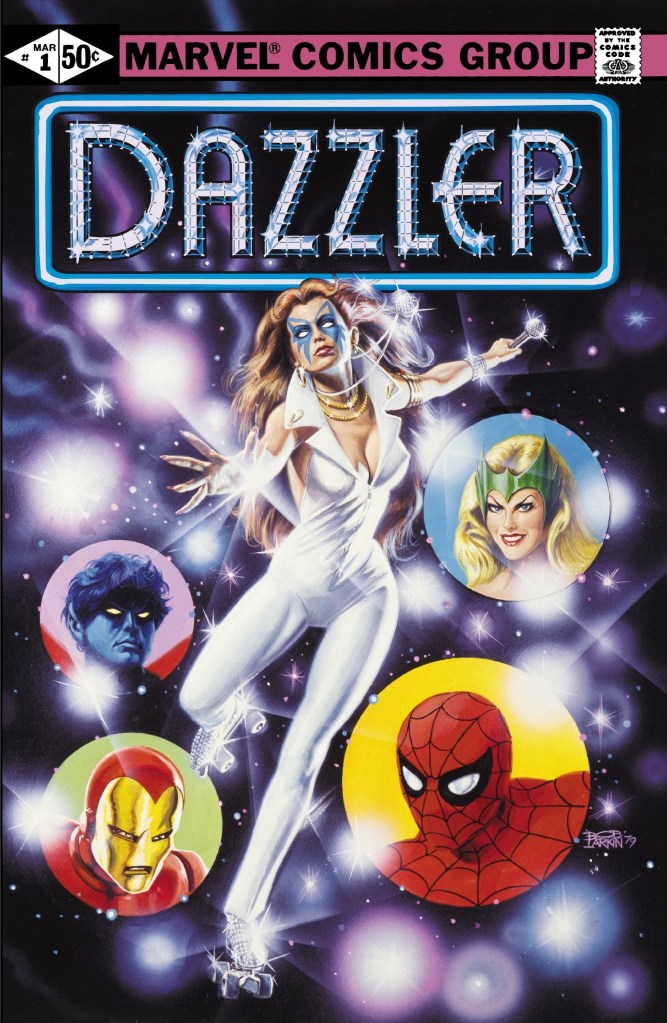
A Look Back at Dazzler #2 (1981)

Disclaimer: This is my original work with details sourced from reading the comic book and doing personal research. Anyone who wants to use this article, in part or in whole, needs to secure first my permission and agree to cite me as the source and author. Let it be known that any unauthorized use of this article will constrain the author to pursue the remedies under R.A. No. 8293, the Revised Penal Code, and/or all applicable legal actions under the laws of the Philippines.

Welcome back, superhero enthusiasts, comic collectors, 1990s culture enthusiasts and fans of Marvel Comics! Way back in 1981, Marvel Comics had a successful comic book series launch with Dazzler (read my retro review by clicking here) which sold over 400,000 copies and further sealed Dazzler as an advantageous addition for the company’s superhero comics franchise. Dazzler, a creation of a deal between Marvel and a certain record company, debuted in Uncanny X-Men #130 and got involved with the X-Men until Uncanny X-Men . Dazzler appeared with Marvel’s famous webslinger in Amazing Spider-Man #203.

Dazzler ended with a brewing rivalry between the title character and Enchantress. With those laid down, here is a look back at Dazzler , published in 1981 by Marvel Comics with a story written by Tom DeFalco and drawn by John Romita, Jr.

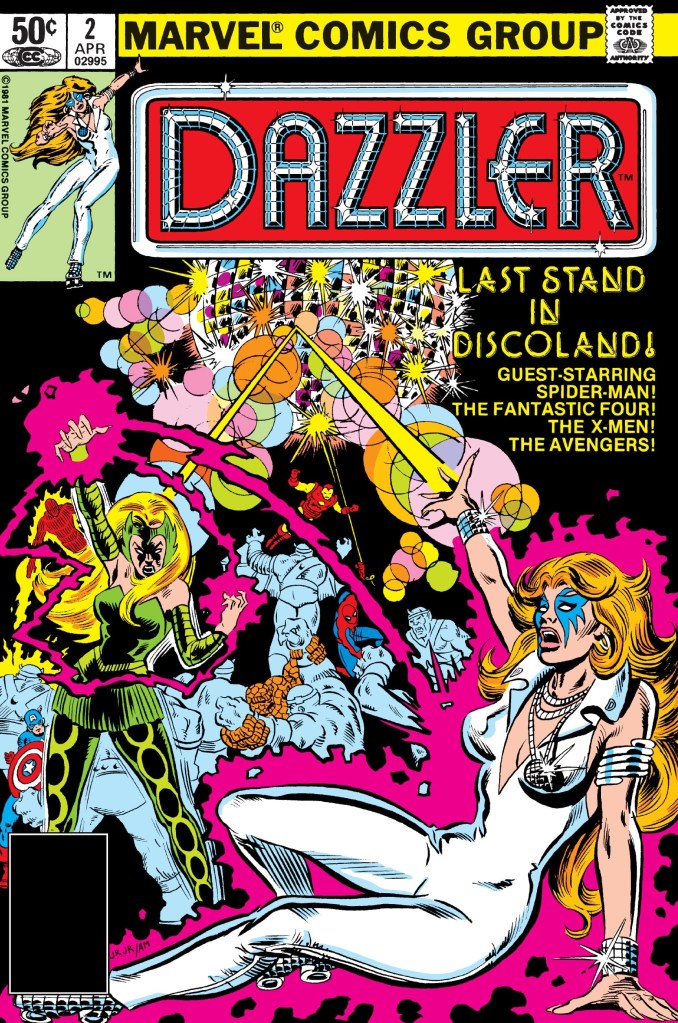
The cover.

Early story

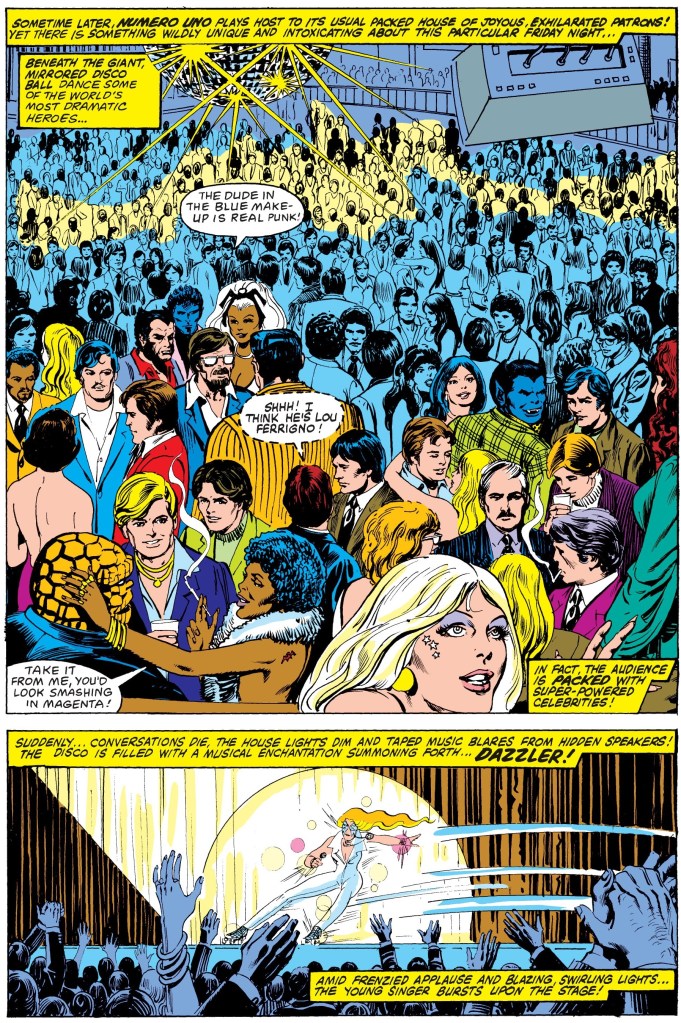
The story begins with Dazzler preparing for her big show at Numero Uno, a prestigious disco in the city of New York. Just before the show starts, a huge crowd of people are in attendance and among them are Wolverine, Peter Parker (Spider-Man), Captain America, Johnny Storm, Ben Grimm and Tony Stark (Iron Man) to name some.

Just as Dazzler appears on-stage and draws a frenzied applause from the audience, the revenger-hungry Enchantress slowly makes her moves to ruin the lady who outclassed her to be the main attraction of the club. Even with her desire for revenge, the Enchantress decides to use her magic sparingly on Dazzler. In the audience, Peter Parker/Spider-Man begins to sense something is about to happen…

Quality

This shows what this comic book is really about.

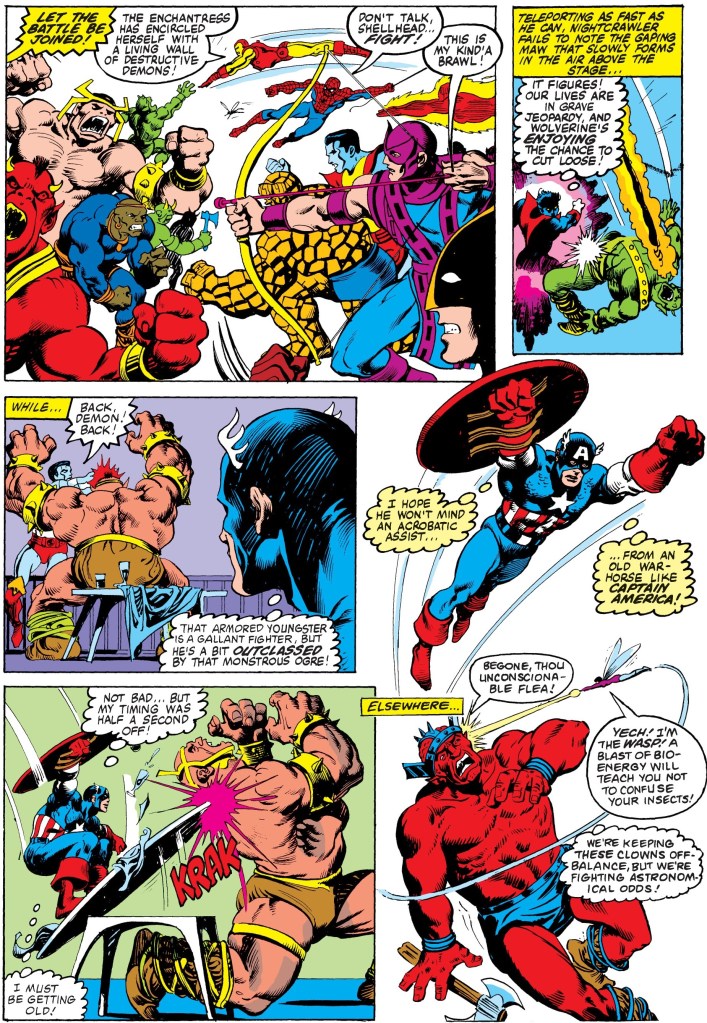
The way the story was told is disappointing. This is because the spotlight on Dazzler and her anticipated conflict with the Enchantress got overwhelmed by the amount of superhero filler on the narrative. To be clear, it is fun and interesting to see a mix of the varied superheroes of Marvel together but this comic book ended up being an all-star showcase (X-Men, Avengers and Fantastic Four members included) than a real, standalone Dazzler story. In fairness, Tom DeFalco showed how skilled he is with plot structuring and capturing the personalities and tropes of the different superheroes (note: unsurprisingly, DeFalco accurately captured Spider-Man’s personality and he went on to be a major force behind Spider-Man comic books) but that does not change the fact that this comic book should have been more about Dazzler.

When it comes to the conflict between Dazzler and the Enchantress, it was executed with no depth at all. Literally speaking, there is not enough meat to consume here and it the conflict really ended up looking very rushed. As if that was not bad enough, there is not enough justification to show Dazzler defeating a monster summoned by the Enchantress.  Considering how shallow the Dazzler-Enchantress match-up turned out, it’s no wonder why there is so much Marvel all-star filler in the script.

As for the late-stage attempt to shift the narrative back to Dazzler, it is rather over-the-top and unsatisfying.

Conclusion

You recognize someone in the audience?

Dazzler (1981) is an example about a creative team’s lack of confidence on crafting a decent story to develop a new superhero and ultimately resorting to fill it with a mix of other superheroes involved which itself symbolizes desperation. This comic book is not really a Dazzler story but an all-star showcase with Dazzler becoming a minor character in her own monthly series.

If you are seriously planning to buy an existing hard copy of Dazzler (1981), be aware that as of this writing, MileHighComics.com shows that the near-mint copy of the regular edition costs $28 while the near-mint copy of the newsstand edition costs $60.

Overall, Dazzler (1981) is unsatisfactory. Anyone who loves Dazzler or who wishes to discover more of her will be disappointed with this comic book.

+++++

Thank you for reading. If you find this article engaging, please click the like button below and also please consider sharing this article to others. If you are looking for a copywriter to create content for your special project or business, check out my services and my portfolio. Feel free to contact me as well. Also please feel free to visit my Facebook page Author Carlo Carrasco and follow me at HavenorFantasy@twitter.com
A Look Back at Dazzler #1 (1981)

Disclaimer: This is my original work with details sourced from reading the comic book and doing personal research. Anyone who wants to use this article, in part or in whole, needs to secure first my permission and agree to cite me as the source and author. Let it be known that any unauthorized use of this article will constrain the author to pursue the remedies under R.A. No. 8293, the Revised Penal Code, and/or all applicable legal actions under the laws of the Philippines.

Welcome back, superhero enthusiasts, comic collectors, 1990s culture enthusiasts and fans of Marvel Comics! Previously, I reviewed Uncanny X-Men #130 which was the first appearance of Dazzler who went on to become one of the most notable new characters of Marvel Comics in the 1980s. After appearing in Uncanny X-Men and Amazing Spider-Man #203, Dazzler became more prominent among all of Marvel’s superheroes as the publisher launched an all-new monthly series featuring her. There is more to that than meets the eye, however.

In his article titled “Dazzler and Me”, Danny Fingeroth wrote: Marvel decided to tray an experiment with the relatively new “direct market” – comic book shops. It was decided that Dazzler would only be available in comic book shops, not at traditional newsstands.

Dazzler sold over 400,000 copies.

Even the top-selling comics of the era sold perhaps 250,000 copies. So, the first issue, anyway, was a major hit.

Apart from the confirmed commercial success of the comic book, it is a wonder if it is still good to read by today’s standards. To find out, here is a look back at Dazzler , published in 1981 by Marvel Comics with a story written by Tom DeFalco and drawn by John Romita, Jr.

The cover.

Early story

The story begins with Dazzler running away from four armed men who had been following her since she left the disco. She finds herself corned at the dead end of an alley as the men approach her. While pretending to be reaching for her make-up in the bag, Dazzler grabs and activates her portable radio which plays music. With the music turned on, she uses her power to convert it all into a dazzling display of light and color which makes the men disoriented.

While swinging nearby, Spider-Man notices the display of light but before he begins his approach, Dazzler makes her move to knock two men out. Another man fires his gun and his bullet ricochets until it hits the portable radio stops the music and Dazzler’s lights altogether leaving her vulnerable once again…

Quality

This page alone establishes Dazzler as a person struggling to make ends meet.

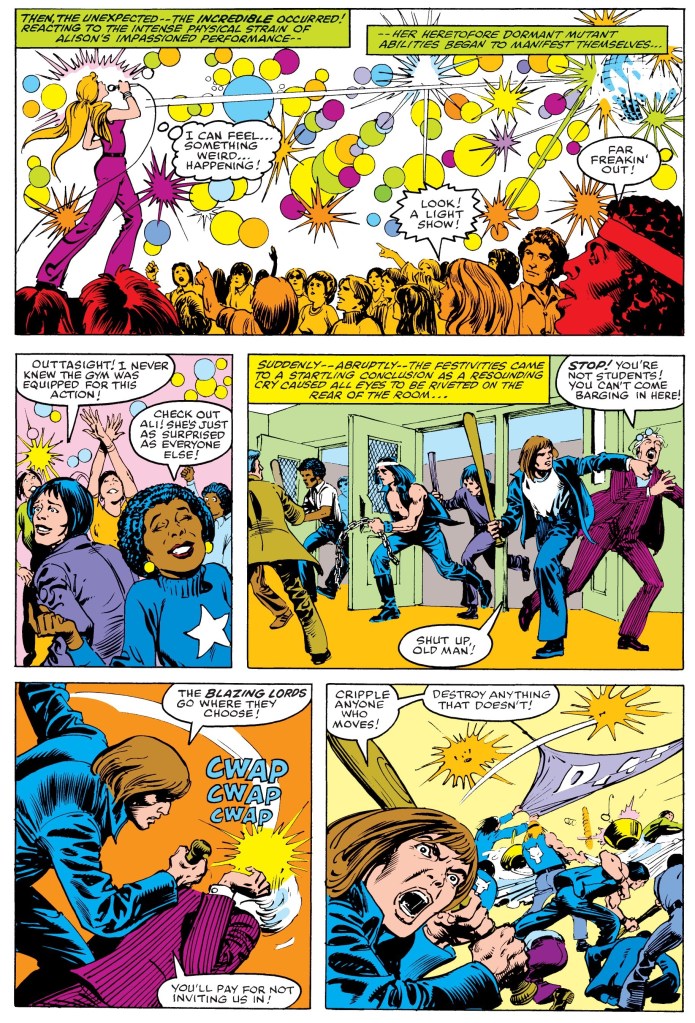
As far as telling a Dazzler story goes, this comic book is the complete package and it’s got very solid writing! Apart from showing what happened to her after her appearances in the Uncanny X-Men and Amazing Spider-Man series, this comic book formally introduces Dazzler in her civilian identity as Alison Blaire and thanks to efficient writing, it also reveals threads of her past and how her mutant powers manifested. Not only that, readers will get to see the title character as a typical person who is struggling to make ends meet even though she does her best with entertainment as a career.

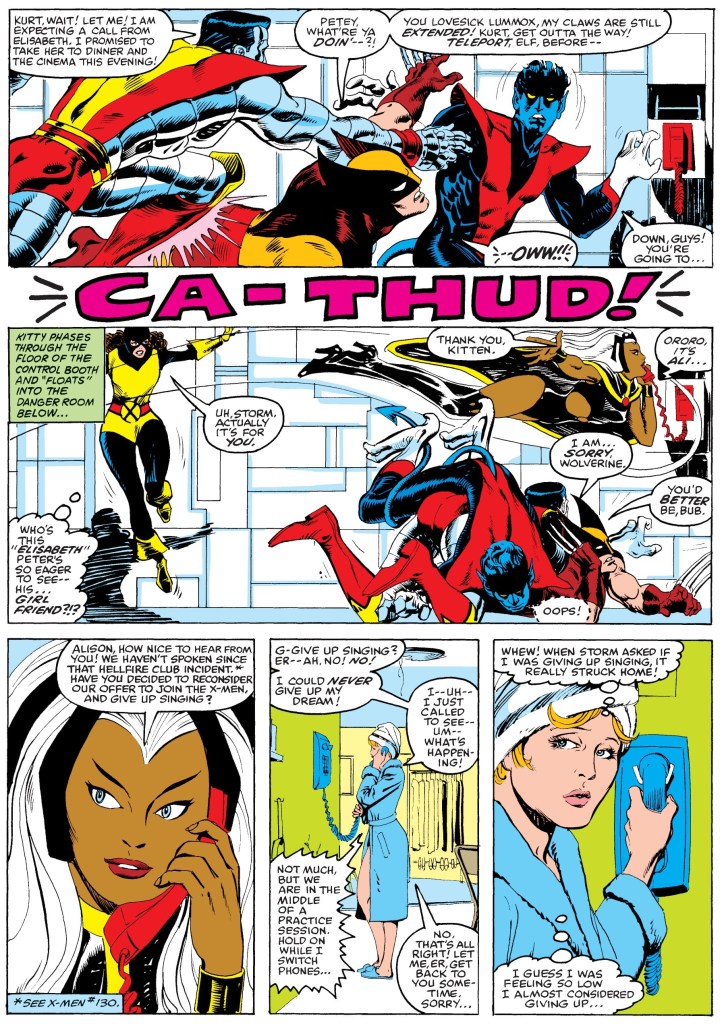
Strangely, the focus on Dazzler is relatively light in content and the result is several pages of Marvel universe-related filler which shows several other characters like Captain America, Iron Man, Storm, Wolverine and others present with little to no connection with the title character. The X-Men scene is a nice touch as it will remind readers about Dazzler’s first interaction with them.

As a teenager, Alison Blaire’s power begins to manifest during this particular event in her life.

To build-up the first challenge for Dazzler, this comic book has the Enchantress as the villainess and ironically it also had some room of character development for her. Clearly this was done not only to build up anticipation for the next issue but to make readers root for Dazzler some more. In retrospect, the Enchantress would later emerge as an important figure in 1984’s crossover storyline Secret Wars.

Conclusion

The scene involving the X-Men is a nice touch as it connects with Dazzler’s previous interaction with them.

While it is indeed a product of the early 1980s carrying influences from the 1970s New York club scene, Dazzler (1981) is still fun and engaging to read. Clearly this comic book is a must-have for anyone who loves Dazzler and it should be entertaining enough for geeks who love the 1980s and the Marvel-related crossovers of the time. Very clearly, this comic book succeeded in introducing and developing Dazzler as a person (as opposed to being a super hero) and the background story established fits in nicely with the character’s first appearance in Uncanny X-Men . Very clearly, there is a lot more to Dazzler than her unique super power and her disco look.

If you are seriously planning to buy an existing hard copy of Dazzler (1981), be aware that as of this writing, MileHighComics.com shows that the near-mint copy of the comic book costs $70.

Overall, Dazzler (1981) is highly recommended!

+++++

Thank you for reading. If you find this article engaging, please click the like button below and also please consider sharing this article to others. If you are looking for a copywriter to create content for your special project or business, check out my services and my portfolio. Feel free to contact me as well. Also please feel free to visit my Facebook page Author Carlo Carrasco and follow me at HavenorFantasy@twitter.com
A Look Back at Prototype #9 (1994)

Disclaimer: This is my original work with details sourced from reading the comic book and doing personal research. Anyone who wants to use this article, in part or in whole, needs to secure first my permission and agree to cite me as the source and author. Let it be known that any unauthorized use of this article will constrain the author to pursue the remedies under R.A. No. 8293, the Revised Penal Code, and/or all applicable legal actions under the laws of the Philippines.

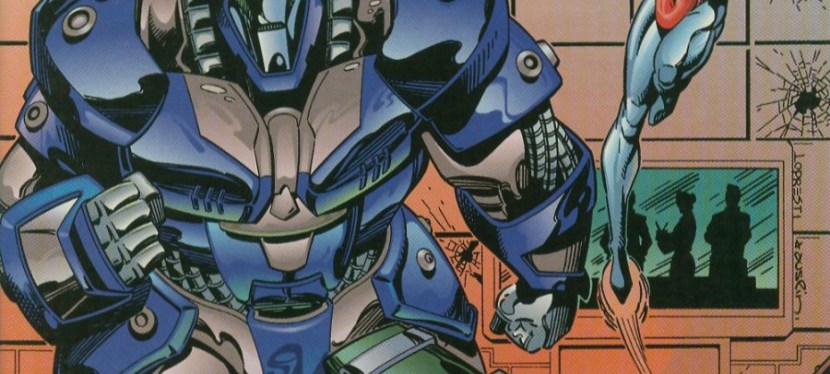
Hey comic book fans and geeks! Do you enjoy reading comic books about armored superheroes that are not connected with Marvel’s Iron Man? The Ultraverse has an armored figure in Prototype but the big difference is that the said character is owned by a large corporation called Ultratech which in turns hired a young man named Jimmy Ruiz to pilot it. Oh yes, Jimmy Ruiz is actually the second person hired to pilot Prototype as his predecessor Bob Campbell was let go with one arm less.

Let’s revisit the Ultraverse by taking a look back at Prototype , published in 1994 by Malibu Comics with a story by Len Strazewski and Tom Mason with art done by Roger Robinson and Jeff Whiting.

The cover.

Early story

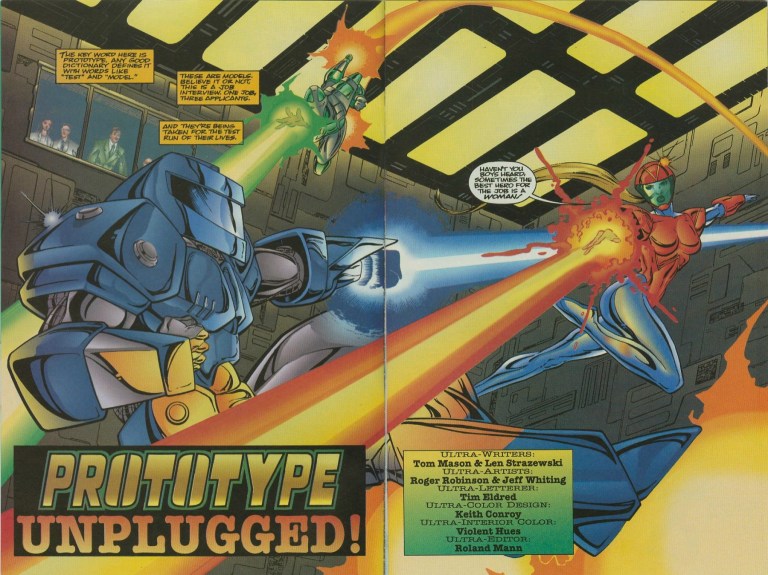
Set a short time after the hard battle between Prototype and Arena, the story begins in a secret facility somewhere in New York City where three armored figures engage in an intense session of flight, attacks and performance. The session is closely monitored by people watching from the observation deck. As it turns out, the session is actually a test for the three persons – two men and one lady – who applied to become the new Prototype which is the result of what happened at the end of issue #8.  Among the three, Donovan Jones was accepted as the new Prototype which Ultratech’s Stanley Leland confirms.

Over at Brooklyn, Jimmy Ruiz (Prototype) meets a lady from his past after paying respect to someone who was about to get buried. She tells him that since he left their old neighborhood, the local gangs have gotten worse. A short time later, the Prototype pilot meets an old gang he personally knows… 

Quality

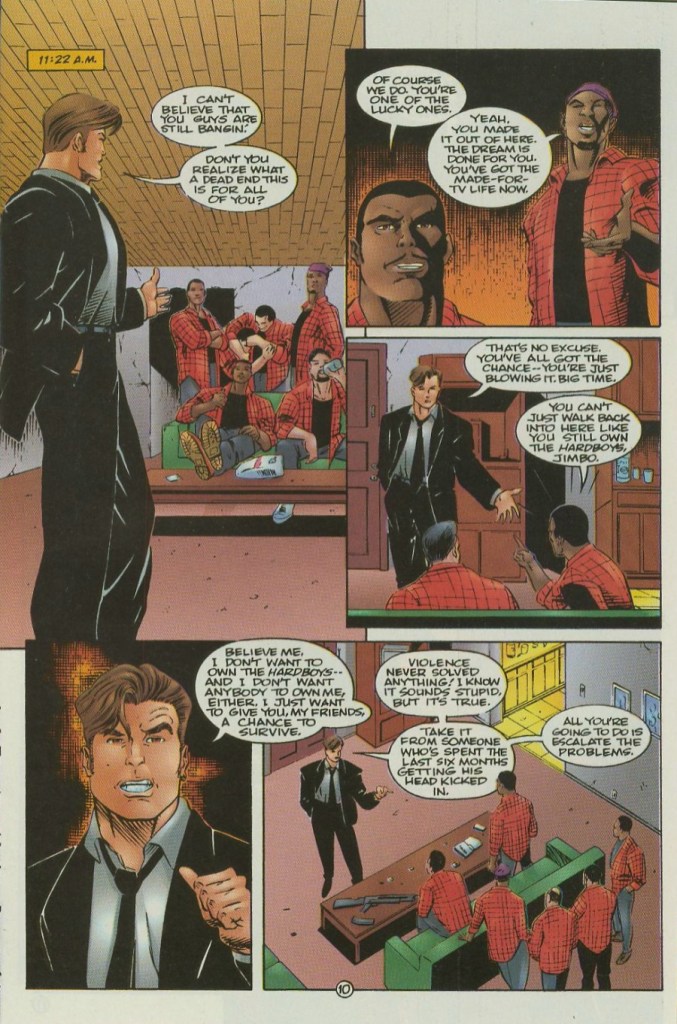
Jimmy Ruiz and the gang from his past.

Let me start with the storytelling. This comic book is more about Jimmy Ruiz out on his own without the armor than it is about Ultratech and its high-tech interests. Bob Campbell’s not even in the story. That being said, this is pretty much a character-driven piece focused on Jimmy Ruiz as a person than as a hero and I should say that Tom Mason and Len Strazewski did a good job developing his character a lot. The writing is pretty lively and the writers pulled the right moves to define Jimmy Ruiz as a believable human being. There was that notable moment when after Jimmy returned to his old community and spends time with the old gang he personally knew, he realizes how much he has and how his perception changed. By the time you reach the end of the story, you’ll get to know Jimmy much better.

Conclusion

The money shot!

Prototype is a character-driven comic book that succeeds in defining the personality and development of Jimmy Ruiz who is just one of two main characters in this series (which emphasized the struggles of two different persons involved with piloting Prototype). It lacks spectacle but that does not make this a boring comic book. Apart from Jimmy Ruiz, the corporate focus on Ultratech is short yet very intriguing.

If you are seriously planning to buy an existing hard copy of Prototype (1994), be aware that as of this writing, MileHighComics.com shows that the near-mint copy of the regular edition costs $8.

Overall, Prototype (1994) is recommended.

+++++

Thank you for reading. If you find this article engaging, please click the like button below and also please consider sharing this article to others. If you are looking for a copywriter to create content for your special project or business, check out my services and my portfolio. Feel free to contact me as well. Also please feel free to visit my Facebook page Author Carlo Carrasco and follow me at HavenorFantasy@twitter.com
A Look Back at Wonder Woman (2017)

Disclaimer: This is my original work with details sourced by means of watching the movie and doing research. Anyone who wants to use this article, in part or in whole, needs to secure first my permission and agree to cite me as the source and author. Let it be known that any unauthorized use of this article will constrain the author to pursue the remedies under R.A. No. 8293, the Revised Penal Code, and/or all applicable legal actions under the laws of the Philippines.

I just love watching superhero movies, especially the ones that were well crafted by the filmmakers complete with solid storytelling, sufficient spectacle as well as memorable performances by the hired talents (both behind and in front of the camera).

Of all the superhero movies made by the forces of Hollywood starting with 1978’s Superman, I can clearly say that 2017’s Wonder Woman is my favorite. Don’t get me wrong. I did not limit myself to just DC Comics superhero movies. I saw all the X-Men movies and their spinoffs, almost all the Spider-Man flicks, almost all of the Marvel Cinematic Universe movies and even the obscure ones. Along the way, there were some great superhero flicks that became modern-day classics like Logan and Avengers: Infinity War.

Still it is the Gal Gadot-led, Patty Jenkins-directed Wonder Woman that I loved watching the most.

Let’s start with my retro review of Wonder Woman, the one film that arguably saved the DC Comics Cinematic Universe for Warner Bros.

WWposter1
The Wonder Woman movie poster from 2017.

Early Story

The story begins sometime after the end of Batman v. Superman: Dawn of Justice during which Diana finds a long lost photograph recovered by Bruce Wayne. Then she remembers her past in Themyscira where she grew up as the only little girl among the women called the Amazons and her mother is none other than Queen Hippolyta. Concerned that the wicked Aries is still alive, Hippolyta’s sister Antiope trains Diana (initially in secret until they were discovered) to be strong, brave and more capable than their fellow Amazon warriors.

One day, Steve Trevor arrives in Themyscira becoming the first-ever man Diana ever met. Tension rises when the Germans (from World War I Earth) arrive on their island causing the Amazons to fight in defense. A lot of people lost their lives, including someone very close to Diana.

While interrogated with the Lasso of Truth, Steve reveals who he is and what he has been doing. He states that back in his world, World War I is ravaging the world costing many people their lives. This causes Diana to stand up and stop the war somehow (she believes Aries is responsible). Queen Hippolyta disapproves of Diana’s analysis. After privately meeting with Steve, Diana then starts her move for a mission to stop the war in Man’s World.

Quality

Screenshot_20200228-213823_YouTube.jpg
Gal Gadot as Wonder Woman in the middle of German soldiers.

Let me start with the performances. Gal Gadot definitely IS Wonder Woman in this movie. Regardless of how many versions of Wonder Woman there are in comics, the Israeli actress truly captured the essence of Diana’s early development which includes her special place among the Amazons (note: she is the only Amazon who was born in Themyscira and grew up from infant into a mature woman), her fateful meeting with Steve Trevor, her entry into Man’s World and how she adapts with the events and people outside of Themyscira. Wonder Woman’s purity on saving the world, doing what is right and emphasizing love and compassion were all nicely translated into cinematic art by Gal Gadot. From doing the action scenes to saving people, speaking her mind among her fellow Amazons and interacting with others as she adapts with Man’s World, I really love Gadot’s work on bringing Wonder Woman to life. As her cinematic work is great, there is no doubt that Gadot will always be iconic to fans of the Queen of Superheroes and superhero enthusiasts in general in the decades to come right beside Lynda Carter (who played the icon on TV), Christopher Reeve (Superman), Robert Downey, Jr. (Iron Man) and Chris Evans (Captain America). Meanwhile, the portrayals of Diana as an 8-year-old girl as well as a 12-year-old were perfectly done by Lilly Aspell (who is truly skilled with horse riding) and Emily Carey.

QueenDaughter
Lilly Aspell as young Diana with Connie Nielsen as Queen Hippolyta.

Chris Pine is excellent as Steve Trevor who is portrayed to be very dedicated to his work, brave in what he does and still shows compassion instead of arrogance towards others. He also has great chemistry with Gal Gadot and, like in the comic books, their relationship is nicely translated on the big screen. Pine’s performance here is, in my view, the best superhero movie supporting role to date.

Screenshot_20200228-213746_YouTube.jpg
Chris Pine as Steve Trevor with Gal Gadot as Diana in disguise.

Connie Nielsen meanwhile is great in playing Queen Hippolyta and all throughout, there is always a sense of leadership complete with a touch of motherly love just like in the comic books. Her sister Antiope was nicely portrayed by Robin Wright as the one Amazon who taught Diana to be brave, strong and highly capable as an Amazon warrior.

Danny Huston, who played the lead villain in the 2009 movie X-Men Origins: Wolverine, played yet another military bad guy here but this time he’s a World War I German officer. He’s a villain with a purpose who not only fights for the glory of Germany but also strongly believes that war is natural and inevitable for humanity. In some ways, Huston’s Ludendorff reminds me Michael Shannon’s General Zod in Man of Steel.

Antiope
Robin Wright is excellent as Antiope.

When it comes to presentation, this film is Patty Jenkins’ 2nd movie as director (her debut was way back in 2003) and the great turnout of Wonder Woman as a high quality movie (as opposed to being a critical and commercial success) only proved yet again that the old saying in Hollywood – The director’s second movie is his/her best movie – is true. Jenkins, who also worked on television, not only prepared a lot to make this movie but also researched Wonder Woman, developed ways to get the most out of the cast members, tweak the written story of the film (by Allan Heinberg, Zach Snyder and Jason Fuchs) and, most notably, she led the production with a lot of passion. To put it short, Wonder Woman is a labor of love (and the No Man’s Land scene is iconic) that not only resonated with fans of the Queen of Superheroes but also with the film critics and moviegoers.

Regarding storytelling, I noticed that a key story from Wonder Woman’s origin in the comics (the contest of the Amazons) did not happen at all in the film. While there were die-hard fans of the icon who complained about it, I felt that the contest of the Amazons would have made this movie more complicated and surely would have lessened the impact of World War I as a key story element. Since the purpose of this movie was to emphasize Diana’s origin and her entry into Man’s World with a major mission, I believe that the contest of the Amazons can be made cinematically later in a future movie.

The way the story was told cinematically, it also captured Diana’s reactions to the events that happened around her. The scene in which she saw the village destroyed showed how death and destruction compelled Wonder Woman to accomplish her mission even though others find ending the war impossible. Along the way, the actors – specifically Gal Gadot – really added life into the narrative with their strong performances.

When it comes to on-screen humor, which is popular among moviegoers and is almost a requirement for most new superhero movies that come out, having it done by supporting players Lucy Davis and Saïd Taghmaoui was a clever move since it allows Gal Gadot to portray Wonder Woman without any performance disruption. Considering her short screen time, Davis as Etta Candy is really funny. The amount of humor in this film, in my view, was just right and never annoying.

Spectacle? Wonder Woman is loaded with action, stunts and exciting stuff! The action involving Wonder Woman was brutal and satisfying to watch, and Patty Jenkins’ use of slow motion on key moments was great (even comparable to John Woo’s past work) and at the same time not too excessive. The Themyscira battle between the Germans and the Amazons at the beach was engaging and strategically filmed. Also, it was fitting that the action ramped up nicely starting with the iconic No Man’s Land sequence. The final battle in the film, unsurprisingly, had lots of computer-generated images (CGI) which is understandable considering the fantasy element of Wonder Woman.

More on the action, I love the way Patty Jenkins had Gal Gadot, Robin Wright, Connie Nielsen and Chris Pine perform the action themselves which all made their characters even more believable. Of course, there were certain moments in which stunt doubles were used to do the more dangerous moments on behalf of the actors.

Screenshot_20200228-213315_YouTube.jpg
This happened just before the iconic No Man’s Land scene.

Apart from the core cast, a lot of the actresses playing the Amazons trained for several months not just to look the part but also to perform action sequences using weapons with actual skill. The stunt coordinators and specialists hired by the filmmakers deserve praise for contributing nicely on making the cinematic Amazons highly believable. This alone not only makes Wonder Woman stand out nicely among all Hollywood superhero movies but also reflects nicely what was portrayed in the comic books.

The production design is also top-notch. I love the scenic locations of Italy used for scenes set in Themyscira. The filmmakers also did a great job recapturing the look of World War I Europe from the historical pictures to the big screen. The costume designs were fantastic, and the standout designs were, unsurprisingly, the costumes of the Amazons which really made their fantasy culture look believable. The filmmakers decided to have much more colorful visuals instead of following the look of Man of Steel, Batman v. Superman: Dawn of Justice and Suicide Squad.

On the music, the work by Rupert Gregson-Williams was great. His rendition of the Wonder Woman theme was very lively to listen to. The same can be said about the music he provided in the memorable No Man’s Land scene which had a nice build-up as Wonder Woman made her first full appearance in costume on the field. Other tunes played in the film suited the scenes well.

If there were any weak spots in this movie, it would be certain shots of action that were not filmed with precision. I’m talking about filming action scenes way too close to the camera combined with music video-style editing that’s supposed to make film look flashy. It’s not only disorienting, it also took me out of the movie.

Conclusion

Overall, Wonder Woman is one of the best-ever superhero movies ever made and easily my favorite of them all. It has an excellent balance between storytelling, character development and spectacle, and Gal Gadot gave the performance of a lifetime not only by bringing Wonder Woman into life in cinematic form but also emphasizing what the Queen of Superheroes stood for. As part of the current DC Comics Cinematic Universe, this movie stood out by having optimism and heroism as core themes (as opposed to the dark, gritty and even cynical approach of Man of Steel, Batman v. Superman: Dawn of Justice and Suicide Squad) and, more importantly, by focusing strongly on Wonder Woman instead of building up for the Justice League movie (which was released months after this one).

Apart from high-quality production values and a strong creative approach, the cast and cinematic performances are easily among the best in the superhero movie genre. Chris Pine’s Steve Trevor is an excellent example of a supporting role that is engaging without ever overshadowing the lead role. By the end of the film, you will realize the impact that Queen Hippolyta and Antiope had on Diana’s personal development.

QH
Connie Nielsen made a great queen and mother in this movie.

Being strongly focused on heroism with optimism, director Patty Jenkins and her crew succeeded in making this film without ever succumbing to the extreme views of the Political Left in Hollywood and the loudmouth social feminists. When I see the battle between the Amazons and the German soldiers on the beach of Themyscira happen, I simply saw armed women defending their homeland not from men who intend to rape them but rather men who had no right to intrude in the first place. Even as there were scenes showing men in power in World War I Europe (putting Diana in a powerless position), there still was no feminist-inspired hatred towards men. Also the bond between Steve and Diana developing from friendship into a romantic relationship literally shut the door on extreme feminism.

As a Wonder Woman-focused story, this film succeeded on emphasizing the Queen of Superheroes to both long-time fans and mainstream moviegoers. This movie also had a nice mix of having a fantasy setting with Themyscira moving on to a historic setting with World War I Europe. On the origins of Wonder Woman herself, I don’t mind at all that the contest of Amazons was not told because this movie’s concept is already great to begin with and its running time of 141 minutes was just right.

Wondyclimb
Gal Gadot will be remembered for a very long time for her excellent portray of Wonder Woman in cinema.

With all the greatness it was made with, I kept coming back to Wonder Woman when replaying superhero movies here at the comfort of home. In the cinemas back in 2017, I saw the film three times. Ultimately, I can say out loud that Wonder Woman is highly recommended and it is truly essential!


Thank you for reading. If you find this article engaging, please click the like button below and also please consider sharing this article to others. Also my fantasy book The World of Havenor is still available in paperback and e-book format. If you are looking for a copywriter to create content for your special project or business, check out my services and my portfolio. Feel free to contact me as well. Also please feel free to visit my Facebook page Author Carlo Carrasco and follow me at HavenorFantasy@twitter.com

If you are looking forward to Wonder Woman 1984, check out my preview and opinion about the first movie trailer.