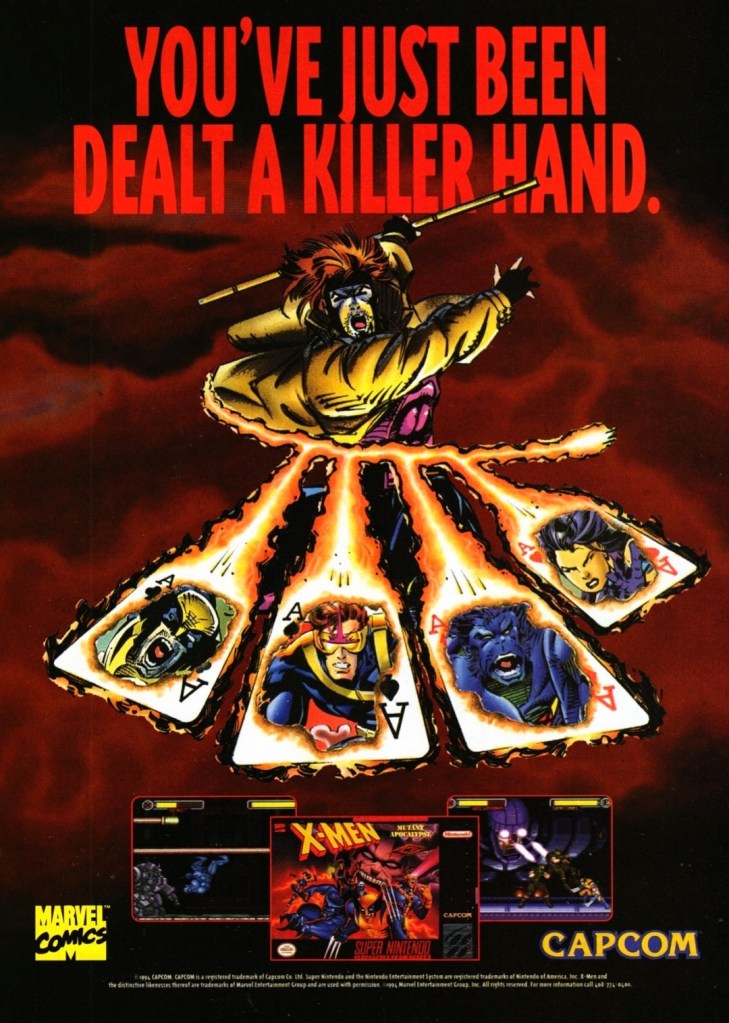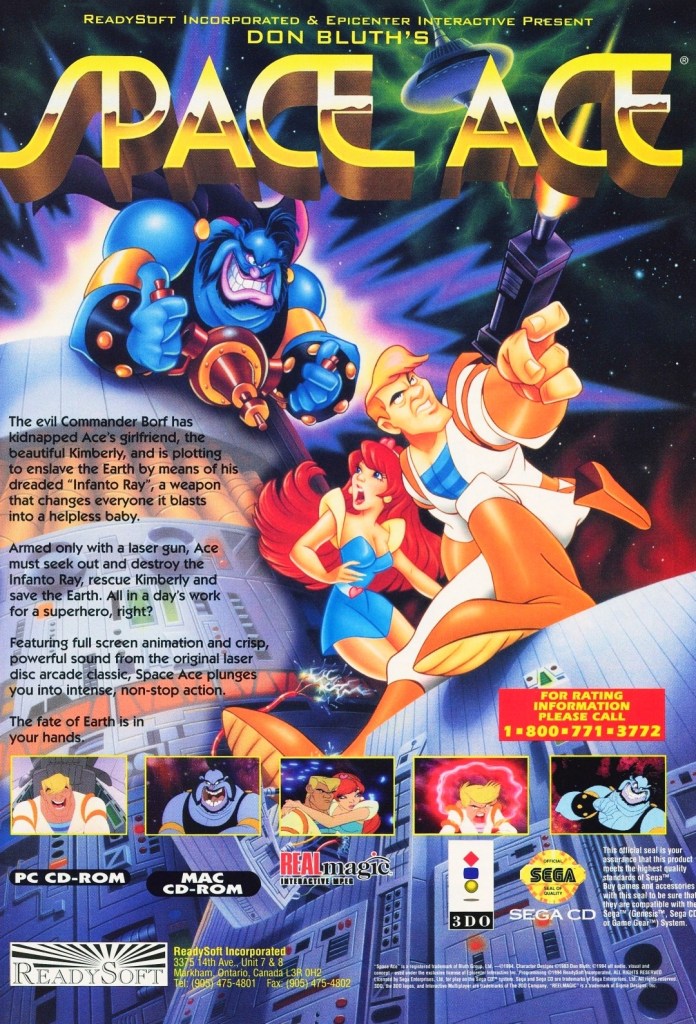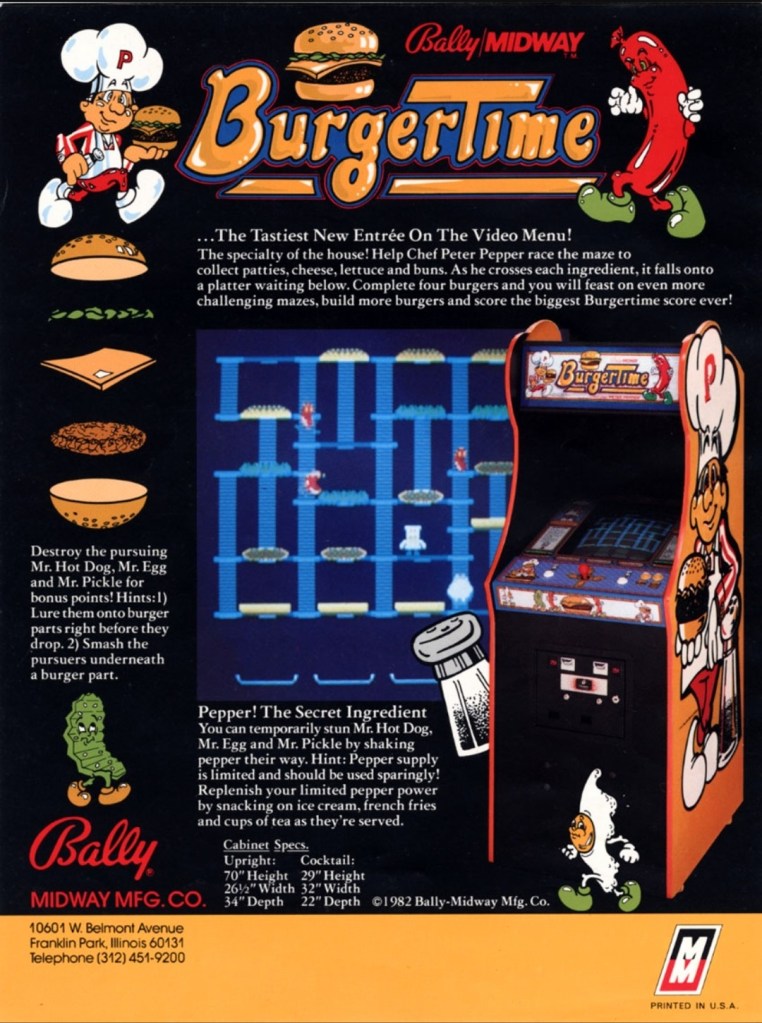
Welcome back, fellow geeks, Blu-ray collectors and movie buffs!
Decades ago, I saw on home video Cloak & Dagger (1984) which turned out to be an entertaining film to watch as I was already playing games on Atari 2600 and the arcades. After replaying by chance on cable TV years later, I finally bought myself the 4K Blu-ray and it sure was fun to watch it all over again. Check out my retro movie review of it by clicking here.
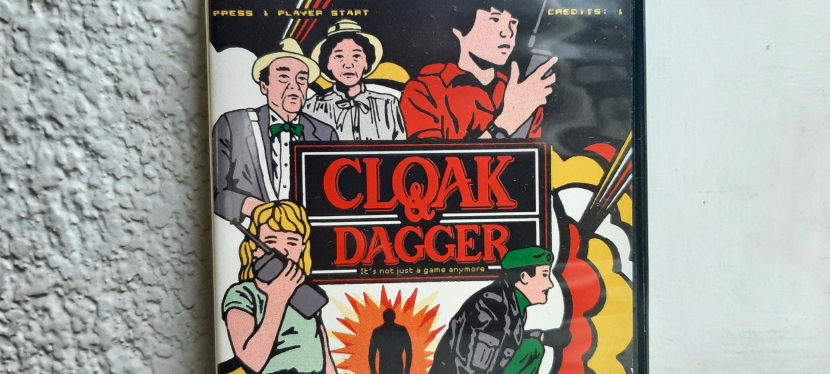
The front of my copy of Cloak & Dagger (1984) 4K Blu-ray.
The rear with the details that can be read.
For the newcomers reading this, Cloak & Dagger (1984) is a movie that involved then video game giant Atari in the creative process. The movie’s plot is not based on Atari’s arcade game of the same name (previously titled as Agent X).
Cloak & Dagger (1984) its own original plot of espionage about a young boy Davey (played by Henry Thomas, the star of Steven Spielberg’s E.T.: The Extra-Terrestrial) who witnesses a murder and receives an Atari 5200 cartridge of the game Cloak & Dagger that contains something very important. This in turn makes him a target of armed henchmen who won’t stop until they get him. Due to his reputation of being too playful and living with his wild imagination as a spy, people don’t believe Davey’s claim of witnessing a murder. This film happens to be inspired by the short story “The Boy Cried Murder” written by Cornell Woolrich.
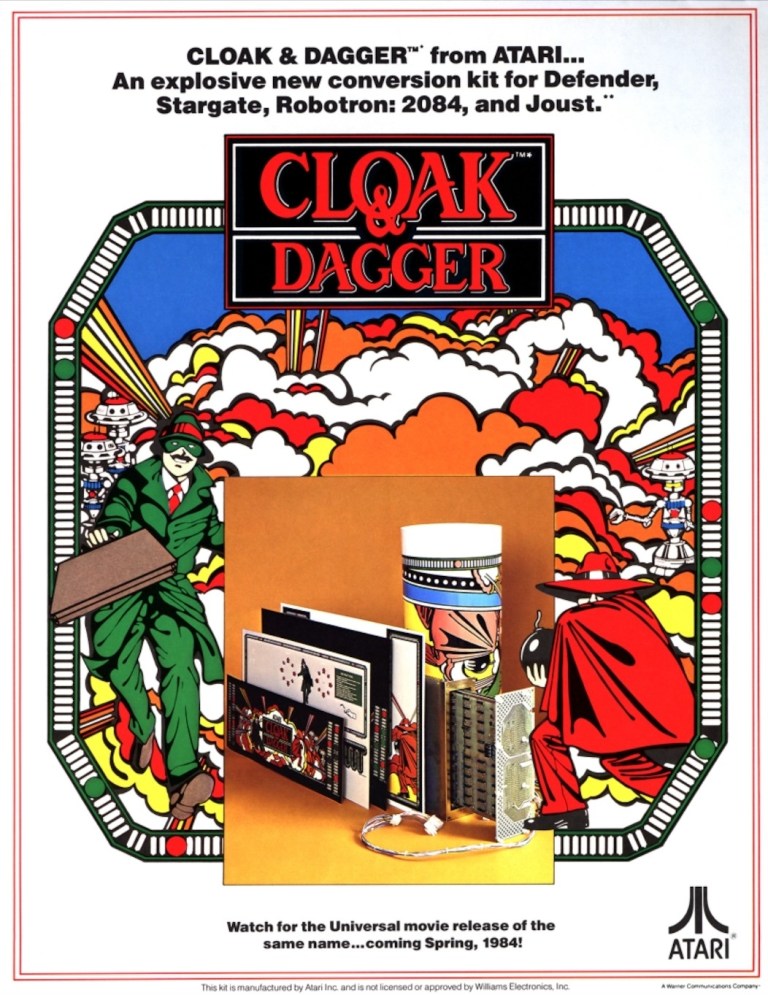
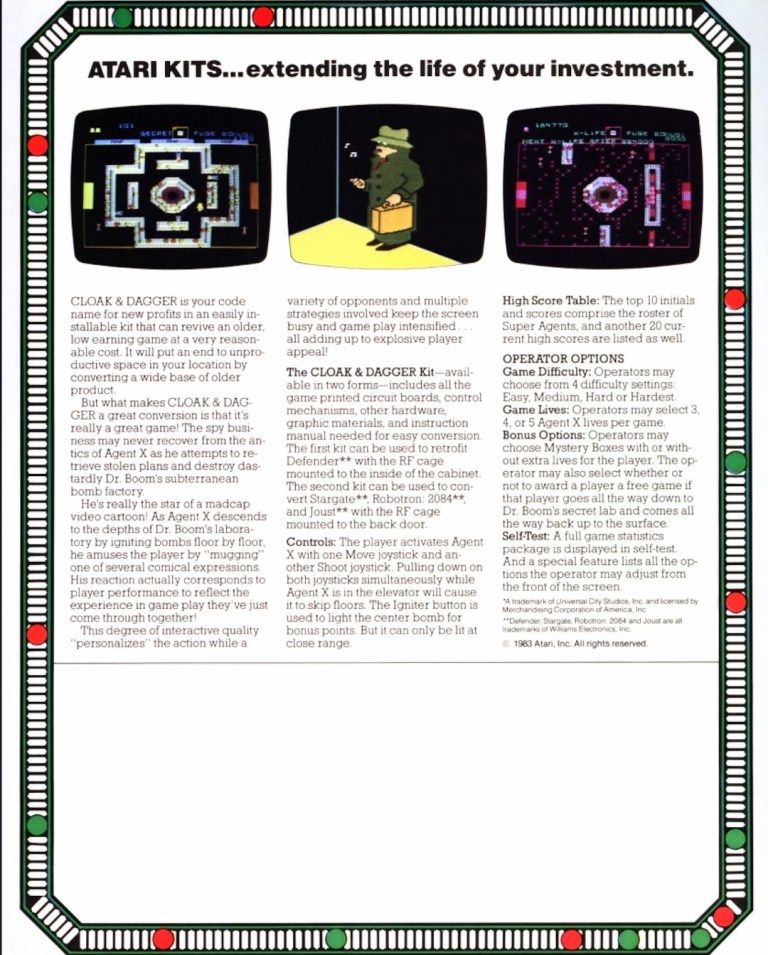
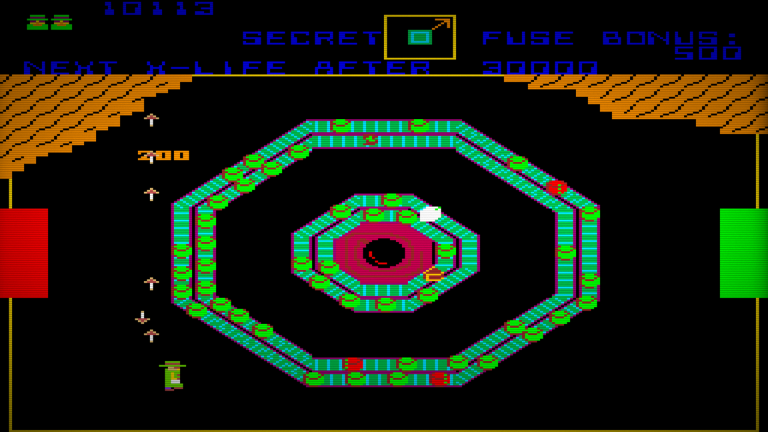
Cloak & Dagger in arcade form. Atari released it in the form of an arcade conversion kit aimed at arcade machines of certain games of its competitors.
The Cloak & Dagger arcade game can be played on your game console with the Atari 50 collection software (over 100 games). This screenshot I captured while playing it on my Xbox Series X console running Atari 50.
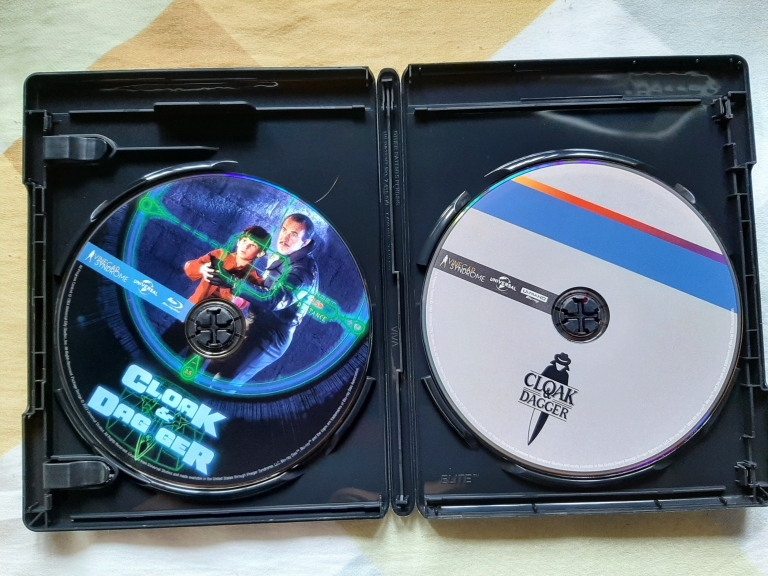
A few weeks ago, my copy of the Cloak & Dagger 4K Blu-ray arrived and it came with two discs: One 4K Blu-ray disc which contained the movie in native 4K (scanned in UHD from the 35mm film) resolution of 3840 x 2160p. The other disc has the same movie in HD (1920 x 1080p) plus the extra stuff which can provide viewers and Cloak & Dagger fans a good amount of important content which will help them learn what the video game elements in the film are, what inspired its creative process and why the film is very unique by today’s standards. There is also an informative new interview with Henry Thomas.
Since then, I saw Cloak & Dagger in 4K twice on my Xbox Series X and its 1080p version on a standalone Blu-ray disc player. Cloak & Dagger in 4K looks better than ever as the picture quality is better, images look sharper and clearer, the colors are vibrant, the small visual details (which were not visible in lower resolution before) are more noticeable now, and film grain structure has been preserved intact!
The two discs. The one on the right is Cloak & Dagger in 4K.
As for the story itself, I still find it engaging and enjoyable to watch from start to finish. Cloak & Dagger is clearly a production of its time as it carries clear Cold War references – the Soviet Union and Iran are the evil forces told in very subtle fashion – as well as video game elements and brands (note: ColecoVision even appeared in this Atari-influenced movie) that dominated America’s console gaming market long before PlayStation, Nintendo and Xbox arrived. For a movie aimed at parents and children, this one has really intense violence as it involves shooting and even some elements of terrorism.
Ultimately, I got a lot of enjoyment from my Cloak & Dagger (1984) 4K Blu-ray and I highly recommend it to Cloak & Dagger fans, gamers, physical media collectors and anyone who loves watching movies in the comfort of home. Cloak & Dagger (1984) is a very unique and fun movie that Hollywood does not make anymore. You really should see it.
In case you are interested or if you have made up your mind, you can order a copy of Cloak & Dagger (1984) 4K Blu-ray by clicking here.
With the exception of a certain 3rd party games that turned out to be a creative misfires respectively, the 2024 Xbox Games Showcase (also referred to as Xbox Showcase) was clearly a powerful showcase of future games on the Xbox ecosystem and the 1st party games of Team Xbox displayed is the most exciting bunch yet!
As mentioned before, we are now living in the age of Microsoft-owned Activision, Blizzard, King and Bethesda, and Team Xbox has many game studios as a result. The 2024 Xbox Games Showcase is just the taste of many exciting and fun 1st party games coming out in the near future (including the Game Pass services for Xbox and PC) with titles like the Perfect Dark reboot, the Fable reboot, South of Midnight, Call of Duty: Black Ops 6 and more.
Among the many 1st party games showcased was Gears of War: E-Day which turned out to be the most pleasant surprise as many people heavily anticipated Gears of War 6 and the Marcus Fenix Collection. On my part, I anticipated GOW6 and a Gears Tactics sequel to be announced but what was unveiled officially was both intriguing and captivating. To find out more what Gears of War: E-Day is about, watch the official unveiling below…
Being made by The Coalition using the Unreal 5 engine (the same engine used in Senua’s Saga: Hellblade II), Gears of War: E-Day is the origin story that depicts the horror of Locust invasion on Emergence Day through the eyes of the iconic Marcus Fenix. For the newcomers reading this, Emergence Day refers to the event when the Locus Horde emerged from the depths of the planet Sera and started major assaults on human cities causing massive counts of deaths. Chronologically, Gears of War: E-Day is set fourteen years before the events of the original Gears of War game.
As seen in the above trailer, Marcus Fenix looks younger and you can see him struggling in what seems to be his first-ever personal and physical fight with one of the Locusts. There is also a subtle reference in the video that sends gamers a message – the MK1 Lancer is here and it is NOT the chainsaw-equipped gun that became the iconic weapon of choice in the Gears of War franchise. Again, the story of this upcoming game is set more than a decade before the first GOW and The Coalition developers have planned some changes that will impact not only the interactive experience but also the storytelling.
Do you recognize the eyes of Marcus Fenix in this image? The high level of detail of Unreal Engine 5 combined with the digital artistry of The Coalition make a great combination!
Gears of War: E-Day is looking like a very welcome addition to not only its franchise but also for future releases on Xbox Series X, Xbox Series S and Windows PC, as well as for Game Pass subscribers among Xbox and PC gamers. I doubt that a version of the game will be released on aging Xbox One consoles. As to when will the new game be released, I am speculating it would be in November 2026 as that month would mark the 20th anniversary of the release of the original GOW. It is also possible that Microsoft will release the next-generation Xbox console on that same month as well.
Gears 5 was the last main Gears of War game I played during the final months of the existence of my old Xbox One console. I played Gears Tactics on my Xbox Series X a few years ago which was fun experience. That being said, Gears of War: E-Day is the next GOW game to look forward to.
I certainly hope that The Coalition will STOP implementing wokeness, identity politics and foolish feminism (present in Gears of War 4 and Gears 5) into the new game and just make Gears of War: E-Day be much more like the original Gears of War of 2006…a war story about a band of brothers (the grunts) who risked their lives to accomplish mission objectives. The original Gears of War had the vibe of 1980s Hollywood action cinema – specifically from Predator (1987) – and I want to see that implemented in the new game.
Here is hoping that this prequel will be released within two years’ time. Xbox fans have waited long for 1st party exclusive games to be released in this current console generation.
Wow! That was a powerful presentation of 1st party video games at the 2024 Xbox Games Showcase (also referred to as Xbox Showcase) that happened in America very recently. Not only was it better and more exciting than the Xbox showcase of 2023, it made this year’s State of Play and Summer Game Fest look even more lackluster and more unsatisfying. Already there are PlayStation 5 (PS5) fans who begged Sony to do better with their showcase of games because this year’s Xbox showcase – which is also the first of the new age of Microsoft-owned Activision-Blizzard-King – energetic and exciting.
For this post, I will be focusing on one of highlights of the Xbox showcase…the first-ever reveal of gameplay and features of the Perfect Dark reboot (for my previous posts, click here and here). For starters, watch the gameplay showcase video below…
Wow! The Perfect Dark presentation exceeded my expectations on gameplay and it looks like The Initiative (Xbox game studio) and Crystal Dynamics (the studio responsible for many Tomb Raider games over the past several years) really got their creative forces combined to make something unique.
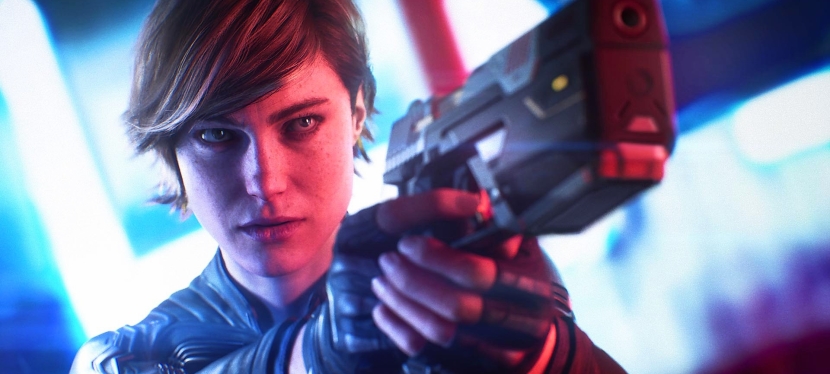
Like the previous games that preceded it, the new Perfect Dark utilizes a first-person viewpoint for immersive gameplay and it has a new version of Joanna Dark introduced featuring the likeness of model Elissa Bibaud. Strangely enough, the new agent Dark does not look too attractive. Perhaps more new images of her will be unveiled someday.
The new Joanna Dark featuring the likeness of model Elissa Bibaud.
Elissa Bibaud’s picture from her Instagram.
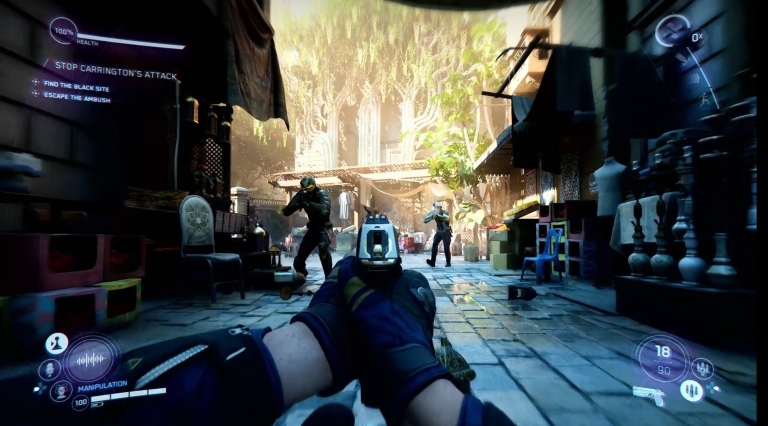
The Initiative and Crystal Dynamics must have brainstormed a lot and worked long to modernize the gameplay for this new game (officially the 4th Perfect Dark game for consoles played at home). What was shown during the video presentation were moments when Joanna Dark used gadgets to do thermal scanning, extract data wirelessly, generate voice-prints and create deepfake audio. Not only that, Joanna is capable of climbing wall pipes, sliding on surfaces and doing wall-running.
Without spoiling the concept of the video too much, I can say that Joanna Dark is already an agent who goes to Garden City in Cairo to find the wanted criminal Daniel Carrington and discover what he has been scheming. With all the details made available by the video and the Xbox Wire piece, Perfect Dark is really a first-person adventure that allows players to figure out what to achieve as they work their way through in missions. This is not just an action-packed first-person shooter.
Perfect Dark is a first-person adventure game laced with sci-fi and espionage elements. Players will be offered opportunities to overcome obstacles in creative ways such as using gadgets to infiltrate places.
Considering what was shown, I can only hope that the game developers will be able to create wide and vertical maps that will allow players to explore a lot more as they take on missions. By today’s standards, linear level designs just won’t cut it anymore. I know for a fact that making an open-world environment will take too much time and effort to complete Perfect Dark, so having wide and vertical maps will be good enough to offer players exploration opportunities.
Strangely enough, the video presentation does not specify which Xbox consoles Perfect Dark will be released for. What was confirmed is that the upcoming game will launch on day one on the Game Pass service which means it will eventually be released on Xbox Series X, Xbox Series S and Windows PC. That being said, Xbox Series X and Xbox Series S owners who are subscribing to Xbox Game Pass (XGP) and Windows PC gamers subscribed already to PC Game Pass will be able to play the new Perfect Dark on launch day someday. I doubt a version of the game will be released for the aging Xbox One consoles.
In this game, you can accomplish your mission objectives by using stealth or by engaging with the enemies directly with guns and other high-tech weapons.
Welcome back readers, fellow geeks and electronic gaming fans!
In this edition of the Retro Gaming Ads Blast (RGAB) series, we will take a look at another batch of retro gaming print ads from the 1980s and 1990s.
For the newcomers reading this, Retro Gaming Ads Blast (RGAB) looks back at the many print ads of games (console, arcade, computer and handheld) that were published in comic books, magazines, flyers and newspapers long before smartphones, social media, the worldwide web and streaming became popular. To put things in perspective, people back in the 1980s and 1990s were more trusting of print media for information and images about electronic games and related products.
With those details laid down, here is the newest batch of retro gaming print ads for you to see and enjoy…
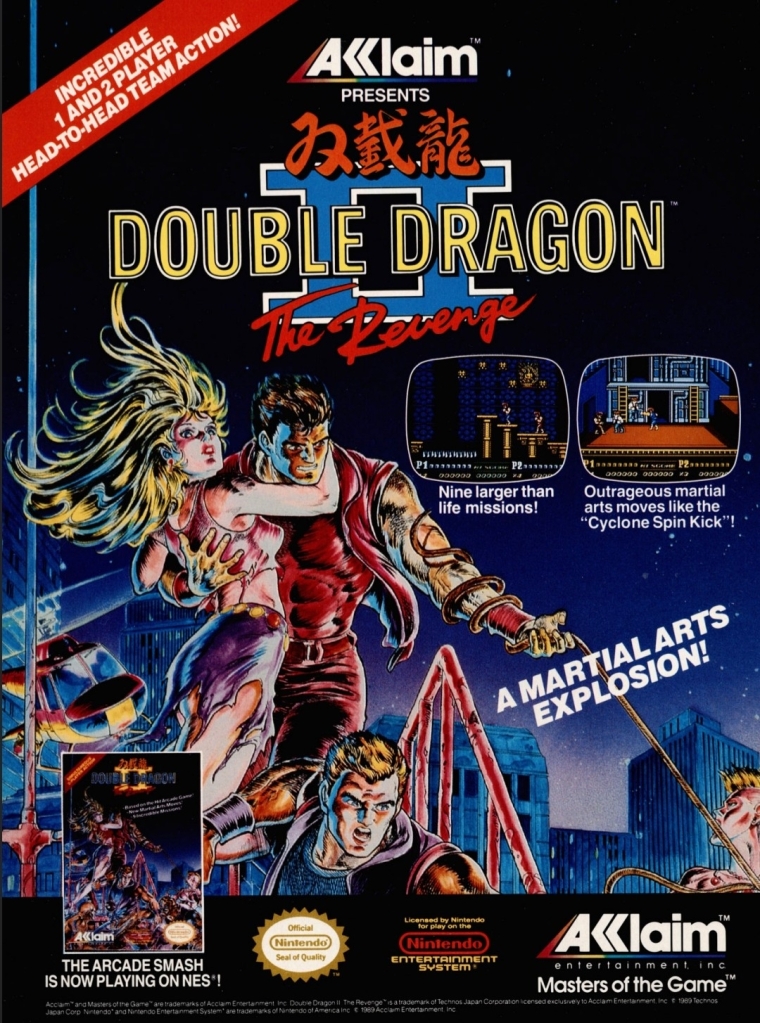
1. Double Dragon II: The Revenge print ad
Nice looking art used to promote the game.
The beat-them-up sub-genre of gaming was already popular in the 1980s and one of the most defining game franchises of this type of game was the Double Dragon series which proved to be popular with Nintendo Entertainment System (NES in America) and Family Computer (Famicom in Japan) gamers. As the first game was a very big hit on Nintendo’s consoles, the sequel Double Dragon II: The Revenge was promoted in America with strong confidence on the part of publisher Acclaim that it would become another massive hit. This print ad had a very nice looking comic books-style art that not only captured the concept of the game but also visualized the heroes Billy and Jimmy with enough details to focus on. I can say this was an eye-catching ad.
2. X-Men: Children of the Atom print ad
Great looking ad but the line “100% direct conversion” is not true at all.
Developed by Capcom in cooperation with Marvel, X-Men: Children of the Atom was a huge hit in the video arcades and it was not surprising that it got released on the Sega Saturn by Acclaim. Acclaim organized an aggressive promotional campaign by pouncing on the fans’ love and knowledge of the X-Men and the high fun factor of Capcom’s game. What this print ad got wrong, however, was the line “100% direct conversion of the #1 arcade smash!” which was wrong and misleading. In reality, the Sega Saturn version of the game had about one-third of the animation frames cut due to the console’s smaller RAM capacity.
As the years passed by, the Sega Saturn became the more suitable console for home ports of Capcom’s further 2D fighting games as Sony’s PlayStation had even more severe limitations and a graphics processor that was not suitable for 2D graphics. By the end of 2000, Capcom’s 2D fighting games on PlayStation all were inferior to the Sega Saturn versions.
3. Sky Shark NES print ad
This is an effective looking ad.
Released in Japan as Flying Shark, Sky Shark was released on multiple platforms in 1988 and there was an NES version of it which this particular print ad promoted. The American branch of Taito wisely used positive quotes from media outlets to promote the game while coming up with an engaging text description and displayed NES screenshots. And then there was that very engaging painted cover art that gave this print ad a lot of punch. An effective ad overall.
4. Conflict print ad
This is a very captivating artwork for advertising.
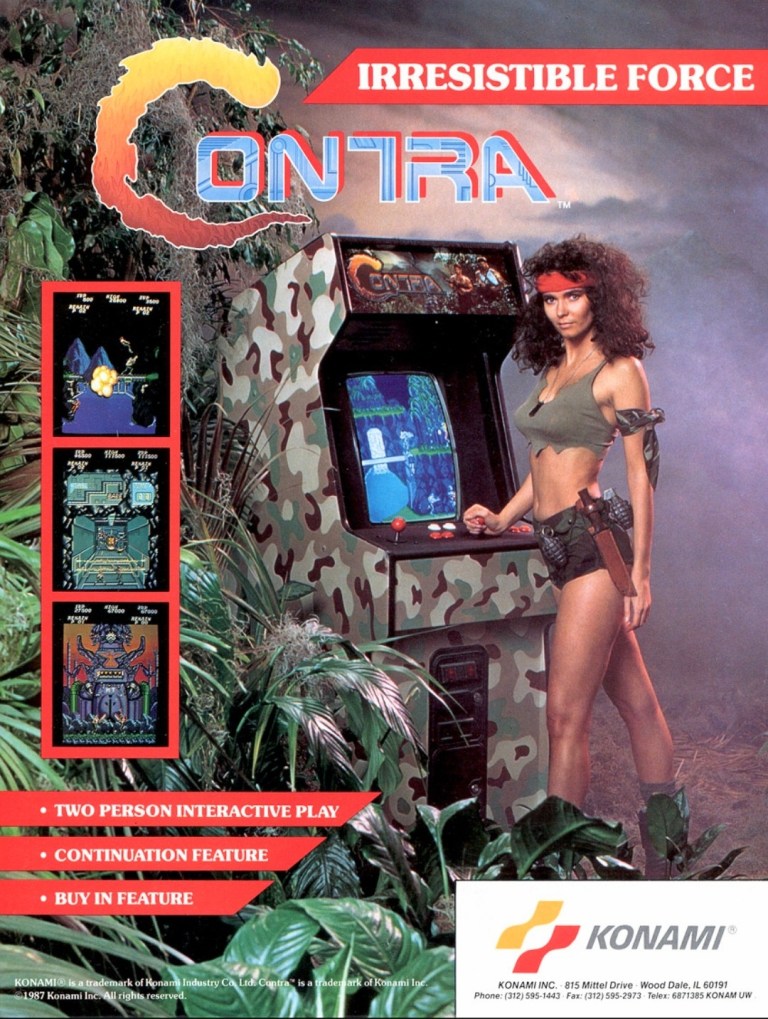
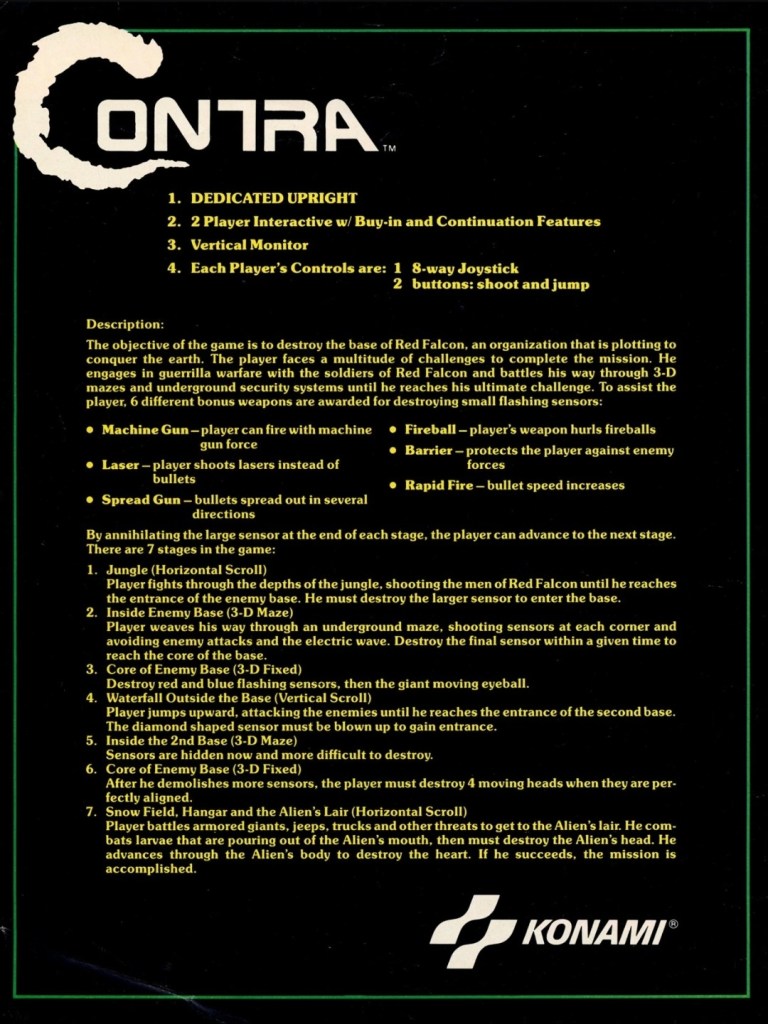
There is no denying the fact that the Cold War was a strong influence on arcade games and video games. Titles like Contra, Jackal, Metal Gear, Operation Wolf, Cabal and Rush’n Attack were militaristic games that entertained millions of gamers from the young adults to the little children. In 1990, Vic Tokai released the game Conflict on the NES which had a military theme but an unusual game design composed of digital maps with hexagons in which gamers will play with strategy to win battles. That being said, this print ad’s visual concept was very captivating yet also misleading. If you see how the game is played, you will know what I mean.
5. College Slam print ad
Were you ever interested in college basketball video games?
This is one of the more eye-catching print ads I’ve seen due to the artist’s illustration of a basketball with a mouth biting the basketball rim which dominates the space. For the newcomers reading this, College Slam was a basketball video game that was actually a repacked version of the popular NBA Jam with focus on NCAA basketball players. With the biting basketball at the center, it was easily an attraction and the screenshots implemented were larger than usual which easily gave gamers a clear look at what the game looked like. While this print ad is eye-catching, it did not help sell College Slam and there never was a follow-up.
6. Tecmo Super Baseball print ad
From the time when Tecmo was prolific with video games about sports.
Long before it started the Dead or Alive game franchise, Tecmo was once heavily invested in making sports video games. Tecmo Super Baseball was their first American pro baseball video game released for Super Nintendo Entertainment System (SNES) and Sega Genesis, and it was notable that the publisher secured only the Major League Baseball Players Association (MLBPA) which resulted in the game featuring real-life players but the teams had no names and no logos. Regardless, this print ad showed how aggressive Tecmo was in trying to attract consumers’ attention by showing ten screenshots with short text descriptions each. The ad’s write-up boasted realism as well as the promise of gaming quality.
7. The Punisher print ad
Marvel’s vigilante firing at someone.
In the early 1990s, Capcom and Marvel Comics started their partnership resulting in the releasing of the arcade game The Punisher. Developed by Capcom, the said arcade game became a big hit with gamers as it featured fun gameplay, multiple enemies appearing on screen simultaneously and other fun elements. Unsurprisingly, the game was ported (note: Sculptured Software was the lead developer) to the Sega Genesis with significant downgrades in terms of graphics, sound, enemy variety and other related elements due to technical limitations. That being said, this print ad used detailed art of the Punisher (with Col. Fury in the background) in a clever way to promote the Sega Genesis version while keeping their attention away from the obvious visual downgrades of the two screenshots displayed. The Punisher on Genesis was poorly received.
8. Stargate print ad
If you did not enjoy the movie, were you able to play the video game adaptation on Sega Genesis or Super NES?
Remember the sci-fi movie Stargate (1994)? The film was a surprise box office hit and eventually video game adaptations of it were made for the SNES, Sega Genesis, Game Gear and the GameBoy. This particular print ad, however, showed screenshots of the SNES and Genesis versions which is made obvious with the side-scrolling adventure plus 3D flying sequence (one screenshot showed it). Combined with images sourced from the movie poster plus an insert of the movie in home video format (lower-right corner), this print ad was obviously an aggressive way to promote the film with the post-theatrical business in mind. In case you are wondering, the cinematic Stargate is not related at all with the early 1980s video game (a follow-up to the classic game Defender) of the same name.
9. Aerobiz Supersonic print ad
For a simulation game released on consoles, Aerobiz Supersonic is pretty deep and a lot of fun to play.
The airline simulation game Aerobiz Supersonic is a highly addictive and surprisingly fun game that I enjoyed playing on the SNES (read my retro review by clicking here) and strangely enough I first learned about not through its print ad but by reading a preview published by Electronic Gaming Monthly (EGM) magazine. As for this print ad made by Koei’s American team, this is really odd to look at due to the ad makers’ choice of showing a not-so-attractive flight meal. In contrast to that, the ad makers did a good job describing the game creatively and showed three screenshots that were strategically selected in my view. Having played the game many times, I can say that this print ad is very truthful.
Welcome back readers, fellow geeks and electronic gaming fans!
In this edition of the Retro Gaming Ads Blast (RGAB) series, we will examine print ads of Sega from the 1990s which was a notable period of time when they went from being a prominent video game company into a desperate, struggling entity by the end of the decade. All the Sega ads in this edition are promotions of their own video games that were exclusive to their consoles during the 1990s.
For the newcomers reading this, Retro Gaming Ads Blast (RGAB) looks back at the many print ads of games (console, arcade, computer and handheld) that were published in comic books, magazines, flyers and newspapers long before smartphones, social media, the worldwide web and streaming became popular. To put things in perspective, people back in the 1980s and 1990s were more trusting of print media for information and images about electronic games and related hardware.
With those details laid down, here is the newest batch of retro gaming print ads for you to see and enjoy…
1. Phantasy Star IV print ad
This was the last single-player Phantasy Star game released. There is no sign of Sega revisiting the franchise for another single-player experience.
Long before the emergence of online console gaming that involved a high number of players, Sega released Phantasy Star IV for the Genesis console in America in 1994 which was praised by gamers and critics. This one also turned out to be the last single-player role-playing game (RPG) of the Phantasy Star series as Sega eventually turned it into a series of online RPGs since the year 2000.
This print ad is significant because a lot of gamers today are not aware that Phantasy Star started as a series of single-player RPGs the same year Final Fantasy debuted in Japan. Anyone interested to play Phantasy Star IV on a modern console should buy the Sega Genesis Classics collection.
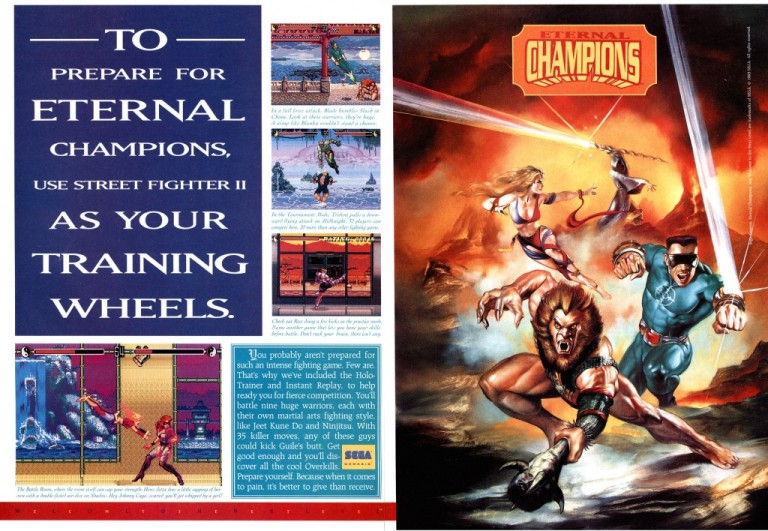
2. Eternal Champions print ad
This 2-page print ad appeared in many comic books and some magazines that I read long ago.
Back in the 1990s, the fighting game genre became wildly popular with gamers at the arcades and on consoles at home. Capcom literally sparked a wild fire with the Street Fighter II game and its upgraded editions, and other companies went on to make their own 2D fighting games to cash in. Sega was one of them and they released their own 2D fighting game Eternal Champions for the Sega Genesis console.
Unsurprisingly, the game was marketed aggressively and this 2-page print ad really stood out as it had the great looking painted art on the right, screenshots and details of the game, and most notably made a sarcastic reference to Street Fighter II. Eternal Champions sold enough copies, it led to the release of the sequel Eternal Champions: Challenge from the Dark Side and two spin-off games. I can only guess that referencing Street Fighter II was helpful in achieving commercial success.
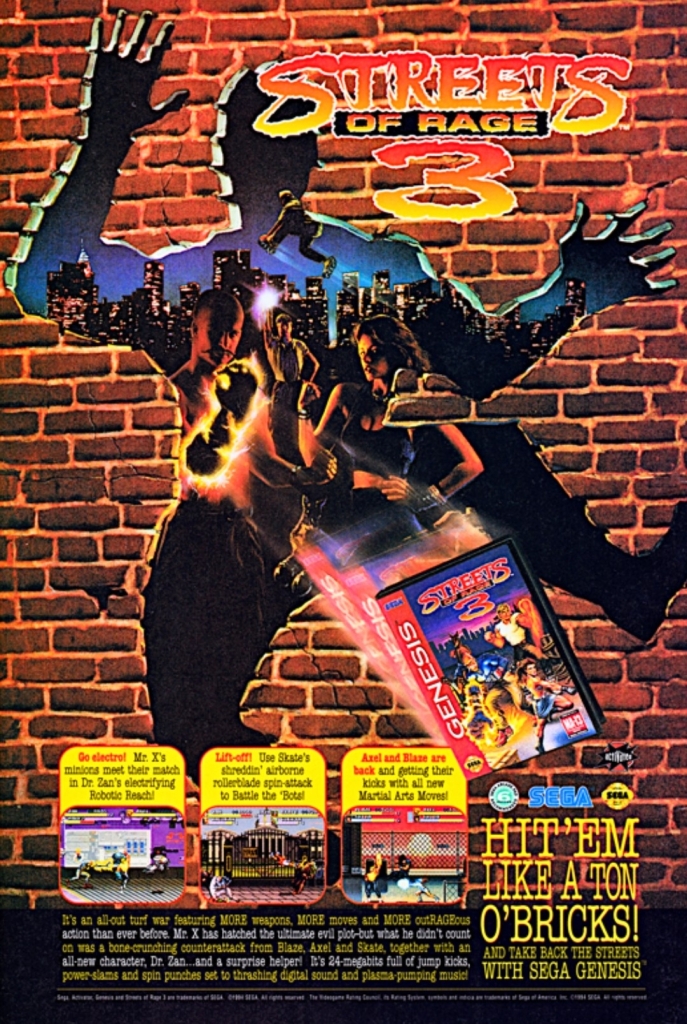
3. Streets of Rage 3 print ad
This ad caught my attention easily when I saw it in comic books I read.
Streets of Rage (Japanese title: Bare Knuckle) was one of the most defining game franchises Sega came up with and it started on the Sega Genesis console. It was a series of side-scrolling, 2D beat-them-up games that ensured action and excitement for gamers. As the first two games were critically and commercially successful, Sega was confident in aggressively marketing Streets of Rage 3 and the print ad seen had a very attention-grabbing artwork.
The artistic style emphasized power and intensity as it shows a damaged wall with the shape of a human body (symbolizing that someone was thrown through it) and then there were images of people on the other side. The game went on to attract mostly positive reviews although it paled in comparison to its predecessors in terms of sales.
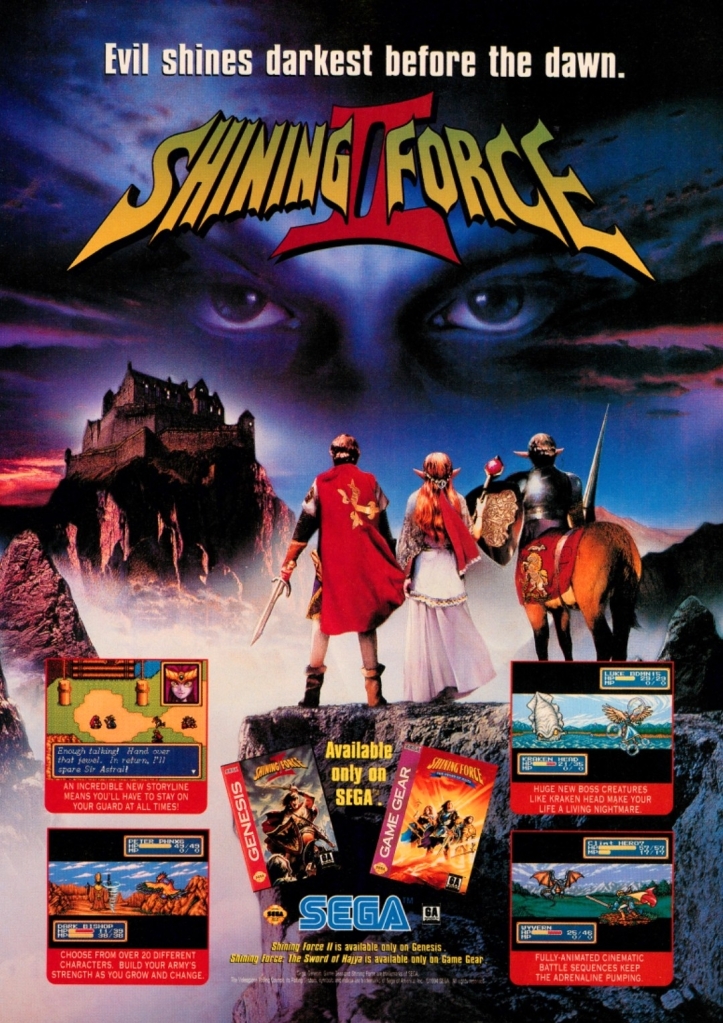
4. Shining Force II print ad
The first time I saw this ad, it made me interested to buy a Sega Genesis console to play it.
As Sega was so prolific with making and releasing games across different genres, they had their own tactical role-playing game series with Shining Force and the first game released on the Sega Genesis was a critical and commercial success. That being said, the company was confident with releasing Shining Force II on the same console more than a year later achieving critical and commercial success.
The North American print ad of the game had a visual presentation that closely captured the foreground-background style (characters facing the distance) used in-game, and the advertising team use photographic imagery to achieve a fantasy look. Very cleverly, Sega inserted the Sega Game Gear title Shining Force Shining Force: The Sword of Hajya into the ad. This print ad made me interested in acquiring a Sega Genesis for Shining Force II.
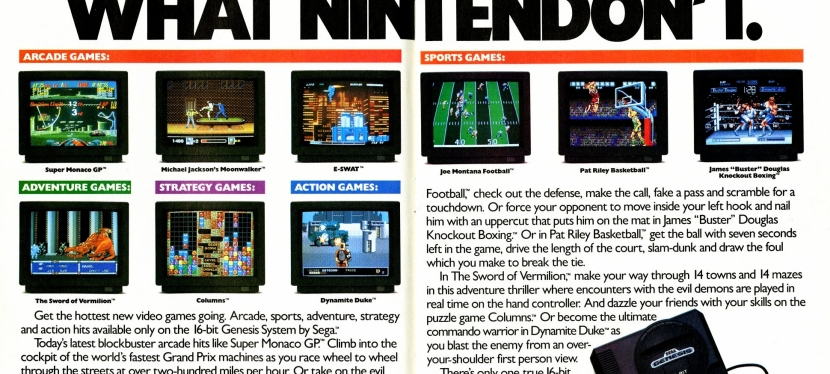
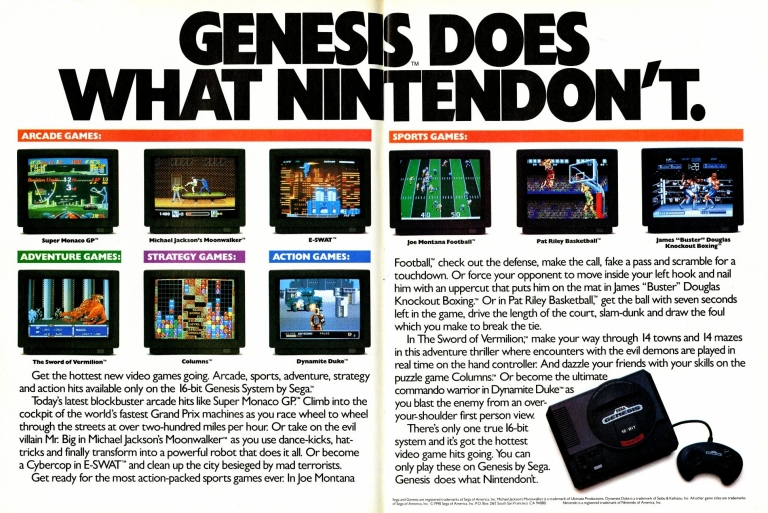
5. Genesis does what Nintendon’t print ad
With the famous line heavily emphasized, this print ad showed how bullish Sega really was in competing with Nintendo.
Now this print ad of Sega’s has the most definitive and best-known advertising line in the so-called 16-bit console generation: Genesis does what Nintendon’t. This was Sega’s aggressive marketing push to convince gamers to buy the Genesis console to play games and experience thrills of fun that they would not find on a Nintendo console at the time. Genesis was launched in America in 1989 with “16-bit” emphasized a lot, and the technological rival Super Nintendo Entertainment System (SNES) was released in the same market more than two years later.
The 2-year advantage helped Sega establish the Genesis as the next-gen machine for gaming at home and there were years in the 1990s when Sega’s console outsold Nintendo’s in America during the so-called 16-bit war. The Genesis also had lots of exclusive games plus strong software support from third-parties. While the SNES would eventually outsell the Genesis in other parts of the world, it was in America where Sega proved to be very competitive and successful.
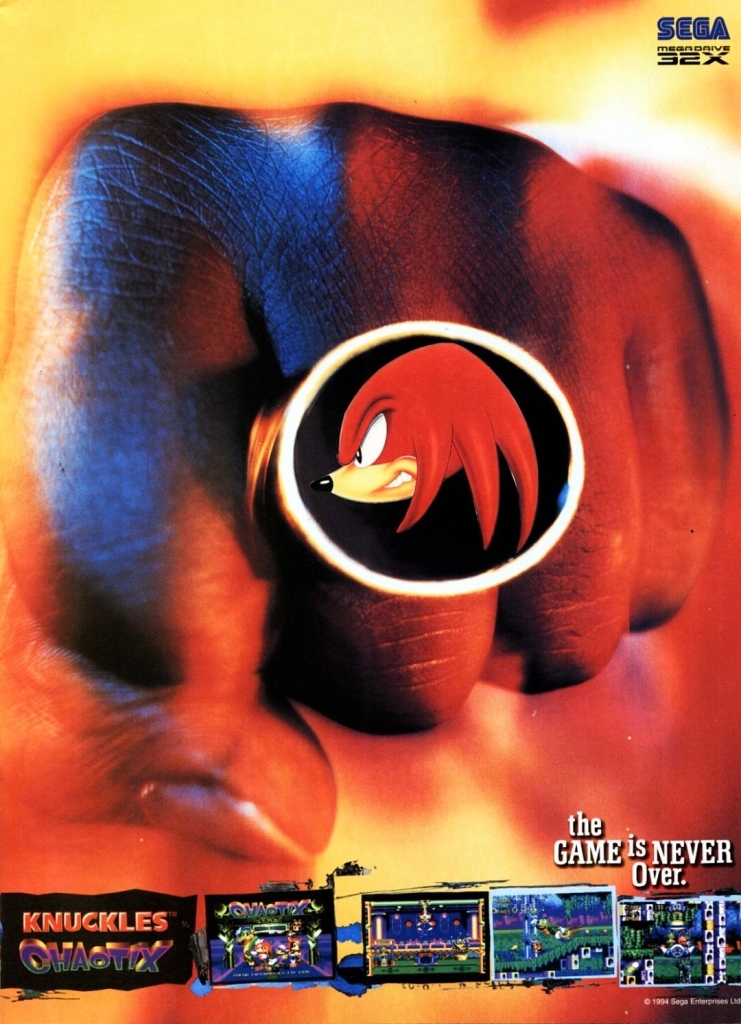
6. Knuckles’ Chaotix print ad
Sega was aggressive with marketing this game for the 32X.
In late 1994, Sega released in America and in Japan the 32X which was an add-on device for the Sega Genesis designed enhance its power while serving as a transition (a warm-up) into the so-called 32-bit era of console gaming. The 32X was the result of corporate decisions involving the American and Japanese executives of the company.
To keep 32X customers happy and boost hardware sales, Sega adjusted the development of Knuckles’ Chaotix (a Sonic spin-off) from being a Sonic project 32-bit console Sega Saturn into a standalone game for the add-on device. Even though Sega knew the game’s development was rushed, they went on to strongly promote the game and the print ad shown here was quite eye-catching.
The image of a fist with a ring showing the character Knuckles (a character from the Sonic games) emphasizes power and the colors used seem to express intensity. Then there were the selected screenshots shown without descriptive text. Although Sega tried hard, Knuckles’ Chaotix (launched in 1995) received mixed-to-positive reviews and sadly sold poorly. Unsurprisingly, the sales of the 32X dropped further and by then a lot of consumers knew that the Sega Saturn (the true successor to the Genesis) was all set to launch in America and Europe within 1995.
7. Sonic 3D Blast for Sega Saturn print ad
Too bad Sega and its teams failed to make the true Saturn Sonic game.
Back in the 1980s and 1990s, having a high-quality, console-exclusive game featuring a company mascot was crucial to sell game consoles while keeping dedicated fans happy. Like what Nintendo did with their icon Mario, Sega achieved great commercial success with the three Sonic the Hedgehog games they released exclusively on the Sega Genesis console and this naturally created expectations they would make new Sonic games on the Saturn console. Unfortunately, Sega and its teams failed to complete development of the Saturn-exclusive game Sonic X-treme and the company cancelled it which sent shockwaves through the games industry news.
With the 1996 holiday shopping season too crucial to ignore, Sega commissioned a Saturn version of the game Sonic 3D Blast which was originally made for the Genesis console. Sonic 3D Blast on the Saturn took seven weeks to make and there were some graphical enhancements implemented. While Sonic 3D Blast’s Genesis version attracted a positive reception from critics (and sold 700,000 copies), the reception for the Saturn version was mixed. This print ad of Sonic 3D Blast on Sega Saturn is a reminder of the company’s failed attempt to take their icon to the next-generation. They never replicated the big success they had with Sonic on the Genesis.
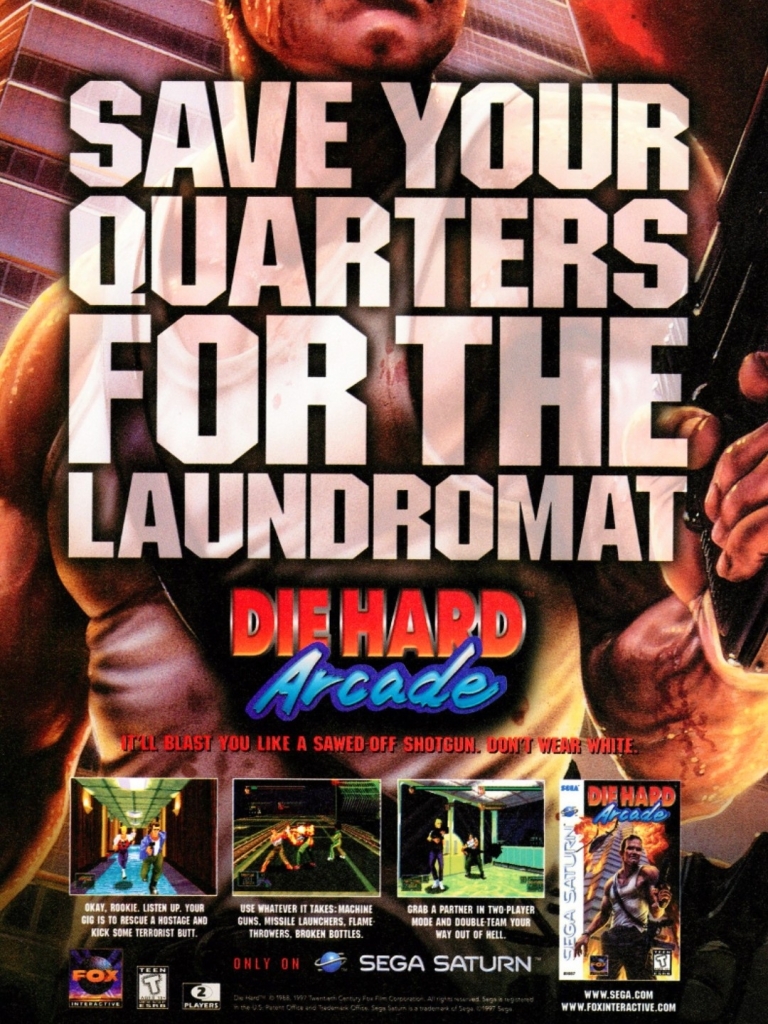
8. Die Hard Arcade print ad
Each time I saw this print ad, it easily reminded me of the classic action film of 1988.
Like many other movie franchises, Die Hard has many video game adaptations released through the decades. In 1997, Sega released Die Hard Arcade (Japanese title: Dynamite Deka) on the Sega Saturn and the game critics praised it for its fun gameplay as well as its flawless conversion of the arcade version (released in 1996). To say the least, the development history of Die Hard Arcade is not as straightforward as many would think. To get the details and explanations of the development of the game, click here.
As for the print ad itself, this one cleverly used official game art as the background with imagery which instantly reminded me of what I saw in the classic 1988 movie that starred Bruce Willis. This ad made me interested to buy a Sega Saturn or find a place to rent it to play the game.
9. Shenmue Japanese print ad
Simplistic with presentation and yet engaging to look at. The Dreamcast-exclusive Shenmue sold over a million copies in Japan alone.
When Shenmue was released exclusively on the Sega Dreamcast in Japan on December 29, 1999, it turned out to be a very mind-blowing experience for many gamers due to its ambitious game design, the intense attention to detail implemented, very high production values, in-depth exploration and very immersive gameplay.
It was the open-world game released at a time when “open-world” was not even a standard gaming term. Often called the masterpiece of the legendary game designer Yu Suzuki, Shenmue sold over 1.2 million copies in Japan and went on to be released worldwide in the months that followed. Sadly, the game failed to make a profit due to its very high budget of $70 million (which Suzuki himself said in English during an interview) and the fact that the number of Dreamcast units already sold to gamers was not massively high.
The Japanese print ad of Shenmue had a simplistic looking visual concept and yet it was engaging to look at because the way the characters appeared was how they appeared in the game during gameplay which was astounding. Take note that back in the 1990s, it was common for video game marketing materials to show human characters in high detail but in reality the polygonal models of those characters appeared looking blocky and much less detailed during gameplay.
Welcome back readers, fellow geeks and electronic gaming fans!
In this edition of the Retro Gaming Ads Blast (RGAB) series, we will examine print ads from the 1980s and the 1990s that caught my attention and I will explain why they are worth look back at.
For the newcomers reading this, Retro Gaming Ads Blast (RGAB) looks back at the many print ads of games (console, arcade, computer and handheld) that were published in comic books, magazines, flyers and newspapers long before smartphones, social media, the worldwide web and streaming became popular. To put things in perspective, people back in the 1980s and 1990s were more trusting of print media for information and images about electronic games.
With those details laid down, here is the newest batch of retro gaming print ads for you to see and enjoy…
1. Star Wars: Rebel Assault print ad
This print ad was strong enough to capture Star Wars fans’ attention and make them interested with the Sega CD.
If there is anything notable about the Sega CD (Mega CD in other parts of the world) platform, it is the fact that the machine was an add-on to be connected with the Sega Genesis (Sega Mega Drive elsewhere) console. That being said, LucasArts included the Sega CD as one of several platforms for the multiplatform release of their 1993 game Star Wars: Rebel Assault. The above print ad caught my attention with its use of 9 screenshots (emphasizing a wide look at the game’s Star Wars concept) and text description (emphasizing multi-media features connected with gameplay), and for a time it made me interested in the Sega CD. Looking back at the game’s marketing, Star Wars: Rebel Assault was designed to not only give gamers sessions of play to enjoy but also opportunities to immerse themselves deeper into the realm of Star Wars. The game even had selected video clips from the original Star Wars trilogy movies.
2. Cloak & Dagger print ad
This print ad could have used at least two screenshots from the arcade game…
In 1984, there was a movie titled Cloak & Dagger (read my retro movie review by clicking here) which was not only the 4th cinematic adaptation of the short story “The Boy Cried Murder” (written by Cornell Woolrich) but also had the real-life electronic game Cloak & Dagger as a crucial plot element. To make things clear, there was a Cloak & Dagger game released in the arcades (as emphasized in the above print ad) from Atari. Behind the scenes, the filmmakers and Atari worked together which explains the video game tie-in with the movie. While the above arcade conversion kit print ad does not show screenshots of gameplay, the four images of the playable protagonist Agent X shown were from the game’s short transition sequences (moving from one level to another) which were also displayed in the 1984 movie. Those images were enough to remind me about the movie I enjoyed.
More on the Atari connection, the movie had a cleverly presented short scene showing the young protagonist Davey (played by Henry Thomas) playing Cloak & Dagger on his Atari 5200 console with spliced gameplay footage of the arcade version shown within cuts. In real life, however, Atari never released a version of Cloak & Dagger for any console nor computer in the 1980s. Today, you can play the game on the Atari 50 collection on consoles.
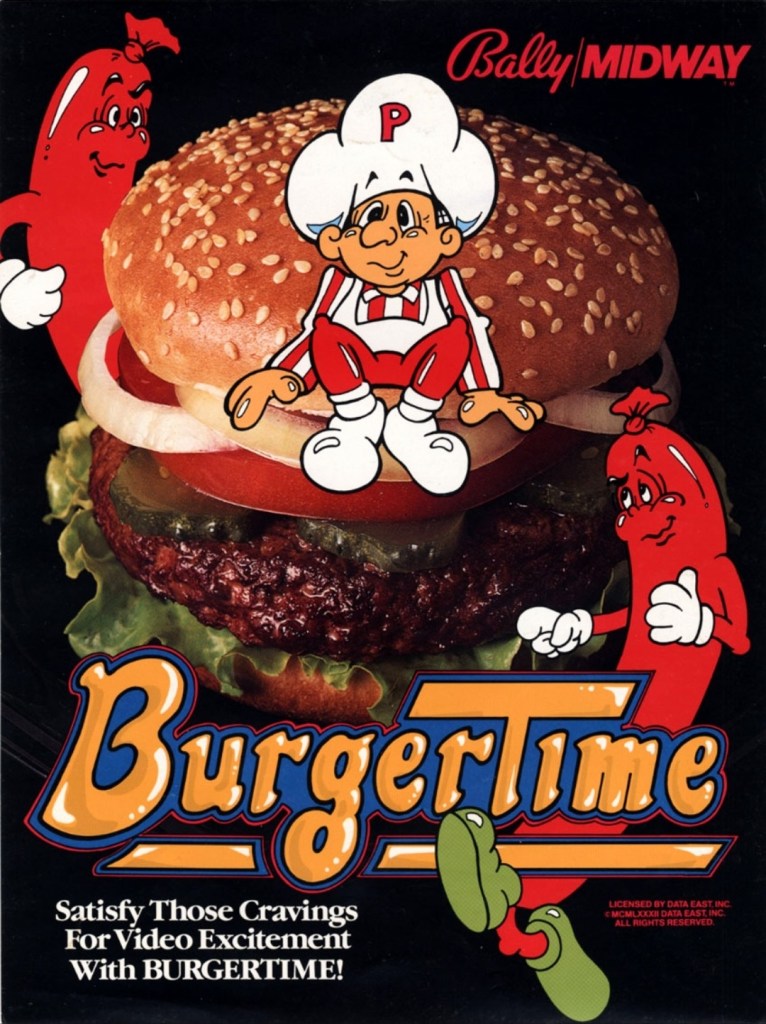
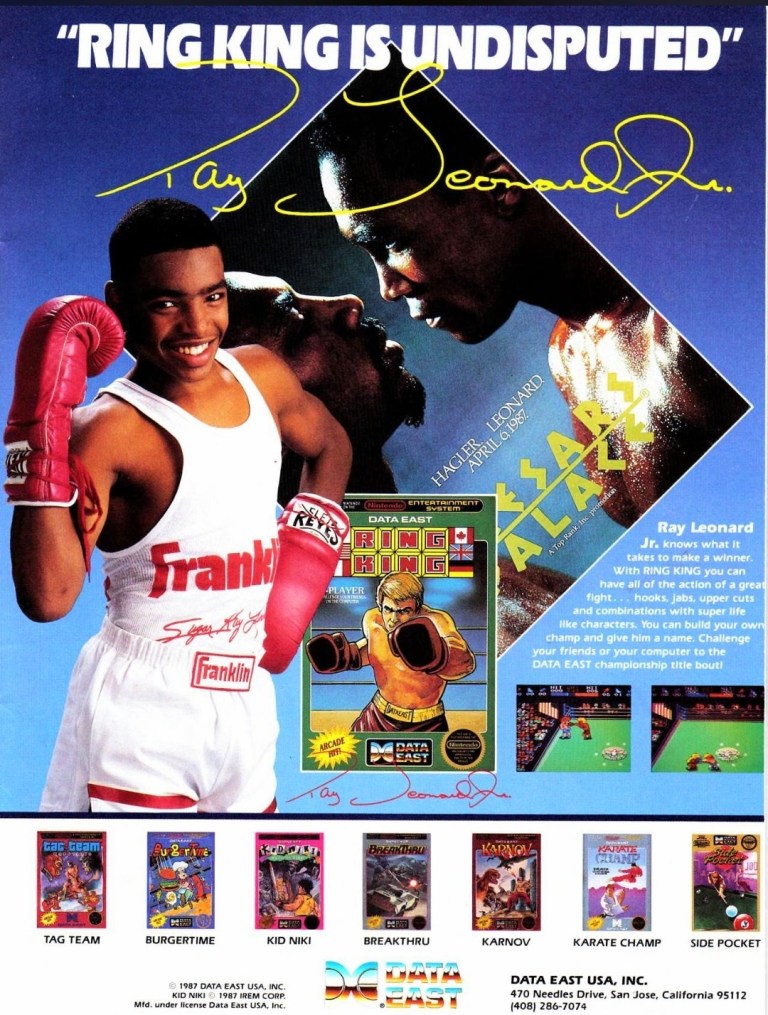
3. BurgerTime print ad
This BurgerTime print ad was entertaining to look at and easily reminded viewers about food and the popular game coming home.
Back in 1982, BurgerTime (Japanese title: Hamburger) was released in the video arcades and turned out to be a big hit in both Japan and America. Seeking to capitalize on the game’s success, Mattel Electronics acquired the rights of the game from Data East and went on to release versions of it for the Intellivision, Atari 2600, Apple II and the IBM personal computer. Mattel went on to market the game for consoles and computers by coming up with a print ad (the one above) that had comic book-style hand drawn art of the playable protagonist chef Peter Pepper running away from walking versions (anthropomorphic figures) a hotdog, an egg, and a pickle. The ad showed a single screenshot which was sufficient enough to show readers the concept of the game clearly. In my experience, I never got to play BurgerTime in the arcades but I first learned about its existence thanks to the eye-catching print ad above which appeared in comic books I read. In addition, the print ad also does an effective job to remind readers about food.
4. SOS print ad
This print ad made me interested in the game as I was already aware of the historical sinking of the Titanic, and I already saw the disaster film The Poseidon Adventure.
Moving back to the 1990s, I saw the above print ad of the video game SOS for the Super Nintendo Entertainment System (SNES) while reading a comic book. The nice artwork caught my attention as it easily reminded me of the disaster movie The Poseidon Adventure (1972) as well as the real-life tragedy of the Titanic. Then I saw the screenshots on the print ad and they made me interested on the game which I later played on a rent-by-the-hour game joint. Looking back at the text description of the print ad, it did not describe what the technical and graphical features of SOS were. That being said, I was surprised to experience the game’s use of the SNES Mode 7 effects which enabled the scaling and rotating of the in-game environment which affected gameplay in many ways. Read my retro review of SOS by clicking here.
5. Star Trek: The Next Generation – Future’s Past print ad
This 2-page print ad was strong enough to invite readers to literally join the Star Trek: TNG crew and go where no man has gone before. By the way, when was the last time you saw Marina Sirtis or Gates McFadden on a video game ad?
Long before wokeness ruined Star Trek in this modern age, the sci-fi franchise reached a tremendous high in popularity and projects in the 1990s as that decade had Star Trek: The Next Generation (most of its TV seasons and three movies were released within the decade), Star Trek: Deep Space Nine and Star Trek: Voyager that kept fans entertained.
Considering its high popularity, it was not surprising that a video game adaptation of Star Trek: TNG was released in 1994 titled Star Trek: The Next Generation – Future’s Past (the version for Super Nintendo Entertainment System) and I saw the above print ad while reading a gaming magazine. Using a slightly altered version of the TNG group photo, the print ad emphasized its concept that the player will be able to lead the crew of the Starship Enterprise and take part in a series of missions in different parts of space with the likes of Captain Picard, Commander Riker, Data, Worf, Dr. Crusher, Deanna Troi and La Forge. While I was never a Star Trek fan, the above print ad caught my attention with its concept, the group photo and the screenshots gave me an idea of what the game has to offer. It should be noted that Star Trek: The Next Generation – Future’s Past was released between the end of Star Trek: TNG’s final season and the theatrical release of Star Trek: Generations.
6. Super Castlevania IV print ad
This was one of the most eye-catching print ads I’ve seen about a Konami video game.
The jump in technology from one console generation to the next can be beneficial for gamers if game developers harnessed the advantages of new technologies to make new games that turned out to be more engaging and more enjoyable. Such was the case with Super Castlevania IV for the Super Nintendo Entertainment System (SNES) in 1991. The above print showed Konami highlighting the positive feedback their game received from different gaming media outlets and used screenshots to give gamers and long-time Castlevania fans exciting stuff to see. I got to play the game on the mini SNES console and I can say that in terms of visuals, controls and gameplay, Super Castlevania IV truly lived up to its title and it remains fun to play to this day.
Finally, an old wish of mine came true as GungHo Online Entertainment America, Inc. (GOEA) officially announced that the Grandia HD Collection – which contains the classic Japanese role-playing game Grandia and its sequel Grandia II – will be released on Xbox consoles on March 26, 2024. For the newcomers reading this, the said collection of the two Grandia RPGs was previously released for the Nintendo Switch and on PC in 2019. Grandia HD Collection has been listed on the Xbox store.
This surprise development is definitely much more exciting and better than Team Xbox’s releasing four Xbox-original games on PlayStation and Nintendo consoles. For your excitement and enlightenment, watch the latest Grandia HD Collection announcement and trailer below…
To understand what the collection contains, posted below is an excerpt from the official announcement by GOEA. Some parts in boldface…
The GRANDIA HD Collection features two genre-defining role-playing games: GRANDIA and GRANDIA II. These games send players on epic adventures with protagonists Justin and Ryudo, respectively, to explore the worlds of GRANDIA and protect them from the forces of evil.
Two Nostalgic Stories: Fans can follow both iconic journeys in the world of GRANDIA with various upgrades once more. Discover what lies beyond the End of the World with the young adventurer Justin in GRANDIA and, eons later, protect the world from eternal darkness with mercenary Ryudo in GRANDIA II.
Modernized Visuals: This version of GRANDIA and GRANDIA II includes enhanced UI, sprites, and texture art that brings the iconic look of the retro classics to contemporary standards, including widescreen support and visually enhanced original cinematics.
A battle from Grandia.
This is what a battle looks like in Grandia II which had fully polygonal graphics.
Classic Old-School Combat: The GRANDIA series features classic RPG combat, with physical attacks and elemental spells in a battle system that combines real-time and turn-based mechanics. The addition of Hard Mode gives players a memorable challenge as they explore the world of GRANDIA II.
Language Support: The GRANDIA HD Collection includes Japanese and English audio options, as well as language support for English, French, German, Japanese, Korean, and Chinese (simplified and traditional).
I am really delighted that Grandia HD Collection is coming to Xbox (note: made for the Xbox One console which is fully compatible with Xbox Series X and Xbox Series S consoles) as I played and enjoyed the original Grandia game on PlayStation way back in 1999.
I do remember Grandia having a very imaginative fantasy world with a story cleverly structured to take players from one location to another to visit new places, meet new characters or tribes of people, and engage in quests. Playing that game was a whole lot of fun because developer Game Arts (the same team behind the Lunar RPGs) crafted a battle system that is highly playable and addicting. As I played Grandia, I saw the playable characters really develop not just with their personalities but also their battle and magic abilities.
Not only that, the music written by Noriyuki Iwadare was great to listen as I played. I also love the artistic approach applied on Grandia which had 2D sprites for the characters and monsters, nicely textured 3D polygonal environments, and very imaginative artworks (including those in animated cutscenes).
Grandia had characters and monsters in 2D sprite forms, as well as detailed textures on the 3D polygonal environment.
Of course, the many quests gradually built-up the tension of the main plot which turned out to be a grand event. Game Arts knew how to execute handsome pay-offs in relation to the build-up that preceded them. That being said, Grandia’s conclusion was really memorable to see.
If there is anything I hope to see within the Grandia HD Collection, it would be improvements on the English translation and the voice acting of the characters because the PlayStation version of Grandia that I played was lackluster with those mentioned elements. Clearly Sony Computer Entertainment (the publisher of Grandia on PlayStation) did not aim high with quality for the game’s American release.
As for Grandia II, I never got to play it as I never had a Sega Dreamcast nor a PlayStation 2 (PS2) console. I do remember some Dreamcast gamers expressing fondness and high enjoyment of the game and there were even a few who enjoyed it more than its predecessor. That being said, Grandia II’s inclusion in the Grandia HD Collection is an added incentive for me to purchase the collection for my Xbox Series X.
A mini-game in Grandia II. The sequel went all-in with 3D polygons which made it a big showcase of art and graphics on the Sega Dreamcast. The PlayStation 2 version of this game reportedly had inferior graphics.
Disclaimer: This is my original work with details sourced from playing the video game and doing personal research. Anyone who wants to use this article, in part or in whole, needs to secure first my permission and agree to cite me as the source and author. Let it be known that any unauthorized use of this article will constrain the author to pursue the remedies under R.A. No. 8293, the Revised Penal Code, and/or all applicable legal actions under the laws of the Philippines.
Welcome back retro gaming fans, collectors and readers!
Today, we will go back to the early 1980s to examine one particular video game I played many times on the Atari 2600 and it has a science fiction concept inspired by a certain dream that the late game designer Alan McNeil had.
With those details laid down, here is a look back at Berzerk, developed and published by Atari, Inc. on the Atari 2600 in 1982.
Cover of the Atari 2600 game package.
Game concept
Based on the official description of the game, players play a lone, armed human character who is a prisoner on an alien planet that is made up of mazes that have electrified walls. Several armed robots are actively hunting the human has no choice but shoot them and somehow surpass them to survive. There is, however, a more powerful villain called Evil Otto lurking nearby…
Gameplay and quality
When firing so close to a robot, be aware that it will fire at you without hesitation. To avoid getting hit, be aware of your character’s position, distance and the ability to move.
As typical with console games during the early 1980s, Berzerk’s design is pretty simple. Using the Atari 2600 joystick (which has only one button), you have to move your character around while avoiding touching the robots and electrified walls, and find your way out going to the next level. When it comes to in-game action, using the joystick, you are also able to shoot laser blasts in different directions (including diagonal).
From time to time, the level of challenge and gameplay intensity rises whenever the robots stand or move randomly on certain spots of the floor and when the random locations of the walls make it challenging to move around. In situations like these, I was compelled make quick decisions on when to move, which robots to shoot, and analyze if it is safe to move to another spot without getting electrified by a wall.
Adding further to the challenge is the sudden entrance of Evil Otto (who appears in the game as a digital smiley face) who is indestructible and passes through walls (note: this happens as long as you did not adjust the console to make the game easier). Once Evil Otto comes in (after you spent a certain amount of time in the level), I had to move my character out of the level even if there were still some robots remaining and shooting at me. Evil Otto even destroys robots that got on its way which symbolically shows how powerful he is.
In a situation like this, you will have to think fast on when to move, when to fire and how much distance do you need to be safe. That being said, you must also avoid touching the walls which are all electrified.
As mentioned earlier, there is an option available on the Atari 2600 version of the game that makes encounters with Evil Otto a bit easier. This allows players to blast Evil Otto to remove him for a temporary period of time and he comes back afterwards. In my experience with this game, I preferred the more challenging settings as the gameplay was already engaging with it. I should also state that while there are many robots walking around and ready to blast you, their intelligence is pretty low as you will see a few of them walk straight to the wall and get destroyed. There were also times when a robot simply walks straight into a fellow robot which destroys them both. Also there were times when a robot’s laser blast destroys another robot that got in the way. That being said, the option for easier gameplay on the Atari 2600 was unnecessary for me.
While the game design is simple, there is a ton of depth in terms of new levels you will find yourself in after exiting the previous level. Avoiding robots and Evil Otto to get out might look like the only goal for playing but in reality there is incentive to shoot as many robots as you can as scoring highly will reward you an additional life for ever number of points earned. There is no story ending at all as the game will go on and on for as long as you keep enjoying playing.
In relation to the gameplay, there is no music at all and that creates an immersion with emphasis on the excellent sound effects the game has. The sounds of the laser blast, the explosion of the robot, and the electrifying of your human character’s body still sound great and they have a strong futuristic, sci-fi touch.
Conclusion
The digital smiley face here is Evil Otto. Don’t let the smile fool you because it will go after you to destroy you, and not even the walls nor the robots can block its way.
Berzerk (1982) on Atari 2600 is still a fun game to play after all these decades. Its design is simple and yet there is depth within the gameplay. There is no story to complete but the game will keep on going as long as you enjoy blasting robots for more points to gain additional lives as rewards which should motivate you to keep on playing. Considering how simple the game’s design has always been, the sound effects really made playing it an immersive experience. This game is truly a classic that has to be played if you have the means to do so.
Once the anticipated Japanese role-playing game (Japanese RPG) Eiyuden Chronicle: Hundred Heroes finally comes out on April 23, 2024, the absence of the main creator will be felt by many players as the Japan-based Rabbit & Bear Studio announced very recently that its head Yoshitaka Murayama passed away on February 6. For the newcomers reading this, Murayama is also the creator of the Suikoden RPG series of Konami where he used to work at. For my previous blog posts of Eiyuden Chronicle: Hundred Heroes, click here, here, here and here).
To put things in perspective, posted below is the excerpt from the official announcement by Rabbit & Bear Studios. Some parts in boldface…
Hello everyone,
It’s with a heavy heart and deep sadness we must inform you that the scenario writer and head of Rabbit& Bear Studios, Yoshitaka Murayama, has passed away on February 6th due to complications with an ongoing illness.
Murayama first began this journey of the creation of Eiyuden Chronicle: Hundred Heroes in 2020
through the support of his very loving fans on Kickstarter. Throughout the three-plus-year-development of the game, it was always the passion from his fans that continued to drive his creative vision and motivate him to put his all into the project.
His hard work on Eiyuden Chronicle as scenario writer was finished but as his co-workers and friends, it saddens us to know that he won’t get to see the reactions from his fans.
However, even with those feelings we need to accept the reality that he is no longer with us and continue to push his dream forward by releasing Eiyuden Chronicle to the world.
We want to maintain his legacy and vision with this game and know that he would have wanted the rich world he has created with Eiyuden Chronicle to live on.
His family sincerely appreciates your prayers and support but asks for privacy and that no flowers, mail, or other offerings be sent.
We will have more information on organizational changes to Rabbit & Bear as well as changes to some of the Kickstarter rewards in the near future.
So there you have it. The developer behind Eiyuden Chronicle: Hundred Heroes made it clear that they will not give up with fulfilling the dream of the late Murayama and there is no stopping the launch of the game (which was supposed to have been released in 2023).
More on the previous works of the late Murayama, I played Suikoden and Suikoden II (read my retro review by clicking here) on the PlayStation console in the 1990s and I had enjoyable times with them. For me, Suikoden II was the not only the best Suikoden RPG of the 1990s but also one of the best RPGs on any platform during the decade. It’s just too bad that the 1999 North American launch of Suikoden II was overshadowed by another company’s JRPG on PlayStation that same year. Considering the many Japanese RPGs that were released on PlayStation in 1999, Suikoden II was the most enjoyable one I played.
Even during his days as a young man working for Konami in the 1990s, Murayama had a very unique vision for digital role-playing and adventuring, as well as fantasy storytelling.
“Eiyuden Chronicle is really (an) evolution of my many design experiences. The many games I’ve made have helped create the foundation for this title. Since I draw my experience from previous games I’ve worked on, of course you will see a little bit of those elements in Eiyuden Chronicle,” Murayama said in response to a question that mentioned Eiyuden Chronicle and Suikoden titles.
With Murayama gone, the spotlight on the April 2024 launch of Eiyuden Chronicle: Hundred Heroes will be more crucial than before. I myself will be playing the RPG on my Xbox Series X console as soon as it launches. To get yourselves oriented with the said JRPG, watch the videos below (the last one shows Murayama and his fellow creators as special guests at an event in Taipei)…
Watch out for Eiyuden Chronicle: Hundred Heroes on Xbox Series X, Xbox Series S, Xbox One and Windows PC plus Xbox Game Pass (XGP) on April 23, 2024. For more about the JRPG, visit https://www.xbox.com/en-US/games/eiyuden-chronicle
Since the initial announcement of the Xbox Game Studios partnership with Kojima Productions (led by legendary game creator Hideo Kojima who is known by many for his Metal Gear works) was made, a lot of gamers could not figure out what kind of game will be realized. The long wait and speculation ended as the two entities announced during The Game Awards 2023 the new game (designed by Hideo Kojima) titled OD (Overdose).
To begin, watch the official teaser trailer of the Xbox-exclusive OD below…
To add punch to the announcement, Kojima himself appeared on-stage during The Game Awards 2023 which you can see below…
KOJIMA PRODUCTIONS and XBOX GAME STUDIOS officially announced OD at The Game Awards. World-renowned game creator Hideo Kojima has partnered with Academy Award winning filmmaker Jordan Peele, the acclaimed film director of “Get Out,” “Us,” and “Nope,” who will be one of several talented storytellers involved in the project.
“We are working with Xbox Game Studios and their cloud gaming technology to take on the challenge of creating a very unique, immersive, and totally new style of game – or rather, a new form of media,” said Hideo Kojima, Game Creator and Founder of KOJIMA PRODUCTIONS.
A HIDEO KOJIMA GAME, OD explores the concept of testing your fear threshold, and what it means to OD on fear – while blurring the boundaries of gaming and film. The new teaser for OD also reveals Sophia Lillis (“Dungeons & Dragons: Honor Among Thieves”), Hunter Schafer (“Euphoria”) and Udo Kier (“Flesh for Frankenstein”), who will play the lead roles in the upcoming project.
While there were little details about OD unveiled and the teaser trailer showcased what the production team is doing with the technologies they have, the Xbox-exclusive project is intriguing to say the least. Sure, there was no gameplay footage shown nor plot elements but the unveiling showed that OD was aiming for a new experience with horror, suspense, emotion and immersion in mind.
Kojima Productions’ utilization of cloud gaming technology and Unreal Engine could result in something new and fresh from Hideo Kojima whom I believe must have been experimenting a lot with designs not only for video gaming but also for interactive viewing. It is also interesting to see that OD will involve the talents of selected actors and director Jordan Peele. I can only speculate that, in relation to Kojima’s quote in the press release, the game will be cinematic and will somehow get the gamer/viewer involved in ways not seen before.
A lot of questions about the Xbox-exclusive OD remain particularly on how exactly will it be playable, what the plot is, will the game push photo-realism to the next level, how will it immerse gamers/viewers into it, when will it be released on Xbox Game Pass (XGP), when will it be released and more.
Whatever OD (Overdose) will be, we can only hope that Hideo Kojima and his team will create something groundbreaking and great. Stay tuned for future updates about OD here.