Retro Gaming Ads Blast – Part 21

Welcome back readers, fellow geeks and electronic gaming fans!

In this edition of the Retro Gaming Ads Blast (RGAB) series, we will take a look at another batch of retro gaming print ads – including arcade flyers – from the 1980s and 1990s.

For the newcomers reading this, Retro Gaming Ads Blast (RGAB) looks back at the many print ads of games (console, arcade, computer and handheld) that were published in comic books, magazines, flyers, posters and newspapers long before smartphones, social media, the worldwide web and streaming became popular. To put things in perspective, people back in the 1980s and 1990s were more trusting of print media for information and images about electronic games and related products.

With those details laid down, here is the newest batch of retro gaming print ads for you to see and enjoy…

1. Galaxian for Atari print ad
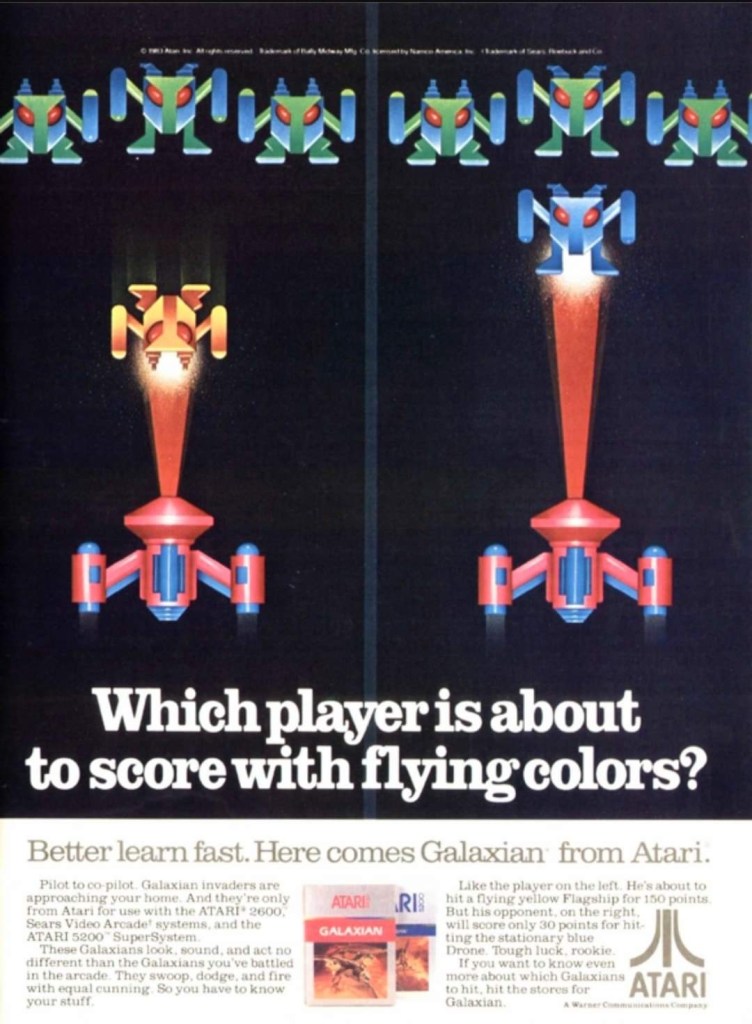
A unique approach to the art done by the advertisers.

Developed by Namco, Galaxian was a 2D sci-fi shooter that debuted in arcades in 1979. It was so successful and widely acclaimed, it got ported to varied game consoles and home computers as the years passed by. For its release on the Atari 2600 and Atari 5200, this print ad was created to catch the attention of fans and gamers by utilizing artwork that resembled the look of 2D sprites from the game. That being said, no screenshots of Galaxian on the Atari consoles were shown because the artwork used looked detailed and were attention-grabbing already.

2. 1943: The Battle of Midway arcade flyer
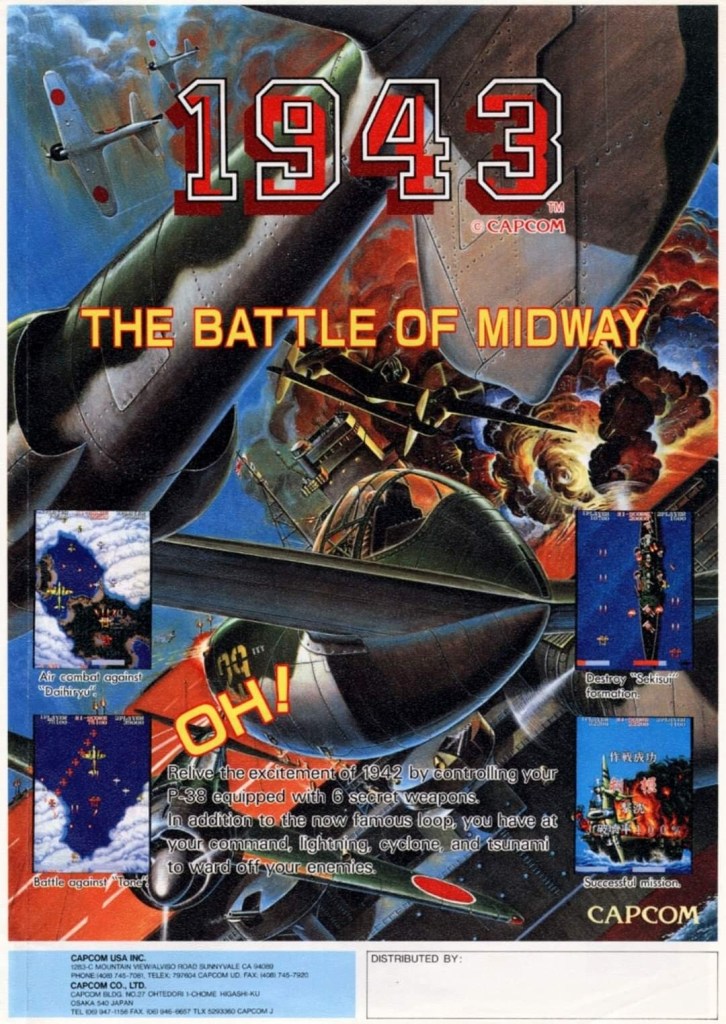
This is a fine looking flyer.

In 1987, Capcom released in the arcades 1943: The Battle of Midway which was their follow-up to 1942. The arcade flyer itself was designed to strongly promote the game using a combination of screenshots, short-but-clear text descriptions and the great looking piece of artwork which really emphasized the World War II concept. Behind it all, this game was made by Japanese developers with the Western markets in mind and the irony is that the game has players control Americans fighting the Japanese fleet.

3. Top Gunner arcade conversion kit flyer
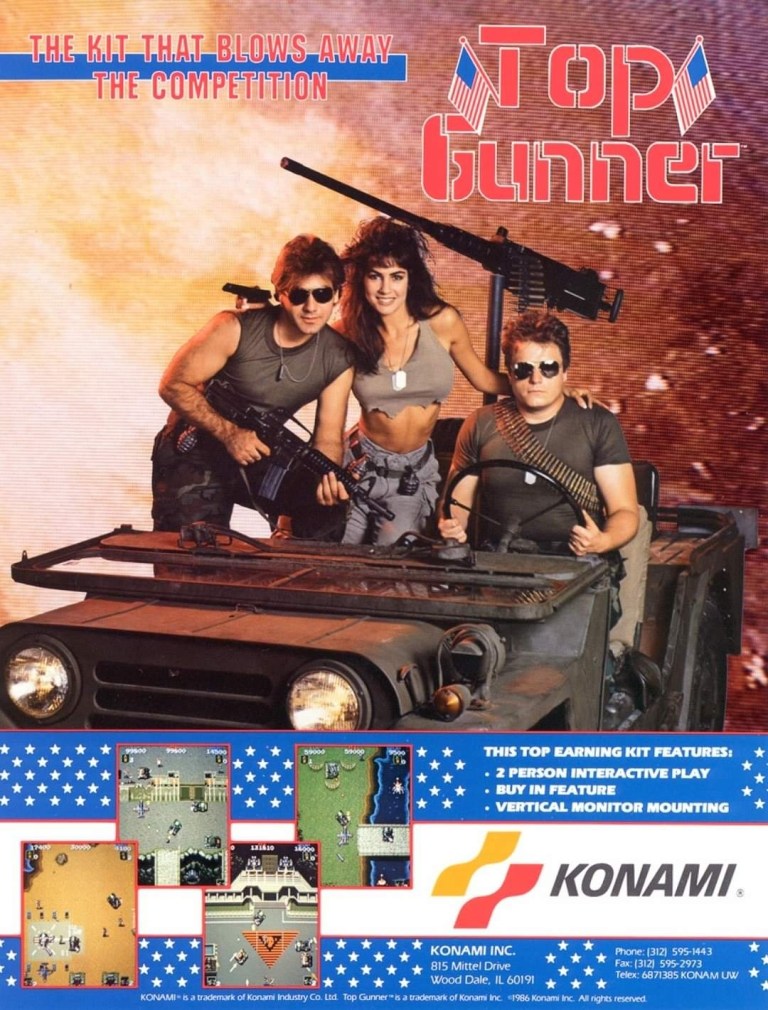
Show this nice looking image to the woke nut or modern day Communist near you. Watch and observe his or her reaction.

To make things clear, Top Gunner is actually the run-and-gun game Jackal and the alternative titles was mainly used in North American arcade distribution and also reflected Konami’s move of coming up with titles inspired by blockbuster movies of the time. To promote its 1986 arcade release in America as a conversion kit, the advertisers had three models playing soldiers on a military jeep to immerse gamers into the core concept of the game – moving armed military jeeps from one location to another while fighting bad guys. The approach used for the visual concept is indeed inspiring, especially during the Cold War. Top Gunner/Jackal became a hit in both arcades and consoles.

4. Joust for Atari print ad
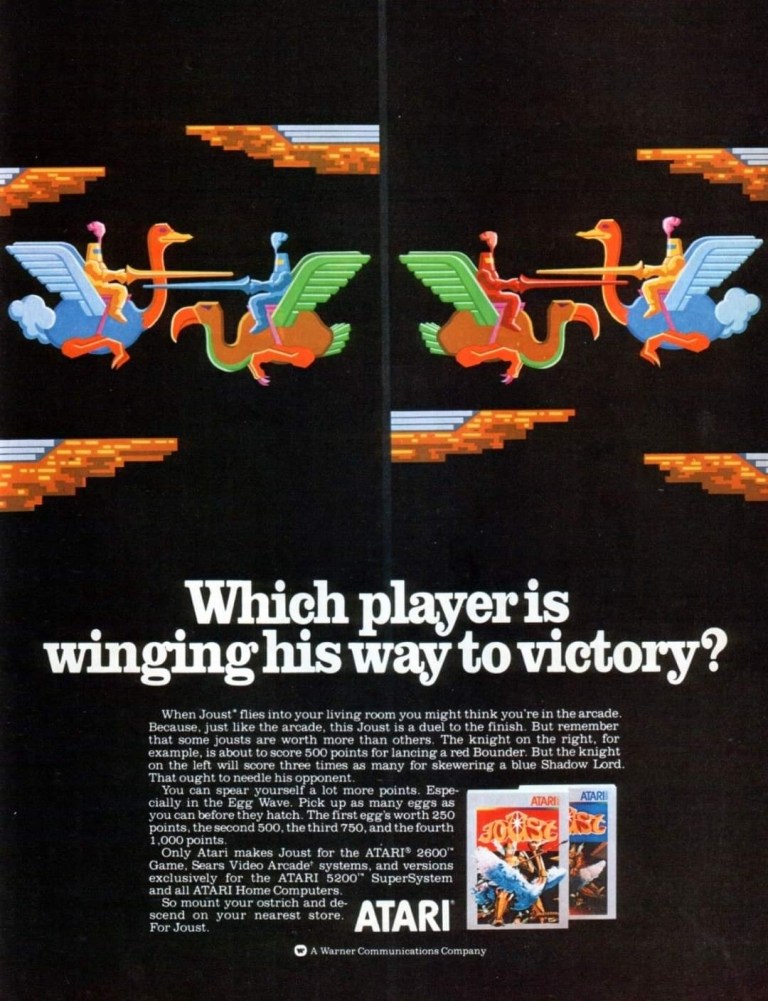
While I played Joust on console, I don’t remember seeing this print ad before.

Made by Williams Electronics, Joust was one of those early 1980s arcade games that eventually made its way to the Atari 2600 console which was massively popular in North America. Strangely enough, the artistic approach Atari’s advertising came up with for the console version of Joust was similar with that of the ad of the Atari version of Galaxian (see item above) in which artwork was used to resemble the 2D sprites of the game. Regardless, the images of this ad showed what a joust looked like – a martial game between two armed combatants going against each other while riding an animal.  

5. Kid Chameleon print ad
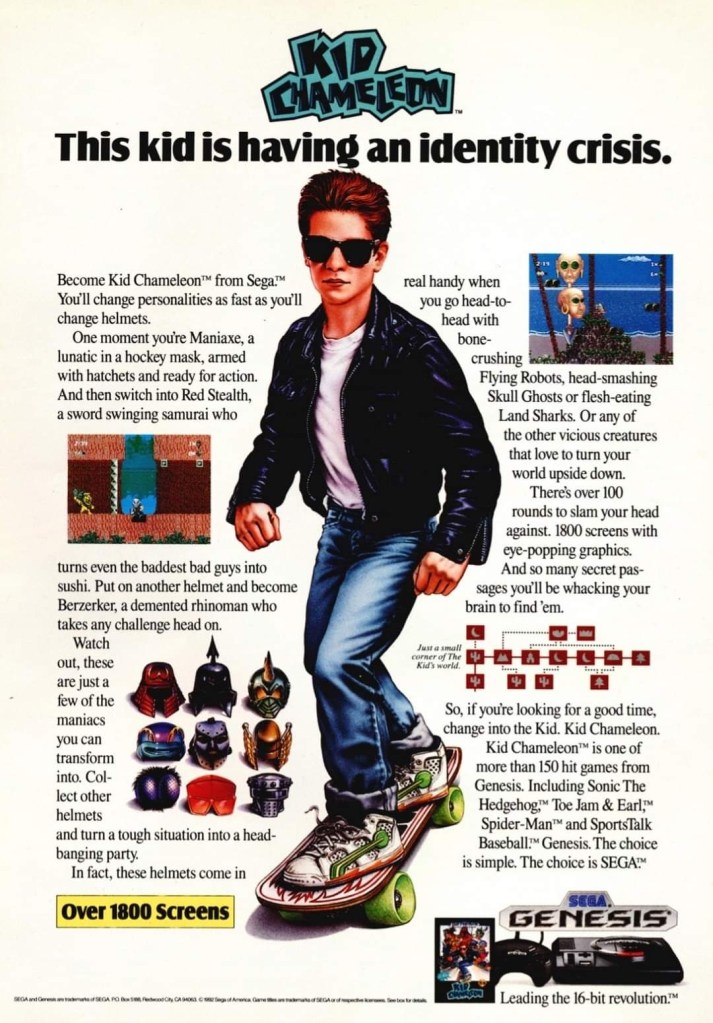
Can you relate with Kid Chameleon’s identity crisis?

During the early years of the Sega Genesis, Sega of America exerted efforts to make new games that were not only exclusive to their console but also stand out among the many 2D side-scrolling adventure games by coming up with a protagonist with a unique personality that could somehow resonate with young kids and teenagers.

Developed by their internal experts (Sega Technical Institute), the company released Kid Chameleon in 1992 and they came up with the above print ad that had detailed hand-drawn art of the lead character as well as a wordy text description which was a clear attempt to help young gamers (including teenagers) get connected with both the game and the protagonist. The advertisers even had space to spare to accommodate two screenshots of the game.

6. Terminator 2: Judgment Day (AKA T2: The Arcade Game) for Sega Genesis print ad
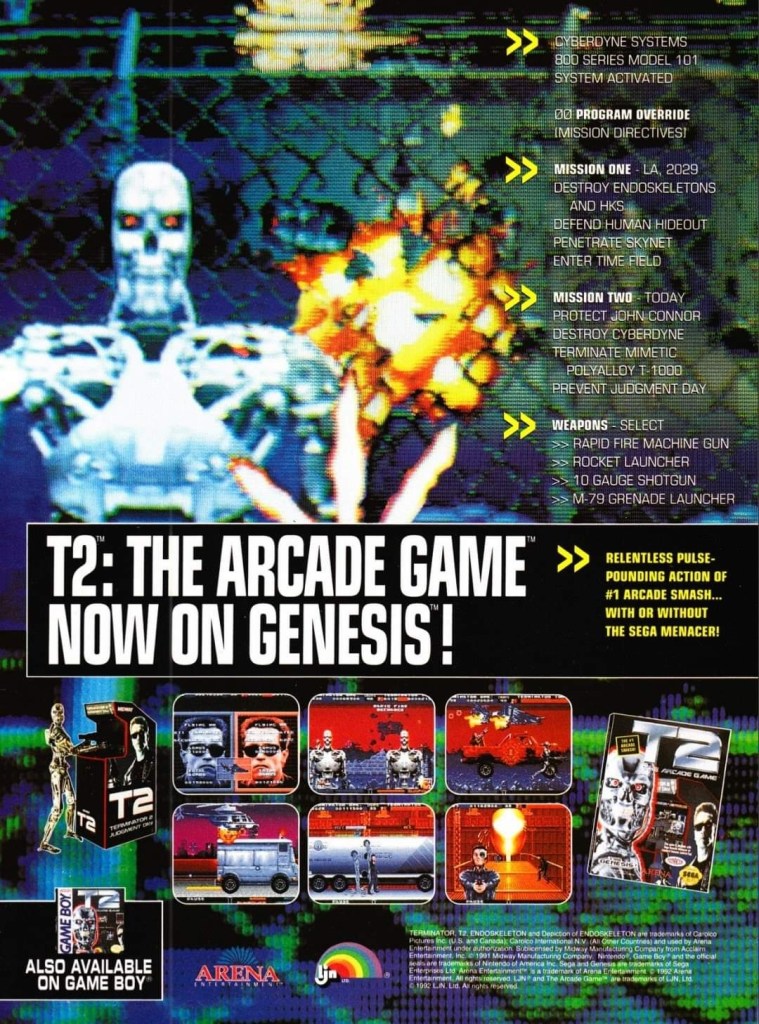
This print ad appeared on the many comic books I read long ago.

Back in the early 1990s, Terminator 2: Judgment Day was a massive success in the global box office and this resulted in Arnold Schwarzenegger’s popularity to soar very high while also establishing the Terminator as an essential pop culture figure. Apart from comic books and merchandise, video games based on the movie were made and the one that stood out the most was the arcade shooter game initially titled Terminator 2: Judgment Day (later retitled as T2: The Arcade Game).

The arcade mega hit eventually got ported to the Sega Genesis and this print ad really looked flashy with its visual presentation showing screenshots and a zoomed-in look at how the Terminator T-800 looked like in the Genesis version complete with a few explosions in the background. It should be noted that this flashy print ad cleverly concealed the visual downgrades and the redrawn images as the Genesis itself could never come close to matching the high quality visuals of the arcade version.

7. CYBERPad print ad
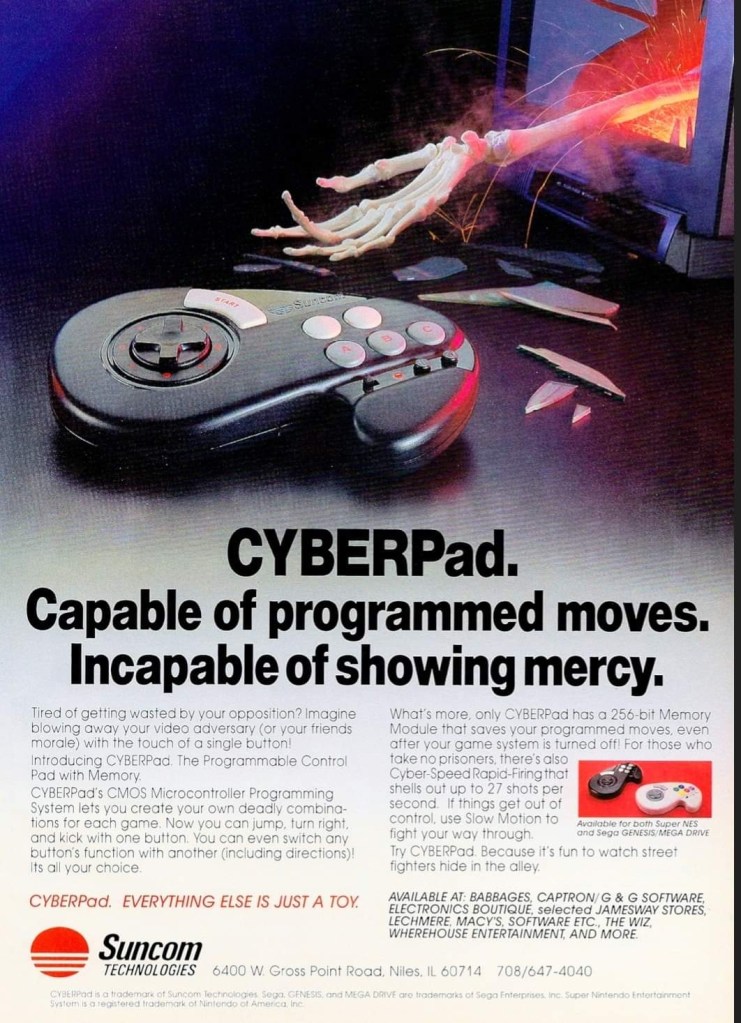
I never owned the CYBERPad, nor have I ever used one.

During the so-called 16-bit console generation (actually the 4th console generation), there were lots of licensed console peripherals made by independent companies in support of the Sega Genesis and Super Nintendo Entertainment System (SNES). The company Suncom Technologies came up with the CYBERPad controller for the two consoles and they boasted in their print ad that the product had a programmable control pad that allowed users to create combinations for each game with convenience in mind. The CYBERPad also allowed the saving of the programmable moves and it had a rapid-fire feature and even a slow-motion function. The CYBERPad was made to make the gameplay experience more user-friendly.

8. GamePro magazine sweepstakes print announcement
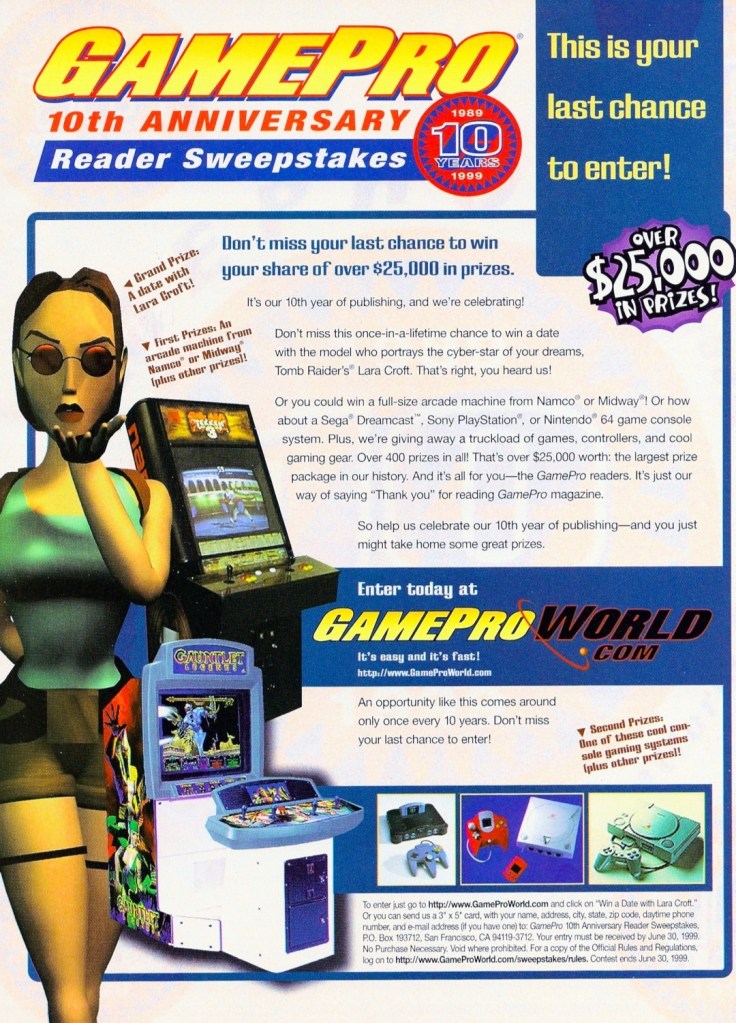
If you look closely, this print announcement by GamePro technically advertised the game consoles, the arcade game and Lara Croft to its readers.

In 1999, GamePro magazine celebrated its 10th anniversary and to keep on resonating with gamers and maintaining the loyalty of their fans, they organized a reader sweepstakes with prizes worth over $25,000 to be won by the few winners. GamePro boasted a date with an unnamed model who played the iconic Lara Croft (Tomb Raider). Certain arcade machines plus the modern consoles of the time – including the brand-new Sega Dreamcast – were also at stake. The way it was presented, this GamePro print announcement was enticing to read.

9. Smash T.V. for SNES print ad
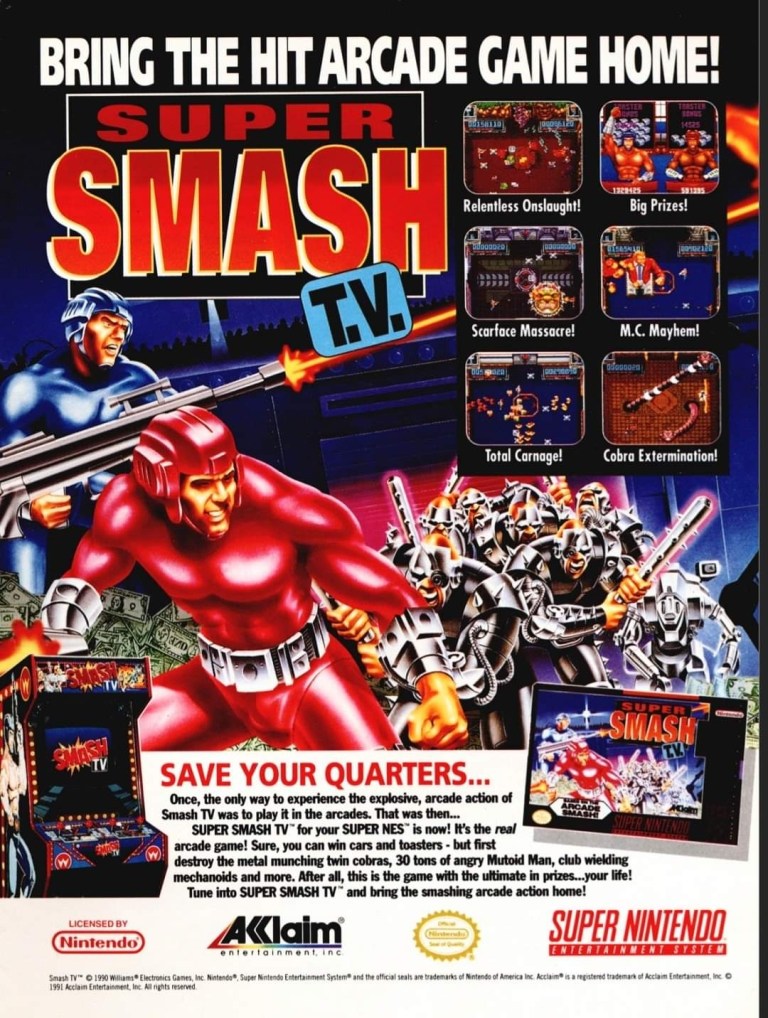
Smash T.V. was a lot of fun on both arcade and console.

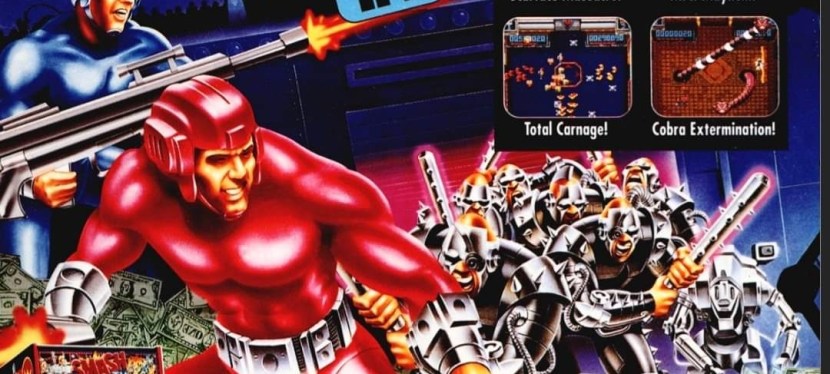
The arcade hit Smash T.V. made its way to the Super Nintendo Entertainment System (SNES) in 1992 and the publisher came up with a print ad that had captivating artwork, six screenshots and a text description that emphasized that a lot of fun awaits gamers on the console version. In my view, this old ad is still amusing to look at.

10. David Robinson’s Supreme Court print ad
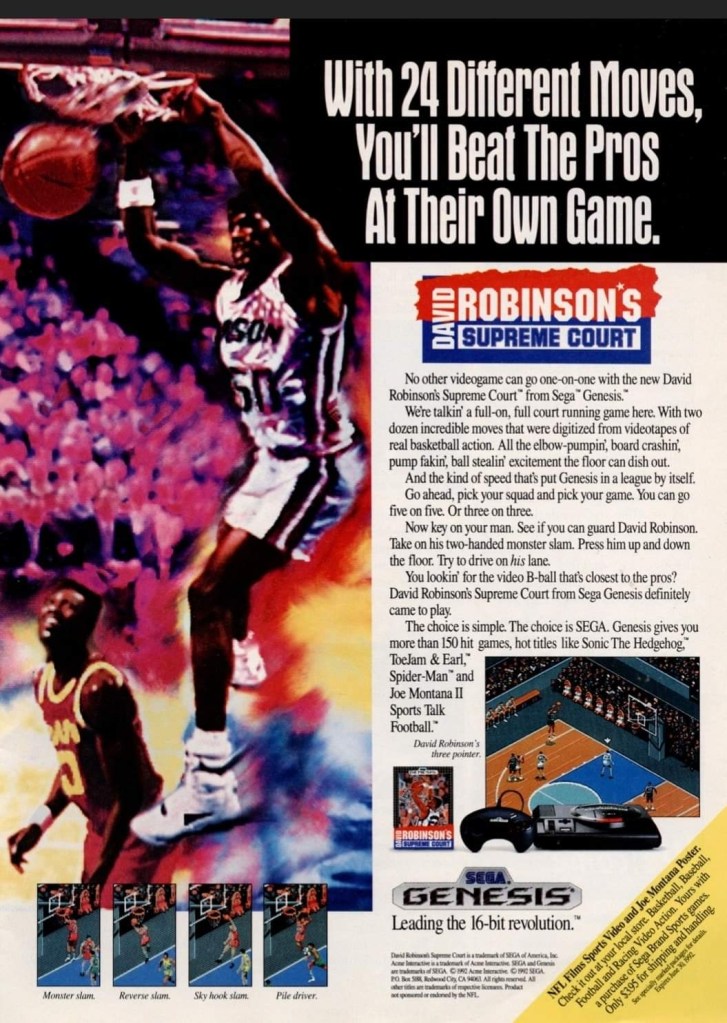
It was a smart move by Sega to get NBA superstar David Robinson as the endorser of this basketball video game exclusive on the Sega Genesis. This ad was published many years before Robinson finally won an NBA championship.

As part of its strategy in competing with Nintendo during the 4th console generation, Sega of America was focused on producing exclusive sports video games for the Genesis console backed by endorsements of sports professionals. In 1992, they released David Robinson’s Supreme Court on the Genesis and unsurprisingly their print ad used a large, stylized image of the NBA superstar dunking backed with an exciting text description plus screenshots showing the game’s use of the isometric view for gameplay. This is still worth looking at.

11. Taito’s “heat wave” print ad
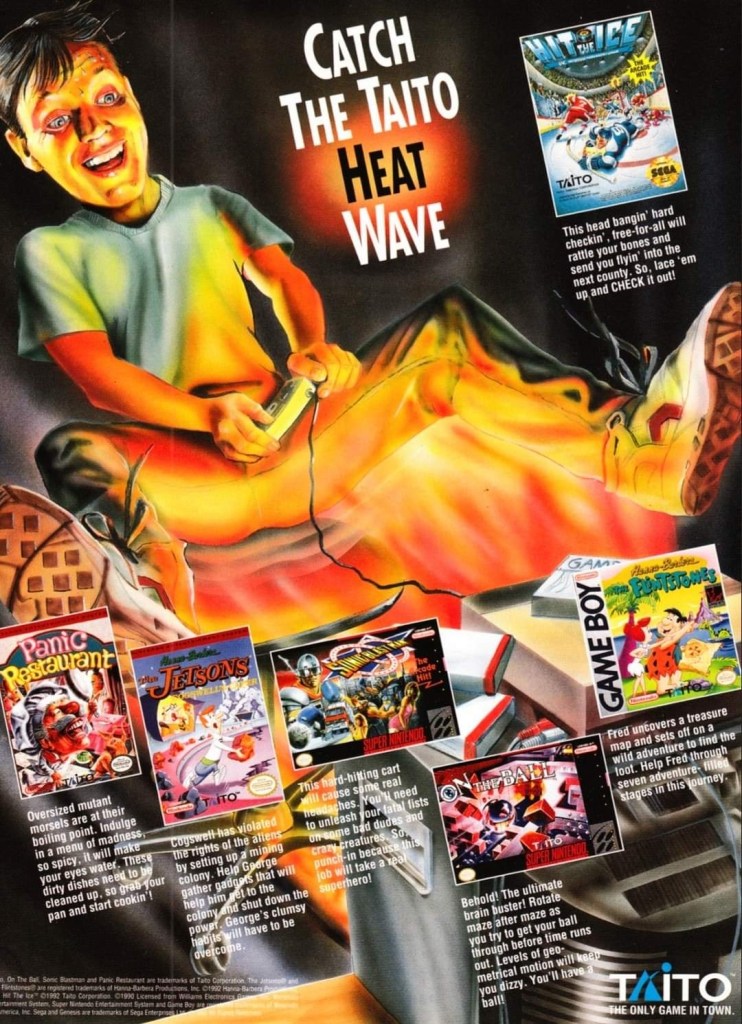
An amusing and creative way to sell video games.

If your company lacks money to effectively market your video games individually, you can try making a single ad promoting them together. This is what Taito did in this print ad which showcases multiple games for different platforms and they used artwork of a player experiencing the so-called heat wave. This is a nice stroke of creativity on the part of Taito.

12. Jurassic Park Interactive print ad
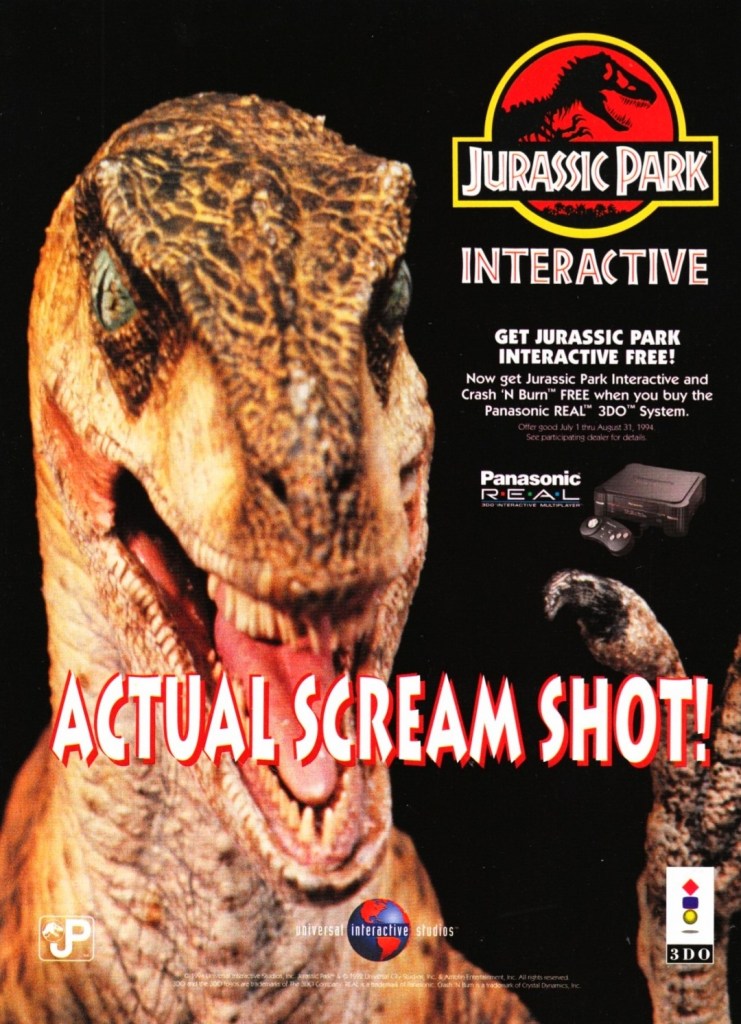
This was a creepy print ad promoting the 3DO-exclusive Jurassic Park Interactive.

When it comes to video game consoles, having exclusive games is essential as long as they are of high quality, highly playable and enjoyable. The 3DO company acquired a license of the Jurassic Park movie and made the exclusive game Jurassic Park Interactive hoping it would sell a lot and lift up 3DO hardware sales.

This print ad, which features a zoomed-in image of the Raptor from the game, was more focused on selling the 3DO console than the video game as seen on the descriptive text. 3DO ran a promo selling the console which would entitle the buyer to get Jurassic Park Interactive and another game free. Nothing was done to describe the console’s multimedia capabilities of showing videos, images and graphics of the game (which was essentially a collection of mini-games). This print ad shows ignorance on the part of the 3DO company and the ad maker as it showed desperation happening really early in the console’s life. Notably, Jurassic Park Interactive was the only video game adaptation to use actual footage (note: the faces of the actors were edited out) and music from the film.

13. RoboCop 2 print ad
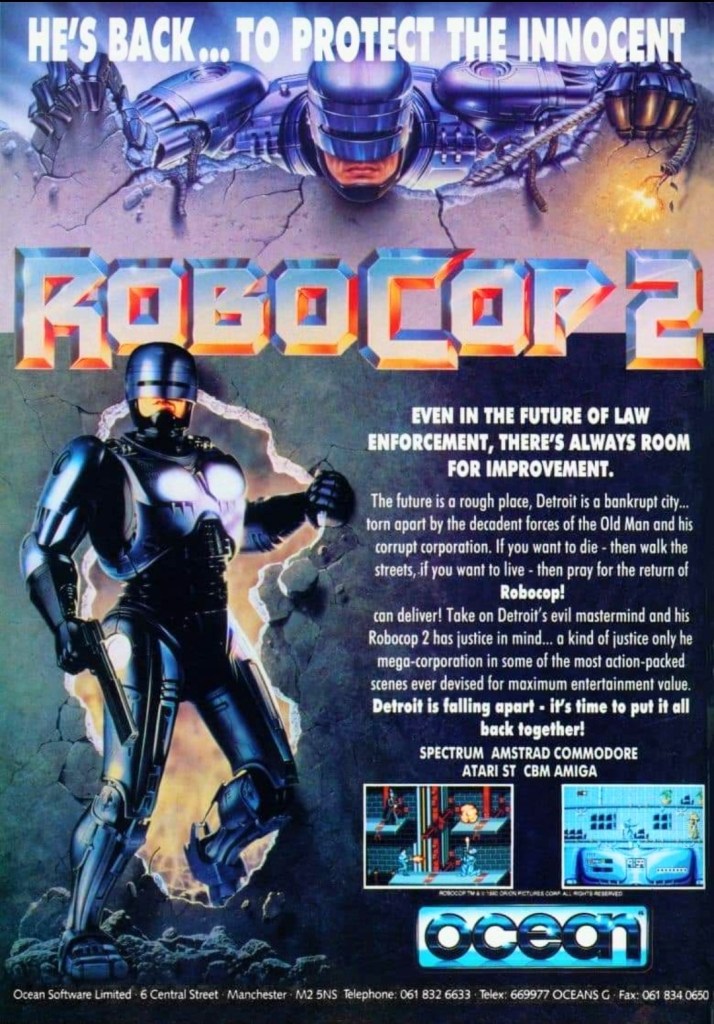
You want to become RoboCop to save the city of Detroit from criminals?

Way back in 1990, RoboCop 2 was a big hit in cinemas here in the Philippines and in some places around the world. As typical of the time, licenses to make video games based on the movie were released resulting in RoboCop 2 games for multiple platforms. The print ad featured two different images of RoboCop – one from the movie poster and the other from an official artwork. The descriptive text does a fine job to immerse readers into the story concept of the game but showing only two screenshots was a lackluster effort to sell the game.  

14. Star Trek: The Next Generation – Echoes from the Past print ad
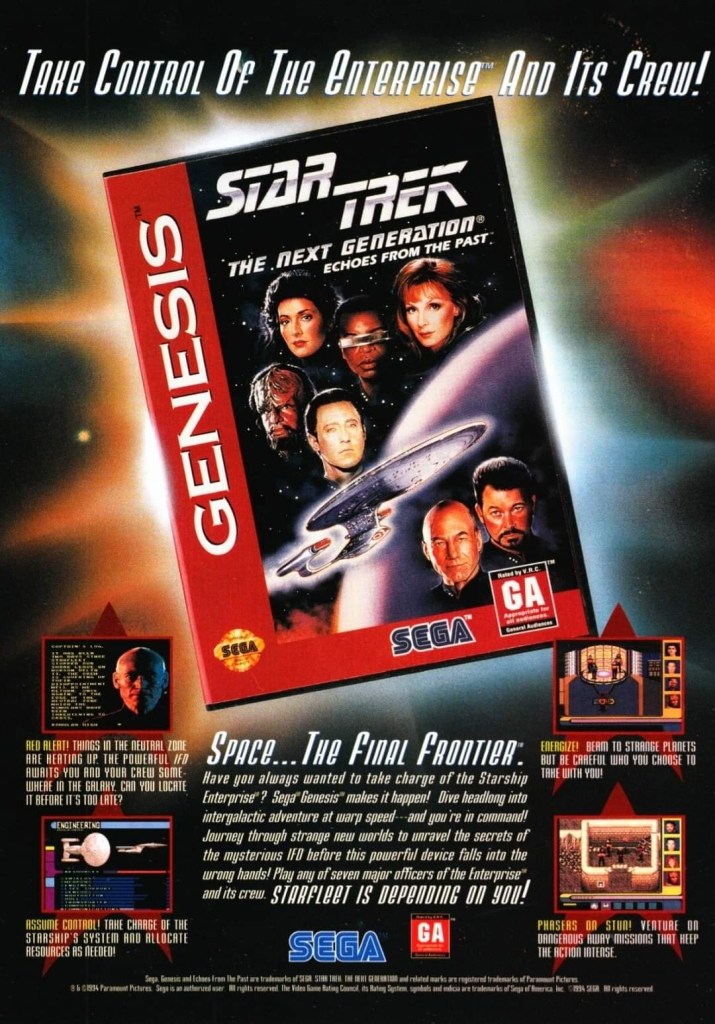
Space…the final frontier waiting for Sega Genesis gamers.

Released in 1994, Star Trek: The Next Generation – Echoes from the Past delivered the Star Trek TNG adventure experience to Sega Genesis gamers. In fact, it is the exact same experience that SNES gamers got the same year. In reality, Star Trek: The Next Generation – Echoes from the Past is actually a port of Star Trek: The Next Generation – Future’s Past on the SNES and the screenshots on the print ad are giveaways about it. In fairness to the ad makers, this print ad never attempted to deceive gamers that it promoted a totally different Star Trek TNG game.

15. Dinosaurs for Hire print ad
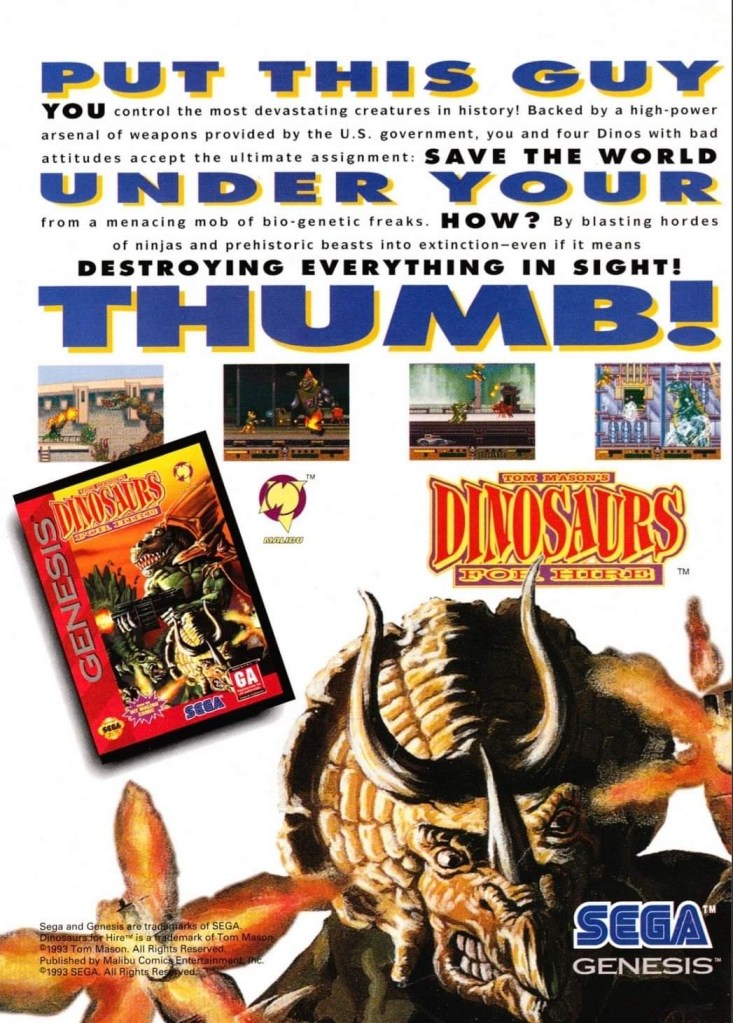
This print ad caught my attention and made me interested in the game and the comic book series. Even though it was small, Malibu Comics’ logo was still recognizable.

Dinosaurs for Hire (sometimes referred to as Tom Mason’s Dinosaurs for Hire) was a 2D side-scrolling platform adventure game based on the comic book series of Tom Mason. Published by Sega, it was a Genesis-exclusive game and this print ad had a catchy text description, a few screenshots and the eye-catching artwork of a triceratops facing the viewer. This print ad is still good to look at. If you’re thinking about searching for existing copies of the game, I encourage you to also read some Dinosaurs for Hire comic books before playing. By the way, Tom Mason also wrote several comic books of the Ultraverse.

+++++

Thank you for reading. If you find this article engaging, please click the like button below, share this article to others and also please consider making a donation to support my publishing. If you are looking for a copywriter to create content for your special project or business, check out my services and my portfolio. Feel free to contact me with a private message. Also please feel free to visit my Facebook page Author Carlo Carrasco and follow me on Twitter at  @HavenorFantasy as well as on Tumblr at https://carlocarrasco.tumblr.com/ and on Instagram at https://www.instagram.com/authorcarlocarrasco
Retro Gaming Ads Blast – Part 19

Welcome back readers, fellow geeks and electronic gaming fans!

In this edition of the Retro Gaming Ads Blast (RGAB) series, we will take a look at another batch of retro gaming print ads – including arcade flyers – from the 1980s and 1990s.

For the newcomers reading this, Retro Gaming Ads Blast (RGAB) looks back at the many print ads of games (console, arcade, computer and handheld) that were published in comic books, magazines, flyers, posters and newspapers long before smartphones, social media, the worldwide web and streaming became popular. To put things in perspective, people back in the 1980s and 1990s were more trusting of print media for information and images about electronic games and related products.

With those details laid down, here is the newest batch of retro gaming print ads for you to see and enjoy…

1. Vendetta UK and North American arcade flyers

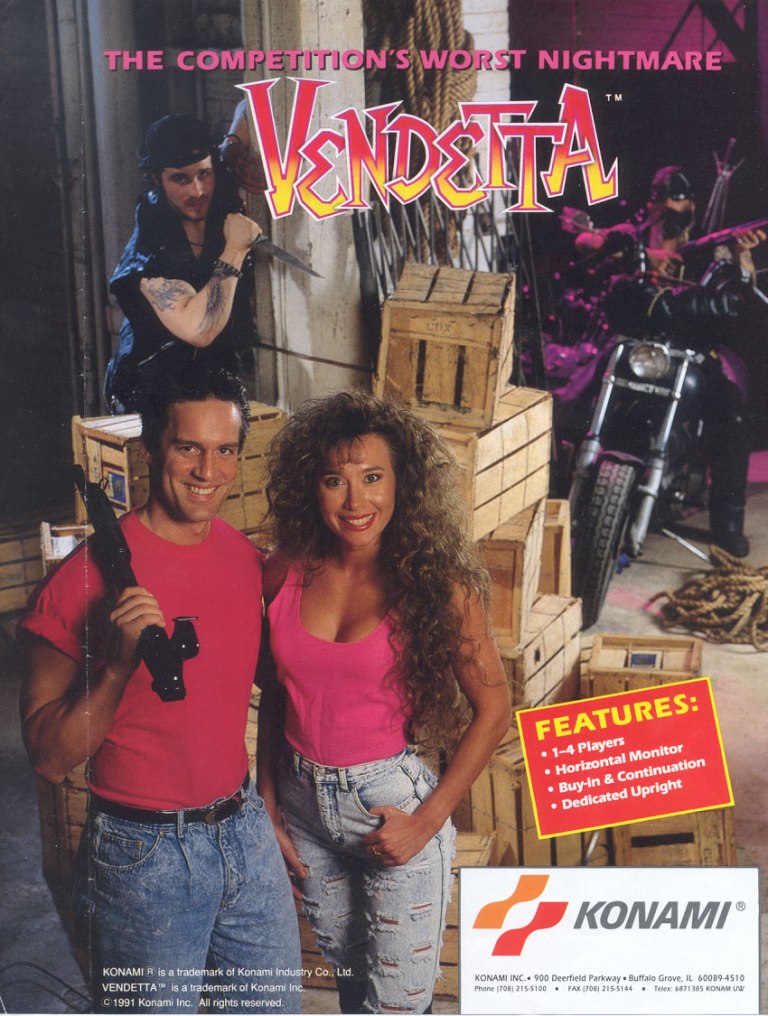
Vendetta arcade flyer for North America
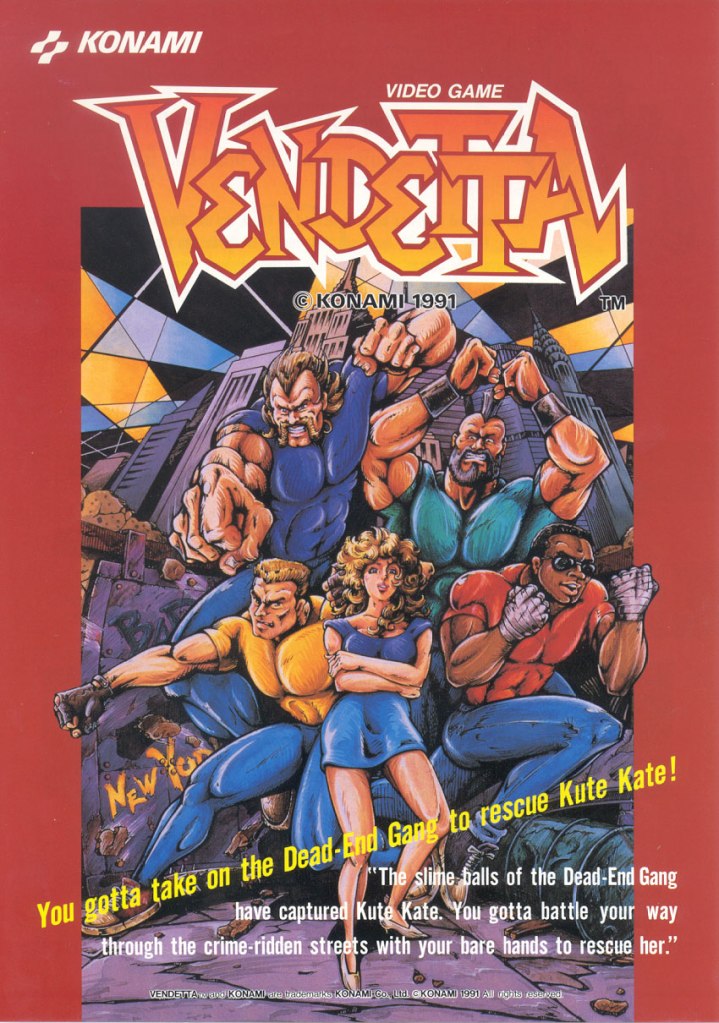
Vendetta arcade flyer for the UK.

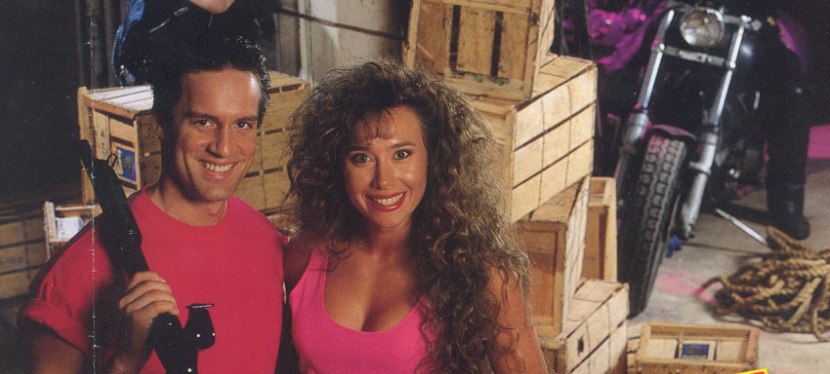
In 1991, Konami released the 2D side-scrolling beat-them-up game Vendetta in arcades around the world achieving commercial success. While it is hard to tell if the promotions helped the game commercially, there is no doubt that the arcade flyers for the North American and United Kingdom (UK) markets were indeed very eye-catching.

The North American Vendetta arcade flyer had a photographic approach showing models playing characters supposedly representing the Cobras gang and the Dead End gang. The display of wooden boxes and the rope was done to symbolize the rough city environments of the game. On the other hand, the UK arcade flyer has illustrated artwork that captured the look of the Cobras gang from the game.  

2. Star Control II: The Ur-Quan Masters print ad

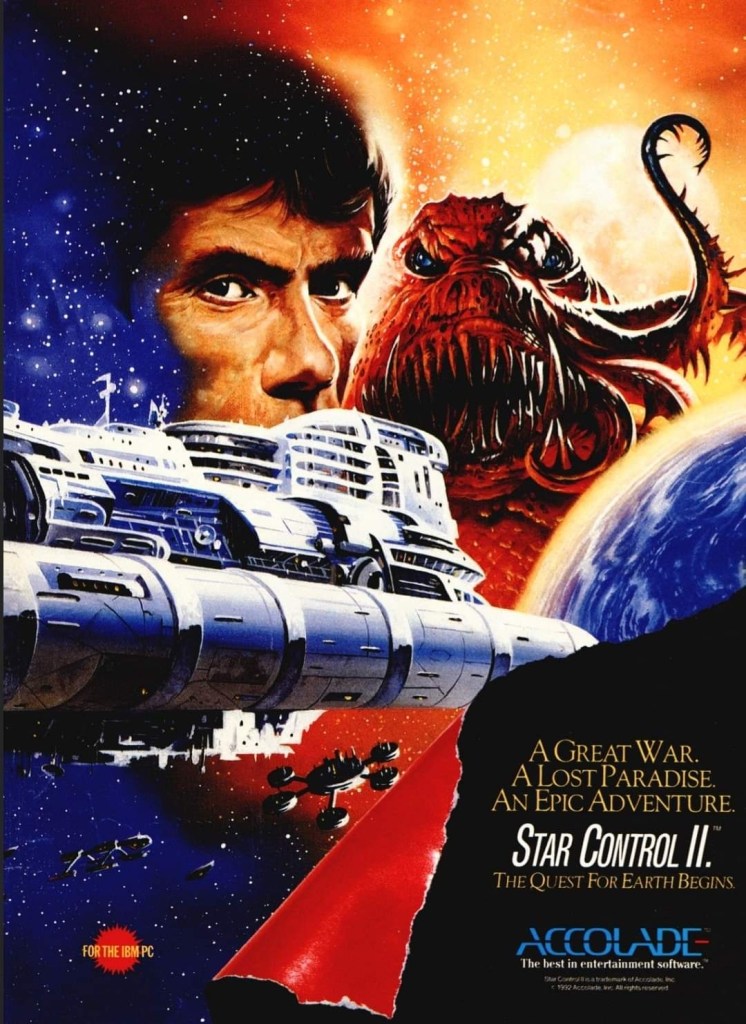
This ad has great art that strongly emphasizes its science fiction concept.

This print ad of Star Control II: The Ur-Quan Masters (PC version) really caught my attention when I read gaming magazines in the early 1990s. The painted artwork showing a human and a hideous alien in the background with a planet, space ships and space stations filling the rest of the space was very captivating to look at. So captivating, it enticed me to search for the game but our PC at home had really low specs. Strangely enough, I played another version of Star Control II on a rented 3DO Interactive Multiplayer console in 1995. For the newcomers reading this, the game was critically acclaimed and was declared as one of the very best PC games ever made. Enjoy looking at the print ad above.

3. Space Channel 5 print ad

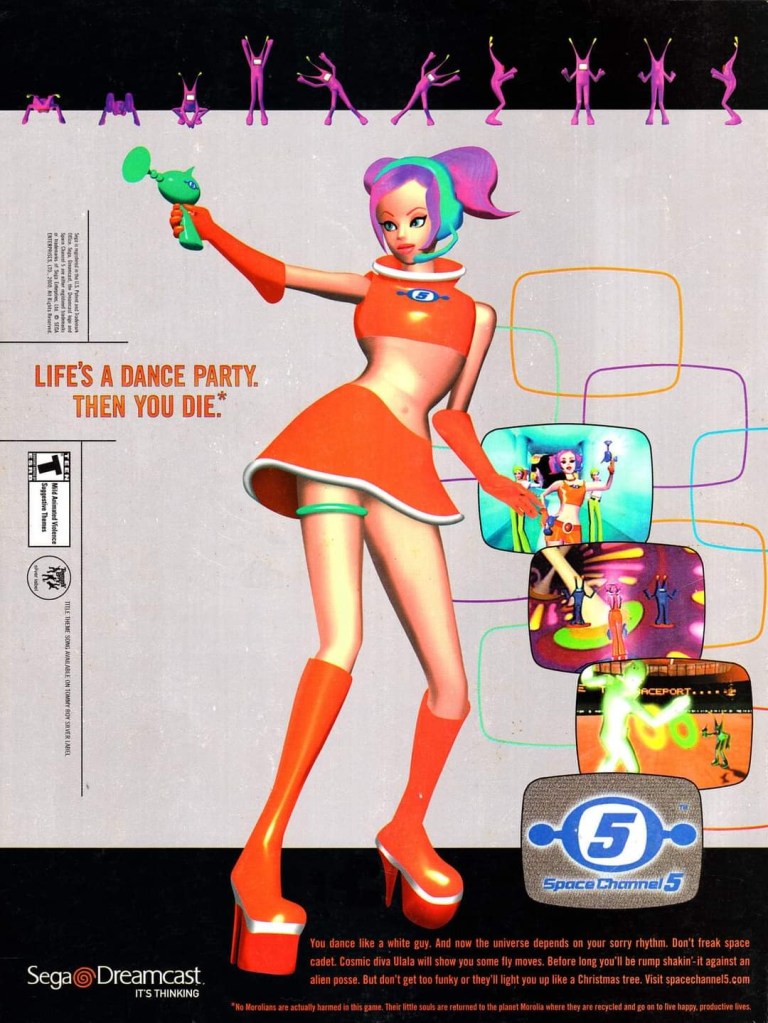
The visual style and character designs are the result of the game designer’s research that includes interviews with lots of young girls over their interests and tastes in video games.

When Sega launched their Dreamcast console in Japan in late-1998, their financial health was already in a very bad state and the future looked grim. Even as they faced tremendous odds, Sega still went on to aggressively sell Dreamcast consoles with exclusive games and Space Channel 5 was one of them.

First released in Japan in 1999, Space Channel 5 was a musical, puzzle-oriented game that was the result of Tetsuya Mizuguchi’s work backed with research he did that included interviewing young girls to find out what their tastes in gaming are. The print ad showing the highly stylized protagonist Ulala and a few screenshots really caught the attention of gamers and kept the Dreamcast in their minds. While the game did not achieve commercial success as a Dreamcast-exclusive, Sega went on to release a version of Space Channel 5 on the PlayStation 2 console, plus sequels.

4. Cybernator print ad

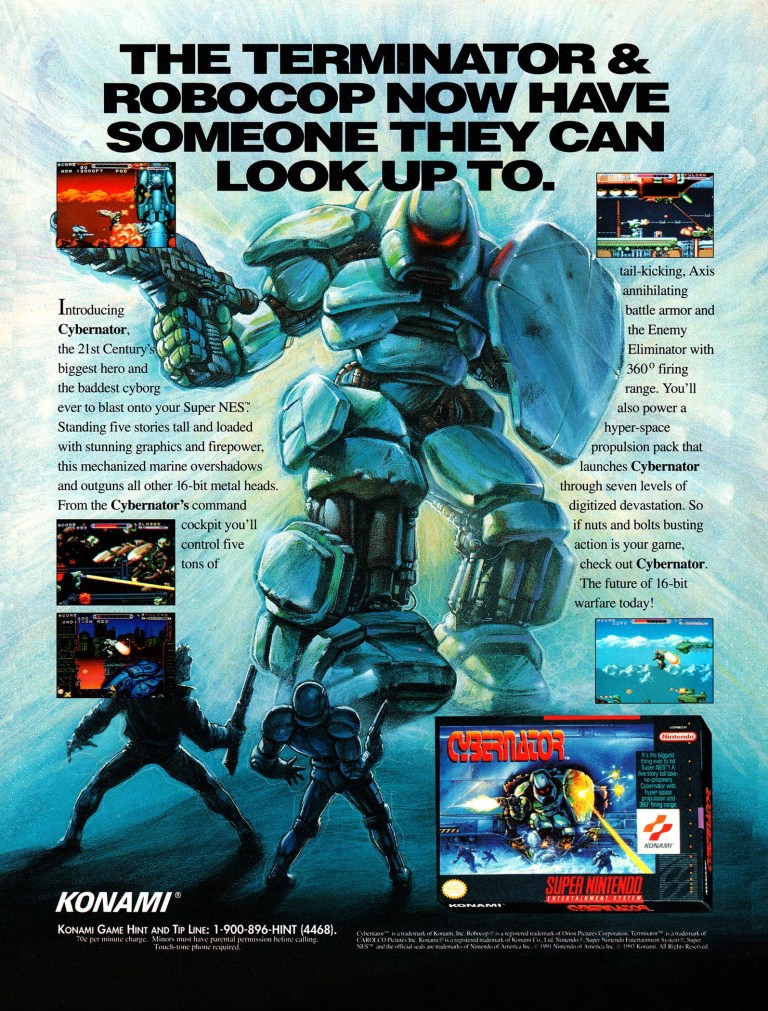
The mention of Terminator and RoboCop rivaled the artwork when it comes to grabbing people’s attention.

I remember seeing the print ad of Konami’s Cybernator (Japanese title: Assault Suits Valken) in several comic books I read back in 1992. I never got to play it but the print ad’s artwork was memorable as I was fond of robots in anime, movies and video games back then. What was arguably the most memorable aspect of the print ad was the line that mentioned RoboCop and the Terminator in a comedic way. This is a creative way to market the game.

5. NBA Basketball 2000 print ad

There were a lot more NBA video games back in the 1990s.

NBA Basketball 2000 was one of those basketball videos games of the 1990s that was not published by EA Sports nor published by the other established game publishers like Sega, PlayStation and Konami. In fact, the one thing on the ad that caught my attention was Fox Sports Interactive which published some sports videos games during the decade. The print ad also served as a reminder that there were a lot more NBA video games for gamers to choose from during the 1990s.

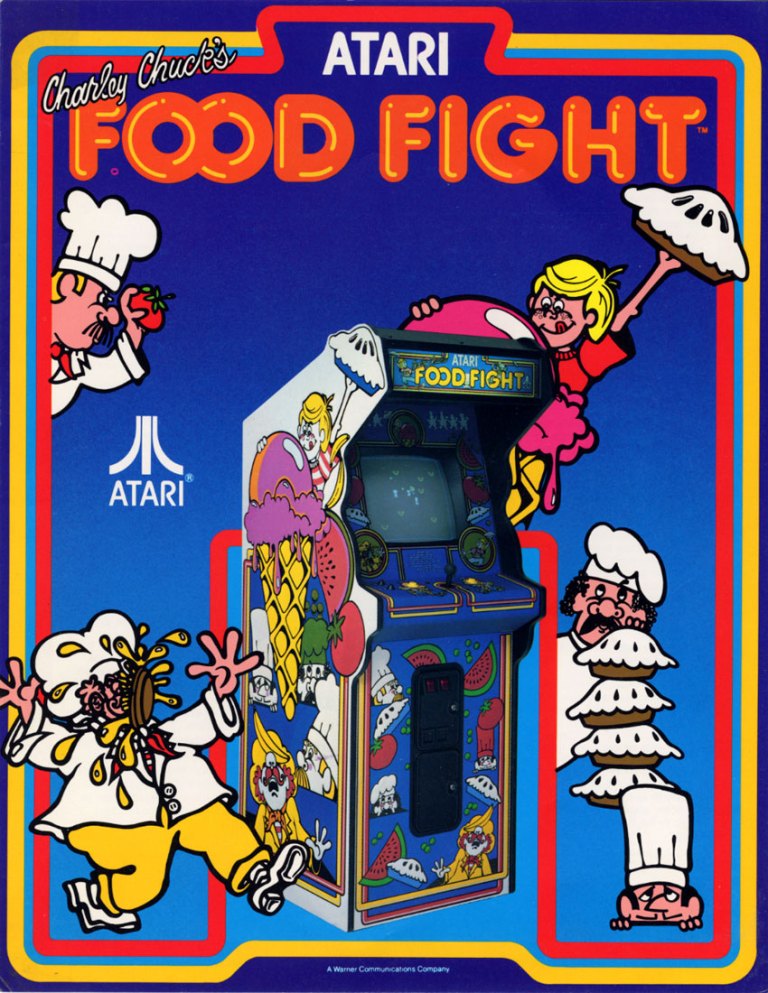
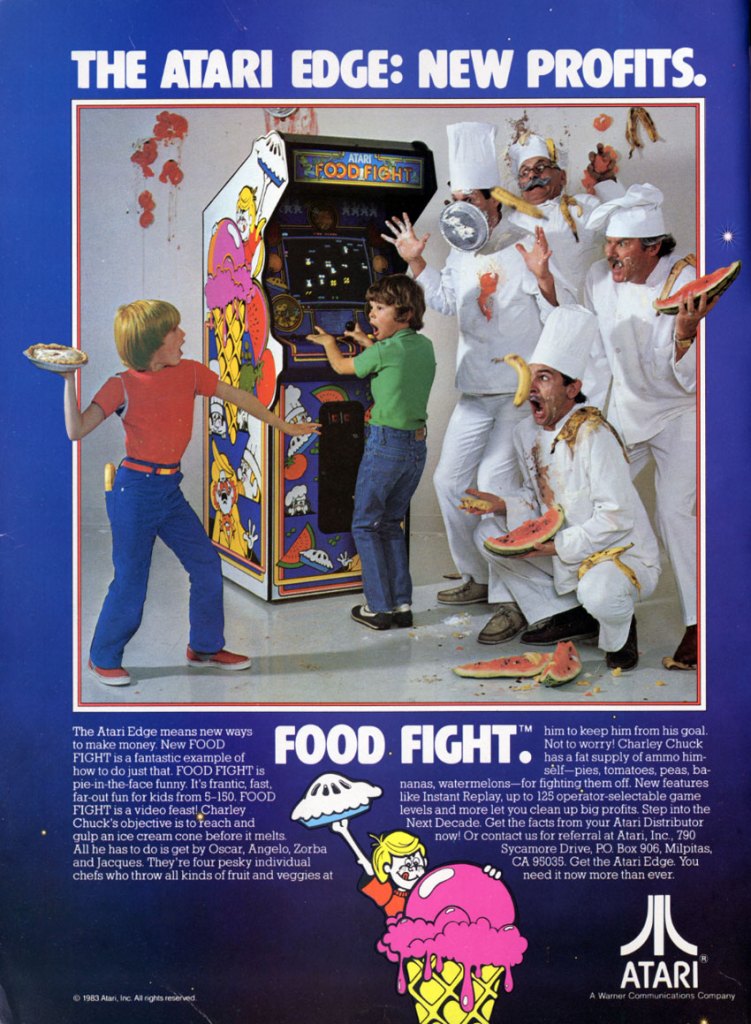
6. Food Fight arcade flyers

Food Fighter arcade flyer with illustrated artworks.
Food Fight arcade flyer with a photographic touch and actors.

I never got to play the 1980s game Food Fight in the arcades nor did I ever had the opportunity to play it on Atari consoles and Xbox 360. Released in 1983 in the arcades by Atari, Food Fight was designed to allow players to control a character moving through a 2D field to consume an ice cream on a cone (placed on the opposite end of the field) before it melts while avoiding the chefs who are out to chase and block the player.

The arcade flyer with illustrated artwork on the characters interacting with the arcade machine is really amusing to look at. Equally amusing is the other arcade flyer that had a photographic approach showing two kids (one playing the arcade machine and the other about to throw a pie) and four chefs. Considering the nice visual concepts Atari came up with for the arcade flyers, Food Fight actually never became a commercial hit selling only a few thousand arcade units.

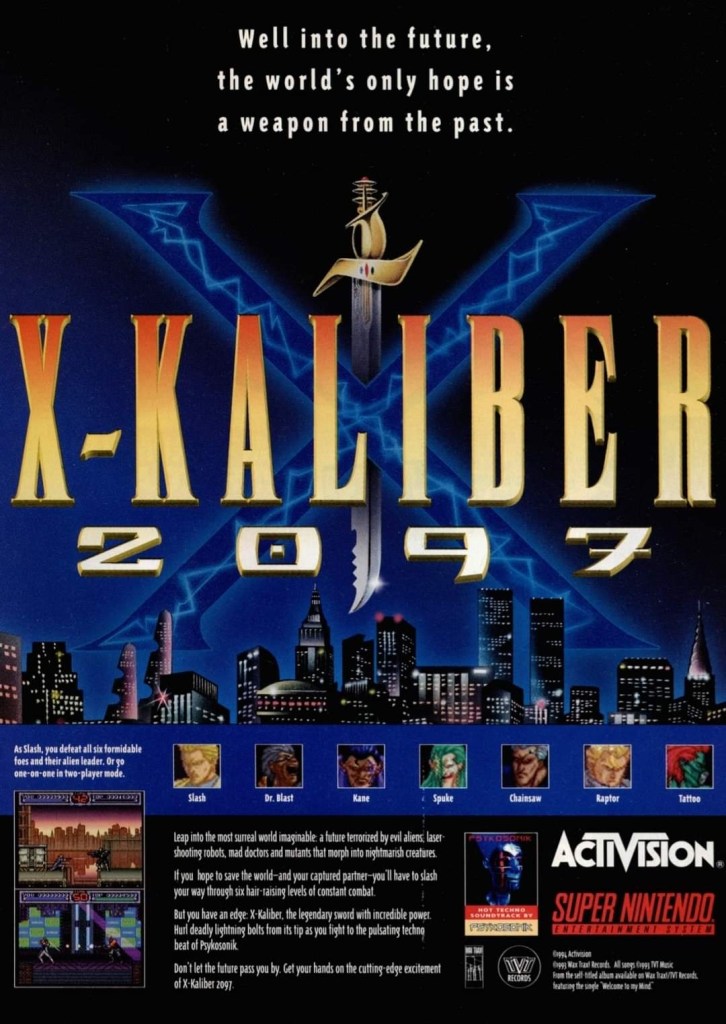
7. X-Kaliber 2097 print ad

This print ad from the 1990s had a nice visual style.

The Super Nintendo Entertainment System (SNES) had plenty of 2D side-scrolling adventure games and among them was X-Kaliber 2097 released by Activision (now a Microsoft-owned company and integral part of Xbox) in America in 1994. The game had a really interesting story concept about a chaotic far future society plagued by overwhelming crime and violence. The print ad showed a mild taste about the game’s concept and gameplay, but it was more effective when it comes to showing the formidable foes that await the playable protagonist Slash. This print appeared in several comic books I read and was eye-catching.

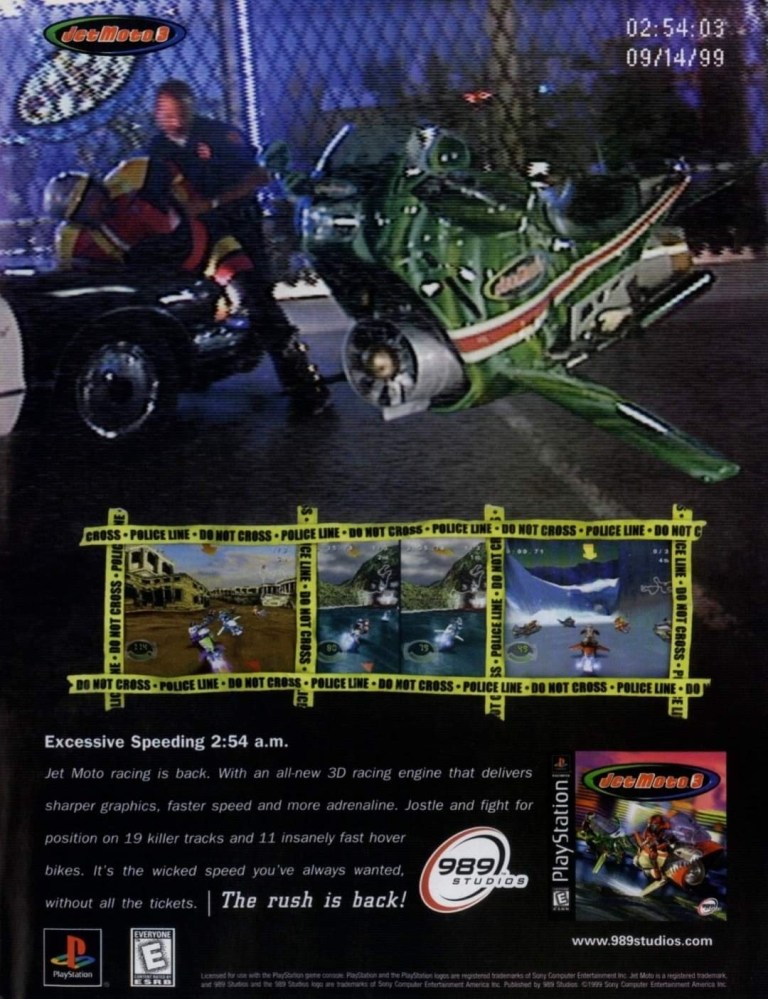
8. Jet Moto 3 print ad

When was the last time the police caught you for over-speeding?

This print ad for Jet Moto 3 had a clever concept of showing a police officer apprehending a jet biker for over-speeding. The visual presentation was done in photo-realistic fashion to make the sci-fi aspect of the video game look real. The ad made me interested enough to do some research of Jet Moto 3 a few months before finally buying it for my PlayStation console.

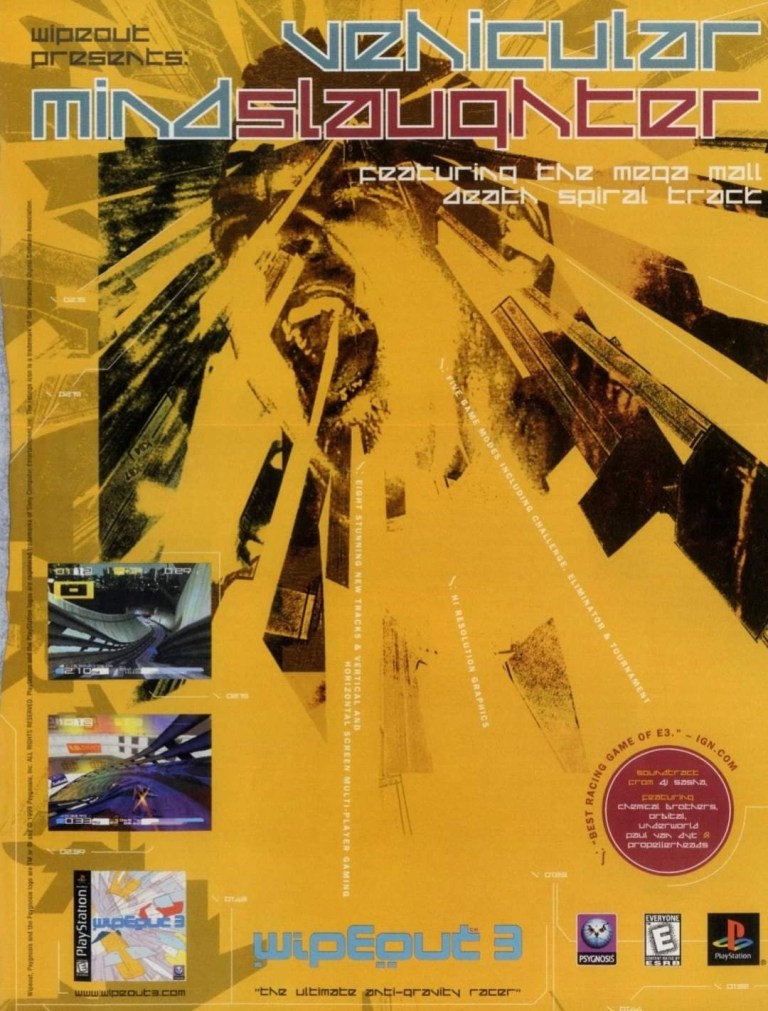
9. Wipeout 3 print ad

Were you fond of futuristic racing and techno music back in 1999?

Released in 1999, Wipeout 3 was one of those video games that showcased what the PlayStation (originally launched in Japan in 1994) could do in terms of visual fidelity, special effects and frame rates. The print ad, which had a radical visual concept emphasizing intensity and energy, had style listing down vertically the technical details of the game which required a close look in order to be read. With only two screenshots displayed, the ad makers smartly included the E3 acclaim of “Best Racing Game of E3” as well as the names of artists behind the game soundtrack on the lower-right corner. This print ad was cool and intriguing to look at.

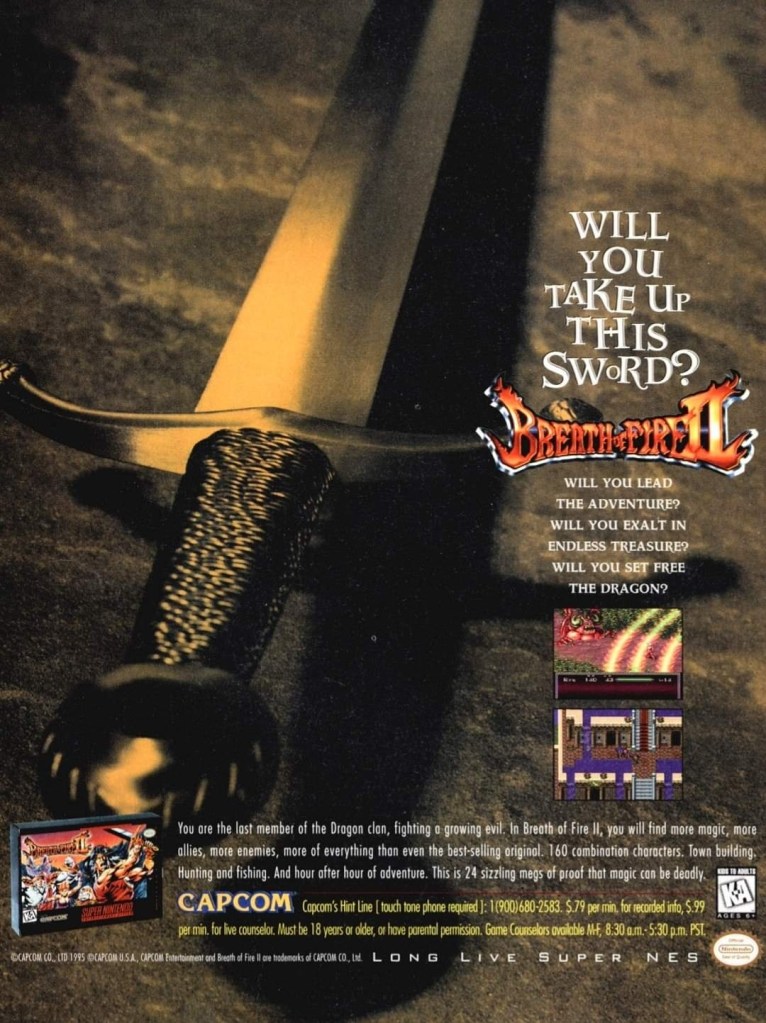
10. Breath of Fire II print ad

This was a good effort to lure American gamers to buy and play Breath of Fire II.

When Breath of Fire II was released on the SNES in America in late 1995, Japanese role-playing games (JRPGs) were not yet wildly popular among American gamers. To grab the attention of gamers, Capcom and the ad makers came up with the eye-catching image of a sword and posted key questions to emphasize the fantasy aspect of Breath of Fire II. While the game received mixed reviews upon its North American release, Nintendo Power listed it as 171st best game in its Top 200 Games chart published in 2006.  

+++++

Thank you for reading. If you find this article engaging, please click the like button below, share this article to others and also please consider making a donation to support my publishing. If you are looking for a copywriter to create content for your special project or business, check out my services and my portfolio. Feel free to contact me with a private message. Also please feel free to visit my Facebook page Author Carlo Carrasco and follow me on Twitter at  @HavenorFantasy as well as on Tumblr at https://carlocarrasco.tumblr.com/ and on Instagram at https://www.instagram.com/authorcarlocarrasco
What to watch on YouTube right now – Part 33

Welcome back, my readers, YouTube viewers and all others who followed this series of articles focused on YouTube videos worth watching. Have you been searching for something fun or interesting to watch on YouTube? Do you feel bored right now and you crave for something to see on the world’s most popular online video destination?

I recommend you check out the following topics and the related videos I found.

Google in legal trouble in America  – Did you notice how overwhelming power Google really is in business as well as in your daily lives? Are you aware that Google made multi-billion Dollar deals with its competitors to ensure its dominance on search, online advertising and other forms of business? Google is now in legal trouble with the Department of Justice (DOJ) in America and ColdFusion’s video below is a must-watch!

Games to look forward to while subscribing to Xbox Game Pass – In recent times, there were changes on Xbox Game Pass (XGP) implemented by Microsoft which I did not like (click here and here to learn the details). If you own an Xbox and you still have not yet subscribed to XGP, you should decide first based on how much you can afford to pay the new rates (note: there are different tiers to subscribe to in Game Pass), what kind of games you really like and how much time you can spare for playing in the comfort of your home. If you are into adventure gaming, then the video by YouTuber Skycaptin 5 below is a must-watch for your reference. Take note that one of the games shown has yet to be released and a few of the games may require the Ultimate tier of XGP.

A look back at Amazing Spider-Man movies of Sony Pictures  – Do you have any fond memories of the two movies that had actor Andrew Garfield as the cinematic Spider-Man? I saw The Amazing Spider-Man (2012) and The Amazing Spider-Man 2 (2014) in the cinemas and I can say that they never thrilled me nor satisfied me as much as the first two Spider-Man flicks of Tobey Maguire. Those movies directed by Marc Webb were not terrible actually but flawed works. Whether you loved or felt disappointed with the two Amazing Spider-Man movies, I urge you to watch the analytical video by YouTuber Owen Likes Comics below.

25 years of the American launch of the Sega Dreamcast – It has been over twenty-five years since Sega launched the Dreamcast console in America. In gaming history, the date of September 9, 1999 is still remembered as the time when Sega really made a very serious effort to re-establish trust with American gamers and they made record-setting numbers in the first 24 hours. As such, it was no surprise that “25 years” or “25th anniversary” videos about the Dreamcast suddenly appeared on YouTube and posted below are videos I selected for your viewing.

You, Me and the Movies’ video reaction of Clash of the Titans (1981) – Whenever I search YouTube for movie reaction videos about the 1981 film Clash of the Titans, not too many pop out for some reason. If you are interested to see the film but don’t have the time or money to watch it in full, then the reaction video by You, Me and the Movies should entertain you.

The fall of Circuit City explained  – Way back in 2001, I visited a branch of Circuit City in California. I visited because I was curious and also interested in video games and also movies on DVD format. What I found was a variety of consumer electronic products and the presence of TV units with built-in DVD drives caught my attention. It was my one and only Circuit City visit and many years later, their brand re-emerged when there were these widespread news reports about its bankruptcy and liquidation. If you want to learn about the rise and fall of Circuit City, watch the video below.

GoodBadFlicks’ comprehensive video about The Blob (1988) – The Blob remake of 1988 has always been very entertaining to watch. Not only does it have a really solid story to tell, it has a fine blend of spectacle with well-crafted action/stunt scenes and top-notch practical effects. On 4K Blu-ray, the movie looks better than ever and it is worth purchasing. When it comes to the making of The Blob (1988), the best video to watch online is the one from YouTuber GoodBadFlicks which is posted below for your viewing pleasure.

+++++

Thank you for reading. If you find this article engaging, please click the like button below, share this article to others and also please consider making a donation to support my publishing. If you are looking for a copywriter to create content for your special project or business, check out my services and my portfolio. Feel free to contact me with a private message. Also please feel free to visit my Facebook page Author Carlo Carrasco and follow me on Twitter at  @HavenorFantasy as well as on Tumblr at https://carlocarrasco.tumblr.com/ and on Instagram athttps://www.instagram.com/authorcarlocarrasco

Retro Gaming Ads Blast – Part 18 (Fighting Games Special)

Welcome back readers, fellow geeks and electronic gaming fans!

In this edition of the Retro Gaming Ads Blast (RGAB) series, we will take a look at another batch of retro gaming print ads – including arcade flyers – specifically about fighting games that were released in the 1990s. The said decade marked the time when Street Fighter II became a massive hit in the video arcades (and on game consoles) which sparked a wave of new fighting games from business competitors. In that same decade, 3D polygonal fighting games were also released which added greater choices of fighting games at the arcades and on game consoles that players could choose from.

For the newcomers reading this, Retro Gaming Ads Blast (RGAB) looks back at the many print ads of games (console, arcade, computer and handheld) that were published in comic books, magazines, flyers, posters and newspapers long before smartphones, social media, the worldwide web and streaming became popular. To put things in perspective, people back in the 1980s and 1990s were more trusting of print media for information and images about electronic games and related products.

With those details laid down, here is the newest batch of retro gaming print ads for you to see and enjoy…

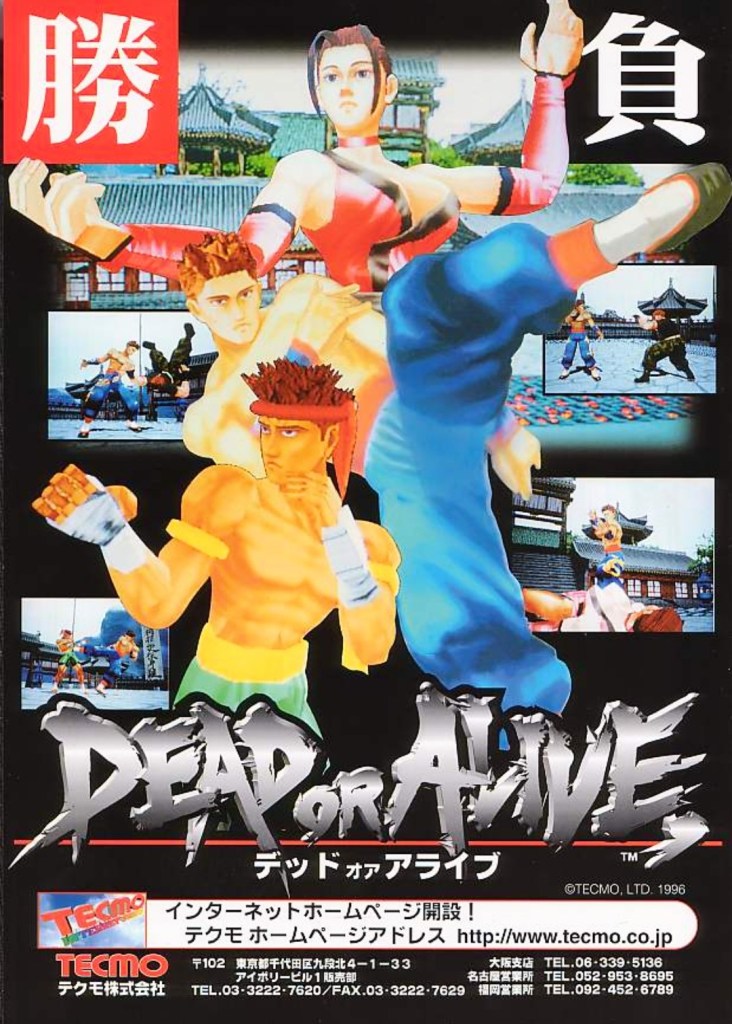
1. Dead or Alive Japanese arcade flyer

Dead or Alive was the start of new success that impacted the direction of Tecmo in the gaming industry.

The above arcade flyer of Dead or Alive gave Japanese arcade operators and gamers a taste of what to expect with the game. While the screenshots showed some resemblance with what gamers saw in Virtua Fighter 2, the character designs Tecmo and its developers came up with were unique.

Before Dead or Alive was released in Japanese arcades in 1996, company Tecmo was in financial trouble and they asked Tomonobu Itagaki to make a fighting game similar to Sega’s polygonal blockbuster Virtua Fighter. A breakthrough for Tecmo happened when Sega announced they were licensing their Model 2 arcade to third-party companies which paved the way for Itagaki’s team to make Dead or Alive with it. The game became a big hit and it paved the way for Tecmo to release it on Sega Saturn and PlayStation, and the sequels that followed years later.

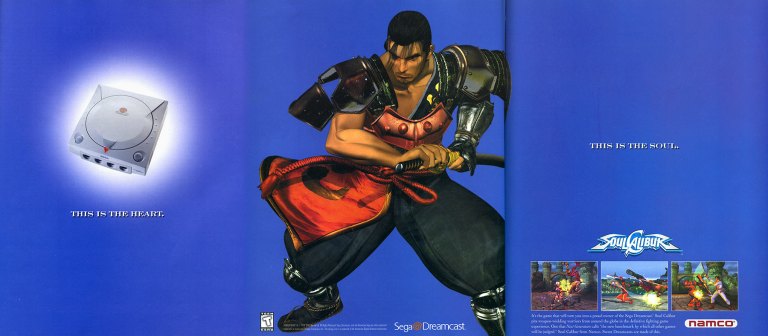
2. North American Soulcalibur Dreamcast version print ad

Namco came up with a creative approach to emphasize heart-and-soul promoting their game and the Dreamcast.

On September 9, 1999, Sega launched their Dreamcast console in America. With a gap of around ten months between the Japanese launch (November 1998) and the American launch, Sega had time to prepare Dreamcast’s release to American gamers with a huge lineup of games (both Sega’s games and from other publishers). Fortunately for Sega, they had Namco (their rival on arcade games) supporting their console.

Behind the scenes, Namco’s developers worked hard to not only port their arcade hit Soulcalibur to the Dreamcast, but to enhance the graphics using the console’s more advanced technology. The visual enhancements include rendering all of the games stages (and backgrounds) into full 3D polygonal environments. Namco also implemented different game modes and added even more content to ensure satisfaction to Dreamcast gamers.

The above 3-page print ad of Soulcalibur on Dreamcast was undeniably strategic and captivating to look at. The ad described the console as the heart, showed Soulcalibur character Mitsurugi (one of the game’s most popular characters) in the middle and then described the game (with 3 screenshots of game rendered with Dreamcast graphics) as the soul. It was a strong way to promote both the game and the console. In the years that followed, Soulcalibur grew into a popular fighting game franchise and the Dreamcast version will always be remembered as the crucial turning point.

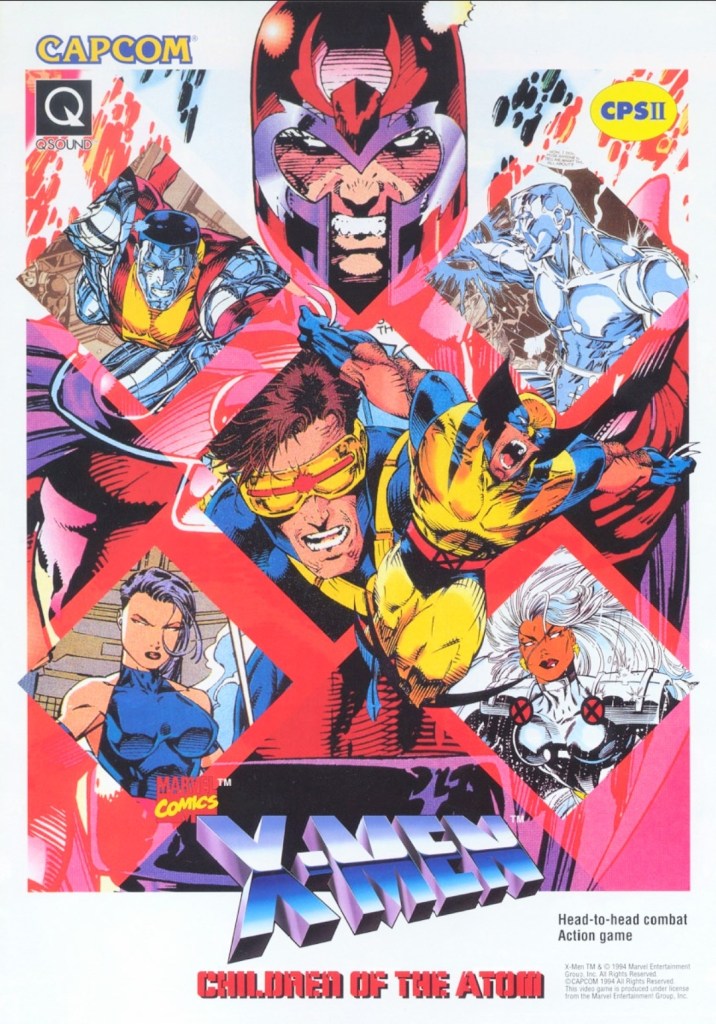
3. X-Men: Children of the Atom arcade flyer

Anyone who read lots of X-Men comic books in the 1990s should be able to tell which character was drawn by which artist.

When Capcom first released X-Men: Children of the Atom in the arcades in the mid-1990s, I was surprised because I did not anticipate the day would come when the company behind Street Fighter II would actually make a 2D fighting game showcasing the Marvel’s mutants. Even more intriguing was the X-Men art Capcom used for the arcade flyer to promote the game. I recognize Jim Lee’s artworks of Magneto, Cyclops and Colossus. The art of Wolverine shown was drawn by Andy Kubert. It was a wise move for Capcom (with Marvel as a business partner) to use established X-Men comic book artworks instead of having their internal illustrator draw the characters. That being said, this arcade flyer still looks great and captivating to look at.

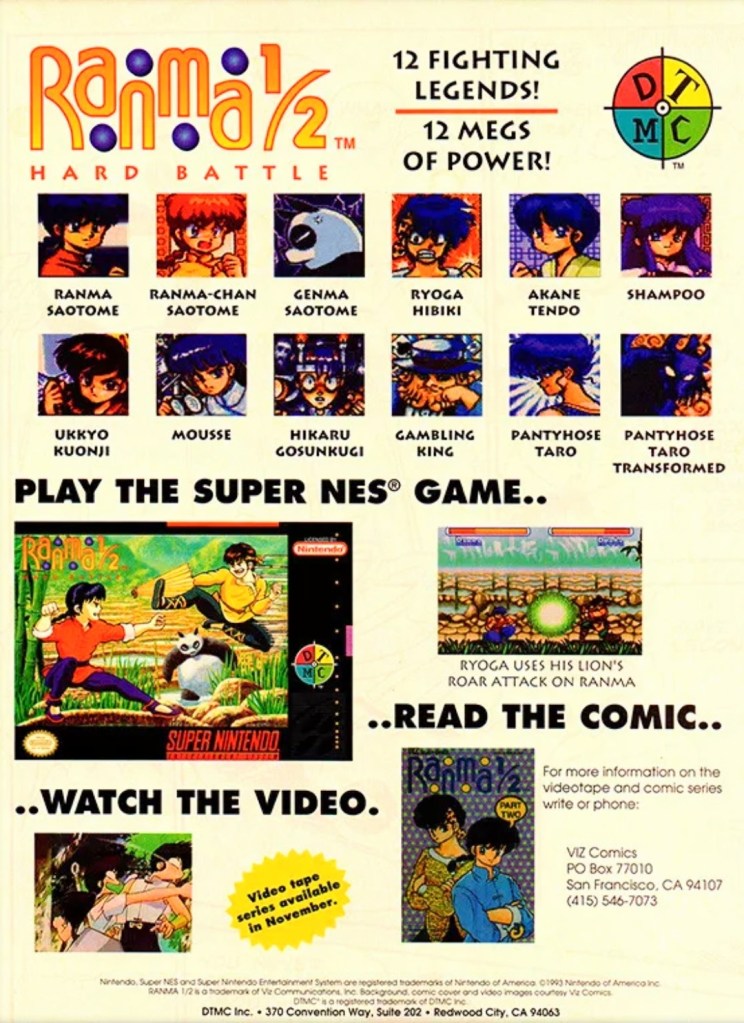
4. North American Ranma ½: Hard Battle print ad

A print ad promoting the game while saving some space to promote the anime and comic books.

By 1993, Street Fighter II and its upgraded follow-ups were wildly popular both in the arcades and on game consoles around the world. At the same time, there were many other 2D fighting games released to compete with and cash-in on Street Fighter II’s success. Believe it or not, the established anime franchise Ranma ½ saw a video game adaptation in the form of a 2D fighting game – Ranma ½: Hard Battle.

The North American print ad above published by DTMC (in cooperation with Viz Communications) promoted the game (one screenshot, the SNES game box and images of the characters as they appeared in the game) as well as Ranma ½ on anime videos and comic books. The way it was presented, the print ad promoted Ranma ½: Hard Battle without much heart nor passion.

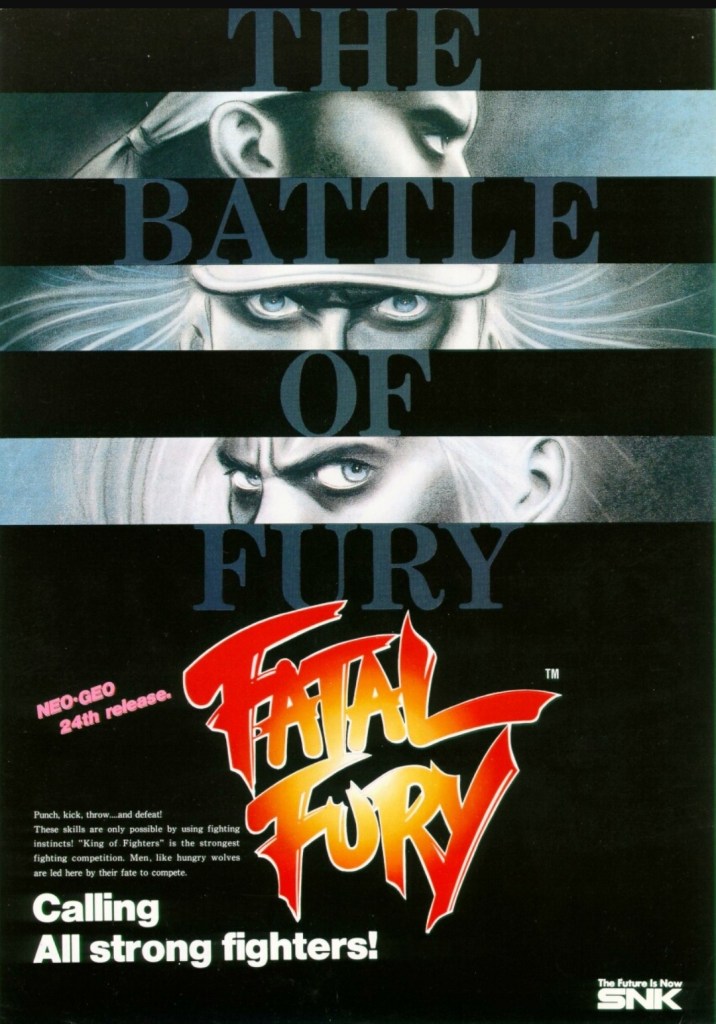
5. Fatal Fury: King of Fighters arcade flyer

An intriguing visual presentation on the front.
You get to know the characters and what the game features are.

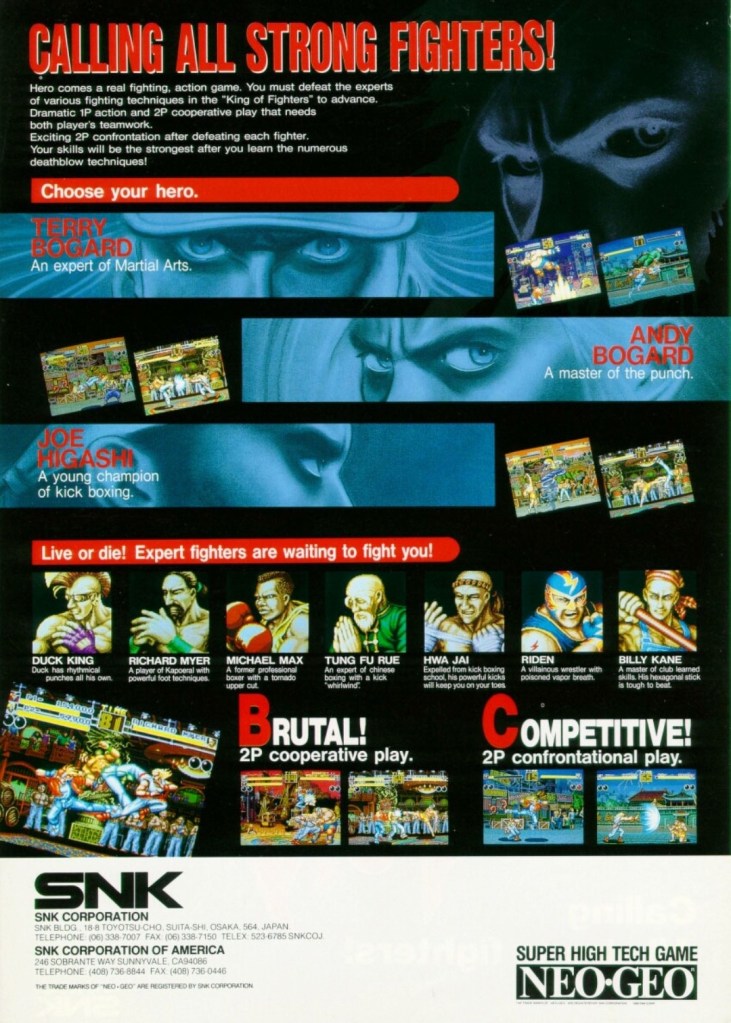
There is no doubt that Fatal Fury: King of Fighters is the most significant game that SNK made. Apart from being the company’s first fighting game for the Neo Geo system, it established the fictional “king of fighters” tournament that became the core concept for The King of Fighters series of games in the years that followed. Fatal Fury itself is notable for being designed by Takashi Nishiyama, a former Capcom employee who created the original Street Fighter game. What Nishiyama could not do with Street Fighter, he accomplished while making SNK’s fighting game. Compared with the combo-oriented approach of Street Fighter II, Fatal Fury was designed to emphasize the timing of special moves, confrontational play, cooperative play and the 3D-like spacing between characters (background row and foreground row in each stage) while telling a story in a solid way.  

The above arcade flyer of Fatal Fury has this unique looking artwork on the front showing stylized rectangular shots of the major characters Terry Bogard, Andy Bogard and Joe Higashi. On the other side of the flyer are the details that emphasized the creative concept of the game, who the characters are and what they could expect with regards to gameplay features. This flyer is still captivating to look at and it could entice you to try playing the original Fatal Fury game before trying out the sequels and spin-offs.

6. Marvel vs. Capcom: Clash of Super Heroes arcade flyer

This is NOT a comic book crossover.

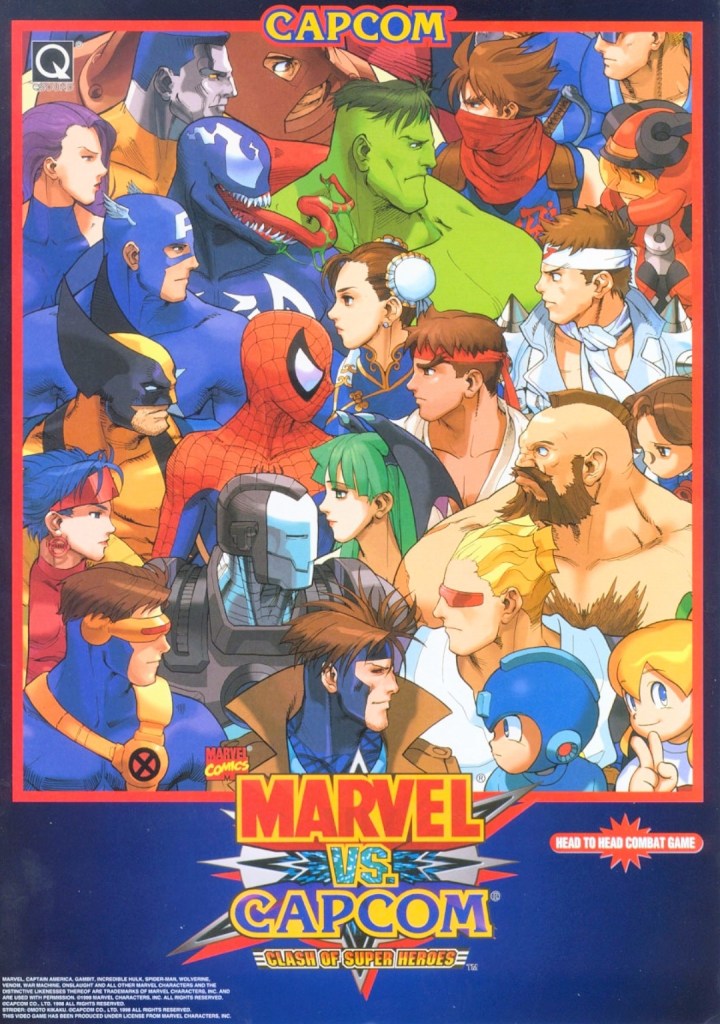
If there is anything that truly emphasizes the essence of a fictional crossover in terms of visuals, it’s the art that Capcom and Marvel agreed to for Marvel vs. Capcom: Clash of Superheroes which is evident on the front of the above arcade flyer. By looking at how the Marvel characters were drawn, it looks like someone at Capcom illustrated the artwork as the Capcom characters still maintained that particular art style seen in the artworks of the Japanese company’s other games like Street Fighter, Darkstalkers, Mega Man and Strider. Regardless, the artwork still is amusing to look at.

7. Art of Fighting arcade flyer

The front of the flyer.
The cast of characters showcased on the other side of the flyer.

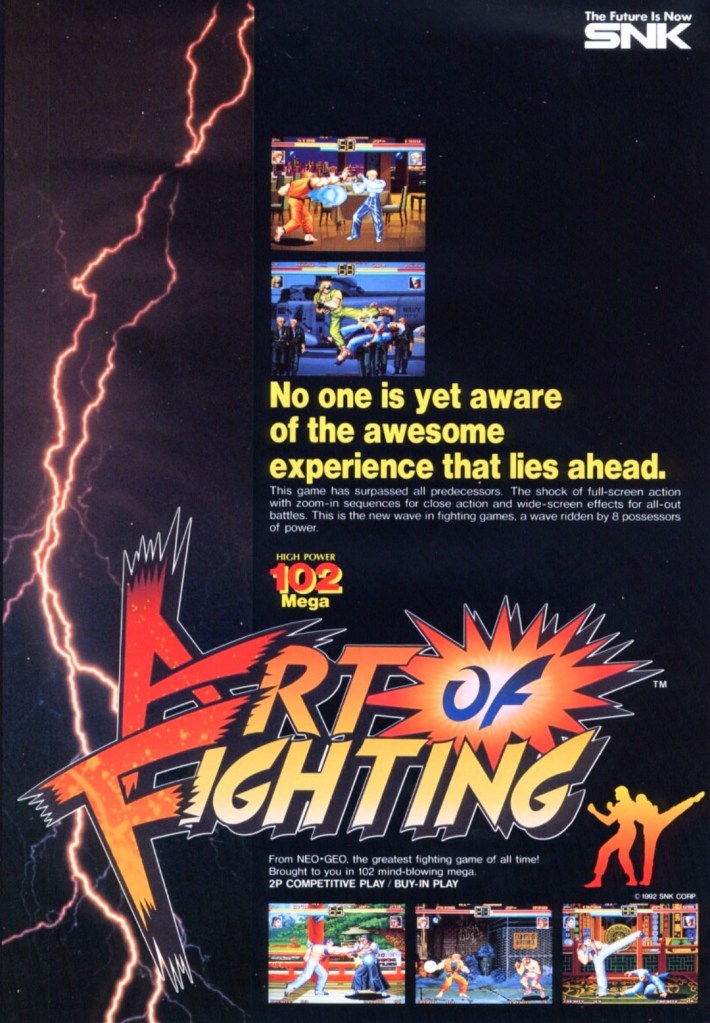
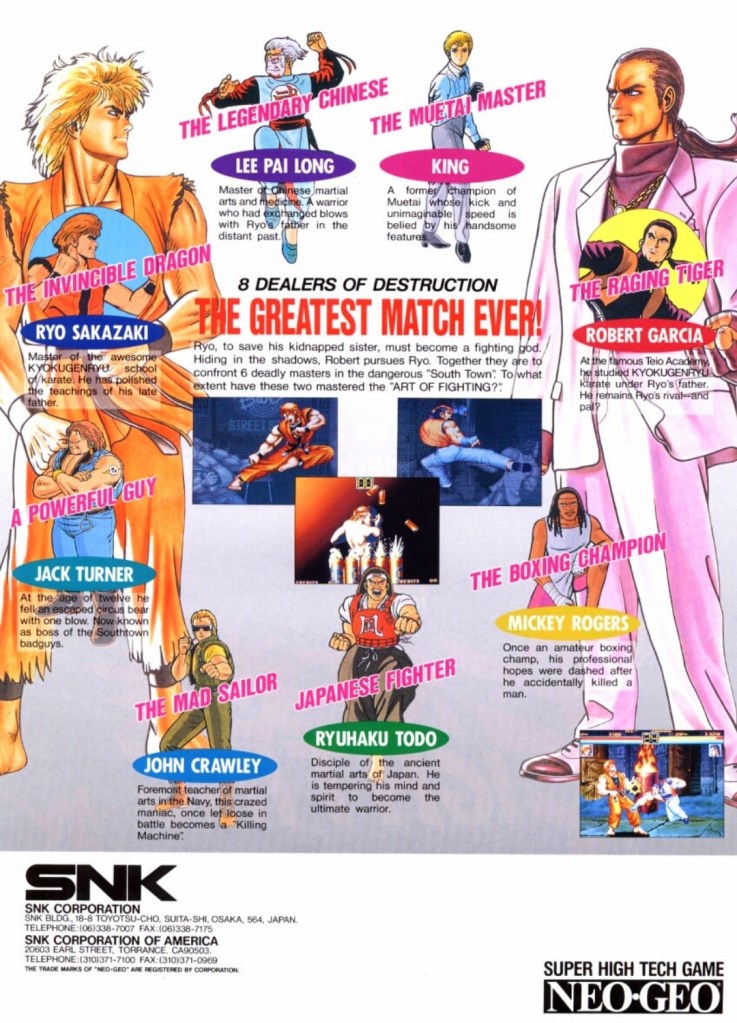
Following the success of Fatal Fury, SNK went on to release Art of Fighting in arcades in 1992 and it became successful enough for the company to make sequels. With regards to the realm of fantasy, Art of Fighting was part of the same fictional universe as Fatal Fury and The King of Fighters, and there were times when its own characters appeared in other SNK games.

Art of Fighting’s arcade flyer had an energetic visual concept on the front with a rectangular lightning portion on the left balanced with five screenshots of the game itself. Once you get to the other side of the flyer, you will see really nice art of the characters with Ryo Sakazaki and Robert Garcia as the most dominating figures. Sakazaki and Garcia are the major characters of the Art of Fighting series. This flyer confidently introduced the characters and succeeded in making them look interesting.

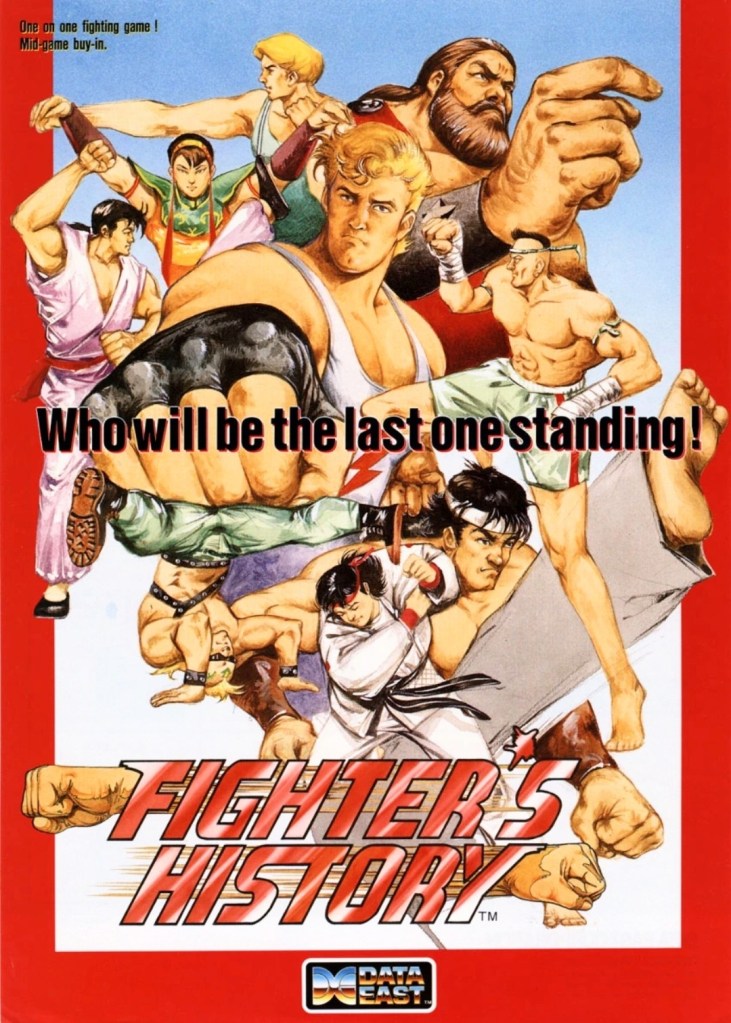
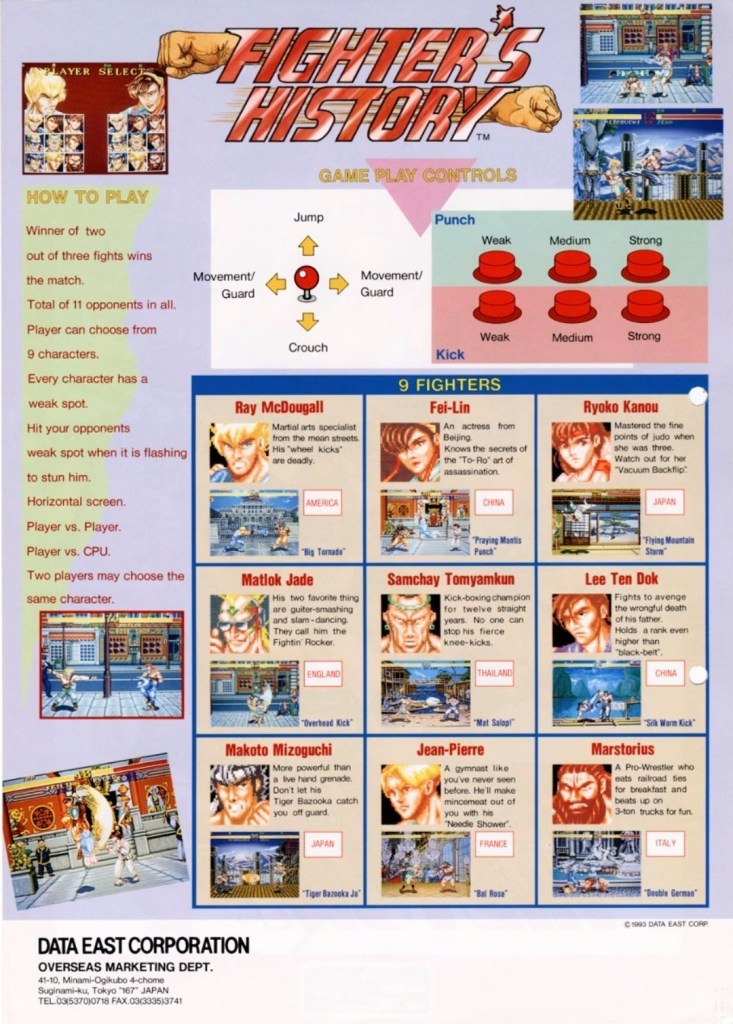
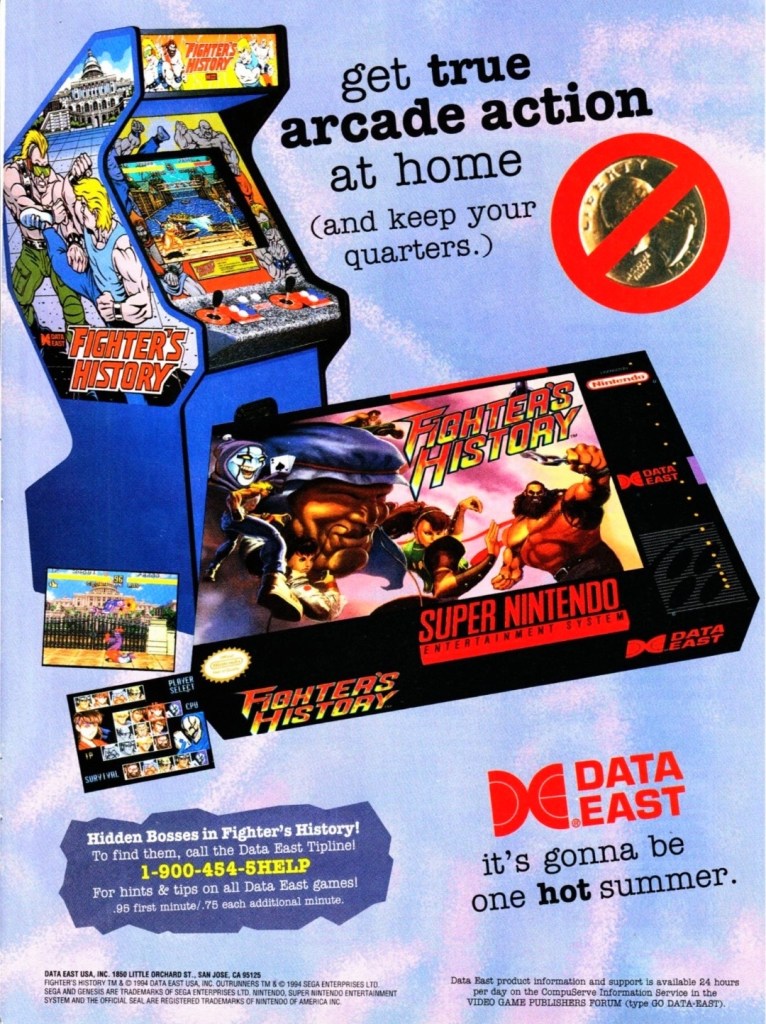
8. Fighter’s History arcade flyer and print ad

Great looking front artwork showing the game’s characters, posing and some action.
If you look closely at the controls, you will see the six-button layout and functions which are the same with those used in Street Fighter II.
Data East offered two ways for gamers to enjoy Fighter’s History – pay a high price for the SNES version or gamers can go play the game in the arcade by dropping a few coins.

In 1993, Data East released their fighting game Fighter’s History in the arcades around the world. Along the way, the company released their arcade flyer which had a very captivating art work on the front featuring their characters and some action. The other side of the flyer showed the technical details on how to play, how the control works and who the characters are. Fighter’s History was nicely received in the arcades and the success led Data East into porting the game for the Super Nintendo Entertainment System (SNES). If you look at the print ad above, you can see how clever Data East was promoting the SNES version of the game while keeping an image of the arcade machine which serves like a subtle reminder that the same game is still available in video arcades.

Shortly after the release of Fighter’s History in the arcades, there were gamers who noticed that it had certain visual and gameplay elements that made it so familiar with what Street Fighter II had. When Capcom became aware of the similarities, they sued Data East claiming that Fighter’s History was too similar to their game and that copyright infringement was committed. Capcom lost the case ultimately and Data East went on to release two more Fighter’s History games.

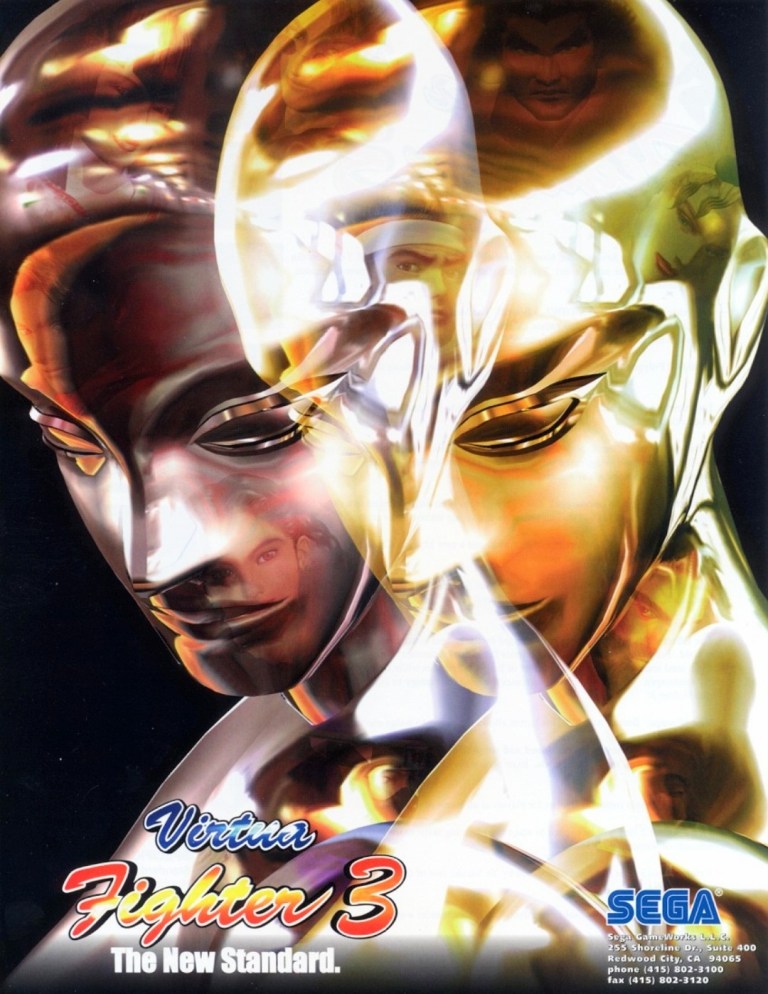
9. Virtua Fighter 3 arcade flyer

Virtua Fighter 3 truly raised the standards for arcade game graphics back in 1996.

When it comes to gaming innovation and standing out among the rest, Sega did exactly those when they released Virtua Fighter 3 in arcades in 1996 and it had the best-looking and really mind-blowing graphics at the time. Developed by AM2 (led by Yu Suzuki) on the very expensive Model 3 arcade hardware, Virtua Fighter 3 broke new ground on graphics as it moved over 1 million polygons per second, had highly detailed visuals on the characters and surroundings, realistic reflection effects, detailed shining, parallel lighting and high-specular Gouraud shading to name some. Even the characters’ eyes followed the opponent’s position.

The Virtua Fighter 3 arcade flyer showcased their reflective, metallic character Dural who in turn was part of the graphical showcase (emphasizing reflections, smooth animation and liquid metal effects) when the game was previewed in the 1996 AOU event in Japan. The words “The New Standard” written on the lower-left corner of the front of the flyer was justified and truthful.

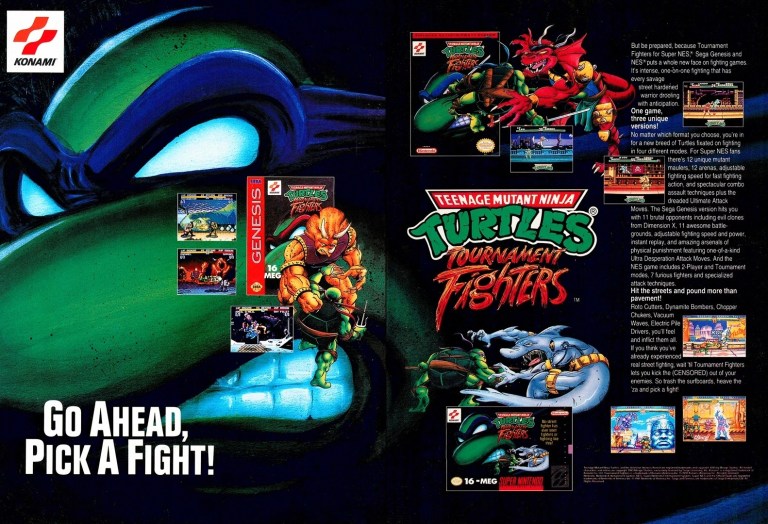
10. Teenage Mutant Ninja Turtles: Tournament Fighters print ad

This print ad had a nice visual presentation and was easily recognizable to the many TMNT fans.

In 1989, the Teenage Mutant Ninja Turtles (TMNT) franchise made quite a splash on video games which is not surprising as the multimedia franchise was already a popular in the West. More video game adaptation of TMNT were released in the early 1990s providing fans and gamers a lot of fun gameplay at the arcades (click here) and on consoles. Konami had the video game rights of TMNT and in a clear response to the sudden popularity of fighting games, they released Teenage Mutant Ninja Turtles: Tournament Fighters on the most popular game consoles of the time achieving varying levels of success critically and commercially (note: the SNES version stood out as the best). This print ad of the fighting game was effective in visually promoting the three console versions and the displayed text contained enough information to lure the attention of both fans and gamers.

+++++

Thank you for reading. If you find this article engaging, please click the like button below, share this article to others and also please consider making a donation to support my publishing. If you are looking for a copywriter to create content for your special project or business, check out my services and my portfolio. Feel free to contact me with a private message. Also please feel free to visit my Facebook page Author Carlo Carrasco and follow me on Twitter at  @HavenorFantasy as well as on Tumblr at https://carlocarrasco.tumblr.com/ and on Instagram at https://www.instagram.com/authorcarlocarrasco
Retro Gaming Ads Blast – Part 17

Welcome back readers, fellow geeks and electronic gaming fans!

In this edition of the Retro Gaming Ads Blast (RGAB) series, we will take a look at another batch of retro gaming print ads – including arcade flyers – from the 1980s and 1990s.

For the newcomers reading this, Retro Gaming Ads Blast (RGAB) looks back at the many print ads of games (console, arcade, computer and handheld) that were published in comic books, magazines, flyers, posters and newspapers long before smartphones, social media, the worldwide web and streaming became popular. To put things in perspective, people back in the 1980s and 1990s were more trusting of print media for information and images about electronic games and related products.

With those details laid down, here is the newest batch of retro gaming print ads for you to see and enjoy…

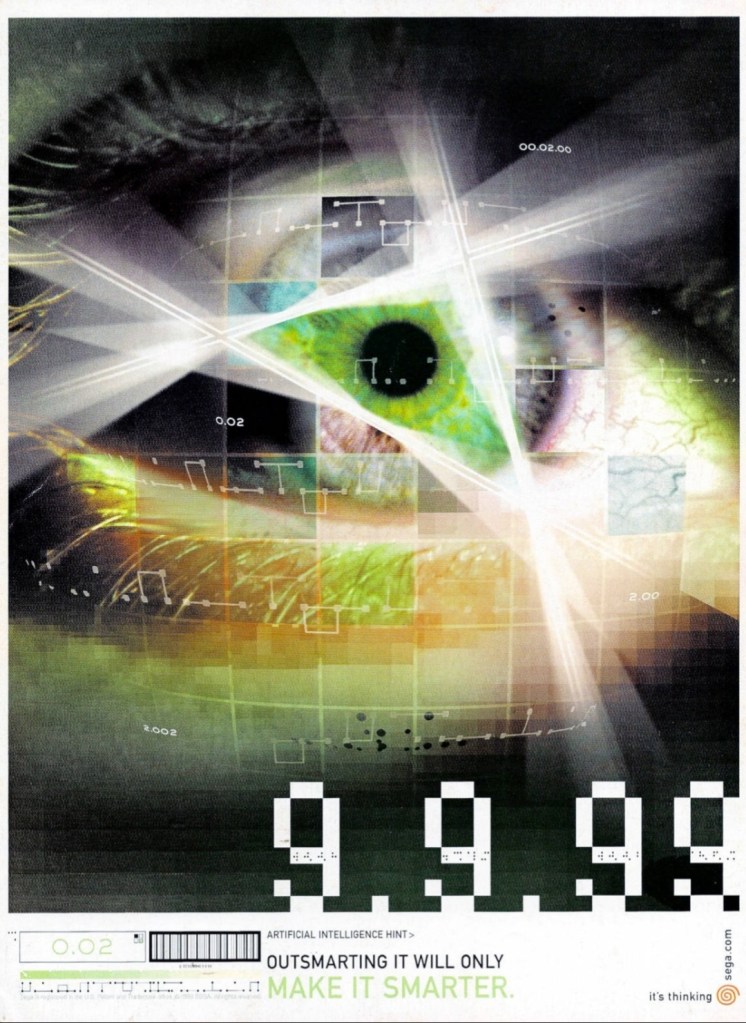
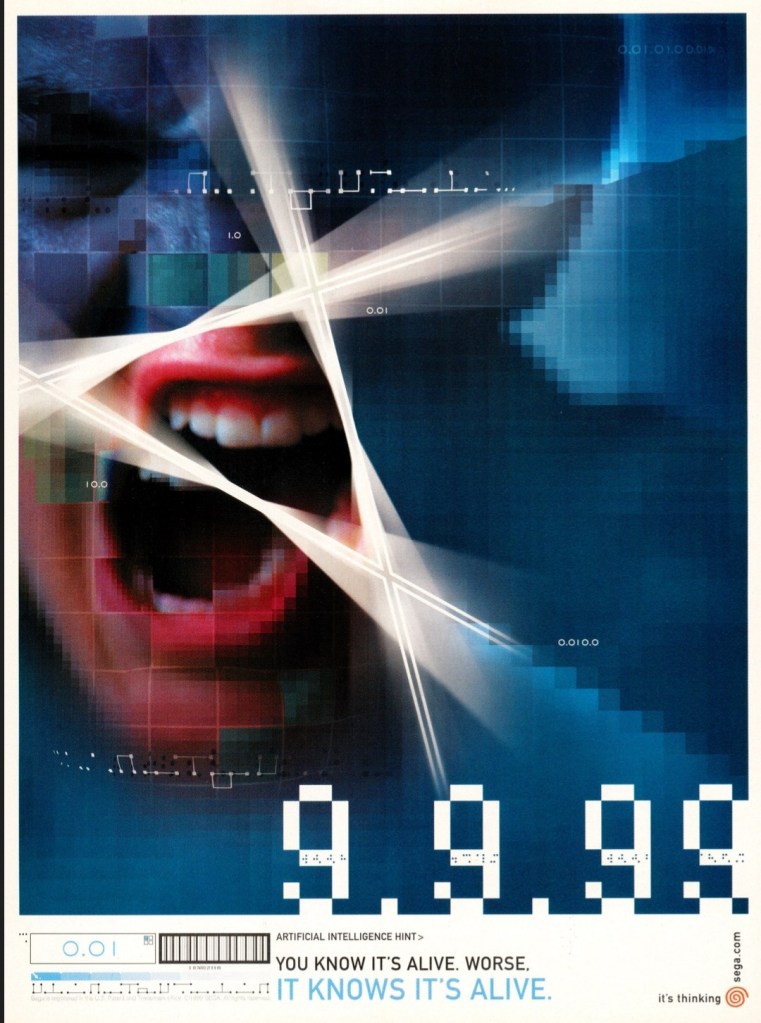
1. Sega Dreamcast launch print ads

This cryptic Sega Dreamcast American launch print ad has an image that emphasized that gamers are being watched.
This one has an image emphasizing emotions, impulse and excitement.

By the time Sega launched their Dreamcast console in Japan in late 1998, the company was already bleeding from back-to-back years of financial losses. The Dreamcast was their big bet to regain the trust of consumers and business partners, to sell a lot of consoles and games, and somehow survive.

For the North American Dreamcast launch, Sega of America organized an intriguing series of ads emphasizing the September 9, 1999 launch date in very stylized and cryptic ways. As seen in the two selected ads above, the Dreamcast name was not even mentioned but the console’s trademark swirl was present. Anyone who was obsessed with video games – even if one was not a Sega fan – could tell that the print ads made clear that the Dreamcast was going to launch in America. Ultimately, Sega sold roughly $98 million worth of Dreamcast consoles, games and peripherals in the first 24 hours in America.

2. Point Blank 2 print ad

This ad appeared in comic books and magazines.

When Namco released the first Point Blank game, it was commercial successful in both arcades and on the PlayStation console in different parts of the world. To keep on succeeding, Namco made the sequel Point Blank 2 and their confidence in it was made clear with the above PlayStation version print ad that promised it to be multiplayer-oriented and ensure enough content to give players sufficient bouts of fun whichever game mode they pick. The ad’s image of the lady with a gun (Namco’s Guncon peripheral) and the animal trophies were done with humor in mind.

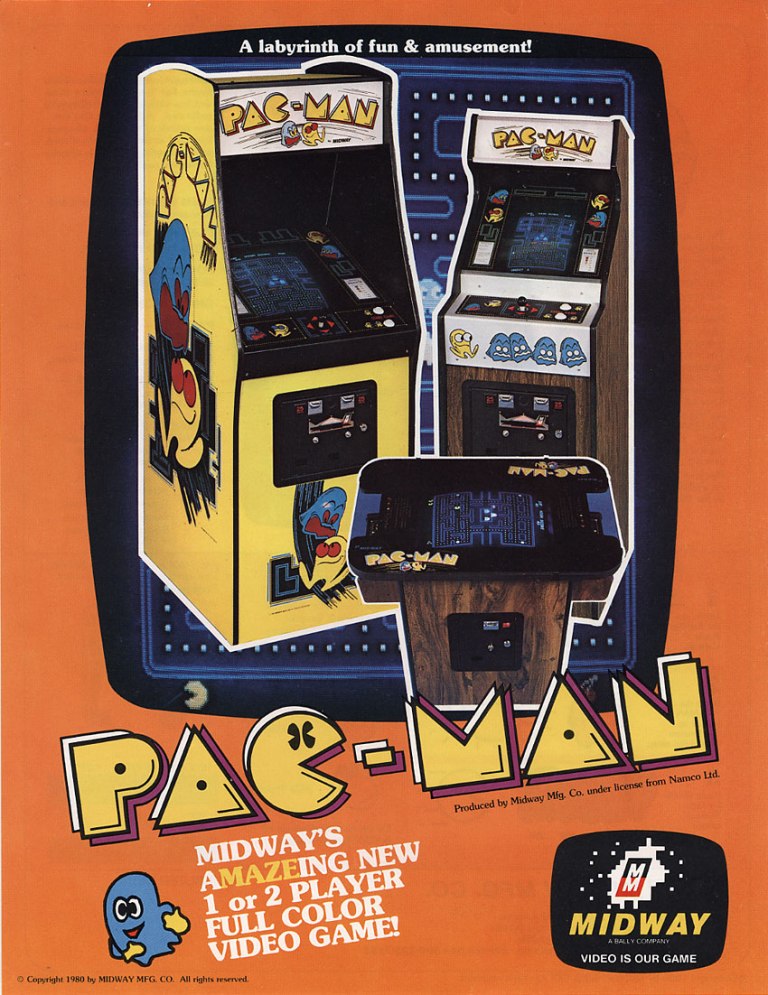
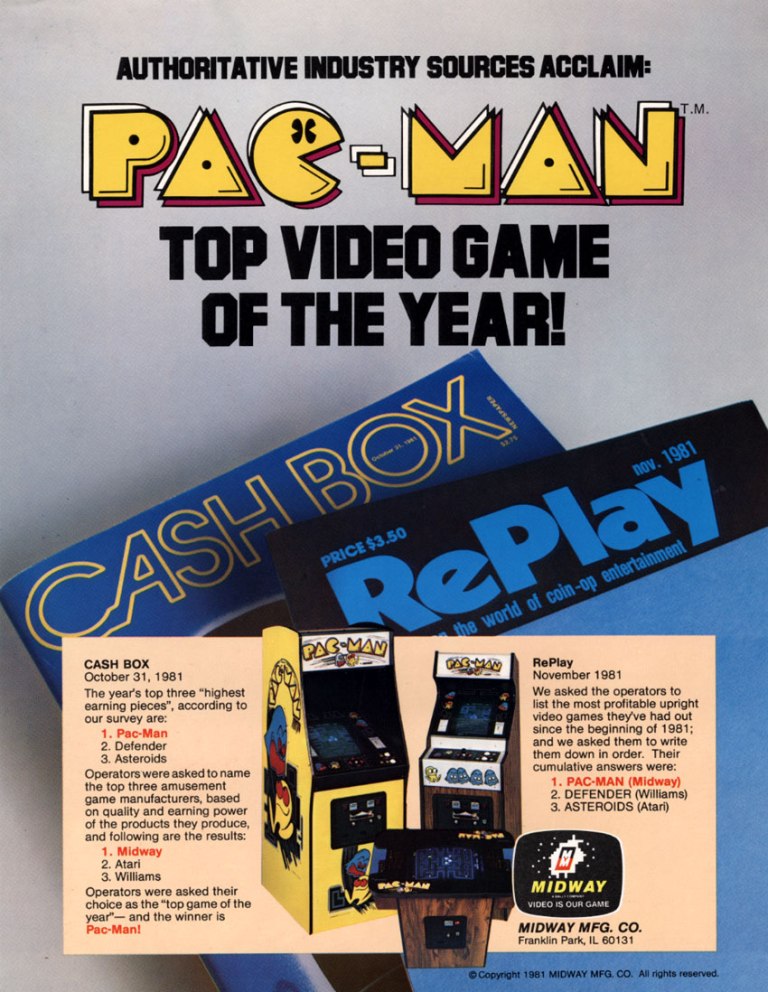
3. Pac-Man arcade flyers

This ad showed that arcade operators can choose which type of machine of Pac-Man they could order.
Midway issued this flyer when Pac-Man was already successful.

In 1980, Namco released Pac-Man in Japanese arcades and it became a big hit in a short span of time. This prompted them to bring the game overseas, especially in America which already had a growing arcade market. In November that year, Namco brought Pac-Man and their other arcade game Rally-X game to a tradeshow and only got mild attention from attendees and distributors. After being turned down by Atari, Namco signed a contract with Midway to distribute Pac-Man and Rally-X in America, and they were formally released the following month.

Upon release, Pac-Man became a strong attraction in American arcades with weekly sales surpassing $8 million per week. When it comes to the presentation, Midway’s arcade flyers above gave arcade operators and gamers a clear view that Pac-Man is fun and available in three physical units (emphasized in the first flyer) and that it made a positive commercial impact (emphasized in the 2nd flyer). Ultimately, Midway went on to sell over 100,000 Pac-Man arcade units resulting in a massive gross of over $1 billion in quarters (coins of twenty-five cents in American currency).

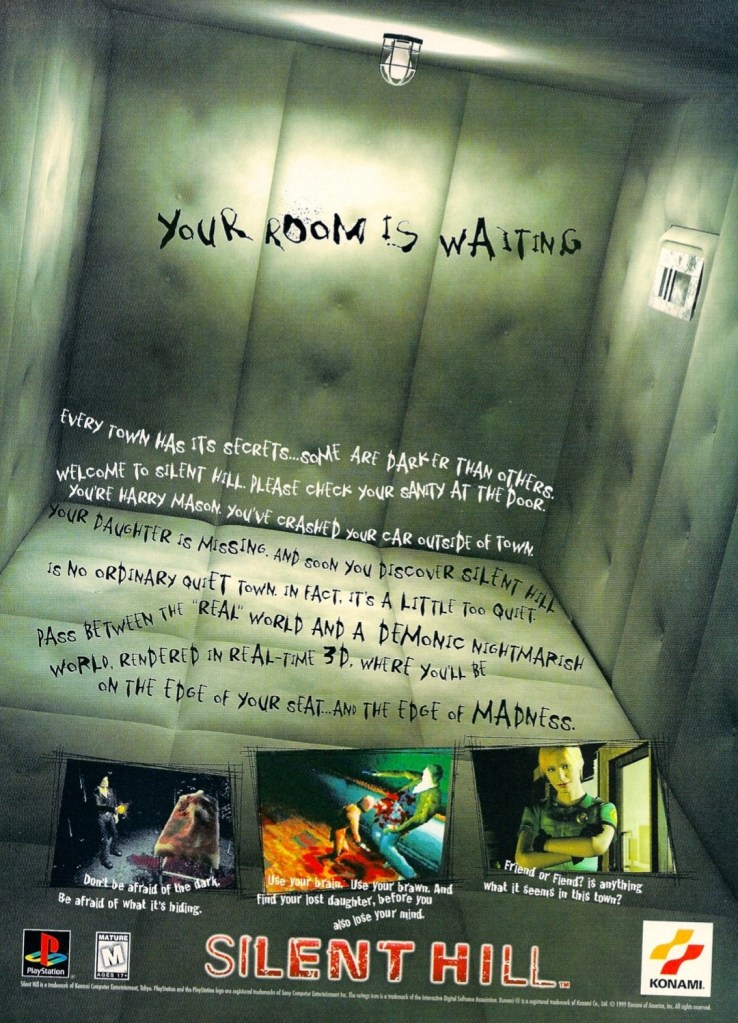
4. Silent Hill print ad

A clear atmosphere of psychological horror in this ad.

Made by a certain team within Konami, Silent Hill on PlayStation turned out to be a surprising and intriguing hit game in 1999. It was a polygonal survival horror game that drew a few comparisons with Capcom’s Resident Evil but ultimately stood out with its gameplay features and psychological horror concept.

The people at Konami must have anticipated that gamers in America would be attracted by the game so they came up with the creepy print ad above which promoted the game with a clear touch of psychological horror. If you look closely, the 2nd screenshot (in the middle) even showed blood in digital form. This Silent Hill print ad was clearly aimed at adult gamers and PlayStation gamers who craved for more horror gaming.

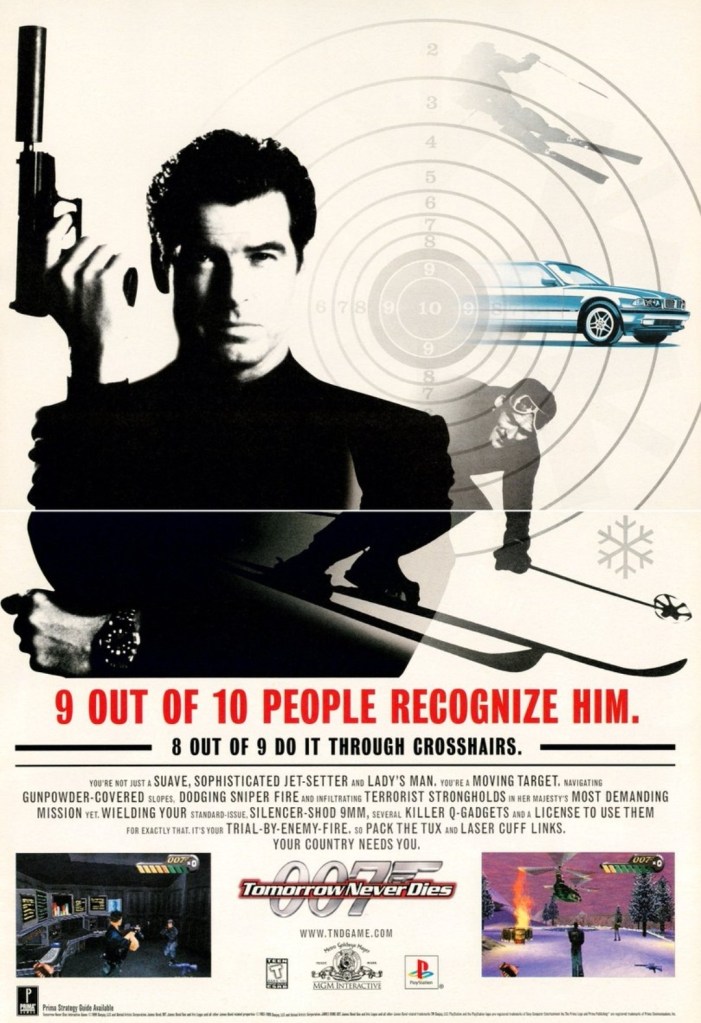
5. Tomorrow Never Dies game print ad

The use of the image of Pierce Brosnan as James Bond in this print ad was the right move to inform readers that the 1997 movie’s video game was coming out.

Believe it or not, there was indeed a video game adaptation of Tomorrow Never Dies (1997) and the weird thing was that it was released for PlayStation in November 1999. In fact, the game was released eight days after the American premiere of the James Bond film The World is Not Enough (1999). The game development was unusually long and the release was delayed several times going into 1999.

To really capture the attention of James Bond fans and gamers, MGM Interactive and Electronic Arts (the co-publishers of the game) came up with a Tomorrow Never Dies game print ad showcasing Pierce Brosnan as the iconic Agent 007 in a dominant fashion leaving a minor space for the text description, two screenshots and other details displayed. While some people might look at the ad as an act of desperation to sell the long-delayed game, I find it eye-catching and engaging to look at. It also was a lively reminder back then that Brosnan was James Bond of the 1990s.

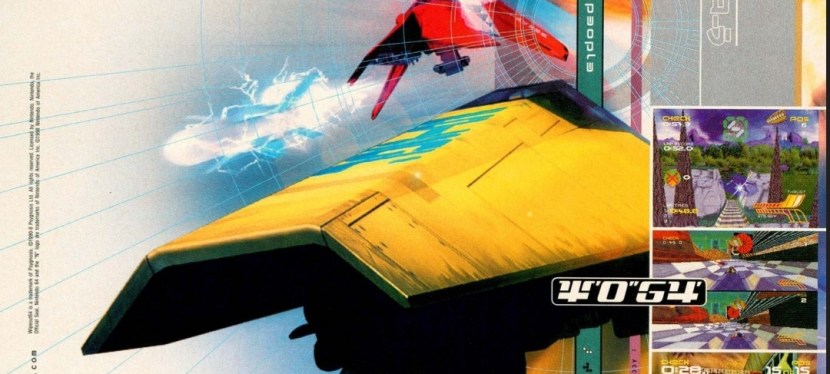
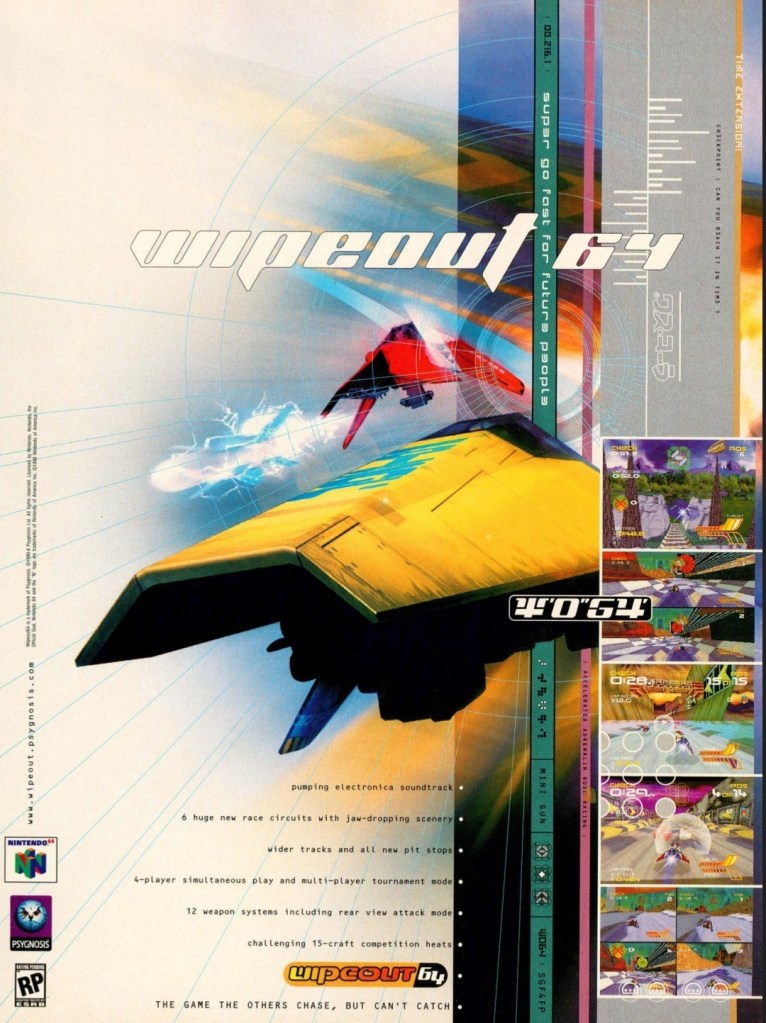
6. Wipeout 64 print ad

This is still cool and sleek to look at.

Wipeout, the series best known for its very futuristic portrayal of high-speed anti-gravity racing, showcase of dynamic visuals and the use electronic dance music, made its way to the Nintendo 64 console with Wipeout 64. This 1998 release was significant because at that time developer Psygnosis was already owned by Sony and most Wipeout games of the decade were released on PlayStation. Wipeout 64 was released before the PlayStation-exclusive Wipeout 3 came out.

The above print ad had this very sleek display of two anti-gravity racers moving at high speed and on the side are five screenshots showing what the game looked like on the N64. If you look very closely, one of them shows the 4-player split-screen mode identified with the Nintendo 64’s capabilities. Overall, the Wipeout 64 print ad captured the vibe of the Wipeout series and remains very cool to look at.

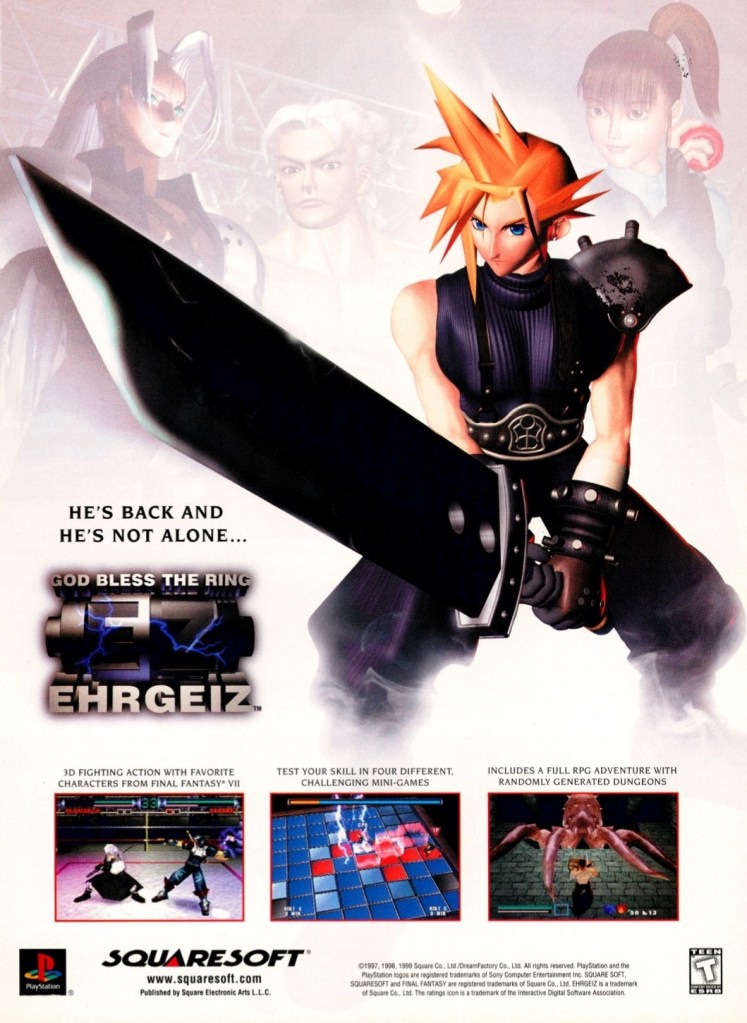
7. Ehrgeiz print ad

You want a 3D polygonal fighting game that has Final Fantasy 7 characters in it? Ehrgeiz was the answer.

In 1999, the landscape of gaming really changed. More gamers played 3D polygonal fighting games over the 2D fighting games, and demand for Final Fantasy and Japanese role-playing games (JRPGs) were in high demand in the West arguably because of the massive commercial success of Final Fantasy VII on PlayStation. That being said, Squaresoft released their own 3D polygonal fighting game that had Final Fantasy VII characters in it – Ehrgeiz.

After achieving success in the arcades, Squaresoft brought Ehrgeiz to PlayStation in America in 1999. Unsurprisingly, the print ad had Final Fantasy VII protagonist Cloud and his signature sword in a prominent position which was obviously done to attract the millions of FFVII for potential sales. The screenshots on the ad were presented not for showing off but to give readers a clear view of what kind of gaming experiences they could expect. Ehrgeiz on console even had a standalone RPG mode.

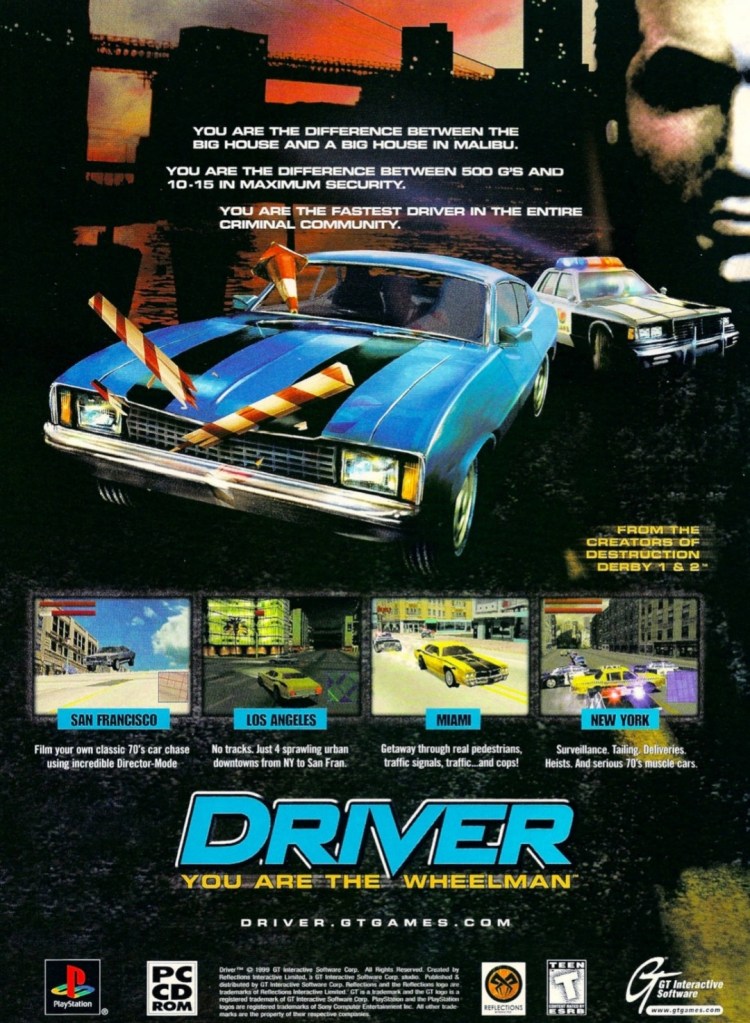
8. Driver print ad

The art used for the muscle car and the police car was a tribute to the car chases of movies from long ago.

Even before it was released on PlayStation and PC in 1999, publisher GT Interactive knew they had something big for gamers to engage with. That game was Driver and developer Reflections Interactive made it with a lot of inspiration taken from cinematic car chases. This particular ad emphasized car chases, the exploration of four real-life cities in digital form, and engaging in a variety of missions. As it successfully delivered what it promised, Driver went on to become a big commercial success on PlayStation and PC, and spawned sequels in the years that followed.  

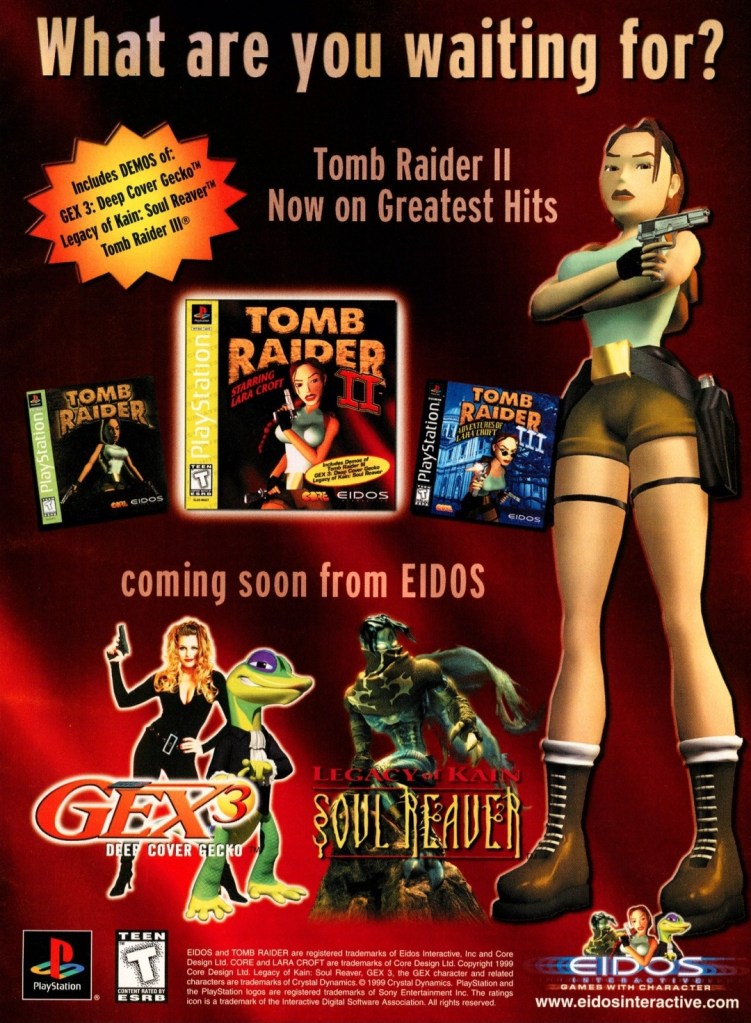
9. Eidos Interactive games print ad

From the time when Eidos Interactive was at the top of its game and Lara Croft was its most popular character.

By the end of the 1990s, Eidos Interactive became a major game publisher which is the result of the massive success they achieved with the Tomb Raider games which collective sold many millions of copies worldwide.

Along the way, they acquired developer Crystal Dynamics which was already a prolific team with many games released and new projects in development. Under Eidos’ banner, Crystal Dynamics went on to release Gex 3: Deep Cover Gecko and Legacy of Kain: Soul Reaver in 1999. That being said, this print ad shows the ambitious offers Eidos Interactive had with the Tomb Raider, Gex and Legacy of Kain franchises. It is a reflection about success and confidence about the future of video games.

+++++

Thank you for reading. If you find this article engaging, please click the like button below, share this article to others and also please consider making a donation to support my publishing. If you are looking for a copywriter to create content for your special project or business, check out my services and my portfolio. Feel free to contact me with a private message. Also please feel free to visit my Facebook page Author Carlo Carrasco and follow me on Twitter at  @HavenorFantasy as well as on Tumblr at https://carlocarrasco.tumblr.com/ and on Instagram at https://www.instagram.com/authorcarlocarrasco
Retro Gaming Ads Blast – Part 16

Welcome back readers, fellow geeks and electronic gaming fans!

In this edition of the Retro Gaming Ads Blast (RGAB) series, we will take a look at another batch of retro gaming print ads – including arcade flyers – from the 1980s and 1990s.

For the newcomers reading this, Retro Gaming Ads Blast (RGAB) looks back at the many print ads of games (console, arcade, computer and handheld) that were published in comic books, magazines, flyers and newspapers long before smartphones, social media, the worldwide web and streaming became popular. To put things in perspective, people back in the 1980s and 1990s were more trusting of print media for information and images about electronic games and related products.

With those details laid down, here is the newest batch of retro gaming print ads for you to see and enjoy…

1. A-Jax North American arcade flyer

Another one of Konami’s arcade flyers showing a pretty fashion model with a touch of militarism.

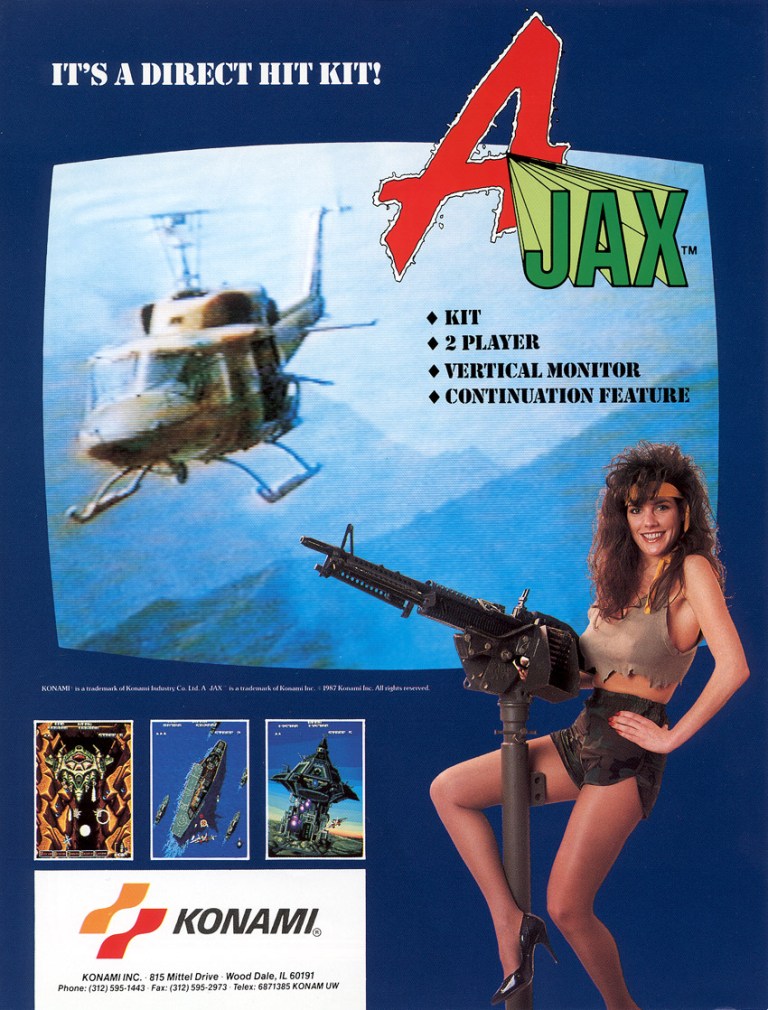
A-Jax (also referred to as Ajax) is another one of the many military themed games Konami released for the arcades in the 1980s. It was a 2D vertically scrolling shooter in which players use aircrafts to shoot enemies both in the air and on the ground. The game was a hit in Japanese arcades and Konami came up with the North American arcade flyer showing three screenshots, an archive footage shot of a military helicopter and a sexy lady (with a light military look) with a machine gun. The style of presentation was similar in style with the North American arcade flyers of Contra and M.I.A.: Missing in Action.

2. The Combatribes print ad

The short comic book approach was used to emphasize the setting and concept of the video game.

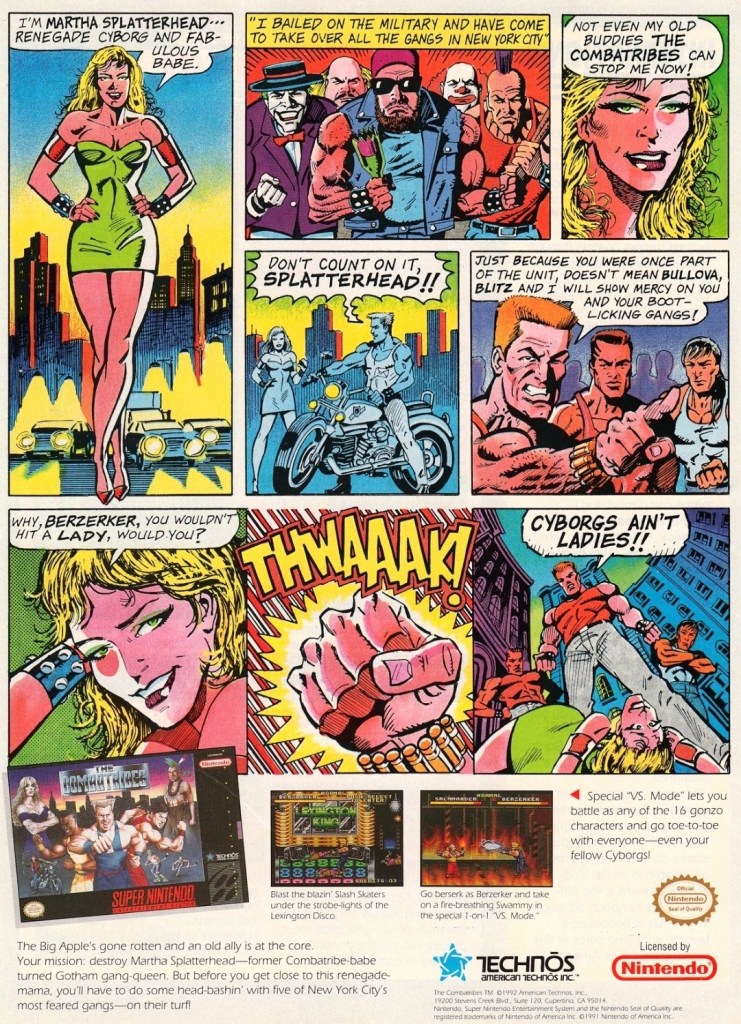
Technos, the Japanese company behind the wildly popular Double Dragon games franchise, proved to be successful with the arcade release of The Combatribes. In an attempt to keep the wave of success moving, Technos released The Combatribes on the Super Nintendo Entertainment System (SNES) in 1992 and someone involved with the North American marketing came up with the idea of creating a comic book-style presentation for the print ad. Creatively speaking, the comic book approach was done to emphasize the story and visual concepts of the game, and entice readers to play it. By today’s standards of video game marketing, this print ad’s approach is both unusual and notable.

3. Dead or Alive 2 Dreamcast port print ad

This was a wide print ad that appeared on magazines and it sure was eye-catching. It was an effective way to promote the game and inform people of the Sega Dreamcast’s presence in the market.

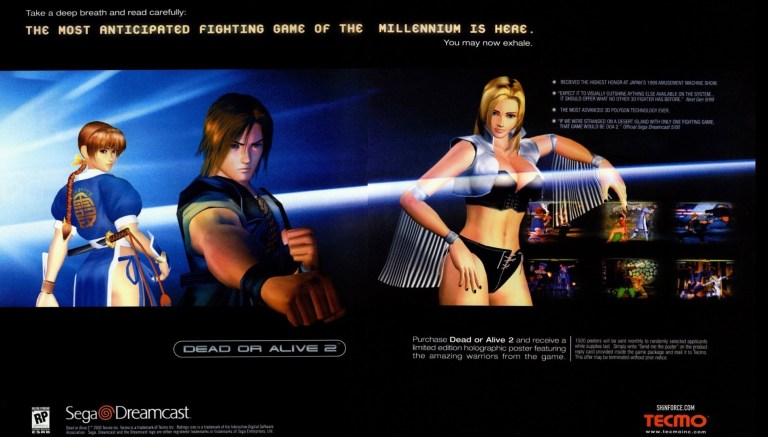
When Dead or Alive 2 was released in the arcades in 1999, a lot of gamers were astounded by it as developer Team Ninja (led by Tomonobu Itagaki) made it much bigger and a lot better than its 1996 predecessor. Team Ninja really went all out making the sequel utilizing Sega’s NAOMI arcade technology, inviting martial artists to do motion-capture, and having a very ambitious game design. Since the game was developed with the NAOMI hardware, porting the game for the Sega Dreamcast was reportedly convenient and smooth for the developers who went on to add more gameplay features and modes. Publisher Tecmo came up with this wide print ad (promoting the Dreamcast release) showcasing three characters, six screenshots and text descriptions emphasizing the universal acclaim the game received. The promotional approach was simple yet effective.  

4. Jet Moto (PC version) print ad

From PlayStation to PC.

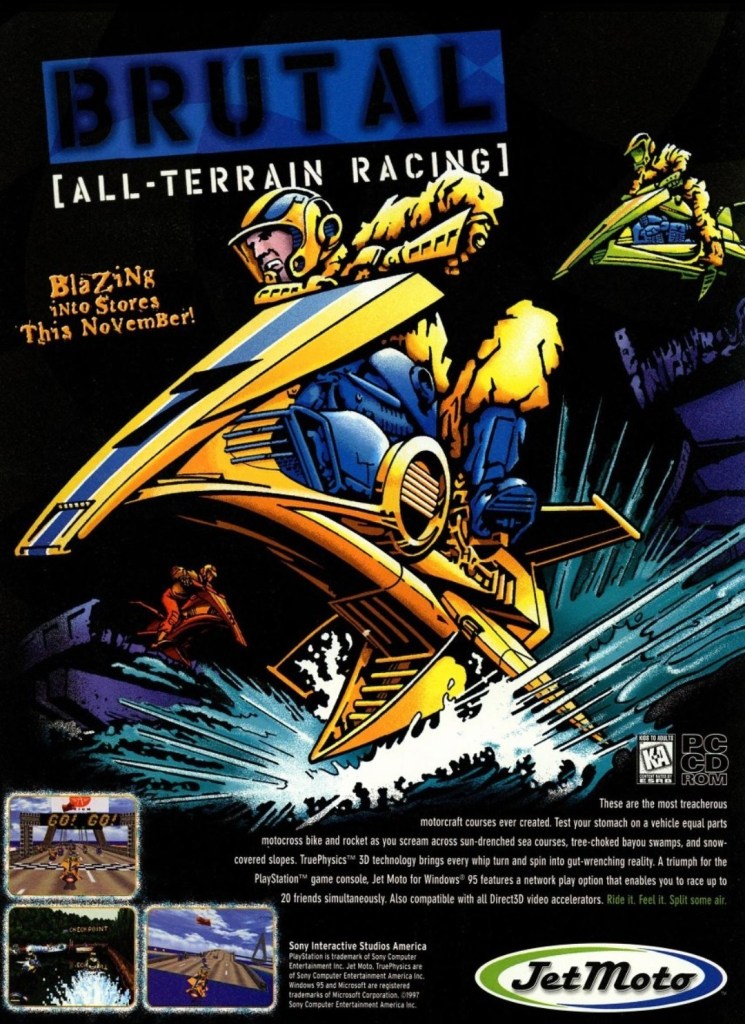
In November 1996, the futuristic all-terrain hoverbikes racing game Jet Moto was released on the PlayStation which went on to sell well and attract mostly positive reviews. Sony Computer Entertainment eventually released a version of the game for the personal computer (PC) in November 1997. As seen in the above print ad, the network play option and compatibility with Direct3D video accelerators were emphasized as such features resonated with the interests of PC gamers of the era. This print ad showed how willing Sony was to release PlayStation hits on PC back then.

5. Elevator Action Returns Japanese arcade flyer

Great looking art on the front.
The rear of the flyer.

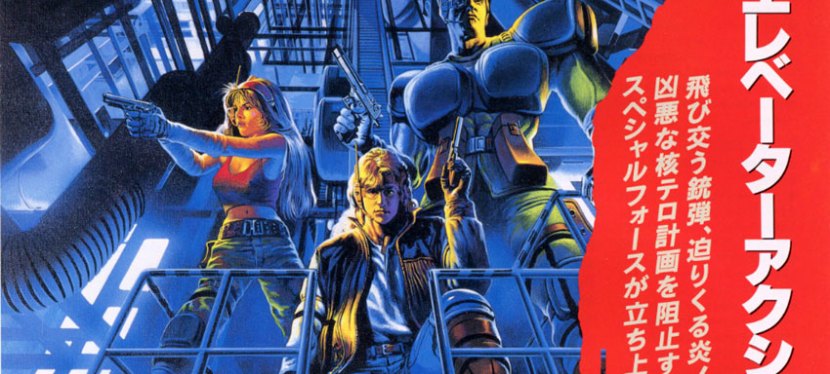
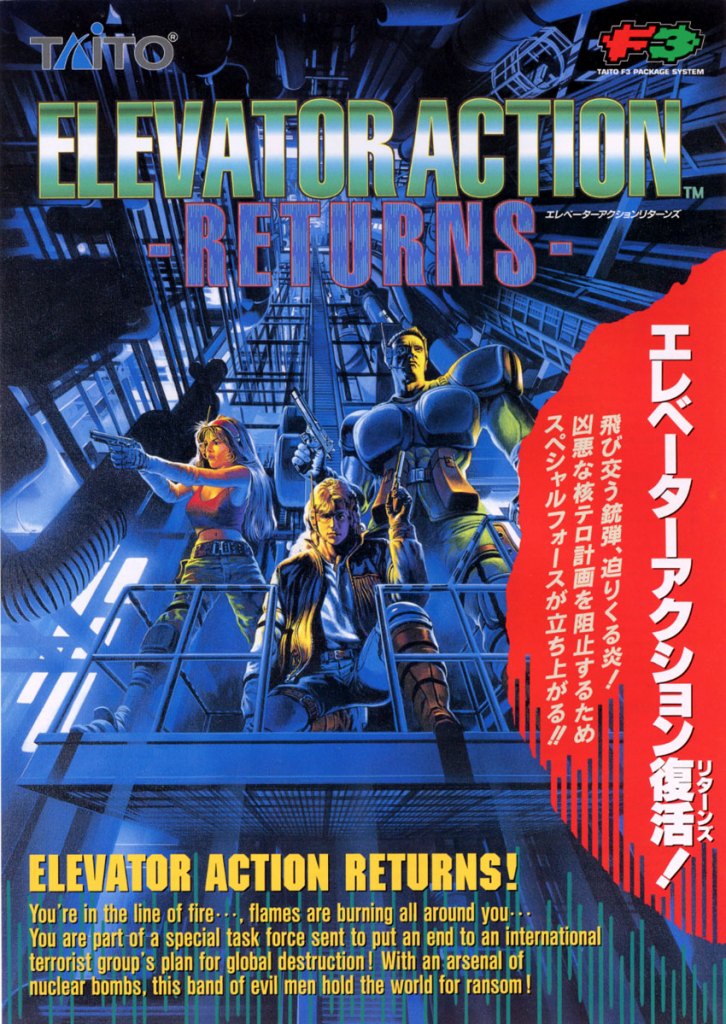
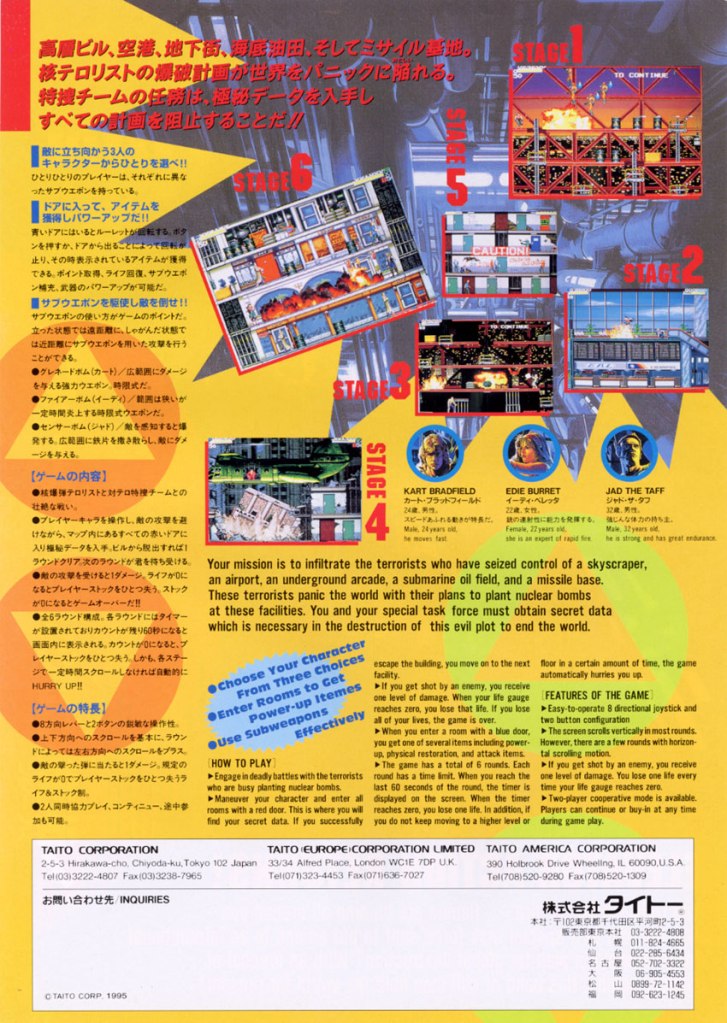
When Taito released Elevator Action Returns (also titled as Elevator Action II in other nations) in the arcades in 1994, it became a hit as gamers enjoyed its action-packed gameplay, ambitious 2D visual presentation and varied level designs that clearly went beyond its 1983 predecessor. The front of the Japanese arcade flyer has really nice art showing the three playable protagonists on an elevator on their way to do their mission. The back of the flyer shows screenshots (which emphasized the varied level designs), text descriptions explaining how the game played (English version printed), and what the features are. Another text description confirmed that terrorists are the antagonists that players will be dealing with which was reflective of the rise of Islamic terrorism in the 1990s. Oh yes, if you look closely you will the word “item” misspelled as “items”.

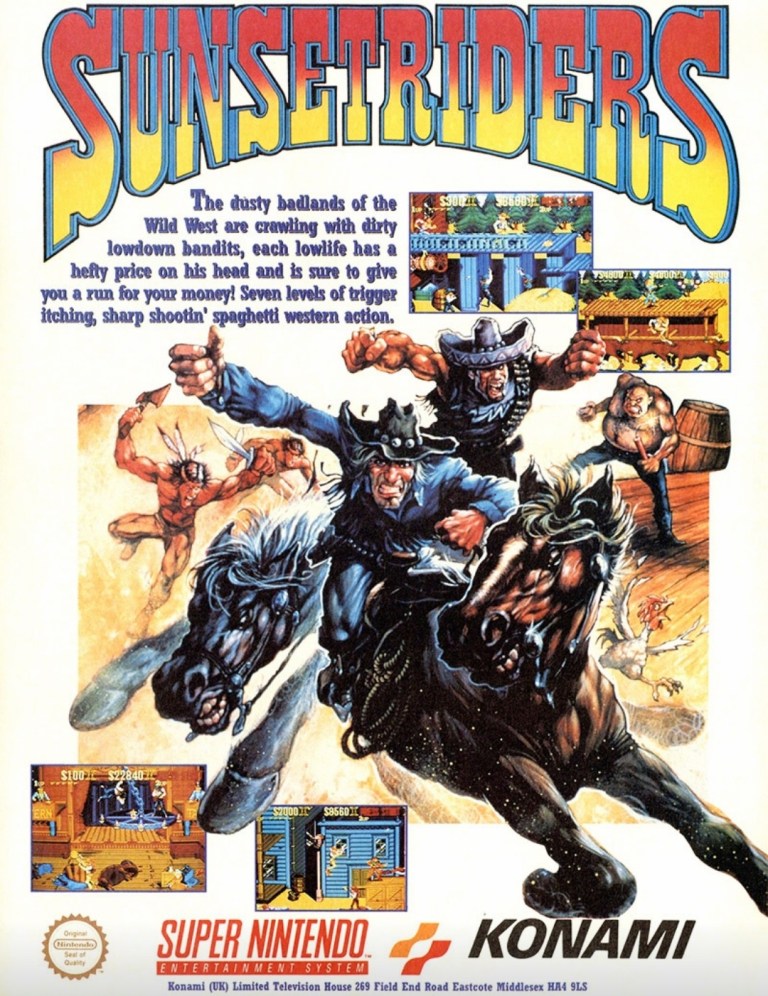
6. Sunset Riders print ads

The Sunset Riders arcade machine, the SNES version, screenshots and a can of pork-and-beans on this ad.
This print ad appeared in some comic books I read long ago.

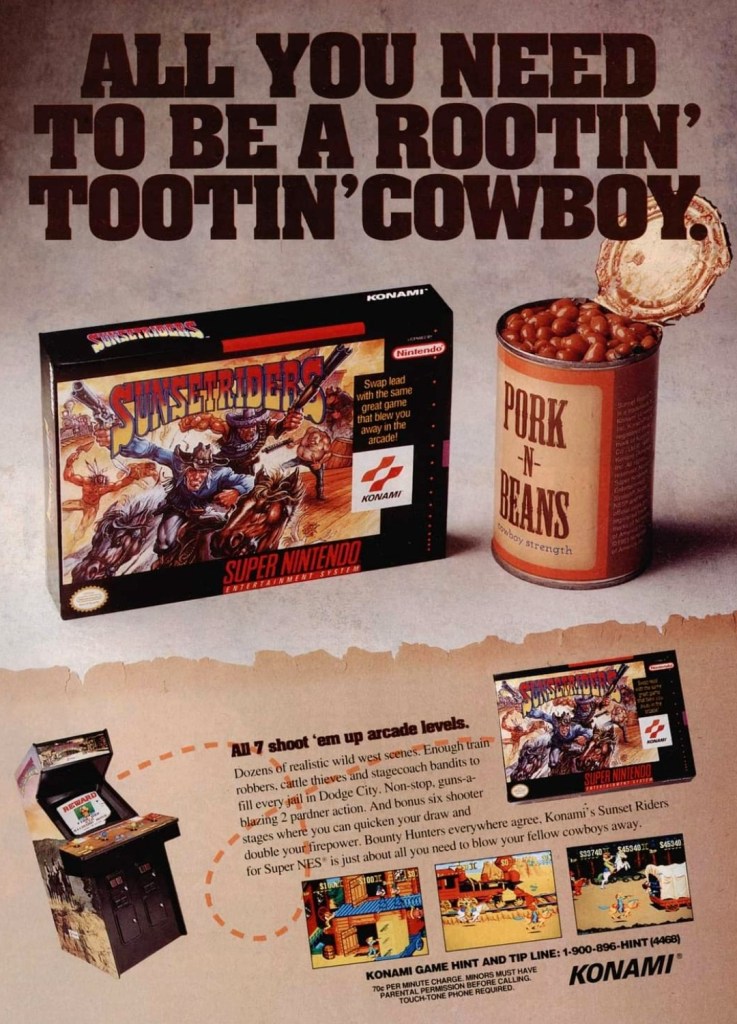
After enjoying a lot of success in the arcades with their 1991 game Sunset Riders, Konami went on to release ports of it to the Sega Genesis in 1992 and the Super Nintendo Entertainment System (SNES) in 1993. With regards to conversions and procedural/artistic changes between the arcade and console ports, the SNES version had few changes implemented compared to the one released on the Genesis. As seen in one of the print ads of Sunset Riders on SNES, it came with 7 arcade levels, 2-player mode and additional shooter stages. What the print ads did not reveal were notable replacements of specific characters in key parts of the game such as the dynamite-tossing female bandits getting replaced by male bandits, North American Indian villains getting replaced with outlaws, etc.  

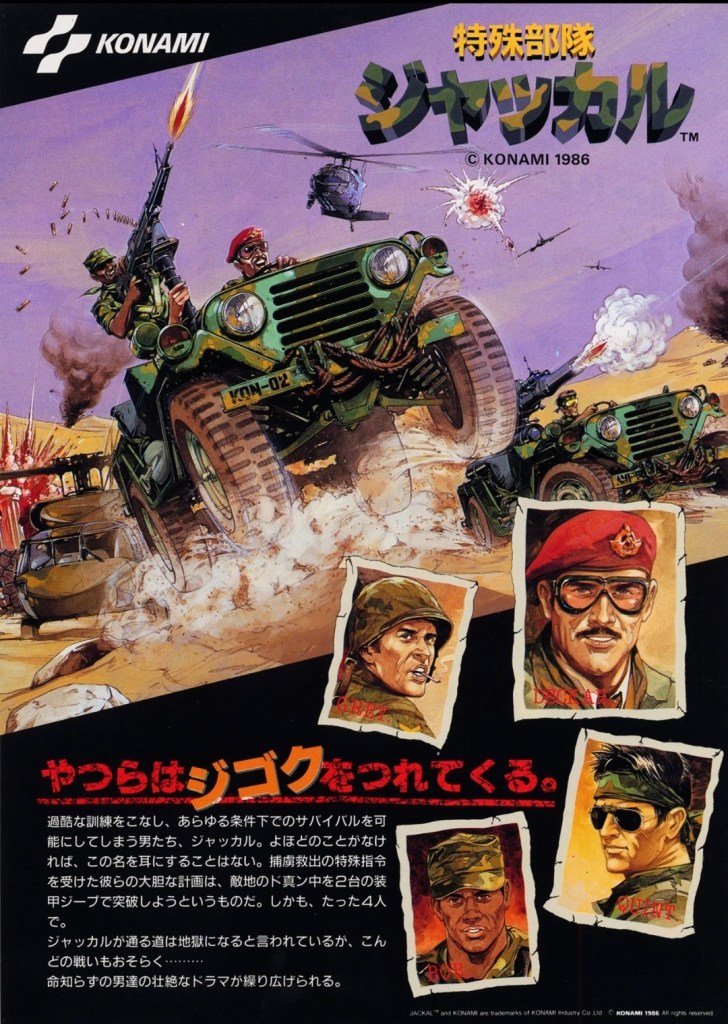
7. Jackal Japanese arcade flyer

Whoever was the artist Konami hired truly delivered great-looking art!

Konami’s military themed game Jackal (Japanese title: Tokushu Butai Jackal) debuted in Japanese arcades in October 1986 and became a hit. The Japanese market arcade flyer had great looking artwork on the front that strongly emphasized the very concept of the game (players move military jeeps to shoot at enemies as they move into enemy territory). One of the characters (the one wearing the red beret) somewhat resembles the late Sean Connery which only shows that someone within Konami’s development team took inspiration from movies. This arcade flyer’s front still looks great.

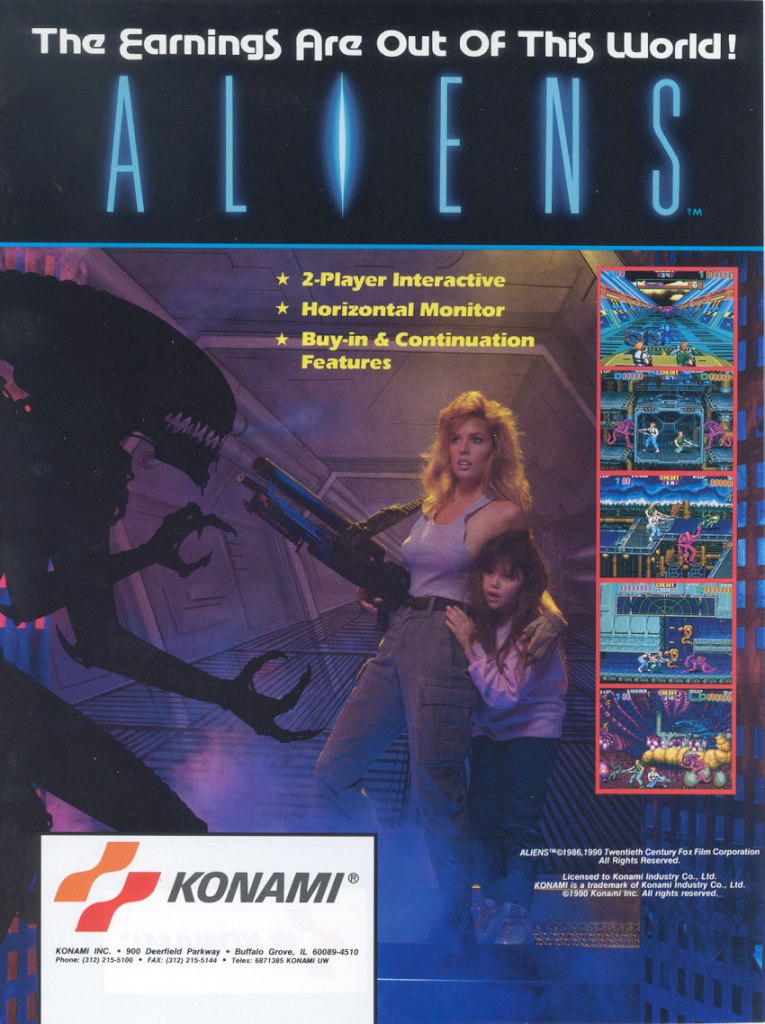
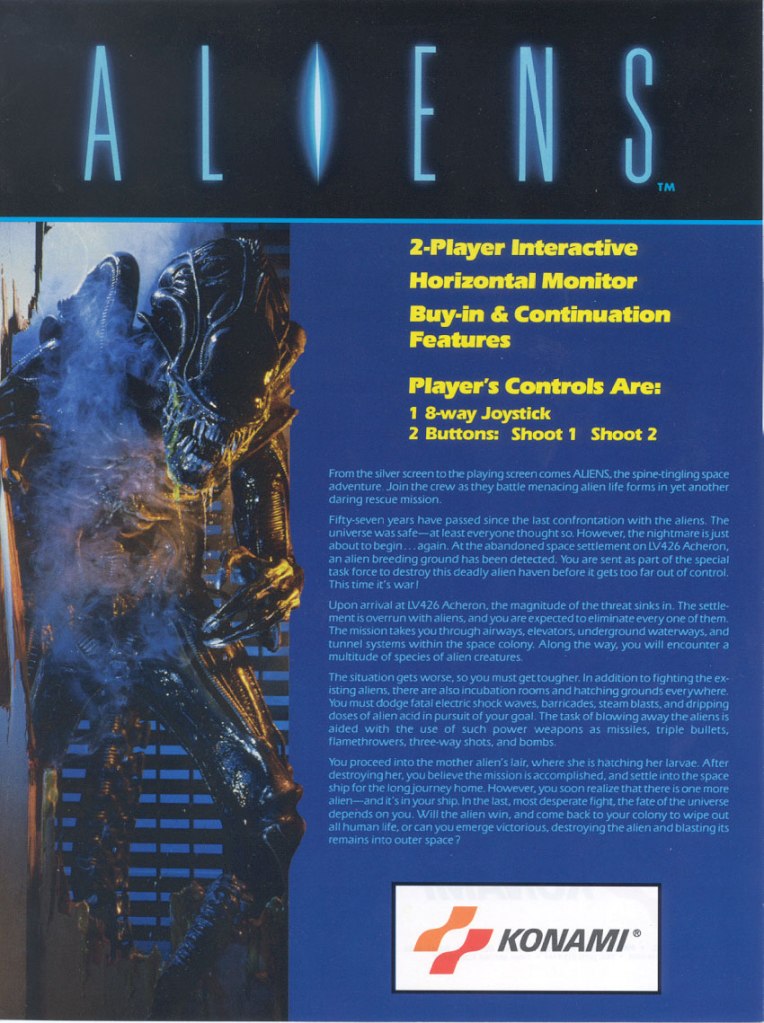
8. Aliens North American arcade flyer

A good amount of effort was done to truly capture Aliens’ concept using hired models (as Ripley and Newt), a Xenomorph physical model and a suitable background.
The key details presented on the rear of the flyer. The Xenomorph’s presence adds tension.

In 1990, Konami released their ambitious arcade game Aliens which was loosely based on the 1986 movie that starred Sigourney Weaver and was directed by James Cameron. As Konami’s Aliens license was only temporary and the movie was so highly regarded, the Japanese company’s marketing team really had to exert extra effort to truly capture the film’s sci-fi horror concept in order to make a strong presentation towards arcade operators and their paying customers (the gamers).

Apart from showing screenshots on the front, the creative team hired a blonde model as Ellen Ripley holding a gun and a young girl as the character Newt, and have them pose convincingly in front of a Xenomorph model (darkened in the foreground). On the back of the flyer, the team heavily revealed the details using the text description to emphasize the gaming experience and story concept. The technical details, meanwhile, were presented in simplistic, easy-to-follow fashion. Aliens was a smash hit in the arcades and there are long-time gamers who regard it as one of the best game adaptations of the 1986 movie. This arcade flyer is a strong reminder that the featured game was never ever ported to any game console nor to any personal computer.

+++++

Thank you for reading. If you find this article engaging, please click the like button below, share this article to others and also please consider making a donation to support my publishing. If you are looking for a copywriter to create content for your special project or business, check out my services and my portfolio. Feel free to contact me with a private message. Also please feel free to visit my Facebook page Author Carlo Carrasco and follow me on Twitter at  @HavenorFantasy as well as on Tumblr at https://carlocarrasco.tumblr.com/ and on Instagram at https://www.instagram.com/authorcarlocarrasco
I am having fun playing Grandia again on my Xbox Series X

Welcome back Xbox fans, geeks and gamers!

After enjoying the big reveals and surprises of the Xbox Games Showcase this past June, things went downhill in recent times. For one thing, I really don’t like the changes Microsoft is implementing on Xbox Game Pass (click here and here to learn the details). With regards to new Xbox stuff this year, the fantasy role-playing game Avowed has been delayed to February 2025 while Indiana Jones and The Great Circle still has no firm 2024 release date as of this writing.

When it comes to games I’ve been playing a lot with my Xbox Game Pass (XGP) subscription, Eiyuden Chronicle: Hundred Heroes was recently patched but it still did not solve the game crashing and shutdown on my Xbox Series X. Rabbit & Bear and 505 Games still have a lot more work to be done to significantly fix and improve Eiyuden Chronicle: Hundred Heroes on Xbox Series X.

My Xbox enjoyment improved when I started playing the original Grandia after purchasing Grandia HD Collection on the Xbox online store. For the newcomers reading this, Grandia HD Collection contains Grandia (released on PlayStation and Sega Saturn) and Grandia II (released on Dreamcast and PlayStaion 2) and those games have remastered visuals with high-definition TVs (HDTVs) in mind. In my experience, I played and finished Grandia on the original PlayStation console way back in 1999. I never played its sequel but will do so some time later.

As soon as I downloaded Grandia HD Collection on my Xbox Series X, I started playing Grandia for the first time in decades but with HD visuals and other refinements.

Developer Game Arts did amazing work creating the fantasy world and visual concepts that made Grandia a special game to play.

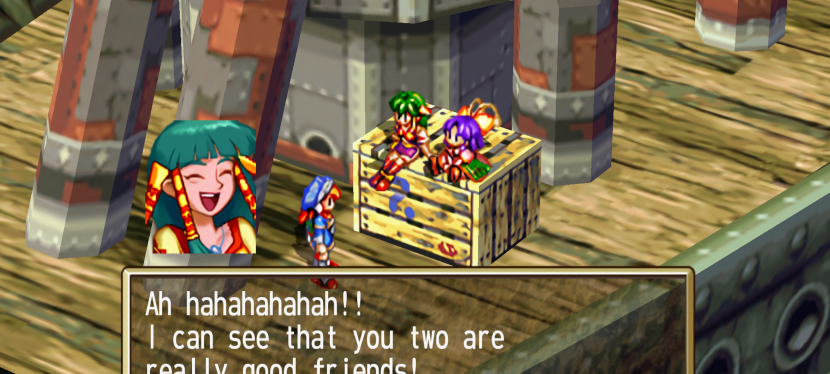
After watching a nice introduction (in animation), the story started with a short scene introducing Mullen, Lieutenant Leen and their superior General Baal. After that, the game’s focus shifted to the port town of Parm with a stylish floating camera sequence showcasing in real-time the polygonal location and the inhabitants (presented as detailed 2D animated bitmap sprites). Shortly after, the youngling Sue and the aspiring adventure Justin got introduced.

As of this writing, I played Grandia for several hours and already surpassed the End of the World (the wall that separated the initial world from the mysterious other. I already have Justin, Sue, Feena and Gadwin in my party.

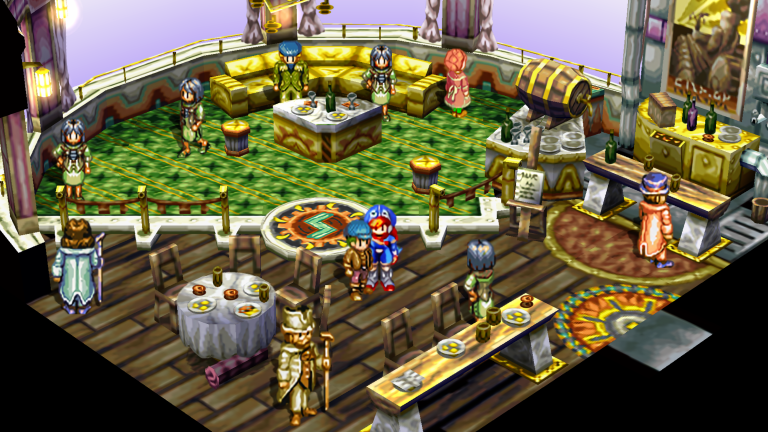
This is the lounge for the upper class passengers on board a ship. Grandia is a fine example of combining 2D sprites with detailed polygonal environments.

Much early during my playthrough – specifically before witnessing Feena’s first appearance – I had fun rediscovering the unique locations Game Arts created. The town of Parm is a pretty unique location to start the game with. The Sult Ruins were designed with with sneaking and adventuring in mind. Through these and other locations, you will see how creative the game developers really were when it came to world-building as well as giving each location its own unique style and feel.

Because it had been so long since I finished this old Japanese role-playing game (JRPG), I had to orient myself with the game’s functions using the Xbox Series X controller and the technical options that came with the software. I quickly got used to the way the characters’ moved (in response to the controller), the way I was able to move the in-game camera around and how the functions responded to the buttons pressed. In just a few minutes, the Grandia gameplay familiarity came back to me.

Battles are always fun to play and grinding (playing many battles to gain experience points to level up) is not as stressful when compared to other JRPGs.
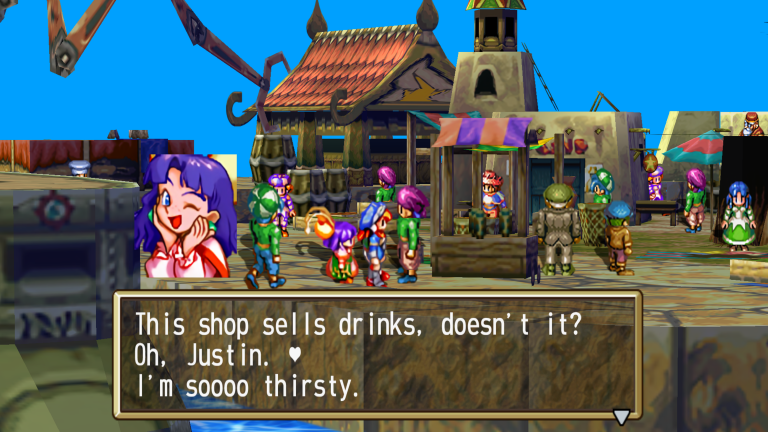
Game Arts came up with clever views of a local community like this to give gamers a unique look of this part of the game’s world.

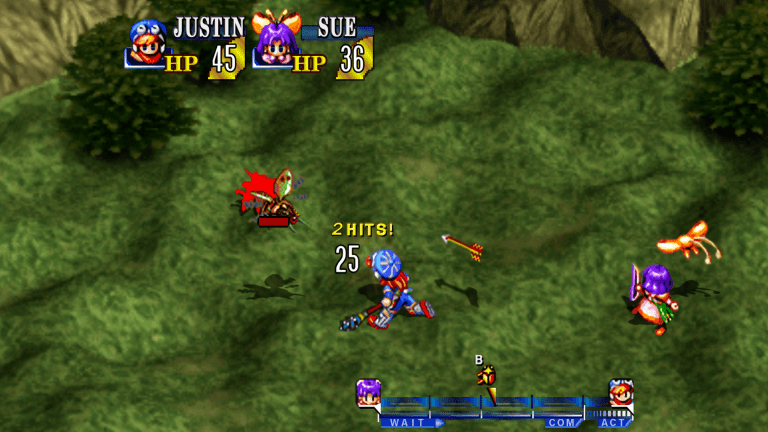
Oh yes, the battles are still a lot of fun to play! During battles, there is this bar on the lower part of the screen showing the icons of your characters and monsters/enemies moving from left to right. Once the icon reaches a crucial point at the right, the game will enable you to take your turn and decide which action to execute. Once you made your choice of action, your character will be animated accordingly. It should be noted that striking enemies will not only reduce their hit points but also delay the flow of their icons on the bar. As such, battles can be strategic with regards to the actions you take and which enemy you targeted.

With regards to leveling-up, you don’t just gain experience points to develop and improve your playable characters. You will also improve their use of weapons and magic as they involve leveling-up. Along the way, you will get opportunities to acquire weapons and armor, and you can have different types of magic implemented into your character with the use of the Mana Eggs. The freedom of choice is clearly evident in the gameplay.

In addition to enjoying the gameplay and options, I appreciate the Game Arts’ approach on telling the story, the light-hearted way of presenting the characters and how they implemented creative pay-offs to the build-ups that preceded them. I also enjoyed the many visual concepts the developers came up with to make Grandia’s fantasy world, cultures and people come to life.

While I am still several hours away from finishing Grandia again, I can say that my current enjoyment of is literally returning with a vengeance and it helped me forget about the Xbox-related disappointments.

Right now, I am enjoying Grandia in HD and I intend to finish it again.

Feena with Sue and Justin. These characters are memorable and amusing to watch.

To buy a copy of Grandia HD Collection, Xbox fans and gamers should click https://www.xbox.com/en-us/games/store/grandia-hd-collection/9n4nlqhx6j18

+++++

Thank you for reading. If you find this article engaging, please click the like button below, share this article to others and also please consider making a donation to support my publishing. If you are looking for a copywriter to create content for your special project or business, check out my services and my portfolio. Feel free to contact me with a private message. Also please feel free to visit my Facebook page Author Carlo Carrasco and follow me on Twitter at  @HavenorFantasy as well as on Tumblr at https://carlocarrasco.tumblr.com/ and on Instagram athttps://www.instagram.com/authorcarlocarrasco

What to watch on YouTube right now – Part 29

Welcome back, my readers, YouTube viewers and all others who followed this series of articles focused on YouTube videos worth watching. Have you been searching for something fun or interesting to watch on YouTube? Do you feel bored right now and you crave for something to see on the world’s most popular online video destination?

I recommend you check out the following topics and the related videos I found.

Darlene Zschech’s newest worship music videos  – In recent times, pastor Darlene Zschech released through her official YouTube channel the latest worship music videos of the songs Testament, Shout to the Lord and Cry of the Broken. For the newcomers reading this, Darlene Zschech is a Christian worship leader as well as an accomplished worship musician. She is based in Australia and she and her husband are with Hope Unlimited Church (HopeUC). She is a truly anointed woman of the Lord God and you can learn more about her by visiting her official website. Enjoy the worship music videos below.

Grandia retrospective videos  – I had a lot of fun playing and completing the Japanese role-playing game Grandia on PlayStation way back in 1999. I recently bought Grandia HD Collection which has Grandia and the sequel Grandia II (this I have yet to play) with enhanced visuals. That said, I have been replaying Grandia on my Xbox Series X and I can say that I am enjoying it. The gameplay features, the game design, the writing and visual presentation of Grandia have aged well. To get to know more about Grandia, watch the selected videos below.

HolyLandSite’s newest Mount of Olives tour video – HolyLandSite published their latest video about their Mount of Olives tour in Israel. This time around, the video includes Mary Magdalene Church, Tomb of Prophets, the Chapel of Ascension and other sites. To truly grasp the relevance of this video of HolyLandSite, you must have strong faith in the Lord and in His Word. Be aware that as the world turns chaotic and more people turn to evil, Rapture could happen anytime and that means the return of Lord Jesus will follow. I encourage you to watch the video with faith and you will realize it is more than a tourism video. Pay close attention to the bible teachings.   

Popcorn in Bed’s sports-related movie reaction videos – Recently, YouTuber Popcorn in Bed published two movie reaction videos that happened to be sports-related. One was about ice hockey and the other was about running and the 1924 Olympic Games. While the films Miracle and Chariots of Fire are inspiring, be mindful that creative liberties were taken at the expense of historical accuracy which is often the case with movies. Still, Popcorn in Bed’s reactions are amusing to watch and II encourage you watch the videos below.

Rocky (1976) movie reaction/review videos – Still on the topic of sports-related movies, Sylvester Stallone’s Rocky is arguably the most iconic of them all. Not only did it bring fame to Stallone, it also won the Academy Award for Best Picture and was selected by the Library Congress for preservation in the United States National Film Registry for being “culturally, historically, or aesthetically significant”. Naturally, Rocky has been featured in a lot of movie reaction/review videos and you can watch some of them below.

Israel’s Prime Minister points to terrorist state Iran and its useful idiots – During his speech to the United States Congress (both lower and upper houses of Congress) in Washington, D.C., Israeli Prime Minister mentioned the truth about terrorist state Iran which has terrorist proxies around the Middle East as well as many brainwashed supportive protesters (the useful idiots) composed of Islamists, Communists, socialists, Marxists, liberals, the woke and other Islamo-Leftist elements. Netanyahu is correct that Iran’s axis of evil exists and there is a clash between civilization and barbarism (this points to Iran, the terrorists and woke extremists who support terrorism). It is also clear that all the people who hate Israel and sided with Islamic terrorists are on the wrong side and God is watching. Watch and learn from the video below.

+++++

Thank you for reading. If you find this article engaging, please click the like button below, share this article to others and also please consider making a donation to support my publishing. If you are looking for a copywriter to create content for your special project or business, check out my services and my portfolio. Feel free to contact me with a private message. Also please feel free to visit my Facebook page Author Carlo Carrasco and follow me on Twitter at  @HavenorFantasy as well as on Tumblr at https://carlocarrasco.tumblr.com/ and on Instagram athttps://www.instagram.com/authorcarlocarrasco

Retro Gaming Ads Blast – Part 7 (Sega Special)

Welcome back readers, fellow geeks and electronic gaming fans!

In this edition of the Retro Gaming Ads Blast (RGAB) series, we will examine print ads of Sega from the 1990s which was a notable period of time when they went from being a prominent video game company into a desperate, struggling entity by the end of the decade. All the Sega ads in this edition are promotions of their own video games that were exclusive to their consoles during the 1990s.

For the newcomers reading this, Retro Gaming Ads Blast (RGAB) looks back at the many print ads of games (console, arcade, computer and handheld) that were published in comic books, magazines, flyers and newspapers long before smartphones, social media, the worldwide web and streaming became popular. To put things in perspective, people back in the 1980s and 1990s were more trusting of print media for information and images about electronic games and related hardware.

With those details laid down, here is the newest batch of retro gaming print ads for you to see and enjoy…

1. Phantasy Star IV print ad

This was the last single-player Phantasy Star game released. There is no sign of Sega revisiting the franchise for another single-player experience.

Long before the emergence of online console gaming that involved a high number of players, Sega released Phantasy Star IV for the Genesis console in America in 1994 which was praised by gamers and critics. This one also turned out to be the last single-player role-playing game (RPG) of the Phantasy Star series as Sega eventually turned it into a series of online RPGs since the year 2000.

This print ad is significant because a lot of gamers today are not aware that Phantasy Star started as a series of single-player RPGs the same year Final Fantasy debuted in Japan. Anyone interested to play Phantasy Star IV on a modern console should buy the Sega Genesis Classics collection. 

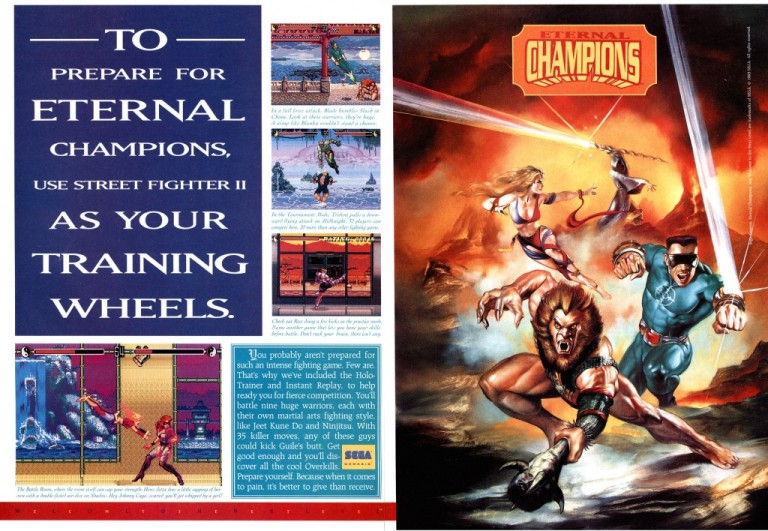
2.  Eternal Champions print ad

This 2-page print ad appeared in many comic books and some magazines that I read long ago.

Back in the 1990s, the fighting game genre became wildly popular with gamers at the arcades and on consoles at home. Capcom literally sparked a wild fire with the Street Fighter II game and its upgraded editions, and other companies went on to make their own 2D fighting games to cash in. Sega was one of them and they released their own 2D fighting game Eternal Champions for the Sega Genesis console.

Unsurprisingly, the game was marketed aggressively and this 2-page print ad really stood out as it had the great looking painted art on the right, screenshots and details of the game, and most notably made a sarcastic reference to Street Fighter II. Eternal Champions sold enough copies, it led to the release of the sequel Eternal Champions: Challenge from the Dark Side and two spin-off games. I can only guess that referencing Street Fighter II was helpful in achieving commercial success.

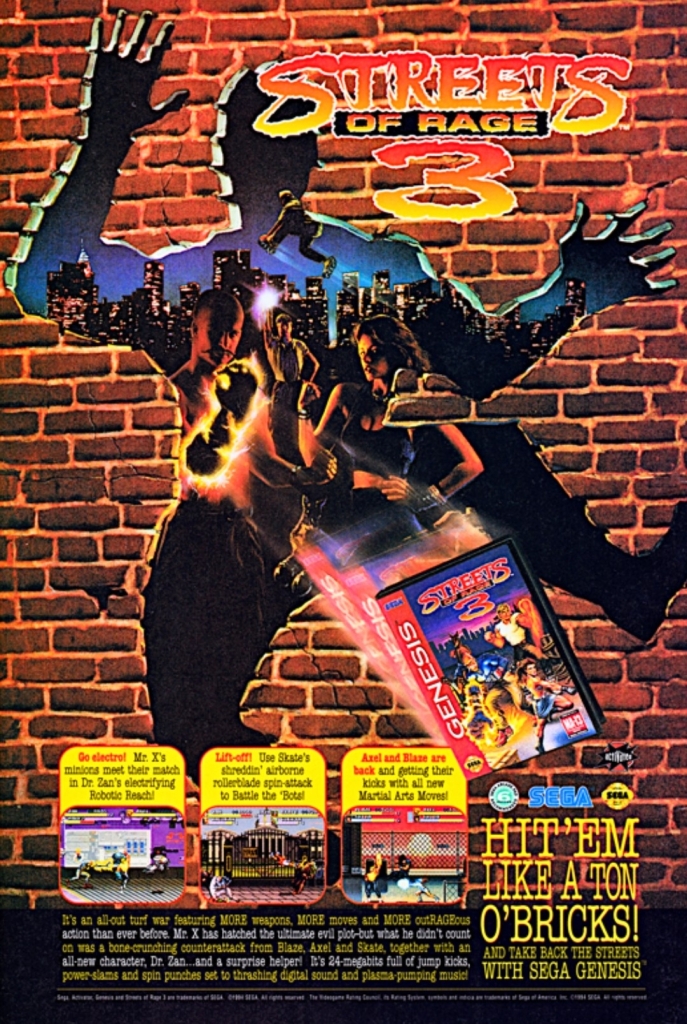
3. Streets of Rage 3 print ad

This ad caught my attention easily when I saw it in comic books I read.

Streets of Rage (Japanese title: Bare Knuckle) was one of the most defining game franchises Sega came up with and it started on the Sega Genesis console. It was a series of side-scrolling, 2D beat-them-up games that ensured action and excitement for gamers. As the first two games were critically and commercially successful, Sega was confident in aggressively marketing Streets of Rage 3 and the print ad seen had a very attention-grabbing artwork.

The artistic style emphasized power and intensity as it shows a damaged wall with the shape of a human body (symbolizing that someone was thrown through it) and then there were images of people on the other side. The game went on to attract mostly positive reviews although it paled in comparison to its predecessors in terms of sales.

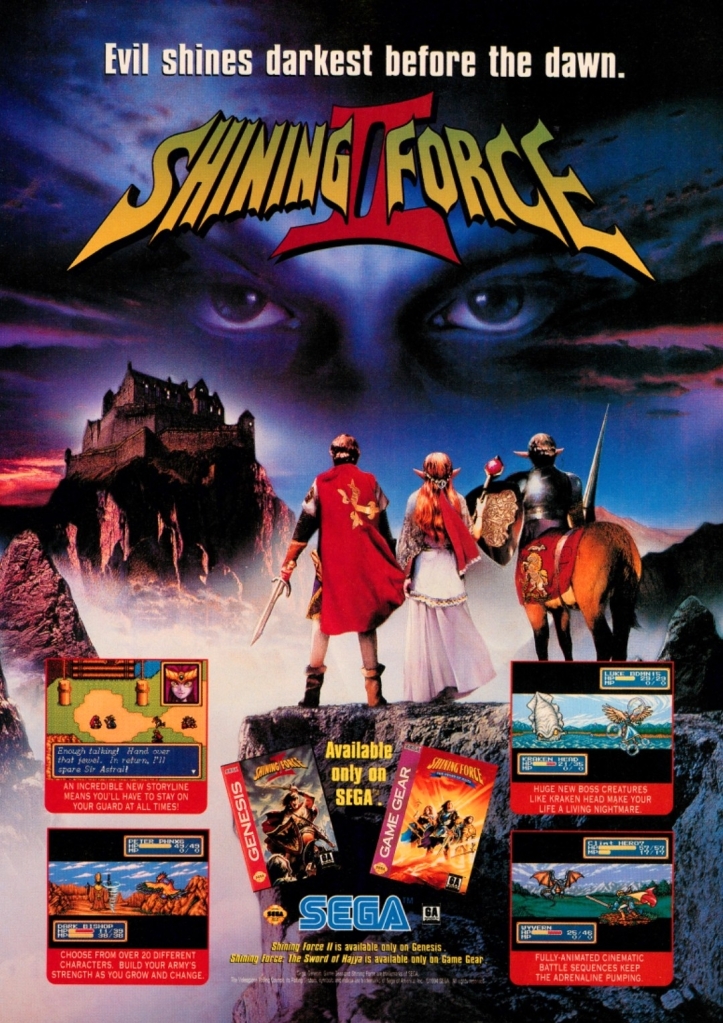
4. Shining Force II print ad

The first time I saw this ad, it made me interested to buy a Sega Genesis console to play it.

As Sega was so prolific with making and releasing games across different genres, they had their own tactical role-playing game series with Shining Force and the first game released on the Sega Genesis was a critical and commercial success. That being said, the company was confident with releasing Shining Force II on the same console more than a year later achieving critical and commercial success.

The North American print ad of the game had a visual presentation that closely captured the foreground-background style (characters facing the distance) used in-game, and the advertising team use photographic imagery to achieve a fantasy look. Very cleverly, Sega inserted the Sega Game Gear title Shining Force Shining Force: The Sword of Hajya into the ad. This print ad made me interested in acquiring a Sega Genesis for Shining Force II.

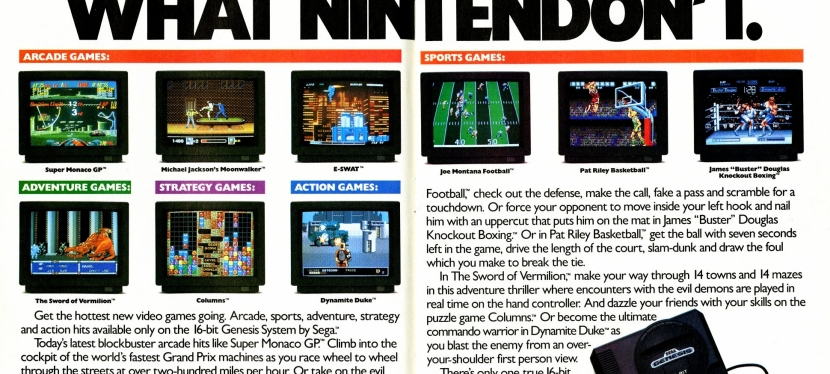
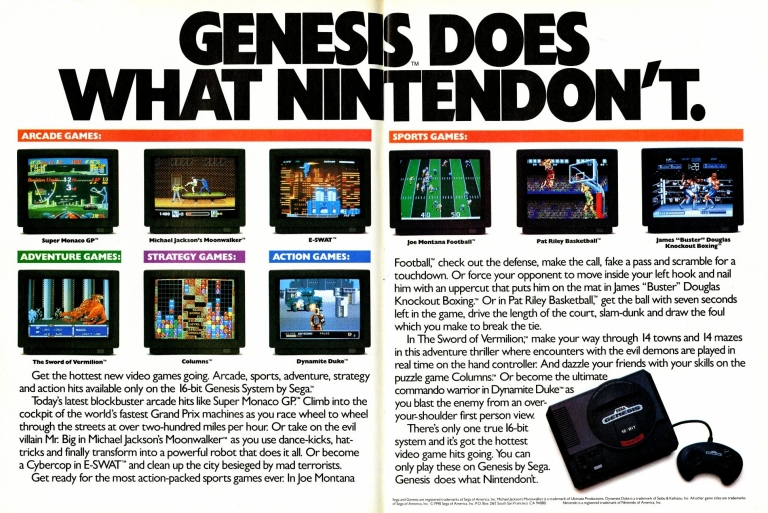
5. Genesis does what Nintendon’t print ad

With the famous line heavily emphasized, this print ad showed how bullish Sega really was in competing with Nintendo.

Now this print ad of Sega’s has the most definitive and best-known advertising line in the so-called 16-bit console generation: Genesis does what Nintendon’t. This was Sega’s aggressive marketing push to convince gamers to buy the Genesis console to play games and experience thrills of fun that they would not find on a Nintendo console at the time. Genesis was launched in America in 1989 with “16-bit” emphasized a lot, and the technological rival Super Nintendo Entertainment System (SNES) was released in the same market more than two years later.

The 2-year advantage helped Sega establish the Genesis as the next-gen machine for gaming at home and there were years in the 1990s when Sega’s console outsold Nintendo’s in America during the so-called 16-bit war. The Genesis also had lots of exclusive games plus strong software support from third-parties. While the SNES would eventually outsell the Genesis in other parts of the world, it was in America where Sega proved to be very competitive and successful. 

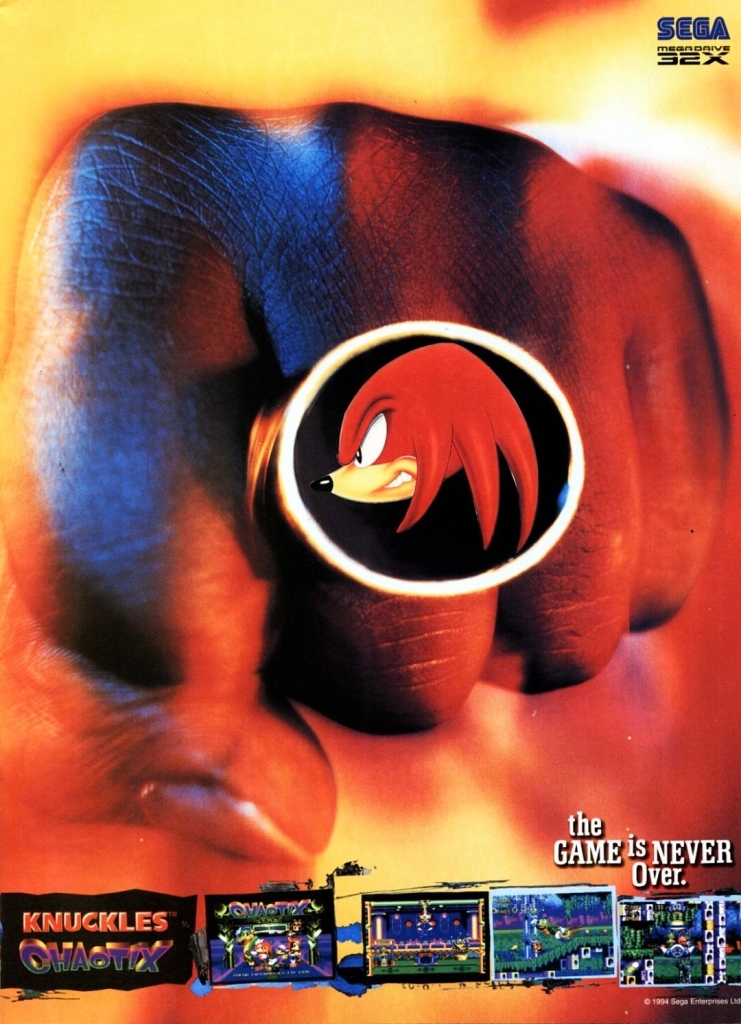
6. Knuckles’ Chaotix print ad

Sega was aggressive with marketing this game for the 32X.

In late 1994, Sega released in America and in Japan the 32X which was an add-on device for the Sega Genesis designed enhance its power while serving as a transition (a warm-up) into the so-called 32-bit era of console gaming. The 32X was the result of corporate decisions involving the American and Japanese executives of the company.

To keep 32X customers happy and boost hardware sales, Sega adjusted the development of Knuckles’ Chaotix (a Sonic spin-off) from being a Sonic project 32-bit console Sega Saturn into a standalone game for the add-on device. Even though Sega knew the game’s development was rushed, they went on to strongly promote the game and the print ad shown here was quite eye-catching.

The image of a fist with a ring showing the character Knuckles (a character from the Sonic games) emphasizes power and the colors used seem to express intensity. Then there were the selected screenshots shown without descriptive text. Although Sega tried hard, Knuckles’ Chaotix (launched in 1995) received mixed-to-positive reviews and sadly sold poorly. Unsurprisingly, the sales of the 32X dropped further and by then a lot of consumers knew that the Sega Saturn (the true successor to the Genesis) was all set to launch in America and Europe within 1995.

7. Sonic 3D Blast for Sega Saturn print ad

Too bad Sega and its teams failed to make the true Saturn Sonic game.

Back in the 1980s and 1990s, having a high-quality, console-exclusive game featuring a company mascot was crucial to sell game consoles while keeping dedicated fans happy. Like what Nintendo did with their icon Mario, Sega achieved great commercial success with the three Sonic the Hedgehog games they released exclusively on the Sega Genesis console and this naturally created expectations they would make new Sonic games on the Saturn console. Unfortunately, Sega and its teams failed to complete development of the Saturn-exclusive game Sonic X-treme and the company cancelled it which sent shockwaves through the games industry news.

With the 1996 holiday shopping season too crucial to ignore, Sega commissioned a Saturn version of the game Sonic 3D Blast which was originally made for the Genesis console. Sonic 3D Blast on the Saturn took seven weeks to make and there were some graphical enhancements implemented. While Sonic 3D Blast’s Genesis version attracted a positive reception from critics (and sold 700,000 copies), the reception for the Saturn version was mixed. This print ad of Sonic 3D Blast on Sega Saturn is a reminder of the company’s failed attempt to take their icon to the next-generation. They never replicated the big success they had with Sonic on the Genesis.

8. Die Hard Arcade print ad

Each time I saw this print ad, it easily reminded me of the classic action film of 1988.

Like many other movie franchises, Die Hard has many video game adaptations released through the decades. In 1997, Sega released Die Hard Arcade (Japanese title: Dynamite Deka) on the Sega Saturn and the game critics praised it for its fun gameplay as well as its flawless conversion of the arcade version (released in 1996). To say the least, the development history of Die Hard Arcade is not as straightforward as many would think. To get the details and explanations of the development of the game, click here.

As for the print ad itself, this one cleverly used official game art as the background with imagery which instantly reminded me of what I saw in the classic 1988 movie that starred Bruce Willis. This ad made me interested to buy a Sega Saturn or find a place to rent it to play the game.

9. Shenmue Japanese print ad

Simplistic with presentation and yet engaging to look at. The Dreamcast-exclusive Shenmue sold over a million copies in Japan alone.

When Shenmue was released exclusively on the Sega Dreamcast in Japan on December 29, 1999, it turned out to be a very mind-blowing experience for many gamers due to its ambitious game design, the intense attention to detail implemented, very high production values, in-depth exploration and very immersive gameplay.

It was the open-world game released at a time when “open-world” was not even a standard gaming term. Often called the masterpiece of the legendary game designer Yu Suzuki, Shenmue sold over 1.2 million copies in Japan and went on to be released worldwide in the months that followed. Sadly, the game failed to make a profit due to its very high budget of $70 million (which Suzuki himself said in English during an interview) and the fact that the number of Dreamcast units already sold to gamers was not massively high.

The Japanese print ad of Shenmue had a simplistic looking visual concept and yet it was engaging to look at because the way the characters appeared was how they appeared in the game during gameplay which was astounding. Take note that back in the 1990s, it was common for video game marketing materials to show human characters in high detail but in reality the polygonal models of those characters appeared looking blocky and much less detailed during gameplay.

+++++

Thank you for reading. If you find this article engaging, please click the like button below, share this article to others and also please consider making a donation to support my publishing. If you are looking for a copywriter to create content for your special project or business, check out my services and my portfolio. Feel free to contact me with a private message. Also please feel free to visit my Facebook page Author Carlo Carrasco and follow me on Twitter at  @HavenorFantasy as well as on Tumblr at https://carlocarrasco.tumblr.com/ and on Instagram at https://www.instagram.com/authorcarlocarrasco
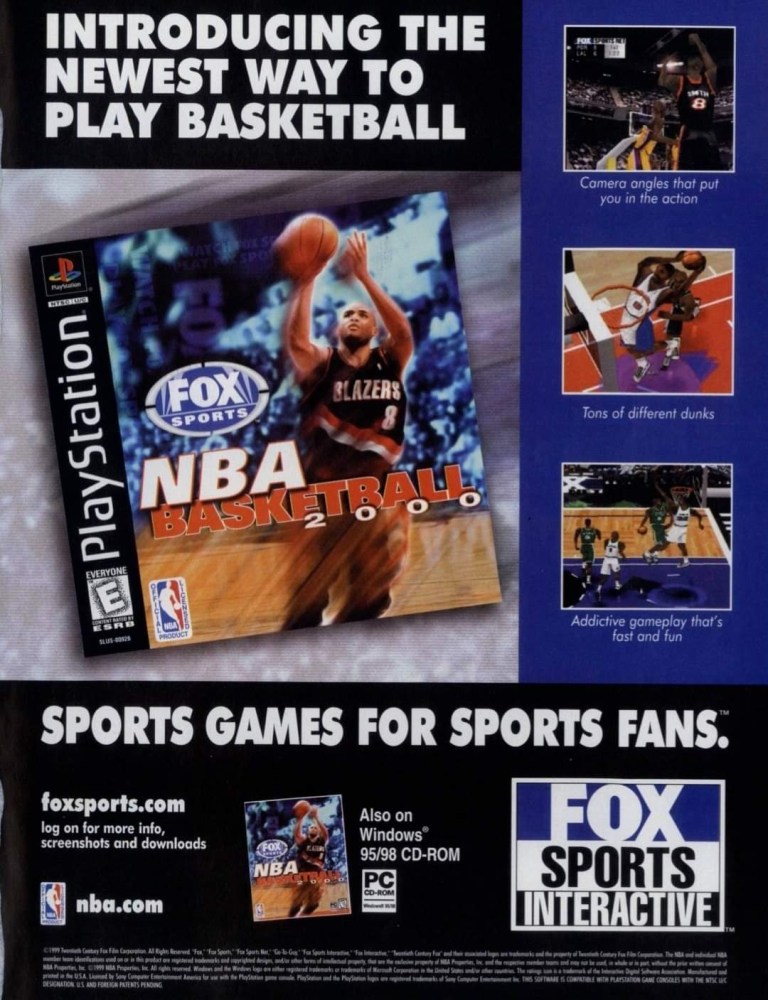
What to watch on YouTube right now – Part 15

Have you been searching for something fun or interesting to watch on YouTube? Do you feel bored right now and you crave for something to see on the world’s most popular online video destination?

I recommend you check out the following topics and the related videos I found.

Movie reaction videos by You, Me and the Movies – When it comes to watching movie reaction videos, I enjoy what the YouTube channel You, Me and the Movies posted. Go watch the five videos of theirs that I selected for your enjoyment. I also encourage you to visit You, Me and the Movies’ YouTube channel.

Minty Comedic Arts’ superhero trivia videos – In recent times, superhero movies from Hollywood became irrelevant and unexciting not because of the so-called superhero movie fatigue but because they are no longer made to be fun. That being said, now is a good time to look back at the enjoyable superhero movies from the past through Minty Comedic Arts’ trivia videos below. You will learn something new and do not forget to visit Minty Comedic Arts’ YouTube channel.

Looking back at the Sega Dreamcast’s American launch and legacy – It has been almost 25 years since the Sega Dreamcast console launched in the United States. The American launch turned out highly successful with almost $100 million in sales revenue achieved during the first 24 hours. For the newcomers reading this, there was a time when Sega had consoles and the Dreamcast was the last one they had before going all-in with multiplatform publishing of games. That being said, watch these videos of the Dreamcast.

Assorted videos of violations and reckless driving incidents of electric bikes (e-bikes) and electric tricycles (e-trikes) in the Philippines – For the international readers and newcomers reading this, the amount of electric bikes (e-bikes) and electric tricycles (e-trikes) here in the Philippines grew dramatically over the past ten years. Because of the many incidents as well as cases of careless or reckless driving of e-bikes and e-trikes that took place, authorities in the National Capital Region (NCR) or Metro Manila took action to have such electric vehicles regulated as well as banned from traveling along major roads and highways. Hopefully in the future, e-bike and e-trike riders will be required to have their electric vehicles registered and get themselves licensed to drive. To see the incidents, watch the videos below…

Rita Panahi and the Leftists who embarrassed themselves – We now move on to the more serious and real-world stuff. I can say that Rita Panahi and her segment titled “Lefties losing it” is easily the most engaging one to watch on Sky News Australia. Here you will see varied videos showing the recklessness, the shamelessness and craziness of the Leftists as captured on social media and news media. Watch and listen to the videos below…

+++++

Thank you for reading. If you find this article engaging, please click the like button below, share this article to others and also please consider making a donation to support my publishing. If you are looking for a copywriter to create content for your special project or business, check out my services and my portfolio. Feel free to contact me with a private message. Also please feel free to visit my Facebook page Author Carlo Carrasco and follow me on Twitter at  @HavenorFantasy as well as on Tumblr at https://carlocarrasco.tumblr.com/ and on Instagram athttps://www.instagram.com/authorcarlocarrasco