Retro Gaming Ads Blast – Part 16

Welcome back readers, fellow geeks and electronic gaming fans!

In this edition of the Retro Gaming Ads Blast (RGAB) series, we will take a look at another batch of retro gaming print ads – including arcade flyers – from the 1980s and 1990s.

For the newcomers reading this, Retro Gaming Ads Blast (RGAB) looks back at the many print ads of games (console, arcade, computer and handheld) that were published in comic books, magazines, flyers and newspapers long before smartphones, social media, the worldwide web and streaming became popular. To put things in perspective, people back in the 1980s and 1990s were more trusting of print media for information and images about electronic games and related products.

With those details laid down, here is the newest batch of retro gaming print ads for you to see and enjoy…

1. A-Jax North American arcade flyer
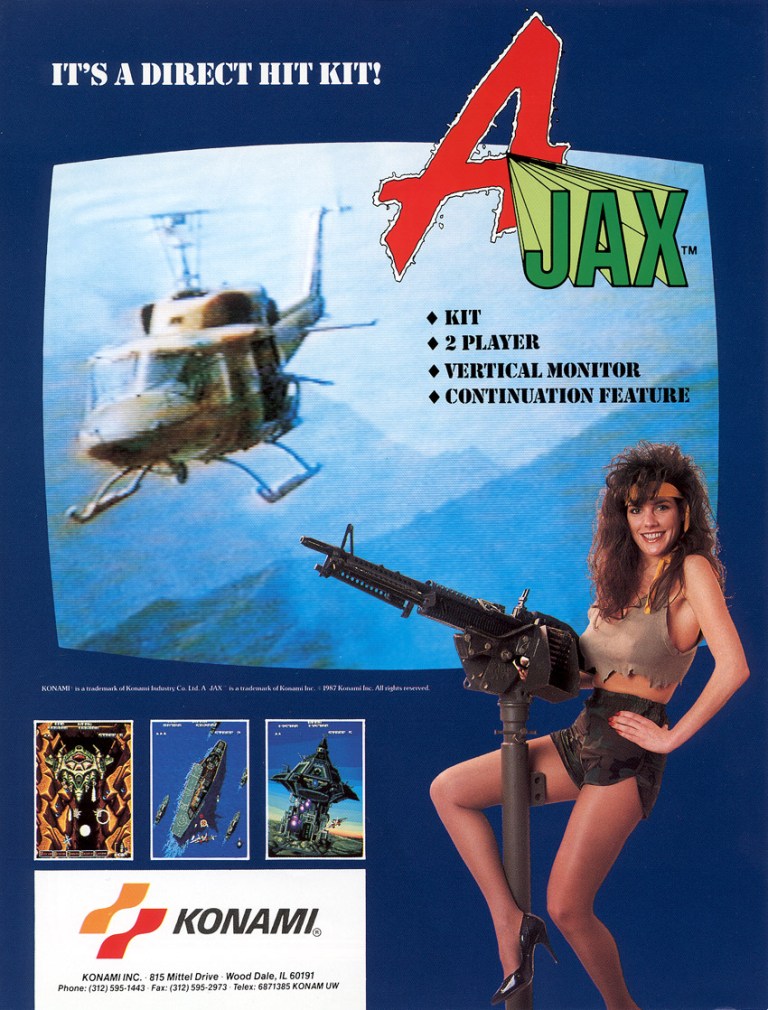
Another one of Konami’s arcade flyers showing a pretty fashion model with a touch of militarism.

A-Jax (also referred to as Ajax) is another one of the many military themed games Konami released for the arcades in the 1980s. It was a 2D vertically scrolling shooter in which players use aircrafts to shoot enemies both in the air and on the ground. The game was a hit in Japanese arcades and Konami came up with the North American arcade flyer showing three screenshots, an archive footage shot of a military helicopter and a sexy lady (with a light military look) with a machine gun. The style of presentation was similar in style with the North American arcade flyers of Contra and M.I.A.: Missing in Action.

2. The Combatribes print ad
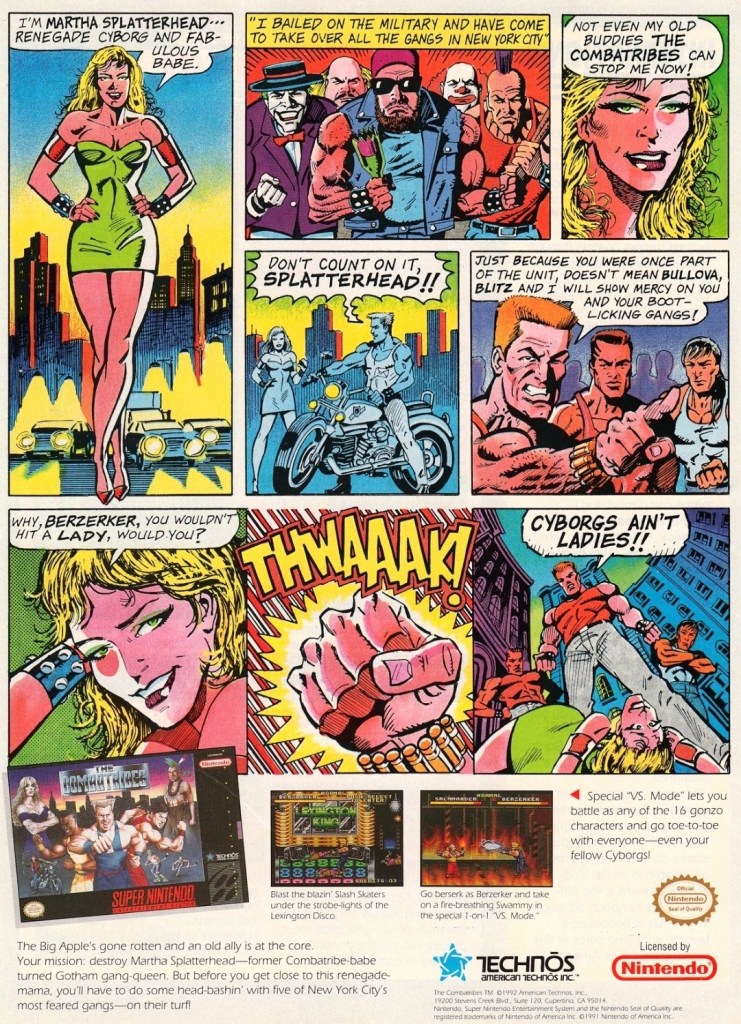
The short comic book approach was used to emphasize the setting and concept of the video game.

Technos, the Japanese company behind the wildly popular Double Dragon games franchise, proved to be successful with the arcade release of The Combatribes. In an attempt to keep the wave of success moving, Technos released The Combatribes on the Super Nintendo Entertainment System (SNES) in 1992 and someone involved with the North American marketing came up with the idea of creating a comic book-style presentation for the print ad. Creatively speaking, the comic book approach was done to emphasize the story and visual concepts of the game, and entice readers to play it. By today’s standards of video game marketing, this print ad’s approach is both unusual and notable.

3. Dead or Alive 2 Dreamcast port print ad
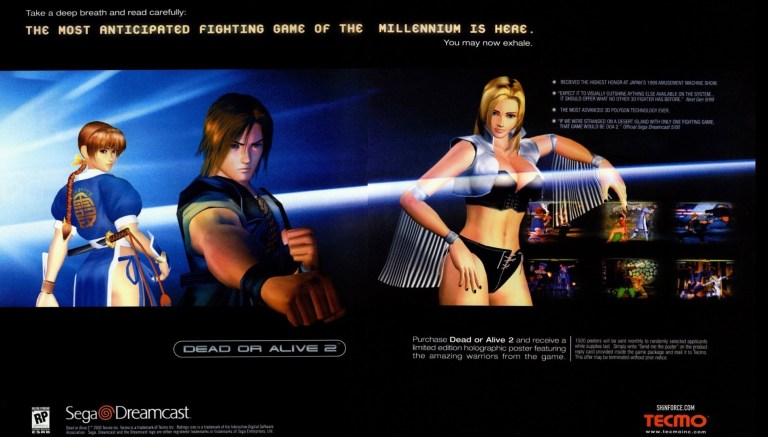
This was a wide print ad that appeared on magazines and it sure was eye-catching. It was an effective way to promote the game and inform people of the Sega Dreamcast’s presence in the market.

When Dead or Alive 2 was released in the arcades in 1999, a lot of gamers were astounded by it as developer Team Ninja (led by Tomonobu Itagaki) made it much bigger and a lot better than its 1996 predecessor. Team Ninja really went all out making the sequel utilizing Sega’s NAOMI arcade technology, inviting martial artists to do motion-capture, and having a very ambitious game design. Since the game was developed with the NAOMI hardware, porting the game for the Sega Dreamcast was reportedly convenient and smooth for the developers who went on to add more gameplay features and modes. Publisher Tecmo came up with this wide print ad (promoting the Dreamcast release) showcasing three characters, six screenshots and text descriptions emphasizing the universal acclaim the game received. The promotional approach was simple yet effective.  

4. Jet Moto (PC version) print ad
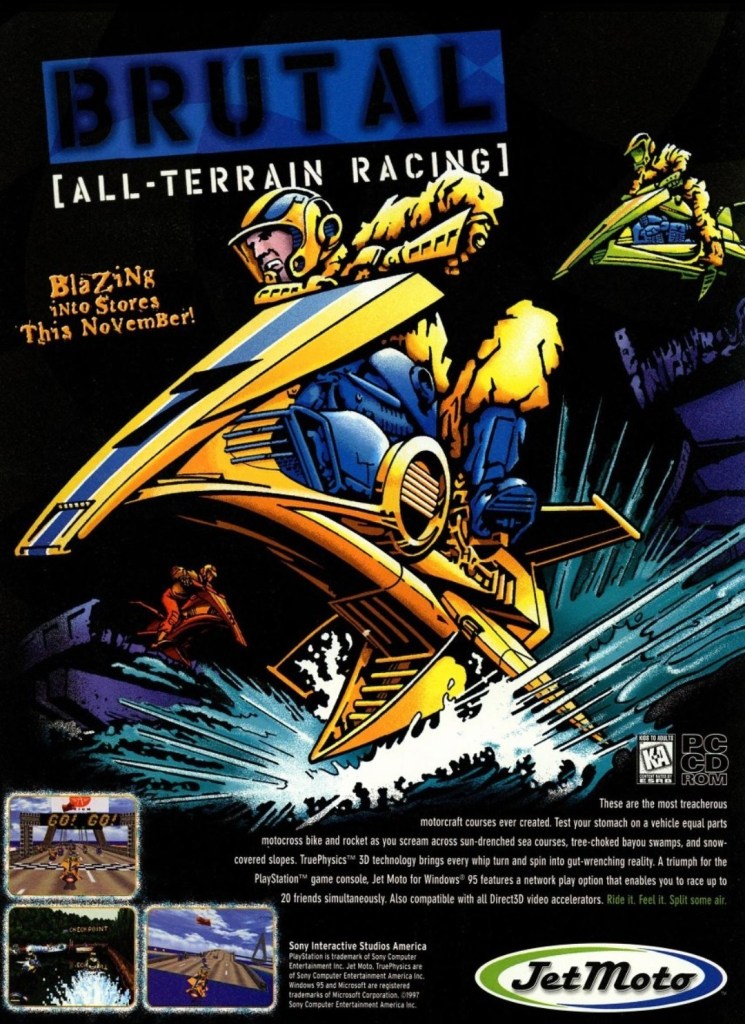
From PlayStation to PC.

In November 1996, the futuristic all-terrain hoverbikes racing game Jet Moto was released on the PlayStation which went on to sell well and attract mostly positive reviews. Sony Computer Entertainment eventually released a version of the game for the personal computer (PC) in November 1997. As seen in the above print ad, the network play option and compatibility with Direct3D video accelerators were emphasized as such features resonated with the interests of PC gamers of the era. This print ad showed how willing Sony was to release PlayStation hits on PC back then.

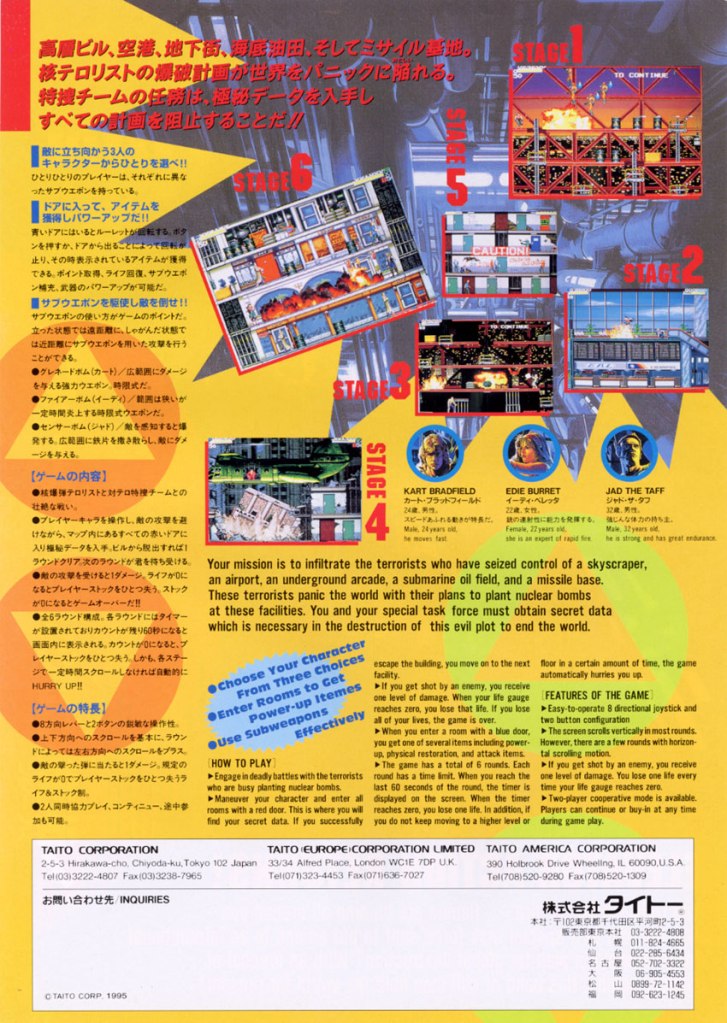
5. Elevator Action Returns Japanese arcade flyer
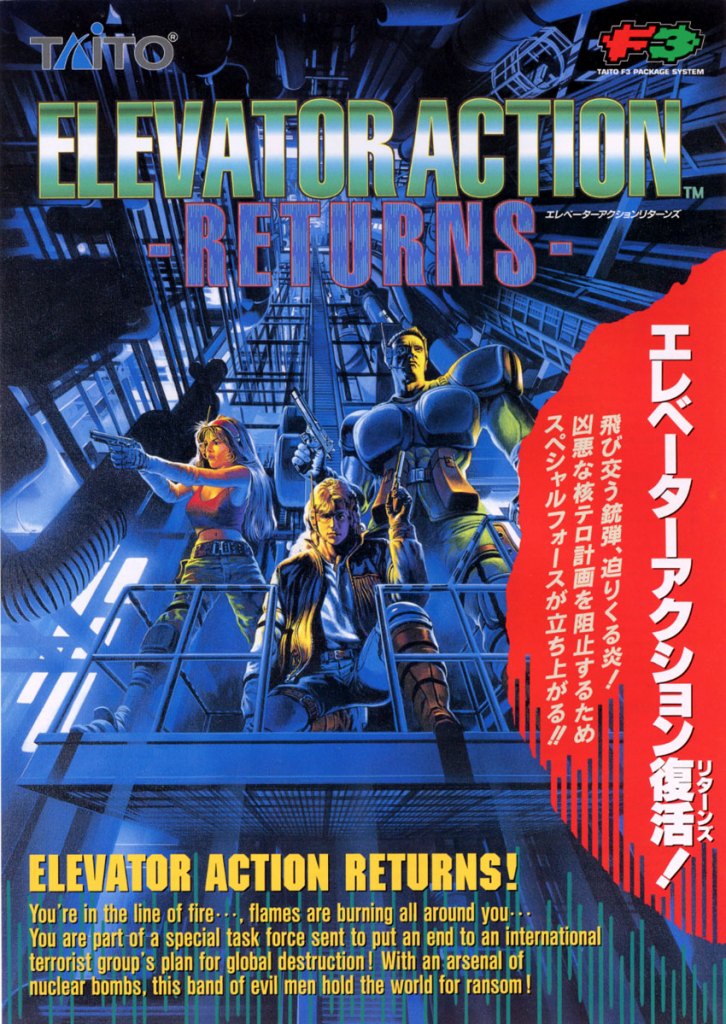
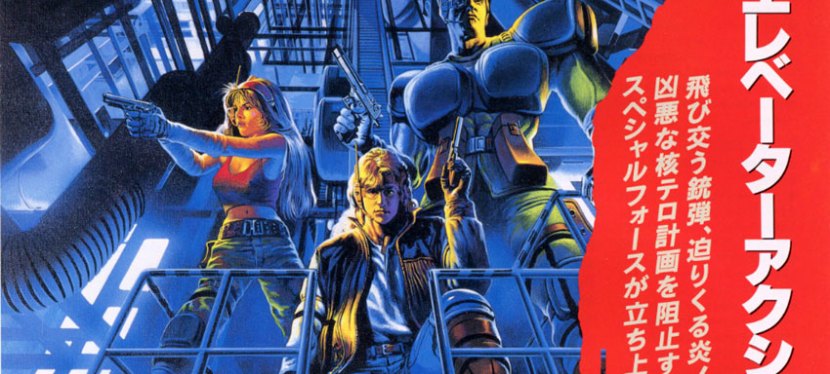
Great looking art on the front.
The rear of the flyer.

When Taito released Elevator Action Returns (also titled as Elevator Action II in other nations) in the arcades in 1994, it became a hit as gamers enjoyed its action-packed gameplay, ambitious 2D visual presentation and varied level designs that clearly went beyond its 1983 predecessor. The front of the Japanese arcade flyer has really nice art showing the three playable protagonists on an elevator on their way to do their mission. The back of the flyer shows screenshots (which emphasized the varied level designs), text descriptions explaining how the game played (English version printed), and what the features are. Another text description confirmed that terrorists are the antagonists that players will be dealing with which was reflective of the rise of Islamic terrorism in the 1990s. Oh yes, if you look closely you will the word “item” misspelled as “items”.

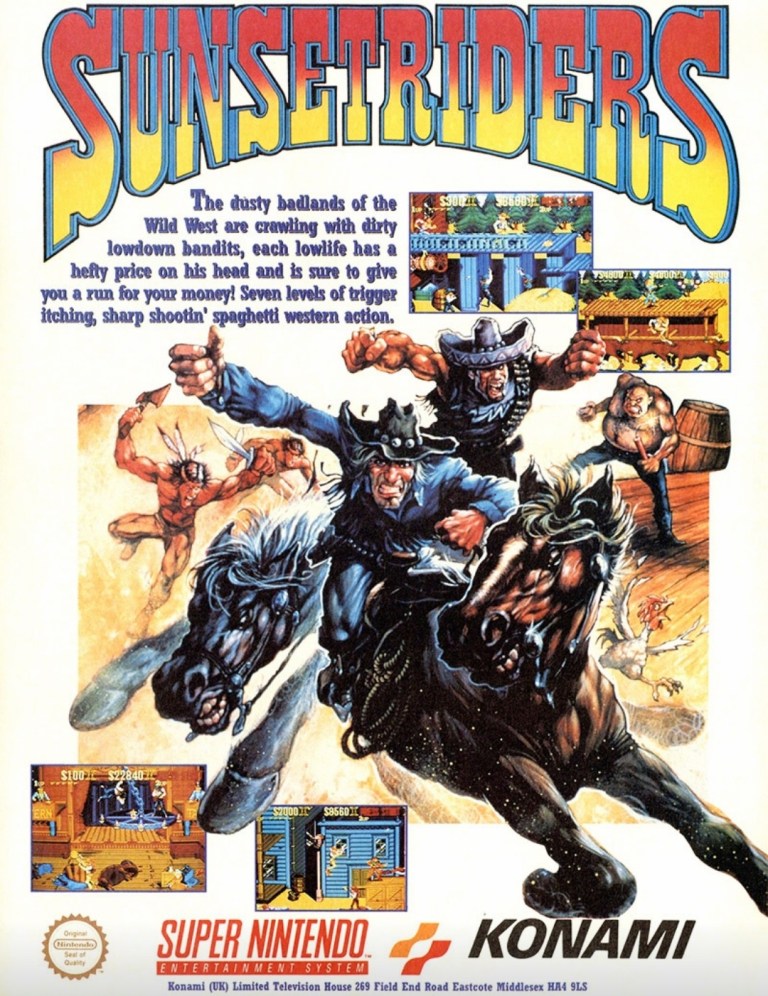
6. Sunset Riders print ads
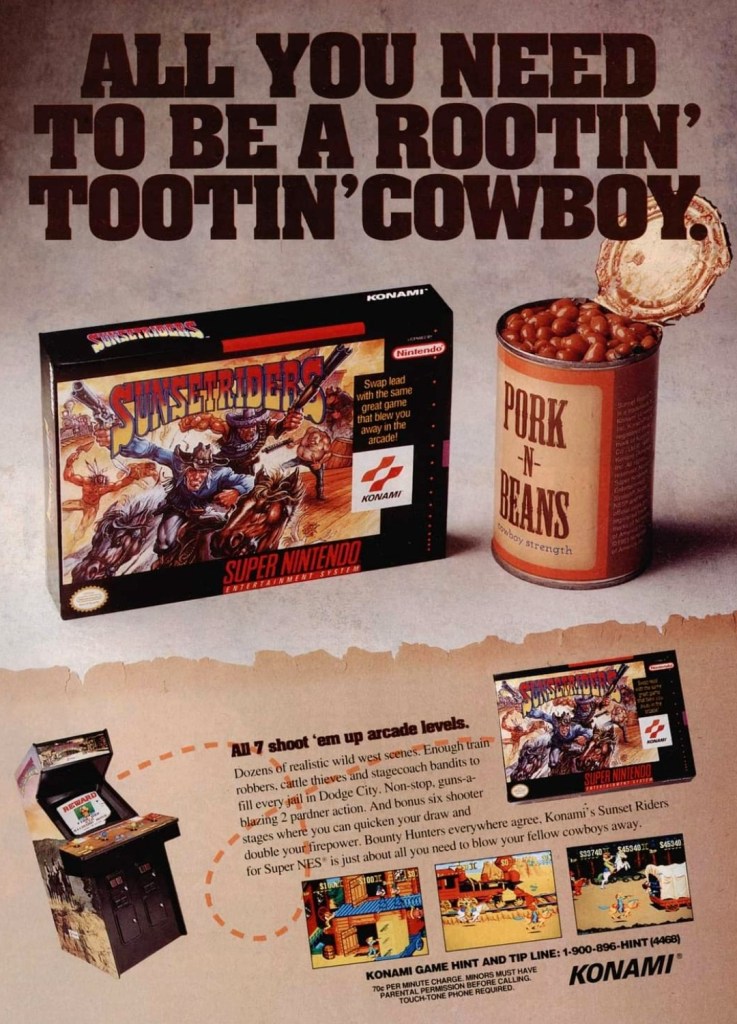
The Sunset Riders arcade machine, the SNES version, screenshots and a can of pork-and-beans on this ad.
This print ad appeared in some comic books I read long ago.

After enjoying a lot of success in the arcades with their 1991 game Sunset Riders, Konami went on to release ports of it to the Sega Genesis in 1992 and the Super Nintendo Entertainment System (SNES) in 1993. With regards to conversions and procedural/artistic changes between the arcade and console ports, the SNES version had few changes implemented compared to the one released on the Genesis. As seen in one of the print ads of Sunset Riders on SNES, it came with 7 arcade levels, 2-player mode and additional shooter stages. What the print ads did not reveal were notable replacements of specific characters in key parts of the game such as the dynamite-tossing female bandits getting replaced by male bandits, North American Indian villains getting replaced with outlaws, etc.  

7. Jackal Japanese arcade flyer
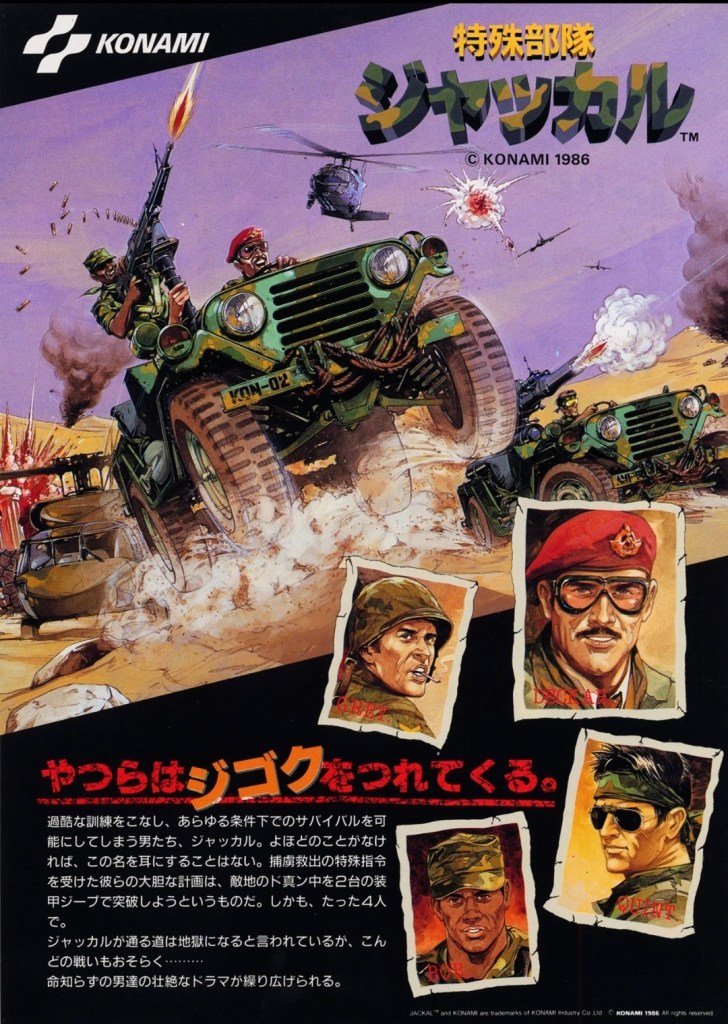
Whoever was the artist Konami hired truly delivered great-looking art!

Konami’s military themed game Jackal (Japanese title: Tokushu Butai Jackal) debuted in Japanese arcades in October 1986 and became a hit. The Japanese market arcade flyer had great looking artwork on the front that strongly emphasized the very concept of the game (players move military jeeps to shoot at enemies as they move into enemy territory). One of the characters (the one wearing the red beret) somewhat resembles the late Sean Connery which only shows that someone within Konami’s development team took inspiration from movies. This arcade flyer’s front still looks great.

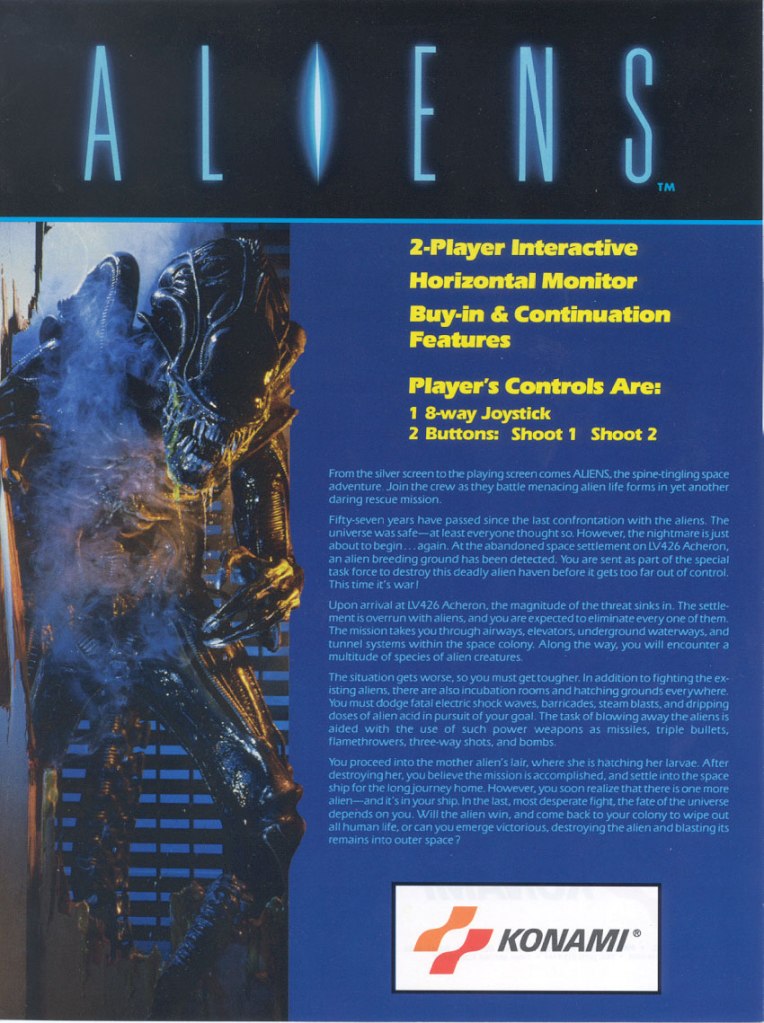
8. Aliens North American arcade flyer
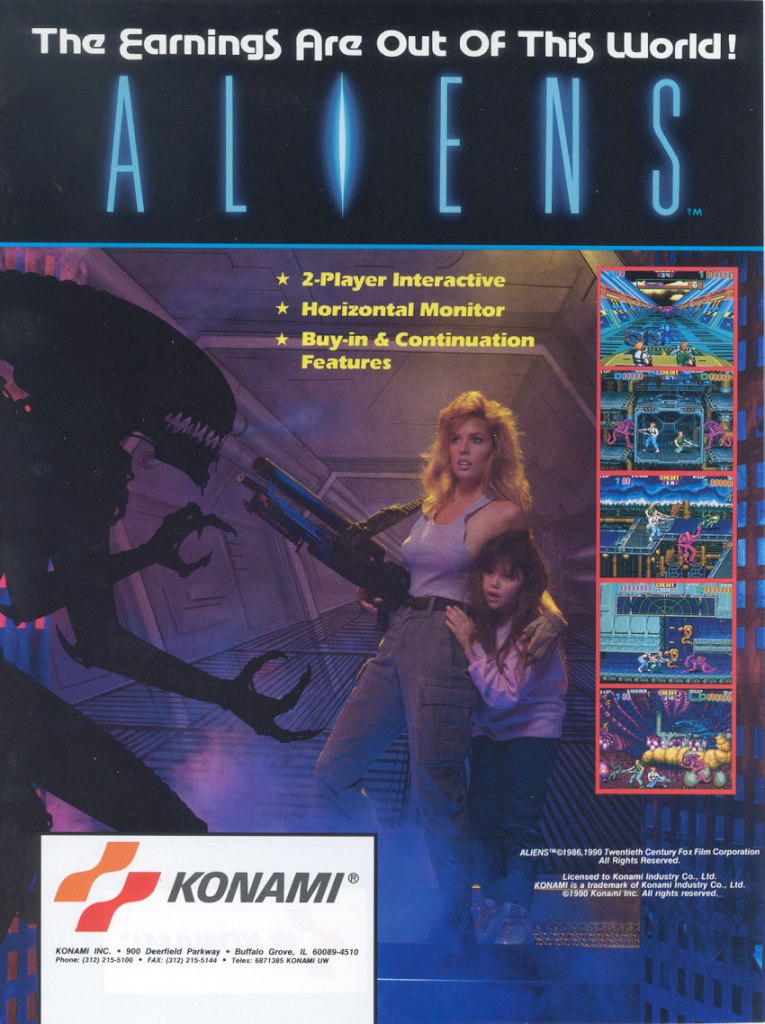
A good amount of effort was done to truly capture Aliens’ concept using hired models (as Ripley and Newt), a Xenomorph physical model and a suitable background.
The key details presented on the rear of the flyer. The Xenomorph’s presence adds tension.

In 1990, Konami released their ambitious arcade game Aliens which was loosely based on the 1986 movie that starred Sigourney Weaver and was directed by James Cameron. As Konami’s Aliens license was only temporary and the movie was so highly regarded, the Japanese company’s marketing team really had to exert extra effort to truly capture the film’s sci-fi horror concept in order to make a strong presentation towards arcade operators and their paying customers (the gamers).

Apart from showing screenshots on the front, the creative team hired a blonde model as Ellen Ripley holding a gun and a young girl as the character Newt, and have them pose convincingly in front of a Xenomorph model (darkened in the foreground). On the back of the flyer, the team heavily revealed the details using the text description to emphasize the gaming experience and story concept. The technical details, meanwhile, were presented in simplistic, easy-to-follow fashion. Aliens was a smash hit in the arcades and there are long-time gamers who regard it as one of the best game adaptations of the 1986 movie. This arcade flyer is a strong reminder that the featured game was never ever ported to any game console nor to any personal computer.

+++++

Thank you for reading. If you find this article engaging, please click the like button below, share this article to others and also please consider making a donation to support my publishing. If you are looking for a copywriter to create content for your special project or business, check out my services and my portfolio. Feel free to contact me with a private message. Also please feel free to visit my Facebook page Author Carlo Carrasco and follow me on Twitter at  @HavenorFantasy as well as on Tumblr at https://carlocarrasco.tumblr.com/ and on Instagram at https://www.instagram.com/authorcarlocarrasco
I am having fun playing Grandia again on my Xbox Series X

Welcome back Xbox fans, geeks and gamers!

After enjoying the big reveals and surprises of the Xbox Games Showcase this past June, things went downhill in recent times. For one thing, I really don’t like the changes Microsoft is implementing on Xbox Game Pass (click here and here to learn the details). With regards to new Xbox stuff this year, the fantasy role-playing game Avowed has been delayed to February 2025 while Indiana Jones and The Great Circle still has no firm 2024 release date as of this writing.

When it comes to games I’ve been playing a lot with my Xbox Game Pass (XGP) subscription, Eiyuden Chronicle: Hundred Heroes was recently patched but it still did not solve the game crashing and shutdown on my Xbox Series X. Rabbit & Bear and 505 Games still have a lot more work to be done to significantly fix and improve Eiyuden Chronicle: Hundred Heroes on Xbox Series X.

My Xbox enjoyment improved when I started playing the original Grandia after purchasing Grandia HD Collection on the Xbox online store. For the newcomers reading this, Grandia HD Collection contains Grandia (released on PlayStation and Sega Saturn) and Grandia II (released on Dreamcast and PlayStaion 2) and those games have remastered visuals with high-definition TVs (HDTVs) in mind. In my experience, I played and finished Grandia on the original PlayStation console way back in 1999. I never played its sequel but will do so some time later.

As soon as I downloaded Grandia HD Collection on my Xbox Series X, I started playing Grandia for the first time in decades but with HD visuals and other refinements.

Developer Game Arts did amazing work creating the fantasy world and visual concepts that made Grandia a special game to play.

After watching a nice introduction (in animation), the story started with a short scene introducing Mullen, Lieutenant Leen and their superior General Baal. After that, the game’s focus shifted to the port town of Parm with a stylish floating camera sequence showcasing in real-time the polygonal location and the inhabitants (presented as detailed 2D animated bitmap sprites). Shortly after, the youngling Sue and the aspiring adventure Justin got introduced.

As of this writing, I played Grandia for several hours and already surpassed the End of the World (the wall that separated the initial world from the mysterious other. I already have Justin, Sue, Feena and Gadwin in my party.

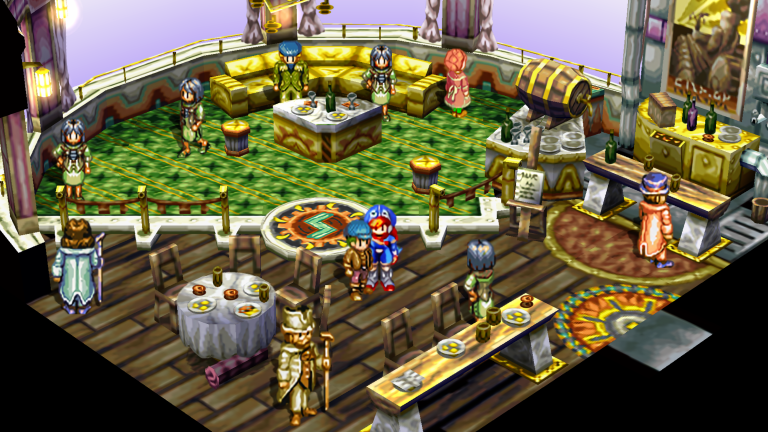
This is the lounge for the upper class passengers on board a ship. Grandia is a fine example of combining 2D sprites with detailed polygonal environments.

Much early during my playthrough – specifically before witnessing Feena’s first appearance – I had fun rediscovering the unique locations Game Arts created. The town of Parm is a pretty unique location to start the game with. The Sult Ruins were designed with with sneaking and adventuring in mind. Through these and other locations, you will see how creative the game developers really were when it came to world-building as well as giving each location its own unique style and feel.

Because it had been so long since I finished this old Japanese role-playing game (JRPG), I had to orient myself with the game’s functions using the Xbox Series X controller and the technical options that came with the software. I quickly got used to the way the characters’ moved (in response to the controller), the way I was able to move the in-game camera around and how the functions responded to the buttons pressed. In just a few minutes, the Grandia gameplay familiarity came back to me.

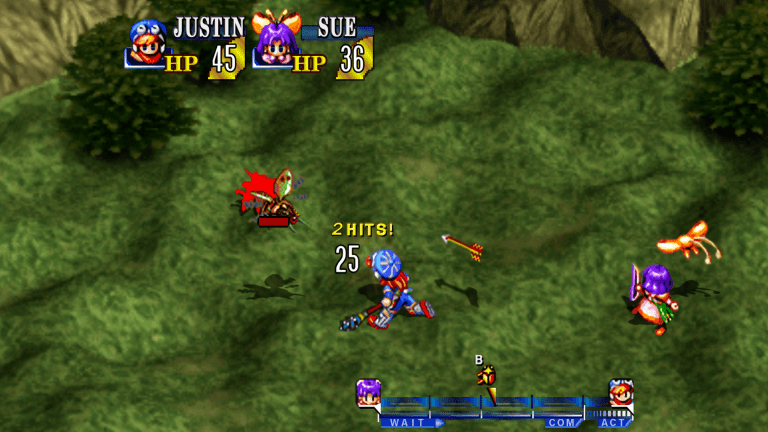
Battles are always fun to play and grinding (playing many battles to gain experience points to level up) is not as stressful when compared to other JRPGs.
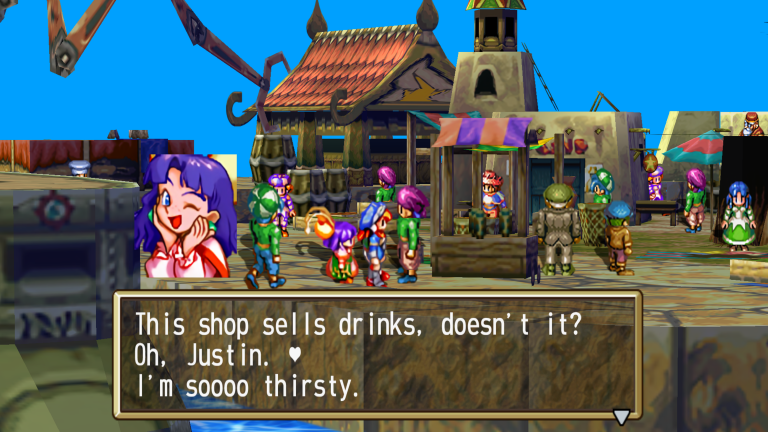
Game Arts came up with clever views of a local community like this to give gamers a unique look of this part of the game’s world.

Oh yes, the battles are still a lot of fun to play! During battles, there is this bar on the lower part of the screen showing the icons of your characters and monsters/enemies moving from left to right. Once the icon reaches a crucial point at the right, the game will enable you to take your turn and decide which action to execute. Once you made your choice of action, your character will be animated accordingly. It should be noted that striking enemies will not only reduce their hit points but also delay the flow of their icons on the bar. As such, battles can be strategic with regards to the actions you take and which enemy you targeted.

With regards to leveling-up, you don’t just gain experience points to develop and improve your playable characters. You will also improve their use of weapons and magic as they involve leveling-up. Along the way, you will get opportunities to acquire weapons and armor, and you can have different types of magic implemented into your character with the use of the Mana Eggs. The freedom of choice is clearly evident in the gameplay.

In addition to enjoying the gameplay and options, I appreciate the Game Arts’ approach on telling the story, the light-hearted way of presenting the characters and how they implemented creative pay-offs to the build-ups that preceded them. I also enjoyed the many visual concepts the developers came up with to make Grandia’s fantasy world, cultures and people come to life.

While I am still several hours away from finishing Grandia again, I can say that my current enjoyment of is literally returning with a vengeance and it helped me forget about the Xbox-related disappointments.

Right now, I am enjoying Grandia in HD and I intend to finish it again.

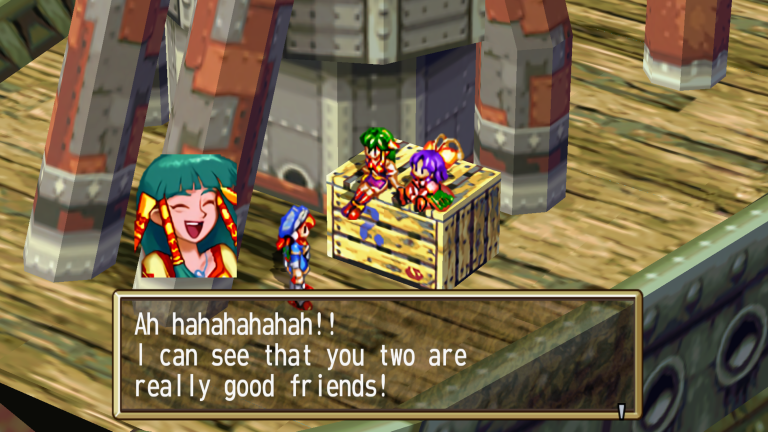
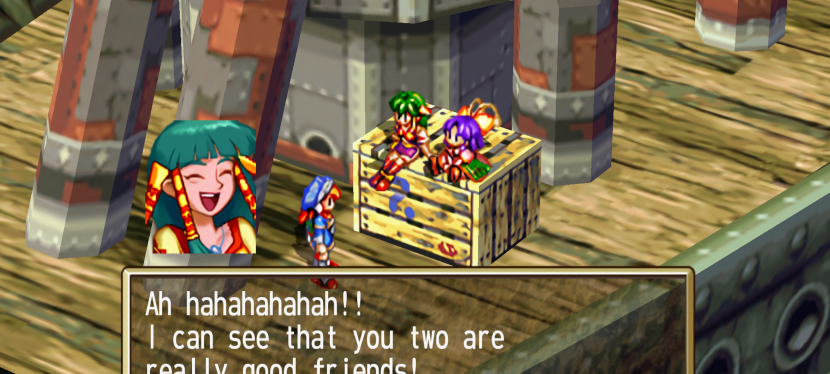
Feena with Sue and Justin. These characters are memorable and amusing to watch.

To buy a copy of Grandia HD Collection, Xbox fans and gamers should click https://www.xbox.com/en-us/games/store/grandia-hd-collection/9n4nlqhx6j18

+++++

Thank you for reading. If you find this article engaging, please click the like button below, share this article to others and also please consider making a donation to support my publishing. If you are looking for a copywriter to create content for your special project or business, check out my services and my portfolio. Feel free to contact me with a private message. Also please feel free to visit my Facebook page Author Carlo Carrasco and follow me on Twitter at  @HavenorFantasy as well as on Tumblr at https://carlocarrasco.tumblr.com/ and on Instagram athttps://www.instagram.com/authorcarlocarrasco

What to watch on YouTube right now – Part 29

Welcome back, my readers, YouTube viewers and all others who followed this series of articles focused on YouTube videos worth watching. Have you been searching for something fun or interesting to watch on YouTube? Do you feel bored right now and you crave for something to see on the world’s most popular online video destination?

I recommend you check out the following topics and the related videos I found.

#1 Darlene Zschech’s newest worship music videos  – In recent times, pastor Darlene Zschech released through her official YouTube channel the latest worship music videos of the songs Testament, Shout to the Lord and Cry of the Broken. For the newcomers reading this, Darlene Zschech is a Christian worship leader as well as an accomplished worship musician. She is based in Australia and she and her husband are with Hope Unlimited Church (HopeUC). She is a truly anointed woman of the Lord God and you can learn more about her by visiting her official website. Enjoy the worship music videos below.

#2 Grandia retrospective videos  – I had a lot of fun playing and completing the Japanese role-playing game Grandia on PlayStation way back in 1999. I recently bought Grandia HD Collection which has Grandia and the sequel Grandia II (this I have yet to play) with enhanced visuals. That said, I have been replaying Grandia on my Xbox Series X and I can say that I am enjoying it. The gameplay features, the game design, the writing and visual presentation of Grandia have aged well. To get to know more about Grandia, watch the selected videos below.

#3 HolyLandSite’s newest Mount of Olives tour video – HolyLandSite published their latest video about their Mount of Olives tour in Israel. This time around, the video includes Mary Magdalene Church, Tomb of Prophets, the Chapel of Ascension and other sites. To truly grasp the relevance of this video of HolyLandSite, you must have strong faith in the Lord and in His Word. Be aware that as the world turns chaotic and more people turn to evil, Rapture could happen anytime and that means the return of Lord Jesus will follow. I encourage you to watch the video with faith and you will realize it is more than a tourism video. Pay close attention to the bible teachings.   

#4 Popcorn in Bed’s sports-related movie reaction videos – Recently, YouTuber Popcorn in Bed published two movie reaction videos that happened to be sports-related. One was about ice hockey and the other was about running and the 1924 Olympic Games. While the films Miracle and Chariots of Fire are inspiring, be mindful that creative liberties were taken at the expense of historical accuracy which is often the case with movies. Still, Popcorn in Bed’s reactions are amusing to watch and II encourage you watch the videos below.

#5 Rocky (1976) movie reaction/review videos – Still on the topic of sports-related movies, Sylvester Stallone’s Rocky is arguably the most iconic of them all. Not only did it bring fame to Stallone, it also won the Academy Award for Best Picture and was selected by the Library Congress for preservation in the United States National Film Registry for being “culturally, historically, or aesthetically significant”. Naturally, Rocky has been featured in a lot of movie reaction/review videos and you can watch some of them below.

#6 Israel’s Prime Minister points to terrorist state Iran and its useful idiots – During his speech to the United States Congress (both lower and upper houses of Congress) in Washington, D.C., Israeli Prime Minister mentioned the truth about terrorist state Iran which has terrorist proxies around the Middle East as well as many brainwashed supportive protesters (the useful idiots) composed of Islamists, Communists, socialists, Marxists, liberals, the woke and other Islamo-Leftist elements. Netanyahu is correct that Iran’s axis of evil exists and there is a clash between civilization and barbarism (this points to Iran, the terrorists and woke extremists who support terrorism). It is also clear that all the people who hate Israel and sided with Islamic terrorists are on the wrong side and God is watching. Watch and learn from the video below.

+++++

Thank you for reading. If you find this article engaging, please click the like button below, share this article to others and also please consider making a donation to support my publishing. If you are looking for a copywriter to create content for your special project or business, check out my services and my portfolio. Feel free to contact me with a private message. Also please feel free to visit my Facebook page Author Carlo Carrasco and follow me on Twitter at  @HavenorFantasy as well as on Tumblr at https://carlocarrasco.tumblr.com/ and on Instagram athttps://www.instagram.com/authorcarlocarrasco

Retro Gaming Ads Blast – Part 7 (Sega Special)

Welcome back readers, fellow geeks and electronic gaming fans!

In this edition of the Retro Gaming Ads Blast (RGAB) series, we will examine print ads of Sega from the 1990s which was a notable period of time when they went from being a prominent video game company into a desperate, struggling entity by the end of the decade. All the Sega ads in this edition are promotions of their own video games that were exclusive to their consoles during the 1990s.

For the newcomers reading this, Retro Gaming Ads Blast (RGAB) looks back at the many print ads of games (console, arcade, computer and handheld) that were published in comic books, magazines, flyers and newspapers long before smartphones, social media, the worldwide web and streaming became popular. To put things in perspective, people back in the 1980s and 1990s were more trusting of print media for information and images about electronic games and related hardware.

With those details laid down, here is the newest batch of retro gaming print ads for you to see and enjoy…

1. Phantasy Star IV print ad

This was the last single-player Phantasy Star game released. There is no sign of Sega revisiting the franchise for another single-player experience.

Long before the emergence of online console gaming that involved a high number of players, Sega released Phantasy Star IV for the Genesis console in America in 1994 which was praised by gamers and critics. This one also turned out to be the last single-player role-playing game (RPG) of the Phantasy Star series as Sega eventually turned it into a series of online RPGs since the year 2000.

This print ad is significant because a lot of gamers today are not aware that Phantasy Star started as a series of single-player RPGs the same year Final Fantasy debuted in Japan. Anyone interested to play Phantasy Star IV on a modern console should buy the Sega Genesis Classics collection. 

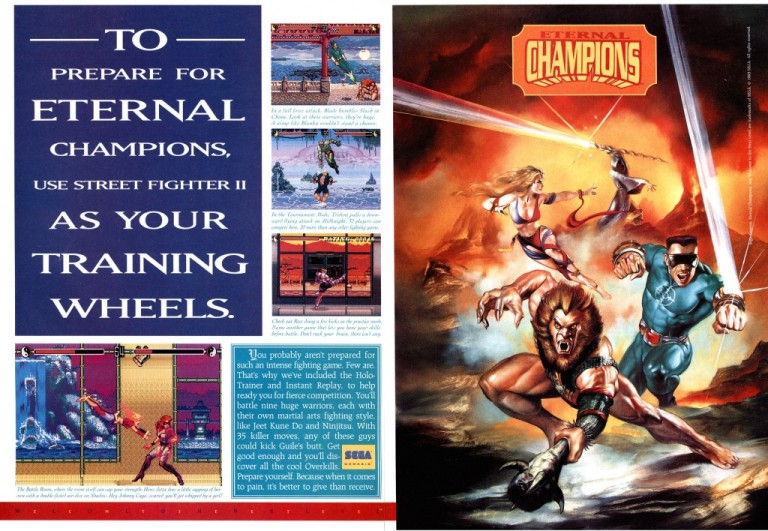
2.  Eternal Champions print ad

This 2-page print ad appeared in many comic books and some magazines that I read long ago.

Back in the 1990s, the fighting game genre became wildly popular with gamers at the arcades and on consoles at home. Capcom literally sparked a wild fire with the Street Fighter II game and its upgraded editions, and other companies went on to make their own 2D fighting games to cash in. Sega was one of them and they released their own 2D fighting game Eternal Champions for the Sega Genesis console.

Unsurprisingly, the game was marketed aggressively and this 2-page print ad really stood out as it had the great looking painted art on the right, screenshots and details of the game, and most notably made a sarcastic reference to Street Fighter II. Eternal Champions sold enough copies, it led to the release of the sequel Eternal Champions: Challenge from the Dark Side and two spin-off games. I can only guess that referencing Street Fighter II was helpful in achieving commercial success.

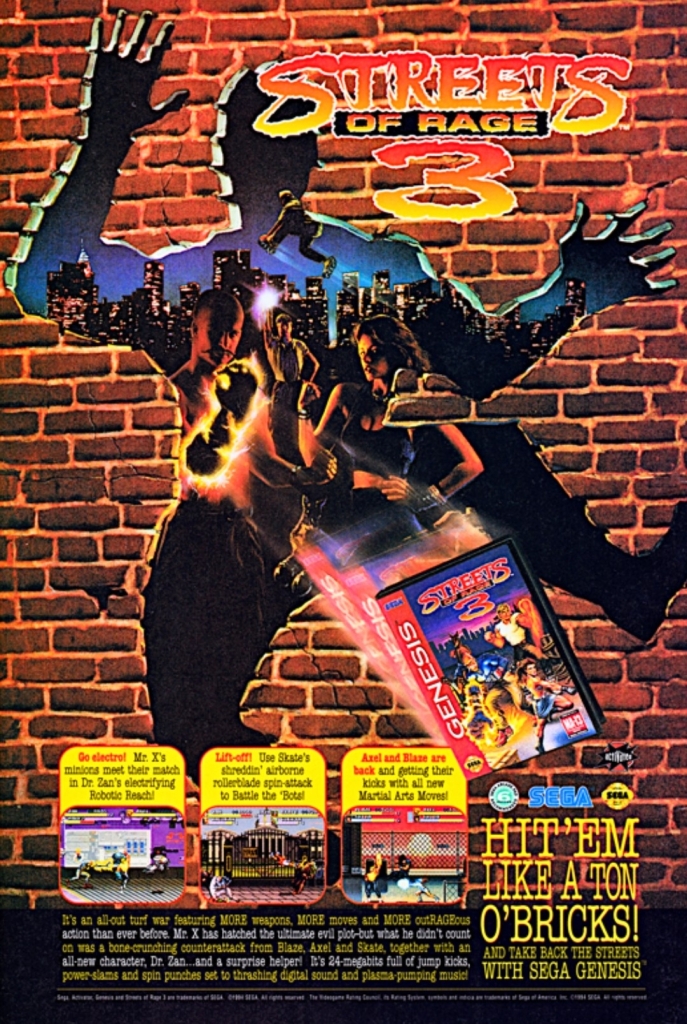
3. Streets of Rage 3 print ad

This ad caught my attention easily when I saw it in comic books I read.

Streets of Rage (Japanese title: Bare Knuckle) was one of the most defining game franchises Sega came up with and it started on the Sega Genesis console. It was a series of side-scrolling, 2D beat-them-up games that ensured action and excitement for gamers. As the first two games were critically and commercially successful, Sega was confident in aggressively marketing Streets of Rage 3 and the print ad seen had a very attention-grabbing artwork.

The artistic style emphasized power and intensity as it shows a damaged wall with the shape of a human body (symbolizing that someone was thrown through it) and then there were images of people on the other side. The game went on to attract mostly positive reviews although it paled in comparison to its predecessors in terms of sales.

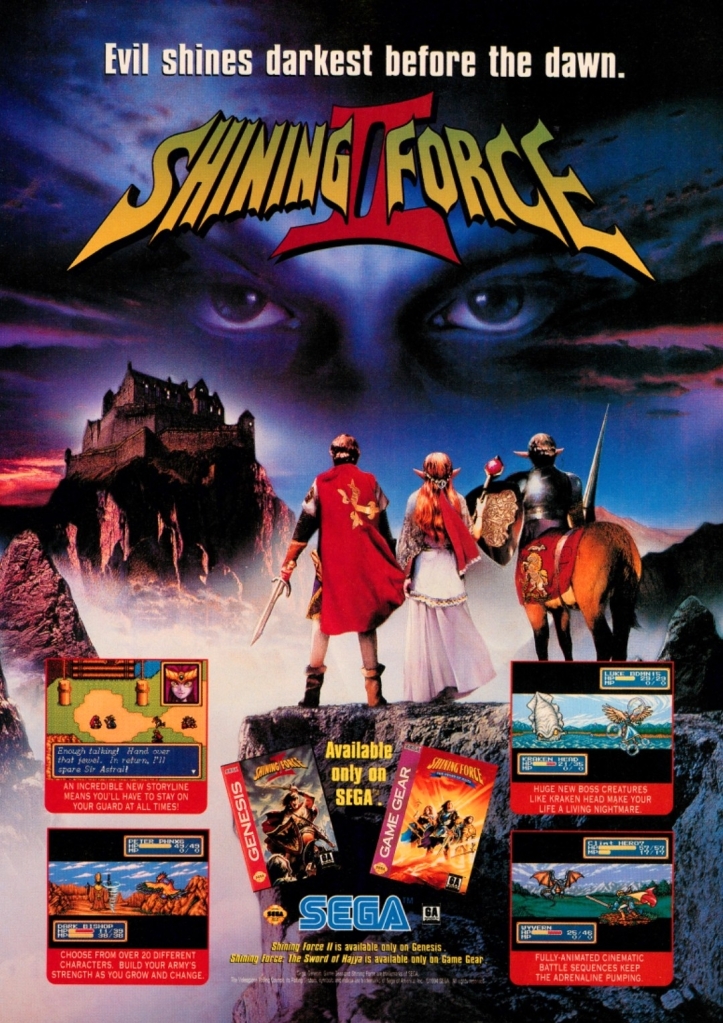
4. Shining Force II print ad

The first time I saw this ad, it made me interested to buy a Sega Genesis console to play it.

As Sega was so prolific with making and releasing games across different genres, they had their own tactical role-playing game series with Shining Force and the first game released on the Sega Genesis was a critical and commercial success. That being said, the company was confident with releasing Shining Force II on the same console more than a year later achieving critical and commercial success.

The North American print ad of the game had a visual presentation that closely captured the foreground-background style (characters facing the distance) used in-game, and the advertising team use photographic imagery to achieve a fantasy look. Very cleverly, Sega inserted the Sega Game Gear title Shining Force Shining Force: The Sword of Hajya into the ad. This print ad made me interested in acquiring a Sega Genesis for Shining Force II.

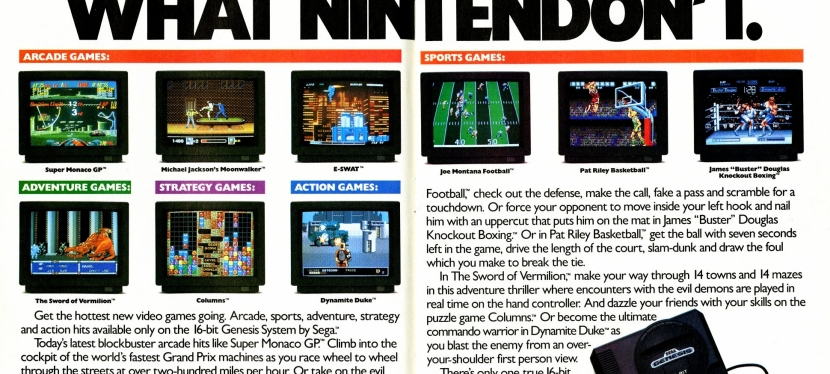
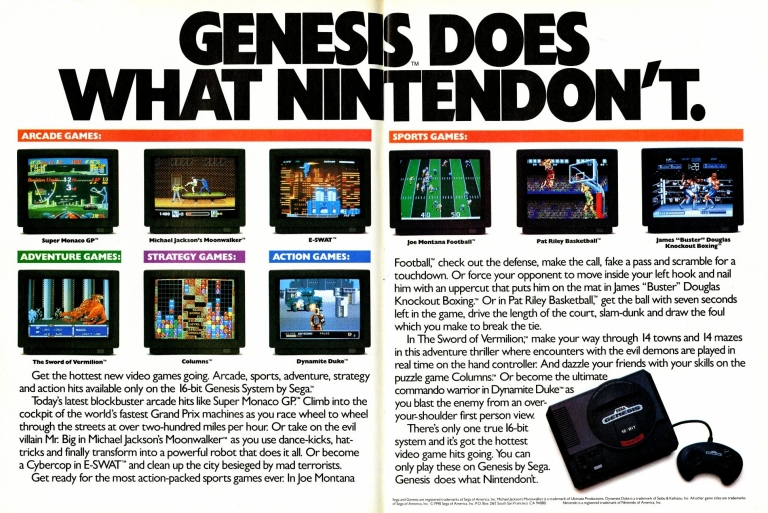
5. Genesis does what Nintendon’t print ad

With the famous line heavily emphasized, this print ad showed how bullish Sega really was in competing with Nintendo.

Now this print ad of Sega’s has the most definitive and best-known advertising line in the so-called 16-bit console generation: Genesis does what Nintendon’t. This was Sega’s aggressive marketing push to convince gamers to buy the Genesis console to play games and experience thrills of fun that they would not find on a Nintendo console at the time. Genesis was launched in America in 1989 with “16-bit” emphasized a lot, and the technological rival Super Nintendo Entertainment System (SNES) was released in the same market more than two years later.

The 2-year advantage helped Sega establish the Genesis as the next-gen machine for gaming at home and there were years in the 1990s when Sega’s console outsold Nintendo’s in America during the so-called 16-bit war. The Genesis also had lots of exclusive games plus strong software support from third-parties. While the SNES would eventually outsell the Genesis in other parts of the world, it was in America where Sega proved to be very competitive and successful. 

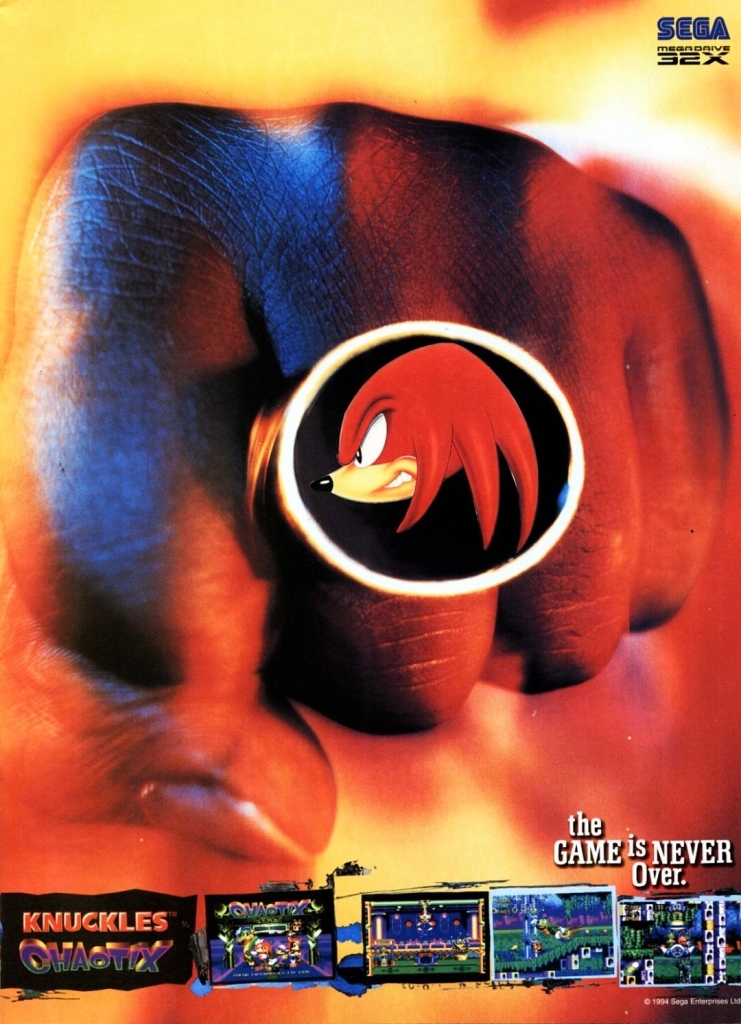
6. Knuckles’ Chaotix print ad

Sega was aggressive with marketing this game for the 32X.

In late 1994, Sega released in America and in Japan the 32X which was an add-on device for the Sega Genesis designed enhance its power while serving as a transition (a warm-up) into the so-called 32-bit era of console gaming. The 32X was the result of corporate decisions involving the American and Japanese executives of the company.

To keep 32X customers happy and boost hardware sales, Sega adjusted the development of Knuckles’ Chaotix (a Sonic spin-off) from being a Sonic project 32-bit console Sega Saturn into a standalone game for the add-on device. Even though Sega knew the game’s development was rushed, they went on to strongly promote the game and the print ad shown here was quite eye-catching.

The image of a fist with a ring showing the character Knuckles (a character from the Sonic games) emphasizes power and the colors used seem to express intensity. Then there were the selected screenshots shown without descriptive text. Although Sega tried hard, Knuckles’ Chaotix (launched in 1995) received mixed-to-positive reviews and sadly sold poorly. Unsurprisingly, the sales of the 32X dropped further and by then a lot of consumers knew that the Sega Saturn (the true successor to the Genesis) was all set to launch in America and Europe within 1995.

7. Sonic 3D Blast for Sega Saturn print ad

Too bad Sega and its teams failed to make the true Saturn Sonic game.

Back in the 1980s and 1990s, having a high-quality, console-exclusive game featuring a company mascot was crucial to sell game consoles while keeping dedicated fans happy. Like what Nintendo did with their icon Mario, Sega achieved great commercial success with the three Sonic the Hedgehog games they released exclusively on the Sega Genesis console and this naturally created expectations they would make new Sonic games on the Saturn console. Unfortunately, Sega and its teams failed to complete development of the Saturn-exclusive game Sonic X-treme and the company cancelled it which sent shockwaves through the games industry news.

With the 1996 holiday shopping season too crucial to ignore, Sega commissioned a Saturn version of the game Sonic 3D Blast which was originally made for the Genesis console. Sonic 3D Blast on the Saturn took seven weeks to make and there were some graphical enhancements implemented. While Sonic 3D Blast’s Genesis version attracted a positive reception from critics (and sold 700,000 copies), the reception for the Saturn version was mixed. This print ad of Sonic 3D Blast on Sega Saturn is a reminder of the company’s failed attempt to take their icon to the next-generation. They never replicated the big success they had with Sonic on the Genesis.

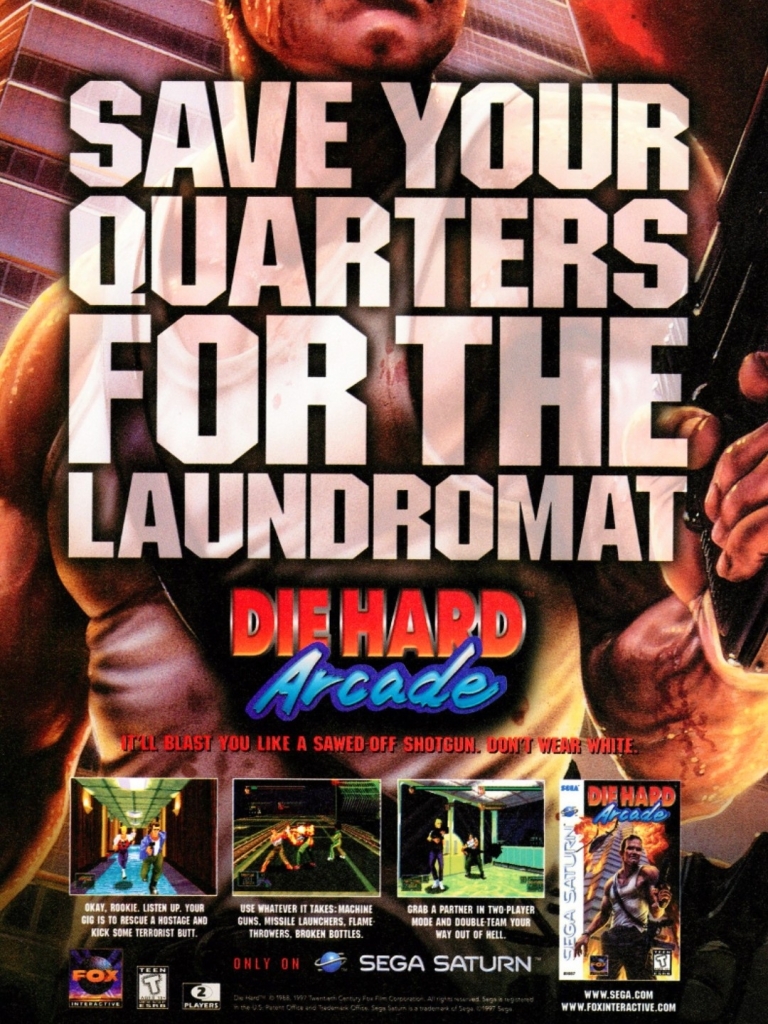
8. Die Hard Arcade print ad

Each time I saw this print ad, it easily reminded me of the classic action film of 1988.

Like many other movie franchises, Die Hard has many video game adaptations released through the decades. In 1997, Sega released Die Hard Arcade (Japanese title: Dynamite Deka) on the Sega Saturn and the game critics praised it for its fun gameplay as well as its flawless conversion of the arcade version (released in 1996). To say the least, the development history of Die Hard Arcade is not as straightforward as many would think. To get the details and explanations of the development of the game, click here.

As for the print ad itself, this one cleverly used official game art as the background with imagery which instantly reminded me of what I saw in the classic 1988 movie that starred Bruce Willis. This ad made me interested to buy a Sega Saturn or find a place to rent it to play the game.

9. Shenmue Japanese print ad

Simplistic with presentation and yet engaging to look at. The Dreamcast-exclusive Shenmue sold over a million copies in Japan alone.

When Shenmue was released exclusively on the Sega Dreamcast in Japan on December 29, 1999, it turned out to be a very mind-blowing experience for many gamers due to its ambitious game design, the intense attention to detail implemented, very high production values, in-depth exploration and very immersive gameplay.

It was the open-world game released at a time when “open-world” was not even a standard gaming term. Often called the masterpiece of the legendary game designer Yu Suzuki, Shenmue sold over 1.2 million copies in Japan and went on to be released worldwide in the months that followed. Sadly, the game failed to make a profit due to its very high budget of $70 million (which Suzuki himself said in English during an interview) and the fact that the number of Dreamcast units already sold to gamers was not massively high.

The Japanese print ad of Shenmue had a simplistic looking visual concept and yet it was engaging to look at because the way the characters appeared was how they appeared in the game during gameplay which was astounding. Take note that back in the 1990s, it was common for video game marketing materials to show human characters in high detail but in reality the polygonal models of those characters appeared looking blocky and much less detailed during gameplay.

+++++

Thank you for reading. If you find this article engaging, please click the like button below, share this article to others and also please consider making a donation to support my publishing. If you are looking for a copywriter to create content for your special project or business, check out my services and my portfolio. Feel free to contact me with a private message. Also please feel free to visit my Facebook page Author Carlo Carrasco and follow me on Twitter at  @HavenorFantasy as well as on Tumblr at https://carlocarrasco.tumblr.com/ and on Instagram at https://www.instagram.com/authorcarlocarrasco
What to watch on YouTube right now – Part 15

Have you been searching for something fun or interesting to watch on YouTube? Do you feel bored right now and you crave for something to see on the world’s most popular online video destination?

I recommend you check out the following topics and the related videos I found.

#1 Movie reaction videos by You, Me and the Movies – When it comes to watching movie reaction videos, I enjoy what the YouTube channel You, Me and the Movies posted. Go watch the five videos of theirs that I selected for your enjoyment. I also encourage you to visit You, Me and the Movies’ YouTube channel.

#2 Minty Comedic Arts’ superhero trivia videos – In recent times, superhero movies from Hollywood became irrelevant and unexciting not because of the so-called superhero movie fatigue but because they are no longer made to be fun. That being said, now is a good time to look back at the enjoyable superhero movies from the past through Minty Comedic Arts’ trivia videos below. You will learn something new and do not forget to visit Minty Comedic Arts’ YouTube channel.

#3 Looking back at the Sega Dreamcast’s American launch and legacy – It has been almost 25 years since the Sega Dreamcast console launched in the United States. The American launch turned out highly successful with almost $100 million in sales revenue achieved during the first 24 hours. For the newcomers reading this, there was a time when Sega had consoles and the Dreamcast was the last one they had before going all-in with multiplatform publishing of games. That being said, watch these videos of the Dreamcast.

#4 Assorted videos of violations and reckless driving incidents of electric bikes (e-bikes) and electric tricycles (e-trikes) in the Philippines – For the international readers and newcomers reading this, the amount of electric bikes (e-bikes) and electric tricycles (e-trikes) here in the Philippines grew dramatically over the past ten years. Because of the many incidents as well as cases of careless or reckless driving of e-bikes and e-trikes that took place, authorities in the National Capital Region (NCR) or Metro Manila took action to have such electric vehicles regulated as well as banned from traveling along major roads and highways. Hopefully in the future, e-bike and e-trike riders will be required to have their electric vehicles registered and get themselves licensed to drive. To see the incidents, watch the videos below…

#5 Rita Panahi and the Leftists who embarrassed themselves – We now move on to the more serious and real-world stuff. I can say that Rita Panahi and her segment titled “Lefties losing it” is easily the most engaging one to watch on Sky News Australia. Here you will see varied videos showing the recklessness, the shamelessness and craziness of the Leftists as captured on social media and news media. Watch and listen to the videos below…

+++++

Thank you for reading. If you find this article engaging, please click the like button below, share this article to others and also please consider making a donation to support my publishing. If you are looking for a copywriter to create content for your special project or business, check out my services and my portfolio. Feel free to contact me with a private message. Also please feel free to visit my Facebook page Author Carlo Carrasco and follow me on Twitter at  @HavenorFantasy as well as on Tumblr at https://carlocarrasco.tumblr.com/ and on Instagram athttps://www.instagram.com/authorcarlocarrasco
Grandia HD Collection all set for release on Xbox on March 26, 2024

Finally, an old wish of mine came true as GungHo Online Entertainment America, Inc. (GOEA) officially announced that the Grandia HD Collection – which contains the classic Japanese role-playing game Grandia and its sequel Grandia II – will be released on Xbox consoles on March 26, 2024. For the newcomers reading this, the said collection of the two Grandia RPGs was previously released for the Nintendo Switch and on PC in 2019. Grandia HD Collection has been listed on the Xbox store.

This surprise development is definitely much more exciting and better than Team Xbox’s releasing four Xbox-original games on PlayStation and Nintendo consoles. For your excitement and enlightenment, watch the latest Grandia HD Collection announcement and trailer below…

To understand what the collection contains, posted below is an excerpt from the official announcement by GOEA. Some parts in boldface…

A battle from Grandia.
This is what a battle looks like in Grandia II which had fully polygonal graphics.

I am really delighted that Grandia HD Collection is coming to Xbox (note: made for the Xbox One console which is fully compatible with Xbox Series X and Xbox Series S consoles) as I played and enjoyed the original Grandia game on PlayStation way back in 1999.

I do remember Grandia having a very imaginative fantasy world with a story cleverly structured to take players from one location to another to visit new places, meet new characters or tribes of people, and engage in quests. Playing that game was a whole lot of fun because developer Game Arts (the same team behind the Lunar RPGs) crafted a battle system that is highly playable and addicting. As I played Grandia, I saw the playable characters really develop not just with their personalities but also their battle and magic abilities.

Not only that, the music written by Noriyuki Iwadare was great to listen as I played. I also love the artistic approach applied on Grandia which had 2D sprites for the characters and monsters, nicely textured 3D polygonal environments, and very imaginative artworks (including those in animated cutscenes).

Grandia had characters and monsters in 2D sprite forms, as well as detailed textures on the 3D polygonal environment.

Of course, the many quests gradually built-up the tension of the main plot which turned out to be a grand event. Game Arts knew how to execute handsome pay-offs in relation to the build-up that preceded them. That being said, Grandia’s conclusion was really memorable to see.

If there is anything I hope to see within the Grandia HD Collection, it would be improvements on the English translation and the voice acting of the characters because the PlayStation version of Grandia that I played was lackluster with those mentioned elements. Clearly Sony Computer Entertainment (the publisher of Grandia on PlayStation) did not aim high with quality for the game’s American release.

As for Grandia II, I never got to play it as I never had a Sega Dreamcast nor a PlayStation 2 (PS2) console. I do remember some Dreamcast gamers expressing fondness and high enjoyment of the game and there were even a few who enjoyed it more than its predecessor. That being said, Grandia II’s inclusion in the Grandia HD Collection is an added incentive for me to purchase the collection for my Xbox Series X.

A mini-game in Grandia II. The sequel went all-in with 3D polygons which made it a big showcase of art and graphics on the Sega Dreamcast. The PlayStation 2 version of this game reportedly had inferior graphics.

Watch out for Grandia HD Collection on Xbox consoles on March 26, 2024. For more information, click https://www.xbox.com/en-us/games/store/grandia-hd-collection/9n4nlqhx6j18

+++++

Thank you for reading. If you find this article engaging, please click the like button below, share this article to others and also please consider making a donation to support my publishing. If you are looking for a copywriter to create content for your special project or business, check out my services and my portfolio. Feel free to contact me with a private message. Also please feel free to visit my Facebook page Author Carlo Carrasco and follow me on Twitter at  @HavenorFantasy as well as on Tumblr at https://carlocarrasco.tumblr.com/ and on Instagram athttps://www.instagram.com/authorcarlocarrasco
A Look Back at Flashback (Super NES)

Disclaimer: This is my original work with details sourced from playing Flashback: The Quest for Identity and doing personal research. Anyone who wants to use this article, in part or in whole, needs to secure first my permission and agree to cite me as the source and author. Let it be known that any unauthorized use of this article will constrain the author to pursue the remedies under R.A. No. 8293, the Revised Penal Code, and/or all applicable legal actions under the laws of the Philippines.

We live in an age in which software exclusivity defines not only the relevance of game consoles but also nature of the entire video game industry right down to the many varied communities of very avid fans (and fanboys).

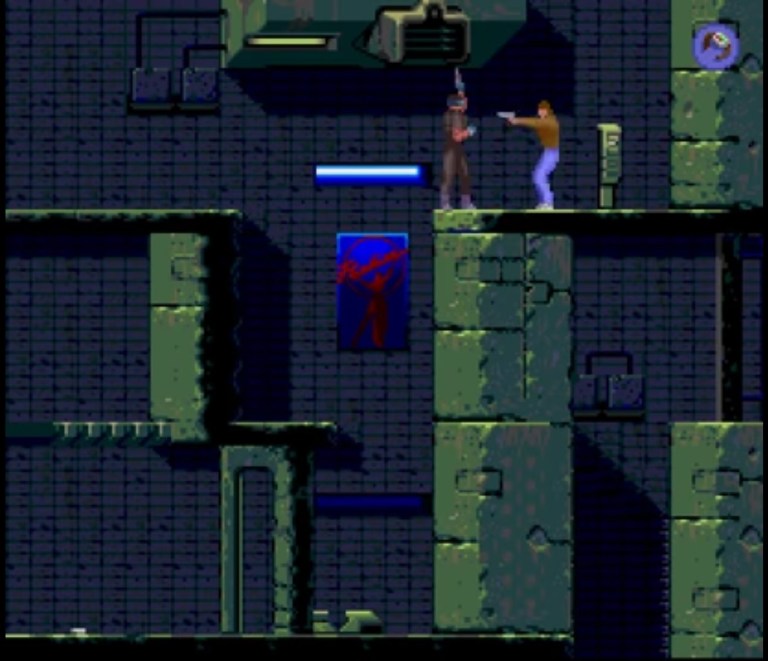
While the Super Nintendo Entertainment System (SNES or Super NES) and Sega Genesis each had their own exclusive games back in the 1990s, there was one particular game that was made for and released on not just one, not two but rather on more than fifteen different platforms – both consoles and computers – starting with Amiga way back in 1992. That game is none other than Flashback: The Quest for Identity which I first played on our Super NES back in 1994.

The cover of the game box.

For the newcomers reading this, Flashback was a 2D side-scrolling adventure game in the form of a cinematic platformer (note: similar to Prince of Persia and Out of This World) with a strong flavor of science fiction. It was cinematic in the sense that all the in-game animation were rotoscoped resulting unique smoothness combined with hand-drawn backgrounds and the computer-generated cutscenes were used in key parts of the game as the story progressed. Flashback on SNES in America even came with a Marvel Comics-published Flashback comic book and on the rear of the SNES game box were the words “The first CD-ROM game in a cartridge!”

A Flashback remake was released in 2013, followed by a port of the original game released on Sega Dreamcast in 2017, and a remastered version got released for varied platforms in 2018.

I got to play that game at a time when I have not even started playing Final Fantasy II (AKA Final Fantasy IV), Final Fantasy III (AKA Final Fantasy VI) and other great role-playing games (RPGs) of the Super NES. I also remember that Flashback was a nice change of pace for me after playing Super Star Wars: The Empire Strikes Back.

With those details laid down, here is a look back at Flashback: The Quest for Identity, released on Super NES in 1993 by U.S. Gold and developed by Delphine Software International.

The start and options screen.

Early story

The story begins with Conrad running away from two armed persons chasing him. He flies away riding a solo vehicle but those chasing him (riding a huge vehicle) managed to get close and blast his vehicle causing to crash into the forest.

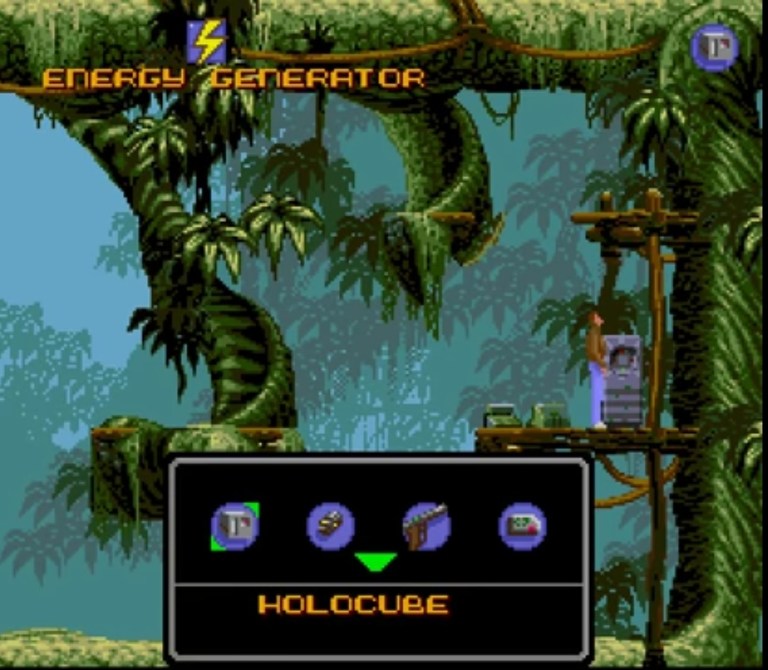
Sometime later, he wakes up and accidentally pushes a mechanical cube to fall down. He climbs down to reach it and activates it. The cube displays a holographic video of himself telling him that he recorded it without remembering it. As Conrad watches, he learns that he must contact a friend named Ian who can explain important things to him.

After viewing the message, Conrad sets off to find his way out of the jungle and somehow get to Ian in New Washington…

Game design and quality

You have to pay close attention to what’s going on, what items do you have and what the in-game prompts tell you.

This game is not your typical fast-paced, action-oriented 2D side-scrolling adventure in which you move from left to right to progress. As it is a cinematic platform game by design complete with very specific controls, players will have to be patient, adaptive and strategic in order to learn how exactly you can control your character, what moves will be executed (and when to execute). For one thing, the very fluid 24 frames-per-second animation on your character limits you in terms of control as timing is required.

To do things properly, you have to execute specific controls. To ascend on a lift, you press Up and the Y button. To do a small jump, have your character stand still and then press Up and Y button. To go down on level (on foot, no lift), stand by the edge of a level then press Down and Y button. To run and hang on to a higher floor automatically, have your character stand still, press Right and Y button, press Y button (once your character moves) and watch him pull it off. With controls like these, the usual 2D platforming approach is out of the question. In my experience, these controls are indeed challenging but never impossible to learn and eventually I got proficient with the controls as I played more.

The in-game animation for the characters are very good and there is also a sensation of weight with your character. Falling straight down from a very high place is a big no-no.

Apart from character controls, you don’t just move Conrad from one screen to the next…you also should do key objectives along the way apart from engaging in action scenes (read: shooting). That being said, you must watch out for icons that appear on screen when your character steps on a particular spot that requires interaction. For example, if you stop by a terminal, an icon will appear serving as a prompt to start the interaction. Another example is when your character steps on the same spot as an item located at which you can pick up once prompted.

More on the action on the screen, you will encounter armed enemies as well as high-tech machines (including floating drones). To overcome them, doing straightforward shooting is not recommended as you have to be strategic before firing a shot. You have to learn how each enemy or machine moves, how much physical space is available right there and how you can maximize your limited time and space to overcome them. In fact, you will also be compelled to take advantage of whatever seconds you have while the enemies’ animation (between moves) take place. There will also be times when you need to have your character armed with the gun before jumping to a lower level where an armed enemy is located and on the lookout. Coming down armed gives you an advantage to shoot first at the enemy who

Considering the 24 frames-per-second animation, you will have to time your moves carefully, especially during moments when you face an armed enemy.

Apart from shooting, you can also use grenades which requires opening your inventory to select a grenade and then do your timing and calculation of the distance in order to pull of a successful throw and explosion. You can also throw stones to distract enemies or to apply weight on key platforms in order to open mechanical doors.

With regards to the quality of gameplay, Flashback is enjoyable but only if you get over its rather high learning curve with regards to the controls which themselves serve as the game’s advantage and even as a disadvantage. In addition to being patient and strategic, you will really have to pace yourself, think more and get used to the rather slow pace of the game in relation to its cinematic platformer design. I should state that as you keep progressing, there will be places, or new obstacles or new enemies that will compel you to change your tactics in order to overcome them. Anyone who is used to playing 2D side-scrolling games the fast and easy way might find the high learning curve and pacing of Flashback a turnoff but if they are willing to learn, adjust and pace themselves, only then can this game’s gameplay be really enjoyed.

Cut scenes like this move at a sluggish pace which shows the limitations of the SNES and cartridge technology.

As for the visuals, the obvious highlight here is the 24 FPS animation which is the result of rotoscoping and careful visualizing (note: observe those alien humanoids who morph into moving blobs). The rotoscoped animation, however, would not have been that effective had the quality of the art used for the backgrounds been made of lower quality. I can say that the background artworks here look pretty good even by today’s standards. The standout among them were the background artworks of Morph’s home planet which really looked very alien and creepy at the same time. What hurts this particular version of Flashback is the lackluster (read: choppy) frame rate whenever the computer-generated cinematic cutscenes (obviously they were meant for more powerful PCs) play which, in my experience, took me out of the story. There were also bouts of slowdown during the gameplay, especially when you encounter enough enemies that were animated sophistically.

With regards to narrative, Conrad is literally your avatar to learn, discover and interact with the many elements of the universe he is part of. There is obvious influence that the game makers took from the movie Total Recall as they crafted Conrad to be someone who lost his memory, moves on to regain it and do a lot of things as he realizes his true purpose and what is really at stake. Unlike Total Recall’s protagonist, Conrad himself is not too interesting mainly due to the way the in-game story was structured. Just play as Conrad and do what needs to be done to complete the game.

When it comes to understanding the narrative, you will have to do lots of reading. You will spot and read the short description of the prompts that appear. You’ll also have to read the on-screen text whenever your character talks with someone during the levels of the game. And there are the captions shown during the slow animated cutscenes.

Conclusion

The background artworks during the late stage of the game are great and truly creative with science fiction in mind.

I can clearly say that Flashback: The Quest for Identity on Super NESis fun and engaging mainly to those who are willing to adjust themselves to it. If you don’t have patience, if you are not willing to think while playing, if you cannot pace yourself and if you are not willing to learn all the specific controls of the game, then you should not be playing Flashback. It is a cinematic platformer and that should tell you that you will need to adjust to enjoy it.

Overall, Flashback: The Quest for Identity on SNES is recommended.

+++++

Thank you for reading. If you find this article engaging, please click the like button below and also please consider sharing this article to others. If you are looking for a copywriter to create content for your special project or business, check out my services and my portfolio. Feel free to contact me as well. Also please feel free to visit my Facebook page Author Carlo Carrasco and follow me at HavenorFantasy@twitter.com

A look back at Resident Evil 3: Nemesis

Screenshot_20190115-204136~2.png

First released in late 1999 on the PlayStation console in America, Resident Evil 3: Nemesis (Japan title: Biohazard: Last Escape) was a notable game of the Resident Evil franchise that not only proved to be a lot of fun but also a memorable experience for fans. To this day the game is fondly remembered.

In recent times, the Resident Evil franchise made waves with gamers worldwide with Resident Evil 7 (which came with a very daring change of style and gameplay) and the Resident Evil 2 remake demo (which I played the full 30 minutes of). The RE2 demo instantly brought back my own memories of enjoying the PlayStation version of early 1998. Granted, Resident Evil 2 in 1998 was truly a great sequel and its concept was epic compared to its predecessor’s. Because that game was a major blockbuster, Capcom had to come up with worthy follow-ups.

Then something happened over at Capcom in Japan. The initial concept for a sequel to RE2 was in the form of a story set on a luxury cruise liner but the company decided it lacked the time to produce a game out of it and this was related to Sony’s unveiling of the PlayStation 2 console.

Screenshot_20190115-203934~2.png

After some shuffling of executives and creative people, a team composed of not-so-experienced talents led by game director Kazuhiro Aoyama was formed to produce a spin-off  with a plot penned by company writer Yasuhisa Kawamura. The story was reviewed and approved by Flagship (an internal team that led the creative charge of Resident Evil projects) and RE creator Shinji Mikami worked as producer on the project.

Regarding its status, Resident Evil 3 was developed in tandem with the Sega Dreamcast-bound game that became Resident Evil: Code Veronica which was a bigger project and was the true sequel to RE2. The tricky part was that Capcom decided that its RE games released on PlayStation will carry a number on the title for “consistency” while RE games released on other platforms would carry subtitles.

RE3 followed the exploits of Jill Valentine, who was a protagonist in the 1996 original Resident Evil game. The story begins with her stuck in the middle of Raccoon City surrounded by flesh-eating zombies and she has no choice but to fight, run and escape to survive. Along the way, she discovers that what she learned from Umbrella in the first game was nothing compared to the more sinister intentions of the company she discovers in RE3. Making matters even harder for her was Nemesis, a large walking bio-weapon whose purpose is to destroy members of the city’s police unit S.T.A.R.S. (which Jill belongs to).

Screenshot_20190115-210004~2.png

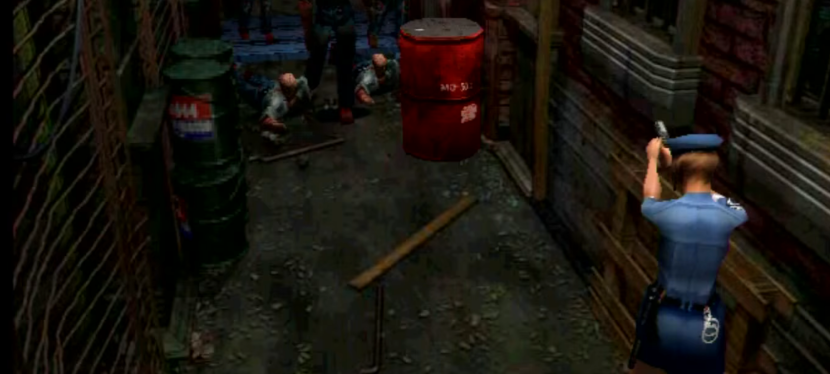
For what started as a spin-off, Resident Evil 3’s gameplay showed notable improvements over that of Resident Evil 2. As a survival horror game, it has the awkward tank-like controls, the static pre-rendered environments with fixed camera angles and challenges of moving from one place to another while dealing with zombies or monsters.

The most notable improvement made was the addition of the ability for players to do 180-degree quick turn-around movements when controlling the character. Not only does this make moving the character easier, it also adds more speed and strategy into the game itself especially when the protagonist is surrounded by many zombies or monsters. The pace of gameplay also quickened with the quick turn-around.

Another addition is the ammunition crafting system that allows you to make more ammo for your weapons by combining the raw material (example: gun powder) into the in-game ammo-making device. This results making different types of ammunition for different weapons. By the time you reached deeper into the game, more powerful ammunition for newer weapons can be made and used.

Meanwhile the game had key moments that compel players to make a decision as that the narrative and gameplay would move forward. The element of choice is a nice gameplay addition and each choice made showed different results as to what happened next. When Nemesis appears, the game’s movement slows down presenting choices for gamers to make. The good news here is the decision making affects the quality of the story’s ending.

Screenshot_20190115-204827~2.png

The one addition I find questionable in the game is the dodge which works rather unpredictably in terms of response. There are times it worked and there are times it failed. No matter how you use the controls and time them with the action, the results are always inconsistent.

The biggest addition, not to mention the biggest impact, made in the game is Nemesis himself. Unlike Mr. X in Resident Evil 2, Nemesis is the unrelenting stalker whose presence and action deepened the gaming experience. Not only was Nemesis tough to fight with, he also appeared when gamers least expected and he runs a lot to get to Jill (or the mercenary Carlos who was also controlled temporarily by players). The music accompanying Nemesis’ presence also heightened the fear factor. It is argued that Nemesis himself is the most defining feature of Resident Evil 3 and deserved to have the game’s subtitle made after him.

Screenshot_20190115-202827~2.png

In my honest opinion, Nemesis reminds me a lot of the horror icon Jason Voorhees from the Friday The 13th slasher horror movie franchise. Like Jason, Nemesis is heavily disfigured (horrific to look at), stalks his prey relentlessly and does a lot (and anything) to kill his prey. Nemesis’ killing of Brad only shows how deadly he is. Like Jason, Nemesis cannot be reasoned with nor does he feel any pity. He simply won’t stop until he kills you in the game.

In terms of technology, RE3 used the same game engine as RE and RE2. By this time, the technology experts at Capcom improved the visual quality and the 2D pre-rendered backgrounds always felt convincing to me each time I played. Rare are the times when I noticed the 3D polygonal characters or monsters stood out from the 2D environments. With regards to the anti-hero elements, the zombies are more varied and most of all the monsters are creepier to look at. The Hunters made a nice return as well.

In terms of exploration, Resident Evil 3 makes heavy use of the city environment complete with many varied interiors mixed with believable exteriors. There were these alleys, streets (with some stores to enter) and more. The many puzzles as well as machines that required key items to be retrieved provide a good challenge although some may find the backtracking a bit tedious.

The return of Jill

jill

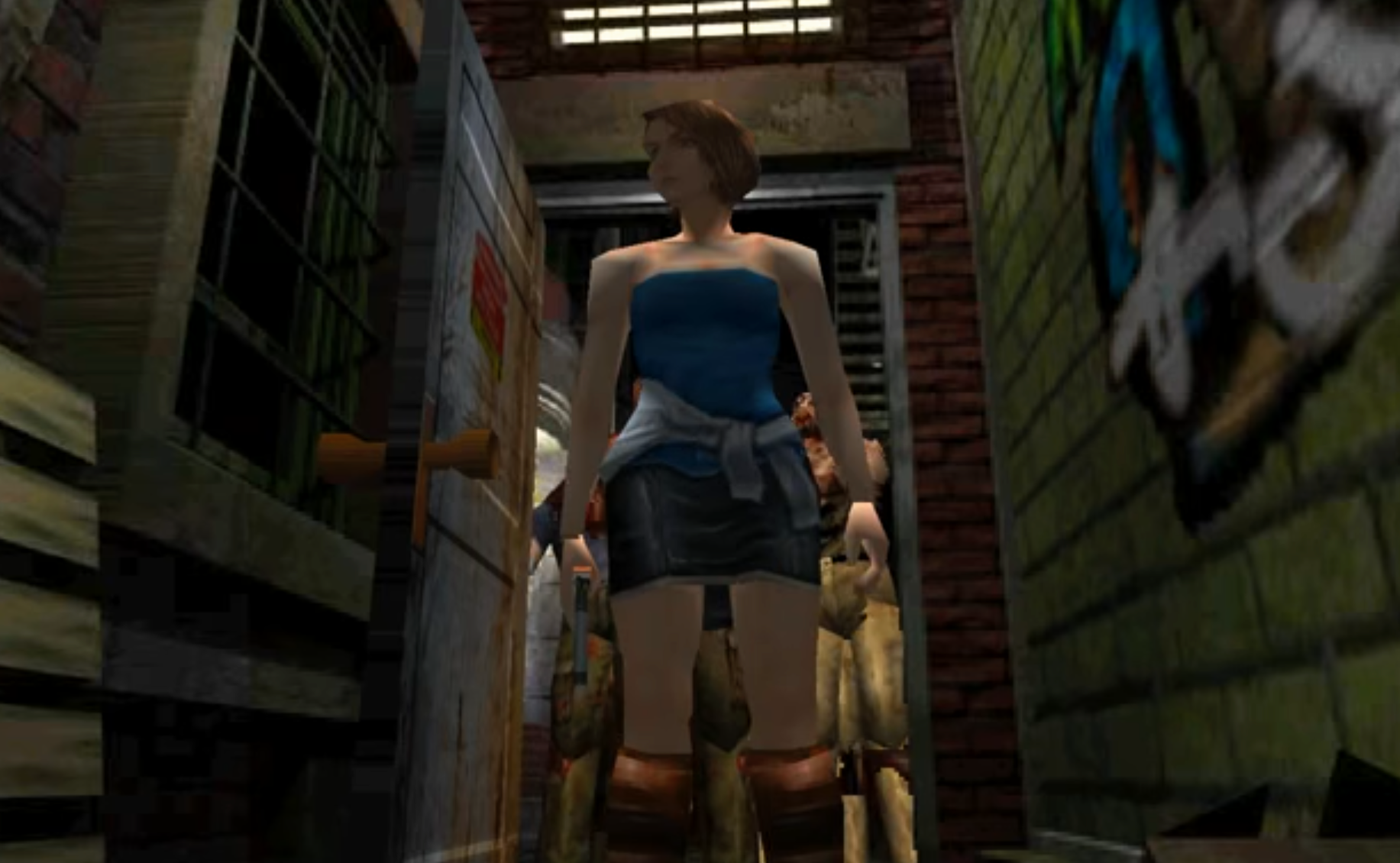
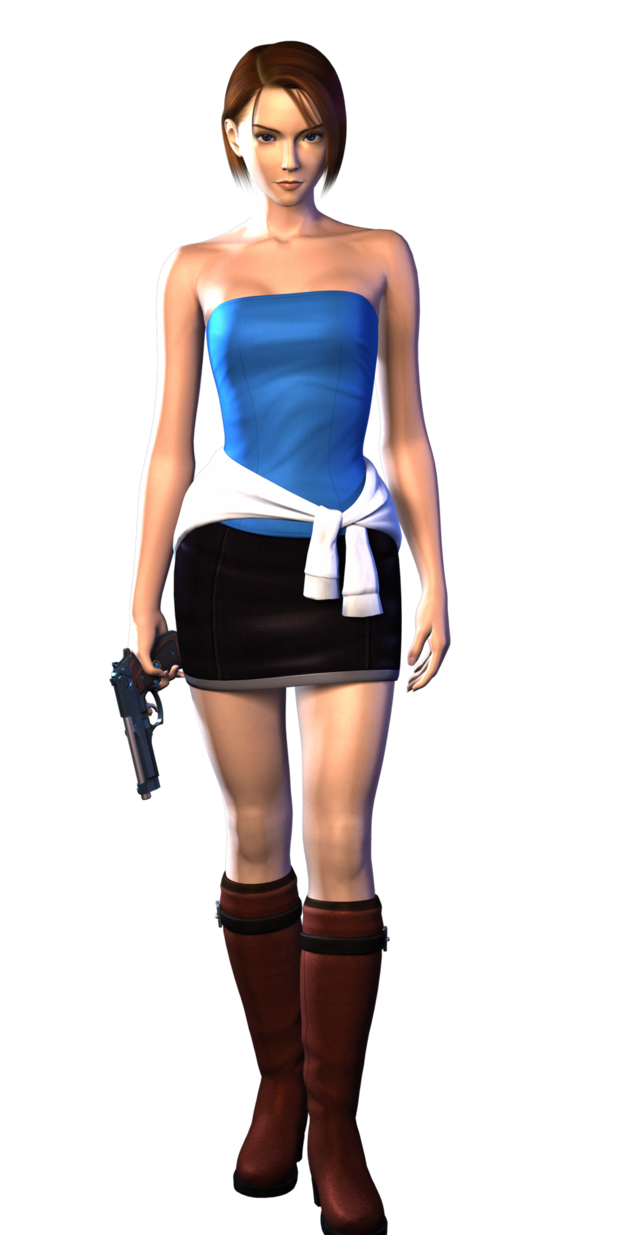
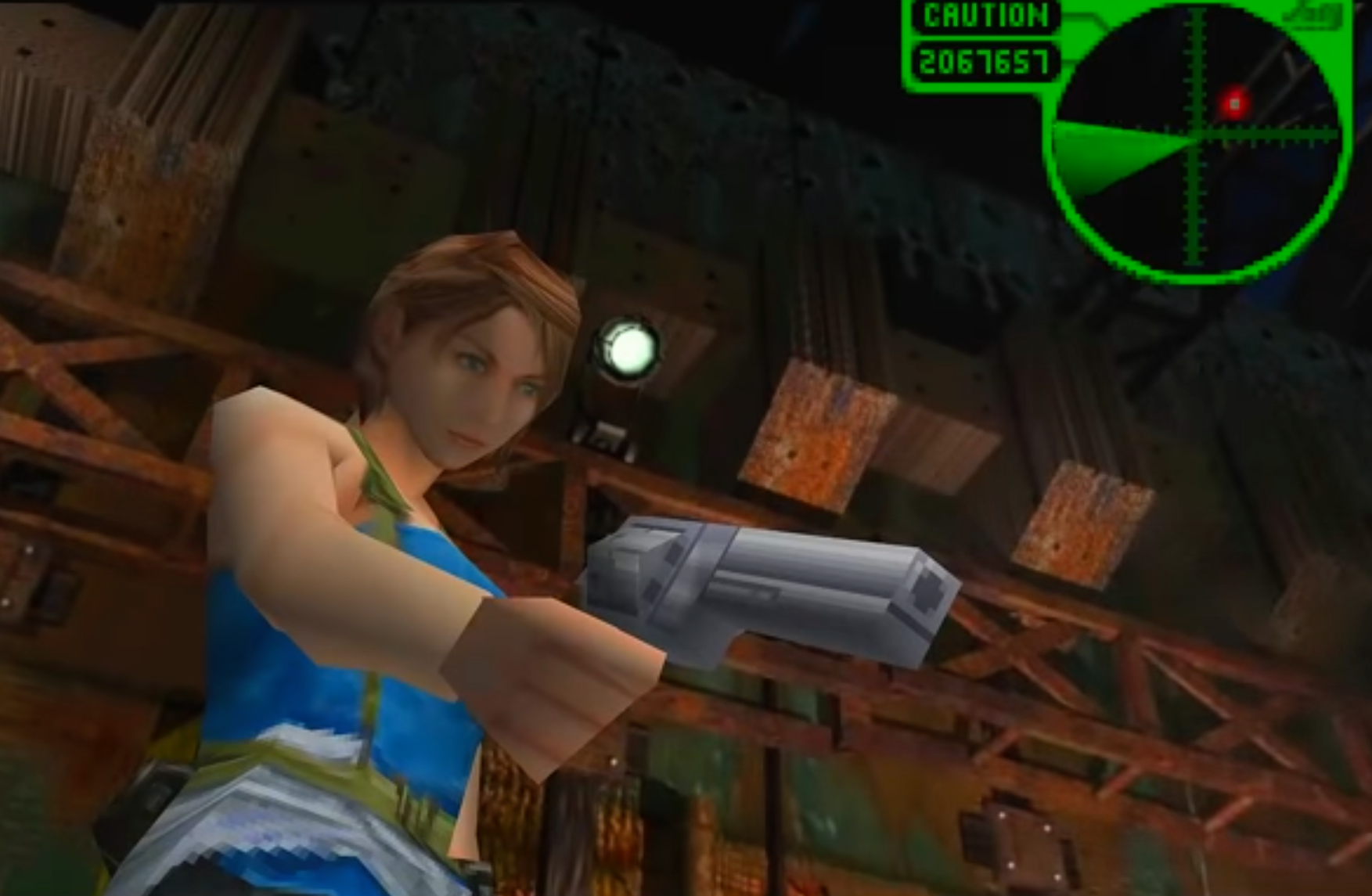
Jill Valentine made a nice return as the protagonist of the game. Right from the start, it was explained that she had resigned from the police force. Regarding her skimpy appearance (the blue tube top she wore with short skirt and boots), it turned out she was on her way out of town when the zombie infestation of Raccoon City begins in RE3.

More on Jill’s sexy default appearance in the game, I believe that Capcom’s creative team designed her like that in response to the sexy, armed woman charm popularized by Lara Croft of the best-selling Tomb Raider game franchise.

Take note of this. The first Resident Evil was released in 1996 many months before the first Tomb Raider came out. By the time Resident Evil 3 was released, the Tomb Raider franchise already had three games (note: there was a 12-month cycle for releasing sequels back then) that each sold in the millions and Lara Croft was quickly established as not only as a pop culture icon but also as a digital sex symbol idolized by millions of guys worldwide. I have this theory that some members of the Resident Evil 3 team subconsciously came up with the tube top look for Jill Valentine with Lara Croft as an influence. To say the least, both Jill and Lara are brave women capable of fighting with varied types of guns.

Screenshot_20190115-210306~2.png

Sex appeal aside, Resident Evil 3’s story is truly a defining tale of Jill Valentine as a character. By connecting her RE3 tale with that of the events of the first game from 1996, I come to realize that her stories made sense. Her becoming disillusioned with the failure of the city police department to go against Umbrella and eventual quitting from the police force was believable. In addition, Nemesis proved to be the ultimate monster she ever faced and all the monsters she encountered in the first game paled in comparison to him.

Alone and without having access to police resources, Jill’s struggle in Resident Evil 3 is a story that won’t be forgotten and the game’s fun and engaging gameplay only made her story even more memorable.

The cinematic “adaptation”

reapocalups
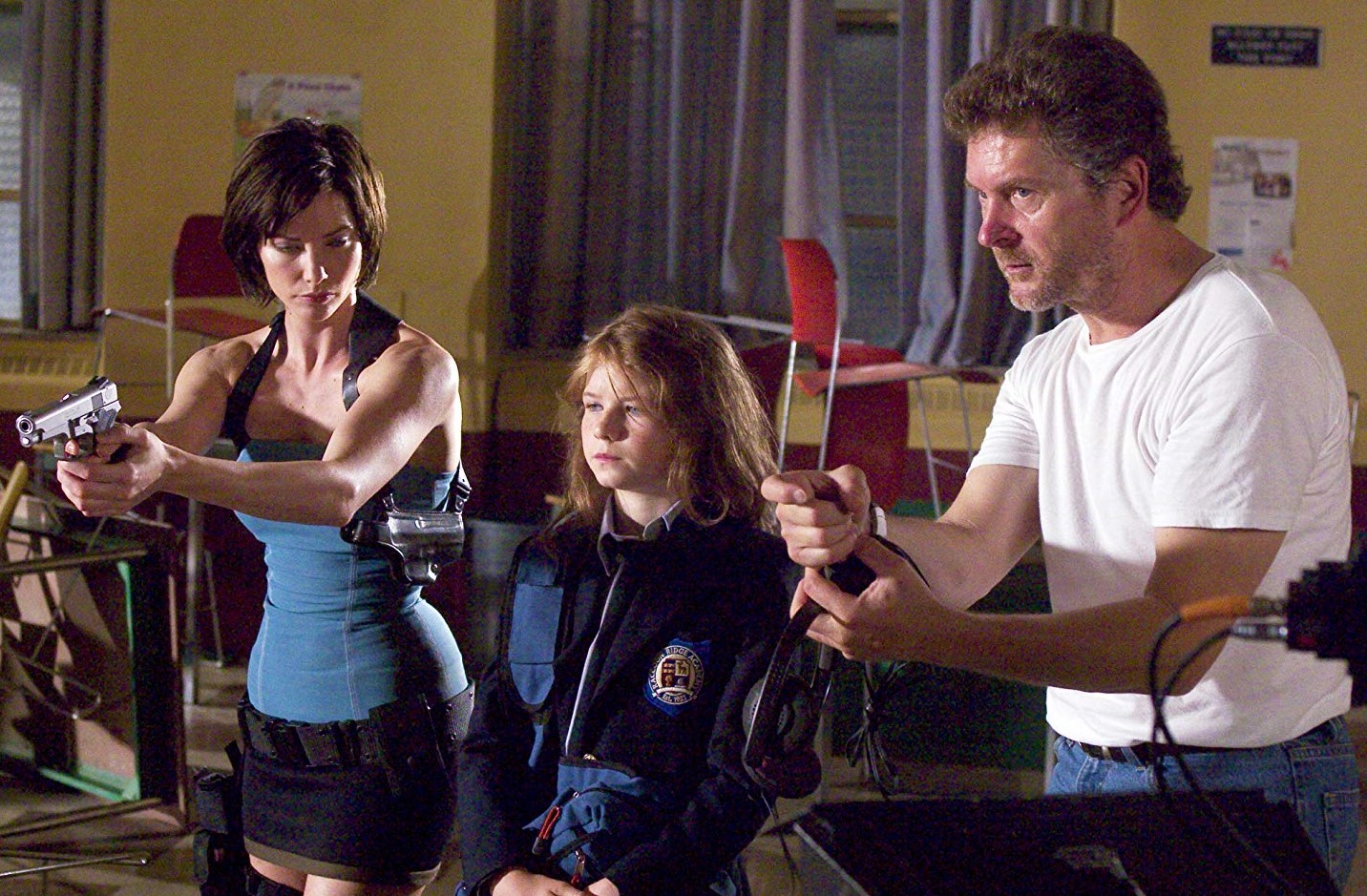
Sienna Guillory as the cinematic Jill Valentine at the left. With her were Sophie Vavasseur as Angela Ashford and director Alexander Witt. (credit: Screen Gems, Inc.)

In 2004, the second Resident Evil live-action movie Resident Evil: Apocalypse was released in cinemas starring Milla Jovovich. The concepts of Resident Evil 3: Nemesis were carelessly adapted by the movie showing a Raccoon City filled with zombies and a live-action Jill Valentine played by Sienna Guillory who appeared with the tube top, short skirt and boots. In a sequence in the movie, Guillory even tried moving like her character’s video game counterpart.

While attention was paid on Jill’s Resident Evil 3 look, Guillory’s portrayal of her was nothing special and this has a lot to do with the screenplay by Paul W.S. Anderson, the directing by Alexander Witt (not really a prolific director) and notably Milla Jovovich’s dominance of the spotlight.

Whenever I watch Guilloy’s Jill in the movie, I really never felt like watching RE3’s Jill at all. Also the film had Jill being inferior to Alice (Milla Jovovich) on screen. There are two scenes in the movie wherein Jill does something to solve the problem, Alice comes in to do it better than her.

Having seen all Resident Evil live-action movies, which I regret for the most part, it is no secret that the filmmakers treated the concepts, characters and other elements from the RE video games with no real respect and certainly with no care about the concerns of Resident Evil game fans.

If you have not seen Resident Evil: Apocalypse and have been interested to see it for the RE3 elements, better not waste your time. Better play the video game instead.

Conclusion

Screenshot_20190115-210810~2.png

Ultimately Resident Evil 3: Nemesis is a classic even though it was never meant to be the big budget sequel to the classic Resident Evil 2. The game deservedly got released on the Sega Dreamcast, the Nintendo GameCube and Windows PC.

Now that Resident Evil mania is back in gamers’ minds right now, I should say that Capcom should consider re-releasing digitally RE3 for Xbox One, PlayStation 4, Nintendo Switch and Windows 10 if ever possible. Even though its tank-like controls are very outdated by today’s standards, Resident Evil 3: Nemesis is a classic that gamers of different ages must enjoy without having to go through the hassle of acquiring old existing copies of it (not to mention having an existing old console to play it). I myself am willing to pay for RE3 to be re-released and play it on my Xbox One. Very recently an enhanced re-release of Onimusha: Warlords was done by Capcom. Making the same treatment with RE3 only makes sense.

Who knows what impact a re-released RE3 would create? Such a re-release could lead to a popular demand for Capcom to make a big budget remake of Resident Evil 3 similar to what they have done with RE2. This will also give today’s gamers an opportunity to experience the one defining story of Jill Valentine.

In ending this article, I posted some YouTube videos of RE3 for your enjoyment.


Thank you for reading. If you find this article to be engaging, please click the like button below and also please consider sharing this article to others. Also my fantasy book The World of Havenor is still available in paperback and e-book format. If you are looking for a copywriter to create content for your special project or business, check out my services and my portfolio. Feel free to contact me as well. Also please feel free to visit my Facebook page Author Carlo Carrasco.