Retro Gaming Ads Blast – Part 37

Welcome back readers, fellow geeks and electronic gaming fans!

In this edition of the Retro Gaming Ads Blast (RGAB) series, we will take a look at another batch of retro gaming print ads – including arcade flyers – from the 1970s to the 1990s.

For the newcomers reading this, Retro Gaming Ads Blast (RGAB) looks back at the many print ads of games (console, arcade, computer and handheld) that were published in comic books, magazines, flyers, posters and newspapers long before smartphones, social media, the worldwide web and streaming became popular. To put things in perspective, people back in the 1980s and 1990s were more trusting of print media for information and images about electronic games and related products.

With those details laid down, here is the newest batch of retro gaming print ads for you to see and enjoy…

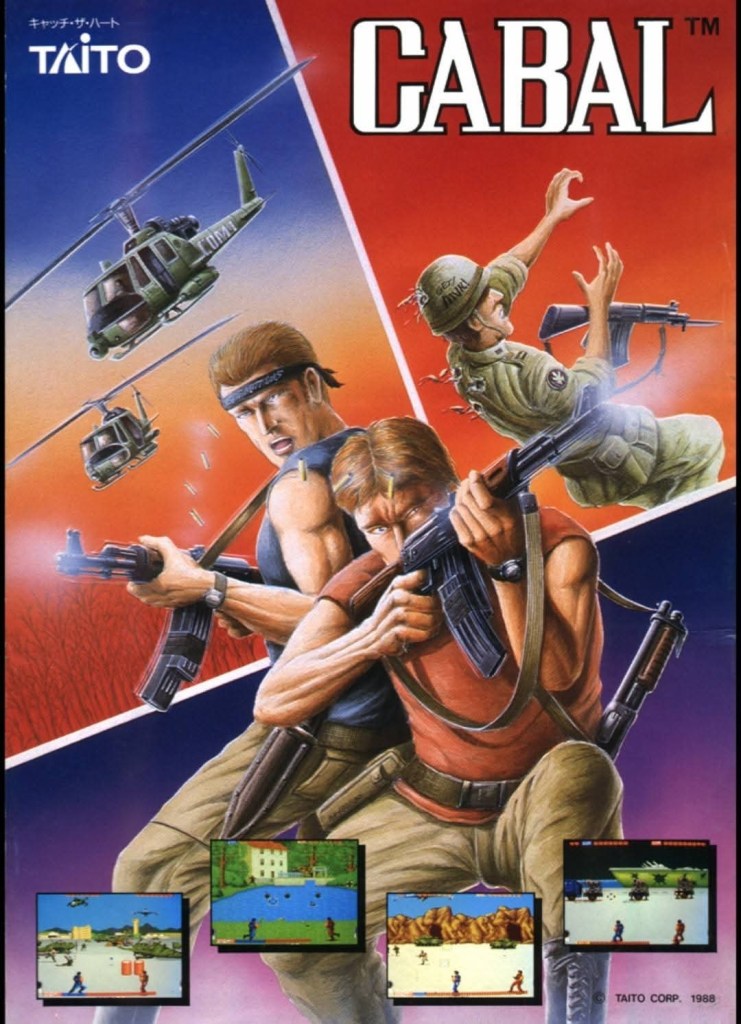
1. Cabal Japanese arcade flyer/poster

Can you feel the action and intensity here?

When it was first released in video arcades in Japan in late 1988, Cabal was another game inspired by military action movies of Hollywood which explains the art work done for the arcade flyer and poster shown above. The Vietnam War was still fresh in people’s minds and the concept of having one or two players firing their weapons against enemy soldiers resonated with gamers who saw Hollywood’s military action flicks. That said, it is not surprising that Cabal became a huge hit in Japan before getting released in arcades around the world.

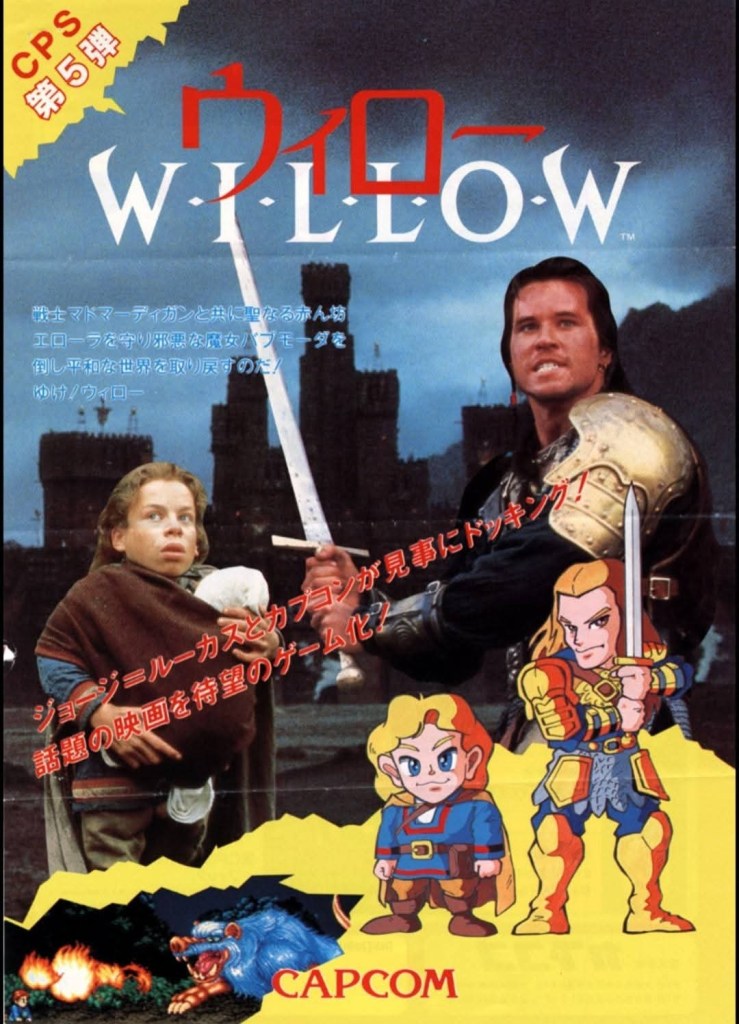
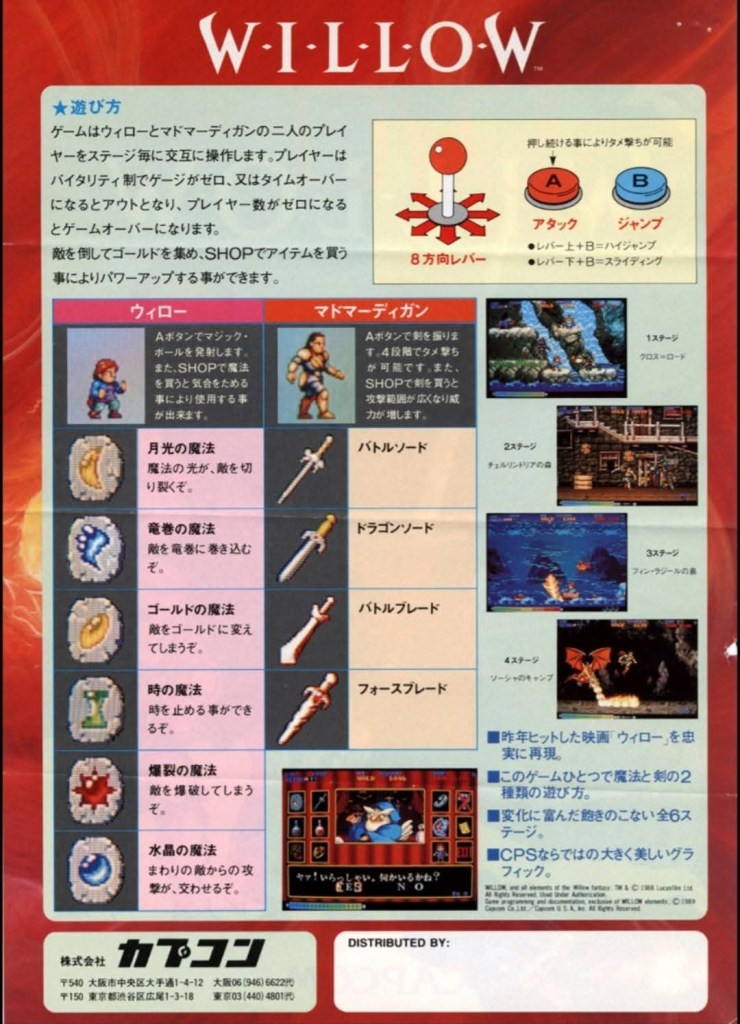
2. Willows Japanese arcade flyer

The front.
The rear.

Remember the 1988 high fantasy adventure film Willow? That film was produced by George Lucas and was a bold new production of Lucasfilm shifting away from Star Wars. Believe it or not, an official arcade game adaptation of Willow was made by Capcom and they promoted it by having images of Val Kilmer and Warwick Davis on the front of the arcade flyer (opposite the illustrated versions of their characters). The game, which was a side-scrolling platform game with run-and-gun elements, went on to be an arcade hit in Japan and eventually pleased gamers worldwide.

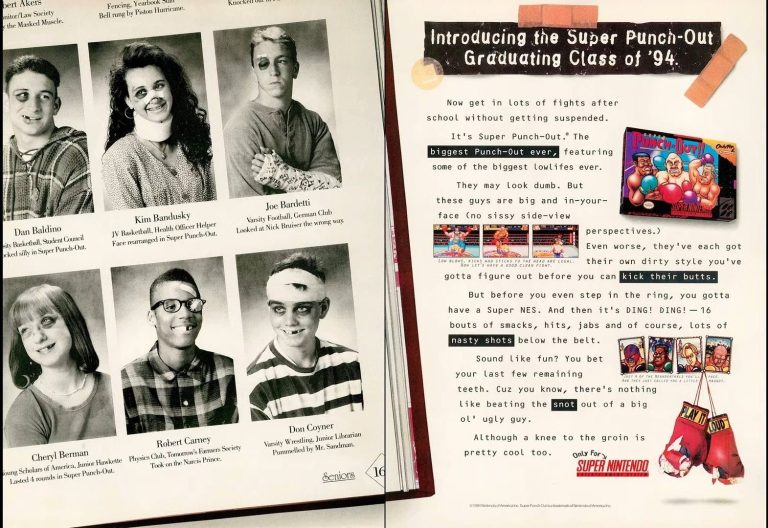
3. Super Punch-Out!! North American print ad

This is funny to look at.

Historically, Nintendo’s Punch-Out!! series started in the arcade in 1984 and the first game was the result of the company’s effort to make a new game using arcade cabinets with two screens. The 2nd game – Mike Tyson’s Punch-Out!! – became a huge critical and commercial hit (over 2 million copies sold in 1988) on console and it made great business sense for Nintendo for release another Punch-Out!! for its console gamers to enjoy in the comfort of home. In 1994, Super Punch-Out!! was released on the Super Nintendo Entertainment System (SNES) in America and to promote it, the company came up with a hilarious 2-page ad that showed fictional high school graduates with boxing-related injuries. The imagery creatively connected with the words “biggest Punch-Out ever” and “Graduating Class of ‘94”.

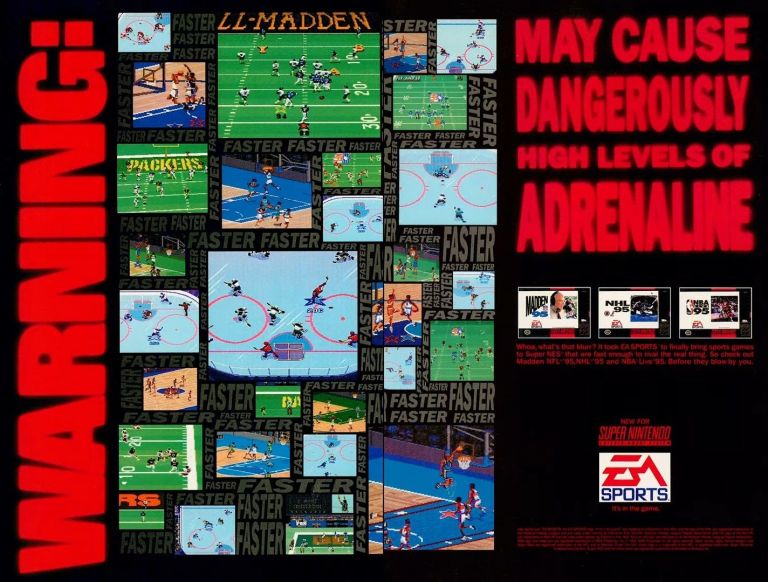
4. EA Sports 3-in-1 SNES games print ad

EA Sports games on the SNES.

In 1994, Electronic Arts (EA) released their sports games NBA Live 95, NHL 95 and Madden NFL 95 for consoles at the time. Even though the Sega Genesis sold better than Super Nintendo Entertainment System (SNES) in America at the time, EA went on to aggressively market their 3 sports video games on Nintendo’s console using a 3-in-1 games print ad. In retrospect, the SNES for the most part had better graphics and sounds than the Genesis which is reflected clearly on EA Sports games of the time. This print ad still looks fun and exciting.  

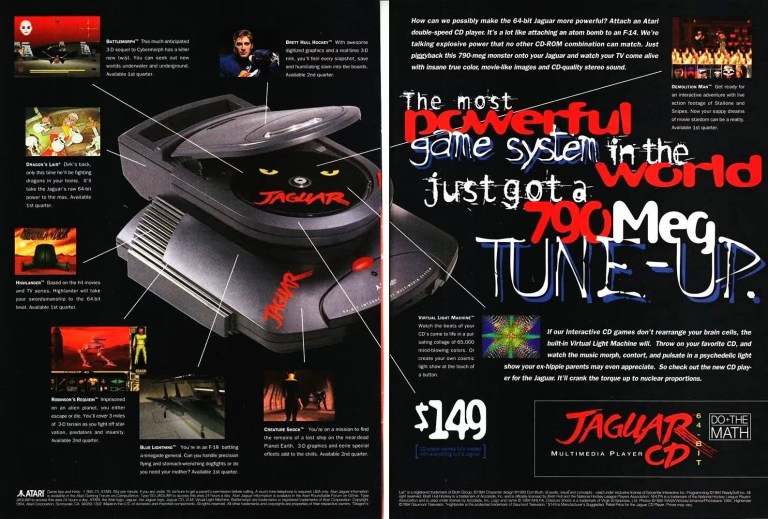
5. Atari Jaguar CD print ad

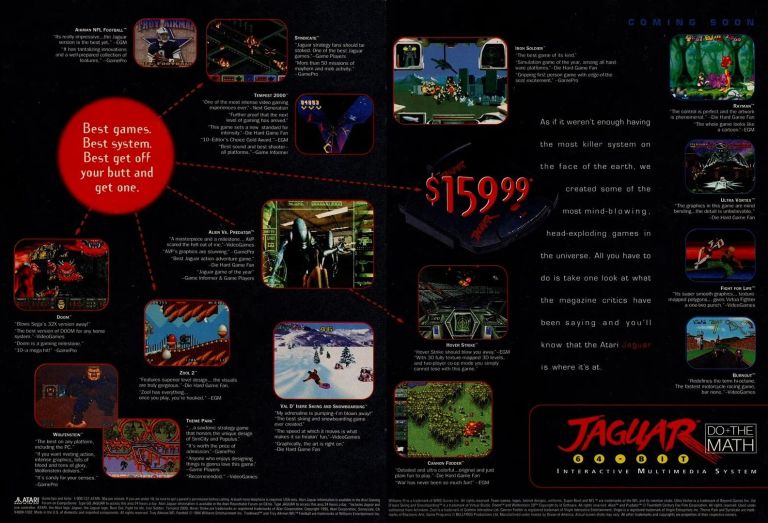
Were you able to play any game on the Atari Jaguar with the CD add-on included?

Apart from the obvious advances of technology that impacted video games, the 1990s is also known for the rise of CD-ROM as a medium for gaming. In an effort to boost sales of the Atari Jaguar console (launched in America in 1993 for around $250) and capitalize on the trust of the fans and console owners, Atari launched a CD-ROM add-on device for about $150 in 1995. To promote it, the company went aggressive with the 2-page ad showing the add-on fully connected on top of the main console, showing off some games and posting a text description emphasizing hardware power and the advantages that come with the CD technology. Even in the captured image, the Atari Jaguar CD still resembled a toilet. This is an aggressive ad campaign that failed as less than 20,000 Atari Jaguar CD units were sold by the time it was discontinued in 1996.

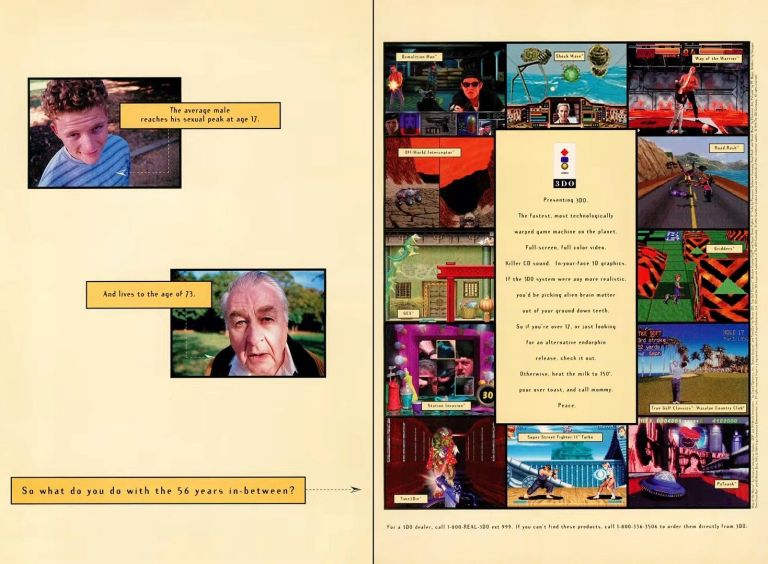
6. 3DO print ad

While it lacks intensity, this 3DO ad emphasized the games.

Without showing any hardware, the 3DO Company came up with this 2-page print ad that had a slightly adulterated tone (look at the left page) and aggressively marketed the 3DO console games available at the time. Games like Demolition Man, Shock Wave, Road Rash and Super Street Fighter II Turbo were the standout titles which clearly showed the company made the effort to emphasize gaming more than multimedia features. This 1990s ad tackled the generations with a touch of humor.

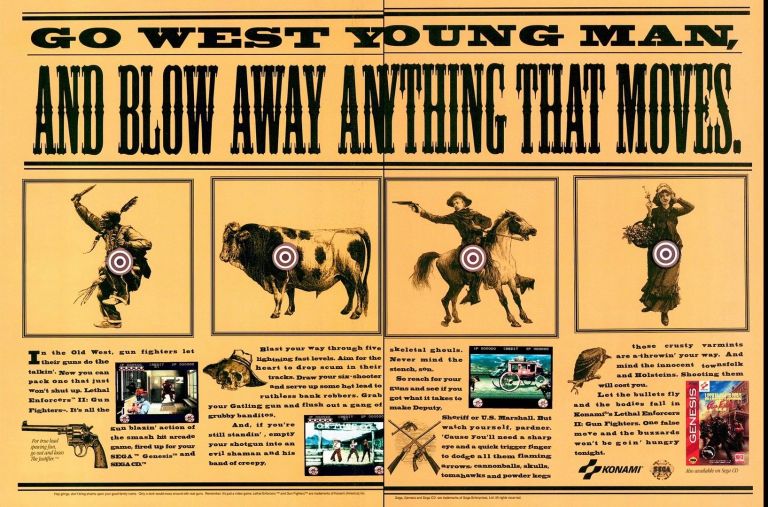
7. Lethal Enforcers II: Gun Fighters Sega Genesis print ad

This is a fun ad to look at.

When Lethal Enforcers II: Gun Fighters was released in the arcades in 1994, it became a commercial success for Konami which went on to announce it would port the game to consoles of Nintendo and Sega at the time. While the port for the Super Nintendo Entertainment System (SNES) was never released, Lethal Enforcers II: Gun Fighters made its way to the Sega Genesis and Sega CD. The print ad of the Sega Genesis version (Sega CD mentioned in small text) had an inspired design emphasizing the Old West, shooting and the conflict between cowboys and Indians. The screenshots gave people the clear idea that Old West was the setting (versus modern day in the previous game). This is still fun to look at.

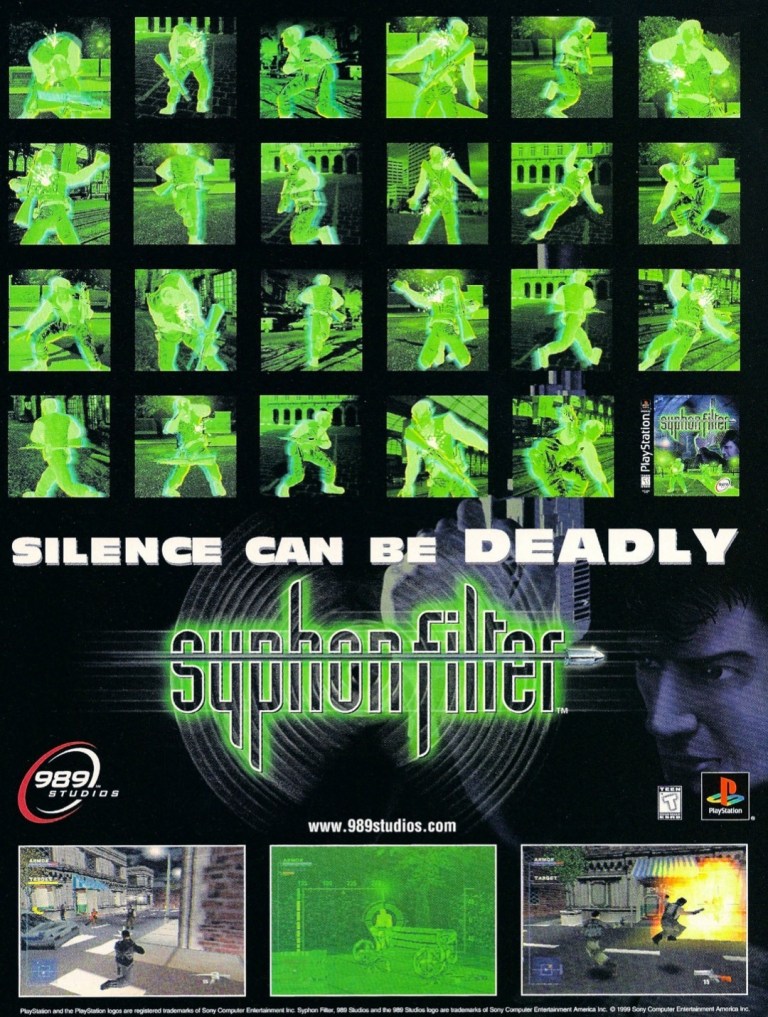
8. Syphon Filter

Syphon Filter went on to become a surprise hit game in 1999.

In 1999, Sony’s 989 Studios released Syphon Filter exclusively on the PlayStation console. This single-page print ad showed a few screenshots on the bottom and several action snippets with a night vision touch ultimately emphasizing the stealth aspect within the gameplay. The marketing proved to be effective as the game sold a lot at retail and went on to establish a new game franchise exclusive to PlayStation consoles.

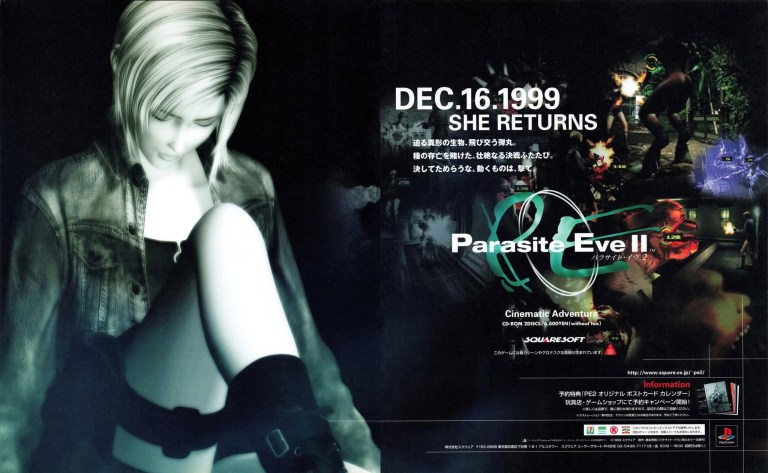
9. Parasite Eve II Japanese print ad

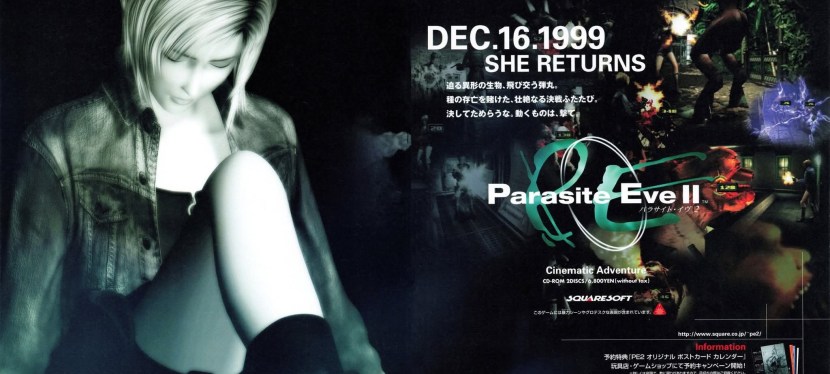
Were you a big fan of Aya Brea and the Parasite Eve franchise in the late 1990s?

Following the critical and commercial success of Parasite Eve in 1998, SquareSoft proceeded with Parasite Eve II and the production (note: initially for a spin-off game before becoming a sequel) did not even involve the main creators of the first game. Instead the company had a different team of developers – including those who previously worked on Resident Evil games for Capcom – in Osaka to make the sequel. This explains why Parasite Eve II had stronger survival horror gameplay resembling a Resident Evil game. As major changes were made during the production, it was decided that Aya Brea would become the main protagonist and already the character was already popular with gamers. That being said, the marketing of Parasite Eve II for the Japanese market heavily featured Aya Brea with subtle sexiness, beauty and action in mind. The marketing intensified leading to its eventual December 16, 1999 release in Japan.

+++++

Thank you for reading. If you find this article engaging, please click the like button below, share this article to others and also please consider making a donation to support my publishing. If you are looking for a copywriter to create content for your special project or business, check out my services and my portfolio. Feel free to contact me with a private message. Also please feel free to visit my Facebook page Author Carlo Carrasco and follow me on Twitter at  @HavenorFantasy as well as on Tumblr at https://carlocarrasco.tumblr.com/ and on Instagram at https://www.instagram.com/authorcarlocarrasco
Retro Gaming Ads Blast – Part 36

Welcome back readers, fellow geeks and electronic gaming fans!

In this edition of the Retro Gaming Ads Blast (RGAB) series, we will take a look at another batch of retro gaming print ads – including arcade flyers – from the 1970s to the 1990s.

For the newcomers reading this, Retro Gaming Ads Blast (RGAB) looks back at the many print ads of games (console, arcade, computer and handheld) that were published in comic books, magazines, flyers, posters and newspapers long before smartphones, social media, the worldwide web and streaming became popular. To put things in perspective, people back in the 1980s and 1990s were more trusting of print media for information and images about electronic games and related products.

With those details laid down, here is the newest batch of retro gaming print ads for you to see and enjoy…

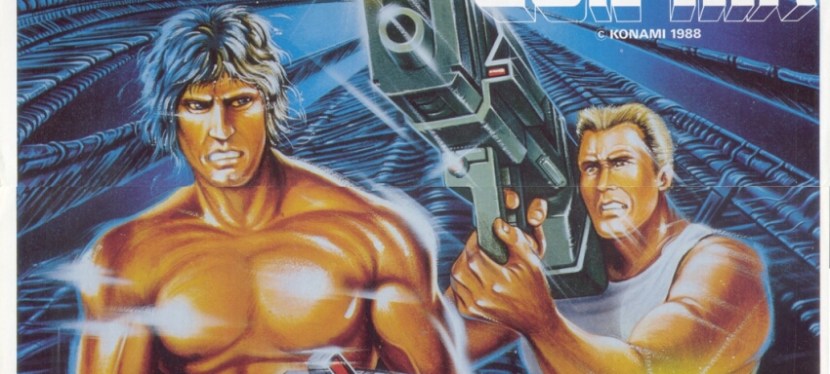
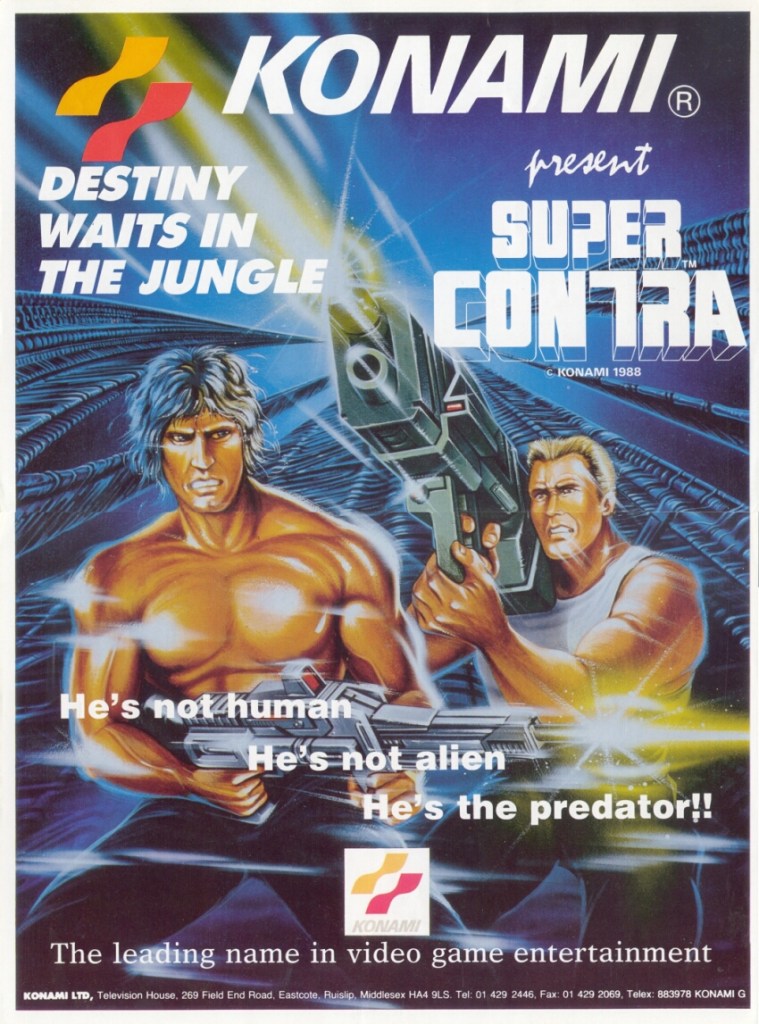
1. Super Contra North American arcade flyer

Have you seen many Hollywood action movies of the 1980s? Does this arcade flyer remind you of something?

After Konami struck gold with Contra in 1987, it was inevitable that sequels and spin-offs will be made. In 1988, they released the follow-up Super Contra in the arcades and to promote it in America, the company came up with artwork that easily gave gamers the impression they are seeing Sylvester Stallone as a fantasized Rambo and another armed guy who might remind them of Arnold Schwarzenegger’s character in Commando or Dutch in Predator. To capitalize on the movie references even more, the American arcade flyer had the line “He’s not human. He’s not alien. He’s the predator!!” As it was the 1980s, this creative approach to promotion was not surprising as Konami and its game makers were influenced by Hollywood movies.

2. Double Dragon II: The Revenge North American arcade flyer

The artwork used in this arcade flyer remains intriguing to look at.

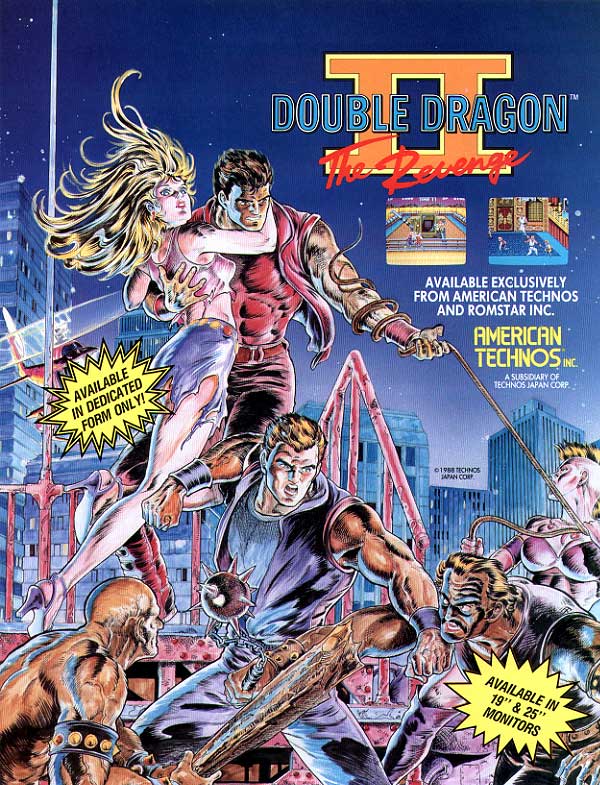
I never played Double Dragon II: The Revenge in the arcade, but I played it on the Nintendo Entertainment System (NES). That being said, I was surprised to see how this old North American arcade flyer has the same hand-drawn artwork used on the cover of the NES version. Take note that the arcade game was released in 1988 while the NES port was released in early 1990. I can only guess that Technos decided to use the same artwork not only for convenience but to have a definitive image emphasizing Double Dragon II to gamers wherever they are.

3. Devastators North American arcade flyer

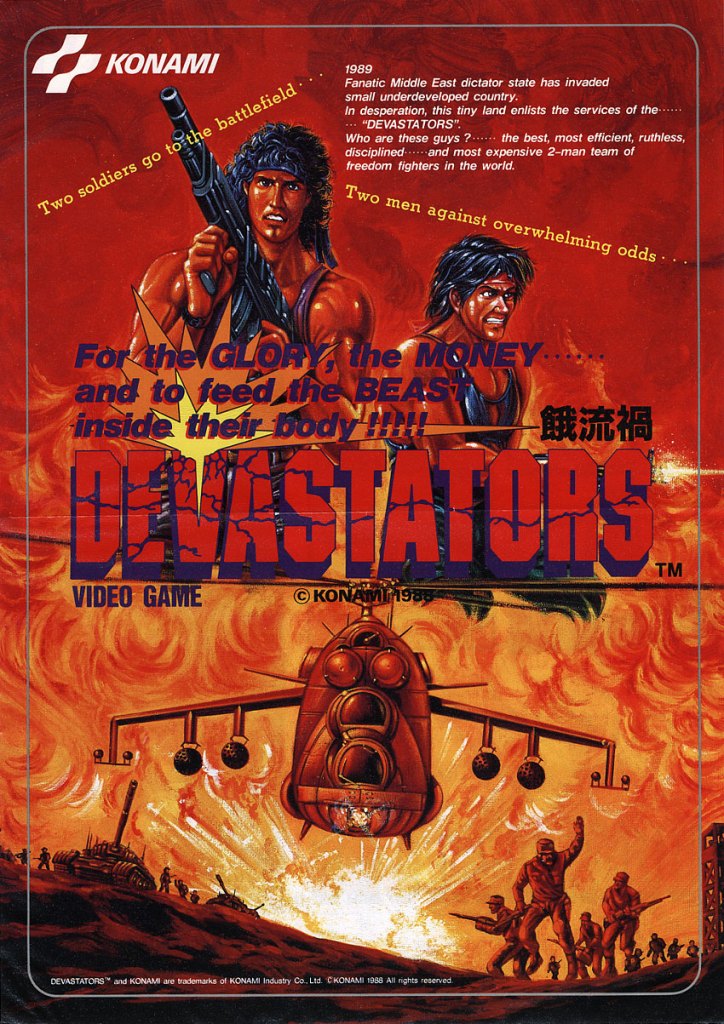
The front.
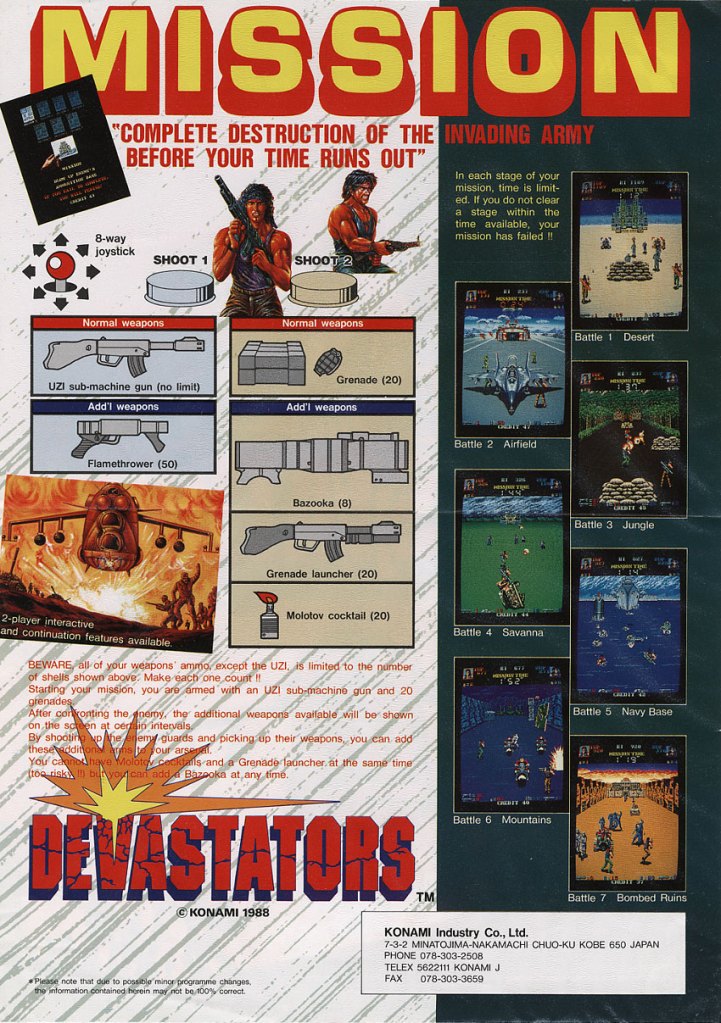
The rear.

Devastators is another Konami arcade game that had a strong war theme and it was influenced by Hollywood action films of the 1980s. This particular arcade flyer for the North American market is almost identical with the Japanese arcade flyer as both have the same artwork on the front and almost the same visual layout on the rear. The most obvious difference is the use of English text for the North American flyer.

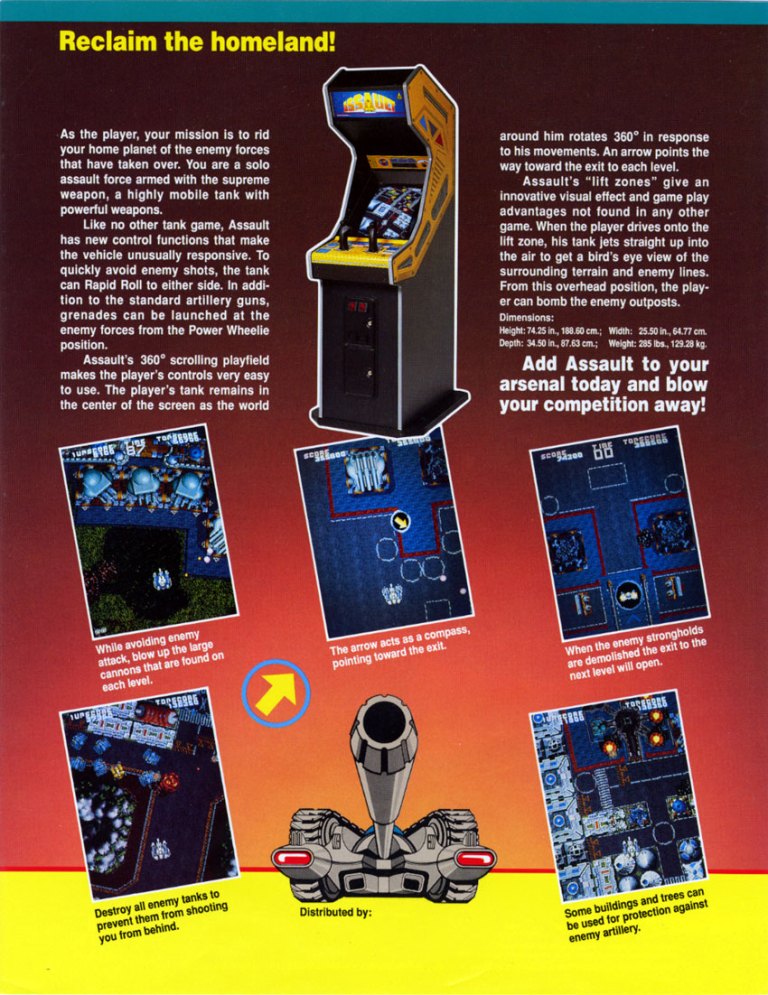
4. Assault North American arcade flyer

The front.
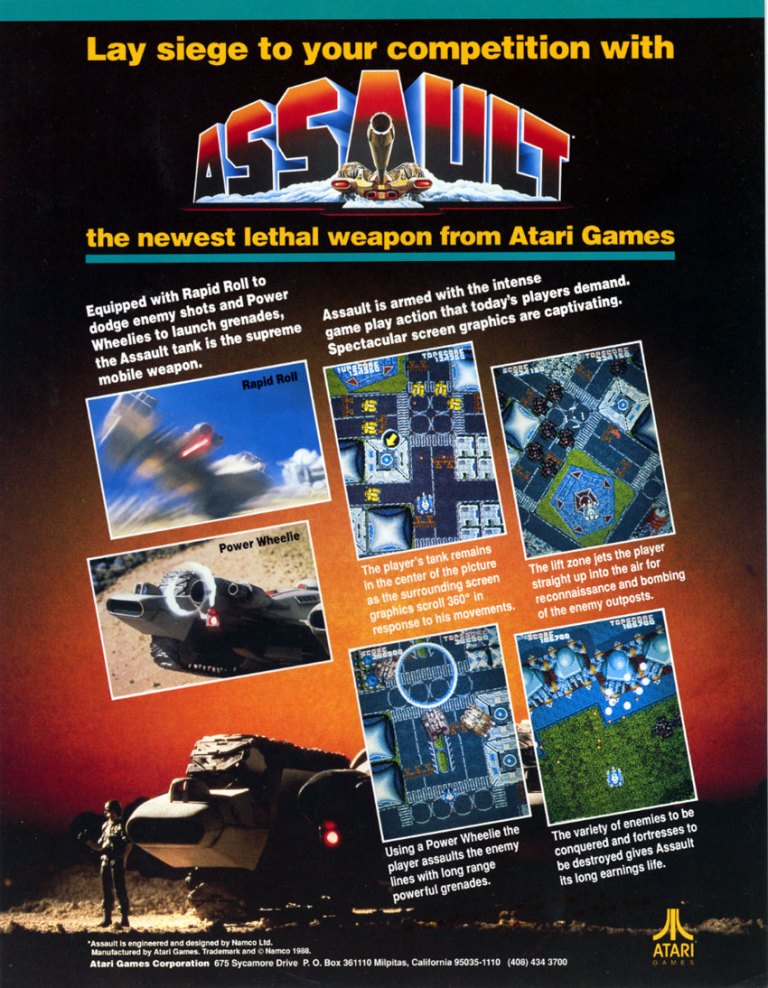
The rear.

Released in American arcades by Atari, Assault is a multi-directional shooter that had a twin-stick control layout (similar with the classic Battlezone) and players experienced intense battles as well as immersive visual effects such as sprite scaling and environment rotation of up to 360 degrees. To promote the game (this originated in Japan by Namco), Atari came up with this arcade flyer that had selected screenshots and descriptive text on both the front and the rear (which showed the arcade cabinet). Assault was a hit with gamers at the arcades and it was not released on consoles until 2009.

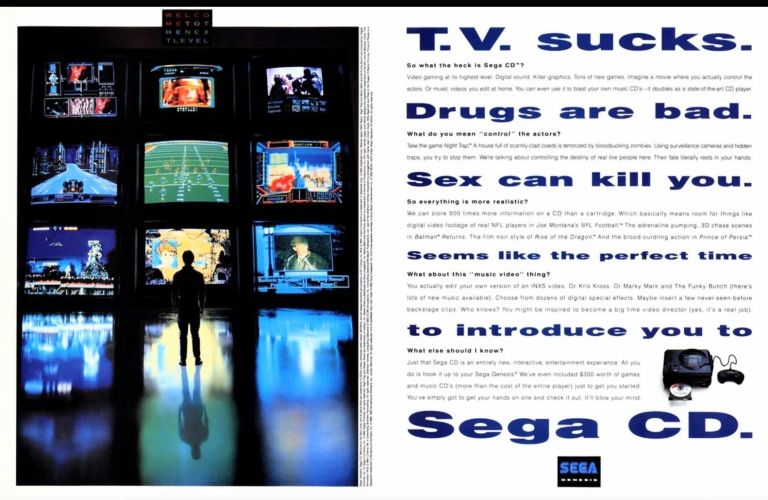
5. Sega CD print ad

Having a socially relevant message can be catchy but it leaves little room for excitement.

As the Sega Genesis console became a huge commercial success in North America, Sega itself became ambitious about what CD-ROM technology would do for video games. Sega in Japan tasked its Consumer Products Research and Development Labs to create a CD-ROM add-on which resulted in the Sega CD (Mega-CD in other parts of the world) which launched in America in 1992. To promote the add-on towards existing Genesis console owners as well as potential new customers, Sega of America came up with the above 2-page print ad that had a social message on the right and an image of a man standing in front of large monitors (showing Sega CD game footage) on the left. While it looked like an odd way of promoting video game hardware, it still remains catchy to see.

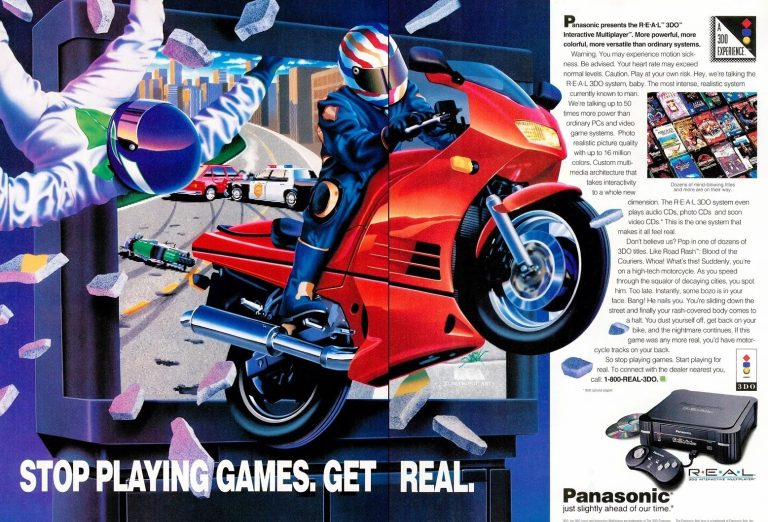
6. Panasonic 3DO print ad

Panasonic knows how to promote entertainment hardware for people’s homes.

Still in the field of CD-ROM gaming, Panasonic had competitive presence in video gaming when its Panasonic FZ-1 R.E.A.L. 3DO Interactive Multiplayer (with technology licensed by The 3DO Company) was launched in America in 1993. If you look at the print ad closely, you will notice that the descriptive text emphasized the multimedia entertainment aspect more than video gaming. The dominating artwork used does not come from a particular video game as it was made to emphasize home entertainment in general. It’s not surprising that the Panasonic 3DO and other 3DO machines from other manufacturers failed commercially.

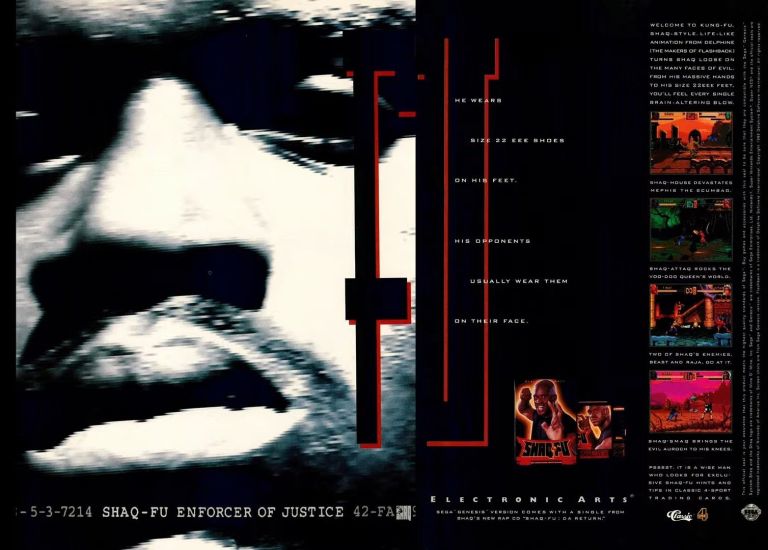
7. Shaq Fu print ad

The close-up of Shaquille O’Neal’s face on the left made him looked less recognizable.

Yes, it is true! There was indeed a video game endorsed by Shaquille O’Neal and it was not a basketball game. Shaq Fu is a 1994 2D fighting game with adventure elements and a story in which gamers play O’Neal as martial artist (note: O’Neal himself participated in the game’s production). To promote the game, Electronic Arts came up with a 2-page print ad that had a very odd black-and-white close-up image of O’Neal’s face on the left leaving small screenshots and hard-to-read text on the right (even though there was some vacant space remaining. I remember seeing this ad while reading a video game magazine and the ad ended up looking more like a promotion of O’Neal (already an NBA superstar) than the game itself. By today’s standards, this print ad is an example of a marketing misfire.

8. Kasumi Ninja print ad

Do you even remember seeing this print ad in magazines?

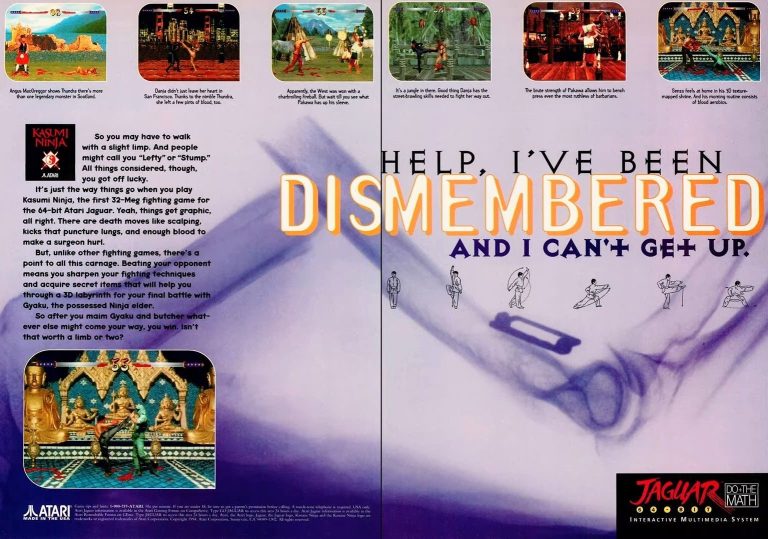
Remember the 1990s video game trends of digitized human images and disturbingly violent 2D fighting games sparked by Mortal Kombat? The Atari Jaguar-exclusive game Kasumi Ninja was made to capitalize on those trends and it failed badly. Apart from the low sales of the Jaguar console, Atari as publisher came up with the above 2-page print ad that was not appealing to gamers’ eyes and it had almost no excitement overall. This is another marketing misfire.

9. Parasite Eve North American and Japanese print ads

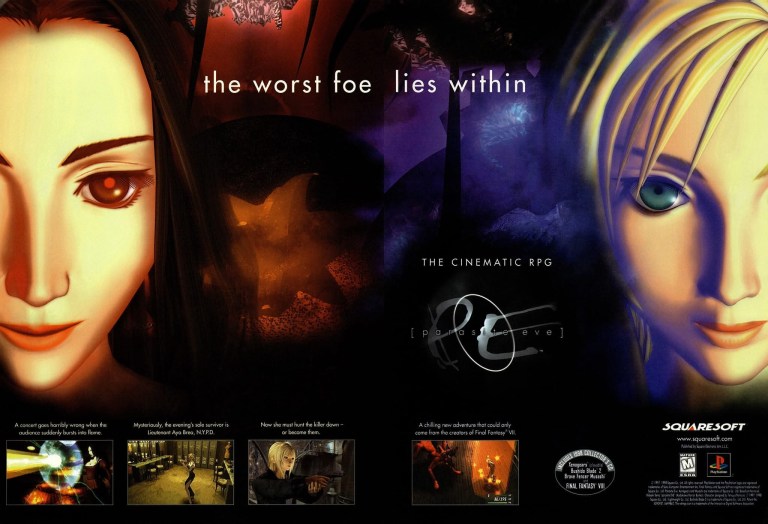
Following the successful release of Final Fantasy VII, this ad excited PlayStation gamers and JRPG enthusiasts for Parasite Eve’s 1998 release in America.
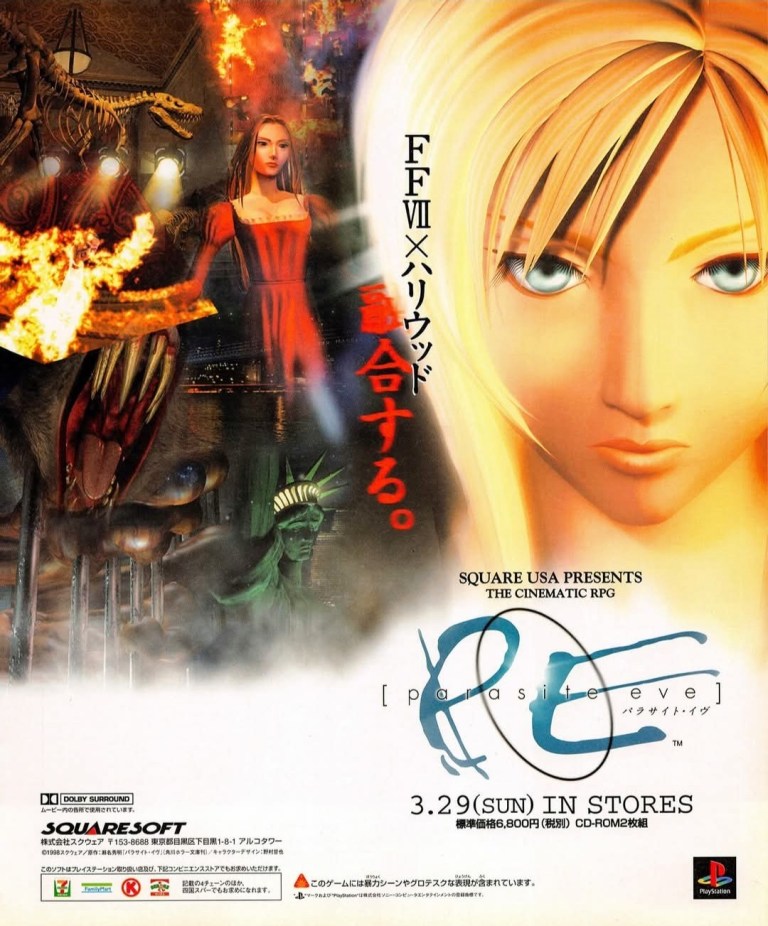
A stronger horror presentation in this print ad for the Japanese market. There were already a lot of people in Japan who enjoyed horror.

Starting in the mid-1990s, Squaresoft (now Square Enix) really became aggressive with video game creativity and experimentation as they launched several new projects that eventually got released on PlayStation in the late 1990s until 2000. One of those daring new projects was Parasite Eve which was a role-playing game (RPG) that had visual elements – particularly pre-rendered backgrounds – and a style of exploration that reminded gamers of Resident Evil. The game was a sequel to the Japanese science fiction horror novel of the same name and it involved the creativity of Final Fantasy creator Hironobu Sakaguchi (credited as producer). To promote the game, the 2-page North American print ad had protagonist Aya Brea on the right and the enemy on the left with a cryptic line placed strategically between them. The North American ad clearly stated that the game is a cinematic RPG. By comparison, the Japanese print ad of Parasite Eve has a strong horror vibe which is not surprising because of the novel’s horror elements and the fact that Squaresoft was capitalizing on the popularity of horror-related entertainment in Japan. By today’s standards, Parasite Eve is truly a product of the late-1990s and it has a dedicated fanbase.

+++++

Thank you for reading. If you find this article engaging, please click the like button below, share this article to others and also please consider making a donation to support my publishing. If you are looking for a copywriter to create content for your special project or business, check out my services and my portfolio. Feel free to contact me with a private message. Also please feel free to visit my Facebook page Author Carlo Carrasco and follow me on Twitter at  @HavenorFantasy as well as on Tumblr at https://carlocarrasco.tumblr.com/ and on Instagram at https://www.instagram.com/authorcarlocarrasco
Retro Gaming Ads Blast – Part 35

Welcome back readers, fellow geeks and electronic gaming fans!

In this edition of the Retro Gaming Ads Blast (RGAB) series, we will take a look at another batch of retro gaming print ads – including arcade flyers – from the 1970s to the 1990s.

For the newcomers reading this, Retro Gaming Ads Blast (RGAB) looks back at the many print ads of games (console, arcade, computer and handheld) that were published in comic books, magazines, flyers, posters and newspapers long before smartphones, social media, the worldwide web and streaming became popular. To put things in perspective, people back in the 1980s and 1990s were more trusting of print media for information and images about electronic games and related products.

With those details laid down, here is the newest batch of retro gaming print ads for you to see and enjoy…

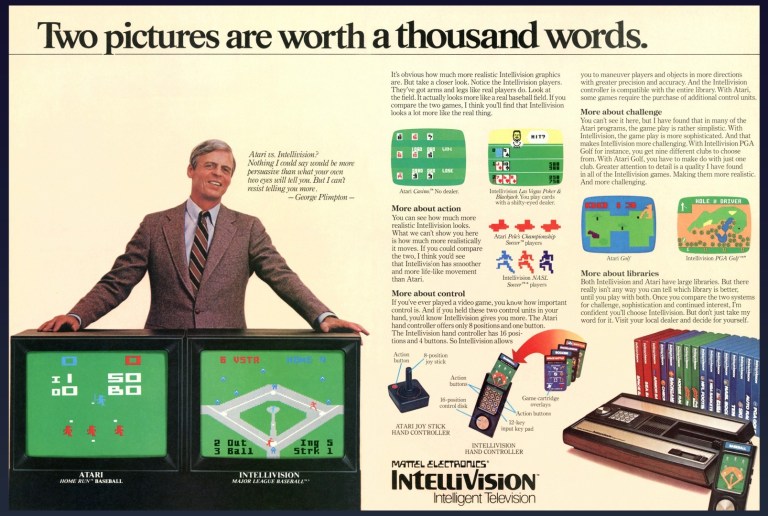
1. Intellivision print ad

Were you able to play a game on the Intellivision long ago?

In 1979, Mattel launched their Intellivision game console in America which instantly placed them in competition with Atari’s 2600 console. In a bid to convince gain market share, Mattel daringly came up with a competitive print ad like the one above showing two TV sets (with an Atari 2600 baseball game and a similar game on Intellivision), descriptive text that explained why the intellivision and its games are better, and even mentioned Atari by name several times. Obviously the tactic did not lead Mattel to ultimate market victory but the above print ad showed it was okay for a newcomer to mention their competitor and aggressively attack it to gain customers (both newcomers and active gamers).

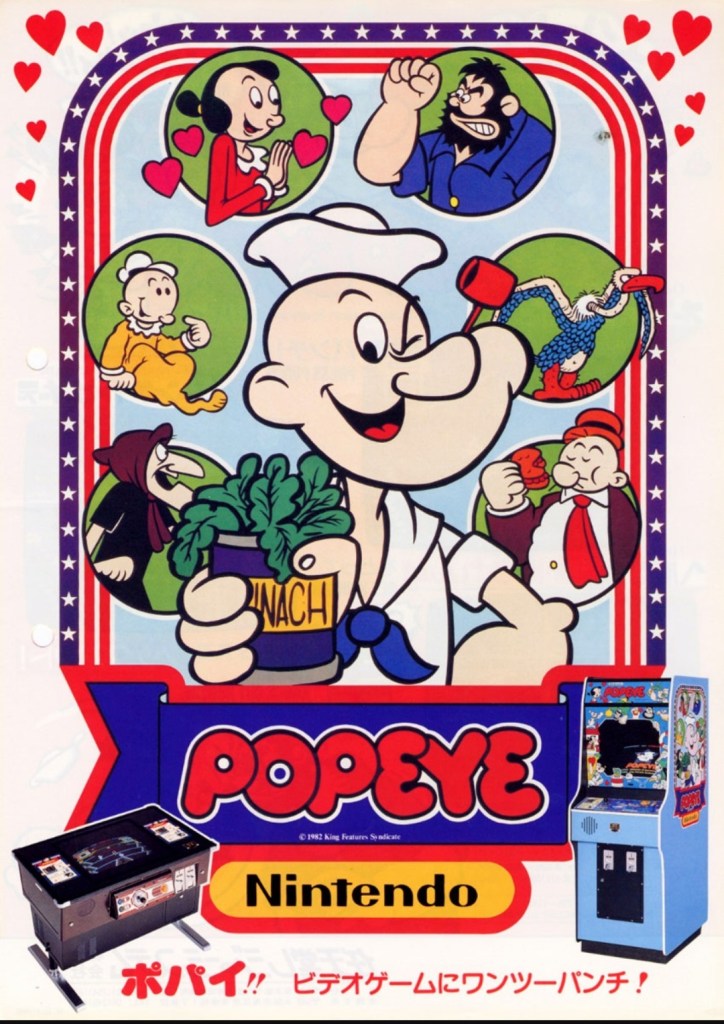
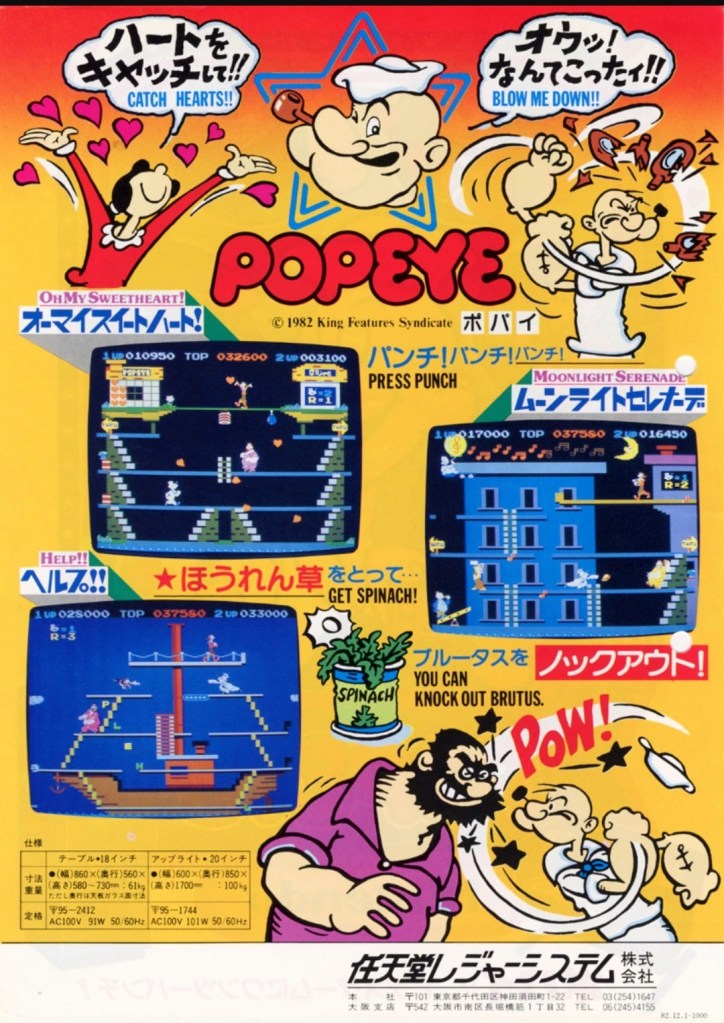
2. Popeye Japanese arcade flyer

The front of the flyer.
The rear.

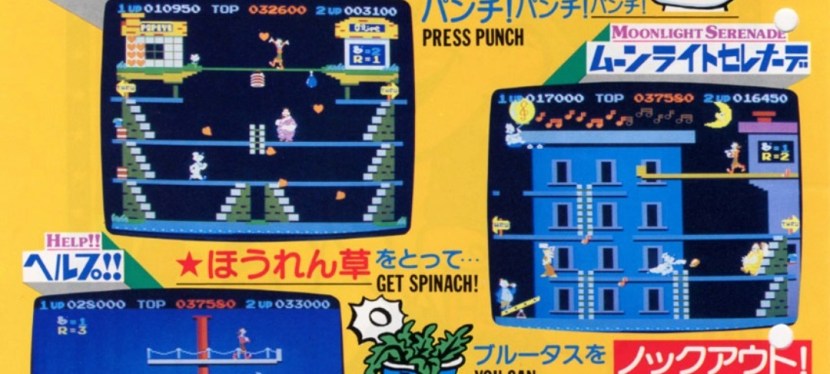
In 1982, Nintendo released the Popeye arcade game which was incidentally the result of the success of their original Donkey Kong arcade game. To promote the game, Nintendo came up with an arcade flyer that had a very lively front (note: the characters were instantly recognizable thanks to the great art used) and the rear having easy-to-read instructions on how to play the game, what levels to expect and what must be done when playing. Popeye was an arcade hit in Japan, but an even bigger hit in America. This old arcade flyer still looks nice.

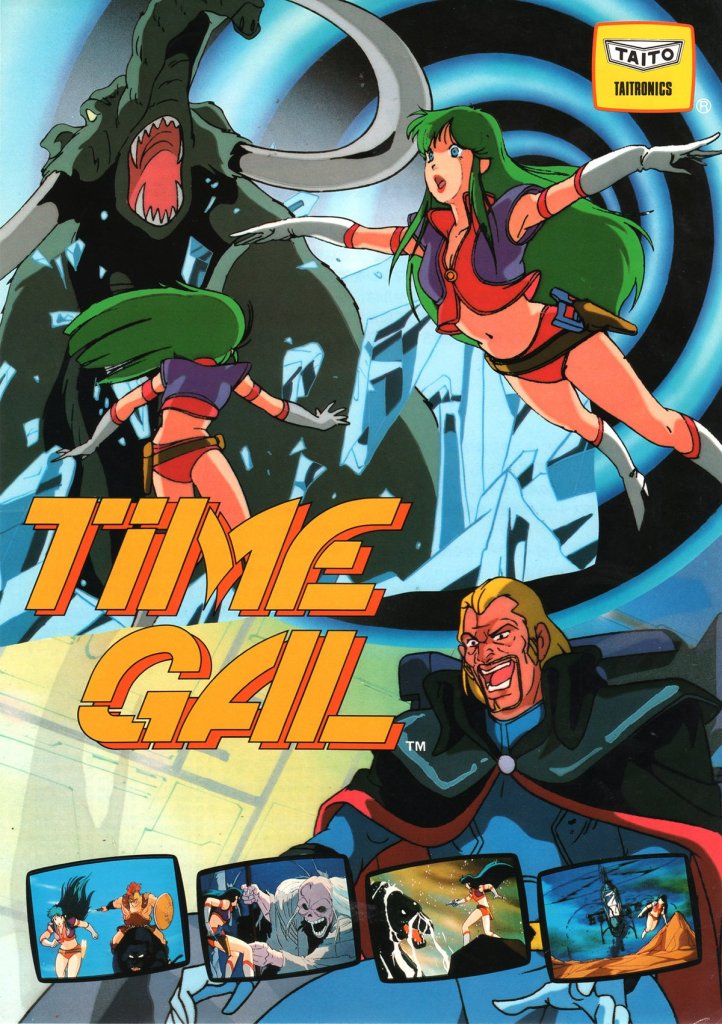
3. Time Gal arcade flyer

On face value, this one looks more like an anime promo since gameplay elements were missing.

Released in Japanese arcades in 1985, Time Gal is one of those games that used the expensive LaserDisc technology to stream pre-recorded animation (made by Toei) and challenged gamers to react quickly (using the joystick and button for commands) in order to progress in real-time. The arcade flyer has a very lively visual design making it clear to players and arcade operators that a lot of anime awaits those who play Time Gal. Technically, players watch anime cutscenes happen and react using the controls. Time Gal was an arcade hit and it made its way outside of Japan by getting ported for the Sega CD.

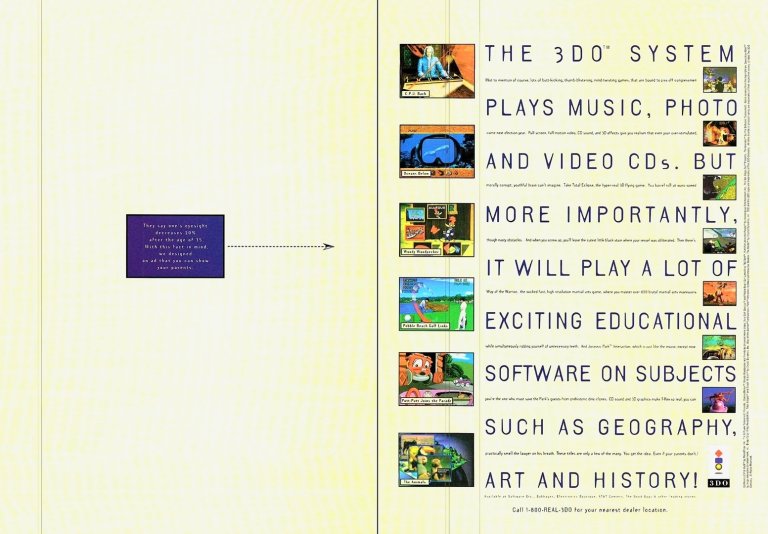
4. 3DO print ad

If you bought a 3DO long ago, was it for gaming or for home entertainment purposes?

Remember the 3DO? Developed by the 3DO Company and launched in 1993, the 3DO was designed to not only play video games but also function with multimedia features. In fact, the 3DO was initially marketed as a machine that allows users to watch videos, play music, browse digital photographs, and even immerse themselves with software focused on different topics. This is exactly what the above 3DO print ad emphasized. In retrospect, it was so odd for me to see the print ad inside video gaming magazines I read.

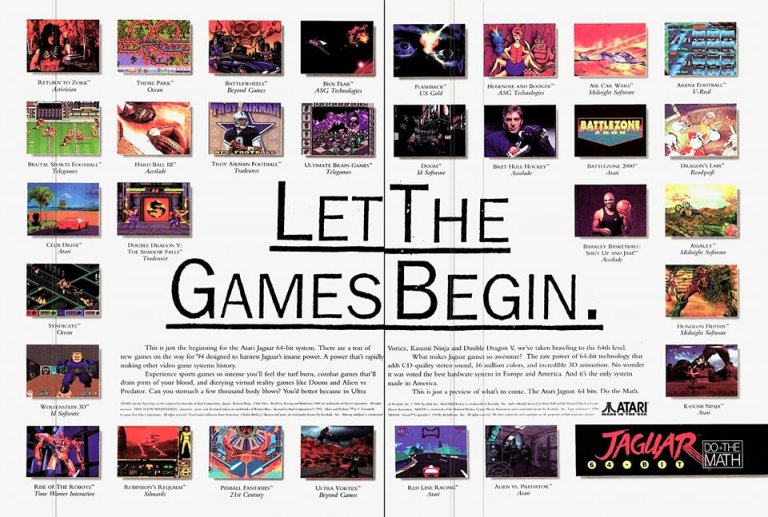
5. Atari Jaguar print ad

The strong focus on gaming was clear with Atari for the Jaguar.

Over a month after the launch of the 3DO, Atari launched its Jaguar console with a strong focus on video gaming. As console sales slowly grew in 1994, Atari came up with the above print ad – showing lots of games for the Jaguar – to lure in customers aggressively. If you look closely at the descriptive text of the ad, it mentions the Atari Jaguar as 64-bit system emphasizing that it is more powerful than other video game machines of the time. The bit count controversy harmed Atari and eventually the Jaguar failed.

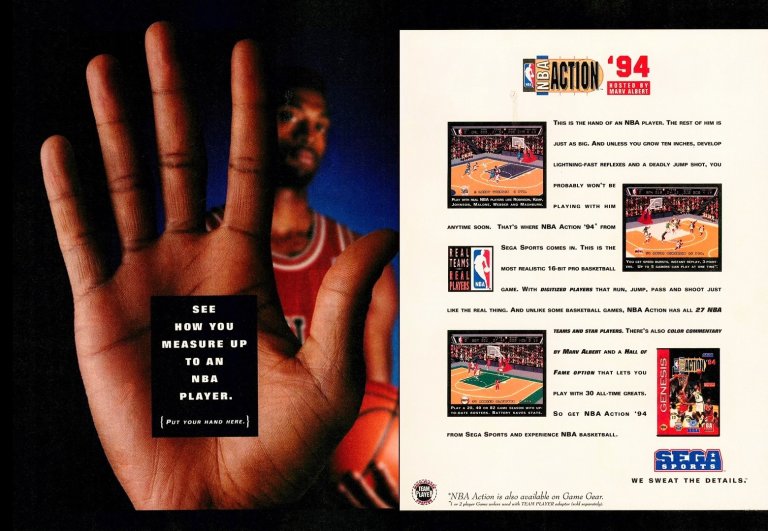
6. NBA Action ’94 print ad

Remember when Sega made NBA basketball video games that were exclusive to the Genesis console?

Remember when there were a lot of basketball video games licensed by the NBA in the 1990s? Through its own sports games brand – Sega Sports – Sega was dedicated to making exclusive sports video games for its customers and their NBA games were under the NBA Action brand. In 1994, they released NBA Action ’94 for the Genesis console and this two-page print ad they came up with had a catchy visual design (a supposed basketball player showing his palm and message to the camera on one side of the ad). Looking closely at the descriptive text, the ad mentions “most realistic 16-bit pro basketball”, “digitized players” and having all 27 NBA teams and star players. Sega Sports is no more but it’s legacy still lives on among Sega fans.

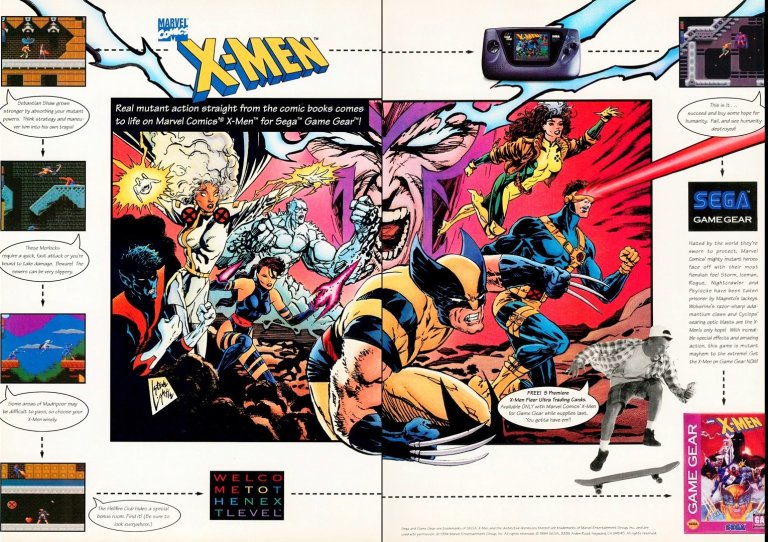
7. X-Men Sega Game Gear print ad

For X-Men fans!

Similar to its approach with the Sega Sports brand, Sega developed exclusive games for the Game Gear. The company secured from Marvel the license to make an original X-Men game and to promote it, this 2-page print ad showcased original art of the established X-Men characters of the time while using the remaining spaces for the screenshots and descriptive text. This old print ad still looks attractive and will easily resonate with X-Men fans as well as 1990s superhero comics enthusiasts.

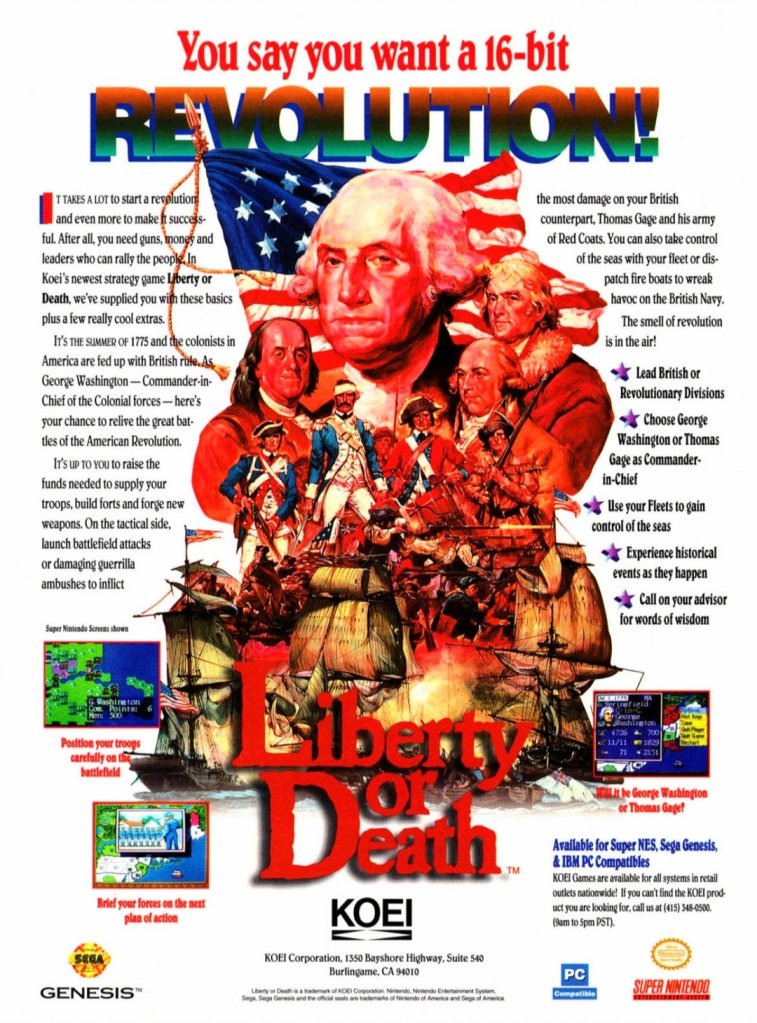
8. Liberty or Death print ad

American history is the core concept of this strategy game by Koei.

If there is anything notable about the Japanese company Koei, it is the fact that it released strategy and simulation games that tackled varied topics while making each game distinct and playable regardless of platform. In my experience, I had a lot of fun playing their business simulation Aerobiz Supersonic on the Super Nintendo Entertainment System (SNES). In 1993, Koei released their turn-based strategy game Liberty or Death which tackled American history for its setting (note: Koei already established itself with historical simulations). To sell the game, Koei came up with a print ad that had a very eye-catching historical art (George Washington, Thomas Jefferson, and Benjamin Franklin among the figures), a few selected screenshots and descriptive text that emphasized the essence of the game. This print ad is a reminder that no video game company today would make a historical simulation due to geopolitics (note: there are a lot of woke activists among video game employees today) and for business reasons.

+++++

Thank you for reading. If you find this article engaging, please click the like button below, share this article to others and also please consider making a donation to support my publishing. If you are looking for a copywriter to create content for your special project or business, check out my services and my portfolio. Feel free to contact me with a private message. Also please feel free to visit my Facebook page Author Carlo Carrasco and follow me on Twitter at  @HavenorFantasy as well as on Tumblr at https://carlocarrasco.tumblr.com/ and on Instagram at https://www.instagram.com/authorcarlocarrasco
A Look Back at Missile Command (Arcade game, 1980)

Welcome back retro gaming enthusiasts, Atari fans, geeks and others who are passionate about video games!

Today we go all the way back to the year 1980 when Atari released in arcades a game that strongly resonated with people who were concerned about a potential nuclear conflict between the United States and Russia during the Cold War…Missile Command.

Designed by Dave Theurer and programmed by Rich Adam with Theurer, Missile Command is a 2-dimension shoot ‘em up arcade game that had a trackball to allow players to control a crosshair to defend six existing cities. The arcade also had three buttons players could use to launch surface-to-air missiles from the three missile bases to protect the cities from incoming ballistic missiles that came from an unseen enemy.

With those details laid down, here is a look back at the Missile Command arcade game of 1980 developed and published by Atari.

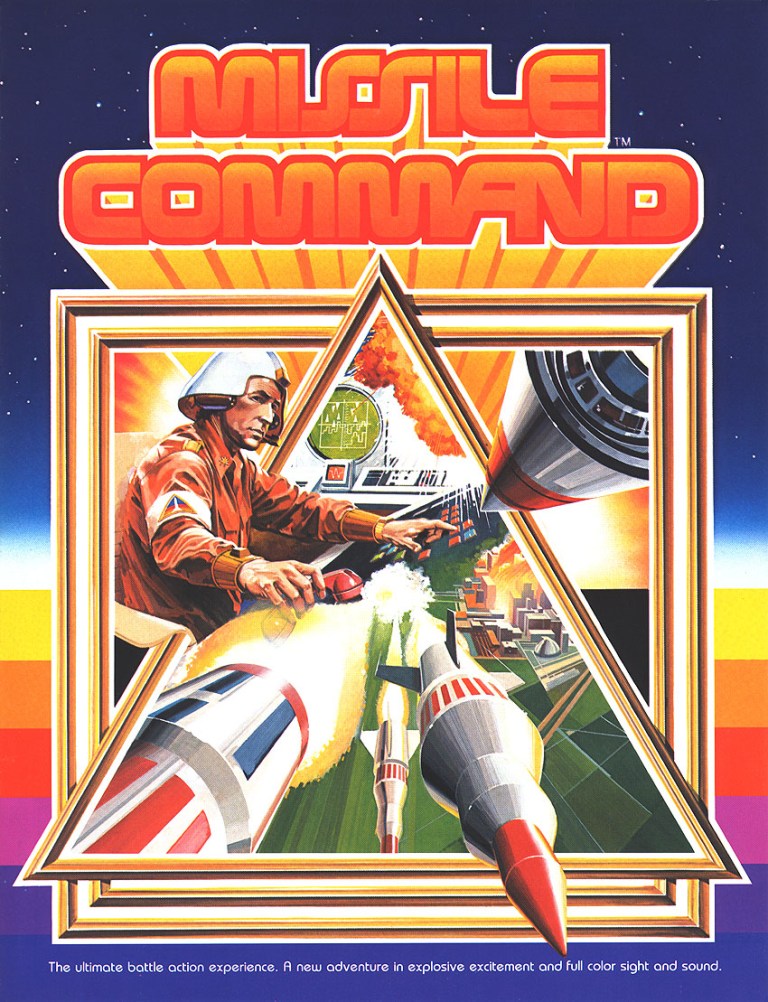
The arcade flyer with a great looking painted artwork. This one really resonated with gamers who lived during the Cold War.

Game design

As the commander of three missile bases (each armed with 10 defense missiles), the player is tasked to protect six existing cities from waves of ballistic missiles (launched by an unnamed enemy) coming down. From time to time, the enemy deploys bombers, satellites/drones and smart bombs to overwhelm your defense and test your precision and decision making.

You have three missile bases that each has its own supply of defense missiles. There are cities between each base which you have to defend from the endless assault of enemy missiles, smart bombs, war planes and satellites/drones.
When your defense missile detonates in the air, it creates an explosion which serve as a shield to destroy enemy missiles, war planes and satellite/drones when contact is made. If any projectiles from the enemy manages to get through the aerial explosion, you will have to quickly launch more defense missiles from the near base you have.

Players use a single crosshair which designates which part of the sky a defense missile can be fired at. Once the defense missile reaches its destination (placed by the crosshair) in the sky, it will explode and cause a growing flame lasting seconds. The said flame serves as a shield that can destroy the enemy’s ballistic missiles, smart bombs, war planes and satellites/drones upon contact. Defense missiles can be launched consecutively into selected spots in the sky in anticipation of the incoming weapons of the enemy. 

To proceed from one level to another, the player must have at least one city remaining intact. Once all the six cities have been destroyed and the player no longer has any unused missiles (and no new cities earned by reaching certain high scores that justify rewards), the game will end with a “Game Over” screen with an explosion in the background.

Quality

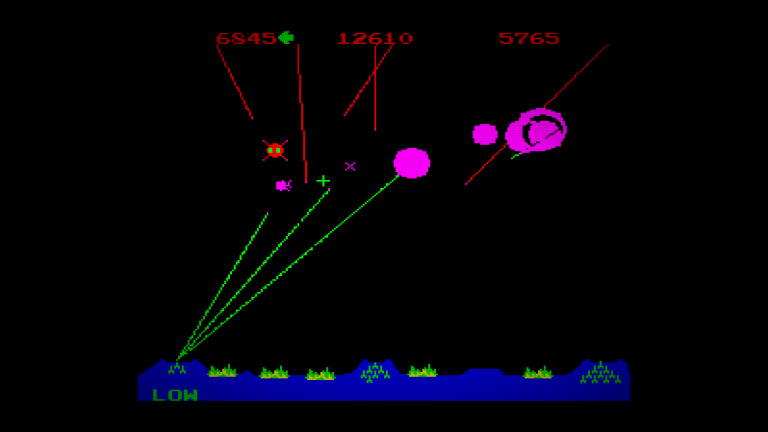
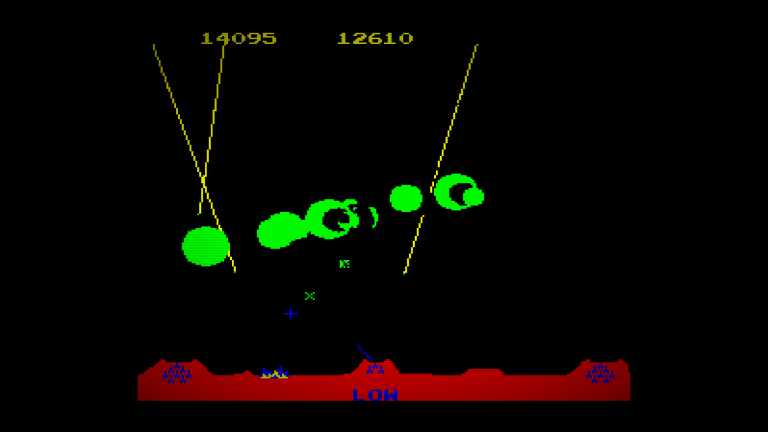
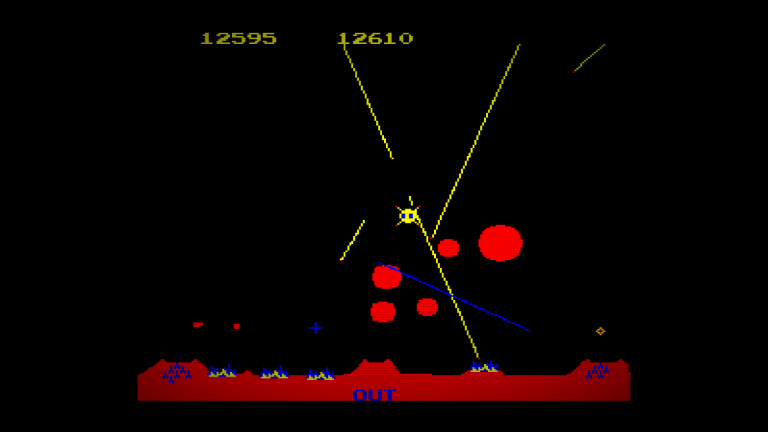
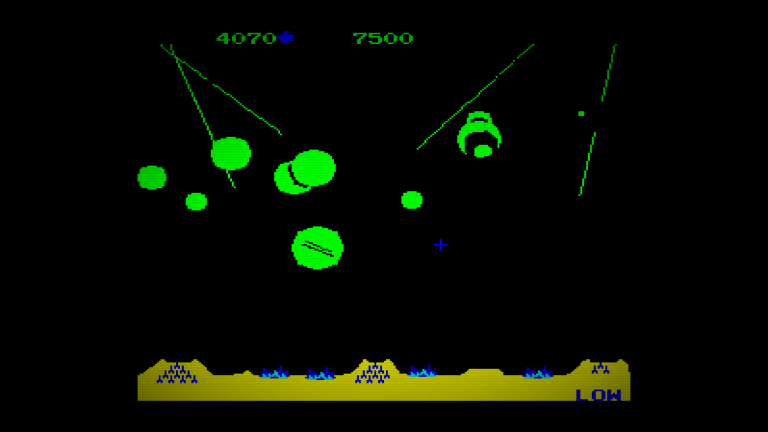
In this screenshot, the enemy’s satellite/drone is floating while a smart bomb is about to hit the missile base at the lower-right. Smart bombs can be challenging to intercept because it reacts by avoiding the aerial explosion of defense missiles.

This arcade game – which is currently available for modern console owners to play via the Atari 50: The Anniversary Collection – remains very engaging and a lot of fun to play with after all these decades. As a player, my only objective was to defend the six existing cities and three missile bases from the waves of enemy ballistic missiles (and smart bombs in later levels) coming from the sky. Given the way the game was designed, this is strongly emphasized and the only times I could attack the enemy is by launching my own missiles towards the enemy’s bombers and satellites/drones (note: both of these are capable of launching more missiles at you).

If any of the enemy’s weapons hits one of your missile bases, it and the remaining supply of defensive missiles will be wiped out. Enemy missiles that hit a city will result in total destruction. Considering the intentional increase in challenge with each new level of play started, the enemy’s ballistic missiles move faster, the warplanes and/or satellite/drones appear more and the smart bomb – which is the most difficult to intercept as it deliberately avoids the aerial flames caused by your defense missiles – get launched against you.

When intercepting enemy missiles, you have to think quick where to aim (ahead of incoming missiles), which missile base to use to launch defense missiles and remember how much missiles do you have left per base.

That being said, the game deliberately becomes harder which compelled me to be more watchful of enemy weapon movements, and to be more strategic using my defense missiles while keeping a quick eye on the remaining supply of missiles per base. While the in-game difficulty intensifies per level, the game never became frustrating to play nor did it ever turn into a chore on my part. I just keep playing because I found the increasing challenges actually fun to take on.

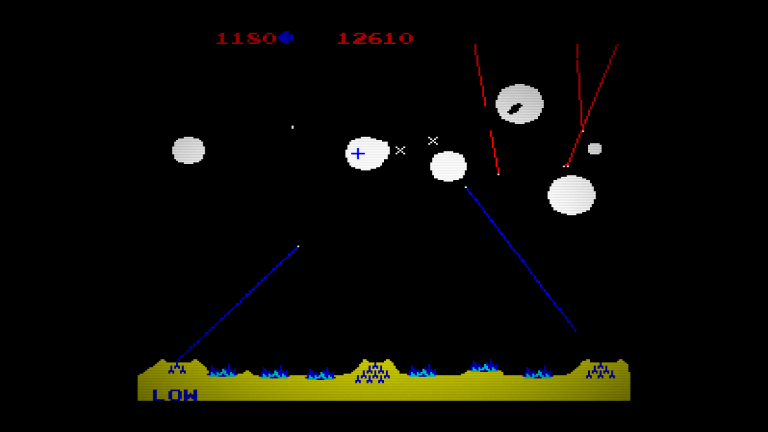
The game’s visuals are still good to look at. It’s still engaging to see streaks of missile trails (both your defense missiles and the enemy’s ballistic missiles) fill the air above the cities and the flashing light effects that simulate explosions are still effective as eye candy. Along the way, the game’s sound effects worked perfectly with the visuals and they added a lot to the immersion.

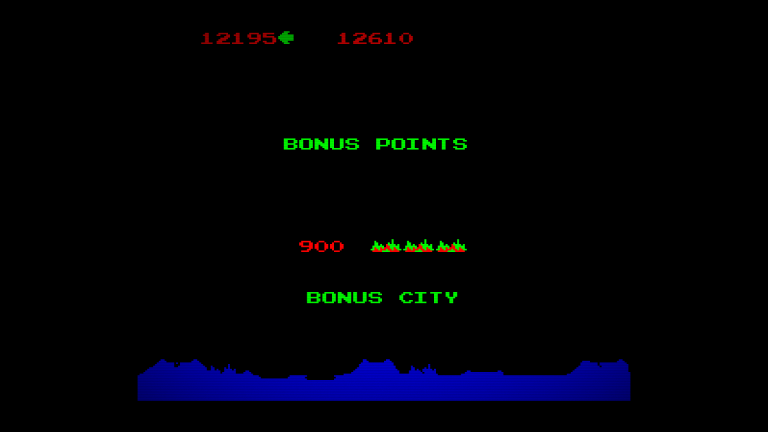
When you score enough points, the game will reward you with a bonus city.
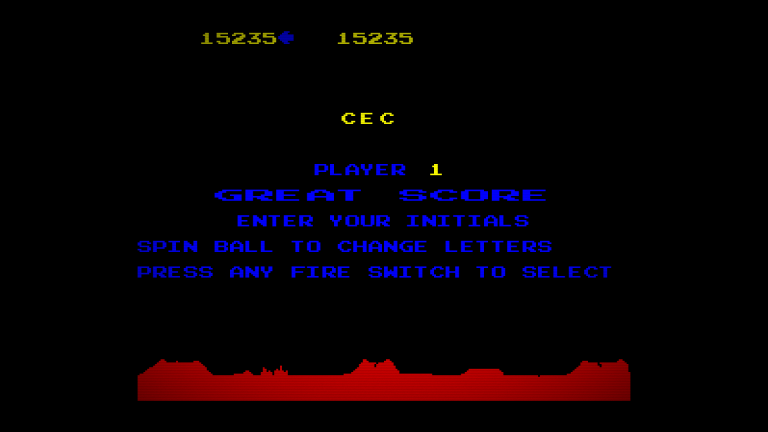
Me putting my initials after achieving a great score in Missile Command.

Considering its simplicity and the way it was designed, there clearly is no way for players to win at all. Rather, the game will challenge your precision, decision-making and ability to defend your cities and bases. That being said, the greater challenge is to survive and be able to move on to the next level with missile bases and whatever cities remaining you still have to defend. As with other games of the past, achieving the high possible score – which reflects your endurance, skill and progress – is a goal here. Achieving certain high scores also result in an extra city for you.

Cultural relevance

Missile Command’s legacy as one of the greatest arcade games ever released is undeniably real. Not only that, this game resulted in a lot of ports for consoles, portable gaming devices and home computers through the decades. This classic was re-released in several compilations from Atari and the Xbox-listed Missile Command contains the arcade version. In 2020, a remake called Missile Command: Recharged was released as part of the Atari Recharged series of games.

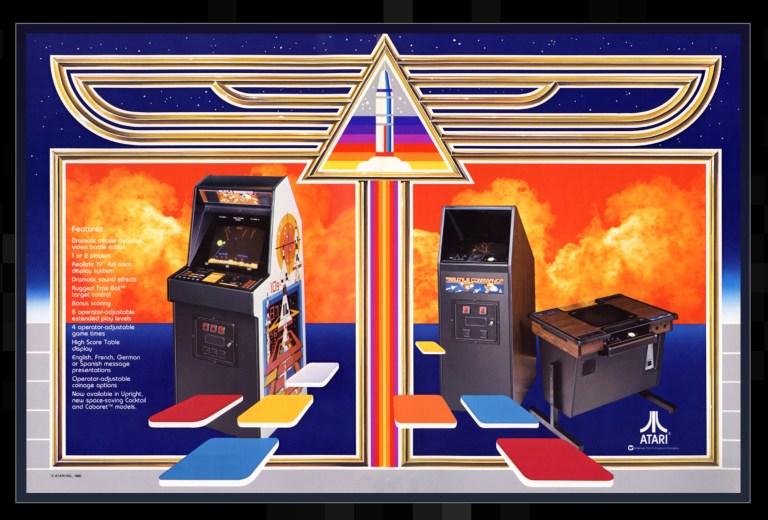
The different Missile Command arcade machines.

Missile Command even appeared for a few seconds in Terminator 2: Judgment Day which added more to the film’s concept of nuclear war.

With regards to arcade gaming, Missile Command is notable for having a trackball on its machine as a way for arcade players to control the crosshair during game sessions.

Conclusion

Apart from being the commander of missile defense, try imagining yourself being on of the citizens living in one of those cities. Can you imagine watching real-life missiles get intercepted in sky above you?

The Missile Command (1980) arcade game is a true video game classic and it remains compelling and enjoyable at the same time. It can also be an intriguing game experience since it does not let players complete the game by winning. All players can do is perform the best defense they could, survive to the next round and keep playing until their defense gets overwhelmed by the enemy and the rising in-game difficulty.

As a result of the game design, playing Missile Command is actually moral because the concept of defending your people using powerful yet limited resources is very strong all the time. Even with progressive difficulty, the game never became frustrating to play and I actually enjoyed the challenges knowing that defense and survival are main goals. Achieving the highest possible score is the other goal as reflected by video gaming of the era. Missile Command simply delivers bouts of fun and you cannot go wrong with playing it. It is not surprising that this game became a massive hit and established itself as a true classic among video games.

Overall, Missile Command (1980) highly recommended and the best way to play it on console today is to avail of Atari 50: The Anniversary Celebration compilation.

+++++

Thank you for reading. If you find this article engaging, please click the like button below, share this article to others and also please consider making a donation to support my publishing. If you are looking for a copywriter to create content for your special project or business, check out my services and my portfolio. Feel free to contact me with a private message. Also please feel free to visit my Facebook page Author Carlo Carrasco and follow me on Twitter at  @HavenorFantasy as well as on Tumblr at https://carlocarrasco.tumblr.com/ and on Instagram at https://www.instagram.com/authorcarlocarrasco
Retro Gaming Ads Blast – Part 27

Welcome back readers, fellow geeks and electronic gaming fans!

In this edition of the Retro Gaming Ads Blast (RGAB) series, we will take a look at another batch of retro gaming print ads – including arcade flyers – from the 1980s and to the year 2000.

For the newcomers reading this, Retro Gaming Ads Blast (RGAB) looks back at the many print ads of games (console, arcade, computer and handheld) that were published in comic books, magazines, flyers, posters and newspapers long before smartphones, social media, the worldwide web and streaming became popular. To put things in perspective, people back in the 1980s and 1990s were more trusting of print media for information and images about electronic games and related products.

With those details laid down, here is the newest batch of retro gaming print ads for you to see and enjoy…

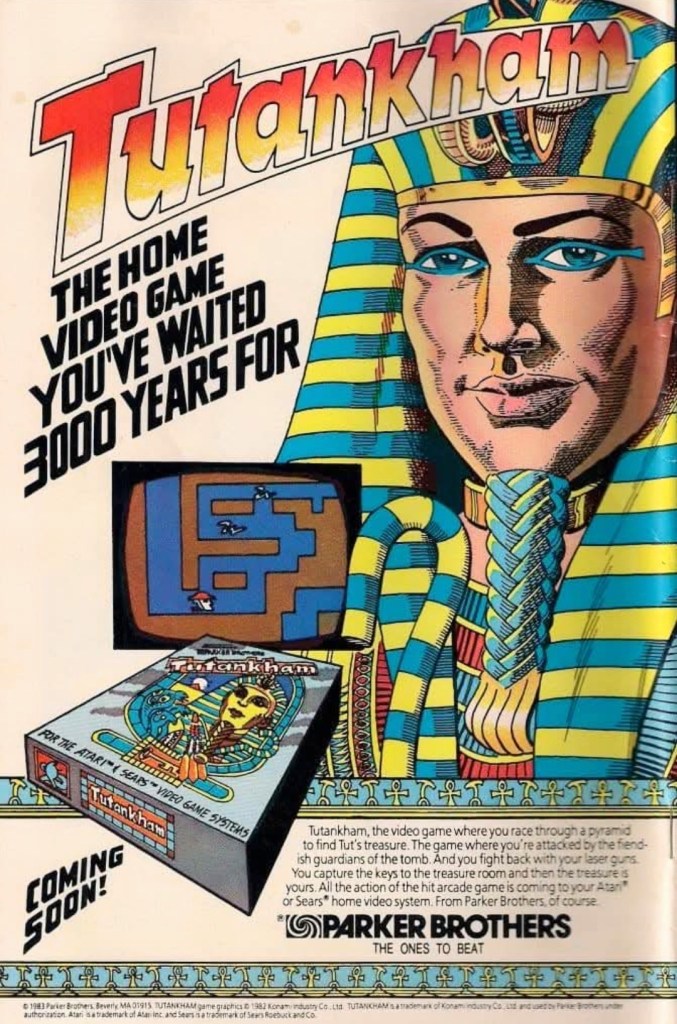
1. Tutankham print ad

This print ad appeared in several comic books in 1983.

First released in the arcades in 1982, Tutankham is a 2D adventure game that had a mix of shooting, maze exploration and puzzle-solving with Egyptian settings and concepts. It made its way to the Atari 2600 published by Parker Brother, and it was this specific version I played. This game print ad appeared in comic books I read in 1983, and the people who made it implemented a hand-drawn art of the Egyptian pharaoh Tutankhamun dominating the space to emphasize the Egyptian setting. In fact, this ad made me think more of Egypt and left little to give me an idea of the game design.  

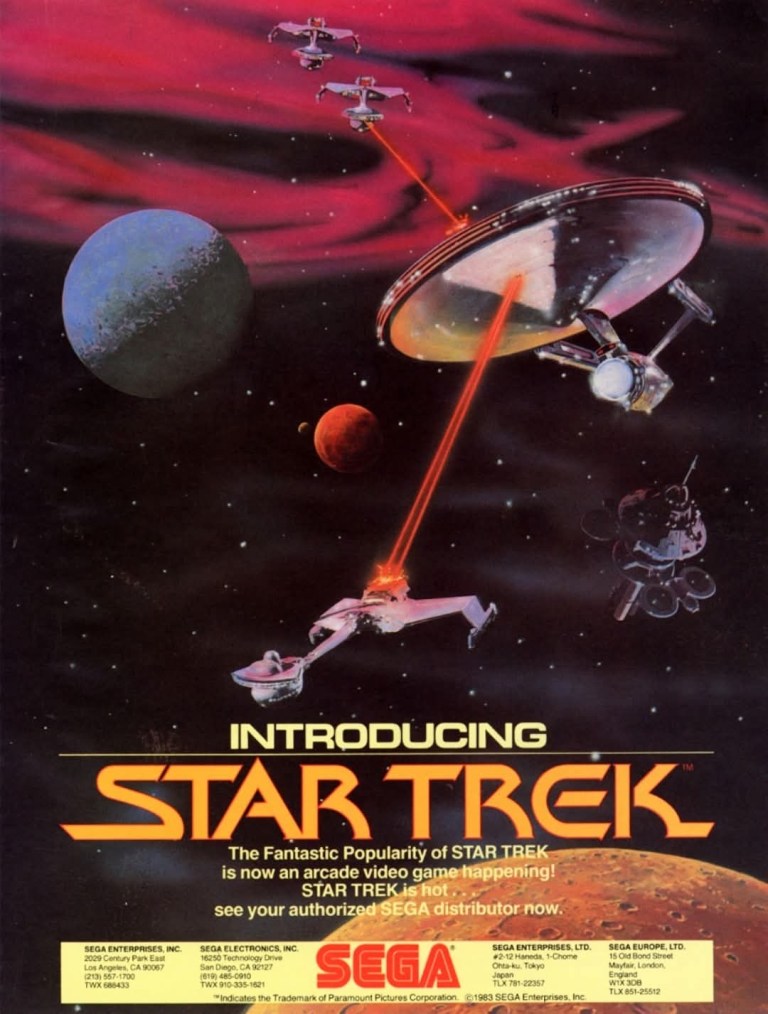
2. Star Trek arcade flyer

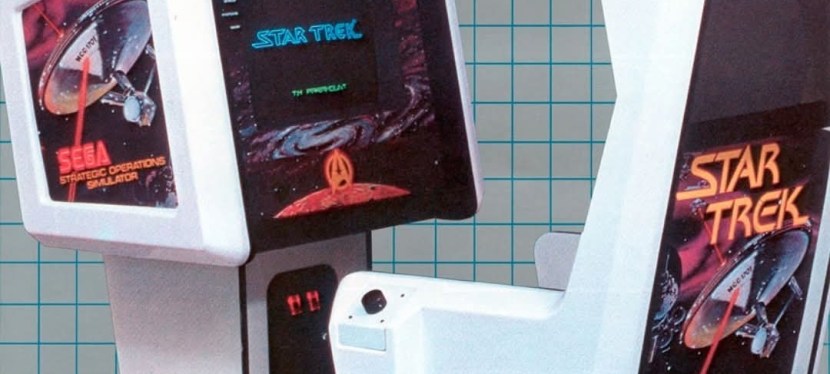
The clever use of classic Star Trek imagery was used in this initial flyer by Sega.
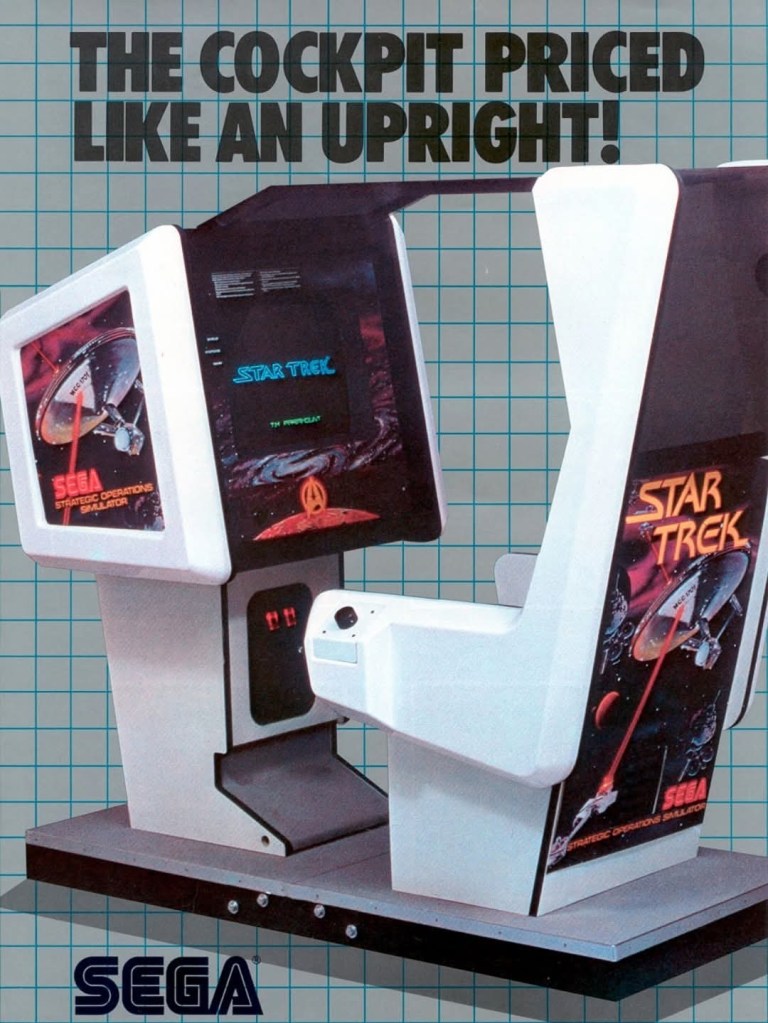
Back in the 1980s, a futuristic design for an arcade machine like this one was mind-blowing.

I never played the Star Trek arcade game (full title: Star Trek: Strategic Operations Simulator) Sega released in 1983. I only saw its graphics and gameplay during an episode of Starcade. With its game design and visual presentation, Star Trek was a very ambitious arcade project for its time and Sega really went in to promote it. The initial arcade flyer (first one above) was meant to grab the attention of both gamers and arcade operators. The next arcade flyer (2nd one above) showed the ambitious design of the arcade machine made with player immersion in mind.

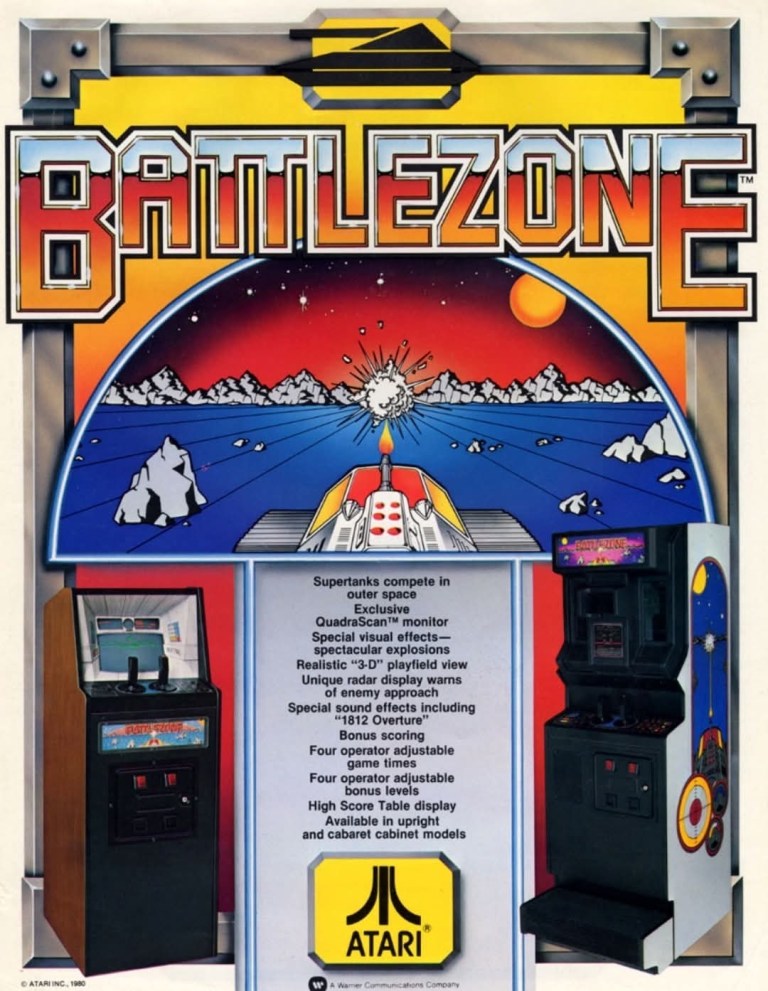
3. Battlezone arcade flyer

While the hand-drawn artwork was too detailed for the arcade game’s graphics, it still emphasized strongly the concept of the game.

In the history of video games, Battlezone was a groundbreaking game both visually and with game design. It was designed to give gamers an immersive experience of driving a tank with 3D graphics, fun gameplay and a first-person view. Its own history is worth researching. Atari knew it had to heavily promote their ambitious game and the arcade flyer above featured nice hand-drawn artwork while also showing the two types of Battlezone machines that arcade operators can choose from. Battlezone went on to become a highly influential arcade game.

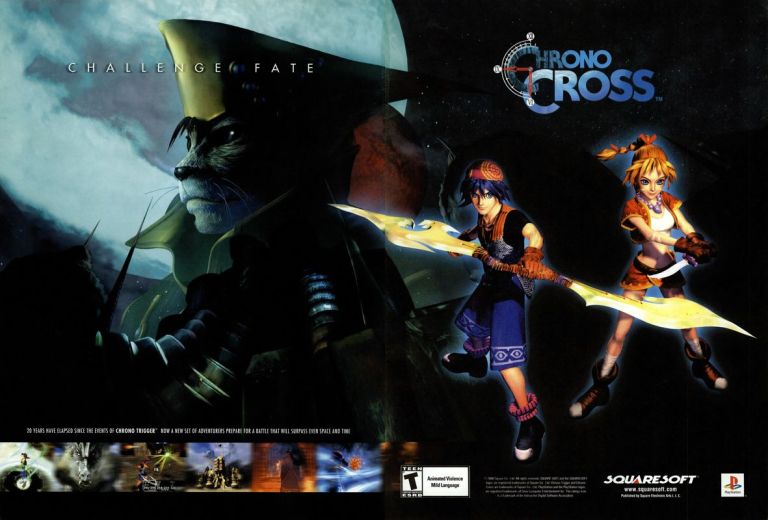
4. Chrono Cross North American print ad

Arguably, this print ad was aimed at RPG enthusiasts, Chrono Trigger fans and gamers looking for something adventurous to play.

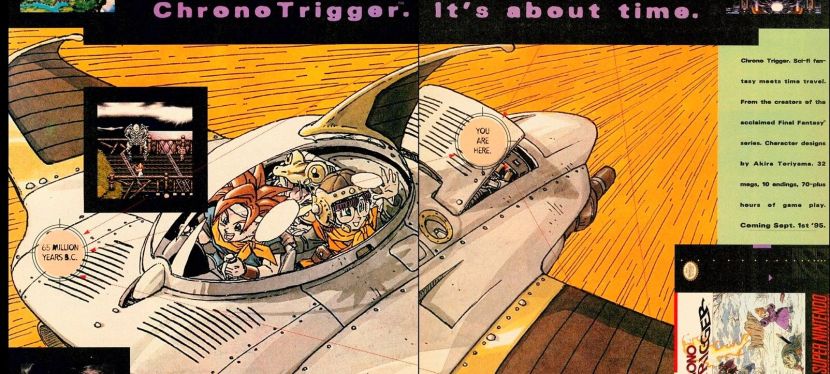
First released on PlayStation in Japan, Chrono Cross made its way to the said console in America just a few months before the PlayStation 2 launched there. While there was a risk that came with releasing the ambitious follow-up to the classic Chrono Trigger so late in the PlayStation’s life, Squaresoft (now Square Enix) still went on to aggressively promote Chrono Cross in America. This 2-page print ad that appeared in many gaming magazines remains captivating to look at. As typical of the time, 3D polygonal models and the epic-looking art were used in dominating fashion leaving the small space (lower-left corner) to display a few gameplay screenshots and other 3D art. Still it a fun game to play and this should remind you that Chrono Cross was recently remastered for modern consoles.

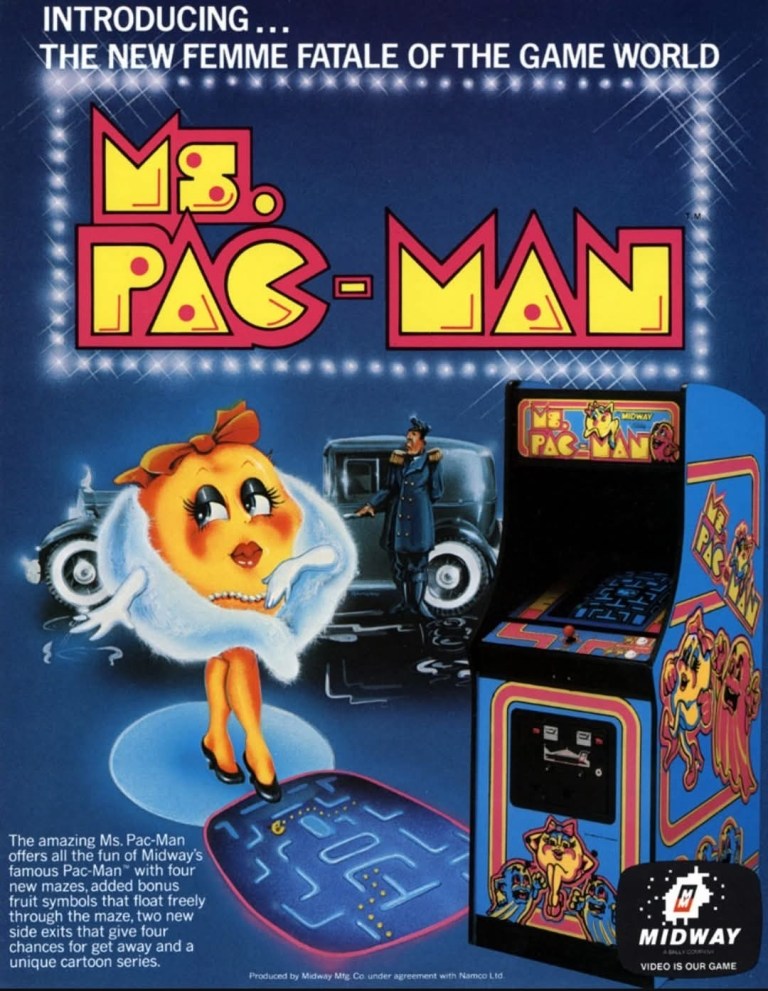
5. Ms. Pac-Man arcade flyer

The wife of Pac-Man and the machine.

Given the fact that Pac-Man was so massively successful, it was not surprising that a sequel had to be made and released on as many arcades as possible. Ms. Pac-Man was the sequel and it was released in arcades in 1982 eventually achieving huge commercial and critical success. To promote the game, Midway’s ad makers came up with an ad showing unique art of Pac-Man’s wife looking glamorous (with a driver and a vehicle in the background) and a photograph of the arcade machine on the right. This also was one of the early arcade flyers to use the words “femme fatale”.

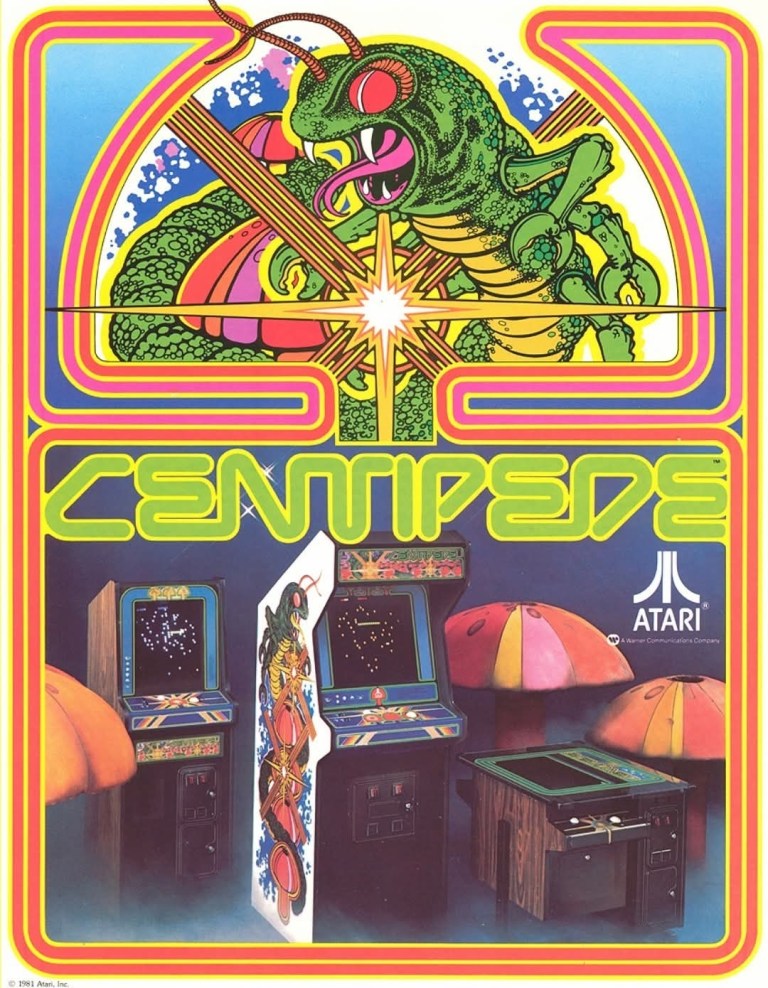
6. Centipede arcade flyer

Three machines of Centipede for arcade operators to choose from.

Centipede is another arcade classic from Atari. Released in 1981, a lot of players enjoyed the game’s simplistic and yet addicting design of shooting an incoming centipede and its remaining portions that move down the field. Similar to the Battlezone arcade flyer, this game’s flyer had nice art of a centipede on the top and images arcade machines. Even by today’s standards, this flyer remains eye-catching.

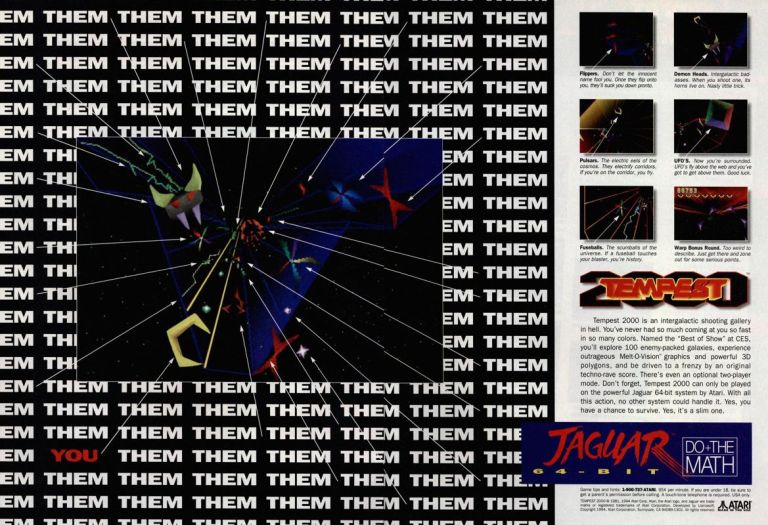
7. Tempest 2000 print ad

This 2-page print ad of Tempest 2000 is still captivating to look at.

Back in the 1990s, Atari went on to release their Jaguar console which was promoted as a 64-bit machine. At a gaming convention, the company met with prospective game developers over Jaguar projects and one of the developers volunteered to do Tempest (a memorable Atari arcade game). This resulted in the development of Tempest 2000 which was a remake of the classic.

As a Jaguar-exclusive game, Atari came up with an eye-catching 2-page ad showing off the 3D visual presentation (6 gameplay screenshots and one original artwork) while boasting in the text description that Tempest 2000 was named the “Best of Show” at the Consumer Electronics Show (CES). The game was released in 1994 attracting mostly positive reviews from game critics and was one of the best-selling Jaguar games (note: Tempest 2000 can now be played in the Atari 50 collection). With the Atari legacy and presentation combined, this print ad remains captivating to look at.

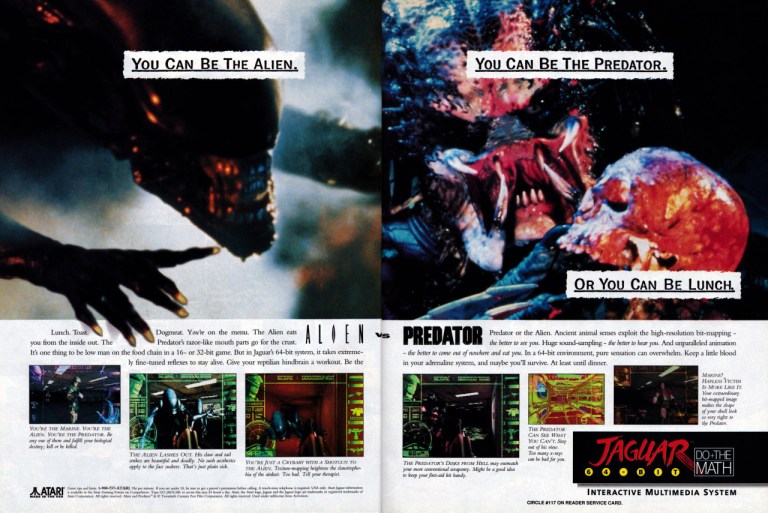
8. Alien vs Predator print ad

Arguably the most defining and most entertaining game on the Atari Jaguar.

If there is any game that truly defined enjoyment and the technological features of the Atari Jaguar, it is the 1994 first-person shooter Alien vs Predator. At the time of its release, it was one of the most immersive games of the Alien vs. Predator crossover franchise and it allowed players to experience what fighting the Predator or the Xenomorph was like. The game also allowed gamers to play as a Colonial Marine (human soldier).

To sell the game, Atari came up with a 2-page ad highlighting the Aliens on one page and the Predator on the other. As the Predator was shown with a grotesque human skull, the use of photographs (most likely sourced from the movies) strongly emphasize the game was aimed at the mature audience among gamers. Six screenshots of gameplay were displayed by the ad makers who were clearly aware of the high popularity of first-person shooting games. Alien vs Predator was a critical and commercial success, and its print ad is arguably the most memorable one of any Atari Jaguar game ever made.

+++++

Thank you for reading. If you find this article engaging, please click the like button below, share this article to others and also please consider making a donation to support my publishing. If you are looking for a copywriter to create content for your special project or business, check out my services and my portfolio. Feel free to contact me with a private message. Also please feel free to visit my Facebook page Author Carlo Carrasco and follow me on Twitter at  @HavenorFantasy as well as on Tumblr at https://carlocarrasco.tumblr.com/ and on Instagram at https://www.instagram.com/authorcarlocarrasco
What to watch on YouTube right now – Part 54

Welcome back my readers, YouTube viewers and all others who followed this series of articles focused on YouTube videos worth watching. Have you been searching for something fun or interesting to watch on YouTube? Do you feel bored right now and you crave for something to see on the world’s most popular online video destination?

I recommend you check out the following topics and the related videos I found.

The return of US President Donald Trump – Donald Trump is officially back as President of the United States. Officially speaking, he has been counted as the 45th and now the 47th US President. Within the first day of his new administration, President Trump proceeded with the reforms by signing them with his approval. Indeed, America is back with Trump and this means removing the woke trash left behind by the failed Biden-Harris administration. The following videos were selected for your interest and enlightenment.

TBR Schmitt reacts to 1997’s Air Force One – I don’t know with you readers but I enjoy watching the movie reaction videos of YouTuber TBR Schmitt (a couple who enjoy movies together). In light of Donald Trump’s return as US President, I posted below TBR Schmitt’s reaction video of 1997’s Air Force One (note: for other YouTube reaction videos of the said movie, click here) which is entertaining to watch. If you have not seen Air Force One, watch the movie first before seeing the reaction video.

The rise of Vietnam – It cannot be denied that Vietnam truly progressed economically over the decades. Previously ravaged by war, Vietnam is now in a position to replace China as the manufacturing hub of Asia and they already have tech giants like Samsung and Apple on their side. This video by ColdFusion explains in details the historical background and the astronomic rise of Vietnam. It’s a must-watch.

VKunia reacts to Rocky – Have you been watching the movie reaction videos of YouTuber VKunia? She has lots of reaction videos and most of them are enjoyable to watch. For this post, I am sharing with you her reaction video of the one movie that made Sylvester Stallone a movie star – Rocky. Not only that, VKunia herself used to live in Philadelphia (Rocky’s city). Watch VKunia’s Rocky reaction and observe how Stallone’s film draws her reactions.

PatmanQC examines the Atari Jaguar – Back in the early to the mid-1990s, console gaming was already dominated by the Japanese, particularly by Sega (with the Genesis) and Nintendo (with the SNES). Along the way, while reading a video game magazine, I was very surprised to see the announcement of the Atari Jaguar console. Back in those days, a lot of people thought Atari faded away in the console business. The Jaguar eventually failed commercially but it still made its mark in video gaming history, and already a lot of YouTubers posted retrospective videos about the said Atari console. If you want an in-depth look at the history of Atari Jaguar and what its games were, watch PatmanQC’s video below.

You, Me and the Movies react to Mac and Me – Have you ever been interested in a movie geared towards children with a creative mix of Coca-Cola, McDonald’s and a story that has similarities with E.T. the Extra-Terrestrial? Such a movie exists and it is called Mac and Me. You, Me and the Movies recently posted their reaction video about it and you have to see it.

+++++

Thank you for reading. If you find this article engaging, please click the like button below, share this article to others and also please consider making a donation to support my publishing. If you are looking for a copywriter to create content for your special project or business, check out my services and my portfolio. Feel free to contact me with a private message. Also please feel free to visit my Facebook page Author Carlo Carrasco and follow me on Twitter at  @HavenorFantasy as well as on Tumblr at https://carlocarrasco.tumblr.com/ and on Instagram athttps://www.instagram.com/authorcarlocarrasco

Retro Gaming Ads Blast – Part 23

Welcome back readers, fellow geeks and electronic gaming fans!

In this edition of the Retro Gaming Ads Blast (RGAB) series, we will take a look at another batch of retro gaming print ads – including arcade flyers – from the 1980s and 1990s.

For the newcomers reading this, Retro Gaming Ads Blast (RGAB) looks back at the many print ads of games (console, arcade, computer and handheld) that were published in comic books, magazines, flyers, posters and newspapers long before smartphones, social media, the worldwide web and streaming became popular. To put things in perspective, people back in the 1980s and 1990s were more trusting of print media for information and images about electronic games and related products.

With those details laid down, here is the newest batch of retro gaming print ads for you to see and enjoy…

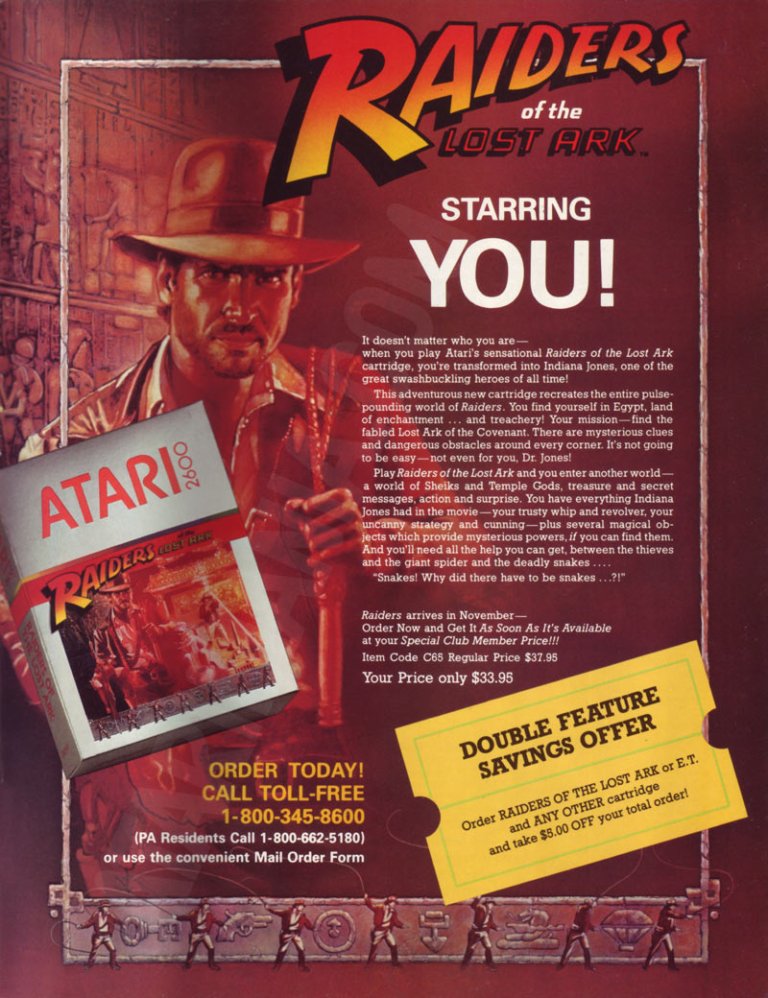
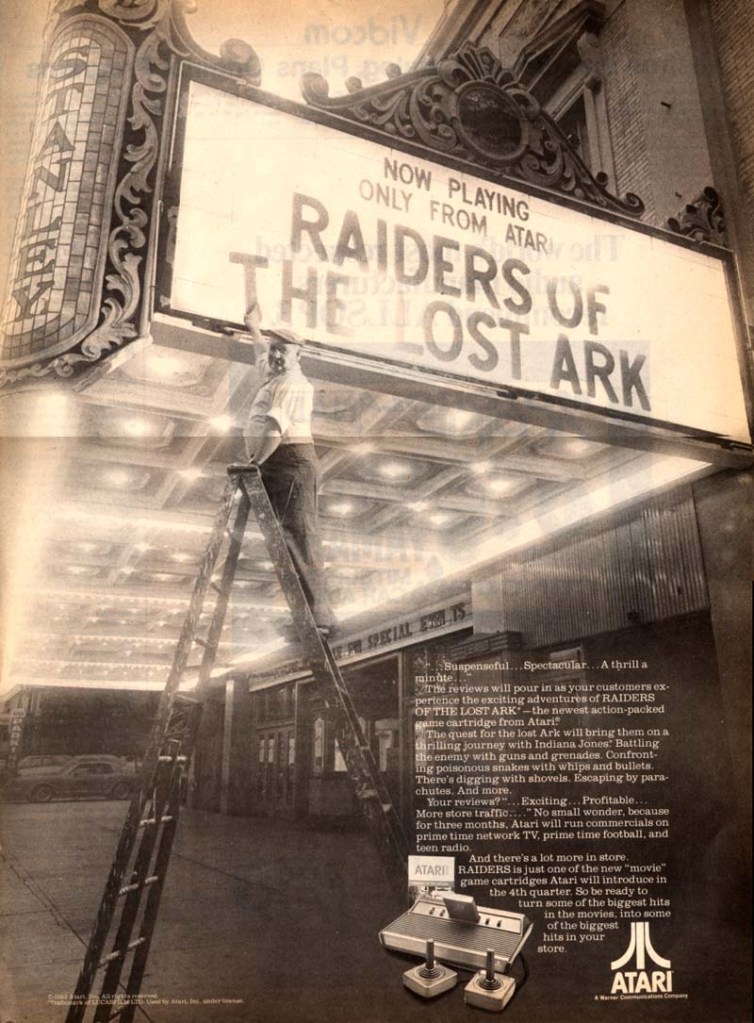
1. Raiders of the Lost Ark game print ads

The print ad with strong Indiana Jones imagery.
The print ad with the movie theater exterior image and the small image of the Atari 2600 console.

Directed by Steven Spielberg, Raiders of the Lost Ark was one of the best adventure movies ever made as well as the start of the iconic character Indiana Jones. Given its huge commercial success, an official video game adaptation for the Atari 2600 was released in 1982 and game designer Howard Scott Warshaw even met with Spielberg during the game’s development.

To promote the game, Atari released two print ads – one ad had a movie theater exterior visual concept to emphasize they have the official video game adaptation based on the movie while the other ad showed the game’s official artwork and game box cover while emphasizing a savings offer. Atari really did what they could to sell a game while riding on the success of Raiders of the Lost Ark.

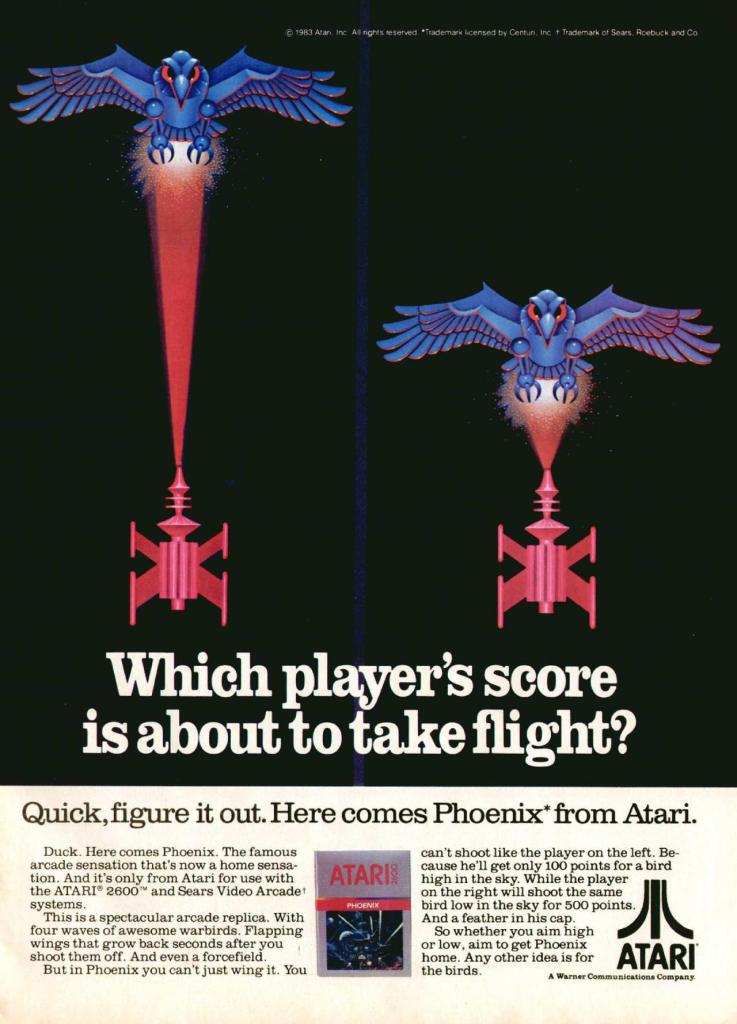
2. Phoenix print ad

Even without any screenshots, this print ad’s art still gives viewers a clear idea of what to expect.

Similar to what they did with Galaxian and Joust, Atari made this print ad promoting Phoenix which was a 2D sci-fi shooting game that was similar with Space Invaders in design. Colorized, hand-drawn artwork resembling the 2D sprites of the game was done to capture the attention of people. The art is so good, it made up for the lack screenshots of the game. 

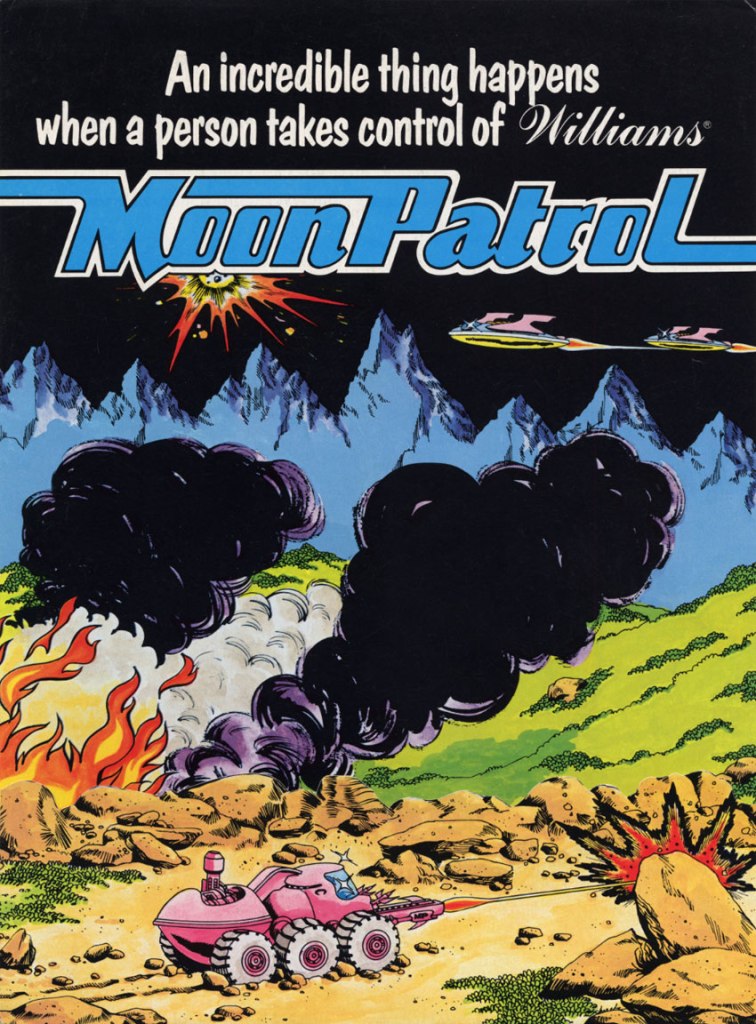
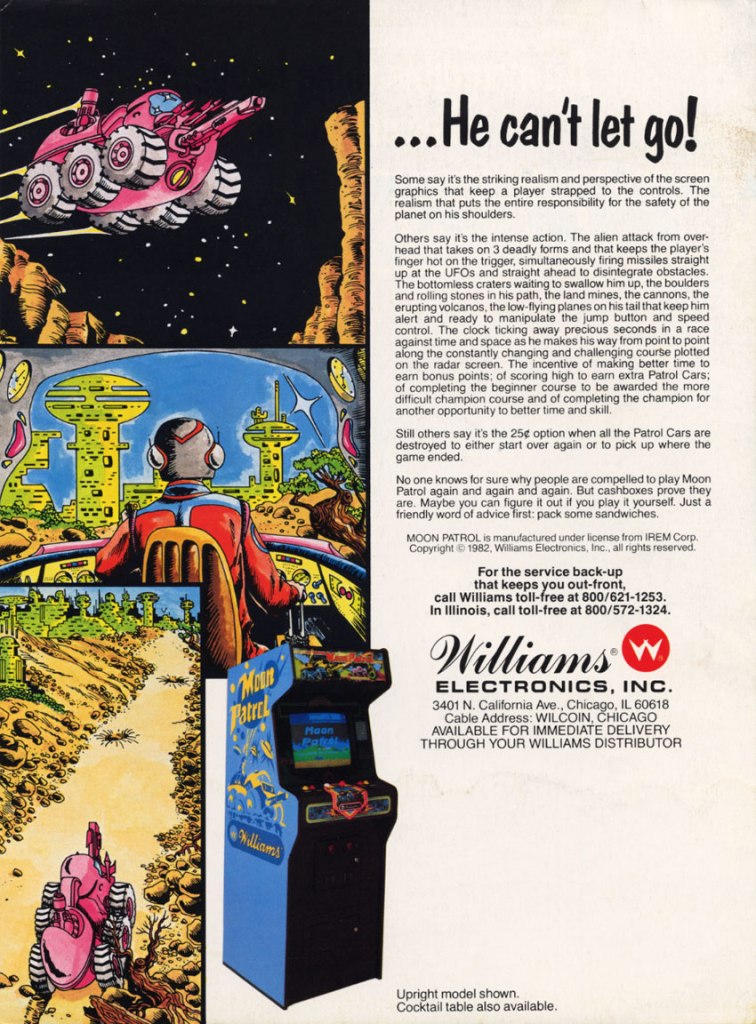
3. Moon Patrol arcade flyer

Front of the Moon Patrol flyer.
The other side of the arcade flyer.

Moon Patrol was a 2D sci-fi side-scrolling adventure game first released in the arcades in 1982. To sell the game to arcade operators, publisher Williams created the North American arcade flyer that heavily used hand-drawn comic book-style artworks on both sides while using available space on the other side for the descriptive text, contact details and the image of an arcade machine. What is very clear is that no screenshots of the game were shown to stand out which explains why a lot of hand-drawn art was used. The picture of the machine showing a screen of Moon Patrol was the closest thing to see a screenshot on this flyer. Personally, I really like the style and quality of the hand-drawn artwork as it made the flyer look lively.

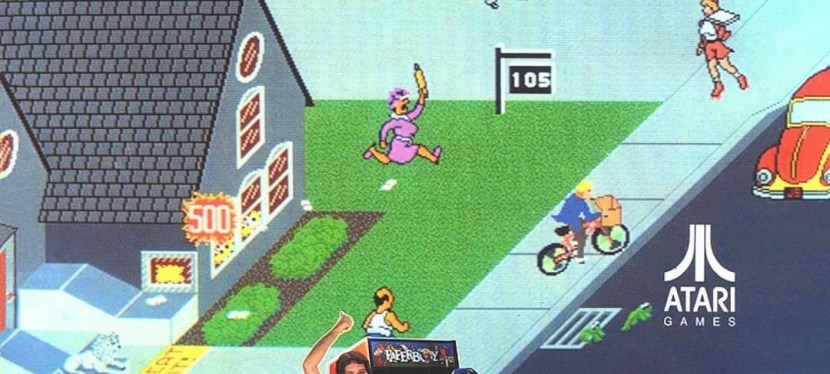
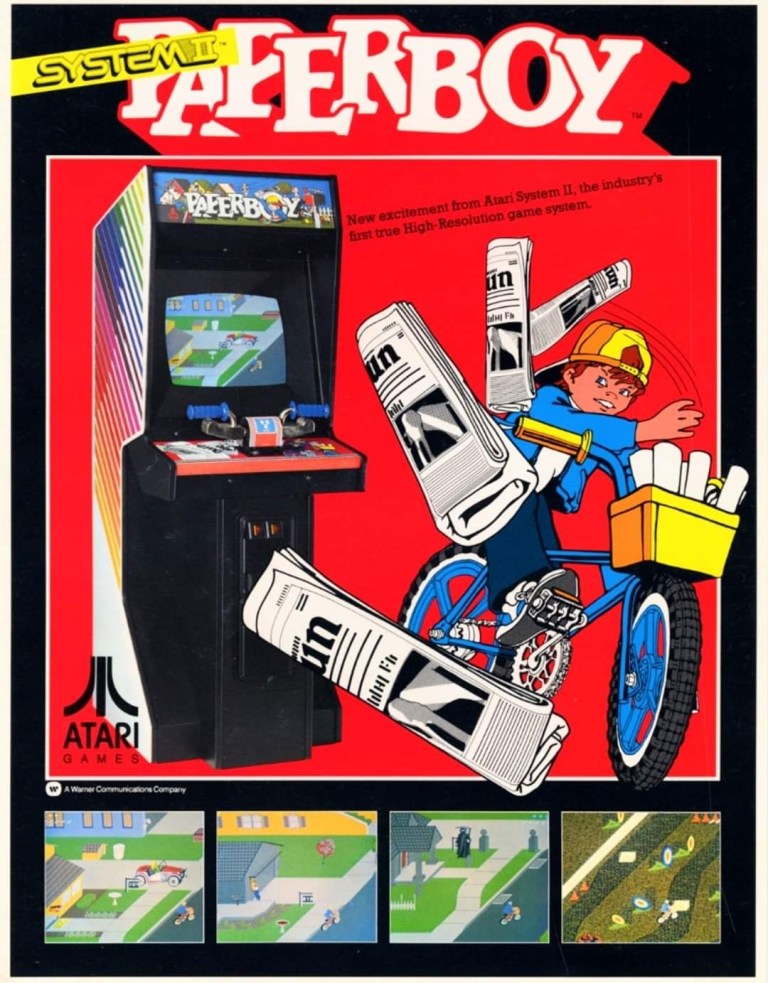
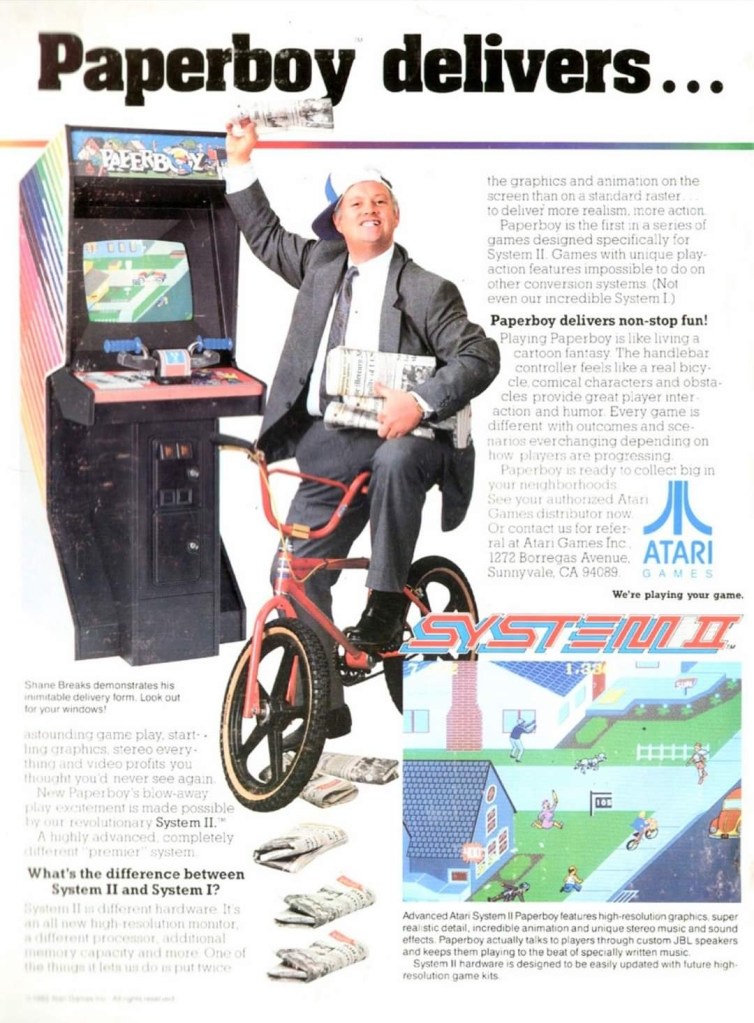
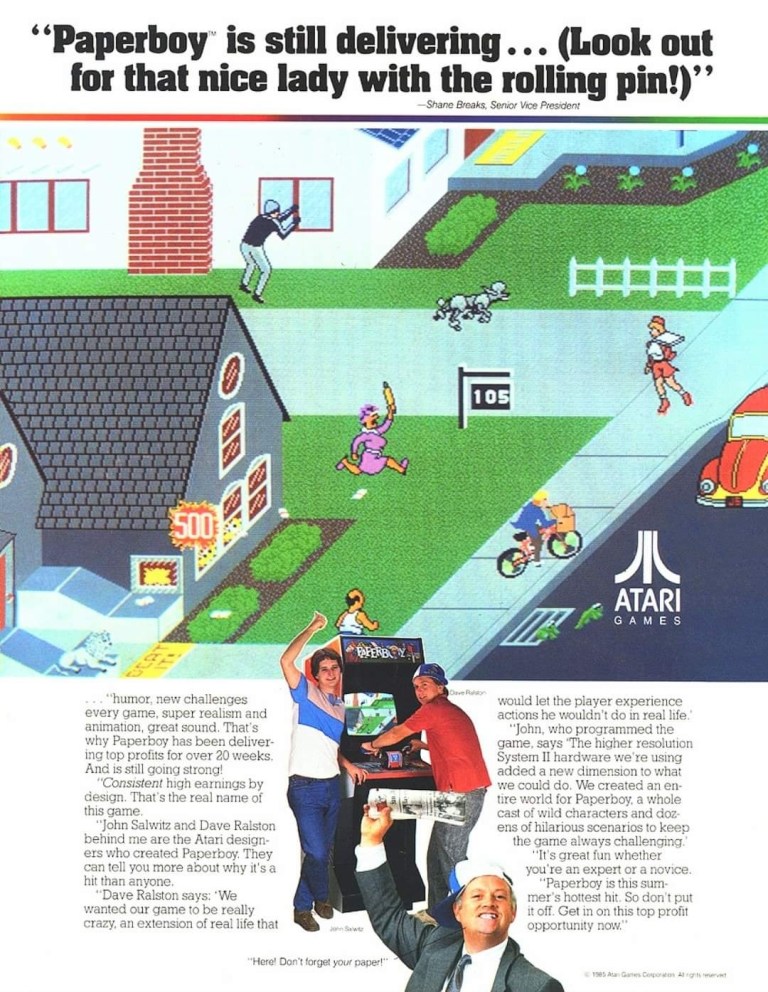
4. Paperboy arcade flyers

The arcade flyer showing the Paperboy machine and screenshots. The hand-drawn art is nice.
This one uses comedy showing a grown man riding a bike as a paper delivery “boy”.
I really like the stronger emphasis on the in-game graphics of Paperboy which dominates the space. What you see is what you get in the arcade.

The first time I ever played the classic Paperboy was in the arcade inside a Las Vegas hotel way back in 1989, and it sure was a challenging yet fun experience. Before its arcade debut in 1985, the developers took a lot of risks making the game which includes coming up with a bicycle handle bar for each machine to have. To promote the game, Atari made at least three arcade flyers that creatively emphasized what the game’s concept was about, how did it play, why does the machine have bicycle handlebars and why players can expect fun. Atari’s promotional efforts paid off as Paperboy became a huge hit in the arcades not only in America but also in Japan.

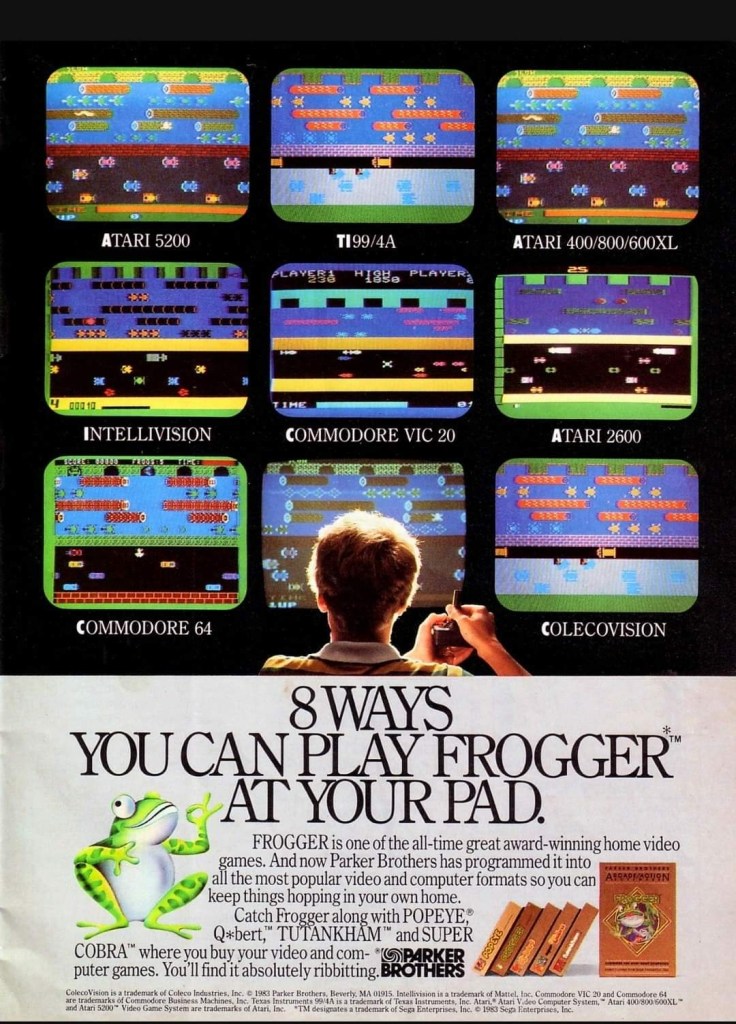
5. Frogger multi-platform print ad

This print ad is still amusing to look at.

After Frogger became a hit in the arcades, Parker Brothers secured the rights to port the game on Atari consoles, the Intellivision, TI-99/4A, vic-20, the Commodore computers and ColecoVision. To promote their Frogger ports, the single-page print ad was made showing a player in the foreground playing in front of screens that each showed what the game looked like on each platform. Parker Brothers found tremendous success selling 4 million copies of Atari 2600 version of Frogger at a time when there were only 13 million units of Atari 2600 in existence. By the year 2005, video game sales of Frogger reached 20 million worldwide across different platforms.

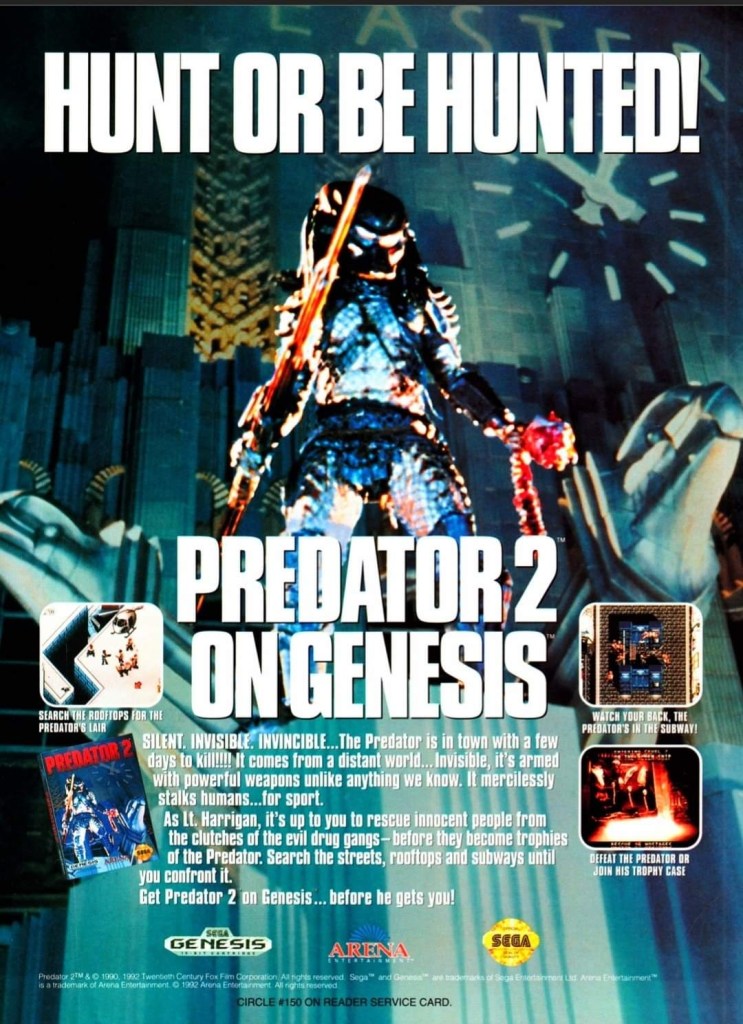
6. Predator 2 print ad

This is one very edgy print ad as used an official image from the movie.

If there is anything memorable about the 1990 film Predator 2, it is the fact that it had the story and the alien hunter itself within a metropolitan setting. That being said, the Sega Genesis Predator 2 video game had a suitable design of shooting and adventuring within the urban settings. This video game ad really captured the vibe of the movie (even showing the reddish human skull with spine on the Predator’s left hand) and clearly showed what gamers could expect. This old ad is still captivating to look at and its edgy approach is still intact.

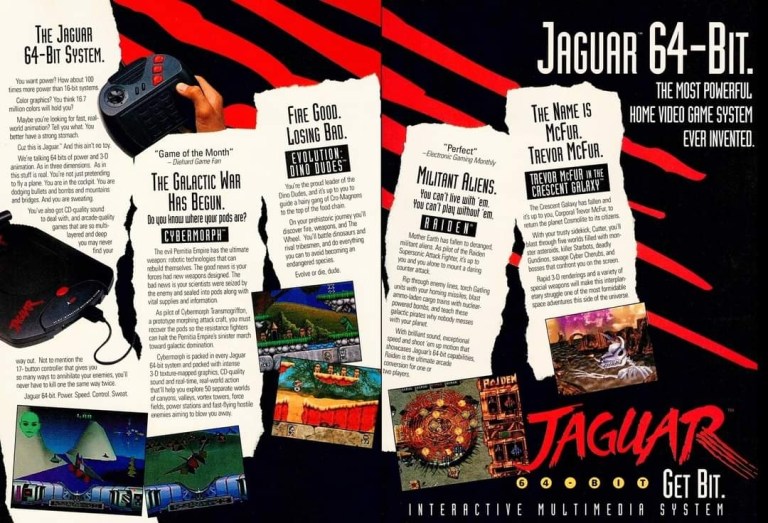
7. Atari Jaguar print ad

Did you ever own an Atari Jaguar console?

When I was reading video game magazines back in the 1990s, I always found print ads of the Atari Jaguar intriguing to look at. I was very young when I first played the Atari 2600 and its games at home, and later played some Atari games in the arcade. To me, seeing Atari Jaguar print ads like this one gave me moments of nostalgia and it made me wonder if Atari knew what it was doing with their so-called 64-bit game console. They did what they could to promote their console and the games within this 2-page print ad.

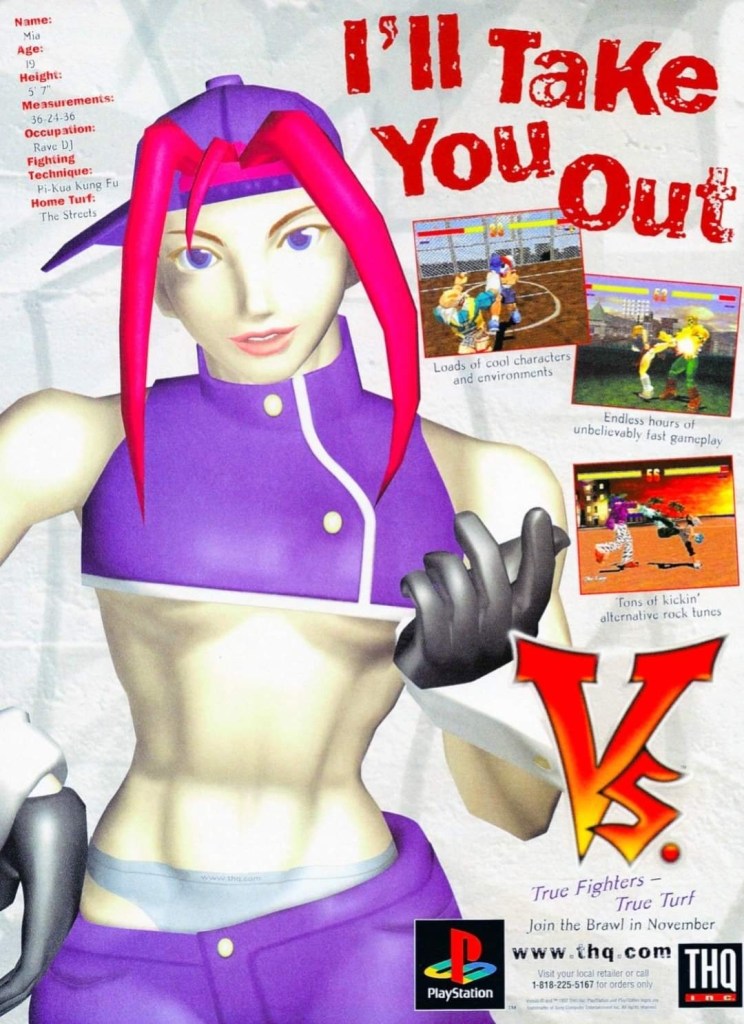
8. Vs. print ad

This print ad easily reminds me of the 1990s.

By 1997, both the arcades and the video game console market were filled with lots of 2D and 3D polygonal fighting games. Japan was the hot spot of the production of 3D polygon fighting games and the developer Polygon Magic (based in Japan) made Fighters’ Impact which Taito released in Japanese arcades and the PlayStation. The said game was picked up by THQ for a late-1997 release on the PlayStation in America under the title Vs. I never played this game but I heard that the game’s development included gang-oriented characters designed by Marvel Comics artist Kurtis Fujita. This Vs. ad is a lively reminder about the hip-hop fashion that made its way into video games.

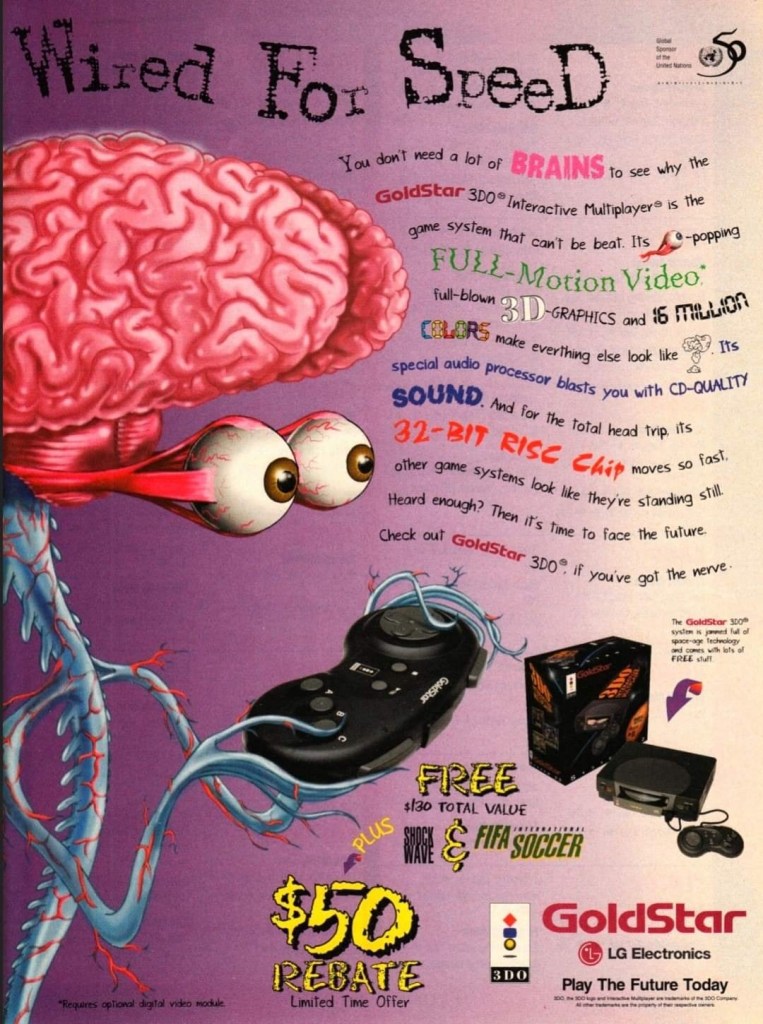
9. GoldStar/LG Electronics 3DO print ad

This is a very weird way to market a video game machine.

Back in the 1990s, the South Korean electronics company GoldStar (which was part of the umbrella of LG Electronics) had the license to produce 3DO game consoles with its own style. In some ways, the GoldStar 3DO console looked like a premium console on the outside. Unfortunately, the GoldStar 3DO print ad here had a very sloppy presentation as the ad makers used very weird art of a brain-with-eyes holding a 3DO controller leaving little space left to promote the console and games (without any screenshots). The text description was sloppily done. This is a bad example of promoting video game hardware and games.

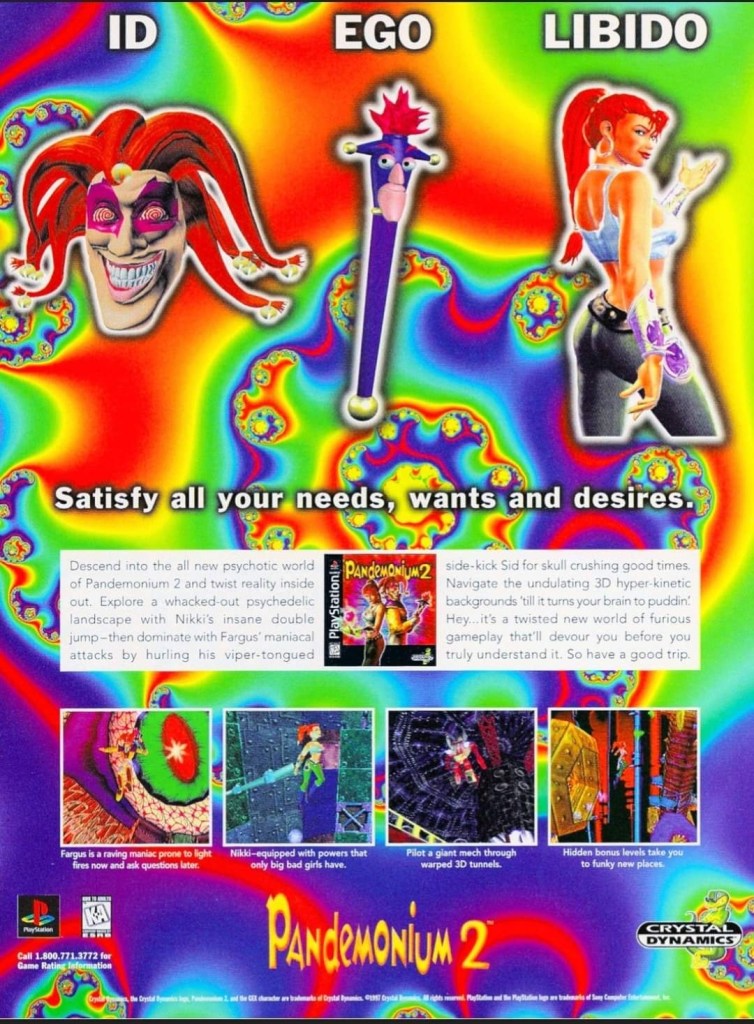
10. Pandemonium 2 print ad

I saw this ad but never played the game.

Looking back at 1997, I find it strange that I never got to play Pandemonium 2 on the PlayStation even though I saw its print ad in magazines. I had a lot of fun playing Pandemonium! on the console in 1996 but somehow missed out on its sequel. Looking back at the Pandemonium 2 print ad, I was surprised with how the game developers redesigned the two playable protagonists, especially Nikki who was clearly made to look very sexy. The word “libido” (meaning sexual drive) was deliberately placed above Nikki. The ad also had a hypnotizing mix of colors which I believe was also deliberately done by the ad makers. I can only wonder how the game played.

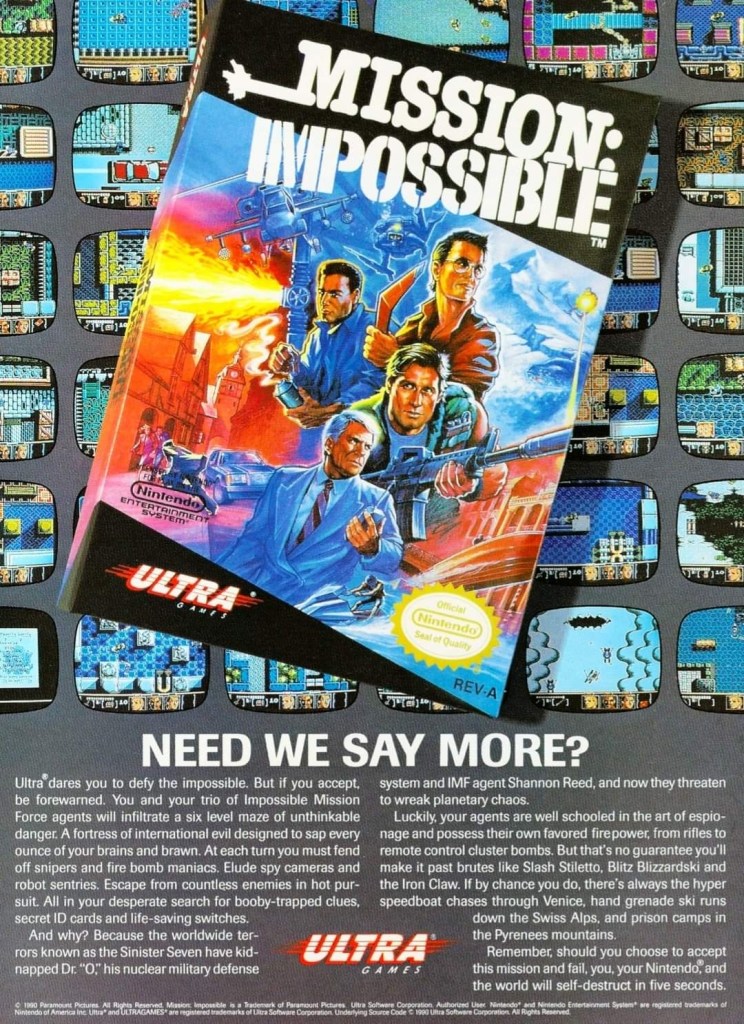
11. Mission: Impossible print ad

A captivating ad.

In 1990, Ultra Games (a label of Konami) released the Mission: Impossible video game on the Nintendo Entertainment System (NES) in America. Developed by Konami, the game was an adaptation of the 1988 TV series and it had an ambitious design with regards to level design and gameplay. To promote the game, the ad makers came up with a visual design showing the game’s box (which had a nice painted art on the cover) on the foreground and several screenshots resembling TV monitors on the background. Even by today’s standards, this print ad still looks good and captivating even if you are not too familiar with Mission: Impossible on TV.  

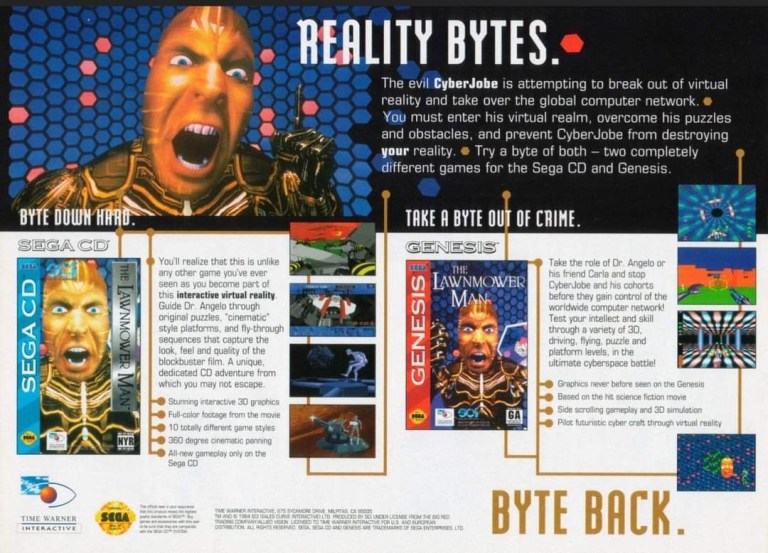
12. The Lawnmower Man Sega CD and Genesis print ad

Are you fan of The Lawnmower Man movie?

Back in 1992, there was a lot of buzz generated by the movie The Lawnmower Man as it had a disturbing concept that involved virtual reality and, more notably, author Stephen King sued the filmmakers to remove his name from the title because the film differed so much from the source material. Of course, those developments did not stop the production of video game adaptations of the movie. This print ad promoting the Sega CD and Sega Genesis versions of the game heavily used the images of CyberJobe which were among the most memorable images from the film. Looking at the ad, the ad makers could have made the screenshots look a little larger to really sell the games.

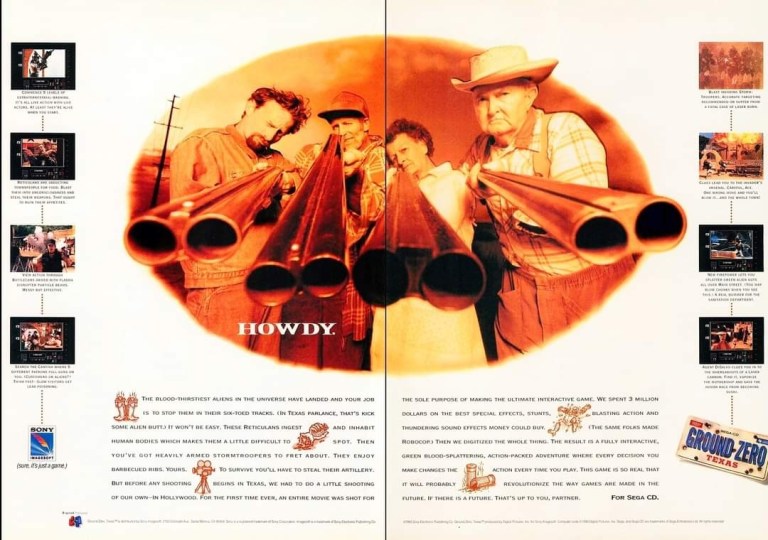
13. Ground Zero: Texas print ad

The shotguns really made this ad eye-catching.

I never played the Sega CD video game Ground Zero: Texas but I knew that it was one of those games that heavily relied on video footage while giving players moments to interact. Back in 1993, there was an increase in the number of video games that carried lots of live action footage to drive the narrative and players were given options in order to progress. What is very notable about the game is not the game design but the very 2-page ad used to promote it. The image showing four people pointing their shotguns towards the viewer was easily the most captivating part of the ad. Even though there was vacant space in between, the screenshots of the game were displayed to be really small.

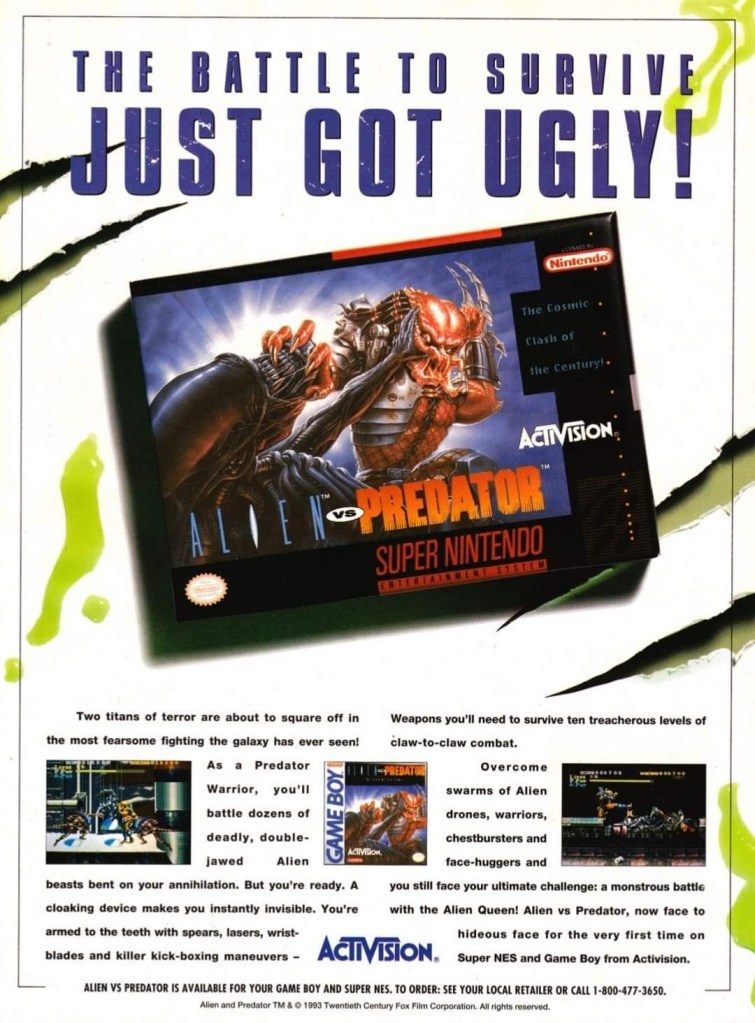
14. Alien vs. Predator for SNES and Game Boy print ad

This ad caught the attention of a lot of people back then.

Back in 1990, Dark Horse Comics launched the 4-issue mini-series of Aliens vs. Predator which turned out to be a very intriguing and engaging crossover comic book tale featuring two iconic sci-fi species of monsters. The success of the comic books led to the production of many video games which delighted both fans of Predator and Aliens. In 1993, Activision released Alien vs. Predator on the Super Nintendo Entertainment System (SNES) and the single-page print ad they came up with was engaging to look at. The SNES game box with the fine looking painted art was the main visual highlight leaving just enough space for the descriptive text, the Game Boy cover and two screenshots. Believe it or not, this video game was not related at all with the Alien vs. Predator arcade game and Atari Jaguar console game.

+++++

Thank you for reading. If you find this article engaging, please click the like button below, share this article to others and also please consider making a donation to support my publishing. If you are looking for a copywriter to create content for your special project or business, check out my services and my portfolio. Feel free to contact me with a private message. Also please feel free to visit my Facebook page Author Carlo Carrasco and follow me on Twitter at  @HavenorFantasy as well as on Tumblr at https://carlocarrasco.tumblr.com/ and on Instagram at https://www.instagram.com/authorcarlocarrasco
What to watch on YouTube right now – Part 43

Welcome back, my readers, YouTube viewers and all others who followed this series of articles focused on YouTube videos worth watching. Have you been searching for something fun or interesting to watch on YouTube? Do you feel bored right now and you crave for something to see on the world’s most popular online video destination?

I recommend you check out the following topics and the related videos I found.

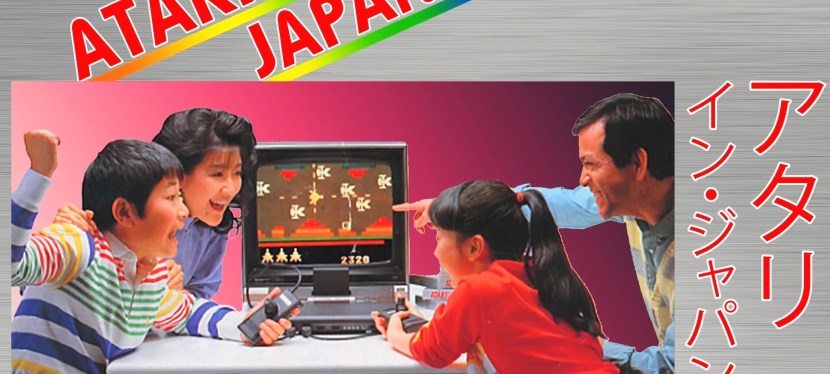
When Atari invaded Japan – Here in the Philippines, me and my friends played video games on the Atari 2600 consoles in our respective homes during the first half of the 1980s. What I did not know back then was the fact that Atari did its best to sell its console and video games in nearby Japan. It turns out, their console in Japan was the Atari 2800.  Watch and learn about this particular part of video game history with the video of GTV Japan below.

A look back at Superman: The Animated Series – When it comes to animated series of the 1990s related to superheroes, X-Men: The Animated Series, Batman: The Animated Series and Spider-Man: The Animated Series are often remembered by long-time fans and geeks. The animated series of Superman, however, does not get remembered as much even though it had good quality animation and presentation. Of course, it should be remembered that the 1990s was the same decade when DC Comics had Superman killed, introduced the Supermen, brought Superman back to life and even had the Clark Kent identity destroyed which probably overshadowed the animated series. To discover more of Superman: The Animated Series, watch the video below.

Examining the original 2099 comics franchise of Marvel Comics – You might have heard about 2099 among the many comic books Marvel published through the decades. The futuristic of Marvel’s shared universe originally started in late 1992 when the comic book speculator boom was still intense. It started strongly with Spider-Man 2099 followed by Ravage 2099, Doom 2099 and Punisher 2099. In the 2nd half of 1993, X-Men 2099 followed and even more related comic books got released. Of course, the 2099 franchise of the 1990s eventually ended. How and why it all happened like that, you can learn by watching Owen likes Comics’ video below.

You, Me and the Movies’ Excalibur reaction – Excalibur is an epic medieval fantasy movie about the legend of King Arthur and his knights released in 1981. I first saw the film on TV in 1988 and it was an intriguing viewing experience. I replayed it on physical disc format in 2003 and eventually recognized Patrick Stewart, Helen Mirren, Liam Neeson and Gabriel Byrne looking much younger. If you want to discover more of Excalibur through the reaction of You, Me and the Movies, watch the video posted below. It’s a fun watch.

Assorted videos about Planet of the Apes (1968) – Planet of the Apes of 1968 is considered by many as a great science fiction film as well as a philosophical and intelligent viewing experience. While it is an engaging viewing experience, I find the concept of human evolution and the so-called genetic links between humans and apes to be nothing more than fantasies. Considering its fame, it is no surprise that a lot of YouTubers made their own videos about it and you can watch the selected videos below.  

A look back at Robotron: 2084 – Robotron: 2084 is a 2D, multi-directional shooting game first released in arcades way back in 1982. I never played the arcade version but managed to play it on an IBM PC around the mid-1980s. The history behind the game is quite rich in details and you can enjoy learning about it by watching the video of PatmanQC below.

+++++

Thank you for reading. If you find this article engaging, please click the like button below, share this article to others and also please consider making a donation to support my publishing. If you are looking for a copywriter to create content for your special project or business, check out my services and my portfolio. Feel free to contact me with a private message. Also please feel free to visit my Facebook page Author Carlo Carrasco and follow me on Twitter at  @HavenorFantasy as well as on Tumblr at https://carlocarrasco.tumblr.com/ and on Instagram athttps://www.instagram.com/authorcarlocarrasco

Retro Gaming Ads Blast – Part 22

Welcome back readers, fellow geeks and electronic gaming fans!

In this edition of the Retro Gaming Ads Blast (RGAB) series, we will take a look at another batch of retro gaming print ads – including arcade flyers – from the 1980s and 1990s.

For the newcomers reading this, Retro Gaming Ads Blast (RGAB) looks back at the many print ads of games (console, arcade, computer and handheld) that were published in comic books, magazines, flyers, posters and newspapers long before smartphones, social media, the worldwide web and streaming became popular. To put things in perspective, people back in the 1980s and 1990s were more trusting of print media for information and images about electronic games and related products.

With those details laid down, here is the newest batch of retro gaming print ads for you to see and enjoy…

1. Star Wars: The Empire Strikes Back Atari print ads

I could not forget the first time I saw this print ad while reading a comic book.
This ad showed the Atari 2600 controller.

Even during its early years under George Lucas, the Star Wars entertainment franchise made its way into video games due to its massive popularity and Parker Brothers really made moves to cash in. This resulted in the Atari 2600 video game adaptation (1982) of The Empire Strikes Back which focused mainly on the memorable Hoth battles between Rebel fighters and the Empire’s AT-AT walkers. Parker Brothers came up with two print ads and each had a different visual concept: one had nicely drawn art along with two screenshots shown while the other had painted art of the AT-AT while showing the Atari joystick. These old print ads still look great and exciting.

2. Double Dragon Japanese and North American arcade flyers

If you read manga (Japanese comics) in Japan, then the art style of this arcade flyer should look familiar to you.
The character designs seem inspired by 1980s Hollywood action cinema.

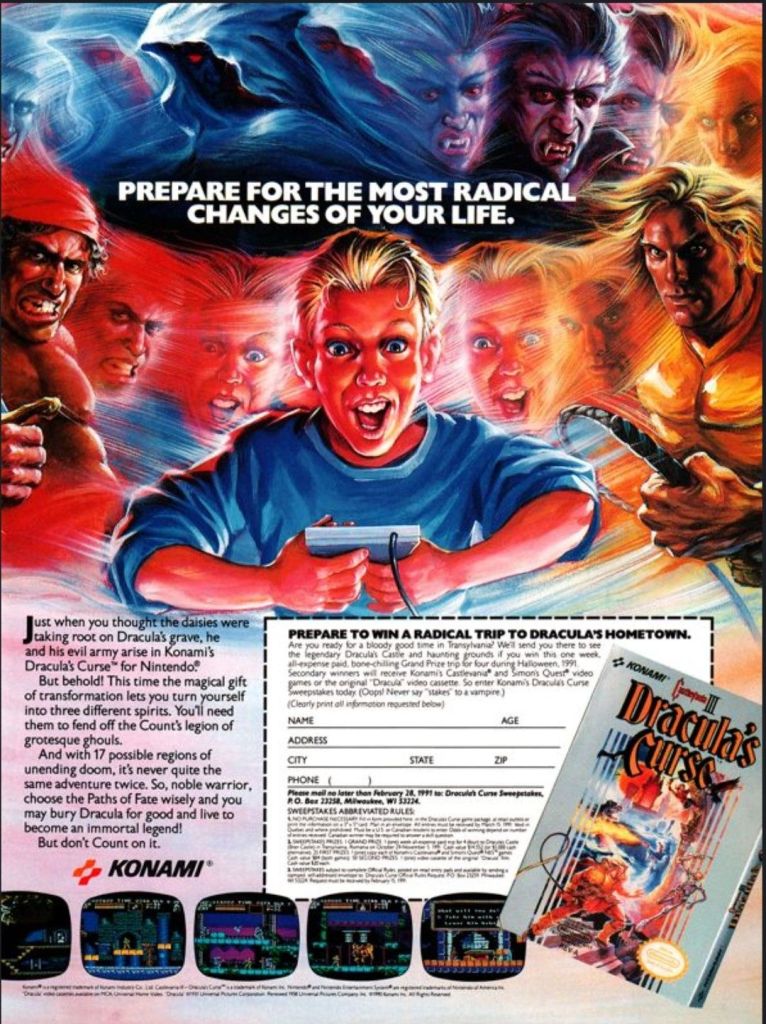
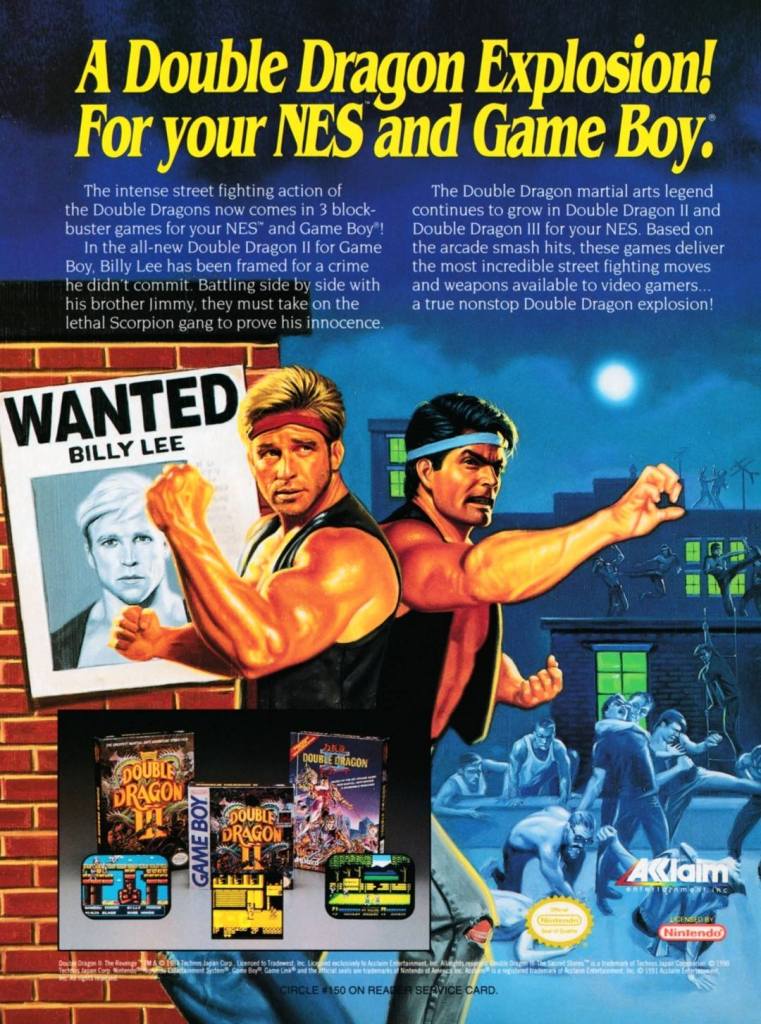
Released in 1987, Double Dragon became a huge hit in the arcades of Japan, America and Europe resulting in financial gains for developer Technōs Japan and publisher Taito. What I find intriguing was the fact that the Double Dragon arcade flyers for Japan and North America had drastically different art styles used to promote it. The Japanese flyer had art style that is more common with manga while the North American had artwork that seemed inspired by Hollywood action movies (as well as the rise of martial arts films in America during the 1980s). The American flyer even had the two characters identified as Hammer and Spike and they both looked American. This is a classic example of using different approaches to promote a game in each market.

3. Universal Soldier print ad

The people who made this print ad made sure to use the names of the stars to help sell the game.

Even though its worldwide ticket sales did not reach $100 million, the 1992 movie Universal Soldier still caught a lot of attention from moviegoers simply because it had Jean-Claude Van Damme and Dolph Lundgren as the stars. Unsurprisingly, the movie had a video game adaptation and because publisher Accolade wanted to cash-in on the film’s hype, they made some deceptive moves by rebranding one of its games (already development) as a tie-in. Advertised as an official adaptation, Universal Soldier was actually a rushed conversion of Turrican II: The Final Fight. This print ad – which even showed the stars’ names – is a reminder of the deception Accolade pulled off.

4. Sega CD print ad

Do you find this Sega CD print ad hilarious?

When Sega was making waves with its Sega Genesis (Sega Mega Drive in Japan), the company was quick to react to the growing use of the compact disc (CD) format as a useful storage medium for video games. The Sega CD (Mega CD in Japan) was released as an add-on device to work with the Genesis console and Sega’s American team came up with a series of promotions. This print ad is just one of the promotions and ad makers came up with a “crazed” or “electrified” gamer dominating one page while showing the Genesis, the Sega CD and screenshots of games (running on CD) on the other page. By today’s standards, the Sega CD print ad is funny and catchy to look at.

5. Snatcher for Sega CD print ad

I find this Snatch print ad looking odd. The ad makers could have done more to focus on the game itself.

First released in Japan in 1988, Snatcher was a cyberpunk visual adventure game that was one of the early works of the famous Hideo Kojima (Metal Gear series). Due to its design and approach on visuals to tell a story, it was not surprising that a Sega CD version of it got released in 1994. To promote the game to the growing number of North American Sega CD gamers at the time, Konami came up with this rather unusual print ad showing the face of a smiling lady dominating the space leaving little room to show the screenshots and the game’s cover. The visual concept is engaging but it takes effort to notice it was promoting the Sega CD version of the video game. This old ad would have worked better had the ad makers increased the sizes of the screenshots and the game cover.

6. Jurassic Park for Sega CD print ad

Does the T. Rex look scary to you?

As part of its drive to add more games to the Sega CD add-on and help it sell more units, Sega acquired the Jurassic Park license and went on to produce an adaptation utilizing the technological features of the Sega CD. To aggressively promote the game, Sega came up with this print ad that had a Tyrannosaurs Rex (looking through spaces) on one page and then several screenshots plus text descriptions on the other. For a click-and-point Jurassic Park game, this ad was really exciting and intriguing to look at.  

7. Atari Jaguar print ad

This was indeed an eye-catching ad.

In the early 1990s, Atari made an aggressive move to compete in the arena of video game consoles which they used to dominate from the late 1970s until 1983. This time around, they came up with the Jaguar console which had some pretty advanced technologies for the time. As part of their North American marketing campaign, Atari unleashed an ad showing game screenshots on the first page and huge artwork of a jaguar coming after Sonic, Mario and Yoshi (mascots of Sega and Nintendo respectively) symbolizing that the Atari Jaguar had more power and better technology than the Genesis and the Super Nintendo Entertainment System (SNS). While it was engaging to look at early on, this print ad is now an embarrassment as the Jaguar console failed terribly. Lastly, the marketing of the Jaguar as a 64-bit machine was never real.

8. George Foreman, The Simpsons and Spider-Man Game Gear print ad

This ad appeared in a lot of comic books in the 1990s.

In the early 1990s, Sega released the Game Gear handheld gaming device which instantly placed them in competition with Nintendo’s Game Boy. Through its Flying Edge label, Acclaim Entertainment promoted George Foreman’s KO Boxing, The Simpsons: Bart vs. the Space Mutants, and Spider-Man for the Game Gear hoping to sell well. This 3-game print ad highlighted the popular figures who had a lot of space for attracting attention. The ad maker managed to insert two screenshots per game, the game covers and a text description to inform consumers what they were being offered. A good ad to look at.   

9. Time Gal for Sega CD print ad

The presentation here looks nice but Time Gal herself looked like she was drawn by a different artist.

Originally released in the arcades in Japan in 1985, Time Gal made its way to the Sega CD add-on in the early 1990s. It was a highly unusual video game as it was an interactive movie (with lots of anime footage) made with the use of Laserdisc technology for its arcade version. It played lots of anime scenes and players must choose the on-screen options to execute the character’s next action in order to progress. For the Sega CD version for North America, this print was made to capture the attention of consumers using the protagonist’s sex appeal on the cover art with four screenshots placed on the sides to show what to expect. I noticed that Time Gal on the cover art looked different from how she appeared in the anime sequences. At least the ad makers tried hard to sell the game.

10. Mortal Kombat print ad

Still an effective ad to promote a blockbuster game and make people informed it was coming to multiple platforms.

Considering how successful it was in the arcades, the 1993 release of Mortal Kombat for game consoles and handhelds was unsurprisingly highly anticipated and publisher acclaim came up with this single-page ad. The presentation involved the use of a photographic background of many spectators (to emphasize excitement and popularity), media quotes and screenshots to effectively promote the game.

11. Equinox print ad

Take a close look. Tell me if you find it funny.

I never played Equinox but I heard the loud buzz about its design as a 3D isometric game that had elements of exploration, platform play and puzzle solving. The people responsible for this print ad emphasized the concept that the game is so addicting to play, players will still play it as they get older. This ad has a subtle yet effective approach with humor.

12. James Bond 007: The Duel print ad

Timothy Dalton’s image as James Bond was sourced from Licence to Kill for this game’s ad.

Here is another decades-old James Bond video game print ad I found. Released a few years after Licence to Kill, James Bond 007: The Duel was notable not for its gameplay nor game design but for the fact that it used the image of Timothy Dalton as 007 for its print ad and the opening scenes in the game itself. Dalton’s Bond image here was never new nor originally taken for the game as it came directly from Licence to Kill’s publicity library. Each time I saw this ad, I was only reminded of the 1989 movie which I still enjoy watching.

13. Neo Geo AES console print ad

Do you find this ad both sexy and funny?

Decades ago, SNK made a huge splash in the arcades with lots of really fun games released with their Neo Geo (stylized as NEO GEO) hardware. In 1990, they released the cartridge-based Neo Geo AES console in Japan and America and it carried the same technology as the arcade hardware. To promote the console in North America (note: the Neo Geo console and its games were very expensive), SNK came up with this catchy and funny print ad showing a sexy woman feeling annoyed that her man spends more time with Neo Geo gaming than with her. This was a clever way of emphasizing the arcade-perfect experience in the comfort of home, and it was funny to look at.

14. Gradius II Japanese arcade flyer

Great looking painted art was used for this 1988 arcade game.

Since the original Gradius was a big hit in arcades in Japan in 1985, it was not surprising that Konami released Gradius II three years later. With regards to the use of painted art, the artist showed the game’s spaceship in a dominating position emphasizing high-speed travel and excitement. The image, which also looks more colorful, is a complete reversal of the painted art used in the flyer of the previous which showed the rear of the spaceship as it moves towards a larger spaceship (the opposition). This arcade flyer art still looks great as it has a timeless charm.

+++++

Thank you for reading. If you find this article engaging, please click the like button below, share this article to others and also please consider making a donation to support my publishing. If you are looking for a copywriter to create content for your special project or business, check out my services and my portfolio. Feel free to contact me with a private message. Also please feel free to visit my Facebook page Author Carlo Carrasco and follow me on Twitter at  @HavenorFantasy as well as on Tumblr at https://carlocarrasco.tumblr.com/ and on Instagram at https://www.instagram.com/authorcarlocarrasco
Do you have Atari 50: The Anniversary Celebration for Xbox?

Welcome back Xbox fans, geeks, retro gaming enthusiasts and all gamers from around the world!

I was born in the mid-1970s. My video gaming experience started with the arcade games. A few years later, my console gaming experience started with the Atari 2600 console (which was our first console at home) and for about five years my friends (who also had the same console in their respective homes) and I enjoyed playing games on it.  

In this modern age of gaming, the gaming experience on Xbox this year soured somewhat and there were changes made on Xbox Game Pass (XGP) that I did not like. This year, it is retro gaming that I am enjoying on my Xbox Series X and the best 2024 experience I had was replaying and completing Grandia on it.

Also this year, I bought myself a physical copy of Atari 50: The Anniversary Celebration to add even more retro gaming fun on my Xbox Series X and it has been an enjoyable experience so far. There is absolutely nothing like replaying the Atari 2600 games I enjoyed plus being able to play other games released on other Atari consoles I never had. I also love the fact that the collection (you can by the physical Xbox copy by clicking here) also has Atari’s own arcade games. This is truly a blast of retro gaming fun!

From my play session of the arcade version of the classic Missile Command.
Thanks to the Atari 50: The Anniversary Celebration, I finally got to play the Cloak & Dagger arcade game that was featured in the 1984 movie.
Historical insight about the classic game Centipede.
Atari’s arcade game Liberator.
Content from the arcade flyer of Missile Command now viewable in high-definition!

Atari 50: The Anniversary Celebration is not just a collection of video games from the past. It has a stylish presentation that makes it an interactive museum which allows you to look at the arcade flyers, the print ads, the official artworks of games, historical highlights and most notably lots of videos showing interviews of surviving Atari creators/producers who reveal very important details about what they went through, what the company culture was like, and more.

Those who were interviewed include Nolan Bushnell (who established Atari, Inc.), David Crane, Jerry Jessop, Bill Rehbock, Owen Rubin, Allan Alcorn, Tod Frye, Wade Rosen, Eugene Jarvis, and Howard Scott Warshaw. These are the guys who not only established Atari as a major gaming industry leader but also laid the foundations of console gaming as a crucial part of home entertainment in general. Also discussed was Atari’s efforts of bringing their arcade games to the consoles at home.

Adding further insight to Atari’s history were video interviews of Ed Fries (a key figure behind the establishment of Xbox), Cliff Bleszinski (Gears of War trilogy) and Tim Schafer (Psychonauts games).

My physical copy of Atari 50: The Anniversary Celebration which I enjoyed a lot on my Xbox Series X.

If you are an Xbox Series X owner and you are passionate about retro gaming, I encourage you to go after Atari 50: The Anniversary Celebration while it is still available and you can order a physical copy by clicking https://www.amazon.com/Atari-50-Anniversary-Celebration-Xbox-X/dp/B0BB81M854/ref=sr_1_1?crid=3NGKBZ5ELWEMR&dib=eyJ2IjoiMSJ9.OaxQ6LwrFw8ugeckn5tgrkRkXnRxdqTsibdJxcSrPmD2KjKDq_bR4FE-ADmLqZX905jbSpfkzhRn1UgC-V2yOGYAGlZpzU6euxh2_FNFRYO2ZPfhhwTgMJTJq9qjrMNVwy2_jhwlxf4S9R0GQiGJe_dk0U9o-w1xKXKQ_bNbHN-QGyFXq8KBbwYDluM_pUGjkC-TFth7PX-IltiofdvAK0mSQ3rt9EQ5pa3mYjgWZjE.TAmL4QRUQgmoBpOLyGJYZN-LKOf47qyO3MwplApdC50&dib_tag=se&keywords=atari+50+xbox&qid=1728442894&sprefix=Atari+50+x%2Caps%2C420&sr=8-1

+++++

Thank you for reading. If you find this article engaging, please click the like button below, share this article to others and also please consider making a donation to support my publishing. If you are looking for a copywriter to create content for your special project or business, check out my services and my portfolio. Feel free to contact me with a private message. Also please feel free to visit my Facebook page Author Carlo Carrasco and follow me on Twitter at  @HavenorFantasy as well as on Tumblr at https://carlocarrasco.tumblr.com/ and on Instagram athttps://www.instagram.com/authorcarlocarrasco