Retro Gaming Ads Blast – Part 37

Welcome back readers, fellow geeks and electronic gaming fans!

In this edition of the Retro Gaming Ads Blast (RGAB) series, we will take a look at another batch of retro gaming print ads – including arcade flyers – from the 1970s to the 1990s.

For the newcomers reading this, Retro Gaming Ads Blast (RGAB) looks back at the many print ads of games (console, arcade, computer and handheld) that were published in comic books, magazines, flyers, posters and newspapers long before smartphones, social media, the worldwide web and streaming became popular. To put things in perspective, people back in the 1980s and 1990s were more trusting of print media for information and images about electronic games and related products.

With those details laid down, here is the newest batch of retro gaming print ads for you to see and enjoy…

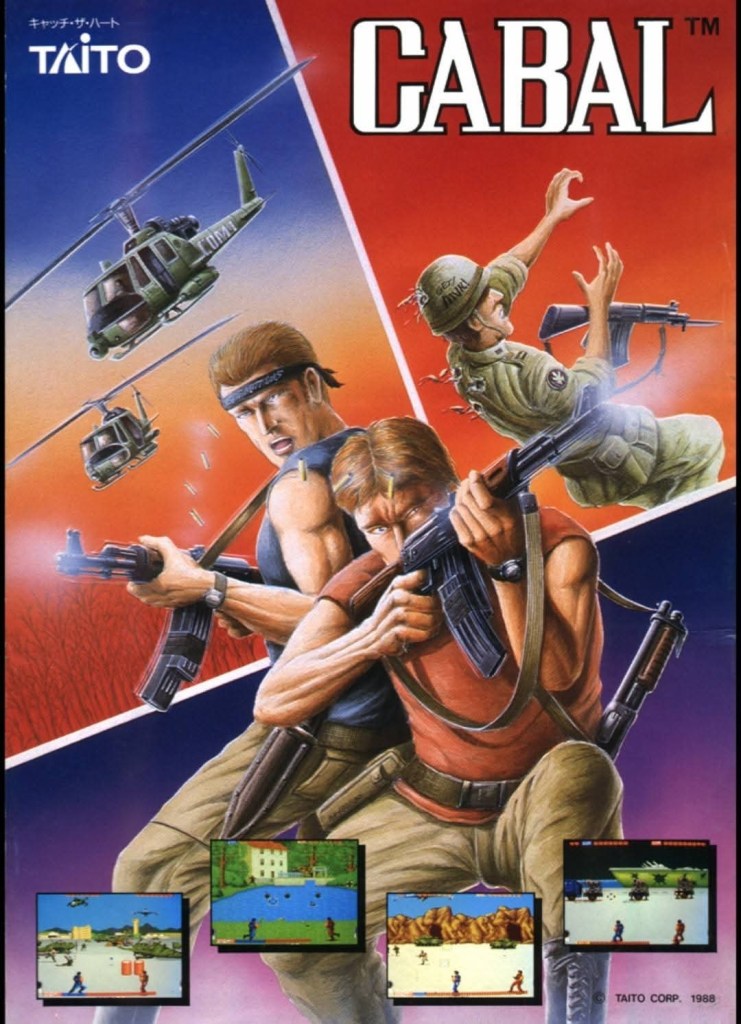
1. Cabal Japanese arcade flyer/poster

Can you feel the action and intensity here?

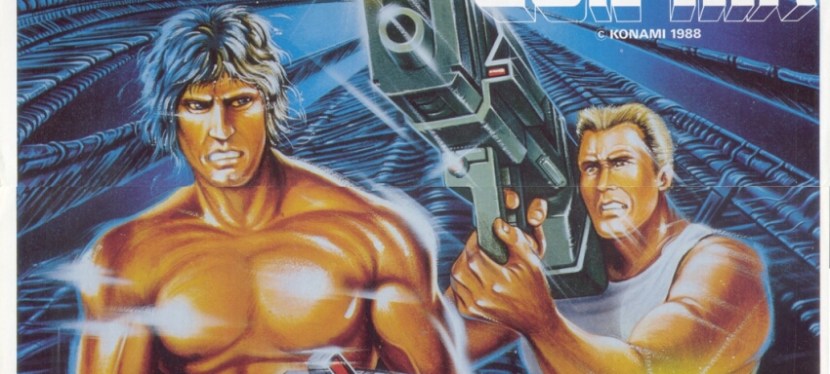
When it was first released in video arcades in Japan in late 1988, Cabal was another game inspired by military action movies of Hollywood which explains the art work done for the arcade flyer and poster shown above. The Vietnam War was still fresh in people’s minds and the concept of having one or two players firing their weapons against enemy soldiers resonated with gamers who saw Hollywood’s military action flicks. That said, it is not surprising that Cabal became a huge hit in Japan before getting released in arcades around the world.

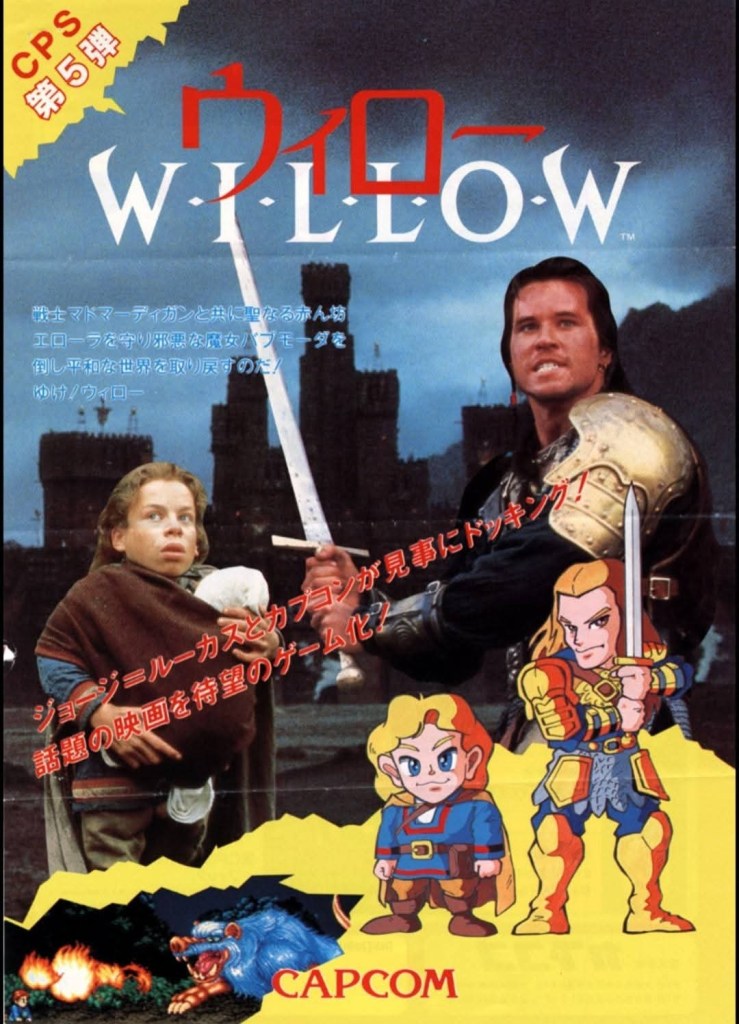
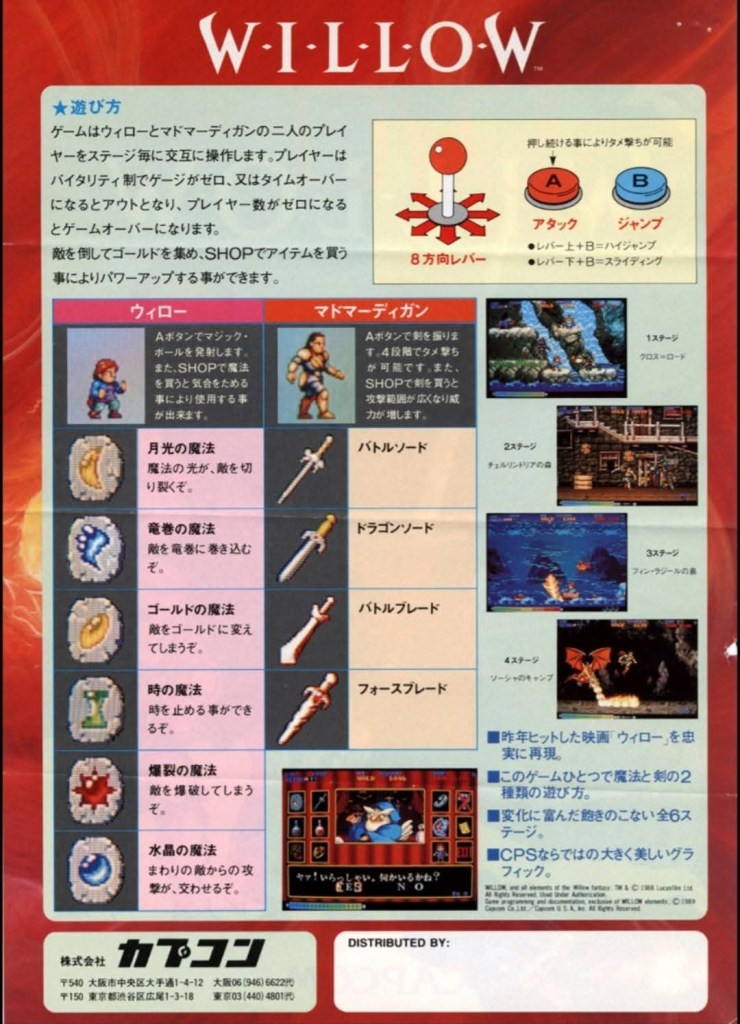
2. Willows Japanese arcade flyer

The front.
The rear.

Remember the 1988 high fantasy adventure film Willow? That film was produced by George Lucas and was a bold new production of Lucasfilm shifting away from Star Wars. Believe it or not, an official arcade game adaptation of Willow was made by Capcom and they promoted it by having images of Val Kilmer and Warwick Davis on the front of the arcade flyer (opposite the illustrated versions of their characters). The game, which was a side-scrolling platform game with run-and-gun elements, went on to be an arcade hit in Japan and eventually pleased gamers worldwide.

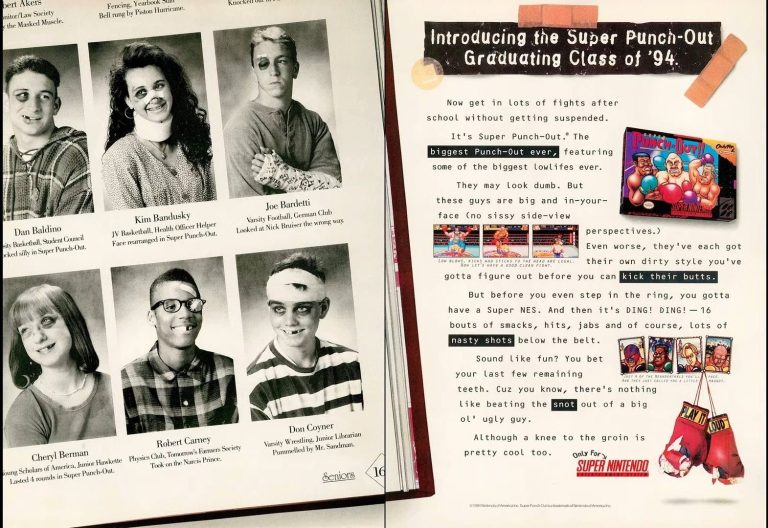
3. Super Punch-Out!! North American print ad

This is funny to look at.

Historically, Nintendo’s Punch-Out!! series started in the arcade in 1984 and the first game was the result of the company’s effort to make a new game using arcade cabinets with two screens. The 2nd game – Mike Tyson’s Punch-Out!! – became a huge critical and commercial hit (over 2 million copies sold in 1988) on console and it made great business sense for Nintendo for release another Punch-Out!! for its console gamers to enjoy in the comfort of home. In 1994, Super Punch-Out!! was released on the Super Nintendo Entertainment System (SNES) in America and to promote it, the company came up with a hilarious 2-page ad that showed fictional high school graduates with boxing-related injuries. The imagery creatively connected with the words “biggest Punch-Out ever” and “Graduating Class of ‘94”.

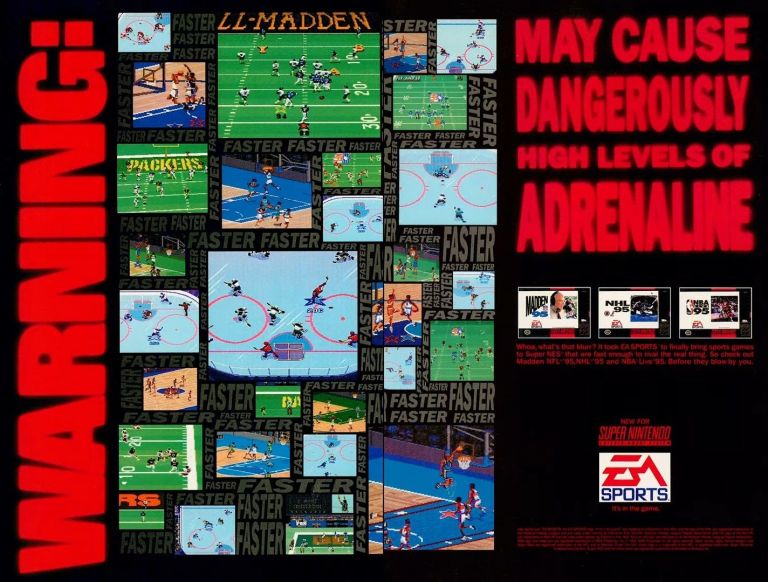
4. EA Sports 3-in-1 SNES games print ad

EA Sports games on the SNES.

In 1994, Electronic Arts (EA) released their sports games NBA Live 95, NHL 95 and Madden NFL 95 for consoles at the time. Even though the Sega Genesis sold better than Super Nintendo Entertainment System (SNES) in America at the time, EA went on to aggressively market their 3 sports video games on Nintendo’s console using a 3-in-1 games print ad. In retrospect, the SNES for the most part had better graphics and sounds than the Genesis which is reflected clearly on EA Sports games of the time. This print ad still looks fun and exciting.  

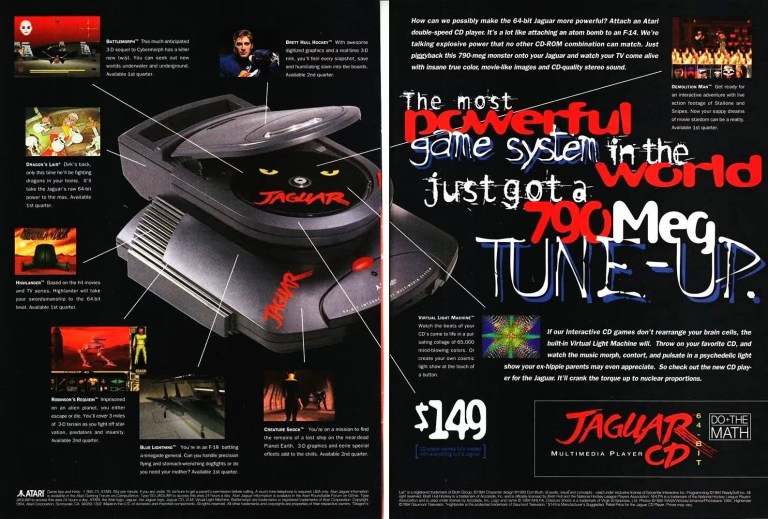
5. Atari Jaguar CD print ad

Were you able to play any game on the Atari Jaguar with the CD add-on included?

Apart from the obvious advances of technology that impacted video games, the 1990s is also known for the rise of CD-ROM as a medium for gaming. In an effort to boost sales of the Atari Jaguar console (launched in America in 1993 for around $250) and capitalize on the trust of the fans and console owners, Atari launched a CD-ROM add-on device for about $150 in 1995. To promote it, the company went aggressive with the 2-page ad showing the add-on fully connected on top of the main console, showing off some games and posting a text description emphasizing hardware power and the advantages that come with the CD technology. Even in the captured image, the Atari Jaguar CD still resembled a toilet. This is an aggressive ad campaign that failed as less than 20,000 Atari Jaguar CD units were sold by the time it was discontinued in 1996.

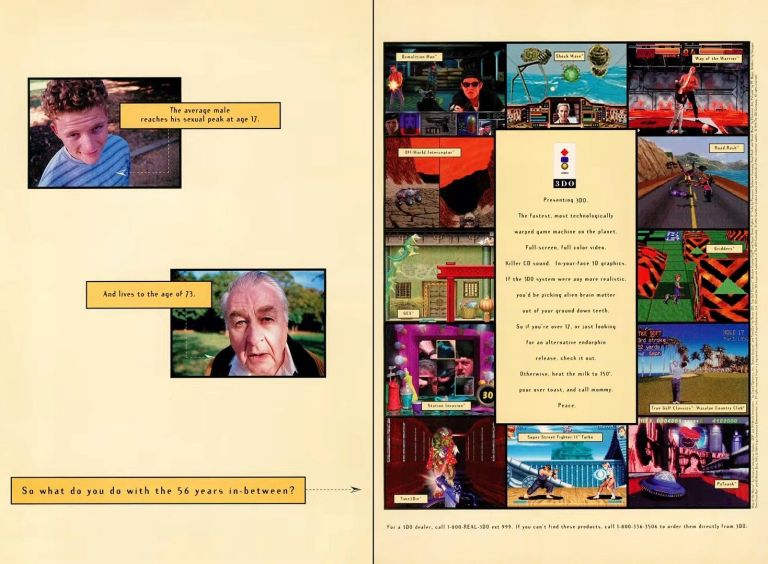
6. 3DO print ad

While it lacks intensity, this 3DO ad emphasized the games.

Without showing any hardware, the 3DO Company came up with this 2-page print ad that had a slightly adulterated tone (look at the left page) and aggressively marketed the 3DO console games available at the time. Games like Demolition Man, Shock Wave, Road Rash and Super Street Fighter II Turbo were the standout titles which clearly showed the company made the effort to emphasize gaming more than multimedia features. This 1990s ad tackled the generations with a touch of humor.

7. Lethal Enforcers II: Gun Fighters Sega Genesis print ad

This is a fun ad to look at.

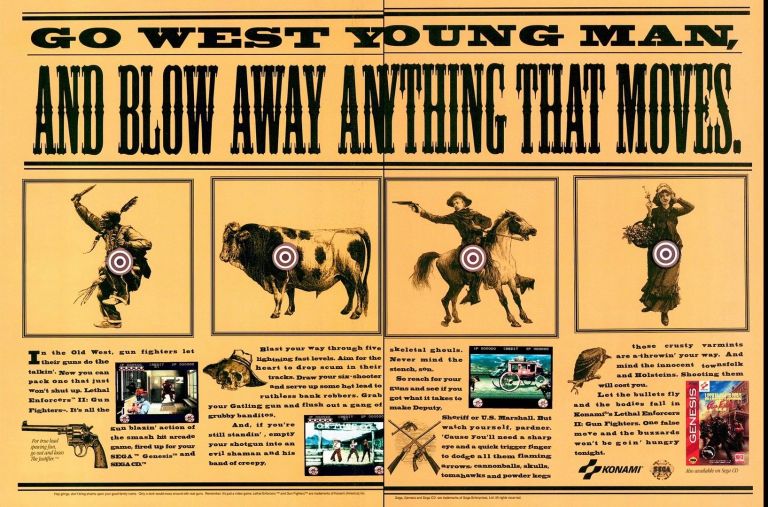
When Lethal Enforcers II: Gun Fighters was released in the arcades in 1994, it became a commercial success for Konami which went on to announce it would port the game to consoles of Nintendo and Sega at the time. While the port for the Super Nintendo Entertainment System (SNES) was never released, Lethal Enforcers II: Gun Fighters made its way to the Sega Genesis and Sega CD. The print ad of the Sega Genesis version (Sega CD mentioned in small text) had an inspired design emphasizing the Old West, shooting and the conflict between cowboys and Indians. The screenshots gave people the clear idea that Old West was the setting (versus modern day in the previous game). This is still fun to look at.

8. Syphon Filter

Syphon Filter went on to become a surprise hit game in 1999.

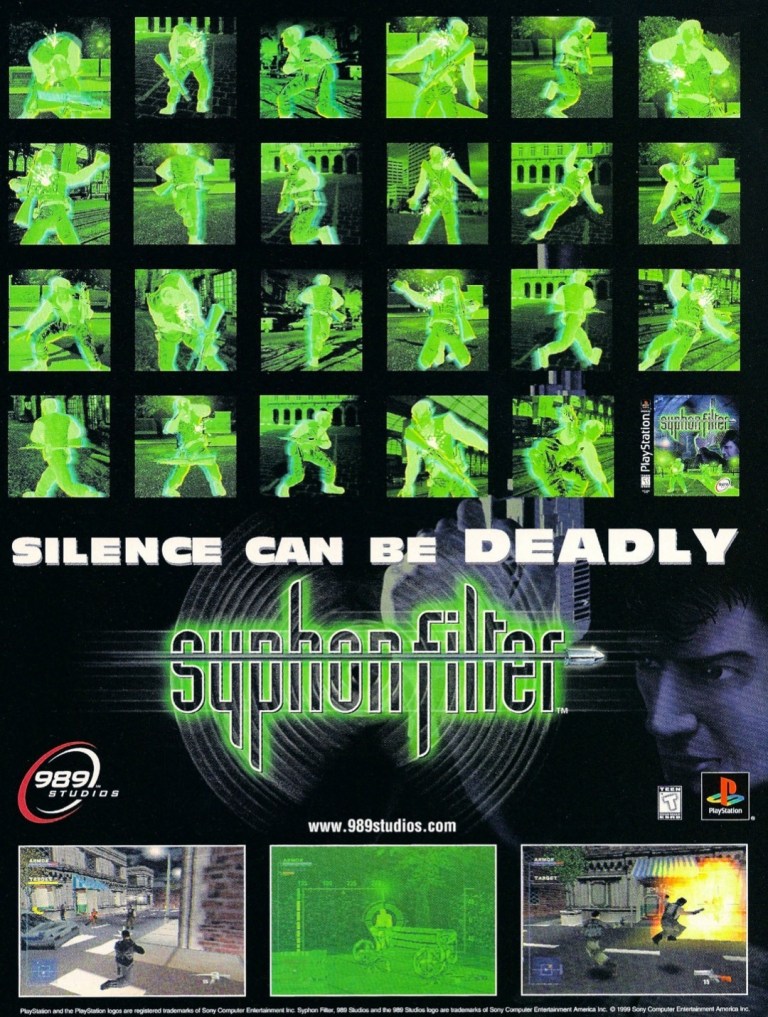
In 1999, Sony’s 989 Studios released Syphon Filter exclusively on the PlayStation console. This single-page print ad showed a few screenshots on the bottom and several action snippets with a night vision touch ultimately emphasizing the stealth aspect within the gameplay. The marketing proved to be effective as the game sold a lot at retail and went on to establish a new game franchise exclusive to PlayStation consoles.

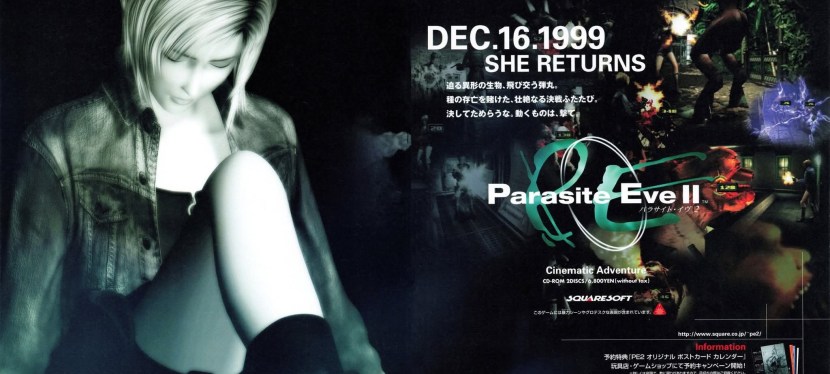
9. Parasite Eve II Japanese print ad

Were you a big fan of Aya Brea and the Parasite Eve franchise in the late 1990s?

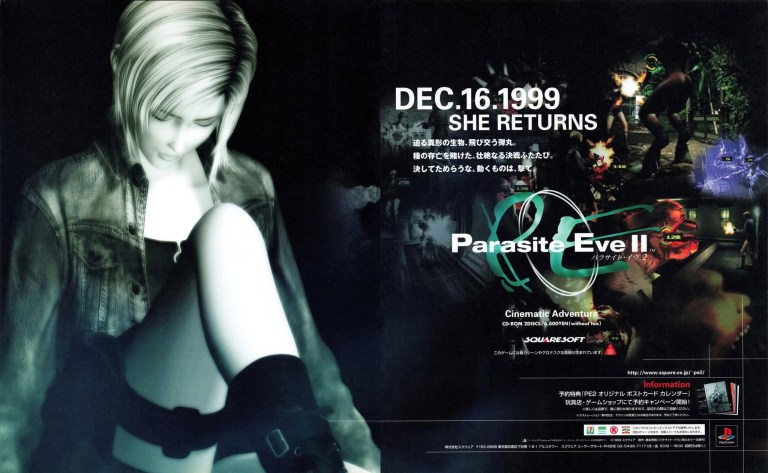
Following the critical and commercial success of Parasite Eve in 1998, SquareSoft proceeded with Parasite Eve II and the production (note: initially for a spin-off game before becoming a sequel) did not even involve the main creators of the first game. Instead the company had a different team of developers – including those who previously worked on Resident Evil games for Capcom – in Osaka to make the sequel. This explains why Parasite Eve II had stronger survival horror gameplay resembling a Resident Evil game. As major changes were made during the production, it was decided that Aya Brea would become the main protagonist and already the character was already popular with gamers. That being said, the marketing of Parasite Eve II for the Japanese market heavily featured Aya Brea with subtle sexiness, beauty and action in mind. The marketing intensified leading to its eventual December 16, 1999 release in Japan.

+++++

Thank you for reading. If you find this article engaging, please click the like button below, share this article to others and also please consider making a donation to support my publishing. If you are looking for a copywriter to create content for your special project or business, check out my services and my portfolio. Feel free to contact me with a private message. Also please feel free to visit my Facebook page Author Carlo Carrasco and follow me on Twitter at  @HavenorFantasy as well as on Tumblr at https://carlocarrasco.tumblr.com/ and on Instagram at https://www.instagram.com/authorcarlocarrasco
What to watch on YouTube right now – Part 111

Welcome back my readers, YouTube viewers and all others who followed this series of articles focused on YouTube videos worth watching. Have you been searching for something fun or interesting to watch on YouTube? Do you feel bored right now and you crave for something to see on the world’s most popular online video destination?

I recommend you check out the following videos I found.

Ashleigh Burton Reacts To Full Metal Jacket – A few months ago, my YouTube series post included several reaction videos of Stanley Kubrick’s Full Metal Jacket. Recently Ashleigh Burton posted her own Full Metal Jacket reaction video and I can say that it is very enjoyable to watch as the YouTuber (who is a jolly person) had her own bouts of laugh-out-loud moments reacting to it. Watch Ashleigh Burton’s video below.

Ghost in the Shell’s Relevance Analyzed  – I was still in college the first time I saw the 1995 anime feature film Ghost in the Shell on home video. While I enjoyed the action and the high-quality visuals (2D animation mixed with computer-generated graphics), I was unable to grasp the story and its many philosophical messages within. To really enjoy it and understand Masamune Shirow’s concepts, watching Ghost in the Shell should be done with patience and the right mindset. Fortunately, a YouTuber took the time to replay the anime feature film and paid close attention to the many details within. Indeed, Ghost in the Shell is more relevant than ever today as it tackled hacking, cybersecurity, identity and artificial intelligence early on. To find out more, watch the video below.

#3 Yakisoba In Japan – You like Yakisoba? Yakisoba is a Japanese noodle stir-fried dish and it first appeared in food stalls in Japan about a century ago. There are lots of places in Japan that offer yakisoba to customers and there are also variants of it depending on where you find it. In the city of Kobe (the same city that got ravaged by a massive earthquake in the mid-1990s) is a Yakisoba shop that serves a lot of customers each day. That means something must be really good with the yakisoba. Watch and learn from the video below.

Do You Trust James Gunn? – I never bothered to watch James Gunn’s Superman movie this year. In fact, when it was announced that Gunn and his partner would start a whole new line of DC Comics superhero movie projects under the Warner Bros. banner a few years ago, I was never excited nor interested. I saw Gunn’s work in Guardians of the Galaxy (he wrote and directed it) and the 2004 Dawn of the Dead remake (he wrote it) and neither film was worth replaying. I’m not saying Gunn is a bad filmmaker, I just don’t find his work compelling enough and box office numbers don’t change a thing. He also directed The Suicide Squad which ended up as a commercial disappointment. When it comes to cinematic superhero works, there are reasons why long-time superhero fans and comic book readers don’t trust Gunn which you can learn from the videos below.

Austria Pushes Back Against Mass Migration – Right from the top, Austria made decisive moves to push back against the flow of mass migration and made it clear they want to preserve their culture and prioritize their citizens. It has been over ten years since Germany – under Angela Merkel – committed a huge blunder by opening its borders to so many people from the Middle East and Africa which affected other European nations negatively. It is obvious that the high amount of so-called refugees already in Europe collectively have no desire to assimilate with the culture and norms of the nations they entered, and they want more social benefits and more money at the expense of the citizens. Austria itself had enough and you can find out how they pushed back against mass migration by watching the video below.

+++++

Thank you for reading. If you find this article engaging, please click the like button below, share this article to others and also please consider making a donation to support my publishing. If you are looking for a copywriter to create content for your special project or business, check out my services and my portfolio. Feel free to contact me with a private message. Also please feel free to visit my Facebook page Author Carlo Carrasco and follow me on Twitter at  @HavenorFantasy as well as on Tumblr at https://carlocarrasco.tumblr.com/ and on Instagram athttps://www.instagram.com/authorcarlocarrasco

Retro Gaming Ads Blast – Part 36

Welcome back readers, fellow geeks and electronic gaming fans!

In this edition of the Retro Gaming Ads Blast (RGAB) series, we will take a look at another batch of retro gaming print ads – including arcade flyers – from the 1970s to the 1990s.

For the newcomers reading this, Retro Gaming Ads Blast (RGAB) looks back at the many print ads of games (console, arcade, computer and handheld) that were published in comic books, magazines, flyers, posters and newspapers long before smartphones, social media, the worldwide web and streaming became popular. To put things in perspective, people back in the 1980s and 1990s were more trusting of print media for information and images about electronic games and related products.

With those details laid down, here is the newest batch of retro gaming print ads for you to see and enjoy…

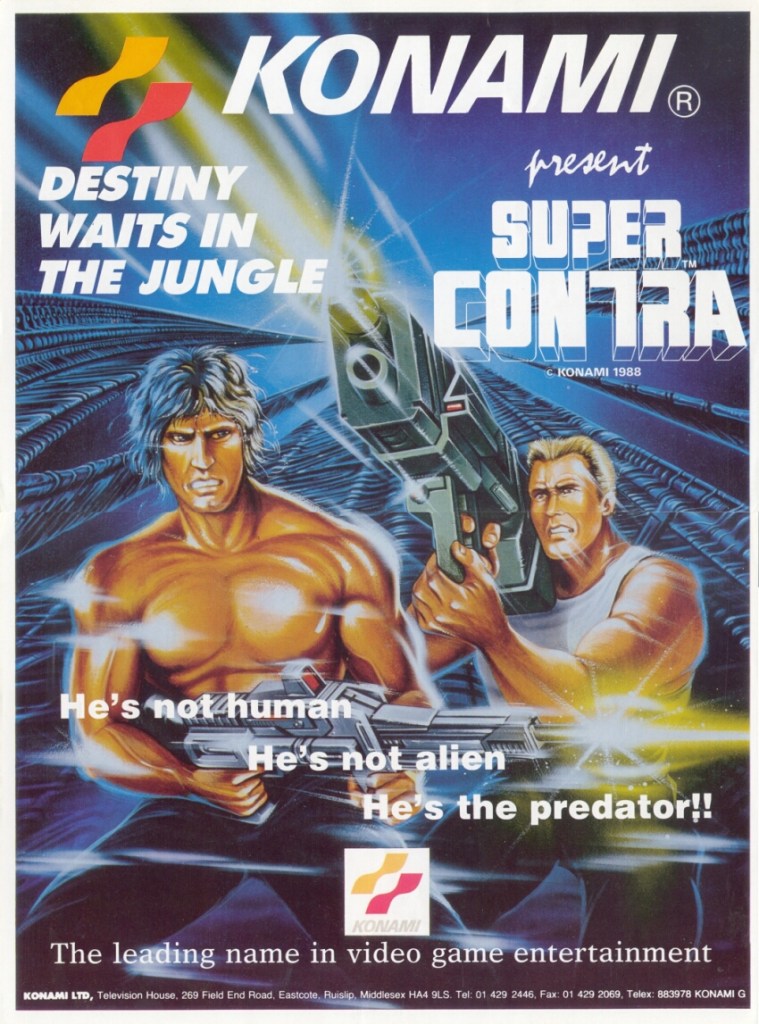
1. Super Contra North American arcade flyer

Have you seen many Hollywood action movies of the 1980s? Does this arcade flyer remind you of something?

After Konami struck gold with Contra in 1987, it was inevitable that sequels and spin-offs will be made. In 1988, they released the follow-up Super Contra in the arcades and to promote it in America, the company came up with artwork that easily gave gamers the impression they are seeing Sylvester Stallone as a fantasized Rambo and another armed guy who might remind them of Arnold Schwarzenegger’s character in Commando or Dutch in Predator. To capitalize on the movie references even more, the American arcade flyer had the line “He’s not human. He’s not alien. He’s the predator!!” As it was the 1980s, this creative approach to promotion was not surprising as Konami and its game makers were influenced by Hollywood movies.

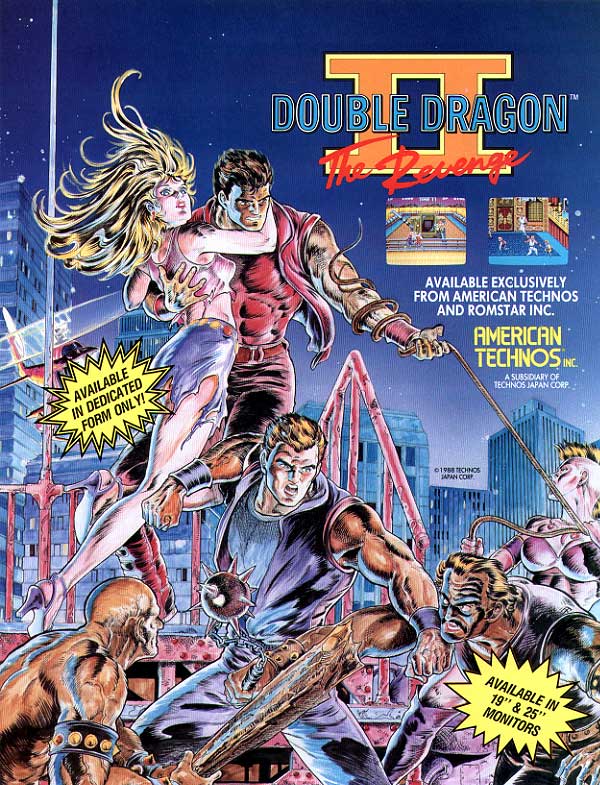
2. Double Dragon II: The Revenge North American arcade flyer

The artwork used in this arcade flyer remains intriguing to look at.

I never played Double Dragon II: The Revenge in the arcade, but I played it on the Nintendo Entertainment System (NES). That being said, I was surprised to see how this old North American arcade flyer has the same hand-drawn artwork used on the cover of the NES version. Take note that the arcade game was released in 1988 while the NES port was released in early 1990. I can only guess that Technos decided to use the same artwork not only for convenience but to have a definitive image emphasizing Double Dragon II to gamers wherever they are.

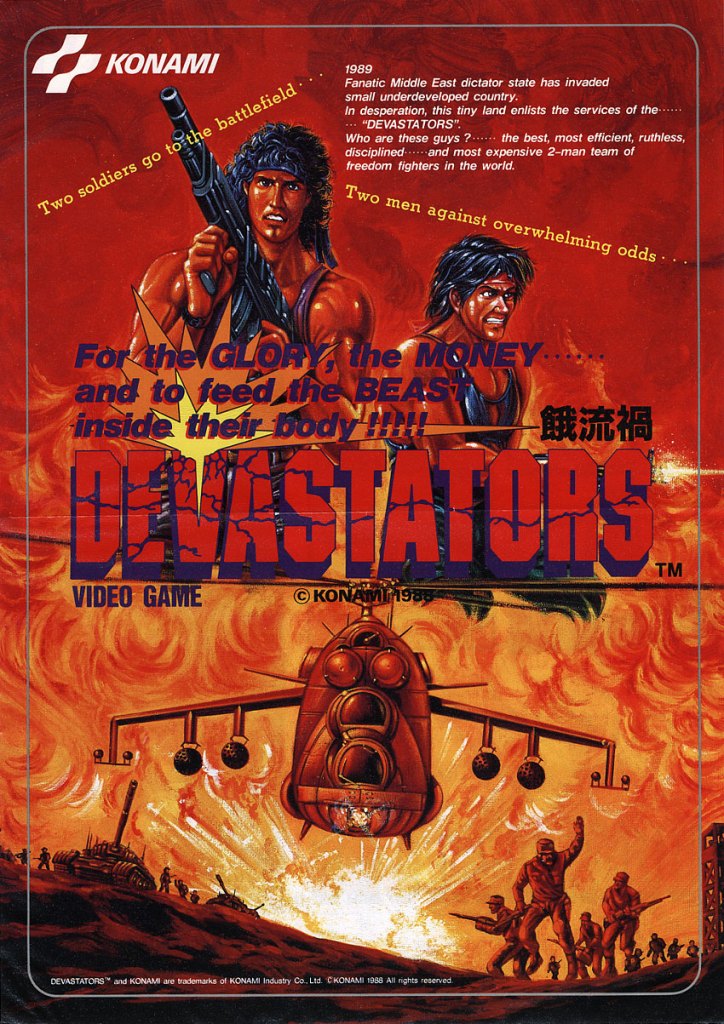
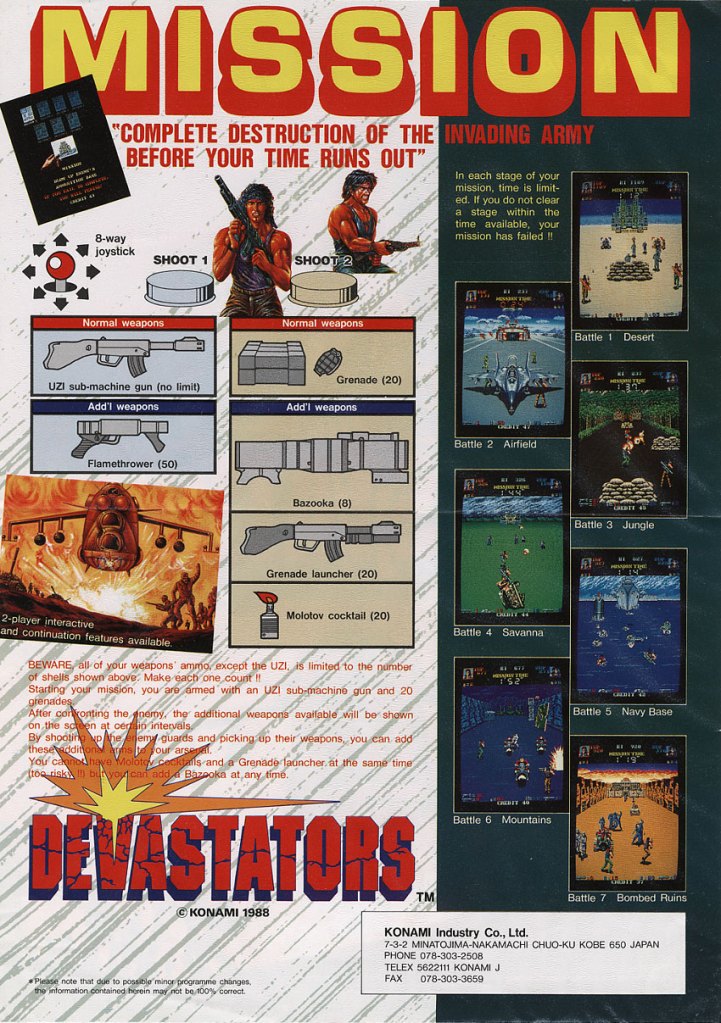
3. Devastators North American arcade flyer

The front.
The rear.

Devastators is another Konami arcade game that had a strong war theme and it was influenced by Hollywood action films of the 1980s. This particular arcade flyer for the North American market is almost identical with the Japanese arcade flyer as both have the same artwork on the front and almost the same visual layout on the rear. The most obvious difference is the use of English text for the North American flyer.

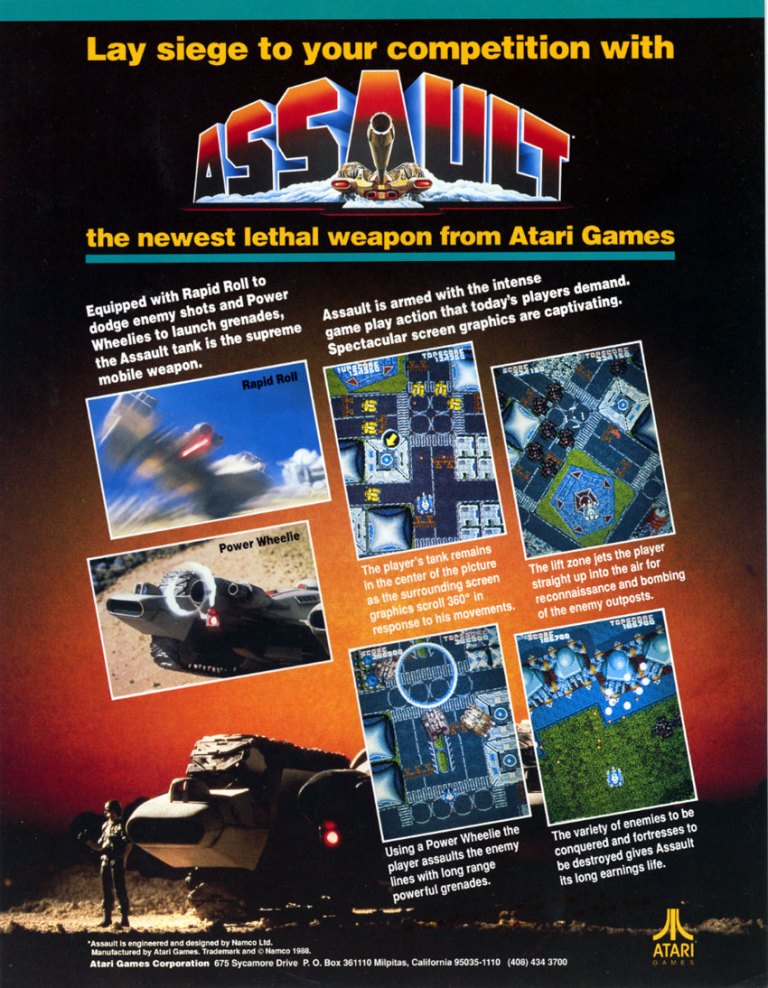
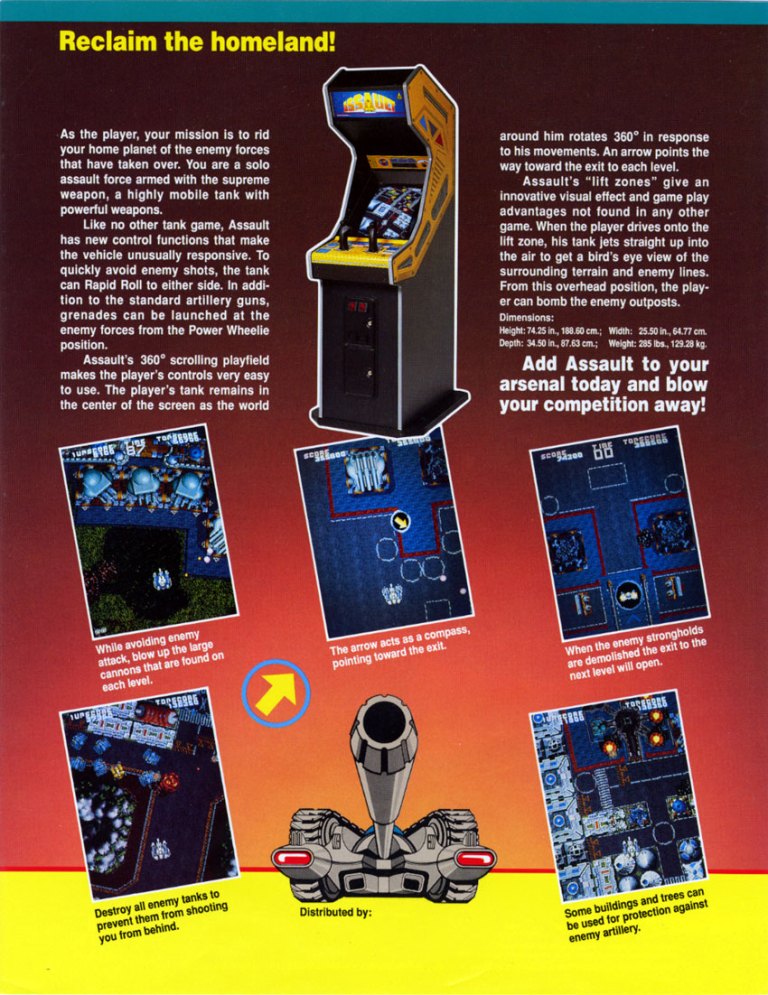
4. Assault North American arcade flyer

The front.
The rear.

Released in American arcades by Atari, Assault is a multi-directional shooter that had a twin-stick control layout (similar with the classic Battlezone) and players experienced intense battles as well as immersive visual effects such as sprite scaling and environment rotation of up to 360 degrees. To promote the game (this originated in Japan by Namco), Atari came up with this arcade flyer that had selected screenshots and descriptive text on both the front and the rear (which showed the arcade cabinet). Assault was a hit with gamers at the arcades and it was not released on consoles until 2009.

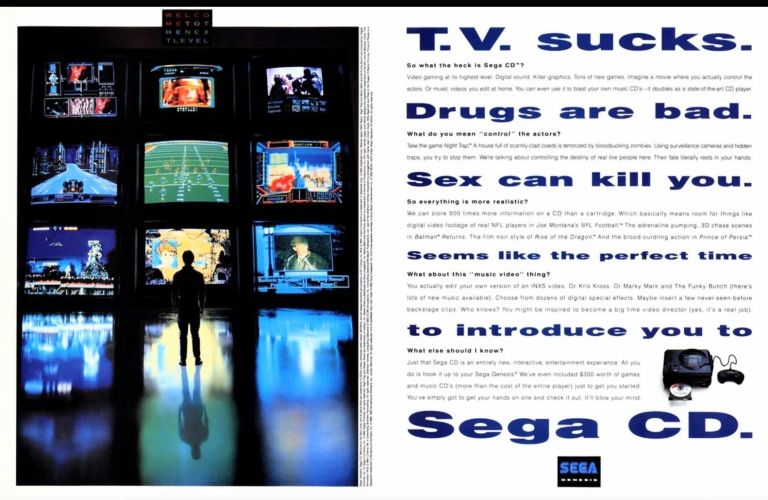
5. Sega CD print ad

Having a socially relevant message can be catchy but it leaves little room for excitement.

As the Sega Genesis console became a huge commercial success in North America, Sega itself became ambitious about what CD-ROM technology would do for video games. Sega in Japan tasked its Consumer Products Research and Development Labs to create a CD-ROM add-on which resulted in the Sega CD (Mega-CD in other parts of the world) which launched in America in 1992. To promote the add-on towards existing Genesis console owners as well as potential new customers, Sega of America came up with the above 2-page print ad that had a social message on the right and an image of a man standing in front of large monitors (showing Sega CD game footage) on the left. While it looked like an odd way of promoting video game hardware, it still remains catchy to see.

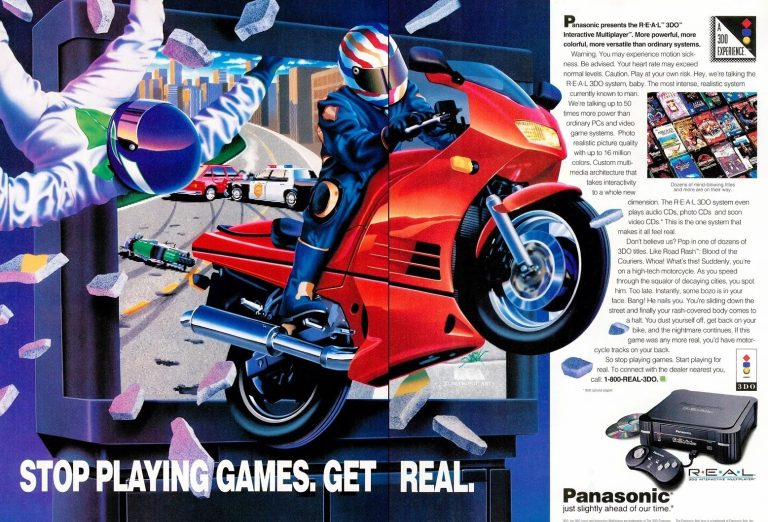
6. Panasonic 3DO print ad

Panasonic knows how to promote entertainment hardware for people’s homes.

Still in the field of CD-ROM gaming, Panasonic had competitive presence in video gaming when its Panasonic FZ-1 R.E.A.L. 3DO Interactive Multiplayer (with technology licensed by The 3DO Company) was launched in America in 1993. If you look at the print ad closely, you will notice that the descriptive text emphasized the multimedia entertainment aspect more than video gaming. The dominating artwork used does not come from a particular video game as it was made to emphasize home entertainment in general. It’s not surprising that the Panasonic 3DO and other 3DO machines from other manufacturers failed commercially.

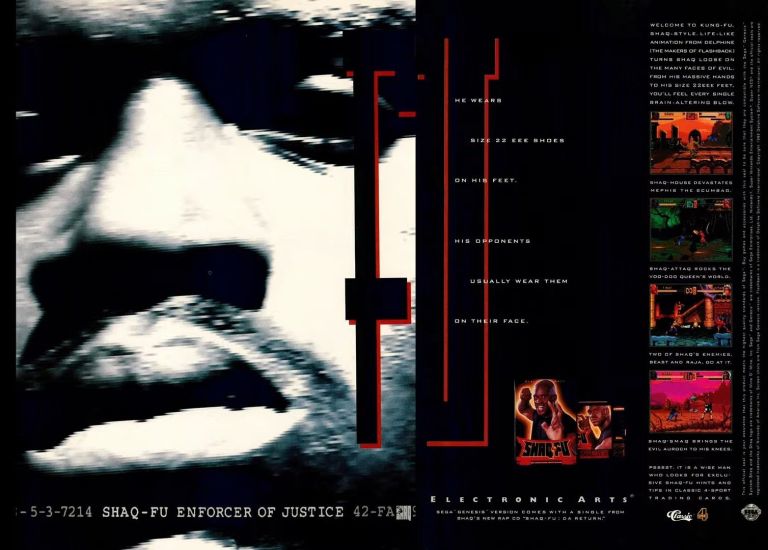
7. Shaq Fu print ad

The close-up of Shaquille O’Neal’s face on the left made him looked less recognizable.

Yes, it is true! There was indeed a video game endorsed by Shaquille O’Neal and it was not a basketball game. Shaq Fu is a 1994 2D fighting game with adventure elements and a story in which gamers play O’Neal as martial artist (note: O’Neal himself participated in the game’s production). To promote the game, Electronic Arts came up with a 2-page print ad that had a very odd black-and-white close-up image of O’Neal’s face on the left leaving small screenshots and hard-to-read text on the right (even though there was some vacant space remaining. I remember seeing this ad while reading a video game magazine and the ad ended up looking more like a promotion of O’Neal (already an NBA superstar) than the game itself. By today’s standards, this print ad is an example of a marketing misfire.

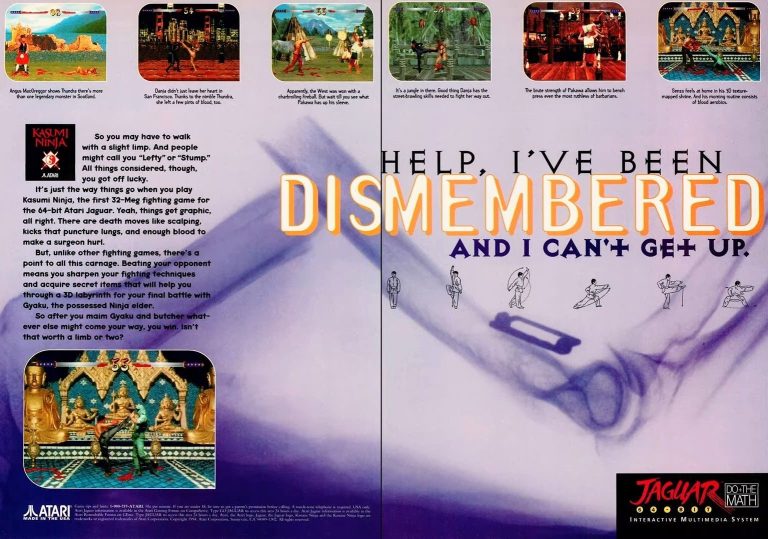
8. Kasumi Ninja print ad

Do you even remember seeing this print ad in magazines?

Remember the 1990s video game trends of digitized human images and disturbingly violent 2D fighting games sparked by Mortal Kombat? The Atari Jaguar-exclusive game Kasumi Ninja was made to capitalize on those trends and it failed badly. Apart from the low sales of the Jaguar console, Atari as publisher came up with the above 2-page print ad that was not appealing to gamers’ eyes and it had almost no excitement overall. This is another marketing misfire.

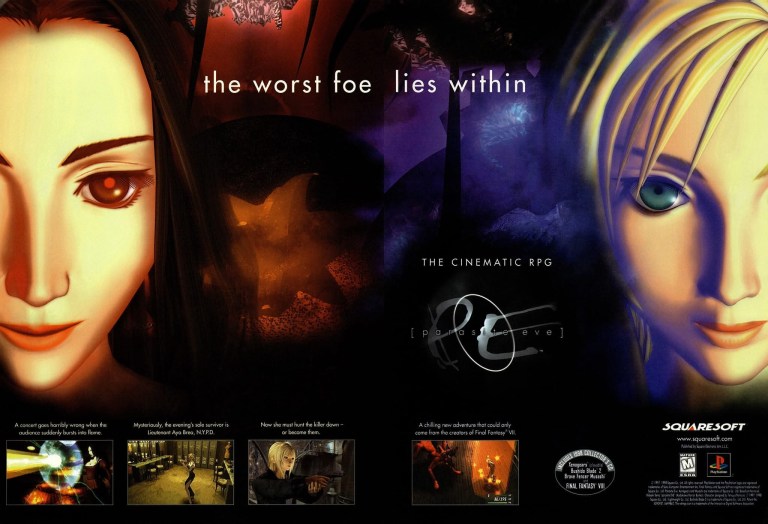
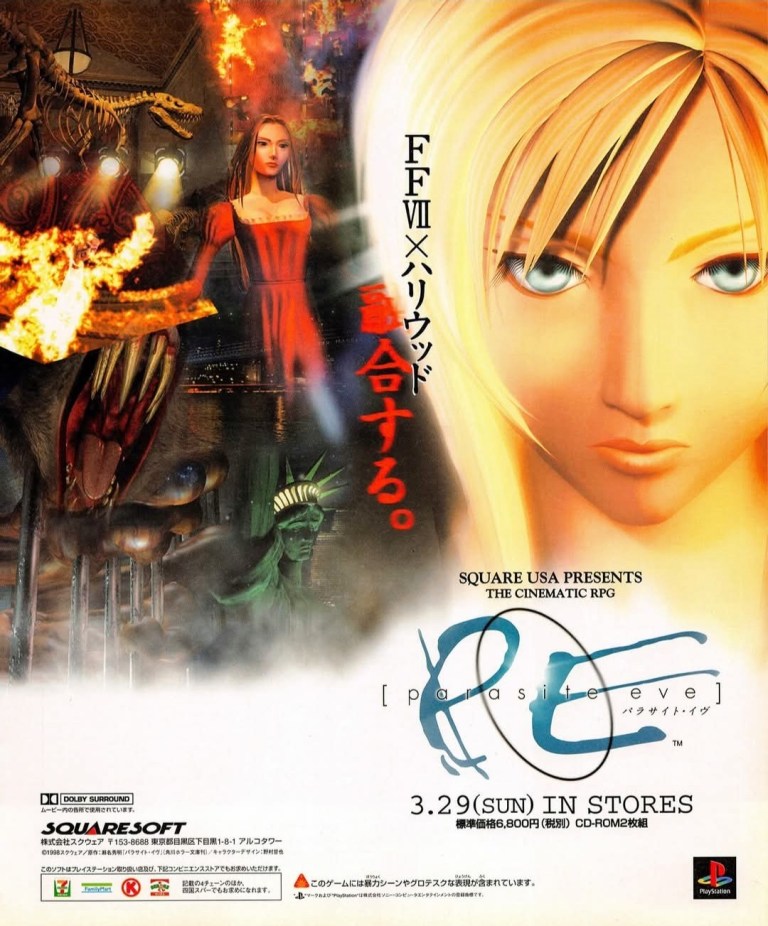
9. Parasite Eve North American and Japanese print ads

Following the successful release of Final Fantasy VII, this ad excited PlayStation gamers and JRPG enthusiasts for Parasite Eve’s 1998 release in America.
A stronger horror presentation in this print ad for the Japanese market. There were already a lot of people in Japan who enjoyed horror.

Starting in the mid-1990s, Squaresoft (now Square Enix) really became aggressive with video game creativity and experimentation as they launched several new projects that eventually got released on PlayStation in the late 1990s until 2000. One of those daring new projects was Parasite Eve which was a role-playing game (RPG) that had visual elements – particularly pre-rendered backgrounds – and a style of exploration that reminded gamers of Resident Evil. The game was a sequel to the Japanese science fiction horror novel of the same name and it involved the creativity of Final Fantasy creator Hironobu Sakaguchi (credited as producer). To promote the game, the 2-page North American print ad had protagonist Aya Brea on the right and the enemy on the left with a cryptic line placed strategically between them. The North American ad clearly stated that the game is a cinematic RPG. By comparison, the Japanese print ad of Parasite Eve has a strong horror vibe which is not surprising because of the novel’s horror elements and the fact that Squaresoft was capitalizing on the popularity of horror-related entertainment in Japan. By today’s standards, Parasite Eve is truly a product of the late-1990s and it has a dedicated fanbase.

+++++

Thank you for reading. If you find this article engaging, please click the like button below, share this article to others and also please consider making a donation to support my publishing. If you are looking for a copywriter to create content for your special project or business, check out my services and my portfolio. Feel free to contact me with a private message. Also please feel free to visit my Facebook page Author Carlo Carrasco and follow me on Twitter at  @HavenorFantasy as well as on Tumblr at https://carlocarrasco.tumblr.com/ and on Instagram at https://www.instagram.com/authorcarlocarrasco
Better than Streaming: I Finally Saw Nausicaä Of The Valley Of The Wind Inside The Movie Theater

Welcome back fellow geeks, Blu-ray collectors and movie buffs!

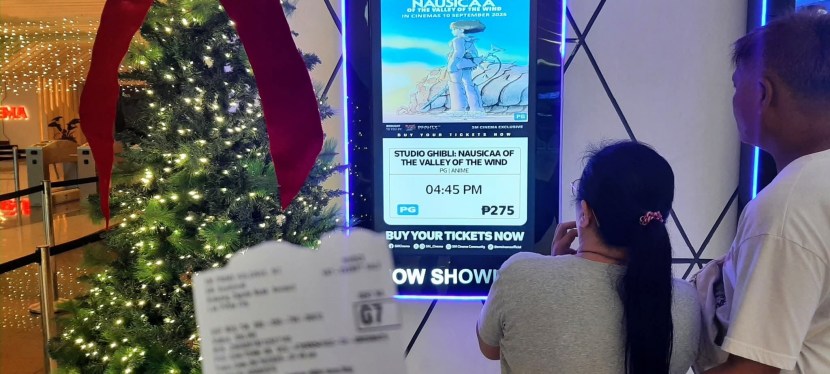
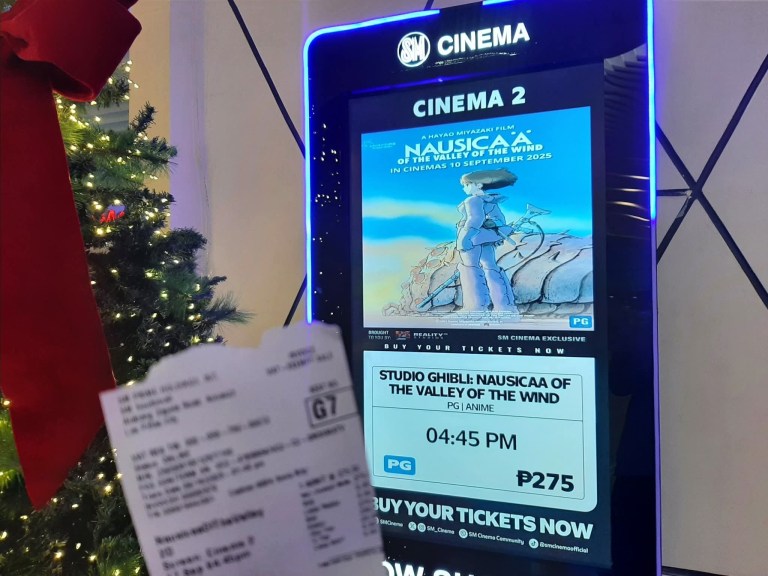
I finally did it! After having seen it many times on home video, cable TV, local TV and DVD, I finally viewed Nausicaä of the Valley of the Wind inside the local cinema here in the Philippines. I saw it on September 17 at SM Cinema inside SM Southmall in Las Piñas City. This was also the first time in two years since I last saw any movie inside the cinema (I last saw Sound of Freedom).

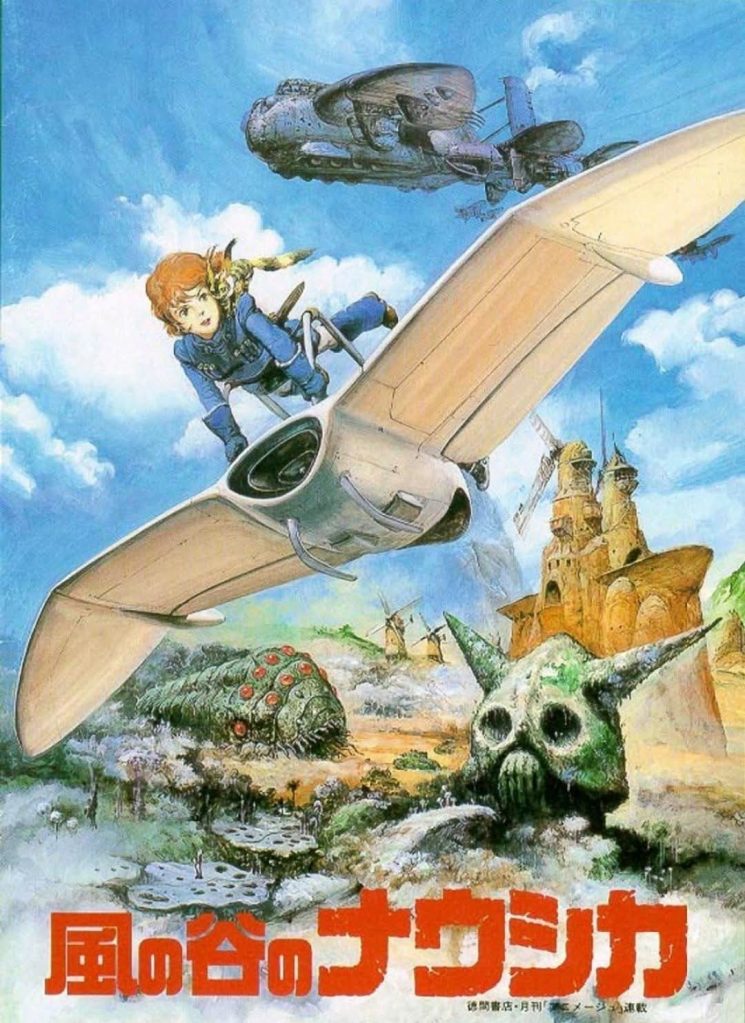
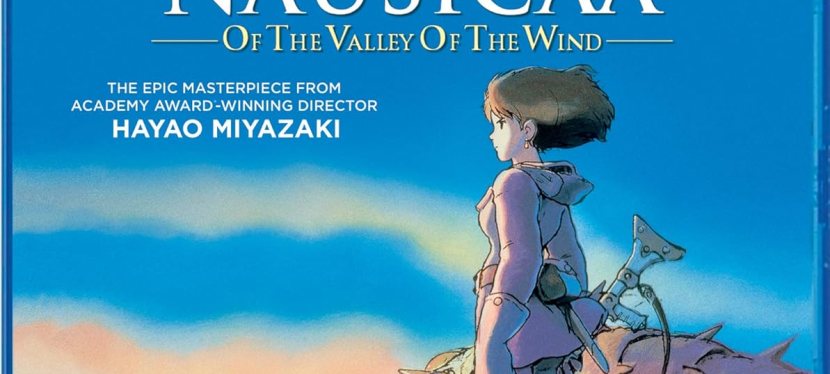
An old movie poster of Nausicaä Of The Valley Of The Wind.

For the newcomers reading this, Nausicaä Of The Valley Of The Wind was  part of the Studio Ghibli Fest 2025 which was exclusive to SM Cinema (the largest cinema chain in the country). While the said fest ended on September 16, there were still screenings of Studio Ghibli anime feature films shown in SM Cinema branches from September 17 to 23.

I paid P275 (US$4.72 according to the foreign exchange as of this writing) for my SM Cinema ticket and it includes a free drink. I entered the cinema carrying my ticket, drink and popcorn feeling excited and nostalgic to see Nausicaä Of The Valley Of The Wind on the big screen for the first time ever. What was shown was the English-subtitled version with Japanese voiceovers (Sumi Shimamoto as Nausicaä, Gorô Naya as Yupa, Yoshiko Sakakibara as Kushana, Yôji Matsuda as Asbel, and more)

We were only seven people inside the cinema and there were lots of vacant seats beside, behind and in front of me. I was sitting very comfortably waiting for the screening to begin. At the same time, nobody had a noisy smartphone during the screening. As for me, I deliberately turned my smartphone off to ensure no communication-related distractions would happen.

Eventually Nausicaä Of The Valley Of The Wind finally started playing on the big screen. After the short animated opening scene, the music by Joe Hisaishi started playing as the opening credits went on. At that moment, I was immersed into Hayao Miyazaki’s anime classic immediately and I knew I made the right decision to see it inside the theater.

As the film went on, I adjusted myself to reading the subtitles while maintaining focus on the plot as well as the development of characters. Visually, the film turned out to be really spectacular on the big screen even though it had no computer-generated images at all (note: it is purely hand-drawn animation that was done with so much hard work by Miyazaki and the animators). With the higher resolution on the big screen, I saw a lot more tiny visual details here and there and the facial expressions of the characters became more lively than before. Very clearly, Nausicaä Of The Valley Of The Wind is meant to be seen in the movie theater.

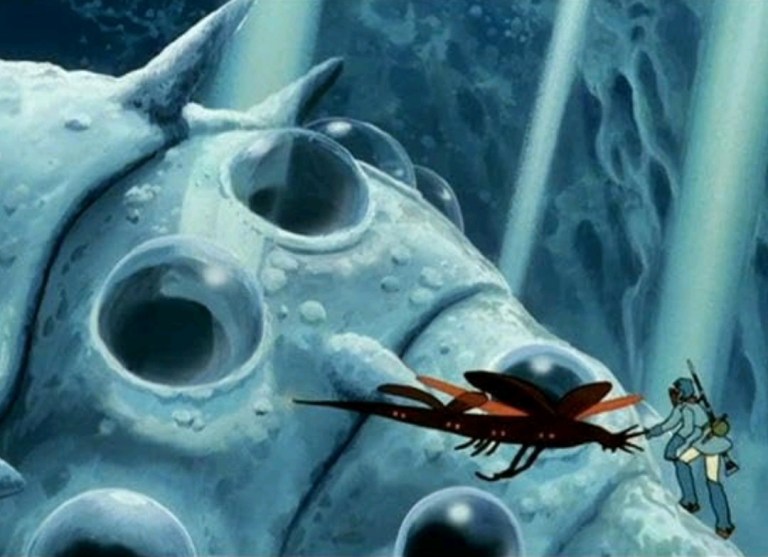
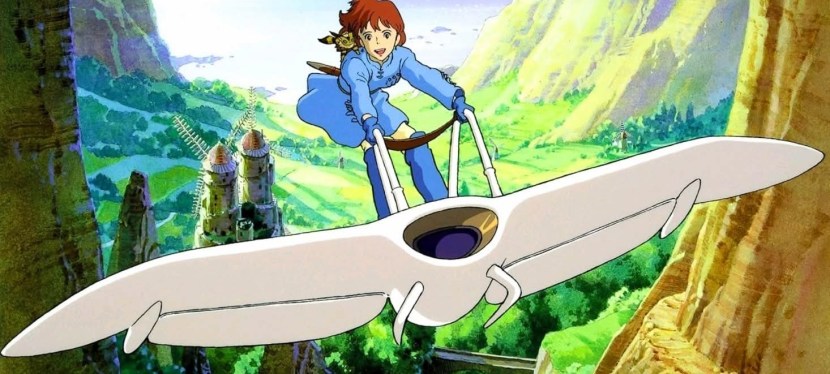
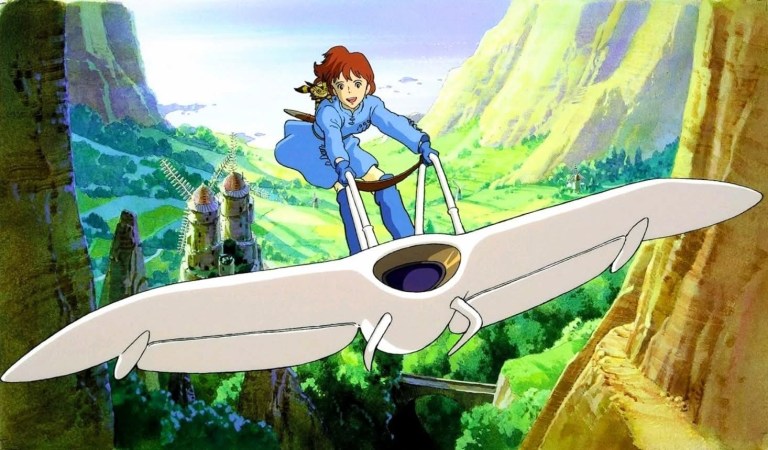
The sense of visual scale in scenes like this one is best viewed on the big screen in the movie theater. (photo source – IMDB.com)
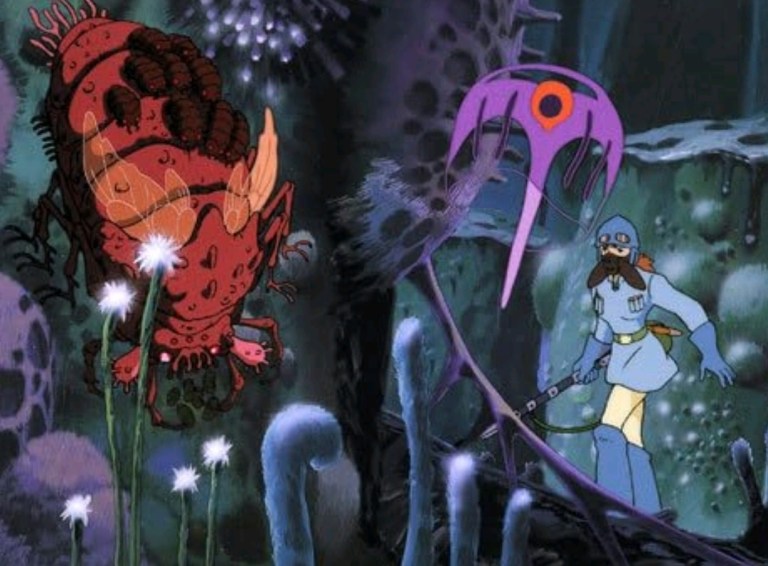
There is nothing like exploring a very polluted forest filled with huge, mutated insects. (photo source – IMDB.com)

After about two hours – the end credits includes animated scenes showing what happened after the climax – of watching, I left the cinema feeling very satisfied and entertained even though I saw Miyazaki’s 1984 masterpiece many times over the decades. The fact that the English-subtitled version was shown gave me an idea of what Japanese moviegoers saw inside their cinemas in 1984, and I can say that the Japanese voiceovers were engaging to listen to. The big screen experience alone made watching Nausicaä Of The Valley Of The Wind worth it.

That being said, I want to express out loud to local movie theater operators reading this to consider showing more of the classic anime feature films as well as classic motion pictures during film festivals or special theatrical events. Personally, I want to see Casablanca, Macross: Do You Remember Love?, Metropolis (2001), Tron, Total Recall (1990) and Akira in the local cinemas.

I am very glad to have seen the 1984 classic anime movie inside the movie theater.

Going back to Nausicaä Of The Valley Of The Wind, I am very glad to have seen inside the cinema and if ever your local cinema will have it screened, I encourage you to go for it. There is absolutely no way that that the screens of your smartphone, your tablet, your PC monitor and your high-definition TV could match the grand visuals of Miyazaki’s film on the cinema’s big screen. Truly the cinema is better than streaming.

If you wish to join a group of movie enthusiasts and talk about cinema, cinematic trends, Blu-ray releases and more relevant stuff, visit the Movie Fans Worldwide Facebook group at https://www.facebook.com/groups/322857711779576

+++++

Thank you for reading. If you find this article engaging, please click the like button below, share this article to others and also please consider making a donation to support my publishing. If you are looking for a copywriter to create content for your special project or business, check out my services and my portfolio. Feel free to contact me with a private message. Also please feel free to visit my Facebook page Author Carlo Carrasco and follow me on Twitter at  @HavenorFantasy as well as on Tumblr at https://carlocarrasco.tumblr.com/ and on Instagram at https://www.instagram.com/authorcarlocarrasco
For more South Metro Manila community news and developments, come back here soon. Also say NO to fake news, NO to irresponsible journalism, NO to misinformation, NO to plagiarists, NO to reckless publishers and NO to sinister propaganda when it comes to news and developments. For South Metro Manila community developments, member engagement, commerce and other relevant updates, join the growing South Metro Manila Facebook group at https://www.facebook.com/groups/342183059992673

Retro Gaming Ads Blast – Part 35

Welcome back readers, fellow geeks and electronic gaming fans!

In this edition of the Retro Gaming Ads Blast (RGAB) series, we will take a look at another batch of retro gaming print ads – including arcade flyers – from the 1970s to the 1990s.

For the newcomers reading this, Retro Gaming Ads Blast (RGAB) looks back at the many print ads of games (console, arcade, computer and handheld) that were published in comic books, magazines, flyers, posters and newspapers long before smartphones, social media, the worldwide web and streaming became popular. To put things in perspective, people back in the 1980s and 1990s were more trusting of print media for information and images about electronic games and related products.

With those details laid down, here is the newest batch of retro gaming print ads for you to see and enjoy…

1. Intellivision print ad

Were you able to play a game on the Intellivision long ago?

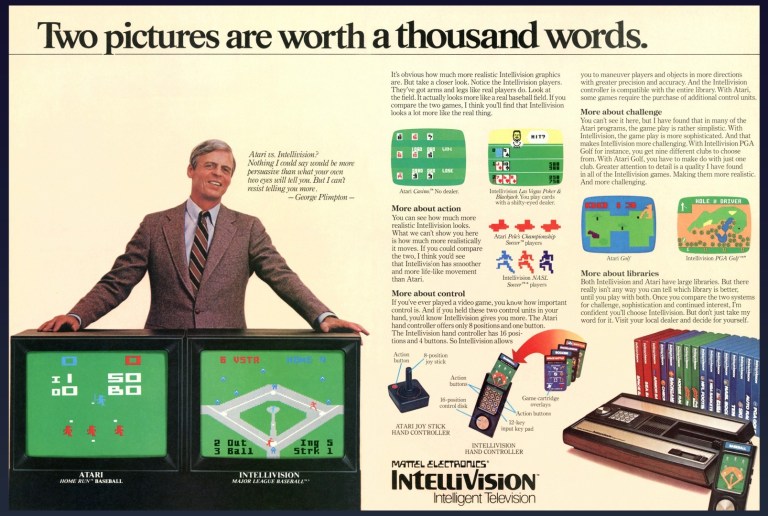
In 1979, Mattel launched their Intellivision game console in America which instantly placed them in competition with Atari’s 2600 console. In a bid to convince gain market share, Mattel daringly came up with a competitive print ad like the one above showing two TV sets (with an Atari 2600 baseball game and a similar game on Intellivision), descriptive text that explained why the intellivision and its games are better, and even mentioned Atari by name several times. Obviously the tactic did not lead Mattel to ultimate market victory but the above print ad showed it was okay for a newcomer to mention their competitor and aggressively attack it to gain customers (both newcomers and active gamers).

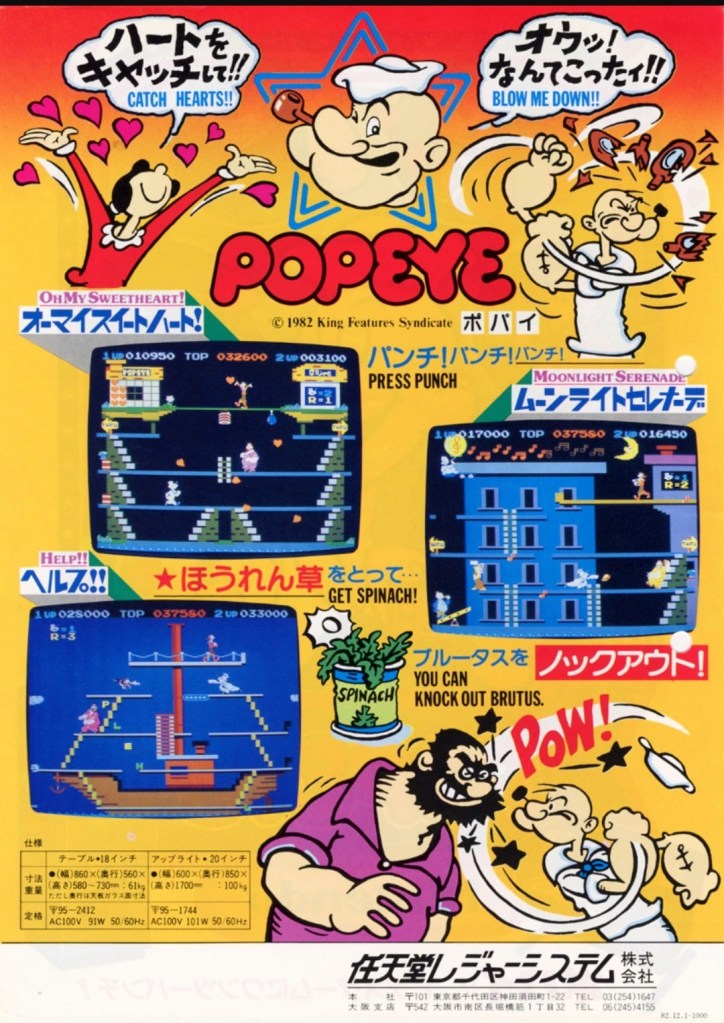
2. Popeye Japanese arcade flyer

The front of the flyer.
The rear.

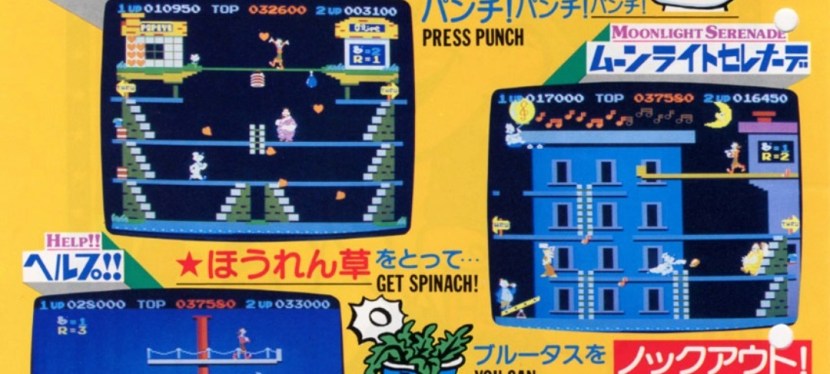
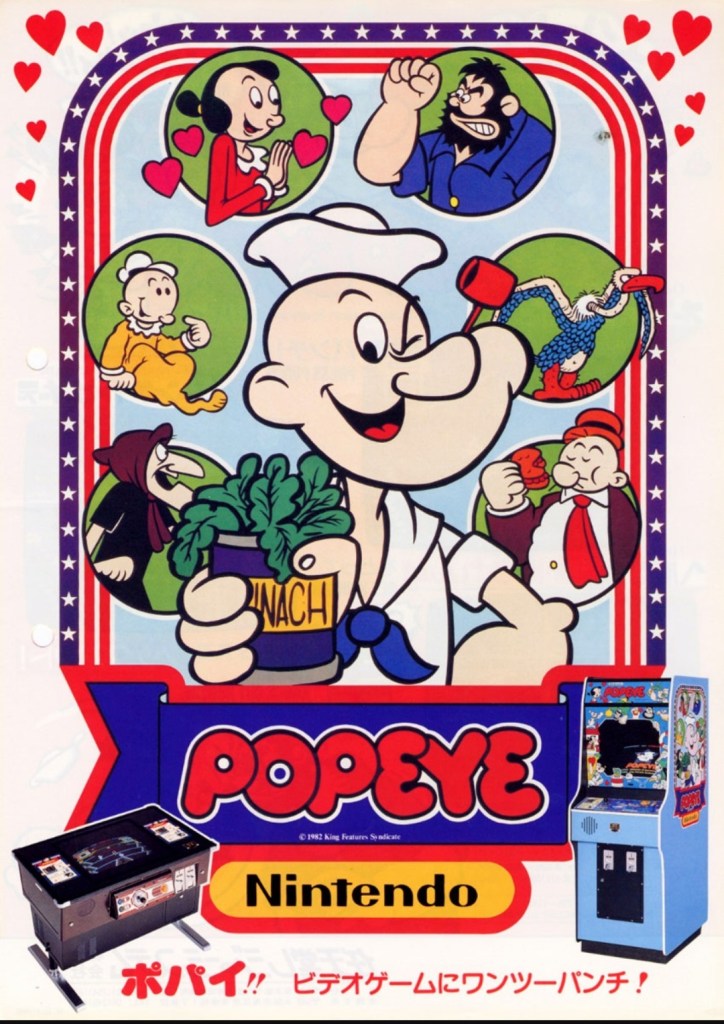
In 1982, Nintendo released the Popeye arcade game which was incidentally the result of the success of their original Donkey Kong arcade game. To promote the game, Nintendo came up with an arcade flyer that had a very lively front (note: the characters were instantly recognizable thanks to the great art used) and the rear having easy-to-read instructions on how to play the game, what levels to expect and what must be done when playing. Popeye was an arcade hit in Japan, but an even bigger hit in America. This old arcade flyer still looks nice.

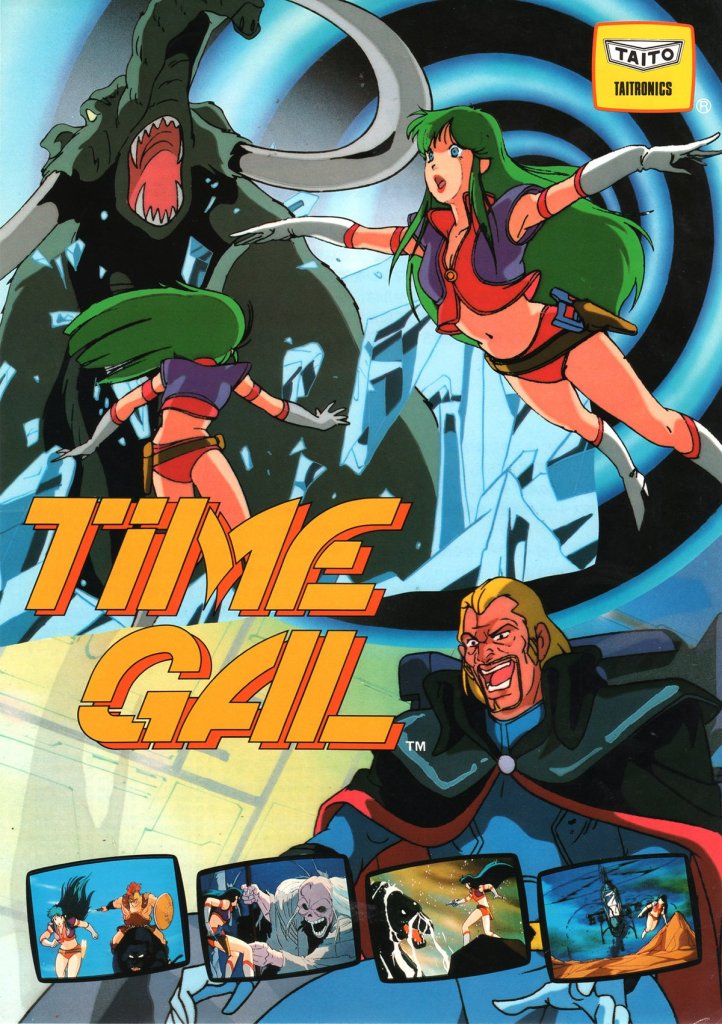
3. Time Gal arcade flyer

On face value, this one looks more like an anime promo since gameplay elements were missing.

Released in Japanese arcades in 1985, Time Gal is one of those games that used the expensive LaserDisc technology to stream pre-recorded animation (made by Toei) and challenged gamers to react quickly (using the joystick and button for commands) in order to progress in real-time. The arcade flyer has a very lively visual design making it clear to players and arcade operators that a lot of anime awaits those who play Time Gal. Technically, players watch anime cutscenes happen and react using the controls. Time Gal was an arcade hit and it made its way outside of Japan by getting ported for the Sega CD.

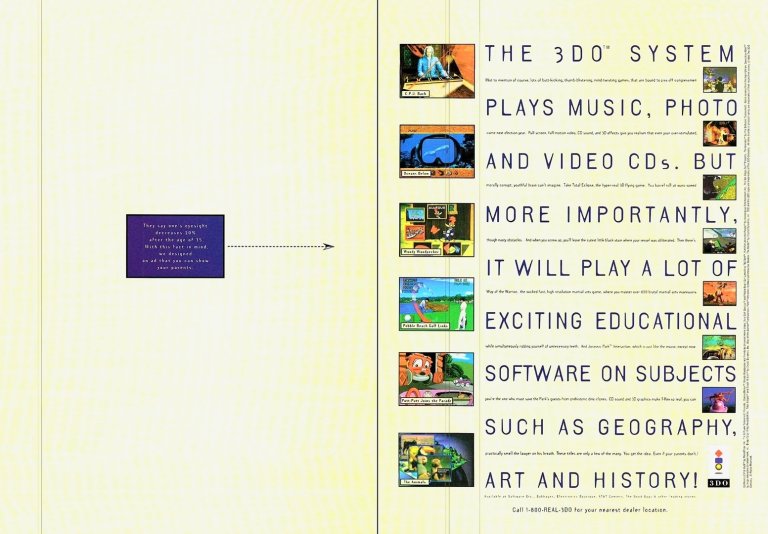
4. 3DO print ad

If you bought a 3DO long ago, was it for gaming or for home entertainment purposes?

Remember the 3DO? Developed by the 3DO Company and launched in 1993, the 3DO was designed to not only play video games but also function with multimedia features. In fact, the 3DO was initially marketed as a machine that allows users to watch videos, play music, browse digital photographs, and even immerse themselves with software focused on different topics. This is exactly what the above 3DO print ad emphasized. In retrospect, it was so odd for me to see the print ad inside video gaming magazines I read.

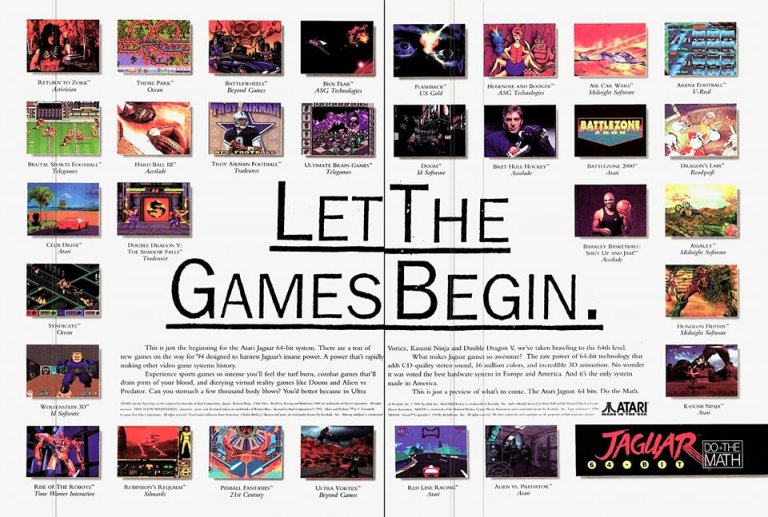
5. Atari Jaguar print ad

The strong focus on gaming was clear with Atari for the Jaguar.

Over a month after the launch of the 3DO, Atari launched its Jaguar console with a strong focus on video gaming. As console sales slowly grew in 1994, Atari came up with the above print ad – showing lots of games for the Jaguar – to lure in customers aggressively. If you look closely at the descriptive text of the ad, it mentions the Atari Jaguar as 64-bit system emphasizing that it is more powerful than other video game machines of the time. The bit count controversy harmed Atari and eventually the Jaguar failed.

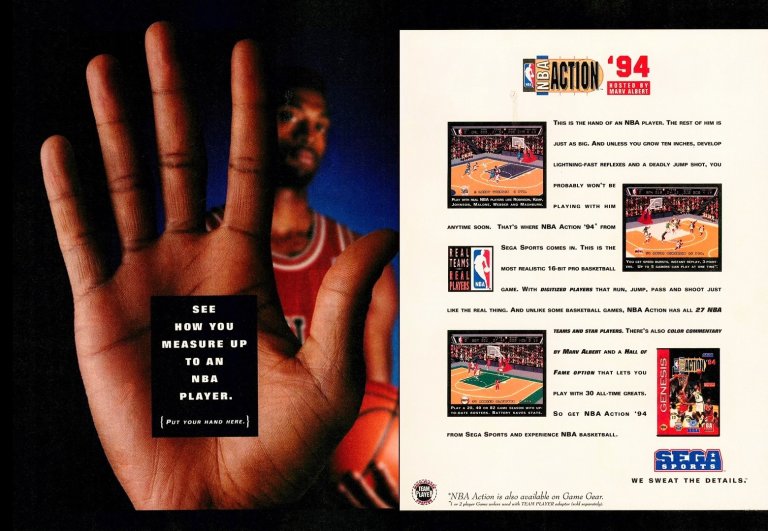
6. NBA Action ’94 print ad

Remember when Sega made NBA basketball video games that were exclusive to the Genesis console?

Remember when there were a lot of basketball video games licensed by the NBA in the 1990s? Through its own sports games brand – Sega Sports – Sega was dedicated to making exclusive sports video games for its customers and their NBA games were under the NBA Action brand. In 1994, they released NBA Action ’94 for the Genesis console and this two-page print ad they came up with had a catchy visual design (a supposed basketball player showing his palm and message to the camera on one side of the ad). Looking closely at the descriptive text, the ad mentions “most realistic 16-bit pro basketball”, “digitized players” and having all 27 NBA teams and star players. Sega Sports is no more but it’s legacy still lives on among Sega fans.

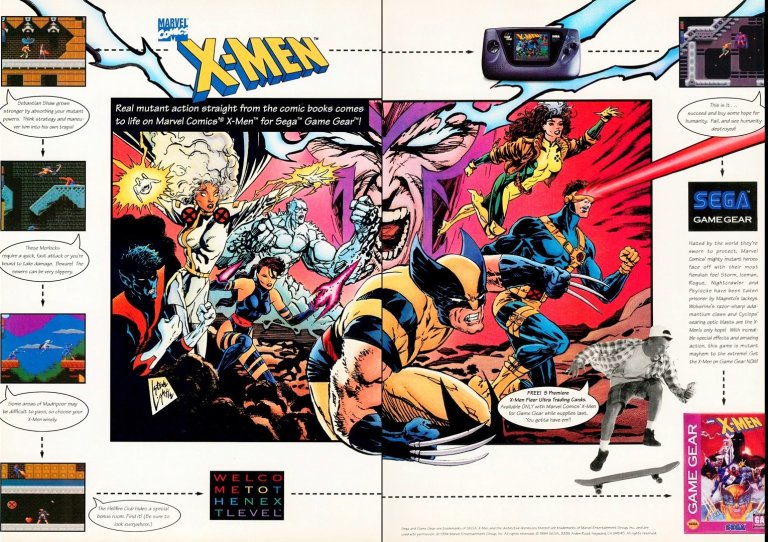
7. X-Men Sega Game Gear print ad

For X-Men fans!

Similar to its approach with the Sega Sports brand, Sega developed exclusive games for the Game Gear. The company secured from Marvel the license to make an original X-Men game and to promote it, this 2-page print ad showcased original art of the established X-Men characters of the time while using the remaining spaces for the screenshots and descriptive text. This old print ad still looks attractive and will easily resonate with X-Men fans as well as 1990s superhero comics enthusiasts.

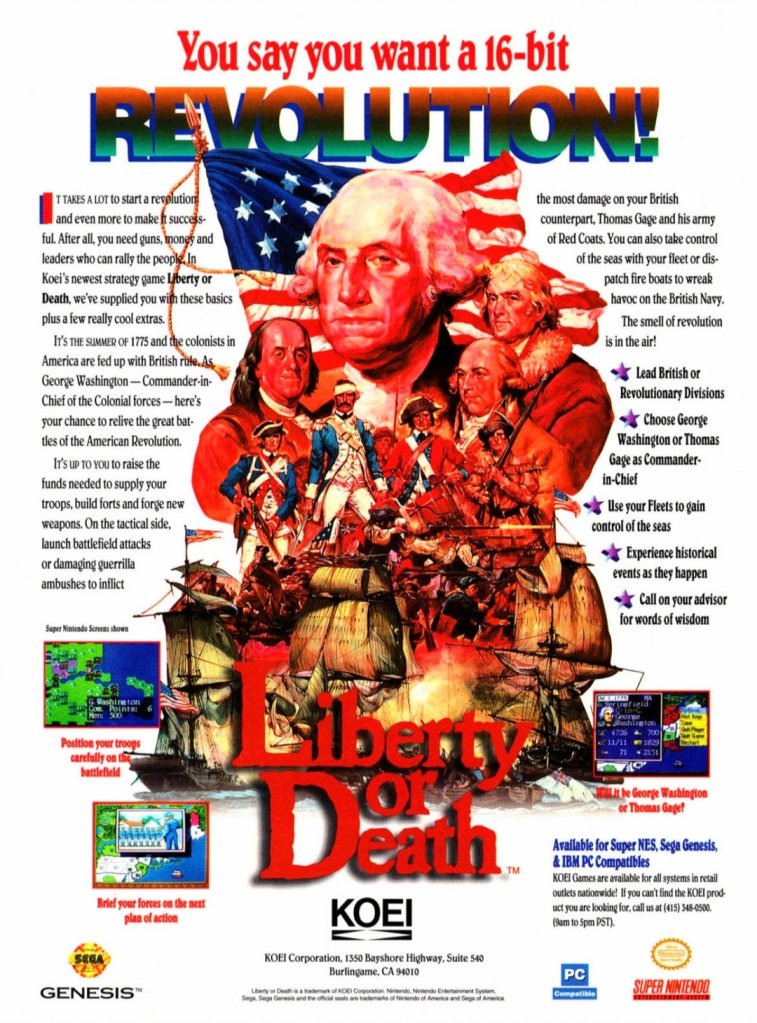
8. Liberty or Death print ad

American history is the core concept of this strategy game by Koei.

If there is anything notable about the Japanese company Koei, it is the fact that it released strategy and simulation games that tackled varied topics while making each game distinct and playable regardless of platform. In my experience, I had a lot of fun playing their business simulation Aerobiz Supersonic on the Super Nintendo Entertainment System (SNES). In 1993, Koei released their turn-based strategy game Liberty or Death which tackled American history for its setting (note: Koei already established itself with historical simulations). To sell the game, Koei came up with a print ad that had a very eye-catching historical art (George Washington, Thomas Jefferson, and Benjamin Franklin among the figures), a few selected screenshots and descriptive text that emphasized the essence of the game. This print ad is a reminder that no video game company today would make a historical simulation due to geopolitics (note: there are a lot of woke activists among video game employees today) and for business reasons.

+++++

Thank you for reading. If you find this article engaging, please click the like button below, share this article to others and also please consider making a donation to support my publishing. If you are looking for a copywriter to create content for your special project or business, check out my services and my portfolio. Feel free to contact me with a private message. Also please feel free to visit my Facebook page Author Carlo Carrasco and follow me on Twitter at  @HavenorFantasy as well as on Tumblr at https://carlocarrasco.tumblr.com/ and on Instagram at https://www.instagram.com/authorcarlocarrasco
Better than Streaming: Do You Have Nausicaä Of The Valley Of The Wind In Your Blu-ray Collection?

Welcome back fellow geeks, Blu-ray collectors and movie buffs!

In recent times, the 1984 anime classic Nausicaä of the Valley of the Wind was shown in some cinemas here in the Philippines as part of the Studio Ghibli Fest 2025 which was exclusive to SM Cinema (the largest cinema chain in the country).

For the first time ever, I saw Nausicaä of the Valley of the Wind inside the cinema at SM Southmall in Las Piñas City, and I can say it was an immersive experience to replay Hayao Miyazaki’s classic. To make things clear, I saw Nausicaä of the Valley of the Wind a number of times since the mid-1980s starting with the bad English version Warriors of the Wind. I eventually saw the anime feature film in its uncut form on DVD (with the new English dub from Disney).

This leads me to my next point… Nausicaä of the Valley of the Wind was released three times on Blu-ray disc format over the past several years. The first was from Disney in 2011. Six years later, a 2nd Blu-ray release came from Shout! Factory which had a newer scan of the film and improved picture quality over the Disney Blu-ray.

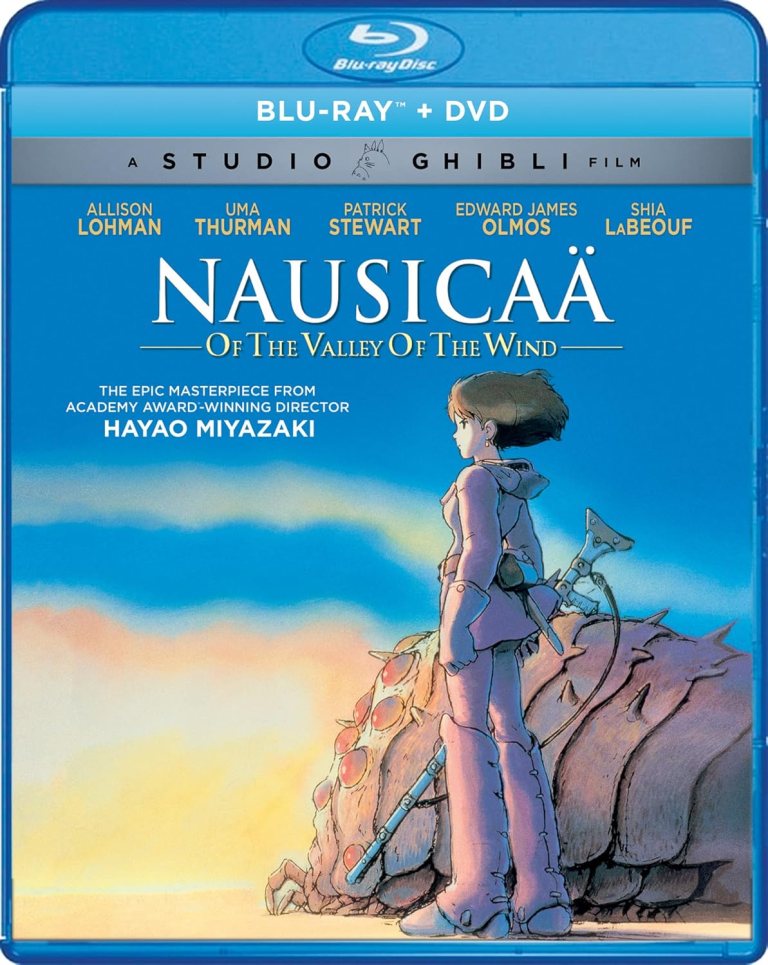
The 2017 Blu-ray of Nausicaä of the Valley of the Wind from Shout! Factory.

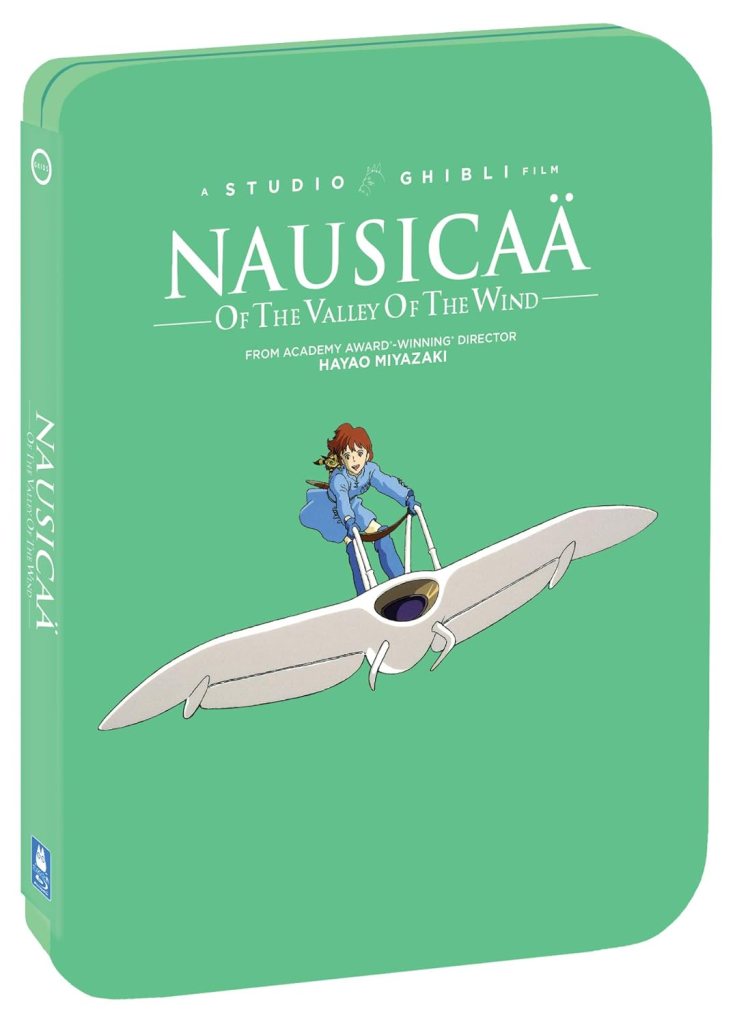
In 2020, Shout! Factory released Nausicaä of the Valley of the Wind in Steelbook (Blu-ray.com describes the picture quality as follows: “Nausicaä of the Valley of the Wind has received a top-notch video-presentation with a high bit-rate encode from Gkids. The encode is of a new remaster of the film. This is a much better video-presentation than that of the original Disney Blu-ray released in North America. Colors are significantly better and more accurate to the original animation cells.”)

As the Steelbook Blu-ray of Nausicaä of the Valley of the Wind is the most recent release, posted below for your reference are the technical details from its Blu-ray.com page.

What caught my attention is the fact that – as of this writing – the 2020 Steelbook Blu-ray of Nausicaä of the Valley of the Wind is only a few Dollars higher than that of the 2017 Blu-ray. As a Blu-ray movie collector, I see a really good deal with the Steelbook Blu-ray at its current price. Both the 2017 and 2020 Blu-ray versions of the classic anime feature film carry a booklet. There is a choice that both Studio Ghibli fans and casual anime fans can take advantage here.

This is what the 2020 Steelbook Blu-ray of Nausicaä of the Valley of the Wind looks like.

At this stage, I can only wonder if Studio Ghibli has plans to produce and release a 4K Blu-ray of Nausicaä of the Valley of the Wind someday. Perhaps if more than enough fans and 4K Blu-ray collectors would get together to express their demand for it, Hayao Miyazaki and his studio would be aware.

If you have decided to buy the 2017 Blu-ray of Nausicaä of the Valley of the Wind, click here. If you want the 2020 Steelbook Blu-ray version, click here.

If you wish to join a group of movie enthusiasts and talk about cinema, cinematic trends, Blu-ray releases and more relevant stuff, visit the Movie Fans Worldwide Facebook group at https://www.facebook.com/groups/322857711779576

+++++

Thank you for reading. If you find this article engaging, please click the like button below, share this article to others and also please consider making a donation to support my publishing. If you are looking for a copywriter to create content for your special project or business, check out my services and my portfolio. Feel free to contact me with a private message. Also please feel free to visit my Facebook page Author Carlo Carrasco and follow me on Twitter at  @HavenorFantasy as well as on Tumblr at https://carlocarrasco.tumblr.com/ and on Instagram at https://www.instagram.com/authorcarlocarrasco
Better than Streaming: Limited Screenings of Nausicaä of the Valley of the Wind in the Philippines Begin Today

Welcome back fellow geeks, Blu-ray collectors, anime enthusiasts and movie buffs!

The 1984 classic anime feature film Nausicaä of the Valley of the Wind (directed by Hayao Miyazaki) will have limited screenings on specific branches of SM Cinema starting today and will last until September 16, 2025, according to SM Cinema’s recent Facebook announcement and GMA Network’s lifestyle news article.

To make things clear, Nausicaä of the Valley of the Wind is just one of many Studio Ghibli feature films that will be playing through SM Cinema branches with the Studio Ghibli Fest 2025 launching today. Other Studio Ghibli feature films include My Neighbor Totoro, Spirited Away, Princess Mononoke, The Wind Rises and Ponyo. All of those anime productions were directed by Miyazaki but in my personal anime viewing experience, Nausicaä of the Valley of the Wind remains the most memorable one.

A captivating piece of art from the 1984 anime feature film of Hayao Miyazaki.

To put things in perspective regarding the Studio Ghibli Fest 2025, posted below is an excerpt from the lifestyle news article of GMA Network. Some parts in boldface…

These are the SM Cinema branches around the country showcasing the Studio Ghibli anime feature films. (source – SM Cinema)

Why Nausicaä of the Valley of the Wind is significant

Among the works of Hayao Miyazaki, Nausicaä of the Valley of the Wind is the one that resonates with me the most and I have a long history of viewing the anime feature film. The first time I saw it was in its mid-1980s, butchered English-dubbed version titles Warriors of the Wind on home video. Being so young back then, I was not aware of the original Japanese version and I simply enjoyed what was presented in English. The leading lady Nausicaä was renamed as Princess Zandra while the Ohm were referred to as gorgons.

For the newcomers reading this, the 1980s was not exactly a good time of anime productions being released in the West in English and alterations for the Western market was the norm. Warriors of the Wind was more than 20 minutes shorter than the original Japanese version.

In the early 2000s, Nausicaä of the Valley of the Wind was released uncut with a new English-dubbed version (plus English subtitles with the original Japanese audio) involving the talents of Patrick Stewart, Uma Thurman and Alison Lohman. The footage that was missing in Warriors of the Wind easily made the new version – released on DVD in 2005, Disney Blu-ray in 2011, GKIDS and Shout! Factory Blu-ray in 2017, and limited edition steelbook Blu-ray in 2020 – a must-buy for both fans and anime enthusiasts who enjoy classics.

I myself acquired the 2005 DVD of Nausicaä of the Valley of the Wind by trading an old video game for it and enjoyed it a lot. I saw both the English-dubbed and English-subtitled versions in different times, and the complete footage added to my enjoyment of it. If I were to make comparisons, I prefer the 1984 film over Princess Mononoke (I had a Blu-ray copy of it).

Nausicaä of the Valley of the Wind on Blu-ray disc format (limited edition steelbook version) is still available for purchasing online and you only need to click here. I wonder when will a 4K Blu-ray version of it be announced.

The Japanese movie poster from 1984.

What it is lacking for me is the experience of watching Nausicaä of the Valley of the Wind on the big screen inside the movie theater. This is why I am personally interested in replaying it at an SM Cinema branch during the week-long Studio Ghibli Fest 2025. At the same time, it is rare for anime classics to be screened in movie theaters here in the Philippines. As much as I love watching movies on Blu-ray or 4K Blu-ray format in the comfort of home, the cinema experience is still the best way to watch a movie. Definitely better than streaming!

To learn more details about the limited screenings of Nausicaä of the Valley of the Wind and other Studio Ghibli films, click https://www2.smcinema.com/movies/HO00001266

If you wish to join a group of movie enthusiasts and talk about cinema, cinematic trends, Blu-ray releases and more relevant stuff, visit the Movie Fans Worldwide Facebook group at https://www.facebook.com/groups/322857711779576

+++++

Thank you for reading. If you find this article engaging, please click the like button below, share this article to others and also please consider making a donation to support my publishing. If you are looking for a copywriter to create content for your special project or business, check out my services and my portfolio. Feel free to contact me with a private message. Also please feel free to visit my Facebook page Author Carlo Carrasco and follow me on Twitter at  @HavenorFantasy as well as on Tumblr at https://carlocarrasco.tumblr.com/ and on Instagram at https://www.instagram.com/authorcarlocarrasco
Retro Gaming Ads Blast – Part 28

Welcome back readers, fellow geeks and electronic gaming fans!

In this edition of the Retro Gaming Ads Blast (RGAB) series, we will take a look at another batch of retro gaming print ads – including arcade flyers – from the 1980s and 1990s.

For the newcomers reading this, Retro Gaming Ads Blast (RGAB) looks back at the many print ads of games (console, arcade, computer and handheld) that were published in comic books, magazines, flyers, posters and newspapers long before smartphones, social media, the worldwide web and streaming became popular. To put things in perspective, people back in the 1980s and 1990s were more trusting of print media for information and images about electronic games and related products.

With those details laid down, here is the newest batch of retro gaming print ads for you to see and enjoy…

1. Japanese Macross video games print ads

This 2-page ad had Minmay, Misa and Hikaru.
Computer-generated image of the Skull Leader Battroid was used here.

Looking at the history of Macross video games released only in Japan, there were these notable games that catered to the fans with different tastes during the period of 1997 to 1999. The two Japanese print ads here promoted the PlayStation version of The Super Dimension Fortress Macross: Do You Remember Love? (read my retro review by clicking here) and Macross: VF-X2 (only on PlayStation). 1997 marked the 15th anniversary of the entire Macross franchise and game publisher Bandai Visual kept the excitement for fans on high gear by aggressively promoting the two advertised games for their respective releases in 1999. These two print ads still resonate with long-time fans as each were clearly made to emphasize the games (with details, screenshots and original artworks) while using the right images of the Macross franchise for relevance.

2. Star Raiders print ad

This Star Raiders print ad made me interested enough to play the game on Atari 2600.

I remember the old days of play Star Raiders on the Atari 2600 back in the early 1980s. Strangely enough, I don’t remember seeing this old print ad. Regardless, I really like the way the ad makers used hand-drawn art work to dominate the space while leaving enough space for text description, a screenshot and the picture of the Atari console with the TV set. In my view, this old ad is both amusing and attention-grabbing.

3. The Empire Strikes Back arcade flyer

This is still a great looking arcade flyer.

Here is a Star Wars game I never played but managed to play it on a home computer. Released by Atari in 1985, The Empire Strikes Back (full title: Star Wars: The Empire Strikes Back) arcade game was the follow-up to the very popular Star Wars arcade game. Like its predecessor, it used vector graphics and certain sounds from the 1980 film for immersion. This arcade flyer is well designed showing three selected screenshots, a picture of the arcade cabinet and a portion of the AT-AT walker from the movie. The flyer truly showed gamers and arcade operators what they would get by selecting The Empire Strikes Back.  

4. Steve Meretzky’s Spellcasting 301: Spring Break print ad

Clearly the promoted game is for adult players only.

In the realm of computer gaming, there were certain games that catered to the more mature players. One example is Steve Meretzky’s Spellcasting 301: Spring Break which was released on for personal computers running on DOS (Disk Operating System) in 1992. This print ad clearly shows the adulterated nature of the game emphasizing sexy women with a paradise setting. This is the kind of print ad that you only in computer gaming magazines which had predominantly adult readers.

5. Pitfall! print ad

Still a great looking print ad.

Back in 1982, 2D adventuring on the Atari 2600 reached new heights when Pitfall! was released. The game garnered wide praise for its gameplay and graphics, and because it was so enjoyable, it sold millions of copies and its success spread across other platforms. A key factor to its commercial success and strong identity with the Atari 2600 was this colorful print ad. The ad makers daringly used original artwork to emphasize the jungle, wilderness and adventure concept while leaving some space left to show a screenshot and the Atari 2600 game cover. Pitfall! is a video game classic.

6. Mario Bros. print ad

I saw this comic-style print ad while reading a comic book.

A few years before Nintendo skyrocketed with the massive success of Super Mario Bros., there was Mario Bros. on the Atari 2600 and Atari 5200. Published by Atari on their consoles, Mario Bros. was already a hit in the arcades. To capitalize on the popularity of the game, Atari came up with this comic-style print ad to capture people’s attention with the hope that the Atari 2600 and Atari 5200 ports will sell a lot. I first saw this ad while reading a comic book and it remains entertaining to see.

7. Ghoul Patrol print ad

Too bad the screenshots, the game box cover and white descriptive text were too small to look at.

Released in 1994 on the Super Nintendo Entertainment System (SNES), Ghoul Patrol is the accidental sequel to Zombies Ate My Neighbors. This was because the game did not start as a sequel but rather as an unrelated project that used the same gameplay engine of its predecessor. Since Zombies Ate My Neighbors already had a dedicated fanbase, a decision to turn the game into a sequel followed. Ghoul Patrol’s print ad took a different creative approach on its presentation by trying to look cool and catchy with a dominating pink background and slightly adulterated descriptions in green leaving little space left for screenshots and the white descriptive text. The print ad of Zombies Ate My Neighbors remains more engaging and more eye-catching than this one.

8. Silpheed print ad

This ad caught my attention and even made me interested on the Sega CD.

Released in 1993, Silpheed on Sega CD was a remake of the original game of 1986. Like its predecessor, the Sega CD had 3D effects but used pre-rendered computer animation for a background that actually was full motion video. The print ad of this game had this fantastic looking computer-generated artwork and displayed four screenshots that looked really exciting back in 1993. If you look closely at the captions, the ad emphasized the CD-quality look and the cinematic graphics the game had. This old ad has aged well.  

+++++

Thank you for reading. If you find this article engaging, please click the like button below, share this article to others and also please consider making a donation to support my publishing. If you are looking for a copywriter to create content for your special project or business, check out my services and my portfolio. Feel free to contact me with a private message. Also please feel free to visit my Facebook page Author Carlo Carrasco and follow me on Twitter at  @HavenorFantasy as well as on Tumblr at https://carlocarrasco.tumblr.com/ and on Instagram at https://www.instagram.com/authorcarlocarrasco
Marvel vs. Capcom Fighting Collection: Arcade Classics is now available on Xbox Series X|S and Xbox One

Welcome back Xbox fans, geeks, retro gaming enthusiasts, fighting game enthusiasts and other gamers!

With the current Xbox-exclusive fantasy role-playing game Avowed coming out on February 18, I’m supposed to be excited about what Team Xbox has prepared this year. Of course, there were disappointments not only with certain Xbox first-party releases but also with the way things have been changing on the part of Team Xbox.

Times like these, retro gaming on Xbox is the answer for fans who want to experience a lot of fun and Capcom just released Marvel vs. Capcom Fighting Collection: Arcade Classics for Xbox Series X, Xbox Series S and even Xbox One users to enjoy. Watch and learn from the official Xbox trailer below.

For the newcomers reading this, the said collection comes with the following video games Capcom released long ago with an emphasis on crossovers with Marvel’s intellectual properties: X-Men: Children of the Atom (1994), Marvel Super Heroes (1995), X-Men vs. Street Fighter (1996), Marvel Super Heroes vs. Street Fighter (1997), Marvel vs. Capcom: Clash of Super Heroes (1998), Marvel vs. Capcom 2: New Age Of Heroes (2000) plus The Punisher (1993).

Wow! That’s a collection of very fun and popular games Capcom released from 1993 to 2000. With the exception of The Punisher arcade game (a 2D adventure game), I played them all in the arcades decades ago and I can say that having them in a single collection for the modern Xbox consoles is indeed a blessing for long-time Xbox gamers who love 2D fighting games and retro gaming. The way I feel right now, Marvel vs. Capcom Fighting Collection: Arcade Classics looks really enticing to purchase.

Marvel vs. Capcom: Clash of Super Heroes is not just a lot of fun to play but also will please those who love the characters. With Wolverine, Spider-Man, Venom, Captain America from Marvel’s side included, there is something that will bring both geeks and gamers together.

I have fond memories of Capcom 2D fighting games that carried Marvel’s intellectual properties. X-Me: Children of the Atom was enjoyable to play with and it resonated with me as I was already an X-Men comic book reader back in the 1990s. Marvel Super Heroes was also fun to play and it somewhat reminded me of The Infinity Gauntlet storyline. X-Men vs. Street Fighter was the most intriguing crossover fighting game at the time of its release and it really raised the bar for fast-and-furious style gameplay complete with a quick character swap during the heat of battles. Marvel Super Heroes vs. Street Fighter was the follow-up which came with changes that were not well received by the fans.

Then came the two Marvel vs. Capcom crossover fighting games which really built upon the foundation of X-Men vs. Street Fighter for more team battles with speed and impact in mind. I could not forget the inclusion of Resident Evil characters, Mega Man and others.

X-Men vs. Street Fighter is a classic tag-team, crossover-oriented video game! Fast and furious action ensured!
The Punisher arcade game is the only non-fighting game of the collection. Punisher fans should look at this.

Adding further zest to the collection is online play that allows casual matches, ranked matches, custom matches. Think about how your skills or your scoring will compare with those of other players from around the world.

That being said, Marvel vs. Capcom Fighting Collection: Arcade Classics is a retro gaming package that deserves attention as it carries some of the finest video games Capcom ever made.

To purchase Marvel vs. Capcom Fighting Collection: Arcade Classics for Xbox, click https://www.xbox.com/en-us/games/store/marvel-vs-capcom-fighting-collection-arcade-classics/9nwfm3hdjc94

+++++

Thank you for reading. If you find this article engaging, please click the like button below, share this article to others and also please consider making a donation to support my publishing. If you are looking for a copywriter to create content for your special project or business, check out my services and my portfolio. Feel free to contact me with a private message. Also please feel free to visit my Facebook page Author Carlo Carrasco and follow me on Twitter at  @HavenorFantasy as well as on Tumblr at https://carlocarrasco.tumblr.com/ and on Instagram athttps://www.instagram.com/authorcarlocarrasco

What to watch on YouTube right now – Part 55

Welcome back my readers, YouTube viewers and all others who followed this series of articles focused on YouTube videos worth watching. Have you been searching for something fun or interesting to watch on YouTube? Do you feel bored right now and you crave for something to see on the world’s most popular online video destination?

I recommend you check out the following topics and the related videos I found.

VKunia’s Akira reaction video – In recent times, I published blog post that had several videos of reviews, analysis and exploration of the 1988 anime feature film Akira. This time around, I posted for your viewing pleasure the Akira reaction video of VKunia. What I like about it is that VKunia herself is quite reactive to what was shown. Watch her reaction video below…

Royal Space Force: The Wings of Honnêamise reviewed and analyzed by Cinemology 101 – Way back in 1985, the ambitious anime feature film Royal Space Force: The Wings of Honnêamise was released in theaters and eventually made its way into the West with English translation in the cinemas in 1988 and on home video a few years later. While I was not exactly entertained by it on home video, I still was left intrigued by its highly imaginative world, art and animation quality that was comparable in some ways with Akira. YouTuber Cinemology 101 (AKA The Cinemologists) posted its review and explanatory video of the film which is very comprehensive to watch.

Hong Kong Action cinema of the 1980s revisited – If there is anything I miss from the 1980s, it is the dynamic action that came in different styles from the Hong Kong action movies of the time. By comparison, I am disgusted with Hollywood’s so-called modern approach of recording action that involves shaky camera handling and the quick cuts on editing. In Hong Kong action movies, the filmmakers recorded action with stable camera handling and using the right angles to capture the action visibly and clearly. Watch and learn from the video below…

PatmanQC examines Teenage Mutant Ninja Turtles: Turtles in Time arcade – Back in 1991,  Teenage Mutant Ninja Turtles: Turtles in Time was released in the arcades and it became a big hit for Konami as it earned the approval of the critics and the coins of many gamers who paid for bouts of fun. The game was designed to be very playful and it also had a lot of stuff that resonated with TMNT fans. To find out who were responsible for the game and what inspired their work, watch the in-depth video by PatmanQC.

Lunar games retrospective by Xygor Gaming – In case you missed the news, the first two Japanese role-playing games (JRPGs) of the Lunar series – Lunar: Silver Star Story Complete and Lunar 2: Eternal Blue – will be released for modern consoles in a package on April 18, 2025 called Lunar Remastered Collection. If you are fond of Japanese RPGs of the 1990s or if you want to discover what the Lunar series is about, watch the in-depth retro gaming retrospective video by Xygor Gaming.

Sorority House Massacre explored by GoodBadFlicks – Recently, it was revealed that the 1986 horror movie Sorority House Massacre will be released on 4K Blu-ray this coming April. I never saw the movie but heard that it was criticized for being too familiar with a certain slasher horror movie from 1978. Regardless, you can learn about it by watching GoodBadFlicks’ explanatory video and perhaps it can provide insight as to why the movie is being released on 4K Blu-ray.

US President Trump’s efforts against illegal immigration make waves overseas – Even though I am not an American citizen, I personally oppose illegal immigration. I simply believe that no government should ever let lots of foreigners to trespass into the country, violate the national sovereignty and consume taxpayer-funded resources. It is a great thing that Donald Trump is officially back as US President and this early, his efforts fighting illegal immigration is making a lot of impact even overseas. The Leftist leader of Colombia gave in to Trump in humiliating fashion, and you can learn all about it in the Sky News Australia video below. Lastly, let me remind you all that illegal aliens are criminals by default, and they certainly are NOT refugees.

Palestinian discredited! – By now, many of you should know that I will always stand with Israel and the Jewish state. Let me tell you the truth that Palestine never started as country, never started as people but rather it started as a name imposed by the evil Roman empire on Israel centuries ago. The Palestinian identity only started in the 1920s, and the Palestinians have a history of chaos, violence and disruption. History and the facts are on the side of Israel, not the Palestinians. Watch and learn from the video below…

Assorted videos of The Matrix – If have seen 1999’s The Matrix, do you personally consider it to be the most revolutionary action movie of all time? Was it the most definitive movie of 1999? Or have you forgotten much about it? If you are feeling nostalgic about the movie, watch the videos below.

+++++

Thank you for reading. If you find this article engaging, please click the like button below, share this article to others and also please consider making a donation to support my publishing. If you are looking for a copywriter to create content for your special project or business, check out my services and my portfolio. Feel free to contact me with a private message. Also please feel free to visit my Facebook page Author Carlo Carrasco and follow me on Twitter at  @HavenorFantasy as well as on Tumblr at https://carlocarrasco.tumblr.com/ and on Instagram athttps://www.instagram.com/authorcarlocarrasco