Retro Gaming Ads Blast – Part 34

Welcome back readers, fellow geeks and electronic gaming fans!

In this edition of the Retro Gaming Ads Blast (RGAB) series, we will take a look at another batch of retro gaming print ads – including arcade flyers – from the 1970s to the 1990s.

For the newcomers reading this, Retro Gaming Ads Blast (RGAB) looks back at the many print ads of games (console, arcade, computer and handheld) that were published in comic books, magazines, flyers, posters and newspapers long before smartphones, social media, the worldwide web and streaming became popular. To put things in perspective, people back in the 1980s and 1990s were more trusting of print media for information and images about electronic games and related products.

With those details laid down, here is the newest batch of retro gaming print ads for you to see and enjoy…

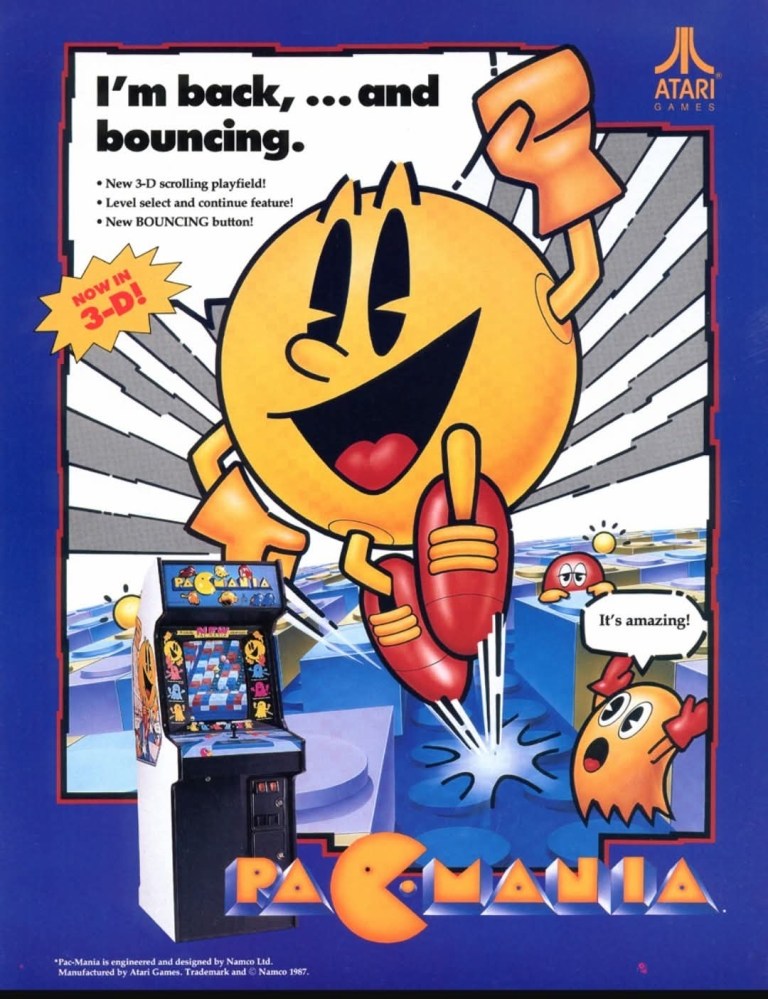
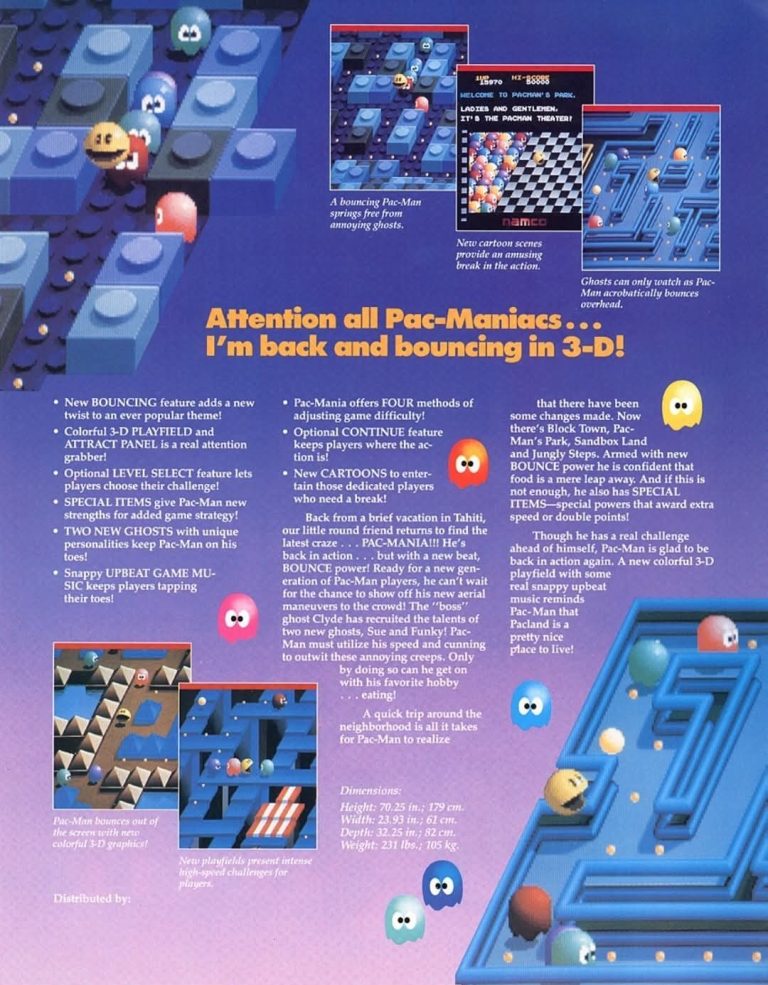
1. North American Pac-Mania arcade flyer

The front.
The rear.

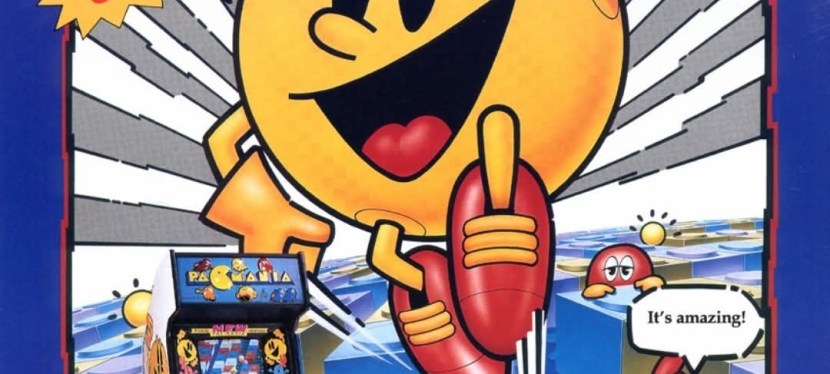
Released in 1987, Pac-Mania became a big hit among critics, fans and casual arcade gamers which added a lot to the enduring popularity of the Pac-Man game franchise. As it featured a new game design with an oblique perspective and a more 3D feel, Pac-Mania was a very serious attempt on reinventing the Pac-Man formula. For the American market, Namco licensed the game to Atari which in turn came up with the above arcade flyer that had a pretty eye-catching front cover artwork showcasing the iconic Pac-Man jumping out from a maze with the line “I’m back,…and bouncing.” The arcade cabinet was also shown and a clear message about the 3D feature of the game was shown. The other side of the flyer showed screenshots and details that are worth reading. This arcade flyer still looks attractive and informative by today’s standards.

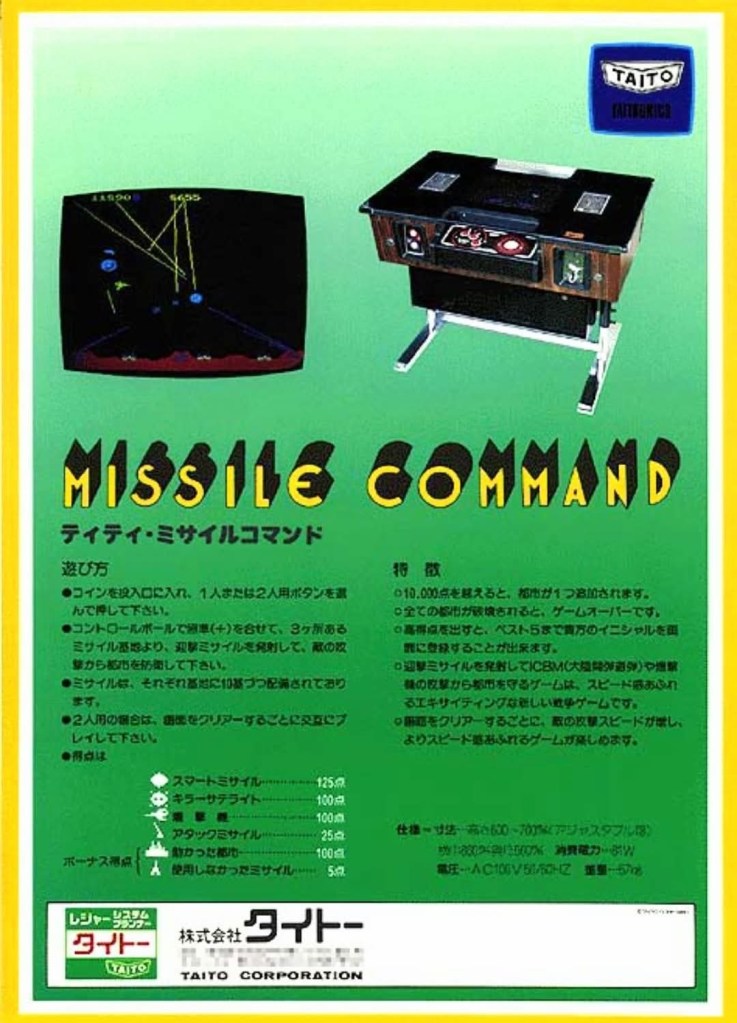
2. Japanese Missile Command arcade flyer

Cocktail arcade tables were popular in Japan and Taito brought Missile Command with the format.

Missile Command is a true arcade classic which I always enjoy replaying (read my retro review by clicking here). It was an instant hit in arcades in America and after Atari licensed the game to Sega and Taito for the arcades of Japan, it also achieved huge success there. Along the way, Taito released Missile Command with an cocktail arcade table format which is common in Japan. The arcade flyer Taito came up with had a very simplistic presentation of details, an image of the cocktail arcade table and one screenshot of the game. The Japanese arcade flyer clearly lacks excitement but at least it gave gamers and arcade operators a clear idea of what to expect with Missile Command.

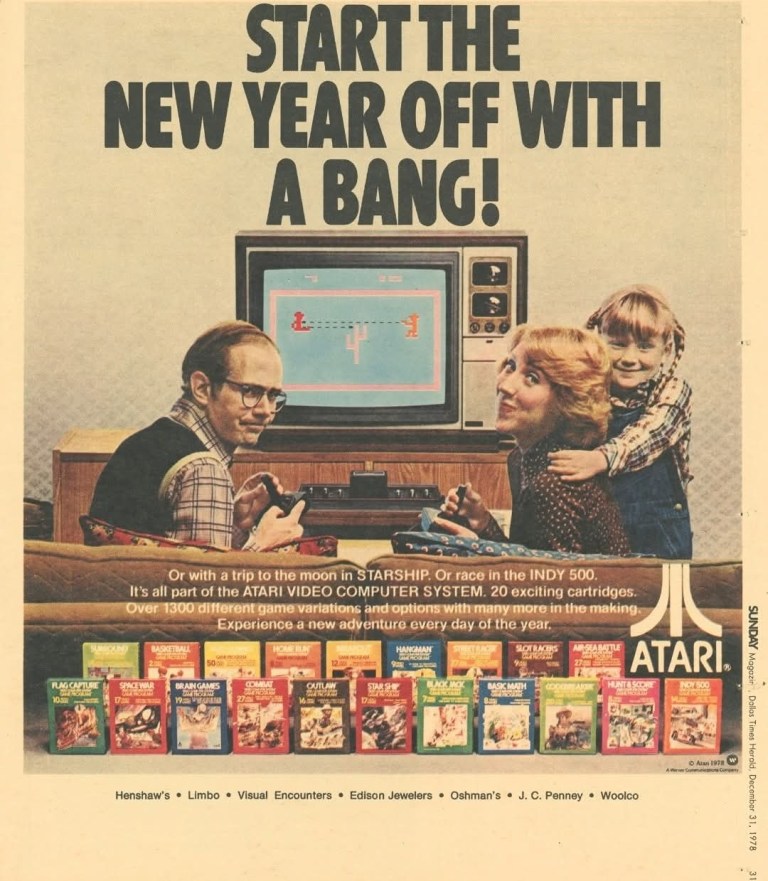
3. Atari 2600 print ad

The 1978 print ad.

When the Atari 2600 was first launched in 1977, it was officially called the Atari Video Computer System (Atari VCS). The Atari company really aimed high to sell a lot of consoles to as many households as possible and they came up with a print ad like this one from 1978. While the Atari 2600 and its games were displayed, the image of a father, mother and daughter showed that the company not only targeted American families but also want to change home entertainment to be more interactive. This old ad is truly an inspired piece of work.

4. Kool-Aid Man video game print ad

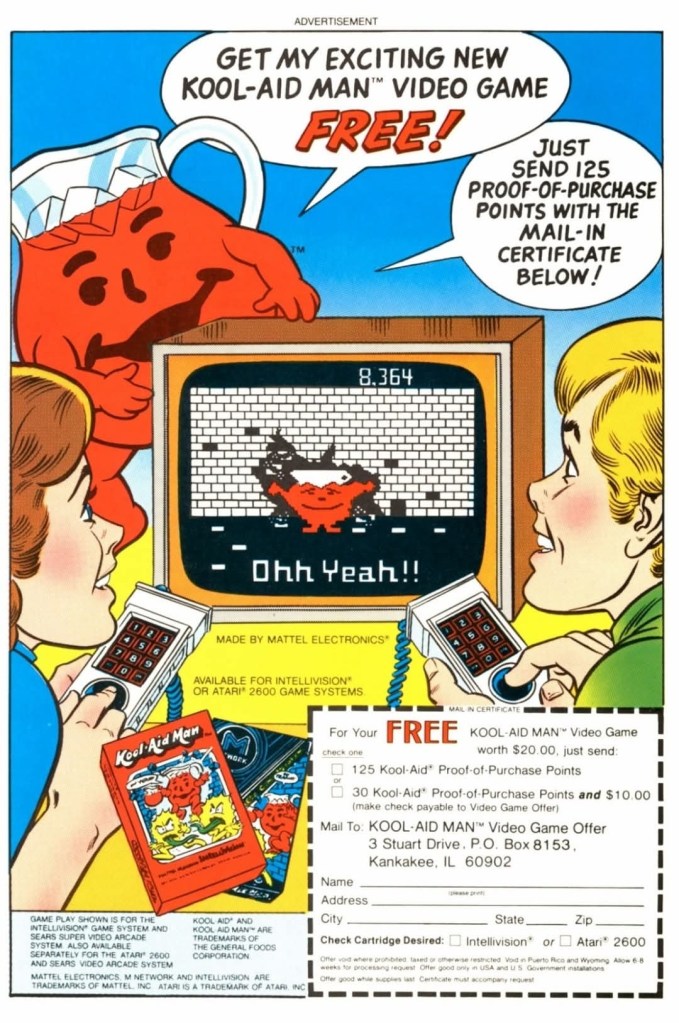
I never played the Kool-Aid Man video game.

There was a time when Kool-Aid was such a popular drink, the character Kool-Aid Man debuted in 1974 after initially starting as the Pitcher Man. A short time later, merchandising featuring the character followed and in 1983 the official Kool-Aid Man video game was released on the Atari 2600 and the Intellivision. This particular print ad appeared in some comic books I read a very long time ago and it offered customers the opportunity to get the game free by sending 125 proof-of-purchase points to the company by mail. This old ad was visually striking and was a creative way to boost sales of the drink.

5. Spider-Man Atari 2600 game print ad

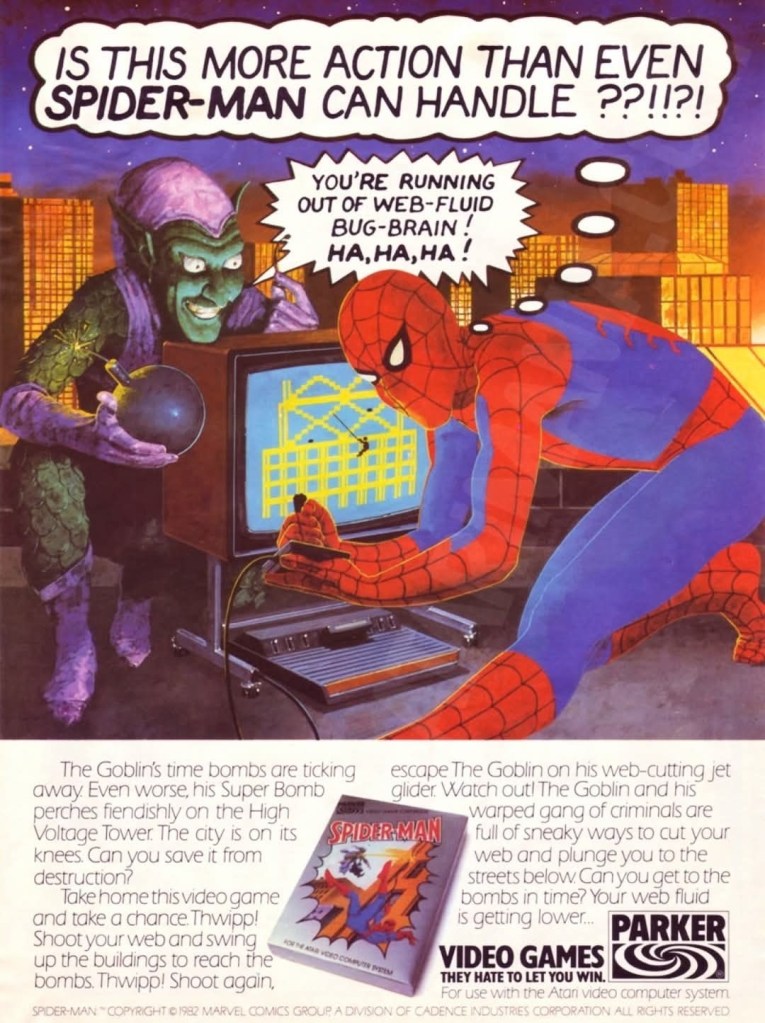
Spider-Man and Green Goblin with the Atari 2600 and the TV.

Even though the controls were rough and the game’s difficulty really went high with each new session, my friends and I still enjoyed playing the Spider-Man video game on Atari 2600 from Parker Brothers. Apart from the comic book-style print ads they came up with to promote the game, Parker Brothers went on to make this particular ad featuring Spider-Man and the Green Goblin with a TV set, the game and the Atari 2600 together all presented with a totally different art style. This is still a fun ad to look at.

6. Phoenix game print ad

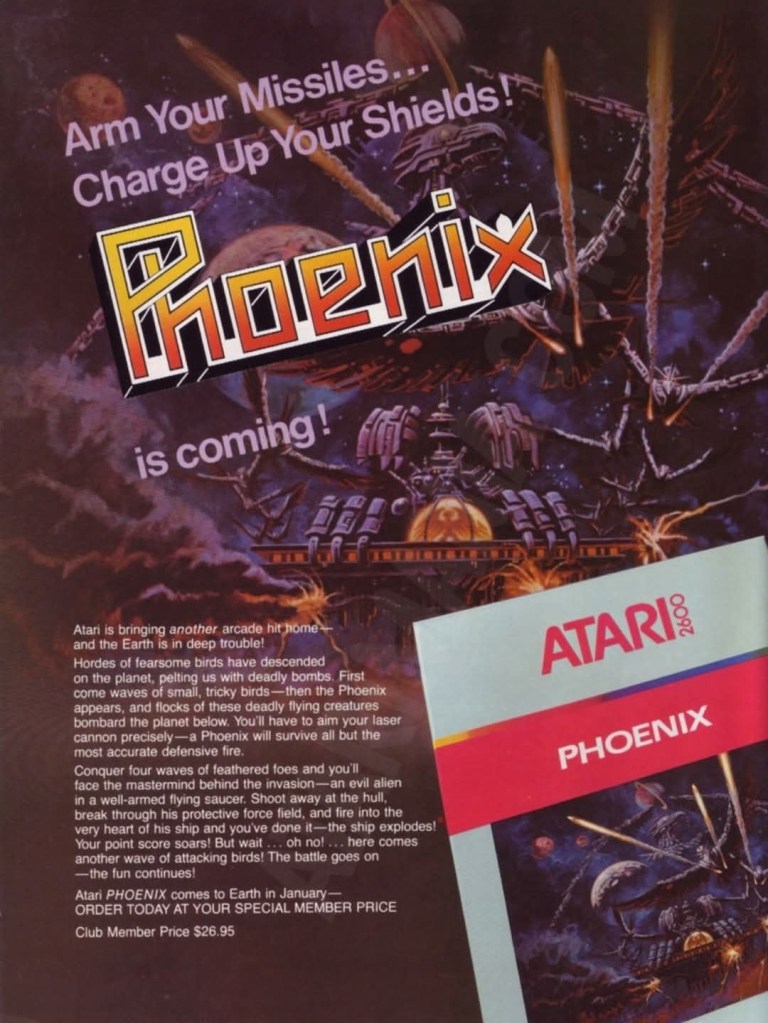
This is still an impressive print ad.

After playing shooter-type games like Space Invaders and Centipede on the Atari 2600, my friends and I experienced something familiar yet fresh with Phoenix. Atari secured from Taito the rights to make the Atari 2600 port of the game, and they came up with a dark print ad that showcased the official painted art work, a portion of the video game’s box and the line “Arm Your Missiles…Charge Up Your Shields! Phoenix is coming!” Having played the game many times, those highlighted words really captured the essence of Phoenix gameplay.

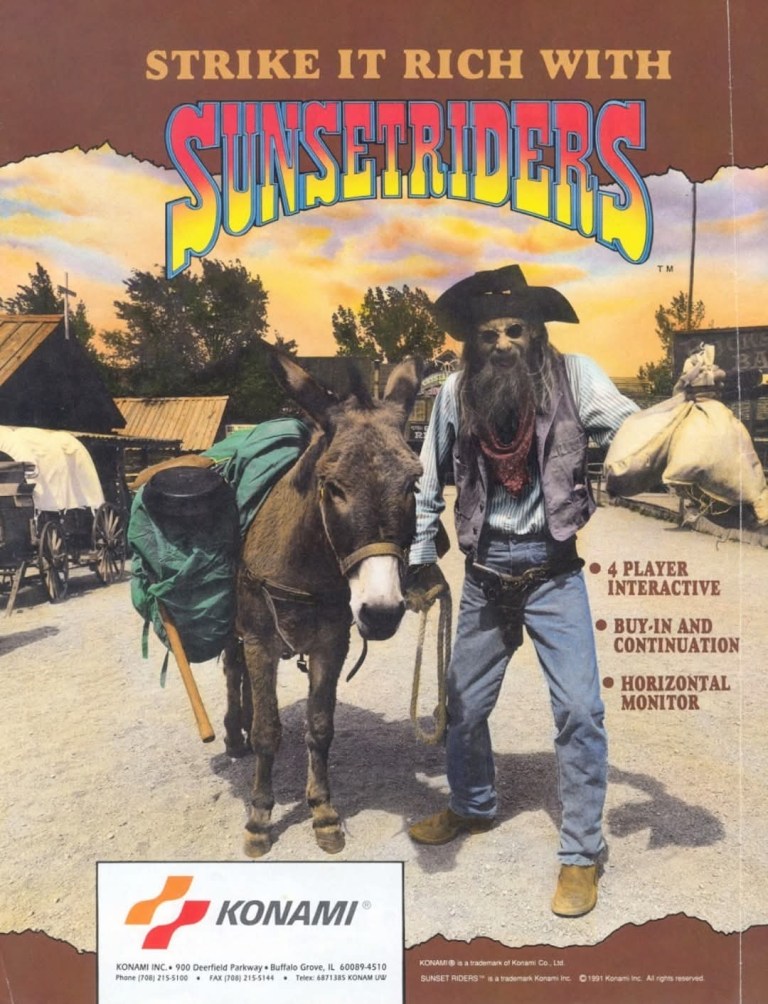
7. Sunset Riders North American arcade flyer

The front.
The rear.

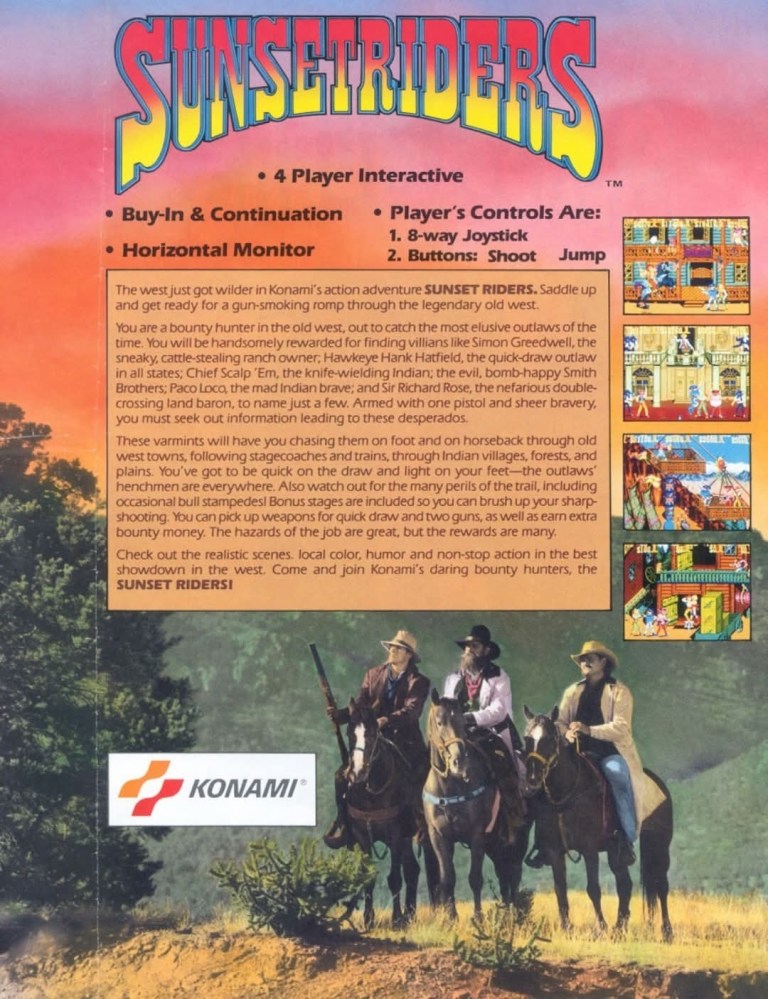
Released in arcades in 1991, Sunset Riders was a critical and commercial hit raking in more success to Konami. For the American arcades, Konami came up with this print ad showing a creepy looking cowboy carrying a bag of money (related to the “strike it rich” line) with his donkey with him. The rear of the ad shows another photograph of 3 cowboys on their horses, the four screenshots and the creative text description. Too bad we don’t see flyers like this anymore.

8. Parker Brothers’ 6-game print ad

Parker Brothers 6-game print ad.

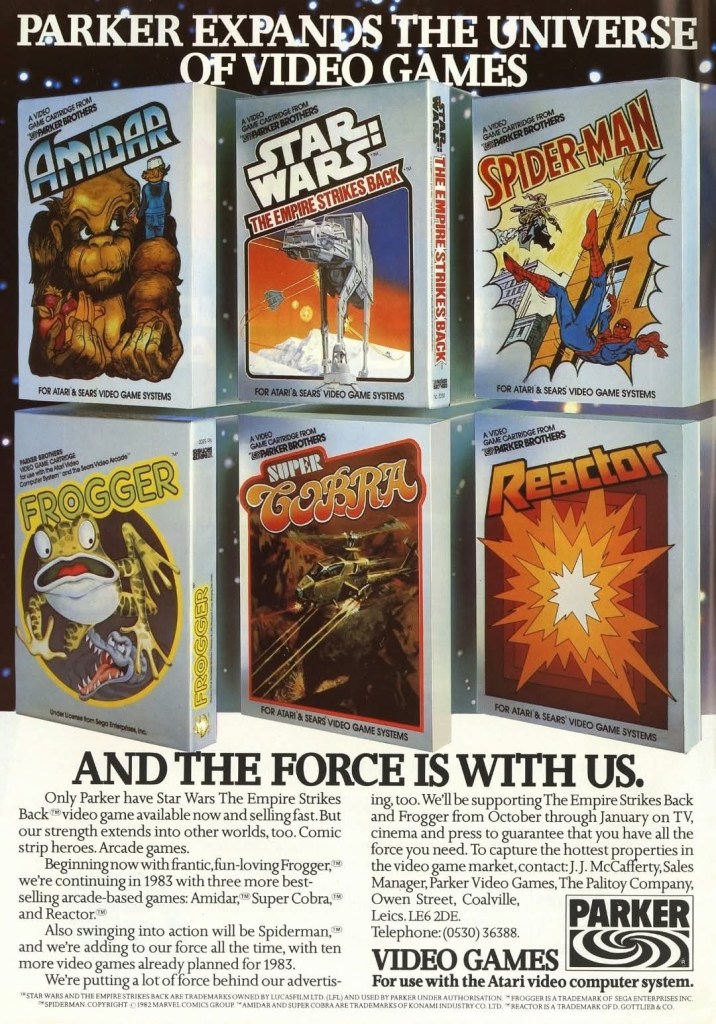
Quite arguably, Parker Brothers was the 2nd most prominent publisher of video games on the Atari 2600 console next to Atari itself. Out of the six games presented in this old print ad, I only played Spider-Man and Super Cobra. Each game’s box had a unique art style and collectively they made this ad look exciting. Times were really different back in the 1980s.

+++++

Thank you for reading. If you find this article engaging, please click the like button below, share this article to others and also please consider making a donation to support my publishing. If you are looking for a copywriter to create content for your special project or business, check out my services and my portfolio. Feel free to contact me with a private message. Also please feel free to visit my Facebook page Author Carlo Carrasco and follow me on Twitter at  @HavenorFantasy as well as on Tumblr at https://carlocarrasco.tumblr.com/ and on Instagram at https://www.instagram.com/authorcarlocarrasco
A Look Back at What If #33 (1982)

Welcome back superhero enthusiasts, 1980s arts and culture enthusiasts, Marvel Comics fans and comic book collectors! Today we go back to the year 1982 to examine alternate stories of the Marvel Comics shared universe chronicled through the original What If monthly series.

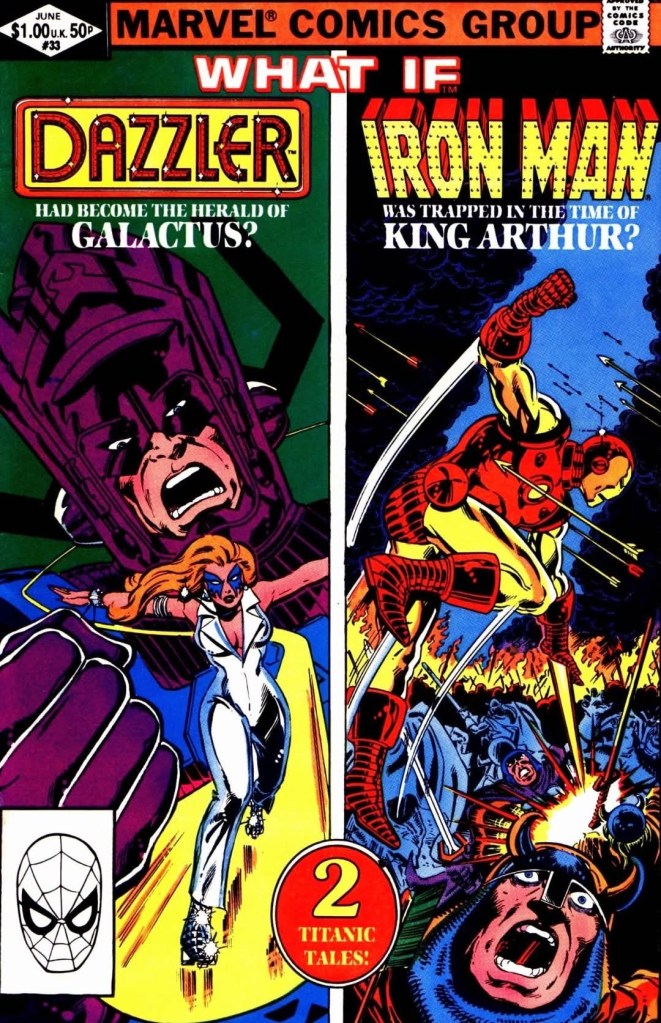
Back in the early 1980s, Dazzler quickly became popular among comic book readers and a standalone monthly series was launched no so long after her debut in Uncanny X-Men #130. Earl on in her monthly series, Dazzler eventually encountered Galactus (the classic nemesis of the Fantastic Four) in a wild tale involving the galaxy. On the other hand, Marvel Comics published a wild tale of the conflict of Iron Man and Dr. Doom (also the nemesis of the Fantastic Four) involving time travel and the presence of King Arthur in Iron Man #150. Eventually, Marvel decided to make alternate tales of the mentioned stories of Dazzler and Iron Man and publish them through an issue of What If.

With those details laid down, here is a look back at What If #33, published in 1982 by Marvel Comics with a Dazzler story written by Dan Fingeroth and drawn by Mike Vosburg, and the Iron Man story written by Steven Grant and drawn by Don Perlin.

The cover.

Early story

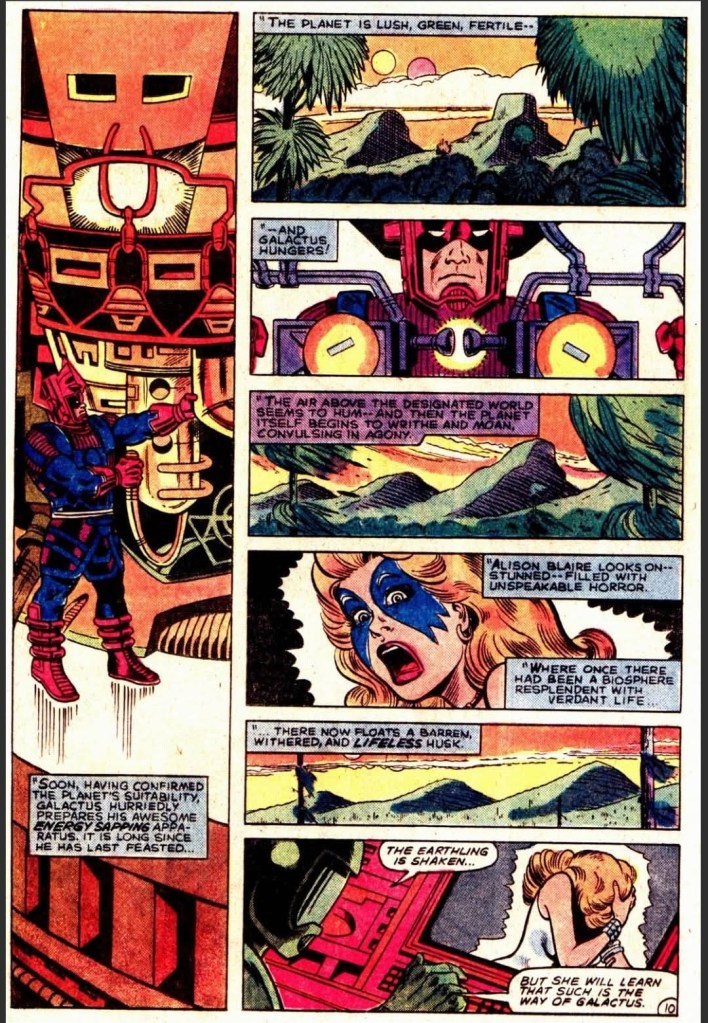
What if Dazzler had become the herald of Galactus? – The story begins with Dazzler standing in the presence of Galactus, Terrax and Drone R-II. After Galactus renders his judgment on Terrax by banishing him to the depths of a black hole, he tells Dazzler she has proven herself worthy to become his new herald. As Drone R-II reminded his superior of the fact that previous heralds were forced to leave service due to their own moral codes and added that Dazzler will do the same, she questions them and stated that she does not belong in deep space and wants to go home. Galactus tells her that Earth is a planet he has sworn to devour and by becoming his herald, he will perhaps spare her home world. Dazzler finds herself cornered and reluctantly joins Galactus as his new herald. Immediately, Galactus sends her out to deep space for her first task…

What if Iron Man had been trapped in King Arthur’s time? – The story begins in the past wherein Doctor Doom and Iron Man found themselves during the time of King Arthur. After separating themselves by taking different sides – Iron Man with King Arthur and Doom with Morgana LeFay – they decide to set their differences aside for the common goal of creating a crude time machine to return to the future. Instead, Doom takes advantage of the time machine by shocking Iron Man and leaving him behind in the past. With Doom back in the future, Iron Man struggles moving on the ground only to encounter Morgana LeFay. Believing that there is no pleasure in breaking a helpless man, Morgana spares Iron Man and tells him to return to King Arthur with her pledge…  

Quality

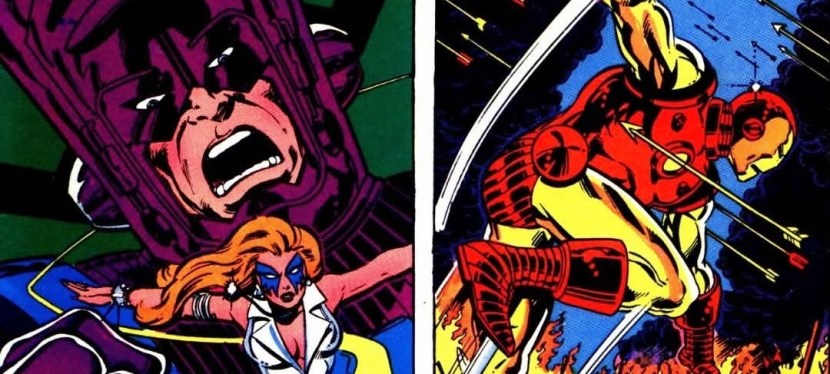
After doing advanced work, Dazzler can only watch and witness the loss of life as her master Galactus consumes the planet.

I can start with the good news for you all…the two featured stories in this What If comic book are great to read from start to finish!

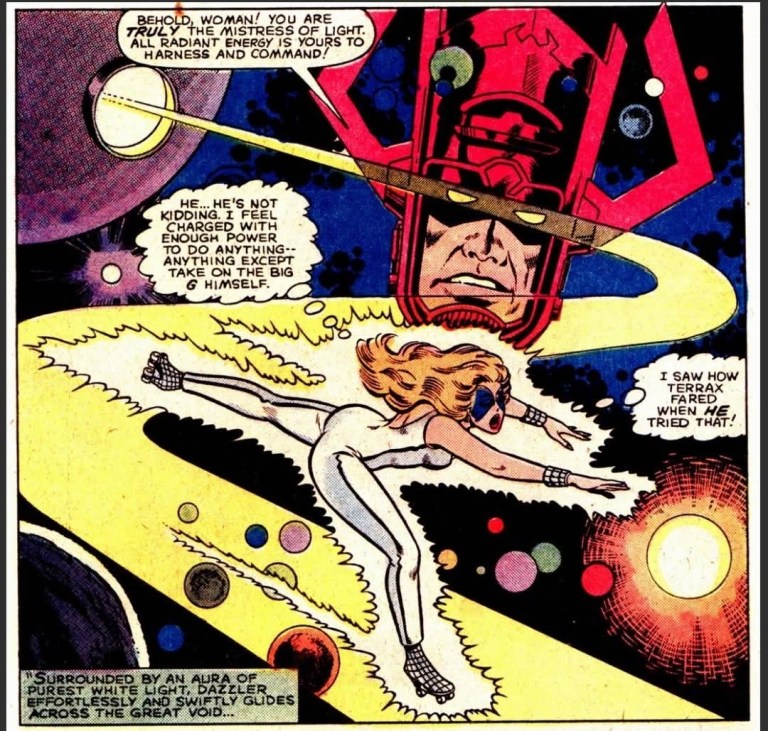
With the Dazzler tale, I enjoyed how Danny Fingeroth told the alternate reality story of the dazzling heroine becoming Galactus’ herald and working immediately to serve him. Not only does Dazzler carried tremendous powers she did not have before, she was able to quickly travel through deep space and visit planets that are suitable for her master’s consumption. Even as she wielded tremendous power, Dazzler still retains her conscience and does some analyzing of situations.

Of course, she still retained her human nature throughout and there are moments when she felt defeated or shocked which alone made her a questionable herald. Galactus himself is pretty much in character in this tale and it is very engaging to see how his actions impact not only the beings of the cosmic realm of the Marvel universe but also on Dazzler herself. Without spoiling the plot, I can say the ending is captivating and truly is worth the build-up.

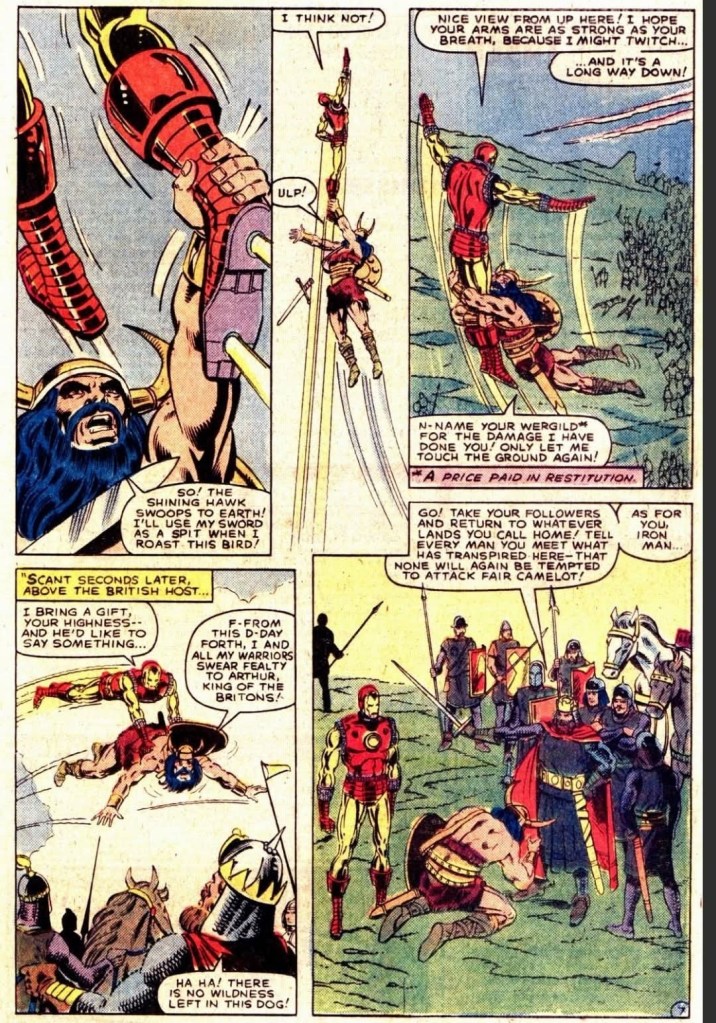
The stranded Iron Man makes an impact on a battle favoring King Arthur.

Regarding the Iron Man tale, the creative team came up with the concept of having the armored superhero actually stranded in time (left behind by Doctor Doom) and getting burdened by many factors. With Doom gone early in the plot, this effectively made Iron Man the main focus and his involvement in the conflict between King Arthur and Morgana really raised the stakes.  

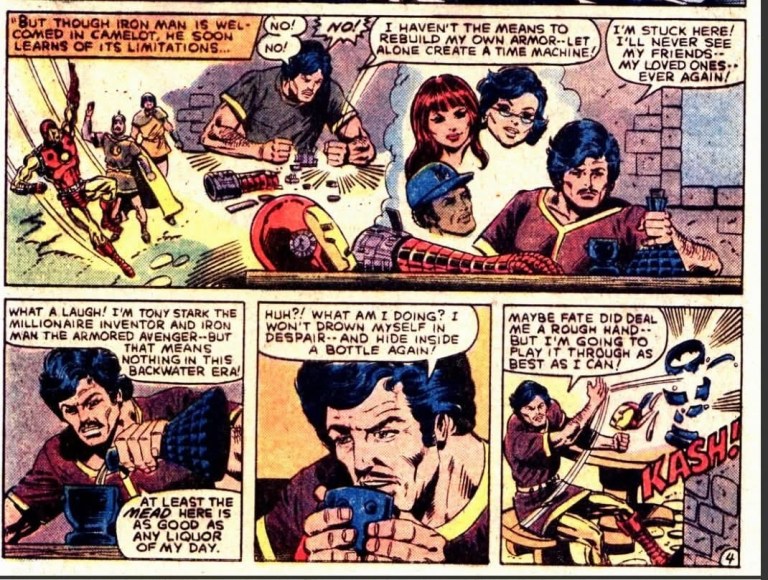
Not only does Iron Man have to deal with conflicts, he also became vulnerable as the era of King Arthur had very low forms of technology which made the superhero’s desire to return to the future an effort against the impossible. As the story went on, Iron Man makes impact on the conflicts between the forces of King Arthur and Morgana and the good news here is that the creative duo of Steve Grant and Don Perlin made it all believable and serious to follow.  

Conclusion

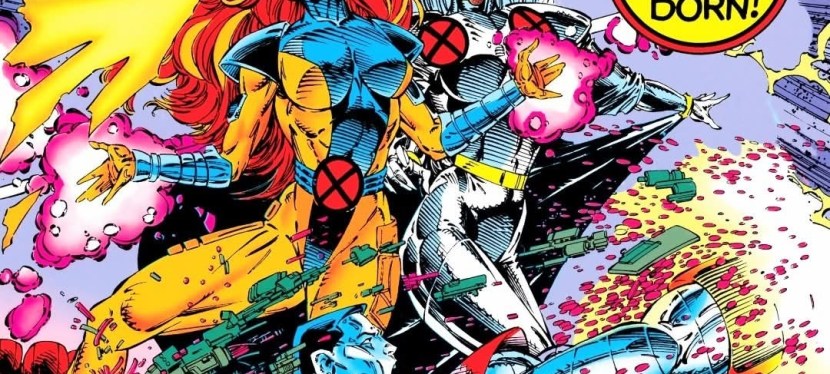
Dazzler the new herald of Galactus.
Tony Stark struggles initially with being stranded in the past.

I can say that What If #33 (1982) is a great read! The respective tales of Dazzler and Iron Man are captivating, intriguing and enjoyable to read. The creative teams of each story succeeded in building up their respective concepts, moved the established superhero to daring creative directions, and delivered powerful conclusions. This issue of the old What If series has to read as it is a true escape from reality!

Overall, What If #33 (1982) is highly recommended!

+++++

Thank you for reading. If you find this article engaging, please click the like button below, share this article to others and also please consider making a donation to support my publishing. If you are looking for a copywriter to create content for your special project or business, check out my services and my portfolio. Feel free to contact me with a private message. Also please feel free to visit my Facebook page Author Carlo Carrasco and follow me on Twitter at  @HavenorFantasy as well as on Tumblr at https://carlocarrasco.tumblr.com/ and on Instagram at https://www.instagram.com/authorcarlocarrasco
A Look Back at Independence Day #0 (1996)

Welcome back science fiction enthusiasts, 1990s arts and culture enthusiasts, Marvel Comics fans and comic book collectors! Today we go back to the year 1996 to take a close look at one of the licensed comic books Marvel Comics published which was part of the release of the movie Independence Day (also referred to as ID4).

Back in 1996, there was a considerable amount of hype and anticipation for Independence Day’s release in cinemas not just in America but also in other parts of the world. Following the success they achieved together in Stargate (1994), producer Dean Devlin and director Roland Emmerich teamed up again to make Independence Day which was back then the most modern cinematic portrayal of aliens invading Earth causing the people to fight back. The film creatively was also a disaster movie of its own backed with science fiction concepts and the latest special effects of the era. Independence Day went on to gross almost $820 million worldwide and I myself saw it in a fully packed cinema here in the Philippines.

As I saw the movie, I noticed details about events that took place sometime in the past and they were presented not as flashbacks but only as spoken words. There is that verbal reference about Jeff Goldblum’s character punching Bill Pullman’s character some time before the latter became US President. There are also spoken words about Randy Quaid’s character being previously abducted by aliens. As part of the marketing and publicity of the movie, Marvel Comics was licensed to publish not only a 2-part comic book adaptation but also a prequel comic book.

With those details laid down, here is a look back at Independence Day #0, published in 1996 by Marvel Comics with a story written by Phil Crain (based on ideas by Dean Devlin and Roland Emmerih) and drawn by Terry Pallot, Steve Erwin, Rod Whigham and Gabriel Gecko.

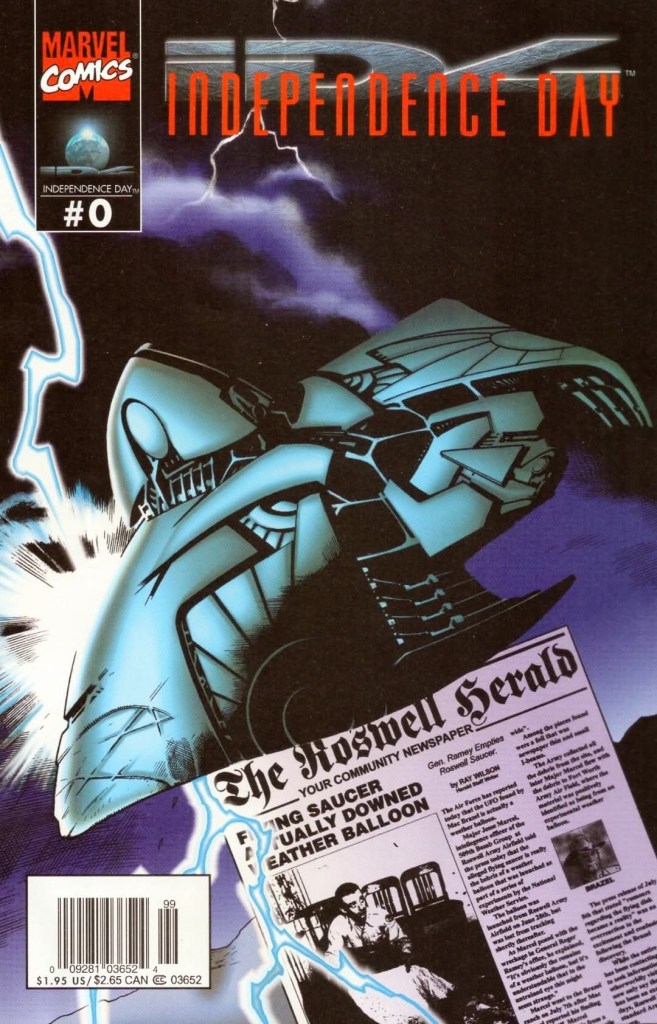
The cover.

Early story

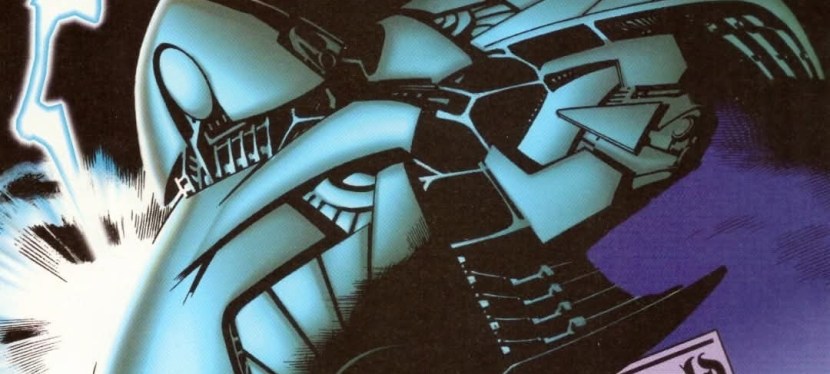
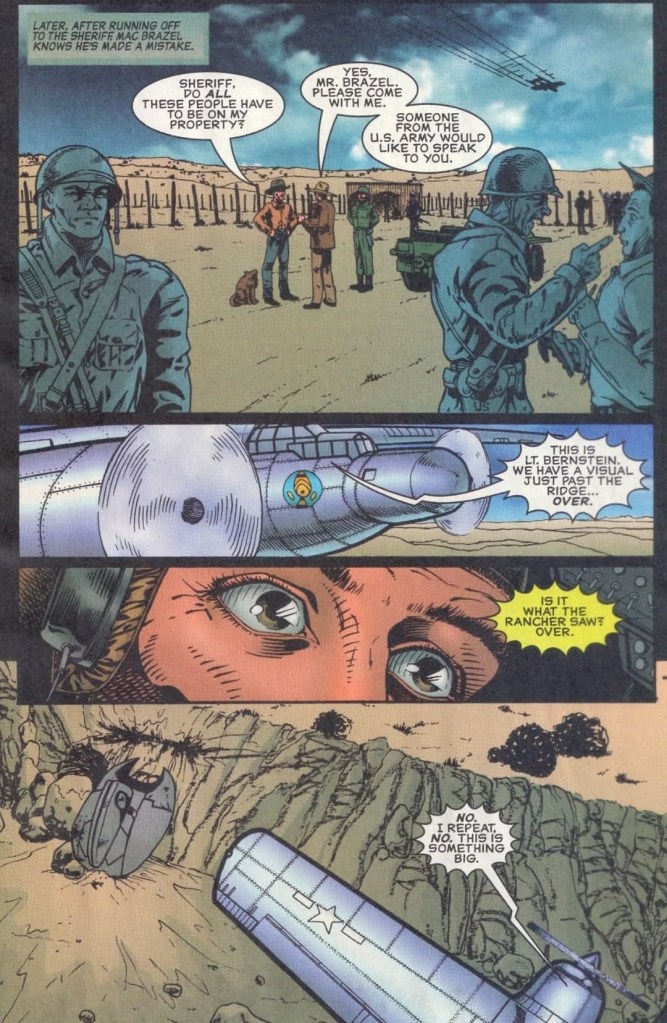
The story begins on July 4, 1947 in Roswell, New Mexico. A thunderstorm took place in the evening compelling residents to stay inside their respective homes. As the storm went on, an unidentified flying object (UFO) of alien origin got struck by thunder causing it to crash on the field of someone’s property with a huge impact that disturbed local residents. The alien ship opens and one of its passengers (alien) ventures out into the stormy night. Injured and still in shock, the passenger slowly moves away from the ship.

The next evening, the property owner arrives and finds several pieces of debris of the crashed ship scattered on the field. He notices the metal are lighter than anything he touched, and he could see the writings were not man-made. The property owner informed the local sheriff of what he found which led to the American army sending troops to the field. The American military plane flies over them and finds the crashed alien ship.  

Quality

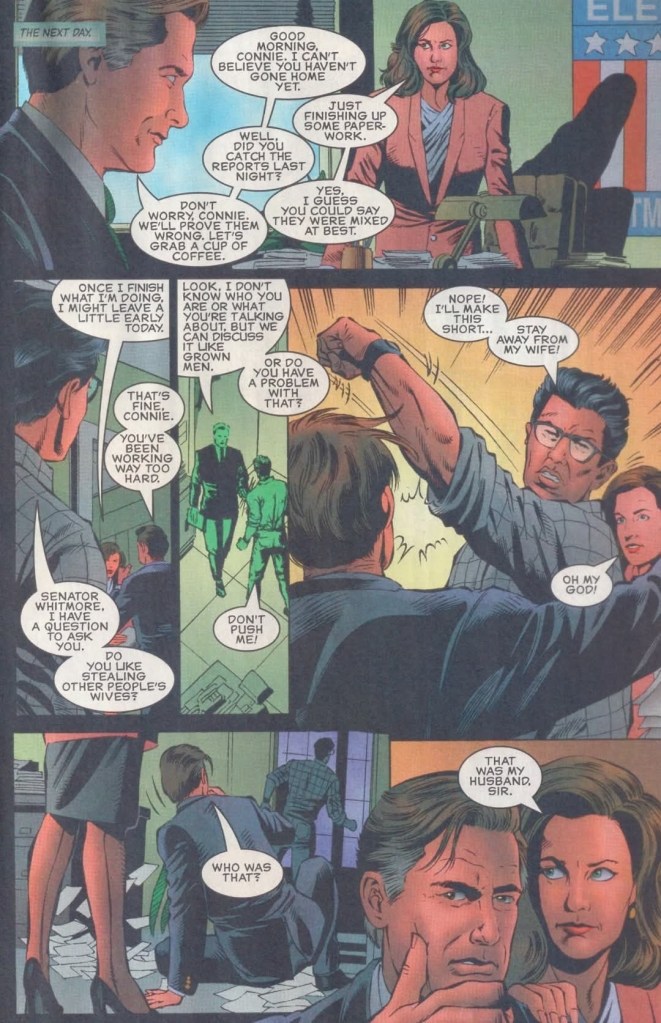
When Whitmore was still a US Senator and candidate for US President, he got punched by David Levinson who thought that he was having an affair with his wife Constance “Connie” Spano. This later led to the “You punched the President,” line in the movie.

As described above, this prequel comic book visually dramatizes the past events that were only mentioned in the movie particularly with regards to the Roswell UFO incident as well as Area 51 and how the government handled findings about aliens from outer space. In fact, the story here was scripted to move from one significant event to the next through the decades, and the good news here is that the exposition is not too heavy (when compared to Jurassic Park comic books of 1993) and the pacing moved at a medium pace. The result is a reading experience that is intriguing and entertaining.

The creators really went all in with their fictional portrayal of the movie’s aliens being involved in Roswell and Area 51, and the notable thing is that they really took the presentation seriously. It’s as if they were trying to tell a factual story which smoothly connects with the movie.

When it comes to the characters from the movie, you will find them in this comic book depending on the stage of the narrative and the time setting. While the characters of Pullman, Goldblum, Robert Loggia, Will Smith, Brent Spiner, James Rebhorn, Viveca A. Fox and Margaret Colin are dramatized in the 1990s scenes, you will see the younger versions of a few of them set in the 1960s scenes. The abduction scene of Randy Quaid’s character is set in the 1980s.

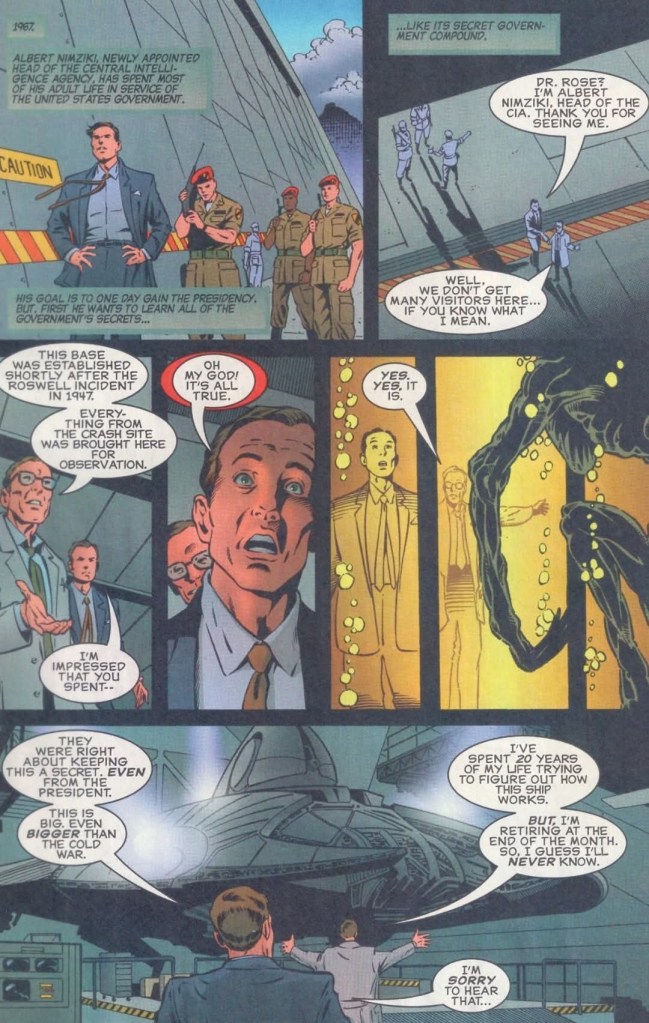
The Area 51 scene set in the 1960s.

As for the script written by Phil Crain, the narrative of this comic book surprisingly has a more serious and dramatic tone when compared to what was expressed in the movie. There were even a few horror elements and no comedic stuff at all. Again, this should not be surprising because this comic book was meant to dramatize past events to not only connect with the movie’s core concept but also show why certain characters acted the way they did in the film.

As this comic book involved multiple artists, it should not be a surprise that the result is of varying quality from one scene to another. In fairness, the illustrator (or illustrators) who drew the Area 51 scenes and the crashed alien ship did a good job with the details. As for the characters, pilot Steven Hiller resembled Will Smith enough, and the same can be said about Thomas Whitmore somewhat looking like Bill Pullman, David Levinson looking somewhat like Jeff Goldblum, and General Grey slightly looking like Robert Loggia. Meanwhile, Constance Pano resembled Margaret Colin more while the 1990s Dr. Okun resembled Brent Spiner in a few shots.

Conclusion

The creators went all-in to make the 1947 Roswell UFO incident a history of Independence Day.

To get straight to the point, Independence Day #0 (1996) succeeded with its main objective of establishing visually the past and emphasizing developments connecting with the blockbuster movie of 1996. It was made with a strong appeal to fans of Independence Day as well as people who simply are fond of UFOs and conspiracy theories regarding Roswell and Area 51. People who are not too interested in the movie and UFOs might not be impressed with this comic book. In my view, this prequel comic book has good enough qualities that make it worth reading and its serious narrative is both surprising and enjoyable. Ultimately, it is a worthy companion piece to the movie.

Overall, Independence Day #0 (1996) is recommended.

+++++

Thank you for reading. If you find this article engaging, please click the like button below, share this article to others and also please consider making a donation to support my publishing. If you are looking for a copywriter to create content for your special project or business, check out my services and my portfolio. Feel free to contact me with a private message. Also please feel free to visit my Facebook page Author Carlo Carrasco and follow me on Twitter at  @HavenorFantasy as well as on Tumblr at https://carlocarrasco.tumblr.com/ and on Instagram at https://www.instagram.com/authorcarlocarrasco
A Look Back at What If #85 (1996)

Welcome back superhero enthusiasts, 1990s arts and culture enthusiasts, Marvel Comics fans and comic book collectors! Today we go back to the year 1996 and explore a part of Marvel Comics’ universe through the reimagined tales emphasized in the What If monthly series.

Back in 1993 – the year that Marvel Comics celebrated the 30th anniversary of the X-Men – the definitive rival of the X-Men, Magneto, made a major comeback and he was so resourceful as a threat to everyone. With the massive space station Avalon as his lair, Magneto sent out Exodus to lure mutants to join him. As time passed, Magneto’s own force grew and arrogantly disrupted the funeral of Illyana Rasputin in the presence of the X-Men, X-Force, Excalibur and X-Factor (as told in Uncanny X-Men #304). As the conflict went on, Colossus betrayed the X-Men to join Magneto.

Can you just imagine what would it be like had Magneto became the ruler of mutants?

With those details laid down, here is a look back at What If #85, published in 1996 by Marvel Comics with a story written by David Michelinie and drawn by Arnie Jorgensen.

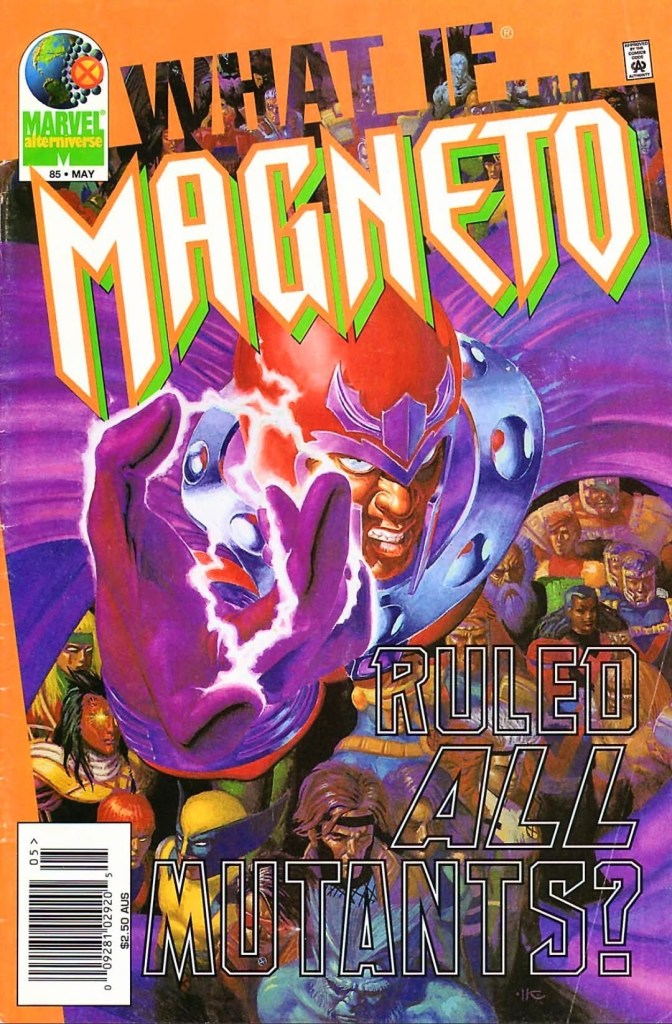
The cover.

Early story

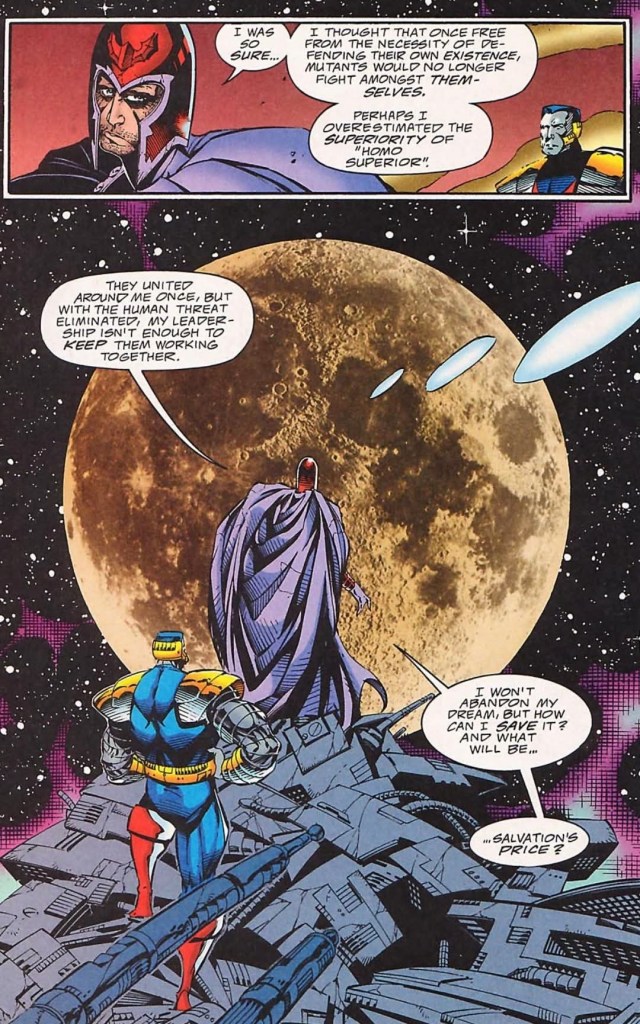
The story begins inside Avalon with Magneto and Colossus watching recorded footage of Charles Xavier announcing his decision to stop opposing the ascension of Avalon. It turns out, Xavier’s decision paved the way for mutants to relocate to Avalon (orbiting Earth) in return for assurance that those who remain in it will do so unmolested. With the intention to let Avalon’s residents achieve their full and glorious potential, Magneto allowed the mutants to rule themselves without any dictatorship by him.

Through the years, division between Avalon’s mutants – Acolytes who believe in isolation and the Acolytes who believe in annihilation – intensified and proved that the spirit of mutant unity has faded away. As violence between the mutants went on, the number of explosions inside Avalon kept increasing…

Quality

A magnificent view for Magneto, Colossus and the readers.

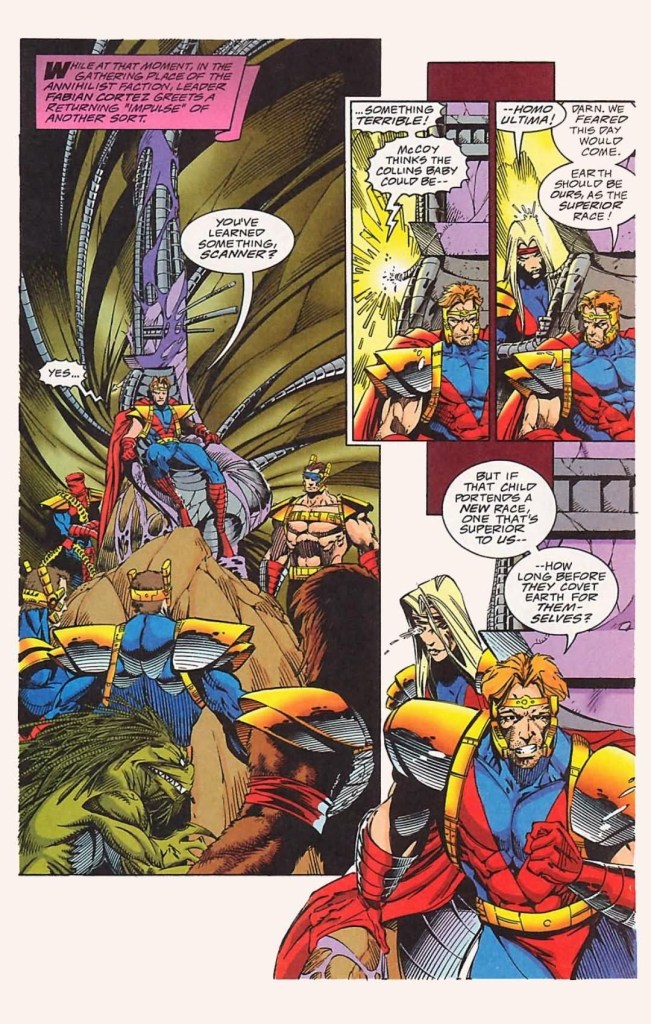
What I like most about this What If tale is its core concept exploring what would have happened had Magneto ruled the mutants specifically those living in his own realm (Avalon). Writer David Michelinie (best known for writing Amazing Spider-Man stories) wrote a really inspired script that emphasized Magneto’s vision of mutant utopia isolated from the twisted and complicated societies of Earth (which still has lots of people who are afraid of and hostile towards mutants) while leaving room for conflict in the form of ideological division between mutants on Avalon. As the growing division and violence are shattering Magneto’s vision of mutant utopia, the birth of an infant whose presence adds to the tension and fear of Avalon’s inhabitants.

The good news here is that Michelinie’s script is pretty solid and Arnie Jorgensen did a good enough job visualizing it all. The characters, mainly Magneto, Colossus and Beast, were portrayed clearly in character and to see the master of magnetism struggling with maintaining order on Avalon is a nice portrayal of his human side which makes him have a lot more in common with his opposite Professor X when it comes mutant matters. Considering Magneto’s long history of intense evil and obsession with leading humanity, his portrayal of insecurity, doubt and weakness is very believable to read.

Colossus, whose betrayal of the X-Men in Uncanny X-Men #304 remains unforgettable, is the loyal and sensible servant of Magneto. Beast, meanwhile, remains the very bright and insightful mutant scientist as he has always been which makes Michelinie’s writing really impressive.

Also at the heart of the story is mutant order. Apart from the division between Avalon mutants who want full separation from humanity and those who want to conquer Earth by eliminating all human beings, the very fabric of mutant society got shaken all because of an infant who was born there on Avalon (Avalon’s first natural birth ever). I like the way this sub-plot added tension to the mutant division because it is, in some ways, socially relevant to this day. It will remind you that certain groups of people out there who would go as far as committing murder only because they are so obsessed with their foolish, worldly beliefs. Look at the Palestinian terrorists, the Iranian terrorists and the woke mobs in many parts of the world.

Conclusion

Remember Fabian Cortez and the Acolytes?

With a very solid script filled with intrigue, social relevance and portrayals, What If #85 (1996) is a pretty engaging read. As it is strongly focused on Magneto and his mutants on Avalon, this comic book gives readers a fine dramatization of its core concept as well as developments on what would have happened had mutant utopia been realized far away from human society. I should state that for every build-up in the story, the payoff is fortunately solid. Consider this comic book a dramatic portrayal of mutants of Magneto without the involvement of the X-Men.

Overall, What If #85 (1996) is recommended.

+++++

Thank you for reading. If you find this article engaging, please click the like button below, share this article to others and also please consider making a donation to support my publishing. If you are looking for a copywriter to create content for your special project or business, check out my services and my portfolio. Feel free to contact me with a private message. Also please feel free to visit my Facebook page Author Carlo Carrasco and follow me on Twitter at  @HavenorFantasy as well as on Tumblr at https://carlocarrasco.tumblr.com/ and on Instagram at https://www.instagram.com/authorcarlocarrasco
A Look Back at What If #23 (1991)

Welcome back superhero enthusiasts, 1990s arts and culture enthusiasts, Marvel Comics fans and comic book collectors! Today we go back to the year 1991 and explore a part of Marvel Comics’ universe through the reimagined tales emphasized in the What If monthly series.

If you are not aware of the extensive literary history of the X-Men, the mutant franchise of Marvel Comics had its turning point in the mid-1970s with the release of the 68-page Giant-Size X-Men #1  which introduced a newer lineup of mutants (Wolverine, Cyclops, Nightcrawler, Thunderbird and Storm). It has been argued that Giant-Size X-Men #1 marked the starting point of the bronze age of comics in America and creatively it sparked a new chain of X-Men stories that captivated the fans and attracted new readers.

But what would have happened had the newer lineup of the X-Men did not even exist?

With those details laid down, here is a look back at What If #23, published in 1991 by Marvel Comics with a story written by Kurt Busiek and drawn by Rodney Ramos.

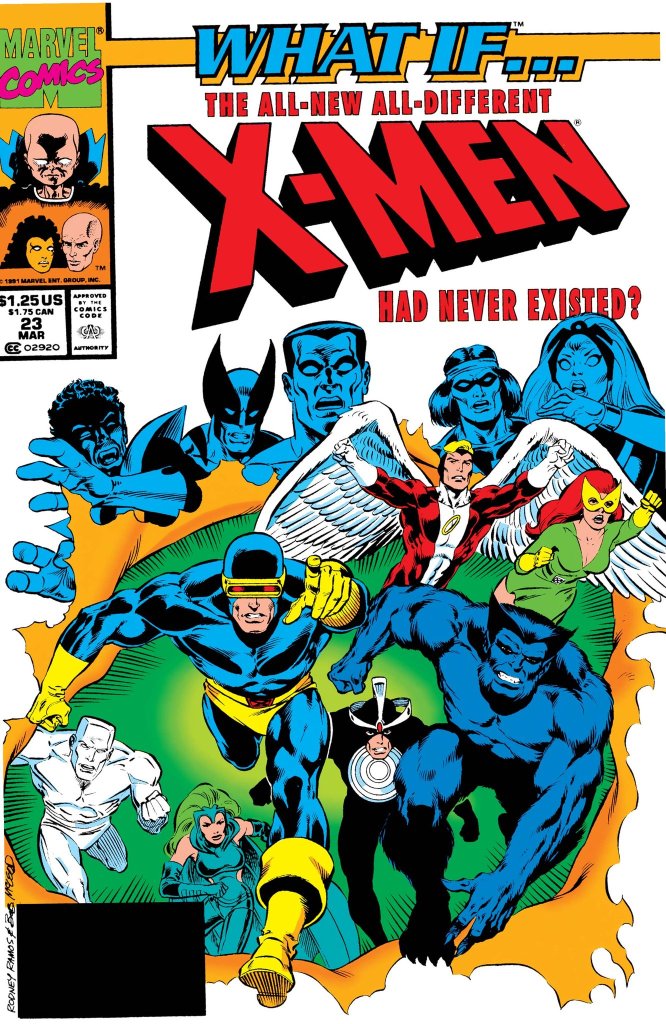
The cover.

Early story

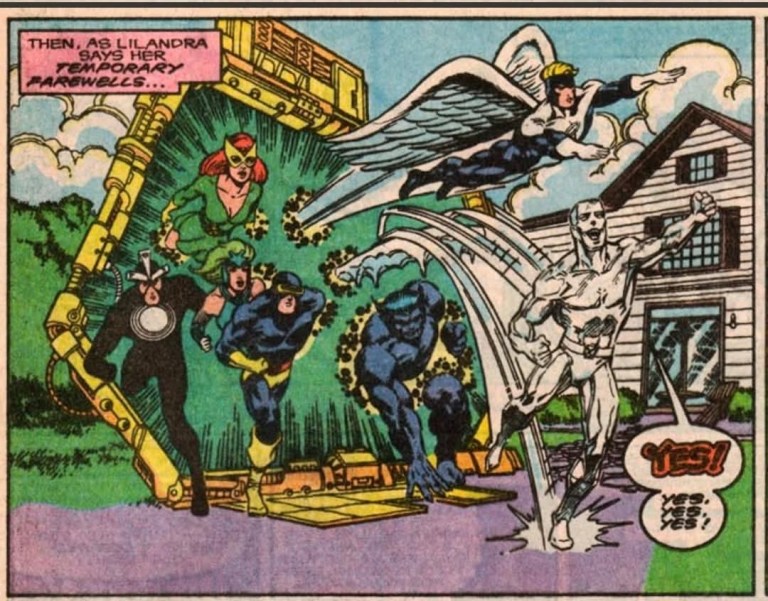
The story begins when the original X-Men (Cyclops, Jean Grey, Angel, Beast and Iceman) members, Havok and Polaris arrive on the island of Krakoa. A huge green monster suddenly appears and attacks them. Guided by Professor X’s mind, Marvel Girl/Jean Grey helps Polaris by overriding the mental blocks that prevented her from using her full magnetic might. With a lot more power in her, Polaris takes action and helps the X-Men not only overwhelm the monster but also hurled the entire island of Krakoa into space.

As the X-Men were never captured by Krakoa, there was no reason to recruit a new team. The X-Men returned home and proceeded with other matters. On the other hand, Charles Xavier experiences a series of intense nightmares of conflict in outer space. As the nightmares took its toll on him, Professor X decides to take a vacation. Before he could leave, the X-Men are suddenly attacked by Eric the Red, Proudstar and Nightcrawler…  

Quality

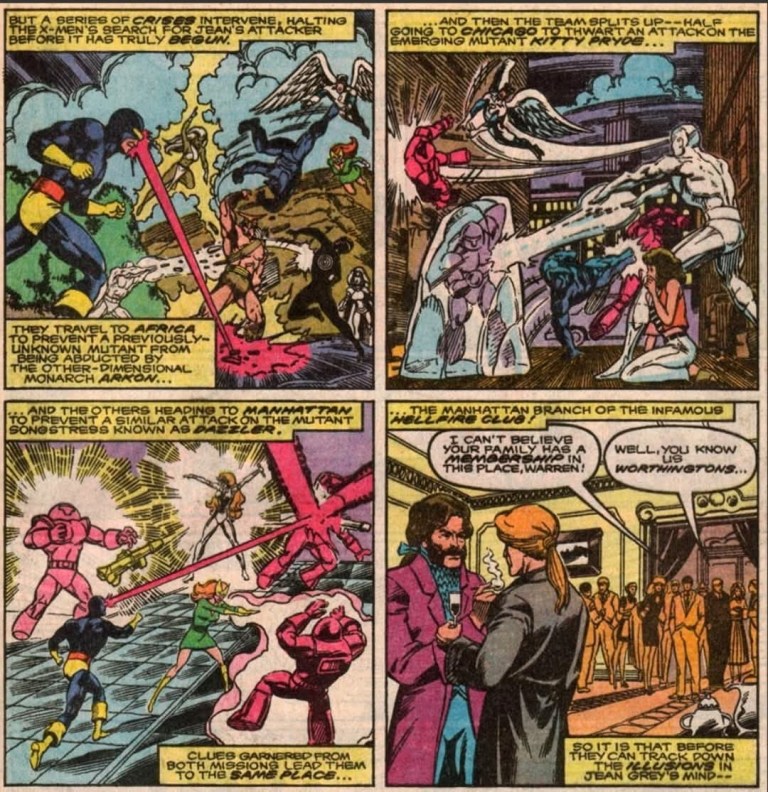
Without the existence of the 2nd X-Men team (from Giant-Size X-Men #1), the original X-Men’s first encounters with Dazzler, Kitty Pryde and the Hellfire Club turned out totally different.

This What If tale exploring an alternate chain of events involving only the original X-Men is not only a daring piece of work by the creators but it is also highly ambitious as seen through the scope of the plot. I’m not just talking about the non-existence of the 2nd X-Men lineup of Giant-Size X-Men #1 but also alternate realities of real X-Men developments such as the encounter with the Phoenix, Lilandra and Professor X’s first encounter, the X-Men’s encounter with the Hellfire Club, and more. Truly, the alterations were executed and the consequences were quite intense.

By focusing on the concept of the original X-Men proceeding as the 2nd X-Men team did not materialize, the Busiek-Ramos team really went all-in exploring the different possibilities and most of them were intriguing and entertaining to follow. The reading experience can be jarring because of the sudden change of scope that happens when the narrative suddenly shifted from one plot development (of local conflict) to another (a conflict on a galactic scale). Indeed, the narrative can be challenging to follow and to really enjoy it, you should pay strong attention to the details as you read on.

When it comes to character development, there is very little to find here which is not surprising given the way the script was written and also because the spotlight had to be shared by so many characters. Still, I enjoyed the character moments between Cyclops and Jean Grey, particularly during important points in the 2nd half of the story.  

If there were any weak spots in the presentation, it is the fact that a lot of exposition had to be done and there were certain parts of the narrative that felt crammed with an excessive amount of details. Not only that, there is also an excessive amount of characters that go beyond the X-Men such as Lilandra of the Shi’ar Empire, the Starjammers, Alpha Flight, the Avengers and other beings of science fiction mixed in which make following the narrative challenging at certain points.

Conclusion

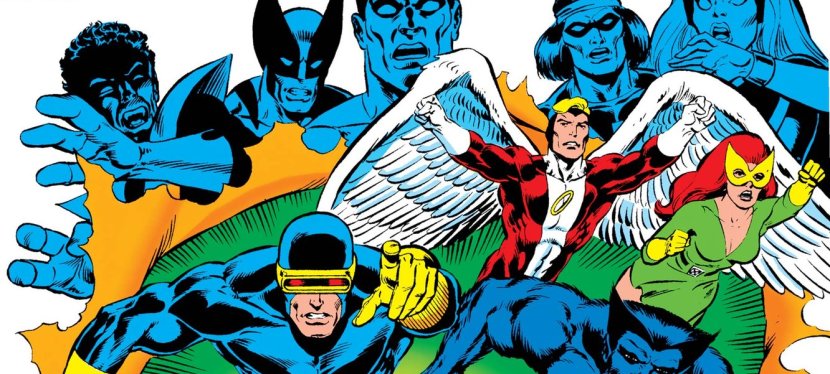
The original X-Men team plus Polaris and Havok.

What If #23 (1991) has more than enough advantages that outweigh the disadvantages. It’s story is very intriguing and enjoyable to read even though there were some bumpy parts on the narrative. Still, it is great to see what would have happened had the newer X-Men team never materialized and this comic book’s ending is very impactful to see.

Overall, What If #23 (1991) is recommended.

+++++

Thank you for reading. If you find this article engaging, please click the like button below, share this article to others and also please consider making a donation to support my publishing. If you are looking for a copywriter to create content for your special project or business, check out my services and my portfolio. Feel free to contact me with a private message. Also please feel free to visit my Facebook page Author Carlo Carrasco and follow me on Twitter at  @HavenorFantasy as well as on Tumblr at https://carlocarrasco.tumblr.com/ and on Instagram at https://www.instagram.com/authorcarlocarrasco
A Look Back at Spectacular Spider-Man #88 (1984)

Welcome back superhero enthusiasts, 1980s arts and culture enthusiasts, Marvel Comics fans and comic book collectors! Today we go back to the year 1984 to examine a small part of the Marvel Comics shared universe through a tale of the Spectacular Spider-Man monthly series.

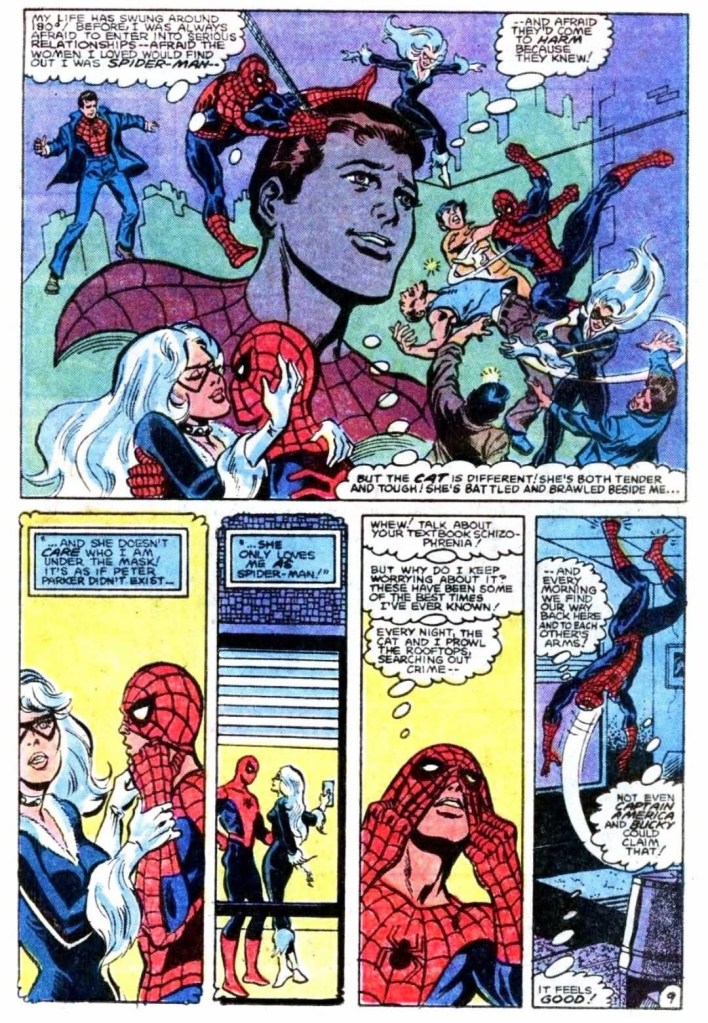
In issue #87, Spider-Man revealed his secret identity to Black Cat. That was a turning point on not just the romance between the two but also on their combined efforts of stopping crime and helping others in the city. This opens up opportunities for creative teams of Marvel to explore where Spidey and Black Cat’s relationship will go to next.

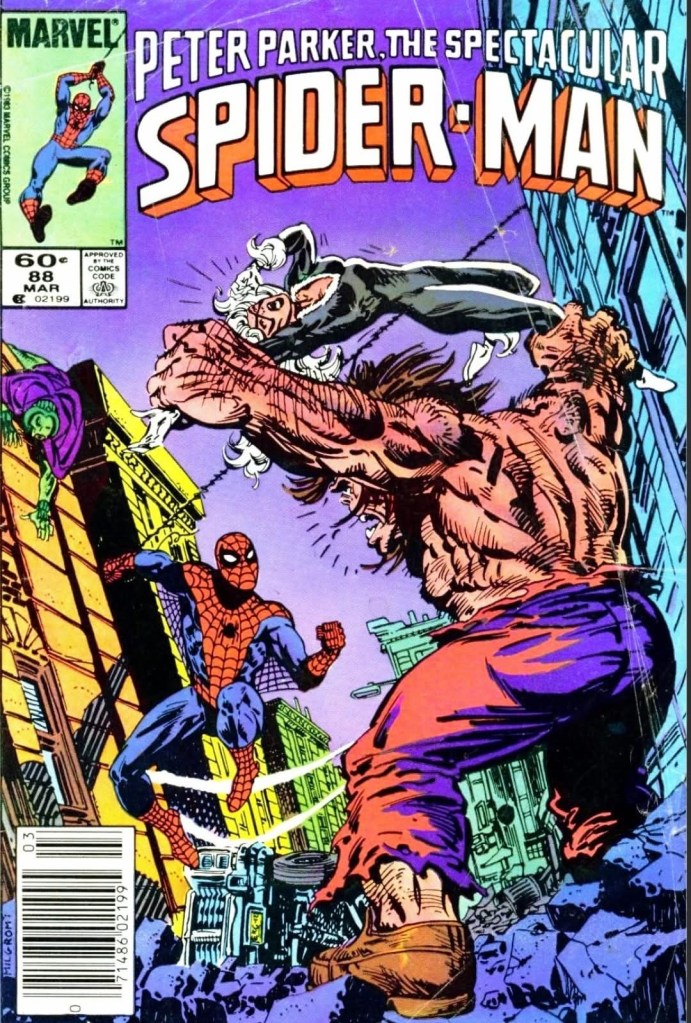
With those details laid down, here is a look back at Spectacular Spider-Man #88, published in 1984 by Marvel Comics with a story written by Bill Mantlo and drawn by Al Milgrom.

The cover.

Early story

The story begins inside a secret facility wherein several armed guards are preparing themselves for an unseen incoming force. They are guarding a convict known as The Cobra (Klaus Voorhees) who warns them that the one person after him will find some way of killing him.

Suddenly, Mister Hyde breaks through the metallic gate and demands that Cobra should be given to him. The guards used tranquilizer gas to take Hyde out but it turned out useless. Cobra and his handlers secretly moved to the rooftop of the facility to try to escape by helicopter. Suddenly, Hyde emerges, brings down a solid tower and crashes the helicopter with it. He then grabs Cobra who only slithered away.

Meanwhile in New York City, Spider-Man is inside the apartment of Felicia Hardy (Black Cat) and he feels that something dreadful is going to happen…

Quality

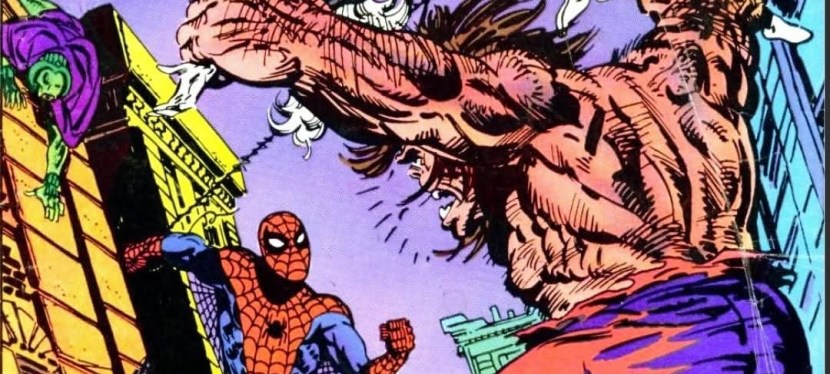
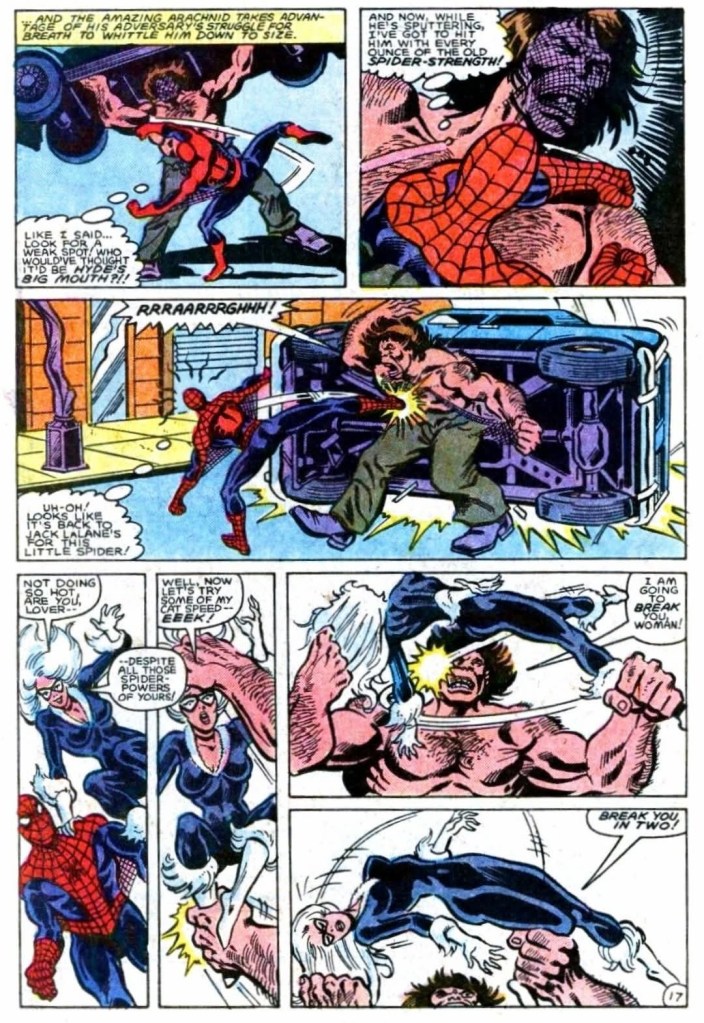
There is a lot of action scenes to enjoy here. Spider-Man and Black Cat have their own moments taking on Hyde.

I will go straight to the point here. This Spectacular Spider-Man tale sure is packed with a lot of action and intrigue balanced by the romance of Spider-Man and Black Cat (who is now living with the knowledge that Peter Parker is Spider-Man). The conflict between Mister Hyde and the Cobra here is preceded by their past collaboration of getting revenge upon Thor. In fact, Spider-Man had encountered both characters sometime prior and his personal knowledge of Thor’s encounter with them added some depth to the new conflict in this comic book. Spidey here became cautious as he knows the extent of the savagery of Hyde.

As this tale took place after Black Cat learned Spider-Man’s secret identity, the dynamics between the two during battle became intriguing when the former took the initiative to strike the dangerous Hyde even though she was told to protect Cobra. This forces the iconic webslinger to put himself at risk by aggressively hitting Hyde while keeping Black Cat out of the way.

The big battle involving the four notable characters is quite extensive and intense to follow. There are a few strong twists between the scenes and it is entertaining to read. When it comes to character development, I enjoyed how the creators portrayed Spidey being concerned about Black Cat’s wellbeing and her lack of super powers while simultaneously portraying her as being determined to so something significant on solving problems.  

Conclusion

The romance between the two is worth following.

Spectacular Spider-Man #88 (1984) is not only a good follow-up to the previous issue, it is also a worthy showcase of Spidey and Black Cat’s relationship as Cobra and Hyde engage in a new conflict. As this is an action-packed story, it is not surprising that the character development scenes are fewer. This is a fun read.

Overall, Spectacular Spider-Man #88 (1984) is recommended.

+++++

Thank you for reading. If you find this article engaging, please click the like button below, share this article to others and also please consider making a donation to support my publishing. If you are looking for a copywriter to create content for your special project or business, check out my services and my portfolio. Feel free to contact me with a private message. Also please feel free to visit my Facebook page Author Carlo Carrasco and follow me on Twitter at  @HavenorFantasy as well as on Tumblr at https://carlocarrasco.tumblr.com/ and on Instagram at https://www.instagram.com/authorcarlocarrasco
What to watch on YouTube right now – Part 82

Welcome back my readers, YouTube viewers and all others who followed this series of articles focused on YouTube videos worth watching. Have you been searching for something fun or interesting to watch on YouTube? Do you feel bored right now and you crave for something to see on the world’s most popular online video destination?

I recommend you check out the following videos I found.

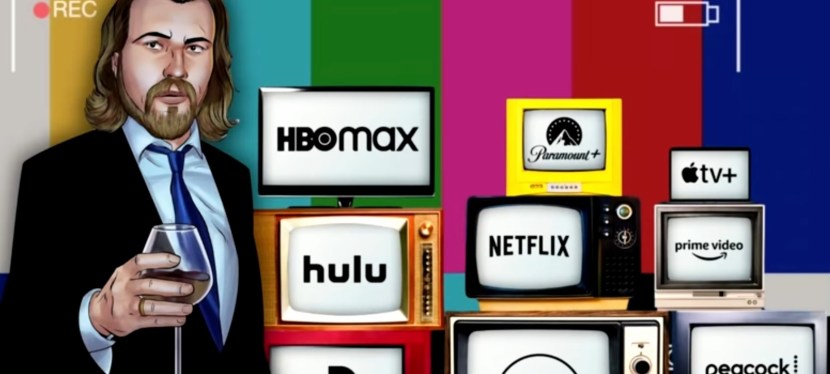
#1 Streaming wars cost Hollywood a lot – Just years ago, Hollywood companies made heavy bets on streaming believing it would be the new gold standard of business as well as a new gold mine waiting to release immense profits. Today, Hollywood ended up collectively losing a lot of money and their streaming moves added a lot of complexity and new problems to their business. Along the way, millions of customers stopped subscribing to the streaming services of Hollywood. What happened behind the scenes and who were the only business winners in the middle of the streaming wars? Find out in Midnight’s Edge in-depth analytical video below.  

#2 Retrospective look at Timerider: The Adventure of Lyle Swann – As a young boy, I saw the sci-fi Western adventure movie Timerider: The Adventure of Lyle Swann and I ended up getting intrigued about its story and the ending. Even by today’s standards, this film’s core concept remains very weird or totally unique as it had lots of motorcycle thrills, cowboys with their guns, and a very unusual approach on time-travel and its consequences. To find out more about the 1982 movie, watch the selected videos below.

#3 You, Me and the Movies react to The Punisher (1989)  – Remember when Dolph Lundgren played The Punisher in a low budget movie released in 1989? Even though a lot of people rejected it, the film remains important as it helped the Marvel Comics assassin start entering mainstream entertainment. Two more Punisher movies were released in the 2000s and then a TV series about The Punisher was established. To find out how Dolph Lundgren performed as The Punisher, watch the reaction video of You, Me and the Movies below.

#4 Ashleigh Burton reacts to Lethal Weapon 3 – When Lethal Weapon 3 was released in cinemas here in the Philippines in 1992, it unsurprisingly became big hit with local moviegoers and Mel Gibson was already popular among Filipinos. I missed out on the film’s cinematic run but managed to watch it on home video. If you want an enjoyable look back at Lethal Weapon 3 but you don’t have time to watch it entirely, watch Ashleigh Burton’s fun reaction video.

#5 PatmanQC examines Hook – Were you able to watch the Steven Spielberg film Hook when it was first released in cinemas in 1991? I missed out on its theatrical run (note: it opened in February 1992 here in the Philippines) but managed to watch it on home video and later played the video game adaptation on the Super Nintendo Entertainment System (SNES). That’s right! Hook had video games back then and if you want to discover more about them, watch the in-depth retro gaming video of PatmanQC below.

#6 Hamas misinformation debunked! – Let me remind you all the truth about Palestinian terrorist group Hamas…they are terrorists funded and supported by Iran and Qatar, they committed genocide against Israel and foreigners on October 7, 2023, and they are pure evil, greedy and barbaric. Hamas is also responsible for the suffering of the Palestinians (who did not join their terrorism activities) living in the Gaza strip. As America and Israel joined forces to provide humanitarian aid directly to the Gaza residents, Hamas became desperate with their tactics, lied about what happened, and they have the Islamo-Leftist mainstream news media outlets to propagate the deception worldwide. Fortunately, the misinformation of Hamas has been debunked. Watch the CBN video below.

+++++

Thank you for reading. If you find this article engaging, please click the like button below, share this article to others and also please consider making a donation to support my publishing. If you are looking for a copywriter to create content for your special project or business, check out my services and my portfolio. Feel free to contact me with a private message. Also please feel free to visit my Facebook page Author Carlo Carrasco and follow me on Twitter at  @HavenorFantasy as well as on Tumblr at https://carlocarrasco.tumblr.com/ and on Instagram athttps://www.instagram.com/authorcarlocarrasco

What to watch on YouTube right now – Part 79

Welcome back my readers, YouTube viewers and all others who followed this series of articles focused on YouTube videos worth watching. Have you been searching for something fun or interesting to watch on YouTube? Do you feel bored right now and you crave for something to see on the world’s most popular online video destination?

I recommend you check out the following videos I found.

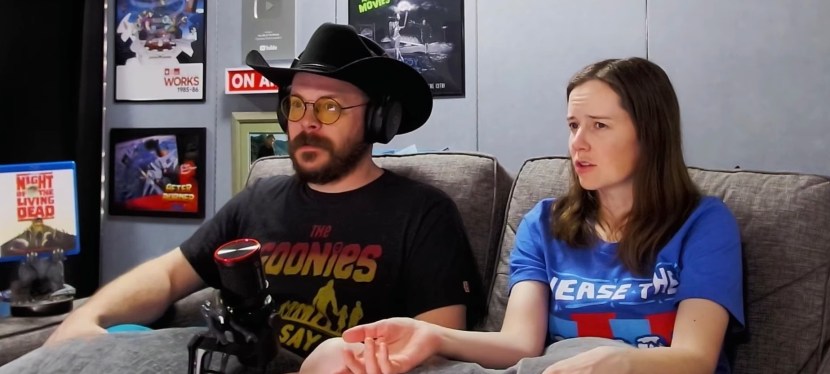
#1 You, Me and the Movies react to Night of the Living Dead (1990) – While there are a lot of YouTube videos about the Night of the Living Dead from 1968, there are simply much lesser videos to the 1990 remake by comparison. For the newcomers reading this, the 1990 version of Night of the Living Dead was directed by Tom Savini, presented in color and had its own ways of modernizing the zombie apocalypse genre of film. In my experience, I saw the 1990 remake long before I accidentally discovered on cable TV the 1968 original. If you want to discover the movie and don’t mind spoilers, check out You, Me and the Movies’ entertaining reaction video below.

#2 Unsolved Mysteries Season 3 episodes (hosted by Robert Stack) – If there is any American TV show that made weekday nights entertaining or engaging, it’s none other than Unsolved Mysteries hosted by the late Robert Stack. It’s a good thing for Unsolved Mysteries fans worldwide that episodes hosted by Stack are available for free viewing at YouTube via the FilmRise channel. That being said, posted below are assorted episodes from season 3 of the show for you to discover.

#3 PatmanQC examines the RoboCop arcade game  – In 1988, Data East released their adaptation of RoboCop in the arcades achieving tremendous success around the world. RoboCop is considered by some as an arcade classic and is arguably the best RoboCop game ever made. To find out who were responsible for the arcade game and what made it so enjoyable, watch the in-depth video by PatmanQC below.

#4 Healthy breakfast recipes by Shannon Barker – Shannon Barker is a pretty model who appeared in lots of fashion shows. In my retro comic book review of The Solution #17, I expressed my opinion that Barker would make a very good cosplay photograph model as Shadowmage. Apart from fashion, Barker is also a lifestyle vlogger and if you are interested in health breakfast recipes, watch her video below.

#5 Space Quest revisited – Decades ago, me and my friends were able to play on PC (DOS era) the graphic adventure game Space Quest (full title: Space Quest: Chapter I – The Sarien Encounter). Space Quest was one of my computer games released by Sierra On-Line and it involved being observant, being able to pay attention to the descriptions, and typing the right commands in order to progress. Recently, I saw a retrospective video of Space Quest done by YouTuber Power Pak, and it definitely is both nostalgic and fun to watch.

#6 Ashleigh Burton reacts to Howard the Duck – In 1986, the comedy Howard the Duck was released in cinemas and ended up failing both critically and commercially. While it is considered as one of the worst films ever released, it still has a dedicated following. Believe it or not, the movie was produced by George Lucas and his company Lucasfilm made it. To say that Howard the Duck is cinematic trash is extreme and if you want to see how it impacts Ashleigh Burton, watch her reaction video below.

+++++

Thank you for reading. If you find this article engaging, please click the like button below, share this article to others and also please consider making a donation to support my publishing. If you are looking for a copywriter to create content for your special project or business, check out my services and my portfolio. Feel free to contact me with a private message. Also please feel free to visit my Facebook page Author Carlo Carrasco and follow me on Twitter at  @HavenorFantasy as well as on Tumblr at https://carlocarrasco.tumblr.com/ and on Instagram athttps://www.instagram.com/authorcarlocarrasco

Retro Gaming Ads Blast – Part 29

Welcome back readers, fellow geeks and electronic gaming fans!

In this edition of the Retro Gaming Ads Blast (RGAB) series, we will take a look at another batch of retro gaming print ads – including arcade flyers – from the 1980s and 1990s.

For the newcomers reading this, Retro Gaming Ads Blast (RGAB) looks back at the many print ads of games (console, arcade, computer and handheld) that were published in comic books, magazines, flyers, posters and newspapers long before smartphones, social media, the worldwide web and streaming became popular. To put things in perspective, people back in the 1980s and 1990s were more trusting of print media for information and images about electronic games and related products.

With those details laid down, here is the newest batch of retro gaming print ads for you to see and enjoy…

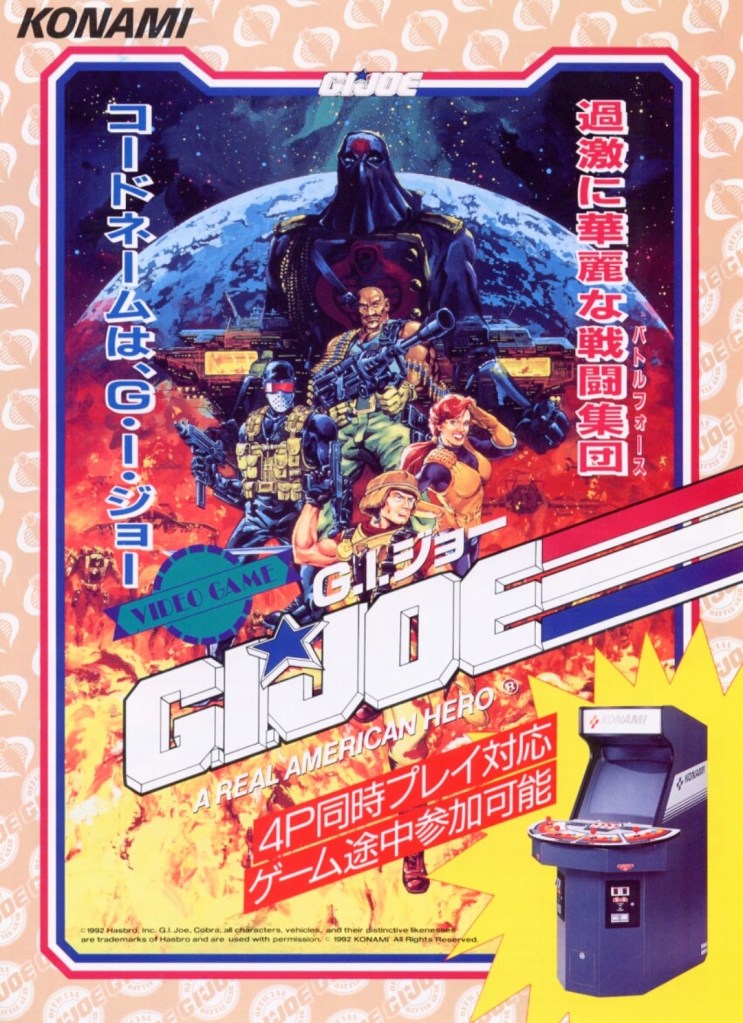
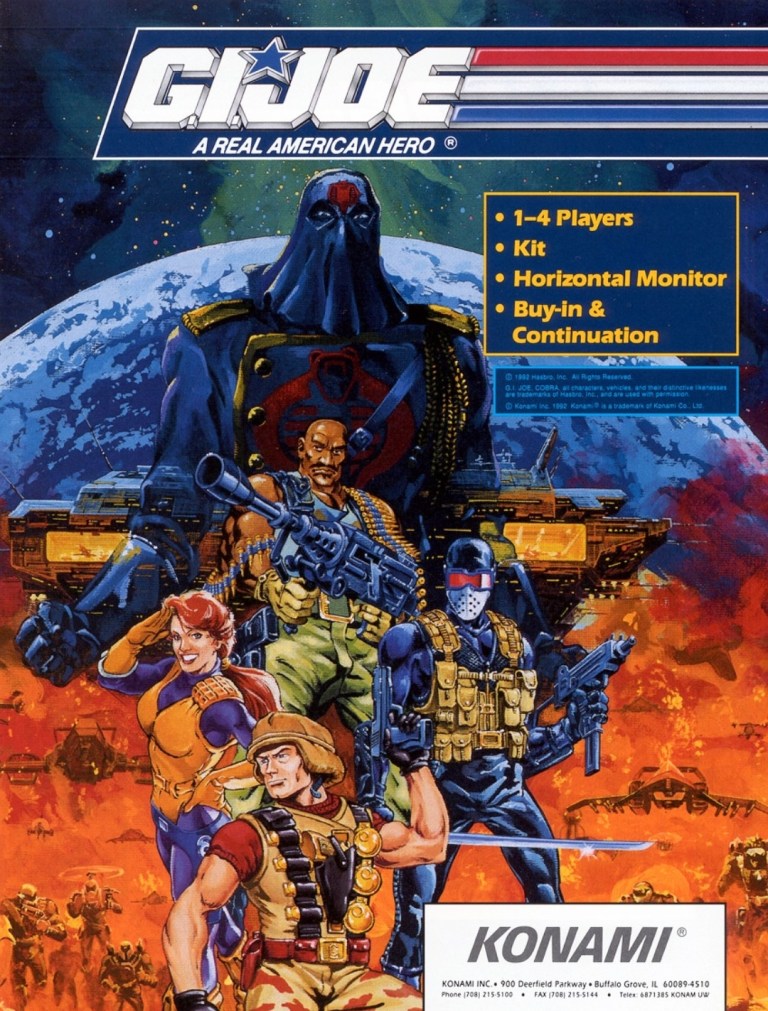
1. G.I. Joe: A Real American Hero arcade flyers

G.I. Joe: A Real American Hero arcade flyer for the Japanese market.
The North American arcade flyer of G.I. Joe.

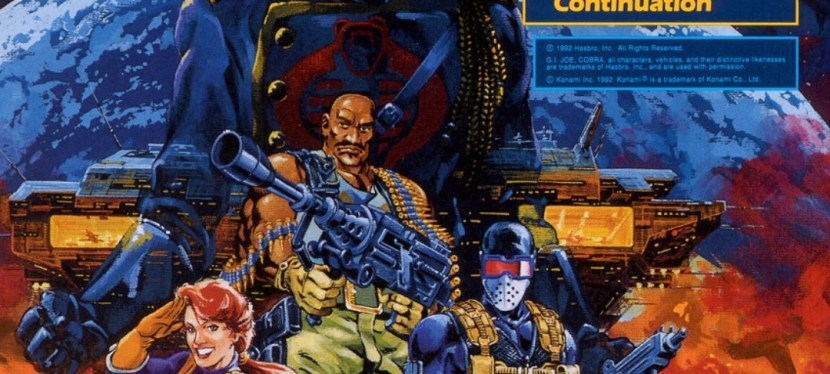
Back in the 1980s, my friends and I saw lots of episodes of G.I. Joe: A Real American Hero on TV and there were lets of toys of it available. I also read some comic books of G.I. Joe. While there were G.I. Joe video games, I never got to play its early 1990s arcade game from Konami. By comparing the two arcade flyers of G.I. Joe: A Real American Hero, the American flyer excels visually showing the characters with a powerful war-themed background. The Japanese flyer had smaller space for the same artwork and displayed the arcade cabinet (take note of the controls laid out to accommodate up to four players). Between the two, I prefer the American arcade flyer.

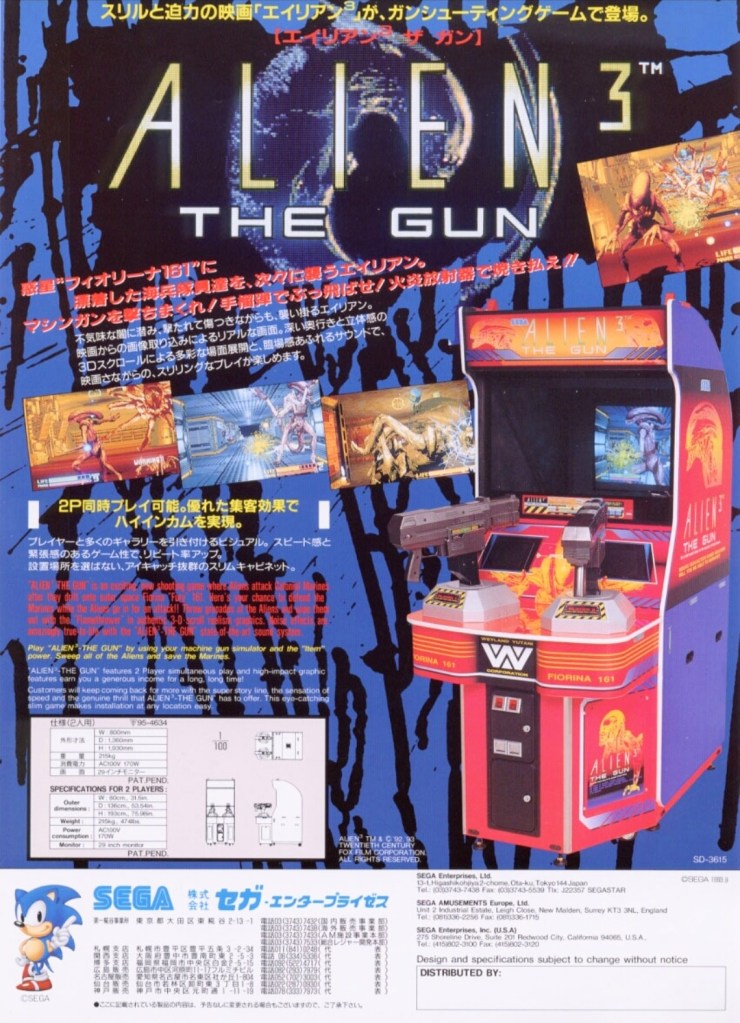
2. Alien 3 Japanese arcade flyer

With this arcade flyer, Sega clearly showed arcade operators what to expect when ordering machines of Alien 3: The Gun.

Watching Alien 3 inside the cinema in 1992 was one of the worst moviegoing experiences I ever had. By the time video games based on the movie were released, I was surprised to see how action-packed and entertaining they looked. The one Alien 3 game that captivated me was Sega’s Alien 3: The Gun in the arcades as its design and concept contradicted the essence of the film. The Japanese arcade flyer has this aggressive approach on laying down the details, displaying the arcade machine and displaying carefully selected screenshots to excite both gamers and arcade operators. This arcade flyer still looks good today.  

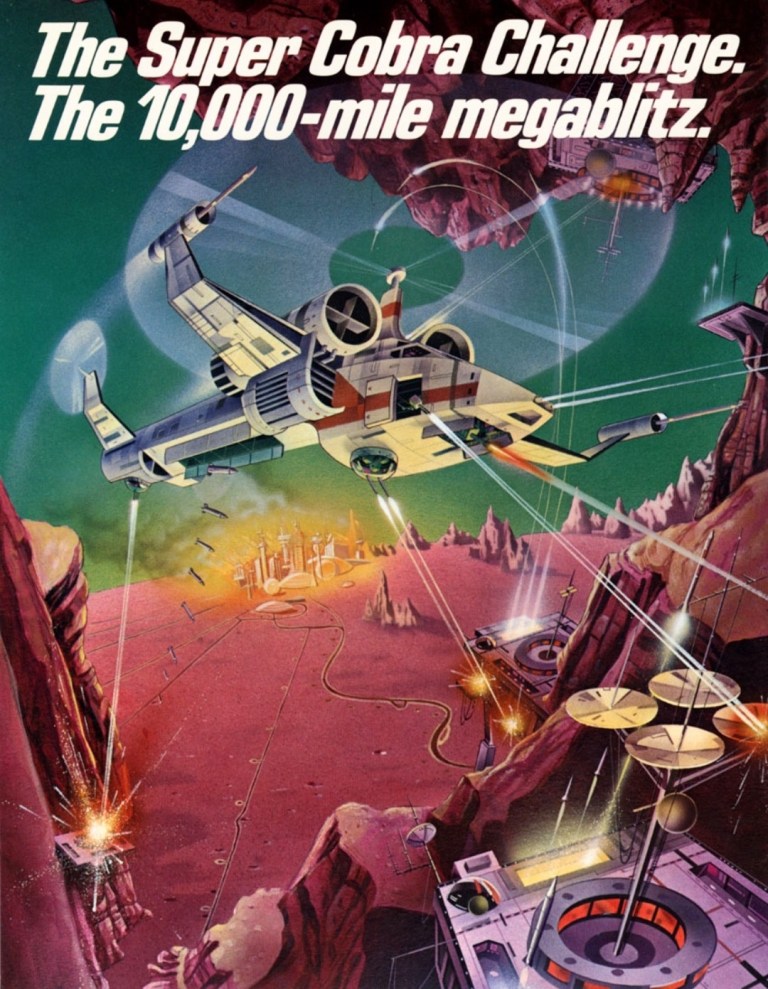
3. Super Cobra arcade flyer

A great artwork emphasizing the concept of Super Cobra.

First released in Japanese and America arcades in 1981, Super Cobra is a 2D side-scrolling shooter in which players pilot an armed helicopter through tight caverns while facing enemies capable of firing. The American arcade flyer has great artwork that almost perfectly captures the essence of the game. This is another old arcade flyer that has aged well.

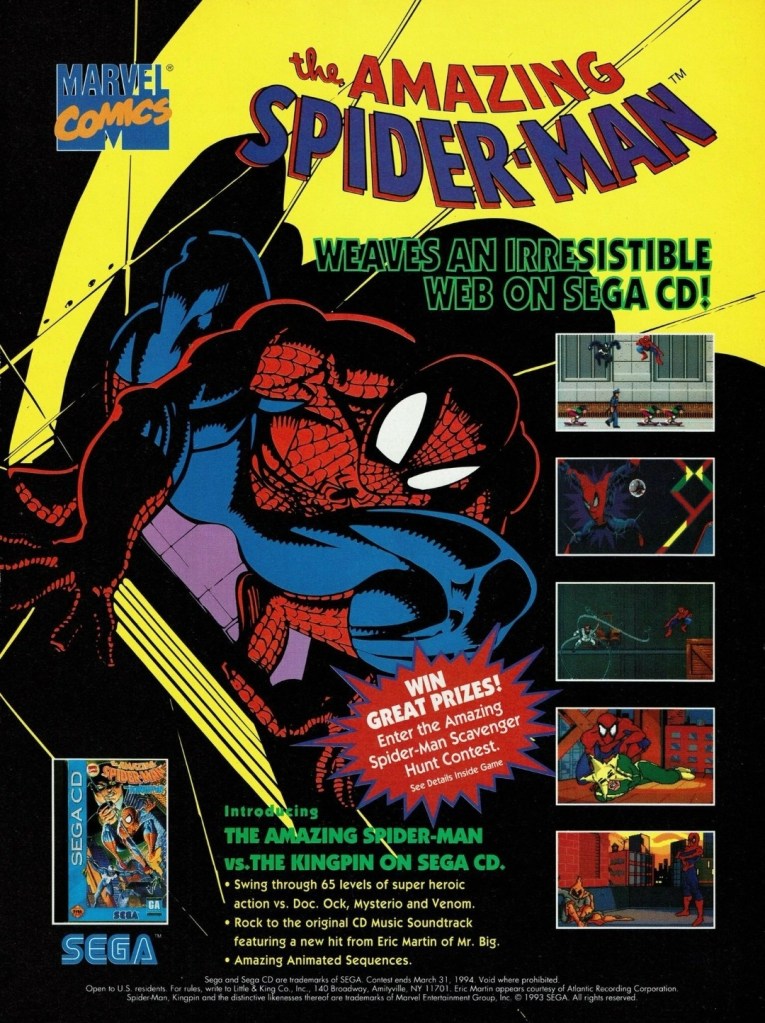
4. The Amazing Spider-Man vs. The Kingpin print ad

Back in 1993, animated sequences included in video games were still new and even exciting.

Moving forward to the year 1993, gamers in America who owned a Sega Genesis console were being motivated by Sega to upgrade their gaming experience with the Sega CD add-on. Along the way, Sega really ramped up efforts to have more games supporting the Sega CD and one of them was The Amazing Spider-Man vs. The Kingpin. The Amazing Spider-Man vs. The Kingpin on Sega CD was actually an updated version of the original 1991 game and Sega’s team included several improvements to take advantage of the CD-ROM technology of the add-on. This print ad showed Sega’s hard work on selling the game.

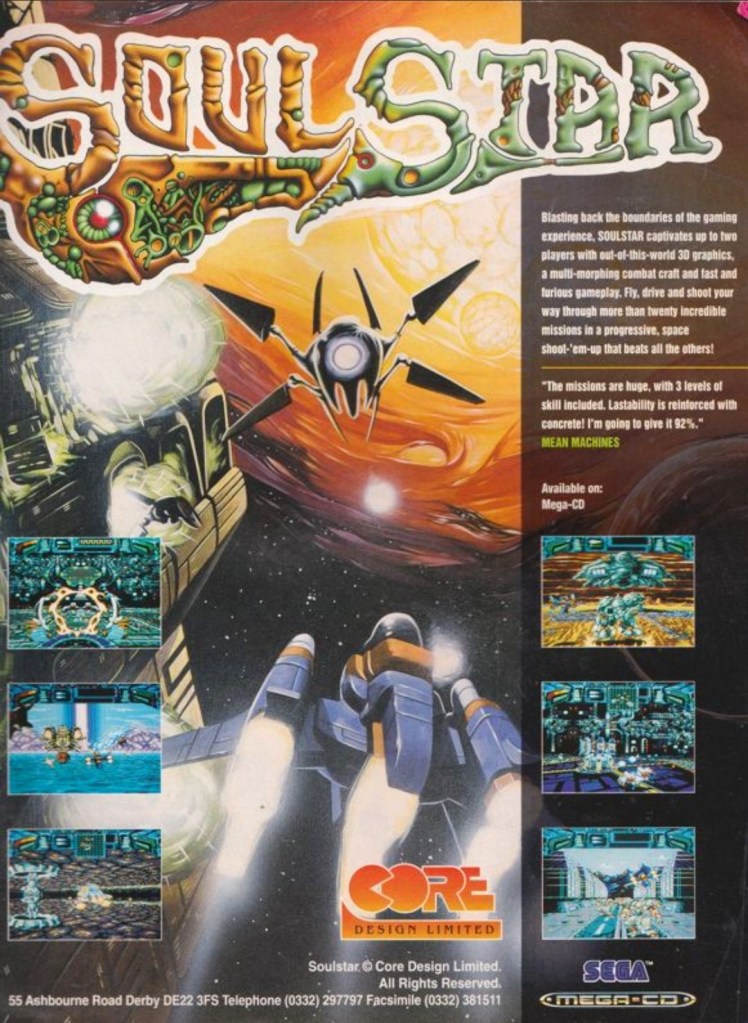
5. Soulstar print ad

The artwork of this print ad has very strong sci-fi vibes.

Released in 1994 for the Sega CD (Mega CD in other markets), Soulstar was sci-fi 3rd-person shooter that delivered amazing visuals, fun gameplay and an immersive experience of space travel to gamers. This European market print ad is a very effective way to promote the game using carefully selected screenshots, amazing artwork and a cleverly written text description. Still a fine print ad to look at.

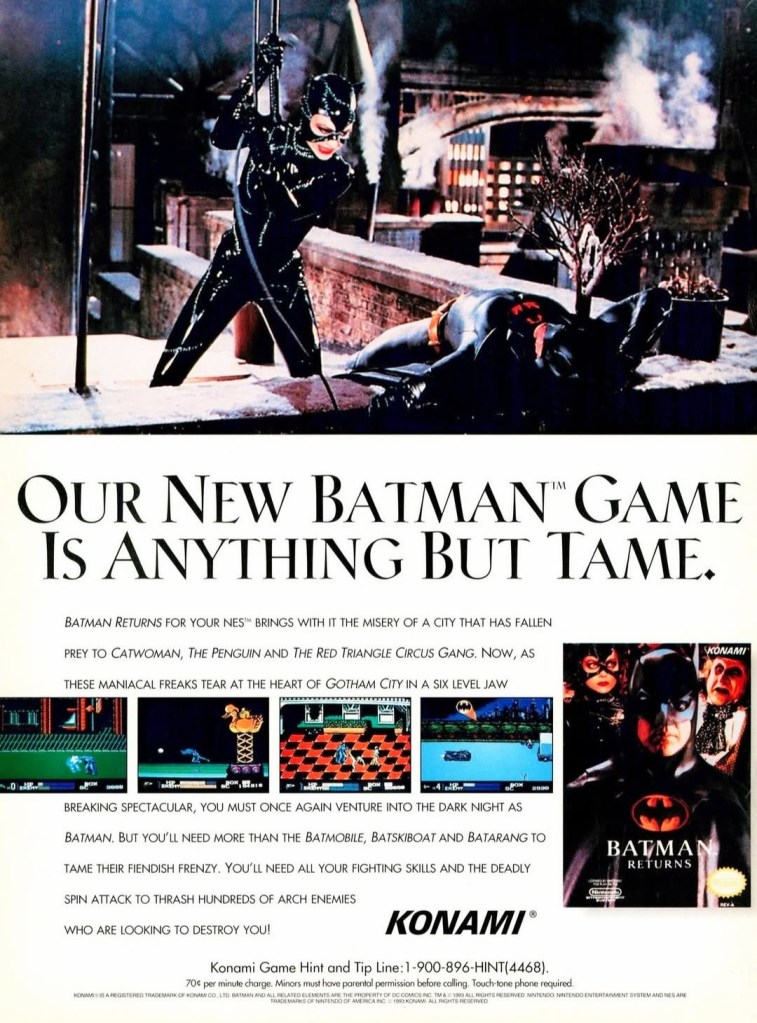
6. Batman Returns print ad

This print ad effectively promoted both the game and the movie. In retrospect, the line “Our new Batman game is anything but tame” turned out to be true as lot of parents who brought their kids to the cinemas for Batman Returns were turned off by the adulterated elements.

In 1992, Batman Returns played in a lot of cinemas but its very dark tone and adulterated elements prevented it from matching the huge box office success of its 1989 predecessor. Regardless, a lot of licensed video games based on the movie were released and in early 1993, Konami released a Batman Returns video game on the aging Nintendo Entertainment System (NES). This print ad used a photograph from the filming of an scene that actually had Michelle Pfeiffer as Catwoman, dominating over the iconic Batman. Also displayed were screenshots, the game’s box cover (showing Pfeiffer, Michael Keaton and Danny DeVito as their respective characters) and the text description. Even if you did not like the movie, this old print ad is a solid way of promoting both the game and the movie. The line “Our new Batman game is anything but tame” strangely turned out very true.

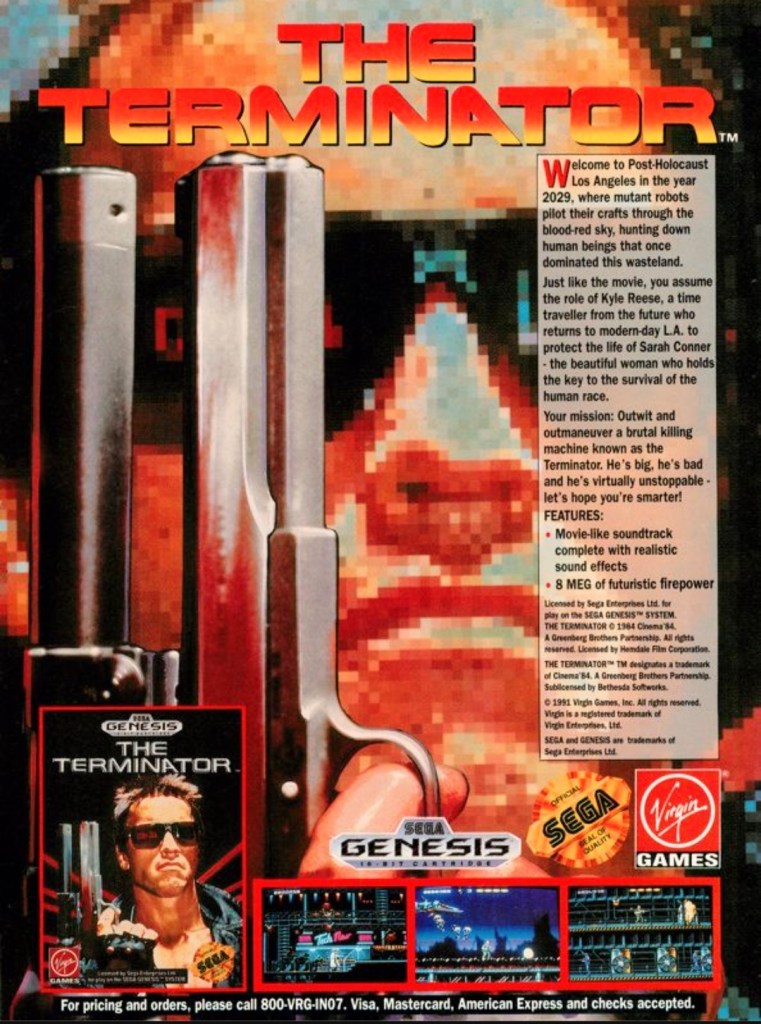
7. The Terminator games print ads

The Terminator for Sega Genesis.
The Terminator for Sega CD.

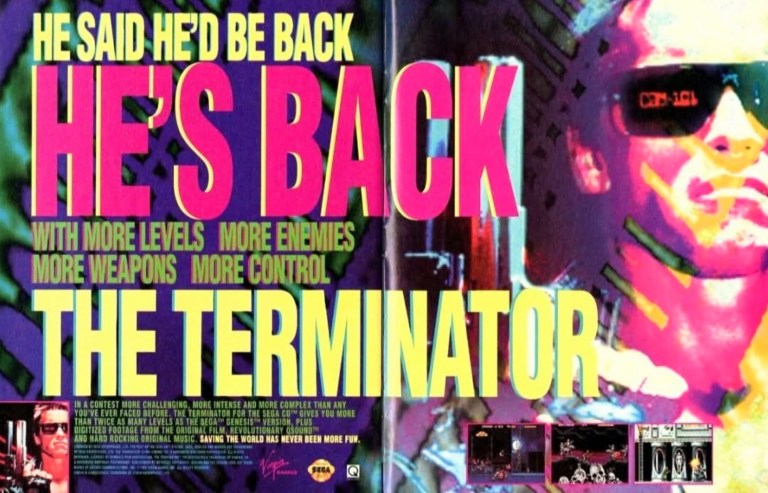
Released in cinemas in 1984, The Terminator was a surprise hit as well as a career-booster for Arnold Schwarzenegger and James Cameron. What is very notable is the fact that several video game adaptations of The Terminator were released on consoles in the early 1990s. I can only guess this was done to capitalize on the resurgence of the Terminator franchise in connection with Terminator 2: Judgement Day’s much-anticipated release in cinemas. The Sega Genesis version print ad features a digitized close-up of Schwarzenegger’s Terminator while the 2-page Sega CD version print ad used a lot of the space for large text (with an incomplete shot of Schwarzenegger’s Terminator on the edge of the 2nd page) emphasizing “He’s Back” and “The Terminator” while leaving little space for text descriptions and screenshots. Between the two, I find the Sega Genesis ad more effective with its promotion of the game.

8. Defender arcade flyer

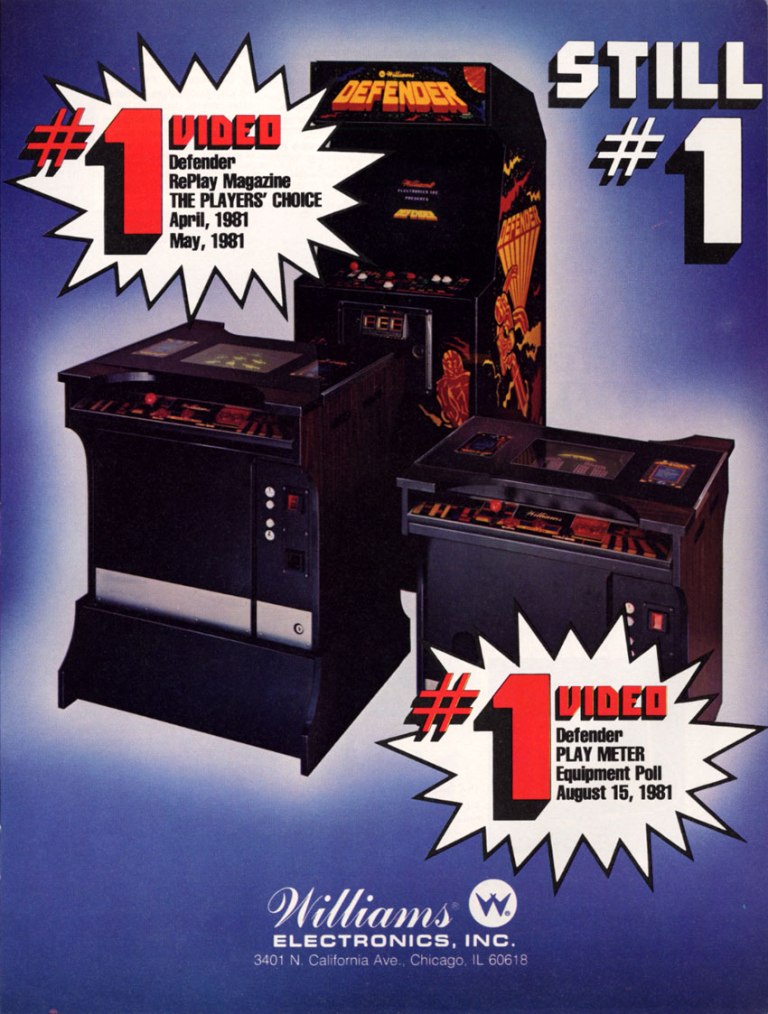
More choices of a very successful game for arcade operators also means more ways for players to play it.

Even though it had a soft start in the early 1980s, the classic game Defender went on to become a massive commercial success in the arcades. Being a major attraction in America’s video game industry, Williams unsurprisingly went on to release this particular arcade flyer to sell to operators different types of Defender arcade machines that could fit into their respective joints while providing gamers choices on how to play the game. Some players preferred to stand in-front of a tall arcade cabinet while others prefer to play the game looking down on the screen. This flyer is an example as to how a company can keep their biggest success moving on while offering business clients more choices.  

+++++

Thank you for reading. If you find this article engaging, please click the like button below, share this article to others and also please consider making a donation to support my publishing. If you are looking for a copywriter to create content for your special project or business, check out my services and my portfolio. Feel free to contact me with a private message. Also please feel free to visit my Facebook page Author Carlo Carrasco and follow me on Twitter at  @HavenorFantasy as well as on Tumblr at https://carlocarrasco.tumblr.com/ and on Instagram at https://www.instagram.com/authorcarlocarrasco
What to watch on YouTube right now – Part 58

Welcome back my readers, YouTube viewers and all others who followed this series of articles focused on YouTube videos worth watching. Have you been searching for something fun or interesting to watch on YouTube? Do you feel bored right now and you crave for something to see on the world’s most popular online video destination?

I recommend you check out the following topics and the related videos I found.

#1 Ashleigh Burton and VKunia’s reaction videos featuring Captain America: The First Avenger – Way back in 2011, I saw Captain America: The First Avenger in the local cinema and it was an enjoyable viewing experience. Among all the Marvel Cinema Universe (MCU) movies released to date, it remained the most unique superhero movie as it had a strong World War II aesthetic and really brought much of Captain America’s literary concepts to life. I recently saw the respective reaction videos of YouTubers Ashleigh Burton and VKunia and they were enjoyable to watch. If you have not seen the movie, watch it first. Otherwise, enjoy the videos below.

#2 The wickedness of Qatar and its agenda against Israel and the West explained – When it comes to waging war against Israel and Western civilization as we know it, Qatar is much more subtle when executing its sinister agenda. While terrorist state Iran openly expresses its hatred towards Israel and the West, and arms many Middle East terrorists groups, Qatar uses the terrorist news network Al Jazeera, lies through the diplomatic arena and clearly sided with the Palestinian terrorists. Watch this explanatory and analytical video.

#3 Trump Gaza plan makes sense – Since it was first announced, the ambitious plan of US President Donald Trump for America to take over the Gaza Strip has been making a lot of waves internationally. Of course, the political activists who hate Israel and support Palestinian terrorists just won’t relent with their distorted views and they preferred more people to become misled to support their so-called pro-Palestine movement. That being said, if you want to truly understand the truth and the details carefully, watch the videos below.

#4 The significance of Capernaum – It has been two years since I visited Israel on a Holy Land pilgrimage tour with my local church. Capernaum is the ancient site that Lord Jesus Himself chose to base His ministry after leaving Nazareth. In addition to being Jesus’ chosen city, Capernaum is also where many significant events happened as recorded in the Holy Bible. Having visited Capernaum myself, it is indeed a very holy site and you can learn more about it by watching the videos below from Hananya Naftali and HolyLandSite. I pray that these videos will inspire you to visit Israel to deepen your faith in Lord Jesus. Grab the Bible as well.

#5 There was a superhero-themed restaurant by Marvel – Long before the Marvel Cinematic Universe (MCU) rocked the world with many blockbuster movies, Marvel Entertainment Group (in partnership with Planet Hollywood and Universal Studios Hollywood) actually launched a superhero-themed restaurant that eventually failed. Launched in the late 1990s, the restaurant Marvel Mania was located near Universal Hollywood Studios. The failed business has long been forgotten. Fortunately, someone managed to record videos inside Marvel Mania long ago and uploaded footage on YouTube. The video below by Panels to Pixel is a must-see!

#6 PatmanQC examines classic game Xevious – During the golden age of arcades, the 2D sci-fi shooter Xevious was released and became very successful both commercially and critically. The only version of Xevious I played was on the Nintendo Family Computer (Famicom) and it turned out many other local gamers played it in their respective homes. There is a lot more to the history and conception of Xevious and you can find out more from PatmanQC’s videos below.

#7 Rob Liefeld’s Captain America artwork explained – Going back to Captain America, it’s time to take a closer look at a certain artwork of the icon done by Rob Liefeld (Youngblood, X-Force, The New Mutants) a long time ago. A lot of people hated it and called it exaggerated and totally unbelievable. There is an explanation for Liefeld’s Captain America artwork and you can watch and learn from the video of YouTuber Panels to Pixels below. Trust me, it is worth your time.

+++++

Thank you for reading. If you find this article engaging, please click the like button below, share this article to others and also please consider making a donation to support my publishing. If you are looking for a copywriter to create content for your special project or business, check out my services and my portfolio. Feel free to contact me with a private message. Also please feel free to visit my Facebook page Author Carlo Carrasco and follow me on Twitter at  @HavenorFantasy as well as on Tumblr at https://carlocarrasco.tumblr.com/ and on Instagram athttps://www.instagram.com/authorcarlocarrasco