Retro Gaming Ads Blast – Part 25

Welcome back readers, fellow geeks and electronic gaming fans!

In this edition of the Retro Gaming Ads Blast (RGAB) series, we will take a look at another batch of retro gaming print ads – including arcade flyers – from the 1980s and 1990s.

For the newcomers reading this, Retro Gaming Ads Blast (RGAB) looks back at the many print ads of games (console, arcade, computer and handheld) that were published in comic books, magazines, flyers, posters and newspapers long before smartphones, social media, the worldwide web and streaming became popular. To put things in perspective, people back in the 1980s and 1990s were more trusting of print media for information and images about electronic games and related products.

With those details laid down, here is the newest batch of retro gaming print ads for you to see and enjoy…

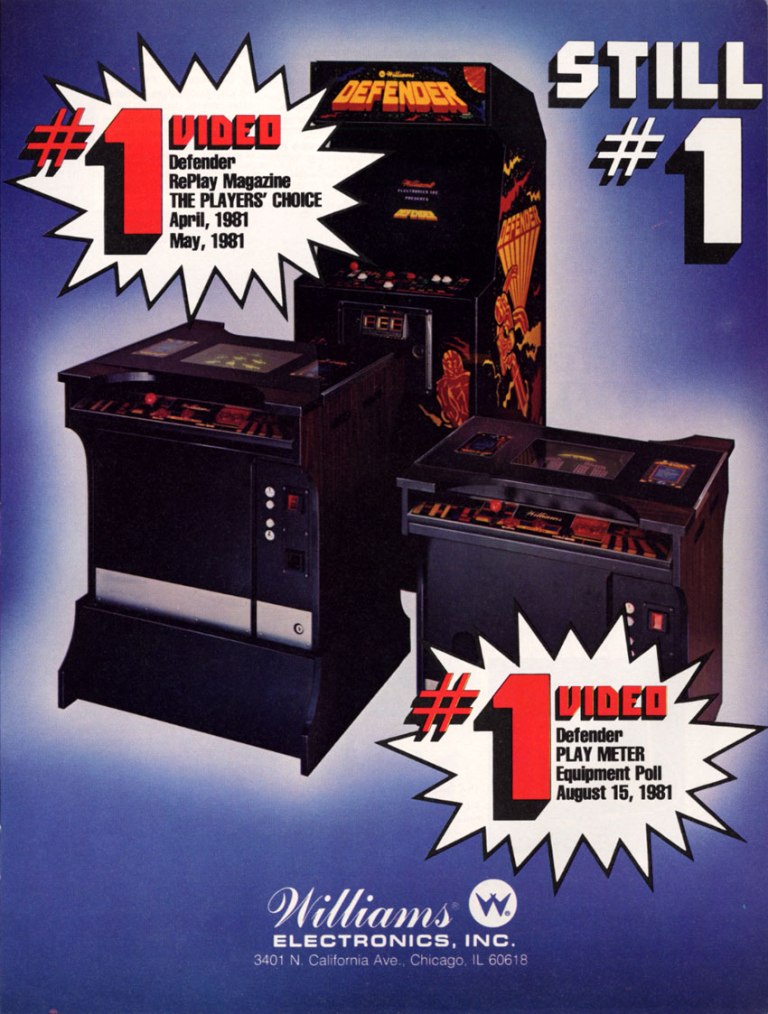
1. Defender arcade flyer

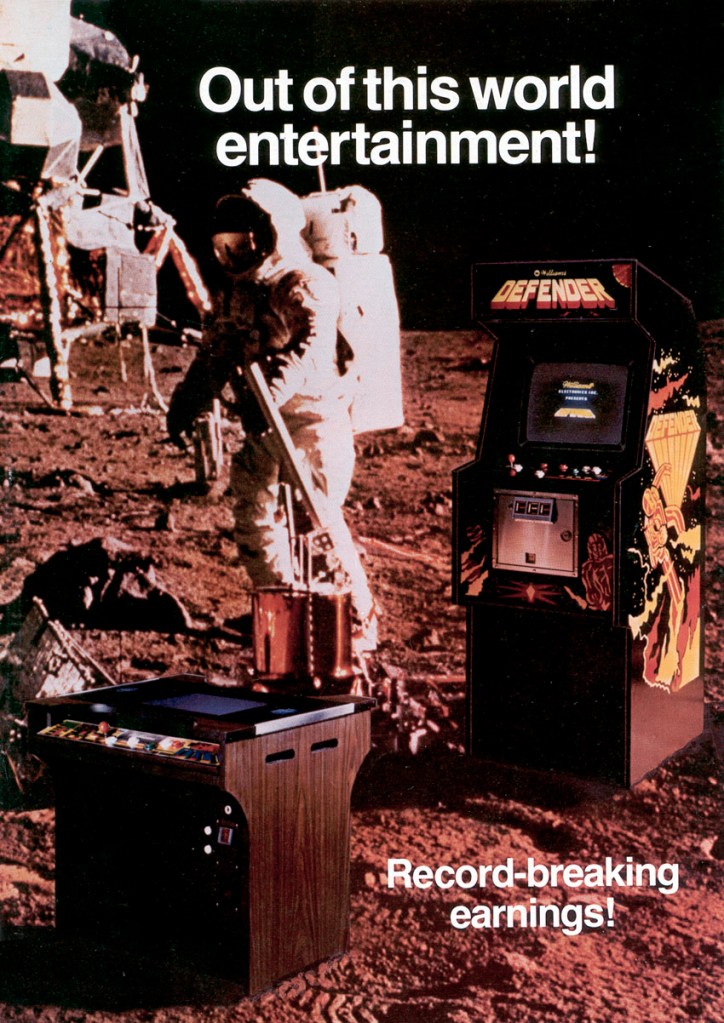
Perhaps Atari did not have enough original artwork of Defender to be used in this arcade flyer. So they ended up using footage of an astronaut on the moon.

Very long ago, I played the classic game Defender a lot on the Atari 2600. Strangely enough, I never played its arcade version as my visits to arcades were quite limited as I was so young back then. When it comes to the arcade flyer of Defender, I find the use of stock footage of an astronaut on the moon as the artistic backdrop baffling because the game’s concept was all about fighting back alien invaders and protecting the citizens. Ironically, the image blended well with the photos of two arcade machines showcased.

2. Amidar Atari 2600 print ad

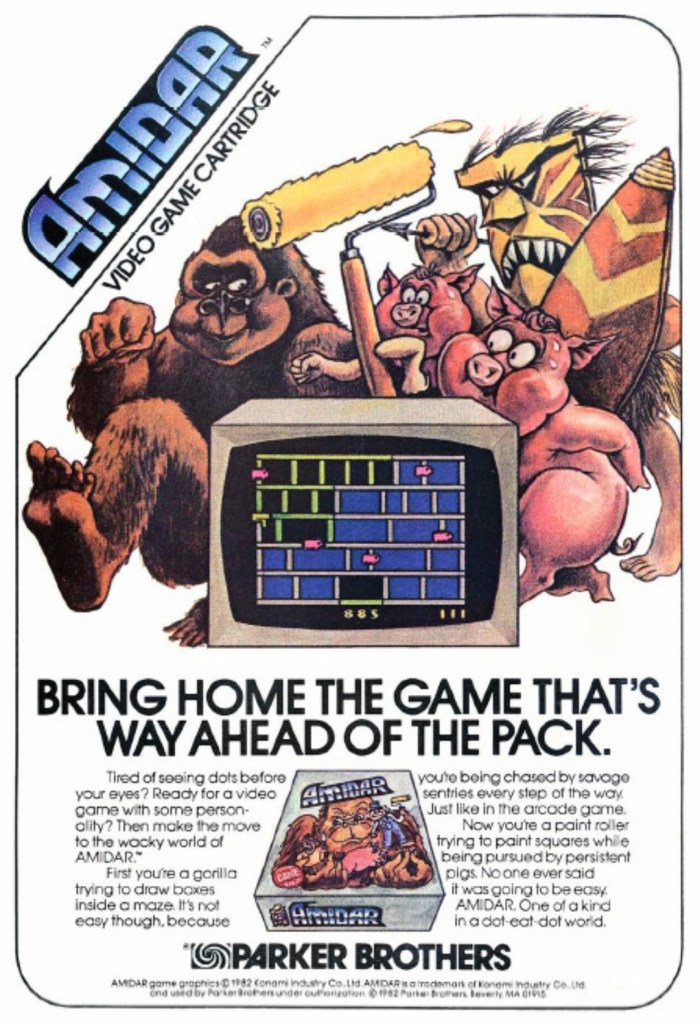
Does this ad make you think about King Kong or animals?

When I was a young boy, I saw this Parker Brothers print ad of Amidar appear in many superhero comic books I read. I never played the game on the Atari 2600 nor in the arcades. Each time I saw this ad, I always wondered how the game played and what its creative concept was all about. The constant showing of a giant gorilla on the game box cover reminded me of King Kong.

3. Reactor Atari 2600 print ad

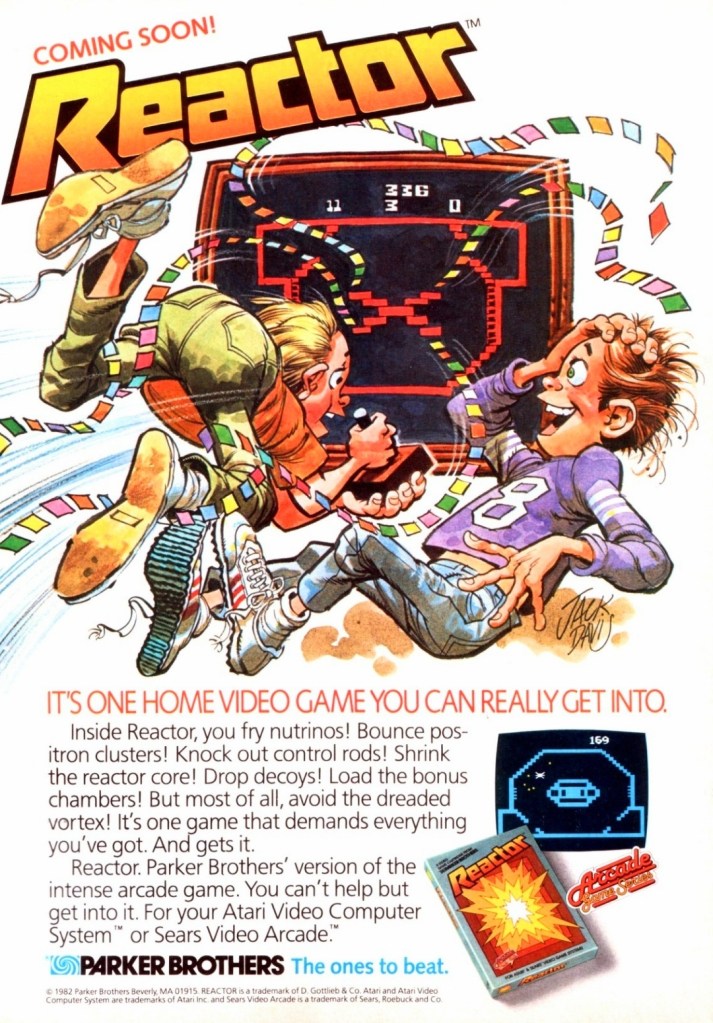
Parker Brothers made this ad imagining gamers getting very engaged with reactor once they start playing it.

Reactor was one of those video games that was somewhat influenced by the subject of nuclear technology, particularly about the nuclear reactors. This is another game I never played on console nor in the arcades. This Reactor print ad by Parker Brothers for the Atari 2600 has a visual style and creative concept that I still find fascinating to look at.

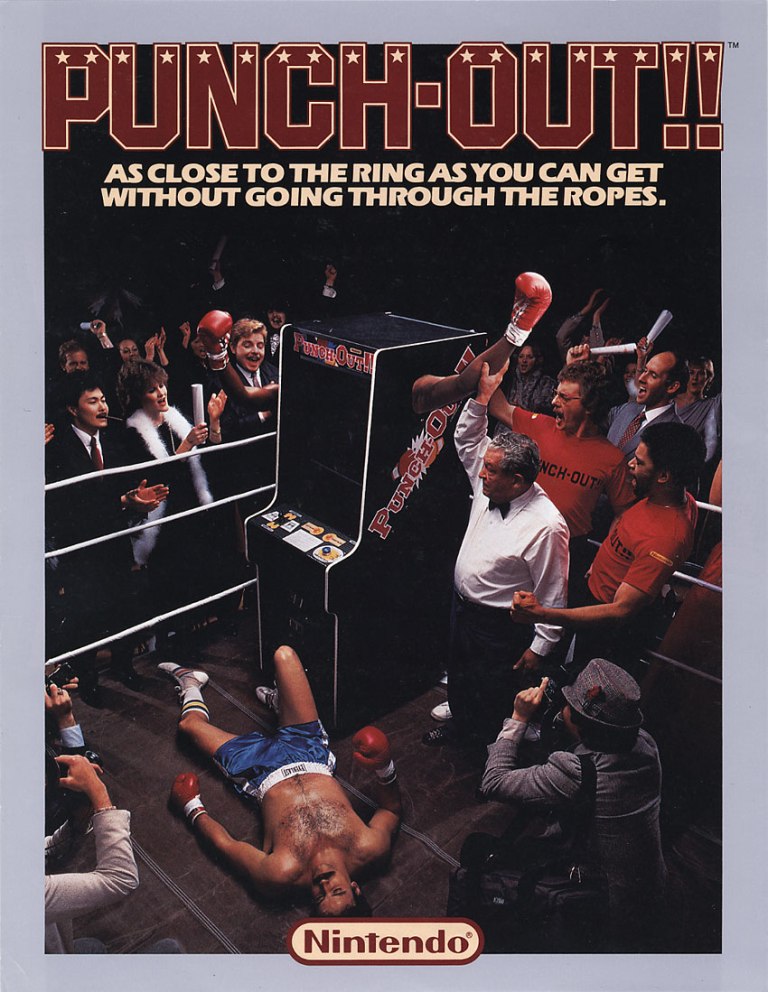
4. Punch-Out!! arcade flyer

This was years before Nintendo hired Mike Tyson to endorse the console version of Punch-Out!!

In 1984, Nintendo released the original Punch-Out!! game in the arcades and literally punched its way through to the top of American arcades that year while also scoring big in other arcades around the world. While the game proved to be very playable and a lot of fun, it could be argued that the intriguing image Nintendo used for the North American arcade flyer – a boxer down after literally getting beaten by the Punch-Out!! machine – made an impact on both gamers and arcade operators.

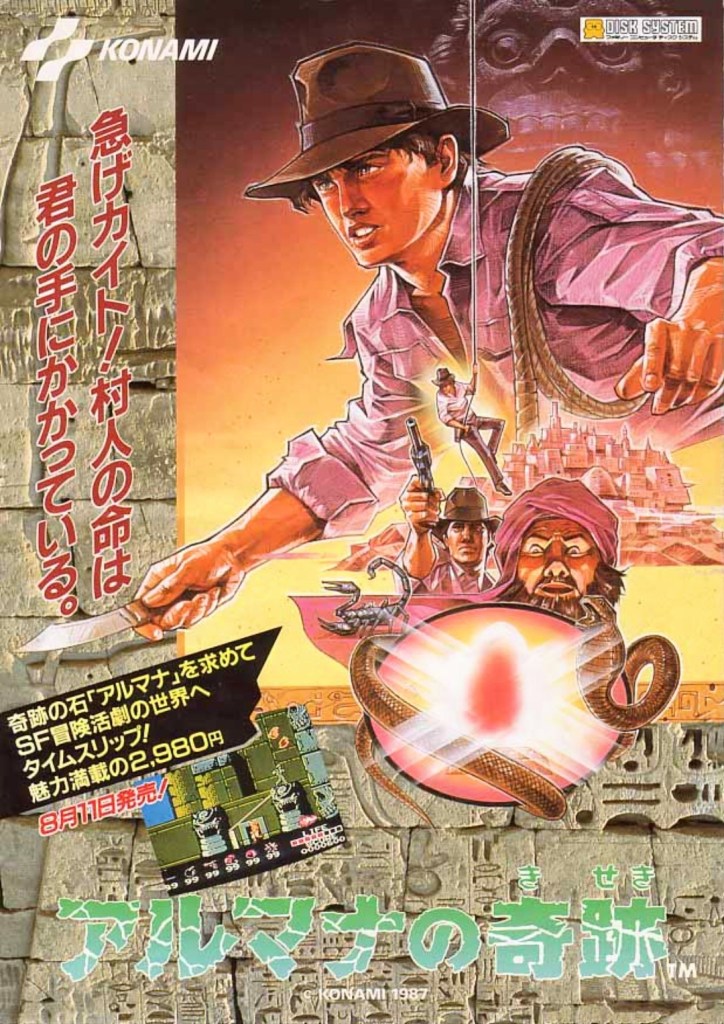
5. Arumana no Kiseki flyer

Is the famous Indiana Jones theme music playing inside your mind right now as you look at this art?

Released in 1987 on the Disk System of the Nintendo Family Computer (Famicom) in Japan, Arumana no Kiseki was one of the many 2D adventure games Konami released that entertained gamers. When compared to Castlevania – strongly influenced by American horror movies – this game was very influenced by the Indiana Jones movies of Steven Spielberg which is very evident in this promotional flyer.

In fact, some gamers who could not read the Japanese title actually thought this was an official Indiana Jones video game because the artwork was so suggestive. Having played and finished the game myself, I can say that Arumana no Kiseki was simply an Indiana Jones-inspired adventure game that had its own creative concept and unique settings and characters.

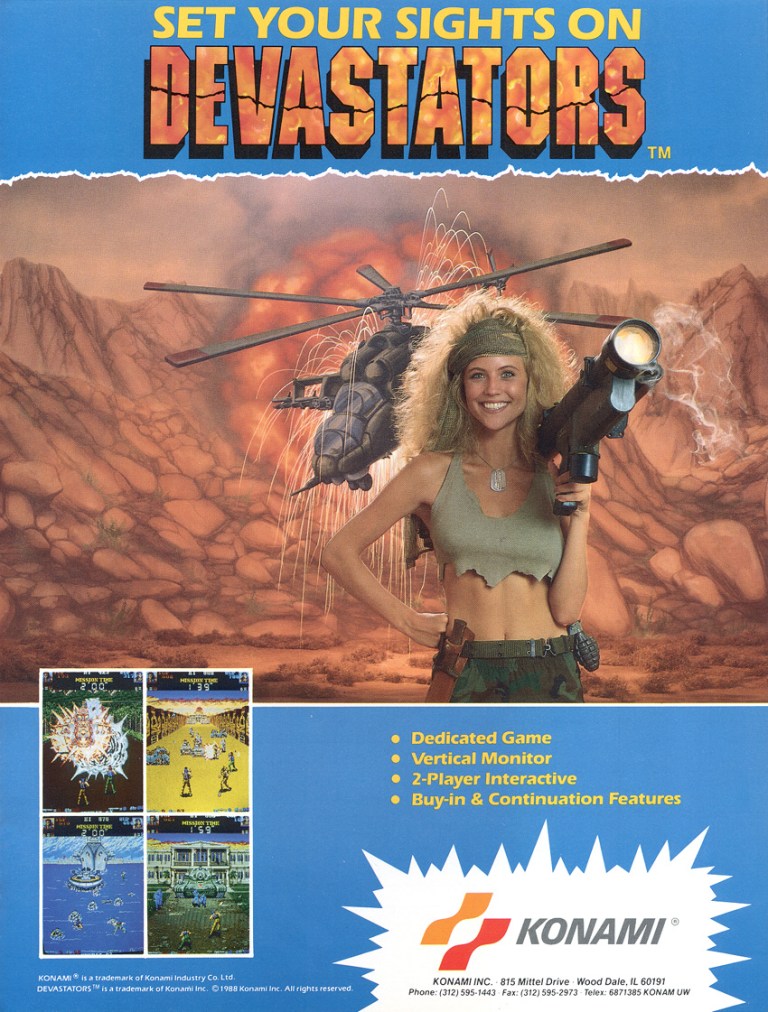
6. Devastators arcade flyer

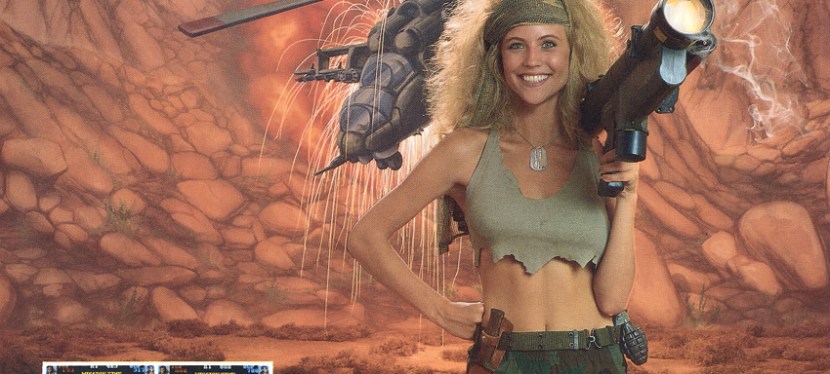
The 1980s female Rambo smiling towards you.

By looking at the track record of Konami closely, you will notice that many of their games in the 1980s were influenced by Hollywood movies and they hired pretty or sexy models for their arcade flyers. This arcade flyer of Devastators is no exception and you can clearly see the Rambo-inspired lady smiling while carrying a weapon. Devastators itself had strong Rambo vibes for its concept.

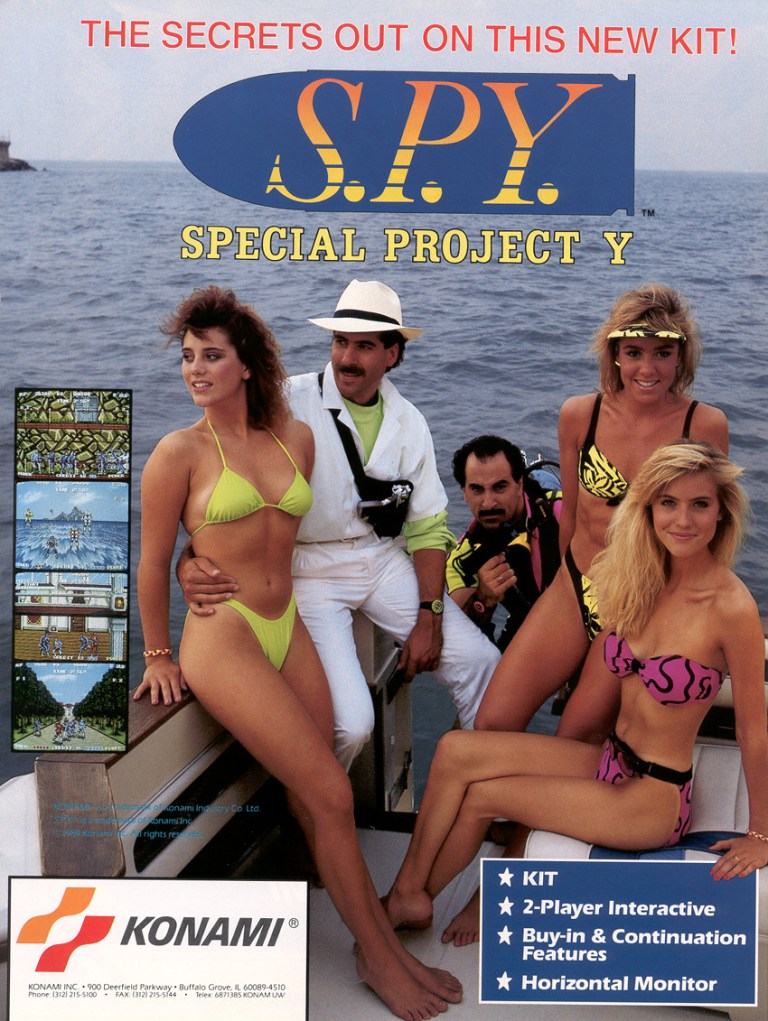
7. S.P.Y. Special Project Y arcade flyer

Somehow the picture of this flyer reminds me of Miami Vice.

Still with Konami, S.P.Y. Special Project Y is 1989 arcade game that featured action sequences in which players fight against countless enemies in order to progress with the minimal story. This game had certain spy movie elements and to promote it, Konami came up with this arcade flyer showcasing three sexy women wearing swimwear accompanied by two men who looked more like operators or schemers. Can you imagine yourself as an arcade operator looking at this flyer trying to decide to buy the game?

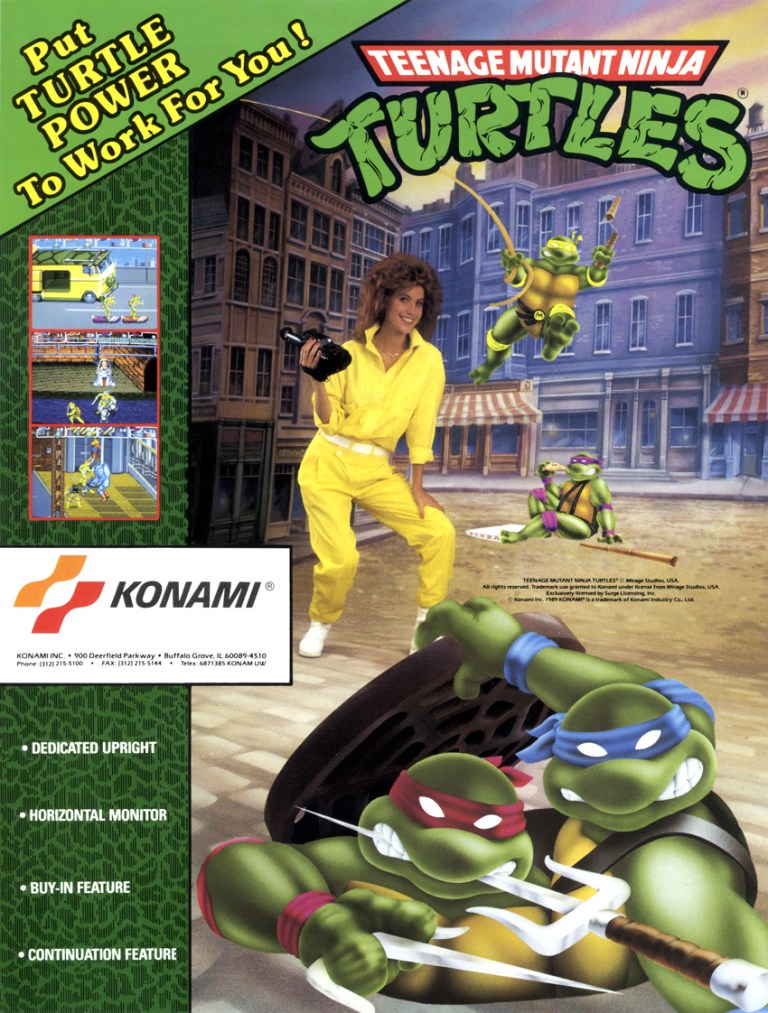
8. Teenage Mutant Ninja Turtles arcade flyer/poster

This arcade flyer is still great and exciting to look at, even if your not a TMNT fan.

Now this is one of the most definitive arcade games Konami ever made. Released in late 1989, Teenage Mutant Ninja Turtles became a massive arcade hit in North America constantly attracting lots of fans and casual gamers to play at each machine. The demand was so great, Konami had no choice but to hire a company to manufacture more machines. When it comes to promoting the game, Konami cleverly used a mix of artworks for the TMNT characters and fantasy environment while having a hired model playing April O’Neil blending in smoothly.

Having seen the 1980s animated series myself, I can say that the ad makers struck gold when it came to making a promotional image that Teenage Mutant Ninja Turtle fans can easily recognize and go to the arcade to play the game.

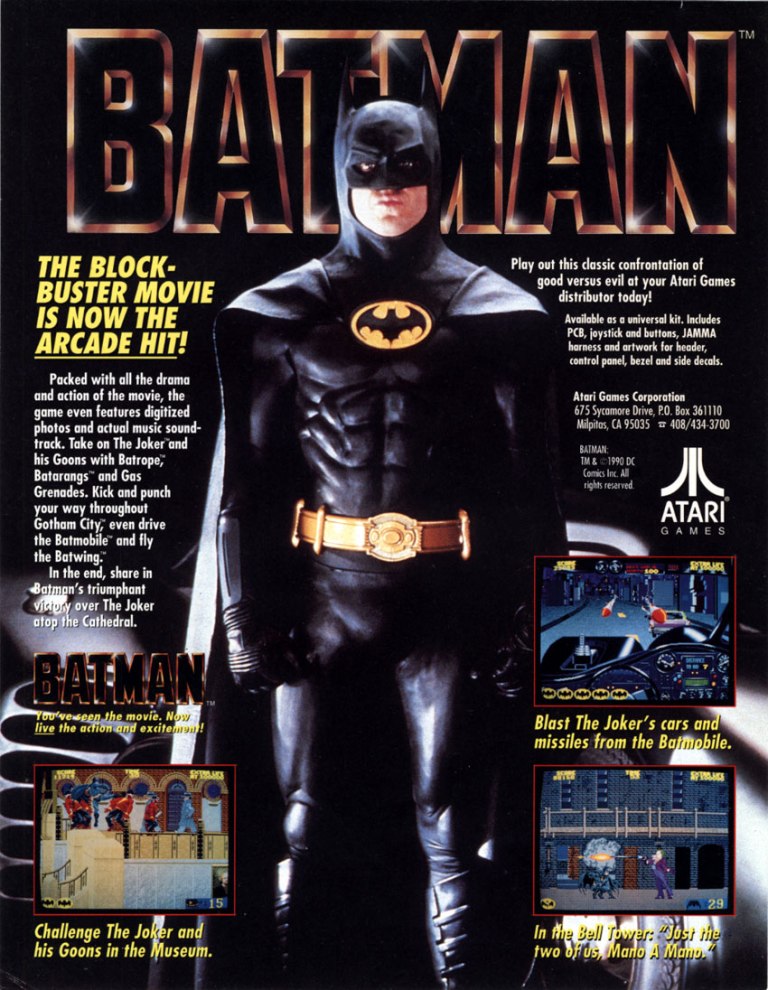
9. Batman arcade flyer

If you saw the 1989 movie, did you play this in the arcade?

The live-action Batman movie of 1989 was simply inescapable as there was so much hype, merchandising and promos connected with it. When it came to video games, it was not surprising that a lot of companies talked with Warner Bros. and eventually Atari made the official arcade game based on the movie (for insight on the production, watch PatmanQC’s video by clicking here). This early-1990s arcade flyer had a simplistic approach showing a few screenshots and descriptive text while having the live-action Batman (note: Michael Keaton in costume) dominating in the middle. Simplistic yet effective in telling gamers and arcade operators what to expect.

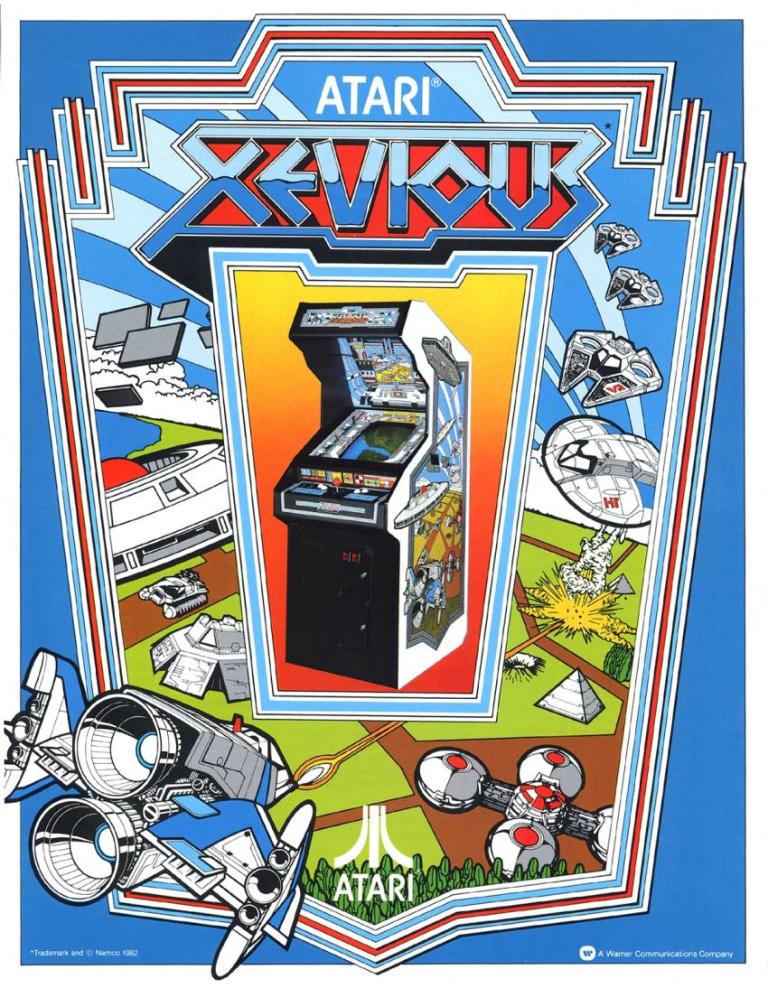
10. Xevious arcade flyer

This arcade flyer is exciting and creative to focus on.

Xevious is a long-running series of video games owned by Namco. Since the early 1980s, several Xevious video games were released on arcades, consoles and mobile devices. Believe it or not, the original Xevious game was published by Atari for North American arcades and the company came up with this dynamic looking flyer to promote it. The arcade flyer really looks dynamic due to the hand-drawn art surrounding the photo of the machine. Even by today standards, this flyer still looks modern and energetic.

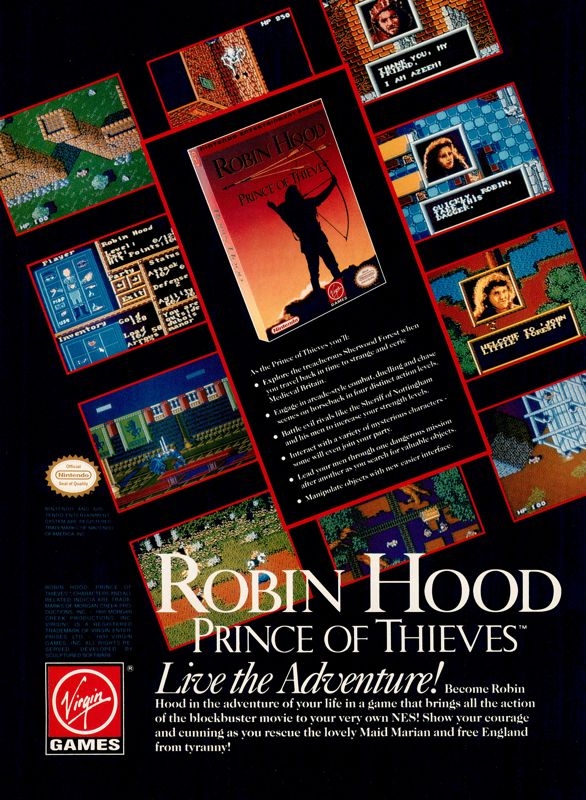
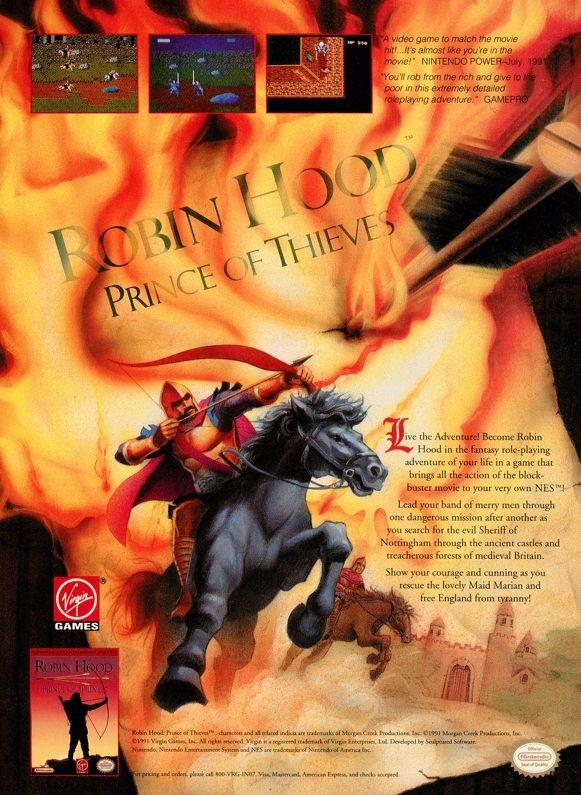
11. Robin Hood: Prince of Thieves print ads

Tell me if this ad makes you want to play the game.
Original artwork here was meant to immerse viewers into the fantasy setting of the game based on the movie.

If you saw the 1991 movie Robin Hood: Prince of Thieves, were you able to play the video game adaptation? Robin Hood: Prince of Thieves on the Nintendo Entertainment System (NES) was notable for being specially featured in the Nintendo Power magazine and its game design was truly ambitious at the time. To promote the game and take advantage of the movie’s popularity, Virgin Games came out with two print ads targeting movie fans and NES gamers.

The first print ad above had lots of selected screenshots surrounding the game’s box and crammed the descriptive text. The 2nd print ad had original artwork to emphasize the fictional setting and used only three screenshots. Looking at both print ads, it was clear that the ad makers had no permission to use the likeness of Kevin Costner as Robin Hood. The same with other actors and their characters. Regardless, the ads still reminded me enough of the movie while keeping me informed about the video game.

+++++

Thank you for reading. If you find this article engaging, please click the like button below, share this article to others and also please consider making a donation to support my publishing. If you are looking for a copywriter to create content for your special project or business, check out my services and my portfolio. Feel free to contact me with a private message. Also please feel free to visit my Facebook page Author Carlo Carrasco and follow me on Twitter at  @HavenorFantasy as well as on Tumblr at https://carlocarrasco.tumblr.com/ and on Instagram at https://www.instagram.com/authorcarlocarrasco
Retro Gaming Ads Blast – Part 24

Welcome back readers, fellow geeks and electronic gaming fans!

In this edition of the Retro Gaming Ads Blast (RGAB) series, we will take a look at another batch of retro gaming print ads – including arcade flyers – from the 1980s and 1990s.

For the newcomers reading this, Retro Gaming Ads Blast (RGAB) looks back at the many print ads of games (console, arcade, computer and handheld) that were published in comic books, magazines, flyers, posters and newspapers long before smartphones, social media, the worldwide web and streaming became popular. To put things in perspective, people back in the 1980s and 1990s were more trusting of print media for information and images about electronic games and related products.

With those details laid down, here is the newest batch of retro gaming print ads for you to see and enjoy…

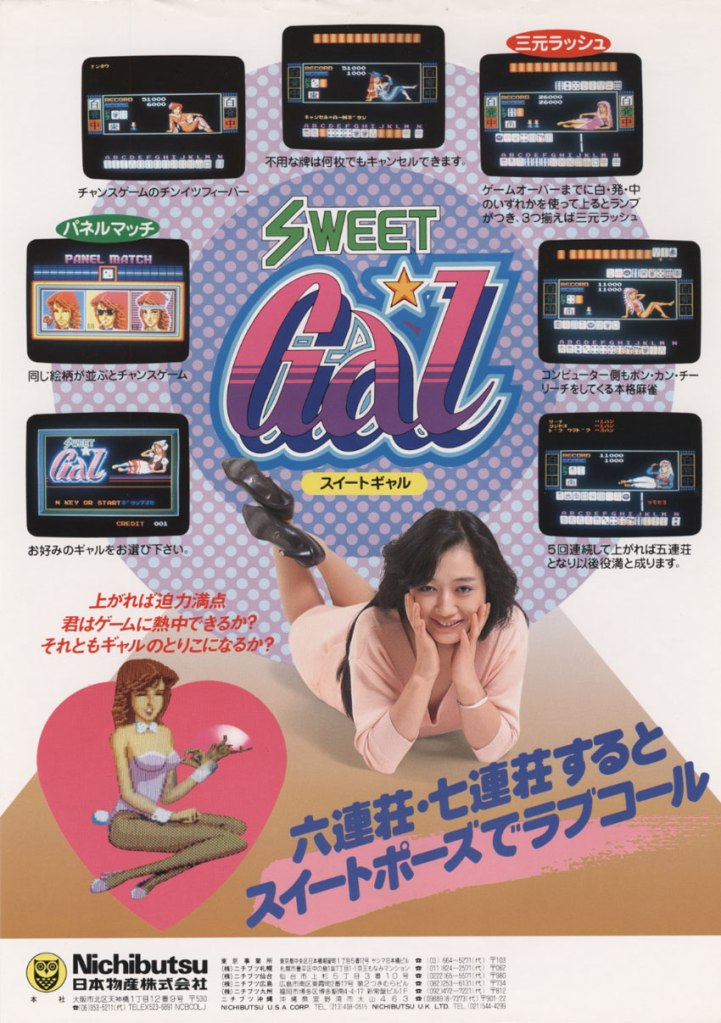
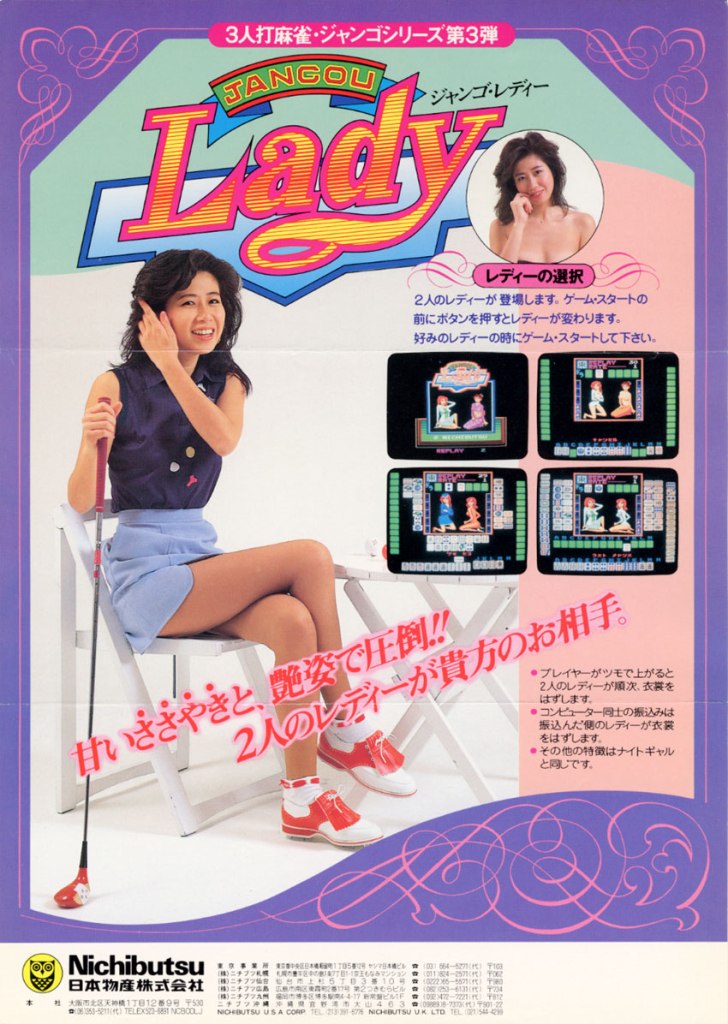
1. Jangou Lady arcade flyer

If you were to play Mahjong digitally, does sex appeal motivate you to do so?

Are you fond of playing the tile-based game Mahjong? Believe it or not, there were indeed ways to play Mahjong in digital form inside the arcade or in gambling joints in Japan. The game Jangou Lady allows users to play rounds of Mahjong but with a notable additive – the digital art of women which serves as an attraction. In the sex appeal is clearly evident on this arcade flyer from the 1980s.

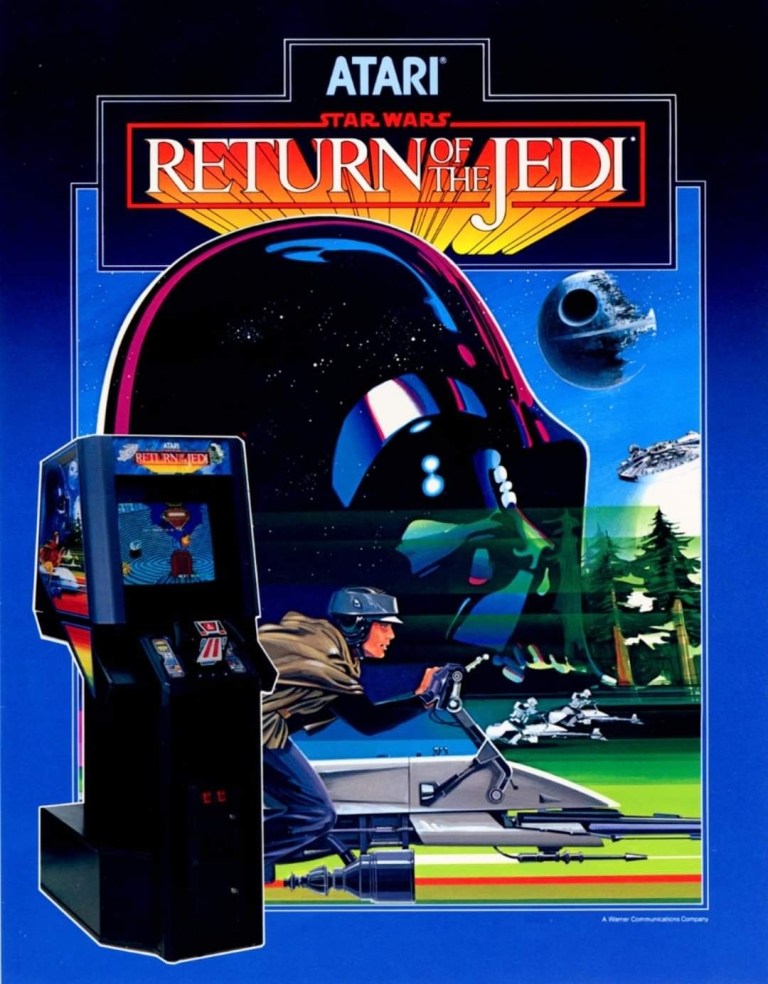
2. Star Wars: Return of the Jedi arcade flyer

Really nice art based on the movie.

Way back in 1983, Return of the Jedi delighted moviegoers in the cinemas throughout America. Behind the scenes, video game giant Atari acquired the movie license to make the 1984 arcade game Star Wars: Return of the Jedi. The arcade flyer’s front featured a highly detailed hand-drawn art of Darth Vader, the Death Star, Luke Skywalker and Storm Troopers on hover bikes, and the Millennium Falcon which reflect the selected elements of the movie that were turned into playable sections. The image of the arcade machine was understandably inserted as it came with an unusual controller. This flyer is still captivating to look at.  

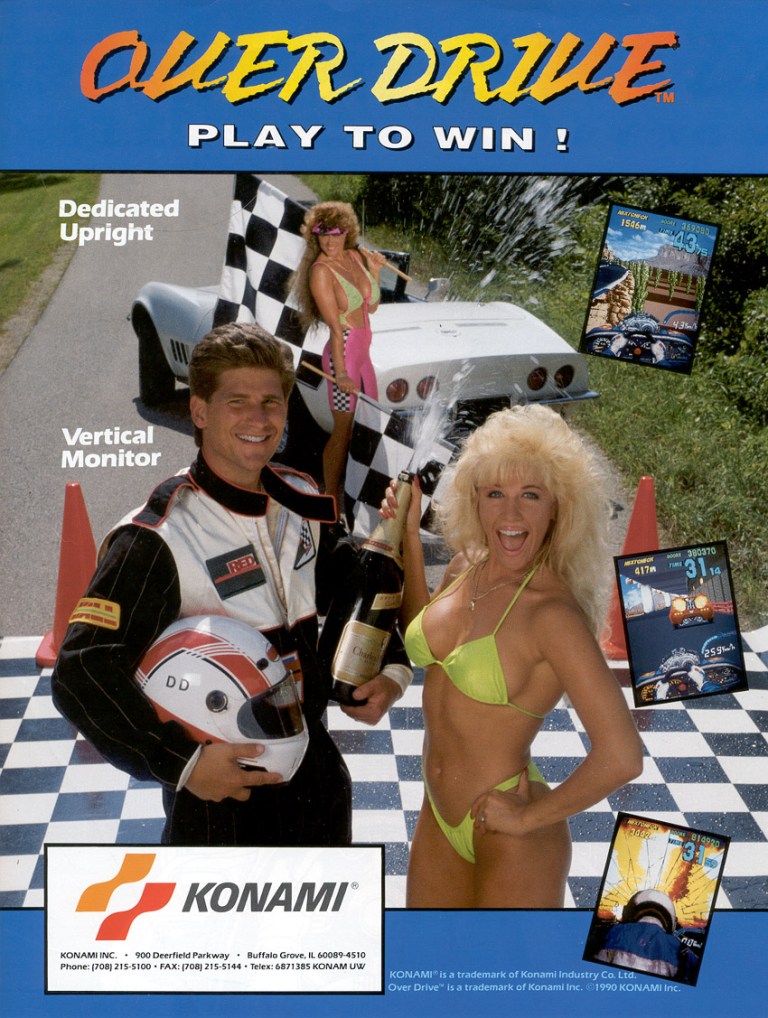
3. Over Drive arcade flyer

This arcade flyer is a reminder that Konami was notable for hiring pretty and sexy women for their print ads.

In 1990, Konami produced a racing game for the arcades with a unique style of presentation. That game was Over Drive and it stood out among the many racing games in the arcade mainly because of its first-person view (with a digital version of the steering wheel and driver’s hands at the bottom of the screen) and unique approach on sprite-scaling. To promote the game, Konami hired sexy models for photography for use in both the arcade flyer and the exterior images on the machine. Having sexy models posing with a winning driver added to the motorsport racing vibe needed to promote the game.

4. American Gladiators for NES print ad

I saw American Gladiators on TV but never played this game.

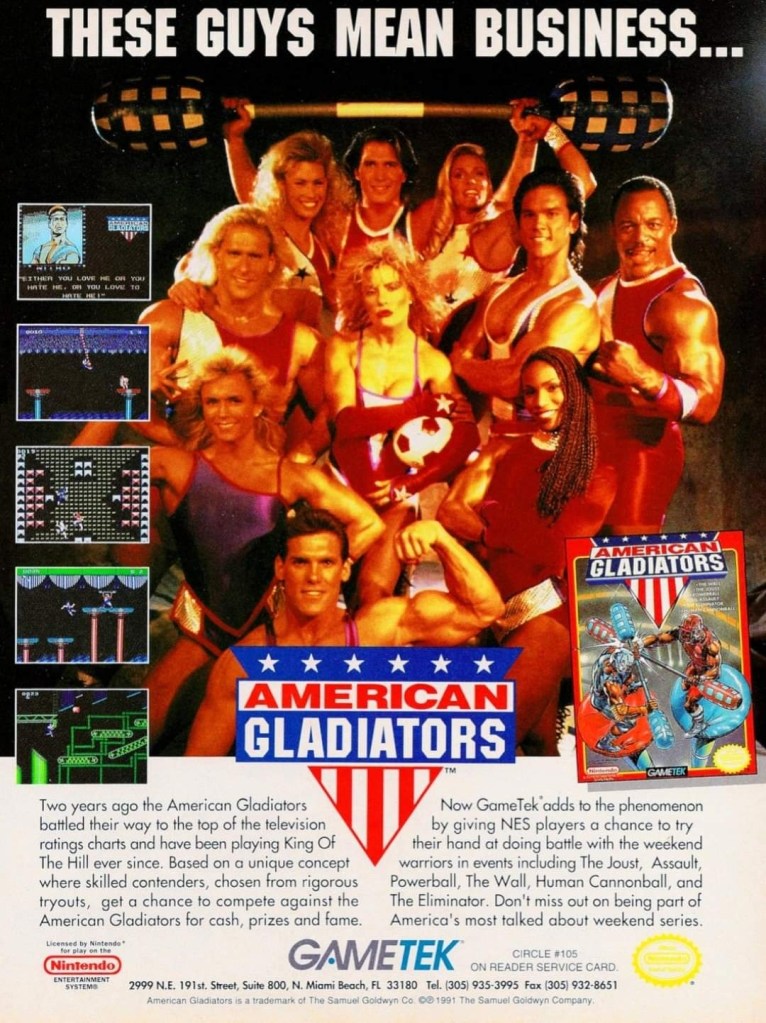
American Gladiators was a syndicated TV show that featured a variety of games in which amateur athletes compete with the established gladiators to succeed and become the next American Gladiator. Due to its success, it was not surprising that video game adaptations of the show were realized just a few years after its debut. In 1991, GameTek released the American Gladiators game on the Nintendo Entertainment System (NES) and promoted it with this print ad that showcased their established gladiators of the time. This ad’s design was made to catch the attention of the fans.

5. Arch Rivals for NES print ad

I remember seeing a lot of people crowding in front of an Arch Rivals machine in the local arcade long ago.

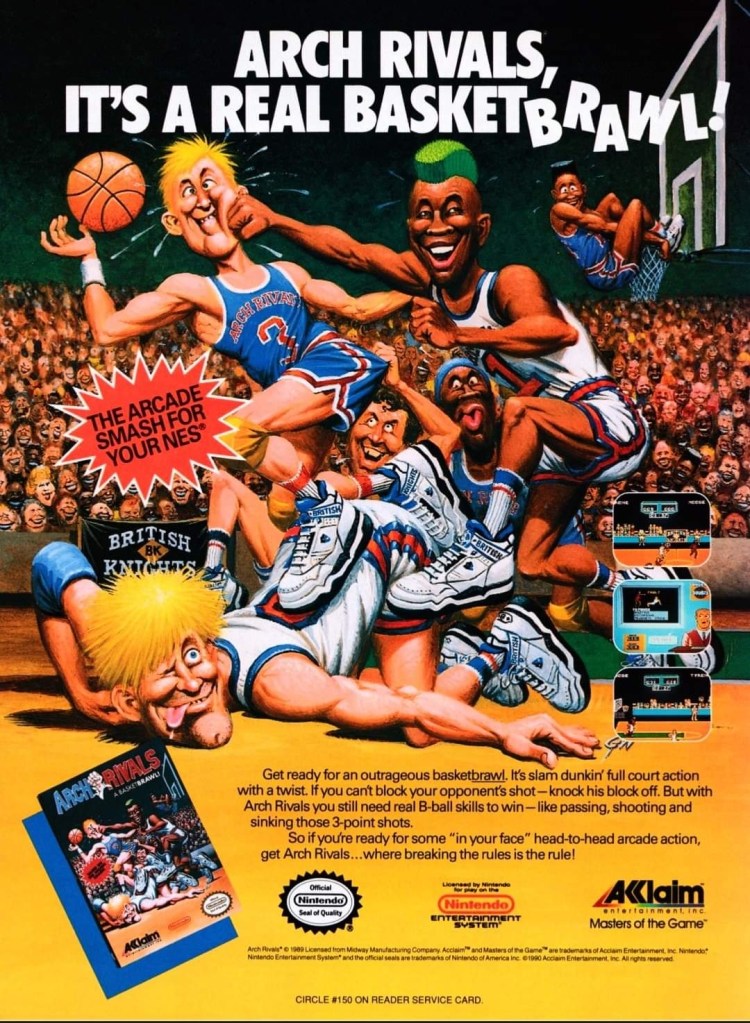
Years before NBA Jam, there was Arch Rivals. Arch Rivals was a full court basketball video game in which players are allowed to punch players from the opposition in order to steal the ball and score. Over a year after the game’s 1989 arcade debut, the NES version was released and the publisher came up with a print ad showcasing a hilarious and cartoony artwork (the same art used for the game’s box cover) which gave readers a clear idea of what to expect. The art used is timeless and it still is funny to see.

6. Sega Sports print ad

See any Sega Sports video game you like?

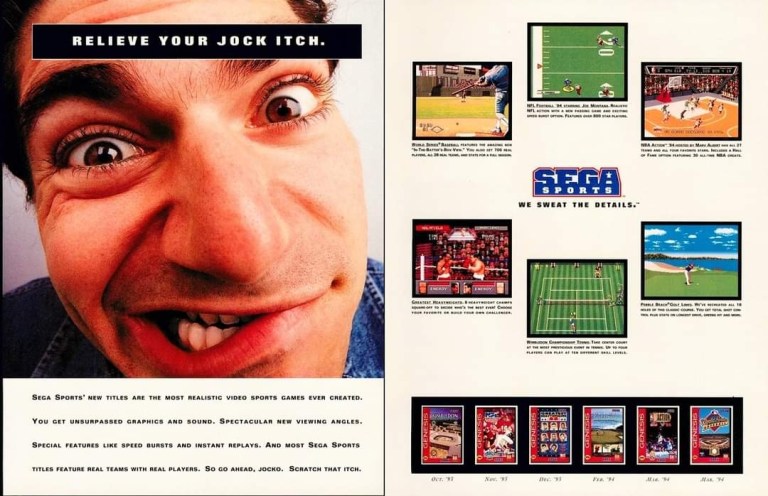
Back in the 1990s, Sega excelled with sports video games. They were so aggressive, they established their sub-brand Sega Sports and this particular print ad showed one page promoting assorted sports video games (basketball, golf, baseball, tennis, boxing and American football) for the Sega Genesis and the other page with an exaggerated image of a guy with the line “Relive your jock itch” posted. Historically, a lot of American players and owners of the Genesis are slightly older than those on NES and Super Nintendo Entertainment System (SNES) during the 1990s and the strong sports games approach is a key factor.  

7. Plumbers Don’t Wear Ties print ad

When I first saw this print ad, it did not interest me as the presentation is lousy.

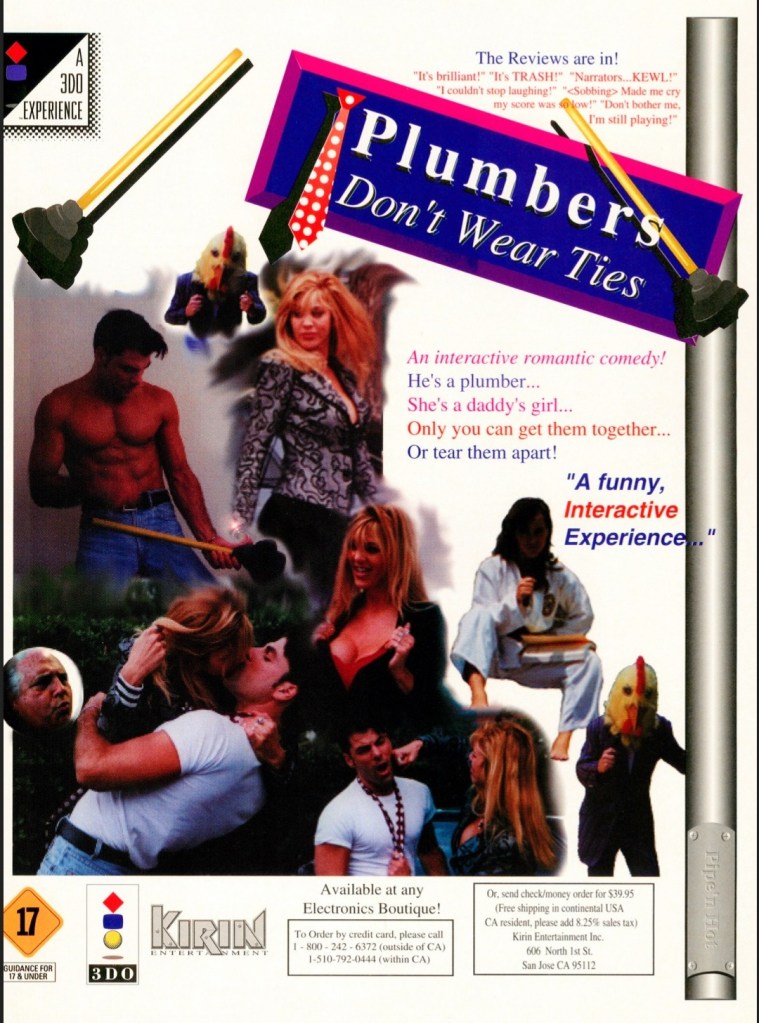
The 3DO console is remembered for having a lot of games that used full-motion videos and photo slides regardless of what game designs came with them. Back in the 1990s, games designed as visual novels or dating simulations were still new in console gaming in the West. Following the PC version’s release, a 3DO port of Plumbers Don’t Wear Ties came out in 1994 and it received overwhelmingly negative reviews. The print ad here promoted the game as “an interactive romantic comedy” and fake quotes were displayed to fool ignorant readers that the game was entertaining. The print ad’s visual design had a mess of poorly implemented images. Ironically, this ad accidentally gave readers the idea that it was a slideshow game.

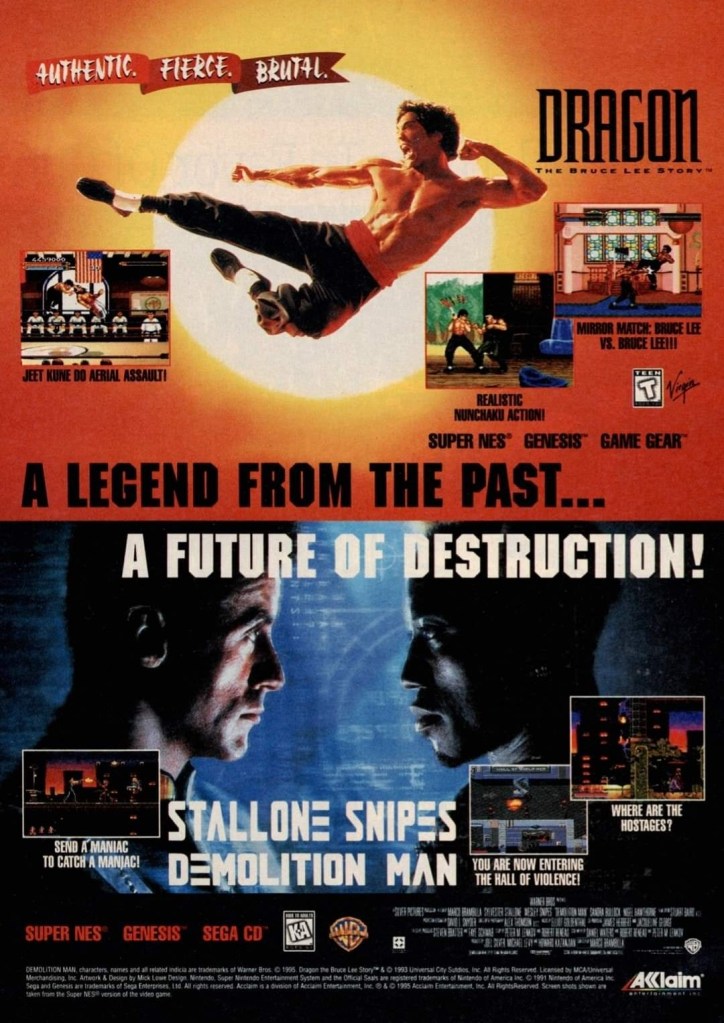
8. Dragon: The Bruce Lee Story and Demolition Man games print ad

If you saw the movies, did you play their respective video game adaptations?

The 1990s is remembered for the many movie-based video games that got released. Back in those days, a lot of Hollywood movie productions had video game adaptations as part of the business process and this is evident with the Dragon: The Bruce Lee Story and Demolition Man games released by Acclaim. For this particular print ad, the marketing team came up with a single-page ad to promote the two games with heavy emphasis on movie imagery leaving little room left for screenshots and other details. The way I look at this old print ad, it seems that Acclaim was aiming for not just movie fans but also gamers who like 2D fighting games and 2D action-adventure games.

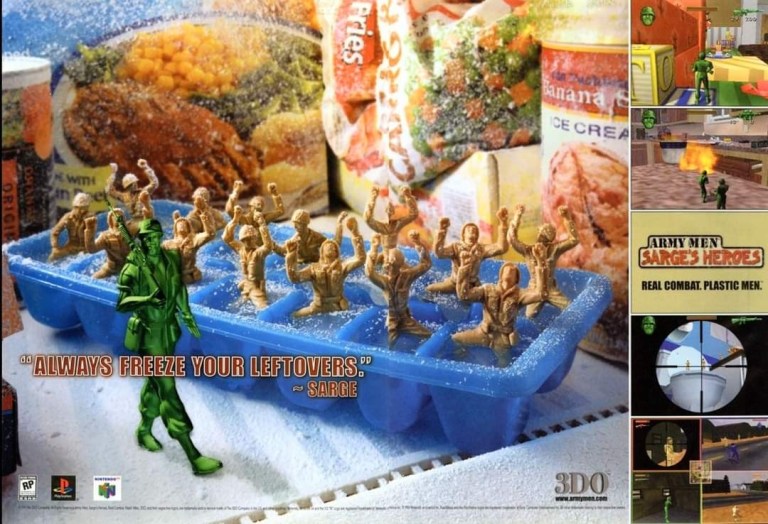
9. Army Men: Sarge’s Heroes print ad

This print ad by 3DO is still funny to see.

In the late 1990s, The 3DO Company focused mainly on producing video games on multiple platforms and they had their own video game franchise based on the green plastic figures with a military theme. In 1999, they released Army Men: Sarge’s Heroes for PlayStation and Nintendo 64 (N64). To market the game, they had a hilarious visual concept of several solders freezing on an ice tray as a long green soldier marching on. This print ad always caught my attention while reading game magazines and it still is funny to stare at.

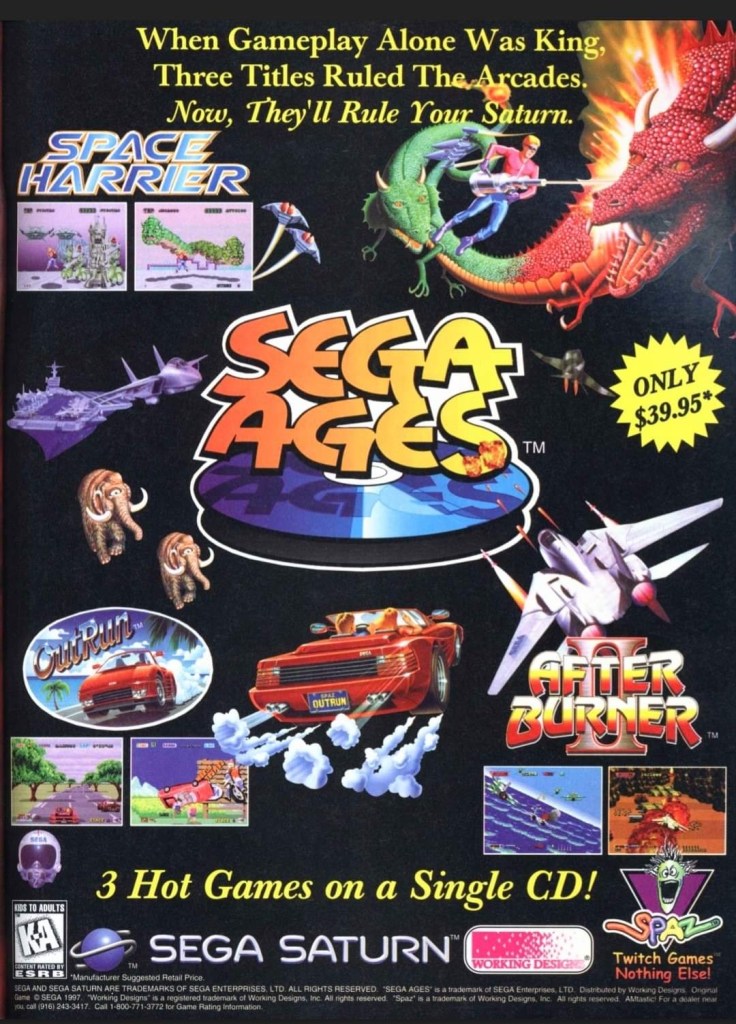
10. Sega Ages print ad

I can only speculate that Sega accepted Working Design’s financial offer for the publishing rights in North America.

Sega Ages is a series of ports and remakes of Sega’s own games (arcade and console) bundled together as compilations released on the modern consoles of the time. While Sega itself published Sega Ages on their Saturn console and Europe, the North American compilation was published by Working Designs under their separate brand Spaz which this particular print ad showed. While the classic Sega games of After Burner II, OutRun and Space Harrier often caught my attention, this ad made me wonder why did not Sega publish this compilation on the Saturn in North America themselves. Looking at this ad now remains awkward.

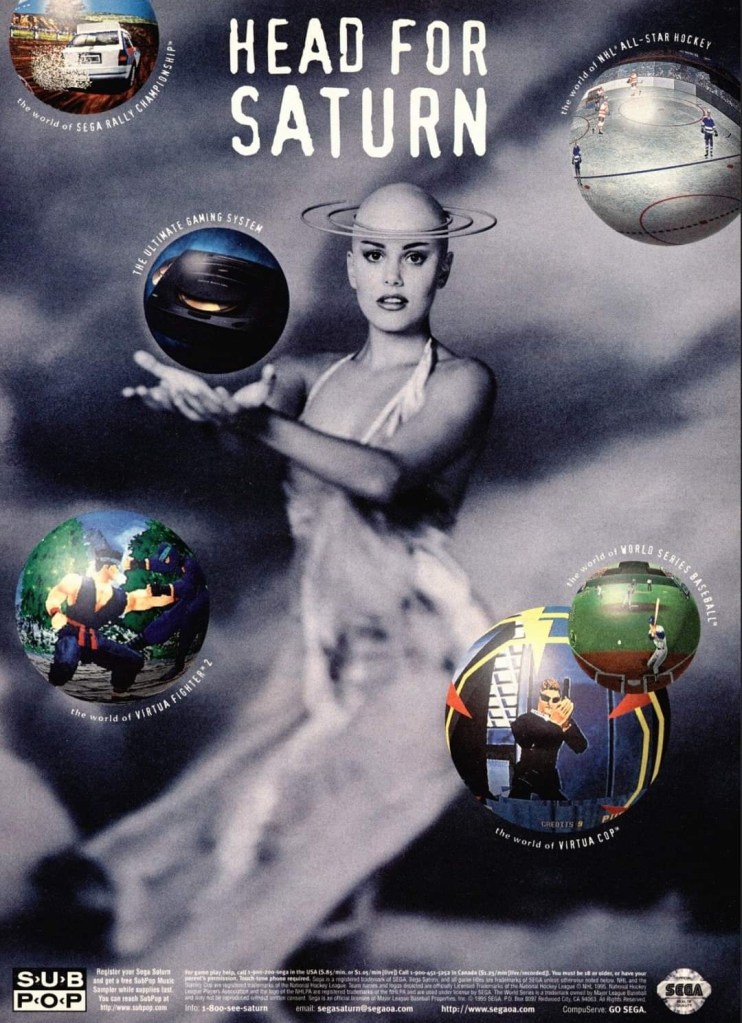
11. Sega Saturn North American print ad

Did you ever own a Sega Saturn in 1995?

While a lot of gamers and retailers were caught off-guard by Sega’s surprise early launch of the Saturn console in America, they still went ahead aggressively marketing the machine knowing they have a few months’ head start before the American launch of PlayStation. This print ad was designed to intrigue readers showing a bald lady whose head was made to look like the planet Saturn and next to her were images of Sega’s hottest games of the time – Virtua Fighter 2 and Virtua Cop. Sega relied strongly on imagery to promote their console with this print ad. It was somewhat weird yet eye-catching.

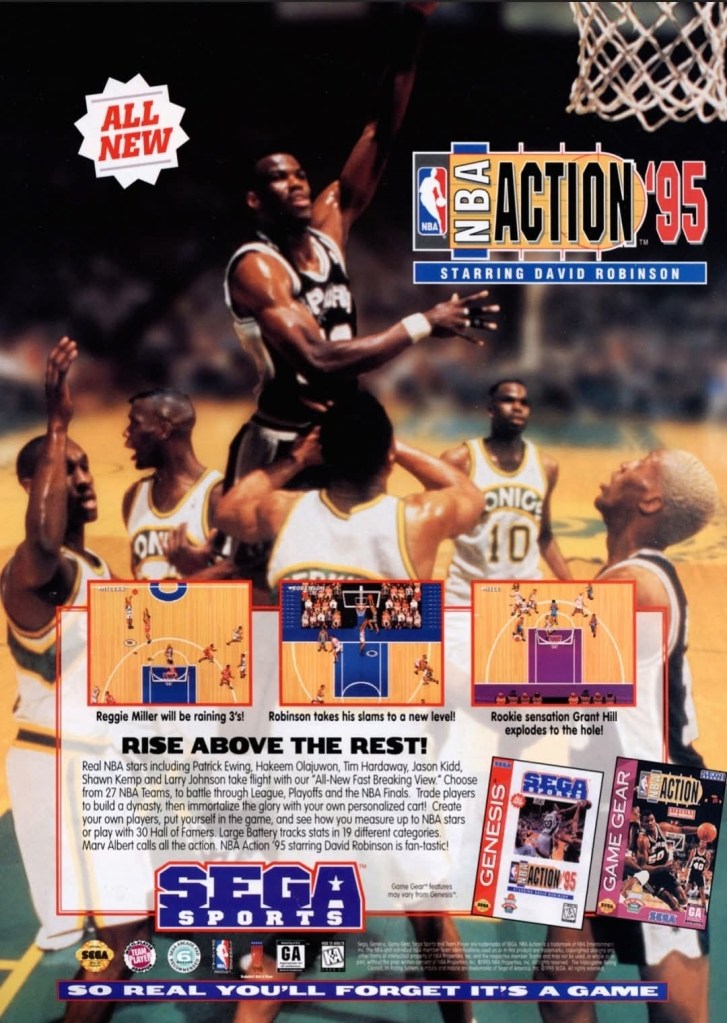
12. NBA Action ’95: Starring David Robinson print ad

David Robinson was the MVP of the NBA in 1995 but he failed to lead his team to the NBA championship back then. He would late win the NBA championship in the shortened 1999 season.

As mentioned early, Sega was aggressive the sports videos games and almost all of them were their own console exclusives. Their tradition of hiring professional athletes as endorsers continued during the age of the Genesis and Game Gear when they hired an NBA superstar as an endorser resulting in the Sega Sports basketball game titled as NBA Action ’95: Starring David Robinson. By the time the video game was released, Robinson was already the reigning Most Valuable Player (MVP) of the NBA. This print ad of Robinson in action still looks impressive but with a big catch – the superstar’s 1995 MVP achievement was arguably forgotten as he and his team (San Antonio Spurs) got eliminated by the Hakeem Olajuwon-led Houston Rockets in the Western Conference Finals. It did not help that Olajuwon outplayed Robinson a lot in that very playoff series. That is a sad reminder that also came with this Sega Sports print ad.

+++++

Thank you for reading. If you find this article engaging, please click the like button below, share this article to others and also please consider making a donation to support my publishing. If you are looking for a copywriter to create content for your special project or business, check out my services and my portfolio. Feel free to contact me with a private message. Also please feel free to visit my Facebook page Author Carlo Carrasco and follow me on Twitter at  @HavenorFantasy as well as on Tumblr at https://carlocarrasco.tumblr.com/ and on Instagram at https://www.instagram.com/authorcarlocarrasco
Retro Gaming Ads Blast – Part 23

Welcome back readers, fellow geeks and electronic gaming fans!

In this edition of the Retro Gaming Ads Blast (RGAB) series, we will take a look at another batch of retro gaming print ads – including arcade flyers – from the 1980s and 1990s.

For the newcomers reading this, Retro Gaming Ads Blast (RGAB) looks back at the many print ads of games (console, arcade, computer and handheld) that were published in comic books, magazines, flyers, posters and newspapers long before smartphones, social media, the worldwide web and streaming became popular. To put things in perspective, people back in the 1980s and 1990s were more trusting of print media for information and images about electronic games and related products.

With those details laid down, here is the newest batch of retro gaming print ads for you to see and enjoy…

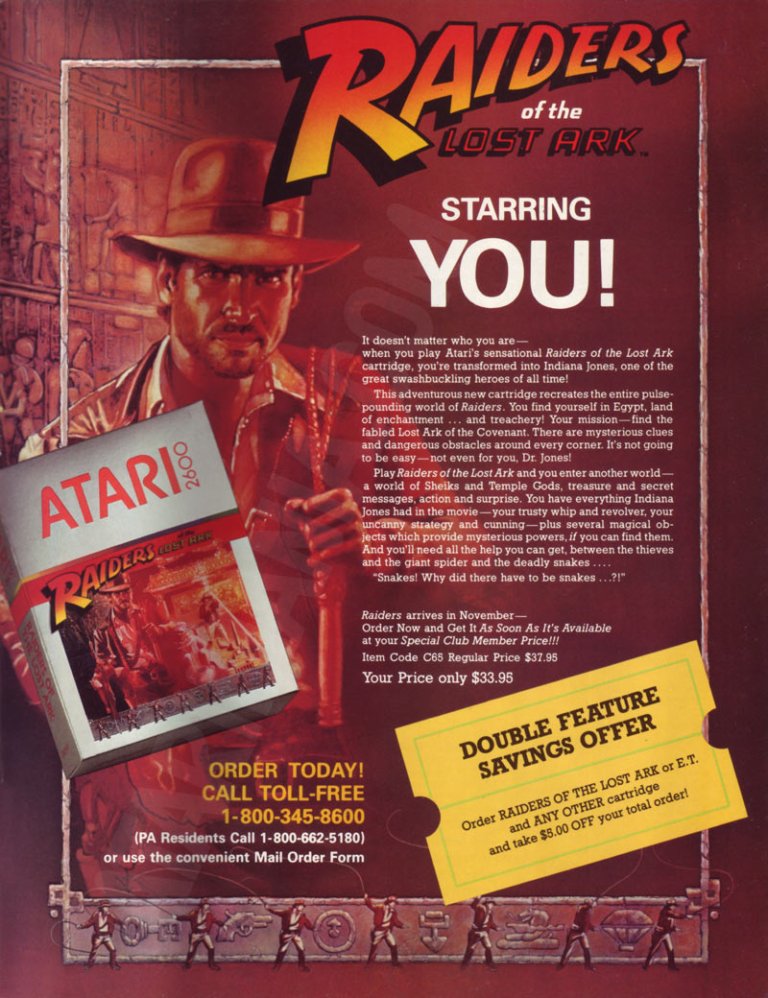
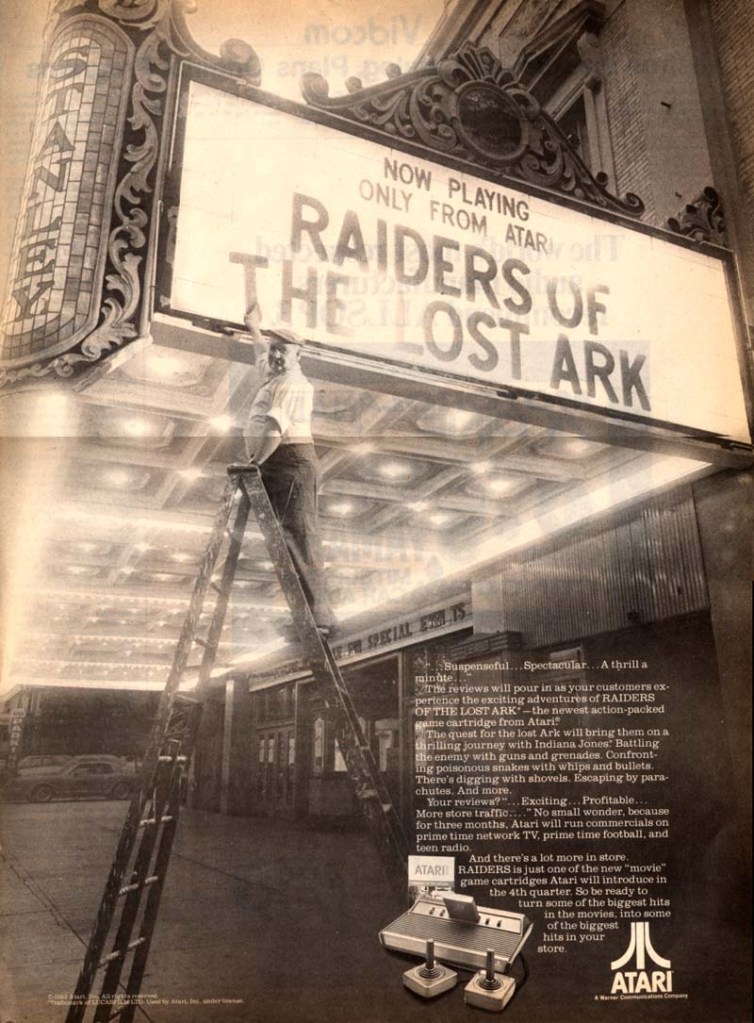
1. Raiders of the Lost Ark game print ads

The print ad with strong Indiana Jones imagery.
The print ad with the movie theater exterior image and the small image of the Atari 2600 console.

Directed by Steven Spielberg, Raiders of the Lost Ark was one of the best adventure movies ever made as well as the start of the iconic character Indiana Jones. Given its huge commercial success, an official video game adaptation for the Atari 2600 was released in 1982 and game designer Howard Scott Warshaw even met with Spielberg during the game’s development.

To promote the game, Atari released two print ads – one ad had a movie theater exterior visual concept to emphasize they have the official video game adaptation based on the movie while the other ad showed the game’s official artwork and game box cover while emphasizing a savings offer. Atari really did what they could to sell a game while riding on the success of Raiders of the Lost Ark.

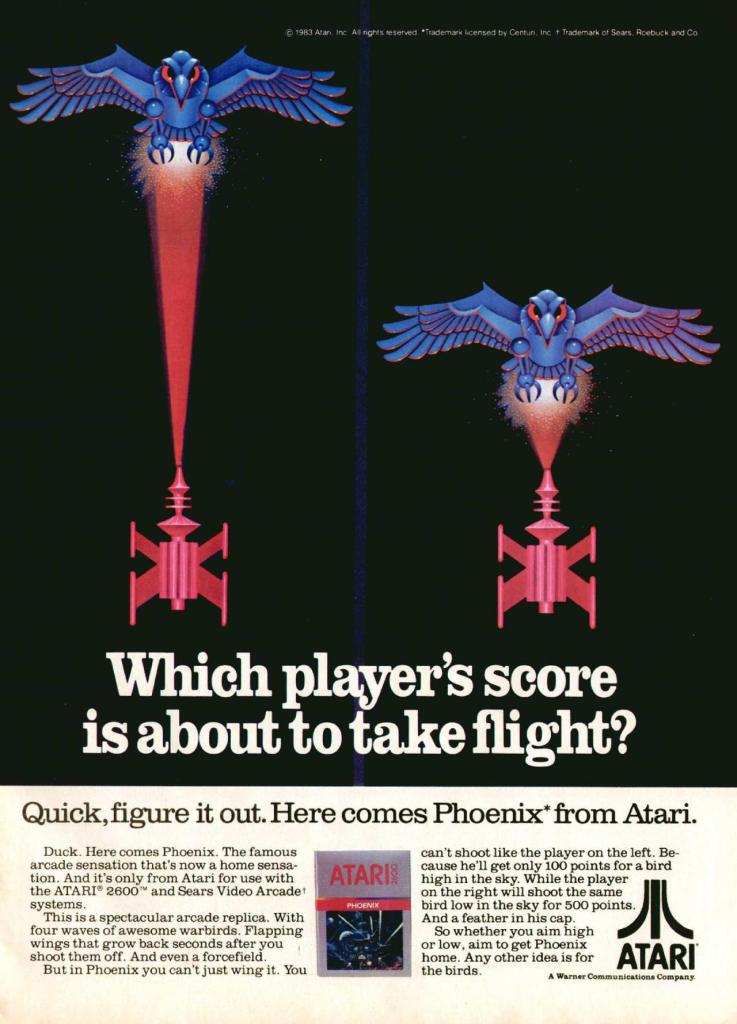
2. Phoenix print ad

Even without any screenshots, this print ad’s art still gives viewers a clear idea of what to expect.

Similar to what they did with Galaxian and Joust, Atari made this print ad promoting Phoenix which was a 2D sci-fi shooting game that was similar with Space Invaders in design. Colorized, hand-drawn artwork resembling the 2D sprites of the game was done to capture the attention of people. The art is so good, it made up for the lack screenshots of the game. 

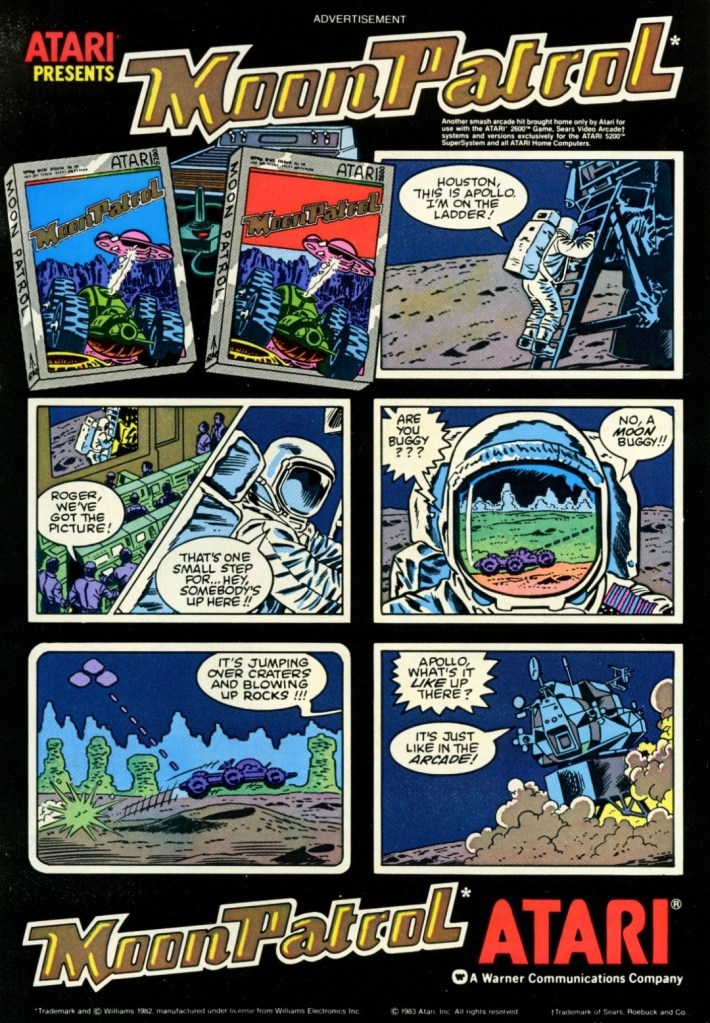
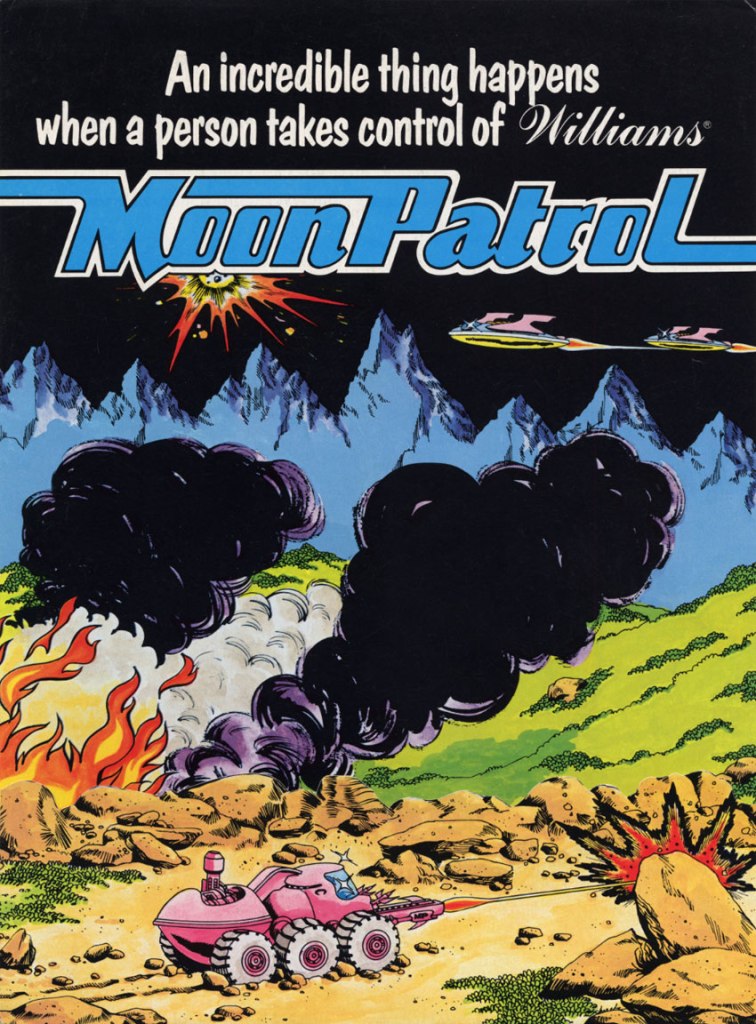
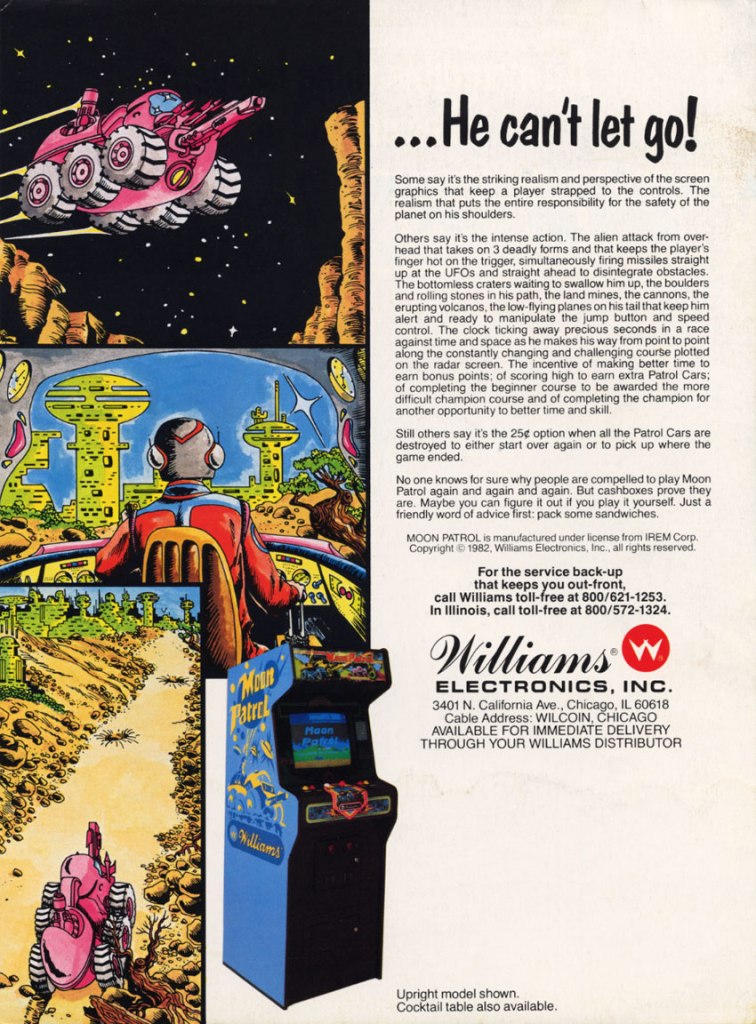
3. Moon Patrol arcade flyer

Front of the Moon Patrol flyer.
The other side of the arcade flyer.

Moon Patrol was a 2D sci-fi side-scrolling adventure game first released in the arcades in 1982. To sell the game to arcade operators, publisher Williams created the North American arcade flyer that heavily used hand-drawn comic book-style artworks on both sides while using available space on the other side for the descriptive text, contact details and the image of an arcade machine. What is very clear is that no screenshots of the game were shown to stand out which explains why a lot of hand-drawn art was used. The picture of the machine showing a screen of Moon Patrol was the closest thing to see a screenshot on this flyer. Personally, I really like the style and quality of the hand-drawn artwork as it made the flyer look lively.

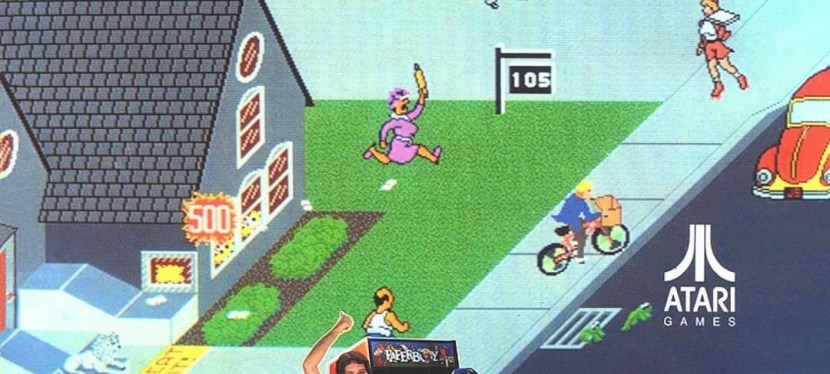
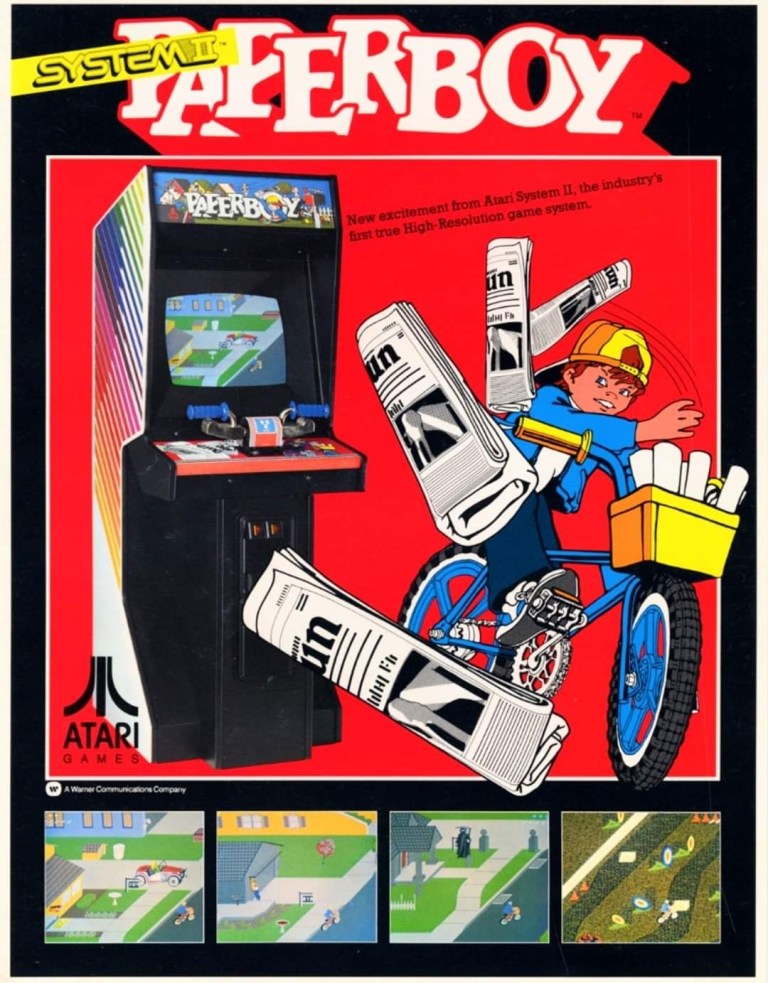
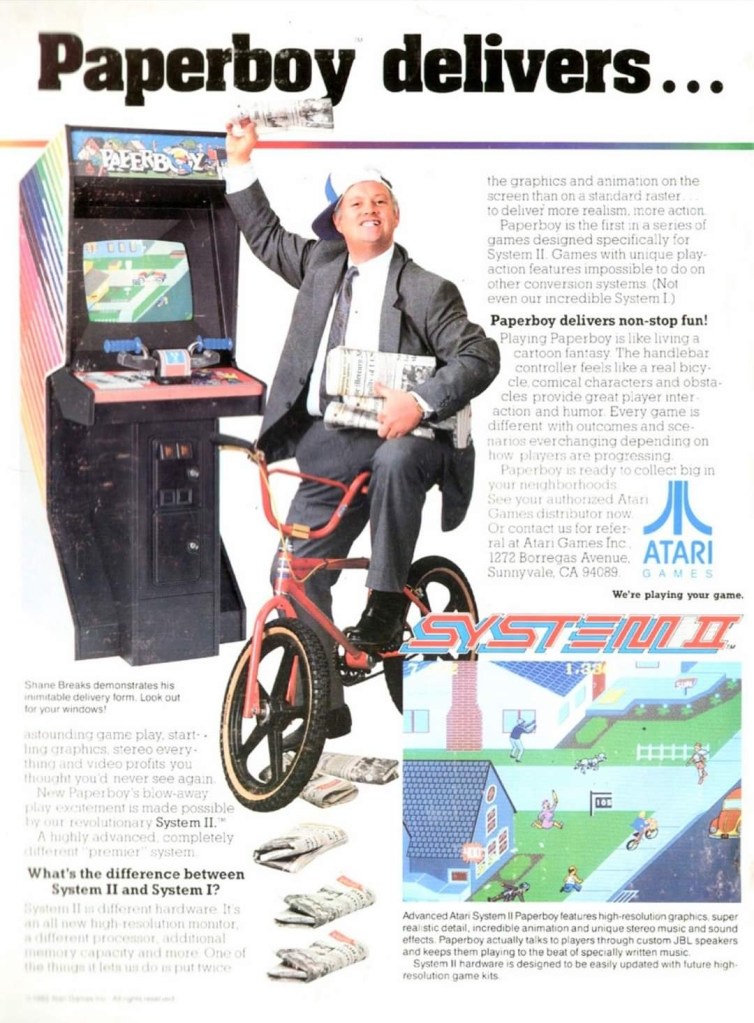
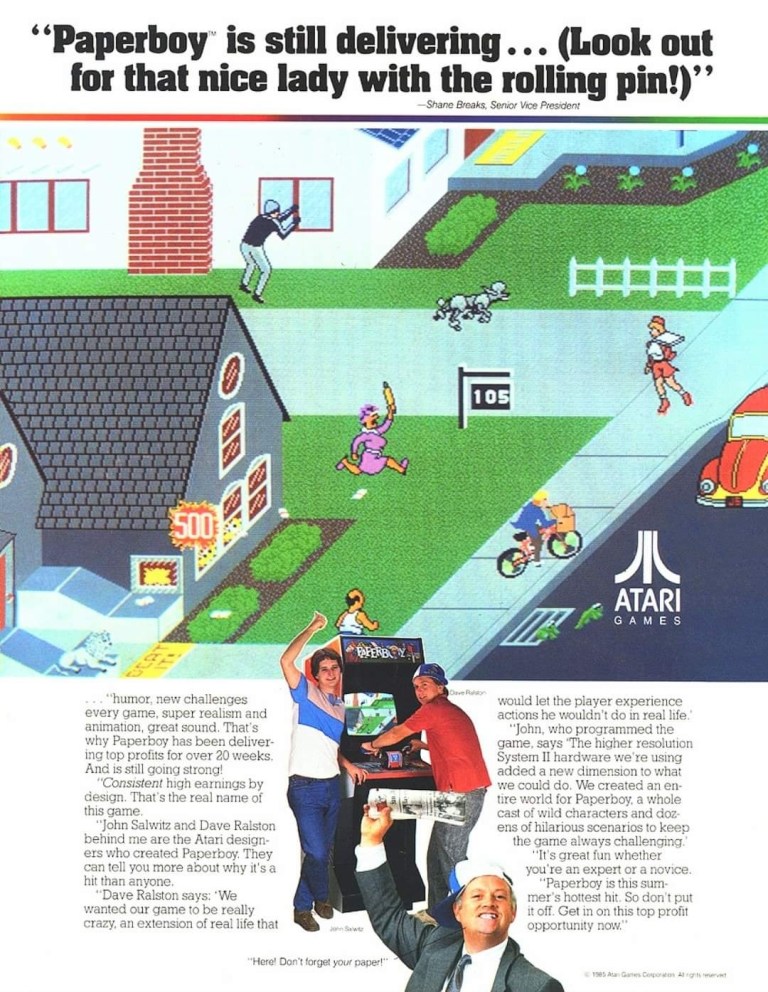
4. Paperboy arcade flyers

The arcade flyer showing the Paperboy machine and screenshots. The hand-drawn art is nice.
This one uses comedy showing a grown man riding a bike as a paper delivery “boy”.
I really like the stronger emphasis on the in-game graphics of Paperboy which dominates the space. What you see is what you get in the arcade.

The first time I ever played the classic Paperboy was in the arcade inside a Las Vegas hotel way back in 1989, and it sure was a challenging yet fun experience. Before its arcade debut in 1985, the developers took a lot of risks making the game which includes coming up with a bicycle handle bar for each machine to have. To promote the game, Atari made at least three arcade flyers that creatively emphasized what the game’s concept was about, how did it play, why does the machine have bicycle handlebars and why players can expect fun. Atari’s promotional efforts paid off as Paperboy became a huge hit in the arcades not only in America but also in Japan.

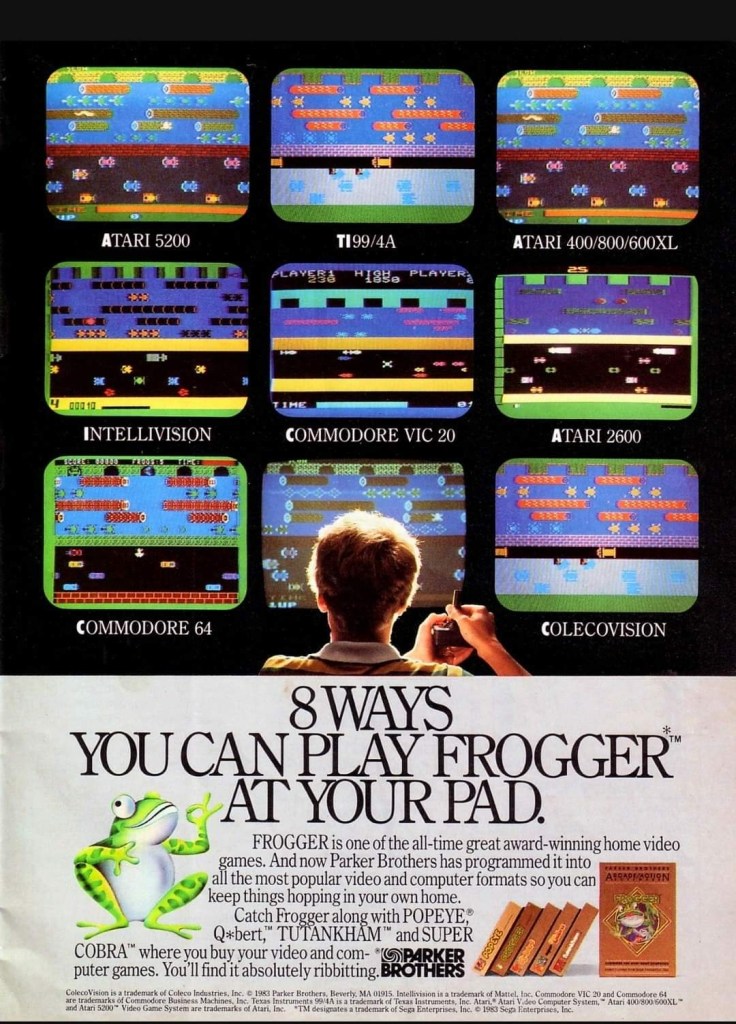
5. Frogger multi-platform print ad

This print ad is still amusing to look at.

After Frogger became a hit in the arcades, Parker Brothers secured the rights to port the game on Atari consoles, the Intellivision, TI-99/4A, vic-20, the Commodore computers and ColecoVision. To promote their Frogger ports, the single-page print ad was made showing a player in the foreground playing in front of screens that each showed what the game looked like on each platform. Parker Brothers found tremendous success selling 4 million copies of Atari 2600 version of Frogger at a time when there were only 13 million units of Atari 2600 in existence. By the year 2005, video game sales of Frogger reached 20 million worldwide across different platforms.

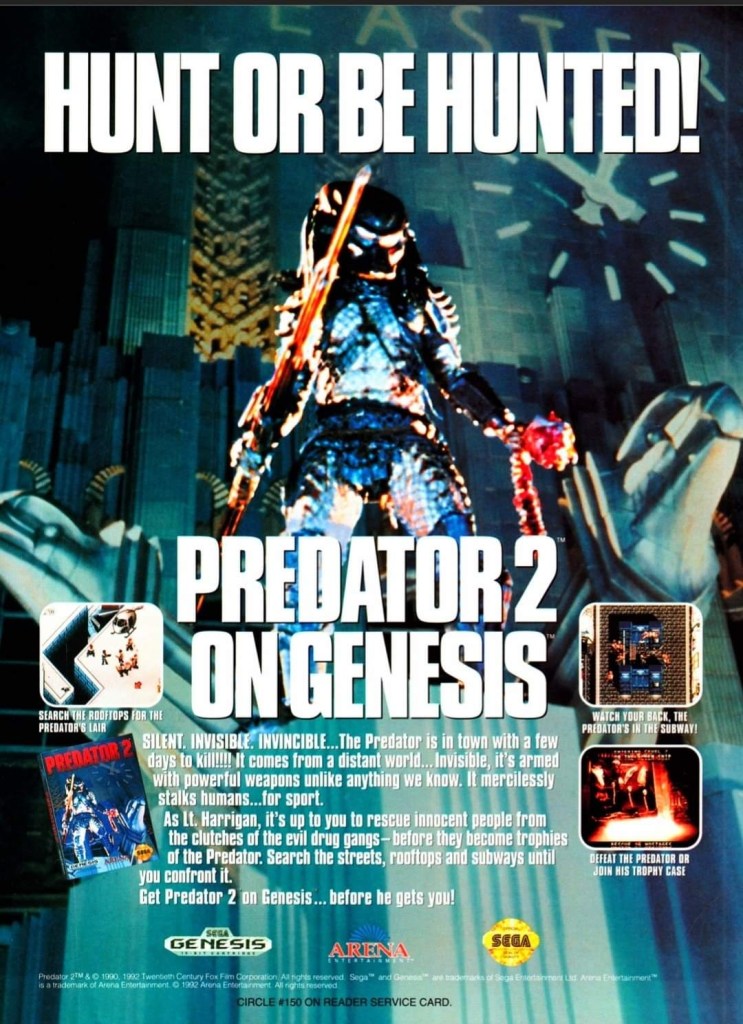
6. Predator 2 print ad

This is one very edgy print ad as used an official image from the movie.

If there is anything memorable about the 1990 film Predator 2, it is the fact that it had the story and the alien hunter itself within a metropolitan setting. That being said, the Sega Genesis Predator 2 video game had a suitable design of shooting and adventuring within the urban settings. This video game ad really captured the vibe of the movie (even showing the reddish human skull with spine on the Predator’s left hand) and clearly showed what gamers could expect. This old ad is still captivating to look at and its edgy approach is still intact.

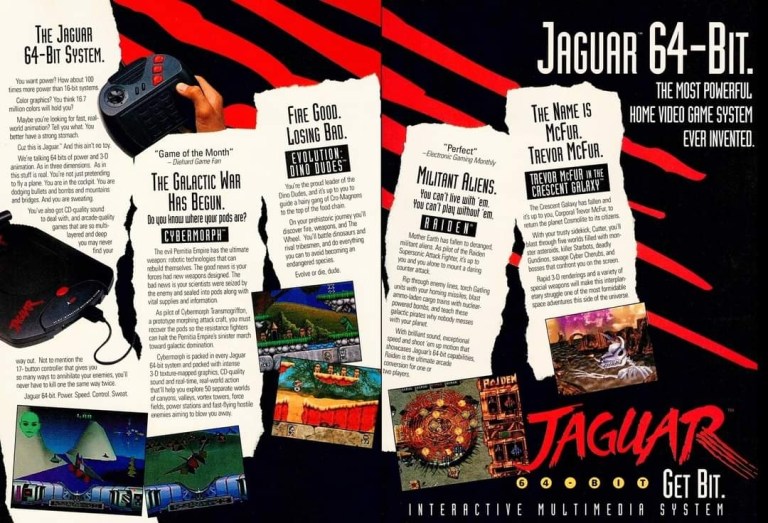
7. Atari Jaguar print ad

Did you ever own an Atari Jaguar console?

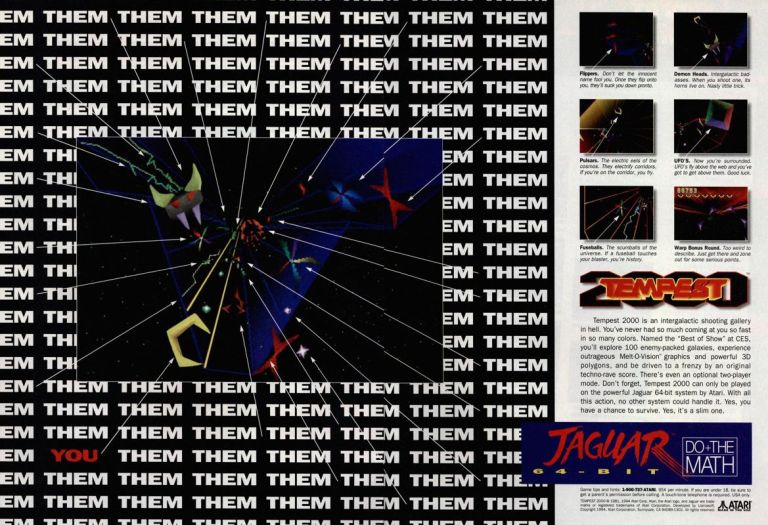
When I was reading video game magazines back in the 1990s, I always found print ads of the Atari Jaguar intriguing to look at. I was very young when I first played the Atari 2600 and its games at home, and later played some Atari games in the arcade. To me, seeing Atari Jaguar print ads like this one gave me moments of nostalgia and it made me wonder if Atari knew what it was doing with their so-called 64-bit game console. They did what they could to promote their console and the games within this 2-page print ad.

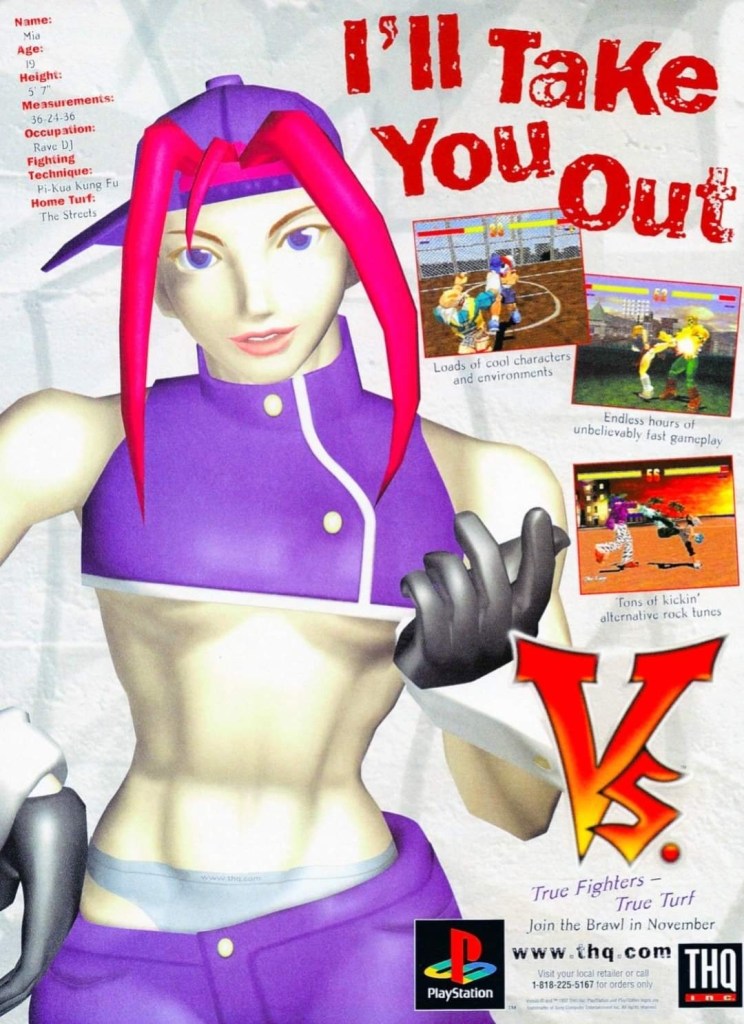
8. Vs. print ad

This print ad easily reminds me of the 1990s.

By 1997, both the arcades and the video game console market were filled with lots of 2D and 3D polygonal fighting games. Japan was the hot spot of the production of 3D polygon fighting games and the developer Polygon Magic (based in Japan) made Fighters’ Impact which Taito released in Japanese arcades and the PlayStation. The said game was picked up by THQ for a late-1997 release on the PlayStation in America under the title Vs. I never played this game but I heard that the game’s development included gang-oriented characters designed by Marvel Comics artist Kurtis Fujita. This Vs. ad is a lively reminder about the hip-hop fashion that made its way into video games.

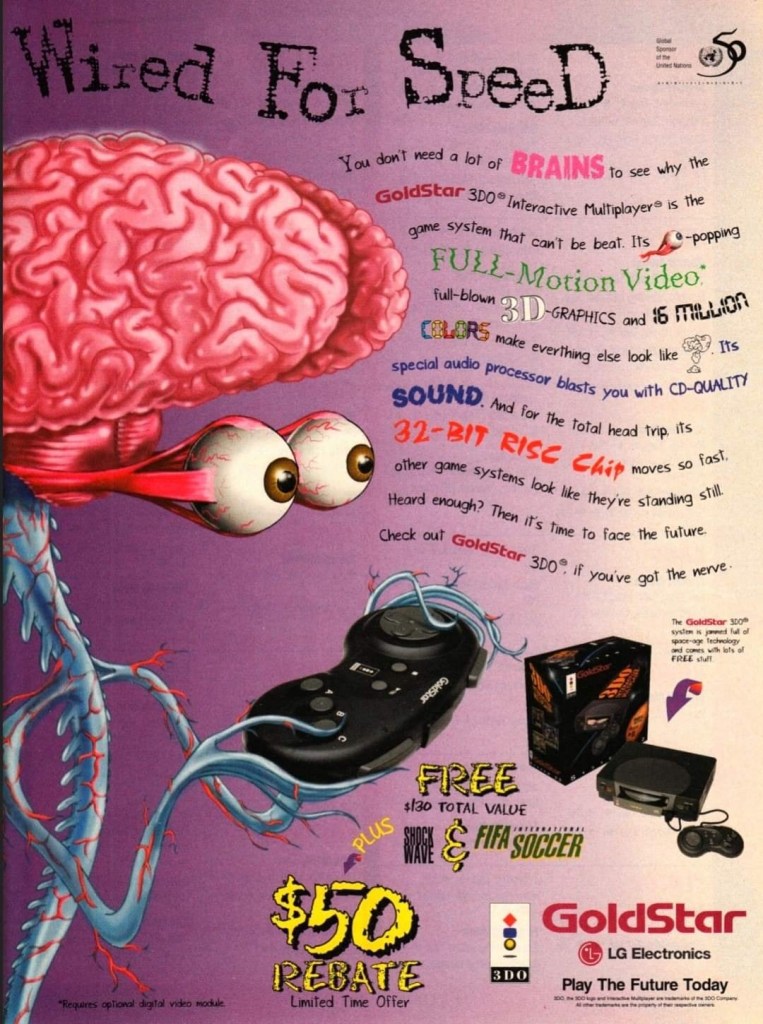
9. GoldStar/LG Electronics 3DO print ad

This is a very weird way to market a video game machine.

Back in the 1990s, the South Korean electronics company GoldStar (which was part of the umbrella of LG Electronics) had the license to produce 3DO game consoles with its own style. In some ways, the GoldStar 3DO console looked like a premium console on the outside. Unfortunately, the GoldStar 3DO print ad here had a very sloppy presentation as the ad makers used very weird art of a brain-with-eyes holding a 3DO controller leaving little space left to promote the console and games (without any screenshots). The text description was sloppily done. This is a bad example of promoting video game hardware and games.

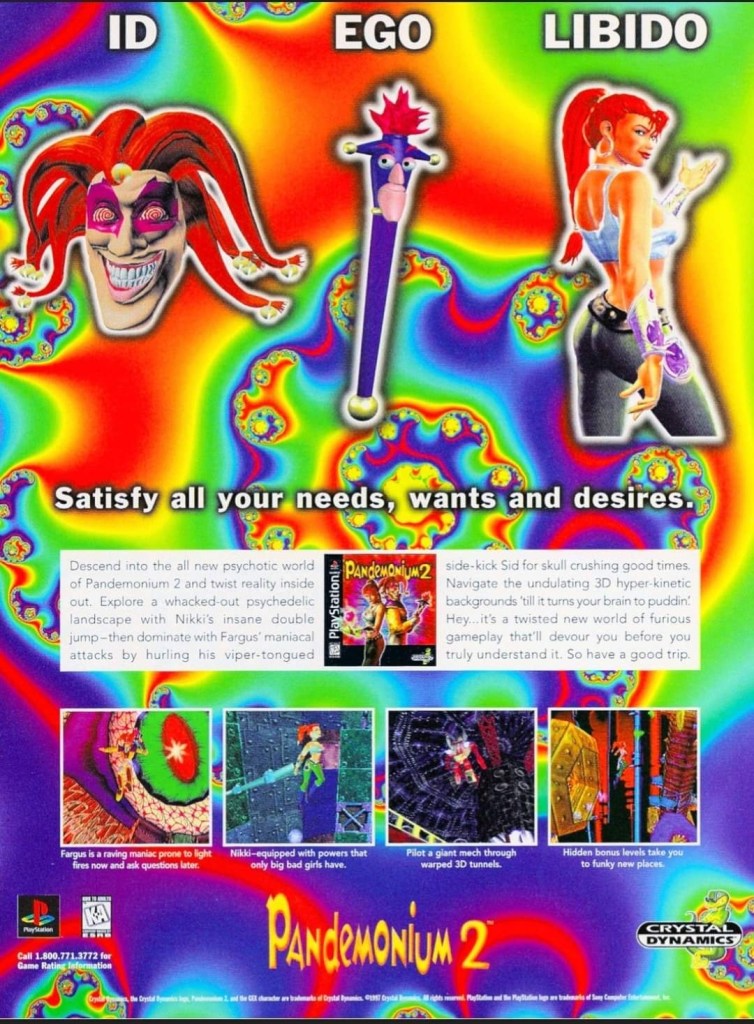
10. Pandemonium 2 print ad

I saw this ad but never played the game.

Looking back at 1997, I find it strange that I never got to play Pandemonium 2 on the PlayStation even though I saw its print ad in magazines. I had a lot of fun playing Pandemonium! on the console in 1996 but somehow missed out on its sequel. Looking back at the Pandemonium 2 print ad, I was surprised with how the game developers redesigned the two playable protagonists, especially Nikki who was clearly made to look very sexy. The word “libido” (meaning sexual drive) was deliberately placed above Nikki. The ad also had a hypnotizing mix of colors which I believe was also deliberately done by the ad makers. I can only wonder how the game played.

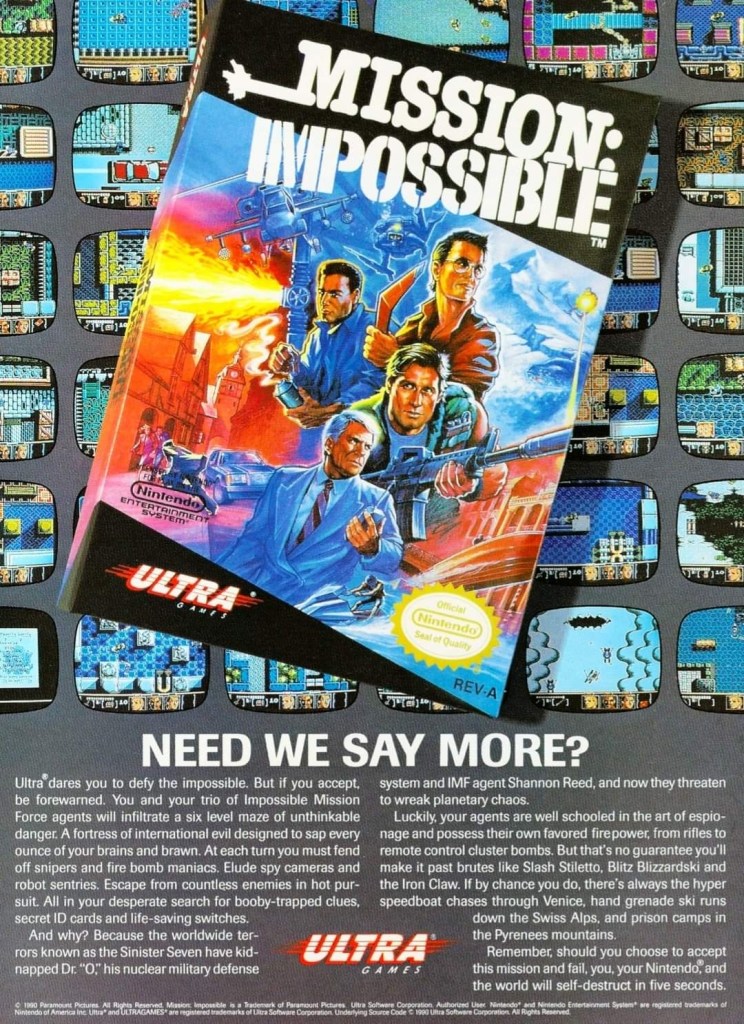
11. Mission: Impossible print ad

A captivating ad.

In 1990, Ultra Games (a label of Konami) released the Mission: Impossible video game on the Nintendo Entertainment System (NES) in America. Developed by Konami, the game was an adaptation of the 1988 TV series and it had an ambitious design with regards to level design and gameplay. To promote the game, the ad makers came up with a visual design showing the game’s box (which had a nice painted art on the cover) on the foreground and several screenshots resembling TV monitors on the background. Even by today’s standards, this print ad still looks good and captivating even if you are not too familiar with Mission: Impossible on TV.  

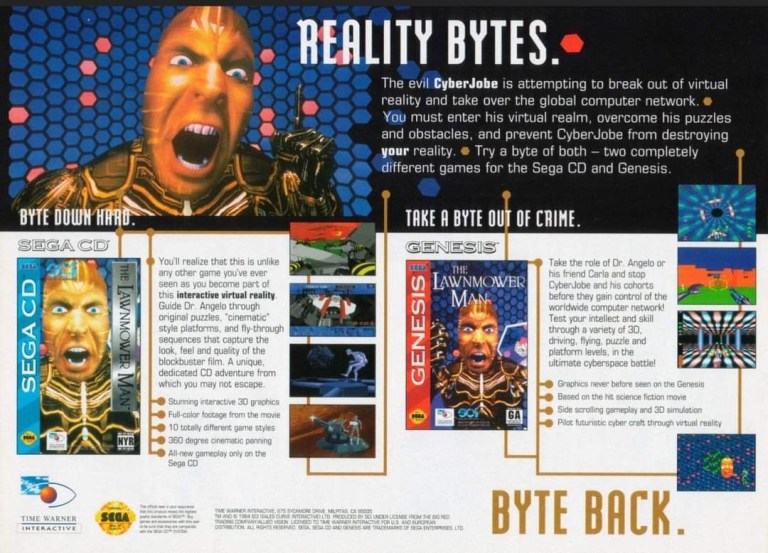
12. The Lawnmower Man Sega CD and Genesis print ad

Are you fan of The Lawnmower Man movie?

Back in 1992, there was a lot of buzz generated by the movie The Lawnmower Man as it had a disturbing concept that involved virtual reality and, more notably, author Stephen King sued the filmmakers to remove his name from the title because the film differed so much from the source material. Of course, those developments did not stop the production of video game adaptations of the movie. This print ad promoting the Sega CD and Sega Genesis versions of the game heavily used the images of CyberJobe which were among the most memorable images from the film. Looking at the ad, the ad makers could have made the screenshots look a little larger to really sell the games.

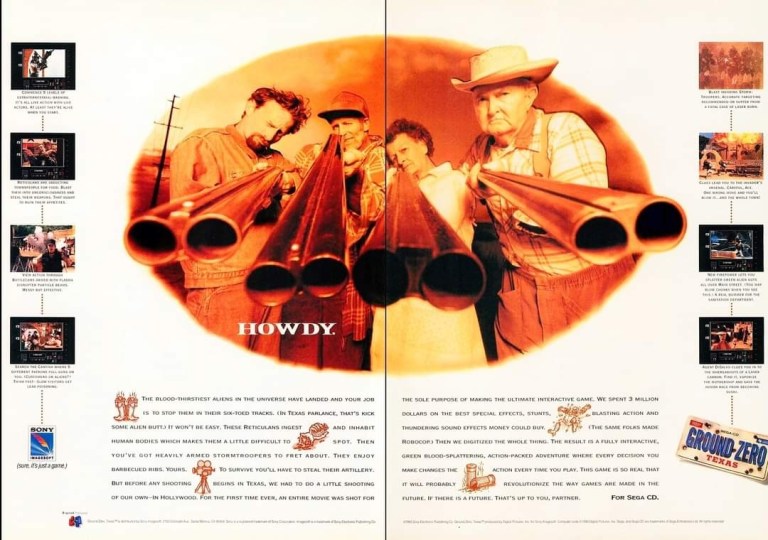
13. Ground Zero: Texas print ad

The shotguns really made this ad eye-catching.

I never played the Sega CD video game Ground Zero: Texas but I knew that it was one of those games that heavily relied on video footage while giving players moments to interact. Back in 1993, there was an increase in the number of video games that carried lots of live action footage to drive the narrative and players were given options in order to progress. What is very notable about the game is not the game design but the very 2-page ad used to promote it. The image showing four people pointing their shotguns towards the viewer was easily the most captivating part of the ad. Even though there was vacant space in between, the screenshots of the game were displayed to be really small.

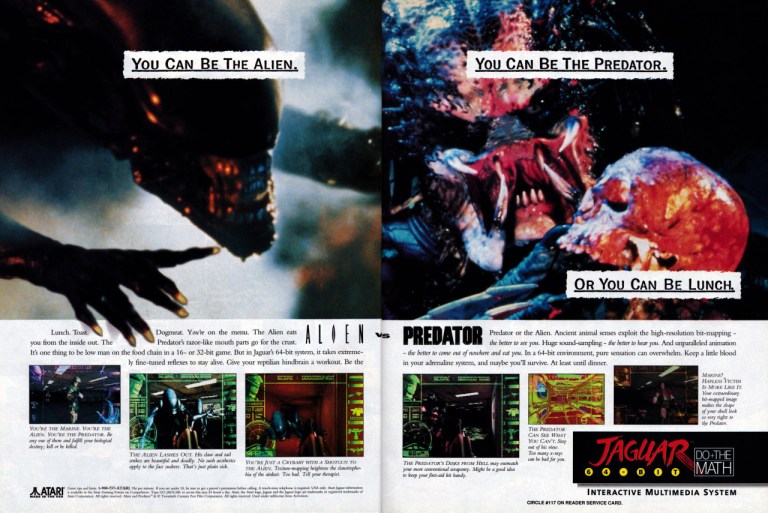
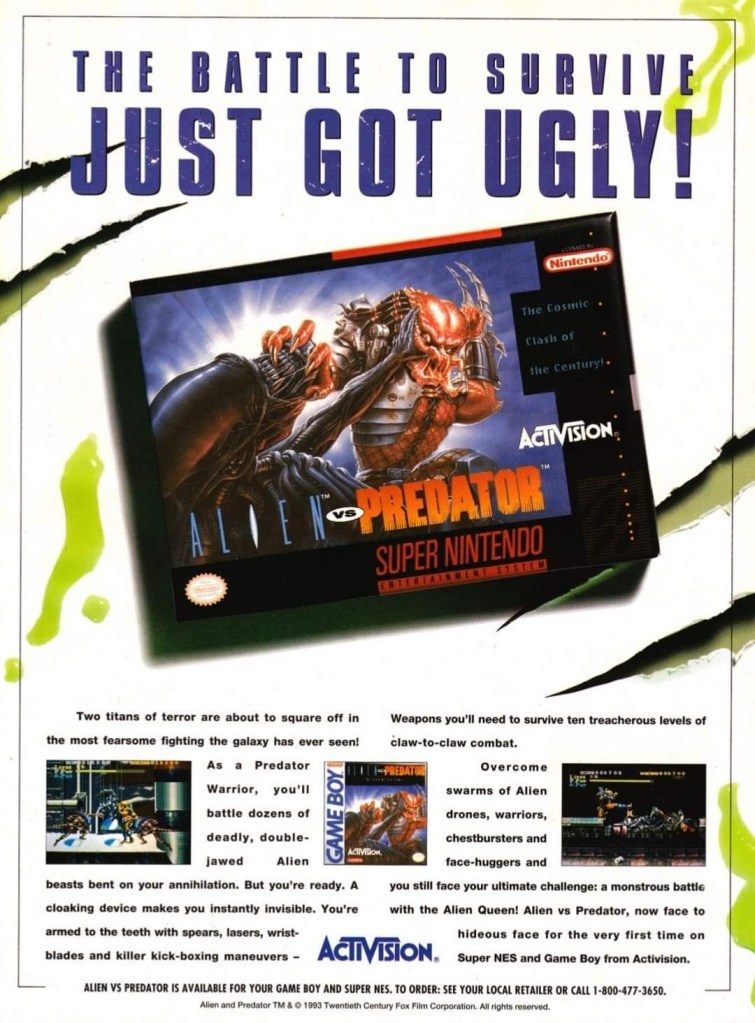
14. Alien vs. Predator for SNES and Game Boy print ad

This ad caught the attention of a lot of people back then.

Back in 1990, Dark Horse Comics launched the 4-issue mini-series of Aliens vs. Predator which turned out to be a very intriguing and engaging crossover comic book tale featuring two iconic sci-fi species of monsters. The success of the comic books led to the production of many video games which delighted both fans of Predator and Aliens. In 1993, Activision released Alien vs. Predator on the Super Nintendo Entertainment System (SNES) and the single-page print ad they came up with was engaging to look at. The SNES game box with the fine looking painted art was the main visual highlight leaving just enough space for the descriptive text, the Game Boy cover and two screenshots. Believe it or not, this video game was not related at all with the Alien vs. Predator arcade game and Atari Jaguar console game.

+++++

Thank you for reading. If you find this article engaging, please click the like button below, share this article to others and also please consider making a donation to support my publishing. If you are looking for a copywriter to create content for your special project or business, check out my services and my portfolio. Feel free to contact me with a private message. Also please feel free to visit my Facebook page Author Carlo Carrasco and follow me on Twitter at  @HavenorFantasy as well as on Tumblr at https://carlocarrasco.tumblr.com/ and on Instagram at https://www.instagram.com/authorcarlocarrasco

What to watch on YouTube right now – Part 43

Welcome back, my readers, YouTube viewers and all others who followed this series of articles focused on YouTube videos worth watching. Have you been searching for something fun or interesting to watch on YouTube? Do you feel bored right now and you crave for something to see on the world’s most popular online video destination?

I recommend you check out the following topics and the related videos I found.

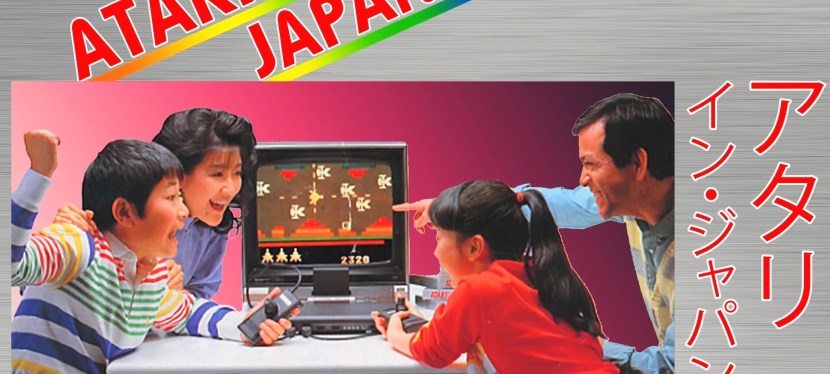
When Atari invaded Japan – Here in the Philippines, me and my friends played video games on the Atari 2600 consoles in our respective homes during the first half of the 1980s. What I did not know back then was the fact that Atari did its best to sell its console and video games in nearby Japan. It turns out, their console in Japan was the Atari 2800.  Watch and learn about this particular part of video game history with the video of GTV Japan below.

A look back at Superman: The Animated Series – When it comes to animated series of the 1990s related to superheroes, X-Men: The Animated Series, Batman: The Animated Series and Spider-Man: The Animated Series are often remembered by long-time fans and geeks. The animated series of Superman, however, does not get remembered as much even though it had good quality animation and presentation. Of course, it should be remembered that the 1990s was the same decade when DC Comics had Superman killed, introduced the Supermen, brought Superman back to life and even had the Clark Kent identity destroyed which probably overshadowed the animated series. To discover more of Superman: The Animated Series, watch the video below.

Examining the original 2099 comics franchise of Marvel Comics – You might have heard about 2099 among the many comic books Marvel published through the decades. The futuristic of Marvel’s shared universe originally started in late 1992 when the comic book speculator boom was still intense. It started strongly with Spider-Man 2099 followed by Ravage 2099, Doom 2099 and Punisher 2099. In the 2nd half of 1993, X-Men 2099 followed and even more related comic books got released. Of course, the 2099 franchise of the 1990s eventually ended. How and why it all happened like that, you can learn by watching Owen likes Comics’ video below.

You, Me and the Movies’ Excalibur reaction – Excalibur is an epic medieval fantasy movie about the legend of King Arthur and his knights released in 1981. I first saw the film on TV in 1988 and it was an intriguing viewing experience. I replayed it on physical disc format in 2003 and eventually recognized Patrick Stewart, Helen Mirren, Liam Neeson and Gabriel Byrne looking much younger. If you want to discover more of Excalibur through the reaction of You, Me and the Movies, watch the video posted below. It’s a fun watch.

Assorted videos about Planet of the Apes (1968) – Planet of the Apes of 1968 is considered by many as a great science fiction film as well as a philosophical and intelligent viewing experience. While it is an engaging viewing experience, I find the concept of human evolution and the so-called genetic links between humans and apes to be nothing more than fantasies. Considering its fame, it is no surprise that a lot of YouTubers made their own videos about it and you can watch the selected videos below.  

A look back at Robotron: 2084 – Robotron: 2084 is a 2D, multi-directional shooting game first released in arcades way back in 1982. I never played the arcade version but managed to play it on an IBM PC around the mid-1980s. The history behind the game is quite rich in details and you can enjoy learning about it by watching the video of PatmanQC below.

+++++

Thank you for reading. If you find this article engaging, please click the like button below, share this article to others and also please consider making a donation to support my publishing. If you are looking for a copywriter to create content for your special project or business, check out my services and my portfolio. Feel free to contact me with a private message. Also please feel free to visit my Facebook page Author Carlo Carrasco and follow me on Twitter at  @HavenorFantasy as well as on Tumblr at https://carlocarrasco.tumblr.com/ and on Instagram athttps://www.instagram.com/authorcarlocarrasco

Retro Gaming Ads Blast – Part 22

Welcome back readers, fellow geeks and electronic gaming fans!

In this edition of the Retro Gaming Ads Blast (RGAB) series, we will take a look at another batch of retro gaming print ads – including arcade flyers – from the 1980s and 1990s.

For the newcomers reading this, Retro Gaming Ads Blast (RGAB) looks back at the many print ads of games (console, arcade, computer and handheld) that were published in comic books, magazines, flyers, posters and newspapers long before smartphones, social media, the worldwide web and streaming became popular. To put things in perspective, people back in the 1980s and 1990s were more trusting of print media for information and images about electronic games and related products.

With those details laid down, here is the newest batch of retro gaming print ads for you to see and enjoy…

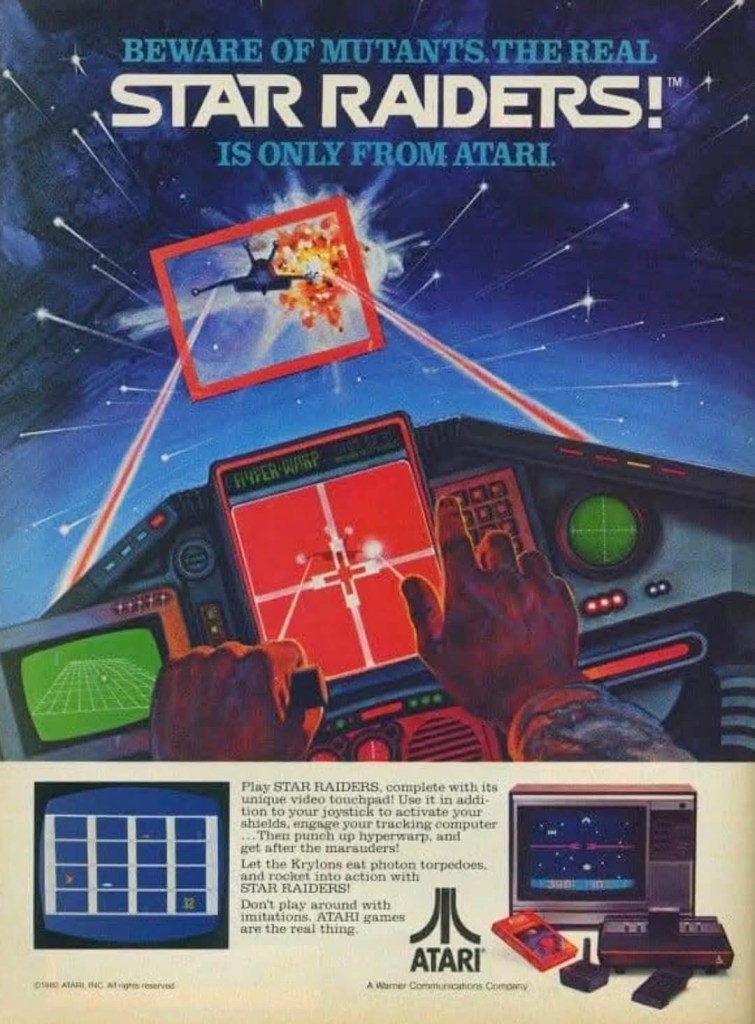
1. Star Wars: The Empire Strikes Back Atari print ads

I could not forget the first time I saw this print ad while reading a comic book.
This ad showed the Atari 2600 controller.

Even during its early years under George Lucas, the Star Wars entertainment franchise made its way into video games due to its massive popularity and Parker Brothers really made moves to cash in. This resulted in the Atari 2600 video game adaptation (1982) of The Empire Strikes Back which focused mainly on the memorable Hoth battles between Rebel fighters and the Empire’s AT-AT walkers. Parker Brothers came up with two print ads and each had a different visual concept: one had nicely drawn art along with two screenshots shown while the other had painted art of the AT-AT while showing the Atari joystick. These old print ads still look great and exciting.

2. Double Dragon Japanese and North American arcade flyers

If you read manga (Japanese comics) in Japan, then the art style of this arcade flyer should look familiar to you.
The character designs seem inspired by 1980s Hollywood action cinema.

Released in 1987, Double Dragon became a huge hit in the arcades of Japan, America and Europe resulting in financial gains for developer Technōs Japan and publisher Taito. What I find intriguing was the fact that the Double Dragon arcade flyers for Japan and North America had drastically different art styles used to promote it. The Japanese flyer had art style that is more common with manga while the North American had artwork that seemed inspired by Hollywood action movies (as well as the rise of martial arts films in America during the 1980s). The American flyer even had the two characters identified as Hammer and Spike and they both looked American. This is a classic example of using different approaches to promote a game in each market.

3. Universal Soldier print ad

The people who made this print ad made sure to use the names of the stars to help sell the game.

Even though its worldwide ticket sales did not reach $100 million, the 1992 movie Universal Soldier still caught a lot of attention from moviegoers simply because it had Jean-Claude Van Damme and Dolph Lundgren as the stars. Unsurprisingly, the movie had a video game adaptation and because publisher Accolade wanted to cash-in on the film’s hype, they made some deceptive moves by rebranding one of its games (already development) as a tie-in. Advertised as an official adaptation, Universal Soldier was actually a rushed conversion of Turrican II: The Final Fight. This print ad – which even showed the stars’ names – is a reminder of the deception Accolade pulled off.

4. Sega CD print ad

Do you find this Sega CD print ad hilarious?

When Sega was making waves with its Sega Genesis (Sega Mega Drive in Japan), the company was quick to react to the growing use of the compact disc (CD) format as a useful storage medium for video games. The Sega CD (Mega CD in Japan) was released as an add-on device to work with the Genesis console and Sega’s American team came up with a series of promotions. This print ad is just one of the promotions and ad makers came up with a “crazed” or “electrified” gamer dominating one page while showing the Genesis, the Sega CD and screenshots of games (running on CD) on the other page. By today’s standards, the Sega CD print ad is funny and catchy to look at.

5. Snatcher for Sega CD print ad

I find this Snatch print ad looking odd. The ad makers could have done more to focus on the game itself.

First released in Japan in 1988, Snatcher was a cyberpunk visual adventure game that was one of the early works of the famous Hideo Kojima (Metal Gear series). Due to its design and approach on visuals to tell a story, it was not surprising that a Sega CD version of it got released in 1994. To promote the game to the growing number of North American Sega CD gamers at the time, Konami came up with this rather unusual print ad showing the face of a smiling lady dominating the space leaving little room to show the screenshots and the game’s cover. The visual concept is engaging but it takes effort to notice it was promoting the Sega CD version of the video game. This old ad would have worked better had the ad makers increased the sizes of the screenshots and the game cover.

6. Jurassic Park for Sega CD print ad

Does the T. Rex look scary to you?

As part of its drive to add more games to the Sega CD add-on and help it sell more units, Sega acquired the Jurassic Park license and went on to produce an adaptation utilizing the technological features of the Sega CD. To aggressively promote the game, Sega came up with this print ad that had a Tyrannosaurs Rex (looking through spaces) on one page and then several screenshots plus text descriptions on the other. For a click-and-point Jurassic Park game, this ad was really exciting and intriguing to look at.  

7. Atari Jaguar print ad

This was indeed an eye-catching ad.

In the early 1990s, Atari made an aggressive move to compete in the arena of video game consoles which they used to dominate from the late 1970s until 1983. This time around, they came up with the Jaguar console which had some pretty advanced technologies for the time. As part of their North American marketing campaign, Atari unleashed an ad showing game screenshots on the first page and huge artwork of a jaguar coming after Sonic, Mario and Yoshi (mascots of Sega and Nintendo respectively) symbolizing that the Atari Jaguar had more power and better technology than the Genesis and the Super Nintendo Entertainment System (SNS). While it was engaging to look at early on, this print ad is now an embarrassment as the Jaguar console failed terribly. Lastly, the marketing of the Jaguar as a 64-bit machine was never real.

8. George Foreman, The Simpsons and Spider-Man Game Gear print ad

This ad appeared in a lot of comic books in the 1990s.

In the early 1990s, Sega released the Game Gear handheld gaming device which instantly placed them in competition with Nintendo’s Game Boy. Through its Flying Edge label, Acclaim Entertainment promoted George Foreman’s KO Boxing, The Simpsons: Bart vs. the Space Mutants, and Spider-Man for the Game Gear hoping to sell well. This 3-game print ad highlighted the popular figures who had a lot of space for attracting attention. The ad maker managed to insert two screenshots per game, the game covers and a text description to inform consumers what they were being offered. A good ad to look at.   

9. Time Gal for Sega CD print ad

The presentation here looks nice but Time Gal herself looked like she was drawn by a different artist.

Originally released in the arcades in Japan in 1985, Time Gal made its way to the Sega CD add-on in the early 1990s. It was a highly unusual video game as it was an interactive movie (with lots of anime footage) made with the use of Laserdisc technology for its arcade version. It played lots of anime scenes and players must choose the on-screen options to execute the character’s next action in order to progress. For the Sega CD version for North America, this print was made to capture the attention of consumers using the protagonist’s sex appeal on the cover art with four screenshots placed on the sides to show what to expect. I noticed that Time Gal on the cover art looked different from how she appeared in the anime sequences. At least the ad makers tried hard to sell the game.

10. Mortal Kombat print ad

Still an effective ad to promote a blockbuster game and make people informed it was coming to multiple platforms.

Considering how successful it was in the arcades, the 1993 release of Mortal Kombat for game consoles and handhelds was unsurprisingly highly anticipated and publisher acclaim came up with this single-page ad. The presentation involved the use of a photographic background of many spectators (to emphasize excitement and popularity), media quotes and screenshots to effectively promote the game.

11. Equinox print ad

Take a close look. Tell me if you find it funny.

I never played Equinox but I heard the loud buzz about its design as a 3D isometric game that had elements of exploration, platform play and puzzle solving. The people responsible for this print ad emphasized the concept that the game is so addicting to play, players will still play it as they get older. This ad has a subtle yet effective approach with humor.

12. James Bond 007: The Duel print ad

Timothy Dalton’s image as James Bond was sourced from Licence to Kill for this game’s ad.

Here is another decades-old James Bond video game print ad I found. Released a few years after Licence to Kill, James Bond 007: The Duel was notable not for its gameplay nor game design but for the fact that it used the image of Timothy Dalton as 007 for its print ad and the opening scenes in the game itself. Dalton’s Bond image here was never new nor originally taken for the game as it came directly from Licence to Kill’s publicity library. Each time I saw this ad, I was only reminded of the 1989 movie which I still enjoy watching.

13. Neo Geo AES console print ad

Do you find this ad both sexy and funny?

Decades ago, SNK made a huge splash in the arcades with lots of really fun games released with their Neo Geo (stylized as NEO GEO) hardware. In 1990, they released the cartridge-based Neo Geo AES console in Japan and America and it carried the same technology as the arcade hardware. To promote the console in North America (note: the Neo Geo console and its games were very expensive), SNK came up with this catchy and funny print ad showing a sexy woman feeling annoyed that her man spends more time with Neo Geo gaming than with her. This was a clever way of emphasizing the arcade-perfect experience in the comfort of home, and it was funny to look at.

14. Gradius II Japanese arcade flyer

Great looking painted art was used for this 1988 arcade game.

Since the original Gradius was a big hit in arcades in Japan in 1985, it was not surprising that Konami released Gradius II three years later. With regards to the use of painted art, the artist showed the game’s spaceship in a dominating position emphasizing high-speed travel and excitement. The image, which also looks more colorful, is a complete reversal of the painted art used in the flyer of the previous which showed the rear of the spaceship as it moves towards a larger spaceship (the opposition). This arcade flyer art still looks great as it has a timeless charm.

+++++

Thank you for reading. If you find this article engaging, please click the like button below, share this article to others and also please consider making a donation to support my publishing. If you are looking for a copywriter to create content for your special project or business, check out my services and my portfolio. Feel free to contact me with a private message. Also please feel free to visit my Facebook page Author Carlo Carrasco and follow me on Twitter at  @HavenorFantasy as well as on Tumblr at https://carlocarrasco.tumblr.com/ and on Instagram at https://www.instagram.com/authorcarlocarrasco
Retro Gaming Ads Blast – Part 20

Welcome back readers, fellow geeks and electronic gaming fans!

In this edition of the Retro Gaming Ads Blast (RGAB) series, we will take a look at another batch of retro gaming print ads – including arcade flyers – from the 1980s and 1990s.

For the newcomers reading this, Retro Gaming Ads Blast (RGAB) looks back at the many print ads of games (console, arcade, computer and handheld) that were published in comic books, magazines, flyers, posters and newspapers long before smartphones, social media, the worldwide web and streaming became popular. To put things in perspective, people back in the 1980s and 1990s were more trusting of print media for information and images about electronic games and related products.

With those details laid down, here is the newest batch of retro gaming print ads for you to see and enjoy…

1. River Raid print ad

This River Raid print ad appeared on comic books and magazines long ago.

Decades before it became an industry giant with the best-selling Call of Duty games, Activision became a standout publisher in the early 1980s with River Raid on the Atari 2600. Designed by Carol Shaw, River Raid was a huge success ending up as the 2nd best-seller on the Atari 2600 as well as Activision’s best-selling game for the year 1983. Apart from showing one screenshot and the box cover of the game, the print ad of River Raid had this mesmerizing 3D image that caught many gamers’ attention and helped them feel like they will pilot on dangerous missions. The 3D image was futuristic in its own style became forward-moving 3D sequences in video games became reality many years later.   

2. Galaga North American arcade flyer

The front of the flyer showing three Galaga machines that arcade operators can choose from.
Key details about Galaga were nicely presented on the rear of the flyer.

In the history of gaming, Namco’s Galaga was played by countless millions of gamers and it is still highly regarded as an arcade classic as well as one of the most enjoyable arcade games ever made. In preparation for the North American launch (October 1981), Midway prepared the arcade flyer showing the three types of machine on the front that arcade operators can choose from. On the rear is the really neat approach of explaining the details of the game, what kind of gameplay is to be expected, and how to play. Whether you are an individual player or the manager of an arcade joint, this flyer suits your needs.   

3. Area 51 arcade flyer and conversion kit flyer

The front of this Area 51 flyer had an enticing message for arcade operators as well as other business owners/managers who are interested in having a machine to add value to their business joints. Atari was already in deep money problems by the time they started making this game.
The Area 51 arcade conversion kit is a cheaper alternative for businesses who want the game.

Moving on to the 1990s, Atari was already struggling financially and desperately needed a hit to lift them up fast. A light gun shooter project was approved as arcade shooters were in good demand and after overcoming serious hurdles during production internally, Atari hired independent team Mesa Logic to take charge of development. After being granted extra time and more creative freedom, the project under Mesa Logic’s handling became a sci-fi shooter titled Area 51. The game became a huge hit in the arcades for Atari resulting in sales of more than 20,000 arcade cabinets as well as a major financial boost for the company (note: Atari still exists today). Atari went on to release Atari 51 versions for PlayStation, Sega Saturn and PC in America in 1996. The Atari 51 flyers you see here are still captivating to look at and were crucial in generating buzz among arcade operators, business joints that had space for arcade cabinets and gamers.

4. Panasonic 3DO print ad

The makers of this print ad forgot to mention the 3DO is also a game machine.

Back in 1993, the 3DO Interactive Multiplayer console manufactured by Panasonic (a licensee of the 3DO Company) was launched with a CD-ROM drive, multimedia features and gaming capabilities (with a 3-button control pad). This print ad strongly emphasized the 3DO’s ability to play high-quality sound and full-motion videos using the Sea of Cortez software which functioned as an interactive movie. Obviously, this did not resonate well with people who loved to play games and by the time the 3DO Company and its partners started marketing games, they could not save the 3DO console from fading to obscurity. The console shown in the ad is specifically model Panasonic FZ-1 R·E·A·L 3DO Interactive Multiplayer. Panasonic was one of five companies that were licensed by the 3DO Company.

5. MechWarrior 3050 SNES print ad

If you were unaware of the 1994 game BattleTech, then this ad would have fooled you into thinking it is promoting a brand new game.

In 1995, the popular BattleTech entertainment franchise arrived on the Super Nintendo Entertainment (SNES) system with MechWarrior 3050 and its print ad had a really blazing artwork of an armed mech in fire which gave readers the illusion of a new and original game. In reality, MechWarrior 3050 was actually a port of BattleTech which was released on the Sega Genesis in 1994. The Genesis game was published by Extreme Entertainment Group while the SNES game was published by the more famous Activision. If you look closely at the MechWarrior print ad, you can tell how hard they tried to sell the game like it was brand new and all-original.

6. Cliffhanger video game print ad

This print ad had Sylvester Stallone hanging on a cliff to be relevant with the title of both the film and the game. They could not show images of Stallone in hard action scenes.

For fans of Sylvester Stallone, 1993 was a big and exciting year as the Hollywood icon appeared in two major action films – Cliffhanger and Demolition Man. Cliffhanger was released first and there were video game adaptations of it released on game consoles, handhelds and computers. This print ad of the Cliffhanger video game had an image of Stallone hanging on a cliff to emphasize the title. The ad makers cleverly posted selected gameplay screenshots and quoted GamePro and Electronic Gaming Monthly (EGM) to make the game look credible and worthy of purchasing. The marketing led to nowhere as the game received mostly negative reviews from critics and it faded to obscurity. Lastly, the Cliffhanger game ad had a noticeable amount of space wasted. They could have made the screenshots and text look somewhat bigger to sell the game.

7. Ballz: The Director’s Cut print ad

I never got to play this game on the 3DO.

Here is another ad of the video game released on the failed 3DO console. As its title made obvious, Ballz: The Director’s Cut is an enhanced version of the original Ballz game of 1994 that was released on other consoles. The print ad had an eye-catching piece of artwork and posted beside it were selected shots of the gameplay. Strangely enough, the creative writing on the lower part of the ad does not make any sense and did nothing to convince gamers to play the game. As Ballz: The Director’s Cut was released in 1995, this ad shows the revised 3DO console from Panasonic (model: Panasonic FZ-10 R·E·A·L 3DO Interactive Multiplayer).

8. NFL GameDay 2000 print ad

Did you find this ad funny to look at in 1999?

To promote the PlayStation-exclusive NFL GameDay 2000, Sony publisher 989 Sports and the ad makers decided to implement a humorous look at football TV coverage by having two sportscasters wearing shorts in front of a TV camera that was only showing their heads and upper bodies. The TV sets on the side show screenshots from the game to emphasize the sports gaming experience. Ultimately the game scored mostly positive review from the critics.  

9. WildC.A.T.S: Covert Action Teams print ad

WildC.A.T.S. art by Jim Lee was used to promote the SNES video game.

When Image Comics launched in 1992, WildC.A.T.S: Covert Action Teams was Jim Lee’s creator-owned comic book franchise and its launch issue was a big seller. Years later, WildC.A.T.S. grew in popularity with comic book fans and the franchise achieved multi-media status by venturing into TV (with an animated series) and video games. This print ad promoting the video game adaptation had no screenshots to show which kept fans and gamers guessing how the game will turn out in terms of gameplay and game design. It was obvious that the people who made this print ad had to rely on the best WildC.A.T.S. artwork they could find drawn by Jim Lee. This ad made me laugh back in the old days because if you did not look closely, it might fool you into thinking it was more about comic books than the game on the SNES.

10. Cutthroat Island print ad

Exciting imagery without Geena Davis and Matthew Modine was used to promote the video game adaptation.

I never saw the Hollywood mega-flop Cutthroat Island nor have I ever played any of its multiple video game adaptations (released on SNES, Sega Genesis, Sega Game Gear and Game Boy). The video game print ad, however, caught my attention back in 1995 because the ad makers cleverly used a photograph from one the many expensive movie sequences filmed and the hard, physical work by the filmmakers was clearly visible. Then the ad makers had four screenshots placed on the lower-left part and inserted descriptive text that sounded exciting. Lastly, the ad mentioned a sweepstakes promo.

Without using any images of stars Geena Davis and Matthew Modine, this ad was a strong attempt to get gamers excited for the video game adaptation. Like the movie itself, this game flopped and has faded away to the land of the forgotten.

11. AH-3 Thunderstrike print ad

Captivating artwork, vibrant colors and orderly text descriptions made this an effective ad.

AH-3 Thunderstrike is one of the better games that was released on the Sega CD add-on (requires the Sega Genesis console) in 1993. Similar with MechWarrior 3050, the game was actually a port of Thunderhawk which itself was released on the Amiga and MS-DOS PC in 1992. The print ad showcased a captivating artwork (which was also used on the game’s box cover), a few screenshots and strategically placed text descriptions to sell the game. This ad still looks good.

12. James Bond 007 print ad

This print ad appeared in many comic books in 1984.

This is a print ad I saw many times while reading comic books in 1984. James Bond 007 for Atari 2600 was an ambitious licensed video game as it featured levels that were inspired by missions in the James Bond movies Diamonds are Forever, The Spy Who Loved Me, Moonraker and For Your Eyes Only. Keep in mind that programmers back then had to deal with memory limitations and primitive tools to make games.

To promote the game, original art of Agent 007 was used which did not resemble the James Bond star of the time – Roger Moore. Strangely enough, the illustrated James Bond slightly resembled Timothy Dalton whose debut as 007 happened in 1987. Adding further zest to the add was the use of fictionalized quotes pointing to fantasized critics as sources (example: Vincent Can’tbe is a reference to real life critic Vincent Canby). The use of a pink background made this catchy ad look really odd.

13. Choplifter III: Rescue Survive print ad

A captivating print ad that brought gamers’ attention to the Choplifter series again.

This print ad of Choplifter III: Rescue Survive has a striking look showing a military officer who needs your help as he has been stranded behind enemy lines. The presentation reflects the long-time tradition of the Choplifter game franchise which has been about piloting an armed helicopter to the opposition’s territory, shooting at bad guys and then rescuing the hostages or prisoners-of-war (POWs). The game eventually gathered mostly positive feedback from video game critics.

14. Defender of the Crown print ad

Cinemaware took a gamble with the visual concept of this print ad.

Released in 1986 for home computers, Defender of the Crown was made with a high level of quality backed with solid artistry. To capture gamers’ attention, Cinemaware came up with this print ad showcasing a pretty model looking somewhat seductive which reflects what happens in the game when players rescue a damsel in distress. The selected screenshots showed what the game looked like on different platforms, and the lower part of the ad made the game feel like it was a historical epic waiting to be discovered. Defender of the Crown eventually became a big hit with computer gamers.  

+++++

Thank you for reading. If you find this article engaging, please click the like button below, share this article to others and also please consider making a donation to support my publishing. If you are looking for a copywriter to create content for your special project or business, check out my services and my portfolio. Feel free to contact me with a private message. Also please feel free to visit my Facebook page Author Carlo Carrasco and follow me on Twitter at  @HavenorFantasy as well as on Tumblr at https://carlocarrasco.tumblr.com/ and on Instagram at https://www.instagram.com/authorcarlocarrasco
Do you have Atari 50: The Anniversary Celebration for Xbox?

Welcome back Xbox fans, geeks, retro gaming enthusiasts and all gamers from around the world!

I was born in the mid-1970s. My video gaming experience started with the arcade games. A few years later, my console gaming experience started with the Atari 2600 console (which was our first console at home) and for about five years my friends (who also had the same console in their respective homes) and I enjoyed playing games on it.  

In this modern age of gaming, the gaming experience on Xbox this year soured somewhat and there were changes made on Xbox Game Pass (XGP) that I did not like. This year, it is retro gaming that I am enjoying on my Xbox Series X and the best 2024 experience I had was replaying and completing Grandia on it.

Also this year, I bought myself a physical copy of Atari 50: The Anniversary Celebration to add even more retro gaming fun on my Xbox Series X and it has been an enjoyable experience so far. There is absolutely nothing like replaying the Atari 2600 games I enjoyed plus being able to play other games released on other Atari consoles I never had. I also love the fact that the collection (you can by the physical Xbox copy by clicking here) also has Atari’s own arcade games. This is truly a blast of retro gaming fun!

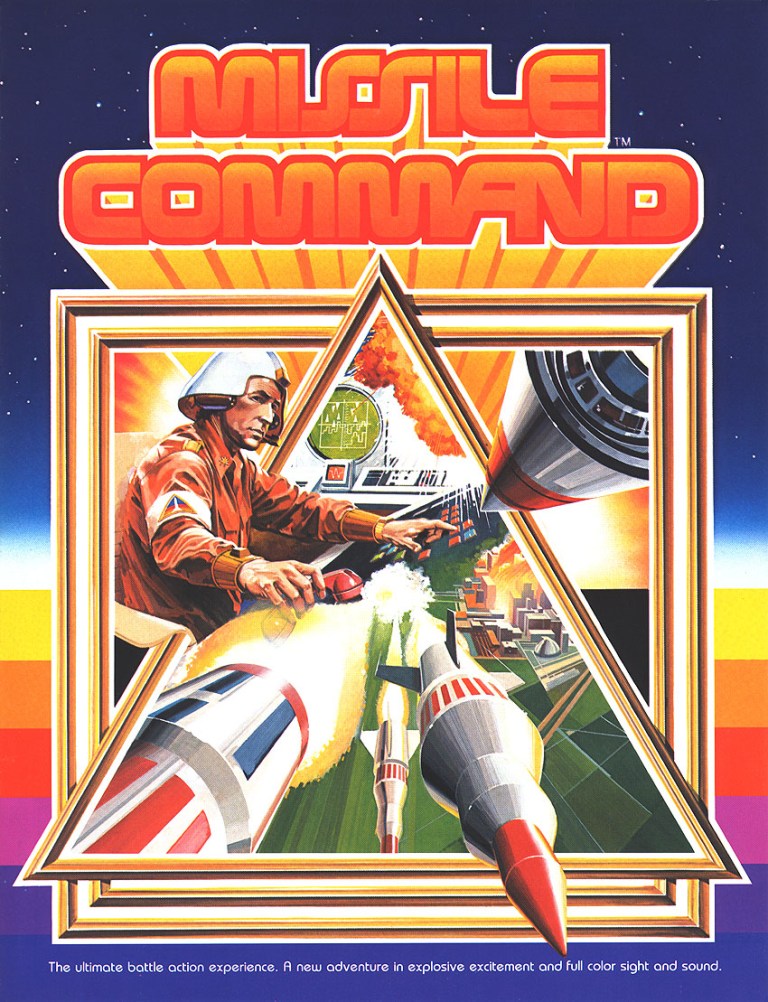
From my play session of the arcade version of the classic Missile Command.
Thanks to the Atari 50: The Anniversary Celebration, I finally got to play the Cloak & Dagger arcade game that was featured in the 1984 movie.
Historical insight about the classic game Centipede.
Atari’s arcade game Liberator.
Content from the arcade flyer of Missile Command now viewable in high-definition!

Atari 50: The Anniversary Celebration is not just a collection of video games from the past. It has a stylish presentation that makes it an interactive museum which allows you to look at the arcade flyers, the print ads, the official artworks of games, historical highlights and most notably lots of videos showing interviews of surviving Atari creators/producers who reveal very important details about what they went through, what the company culture was like, and more.

Those who were interviewed include Nolan Bushnell (who established Atari, Inc.), David Crane, Jerry Jessop, Bill Rehbock, Owen Rubin, Allan Alcorn, Tod Frye, Wade Rosen, Eugene Jarvis, and Howard Scott Warshaw. These are the guys who not only established Atari as a major gaming industry leader but also laid the foundations of console gaming as a crucial part of home entertainment in general. Also discussed was Atari’s efforts of bringing their arcade games to the consoles at home.

Adding further insight to Atari’s history were video interviews of Ed Fries (a key figure behind the establishment of Xbox), Cliff Bleszinski (Gears of War trilogy) and Tim Schafer (Psychonauts games).

My physical copy of Atari 50: The Anniversary Celebration which I enjoyed a lot on my Xbox Series X.

If you are an Xbox Series X owner and you are passionate about retro gaming, I encourage you to go after Atari 50: The Anniversary Celebration while it is still available and you can order a physical copy by clicking https://www.amazon.com/Atari-50-Anniversary-Celebration-Xbox-X/dp/B0BB81M854/ref=sr_1_1?crid=3NGKBZ5ELWEMR&dib=eyJ2IjoiMSJ9.OaxQ6LwrFw8ugeckn5tgrkRkXnRxdqTsibdJxcSrPmD2KjKDq_bR4FE-ADmLqZX905jbSpfkzhRn1UgC-V2yOGYAGlZpzU6euxh2_FNFRYO2ZPfhhwTgMJTJq9qjrMNVwy2_jhwlxf4S9R0GQiGJe_dk0U9o-w1xKXKQ_bNbHN-QGyFXq8KBbwYDluM_pUGjkC-TFth7PX-IltiofdvAK0mSQ3rt9EQ5pa3mYjgWZjE.TAmL4QRUQgmoBpOLyGJYZN-LKOf47qyO3MwplApdC50&dib_tag=se&keywords=atari+50+xbox&qid=1728442894&sprefix=Atari+50+x%2Caps%2C420&sr=8-1

+++++

Thank you for reading. If you find this article engaging, please click the like button below, share this article to others and also please consider making a donation to support my publishing. If you are looking for a copywriter to create content for your special project or business, check out my services and my portfolio. Feel free to contact me with a private message. Also please feel free to visit my Facebook page Author Carlo Carrasco and follow me on Twitter at  @HavenorFantasy as well as on Tumblr at https://carlocarrasco.tumblr.com/ and on Instagram athttps://www.instagram.com/authorcarlocarrasco
Final Fantasy Pixel Remaster now available for Xbox Series X|S and Windows PC

Welcome back Xbox fans, geeks and gamers!

In case you missed the official Xbox presentation of the 2024 Tokyo Game Show (click here to watch), Square Enix formally announced that Final Fantasy Pixel Remaster has officially been released for Xbox Series X and Xbox Series S plus Windows PC. Watch the announcement video below.

Already Xbox gamers can choose to buy the digital bundle of the six Final Fantasy role-playing games (RPGs) online or buy the classic RPGs individually by clicking https://www.xbox.com/en-us/games/store/final-fantasy-i-vi-bundle/9P012F2LCPHF/0010

For the newcomers reading this, Final Fantasy Pixel Remaster is a collection the classic Final Fantasy RPGs which are as follows: Final Fantasy, Final Fantasy II, Final Fantasy III, Final Fantasy IV (AKA Final Fantasy II on SNES), Final Fantasy V and Final Fantasy VI (AKA Final Fantasy III on SNES).

This is what Final Fantasy IV looks like in remastered form.

Each classic Final Fantasy game has its 2D pixel graphics and artworks updated with high-definition gaming in mind, and their soundtracks have been re-arranged. In what is a clear attempt by Square Enix to enhance the gameplay experience and user-friendliness, there were tweaks made to the user interface. Also added were extra stuff such as bestiary, illustration gallery and music player.

The Xbox and Windows PC releases of Final Fantasy Pixel Remaster is indeed a move towards the right direction by Square Enix and it is clearly the result of that company’s renewal of ties with Team Xbox. Final Fantasy Pixel Remaster was launched on other platforms previously and the Xbox ecosystem ended up being the last to have it for millions of gamers to enjoy.

For the Xbox gamers who are Final Fantasy fans as well as those who are fond of classic Japanese role-playing games (JRPGs) and those who simply love retro gaming, Final Fantasy Pixel Remaster is a very welcome addition that should not be missed. It is available now for digital purchase as a bundle but gamers are free to choose to buy the games individually based on their current taste or based on how much they could afford right now. It is clear that buying the bundle of six Final Fantasy classic games is still the best value for money.

The remastered Final Fantasy VI.

In my experience as a veteran gamer, I played and completed Final Fantasy IV (both on SNES and the 3DS polygonal remake) and Final Fantasy VI (on the SNES and the Game Boy Advance). I played Final Fantasy V that came with the Final Fantasy Anthology on the PlayStation but never got to finish it. The way I see it, Final Fantasy Pixel Remaster looks like an enticing collection. In addition, it makes RPG retro gaming on Xbox more exciting as Grandia HD Collection on Xbox has been available (finishing the original Grandia is the best Xbox gaming experience I’ve had this year so far) for months now and on March 2025 the remastered collection of the two classic Suikoden RPGs will be released.

Final Fantasy Pixel Remaster for Xbox Series X, Xbox Series S and Windows PC is available for purchase and if you have made a decision to buy it, click https://www.xbox.com/en-us/games/store/final-fantasy-i-vi-bundle/9P012F2LCPHF/0010

+++++

Thank you for reading. If you find this article engaging, please click the like button below, share this article to others and also please consider making a donation to support my publishing. If you are looking for a copywriter to create content for your special project or business, check out my services and my portfolio. Feel free to contact me with a private message. Also please feel free to visit my Facebook page Author Carlo Carrasco and follow me on Twitter at  @HavenorFantasy as well as on Tumblr at https://carlocarrasco.tumblr.com/ and on Instagram athttps://www.instagram.com/authorcarlocarrasco
What to watch on YouTube right now – Part 35

Welcome back, my readers, YouTube viewers and all others who followed this series of articles focused on YouTube videos worth watching. Have you been searching for something fun or interesting to watch on YouTube? Do you feel bored right now and you crave for something to see on the world’s most popular online video destination?

I recommend you check out the following topics and the related videos I found.

The disappointing 9th console generation  – If you are a long-time gamer who owns a PlayStation 5 (PS5) and/or an Xbox Series X or Xbox Series S console, you might have noticed how disappointing the 9th console generation (started in late 2020) has been when compared to the previous four generations.

Apart from the fact that the COVID-19 pandemic deeply altered the games industry on the sides of gamers and game developers, the 9th console generation has seen lots of unfulfilled promises from the console makers, Xbox Game Pass (XGP) changing for the worse, great gaming experiences not being realized, consumers getting screwed, the lack of focus towards the fans, woke garbage involved in game productions and a lot more. To understand what is going on in the 9th console generation, I urge you to watch the selected videos below.

Illegal immigration in America is the new slave trade – More than ten million people illegally entered the United States through the US-Mexico border since 2021, resulting in rising crime, increased taxpayers’ money spending on illegal aliens, and more hardship for America’s own citizens. That’s not all. There are cartels taking advantage of the open border in the south that kept thousands of people – including children – flowing into America and those illegal aliens themselves are forced to repay the debts to the cartels. These should remind you how bad immigration became in America under Joe Biden and Kamala Harris (border czar who loves criminals and terrorists). This PrageU video is a must-watch.

Retro gaming reported by KTLA 5  – It is not every day you get see retro gaming reported on mainstream news outlets. In America, KTLA 5 made a video news report about the resurgence of retro gaming and it’s not limited to gamers buying collected editions of decades-old games for their modern game consoles. In fact, the video game store in KTLA 5’s report is selling old games in physical copies as well as old game consoles at affordable rates. Watch the video below.

The history and American origin of the Lawson convenience store enterprise – Here in the Philippines, the convenience store chain Lawson has been gradually growing and becoming more competitive with the likes of 7-Eleven and Uncle John’s. Not only that, Lawson is gaining a following of customers who keep on returning because of the variety of food and beverage items offered plus convenient ways of doing financial transactions. While it is common knowledge that Lawson is from Japan and is a Japanese enterprise, not too many people are aware of its American origin. To learn about the history of Lawson, watch the video below.

Israel’s intensified campaign against Hezbollah – After the recent attacks against several members of the Iranian-sponsored terrorist group Hezbollah through their pagers, Israel’s military campaign against the terrorists intensified. This happened even as Hezbollah kept on firing at Israel (in response to the pagers attacks) and even hitting Nazareth which itself has many Arabs and Muslims in its local population. Don’t let the pro-terrorist, pro-Islamist mainstream news media fool you with their persistent lying. Watch the videos from credible news sources below to realize the truth. Lastly, keep praying to the Lord to support Israel and bring down the forces of evil.

6. Kamala Harris’ dishonesty and pathetic acting about border security explained

In recent times, the Communist Vice President of the United States Kamala Harris visited the US-Mexico border to check on the situation there as illegal immigration added so much to crime. The problem here is that Kamala was simply acting to be responsible and working, and it is not a secret that the Democrats hired Communist Hollywood people to stage it behind the scenes. Sky News Australia’s video below is a must-see and remember that Democrats always love illegal aliens, criminals, abortion and terrorists. Kamala herself publicly declared her support for illegal aliens and defended them.

+++++

Thank you for reading. If you find this article engaging, please click the like button below, share this article to others and also please consider making a donation to support my publishing. If you are looking for a copywriter to create content for your special project or business, check out my services and my portfolio. Feel free to contact me with a private message. Also please feel free to visit my Facebook page Author Carlo Carrasco and follow me on Twitter at  @HavenorFantasy as well as on Tumblr at https://carlocarrasco.tumblr.com/ and on Instagram athttps://www.instagram.com/authorcarlocarrasco
Xbox Game Pass (XGP) keeps on changing for the worse

Welcome back Xbox fans, geeks and gamers!

Let’s be honest here. There are changes regarding Xbox Game Pass (XGP) that are disadvantageous to both Xbox fans and the gamers who subscribe for the best value in gaming. In fact, the said subscriber service is getting is getting worse as reported by Windows Central Gaming. You heard about the Standard tier of XGP? Are you aware that certain first-party games are not even part of the services below the Ultimate tier of XGP?

To put things in perspective, posted below is the excerpt from Windows Central Gaming’s news report. Some parts in boldface…

I encourage you to read the rest of Windows Central Gaming’s article by clicking https://www.windowscentral.com/gaming/xbox/xbox-game-pass-standard-is-sub-standard-games-like-starfield-diablo-4-go-retroactively-missing-from-the-consoles-game-pass-mid-tier

I hope understand what was reported. Specifically for those who own Xbox consoles, the three Xbox Game Pass services available for your choosing are Core at $9.99/month, Standard for $14.99/month and Ultimate for $19.99/month (note: only $1 will be charged for the first 14 days before the regular rate gets implemented).

If you will subscribe to Core or Standard, you will NOT be able to play Avowed and Indiana Jones and The Great Circle once they launch on XGP. Avowed will launch on February 18, 2025 while the Indiana Jones game will be released on December 9, 2024. At the same time, you won’t be able to play the other Xbox heavy hitters like Forza Motorsport (2023), Senua’s Saga: Hellblade II, Halo Infinite and Starfield while subscribing with Core or Standard services.

It is clear that Microsoft is trying to lure gamers to take the most expensive XGP service – Ultimate. This can be disadvantageous to not only Xbox fans but the many millions of gamers out there who have yet to discover and subscribe to Xbox Game Pass.

As for those who have been XGP subscribers since at least a year ago, they are still enjoying the access to the above-mentioned heavy hitters while paying the same old monthly rate as before. If they stop subscribing now, they will lose their privileges and if they decide to return to the service with the same experience as before, they will have to subscribe to XGP Ultimate at $19.99 a month for the Day One access as well as the access to premium games.

Indeed, Xbox Game Pass is changing for the worse. In fact, it could be the first sign of things to come. I’m talking about the future of gaming under Microsoft that could mean the end of Xbox as we know it and Team Xbox becoming a multiplatform game publisher. Microsoft’s love and care for Xbox fans is fading away, and what they’re doing could turn off potential new gamers related to the changing demographics of the world.

This screenshot from Red Dead Redemption II should remind you that Microsoft is aiming at the wrong direction with regards to its video gaming strategy. Imagine being part of Team Xbox receiving orders from Microsoft’s top management that don’t make much sense with regards to gaming and the interests of the players.

If you plan to subscribe to Xbox Game Pass at all, start doing your research carefully before deciding to subscribe. Click https://www.xbox.com/en-US/xbox-game-pass

+++++

Note: Cover photo sourced from Xbox.com

Thank you for reading. If you find this article engaging, please click the like button below, share this article to others and also please consider making a donation to support my publishing. If you are looking for a copywriter to create content for your special project or business, check out my services and my portfolio. Feel free to contact me with a private message. Also please feel free to visit my Facebook page Author Carlo Carrasco and follow me on Twitter at  @HavenorFantasy as well as on Tumblr at https://carlocarrasco.tumblr.com/ and on Instagram athttps://www.instagram.com/authorcarlocarrasco