Welcome back Xbox fans, geeks and gamers! It has been over a month since Eiyuden Chronicle: Hundred Heroes was launched on multiple platforms worldwide and like many other gamers who are currently subscribed to Xbox Game Pass (XGP), I downloaded it and played it a lot although there were a some technical setbacks that happened along the way.
For the newcomers reading this, Eiyuden Chronicle: Hundred Heroes is a brand new and stylized turn-based Japanese role-playing game (JRPG) developed by Rabbit & Bear studio which was led by the late Yoshitaka Murayama and involved the talents of notable creators who collectively worked on Konami’s Suikoden RPG series.
In-game world exploration is done with a 3D polygonal environment and your character is a 2D sprite.
A battle against a very large monster.
Eiyuden Chronicle: Hundred Heroes is a fantasy role-playing game that has a lot in common with the first two Suikoden RPGs in terms of fantasy concepts, gameplay, game design, mini-games, and the recruiting of many characters. Having finished Suikoden and Suikoden II on the PlayStation myself, I can clearly say that this new JRPG is technically a Suikoden game without the name.
As of this writing, I played Eiyuden Chronicle: Hundred Heroes for over 80 hours on my Xbox Series X console. While I am at the point of moving the story forward leading the army (led by the playable protagonist Nowa) in the struggle against the empire led by Dux Aldric (who reminds me a lot of Suikoden II’s Luca Blight), I have decided to focus first on side quests, resource collecting, the mini-games and recruiting more characters. This RPG was designed to allow players to have sufficient freedom to take on side activities on the side and explore the world for recruits and resources.
The cooking contest functions very much look those in Suikoden II.
Somehow General Elektra reminds me of Valeria in the first two Suikoden games.
While this is not a game review, I can say that I am enjoying Eiyuden Chronicle: Hundred Heroes with the way it was designed, how the story was written (lots of intrigue related to the in-game geopolitics which are balanced with fantasy quests), how the characters were presented and the assorted variety of gameplay content. It has been almost three years since this game (along with Rising) was first announced for Xbox Game Pass (click here and here) and considering the fun I had already, I can say the wait was worth it. The mini-games are, for the most part, fun to do and you can watch the short video clips from my progress in the game.
There were some technical setbacks along the way. Eiyuden Chronicle: Hundred Heroes did not run properly on my Xbox Series X resulting in the game crashing and even sudden console shutdowns. I got these console readings of “overheating” and “insufficient ventilation” with the game and these incidents happened only with it. As such, I had to open my Xbox, cleaned up the interior and removed as much dust as I could. Since then, the game developers patched the game but still it pushed my Xbox so hard, game crashing and sudden shutdowns still occurred from time to time. I also noticed there are certain locations within the game that resulted in the sudden acceleration of the Xbox Series X internal fan. Very clearly Rabbit & Bear’s technical support team still has a lot of work to do to meet customer satisfaction.
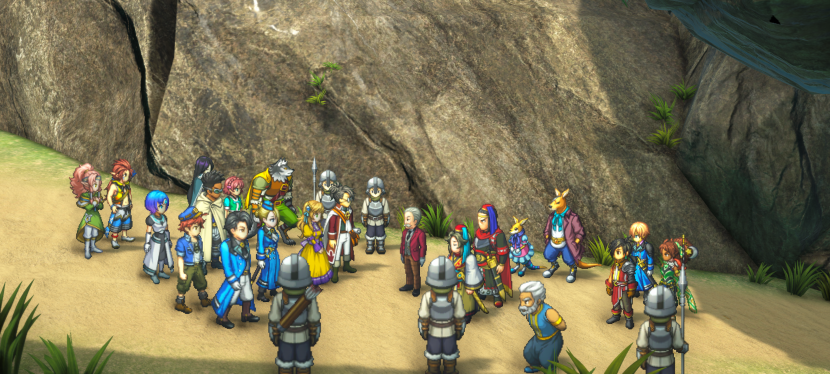
Each time you successfully recruit a new character, you will see this quick and flashy visual presentation.
Along the way, I observed that other games such as Resident Evil 4 remake, Shadow of the Tomb Raider, Assassin’s Creed: Valhalla, and the most recent release Senua’s Saga: Hellblade II respectively pushed my Xbox Series X to perform hard (with the internal fan run fast) but there were no game crashes and no sudden shutdowns at all. Only Eiyuden Chronicle: Hundred Heroes resulted in “overheating” and “insufficient ventilation” readings and disruptions.
Considering the hassles, I managed to get the fun and discoveries with Eiyuden Chronicle: Hundred Heroes on my Xbox. Here is hoping that the game developer will soon release another patch for Xbox Series X to make the game run well while consuming less power somehow. Given the fantastic presentation of the game, technical disruptions on Xbox Series X should not have happened at all.
There is so much to explore and discover in this game!
So what are you waiting for? If you are already a subscriber to Xbox Game Pass, you can download Eiyuden Chronicle: Hundred Heroes on your Xbox Series X, Xbox Series S, or the aging Xbox One. If you have extra money and want to support Rabbit & Bear studio, buying the digital copy of the game is the recommended option. For more information about the Suikoden-inspired JRPG, visit https://www.xbox.com/en-US/games/eiyuden-chronicle
Disclaimer: This is my original work with details sourced from reading the comic book and doing personal research. Anyone who wants to use this article, in part or in whole, needs to secure first my permission and agree to cite me as the source and author. Let it be known that any unauthorized use of this article will constrain the author to pursue the remedies under R.A. No. 8293, the Revised Penal Code, and/or all applicable legal actions under the laws of the Philippines.
Welcome back superhero enthusiasts, 1980s arts and culture enthusiasts, Marvel Comics fans and comic book collectors! Today we go back to the year 1984 to examine a small part of the Marvel Comics universe through a tale of the Amazing Spider-Man monthly series.
By now, you readers should be aware that I reviewed a lot of comic books about Spider-Man and his deadliest enemy Venom. It is already established through comic book history that the iconic webslinger is responsible for the establishment of Venom as he brought into the world the alien costume (the symbiote) coming from deep space (as told in the Secret Wars limited series), and he also became responsible for the destruction of Eddie Brock’s career in journalism. Of course, Venom did not debut immediately after Spider-Man’s return from Secret Wars and there was a lot more about the symbiote when it was with Peter Parker.
With those details laid down, here is a look back at Amazing Spider-Man #252, published in 1984 by Marvel Comics with a story written by Roger Stern and Tom DeFalco, and drawn by Ron Frenz. This comic book marked the first appearance of the alien costume.
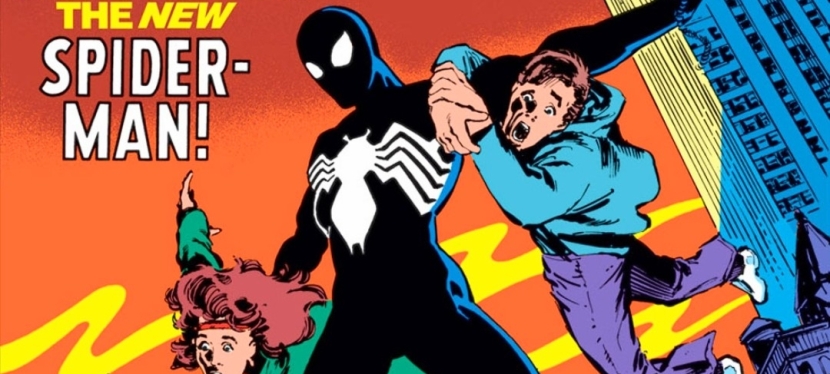
The cover.
Early story
The story begins inside the New York headquarters of the Daily Bugle. It has been observed that several superheroes such as Captain America, Thor, Spider-Man, Iron Man, the X-Men and the Avengers have been missing this resulted in a rise of crime. Publisher J. Jonah Jameson and editor-in-chief Joe Robertson discuss the newest edition of their newspaper.
Meanwhile over at Central Park where police officers and others stand by an area that was closed off, a physical structure suddenly appears spreading bright light to onlookers. Suddenly Spider-Man (wearing a new dominant black costume) leaps out of the structure carrying Dr. Connor (the Lizard) surprising the people.
After realizing they have returned home at last after spending lots of time and struggle in deep space (Secret Wars), Spider-Man could not help but feel jubilant to be home. As the police officers don’t realize that they are talking with the same webslinger due to the new costume, one of them was about to draw his gun which prompted the superhero to use his web on him.
Suddenly, the Avengers, Captain America, Thor and Iron Man emerge from the physical structure which provided Spider-Man relief as he thought that only he and Dr. Connors made it home. With the people focusing on the other superheroes, Spider-Man and Dr. Connors slowly exited. Connors asked him what are they going to tell the world about all they have seen and experienced in deep space…
Quality
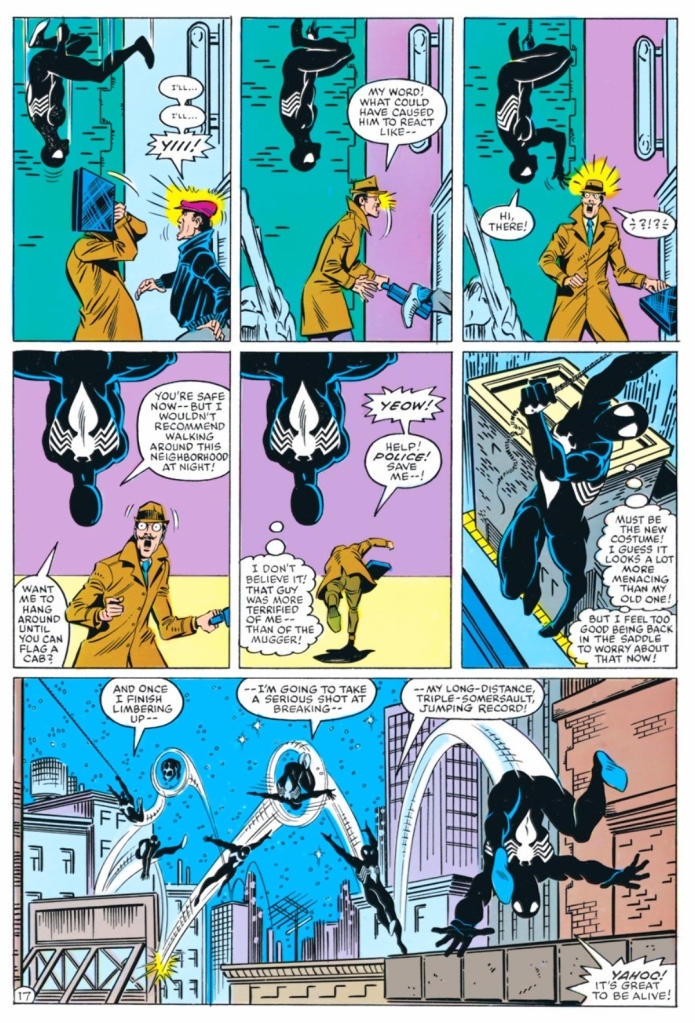
Spider-Man’s first night in New York wearing the alien costume .
I really like this story. I first read this a long time ago and I re-read it all over again for this retro review, and still this story engaged me a lot. There is a lot of richness in the script and you will get to see Peter Parker transitioning into a series of major changes that await him. Without spoiling the plot, there is no hero-versus-villain element here at all. It is all about Spider-Man who just arrived home from a major conflict (and also one of the most significant comic events ever published by Marvel Comics) and the alien costume saga truly began right here. The Venom debut did not happen until a few years later in reality.
In accordance to what was established in Secret Wars (not to be confused with the 2015 series of the same name) and the standards of then editor-in-chief Jim Shooter, the creative came up with a tale that not only showed a different Spider-Man but also portrayed him in ways that defied the tropes and creative ideas the preceded this comic book.
For one thing, Peter Parker is literally like a fish out of water here. As far as the whole world is concerned, only days passed when the superheroes went to deep space. But for the webslinger, a lot more time passed as so many battles, discoveries and intriguing events took place for him along with the others. That being said, Peter Parker’s perception of reality and track of time really got messed up and the weight of Secret War’s events really turned out overwhelming on him. This was well dramatized in the scene wherein Peter – who realized that so much time had passed – he had to call his aunt May fearing that she must be worried sick over him. There was also the moment when by walking down the street, he realized how much he missed not only his home but also the local surroundings.
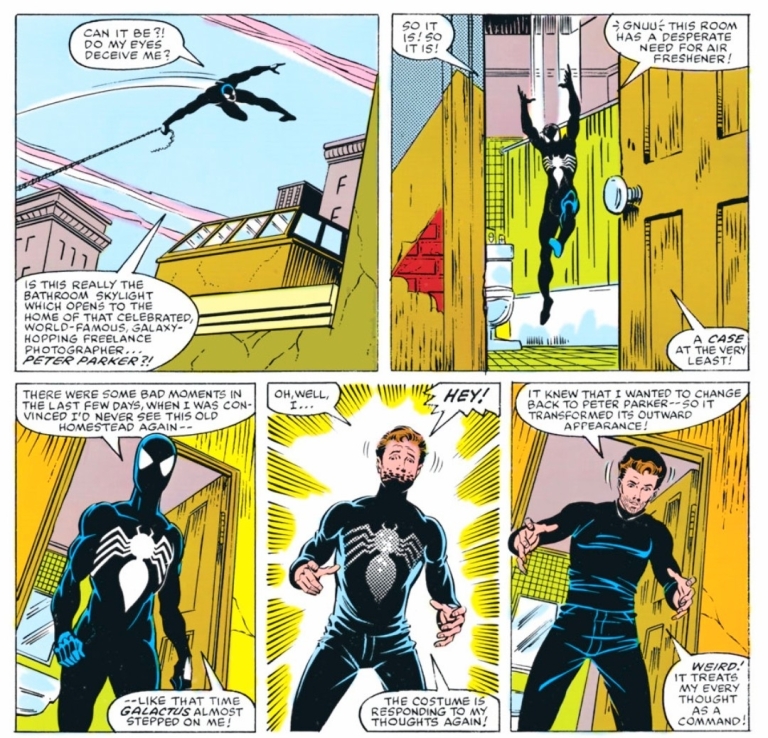
It was also in this comic book when Peter started getting more oriented with the alien costume he first got in Secret Wars #8 (which was actually published after this comic book) and started to enjoy the benefits with the way it responds to his thinking. Of course, at this stage, he has yet to realize the unfortunate truth about the living costume he brought home and this story really kicked off a new and profound stage in the comic book history of Spider-Man
Conclusion
When Spider-Man finally arrived home after spending so much time during Secret Wars.
Amazing Spider-Man #252 (1984) is still a great comic book to read all over again. This was released during the time when Secret Wars (1984) was still being published and years before Venom’s big debut in the series’ 300th issue. In my view, the alien costume saga was a big turning point in the literary history of Spider-Man and the creators who got involved in this comic book really sowed the seeds of compelling and intriguing events that followed. What is intriguing is that all of these significant developments started when a Marvel Comics reader from Illinois came up with the idea of a new costume for Spider-Man, wrote to them and the publisher responded to acquire his idea for over $200 (click here).
This comic book is also a reminder of how significant Jim Shooter’s rule at Marvel Comics really was and I can say that the Marvel’s literary universe of the 1980s should not be ignored.
Disclaimer: This is my original work with details sourced from playing the video game and doing personal research. Anyone who wants to use this article, in part or in whole, needs to secure first my permission and agree to cite me as the source and author. Let it be known that any unauthorized use of this article will constrain the author to pursue the remedies under R.A. No. 8293, the Revised Penal Code, and/or all applicable legal actions under the laws of the Philippines.
Welcome back retro gaming fans and readers!
Today, we will go back to the late 1980s to examine one of the most significant console games of the decade…Konami’s Contra. To put things in perspective, Contra started in the arcades in 1987 and went on to become a big hit. Konami went on to make a version of the game for Nintendo Entertainment System (NES) in the West and the Family Computer (Famicom) in Japan that resulted in different looking graphics (both artistically and technically), reworked stages, and different and extended level designs that were done within the consoles’ limitations. In short, the home version of Contra was pretty different from the arcade version but still was made to be fun and exciting on its own.
In my personal experience, my discovery of Contra has always been on the Famicom and some time later on the NES. For this retro review, I replayed Contra (both Famicom and NES versions) via the Contra Anniversary Collection on my Xbox Series X.
With those details laid down, here is a look back at Contra, developed and published by Konami for the NES and Famicom in 1988. The NES version was released one week ahead of the Famicom version in February 1988.
The start screen of the NES version of Contra. The commando with dark hair was deliberately made to resemble Sylvester Stallone somewhat.
Game concept
In the far future, an alien army from space – Red Falcon – arrived on Earth inside a meteorite that landed on the Galuga archipelago. There, Red Falcon established an extensive high-tech base for their operations and eventually brainwashed a local human army to do what they want. Red Falcon plots to wipe out human civilization on the planet.
With the information about Red Falcon collected, the Earth Marine Corps send Contra unit members Bill Rizer and Lance Bean to the island to destroy the opposition and find out what Red Falcon has been doing…
Gameplay and quality
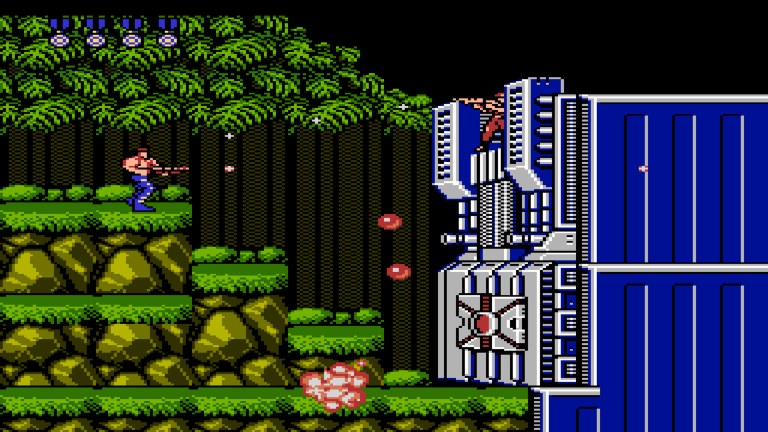
Contra is an action-packed 2D side-scrolling game with strong sci-fi and military influences.
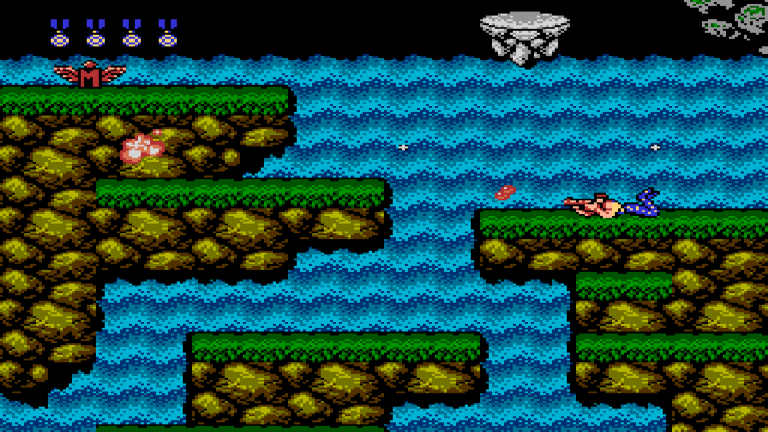
To begin with, Contra of 1988 was made to be a nicely-paced, action-packed, side-scrolling adventure game that has some 3D-like levels in between. The game design and levels Konami came up with was done to immerse gamers into actual participation in the military campaign against the aliens and their brainwashed human soldiers. This campaign not only includes battles through the forest of the Galuga archipelago but also through the interiors of Red Falcon’s high-tech facilities, going up an elevated location with waterfalls, the snowy area and further deep into the rest of the enemy’s mechanical base.
For the most part, you play as a commando armed with a rifle with unlimited ammunition. As you shoot enemies and make your way through the 2D side-scrolling level, there will be the occasional flying capsules that you can shoot down to gain new weapons/ammunition (S for Spread Shot, M for Machine Gun, L for Laser) or some power-up (temporary invincibility or the rare ability to eliminate all enemies present on-screen) to help yourself as the wave of opposition from Red Falcon is relentless (which is reason enough to compel you to keep progressing and fighting). There are also times when the mentioned enhancements suddenly pop out after killing an enemy.
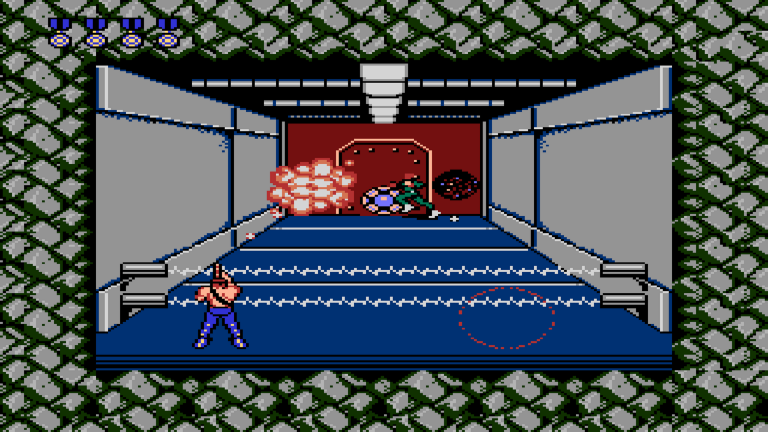
To prevent the game from getting too old with side-scrolling, Konami implemented these stages in which players face the front to attack enemies, overcome obstacles and move forward with 3D-like effects going into the next place.
By default, this game is brutally hard. Not only do the enemies keep appearing (with some of their teammates being strategically placed to fire at you), the obstacles will compel you to take your time overcoming them. In this game, one-hit death is the norm and there are many moments in which falling to your death becomes a huge risk. You get hit, you not only lose one life, you will lose whatever powerful weapons you gained.
There are also stage bosses (powerful enemies that await you at the end of a level) that will challenge you so much, you will have to adjust your strategy, pay attention to the movements and timing of the enemy, and then adjust your way fighting.
Only the Famicom version of Contra has this sequence.
I really love the sci-fi elements the game developers came up with for this classic game. There are lots of high-tech stuff to see here and this robotic enemy is just one of them.
Fortunately for us players, the controls are really tight and very responsive. You can move your characters to overcome obstacles, avoid getting hit by enemies and even move down from one platform if the space below is safer. I still remember how precise and responsive the controls were on the NES and Famicom versions, and I can say that all the responsiveness made it on the Xbox controller when I replayed Contra on Xbox Series X with the Contra Anniversary Collection I downloaded. In fact, the high precision of the controls added to the fun of shooting enemies or obstacles with the Spread Shot while moving to the right as it was meant to be.
Considering the intense difficulty of the game, players who do the famous Konami Code (Up, Up, Down, Down, Left, Right, Left, Right, B, A, and Start) will be reward with 30 lives when they start playing Contra. For Xbox gamers reading this, there is a slight difference with the Konami Code when playing Contra on Xbox consoles.
Apart from shooting, there are lots of platform gaming elements to experience here. The difficulty is very brutal and the famous Konami Code will grant you 30 lives when you do the code correctly.
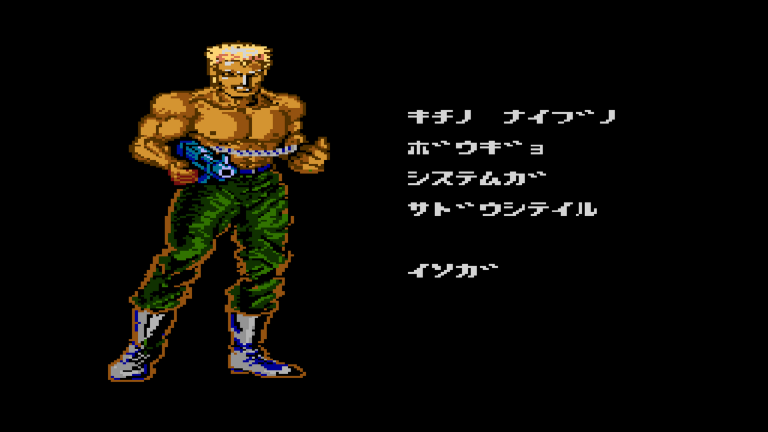
This cut-scene is only available in the Famicom version.
With regards to game design, the Konami developers did a really fine job creating the levels, placing the challenges and setting up memorable boss battles for action/adventure-hungry gamers to indulge in. The developers also cleverly implemented the fictional/fantasy concepts into the game design which resulted in me getting immersed in the Contra team’s mission against the Red Falcon at their secret base.
Another highlight with playing Contra is the 2-player option and the above-mentioned Konami Code added to the fun and accessibility of. I still remember the old days of playing in a 2-player session (cooperative play essentially) of Contra at a friend’s house on a Famicom. Since my friends and I were already enthusiasts of 1980s Hollywood action movies, playing Contra was enjoyable even though the difficulty was brutal.
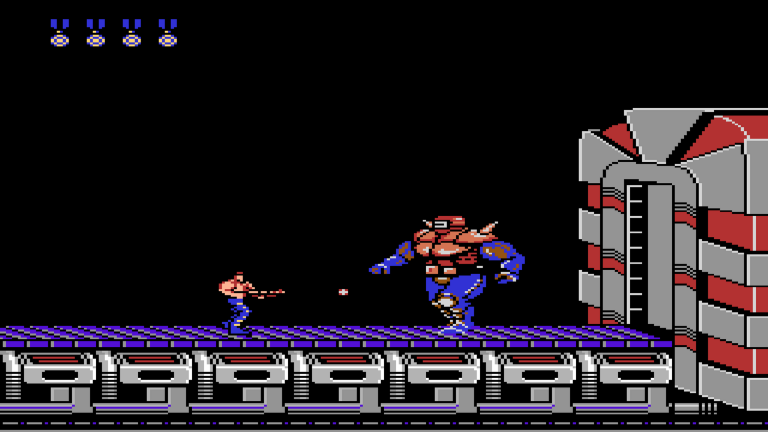
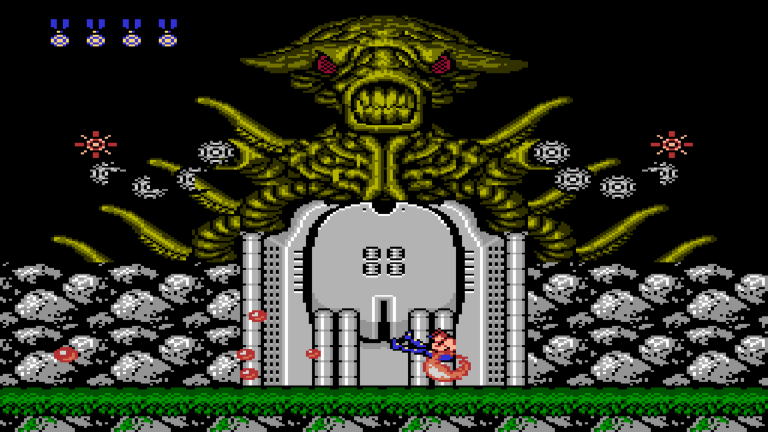
This is one of the touch stage bosses you will encounter in the game.
If there are any notable differences between the two versions of Contra of 1988, it would be the fact that the Japanese (Famicom) version has storytelling emphasized through cutscenes (with Japanese text displayed), a technical overview of the Red Falcon base at Galuga with maps displayed before you start a new level, in-game art, an additional scene that spiced up the ending and, most notably, more background/environmental animation. The additional animation on the Famicom version made the adventuring look and feel more lively and this is most evident in the final stage (lair of the alien).
Conclusion
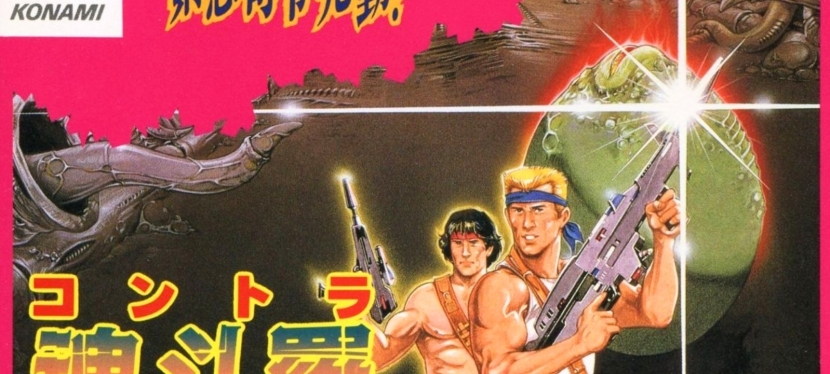
The Japanese cover art of Contra on Famicom. The Rambo-like character and the alien egg are obvious inspirations from Hollywood action movies of the 1980s.
There is no doubt in my view that after all the decades that passed since I first played it, Contra (1988) is still very engaging and a lot of fun to play whether you choose the Famicom version or the NES version. The developers who made this game succeeding in making something very enjoyable for millions of gamers and it is very clear that the makers were inspired by Hollywood action movies of the decade. In my view, the most obvious military inspirations are Aliens (1986), Commando (1985) and Rambo: First Blood Part II (1985).
Historically speaking, Contra (1988) was released at a time when militarism inspired many other game designers to come up with enjoyable games in different forms such as Cabal, Jackal, Rush’n Attack, Operation Wolf, Operation Thunderbolt to name some. Considering the overall quality and high fun factor Konami established, it is safe to say that this game is one of the finest among its militaristic gaming counterparts of its decade.
I had a grand time replaying Contra (1988) on my Xbox Series X in preparation for this review. Having played both NES and Famicom versions, I can say that the latter is the more complete and more immersive version to play. That does not necessarily mean the NES version is totally inferior. In fact, the NES version is more straightforward with the pick-up-and-play approach, and the gameplay itself is nearly identical (note: Famicom version is slightly more challenging) and very much fun to experience. If you are the player who really wants to be more immersed into the lore of Contra and absorb the military sci-fi concept Konami prepared, then the Famicom version is the one to play. That being said, now is a good time to purchase and download Contra Anniversary Collection.
Overall, Contra (1988) is highly recommended! It truly is a retro gaming gem!
Welcome back readers, fellow geeks and electronic gaming fans!
In this edition of the Retro Gaming Ads Blast (RGAB) series, we will take a look at another batch of retro gaming print ads from the 1980s and 1990s.
For the newcomers reading this, Retro Gaming Ads Blast (RGAB) looks back at the many print ads of games (console, arcade, computer and handheld) that were published in comic books, magazines, flyers and newspapers long before smartphones, social media, the worldwide web and streaming became popular. To put things in perspective, people back in the 1980s and 1990s were more trusting of print media for information and images about electronic games and related products.
With those details laid down, here is the newest batch of retro gaming print ads for you to see and enjoy…
1. Konami’s 3-in-1 sports games print ad
Long before the advent of major league sports video games, Konami was prolific with sports video games.
Back in the 1980s, Konami was a prominent gaming company as they released a lot of games that became hits in the arcades, on home computers and gaming consoles. Considering the limited amount of games publishers were allowed to release on the Nintendo Entertainment System in America, what Konami released were really fun games to play and their contributions of sports-based video games on the NES were significant. Possibly due to a lack of marketing budget at the time, they promoted Blades of Steel, Double Dribble and Track & Field II with this single-page ad showing the game box covers and screenshots. Ultimately, this print ad was sufficient in giving gamers a clear idea of what to expect with the three games.
2. The Adventures of Bayou Billy print ad
Bayou Billy looks inspired by the cinematic hero Crocodile Dundee. This video game even had a comic book adaptation published by Archie Comics.
Still with Konami, the Japanese publisher released in America the non-military adventure game The Adventures of Bayou Billy for the NES which was a revised version of their 1988 Family Computer game titled Mad City (see the differences by clicking here). This game really looked like it was influenced by Hollywood action/adventure movies of the era and it provided gamers gameplay styles of light gun shooting, beat-them-up action and racing. The titular hero looks very inspired by the cinematic hero Crocodile Dundee. This print ad is very stylish and also eye-catching. I think it has done a good job to make viewers interested in the video game.
3. Krull Atari video game print ad
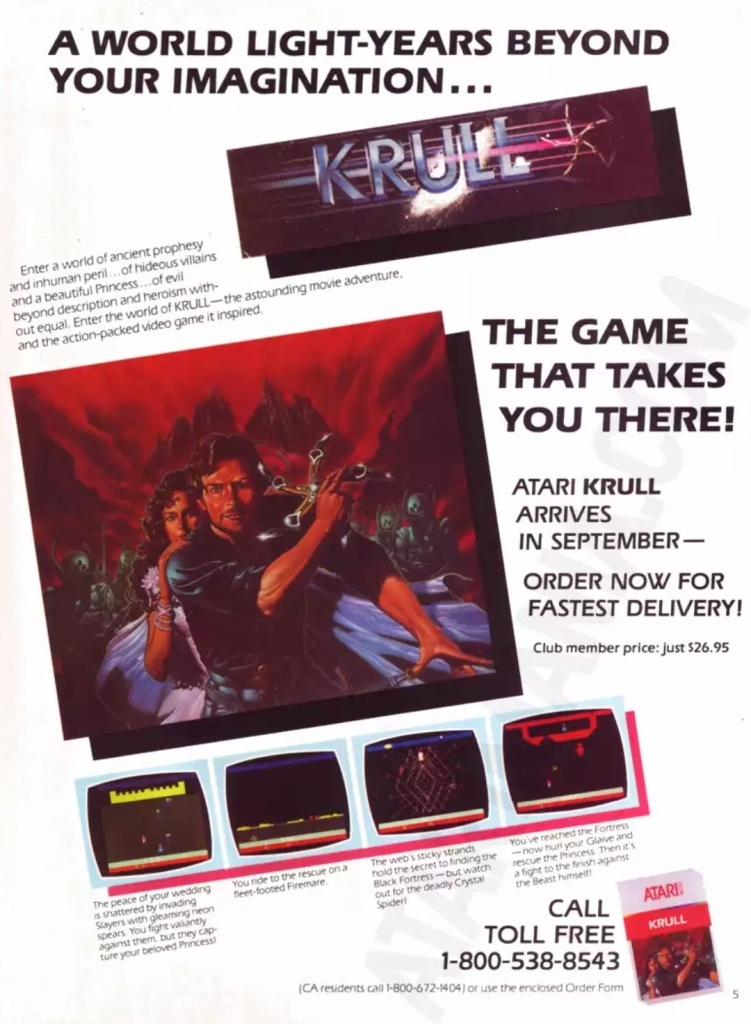
I never got to play this Krull video game on Atari 2600, nor its arcade game.
Way back in 1983, I was fortunate to see the science fantasy movie Krull inside the movie theater here in the Philippines. When I saw this print ad, I easily got excited for the Atari 2600 video game adaptation but never got to play it. This print ad does its job showing what Krull’s game looked like and the ad makers cleverly used painted art reflecting the movie’s characters and the armored enemies from space. I should add that between the time I saw the movie and the time I first saw this print ad, I became aware of the existence of the Krull arcade game by watching an episode of Starcade on TV.
4. Rocket Ranger NES print ad
Really great and detailed painted artwork in this print ad.
When Rocket Ranger on the Amiga in 1988, it had fancy visuals and a strong cinematic vibe that worked smoothly with the game design. This game was developed by Cinemaware which developed a reputation of releasing games based on classic film genres. In 1990, a version of Rocket Ranger for the NES was published by Kemco/Seika and print ads using painted art were made to promote the game. This particular print ad made heavy use of painted art which was captivating to look at while conveniently keeping people’s minds off the downgraded visuals of the NES version.
5. Michael Jordan: Chaos in the Windy City print ad with contest entry
Some gamers thought this was a basketball video game.
Yes, it was all true. There definitely was a video game that NBA legend Michael Jordan endorsed. First released on Super Nintendo Entertainment System (SNES) in America in 1994, Michael Jordan: Chaos in the Windy City was a side-scrolling action game in which gamers play a digital version of Jordan who has to save his friends, fight enemies and move from one location to the next in order to progress. The fact that an image of Michael Jordan holding two balls was used in this print ad (as well as on the game cover) in a dominating fashion made some gamers think this was a basketball game. The display of screenshots was so small, it did not help the situation. Lastly, the available of a contest entry form in this print ad was meant to promote not only the game but also GamePro magazine.
6. Gun.Smoke print ad
Gun.Smoke was indeed a fun game to play on NES. Therefore, the promotion is justified.
This print ad of the NES port of Gun.Smoke has strong imagery and literary descriptions the strongly emphasize the Old West concept and setting. The screenshots displayed are too small but the descriptions more than made up for it. Ultimately, what this print ad emphasized was realized as the NES version of Gun.Smoke itself captured the continuous action and excitement of the arcade version and the graphical limitations of the console did not matter much. I myself played this game and it was a lot of fun.
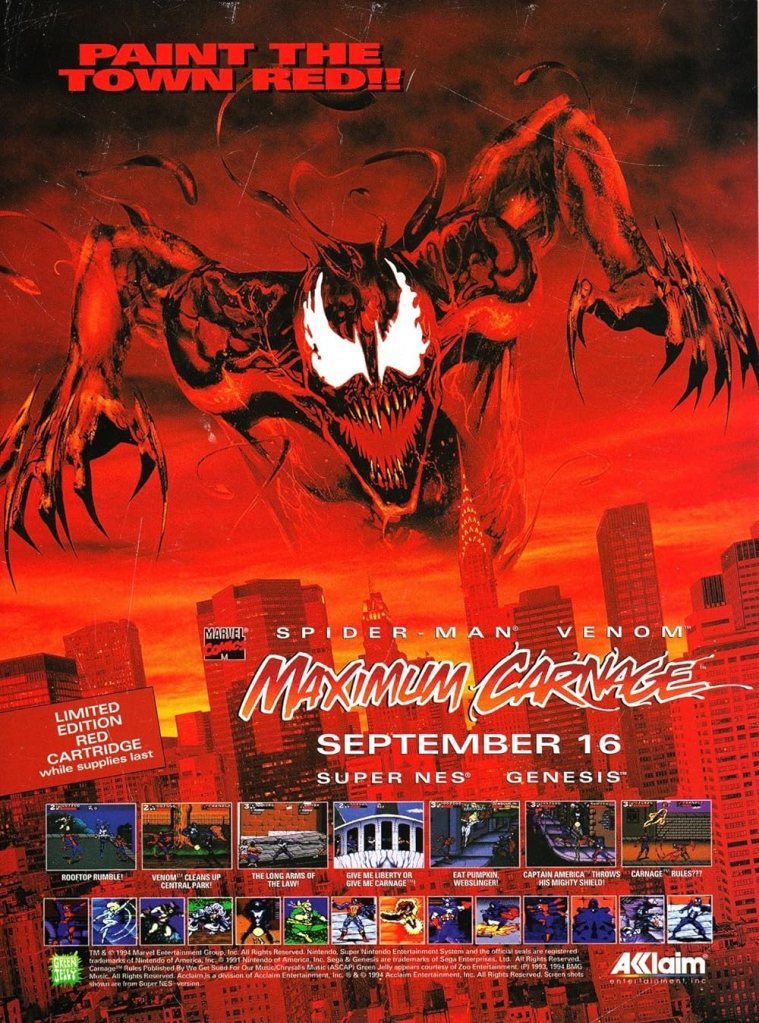
7. Spider-Man and Venom: Maximum Carnage print ad
This add appeared in my comic books and magazines I read in 1994.
Back in 1993, Marvel Comics published the huge Maximum Carnage crossover storyline which covered many issues of the four monthly Spider-Man comic books and two issues of the quarterly Spider-Man Unlimited series. Considering the high popularities of Venom and Carnage at the time, it was not surprising that Marvel took advantage by having Maximum Carnage licensed to Acclaim to create a video game adaptation in the form of a beat-them-up.
Spider-Man and Venom: Maximum Carnage was released for SNES and Sega Genesis in 1994, and game developer Software Creations really adapted story to fit with their side-scrolling game design. Between playable stages are cutscenes that actually were digitized versions of actual comic book panels. This red-colored print ad had a dominating image of Carnage and screenshots with text descriptions. The ad makers even went the extra mile by inserting screenshot cut-outs showing individual characters such as Firestar, Venom, Spider-Man, Carnage, Cloak and Dagger, Iron Fist, Captain America and more. Whatever your opinion is about the Maximum Carnage storyline or the video game adaptation, there is no denying that this was a very eye-catching print ad.
Welcome back, my readers, YouTube viewers and all others who followed this series of articles focused on YouTube videos worth watching. Have you been searching for something fun or interesting to watch on YouTube? Do you feel bored right now and you crave for something to see on the world’s most popular online video destination?
I recommend you check out the following topics and the related videos I found.
#1Larry Bird’s memorable big game of 1992 – If you love American basketball and the modern day NBA does not appeal much to you, then you should go back to the year 1992 when the legendary Larry Bird had his last big game before retiring. During his final years in the NBA, aging and a serious back injury hounded Bird as he kept on leading the Boston Celtics. In March 1992, the Celtics hosted the strong Portland Trailblazers and this was the game when Larry Bird scored 49 points and even registered a triple-double at the age of 35. That being said, watch the highlight video below…
#2 Score PN’s Terminator 3: Before The Rise video – Score PN, a YouTube channel that is best known for its in-depth videos about the Resident Evil entertainment franchise, also produced videos related to The Terminator. Back in 2003, Arnold Schwarzenegger had a big cinematic comeback with Terminator 3: Rise of the Machines which I saw inside the cinema when it opened here in the Philippines. Back then, I was not even aware that a prequel comic book limited series of Terminator 3 was published and Score PN has a video about it which you can watch below. By the way, Score PN also produced videos about comic book adaptations of Batman movies which I highlighted previously.
#3 Vizconde Massacre explanatory videos – Previously, I included Viva’s video showing the entire 1995 movie The Jessica Alfaro Story. For the newcomers reading this, Jessica Alfaro (played in the movie by Alice Dixson) was the star witness of the trial of the shocking Vizconde Massacre and it took her around four years to come out publicly. For legal reasons, The Jessica Alfaro Story film made alterations (creative liberties) to make a reference to the massacre without the Vizconde name. That being said, if you want to know more about the Vizconde Massacre of 1991, the trial that happened and the big decision the Supreme Court made in 2010, then you should watch these two explanatory videos. The third one analyzes the legal aspect of 2010 Supreme Court decision related to the massacre.
#4 RoboCop 2 reaction videos plus arcade/console game documentary – Back in 1990, my friends and I got to watch RoboCop 2 inside the movie theater here in the Philippines and almost all the seats were filled at the time. While the movie was not memorable as it never came close to matching the uniqueness and cultural impact of the 1987 original RoboCop, it still managed to entertain enough people who eventually became fans. Like its predecessor, RoboCop 2 also had game adaptations for the arcade and consoles. Watch the videos below…
#5 A look at the history of Area 51 arcade/console games – Back in the mid-1990s, Area 51 by Atari was a huge hit in the arcades in the West and was perceived as a comeback for the said company. Area 51 was so successful, it prevented Atari from falling into financial disaster and versions of the game were released for Windows PC, PlayStation and Sega Saturn. Not only that, a spiritual sequel to Area 51 was released in 1997 with Maximum Force. To learn more about Area 51’s place in gaming history, watch the video below…
#6 Stand by Me movie reaction videos plus trivia video– If you are fond of movies based on the writings of Stephen King, then Stand by Me (1986) should have been part of your watch list a long time ago. It was an acclaimed coming-of-age film directed by Rob Reiner and has been described by some as one of the most defining movies of the 1980s. It is no surprise that there are retro movie reviews, movie reaction videos and trivia videos about it. You can watch the selected movie reaction videos plus a movie trivia video below…
#7 The liar and manipulator Abby Martin crushed by son of Hamas!– It is very sickening that there are still people here in this world who chose to be evil and do the works of Satan. I am talking about Abby Martin, a self-declared journalist who is actually a liar and manipulator. Do not let her good looks and media style fool you. Abby Martin constantly condemns the nation of Israel as she clearly took sides with the terrorists and supports the Palestinian agenda of wiping out the Jewish state. She might as well be working with wicked leaders of Iran. Watch this video of Abby Martin getting crushed by the son of Hamas. Remember that Abby Martin is clearly working with the terrorists and murderers. Never let Abby Martin poison your minds!
#8 The disappointing interview with the Xbox president– Since early this year, gamers’ trust in Xbox weakened due to unexpected developments such as Microsoft deciding to release four Xbox-exclusive games to other consoles. Since then, a lot of Xbox fans have been speculating that in due time Xbox itself will change for the worse and eventually end to pave the way for Microsoft to become a multi-platform game publisher. That being said, the downward trend of Xbox continued as four of its game studios – Tango Gameworks, Alpha Dog, Roundhouse Studios and Arkane Studios – were suddenly shut down which sent shockwaves throughout the industry and attracted negativity to Xbox. Not only that, there was this very disappointing interview with Xbox president Sarah Bond which made things worse. Posted below is the video of the very interview itself plus one reactionary video from Geeks and Gamers.
The Swimming Lessons 2024 program at Tropical Palace Resort Hotel in BF International, Las Piñas City will begin on June 10, 2024, and already enrollment is ongoing.
The swimming lessons will be taught by coach Alec Dequiña who has over twelve years’ experience in coaching and was an NCAA medalist.
The main swimming pool at Tropical Palace Resort Hotel.
The swimming pool for younger and shorter swimmers.
Courses offered for those who are interested to learn swimming are as follows: Basic (6-years-old and older) with schedule of 7:30 AM to 8:30 AM; Advance (6-years-old and older) with schedule of 7:30 AM to 8:30 AM; and Toddlers (4-years-old) with schedule of 8:45 to 9:45 AM.
Basic course enrollment fee is at P5,500. Advance course enrollment fee is also at P5,500. Toddlers course enrollment fee is at P6,000.
This is the exterior of the Tropical Palace Resort Hotel facility. To visit the swimming pools, you will have to enter the office and pass through inside.
For more South Metro Manila community news and developments, come back here soon. Also say NO to fake news, NO to irresponsible journalism, NO to misinformation, NO to plagiarists, NO to reckless publishers and NO to sinister propaganda when it comes to news and developments. For South Metro Manila community developments, member engagements, commerce and other relevant updates, join the growing South Metro Manila Facebook group at https://www.facebook.com/groups/342183059992673
Disclaimer: This is my original work with details sourced from reading the comic book and doing personal research. Anyone who wants to use this article, in part or in whole, needs to secure first my permission and agree to cite me as the source and author. Let it be known that any unauthorized use of this article will constrain the author to pursue the remedies under R.A. No. 8293, the Revised Penal Code, and/or all applicable legal actions under the laws of the Philippines.
Welcome back superhero enthusiasts, 1990s arts and culture enthusiasts, Marvel Comics fans and comic book collectors! Today we go back to the year 1993 and examine a small part of the Marvel Comics universe through a tale of the Amazing Spider-Man monthly series.
In my previous retro comic book review, the insane murderer Venom returned to antagonize Spider-Man by targeting his parents. While it was a fact that Venom – who knew Spider-Man’s true identity – got into close contact with Aunt May (symbolizing the danger he poses on the Peter Parker’s family) a few years prior, going after the mother and father of Peter really raised the stakes.
With those details laid down, here is a look back at Amazing Spider-Man #375, published in 1993 by Marvel Comics with a story written by David Michelinie and drawn by Mark Bagley. This comic book marked the 30th anniversary of Amazing Spider-Man #1 (1963).
The cover.
Early story
The story begins inside one of the facilities of the closed amusement park in Brooklyn. In his vicious form, Venom tells Richard and Mary Parker (both restrained) that they belong to him and declares that he would protect them from Spider-Man.
When Richard Parker asked why would he think that they would have anything to do with Spider-Man, Venom realizes that the couple does not even know their son is the webslinger. Venom tells the couple that their innocence is what he is sworn to preserve.
Over at Manhattan, Spider-Man swings back to the Daily Bugle building and discreetly changes his clothes before moving in as photographer Peter Parker. Inside one of the offices, J. Jonah Jameson reaches out to Silver Sable by telephone…
Quality
Peter Parker had to commit a crime by trespassing into Anne Weying’s residence. His disguise as Spider-Man does not protect him from the law.
I have mixed feelings about this follow-up to the great story of the previous issue. For one thing, David Michelinie’s script had a completely different tone and direction even though he intended this comic book to conclude what issue #374 started. Another thing is that this story has even more characters added in which clearly diluted the intensity of the Venom-Spider-Man rivalry that was so intense in the previous issue.
There are two sub-plots – one of which deals with someone from Eddie Brock’s past – that were emphasized with sufficient details and the creative team integrated them into the main story. It seems that the creators intended to make the main story look grander in scope while sacrificing the very elements that made issue #374 a great and intense reading experience.
Remember the suspense and danger that came with Venom targeting the older Parker couple? Those elements are almost totally absent in this comic book even though this story concluded the previous issue’s conflict build-up. Richard and Mary Parker are both present as captives of Venom but there really is no tension nor any sense of danger here due to the drastic change of tone and direction in the script.
I should also stress that the introduction of Anne Weying (previously Anne Brock) as Eddie Brock’s ex-wife looked and felt like an afterthought inserted into the story. While Anne’s presence brought out some traces of humanity and sanity from Venom during the 2nd half of the story, it did not add much impact on the conflict between the webslinger and the symbiote-wearer murderer. Ultimately, the creative team had to do something to explain the story build-up on Venom’s part leading into the Lethal Protector limited series which is set in the city of San Francisco.
And then there was the presence of Silver Sable’s team called the Wild Pack. The Wild Pack is the result of J. Jonah Jameson’s agreement with Silver Sable with the objective of achieving a journalistic exclusive for the Daily Bugle. This particular sub-plot is really lousy and not even the dynamic looking action sequences involving the Wild Pack could hide lousiness.
If there is anything symbolic about the script, it is the emphasis on family as well as the impact that comes with elements of the past emerging unexpectedly. In this very comic book, you will get to see Eddie Brock/Venom react like a sane person in response to the sudden re-appearance of his former wife. No matter what the creative team did here, I can say that the Spidey/Venom conflict did not really intensify (note: the dynamic action scenes did not solve the shortcomings) and there was no reason to worry about the captive Parker couple.
Conclusion
The insane murderer Venom with the parents of Peter Parker.
Considering the great stuff and raised stakes that made issue #374 a very compelling read, Amazing Spider-Man #375 (1993) is clearly a disappointing conclusion. This is not a terrible comic book as it has some good stuff for fans to enjoy but the overall presentation of the creators here is not too great due to their approach with the storytelling (with two sub-plots that did not add much). Overall, I am glad I never bought this comic book (with flashy cover and more pages) at full price in 1993.
Welcome back Xbox fans, geeks and gamers! During the recent IGN x ID@Xbox Digital Showcase, several new games were shown and the one that stood out the most for me was Commandos: Origins which will be released on Xbox Series X, Xbox Series S, Xbox One, Windows PC and Game Pass sometime in the near future.
To get yourselves oriented, watch this teaser trailer of Commandos: Origins.
While no firm release date has been announced, there are lots of details about the real-time tactical stealth game developed by Claymore Game Studios under publisher Kalpyso Media. To put things in perspective, posted below is an excerpt from the official game details sourced from the Xbox online store page. Some parts in boldface…
ALARM! You have been selected for a mission which will shape the fate of the entire world. Witness the very beginning of the legendary elite WWII force in Commandos: Origins. The long-awaited sequel to the Commandos series brings you right back to the foundation of the real-time tactics genre. And to the days where Jack O’Hara, the Green Beret, and his five companions met to form the infamous unit sent to complete missions which no others would dare to accept.
In the hushed shadows of history’s most pivotal moments, where heroes are born and legends are forged, a new chapter awaits. Whether it is a daring raid, a covert sabotage, or a courageous rescue mission – the Green Beret, the Sapper, the Sniper, the Driver, the Marine and the Spy will need to combine their skills to meet the most challenging tasks. Your mission can only be achieved through well-thought planning and the smart combination of stealth and destruction that come with the unique skillsets of this elite troop.
A huge and detailed environment that players will have to infiltrate and beat the bad guys.
From the icy plains of the Arctic to the vast deserts of Africa, from the western coastlines of Europe to the Eastern front, it’s up to you to lead your commandos to success in high-risk missions. Guide them in their fight against the growing Nazi occupation which is menacing the free world.
• Challenging Real Time Tactical Stealth Gameplay: Make the best use of your Commandos’ unique abilities, infiltrate enemy facilities and hit them where it hurts most before disappearing into the shadows.
• An extraordinary team: Featuring 6 infamous characters, each with their own storied history, banding together to form an extraordinary fighting force – the Commandos: Take control over Jack O’Hara “the Green Beret”, Thomas “the Sapper” Hancock, Francis T. “the Sniper” Woolridge, Samuel “the Driver” Brooklyn, James “the Marine” Blackwood, and Rene “the Spy” Duchamp and lead them to success.
• Many paths to victory: The detailed, varied and interactive environments offer multiple approaches to reach your goal. Sneak, climb, drive in various vehicles, or hide and creep your way to mission success!
• On your mark: A modern user experience with precise and intuitive controls enables you to control the commandos with expert precision. Coordinate complex actions simultaneously to overcome heavily fortified targets.
An explosive sequence with a tank.
Having seen the trailer of Commandos: Origins, I had these XCOM vibes. Then the game showed that action sequences can be executed with a good amount of detail supposedly to ensure satisfaction for players who love strategy backed with militaristic stuff. While the game design emphasizes 3D space, turn-based gameplay and strategy, Commandos: Origins still managed to remind me of past military games such as Operation Wolf, Cabal, Rush’n Attack and original Metal Gear.
Disclaimer: This is my original work with details sourced from reading the comic book and doing personal research. Anyone who wants to use this article, in part or in whole, needs to secure first my permission and agree to cite me as the source and author. Let it be known that any unauthorized use of this article will constrain the author to pursue the remedies under R.A. No. 8293, the Revised Penal Code, and/or all applicable legal actions under the laws of the Philippines.
Welcome back superhero enthusiasts, 1990s arts and culture enthusiasts, Marvel Comics fans and comic book collectors! Today we go back to the year 1990 to take a close look at the comic book adaptation of the movie RoboCop 2 (1990).
Before getting to the new retro comic book review, I should state that my friends and I had a fun time watching RoboCop 2 in the cinema shortly after it opened here in the Philippines. Back then, I was not yet a comic book collector and I rarely visited comic book specialty stores. That being said, I was unaware that Marvel Comics actually published an adaptation in the form of a 3-issue mini-series.
With those details laid down, here is a look back at RoboCop 2 #1, published in 1990 by Marvel with a story written by Alan Grant and drawn by Mark Bagley based on the movie screenplay by Frank Miller and Walon Green.
The cover.
Early story
The story begins in Detroit where the cops are run by corporations and the streets have turned into red-alert war zones. Crime is overwhelming the city and the highly addictive narcotic poses the greatest threat facing societies. The surgeon general who made the public warning about nuke was killed and the crime boss Cain (leader of a cult of nuke addicts and pushers) claims responsibility. Through the news media, Cain tells the public that nuke will make people’s problems go away and people want its paradise.
Under the management of Omni Consumer Products (OCP), several of Detroit’s police officers go on strike demanding better terms from their employer. The City Government of Detroit under Mayor Kuzak missed a payment (in relation to them owing $37 million) and OCP begins to move to foreclose the city and its assets in accordance to the terms of the contract. Mayor Kuzak accuses OCP of engineering the police strike which made crime rampant.
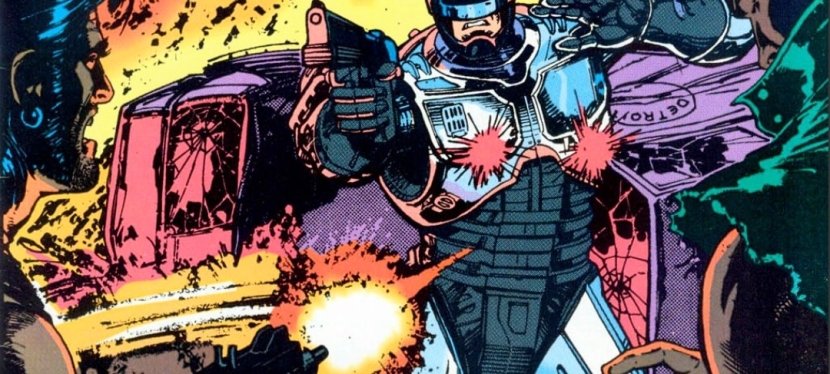
Elsewhere in the evening, the cruel activities of the thugs got disrupted by the arrival of a police car. Even though the police car got destroyed by the thugs, RoboCop emerges and begins to fight back…
Quality
There is simply no holding back for RoboCop when it comes to doing police work at a time when many police officers are on strike while crime has turned more rampant in Detroit.
This opening issue of the mini-series sticks close the basic plot of the movie (right until after Cain’s gang dismantled RoboCop) although there were a few notable differences with the sequence of events and there were scenes that showed the creative team took liberties to make the story suitable with the literary format in mind. That being said, don’t expect to see the key moments of the movie look exactly the same in this comic book and don’t expect to see the characters here looking like the actors who played them on the big screen. In terms of visual and literary presentation, this adaptation has a lot in common with the Total Recall comic book adaptation which coincidentally was released the same year.
For me, this is indeed a really readable comic book that has its stylized approach on telling the movie’s concept. OCP is the most powerful entity in the story while Cain and his gang are clearly the force of evil that strongly pose danger not only to Detroit’s people but even to the very divided police force. Nuke as the dangerous object of the plot clearly was inspired from elements of the real life war against drugs in 1980s America which made this story socially relevant.
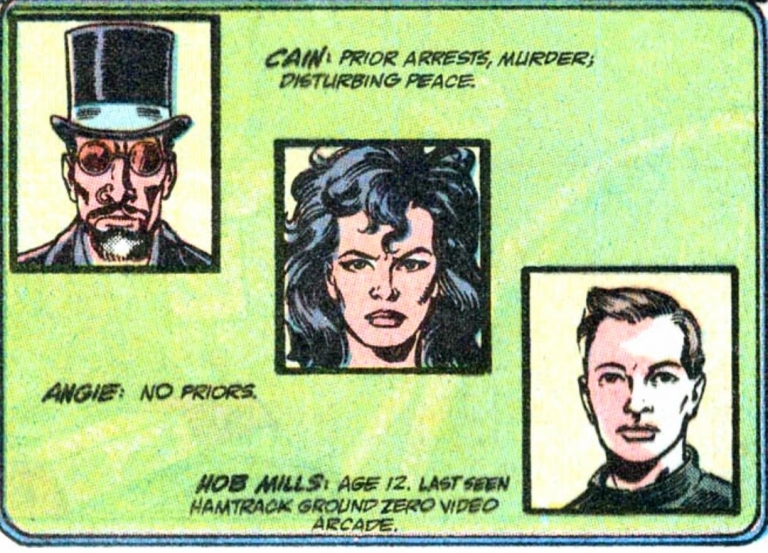
Very clearly these villains look nothing like actors Tom Noonan, Galyn Görg and Gabriel Damon.
Like in the movie, RoboCop here performs his law enforcement duty in an uncompromising manner even though memories of his past life as officer Murphy re-emerged deep inside. That being said, there are a few moments in which you might sympathize with the titular hero as this comic book pays close attention to the conflict between humanity and technology.
The action scenes here are sufficient but clearly don’t come anywhere close to the intensity of the film in terms of violence. Still, there is enough action for readers to enjoy.
When it comes to the visuals, the artwork done by Mark Bagley eerily looks comparable with Tom Lyle’s art in the Total Recall comic book of 1990. For the newcomers read this, Bagley became a popular artist through the Amazing Spider-Man monthly series and the Venom: Lethal Protector comic books that were released after years after this one. Having seen many of Bagley’s works published in 1992 to 1995, I can hardly recognize his art style in this comic book adaptation. The way he drew people’s faces in this comic book looks very different from those seen in Amazing Spider-Man issues. At the same time, Bagley’s own take on RoboCop has that balanced approach on depicting humanity with machinery while also making the hero look less bulky compared to the movie’s version.
Conclusion
Julie Faxx of OCP sure talks like a woke nut and rabid feminist in this scene.
RoboCop 2 #1 (1990) is clearly not a faithful adaptation of selected parts of the movie but that’s not necessarily a bad thing. This is more about the Grant-Bagley team doing their own visual presentation of the movie script copy they had and ultimately they succeeded in making this comic book a stylized and worthy reading experience. This is indeed a surprisingly entertaining read and I can say that I am looking forward to reading the next issue.
Welcome back Xbox fans, geeks and gamers! I want to share with you that in recent times, I played and finished Tomb Raider: Definitive Edition (2014) on my Xbox Series X console.
This is not a retro review of the said game. I want to share with you all that I played Tomb Raider (2013) on my Xbox 360 a long time ago. While the game was indeed fun, I never actually replayed it. That being said, Tomb Raider: Definitive Edition was my way of replaying it except that I have a more modern console to enjoy it with plus more gaming content. I accumulated over 300 Microsoft points (Xbox achievements) along the way.
The very intense action sequence in Tomb Raider: Definitive Edition.
The overall game design by Crystal Dynamics is still fun to interact with and the game’s production values are still of good quality. What I liked most with Crystal Design’s work is the way they designed the tale to immerse players into the action-packed settings while also succeeding in redefining the iconic Lara Croft with both long-time fans and new gamers in mind. Achieving these two goals together is very challenging for most game developers.
For the newcomers reading this, the Tomb Raider reboot of 2013 has a story concept filled with chains of unfortunate events that players will experience as Lara Croft who in turn has to overcome tremendous obstacles to survive and help her companions live on.
The new Lara Croft that Crystal Dynamics came up with is a young British woman (played by Camilla Luddington) who is about to become the Tomb Raider (the brave explorer). Early in the 2013 game, Lara learned a lot about archaeology from her travels with her parents (note: her father is an established explorer) who went on several expeditions. In different times, she eventually lost her parents which led to her inheriting the family fortune while receiving care from Conrad Roth. Lara joins a group in what turned out to be her first-ever expedition with the goal to find the lost kingdom of Yamatai.
Crystal Dynamics’ revision of Lara Croft is radically different from the original version of the early Tomb Raider games that I played on PlayStation in the 1990s. The modern Lara – as defined in the 2013 reboot and the two sequels released in 2015 and 2018 – is a survivor who went through lots of pain and killing as she faced armed opposition (the group Trinity is the antagonistic force in Rise of the Tomb Raider and Shadow of the Tomb Raider) that got in her way. By comparison, the original Lara Croft of the 1990s was a rich and very talented explorer who negotiates with prominent clients to do jobs (adventures around the world) that they can’t do.
Going back to the 2013 game, Lara Croft was portrayed to be vulnerable as the odds are so strong against her. Crystal Dynamics designed the game to make players relate with Lara’s gradual development into a fighter, survivor and hunter. This includes gameplay elements that were introduced from one stage to the next. That being said, by the time I reached the final stages of the game, I became experienced with the new capabilities Lara gained such as climbing, jumping great distances, shooting, firing with arrows, skinning the hunted animals, solving environmental puzzles and finding ancient artifacts.
Whether you play the 2013 game or the Definitive Edition, it is clear that Crystal Dynamics’ work on Tomb Raider is an undeniable success as they strongly redefined Lara Croft while establishing rock-solid gameplay. Crystal Dynamics hit their creative peak in Rise of the Tomb Raider (which I finished on Xbox One) before giving way to Eidos-Montreal (as lead developer) and provided support in Shadow of the Tomb Raider (I also finished this on Xbox One).
Screenshot captured from the very late stage of Tomb Raider: Definitive Edition.
Personally, I like the 2013 modernization of Lara Croft. While she is not the eroticized figure the original Lara of the 1990s was, she still has a strong sex appeal and the way she was portrayed in the three games (2013-2018) made sense as her personally kept developing in a believable fashion with each new game. That being said, I just hope that Crystal Dynamics and its partners will not ruin the gaming icon with wokeness, identity politics and the garbage of the Leftists in future big-budget Tomb Raider games. Lara Croft is well defined with adventuring, exploration, survival and a fighter against evil forces.
Elements of wicked Iran (wicked since 1979) would serve as fitting enemies of Lara Croft in a future big-budget Tomb Raider game. This one is from Tomb Raider #1 (1999). Iran is a terrorist state and the chief sponsor of terrorists.
I am watching your moves, Crystal Dynamics. Don’t forget you have a responsibility to the fans. Please avoid falling into the temptation of turning the Tomb Raider franchise and Lara Croft herself into woke agenda vehicles. Going woke means betrayal towards fans and doing things the very wrong way.


















 Author Carlo Carrasco