Disclaimer: This is my original work with details sourced from reading the comic book and doing personal research. Anyone who wants to use this article, in part or in whole, needs to secure first my permission and agree to cite me as the source and author. Let it be known that any unauthorized use of this article will constrain the author to pursue the remedies under R.A. No. 8293, the Revised Penal Code, and/or all applicable legal actions under the laws of the Philippines.
Welcome back superhero enthusiasts, 1990s arts and culture enthusiasts, Marvel Comics fans and comic book collectors! Today we go back to the year 1990 to take a close look at the concluding chapter of the comic book adaptation of the movie RoboCop 2 (1990).
In my previous retro review, I found the 2nd issue of the 3-part comic book adaptation mini-series that it lacked the impact of issue #1. It was understood that the comic book team was limited by the source material they had and the movie’s comedic scenes showing RoboCop not being his normal self were adapted. Those scenes did not translate into humorous comic book moments. At the very least, the build-up achieved by the comic book creators in issue #2 (which includes several internal developments at Omni Consumer Products) sets the stage for the final issue.
With those details laid down, here is a look back at RoboCop 2 #3, published in 1990 by Marvel with a story written by Alan Grant and drawn by Mark Bagley based on the movie screenplay by Frank Miller and Walon Green.
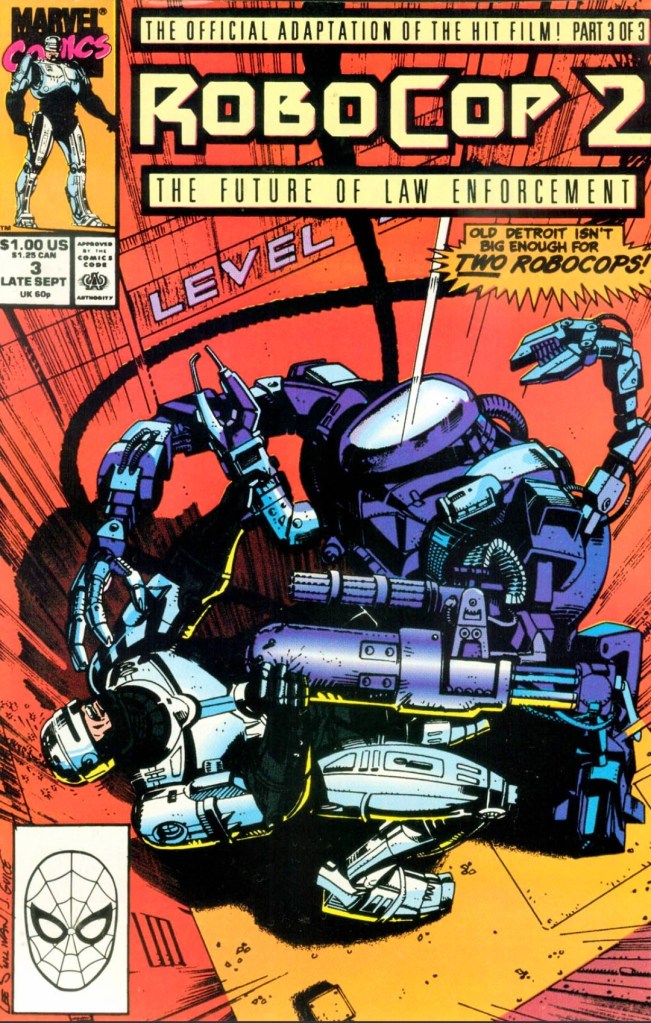
The cover.
Early story
The story begins in Detroit where OCP executives press RoboCop (Officer Murphy) for answers about the spying he recently did on his ex-wife. It turns out that his wife was so traumatized over his death, there were therapists, hypnotists and other treatments involved to help her recover. As a result of the spying, his ex-wife now believes her husband is still alive. In response to questions, RoboCop gave answers that the OCP guys wanted – he is no longer a husband, no longer human, no longer Alex Murphy and he is simply a machine. The private meeting between him and his ex-wife did not go well.
Meanwhile, the City Government of Detroit organizes a telethon in an attempt to raise funds needed to pay off the $37,985,300 they owe OCP. The mayor receives a very important call from former associates of Cain (RoboCop 2).
Shortly after, OCP realizes that the City Government could pay soon and if they fail to foreclose Detroit, their stock will plummet. With the approval from the corporation’s chief, Dr. Juliette Faxx proceeds to launch RoboCop 2 with the mind of Cain inside it…
Quality
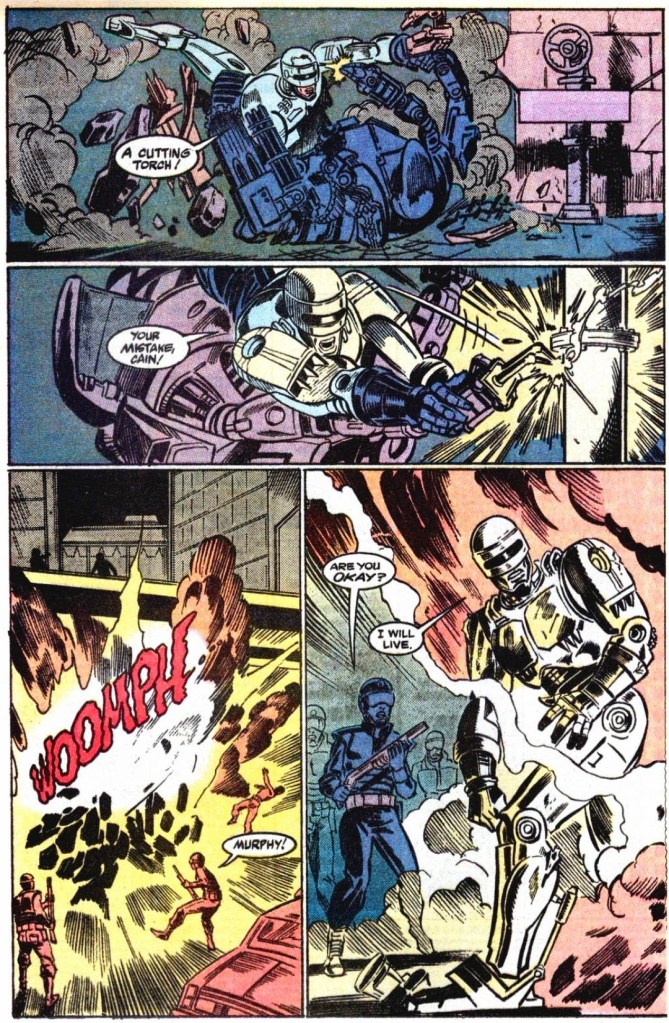
The battle between RoboCop and his bigger rival (Cain) is action-packed and fun to read.
As it is clear that the imagery and plot developments of the movie screenplay were adapted by the comic book creators with their very own distinctive ways throughout the mini-series, this comic book succeeded in concluding its 3-part story. In fact, this is a huge pay-off to most of the build-up that took place in issues #1 and #2. The much-awaited big battle between RoboCop and the Cain-controlled RoboCop 2 lasted eight pages and it was indeed action-packed and satisfying. Before the said battle took place, RoboCop 2’s debut is short, stylishly obscured visually and yet vicious to see.
Considering the huge amount of details the movie screenplay had, the Grant-Bagley duo managed to adapt the most relevant content efficiently while also telling a literary tale that is cohesive enough.
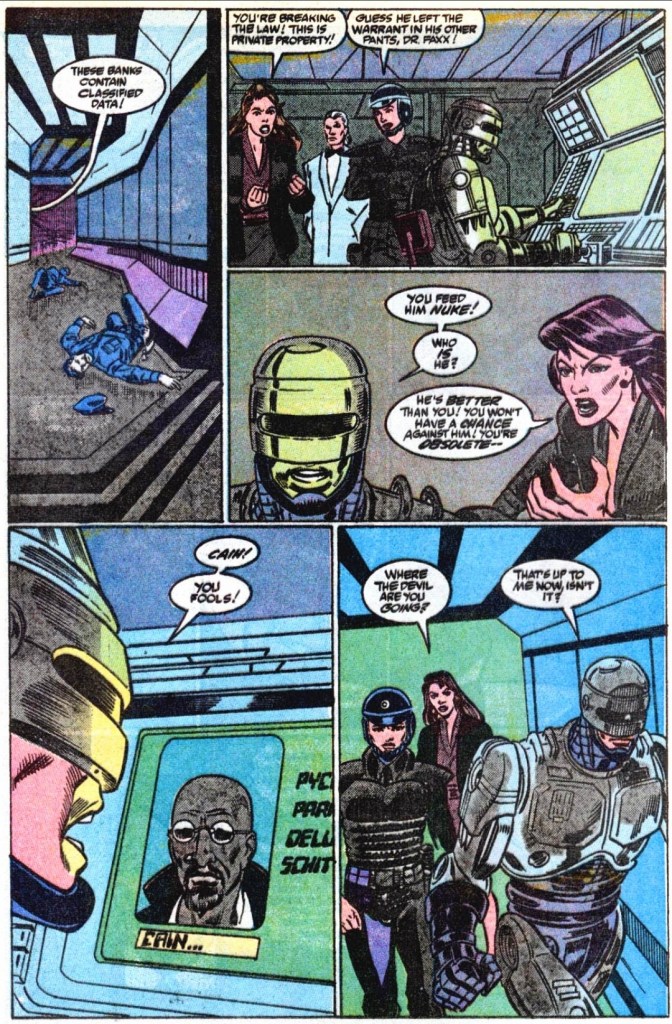
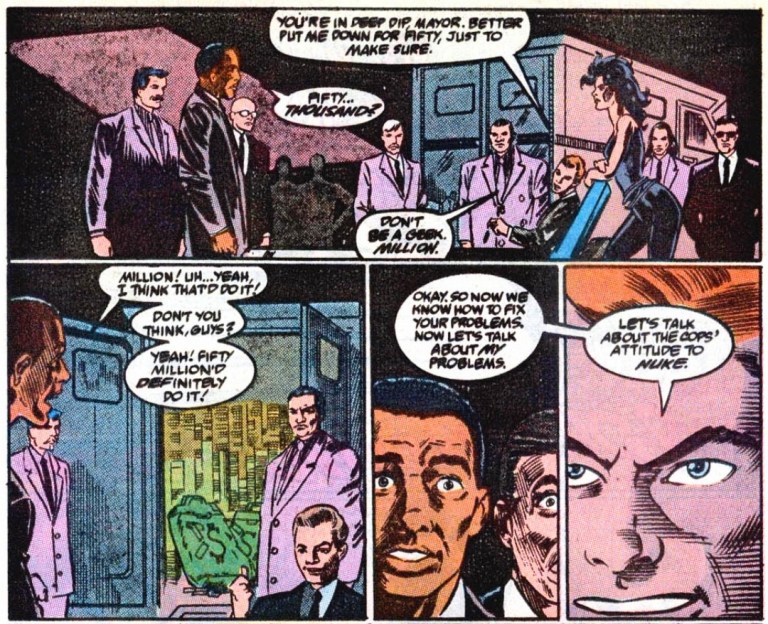
This scene did not appear in the movie.
What I found very notable is the fact that this comic book opened with RoboCop getting berated by OCP executives for his spying on his ex-wife. The said scene actually happened very early in the movie itself and to have it as an opener of this comic book added depth to RoboCop’s character development in this adaptation.
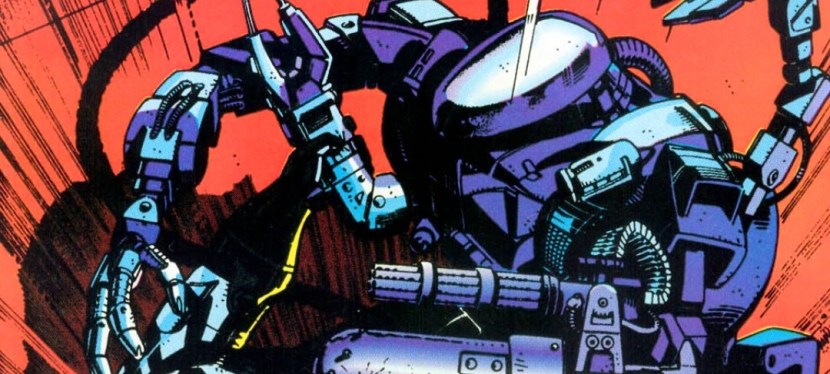
When it comes to weaknesses, there were times when Mark Bagley’s drawing of RoboCop 2 were off. RoboCop 2 was visually huge and intimidating in the movie but in this comic book, the size and scale were clearly lacking particularly in the shot where he is standing near OCP’s chief. The lack of visual details on RoboCop 2’s body showed signs of rush by the artist.
Conclusion
Is your local government leader making secret deals with criminals in real life?
RoboCop 2 #3 (1990) is a nice pay-off to the build-up that preceded it and, more importantly, it was a satisfying mini-series conclusion. As a standalone comic book, it has a good amount of plot details, dialogue and action scenes that can delight RoboCop fans. As the conclusion of the 3-part adaptation of the 1990 movie, it has a stronger focus on RoboCop and the plot moved at a better pace than in issue #2. The storytelling is good and the spectacle was much improved.
Welcome back, my readers, YouTube viewers and all others who followed this series of articles focused on YouTube videos worth watching. Have you been searching for something fun or interesting to watch on YouTube? Do you feel bored right now and you crave for something to see on the world’s most popular online video destination?
I recommend you check out the following topics and the related videos I found.
#1In-depth look at the making of Silent Hill – It has been over twenty-five years since Konami released Silent Hill on PlayStation. That horror-themed adventure game added to the evolution of horror gaming and it stood out differently from Capcom’s Resident Evil series of survival horror games. I recently viewed a very in-depth video by thegamingmuse who spent a lot of effort researching the game development history of Silent Hill, who the creators were and what challenges came along the way leading to the game’s eventual release. The video is over a hundred minutes long but I assure you it is full of details that will give you insight about how the game materialized.
#2 Electric cars are still very dangerous and deadly – I mentioned before that no matter how nice the promotions are, electric cars are still dangerous to have as they can spark fire randomly, damage properties nearby and even kill you. In recent times, there were these two electric cars in different locations that sparked into flames randomly. One of them was not even charging at all while being parked in a residential community’s parking area. That electric car suddenly caused a huge fire that destroyed many cars parked nearby while also forcing many residents to leave their units. The fact is electric vehicles are not safe and are not reliable. The future of the automobile is absolutely NOT electric. Watch and learn from the videos below.
#3 Star Trek: Generations reaction video by Popcorn in Bed (PIB) – Before I first saw Star Trek: Generations in the cinema in 1995, I was excited over the promised cinematic crossover between the iconic captain James T. Kirk and captain Jean Luc Picard. Having seen a mix of movies of the original Star Trek crew plus episodes of Star Trek: The Next Generation, the concept of a crossover was really intriguing. After watching Star Trek: Generations, I left the cinema disappointed not only because the Kirk-Picard crossover (William Shatner and Patrick Stewart together on-screen) was not so great but also because the pacing and direction were not cinematic in execution. In fact, I find Star Trek: Generations’ concept more suitable in comic book format.
Of course, the flawed movie has its fans and slowly it is being discovered by YouTubers for the first time in their lives. Popcorn in Bed (PIB) recently posted the reaction video of Star Trek: Generations and she previously spent months watching all the seven TV seasons of Star Trek TNG. How would she react to the movie and how it impacted her, you have to watch it below.
#4 Terrorist state Iran’s hatred towards Israel explained – With its evil regime that started in 1979, Iran is both a terrorist state as well as the center of evil in the entire Middle East. No matter how many times a Democrat-led United States bowed to them and made desperate deals with them, Iran’s top leaders kept cheering (in their local language) death to America, England and Israel. In other words, Western ideals and democracy are completely unacceptable to Iran’s evil regime. The Ayatollah regime of Iran is so wicked, their government even brutalizes Iranians who do not follow their ways.
For Iran, the existence of Israel (the land that God designated to the Jewish people) unacceptable and their hatred towards them is so powerful, they sponsored terrorist groups like Hamas and Hezbollah to launch waves of attacks to destroy the Jewish state. Terrorist state Iran is doing what Satan always wanted and the evil regime is still obsessing with dominating the Middle East with destruction and the imposition of their religious beliefs on others. Iran is also obsessed with world domination and they will also attack Europe and America. To find out more, watch TBN Israel’s compelling video explaining Iran’s hatred towards Israel.
#5 The high number of deaths caused by electric cars that went wrong – Going back to electric cars, I posted a video that discusses in detail a hot issue that electric vehicle fanatics and the mainstream news media do not want to talk about – the high number of deaths caused by electric cars that went wrong. Watch it now.
#6. Kamala Harris simply cannot be trusted – In recent times, Kamala Harris appeared in several TV shows to reach out to as many voters as she could as the US Presidential Election gets closer. Harris has huge problems: dishonesty, inconsistency and a distorted view of reality. In other words, the Democrats’ presidential nominee is very out of touch with reality and she does not seem to care much about the American people who have been suffering from rising crime, the higher costs of living, the deterioration of public order in connection with the rising number of illegal aliens in America, and much more.
In short, Harris is so woke, she has no real solutions for the American people. She cannot even define herself clearly as she is obsessed with identity politics, vibes and wokeness. She cannot even focus on policy and governance. Kamala Harris is clearly unfit to become President of the United States (the Democrats will have to CHEAT AGAIN to elect her). Watch and learn from the selected videos below.
#7. Understanding America’s Electoral College – In light of the US Presidential Election happening on November 5, 2024, now is a good time to learn about the Electoral College and how it works on electing the next President. Contrary to popular belief, the popular vote does not determine the winner of the election as there is a state-by-state mechanism and the ones who actually determine the winner are the electors. Confused? Watch the two PragerU videos below.
#8 Dragonslayer reaction video by You, Me and the Movies – I was a very young boy when I first saw Dragonslayer inside the cinema back in 1981 here in the Philippines. Being so young, I was not yet aware that the fantasy movie was a Disney-Paramount joint effort. The public word of mouth back then was that the movie was a visual spectacle as it had Industrial Light and Magic (ILM) work on the special effects while the Go Motion effects were handled by Phil Tippett. To make things clear, I am NOT a fan of Dragonslayer but I should say that YouTuber You, Me and the Movies recently posted their movie reaction of it which is entertaining to watch.
#9 The elimination of Hamas terrorist leader Sinwar plus the attempted attack against Israel’s PM Netanyahu – In recent times, I posted about the unexpected elimination of Yahya Sinwar who was the leader of the Iran-sponsored Palestinian terrorist group Hamas and the mastermind of the October 7, 2023 terrorist attacks against Israel. Sinwar was a mass murderer and a real-life demon who always hated Israel and the Jewish people. He was also one of the favorite terrorist allies of Iran. Apart from Sinwar, Iran had its Lebanon proxies Hezbollah attempt to assassinate Israeli Prime Minister Benjamin Netanyahu only to fail. The war against Islamic terrorism continues and the TBN Israel news video explains the details for you all.
Welcome back readers, fellow geeks and electronic gaming fans!
In this edition of the Retro Gaming Ads Blast (RGAB) series, we will take a look at another batch of retro gaming print ads – including arcade flyers – from the 1980s and 1990s.
For the newcomers reading this, Retro Gaming Ads Blast (RGAB) looks back at the many print ads of games (console, arcade, computer and handheld) that were published in comic books, magazines, flyers, posters and newspapers long before smartphones, social media, the worldwide web and streaming became popular. To put things in perspective, people back in the 1980s and 1990s were more trusting of print media for information and images about electronic games and related products.
With those details laid down, here is the newest batch of retro gaming print ads for you to see and enjoy…
1. River Raid print ad
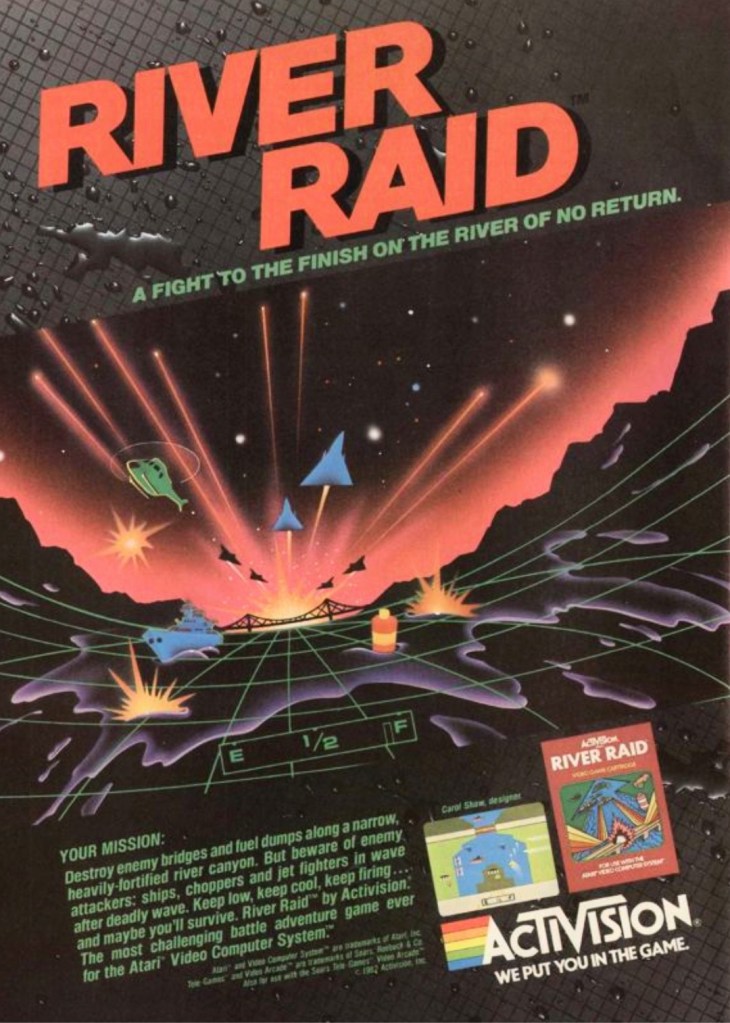
This River Raid print ad appeared on comic books and magazines long ago.
Decades before it became an industry giant with the best-selling Call of Duty games, Activision became a standout publisher in the early 1980s with River Raid on the Atari 2600. Designed by Carol Shaw, River Raid was a huge success ending up as the 2nd best-seller on the Atari 2600 as well as Activision’s best-selling game for the year 1983. Apart from showing one screenshot and the box cover of the game, the print ad of River Raid had this mesmerizing 3D image that caught many gamers’ attention and helped them feel like they will pilot on dangerous missions. The 3D image was futuristic in its own style became forward-moving 3D sequences in video games became reality many years later.
2. Galaga North American arcade flyer
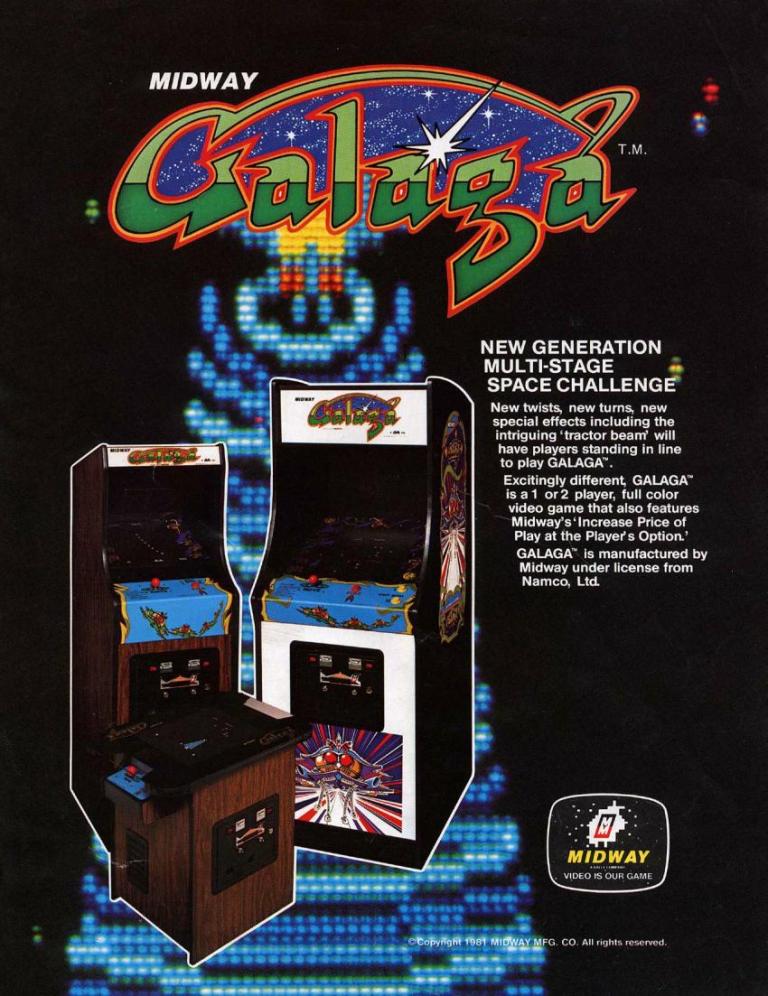
The front of the flyer showing three Galaga machines that arcade operators can choose from.
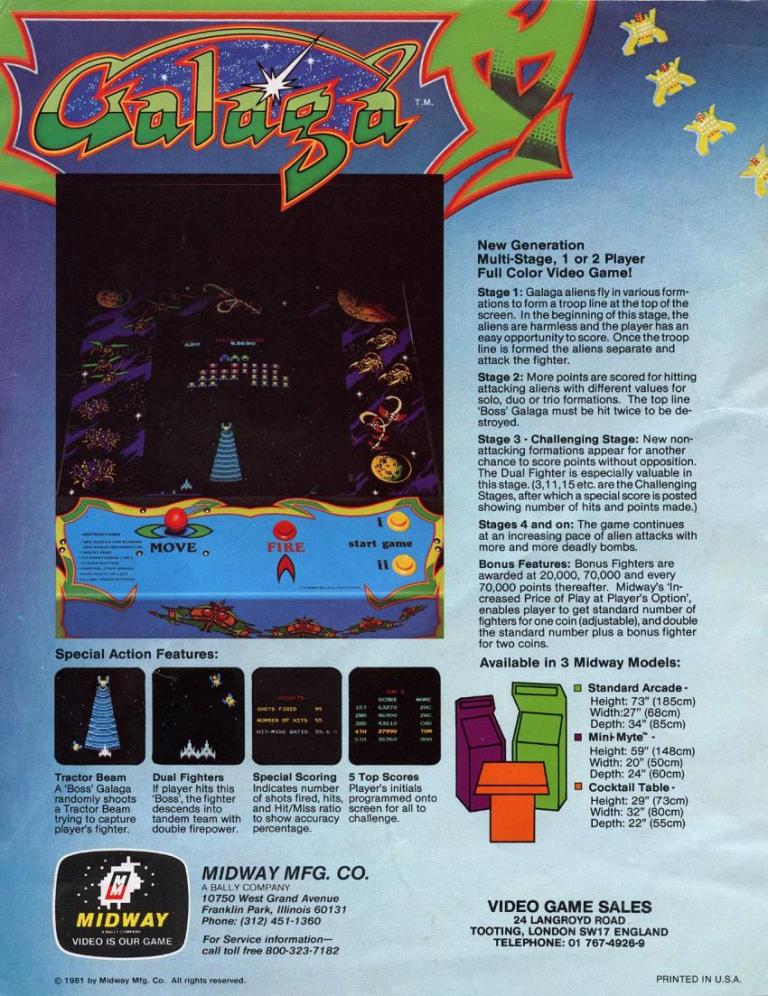
Key details about Galaga were nicely presented on the rear of the flyer.
In the history of gaming, Namco’s Galaga was played by countless millions of gamers and it is still highly regarded as an arcade classic as well as one of the most enjoyable arcade games ever made. In preparation for the North American launch (October 1981), Midway prepared the arcade flyer showing the three types of machine on the front that arcade operators can choose from. On the rear is the really neat approach of explaining the details of the game, what kind of gameplay is to be expected, and how to play. Whether you are an individual player or the manager of an arcade joint, this flyer suits your needs.
3. Area 51 arcade flyer and conversion kit flyer
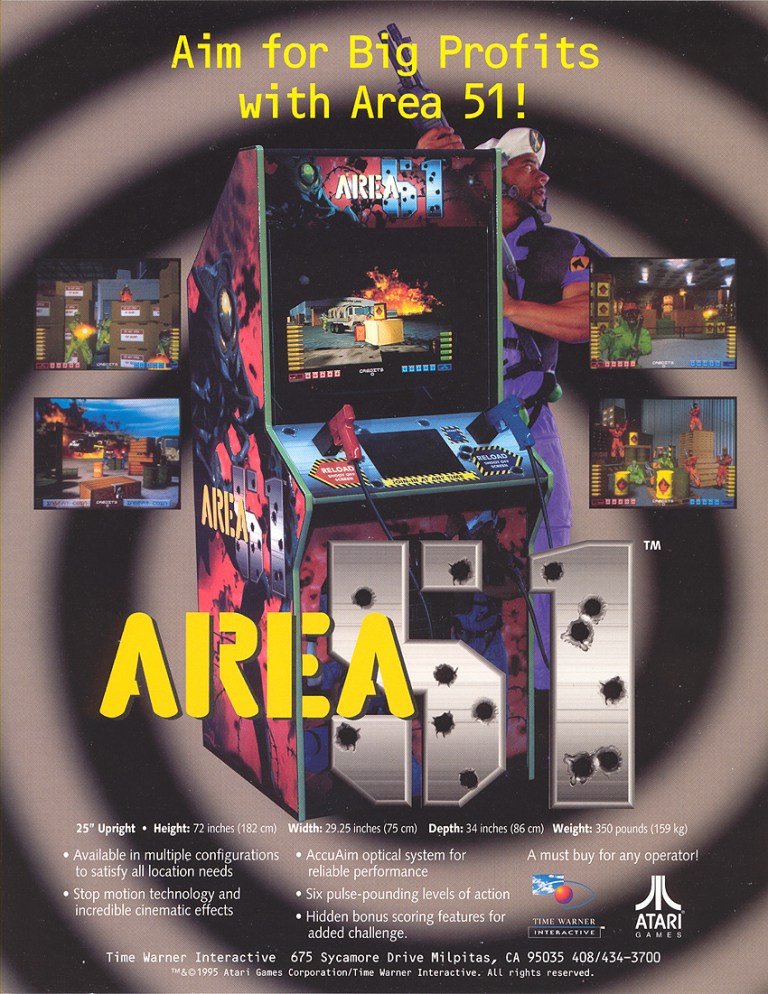
The front of this Area 51 flyer had an enticing message for arcade operators as well as other business owners/managers who are interested in having a machine to add value to their business joints. Atari was already in deep money problems by the time they started making this game.
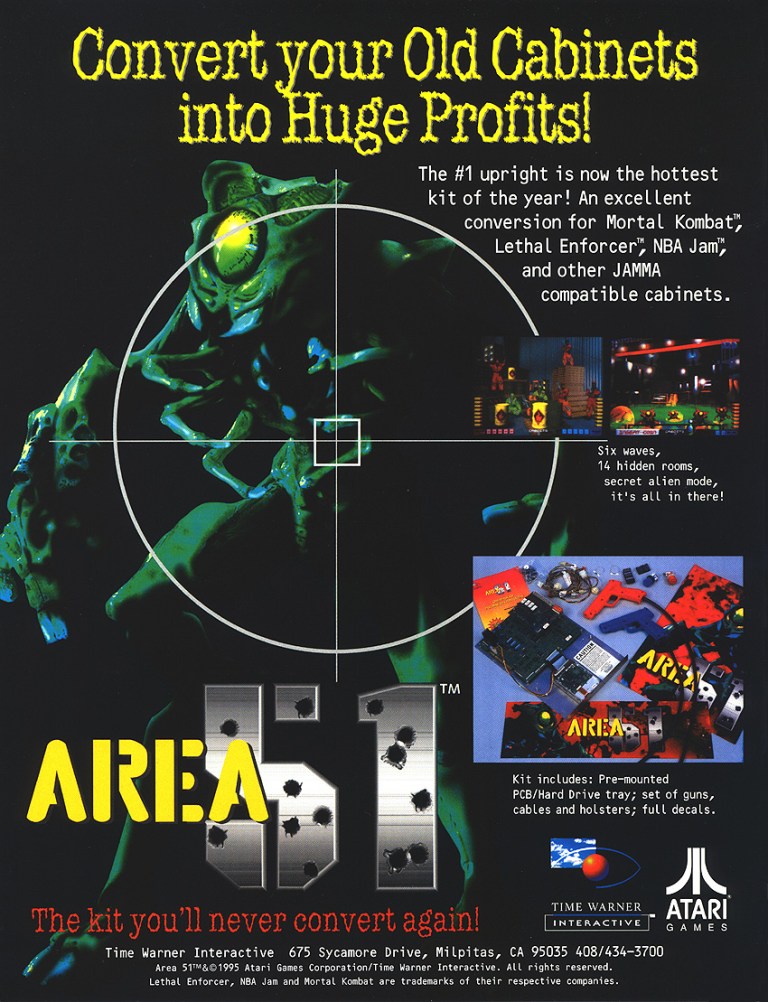
The Area 51 arcade conversion kit is a cheaper alternative for businesses who want the game.
Moving on to the 1990s, Atari was already struggling financially and desperately needed a hit to lift them up fast. A light gun shooter project was approved as arcade shooters were in good demand and after overcoming serious hurdles during production internally, Atari hired independent team Mesa Logic to take charge of development. After being granted extra time and more creative freedom, the project under Mesa Logic’s handling became a sci-fi shooter titled Area 51. The game became a huge hit in the arcades for Atari resulting in sales of more than 20,000 arcade cabinets as well as a major financial boost for the company (note: Atari still exists today). Atari went on to release Atari 51 versions for PlayStation, Sega Saturn and PC in America in 1996. The Atari 51 flyers you see here are still captivating to look at and were crucial in generating buzz among arcade operators, business joints that had space for arcade cabinets and gamers.
4. Panasonic 3DO print ad
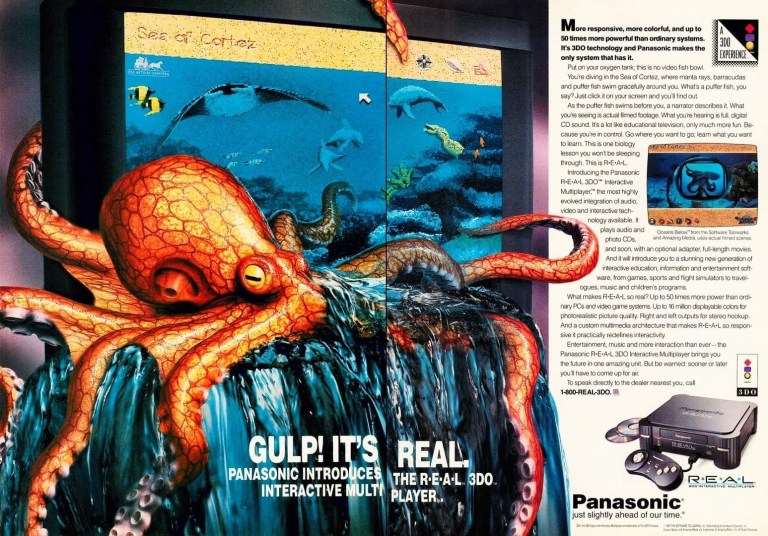
The makers of this print ad forgot to mention the 3DO is also a game machine.
Back in 1993, the 3DO Interactive Multiplayer console manufactured by Panasonic (a licensee of the 3DO Company) was launched with a CD-ROM drive, multimedia features and gaming capabilities (with a 3-button control pad). This print ad strongly emphasized the 3DO’s ability to play high-quality sound and full-motion videos using the Sea of Cortez software which functioned as an interactive movie. Obviously, this did not resonate well with people who loved to play games and by the time the 3DO Company and its partners started marketing games, they could not save the 3DO console from fading to obscurity. The console shown in the ad is specifically model Panasonic FZ-1 R·E·A·L 3DO Interactive Multiplayer. Panasonic was one of five companies that were licensed by the 3DO Company.
5. MechWarrior 3050 SNES print ad
If you were unaware of the 1994 game BattleTech, then this ad would have fooled you into thinking it is promoting a brand new game.
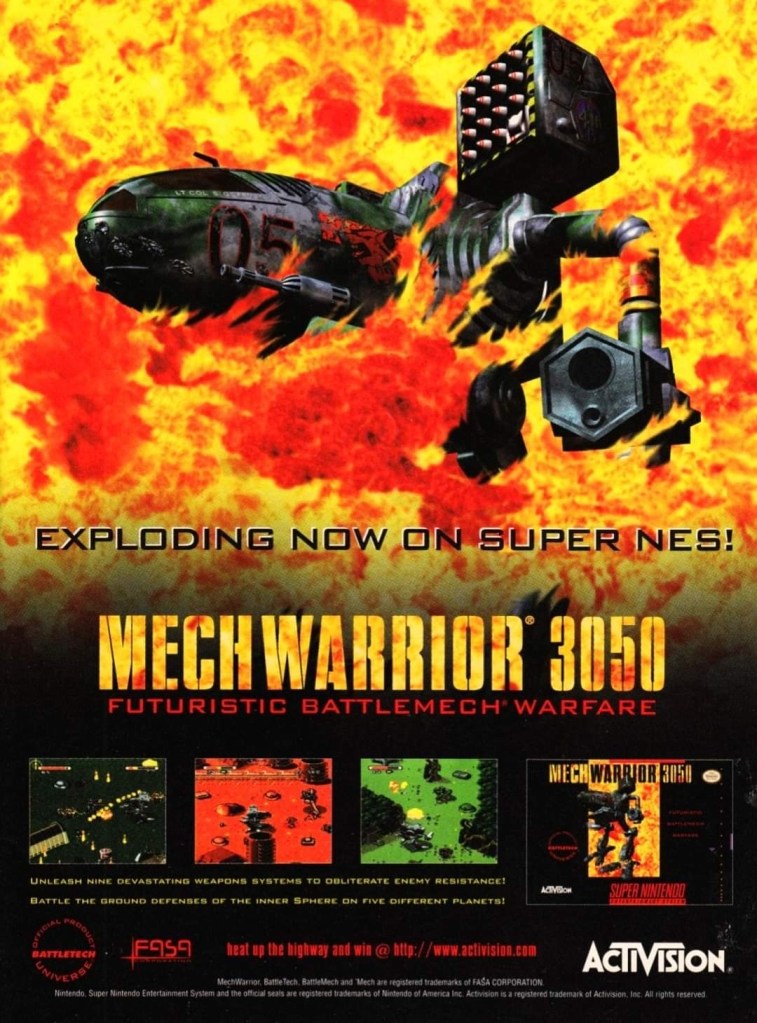
In 1995, the popular BattleTech entertainment franchise arrived on the Super Nintendo Entertainment (SNES) system with MechWarrior 3050 and its print ad had a really blazing artwork of an armed mech in fire which gave readers the illusion of a new and original game. In reality, MechWarrior 3050 was actually a port of BattleTech which was released on the Sega Genesis in 1994. The Genesis game was published by Extreme Entertainment Group while the SNES game was published by the more famous Activision. If you look closely at the MechWarrior print ad, you can tell how hard they tried to sell the game like it was brand new and all-original.
6. Cliffhanger video game print ad
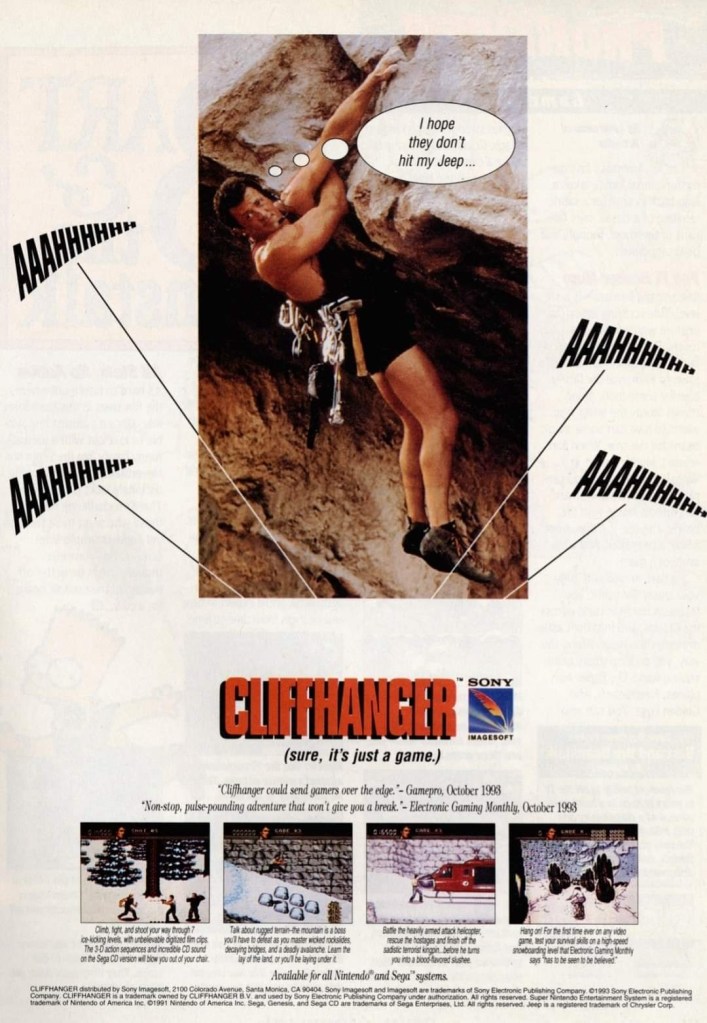
This print ad had Sylvester Stallone hanging on a cliff to be relevant with the title of both the film and the game. They could not show images of Stallone in hard action scenes.
For fans of Sylvester Stallone, 1993 was a big and exciting year as the Hollywood icon appeared in two major action films – Cliffhanger and Demolition Man. Cliffhanger was released first and there were video game adaptations of it released on game consoles, handhelds and computers. This print ad of the Cliffhanger video game had an image of Stallone hanging on a cliff to emphasize the title. The ad makers cleverly posted selected gameplay screenshots and quoted GamePro and Electronic Gaming Monthly (EGM) to make the game look credible and worthy of purchasing. The marketing led to nowhere as the game received mostly negative reviews from critics and it faded to obscurity. Lastly, the Cliffhanger game ad had a noticeable amount of space wasted. They could have made the screenshots and text look somewhat bigger to sell the game.
7. Ballz: The Director’s Cut print ad
I never got to play this game on the 3DO.
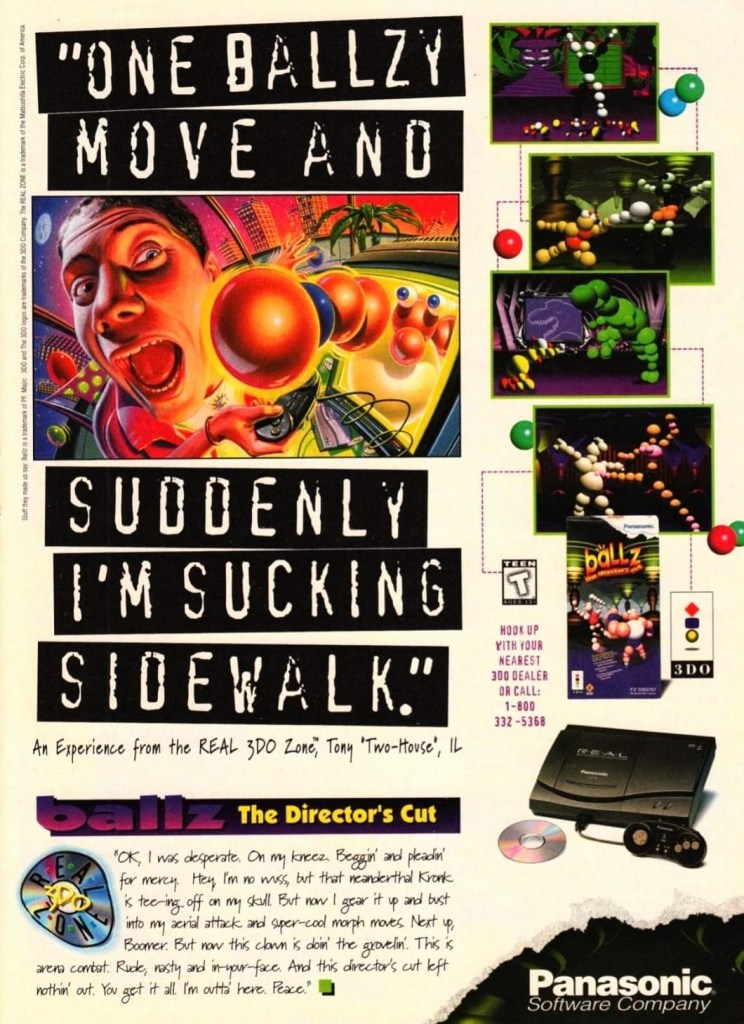
Here is another ad of the video game released on the failed 3DO console. As its title made obvious, Ballz: The Director’s Cut is an enhanced version of the original Ballz game of 1994 that was released on other consoles. The print ad had an eye-catching piece of artwork and posted beside it were selected shots of the gameplay. Strangely enough, the creative writing on the lower part of the ad does not make any sense and did nothing to convince gamers to play the game. As Ballz: The Director’s Cut was released in 1995, this ad shows the revised 3DO console from Panasonic (model: Panasonic FZ-10 R·E·A·L 3DO Interactive Multiplayer).
8. NFL GameDay 2000 print ad
Did you find this ad funny to look at in 1999?
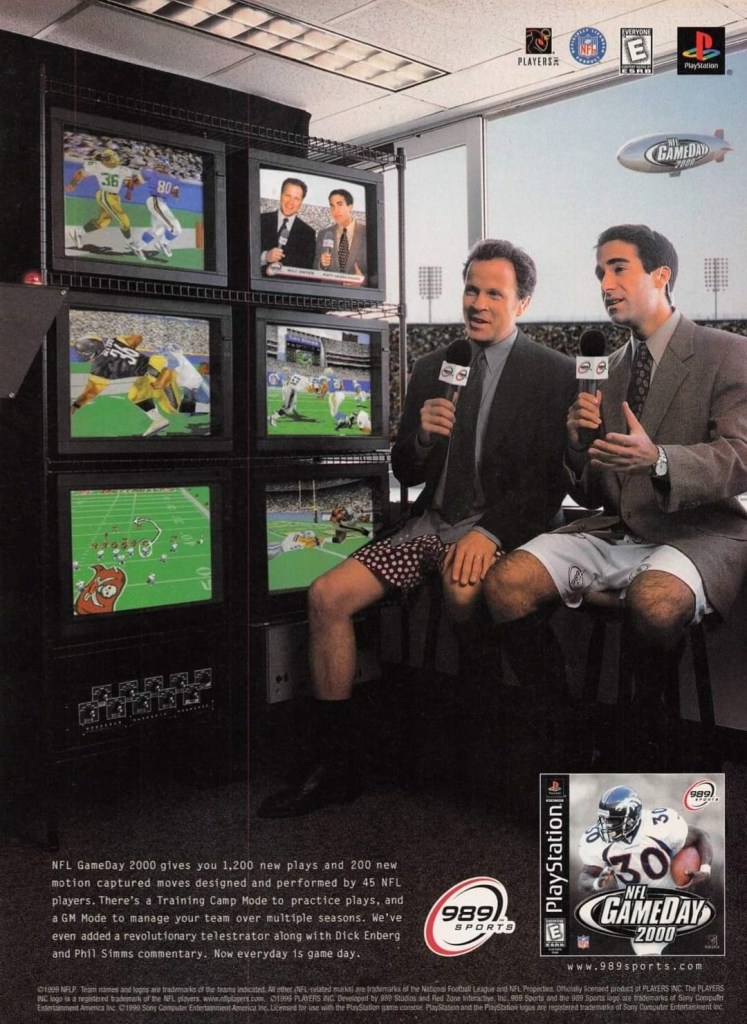
To promote the PlayStation-exclusive NFL GameDay 2000, Sony publisher 989 Sports and the ad makers decided to implement a humorous look at football TV coverage by having two sportscasters wearing shorts in front of a TV camera that was only showing their heads and upper bodies. The TV sets on the side show screenshots from the game to emphasize the sports gaming experience. Ultimately the game scored mostly positive review from the critics.
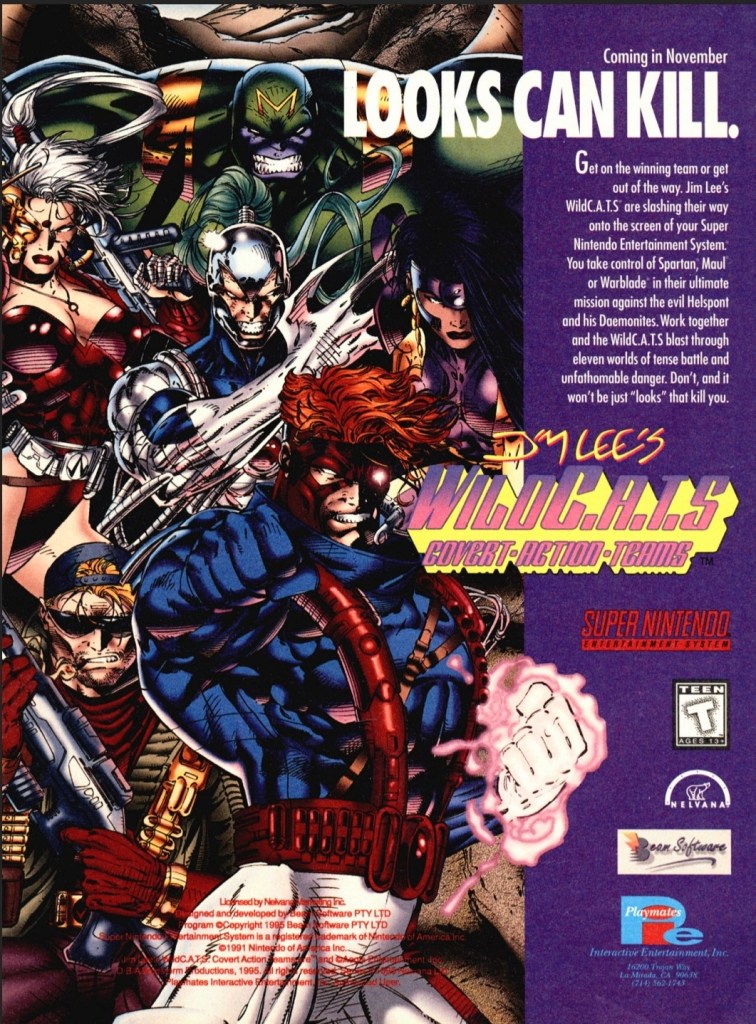
9. WildC.A.T.S: Covert Action Teams print ad
WildC.A.T.S. art by Jim Lee was used to promote the SNES video game.
When Image Comics launched in 1992, WildC.A.T.S: Covert Action Teams was Jim Lee’s creator-owned comic book franchise and its launch issue was a big seller. Years later, WildC.A.T.S. grew in popularity with comic book fans and the franchise achieved multi-media status by venturing into TV (with an animated series) and video games. This print ad promoting the video game adaptation had no screenshots to show which kept fans and gamers guessing how the game will turn out in terms of gameplay and game design. It was obvious that the people who made this print ad had to rely on the best WildC.A.T.S. artwork they could find drawn by Jim Lee. This ad made me laugh back in the old days because if you did not look closely, it might fool you into thinking it was more about comic books than the game on the SNES.
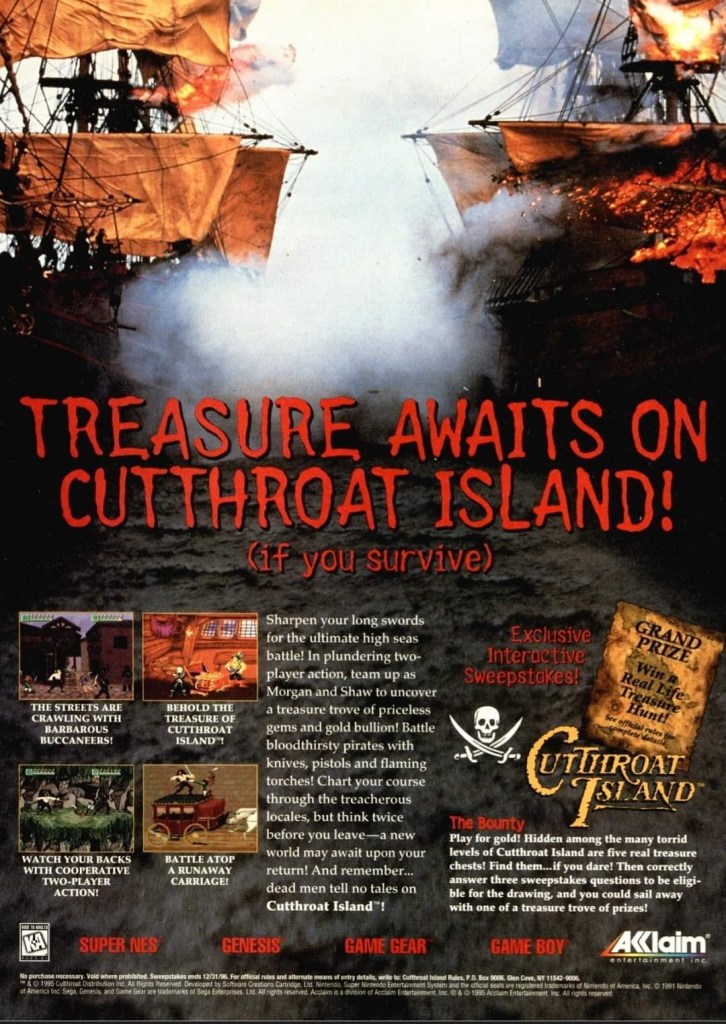
10. Cutthroat Island print ad
Exciting imagery without Geena Davis and Matthew Modine was used to promote the video game adaptation.
I never saw the Hollywood mega-flop Cutthroat Island nor have I ever played any of its multiple video game adaptations (released on SNES, Sega Genesis, Sega Game Gear and Game Boy). The video game print ad, however, caught my attention back in 1995 because the ad makers cleverly used a photograph from one the many expensive movie sequences filmed and the hard, physical work by the filmmakers was clearly visible. Then the ad makers had four screenshots placed on the lower-left part and inserted descriptive text that sounded exciting. Lastly, the ad mentioned a sweepstakes promo.
Without using any images of stars Geena Davis and Matthew Modine, this ad was a strong attempt to get gamers excited for the video game adaptation. Like the movie itself, this game flopped and has faded away to the land of the forgotten.
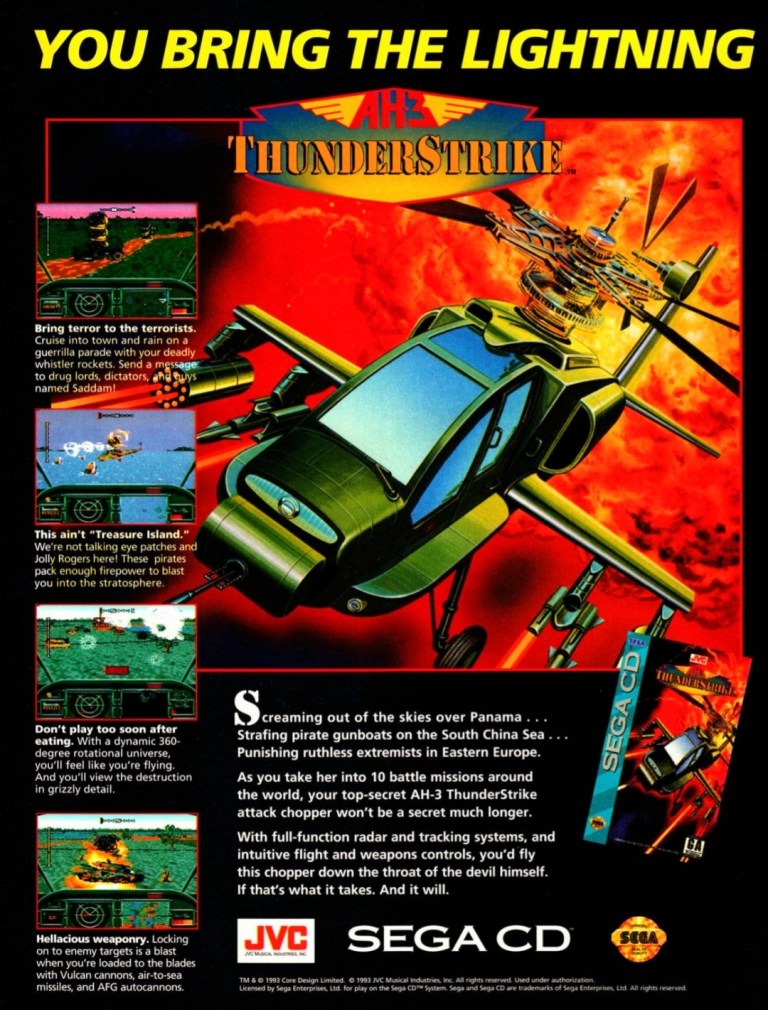
11. AH-3 Thunderstrike print ad
Captivating artwork, vibrant colors and orderly text descriptions made this an effective ad.
AH-3 Thunderstrike is one of the better games that was released on the Sega CD add-on (requires the Sega Genesis console) in 1993. Similar with MechWarrior 3050, the game was actually a port of Thunderhawk which itself was released on the Amiga and MS-DOS PC in 1992. The print ad showcased a captivating artwork (which was also used on the game’s box cover), a few screenshots and strategically placed text descriptions to sell the game. This ad still looks good.
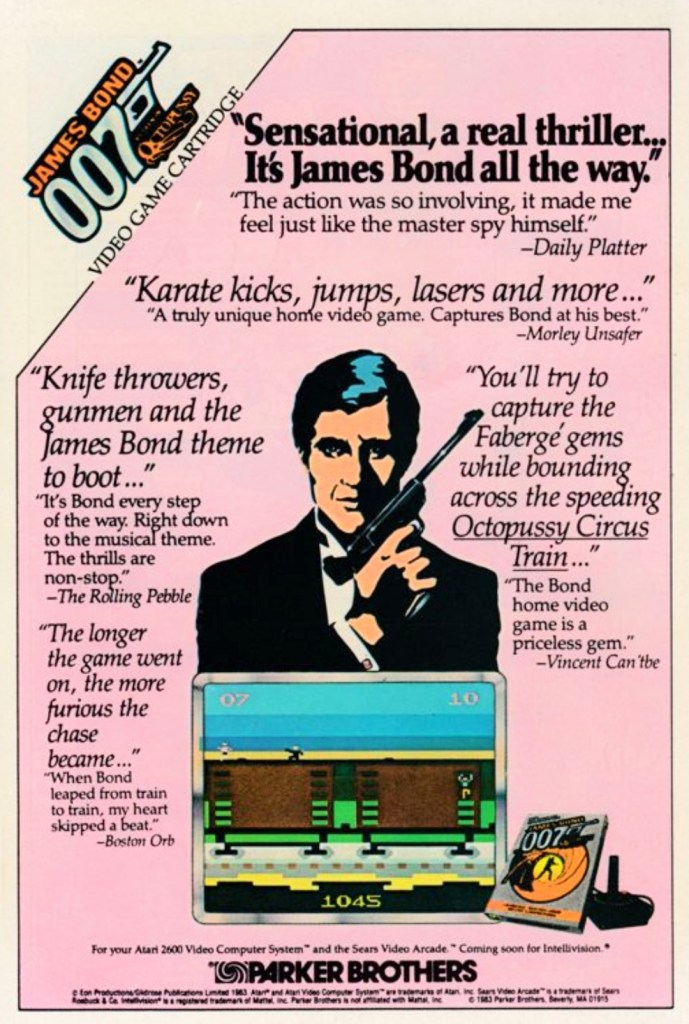
12. James Bond 007 print ad
This print ad appeared in many comic books in 1984.
This is a print ad I saw many times while reading comic books in 1984. James Bond 007 for Atari 2600 was an ambitious licensed video game as it featured levels that were inspired by missions in the James Bond movies Diamonds are Forever, The Spy Who Loved Me, Moonraker and For Your Eyes Only. Keep in mind that programmers back then had to deal with memory limitations and primitive tools to make games.
To promote the game, original art of Agent 007 was used which did not resemble the James Bond star of the time – Roger Moore. Strangely enough, the illustrated James Bond slightly resembled Timothy Dalton whose debut as 007 happened in 1987. Adding further zest to the add was the use of fictionalized quotes pointing to fantasized critics as sources (example: Vincent Can’tbe is a reference to real life critic Vincent Canby). The use of a pink background made this catchy ad look really odd.
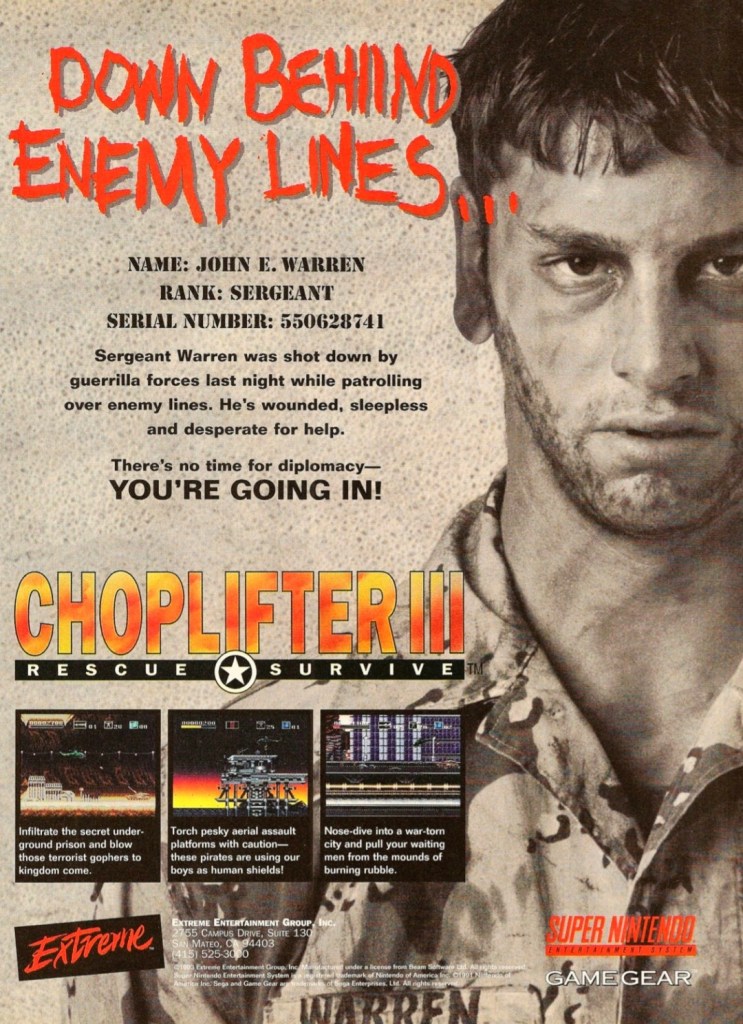
13. Choplifter III: Rescue Survive print ad
A captivating print ad that brought gamers’ attention to the Choplifter series again.
This print ad of Choplifter III: Rescue Survive has a striking look showing a military officer who needs your help as he has been stranded behind enemy lines. The presentation reflects the long-time tradition of the Choplifter game franchise which has been about piloting an armed helicopter to the opposition’s territory, shooting at bad guys and then rescuing the hostages or prisoners-of-war (POWs). The game eventually gathered mostly positive feedback from video game critics.
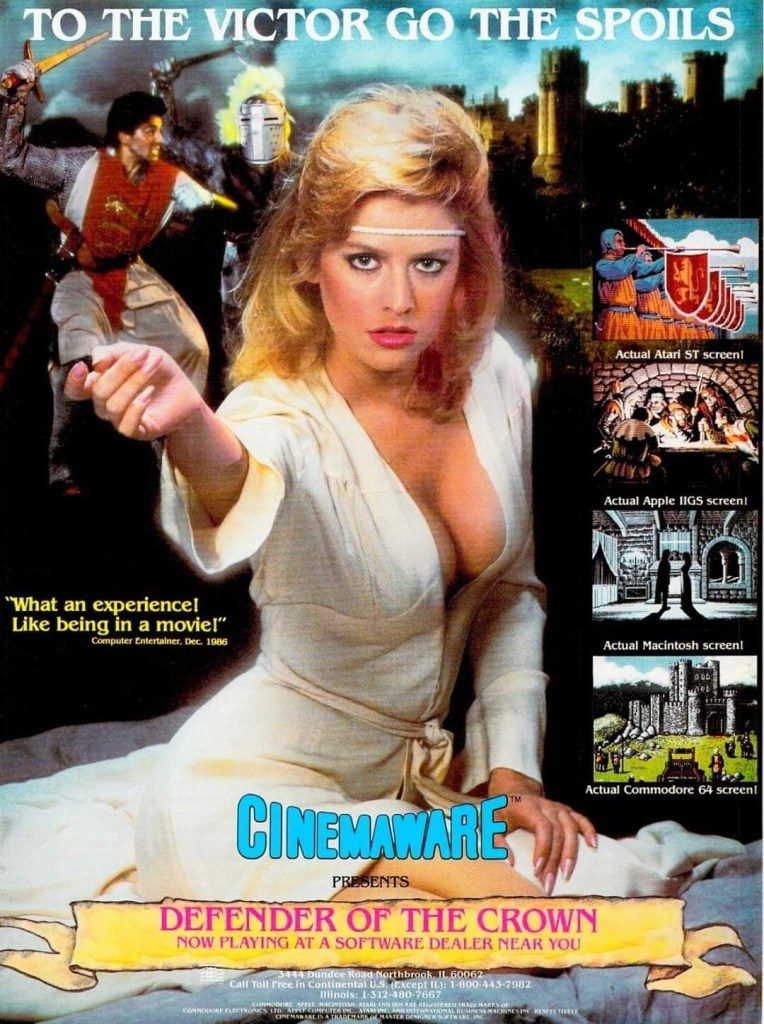
14. Defender of the Crown print ad
Cinemaware took a gamble with the visual concept of this print ad.
Released in 1986 for home computers, Defender of the Crown was made with a high level of quality backed with solid artistry. To capture gamers’ attention, Cinemaware came up with this print ad showcasing a pretty model looking somewhat seductive which reflects what happens in the game when players rescue a damsel in distress. The selected screenshots showed what the game looked like on different platforms, and the lower part of the ad made the game feel like it was a historical epic waiting to be discovered. Defender of the Crown eventually became a big hit with computer gamers.
Welcome back Xbox fans, geeks, retro gaming enthusiasts and all gamers from around the world!
I was born in the mid-1970s. My video gaming experience started with the arcade games. A few years later, my console gaming experience started with the Atari 2600 console (which was our first console at home) and for about five years my friends (who also had the same console in their respective homes) and I enjoyed playing games on it.
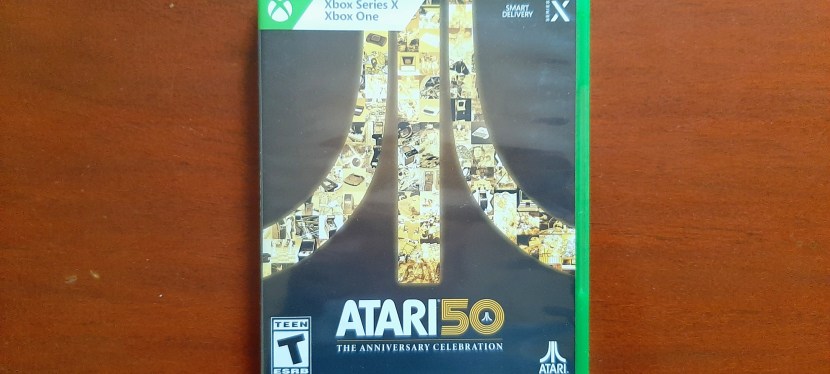
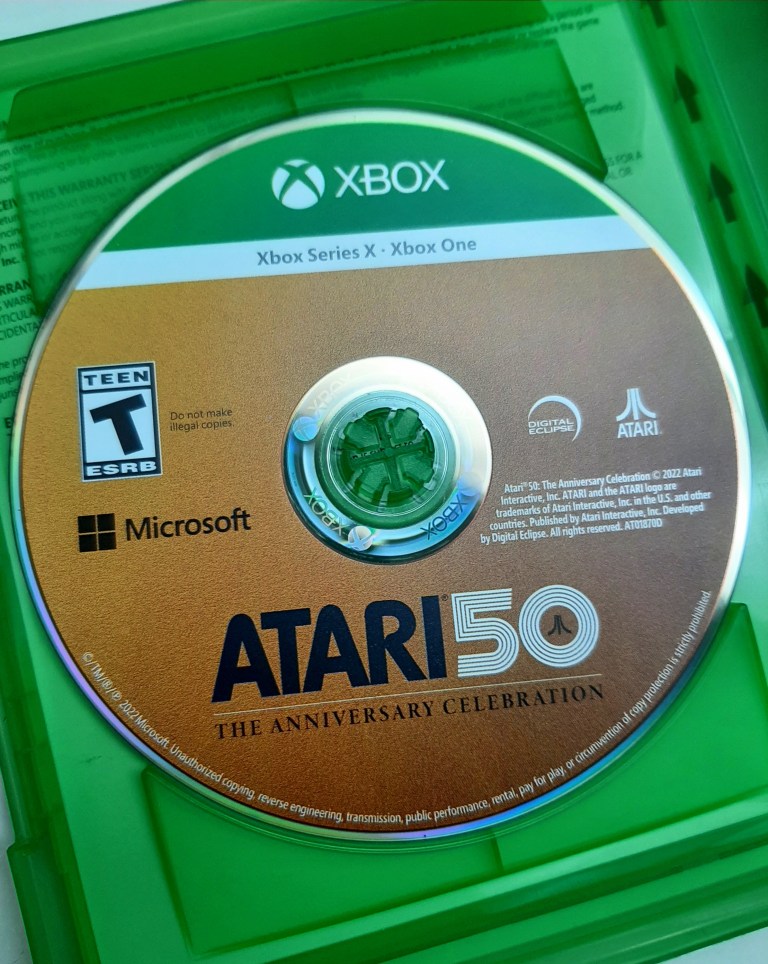
Also this year, I bought myself a physical copy of Atari 50: The Anniversary Celebration to add even more retro gaming fun on my Xbox Series X and it has been an enjoyable experience so far. There is absolutely nothing like replaying the Atari 2600 games I enjoyed plus being able to play other games released on other Atari consoles I never had. I also love the fact that the collection (you can by the physical Xbox copy by clicking here) also has Atari’s own arcade games. This is truly a blast of retro gaming fun!
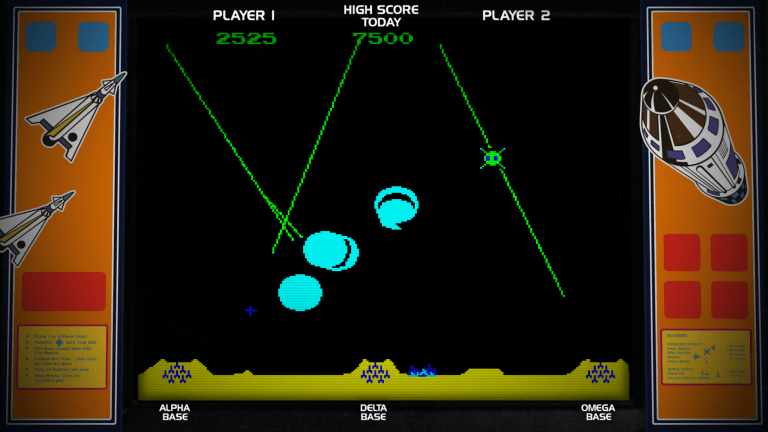
From my play session of the arcade version of the classic Missile Command.
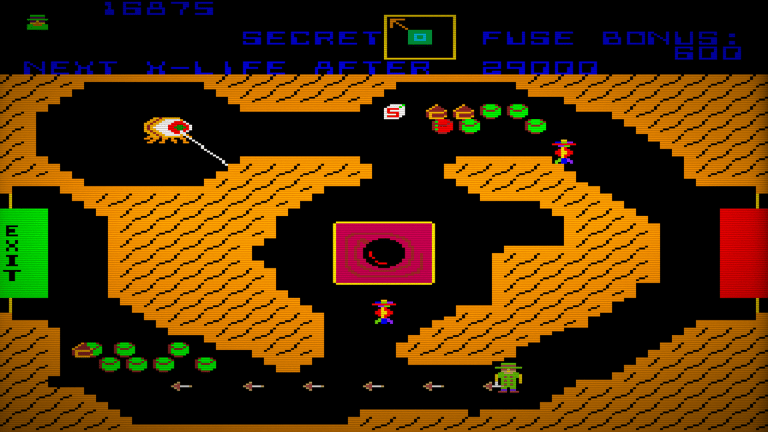
Thanks to the Atari 50: The Anniversary Celebration, I finally got to play the Cloak & Dagger arcade game that was featured in the 1984 movie.
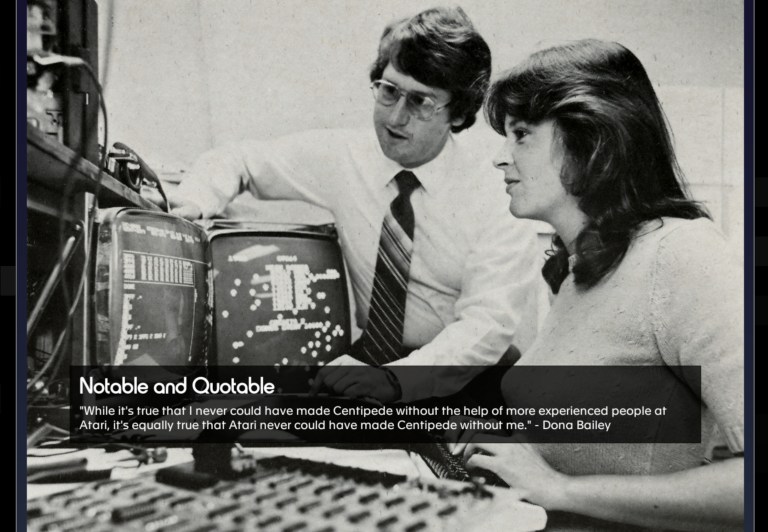
Historical insight about the classic game Centipede.
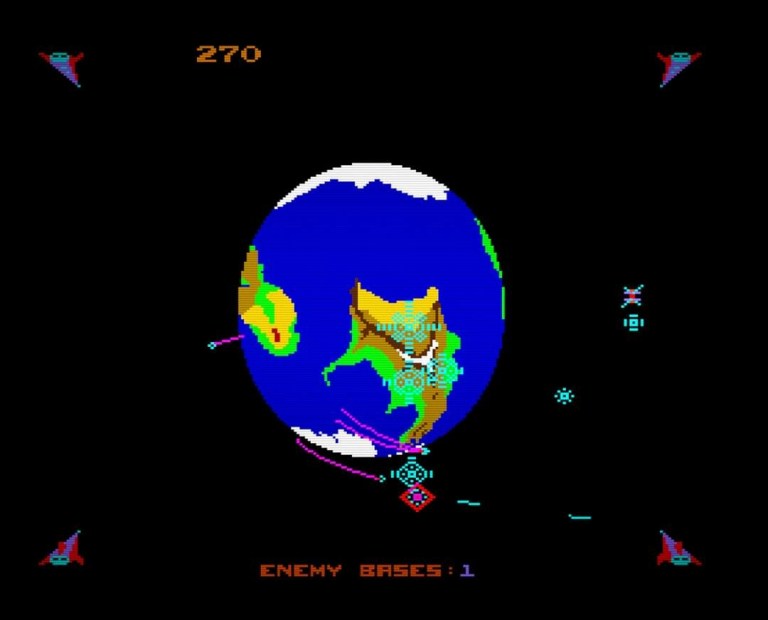
Atari’s arcade game Liberator.
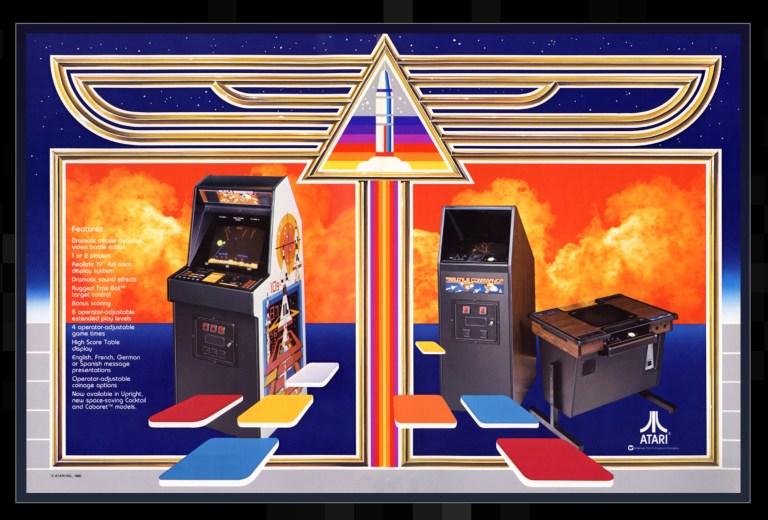
Content from the arcade flyer of Missile Command now viewable in high-definition!
Atari 50: The Anniversary Celebration is not just a collection of video games from the past. It has a stylish presentation that makes it an interactive museum which allows you to look at the arcade flyers, the print ads, the official artworks of games, historical highlights and most notably lots of videos showing interviews of surviving Atari creators/producers who reveal very important details about what they went through, what the company culture was like, and more.
Those who were interviewed include Nolan Bushnell (who established Atari, Inc.), David Crane, Jerry Jessop, Bill Rehbock, Owen Rubin, Allan Alcorn, Tod Frye, Wade Rosen, Eugene Jarvis, and Howard Scott Warshaw. These are the guys who not only established Atari as a major gaming industry leader but also laid the foundations of console gaming as a crucial part of home entertainment in general. Also discussed was Atari’s efforts of bringing their arcade games to the consoles at home.
Adding further insight to Atari’s history were video interviews of Ed Fries (a key figure behind the establishment of Xbox), Cliff Bleszinski (Gears of War trilogy) and Tim Schafer (Psychonauts games).
My physical copy of Atari 50: The Anniversary Celebration which I enjoyed a lot on my Xbox Series X.
Welcome back Xbox fans, geeks, retro gaming enthusiasts, RPG enthusiasts and gamers!
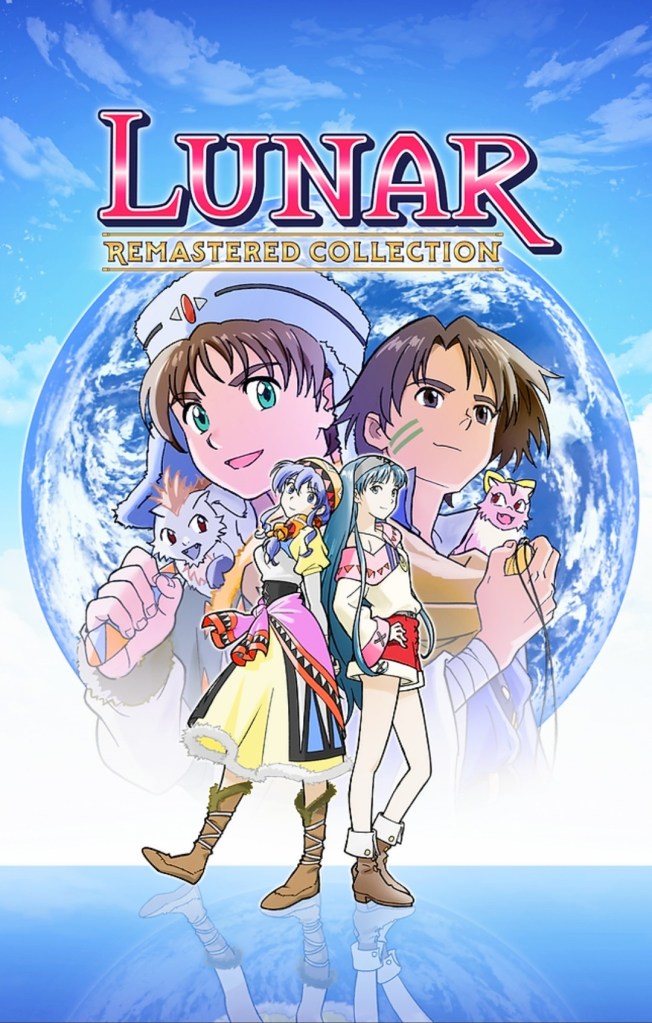
In case you missed the news, GungHo America announced that the remastered editions of the classic Japanese role-playing games (JRPGs) Lunar: The Silver Star and Lunar: Eternal Bluewill be released together in a single package titled Lunar Remastered Collection which is set for a Sprint 2025 release window (release date to follow) for multiple platforms, including Xbox Series X|S and the aging Xbox One!
Feeling excited or curious? Watch and learn from the official trailer of Lunar Remastered Collection released by GungHo (which is the same publisher behind the Grandia HD Collection).
To put things in perspective, posted below is an excerpt from the official press release of GungHo. Some parts in boldface…
The LUNAR Remastered Collection breathes new life into the beloved classics LUNAR: Silver Star Story Complete and LUNAR 2: Eternal Blue Complete (PlayStation 1 version), both originally developed by GAME ARTS. This revamped collection retains the charm of both titles while introducing exciting new enhancements and quality-of-life improvements!
Fans of the LUNAR series can wax nostalgic with 90s-esque animated cutscenes, iconic characters with the classic JRPG charm, and old-school turn-based combat with a twist. JRPG enthusiasts and long-time supporters of the series alike will undeniably be captivated by the game’s romantic storytelling and stunning soundtrack, and witness firsthand how LUNAR paved the way for generations of JRPGs to come.
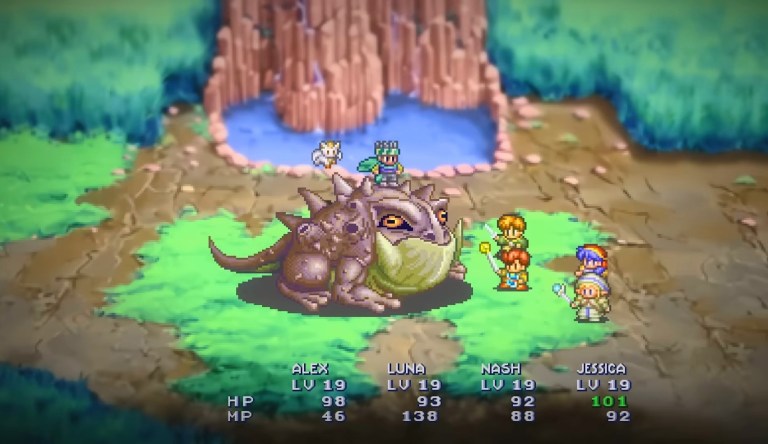
Gameplay shot from Lunar: Silver Star Story Complete which was supposedly remastered with high-definition in mind (which could explain the blurry upper and lower portions of the screen).
The trailer of Lunar Remastered Collection showed this sharp and lively looking image of an anime sequence. Here is hoping all the anime cutscenes in the two games will be of the highest quality possible with high-definition in mind.
The key features announced are as follows:
Strategic Turn-Based Action: Play through two magical worlds in LUNAR: Silver Star Story Complete and LUNAR 2: Eternal Blue Complete as you fight it out in turn-based battle style, where each character’s speed, distance, position, and attack reach must all be accounted for.
Powerful Voices and Captivating Animated Sequences: Immerse yourself in battles with fully-voiced attacks and incantations in either Japanese or an all-new English voiceover by playable characters and enemies. Not to mention, the timeless and stylistic animated sequences that will still capture the hearts of players today.
Relive the Classic or Go Remastered: Choose between classic or remastered mode — an option that allows fans to travel back in time to the games’ PS1 releases, or see them in a new light with wide-screen support, revamped PS1 pixel art, and high-definition animated cutscenes.
Two New Language Options: LUNAR Remastered Collection not only includes Japanese and English subtitles and sound, but also two new subtitle language options, French and German.
Speed up Battle + Improved Strategy Settings: Save time and speed through battles with the flip of a switch! Additionally, new options have been added to the original strategy settings for streamlined combat.
For the newcomers reading this, Lunar: The Silver Star was developed by Game Arts (also the same team behind Grandia and Grandia II) and released on the Sega CD (Mega CD in other countries) add-on for the Genesis (Mega Drive) console in 1992. Years later, that game had a huge remake as Lunar: Silver Star Story Complete on Sega Saturn (1996), PlayStation (1998) and Windows PC (1999).
A similar approach of releases happened too with the sequel Lunar: Eternal Blue which started on Sega CD. Its remake was titled Lunar 2: Eternal Blue Complete which was released on Sega Saturn (1998) and PlayStation (1999).
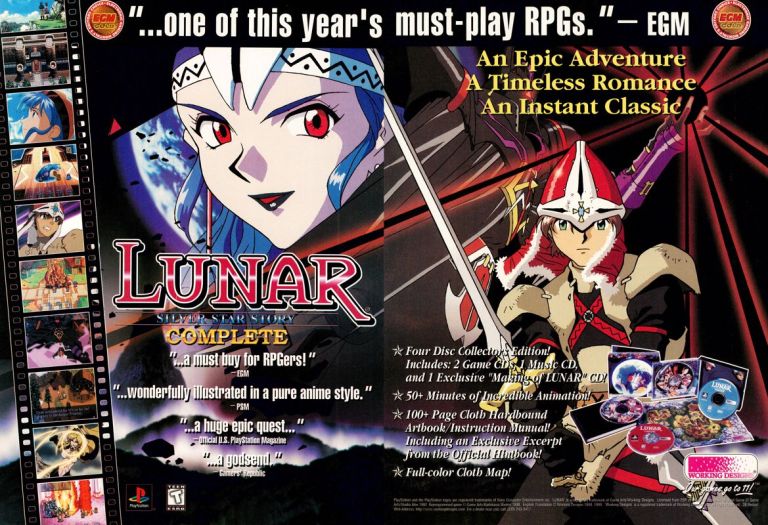
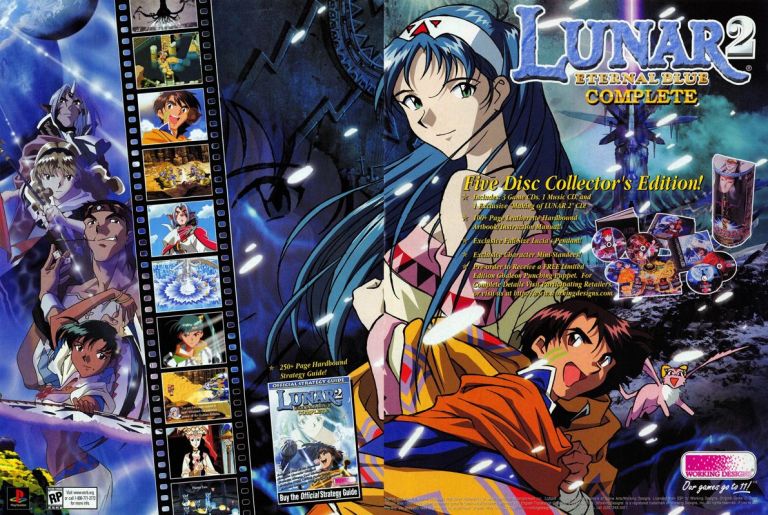
Historically, Lunar: Silver Star Story Complete and Lunar 2: Eternal Blue Complete were published in America by Working Designs (closed down since 2005) with its very own stylized way of translating the Japanese content into English (note: localized as opposed to straightforward translation), in-depth approach to English dubbing, and elaborate packaging (with unique stuff) done with the fans and collectors in mind. Working Designs was also responsible for releasing the two Lunar RPGs’ original versions on Sega CD and the company established close ties not only with Sega of America but also Game Arts itself.
Lunar: Silver Star Story Complete for PlayStation print ad.
Lunar 2: Eternal Blue Complete for PlayStation print ad.
With regards to story concepts and characters, Lunar: The Silver Star tells the tale of Alex Noa – a young and resilient fighter who recently passed the White Dragon’s trial–as he embarks on his journey to become a Dragonmaster. As Alex revels in his success in passing the trial, a mysterious Magic Emperor unexpectedly enters the fold, aiming for world domination.
Lunar: Eternal Blue follows the story of Hiro, an inquisitive archaeologist, and friends as they journey to help a mysterious girl from the Blue Star, Lucia, to seek out the Goddess Althena and stop Zophar – a relentless and evil God of Destruction who plots the demise of Lunar – from wiping out their existence.
Watch out for the official 2025 release date of Lunar Remastered Collection.
As of this writing, Lunar Remastered Collection for Xbox Series X, Xbox Series S and Xbox One has yet to appear on the Xbox online store. For updates about the upcoming retro gaming collection of RPGs, visit https://www.lunarremastered.com/
Disclaimer: This is my original work with details sourced from reading the comic book and doing personal research. Anyone who wants to use this article, in part or in whole, needs to secure first my permission and agree to cite me as the source and author. Let it be known that any unauthorized use of this article will constrain the author to pursue the remedies under R.A. No. 8293, the Revised Penal Code, and/or all applicable legal actions under the laws of the Philippines.
Welcome back superhero enthusiasts, 1990s arts and culture enthusiasts, Image Comics fans and comic book collectors! Today we go back to the year 1995 to take a close look at one of the many tales of the original WildStorm universe through one of the comic books of the Backlash series.
For the newcomers reading this, Backlash is one of the major characters of the WildStorm universe which started in the early 1990s when the famous Jim Lee was one of the founding fathers of Image Comics. Backlash, Deathblow, Wetworks, Gen13 and WildCATS: Covert Action Teams were all connected with each other and many of the characters were linked together in the Team 7 series of prequel stories.
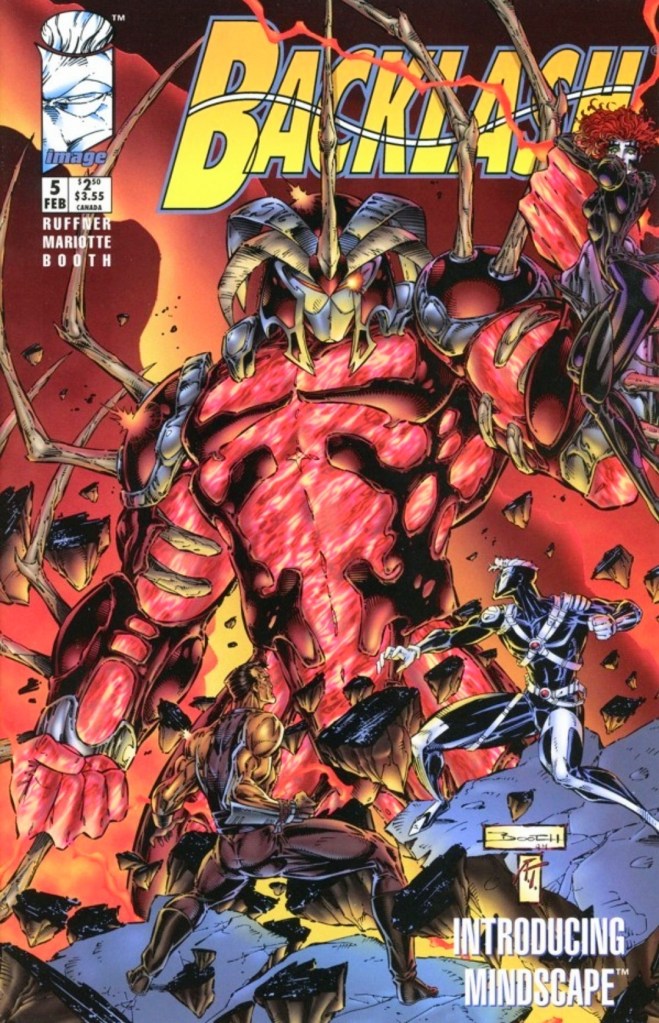
With those details laid down, here is a look back at Backlash #5, published in 1995 by Image Comics with a story written by Brett Booth, Jeff Mariotte and Sean Ruffner. Booth did the artworks.
The cover.
Early story
The story begins with Backlash having visions of his beloved Diane who eventually turns into a gruesome Daemonite monster. Suddenly his female companion Taboo appears to him only to betray him moments after.
In the real world, it turns out that Backlash is helplessly restrained and connected to machines in the presence of Mindscape and his assistant Virtual Bob. Wetworks leader Jackson Dane and Taboo have been contained separately and could only watch Backlash agonizing. Backlash’s mind has been infiltrated by Mindscape through the use of virtual reality.
Mindscape has been looking for a living subjects who could become suitable for his project of combat droids which require genetic information from the subject. Even though he knows that having two live subjects would confuse the combat droids, Mindscape gives the order to have both Backlash and Dane together in cyberspace…
Quality
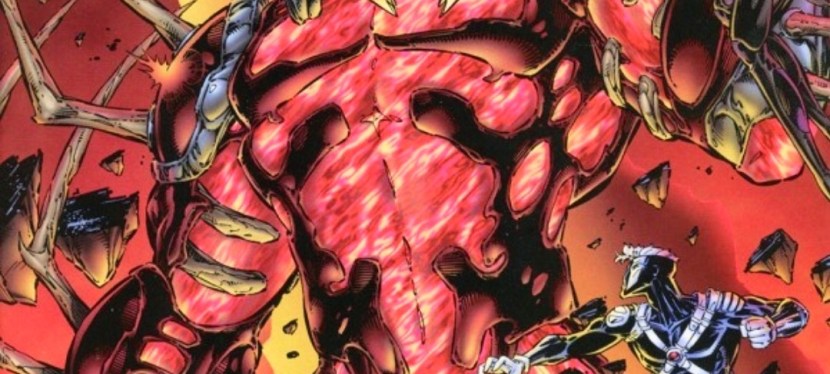
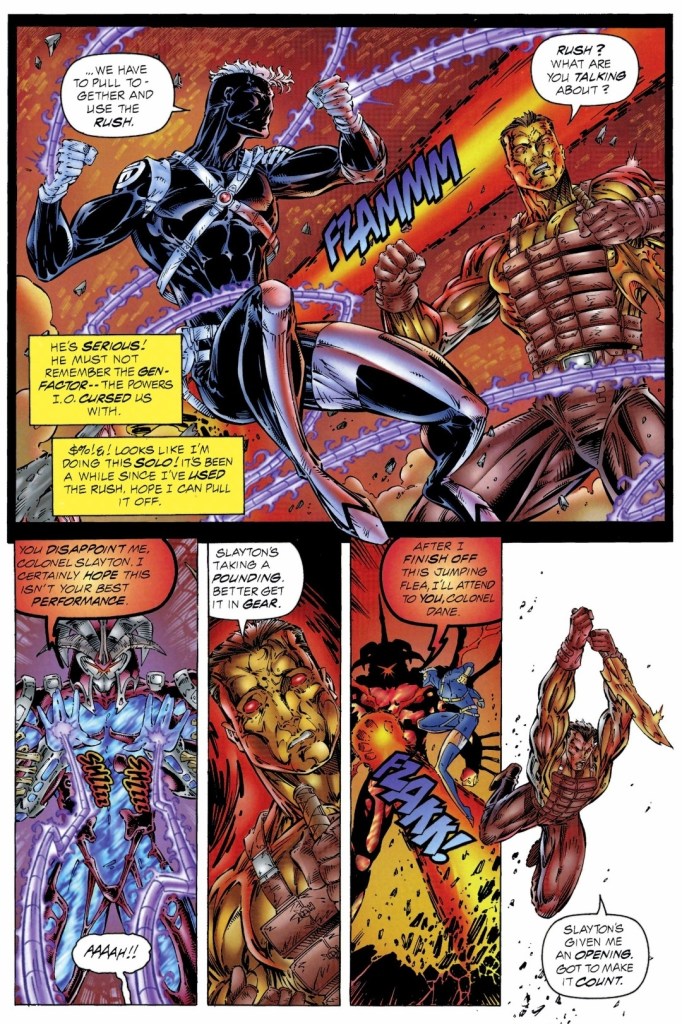
Backlash and Wetworks leader Dane face-off with Mindscape in cyberspace.
With its heavy emphasis on virtual reality and cyberspace, the creators temporarily changed their approach on storytelling and showing spectacle while managing to introduce a new villain and show more of the friendship of Backlash and Dane.
In my view, Mindscape is indeed a very interesting antagonist who is not the typical super villain who is simply being evil for the sake of it. In fact, Mindscape’s origin was efficiently told here and by the time I finished reading this comic book, I found him to be intriguing. Before he became the powerful villain here, Mindscape used to be a very talented virtual reality developer. Mindscape looks at Dane and Backlash – both of which have extensive military experience as they used to be teammates with Team 7 – not for the sake of murder but as suitable subjects for his combat drones which signifies his intention to build an army that will serve him in the real world.
As this story took place a short time after the reunion that happened late in issue #4, this comic book shows a bit more of the friendship between Backlash and Dane, revealing small details about their past together as specially trained soldiers. With the way the story here was told, there was too little room left for any character development to happen but the small details revealed about the two WildStorm heroes was enough to inspire me to revisit Team 7.
In relation to the story’s concept about virtual reality, the spectacle here is much different and absolutely wilder. You have to see it for yourselves.
Conclusion
Being trapped and helpless, Taboo could only watch Mindscape and ask him questions.
Backlash #5 (1995) is an entertaining and intriguing read. This comic book also served as a suitable break from the norm of showing Backlash fighting bad guys in the real world and infiltrating places to accomplish his objectives. Backlash and Dane here were portrayed to be vulnerable as their conflict with Mindscape happened in cyberspace. The final conflict was a spectacle to look at and the story’s ending was satisfying enough leaving the sense that Backlash and Dane would meet each other again.
Hello, everyone! A major milestone happened today and I am deeply thankful to our Lord for it.
I am delighted to share with you all that my blog and website (Author Carlo Carrasco) surpassed one million hits (page views) worldwide today and the count is only growing! More than 1,000,000 hits counted along with over 706,000 visitors from around the world counted by my service provider. For transparency, I posted below the screenshot I captured.
Over one million hits and growing!
Surpassing the 1,000,000 hits mark is a major achievement for me personally and this made me look back at late 2018 when, after much research and getting advise from a close friend of mine, I decided to sign up with WordPress.com to start making my blog/website. After some struggling and learning the functions, I completed the general structure and officially launched my site on the afternoon of January 4, 2019.
I can say that my website is a part of my life. Since launch, I published lots of posts about the following:
Sharing my observations about what happened locally and overseas.
Magnifying local developments of South Metro Manila as well as news updates (both local and foreign) that I find relevant to share with you readers.
Publishing mostly retro reviews of comic books, movies, video games and other entertainment stuff.
Preaching the Word of God through bible teachings, through my Christian Music Appreciation (CMA) posts and through certain features or news developments (notably about Israel) that I posted.
Emphasizing the state of Israel, the truth that God designated the land of Israel to the Jewish people, the truth that the ties between Jews and Christians are biblical, the truth that Lord Jesus lived as a Jewish man and made ways for people to find salvation, and sharing the significance of the Holy Land through my Israel 2023 tour special features.
The occasional sports events and the developments that are significant with regards to our nation.
YouTube videos that need to be seen.
Local community developments from the local government units (LGUs) down to the residential communities.
My website and blog will keep continuing with updates for you and for readers from around the world. It is my intention to keep blogging until the end of my natural life. I will keep preaching God’s Word, post relevant updates, blog about my Holy Land experience, featuring something or someone new, and more.
I thank you my readers for coming back for more. My thanks also to others who supported me in varied ways through the years – the sponsors and donors (note: donate by clicking here), my business clients, the local community entities, the LGUs, local churches/ministries, community groups, the members of my South Metro Manila and the Movie Fans Worldwide Facebook groups, fellow faithful followers of Lord Jesus, and more.
In closing this, I want to remind you all that Lord Jesus is the Savior God (the Heavenly Father) sent to us. No matter what happens to you in this twisted world we live in, never get separated from Jesus as He is the hope of all nations! Learn from the holy scriptures below…
Jesus said to him,
“I am the way, the truth, and the life. No one comes to the Father except through Me.”
“If you had known Me, you would have known My Father also; and from now on you know Him and have seen Him.”
John 14:6-7 (NKJV)
Jesus answered and said to him,
“Most assuredly, I say to you, unless one is born again, he cannot see the kingdom of God.”
For more South Metro Manila community news and developments, come back here soon. Also say NO to fake news, NO to irresponsible journalism, NO to misinformation, NO to plagiarists, NO to reckless publishers and NO to sinister propaganda when it comes to news and developments. For South Metro Manila community developments, member engagement, commerce and other relevant updates, join the growing South Metro Manila Facebook group at https://www.facebook.com/groups/342183059992673
Welcome back, my readers, YouTube viewers and all others who followed this series of articles focused on YouTube videos worth watching. Have you been searching for something fun or interesting to watch on YouTube? Do you feel bored right now and you crave for something to see on the world’s most popular online video destination?
I recommend you check out the following topics and the related videos I found.
#1Antonio P. Antonio story featured by Dark Asia with Megan – I previous made a blog post about this (click here). Even before this blog and website of mine started, I had been following the crime story of the late Antonio P. Antonio (APA) who was killed by his own son in 2013. The son even stayed overseas for years before getting caught and brought back home to be tried in court. Eventually, justice was served for the victim’s family and I should say that YouTuber Dark Asia with Megan did a really good job explaining and emphasizing the details in an episode launched on YouTube on September 25, 2024. This is a must-see video for anyone who is interested in true crime stories as well as events related to the famous BF Homes subdivision in the Philippines.
#2 New cars are spying on drivers and violating privacy – Be very careful with what you wish for when it comes to buying a brand new car with the latest in technology. There is this disturbing trend growing in which drivers/owners of cars equipped with highly advanced technologies ended up getting violated by car companies who collected not only their personal data but also other types of information about them such as immigration status, race, facial expressions, weight, health and even genetic information. This is because the highly computerized cars can spy on drivers by capturing videos of them, recording sound, monitoring their use of car apps, and collecting data from smartphones or computers that got connected to the car’s system. Watch the videos below and pay close attention to the details.
#3 In-depth look at the elimination of Hezbollah’s top leader Nasrallah – I previously blogged about the elimination of Hezbollah leader and murderer Hassan Nasrallah and it contained relevant videos about the topic. For a new and in-depth look about his elimination and what lies ahead for Israel and the rest of the world, watch the TBN Israel and CBN News videos below. Pay close attention to details.
#4 Hunting legendary animals in Red Dead Redemption II – In the blockbuster video game Red Dead Redemption II, hunting is a huge and engaging part of the game. The game developers set up opportunities to find and hunt what they refer to as legendary animals. There is a variety of rewards that come with hunting the said animals and to find out where they are located, watch this video by Reptac.
#5 Last Action Hero videos – While it is a known fact that the movie Last Action Hero (starring Arnold Schwarzenegger) was a huge commercial and critical disappointment in 1993, there are still lots of people who enjoyed watching it and even do research about it. That being said, it is not surprising that there are lots of YouTubers out there who made videos about it and you can watch a variety of videos I selected for your viewing.
6. How terrorist leader Hassan Nasrallah got eliminated
Going back to the eliminated Hezbollah leader and murderer Hassan Nasrallah, posted below is a video that explains (to the best of the YouTuber’s ability) what happened and how the powerful strike happened there in Lebanon.
7. Multiculturalism is truly bad
We live in a very twisted world. It is so twisted, illegal aliens are violating the sovereignty and cultures of nations. Like diversity, inclusion and wokeness, multiculturalism is a disease and it is destructive. Watch and learn from PragerU’s video below.
Welcome back readers, fellow geeks and electronic gaming fans!
In this edition of the Retro Gaming Ads Blast (RGAB) series, we will take a look at another batch of retro gaming print ads – including arcade flyers – from the 1980s and 1990s.
For the newcomers reading this, Retro Gaming Ads Blast (RGAB) looks back at the many print ads of games (console, arcade, computer and handheld) that were published in comic books, magazines, flyers, posters and newspapers long before smartphones, social media, the worldwide web and streaming became popular. To put things in perspective, people back in the 1980s and 1990s were more trusting of print media for information and images about electronic games and related products.
With those details laid down, here is the newest batch of retro gaming print ads for you to see and enjoy…
1. Vendetta UK and North American arcade flyers
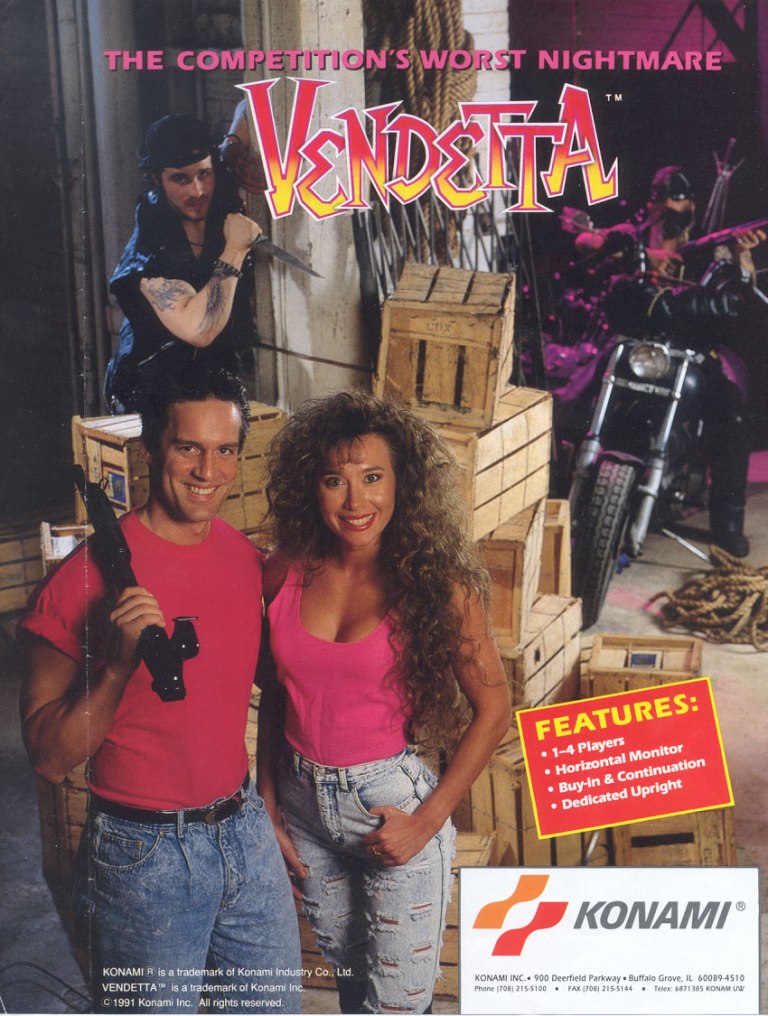
Vendetta arcade flyer for North America
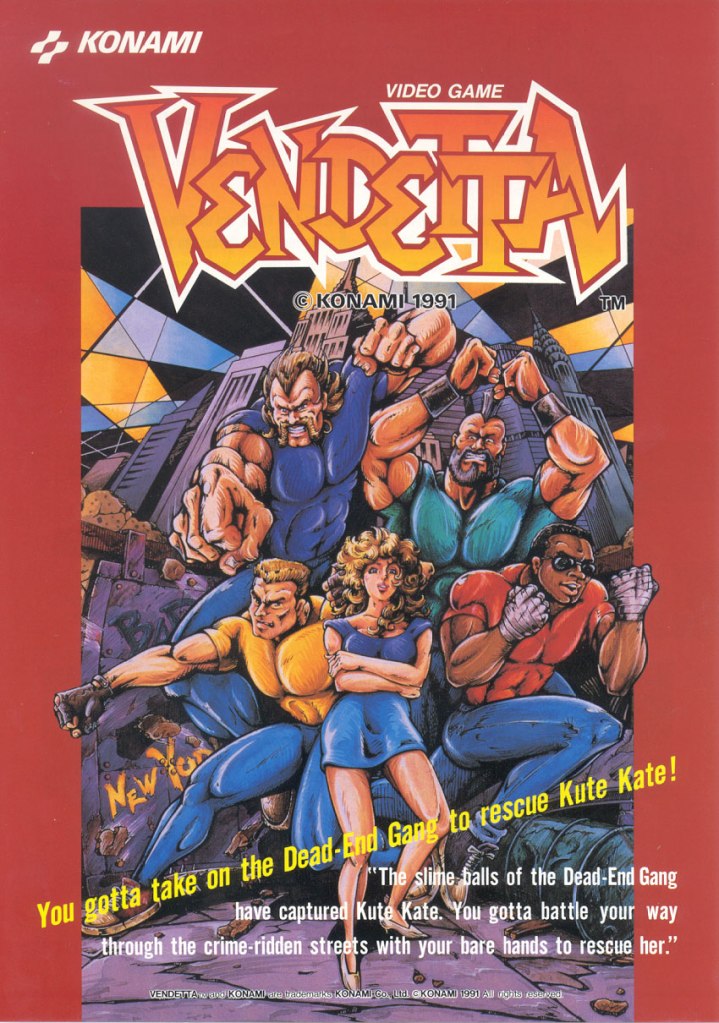
Vendetta arcade flyer for the UK.
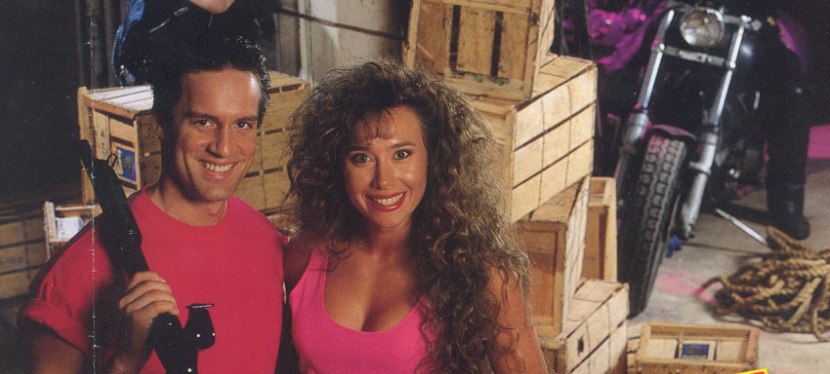
In 1991, Konami released the 2D side-scrolling beat-them-up game Vendetta in arcades around the world achieving commercial success. While it is hard to tell if the promotions helped the game commercially, there is no doubt that the arcade flyers for the North American and United Kingdom (UK) markets were indeed very eye-catching.
The North American Vendetta arcade flyer had a photographic approach showing models playing characters supposedly representing the Cobras gang and the Dead End gang. The display of wooden boxes and the rope was done to symbolize the rough city environments of the game. On the other hand, the UK arcade flyer has illustrated artwork that captured the look of the Cobras gang from the game.
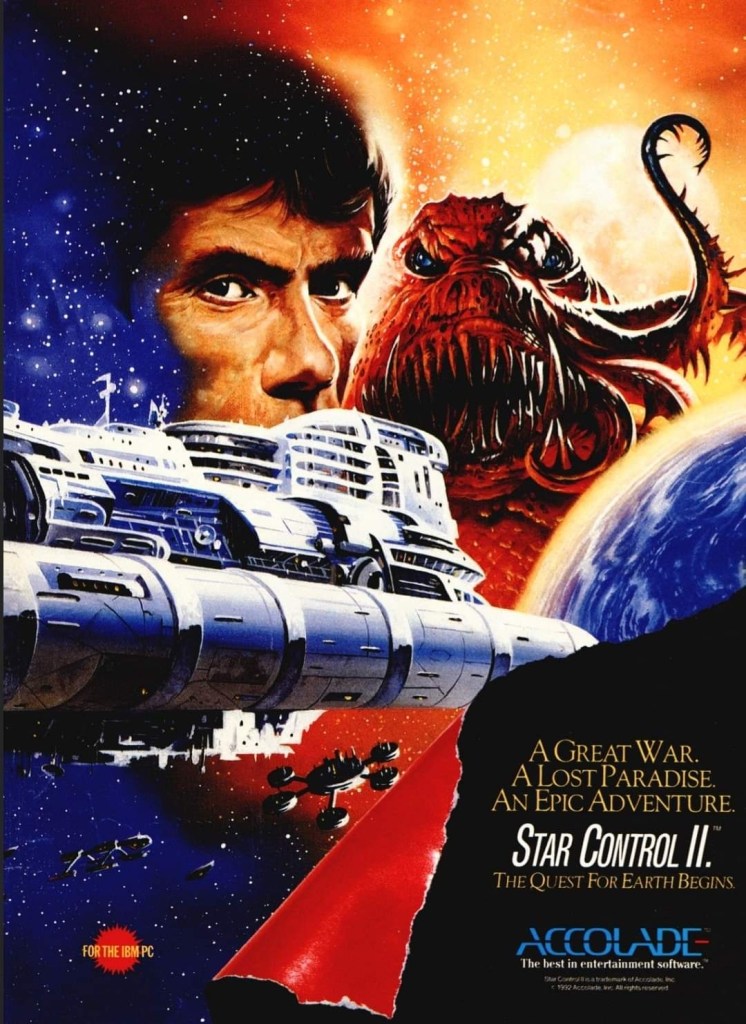
2. Star Control II: The Ur-Quan Masters print ad
This ad has great art that strongly emphasizes its science fiction concept.
This print ad of Star Control II: The Ur-Quan Masters (PC version) really caught my attention when I read gaming magazines in the early 1990s. The painted artwork showing a human and a hideous alien in the background with a planet, space ships and space stations filling the rest of the space was very captivating to look at. So captivating, it enticed me to search for the game but our PC at home had really low specs. Strangely enough, I played another version of Star Control II on a rented 3DO Interactive Multiplayer console in 1995. For the newcomers reading this, the game was critically acclaimed and was declared as one of the very best PC games ever made. Enjoy looking at the print ad above.
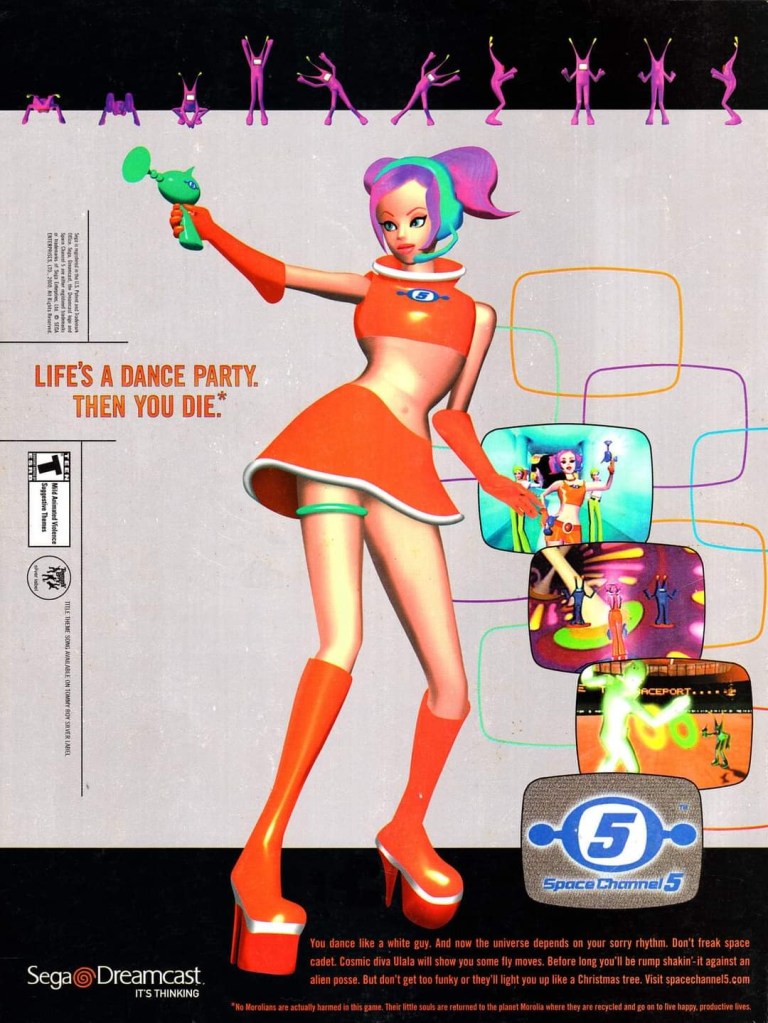
3. Space Channel 5 print ad
The visual style and character designs are the result of the game designer’s research that includes interviews with lots of young girls over their interests and tastes in video games.
When Sega launched their Dreamcast console in Japan in late-1998, their financial health was already in a very bad state and the future looked grim. Even as they faced tremendous odds, Sega still went on to aggressively sell Dreamcast consoles with exclusive games and Space Channel 5 was one of them.
First released in Japan in 1999, Space Channel 5 was a musical, puzzle-oriented game that was the result of Tetsuya Mizuguchi’s work backed with research he did that included interviewing young girls to find out what their tastes in gaming are. The print ad showing the highly stylized protagonist Ulala and a few screenshots really caught the attention of gamers and kept the Dreamcast in their minds. While the game did not achieve commercial success as a Dreamcast-exclusive, Sega went on to release a version of Space Channel 5 on the PlayStation 2 console, plus sequels.
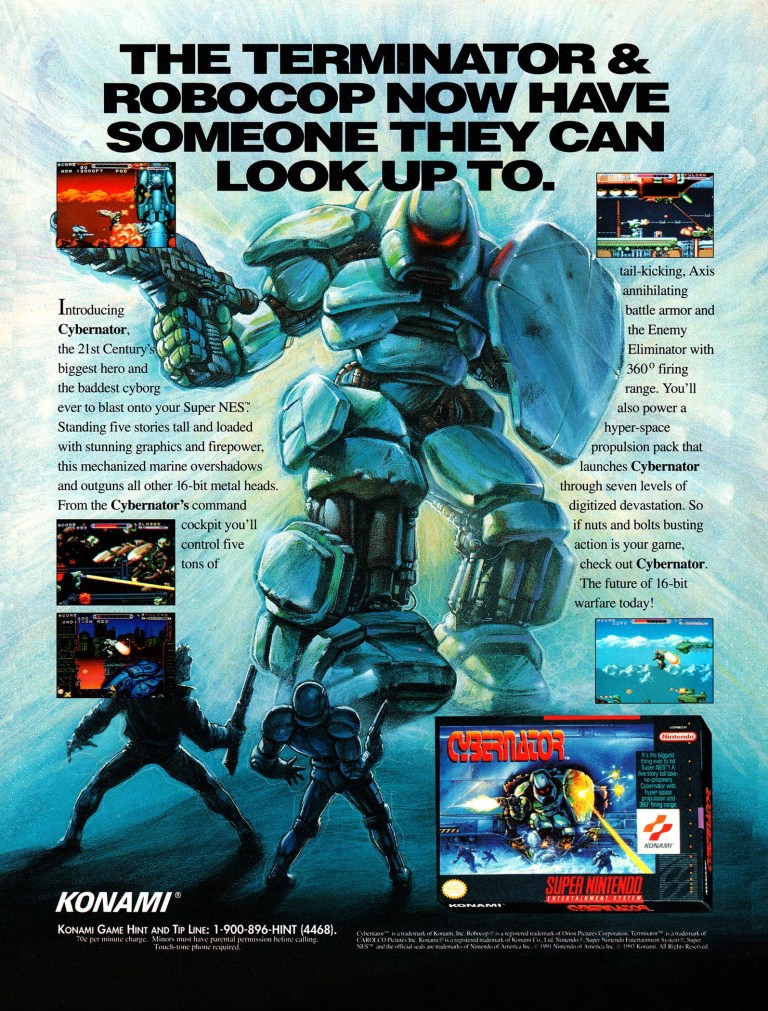
4. Cybernator print ad
The mention of Terminator and RoboCop rivaled the artwork when it comes to grabbing people’s attention.
I remember seeing the print ad of Konami’s Cybernator (Japanese title: Assault Suits Valken) in several comic books I read back in 1992. I never got to play it but the print ad’s artwork was memorable as I was fond of robots in anime, movies and video games back then. What was arguably the most memorable aspect of the print ad was the line that mentioned RoboCop and the Terminator in a comedic way. This is a creative way to market the game.
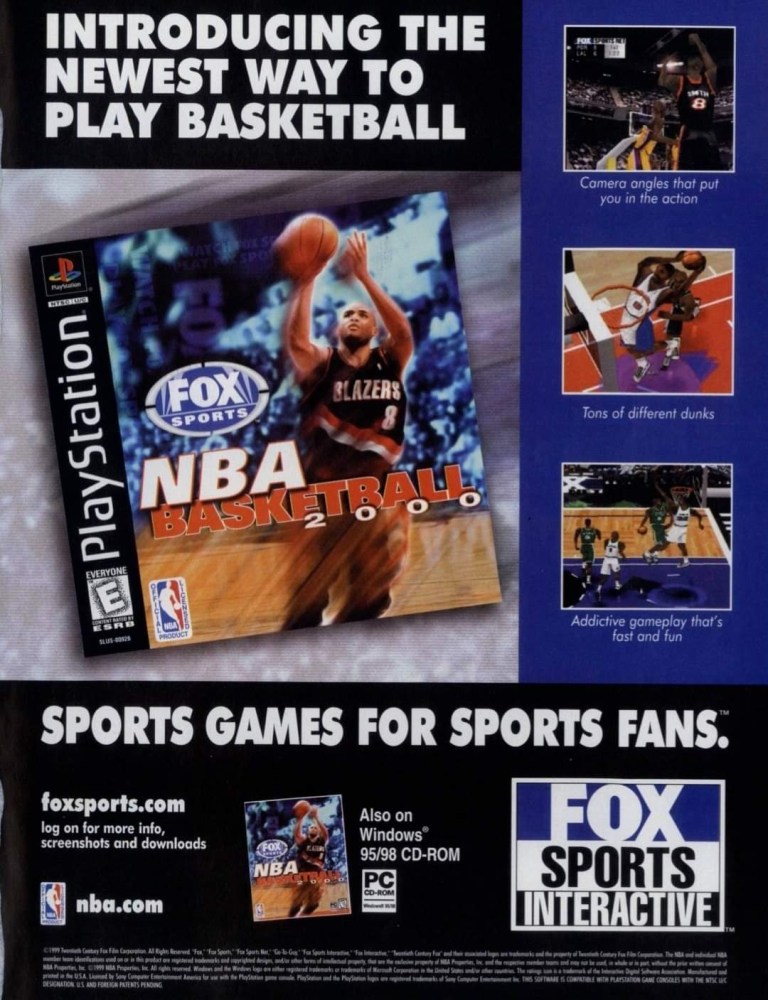
5. NBA Basketball 2000 print ad
There were a lot more NBA video games back in the 1990s.
NBA Basketball 2000 was one of those basketball videos games of the 1990s that was not published by EA Sports nor published by the other established game publishers like Sega, PlayStation and Konami. In fact, the one thing on the ad that caught my attention was Fox Sports Interactive which published some sports videos games during the decade. The print ad also served as a reminder that there were a lot more NBA video games for gamers to choose from during the 1990s.
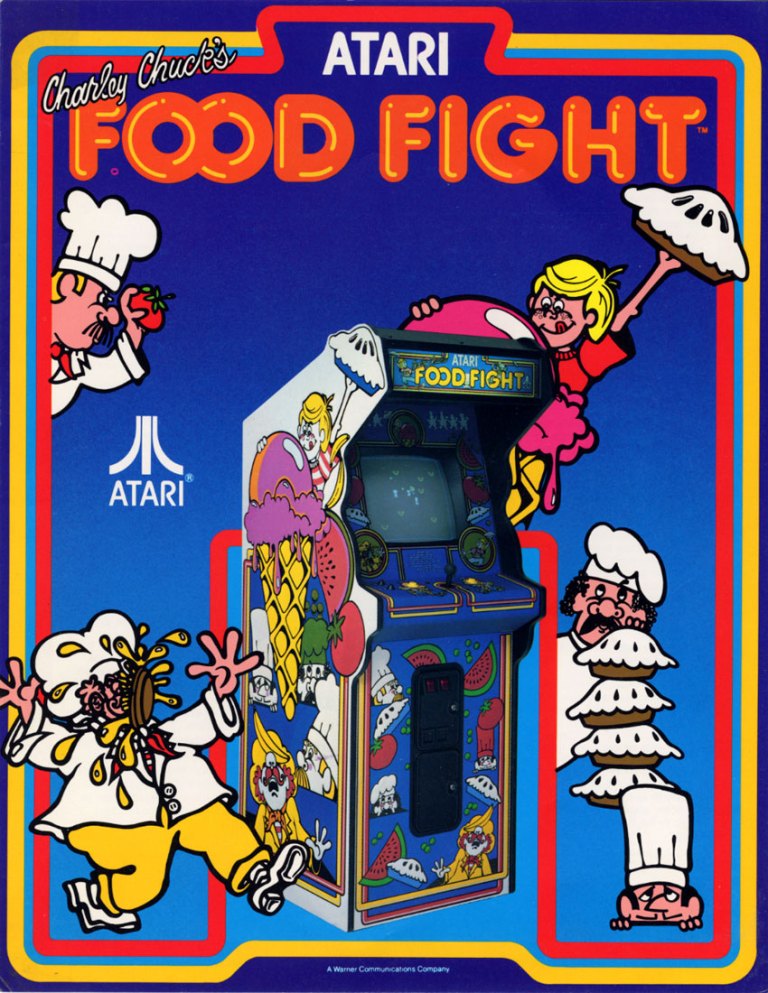
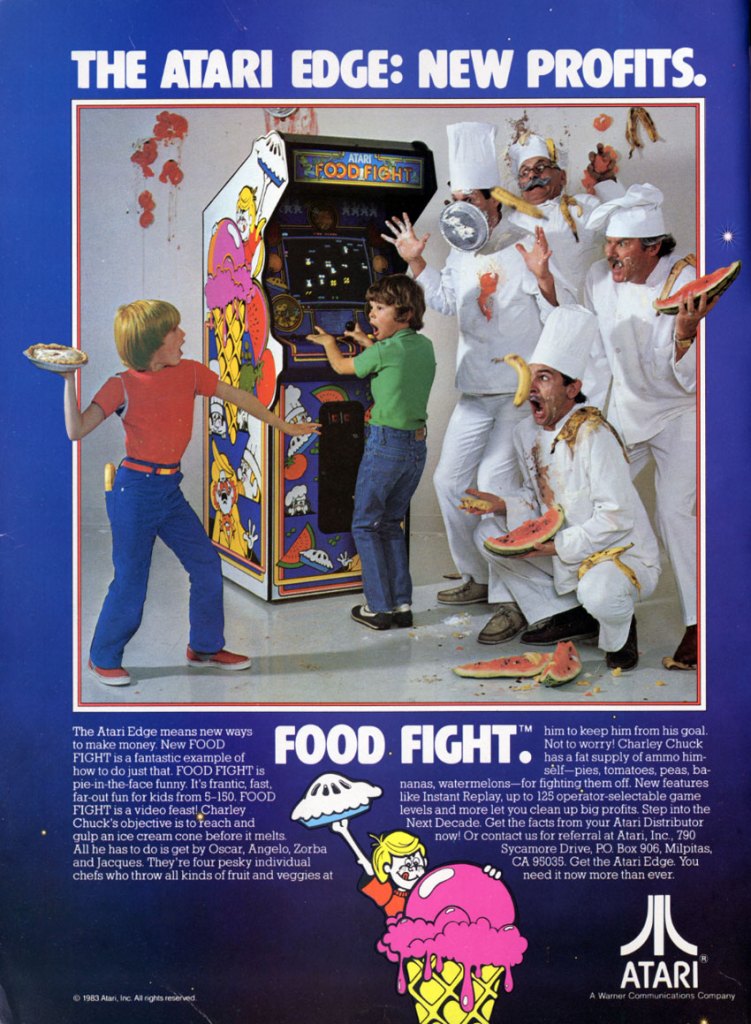
6. Food Fight arcade flyers
Food Fighter arcade flyer with illustrated artworks.
Food Fight arcade flyer with a photographic touch and actors.
I never got to play the 1980s game Food Fight in the arcades nor did I ever had the opportunity to play it on Atari consoles and Xbox 360. Released in 1983 in the arcades by Atari, Food Fight was designed to allow players to control a character moving through a 2D field to consume an ice cream on a cone (placed on the opposite end of the field) before it melts while avoiding the chefs who are out to chase and block the player.
The arcade flyer with illustrated artwork on the characters interacting with the arcade machine is really amusing to look at. Equally amusing is the other arcade flyer that had a photographic approach showing two kids (one playing the arcade machine and the other about to throw a pie) and four chefs. Considering the nice visual concepts Atari came up with for the arcade flyers, Food Fight actually never became a commercial hit selling only a few thousand arcade units.
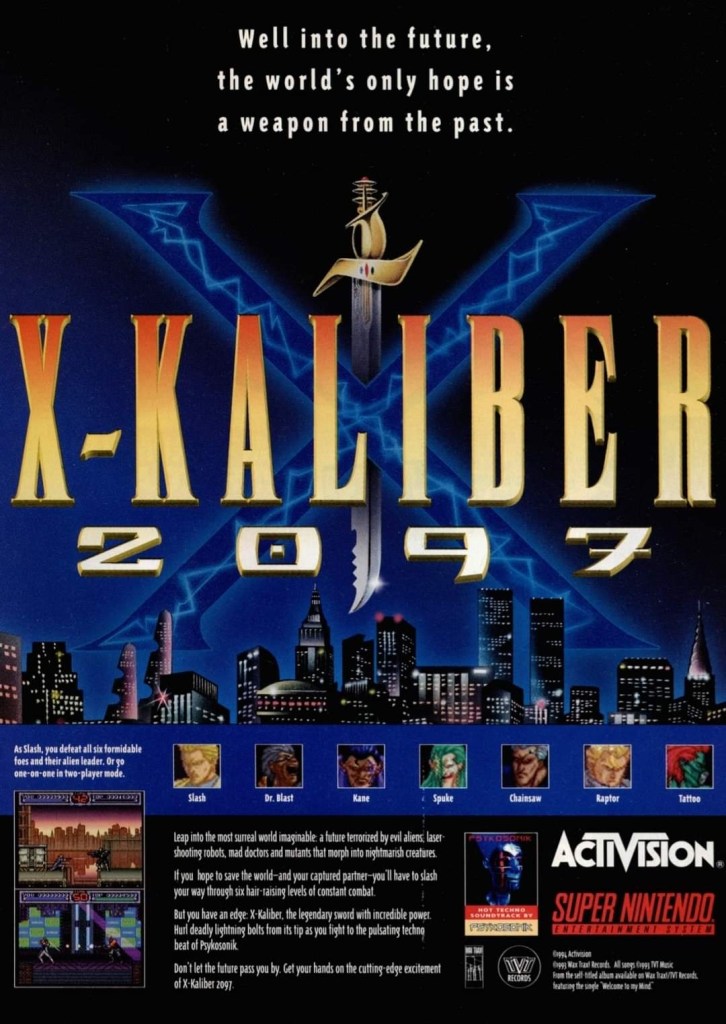
7. X-Kaliber 2097 print ad
This print ad from the 1990s had a nice visual style.
The Super Nintendo Entertainment System (SNES) had plenty of 2D side-scrolling adventure games and among them was X-Kaliber 2097 released by Activision (now a Microsoft-owned company and integral part of Xbox) in America in 1994. The game had a really interesting story concept about a chaotic far future society plagued by overwhelming crime and violence. The print ad showed a mild taste about the game’s concept and gameplay, but it was more effective when it comes to showing the formidable foes that await the playable protagonist Slash. This print appeared in several comic books I read and was eye-catching.
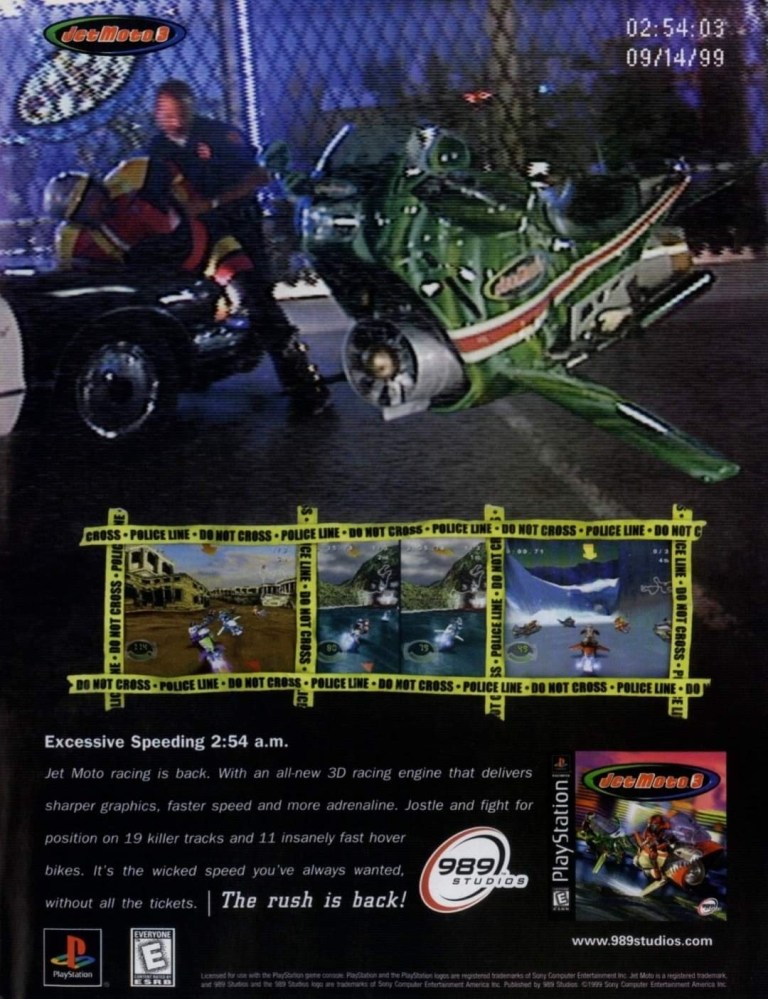
8. Jet Moto 3 print ad
When was the last time the police caught you for over-speeding?
This print ad for Jet Moto 3 had a clever concept of showing a police officer apprehending a jet biker for over-speeding. The visual presentation was done in photo-realistic fashion to make the sci-fi aspect of the video game look real. The ad made me interested enough to do some research of Jet Moto 3 a few months before finally buying it for my PlayStation console.
9. Wipeout 3 print ad
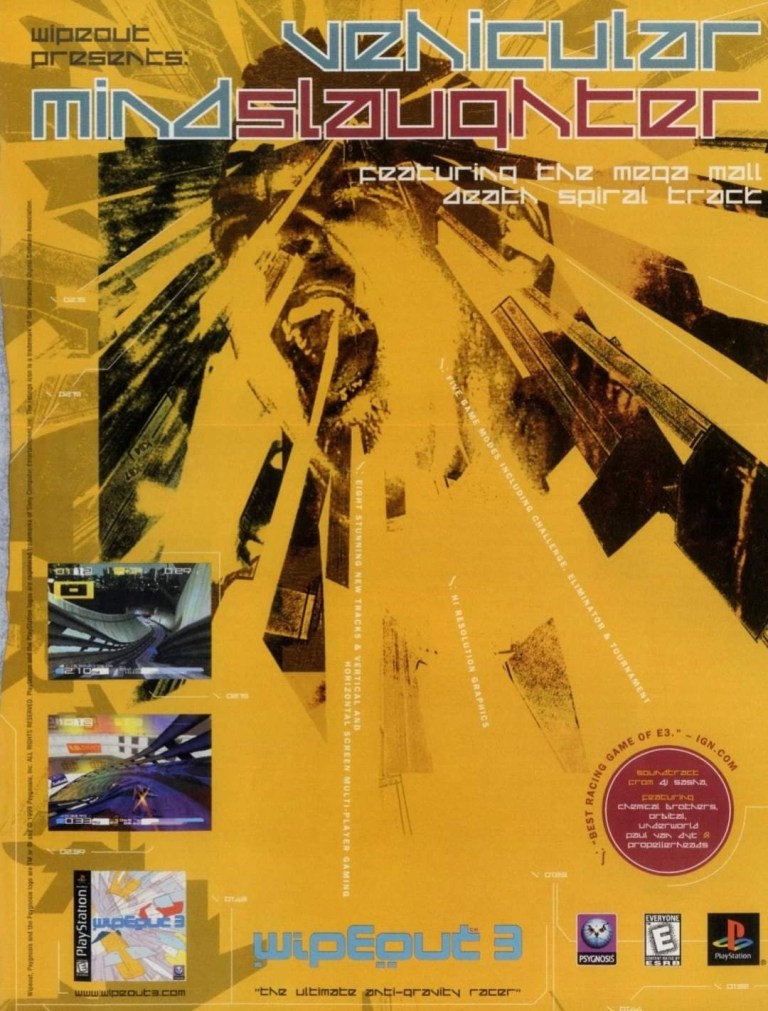
Were you fond of futuristic racing and techno music back in 1999?
Released in 1999, Wipeout 3 was one of those video games that showcased what the PlayStation (originally launched in Japan in 1994) could do in terms of visual fidelity, special effects and frame rates. The print ad, which had a radical visual concept emphasizing intensity and energy, had style listing down vertically the technical details of the game which required a close look in order to be read. With only two screenshots displayed, the ad makers smartly included the E3 acclaim of “Best Racing Game of E3” as well as the names of artists behind the game soundtrack on the lower-right corner. This print ad was cool and intriguing to look at.
10. Breath of Fire II print ad
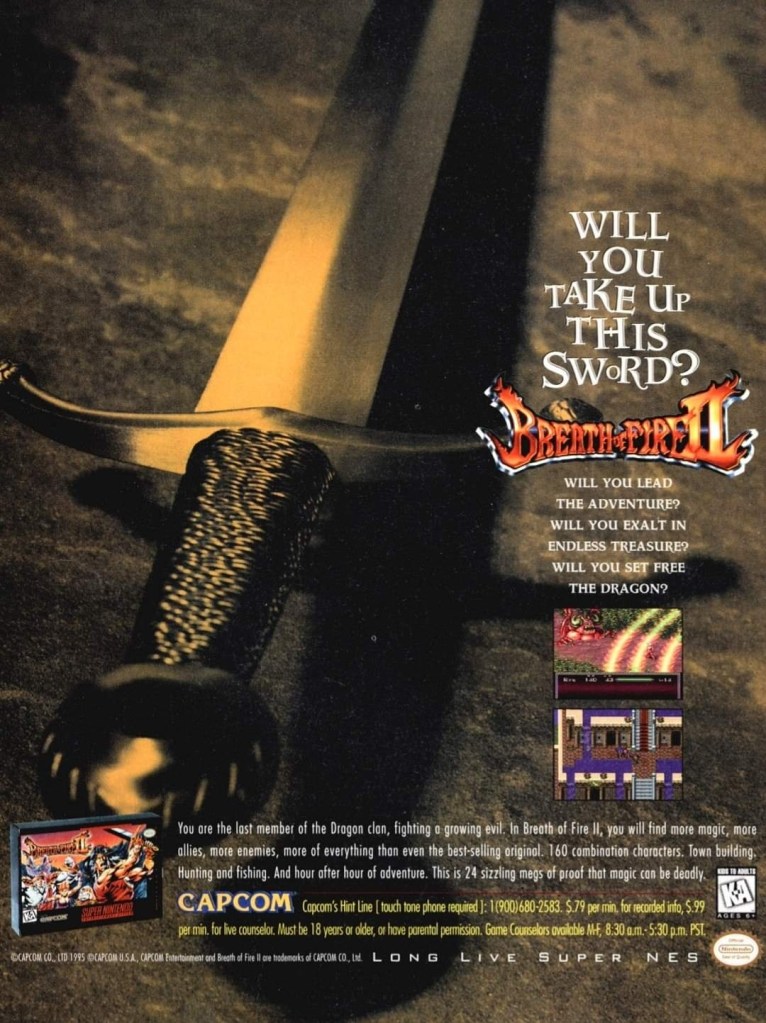
This was a good effort to lure American gamers to buy and play Breath of Fire II.
When Breath of Fire II was released on the SNES in America in late 1995, Japanese role-playing games (JRPGs) were not yet wildly popular among American gamers. To grab the attention of gamers, Capcom and the ad makers came up with the eye-catching image of a sword and posted key questions to emphasize the fantasy aspect of Breath of Fire II. While the game received mixed reviews upon its North American release, Nintendo Power listed it as 171st best game in its Top 200 Games chart published in 2006.
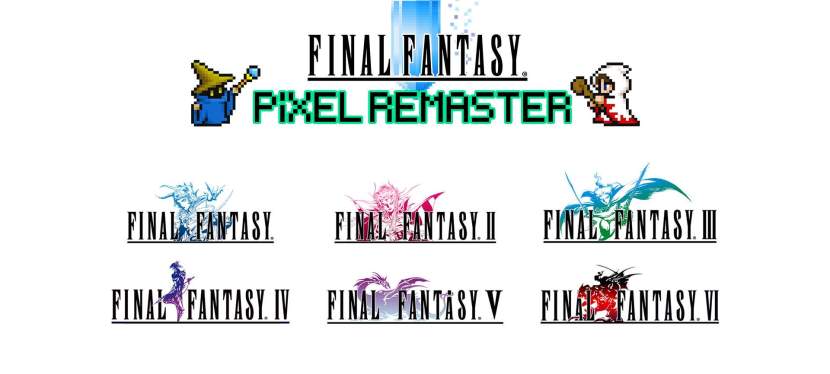
In case you missed the official Xbox presentation of the 2024 Tokyo Game Show (click here to watch), Square Enix formally announced that Final Fantasy Pixel Remaster has officially been released for Xbox Series X and Xbox Series S plus Windows PC. Watch the announcement video below.
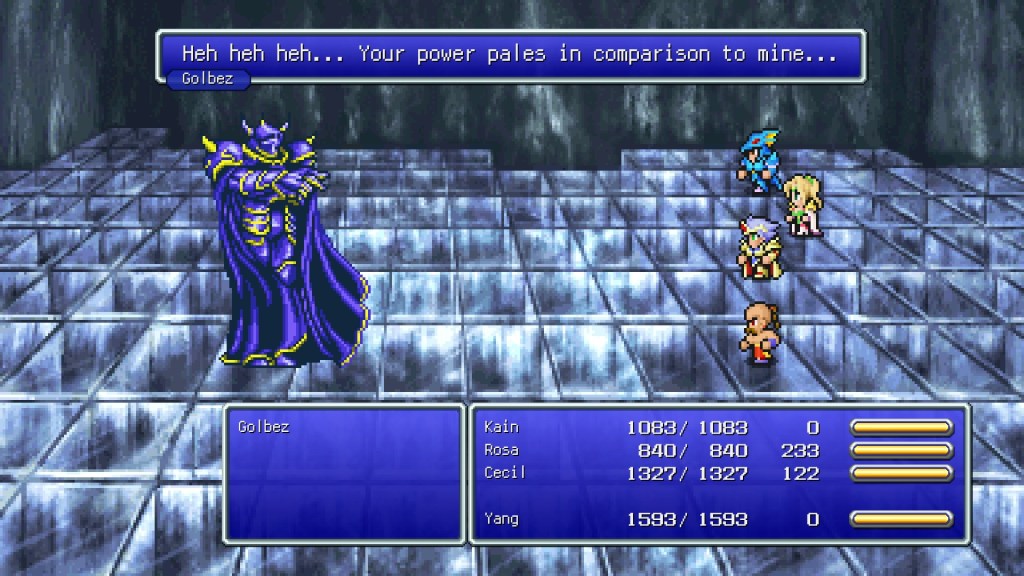
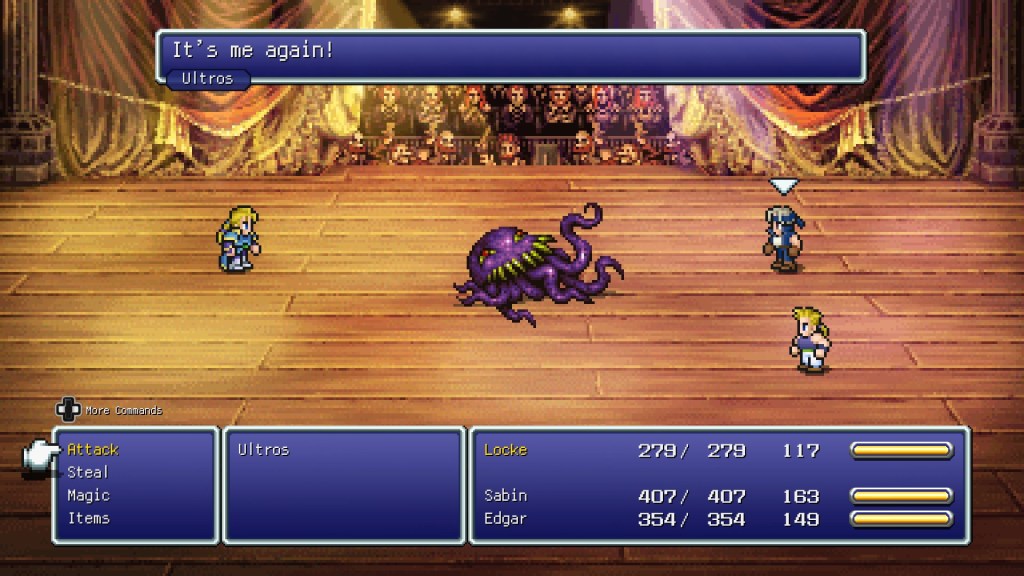
This is what Final Fantasy IV looks like in remastered form.
Each classic Final Fantasy game has its 2D pixel graphics and artworks updated with high-definition gaming in mind, and their soundtracks have been re-arranged. In what is a clear attempt by Square Enix to enhance the gameplay experience and user-friendliness, there were tweaks made to the user interface. Also added were extra stuff such as bestiary, illustration gallery and music player.
The Xbox and Windows PC releases of Final Fantasy Pixel Remaster is indeed a move towards the right direction by Square Enix and it is clearly the result of that company’s renewal of ties with Team Xbox. Final Fantasy Pixel Remaster was launched on other platforms previously and the Xbox ecosystem ended up being the last to have it for millions of gamers to enjoy.
For the Xbox gamers who are Final Fantasy fans as well as those who are fond of classic Japanese role-playing games (JRPGs) and those who simply love retro gaming, Final Fantasy Pixel Remaster is a very welcome addition that should not be missed. It is available now for digital purchase as a bundle but gamers are free to choose to buy the games individually based on their current taste or based on how much they could afford right now. It is clear that buying the bundle of six Final Fantasy classic games is still the best value for money.








 Author Carlo Carrasco