Welcome back, my readers, YouTube viewers and all others who followed this series of articles focused on YouTube videos worth watching. Have you been searching for something fun or interesting to watch on YouTube? Do you feel bored right now and you crave for something to see on the world’s most popular online video destination?
I recommend you check out the following topics and the related videos I found.
#1Donald Trump’s decades-long journey to becoming US President – No matter what your political views are, there is no denying that Donald Trump’s incredible 2016 election victory as President of the United States was the culmination of a very long journey that started since 1980s. As Trump kept doing lots of business, he observed what went wrong in America, what the nation lost to other countries with regards to trade or diplomacy, why many ordinary Americans became forgotten, and more. Watch Trump’s journey in the video below.
#2 A look back at Street Fighter II V (anime) – If you are a long-time gamer like me, chance are, you must have played one of the many games of Street Fighter II. If you have played the games, were you able to watch the short-lived anime series titled Street Fighter II V? Loosely based on Super Street Fighter II Turbo, the anime series started in 1995 and was directed by Gisaburō Sugii who was responsible for the anime movie of 1994. I found two YouTube videos revisiting Street Fighter II V posted below for your enjoyment.
#3 Fox News interview shows Kamala Fit is too dishonest and too out-of-touch to be US President – If there is anything notable with the incumbent United States Vice President Kamala Harris – the one woke candidate the Democrats nominated after pushing Joe Biden out of the way – is that she has a very distorted view of reality and she is very unfit to become US President. Her recent interview with Fox News is the worst yet and the consequences are still being felt as I write this down. Watch the selected videos below to find out.
#4 A look back at Koudelka – During the late stage of the first PlayStation console’s life, Japanese role-playing games (JRPGs) became really popular with gamers in Europe and America. Back in 1999, the role-playing game Koudelka was released on PlayStation in Japan and an international release followed in 2000. That game did not achieve critical acclaim and was never a big seller. As many old-time gamers have forgotten about its existence, Koudelka’s production history is rather intriguing and surprising to discover.
Koudelka was developed by Sacnoth which was founded by former Squaresoft employee Hiroki Kikuta (Secret of Mana, Trials of Mana, and Soukaigi). To find out why Koudelka had an unusual RPG concept and style of gameplay, I encourage you to watch the retro gaming video below.
#5 More Iranians need Israel’s help – It is a fact that the Islamic regime of Iran has a long record of brutalizing Iranians who do not follow their evil moves. In short, the people of Iran are not their wicked government. That being said, the dissenting Iranians are reaching out to Israel for help in the form of military action against the evil regime. Watch the video of The 700 Club below. It includes statements from Iran’s Crown Prince Reza Pahlavi.
#6. George Romero was hired to make a Resident Evil motion picture – Back in the late 1990s when the Resident Evil game franchise really soared in popularity and became bankable for Capcom, a movie project was approved and the late George A. Romero (Night of the Living Dead, Dawn of the Dead, Creepshow) was hired to write and direct it. It should be noted that Capcom hired Romero to make the Resident Evil 2 commercial which became very popular and contributed to the game’s big success. Eventually, Romero’s drafts of the script got rejected and Constantin Film replaced him with Paul W. S. Anderson resulting in the 2002 Resident Evil movie.
If you are fascinated with Romero’s short-lived involvement with the Resident Evil movie project, you should watch the related videos posted below…
#7. China’s Bonnie and Clyde – Have you been following the YouTube channel Dark Asia with Megan? Every week, there is always a new episode about true crime stories that took place within Asia and the host Megan is often great with her presentation and she clearly does a lot of research. Recently an episode about China’s very own Bonnie and Clyde was released. I saw it and it is very intriguing to watch. For the newcomers reading this, Bonnie and Clyde refers to real-life American bandits and serial killers who caused a lot of trouble from 1931 to 1934. Hollywood even released a movie in 1967 glorifying them. As for who exactly were China’s Bonnie and Clyde, and what had they done, I encourage you to watch Dark Asia with Megan’s episode below.
#8. Kamala Harris supporter shouts at toddler – Going back to the 2024 US Presidential campaign, a supporter of Communist Kamala Harris (the US Vice President since 2021) was caught on camera yelling at and traumatizing a toddler. I know for a fact that liberals, Leftists, Marxists, socialists and woke Americans can be quite wild but the die-hard Kamala supporter who screamed at the toddler clearly has crossed the line. It makes me wonder if the Democrats ever oriented their supporters to be civil and in control. Watch the Sky News Australia Lefties Losing It video below.
#9. Kamala Harris got booed at her own campaign rally! – The presidential campaign of Commie Kamala Harris is clearly failing not only because the opinion polls – most of which are Left-leaning and oversampling Democrat voters – are showing her falling further behind Donald Trump but also because unfortunate events have been happening at her campaign rallies. The new embarrassment this time is Harris getting booed at her own campaign rally! Watch the videos below.
Welcome back, my readers, YouTube viewers and all others who followed this series of articles focused on YouTube videos worth watching. Have you been searching for something fun or interesting to watch on YouTube? Do you feel bored right now and you crave for something to see on the world’s most popular online video destination?
I recommend you check out the following topics and the related videos I found.
#1In-depth look at the making of Silent Hill – It has been over twenty-five years since Konami released Silent Hill on PlayStation. That horror-themed adventure game added to the evolution of horror gaming and it stood out differently from Capcom’s Resident Evil series of survival horror games. I recently viewed a very in-depth video by thegamingmuse who spent a lot of effort researching the game development history of Silent Hill, who the creators were and what challenges came along the way leading to the game’s eventual release. The video is over a hundred minutes long but I assure you it is full of details that will give you insight about how the game materialized.
#2 Electric cars are still very dangerous and deadly – I mentioned before that no matter how nice the promotions are, electric cars are still dangerous to have as they can spark fire randomly, damage properties nearby and even kill you. In recent times, there were these two electric cars in different locations that sparked into flames randomly. One of them was not even charging at all while being parked in a residential community’s parking area. That electric car suddenly caused a huge fire that destroyed many cars parked nearby while also forcing many residents to leave their units. The fact is electric vehicles are not safe and are not reliable. The future of the automobile is absolutely NOT electric. Watch and learn from the videos below.
#3 Star Trek: Generations reaction video by Popcorn in Bed (PIB) – Before I first saw Star Trek: Generations in the cinema in 1995, I was excited over the promised cinematic crossover between the iconic captain James T. Kirk and captain Jean Luc Picard. Having seen a mix of movies of the original Star Trek crew plus episodes of Star Trek: The Next Generation, the concept of a crossover was really intriguing. After watching Star Trek: Generations, I left the cinema disappointed not only because the Kirk-Picard crossover (William Shatner and Patrick Stewart together on-screen) was not so great but also because the pacing and direction were not cinematic in execution. In fact, I find Star Trek: Generations’ concept more suitable in comic book format.
Of course, the flawed movie has its fans and slowly it is being discovered by YouTubers for the first time in their lives. Popcorn in Bed (PIB) recently posted the reaction video of Star Trek: Generations and she previously spent months watching all the seven TV seasons of Star Trek TNG. How would she react to the movie and how it impacted her, you have to watch it below.
#4 Terrorist state Iran’s hatred towards Israel explained – With its evil regime that started in 1979, Iran is both a terrorist state as well as the center of evil in the entire Middle East. No matter how many times a Democrat-led United States bowed to them and made desperate deals with them, Iran’s top leaders kept cheering (in their local language) death to America, England and Israel. In other words, Western ideals and democracy are completely unacceptable to Iran’s evil regime. The Ayatollah regime of Iran is so wicked, their government even brutalizes Iranians who do not follow their ways.
For Iran, the existence of Israel (the land that God designated to the Jewish people) unacceptable and their hatred towards them is so powerful, they sponsored terrorist groups like Hamas and Hezbollah to launch waves of attacks to destroy the Jewish state. Terrorist state Iran is doing what Satan always wanted and the evil regime is still obsessing with dominating the Middle East with destruction and the imposition of their religious beliefs on others. Iran is also obsessed with world domination and they will also attack Europe and America. To find out more, watch TBN Israel’s compelling video explaining Iran’s hatred towards Israel.
#5 The high number of deaths caused by electric cars that went wrong – Going back to electric cars, I posted a video that discusses in detail a hot issue that electric vehicle fanatics and the mainstream news media do not want to talk about – the high number of deaths caused by electric cars that went wrong. Watch it now.
#6. Kamala Harris simply cannot be trusted – In recent times, Kamala Harris appeared in several TV shows to reach out to as many voters as she could as the US Presidential Election gets closer. Harris has huge problems: dishonesty, inconsistency and a distorted view of reality. In other words, the Democrats’ presidential nominee is very out of touch with reality and she does not seem to care much about the American people who have been suffering from rising crime, the higher costs of living, the deterioration of public order in connection with the rising number of illegal aliens in America, and much more.
In short, Harris is so woke, she has no real solutions for the American people. She cannot even define herself clearly as she is obsessed with identity politics, vibes and wokeness. She cannot even focus on policy and governance. Kamala Harris is clearly unfit to become President of the United States (the Democrats will have to CHEAT AGAIN to elect her). Watch and learn from the selected videos below.
#7. Understanding America’s Electoral College – In light of the US Presidential Election happening on November 5, 2024, now is a good time to learn about the Electoral College and how it works on electing the next President. Contrary to popular belief, the popular vote does not determine the winner of the election as there is a state-by-state mechanism and the ones who actually determine the winner are the electors. Confused? Watch the two PragerU videos below.
#8 Dragonslayer reaction video by You, Me and the Movies – I was a very young boy when I first saw Dragonslayer inside the cinema back in 1981 here in the Philippines. Being so young, I was not yet aware that the fantasy movie was a Disney-Paramount joint effort. The public word of mouth back then was that the movie was a visual spectacle as it had Industrial Light and Magic (ILM) work on the special effects while the Go Motion effects were handled by Phil Tippett. To make things clear, I am NOT a fan of Dragonslayer but I should say that YouTuber You, Me and the Movies recently posted their movie reaction of it which is entertaining to watch.
#9 The elimination of Hamas terrorist leader Sinwar plus the attempted attack against Israel’s PM Netanyahu – In recent times, I posted about the unexpected elimination of Yahya Sinwar who was the leader of the Iran-sponsored Palestinian terrorist group Hamas and the mastermind of the October 7, 2023 terrorist attacks against Israel. Sinwar was a mass murderer and a real-life demon who always hated Israel and the Jewish people. He was also one of the favorite terrorist allies of Iran. Apart from Sinwar, Iran had its Lebanon proxies Hezbollah attempt to assassinate Israeli Prime Minister Benjamin Netanyahu only to fail. The war against Islamic terrorism continues and the TBN Israel news video explains the details for you all.
Welcome back readers, fellow geeks and electronic gaming fans!
In this edition of the Retro Gaming Ads Blast (RGAB) series, we will take a look at another batch of retro gaming print ads – including arcade flyers – from the 1980s and 1990s.
For the newcomers reading this, Retro Gaming Ads Blast (RGAB) looks back at the many print ads of games (console, arcade, computer and handheld) that were published in comic books, magazines, flyers, posters and newspapers long before smartphones, social media, the worldwide web and streaming became popular. To put things in perspective, people back in the 1980s and 1990s were more trusting of print media for information and images about electronic games and related products.
With those details laid down, here is the newest batch of retro gaming print ads for you to see and enjoy…
1. River Raid print ad
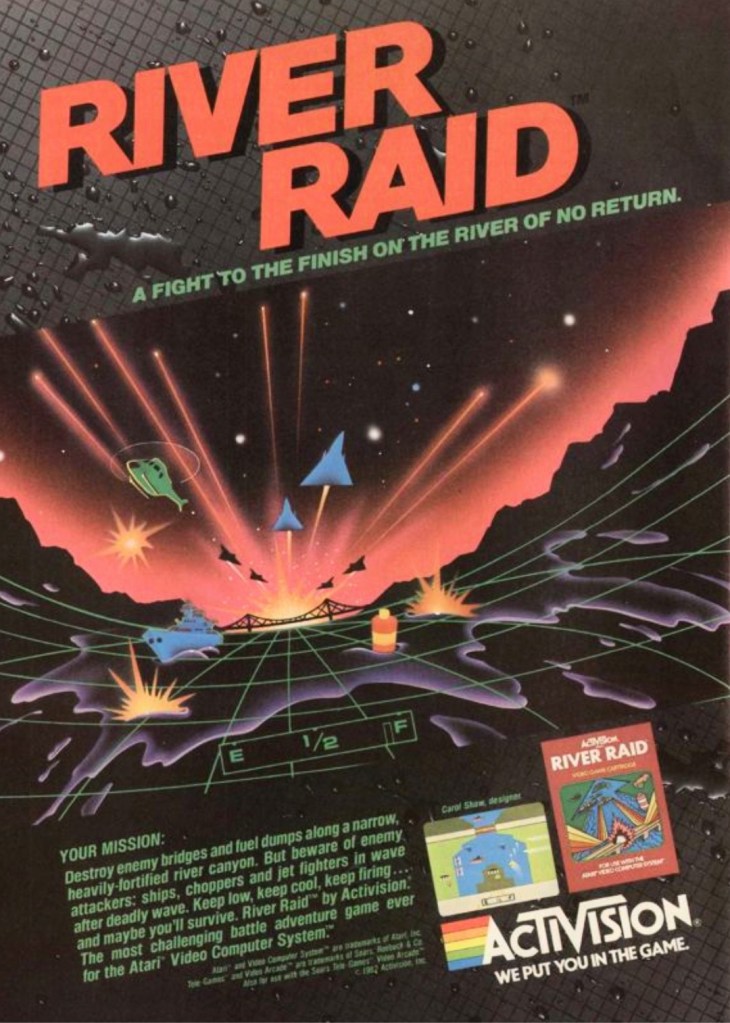
This River Raid print ad appeared on comic books and magazines long ago.
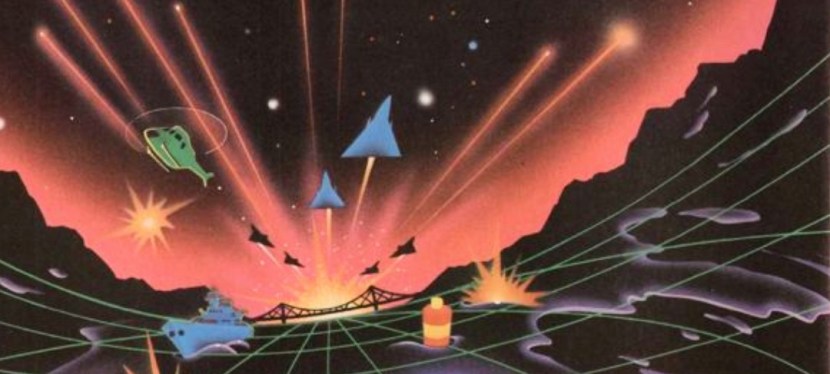
Decades before it became an industry giant with the best-selling Call of Duty games, Activision became a standout publisher in the early 1980s with River Raid on the Atari 2600. Designed by Carol Shaw, River Raid was a huge success ending up as the 2nd best-seller on the Atari 2600 as well as Activision’s best-selling game for the year 1983. Apart from showing one screenshot and the box cover of the game, the print ad of River Raid had this mesmerizing 3D image that caught many gamers’ attention and helped them feel like they will pilot on dangerous missions. The 3D image was futuristic in its own style became forward-moving 3D sequences in video games became reality many years later.
2. Galaga North American arcade flyer
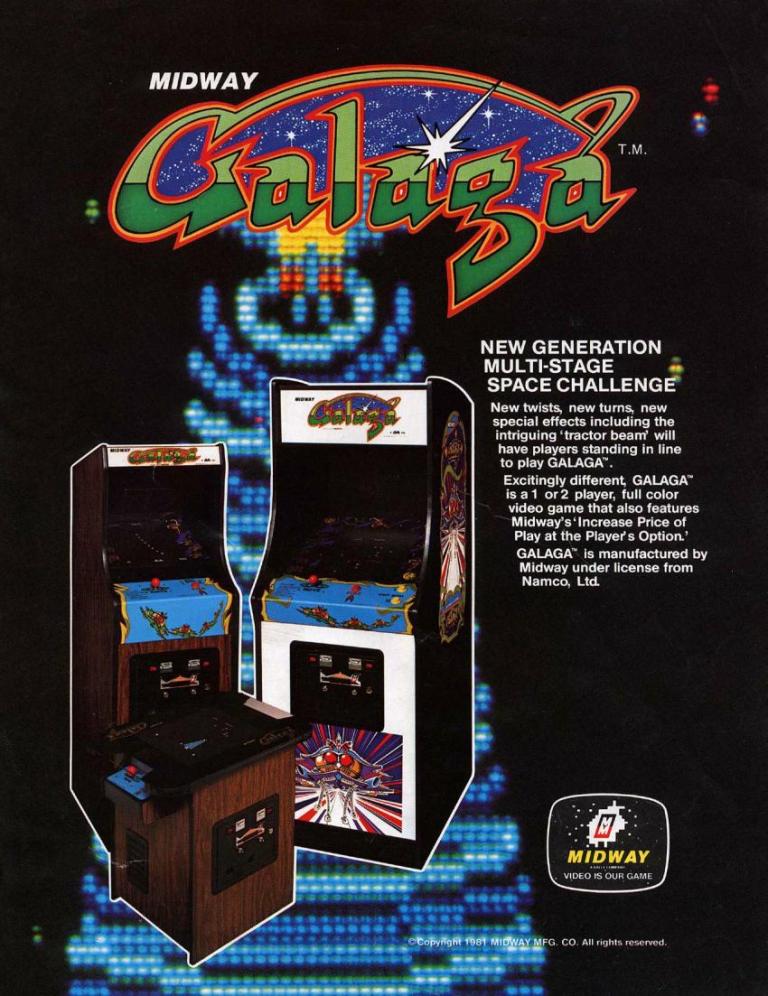
The front of the flyer showing three Galaga machines that arcade operators can choose from.
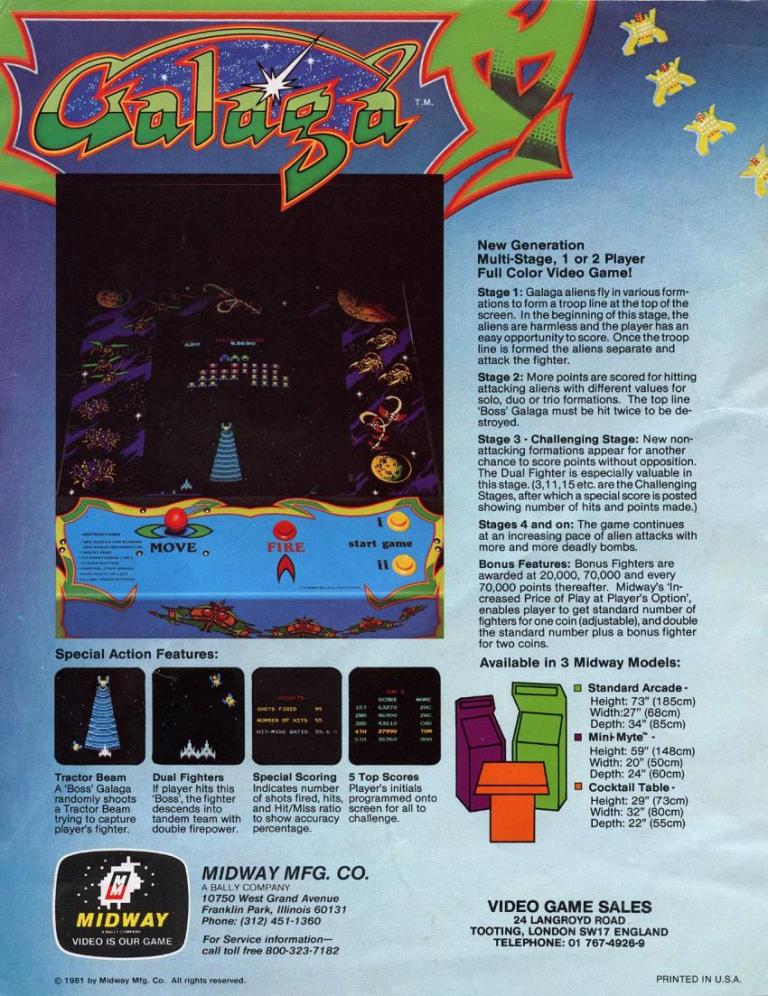
Key details about Galaga were nicely presented on the rear of the flyer.
In the history of gaming, Namco’s Galaga was played by countless millions of gamers and it is still highly regarded as an arcade classic as well as one of the most enjoyable arcade games ever made. In preparation for the North American launch (October 1981), Midway prepared the arcade flyer showing the three types of machine on the front that arcade operators can choose from. On the rear is the really neat approach of explaining the details of the game, what kind of gameplay is to be expected, and how to play. Whether you are an individual player or the manager of an arcade joint, this flyer suits your needs.
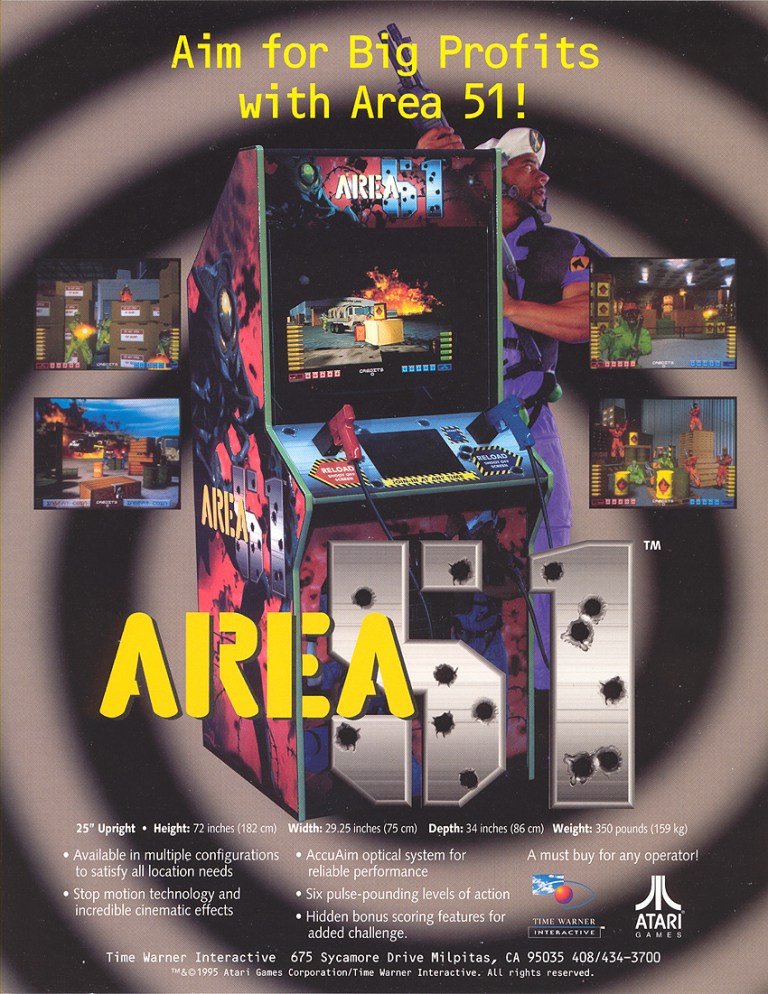
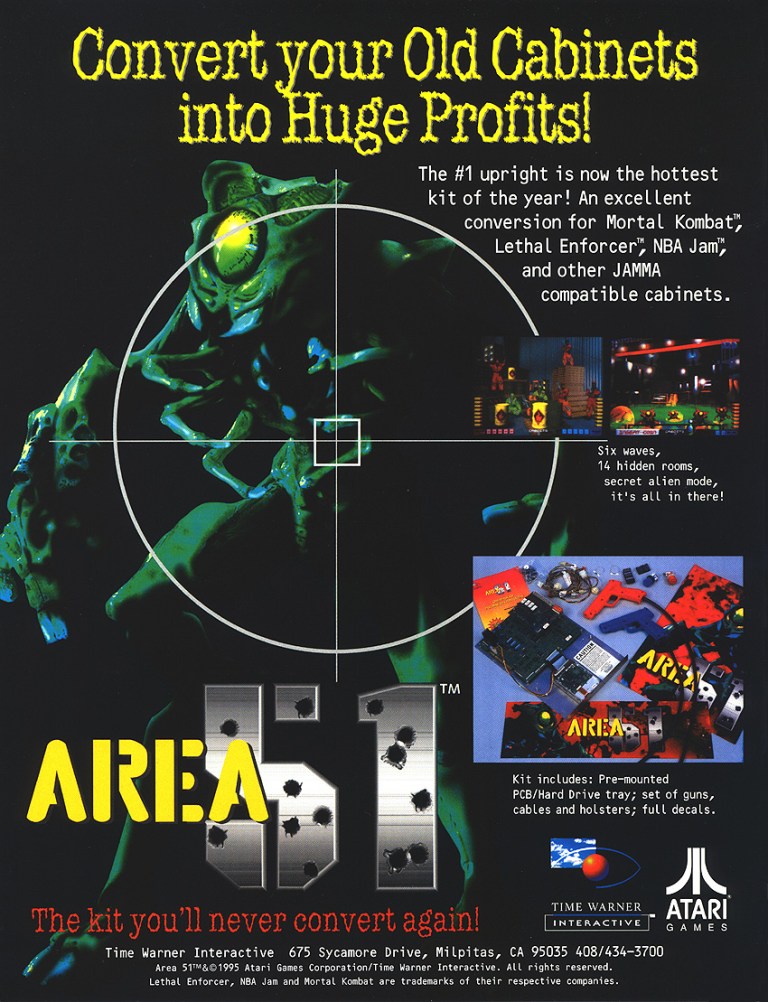
3. Area 51 arcade flyer and conversion kit flyer
The front of this Area 51 flyer had an enticing message for arcade operators as well as other business owners/managers who are interested in having a machine to add value to their business joints. Atari was already in deep money problems by the time they started making this game.
The Area 51 arcade conversion kit is a cheaper alternative for businesses who want the game.
Moving on to the 1990s, Atari was already struggling financially and desperately needed a hit to lift them up fast. A light gun shooter project was approved as arcade shooters were in good demand and after overcoming serious hurdles during production internally, Atari hired independent team Mesa Logic to take charge of development. After being granted extra time and more creative freedom, the project under Mesa Logic’s handling became a sci-fi shooter titled Area 51. The game became a huge hit in the arcades for Atari resulting in sales of more than 20,000 arcade cabinets as well as a major financial boost for the company (note: Atari still exists today). Atari went on to release Atari 51 versions for PlayStation, Sega Saturn and PC in America in 1996. The Atari 51 flyers you see here are still captivating to look at and were crucial in generating buzz among arcade operators, business joints that had space for arcade cabinets and gamers.
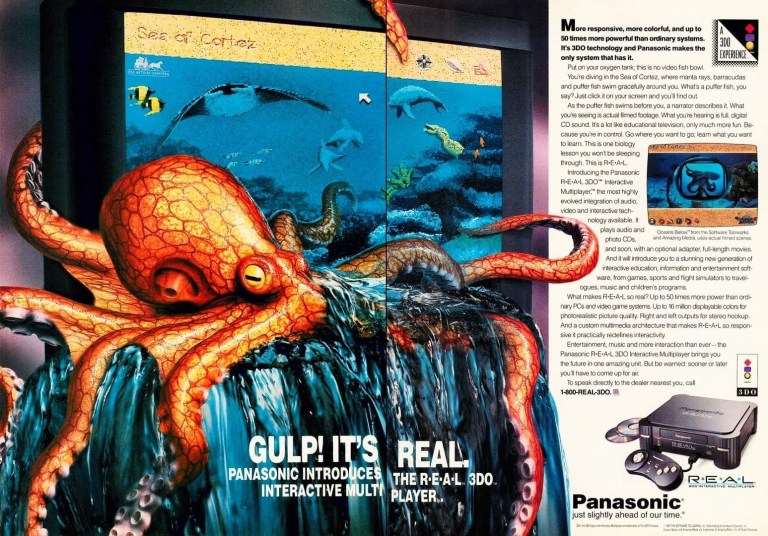
4. Panasonic 3DO print ad
The makers of this print ad forgot to mention the 3DO is also a game machine.
Back in 1993, the 3DO Interactive Multiplayer console manufactured by Panasonic (a licensee of the 3DO Company) was launched with a CD-ROM drive, multimedia features and gaming capabilities (with a 3-button control pad). This print ad strongly emphasized the 3DO’s ability to play high-quality sound and full-motion videos using the Sea of Cortez software which functioned as an interactive movie. Obviously, this did not resonate well with people who loved to play games and by the time the 3DO Company and its partners started marketing games, they could not save the 3DO console from fading to obscurity. The console shown in the ad is specifically model Panasonic FZ-1 R·E·A·L 3DO Interactive Multiplayer. Panasonic was one of five companies that were licensed by the 3DO Company.
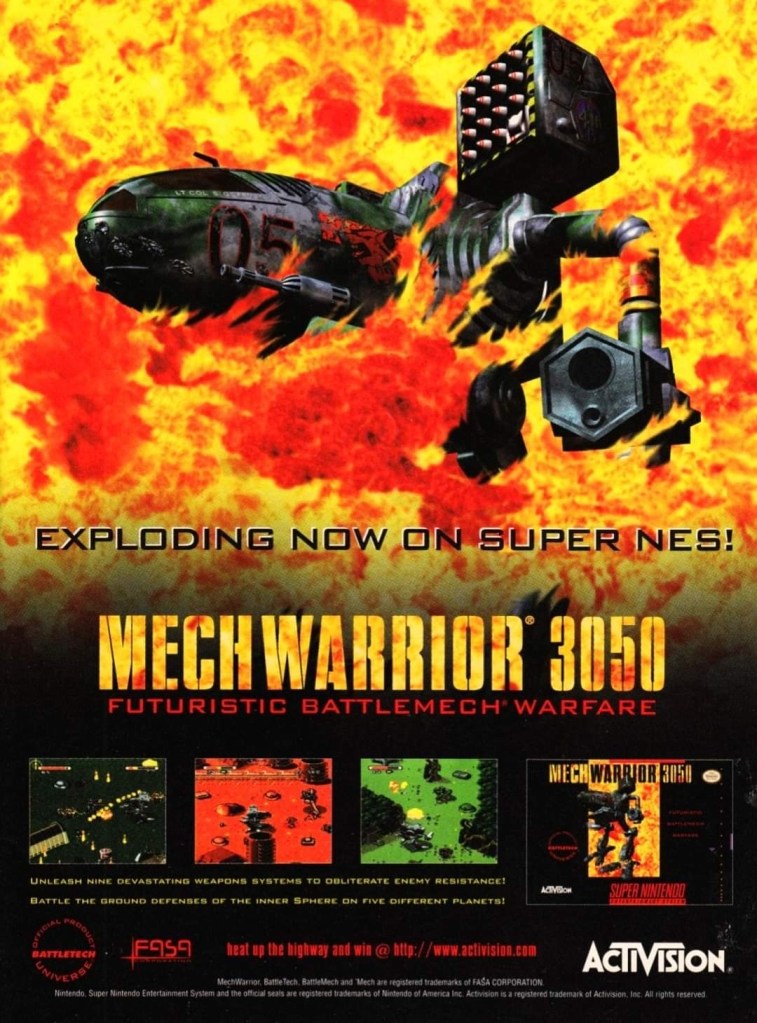
5. MechWarrior 3050 SNES print ad
If you were unaware of the 1994 game BattleTech, then this ad would have fooled you into thinking it is promoting a brand new game.
In 1995, the popular BattleTech entertainment franchise arrived on the Super Nintendo Entertainment (SNES) system with MechWarrior 3050 and its print ad had a really blazing artwork of an armed mech in fire which gave readers the illusion of a new and original game. In reality, MechWarrior 3050 was actually a port of BattleTech which was released on the Sega Genesis in 1994. The Genesis game was published by Extreme Entertainment Group while the SNES game was published by the more famous Activision. If you look closely at the MechWarrior print ad, you can tell how hard they tried to sell the game like it was brand new and all-original.
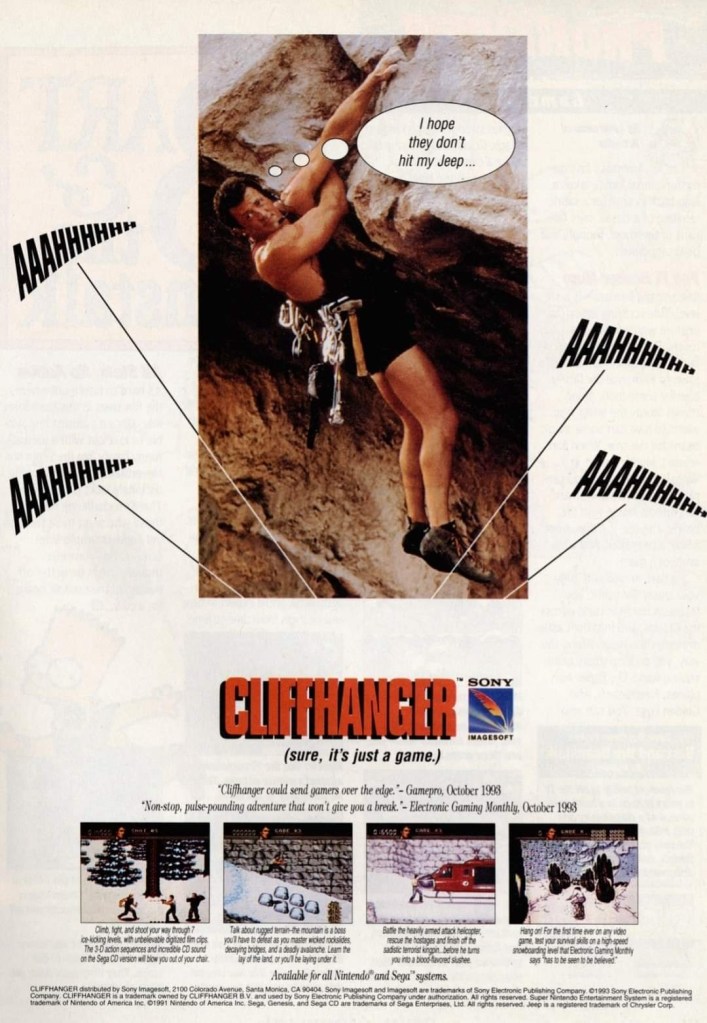
6. Cliffhanger video game print ad
This print ad had Sylvester Stallone hanging on a cliff to be relevant with the title of both the film and the game. They could not show images of Stallone in hard action scenes.
For fans of Sylvester Stallone, 1993 was a big and exciting year as the Hollywood icon appeared in two major action films – Cliffhanger and Demolition Man. Cliffhanger was released first and there were video game adaptations of it released on game consoles, handhelds and computers. This print ad of the Cliffhanger video game had an image of Stallone hanging on a cliff to emphasize the title. The ad makers cleverly posted selected gameplay screenshots and quoted GamePro and Electronic Gaming Monthly (EGM) to make the game look credible and worthy of purchasing. The marketing led to nowhere as the game received mostly negative reviews from critics and it faded to obscurity. Lastly, the Cliffhanger game ad had a noticeable amount of space wasted. They could have made the screenshots and text look somewhat bigger to sell the game.
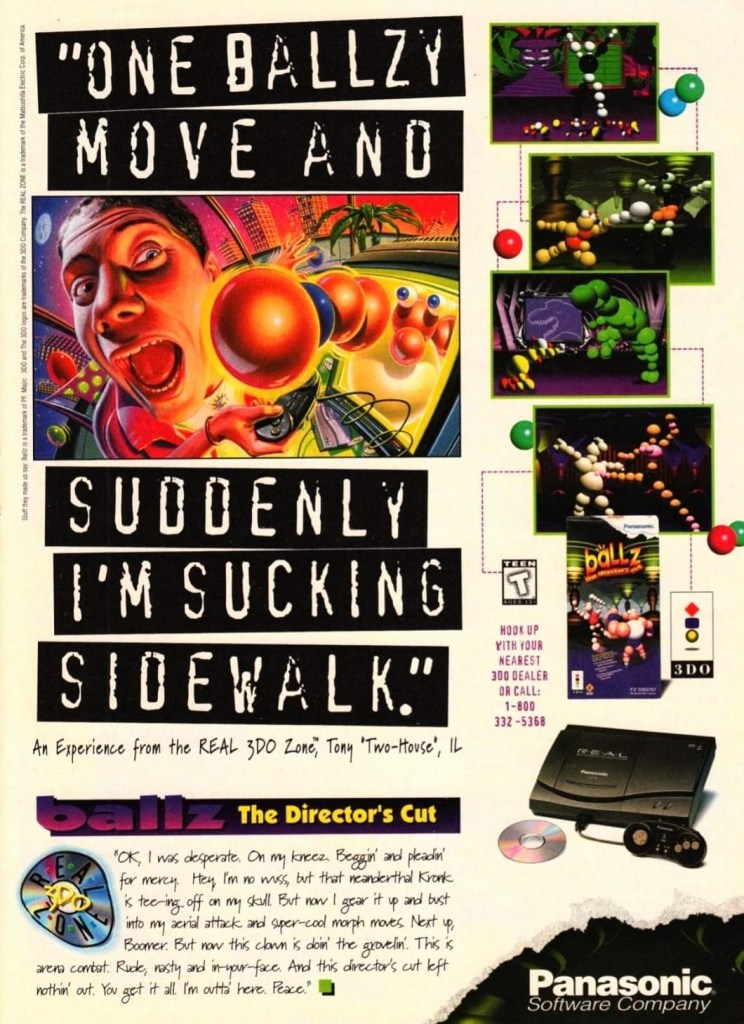
7. Ballz: The Director’s Cut print ad
I never got to play this game on the 3DO.
Here is another ad of the video game released on the failed 3DO console. As its title made obvious, Ballz: The Director’s Cut is an enhanced version of the original Ballz game of 1994 that was released on other consoles. The print ad had an eye-catching piece of artwork and posted beside it were selected shots of the gameplay. Strangely enough, the creative writing on the lower part of the ad does not make any sense and did nothing to convince gamers to play the game. As Ballz: The Director’s Cut was released in 1995, this ad shows the revised 3DO console from Panasonic (model: Panasonic FZ-10 R·E·A·L 3DO Interactive Multiplayer).
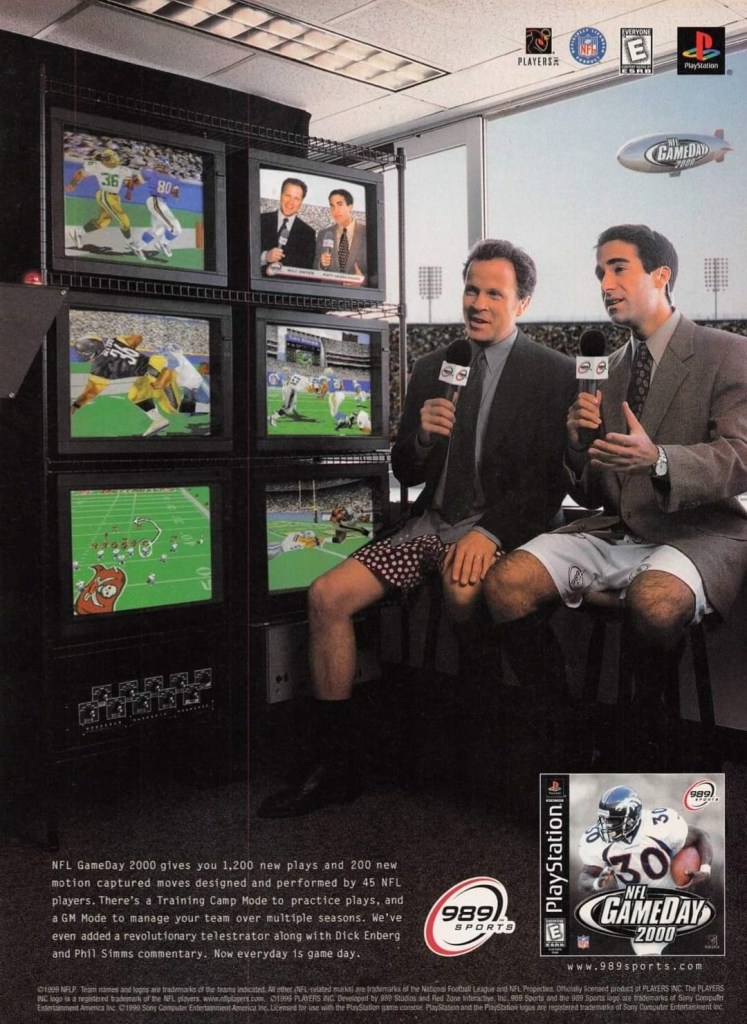
8. NFL GameDay 2000 print ad
Did you find this ad funny to look at in 1999?
To promote the PlayStation-exclusive NFL GameDay 2000, Sony publisher 989 Sports and the ad makers decided to implement a humorous look at football TV coverage by having two sportscasters wearing shorts in front of a TV camera that was only showing their heads and upper bodies. The TV sets on the side show screenshots from the game to emphasize the sports gaming experience. Ultimately the game scored mostly positive review from the critics.
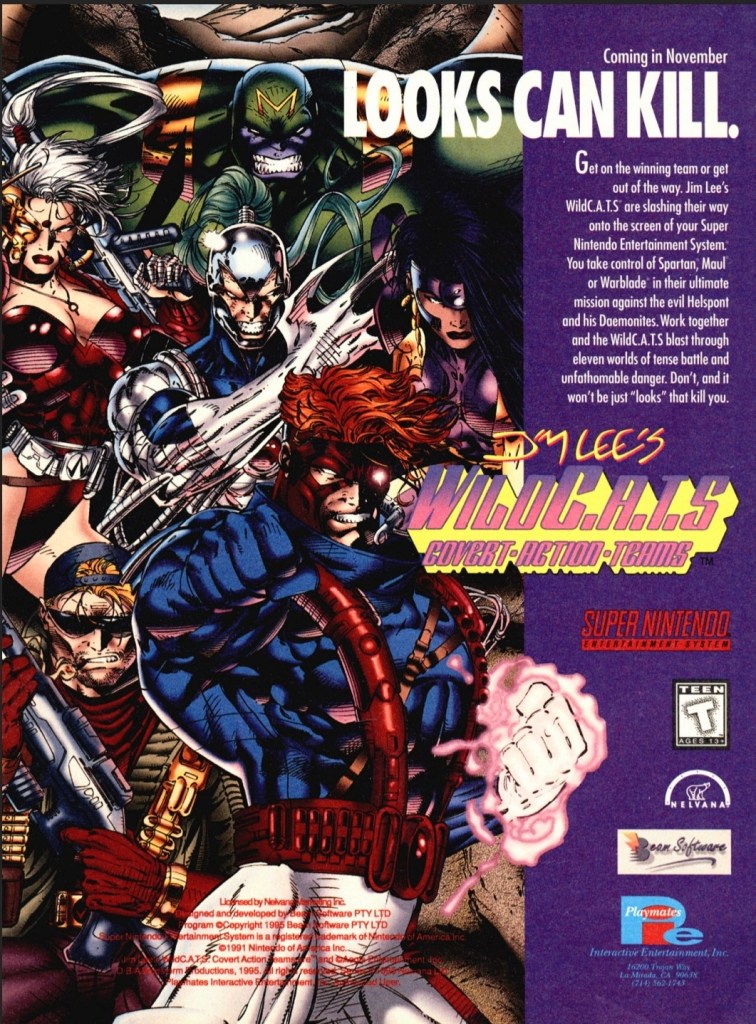
9. WildC.A.T.S: Covert Action Teams print ad
WildC.A.T.S. art by Jim Lee was used to promote the SNES video game.
When Image Comics launched in 1992, WildC.A.T.S: Covert Action Teams was Jim Lee’s creator-owned comic book franchise and its launch issue was a big seller. Years later, WildC.A.T.S. grew in popularity with comic book fans and the franchise achieved multi-media status by venturing into TV (with an animated series) and video games. This print ad promoting the video game adaptation had no screenshots to show which kept fans and gamers guessing how the game will turn out in terms of gameplay and game design. It was obvious that the people who made this print ad had to rely on the best WildC.A.T.S. artwork they could find drawn by Jim Lee. This ad made me laugh back in the old days because if you did not look closely, it might fool you into thinking it was more about comic books than the game on the SNES.
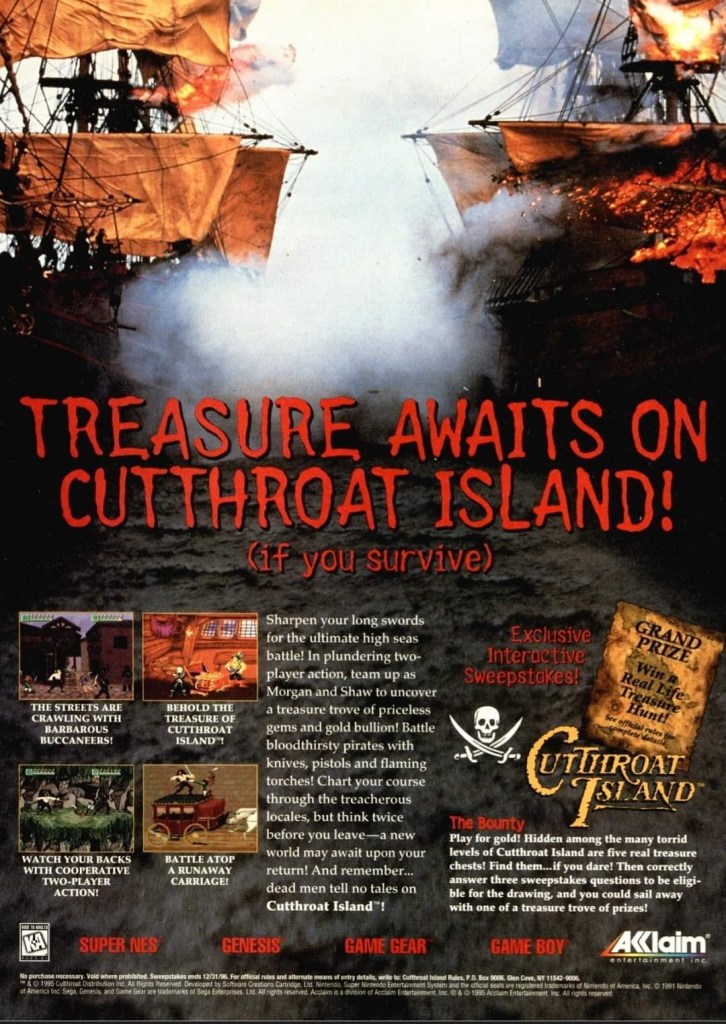
10. Cutthroat Island print ad
Exciting imagery without Geena Davis and Matthew Modine was used to promote the video game adaptation.
I never saw the Hollywood mega-flop Cutthroat Island nor have I ever played any of its multiple video game adaptations (released on SNES, Sega Genesis, Sega Game Gear and Game Boy). The video game print ad, however, caught my attention back in 1995 because the ad makers cleverly used a photograph from one the many expensive movie sequences filmed and the hard, physical work by the filmmakers was clearly visible. Then the ad makers had four screenshots placed on the lower-left part and inserted descriptive text that sounded exciting. Lastly, the ad mentioned a sweepstakes promo.
Without using any images of stars Geena Davis and Matthew Modine, this ad was a strong attempt to get gamers excited for the video game adaptation. Like the movie itself, this game flopped and has faded away to the land of the forgotten.
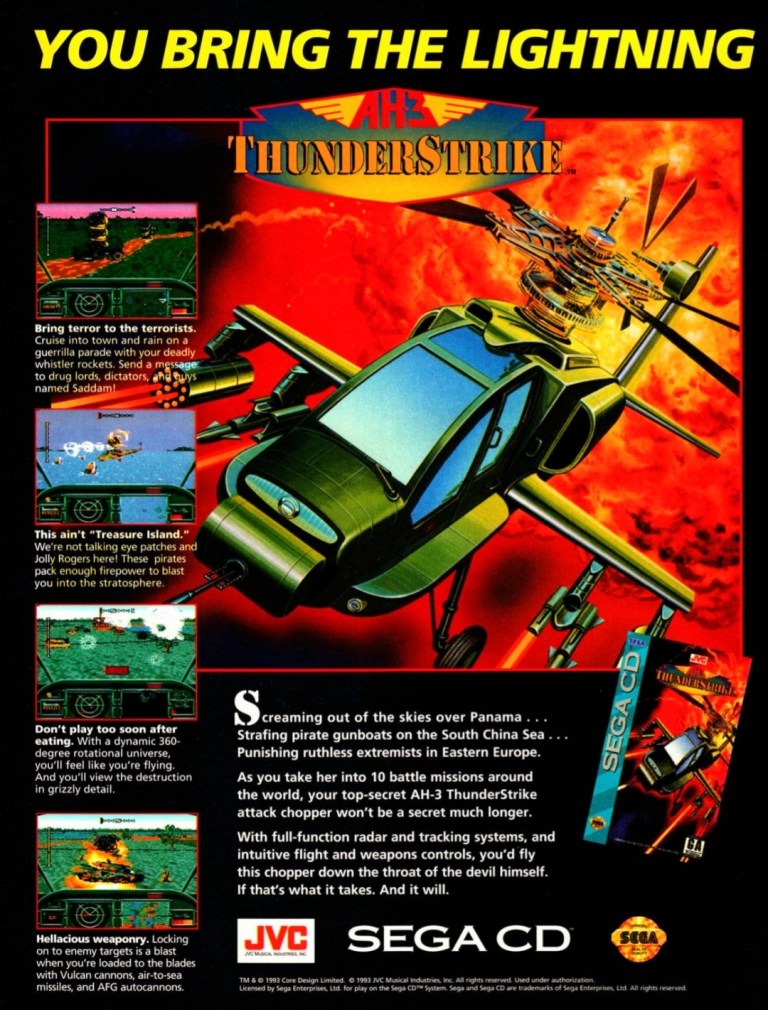
11. AH-3 Thunderstrike print ad
Captivating artwork, vibrant colors and orderly text descriptions made this an effective ad.
AH-3 Thunderstrike is one of the better games that was released on the Sega CD add-on (requires the Sega Genesis console) in 1993. Similar with MechWarrior 3050, the game was actually a port of Thunderhawk which itself was released on the Amiga and MS-DOS PC in 1992. The print ad showcased a captivating artwork (which was also used on the game’s box cover), a few screenshots and strategically placed text descriptions to sell the game. This ad still looks good.
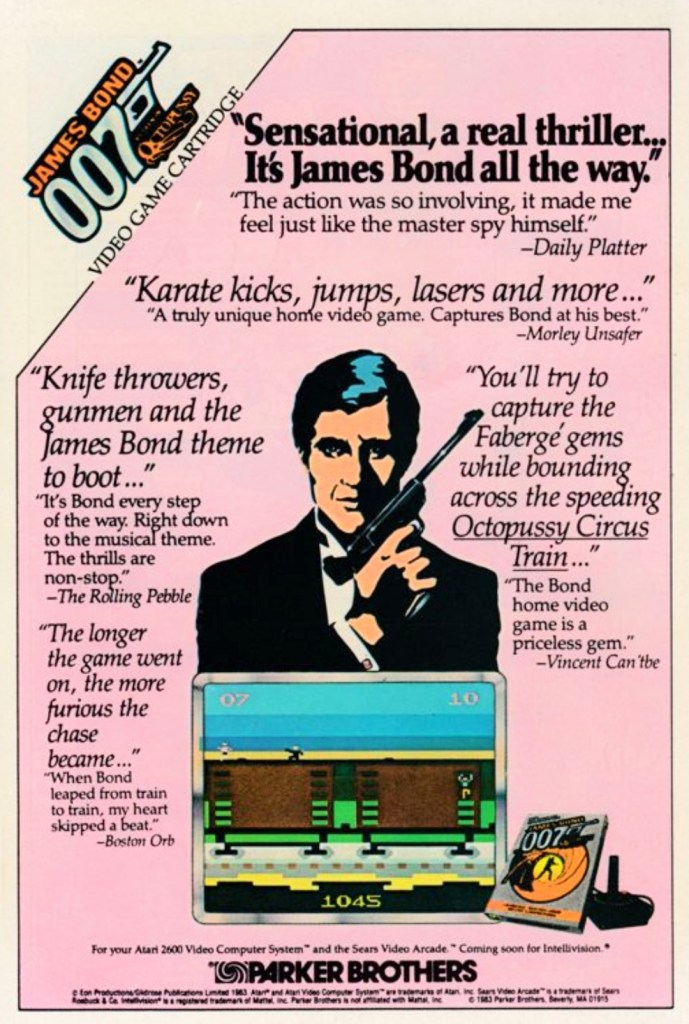
12. James Bond 007 print ad
This print ad appeared in many comic books in 1984.
This is a print ad I saw many times while reading comic books in 1984. James Bond 007 for Atari 2600 was an ambitious licensed video game as it featured levels that were inspired by missions in the James Bond movies Diamonds are Forever, The Spy Who Loved Me, Moonraker and For Your Eyes Only. Keep in mind that programmers back then had to deal with memory limitations and primitive tools to make games.
To promote the game, original art of Agent 007 was used which did not resemble the James Bond star of the time – Roger Moore. Strangely enough, the illustrated James Bond slightly resembled Timothy Dalton whose debut as 007 happened in 1987. Adding further zest to the add was the use of fictionalized quotes pointing to fantasized critics as sources (example: Vincent Can’tbe is a reference to real life critic Vincent Canby). The use of a pink background made this catchy ad look really odd.
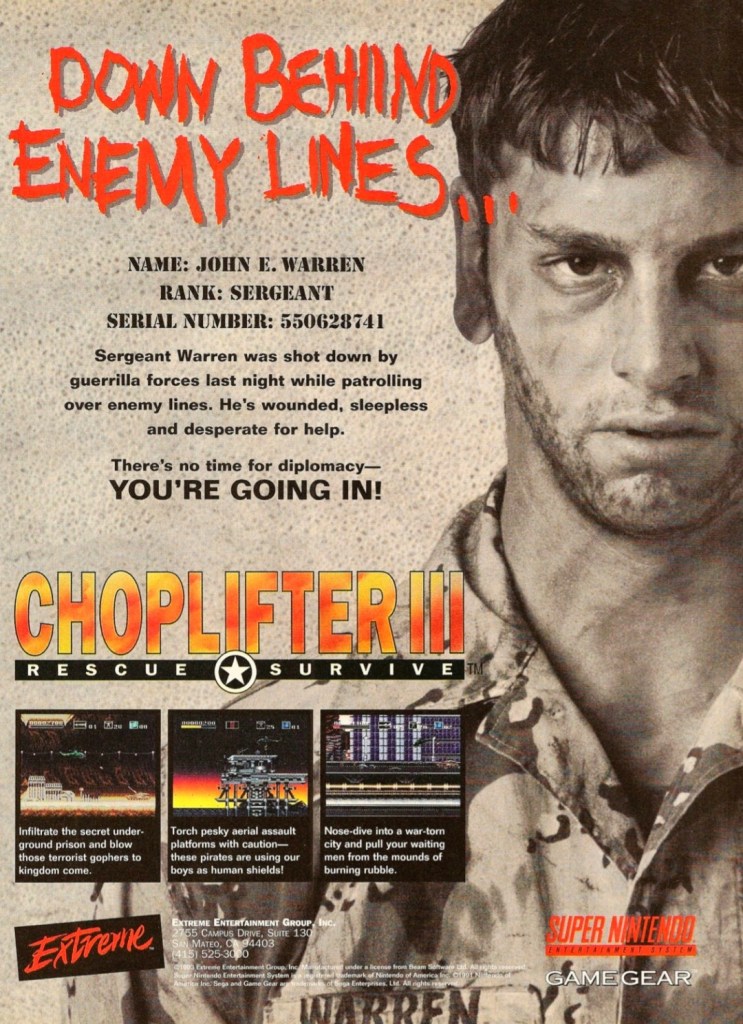
13. Choplifter III: Rescue Survive print ad
A captivating print ad that brought gamers’ attention to the Choplifter series again.
This print ad of Choplifter III: Rescue Survive has a striking look showing a military officer who needs your help as he has been stranded behind enemy lines. The presentation reflects the long-time tradition of the Choplifter game franchise which has been about piloting an armed helicopter to the opposition’s territory, shooting at bad guys and then rescuing the hostages or prisoners-of-war (POWs). The game eventually gathered mostly positive feedback from video game critics.
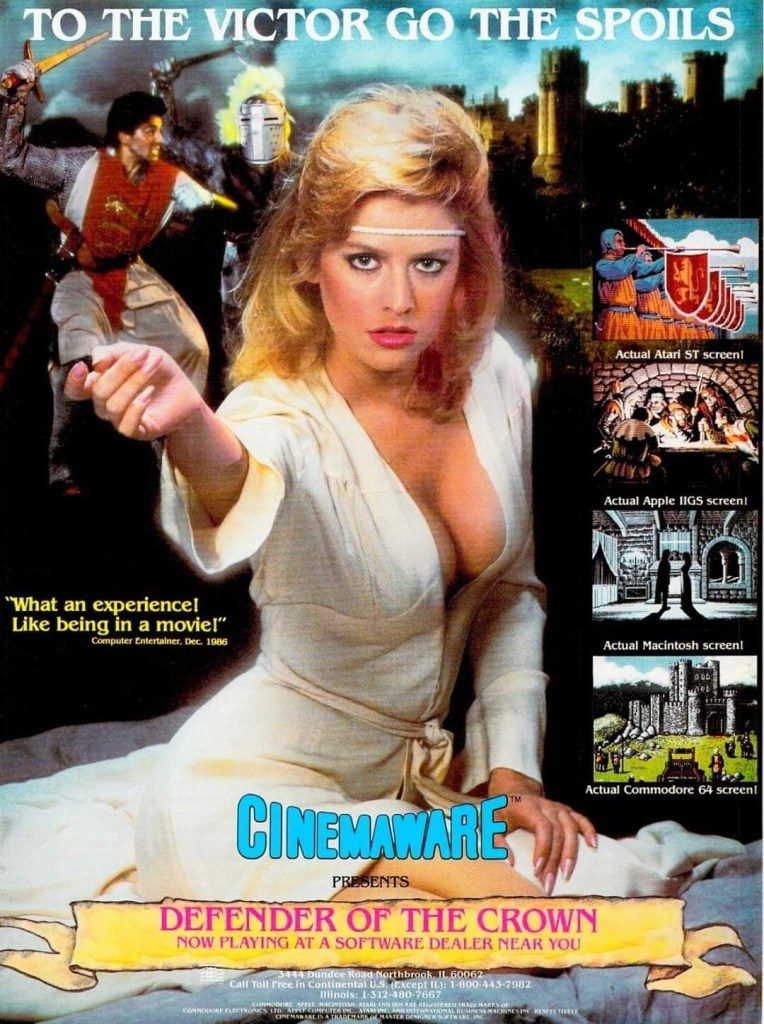
14. Defender of the Crown print ad
Cinemaware took a gamble with the visual concept of this print ad.
Released in 1986 for home computers, Defender of the Crown was made with a high level of quality backed with solid artistry. To capture gamers’ attention, Cinemaware came up with this print ad showcasing a pretty model looking somewhat seductive which reflects what happens in the game when players rescue a damsel in distress. The selected screenshots showed what the game looked like on different platforms, and the lower part of the ad made the game feel like it was a historical epic waiting to be discovered. Defender of the Crown eventually became a big hit with computer gamers.
Welcome back Xbox fans, geeks, retro gaming enthusiasts and all gamers from around the world!
I was born in the mid-1970s. My video gaming experience started with the arcade games. A few years later, my console gaming experience started with the Atari 2600 console (which was our first console at home) and for about five years my friends (who also had the same console in their respective homes) and I enjoyed playing games on it.
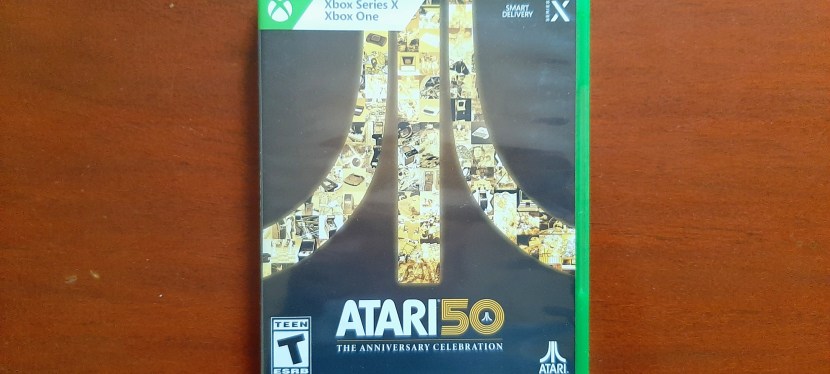
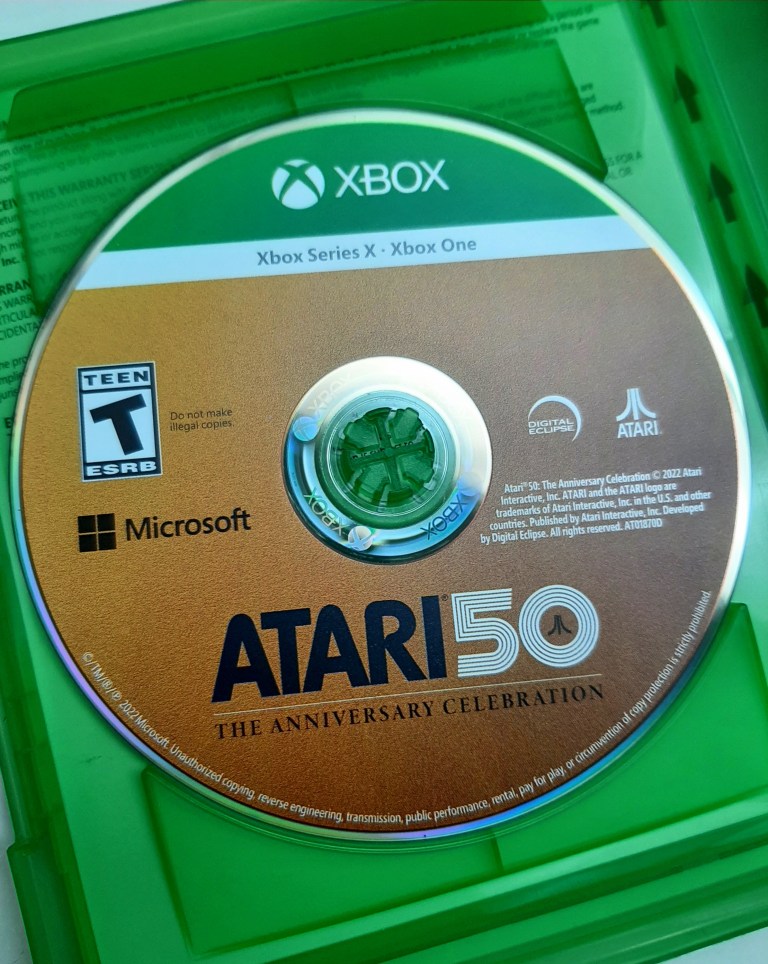
Also this year, I bought myself a physical copy of Atari 50: The Anniversary Celebration to add even more retro gaming fun on my Xbox Series X and it has been an enjoyable experience so far. There is absolutely nothing like replaying the Atari 2600 games I enjoyed plus being able to play other games released on other Atari consoles I never had. I also love the fact that the collection (you can by the physical Xbox copy by clicking here) also has Atari’s own arcade games. This is truly a blast of retro gaming fun!
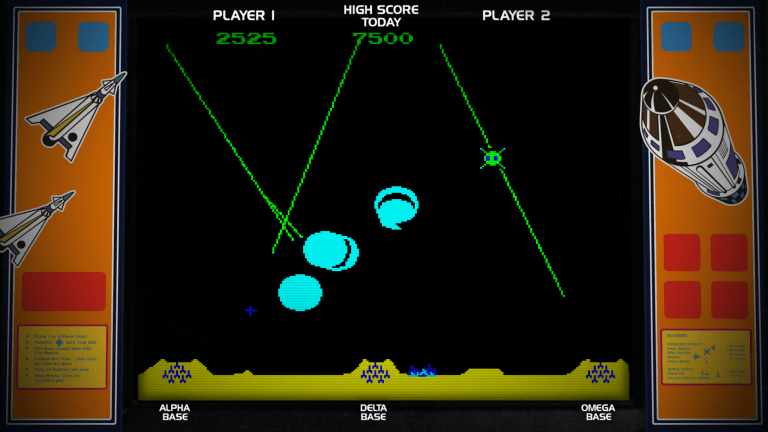
From my play session of the arcade version of the classic Missile Command.
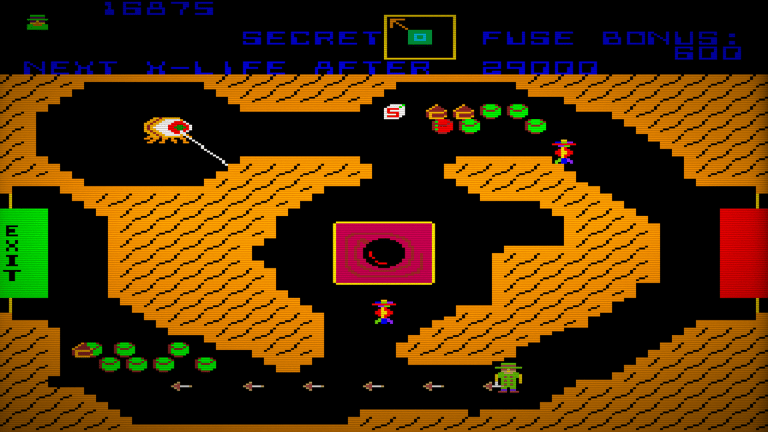
Thanks to the Atari 50: The Anniversary Celebration, I finally got to play the Cloak & Dagger arcade game that was featured in the 1984 movie.
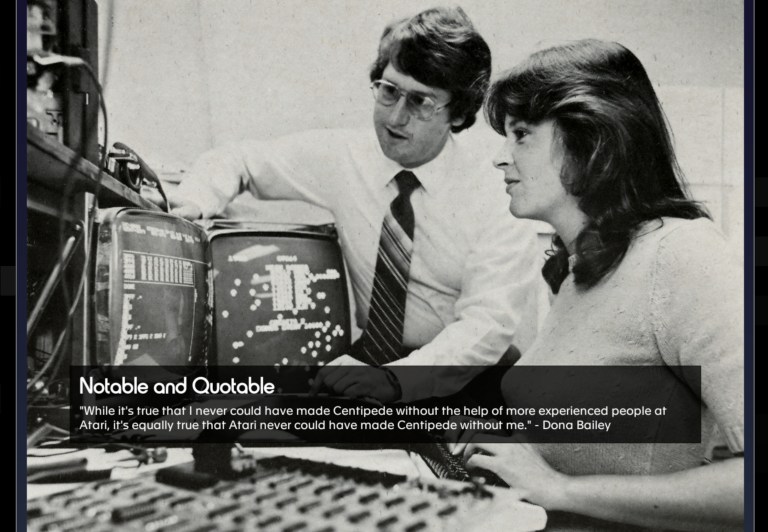
Historical insight about the classic game Centipede.
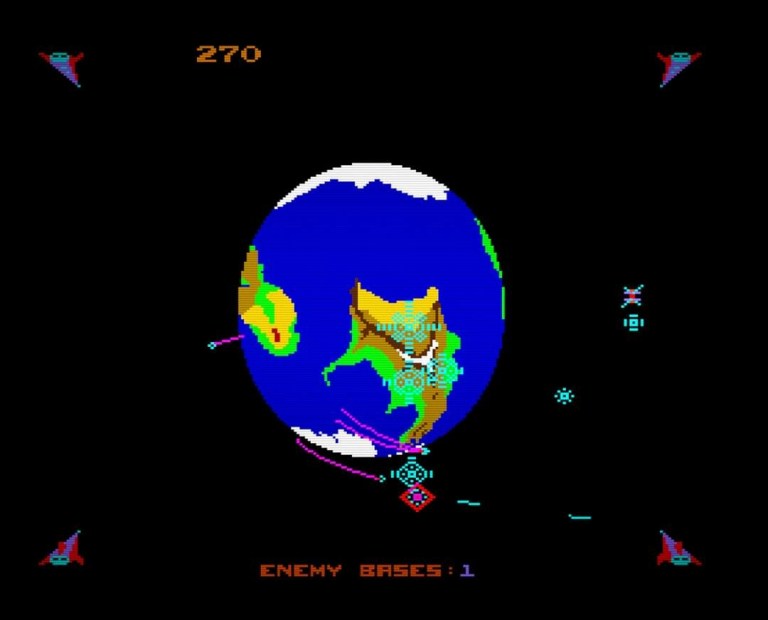
Atari’s arcade game Liberator.
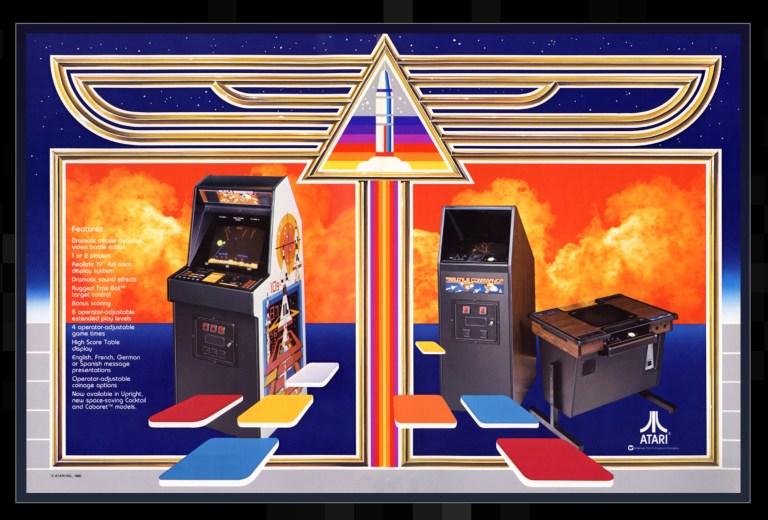
Content from the arcade flyer of Missile Command now viewable in high-definition!
Atari 50: The Anniversary Celebration is not just a collection of video games from the past. It has a stylish presentation that makes it an interactive museum which allows you to look at the arcade flyers, the print ads, the official artworks of games, historical highlights and most notably lots of videos showing interviews of surviving Atari creators/producers who reveal very important details about what they went through, what the company culture was like, and more.
Those who were interviewed include Nolan Bushnell (who established Atari, Inc.), David Crane, Jerry Jessop, Bill Rehbock, Owen Rubin, Allan Alcorn, Tod Frye, Wade Rosen, Eugene Jarvis, and Howard Scott Warshaw. These are the guys who not only established Atari as a major gaming industry leader but also laid the foundations of console gaming as a crucial part of home entertainment in general. Also discussed was Atari’s efforts of bringing their arcade games to the consoles at home.
Adding further insight to Atari’s history were video interviews of Ed Fries (a key figure behind the establishment of Xbox), Cliff Bleszinski (Gears of War trilogy) and Tim Schafer (Psychonauts games).
My physical copy of Atari 50: The Anniversary Celebration which I enjoyed a lot on my Xbox Series X.
Welcome back readers, fellow geeks and electronic gaming fans!
In this edition of the Retro Gaming Ads Blast (RGAB) series, we will take a look at another batch of retro gaming print ads – including arcade flyers – from the 1980s and 1990s.
For the newcomers reading this, Retro Gaming Ads Blast (RGAB) looks back at the many print ads of games (console, arcade, computer and handheld) that were published in comic books, magazines, flyers, posters and newspapers long before smartphones, social media, the worldwide web and streaming became popular. To put things in perspective, people back in the 1980s and 1990s were more trusting of print media for information and images about electronic games and related products.
With those details laid down, here is the newest batch of retro gaming print ads for you to see and enjoy…
1. Vendetta UK and North American arcade flyers
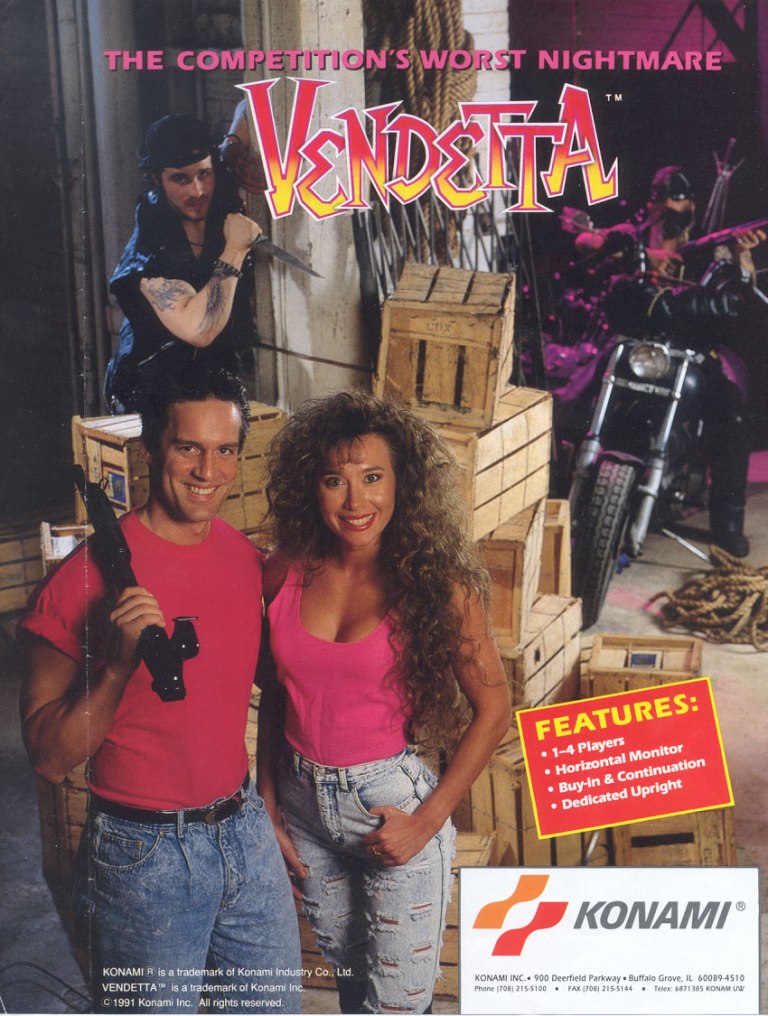
Vendetta arcade flyer for North America
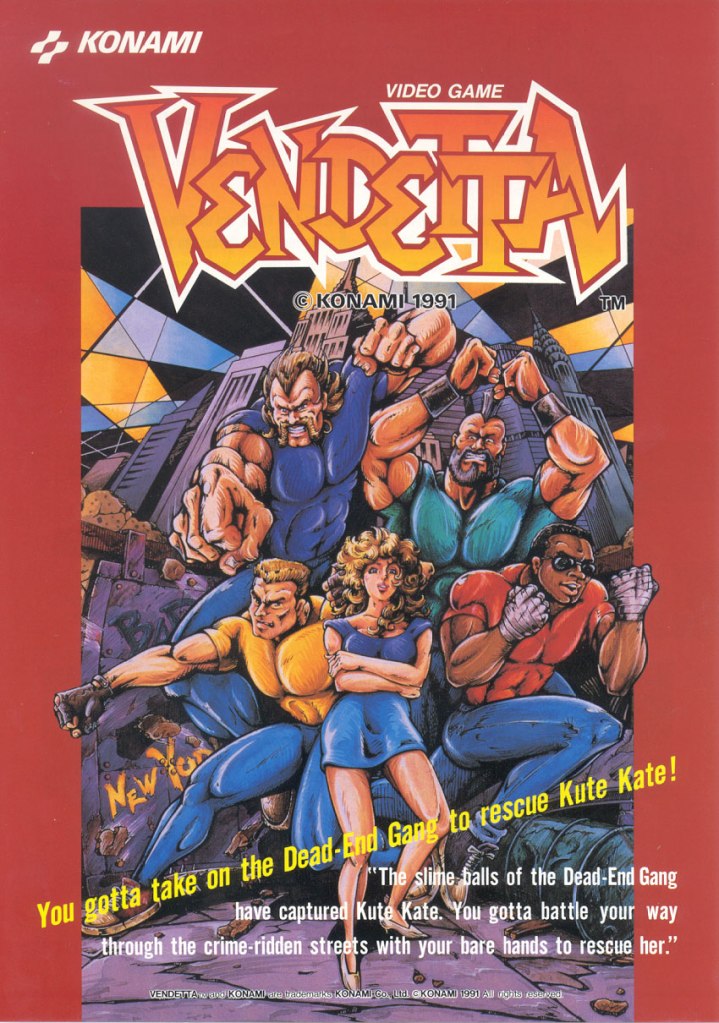
Vendetta arcade flyer for the UK.
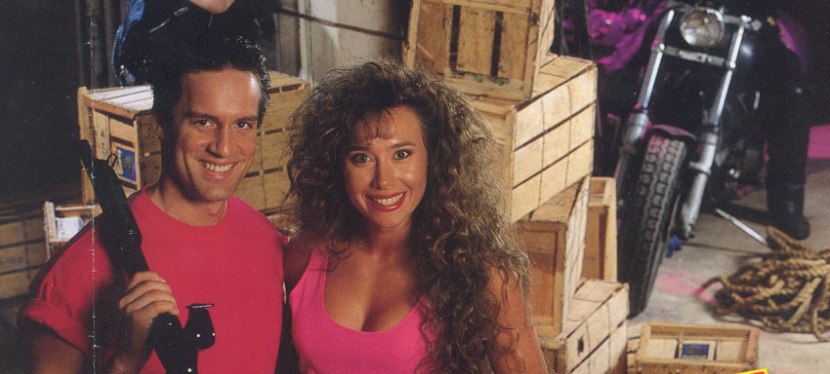
In 1991, Konami released the 2D side-scrolling beat-them-up game Vendetta in arcades around the world achieving commercial success. While it is hard to tell if the promotions helped the game commercially, there is no doubt that the arcade flyers for the North American and United Kingdom (UK) markets were indeed very eye-catching.
The North American Vendetta arcade flyer had a photographic approach showing models playing characters supposedly representing the Cobras gang and the Dead End gang. The display of wooden boxes and the rope was done to symbolize the rough city environments of the game. On the other hand, the UK arcade flyer has illustrated artwork that captured the look of the Cobras gang from the game.
2. Star Control II: The Ur-Quan Masters print ad
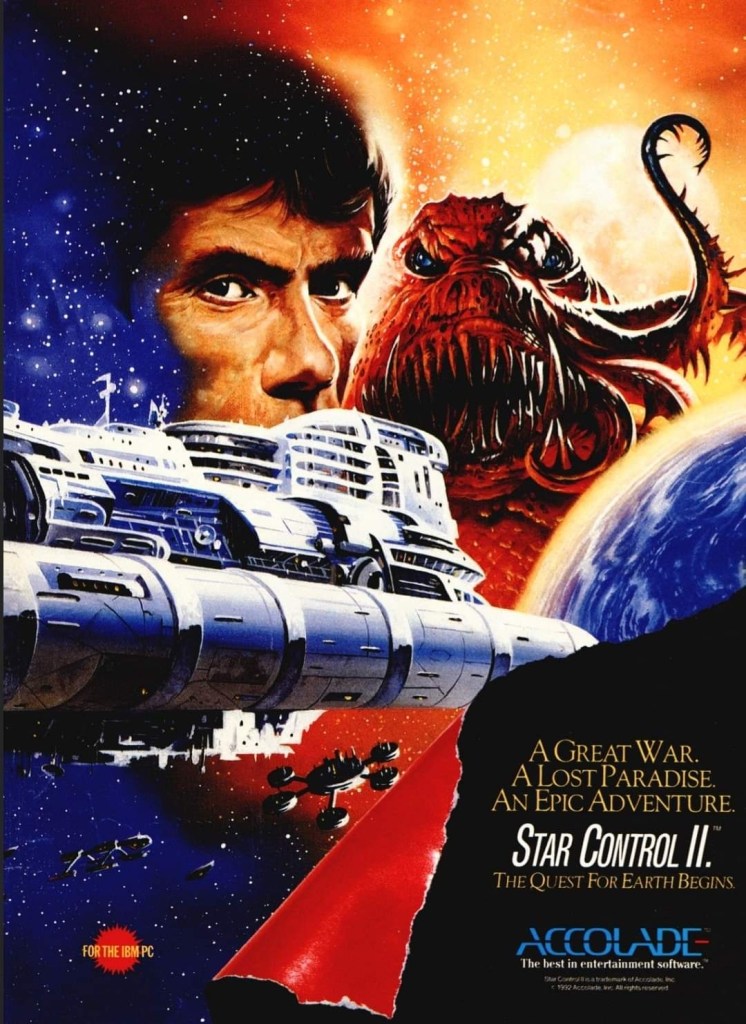
This ad has great art that strongly emphasizes its science fiction concept.
This print ad of Star Control II: The Ur-Quan Masters (PC version) really caught my attention when I read gaming magazines in the early 1990s. The painted artwork showing a human and a hideous alien in the background with a planet, space ships and space stations filling the rest of the space was very captivating to look at. So captivating, it enticed me to search for the game but our PC at home had really low specs. Strangely enough, I played another version of Star Control II on a rented 3DO Interactive Multiplayer console in 1995. For the newcomers reading this, the game was critically acclaimed and was declared as one of the very best PC games ever made. Enjoy looking at the print ad above.
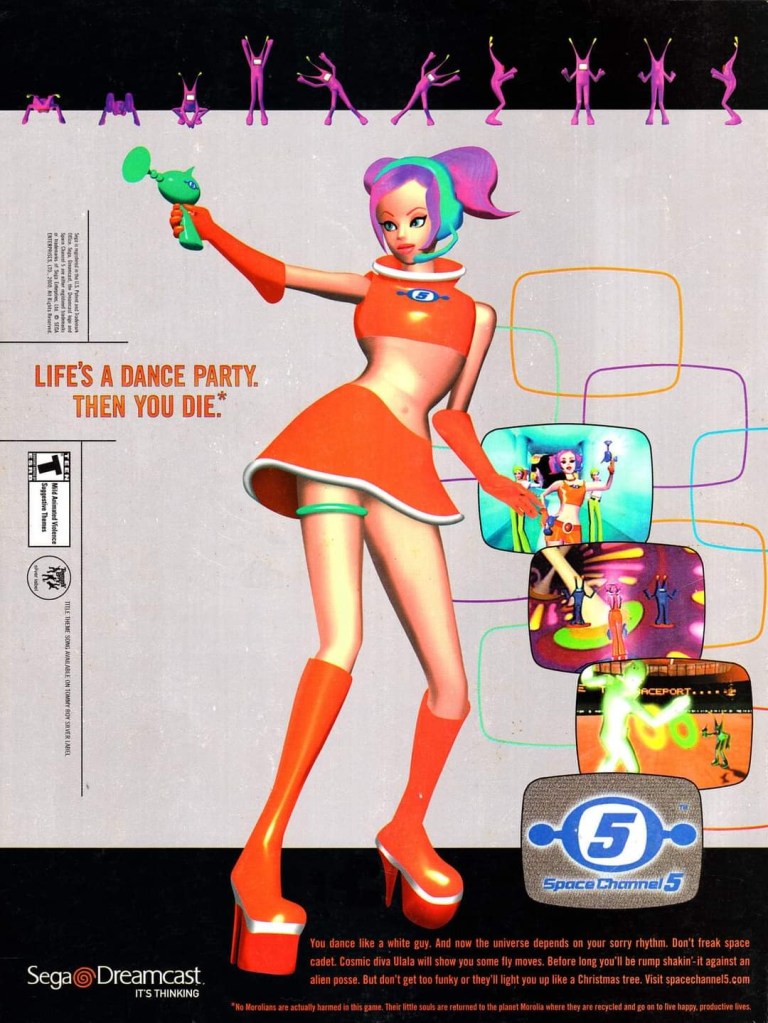
3. Space Channel 5 print ad
The visual style and character designs are the result of the game designer’s research that includes interviews with lots of young girls over their interests and tastes in video games.
When Sega launched their Dreamcast console in Japan in late-1998, their financial health was already in a very bad state and the future looked grim. Even as they faced tremendous odds, Sega still went on to aggressively sell Dreamcast consoles with exclusive games and Space Channel 5 was one of them.
First released in Japan in 1999, Space Channel 5 was a musical, puzzle-oriented game that was the result of Tetsuya Mizuguchi’s work backed with research he did that included interviewing young girls to find out what their tastes in gaming are. The print ad showing the highly stylized protagonist Ulala and a few screenshots really caught the attention of gamers and kept the Dreamcast in their minds. While the game did not achieve commercial success as a Dreamcast-exclusive, Sega went on to release a version of Space Channel 5 on the PlayStation 2 console, plus sequels.
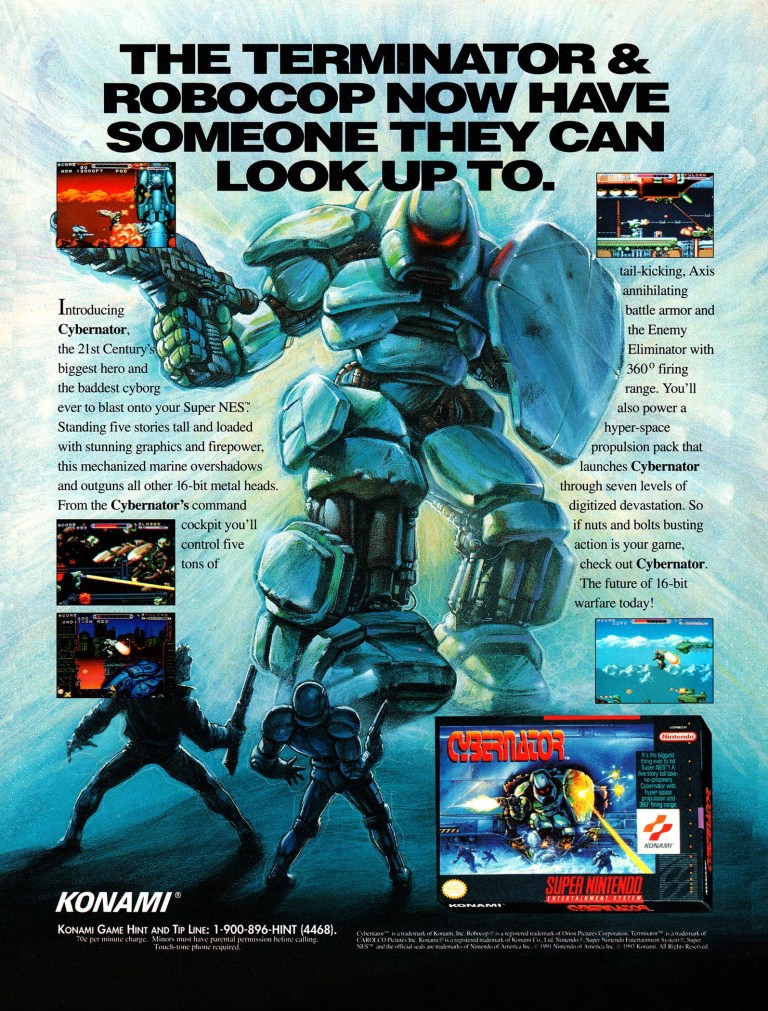
4. Cybernator print ad
The mention of Terminator and RoboCop rivaled the artwork when it comes to grabbing people’s attention.
I remember seeing the print ad of Konami’s Cybernator (Japanese title: Assault Suits Valken) in several comic books I read back in 1992. I never got to play it but the print ad’s artwork was memorable as I was fond of robots in anime, movies and video games back then. What was arguably the most memorable aspect of the print ad was the line that mentioned RoboCop and the Terminator in a comedic way. This is a creative way to market the game.
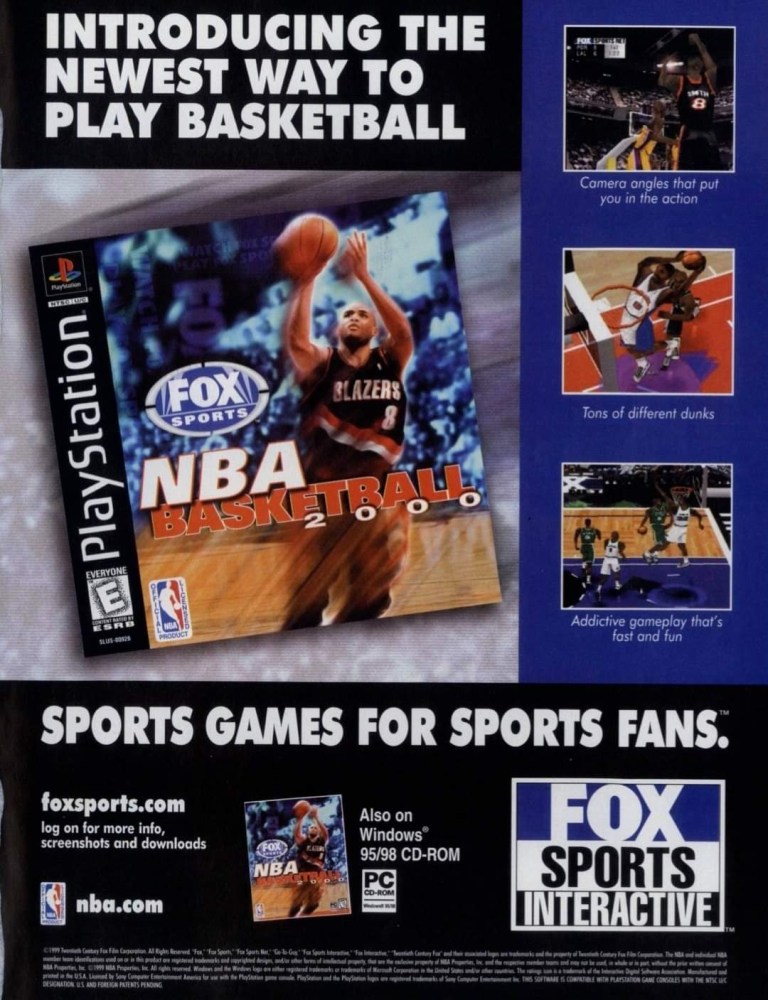
5. NBA Basketball 2000 print ad
There were a lot more NBA video games back in the 1990s.
NBA Basketball 2000 was one of those basketball videos games of the 1990s that was not published by EA Sports nor published by the other established game publishers like Sega, PlayStation and Konami. In fact, the one thing on the ad that caught my attention was Fox Sports Interactive which published some sports videos games during the decade. The print ad also served as a reminder that there were a lot more NBA video games for gamers to choose from during the 1990s.
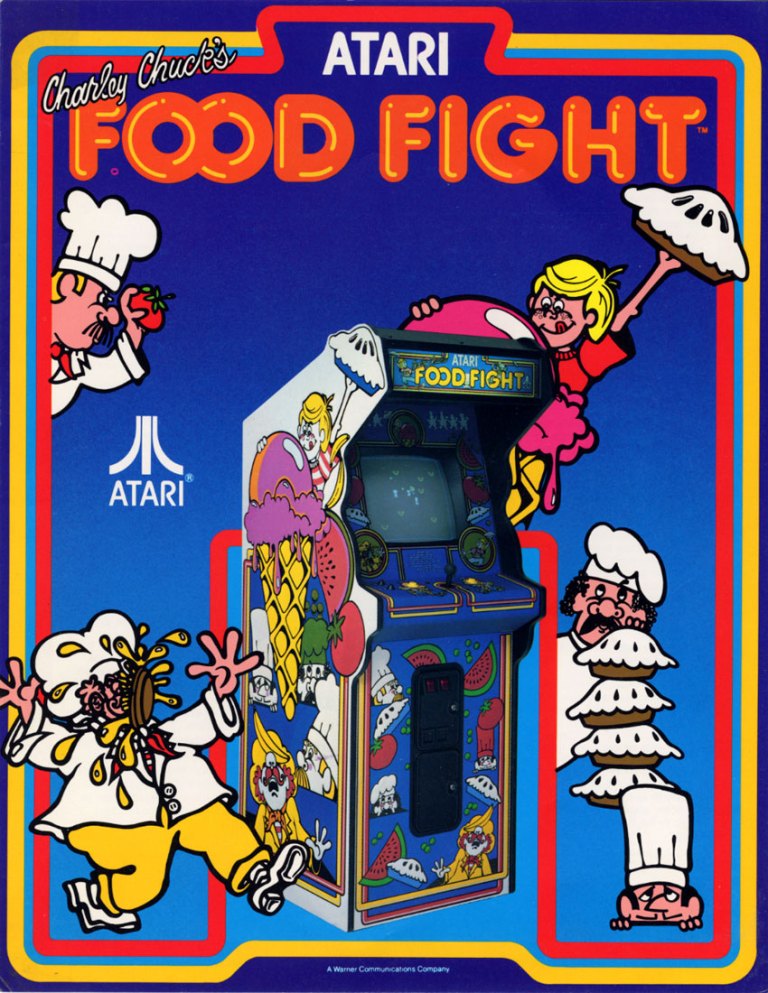
6. Food Fight arcade flyers
Food Fighter arcade flyer with illustrated artworks.
Food Fight arcade flyer with a photographic touch and actors.
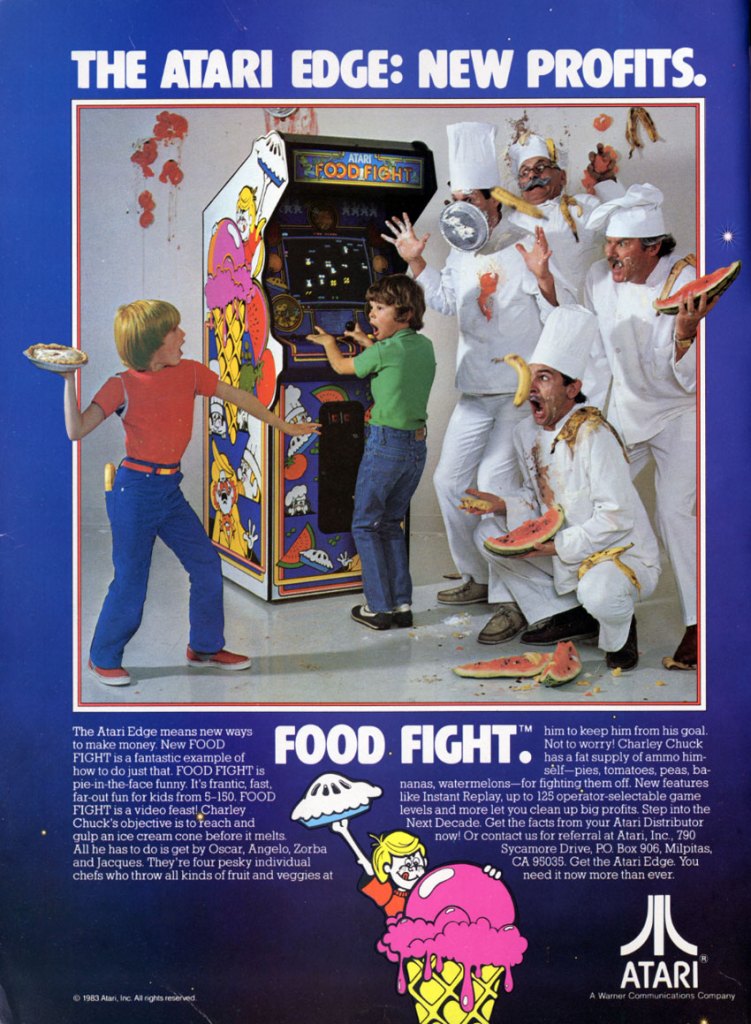
I never got to play the 1980s game Food Fight in the arcades nor did I ever had the opportunity to play it on Atari consoles and Xbox 360. Released in 1983 in the arcades by Atari, Food Fight was designed to allow players to control a character moving through a 2D field to consume an ice cream on a cone (placed on the opposite end of the field) before it melts while avoiding the chefs who are out to chase and block the player.
The arcade flyer with illustrated artwork on the characters interacting with the arcade machine is really amusing to look at. Equally amusing is the other arcade flyer that had a photographic approach showing two kids (one playing the arcade machine and the other about to throw a pie) and four chefs. Considering the nice visual concepts Atari came up with for the arcade flyers, Food Fight actually never became a commercial hit selling only a few thousand arcade units.
7. X-Kaliber 2097 print ad
This print ad from the 1990s had a nice visual style.
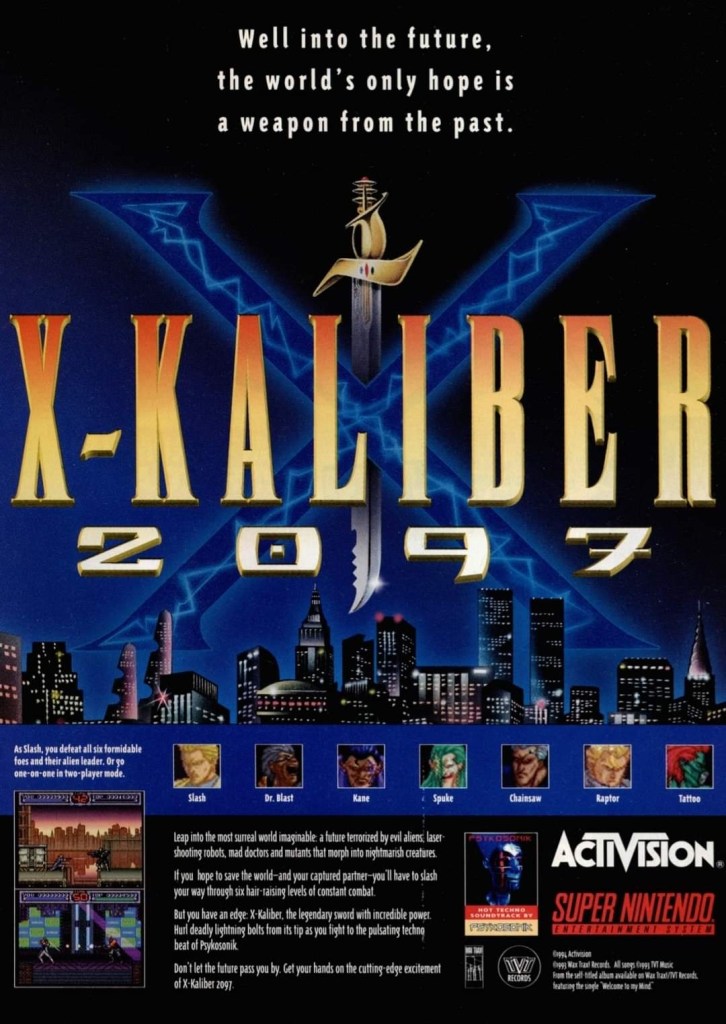
The Super Nintendo Entertainment System (SNES) had plenty of 2D side-scrolling adventure games and among them was X-Kaliber 2097 released by Activision (now a Microsoft-owned company and integral part of Xbox) in America in 1994. The game had a really interesting story concept about a chaotic far future society plagued by overwhelming crime and violence. The print ad showed a mild taste about the game’s concept and gameplay, but it was more effective when it comes to showing the formidable foes that await the playable protagonist Slash. This print appeared in several comic books I read and was eye-catching.
8. Jet Moto 3 print ad
When was the last time the police caught you for over-speeding?
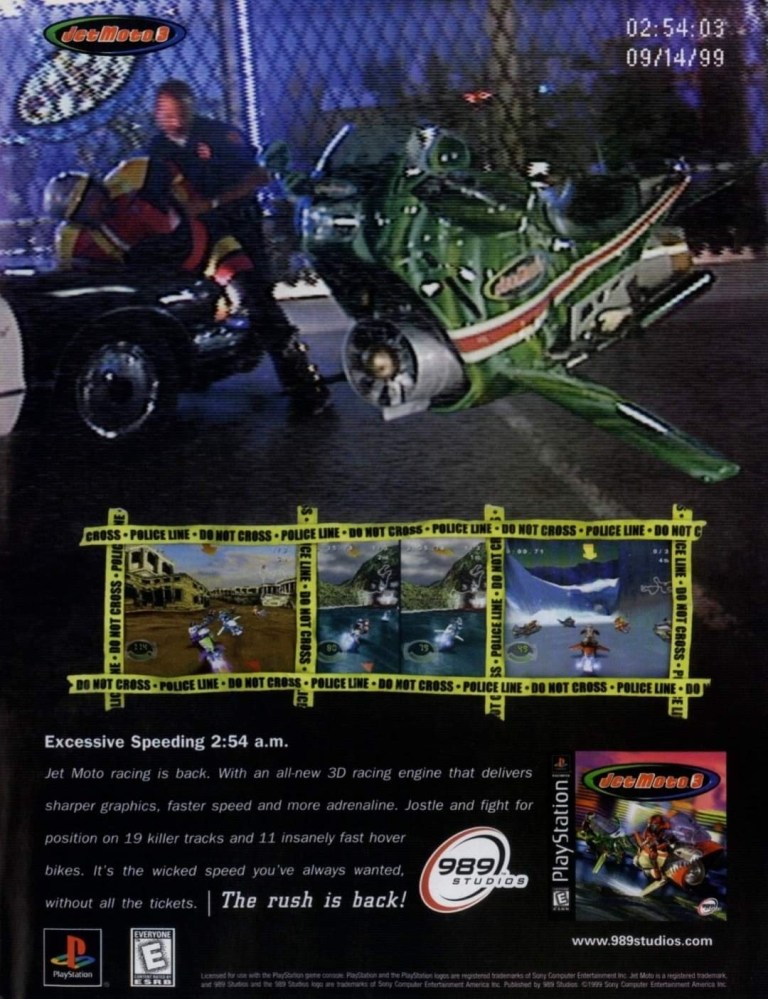
This print ad for Jet Moto 3 had a clever concept of showing a police officer apprehending a jet biker for over-speeding. The visual presentation was done in photo-realistic fashion to make the sci-fi aspect of the video game look real. The ad made me interested enough to do some research of Jet Moto 3 a few months before finally buying it for my PlayStation console.
9. Wipeout 3 print ad
Were you fond of futuristic racing and techno music back in 1999?
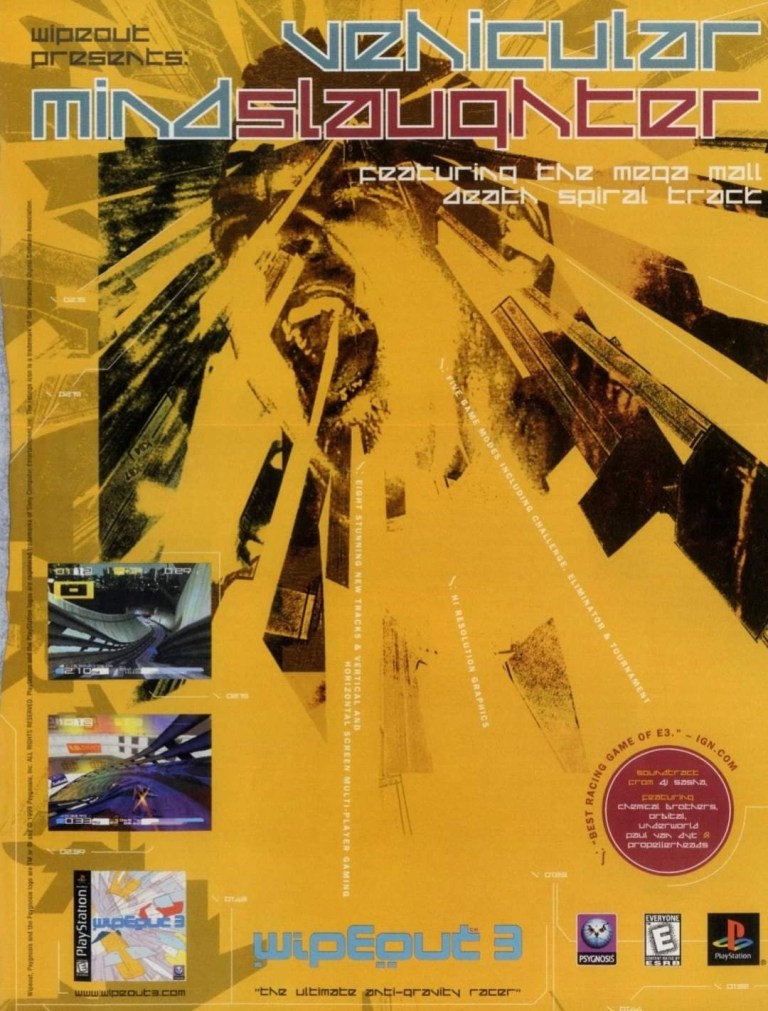
Released in 1999, Wipeout 3 was one of those video games that showcased what the PlayStation (originally launched in Japan in 1994) could do in terms of visual fidelity, special effects and frame rates. The print ad, which had a radical visual concept emphasizing intensity and energy, had style listing down vertically the technical details of the game which required a close look in order to be read. With only two screenshots displayed, the ad makers smartly included the E3 acclaim of “Best Racing Game of E3” as well as the names of artists behind the game soundtrack on the lower-right corner. This print ad was cool and intriguing to look at.
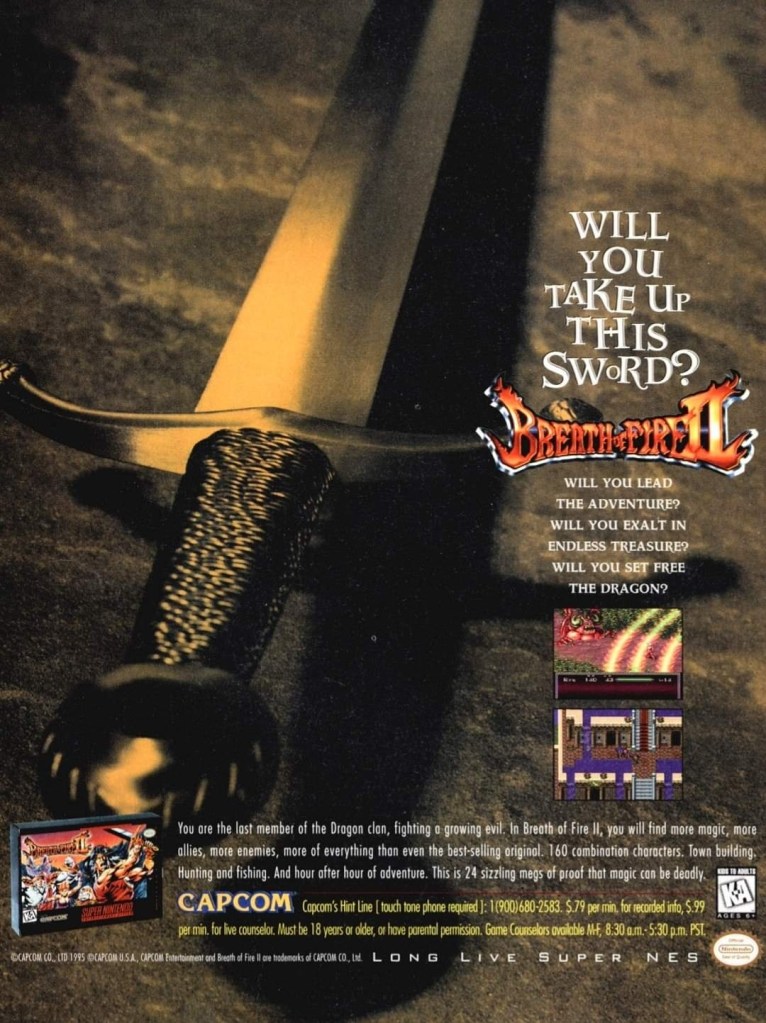
10. Breath of Fire II print ad
This was a good effort to lure American gamers to buy and play Breath of Fire II.
When Breath of Fire II was released on the SNES in America in late 1995, Japanese role-playing games (JRPGs) were not yet wildly popular among American gamers. To grab the attention of gamers, Capcom and the ad makers came up with the eye-catching image of a sword and posted key questions to emphasize the fantasy aspect of Breath of Fire II. While the game received mixed reviews upon its North American release, Nintendo Power listed it as 171st best game in its Top 200 Games chart published in 2006.
Welcome back, my readers, YouTube viewers and all others who followed this series of articles focused on YouTube videos worth watching. Have you been searching for something fun or interesting to watch on YouTube? Do you feel bored right now and you crave for something to see on the world’s most popular online video destination?
I recommend you check out the following topics and the related videos I found.
#1Minty Comedic Arts’ trivia video about V: The Original Miniseries, V: The Final Battle and V TV series – If you are a fan of the V sci-fi entertainment franchise that made big waves on television in the 1980s, then you must watch Minty Comedic Arts’ video which covers V: The Original Miniseries (1983), V: The Final Battle (1984) and the creative mess that was the V TV series. The video also includes the 2009 V TV series which makes it a complete package for all V fans. If you are a long-time V fan, now is a good time to test your knowledge by watching the video below.
#2 Moneymaking locations in Red Dead Redemption 2 – If you have been struggling to make big money in the realm of the 2018 blockbuster video game Red Dead Redemption 2, then this video by YouTuber MrBossFTW must be seen. In RDR2 there are indeed places where you can find gold bars, sets of Dollar bills and other valuables that can sell in-game. There are indeed challenges to find the riches but they are worth doing.
#3 Hezbollah terrorists and allies hit hard by as their communication devices blew up – Recently several Hezbollah terrorists and some allies got hit hard because the pagers used turned out to be bombs which blew up and crippled their communication network. The initial attack even injured the Iranian ambassador to Lebanon himself got injured because he was also using the same pager that Hezbollah uses. The high-tech attacks not only happened in Lebanon but also in Syria where some Hezbollah terrorists were present. Unsurprisingly, the Islamic terrorists blamed Israel. Watch and learn from the videos below.
#4 Wokeness of Dragon Age: The Veilgard exposed – I really don’t like when the woke activists working in entertainment deform video games, movies and comic books as they turned them into vehicles promoting their pathetic agenda. Simply put, whatever the Satanic Left touches, they ruin it. The same can be said about the upcoming video game Dragon Age: The Veilgard. Already it can be seen that there is indeed a lot of woke stuff in the new game and YouTuber Ryan Kinel – RK Outpost posted a video explaining what was found and why the gamers heavily rejected the new Dragon Age game. Watch and learn from the video below.
#5 Kamala Harris’ dishonesty and lying – There is no doubt that the Democrats in American nominated a very dishonest candidate for US President with Kamala Harris. Harris is truly a Communist and she will do anything bad to gain power. That being said, her lying is clear and the corrupted mainstream news media just let her get away with poisoning people’s minds. Watch and learn from the videos below.
#6 PS5 Pro reactions – In recent times, Sony unveiled the PlayStation 5 Pro (PS5 Pro) which is the upgraded version of the PS5. Apart from the flawed console presentation by Sony, PS5 Pro is overpriced at $699 for America and it does not even have an optical drive and no vertical stand is included. For your reference, posted below are selected videos about the reactions and analysis of the PS5 Pro. Things are not really looking good for the upgraded PS5.
Disclaimer: This is my original work with details sourced from reading the comic book and doing personal research. Anyone who wants to use this article, in part or in whole, needs to secure first my permission and agree to cite me as the source and author. Let it be known that any unauthorized use of this article will constrain the author to pursue the remedies under R.A. No. 8293, the Revised Penal Code, and/or all applicable legal actions under the laws of the Philippines.
Welcome back superhero enthusiasts, 1980s culture enthusiasts and comic book collectors! Today we go back to the year 1987 to explore a part of the Marvel Comics shared universe through the Web of Spider-Man monthly series.
In this review, we will examine the opening chapter of one of the more significant storylines of the entire publishing history of Spider-Man… Kraven’s Last Hunt. Behind the scenes, writer J. M. DeMatteis came up with a concept about a limited series featuring the Marvel hero Wonder Man getting buried and returning from the grave. After getting rejected, the writer redeveloped his concept, proposed it to DC Comics (with Batman in mind), got rejected again and pitched the concept again to Marvel (with Spider-Man in mind) with a new villain who would really define the storyline. Marvel accepted the proposal and DeMatteis proceeded to write it while adding more Spider-Man elements to it.
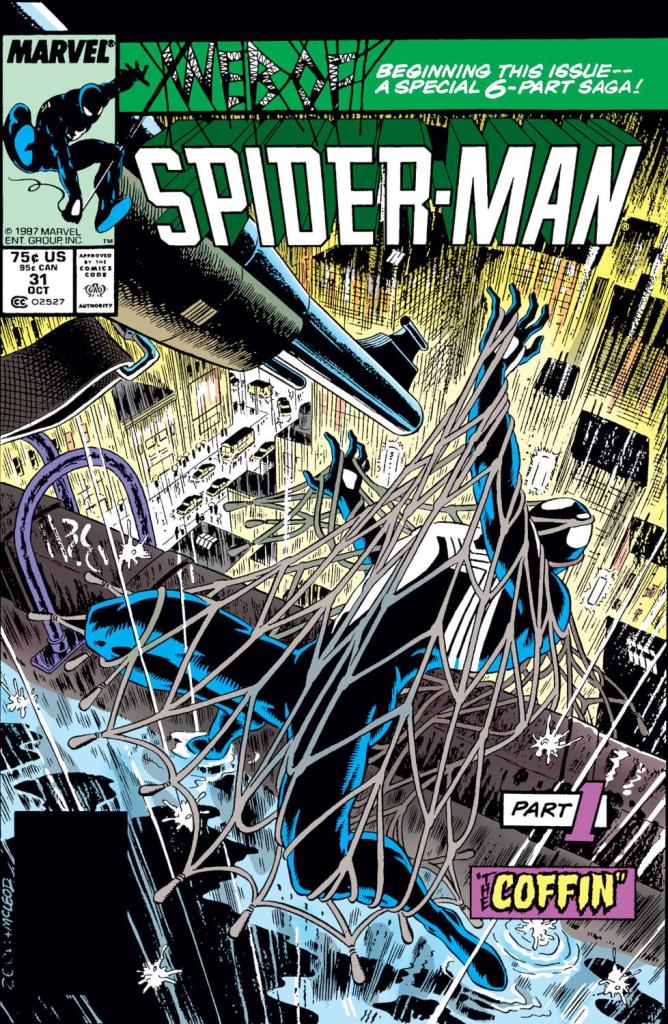
With those details laid down, here is a look back at Web of Spider-Man #31, published in 1987 by Marvel Comics with a story by J.M. DeMatteis and drawn by Mike Zeck.
The cover.
Early story
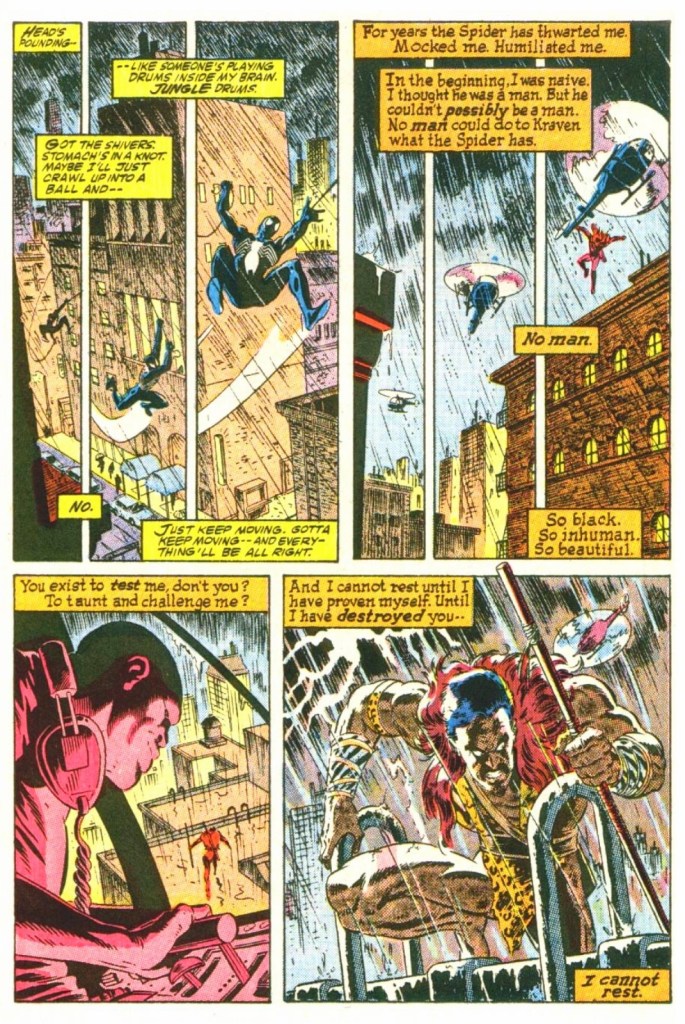
The story begins with Kraven The Hunter moving and attacking like an animal interacting with life-sized figures of animals inside his castle. Afterwards, he slows down, gets a drink and walks into another large room that has an open coffin. He pulls out a black costume that carries the design of Spider-Man’s own costume. Kraven, who was a child when his parents arrived in America shortly after the overthrow of the Czar in Russia, is convinced that the world seem to have followed Russia’s sad example and he found dignity in the jungles instead of the cities. He found honor in the primal, not the civilized. He knows he will die soon and Spider-Man is the central part of his final pursuit in life.
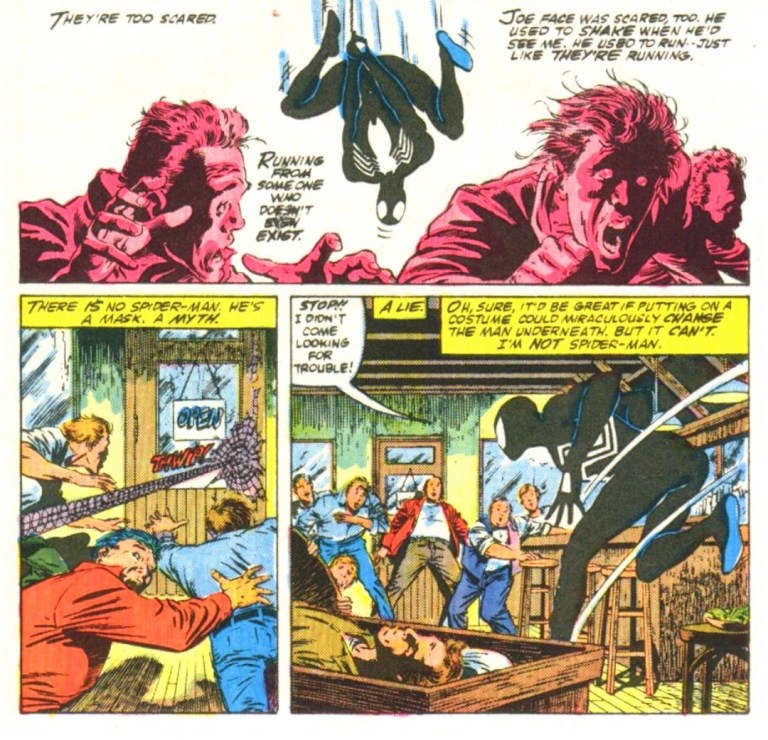
Meanwhile in another part of New York City, Spider-Man discreetly attends the private gathering of several men in a bar who pay their last respects to the late Joe Face (a helpful friend of Spidey). As soon as he revealed himself, the men got scared of him and tension intensified. The webslinger pays his respect to Joe Face and puts several Dollar bills into the collection of funds.
Spider-Man then swings his way home…
Quality
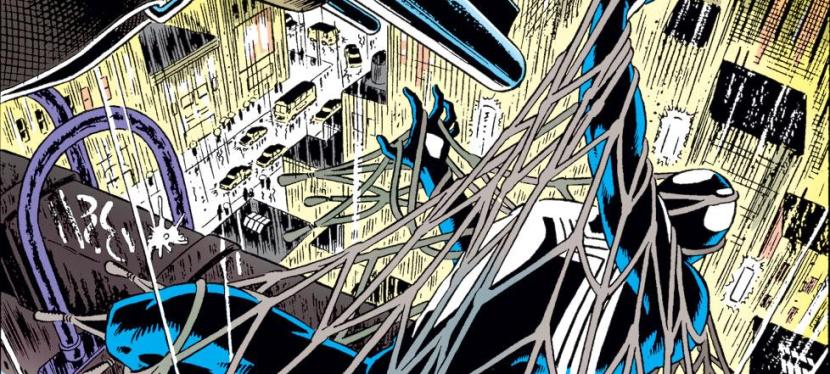
As Spider-Man travels, Kraven the Hunter pursues him obsessively.
I want to state first that this Spider-Man tale has a dark and gritty presentation. The story feels really grounded with reality and it has an almost perfect atmosphere for the concept about Kraven getting ready to eliminate Spider-Man and do something very ambitious afterwards. The pacing of the storytelling moved at a medium pace and most notably, the build-up is really great to follow.
Without spoiling the plot, Kraven is truly the most featured character of this comic book as Spider-Man was written to be his moving target. DeMatteis invested a lot of creativity to build up Kraven not only as the definitive menace but also as a human being. Through the rich writing, Kraven is a man who developed and heavily prepared himself to achieve his goal. You will realize what he thinks about modern society, how he views life and why he is acting as if each day would be his last. As a villain, the evil of Kraven is very subtle yet he emerges as the deadliest foe of Spider-Man. This is truly a major development of the hunter when compared to his first-ever appearance in Amazing Spider-Man #15 (1964).
Through the views of Kraven, you will realize his own perception of Spider-Man which is intriguing to read as we readers know the webslinger’s true identity while the obsessed hunter does not. In relation to his obsession with Spider-Man, Kraven truly immerses himself with what he knows and does things that all other people would never do. I should also state that the hunter’s intense preparation has strong parallels with Batman’s approach on preparing himself for a major encounter.
As mentioned earlier, the webslinger is the target. Spider-Man appears as a disturbed and vulnerable figure and there is nothing that his powers can do to help him overcome his problems. As the build-up grows, the troubles of Spider-Man intensified which made the reading experience captivating.
Conclusion
People getting spooked by Spider-Man’s sudden appearance.
Web of Spider-Man #31 (1987) is truly a great read and it is also a very powerful opening of its storyline. By having Kraven as the definitive character and Spider-Man as the target, this comic book really subverted expectations backed with powerful writing by DeMatteis. Along the way, Mike Zeck’s artworks truly captured the dark and gritty tone of the script and this resulted in a very captivating visual presentation.
Overall, Web of Spider-Man #31 (1987) is highly recommended.
Welcome back, my readers, YouTube viewers and all others who followed this series of articles focused on YouTube videos worth watching. Have you been searching for something fun or interesting to watch on YouTube? Do you feel bored right now and you crave for something to see on the world’s most popular online video destination?
I recommend you check out the following topics and the related videos I found.
#1Google in legal trouble in America – Did you notice how overwhelming power Google really is in business as well as in your daily lives? Are you aware that Google made multi-billion Dollar deals with its competitors to ensure its dominance on search, online advertising and other forms of business? Google is now in legal trouble with the Department of Justice (DOJ) in America and ColdFusion’s video below is a must-watch!
#2 Games to look forward to while subscribing to Xbox Game Pass – In recent times, there were changes on Xbox Game Pass (XGP) implemented by Microsoft which I did not like (click here and here to learn the details). If you own an Xbox and you still have not yet subscribed to XGP, you should decide first based on how much you can afford to pay the new rates (note: there are different tiers to subscribe to in Game Pass), what kind of games you really like and how much time you can spare for playing in the comfort of your home. If you are into adventure gaming, then the video by YouTuber Skycaptin 5 below is a must-watch for your reference. Take note that one of the games shown has yet to be released and a few of the games may require the Ultimate tier of XGP.
#3 A look back at Amazing Spider-Man movies of Sony Pictures – Do you have any fond memories of the two movies that had actor Andrew Garfield as the cinematic Spider-Man? I saw The Amazing Spider-Man (2012) and The Amazing Spider-Man 2 (2014) in the cinemas and I can say that they never thrilled me nor satisfied me as much as the first two Spider-Man flicks of Tobey Maguire. Those movies directed by Marc Webb were not terrible actually but flawed works. Whether you loved or felt disappointed with the two Amazing Spider-Man movies, I urge you to watch the analytical video by YouTuber Owen Likes Comics below.
#4 25 years of the American launch of the Sega Dreamcast – It has been over twenty-five years since Sega launched the Dreamcast console in America. In gaming history, the date of September 9, 1999 is still remembered as the time when Sega really made a very serious effort to re-establish trust with American gamers and they made record-setting numbers in the first 24 hours. As such, it was no surprise that “25 years” or “25th anniversary” videos about the Dreamcast suddenly appeared on YouTube and posted below are videos I selected for your viewing.
#5 You, Me and the Movies’ video reaction of Clash of the Titans (1981) – Whenever I search YouTube for movie reaction videos about the 1981 film Clash of the Titans, not too many pop out for some reason. If you are interested to see the film but don’t have the time or money to watch it in full, then the reaction video by You, Me and the Movies should entertain you.
#6 The fall of Circuit City explained – Way back in 2001, I visited a branch of Circuit City in California. I visited because I was curious and also interested in video games and also movies on DVD format. What I found was a variety of consumer electronic products and the presence of TV units with built-in DVD drives caught my attention. It was my one and only Circuit City visit and many years later, their brand re-emerged when there were these widespread news reports about its bankruptcy and liquidation. If you want to learn about the rise and fall of Circuit City, watch the video below.
#7 GoodBadFlicks’ comprehensive video about The Blob (1988) –The Blob remake of 1988 has always been very entertaining to watch. Not only does it have a really solid story to tell, it has a fine blend of spectacle with well-crafted action/stunt scenes and top-notch practical effects. On 4K Blu-ray, the movie looks better than ever and it is worth purchasing. When it comes to the making of The Blob (1988), the best video to watch online is the one from YouTuber GoodBadFlicks which is posted below for your viewing pleasure.
Welcome back, my readers, YouTube viewers and all others who followed this series of articles focused on YouTube videos worth watching. Have you been searching for something fun or interesting to watch on YouTube? Do you feel bored right now and you crave for something to see on the world’s most popular online video destination?
I recommend you check out the following topics and the related videos I found.
#1Popcorn in Bed’s Logan reaction video – I saw Logan three times in different cinemas – the first viewing on IMAX – here in the Philippines in 2017. The movie is still great to watch as it carries the R-rated vibe of 1980s Hollywood action cinema and it remains Hugh Jackman’s greatest performance as Wolverine. Unsurprisingly, Logan is the subject of several YouTubers’ movie reaction videos and in recent times Popcorn in Bed released its own reaction video which I really enjoyed watching. If you have not seen Logan, I urge you to watch it first before seeing any reaction videos. Otherwise, Popcorn in Bed’s video is posted below for your enjoyment.
#2 Sega Lord X’s Retro Awful video – I’ve been having retro gaming fun on my Xbox Series X this year with Grandia, Grandia II, Contra, Gradius, and Elevator Action Returns to name some. I am also enjoying the Atari 50 Collection Xbox copy as well. When it comes to old games that are not fun or are simply terrible, Sega Lord X published a video about which games from the past to avoid. Watch the video and pay close attention to the games shown.
#3 Chuck E. Cheese documentary – Have you ever heard of Chuck E. Cheese? It started as a restaurant that had a clever blend of entertainment (arcade games, amusement rides and musical shoes) with dining that attracted families. It also became known as a fun-filled place to have wholesome parties at. Although I have visited the United States many times, I never got to visit a single Chuck E. Cheese branch nor was there ever an opportunity for me to try the food they cooked.
Chuck E. Cheese (original name: Chuck E. Cheese’s Pizza Time Theater) was established in the late 1970s by Nolan Bushnell, the same man who founded Atari. The restaurant chain went through several developments and changes as each decade passed by. The most comprehensive video about Chuck E. Cheese that I found is from YouTuber Bright Sun Films and you can watch it below.
#4 Angry Video Game Nerd’s (AVGN) 3DO console video – If you are into video games for a long time, then you might at least have heard of the failed 3DO (formally called the 3DO Interactive Multiplayer) game console which was notable for its multimedia approach with gaming. The console was also known for not having a strong lineup of video games and for launching with a very high price. As a part of retro gaming culture, the 3DO is the subject of many retrospective videos by YouTubers. The one retrospective 3DO video that I found entertaining to watch is that of the Angry Video Game Nerd (AVGN) which you can watch below. Be warned of brash humor and foul language.
#5 Minty Comedic Arts’ “The Version You’ve Never Seen” videos – YouTuber Minty Comedic Arts is great with making entertainment trivia videos and he has attracted a lot of viewers from around the world. Apart from trivia videos, he is also good with “The Version You’ve Never Seen” videos which provide viewers a captivating new look at movies that could change the way they perceive them. Since there are many, I selected three for your viewing pleasure. To see more of these kinds of videos, visit Minty Comedic Arts’ YouTube channel.
#6 ESPN’s “Nobody came closer to ending the Bulls’ dynasty than Reggie Miller’s Pacers” video – When I look back at the 1998 NBA Playoffs, I could never forget the Eastern Conference Finals between the Indiana Pacers and the eventual repeat champions Chicago Bulls. Both teams played hard, there were a few games that concluded with a high level of suspense, and the series went to a full seven games. Apart from seeing Michael Jordan and Reggie Miller doing their on-court heroics, it was a unique experience to see NBA legend Larry Bird coaching the Pacers (note: Bird led the Boston Celtics to NBA Playoff victories over the Chicago Bulls when Jordan was much younger). To see a detailed and engaging retrospective about the Bulls-Pacers series of 1998, watch the video below.
#7 Ashleigh Burton’s Citizen Kane movie reaction video –Citizen Kane is one of the most revered American movies ever made. Starring and directed by the late Orson Welles, the movie dramatized the story of fictional media tycoon Charles Foster Kane while showcasing many creative filmmaking techniques that influenced other filmmakers through the decades. Citizen Kane was one of the very first Blu-ray discs I ordered through Amazon and I occasionally replay it. Among the many movie reaction videos of Citizen Kane posted on YouTube, Ashleigh Burton’s own reaction should be seen. Before you watch Ashleigh Burton’s video below, I encourage you to watch the classic movie first.
Welcome back readers, fellow geeks and electronic gaming fans!
In this edition of the Retro Gaming Ads Blast (RGAB) series, we will take a look at another batch of retro gaming print ads – including arcade flyers – from the 1980s and 1990s.
For the newcomers reading this, Retro Gaming Ads Blast (RGAB) looks back at the many print ads of games (console, arcade, computer and handheld) that were published in comic books, magazines, flyers, posters and newspapers long before smartphones, social media, the worldwide web and streaming became popular. To put things in perspective, people back in the 1980s and 1990s were more trusting of print media for information and images about electronic games and related products.
With those details laid down, here is the newest batch of retro gaming print ads for you to see and enjoy…
1. Sega Dreamcast launch print ads
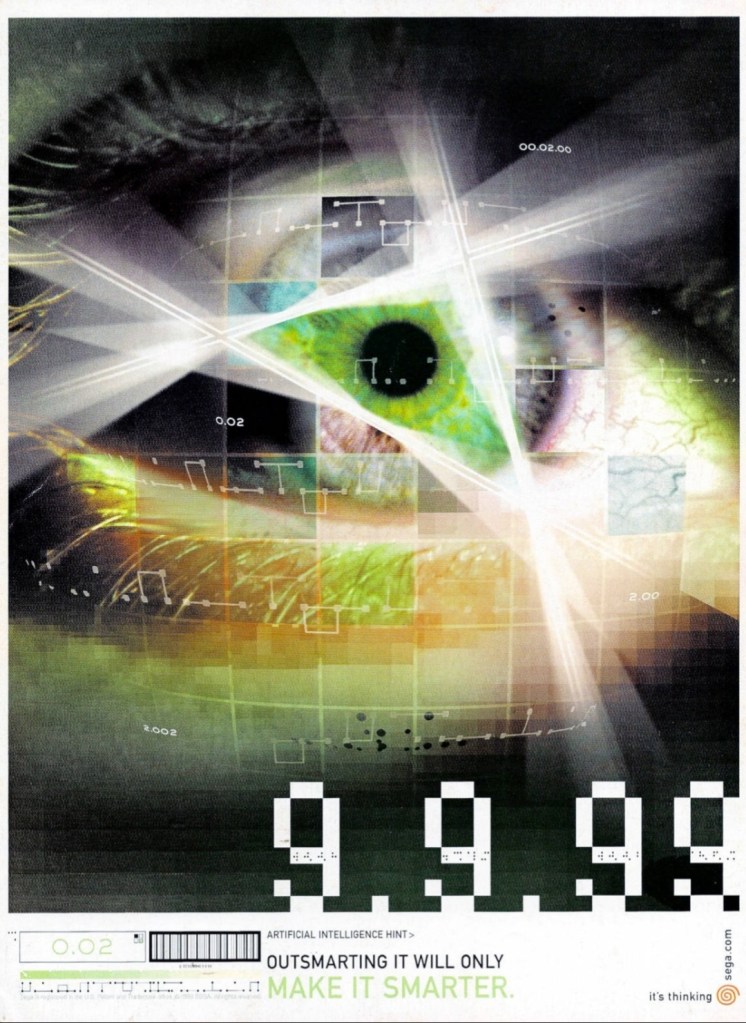
This cryptic Sega Dreamcast American launch print ad has an image that emphasized that gamers are being watched.
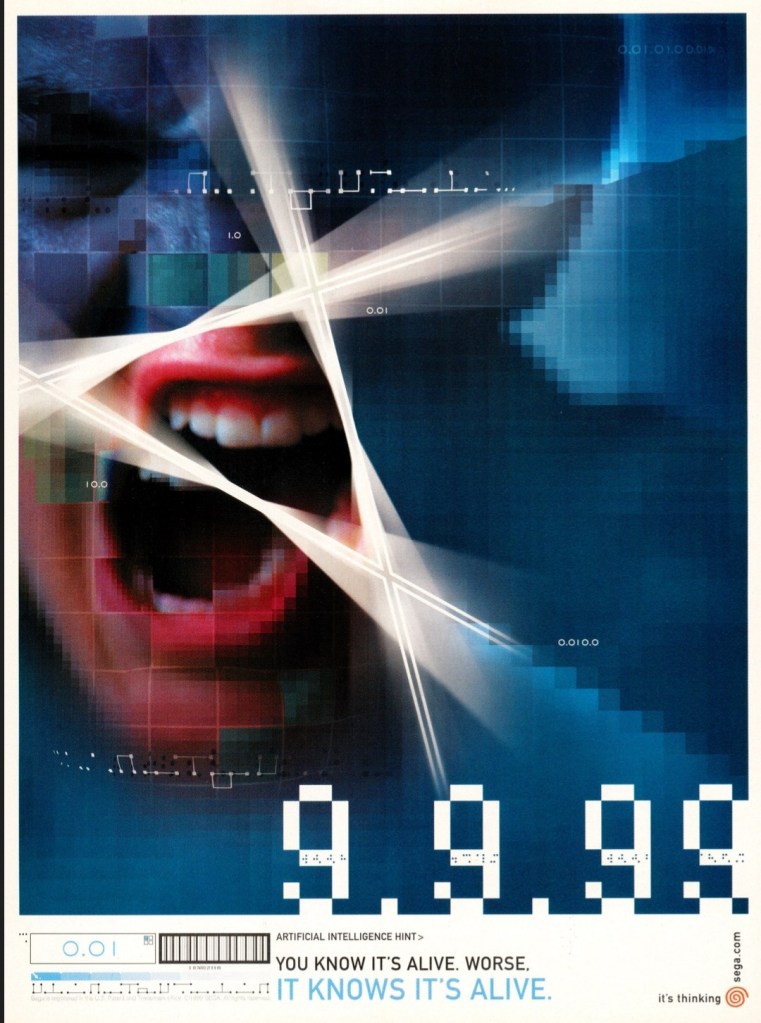
This one has an image emphasizing emotions, impulse and excitement.
By the time Sega launched their Dreamcast console in Japan in late 1998, the company was already bleeding from back-to-back years of financial losses. The Dreamcast was their big bet to regain the trust of consumers and business partners, to sell a lot of consoles and games, and somehow survive.
For the North American Dreamcast launch, Sega of America organized an intriguing series of ads emphasizing the September 9, 1999 launch date in very stylized and cryptic ways. As seen in the two selected ads above, the Dreamcast name was not even mentioned but the console’s trademark swirl was present. Anyone who was obsessed with video games – even if one was not a Sega fan – could tell that the print ads made clear that the Dreamcast was going to launch in America. Ultimately, Sega sold roughly $98 million worth of Dreamcast consoles, games and peripherals in the first 24 hours in America.
2. Point Blank 2 print ad
This ad appeared in comic books and magazines.
When Namco released the first Point Blank game, it was commercial successful in both arcades and on the PlayStation console in different parts of the world. To keep on succeeding, Namco made the sequel Point Blank 2 and their confidence in it was made clear with the above PlayStation version print ad that promised it to be multiplayer-oriented and ensure enough content to give players sufficient bouts of fun whichever game mode they pick. The ad’s image of the lady with a gun (Namco’s Guncon peripheral) and the animal trophies were done with humor in mind.
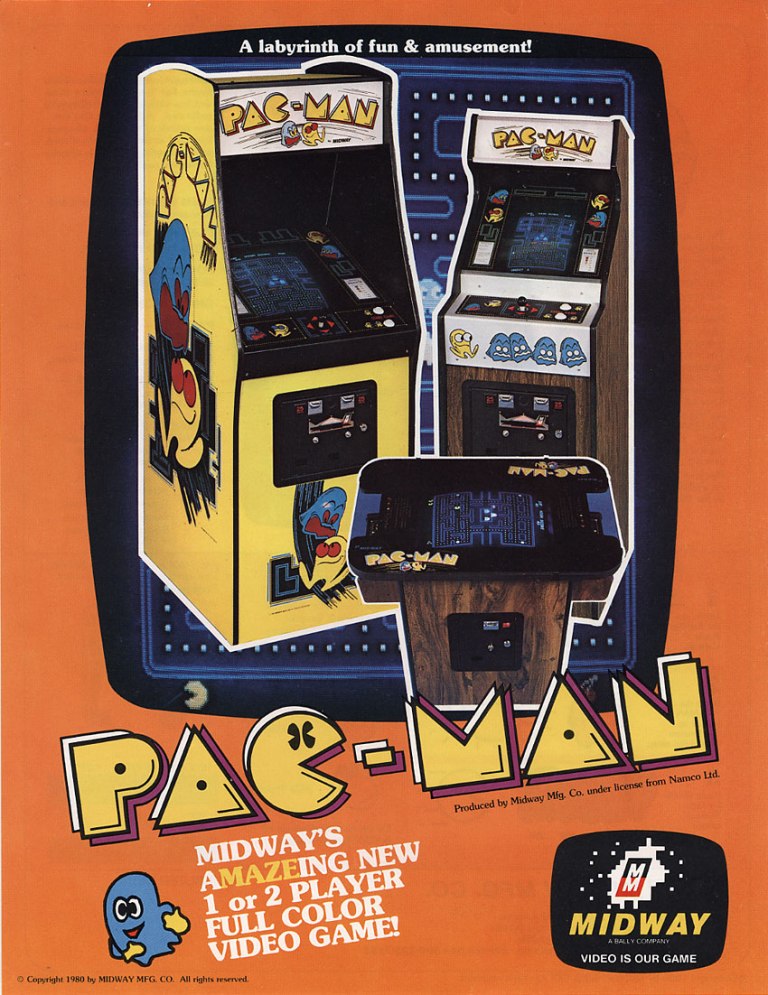
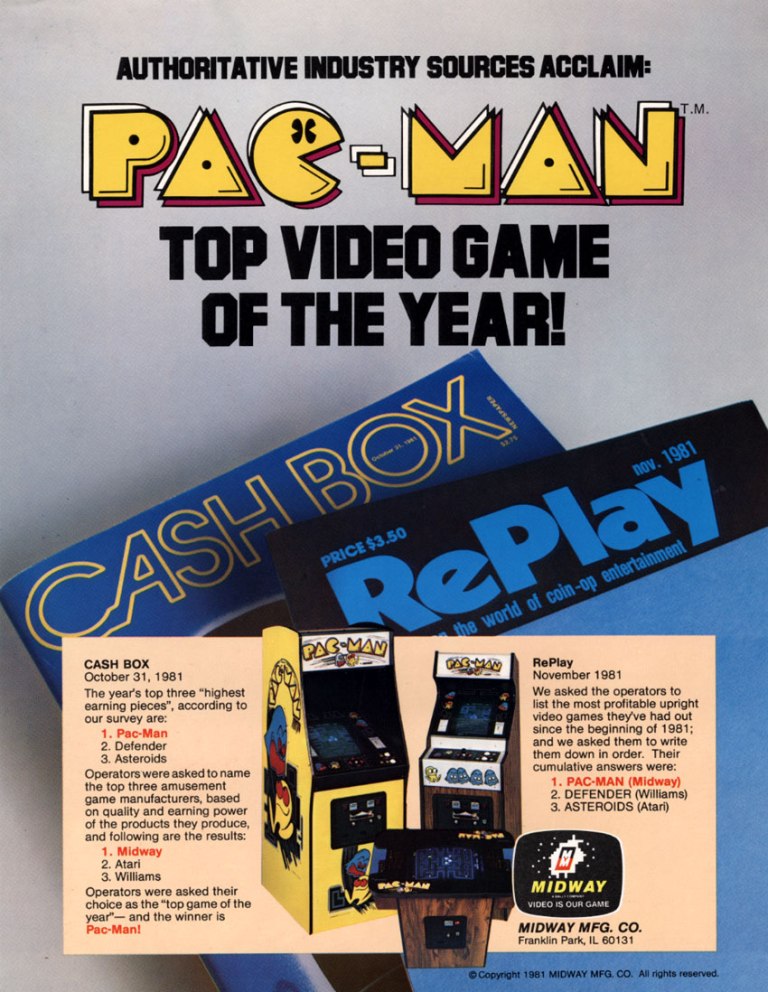
3. Pac-Man arcade flyers
This ad showed that arcade operators can choose which type of machine of Pac-Man they could order.
Midway issued this flyer when Pac-Man was already successful.
In 1980, Namco released Pac-Man in Japanese arcades and it became a big hit in a short span of time. This prompted them to bring the game overseas, especially in America which already had a growing arcade market. In November that year, Namco brought Pac-Man and their other arcade game Rally-X game to a tradeshow and only got mild attention from attendees and distributors. After being turned down by Atari, Namco signed a contract with Midway to distribute Pac-Man and Rally-X in America, and they were formally released the following month.
Upon release, Pac-Man became a strong attraction in American arcades with weekly sales surpassing $8 million per week. When it comes to the presentation, Midway’s arcade flyers above gave arcade operators and gamers a clear view that Pac-Man is fun and available in three physical units (emphasized in the first flyer) and that it made a positive commercial impact (emphasized in the 2nd flyer). Ultimately, Midway went on to sell over 100,000 Pac-Man arcade units resulting in a massive gross of over $1 billion in quarters (coins of twenty-five cents in American currency).
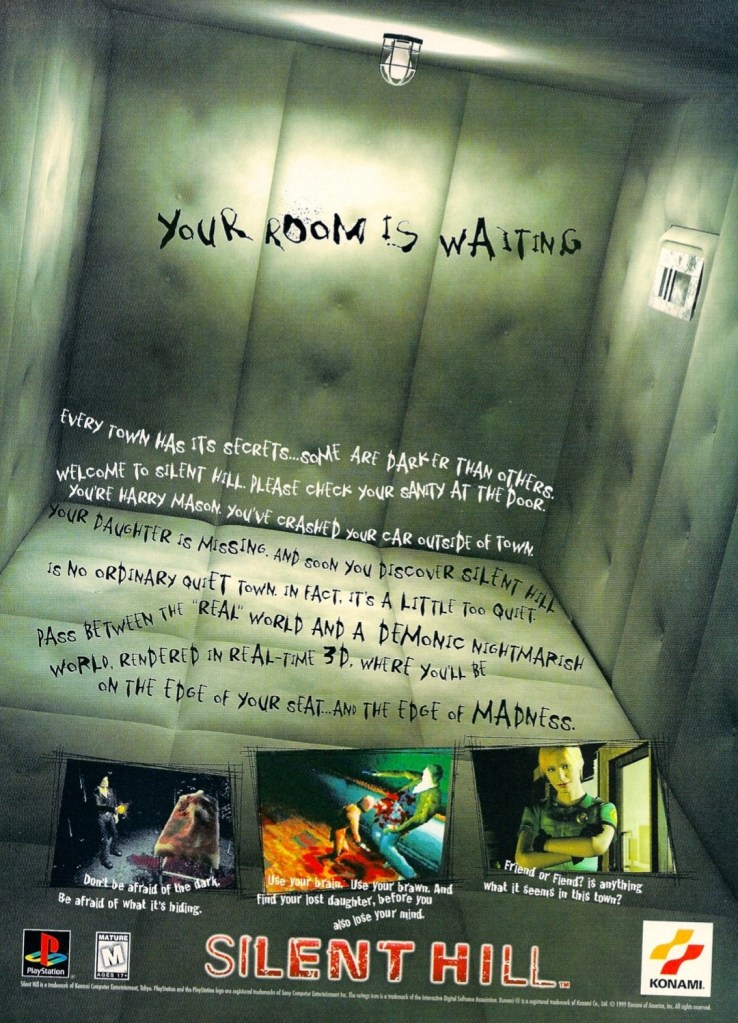
4. Silent Hill print ad
A clear atmosphere of psychological horror in this ad.
Made by a certain team within Konami, Silent Hill on PlayStation turned out to be a surprising and intriguing hit game in 1999. It was a polygonal survival horror game that drew a few comparisons with Capcom’s Resident Evil but ultimately stood out with its gameplay features and psychological horror concept.
The people at Konami must have anticipated that gamers in America would be attracted by the game so they came up with the creepy print ad above which promoted the game with a clear touch of psychological horror. If you look closely, the 2nd screenshot (in the middle) even showed blood in digital form. This Silent Hill print ad was clearly aimed at adult gamers and PlayStation gamers who craved for more horror gaming.
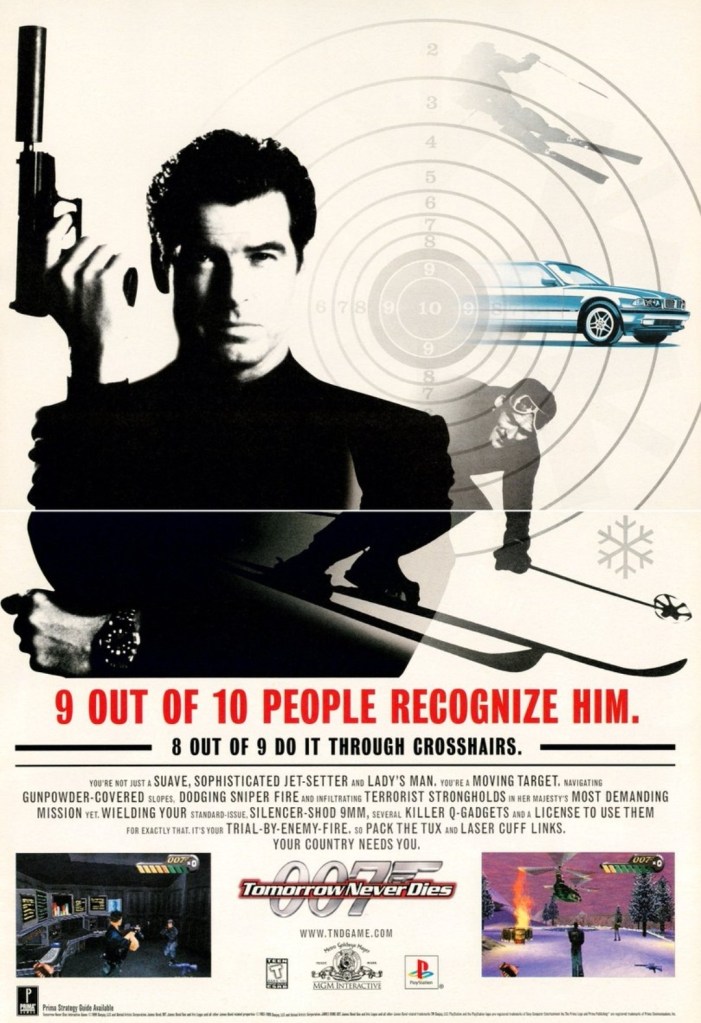
5. Tomorrow Never Dies game print ad
The use of the image of Pierce Brosnan as James Bond in this print ad was the right move to inform readers that the 1997 movie’s video game was coming out.
To really capture the attention of James Bond fans and gamers, MGM Interactive and Electronic Arts (the co-publishers of the game) came up with a Tomorrow Never Dies game print ad showcasing Pierce Brosnan as the iconic Agent 007 in a dominant fashion leaving a minor space for the text description, two screenshots and other details displayed. While some people might look at the ad as an act of desperation to sell the long-delayed game, I find it eye-catching and engaging to look at. It also was a lively reminder back then that Brosnan was James Bond of the 1990s.
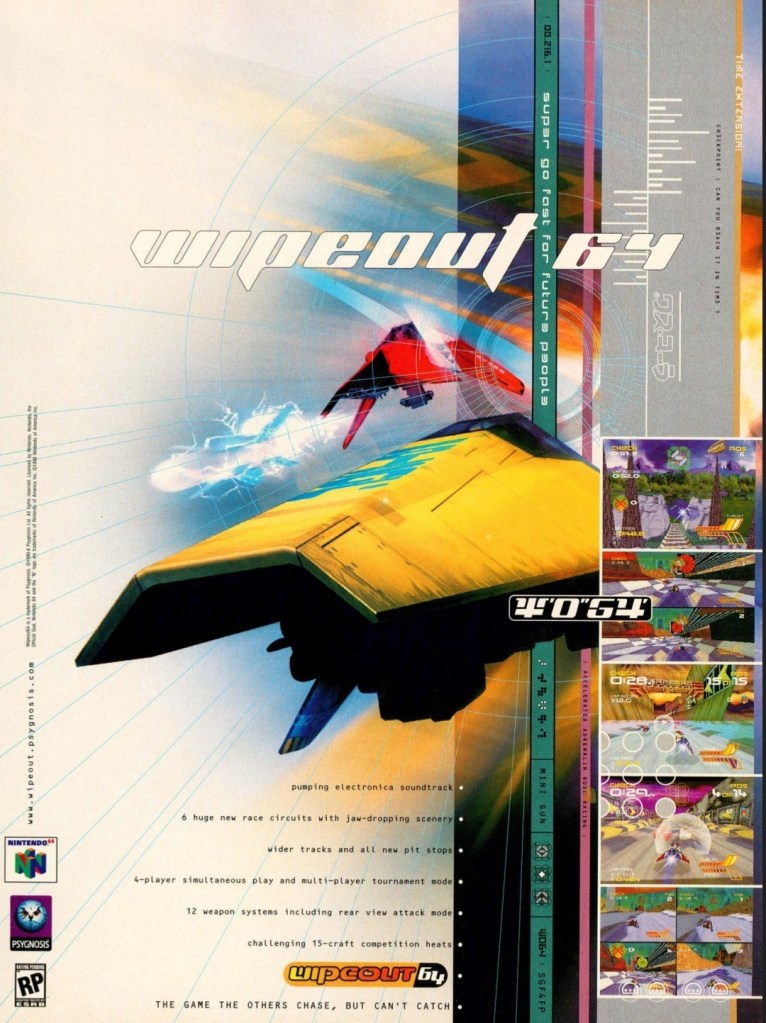
6. Wipeout 64 print ad
This is still cool and sleek to look at.
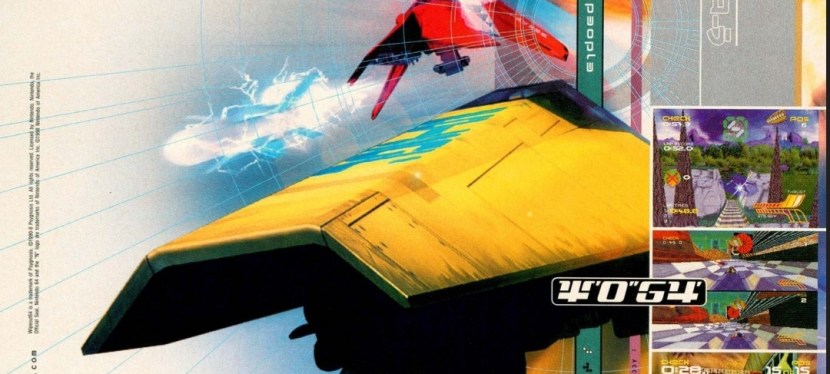
Wipeout, the series best known for its very futuristic portrayal of high-speed anti-gravity racing, showcase of dynamic visuals and the use electronic dance music, made its way to the Nintendo 64 console with Wipeout 64. This 1998 release was significant because at that time developer Psygnosis was already owned by Sony and most Wipeout games of the decade were released on PlayStation. Wipeout 64 was released before the PlayStation-exclusive Wipeout 3 came out.
The above print ad had this very sleek display of two anti-gravity racers moving at high speed and on the side are five screenshots showing what the game looked like on the N64. If you look very closely, one of them shows the 4-player split-screen mode identified with the Nintendo 64’s capabilities. Overall, the Wipeout 64 print ad captured the vibe of the Wipeout series and remains very cool to look at.
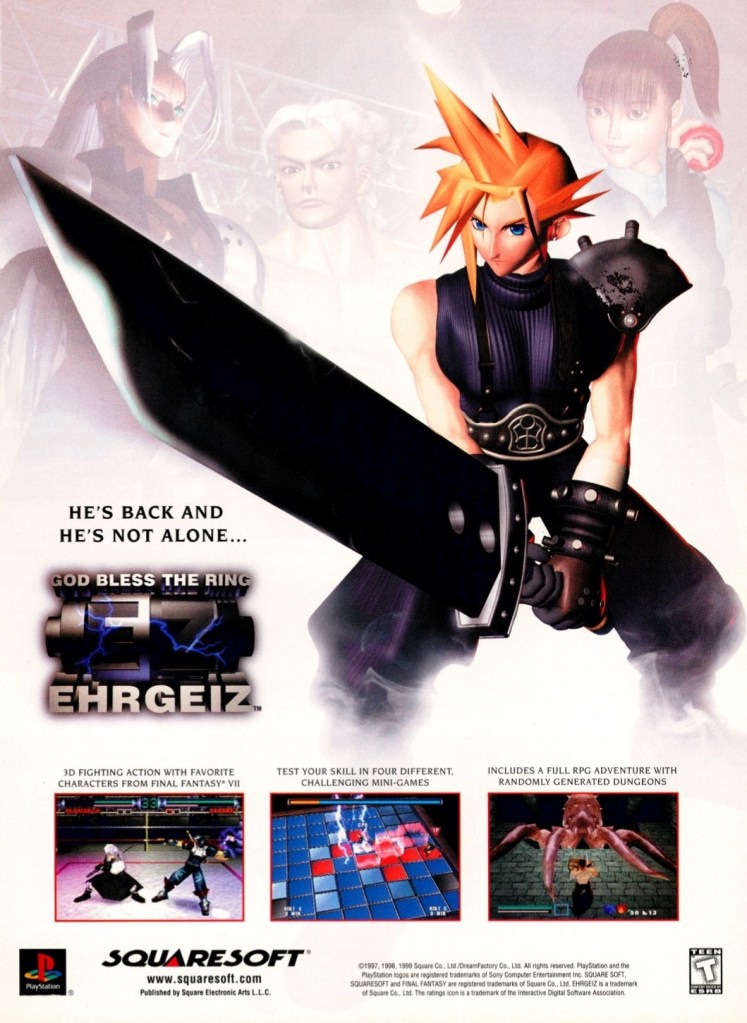
7. Ehrgeiz print ad
You want a 3D polygonal fighting game that has Final Fantasy 7 characters in it? Ehrgeiz was the answer.
In 1999, the landscape of gaming really changed. More gamers played 3D polygonal fighting games over the 2D fighting games, and demand for Final Fantasy and Japanese role-playing games (JRPGs) were in high demand in the West arguably because of the massive commercial success of Final Fantasy VII on PlayStation. That being said, Squaresoft released their own 3D polygonal fighting game that had Final Fantasy VII characters in it – Ehrgeiz.
After achieving success in the arcades, Squaresoft brought Ehrgeiz to PlayStation in America in 1999. Unsurprisingly, the print ad had Final Fantasy VII protagonist Cloud and his signature sword in a prominent position which was obviously done to attract the millions of FFVII for potential sales. The screenshots on the ad were presented not for showing off but to give readers a clear view of what kind of gaming experiences they could expect. Ehrgeiz on console even had a standalone RPG mode.
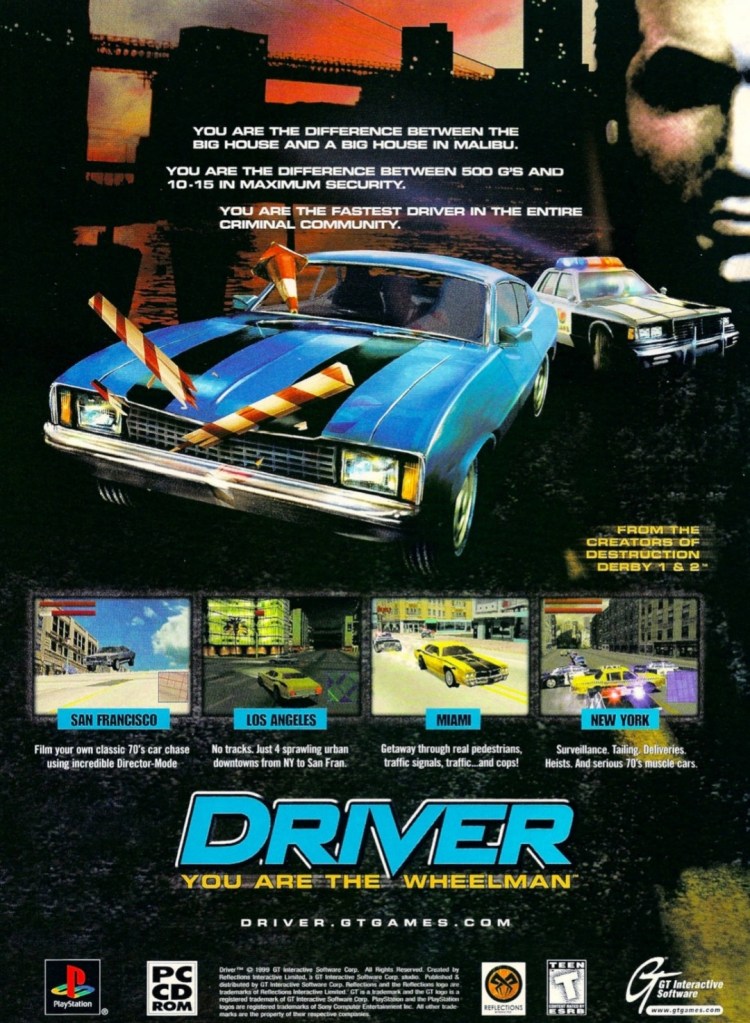
8. Driver print ad
The art used for the muscle car and the police car was a tribute to the car chases of movies from long ago.
Even before it was released on PlayStation and PC in 1999, publisher GT Interactive knew they had something big for gamers to engage with. That game was Driver and developer Reflections Interactive made it with a lot of inspiration taken from cinematic car chases. This particular ad emphasized car chases, the exploration of four real-life cities in digital form, and engaging in a variety of missions. As it successfully delivered what it promised, Driver went on to become a big commercial success on PlayStation and PC, and spawned sequels in the years that followed.
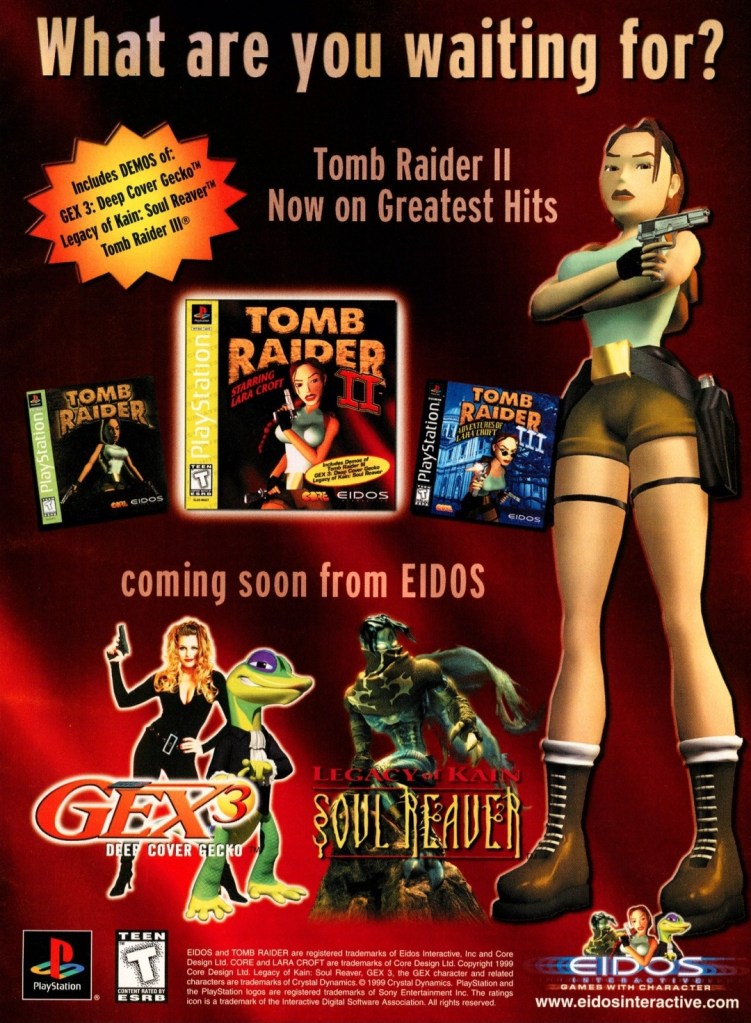
9. Eidos Interactive games print ad
From the time when Eidos Interactive was at the top of its game and Lara Croft was its most popular character.
By the end of the 1990s, Eidos Interactive became a major game publisher which is the result of the massive success they achieved with the Tomb Raider games which collective sold many millions of copies worldwide.
Along the way, they acquired developer Crystal Dynamics which was already a prolific team with many games released and new projects in development. Under Eidos’ banner, Crystal Dynamics went on to release Gex 3: Deep Cover Gecko and Legacy of Kain: Soul Reaver in 1999. That being said, this print ad shows the ambitious offers Eidos Interactive had with the Tomb Raider, Gex and Legacy of Kain franchises. It is a reflection about success and confidence about the future of video games.








 Author Carlo Carrasco