Retro Gaming Ads Blast – Part 43

Welcome back readers, fellow geeks and electronic gaming fans!

In this edition of the Retro Gaming Ads Blast (RGAB) series, we will take a look at another batch of retro gaming print ads from the 1980s to the 1990s.

For the newcomers reading this, Retro Gaming Ads Blast (RGAB) looks back at the many print ads of games (console, arcade, computer and handheld) that were published in comic books, magazines, flyers, posters and newspapers long before smartphones, social media, the worldwide web and streaming became popular. To put things in perspective, people back in the 1980s to the 1990s were more trusting of print media for information and images about electronic games and related products.

With those details laid down, here is the newest batch of retro gaming print ads for you to see and enjoy…

1. Taito’s 4-in-1 Print Ad
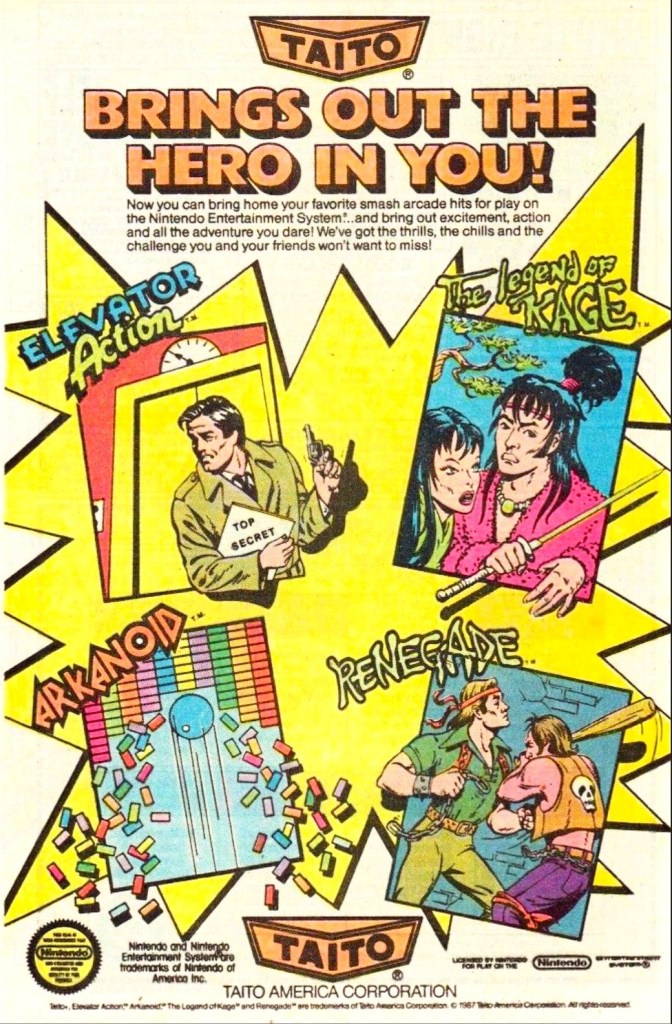
I remember seeing this ad in some comic books I read back in the 1980s.

There is nothing like taking the clever approach of promoting multiple video games using only one single print ad in the size of a single page. Taito did exactly that in the 1980s when it promoted Elevator Action, The Legend of Kage, Arkanoid and Renegade for the Nintendo Entertainment System (NES) promising excitement as the mentioned games were making the jump from arcade to console. What is very notable in Taito’s single-page print ad was that it did not show any screenshots of the games. Instead, they used hand-drawn artwork to emphasize each game’s theme or setting, and leave it up to the viewers’ imagination as to how those games would look like on NES. This old ad is intriguing and amusing at the same time.  

2. Chase H.Q. II: Special Criminal Investigation Print Ad
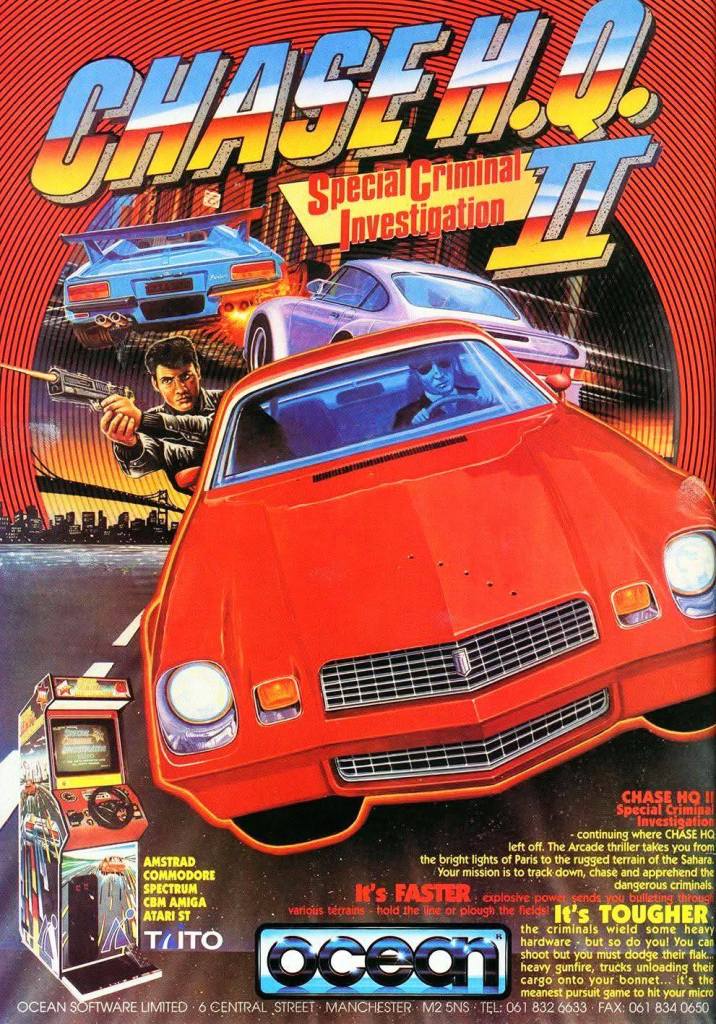
Cars and high-speed action emphasized in this ad.

Following the huge success of the original Chase H.Q. on both arcade and consoles in the late-1980s, the sequel Special Crime Investigation was released in the arcades in 1989 and ported to game consoles and computers in the early 1990s under the title Chase H.Q. II: Special Criminal Investigation. To promote Chase H.Q. II: Special Criminal Investigation for home computers, game publisher Ocean came up with a colorful print ad showcasing a few cars, a city background and elements of gun-related action presented in nice art. The ad has an image of the original arcade machine to remind gamers that they are playing the sequel to Chase H.Q.

3. Dancing Eyes Japanese Arcade Flyer
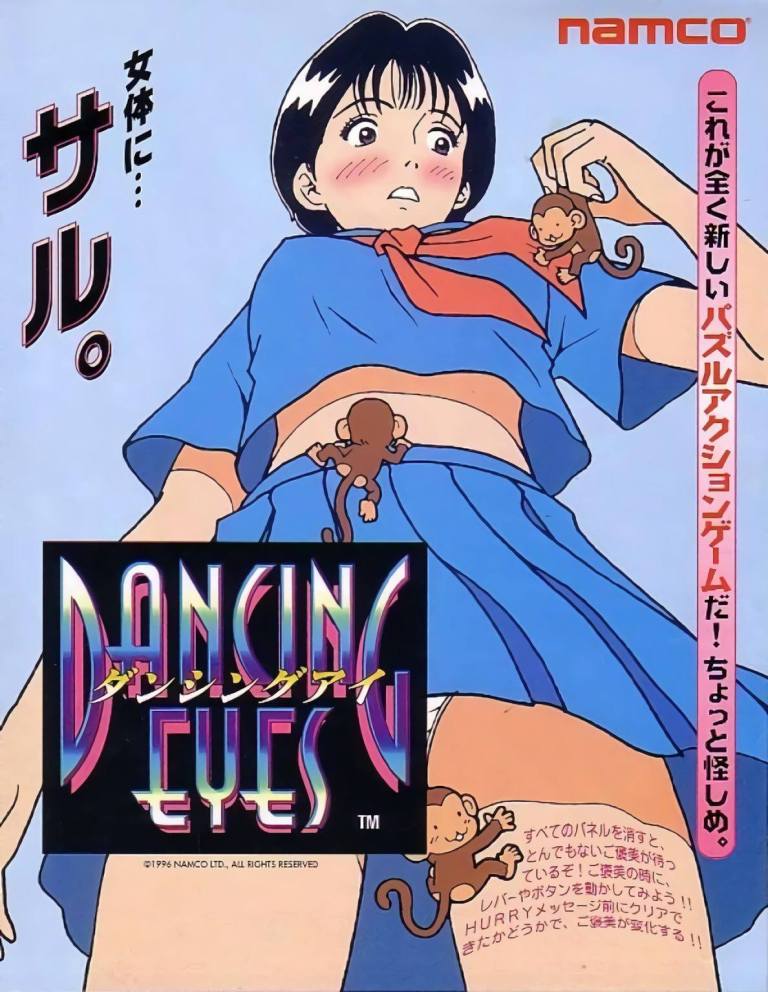
The front.
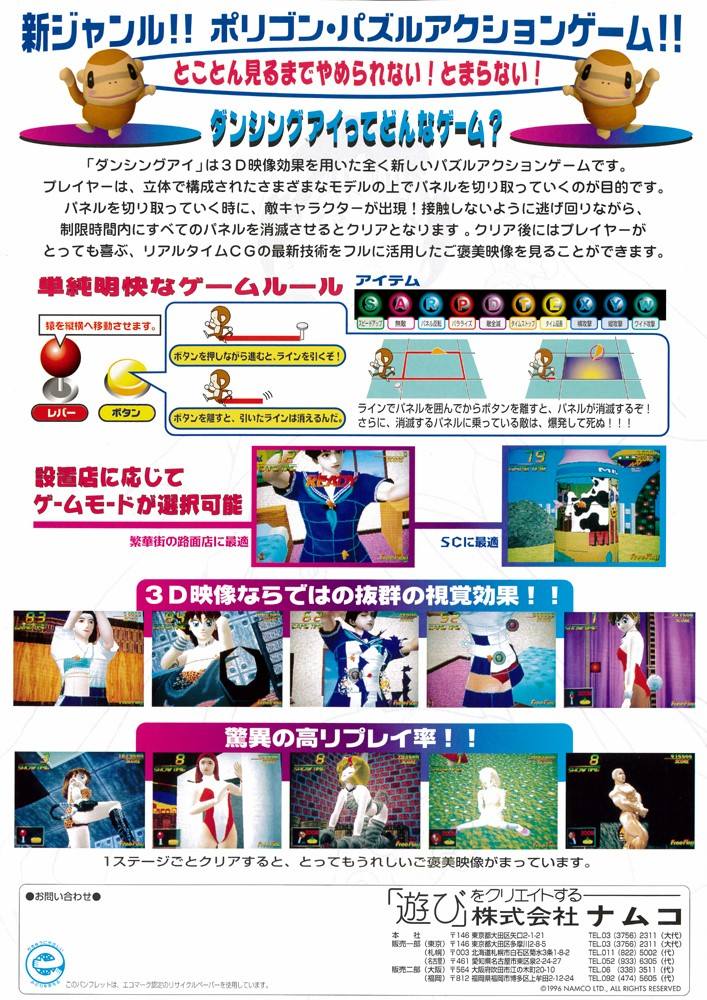
The rear.

Released by Namco in Japan in 1996, Dancing Eyes is a puzzle arcade game that became notorious due to its overtly sexual nature. With the way it was designed, players control a small monkey called Urusu-San and crawl along a 3D grid mapped over characters (mostly ladies) or various objects. If the 3D grid is mapped over a young lady, any tile of the grid destroyed by the player exposes the lady’s underwear or skin. Such sexuality is reflected in the arcade flyer of Dancing Eyes which has a suggestive hand-drawn art on the front while the game’s mechanics are explained in the rear. Even the rear of the flyer shows sexual nature of the game with screenshots. While the game was officially released only in Japan, Dancing Eyes actually was made available for gamers to play at the arcade of X-Site amusement center inside Festival Mall in Alabang during the early 2000s and it attracted a lot of guys. I bet Namco did not know about that.

4. Sega Saturn North American Print Ad
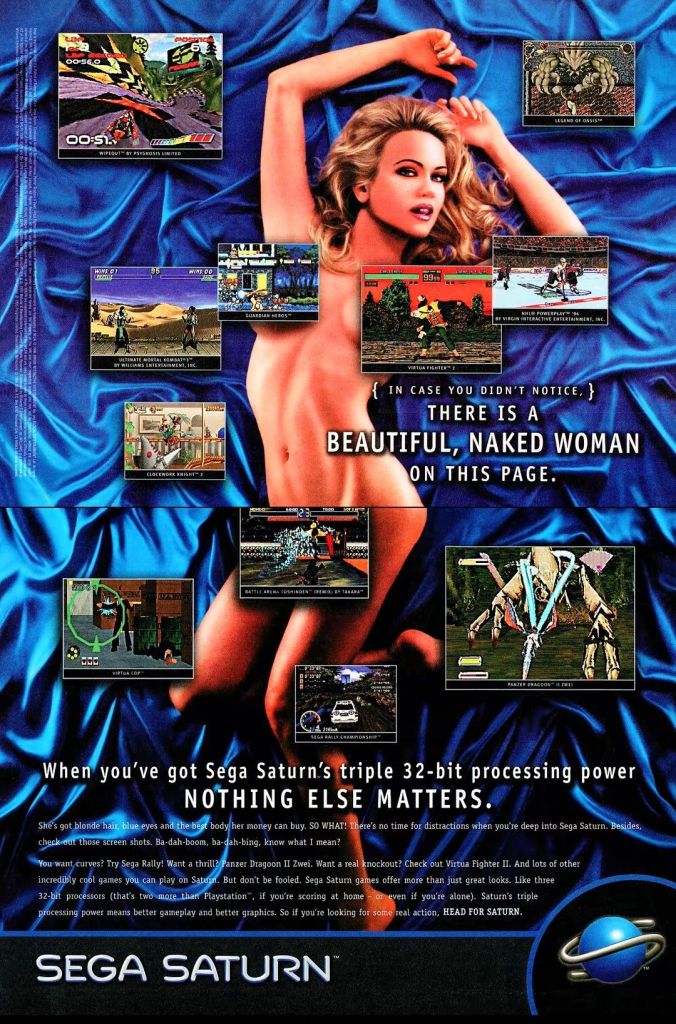
This print ad always caught people’s attention.

When the Sega launched the Saturn console in America roughly four months ahead of schedule in 1995, the company suffered as the sales were disappointing, ties with business partners were strained and the available Saturn games were very few. By the fourth quarter of that year, more games became available for the Saturn and this gave Sega the opportunity to aggressively market the console as the one that gamers should get for their enjoyment. To promote the Saturn, Sega came up with a two-page print ad that had a dominant image of a naked woman whose private parts were cleverly covered by screenshots of the available games. Since most gamers were predominantly male from teenagers to adults, it made sense for Sega to come up with an eye-catching sexy ad to promote their console and the video games (including those from other companies). This old ad is considered by the woke and rabid feminists as very offensive today.

5. Blockbuster Video Print Ad
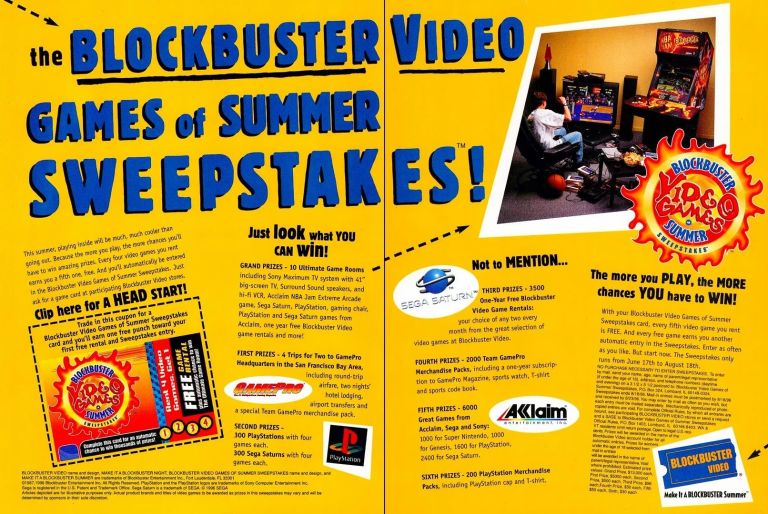
If you won the grand prize and wanted a lot of entertainment, you would not want to leave your home.

Back in the late 20th century, Blockbuster Video was the dominant retailer that offered customers movies in home video format for sale and for rent. Along the way, the company offered video game rentals and attracted millions of gamers around the nation. Given the tremendous growth of video gaming in America in the 1990s, Blockbuster got itself more involved by launching the Games of Summer Sweepstakes in 1996. Utilizing print ads, the sweepstakes offered the Ultimate Game Rooms – composed of a 41-inch big-screen TV, Surround Sound speakers, hi-fi VCR, NBA Jame Extreme arcade game, the Sega Saturn, the PlayStation, a gaming chair, Acclaim games for Saturn and PlayStation, and a 1-year free Blockbuster Video game rentals privilege – as the grand prizes. Do you know anyone who won in Blockbuster’s sweepstakes?

6. Independence Day (ID4) Print Ad
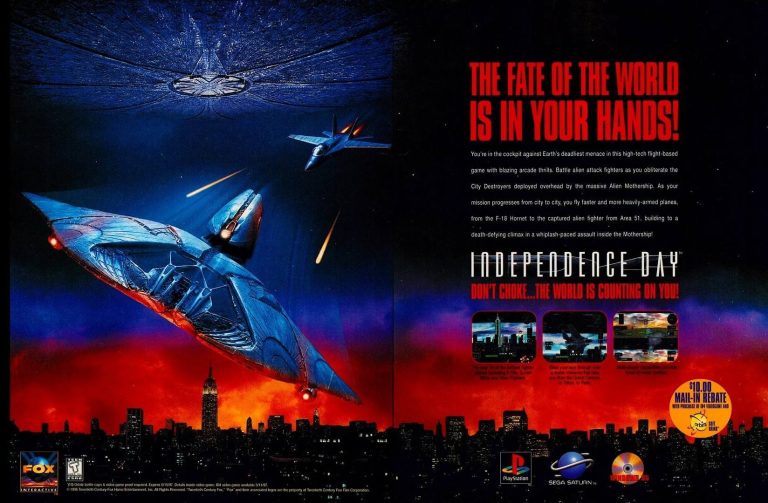
A nice looking ad for a game that was actually mediocre.

Remember how big a blockbuster Independence Day (ID4) was in cinemas in 1996? The film grossed over $800 million worldwide and it revived the disaster movie genre using modern filmmaking techniques and the latest technologies of the decade. Given the massive success of the movie, it was not surprising that an official video game adaptation was released in 1997. To promote the game, Fox Interactive (the video game company of the movie studio behind the film) came up with a 2-page print ad using official artwork from the movie showcasing the alien spaceship being attacked by a military fighter plane. The ad showed only 3 screenshots and the descriptive text was written to make gamers feel like they have the role to lead Earth’s fight against the aliens. While the art looks good, it can only go so far to hide the mediocrity of the game itself.

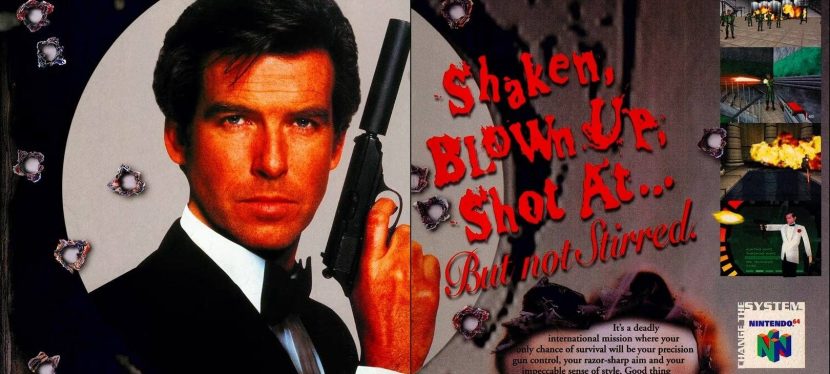
7. GoldenEye 007 Print Ad
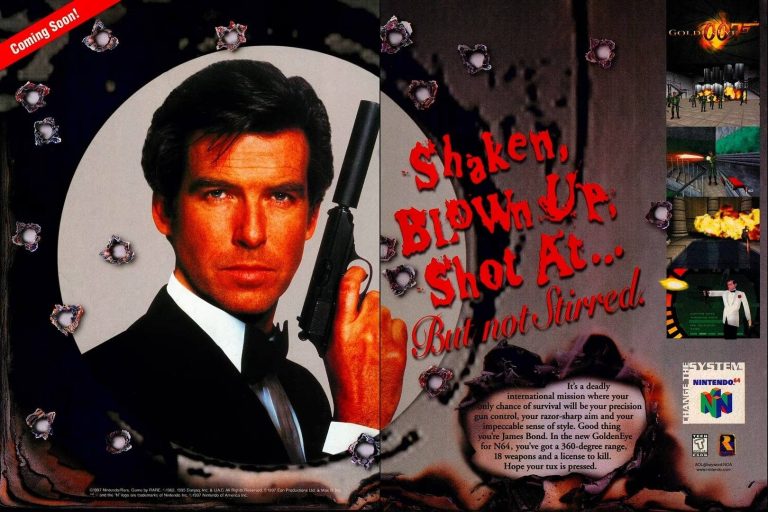
Bond, James Bond.

When GoldenEye achieved both critical and financial success in movies, it revived the James Bond movie franchise big-time and Pierce Brosnan was easily accepted by the public as the newest Agent 007. Several months before the movie was even released, an official video game adaptation started development. After much revisions and hard adjustments, the project evolved into a first-person shooting game for the Nintendo 64 console titled GoldenEye 007. To promote the game, Nintendo came up with a 2-page print ad that cleverly showed Brosnan as James Bond on the left and displayed the screenshots and other details on the right. This ad was easily eye-catching and it made lots of gamers excited. As history showed, GoldenEye 007 got released in 1997 and became a huge critical and commercial success while also proving that first-person shooters on game consoles can be a lot of fun.

8. North American Sega Saturn Games Promo Print Ad
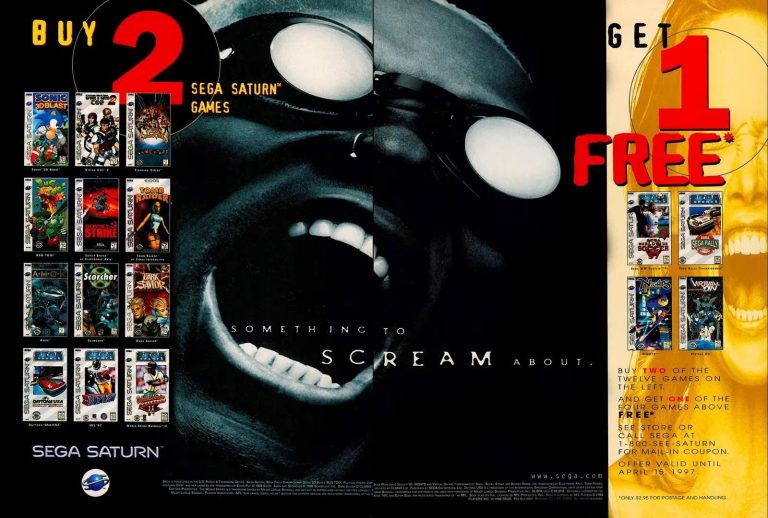
There definitely was something fun offered to gamers. Who could go wrong with titles like Tomb Raider, Nights into Dreams, Virtual On and Virtua Cop 2?

As mentioned earlier, the Sega Saturn had a bad launch in America in 1995 which caused a lot of problems for the company. In 1996, Sega of America went on the offensive to really capture gamers’ attention by launching their Saturn games promo. The message of this 2-page print ad was very clear…Sega offered one free first-party game (limited to four specific games including Nights into Dreams) to those who bought two games (from a lineup of twelve specific titles). It should be noted that the Christmas season of 1996 was the most successful sales period of the Sega Saturn in America as gamers really responded to the promo. Even though some called this promo an act of desperation, nothing changes the fact that Sega succeeded during the most critical sales season of 1996.

+++++

Thank you for reading. If you find this article engaging, please click the like button below, share this article to others and also please consider making a donation to support my publishing. If you are looking for a copywriter to create content for your special project or business, check out my services and my portfolio. Feel free to contact me with a private message. Also please feel free to visit my Facebook page Author Carlo Carrasco and follow me on Twitter at @CarloCarrascoPH as well as on Tumblr at https://carlocarrasco.tumblr.com/ and on Instagram athttps://www.instagram.com/authorcarlocarrasco
Retro Gaming Ads Blast – Part 15

Welcome back readers, fellow geeks and electronic gaming fans!

In this edition of the Retro Gaming Ads Blast (RGAB) series, we will take a look at another batch of retro gaming print ads – including arcade flyers – from the 1980s and 1990s.

For the newcomers reading this, Retro Gaming Ads Blast (RGAB) looks back at the many print ads of games (console, arcade, computer and handheld) that were published in comic books, magazines, flyers and newspapers long before smartphones, social media, the worldwide web and streaming became popular. To put things in perspective, people back in the 1980s and 1990s were more trusting of print media for information and images about electronic games and related products.

With those details laid down, here is the newest batch of retro gaming print ads for you to see and enjoy…

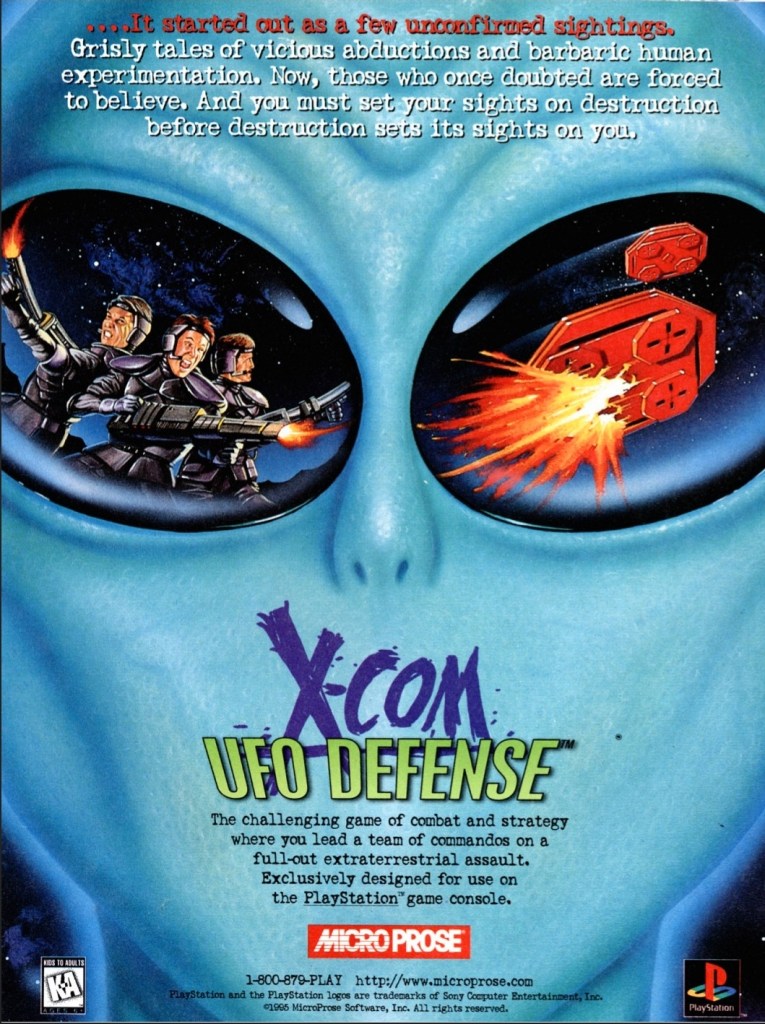
1. X-COM: UFO Defense print ad

While there were no screenshots of the game for PlayStation, the art here was enough to catch your attention.

Back in 1994, X-COM: UFO Defense (original European title: UFO: Enemy Unknown) became an unexpected hit with PC gamers as it gathered lots of positive reviews from the critics and sold a lot on the PC DOS (disk operating system) format. In an obvious attempt to continue the commercial success, a port of the game was released for the PlayStation console in 1995. Publisher MicroProse and its marketing partners came up with this eye-catching print ad to promote the PlayStation version. While no screenshots were shown, the artwork used turned out to be effective in catching attention while emphasizing the sci-fi concept of the game.

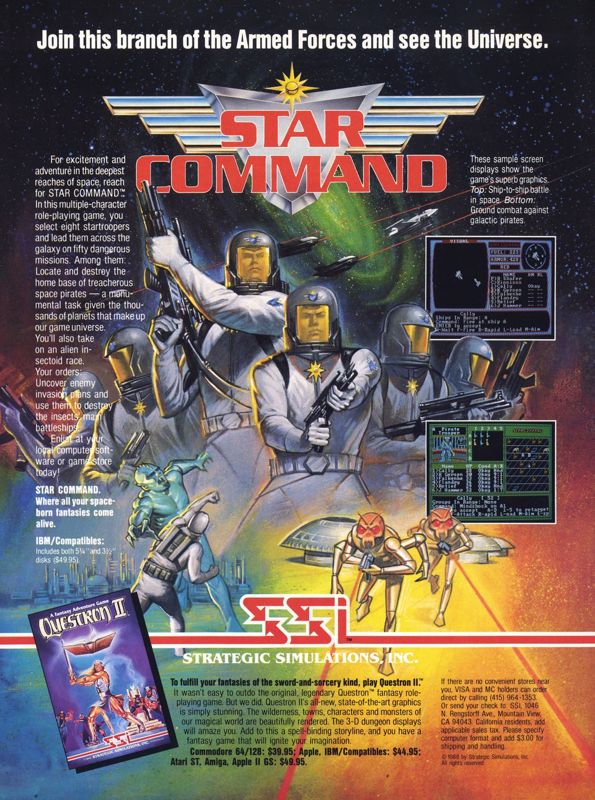
2. Star Command print ad

Long before Starfield, there was Star Command.

Way back in 1988, I first saw my friends play the sci-fi role-playing game (sci-fi RPG) Star Command on the PC DOS format. A short time later, I played the game on our home computer and finished the single-player campaign. This print ad, which has lots of descriptive text, has a strong visual presentation that entices players to play the game and discover the vast amount of content (space travel, missions, battles, encounters with aliens) that the game developers prepared. For its time, the Star Command print ad was captivating to look at.  

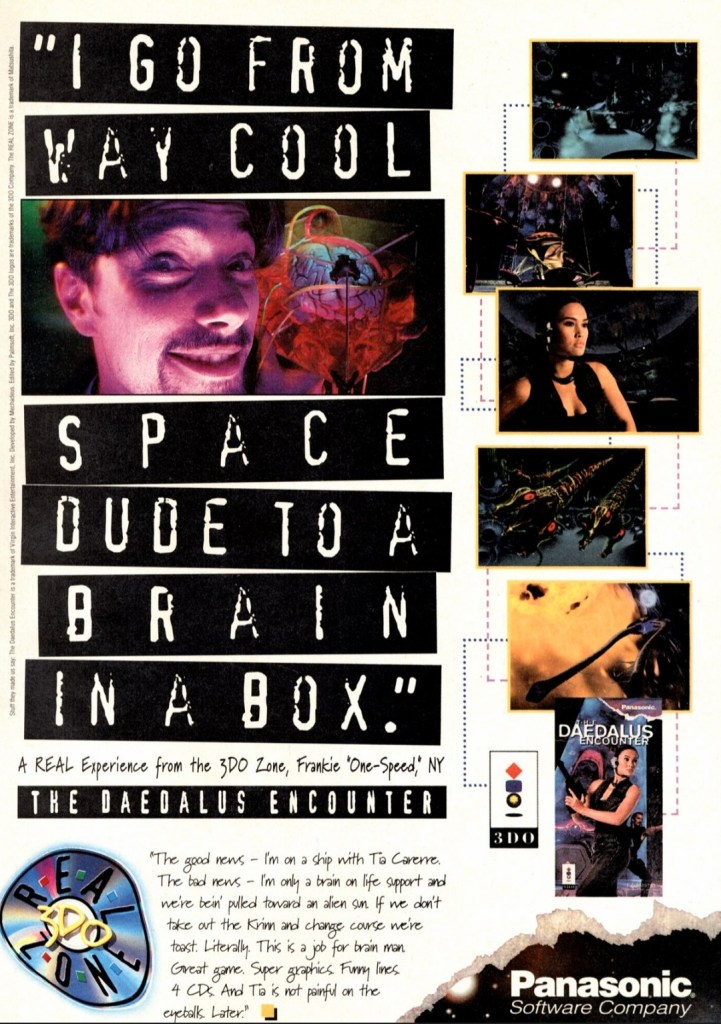
3. The Daedalus Encounter print ad

This print ad was an attempt to catch the attention of both gamers and people who want to watch live-action spectacle.

Released on PC, Macintosh and the 3DO game console in 1995, The Daedalus Encounter was a sci-fi video game that worked as an interactive movie (with puzzles) starring Tia Carrere. To promote the 3DO version, publisher Panasonic came up with an ad that emphasized the sci-fi concept and the cinematic experience (including a few stills of cutscenes) leaving little room about how the game plays. Take note that this game was released at a time when the CD-ROM format started gaining popularity as a reliable optic media format which opened opportunities for game companies to include full-motion videos.

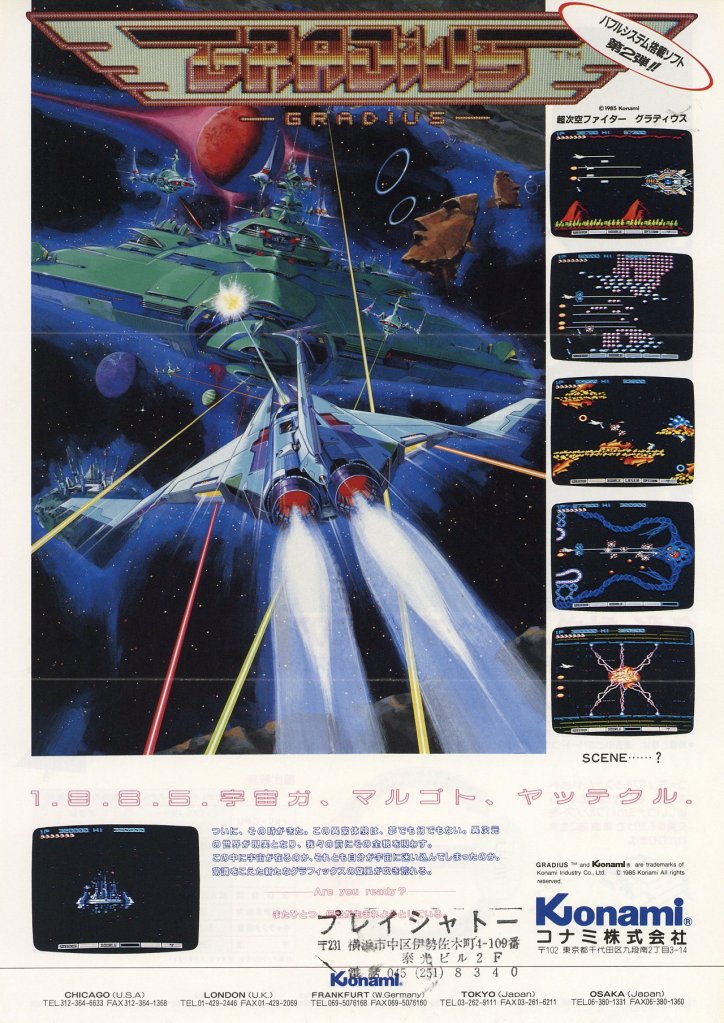
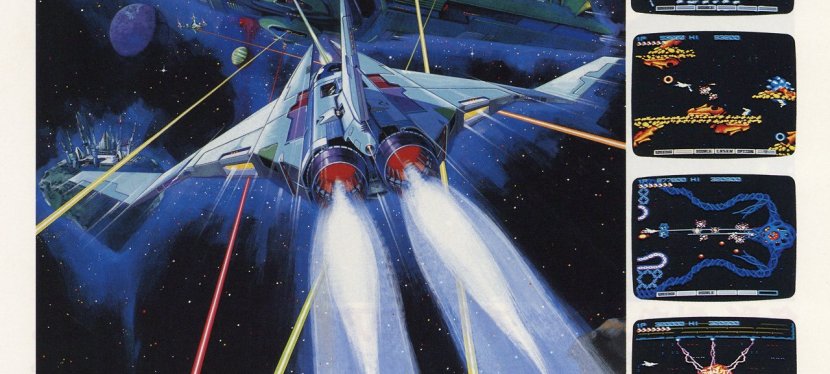
4. Gradius Japanese arcade flyer

The original Gradius has always been fun to play and the enjoyment also made it on game consoles as more games were released.

Still on the realm of sci-fi, Konami launched their 2D side-scrolling shooter Gradius in the arcades in Japan in 1985. The arcade flyer here used a huge amount of space for the game’s official artwork which is very captivating to look at as it clearly emphasized the sci-fi concept. On the side are five screenshots that tell gamers what to expect when playing. The promotions paid off nicely for Konami as Gradius became an instant hit in Japanese arcades and eventually found strong commercial success in the arcades in Europe and America. By today’s standards, this game is a classic and the Gradius game franchise has produced several sequels and spin-offs released on multiple platforms.

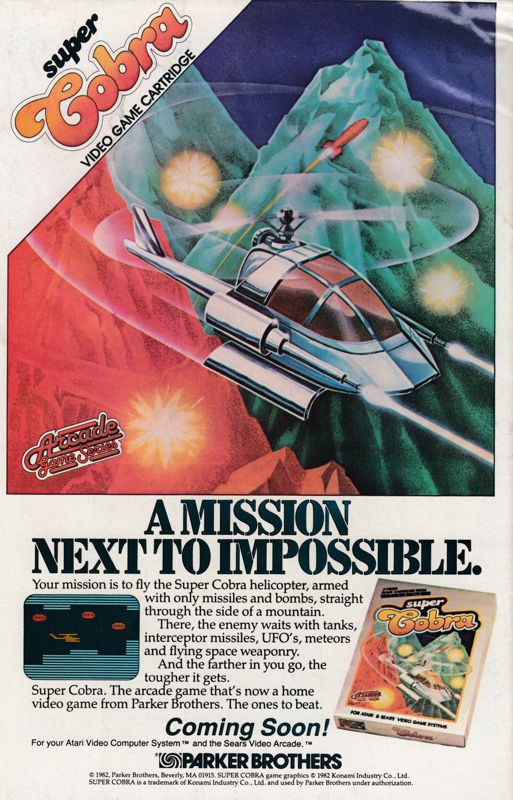
5. Super Cobra print ad

This ad I saw while reading comic books long ago. The game itself was fun.

Here is a game I played on the Atari 2600 over forty years ago. Super Cobra was a 2D side-scrolling game in which players control an armed helicopter that has to move from left to right, attacking enemies, and avoiding enemy projectiles while maintaining the fuel supply. This ad, which appeared on some comic books I read, utilized the game art that was used on the box cover although the single screenshot displayed looks exaggerated when compared to what I saw and played.

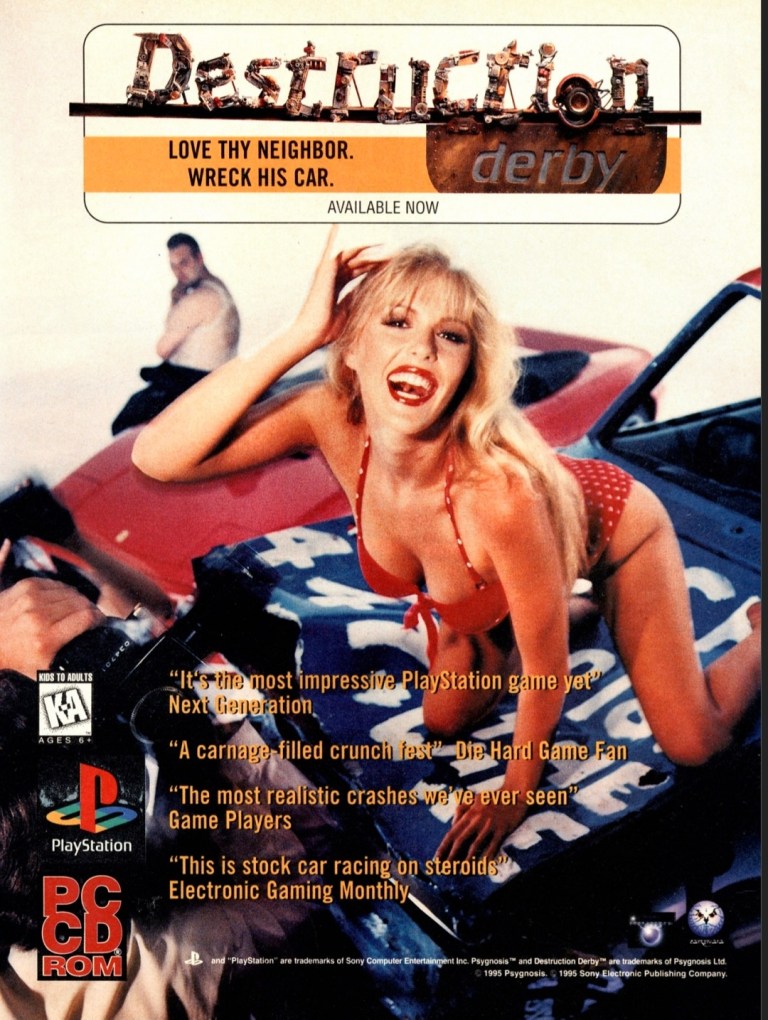
6. Destruction Derby print ad

The Destruction Derby print ad that had no screenshots of the game.

In 1995, Sony launched the PlayStation console in America and in Europe. In Europe, publisher Psygnosis promoted their ambitious game Destruction Derby (a 3D polygonal racing game that emphasized vehicular damage) for both PlayStation and the PC that same year. As this Destruction Derby print ad did not show any screenshots, Psygnosis and their marketing team or partner decided to pounce on positive gaming media quotes and the sexy model to promote their game. Their marketing move paid off nicely as over a million copies of Destruction Derby were sold by August 1996.

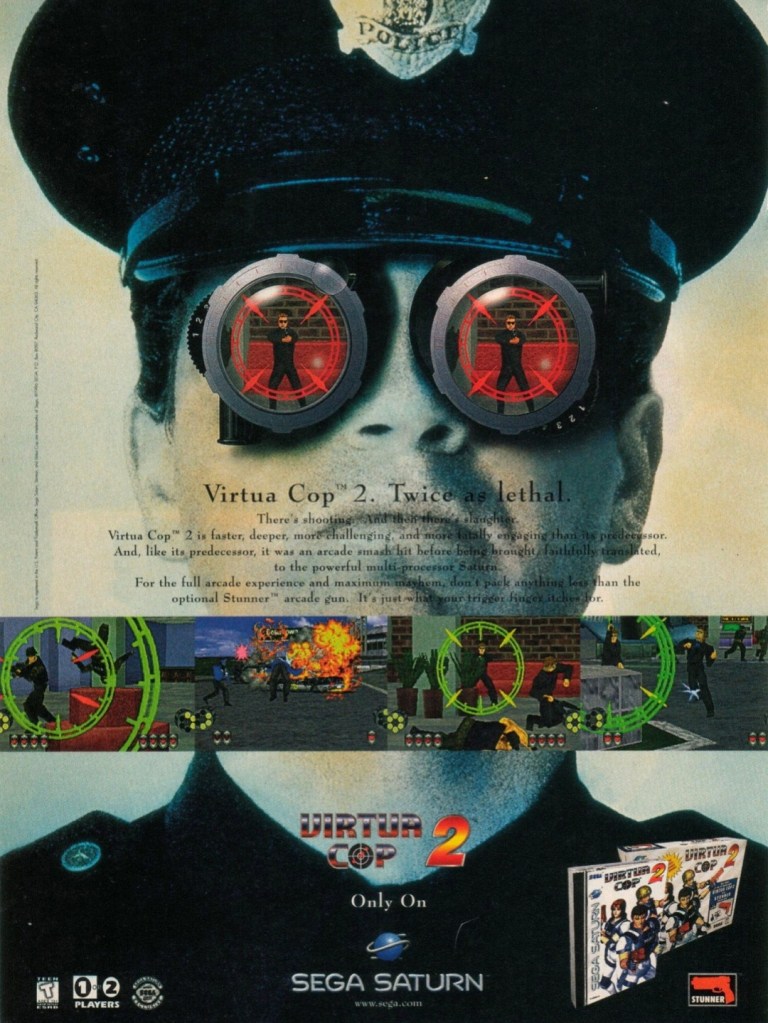
7. Virtua Cop 2 print ad

A lot of people found this Virtua Cop 2 print ad looking very weird.

When Sega of Japan forced its American division to launch the Sega Saturn console in the United States in 1995 without any pre-release marketing, it resulted in a series of disappointments that include low sales, too few games launched and strained ties with their business partners. In 1996, Sega started to become more aggressive to sell more Saturn units and more 1st party exclusive games such as Virtua Cop 2 (for the Saturn) which itself was a big hit arcade hit. As the company clearly aimed to make the console version of Virtua Cop 2 a hit, they approved this print ad which had a very intriguing visual concept showing video game images reflected on the glasses on the police man. As Virtua Cop 2 required a light-gun peripheral to be played accurately like in the arcade, this print ad utilized very little space for the Sega Saturn Stunner.

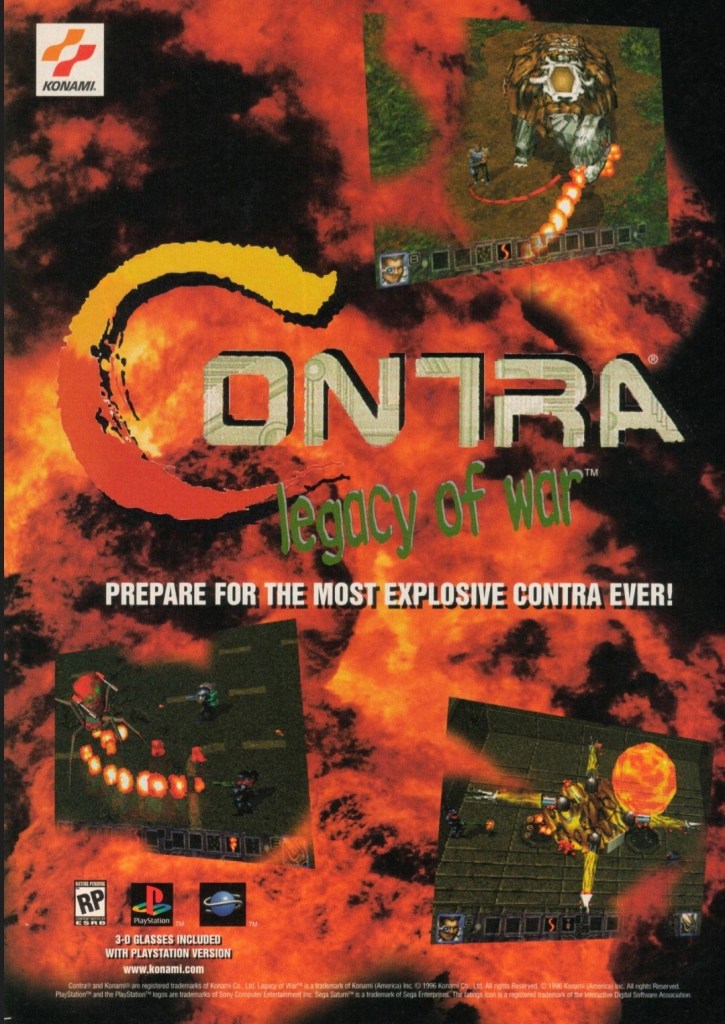
8. Contra: Legacy of War print ad

The print ad of Contra: Legacy of War.

When I first heard that a brand new game of Contra would be released on the still-new PlayStation and Sega Saturn in the mid-1990s, I was excited as I always enjoyed the original game I played on the Family Computer. This print ad of Contra: Legacy of War brought my excitement way down as it showed that the game no longer utilized the 2D side-scrolling design and came up with a design that emphasized 3-dimensional environments and polygons. The change in design was too alienating for me as all the previous Contra games had the 2D side-scrolling format as the main designs (leaving little room for the occasional sprite-scaling 3D sequences in some games). I finally played Contra: Legacy of War on PlayStation on November 1996 and it was a huge letdown!

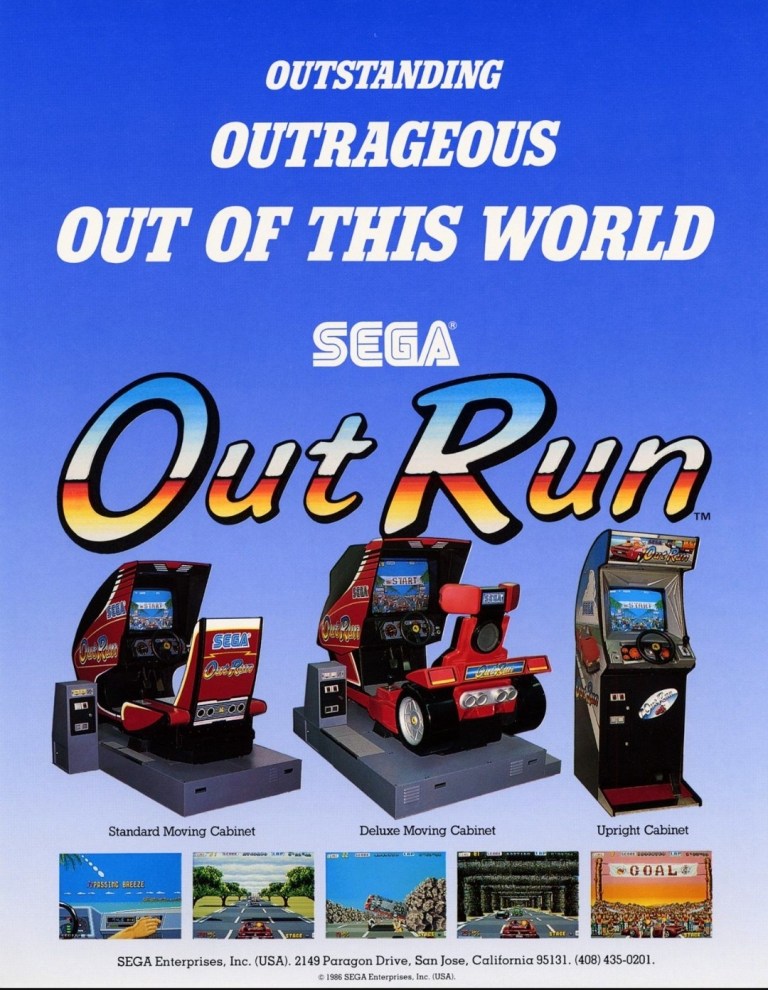
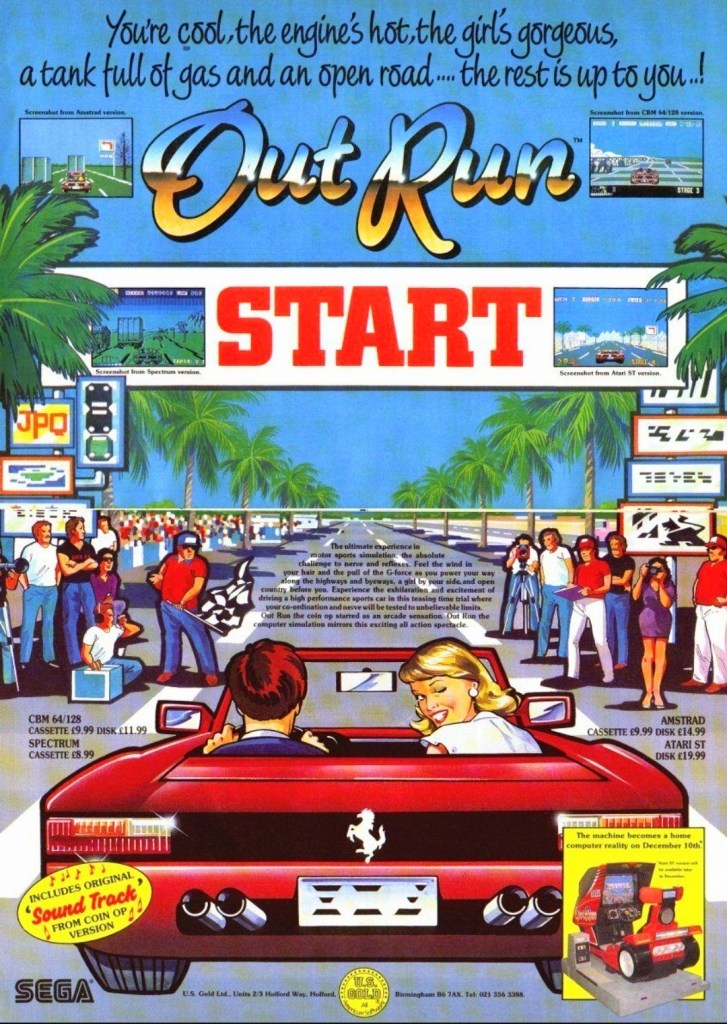
9. Out Run arcade flyers

Sega Out Run arcade machines in different forms.
This Out Run flyer really has nice art.

In the history of arcade games, Sega’s Out Run was a massive success not only in Japan but also in America and Europe. Designed by Yu Suzuki (Virtua Fighter, Shenmue), Out Run was a pseudo-3D driving game in which players get to drive a Ferrari Testarossa convertible (which is always visible to the player) from one scenic destination to the next avoiding traffic as much as possible. This was indeed a labor of love on the part of Yu Suzuki who himself spent time in Europe to gain inspiration on designing the game. As Out Run was a hit, Sega made different types of machines of the game that arcade operators can choose from depending on how much space their respective arcades have left and how the local players prefer to play it. It should be noted that in one of the flyers above, the original sound track was promoted as well.

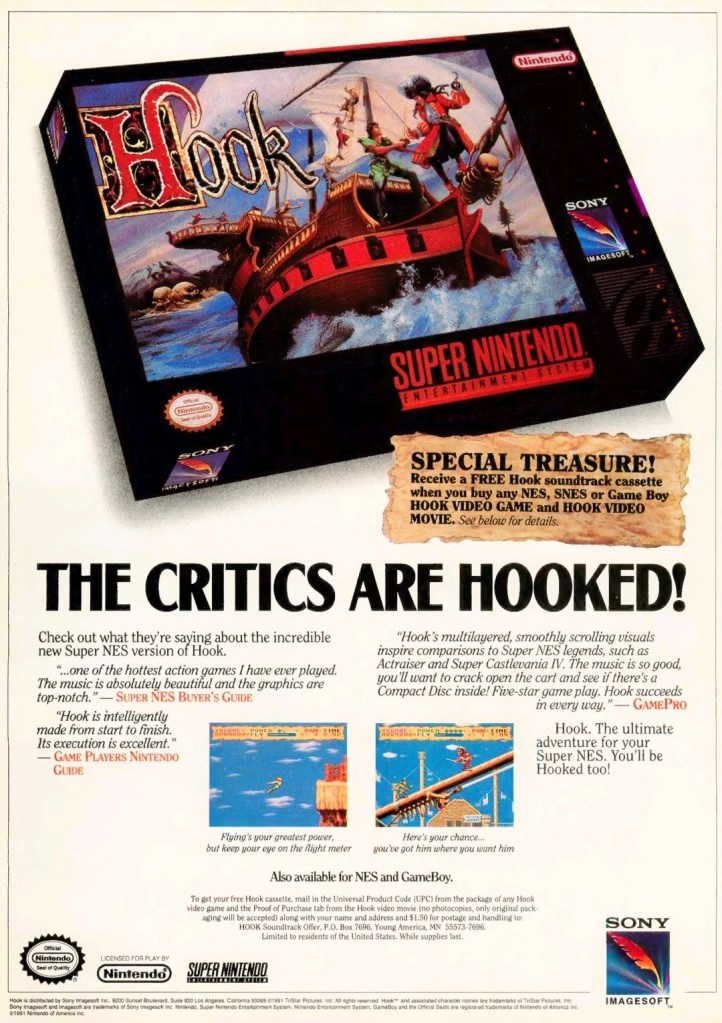
10. Hook SNES version print ad

If you look closely at the SNES box front cover art, you will notice that Peter Pan and Captain Hook looking nothing like the actors who portrayed them in Steven Spielberg’s movie.

In late-1991, Steven Spielberg’s movie Hook was released in cinemas and revived public interest in the fairy tale of Peter Pan. Typical of the entertainment business of the time, video games based on the movie were released on different platforms in 1992 and among them was a version on the Super Nintendo Entertainment System (SNES). Apart from showing the game’s box, the print ad of Hook on SNES cleverly included positive quotes from GamePro, Game Players Nintendo Guide and the Super NES Buyer’s Guide to convince readers that the game is worth their time.

+++++

Thank you for reading. If you find this article engaging, please click the like button below, share this article to others and also please consider making a donation to support my publishing. If you are looking for a copywriter to create content for your special project or business, check out my services and my portfolio. Feel free to contact me with a private message. Also please feel free to visit my Facebook page Author Carlo Carrasco and follow me on Twitter at  @HavenorFantasy as well as on Tumblr at https://carlocarrasco.tumblr.com/ and on Instagram at https://www.instagram.com/authorcarlocarrasco