Welcome back Xbox fans, geeks, retro gaming enthusiasts, RPG enthusiasts and gamers!
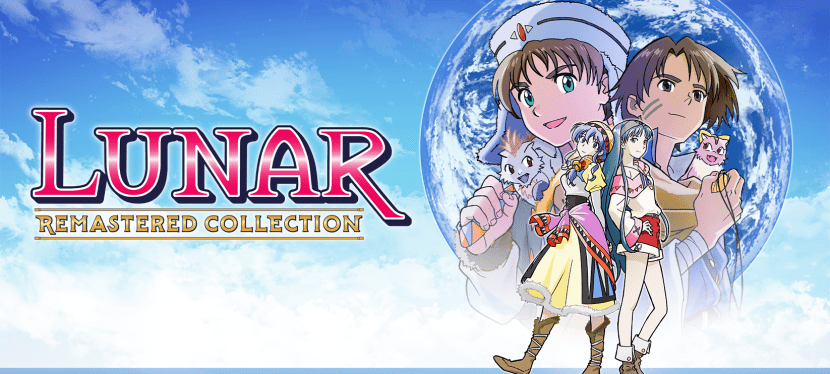
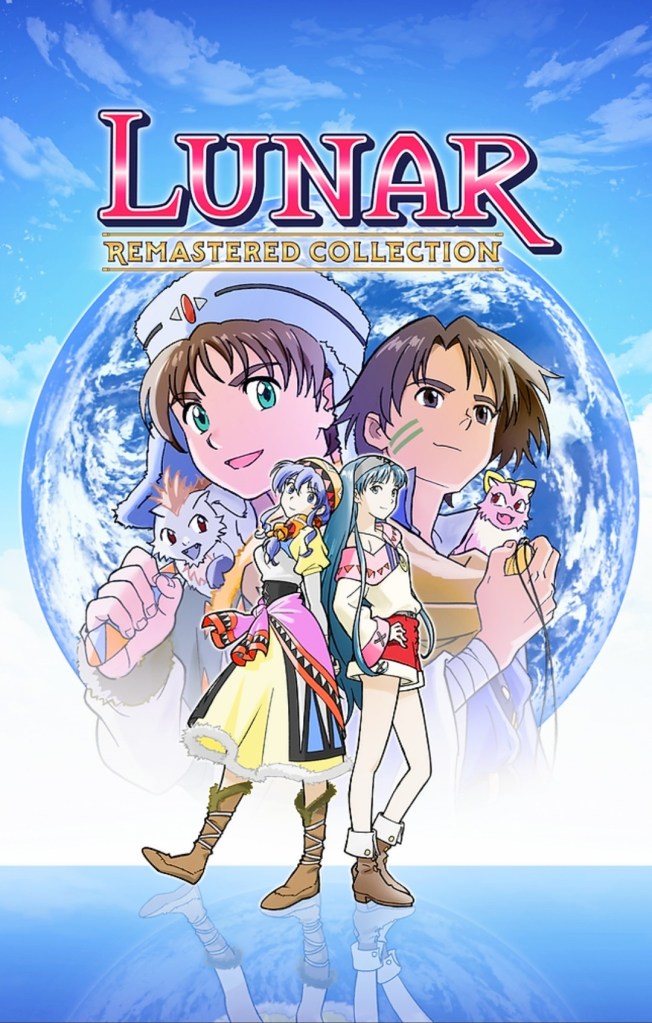
In case you missed the news, GungHo America announced that the remastered editions of the classic Japanese role-playing games (JRPGs) Lunar: The Silver Star and Lunar: Eternal Bluewill be released together in a single package titled Lunar Remastered Collection which is set for a Sprint 2025 release window (release date to follow) for multiple platforms, including Xbox Series X|S and the aging Xbox One!
Feeling excited or curious? Watch and learn from the official trailer of Lunar Remastered Collection released by GungHo (which is the same publisher behind the Grandia HD Collection).
To put things in perspective, posted below is an excerpt from the official press release of GungHo. Some parts in boldface…
The LUNAR Remastered Collection breathes new life into the beloved classics LUNAR: Silver Star Story Complete and LUNAR 2: Eternal Blue Complete (PlayStation 1 version), both originally developed by GAME ARTS. This revamped collection retains the charm of both titles while introducing exciting new enhancements and quality-of-life improvements!
Fans of the LUNAR series can wax nostalgic with 90s-esque animated cutscenes, iconic characters with the classic JRPG charm, and old-school turn-based combat with a twist. JRPG enthusiasts and long-time supporters of the series alike will undeniably be captivated by the game’s romantic storytelling and stunning soundtrack, and witness firsthand how LUNAR paved the way for generations of JRPGs to come.
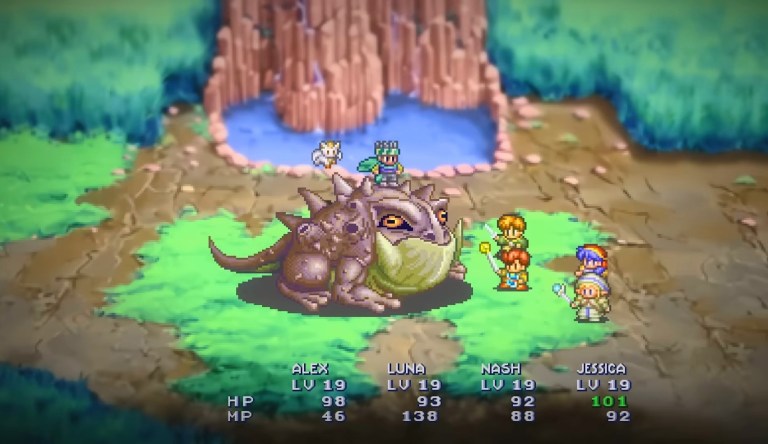
Gameplay shot from Lunar: Silver Star Story Complete which was supposedly remastered with high-definition in mind (which could explain the blurry upper and lower portions of the screen).
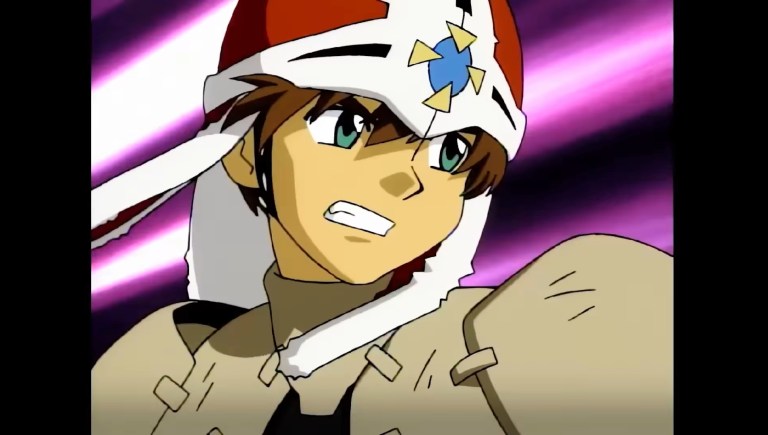
The trailer of Lunar Remastered Collection showed this sharp and lively looking image of an anime sequence. Here is hoping all the anime cutscenes in the two games will be of the highest quality possible with high-definition in mind.
The key features announced are as follows:
Strategic Turn-Based Action: Play through two magical worlds in LUNAR: Silver Star Story Complete and LUNAR 2: Eternal Blue Complete as you fight it out in turn-based battle style, where each character’s speed, distance, position, and attack reach must all be accounted for.
Powerful Voices and Captivating Animated Sequences: Immerse yourself in battles with fully-voiced attacks and incantations in either Japanese or an all-new English voiceover by playable characters and enemies. Not to mention, the timeless and stylistic animated sequences that will still capture the hearts of players today.
Relive the Classic or Go Remastered: Choose between classic or remastered mode — an option that allows fans to travel back in time to the games’ PS1 releases, or see them in a new light with wide-screen support, revamped PS1 pixel art, and high-definition animated cutscenes.
Two New Language Options: LUNAR Remastered Collection not only includes Japanese and English subtitles and sound, but also two new subtitle language options, French and German.
Speed up Battle + Improved Strategy Settings: Save time and speed through battles with the flip of a switch! Additionally, new options have been added to the original strategy settings for streamlined combat.
For the newcomers reading this, Lunar: The Silver Star was developed by Game Arts (also the same team behind Grandia and Grandia II) and released on the Sega CD (Mega CD in other countries) add-on for the Genesis (Mega Drive) console in 1992. Years later, that game had a huge remake as Lunar: Silver Star Story Complete on Sega Saturn (1996), PlayStation (1998) and Windows PC (1999).
A similar approach of releases happened too with the sequel Lunar: Eternal Blue which started on Sega CD. Its remake was titled Lunar 2: Eternal Blue Complete which was released on Sega Saturn (1998) and PlayStation (1999).
Historically, Lunar: Silver Star Story Complete and Lunar 2: Eternal Blue Complete were published in America by Working Designs (closed down since 2005) with its very own stylized way of translating the Japanese content into English (note: localized as opposed to straightforward translation), in-depth approach to English dubbing, and elaborate packaging (with unique stuff) done with the fans and collectors in mind. Working Designs was also responsible for releasing the two Lunar RPGs’ original versions on Sega CD and the company established close ties not only with Sega of America but also Game Arts itself.
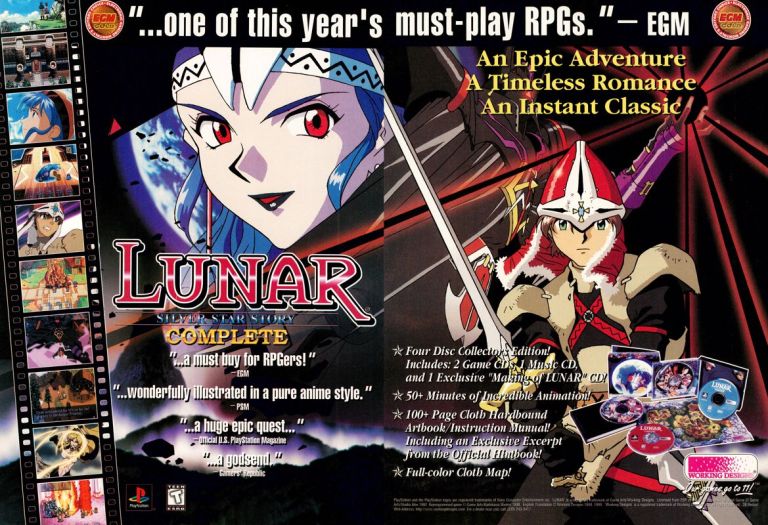
Lunar: Silver Star Story Complete for PlayStation print ad.
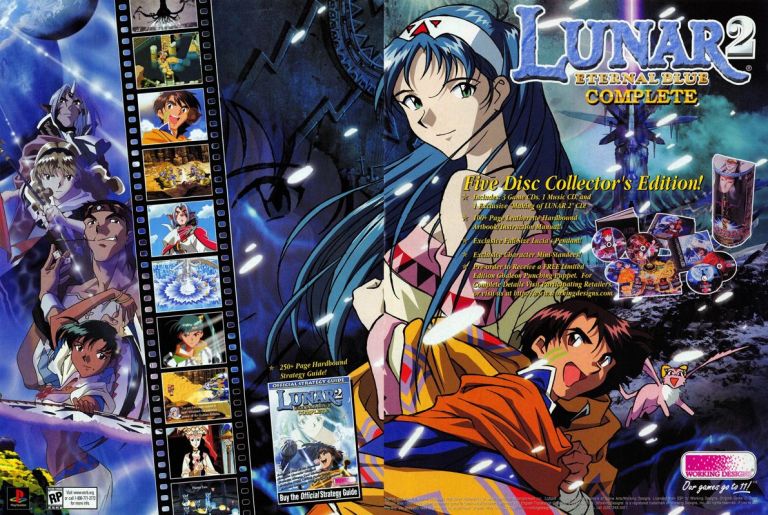
Lunar 2: Eternal Blue Complete for PlayStation print ad.
With regards to story concepts and characters, Lunar: The Silver Star tells the tale of Alex Noa – a young and resilient fighter who recently passed the White Dragon’s trial–as he embarks on his journey to become a Dragonmaster. As Alex revels in his success in passing the trial, a mysterious Magic Emperor unexpectedly enters the fold, aiming for world domination.
Lunar: Eternal Blue follows the story of Hiro, an inquisitive archaeologist, and friends as they journey to help a mysterious girl from the Blue Star, Lucia, to seek out the Goddess Althena and stop Zophar – a relentless and evil God of Destruction who plots the demise of Lunar – from wiping out their existence.
Watch out for the official 2025 release date of Lunar Remastered Collection.
As of this writing, Lunar Remastered Collection for Xbox Series X, Xbox Series S and Xbox One has yet to appear on the Xbox online store. For updates about the upcoming retro gaming collection of RPGs, visit https://www.lunarremastered.com/
Disclaimer: This is my original work with details sourced from reading the comic book and doing personal research. Anyone who wants to use this article, in part or in whole, needs to secure first my permission and agree to cite me as the source and author. Let it be known that any unauthorized use of this article will constrain the author to pursue the remedies under R.A. No. 8293, the Revised Penal Code, and/or all applicable legal actions under the laws of the Philippines.
Welcome back superhero enthusiasts, 1990s arts and culture enthusiasts, Image Comics fans and comic book collectors! Today we go back to the year 1995 to take a close look at one of the many tales of the original WildStorm universe through one of the comic books of the Backlash series.
For the newcomers reading this, Backlash is one of the major characters of the WildStorm universe which started in the early 1990s when the famous Jim Lee was one of the founding fathers of Image Comics. Backlash, Deathblow, Wetworks, Gen13 and WildCATS: Covert Action Teams were all connected with each other and many of the characters were linked together in the Team 7 series of prequel stories.
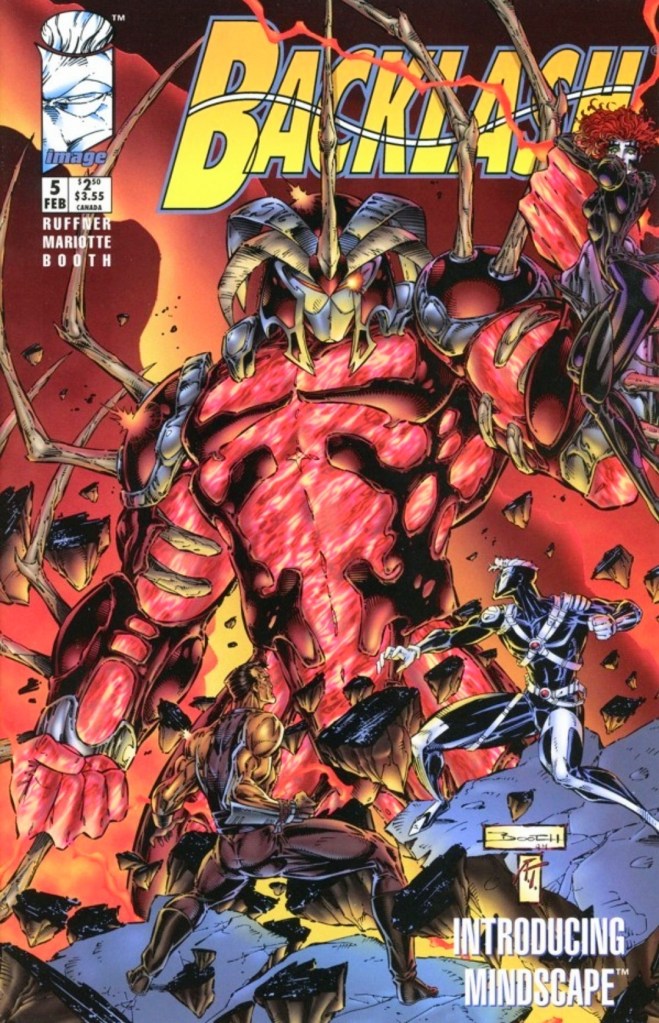
With those details laid down, here is a look back at Backlash #5, published in 1995 by Image Comics with a story written by Brett Booth, Jeff Mariotte and Sean Ruffner. Booth did the artworks.
The cover.
Early story
The story begins with Backlash having visions of his beloved Diane who eventually turns into a gruesome Daemonite monster. Suddenly his female companion Taboo appears to him only to betray him moments after.
In the real world, it turns out that Backlash is helplessly restrained and connected to machines in the presence of Mindscape and his assistant Virtual Bob. Wetworks leader Jackson Dane and Taboo have been contained separately and could only watch Backlash agonizing. Backlash’s mind has been infiltrated by Mindscape through the use of virtual reality.
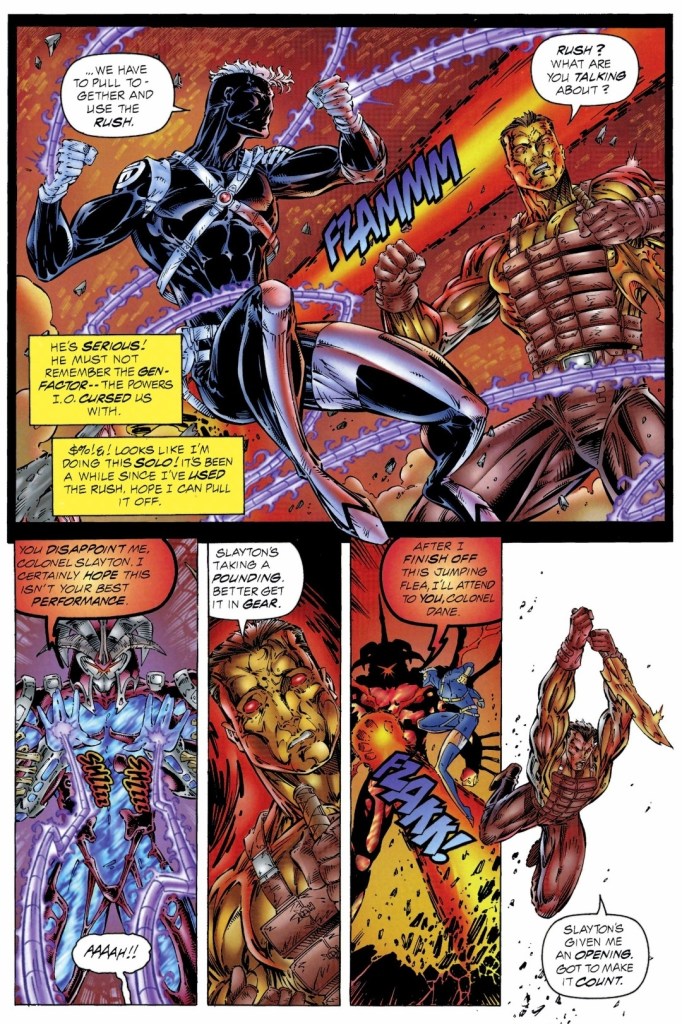
Mindscape has been looking for a living subjects who could become suitable for his project of combat droids which require genetic information from the subject. Even though he knows that having two live subjects would confuse the combat droids, Mindscape gives the order to have both Backlash and Dane together in cyberspace…
Quality
Backlash and Wetworks leader Dane face-off with Mindscape in cyberspace.
With its heavy emphasis on virtual reality and cyberspace, the creators temporarily changed their approach on storytelling and showing spectacle while managing to introduce a new villain and show more of the friendship of Backlash and Dane.
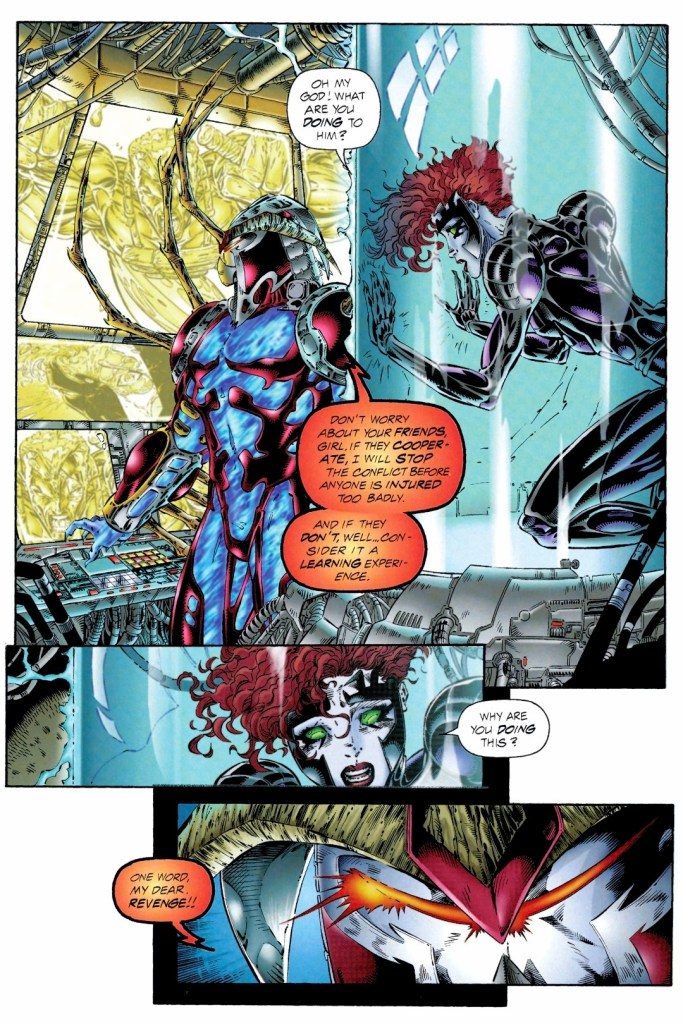
In my view, Mindscape is indeed a very interesting antagonist who is not the typical super villain who is simply being evil for the sake of it. In fact, Mindscape’s origin was efficiently told here and by the time I finished reading this comic book, I found him to be intriguing. Before he became the powerful villain here, Mindscape used to be a very talented virtual reality developer. Mindscape looks at Dane and Backlash – both of which have extensive military experience as they used to be teammates with Team 7 – not for the sake of murder but as suitable subjects for his combat drones which signifies his intention to build an army that will serve him in the real world.
As this story took place a short time after the reunion that happened late in issue #4, this comic book shows a bit more of the friendship between Backlash and Dane, revealing small details about their past together as specially trained soldiers. With the way the story here was told, there was too little room left for any character development to happen but the small details revealed about the two WildStorm heroes was enough to inspire me to revisit Team 7.
In relation to the story’s concept about virtual reality, the spectacle here is much different and absolutely wilder. You have to see it for yourselves.
Conclusion
Being trapped and helpless, Taboo could only watch Mindscape and ask him questions.
Backlash #5 (1995) is an entertaining and intriguing read. This comic book also served as a suitable break from the norm of showing Backlash fighting bad guys in the real world and infiltrating places to accomplish his objectives. Backlash and Dane here were portrayed to be vulnerable as their conflict with Mindscape happened in cyberspace. The final conflict was a spectacle to look at and the story’s ending was satisfying enough leaving the sense that Backlash and Dane would meet each other again.
Welcome back readers, fellow geeks and electronic gaming fans!
In this edition of the Retro Gaming Ads Blast (RGAB) series, we will take a look at another batch of retro gaming print ads – including arcade flyers – from the 1980s and 1990s.
For the newcomers reading this, Retro Gaming Ads Blast (RGAB) looks back at the many print ads of games (console, arcade, computer and handheld) that were published in comic books, magazines, flyers, posters and newspapers long before smartphones, social media, the worldwide web and streaming became popular. To put things in perspective, people back in the 1980s and 1990s were more trusting of print media for information and images about electronic games and related products.
With those details laid down, here is the newest batch of retro gaming print ads for you to see and enjoy…
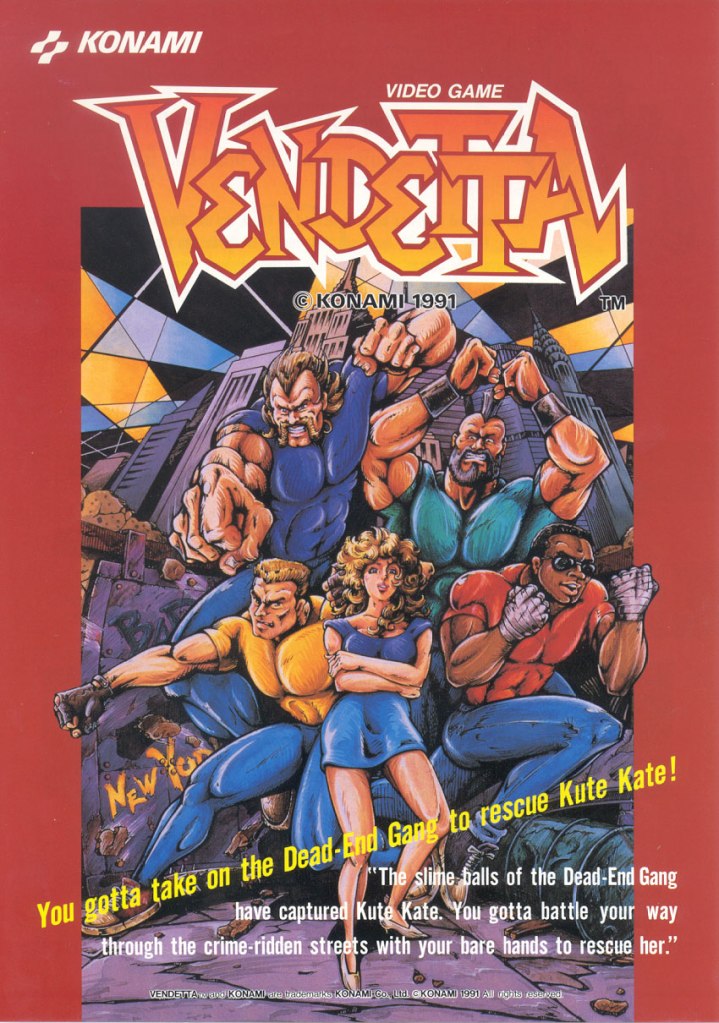
1. Vendetta UK and North American arcade flyers
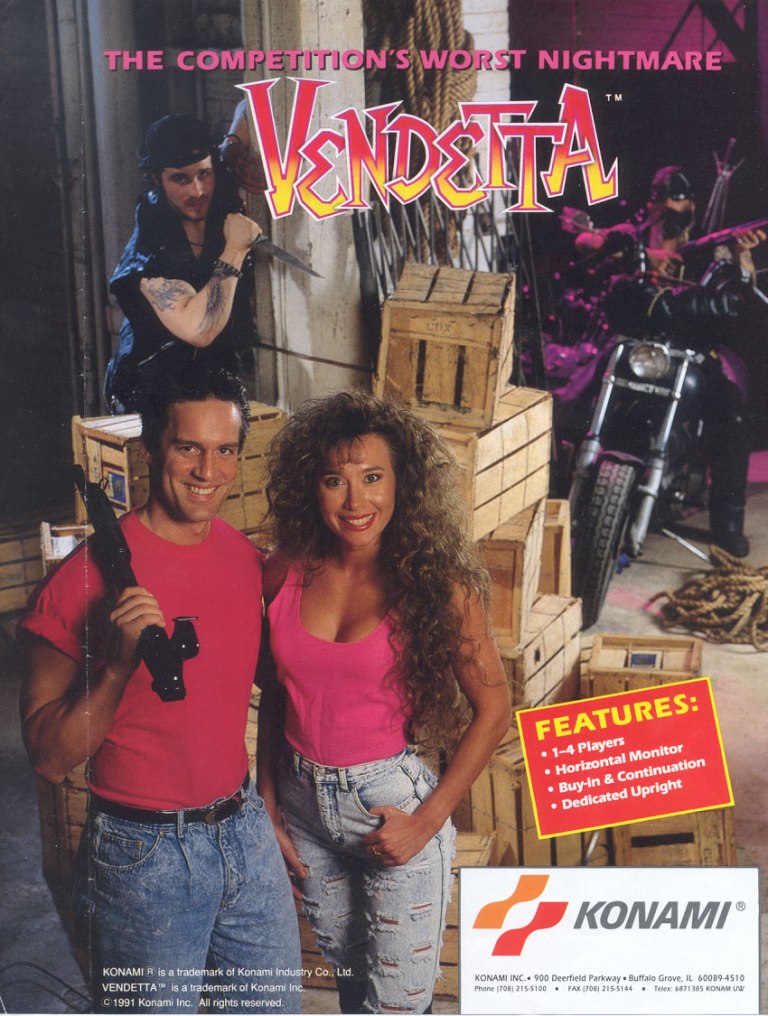
Vendetta arcade flyer for North America
Vendetta arcade flyer for the UK.
In 1991, Konami released the 2D side-scrolling beat-them-up game Vendetta in arcades around the world achieving commercial success. While it is hard to tell if the promotions helped the game commercially, there is no doubt that the arcade flyers for the North American and United Kingdom (UK) markets were indeed very eye-catching.
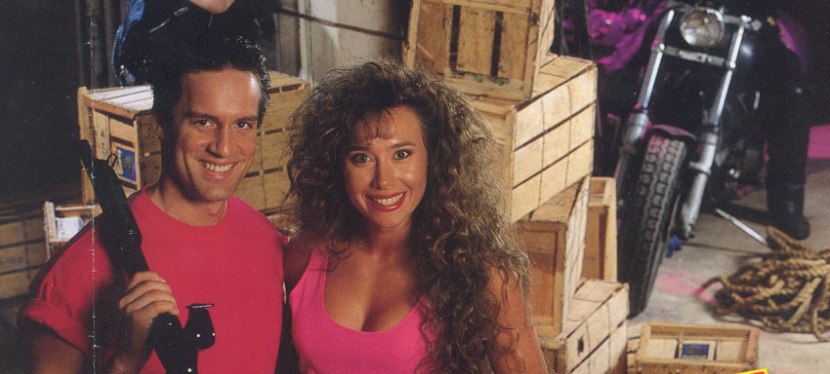
The North American Vendetta arcade flyer had a photographic approach showing models playing characters supposedly representing the Cobras gang and the Dead End gang. The display of wooden boxes and the rope was done to symbolize the rough city environments of the game. On the other hand, the UK arcade flyer has illustrated artwork that captured the look of the Cobras gang from the game.
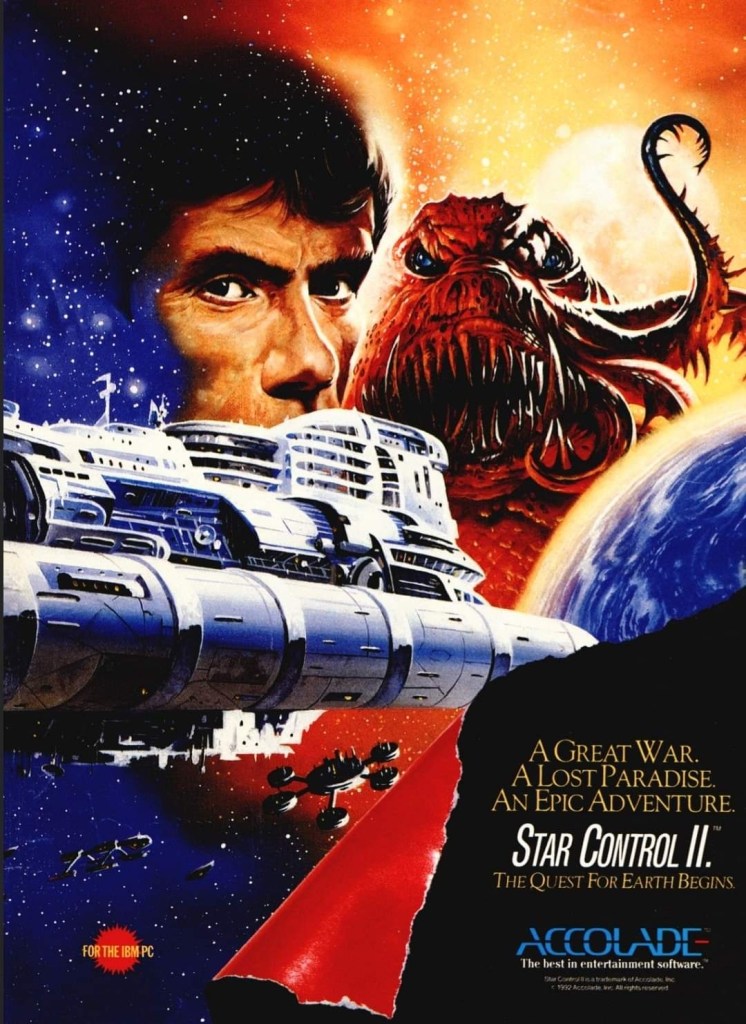
2. Star Control II: The Ur-Quan Masters print ad
This ad has great art that strongly emphasizes its science fiction concept.
This print ad of Star Control II: The Ur-Quan Masters (PC version) really caught my attention when I read gaming magazines in the early 1990s. The painted artwork showing a human and a hideous alien in the background with a planet, space ships and space stations filling the rest of the space was very captivating to look at. So captivating, it enticed me to search for the game but our PC at home had really low specs. Strangely enough, I played another version of Star Control II on a rented 3DO Interactive Multiplayer console in 1995. For the newcomers reading this, the game was critically acclaimed and was declared as one of the very best PC games ever made. Enjoy looking at the print ad above.
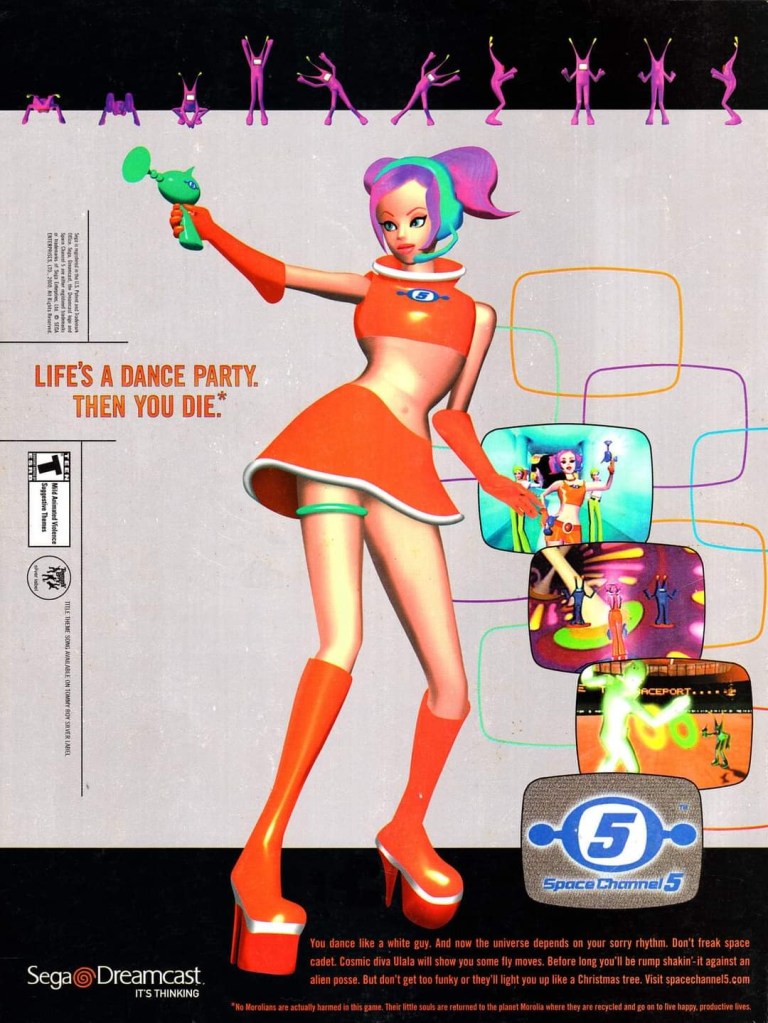
3. Space Channel 5 print ad
The visual style and character designs are the result of the game designer’s research that includes interviews with lots of young girls over their interests and tastes in video games.
When Sega launched their Dreamcast console in Japan in late-1998, their financial health was already in a very bad state and the future looked grim. Even as they faced tremendous odds, Sega still went on to aggressively sell Dreamcast consoles with exclusive games and Space Channel 5 was one of them.
First released in Japan in 1999, Space Channel 5 was a musical, puzzle-oriented game that was the result of Tetsuya Mizuguchi’s work backed with research he did that included interviewing young girls to find out what their tastes in gaming are. The print ad showing the highly stylized protagonist Ulala and a few screenshots really caught the attention of gamers and kept the Dreamcast in their minds. While the game did not achieve commercial success as a Dreamcast-exclusive, Sega went on to release a version of Space Channel 5 on the PlayStation 2 console, plus sequels.
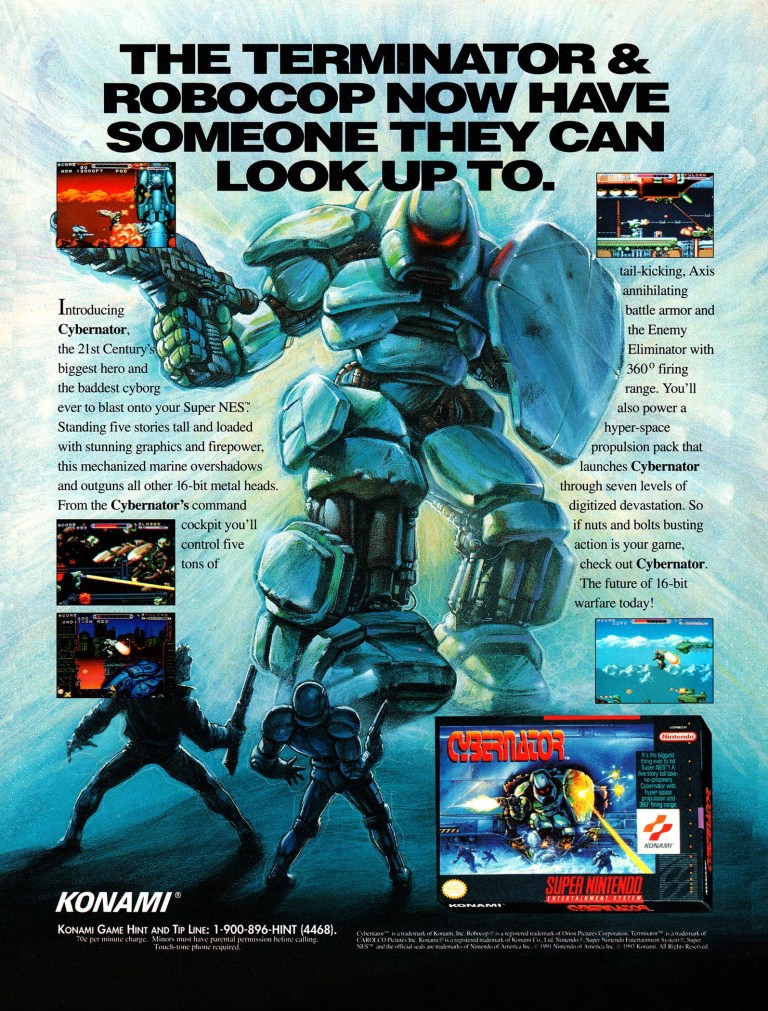
4. Cybernator print ad
The mention of Terminator and RoboCop rivaled the artwork when it comes to grabbing people’s attention.
I remember seeing the print ad of Konami’s Cybernator (Japanese title: Assault Suits Valken) in several comic books I read back in 1992. I never got to play it but the print ad’s artwork was memorable as I was fond of robots in anime, movies and video games back then. What was arguably the most memorable aspect of the print ad was the line that mentioned RoboCop and the Terminator in a comedic way. This is a creative way to market the game.
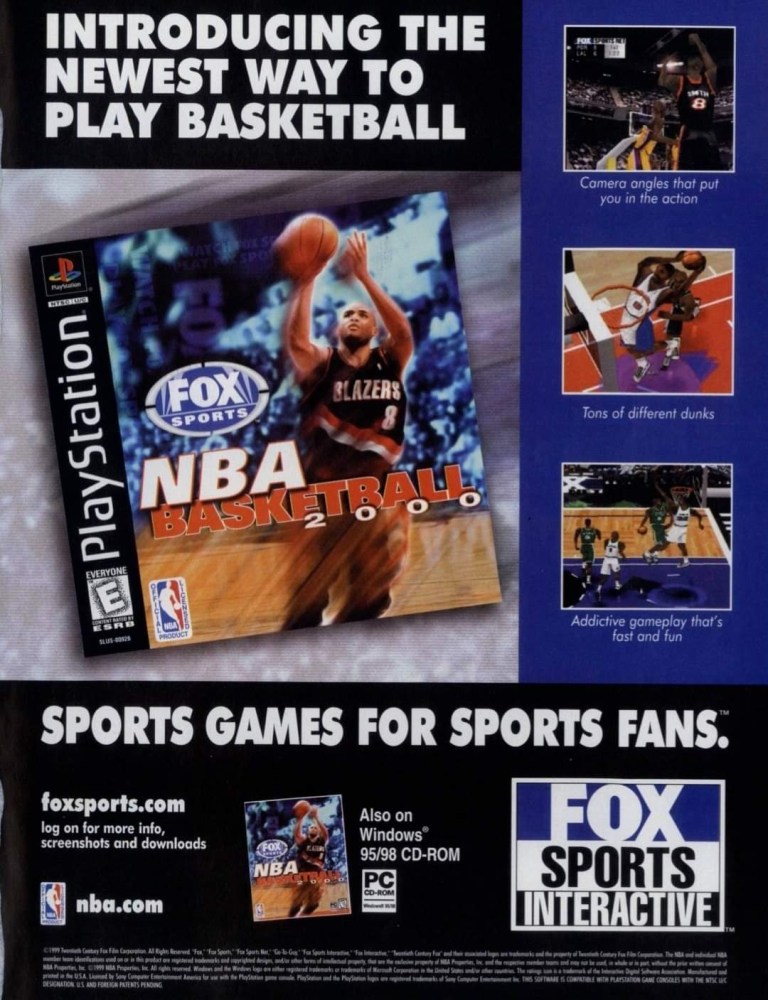
5. NBA Basketball 2000 print ad
There were a lot more NBA video games back in the 1990s.
NBA Basketball 2000 was one of those basketball videos games of the 1990s that was not published by EA Sports nor published by the other established game publishers like Sega, PlayStation and Konami. In fact, the one thing on the ad that caught my attention was Fox Sports Interactive which published some sports videos games during the decade. The print ad also served as a reminder that there were a lot more NBA video games for gamers to choose from during the 1990s.
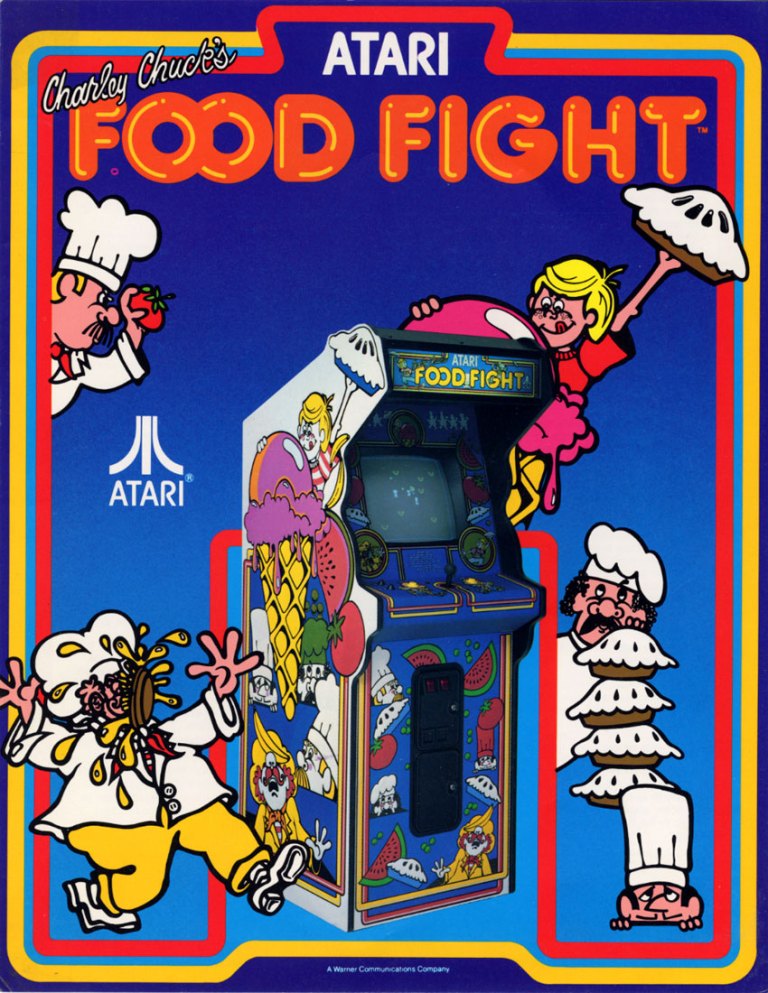
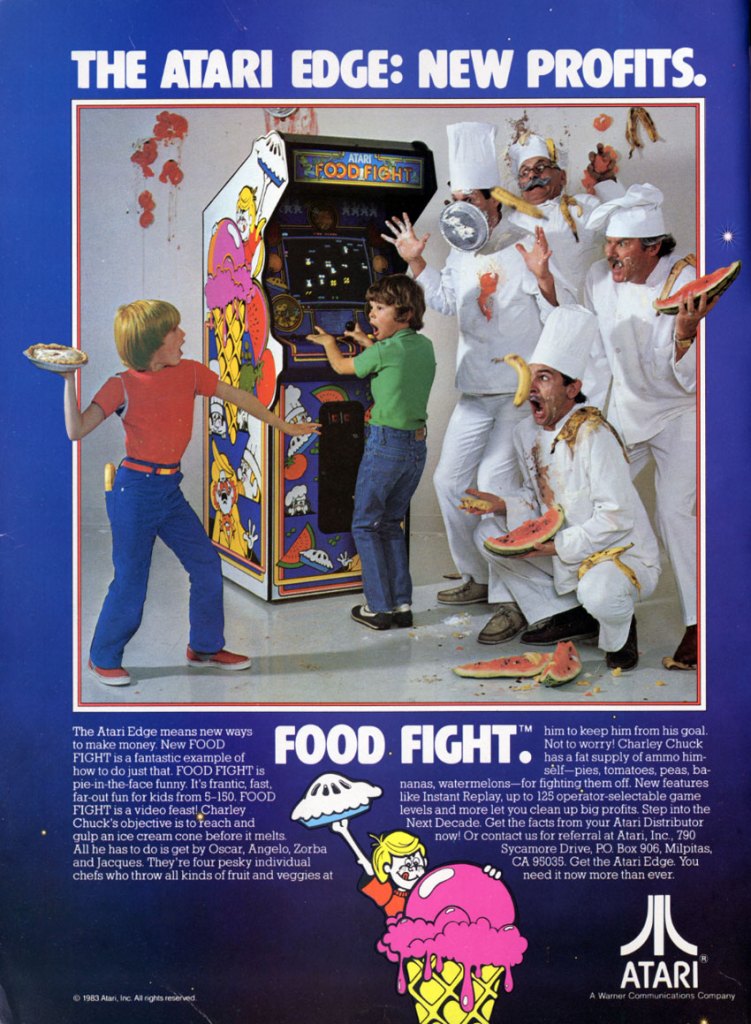
6. Food Fight arcade flyers
Food Fighter arcade flyer with illustrated artworks.
Food Fight arcade flyer with a photographic touch and actors.
I never got to play the 1980s game Food Fight in the arcades nor did I ever had the opportunity to play it on Atari consoles and Xbox 360. Released in 1983 in the arcades by Atari, Food Fight was designed to allow players to control a character moving through a 2D field to consume an ice cream on a cone (placed on the opposite end of the field) before it melts while avoiding the chefs who are out to chase and block the player.
The arcade flyer with illustrated artwork on the characters interacting with the arcade machine is really amusing to look at. Equally amusing is the other arcade flyer that had a photographic approach showing two kids (one playing the arcade machine and the other about to throw a pie) and four chefs. Considering the nice visual concepts Atari came up with for the arcade flyers, Food Fight actually never became a commercial hit selling only a few thousand arcade units.
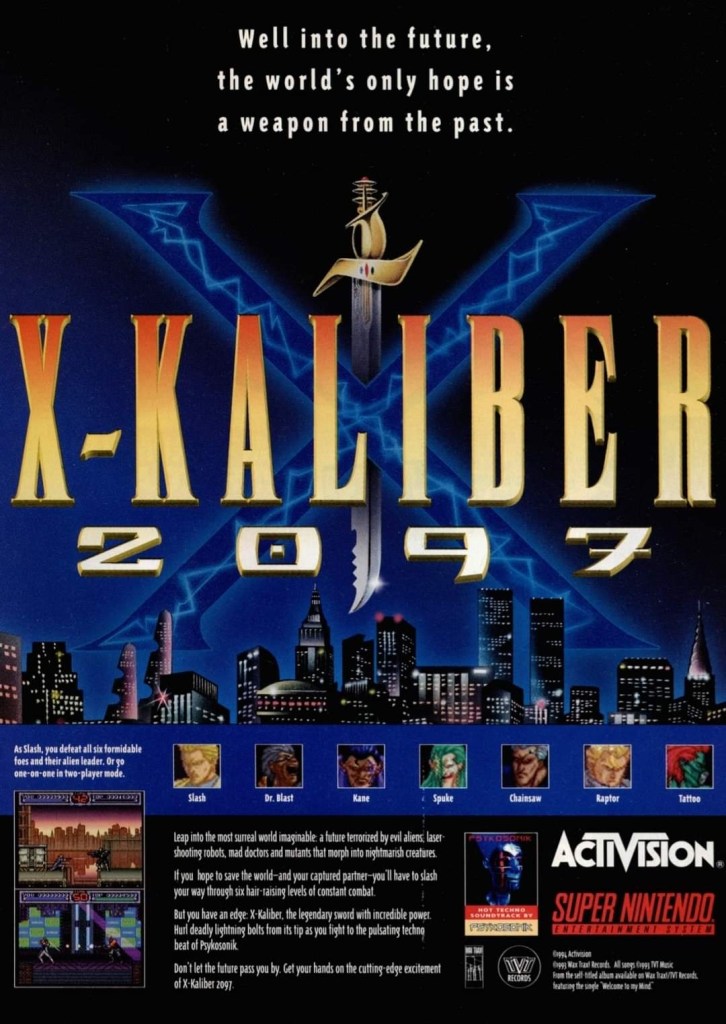
7. X-Kaliber 2097 print ad
This print ad from the 1990s had a nice visual style.
The Super Nintendo Entertainment System (SNES) had plenty of 2D side-scrolling adventure games and among them was X-Kaliber 2097 released by Activision (now a Microsoft-owned company and integral part of Xbox) in America in 1994. The game had a really interesting story concept about a chaotic far future society plagued by overwhelming crime and violence. The print ad showed a mild taste about the game’s concept and gameplay, but it was more effective when it comes to showing the formidable foes that await the playable protagonist Slash. This print appeared in several comic books I read and was eye-catching.
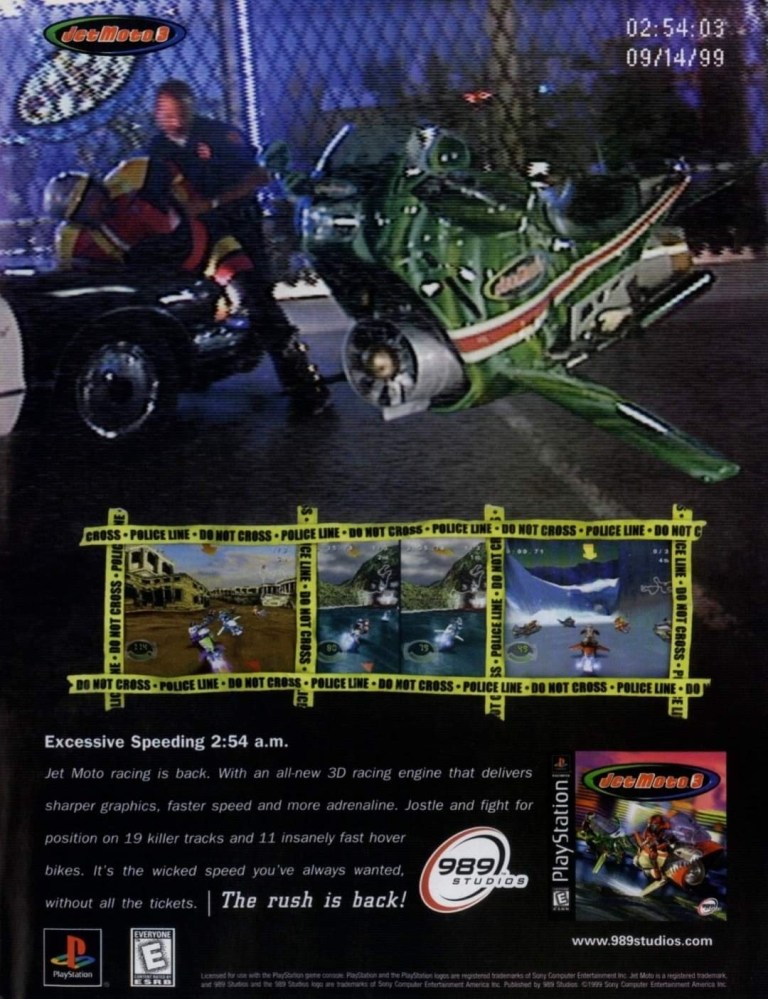
8. Jet Moto 3 print ad
When was the last time the police caught you for over-speeding?
This print ad for Jet Moto 3 had a clever concept of showing a police officer apprehending a jet biker for over-speeding. The visual presentation was done in photo-realistic fashion to make the sci-fi aspect of the video game look real. The ad made me interested enough to do some research of Jet Moto 3 a few months before finally buying it for my PlayStation console.
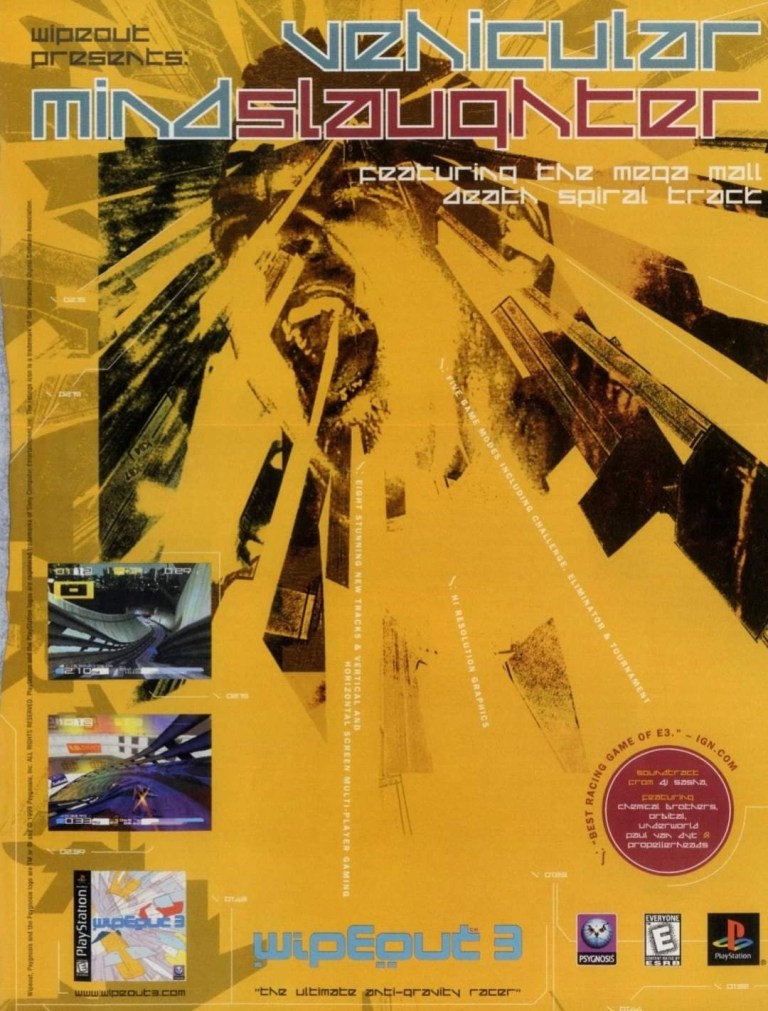
9. Wipeout 3 print ad
Were you fond of futuristic racing and techno music back in 1999?
Released in 1999, Wipeout 3 was one of those video games that showcased what the PlayStation (originally launched in Japan in 1994) could do in terms of visual fidelity, special effects and frame rates. The print ad, which had a radical visual concept emphasizing intensity and energy, had style listing down vertically the technical details of the game which required a close look in order to be read. With only two screenshots displayed, the ad makers smartly included the E3 acclaim of “Best Racing Game of E3” as well as the names of artists behind the game soundtrack on the lower-right corner. This print ad was cool and intriguing to look at.
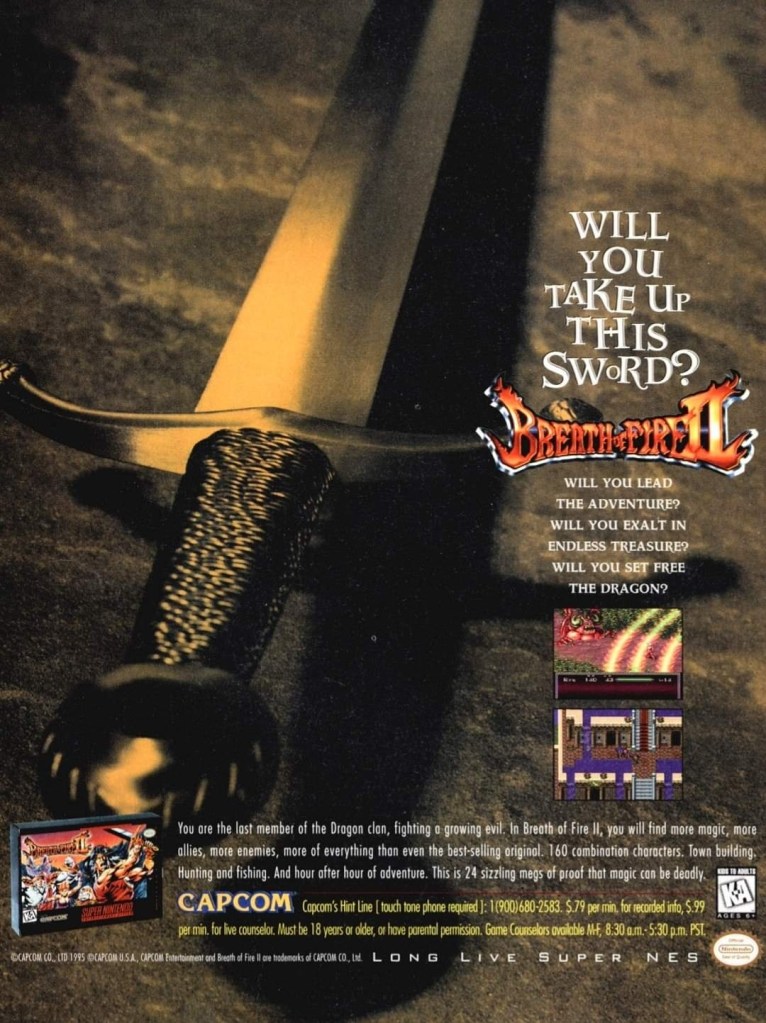
10. Breath of Fire II print ad
This was a good effort to lure American gamers to buy and play Breath of Fire II.
When Breath of Fire II was released on the SNES in America in late 1995, Japanese role-playing games (JRPGs) were not yet wildly popular among American gamers. To grab the attention of gamers, Capcom and the ad makers came up with the eye-catching image of a sword and posted key questions to emphasize the fantasy aspect of Breath of Fire II. While the game received mixed reviews upon its North American release, Nintendo Power listed it as 171st best game in its Top 200 Games chart published in 2006.
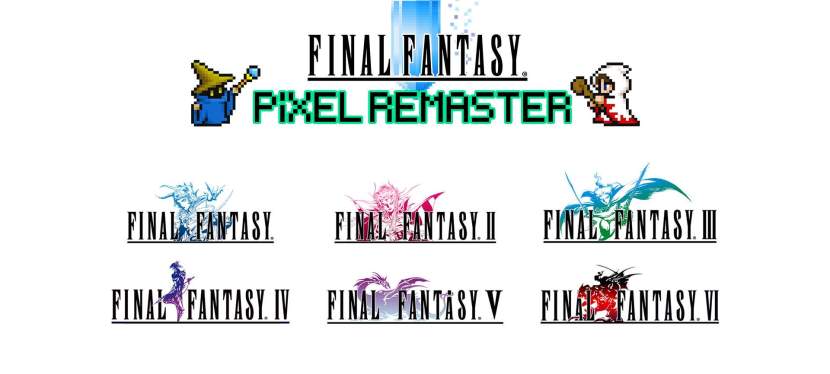
In case you missed the official Xbox presentation of the 2024 Tokyo Game Show (click here to watch), Square Enix formally announced that Final Fantasy Pixel Remaster has officially been released for Xbox Series X and Xbox Series S plus Windows PC. Watch the announcement video below.
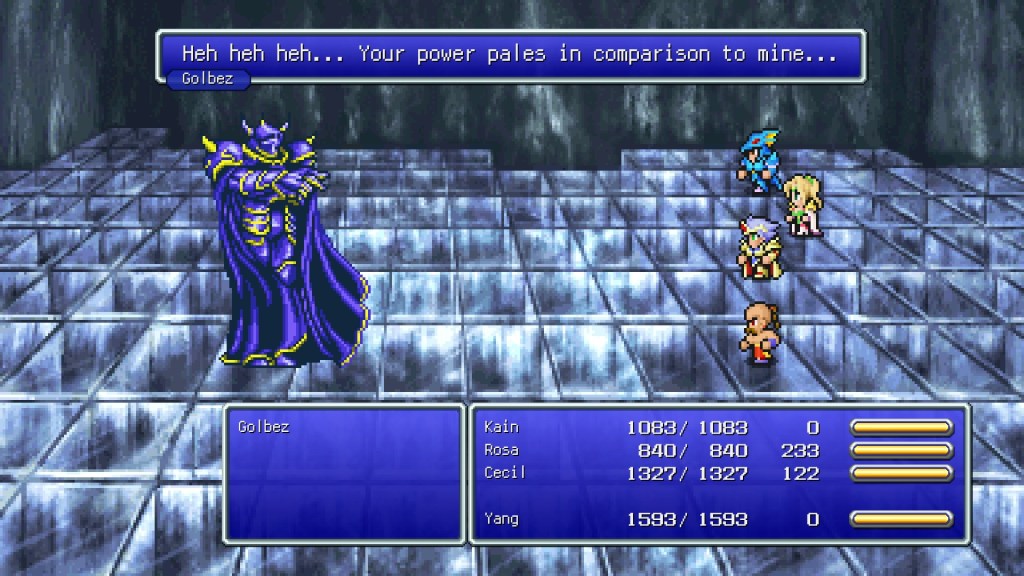
This is what Final Fantasy IV looks like in remastered form.
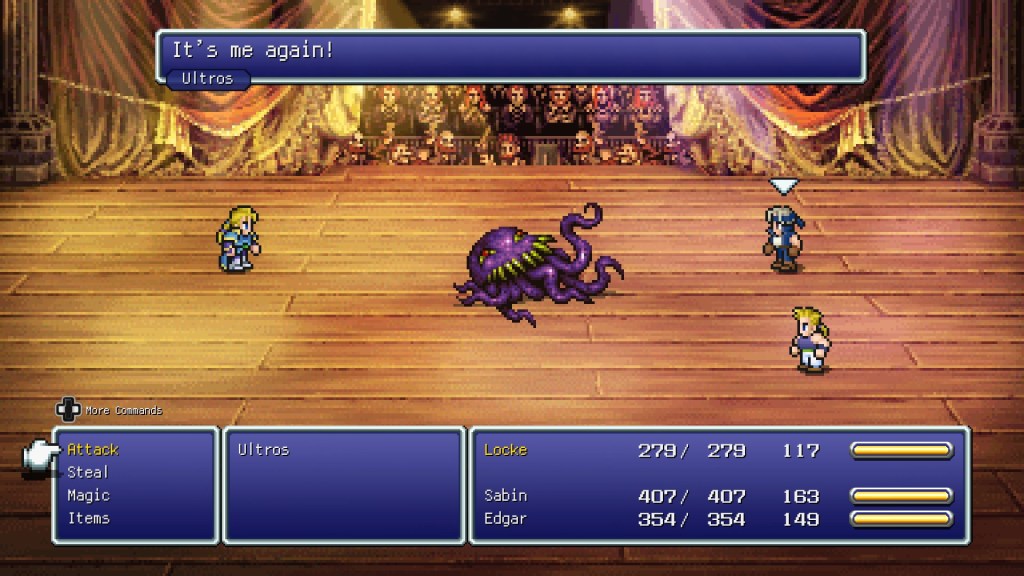
Each classic Final Fantasy game has its 2D pixel graphics and artworks updated with high-definition gaming in mind, and their soundtracks have been re-arranged. In what is a clear attempt by Square Enix to enhance the gameplay experience and user-friendliness, there were tweaks made to the user interface. Also added were extra stuff such as bestiary, illustration gallery and music player.
The Xbox and Windows PC releases of Final Fantasy Pixel Remaster is indeed a move towards the right direction by Square Enix and it is clearly the result of that company’s renewal of ties with Team Xbox. Final Fantasy Pixel Remaster was launched on other platforms previously and the Xbox ecosystem ended up being the last to have it for millions of gamers to enjoy.
For the Xbox gamers who are Final Fantasy fans as well as those who are fond of classic Japanese role-playing games (JRPGs) and those who simply love retro gaming, Final Fantasy Pixel Remaster is a very welcome addition that should not be missed. It is available now for digital purchase as a bundle but gamers are free to choose to buy the games individually based on their current taste or based on how much they could afford right now. It is clear that buying the bundle of six Final Fantasy classic games is still the best value for money.
Welcome back, my readers, YouTube viewers and all others who followed this series of articles focused on YouTube videos worth watching. Have you been searching for something fun or interesting to watch on YouTube? Do you feel bored right now and you crave for something to see on the world’s most popular online video destination?
I recommend you check out the following topics and the related videos I found.
#1The disappointing 9th console generation – If you are a long-time gamer who owns a PlayStation 5 (PS5) and/or an Xbox Series X or Xbox Series S console, you might have noticed how disappointing the 9th console generation (started in late 2020) has been when compared to the previous four generations.
Apart from the fact that the COVID-19 pandemic deeply altered the games industry on the sides of gamers and game developers, the 9th console generation has seen lots of unfulfilled promises from the console makers, Xbox Game Pass (XGP) changing for the worse, great gaming experiences not being realized, consumers getting screwed, the lack of focus towards the fans, woke garbage involved in game productions and a lot more. To understand what is going on in the 9th console generation, I urge you to watch the selected videos below.
#2 Illegal immigration in America is the new slave trade – More than ten million people illegally entered the United States through the US-Mexico border since 2021, resulting in rising crime, increased taxpayers’ money spending on illegal aliens, and more hardship for America’s own citizens. That’s not all. There are cartels taking advantage of the open border in the south that kept thousands of people – including children – flowing into America and those illegal aliens themselves are forced to repay the debts to the cartels. These should remind you how bad immigration became in America under Joe Biden and Kamala Harris (border czar who loves criminals and terrorists). This PrageU video is a must-watch.
#3 Retro gaming reported by KTLA 5 – It is not every day you get see retro gaming reported on mainstream news outlets. In America, KTLA 5 made a video news report about the resurgence of retro gaming and it’s not limited to gamers buying collected editions of decades-old games for their modern game consoles. In fact, the video game store in KTLA 5’s report is selling old games in physical copies as well as old game consoles at affordable rates. Watch the video below.
#4 The history and American origin of the Lawson convenience store enterprise – Here in the Philippines, the convenience store chain Lawson has been gradually growing and becoming more competitive with the likes of 7-Eleven and Uncle John’s. Not only that, Lawson is gaining a following of customers who keep on returning because of the variety of food and beverage items offered plus convenient ways of doing financial transactions. While it is common knowledge that Lawson is from Japan and is a Japanese enterprise, not too many people are aware of its American origin. To learn about the history of Lawson, watch the video below.
#5 Israel’s intensified campaign against Hezbollah – After the recent attacks against several members of the Iranian-sponsored terrorist group Hezbollah through their pagers, Israel’s military campaign against the terrorists intensified. This happened even as Hezbollah kept on firing at Israel (in response to the pagers attacks) and even hitting Nazareth which itself has many Arabs and Muslims in its local population. Don’t let the pro-terrorist, pro-Islamist mainstream news media fool you with their persistent lying. Watch the videos from credible news sources below to realize the truth. Lastly, keep praying to the Lord to support Israel and bring down the forces of evil.
6. Kamala Harris’ dishonesty and pathetic acting about border security explained
In recent times, the Communist Vice President of the United States Kamala Harris visited the US-Mexico border to check on the situation there as illegal immigration added so much to crime. The problem here is that Kamala was simply acting to be responsible and working, and it is not a secret that the Democrats hired Communist Hollywood people to stage it behind the scenes. Sky News Australia’s video below is a must-see and remember that Democrats always love illegal aliens, criminals, abortion and terrorists. Kamala herself publicly declared her support for illegal aliens and defended them.
Disclaimer: This is my original work with details sourced from reading the comic book and doing personal research. Anyone who wants to use this article, in part or in whole, needs to secure first my permission and agree to cite me as the source and author. Let it be known that any unauthorized use of this article will constrain the author to pursue the remedies under R.A. No. 8293, the Revised Penal Code, and/or all applicable legal actions under the laws of the Philippines.
Welcome back superhero enthusiasts, 1980s culture enthusiasts and comic book collectors! Today we go back to the year 1987 to explore a part of the Marvel Comics shared universe through the Web of Spider-Man monthly series.
In this review, we will examine the opening chapter of one of the more significant storylines of the entire publishing history of Spider-Man… Kraven’s Last Hunt. Behind the scenes, writer J. M. DeMatteis came up with a concept about a limited series featuring the Marvel hero Wonder Man getting buried and returning from the grave. After getting rejected, the writer redeveloped his concept, proposed it to DC Comics (with Batman in mind), got rejected again and pitched the concept again to Marvel (with Spider-Man in mind) with a new villain who would really define the storyline. Marvel accepted the proposal and DeMatteis proceeded to write it while adding more Spider-Man elements to it.
With those details laid down, here is a look back at Web of Spider-Man #31, published in 1987 by Marvel Comics with a story by J.M. DeMatteis and drawn by Mike Zeck.
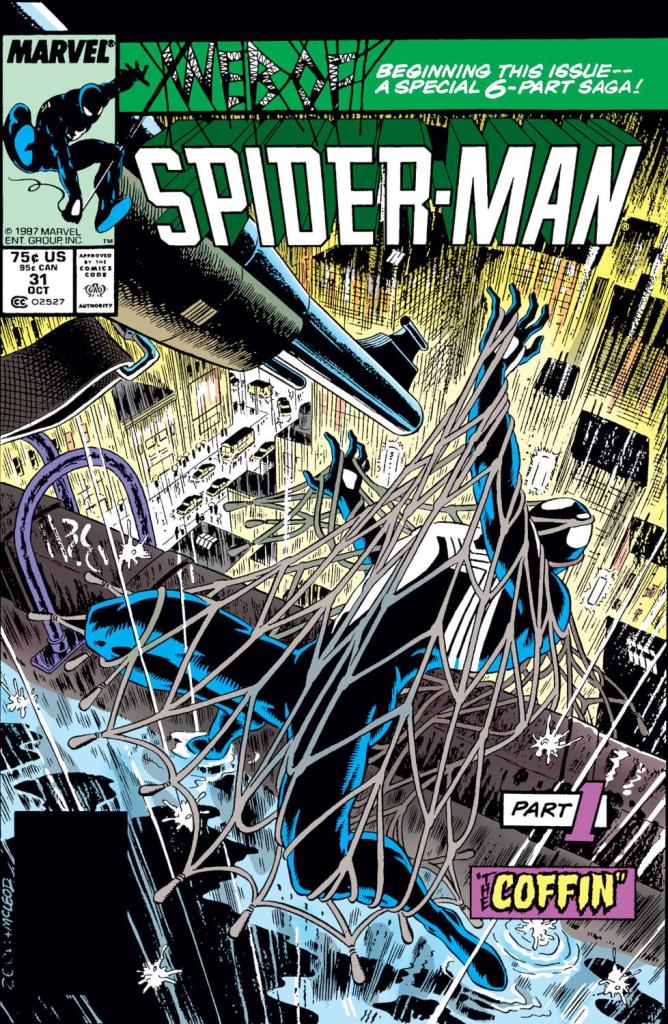
The cover.
Early story
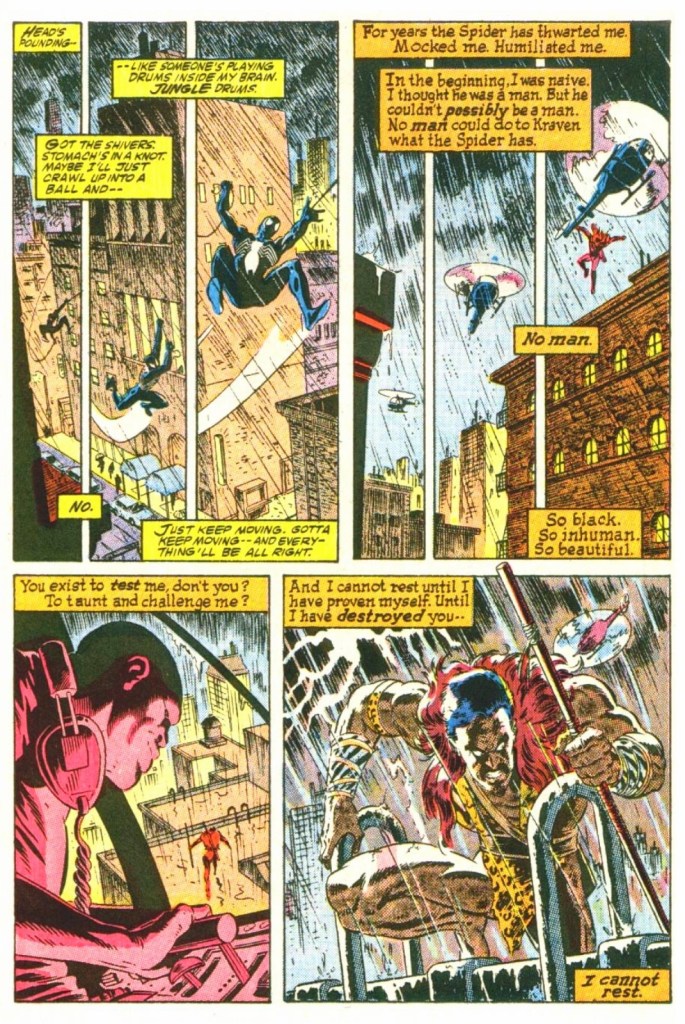
The story begins with Kraven The Hunter moving and attacking like an animal interacting with life-sized figures of animals inside his castle. Afterwards, he slows down, gets a drink and walks into another large room that has an open coffin. He pulls out a black costume that carries the design of Spider-Man’s own costume. Kraven, who was a child when his parents arrived in America shortly after the overthrow of the Czar in Russia, is convinced that the world seem to have followed Russia’s sad example and he found dignity in the jungles instead of the cities. He found honor in the primal, not the civilized. He knows he will die soon and Spider-Man is the central part of his final pursuit in life.
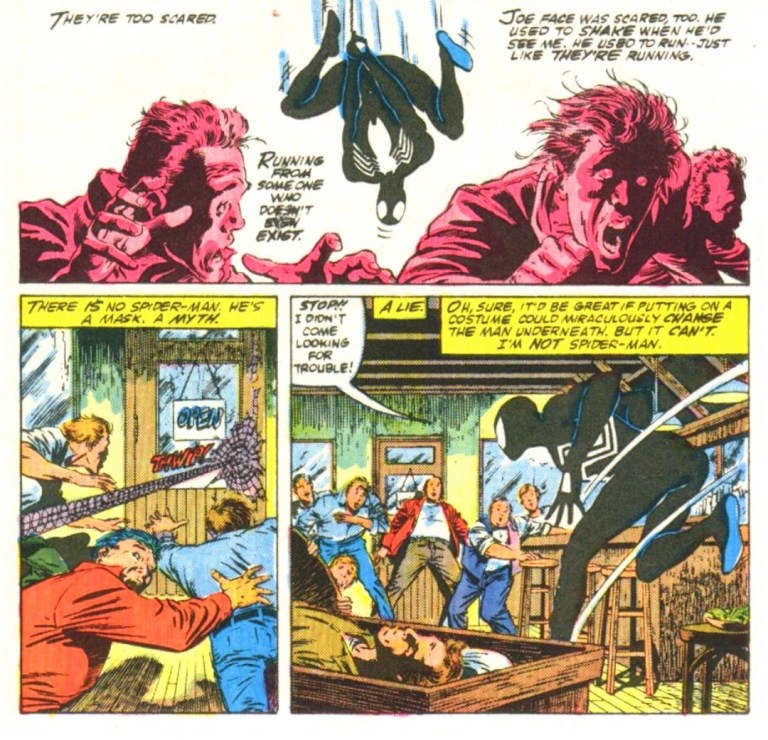
Meanwhile in another part of New York City, Spider-Man discreetly attends the private gathering of several men in a bar who pay their last respects to the late Joe Face (a helpful friend of Spidey). As soon as he revealed himself, the men got scared of him and tension intensified. The webslinger pays his respect to Joe Face and puts several Dollar bills into the collection of funds.
Spider-Man then swings his way home…
Quality
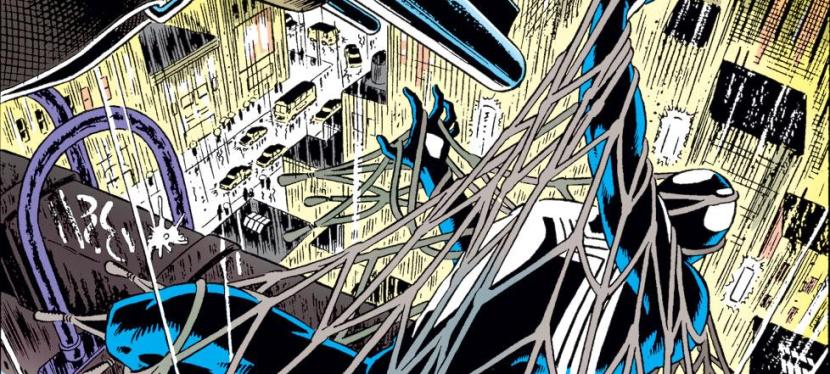
As Spider-Man travels, Kraven the Hunter pursues him obsessively.
I want to state first that this Spider-Man tale has a dark and gritty presentation. The story feels really grounded with reality and it has an almost perfect atmosphere for the concept about Kraven getting ready to eliminate Spider-Man and do something very ambitious afterwards. The pacing of the storytelling moved at a medium pace and most notably, the build-up is really great to follow.
Without spoiling the plot, Kraven is truly the most featured character of this comic book as Spider-Man was written to be his moving target. DeMatteis invested a lot of creativity to build up Kraven not only as the definitive menace but also as a human being. Through the rich writing, Kraven is a man who developed and heavily prepared himself to achieve his goal. You will realize what he thinks about modern society, how he views life and why he is acting as if each day would be his last. As a villain, the evil of Kraven is very subtle yet he emerges as the deadliest foe of Spider-Man. This is truly a major development of the hunter when compared to his first-ever appearance in Amazing Spider-Man #15 (1964).
Through the views of Kraven, you will realize his own perception of Spider-Man which is intriguing to read as we readers know the webslinger’s true identity while the obsessed hunter does not. In relation to his obsession with Spider-Man, Kraven truly immerses himself with what he knows and does things that all other people would never do. I should also state that the hunter’s intense preparation has strong parallels with Batman’s approach on preparing himself for a major encounter.
As mentioned earlier, the webslinger is the target. Spider-Man appears as a disturbed and vulnerable figure and there is nothing that his powers can do to help him overcome his problems. As the build-up grows, the troubles of Spider-Man intensified which made the reading experience captivating.
Conclusion
People getting spooked by Spider-Man’s sudden appearance.
Web of Spider-Man #31 (1987) is truly a great read and it is also a very powerful opening of its storyline. By having Kraven as the definitive character and Spider-Man as the target, this comic book really subverted expectations backed with powerful writing by DeMatteis. Along the way, Mike Zeck’s artworks truly captured the dark and gritty tone of the script and this resulted in a very captivating visual presentation.
Overall, Web of Spider-Man #31 (1987) is highly recommended.
Welcome back, my readers, YouTube viewers and all others who followed this series of articles focused on YouTube videos worth watching. Have you been searching for something fun or interesting to watch on YouTube? Do you feel bored right now and you crave for something to see on the world’s most popular online video destination?
I recommend you check out the following topics and the related videos I found.
#1Google in legal trouble in America – Did you notice how overwhelming power Google really is in business as well as in your daily lives? Are you aware that Google made multi-billion Dollar deals with its competitors to ensure its dominance on search, online advertising and other forms of business? Google is now in legal trouble with the Department of Justice (DOJ) in America and ColdFusion’s video below is a must-watch!
#2 Games to look forward to while subscribing to Xbox Game Pass – In recent times, there were changes on Xbox Game Pass (XGP) implemented by Microsoft which I did not like (click here and here to learn the details). If you own an Xbox and you still have not yet subscribed to XGP, you should decide first based on how much you can afford to pay the new rates (note: there are different tiers to subscribe to in Game Pass), what kind of games you really like and how much time you can spare for playing in the comfort of your home. If you are into adventure gaming, then the video by YouTuber Skycaptin 5 below is a must-watch for your reference. Take note that one of the games shown has yet to be released and a few of the games may require the Ultimate tier of XGP.
#3 A look back at Amazing Spider-Man movies of Sony Pictures – Do you have any fond memories of the two movies that had actor Andrew Garfield as the cinematic Spider-Man? I saw The Amazing Spider-Man (2012) and The Amazing Spider-Man 2 (2014) in the cinemas and I can say that they never thrilled me nor satisfied me as much as the first two Spider-Man flicks of Tobey Maguire. Those movies directed by Marc Webb were not terrible actually but flawed works. Whether you loved or felt disappointed with the two Amazing Spider-Man movies, I urge you to watch the analytical video by YouTuber Owen Likes Comics below.
#4 25 years of the American launch of the Sega Dreamcast – It has been over twenty-five years since Sega launched the Dreamcast console in America. In gaming history, the date of September 9, 1999 is still remembered as the time when Sega really made a very serious effort to re-establish trust with American gamers and they made record-setting numbers in the first 24 hours. As such, it was no surprise that “25 years” or “25th anniversary” videos about the Dreamcast suddenly appeared on YouTube and posted below are videos I selected for your viewing.
#5 You, Me and the Movies’ video reaction of Clash of the Titans (1981) – Whenever I search YouTube for movie reaction videos about the 1981 film Clash of the Titans, not too many pop out for some reason. If you are interested to see the film but don’t have the time or money to watch it in full, then the reaction video by You, Me and the Movies should entertain you.
#6 The fall of Circuit City explained – Way back in 2001, I visited a branch of Circuit City in California. I visited because I was curious and also interested in video games and also movies on DVD format. What I found was a variety of consumer electronic products and the presence of TV units with built-in DVD drives caught my attention. It was my one and only Circuit City visit and many years later, their brand re-emerged when there were these widespread news reports about its bankruptcy and liquidation. If you want to learn about the rise and fall of Circuit City, watch the video below.
#7 GoodBadFlicks’ comprehensive video about The Blob (1988) –The Blob remake of 1988 has always been very entertaining to watch. Not only does it have a really solid story to tell, it has a fine blend of spectacle with well-crafted action/stunt scenes and top-notch practical effects. On 4K Blu-ray, the movie looks better than ever and it is worth purchasing. When it comes to the making of The Blob (1988), the best video to watch online is the one from YouTuber GoodBadFlicks which is posted below for your viewing pleasure.
Welcome back readers, fellow geeks and electronic gaming fans!
In this edition of the Retro Gaming Ads Blast (RGAB) series, we will take a look at another batch of retro gaming print ads – including arcade flyers – specifically about fighting games that were released in the 1990s. The said decade marked the time when Street Fighter II became a massive hit in the video arcades (and on game consoles) which sparked a wave of new fighting games from business competitors. In that same decade, 3D polygonal fighting games were also released which added greater choices of fighting games at the arcades and on game consoles that players could choose from.
For the newcomers reading this, Retro Gaming Ads Blast (RGAB) looks back at the many print ads of games (console, arcade, computer and handheld) that were published in comic books, magazines, flyers, posters and newspapers long before smartphones, social media, the worldwide web and streaming became popular. To put things in perspective, people back in the 1980s and 1990s were more trusting of print media for information and images about electronic games and related products.
With those details laid down, here is the newest batch of retro gaming print ads for you to see and enjoy…
1. Dead or Alive Japanese arcade flyer
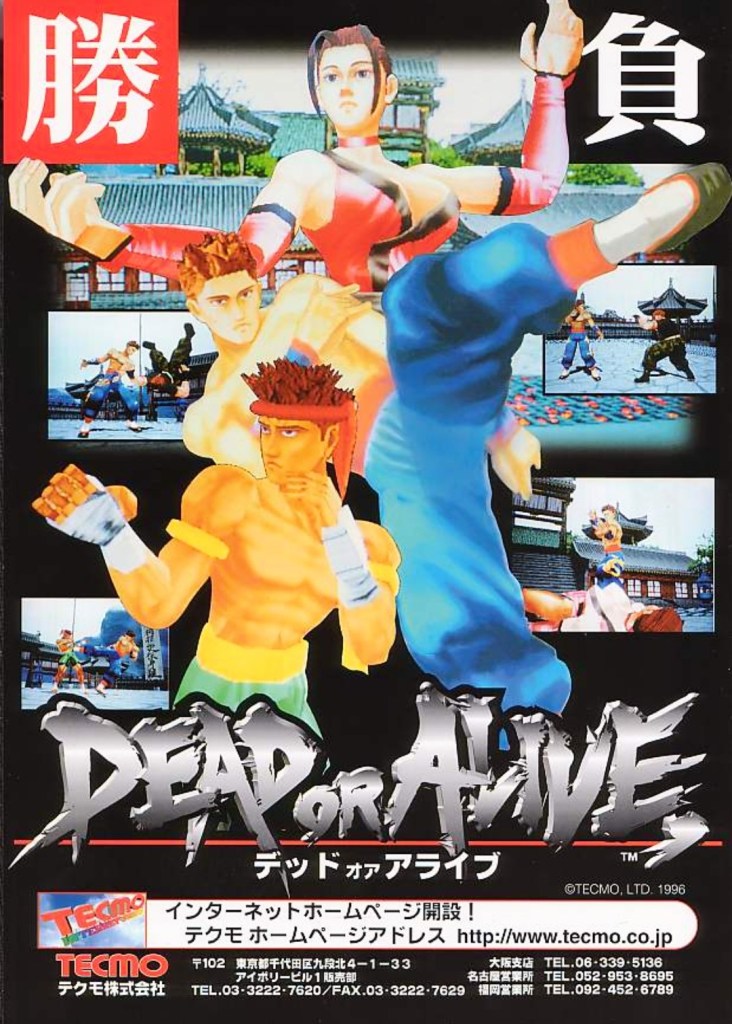
Dead or Alive was the start of new success that impacted the direction of Tecmo in the gaming industry.
The above arcade flyer of Dead or Alive gave Japanese arcade operators and gamers a taste of what to expect with the game. While the screenshots showed some resemblance with what gamers saw in Virtua Fighter 2, the character designs Tecmo and its developers came up with were unique.
Before Dead or Alive was released in Japanese arcades in 1996, company Tecmo was in financial trouble and they asked Tomonobu Itagaki to make a fighting game similar to Sega’s polygonal blockbuster Virtua Fighter. A breakthrough for Tecmo happened when Sega announced they were licensing their Model 2 arcade to third-party companies which paved the way for Itagaki’s team to make Dead or Alive with it. The game became a big hit and it paved the way for Tecmo to release it on Sega Saturn and PlayStation, and the sequels that followed years later.
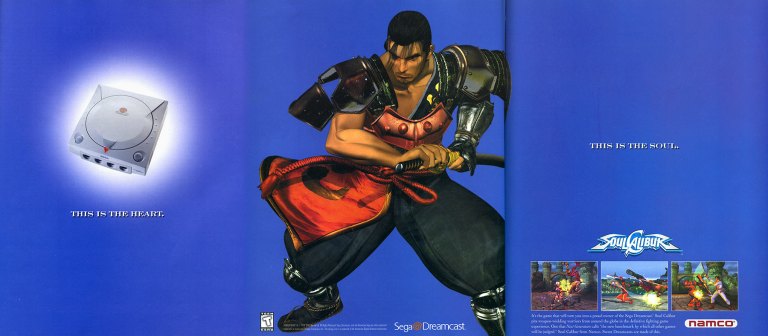
2. North American Soulcalibur Dreamcast version print ad
Namco came up with a creative approach to emphasize heart-and-soul promoting their game and the Dreamcast.
On September 9, 1999, Sega launched their Dreamcast console in America. With a gap of around ten months between the Japanese launch (November 1998) and the American launch, Sega had time to prepare Dreamcast’s release to American gamers with a huge lineup of games (both Sega’s games and from other publishers). Fortunately for Sega, they had Namco (their rival on arcade games) supporting their console.
Behind the scenes, Namco’s developers worked hard to not only port their arcade hit Soulcalibur to the Dreamcast, but to enhance the graphics using the console’s more advanced technology. The visual enhancements include rendering all of the games stages (and backgrounds) into full 3D polygonal environments. Namco also implemented different game modes and added even more content to ensure satisfaction to Dreamcast gamers.
The above 3-page print ad of Soulcalibur on Dreamcast was undeniably strategic and captivating to look at. The ad described the console as the heart, showed Soulcalibur character Mitsurugi (one of the game’s most popular characters) in the middle and then described the game (with 3 screenshots of game rendered with Dreamcast graphics) as the soul. It was a strong way to promote both the game and the console. In the years that followed, Soulcalibur grew into a popular fighting game franchise and the Dreamcast version will always be remembered as the crucial turning point.
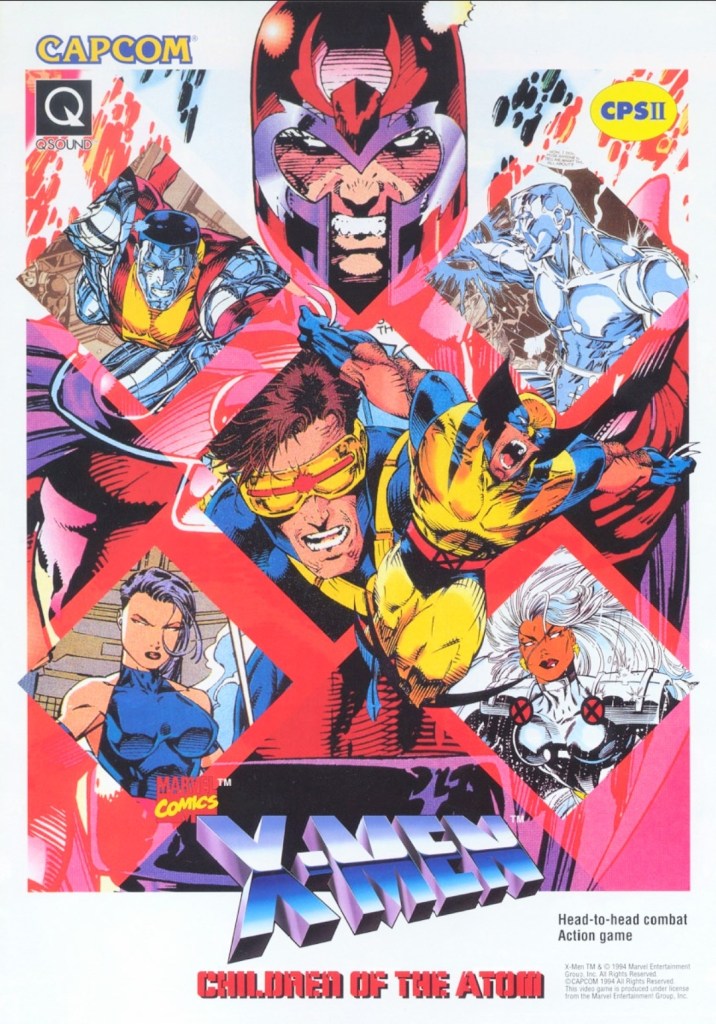
3. X-Men: Children of the Atom arcade flyer
Anyone who read lots of X-Men comic books in the 1990s should be able to tell which character was drawn by which artist.
When Capcom first released X-Men: Children of the Atom in the arcades in the mid-1990s, I was surprised because I did not anticipate the day would come when the company behind Street Fighter II would actually make a 2D fighting game showcasing the Marvel’s mutants. Even more intriguing was the X-Men art Capcom used for the arcade flyer to promote the game. I recognize Jim Lee’s artworks of Magneto, Cyclops and Colossus. The art of Wolverine shown was drawn by Andy Kubert. It was a wise move for Capcom (with Marvel as a business partner) to use established X-Men comic book artworks instead of having their internal illustrator draw the characters. That being said, this arcade flyer still looks great and captivating to look at.
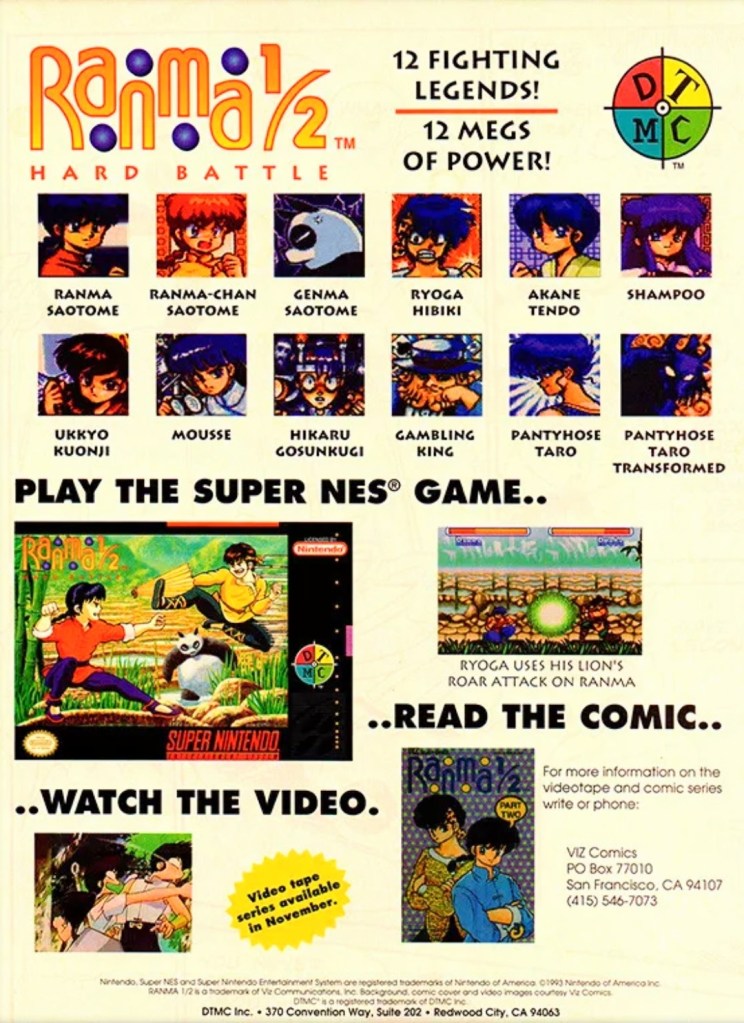
4. North American Ranma ½: Hard Battle print ad
A print ad promoting the game while saving some space to promote the anime and comic books.
By 1993, Street Fighter II and its upgraded follow-ups were wildly popular both in the arcades and on game consoles around the world. At the same time, there were many other 2D fighting games released to compete with and cash-in on Street Fighter II’s success. Believe it or not, the established anime franchise Ranma ½ saw a video game adaptation in the form of a 2D fighting game – Ranma ½: Hard Battle.
The North American print ad above published by DTMC (in cooperation with Viz Communications) promoted the game (one screenshot, the SNES game box and images of the characters as they appeared in the game) as well as Ranma ½ on anime videos and comic books. The way it was presented, the print ad promoted Ranma ½: Hard Battle without much heart nor passion.
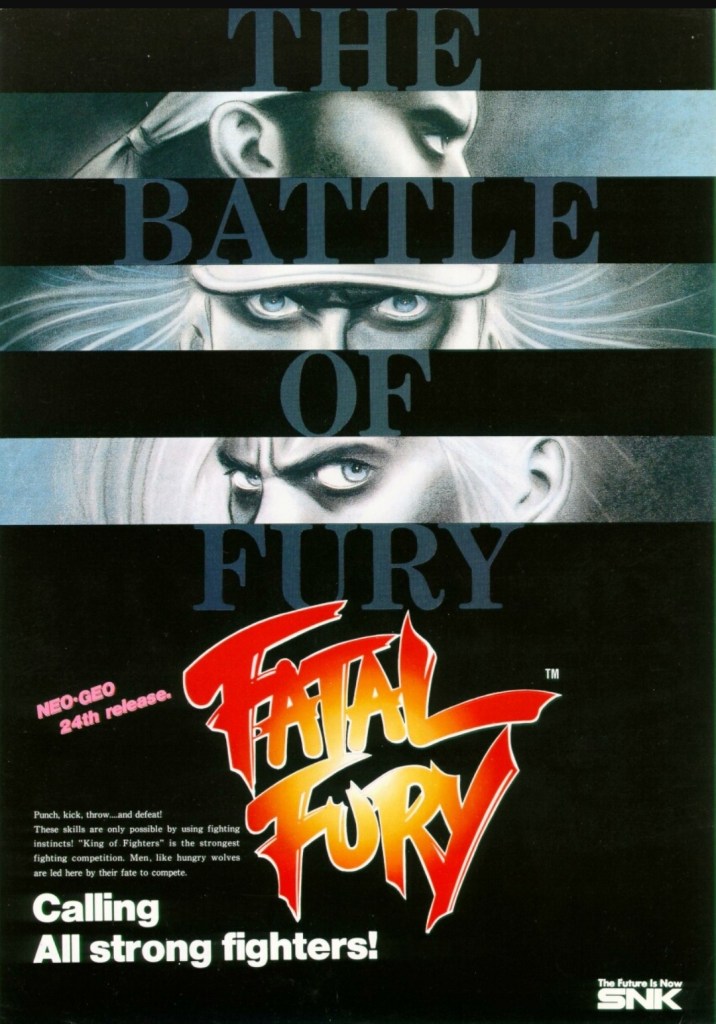
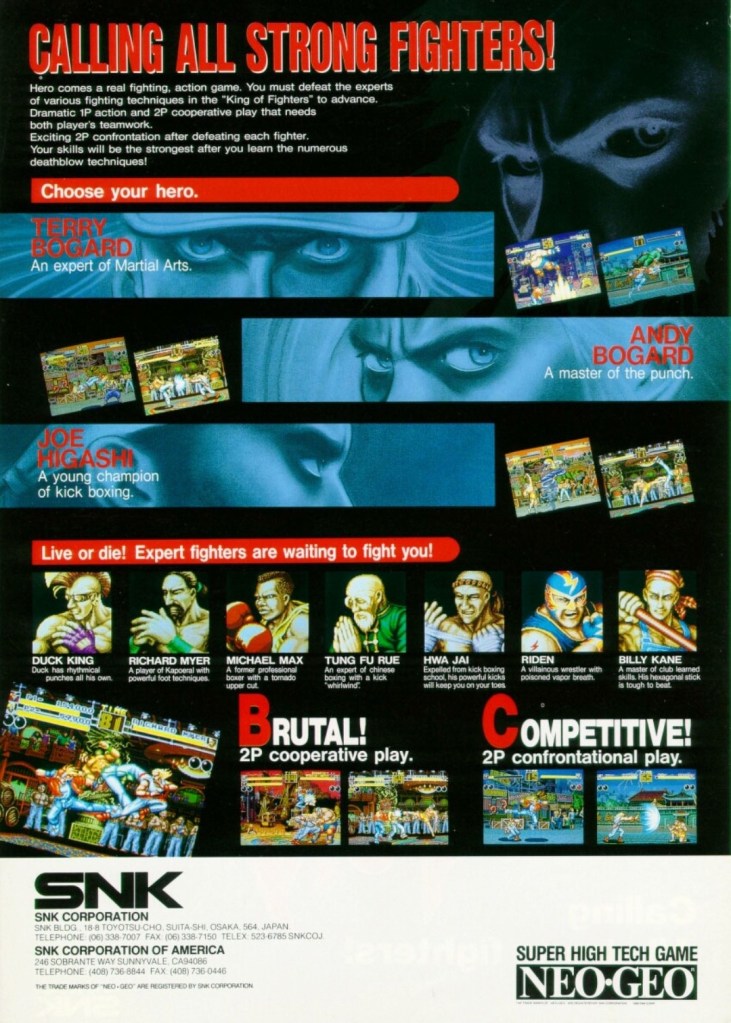
5. Fatal Fury: King of Fighters arcade flyer
An intriguing visual presentation on the front.
You get to know the characters and what the game features are.
There is no doubt that Fatal Fury: King of Fighters is the most significant game that SNK made. Apart from being the company’s first fighting game for the Neo Geo system, it established the fictional “king of fighters” tournament that became the core concept for The King of Fighters series of games in the years that followed. Fatal Fury itself is notable for being designed by Takashi Nishiyama, a former Capcom employee who created the original Street Fighter game. What Nishiyama could not do with Street Fighter, he accomplished while making SNK’s fighting game. Compared with the combo-oriented approach of Street Fighter II, Fatal Fury was designed to emphasize the timing of special moves, confrontational play, cooperative play and the 3D-like spacing between characters (background row and foreground row in each stage) while telling a story in a solid way.
The above arcade flyer of Fatal Fury has this unique looking artwork on the front showing stylized rectangular shots of the major characters Terry Bogard, Andy Bogard and Joe Higashi. On the other side of the flyer are the details that emphasized the creative concept of the game, who the characters are and what they could expect with regards to gameplay features. This flyer is still captivating to look at and it could entice you to try playing the original Fatal Fury game before trying out the sequels and spin-offs.
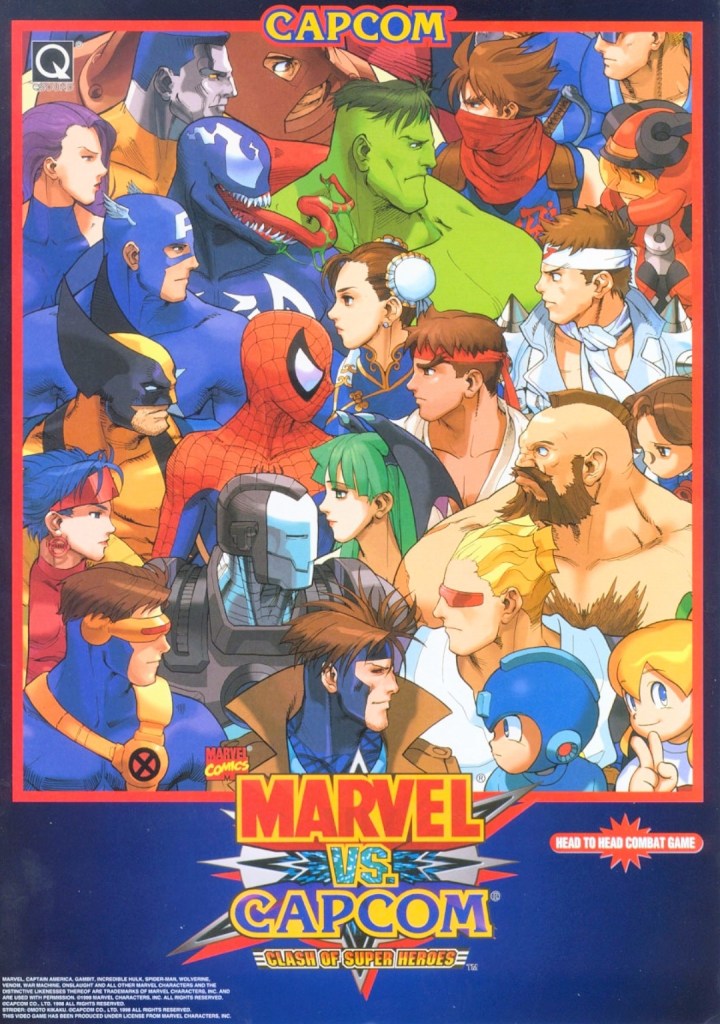
6. Marvel vs. Capcom: Clash of Super Heroes arcade flyer
This is NOT a comic book crossover.
If there is anything that truly emphasizes the essence of a fictional crossover in terms of visuals, it’s the art that Capcom and Marvel agreed to for Marvel vs. Capcom: Clash of Superheroes which is evident on the front of the above arcade flyer. By looking at how the Marvel characters were drawn, it looks like someone at Capcom illustrated the artwork as the Capcom characters still maintained that particular art style seen in the artworks of the Japanese company’s other games like Street Fighter, Darkstalkers, Mega Man and Strider. Regardless, the artwork still is amusing to look at.
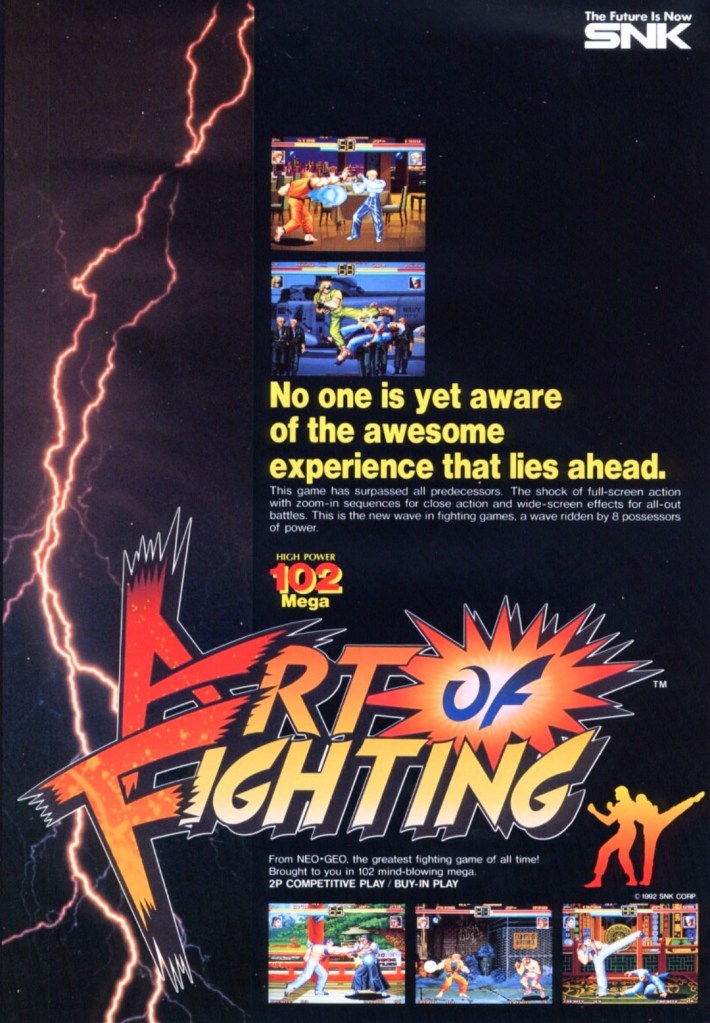
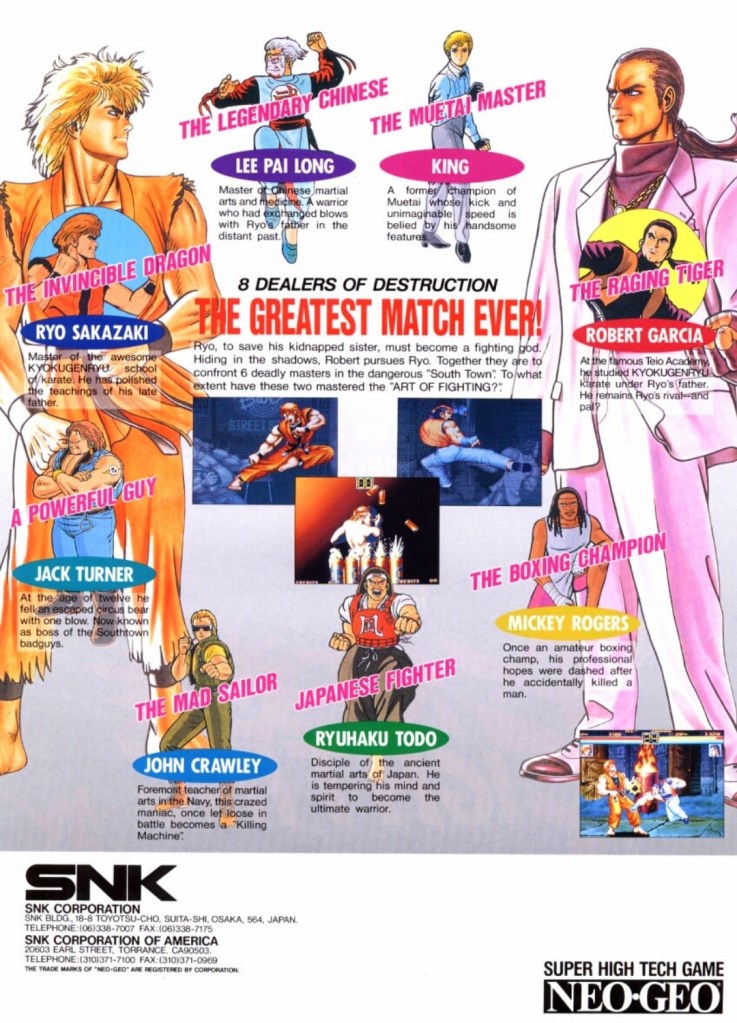
7. Art of Fighting arcade flyer
The front of the flyer.
The cast of characters showcased on the other side of the flyer.
Following the success of Fatal Fury, SNK went on to release Art of Fighting in arcades in 1992 and it became successful enough for the company to make sequels. With regards to the realm of fantasy, Art of Fighting was part of the same fictional universe as Fatal Fury and The King of Fighters, and there were times when its own characters appeared in other SNK games.
Art of Fighting’s arcade flyer had an energetic visual concept on the front with a rectangular lightning portion on the left balanced with five screenshots of the game itself. Once you get to the other side of the flyer, you will see really nice art of the characters with Ryo Sakazaki and Robert Garcia as the most dominating figures. Sakazaki and Garcia are the major characters of the Art of Fighting series. This flyer confidently introduced the characters and succeeded in making them look interesting.
8. Fighter’s History arcade flyer and print ad
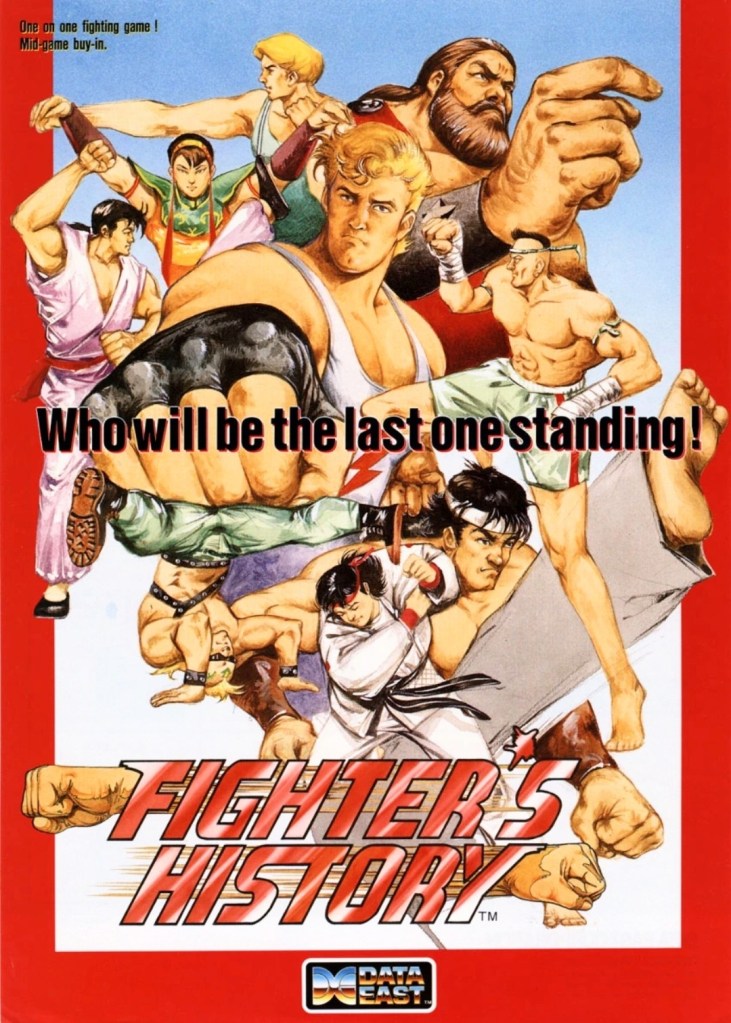
Great looking front artwork showing the game’s characters, posing and some action.
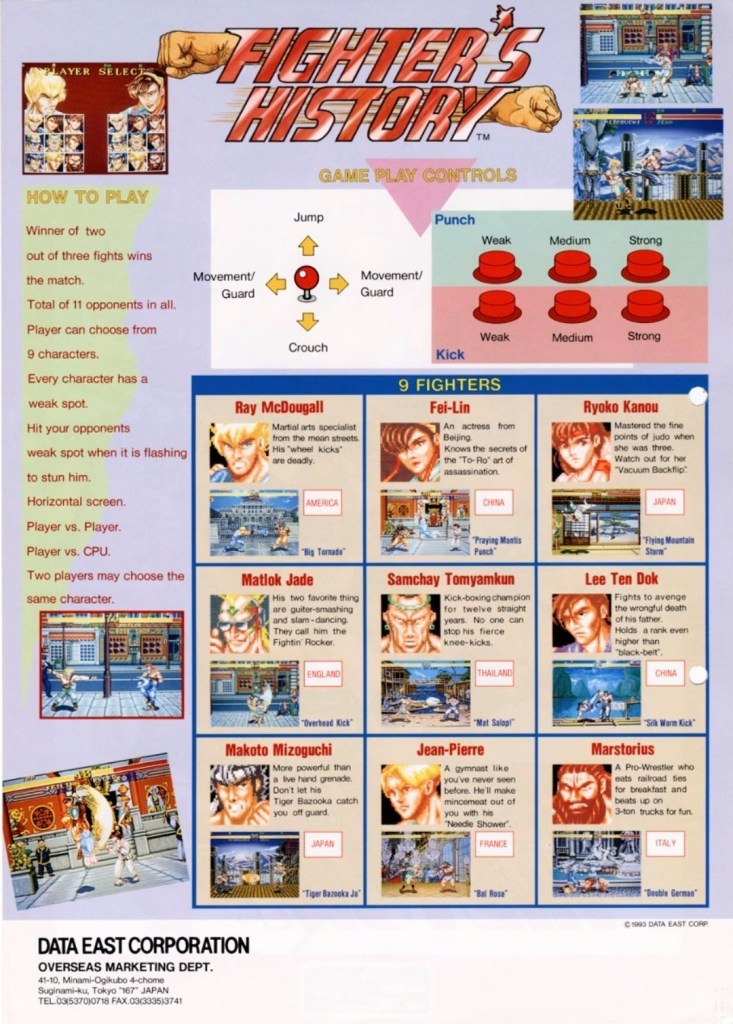
If you look closely at the controls, you will see the six-button layout and functions which are the same with those used in Street Fighter II.
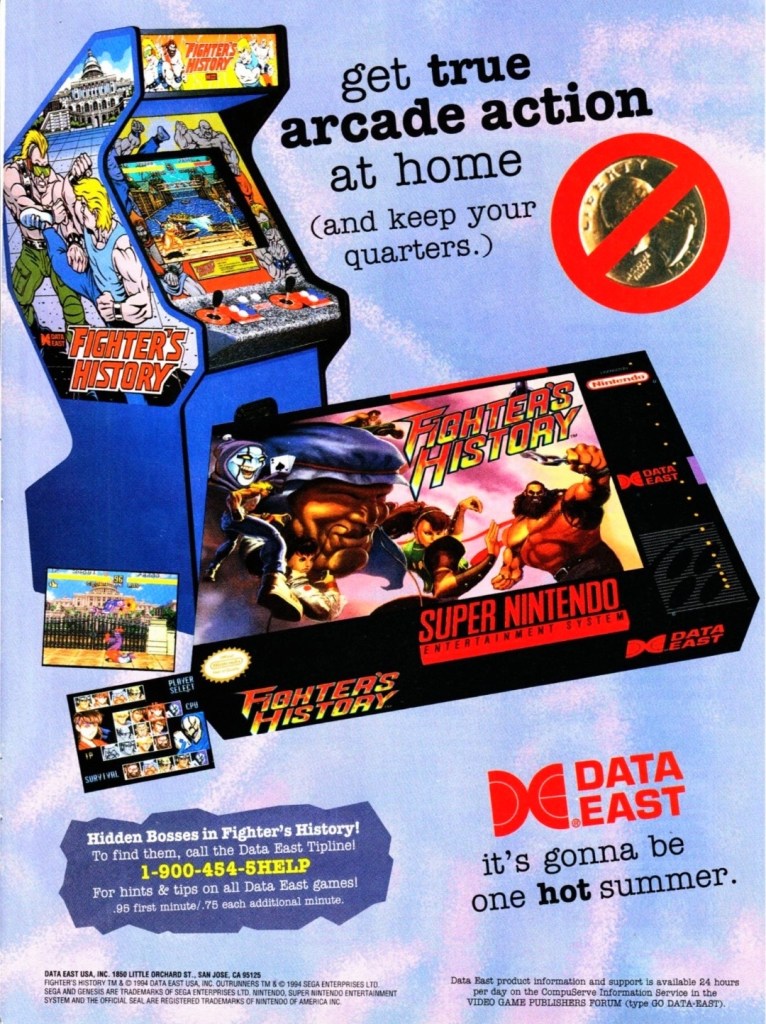
Data East offered two ways for gamers to enjoy Fighter’s History – pay a high price for the SNES version or gamers can go play the game in the arcade by dropping a few coins.
In 1993, Data East released their fighting game Fighter’s History in the arcades around the world. Along the way, the company released their arcade flyer which had a very captivating art work on the front featuring their characters and some action. The other side of the flyer showed the technical details on how to play, how the control works and who the characters are. Fighter’s History was nicely received in the arcades and the success led Data East into porting the game for the Super Nintendo Entertainment System (SNES). If you look at the print ad above, you can see how clever Data East was promoting the SNES version of the game while keeping an image of the arcade machine which serves like a subtle reminder that the same game is still available in video arcades.
Shortly after the release of Fighter’s History in the arcades, there were gamers who noticed that it had certain visual and gameplay elements that made it so familiar with what Street Fighter II had. When Capcom became aware of the similarities, they sued Data East claiming that Fighter’s History was too similar to their game and that copyright infringement was committed. Capcom lost the case ultimately and Data East went on to release two more Fighter’s History games.
9. Virtua Fighter 3 arcade flyer
Virtua Fighter 3 truly raised the standards for arcade game graphics back in 1996.
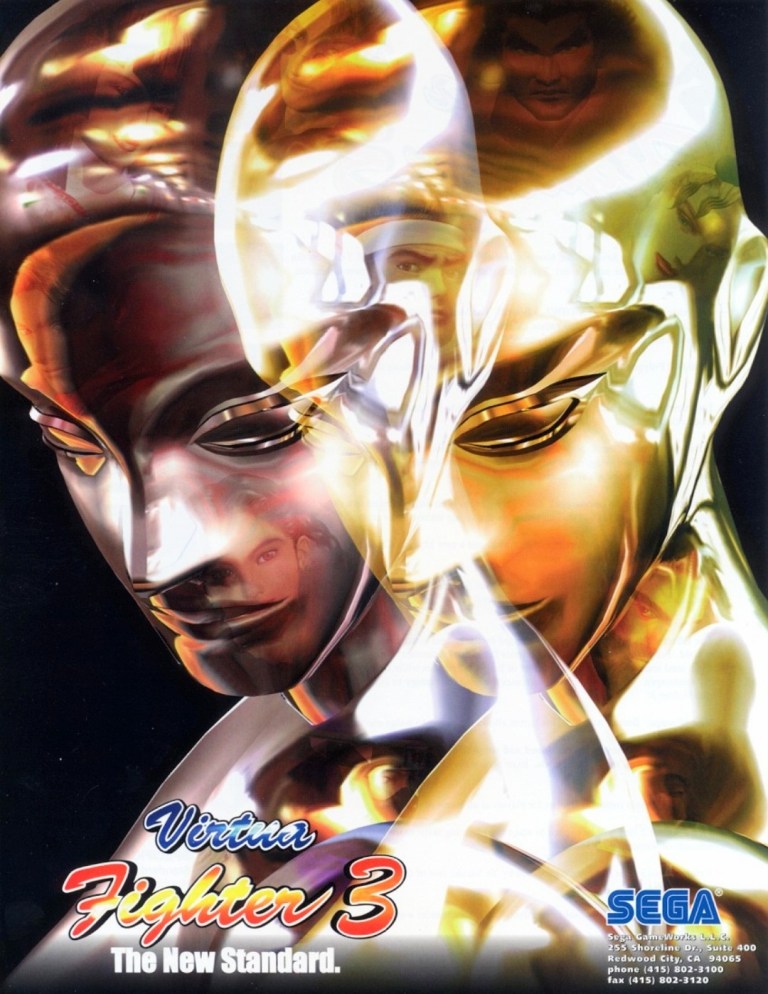
When it comes to gaming innovation and standing out among the rest, Sega did exactly those when they released Virtua Fighter 3 in arcades in 1996 and it had the best-looking and really mind-blowing graphics at the time. Developed by AM2 (led by Yu Suzuki) on the very expensive Model 3 arcade hardware, Virtua Fighter 3 broke new ground on graphics as it moved over 1 million polygons per second, had highly detailed visuals on the characters and surroundings, realistic reflection effects, detailed shining, parallel lighting and high-specular Gouraud shading to name some. Even the characters’ eyes followed the opponent’s position.
The Virtua Fighter 3 arcade flyer showcased their reflective, metallic character Dural who in turn was part of the graphical showcase (emphasizing reflections, smooth animation and liquid metal effects) when the game was previewed in the 1996 AOU event in Japan. The words “The New Standard” written on the lower-left corner of the front of the flyer was justified and truthful.
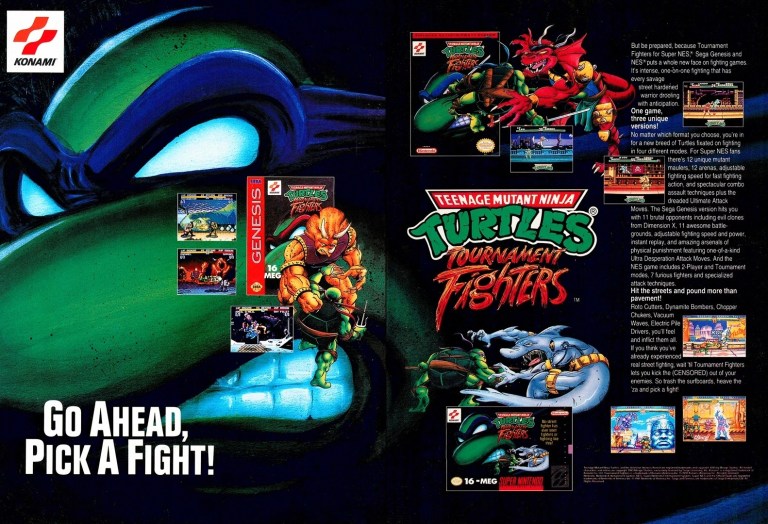
10. Teenage Mutant Ninja Turtles: Tournament Fighters print ad
This print ad had a nice visual presentation and was easily recognizable to the many TMNT fans.
In 1989, the Teenage Mutant Ninja Turtles (TMNT) franchise made quite a splash on video games which is not surprising as the multimedia franchise was already a popular in the West. More video game adaptation of TMNT were released in the early 1990s providing fans and gamers a lot of fun gameplay at the arcades (click here) and on consoles. Konami had the video game rights of TMNT and in a clear response to the sudden popularity of fighting games, they released Teenage Mutant Ninja Turtles: Tournament Fighters on the most popular game consoles of the time achieving varying levels of success critically and commercially (note: the SNES version stood out as the best). This print ad of the fighting game was effective in visually promoting the three console versions and the displayed text contained enough information to lure the attention of both fans and gamers.
Disclaimer: This is my original work with details sourced from reading the comic book and doing personal research. Anyone who wants to use this article, in part or in whole, needs to secure first my permission and agree to cite me as the source and author. Let it be known that any unauthorized use of this article will constrain the author to pursue the remedies under R.A. No. 8293, the Revised Penal Code, and/or all applicable legal actions under the laws of the Philippines.
Welcome back superhero enthusiasts, 1970s arts and culture enthusiasts, DC Comics fans and comic book collectors! Today we go back to the year 1976 to take a close look at a part of the DC Comics universe through a tale of the Action Comics monthly series.
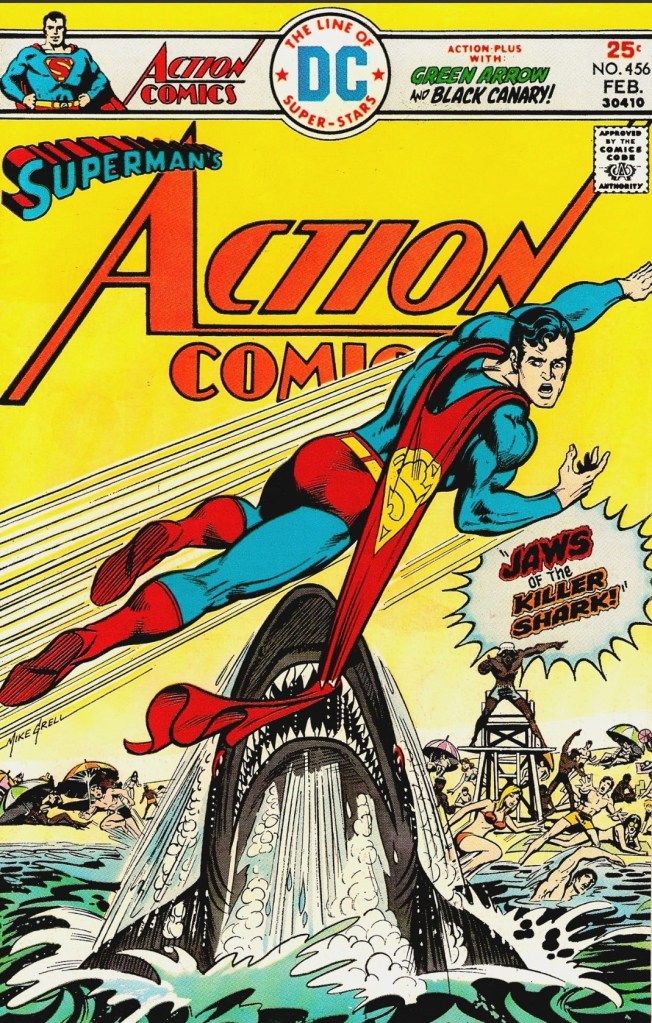
If you know your entertainment history, you should be aware that Steven Spielberg’s Jaws made a tremendous impact on millions of people who saw the film in cinemas in the mid-1970s. The massive success of the movie caused some people to become afraid of sharks which in turn convinced them to avoid swimming alone at sea. Over at DC Comics, it just so happens that they have a super villain who is actually a highly evolved shark called The Shark (Karshon).
With those details laid down, here is a look back at Action Comics #456, published in 1976 by DC Comics with a story written by Cary Bates and illustrated by Curt Swan.
The cover inspired by Steven Spielberg’s Jaws.
Early story
The story begins inside the Metropolis Aquarium where Captain Strong, young boy Jayson, young girl Jill and others closely watch a tiger shark swimming. What the viewers do not realize is that the tiger shark they are watching is a super shark (The Shark) whose evolution jumped by eons as a result of a freak nuclear accident from the previous years.
The Shark is a highly evolved mutant (half-fish and half-human) endowed with fantastic mental powers. The Shark previously encountered Green Lantern (Hal Jordan) who caused him to devolve back to his primitive form as a tiger shark.
At the aquarium, The Shark moves closely towards Captain Strong and Jayson with strong glass separating them. Suddenly, Jayson is turned into a pool of jelly on the floor and The Shark uses its power to form a large stream of water to break the way out of the Metropolis Aquarium and into the air.
Meanwhile, Lois Lane and Clark Kent are riding the metro-island ferry. A giant water sprout emerges near them…
Quality
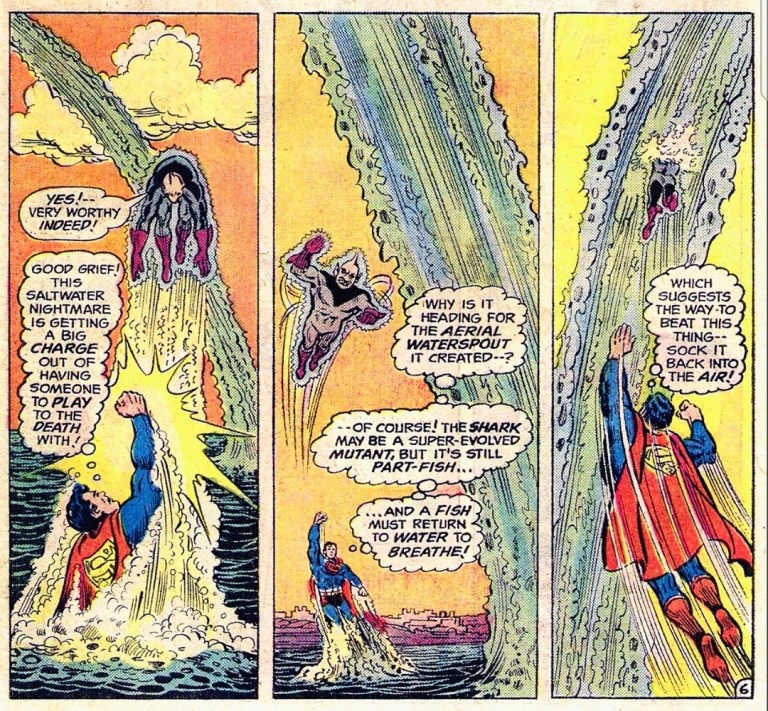
The struggle between Superman and The Shark starts.
While it was clear that DC Comics took a creative stab on people’s awareness of the movie Jaws, the Bates-Swan duo came up with a rather fantastic way of having Superman deal with The Shark. For one thing, the creators efficiently came up with exposition to keep readers informed about who The Shark is, why he exists and what his background was within the DC Comics shared universe. Next, the creators managed to make The Shark an actual threat to the people of Metropolis which serves as an efficient build-up for the inevitable conflict with Superman. The good news here is that Bates-Swan combined efforts turned out to be gripping and believable.
When compared to the many battles Superman had against the other powerful villains, the traditional collateral damage is pretty light in this story. This is because the creators used science fiction concepts and a little bit of real-world science to explain The Shark’s powers, how the water streams used by him got formed and why he has key advantages over Superman. These creative methods more than made up for the lack of hard action and there are explanations that made sense just before the story ends.
This comic book also contains a short, standalone Black Canary tale that ultimate served as added amusement that is not related with the Superman story at all. It should interest fans of Green Arrow.
Conclusion
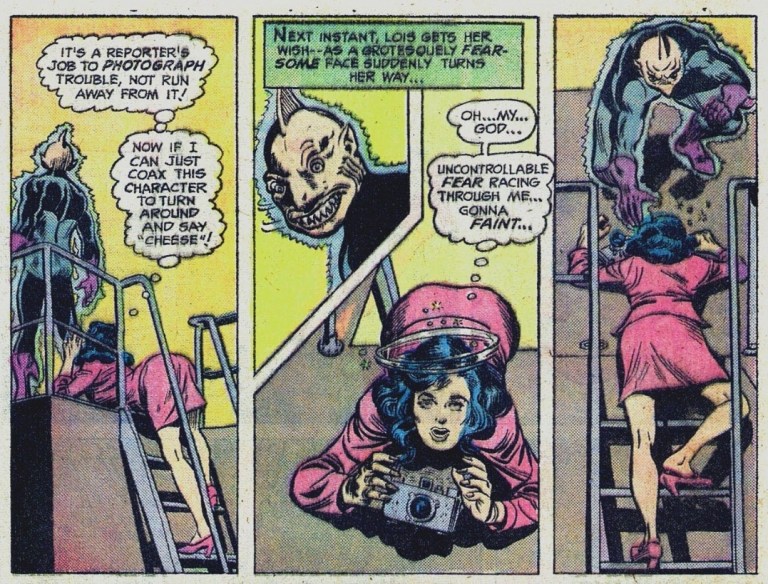
The Shark’s menacing face and power overwhelms Lois Lane.
Do not let the Jaws-inspired cover art fool you. Action Comics #456 (1976) is actually an entertaining read thanks to the combined efforts of the Bates-Swan team. The Shark was a believable threat and the story was well written. To say that this comic book was just a cheap way of exploiting the popularity of Jaws by coming up with shark-related tale of Superman is not true. This old tale is a fun ride free from the politicized science and woke garbage that dominate modern-day entertainment.
Overall, Action Comics #456 (1976) is recommended.
If you are an Xbox fan who is fond of Japanese role-playing games (JRPGs), then I encourage you to buy Grandia HD Collection which is available for Xbox online. I am saying this because recently I enjoyed replaying the classic JRPG Grandia on my Xbox Series X a lot and I finished it once again (my 2nd time overall including my 1999 completion of the game on PlayStation). This is not a game review of Grandia but a commentary of replaying it from start to finish.
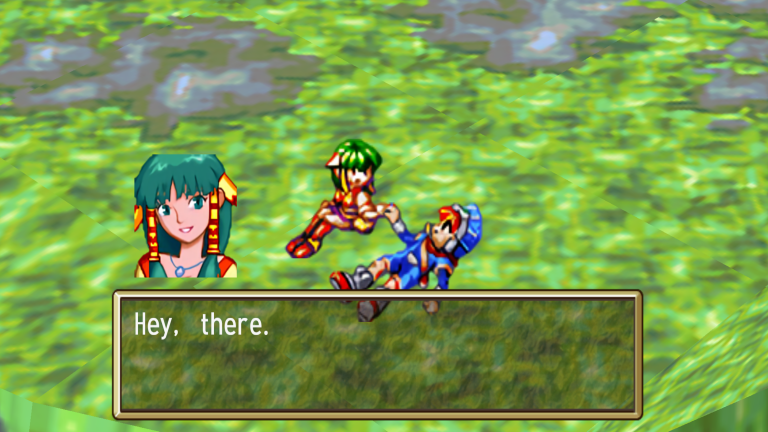
Feena and Justin are very memorable protagonists. The writers of Game Arts really did their jobs developing and defining the personalities of the characters.
For the newcomers reading this, Grandia HD Collection contains Grandia and the sequel Grandia II. Grandia was originally released on the Sega Saturn in Japan in 1997 and was ported to PlayStation shortly after. It was on the PlayStation when Grandia was translated and dubbed into English and released to gamers in the West. Grandia II was released originally on the Dreamcast console in both Japan and America in 2000. Eventually the sequel was ported to the PlayStation 2 and Windows PC in 2002.
Going back to the original Grandia, the game has visuals that were remastered and made clearer to look at while still maintaining the vibrant colors of its late-1990s version. It took me a little over fifty hours to complete on my Xbox Series X and I can say that the entire replay experience was indeed a lot of fun to do. I’m so happy and satisfied with finishing Grandia, I already got my money’s worth with the entire Grandia HD Collection. I’m currently playing Grandia II and so far I’ve been enjoying it.
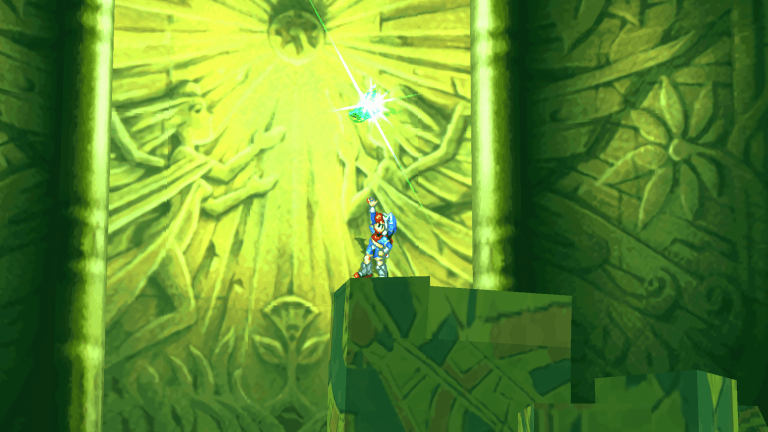
Game Arts was exceptional with their work on the graphics and art style.
Without spoiling the story, I can say that Grandia was written and made to emphasize the wonders and risks of adventuring while managing to dramatize a tale of epic fantasy proportions. Along the way, the game has a memorable cast of characters – Justin and Feena are clearly the leads – and the creative team of Game Arts really ensured that their personalities got developed (as the story moved on) and became worth caring for.
The gameplay is also fun to go through once again. There is a satisfying room for exploration whenever I visited a new location and the battle system is still top-notch in terms of mechanics, presentation and functionality. I should say that the battles are not too stressful to do and that means it is more doable to do some grinding to make your characters stronger and their abilities better.
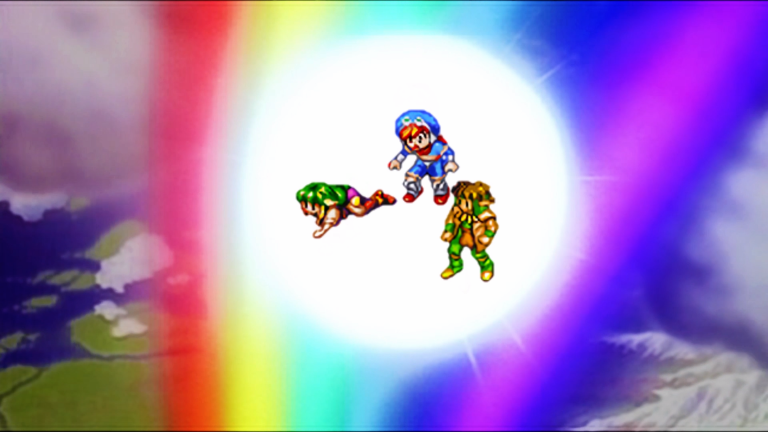
After finally defeating the main villain and completing the last conflict, it was really nice to see the story’s ending (told with a labor of love by the game developers) as well as the follow-up cut-scene that played after the end credits rolled (read: post-credits ending). It’s like 1999 all over again but with much better visuals and the benefits of playing the game on Xbox Series X connected to our 4K TV. This is both retro gaming and fantasy role-playing of great quality and deep enjoyment!
By finishing Grandia and enjoying it a lot, I already got my money’s worth with Grandia HD Collection.
There is no doubt that Grandia is the best gaming experience I’ve had on Xbox this year. That being said, I encourage you fellow Xbox gamers as well as those who love JRPGs to seriously consider buying Grandia HD Collection while it is still available.





 Author Carlo Carrasco