Retro Gaming Ads Blast

Welcome back readers, fellow geeks and electronic gaming fans!

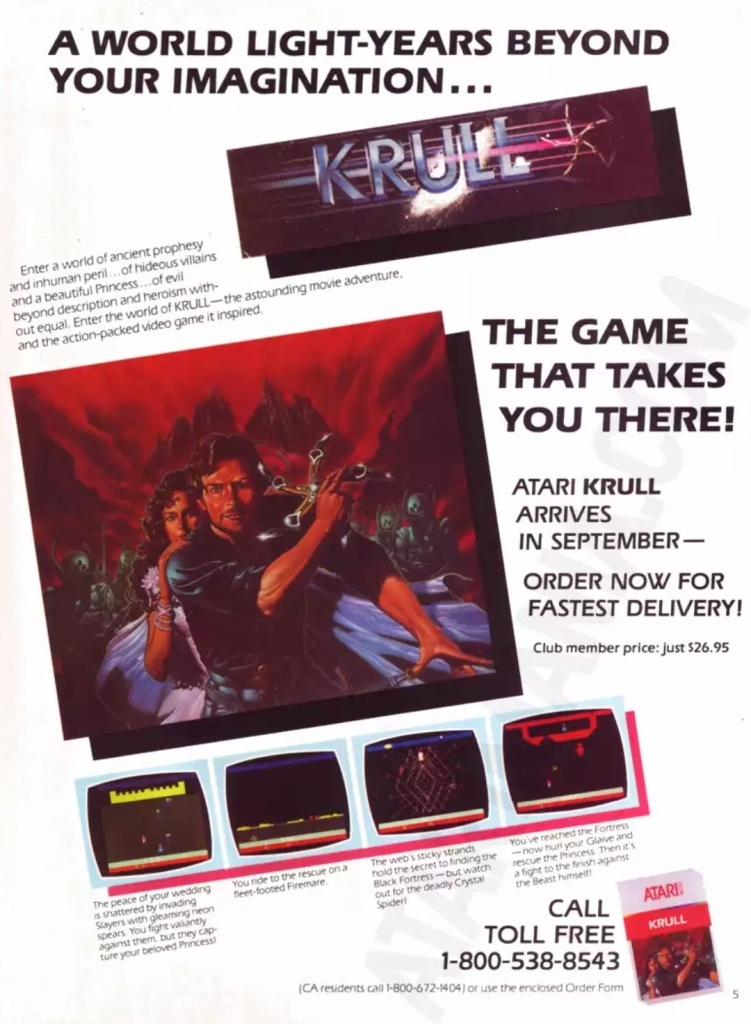
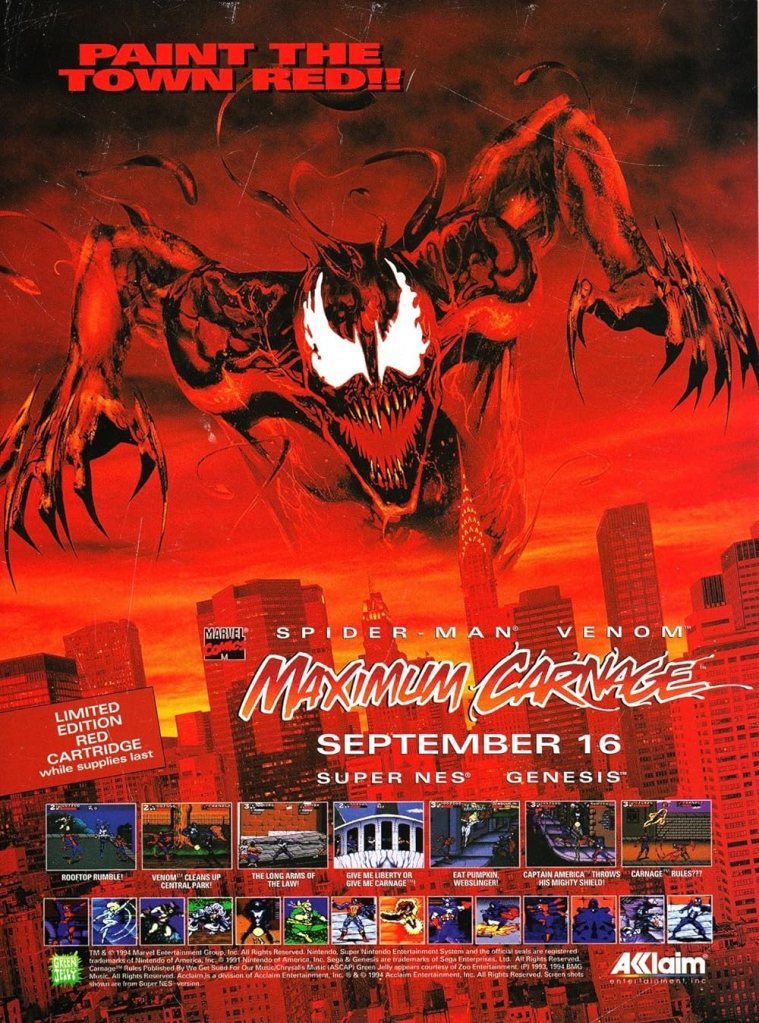
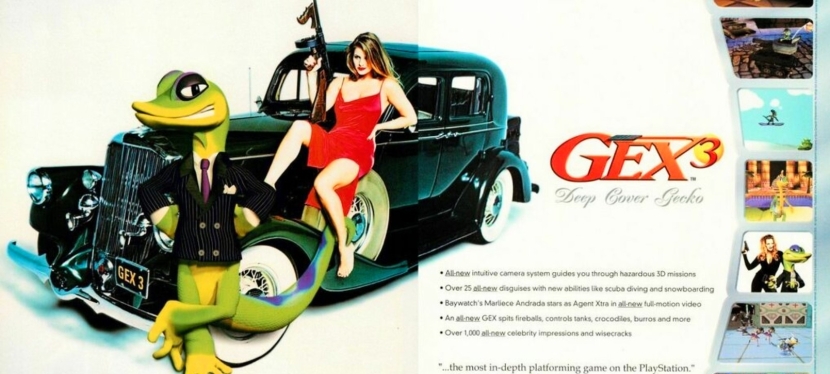
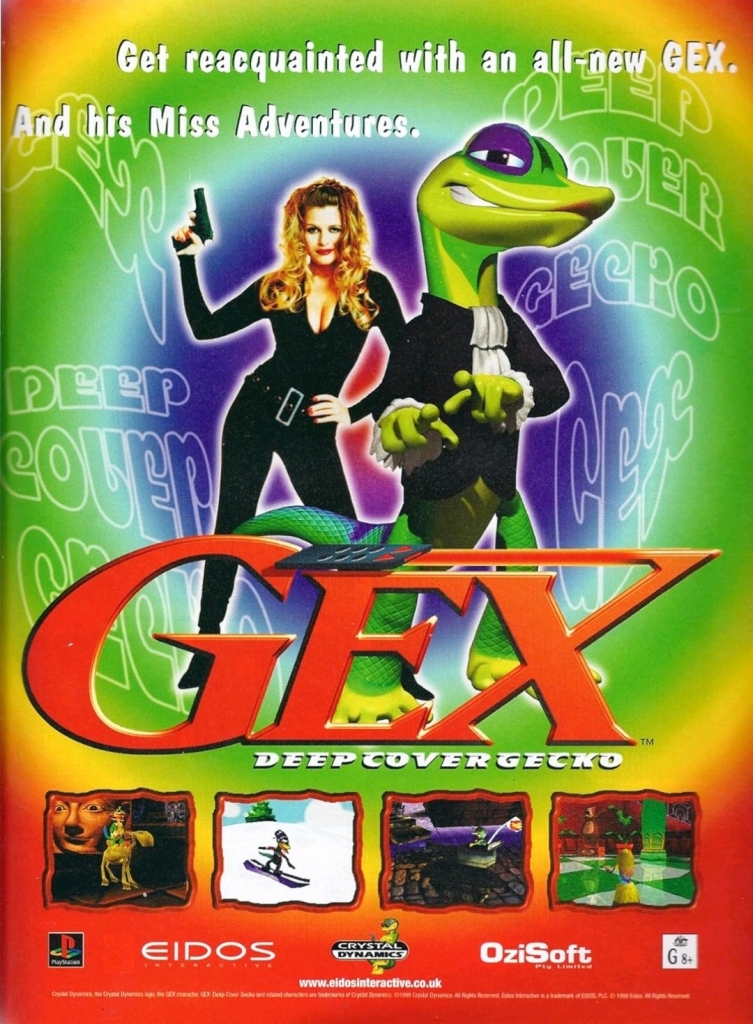
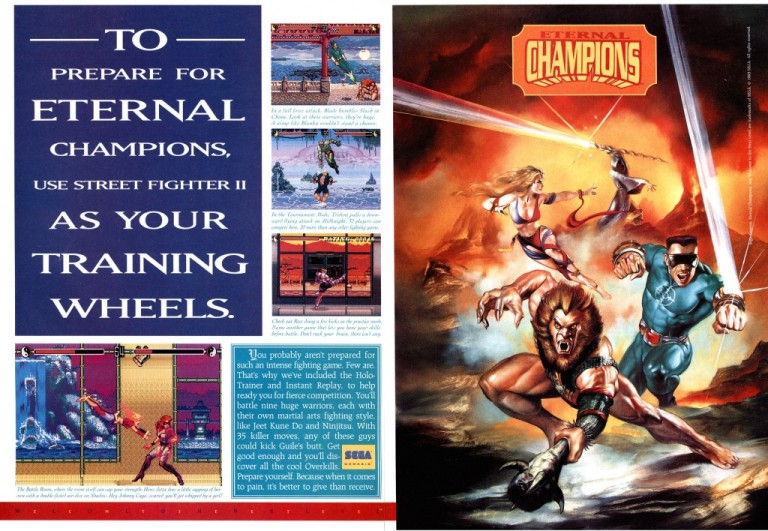
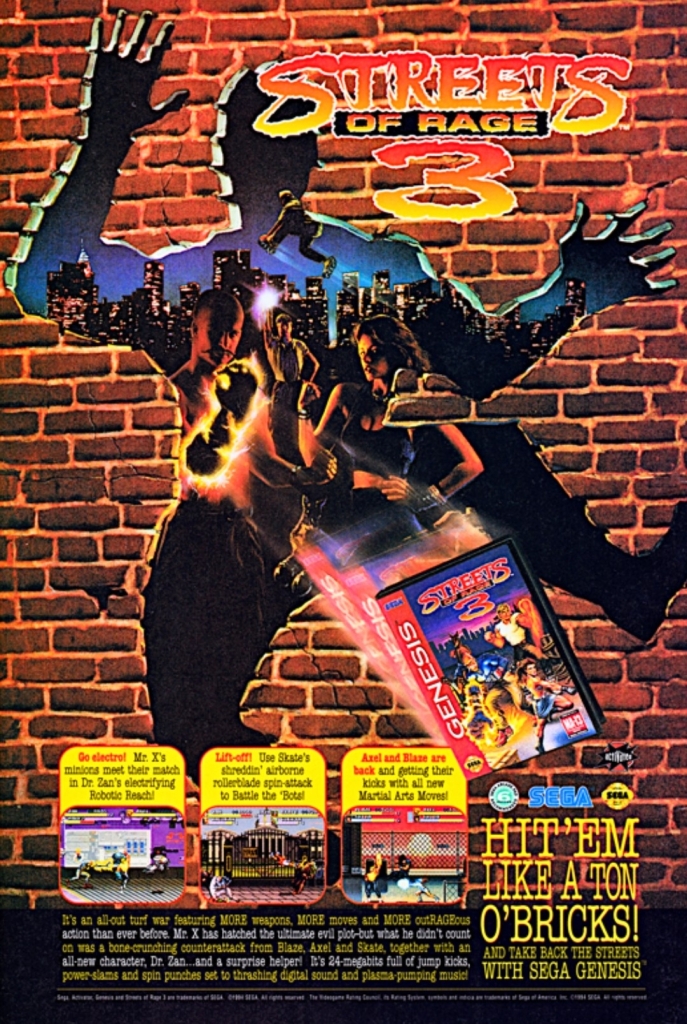
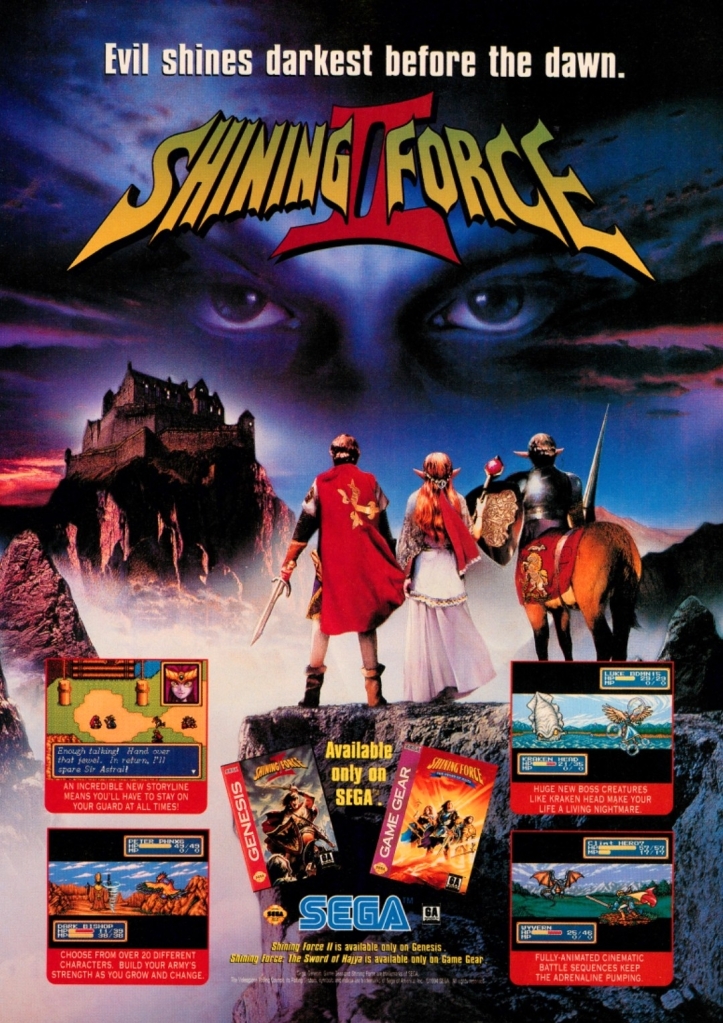
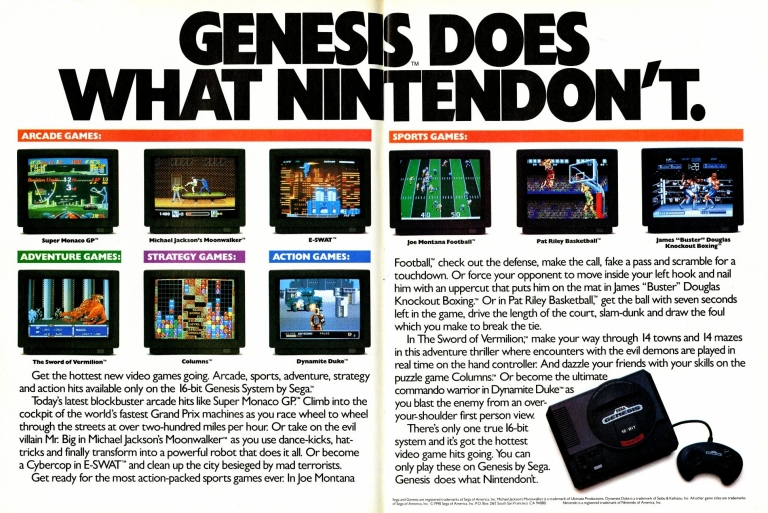
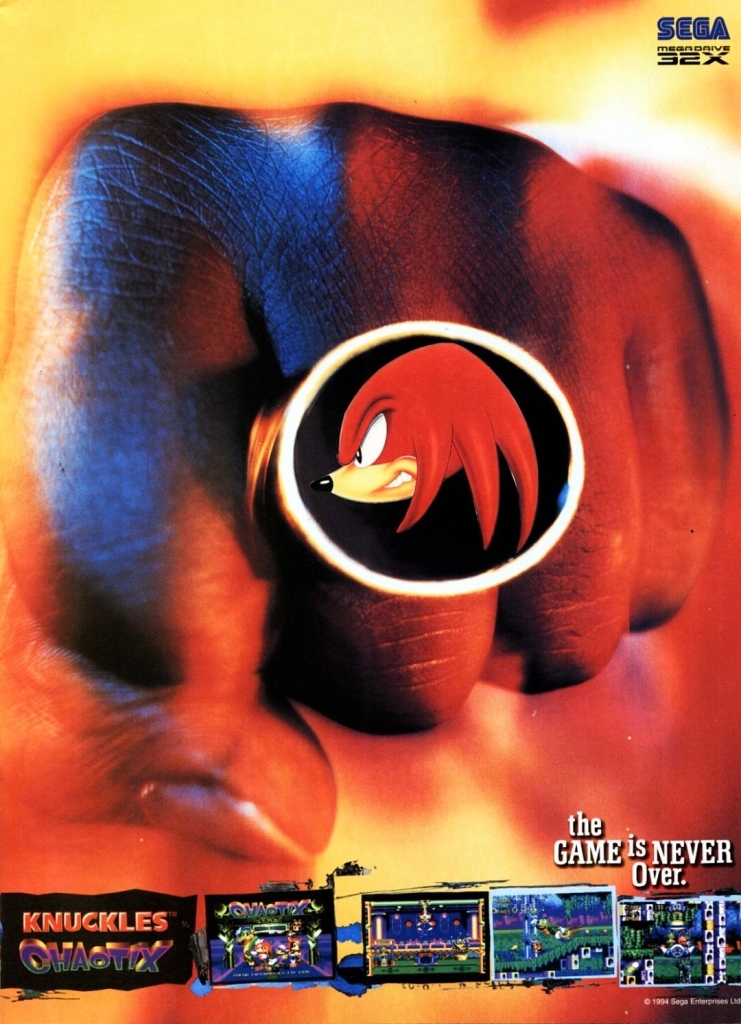
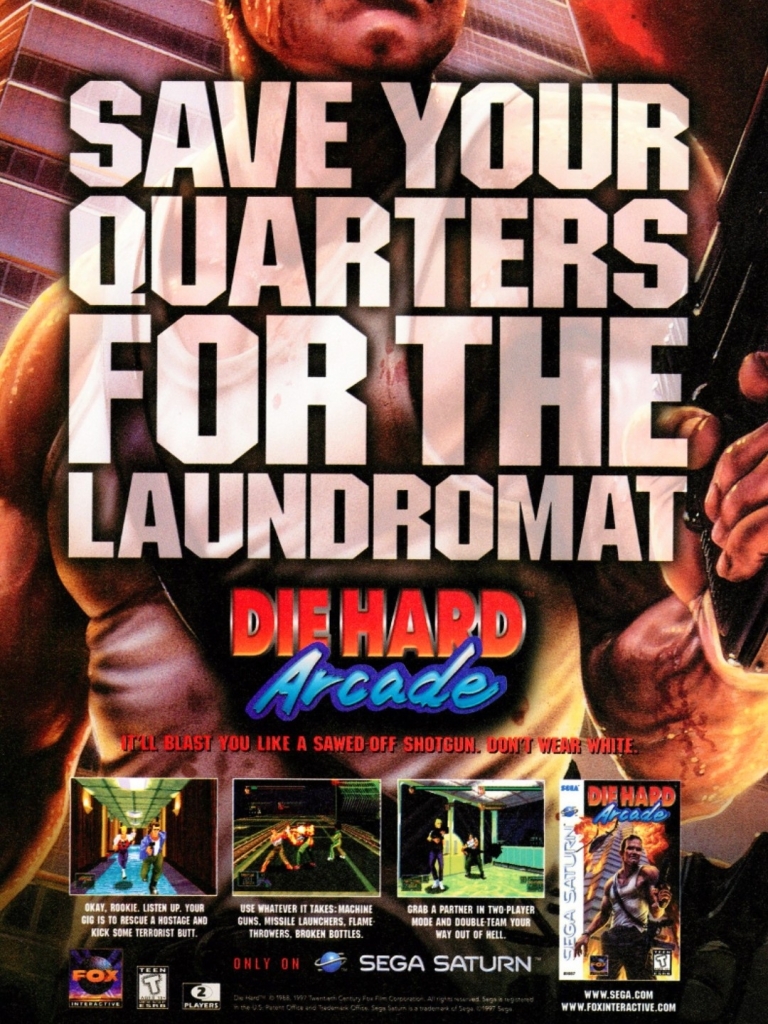
Today I am launching a brand-new series of articles titled Retro Gaming Ads Blast (RGAB) which will explore the many print ads and promotions of video games, computer games, arcade games and handheld games that were published through the decades.

For the newcomers reading this, print ads of games were widely popular and heavily relied on by gamers/players long before smartphones, social media, the worldwide web and online videos even started. Back in the old days, print media was the most common method for companies to market their games while also helping hardware (machines which played the games) reach potential buyers. Such ads appeared in magazines, comic books and newspapers. Not only that, there were several print ads of games that were made to look creative, compelling and even intriguing.

With those details laid down, here is the first batch of retro gaming print ads for you to see and enjoy…

1. Parker Brothers’ Spider-Man-led print ad

Does this ad look amusing?

Remember Parker Brothers? That was a company that started way back in 1883 founded with a strong focus on the enjoyment of games in the form of board games, cards and toys. In the late 1970s, Parker Brothers started making electronic versions of their popular board games and engaged in the video game development and publishing. They also went on to make home ports of popular arcade games in the early 1980 for several gaming platforms.

Parker Brothers was very active with making games for the Atari 2600 console which became the dominant machine for home gaming in North America in 1982. In the above print ad, their marketing heavily emphasize the Spider-Man video game for Atari 2600 and added two others games they also published – Tutankham and Amidar – which was a clever move to market multiple games. The ad’s focus on Spider-Man was amusing and even without showing a single screenshot of the game, it was enough to entice people to watch out for it. Be aware that the Spider-Man game’s development was done by Laura Nikolich who was hired by Parker Brothers at a job fair. Nikolich had full creative control on making the game and had no contact whatsoever with Marvel Comics.

2. Advanced Dungeons & Dragons: Cloudy Mountain print ad

An ad like this was strong enough to motivate gamers’ imagination and interest.

Back in 1982, Advanced Dungeons & Dragons: Cloudy Mountain was released on the Intellivision game console and I was fortunate enough to watch my next-door neighbor play it repeatedly. The above print ad – which simply referred to the game as Advanced Dungeons & Dragons – only had a few words which directly pointed to the main objective of the game…the golden crown. While only one screenshot of the game was displayed, the advertisers heavily relied on hand-drawn, comic book-style fantasy art work to sell the game.

For those who were born long after the 1980s, let me share with you that ads like these were really impressive for their time. It was common for advertisers to use art works (even though they may not accurately reflect the gameplay or game design) and post at least one screenshot to catch the viewer’s attention with the hope that it would even encourage him/her to anticipate the game. It should be noted that ads like these were strong enough to make gamers’ imagination or curiosity grow stronger.  

3. Konami’s collective military video games advertising

Print ad of four games for IBM, Amiga and Commodore.
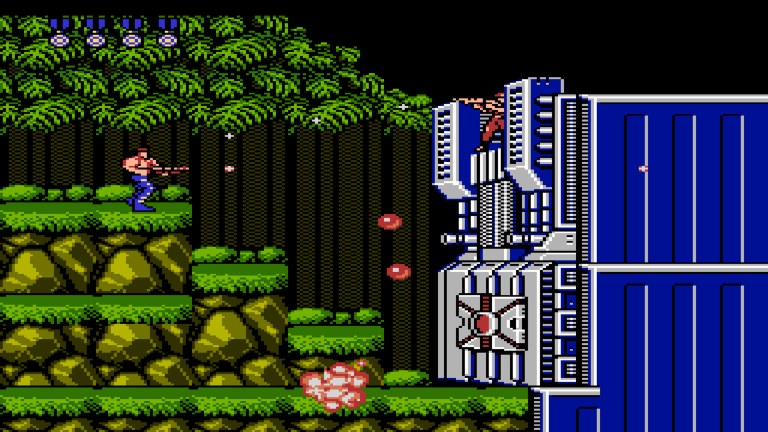
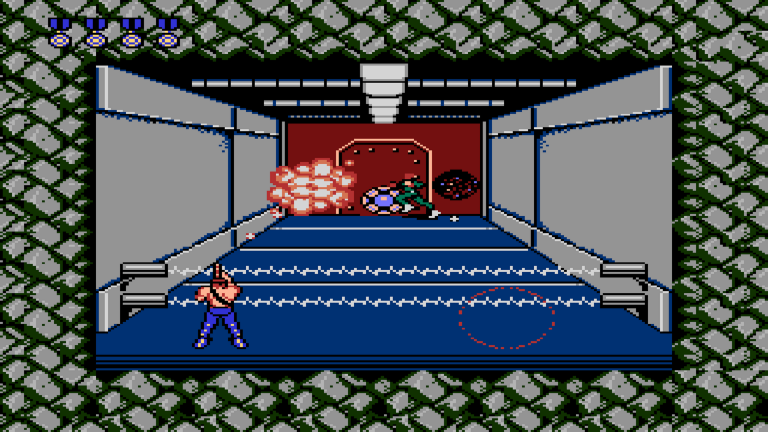
Print ad of Jackal and Contra for the NES.

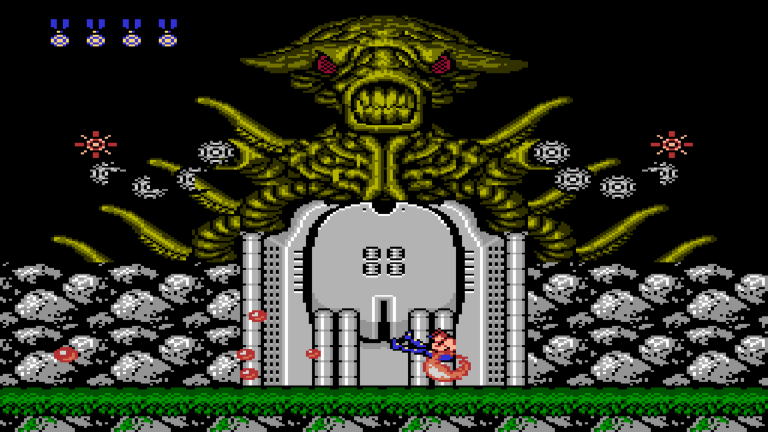
Konami, the Japanese company that has long been known for Metal Gear, Suikoden and the controversial sacking of famous game designer Hideo Kojima, was aggressive in the gaming business in the 1980s and arguably the aggressiveness was reflected in their publishing of several games that emphasized militarism during the late stages of the Cold War. In short, they made the military look cool and their activities fun to do in digital form.

While Konami has always been identified with console gaming, they actually released Rush’n Attack, Contra, Jackal and Boot Camp on IBM, Amiga and Commodore computers (as seen in the first print ad above) which were popular in the 1980s. The said ad also have a very amusing visual concept emphasizing the excitement and fun of military action games coming to gamers at home for their computers.

The 2nd print ad above – Jackal and Contra for the Nintendo Entertainment System (NES) – was very intriguing to see. It was very clear back in the 1980s that the NES always had a wholesome audience (note: a lot of buyers were parents who wanted to entertain their kids at home) and that includes a lot of very young players. To see the collective ad of Jackal and Contra (for the NES platform) having battle-hardened men in military gear holding guns was openly aggressive to perceive and instantly reminded people about the Cold War (and the menace of Communists, socialists, Marxists and terrorists) and the cultural impact of the mega blockbuster film Rambo: First Blood Part II. This is the kind of ad that would drive today’s woke-minded people crazy and even cause them to panic and pretend to be victims of militarism and patriotism. If you look at the ad closely, you will realize there is simply no room for the garbage of political correctness and wokeness.

Lastly, I myself had played Contra and Jackal with my friends on the Nintendo Family Computer (the Japanese counterpart of the NES) and both military games were a lot of fun to play from start to finish!

4. Batman Returns SNES game ad

This print ad appeared in some comic books I read in the early 1990s.

Way back in 1992, Batman Returns (the sequel to the mega blockbuster Batman movie of 1989) was released in cinemas with intense marketing and merchandising reflecting Warner Bros. intention to replicate the commercial success they had in 1989. Along the way, there were several video game adaptations of Batman Returns that were released on different platforms. Among those many video games was the Super Nintendo Entertainment System (SNES) game of Batman Returns which was developed and published by Konami in 1993 the form of a side-scrolling beat-them-up game.

The above ad was visually appealing with hand-drawn, comic book-style art dominating the spaces while leaving room for some screenshots and a written description of the game. Having seen this ad on multiple comic books I read back then, I can say that the ad was entertaining to see and was effective in making me interested in the game. I played Batman Returns on the SNES but never got to finish it. Oh yes, the game’s audio were really good and there were also digitized images from the movie for the in-game narrative.

5. Flashy Sonic the Hedgehog Japanese print ad

A dazzling approach by Sega on selling Sonic the Hedgehog.

1991 will always be remembered as the year of Sonic who eventually became not only Sega’s most defining mascot but also a video game industry icon. That same year, Sega released Sonic the Hedgehog on the Sega Genesis (referred to as Sega Megadrive in other parts of the world) console and it became a massive success with consumers and the game critics.

In the above Japanese print ad, a very captivating display of light and energy rays dominated the space leaving a minority share left for Sega’s console, screenshots and even a UFO Catcher arcade machine picture. While I could not understand the Japanese text, it seems to me that the flashy visual concept of the ad reflected Sega’s high ambitions with Sonic. How many gamers in Japan bought a copy of Sonic the Hedgehog because of this ad remains undetermined.

6. Japanese Super Star Wars print ad

A long time ago in a galaxy far, far away…

Before Nintendo released its 16-bit game console (referred to as Super Nintendo Entertainment System in America, and Super Famicom in Japan), there were lots of Star Wars video games released on varied platforms and the arcade.

With Nintendo’s 16-bit gaming platform realized, lots of game designers and business partners saw opportunities to make new games with gameplay concepts and designs using the technological advantages of the time. For LucasArts and its partners, taking Star Wars gaming into the next level was inevitable and they made it all come true in 1992’s Super Star Wars video game.

Published in Japan by JVC Musical Industries for the Super Famicom, Super Star Wars was a major leap forward in game design, visuals, sound and enjoyment. Apart from the 2D side-scrolling run-and-gun gameplay, gamers were deeply immersed into Star Wars’ universe with the Mode 7 landspeeder and X-Wing fighter sequences, as well as the first-person trench run sequence.

The Japanese print ad above cleverly presented screenshots from the game while using official imagery from the Star Wars movie poster of 1977 (look at how young Harrison Ford, Mark Hammill and the late Carrie Fisher were back then). The ad is a fine example of combining the greatness of the classic George Lucas-directed film with the highly enjoyable design of Super Star Wars. Lastly, these should remind you that there was a time when Star Wars was not yet tainted by wokeness and the garbage values of the Satanic Leftists (read: woke Disney).   

+++++

Thank you for reading. If you find this article engaging, please click the like button below, share this article to others and also please consider making a donation to support my publishing. If you are looking for a copywriter to create content for your special project or business, check out my services and my portfolio. Feel free to contact me with a private message. Also please feel free to visit my Facebook page Author Carlo Carrasco and follow me on Twitter at  @HavenorFantasy as well as on Tumblr at https://carlocarrasco.tumblr.com/ and on Instagram at https://www.instagram.com/authorcarlocarrasco

Sea of Stars is an enjoyable RPG and you should play it on Xbox now!

Welcome back, fellow gamers, geeks, role-playing games (RPGs) enthusiasts and fantasy lovers!

In recent times, I completed my first playthrough of Starfield on my Xbox Series X and it lasted me over 220 hours of fun, discoveries and intriguing moments. Having played it so long, I will replay Starfield with a new playthrough only after Bethesda implements the next series of patches/updates (to refine the game) and release the planned downloadable content (DLC).

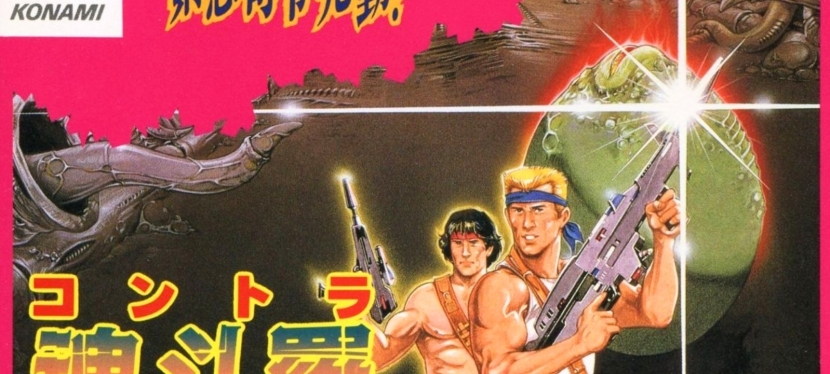
That being said, I finally started playing the inspired Japanese-style role-playing game (RPG) Sea of Stars on my Xbox Series X. Having played some hours of it, I can say that I am really enjoying Sea of Stars and I intend to finish it. Oh yes, Sea of Stars is available on Xbox Game Pass (XGP) right now!

This is one of many great looking scenes composed of really fine 2D art style and pixel artistry in Sea of Stars.

Developed by Sabotage Studio, Sea of Stars is a turn-based RPG with a strong retro feel that will remind you of past Japanese RPGs (JRPGs) like Chrono Trigger and Secret of Mana. The game follows the exploits of two Children of the Solstice who combine the powers of the sun and moon to perform Eclipse Magic, the only force capable of fending off the monstrous creations of the evil alchemist known as The Fleshmancer. Along the way, the two Children of Solstice start a quest joined by their friend and together they travel to different places encountering different inhabitants and engage in situations that only they can solve.

Having played Chrono Trigger, Secret of Mana, Final Fantasy IV, Final Fantasy VI and a lot of JRPGs from the so-called 16-bit era of console gaming, I can say that Sea of Stars is a very inspired game that has lots of elements common with the mentioned games (plus more) with regards to art style, gameplay, quests, music, character development and visual presentation. To put it short, the guys at Sabotage Studio took a lot of inspiration from the classic JRPGs to make something fun for this current console generation. I am having a lot of fun with the game which itself is available for Xbox Game Pass (XGP) subscribers to avail.

An important meeting about to happen in the game.
A boss battle early in the game.
This is just a part of the world map of Sea of Stars.

In my experience and recollections from the past, Sea of Stars has visual style that is best compared with Chrono Trigger. Sabotage Studio really created a lot of nice looking 2D artworks and highly detailed sprites that made the new game look lively. With regards to the storytelling , character development and character expressions, the game has a wholesome tone that never felt childish. The tone as well as the humor made Sea of Stars comparable with several Japanese RPGs from the 16-bit age of consoles.

You will encounter really interesting characters who will join your party as the game progresses.

Sea of Stars is really fun to play and it is a great change of pace and style for me as I finished my Starfield playthrough which lasted more than 220 hours. This Sabotage Studio game will help ease my wait for the expected 2024 RPGs such as Eiyuden Chronicle: Hundred Heroes and the Xbox-exclusive Avowed. As much as I hope to see past JRPGs like Xenogears, Breath of Fire and Lunar get remastered and released for Xbox consoles (and XGP), I know such possibilities remain uncertain and Sabotage Studio’s game easily fills the void. If you are looking for a Japanese-style RPG that is fun, nostalgic and visually pleasing, you can’t go wrong with Sea of Stars. Go for the game on Xbox Series X, Xbox Series S, Xbox One, Windows PC and Xbox Game Pass now!

+++++

Thank you for reading. If you find this article engaging, please click the like button below, share this article to others and also please consider making a donation to support my publishing. If you are looking for a copywriter to create content for your special project or business, check out my services and my portfolio. Feel free to contact me with a private message. Also please feel free to visit my Facebook page Author Carlo Carrasco and follow me on Twitter at  @HavenorFantasy as well as on Tumblr at https://carlocarrasco.tumblr.com/ and on Instagram athttps://www.instagram.com/authorcarlocarrasco

Konami admits 2023 release of Suikoden I&II HD Remaster Gate Rune and Dunan Unification Wars is uncertain as more time is needed to ensure quality performance

I played the original Suikoden on PlayStation way back in 1996 and I would love replay it on my Xbox Series X console.
Suikoden II is one of the best Japanese RPGs not made by Square Enix that I have ever played. This I really look forward to replaying on my Xbox Series X.

A Look Back at Cloak & Dagger (1984)

Welcome back my readers, fellow movie buffs and 20th century pop culture enthusiasts! Decades ago, I got to watch the movie Cloak & Dagger when it was first released on home video. As time passed by, I got to replay it on cable TV and DVD. I have yet to see its 4K Blu-ray disc version (note: you can order it here) Starring Henry Thomas (the star of Steven Spielberg’s E.T.: The Extra-Terrestrial) and Dabney Coleman, Cloak & Dagger was one of those American movies that did not succeed in movie theaters but found its audience on home video, cable TV and free TV.

The 1984 movie was released at a time when video games gradually made its way into motion pictures in varied ways just before Nintendo started reshaping video gaming. Back then, I was very young and already got into playing games on console and at the arcade which helped me relate with the video game elements of Cloak & Dagger. In case you are wondering, the filmmakers and Atari, Inc. itself collaborated together. There may be some among you who never saw this 1980s flick and some of you may be wondering what is significant about Cloak & Dagger and why is it the topic of this retro movie review.

With those details laid down, here is a look back at Cloak & Dagger (1984) directed by Richard Franklin and written by Tom Holland and Nancy Dowd inspired by the short story “The Boy Cried Murder” written by Cornell Woolrich. This movie is the 4th cinematic adaptation of the said short story.

The movie poster of Cloak & Dagger (1984)

Early story

The story begins with Jack Flack (Dabney Coleman) overcoming Soviet guards to enter a place to retrieve top secret documents from incoming people. It turns out that Jack Flack is nothing more than a fictional character imagined by a young boy named Davey (Henry Thomas) who keeps on immersing himself with flights of fantasies, loves playing games and believes that real life is filled with enough opportunities and places to play. In the presence of game store owner Morris (William Forsythe) and his little blonde neighbor Kim (Christina Nigra), Davey boasts a lot about Jack Flack as if he was a real-life hero and even talks to him as his imaginary companion that no one else could see nor hear. Inspired by the said character and the world of espionage he always imagined, the boy carries with him a black water pistol for a “gun” and a softball for a “grenade”.

Morris then sends Davey and Kim out to do a real assignment – an errand to travel within the city going to a certain company and retrieve something for him. Afterwards, the two commuted and entered a building which Davey does with his fantasy of espionage and infiltration burning in his mind. Leaving Kim on the ground floor, he climbs up the stairs until he reaches a certain window and sees something sinister going on in the next level as reflected on one of the windows outside.

Suddenly a door opens near him and a wounded man slowly hands him an Atari 5200 cartridge titled Cloak & Dagger, tells him to bring it to the FBI, and mentions “one million three hundred twenty nine.”

The door near them suddenly opens with two armed men emerging. Right in the presence of Davey, they opened fire at the wounded man who fell down to his death. Davey just became the witness of an actual murder and becomes the target of the two gunmen…

Quality

Henry Thomas and Christina Nigra as Davey and Kim respectively.

To get to straight to the point, I can declare that this movie is very clearly a spy thriller designed to engage both children and adults. It took the key concept of the short story “The Boy Cried Murder” and implemented it into its very own tale that happens to be set during Ronald Reagan’s America (the 1980s) with elements of video games, espionage and even murder mixed together.

The story told through Davey was crafted to be entertaining while keeping viewers in suspense as to how the overly imaginative young boy would deal with real-life danger and consequences as he became the target of murderous men who would not stop at all. Davey is clearly in danger for much of the movie and you will get to sympathize with him and wish he should stop being obsessed with fantasy so he could overcome the trials that were happening. This is, indeed, a well structure and nicely directed work by Richard Franklin who seem to be inspired by past works of Alfred Hitchcock (note: Franklin directed the sequel to Hitchcock’s classic Psycho).

As mentioned earlier, this movie was made to engage both children and adults. Cloak & Dagger is not exactly a wholesome viewing experience as its presentation has always been quite intense because of on-screen violence that was executed carfully. There are guns, shooting and even killing in this flick which proved to be integral to the overall presentation and clearly added to the thrill factor. You will get to see getting Davey shot at by the armed henchmen (Eloy Casados and Tim Rossovich) who clearly do not give a damn of shooting a minor as they are so focused on their mission. Looking at the henchmen in this film, I can imagine them as traitorous Americans conspiring with their nation’s foreign enemies such as the Soviets, the Iranians and the Palestinians. Along the way, there is the clear villain named Rice (Michael Murphy) who has this subtle touch of evil as well as a good amount of sleaziness in him. While the violence is intense, it does not necessarily push this film into rated R territory.

Michael Murphy as the sleazy villain who is willing to kill Davey even though he is a minor.
The two henchmen about to commit murder in the presence of Davey. There is evil visible in their faces.

Henry Thomas really shines as the protagonist here. While Davey here shares a few elements with E.T.’s Elliot – struggling to move forward with the absence of one parent and adjusting his life with what he perceives to be the best ways possible – he truly dramatizes how weird and wild he could be living his life with a very loose grip on reality. For him, local society in San Antonio, Texas, provides him a huge playground for his spy game and he sure distracts people as he walks by them talking to his imaginary friend Jack Flack. Still, there are key parts of the story in which Henry Thomas convincingly dramatizes Davey who feels lonely inside as he misses his late mother and is unable to spend quality time with his father. Thomas also acted with intensity in the scene in which he makes a trade with the villain and also during his last face-off with him in the 2nd half of the film. Henry Thomas really was a good youth actor and his performance here is often overshadowed by his role in Spielberg’s E.T.

Dabney Coleman on the other hand plays both Jack Flack and Davey’s father Hal. Coleman is quite versatile playing different characters here. As Jack Flack, he fits in excellently into Davey’s uncontrolled belief of espionage as he gives him advise which were taken seriously leading into danger. Of course, advising Davey does not really mean the fictional spy cares for him on a personal level and you will eventually Flack’s true value before the film ends. Flack’s final moments could inspire you to re-examine the true meaning of heroism. As Hal, Coleman convincingly plays the father who has been so busy working in the Air Force as an air traffic controller, he has been unable to spend quality time with his son and the recent death of his wife really took its toll on their family. Compared to Jack Flack, Hal is indeed caring towards his son but his hectic work schedule prevents him from bonding closely with him. Coleman delivered a fine performance during the scene when Hal explains to Davey what real-world heroism is and that not all heroes just shoot bad guys. There definitely are helpful values on parenting within Hal.

Henry Thomas and Dabney Coleman are really convincing as son and father.

Thomas and Coleman artistically have really fine chemistry together as the father and son (Hal and Davey) and as the wannabe adventurer spending lots of time with his action hero (Davey and Jack Flack). Considering Davey’s obsession with fantasy and the attention he pays so much to Jack Flack, he was practically living with idolatry and foolishness. If you observe closely, Davey is very lively with Flack and not so lively with his father.

Even though this movie is fictional, it still dramatizes that parenting will never be easy. That being said, this should inspire parents and also incoming parents to prepare themselves on nurturing their children and ensure they help them understand the differences between reality and fantasy.

Video game elements

Screenshot from the Cloak & Dagger arcade game. This game can be played nowadays through Antstream Arcade on Xbox consoles.

To make things very clear, Cloak & Dagger (1984) is not an adaptation of the electronic game that was released the same year. Rather it has the Cloak & Dagger game as a key plot element in the form of an Atari 5200 game cartridge (referred to as a “tape”) which the movie dramatizes to be real.

As a kid, I got to play arcade and console games a lot. As such, seeing Davey play the Cloak & Dagger game on his Atari 5200 as well as gameplay footage was a very entertaining viewing experience for me the first time I ever saw this movie. It was a scene I personally related with.

In real life, however, the Cloak & Dagger game from Atari, Inc. was released only in the arcades as the efforts to create a port for the Atari 5200 never got fulfilled. That being said, it was through very clever film editing that video footage of the arcade version were inserted into the scene in which Davey played the Cloak & Dagger cartridge on his console in the presence of his father. To clarify things, the Atari 5200 was a commercial failure in real life and it seems that making a console version of the arcade game did not make business sense to Atari, Inc. at all.

If you want to play the Cloak & Dagger arcade game in your home right now, you will need an Xbox console and Antstream Arcade ($30 for 1-year subscription, $80 for lifetime pass). Cloak & Dagger is just one of over a thousand games available through Antstream Arcade and you can learn more by clicking here and here.

Conclusion

Henry Thomas as an armed Davey.

I have seen Cloak & Dagger (1984) many times throughout my life from childhood and to adulthood. I can clearly say that this 1980s movie is still really good to watch as its appeal to both children and adults remains strong and intact. It is a medium-paced spy thriller that not only follows a young boy who witnesses and murder and gets into danger (note: even his neighbor gets involved) but also dramatizes (in entertaining ways) how dangerous situations can get when you are living with uncontrolled personal fantasy and interacting with a heroic friend who does not really exist. Considering the time this movie was released, I am delighted to tell you cautious readers that there definitely is no wokeness nor were there any traces of political correctness that got in the way of its presentation. Going back to the parenting aspect of this film, it is made clear that children need their parents for moral support and there is absolutely no way that games, fictional heroes and geek culture could ever be good alternatives. Like the adults, children should never lose their grip on reality and should be taught that uncontrolled fantasy can lead to real-life danger. Very clearly, director Richard Franklin and the crew did a fine job telling a solid story and emphasizing the main characters while also providing suspense, action and thrills.

Considering all the mixed elements it has, Cloak & Dagger (1984) can be engaging towards parents, their children, fans of espionage and people who love video games. Finally, I should state that the City of San Antonio in the Lone Star State of Texas is indeed a great location for filmmaking and viewing.

Overall, Cloak & Dagger (1984) is recommended.

+++++

Thank you for reading. If you find this article engaging, please click the like button below and also please consider sharing this article to others. If you are looking for a copywriter to create content for your special project or business, check out my services and my portfolio. If you want to support my website, please consider making a donation. Feel free to contact me with a private message. Also please feel free to visit my Facebook page Author Carlo Carrasco and follow me on Twitter at  @HavenorFantasy as well as on Tumblr at https://carlocarrasco.tumblr.com/ and on Instagram at https://www.instagram.com/authorcarlocarrasco/.

If you wish to join a group of movie enthusiasts and talk about cinema, visit the Movie Fans Worldwide Facebook group at https://www.facebook.com/groups/322857711779576

Play over 1,000 retro games on Xbox with Antstream Arcade!

If you are long-time gamer who misses the many fun games from them past, then you will delighted to know that you can play over one thousand retro games on Xbox Series X, Xbox Series S and Xbox One with the Antstream Arcade service which is now available for $29.99 annual subscription and $79.99 lifetime pass.

For the newcomers reading this, Antstream Arcade is the grand gaming arcade with over 1,300 classic games from the 1980s to the 2000s that were released across varied platforms such as the video arcade, Super Nintendo Entertainment System (SNES) and the PlayStation One to name a few. Antstream Arcade on Xbox platforms just made the global Xbox ecosystem even more exciting to those who love playing multiple types of games. Posted below is the official Xbox launch trailer of Antstream Arcade!

To gain a deeper understanding of Antstream Arcade on Xbox, posted below is an excerpt from the Xbox.com article. Some parts in boldface…

We’re excited to share that Antstream Arcade, a cross-platform streaming platform focusing on retro games, is now available on Xbox Series X|S and Xbox One, bringing its current library of over 1,300 retro games to Xbox consoles. Jump in today and play classics like Mortal Kombat, Pac-Man, Asteroids, and Earthworm Jim from your couch. Experience classic PS1 and Nintendo games such as Loaded, Indiana Jones Greatest Adventures, and Super Star Wars with your Xbox controller in hand. With Antstream Arcade you can experience these games today, fully optimized, and ready to go at the push of a button. Simply create an account, sign in, and start playing!

The Importance of Game Curation to Antstream – When the company was formed in 2013, one of the key motivations behind the product was preservation. There are decades of incredible games which are no longer available legally. Sure, many of these titles can be downloaded and played with emulators and ROMs but that experience is uncomfortable. The configuration of Emulators and ROMs is a technological barrier for many gamers.

Antstream’s easy ‘pick up and play’ mechanic makes these games accessible to everyone. In my position as Customer Support manager, I’ve had emails from six-year-old kids telling me that they’ve had a blast playing Double Dragon. Another recent email was from a 72-year-old who needed help completing Dizzy. Antstream is incredibly easy to use.

“Many of us grew up playing these games, so the ability to stream them on Xbox consoles and share these experiences with our friends and family is incredible,” said Sarah Bond, CVP of game creator experience and ecosystem at Microsoft. “We’re pleased that with Microsoft for Startups Founders Hub’s technology benefits and Azure cloud services we can help enable Antstream to reach more players.

Coming back to the preservation aspect. It’s painful to see games lost to time. Antstream is a fantastic platform for people to experience games that they have never played before. Also, to find and discover games that were cancelled or not released. We are crafting a catalogue of titles which raise awareness of gaming history and keep the spirit of their creators alive.

This has been recognized by TIGA, Antstream has won an award for games curation.

New’ Retro Games on the Platform –  A unique aspect to Antstream’s approach to game curation is how we support independent developers who are continuing to release games on retro platforms. For example, Turbo Tomato is an Amiga game released last year. It has become hugely popular thanks to Antstream. We also include these in our challenges and tournaments.

Challenges and Tournaments – Antstream is also creating longer lasting appeal with classic games with our unique challenge system. These titles are back-engineered to create a competitive system which allows you to experience these well-loved titles in new ways. These are ‘game modes’ such as ‘one-life challenges’ that extend the life of these titles and create new interest in the community.

In the past 12 months, we have introduced a new mode called Giant Slayer. This is centered around our growing community. One person sets up a challenge and then is presented to the community. They must try and beat the challenger for kudos and precious gems. Giant Slayer challenges are created by the players for other players. This keeps our community constantly engaged and involved in the product in a greater way than other streaming services.

We also feature tournaments. Here you can pit your high scores and feats against others in games like Dig Dug, Marble Madness, Double Dragon and Mortal Kombat. Scoring highly in these contests payout gems that you can spend on other games or for entering future tournaments.

The ‘power’ of AntstreamSpeaking to Microsoft Game Dev Blog about how Azure powered Antstream, Founder and Chief Executive Officer at Antstream Arcade Steve Cottam shared, “Microsoft was the right technical ally for us because it has a high density of servers globally, which was how we knew we could scale our service. By connecting gameplay to a nearby Azure virtual machine, we make sure that the time between a player pressing a controller button and something appearing on their screen is less than 50 milliseconds.

In addition, there is this very in-depth video that answers a lot of questions about Antstream Arcade posted below for you all…

Having Antstream Arcade on Xbox is very appealing to me personally. I still have some fondness of games I played long ago on the arcades such as Elevator Action Returns, Star Wars, Defender, Robotron: 2084, BurgerTime, Cloak & Dagger, Fighter’s History, Double Dragon, Space Invaders and Asteroids plus so many others I cannot just write down here. Not only that, Antstream Arcade is also an opportunity for me to play many, many other games I never got to play such as Indiana Jones’ Greatest Adventures (SNES), Metal Dragon (MSX), and more.

As mentioned in the Xbox.com article, it was indeed a great move for Microsoft to be the definitive technical ally for the Antstream Arcade developers not only because of the established global servers available but also because the retro gaming service fits right in with the Xbox ecosystem of games and the global userbase of millions.

The Cloak & Dagger arcade game that had a severely limited release decades ago has gotten more available for millions of users via Antstream Arcade on Xbox.
The arcade hit Elevator Action Returns.
The Super NES version of Zombies Ate My Neighbors.
Star Wars arcade game.
Indiana Jones’ Greatest Adventures on SNES.

One of these days, I will avail of Antstream Arcade to make the gaming experience on my Xbox Series X even more in-depth. It will be a matter of timing, cost, the number of games updated and how the Antstream Arcade developers will be able to fix whatever bugs they will encounter as the service has just launched. If you are already availing of the retro games service and you encountered technical glitches, you better report to the developers online.

To see what games to expect to Antstream Arcade, check out Pure Xbox’s very long list by clicking here.

In concluding this post, posted below are Xbox-related videos for your enjoyment.

+++++

Thank you for reading. If you find this article engaging, please click the like button below and also please consider sharing this article to others. If you are looking for a copywriter to create content for your special project or business, check out my services and my portfolio. If you want to support my website, please consider making a donation. Feel free to contact me with a private message. Also please feel free to visit my Facebook page Author Carlo Carrasco and follow me on Twitter at  @HavenorFantasy as well as on Tumblr at https://carlocarrasco.tumblr.com/ and on Instagram at https://www.instagram.com/authorcarlocarrasco/.

Do you want Capcom to release Breath of Fire RPGs on Xbox?

As an ecosystem, Xbox is becoming the premiere destination for gamers who love role-playing games (RPGs). Recently it was announced that Konami’s Suikoden franchise will debut on Xbox with the first two games in remastered forms in 2023. Next year, we will see the delayed Starfield and Eiyuden Chronicle: Hundred Heroes launch on Xbox Game Pass (XGP).

Given the fact that the Suikoden game franchise has always been very associated with the PlayStation brand and platform, its inevitable arrival on Xbox is indeed remarkable and it could inspire other Japanese game publishers to consider remastering their old Japanese role-playing games (JRPGs) and releasing them on the Xbox ecosystem.

I could only imagine the possibility of Capcom releasing their old Breath of Fire JRPGs on Xbox in remastered forms someday. I am interested to replay Breath of Fire IV as I never got to finish that game on the original PlayStation console (PS1). The most extensive Breath of Fire experience I had was Breath of Fire III which I managed to finish. While I never got to play the original Breath of Fire game, I played Breath of Fire II on a rented Super Nintendo Entertainment System (SNES).

It would be nice to replay Breath of Fire IV in remastered and improved form on my Xbox Series X. It’s up to Capcom to revive the franchise and make some new money with re-releasing old BOF games.

I don’t know what it would take to convince Capcom to remaster their old Breath of Fire games and have them released on Xbox One, Xbox Series S and Xbox Series X, but it would be worth a try for all JRPG-loving Xbox gamers to reach out to the Japanese publisher as well as executives of Team Xbox and express demand for those games.

For the most part, Breath of Fire RPGs have their unique take on fantasy as well as turn-based gameplay. I also noticed online gamers who are nostalgic not only with those games but also with recurring characters Ryu and Nina. Back in 2009, it was confirmed via Capcom’s online message boards that Breath of Fire as an intellectual property was put to rest.

A screenshot of Breath of Fire III.

In my honest opinion, having the old Breath of Fire games released on Xbox Game Pass will surely attract the attention of the subscribers who love JRPGs and potentially revive the franchise. Remastering will also give Capcom opportunities to not only enhance the visuals but also correct whatever errors or technical flaws they find in each game. Xbox Game Pass has a lively subscriber base and already XGP has the remastered Ni no Kuni which subscribers are enjoying. Recently, Persona 5: Royal was released on Xbox. If having Breath of Fire games on Xbox platforms and XGP are enticing to you, then I encourage you to reach out to Capcom, Xbox chief Phil Spencer, Sarah Bond, Aaron Greenberg, Team Xbox and Xbox Game Pass on Twitter now.

In concluding this article, posted below for your enjoyment are Xbox-related videos plus a few Breath of Fire videos.

+++++

Thank you for reading. If you find this article engaging, please click the like button below, share this article to others and also please consider making a donation to support my publishing. If you are looking for a copywriter to create content for your special project or business, check out my services and my portfolio. Feel free to contact me with a private message. Also please feel free to visit my Facebook page Author Carlo Carrasco and follow me on Twitter at  @HavenorFantasy as well as on Tumblr at https://carlocarrasco.tumblr.com/ and on Instagram athttps://www.instagram.com/authorcarlocarrasco
It would be nice for Square Enix to remaster Xenogears and release it on Xbox Series X, Xbox Series S and Windows PC plus Xbox Game Pass (XGP)

Are you an Xbox gamer who likes Square Enix’s Japanese-developed role-playing games or JRPGs? Chrono Cross has been available since April. Square Enix’s new JRPGs The DioField Chronicle and Star Ocean: The Divine Force will be released on September 22, 2022 and October 27, 2022 respectively.

To be clear, I find Square Enix’s business relationship with Team Xbox lacking. The HD remastered version of Legend of Mana was very noticeably released on multiple platforms but not on Xbox. Tactics Ogre: Reborn was announced for future release for multiple platforms except Xbox. Still on Square Enix, the Final Fantasy VII remake as well as the announced sequel are exclusive to Sony’s platforms. The exclusions are clear and disturbing. Why Square Enix excluded the Xbox Series X, Xbox Series S and the Xbox One (which still has many millions of console users until now) as platforms to sell the above mentioned games remains a mystery although there is speculation that Sony Corporation and its PlayStation executives made a secret deal with the JRPG giant to specifically hurt Xbox without affecting Nintendo and Steam. Realistically, Microsoft pointed out that Sony pays game companies for blocking rights to keep games off Xbox Game Pass. Read all about it here, here and here.

While these developments are disturbing and also annoying, I still wish that Square Enix would remaster one of its classic JRPGs and release it on Xbox platforms similar to what they did with the remastered Chrono Cross. That classic RPG I’m referring to is none other than Xenogears.

Xenogears’ battle system allowed individual persons and giant robots (called gears) to engage in battle simultaneously. Observe how the approach on in-game scale was done here.

I played Xenogears on the original PlayStation console way back in 1998 but I never got to finish it due to my academics and other external matters. It also did not help that the CD-ROM of the PlayStation deteriorated.

Regardless, I had a lot of enjoyment during my limited time with the said JRPG, the design of which was led by Tetsuya Takahashi. The fictional concept of Xenogears took a lot of inspiration from real-life forms of religion as well as concepts from certain intellectuals to establish the story themes, the fictional cultures and historical backgrounds within the game. At the same time, the game had this in-depth universe composed of different settings for gamers to explore. In my experience, I felt immersed into the game’s universe and I still remember the moments I got astonished discovering not only the many locations and landmarks but also the many non-playable characters (NPCs presented as 2D sprites) in the form of local communities and the in-game cultures.


Xenogears had 3D polygonal environments and 2D sprites for the characters and creatures who move around.
In this classic JRPG, you play as Fei and you will explore a lot, fight a lot and interact with lots of characters as you go along.

While Xenogears had a science fiction concept, it still had lots of settings and gameplay features that made it feel like a fantasy. I love the way how the creative team’s artists implemented their art styles on the environments, the characters, the machines, the interiors of places and more. Visually, this game saw the use of 2D sprites for the characters who move along a 3D polygonal environment which can be explored creatively by a camera that can be adjusted by the players. As such, this approach done in Xenogears made the game look and feel a lot like Grandia.

While Xenogears’ battle system had key elements that were common with other JRPGs, there was a clear emphasis on hand-to-hand combat that took a lot of inspiration from martial arts as well as 2D fighting games of the decade. There were these martial arts-inspired combos which required button combinations and timing which were fun to watch happen. There were also these death blows which were really rewarding when pulled off correctly. Of course, there were still some magic attacks that were nicely presented.

What made Xenogears stand out is the use of giant robots or gears in the game. Not only did the game allow me to travel with the gears, it also allowed me to engage with enemies (both the large and the small ones standing on the floor/ground) with a fully functional battle system that emphasized size, scale and impact altogether. Similar to the other battle system, the gears battle system fun and engaging in my experience. I can never forget the moment I first saw my gear crush a huge enemy with a lot of impact to seal the victory. Travel using gears, however, was hampered somewhat by the creative team who implemented platform gaming elements (note: this includes jumping from one platform to another without falling down to your death) and the controls were not really responsive enough. This is something Square Enix should consider improving if they ever remaster Xenogears.

The battle system with the individual characters is a lot of fun and also unique as the combat emphasizes combos and martial arts.
The artistic approach used in Xenogears remains captivating.

Right now, I would love to replay Xenogears and complete it but I prefer the game should be remastered and be released for Xbox consoles. I have no intention of buying a new console from Sony and Nintendo to play Square Enix JRPGs that are missing on Xbox consoles. JRPGs on Xbox are not exactly lacking (note: Eiyuden Chronicle: Hundred Heroes will be released via Xbox Game Pass in 2023 while Persona RPGs are coming to Xbox soon) but it would be great not only for Xbox gamers but also Square Enix itself to remaster Xenogears and release it on the Xbox ecosystem. That being said, I believe Xenogears itself would make a great addition into Xbox Game Pass (XGP) which already has many millions of subscribers worldwide!

Think about it carefully. Having a remastered Xenogears for sale on Xbox and also listed on Xbox Game Pass will not only be good for the Xbox ecosystem but also for Square Enix to not only sell games but also reach out to the XGP subscribers who could enjoy the said JRPG and add a lot of new players that the JRPG giant could not reach before. Not only are more Square Enix role-playing games are needed on XGP right now (note: adding Chrono Cross into it will be delightful), they can also benefit nicely as the Xbox ecosystem is gradually becoming the premier ecosystem for RPG enthusiasts in this console generation. Xbox-exclusive RPGs like Starfield, The Outer Worlds 2, Fable as well as future sequels of The Elder Scrolls and Fallout will collectively generate big game sales as well as increase the number of gamers in the Xbox ecosystem and Xbox Game Pass subscribers will grow big as well. The growth will be even bigger once Team Xbox’s acquisition of Activision Blizzard gets approved. For Square Enix to miss out on fast growing Xbox ecosystem in favor of Sony’s blocking rights will be a regrettable move.

Going back to Xenogears, I want to make it clear to Square Enix that now is the time to remaster it and release it on Xbox as well as other platforms. That being said, I also urge Team Xbox’s chief Phil Spencer, executive Aaron Greenberg and the Xbox Game Pass team to reinvigorate the business relationship with Square Enix and try to convince them to release Xenogears and other classic JRPGs into XGP and the Xbox game store. To the Xbox gamers and RPG enthusiasts reading this, I encourage you to contact Square Enix and Team Xbox to have Xenogears and other JRPGs (both classic and modern) released on the Xbox consoles and Windows PC.

In closing this piece, posted below are Xbox-related videos plus a few Xenogears-related videos for your enjoyment.

+++++

Thank you for reading. If you find this article engaging, please click the like button below, share this article to others and also please consider making a donation to support my publishing. If you are looking for a copywriter to create content for your special project or business, check out my services and my portfolio. Feel free to contact me with a private message. Also please feel free to visit my Facebook page Author Carlo Carrasco and follow me on Twitter at  @HavenorFantasy as well as on Tumblr at https://carlocarrasco.tumblr.com/ and on Instagram athttps://www.instagram.com/authorcarlocarrasco
PAC-MAN WORLD Re-PAC coming to Xbox Series X, Xbox Series S, Xbox One and Windows PC (via Steam) on August 26, 2022

Pac-Man World Re-PAC, a full remake of the 1999 hit video game Pac-Man World, is coming to Xbox Series X, Xbox Series S, Xbox One and Windows PC via Steam on August 26, 2022. To begin with, watch the video below…

To put things into perspective, posted below is an excerpt about the official press release of Bandai Namco. Some parts in boldface…

“PAC-MAN WORLD represented a big step in the PAC-MAN franchise, taking the beloved character and fun gameplay to another level evolving this into a 3D platforming game. With PAC-MAN WORLD Re-PAC we are reintroducing an enhanced version for a new generation of fans,” said Herve Hoerdt, Senior Vice President Marketing, Digital and Content at Bandai Namco Europe S.A.S. “We are excited to see people chomp their way through the colourful Ghost Island to rescue PAC-MAN’s family and friends.”

PAC-MAN WORLD Re-PAC takes advantage of current gaming hardware to deliver a HD enhanced full screen version of the original game as well as improvements for more intuitive game play. The game has multiple modes with Quest Mode, a Maze Mode that brings classic PAC-MAN game play to 3D mazes, and a complete version of the original game in Original Mode that players can unlock by completing the main game.

In the main Quest Mode experience, players use a variety of attacks and abilities, including powerups, as they run, jump, solve puzzles, and of-course chomp their way through six exciting worlds of Ghost Island.

PAC-MAN WORLD Re-PAC brings back a wonderfully original world of adventure for PAC-MAN, where our hero is now chasing the Ghosts to rescue PAC-MOM, PAC-BOY, PAC-SIS, Professor PAC, PAC-BUDDY, and Pooka from their clutches only to discover a new nemesis in the dreaded TOC-MAN.

Gameplay image from Pac-Man World RePAC.

Like any long-time gamer, I played Pac-Man games on different platforms through the decades. In recent times, I’ve been enjoying Pac-Man Museum+ on my Xbox Series X with the benefit of my Xbox Game Pass (XGP) subscription. If you are already an XGP subscriber, I urge you to download and play Pac-Man Museum+.

As for the 1999 critical and commercial hit game Pac-Man World, I played it on PlayStation but I never got to finish it as there were so many games to enjoy back then. Because that game became a million-selling success, it spawned two sequels (both of which were released on the original Xbox console). That being said, I am delighted that Bandai Namco went ahead to remake and enhance Pac-Man World with today’s high-definition technologies.

Watch out for the release of Pac-Man World Re-PAC on Xbox Series X, Xbox Series S, Xbox One and Windows PC this August.

+++++

Thank you for reading. If you find this article engaging, please click the like button below and also please consider sharing this article to others. If you are looking for a copywriter to create content for your special project or business, check out my services and my portfolio. Feel free to contact me with a private message. Also please feel free to visit my Facebook page Author Carlo Carrasco and follow me on Twitter at  @HavenorFantasy as well as on Tumblr at https://carlocarrasco.tumblr.com/ and on Instagram athttps://www.instagram.com/authorcarlocarrasco/
A Look Back at Flashback (Super NES)

Disclaimer: This is my original work with details sourced from playing Flashback: The Quest for Identity and doing personal research. Anyone who wants to use this article, in part or in whole, needs to secure first my permission and agree to cite me as the source and author. Let it be known that any unauthorized use of this article will constrain the author to pursue the remedies under R.A. No. 8293, the Revised Penal Code, and/or all applicable legal actions under the laws of the Philippines.

We live in an age in which software exclusivity defines not only the relevance of game consoles but also nature of the entire video game industry right down to the many varied communities of very avid fans (and fanboys).

While the Super Nintendo Entertainment System (SNES or Super NES) and Sega Genesis each had their own exclusive games back in the 1990s, there was one particular game that was made for and released on not just one, not two but rather on more than fifteen different platforms – both consoles and computers – starting with Amiga way back in 1992. That game is none other than Flashback: The Quest for Identity which I first played on our Super NES back in 1994.

The cover of the game box.

For the newcomers reading this, Flashback was a 2D side-scrolling adventure game in the form of a cinematic platformer (note: similar to Prince of Persia and Out of This World) with a strong flavor of science fiction. It was cinematic in the sense that all the in-game animation were rotoscoped resulting unique smoothness combined with hand-drawn backgrounds and the computer-generated cutscenes were used in key parts of the game as the story progressed. Flashback on SNES in America even came with a Marvel Comics-published Flashback comic book and on the rear of the SNES game box were the words “The first CD-ROM game in a cartridge!”

A Flashback remake was released in 2013, followed by a port of the original game released on Sega Dreamcast in 2017, and a remastered version got released for varied platforms in 2018.

I got to play that game at a time when I have not even started playing Final Fantasy II (AKA Final Fantasy IV), Final Fantasy III (AKA Final Fantasy VI) and other great role-playing games (RPGs) of the Super NES. I also remember that Flashback was a nice change of pace for me after playing Super Star Wars: The Empire Strikes Back.

With those details laid down, here is a look back at Flashback: The Quest for Identity, released on Super NES in 1993 by U.S. Gold and developed by Delphine Software International.

The start and options screen.

Early story

The story begins with Conrad running away from two armed persons chasing him. He flies away riding a solo vehicle but those chasing him (riding a huge vehicle) managed to get close and blast his vehicle causing to crash into the forest.

Sometime later, he wakes up and accidentally pushes a mechanical cube to fall down. He climbs down to reach it and activates it. The cube displays a holographic video of himself telling him that he recorded it without remembering it. As Conrad watches, he learns that he must contact a friend named Ian who can explain important things to him.

After viewing the message, Conrad sets off to find his way out of the jungle and somehow get to Ian in New Washington…

Game design and quality

You have to pay close attention to what’s going on, what items do you have and what the in-game prompts tell you.

This game is not your typical fast-paced, action-oriented 2D side-scrolling adventure in which you move from left to right to progress. As it is a cinematic platform game by design complete with very specific controls, players will have to be patient, adaptive and strategic in order to learn how exactly you can control your character, what moves will be executed (and when to execute). For one thing, the very fluid 24 frames-per-second animation on your character limits you in terms of control as timing is required.

To do things properly, you have to execute specific controls. To ascend on a lift, you press Up and the Y button. To do a small jump, have your character stand still and then press Up and Y button. To go down on level (on foot, no lift), stand by the edge of a level then press Down and Y button. To run and hang on to a higher floor automatically, have your character stand still, press Right and Y button, press Y button (once your character moves) and watch him pull it off. With controls like these, the usual 2D platforming approach is out of the question. In my experience, these controls are indeed challenging but never impossible to learn and eventually I got proficient with the controls as I played more.

The in-game animation for the characters are very good and there is also a sensation of weight with your character. Falling straight down from a very high place is a big no-no.

Apart from character controls, you don’t just move Conrad from one screen to the next…you also should do key objectives along the way apart from engaging in action scenes (read: shooting). That being said, you must watch out for icons that appear on screen when your character steps on a particular spot that requires interaction. For example, if you stop by a terminal, an icon will appear serving as a prompt to start the interaction. Another example is when your character steps on the same spot as an item located at which you can pick up once prompted.

More on the action on the screen, you will encounter armed enemies as well as high-tech machines (including floating drones). To overcome them, doing straightforward shooting is not recommended as you have to be strategic before firing a shot. You have to learn how each enemy or machine moves, how much physical space is available right there and how you can maximize your limited time and space to overcome them. In fact, you will also be compelled to take advantage of whatever seconds you have while the enemies’ animation (between moves) take place. There will also be times when you need to have your character armed with the gun before jumping to a lower level where an armed enemy is located and on the lookout. Coming down armed gives you an advantage to shoot first at the enemy who

Considering the 24 frames-per-second animation, you will have to time your moves carefully, especially during moments when you face an armed enemy.

Apart from shooting, you can also use grenades which requires opening your inventory to select a grenade and then do your timing and calculation of the distance in order to pull of a successful throw and explosion. You can also throw stones to distract enemies or to apply weight on key platforms in order to open mechanical doors.

With regards to the quality of gameplay, Flashback is enjoyable but only if you get over its rather high learning curve with regards to the controls which themselves serve as the game’s advantage and even as a disadvantage. In addition to being patient and strategic, you will really have to pace yourself, think more and get used to the rather slow pace of the game in relation to its cinematic platformer design. I should state that as you keep progressing, there will be places, or new obstacles or new enemies that will compel you to change your tactics in order to overcome them. Anyone who is used to playing 2D side-scrolling games the fast and easy way might find the high learning curve and pacing of Flashback a turnoff but if they are willing to learn, adjust and pace themselves, only then can this game’s gameplay be really enjoyed.

Cut scenes like this move at a sluggish pace which shows the limitations of the SNES and cartridge technology.

As for the visuals, the obvious highlight here is the 24 FPS animation which is the result of rotoscoping and careful visualizing (note: observe those alien humanoids who morph into moving blobs). The rotoscoped animation, however, would not have been that effective had the quality of the art used for the backgrounds been made of lower quality. I can say that the background artworks here look pretty good even by today’s standards. The standout among them were the background artworks of Morph’s home planet which really looked very alien and creepy at the same time. What hurts this particular version of Flashback is the lackluster (read: choppy) frame rate whenever the computer-generated cinematic cutscenes (obviously they were meant for more powerful PCs) play which, in my experience, took me out of the story. There were also bouts of slowdown during the gameplay, especially when you encounter enough enemies that were animated sophistically.

With regards to narrative, Conrad is literally your avatar to learn, discover and interact with the many elements of the universe he is part of. There is obvious influence that the game makers took from the movie Total Recall as they crafted Conrad to be someone who lost his memory, moves on to regain it and do a lot of things as he realizes his true purpose and what is really at stake. Unlike Total Recall’s protagonist, Conrad himself is not too interesting mainly due to the way the in-game story was structured. Just play as Conrad and do what needs to be done to complete the game.

When it comes to understanding the narrative, you will have to do lots of reading. You will spot and read the short description of the prompts that appear. You’ll also have to read the on-screen text whenever your character talks with someone during the levels of the game. And there are the captions shown during the slow animated cutscenes.

Conclusion

The background artworks during the late stage of the game are great and truly creative with science fiction in mind.

I can clearly say that Flashback: The Quest for Identity on Super NESis fun and engaging mainly to those who are willing to adjust themselves to it. If you don’t have patience, if you are not willing to think while playing, if you cannot pace yourself and if you are not willing to learn all the specific controls of the game, then you should not be playing Flashback. It is a cinematic platformer and that should tell you that you will need to adjust to enjoy it.

Overall, Flashback: The Quest for Identity on SNES is recommended.

+++++

Thank you for reading. If you find this article engaging, please click the like button below and also please consider sharing this article to others. If you are looking for a copywriter to create content for your special project or business, check out my services and my portfolio. Feel free to contact me as well. Also please feel free to visit my Facebook page Author Carlo Carrasco and follow me at HavenorFantasy@twitter.com
A Look Back at Top Gear (SNES)

Disclaimer: This is my original work with details sourced from playing Top Gear and doing personal research. Anyone who wants to use this article, in part or in whole, needs to secure first my permission and agree to cite me as the source and author. Let it be known that any unauthorized use of this article will constrain the author to pursue the remedies under R.A. No. 8293, the Revised Penal Code, and/or all applicable legal actions under the laws of the Philippines.

Remember back in the early 1990s how impressive the Super Nintendo Entertainment System (SNES or Super NES) was when it comes to fulfilling your early expectations of the enhanced gaming experience aided by new technology?

Super Mario World was astounding the first time I got to play it on our Super NES. The same experience too I had with The Legend of Zelda: A Link to the Past.

And then there was our first Super NES racing game titled Top Gear (not to be confused with the popular motoring media franchise) developed by Gremlin Graphics and published by Kemco.

The game cover.

Concept and Game Design

Top Gear is a car-focused racing game that had over thirty tracks and creatively emphasized the global locations in it. The very meat of the game is its global tournament in which you need to finish at least in 5th place in order to qualify to join the next race.

Creatively, each race has courses that vary in distance, the sharpness of turns (as far as 2D graphics allowed), number of laps and, strangely enough, have certain obstacles that can distract or even surprise such as stones, iron plates and even trees.

Before choosing a car, you must pay attention to the maximum speed, acceleration, tire grip and fuel consumption.

On the player’s side, there are cars offered and they vary in terms of maximum speed, acceleration, tire grip and fuel consumption. Cars also have nitro which come in limited amounts and can be used to give you a boost

For its visual presentation, Top Gear is strictly a split-screen game even during times you play only single-player. In my experience, split-screen is more lively to watch when playing against a fellow human player.

Quality

I can say clearly that Top Gear was highly enjoyable to play, and it was more fun 2-player sessions. On the very gameplay itself, I enjoyed the high-speed challenges that include overtaking other cars on the road while trying to climb up the rankings enroute to the finish line. Speaking of challenges, the aspect of managing your fuel supply while dealing with speeding and overtaking others is memorable and there were times when my car ran out of gas and stopped because I was not able to make a pit stop during the race.

The pit stop itself can be an advantage or disadvantage depending on situations. If you are low on fuel and you still have a long way to go, you need to refuel at the pit stop. However, the more time you spend on the pit stop, the more your opponents traveled catching up with you or increasing their lead over you. There were also memorable times when I had sufficient fuel and my opponent had to refuel at the pit stop. While opponent was refueling, I just kept driving and used the nitro to increase my speed and keep on moving forward.

Split-screen all the time, even when you play single.

Going back to the fuel management aspect, there were times when my car ran out of gas and stopped. Suddenly, an AI-controlled car from behind hit my car and gave me some forward movement. There were a few, unexpected times that my gas-empty car got pushed enough to cross the finish line.

Visually, race courses are limited in the sense that the game only shows split-screen views. You always have a road to travel on which can suddenly turn left or right depending on the race course. What adds visual variety are the surroundings specifically the elements on the sides of the road (examples: the desert environment Las Vegas, the snow of Sweden, the rain forest trees of Brazil) and background art (example: the metropolitan view of Tokyo). Sprite scaling is limited but that is understandable given the limits of the Super NES. Even so, the feeling and look of 3D is sufficient.

Night driving in 2D.

While the sound effects of cars bumping, tires screeching and engines are satisfying, what really stood out is the soundtrack which, for the most part, is energetic and even encouraging enough to keep me and my friends playing. Barry Leitch produced the music and due to the lack of time provided to him, he had to literally recycle and arrange his other musical works from Lotus games.

Conclusion

One car still racing on the road with low fuel, the other car is in the pit stop refueling.

Top Gear was truly a well-made game and it succeeded not only in delivering a true console generation upgrade over our NES for console racing but also created lots of bouts of fun for me and my friends. In my experience, this Kemco-published game was the first true gem of multiplayer on the Super NES. Even by today’s standards, Top Gear remains unique and still is very enjoyable for anyone who loves 16-bit, 2-dimensional console racing.

Overall, Top Gear is highly recommended!

+++++

Thank you for reading. If you find this article engaging, please click the like button below and also please consider sharing this article to others. If you are looking for a copywriter to create content for your special project or business, check out my services and my portfolio. Feel free to contact me as well. Also please feel free to visit my Facebook page Author Carlo Carrasco and follow me at HavenorFantasy@twitter.com