

When Donkey Kong Country (DKC) was released on the Super Nintendo Entertainment System (SNES) in 1994, a lot of gamers were blown away by the visuals and its enjoyable game design. The game also made the character Donkey Kong – who was originally a villain in the 1981 arcade game – very popular. Donkey Kong Country was developed by the European game studio Rare. To find out more about DKC, read Old School Gamer Magazine’s retro gaming article.
Tag: Nintendo
What to watch on YouTube right now – Part 52
Welcome back my readers, YouTube viewers and all others who followed this series of articles focused on YouTube videos worth watching. Have you been searching for something fun or interesting to watch on YouTube? Do you feel bored right now and you crave for something to see on the world’s most popular online video destination?
I recommend you check out the following topics and the related videos I found.
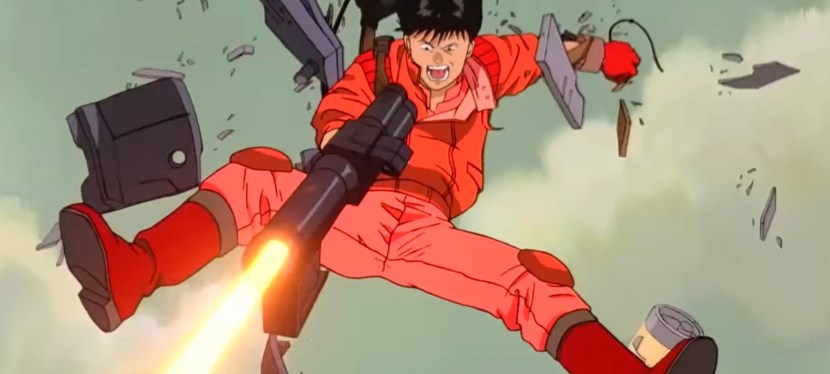
#1 Akira revisited – The 1988 anime feature film Akira has often been cited as a masterpiece and some pointed it for making anime more popular in the West. For the newcomers reading this, Akira actually started in Japan as a manga/comic book series before getting adapted into anime. Strangely enough, the literary Akira was still publishing when the 1988 feature film was released. As of this writing, there are two English-dubbed versions of it in existence and the Blu-ray copy I own has them both.
It is not surprising that the animated Akira got featured by many YouTubers in the form of retro reviews, reaction videos, documentaries and video analysis. If you have not seen Akira, I encourage you to watch it on Blu-ray first. Otherwise, enjoy the selected videos below.
#2 Universal City Studios, Inc. v. Nintendo Co., Ltd. (the Donkey Kong case) – Have you ever played Donkey Kong back in the 1980s? That is a classic game from Nintendo. It was a hit in the arcades and made its way to multiple platforms in the years that followed. Believe it or not, Univeral Studios sued Nintendo alleging that Donkey Kong was a trademark infringement of King Kong. The video below will explain the details as to what happened and I can say it is also amusing to watch.
#3 PatmanQC examines Q*bert – Released in the arcades in 1982, Q*bert became a hit in America and went on to become one of the highest grossing arcade games in 1983. A very fun game, it is remembered for cleverly blending puzzle play with 3D-like movement and avoidance of both obstacles and enemies. You might be wondering who came up with Q*bert, what led to its production and what inspired the game creators to design it. To find out, watch PatmanQC’s detailed examination of Q*bert below…
#4 The Terminator’s connection with The Outer Limits explored – Remember watching 1984’s The Terminator? That was the memorable sci-fi action movie from director James Cameron which went on to become a multimedia franchise of movies, a TV series, comic books, video games and more. If you truly believe that the story is a purely original work written by Cameron (and by those who were involved behind the scenes), you will have to think twice because The Terminator’s sci-fi concept shares some notable similarities with a certain episode of The Outer Limits written by Harlan Ellison. To find out more, watch the video below…
#5 Al Jazeera is the terrorist news network and Qatar’s tool of deception – I will say it out loud right here: Al Jazeera is absolutely not a professional news outlet. Al Jazeera is, in fact, the Islamic terrorist news network and also the tool of Qatar which itself has sinister plans. Qatar may be a small nation but its ambitions for greater influence on the Middle East are very big and they have sinister intentions to grow big. Be aware that Qatar funded anti-Israel movements through American universities. That being said, I urge you all to boycott Al Jazeera. To take a close look at the evil of Al Jazeera and why Qatar should be held accountable, watch the video below.
#6 Ashleigh Burton reacts to The Amazing Spider-Man 2 – Back in 2014, I saw The Amazing Spider-Man 2 in the local cinema which was fully crowded. Even though I had modest expectations, I still left the cinema feeling disappointed. I was convinced that Sony Pictures, Andrew Garfield and director Marc Webb really had nowhere else to go with the way they were handling the Spider-Man film franchise. The Amazing Spider-Man 2 remains a divisive film and yet I had more fun with it by watching Ashleigh Burton’s reaction video. Watch it now.
#7 Popcorn in Bed reacts to Million Dollar Baby – When was the last time you saw YouTuber Popcorn in Bed get emotional and cry during a movie reaction video? If you have already seen Clint Eastwood’s Million Dollar Baby, then you should be aware of its very heartbreaking moments directly related to its very tragic concept. Popcorn in Bed recently reacted to the film and how it impacted her on an emotional level is a must-watch.
#8 SHIFT’s 2024 King of Thong video (Miami Swim Week) – A thong is “an article of swimwear or underwear with the back portion consisting of a narrow strip of cloth that passes between the buttocks and connects with a waistband.” Several months ago, the swimsuit fashion YouTube channel SHIFT posted a video of its coverage of the 2024 Miami Swim Week focusing on a show of King of Thong. For almost nine minutes, you’ll see lots of women appear in thongs showing lots of skin with carefully selected tunes playing. It’s a must-watch for those who enjoy women’s swimwear fashion and thongs. Also, there might be some fashion models you could recognize.
+++++
Thank you for reading. If you find this article engaging, please click the like button below, share this article to others and also please consider making a donation to support my publishing. If you are looking for a copywriter to create content for your special project or business, check out my services and my portfolio. Feel free to contact me with a private message. Also please feel free to visit my Facebook page Author Carlo Carrasco and follow me on Twitter at @HavenorFantasy as well as on Tumblr at https://carlocarrasco.tumblr.com/ and on Instagram athttps://www.instagram.com/authorcarlocarrasco

What to watch on YouTube right now – Part 50
Welcome back, my readers, YouTube viewers and all others who followed this series of articles focused on YouTube videos worth watching. Have you been searching for something fun or interesting to watch on YouTube? Do you feel bored right now and you crave for something to see on the world’s most popular online video destination?
I recommend you check out the following topics and the related videos I found.
#1 HolyLandSite’s examination of Kursi and Lord Jesus’ power over the demonic realm – Kursi is a place in the east side of the Sea of Galilee in the region of Gerasenes (or Gadarenes) in Israel where two men possessed by demons stayed at. HolyLandSite produced this video to emphasize the biblical relevance of the place, what happened and, most of all, the immense power Lord Jesus had over the demonic forces that caused huge problems for people back then. This is a biblical examination of the place and a lively reminder of the light and authority of Lord Jesus, the Savior and Hope of ALL nations. Grab a copy of the Holy Bible and then watch the video from start to finish.
#2 GTV Japan examines Nintendo’s crisis – Remember back in the late 1980s when a shortage of ROM chips prevented Nintendo from releasing games on time? Back in those days, microchips were essential for manufacturing cartridges of games for consoles. A lot of people believed that Nintendo, which already had several restrictions on game publishing and business with 3rd party game companies, deliberately created the shortage for their advantage. There is a lot more details and developments that happened beyond the perceived shortage and the video by GTV Japan has a very in-depth look at it in the video below.
#3 What the hard drive of terrorist Bin Laden contained – Remember when America found and eliminated the mass murderer and terrorist Osama Bin Laden in 2011? YouTuber fern published a video focused on one particular aspect related to the operation that took Bin Laden down – the sensitive information contained in his hard drive. The video also has a key analyst interviewed who provided a lot of insight. Watch the video now.
#4 Wokeness in Japan exposed – Believe it or not, there definitely is wokeness in Japan and it was exposed a lot during their news media coverage of the 2024 US Presidential Election which Donald Trump won. In fact, a certain Japanese professor who was included in the media outlet’s coverage (being in the studio with others) was so liberal, he got frustrated as Commie Kamala Harris lost and he even reiterated the Democrats’ buzz words like “threat to democracy”. Think about it very carefully. The Democrats and their Satanic Left pawns have been spreading their distorted views in Japan and influenced some people there. The woke-minded in Japan may not realize it but they are looking and sounding awkward (if not pathetic). Perhaps some woke nuts of Japan love Islamic terrorists and I know they have pro-Palestine zealots. Watch and learn from the video below.
#5 Controversial Alice Guo featured in episode of Dark Asia with Megan – Alice Guo (AKA Guo Hua Ping), the controversial former mayor of Bamban who has been detained for various charges, is now the subject of a new episode of Dark Asia with Megan. For the newcomers reading this, Alice Guo is notorious in the Philippines not only for her links with POGOs (Philippine Offshore Gaming Operators) but also for her very questionable background with regards to citizenship, family and origin. She even escaped the Philippines temporarily before getting brought back. In fact, Alice Guo’s case raises a lot of questions about national security, espionage and foreign infiltration into the systems of governance in the Philippines. Watch and learn from the Dark Asia with Megan video.
#6 PatmanQC examines Donkey Kong – Long before Donkey Kong Country became a massive critical and commercial hit with gamers around the world, there was the original Donkey Kong in 1981. I never played the arcade version but I played Donkey Kong on the Atari 2600 back in the early 1980s and it was a fun game. A short time later, I played the ColecoVision version and was impressed to see the graphical improvements. The production history of Donkey Kong is really interesting and PatmanQC produced not just one but two documentary videos about the game.
#7 Popcorn in Bed and You, Me and the Movies react to Vertigo – Vertigo, the classic film directed by Alfred Hichcock, was one of the first twenty-five films selected for preservation in the US National Film Registry for being “culturally, historically, or aesthetically significant”. That being said, it is not surprising that it has been the subject of several movie reaction videos on YouTube. If you have not seen it, I encourage you to watch it entirely first when you have the chance. Otherwise, I encourage you to watch the reaction videos of Popcorn in Bed, and You, Me and the Movies below.
#8 Ashleigh Burton reacts to Signs – Back in 2002, I saw Signs inside a packed local cinema during the evening. The film directed by M. Night Shyamalan and starring Mel Gibson kept moviegoers in suspense and occasionally pulled off some sudden scary moments. That being said, you have to see Ashleigh Burton react to it.
+++++
Thank you for reading. If you find this article engaging, please click the like button below, share this article to others and also please consider making a donation to support my publishing. If you are looking for a copywriter to create content for your special project or business, check out my services and my portfolio. Feel free to contact me with a private message. Also please feel free to visit my Facebook page Author Carlo Carrasco and follow me on Twitter at @HavenorFantasy as well as on Tumblr at https://carlocarrasco.tumblr.com/ and on Instagram athttps://www.instagram.com/authorcarlocarrasco

What to watch on YouTube right now – Part 49
Happy New Year to all my readers, YouTube viewers and all others who followed this series of articles focused on YouTube videos worth watching. Have you been searching for something fun or interesting to watch on YouTube? Do you feel bored right now and you crave for something to see on the world’s most popular online video destination?
I recommend you check out the following topics and the related videos I found.
#1 You, Me and the Movies react to The Tower (2012) – The Tower (2012) is a South Korean disaster film that drew huge audiences in its country and found some success overseas. Its concept will remind long-time movie buffs about 1974’s The Towering Inferno which itself was an inspiration for director Kim Ji-hoon. If you want to discover The Tower but you are not willing to spend time and money to see it, I encourage to watch You, Me and the Movies’ reaction video.
#2 Alien versus Predator games history examined by Slope’s Game Room – I really enjoy watching the retro gaming videos of YouTuber Slope’s Game Room. This time around, Slope examines the history of video games featuring one of the most memorable sci-fi crossovers ever: Alien versus Predator. For the newcomers reading this, there was a time when Alien and Predator were separate sci-fi film franchises. How a crossover between them happened and what video games were made are explained in detail in the video below.
#3 The rise of cold coffee in America – Do you like drinking coffee that is actually cold? Over the past several years in America, spending on cold coffee skyrocketed and outpaced hot coffee. To be clear, cold coffee includes iced coffee, cold brew and frozen coffee drinks. Already, cold coffee sales really grew for certain businesses that sell coffee. To find out why Americans are buying more cold coffee and what possibly started the trend, watch the video below.
#4 Changing the Middle East – There is no denying the fact that Israel will be remembered for significant gains against Iran-sponsored terrorists in 2024. They did not have much support from Biden-led America but Israel still succeeded in eliminating Yahya Sinwar (Hamas) and Hassan Nasrallah (Hezbollah). Israel also succeeded in hitting military targets in terrorist state Iran which crippled them significantly. Also the collapse of the wicked Assad regime in Syria proved to be a huge loss for Iran which had a sinister alliance with Bashar al-Assad (who abandoned Syria).
With Donald Trump set to return as United States President on January 20, 2025, Israeli Prime Minister Benjamin Netanyahu expressed confidence of changing the Middle East. Netanyahu talked with Trump recently and you can learn more by watching CBN News’ video.
If you have accepted Jesus as your Lord and Savior, I encourage you to pray to Him in support of Israel and the new Trump administration to change the Middle East in 2025. Pray to Him for the Christians in Syria who will soon be affected negatively by the new regime’s plan to impose Sharia Law. Pray to Him for the rescue or release of the hostages of the October 7, 2023 attacks.
#5 Lefties losing it – In case you did not notice, the Democrats in America don’t just have wicked and dishonest leaders. They also have Hollywood celebrities as Democrat activists who are actually phony intellectuals who love to fool their fellow Americans. A lot of Democrat leaders and activists are actually out of touch with the people and reality in general, which is what this Lefties Losing It video from Sky News Australia emphasized clearly. Watch and learn from start to finish.
#6 PatmanQC examines Gun.Smoke – Developed by Capcom, Gun.Smoke debuted in the arcades in 1985 and eventually got ported to different platforms. I never played the arcade version but I had fun with Gun.Smoke on the Nintendo Family Computer (Famicom) Disk System. It was a run-and-gun shooter with an Old West setting and its designer was Yoshiki Okamoto (1942, Street Fighter II and Resident Evil). The production history of the game is quite interesting and you can find out more in PatmanQC’s video.
#7 Ashleigh Burton reacts to The Naked Gun 2½: The Smell of Fear – I love watching Ashleigh Burton’s movie reaction videos, especially the ones that has her laughing a lot. She’s a jolly YouTuber and often entertaining. That being said, you have to watch her reaction to 1991’s The Naked Gun 2½: The Smell of Fear.
#8 Popcorn in Bed reacts to Star Trek: Nemesis – Were you able to watch the entire Star Trek: The Next Generation (Star Trek: TNG) series from 1987 to 1994? I never had the privilege to watch all seven seasons but I managed to watch several random episodes of it and got to know the characters enough before proceeding to watch all four Star Trek: TNG movies from 1994 to 2002. Star Trek: Nemesis (2002) was released in American theaters right in the middle of intense box office competition with a Harry Potter movie, a James Bond movie and a Lord of the Rings movie. Apart from its box office failure, there was something wrong that happened behind the scenes during Star Trek: Nemesis’ production which explains its disappointing quality. If you want to discover the movie but you don’t want to spend too much time nor money on it, I encourage you to watch Popcorn in Bed’s reaction video.
+++++
Thank you for reading. If you find this article engaging, please click the like button below, share this article to others and also please consider making a donation to support my publishing. If you are looking for a copywriter to create content for your special project or business, check out my services and my portfolio. Feel free to contact me with a private message. Also please feel free to visit my Facebook page Author Carlo Carrasco and follow me on Twitter at @HavenorFantasy as well as on Tumblr at https://carlocarrasco.tumblr.com/ and on Instagram athttps://www.instagram.com/authorcarlocarrasco
Retro Gaming Ads Blast – Part 25
Welcome back readers, fellow geeks and electronic gaming fans!
In this edition of the Retro Gaming Ads Blast (RGAB) series, we will take a look at another batch of retro gaming print ads – including arcade flyers – from the 1980s and 1990s.
For the newcomers reading this, Retro Gaming Ads Blast (RGAB) looks back at the many print ads of games (console, arcade, computer and handheld) that were published in comic books, magazines, flyers, posters and newspapers long before smartphones, social media, the worldwide web and streaming became popular. To put things in perspective, people back in the 1980s and 1990s were more trusting of print media for information and images about electronic games and related products.
With those details laid down, here is the newest batch of retro gaming print ads for you to see and enjoy…
1. Defender arcade flyer
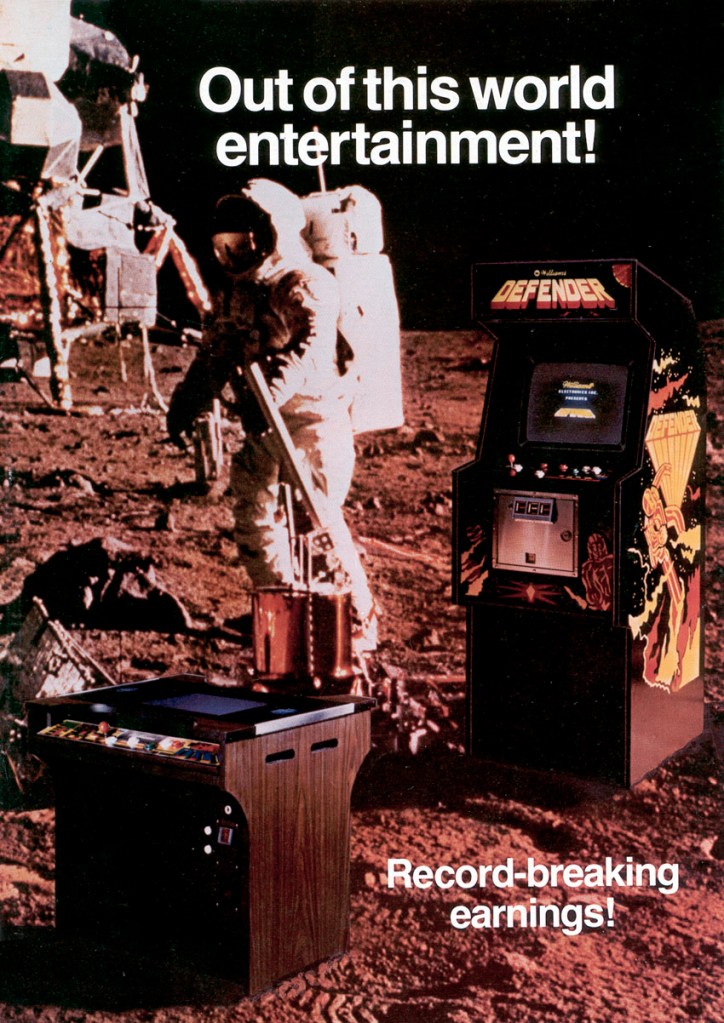
Very long ago, I played the classic game Defender a lot on the Atari 2600. Strangely enough, I never played its arcade version as my visits to arcades were quite limited as I was so young back then. When it comes to the arcade flyer of Defender, I find the use of stock footage of an astronaut on the moon as the artistic backdrop baffling because the game’s concept was all about fighting back alien invaders and protecting the citizens. Ironically, the image blended well with the photos of two arcade machines showcased.
2. Amidar Atari 2600 print ad
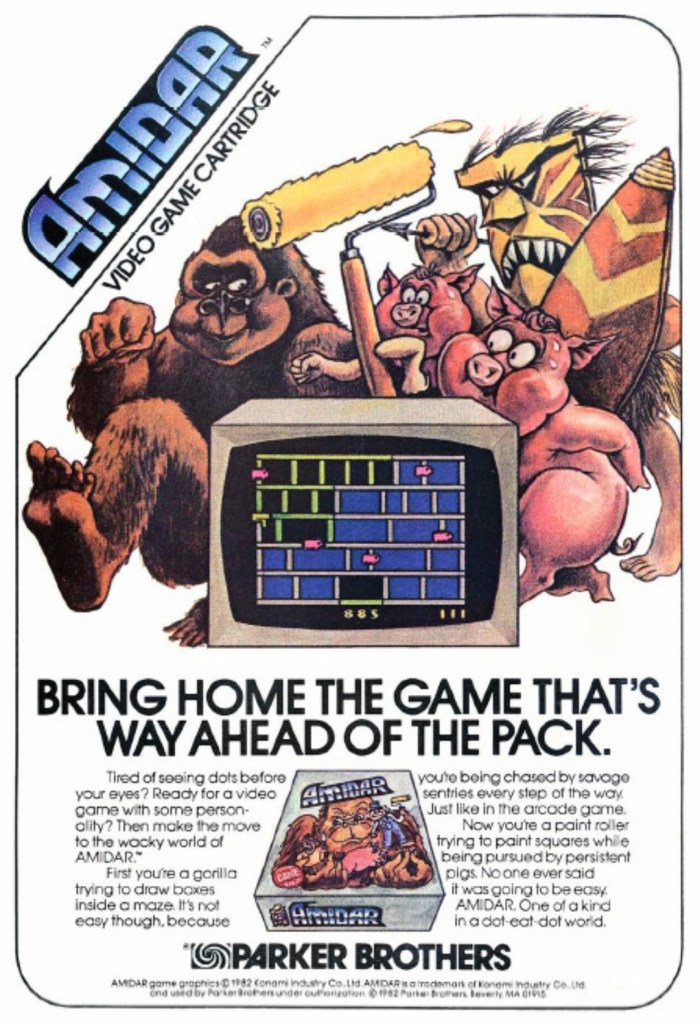
When I was a young boy, I saw this Parker Brothers print ad of Amidar appear in many superhero comic books I read. I never played the game on the Atari 2600 nor in the arcades. Each time I saw this ad, I always wondered how the game played and what its creative concept was all about. The constant showing of a giant gorilla on the game box cover reminded me of King Kong.
3. Reactor Atari 2600 print ad
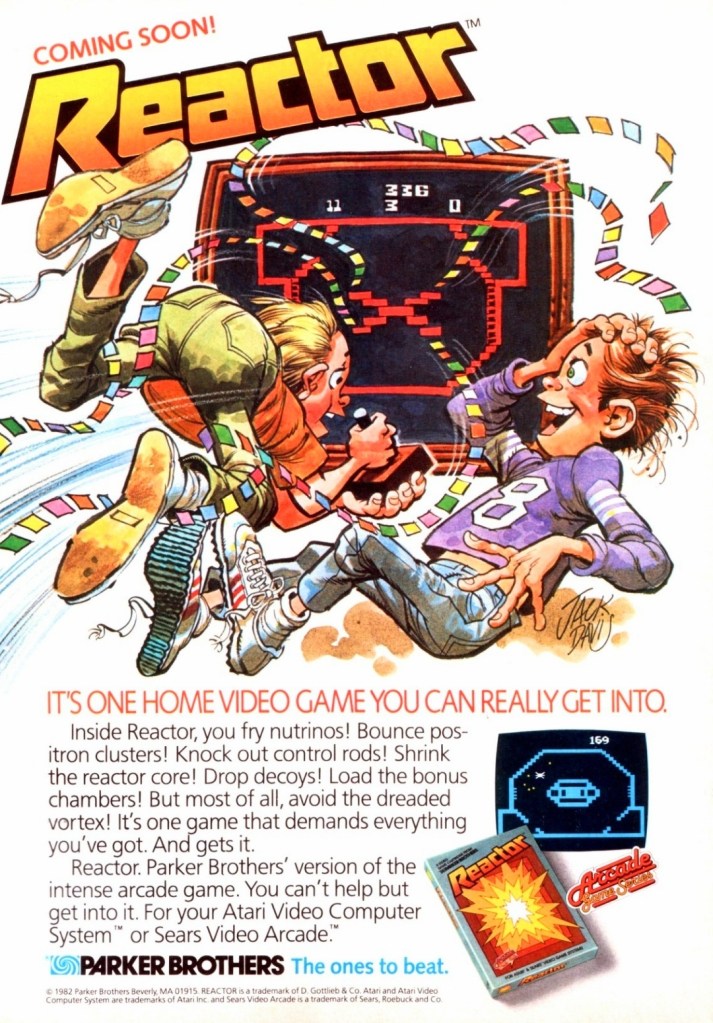
Reactor was one of those video games that was somewhat influenced by the subject of nuclear technology, particularly about the nuclear reactors. This is another game I never played on console nor in the arcades. This Reactor print ad by Parker Brothers for the Atari 2600 has a visual style and creative concept that I still find fascinating to look at.
4. Punch-Out!! arcade flyer
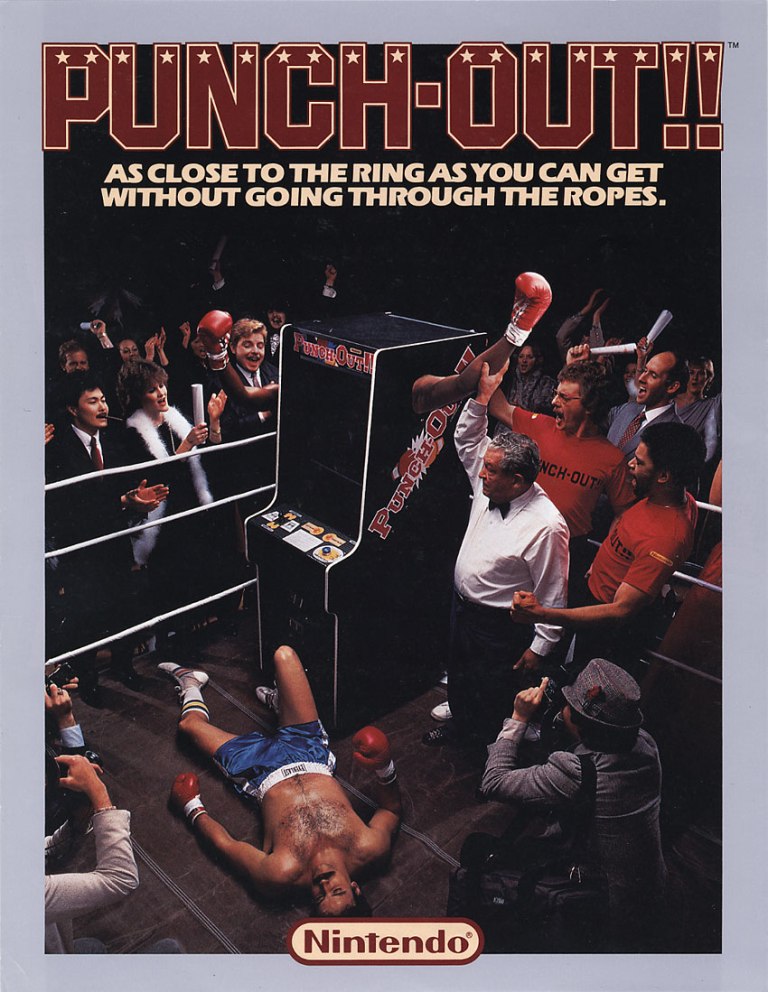
In 1984, Nintendo released the original Punch-Out!! game in the arcades and literally punched its way through to the top of American arcades that year while also scoring big in other arcades around the world. While the game proved to be very playable and a lot of fun, it could be argued that the intriguing image Nintendo used for the North American arcade flyer – a boxer down after literally getting beaten by the Punch-Out!! machine – made an impact on both gamers and arcade operators.
5. Arumana no Kiseki flyer
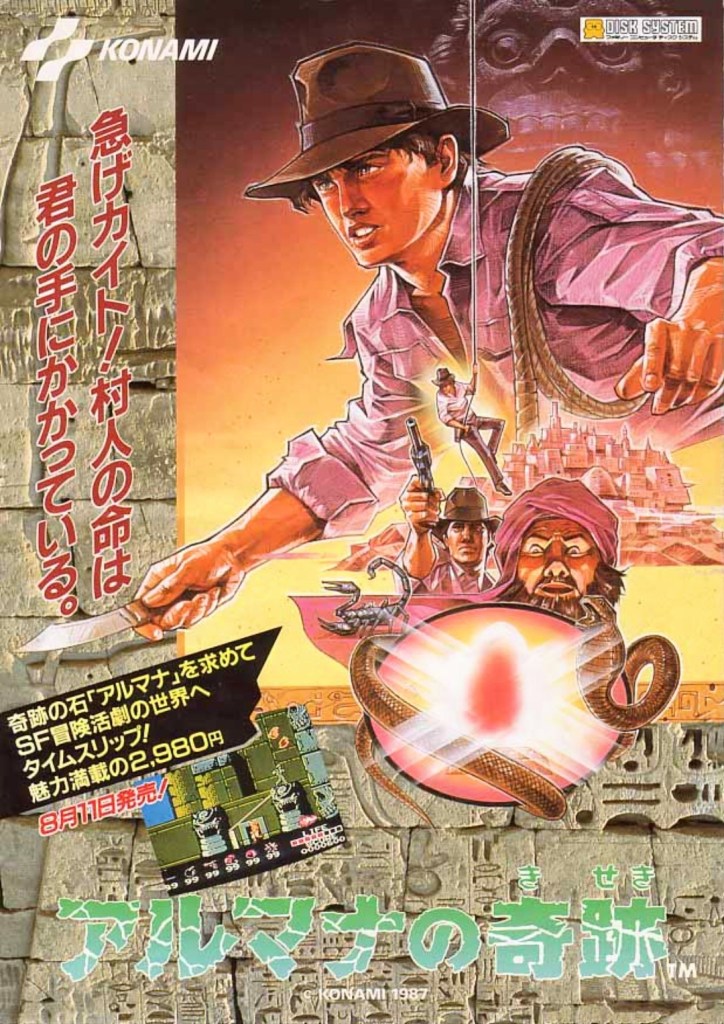
Released in 1987 on the Disk System of the Nintendo Family Computer (Famicom) in Japan, Arumana no Kiseki was one of the many 2D adventure games Konami released that entertained gamers. When compared to Castlevania – strongly influenced by American horror movies – this game was very influenced by the Indiana Jones movies of Steven Spielberg which is very evident in this promotional flyer.
In fact, some gamers who could not read the Japanese title actually thought this was an official Indiana Jones video game because the artwork was so suggestive. Having played and finished the game myself, I can say that Arumana no Kiseki was simply an Indiana Jones-inspired adventure game that had its own creative concept and unique settings and characters.
6. Devastators arcade flyer
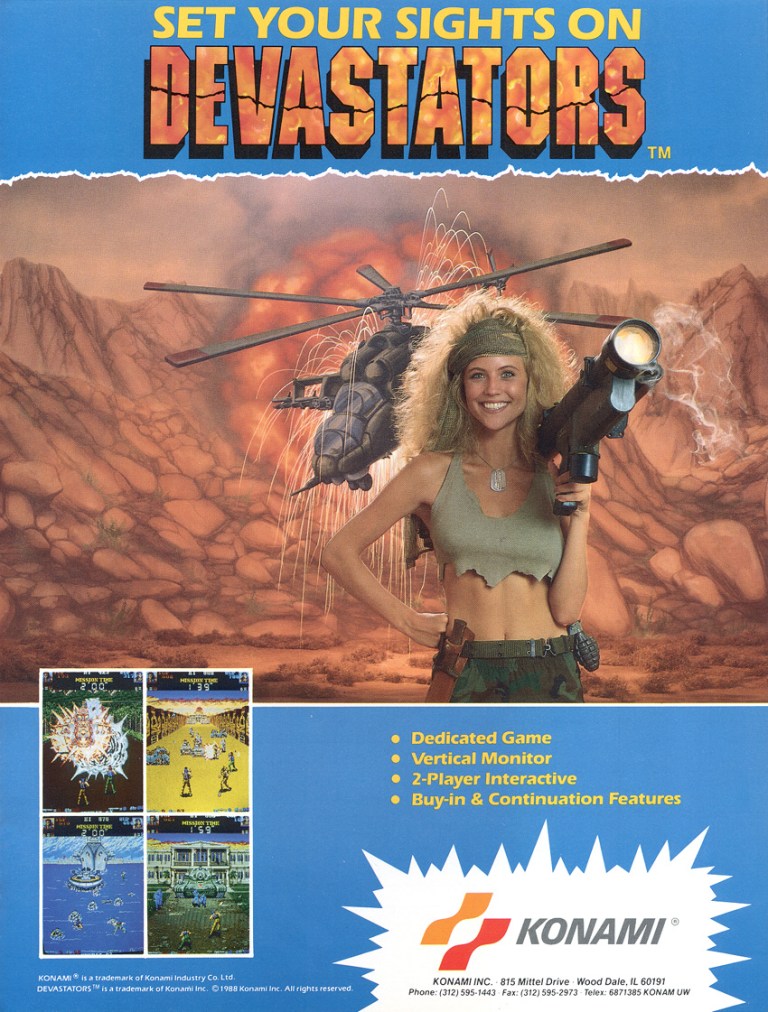
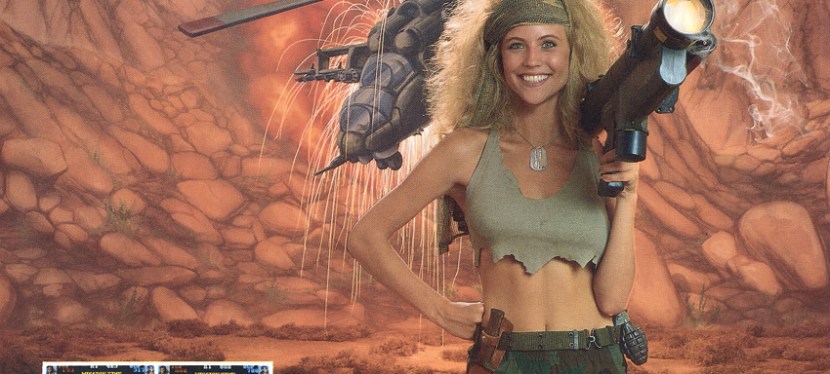
By looking at the track record of Konami closely, you will notice that many of their games in the 1980s were influenced by Hollywood movies and they hired pretty or sexy models for their arcade flyers. This arcade flyer of Devastators is no exception and you can clearly see the Rambo-inspired lady smiling while carrying a weapon. Devastators itself had strong Rambo vibes for its concept.
7. S.P.Y. Special Project Y arcade flyer
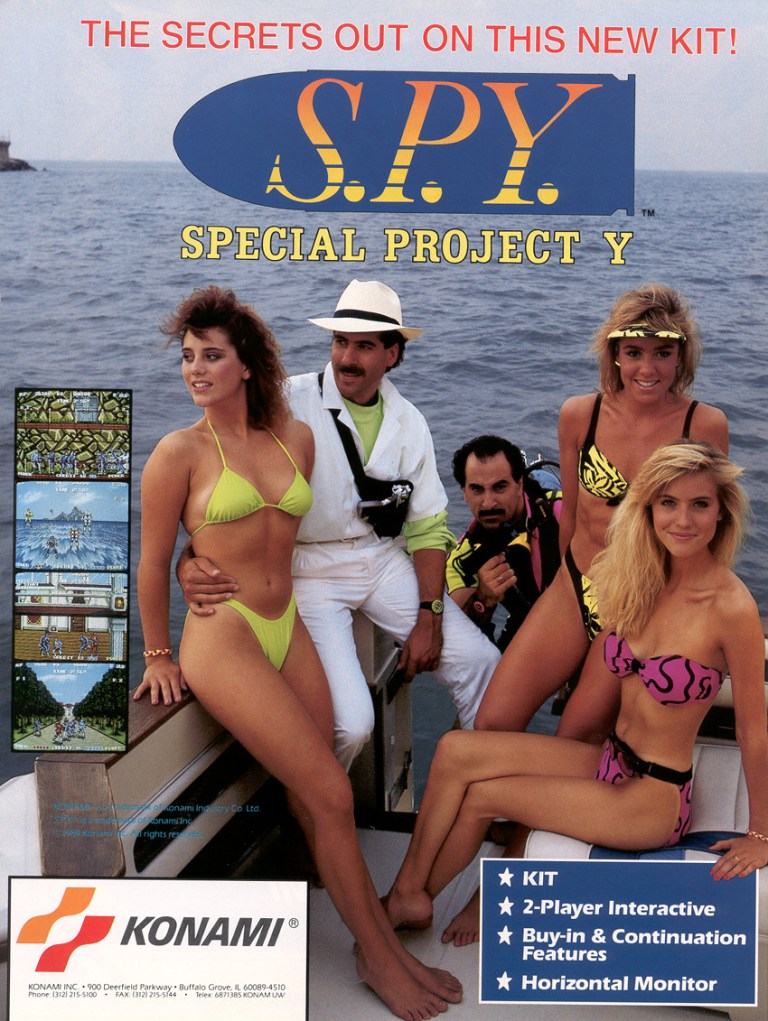
Still with Konami, S.P.Y. Special Project Y is 1989 arcade game that featured action sequences in which players fight against countless enemies in order to progress with the minimal story. This game had certain spy movie elements and to promote it, Konami came up with this arcade flyer showcasing three sexy women wearing swimwear accompanied by two men who looked more like operators or schemers. Can you imagine yourself as an arcade operator looking at this flyer trying to decide to buy the game?
8. Teenage Mutant Ninja Turtles arcade flyer/poster
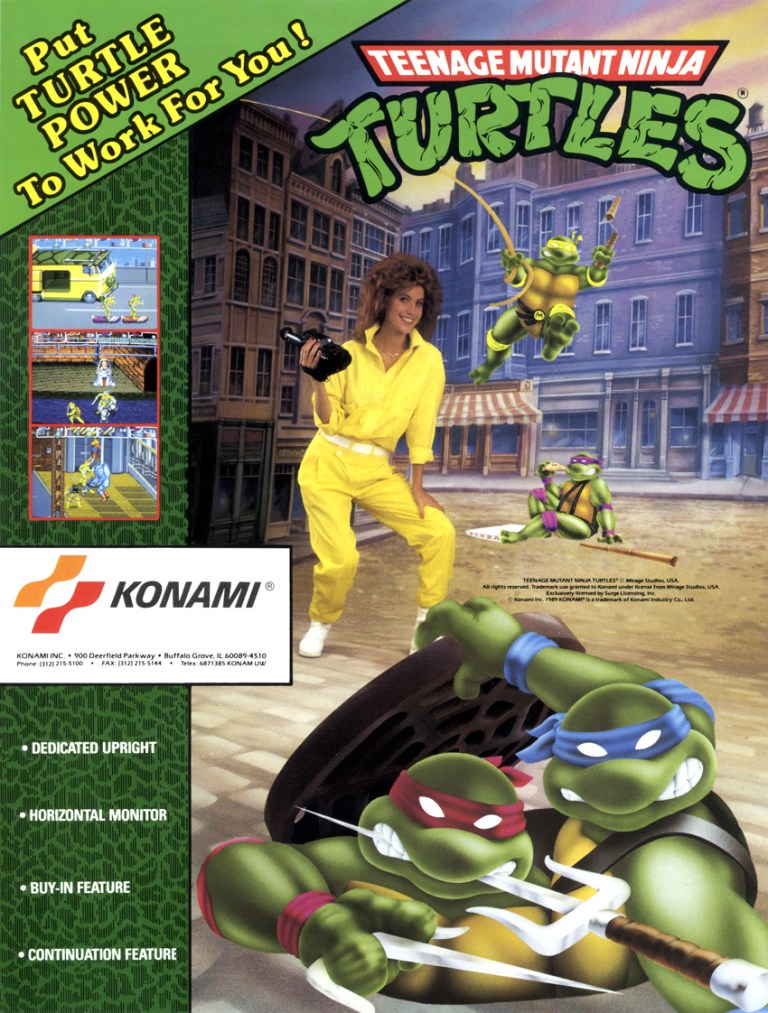
Now this is one of the most definitive arcade games Konami ever made. Released in late 1989, Teenage Mutant Ninja Turtles became a massive arcade hit in North America constantly attracting lots of fans and casual gamers to play at each machine. The demand was so great, Konami had no choice but to hire a company to manufacture more machines. When it comes to promoting the game, Konami cleverly used a mix of artworks for the TMNT characters and fantasy environment while having a hired model playing April O’Neil blending in smoothly.
Having seen the 1980s animated series myself, I can say that the ad makers struck gold when it came to making a promotional image that Teenage Mutant Ninja Turtle fans can easily recognize and go to the arcade to play the game.
9. Batman arcade flyer
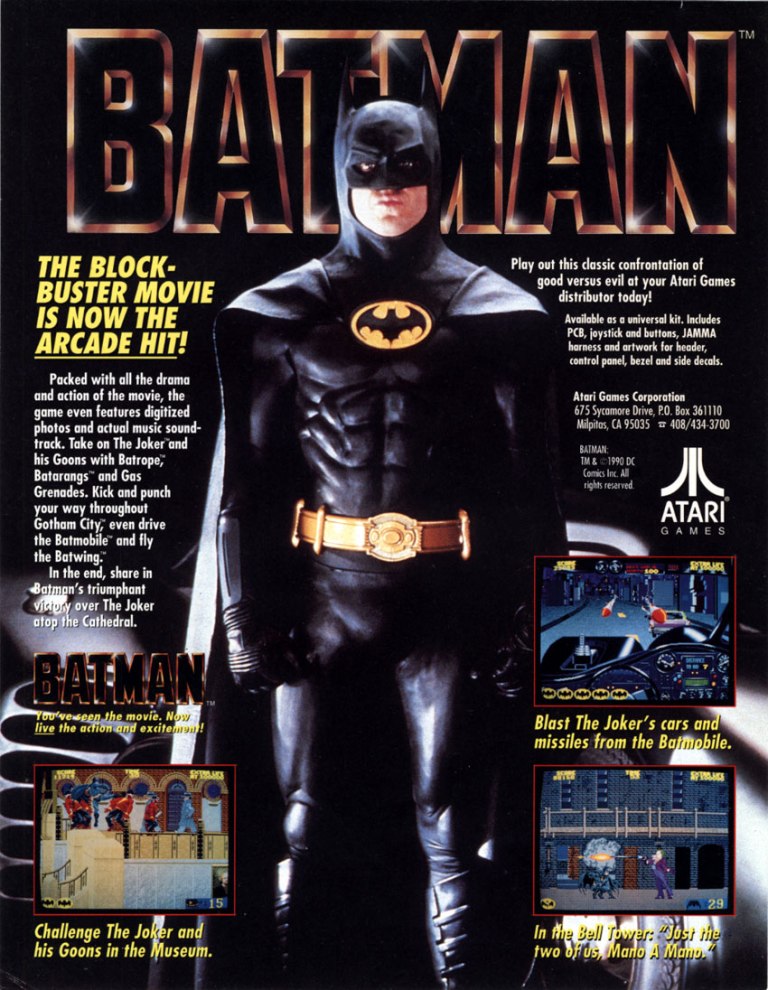
The live-action Batman movie of 1989 was simply inescapable as there was so much hype, merchandising and promos connected with it. When it came to video games, it was not surprising that a lot of companies talked with Warner Bros. and eventually Atari made the official arcade game based on the movie (for insight on the production, watch PatmanQC’s video by clicking here). This early-1990s arcade flyer had a simplistic approach showing a few screenshots and descriptive text while having the live-action Batman (note: Michael Keaton in costume) dominating in the middle. Simplistic yet effective in telling gamers and arcade operators what to expect.
10. Xevious arcade flyer
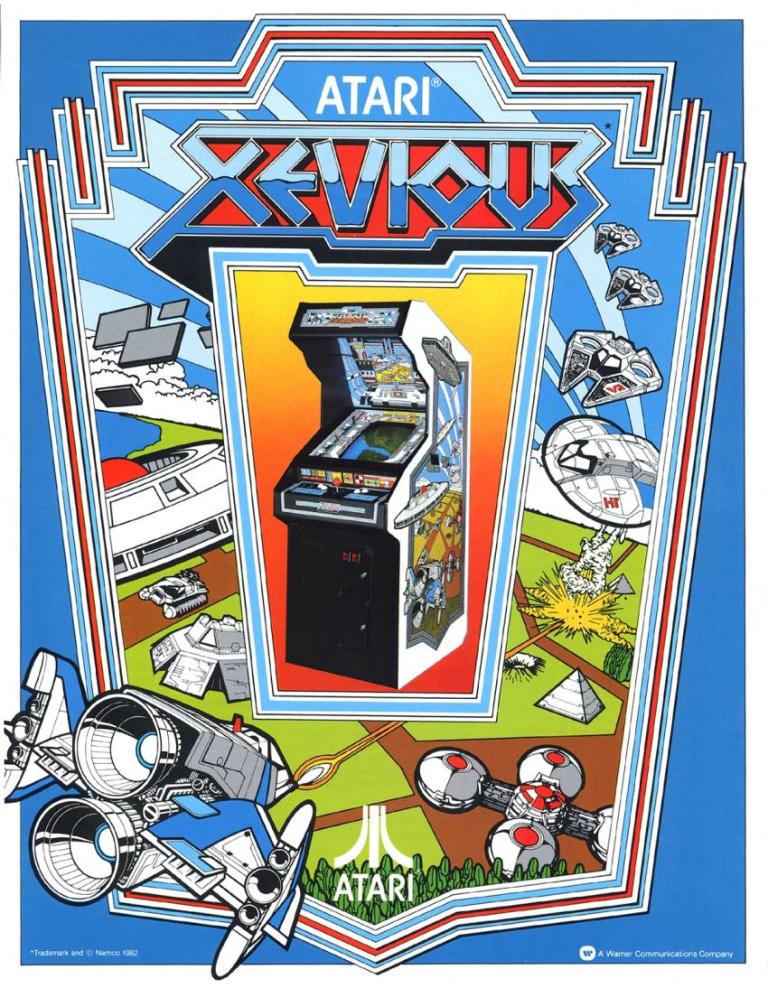
Xevious is a long-running series of video games owned by Namco. Since the early 1980s, several Xevious video games were released on arcades, consoles and mobile devices. Believe it or not, the original Xevious game was published by Atari for North American arcades and the company came up with this dynamic looking flyer to promote it. The arcade flyer really looks dynamic due to the hand-drawn art surrounding the photo of the machine. Even by today standards, this flyer still looks modern and energetic.
11. Robin Hood: Prince of Thieves print ads
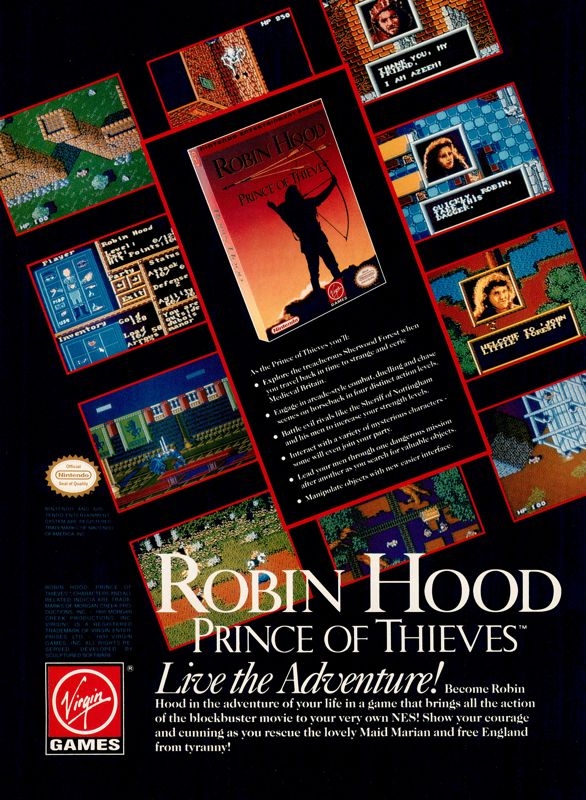
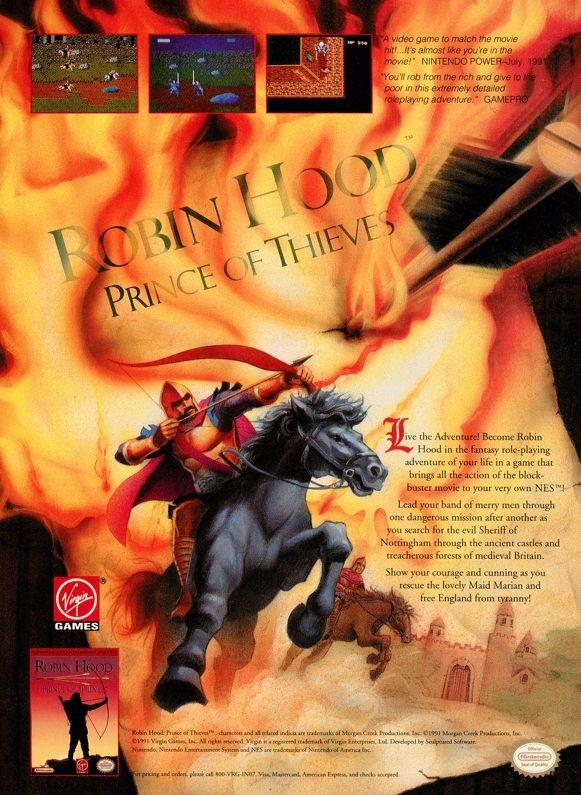
If you saw the 1991 movie Robin Hood: Prince of Thieves, were you able to play the video game adaptation? Robin Hood: Prince of Thieves on the Nintendo Entertainment System (NES) was notable for being specially featured in the Nintendo Power magazine and its game design was truly ambitious at the time. To promote the game and take advantage of the movie’s popularity, Virgin Games came out with two print ads targeting movie fans and NES gamers.
The first print ad above had lots of selected screenshots surrounding the game’s box and crammed the descriptive text. The 2nd print ad had original artwork to emphasize the fictional setting and used only three screenshots. Looking at both print ads, it was clear that the ad makers had no permission to use the likeness of Kevin Costner as Robin Hood. The same with other actors and their characters. Regardless, the ads still reminded me enough of the movie while keeping me informed about the video game.
+++++
Thank you for reading. If you find this article engaging, please click the like button below, share this article to others and also please consider making a donation to support my publishing. If you are looking for a copywriter to create content for your special project or business, check out my services and my portfolio. Feel free to contact me with a private message. Also please feel free to visit my Facebook page Author Carlo Carrasco and follow me on Twitter at @HavenorFantasy as well as on Tumblr at https://carlocarrasco.tumblr.com/ and on Instagram at https://www.instagram.com/authorcarlocarrasco

Donald Trump wins the US Presidential Election again!
In what is obviously the greatest political comeback in the history of the United States, Donald Trump (Republican) once again won the Office of US President after crushing the woke Kamala Harris (Democrats) in the 2024 US Presidential election!
Trump (US President from 2017 to 2021), whose running mate is US Senator JD Vance, won 286 out of 538 electoral votes as of this writing, according to the official results. 270 electoral votes are required to win the Presidency. As of now, the election results of Michigan and Arizona have yet to be finalized but Trump is leading in both of them.
When it comes to the popular vote, Trump won 70,900,447 votes while Harris got 66,434,997 votes as of this writing. These results proved many polls wrong as they predicted Harris would win more votes nationally than Trump.
For the newcomers reading this, the election of the US President and Vice President are not determined by popular vote nationwide. Rather it is through the Electoral College that determines the winner of the US Presidential Election. By January 20, 2025, Trump and Vance will formally take office as President and Vice President of the United States.
For insight, watch the selected YouTube videos below.
Below are the different YouTube livestreams that covered the elections.
To say that Donald Trump’s delayed re-election is significant is an understatement. He almost lost his life when someone tried to assassinate him. Before that happened, the Democrats and their allies abused government power to attack him and the Trump family. Questionable cases were filed against him in court. And then the Satanic Leftist mainstream news media became the Democrats’ attack dogs against him. Of course, Trump fought back hard and won this year’s Presidential Election decisively! Now that he won again, Trump as the incoming 47th President will tackle a lot of problems that affected America both domestically and overseas.
American families have been suffering from effects of rapid inflation and the reckless economic policies of Joe Biden and Kamala Harris. American society is gradually being dismantled by the LGBTQ and transgender movements, Critical Race Theory extremists, Islamo-Leftists, illegal aliens and the woke mobs which are clearly connected with the Democrats. The cost of living in America has skyrocketed so much, there are individuals who had to work with two jobs just to make ends meet. The Biden-Harris economic plans and post-pandemic measures made life a lot worse for Americans and their families. Meanwhile, illegal immigrants have added a lot to criminal cases around the country.
Once in office, Trump will eventually reposition America to push back hard against terrorist state Iran, Russia and China. I should mention that the Republicans won back control of the US Senate and eventually they will retain the majority in the US House of Representatives which will be helpful for Trump to fulfill his agenda for the people. I anticipate that the first batch of new pieces of legislation in 2025 will be written with the economy, inflation, and illegal immigration in mind.
If there is anything spiritually significant about Trump’s 2024 Presidential victory, I share with you the bible verse below…
“No weapon formed against you shall prosper,
And every tongue which rises against you in judgment
You shall condemn.
This is the heritage of the servants of the Lord,
And their righteousness is from Me,”
Says the Lord.
Isaiah 54:17 (NKJV)
I sincerely believe that the victory of Trump-Vance is a move made by God and this goes way beyond politics. While Kamala Harris mocked someone at her rally who claimed Jesus is the Lord, Vance acknowledged during a rally that Jesus is the king. It was inevitable for Harris and her party to be defeated in the elections.
The victories of Trump-Vance and the Republicans this year formed a powerful push back against the Satanic Left, corrupted people, illegal immigration and other wicked forces. The American people have spoken through voting and the 2024 elections will be remembered for a very long time. The people wanted Trump back and they clearly want to join him to make America great again.
Let me end this piece by asking you readers: How did you react when you first learned about the re-election of Donald Trump? Did you let the Leftist mainstream news media fool you into believing Kamala Harris is best for America? Do you think life in America improved a lot under the Biden-Harris administration?
You may answer in the comments below. If you prefer to answer privately, you may do so by sending me a direct message online.
+++++
Thank you for reading. If you find this article engaging, please click the like button below, share this article to others and also please consider making a donation to support my publishing. If you are looking for a copywriter to create content for your special project or business, check out my services and my portfolio. Feel free to contact me with a private message. Also please feel free to visit my Facebook page Author Carlo Carrasco and follow me on Twitter at @HavenorFantasy as well as on Tumblr at https://carlocarrasco.tumblr.com/ and on Instagram athttps://www.instagram.com/authorcarlocarrasco
Retro Gaming Ads Blast – Part 21
Welcome back readers, fellow geeks and electronic gaming fans!
In this edition of the Retro Gaming Ads Blast (RGAB) series, we will take a look at another batch of retro gaming print ads – including arcade flyers – from the 1980s and 1990s.
For the newcomers reading this, Retro Gaming Ads Blast (RGAB) looks back at the many print ads of games (console, arcade, computer and handheld) that were published in comic books, magazines, flyers, posters and newspapers long before smartphones, social media, the worldwide web and streaming became popular. To put things in perspective, people back in the 1980s and 1990s were more trusting of print media for information and images about electronic games and related products.
With those details laid down, here is the newest batch of retro gaming print ads for you to see and enjoy…
1. Galaxian for Atari print ad
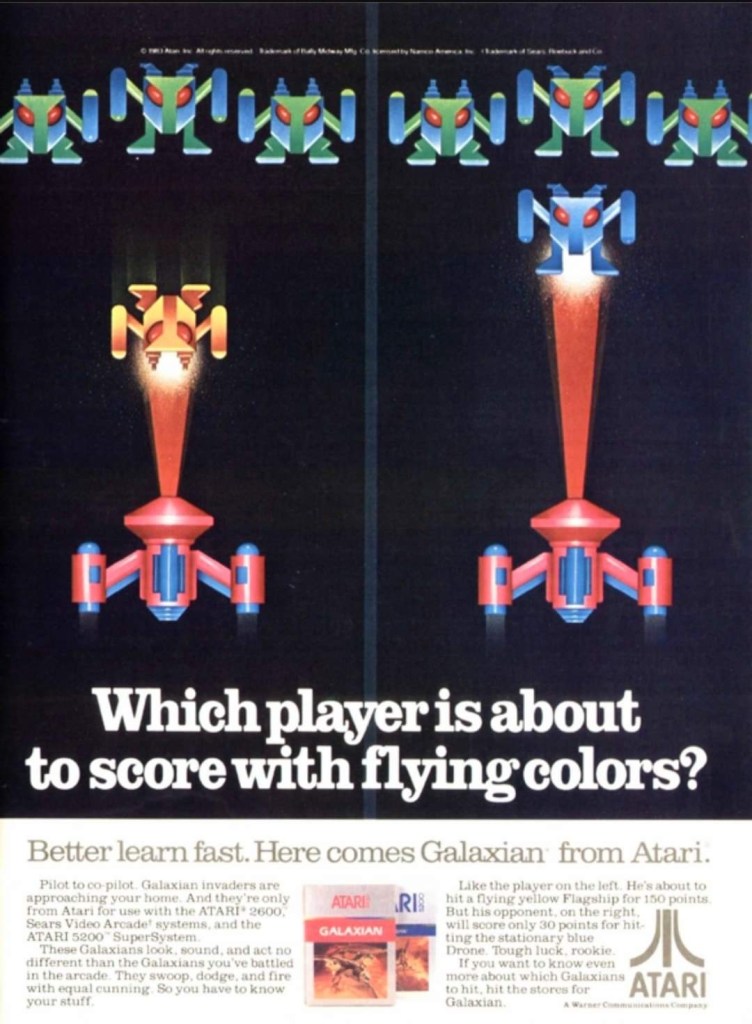
Developed by Namco, Galaxian was a 2D sci-fi shooter that debuted in arcades in 1979. It was so successful and widely acclaimed, it got ported to varied game consoles and home computers as the years passed by. For its release on the Atari 2600 and Atari 5200, this print ad was created to catch the attention of fans and gamers by utilizing artwork that resembled the look of 2D sprites from the game. That being said, no screenshots of Galaxian on the Atari consoles were shown because the artwork used looked detailed and were attention-grabbing already.
2. 1943: The Battle of Midway arcade flyer
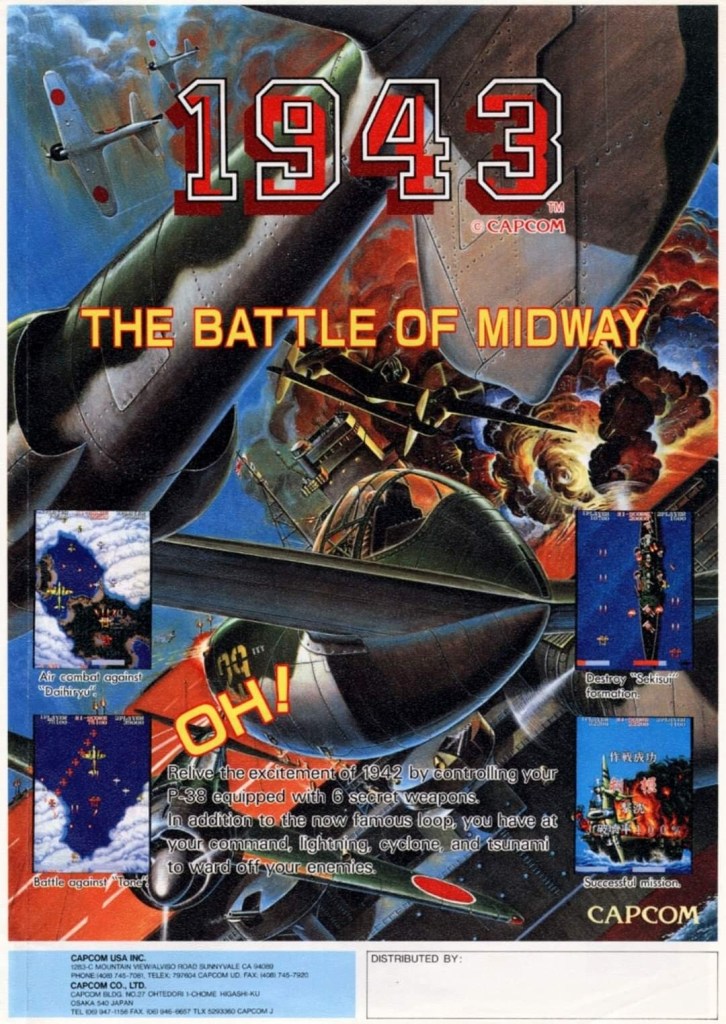
In 1987, Capcom released in the arcades 1943: The Battle of Midway which was their follow-up to 1942. The arcade flyer itself was designed to strongly promote the game using a combination of screenshots, short-but-clear text descriptions and the great looking piece of artwork which really emphasized the World War II concept. Behind it all, this game was made by Japanese developers with the Western markets in mind and the irony is that the game has players control Americans fighting the Japanese fleet.
3. Top Gunner arcade conversion kit flyer
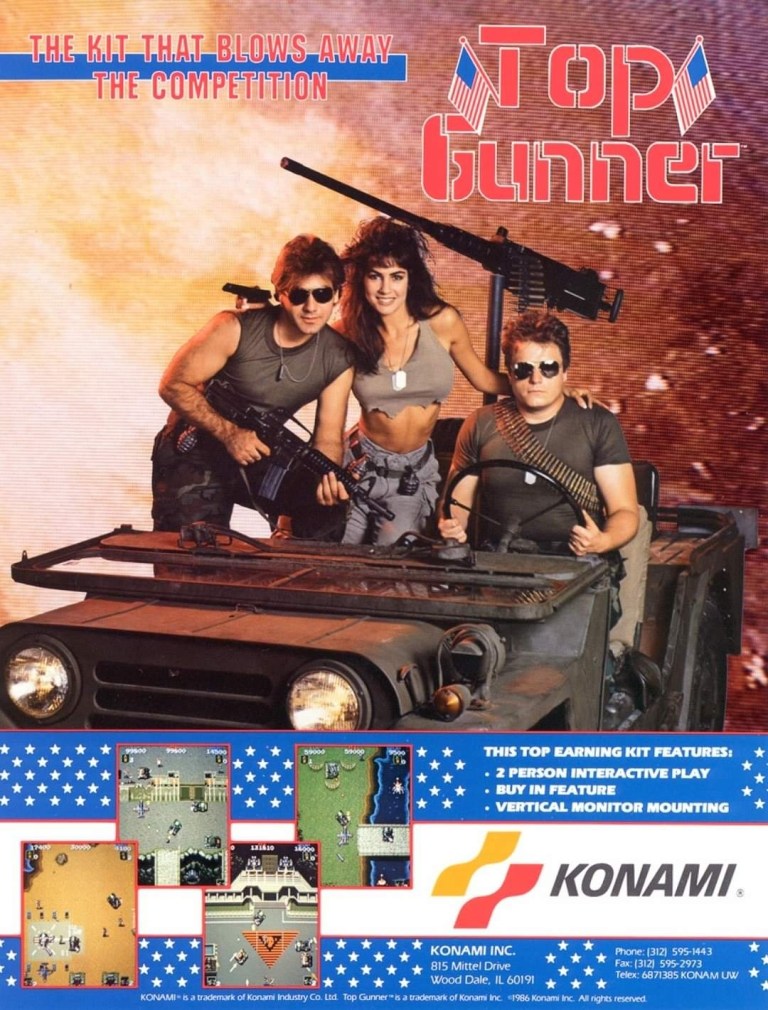
To make things clear, Top Gunner is actually the run-and-gun game Jackal and the alternative titles was mainly used in North American arcade distribution and also reflected Konami’s move of coming up with titles inspired by blockbuster movies of the time. To promote its 1986 arcade release in America as a conversion kit, the advertisers had three models playing soldiers on a military jeep to immerse gamers into the core concept of the game – moving armed military jeeps from one location to another while fighting bad guys. The approach used for the visual concept is indeed inspiring, especially during the Cold War. Top Gunner/Jackal became a hit in both arcades and consoles.
4. Joust for Atari print ad
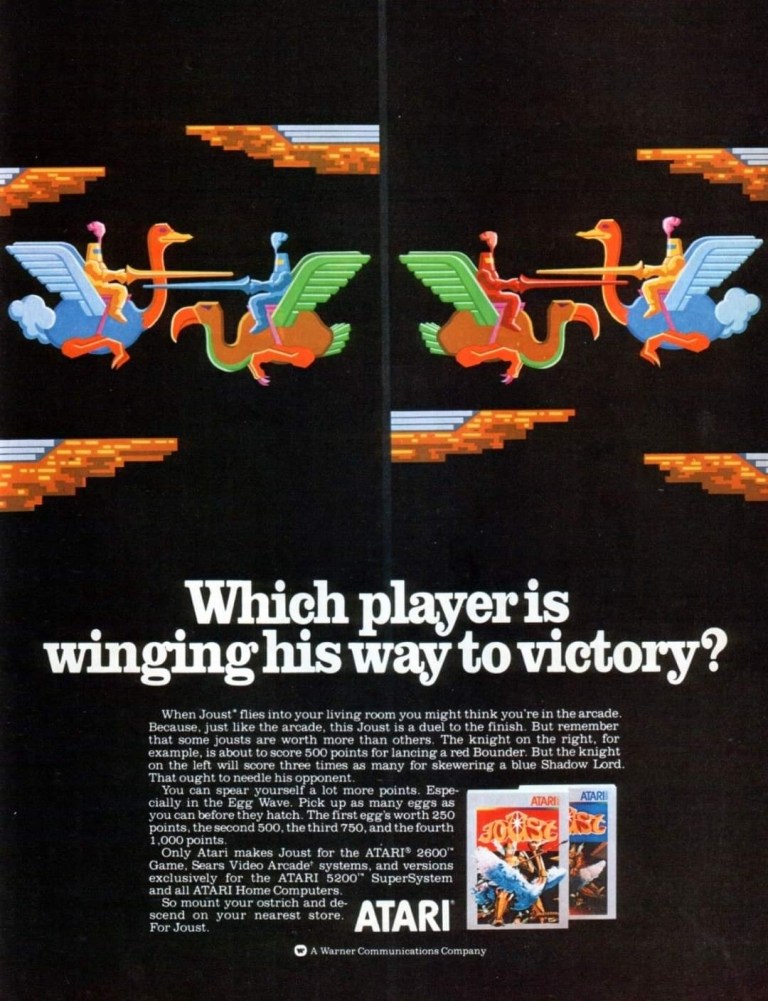
Made by Williams Electronics, Joust was one of those early 1980s arcade games that eventually made its way to the Atari 2600 console which was massively popular in North America. Strangely enough, the artistic approach Atari’s advertising came up with for the console version of Joust was similar with that of the ad of the Atari version of Galaxian (see item #1 above) in which artwork was used to resemble the 2D sprites of the game. Regardless, the images of this ad showed what a joust looked like – a martial game between two armed combatants going against each other while riding an animal.
5. Kid Chameleon print ad
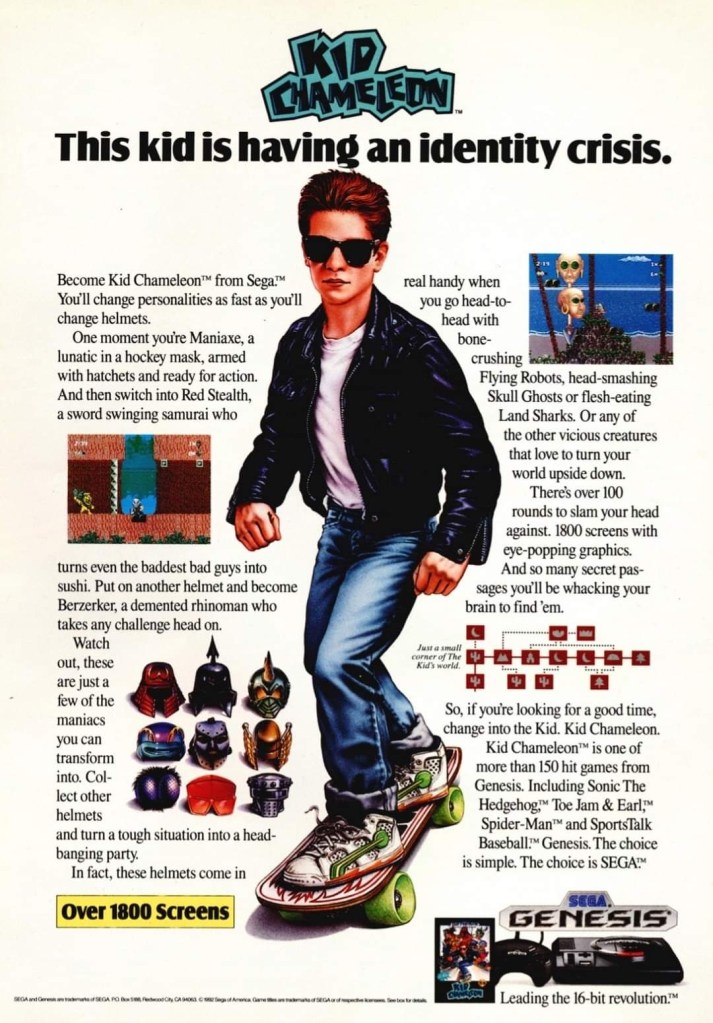
During the early years of the Sega Genesis, Sega of America exerted efforts to make new games that were not only exclusive to their console but also stand out among the many 2D side-scrolling adventure games by coming up with a protagonist with a unique personality that could somehow resonate with young kids and teenagers.
Developed by their internal experts (Sega Technical Institute), the company released Kid Chameleon in 1992 and they came up with the above print ad that had detailed hand-drawn art of the lead character as well as a wordy text description which was a clear attempt to help young gamers (including teenagers) get connected with both the game and the protagonist. The advertisers even had space to spare to accommodate two screenshots of the game.
6. Terminator 2: Judgment Day (AKA T2: The Arcade Game) for Sega Genesis print ad
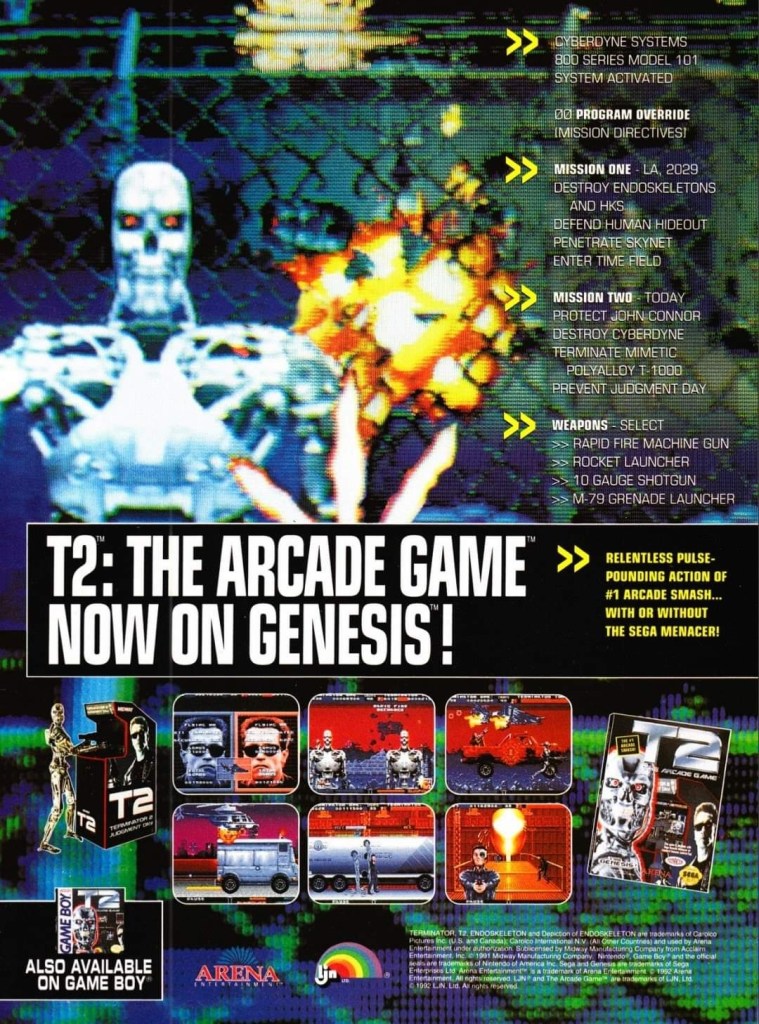
Back in the early 1990s, Terminator 2: Judgment Day was a massive success in the global box office and this resulted in Arnold Schwarzenegger’s popularity to soar very high while also establishing the Terminator as an essential pop culture figure. Apart from comic books and merchandise, video games based on the movie were made and the one that stood out the most was the arcade shooter game initially titled Terminator 2: Judgment Day (later retitled as T2: The Arcade Game).
The arcade mega hit eventually got ported to the Sega Genesis and this print ad really looked flashy with its visual presentation showing screenshots and a zoomed-in look at how the Terminator T-800 looked like in the Genesis version complete with a few explosions in the background. It should be noted that this flashy print ad cleverly concealed the visual downgrades and the redrawn images as the Genesis itself could never come close to matching the high quality visuals of the arcade version.
7. CYBERPad print ad
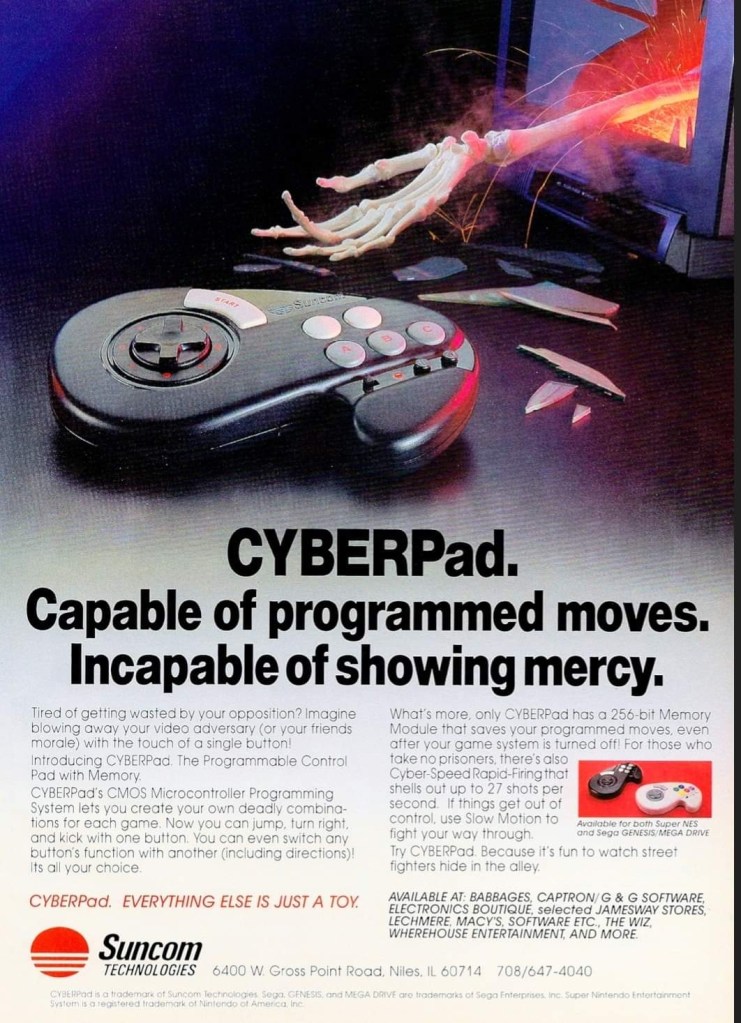
During the so-called 16-bit console generation (actually the 4th console generation), there were lots of licensed console peripherals made by independent companies in support of the Sega Genesis and Super Nintendo Entertainment System (SNES). The company Suncom Technologies came up with the CYBERPad controller for the two consoles and they boasted in their print ad that the product had a programmable control pad that allowed users to create combinations for each game with convenience in mind. The CYBERPad also allowed the saving of the programmable moves and it had a rapid-fire feature and even a slow-motion function. The CYBERPad was made to make the gameplay experience more user-friendly.
8. GamePro magazine sweepstakes print announcement
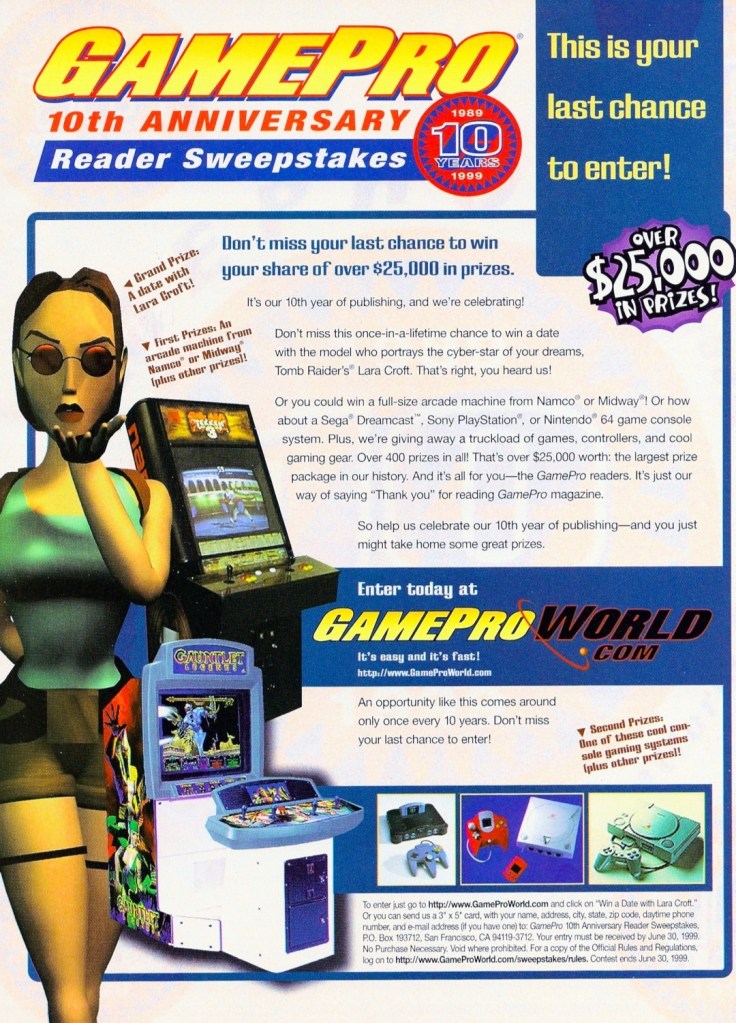
In 1999, GamePro magazine celebrated its 10th anniversary and to keep on resonating with gamers and maintaining the loyalty of their fans, they organized a reader sweepstakes with prizes worth over $25,000 to be won by the few winners. GamePro boasted a date with an unnamed model who played the iconic Lara Croft (Tomb Raider). Certain arcade machines plus the modern consoles of the time – including the brand-new Sega Dreamcast – were also at stake. The way it was presented, this GamePro print announcement was enticing to read.
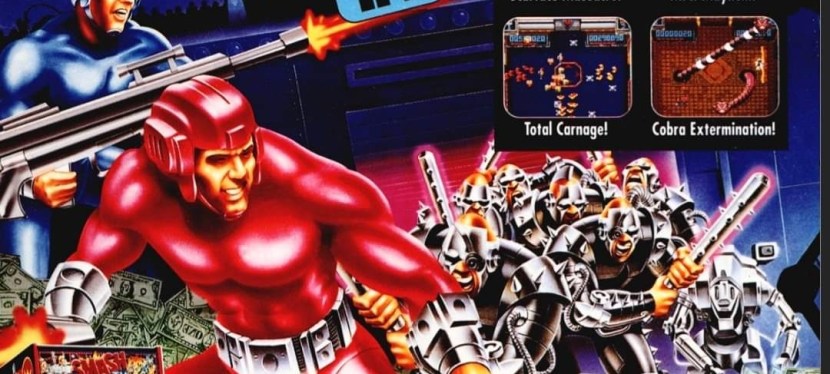
9. Smash T.V. for SNES print ad
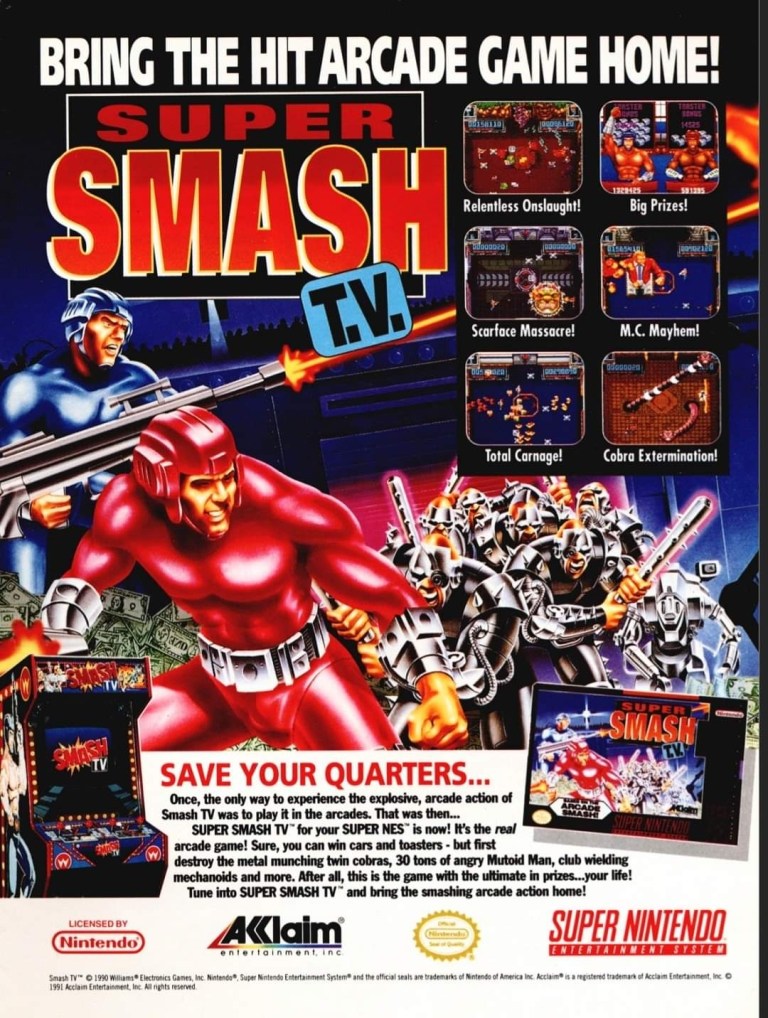
The arcade hit Smash T.V. made its way to the Super Nintendo Entertainment System (SNES) in 1992 and the publisher came up with a print ad that had captivating artwork, six screenshots and a text description that emphasized that a lot of fun awaits gamers on the console version. In my view, this old ad is still amusing to look at.
10. David Robinson’s Supreme Court print ad
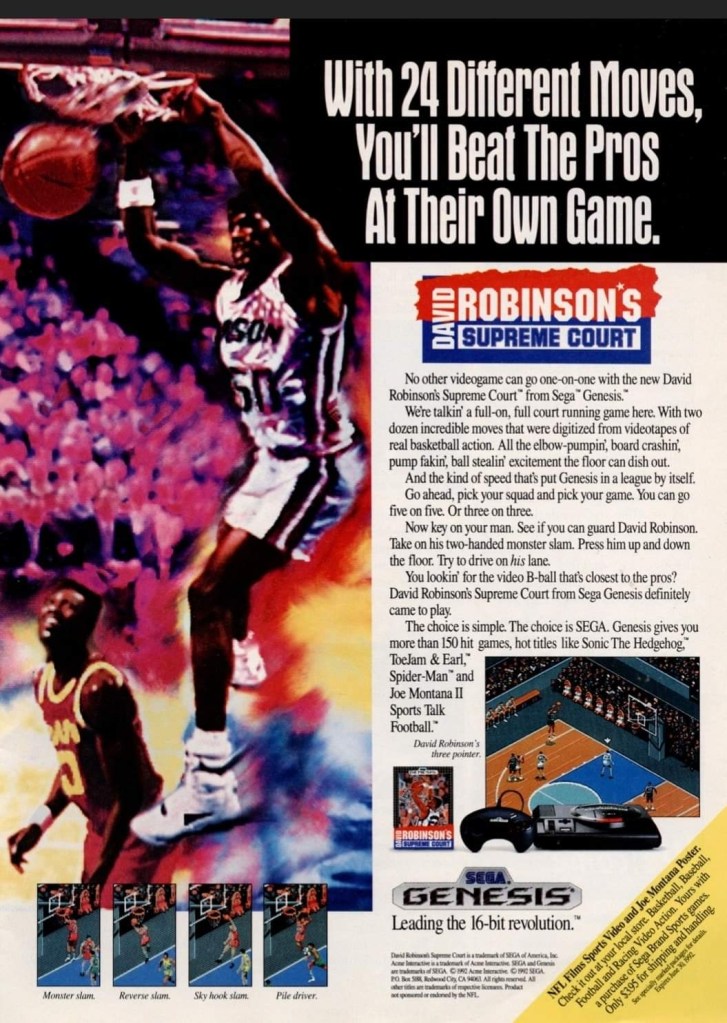
As part of its strategy in competing with Nintendo during the 4th console generation, Sega of America was focused on producing exclusive sports video games for the Genesis console backed by endorsements of sports professionals. In 1992, they released David Robinson’s Supreme Court on the Genesis and unsurprisingly their print ad used a large, stylized image of the NBA superstar dunking backed with an exciting text description plus screenshots showing the game’s use of the isometric view for gameplay. This is still worth looking at.
11. Taito’s “heat wave” print ad
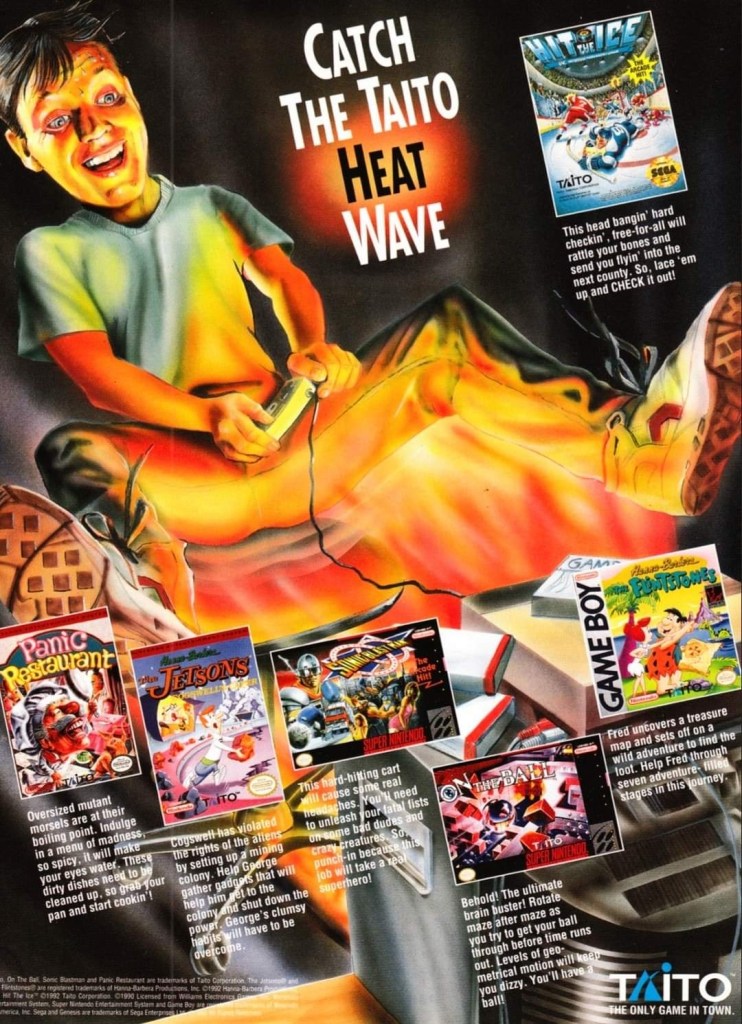
If your company lacks money to effectively market your video games individually, you can try making a single ad promoting them together. This is what Taito did in this print ad which showcases multiple games for different platforms and they used artwork of a player experiencing the so-called heat wave. This is a nice stroke of creativity on the part of Taito.
12. Jurassic Park Interactive print ad
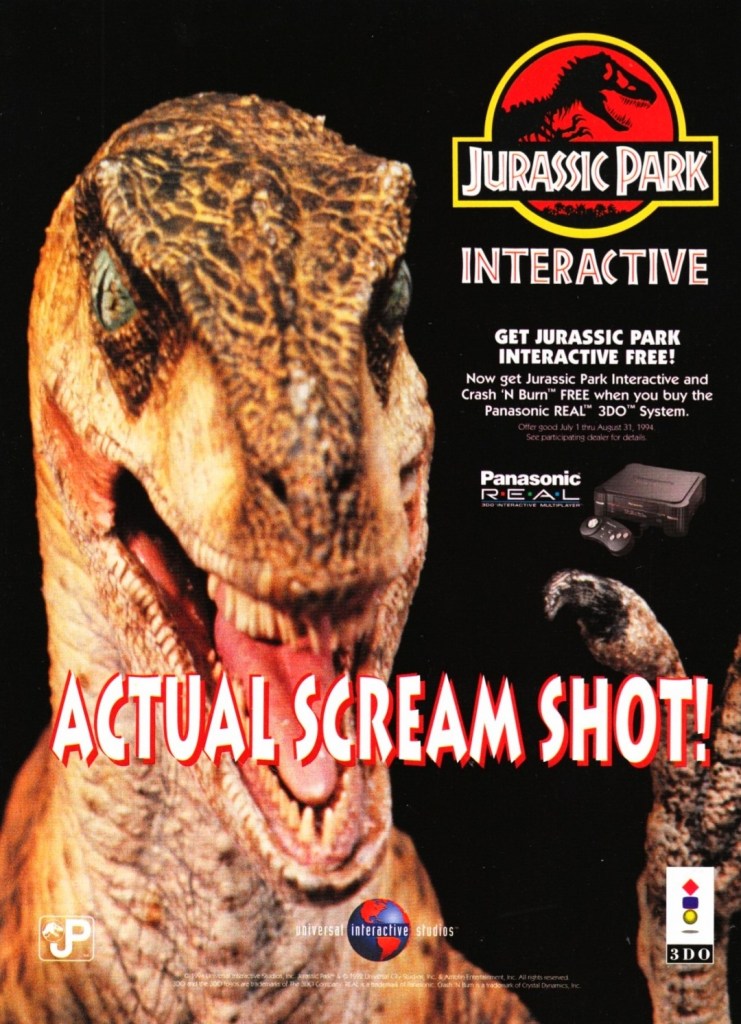
When it comes to video game consoles, having exclusive games is essential as long as they are of high quality, highly playable and enjoyable. The 3DO company acquired a license of the Jurassic Park movie and made the exclusive game Jurassic Park Interactive hoping it would sell a lot and lift up 3DO hardware sales.
This print ad, which features a zoomed-in image of the Raptor from the game, was more focused on selling the 3DO console than the video game as seen on the descriptive text. 3DO ran a promo selling the console which would entitle the buyer to get Jurassic Park Interactive and another game free. Nothing was done to describe the console’s multimedia capabilities of showing videos, images and graphics of the game (which was essentially a collection of mini-games). This print ad shows ignorance on the part of the 3DO company and the ad maker as it showed desperation happening really early in the console’s life. Notably, Jurassic Park Interactive was the only video game adaptation to use actual footage (note: the faces of the actors were edited out) and music from the film.
13. RoboCop 2 print ad
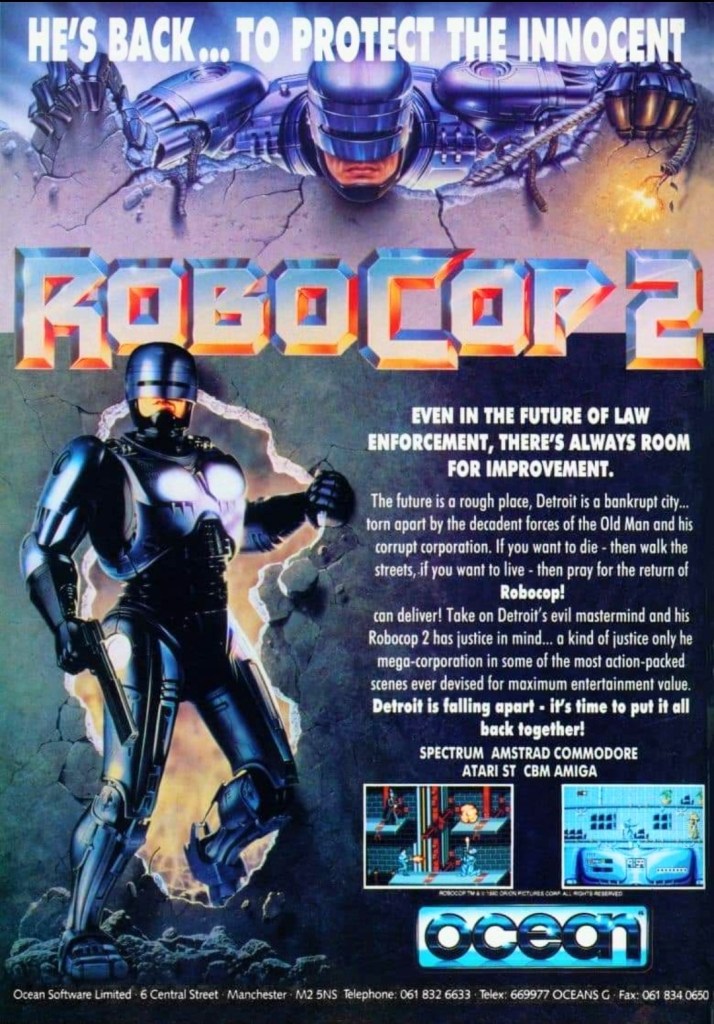
Way back in 1990, RoboCop 2 was a big hit in cinemas here in the Philippines and in some places around the world. As typical of the time, licenses to make video games based on the movie were released resulting in RoboCop 2 games for multiple platforms. The print ad featured two different images of RoboCop – one from the movie poster and the other from an official artwork. The descriptive text does a fine job to immerse readers into the story concept of the game but showing only two screenshots was a lackluster effort to sell the game.
14. Star Trek: The Next Generation – Echoes from the Past print ad
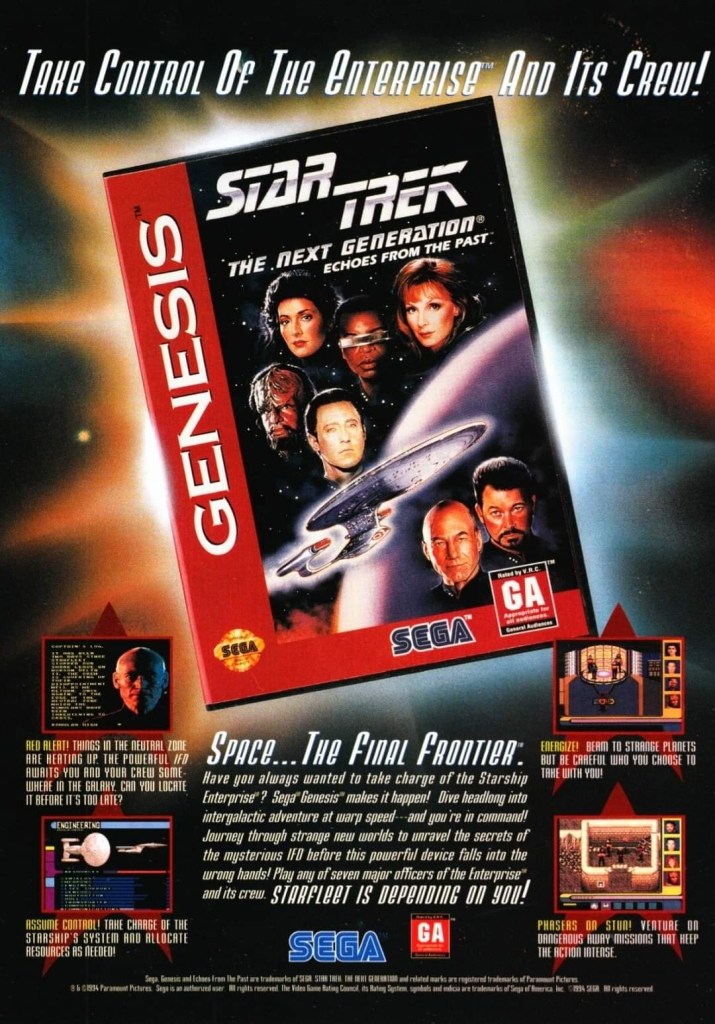
Released in 1994, Star Trek: The Next Generation – Echoes from the Past delivered the Star Trek TNG adventure experience to Sega Genesis gamers. In fact, it is the exact same experience that SNES gamers got the same year. In reality, Star Trek: The Next Generation – Echoes from the Past is actually a port of Star Trek: The Next Generation – Future’s Past on the SNES and the screenshots on the print ad are giveaways about it. In fairness to the ad makers, this print ad never attempted to deceive gamers that it promoted a totally different Star Trek TNG game.
15. Dinosaurs for Hire print ad
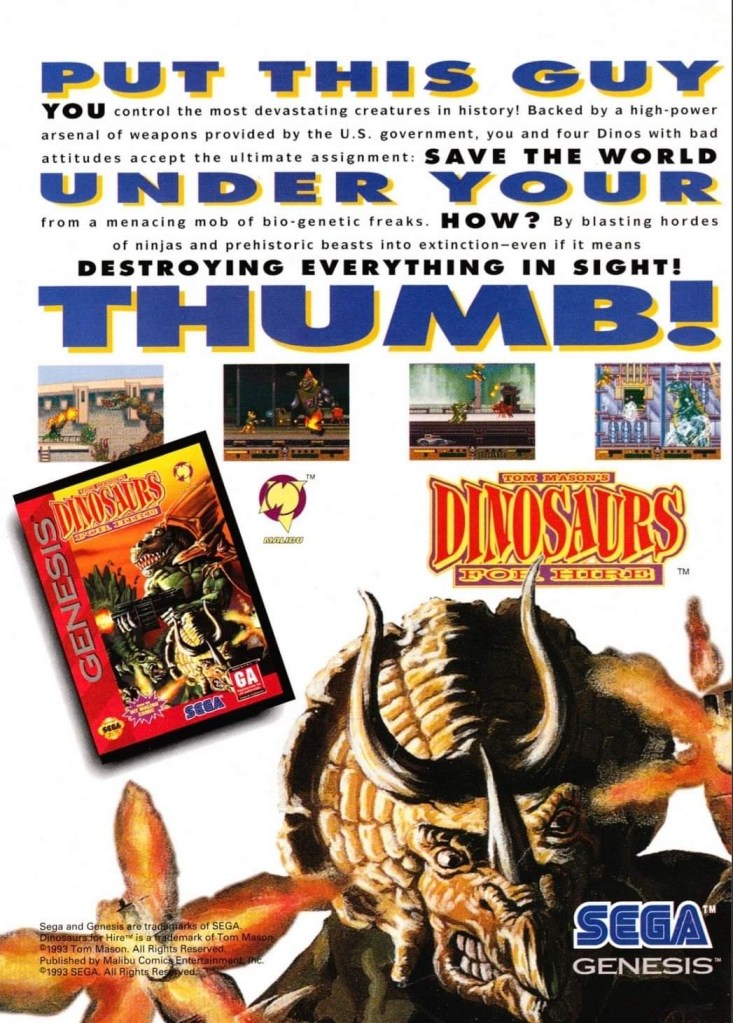
Dinosaurs for Hire (sometimes referred to as Tom Mason’s Dinosaurs for Hire) was a 2D side-scrolling platform adventure game based on the comic book series of Tom Mason. Published by Sega, it was a Genesis-exclusive game and this print ad had a catchy text description, a few screenshots and the eye-catching artwork of a triceratops facing the viewer. This print ad is still good to look at. If you’re thinking about searching for existing copies of the game, I encourage you to also read some Dinosaurs for Hire comic books before playing. By the way, Tom Mason also wrote several comic books of the Ultraverse.
+++++
Thank you for reading. If you find this article engaging, please click the like button below, share this article to others and also please consider making a donation to support my publishing. If you are looking for a copywriter to create content for your special project or business, check out my services and my portfolio. Feel free to contact me with a private message. Also please feel free to visit my Facebook page Author Carlo Carrasco and follow me on Twitter at @HavenorFantasy as well as on Tumblr at https://carlocarrasco.tumblr.com/ and on Instagram at https://www.instagram.com/authorcarlocarrasco
Retro Gaming Ads Blast – Part 20
Welcome back readers, fellow geeks and electronic gaming fans!
In this edition of the Retro Gaming Ads Blast (RGAB) series, we will take a look at another batch of retro gaming print ads – including arcade flyers – from the 1980s and 1990s.
For the newcomers reading this, Retro Gaming Ads Blast (RGAB) looks back at the many print ads of games (console, arcade, computer and handheld) that were published in comic books, magazines, flyers, posters and newspapers long before smartphones, social media, the worldwide web and streaming became popular. To put things in perspective, people back in the 1980s and 1990s were more trusting of print media for information and images about electronic games and related products.
With those details laid down, here is the newest batch of retro gaming print ads for you to see and enjoy…
1. River Raid print ad
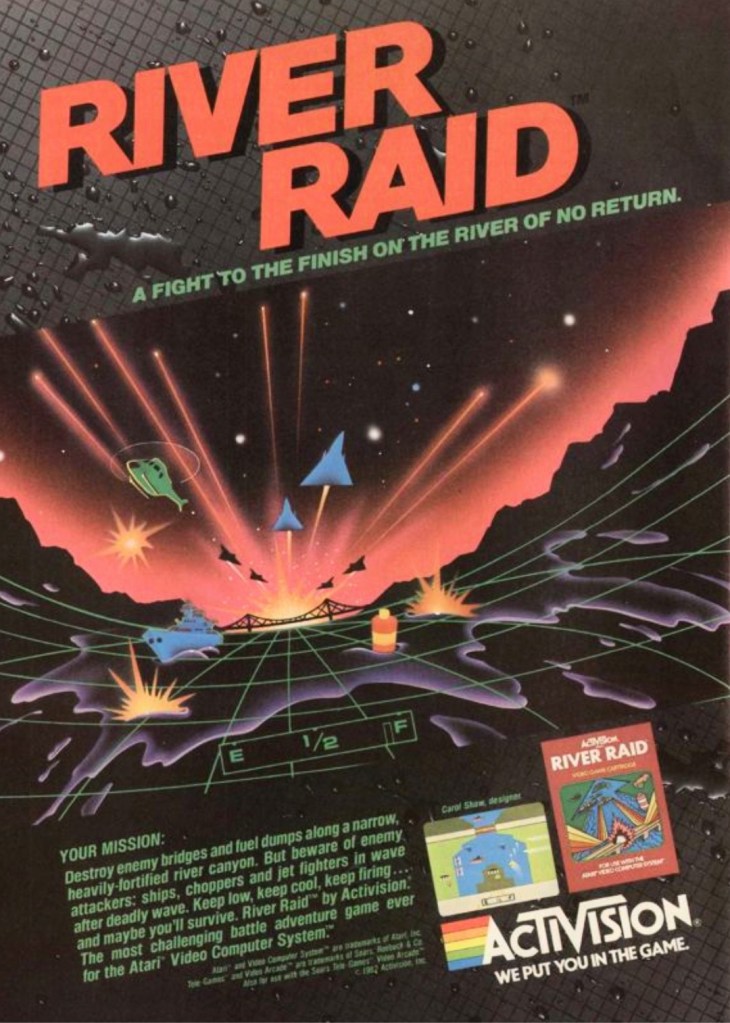
Decades before it became an industry giant with the best-selling Call of Duty games, Activision became a standout publisher in the early 1980s with River Raid on the Atari 2600. Designed by Carol Shaw, River Raid was a huge success ending up as the 2nd best-seller on the Atari 2600 as well as Activision’s best-selling game for the year 1983. Apart from showing one screenshot and the box cover of the game, the print ad of River Raid had this mesmerizing 3D image that caught many gamers’ attention and helped them feel like they will pilot on dangerous missions. The 3D image was futuristic in its own style became forward-moving 3D sequences in video games became reality many years later.
2. Galaga North American arcade flyer
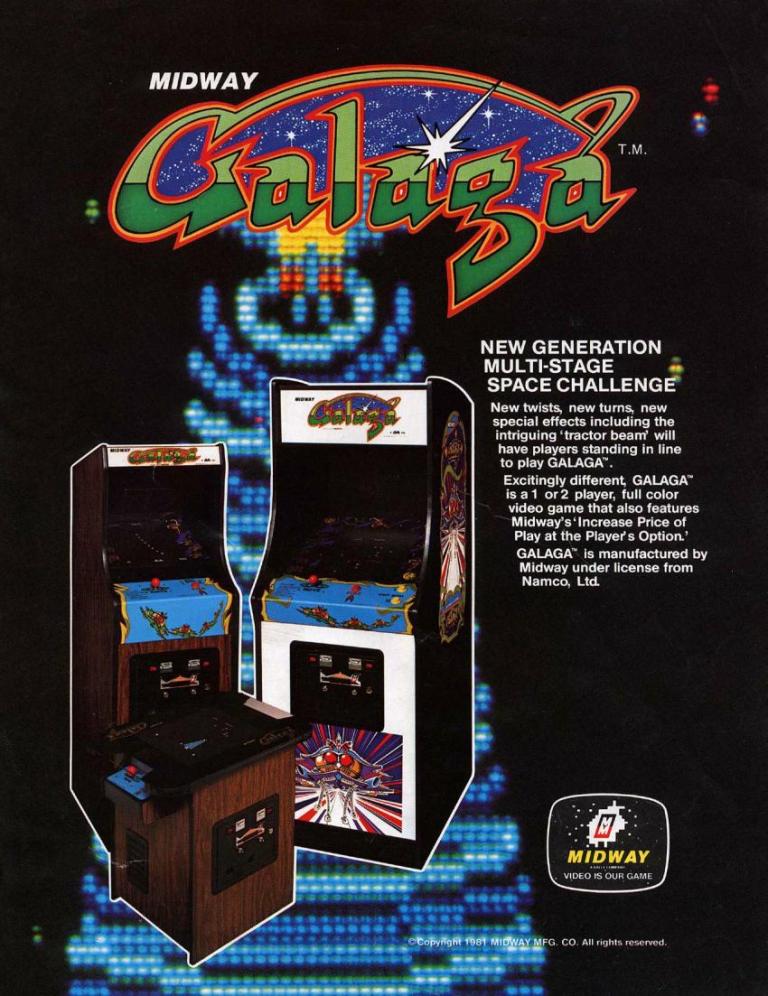
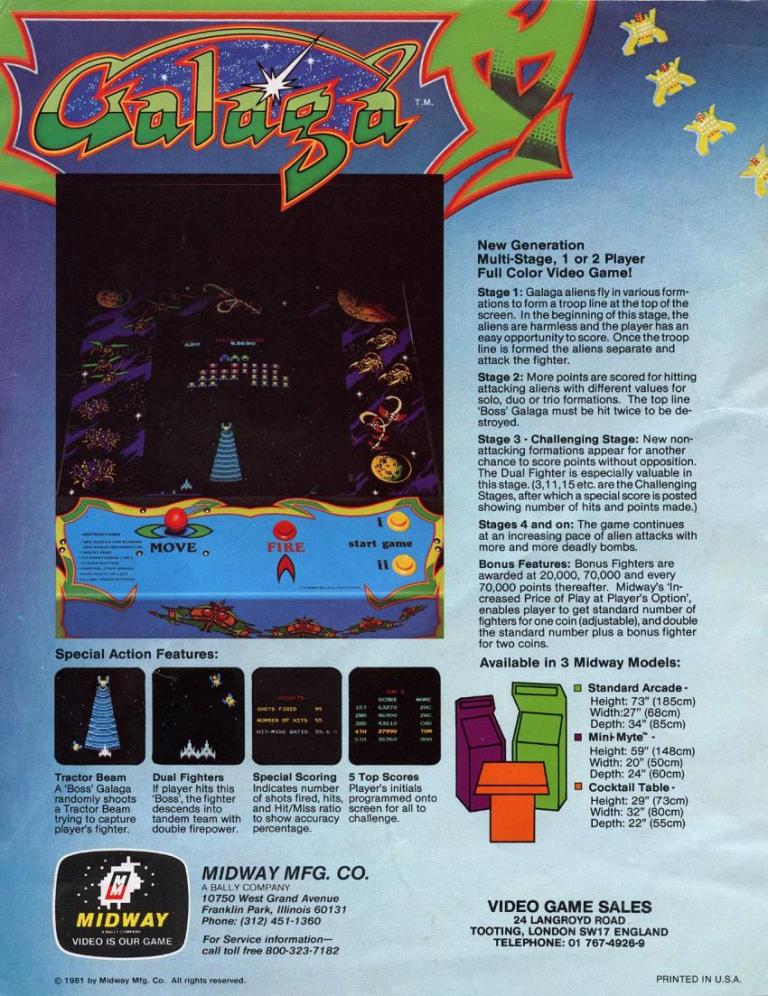
In the history of gaming, Namco’s Galaga was played by countless millions of gamers and it is still highly regarded as an arcade classic as well as one of the most enjoyable arcade games ever made. In preparation for the North American launch (October 1981), Midway prepared the arcade flyer showing the three types of machine on the front that arcade operators can choose from. On the rear is the really neat approach of explaining the details of the game, what kind of gameplay is to be expected, and how to play. Whether you are an individual player or the manager of an arcade joint, this flyer suits your needs.
3. Area 51 arcade flyer and conversion kit flyer
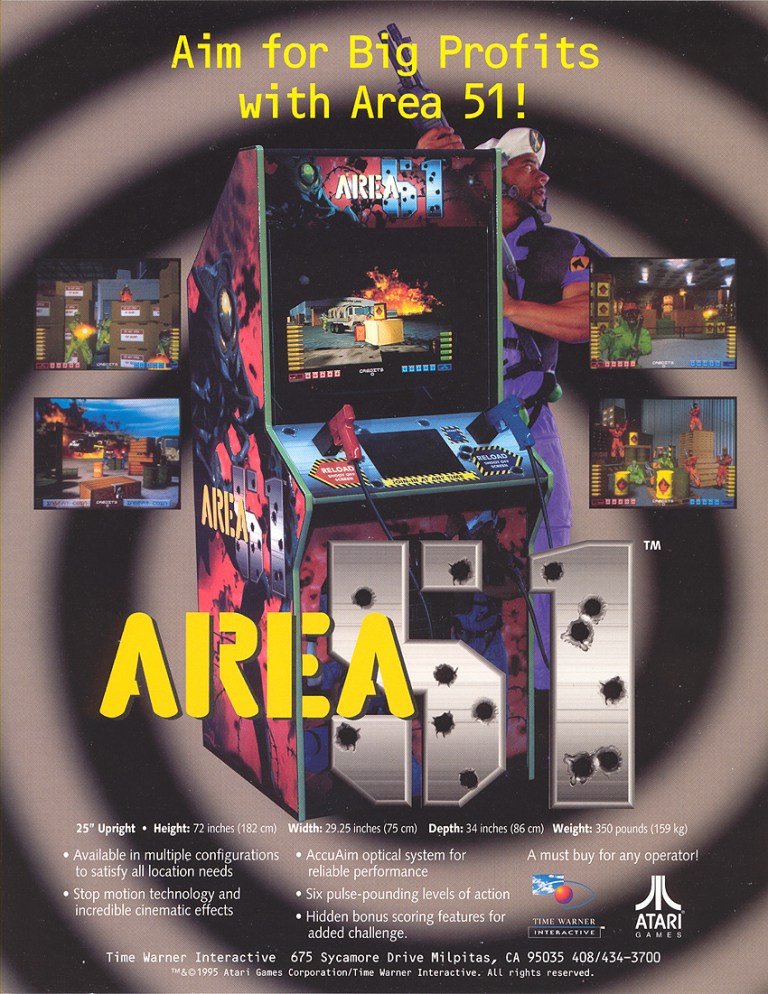
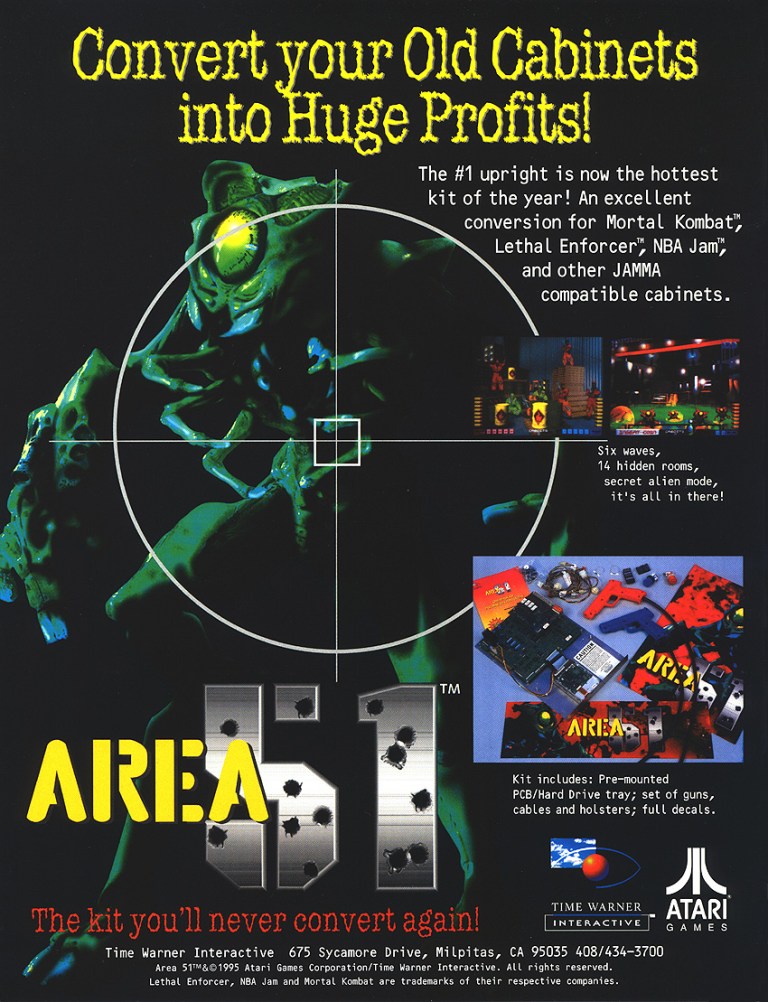
Moving on to the 1990s, Atari was already struggling financially and desperately needed a hit to lift them up fast. A light gun shooter project was approved as arcade shooters were in good demand and after overcoming serious hurdles during production internally, Atari hired independent team Mesa Logic to take charge of development. After being granted extra time and more creative freedom, the project under Mesa Logic’s handling became a sci-fi shooter titled Area 51. The game became a huge hit in the arcades for Atari resulting in sales of more than 20,000 arcade cabinets as well as a major financial boost for the company (note: Atari still exists today). Atari went on to release Atari 51 versions for PlayStation, Sega Saturn and PC in America in 1996. The Atari 51 flyers you see here are still captivating to look at and were crucial in generating buzz among arcade operators, business joints that had space for arcade cabinets and gamers.
4. Panasonic 3DO print ad
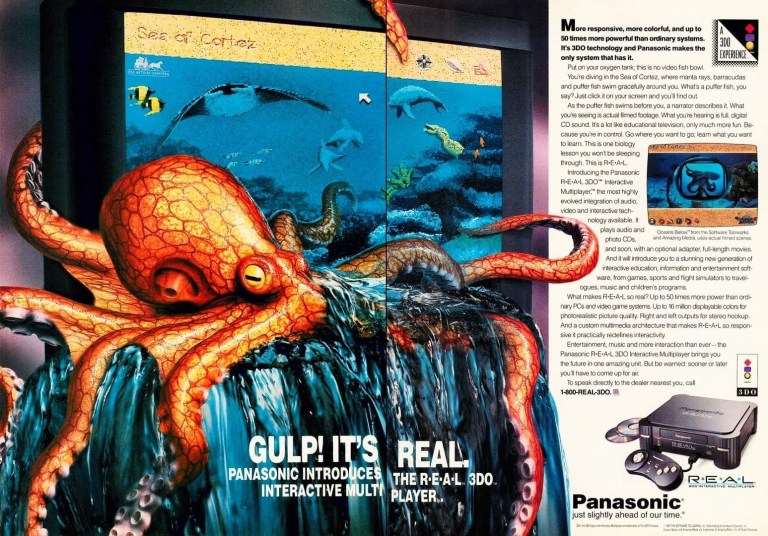
Back in 1993, the 3DO Interactive Multiplayer console manufactured by Panasonic (a licensee of the 3DO Company) was launched with a CD-ROM drive, multimedia features and gaming capabilities (with a 3-button control pad). This print ad strongly emphasized the 3DO’s ability to play high-quality sound and full-motion videos using the Sea of Cortez software which functioned as an interactive movie. Obviously, this did not resonate well with people who loved to play games and by the time the 3DO Company and its partners started marketing games, they could not save the 3DO console from fading to obscurity. The console shown in the ad is specifically model Panasonic FZ-1 R·E·A·L 3DO Interactive Multiplayer. Panasonic was one of five companies that were licensed by the 3DO Company.
5. MechWarrior 3050 SNES print ad
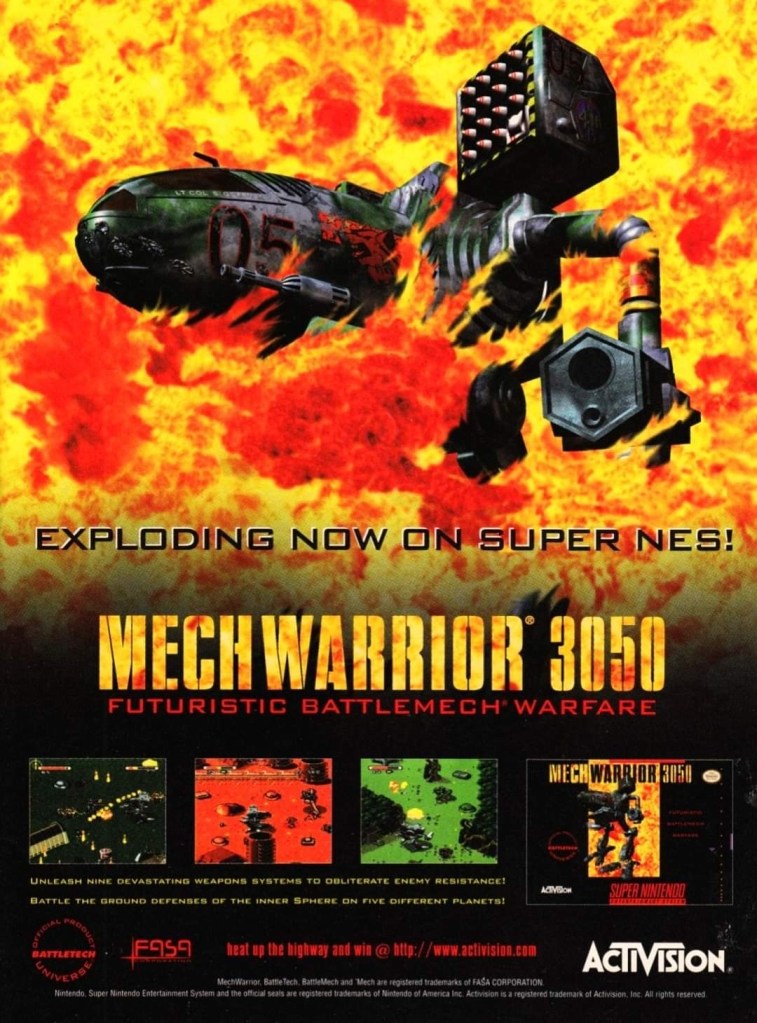
In 1995, the popular BattleTech entertainment franchise arrived on the Super Nintendo Entertainment (SNES) system with MechWarrior 3050 and its print ad had a really blazing artwork of an armed mech in fire which gave readers the illusion of a new and original game. In reality, MechWarrior 3050 was actually a port of BattleTech which was released on the Sega Genesis in 1994. The Genesis game was published by Extreme Entertainment Group while the SNES game was published by the more famous Activision. If you look closely at the MechWarrior print ad, you can tell how hard they tried to sell the game like it was brand new and all-original.
6. Cliffhanger video game print ad
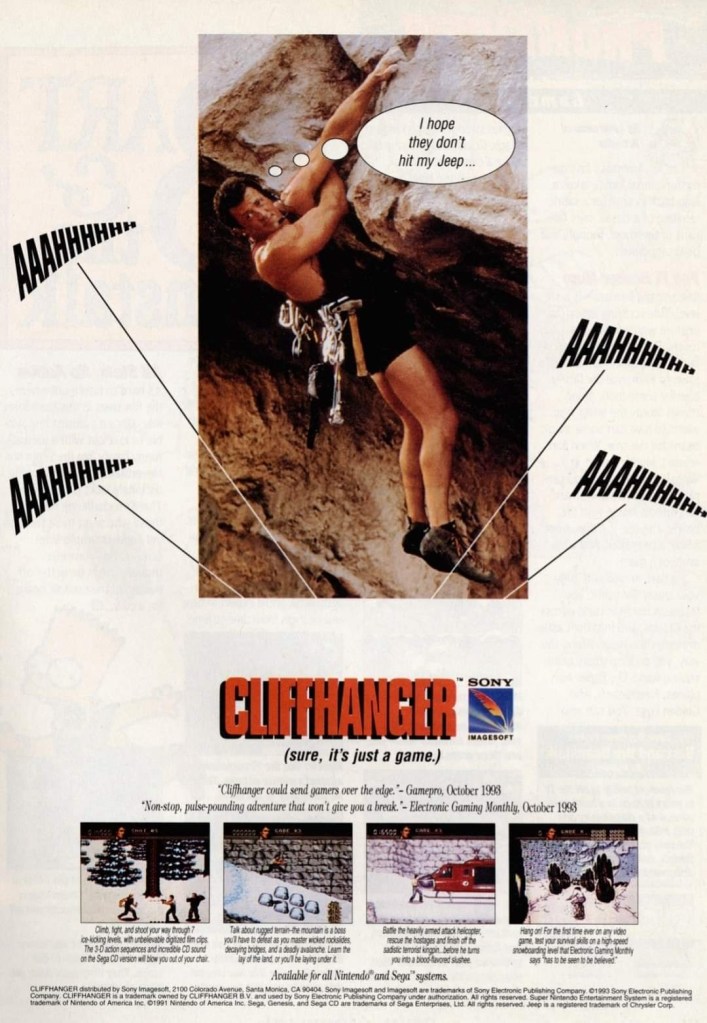
For fans of Sylvester Stallone, 1993 was a big and exciting year as the Hollywood icon appeared in two major action films – Cliffhanger and Demolition Man. Cliffhanger was released first and there were video game adaptations of it released on game consoles, handhelds and computers. This print ad of the Cliffhanger video game had an image of Stallone hanging on a cliff to emphasize the title. The ad makers cleverly posted selected gameplay screenshots and quoted GamePro and Electronic Gaming Monthly (EGM) to make the game look credible and worthy of purchasing. The marketing led to nowhere as the game received mostly negative reviews from critics and it faded to obscurity. Lastly, the Cliffhanger game ad had a noticeable amount of space wasted. They could have made the screenshots and text look somewhat bigger to sell the game.
7. Ballz: The Director’s Cut print ad
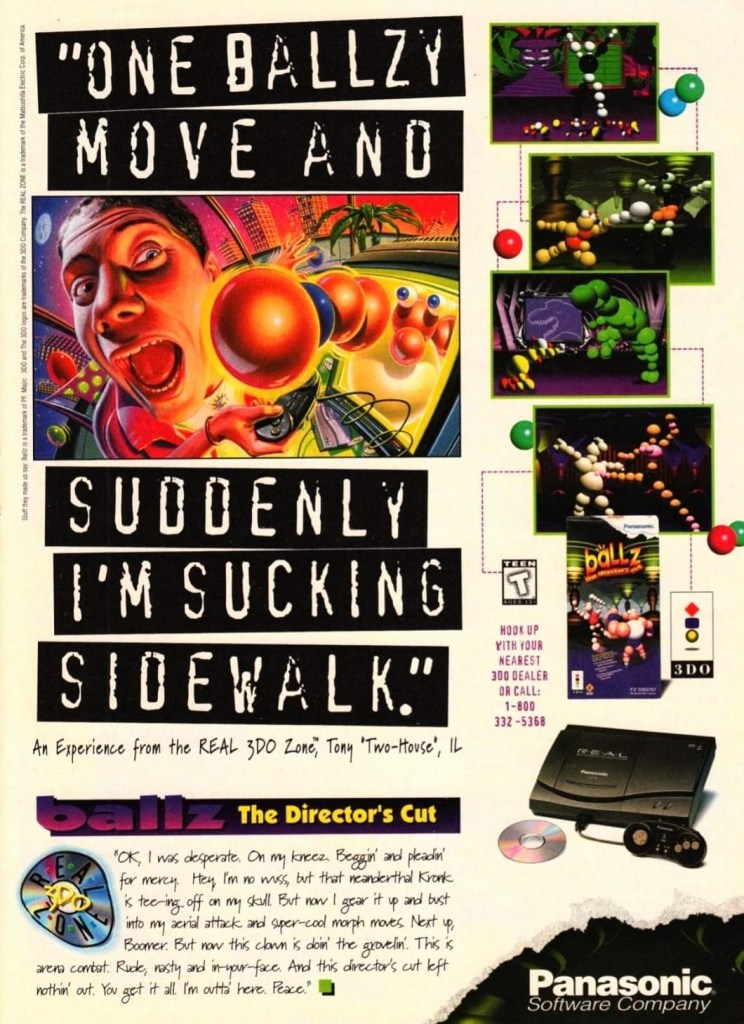
Here is another ad of the video game released on the failed 3DO console. As its title made obvious, Ballz: The Director’s Cut is an enhanced version of the original Ballz game of 1994 that was released on other consoles. The print ad had an eye-catching piece of artwork and posted beside it were selected shots of the gameplay. Strangely enough, the creative writing on the lower part of the ad does not make any sense and did nothing to convince gamers to play the game. As Ballz: The Director’s Cut was released in 1995, this ad shows the revised 3DO console from Panasonic (model: Panasonic FZ-10 R·E·A·L 3DO Interactive Multiplayer).
8. NFL GameDay 2000 print ad
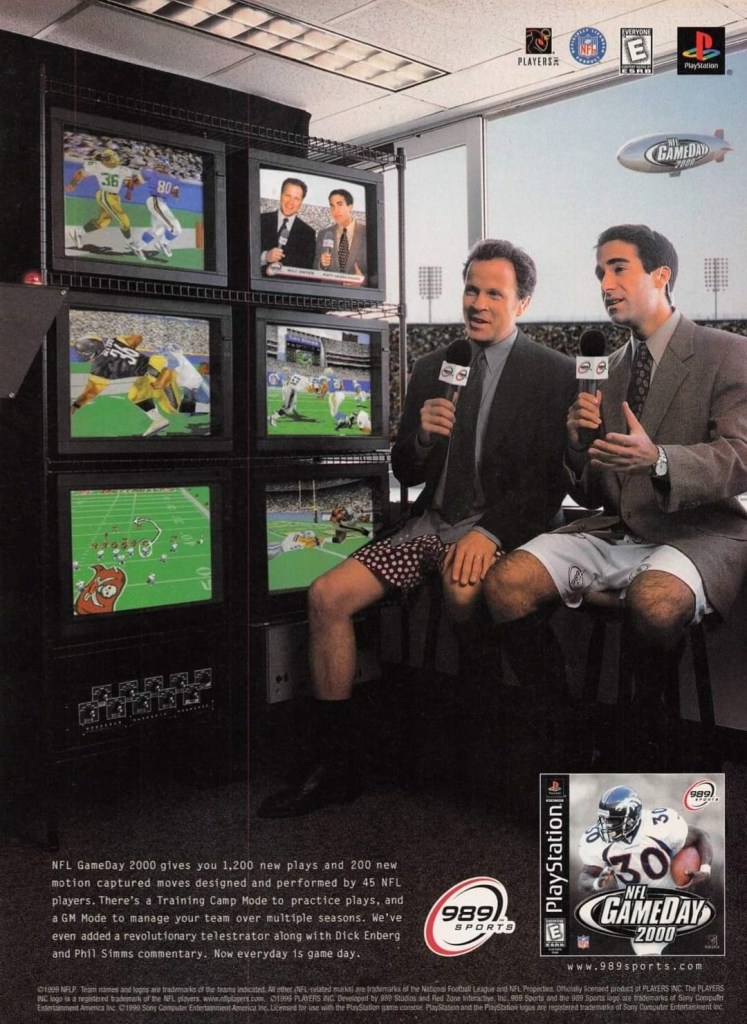
To promote the PlayStation-exclusive NFL GameDay 2000, Sony publisher 989 Sports and the ad makers decided to implement a humorous look at football TV coverage by having two sportscasters wearing shorts in front of a TV camera that was only showing their heads and upper bodies. The TV sets on the side show screenshots from the game to emphasize the sports gaming experience. Ultimately the game scored mostly positive review from the critics.
9. WildC.A.T.S: Covert Action Teams print ad
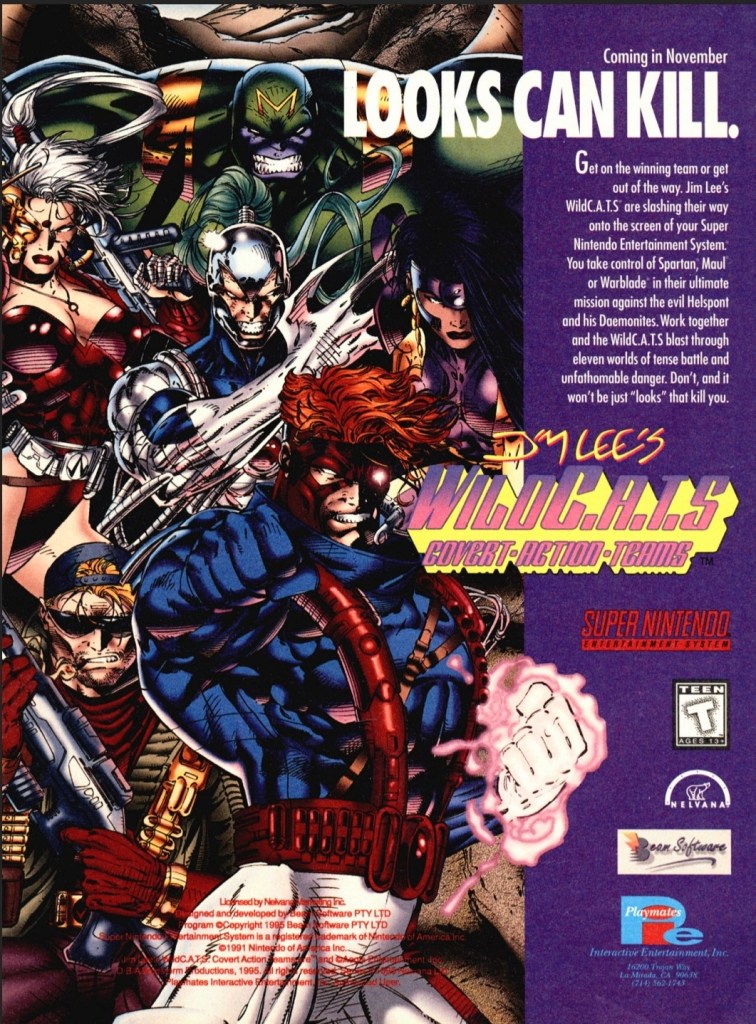
When Image Comics launched in 1992, WildC.A.T.S: Covert Action Teams was Jim Lee’s creator-owned comic book franchise and its launch issue was a big seller. Years later, WildC.A.T.S. grew in popularity with comic book fans and the franchise achieved multi-media status by venturing into TV (with an animated series) and video games. This print ad promoting the video game adaptation had no screenshots to show which kept fans and gamers guessing how the game will turn out in terms of gameplay and game design. It was obvious that the people who made this print ad had to rely on the best WildC.A.T.S. artwork they could find drawn by Jim Lee. This ad made me laugh back in the old days because if you did not look closely, it might fool you into thinking it was more about comic books than the game on the SNES.
10. Cutthroat Island print ad
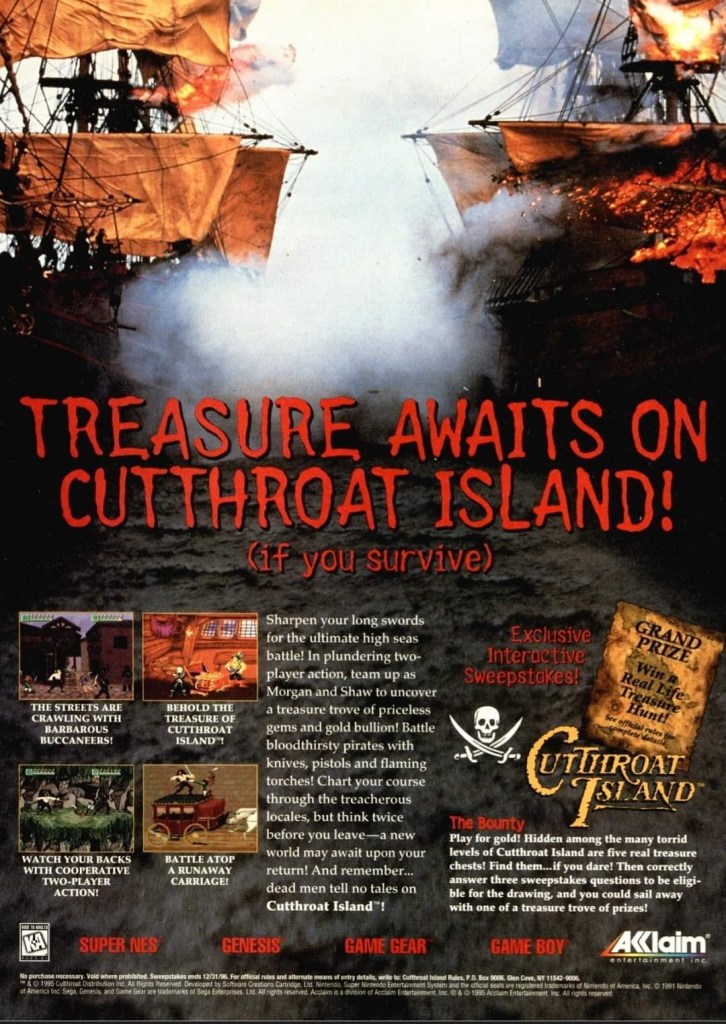
I never saw the Hollywood mega-flop Cutthroat Island nor have I ever played any of its multiple video game adaptations (released on SNES, Sega Genesis, Sega Game Gear and Game Boy). The video game print ad, however, caught my attention back in 1995 because the ad makers cleverly used a photograph from one the many expensive movie sequences filmed and the hard, physical work by the filmmakers was clearly visible. Then the ad makers had four screenshots placed on the lower-left part and inserted descriptive text that sounded exciting. Lastly, the ad mentioned a sweepstakes promo.
Without using any images of stars Geena Davis and Matthew Modine, this ad was a strong attempt to get gamers excited for the video game adaptation. Like the movie itself, this game flopped and has faded away to the land of the forgotten.
11. AH-3 Thunderstrike print ad
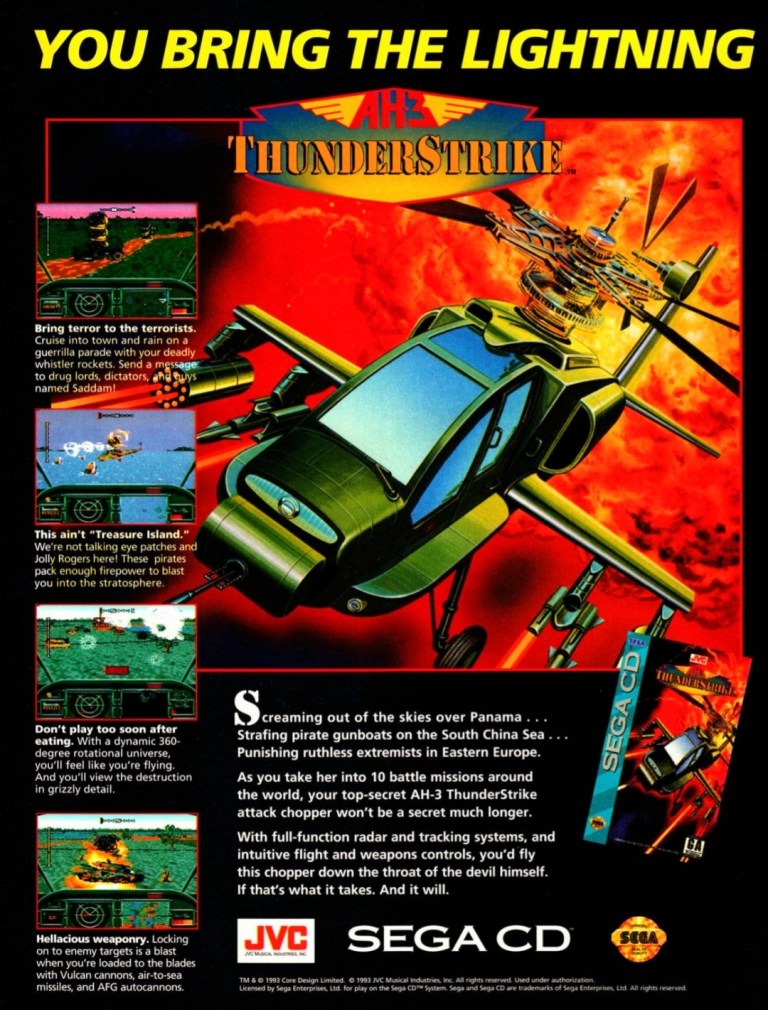
AH-3 Thunderstrike is one of the better games that was released on the Sega CD add-on (requires the Sega Genesis console) in 1993. Similar with MechWarrior 3050, the game was actually a port of Thunderhawk which itself was released on the Amiga and MS-DOS PC in 1992. The print ad showcased a captivating artwork (which was also used on the game’s box cover), a few screenshots and strategically placed text descriptions to sell the game. This ad still looks good.
12. James Bond 007 print ad
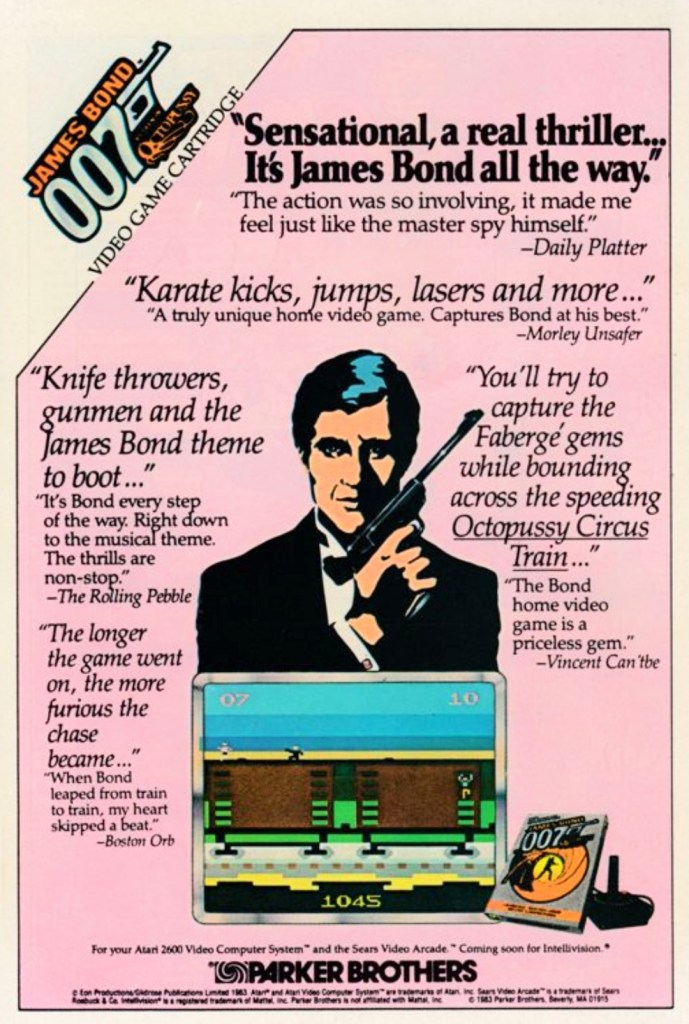
This is a print ad I saw many times while reading comic books in 1984. James Bond 007 for Atari 2600 was an ambitious licensed video game as it featured levels that were inspired by missions in the James Bond movies Diamonds are Forever, The Spy Who Loved Me, Moonraker and For Your Eyes Only. Keep in mind that programmers back then had to deal with memory limitations and primitive tools to make games.
To promote the game, original art of Agent 007 was used which did not resemble the James Bond star of the time – Roger Moore. Strangely enough, the illustrated James Bond slightly resembled Timothy Dalton whose debut as 007 happened in 1987. Adding further zest to the add was the use of fictionalized quotes pointing to fantasized critics as sources (example: Vincent Can’tbe is a reference to real life critic Vincent Canby). The use of a pink background made this catchy ad look really odd.
13. Choplifter III: Rescue Survive print ad
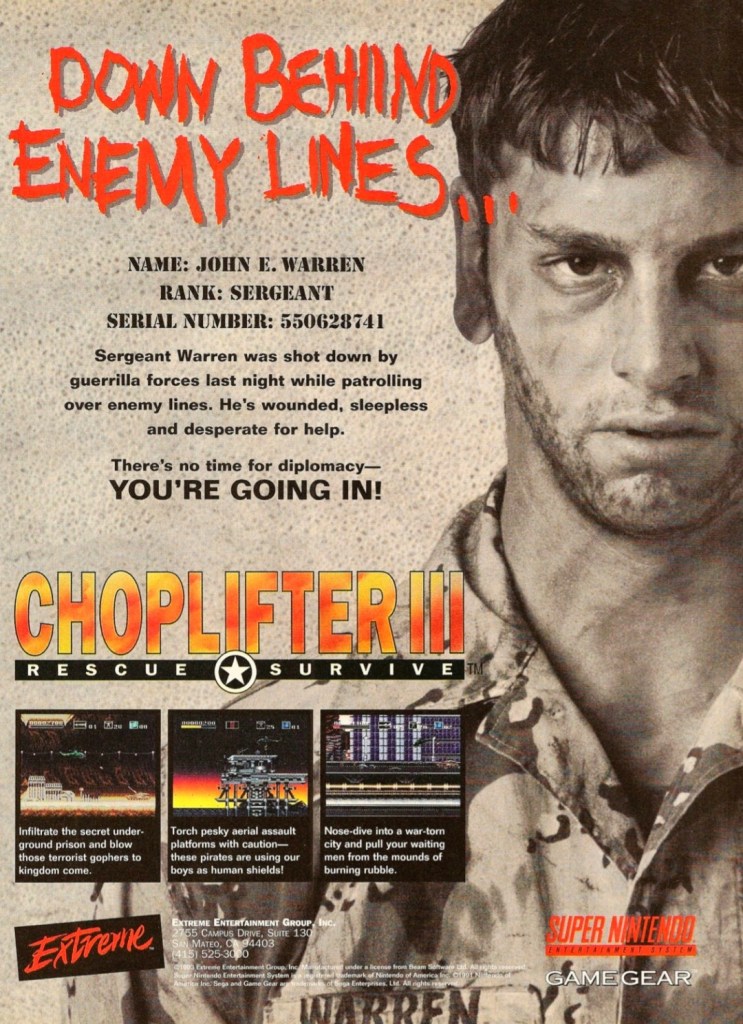
This print ad of Choplifter III: Rescue Survive has a striking look showing a military officer who needs your help as he has been stranded behind enemy lines. The presentation reflects the long-time tradition of the Choplifter game franchise which has been about piloting an armed helicopter to the opposition’s territory, shooting at bad guys and then rescuing the hostages or prisoners-of-war (POWs). The game eventually gathered mostly positive feedback from video game critics.
14. Defender of the Crown print ad
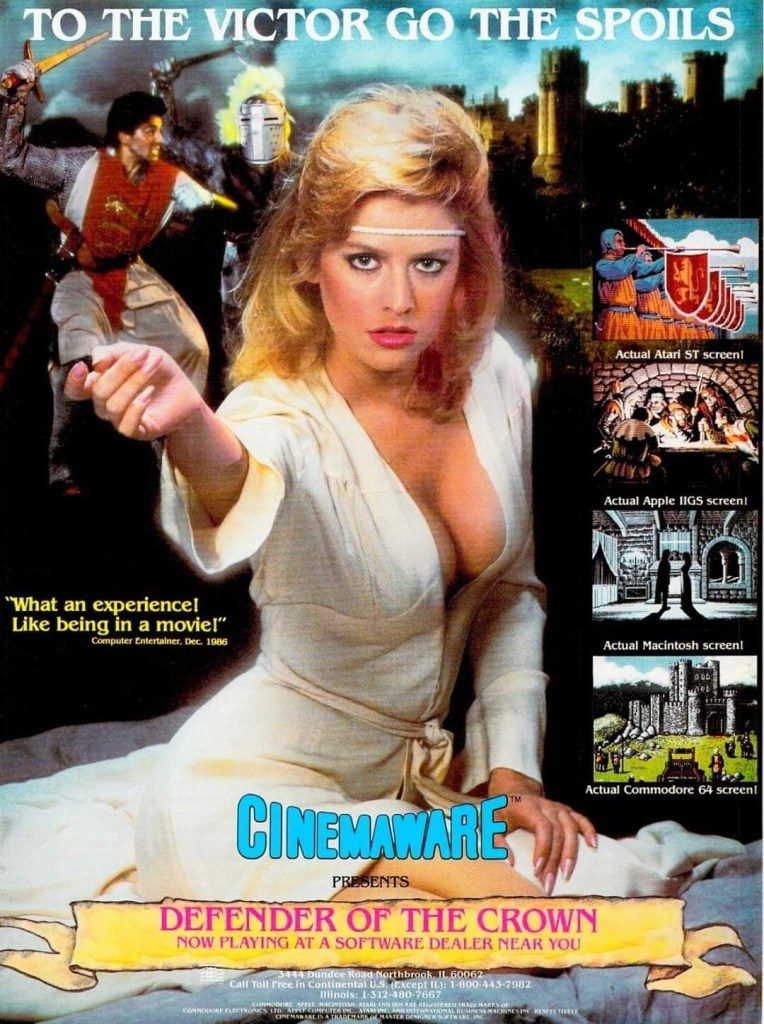
Released in 1986 for home computers, Defender of the Crown was made with a high level of quality backed with solid artistry. To capture gamers’ attention, Cinemaware came up with this print ad showcasing a pretty model looking somewhat seductive which reflects what happens in the game when players rescue a damsel in distress. The selected screenshots showed what the game looked like on different platforms, and the lower part of the ad made the game feel like it was a historical epic waiting to be discovered. Defender of the Crown eventually became a big hit with computer gamers.
+++++
Thank you for reading. If you find this article engaging, please click the like button below, share this article to others and also please consider making a donation to support my publishing. If you are looking for a copywriter to create content for your special project or business, check out my services and my portfolio. Feel free to contact me with a private message. Also please feel free to visit my Facebook page Author Carlo Carrasco and follow me on Twitter at @HavenorFantasy as well as on Tumblr at https://carlocarrasco.tumblr.com/ and on Instagram at https://www.instagram.com/authorcarlocarrasco
Retro Gaming Ads Blast – Part 19
Welcome back readers, fellow geeks and electronic gaming fans!
In this edition of the Retro Gaming Ads Blast (RGAB) series, we will take a look at another batch of retro gaming print ads – including arcade flyers – from the 1980s and 1990s.
For the newcomers reading this, Retro Gaming Ads Blast (RGAB) looks back at the many print ads of games (console, arcade, computer and handheld) that were published in comic books, magazines, flyers, posters and newspapers long before smartphones, social media, the worldwide web and streaming became popular. To put things in perspective, people back in the 1980s and 1990s were more trusting of print media for information and images about electronic games and related products.
With those details laid down, here is the newest batch of retro gaming print ads for you to see and enjoy…
1. Vendetta UK and North American arcade flyers
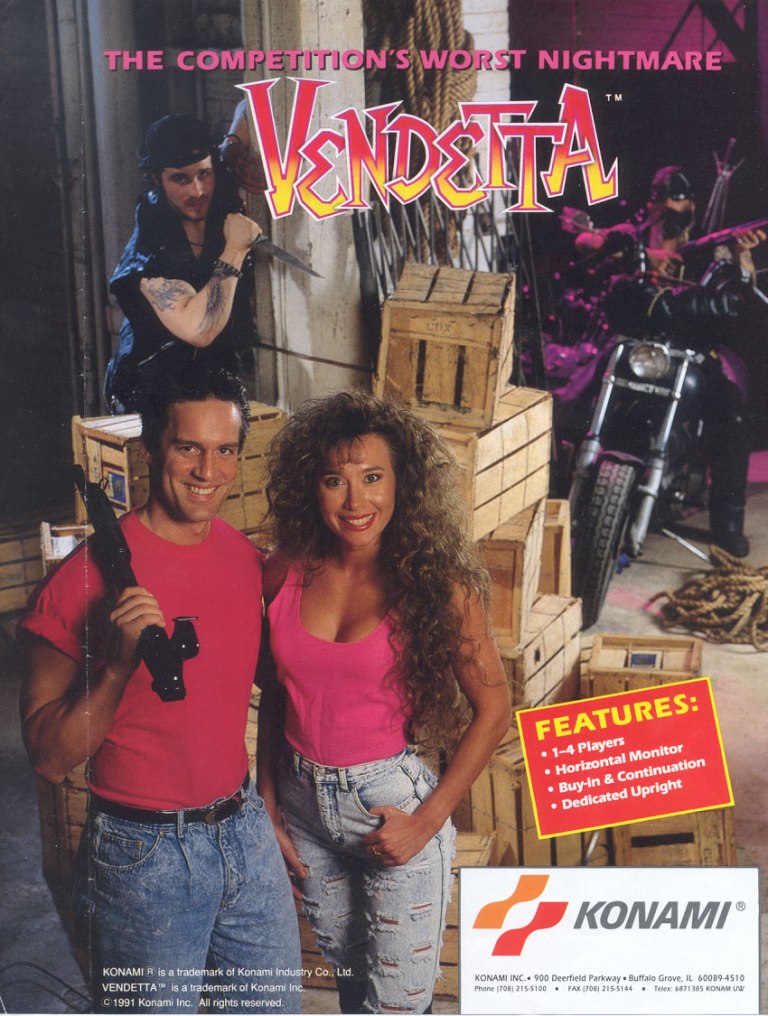
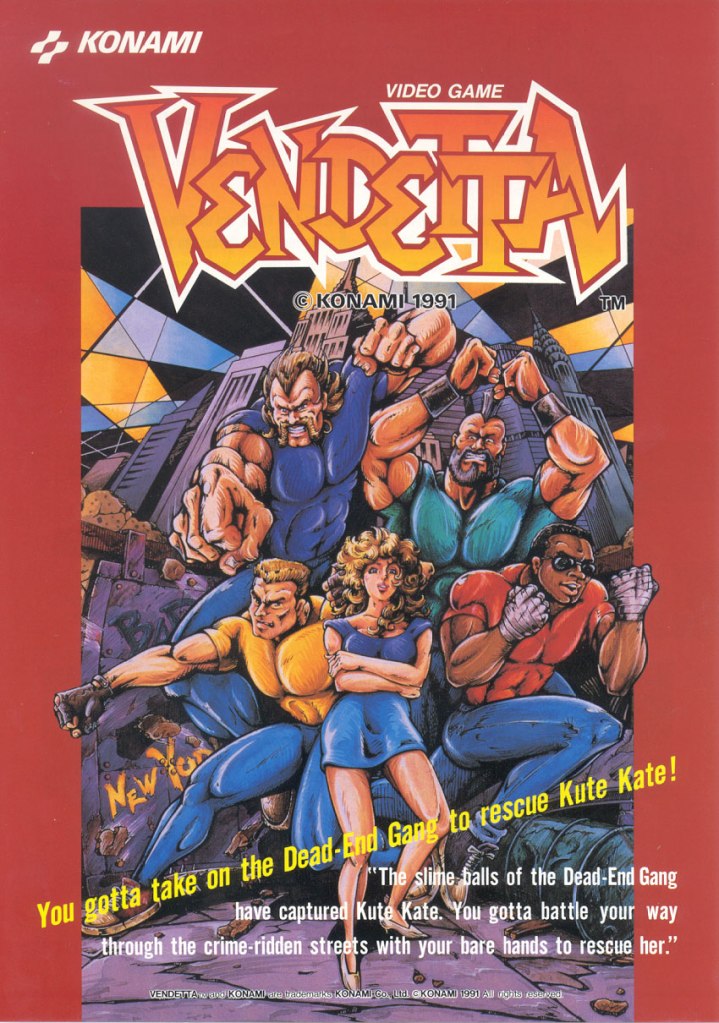
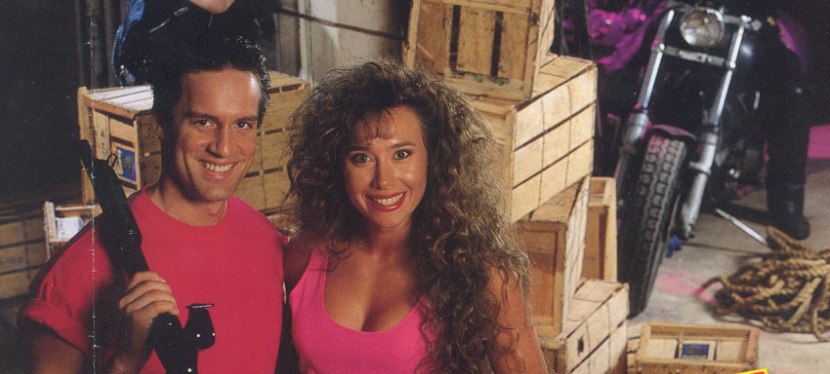
In 1991, Konami released the 2D side-scrolling beat-them-up game Vendetta in arcades around the world achieving commercial success. While it is hard to tell if the promotions helped the game commercially, there is no doubt that the arcade flyers for the North American and United Kingdom (UK) markets were indeed very eye-catching.
The North American Vendetta arcade flyer had a photographic approach showing models playing characters supposedly representing the Cobras gang and the Dead End gang. The display of wooden boxes and the rope was done to symbolize the rough city environments of the game. On the other hand, the UK arcade flyer has illustrated artwork that captured the look of the Cobras gang from the game.
2. Star Control II: The Ur-Quan Masters print ad
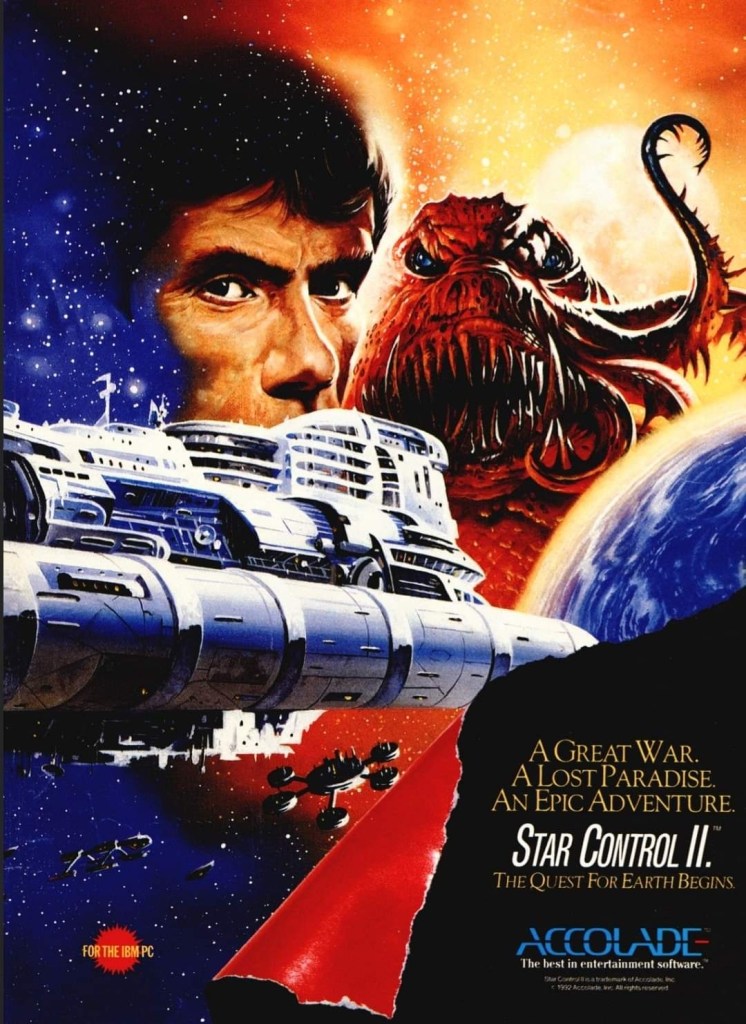
This print ad of Star Control II: The Ur-Quan Masters (PC version) really caught my attention when I read gaming magazines in the early 1990s. The painted artwork showing a human and a hideous alien in the background with a planet, space ships and space stations filling the rest of the space was very captivating to look at. So captivating, it enticed me to search for the game but our PC at home had really low specs. Strangely enough, I played another version of Star Control II on a rented 3DO Interactive Multiplayer console in 1995. For the newcomers reading this, the game was critically acclaimed and was declared as one of the very best PC games ever made. Enjoy looking at the print ad above.
3. Space Channel 5 print ad
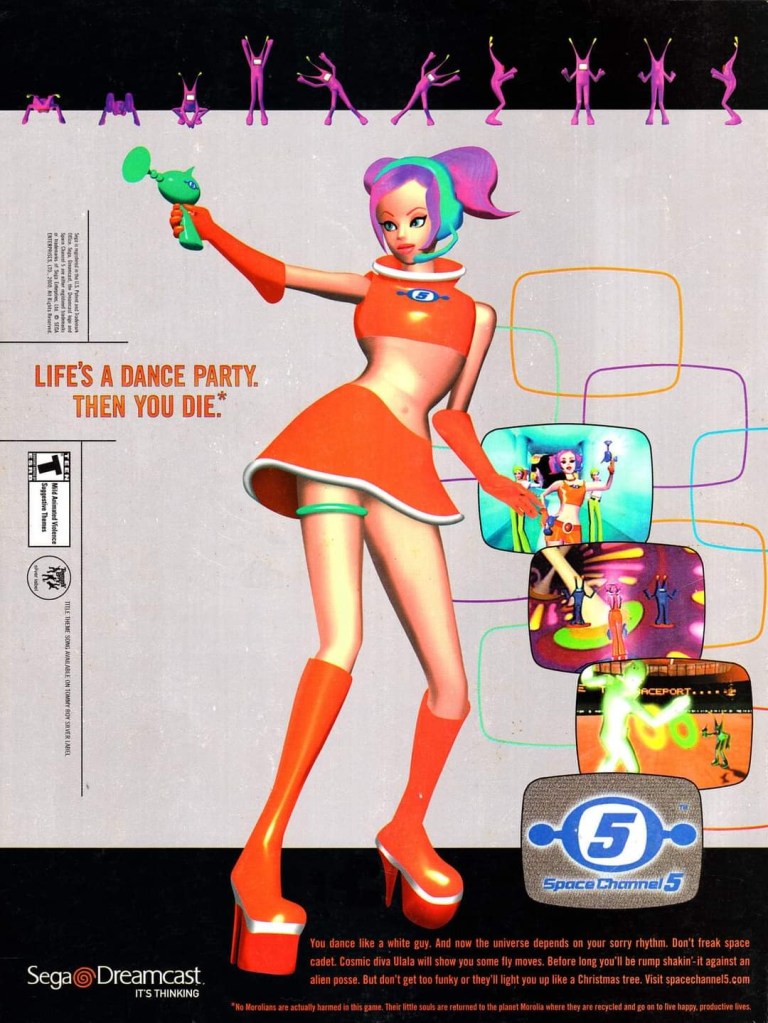
When Sega launched their Dreamcast console in Japan in late-1998, their financial health was already in a very bad state and the future looked grim. Even as they faced tremendous odds, Sega still went on to aggressively sell Dreamcast consoles with exclusive games and Space Channel 5 was one of them.
First released in Japan in 1999, Space Channel 5 was a musical, puzzle-oriented game that was the result of Tetsuya Mizuguchi’s work backed with research he did that included interviewing young girls to find out what their tastes in gaming are. The print ad showing the highly stylized protagonist Ulala and a few screenshots really caught the attention of gamers and kept the Dreamcast in their minds. While the game did not achieve commercial success as a Dreamcast-exclusive, Sega went on to release a version of Space Channel 5 on the PlayStation 2 console, plus sequels.
4. Cybernator print ad
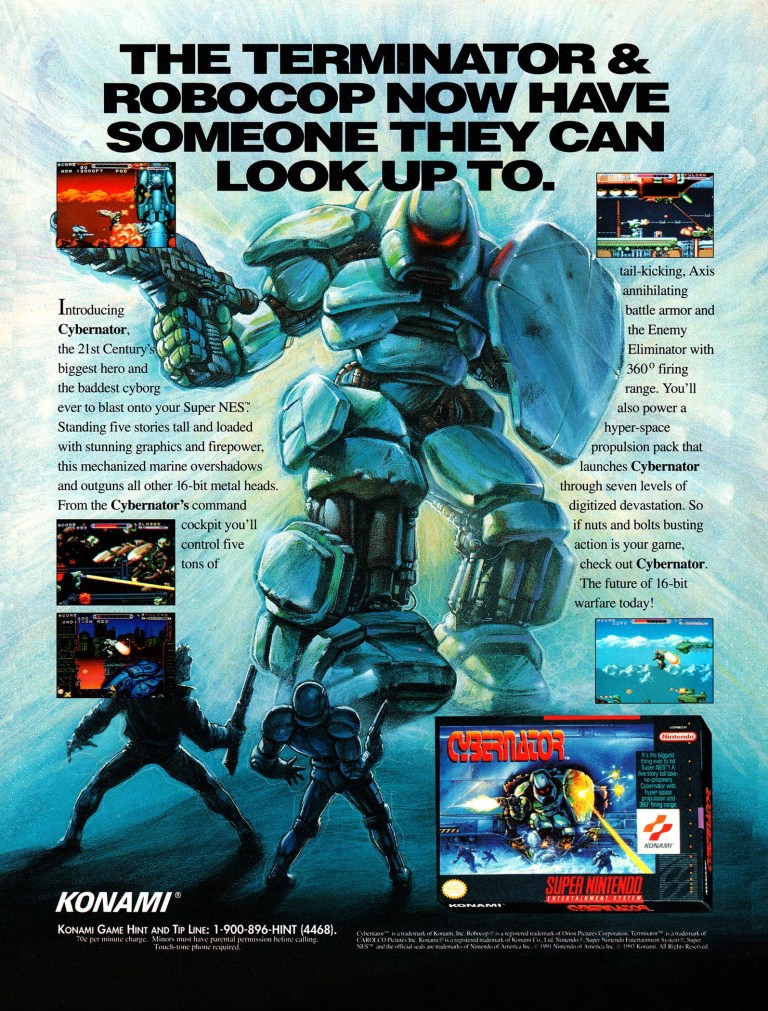
I remember seeing the print ad of Konami’s Cybernator (Japanese title: Assault Suits Valken) in several comic books I read back in 1992. I never got to play it but the print ad’s artwork was memorable as I was fond of robots in anime, movies and video games back then. What was arguably the most memorable aspect of the print ad was the line that mentioned RoboCop and the Terminator in a comedic way. This is a creative way to market the game.
5. NBA Basketball 2000 print ad
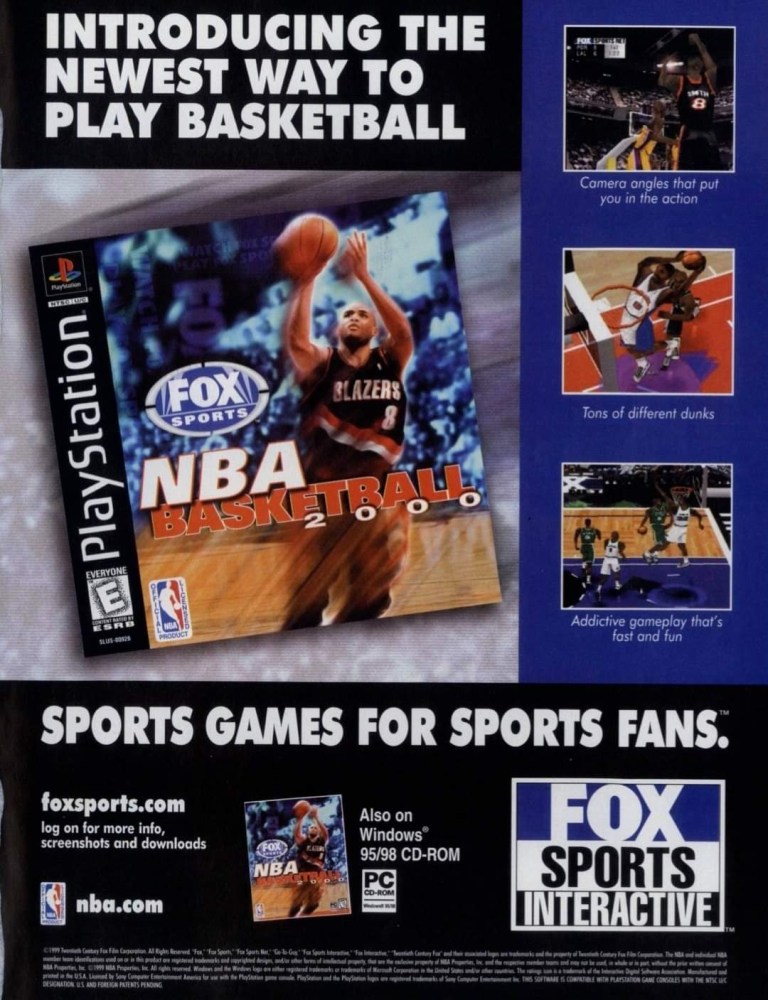
NBA Basketball 2000 was one of those basketball videos games of the 1990s that was not published by EA Sports nor published by the other established game publishers like Sega, PlayStation and Konami. In fact, the one thing on the ad that caught my attention was Fox Sports Interactive which published some sports videos games during the decade. The print ad also served as a reminder that there were a lot more NBA video games for gamers to choose from during the 1990s.
6. Food Fight arcade flyers
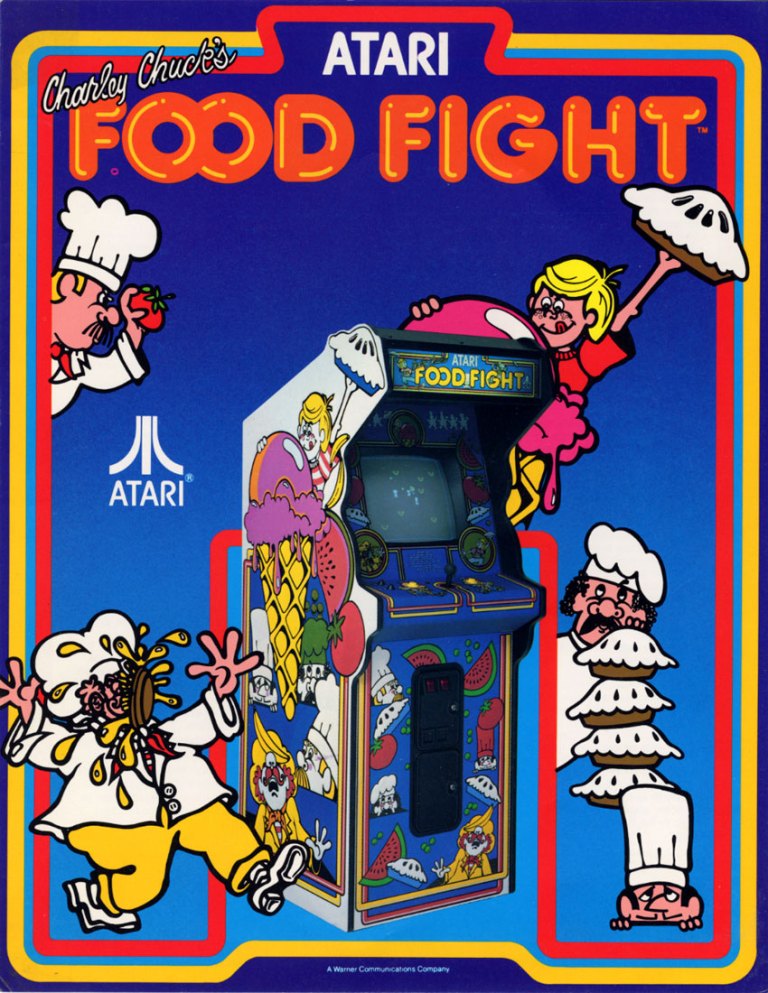
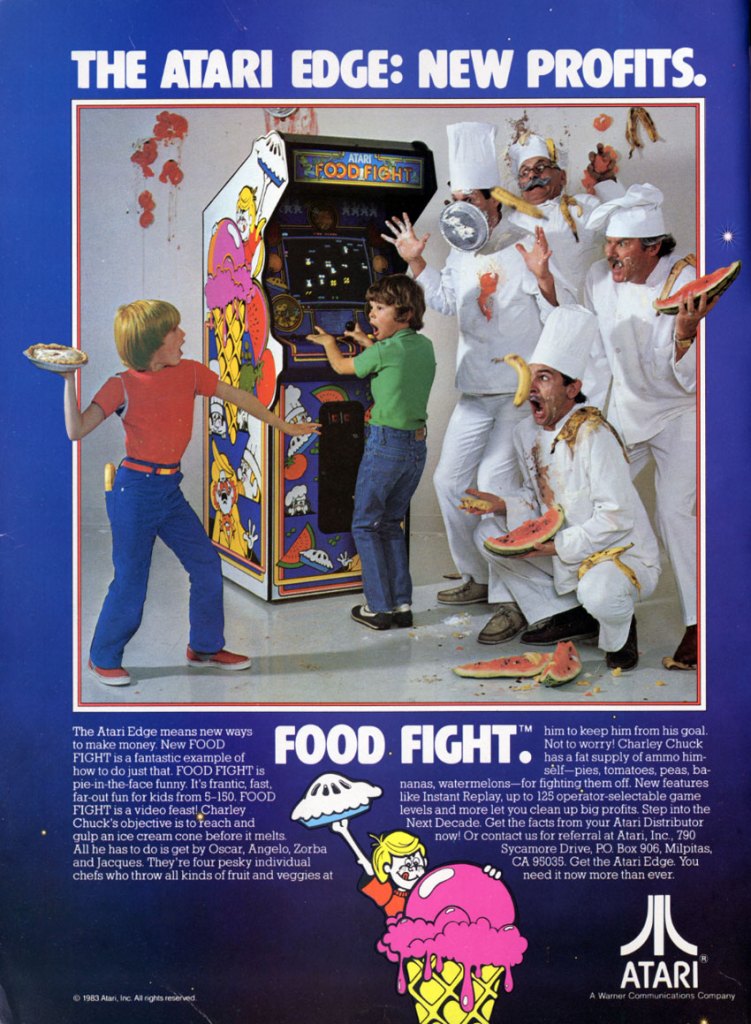
I never got to play the 1980s game Food Fight in the arcades nor did I ever had the opportunity to play it on Atari consoles and Xbox 360. Released in 1983 in the arcades by Atari, Food Fight was designed to allow players to control a character moving through a 2D field to consume an ice cream on a cone (placed on the opposite end of the field) before it melts while avoiding the chefs who are out to chase and block the player.
The arcade flyer with illustrated artwork on the characters interacting with the arcade machine is really amusing to look at. Equally amusing is the other arcade flyer that had a photographic approach showing two kids (one playing the arcade machine and the other about to throw a pie) and four chefs. Considering the nice visual concepts Atari came up with for the arcade flyers, Food Fight actually never became a commercial hit selling only a few thousand arcade units.
7. X-Kaliber 2097 print ad
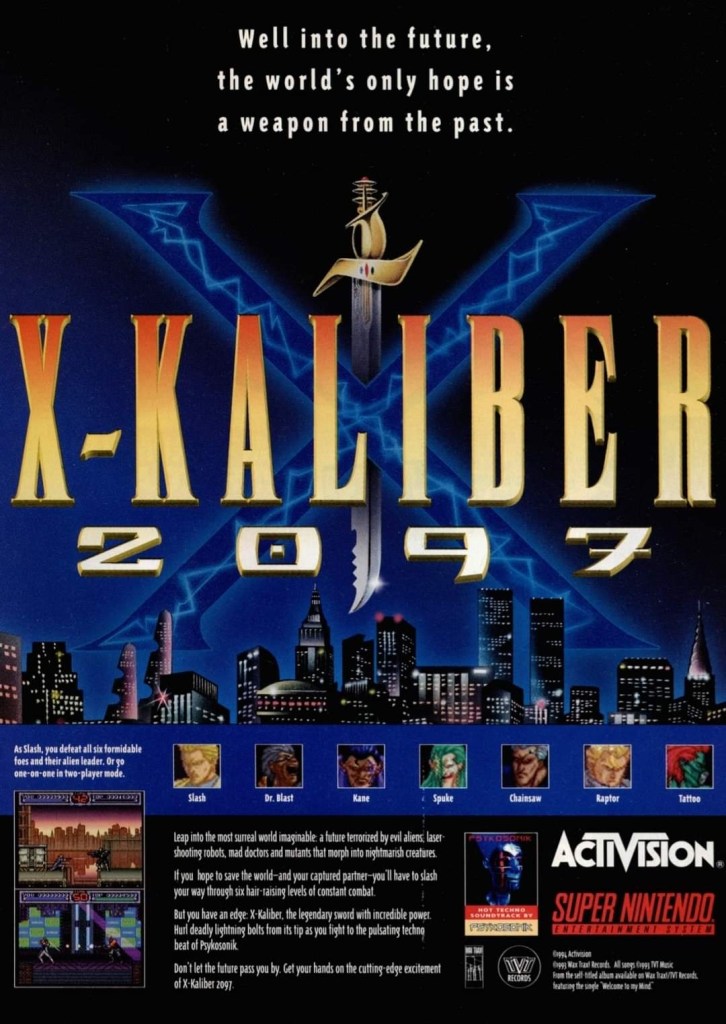
The Super Nintendo Entertainment System (SNES) had plenty of 2D side-scrolling adventure games and among them was X-Kaliber 2097 released by Activision (now a Microsoft-owned company and integral part of Xbox) in America in 1994. The game had a really interesting story concept about a chaotic far future society plagued by overwhelming crime and violence. The print ad showed a mild taste about the game’s concept and gameplay, but it was more effective when it comes to showing the formidable foes that await the playable protagonist Slash. This print appeared in several comic books I read and was eye-catching.
8. Jet Moto 3 print ad
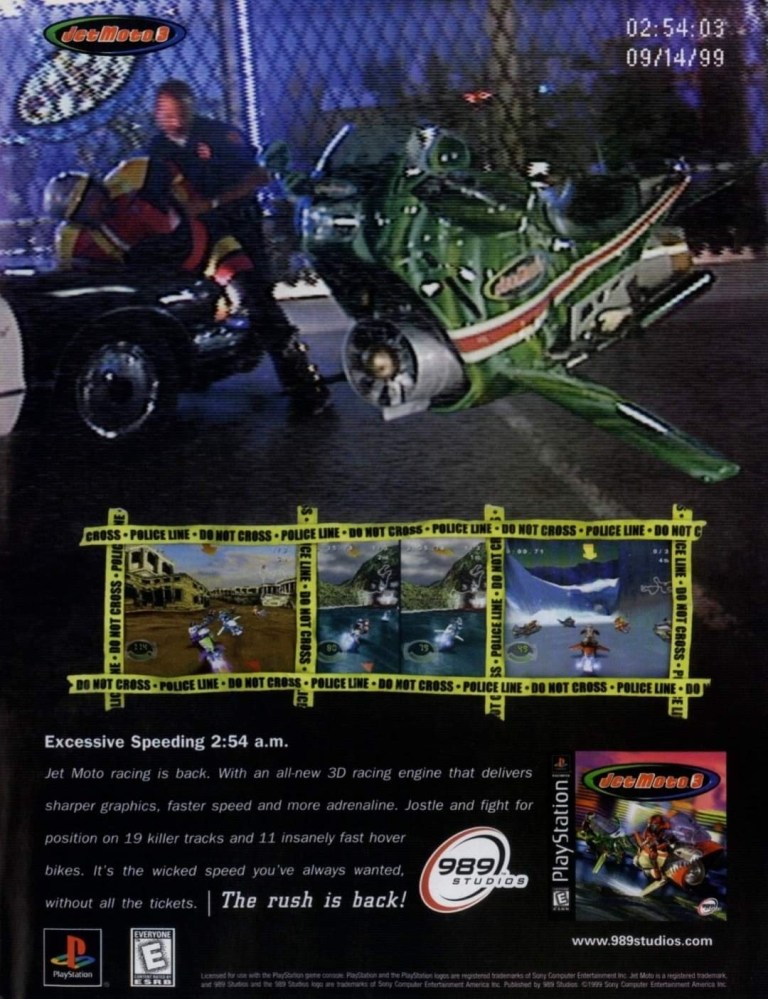
This print ad for Jet Moto 3 had a clever concept of showing a police officer apprehending a jet biker for over-speeding. The visual presentation was done in photo-realistic fashion to make the sci-fi aspect of the video game look real. The ad made me interested enough to do some research of Jet Moto 3 a few months before finally buying it for my PlayStation console.
9. Wipeout 3 print ad
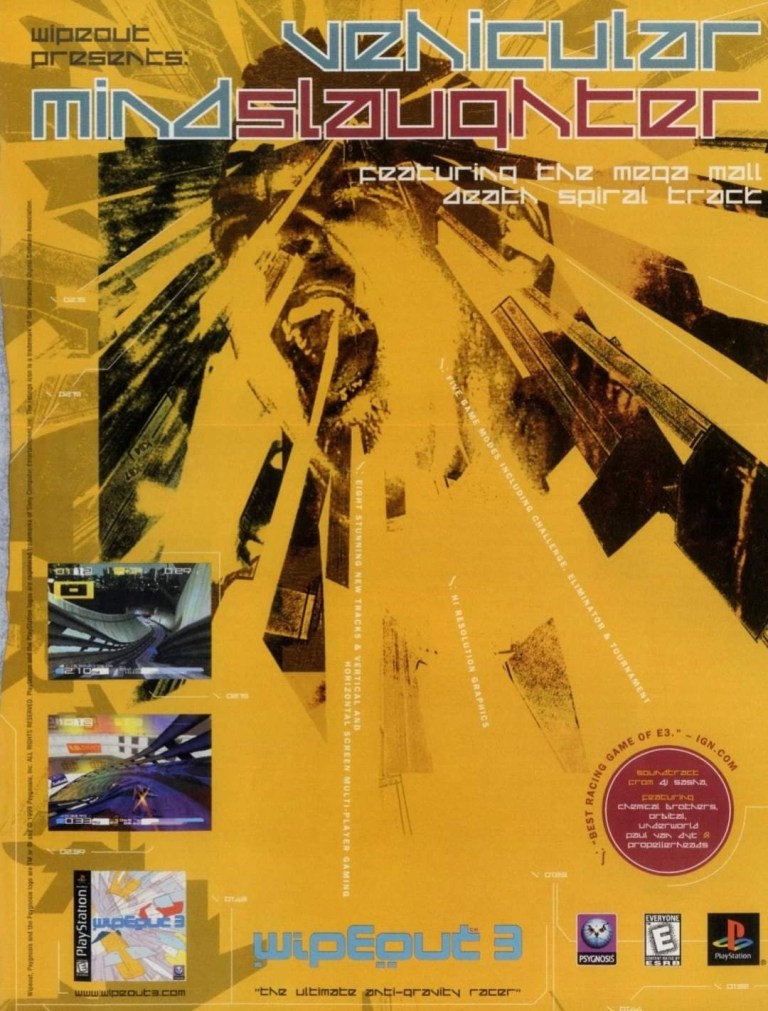
Released in 1999, Wipeout 3 was one of those video games that showcased what the PlayStation (originally launched in Japan in 1994) could do in terms of visual fidelity, special effects and frame rates. The print ad, which had a radical visual concept emphasizing intensity and energy, had style listing down vertically the technical details of the game which required a close look in order to be read. With only two screenshots displayed, the ad makers smartly included the E3 acclaim of “Best Racing Game of E3” as well as the names of artists behind the game soundtrack on the lower-right corner. This print ad was cool and intriguing to look at.
10. Breath of Fire II print ad
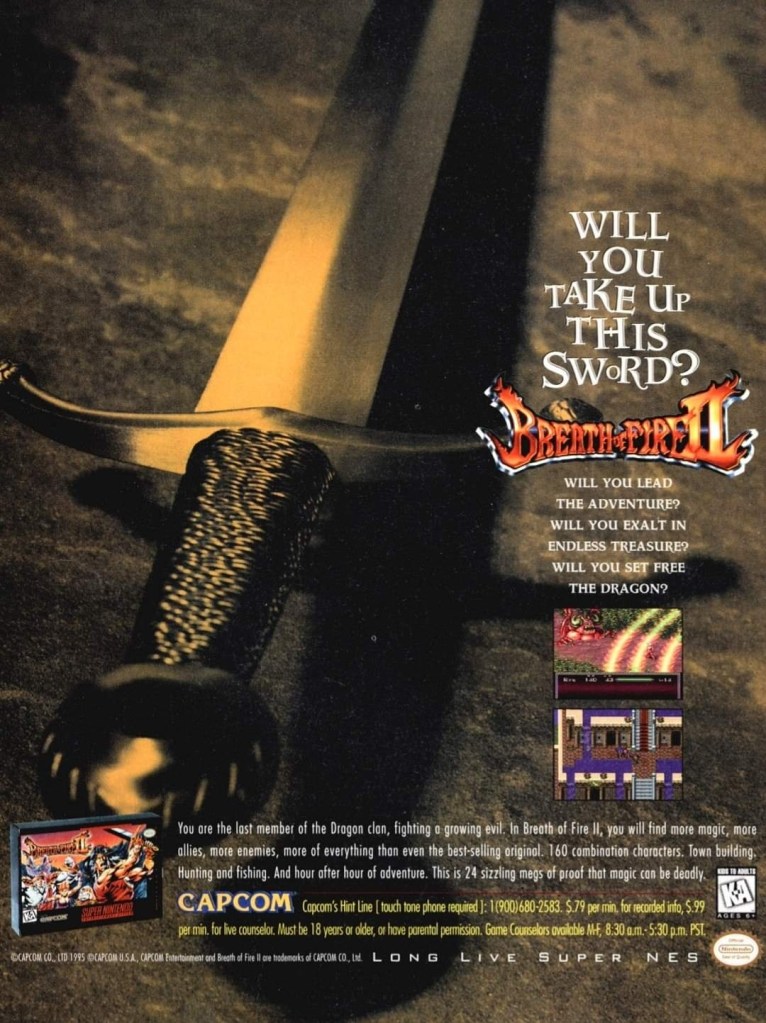
When Breath of Fire II was released on the SNES in America in late 1995, Japanese role-playing games (JRPGs) were not yet wildly popular among American gamers. To grab the attention of gamers, Capcom and the ad makers came up with the eye-catching image of a sword and posted key questions to emphasize the fantasy aspect of Breath of Fire II. While the game received mixed reviews upon its North American release, Nintendo Power listed it as 171st best game in its Top 200 Games chart published in 2006.
+++++
Thank you for reading. If you find this article engaging, please click the like button below, share this article to others and also please consider making a donation to support my publishing. If you are looking for a copywriter to create content for your special project or business, check out my services and my portfolio. Feel free to contact me with a private message. Also please feel free to visit my Facebook page Author Carlo Carrasco and follow me on Twitter at @HavenorFantasy as well as on Tumblr at https://carlocarrasco.tumblr.com/ and on Instagram at https://www.instagram.com/authorcarlocarrasco
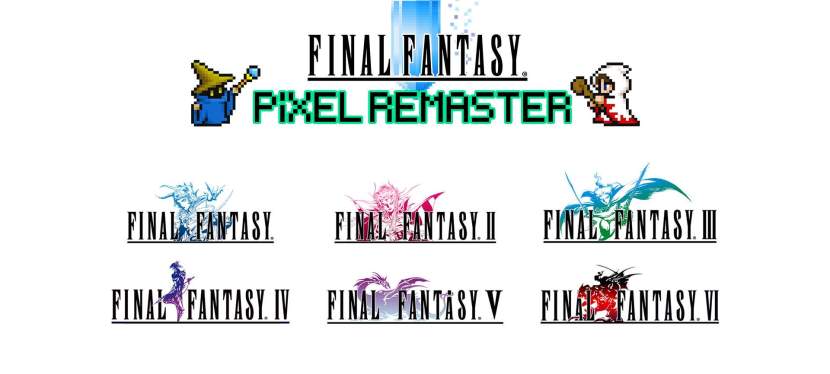
Final Fantasy Pixel Remaster now available for Xbox Series X|S and Windows PC
Welcome back Xbox fans, geeks and gamers!
In case you missed the official Xbox presentation of the 2024 Tokyo Game Show (click here to watch), Square Enix formally announced that Final Fantasy Pixel Remaster has officially been released for Xbox Series X and Xbox Series S plus Windows PC. Watch the announcement video below.
Already Xbox gamers can choose to buy the digital bundle of the six Final Fantasy role-playing games (RPGs) online or buy the classic RPGs individually by clicking https://www.xbox.com/en-us/games/store/final-fantasy-i-vi-bundle/9P012F2LCPHF/0010
For the newcomers reading this, Final Fantasy Pixel Remaster is a collection the classic Final Fantasy RPGs which are as follows: Final Fantasy, Final Fantasy II, Final Fantasy III, Final Fantasy IV (AKA Final Fantasy II on SNES), Final Fantasy V and Final Fantasy VI (AKA Final Fantasy III on SNES).
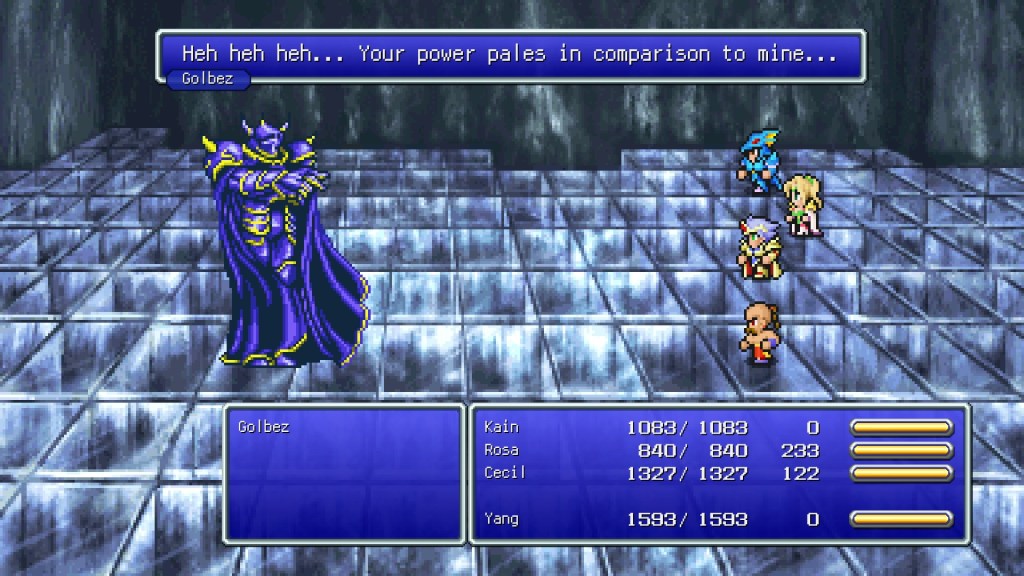
Each classic Final Fantasy game has its 2D pixel graphics and artworks updated with high-definition gaming in mind, and their soundtracks have been re-arranged. In what is a clear attempt by Square Enix to enhance the gameplay experience and user-friendliness, there were tweaks made to the user interface. Also added were extra stuff such as bestiary, illustration gallery and music player.
The Xbox and Windows PC releases of Final Fantasy Pixel Remaster is indeed a move towards the right direction by Square Enix and it is clearly the result of that company’s renewal of ties with Team Xbox. Final Fantasy Pixel Remaster was launched on other platforms previously and the Xbox ecosystem ended up being the last to have it for millions of gamers to enjoy.
For the Xbox gamers who are Final Fantasy fans as well as those who are fond of classic Japanese role-playing games (JRPGs) and those who simply love retro gaming, Final Fantasy Pixel Remaster is a very welcome addition that should not be missed. It is available now for digital purchase as a bundle but gamers are free to choose to buy the games individually based on their current taste or based on how much they could afford right now. It is clear that buying the bundle of six Final Fantasy classic games is still the best value for money.
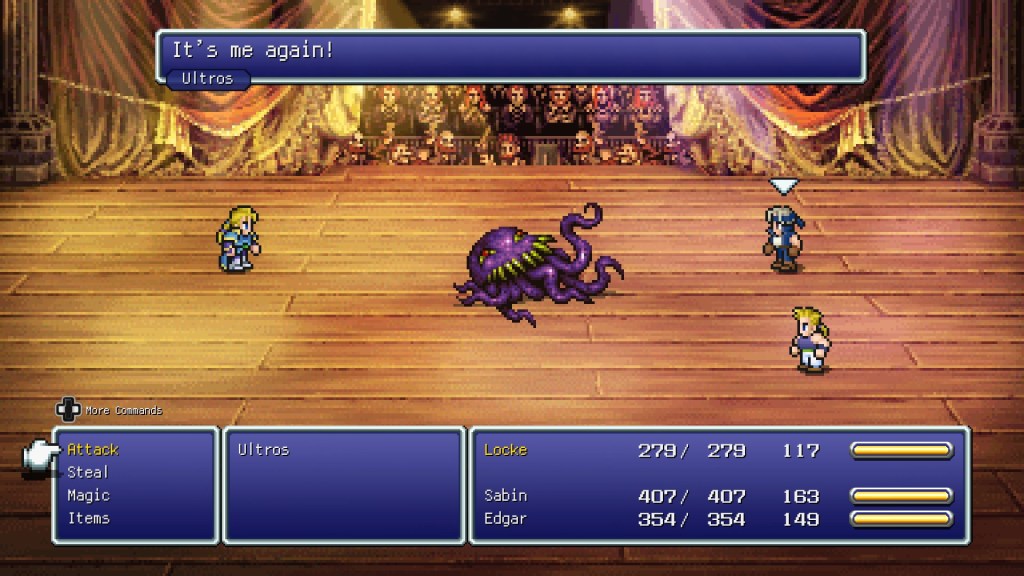
In my experience as a veteran gamer, I played and completed Final Fantasy IV (both on SNES and the 3DS polygonal remake) and Final Fantasy VI (on the SNES and the Game Boy Advance). I played Final Fantasy V that came with the Final Fantasy Anthology on the PlayStation but never got to finish it. The way I see it, Final Fantasy Pixel Remaster looks like an enticing collection. In addition, it makes RPG retro gaming on Xbox more exciting as Grandia HD Collection on Xbox has been available (finishing the original Grandia is the best Xbox gaming experience I’ve had this year so far) for months now and on March 2025 the remastered collection of the two classic Suikoden RPGs will be released.
Final Fantasy Pixel Remaster for Xbox Series X, Xbox Series S and Windows PC is available for purchase and if you have made a decision to buy it, click https://www.xbox.com/en-us/games/store/final-fantasy-i-vi-bundle/9P012F2LCPHF/0010
+++++
Thank you for reading. If you find this article engaging, please click the like button below, share this article to others and also please consider making a donation to support my publishing. If you are looking for a copywriter to create content for your special project or business, check out my services and my portfolio. Feel free to contact me with a private message. Also please feel free to visit my Facebook page Author Carlo Carrasco and follow me on Twitter at @HavenorFantasy as well as on Tumblr at https://carlocarrasco.tumblr.com/ and on Instagram athttps://www.instagram.com/authorcarlocarrasco
 Author Carlo Carrasco