Retro Gaming Ads Blast – Part 41 (Jurassic Park Special)

Welcome back readers, fellow geeks and electronic gaming fans!

In this edition of the Retro Gaming Ads Blast (RGAB) series, we will take a look at another batch of retro gaming print ads related to the 1993 blockbuster film Jurassic Park. As part of the business strategy of the film directed by Steven Spielberg, several video games were licensed to make movies based on the movie. Unsurprisingly, the sequel The Lost World: Jurassic Park was released in 1997 and it also had its own video games. This is the Jurassic Park Special.

For the newcomers reading this, Retro Gaming Ads Blast (RGAB) looks back at the many print ads of games (console, arcade, computer and handheld) that were published in comic books, magazines, flyers, posters and newspapers long before smartphones, social media, the worldwide web and streaming became popular. To put things in perspective, people back in the 1980s to the 1990s were more trusting of print media for information and images about electronic games and related products.

With those details laid down, here is the newest batch of retro gaming print ads for you to see and enjoy…

1. Jurassic Park SNES Game Print Ad
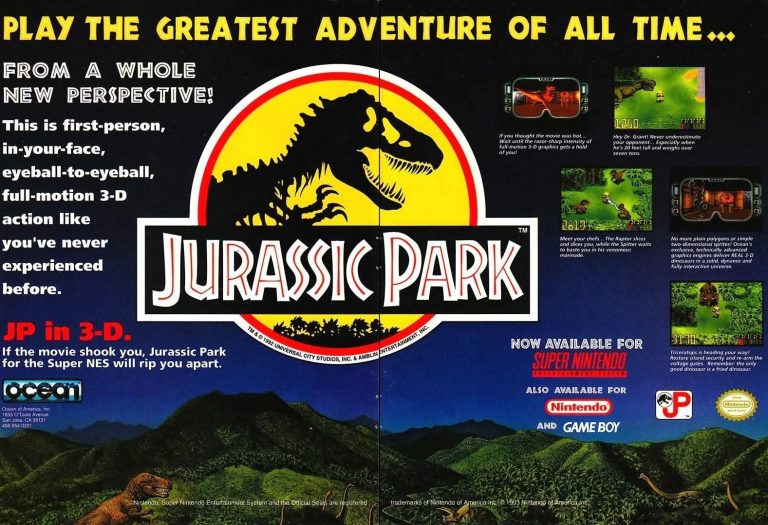
I saw this 2-page print ad in video game magazines in 1993.

Just a few months after the release of the movie, the official Jurassic Park video game on the Super Nintendo Entertainment System (SNES) was released by Ocean and the company came up with a 2-page print ad to showcase a few screenshots and creative text emphasizing an adventure experience with a touch of “3-D”. The ad makers cleverly showed two first-person view sequence screenshots that showed the SNES was strong enough to deliver the so-called 3D experience. I remember seeing this ad while reading a video game magazine in 1993 and it easily caught my attention.

2. Jurassic Park PC Game Print Ad
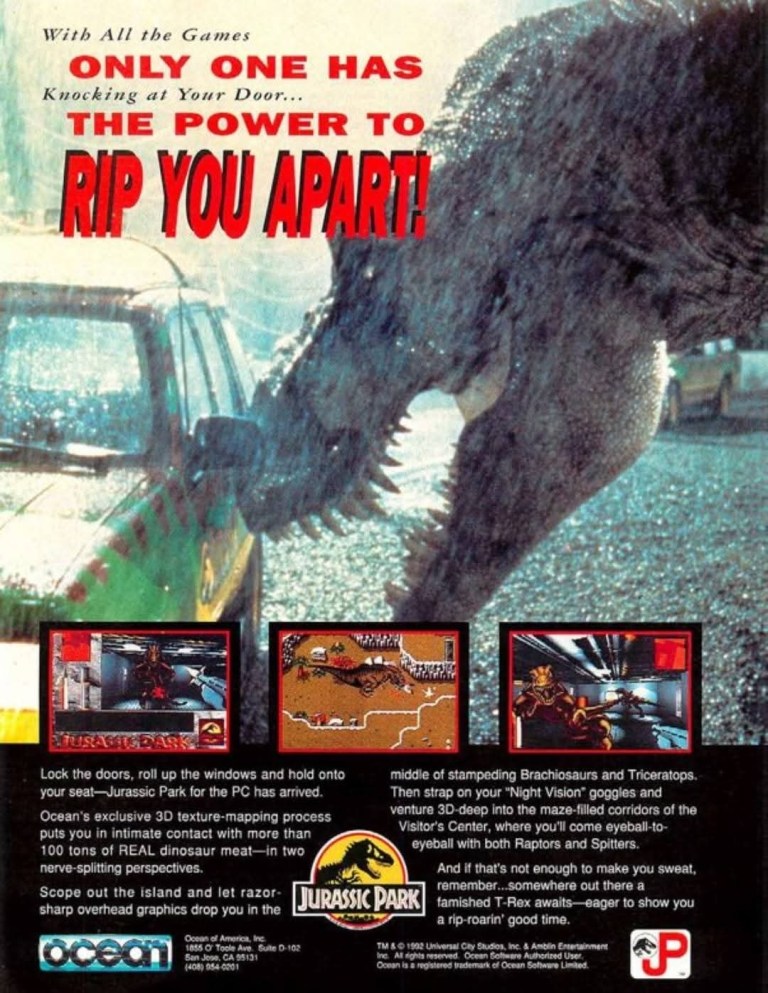
This Jurassic Park game I never had a chance to play.

For the Jurassic Park personal computer (PC) game, Ocean came up with a single-page print ad that uses a live-action image from the film’s production. Not only was the image of Tyrannosaurus Rex head (with its sharp teeth visible) touching the vehicle very engaging to see, it is also a reminder that practical effects and other physical stuff were heavily used to do it resulting in a high level of realism that computer-generated imagery (CGI) cannot match.

3. Jurassic Park Sega Genesis North American Print Ad
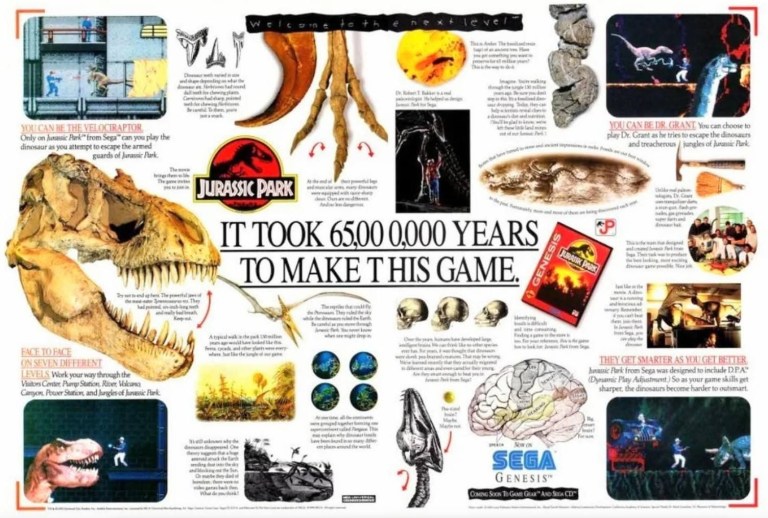
The most visually striking 2-page print ad of the JP game for Sega Genesis.

Sega acquired licenses to make Jurassic Park games for its existing consoles plus the arcade game. To promote the Sega Genesis JP game, Sega came up with this 2-page print ad with a great visual design. While there were only few screenshots from the video game, the rest of the ad was filled with lots of eye candy such as dinosaur fossils, illustrations, science-based details and more. Very clearly, this print ad strongly emphasized the dinosaurs, adventure and intrigue. The game eventually sold a lot of copies and added to the overall commercial success Sega had in North America in 1993.

4. Jurassic Park Japanese Arcade Flyer
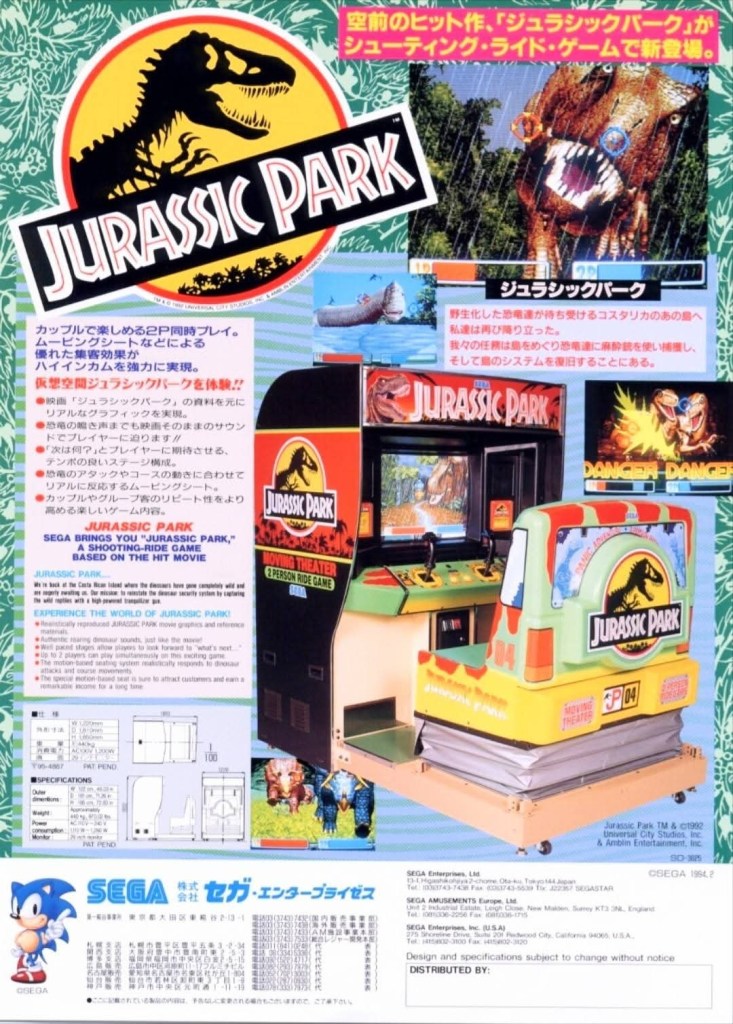
I played this Jurassic Park game in arcades here in the Philippines.

In 1994, Sega released the ambitious Jurassic Park arcade game which was a rail shooter game that had a sophisticated physical design that includes seats for two people. Developed by Sega’s AM3 team, the player(s) equipped with the joystick(s) has to shoot the dinosaurs that appeared on-screen from start to finish. To immerse gamers into the Jurassic Park environment, the game has a fine blend of 2D sprits and 3D polygons which resulted in the feel of 3D surroundings. For its part, Sega had to excite players and arcade operators while also explaining the technical details using the arcade flyer. The arcade game was a commercial success.

5. Jurassic Park Part 2: The Chaos Continues Print Ad
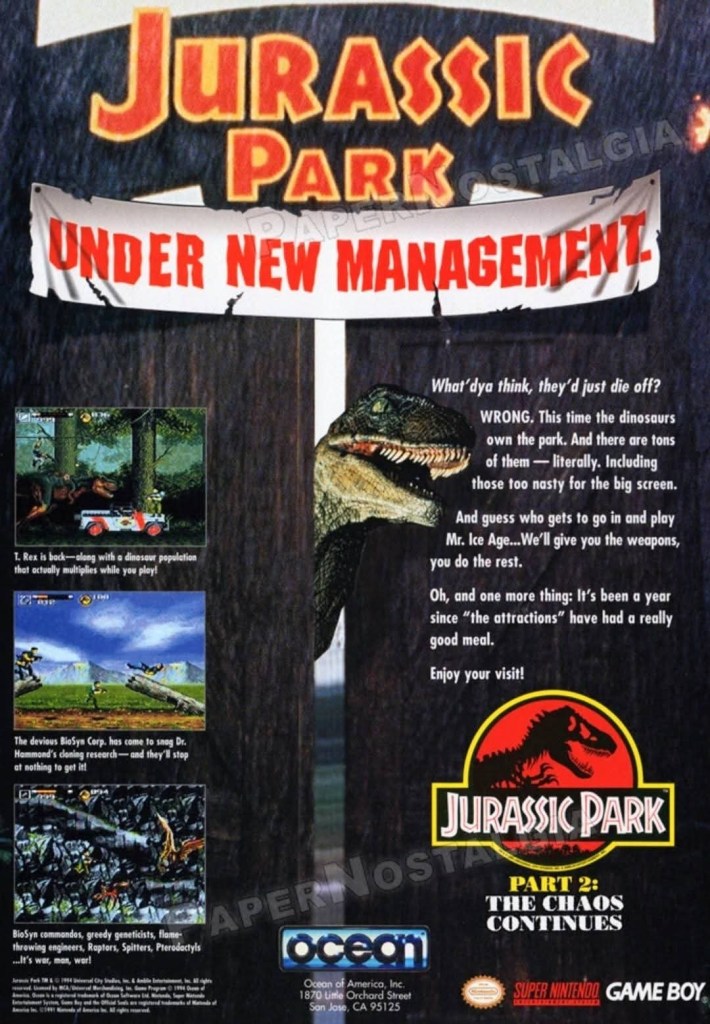
This surprise sequel excited many gamers who were into the 1993 movie and 2D side-scrolling adventure games.

While it is a fact that the sequel to Jurassic Park did not come out in book format (1995) and in the cinemas (1997), Ocean went ahead with its very own sequel titles Jurassic Park Part 2: The Chaos Continues. They even had an original tale about the established character Dr. Alan Grant returning to Jurassic Park to stop a rival corporation from taking over the place. To promote the SNES version of the game, the company came up with a single-page print ad that had an “under new management” sign above while showing a Velociraptor and a few screenshots from the game. As it was released in 1994, the game strongly appealed to the fans as well as gamers who enjoyed 2D side-scrolling adventure games on the SNES.

6. The Lost World: Jurassic Park Print Ad
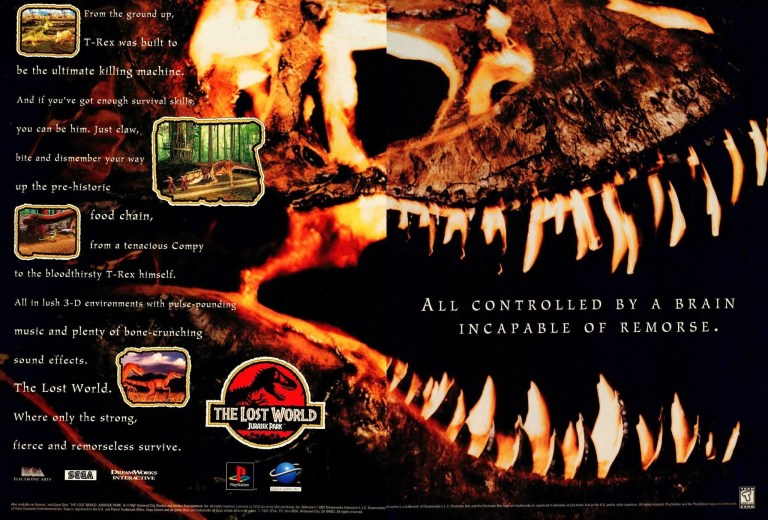
DreamWorks Interactive made the official console games of The Lost World: Jurassic Park and they had EA and Sega publish it.

Like its blockbuster predecessor, The Lost World: Jurassic Park had its own video game adaptations. The Lost World: Jurassic Park games for PlayStation and Sega Saturn were developed by a video game company which was under DreamWorks SKG (note: Steven Spielberg was one of the founders), and they had Electronic Arts (EA) and Sega publishing each game per specific console. To market the game, a 2-page print ad was made which featured a dinosaur skull dominating the image leaving some space for screenshots and the descriptive text. Having seen the movie and having played the game, I can say that the dark aesthetic of this print ad reflected the dark and gritty tone of the Spielberg-directed movie.

7. The Lost World: Jurassic Park North American Sega GameWorks Arcade Flyer
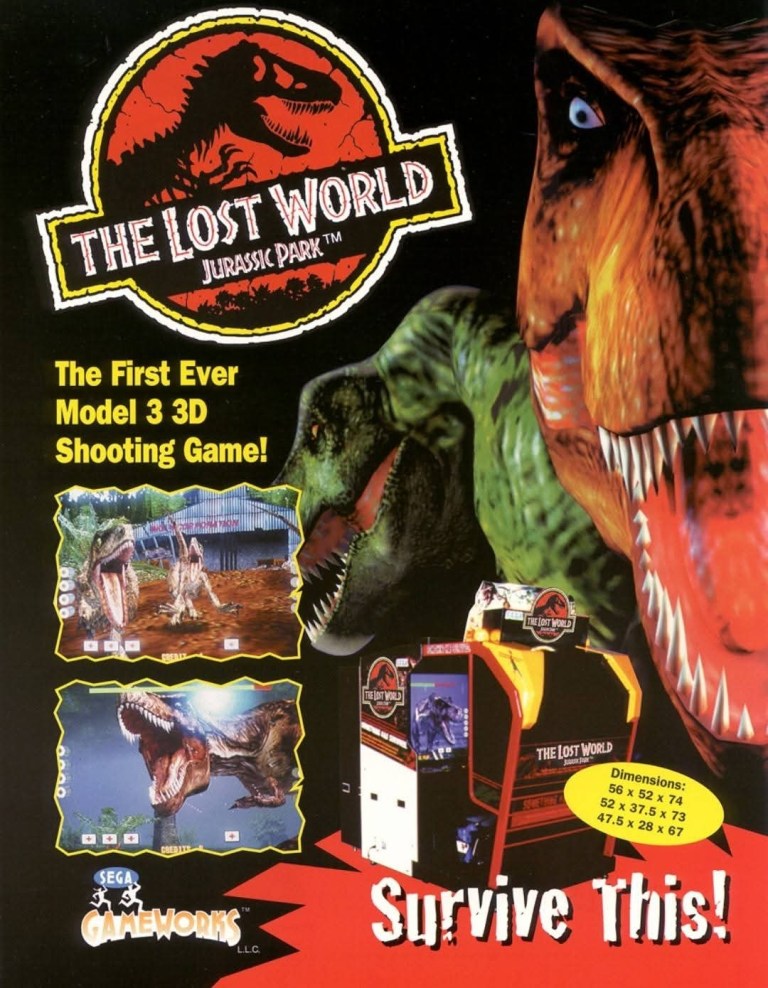
The front.
The rear.

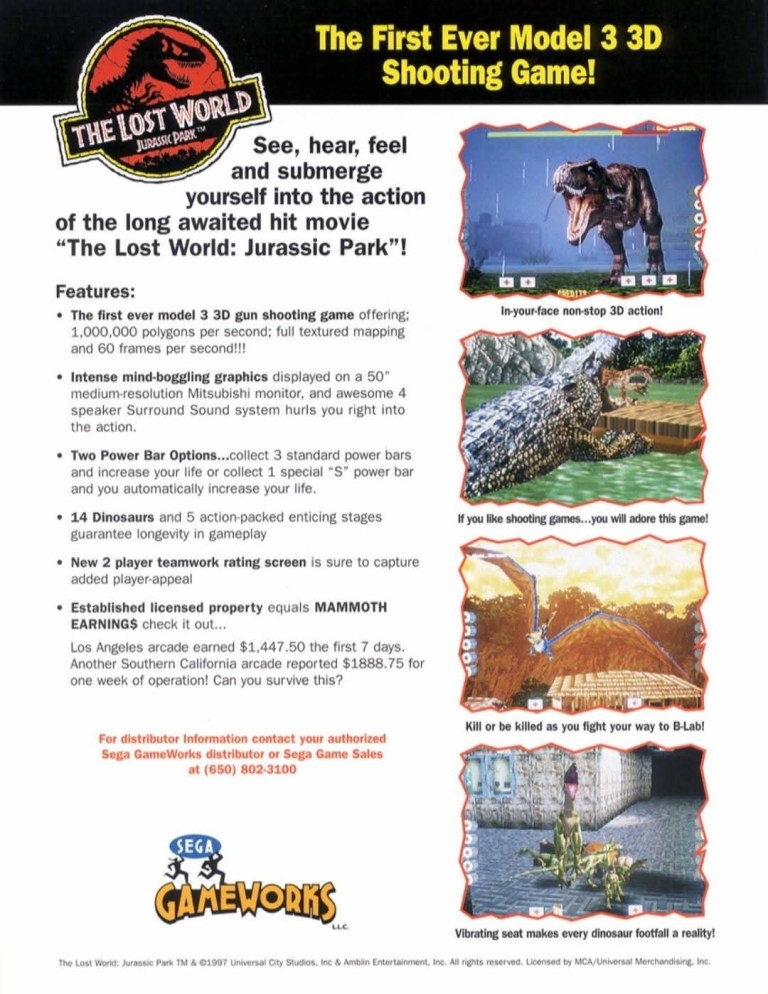
For me, the best game based on The Lost World: Jurassic Park has always been the official arcade game developed and distributed by Sega. It was a sophisticated rail shooter made by the same team behind the 1994 Jurassic Park arcade game. The arcade flyer clearly mentions the Model 3 which was a highly advanced arcade hardware of Sega that made highly detailed 3D polygonal graphics and smooth animation possible. The flyer also boasted the use of a 50-inch medium resolution Mitsubishi monitor and the 4-speaker Surround Sound system that made the arcade experience intense. Even by today’s standards, this 1997 arcade game still looks great and remains enjoyable to play. This arcade flyer really promoted what was real for gamers to experience in the arcade. Are you aware that Steven Spielberg himself received The Lost World: Jurassic Park arcade cabinet as a gift from Sega?

+++++

Thank you for reading. If you find this article engaging, please click the like button below, share this article to others and also please consider making a donation to support my publishing. If you are looking for a copywriter to create content for your special project or business, check out my services and my portfolio. Feel free to contact me with a private message. Also please feel free to visit my Facebook page Author Carlo Carrasco and follow me on Twitter at  @HavenorFantasy as well as on Tumblr at https://carlocarrasco.tumblr.com/ and on Instagram at https://www.instagram.com/authorcarlocarrasco

What To Watch On YouTube Right Now – Part 130

Welcome back my readers, YouTube viewers and all others who followed this series of articles focused on YouTube videos worth watching. Have you been searching for something fun or interesting to watch on YouTube? Do you feel bored right now and you crave for something to see on the world’s most popular online video destination?

I recommend you check out the following videos I found.

#1 2002 Resident Evil Movie Revisited – Almost a quarter-century ago, the first-ever live-action Resident Evil movie was released in cinemas directed by Paul W.S. Anderson and starring Milla Jovovich. Believe it or not, the 2002 movie was realized after the original film project involving zombie movie legend George Romero – who even directed the Japanese market TV commercial of Resident Evil 2/Bio Hazard 2 – got scrapped. Having played many RE games, I saw the movie in the local cinema upon release and went home feeling numb and alienated. Even though the film was never an adaptation of the games (note: no RE character from the games appeared in the movie) and it had its own concepts, there are still some people who enjoyed it or endured the moments of suspense and horror. To learn how it impacts viewers, watch the reaction videos below.

#2 Ranting For Vengeance Slams Spider-Man: Brand New Day And The Modern Culture Behind It –The first trailer of the upcoming movie Spider-Man: Brand New Day drew a lot views from around the world but YouTuber Ranting For Vengeance was not fooled by it. In his recent video, he slammed the new movie and explained in detail the woke elements or so-called modern culture behind it. He also stressed that the real good stories of Spider-Man are in the comic books from long ago and the only good Spider-Man films are those directed by Sam Raimi. To learn more, watch Ranting for Vengeance’s video below.

#3 The Negative Effects Of Sports Betting Exposed – As technology evolved, making bets on sports events – right down to specific achievements or action – has gotten more convenient to do and has turned normal in society. However, there are indeed negative effects and regrets that come with it. Watch and learn from the 700 Club video below.

#4 Remember America’s Lunch Counters?  – Decades ago in the United States, lunch counters were popular as they provided customers not only a place to enjoy their meals but also become a part of a “counter community” where they interact with the cook (or assistant) on the other side, and chat with fellow customers on the side. Lunch counters have disappeared in most parts of America and there are some young people who never knew they existed. Here is a nostalgic look back at America’s lunch counters.

#5 Cancelled Creatures Of Resident Evil Games – The Resident Evil games franchise turned 30 this year. Not only did Capcom release a lot of RE video games through the decades and had several characters which resonated with gamers, a lot of monsters/creatures were also featured on top of the zombie hordes. Like movies or TV shows, the RE video games had content that never made it in versions that were commercially released and among them are many creatures or monsters that were either conceptualized or even produced. To find out what those cancelled creatures are, watch ScorePN’s number below.

#6 Customers Attracted By Kappabashi Kitchen Town – Have you heard of Kappabashi Kitchen Town? It’s a place in Tokyo, Japan, which has been attracting different types of customers as it has a nice variety of products for sale. There are locals who need something for their cooking needs or for their business operations. Unsurprisingly, foreigners are also attracted to the place. To find out more about Kappabashi Kitchen Town, watch the Nippon TV video below.  

#7 Starman Retrospective – I saw the 1984 science fiction film Starman a number of times through the decades. Directed by John Carpenter and starring Jeff Bridges, Starman is about an unlikely relationship between a recently widowed woman and an alien being who cloned the human body of her later husband. Starman is a fine film and its production history is also fascinating to explore. To find out more about Starman, watch the videos below from Represent This.

+++++

Thank you for reading. If you find this article engaging, please click the like button below, share this article to others and also please consider making a donation to support my publishing. If you are looking for a copywriter to create content for your special project or business, check out my services and my portfolio. Feel free to contact me with a private message. Also please feel free to visit my Facebook page Author Carlo Carrasco and follow me on Twitter at  @HavenorFantasy as well as on Tumblr at https://carlocarrasco.tumblr.com/ and on Instagram athttps://www.instagram.com/authorcarlocarrasco

What To Watch On YouTube Right Now – Part 129

Welcome back my readers, YouTube viewers and all others who followed this series of articles focused on YouTube videos worth watching. Have you been searching for something fun or interesting to watch on YouTube? Do you feel bored right now and you crave for something to see on the world’s most popular online video destination?

I recommend you check out the following videos I found.

#1 Resident Evil Bonanza (1996 Original and 2002 Remake) – Thirty years ago this month, the original Resident Evil video game was released on PlayStation and it impacted console gaming by moving towards an adulterated direction with zombie horror and mad science as core elements. The 1996 game led Capcom to making Resident Evil sequels and spin-offs in the years that followed. Then in 2002, an ambitious remake of Resident Evil was released on the Nintendo GameCube and it became the definitive version RE creator Shinji Mikami and his team came up with. To explore Resident Evil in its original version and the remake, watch the videos below.

#2 Living In Las Vegas –For decades, Las Vegas in Nevada has always been known as a major tourist destination with lots of hotels, casinos and other entertainment joints clustered together. There is also the perception that a lively city like it means there are lots of job opportunities and business or investment options to pursue there. What most people do not realize is that Las Vegas is not exactly the ideal city to move into and live in due to many factors that can be challenging and stressful to deal with. To discover why, watch the videos below.

#3 Popcorn In Bed Reacts To Logan’s Run – It has always been argued that science fiction movies released before Star Wars were not too exciting to watch. One of them was Logan’s Run which continues to have a divisive reception among movie buffs both young and old. There are some who liked its concept and execution, while others dismissed it for being corny or even being symbolic about the sexual revolution of the 1960s and 1970s. If you want to discover the film without spending money on it, watch Popcorn in Bed’s reaction video below. Observe how the movie impacts her.

#4 The History Of Atari Arcade Games  – I was fortunate enough to have played games in video arcades in the 1980s. In the old days, Atari was a major arcade industry player apart from being big on console gaming. Atari was also responsible in bringing its arcade games to Japan (with Namco as its partner) and also brought some of Namco’s games into American arcades. If you love Atari, arcade games and retro gaming in general, watch the video documentaries below.

#5 Ranting For Vengeance Demolishes Woke Nuts’ Take On Resident Evil’s Chris Redfield – Going back to Resident Evil, it is not surprising that the mob of woke zealots, LGBTQ activists and other Leftists keep on creeping in on existing entertainment franchises to deform them and make it fit their wicked ideology. Recently there were woke nuts online who targeted the Resident Evil icon Chris Redfield and perceive him as gay. Ranting For Vengeance posted a video to demolish the woke mob’s take on Redfield and he explains in detail why the iconic hero has always been straight since the very beginning. Watch the video below and share it with all Resident Evil fans out there.

#6 Forgotten Video Games Based On Movies – Remember back in the old days when there were a lot of video games based on movies released? Back then, there was money to be made on licensing and merchandising. As a gamer and movie buff since youth, there definitely was excitement whenever I learned a game about a film I enjoyed was made available. Of course, there were games that turned out fun and others ended up being disappointing or even very poor in quality. Check out the video below about the forgotten movie-based games.

#7 How Hollywood Killed The Oscars – Avoiding the Academy Awards (AKA Oscars) is absolutely fine. It no longer celebrates the best of filmmaking and it has been overwhelmed by woke activists, Satanic Leftists, modern day Commies and the like. Communist Hollywood (Commiewood) has been using the Academy Awards to amplify its wicked agenda for a long time now. The old glory and the celebration of the best of filmmaking are truly gone. Watch the video below.

#8 National Security Council Secretary Ali Larijani And Basij Commander Of Iran Eliminated By Israel – I recently blogged about the eliminations of two high-ranking officials of the Islamic terrorist regime of Iran as the conflict in the Middle East went on. It was Israel which successfully killed Ali Larijani and a Basij commander and it was the most significant achievement since the elimination of the demon Ali Khamenei. Right now, it is not clear who is really leading the remaining wicked regime and Iran’s military has been decimated by America and Israel. Keep in mind that the military operations against Iran is all about bringing down the Islamic terrorist regime and liberating the oppressed Iranians so they can take their country back after 47 years. For insight about what happened, watch the videos below.

#9 The Revival Of A Japanese Sake Brewery – It is always depressing to see your own business get destroyed because of a natural disaster. In Japan, a certain brewery that produced sake got ruined when a huge earthquake struck. Since then, the owner started hard efforts to revive the business. To discover what happened, watch the Nippon TV video below.

+++++

Thank you for reading. If you find this article engaging, please click the like button below, share this article to others and also please consider making a donation to support my publishing. If you are looking for a copywriter to create content for your special project or business, check out my services and my portfolio. Feel free to contact me with a private message. Also please feel free to visit my Facebook page Author Carlo Carrasco and follow me on Twitter at  @HavenorFantasy as well as on Tumblr at https://carlocarrasco.tumblr.com/ and on Instagram athttps://www.instagram.com/authorcarlocarrasco

Retro Gaming Ads Blast – Part 40 (RPG Special)

Welcome back readers, fellow geeks and electronic gaming fans!

In this edition of the Retro Gaming Ads Blast (RGAB) series, we will take a look at another batch of retro gaming print ads from the 1980s to the 1990s focused mainly on role-playing games (RPGs) from the East and the West. This is the RPG Special!

For the newcomers reading this, Retro Gaming Ads Blast (RGAB) looks back at the many print ads of games (console, arcade, computer and handheld) that were published in comic books, magazines, flyers, posters and newspapers long before smartphones, social media, the worldwide web and streaming became popular. To put things in perspective, people back in the 1980s to the 1990s were more trusting of print media for information and images about electronic games and related products.

With those details laid down, here is the newest batch of retro gaming print ads for you to see and enjoy…

1. Dragon Warrior II Print Ad

The art style used made this one looked similar with Dungeons & Dragons.

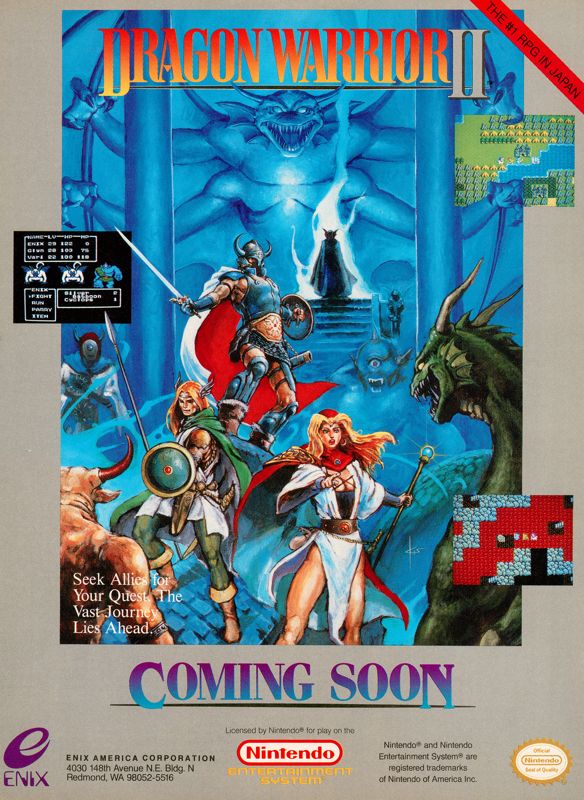
When Dragon Quest was released in America titled as Dragon Warrior, its sales there came nowhere close to what it sold in Japan. The game, however, sold enough copies to convince Enix to bring the sequel Dragon Warrior II (Japanese title: Dragon Quest II) to the Nintendo Entertainment System (NES) in America and they came up with an ad that had obvious Western-style artwork to emphasize the fantasy elements. By comparison, the Japanese version of the game used the distinct art of Akira Toriyama (Dragon Ball Z). Back in those days, there was this belief that Toriyama’s art style would not be effective in promoting the game in America.

2. Breath Of Fire Japanese Print Ad

This is how Breath of Fire looked like in Japanese print media.

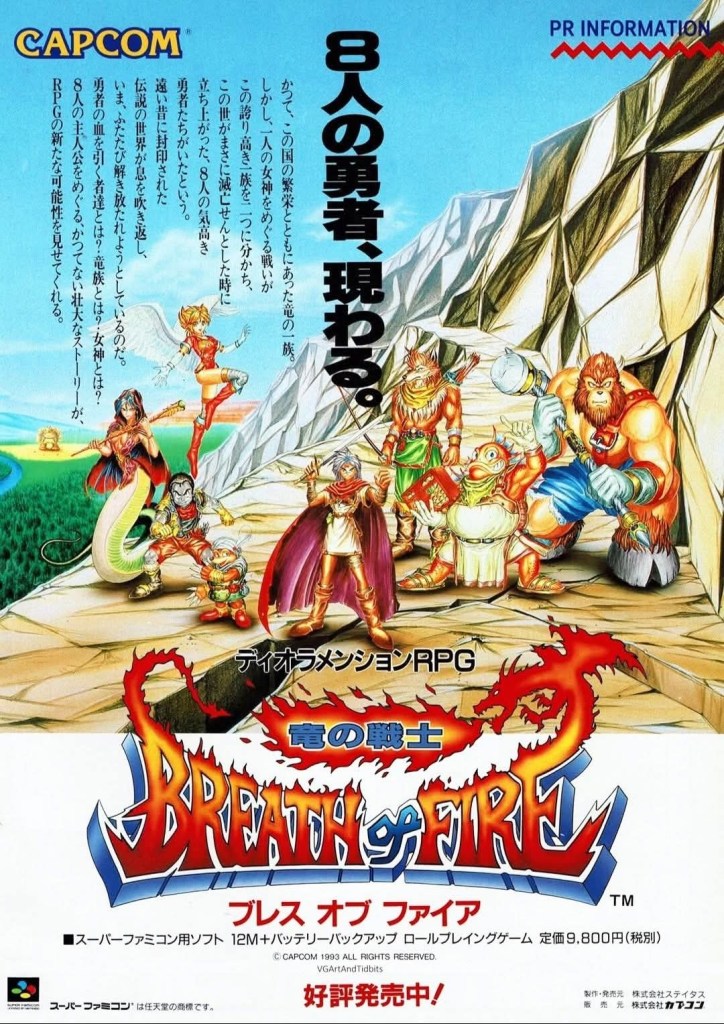
In 1993, Capcom officially broke into the Japanese role-playing game (JRPG) genre with Breath of Fire on the Super Family Computer (Super Famicom). The print ad they came up with for the Japanese market showed several characters – including Ryu and Nina who would later become recurring characters as sequels were released – with designs that had elements of anime and manga styles blended which contrasted the gritty and realistic approach of Western fantasy art. The ad made it clear to readers that new adventures in a fantastic world await them. The game achieved enough commercial success in Japan which convinced Capcom to make a sequel (plus more in the years that followed).

3. Phantasy Star II North American Print Ad

The 3-page ad showcasing Phantasy Star II and many other games.

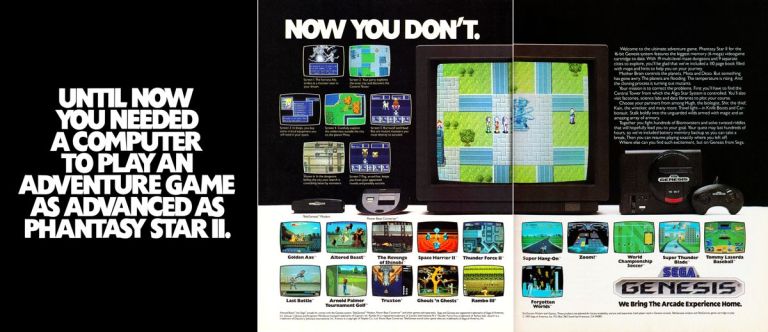
After selling a good amount of copies of the original Phantasy Star worldwide on the Sega Master System, Sega knew they were on to something. They confidently produced the sequel Phantasy Star II for their brand-new Sega Genesis console in 1989 and aggressively promoted it in America with a daring 3-page print ad. If you look closely, majority of two of the pages were used to promote Phantasy Star II with screenshots (including a big one with a TV), the text description and the console. The spaces below allowed Sega to promote their many other games in convenient fashion. The result is huge success for Sega as more than 1.6 million copies of Phantasy Star II were sold worldwide. Sega would go on to make even more Phantasy Star games.

4. Estopolis Denki II Japanese Print Ad

Estopolis Denki II print ad in Japan.

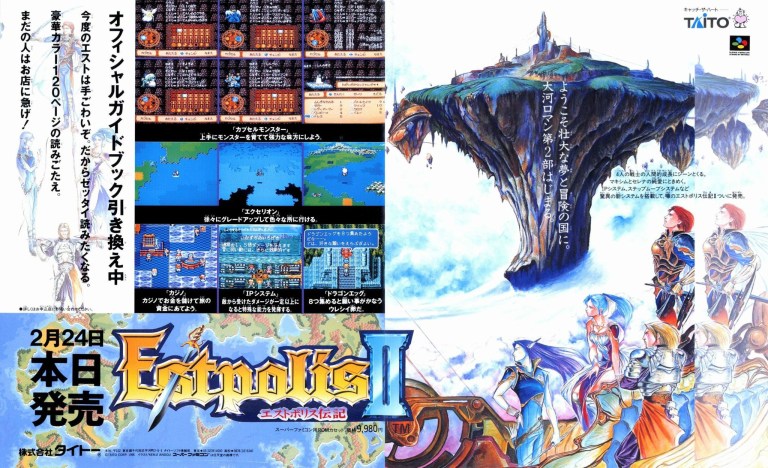
When Estopolis Denki was released on the Super Famicom in Japan, sold enough copies to justify not only bringing the game to Western markets as Lufia & The Fortress of Doom but also the production of a follow-up titled Estopolis Denki II. To promote it, Taito made a Japanese print ad that had a captivating art style (with the characters looking more realistic and a floating land that had a gritty touch), some screenshots and the promise of fantastic adventures. While the game’s title sounded like a sequel, its story was actually set in the past. Estopolis Denki II would be released in the West as Lufia II: Rise of the Sinistrals.

5. Lufia II: Rise of the Sinistrals North American Print Ad

Clearly Natsume did not have any game critics quotes to use to promote Lufia II.

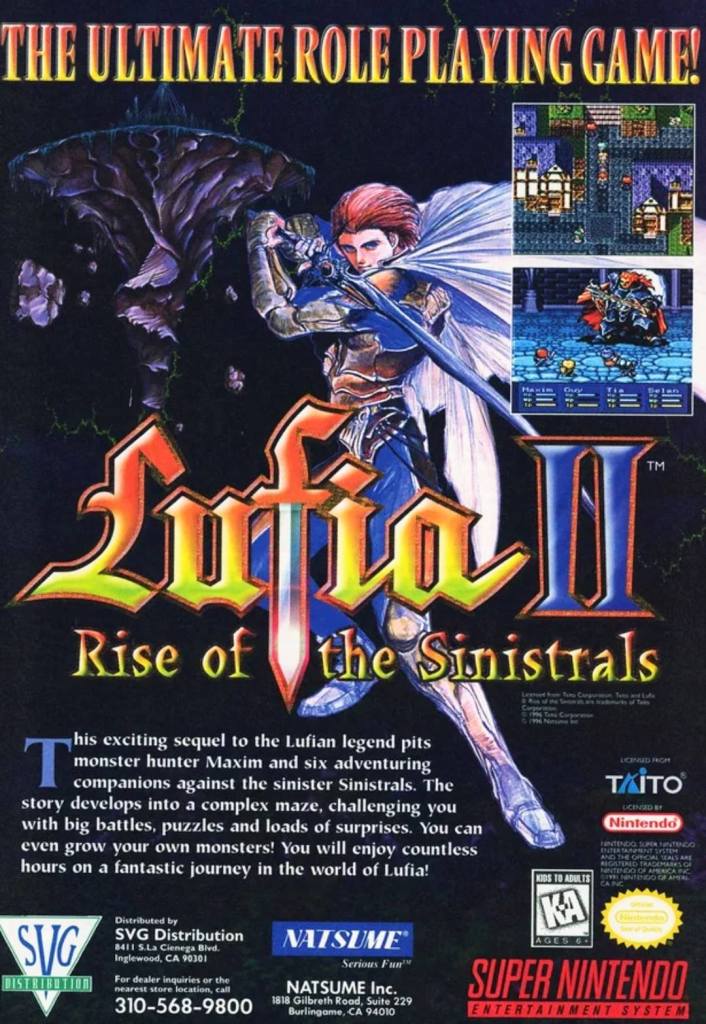
When the first Lufia RPG was released in America on the Super Nintendo Entertainment System (SNES), it became a commercial hit finishing as the top SNES game in the February 1994 sales chart. The sequel Lufia II: Rise of the Sinistrals was published by Natsume in America in 1996 and they daringly called it “The Ultimate Role Playing Game!” in its print ad utilizing the official artwork of a major character, two screenshots and descriptive text giving readers an idea on what to expect. This ad strongly relied on the visual elements while the first game’s American print ad (made by Taito) emphasized the critical acclaim received.

6. Chrono Trigger North American Print Ad

A lot of Dragon Ball Z fans recognized the art style of Akira Toriyama here.

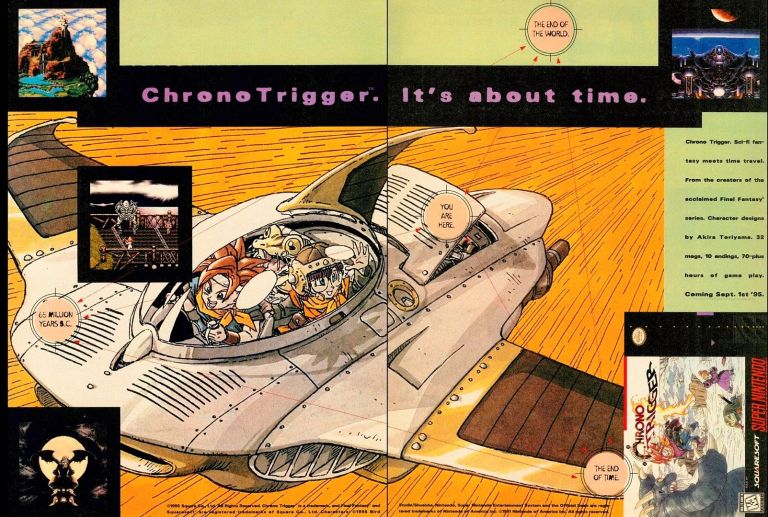
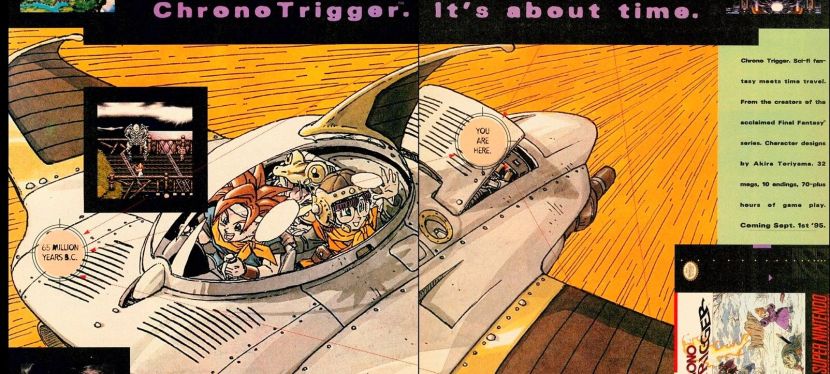
Chrono Trigger, the JRPG that had the dream team creators of Hironobu Sakaguchi (Final Fantasy creator), Yuji Horii (Dragon Quest creator) and Akira Toriyama (Dragon Ball Z creator) behind the production, was easily the most ambitious game SquareSoft released in 1995. As part of the marketing strategy for the North American market, Square came up with a 2-page ad that had Toriyama’s art as the dominant image while using the remaining space for screenshots, the description and the SNES box cover placed strategically. Such a creative visual design was eye-catching and even memorable. Chrono Trigger became a huge commercial and critical hit in the West and it has long been regarded as a classic JRPG.

7. Secret of Evermore North American Print Ad

The creepy red images overshadowed the promotion of Secret of Evermore in America. Some readers might have been scared away by this ad.

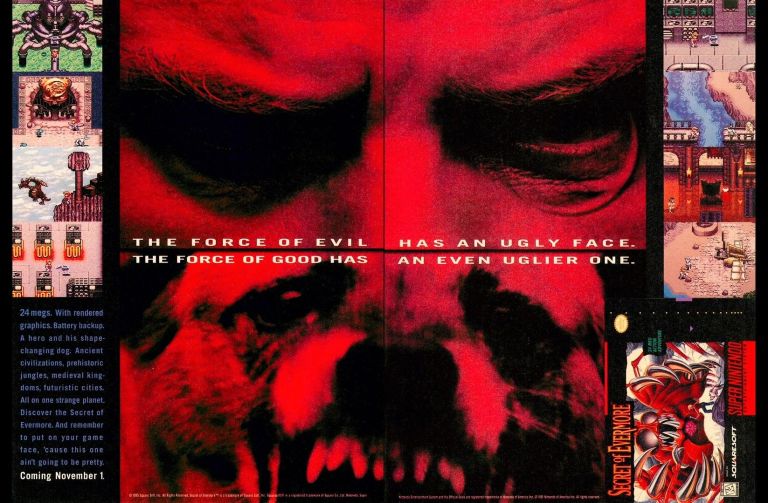
Still in 1995, Square released Secret of Evermore for the SNES. Unlike most of Square’s RPGs, Secret of Evermore was developed by an American team in Washington state which explains why the game has a very distinct tone and strongly Western art style (note: the gameplay was patterned after that of Secret of Mana). To promote the game, Square came up with a very odd-looking 2-page print ad that had two dominating red images – eyes of a man on top and the front of a dog below) that felt like a forced approach to emphasize the game’s concept of the hero (a teenager boy) and his loyal dog (a very capable fighter). They used the remaining space for screenshots (which made gamers believe it was a sequel to Secret of Mana), the game box cover and a not so helpful text description. In my view, this print ad was a marketing misfire and Square could have produced hand-drawn art of the hero and his dog instead of the creepy red pictures.

8. Star Ocean: The Second Story North American Print Ad

A really odd-looking print ad.

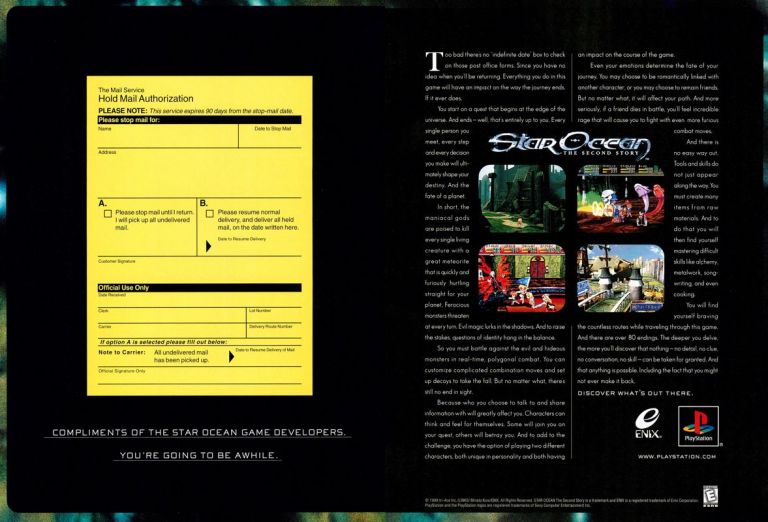
The Star Ocean JRPG franchise of Enix had its first game released in Japan only. That first game on Super Famicom sold a lot of copies which led to the production of the sequel Star Ocean: The Second Story. By the late 1990s, Enix itself had a partnership with developer tri-Ace on the Star Ocean games. Somewhere along the way, Sony Computer Entertainment America (SCEA) secured the publishing rights of Star Ocean: The Second Story for not only America but also in other parts of the world. For the American market, Sony came up with a very odd-looking 2-page print ad that had a mail service form on the left. The form emphasized the concept of being away for a long time (reflecting the science fiction and extensive fantasy adventuring of the game itself) which incidentally was the eye-catcher of the ad. The other half of the page showing the game’s title, screenshots and detailed text description got overshadowed. This is another marketing misfire.

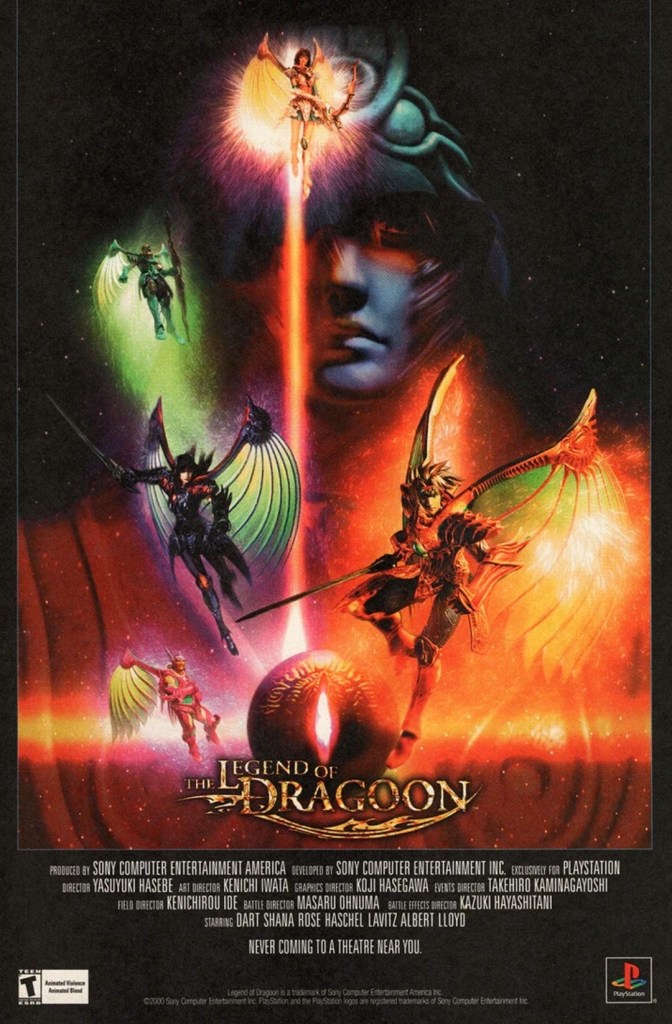
9. The Legend of Dragoon North American Print Ad

The movie poster-inspired print ad is memorable to look at.

Given how success Sony was with selling PlayStation consoles worldwide and how massively successful the Final Fantasy RPG franchise of SquareSoft was, it was not surprising that they decided to make their very own big-budget and exclusive JRPG with the intention to succeed and possibly establish a franchise. The result was the PlayStation-exclusive game The Legend of Dragoon which was made with a budget of $16 million and lasted three years in development. The game was released in Japan in late-1999 and sold at least 280,000 copies (note: majority of that in its first week of sales). In preparation for the June 2000 launch in America, Sony produced a print ad that had a very strong movie poster vibe showing what looked like painted art of the characters with vivid colors in the background and the title on the lower part. If you look closely, the credits were deliberately stylized over the way movie posters showed credits. While the game was not the massive hit Sony hoped for, it went on to become a million-seller and a great majority of its sales were from America. By today’s standards, the movie poster-like ad used to promote The Legend of Dragoon is memorable and an inspired piece of marketing work.

+++++

Thank you for reading. If you find this article engaging, please click the like button below, share this article to others and also please consider making a donation to support my publishing. If you are looking for a copywriter to create content for your special project or business, check out my services and my portfolio. Feel free to contact me with a private message. Also please feel free to visit my Facebook page Author Carlo Carrasco and follow me on Twitter at  @HavenorFantasy as well as on Tumblr at https://carlocarrasco.tumblr.com/ and on Instagram at https://www.instagram.com/authorcarlocarrasco
Retro Gaming Ads Blast – Part 38

Welcome back readers, fellow geeks and electronic gaming fans!

In this edition of the Retro Gaming Ads Blast (RGAB) series, we will take a look at another batch of retro gaming print ads – including arcade flyers – from the 1980s to the 1990s.

For the newcomers reading this, Retro Gaming Ads Blast (RGAB) looks back at the many print ads of games (console, arcade, computer and handheld) that were published in comic books, magazines, flyers, posters and newspapers long before smartphones, social media, the worldwide web and streaming became popular. To put things in perspective, people back in the 1980s to the 1990s were more trusting of print media for information and images about electronic games and related products.

With those details laid down, here is the newest batch of retro gaming print ads for you to see and enjoy…

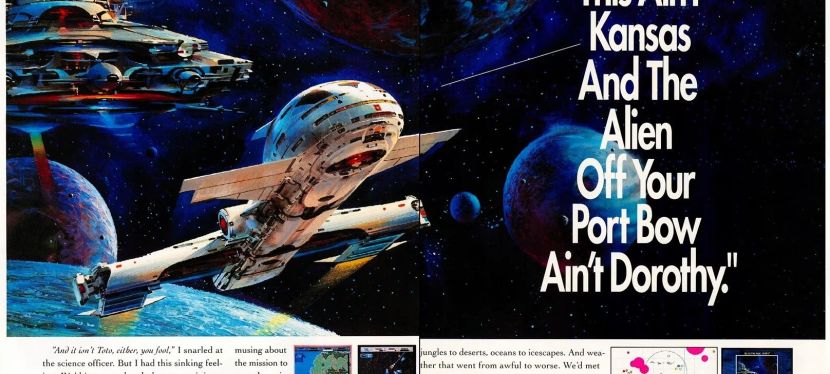
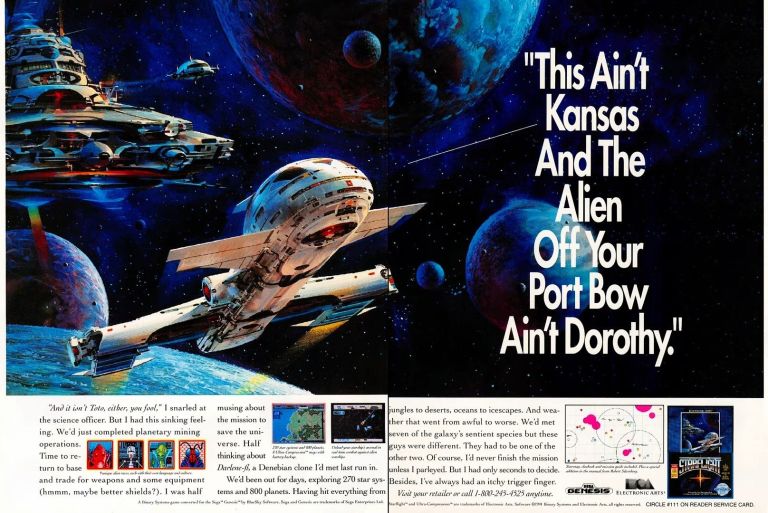
1. Starflight Sega Genesis Print Ad

Sometimes the very detailed artwork made gamers imagine Starflight as a sci-fi movie waiting to happen.

By the time it was released on the Sega Genesis in 1991, Starflight was already popular as it was released on varied computer systems and entertained a lot of gamers several years prior. To promote the Sega Genesis version, a 2-page print ad of Starflight was made with a grand-looking artwork of space, spaceships and planets dominating the space. The ad makers managed to utilize the remaining space below the artwork to show selected images, the descriptive text and the game’s box cover to make it clear to gamers that Starflight on Genesis is real and made to be playable. The artwork itself remains a powerful grabber of attention even to this day.

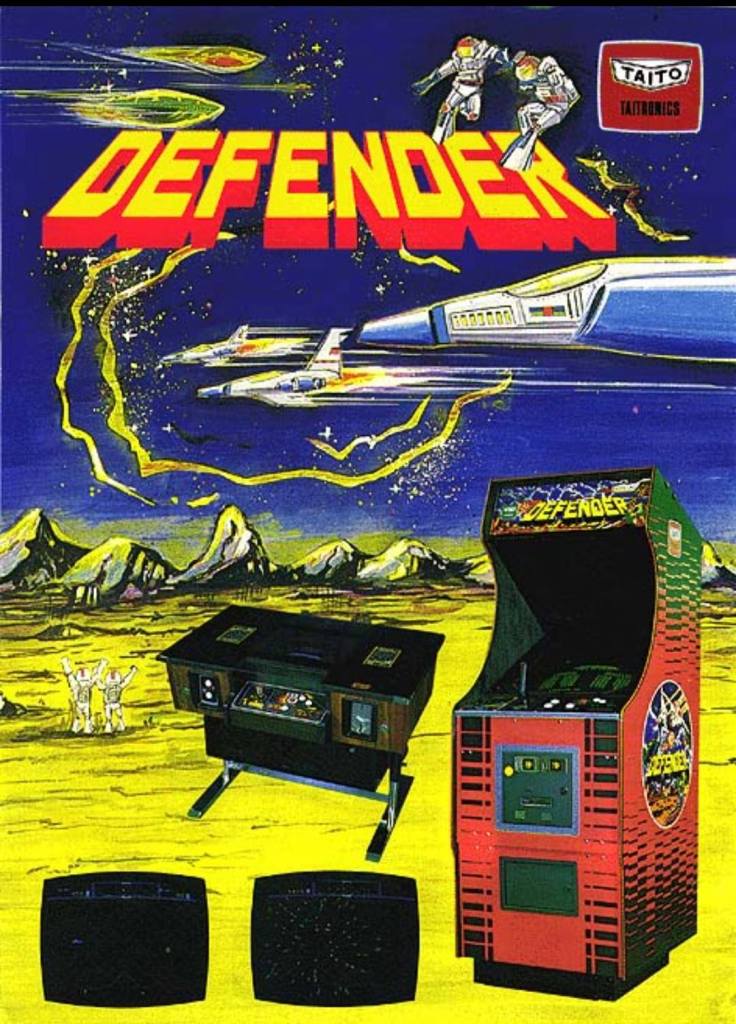
2. Defender Japanese Arcade Flyer

The front.
The rear.

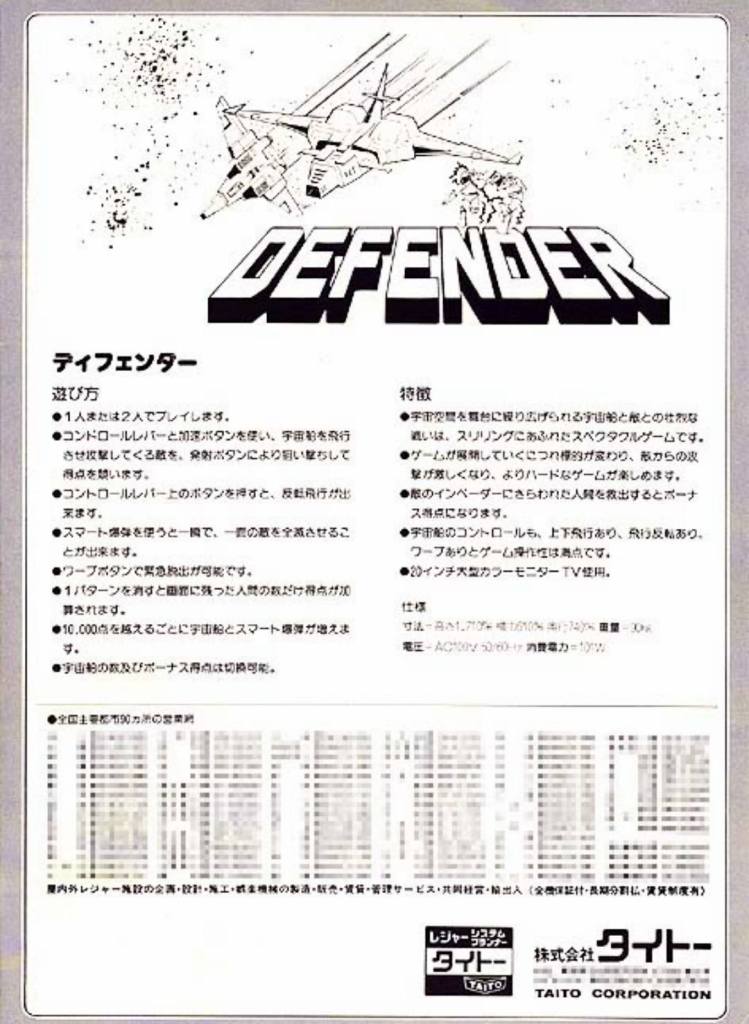
Defender is one of my favorites among the many games of Midway. In recent times, I’ve been playing the arcade version of Defender on my Xbox Series X using the Midway Arcade Origins digital copy I purchased online. As Defender became a massive hit in America, it was released in Japanese arcades with Taito handling the distribution. The arcade flyer Taito came up with used hand-drawn art for the background on the front along with pictures of the arcade cabinet and the arcade cocktail table versions of the game. While the rear of the flyer looks very simplistic, the front remains attractive to look at.

3. Castlevania III: Dracula’s Curse Print Ad

Some people found the artwork looking creepy or even terrifying.

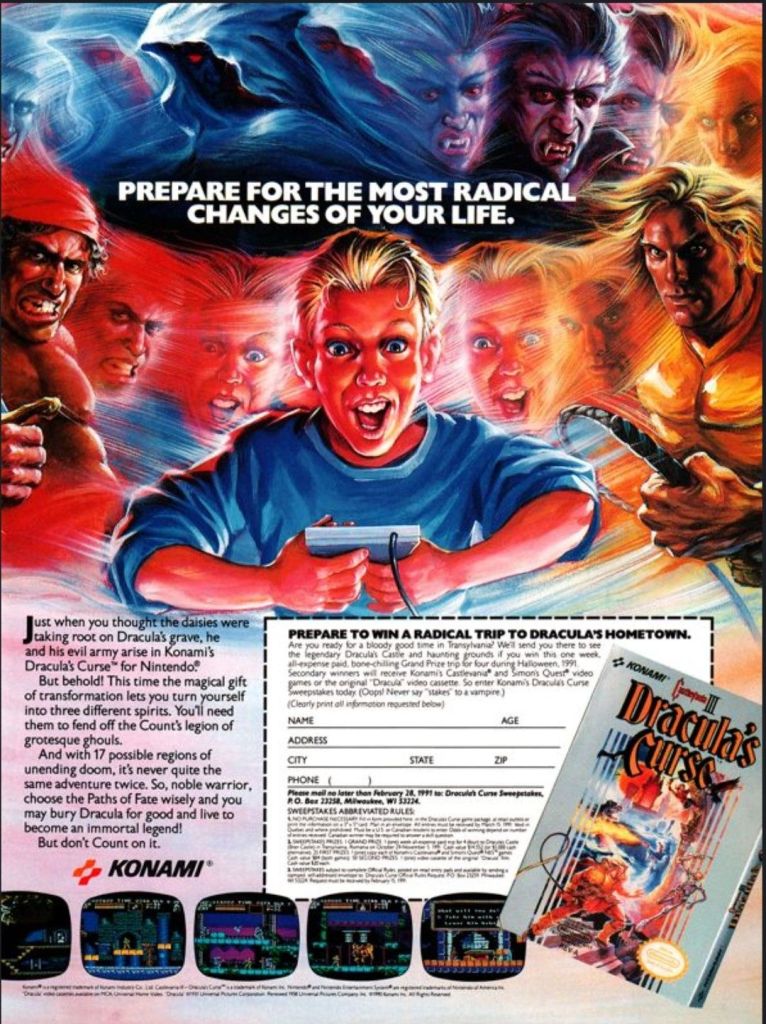
By the year 1990, the Nintendo Entertainment System (NES) was present in several millions of households all over America and there were lots of great games available. Among the NES gamers were fans of the Castlevania game series and Konami went on to release Castlevania III: Dracula’s Curse in America. As part of the company’s aggressive promotion, a single-page ad featuring a detailed looking artwork of a gamer getting immersed with the game’s fantasy elements (look at the creepy looking characters, monsters and the game’s hero present) was done. While the artwork was a strong attention grabber, what stood out was the sweepstakes form for gamers to cut out, fill it with their information and mail it for the chance to win a trip to the hometown of Dracula. Do you personally know anyone who won in the sweepstakes?

4. Double Dragon Games Print Ad

Print ad made with Double Dragon fans in mind.

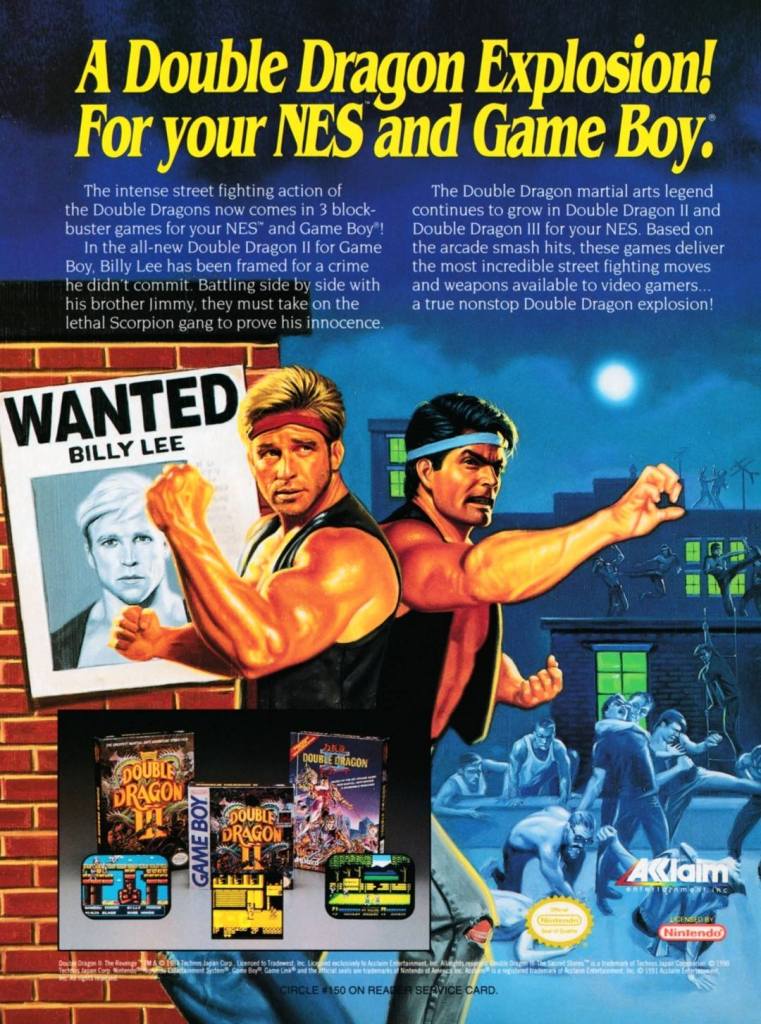
When it comes to the console and handheld presence of the Double Dragon games franchise, it was on Nintendo hardware – specifically the NES and the Game Boy – where gamers and the fans could find them. Acclaim Entertainment knew how popular Double Dragon games were with Nintendo gamers and they aggressively marketed Double Dragon III: The Sacred Stones and Double Dragon II with a single-page print ad that had great looking painted artwork. Very clearly, this early 1990s ad was made to connect strongly with Double Dragon fans and its presentation still looks very solid even with today’s standards.

5. Konami 3-in-1 Game Boy Games Print Ad

The excitement of sports is clearly shown in this old ad.

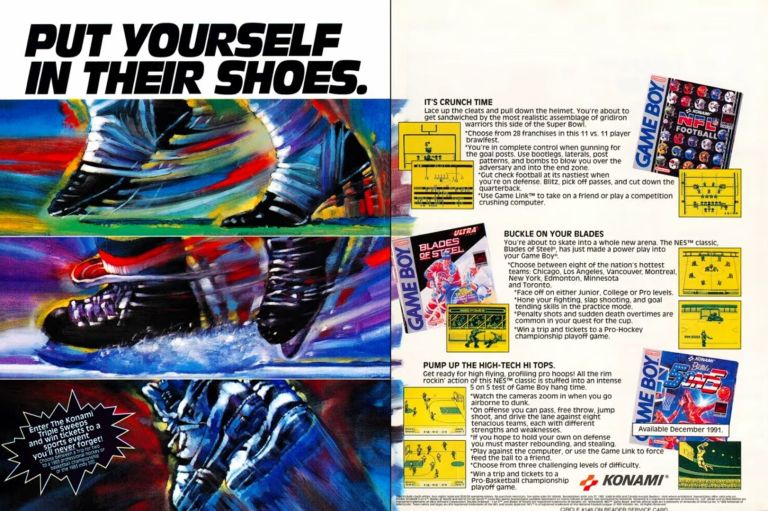
From the mid-1980s to the early 1990s, Konami published a lot of games on Nintendo’s wildly popular platform the NES and among them were classics like Contra, Castlevania and Metal Gear. Konami’s support also made it to Nintendo’s Game Boy handheld device (first released in 1989) which itself sold strongly and became the leading platform for portable gaming. As such, Konami made a 2-page print ad promoting NFL Football, Blades of Steel and Double Dribble: 5 on 5 for Game Boy. Cleverly, the ad makers used fancy artworks on the left (reflecting the different sports) side while using the space on the right side for descriptive text, screenshots and game box covers. This fine looking ad has a strong appeal towards Game Boy users and sports enthusiasts.

6. Tengen 6-in-1 Print Ad

This old print ad is a delight for those who owned a Sega Genesis.

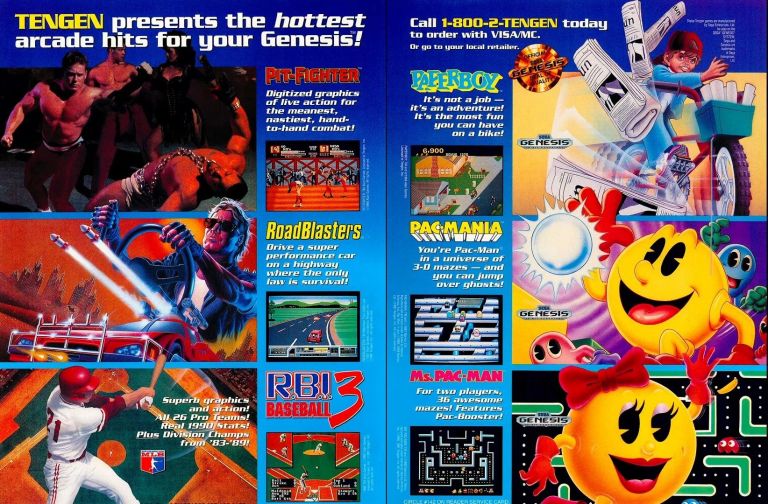
Back in the 1980s, Atari formed the company Tengen to not only develop games but also publish game for computers and game consoles. During that decade, Tengen published games on the NES but they had trouble working within the strict licensing terms of Nintendo. The two companies would later get into court battles over a series of events within the gaming business. Eventually, Tengen started doing business with Sega and published games on the Genesis console. As part of their aggressive publishing of games on Sega’s console, Tengen came up with this 2-page print ad promoting six different games emphasizing that the fun arcade experiences are coming to gamers’ homes.

7. Dig Dug Print Ad

Are you aware of the business relationship and trust between Atari and Namco?

When Atari opened its branch in Japan – called Atari Japan – in the 1970s, they established a partnership with Namco to distribute arcade games there. As they experienced trouble penetrating the Japanese market, Atari eventually sold Atari Japan to Namco which paved the way for their Japanese partner to get into video games. Just a few years later, Namco developed its own original arcade game Dig Dug which became a massive hit in Japan. As a licensing deal was already in effect, Atari distributed Dig Dug in American arcades which the above magazine print ad clearly shows.

8. Sega Genesis Over SNES Print Ad

Sega directly attacked Nintendo by emphasizing the larger quantity of games and varied game experiences that can only be found on the Genesis back then.

By the time Nintendo released the Super Nintendo Entertainment System (SNES) in 1991, the Sega Genesis console has been in the video game market for a few years already. In America, Tom Kalinske led Sega and his approach to marketing and resonating with gamers was essentially aggressive. The aggressive approach includes naming their competition and showing why Sega is superior. Given the lead time they had on the North American market, Sega came up with this print ad showing their Genesis consoles having a lot more games than the SNES. Competitive console gaming was very different back then.

9. Atari Jaguar Print Ad

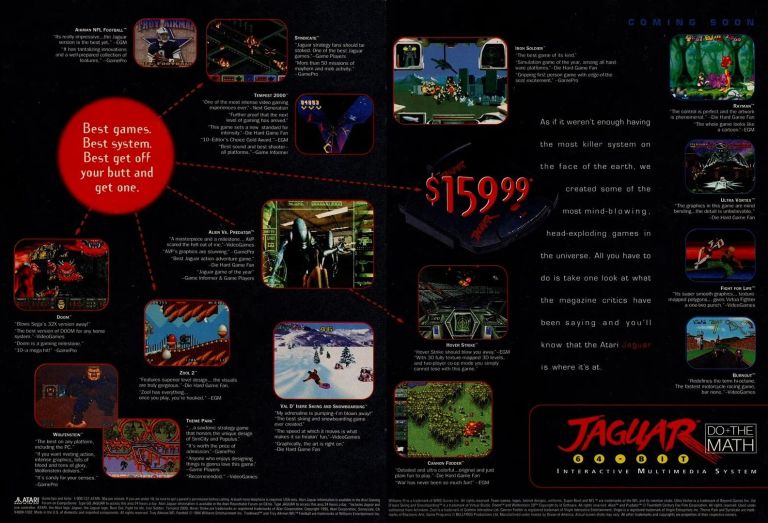
Did you spend $159.99 on an Atari Jaguar console back in the 1990s?

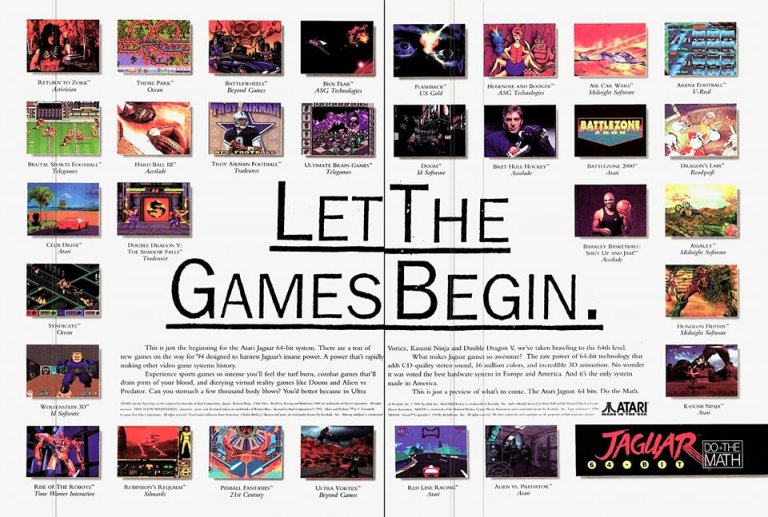
In the 1990s, Atari attempted a comeback in console gaming with the Atari Jaguar console. Early on, their marketing emphasized the so-called 64-bit capabilities of the Jaguar to convince gamers theirs is the most powerful console on the market. Sadly, the console failed to achieve strong sales and a huge price cut was executed. To attract customers, Atari came up with this 2-page print ad to inform them of the cheaper $159.99 price while reminding them of the “most mind-blowing, head-exploding games” they can have with the Jaguar. Obviously this ad campaign failed as the Atari Jaguar never achieved commercial success.

10. Side Pocket Print Ad

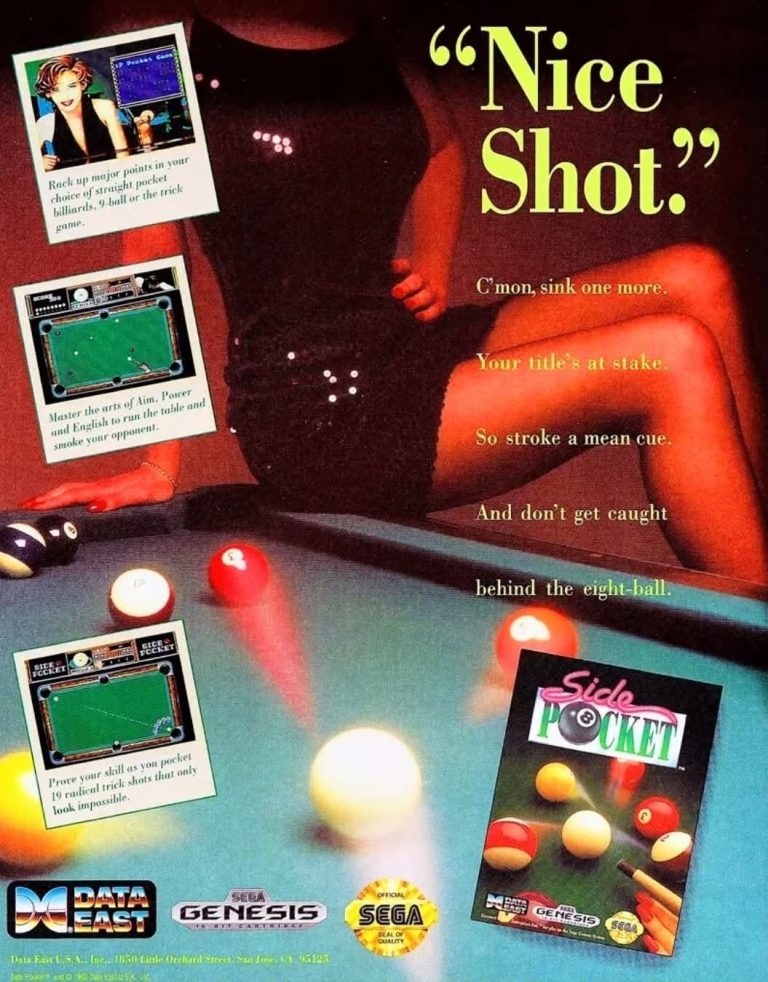
The Side Pocket print ad with a subtle touch of sexiness.

After its original release in the arcades in 1986, Side Pocket was ported by Data East to many consoles and handheld devices in the 1990s. When it comes to promoting the Sega Genesis version, Data East came up with this print ad showing a lady in a sexy dress in the background (head hidden) which instantly created a sexy aesthetic. The large text displayed emphasized the game of billiards supported by the screenshots shown. The screenshot at the upper-left corner shows artwork of a pretty lady smiling at the viewer which added to the sexy aesthetic of the ad.  

+++++

Thank you for reading. If you find this article engaging, please click the like button below, share this article to others and also please consider making a donation to support my publishing. If you are looking for a copywriter to create content for your special project or business, check out my services and my portfolio. Feel free to contact me with a private message. Also please feel free to visit my Facebook page Author Carlo Carrasco and follow me on Twitter at  @HavenorFantasy as well as on Tumblr at https://carlocarrasco.tumblr.com/ and on Instagram at https://www.instagram.com/authorcarlocarrasco
Retro Gaming Ads Blast – Part 37

Welcome back readers, fellow geeks and electronic gaming fans!

In this edition of the Retro Gaming Ads Blast (RGAB) series, we will take a look at another batch of retro gaming print ads – including arcade flyers – from the 1970s to the 1990s.

For the newcomers reading this, Retro Gaming Ads Blast (RGAB) looks back at the many print ads of games (console, arcade, computer and handheld) that were published in comic books, magazines, flyers, posters and newspapers long before smartphones, social media, the worldwide web and streaming became popular. To put things in perspective, people back in the 1970s and 1990s were more trusting of print media for information and images about electronic games and related products.

With those details laid down, here is the newest batch of retro gaming print ads for you to see and enjoy…

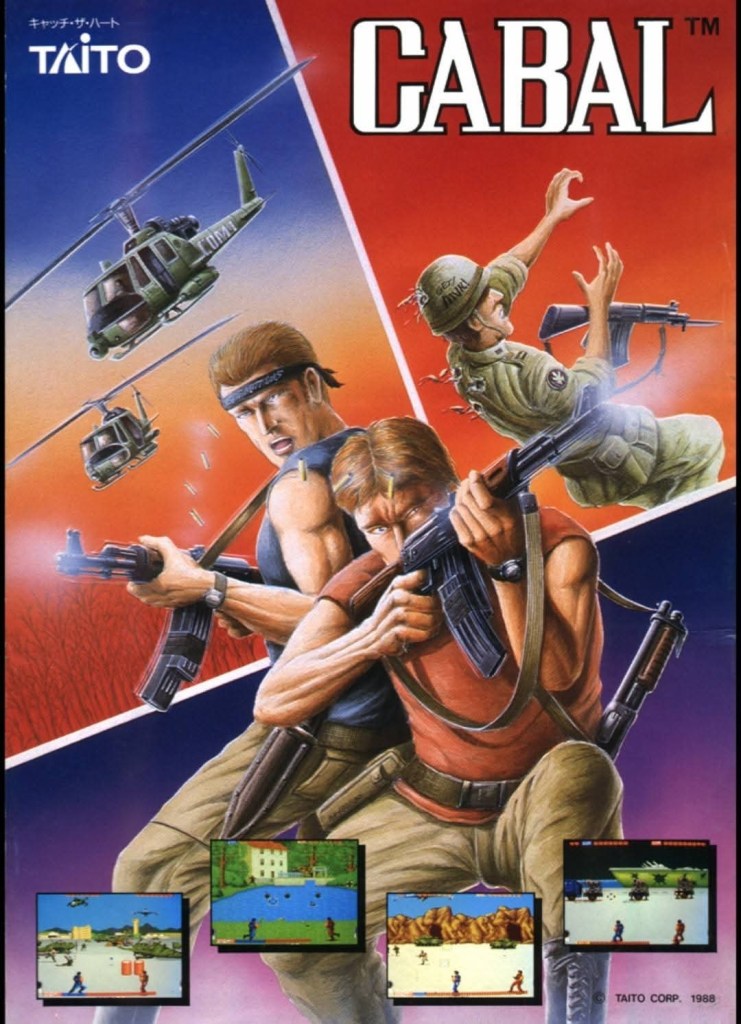
1. Cabal Japanese arcade flyer/poster

Can you feel the action and intensity here?

When it was first released in video arcades in Japan in late 1988, Cabal was another game inspired by military action movies of Hollywood which explains the art work done for the arcade flyer and poster shown above. The Vietnam War was still fresh in people’s minds and the concept of having one or two players firing their weapons against enemy soldiers resonated with gamers who saw Hollywood’s military action flicks. That said, it is not surprising that Cabal became a huge hit in Japan before getting released in arcades around the world.

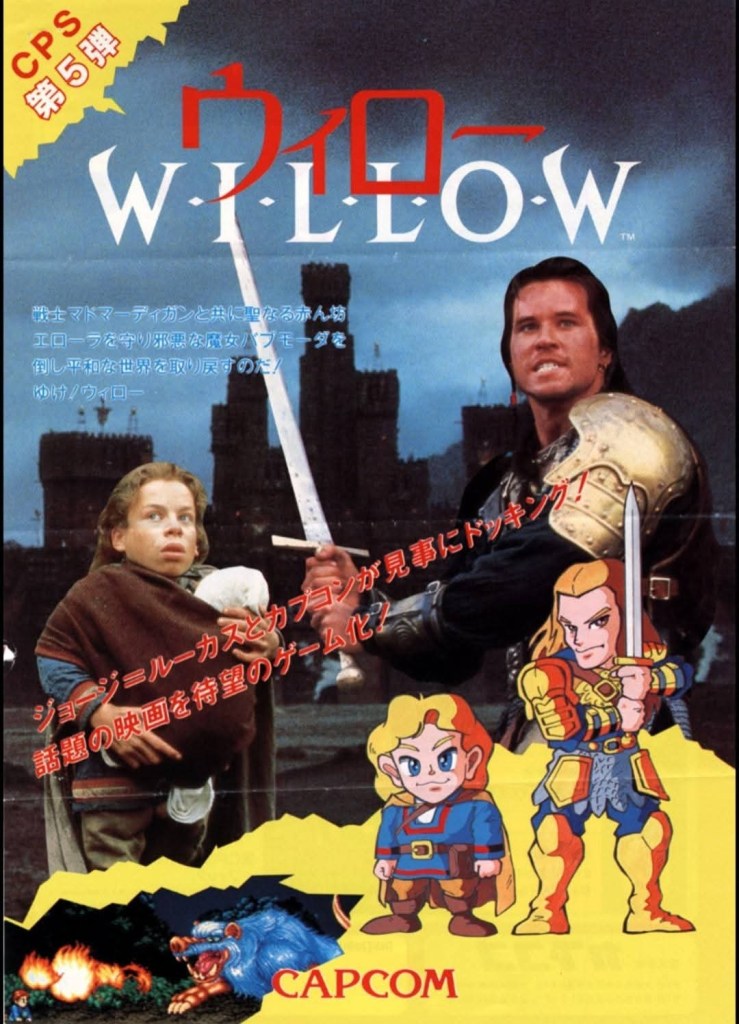
2. Willows Japanese arcade flyer

The front.
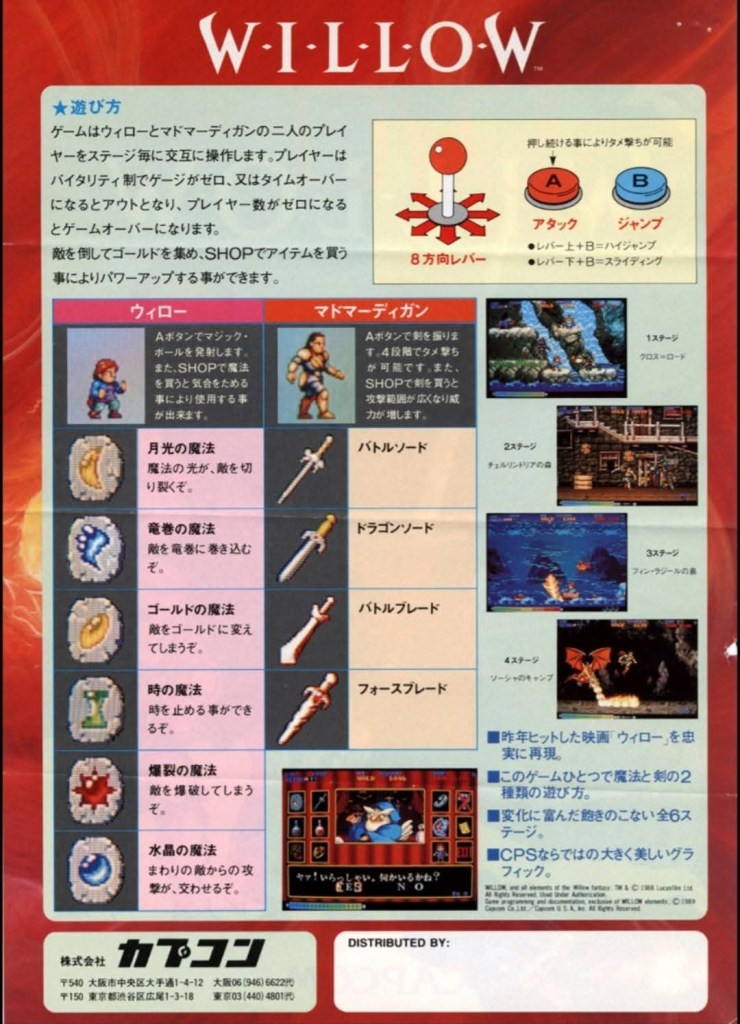
The rear.

Remember the 1988 high fantasy adventure film Willow? That film was produced by George Lucas and was a bold new production of Lucasfilm shifting away from Star Wars. Believe it or not, an official arcade game adaptation of Willow was made by Capcom and they promoted it by having images of Val Kilmer and Warwick Davis on the front of the arcade flyer (opposite the illustrated versions of their characters). The game, which was a side-scrolling platform game with run-and-gun elements, went on to be an arcade hit in Japan and eventually pleased gamers worldwide.

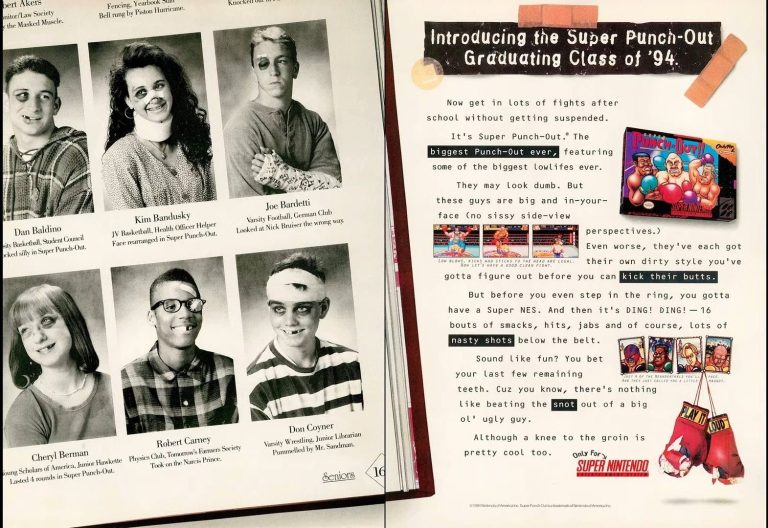
3. Super Punch-Out!! North American print ad

This is funny to look at.

Historically, Nintendo’s Punch-Out!! series started in the arcade in 1984 and the first game was the result of the company’s effort to make a new game using arcade cabinets with two screens. The 2nd game – Mike Tyson’s Punch-Out!! – became a huge critical and commercial hit (over 2 million copies sold in 1988) on console and it made great business sense for Nintendo for release another Punch-Out!! for its console gamers to enjoy in the comfort of home. In 1994, Super Punch-Out!! was released on the Super Nintendo Entertainment System (SNES) in America and to promote it, the company came up with a hilarious 2-page ad that showed fictional high school graduates with boxing-related injuries. The imagery creatively connected with the words “biggest Punch-Out ever” and “Graduating Class of ‘94”.

4. EA Sports 3-in-1 SNES games print ad

EA Sports games on the SNES.

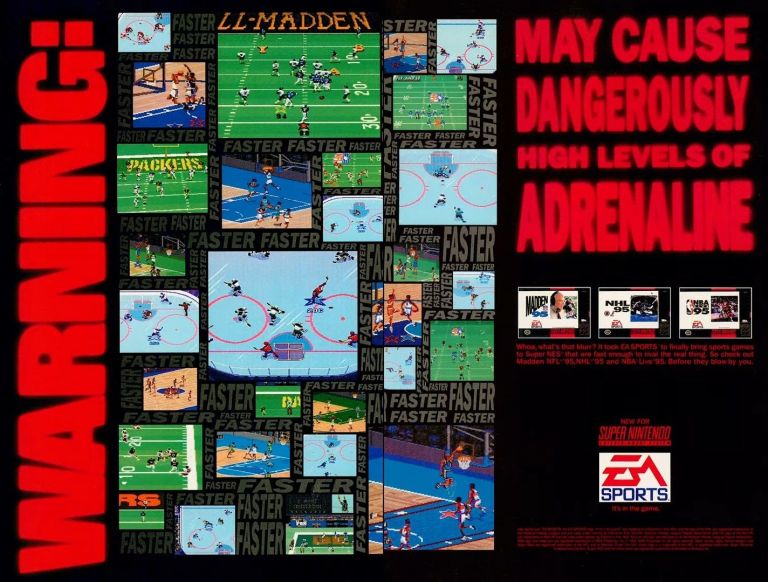
In 1994, Electronic Arts (EA) released their sports games NBA Live 95, NHL 95 and Madden NFL 95 for consoles at the time. Even though the Sega Genesis sold better than Super Nintendo Entertainment System (SNES) in America at the time, EA went on to aggressively market their 3 sports video games on Nintendo’s console using a 3-in-1 games print ad. In retrospect, the SNES for the most part had better graphics and sounds than the Genesis which is reflected clearly on EA Sports games of the time. This print ad still looks fun and exciting.  

5. Atari Jaguar CD print ad

Were you able to play any game on the Atari Jaguar with the CD add-on included?

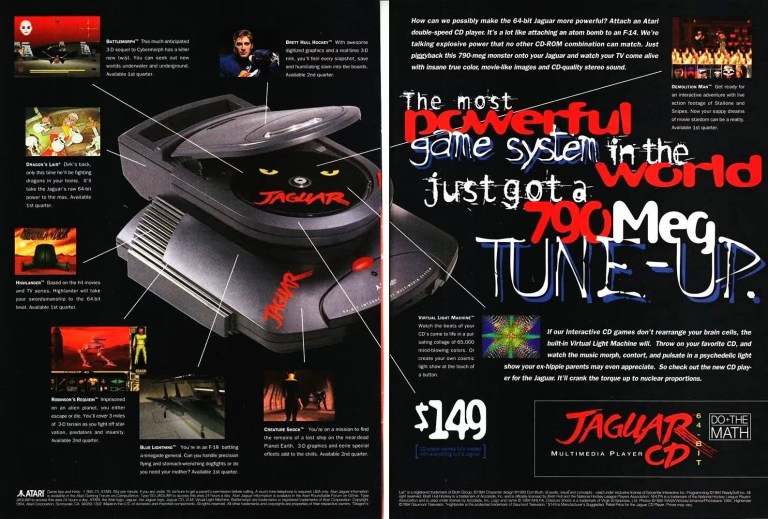
Apart from the obvious advances of technology that impacted video games, the 1990s is also known for the rise of CD-ROM as a medium for gaming. In an effort to boost sales of the Atari Jaguar console (launched in America in 1993 for around $250) and capitalize on the trust of the fans and console owners, Atari launched a CD-ROM add-on device for about $150 in 1995. To promote it, the company went aggressive with the 2-page ad showing the add-on fully connected on top of the main console, showing off some games and posting a text description emphasizing hardware power and the advantages that come with the CD technology. Even in the captured image, the Atari Jaguar CD still resembled a toilet. This is an aggressive ad campaign that failed as less than 20,000 Atari Jaguar CD units were sold by the time it was discontinued in 1996.

6. 3DO print ad

While it lacks intensity, this 3DO ad emphasized the games.

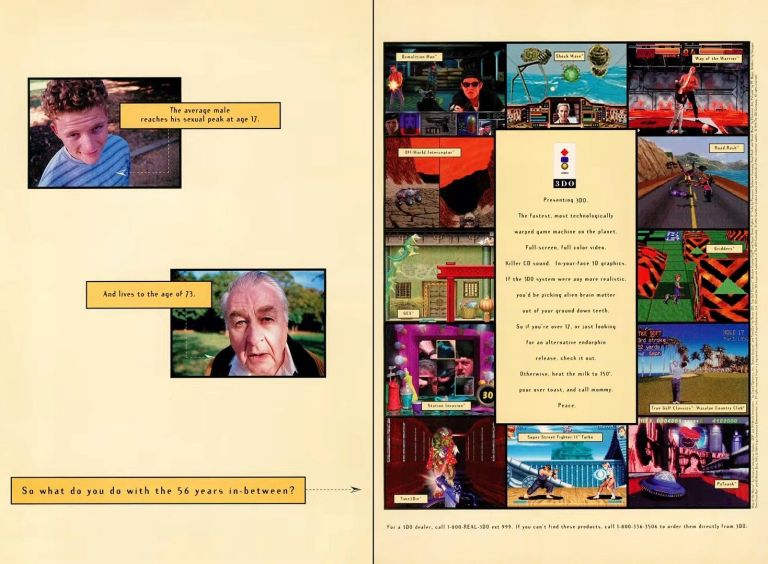
Without showing any hardware, the 3DO Company came up with this 2-page print ad that had a slightly adulterated tone (look at the left page) and aggressively marketed the 3DO console games available at the time. Games like Demolition Man, Shock Wave, Road Rash and Super Street Fighter II Turbo were the standout titles which clearly showed the company made the effort to emphasize gaming more than multimedia features. This 1990s ad tackled the generations with a touch of humor.

7. Lethal Enforcers II: Gun Fighters Sega Genesis print ad

This is a fun ad to look at.

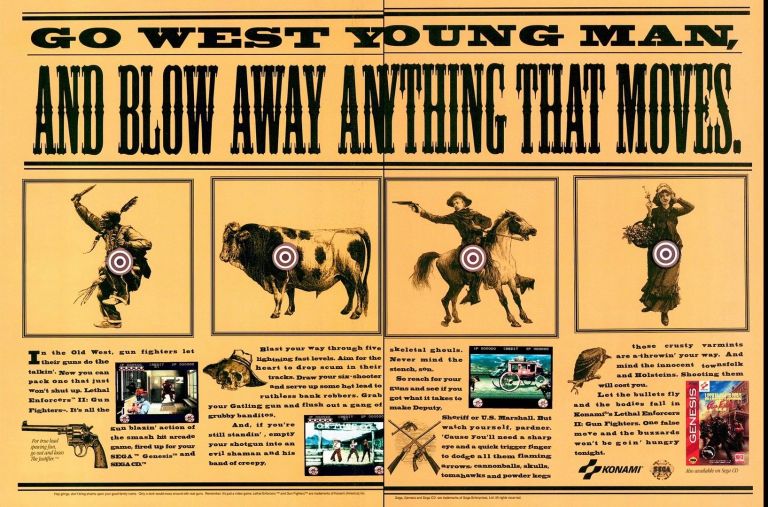
When Lethal Enforcers II: Gun Fighters was released in the arcades in 1994, it became a commercial success for Konami which went on to announce it would port the game to consoles of Nintendo and Sega at the time. While the port for the Super Nintendo Entertainment System (SNES) was never released, Lethal Enforcers II: Gun Fighters made its way to the Sega Genesis and Sega CD. The print ad of the Sega Genesis version (Sega CD mentioned in small text) had an inspired design emphasizing the Old West, shooting and the conflict between cowboys and Indians. The screenshots gave people the clear idea that Old West was the setting (versus modern day in the previous game). This is still fun to look at.

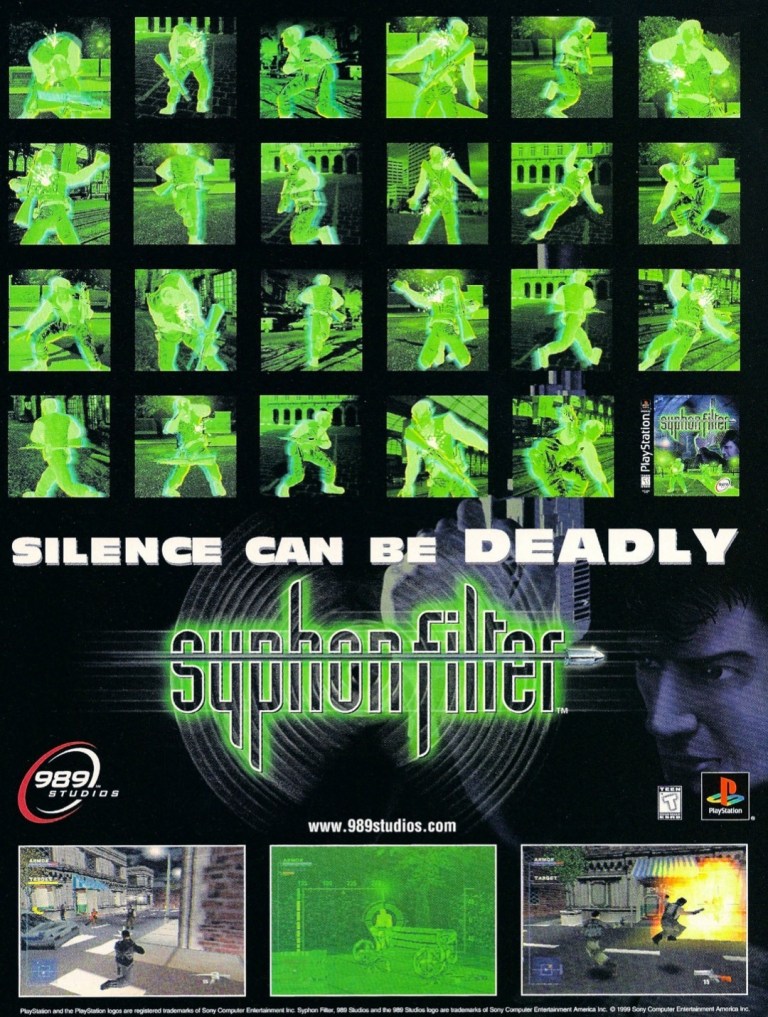
8. Syphon Filter

Syphon Filter went on to become a surprise hit game in 1999.

In 1999, Sony’s 989 Studios released Syphon Filter exclusively on the PlayStation console. This single-page print ad showed a few screenshots on the bottom and several action snippets with a night vision touch ultimately emphasizing the stealth aspect within the gameplay. The marketing proved to be effective as the game sold a lot at retail and went on to establish a new game franchise exclusive to PlayStation consoles.

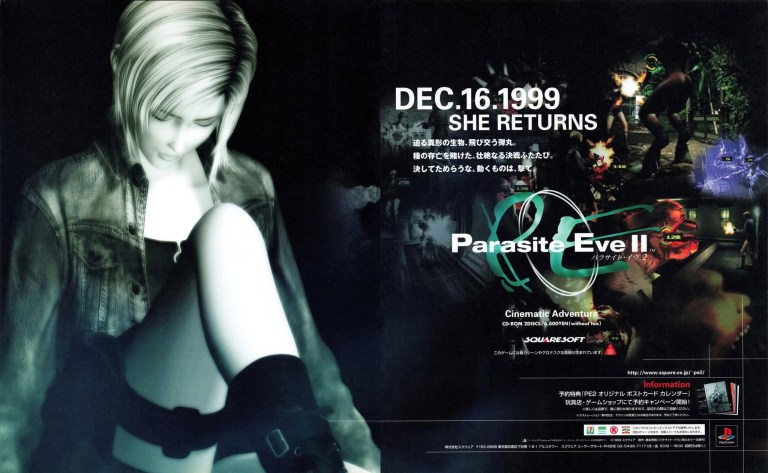
9. Parasite Eve II Japanese print ad

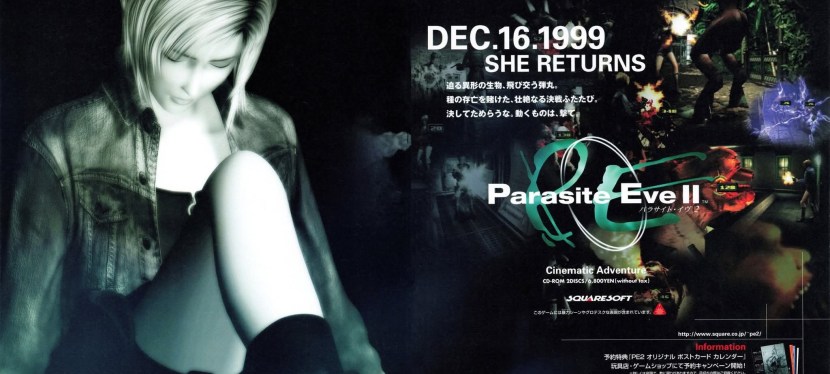
Were you a big fan of Aya Brea and the Parasite Eve franchise in the late 1990s?

Following the critical and commercial success of Parasite Eve in 1998, SquareSoft proceeded with Parasite Eve II and the production (note: initially for a spin-off game before becoming a sequel) did not even involve the main creators of the first game. Instead the company had a different team of developers – including those who previously worked on Resident Evil games for Capcom – in Osaka to make the sequel. This explains why Parasite Eve II had stronger survival horror gameplay resembling a Resident Evil game. As major changes were made during the production, it was decided that Aya Brea would become the main protagonist and already the character was already popular with gamers. That being said, the marketing of Parasite Eve II for the Japanese market heavily featured Aya Brea with subtle sexiness, beauty and action in mind. The marketing intensified leading to its eventual December 16, 1999 release in Japan.

+++++

Thank you for reading. If you find this article engaging, please click the like button below, share this article to others and also please consider making a donation to support my publishing. If you are looking for a copywriter to create content for your special project or business, check out my services and my portfolio. Feel free to contact me with a private message. Also please feel free to visit my Facebook page Author Carlo Carrasco and follow me on Twitter at  @HavenorFantasy as well as on Tumblr at https://carlocarrasco.tumblr.com/ and on Instagram at https://www.instagram.com/authorcarlocarrasco
Retro Gaming Ads Blast – Part 36

Welcome back readers, fellow geeks and electronic gaming fans!

In this edition of the Retro Gaming Ads Blast (RGAB) series, we will take a look at another batch of retro gaming print ads – including arcade flyers – from the 1970s to the 1990s.

For the newcomers reading this, Retro Gaming Ads Blast (RGAB) looks back at the many print ads of games (console, arcade, computer and handheld) that were published in comic books, magazines, flyers, posters and newspapers long before smartphones, social media, the worldwide web and streaming became popular. To put things in perspective, people back in the 1980s and 1990s were more trusting of print media for information and images about electronic games and related products.

With those details laid down, here is the newest batch of retro gaming print ads for you to see and enjoy…

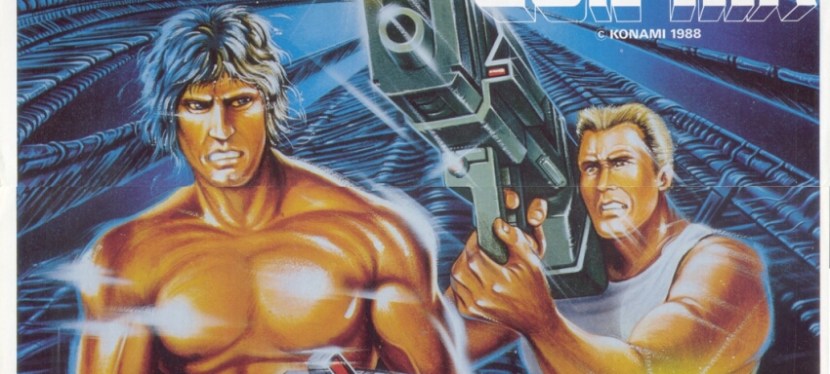
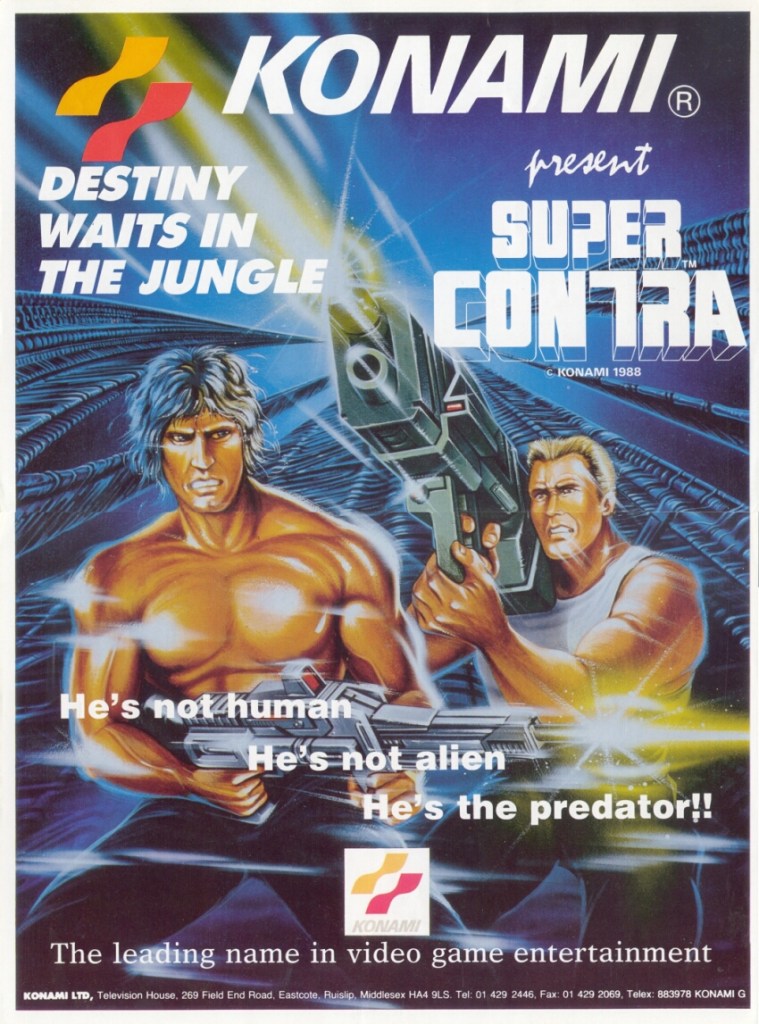
1. Super Contra North American arcade flyer

Have you seen many Hollywood action movies of the 1980s? Does this arcade flyer remind you of something?

After Konami struck gold with Contra in 1987, it was inevitable that sequels and spin-offs will be made. In 1988, they released the follow-up Super Contra in the arcades and to promote it in America, the company came up with artwork that easily gave gamers the impression they are seeing Sylvester Stallone as a fantasized Rambo and another armed guy who might remind them of Arnold Schwarzenegger’s character in Commando or Dutch in Predator. To capitalize on the movie references even more, the American arcade flyer had the line “He’s not human. He’s not alien. He’s the predator!!” As it was the 1980s, this creative approach to promotion was not surprising as Konami and its game makers were influenced by Hollywood movies.

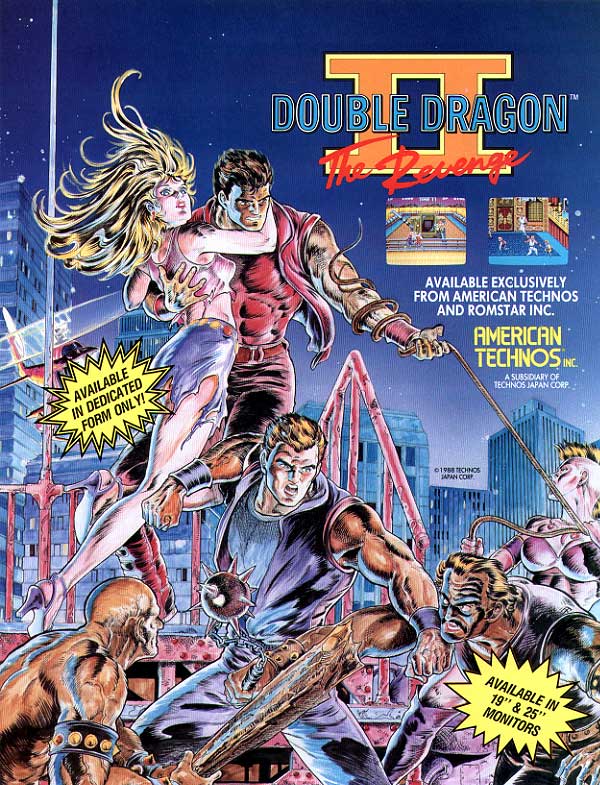
2. Double Dragon II: The Revenge North American arcade flyer

The artwork used in this arcade flyer remains intriguing to look at.

I never played Double Dragon II: The Revenge in the arcade, but I played it on the Nintendo Entertainment System (NES). That being said, I was surprised to see how this old North American arcade flyer has the same hand-drawn artwork used on the cover of the NES version. Take note that the arcade game was released in 1988 while the NES port was released in early 1990. I can only guess that Technos decided to use the same artwork not only for convenience but to have a definitive image emphasizing Double Dragon II to gamers wherever they are.

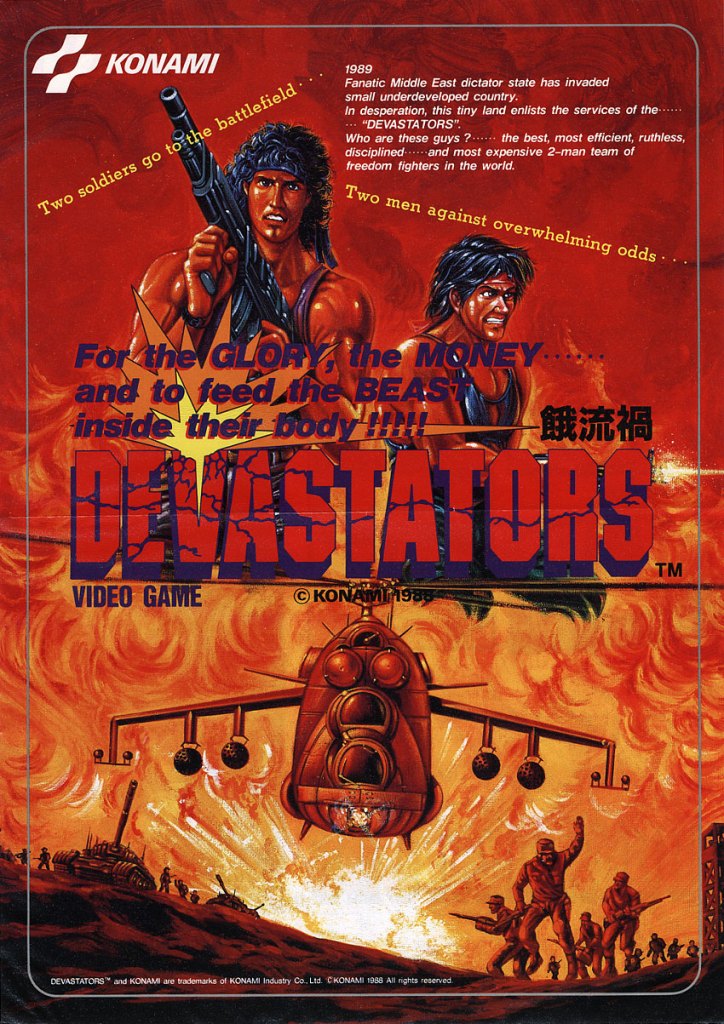
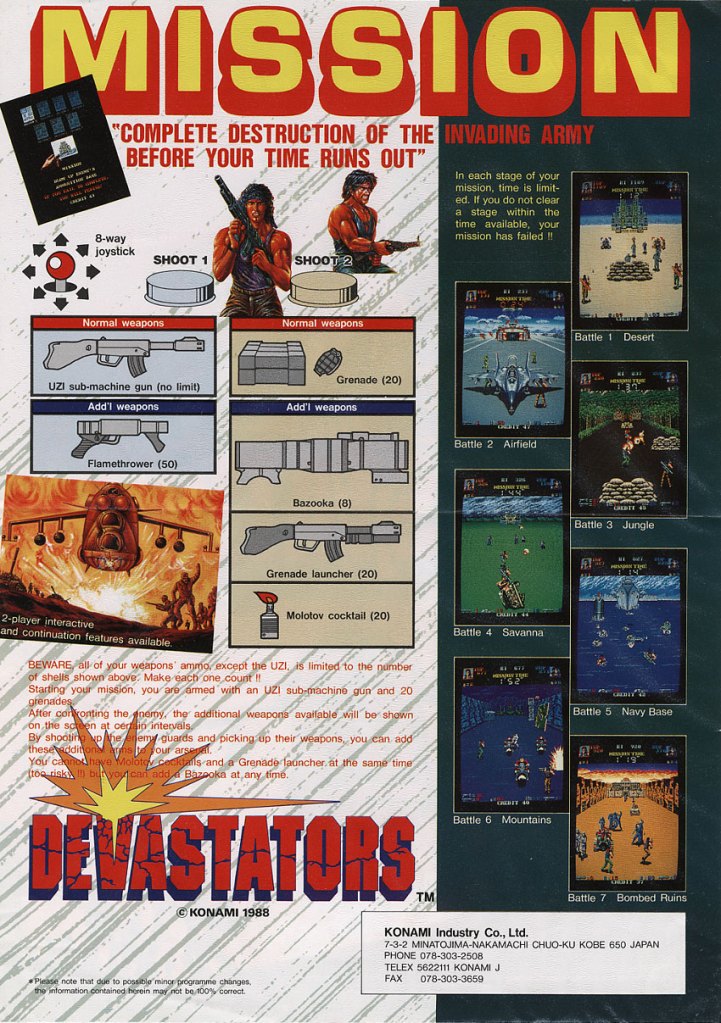
3. Devastators North American arcade flyer

The front.
The rear.

Devastators is another Konami arcade game that had a strong war theme and it was influenced by Hollywood action films of the 1980s. This particular arcade flyer for the North American market is almost identical with the Japanese arcade flyer as both have the same artwork on the front and almost the same visual layout on the rear. The most obvious difference is the use of English text for the North American flyer.

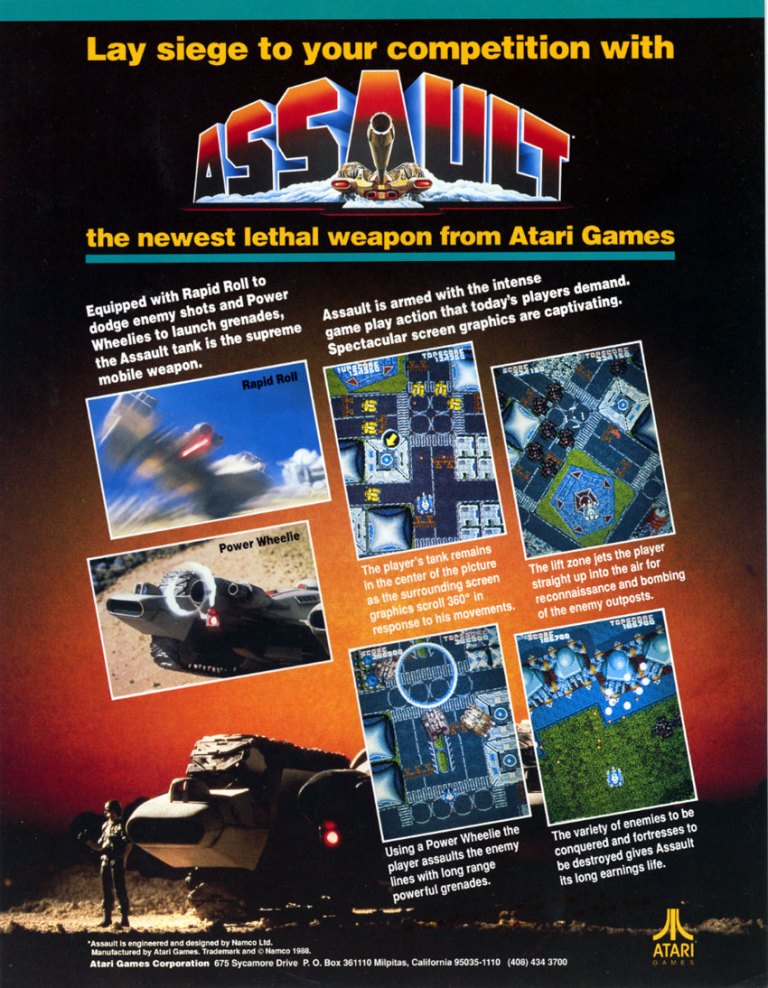
4. Assault North American arcade flyer

The front.
The rear.

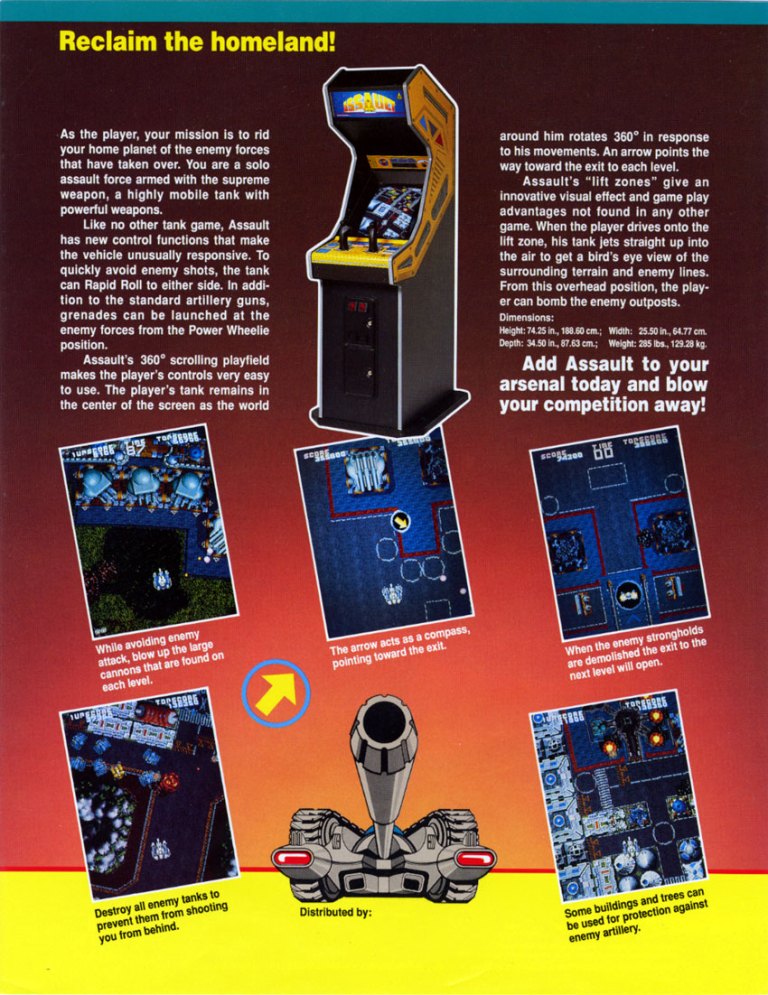
Released in American arcades by Atari, Assault is a multi-directional shooter that had a twin-stick control layout (similar with the classic Battlezone) and players experienced intense battles as well as immersive visual effects such as sprite scaling and environment rotation of up to 360 degrees. To promote the game (this originated in Japan by Namco), Atari came up with this arcade flyer that had selected screenshots and descriptive text on both the front and the rear (which showed the arcade cabinet). Assault was a hit with gamers at the arcades and it was not released on consoles until 2009.

5. Sega CD print ad

Having a socially relevant message can be catchy but it leaves little room for excitement.

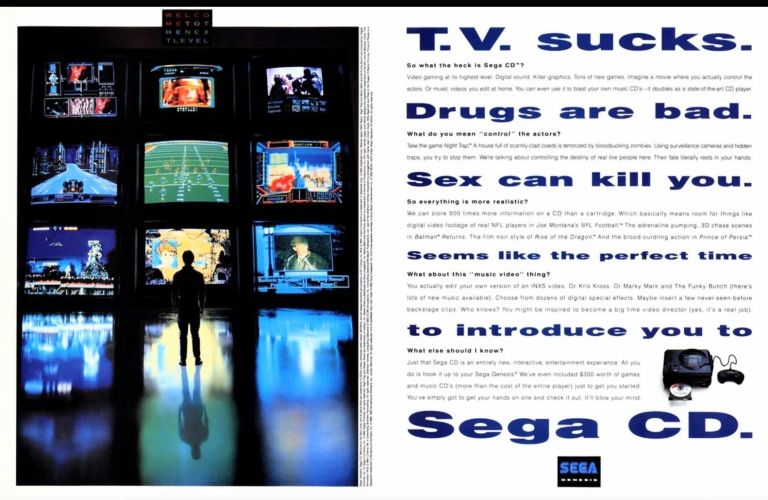
As the Sega Genesis console became a huge commercial success in North America, Sega itself became ambitious about what CD-ROM technology would do for video games. Sega in Japan tasked its Consumer Products Research and Development Labs to create a CD-ROM add-on which resulted in the Sega CD (Mega-CD in other parts of the world) which launched in America in 1992. To promote the add-on towards existing Genesis console owners as well as potential new customers, Sega of America came up with the above 2-page print ad that had a social message on the right and an image of a man standing in front of large monitors (showing Sega CD game footage) on the left. While it looked like an odd way of promoting video game hardware, it still remains catchy to see.

6. Panasonic 3DO print ad

Panasonic knows how to promote entertainment hardware for people’s homes.

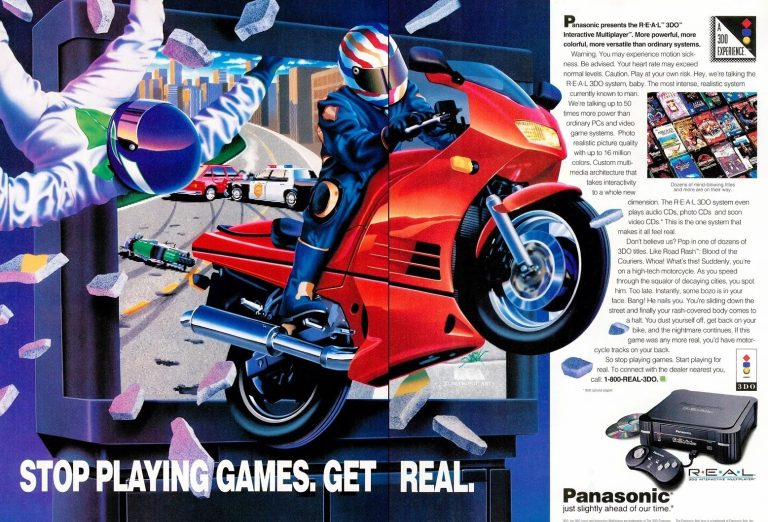
Still in the field of CD-ROM gaming, Panasonic had competitive presence in video gaming when its Panasonic FZ-1 R.E.A.L. 3DO Interactive Multiplayer (with technology licensed by The 3DO Company) was launched in America in 1993. If you look at the print ad closely, you will notice that the descriptive text emphasized the multimedia entertainment aspect more than video gaming. The dominating artwork used does not come from a particular video game as it was made to emphasize home entertainment in general. It’s not surprising that the Panasonic 3DO and other 3DO machines from other manufacturers failed commercially.

7. Shaq Fu print ad

The close-up of Shaquille O’Neal’s face on the left made him looked less recognizable.

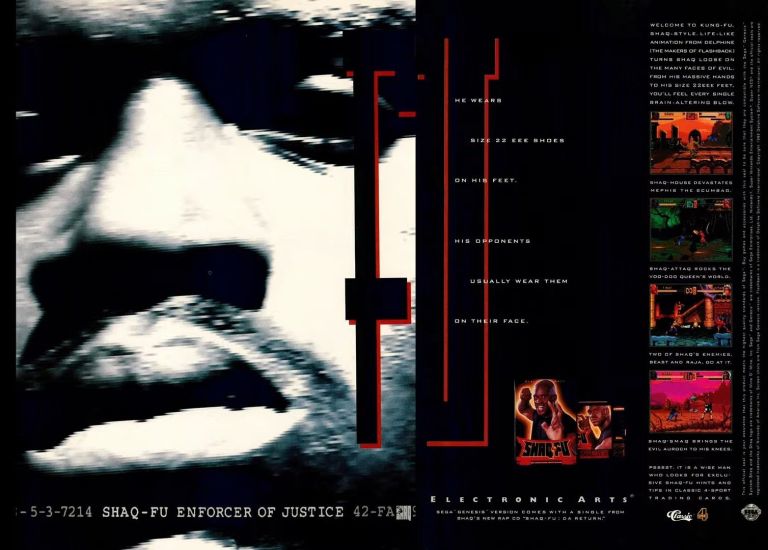
Yes, it is true! There was indeed a video game endorsed by Shaquille O’Neal and it was not a basketball game. Shaq Fu is a 1994 2D fighting game with adventure elements and a story in which gamers play O’Neal as martial artist (note: O’Neal himself participated in the game’s production). To promote the game, Electronic Arts came up with a 2-page print ad that had a very odd black-and-white close-up image of O’Neal’s face on the left leaving small screenshots and hard-to-read text on the right (even though there was some vacant space remaining. I remember seeing this ad while reading a video game magazine and the ad ended up looking more like a promotion of O’Neal (already an NBA superstar) than the game itself. By today’s standards, this print ad is an example of a marketing misfire.

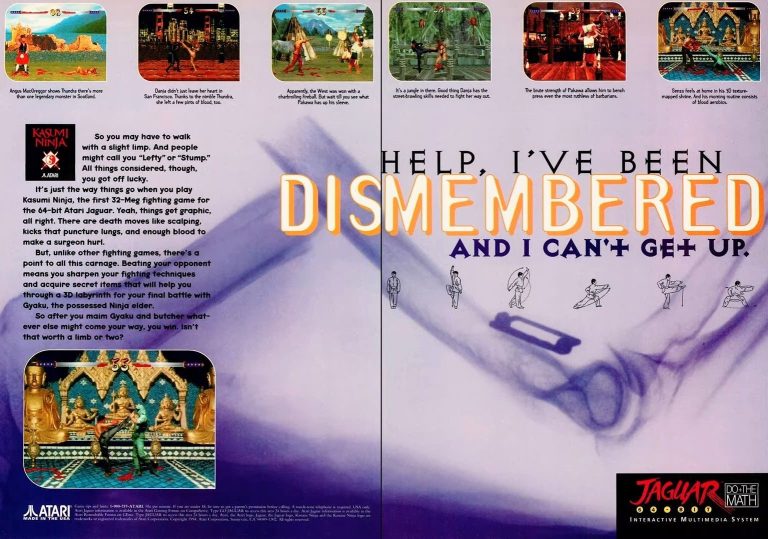
8. Kasumi Ninja print ad

Do you even remember seeing this print ad in magazines?

Remember the 1990s video game trends of digitized human images and disturbingly violent 2D fighting games sparked by Mortal Kombat? The Atari Jaguar-exclusive game Kasumi Ninja was made to capitalize on those trends and it failed badly. Apart from the low sales of the Jaguar console, Atari as publisher came up with the above 2-page print ad that was not appealing to gamers’ eyes and it had almost no excitement overall. This is another marketing misfire.

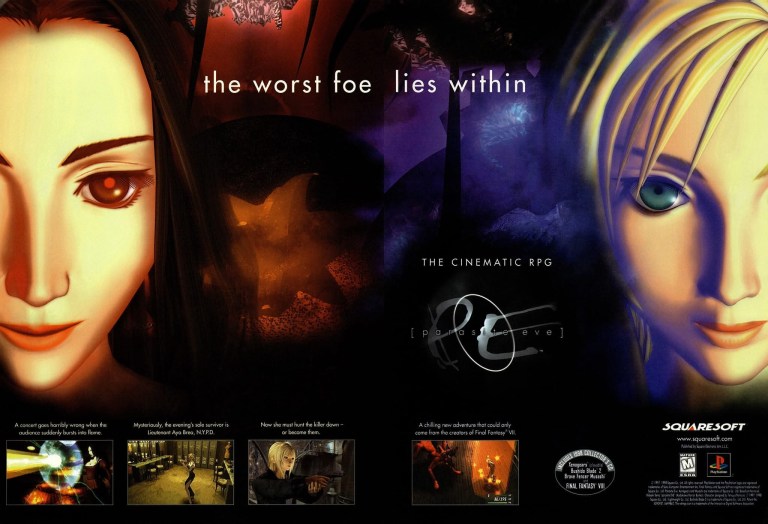
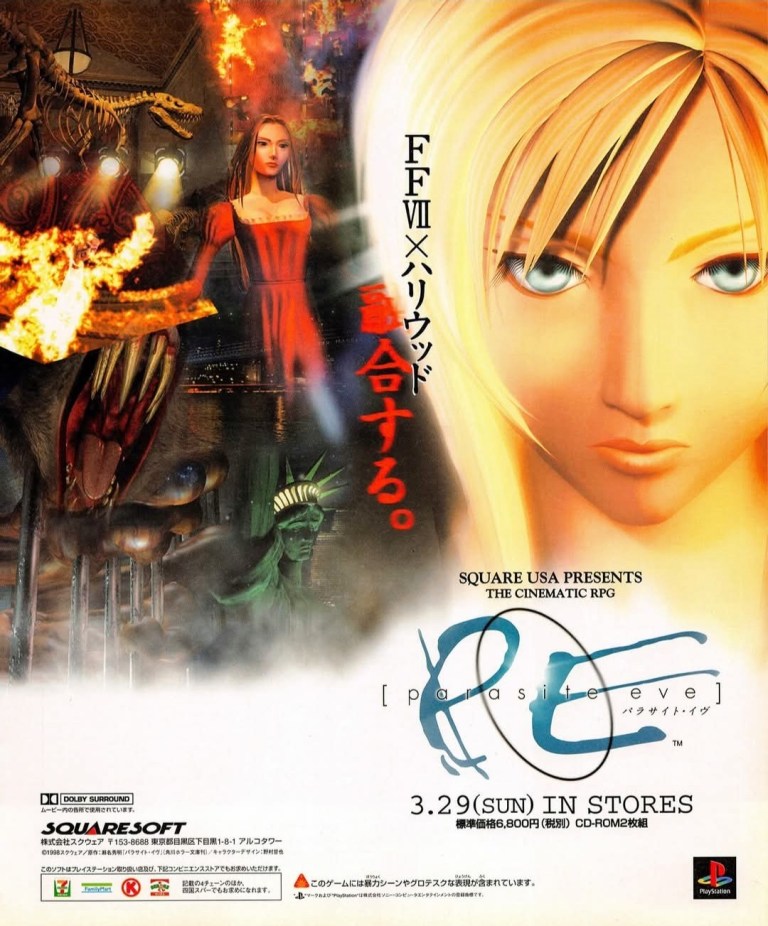
9. Parasite Eve North American and Japanese print ads

Following the successful release of Final Fantasy VII, this ad excited PlayStation gamers and JRPG enthusiasts for Parasite Eve’s 1998 release in America.
A stronger horror presentation in this print ad for the Japanese market. There were already a lot of people in Japan who enjoyed horror.

Starting in the mid-1990s, Squaresoft (now Square Enix) really became aggressive with video game creativity and experimentation as they launched several new projects that eventually got released on PlayStation in the late 1990s until 2000. One of those daring new projects was Parasite Eve which was a role-playing game (RPG) that had visual elements – particularly pre-rendered backgrounds – and a style of exploration that reminded gamers of Resident Evil. The game was a sequel to the Japanese science fiction horror novel of the same name and it involved the creativity of Final Fantasy creator Hironobu Sakaguchi (credited as producer). To promote the game, the 2-page North American print ad had protagonist Aya Brea on the right and the enemy on the left with a cryptic line placed strategically between them. The North American ad clearly stated that the game is a cinematic RPG. By comparison, the Japanese print ad of Parasite Eve has a strong horror vibe which is not surprising because of the novel’s horror elements and the fact that Squaresoft was capitalizing on the popularity of horror-related entertainment in Japan. By today’s standards, Parasite Eve is truly a product of the late-1990s and it has a dedicated fanbase.

+++++

Thank you for reading. If you find this article engaging, please click the like button below, share this article to others and also please consider making a donation to support my publishing. If you are looking for a copywriter to create content for your special project or business, check out my services and my portfolio. Feel free to contact me with a private message. Also please feel free to visit my Facebook page Author Carlo Carrasco and follow me on Twitter at  @HavenorFantasy as well as on Tumblr at https://carlocarrasco.tumblr.com/ and on Instagram at https://www.instagram.com/authorcarlocarrasco
Retro Gaming Ads Blast – Part 35

Welcome back readers, fellow geeks and electronic gaming fans!

In this edition of the Retro Gaming Ads Blast (RGAB) series, we will take a look at another batch of retro gaming print ads – including arcade flyers – from the 1970s to the 1990s.

For the newcomers reading this, Retro Gaming Ads Blast (RGAB) looks back at the many print ads of games (console, arcade, computer and handheld) that were published in comic books, magazines, flyers, posters and newspapers long before smartphones, social media, the worldwide web and streaming became popular. To put things in perspective, people back in the 1980s and 1990s were more trusting of print media for information and images about electronic games and related products.

With those details laid down, here is the newest batch of retro gaming print ads for you to see and enjoy…

1. Intellivision print ad

Were you able to play a game on the Intellivision long ago?

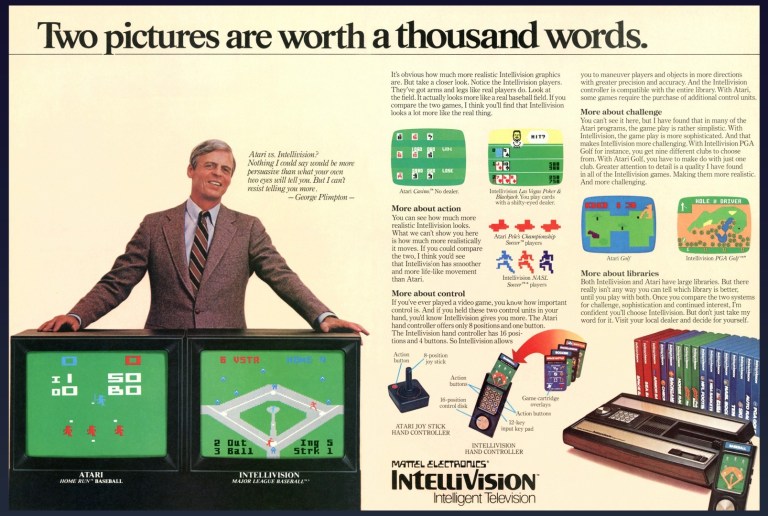
In 1979, Mattel launched their Intellivision game console in America which instantly placed them in competition with Atari’s 2600 console. In a bid to convince gain market share, Mattel daringly came up with a competitive print ad like the one above showing two TV sets (with an Atari 2600 baseball game and a similar game on Intellivision), descriptive text that explained why the intellivision and its games are better, and even mentioned Atari by name several times. Obviously the tactic did not lead Mattel to ultimate market victory but the above print ad showed it was okay for a newcomer to mention their competitor and aggressively attack it to gain customers (both newcomers and active gamers).

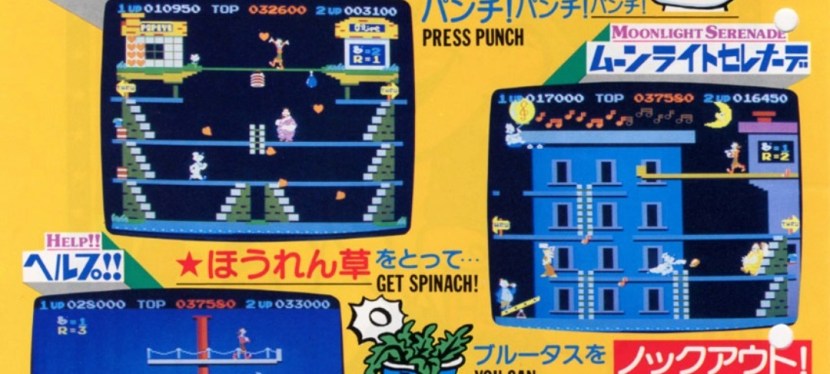
2. Popeye Japanese arcade flyer

The front of the flyer.
The rear.

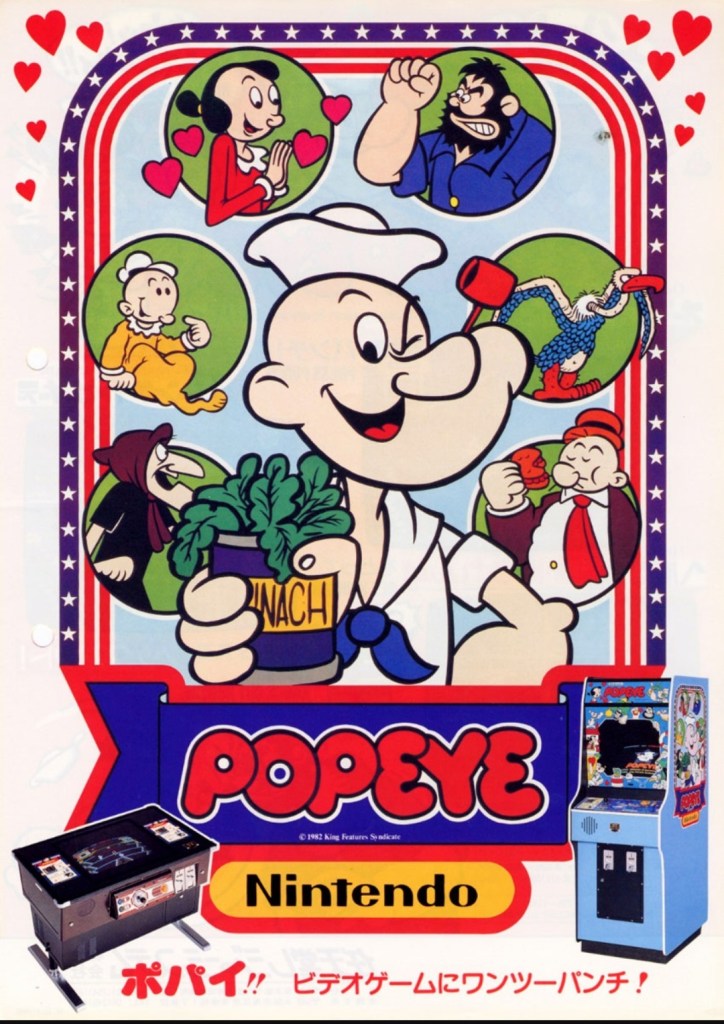
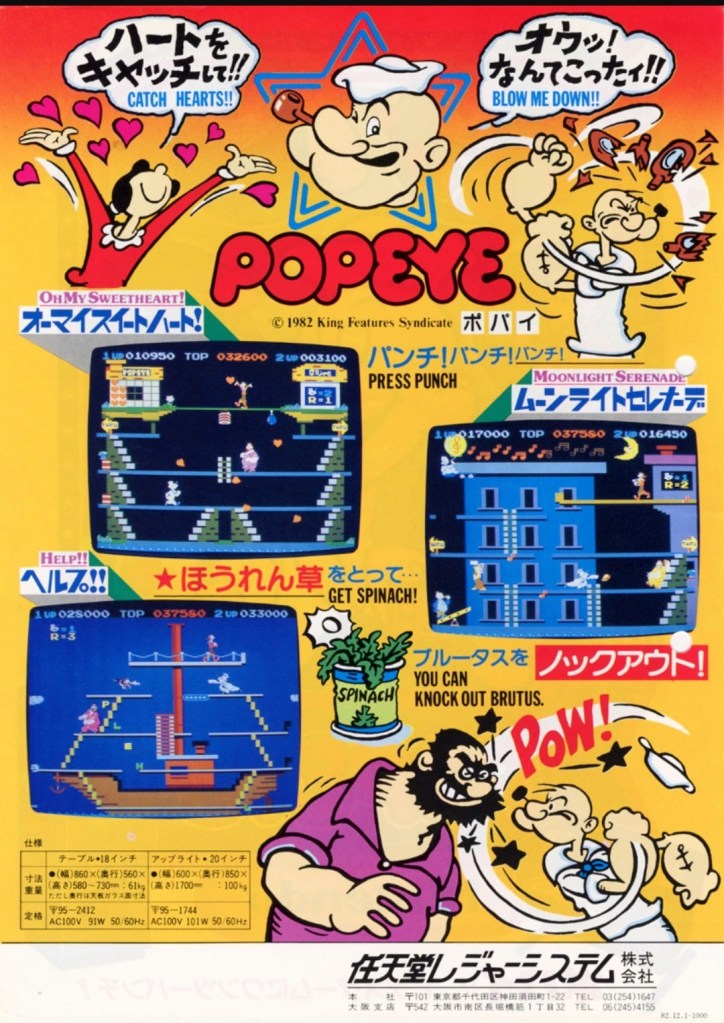
In 1982, Nintendo released the Popeye arcade game which was incidentally the result of the success of their original Donkey Kong arcade game. To promote the game, Nintendo came up with an arcade flyer that had a very lively front (note: the characters were instantly recognizable thanks to the great art used) and the rear having easy-to-read instructions on how to play the game, what levels to expect and what must be done when playing. Popeye was an arcade hit in Japan, but an even bigger hit in America. This old arcade flyer still looks nice.

3. Time Gal arcade flyer

On face value, this one looks more like an anime promo since gameplay elements were missing.

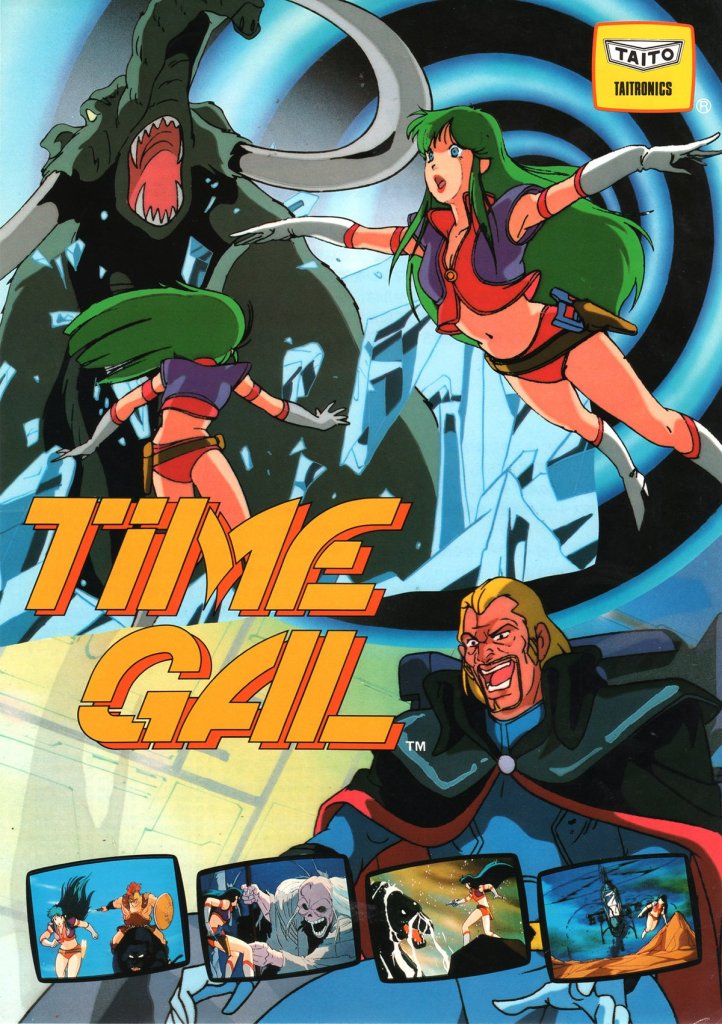
Released in Japanese arcades in 1985, Time Gal is one of those games that used the expensive LaserDisc technology to stream pre-recorded animation (made by Toei) and challenged gamers to react quickly (using the joystick and button for commands) in order to progress in real-time. The arcade flyer has a very lively visual design making it clear to players and arcade operators that a lot of anime awaits those who play Time Gal. Technically, players watch anime cutscenes happen and react using the controls. Time Gal was an arcade hit and it made its way outside of Japan by getting ported for the Sega CD.

4. 3DO print ad

If you bought a 3DO long ago, was it for gaming or for home entertainment purposes?

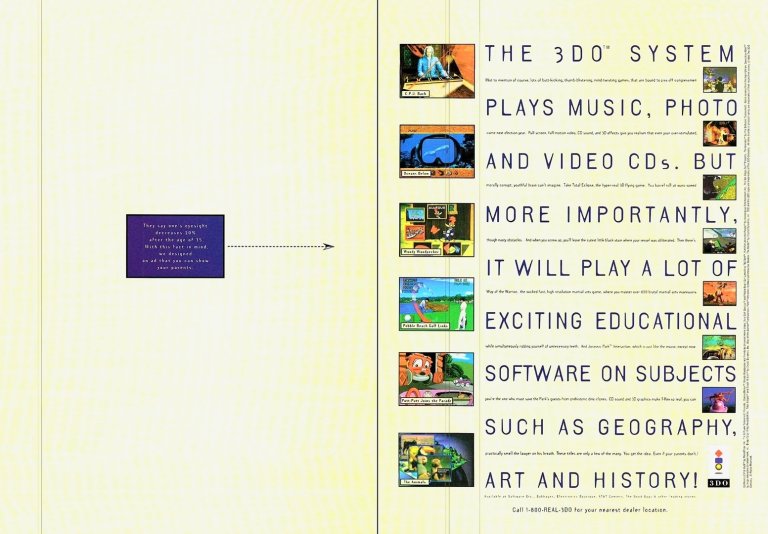
Remember the 3DO? Developed by the 3DO Company and launched in 1993, the 3DO was designed to not only play video games but also function with multimedia features. In fact, the 3DO was initially marketed as a machine that allows users to watch videos, play music, browse digital photographs, and even immerse themselves with software focused on different topics. This is exactly what the above 3DO print ad emphasized. In retrospect, it was so odd for me to see the print ad inside video gaming magazines I read.

5. Atari Jaguar print ad

The strong focus on gaming was clear with Atari for the Jaguar.

Over a month after the launch of the 3DO, Atari launched its Jaguar console with a strong focus on video gaming. As console sales slowly grew in 1994, Atari came up with the above print ad – showing lots of games for the Jaguar – to lure in customers aggressively. If you look closely at the descriptive text of the ad, it mentions the Atari Jaguar as 64-bit system emphasizing that it is more powerful than other video game machines of the time. The bit count controversy harmed Atari and eventually the Jaguar failed.

6. NBA Action ’94 print ad

Remember when Sega made NBA basketball video games that were exclusive to the Genesis console?

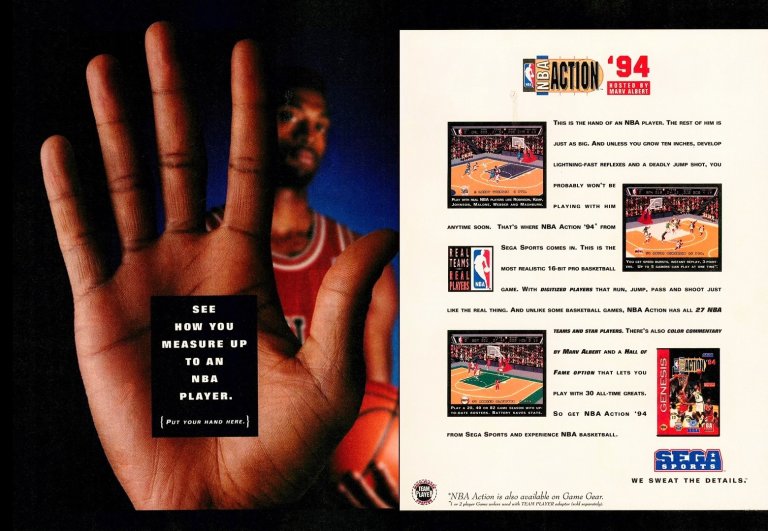
Remember when there were a lot of basketball video games licensed by the NBA in the 1990s? Through its own sports games brand – Sega Sports – Sega was dedicated to making exclusive sports video games for its customers and their NBA games were under the NBA Action brand. In 1994, they released NBA Action ’94 for the Genesis console and this two-page print ad they came up with had a catchy visual design (a supposed basketball player showing his palm and message to the camera on one side of the ad). Looking closely at the descriptive text, the ad mentions “most realistic 16-bit pro basketball”, “digitized players” and having all 27 NBA teams and star players. Sega Sports is no more but it’s legacy still lives on among Sega fans.

7. X-Men Sega Game Gear print ad

For X-Men fans!

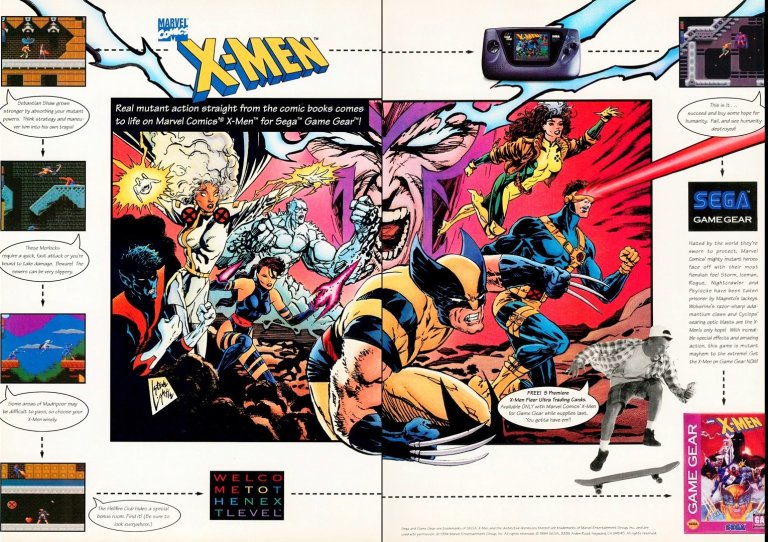
Similar to its approach with the Sega Sports brand, Sega developed exclusive games for the Game Gear. The company secured from Marvel the license to make an original X-Men game and to promote it, this 2-page print ad showcased original art of the established X-Men characters of the time while using the remaining spaces for the screenshots and descriptive text. This old print ad still looks attractive and will easily resonate with X-Men fans as well as 1990s superhero comics enthusiasts.

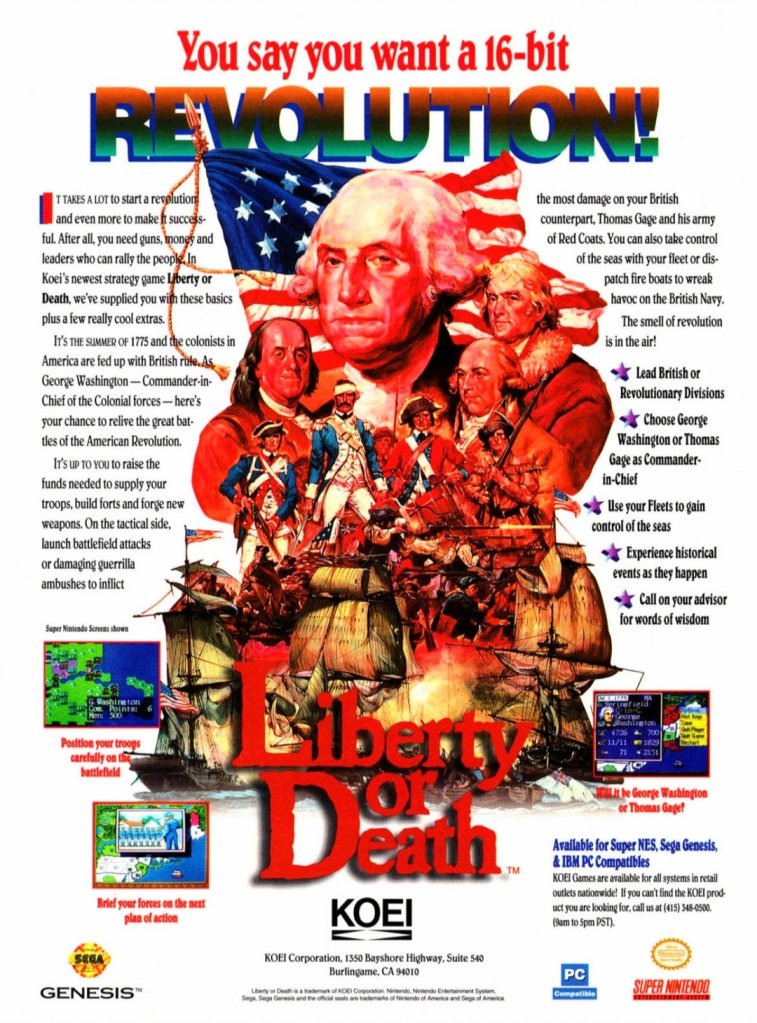
8. Liberty or Death print ad

American history is the core concept of this strategy game by Koei.

If there is anything notable about the Japanese company Koei, it is the fact that it released strategy and simulation games that tackled varied topics while making each game distinct and playable regardless of platform. In my experience, I had a lot of fun playing their business simulation Aerobiz Supersonic on the Super Nintendo Entertainment System (SNES). In 1993, Koei released their turn-based strategy game Liberty or Death which tackled American history for its setting (note: Koei already established itself with historical simulations). To sell the game, Koei came up with a print ad that had a very eye-catching historical art (George Washington, Thomas Jefferson, and Benjamin Franklin among the figures), a few selected screenshots and descriptive text that emphasized the essence of the game. This print ad is a reminder that no video game company today would make a historical simulation due to geopolitics (note: there are a lot of woke activists among video game employees today) and for business reasons.

+++++

Thank you for reading. If you find this article engaging, please click the like button below, share this article to others and also please consider making a donation to support my publishing. If you are looking for a copywriter to create content for your special project or business, check out my services and my portfolio. Feel free to contact me with a private message. Also please feel free to visit my Facebook page Author Carlo Carrasco and follow me on Twitter at  @HavenorFantasy as well as on Tumblr at https://carlocarrasco.tumblr.com/ and on Instagram at https://www.instagram.com/authorcarlocarrasco
Retro Gaming Ads Blast – Part 34

Welcome back readers, fellow geeks and electronic gaming fans!

In this edition of the Retro Gaming Ads Blast (RGAB) series, we will take a look at another batch of retro gaming print ads – including arcade flyers – from the 1970s to the 1990s.

For the newcomers reading this, Retro Gaming Ads Blast (RGAB) looks back at the many print ads of games (console, arcade, computer and handheld) that were published in comic books, magazines, flyers, posters and newspapers long before smartphones, social media, the worldwide web and streaming became popular. To put things in perspective, people back in the 1980s and 1990s were more trusting of print media for information and images about electronic games and related products.

With those details laid down, here is the newest batch of retro gaming print ads for you to see and enjoy…

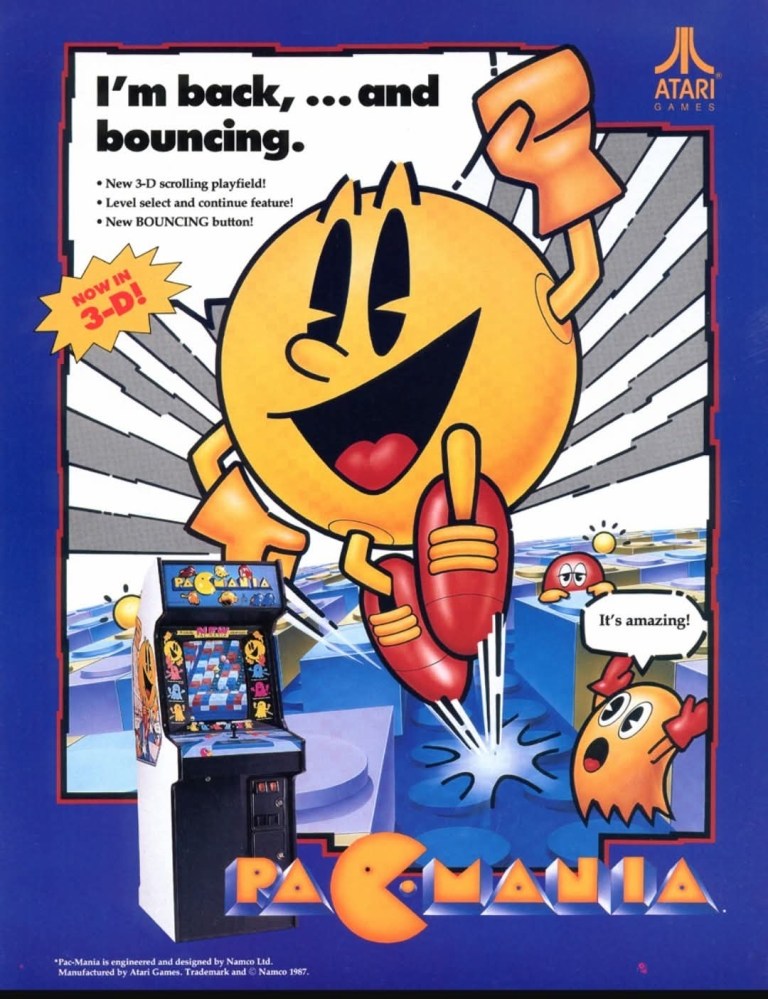
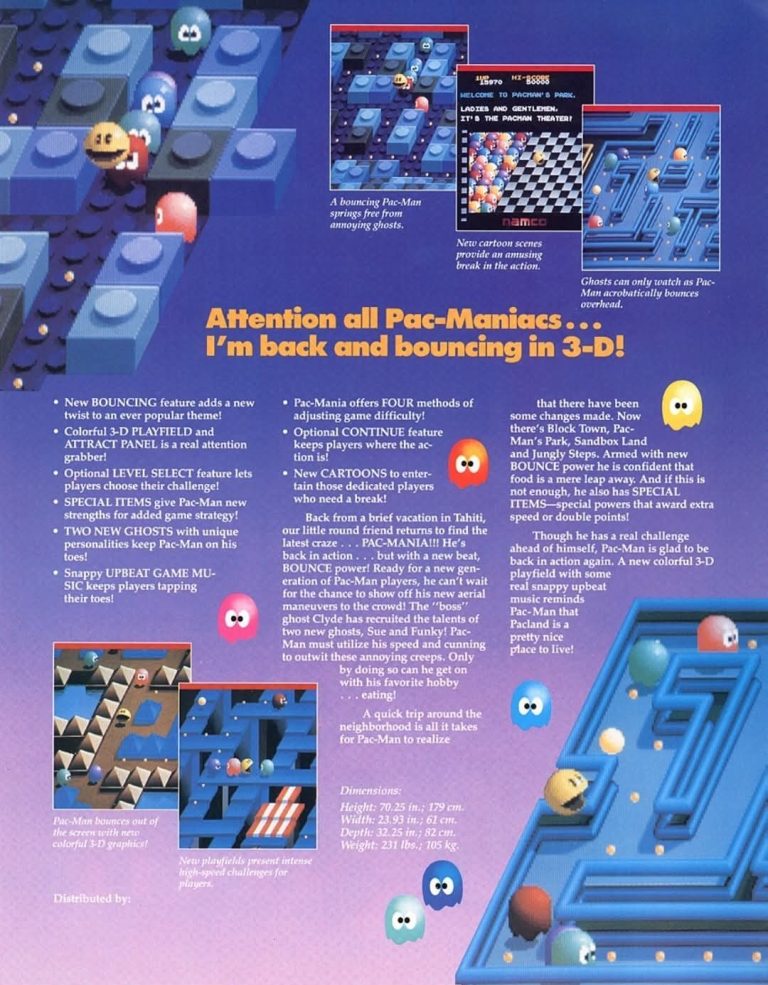
1. North American Pac-Mania arcade flyer

The front.
The rear.

Released in 1987, Pac-Mania became a big hit among critics, fans and casual arcade gamers which added a lot to the enduring popularity of the Pac-Man game franchise. As it featured a new game design with an oblique perspective and a more 3D feel, Pac-Mania was a very serious attempt on reinventing the Pac-Man formula. For the American market, Namco licensed the game to Atari which in turn came up with the above arcade flyer that had a pretty eye-catching front cover artwork showcasing the iconic Pac-Man jumping out from a maze with the line “I’m back,…and bouncing.” The arcade cabinet was also shown and a clear message about the 3D feature of the game was shown. The other side of the flyer showed screenshots and details that are worth reading. This arcade flyer still looks attractive and informative by today’s standards.

2. Japanese Missile Command arcade flyer

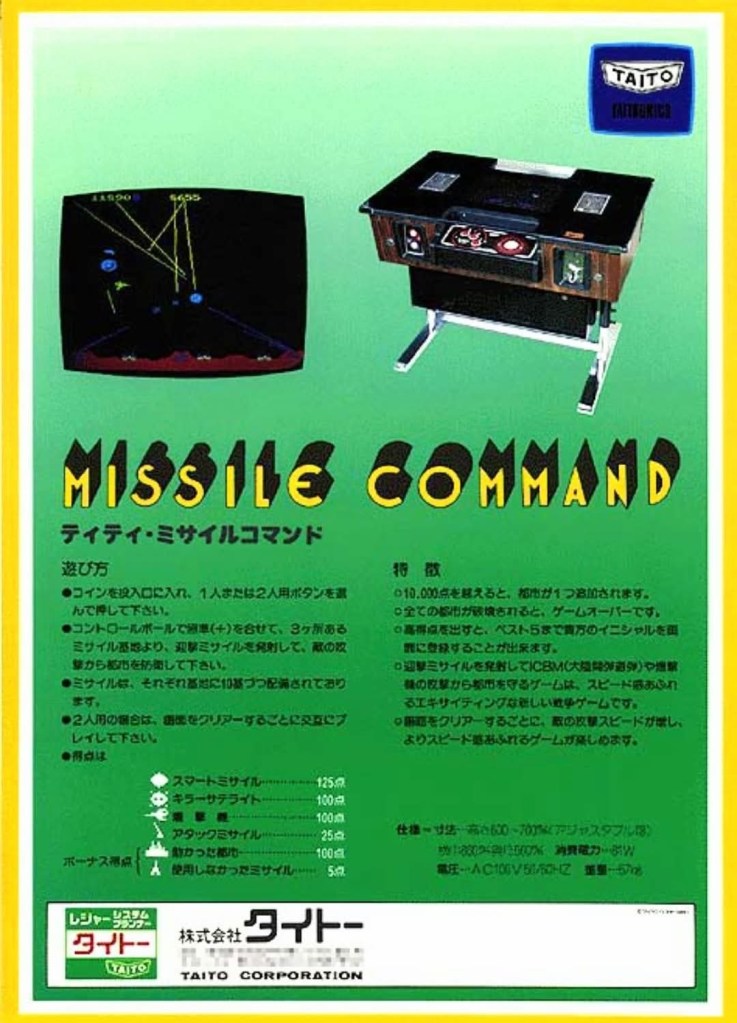
Cocktail arcade tables were popular in Japan and Taito brought Missile Command with the format.

Missile Command is a true arcade classic which I always enjoy replaying (read my retro review by clicking here). It was an instant hit in arcades in America and after Atari licensed the game to Sega and Taito for the arcades of Japan, it also achieved huge success there. Along the way, Taito released Missile Command with an cocktail arcade table format which is common in Japan. The arcade flyer Taito came up with had a very simplistic presentation of details, an image of the cocktail arcade table and one screenshot of the game. The Japanese arcade flyer clearly lacks excitement but at least it gave gamers and arcade operators a clear idea of what to expect with Missile Command.

3. Atari 2600 print ad

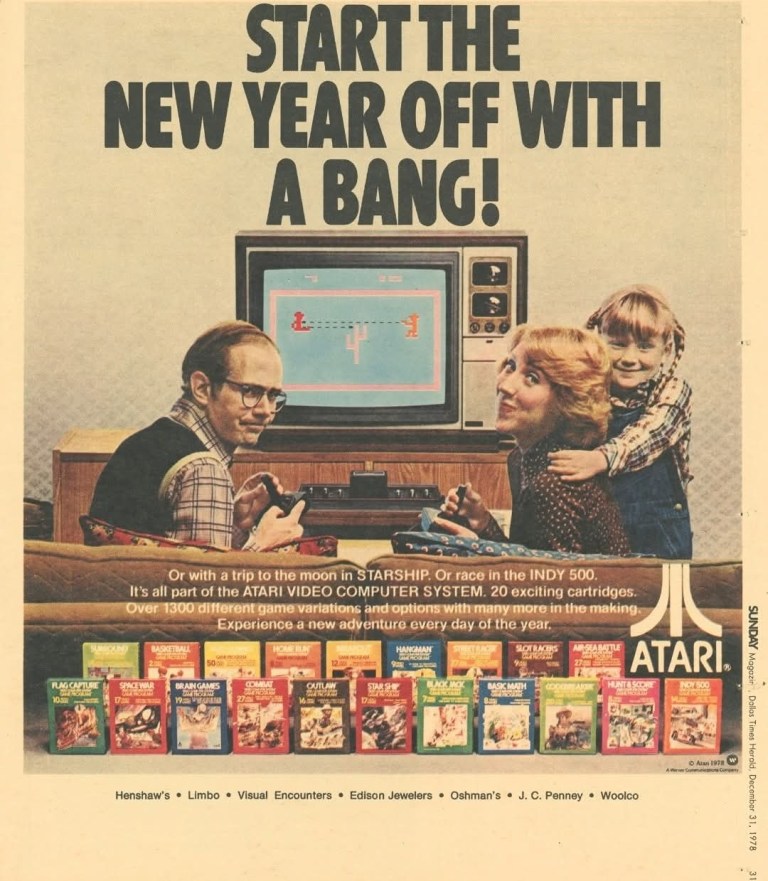
The 1978 print ad.

When the Atari 2600 was first launched in 1977, it was officially called the Atari Video Computer System (Atari VCS). The Atari company really aimed high to sell a lot of consoles to as many households as possible and they came up with a print ad like this one from 1978. While the Atari 2600 and its games were displayed, the image of a father, mother and daughter showed that the company not only targeted American families but also want to change home entertainment to be more interactive. This old ad is truly an inspired piece of work.

4. Kool-Aid Man video game print ad

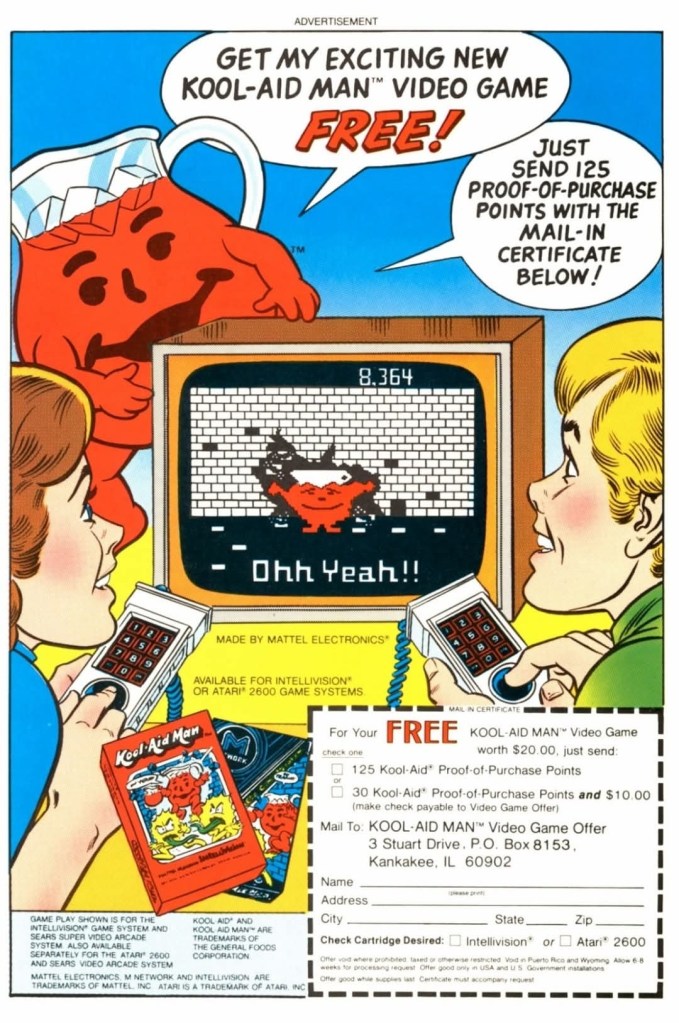
I never played the Kool-Aid Man video game.

There was a time when Kool-Aid was such a popular drink, the character Kool-Aid Man debuted in 1974 after initially starting as the Pitcher Man. A short time later, merchandising featuring the character followed and in 1983 the official Kool-Aid Man video game was released on the Atari 2600 and the Intellivision. This particular print ad appeared in some comic books I read a very long time ago and it offered customers the opportunity to get the game free by sending 125 proof-of-purchase points to the company by mail. This old ad was visually striking and was a creative way to boost sales of the drink.

5. Spider-Man Atari 2600 game print ad

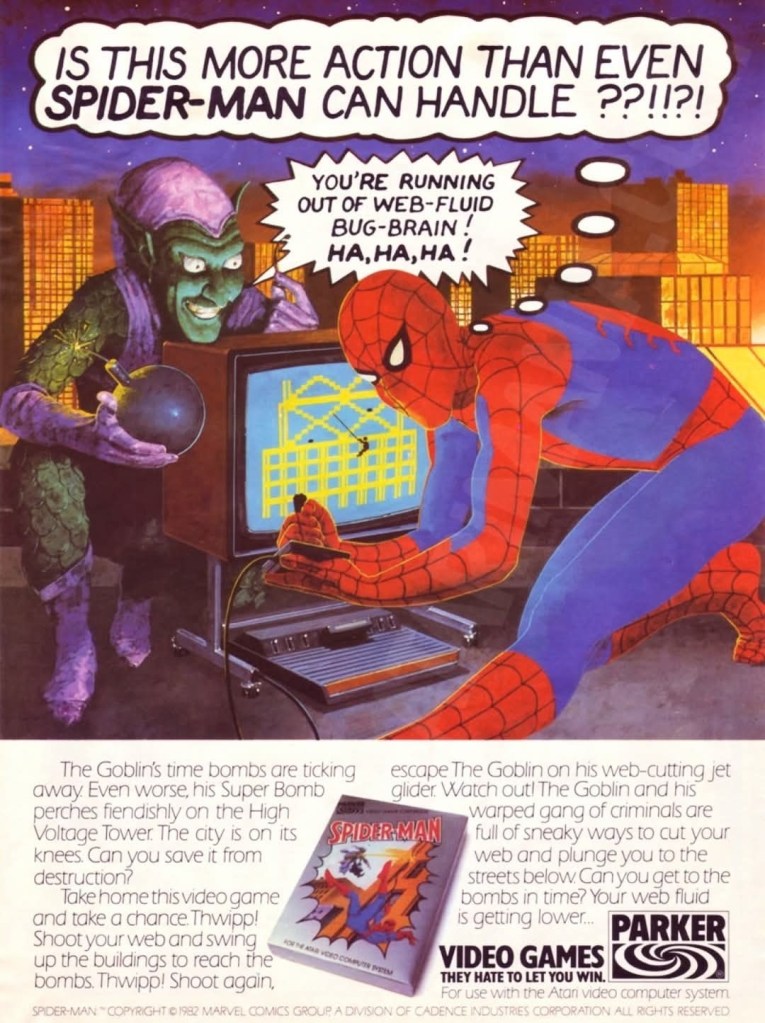
Spider-Man and Green Goblin with the Atari 2600 and the TV.

Even though the controls were rough and the game’s difficulty really went high with each new session, my friends and I still enjoyed playing the Spider-Man video game on Atari 2600 from Parker Brothers. Apart from the comic book-style print ads they came up with to promote the game, Parker Brothers went on to make this particular ad featuring Spider-Man and the Green Goblin with a TV set, the game and the Atari 2600 together all presented with a totally different art style. This is still a fun ad to look at.

6. Phoenix game print ad

This is still an impressive print ad.

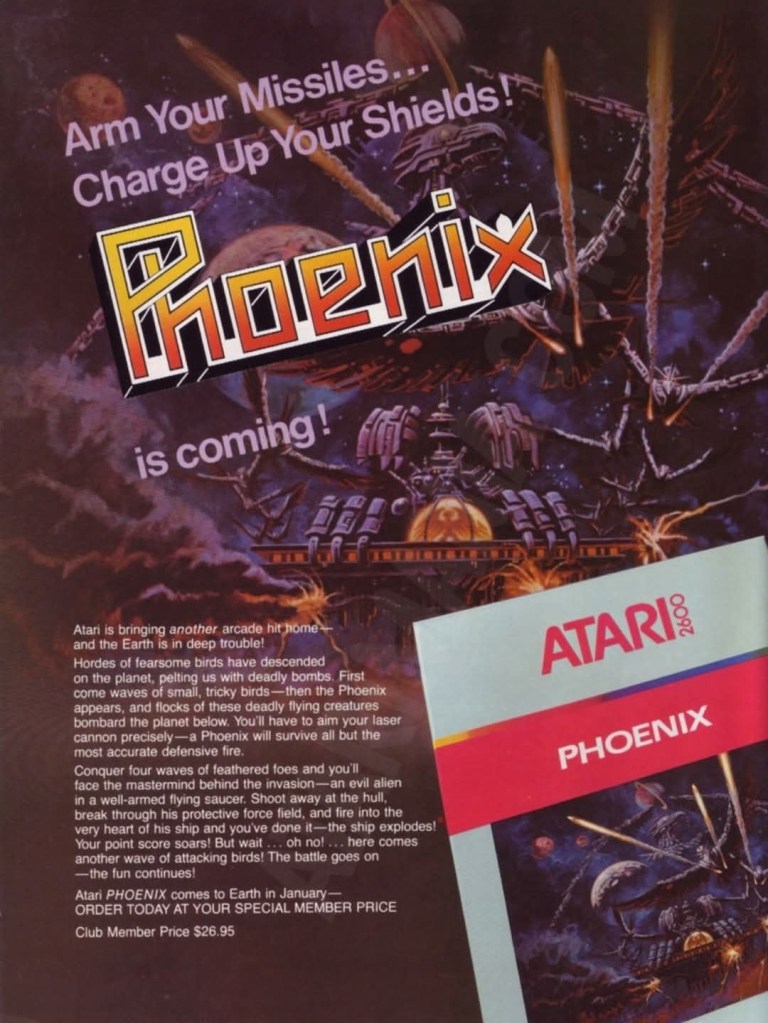
After playing shooter-type games like Space Invaders and Centipede on the Atari 2600, my friends and I experienced something familiar yet fresh with Phoenix. Atari secured from Taito the rights to make the Atari 2600 port of the game, and they came up with a dark print ad that showcased the official painted art work, a portion of the video game’s box and the line “Arm Your Missiles…Charge Up Your Shields! Phoenix is coming!” Having played the game many times, those highlighted words really captured the essence of Phoenix gameplay.

7. Sunset Riders North American arcade flyer

The front.
The rear.

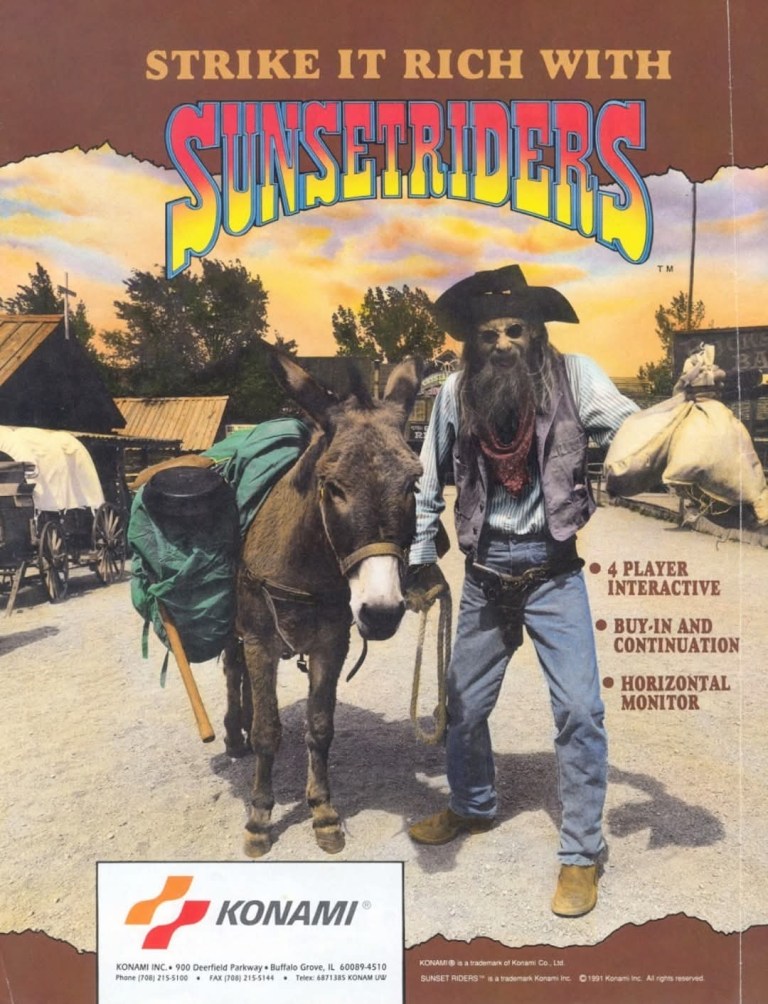
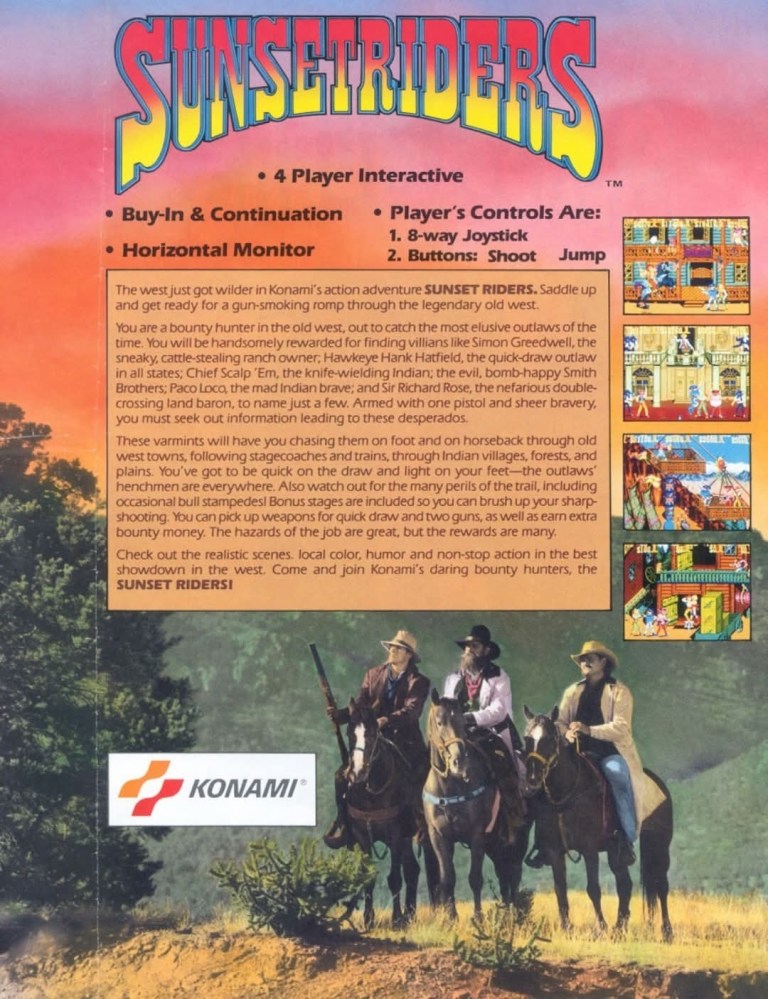
Released in arcades in 1991, Sunset Riders was a critical and commercial hit raking in more success to Konami. For the American arcades, Konami came up with this print ad showing a creepy looking cowboy carrying a bag of money (related to the “strike it rich” line) with his donkey with him. The rear of the ad shows another photograph of 3 cowboys on their horses, the four screenshots and the creative text description. Too bad we don’t see flyers like this anymore.

8. Parker Brothers’ 6-game print ad

Parker Brothers 6-game print ad.

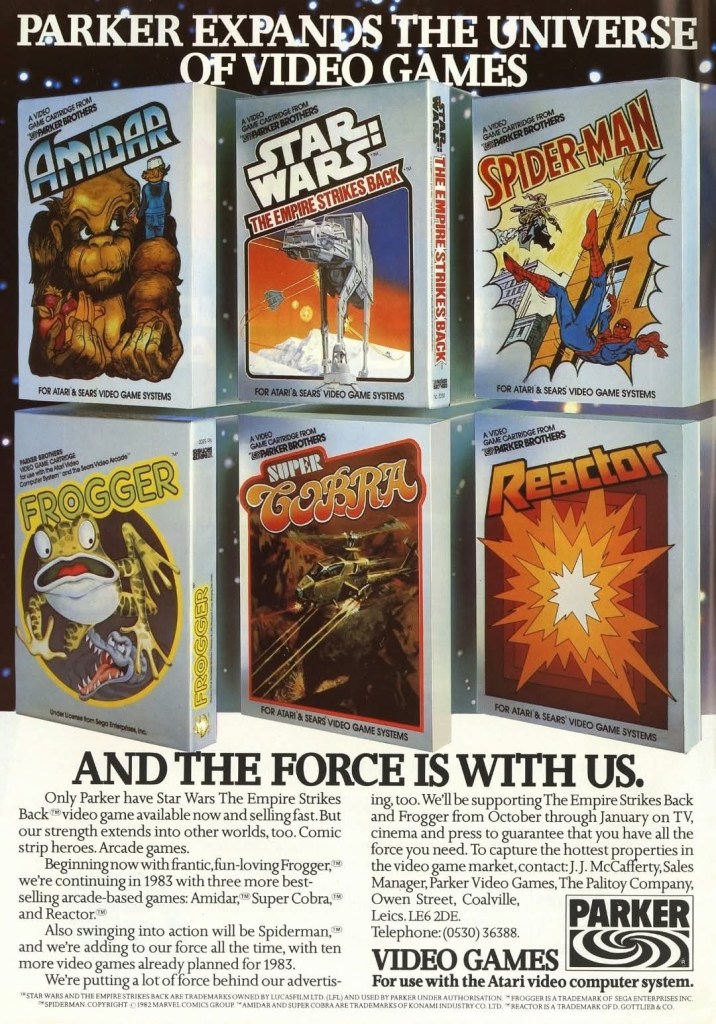
Quite arguably, Parker Brothers was the 2nd most prominent publisher of video games on the Atari 2600 console next to Atari itself. Out of the six games presented in this old print ad, I only played Spider-Man and Super Cobra. Each game’s box had a unique art style and collectively they made this ad look exciting. Times were really different back in the 1980s.

+++++

Thank you for reading. If you find this article engaging, please click the like button below, share this article to others and also please consider making a donation to support my publishing. If you are looking for a copywriter to create content for your special project or business, check out my services and my portfolio. Feel free to contact me with a private message. Also please feel free to visit my Facebook page Author Carlo Carrasco and follow me on Twitter at  @HavenorFantasy as well as on Tumblr at https://carlocarrasco.tumblr.com/ and on Instagram at https://www.instagram.com/authorcarlocarrasco
Cloak & Dagger Is Fun And Challenging To Play On My Xbox Series X

Welcome back Xbox fans, geeks, retro gaming fans and other gamers!

If you are disappointed with modern console gaming and if you don’t like what the game makers are doing, retro gaming will restore the fun and help you forget about the disappointment.

When I was a very young boy, I saw Cloak & Dagger on home video. The movie – starring Henry Thomas and Dabney Coleman – was a thriller laced with Cold War elements, espionage and video gaming. In fact, the video game giant of the time – Atari – was involved in the movie production and their arcade game Cloak & Dagger appeared in the form of a fictional Atari 5200 game. Each time I saw the gameplay footage while watching the movie (read my retro review by clicking here), I was thrilled and always wanted to play it.

Finally, in 2024, I was able to play Cloak & Dagger on my Xbox Series X after purchasing the physical copy of Atari 50: The Anniversary Celebration. Since then, I’ve been replaying Cloak & Dagger a lot in the comfort home and it sure is challenging and fun.

To be clear, this is not a retro game review of Cloak & Dagger. Rather, it is a nostalgic close look at the Atari video game that happened to be featured in the 1984 movie which in turn was released on 4K Blu-ray in 2022. Combine that with the Atari 50 release also in 2022, the Cloak & Dagger game made a comeback in the retro gaming radars of many while also becoming available to play with on modern consoles and Windows PC.

Game design and gameplay

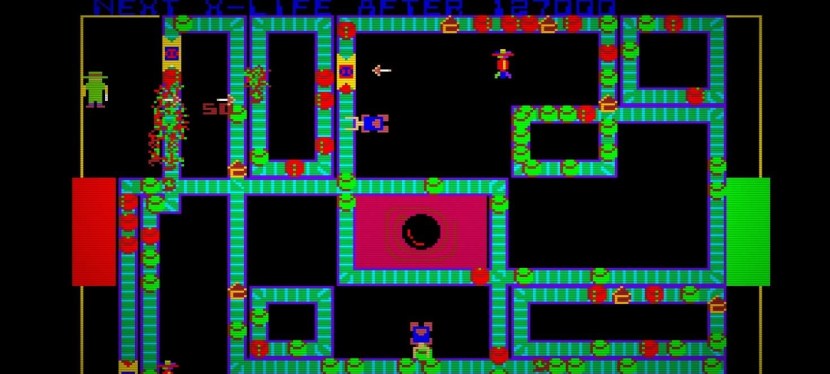
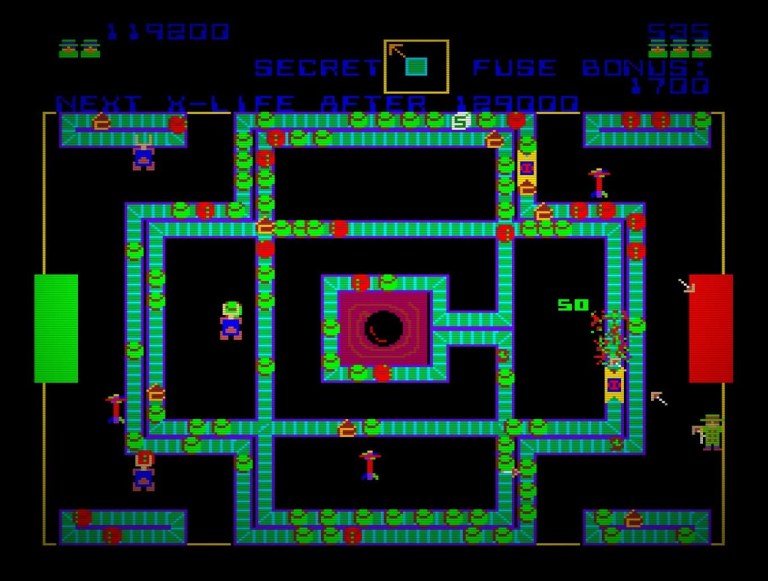
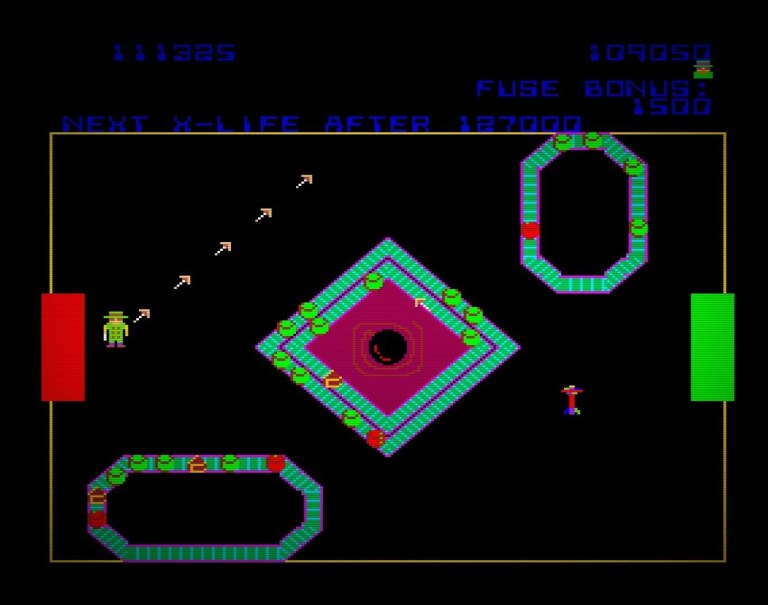
In the arcade game, you play Agent X (the 2D sprite colored green and wearing the hat) and you will encounter challenges from enemies (often robot guards which can fire shots at you), conveyor belts that can impact your movement and the possibility of the giant bomb exploding.

Developed by Atari for the arcade, Cloak & Dagger is a 2D multi-directional shooter in which you play Agent X (who appears wearing a hat, a mask and a coat) whose mission is to infiltrate the massive base of an enemy that goes very deep underground (33 levels/floors).

Each level the player enters require surviving obstacles and defeating (or avoiding) the enemies (robot guards are the most common opposition while the crawling eye occasionally appears) and then move to the other side of the level in order to get into another elevator to keep on descending. The ultimate goal is to reach the final level below to recover top secret plans from Dr. Boom (the main villain and the one responsible for stealing the said plans), destroy his underground bomb factory (which explains the existence of oversized bombs and many explosives on conveyor belts) and get out.

As registering high scores was the trend of video gaming back then, players will be rewarded with shooting at the enemies (example: robot guards are worth 50 points each when asleep or 200 points when awake, while the main villain Dr. Boom is worth 50,000 points) as well as interacting with in-game items such as the unarmed explosives (10 points when shot but worth 100 when collected), armed explosives (50 points each when destroyed) and mystery boxes (worth 200 to 1,800 points plus random effects on the player such as extra life, improved speed and even extra life). For every 30,000 points scored, the player will be granted an extra life. In many levels are gigantic bombs that players can ignite using the Fuse button for extra points. 

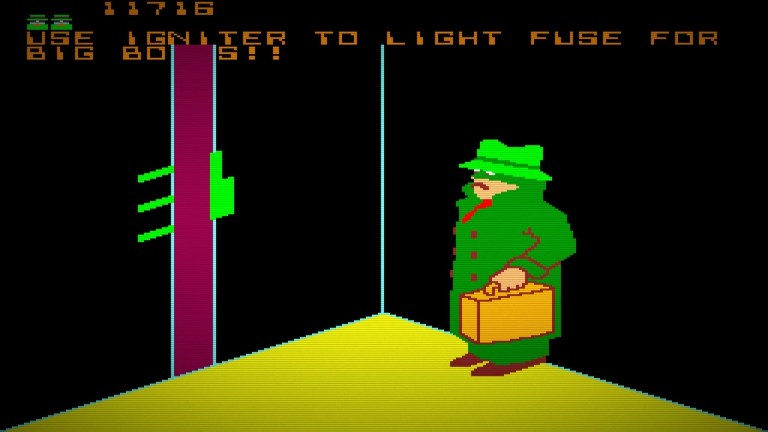
Between levels, you will see an animated Agent X during the short rides in the elevator.
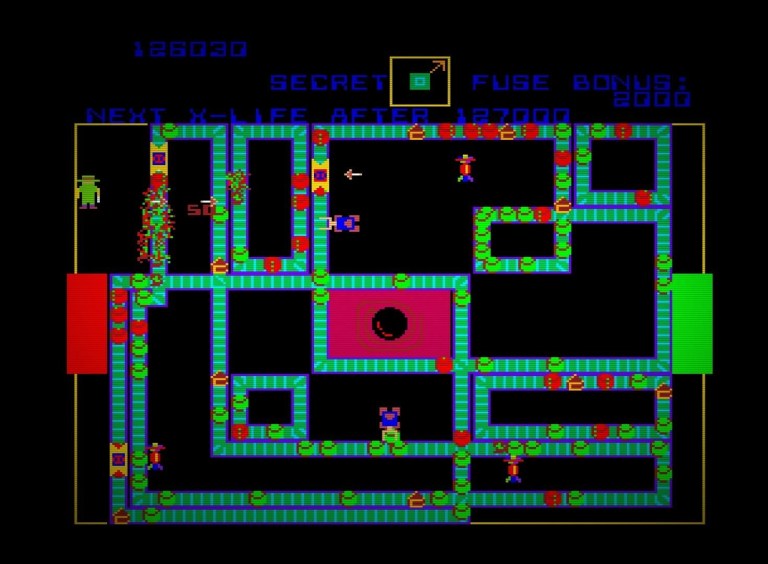
The game is very challenging because so much is going on around you. The robot guards will always fire shots at you while the conveyor belts often move items and explosives (both the armed and unarmed). You can ride a converyor belt to move around but make sure you do not touch the armed explosives (red containers) as they will kill you upon contact.

Other items players can collect are the extra boxes (resulting in extra life) and the secret maps (which partially reveal safe paths through each fourth level).

When it comes to the controls, Cloak & Dagger has a dual joystick (twin sticks) setup similar to Robotron 2084 and Smash T.V. (read my retrospective look at it by clicking here). One joystick allows players to move Agent X around while the other allows shooting projectiles (using Agent X’s weapon) at any direction. The fuse action (for igniting the oversized bombs in the enemy lair) is done by simply pressing a button. As I am playing this game on Xbox Series X, the game’s controls functioned well on the Xbox controller. Both precision and response of the game are sharp with the Xbox controller.

When it comes to the enjoyment and overall value of Cloak & Dagger, I can say that it is indeed more challenging and more chaotic when compared to the more notable twin stick games Robotron 2084 and Smash T.V. For one thing, each level has different layouts complete with obstacles or hazards plus enemies that will certainly challenge players. Many levels have conveyor belts moving unarmed explosives, armed explosives (which you must avoid touching because you will die upon direct contact) and items around which form obstacles when it comes to shooting robot guards on the other side (note: you can use the obstacles defensively when the robot guards fire at you).

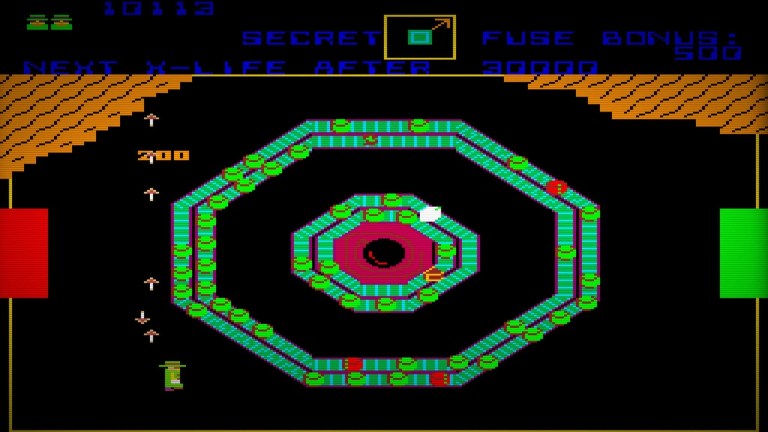
From time to time, you will enter a somewhat sparse looking level like this which actually has mines hidden. The locations of the mines do get revealed in specific moments but only for a few seconds. That being said, it is always best to be able to collect maps that appear on conveyor belts.

Apart from the robot guards and the crawling eye, there are also forklifts which don’t attack you but their solid exterior will deflect any projectile you fire at them and send them back to your direction.

To be clear, you are not required to destroy all the robot guards (or the huge crawling eye enemies) in each level. You can simply try to avoid obstacles and enemies to make it to the next elevator to keep on descending although doing so means scoring much lesser points. Picking up items will add points and randomly alter your character’s capabilities (by picking up mystery boxes).

Adding pressure to you on each level is the giant bomb located in the middle which you can ignite using the fuse action. Once ignited, you only have a few seconds left to make it to the next elevator as the giant bomb will explode and spread fire throughout the whole level. Igniting the said thing will grant you a lot of points provided you survive and made it to the elevator going down.

To be able to play the Cloak & Dagger arcade game on your console or on PC, purchase a copy of the Atari 50 collection.

Cloak & Dagger is indeed a fun game but the opposition, the obstacles, time limit (indicated by the giant bomb) and chaotic turn of events make it more challenging than Midway’s two notable twin stick shooters. The game would have been more forgiving and more playable if only it did not have the one-hit-death embedded on it. Considering the challenges each level has and the many levels players have to go through, it would have made more sense to have Agent X have a life bar/health meter/shield and be able to absorb some enemy projectiles (before dying).

Of course, the game was never designed to be like that and the one-hit-death is also found in Robotron 2084 and Smash T.V. That being said, if you played Cloak & Dagger with a high level of success and completed everything without losing all your lives, then you would be a great achiever.

Pop culture significance

It has been reported that Cloak & Dagger – which was released as an arcade kit for machines that ran Robotron 2084, Joust, Defender and Stargate – did not have a big presence in the arcades in America. The 1984 movie dramatically increased public awareness of it.

Print ad of the arcade game.

When Cloak & Dagger was still in game development (created and led by Russell Dawe) under the title “Agent X”, Atari and certain movie producers became aware of each other’s projects and decided to work together. The deal made business sense as Atari could benefit from reaching a mainstream audience through the cinemas while the movie producers joined in the 1980s Hollywood trend of movies that featured powerful computers, software and artificial intelligence as seen in WarGames (1983), Superman III (1983), and The Terminator (1984).

Much to the credit of the filmmakers, the presence of the game actually added good value to the plot. The film’s concept of the Cloak & Dagger game becoming a very wanted object (plot device actually) resulting in chases, intense action scenes and suspense turned out to be very believable as well. It should be noted that director Richard Franklin took inspiration from Alfred Hitchcock which gave the film a unique touch on the suspense and shock scenes. Check out the movie clip below…

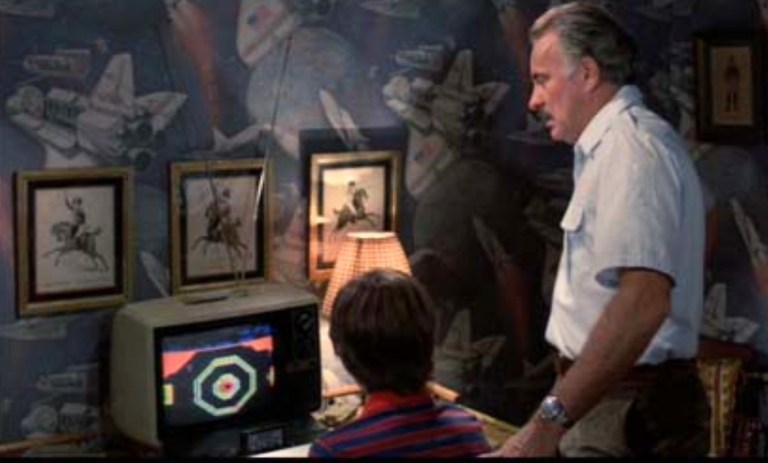
When it comes to the Cloak & Dagger game appearing within the movie of 1984, you will see how the filmmakers and Atari cleverly created the illusion of the game operating on the Atari 5200 console by showing not only video game footage, but also having Henry Thomas acting like he’s playing it using the Atari 5200 controller (which has an analog joystick and buttons on one side). When I was a young boy watching the movie, I found the game footage very entertaining and wanted to play it.

Cloak & Dagger portrayed as running on Atari 5200 in this scene with Henry Thomas and Dabney Coleman. (photo source – AtariProtos.com)
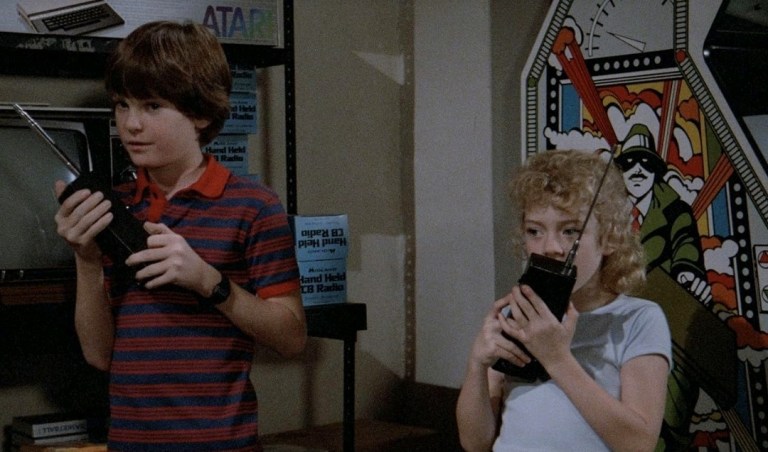
A Cloak & Dagger arcade cabinet seen in the background (right side). (photo source – IMDB.com)

If you are an Xbox gamer who intends to play Cloak & Dagger now, buy the Atari 50 collection in digital format by clicking https://www.xbox.com/en-US/games/store/atari-50-the-anniversary-celebration/9N3TFDSQ531T

+++++

Thank you for reading. If you find this article engaging, please click the like button below, share this article to others and also please consider making a donation to support my publishing. If you are looking for a copywriter to create content for your special project or business, check out my services and my portfolio. Feel free to contact me with a private message. Also please feel free to visit my Facebook page Author Carlo Carrasco and follow me on Twitter at  @HavenorFantasy as well as on Tumblr at https://carlocarrasco.tumblr.com/ and on Instagram athttps://www.instagram.com/authorcarlocarrasco