Better than Streaming: Do you have Cloak & Dagger (1984) 4K Blu-ray in your collection?

Welcome back, fellow geeks, Blu-ray collectors and movie buffs!

Decades ago, I saw on home video Cloak & Dagger (1984) which turned out to be an entertaining film to watch as I was already playing games on Atari 2600 and the arcades. After replaying by chance on cable TV years later, I finally bought myself the 4K Blu-ray and it sure was fun to watch it all over again. Check out my retro movie review of it by clicking here.

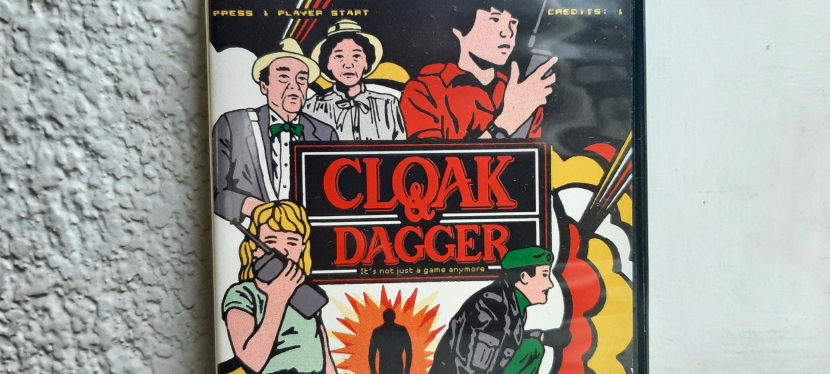
The front of my copy of Cloak & Dagger (1984) 4K Blu-ray.
The rear with the details that can be read.

For the newcomers reading this, Cloak & Dagger (1984) is a movie that involved then video game giant Atari in the creative process. The movie’s plot is not based on Atari’s arcade game of the same name (previously titled as Agent X).

Cloak & Dagger (1984) its own original plot of espionage about a young boy Davey (played by Henry Thomas, the star of Steven Spielberg’s E.T.: The Extra-Terrestrial) who witnesses a murder and receives an Atari 5200 cartridge of the game Cloak & Dagger that contains something very important. This in turn makes him a target of armed henchmen who won’t stop until they get him. Due to his reputation of being too playful and living with his wild imagination as a spy, people don’t believe Davey’s claim of witnessing a murder. This film happens to be inspired by the short story “The Boy Cried Murder” written by Cornell Woolrich.

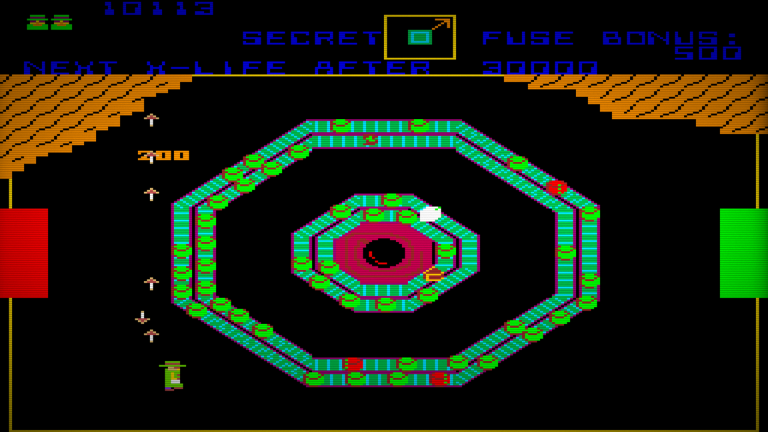
Cloak & Dagger in arcade form. Atari released it in the form of an arcade conversion kit aimed at arcade machines of certain games of its competitors.
The Cloak & Dagger arcade game can be played on your game console with the Atari 50 collection software (over 100 games). This screenshot I captured while playing it on my Xbox Series X console running Atari 50.

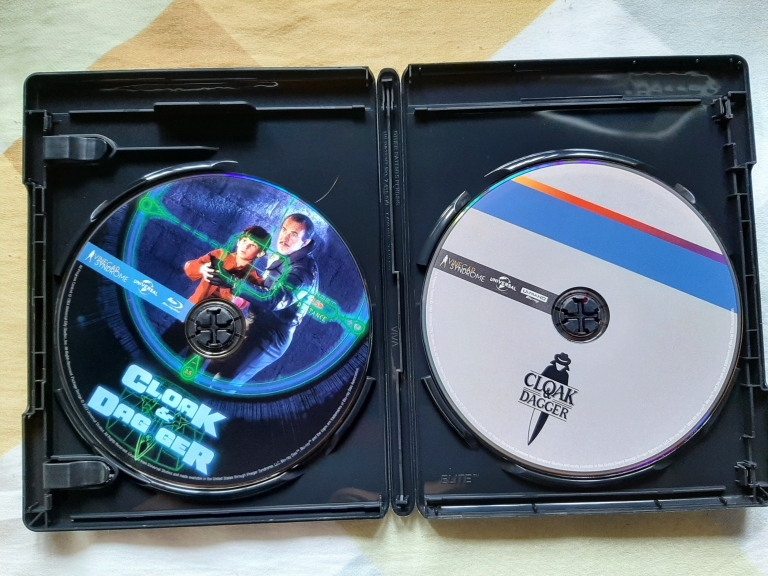
A few weeks ago, my copy of the Cloak & Dagger 4K Blu-ray arrived and it came with two discs: One 4K Blu-ray disc which contained the movie in native 4K (scanned in UHD from the 35mm film) resolution of 3840 x 2160p. The other disc has the same movie in HD (1920 x 1080p) plus the extra stuff which can provide viewers and Cloak & Dagger fans a good amount of important content which will help them learn what the video game elements in the film are, what inspired its creative process and why the film is very unique by today’s standards. There is also an informative new interview with Henry Thomas.

Since then, I saw Cloak & Dagger in 4K twice on my Xbox Series X and its 1080p version on a standalone Blu-ray disc player. Cloak & Dagger in 4K looks better than ever as the picture quality is better, images look sharper and clearer, the colors are vibrant, the small visual details (which were not visible in lower resolution before) are more noticeable now, and film grain structure has been preserved intact!

The two discs. The one on the right is Cloak & Dagger in 4K.

As for the story itself, I still find it engaging and enjoyable to watch from start to finish. Cloak & Dagger is clearly a production of its time as it carries clear Cold War references – the Soviet Union and Iran are the evil forces told in very subtle fashion – as well as video game elements and brands (note: ColecoVision even appeared in this Atari-influenced movie) that dominated America’s console gaming market long before PlayStation, Nintendo and Xbox arrived. For a movie aimed at parents and children, this one has really intense violence as it involves shooting and even some elements of terrorism.

Ultimately, I got a lot of enjoyment from my Cloak & Dagger (1984) 4K Blu-ray and I highly recommend it to Cloak & Dagger fans, gamers, physical media collectors and anyone who loves watching movies in the comfort of home. Cloak & Dagger (1984) is a very unique and fun movie that Hollywood does not make anymore. You really should see it.

In case you are interested or if you have made up your mind, you can order a copy of Cloak & Dagger (1984) 4K Blu-ray by clicking here.

If you wish to join a group of movie enthusiasts and talk about cinema, visit the Movie Fans Worldwide Facebook group at https://www.facebook.com/groups/322857711779576

+++++

Thank you for reading. If you find this article engaging, please click the like button below, share this article to others and also please consider making a donation to support my publishing. If you are looking for a copywriter to create content for your special project or business, check out my services and my portfolio. Feel free to contact me with a private message. Also please feel free to visit my Facebook page Author Carlo Carrasco and follow me on Twitter at  @HavenorFantasy as well as on Tumblr at https://carlocarrasco.tumblr.com/ and on Instagram at https://www.instagram.com/authorcarlocarrasco
A Look Back at Amazing Spider-Man #257 (1984)

Welcome back superhero enthusiasts, 1980s arts and culture enthusiasts, Marvel Comics fans and comic book collectors! Today we go back to the year 1984 to examine a small part of the Marvel Comics universe through a tale of the Amazing Spider-Man monthly series.

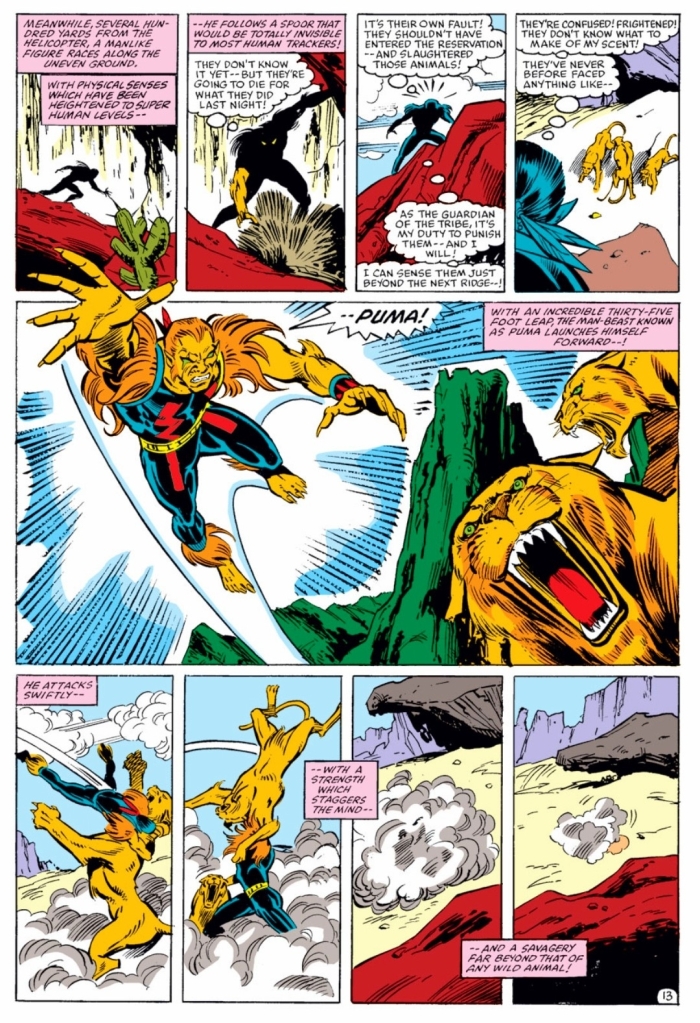
In my previous retro review, Puma was introduced and quickly made an impact on the plot that connects the Rose with Spider-Man (who foiled the Rose’s criminal operation with the help of Black Cat). Puma is not a one-dimensional villain as he is quite principled. Ultimately, issue #256 served as an entertaining build-up of the conflict between Spider-Man and Puma.

With those details laid down, here is a look back at Amazing Spider-Man #257, published in 1984 by Marvel Comics with a story written by Tom DeFalco and drawn by Ron Frenz.

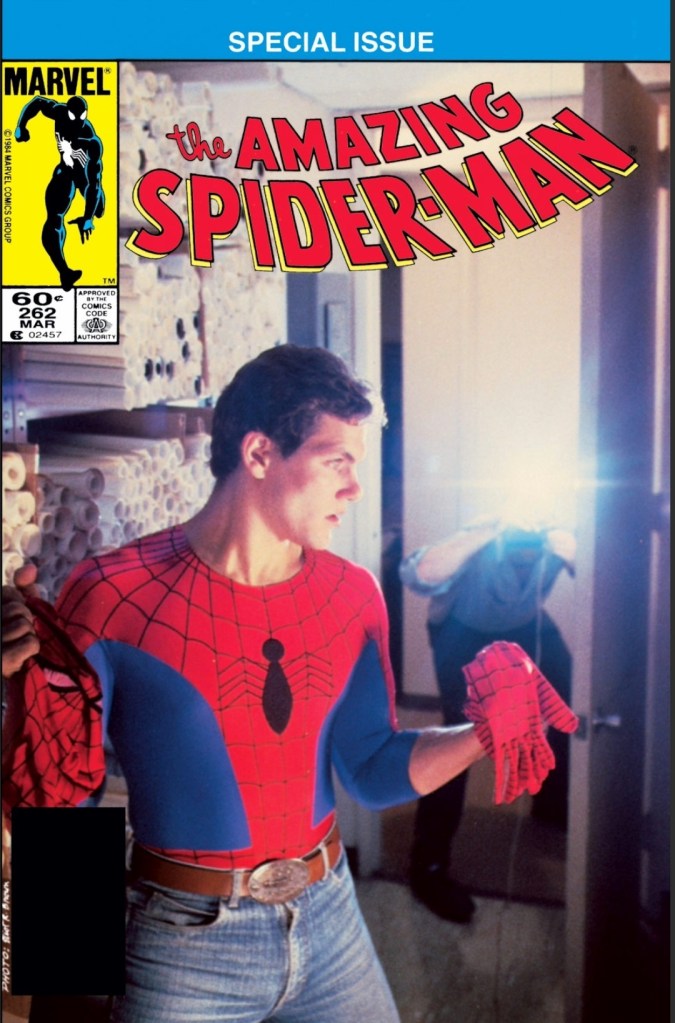
The cover.

Early story

The story begins on top of a building in New York City. Puma grabs the head of the helpless Spider-Man (who just suffered the dislocation of his arm and endured the pain of shoving it back into place before eventually succumbing to the intense pain). He does not strike immediately as he finds the act of eliminating the webslinger almost too easy and he remembers the Rose promised him of a worthy foe.

Just as Puma starts his move to kill Spidey, Black Cat suddenly strikes him out of nowhere. Puma quickly recovers his balance and tells Black Cat to go away. Suddenly, Puma notices something in her. Using his heightened senses, he sees Black Cat’s aura then jumps at her. He quickly realizes he miscalculated with his movement and finds himself overshooting her. In a desperate attempt, Puma grabs  a pipe but it quickly broke and causes him to slide on the rooftop and hit the edge.  

As Puma picks himself up, the roof beneath him gives in and he falls down…

Quality

Spider-Man’s 2nd encounter with Puma is action-packed and fun to read. Pay close attention to the details.

There is no doubt that the story of this comic book is pretty much a big pay-off to the build-up of the previous issue. Not only that, the creative team continued to gradually develop Puma not only as a formidable foe of Spider-Man but also as a sensible and believable new addition to the Marvel Comics universe of the time.

Here, you will see Spider-Man in a truly vulnerable state which symbolically shows that wearing the alien costume has its limits when it comes to protecting and enhancing him. As seen in the final pages of issue #256, Spider-Man struggles a lot physically and, for the first time ever, struggles to command the symbiote (not realizing it is organic and has its own intelligence). With Spidey in a serious physical disadvantage, you will see Black Cat getting a nice share of the spotlight. Not only does she bravely face off with Puma, her concern for Spidey (note: she knows he is Peter Parker) intensifies in a very believable way. She still loves him but could not figure out why Peter prefers to live like a normal person when he could dedicate himself on being a hero every day as Spider-Man.

As for Puma, the creative team developed him even further both in his animalistic form and in his civilian identity as the head of Fireheart Enterprises. As the man Thomas Fireheart, he is a really intelligent man who analyzes a lot of details before making his next move. You will see more of his intellectual side as he deals with both his corporate affairs as well as his contracted service for the Rose (who in turn is serving the Kingpin).

The plot in this comic book is deeper and more elaborate. Without spoiling much, you will get to see the Puma-Rose-Kingpin connection and, more notably, you will see how complex and intense the situation becomes for Peter Parker when he encounters Puma for the 2nd time. The story is very good, you just have to read it.   

Conclusion

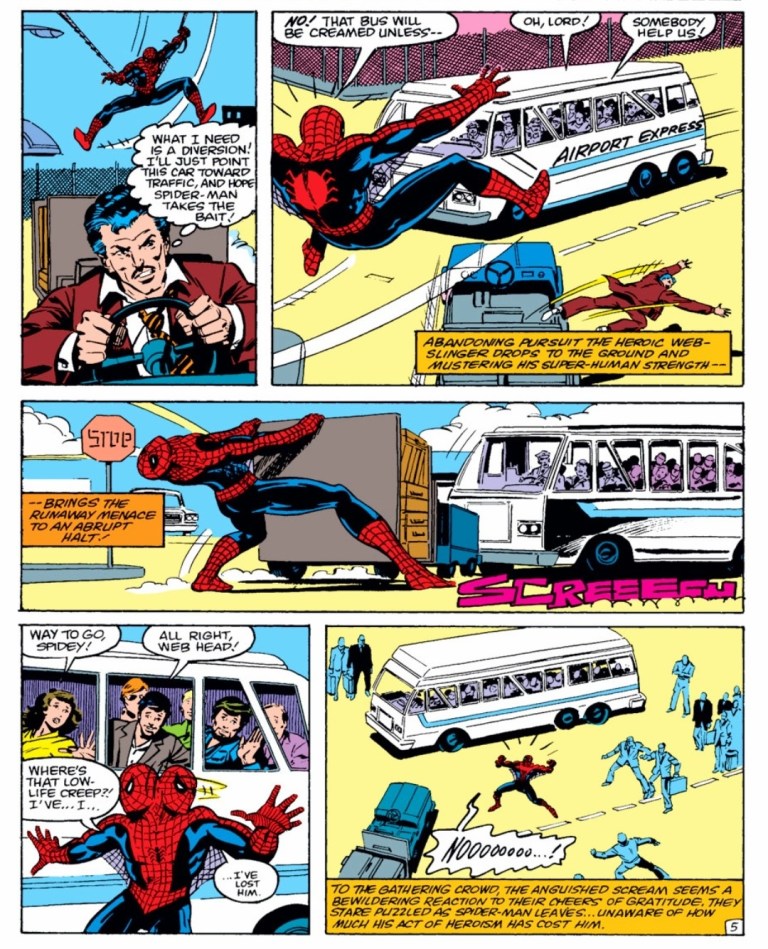
Spider-Man, Black Cat and the alien costume.

Like the previous issue, Amazing Spider-Man #257 (1984) is a great read but in the form of a great pay-off to the build-up that preceded it. The DeFalco-Frenz duo succeeded in developing the newcomer Puma into a significant Marvel Comics universe addition and their portrayal of an injured Spider-Man is very captivating. That being said, I encourage you all to pay close attention to the literary details revealed during the banter between Spidey and Puma which will resonate with you when you read the next issue.

Overall, Amazing Spider-Man #257 (1984) is highly recommended.

+++++

Thank you for reading. If you find this article engaging, please click the like button below, share this article to others and also please consider making a donation to support my publishing. If you are looking for a copywriter to create content for your special project or business, check out my services and my portfolio. Feel free to contact me with a private message. Also please feel free to visit my Facebook page Author Carlo Carrasco and follow me on Twitter at  @HavenorFantasy as well as on Tumblr at https://carlocarrasco.tumblr.com/ and on Instagram at https://www.instagram.com/authorcarlocarrasco
A Look Back at Amazing Spider-Man #256 (1984)

Welcome back superhero enthusiasts, 1980s arts and culture enthusiasts, Marvel Comics fans and comic book collectors! Today we go back to the year 1984 to examine a small part of the Marvel Comics universe through a tale of the Amazing Spider-Man monthly series.

The era when Spider-Man came back from deep space (refer to Secret Wars) with a new black costume (the symbiote that would later help form Venom) that itself had special abilities was indeed a very notable time in superhero comics history. As if Spidey’s troubled personal life was not enough, he had to deal with new villains that were formidable and tough to deal with.

With those details laid down, here is a look back at Amazing Spider-Man #256, published in 1984 by Marvel Comics with a story written by Tom DeFalco and drawn by Ron Frenz.

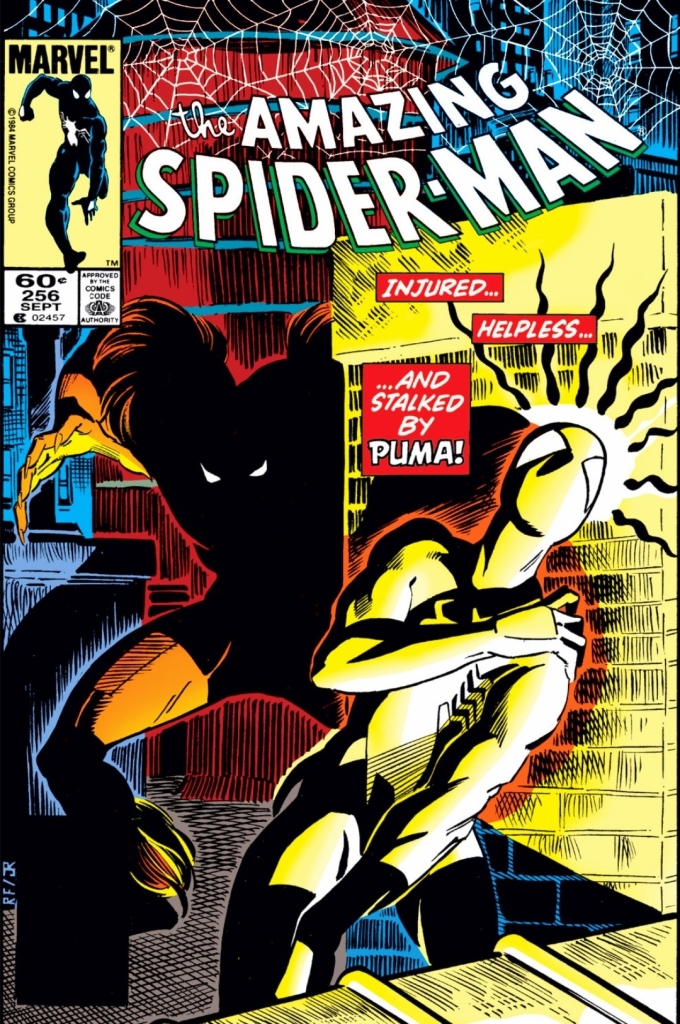
The cover.

Early story

The story begins inside a warehouse when Spider-Man suddenly catches a lot of men by surprise. The men turned out to be doing something illegal with lots of stolen good contained in boxes. Quite fearlessly, the webslinger knocks out many of them while Black Cat takes pictures (assistance for Peter Parker) from a distance above. Black Cat eventually gets involved in the physical struggle and the bad guys all got defeated afterwards.

After the struggle, Spider-Man and Black Cat (who know each other personally) have a short sentimental talk before parting ways. As soon as he arrives home, Peter Parker starts developing the pictures in preparation for much-needed income from the Daily Bugle.

Elsewhere in New York (the next morning), the warehouse raid caused by Spider-Man and Black Cat makes immediate impact on the secret operations of the Rose who in turn wants the hero dead. The Rose (who reports to the Kingpin) then sends a message to New Mexico to contact the one person capable of killing Spider-Man…the Puma.

Quality

Puma in his animalistic form deep within the harsh wilderness of New Mexico.

I can state that within the age of Spider-Man wearing the alien costume, this particular tale has a strong debut of a new foe and the plot itself is quite intriguing. Tom DeFalco cleverly paced the introduction of Puma whose civilian personality is that of a very focused business executive. The creative team took the inspired approach of defining Puma with the harshness of the New Mexico wilderness contrasted with that of his civilian identity spending time in the bustling urban environment of New York City.

Not only is Puma very powerful and focused, he also has a high standard when it comes to accomplishing tasks showing no fear nor hesitation with regards to potential obstacles ahead of him. Clearly, Puma is not your typical super villain but a very principled and very capable figure. When compared to Wolverine, Puma shares some common animalistic elements with him but he consistently maintains control of himself. This makes him a dangerous force of opposition towards Spider-Man.

Spider-Man here is usual self. His personal problems and lack of a stable life are taking their toll on him just as he continues to keep doing good (example: fighting crime). It should be said that when Puma first strikes at him, the creative monotony with the webslinger suddenly got snapped causing a new series of unfortunate developments that test him. It is also revealed here that using the alien costume does not spare him from serious physical injury.  

Conclusion

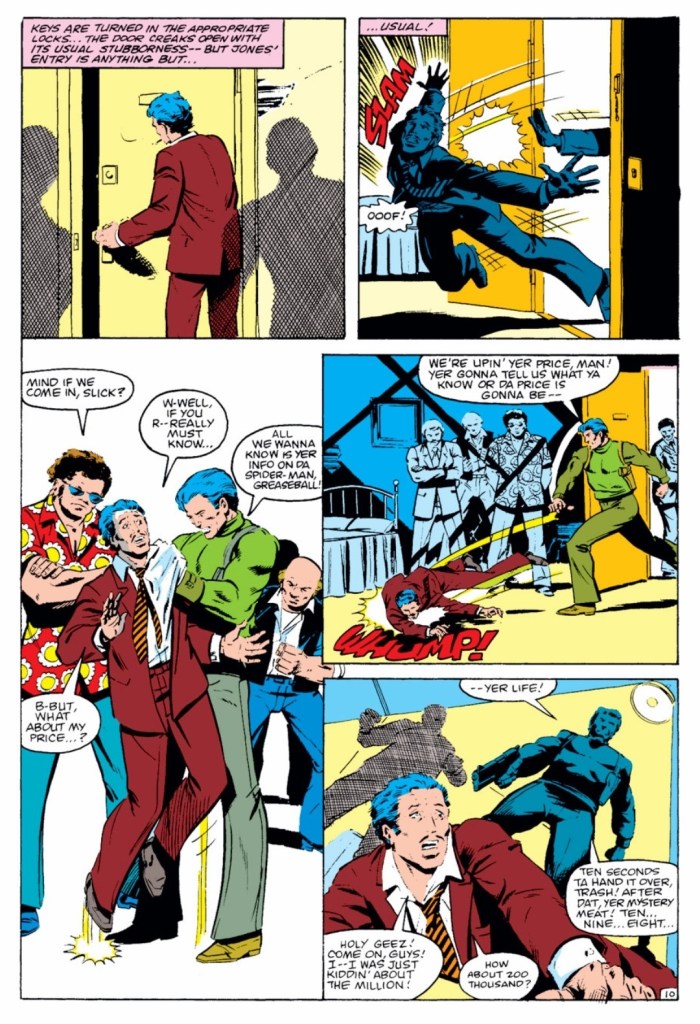
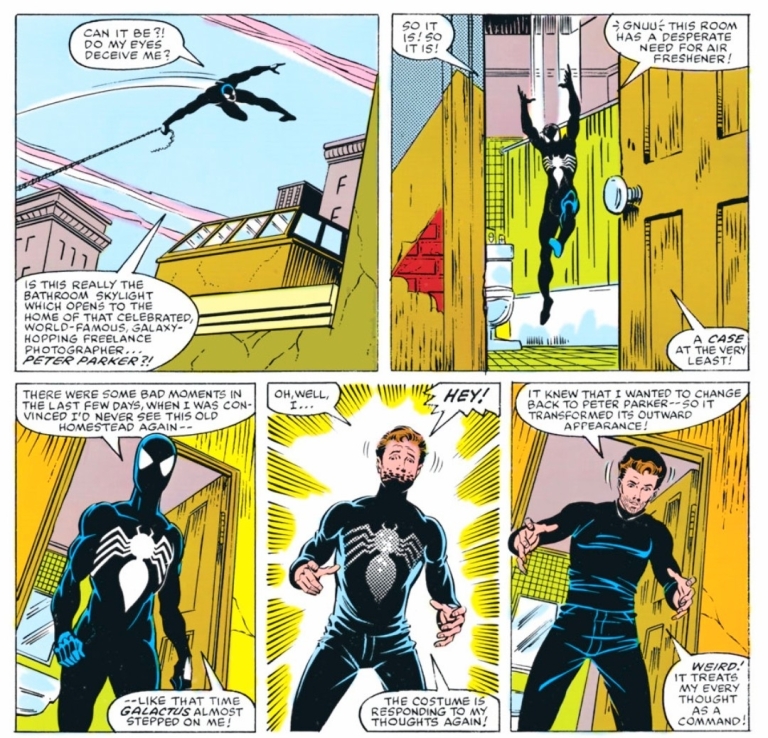
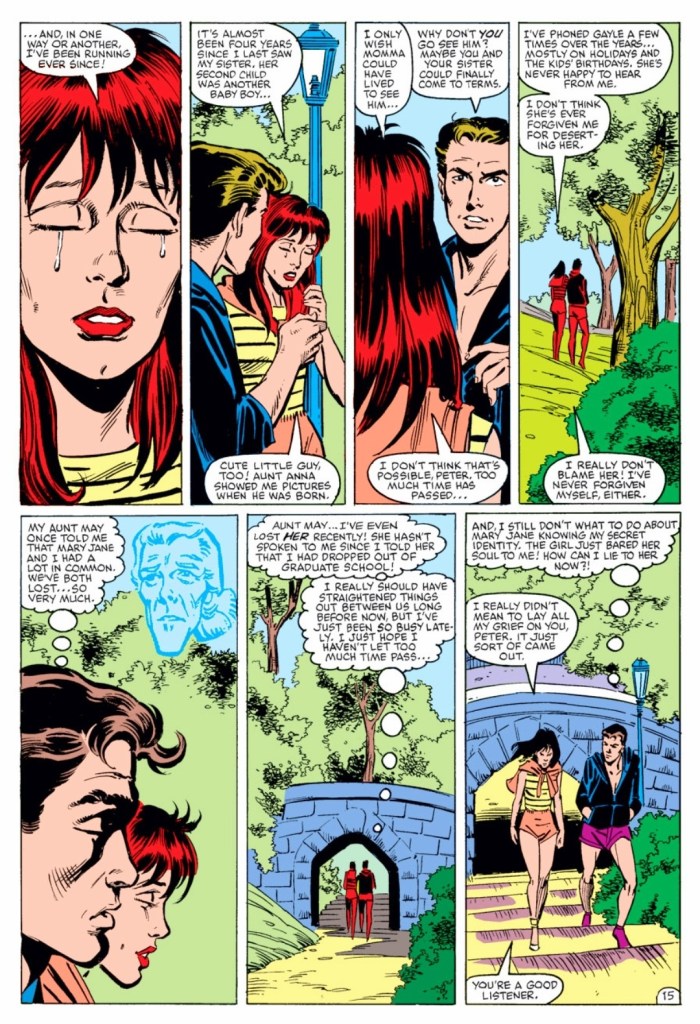
These panels show how vulnerable Peter Parker really is as the alien costume comes to him willingly.

Amazing Spider-Man #256 (1984) is a great read. The build-up with Puma is very powerful and his presence really made a huge impact on the reading experience. By the time the story ended, I was very convinced to read the next issue.   

Overall, Amazing Spider-Man #256 (1984) is highly recommended.

+++++

Thank you for reading. If you find this article engaging, please click the like button below, share this article to others and also please consider making a donation to support my publishing. If you are looking for a copywriter to create content for your special project or business, check out my services and my portfolio. Feel free to contact me with a private message. Also please feel free to visit my Facebook page Author Carlo Carrasco and follow me on Twitter at  @HavenorFantasy as well as on Tumblr at https://carlocarrasco.tumblr.com/ and on Instagram at https://www.instagram.com/authorcarlocarrasco

A Look Back at Amazing Spider-Man #255 (1984)

Welcome back superhero enthusiasts, 1980s arts and culture enthusiasts, Marvel Comics fans and comic book collectors! Today we go back to the year 1984 to examine a small part of the Marvel Comics universe through a tale of the Amazing Spider-Man monthly series.

Between the developments of 1980s Secret Wars limited series and the debut of Venom was the time when Peter Parker wore a black new costume as Spider-Man which happens to be the alien costume he gained while spending time with other superheroes in deep space (refer to Secret Wars #8). There was this gradual approach done by the creators to tell new tales of Spider-Man who has the symbiote attached to him most of the time.  

With those details laid down, here is a look back at Amazing Spider-Man #255, published in 1984 by Marvel Comics with a story written by Tom DeFalco and drawn by Ron Frenz.

The cover.

Early story

The story begins when a black costumed figure arrives at the balcony of a tall building during night time in New York City. He carefully makes an unlawful entry into the place to steal something. The figure was the Black Fox who intends to take valuables not to feed his greed but to properly subsidize his retirement. When he touches an exquisite-looking vase, it disappears and suddenly a monstrous ape appears from nowhere surprising him. Soon enough, he finds himself surrounded by more apes and faces their human leader (one who referred to the apes as pets).

Meanwhile at his apartment, a very tired Peter Parker washes his black costume (the symbiote), reflects on recent events he went through and then goes to bed. During the night, the black costume comes to life and slowly slithers its way into the bedroom wrapping itself on the sleeping Peter…

Quality

The sneaky Black Fox has no chance of escaping Spider-Man (wearing the alien costume that would later lead to the start of Venom).

I want to start with the force of opposition the creative team came up with. This is about the powerful villain the Red Ghost who has super-apes under his control and vast wealth and resources to organize criminal activities. Red Ghost here is not your typical villain as he is actually strategic, smart and even philosophical clearly knowing what he is doing and what he needs to keep on doing crime. The retiring old thief Black Fox happens to be the very criminal that Red Ghost needs for a special task involving the machine called the Cosmicizer which is essential to his need of vastly increasing his cosmic-ray induced powers.

The Red Ghost is struggling with certain limits which are related to his need of the Black Fox to accomplish something for him with the assistance of the super apes. That being said, the presentation of evil awaiting Spider-Man in this tale is a clever move by DeFalco and Frenz.

As for the iconic webslinger, you will see more of Peter Parker’s personal struggles balancing his life between real-world living and performing as Spider-Man to help people and solve problems. In this tale, his personal life is at a low point and it does not help that his has a strained link with his Aunt May. Even though he has the alien costume that is capable of aiding him a lot, there are still problems that the superhero simply cannot solve. The dramatization here is pretty good and the way the final conflict with the main villain turned out was a pretty nice pay-off.

Conclusion

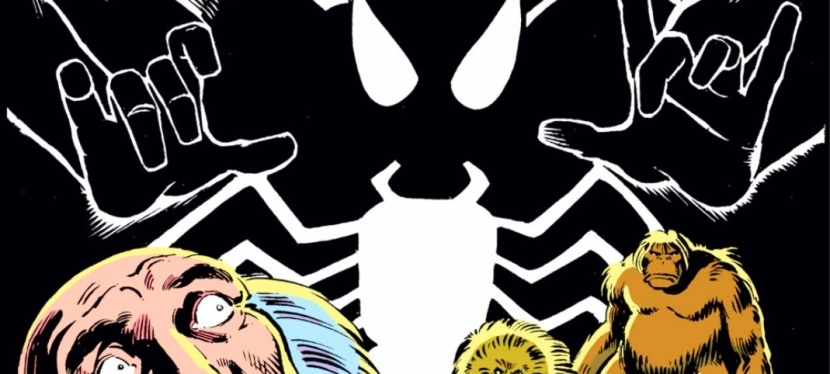
Peter Parker’s sleep has been disorderly since he brought home with him the symbiote.

Amazing Spider-Man #255 (1984) is an entertaining and intriguing read. The creative team’s decision to have the established Fantastic Four foe Red Ghost as the definitive villain for Spider-Man turned out to be a smart move and what they did was fun to read. The presence of Black Fox (note: this comic book is his debut) added a layer of depth to the plot and his declared desire to retire from the life of crime made him an intriguing addition to the Spider-Man list of villains.

Overall, Amazing Spider-Man #255 (1984) is recommended.

+++++

Thank you for reading. If you find this article engaging, please click the like button below, share this article to others and also please consider making a donation to support my publishing. If you are looking for a copywriter to create content for your special project or business, check out my services and my portfolio. Feel free to contact me with a private message. Also please feel free to visit my Facebook page Author Carlo Carrasco and follow me on Twitter at  @HavenorFantasy as well as on Tumblr at https://carlocarrasco.tumblr.com/ and on Instagram at https://www.instagram.com/authorcarlocarrasco
A Look Back at Amazing Spider-Man #252 (1984)

Welcome back superhero enthusiasts, 1980s arts and culture enthusiasts, Marvel Comics fans and comic book collectors! Today we go back to the year 1984 to examine a small part of the Marvel Comics universe through a tale of the Amazing Spider-Man monthly series.

By now, you readers should be aware that I reviewed a lot of comic books about Spider-Man and his deadliest enemy Venom. It is already established through comic book history that the iconic webslinger is responsible for the establishment of Venom as he brought into the world the alien costume (the symbiote) coming from deep space (as told in the Secret Wars limited series), and he also became responsible for the destruction of Eddie Brock’s career in journalism. Of course, Venom did not debut immediately after Spider-Man’s return from Secret Wars and there was a lot more about the symbiote when it was with Peter Parker.

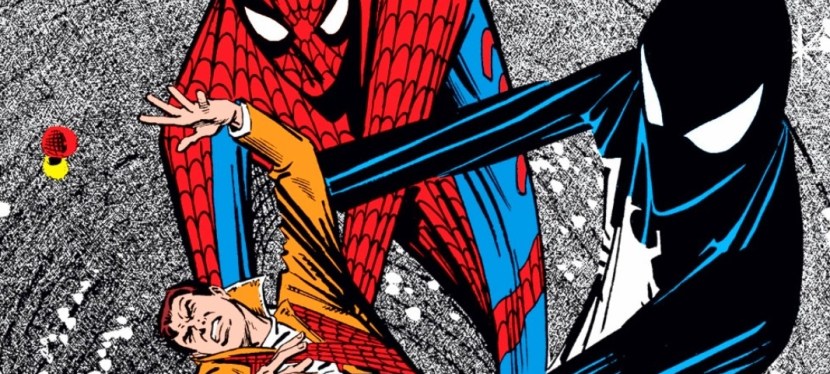
With those details laid down, here is a look back at Amazing Spider-Man #252, published in 1984 by Marvel Comics with a story written by Roger Stern and Tom DeFalco, and drawn by Ron Frenz. This comic book marked the first appearance of the alien costume.

The cover.

Early story

The story begins inside the New York headquarters of the Daily Bugle. It has been observed that several superheroes such as Captain America, Thor, Spider-Man, Iron Man, the X-Men and the Avengers have been missing this resulted in a rise of crime. Publisher J. Jonah Jameson and editor-in-chief Joe Robertson discuss the newest edition of their newspaper.

Meanwhile over at Central Park where police officers and others stand by an area that was closed off, a physical structure suddenly appears spreading bright light to onlookers. Suddenly Spider-Man (wearing a new dominant black costume) leaps out of the structure carrying Dr. Connor (the Lizard) surprising the people.

After realizing they have returned home at last after spending lots of time and struggle in deep space (Secret Wars), Spider-Man could not help but feel jubilant to be home. As the police officers don’t realize that they are talking with the same webslinger due to the new costume, one of them was about to draw his gun which prompted the superhero to use his web on him.

Suddenly, the Avengers, Captain America, Thor and Iron Man emerge from the physical structure which provided Spider-Man relief as he thought that only he and Dr. Connors made it home. With the people focusing on the other superheroes, Spider-Man and Dr. Connors slowly exited. Connors asked him what are they going to tell the world about all they have seen and experienced in deep space…

Quality

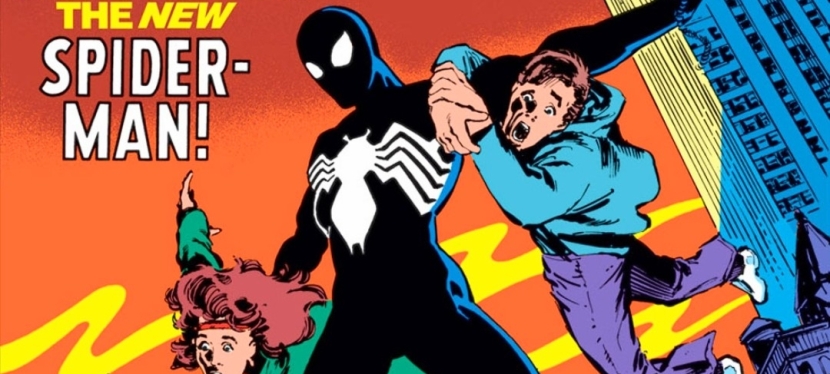
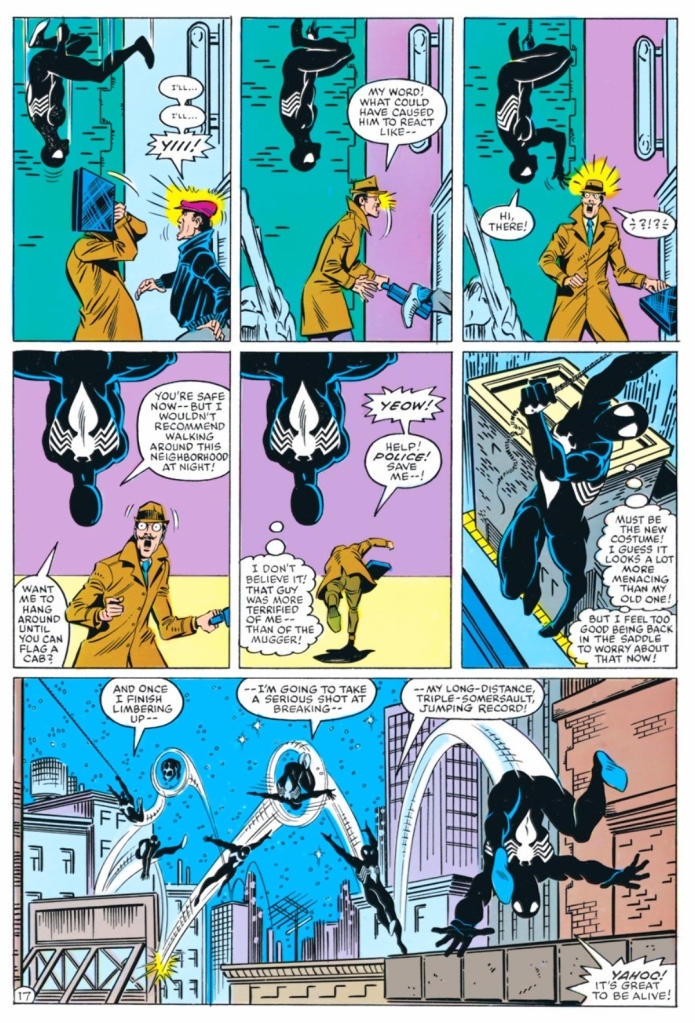
Spider-Man’s first night in New York wearing the alien costume .

I really like this story. I first read this a long time ago and I re-read it all over again for this retro review, and still this story engaged me a lot. There is a lot of richness in the script and you will get to see Peter Parker transitioning into a series of major changes that await him. Without spoiling the plot, there is no hero-versus-villain element here at all. It is all about Spider-Man who just arrived home from a major conflict (and also one of the most significant comic events ever published by Marvel Comics) and the alien costume saga truly began right here. The Venom debut did not happen until a few years later in reality.

In accordance to what was established in Secret Wars (not to be confused with the 2015 series of the same name) and the standards of then editor-in-chief Jim Shooter, the creative came up with a tale that not only showed a different Spider-Man but also portrayed him in ways that defied the tropes and creative ideas the preceded this comic book.

For one thing, Peter Parker is literally like a fish out of water here. As far as the whole world is concerned, only days passed when the superheroes went to deep space. But for the webslinger, a lot more time passed as so many battles, discoveries and intriguing events took place for him along with the others. That being said, Peter Parker’s perception of reality and track of time really got messed up and the weight of Secret War’s events really turned out overwhelming on him. This was well dramatized in the scene wherein Peter – who realized that so much time had passed – he had to call his aunt May fearing that she must be worried sick over him. There was also the moment when by walking down the street, he realized how much he missed not only his home but also the local surroundings.

It was also in this comic book when Peter started getting more oriented with the alien costume he first got in Secret Wars #8 (which was actually published after this comic book) and started to enjoy the benefits with the way it responds to his thinking. Of course, at this stage, he has yet to realize the unfortunate truth about the living costume he brought home and this story really kicked off a new and profound stage in the comic book history of Spider-Man

Conclusion

When Spider-Man finally arrived home after spending so much time during Secret Wars.

Amazing Spider-Man #252 (1984) is still a great comic book to read all over again. This was released during the time when Secret Wars (1984) was still being published and years before Venom’s big debut in the series’ 300th issue. In my view, the alien costume saga was a big turning point in the literary history of Spider-Man and the creators who got involved in this comic book really sowed the seeds of compelling and intriguing events that followed. What is intriguing is that all of these significant developments started when a Marvel Comics reader from Illinois came up with the idea of a new costume for Spider-Man, wrote to them and the publisher responded to acquire his idea for over $200 (click here).

This comic book is also a reminder of how significant Jim Shooter’s rule at Marvel Comics really was and I can say that the Marvel’s literary universe of the 1980s should not be ignored.

Overall, Amazing Spider-Man #252 (1984) is highly recommended!

+++++

Thank you for reading. If you find this article engaging, please click the like button below, share this article to others and also please consider making a donation to support my publishing. If you are looking for a copywriter to create content for your special project or business, check out my services and my portfolio. Feel free to contact me with a private message. Also please feel free to visit my Facebook page Author Carlo Carrasco and follow me on Twitter at  @HavenorFantasy as well as on Tumblr at https://carlocarrasco.tumblr.com/ and on Instagram at https://www.instagram.com/authorcarlocarrasco
A Look Back at Contra (1988)

Welcome back retro gaming fans and readers!

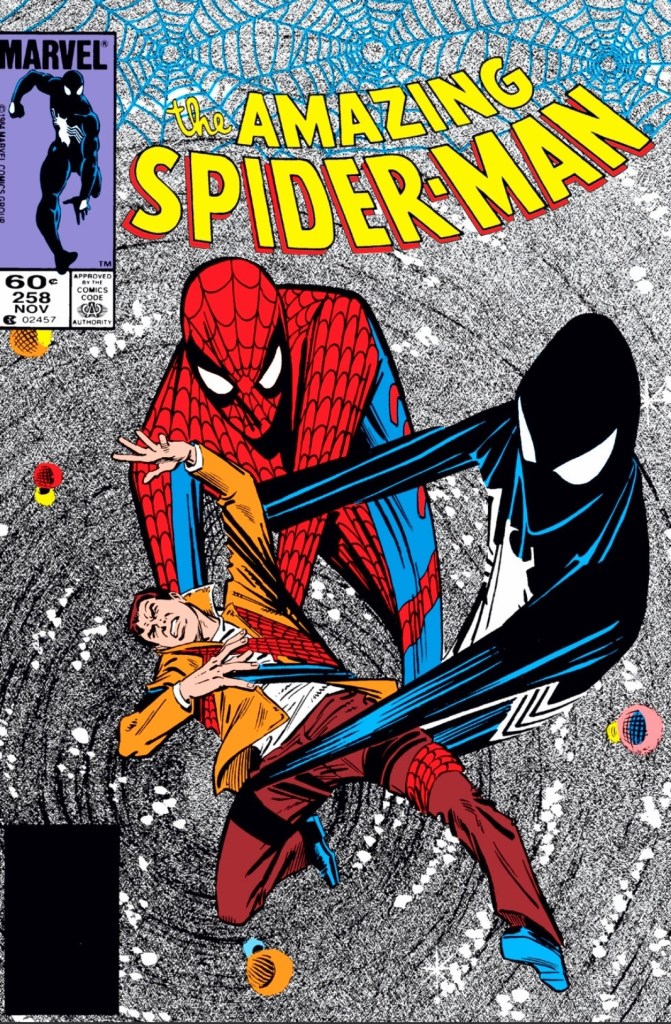
Today, we will go back to the late 1980s to examine one of the most significant console games of the decade…Konami’s Contra. To put things in perspective, Contra started in the arcades in 1987 and went on to become a big hit. Konami went on to make a version of the game for Nintendo Entertainment System (NES) in the West and the Family Computer (Famicom) in Japan that resulted in different looking graphics (both artistically and technically), reworked stages, and different and extended level designs that were done within the consoles’ limitations. In short, the home version of Contra was pretty different from the arcade version but still was made to be fun and exciting on its own.

In my personal experience, my discovery of Contra has always been on the Famicom and some time later on the NES. For this retro review, I replayed Contra (both Famicom and NES versions) via the Contra Anniversary Collection on my Xbox Series X.

With those details laid down, here is a look back at Contra, developed and published by Konami for the NES and Famicom in 1988. The NES version was released one week ahead of the Famicom version in February 1988.

The start screen of the NES version of Contra. The commando with dark hair was deliberately made to resemble Sylvester Stallone somewhat.

Game concept

In the far future, an alien army from space – Red Falcon – arrived on Earth inside a meteorite that landed on the Galuga archipelago. There, Red Falcon established an extensive high-tech base for their operations and eventually brainwashed a local human army to do what they want. Red Falcon plots to wipe out human civilization on the planet.

With the information about Red Falcon collected, the Earth Marine Corps send Contra unit members Bill Rizer and Lance Bean to the island to destroy the opposition and find out what Red Falcon has been doing…

Gameplay and quality

Contra is an action-packed 2D side-scrolling game with strong sci-fi and military influences.

To begin with, Contra of 1988 was made to be a nicely-paced, action-packed, side-scrolling adventure game that has some 3D-like levels in between. The game design and levels Konami came up with was done to immerse gamers into actual participation in the military campaign against the aliens and their brainwashed human soldiers. This campaign not only includes battles through the forest of the Galuga archipelago but also through the interiors of Red Falcon’s high-tech facilities, going up an elevated location with waterfalls, the snowy area and further deep into the rest of the enemy’s mechanical base.

For the most part, you play as a commando armed with a rifle with unlimited ammunition. As you shoot enemies and make your way through the 2D side-scrolling level, there will be the occasional flying capsules that you can shoot down to gain new weapons/ammunition (S for Spread Shot, M for Machine Gun, L for Laser) or some power-up (temporary invincibility or the rare ability to eliminate all enemies present on-screen) to help yourself as the wave of opposition from Red Falcon is relentless (which is reason enough to compel you to keep progressing and fighting). There are also times when the mentioned enhancements suddenly pop out after killing an enemy.

To prevent the game from getting too old with side-scrolling, Konami implemented these stages in which players face the front to attack enemies, overcome obstacles and move forward with 3D-like effects going into the next place.

By default, this game is brutally hard. Not only do the enemies keep appearing (with some of their teammates being strategically placed to fire at you), the obstacles will compel you to take your time overcoming them. In this game, one-hit death is the norm and there are many moments in which falling to your death becomes a huge risk. You get hit, you not only lose one life, you will lose whatever powerful weapons you gained.

There are also stage bosses (powerful enemies that await you at the end of a level) that will challenge you so much, you will have to adjust your strategy, pay attention to the movements and timing of the enemy, and then adjust your way fighting.

Only the Famicom version of Contra has this sequence.
I really love the sci-fi elements the game developers came up with for this classic game. There are lots of high-tech stuff to see here and this robotic enemy is just one of them.

Fortunately for us players, the controls are really tight and very responsive. You can move your characters to overcome obstacles, avoid getting hit by enemies and even move down from one platform if the space below is safer. I still remember how precise and responsive the controls were on the NES and Famicom versions, and I can say that all the responsiveness made it on the Xbox controller when I replayed Contra on Xbox Series X with the Contra Anniversary Collection I downloaded. In fact, the high precision of the controls added to the fun of shooting enemies or obstacles with the Spread Shot while moving to the right as it was meant to be.

Considering the intense difficulty of the game, players who do the famous Konami Code (Up, Up, Down, Down, Left, Right, Left, Right, B, A, and Start) will be reward with 30 lives when they start playing Contra. For Xbox gamers reading this, there is a slight difference with the Konami Code when playing Contra on Xbox consoles.

Apart from shooting, there are lots of platform gaming elements to experience here. The difficulty is very brutal and the famous Konami Code will grant you 30 lives when you do the code correctly.
This cut-scene is only available in the Famicom version.

With regards to game design, the Konami developers did a really fine job creating the levels, placing the challenges and setting up memorable boss battles for action/adventure-hungry gamers to indulge in. The developers also cleverly implemented the fictional/fantasy concepts into the game design which resulted in me getting immersed in the Contra team’s mission against the Red Falcon at their secret base.

Another highlight with playing Contra is the 2-player option and the above-mentioned Konami Code added to the fun and accessibility of. I still remember the old days of playing in a 2-player session (cooperative play essentially) of Contra at a friend’s house on a Famicom. Since my friends and I were already enthusiasts of 1980s Hollywood action movies, playing Contra was enjoyable even though the difficulty was brutal.

This is one of the touch stage bosses you will encounter in the game.

If there are any notable differences between the two versions of Contra of 1988, it would be the fact that the Japanese (Famicom) version has storytelling emphasized through cutscenes (with Japanese text displayed), a technical overview of the Red Falcon base at Galuga with maps displayed before you start a new level, in-game art, an additional scene that spiced up the ending and, most notably, more background/environmental animation. The additional animation on the Famicom version made the adventuring look and feel more lively and this is most evident in the final stage (lair of the alien).

Conclusion

The Japanese cover art of Contra on Famicom. The Rambo-like character and the alien egg are obvious inspirations from Hollywood action movies of the 1980s.

There is no doubt in my view that after all the decades that passed since I first played it, Contra (1988) is still very engaging and a lot of fun to play whether you choose the Famicom version or the NES version. The developers who made this game succeeding in making something very enjoyable for millions of gamers and it is very clear that the makers were inspired by Hollywood action movies of the decade. In my view, the most obvious military inspirations are Aliens (1986), Commando (1985) and Rambo: First Blood Part II (1985).

Historically speaking, Contra (1988) was released at a time when militarism inspired many other game designers to come up with enjoyable games in different forms such as Cabal, Jackal, Rush’n Attack, Operation Wolf, Operation Thunderbolt to name some. Considering the overall quality and high fun factor Konami established, it is safe to say that this game is one of the finest among its militaristic gaming counterparts of its decade.

I had a grand time replaying Contra (1988) on my Xbox Series X in preparation for this review. Having played both NES and Famicom versions, I can say that the latter is the more complete and more immersive version to play. That does not necessarily mean the NES version is totally inferior. In fact, the NES version is more straightforward with the pick-up-and-play approach, and the gameplay itself is nearly identical (note: Famicom version is slightly more challenging) and very much fun to experience. If you are the player who really wants to be more immersed into the lore of Contra and absorb the military sci-fi concept Konami prepared, then the Famicom version is the one to play. That being said, now is a good time to purchase and download Contra Anniversary Collection.

Overall, Contra (1988) is highly recommended! It truly is a retro gaming gem!

+++++

Thank you for reading. If you find this article engaging, please click the like button below, share this article to others and also please consider making a donation to support my publishing. If you are looking for a copywriter to create content for your special project or business, check out my services and my portfolio. Feel free to contact me with a private message. Also please feel free to visit my Facebook page Author Carlo Carrasco and follow me on Twitter at  @HavenorFantasy as well as on Tumblr at https://carlocarrasco.tumblr.com/ and on Instagram at https://www.instagram.com/authorcarlocarrasco

What to watch on YouTube right now – Part 19

Welcome back, my readers, YouTube viewers and all others who followed this series of articles focused on YouTube videos worth watching. Have you been searching for something fun or interesting to watch on YouTube? Do you feel bored right now and you crave for something to see on the world’s most popular online video destination?

I recommend you check out the following topics and the related videos I found.

#1 Larry Bird’s memorable big game of 1992 – If you love American basketball and the modern day NBA does not appeal much to you, then you should go back to the year 1992 when the legendary Larry Bird had his last big game before retiring. During his final years in the NBA, aging and a serious back injury hounded Bird as he kept on leading the Boston Celtics. In March 1992, the Celtics hosted the strong Portland Trailblazers and this was the game when Larry Bird scored 49 points and even registered a triple-double at the age of 35. That being said, watch the highlight video below…

#2 Score PN’s Terminator 3: Before The Rise video – Score PN, a YouTube channel that is best known for its in-depth videos about the Resident Evil entertainment franchise, also produced videos related to The Terminator. Back in 2003, Arnold Schwarzenegger had a big cinematic comeback with Terminator 3: Rise of the Machines which I saw inside the cinema when it opened here in the Philippines. Back then, I was not even aware that a prequel comic book limited series of Terminator 3 was published and Score PN has a video about it which you can watch below. By the way, Score PN also produced videos about comic book adaptations of Batman movies which I highlighted previously.

#3 Vizconde Massacre explanatory videos – Previously, I included Viva’s video showing the entire 1995 movie The Jessica Alfaro Story. For the newcomers reading this, Jessica Alfaro (played in the movie by Alice Dixson) was the star witness of the trial of the shocking Vizconde Massacre and it took her around four years to come out publicly. For legal reasons, The Jessica Alfaro Story film made alterations (creative liberties) to make a reference to the massacre without the Vizconde name. That being said, if you want to know more about the Vizconde Massacre of 1991, the trial that happened and the big decision the Supreme Court made in 2010, then you should watch these two explanatory videos. The third one analyzes the legal aspect of 2010 Supreme Court decision related to the massacre.

#4 RoboCop 2 reaction videos plus arcade/console game documentary – Back in 1990, my friends and I got to watch RoboCop 2 inside the movie theater here in the Philippines and almost all the seats were filled at the time. While the movie was not memorable as it never came close to matching the uniqueness and cultural impact of the 1987 original RoboCop, it still managed to entertain enough people who eventually became fans. Like its predecessor, RoboCop 2 also had game adaptations for the arcade and consoles. Watch the videos below…

#5 A look at the history of Area 51 arcade/console games – Back in the mid-1990s, Area 51 by Atari was a huge hit in the arcades in the West and was perceived as a comeback for the said company. Area 51 was so successful, it prevented Atari from falling into financial disaster and versions of the game were released for Windows PC, PlayStation and Sega Saturn. Not only that, a spiritual sequel to Area 51 was released in 1997 with Maximum Force. To learn more about Area 51’s place in gaming history, watch the video below…

#6 Stand by Me movie reaction videos plus trivia video If you are fond of movies based on the writings of Stephen King, then Stand by Me (1986) should have been part of your watch list a long time ago. It was an acclaimed coming-of-age film directed by Rob Reiner and has been described by some as one of the most defining movies of the 1980s. It is no surprise that there are retro movie reviews, movie reaction videos and trivia videos about it. You can watch the selected movie reaction videos plus a movie trivia video below…

#7 The liar and manipulator Abby Martin crushed by son of Hamas! It is very sickening that there are still people here in this world who chose to be evil and do the works of Satan. I am talking about Abby Martin, a self-declared journalist who is actually a liar and manipulator. Do not let her good looks and media style fool you. Abby Martin constantly condemns the nation of Israel as she clearly took sides with the terrorists and supports the Palestinian agenda of wiping out the Jewish state. She might as well be working with wicked leaders of Iran. Watch this video of Abby Martin getting crushed by the son of Hamas. Remember that Abby Martin is clearly working with the terrorists and murderers. Never let Abby Martin poison your minds!

#8 The disappointing interview with the Xbox president Since early this year, gamers’ trust in Xbox weakened due to unexpected developments such as Microsoft deciding to release four Xbox-exclusive games to other consoles. Since then, a lot of Xbox fans have been speculating that in due time Xbox itself will change for the worse and eventually end to pave the way for Microsoft to become a multi-platform game publisher. That being said, the downward trend of Xbox continued as four of its game studios – Tango Gameworks, Alpha Dog, Roundhouse Studios and Arkane Studios – were suddenly shut down which sent shockwaves throughout the industry and attracted negativity to Xbox. Not only that, there was this very disappointing interview with Xbox president Sarah Bond which made things worse. Posted below is the video of the very interview itself plus one reactionary video from Geeks and Gamers.

+++++

Thank you for reading. If you find this article engaging, please click the like button below, share this article to others and also please consider making a donation to support my publishing. If you are looking for a copywriter to create content for your special project or business, check out my services and my portfolio. Feel free to contact me with a private message. Also please feel free to visit my Facebook page Author Carlo Carrasco and follow me on Twitter at  @HavenorFantasy as well as on Tumblr at https://carlocarrasco.tumblr.com/ and on Instagram athttps://www.instagram.com/authorcarlocarrasco

A Look Back at Amazing Spider-Man #375 (1993)

Welcome back superhero enthusiasts, 1990s arts and culture enthusiasts, Marvel Comics fans and comic book collectors! Today we go back to the year 1993 and examine a small part of the Marvel Comics universe through a tale of the Amazing Spider-Man monthly series.

In my previous retro comic book review, the insane murderer Venom returned to antagonize Spider-Man by targeting his parents. While it was a fact that Venom – who knew Spider-Man’s true identity – got into close contact with Aunt May (symbolizing the danger he poses on the Peter Parker’s family) a few years prior, going after the mother and father of Peter really raised the stakes.

With those details laid down, here is a look back at Amazing Spider-Man #375, published in 1993 by Marvel Comics with a story written by David Michelinie and drawn by Mark Bagley. This comic book marked the 30th anniversary of Amazing Spider-Man #1 (1963).

The cover.

Early story

The story begins inside one of the facilities of the closed amusement park in Brooklyn. In his vicious form, Venom tells Richard and Mary Parker (both restrained) that they belong to him and declares that he would protect them from Spider-Man.

When Richard Parker asked why would he think that they would have anything to do with Spider-Man, Venom realizes that the couple does not even know their son is the webslinger. Venom tells the couple that their innocence is what he is sworn to preserve.

Over at Manhattan, Spider-Man swings back to the Daily Bugle building and discreetly changes his clothes before moving in as photographer Peter Parker. Inside one of the offices, J. Jonah Jameson reaches out to Silver Sable by telephone…

Quality

Peter Parker had to commit a crime by trespassing into Anne Weying’s residence. His disguise as Spider-Man does not protect him from the law.

I have mixed feelings about this follow-up to the great story of the previous issue. For one thing, David Michelinie’s script had a completely different tone and direction even though he intended this comic book to conclude what issue #374 started. Another thing is that this story has even more characters added in which clearly diluted the intensity of the Venom-Spider-Man rivalry that was so intense in the previous issue.

There are two sub-plots – one of which deals with someone from Eddie Brock’s past – that were emphasized with sufficient details and the creative team integrated them into the main story. It seems that the creators intended to make the main story look grander in scope while sacrificing the very elements that made issue #374 a great and intense reading experience.

Remember the suspense and danger that came with Venom targeting the older Parker couple? Those elements are almost totally absent in this comic book even though this story concluded the previous issue’s conflict build-up. Richard and Mary Parker are both present as captives of Venom but there really is no tension nor any sense of danger here due to the drastic change of tone and direction in the script.

I should also stress that the introduction of Anne Weying (previously Anne Brock) as Eddie Brock’s ex-wife looked and felt like an afterthought inserted into the story. While Anne’s presence brought out some traces of humanity and sanity from Venom during the 2nd half of the story, it did not add much impact on the conflict between the webslinger and the symbiote-wearer murderer. Ultimately, the creative team had to do something to explain the story build-up on Venom’s part leading into the Lethal Protector limited series which is set in the city of San Francisco.

And then there was the presence of Silver Sable’s team called the Wild Pack. The Wild Pack is the result of J. Jonah Jameson’s agreement with Silver Sable with the objective of achieving a journalistic exclusive for the Daily Bugle. This particular sub-plot is really lousy and not even the dynamic looking action sequences involving the Wild Pack could hide lousiness.

If there is anything symbolic about the script, it is the emphasis on family as well as the impact that comes with elements of the past emerging unexpectedly. In this very comic book, you will get to see Eddie Brock/Venom react like a sane person in response to the sudden re-appearance of his former wife. No matter what the creative team did here, I can say that the Spidey/Venom conflict did not really intensify (note: the dynamic action scenes did not solve the shortcomings) and there was no reason to worry about the captive Parker couple.

Conclusion

The insane murderer Venom with the parents of Peter Parker.

Considering the great stuff and raised stakes that made issue #374 a very compelling read, Amazing Spider-Man #375 (1993) is clearly a disappointing conclusion. This is not a terrible comic book as it has some good stuff for fans to enjoy but the overall presentation of the creators here is not too great due to their approach with the storytelling (with two sub-plots that did not add much). Overall, I am glad I never bought this comic book (with flashy cover and more pages) at full price in 1993.

Overall, Amazing Spider-Man #375 (1993) is satisfactory.

+++++

Thank you for reading. If you find this article engaging, please click the like button below, share this article to others and also please consider making a donation to support my publishing. If you are looking for a copywriter to create content for your special project or business, check out my services and my portfolio. Feel free to contact me with a private message. Also please feel free to visit my Facebook page Author Carlo Carrasco and follow me on Twitter at  @HavenorFantasy as well as on Tumblr at https://carlocarrasco.tumblr.com/ and on Instagram at https://www.instagram.com/authorcarlocarrasco

A Look Back at RoboCop 2 #1 (1990)

Welcome back superhero enthusiasts, 1990s arts and culture enthusiasts, Marvel Comics fans and comic book collectors! Today we go back to the year 1990 to take a close look at the comic book adaptation of the movie RoboCop 2 (1990).

Before getting to the new retro comic book review, I should state that my friends and I had a fun time watching RoboCop 2 in the cinema shortly after it opened here in the Philippines. Back then, I was not yet a comic book collector and I rarely visited comic book specialty stores. That being said, I was unaware that Marvel Comics actually published an adaptation in the form of a 3-issue mini-series.

With those details laid down, here is a look back at RoboCop 2 #1, published in 1990 by Marvel with a story written by Alan Grant and drawn by Mark Bagley based on the movie screenplay by Frank Miller and Walon Green.

The cover.

Early story

The story begins in Detroit where the cops are run by corporations and the streets have turned into red-alert war zones. Crime is overwhelming the city and the highly addictive narcotic poses the greatest threat facing societies. The surgeon general who made the public warning about nuke was killed and the crime boss Cain (leader of a cult of nuke addicts and pushers) claims responsibility. Through the news media, Cain tells the public that nuke will make people’s problems go away and people want its paradise.

Under the management of Omni Consumer Products (OCP), several of Detroit’s police officers go on strike demanding better terms from their employer. The City Government of Detroit under Mayor Kuzak missed a payment (in relation to them owing $37 million) and OCP begins to move to foreclose the city and its assets in accordance to the terms of the contract. Mayor Kuzak accuses OCP of engineering the police strike which made crime rampant.

Elsewhere in the evening, the cruel activities of the thugs got disrupted by the arrival of a police car. Even though the police car got destroyed by the thugs, RoboCop emerges and begins to fight back…

Quality

There is simply no holding back for RoboCop when it comes to doing police work at a time when many police officers are on strike while crime has turned more rampant in Detroit.

This opening issue of the mini-series sticks close the basic plot of the movie (right until after Cain’s gang dismantled RoboCop) although there were a few notable differences with the sequence of events and there were scenes that showed the creative team took liberties to make the story suitable with the literary format in mind. That being said, don’t expect to see the key moments of the movie look exactly the same in this comic book and don’t expect to see the characters here looking like the actors who played them on the big screen. In terms of visual and literary presentation, this adaptation has a lot in common with the Total Recall comic book adaptation which coincidentally was released the same year.  

For me, this is indeed a really readable comic book that has its stylized approach on telling the movie’s concept. OCP is the most powerful entity in the story while Cain and his gang are clearly the force of evil that strongly pose danger not only to Detroit’s people but even to the very divided police force. Nuke as the dangerous object of the plot clearly was inspired from elements of the real life war against drugs in 1980s America which made this story socially relevant.

Very clearly these villains look nothing like actors Tom Noonan, Galyn Görg and Gabriel Damon.

Like in the movie, RoboCop here performs his law enforcement duty in an uncompromising manner even though memories of his past life as officer Murphy re-emerged deep inside. That being said, there are a few moments in which you might sympathize with the titular hero as this comic book pays close attention to the conflict between humanity and technology.

The action scenes here are sufficient but clearly don’t come anywhere close to the intensity of the film in terms of violence. Still, there is enough action for readers to enjoy.

When it comes to the visuals, the artwork done by Mark Bagley eerily looks comparable with Tom Lyle’s art in the Total Recall comic book of 1990. For the newcomers read this, Bagley became a popular artist through the Amazing Spider-Man monthly series and the Venom: Lethal Protector comic books that were released after years after this one. Having seen many of Bagley’s works published in 1992 to 1995, I can hardly recognize his art style in this comic book adaptation. The way he drew people’s faces in this comic book looks very different from those seen in Amazing Spider-Man issues. At the same time, Bagley’s own take on RoboCop has that balanced approach on depicting humanity with machinery while also making the hero look less bulky compared to the movie’s version.

Conclusion

Julie Faxx of OCP sure talks like a woke nut and rabid feminist in this scene.

RoboCop 2 #1 (1990) is clearly not a faithful adaptation of selected parts of the movie but that’s not necessarily a bad thing. This is more about the Grant-Bagley team doing their own visual presentation of the movie script copy they had and ultimately they succeeded in making this comic book a stylized and worthy reading experience. This is indeed a surprisingly entertaining read and I can say that I am looking forward to reading the next issue.

Overall, RoboCop 2 #1 (1990) is recommended.

+++++

Thank you for reading. If you find this article engaging, please click the like button below, share this article to others and also please consider making a donation to support my publishing. If you are looking for a copywriter to create content for your special project or business, check out my services and my portfolio. Feel free to contact me with a private message. Also please feel free to visit my Facebook page Author Carlo Carrasco and follow me on Twitter at  @HavenorFantasy as well as on Tumblr at https://carlocarrasco.tumblr.com/ and on Instagram at https://www.instagram.com/authorcarlocarrasco
A Look Back at X-Men Adventures Season II #9 (1994)

Welcome back superhero enthusiasts, 1990s arts and culture enthusiasts, Marvel Comics fans and comic book collectors! Today we go back to the mid-1990s to explore the adaptation of the second season of the famous X-Men: The Animated Series (X-Men TAS) in the form of the X-Men Adventures comic book series.

Before getting to the new retro comic book review, I should state that the subject X-Men Adventures comic book will involve Carol Danvers in a supporting role (in rather creative ways). Yes, I’m talking about the one character who in the history of the Marvel Comics shared universe was identified (in no particular order) as Ms. Marvel, Binary, Warbird and as Captain Marvel. As the subject comic book was published in 1994, Carol Danvers here is obviously not the woke garbage version played by Brie Larson in the movies.  

With those details laid down, here is a look back at X-Men Adventures Season II #9, published in 1994 by Marvel Comics with a story written by Ralph Macchio and drawn by John Herbert.

The cover.

Early story

The story begins at night in New York City. There, Mystique and Mister Sinister have a serious talk. Sinister believes that without Charles Xavier’s presence, the X-Men are very vulnerable and they will eventually become disorganized and fall down quickly.

Over at the mansion of Xavier, Rogue wakes up from a very intense nightmare which prompts Cyclops and Gambit to calm her down. Rogue reveals that she has been having very disturbing visions ever since Professor X disappeared. It turns out, Xavier helped her previously by using his mental abilities to block out the unpleasant memories of hers.

Jean Grey enters the room and she reveals (in response to Cyclops’ question) that she ran a computer search on the woman Rogue saw the other day and came up with several pictures. As soon as Rogue examines the pictures, she then remembers who the woman is which causes her to be consumed by another vision from deep inside her mind. She sees Ms. Marvel…

Quality

There is a lot of stuff here that Rogue fans will enjoy.

The first obvious thing about this comic book is that it is a character-driven tale told mainly through Rogue. In fact, this is actually a creative portrayal of Rogue’s origin written for TV by Marty Isengerg and Robert Skir, and Macchio’s adaptation here made a really solid reading experience for me.

Without going too much into spoiler territory, I can say that this origin story of Rogue was not only written for TV viewers in mind but also crafted to cater to what was back then the modern tastes of X-Men fans in general. I’m talking about 1990s X-Men and society specifically and the thing is, everything here aged well. Nothing here feels out of place. I should also state that Rogue’s upbringing are well worth exploring here.

The writing by Macchio and art by Hebert are of high quality and this comic book is really worth reading again from start to finish. The emotions channeled through Rogue are very intense without ever reaching to the point of showing her insane. Hebert’s art, meanwhile, fills every page with a good amount of visual details complete with strong facial expressions (including some very scary faces from Mystique and Ms. Marvel) and some dynamic superhero action that really spiced up the reading experience.

As mentioned earlier, Carol Danvers appears in a supporting role and the creative team came up with clever ways to emphasize the character both visually and through dramatics. The way Danvers is portrayed here should inspire readers to go out and read Marvel’s published comic books of her as Ms. Marvel. The same thing can be said about Rogue whose origin and gradual rise from an occasional character (a super villainess no less) to a prominent superhero told through Marvel Comics’ shared universe are worth revisiting.  

Conclusion

A very disturbed Rogue in the presence of her teammates.

X-Men Adventures Season II #9 (1994) is indeed a very powerful and gripping character-driven comic book that will appeal to fans of Rogue, the X-Men and Carol Danvers. Considering the wholesome aesthetic of the X-Men animated series TV episode, this comic book has a much darker presentation that will strongly appeal to X-Men fans who want a more serious portrayal to read. As it was mainly focused on Rogue, I can say that the conflict was nicely built up and the resolution was a strong pay-off. Very clearly, the Macchio-Hebert creative duo really delivered great stuff.

Overall, X-Men Adventures Season II #9 (1994) is highly recommended.

+++++

Thank you for reading. If you find this article engaging, please click the like button below, share this article to others and also please consider making a donation to support my publishing. If you are looking for a copywriter to create content for your special project or business, check out my services and my portfolio. Feel free to contact me with a private message. Also please feel free to visit my Facebook page Author Carlo Carrasco and follow me on Twitter at  @HavenorFantasy as well as on Tumblr at https://carlocarrasco.tumblr.com/ and on Instagram at https://www.instagram.com/authorcarlocarrasco