What to watch on YouTube right now – Part 57

Welcome back my readers, YouTube viewers and all others who followed this series of articles focused on YouTube videos worth watching. Have you been searching for something fun or interesting to watch on YouTube? Do you feel bored right now and you crave for something to see on the world’s most popular online video destination?

I recommend you check out the following topics and the related videos I found.

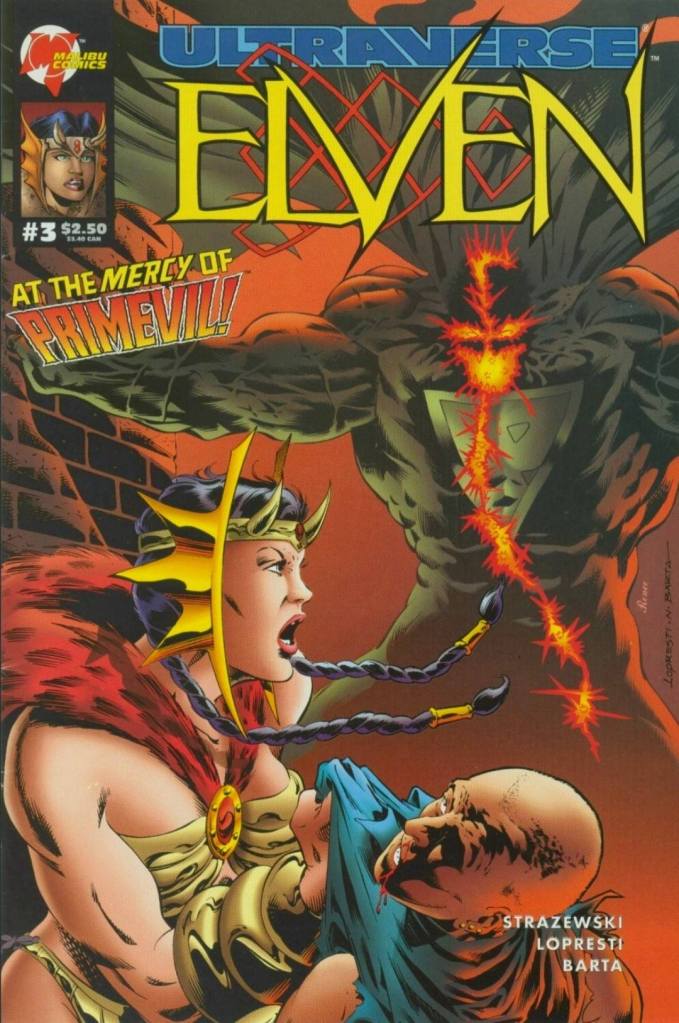
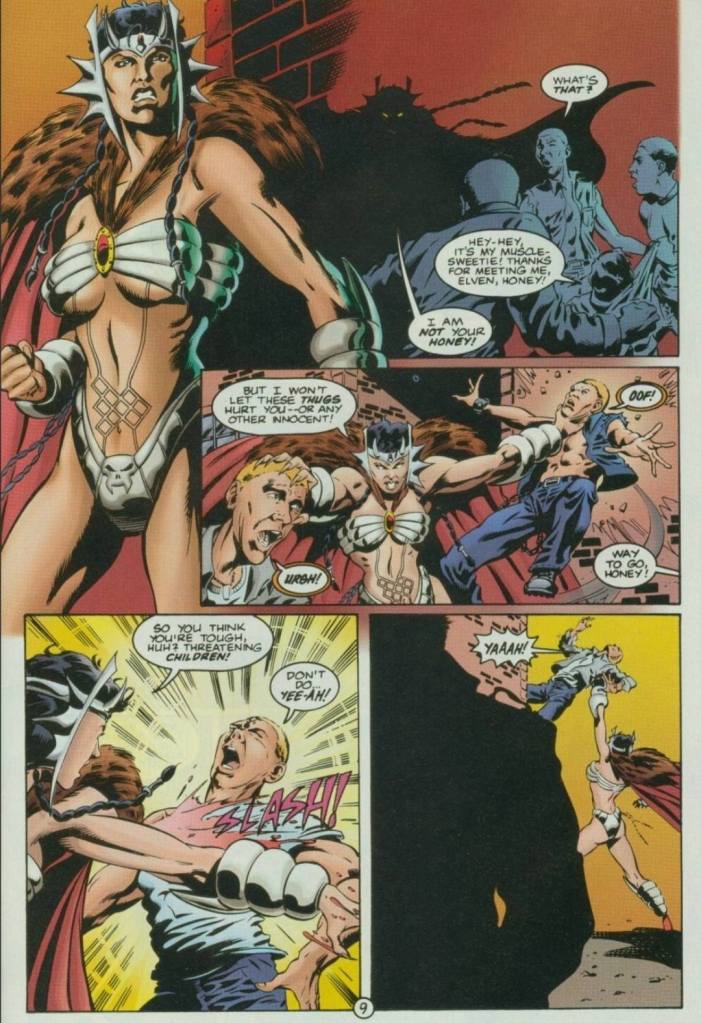
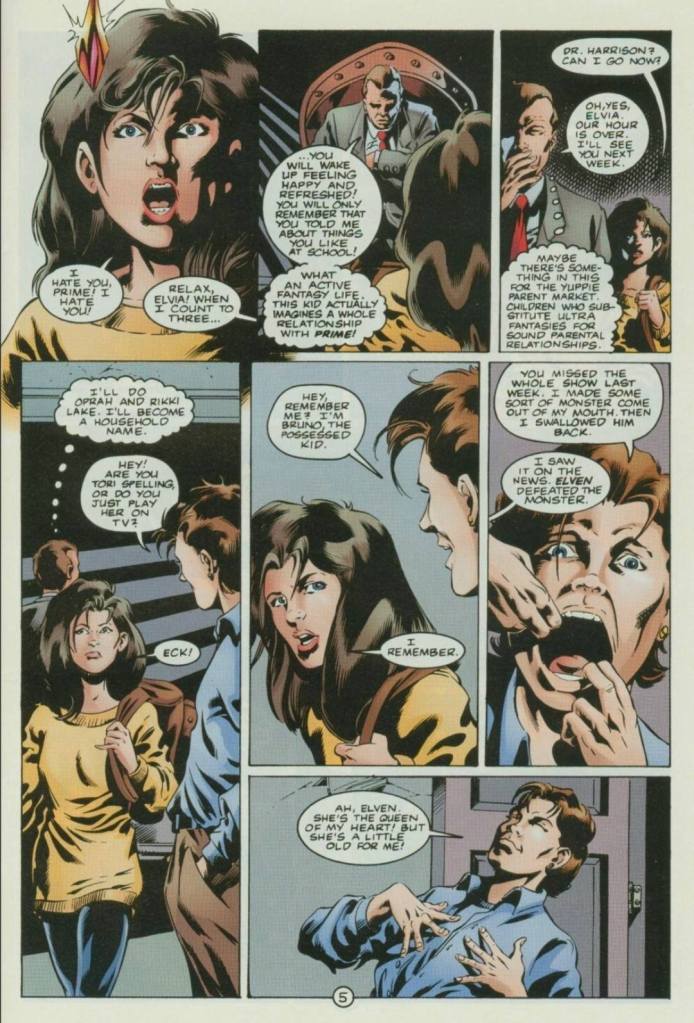
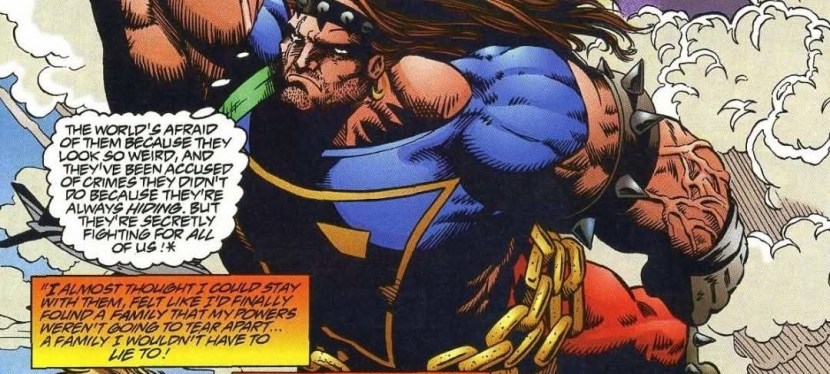
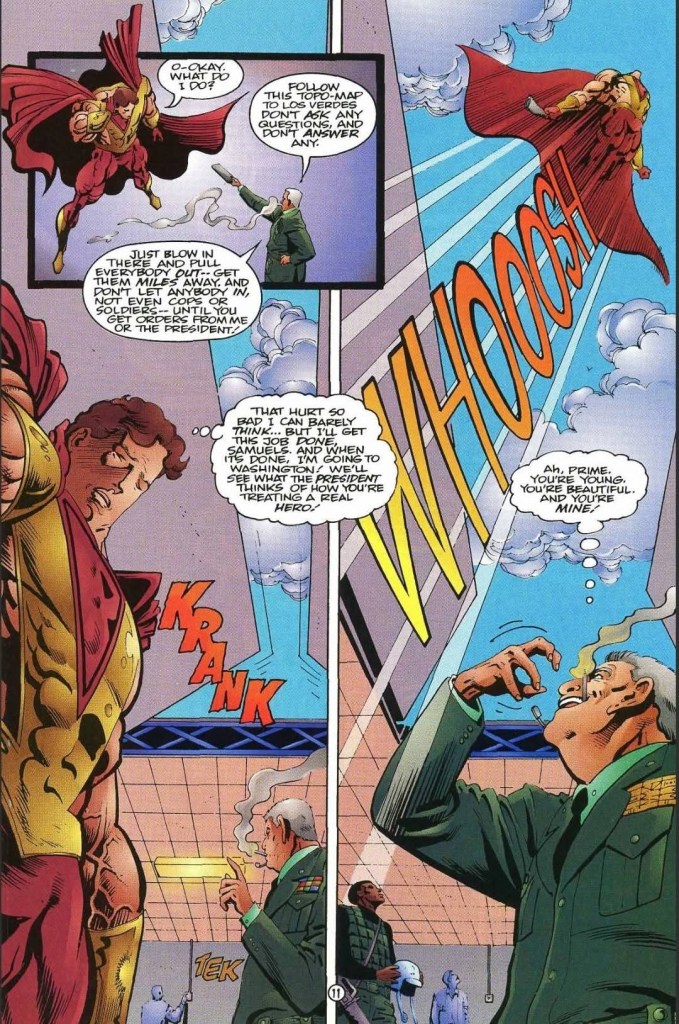
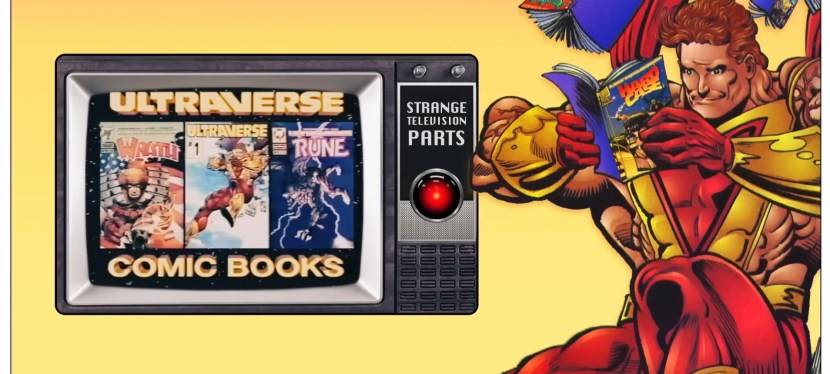
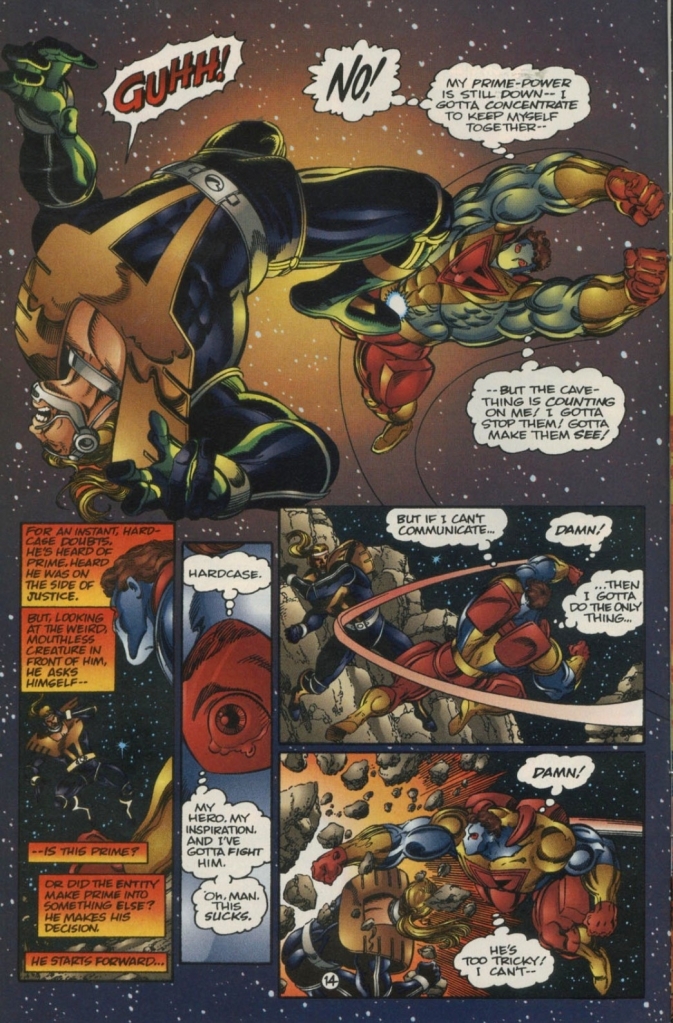
Revisiting the Ultraverse – When it comes to 1990s comics, the short-lived Ultraverse is the one franchise that defined the decade the most as it had lots of engaging concepts, solid stories and captivating characters to follow such as Prime, Mantra, Harcase, Prototype, The Strangers, The Solution and more! Behind the scenes, publisher Malibu Comics had a great creative team who brainstormed and developed the Ultraverse a lot prior to its 1993 launch. To learn more about the Ultraverse, watch the following videos below.

The 1993 debate between Peter David and Todd McFarlane – Way back in 1993, I learned bits of information about a certain debate between the prolific writer Peter David (The Incredible Hulk, Spider-Man 2099) and Todd McFarlane (Spider-Man and Spawn) through word-of-mouth and comics-related print media. Of course, Internet access here in the Philippines was not yet available back then but there was local awareness about the David-McFarlane verbal battle. Fortunately for us, an actual video of the entire debate was uploaded to YouTube and the YouTuber Strange Brain Parts posted an analytical video about it. The videos are now available for your viewing pleasure.

Lefties Losing It (Trump, Richard Gere, Taylor Swift booed and more) – In this recent episode of Lefties Losing It hosted by Rita Panahi, you will see how demented the current congressional Democrats have gotten, US President Donald Trump being cheered and how Taylor Swift was booed during the recent NFL Super Bowl, Richard Gere failing to accept reality and much more. Seriously, a lot of Leftists are still bitter over Trump’s return as President and they prefer to move on with their distorted view of reality. Wokeness truly is living wrongly. Watch and enjoy the video below.

VKunia reacts to Poltergeist (1982) – A lot of people find 1982’s Poltergeist (directed by Tobe Hooper and produced by Steven Spielberg) a scary viewing experience. It has been the subject of many documentaries or reaction or retro reviews on YouTube. YouTuber VKunia posted her own reaction video of it and you can how it affects her in the video below.

PatmanQC explains the history of The House of the Dead – The House of the Dead is a horror-themed series of video games that Sega first launched in 1996. During that year, there were The House of the Dead machines that suddenly appeared in local arcades here in the Philippines. Due to its horror theme and high level of violence, it caused some disturbance to concerned parents whose children saw or even played it. Regardless, the newer The House of the Dead games made its way to the local arcades as the years passed by. If you want to know who created the said Sega franchise and what were the inspirations for each game, watch the in-depth video by PatmanQC now.

Dawn of the Dead reaction videos – To make things clear, I was never a fan of Zack Snyder’s Dawn of the Dead remake. I saw it in the local cinema back in 2004 at a time when the new movies released were not so interesting. Even with modest expectations, I was not so entertained by it. Still the movie is popular with YouTubers who posted their own reactions to it. Watch and learn from the selected videos below.

+++++

Thank you for reading. If you find this article engaging, please click the like button below, share this article to others and also please consider making a donation to support my publishing. If you are looking for a copywriter to create content for your special project or business, check out my services and my portfolio. Feel free to contact me with a private message. Also please feel free to visit my Facebook page Author Carlo Carrasco and follow me on Twitter at  @HavenorFantasy as well as on Tumblr at https://carlocarrasco.tumblr.com/ and on Instagram athttps://www.instagram.com/authorcarlocarrasco

A Look Back at Mantra: Spear of Destiny #1 (1995)

Welcome back superhero enthusiasts, 1990s culture enthusiasts and comic book collectors! Today we go back to the mid-1990s to explore a part of the Ultraverse through a tale of Mantra, the male eternal warrior Lukasz who died during battle then returned in the body of a woman named Eden.

It has been a few years since the last time I reviewed a Mantra comic book. For the newcomers reading this, the Ultraverse was a franchise of superhero comic books launched by Malibu Comics in 1993 which produced a lot of fun, intriguing and memorable tales made by a variety of really talented creators. Mantra was one of the pioneering characters of the Ultraverse and the related comic book series lasted more than twenty issues. Along the way, a standalone story of Mantra was published in the form of a 2-part mini-series.

With those details laid down, here is a look back at Mantra: Spear of Destiny published in 1995 by Malibu Comics with a story written by Mike W. Barr and drawn by Paul Abrams.

The cover.

Early story

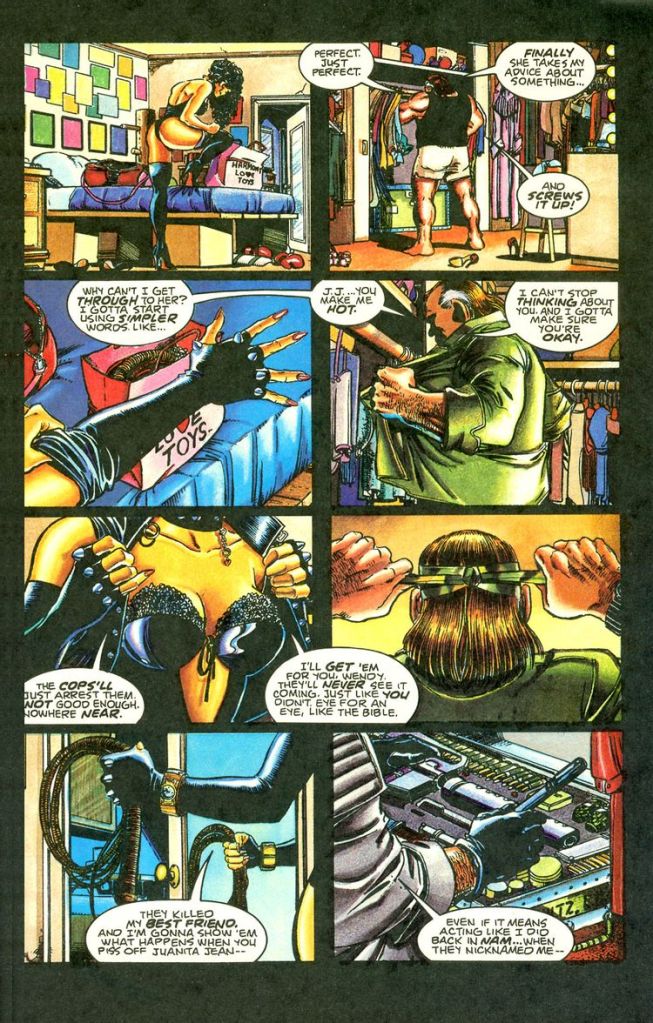
The story begins when Mantra arrives at a museum to start her attempt (in her civilian identity as Eden Blake) to obtain the Spear of Destiny. While wearing a revealing outfit to distract the men, Mantra gets close to the highly prized spear to observe it and see how the security personnel guard it.

At a different spot within the museum, Mantra decides to start obtaining the spear in magical outfit and with a mask. As Mantra arrives at the room where the Spear of Destiny, already there are monsters overwhelming the men guarding the Spear of Destiny…

Quality

Eden Blake/Mantra reporting to work at Aladdin.

Having read most of the stories of the Mantra comic book series, I can say that Mike W. Barr came up with a fresh concept that emphasizes the quest to gain possession of a highly valuable item while also creating a new approach on presenting Mantra…by engaging in espionage (spying and infiltration).

As I am already used to seeing the eternal warrior Lukasz/Mantra using magic in many struggles or missions, the concept of having the protagonist getting disguised and becoming an impostor on a spy mission is a very inspired move by the writer. The preparations taken by Mantra to becoming a certain blonde woman for the mission were nicely structured and detailed enough to make the transformation. As if that was not enough, a certain piece of technology was implemented which made using magic a huge risk for the eternal warrior. That being said, the story smoothly transitioned from magic-filled fantasy into a convincing spy thriller

Along the way, this comic book also emphasizes the darkness of the secret society Aladdin which Mantra (as Eden Blake) works for. Aladdin’s operations were dramatized several times in other Ultraverse comic books but this one has a more explicit portrayal of them.  

Conclusion

Mantra got hold of the Spear of Destiny but for how long?

Mantra: Spear of Destiny (1995) is really entertaining and compelling to read. This is easily one of the more creative and more unique tales of the Ultraverse character ever told and I can say that I am eager to find out what would happen next. This is also the one tale in which Mantra became a spy and gets into a dangerous mission in which the use of magic is too risky. The writing by Mike W. Barr is really strong with this one.

Overall, Mantra: Spear of Destiny (1995) is recommended.

+++++

Thank you for reading. If you find this article engaging, please click the like button below, share this article to others and also please consider making a donation to support my publishing. If you are looking for a copywriter to create content for your special project or business, check out my services and my portfolio. Feel free to contact me with a private message. Also please feel free to visit my Facebook page Author Carlo Carrasco and follow me on Twitter at  @HavenorFantasy as well as on Tumblr at https://carlocarrasco.tumblr.com/ and on Instagram at https://www.instagram.com/authorcarlocarrasco

A Look Back at Detective Comics #575 (1987)

Welcome back superhero enthusiasts, 1980s culture enthusiasts and comic book collectors! Today we go back to the late 1980s to explore a part of the DC Comics shared universe through a tale of the iconic Batman.

After DC Comics published the maxi-series Crisis on Infinite Earths, the publisher rebooted their entire comic book universe and that meant reintroducing their superheroes, villains and supporting characters with a touch of 1980s modernization. Frank Miller led the reintroduction of Batman as a new crime fighter in the Batman: Year One storyline in 1987. Also that same year, DC Comics went on to publish a sequel storyline through four issues of the Detective Comics series. That sequel was titled Batman: Year Two.

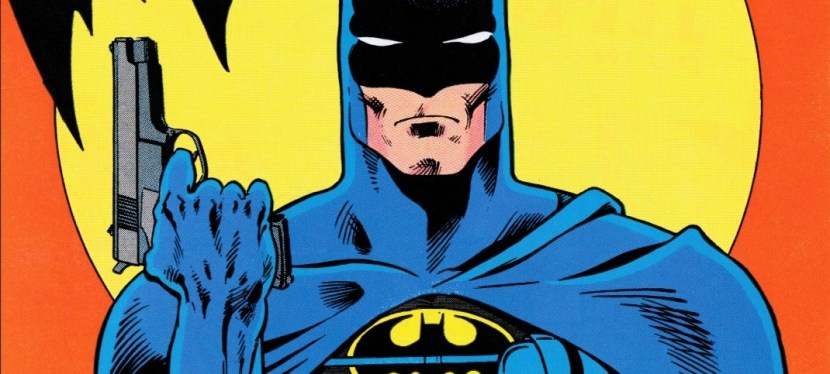
With those details laid down, here is a look back at Detective Comics , published in 1987 by DC Comics with a story written by Mike W. Barr (the same guy who did Mantra for Malibu Comics) and drawn by Alan Davis. This is the first chapter of the Batman: Year Two storyline.

The cover.

Early story

The story begins in Gotham City where the newly appointed police commissioner Gordon participates in a TV talk show. The talk show host is aggressive towards Gordon cutting him off verbally and pointing out that Batman – who is working with the police fighting crime – is no better than the Reaper, a costumed vigilante who caused trouble and killed many people on Gotham’s streets twenty years prior. Gordon emphasizes that Batman works with the city police and he operates strictly on his own.

As the TV talk show goes on, a group of armed thugs carrying varied items enter an apartment that is dark. Outside the Bat Signal (coming from the machine Gordon recently got) flashes, and soon Batman himself appears inside the apartment and cleverly took the gang down. He leaves the place going to do other things.

The next day, Rachel Caspian is pleasantly surprised to see her father arrive earlier than expected…

Quality

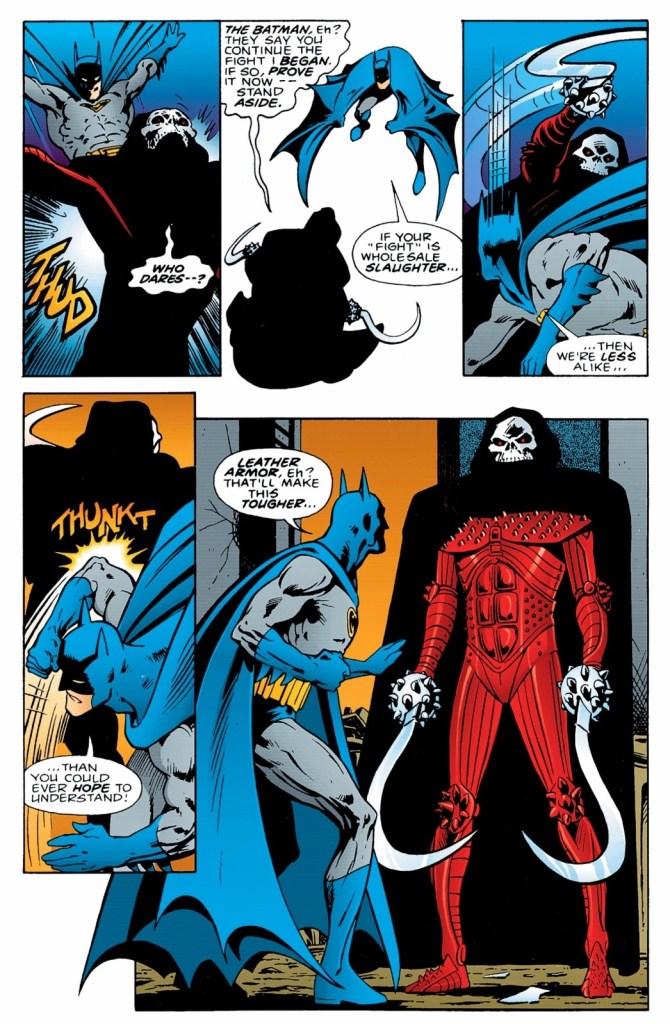
Batman strikes first in his encounter with the Reaper.

Set during the 2nd year of Batman engaging in crime-fighting in coordination with the Gotham City police force, this comic book dramatically portrays the city having a long-running disease and legacy of crime. The references to Gotham’s embarrassing past of being filled with thugs and wicked activities literally paved the way for the return of a masked vigilante who fights criminals with uncompromising violence (including killings). That vigilante’s legacy affects the way the public perceives Batman and why they have trouble seeing the differences between them. The writing and build-up here are very solid.

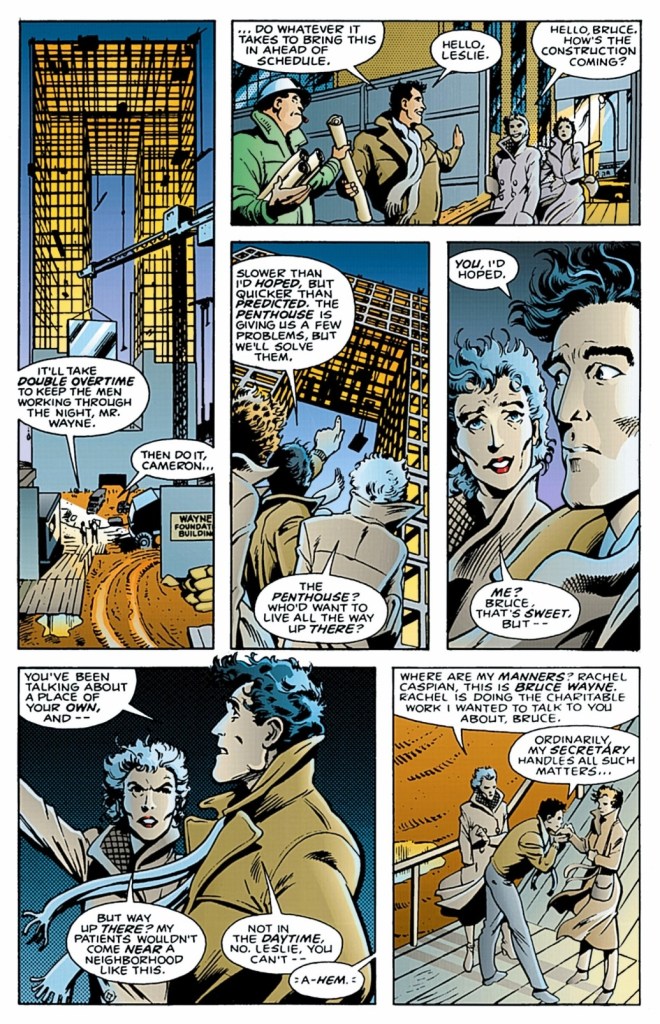
When it comes to portrayals, you will get to see a younger Bruce Wayne who is clearly pushing himself hard between engaging in business matters and secretly fighting crooks. This is a Batman who is only gaining more experience in the war against crime and he clearly is not the very tactical and very resourceful hero he would become. In his fight against the Reaper, you will really see Batman struggle hard and make really flawed moves that cost him a lot.

The introduction of the Reaper, who became the definitive vigilante of Gotham City long before Batman even started, is very engaging. This vigilante is also very intimidating to see and he clearly overshadows the Caped Crusader both visually and in action.

Conclusion

Bruce Wayne attending to business on-site.

As the first chapter of the Batman: Year Two storyline, Detective Comics (1987) is a very solid tale to read. The narrative moved at a medium pace and there were these balanced pay-offs to the build-up (that took place in the first half). The Reaper’s reputation as Gotham’s past blood-thirsty vigilante literally dwarfed that of Batman (the modern vigilante). I should also state that Mike W. Barr symbolized the common traits and differences between Batman and the Reaper which alone are worth reading.

Overall, Detective Comics (1987) is recommended.

+++++

Thank you for reading. If you find this article engaging, please click the like button below, share this article to others and also please consider making a donation to support my publishing. If you are looking for a copywriter to create content for your special project or business, check out my services and my portfolio. Feel free to contact me with a private message. Also please feel free to visit my Facebook page Author Carlo Carrasco and follow me on Twitter at  @HavenorFantasy as well as on Tumblr at https://carlocarrasco.tumblr.com/ and on Instagram at https://www.instagram.com/authorcarlocarrasco

A Look Back at Ultraverse Year One (1994)

Disclaimer: This is my original work with details sourced from reading the comic book and doing personal research. Anyone who wants to use this article, in part or in whole, needs to secure first my permission and agree to cite me as the source and author. Let it be known that any unauthorized use of this article will constrain the author to pursue the remedies under R.A. No. 8293, the Revised Penal Code, and/or all applicable legal actions under the laws of the Philippines.

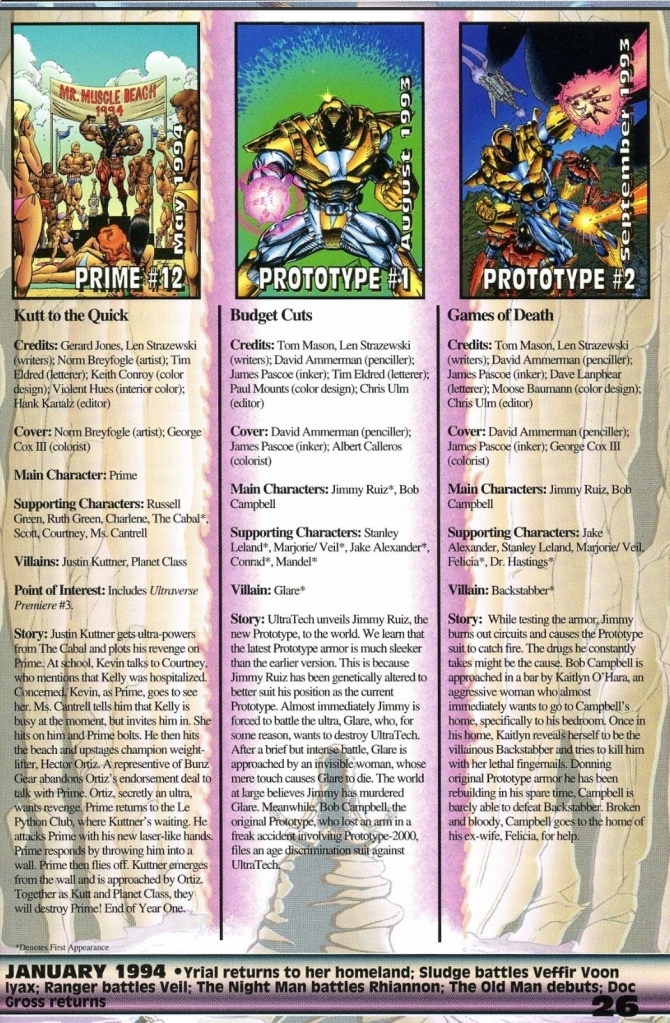
Welcome back superhero enthusiasts, 1990s culture enthusiasts and comic book collectors! Today we go back to the mid-1990s which was a pretty wild time for comic collectors. To be more specific, this newest retro review revisits the Ultraverse through a comic-like publication in the form of a guide meant for UV fans and comic collectors.

The subject at hand is Ultraverse Year One which, as written on the edge of the front cover, was designed to be the “complete guide to the Ultraverse’s first year.” It is a reference guide for those who seriously want to discover each and every Ultraverse comic book that was published during its first year. In my experience as a comic collector, the Ultraverse launch in 1993 was very memorable even though my financial limitations prevented me from acquiring each and every launch comic book and subsequent releases of the time. How useful is this complete UV guide? We can go on and find out.

With those details laid down, here is a look back at Ultraverse Year One, published in 1994 by Malibu Comics.

The cover.

Quality

I can say without a doubt that this publication is indeed a complete guide to each and every Ultraverse comic book released during its first year from 1993 to 1994 specifically. You want to know exactly how many issues of Mantra, Prime, Hardcase, The Solution, Prototype, The Strangers and others were published in the first year? This one has it all listed! You want to know which UV comic book involved the talents of Steve Gerber, Norm Breyfogle, Rick Hoberg, Len Strazewski, Aaron Lopresti, George Perez, James Hudnall, Gerard Jones, Steve Englehart, Tom Mason, Terry Dodson, James Robinson, Howard Chaykin, Mike W. Barr and many others under the Malibu Comics banner? This guide has it all listed! What months were Exiles #1, Sludge #1, Firearm #0, Break-Thru #1 and Mantra #1 were published? The answers to each are included. The same can also be said when it comes to which characters appeared in each comic book.

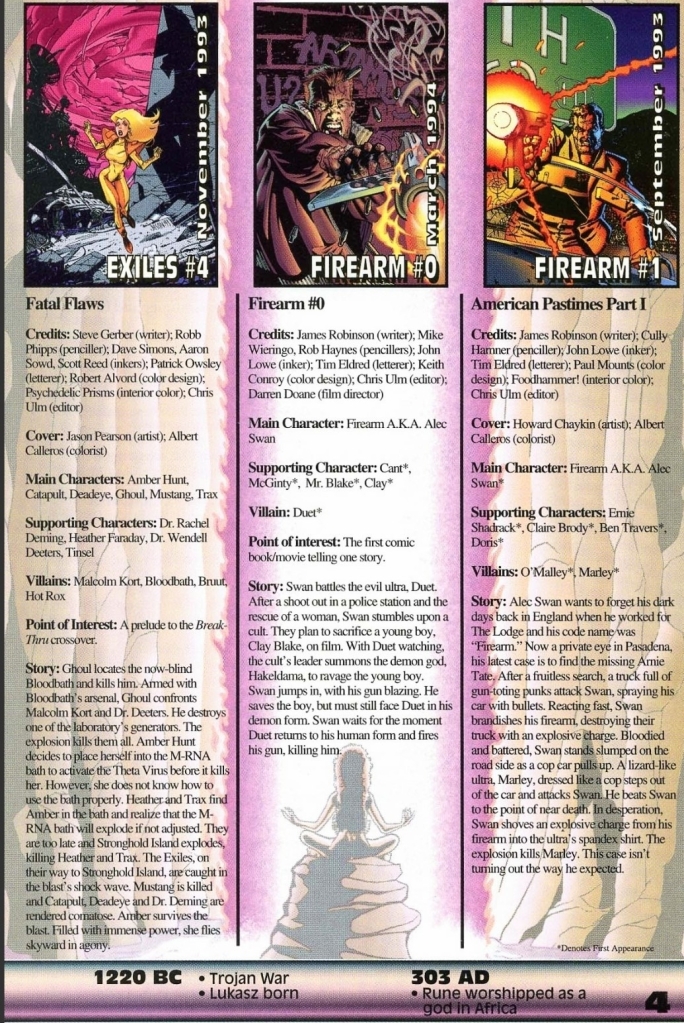
This is what each page typically looks like with details of the Ultraverse timeline on the lower part.
The timeline reveals that the male warrior Lukasz, who would later end up in woman’s body as Mantra/Eden Blake, was born in 1220 BC.

Very clearly, the Malibu Comics people worked hard to collect the essential types of information, organized them and put them all into print media form for readers and collectors to use when it comes to searching just about everything about the Ultraverse’s first year. Things did not just stop there, however.

What I found amusing to look at in each page of this Ultraverse guide are details of the shared universe’s timeline posted on the lowest part. The said timeline – which is limited to text and numbers – reveal interesting details such as what year was Lukasz (AKA Mantra) born, when did Rune begin, when was the Choice corporation established, what year did the island of Yrial’s people move up to the clouds, what years were infants injected by Wetware Mary and more. These details are actually quite encouraging to make readers discover or re-read Ultraverse comic books to see how they are dramatized on paper.

Conclusion

As you can see in the details above, Len Strazewski was involved in both the Prime and Prototype comic book series.

Ultraverse Year One (1994) is a pretty detailed guide that will not only help readers track down each and every UV comic book of the mentioned time period, but also help them spot the precise comic books that has characters included as well as the published works of varied comic book creators. If you are really determined to track down and buy all the Year One UV comic books, this guide is a must-have. If there are any weaknesses to mention, it would be the fact that each comic book’s entire plot got summarized in full which are actually spoilers.

Overall, Ultraverse Year One (1994) is recommended.

+++++

Thank you for reading. If you find this article engaging, please click the like button below and also please consider sharing this article to others. If you are looking for a copywriter to create content for your special project or business, check out my services and my portfolio. Feel free to contact me with a private message. Also please feel free to visit my Facebook page Author Carlo Carrasco and follow me on Twitter at  @HavenorFantasy as well as on Tumblr at https://carlocarrasco.tumblr.com/ and on Instagram at https://www.instagram.com/authorcarlocarrasco/

A Look Back at Sludge #9 (1994)

Disclaimer: This is my original work with details sourced from reading the comic book and doing personal research. Anyone who wants to use this article, in part or in whole, needs to secure first my permission and agree to cite me as the source and author. Let it be known that any unauthorized use of this article will constrain the author to pursue the remedies under R.A. No. 8293, the Revised Penal Code, and/or all applicable legal actions under the laws of the Philippines.

Welcome back, superhero fans, 1990s arts and culture enthusiasts and comic book collectors! Today we revisit the Ultraverse of Malibu Comics and examine one of its many stories told through an issue of the Sludge comic book series.

In my previous Sludge retro review, the conflict between the crime organizations intensified as the titular character continued to struggle with achieving his desired goal which includes getting involved with the Pump’s evil schemes. Eventually something unexpected happened Sludge which involved Zuke, the potent illegal substance the Pump keeps on unleashing to the public.

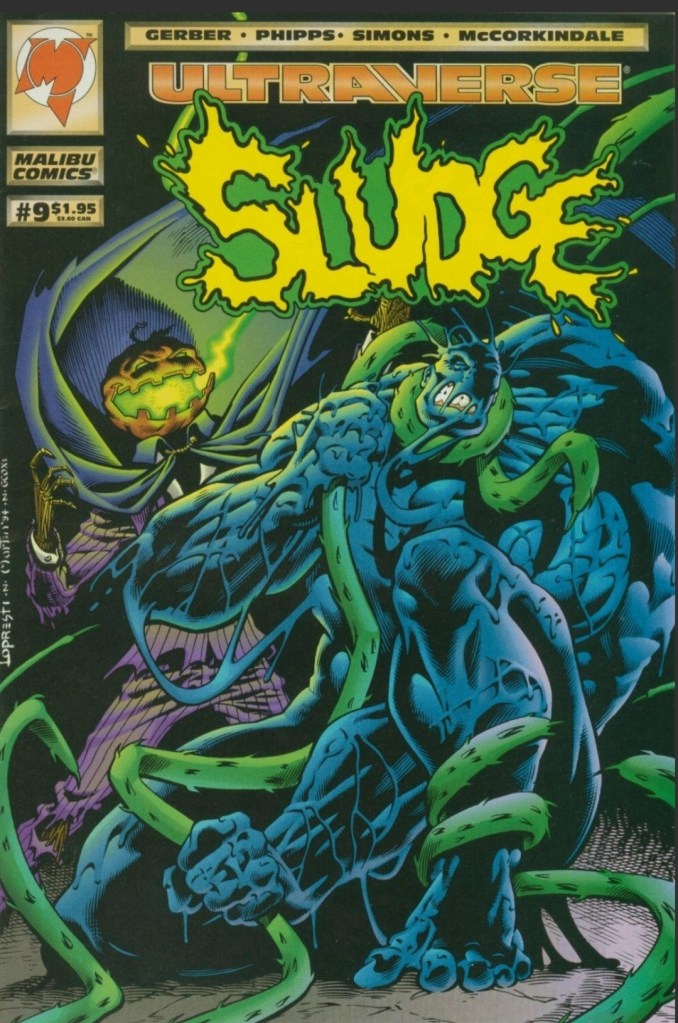
With those details laid down, here is a look back at Sludge , published by Malibu Comics in 1994 with a story written by Steve Gerber and drawn by Robb Phipps.

The cover.

Early story

The story begins with Sludge in pain as he pulls out a long spike from his right hand which became flesh again. This was the result of his holding Zuke which his right hand somehow absorbed. Wanting answers, he calls out to the Pump who (along with his teenage protégé) was no longer present in the room. A female ghost appears to Sludge and tells him that the crime boss is downstairs.

It turns out, the Pump has an evil plan in mind which would involve the mercenary Bloodstorm. The crime boss puts a very large capsule of Zuke into the mouth of the restrained Bloodstorm. Just as Sludge arrives, Bloodstorm becomes very enraged as a result of absorbing a high quantity of the illegal substance. Shortly after Pump quells the drugged mercenary, Sludge approaches him for more Zuke as he is convinced that the drug will turn him to normal just like how it turned his right hand back to normal.

The Pump orders Sludge to take Bloodstorm’s body back to his employer Sabatini then return. He reminds him that he has the Zuke and is capable of eradicating him…

Quality

Sludge has yet to realize he could really go up against the very evil Pump.

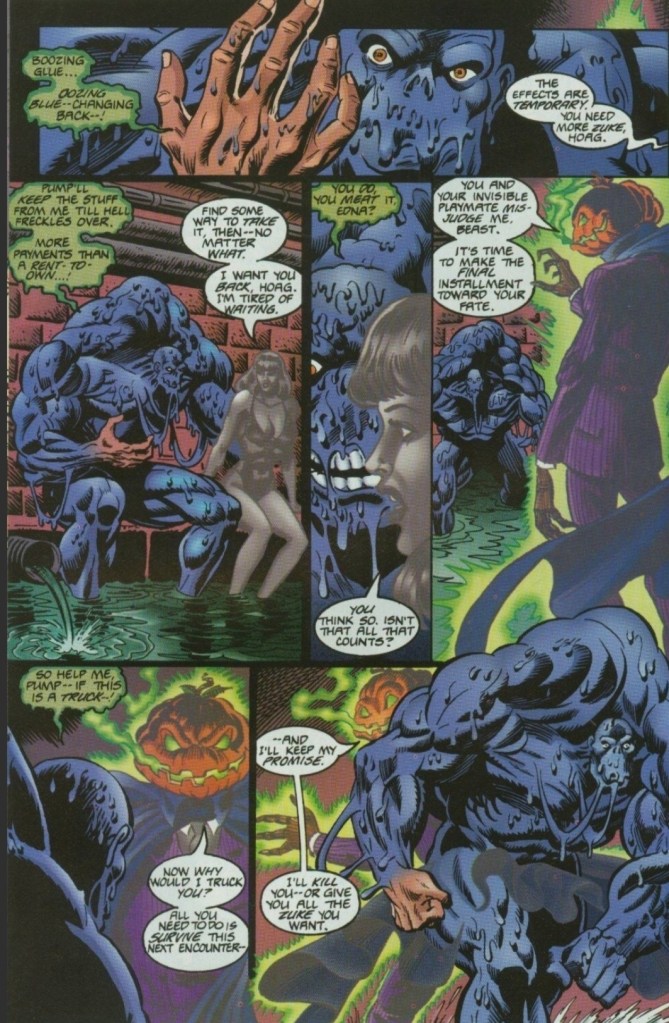
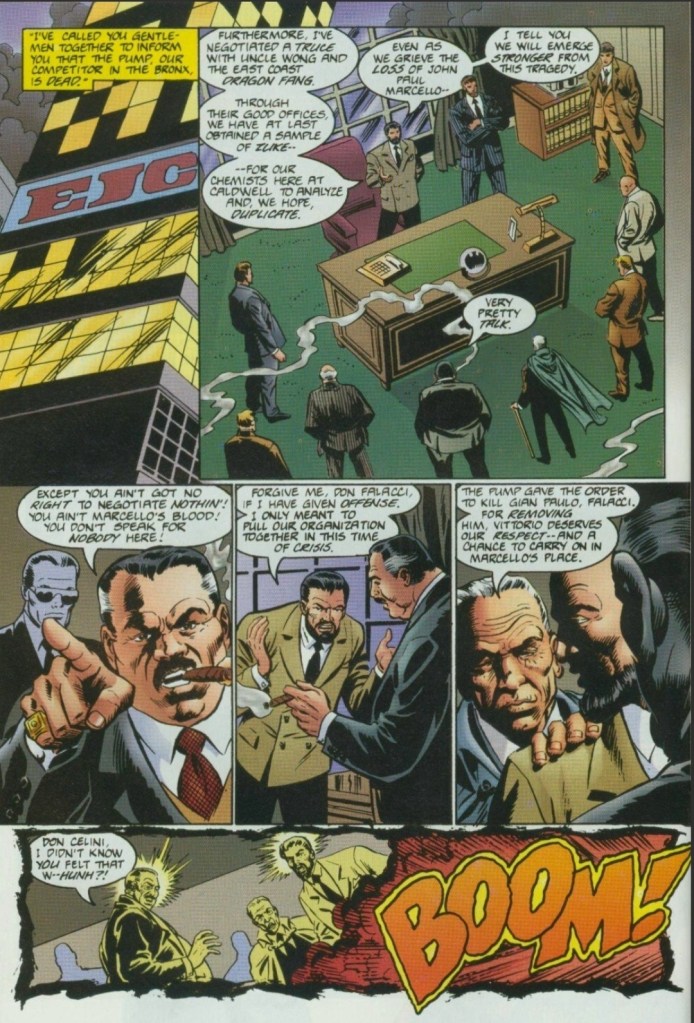
Now this is the most intriguing tale of Sludge in relation to the unstable relations between the gangs of New York. Vittorio, the one trusted assistant of the late crime boss Marcello, leads the gang and tries to craft a new direction with emergence in mind by negotiating a truce with the Dragon Fang while also starting efforts to duplicate the very addicting substance called Zuke which has long been an asset to the Pump’s gang. Unsurprisingly, Vittorio encounters trouble trying to win the trust of the more established crime bosses and he is also unaware that they are all being targeted by the Pump.

Once the Pump unleashes his newest move against the gangs, the situation intensifies and gets twisted which makes this a really solid reading experience. Steve Gerber crafted this story to be intense and unpredictable at the same time, while also showing how Sludge deals with his situation being powerless under the Pump. There is one notable addition to the plot which involves violent action which you must discover for yourselves.

When it comes to the visuals, Robb Phipps take on Sludge is vastly different compared to Aaron Lopresti’s Sludge. The result is that Phipps’ art style made Sludge and the other characters have that cartoony aesthetic and yet they are still recognizable. What visual style and elements Phipps had on certain issues of Mantra he illustrated (click here, here and here) are pretty much present in this comic book.  

Conclusion

A high-stakes meeting disrupted.

Sludge (1994) is another solid read and one of the most intriguing stories of the Sludge series. As the concluding chapter of the “Street Wars” storyline, this comic book has the usual elements that defined Sludge stories while also succeeding in moving the plot forward (note: the storyline conclusion is engaging, even shocking) complete with twists and noticeable intensified violence. At this point in the monthly series, Sludge is off on a path of despair and he is clearly lost. This element alone should compel readers to examine Sludge’s personality closely and analyze where he is heading to and what purpose does he have left.

Overall, Sludge (1994) is recommended.

+++++

Thank you for reading. If you find this article engaging, please click the like button below and also please consider sharing this article to others. If you are looking for a copywriter to create content for your special project or business, check out my services and my portfolio. Feel free to contact me with a private message. Also please feel free to visit my Facebook page Author Carlo Carrasco and follow me on Twitter at  @HavenorFantasy as well as on Tumblr at https://carlocarrasco.tumblr.com/ and on Instagram at https://www.instagram.com/authorcarlocarrasco/

A Look Back at Break-Thru #2 (1994)

Disclaimer: This is my original work with details sourced from reading the comic book and doing personal research. Anyone who wants to use this article, in part or in whole, needs to secure first my permission and agree to cite me as the source and author. Let it be known that any unauthorized use of this article will constrain the author to pursue the remedies under R.A. No. 8293, the Revised Penal Code, and/or all applicable legal actions under the laws of the Philippines.

Welcome back superhero enthusiasts, 1990s culture enthusiasts and comic book collectors! Today we go back to the mid-1990s which was a really wild time for comic collectors. To be more specific, this newest retro comic book review revisits the conclusion of the epic Ultraverse storyline Break-Thru which was illustrated by the late George Perez (1954-2022). I encourage you readers – especially long-time fans of the iconic illustrator – to check out my commemorative article about George Perez by clicking here.

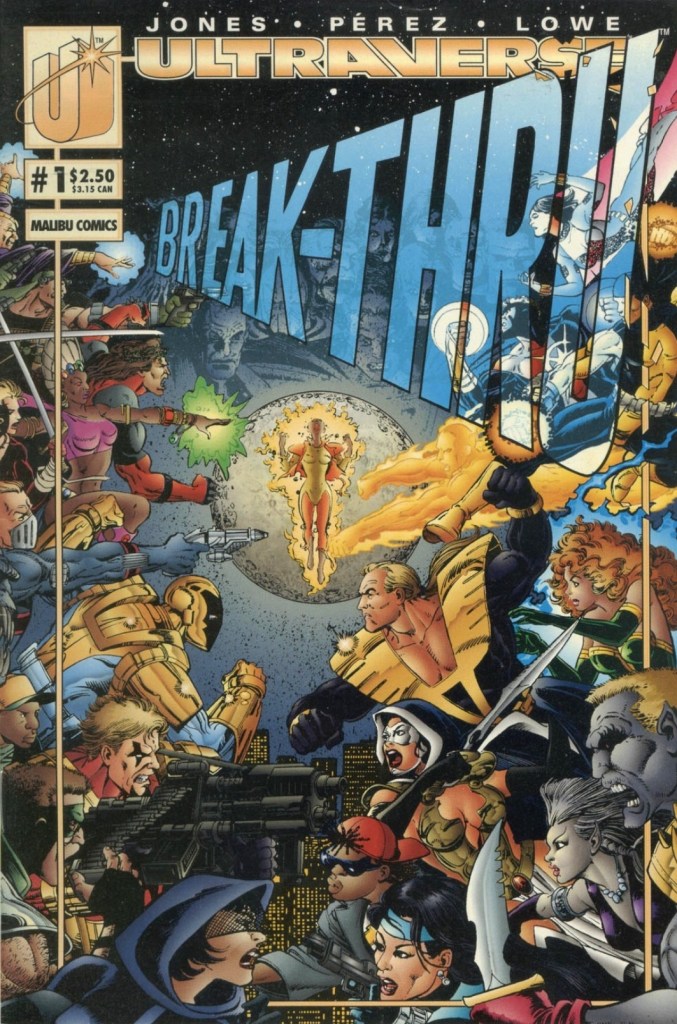
For the newcomers reading this, Break-Thru was a 2-part storyline that creatively involved almost all the main characters of the Ultraverse (The Strangers, Mantra, Prime, Prototype, Freex, The Solution, Hardcase, Sludge, Solitaire and others) who got impacted in varied ways by Amber (of the Exiles) who floated high in the air causing chaos on societies below. Specifically, that was the concept of Break-Thru (1993) and issue has the story continuing with a setting in outer space with the moon as the key destination.

With those details laid down, here is a look back Break-Thru , published in 1994 by Malibu Comics with a story scripted by Gerard Jones (plotted by Mike W. Barr, Steve Englehart, Steve Gerber, James Hudnall, Tom Mason, George Perez, James Robinson and Len Strazewski) and illustrated by the late George Perez.

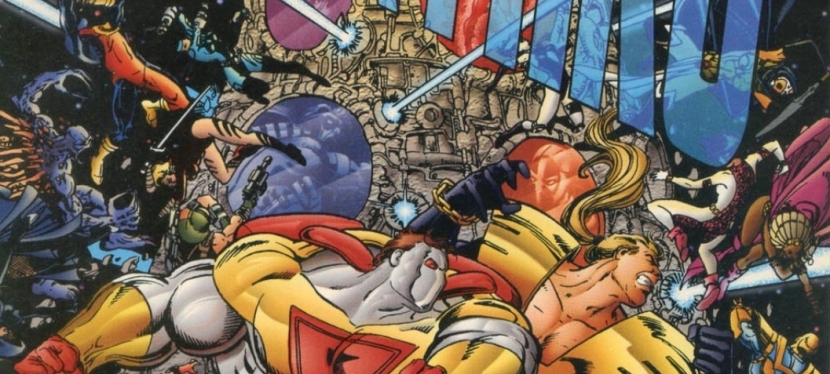
An epic cover by the late George Perez.

Early story

The story begins at the surface of the moon with Hardcase, Choice and the members of The Solution who just survived the explosion (connected with Hardcase #7 and The Solution #4) of the flying saucer they used on their journey. Nearby, the people responsible for the destruction are riding their own flying saucer, scanning the surface of the moon searching for an entity.

Behind the scenes, the very hidden yet powerful Rex Mundi watches and tells Gate that other ultras are seeking the entity. As the saucer floats to a cave detecting the presence of the entity, the occupants get shaken as Prime hits them hard. Prime tells himself that the entity in the cave feels danger from the searchers and he has to protect it as he has been connected with it (refer to Prime #7). After getting blasted in retaliation by the saucer, Prime finds himself hit even more as Rex Mundi’s enforcers suddenly come out of a portal very near him.  

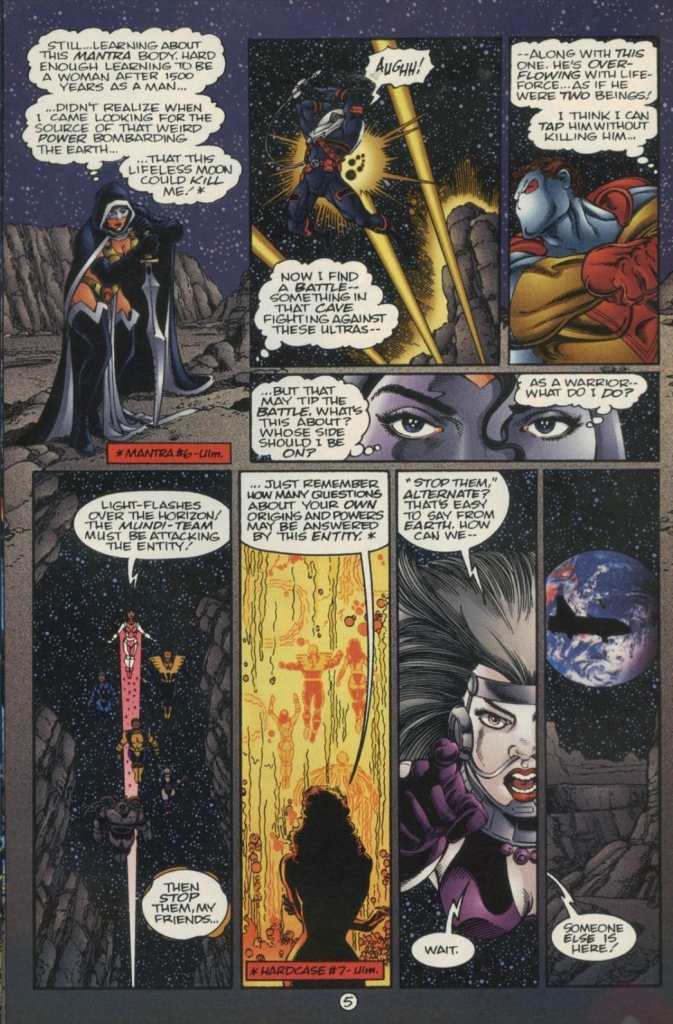
From a distance, Mantra (refer to Mantra #6) sees the fight happening and needs a life force to survive. Elsewhere, Hardcase, Choice and The Solution witness the arrival of a space shuttle. The Strangers and Prototype (refer to The Strangers #7 and Prototype #5) come out together…

Quality

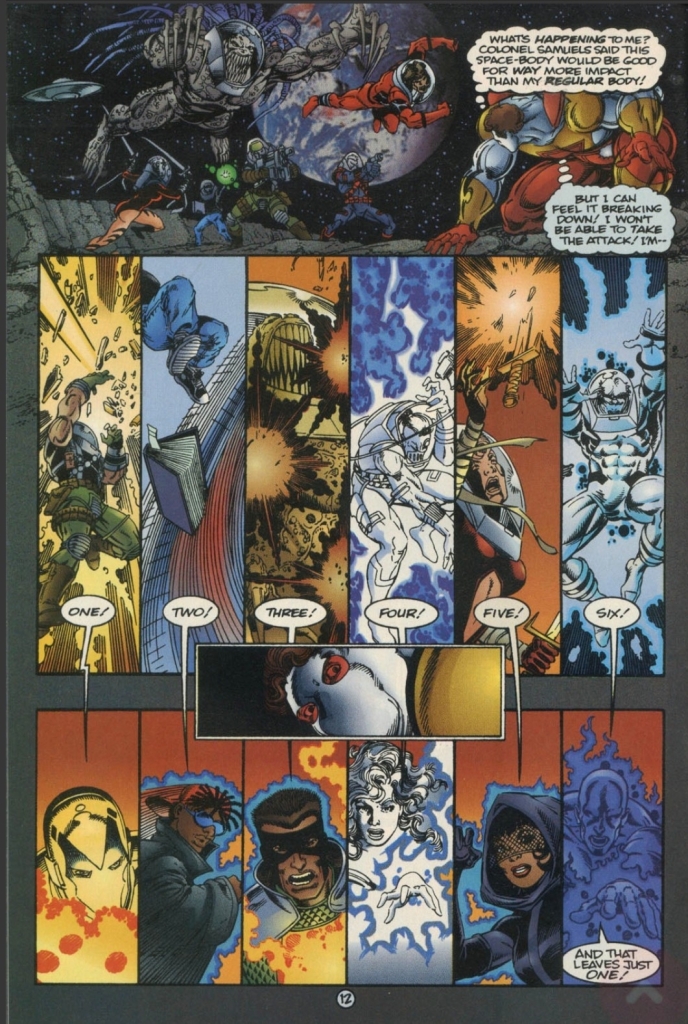
This is classic George Perez presentation of action and characters using multiple panels in a single page.

Starting with the writing, I should mention that all the writers who were involved in plotting this comic book as well as the previous issue should be commended for their combined efforts on making the Break-Thru storyline happen complete with in-universe ramifications, developments and connections to almost all the monthly comic books via the Break-Thru tie-in issue (also check out Sludge #3, Freex #6, Solitaire #2 and Night Man #3). Clearly Break-Thru was planned to be a major turning point of the Ultraverse by involving and mixing most of the major characters together and have them struggle with tremendous obstacles they simply cannot ignore as the stakes were indeed too high.

More on this comic book, the major conflict was set on the moon which proved to be a very unique setting not just for dynamic battles to happen but also to serve as the place where a mysterious and powerful entity is hidden. When it comes to the story, the entity (more science fictional in concept) is mysterious and cleverly not blatantly evil. It is its mysteriousness that makes the entity a worthy force to have the UV’s heroes come after.

The writers added depth to the plot by showing Yrial of The Strangers and Prototype each having their own vested interests to get to the entity and acquire whatever it has that is valuable. At the same time, Mantra and Prime each discovered valuable knowledge about the entity that impacted their perceptions about their purpose as beings with super powers.

Mantra, Prime, The Solution, Hardcase and Choice.

While the story here still has so many characters expressing themselves and releasing expository information, the narrative is a little bit easier to understand and follow compared to issue (which had a lot more information to release via exposition). That being said, the scenes of spectacle became more enjoyable to read and along the way there were some notable character moments to look at.

Visually, this is unsurprisingly a great looking comic book as it was illustrated by the late George Perez. What I love most about Perez’s art style and visual presentation are all here: high details on each character drawn as well as their surroundings, the dynamic approach on setting up the panels on each page, fantastic looking superhero action, and much more! As with Break-Thru and other Ultraverse comic books drawn by Perez, this one is absolutely great to look at and it easily lifts up the visual/artistic quality of the UV and its heroes. As George Perez was involved in the plot of this comic book, the narrative was never overwhelmed by his great art and the artist really exerted a lot of effort on visualizing each and every one of the established UV characters (including the supporting characters).

Speaking of the established characters, I should state that Perez made Mantra’s face (with mask) look a bit more realistic and feminine while Kevin Green has a more convincing teenage boy look, Sludge looks a bit more creepier and Yrial looks visually identical to the way Rick Hoberg draws her. When it comes to the varied physiques of each established UV hero, Perez captured them all perfectly. Clearly the late artist did his research on every character.

Conclusion

The first physical encounter between Prime and Hardcase. Remember this before reading the UltraForce comics.

Break-Thru (1994) is truly an epic Ultraverse story that also worked as a major turning point of the UV as a whole. Compared to other epic superhero stories that Marvel and DC Comics published, Break-Thru is not the usual large gathering of superheroes who have to work together to defeat an evil force that threatens everyone’s existence. It is more about the UV heroes getting together to solve major obstacles before reaching the main destination. By the time I reached the end of this comic book (and its storyline), I experienced great satisfaction not just from Break-Thru itself but also in relation to how the Ultraverse heroes realized what they are living for and what their respective purposes really are about. What also happened in this comic book explains why jumpstart events happened on Earth. Very clearly, this was an epic story that was planned early and even though this was published just months after the Ultraverse first debuted, the characters were developed enough to make Break-Thru’s concepts sensible and acceptable. There is a lot of fun and engagement in this comic book drawn by the late George Perez (who also worked on DC’s Crisis on Infinite Earths and Marvel’s The Infinity Gauntlet).

Overall, Break-Thru (1994) is highly recommended!

+++++

Thank you for reading. If you find this article engaging, please click the like button below and also please consider sharing this article to others. If you are looking for a copywriter to create content for your special project or business, check out my services and my portfolio. Feel free to contact me with a private message. Also please feel free to visit my Facebook page Author Carlo Carrasco and follow me on Twitter at  @HavenorFantasy as well as on Tumblr at https://carlocarrasco.tumblr.com/ and on Instagram at https://www.instagram.com/authorcarlocarrasco/

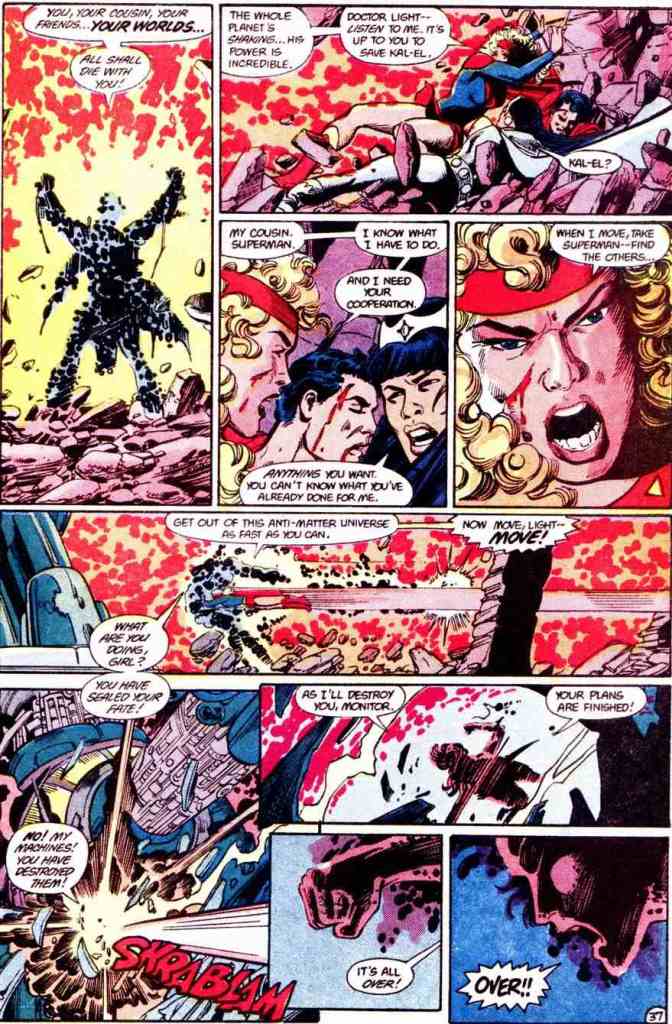
George Perez (1954-2022)

George Perez, the incredible comic book artist who made major contributions to illustrated literature (especially the superhero comic book genre), sadly passed away due to complications related to pancreatic cancer. He was 67-years-old and I can say that superhero comic book art and dynamic expressions will not be the same without him.

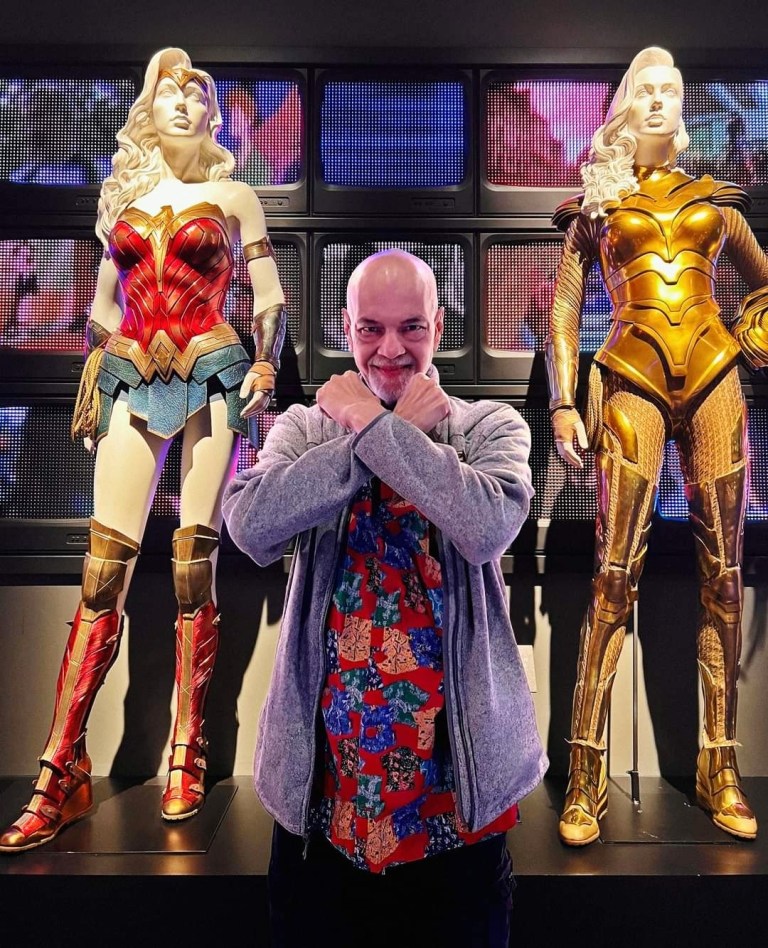
George Perez with the two Wonder Woman plastic models. (photo source – DC Comics Facebook page)

Already there were comic book industry figures who reacted to the death of the legendary Perez. DC Comics co-publisher and legendary creator Jim Lee paid tribute stating, “We creators may all have access to the same tools of the trade: pen, paper and imagination, but what George could do with his prodigious talents was off the charts.”

For his part, Rob Liefeld stated, “I’ll remember George for his innovative and prolific storytelling. Thank you for all the great memories. Rest In Peace, George Perez.”

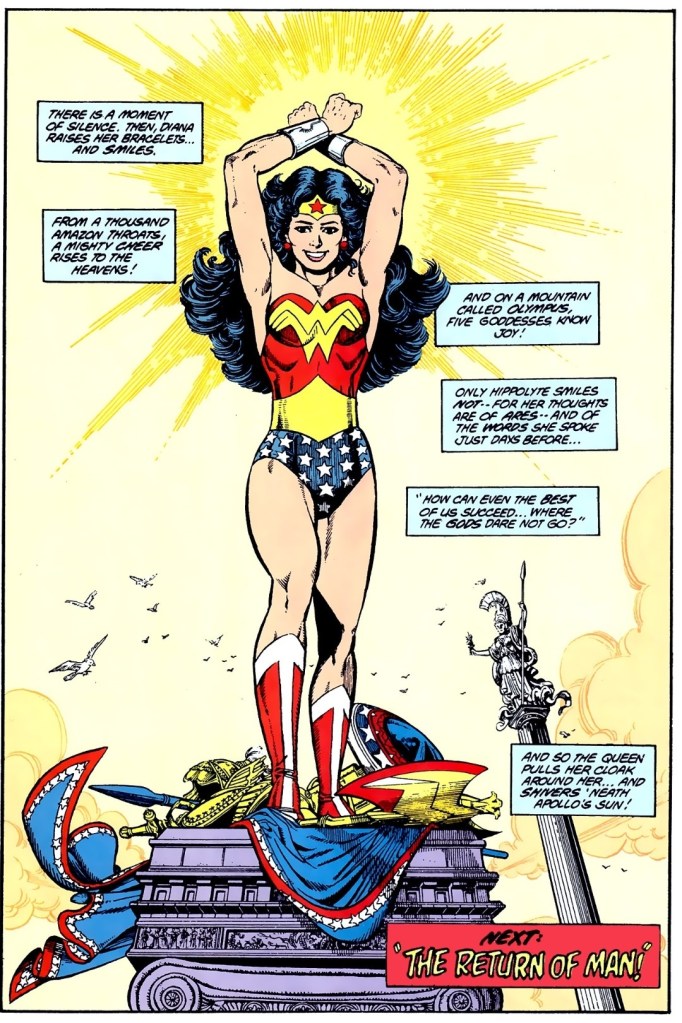
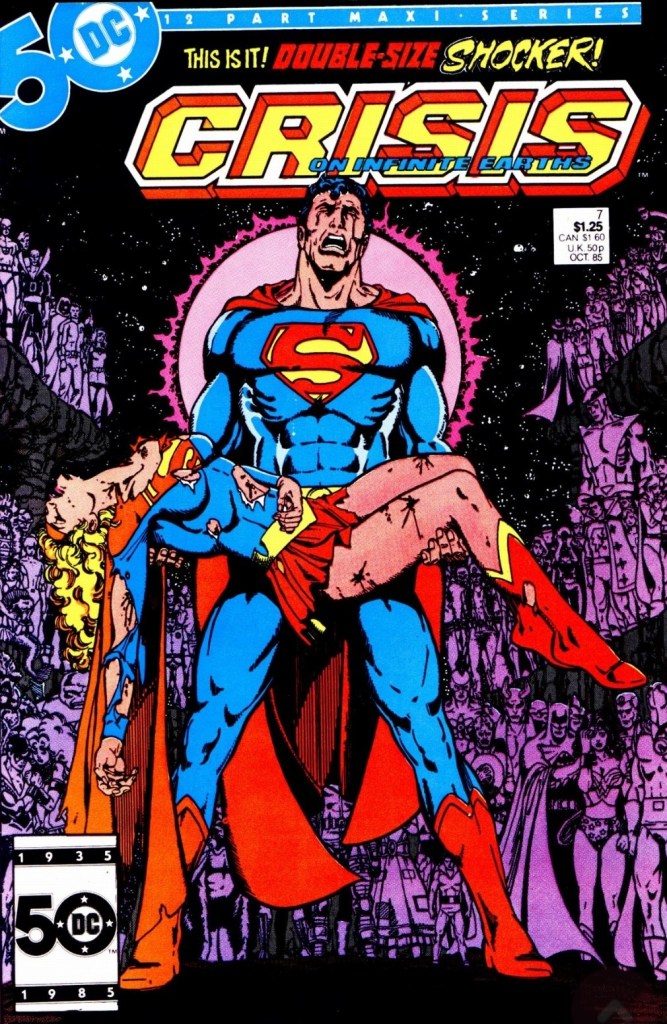
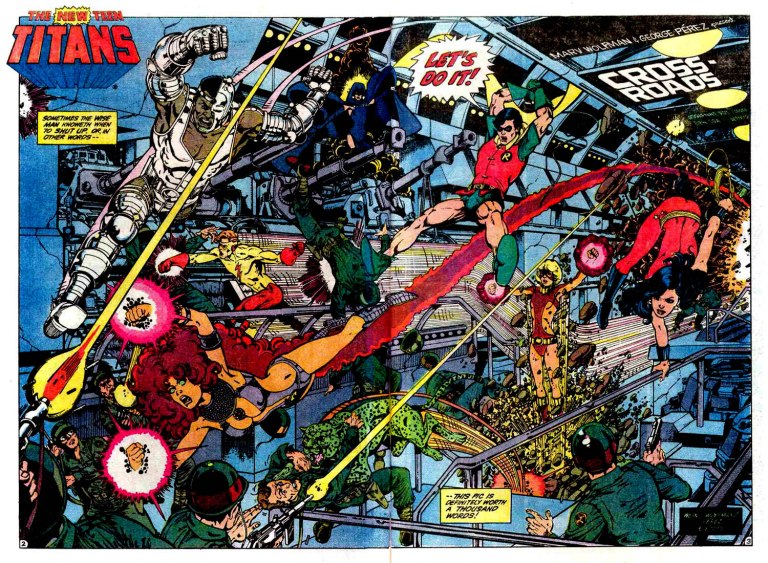
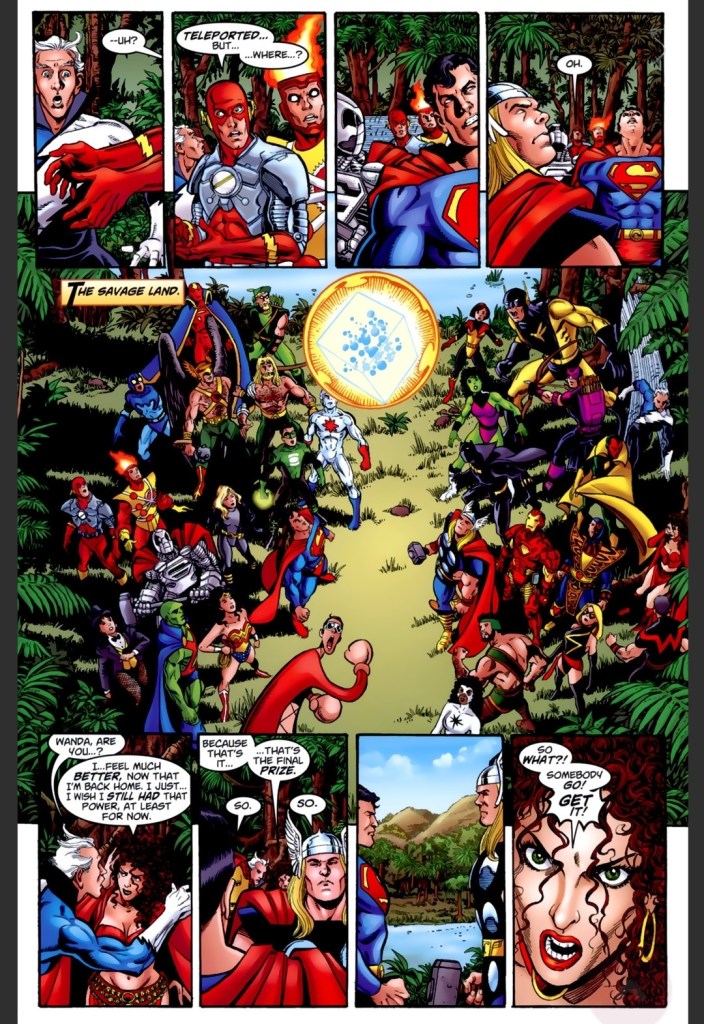
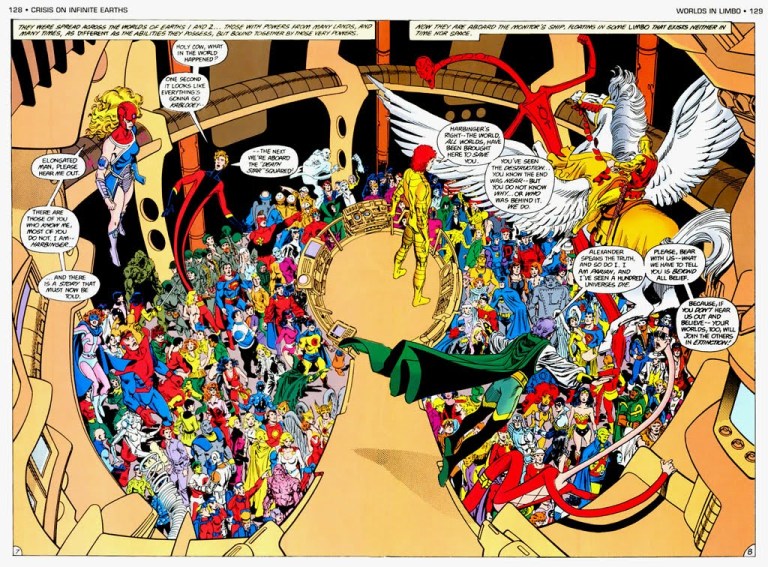
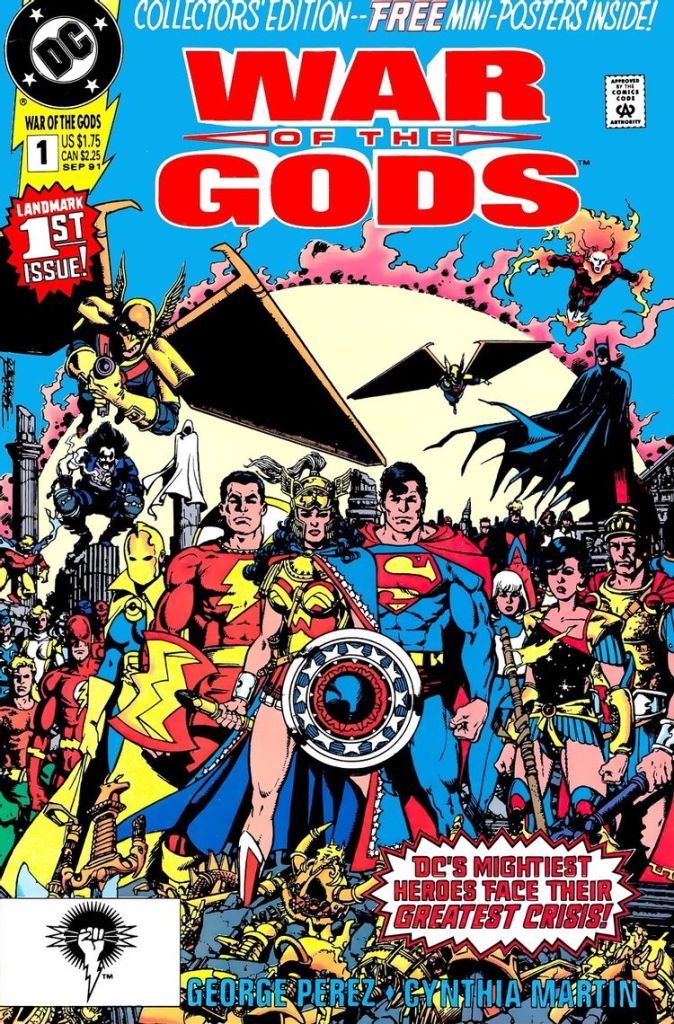
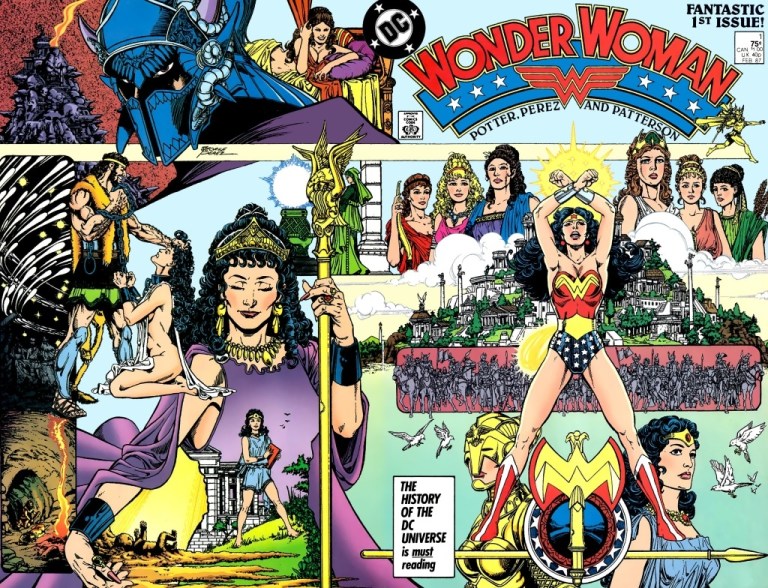
For the newcomers reading this as well as those who are simply unaware of Perez’s legacy, he was responsible for visualizing DC Comics’ 1985 epic maxi-series Crisis on Infinite Earths (note: he drew countless characters complete with varied settings or environments in high detail) and redefining Wonder Woman (note: he also wrote the stories) which made her a more essential pop culture icon. George Perez also worked for Marvel Comics over many projects and was chosen to illustrate the memorable 2003 JLA/Avengers crossover series of Marvel and DC. Perez also worked with other publishers such as Malibu Comics for several Ultraverse comic books and Image Comics for Crimson Plague and Witchblade. In recent years, he was responsible for Sirens published by BOOM! Studios.

For me, Wonder Woman was best defined during the post-Crisis era of DC Comics which involved George Perez and Len Wein who wrote the early issues of the Wonder Woman monthly series in the late 1980s.

In his decades-long career in comics, Perez unsurprisingly earned varied awards and honors (references here, here, here and here to name a few).

I should say that George Perez is a long-time favorite comic book illustrator of mine. I enjoyed reading the superhero comic books he illustrated and I love his art style on the characters, the environments and crowds. If there is anything I love about Perez’s art, it is his distinct style along with his implementation of high levels of details on the characters, objects, creatures and surroundings. Perez is also known to capture the distinct visual elements of superhero characters such as Spider-Man’s costume and his spaghetti-like web, Superman’s physique and distinct letter S, Prime’s overly muscular body and more. Every time Perez is involved as artist, the result is almost always a visual feast that often adds punch to the script prepared.

When I was still actively collecting comic books back in the 1990s, I often get excited whenever I learned that George Perez illustrated upcoming comic books. In 1992, he drew Incredible Hulk: Future Imperfect (2 books) which was mind-blowing and intriguing for me! In 1993, I became a fan of the newly launched Ultraverse of Malibu Comics and I got very excited to learn that Perez was hired for their major UV crossover Break-Thru (2 issues). Perez also drew one issue of Prime and most of the early issues of the UV team UltraForce (issues #0, #1, #3, #4, #5 and #6). If you want to see Perez draw ALL the characters of the Ultraverse, you should read the 2-issue Break-Thru storyline.

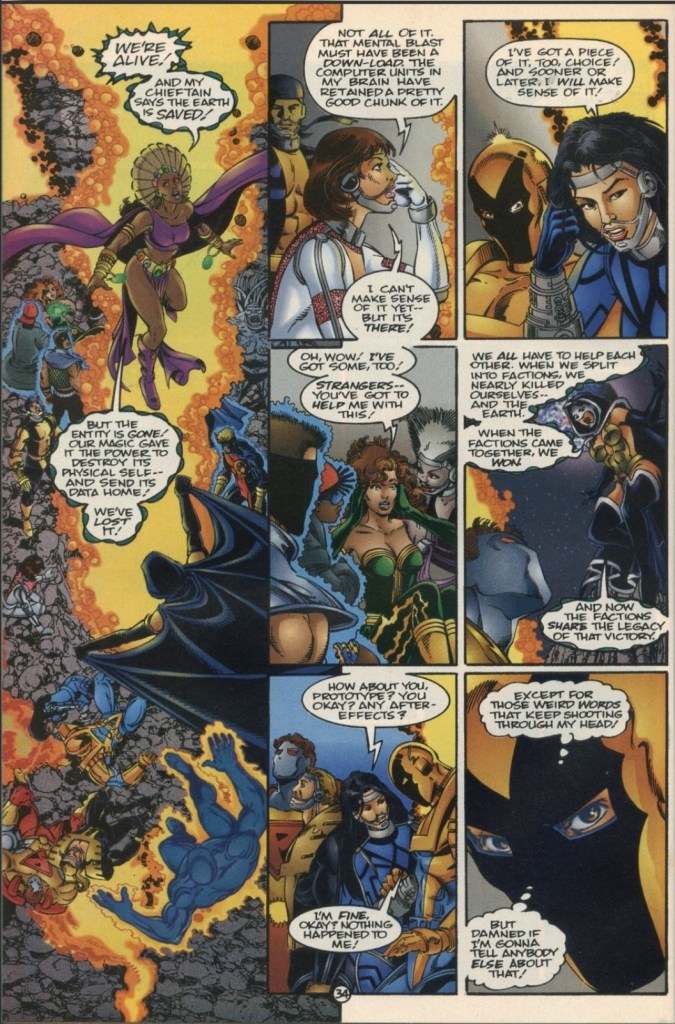
A page from Break-Thru showing just some of the many Ultraverse characters Perez illustrated. This was published before the release of UltraForce.

Speaking of UltraForce, check out this video by Crypto Comics (with observations on Perez’s art works)…

Going back to George Perez’s amazing run on Wonder Woman, I urge you to watch the video below…

For me, the most defining stories of Wonder Woman ever told in any art form are still the comics that Perez wrote (note: he co-wrote stories with Greg Potter and Len Wein respectively on the early issues) and illustrated during the post-Crisis era of DC Comics. Check out my retro reviews of Wonder Woman 1980s comics on this website.

Truly, George Perez will be missed by a lot of people and his countless pieces of works will be revisited in the foreseeable future. In closing this piece, posted below are varied works (comic book covers and interior art) done by the late creator through the decades for your viewing pleasure and learning. This is a tribute to Perez and may he rest in peace!

+++++

Note: All images shown are properties of their respective companies.

Thank you for reading. If you find this article engaging, please click the like button below and also please consider sharing this article to others. If you are looking for a copywriter to create content for your special project or business, check out my services and my portfolio. Feel free to contact me with a private message. Also please feel free to visit my Facebook page Author Carlo Carrasco and follow me on Twitter at  @HavenorFantasy as well as on Tumblr at https://carlocarrasco.tumblr.com/ and on Instagram at https://www.instagram.com/authorcarlocarrasco/

A Look Back at WildC.A.T.S: Covert Action Teams #9 (1994)

Disclaimer: This is my original work with details sourced from reading the comic book and doing personal research. Anyone who wants to use this article, in part or in whole, needs to secure first my permission and agree to cite me as the source and author. Let it be known that any unauthorized use of this article will constrain the author to pursue the remedies under R.A. No. 8293, the Revised Penal Code, and/or all applicable legal actions under the laws of the Philippines.

Welcome back superhero fans, 1990s arts and culture enthusiasts and comic book collectors! Today we continue revisiting Jim Lee’s flagship title under the Image Comics label – WildC.A.T.S: Covert Action Teams!

Last time around, members of the WildC.A.T.S were split apart in terms of locations as they had their rest-and-relaxation period. While Grifter went away to do something urgent (read: the Kindred comic books), Zealot, Void and Jacob Marlowe’s executive assistant Jules picked up Warblade and Maul using their high-tech aircraft to head on to the Bahamas where an entire cruise ship disappeared with Marlowe, Voodoo and Spartan on it.

Unbeknownst to the WildC.A.T.S flying in their jet, Voodoo, Spartan and Marlowe found themselves as captives of an armored man (wearing a half-helmet) called Entropy inside his domain in an undetermined location. Entropy refers to Marlowe as lord Emp and states that he will suffer from his wrath. Marlowe does not recognize him.

With those details laid down, here is a look back WildC.A.T.S: Covert Action Teams , published by Image Comics in 1994 with a story written by Brandon Choi and Jim Lee. Lee did the art with Scott Williams in-charge with the ink work.

The cover.

Early story

The story begins with the partial WildC.A.T.S team arriving in the area of the Bermuda triangle with their aircraft. From their view, there was nothing to spot but Zealot insists that they keep on searching as they must be overlooking something.

Meanwhile, Spartan and Voodoo find themselves in deep trouble as a horde of Daemonites persistently attack them. Already heavily damaged, Spartan keeps on using his energy blasts to hold the monsters off. Voodoo on the other hand is too weak and could not concentrate to help her teammate.

Suddenly one of the Daemonites slashes Spartan’s left arm which neutralizes his energy blast. His body got pierced by one of the monsters which pinned him down, leaving Voodoo completely helpless…

Quality

The WildC.A.T.S on search-and-rescue.

On face value, this comic book looks like another generic or even disposable good-versus-evil story drawn by Jim Lee. In reality, its story has more significance to it and the creators themselves came up with something fresh for WildC.A.T.S fans. Firstly, this is a story about one group of WildC.A.T.S trying to rescue their boss and their two other teammates from Entropy in a location that could not be easily found. Secondly, this comic book puts strong focus back on the Kherubim-Daemonite war which creatively looks back at one of the many events that took place in Jacob Marlowe’s past (which he could not remember at first) complete with implementing a strong fantasy (read: swords and armors) element which gives the story a mixed-genre aesthetic.

The good news here is that the storytelling and visual presentation by the creators are really well done! While the dual approach of storytelling involving both the present and the far past was used in Jim Lee’s past X-Men works with Marvel, the said approach was well executed with WildC.A.T.S which not only expanded its lore further but also developed Jacob Marlowe’s personality even further.

To have Entropy (note: he eerily resembles’ Mantra arch-villain Boneyard in the Ultraverse) as an enraged opposition figure living with a lust for revenge against Marlowe is a smart move and at the same time this adds variety to the kind of opposition WildC.A.T.S have. More on what happened in the past involving both Marlowe and Entropy, the flashback raises new questions about the value and true nature of the WildC.A.T.S’ leader who at this point was a brash manager who wields lots of resources to operate with. The flashback also challenges readers on how to evaluate Jacob Marlowe when it comes to being accountable about his past actions, including the many things he did but could not remember. All of these lead to a really impactful ending that you readers must see.

Conclusion

Meet Entropy, a man with a shared past with Jacob Marlowe.

WildC.A.T.S: Covert Action Teams (1994) is a Jim Lee-drawn tale that has solid depth and a very creative approach to its presentation, specifically its daring and well-executed method of mixing the superhero and fantasy elements. When it comes to the narrative, the creative team succeeded in telling both the present and the past tales followed by connecting them with each other while ultimately telling an overall cohesive tale. This is a Wild.C.A.T.S story that must be read from start to finish, and it is a powerful follow-up to issue .

If you are seriously planning to buy an existing hard copy of WildC.A.T.S: Covert Action Teams (1994), be aware that as of this writing, MileHighComics.com shows that the near-mint copy of the regular edition costs $30.

Overall, WildC.A.T.S: Covert Action Teams (1994) is highly recommended.

+++++

Thank you for reading. If you find this article engaging, please click the like button below and also please consider sharing this article to others. If you are looking for a copywriter to create content for your special project or business, check out my services and my portfolio. Feel free to contact me with a private message. Also please feel free to visit my Facebook page Author Carlo Carrasco and follow me on Twitter at  @HavenorFantasy as well as on Tumblr at https://carlocarrasco.tumblr.com/and on Instagram at https://www.instagram.com/authorcarlocarrasco/

A Look Back at Freex #6 (1993)

Disclaimer: This is my original work with details sourced from reading the comic book and doing personal research. Anyone who wants to use this article, in part or in whole, needs to secure first my permission and agree to cite me as the source and author. Let it be known that any unauthorized use of this article will constrain the author to pursue the remedies under R.A. No. 8293, the Revised Penal Code, and/or all applicable legal actions under the laws of the Philippines.

Welcome back, superhero enthusiasts, comic book collectors, 1990s arts and culture fans and fans of Malibu Comics! Remember the Break-Thru crossover of the Ultraverse back in late 1993? Already I have reviewed the spin-off issues related to Break-Thru such as Mantra #6, The Solution #4, Prime #6, and The Strangers #7 to name same.  

Today, I got to review another Break-Thru tale told through the presence of the team called Freex. In addition to being connected with the big crossover, this comic book is a continuation of the events that took place in The Night Man #2 and this means a crossover between Freex and Night Man!

With those details laid down, here is a look back at Freex , published by Malibu Comics in 1993 with a story written by Gerard Jones and drawn by Ben Herrera.

The cover.

Early story

The story begins with the Freex listening to someone who tells them not to be afraid and that he is a victim of the world. He introduces himself as Mangle and even though he has a deformed look, the team keeps on focusing on what he tells them. He reveals that he was chased by a murderous crowd led by Night Man. After trying to justify his presence in the Christmas tree lot they are occupying, Lewis of the Freex rejects his idea and states that the situation for his team has been pretty bad as they are not only hunted by the police but also have been demonized through the media. He tells Mangle to stay away. Valerie then starts to lose control of herself which Lewis refers to as the possession. Michael speculates that sky must be affecting them.

Meanwhile, Night Man arrives in the city in pursuit of Mangle. He remembers breaking the freak’s collar bone. On the street, he notices a group of people who are obsessing about the sky above them. Something chaotic begins…

Quality

In the heat of the action.

When it comes to its story, I want to say that the crossover between Freex and Night Man is really short and it happened in the later part of the story. As far as crossovers go, this one is more like Freex-meets-Mangle. The first encounter between the team and Night Man is really underwhelming. As a spin-off tale of Break-Thru, this one dramatizes how a force of influence from the sky causes chaos on the people below. Anyone who is familiar with the existing forces on the moon within the Ultraverse will be able to relate with the concept of Break-Thru.  

When it comes to the other concept of this comic book, also interesting to follow was the significance (expressed in words) of J.D. Hunt and how he impacted the lives of each member of Freex through technology.

There is a decent amount of action as well as character development scenes to balance with the main story. Nothing spectacular to see though.

Conclusion

The Break-Thru effect on the people.

Freex (1993) biggest feature is not really the expected crossover with Night Man. Really, its theme is about a group of freaks following another freak (Mangle) to do something to make their dreams of normalizing and improving their lives come true. This comic book shows just how vulnerable and manipulative the Freex really are as they don’t have a mature leader to guide them. Going back to crossing over with Night Man, this comic book is really the first of two parts.

If you are seriously planning to buy an existing hard copy of Freex (1993), be aware that as of this writing, MileHighComics.com shows that the near-mint copy of the regular edition costs $14 while the near-mint copy of the newsstand edition costs $42.

Overall, Freex (1993) is satisfactory.

+++++

Thank you for reading. If you find this article engaging, please click the like button below and also please consider sharing this article to others. If you are looking for a copywriter to create content for your special project or business, check out my services and my portfolio. Feel free to contact me as well. Also please feel free to visit my Facebook page Author Carlo Carrasco and follow me at HavenorFantasy@twitter.com

A Look Back at The Strangers #14 (1994)

Disclaimer: This is my original work with details sourced from reading the comic book and doing personal research. Anyone who wants to use this article, in part or in whole, needs to secure first my permission and agree to cite me as the source and author. Let it be known that any unauthorized use of this article will constrain the author to pursue the remedies under R.A. No. 8293, the Revised Penal Code, and/or all applicable legal actions under the laws of the Philippines.

Welcome back, superhero enthusiasts, comic book collectors and fans of Malibu Comics! Previously, I reviewed an issue of The Strangers which happened to be the 2nd-to-the-last issue of its monthly series (which itself was mostly spearheaded by the dynamic duo of Steve Englehart and Rick Hoberg).

I was about to do a retro review of The Strangers #24 but realized that there are still some other comic books of the series that I have not reviewed yet. As such, I decided to read those other issues before reviewing the final issue.

With those details laid down, here is a look back at The Strangers , published by Malibu Comics in 1994 with a story written by Englehart and illustrated by Hoberg.

The cover.

Early story

The story begins when a strong, muscular man with long blonde hair strikes a huge rock formation high in the hills to the east of San Francisco Bay in California. While talking to himself (most likely a way to deal with his isolation), he continues to lift very large piece of rock, smashes more rocks and throws a tractor as if it was just a ball.

“I am…Powerhouse! I am Powerhouse! I…am Powerhouse,” he said to himself.

Still talking to himself, Powerhouse realizes that the world must never know about him as it has done its best to destroy him. He quietly changes into civilian clothes and drives away into the distance in his car.

On the streets of East Bay Hills in Berkeley, Hugh/Grenade and Bob/Atom Bob walk down the fancy commercial zone as they enjoy the time-off Elena/Lady Killer gave them. Soon enough, people started recognizing the two as members of The Strangers even though they are not in costume. This community buzz catches the attention of an executive at a local radio station who then picks Powerhouse (in civilian form) to go to East Bay Hills to report about Hugh and Bob…

Quality

When Powerhouse first gained super abilities.

I’ll got straight to the point about what this comic book is all about. This is the story of an ultra who gained powers very long before The Strangers, Mantra, Prime, Hardcase, The Solution and all the other Ultraverse heroes even started. That being said, Powerhouse is an old man (who really does not look like in his sixties or seventies) whose life turned upside-down as a result of gaining super powers as a teenager in the year 1938 (note: this was the year Superman debuted in comics in real life). Having lost DECADES of his time in the world, Powerhouse became a man who found himself lonely and having trouble adjusting into the modern world (1993 in the Ultraverse specifically). What bothers him even more is the fact that super beings like The Strangers members Atom Bob and Grenade are gladly accepted and celebrated by the public which is the complete opposite of how he was perceived when he became a super being.

The writing done by Steve Englehart is very rich to read and through it all, you will feel the pain, frustration and anguish of Powerhouse. As usual, Rick Hoberg’s art is always great to look at and you can see in this comic book how he adjusts his style when the narrative shifts from the talk scenes into the action scenes and the like.

Conclusion

Really, you only see two of The Strangers in this comic book which contradicts what was shown on the cover art.

Fundamentally, The Strangers (1994) highlights Powerhouse (both his present-day self and his origin) with Atom Bob and Grenade literally pushed out of the spotlight. Powerhouse is clearly inspired by the old ages of superhero comics and the creative team cleverly presented him as a super-powered man who finds himself struggling to fit in the 1990s. While this super being debut story is fun and engaging, its only weakness is that The Strangers have little real presence in the story (note: the cover art looks great but is really misleading).

If you are seriously planning to buy an existing hard copy of The Strangers (1994), be aware that as of this writing, MileHighComics.com shows that the near-mint copy of the comic book costs $14.

Overall, The Strangers (1994) is recommended!

+++++

Thank you for reading. If you find this article engaging, please click the like button below and also please consider sharing this article to others. If you are looking for a copywriter to create content for your special project or business, check out my services and my portfolio. Feel free to contact me as well. Also please feel free to visit my Facebook page Author Carlo Carrasco and follow me at HavenorFantasy@twitter.com