What to watch on YouTube right now – Part 37

Welcome back, my readers, YouTube viewers and all others who followed this series of articles focused on YouTube videos worth watching. Have you been searching for something fun or interesting to watch on YouTube? Do you feel bored right now and you crave for something to see on the world’s most popular online video destination?

I recommend you check out the following topics and the related videos I found.

#1 In-depth look at the making of Silent Hill  – It has been over twenty-five years since Konami released Silent Hill on PlayStation. That horror-themed adventure game added to the evolution of horror gaming and it stood out differently from Capcom’s Resident Evil series of survival horror games. I recently viewed a very in-depth video by thegamingmuse who spent a lot of effort researching the game development history of Silent Hill, who the creators were and what challenges came along the way leading to the game’s eventual release. The video is over a hundred minutes long but I assure you it is full of details that will give you insight about how the game materialized.

#2 Electric cars are still very dangerous and deadly – I mentioned before that no matter how nice the promotions are, electric cars are still dangerous to have as they can spark fire randomly, damage properties nearby and even kill you. In recent times, there were these two electric cars in different locations that sparked into flames randomly. One of them was not even charging at all while being parked in a residential community’s parking area. That electric car suddenly caused a huge fire that destroyed many cars parked nearby while also forcing many residents to leave their units. The fact is electric vehicles are not safe and are not reliable. The future of the automobile is absolutely NOT electric. Watch and learn from the videos below.

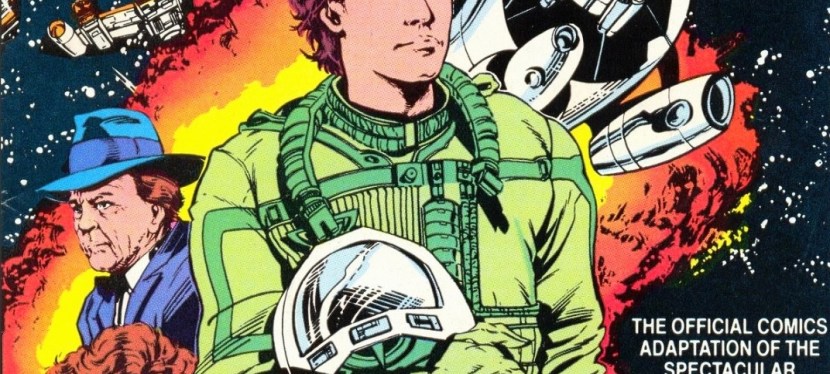
#3 Star Trek: Generations reaction video by Popcorn in Bed (PIB)  – Before I first saw Star Trek: Generations in the cinema in 1995, I was excited over the promised cinematic crossover between the iconic captain James T. Kirk and captain Jean Luc Picard. Having seen a mix of movies of the original Star Trek crew plus episodes of Star Trek: The Next Generation, the concept of a crossover was really intriguing. After watching Star Trek: Generations, I left the cinema disappointed not only because the Kirk-Picard crossover (William Shatner and Patrick Stewart together on-screen) was not so great but also because the pacing and direction were not cinematic in execution. In fact, I find Star Trek: Generations’ concept more suitable in comic book format.

Of course, the flawed movie has its fans and slowly it is being discovered by YouTubers for the first time in their lives. Popcorn in Bed (PIB) recently posted the reaction video of Star Trek: Generations and she previously spent months watching all the seven TV seasons of Star Trek TNG. How would she react to the movie and how it impacted her, you have to watch it below. 

#4 Terrorist state Iran’s hatred towards Israel explained – With its evil regime that started in 1979, Iran is both a terrorist state as well as the center of evil in the entire Middle East. No matter how many times a Democrat-led United States bowed to them and made desperate deals with them, Iran’s top leaders kept cheering (in their local language) death to America, England and Israel. In other words, Western ideals and democracy are completely unacceptable to Iran’s evil regime. The Ayatollah regime of Iran is so wicked, their government even brutalizes Iranians who do not follow their ways.

For Iran, the existence of Israel (the land that God designated to the Jewish people) unacceptable and their hatred towards them is so powerful, they sponsored terrorist groups like Hamas and Hezbollah to launch waves of attacks to destroy the Jewish state. Terrorist state Iran is doing what Satan always wanted and the evil regime is still obsessing with dominating the Middle East with destruction and the imposition of their religious beliefs on others. Iran is also obsessed with world domination and they will also attack Europe and America. To find out more, watch TBN Israel’s compelling video explaining Iran’s hatred towards Israel.  

#5 The high number of deaths caused by electric cars that went wrong – Going back to electric cars, I posted a video that discusses in detail a hot issue that electric vehicle fanatics and the mainstream news media do not want to talk about – the high number of deaths caused by electric cars that went wrong. Watch it now.

#6. Kamala Harris simply cannot be trusted – In recent times, Kamala Harris appeared in several TV shows to reach out to as many voters as she could as the US Presidential Election gets closer. Harris has huge problems: dishonesty, inconsistency and a distorted view of reality. In other words, the Democrats’ presidential nominee is very out of touch with reality and she does not seem to care much about the American people who have been suffering from rising crime, the higher costs of living, the deterioration of public order in connection with the rising number of illegal aliens in America, and much more.

In short, Harris is so woke, she has no real solutions for the American people. She cannot even define herself clearly as she is obsessed with identity politics, vibes and wokeness. She cannot even focus on policy and governance. Kamala Harris is clearly unfit to become President of the United States (the Democrats will have to CHEAT AGAIN to elect her). Watch and learn from the selected videos below.

#7. Understanding America’s Electoral College – In light of the US Presidential Election happening on November 5, 2024, now is a good time to learn about the Electoral College and how it works on electing the next President. Contrary to popular belief, the popular vote does not determine the winner of the election as there is a state-by-state mechanism and the ones who actually determine the winner are the electors. Confused? Watch the two PragerU videos below.

#8 Dragonslayer reaction video by You, Me and the Movies – I was a very young boy when I first saw Dragonslayer inside the cinema back in 1981 here in the Philippines. Being so young, I was not yet aware that the fantasy movie was a Disney-Paramount joint effort. The public word of mouth back then was that the movie was a visual spectacle as it had Industrial Light and Magic (ILM) work on the special effects while the Go Motion effects were handled by Phil Tippett. To make things clear, I am NOT a fan of Dragonslayer but I should say that YouTuber You, Me and the Movies recently posted their movie reaction of it which is entertaining to watch.

#9 The elimination of Hamas terrorist leader Sinwar plus the attempted attack against Israel’s PM Netanyahu – In recent times, I posted about the unexpected elimination of Yahya Sinwar who was the leader of the Iran-sponsored Palestinian terrorist group Hamas and the mastermind of the October 7, 2023 terrorist attacks against Israel. Sinwar was a mass murderer and a real-life demon who always hated Israel and the Jewish people. He was also one of the favorite terrorist allies of Iran. Apart from Sinwar, Iran had its Lebanon proxies Hezbollah attempt to assassinate Israeli Prime Minister Benjamin Netanyahu only to fail. The war against Islamic terrorism continues and the TBN Israel news video explains the details for you all.

+++++

Thank you for reading. If you find this article engaging, please click the like button below, share this article to others and also please consider making a donation to support my publishing. If you are looking for a copywriter to create content for your special project or business, check out my services and my portfolio. Feel free to contact me with a private message. Also please feel free to visit my Facebook page Author Carlo Carrasco and follow me on Twitter at  @HavenorFantasy as well as on Tumblr at https://carlocarrasco.tumblr.com/ and on Instagram athttps://www.instagram.com/authorcarlocarrasco
Retro Gaming Ads Blast – Part 20

Welcome back readers, fellow geeks and electronic gaming fans!

In this edition of the Retro Gaming Ads Blast (RGAB) series, we will take a look at another batch of retro gaming print ads – including arcade flyers – from the 1980s and 1990s.

For the newcomers reading this, Retro Gaming Ads Blast (RGAB) looks back at the many print ads of games (console, arcade, computer and handheld) that were published in comic books, magazines, flyers, posters and newspapers long before smartphones, social media, the worldwide web and streaming became popular. To put things in perspective, people back in the 1980s and 1990s were more trusting of print media for information and images about electronic games and related products.

With those details laid down, here is the newest batch of retro gaming print ads for you to see and enjoy…

1. River Raid print ad

This River Raid print ad appeared on comic books and magazines long ago.

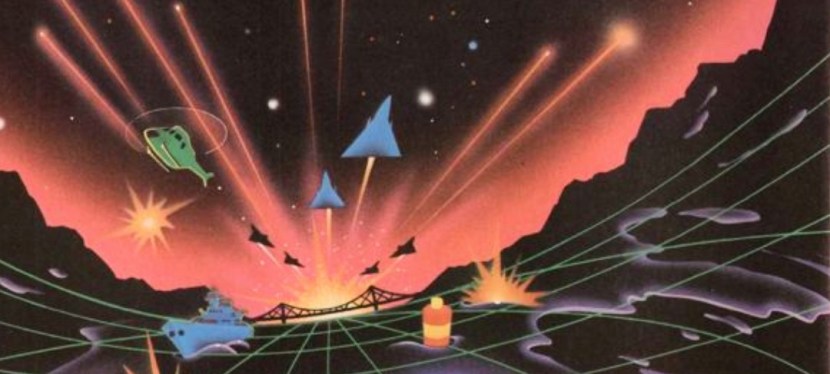
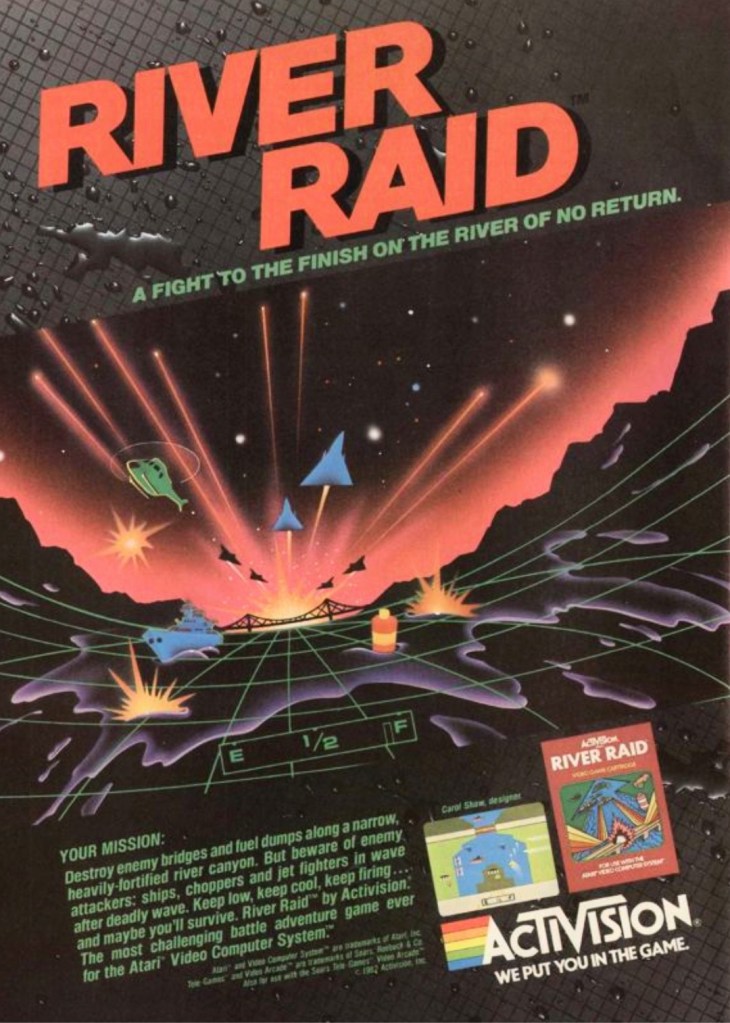
Decades before it became an industry giant with the best-selling Call of Duty games, Activision became a standout publisher in the early 1980s with River Raid on the Atari 2600. Designed by Carol Shaw, River Raid was a huge success ending up as the 2nd best-seller on the Atari 2600 as well as Activision’s best-selling game for the year 1983. Apart from showing one screenshot and the box cover of the game, the print ad of River Raid had this mesmerizing 3D image that caught many gamers’ attention and helped them feel like they will pilot on dangerous missions. The 3D image was futuristic in its own style became forward-moving 3D sequences in video games became reality many years later.   

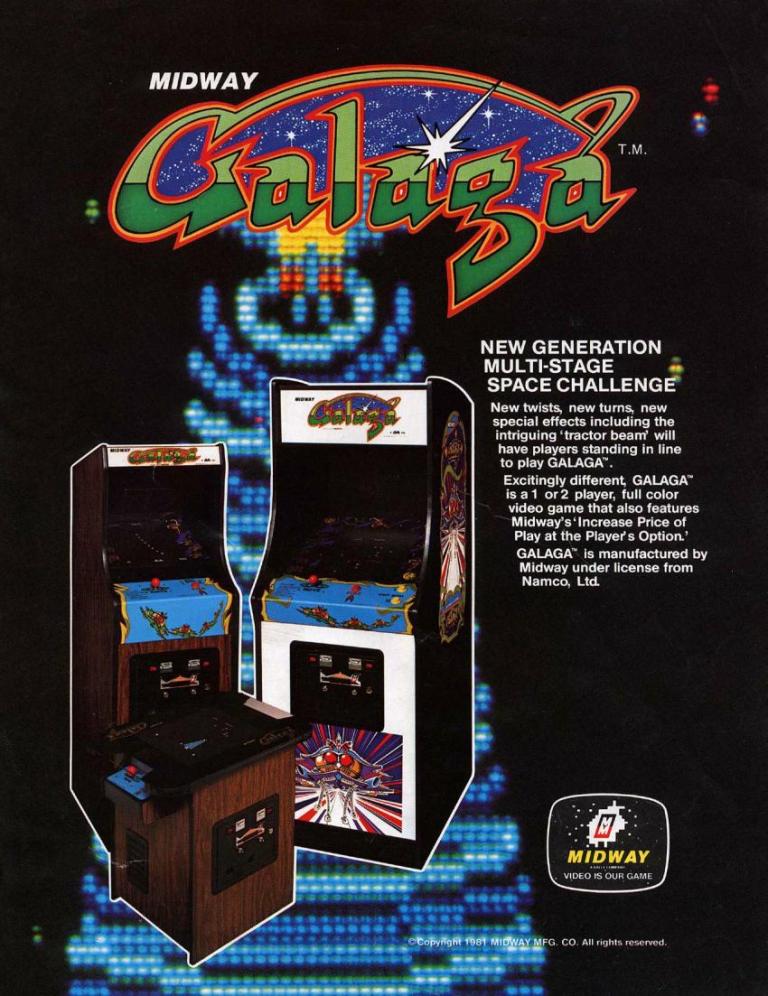
2. Galaga North American arcade flyer

The front of the flyer showing three Galaga machines that arcade operators can choose from.
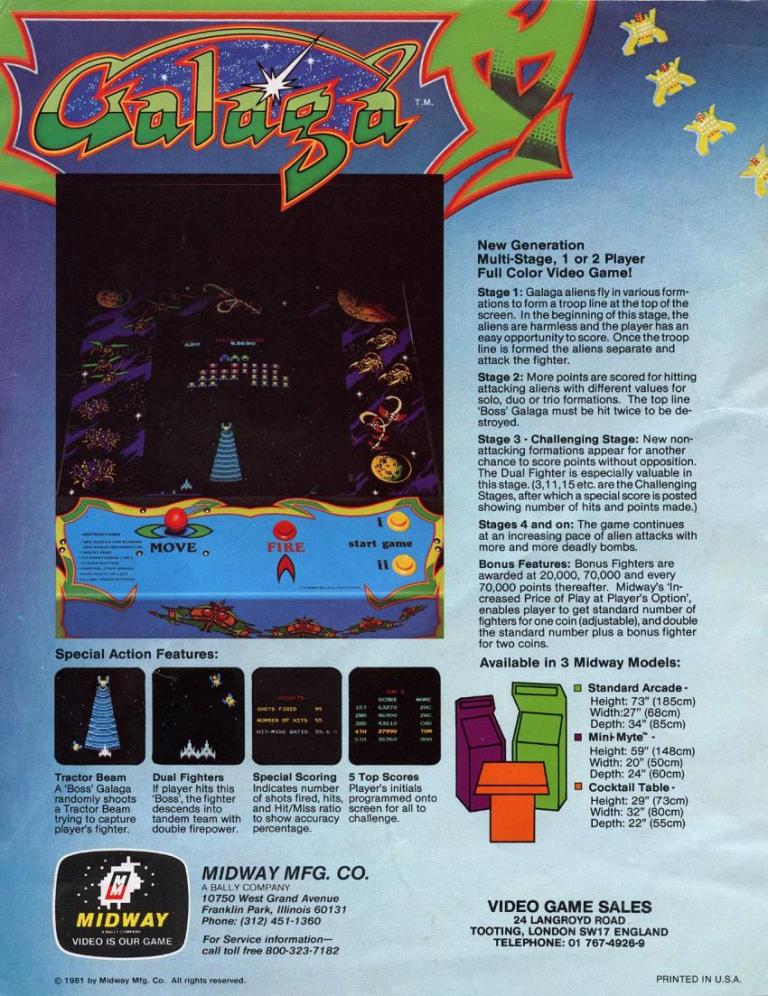
Key details about Galaga were nicely presented on the rear of the flyer.

In the history of gaming, Namco’s Galaga was played by countless millions of gamers and it is still highly regarded as an arcade classic as well as one of the most enjoyable arcade games ever made. In preparation for the North American launch (October 1981), Midway prepared the arcade flyer showing the three types of machine on the front that arcade operators can choose from. On the rear is the really neat approach of explaining the details of the game, what kind of gameplay is to be expected, and how to play. Whether you are an individual player or the manager of an arcade joint, this flyer suits your needs.   

3. Area 51 arcade flyer and conversion kit flyer

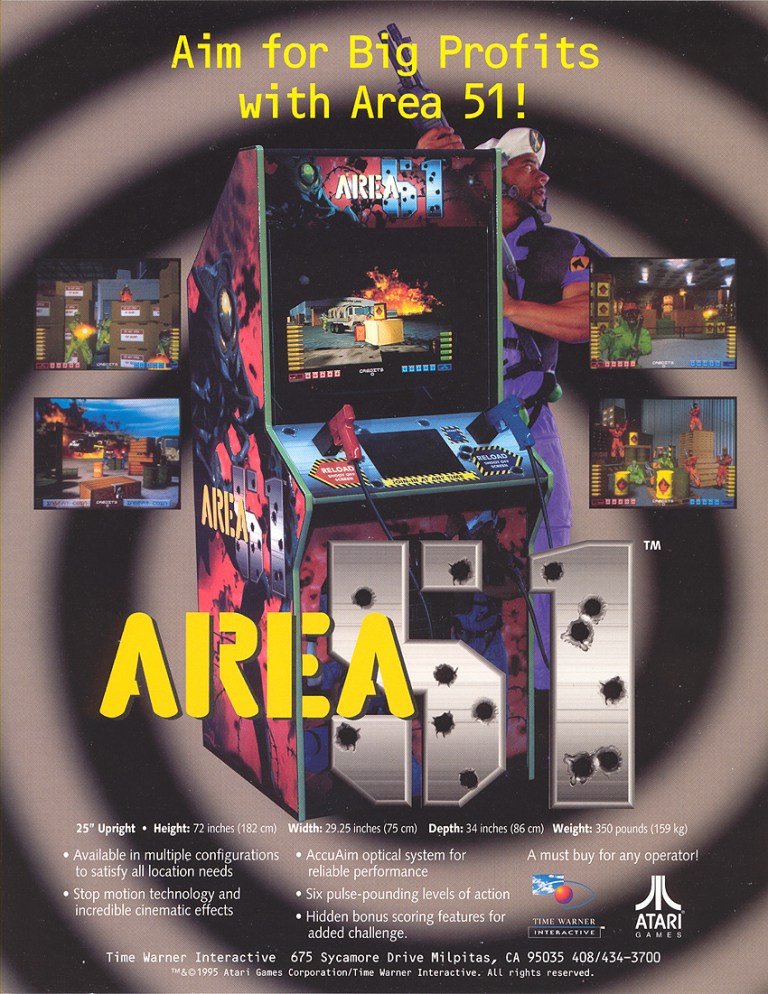
The front of this Area 51 flyer had an enticing message for arcade operators as well as other business owners/managers who are interested in having a machine to add value to their business joints. Atari was already in deep money problems by the time they started making this game.
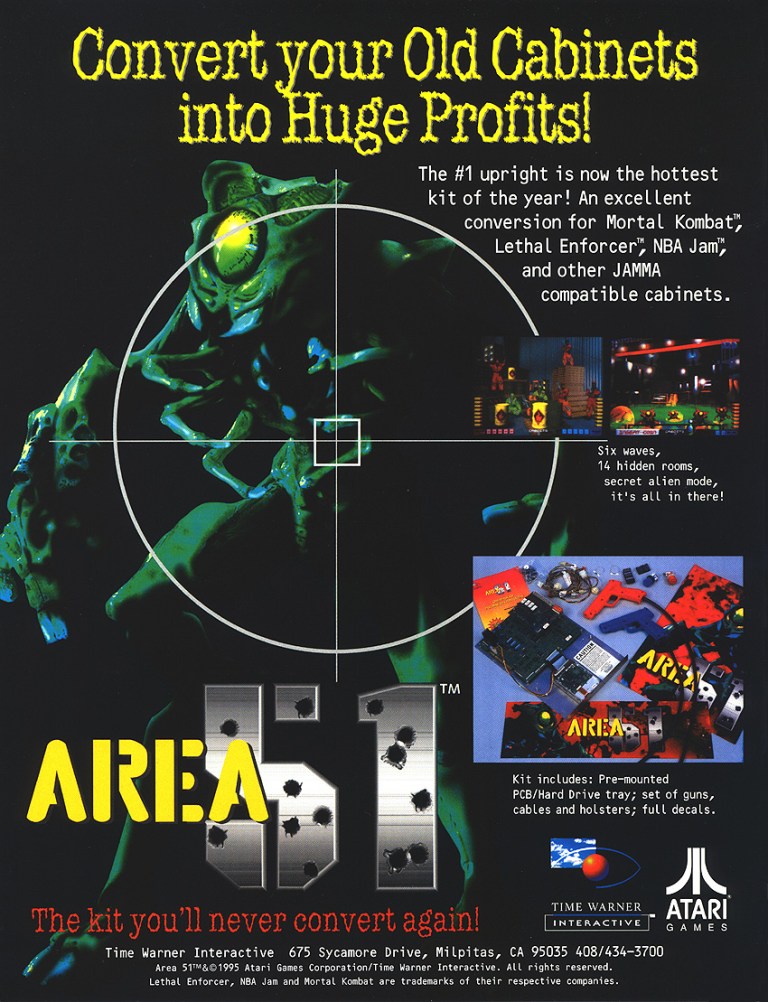
The Area 51 arcade conversion kit is a cheaper alternative for businesses who want the game.

Moving on to the 1990s, Atari was already struggling financially and desperately needed a hit to lift them up fast. A light gun shooter project was approved as arcade shooters were in good demand and after overcoming serious hurdles during production internally, Atari hired independent team Mesa Logic to take charge of development. After being granted extra time and more creative freedom, the project under Mesa Logic’s handling became a sci-fi shooter titled Area 51. The game became a huge hit in the arcades for Atari resulting in sales of more than 20,000 arcade cabinets as well as a major financial boost for the company (note: Atari still exists today). Atari went on to release Atari 51 versions for PlayStation, Sega Saturn and PC in America in 1996. The Atari 51 flyers you see here are still captivating to look at and were crucial in generating buzz among arcade operators, business joints that had space for arcade cabinets and gamers.

4. Panasonic 3DO print ad

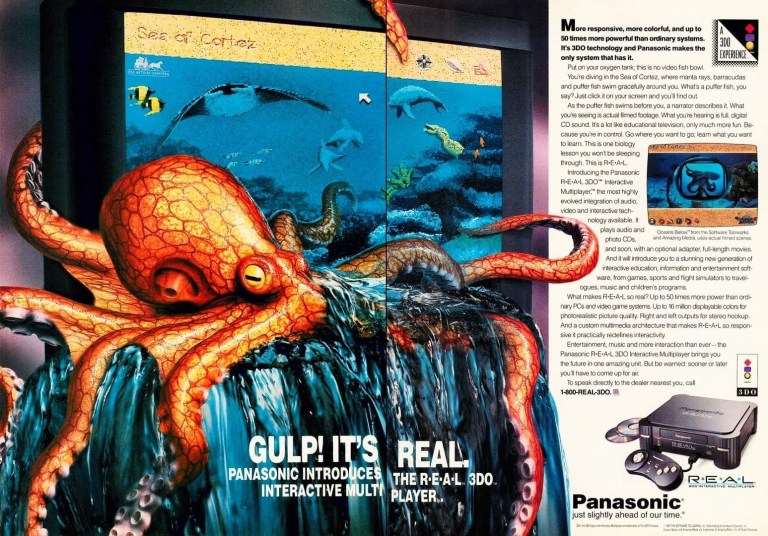
The makers of this print ad forgot to mention the 3DO is also a game machine.

Back in 1993, the 3DO Interactive Multiplayer console manufactured by Panasonic (a licensee of the 3DO Company) was launched with a CD-ROM drive, multimedia features and gaming capabilities (with a 3-button control pad). This print ad strongly emphasized the 3DO’s ability to play high-quality sound and full-motion videos using the Sea of Cortez software which functioned as an interactive movie. Obviously, this did not resonate well with people who loved to play games and by the time the 3DO Company and its partners started marketing games, they could not save the 3DO console from fading to obscurity. The console shown in the ad is specifically model Panasonic FZ-1 R·E·A·L 3DO Interactive Multiplayer. Panasonic was one of five companies that were licensed by the 3DO Company.

5. MechWarrior 3050 SNES print ad

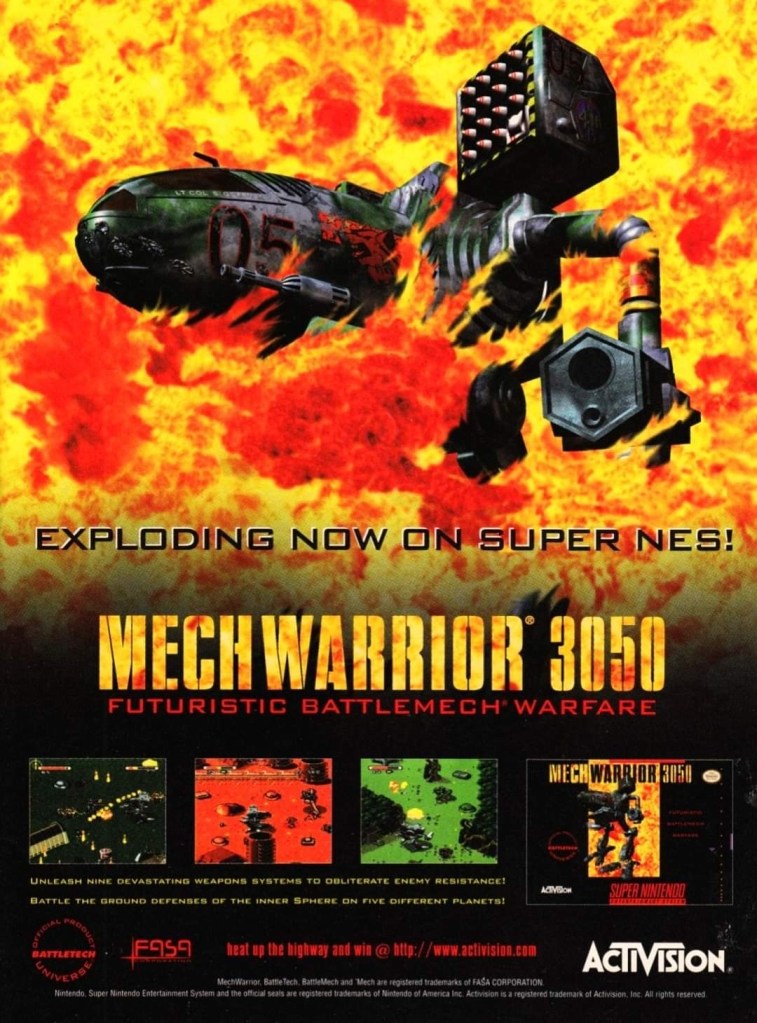
If you were unaware of the 1994 game BattleTech, then this ad would have fooled you into thinking it is promoting a brand new game.

In 1995, the popular BattleTech entertainment franchise arrived on the Super Nintendo Entertainment (SNES) system with MechWarrior 3050 and its print ad had a really blazing artwork of an armed mech in fire which gave readers the illusion of a new and original game. In reality, MechWarrior 3050 was actually a port of BattleTech which was released on the Sega Genesis in 1994. The Genesis game was published by Extreme Entertainment Group while the SNES game was published by the more famous Activision. If you look closely at the MechWarrior print ad, you can tell how hard they tried to sell the game like it was brand new and all-original.

6. Cliffhanger video game print ad

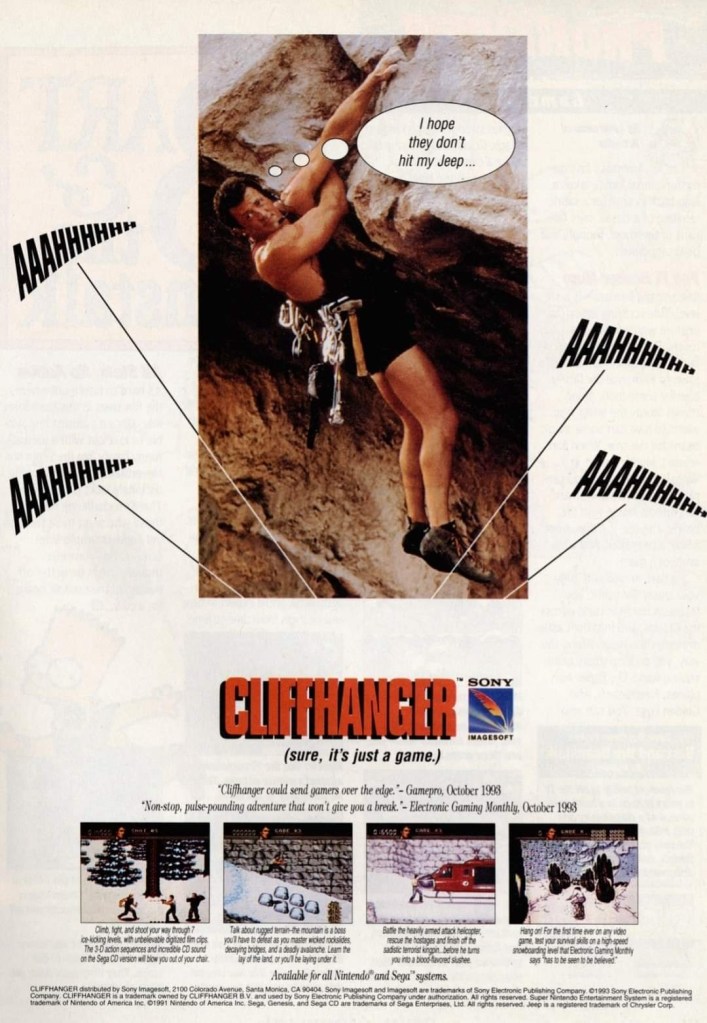
This print ad had Sylvester Stallone hanging on a cliff to be relevant with the title of both the film and the game. They could not show images of Stallone in hard action scenes.

For fans of Sylvester Stallone, 1993 was a big and exciting year as the Hollywood icon appeared in two major action films – Cliffhanger and Demolition Man. Cliffhanger was released first and there were video game adaptations of it released on game consoles, handhelds and computers. This print ad of the Cliffhanger video game had an image of Stallone hanging on a cliff to emphasize the title. The ad makers cleverly posted selected gameplay screenshots and quoted GamePro and Electronic Gaming Monthly (EGM) to make the game look credible and worthy of purchasing. The marketing led to nowhere as the game received mostly negative reviews from critics and it faded to obscurity. Lastly, the Cliffhanger game ad had a noticeable amount of space wasted. They could have made the screenshots and text look somewhat bigger to sell the game.

7. Ballz: The Director’s Cut print ad

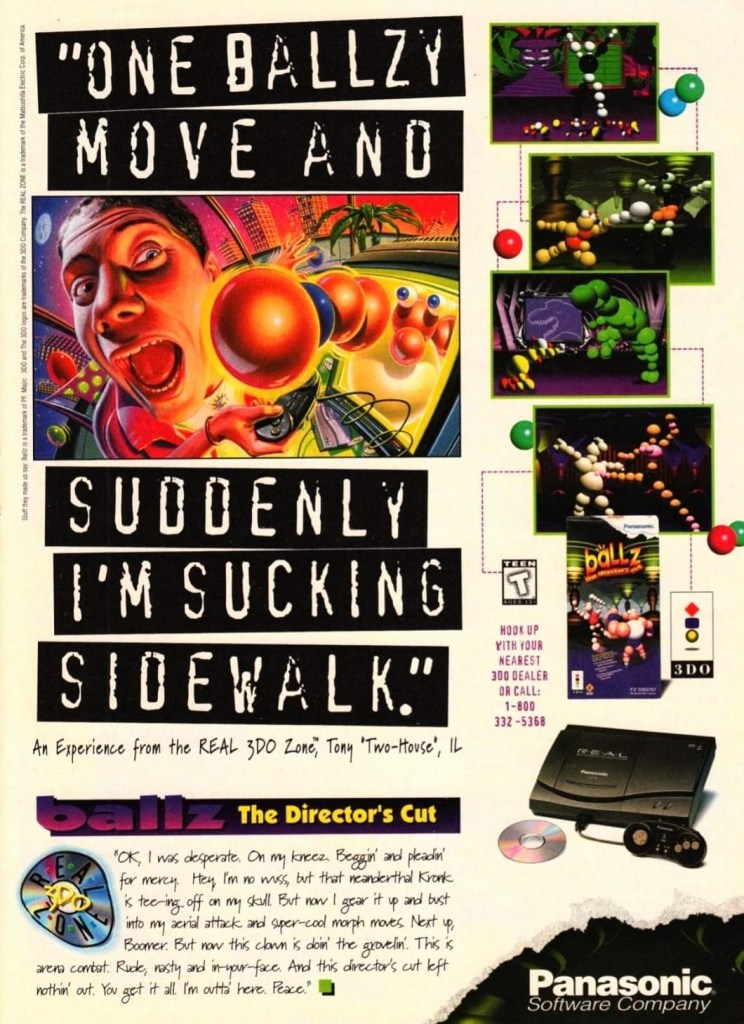
I never got to play this game on the 3DO.

Here is another ad of the video game released on the failed 3DO console. As its title made obvious, Ballz: The Director’s Cut is an enhanced version of the original Ballz game of 1994 that was released on other consoles. The print ad had an eye-catching piece of artwork and posted beside it were selected shots of the gameplay. Strangely enough, the creative writing on the lower part of the ad does not make any sense and did nothing to convince gamers to play the game. As Ballz: The Director’s Cut was released in 1995, this ad shows the revised 3DO console from Panasonic (model: Panasonic FZ-10 R·E·A·L 3DO Interactive Multiplayer).

8. NFL GameDay 2000 print ad

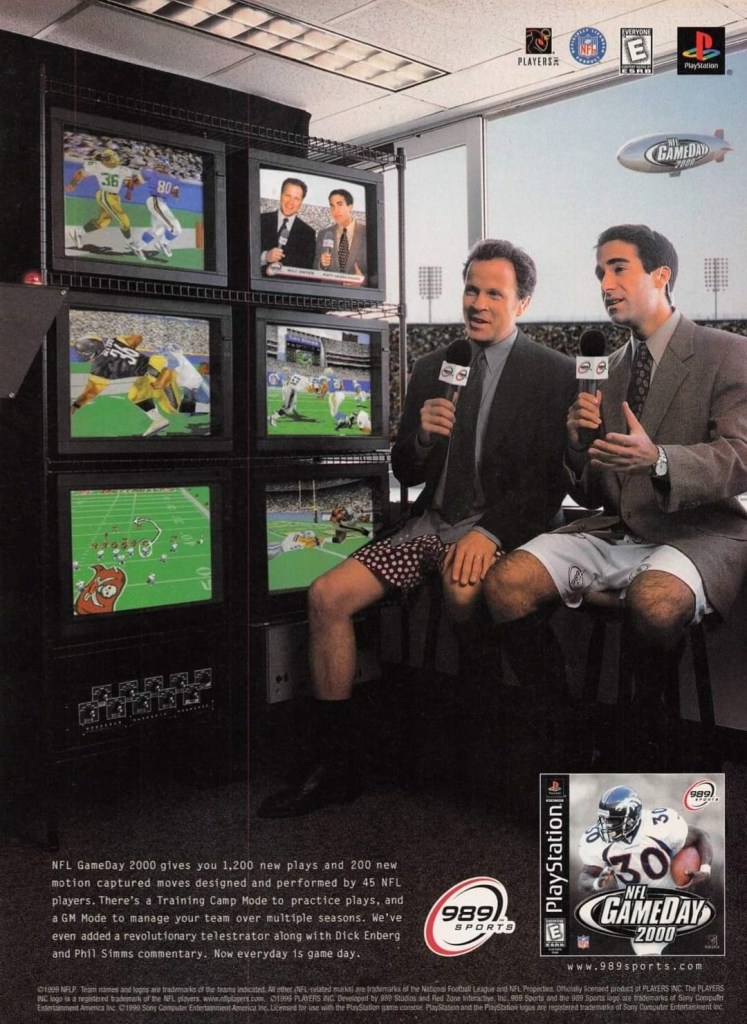
Did you find this ad funny to look at in 1999?

To promote the PlayStation-exclusive NFL GameDay 2000, Sony publisher 989 Sports and the ad makers decided to implement a humorous look at football TV coverage by having two sportscasters wearing shorts in front of a TV camera that was only showing their heads and upper bodies. The TV sets on the side show screenshots from the game to emphasize the sports gaming experience. Ultimately the game scored mostly positive review from the critics.  

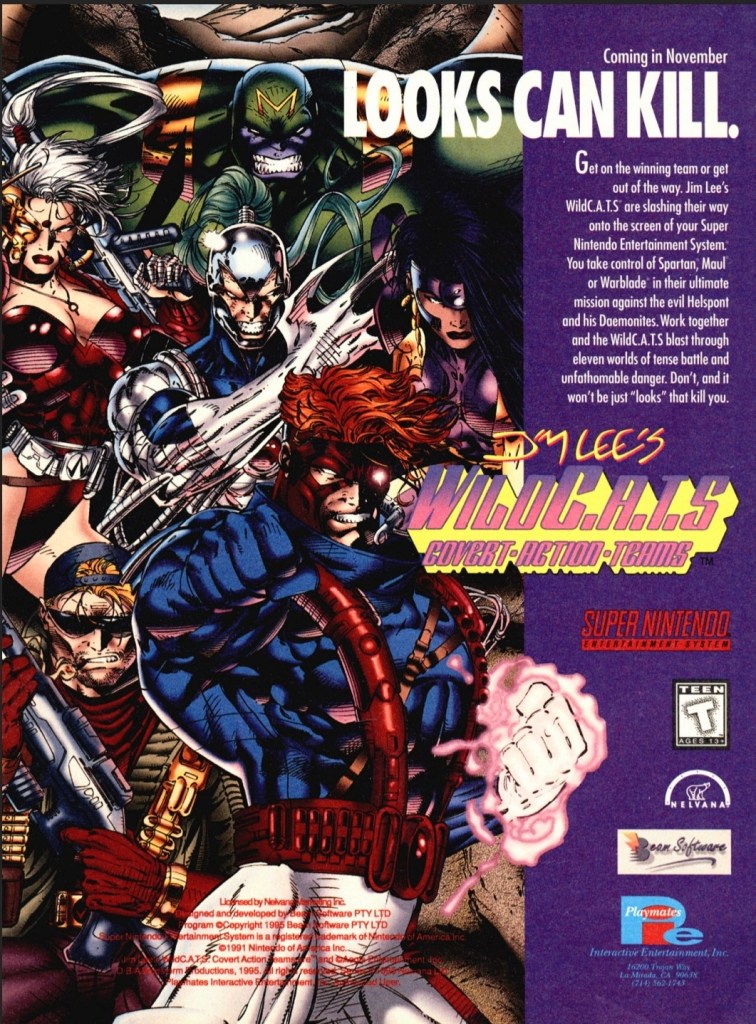
9. WildC.A.T.S: Covert Action Teams print ad

WildC.A.T.S. art by Jim Lee was used to promote the SNES video game.

When Image Comics launched in 1992, WildC.A.T.S: Covert Action Teams was Jim Lee’s creator-owned comic book franchise and its launch issue was a big seller. Years later, WildC.A.T.S. grew in popularity with comic book fans and the franchise achieved multi-media status by venturing into TV (with an animated series) and video games. This print ad promoting the video game adaptation had no screenshots to show which kept fans and gamers guessing how the game will turn out in terms of gameplay and game design. It was obvious that the people who made this print ad had to rely on the best WildC.A.T.S. artwork they could find drawn by Jim Lee. This ad made me laugh back in the old days because if you did not look closely, it might fool you into thinking it was more about comic books than the game on the SNES.

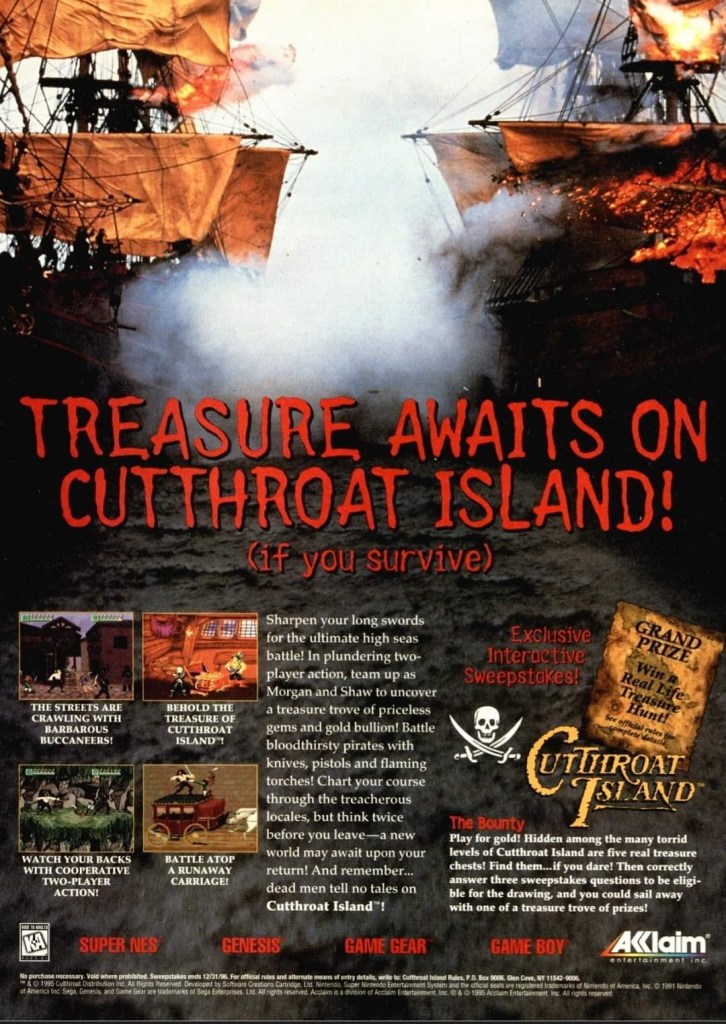
10. Cutthroat Island print ad

Exciting imagery without Geena Davis and Matthew Modine was used to promote the video game adaptation.

I never saw the Hollywood mega-flop Cutthroat Island nor have I ever played any of its multiple video game adaptations (released on SNES, Sega Genesis, Sega Game Gear and Game Boy). The video game print ad, however, caught my attention back in 1995 because the ad makers cleverly used a photograph from one the many expensive movie sequences filmed and the hard, physical work by the filmmakers was clearly visible. Then the ad makers had four screenshots placed on the lower-left part and inserted descriptive text that sounded exciting. Lastly, the ad mentioned a sweepstakes promo.

Without using any images of stars Geena Davis and Matthew Modine, this ad was a strong attempt to get gamers excited for the video game adaptation. Like the movie itself, this game flopped and has faded away to the land of the forgotten.

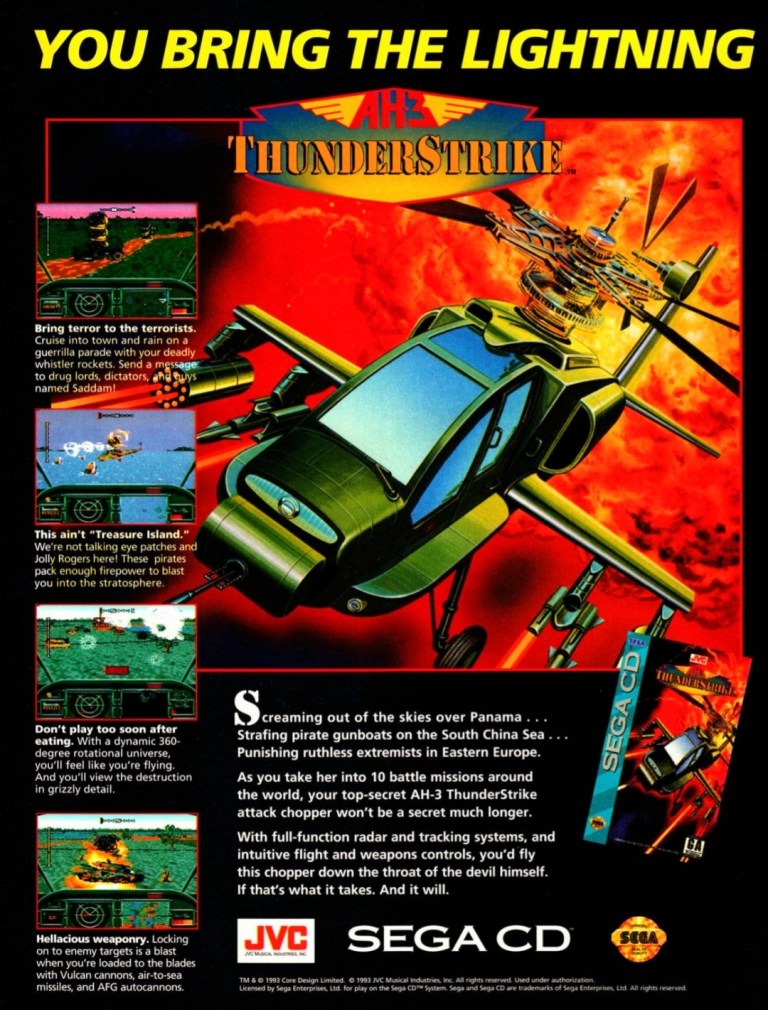
11. AH-3 Thunderstrike print ad

Captivating artwork, vibrant colors and orderly text descriptions made this an effective ad.

AH-3 Thunderstrike is one of the better games that was released on the Sega CD add-on (requires the Sega Genesis console) in 1993. Similar with MechWarrior 3050, the game was actually a port of Thunderhawk which itself was released on the Amiga and MS-DOS PC in 1992. The print ad showcased a captivating artwork (which was also used on the game’s box cover), a few screenshots and strategically placed text descriptions to sell the game. This ad still looks good.

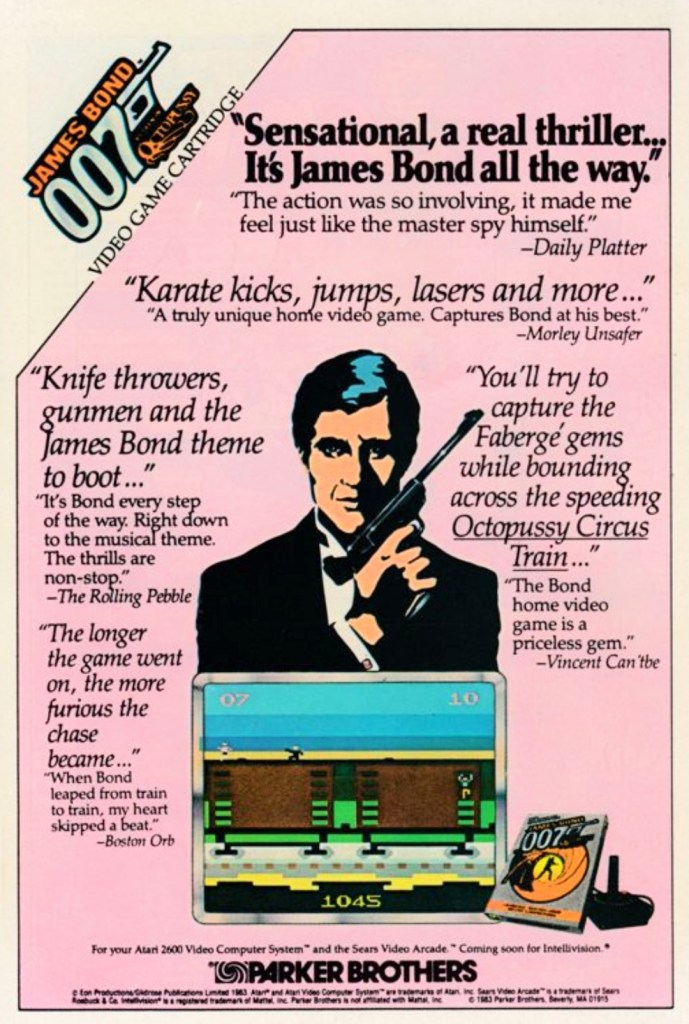
12. James Bond 007 print ad

This print ad appeared in many comic books in 1984.

This is a print ad I saw many times while reading comic books in 1984. James Bond 007 for Atari 2600 was an ambitious licensed video game as it featured levels that were inspired by missions in the James Bond movies Diamonds are Forever, The Spy Who Loved Me, Moonraker and For Your Eyes Only. Keep in mind that programmers back then had to deal with memory limitations and primitive tools to make games.

To promote the game, original art of Agent 007 was used which did not resemble the James Bond star of the time – Roger Moore. Strangely enough, the illustrated James Bond slightly resembled Timothy Dalton whose debut as 007 happened in 1987. Adding further zest to the add was the use of fictionalized quotes pointing to fantasized critics as sources (example: Vincent Can’tbe is a reference to real life critic Vincent Canby). The use of a pink background made this catchy ad look really odd.

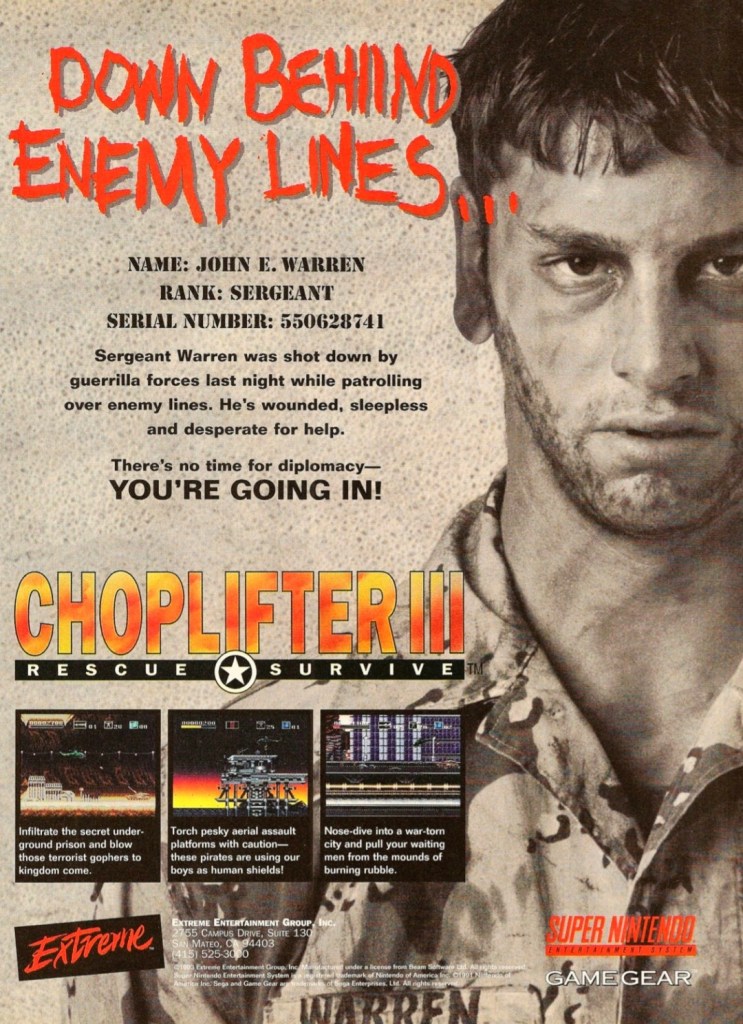
13. Choplifter III: Rescue Survive print ad

A captivating print ad that brought gamers’ attention to the Choplifter series again.

This print ad of Choplifter III: Rescue Survive has a striking look showing a military officer who needs your help as he has been stranded behind enemy lines. The presentation reflects the long-time tradition of the Choplifter game franchise which has been about piloting an armed helicopter to the opposition’s territory, shooting at bad guys and then rescuing the hostages or prisoners-of-war (POWs). The game eventually gathered mostly positive feedback from video game critics.

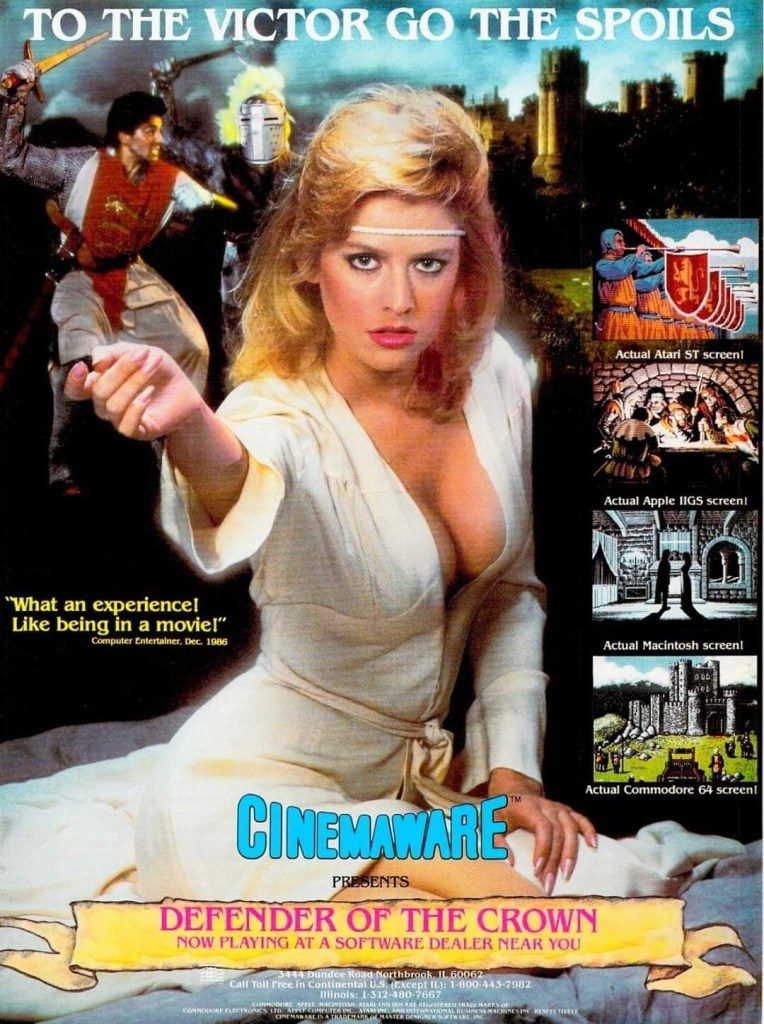
14. Defender of the Crown print ad

Cinemaware took a gamble with the visual concept of this print ad.

Released in 1986 for home computers, Defender of the Crown was made with a high level of quality backed with solid artistry. To capture gamers’ attention, Cinemaware came up with this print ad showcasing a pretty model looking somewhat seductive which reflects what happens in the game when players rescue a damsel in distress. The selected screenshots showed what the game looked like on different platforms, and the lower part of the ad made the game feel like it was a historical epic waiting to be discovered. Defender of the Crown eventually became a big hit with computer gamers.  

+++++

Thank you for reading. If you find this article engaging, please click the like button below, share this article to others and also please consider making a donation to support my publishing. If you are looking for a copywriter to create content for your special project or business, check out my services and my portfolio. Feel free to contact me with a private message. Also please feel free to visit my Facebook page Author Carlo Carrasco and follow me on Twitter at  @HavenorFantasy as well as on Tumblr at https://carlocarrasco.tumblr.com/ and on Instagram at https://www.instagram.com/authorcarlocarrasco

A Look Back at Universal Soldier #1 (1992)

Welcome back comic book readers, 1990s arts and culture enthusiasts, movie fans and comic book collectors! Today we go back to the year 1992 to take a close look at the official comic book adaptation of the action movie Universal Soldier.

Universal Soldier stood out among Hollywood action films in 1992 as it had Jean-Claude Van Damme and Dolph Lundgren as the main stars and both of them were established action movie stars each with huge followings of fans. As it grossed almost $100 million worldwide on a budget of less than $25 million, the movie was successful and eventually sparked its of franchise of movies, TV shows, video games and comic books. NOW Comics was in-charge of making and publishing the comic book adaptation of the 1992 film.  

With those details laid down, here is a look back at Universal Soldier #1 published in 1992 by NOW Comics with a story written by Clint McElroy and drawn by Lenin Delsol. This was the first chapter of a 3-issue mini-series.

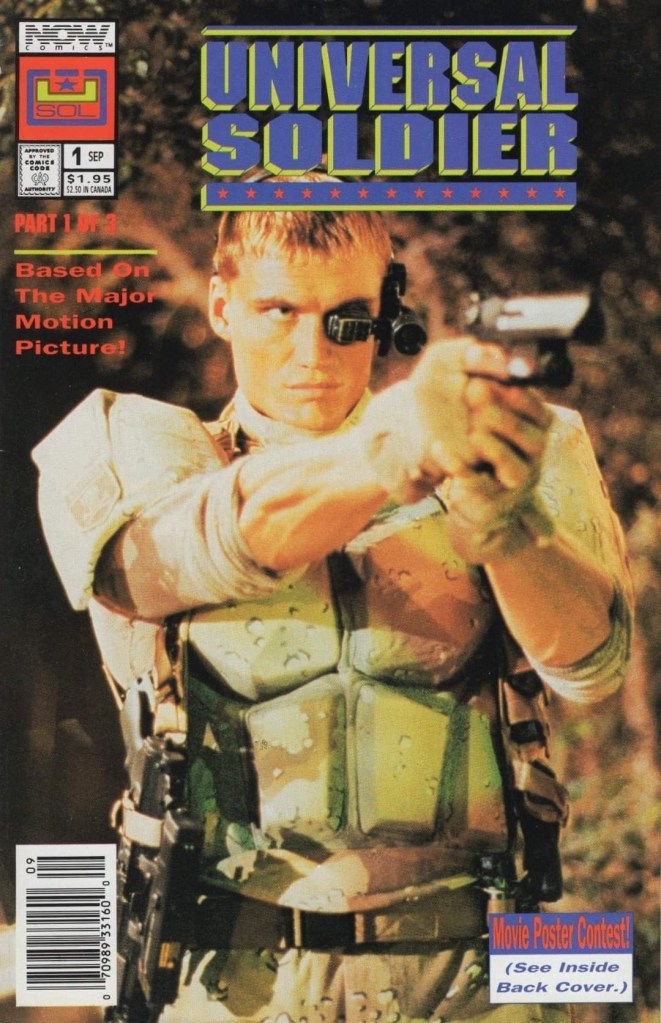
The cover showing a photographic image of star Dolph Lundgren.

Early story

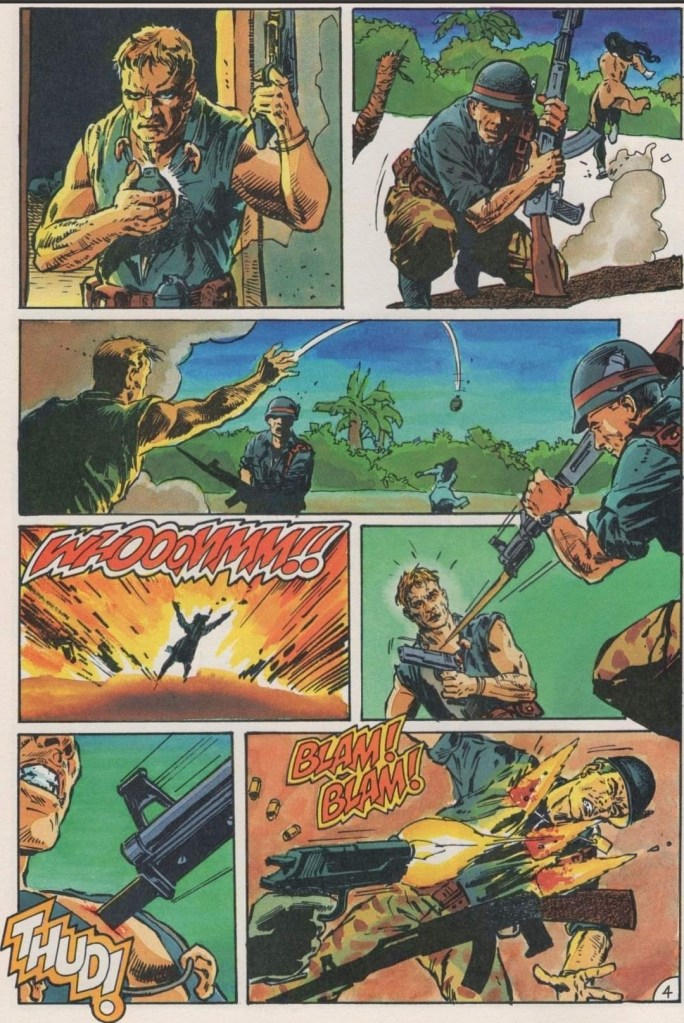
The story begins in Vietnam in 1969. The American soldier Luc Deveraux arrives at a village that was secured by the U.S. Army. To his shock, he finds several dead bodies of his squad members and villagers, then encounters Sergeant Andrew Scott with two Vietnamese individuals (male and female) tied together near him. It turns out that Scott, who made a necklace composed of severed ears, has gone insane and executes the Vietnamese man. As Deveraux refuses to follow Scott’s order to shoot the Vietnamese female, the sergeant kills he. Deveraux and Scott shot each other to death and eventually their corpses were recovered by another squad to be cryogenically frozen.

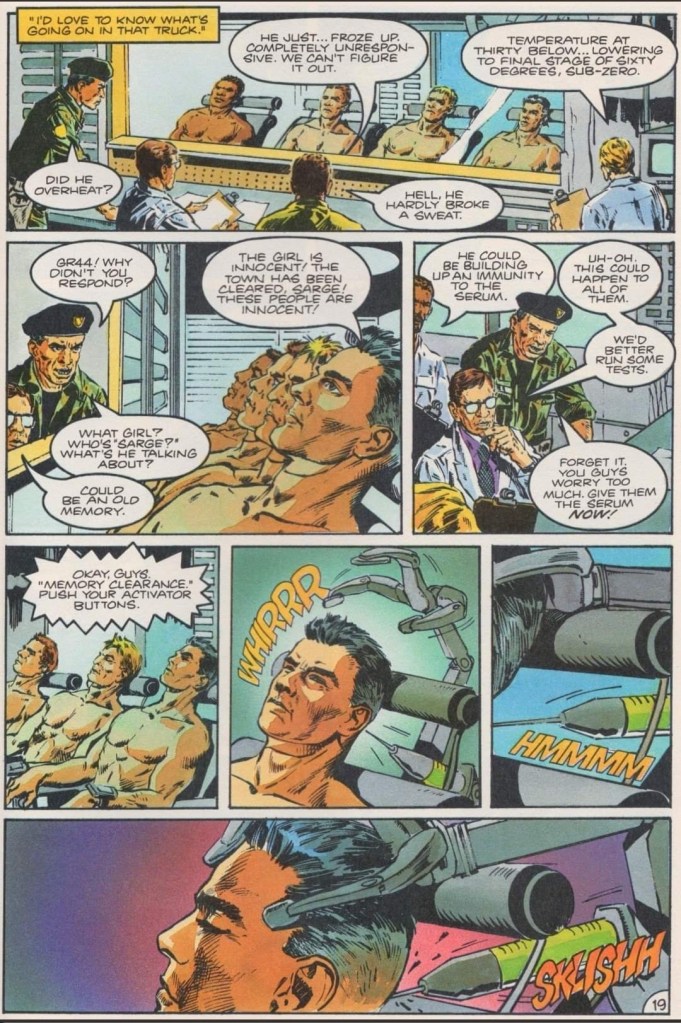
A few decades later in Nevada, the elite counter-terrorism unit of the UniSol (Universal Soldier) arrives and among the members are Deveraux (identified as GR44) and Scott (GR13) who have been reanimated by the government with their past memories fully suppressed. Their team gets deployed to the Hoover Dam (Mackinley Dam in the comic book) to resolve a hostage situation…

Quality

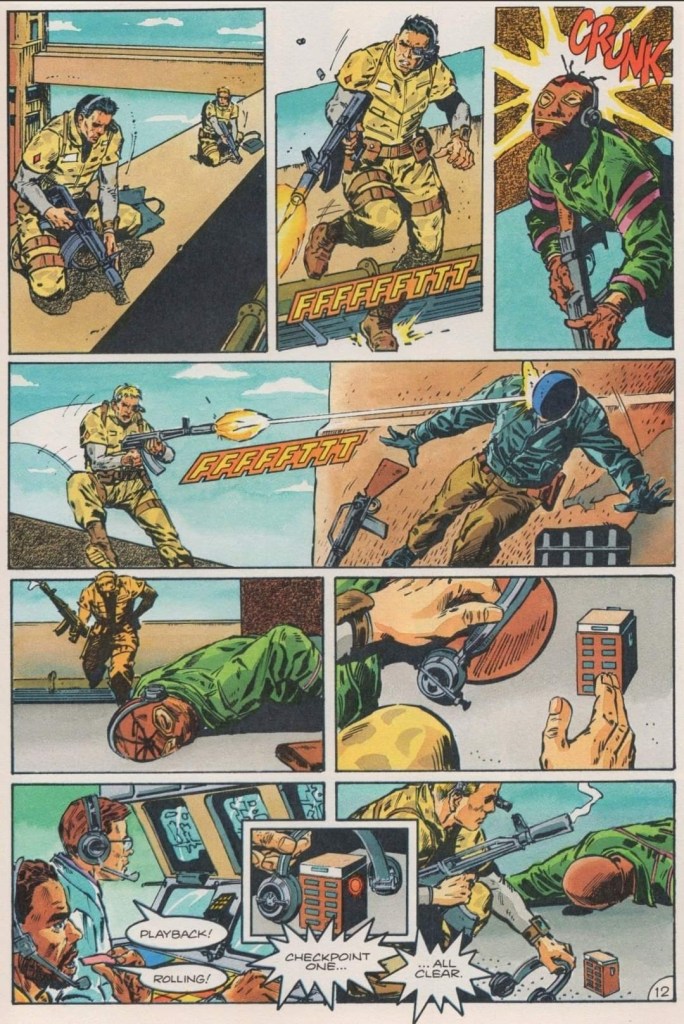
Operating very much like robots, two Universal Soldiers take down terrorists and manipulated their communication as they make their way through to save the hostages from the remaining terrorists.

As an adaptation, I find this comic book a surprisingly accurate translation of the movie’s early part of the story (note: the literary narrative ends when Deveraux leaves with the female reporter). While not 100% of the film’s plot and visual details were captured, this comic book still succeeded in replicating the look, feel and tone of the movie. It is clear that the comic book team had access to the footage of the film and a copy of the screenplay (written by Richard Rothstein, Christopher Leitch and Dean Devlin).

Clint McElroy really stuck close to the film’s plot, the dialogue and the way the characters were portrayed. Again, not 100% of the relevant details were adapted and some liberties were taken but McElroy managed to craft a comic book narrative that was solidly structured, had sufficient details to keep readers oriented and engaged, and ensured the story moved at a satisfying pace. By the time I reached the end of this comic book, I got oriented with the story, the characters and the details shown in between.

Like in the movie, this comic book emphasizes the government’s very cold and heartless approach on handling their Universal Soldiers who are treated more like tools instead of people.

Lenin Delsol’s artwork here is really good. It is clear that he had access to the film’s production footage as several images of locations and characters here very closely resembled what was shown in the movie most of the time. When it comes to the action scenes, Delsol did not go for visual dynamism (note: the dynamic action style was common with superhero comics of the 1990s) but rather he portrayed the action with realism and varying degrees of brutality.

When it comes to visualizing the characters, it is clear that the creative team was not authorized to use the likenesses of the actors. Luc Deveraux looks absolutely nothing like Jean-Claude Van Damme while journalist Veronica Roberts does not look like Ally Walker. Ironically, there are a few images of Scott’s face that somewhat resembles Dolph Lundgren. The way I see it, it is not problematic to see the characters not resembling the actors from the film. In fact, I like the new character designs Delsol came up with for the characters.

Conclusion

This early scene sets the tone of the entire comic book. As for the characters, Deveraux look nothing like Jean-Claude Van Damme and Sergeant Scott does not look like Dolph Lundgren (note: in other images of Scott shown later in the comic book, he looked a bit like the actor).

Even though I was not a fan of the 1992 movie, Universal Soldier #1 (1992) succeeded in keeping me engaged and entertained until the end. This is a really good adaptation of the early part of the film and I like the approach the Elroy-Densol team took on establishing the literary experience. Of course, if you want more dynamic visuals of the Hoover Dam scene or if you want that strong rated-R vibe when it comes to hard action, you should watch the movie. As of now, I am convinced to look forward to the next issue of this 3-part mini-series adaptation.

Overall, Universal Soldier #1 (1992) is recommended.

+++++

Thank you for reading. If you find this article engaging, please click the like button below, share this article to others and also please consider making a donation to support my publishing. If you are looking for a copywriter to create content for your special project or business, check out my services and my portfolio. Feel free to contact me with a private message. Also please feel free to visit my Facebook page Author Carlo Carrasco and follow me on Twitter at  @HavenorFantasy as well as on Tumblr at https://carlocarrasco.tumblr.com/ and on Instagram at https://www.instagram.com/authorcarlocarrasco

A Look Back at The Last Starfighter #1 (1984)

Welcome back superhero enthusiasts, 1980s arts and culture enthusiasts, Marvel Comics fans and comic book collectors! Today we go back to the year 1984 to take a close look at the official comic book adaptation of the classic sci-fi movie The Last Starfighter.

The Last Starfighter is highly memorable for its extensive use of computer-generated imagery (CGI) which brought its science fiction concepts of war and space travel to life. Directed by Nick Castle, the film is also remembered for its unique storytelling (note: with scenes set on Earth and in space) as well as the solid performances by Lance Guest, Robert Preston, Dan O’Herlihy, Catherine Mary Stewart and Norman Snow.

I should also state that the movie was released during the golden age of arcade games in America and its narrative has video game elements within. The Last Starfighter, which had unreleased ports for Atari consoles and an actual game released on the Nintendo Entertainment System (NES), clearly has a place in retro gaming culture. To know more about the movie, watch the retrospective video by Oliver Harper by clicking here, the retrospective video by GoodBadFlicks by clicking here and the movie trivia video by Minty Comedic Arts by clicking here.

Marvel Comics was in-charge of producing and publishing the comic book adaptation of the movie. In fact, it was released as issue #31 of the Marvel Comics Super Special (AKA Marvel Super Special) series and also in the form of a 3-issue mini-series.

With those details laid down, here is a look back at The Last Starfighter #1, published in 1984 by Marvel Comics with a story written by Bill Mantlo and drawn by Bret Levins. This is the first chapter of the 3-issue mini-series.

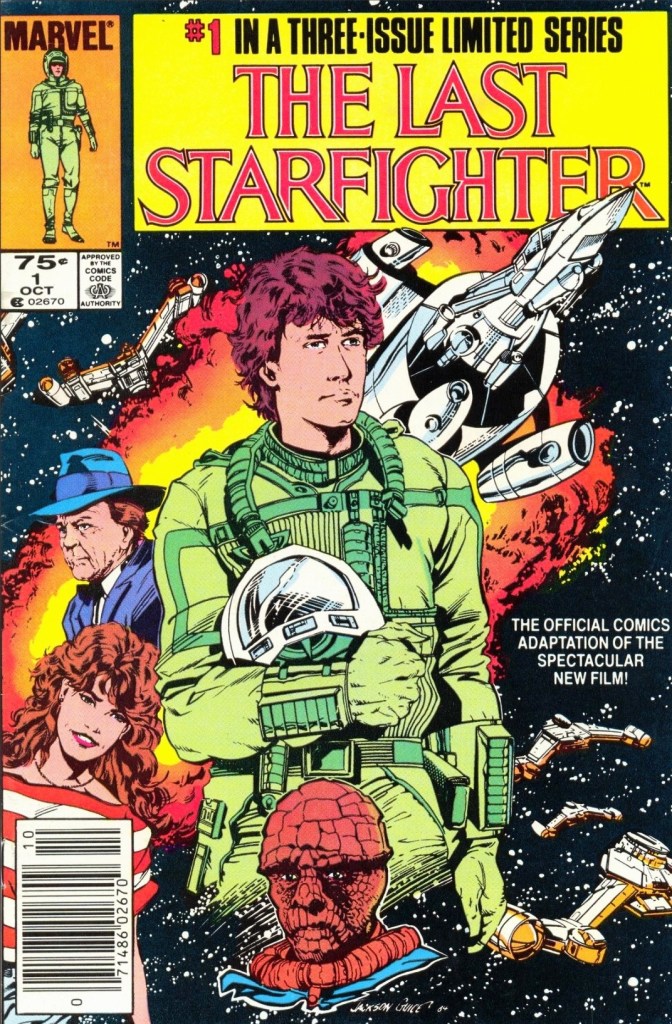
The cover.

Early story

The story begins on a sunny day at a trailer park filled with residents who know each other. Maggie Gordon searches for Alex who is busy playing The Last Starfighter arcade game inside the local store. Alex’s little brother Louis was told to inform him that a neighbor’s electricity problem needs fixing.

Alex is laser focused on playing the arcade game which has an immersive space shooter game design. As Maggie tells him that their friends had arrived, Alex decides to let Louis play the rest of the game as he moves out.

Just as Alex and Maggie are about the leave, his mother tells him that he the neighbor’s electricity problem needs his repair service making him miss the trip.

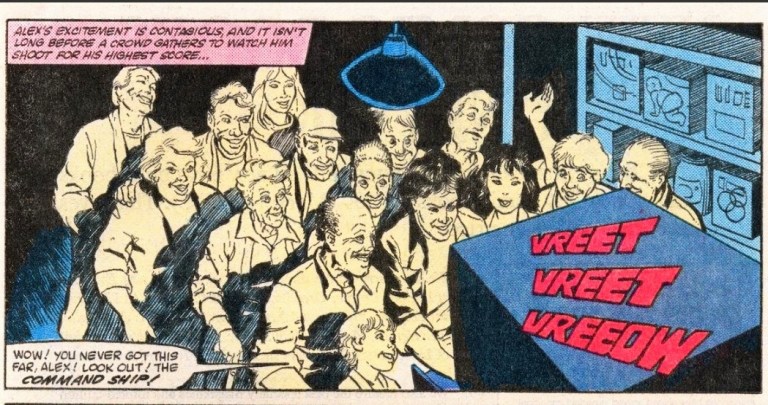
In the evening, Alex resumes playing The Last Starfighter and shortly after scoring over 900,000 points, many members of the local community flocked inside the grocery to watch him play…

Quality

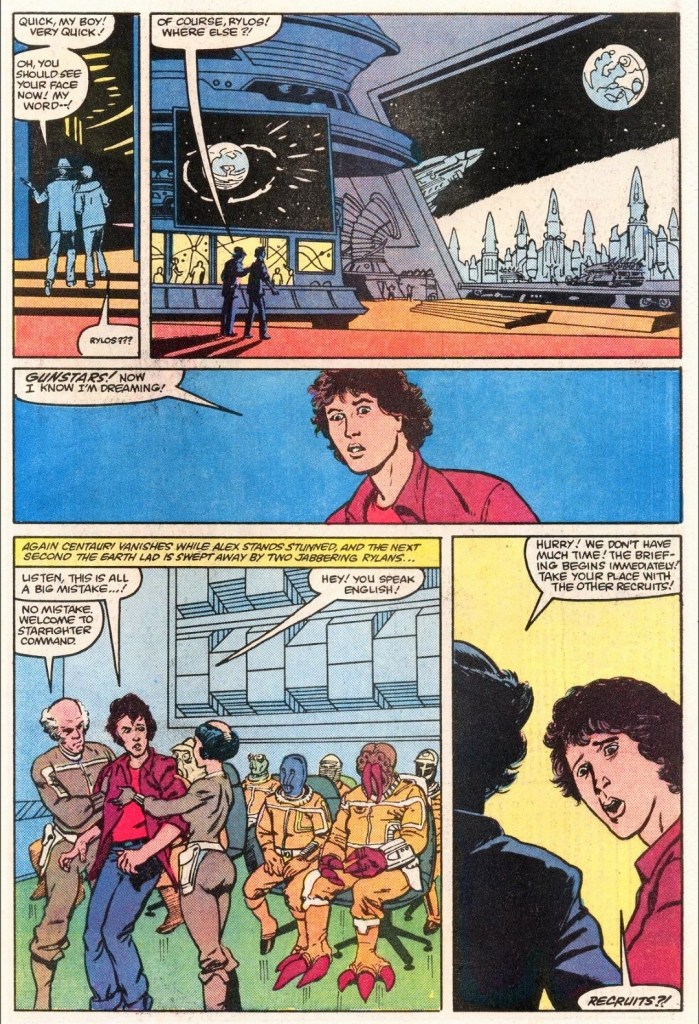
There is nothing like being inside a very futuristic place and getting involved in a galactic conflict.

Considering the limited scope of the narrative – which ends with Alex already far away from home – and the creative liberties committed by the production team, this comic book is faithful for the most part and it does a good job replicating the vibe and tone of the movie.  

Bill Mantlo’s script focused on the more important dialogue from the film and it did a good job following Alex Rogan (the protagonist) who is a video game achiever who happens to be striving to move forward with his life. He is a likable guy facing great odds as well as the harshness of reality, and he has hope with Maggie who just might become an integral part of his life in the years to come. Centauri is clearly the 2nd most notable character after Alex and through him, the narrative moves forward a lot leading to the greater science fiction stuff sourced from the movie.

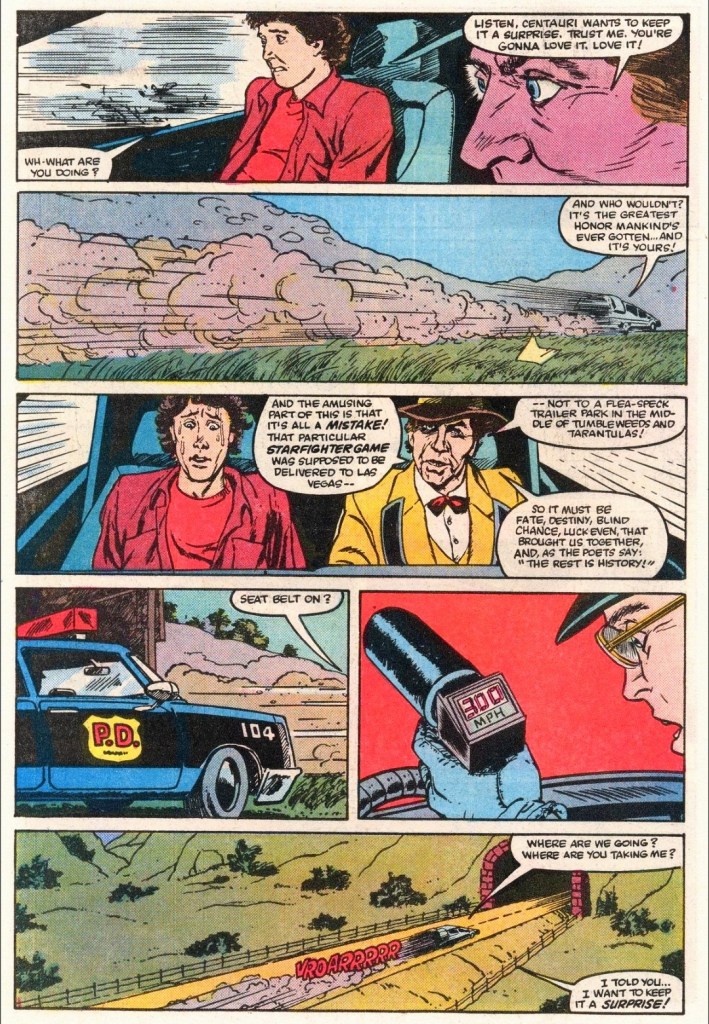
The wild ride!

As it is clearly not a 100% replica of the movie’s screenplay, the script Mantlo made ensured that this comic book has a whole lot of relevant details, notable moments and characterization that readers can immerse themselves into.

For his part, Bret Blevins (note: his name was spelled as Brett Blevins here) did a fine job replicating the movie imagery that includes the locations, the characters, and the sci-fi elements. While it is not clear if the comic book team was authorized to use the actors’ likenesses when drawing the characters, there were a few instances in which Alex somewhat resembles actor Lance Guest, and Centauri looking a bit like the late Robert Preston.

Conclusion

Have you ever experienced attracting a lot of people while playing an arcade game?

Even though there were no battles within its narrative, The Last Starfighter #1 (1984) is a good comic book adaptation. Having seen the movie a number of times in my life, I can say that this comic book recaptures the feel and tone of the film in varying degrees. Of course, the illustrated literature format can only go so far with adapting the movie’s greatness. That being said, if you truly want mesmerizing imagery, strong thrills, great music and the dramatics of the characters, watching the movie is the clear option (note: The Last Starfighter 4K Blu-ray is available). This comic book is a worthy partial companion and I can confirm that it has convinced me to read the next issue.

Overall, The Last Starfighter #1 (1984) is recommended.

+++++

Thank you for reading. If you find this article engaging, please click the like button below, share this article to others and also please consider making a donation to support my publishing. If you are looking for a copywriter to create content for your special project or business, check out my services and my portfolio. Feel free to contact me with a private message. Also please feel free to visit my Facebook page Author Carlo Carrasco and follow me on Twitter at  @HavenorFantasy as well as on Tumblr at https://carlocarrasco.tumblr.com/ and on Instagram at https://www.instagram.com/authorcarlocarrasco

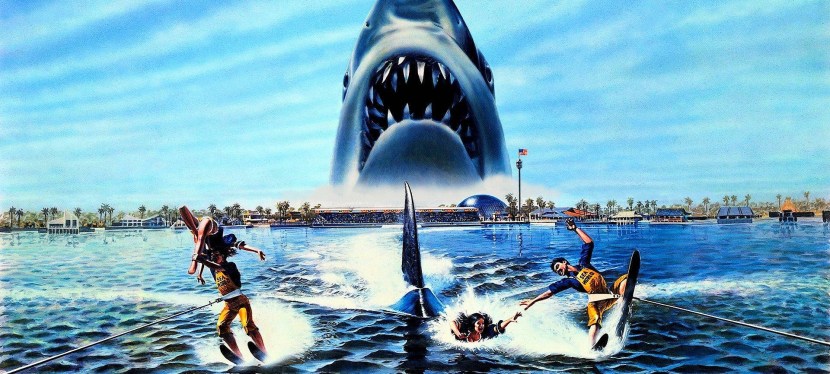
Are you nostalgic about Jaws 3-D (AKA Jaws 3) right now?

Way back in 1983, I had my first-ever 3D viewing experience inside the movie theater here in the Philippines. I saw the movie Jaws 3-D (AKA Jaws 3) on the big-screen using disposable 3D glasses and the theater was packed with lots of moviegoers who screamed from time to time.

If you are not familiar with movie history, Jaws 3-D was the 3rd movie of the Jaws movie franchise which itself started with the classic 1975 movie directed by Steven Spielberg. While the 1978 sequel Jaws 2 did not come close to matching the commercial success of its predecessor, it still managed to gross over $200 million worldwide and arguably influenced Hollywood movie studios to invest in making sequels to achieve summer box office success. Jaws 2 also propelled the rise of movie-related merchandising which paved the way for deals between movie studios and business entities.

When the 2nd Jaws sequel was proposed, producers David Brown and Richard Zanuck had the concept of spoof titled Jaws 3, People 0. National Lampoon writers were even commissioned to make the script. The Jaws 3 comedy project was shot down by Universal Pictures as a result of Steven Spielberg’s threat that he would never work with them again if they approved it.

Along the way, there were technological breakthroughs for cinematic 3D viewing which led to the short revival of showing movies in 3D in movie theaters. The Jaws 3 project was turned into a 3D-focused cinematic experience with a concept about an aquatic amusement park that falls into chaos as a result of a large great white shark that infiltrated it. Prolific production designer Joe Alves was hired as director and the cast includes Dennis Quaid, Bess Armstrong, Louis Gossett, Jr., Lea Thompson and Simon MacCorkindale. Even SeaWorld got involved and allowed the filmmakers to use their brand.

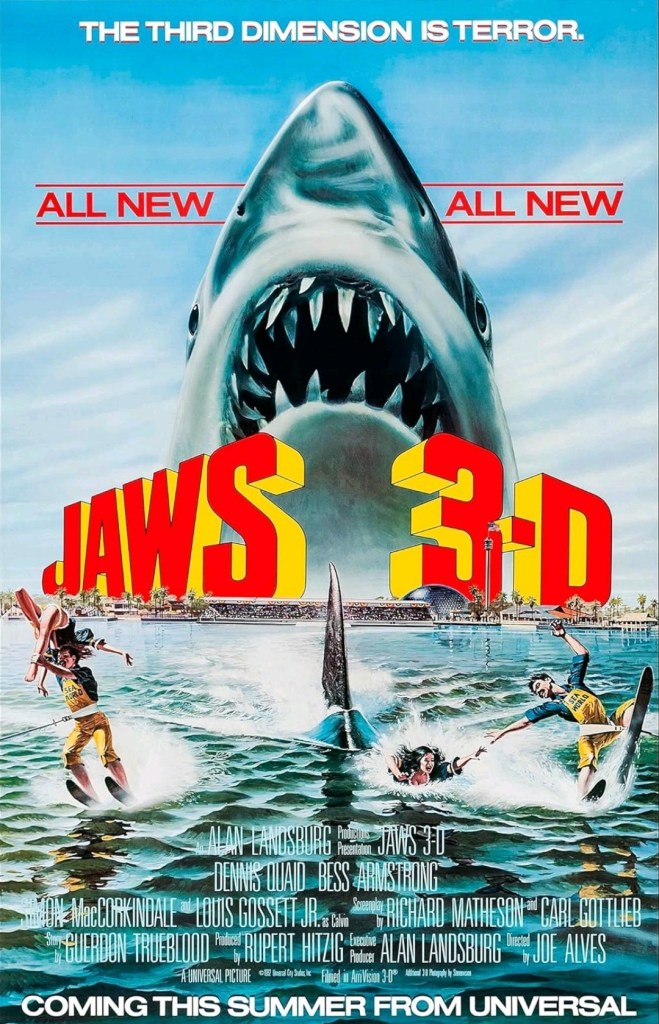
The movie poster.

Jaws 3-D was released in cinemas on July 22, 1983 and had a franchise-best opening weekend with $13.4 million. Its global box office gross was around $88 million.

When I first saw Jaws 3-D inside the movie theater, I was a young boy and simply enjoyed it for what it was. I occasionally replayed the movie through the years on cable TV and home video, and I eventually realized that the film was indeed very flawed and clearly inferior to its predecessors with regards to quality and storytelling. Jaws 3-D was simply made to give moviegoers a thrill ride inside the cinema with 3D viewing in mind as the moviegoers followed the 3D viewing revival trend of the early 1980s. When it was released on cable TV and home video, the movie was re-titled as Jaws 3 to reflect the lack of 3D effects.  

Even though it was inferior to the first two Jaws movies, Jaws 3-D remains a popular movie subject to explore and there are several videos on YouTube that reflect that. If you are interested in Jaws 3-D but you don’t want to spend precious time and money watching it entirely, then you should watch the movie reaction video by You, Me and the Movies below.

If you want to learn more about how the movie was made, how it all started and what kind of technologies were used to make the 3D effects happen, watch the two retrospective videos below from Oliver Harper and Layton Eversaul.

If you are into movie trivia, then Minty Comedic Arts’ video below is recommended.

By the way, you must have heard that Jaws 3-D is now available in 4K Blu-ray format. Before you make the decision to purchase it, be aware that Universal used artificial intelligence (AI) to make it. Depending on how you want your movies to appear in 4K resolution, the results could turn you off. Watch the videos below from Jeff Rauseo and MidLevelMedia.

Let me end this piece by asking you readers: Have you ever seen Jaws 3-D? If you did, were you able to watch it inside the cinema or at home? Did the movie inspire you to watch movies in 3D? Do you think that the current 4K Blu-ray of Jaws 3-D is not worth purchasing?

You may answer in the comments below. If you prefer to answer privately, you may do so by sending me a direct message online.

+++++

Thank you for reading. If you find this article engaging, please click the like button below, share this article to others and also please consider making a donation to support my publishing. If you are looking for a copywriter to create content for your special project or business, check out my services and my portfolio. Feel free to contact me with a private message. Also please feel free to visit my Facebook page Author Carlo Carrasco and follow me on Twitter at  @HavenorFantasy as well as on Tumblr at https://carlocarrasco.tumblr.com/ and on Instagram athttps://www.instagram.com/authorcarlocarrasco
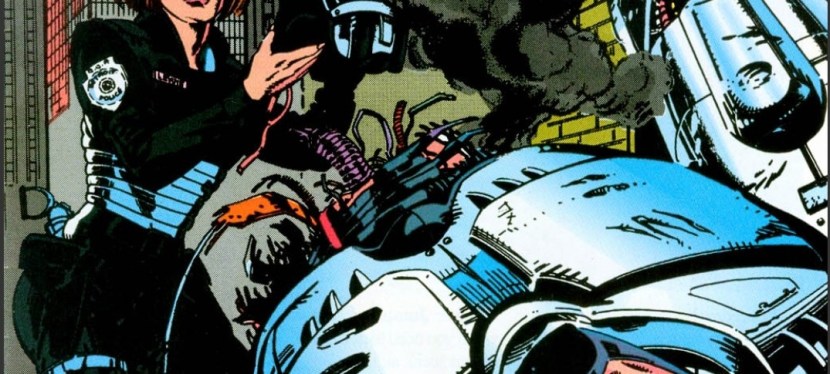
A Look Back at RoboCop 2 #2 (1990)

Welcome back superhero enthusiasts, 1990s arts and culture enthusiasts, Marvel Comics fans and comic book collectors! Today we go back to the year 1990 to take a close look at the 2nd part of the comic book adaptation of the movie RoboCop 2 (1990).

In my previous retro review of Robocop 2 #1, I pointed out that the comic book was not a faithful adaptation of the movie but more of the creators’ creative interpretation of the movie script they had which resulted in a stylized presentation. It was a surprisingly enjoyable reading experience for me.

With those details laid down, here is a look back at RoboCop 2 #2, published in 1990 by Marvel with a story written by Alan Grant and drawn by Mark Bagley based on the movie screenplay by Frank Miller and Walon Green.

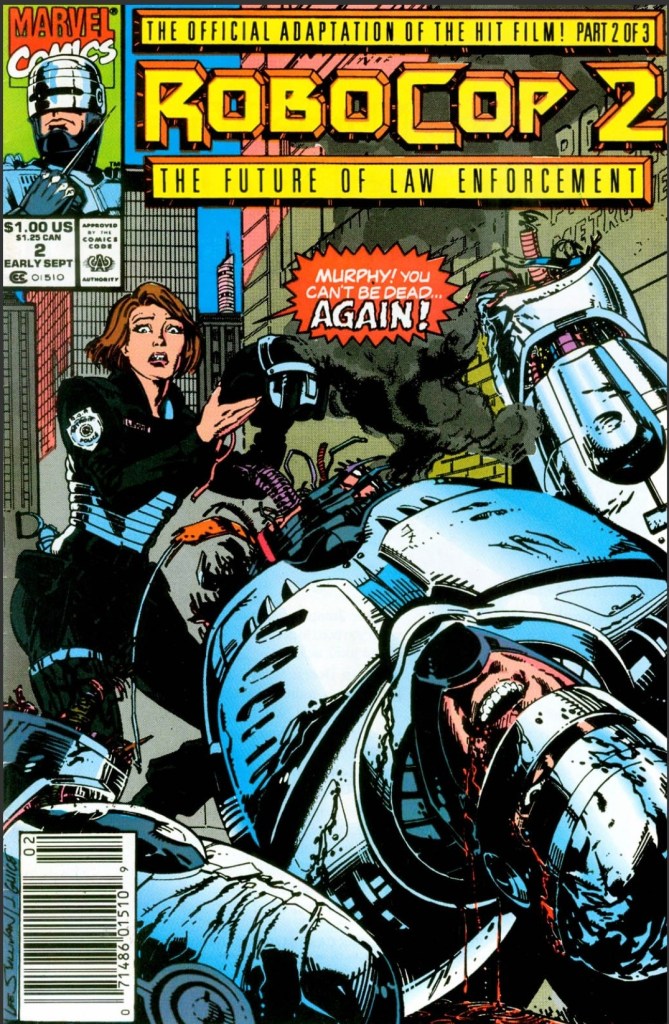
The cover.

Early story

The story begins in Detroit with RoboCop reduced into a very bad condition with most of his parts missing. The cops are still on strike and the ultra-addicting drug Nuke continues to spread through the city causing social problems. Cain and his gang are still on the loose, and his video statement (which emphasizes his gang’s defeat of RoboCop) spreads through the news cycles.

Inside a hideout, Cain and his loyal companions terrify and killed traitorous police officer Duffy for betraying them. Meanwhile at police headquarters, the support crew bumps heads with the Omni Consumer Products (OCP) executive who does not see RoboCop’s poor state as a problem. As far as OCP is concerned, getting replacement parts for RoboCop is very expensive.

Over at OCP, the psychologist executive Dr. Juliette Faxx begins researching criminals for the new RoboCop project…

Quality

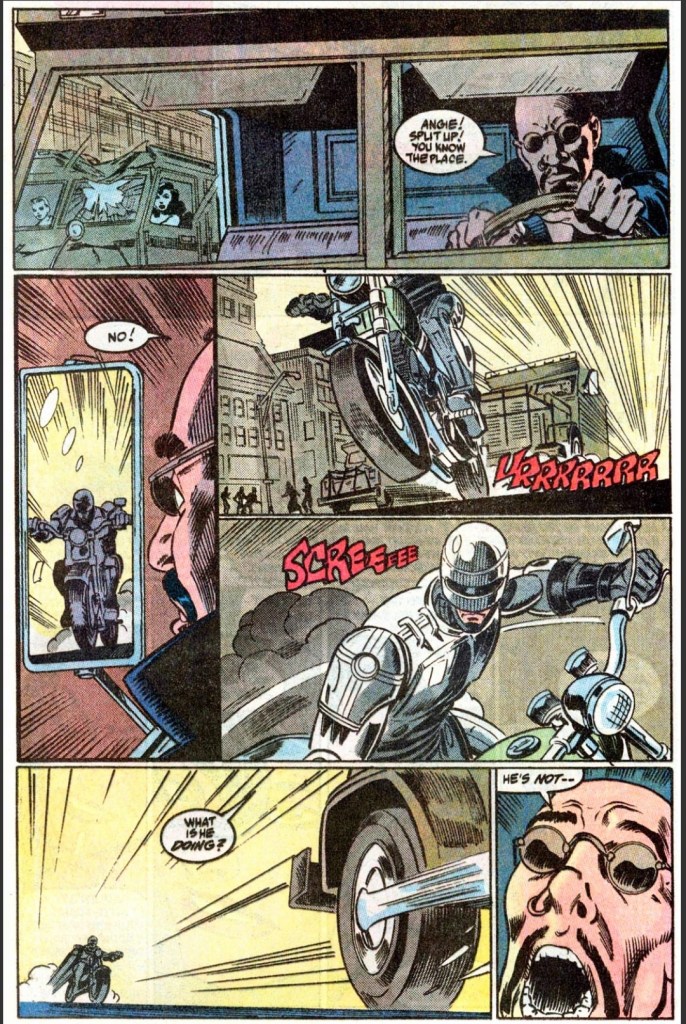
The motorized encounter between RoboCop and Cain here is shorter and much inferior compared to what the movie showed.

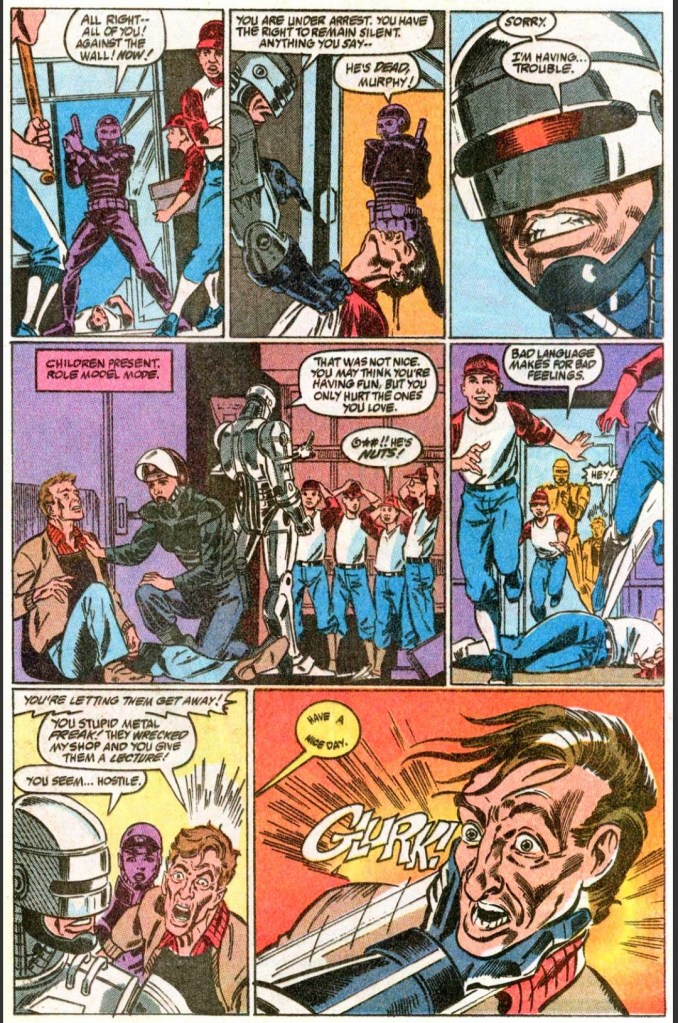
As with issue #1, this comic book followed the events and scenes of the film but left enough room for the creative team to make their stylized version suitable with the literary format. Mark Bagley, who is best known for drawing Spider-Man and Venom in the 1990s, came up with nice artwork that brought Grant’s script to life. There were a few shots here that were pretty graphic or brutal to see at the time of publication which makes me wonder why did the Comics Code Authority (CCA) give its approval to this comic book.

Without spoiling the plot, I can say that the creative team and editor Gregory Wright did a good job adapting scenes of the movie script to (fill up the pages) while also succeeding in setting up readers for the final conflict in the 3rd and final issue.

As a standalone reading material, this comic book will lead readers deep into the crisis of the police force as well as into the developments behind the closed doors of OCP. Due to the selected scenes of the film’s script, RoboCop has sufficient presence but lacked his normal personality. That being said, the movie’s comedic look of RoboCop acting very out-of-touched (hint: OCP tampered with his mind digitally) did not translate well into literary format. If you’re hoping to see solid storytelling with a consistent tone, you won’t find it here.

When it comes to action, there is just enough of it to keep the reading experience entertaining. Again, this comic book does not have the final conflict and the selected action scenes are rather limiting in terms of impact. If you want to see the police raid of the Nuke facility as well as RoboCop’s motorized chase with Cane, you are better off replaying the movie.  

Conclusion

There definitely is something wrong with RoboCop here.

Considering the selected movie script scenes for adaptation, RoboCop 2 #2 (1990) lacks impact compared to the first issue. In fairness, this comic book was clearly meant to set-up readers for the next issue. If there is anything worth looking at within the 2nd issue’s pages, it would be the details that were highlighted during the internal developments at OCP and the police. As mentioned earlier, RoboCop is not his usual self for a significant portion of this comic book. While the engagement and fun factor are lower this time around, I’m still interested to read the next issue.

Overall, RoboCop 2 #2 (1990) is serviceable.

+++++

Thank you for reading. If you find this article engaging, please click the like button below, share this article to others and also please consider making a donation to support my publishing. If you are looking for a copywriter to create content for your special project or business, check out my services and my portfolio. Feel free to contact me with a private message. Also please feel free to visit my Facebook page Author Carlo Carrasco and follow me on Twitter at  @HavenorFantasy as well as on Tumblr at https://carlocarrasco.tumblr.com/ and on Instagram at https://www.instagram.com/authorcarlocarrasco

A Look Back at What If #19 (1980)

Welcome back superhero enthusiasts, 1980s arts and culture enthusiasts, Marvel Comics fans and comic book collectors! Today we go back to the year 1980 to examine an alternate story of the Marvel Comics shared universe chronicled through the What If monthly series.

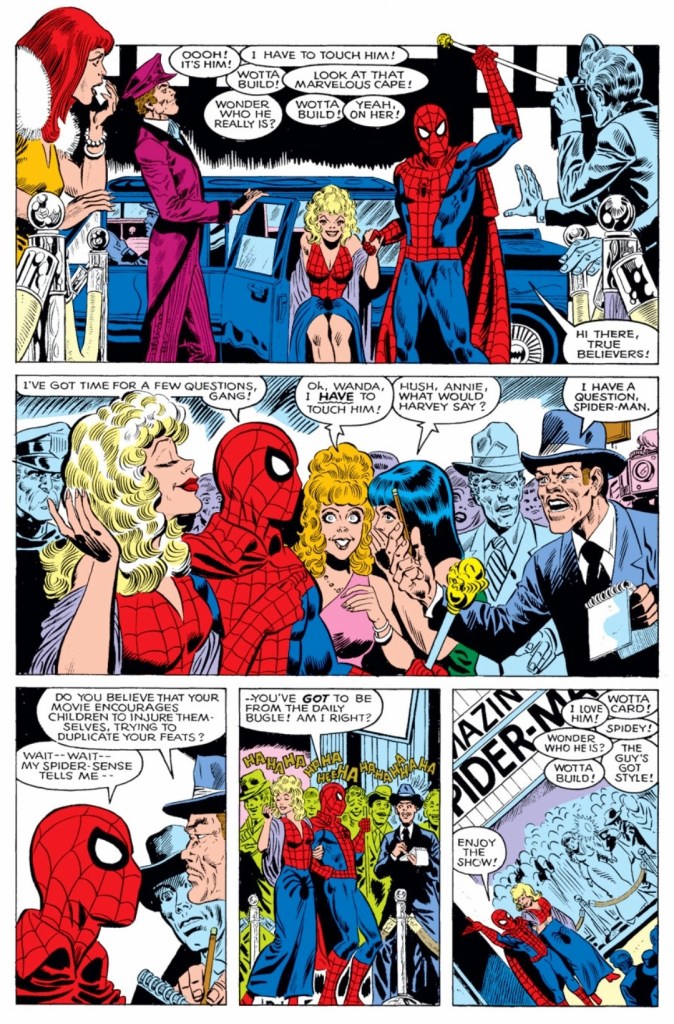
Spider-Man is clearly Marvel Comics’ greatest icon. He is the one Marvel superhero who is easily recognized around the world through the many comic books published, the animated TV shows and the big-budget Hollywood movies released. Given Spider-Man’s real-life fame as a pop culture and American icon, one has to wonder what would it be like had the webslinger decided to have a career in showbiz instead of fighting bad guys. How can Spidey realize that with great power comes great responsibility if he is so focused on being an entertainer?

With those details laid down, here is a look back at What If #19, published in 1980 by Marvel Comics with a story written by Peter Gillis and drawn by Pat Broderick.

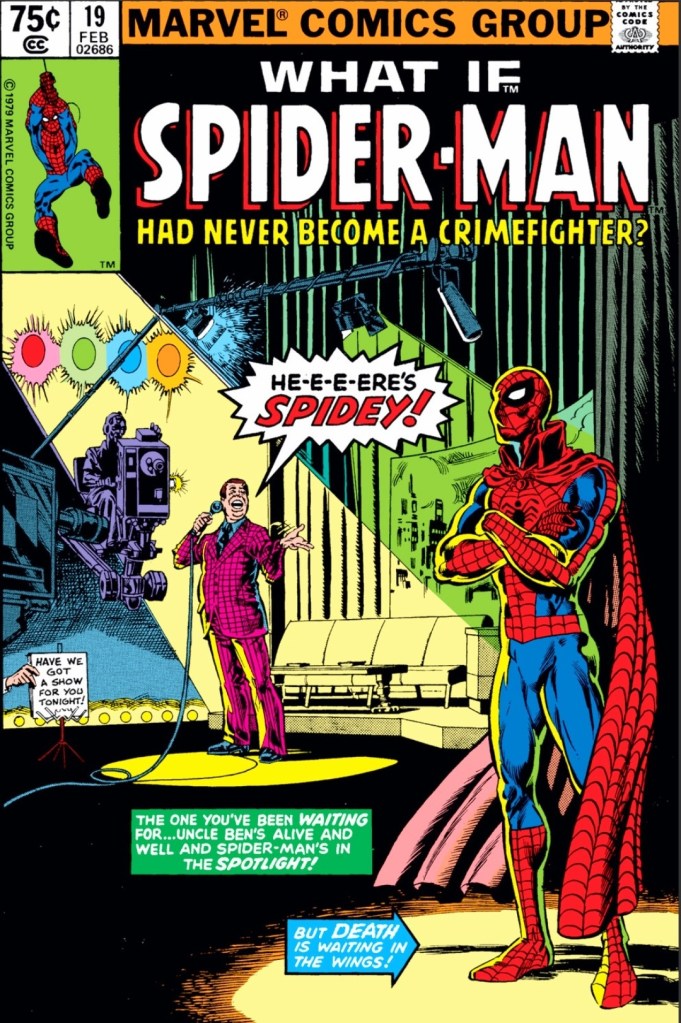
The cover.

Early story

The story begins far into Spider-Man’s past when he started as an entertainer. Spider-Man sees a police man chasing a thief down the hallway (note: this was a key moment in the life of Peter Parker who went to become a crime fighter as Spider-Man). Instead of letting the thief get away, Spidey uses his web to stop him which enabled the police officer to apprehend him.

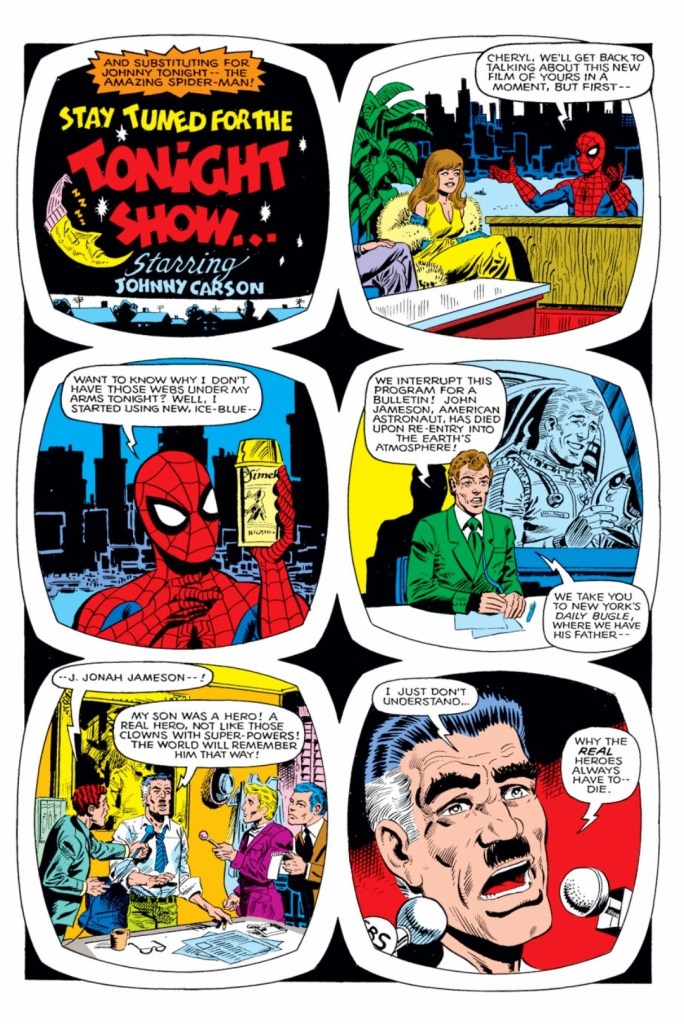
The next day, the Daily Globe published a front page story showing Spider-Man (described as a TV star) stopped the crook which established him as a heroic entertainer. The story bothered J. Jonah Jameson (The Daily Bugle) so much not only because the rival newspaper reported it but also because he perceived it as a glorification of so-called superheroes.

Elsewhere, Spider-Man and a famous film producer talk about making a movie about him that can really entertain a lot of people…

Quality

As Spider-Man makes waves on television as an entertainer and endorser, J. Jonah Jameson tells the media the difference between real heroes and the costumed ones with super powers.

Considering the history of Spider-Man, it is both difficult and risky to come up with a new reality that diverged from the key moment of the icon’s past (letting a crook get away from the chasing cop) resulting in a completely new version of him – Spider-Man as an entertainer. The good news here is that Peter Gillis’ script is solid and its scenes were nicely arranged to make this new version of the icon believable.

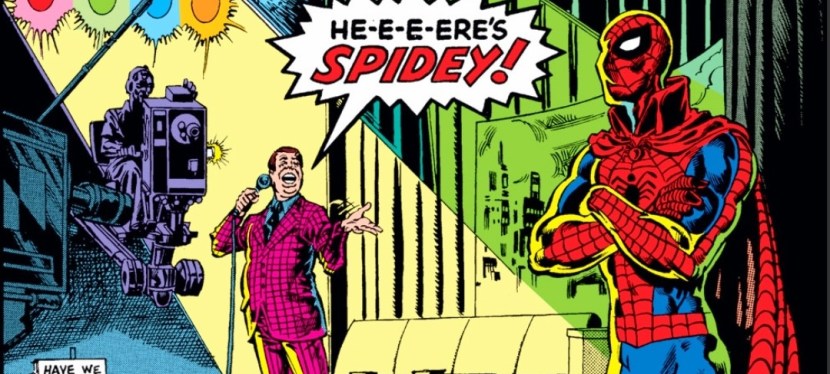
As shown on the cover of this comic book, the tale shows Spider-Man as a celebrity who found success and wealth in showbiz. Along the way, the classic Peter Parker gradually transforms into a new version who is not only focused on entertaining people but also engaging in publicity wars without ever becoming journalist. Since Marvel’s most famous icon does not fight crime, you will see him as an entertainment entrepreneur, a fighter through publicity, and as someone who enjoys the high life that most Americans don’t have.

In relation to the concept of the story, J. Jonah Jameson and Daredevil became the next important players to Spider-Man. Jameson is the rival of the webslinger but not necessarily the villain. Through Jameson, you will not only witness how he misuses his power at The Daily Bugle but also his interactions with criminal elements as he searches for ways to deal with Spidey. When it comes to Daredevil’s role, I encourage you to read the comic book to find out.

The story by Gillis moved at a medium-to-fast pace and for each build-up done, pay-offs were satisfying to read. When it comes to the scope of the story, this alternate reality is actually captivating to follow from start to finish.

Conclusion

Can you just imagine how different superhero comics would have been in real life had Marvel actually depicted Spider-Man as a showbiz figure?

What If #19 (1980) is a very solid and captivating comic book to read. The creative duo of Peter Gillis and Pat Broderick succeeded in selling the concept of what would happen had Spider-Man became an entertainer instead of fighting evil figures that hound society. Apart from showing a drastically different version of Spidey, the story will compel you to think about the relevance of superheroes in society, why becoming a major player in showbiz is chaotic, and how could Peter Parker be responsible with the power (related to showbiz) he has without combating evil.   

Overall, What If #19 (1980) is recommended.

+++++

Thank you for reading. If you find this article engaging, please click the like button below, share this article to others and also please consider making a donation to support my publishing. If you are looking for a copywriter to create content for your special project or business, check out my services and my portfolio. Feel free to contact me with a private message. Also please feel free to visit my Facebook page Author Carlo Carrasco and follow me on Twitter at  @HavenorFantasy as well as on Tumblr at https://carlocarrasco.tumblr.com/ and on Instagram at https://www.instagram.com/authorcarlocarrasco

Retro Gaming Ads Blast – Part 15

Welcome back readers, fellow geeks and electronic gaming fans!

In this edition of the Retro Gaming Ads Blast (RGAB) series, we will take a look at another batch of retro gaming print ads – including arcade flyers – from the 1980s and 1990s.

For the newcomers reading this, Retro Gaming Ads Blast (RGAB) looks back at the many print ads of games (console, arcade, computer and handheld) that were published in comic books, magazines, flyers and newspapers long before smartphones, social media, the worldwide web and streaming became popular. To put things in perspective, people back in the 1980s and 1990s were more trusting of print media for information and images about electronic games and related products.

With those details laid down, here is the newest batch of retro gaming print ads for you to see and enjoy…

1. X-COM: UFO Defense print ad

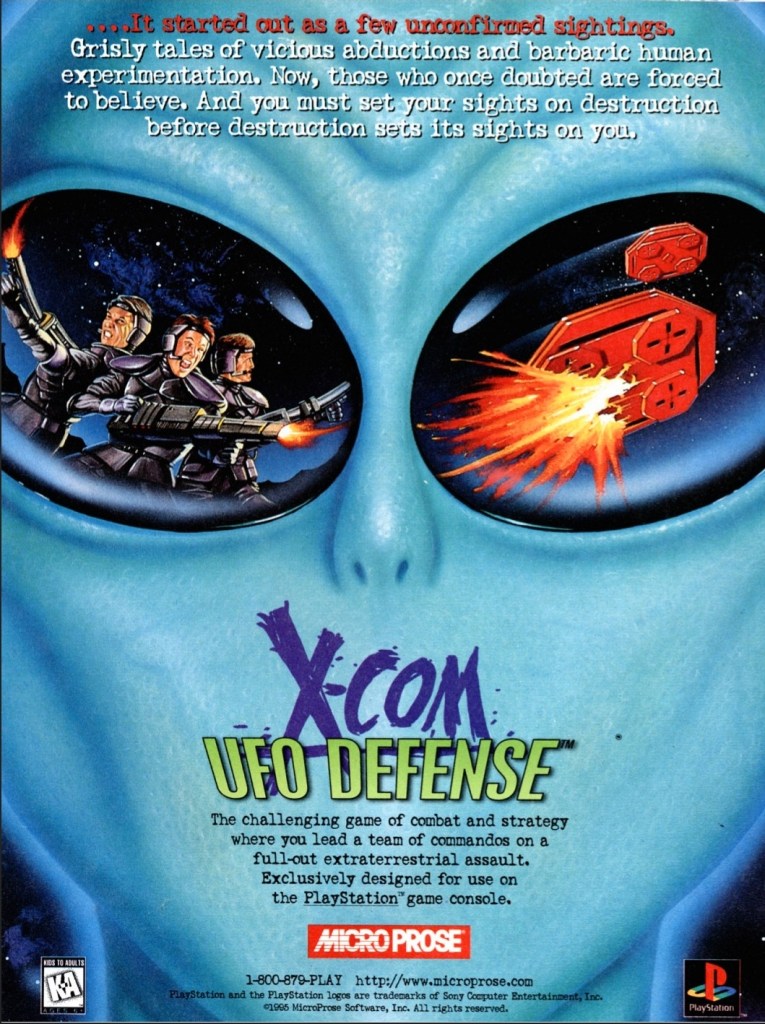
While there were no screenshots of the game for PlayStation, the art here was enough to catch your attention.

Back in 1994, X-COM: UFO Defense (original European title: UFO: Enemy Unknown) became an unexpected hit with PC gamers as it gathered lots of positive reviews from the critics and sold a lot on the PC DOS (disk operating system) format. In an obvious attempt to continue the commercial success, a port of the game was released for the PlayStation console in 1995. Publisher MicroProse and its marketing partners came up with this eye-catching print ad to promote the PlayStation version. While no screenshots were shown, the artwork used turned out to be effective in catching attention while emphasizing the sci-fi concept of the game.

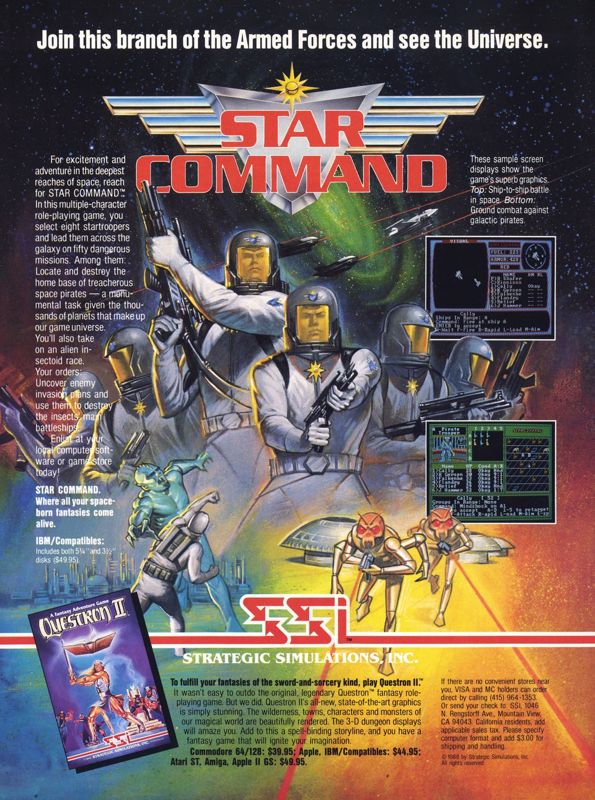
2. Star Command print ad

Long before Starfield, there was Star Command.

Way back in 1988, I first saw my friends play the sci-fi role-playing game (sci-fi RPG) Star Command on the PC DOS format. A short time later, I played the game on our home computer and finished the single-player campaign. This print ad, which has lots of descriptive text, has a strong visual presentation that entices players to play the game and discover the vast amount of content (space travel, missions, battles, encounters with aliens) that the game developers prepared. For its time, the Star Command print ad was captivating to look at.  

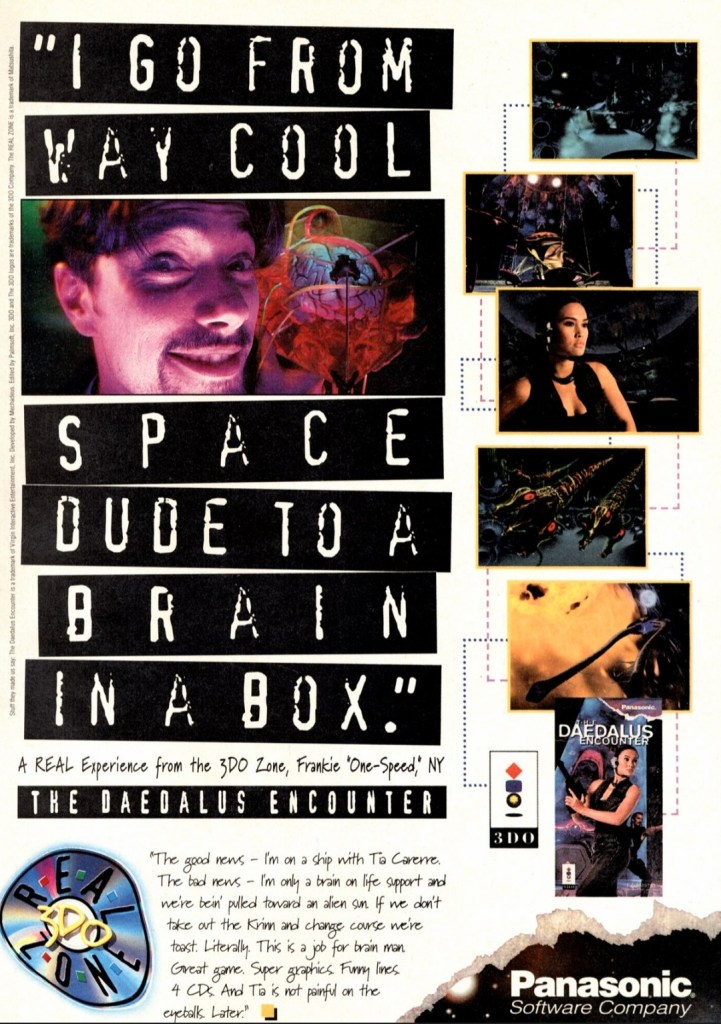
3. The Daedalus Encounter print ad

This print ad was an attempt to catch the attention of both gamers and people who want to watch live-action spectacle.

Released on PC, Macintosh and the 3DO game console in 1995, The Daedalus Encounter was a sci-fi video game that worked as an interactive movie (with puzzles) starring Tia Carrere. To promote the 3DO version, publisher Panasonic came up with an ad that emphasized the sci-fi concept and the cinematic experience (including a few stills of cutscenes) leaving little room about how the game plays. Take note that this game was released at a time when the CD-ROM format started gaining popularity as a reliable optic media format which opened opportunities for game companies to include full-motion videos.

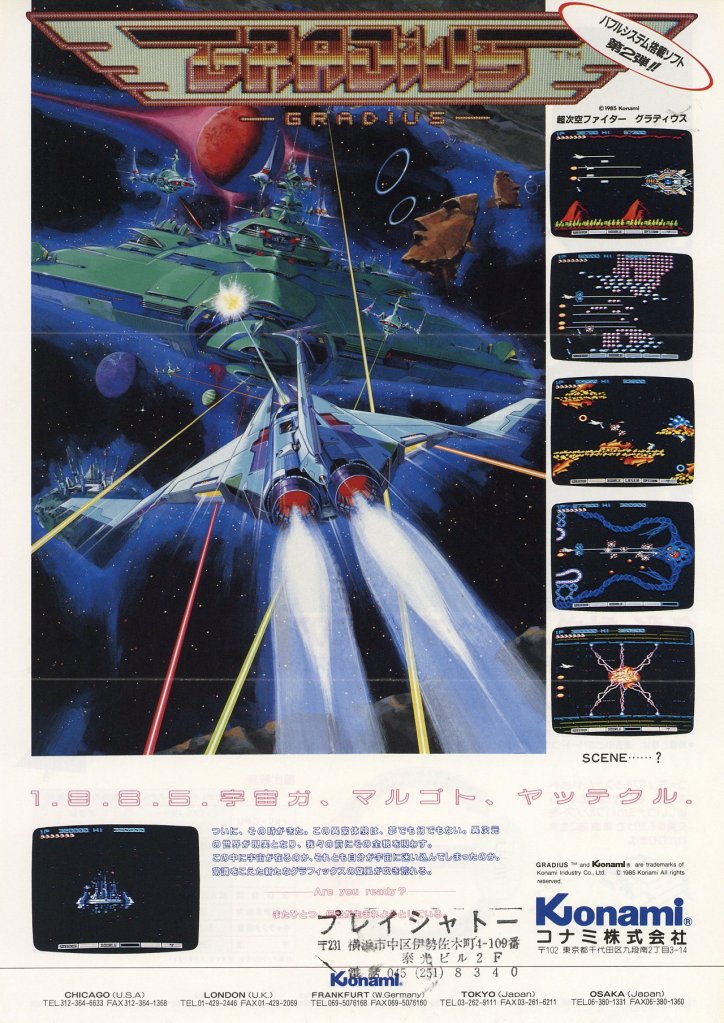
4. Gradius Japanese arcade flyer

The original Gradius has always been fun to play and the enjoyment also made it on game consoles as more games were released.

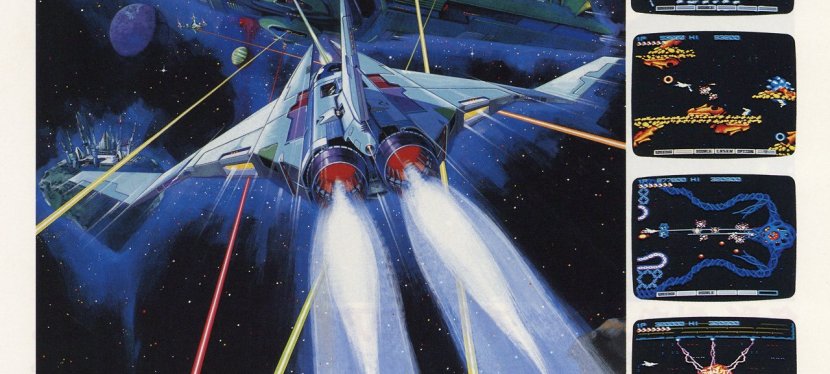
Still on the realm of sci-fi, Konami launched their 2D side-scrolling shooter Gradius in the arcades in Japan in 1985. The arcade flyer here used a huge amount of space for the game’s official artwork which is very captivating to look at as it clearly emphasized the sci-fi concept. On the side are five screenshots that tell gamers what to expect when playing. The promotions paid off nicely for Konami as Gradius became an instant hit in Japanese arcades and eventually found strong commercial success in the arcades in Europe and America. By today’s standards, this game is a classic and the Gradius game franchise has produced several sequels and spin-offs released on multiple platforms.

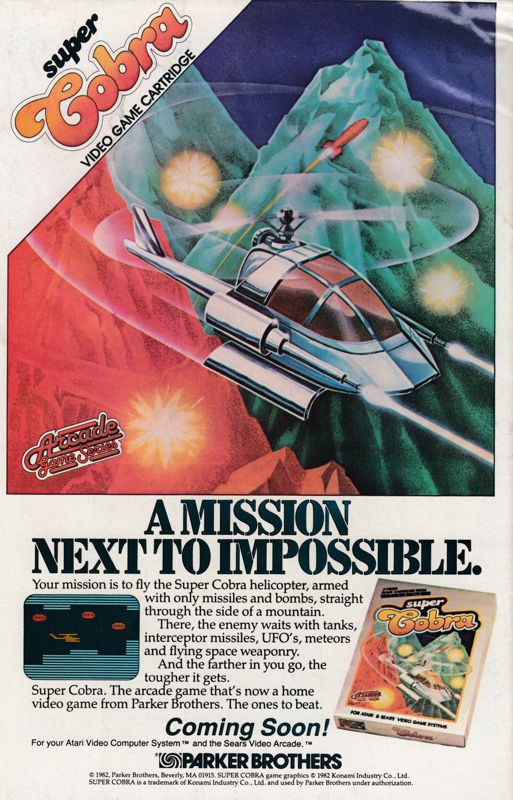
5. Super Cobra print ad

This ad I saw while reading comic books long ago. The game itself was fun.

Here is a game I played on the Atari 2600 over forty years ago. Super Cobra was a 2D side-scrolling game in which players control an armed helicopter that has to move from left to right, attacking enemies, and avoiding enemy projectiles while maintaining the fuel supply. This ad, which appeared on some comic books I read, utilized the game art that was used on the box cover although the single screenshot displayed looks exaggerated when compared to what I saw and played.

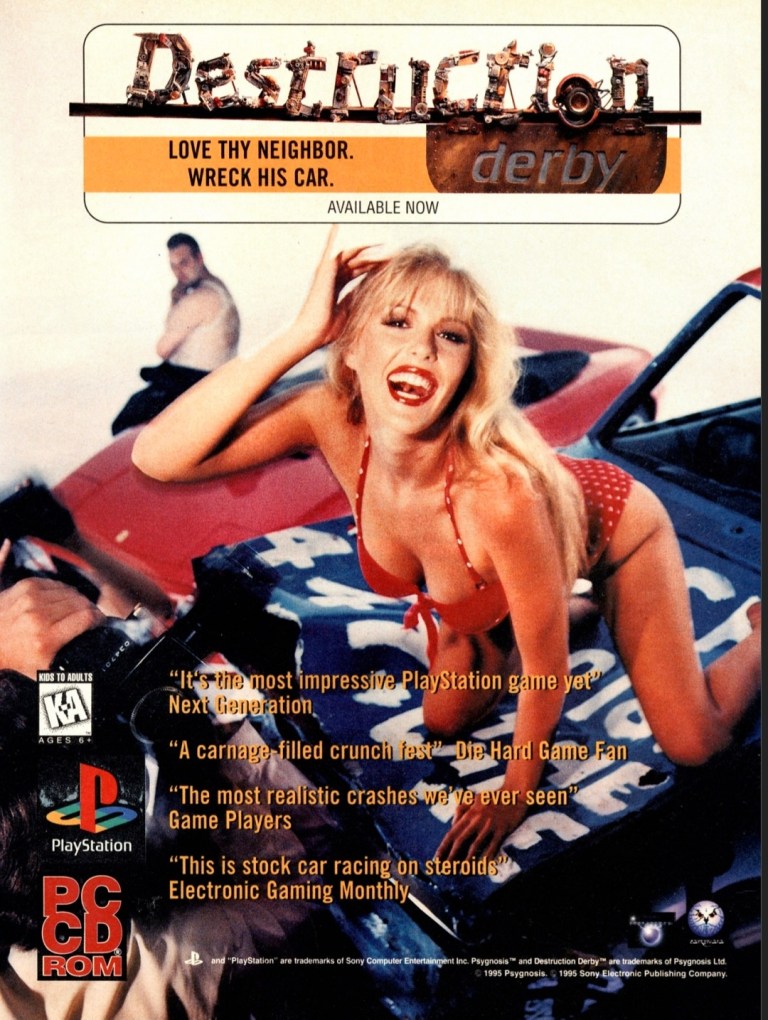
6. Destruction Derby print ad

The Destruction Derby print ad that had no screenshots of the game.

In 1995, Sony launched the PlayStation console in America and in Europe. In Europe, publisher Psygnosis promoted their ambitious game Destruction Derby (a 3D polygonal racing game that emphasized vehicular damage) for both PlayStation and the PC that same year. As this Destruction Derby print ad did not show any screenshots, Psygnosis and their marketing team or partner decided to pounce on positive gaming media quotes and the sexy model to promote their game. Their marketing move paid off nicely as over a million copies of Destruction Derby were sold by August 1996.

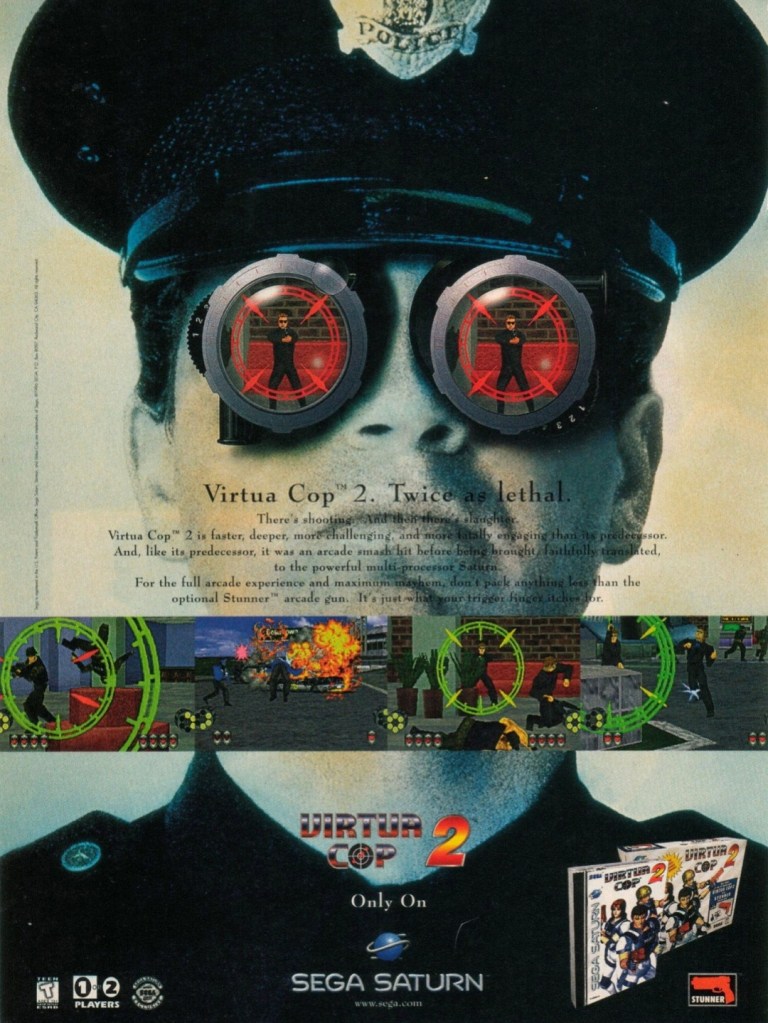
7. Virtua Cop 2 print ad

A lot of people found this Virtua Cop 2 print ad looking very weird.

When Sega of Japan forced its American division to launch the Sega Saturn console in the United States in 1995 without any pre-release marketing, it resulted in a series of disappointments that include low sales, too few games launched and strained ties with their business partners. In 1996, Sega started to become more aggressive to sell more Saturn units and more 1st party exclusive games such as Virtua Cop 2 (for the Saturn) which itself was a big hit arcade hit. As the company clearly aimed to make the console version of Virtua Cop 2 a hit, they approved this print ad which had a very intriguing visual concept showing video game images reflected on the glasses on the police man. As Virtua Cop 2 required a light-gun peripheral to be played accurately like in the arcade, this print ad utilized very little space for the Sega Saturn Stunner.

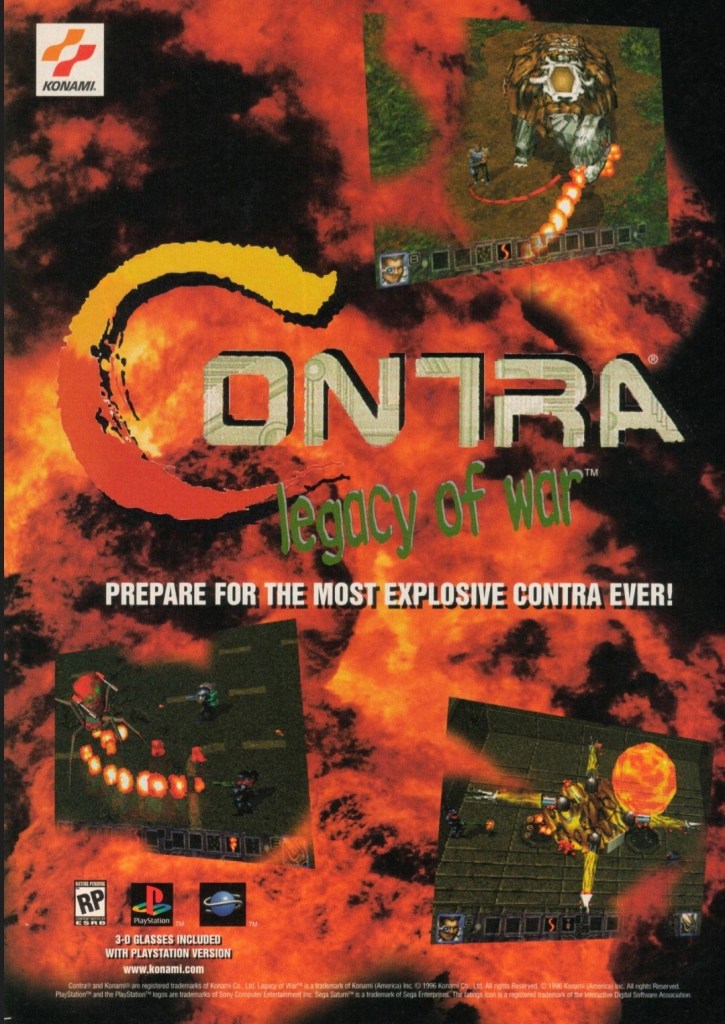
8. Contra: Legacy of War print ad

The print ad of Contra: Legacy of War.

When I first heard that a brand new game of Contra would be released on the still-new PlayStation and Sega Saturn in the mid-1990s, I was excited as I always enjoyed the original game I played on the Family Computer. This print ad of Contra: Legacy of War brought my excitement way down as it showed that the game no longer utilized the 2D side-scrolling design and came up with a design that emphasized 3-dimensional environments and polygons. The change in design was too alienating for me as all the previous Contra games had the 2D side-scrolling format as the main designs (leaving little room for the occasional sprite-scaling 3D sequences in some games). I finally played Contra: Legacy of War on PlayStation on November 1996 and it was a huge letdown!

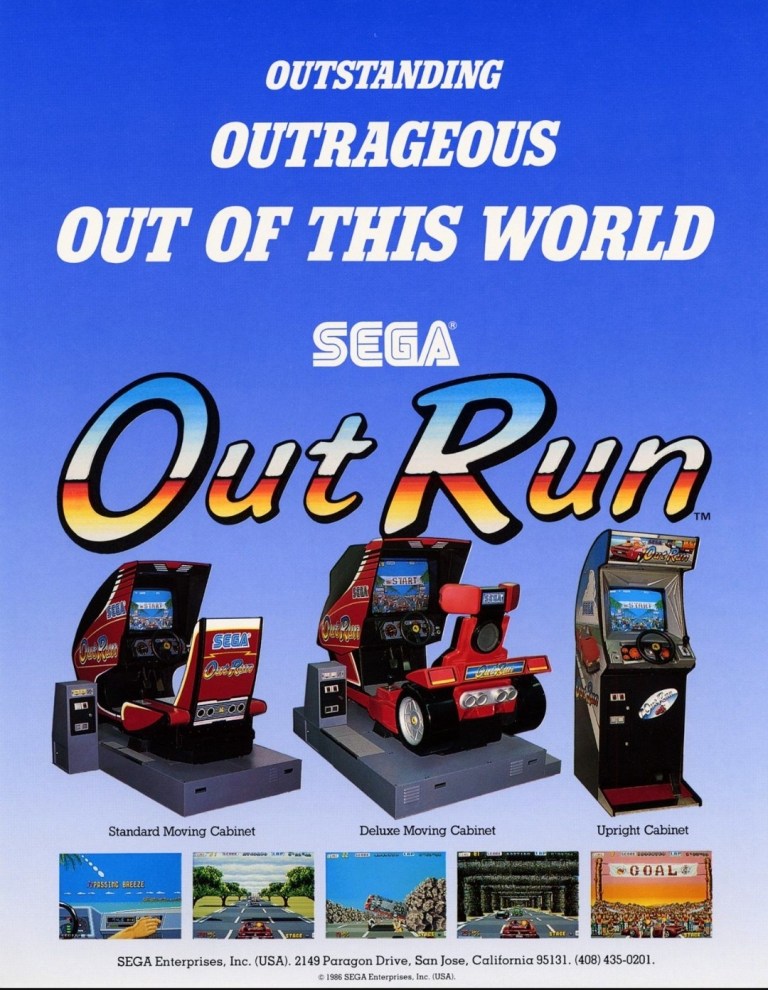
9. Out Run arcade flyers

Sega Out Run arcade machines in different forms.
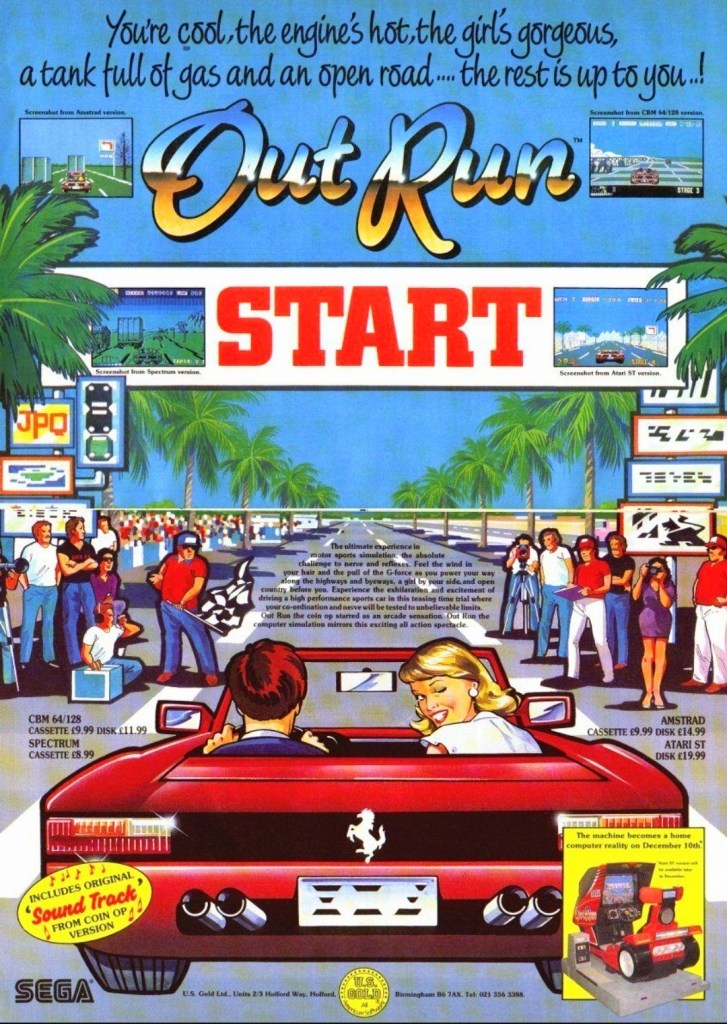
This Out Run flyer really has nice art.

In the history of arcade games, Sega’s Out Run was a massive success not only in Japan but also in America and Europe. Designed by Yu Suzuki (Virtua Fighter, Shenmue), Out Run was a pseudo-3D driving game in which players get to drive a Ferrari Testarossa convertible (which is always visible to the player) from one scenic destination to the next avoiding traffic as much as possible. This was indeed a labor of love on the part of Yu Suzuki who himself spent time in Europe to gain inspiration on designing the game. As Out Run was a hit, Sega made different types of machines of the game that arcade operators can choose from depending on how much space their respective arcades have left and how the local players prefer to play it. It should be noted that in one of the flyers above, the original sound track was promoted as well.

10. Hook SNES version print ad

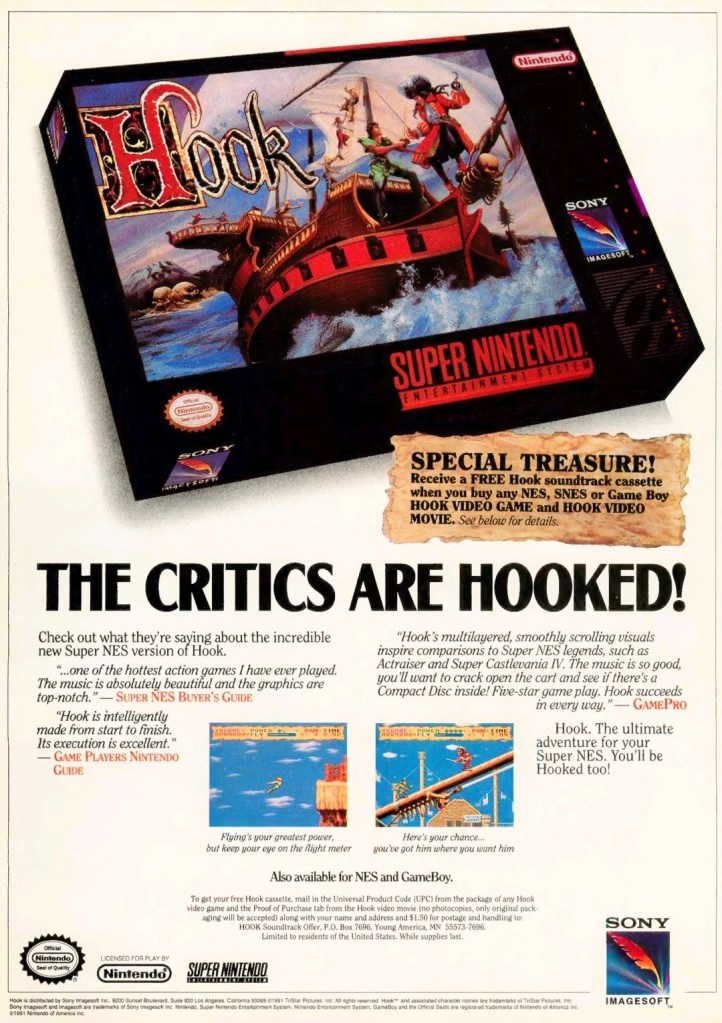
If you look closely at the SNES box front cover art, you will notice that Peter Pan and Captain Hook looking nothing like the actors who portrayed them in Steven Spielberg’s movie.

In late-1991, Steven Spielberg’s movie Hook was released in cinemas and revived public interest in the fairy tale of Peter Pan. Typical of the entertainment business of the time, video games based on the movie were released on different platforms in 1992 and among them was a version on the Super Nintendo Entertainment System (SNES). Apart from showing the game’s box, the print ad of Hook on SNES cleverly included positive quotes from GamePro, Game Players Nintendo Guide and the Super NES Buyer’s Guide to convince readers that the game is worth their time.

+++++

Thank you for reading. If you find this article engaging, please click the like button below, share this article to others and also please consider making a donation to support my publishing. If you are looking for a copywriter to create content for your special project or business, check out my services and my portfolio. Feel free to contact me with a private message. Also please feel free to visit my Facebook page Author Carlo Carrasco and follow me on Twitter at  @HavenorFantasy as well as on Tumblr at https://carlocarrasco.tumblr.com/ and on Instagram at https://www.instagram.com/authorcarlocarrasco

What to watch on YouTube right now – Part 28

Welcome back, my readers, YouTube viewers and all others who followed this series of articles focused on YouTube videos worth watching. Have you been searching for something fun or interesting to watch on YouTube? Do you feel bored right now and you crave for something to see on the world’s most popular online video destination?

I recommend you check out the following topics and the related videos I found.

#1 Mosab Hassan Yousef: My Father Founded Hamas video  – In America, there are lots of young people who are protesting in public supporting Palestinian terrorists while condemning Israel. These pro-Palestine have shown ignorance about the facts and none of them knows exactly what Palestinian culture is like when compared to Mosab Hassan Yousef (son of a founder of Palestinian terrorist group Hamas).

In an interview with PragerU, Yousef talks comprehensively about his past with the Palestinians (Arabs who adopted the Palestinian identity which only started in the 20th century), the time he was active as a Hamas member, his relationship with his father who founded Hamas, and why he left the terrorist group to cooperate with Israel and migrated overseas. Yousef confirms that Hamas is pure evil and the Palestinian culture has hatred and violence deeply rooted within. Watch this video now.

#2 Jaws 3 4K Blu-ray has footage that involved the use of AI  – I am a collector movies on physical media. I don’t just buy any movies on Blu-ray and 4K Blu-ray format because I am selective with regards to quality, enjoyment and replay value. When it comes to new releases on 4K Blu-ray format, I cannot ignore the observations pointing out that the footage of Jaws 3 (AKA Jaws 3D) on 4K Blu-ray involved the use of AI (artificial intelligence) which resulted in bad visual results. It seems that more people in Hollywood are getting obsessed with remastering old movies using AI, removing the film grain and other digital methods that ruin the visuals. For insight, watch the videos below.

#3 Michael Jordan’s “The Shot” of 1989 – When it comes to those game-winning basketball shots, Michael Jordan had lots of those during his years with the Chicago Bulls. Before he won his first NBA championship, Jordan successfully scored the winning jump shot over Craig Ehlo to beat the Cleveland Cavaliers 101-100 in the 5th game of the 1989 NBA playoffs’ first round. That shot became iconic and there is a lot more behind the scenes that preceded. Watch the selected video below.  

#4 Virtua Fighter 3 retrospective video – When Sega released Virtua Arcade 3 in the arcades in 1996, it was the best-looking 3D polygonal fighting game at the time and it often drew players leaving them really satisfied. Virtua Fighter 3 was the product of the most cutting edge arcade technology of the time (with the Model 3 arcade hardware) as well as the hard-work and in-depth craftmanship by developer AM2 led by the legendary designer Yu Suzuki. To know more about Virtua Fighter 3, watch the video below.

#5 Popcorn in Bed’s James Bond reaction videos – On August 2023, YouTuber Popcorn in Bed started posting reaction videos of James Bond movies. With the exception of the films of Daniel Craig and George Lazenby as Agent 007, Popcorn in Bed posted two selected movie reaction per James Bond actor (example: 2 Bond films of Sean Connery, 2 Bond films of Roger Moore). To give you a taste of what Popcorn in Bed did, watch the selected videos below. To watch more, click here.

+++++

Thank you for reading. If you find this article engaging, please click the like button below, share this article to others and also please consider making a donation to support my publishing. If you are looking for a copywriter to create content for your special project or business, check out my services and my portfolio. Feel free to contact me with a private message. Also please feel free to visit my Facebook page Author Carlo Carrasco and follow me on Twitter at  @HavenorFantasy as well as on Tumblr at https://carlocarrasco.tumblr.com/ and on Instagram athttps://www.instagram.com/authorcarlocarrasco
What to watch on YouTube right now – Part 25

Welcome back, my readers, YouTube viewers and all others who followed this series of articles focused on YouTube videos worth watching. Have you been searching for something fun or interesting to watch on YouTube? Do you feel bored right now and you crave for something to see on the world’s most popular online video destination?

I recommend you check out the following topics and the related videos I found.

#1 Gus Abelgas Forensics features Antonio P. Antonio justice story – Last March, the surviving family of the late Antonio P. Antonio (APA) rejoiced when the Parañaque Regional Trial Court found suspect Nelson Antonio guilty of murdering his father (legal term: parricide) in 2013. It was a quest for justice that got fulfilled after more than a decade and along the way the family endured lots of challenges as they adjusted to life without their father (read my previous blog posts by clicking here and here). Recently, the local TV show Gus Abelgas Forensics produced an episode (note: Tagalog language) focused on the story of the late Antonio P. Antonio with special attention paid to the details of the investigation, the analysis of the evidence and information revealed by family members who were interviewed. The episode was released in full on YouTube and I recommend you watch it right now.

#2 Critical Drinker’s videos about Apocalypse Now and Fitzcarraldo – Critical Drinker is one of the most notable and more engaging YouTubers when it comes to entertainment. Apart from doing reviews or commentaries about movies and shows, he has a series of videos that closely examine the troubled entertainment productions. Posted below are his videos about Apocalypse Now (which was filmed here in the Philippines) and Fitzarraldo (notorious for manually hauling a 320-ton steamship up a steep hill as well as cases of deaths and plane crashes).

#3 Ashleigh Burton’s reaction video of Air Force One – If you are a Harrison Ford fan who ended up being depressed over his work in Indiana Jones and the Dial of Destiny, then it is time to look back at the actor’s more exciting works from long ago apart from the Star Wars and Indiana Jones movies. Recently, YouTuber Ashleigh Burton released her reaction video of the 1997 blockbuster film Air Force One which had Ford play a brave and fighting US President. Her reaction video is entertaining to watch and you can see it below.

#4 Reggie Miller’s memorable play on May 25, 1998 – Way back in 1998 here in the Philippines, I saw live on cable TV Game 4 of the NBA Eastern Conference Finals series between the Chicago Bulls and the Indiana Pacers. I was rooting for the Pacers as my all-time favorite NBA legend Larry Bird was the coach and they had a very solid team with Reggie Miller, Rik Smits, Mark Jackson and others. The game is best remembered for Reggie Miller’s stunning 3-point shot which involved pushing Michael Jordan out of the way to get the ball. Not only that, Miller had a sprained left ankle to do it all. Take note that the Pacers was one of very few times to push Jordan and the Bulls into a full seven games in a best-of-seven series. Watch the video below and enjoy.

#5 X-Men: Apocalypse movie reaction videos – As X-Men: Days of Future Past was such a great film to watch, there was hope that follow-up X-Men movies starring James McAvoy, Michael Fassbender, Nicholas Hoult and Jennifer Lawrence will turn out great and offer moviegoers fine alternatives to the many superhero movies being released by Marvel Studios, Sony Pictures and Warner Bros. Then X-Men: Apocalypse was released in 2016 and I saw it on opening day inside a local IMAX cinema here in the Philippines. I left the cinema feeling entertained but the overall fun factor of the movie paled in comparison with its 2014 predecessor. If you want to see the YouTubers’ opinions of X-Men: Apocalypse, watch the videos below.   

#6 Top Hat Gaming Man’s Double Dragon history videos – Top Hat Gaming Man is an engaging YouTuber to follow when it comes to retro gaming. Among his many videos that examined the history of video games, he published videos focused on the Double Dragon game series which used to be wildly popular. If you are a Double Dragon fan or if you are simply interested to discover how was Double Dragon first created, watch the selected videos below.

+++++

Thank you for reading. If you find this article engaging, please click the like button below, share this article to others and also please consider making a donation to support my publishing. If you are looking for a copywriter to create content for your special project or business, check out my services and my portfolio. Feel free to contact me with a private message. Also please feel free to visit my Facebook page Author Carlo Carrasco and follow me on Twitter at  @HavenorFantasy as well as on Tumblr at https://carlocarrasco.tumblr.com/ and on Instagram athttps://www.instagram.com/authorcarlocarrasco