Retro Gaming Ads Blast – Part 39 (RPG Special)

Welcome back readers, fellow geeks and electronic gaming fans!

In this edition of the Retro Gaming Ads Blast (RGAB) series, we will take a look at another batch of retro gaming print ads from the 1980s to the 1990s, particularly on role-playing games (RPGs) from the East and the West. This is the RPG Special!

For the newcomers reading this, Retro Gaming Ads Blast (RGAB) looks back at the many print ads of games (console, arcade, computer and handheld) that were published in comic books, magazines, flyers, posters and newspapers long before smartphones, social media, the worldwide web and streaming became popular. To put things in perspective, people back in the 1980s to the 1990s were more trusting of print media for information and images about electronic games and related products.

With those details laid down, here is the newest batch of retro gaming print ads for you to see and enjoy…

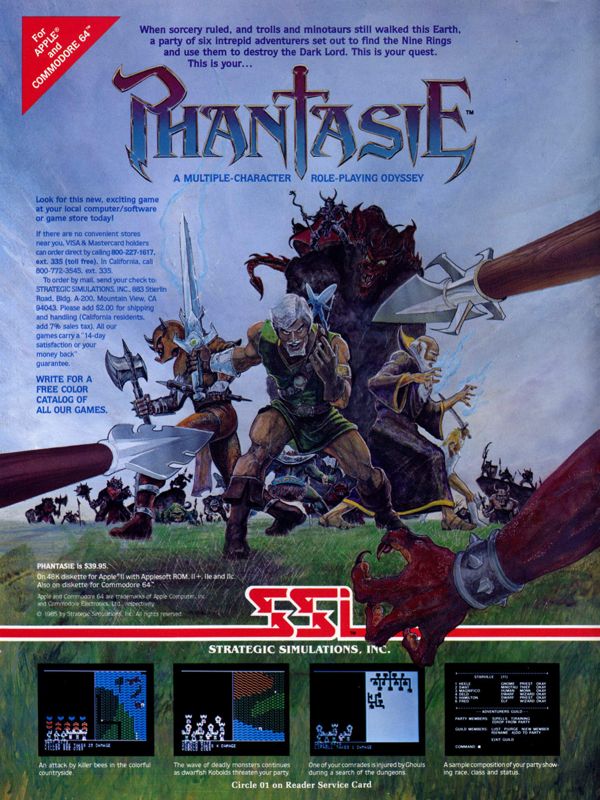
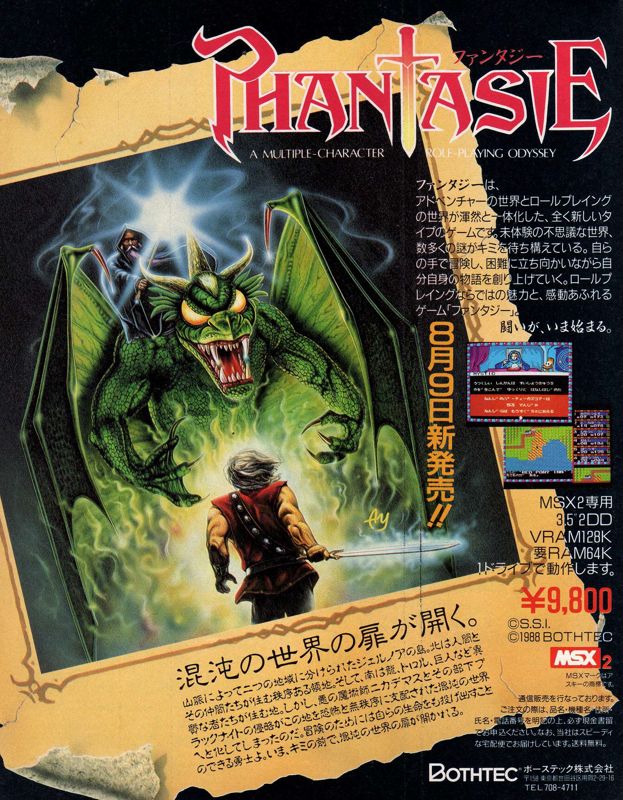
1. Phantasie North American and Japanese Print Ads

The North American print ad.
The Japanese print ad.

Released by Strategic Simulations in the mid-1980s, Phantasie was a fantasy role-playing game that became a huge commercial success paving the way for not only ports on other computer systems of the time but also sequels later. The ad they came up with for the North American market had strong fantasy vibes and the screenshots gave readers the impression that it looked playable or user friendly. For the Japanese market, Phantasie was ported to the MSX system and they came up with an ad using radically different art work that had a horror vibe.

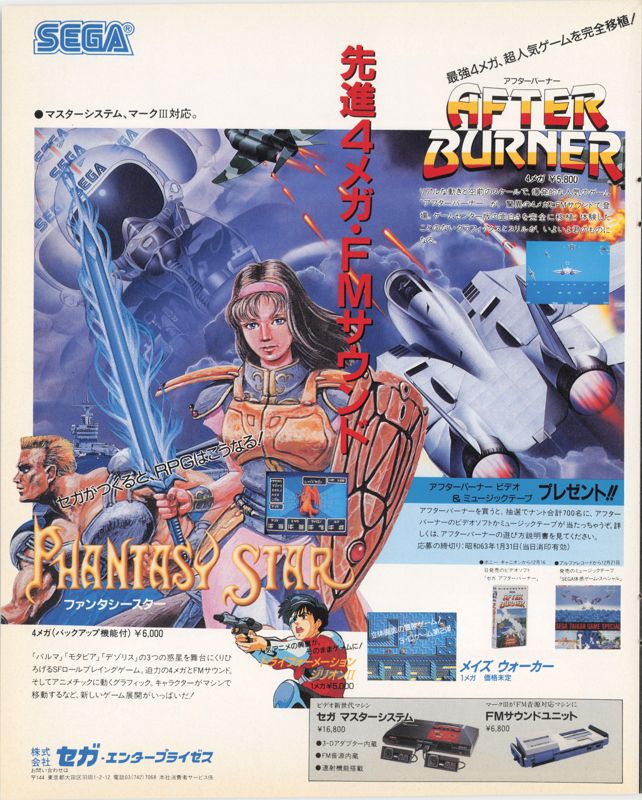
2. Phantasy Star Japanese Print Ad

Phantasy Star in the Japanese print ad sharing the spotlight with After Burner.

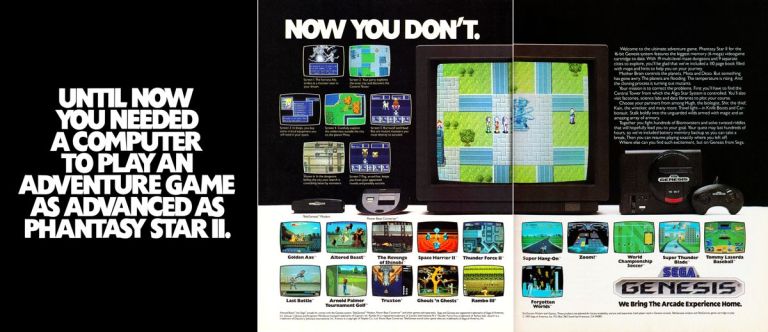
In the 1980s, role-playing games started gaining popularity with Japanese console gamers and there were game developers who were inspired by established RPGs from the West. Enix released two Dragon Quest games and each of them sold a lot of copies on Nintendo’s Family Computer (Famicom). At the time, Sega already had the Master System (called the SG-1000 and its variants with revisions) in the console market and they were way behind Nintendo on hardware sales. Knowing there is a market for console RPGs, Sega went on to make their exclusive RPG Phantasy Star. In 1987, a print ad was released showing Phantasy Star sharing the spotlight with Sega’s blockbuster game After Burner in the background. While the ad felt a bit disorienting to see, the game achieved much-needed success for Sega which in turn brought the game to the Master System in America in 1988. The game sold more and eventually led to sequels in the years that followed.

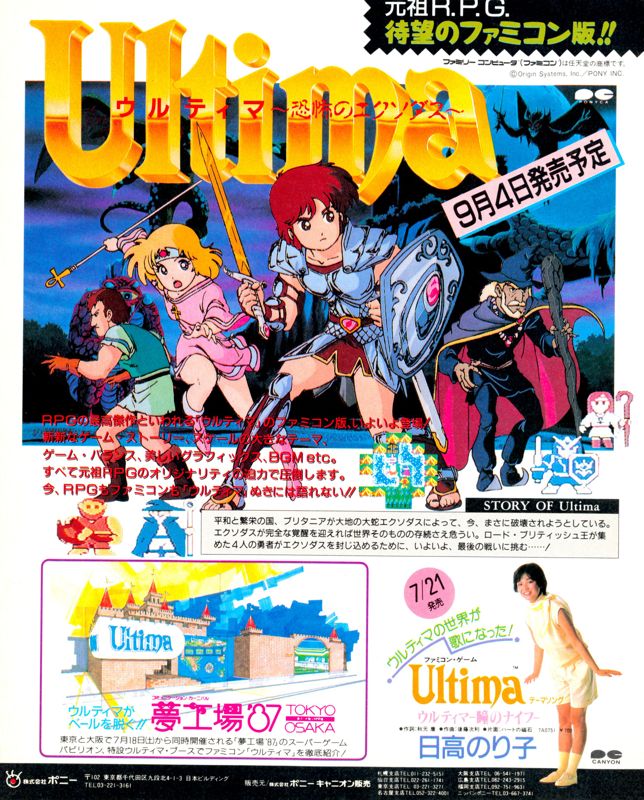
3. Ultima III Japanese Print Ad

Remember the old days when anime or comic book-style artwork was used to promote games in the Japanese print media?

Released in Japan under the title Ultima: Kyoufu no Exodus, Ultima III: Exodus was a breakthrough for the series as the Famicom version marked the first console release for Japanese gamers (note: the game was also offered for MSX and other computer systems in the country). The anime-style artwork used for the print ad is the same virtually the same with the front cover of Famicom version. Very notably, the art on the covers of the PC-88 and PC-98 versions were different. 

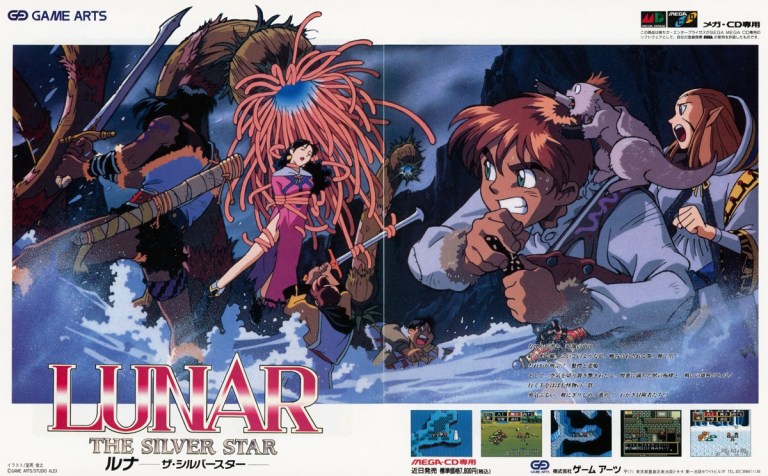
4. Lunar: The Silver Star Japanese Print Ad

Game Arts’ Lunar: The Silver Star as advertized in Japanese magazines.

By the 1990s, console RPGs were very popular as franchises like Dragon Quest and Final Fantasy each released sequels that sold a lot of copies. The company Game Arts decided to make a role-playing game which can tell stories better using animation with voiceovers and music while being very playable and enjoyable. They came up with Lunar: The Silver Star and released it on the Mega-CD add-on (connected with the Mega Drive console of Sega) in 1992. As such, it was not surprising to see the print ad having anime-style artwork as the game itself had several minutes of anime cutscenes complete with audio. As most Japanese role-playing games (JRPGs) did not have playable anime cutscenes for storytelling, Lunar: The Silver Star really stood out. Sometime later, the small American company Working Designs would handle the game’s English version and start a healthy business relationship with Game Arts.

5. Dungeons & Dragons: Warriors of the Eternal Sun North American Print Ad

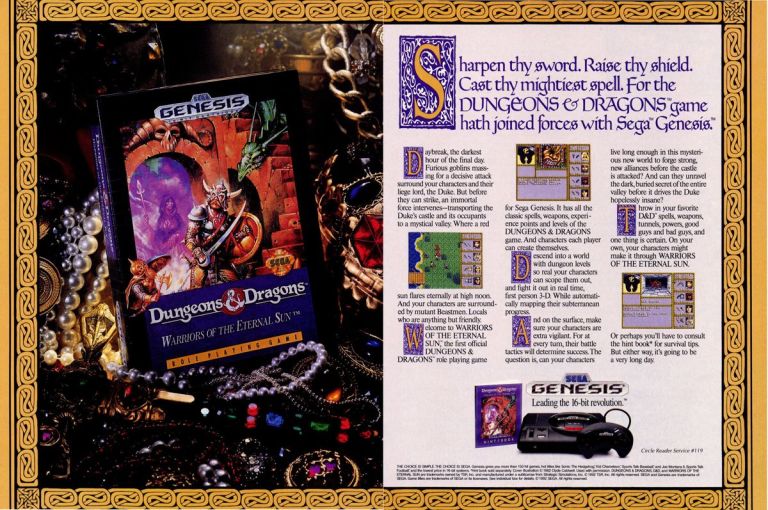
A print ad that strongly appealed to both Sega Genesis gamers as well as fans of Dungeons & Dragons.

By the year 1992, the fantasy games franchise Dungeons & Dragons was wildly popular as players around the world kept enjoying the tabletop RPG modules (using dice, pen paper) as well as many computer and video games already available. Sega acquired a D&D license and eventually released Dungeons & Dragons: Warriors of the Eternal Sun exclusively on their Genesis console in 1992. To promote it, Sega produced a 2-page print ad that had one half showing the game’s box placed with jewelry while using the other half to show the screenshots, descriptive text and other details. The way it was presented, the print ad was cleverly structured to attract the attention of Sega Genesis gamers as well as Dungeons & Dragons fans. The game ended up as the first and only official D&D product for the console.

6. Shadow Sorcerer North American Print Ad

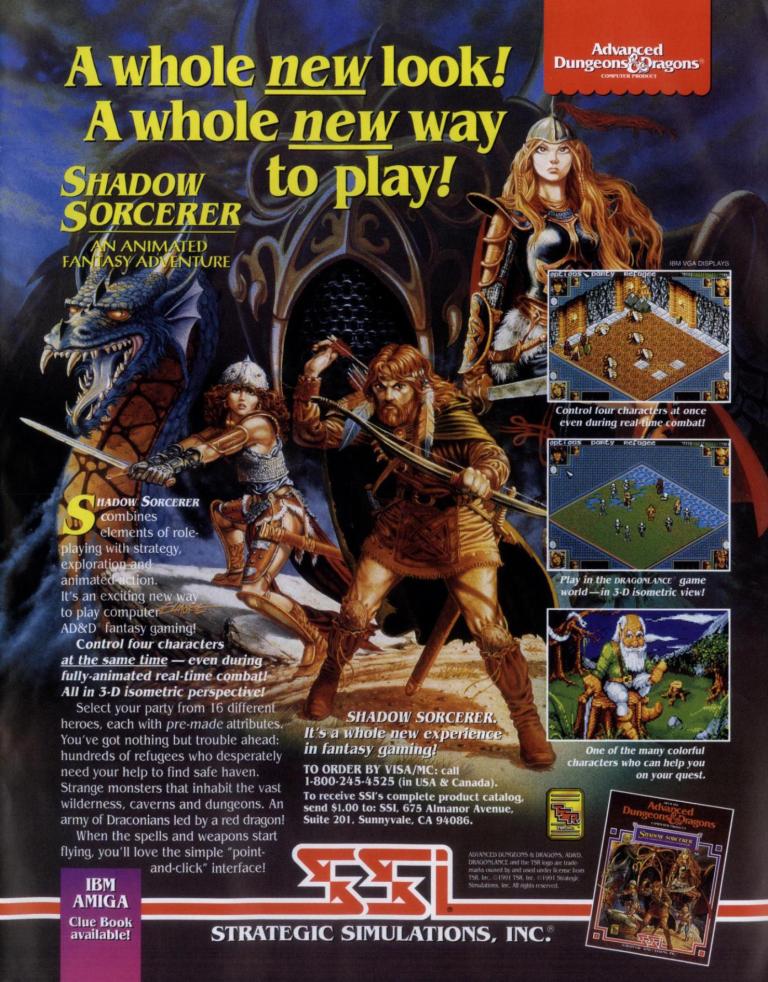
This is one of many Dungeons & Dragons computer games released. The use of painted art for marketing was done many times.

In the history of the Dungeons & Dragons franchise and electronic gaming, it was on computers where the more ambitious and more intricate licensed games were played by many fans. In 1991, the Advanced Dungeons & Dragons (AD&D) electronic game Shadow Sorcerer was released on MS-DOS PC, Amiga and the Atari ST. The painted artwork used on the print ad was virtually the same as that on the box covers of the MS-DOS and Amiga versions. I can only guess that the ad markers must have paid a lot of money on the painted art and decided to use it for both marketing and packaging since it looked so detailed.

7. Estopolis Denki Japanese Print Ad

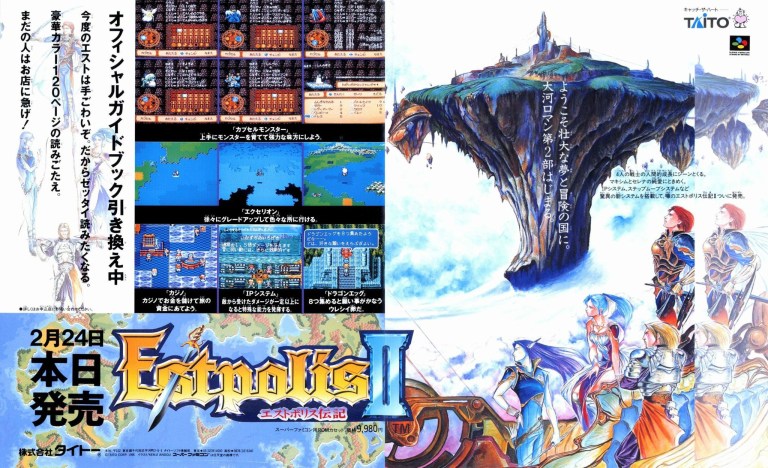
The 2-page Japanese print ad of Estopolis Denki.

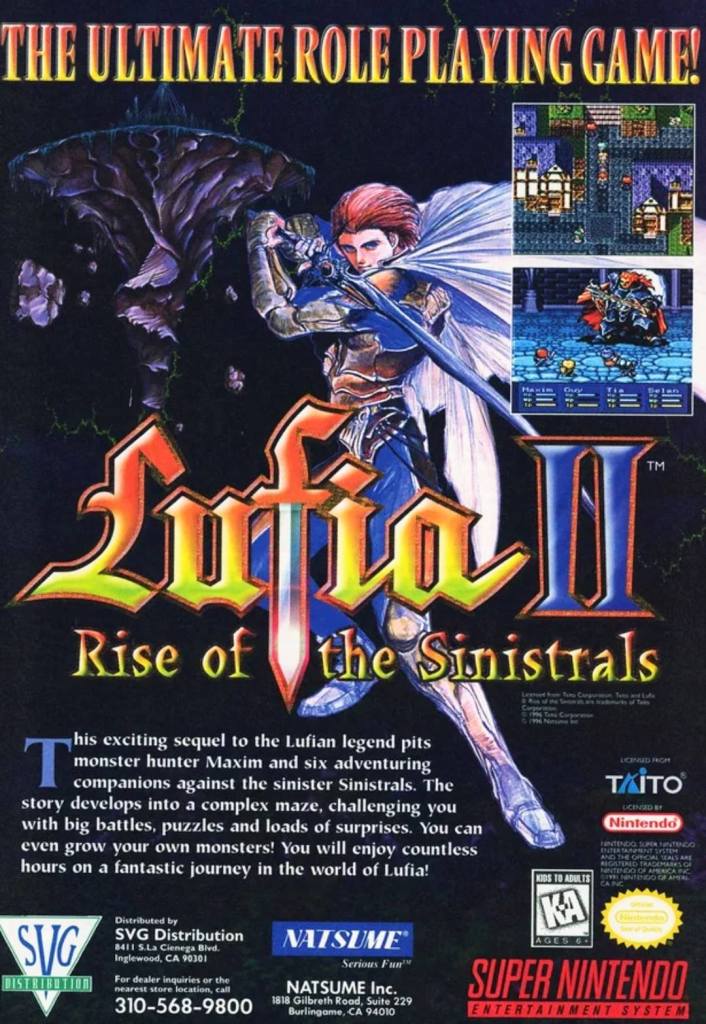
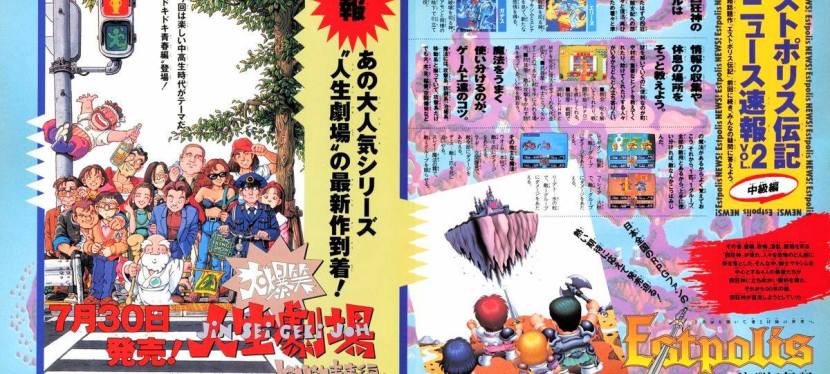
In 1993, a brand-new Japanese developer called Neverland was established and its first project was the fantasy role-playing game Estopolis Denki for the Super Family Computer (Super Famicom). That same year, publisher Taito released the game and they promoted it with a 2-page print ad that featured a whimsical looking hand-drawn art work on one half and utilized the other half with details, screenshots and part of the art that was used on the game’s Super Famicom box cover. While Japanese game sales are not available, it seems Estopolis Denki sold enough to convince the publisher to release the game in North America as Lufia & The Fortress of Doom.

8. Lufia & The Fortress of Doom North American Print Ad

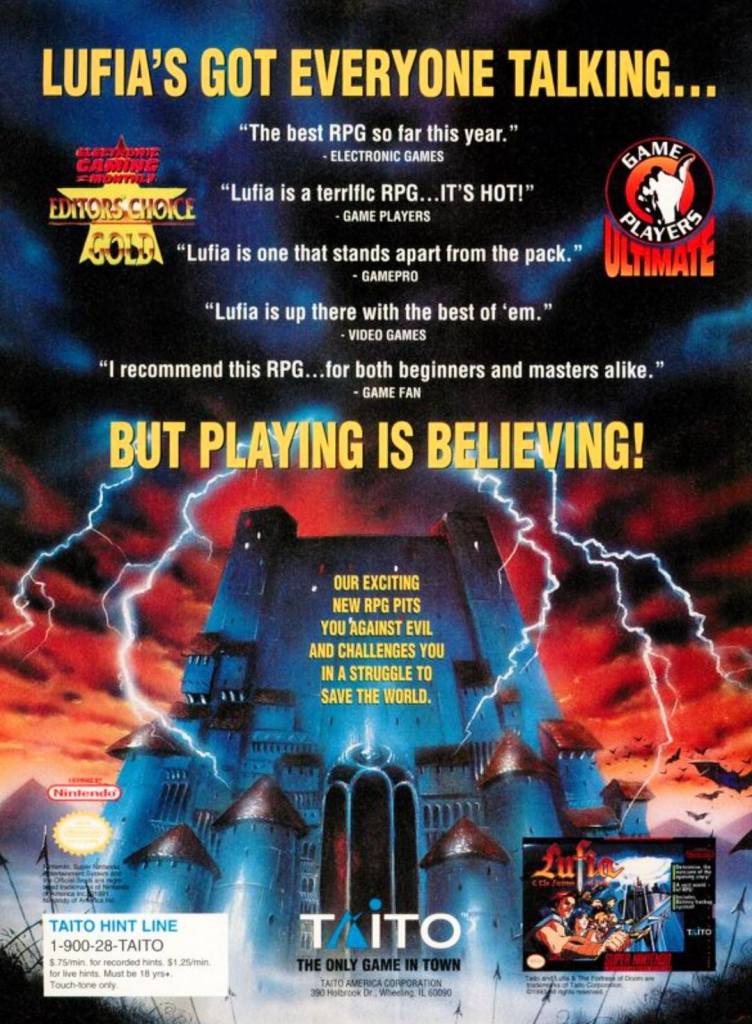
If you were able to play Lufia & The Fortress of Doom on the SNES, were you able to see this ad in a comic book or in a magazine?

Upon release in America in late 1993, Taito scored gold as Lufia & The Fortress of Doom on the Super Nintendo Entertainment System (SNES or Super NES) became a critical and commercial success. In fact, it literally gained steam during the early months of availability and ended up as the top-selling SNES game in America for the month of February of 1994. Take note that at this particular point of time, RPGs on game consoles in America were not yet in high demand as gamers’ tastes were different. When it comes to the marketing, Taito came up with a single-page print ad showing fantasy artwork, the game’s box cover and the published quotes from game critics who gave the game positive reviews. This is smart marketing on the part of Taito.

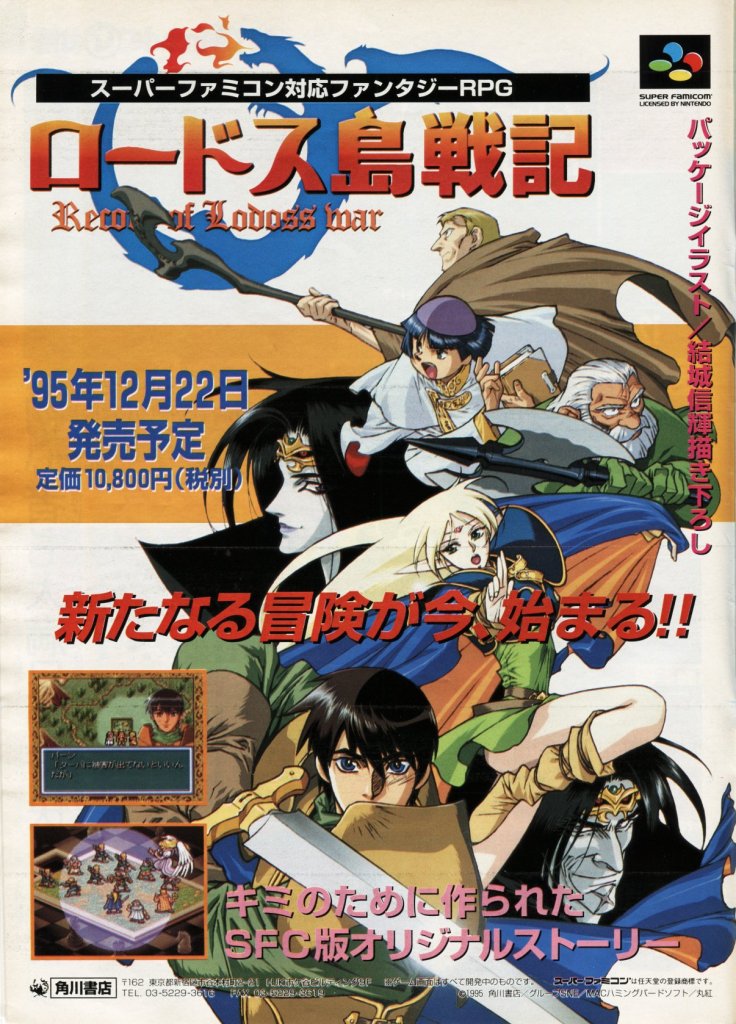
9. Record of Lodoss War Japanese Print Ad

The Japanese print ad of Record of Lodoss War for Super Famicom.

Have you ever heard of the Record of Lodoss War fantasy franchise? That one started as a series of fantasy novels by Ryo Mizuno who previously worked on an RPG project. Record of Lodoss War was eventually adapted into comics, anime and video games. One of those games was released on the Super Famicom in December 1995 published by Kadokawa Shoten which in turn made the one-page print ad for the Japanese market. Using established art from the anime OVA (original video animation) series was a strategic move by the publisher as millions of Japanese people viewed it. Unsurprisingly, the art on the ad is almost the same as the one displayed on the game box cover.

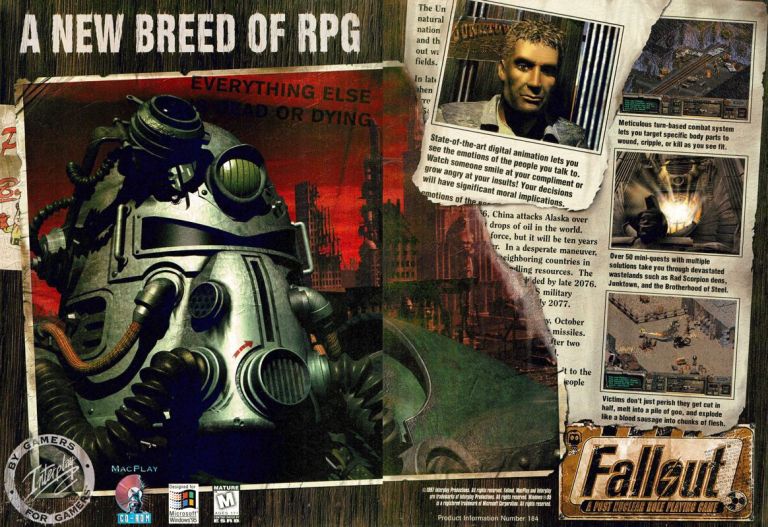
10. Fallout North American Print Ad

A gritty looking print ad of the original Fallout PC game.

In my gaming life, I played Fallout 3, Fallout 4 and Fallout: New Vegas on Xbox consoles. When the first-ever Fallout game was released in 1997, I did not notice it as I was more into console gaming than PC gaming. The above print ad appeared is several PC gaming magazines and it clearly shows what it offered which gamers eventually ended up enjoying a lot. The mechanical helmet – protection for the user during battles and from radiation in the nuclear wasteland – on the left side of the ad became a key symbol of the Fallout franchise as further games also featured mechanical helmets. Fallout was highly acclaimed for featuring open-ended gameplay and its immersive post-apocalyptic setting. It sold enough copies to convince publisher Interplay to proceed with a sequel and the rest was history.

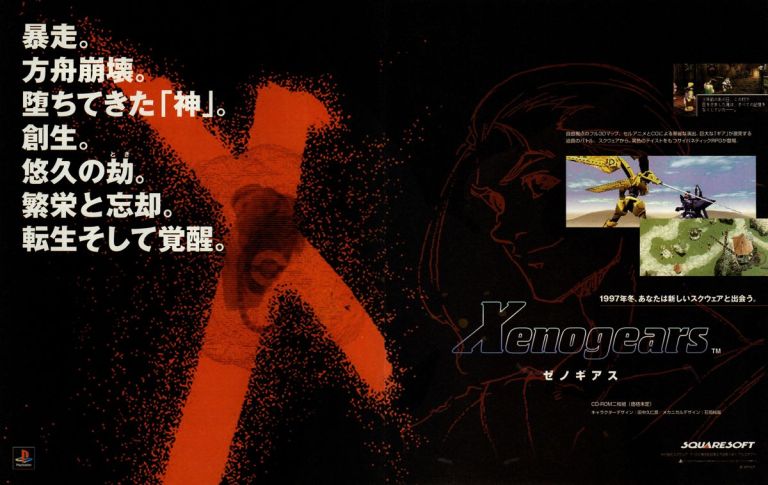
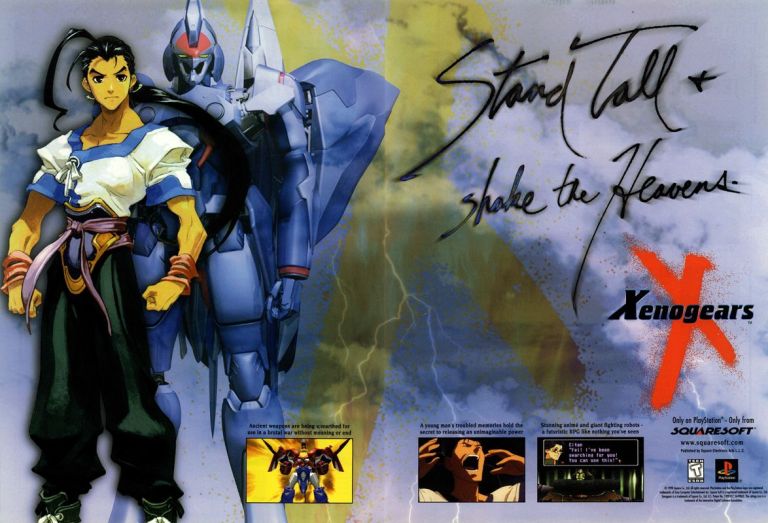
11. Xenogears Japanese and North American Print Ad

Japanese advertisement of Xenogears.
This North American print ad of Xenogears clearly showed the main character, a robot, the sci-fi setting and the visual style of the game.

Xenogears was a sci-fi JRPG I played on the PlayStation in 1998 but I was unable to finish it. Before it was released in America, there was speculation that Squaresoft would not be able to produce an English version for international release due to its religious content. The game was highly challenging to translate into English due to religious themes and psychological elements. Regardless, the game achieved successes commercially and critically in both Japan and America. Xenogears has since been considered by many as a classic JRPG and to play it today is pretty challenging as an existing PlayStation One, PlayStation 3 or PlayStation Vita is required as well as the physical PlayStation disc itself (note: digital copy of Xenogears for PS Vita). Square Enix – which previously remastered Chrono Cross and several Final Fantasy games for modern gaming platforms – has yet to remaster Xenogears for those with modern game consoles, mobile devices and the PC.

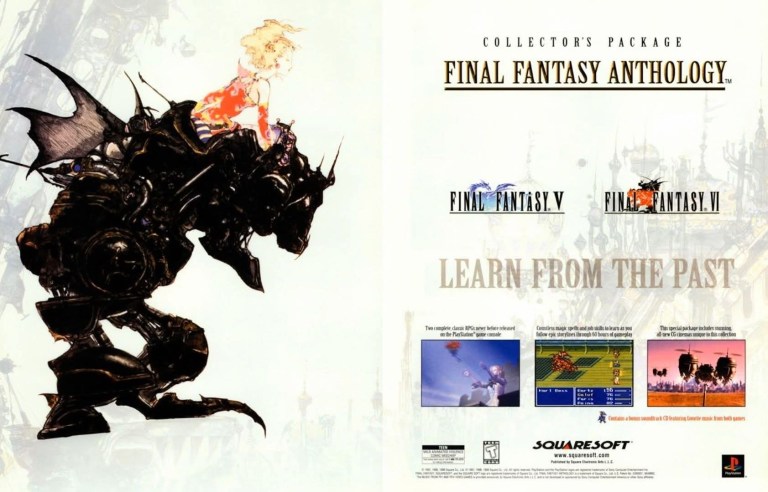
12. Final Fantasy Anthology Print Ad

I remember seeing this 2-page print ad in many gaming magazines I read.

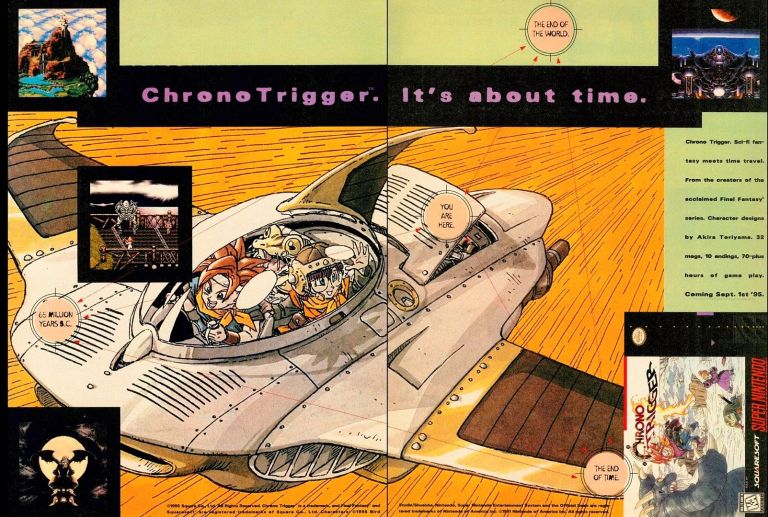
By the year 1999, Squaresoft established itself as the best role-playing game company as they achieved critical and commercial success with Final Fantasy VII in 1997, Brave Fencer Musashi, Parasite Eve and Xenogears in 1998. For 1999, Squaresoft decided to bring ports Final Fantasy V and Final Fantasy VI – both games were released in cartridge format on Super Famicom/Super NES some years prior – to their fans who owned PlayStation consoles by releasing the collection called Final Fantasy Anthology. For the North American market, Squaresoft aggressively promoted the 2-game collection with the above 2-page print ad on several video game publications. One half featured exquisite artwork by Yoshitaka Amano and the other half showed the screenshots, descriptions and details. Clearly the ad was made with Final Fantasy fans in mind and it was also clever with the use of nostalgia.

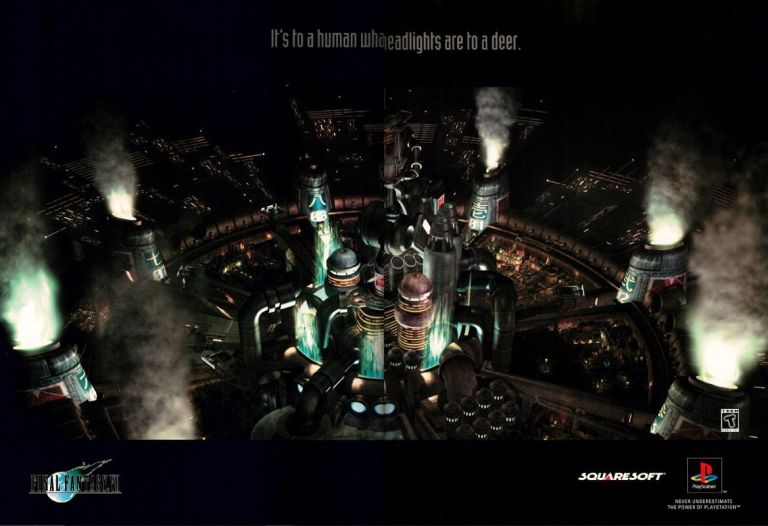
13. Final Fantasy VII North American Print Ad

While it did not show any of the characters, this 2-page print ad of Final Fantasy VII appeared in many gaming magazines and ultimately made the public aware of the game which went on to sell millions.

There is no denying that Final Fantasy VII is the most defining Japanese RPG of the 1990s. Given its huge pre-release promotions, the critical acclaim and the tremendous sales achieved in North America and Europe, the game arguably made the JRPG sub-genre more popular among gamers and game publishers while also making the original PlayStation console the must-have machine for video gaming. The above print ad is one of several released through print media and even though it did not show any characters, the image of a futuristic looking city caught the attention of not just gamers but also others who loved entertainment.

+++++

Thank you for reading. If you find this article engaging, please click the like button below, share this article to others and also please consider making a donation to support my publishing. If you are looking for a copywriter to create content for your special project or business, check out my services and my portfolio. Feel free to contact me with a private message. Also please feel free to visit my Facebook page Author Carlo Carrasco and follow me on Twitter at  @HavenorFantasy as well as on Tumblr at https://carlocarrasco.tumblr.com/ and on Instagram at https://www.instagram.com/authorcarlocarrasco
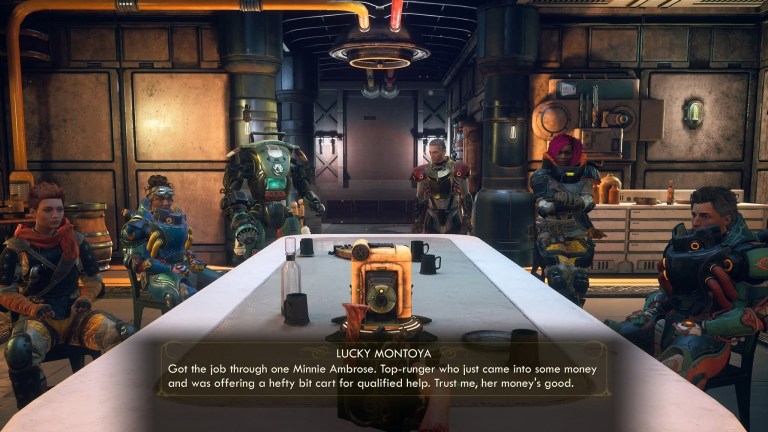
I Am Replaying The Outer Worlds Again

Welcome back Xbox fans, geeks, retro gaming fans and other gamers!

As a long-time Xbox fan, I am disappointed with the way this current console generation turned out. Xbox gaming as a whole has changed for the worse this year and millions of Xbox fans got angered over the cancellation of Xbox projects (including Perfect Dark and Contraband), Xbox console price hikes and most recently the declared drastic changes on Xbox Game Pass – including the 50% price hike on Xbox Game Pass Ultimate service (watch Team Xbox’s pathetic and tone deaf announcement by clicking here).

I stopped subscribing to XGP since over a year ago, and I had planned to subscribe again mainly to play The Outer Worlds 2 which I had waited for years to come out because I enjoyed The Outer Worlds and its two DLCs (Peril on Gorgon and Murder on Eridanos).

But the Xbox Game Pass Ultimate price hike of 50% ruined my plan to play The Outer Worlds 2 at launch entirely! I also noticed that none of the Team Xbox executives appeared in the pathetic October 1, 2025, video announcement of the drastic XGP changes.

Imagine the crashing ship as Team Xbox falling down hard because Microsoft forced them to make decisions and implement changes that made lots of Xbox fans and other gamers frustrated this year.

By looking at the collective feedback – both critics and gamers – about the newest sci-fi role-playing game from Obsidian, the bugs reported and the current prices, I have decided to pursue The Outer Worlds 2 later. It should be noted that the new game has two upcoming DLC episodes (story expansions) and there is no certainty as to when those will be released. As such, pursuing The Outer Worlds 2 later is the right thing for me to do because rushing for it now does not make sense at all.

What I did recently was I downloaded again my purchased digital copy of The Outer Worlds as well as the two DLC episodes on my Xbox Series X. Previously I played The Outer Worlds and the story expansions on my Xbox One, and replayed them on my Xbox Series X (enjoying the faster load times and improved frame rates) a few years ago.

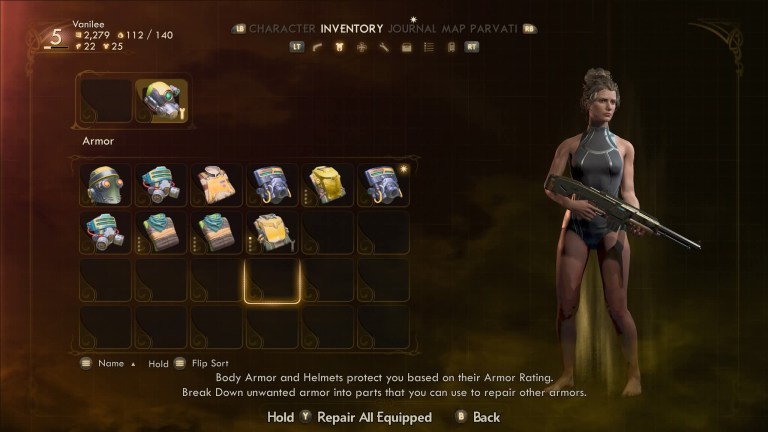
So this year, I started from scratch again on a new single player campaign. I created a new character – her name is Vanilee – and customized the abilities with intelligence, science, engineering, lockpicking, persuasion, hacking and medicine in mind.

Meet my new character Vanilee.

Having played The Outer Worlds a few times already since late 2019, I decided to try other scenarios, find new dialog options (in relation to how I customized my character) and explored the maps in and out again. I had no trouble adjusting myself into the controls and overall feel of the game when it comes to response and precision. Take note that The Outer Worlds was developed by Obsidian at a time when it was not yet acquired by Microsoft/Xbox and Private Division was their publisher.

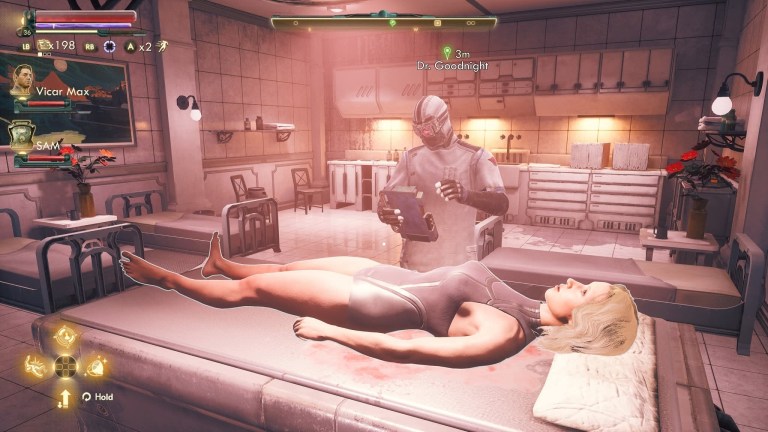
After going through the quests and side-quests in Edgewater – I diverted power to Edgewater helping Reed Tobson, the locals and convincing the deserters to return home – I entered the Unreliable with Parvati and Vicar Max as my teammates and proceeded to the Groundbreaker in space for further quests, scenarios and more options to build up my team.

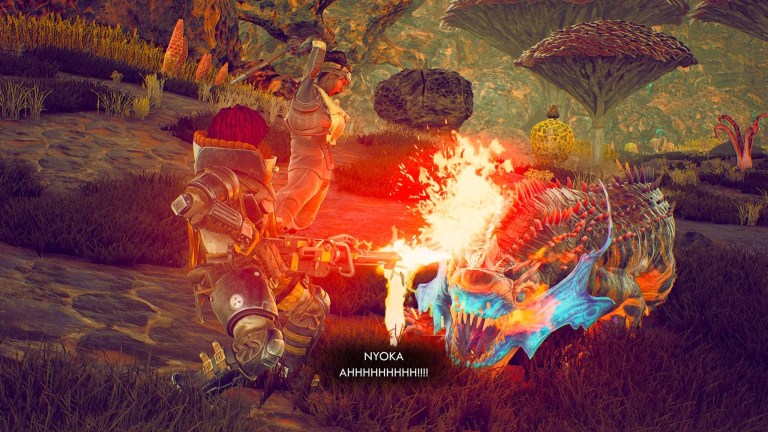
Teammates Parvati and Nyoka in action against a monster in Monarch.
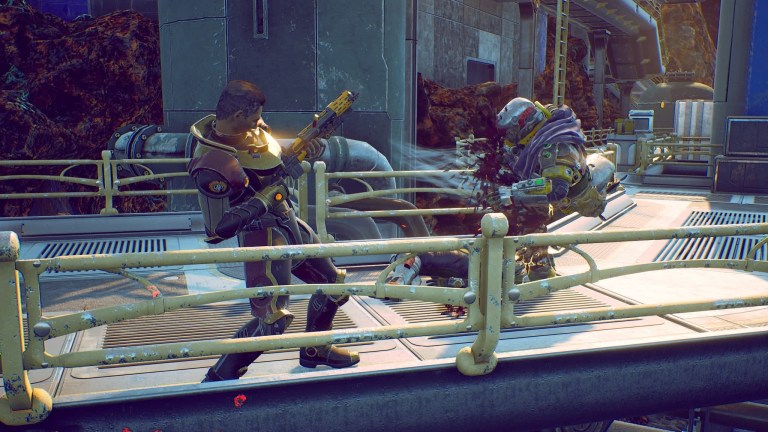
Vicar Max attacks an enemy with his shotgun.

So I kept on replaying the game rediscovering places, interacting with more characters and making decisions. Along the way, I spotted new dialog options emerging in connection with how I customized Vanilee from the start and built up with additional points accumulated for each level achieved. I ultimately reached the maximum of level 36.

Since I first played The Outer Worlds, it was clear to me that Obsidian did not have a massive budget as the creative and technical limitations were visible (examples: some repetitive interior designs, structures that cannot be accessed at all, lack of polish on stealth gameplay, my teammates getting in my line of fire, sluggish reloading, etc.). Instead of massive open-world environments, Obsidian came up with large maps but they ensured that each new location had something new for players to discover. I also admired the effort the developers invested on the art direction as well as making each map look distinct from each other while maintaining an artistic connection with the planet.

This is from the Murder on Eridanos DLC episode.

While the gameplay remains good for an RPG and first-person shooter enthusiast like me, what I admired best about The Outer Worlds was how Obsidian came up with connections between scenarios, the characters, the dialog options, and the consequences caused by decisions I made. That being said, I enjoyed watching the visual presentation and narration executed right after concluding the game. The presentation shows the endings of not just the main game but also those of the side quests completed and even the main quests of the two DLC episodes. How my decisions impacted the different factions and scenarios were clearly emphasized. In fact, the endings of the side quests and the two DLC episodes are seamlessly connected with the main game’s conclusion. As such, Obsidian succeeded in making The Outer Worlds worth replaying again.

Having played Starfield already, I realized that replaying The Outer Worlds was somehow a more satisfying experience. In my view, Bethesda tried too hard to make Starfield grand with a more galactic scope only to fail when it comes to exploration and long-term engagement. The Outer Worlds had a much smaller scope but it delivered the depth of fun, exploration, interaction and decision-making that strongly impacted the game’s conclusion.

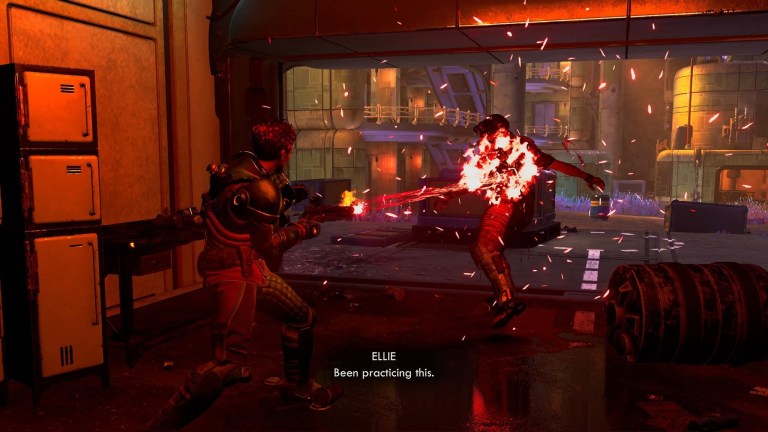
Ellie in action in Gorgon!

At the same time, I find my character’s companions in Obsidian’s 2019 RPG more interesting and more engaging than those in Bethesda’s 2023 sci-fi juggernaut because of the following factors – better personalities, more clever writing and better voice acting. I believe it is time for Bethesda to start learning from Obsidian on how to make engaging dialogue and characters.

Right now, I am having a lot satisfaction replaying The Outer Worlds even though it has some flaws as well as creative and technical limitations as Obsidian did not have a very big budget. I wish the game had space battles as well as opportunities for the Unreliable to chase and dock enemy space ships which will allow me and my team to infiltrate. The game lacked mini-games which could have added more variety and fun when exploring the different locations on-foot (examples: the tossball facility in Monarch could have used a sports betting mini-game while the bars could have used card-based mini-games).

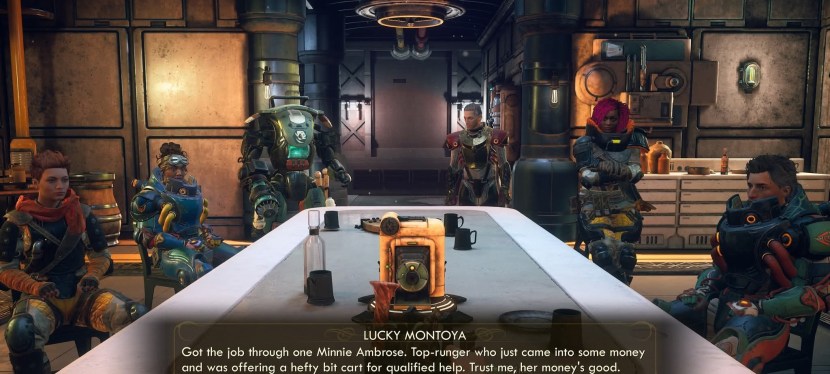
My crew inside the Unreliable.

On its own, the 2019 game is still a lot of fun to play and the role-playing element remains strong. The Outer World characters are memorable and the developers’ writers added humor to the dialog which prevented the game from becoming too dramatic or depressing. Indeed, The Outer Worlds is worth replaying and those who never played it should go for it!

If you are an Xbox gamer who is interested in The Outer Worlds 2, click https://www.xbox.com/en-US/games/the-outer-worlds-2. If you have never played The Outer Worlds for some reason, click https://www.xbox.com/en-US/games/store/the-outer-worlds/bvtkn6cq8w5f

+++++

Thank you for reading. If you find this article engaging, please click the like button below, share this article to others and also please consider making a donation to support my publishing. If you are looking for a copywriter to create content for your special project or business, check out my services and my portfolio. Feel free to contact me with a private message. Also please feel free to visit my Facebook page Author Carlo Carrasco and follow me on Twitter at  @HavenorFantasy as well as on Tumblr at https://carlocarrasco.tumblr.com/ and on Instagram athttps://www.instagram.com/authorcarlocarrasco

What to watch on YouTube right now – Part 102

Welcome back my readers, YouTube viewers and all others who followed this series of articles focused on YouTube videos worth watching. Have you been searching for something fun or interesting to watch on YouTube? Do you feel bored right now and you crave for something to see on the world’s most popular online video destination?

I recommend you check out the following videos I found.

#1 CinePals react to Predator 2 – I saw Predator 2 a number of times since the 1990s. I even reviewed the first issue of its 2-part comic book adaptation. Predator 2 was essentially a police story with science fiction elements mixed in and it was a worthy sequel. That being said, I saw a lot of Predator 2 reaction videos on YouTube and in my view, the reaction video by CinePals is the most entertaining one yet. Watch the video below.

#2 How AMD overtook Intel – Do you own a personal computer that has an AMD chip inside it? Mine does not but our Xbox Series X console has. In the world of business, the rivalry between AMD and Intel on CPUs has lasted for decades. While Intel led the industry for a very long time, it has gradually lost market share to AMD over the past several years. The company behind Ryzen and Athlon CPUs bounced back significantly under the leadership of Lisa Su and their alliance with TSMC was a great gamble that paid off well. Watch and learn from the video below.

#3 Do You Like Japanese Pork Cutlet? – When was the last time you had a pork cutlet for a meal? In Japan, their pork cutlet called Tonkatsu is popular and there are lots of food joints that offer it to customers. Tonkatsu is composed of a breaded, deep-fried pork cutlet, and historically it started during the Meiji era in the late 20th century. I recently discovered a YouTube video about one particular Japanese food joint that offer Tonkatsu that look large. Watch and enjoy the video below.

#4 Clash of the Titans (1981) Reaction Videos by Rhetorical Thrill and You, Me and The Movies  – As a very young boy, I was fortunate enough to have seen the fantasy film Clash of the Titans inside the movie theater. The 1981 film was also the final work of stop-motion visual effects legend Ray Harryhausen and it had Burgess Meredith (the same actor who played Rocky’s trainer in the first 3 Rocky movies) in a key supporting role. I found two entertaining movie reaction videos of Clash of the Titans (1981) from You, Me and the Movies and Rhetorical Thrill. I encourage you to watch their respective videos below.

#5 Get To Know IMAX Better  – You may have seen some movies inside an IMAX theater but are you aware of what IMAX really is apart from the experience of seeing a movie on a very large screen? IMAX is a brand, a special film format, a series of large cameras, a chain of special cinemas and an enterprise to say the least. Among the Hollywood directors, Christopher Nolan is the most prominent one who uses IMAX cameras in films like Dunkirk, Interstellar, Oppenheimer and his two last Batman movies. You can learn more about what makes IMAX different from the rest by watching the video below.

#6 Ashleigh Burton Reacts to Iron Eagle – What is there to say about the movie Iron Eagle? A movie about fighter planes and American military culture, the film was released the same year as the more famous Top Gun. I only saw the film on home video but in 1986, I had friends who were raving about Iron Eagle. That said, you should watch Ashleigh Burton’s reaction video about the old movie.

#7 A Look At Silent Hill 2 – Back in 2001, I still remember there was a lot of pre-release hype for the video game Silent Hill 2. Released on the PlayStation 2 and the original Xbox console (Silent Hill 2: Restless Dreams), the game went on to achieve big commercial and critical success. To this day, a lot of gamers called Silent Hill 2 as the most definitive game of the entire Silent Hill game franchise. To know more about the history and production of Silent Hill 2, watch the video below.

+++++

Thank you for reading. If you find this article engaging, please click the like button below, share this article to others and also please consider making a donation to support my publishing. If you are looking for a copywriter to create content for your special project or business, check out my services and my portfolio. Feel free to contact me with a private message. Also please feel free to visit my Facebook page Author Carlo Carrasco and follow me on Twitter at  @HavenorFantasy as well as on Tumblr at https://carlocarrasco.tumblr.com/ and on Instagram athttps://www.instagram.com/authorcarlocarrasco

Cloak & Dagger Is Fun And Challenging To Play On My Xbox Series X

Welcome back Xbox fans, geeks, retro gaming fans and other gamers!

If you are disappointed with modern console gaming and if you don’t like what the game makers are doing, retro gaming will restore the fun and help you forget about the disappointment.

When I was a very young boy, I saw Cloak & Dagger on home video. The movie – starring Henry Thomas and Dabney Coleman – was a thriller laced with Cold War elements, espionage and video gaming. In fact, the video game giant of the time – Atari – was involved in the movie production and their arcade game Cloak & Dagger appeared in the form of a fictional Atari 5200 game. Each time I saw the gameplay footage while watching the movie (read my retro review by clicking here), I was thrilled and always wanted to play it.

Finally, in 2024, I was able to play Cloak & Dagger on my Xbox Series X after purchasing the physical copy of Atari 50: The Anniversary Celebration. Since then, I’ve been replaying Cloak & Dagger a lot in the comfort home and it sure is challenging and fun.

To be clear, this is not a retro game review of Cloak & Dagger. Rather, it is a nostalgic close look at the Atari video game that happened to be featured in the 1984 movie which in turn was released on 4K Blu-ray in 2022. Combine that with the Atari 50 release also in 2022, the Cloak & Dagger game made a comeback in the retro gaming radars of many while also becoming available to play with on modern consoles and Windows PC.

Game design and gameplay

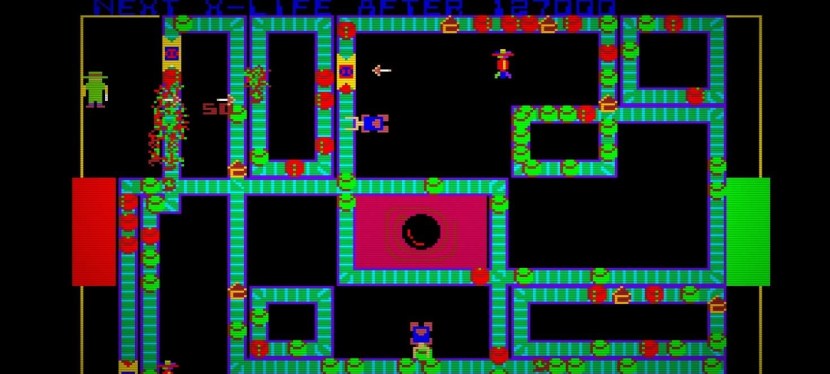
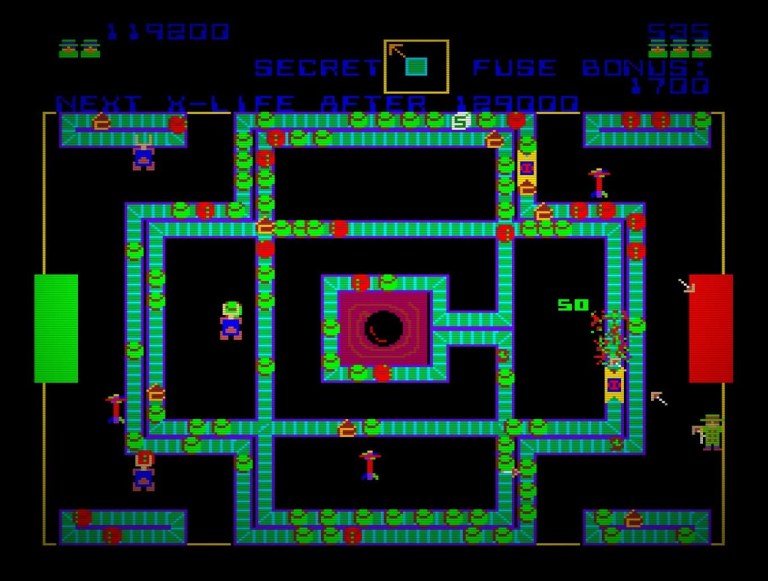
In the arcade game, you play Agent X (the 2D sprite colored green and wearing the hat) and you will encounter challenges from enemies (often robot guards which can fire shots at you), conveyor belts that can impact your movement and the possibility of the giant bomb exploding.

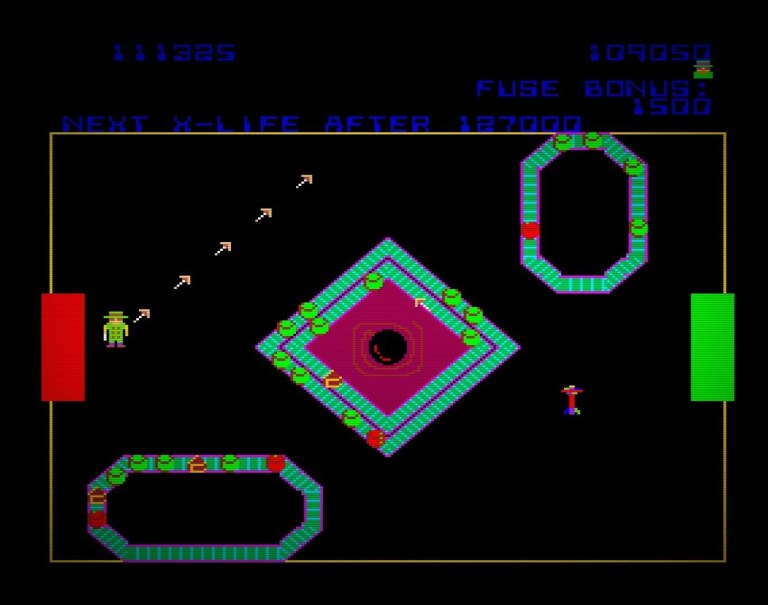
Developed by Atari for the arcade, Cloak & Dagger is a 2D multi-directional shooter in which you play Agent X (who appears wearing a hat, a mask and a coat) whose mission is to infiltrate the massive base of an enemy that goes very deep underground (33 levels/floors).

Each level the player enters require surviving obstacles and defeating (or avoiding) the enemies (robot guards are the most common opposition while the crawling eye occasionally appears) and then move to the other side of the level in order to get into another elevator to keep on descending. The ultimate goal is to reach the final level below to recover top secret plans from Dr. Boom (the main villain and the one responsible for stealing the said plans), destroy his underground bomb factory (which explains the existence of oversized bombs and many explosives on conveyor belts) and get out.

As registering high scores was the trend of video gaming back then, players will be rewarded with shooting at the enemies (example: robot guards are worth 50 points each when asleep or 200 points when awake, while the main villain Dr. Boom is worth 50,000 points) as well as interacting with in-game items such as the unarmed explosives (10 points when shot but worth 100 when collected), armed explosives (50 points each when destroyed) and mystery boxes (worth 200 to 1,800 points plus random effects on the player such as extra life, improved speed and even extra life). For every 30,000 points scored, the player will be granted an extra life. In many levels are gigantic bombs that players can ignite using the Fuse button for extra points. 

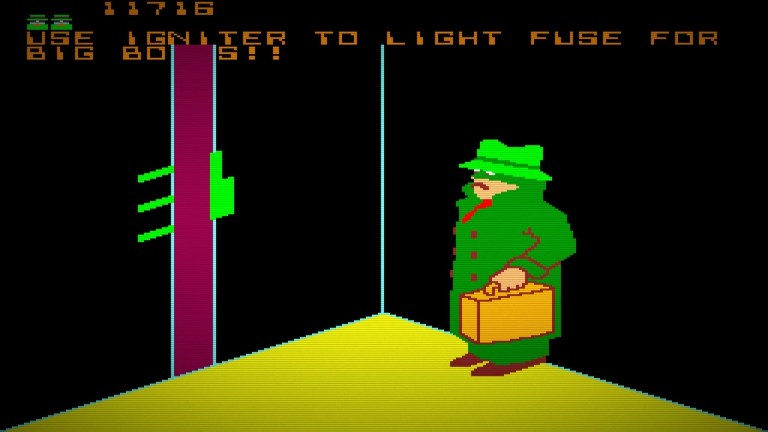
Between levels, you will see an animated Agent X during the short rides in the elevator.
The game is very challenging because so much is going on around you. The robot guards will always fire shots at you while the conveyor belts often move items and explosives (both the armed and unarmed). You can ride a converyor belt to move around but make sure you do not touch the armed explosives (red containers) as they will kill you upon contact.

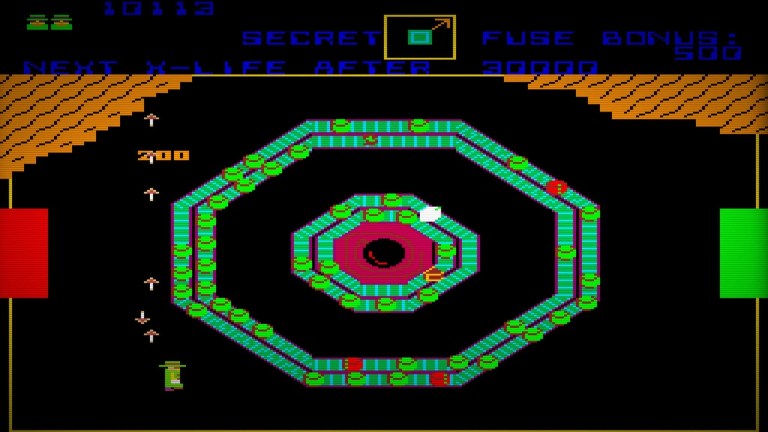
Other items players can collect are the extra boxes (resulting in extra life) and the secret maps (which partially reveal safe paths through each fourth level).

When it comes to the controls, Cloak & Dagger has a dual joystick (twin sticks) setup similar to Robotron 2084 and Smash T.V. (read my retrospective look at it by clicking here). One joystick allows players to move Agent X around while the other allows shooting projectiles (using Agent X’s weapon) at any direction. The fuse action (for igniting the oversized bombs in the enemy lair) is done by simply pressing a button. As I am playing this game on Xbox Series X, the game’s controls functioned well on the Xbox controller. Both precision and response of the game are sharp with the Xbox controller.

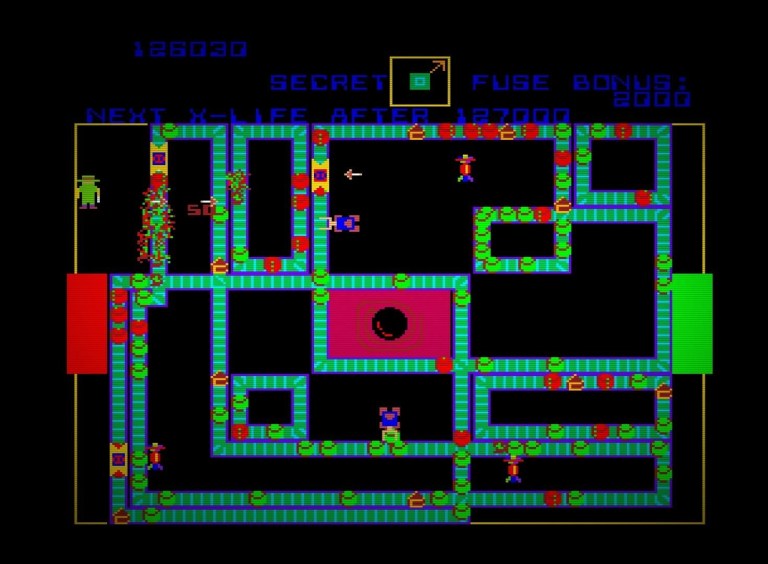
When it comes to the enjoyment and overall value of Cloak & Dagger, I can say that it is indeed more challenging and more chaotic when compared to the more notable twin stick games Robotron 2084 and Smash T.V. For one thing, each level has different layouts complete with obstacles or hazards plus enemies that will certainly challenge players. Many levels have conveyor belts moving unarmed explosives, armed explosives (which you must avoid touching because you will die upon direct contact) and items around which form obstacles when it comes to shooting robot guards on the other side (note: you can use the obstacles defensively when the robot guards fire at you).

From time to time, you will enter a somewhat sparse looking level like this which actually has mines hidden. The locations of the mines do get revealed in specific moments but only for a few seconds. That being said, it is always best to be able to collect maps that appear on conveyor belts.

Apart from the robot guards and the crawling eye, there are also forklifts which don’t attack you but their solid exterior will deflect any projectile you fire at them and send them back to your direction.

To be clear, you are not required to destroy all the robot guards (or the huge crawling eye enemies) in each level. You can simply try to avoid obstacles and enemies to make it to the next elevator to keep on descending although doing so means scoring much lesser points. Picking up items will add points and randomly alter your character’s capabilities (by picking up mystery boxes).

Adding pressure to you on each level is the giant bomb located in the middle which you can ignite using the fuse action. Once ignited, you only have a few seconds left to make it to the next elevator as the giant bomb will explode and spread fire throughout the whole level. Igniting the said thing will grant you a lot of points provided you survive and made it to the elevator going down.

To be able to play the Cloak & Dagger arcade game on your console or on PC, purchase a copy of the Atari 50 collection.

Cloak & Dagger is indeed a fun game but the opposition, the obstacles, time limit (indicated by the giant bomb) and chaotic turn of events make it more challenging than Midway’s two notable twin stick shooters. The game would have been more forgiving and more playable if only it did not have the one-hit-death embedded on it. Considering the challenges each level has and the many levels players have to go through, it would have made more sense to have Agent X have a life bar/health meter/shield and be able to absorb some enemy projectiles (before dying).

Of course, the game was never designed to be like that and the one-hit-death is also found in Robotron 2084 and Smash T.V. That being said, if you played Cloak & Dagger with a high level of success and completed everything without losing all your lives, then you would be a great achiever.

Pop culture significance

It has been reported that Cloak & Dagger – which was released as an arcade kit for machines that ran Robotron 2084, Joust, Defender and Stargate – did not have a big presence in the arcades in America. The 1984 movie dramatically increased public awareness of it.

Print ad of the arcade game.

When Cloak & Dagger was still in game development (created and led by Russell Dawe) under the title “Agent X”, Atari and certain movie producers became aware of each other’s projects and decided to work together. The deal made business sense as Atari could benefit from reaching a mainstream audience through the cinemas while the movie producers joined in the 1980s Hollywood trend of movies that featured powerful computers, software and artificial intelligence as seen in WarGames (1983), Superman III (1983), and The Terminator (1984).

Much to the credit of the filmmakers, the presence of the game actually added good value to the plot. The film’s concept of the Cloak & Dagger game becoming a very wanted object (plot device actually) resulting in chases, intense action scenes and suspense turned out to be very believable as well. It should be noted that director Richard Franklin took inspiration from Alfred Hitchcock which gave the film a unique touch on the suspense and shock scenes. Check out the movie clip below…

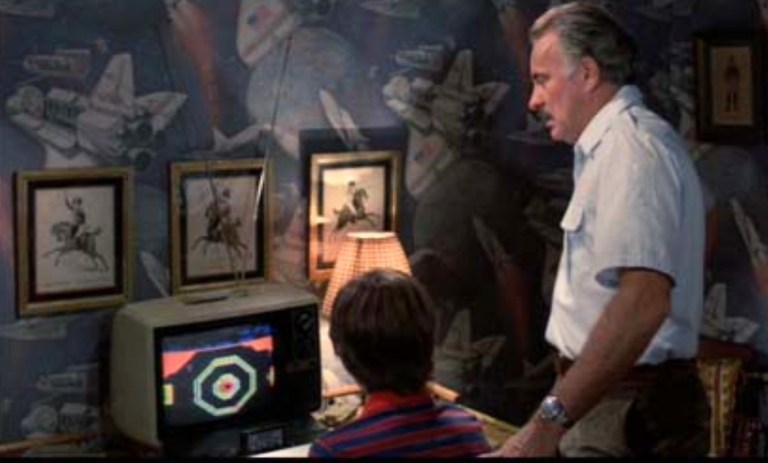
When it comes to the Cloak & Dagger game appearing within the movie of 1984, you will see how the filmmakers and Atari cleverly created the illusion of the game operating on the Atari 5200 console by showing not only video game footage, but also having Henry Thomas acting like he’s playing it using the Atari 5200 controller (which has an analog joystick and buttons on one side). When I was a young boy watching the movie, I found the game footage very entertaining and wanted to play it.

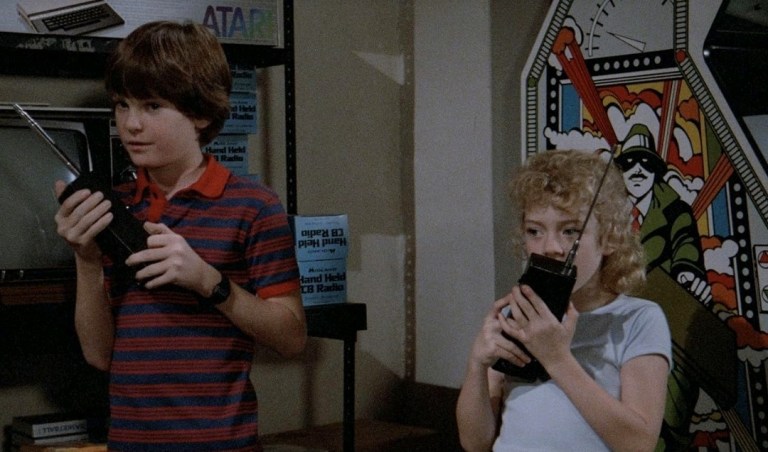
Cloak & Dagger portrayed as running on Atari 5200 in this scene with Henry Thomas and Dabney Coleman. (photo source – AtariProtos.com)
A Cloak & Dagger arcade cabinet seen in the background (right side). (photo source – IMDB.com)

If you are an Xbox gamer who intends to play Cloak & Dagger now, buy the Atari 50 collection in digital format by clicking https://www.xbox.com/en-US/games/store/atari-50-the-anniversary-celebration/9N3TFDSQ531T

+++++

Thank you for reading. If you find this article engaging, please click the like button below, share this article to others and also please consider making a donation to support my publishing. If you are looking for a copywriter to create content for your special project or business, check out my services and my portfolio. Feel free to contact me with a private message. Also please feel free to visit my Facebook page Author Carlo Carrasco and follow me on Twitter at  @HavenorFantasy as well as on Tumblr at https://carlocarrasco.tumblr.com/ and on Instagram athttps://www.instagram.com/authorcarlocarrasco

Retro Gaming Ads Blast – Part 28

Welcome back readers, fellow geeks and electronic gaming fans!

In this edition of the Retro Gaming Ads Blast (RGAB) series, we will take a look at another batch of retro gaming print ads – including arcade flyers – from the 1980s and 1990s.

For the newcomers reading this, Retro Gaming Ads Blast (RGAB) looks back at the many print ads of games (console, arcade, computer and handheld) that were published in comic books, magazines, flyers, posters and newspapers long before smartphones, social media, the worldwide web and streaming became popular. To put things in perspective, people back in the 1980s and 1990s were more trusting of print media for information and images about electronic games and related products.

With those details laid down, here is the newest batch of retro gaming print ads for you to see and enjoy…

1. Japanese Macross video games print ads

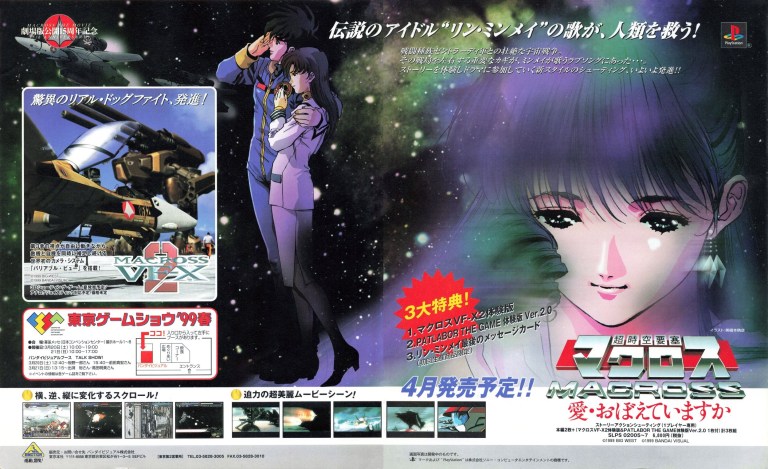
This 2-page ad had Minmay, Misa and Hikaru.
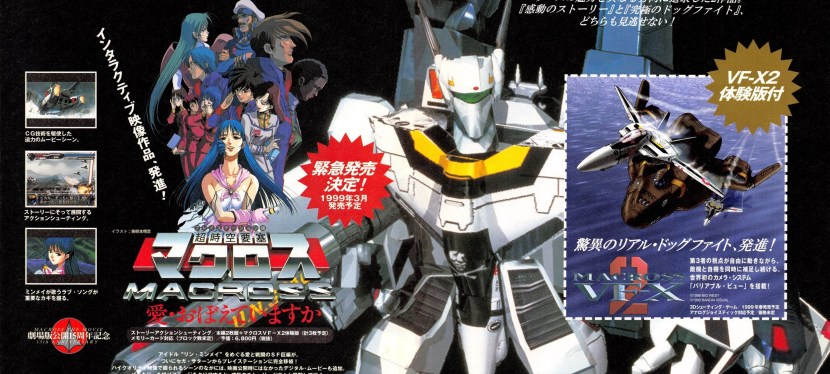
Computer-generated image of the Skull Leader Battroid was used here.

Looking at the history of Macross video games released only in Japan, there were these notable games that catered to the fans with different tastes during the period of 1997 to 1999. The two Japanese print ads here promoted the PlayStation version of The Super Dimension Fortress Macross: Do You Remember Love? (read my retro review by clicking here) and Macross: VF-X2 (only on PlayStation). 1997 marked the 15th anniversary of the entire Macross franchise and game publisher Bandai Visual kept the excitement for fans on high gear by aggressively promoting the two advertised games for their respective releases in 1999. These two print ads still resonate with long-time fans as each were clearly made to emphasize the games (with details, screenshots and original artworks) while using the right images of the Macross franchise for relevance.

2. Star Raiders print ad

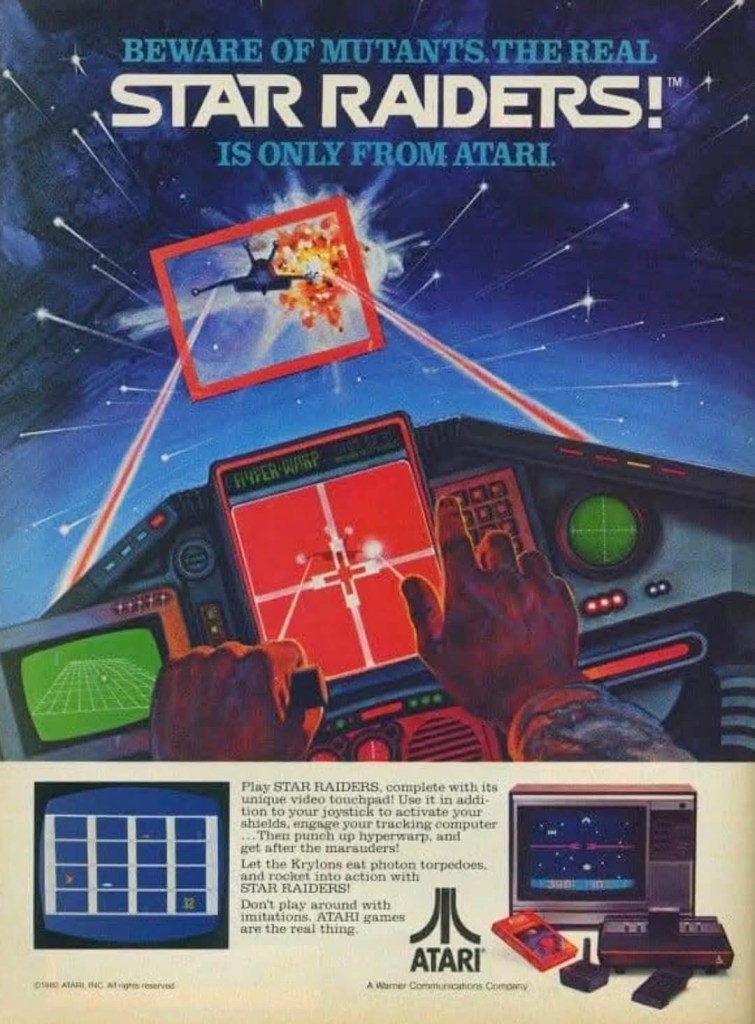
This Star Raiders print ad made me interested enough to play the game on Atari 2600.

I remember the old days of play Star Raiders on the Atari 2600 back in the early 1980s. Strangely enough, I don’t remember seeing this old print ad. Regardless, I really like the way the ad makers used hand-drawn art work to dominate the space while leaving enough space for text description, a screenshot and the picture of the Atari console with the TV set. In my view, this old ad is both amusing and attention-grabbing.

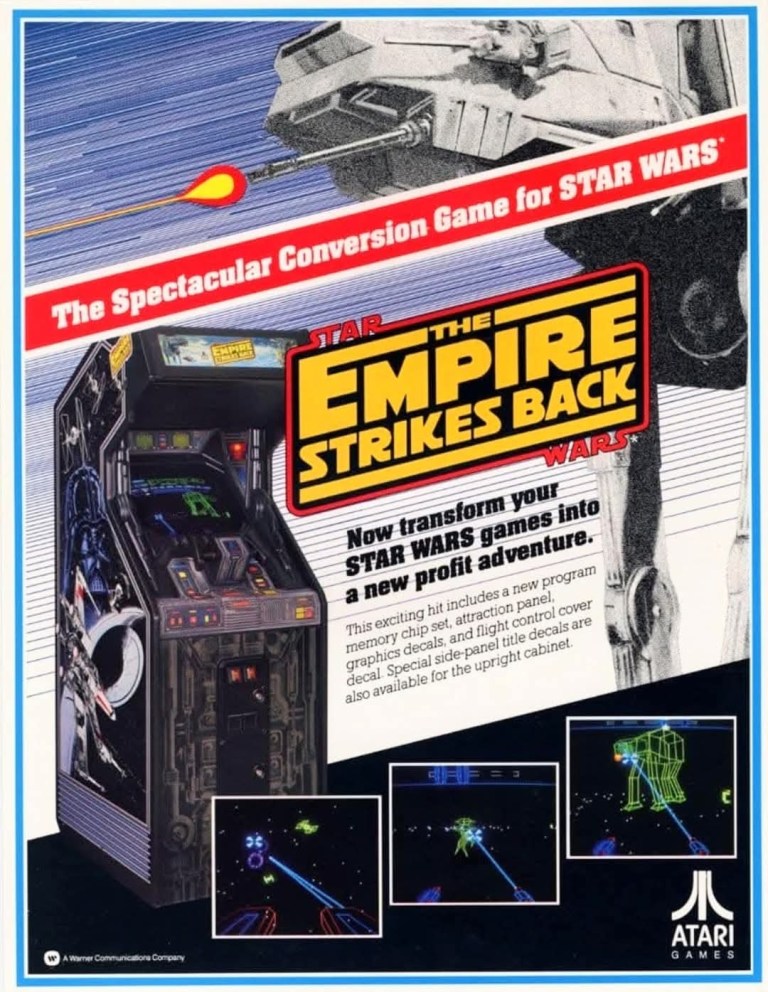
3. The Empire Strikes Back arcade flyer

This is still a great looking arcade flyer.

Here is a Star Wars game I never played but managed to play it on a home computer. Released by Atari in 1985, The Empire Strikes Back (full title: Star Wars: The Empire Strikes Back) arcade game was the follow-up to the very popular Star Wars arcade game. Like its predecessor, it used vector graphics and certain sounds from the 1980 film for immersion. This arcade flyer is well designed showing three selected screenshots, a picture of the arcade cabinet and a portion of the AT-AT walker from the movie. The flyer truly showed gamers and arcade operators what they would get by selecting The Empire Strikes Back.  

4. Steve Meretzky’s Spellcasting 301: Spring Break print ad

Clearly the promoted game is for adult players only.

In the realm of computer gaming, there were certain games that catered to the more mature players. One example is Steve Meretzky’s Spellcasting 301: Spring Break which was released on for personal computers running on DOS (Disk Operating System) in 1992. This print ad clearly shows the adulterated nature of the game emphasizing sexy women with a paradise setting. This is the kind of print ad that you only in computer gaming magazines which had predominantly adult readers.

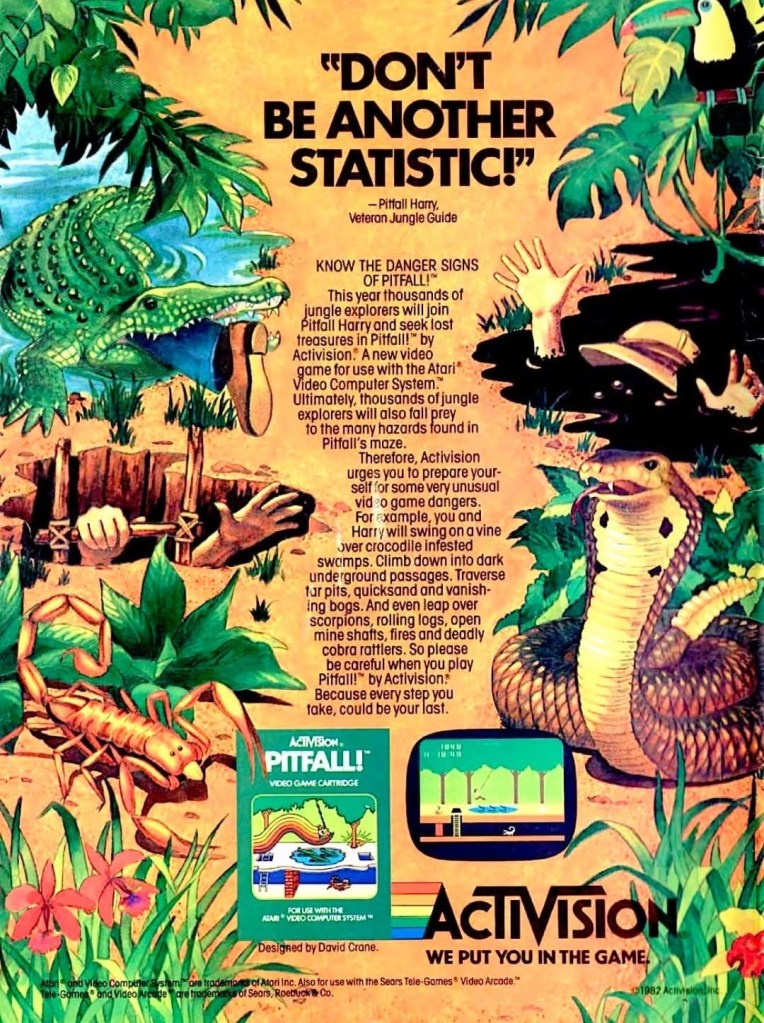
5. Pitfall! print ad

Still a great looking print ad.

Back in 1982, 2D adventuring on the Atari 2600 reached new heights when Pitfall! was released. The game garnered wide praise for its gameplay and graphics, and because it was so enjoyable, it sold millions of copies and its success spread across other platforms. A key factor to its commercial success and strong identity with the Atari 2600 was this colorful print ad. The ad makers daringly used original artwork to emphasize the jungle, wilderness and adventure concept while leaving some space left to show a screenshot and the Atari 2600 game cover. Pitfall! is a video game classic.

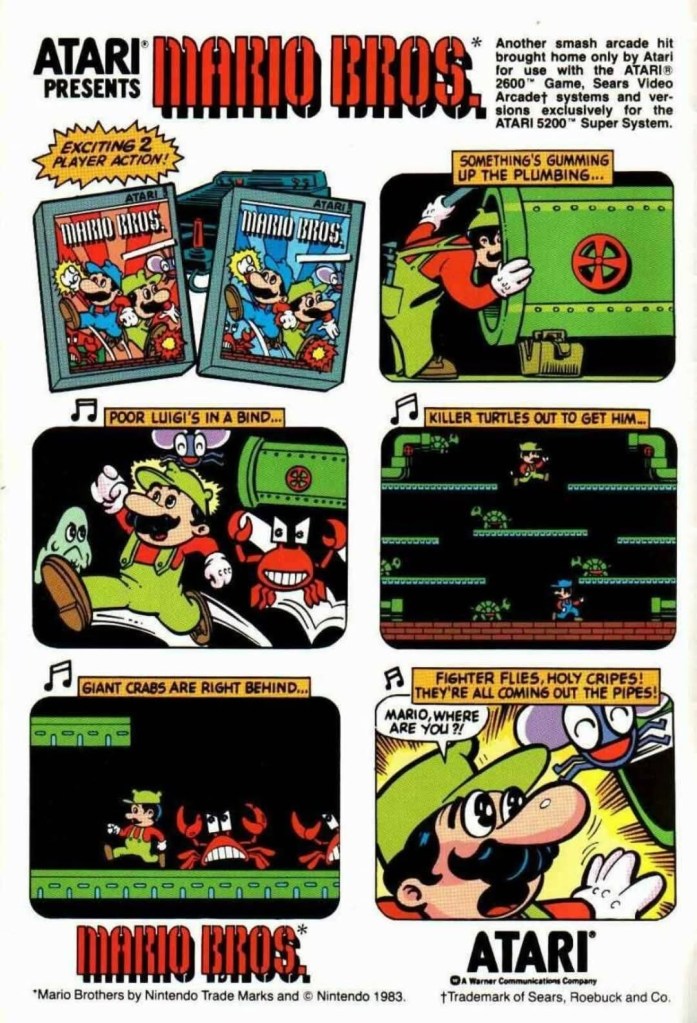
6. Mario Bros. print ad

I saw this comic-style print ad while reading a comic book.

A few years before Nintendo skyrocketed with the massive success of Super Mario Bros., there was Mario Bros. on the Atari 2600 and Atari 5200. Published by Atari on their consoles, Mario Bros. was already a hit in the arcades. To capitalize on the popularity of the game, Atari came up with this comic-style print ad to capture people’s attention with the hope that the Atari 2600 and Atari 5200 ports will sell a lot. I first saw this ad while reading a comic book and it remains entertaining to see.

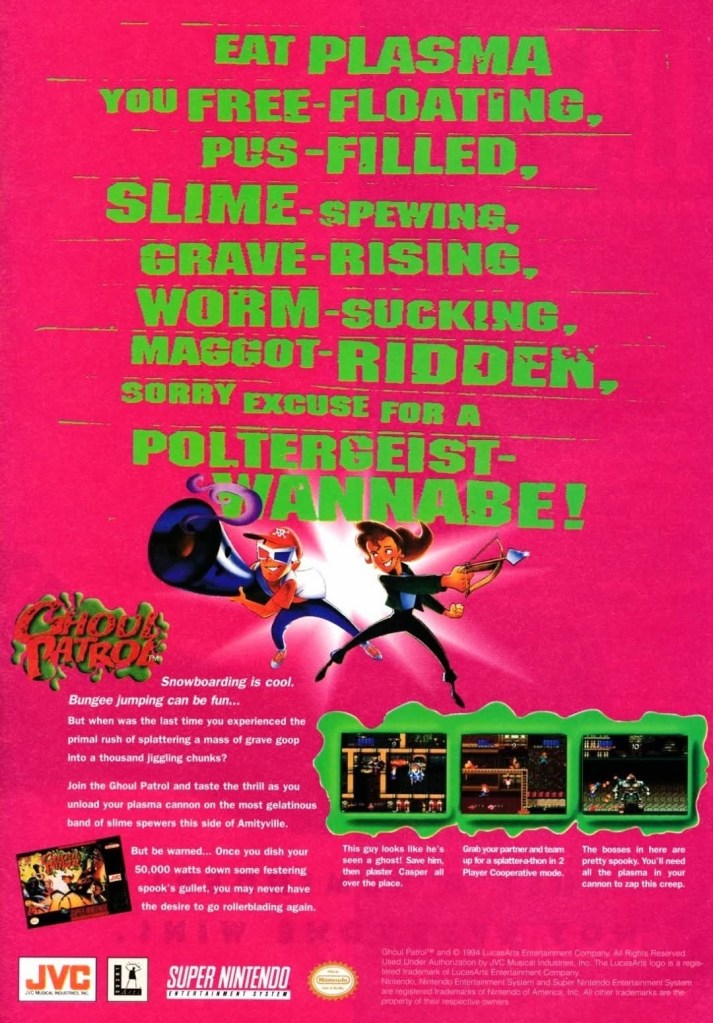
7. Ghoul Patrol print ad

Too bad the screenshots, the game box cover and white descriptive text were too small to look at.

Released in 1994 on the Super Nintendo Entertainment System (SNES), Ghoul Patrol is the accidental sequel to Zombies Ate My Neighbors. This was because the game did not start as a sequel but rather as an unrelated project that used the same gameplay engine of its predecessor. Since Zombies Ate My Neighbors already had a dedicated fanbase, a decision to turn the game into a sequel followed. Ghoul Patrol’s print ad took a different creative approach on its presentation by trying to look cool and catchy with a dominating pink background and slightly adulterated descriptions in green leaving little space left for screenshots and the white descriptive text. The print ad of Zombies Ate My Neighbors remains more engaging and more eye-catching than this one.

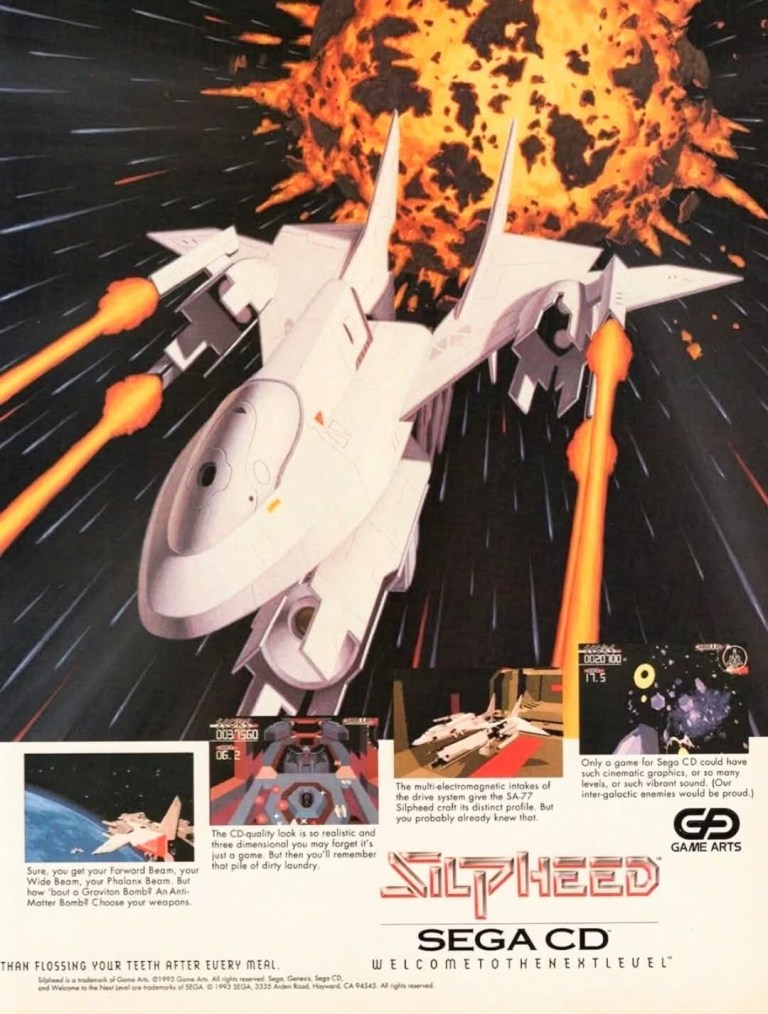
8. Silpheed print ad

This ad caught my attention and even made me interested on the Sega CD.

Released in 1993, Silpheed on Sega CD was a remake of the original game of 1986. Like its predecessor, the Sega CD had 3D effects but used pre-rendered computer animation for a background that actually was full motion video. The print ad of this game had this fantastic looking computer-generated artwork and displayed four screenshots that looked really exciting back in 1993. If you look closely at the captions, the ad emphasized the CD-quality look and the cinematic graphics the game had. This old ad has aged well.  

+++++

Thank you for reading. If you find this article engaging, please click the like button below, share this article to others and also please consider making a donation to support my publishing. If you are looking for a copywriter to create content for your special project or business, check out my services and my portfolio. Feel free to contact me with a private message. Also please feel free to visit my Facebook page Author Carlo Carrasco and follow me on Twitter at  @HavenorFantasy as well as on Tumblr at https://carlocarrasco.tumblr.com/ and on Instagram at https://www.instagram.com/authorcarlocarrasco
Barangay PWD associations receive computers from Las Piñas City Government

Recently in the City of Las Piñas, twenty barangay associations of Persons with Disabilities (PWDs) received desktop computers from the City Government and Vice Mayor April Aguilar witnessed the distribution, according to the social media announcement of the local government unit (LGU).

To put things in perspective, posted below is an excerpt from the City Government’s social media announcement. Some parts in boldface…

Let me end this piece by asking you readers: If you are a resident of Las Piñas City, what is your reaction to this development? Is the PWD association of your barangay actively working? Are there many PWDs in your local community?

You may answer in the comments below. If you prefer to answer privately, you may do so by sending me a direct message online.

+++++

Thank you for reading. If you find this article engaging, please click the like button below, share this article to others and also please consider making a donation to support my publishing. If you are looking for a copywriter to create content for your special project or business, check out my services and my portfolio. Feel free to contact me with a private message. Also please feel free to visit my Facebook page Author Carlo Carrasco and follow me on Twitter at  @HavenorFantasy as well as on Tumblr at https://carlocarrasco.tumblr.com/ and on Instagram at https://www.instagram.com/authorcarlocarrasco
For more South Metro Manila community news and developments, come back here soon. Also say NO to fake news, NO to irresponsible journalism, NO to misinformation, NO to plagiarists, NO to reckless publishers and NO to sinister propaganda when it comes to news and developments. For South Metro Manila community developments, member engagement, commerce and other relevant updates, join the growing South Metro Manila Facebook group at https://www.facebook.com/groups/342183059992673

Retro Gaming Ads Blast – Part 19

Welcome back readers, fellow geeks and electronic gaming fans!

In this edition of the Retro Gaming Ads Blast (RGAB) series, we will take a look at another batch of retro gaming print ads – including arcade flyers – from the 1980s and 1990s.

For the newcomers reading this, Retro Gaming Ads Blast (RGAB) looks back at the many print ads of games (console, arcade, computer and handheld) that were published in comic books, magazines, flyers, posters and newspapers long before smartphones, social media, the worldwide web and streaming became popular. To put things in perspective, people back in the 1980s and 1990s were more trusting of print media for information and images about electronic games and related products.

With those details laid down, here is the newest batch of retro gaming print ads for you to see and enjoy…

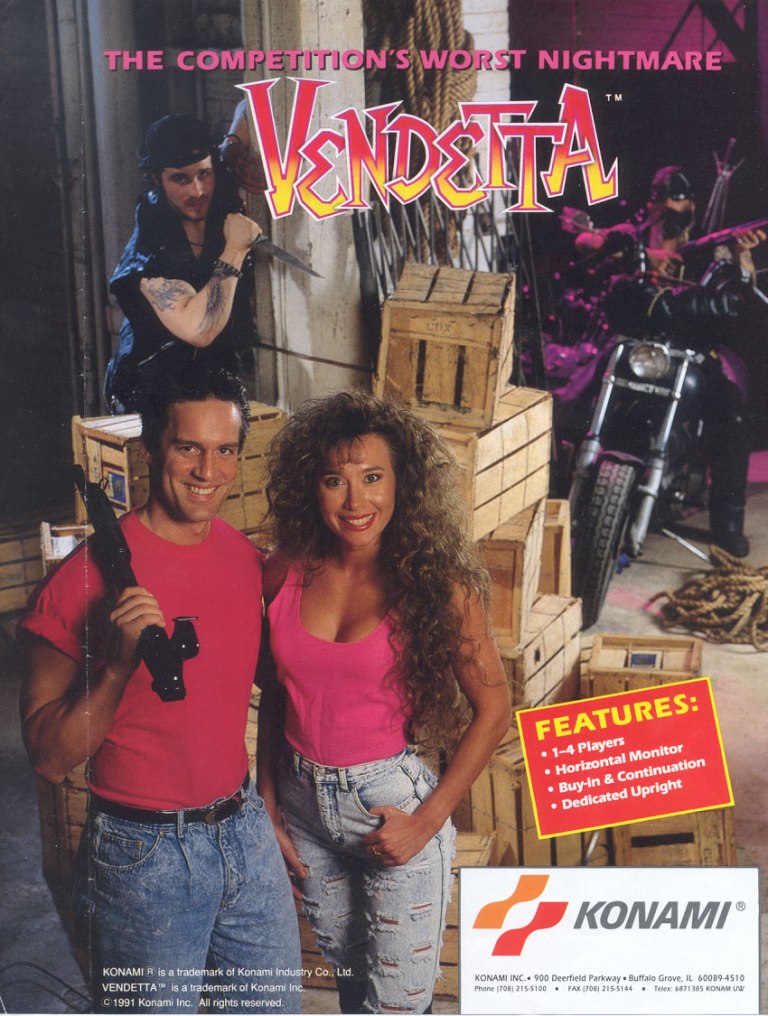
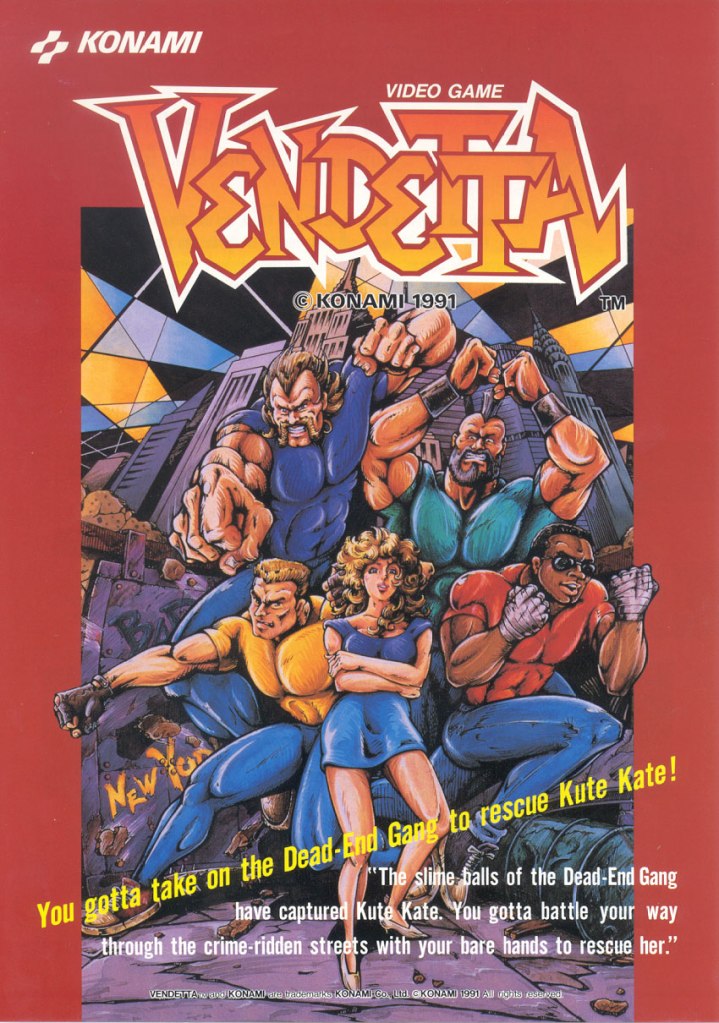
1. Vendetta UK and North American arcade flyers

Vendetta arcade flyer for North America
Vendetta arcade flyer for the UK.

In 1991, Konami released the 2D side-scrolling beat-them-up game Vendetta in arcades around the world achieving commercial success. While it is hard to tell if the promotions helped the game commercially, there is no doubt that the arcade flyers for the North American and United Kingdom (UK) markets were indeed very eye-catching.

The North American Vendetta arcade flyer had a photographic approach showing models playing characters supposedly representing the Cobras gang and the Dead End gang. The display of wooden boxes and the rope was done to symbolize the rough city environments of the game. On the other hand, the UK arcade flyer has illustrated artwork that captured the look of the Cobras gang from the game.  

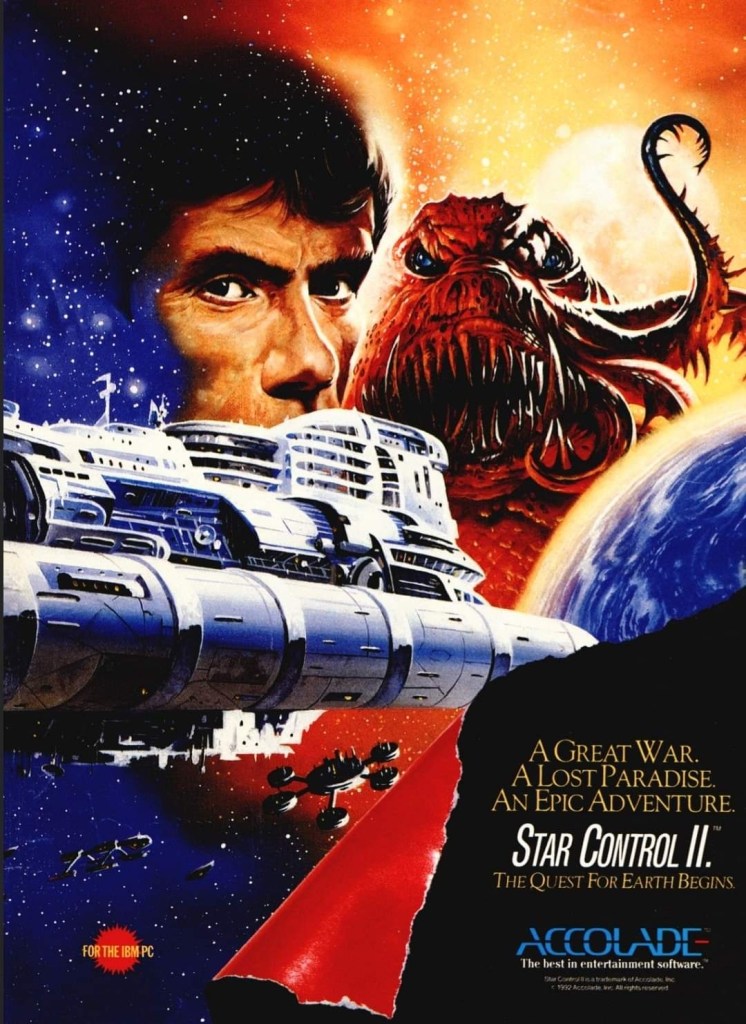
2. Star Control II: The Ur-Quan Masters print ad

This ad has great art that strongly emphasizes its science fiction concept.

This print ad of Star Control II: The Ur-Quan Masters (PC version) really caught my attention when I read gaming magazines in the early 1990s. The painted artwork showing a human and a hideous alien in the background with a planet, space ships and space stations filling the rest of the space was very captivating to look at. So captivating, it enticed me to search for the game but our PC at home had really low specs. Strangely enough, I played another version of Star Control II on a rented 3DO Interactive Multiplayer console in 1995. For the newcomers reading this, the game was critically acclaimed and was declared as one of the very best PC games ever made. Enjoy looking at the print ad above.

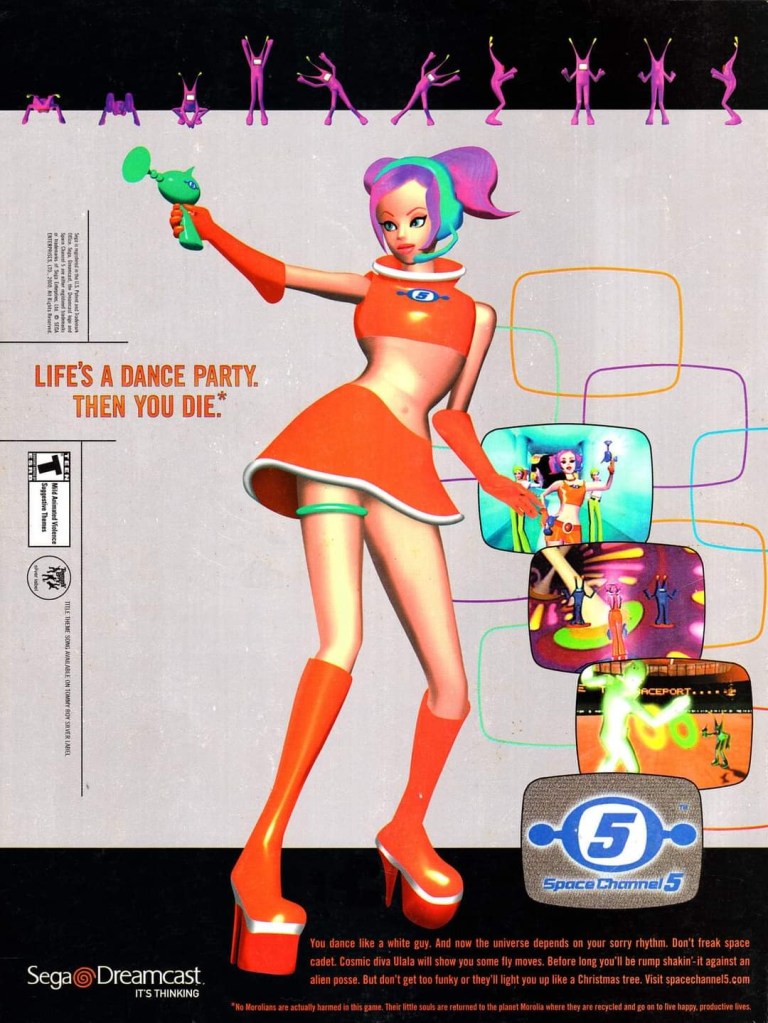
3. Space Channel 5 print ad

The visual style and character designs are the result of the game designer’s research that includes interviews with lots of young girls over their interests and tastes in video games.

When Sega launched their Dreamcast console in Japan in late-1998, their financial health was already in a very bad state and the future looked grim. Even as they faced tremendous odds, Sega still went on to aggressively sell Dreamcast consoles with exclusive games and Space Channel 5 was one of them.

First released in Japan in 1999, Space Channel 5 was a musical, puzzle-oriented game that was the result of Tetsuya Mizuguchi’s work backed with research he did that included interviewing young girls to find out what their tastes in gaming are. The print ad showing the highly stylized protagonist Ulala and a few screenshots really caught the attention of gamers and kept the Dreamcast in their minds. While the game did not achieve commercial success as a Dreamcast-exclusive, Sega went on to release a version of Space Channel 5 on the PlayStation 2 console, plus sequels.

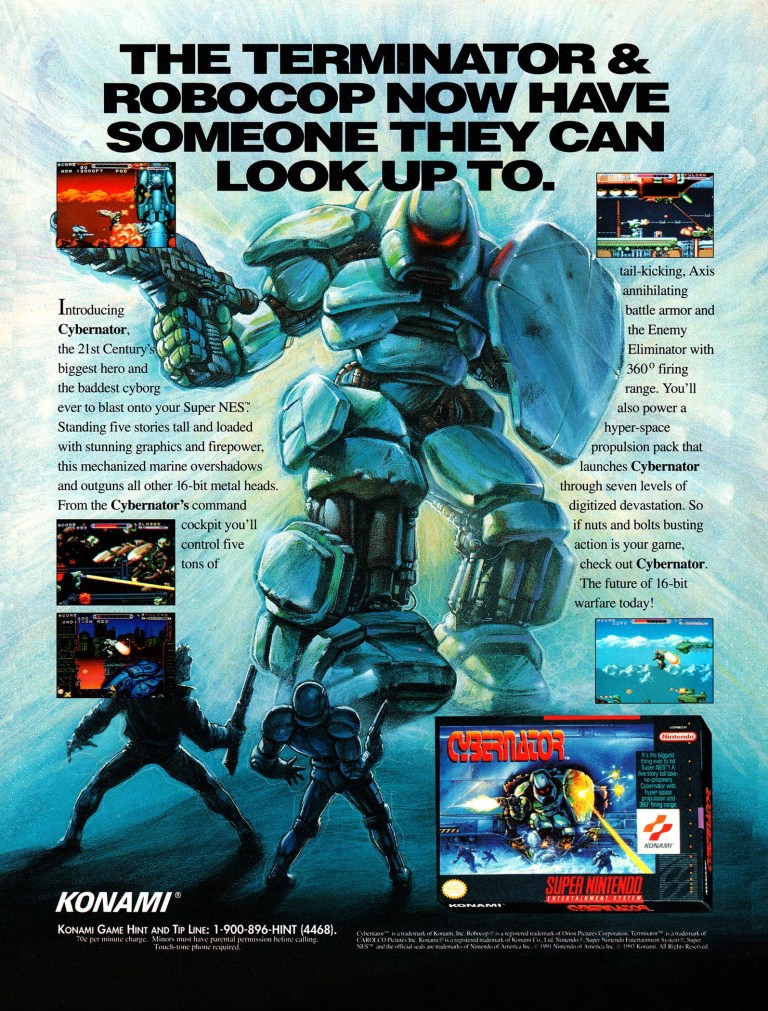
4. Cybernator print ad

The mention of Terminator and RoboCop rivaled the artwork when it comes to grabbing people’s attention.

I remember seeing the print ad of Konami’s Cybernator (Japanese title: Assault Suits Valken) in several comic books I read back in 1992. I never got to play it but the print ad’s artwork was memorable as I was fond of robots in anime, movies and video games back then. What was arguably the most memorable aspect of the print ad was the line that mentioned RoboCop and the Terminator in a comedic way. This is a creative way to market the game.

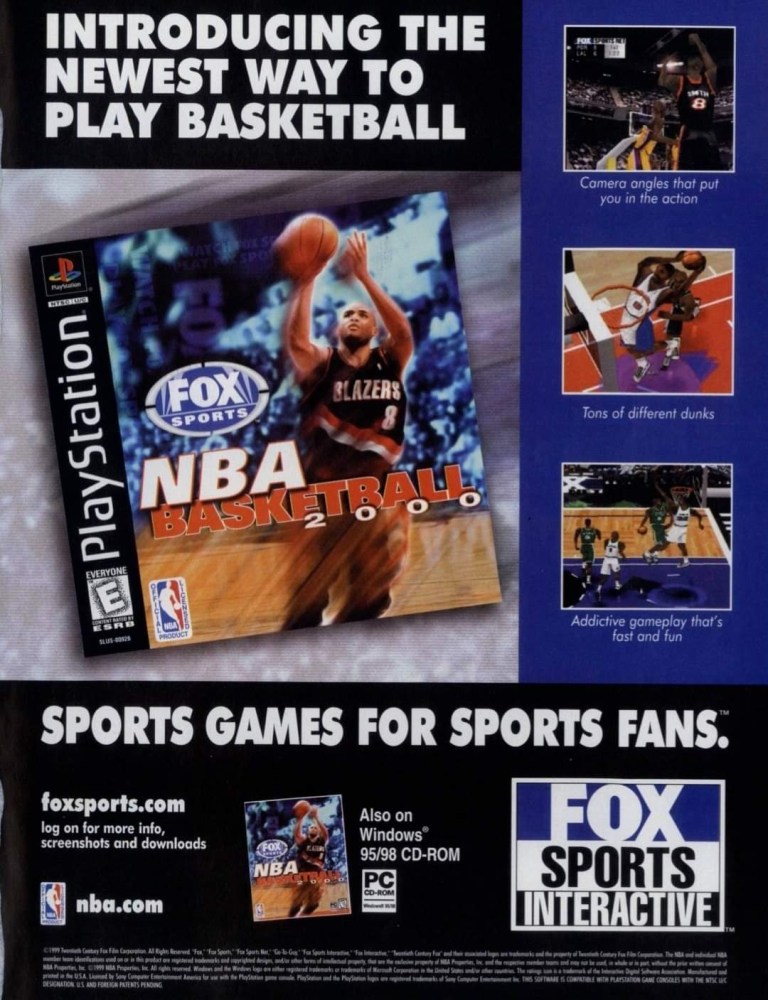
5. NBA Basketball 2000 print ad

There were a lot more NBA video games back in the 1990s.

NBA Basketball 2000 was one of those basketball videos games of the 1990s that was not published by EA Sports nor published by the other established game publishers like Sega, PlayStation and Konami. In fact, the one thing on the ad that caught my attention was Fox Sports Interactive which published some sports videos games during the decade. The print ad also served as a reminder that there were a lot more NBA video games for gamers to choose from during the 1990s.

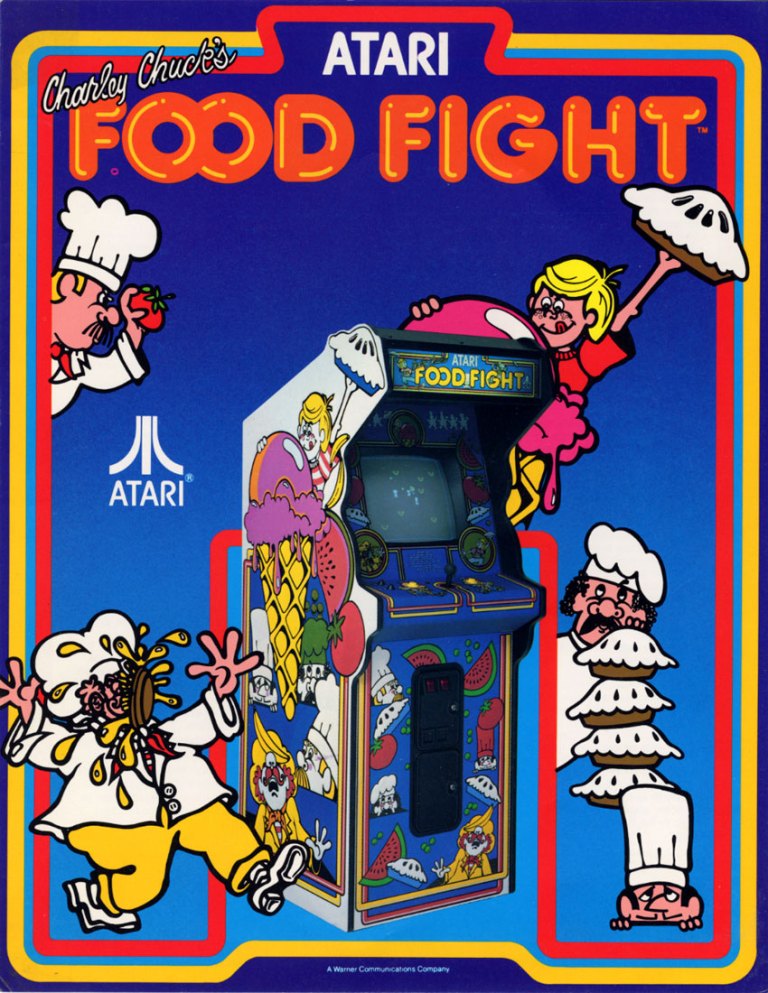
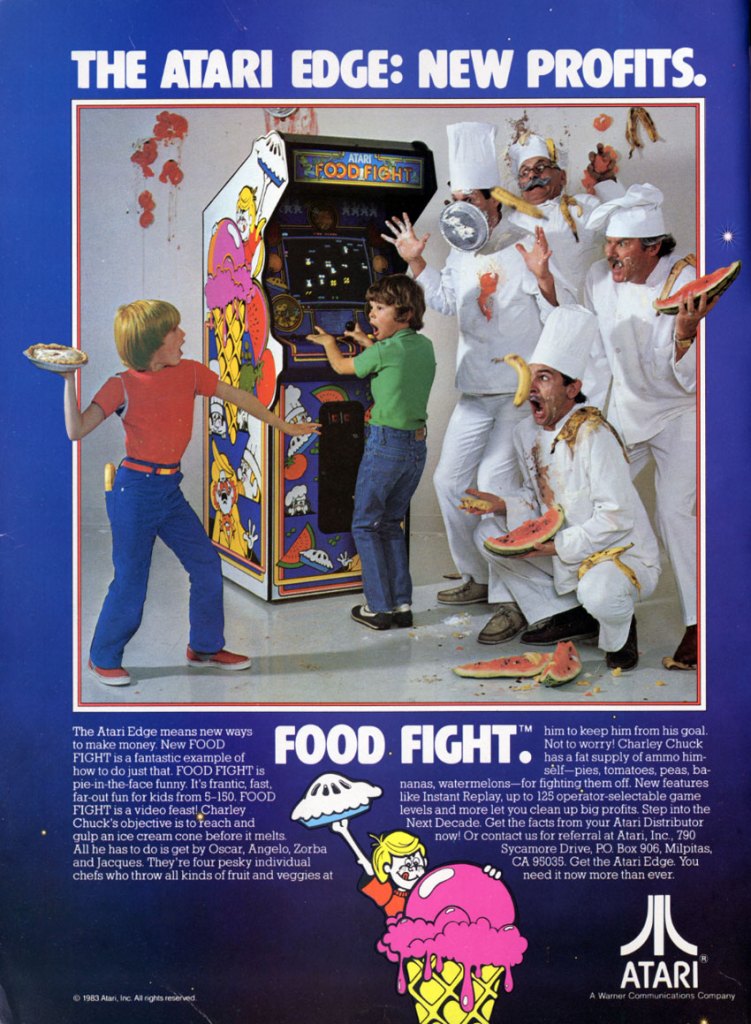
6. Food Fight arcade flyers

Food Fighter arcade flyer with illustrated artworks.
Food Fight arcade flyer with a photographic touch and actors.

I never got to play the 1980s game Food Fight in the arcades nor did I ever had the opportunity to play it on Atari consoles and Xbox 360. Released in 1983 in the arcades by Atari, Food Fight was designed to allow players to control a character moving through a 2D field to consume an ice cream on a cone (placed on the opposite end of the field) before it melts while avoiding the chefs who are out to chase and block the player.

The arcade flyer with illustrated artwork on the characters interacting with the arcade machine is really amusing to look at. Equally amusing is the other arcade flyer that had a photographic approach showing two kids (one playing the arcade machine and the other about to throw a pie) and four chefs. Considering the nice visual concepts Atari came up with for the arcade flyers, Food Fight actually never became a commercial hit selling only a few thousand arcade units.

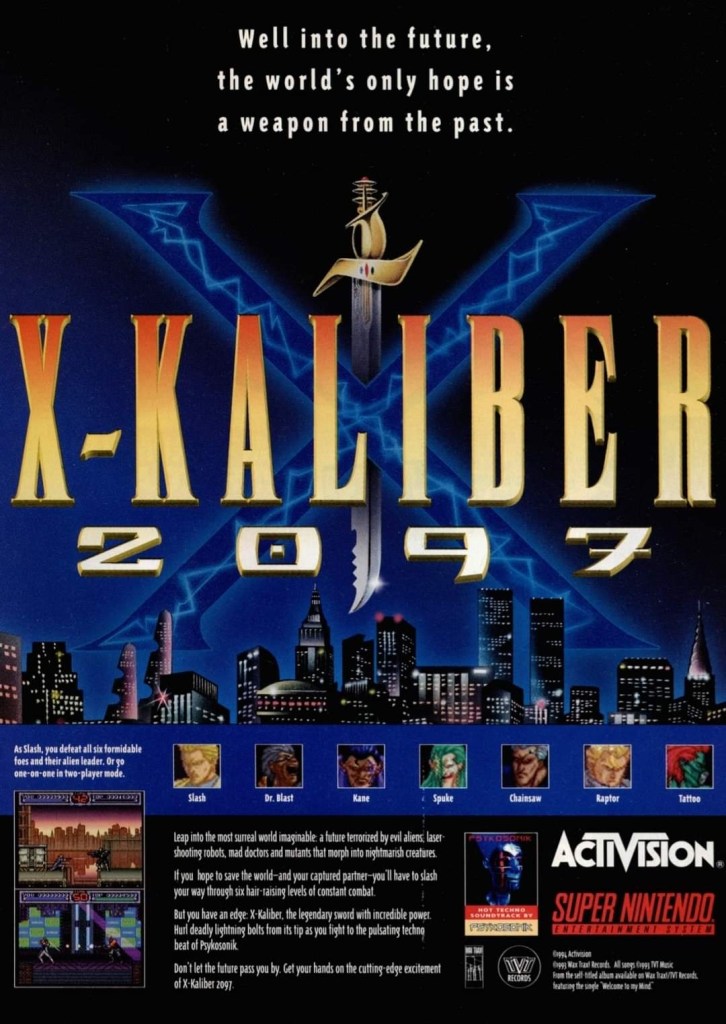
7. X-Kaliber 2097 print ad

This print ad from the 1990s had a nice visual style.

The Super Nintendo Entertainment System (SNES) had plenty of 2D side-scrolling adventure games and among them was X-Kaliber 2097 released by Activision (now a Microsoft-owned company and integral part of Xbox) in America in 1994. The game had a really interesting story concept about a chaotic far future society plagued by overwhelming crime and violence. The print ad showed a mild taste about the game’s concept and gameplay, but it was more effective when it comes to showing the formidable foes that await the playable protagonist Slash. This print appeared in several comic books I read and was eye-catching.

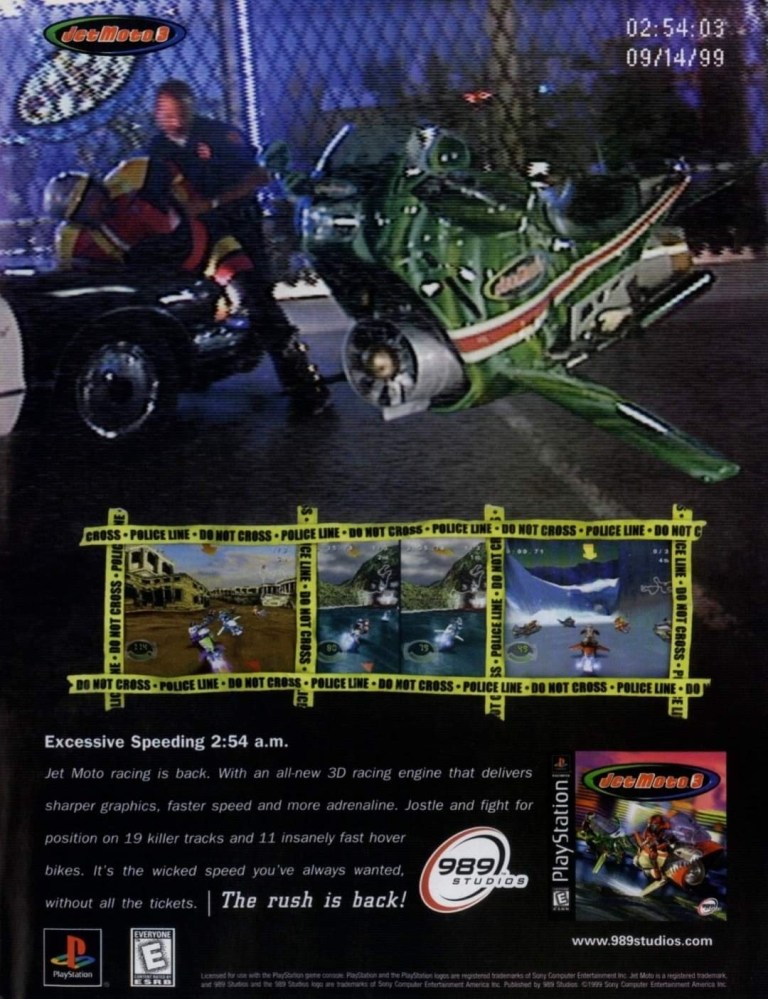
8. Jet Moto 3 print ad

When was the last time the police caught you for over-speeding?

This print ad for Jet Moto 3 had a clever concept of showing a police officer apprehending a jet biker for over-speeding. The visual presentation was done in photo-realistic fashion to make the sci-fi aspect of the video game look real. The ad made me interested enough to do some research of Jet Moto 3 a few months before finally buying it for my PlayStation console.

9. Wipeout 3 print ad

Were you fond of futuristic racing and techno music back in 1999?

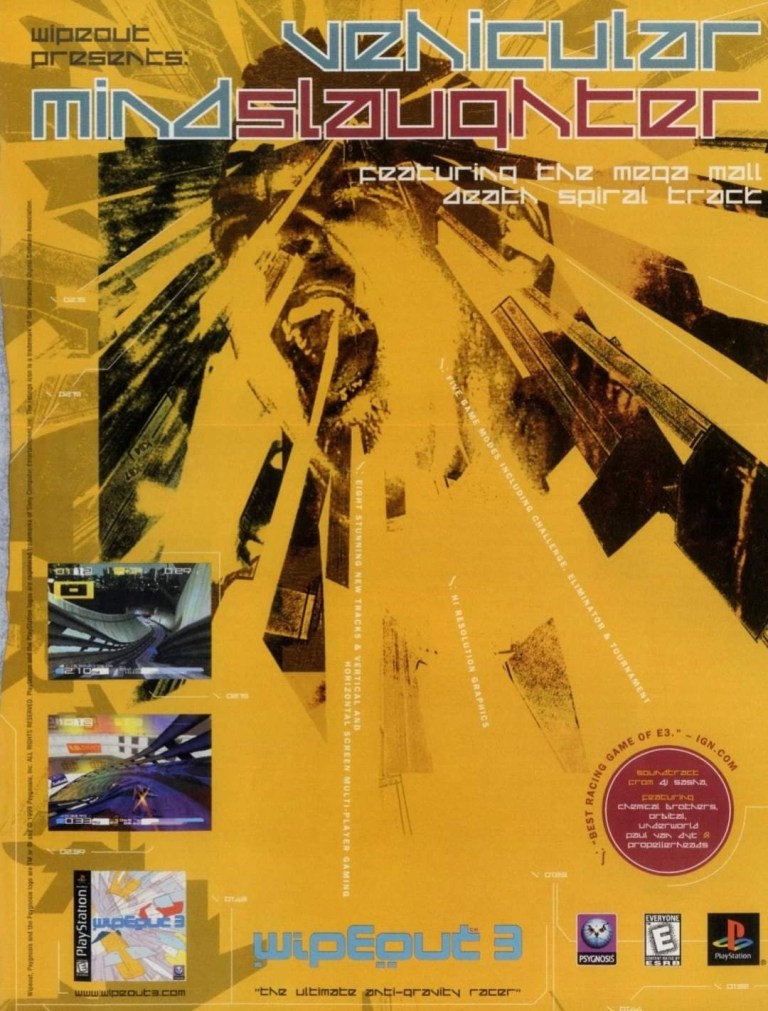
Released in 1999, Wipeout 3 was one of those video games that showcased what the PlayStation (originally launched in Japan in 1994) could do in terms of visual fidelity, special effects and frame rates. The print ad, which had a radical visual concept emphasizing intensity and energy, had style listing down vertically the technical details of the game which required a close look in order to be read. With only two screenshots displayed, the ad makers smartly included the E3 acclaim of “Best Racing Game of E3” as well as the names of artists behind the game soundtrack on the lower-right corner. This print ad was cool and intriguing to look at.

10. Breath of Fire II print ad

This was a good effort to lure American gamers to buy and play Breath of Fire II.

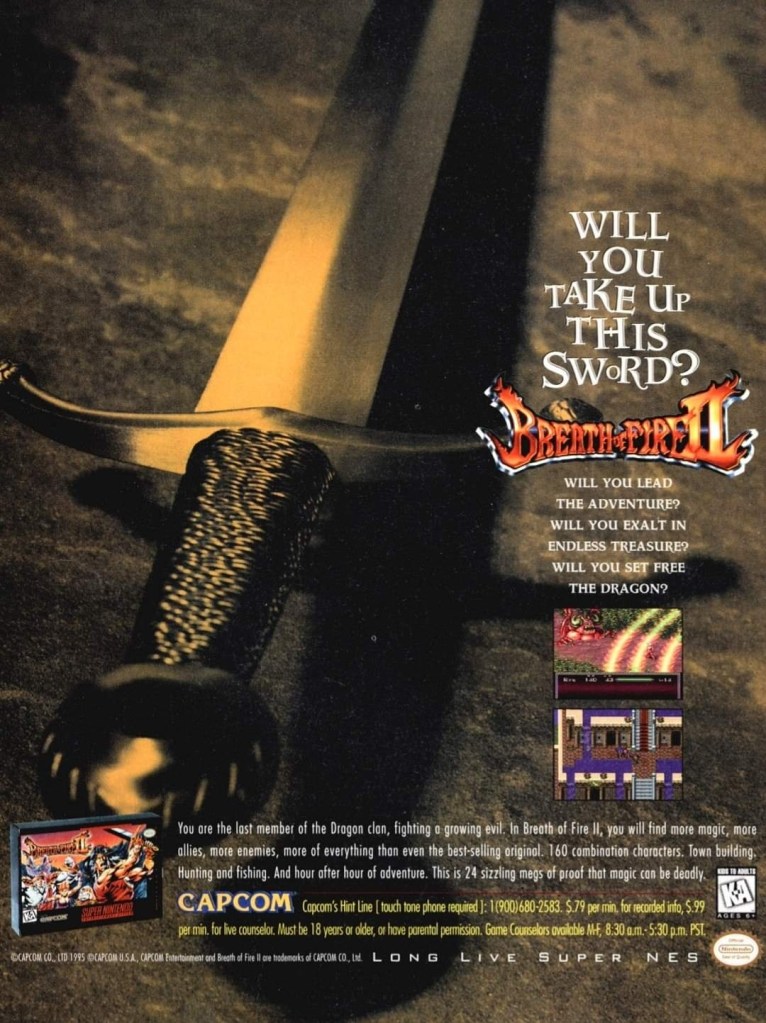
When Breath of Fire II was released on the SNES in America in late 1995, Japanese role-playing games (JRPGs) were not yet wildly popular among American gamers. To grab the attention of gamers, Capcom and the ad makers came up with the eye-catching image of a sword and posted key questions to emphasize the fantasy aspect of Breath of Fire II. While the game received mixed reviews upon its North American release, Nintendo Power listed it as 171st best game in its Top 200 Games chart published in 2006.  

+++++

Thank you for reading. If you find this article engaging, please click the like button below, share this article to others and also please consider making a donation to support my publishing. If you are looking for a copywriter to create content for your special project or business, check out my services and my portfolio. Feel free to contact me with a private message. Also please feel free to visit my Facebook page Author Carlo Carrasco and follow me on Twitter at  @HavenorFantasy as well as on Tumblr at https://carlocarrasco.tumblr.com/ and on Instagram at https://www.instagram.com/authorcarlocarrasco
GMA Network’s fake Filipinos (AI sportscasters) should remind you that AI has no soul

Philippines PC sales of 2022 4th quarter falls down 48.9%

Were you able to buy a brand new laptop or desktop over the past six months? This question I asked because according to a news report by BusinessWorld, personal computer (PC) sales in the Philippines decreased by almost 49% in the 4th quarter of 2022. There is an ongoing downward trend that cannot be ignored.

To put things in perspective, posted below is an excerpt from the BusinessWorld news article. Some parts in boldface…

The personal computer (PC) market in the Philippines had 464,000 units in the fourth quarter of 2022, representing a 48.9% decrease compared to the same period the previous year, according to the International Data Corp. (IDC).

The PC market also declined 18.5% from the previous quarter.

The market declined across notebooks and desktops,” IDC Philippines Associate Market Analyst Jeeno Velasco said in a statement on Monday.

Household consumption was largely fulfilled and refocused on other spending activities geared toward the holiday season.

He also noted that macroeconomic pressures further drove inventory rationalization among vendors.

Top five PC companies in the Philippines during the quarter were Acer Group, Lenovo, HP Inc, ASUS, and Dell Technologies.

The commercial space has not bounced back, as reported by the market intelligence company, due to weakened government and enterprise sectors which declined 44.7% and 25.2% from the previous quarter, respectively.

It noted that the national government has not announced any major plans involving information technology spending, while the enterprise segment is more reluctant to procure more units due to its negative financial outlook.

“Demand for desktops and the influx of company workers required to report back to work should have increased shipments for the corporate sector, but this didn’t pan out,” Mr. Velasco said.

Let me end this piece by asking you readers: What is your reaction to this recent development? Do you think economic factors like high inflation, rising interest rates and a potential recession overseas will keep the local PC market down for the rest of the year?

You may answer in the comments below. If you prefer to answer privately, you may do so by sending me a direct message online.

+++++

Thank you for reading. If you find this article engaging, please click the like button below, share this article to others and also please consider making a donation to support my publishing. If you are looking for a copywriter to create content for your special project or business, check out my services and my portfolio. Feel free to contact me with a private message. Also please feel free to visit my Facebook page Author Carlo Carrasco and follow me on Twitter at  @HavenorFantasy as well as on Tumblr at https://carlocarrasco.tumblr.com/ and on Instagram at https://www.instagram.com/authorcarlocarrasco
A Look Back at Harbinger #3 (1992)

Disclaimer: This is my original work with details sourced from reading the comic book and doing personal research. Anyone who wants to use this article, in part or in whole, needs to secure first my permission and agree to cite me as the source and author. Let it be known that any unauthorized use of this article will constrain the author to pursue the remedies under R.A. No. 8293, the Revised Penal Code, and/or all applicable legal actions under the laws of the Philippines.

Welcome back superhero enthusiasts, 1990s culture enthusiasts and comic book collectors! Today we go back to the early 1990s and explore a part of the Valiant Comics shared universe through the Harbinger monthly series.

In my previous retro review, Peter/Sting, Kris, Faith/Zephyr, Charlene/Flamingo and John/Torque not only found a place to stay in thanks to a really generous doctor, they went ahead infiltrating the top secret facility of the Harbinger foundation which also brought them face-to-face with the leader. At this stage, Sting and his team have established their purpose not just for survival but to achieve something they believe is right.

With those details laid down, here is a look back at Harbinger #3, published in 1992 by Valiant Comics with a story written by Jim Shooter and drawn by David Lapham.

The cover.

Early story

The story begins at 9:20 AM of July 6, 1991 inside the fine summer home of Dr. Heyward. As Sting tells his teammates that they have to move to catch a flight, Faith (wearing her superhero costume) flies through to find Kris and Torque. She finds the two of them seated next together with Kris having her two hands on Torque.

Meanwhile, Flamingo fixes her face as Sting talks to her. She rejects his declaration that she is a part of their team and reveals that Torque does not care about her. Flamingo considers herself as just another hosebag. Sting then tries to lift her up by telling her that she has to take care of herself and that she is part of their team.

Sting, Faith, Flamingo, Kris and Torque then leave for the airport in a brand new vehicle they just bought (having used the money they stole from Harbinger). Their vehicle flies off to the airport with Sting on the driver’s seat…

Quality

Sting, his teammates and newcomer Ax in the heat of action.

Without spoiling the plot, I can say that the story in this comic book got even wilder than I anticipated. The high intensity of wild turnout of events in issue #2 do not even come close to what was told right here. At the same time, this particular story clearly showed this comic book series’ own place within the literary universe of Valiant Comics and anyone who read XO-Manowar comics of this particular era will instantly recognize the recurring creatures (opposition elements) from outer space.

As expected, the character development of the main characters progressed smoothly revealing some amusing character moments that I found interesting and other times amusing. As Sting continues to act with a sense of leadership as well as a false sense of maturity, you will get to see more of Kris providing him analytical and personal support.

The dialogue in this comic book was written to be more dynamic and this is highlighted in the scene in which Sting and his teammates discuss what to do with their new team objective, and what to do with the computer hacker Ax who has shown Harbinger potential. That being said, Jim Shooter carefully crafted the dialogue to reflect how American teenagers in the late 1980s and early 1990s expressed themselves.

When it comes to superhero spectacle, there is a lot to enjoy here. Action scenes and the use of special abilities or super powers were executed at a moderate pace yet they were intense to look at. Each of the main characters had his/her own share of the spotlight even as the spectacle moved.

Conclusion

Meet Ax, the guy who specializes on cracking and hacking.

Harbinger #3 (1992) is a very engaging story to read which was balanced with a good amount of spectacle, nice character moments and the wildest turn of events so far in this particular comic book series. On face value, this comic book’s core concept (which involves a lot of science fiction elements) seemed over-the-top but Jim Shooter and David Lapham succeeded in telling a story that is believable and at the same time fun. It is also within this comic book that readers will get to see more of the Valiant Comics universe elements without the need of a crossover or a cameo appearance of an established Valiant hero. This is definitely the tale of Sting and his team that was simply taken into a much higher flight of fantasy. That being said, I am looking forward to the next issue.

Overall, Harbinger #3 (1992) is highly recommended!

+++++

Thank you for reading. If you find this article engaging, please click the like button below and also please consider sharing this article to others. If you are looking for a copywriter to create content for your special project or business, check out my services and my portfolio. Feel free to contact me with a private message. Also please feel free to visit my Facebook page Author Carlo Carrasco and follow me on Twitter at  @HavenorFantasy as well as on Tumblr at https://carlocarrasco.tumblr.com/ and on Instagram at https://www.instagram.com/authorcarlocarrasco/