Retro Gaming Ads Blast – Part 28

Welcome back readers, fellow geeks and electronic gaming fans!

In this edition of the Retro Gaming Ads Blast (RGAB) series, we will take a look at another batch of retro gaming print ads – including arcade flyers – from the 1980s and 1990s.

For the newcomers reading this, Retro Gaming Ads Blast (RGAB) looks back at the many print ads of games (console, arcade, computer and handheld) that were published in comic books, magazines, flyers, posters and newspapers long before smartphones, social media, the worldwide web and streaming became popular. To put things in perspective, people back in the 1980s and 1990s were more trusting of print media for information and images about electronic games and related products.

With those details laid down, here is the newest batch of retro gaming print ads for you to see and enjoy…

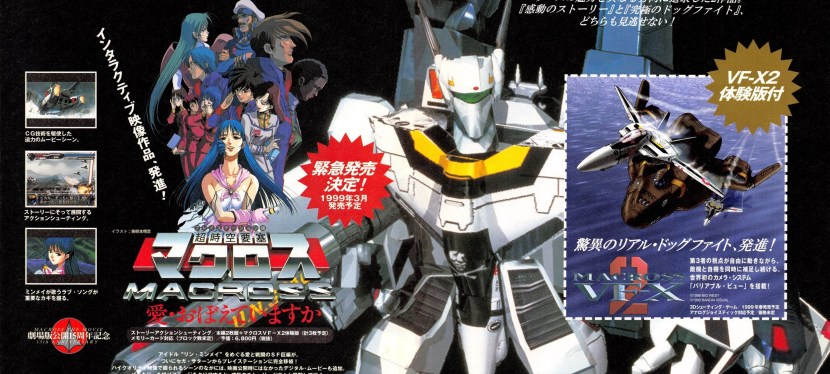
1. Japanese Macross video games print ads
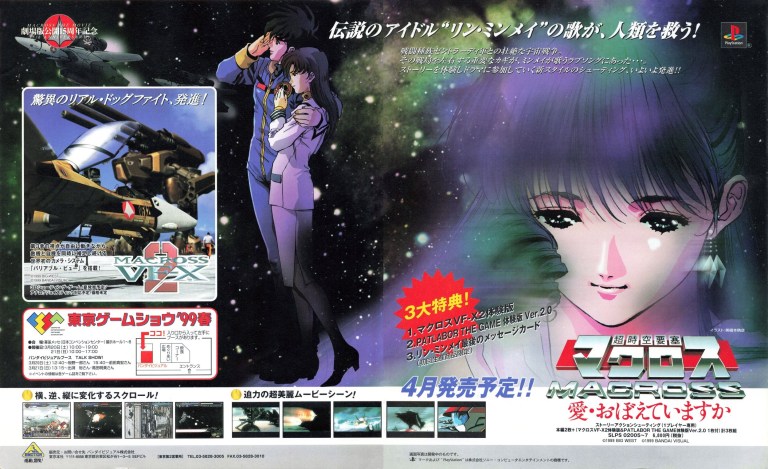
This 2-page ad had Minmay, Misa and Hikaru.
Computer-generated image of the Skull Leader Battroid was used here.

Looking at the history of Macross video games released only in Japan, there were these notable games that catered to the fans with different tastes during the period of 1997 to 1999. The two Japanese print ads here promoted the PlayStation version of The Super Dimension Fortress Macross: Do You Remember Love? (read my retro review by clicking here) and Macross: VF-X2 (only on PlayStation). 1997 marked the 15th anniversary of the entire Macross franchise and game publisher Bandai Visual kept the excitement for fans on high gear by aggressively promoting the two advertised games for their respective releases in 1999. These two print ads still resonate with long-time fans as each were clearly made to emphasize the games (with details, screenshots and original artworks) while using the right images of the Macross franchise for relevance.

2. Star Raiders print ad
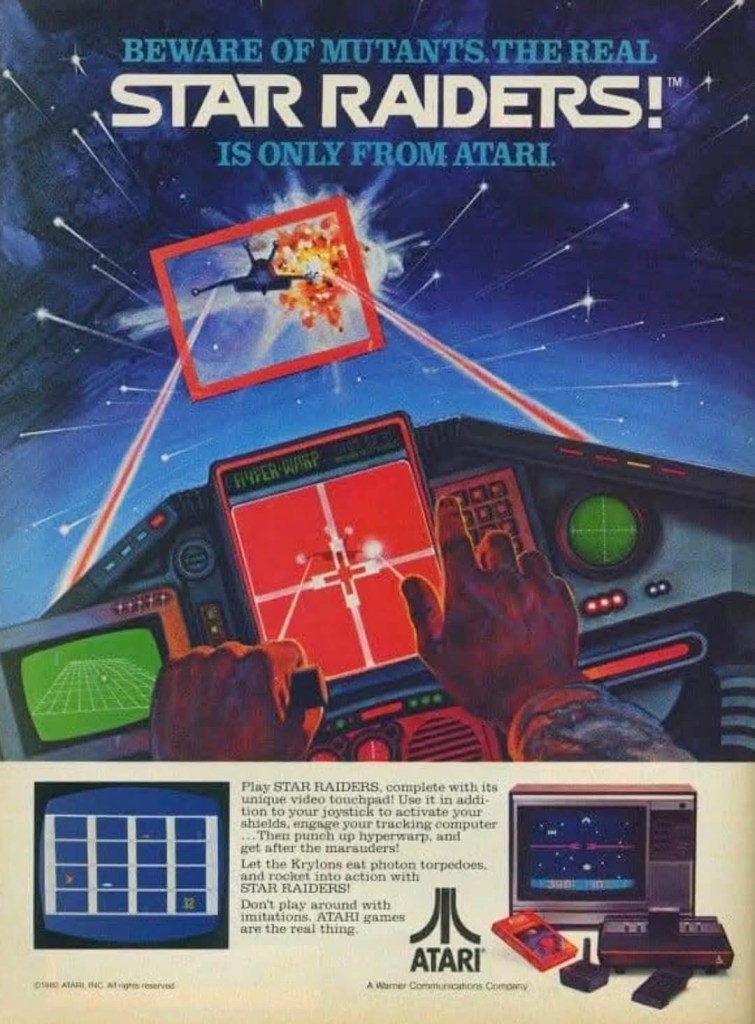
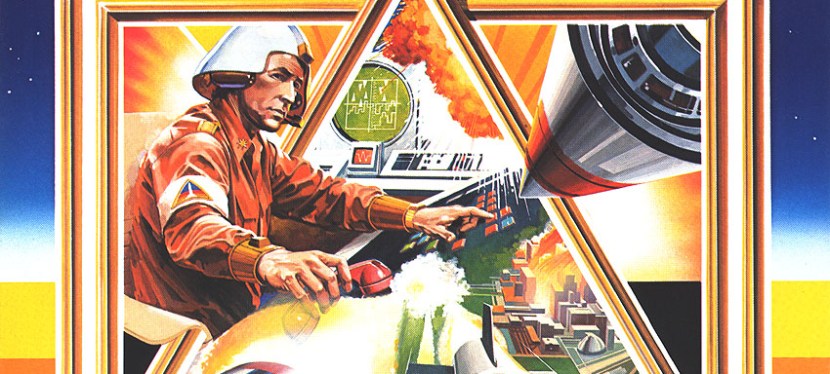
This Star Raiders print ad made me interested enough to play the game on Atari 2600.

I remember the old days of play Star Raiders on the Atari 2600 back in the early 1980s. Strangely enough, I don’t remember seeing this old print ad. Regardless, I really like the way the ad makers used hand-drawn art work to dominate the space while leaving enough space for text description, a screenshot and the picture of the Atari console with the TV set. In my view, this old ad is both amusing and attention-grabbing.

3. The Empire Strikes Back arcade flyer
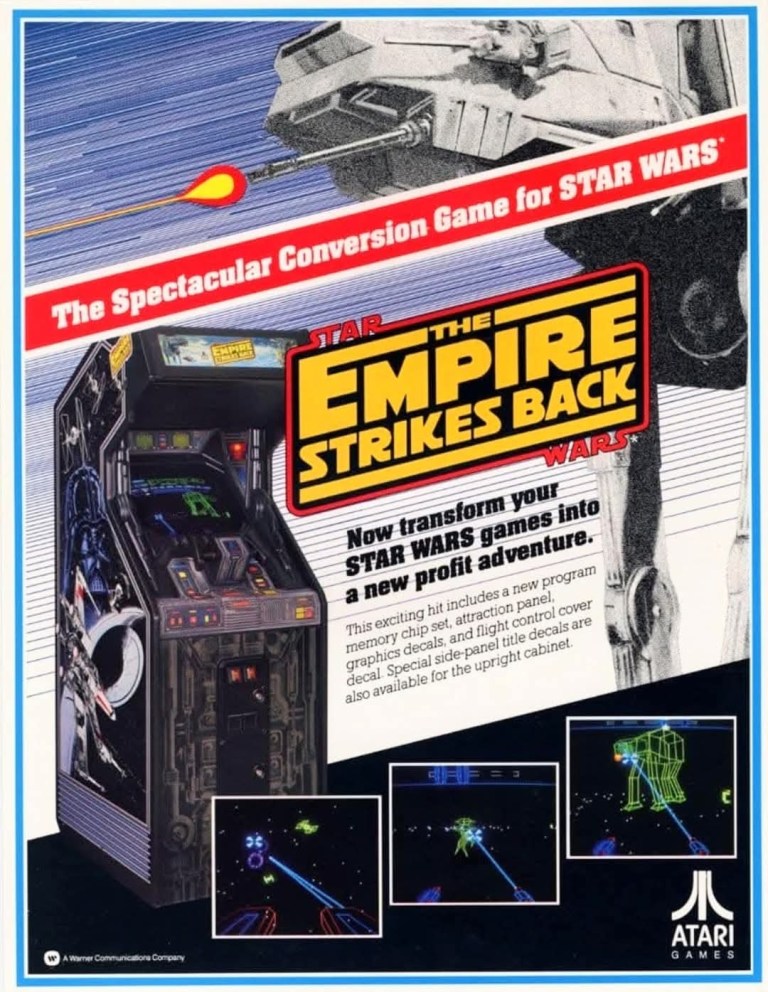
This is still a great looking arcade flyer.

Here is a Star Wars game I never played but managed to play it on a home computer. Released by Atari in 1985, The Empire Strikes Back (full title: Star Wars: The Empire Strikes Back) arcade game was the follow-up to the very popular Star Wars arcade game. Like its predecessor, it used vector graphics and certain sounds from the 1980 film for immersion. This arcade flyer is well designed showing three selected screenshots, a picture of the arcade cabinet and a portion of the AT-AT walker from the movie. The flyer truly showed gamers and arcade operators what they would get by selecting The Empire Strikes Back.  

4. Steve Meretzky’s Spellcasting 301: Spring Break print ad
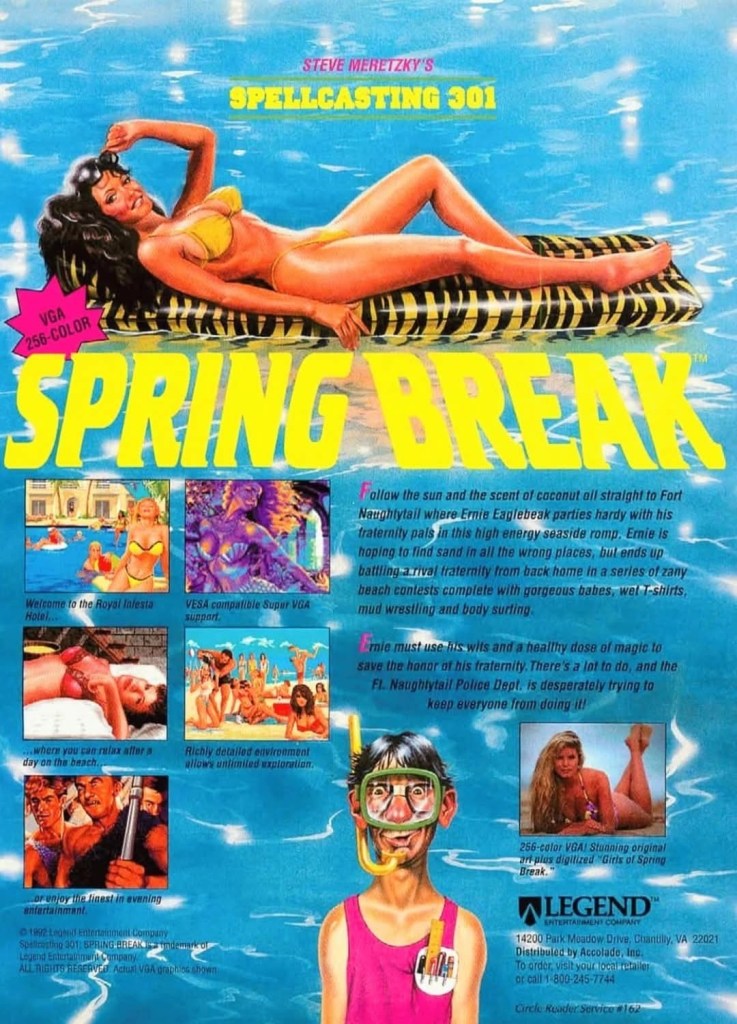
Clearly the promoted game is for adult players only.

In the realm of computer gaming, there were certain games that catered to the more mature players. One example is Steve Meretzky’s Spellcasting 301: Spring Break which was released on for personal computers running on DOS (Disk Operating System) in 1992. This print ad clearly shows the adulterated nature of the game emphasizing sexy women with a paradise setting. This is the kind of print ad that you only in computer gaming magazines which had predominantly adult readers.

5. Pitfall! print ad
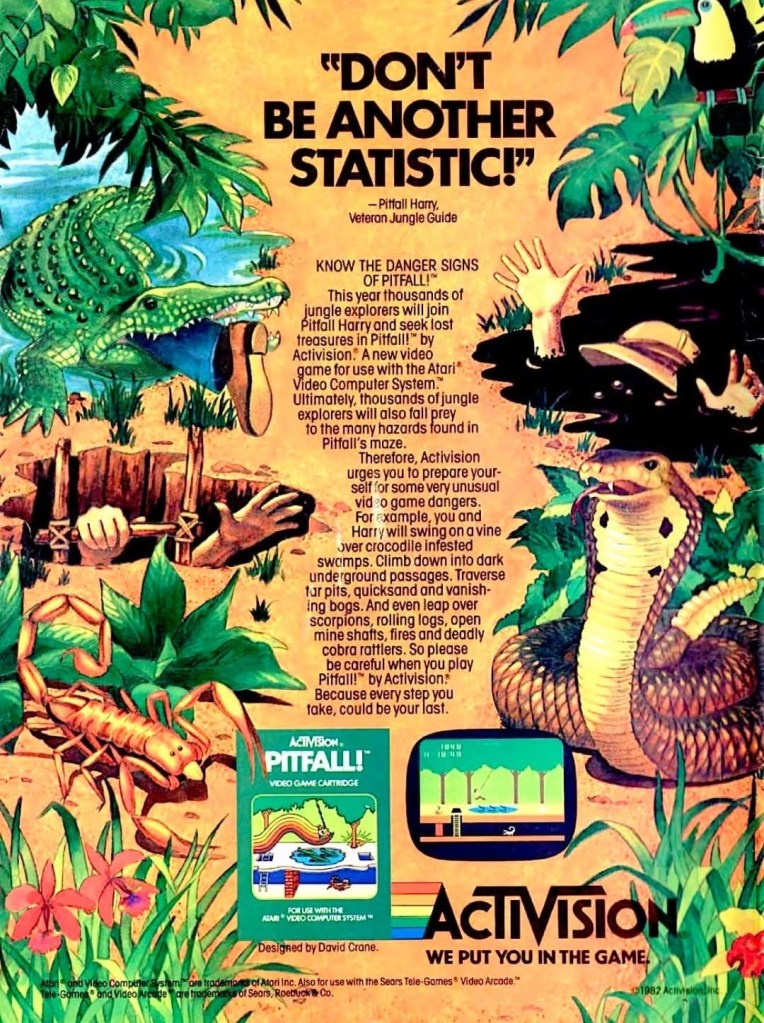
Still a great looking print ad.

Back in 1982, 2D adventuring on the Atari 2600 reached new heights when Pitfall! was released. The game garnered wide praise for its gameplay and graphics, and because it was so enjoyable, it sold millions of copies and its success spread across other platforms. A key factor to its commercial success and strong identity with the Atari 2600 was this colorful print ad. The ad makers daringly used original artwork to emphasize the jungle, wilderness and adventure concept while leaving some space left to show a screenshot and the Atari 2600 game cover. Pitfall! is a video game classic.

6. Mario Bros. print ad
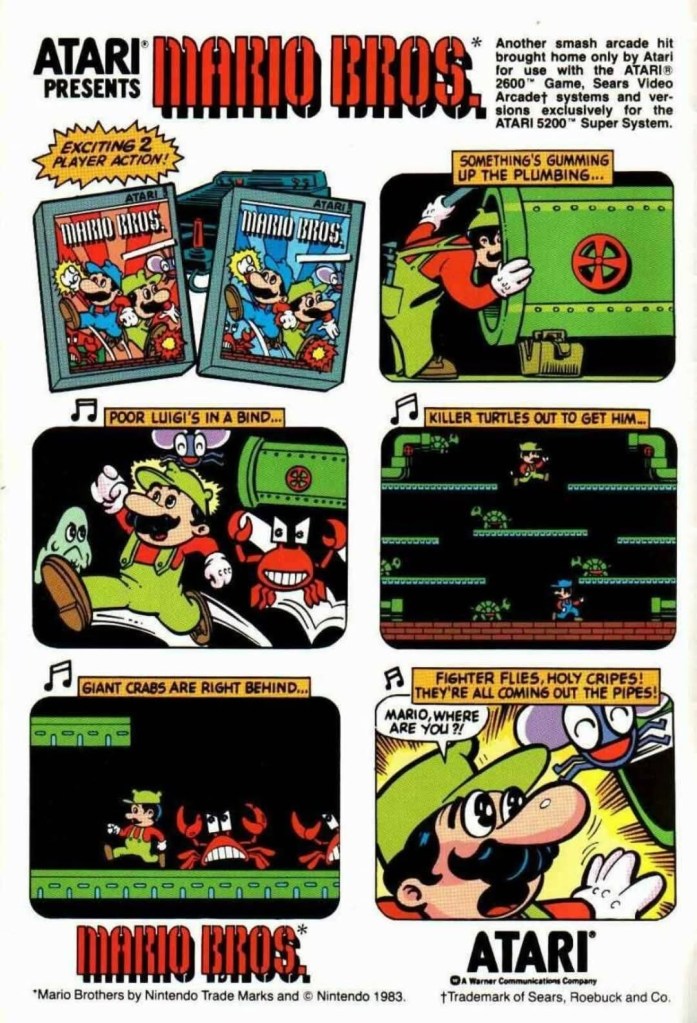
I saw this comic-style print ad while reading a comic book.

A few years before Nintendo skyrocketed with the massive success of Super Mario Bros., there was Mario Bros. on the Atari 2600 and Atari 5200. Published by Atari on their consoles, Mario Bros. was already a hit in the arcades. To capitalize on the popularity of the game, Atari came up with this comic-style print ad to capture people’s attention with the hope that the Atari 2600 and Atari 5200 ports will sell a lot. I first saw this ad while reading a comic book and it remains entertaining to see.

7. Ghoul Patrol print ad
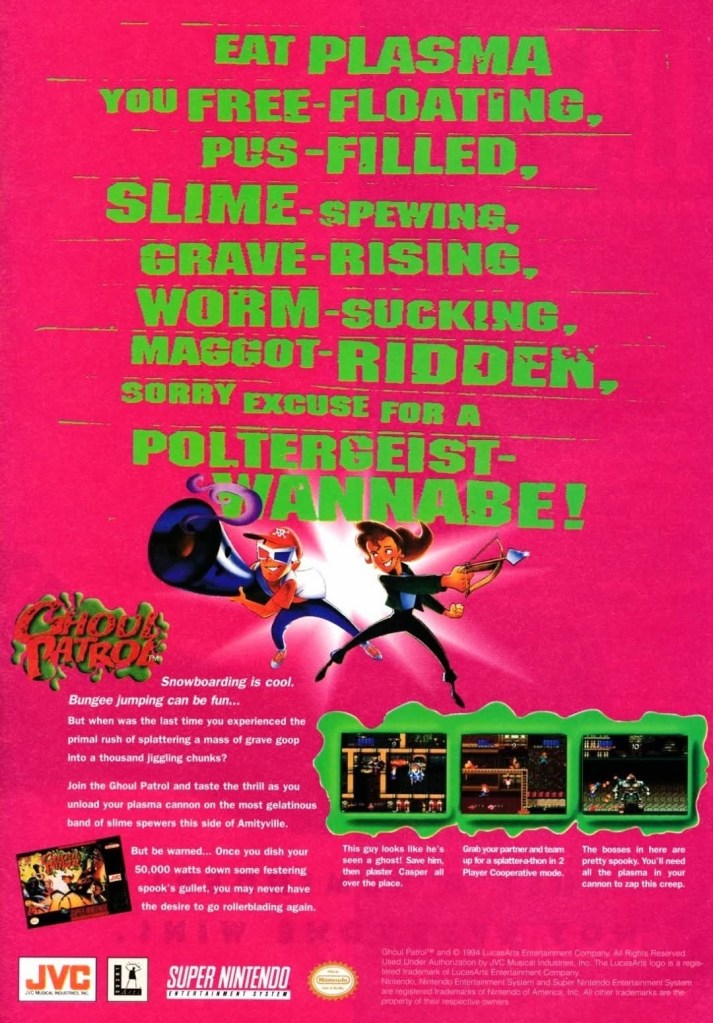
Too bad the screenshots, the game box cover and white descriptive text were too small to look at.

Released in 1994 on the Super Nintendo Entertainment System (SNES), Ghoul Patrol is the accidental sequel to Zombies Ate My Neighbors. This was because the game did not start as a sequel but rather as an unrelated project that used the same gameplay engine of its predecessor. Since Zombies Ate My Neighbors already had a dedicated fanbase, a decision to turn the game into a sequel followed. Ghoul Patrol’s print ad took a different creative approach on its presentation by trying to look cool and catchy with a dominating pink background and slightly adulterated descriptions in green leaving little space left for screenshots and the white descriptive text. The print ad of Zombies Ate My Neighbors remains more engaging and more eye-catching than this one.

8. Silpheed print ad
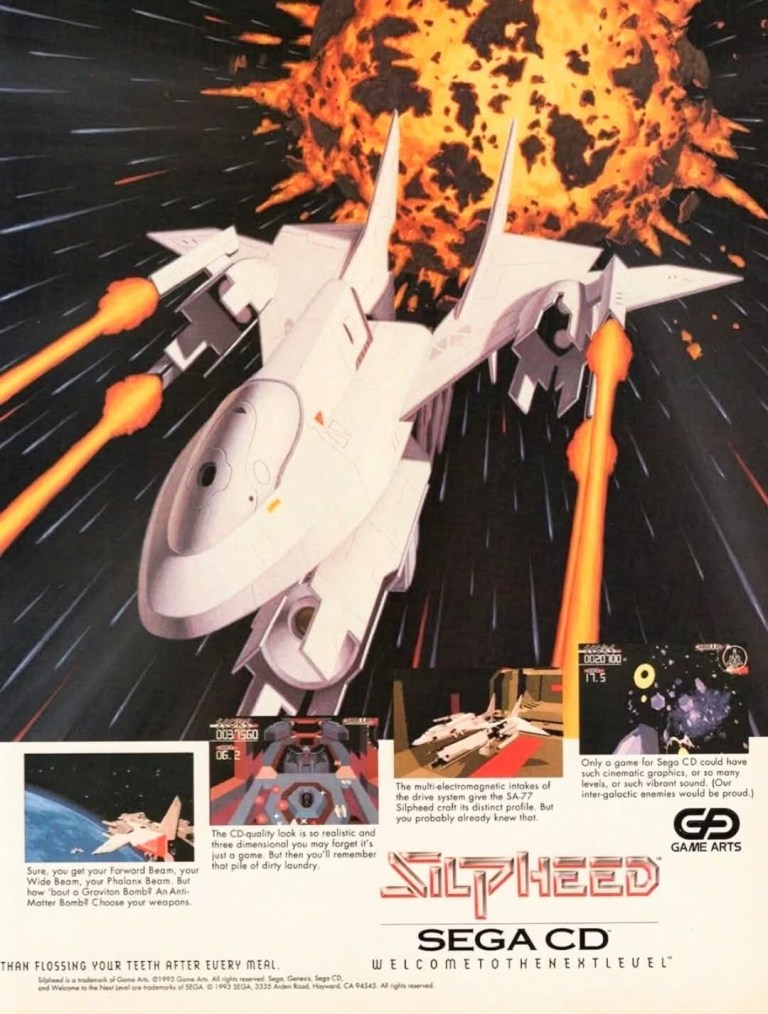
This ad caught my attention and even made me interested on the Sega CD.

Released in 1993, Silpheed on Sega CD was a remake of the original game of 1986. Like its predecessor, the Sega CD had 3D effects but used pre-rendered computer animation for a background that actually was full motion video. The print ad of this game had this fantastic looking computer-generated artwork and displayed four screenshots that looked really exciting back in 1993. If you look closely at the captions, the ad emphasized the CD-quality look and the cinematic graphics the game had. This old ad has aged well.  

+++++

Thank you for reading. If you find this article engaging, please click the like button below, share this article to others and also please consider making a donation to support my publishing. If you are looking for a copywriter to create content for your special project or business, check out my services and my portfolio. Feel free to contact me with a private message. Also please feel free to visit my Facebook page Author Carlo Carrasco and follow me on Twitter at  @HavenorFantasy as well as on Tumblr at https://carlocarrasco.tumblr.com/ and on Instagram at https://www.instagram.com/authorcarlocarrasco
Playing the remastered Suikoden on my Xbox Series X is a lot of fun

Welcome back Xbox fans, geeks, RPG enthusiasts and other gamers!

I have been playing the remastered version of the mid-1990s Japanese role-playing game (JRPG) Suikoden (Japanese title: Genso Suikoden) on my Xbox Series X as I now own the digital copy of Suikoden I & II HD Remaster: Gate Rune and Dunan Unification Wars.

For the newcomers reading this, Suikoden I & II HD Remaster: Gate Rune and Dunan Unification Wars was released on March 6 and it contains Suikoden and Suikoden II (Japanese title: Genso Suikoden II). This is a cause for a celebration not only for fans of the Suikoden game franchise (created by the late Yoshitaka Murayama during his time at Konami) and JRPG enthusiasts but also for people who love retro gaming.

With Suikoden I & II HD Remaster: Gate Rune and Dunan Unification Wars now available on multiple platforms, gamers – both the veterans as well as the younger players – now have the golden opportunities to play the first two Suikoden games.

Suikoden on Xbox

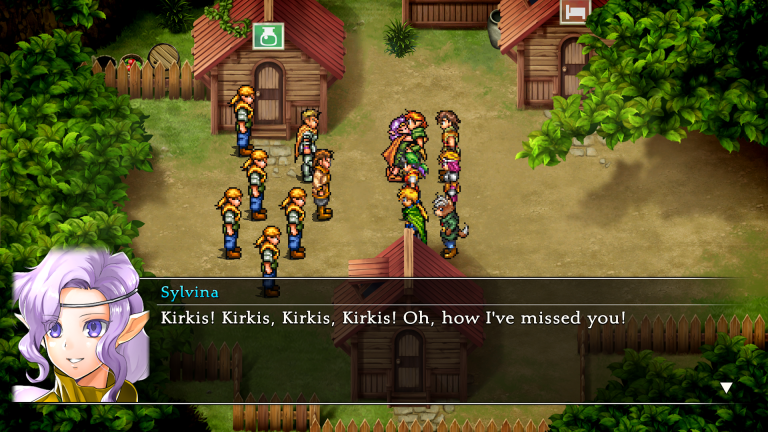
A lot of characters got their share of the spotlight in short scenes like this in Suikoden.

As mentioned earlier, Suikoden is my most played game on my Xbox Series X since March 6. The release of Suikoden games on Xbox platforms is highly significant given the fact that the franchise has often been identified with PlayStation for so long. What many gamers do not know is the fact that Suikoden was also released on the Sega Saturn and Windows PC in Japan in the late-1990s.

As history showed, most Suikoden RPGs released by Konami from 1995 to 2006 mainly on the original PlayStation console (the first two games) and PlayStation 2 (the third, fourth and fifth games). Spin-off games were released on PlayStation, PS2, Game Boy Advance and Nintendo DS. That being said, there were absolutely no Suikoden games on the original Xbox console and Xbox 360.

The release of Suikoden I & II HD Remaster: Gate Rune and Dunan Unification Wars on Xbox Series X, Xbox Series S and the aging Xbox One is indeed a game-changer. There are lots of Xbox gamers who are fond of Japanese RPGs and there are also Suikoden fans who happen to own Xbox consoles. The Xbox ecosystem itself now has lots of role-playing games (RPGs) released in this current console generation and there are lots of Xbox players who love RPGs.  As such, Konami made the right move bringing the Suikoden franchise to Xbox consoles.

Playing the first Suikoden again but in shinier form

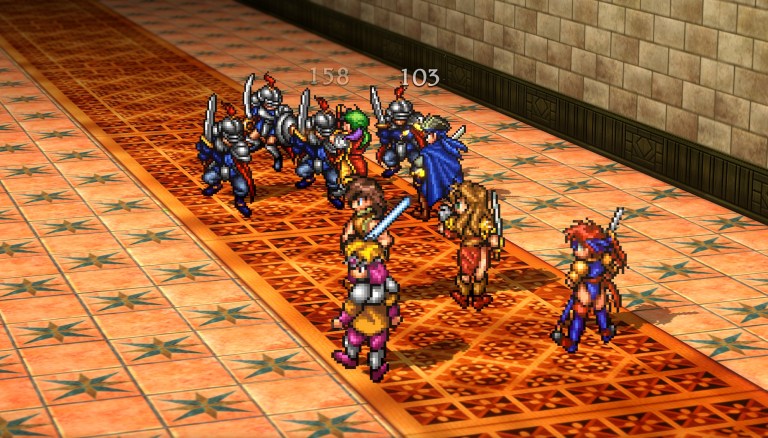
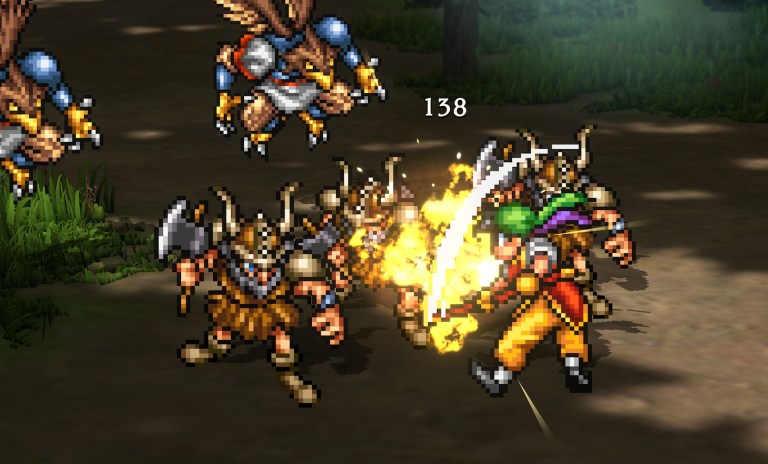
The group battle in the game. The remastered work includes presentation in high-definition and a variety of visual enhancements. The frame rate is also stable.

Since the launch of Suikoden I & II HD Remaster: Gate Rune and Dunan Unification Wars, I have been playing the first Suikoden game a lot on my Xbox Series X. It has been a fun-filled nostalgic gaming experience on my part and I can also say that Konami – for the most part – did a good job remastering the game with high-definition visuals in mind.

Visually, this is the best the first Suikoden RPG ever looked! The in-game character sprites and creatures/monsters sprites from before have been preserved and because everything is in high-definition, the said sprites look larger and you can see the detailed pixels within them. When it comes to the visual effects to emphasize in-game magic and other spectacles, the new effects implemented resulted in a lot of pleasing eye candy.

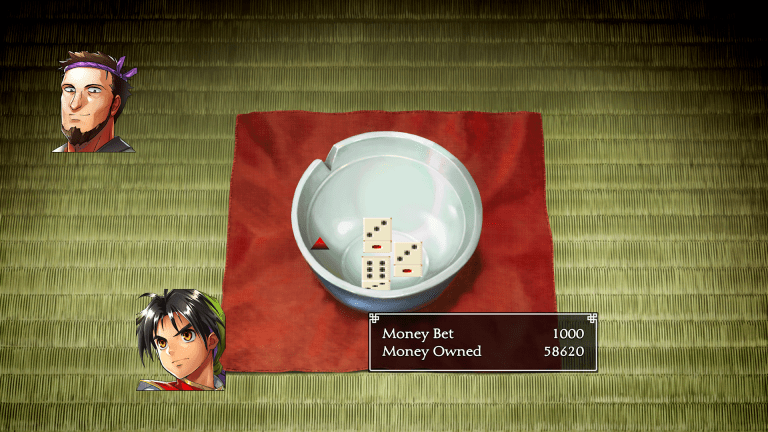
Mini-games like this one added fun and variety to the game. If you keep winning in this one, you can make a lot of in-game money.
The occasional close-ups during group battles like this added to the spectacle of playing. The enhanced visuals also made this look better.

When it comes to the character portraits, they have been redrawn from scratch by Junko Kawano and each artwork per character looked clearer and more detailed than before. Some long-time Suikoden fans might find the new character portraits looking too clean and might make them miss the older artworks.

Suikoden’s story is about the Scarlet Moon Empire, political developments, corruption that goes beyond politics, and how they all affect the people. The playable protagonist is the son of the imperial general Teo McDohl, and through him you will witness political intrigue and unexpected twists that will compel you to stick closer with your family friends to escape the empire and form a new army of rebels by recruiting members across the land.

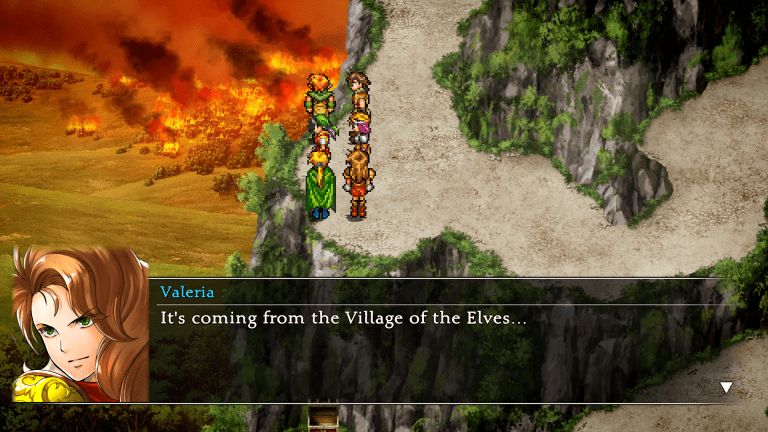
Even in subtle forms, the enhanced visuals made dramatic scenes like this look more lively.

While the storytelling is satisfactory at best, there is a wide variety of characters who collectively added colors to the narrative. This is due to the many types of personalities that the important characters have. Take for example Matthiu who is the calm and calculating strategist, Viktor is the brave and brash rebel, and Gremio is very dedicated to protecting the protagonist no matter what happens. Along the way, character development is truly limited which is not surprising because a lot of characters shared the spotlight.

In terms of game design and gameplay features, Suikoden has aged well. The battle systems – solo battle, group battle, army battle – are still functional, efficient and fun to do. While some grinding (leveling-up) is needed, it is not stressful to do because the auto-battle options make the group battles flow smoothly, especially when your characters (up to six) are collectively strong enough to overwhelm the enemies.

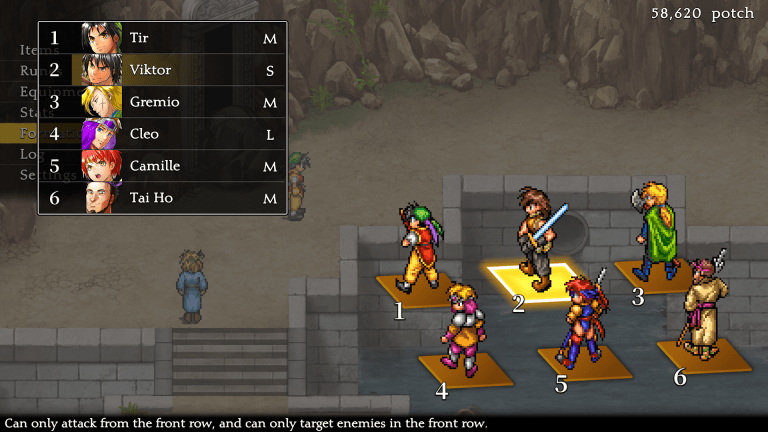
This is the formation of the members of your party. Those with short-range attacks should be placed on the front row but they need strong defense values to keep on fighting. Characters with long-range attacks are ideally placed in the back row.
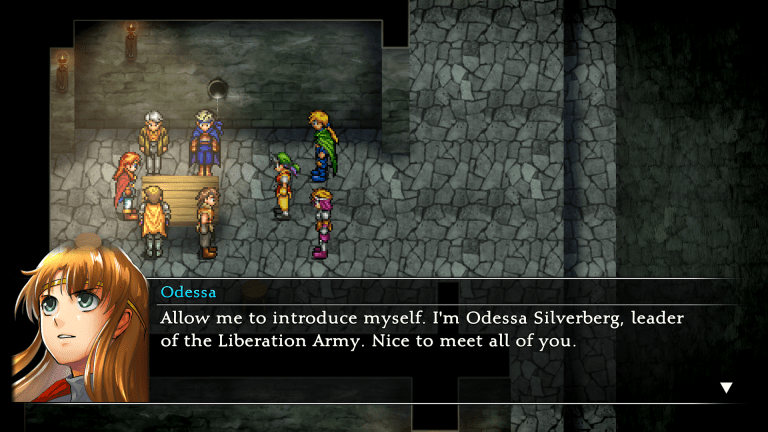
Meet Odessa.

The gameplay is just as fun to do as before. I really like the fact that up to six characters can be part of my party/group as I went adventuring and focused on story scenes. The solo and army battles are understandably few but the payoff (in return to the build-up leading to them) was worth it. I should state that the unite attacks (limited to specific characters who are present in the party) are fun to watch and the creators’ approach on presenting the battle animations and spectacle are great to see.

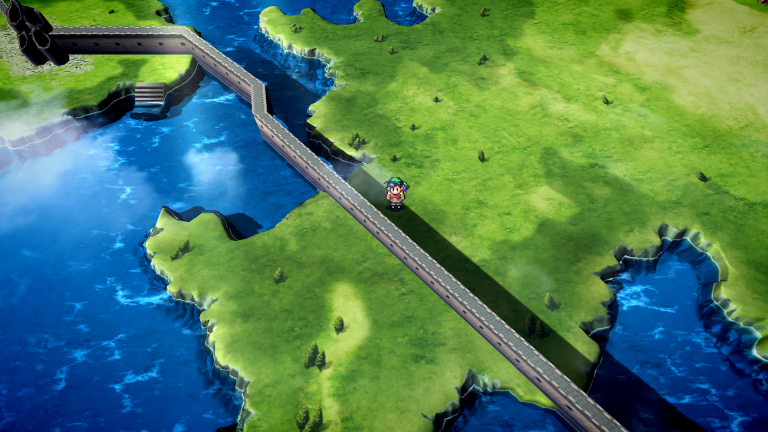
A great, long border wall in the game.

While the gameplay is clearly fun, Konami’s remaster team did not fix one old problem the game had since the start – limited spacing of items per character. Each character has his/her/its own pieces of clothing to wear, specifically for the body, head and two accessories. The game counts those clothing items as part of the overall item spacing per character. Once you have the four items for a character to wear, the remaining spaces for carrying other items (examples: medicine, ore, anti-toxin) become severely limited for the character.

Along the way, there is the constant need for you to purchase stronger pieces of clothing to increase the defense value of the newest character who joined your army. That being said, you must earn a lot of money, take time to out purchase items, and equip them on new characters while dealing with limited storage per character. The item management problem is the one thing that prevented the gameplay from achieving perfection.

My long-time experience with the Suikoden franchise

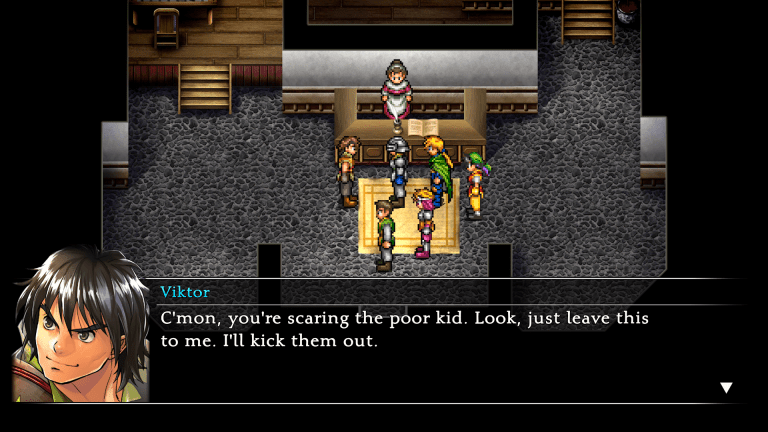
Viktor is the brash and brave fighter who becomes part of the Liberation Army. He is an important supporting character which you will easily realize.

In my personal gaming history, I played and finished the original game on PlayStation way back in 1996. While I really enjoyed the game and its unique gameplay features, I never replayed it as my taste on PlayStation gaming kept changing in 1997. When Wild ARMs and Final Fantasy VII landed on PlayStation, I forgot about Suikoden until its sequel was released in English in 1999.

Fortunately, Suikoden II was so much bigger and better than its predecessor and it remains the most defining game of the entire Suikoden franchise (read my retro review by clicking here). That being said, I will start playing the remastered Suikoden II on my Xbox Series X soon.

Having played the remastered first game on my Xbox console, I can say that it was a fun-filled trip on my end. At the same time, I remembered scenes and several small character moments in between that I have forgotten long ago. Although a lot of characters were presented, following the narrative was still easy to do since it was light compared to what Suikoden II told.

Conclusion

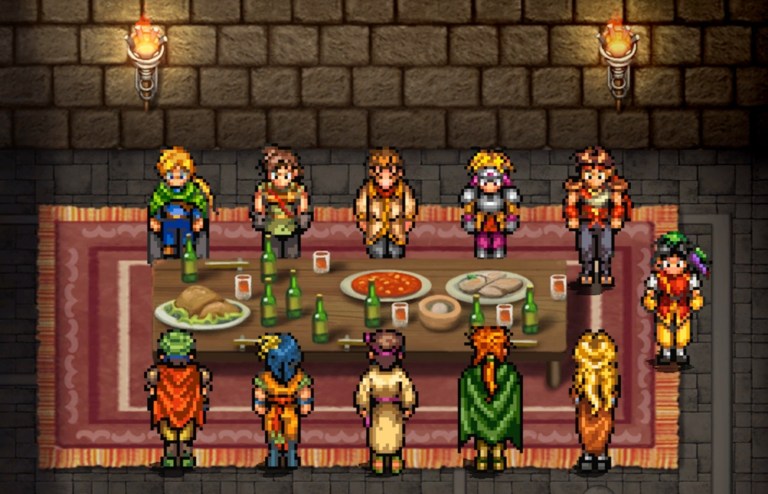
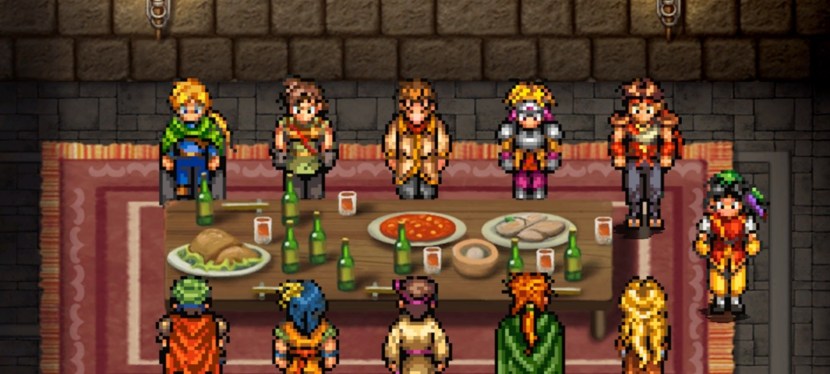
A shot of a feast within the army of rebels with their leader Tir McDohl. The young McDohl is the playable protagonist.

With the first Suikoden alone, I can say I got really good value and enjoyment with my purchase of the digital copy of Suikoden I & II HD Remaster: Gate Rune and Dunan Unification Wars for my Xbox Series X. This is a fine example about retro gaming literally saving the day when Team Xbox failed to deliver the promised great fun with their own games.

If you are an Xbox fan who loves retro gaming as well as Japanese RPGs, and if you have decided to purchase Suikoden I & II HD Remaster: Gate Rune and Dunan Unification Wars, you can do so by clicking https://www.xbox.com/en-us/games/store/suikoden-i-ii-hd-remaster-gate-rune-and-dunan-unification-wars/9nrgnstzlchj

If you prefer a physical copy for your Xbox console, click https://www.xbox.com/en-us/games/store/suikoden-i-ii-hd-remaster-gate-rune-and-dunan-unification-wars/9nrgnstzlchj

+++++

Thank you for reading. If you find this article engaging, please click the like button below, share this article to others and also please consider making a donation to support my publishing. If you are looking for a copywriter to create content for your special project or business, check out my services and my portfolio. Feel free to contact me with a private message. Also please feel free to visit my Facebook page Author Carlo Carrasco and follow me on Twitter at  @HavenorFantasy as well as on Tumblr at https://carlocarrasco.tumblr.com/ and on Instagram athttps://www.instagram.com/authorcarlocarrasco

A Look Back at Superman #292 (1975)

Welcome back superhero enthusiasts, 20th century pop culture enthusiasts and comic book collectors! Today we go back to the year 1975 to take a close look at one of the many tales published through the original Superman monthly series (first launched in 1939).

When I first read the literary rivalry between Superman and Lex Luthor, it was before Crisis on Infinite Earths happened. The pre-Crisis Luthor was a criminal mad scientist (as opposed to the tycoon Luthor of the post-Crisis age) who had to use technology and smart moves during his encounters with the Man of Steel. The pre-Crisis conflicts between the two were often dynamic and fantasy inspired. Of course, there is a lot more between Superman and Luthor starting with a shared past in Smallville.

With those details laid down, here is a look back at Superman #292, published in 1975 by DC Comics with a story written by Elliot S. Maggin and drawn by Curt Swan.  

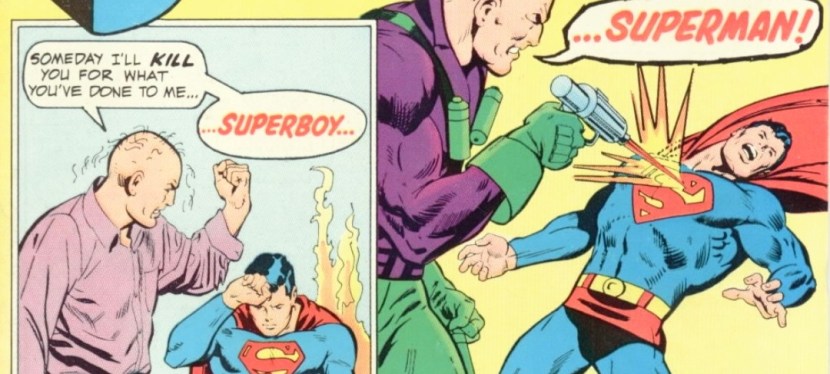
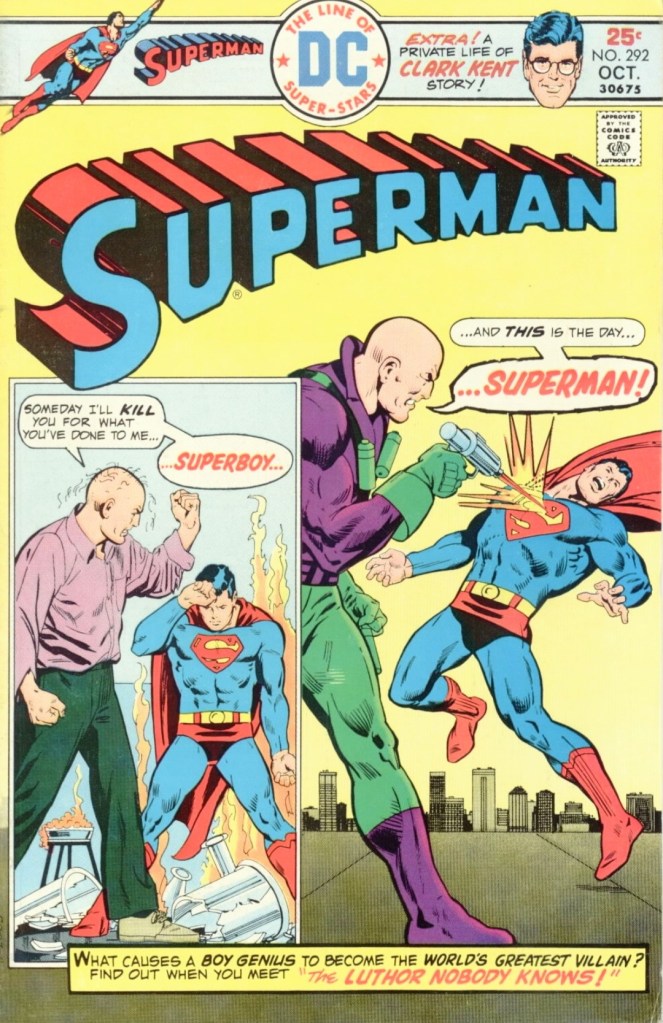
The cover.

Early story

The story begins at the ruined Metropolis International Airport with Superman helping with the huge repair efforts. It turns out, he and Lex Luthor just had an encounter there. When Mr. Hales of the airport authorities asked him why Luthor was always evil, Superman begins to remember the friendship he had with his rival when they were both teenagers in Smallville…

Quality

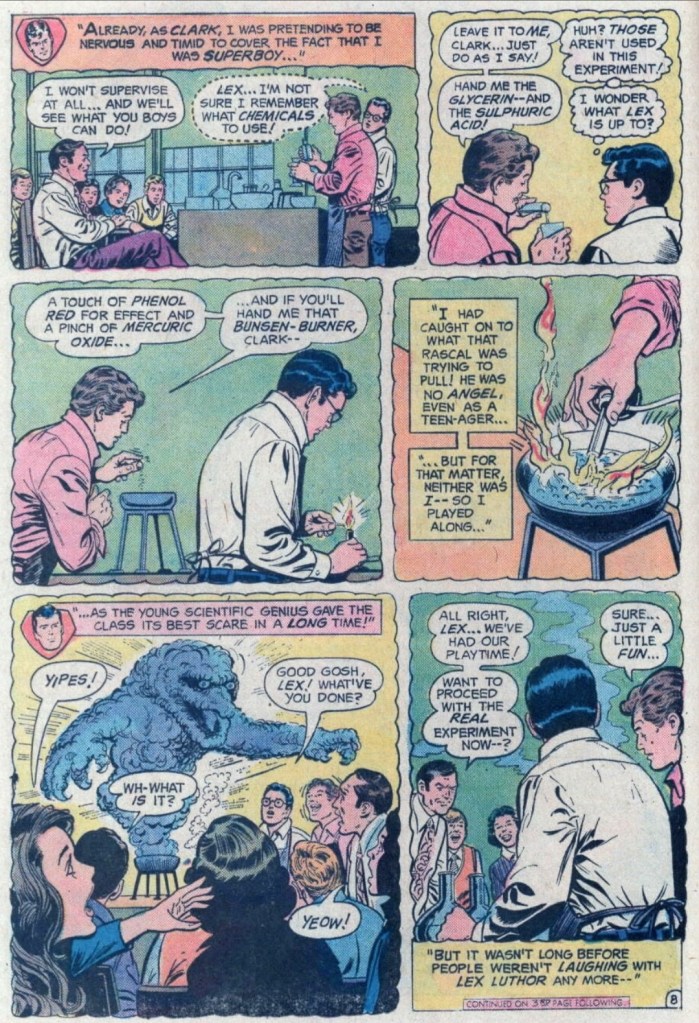
Yes, it is all true. Lex Luthor and Clark Kent were students in the same high school in Smallville when they were teenagers.

To make things clear, this comic book has two stories and the first one – titled “The Luthor Nobody Knows” – is clearly the main story.

The main story has this unusual format of storytelling that resulted in an abundance of flashbacks dominating the present-day tale. In connection with the tale’s title, this is a dramatized look back at the time when Luthor and Clark Kent (then Superboy) were high school students in Smallville. The creators took their time portraying young Clark Kent as the mild and ethical student and the teenage Lex Luthor as the daring student who truly believes he can make great achievements through science.

For those who might have heard the fabled start of the rivalry between Luthor and Superboy, you will see that in this comic book as well as the negative impact the former made as time went on. Along the way, you will see the stark differences between them which were nicely dramatized by the creators. Notably, you will see a more human portrayal of Luthor in his younger self.

The 2nd story of this comic book – titled “The private life of Clark Kent” – is just a 5-page additive geared towards Superman fans wanting more of him in his civilian identity.  

Conclusion

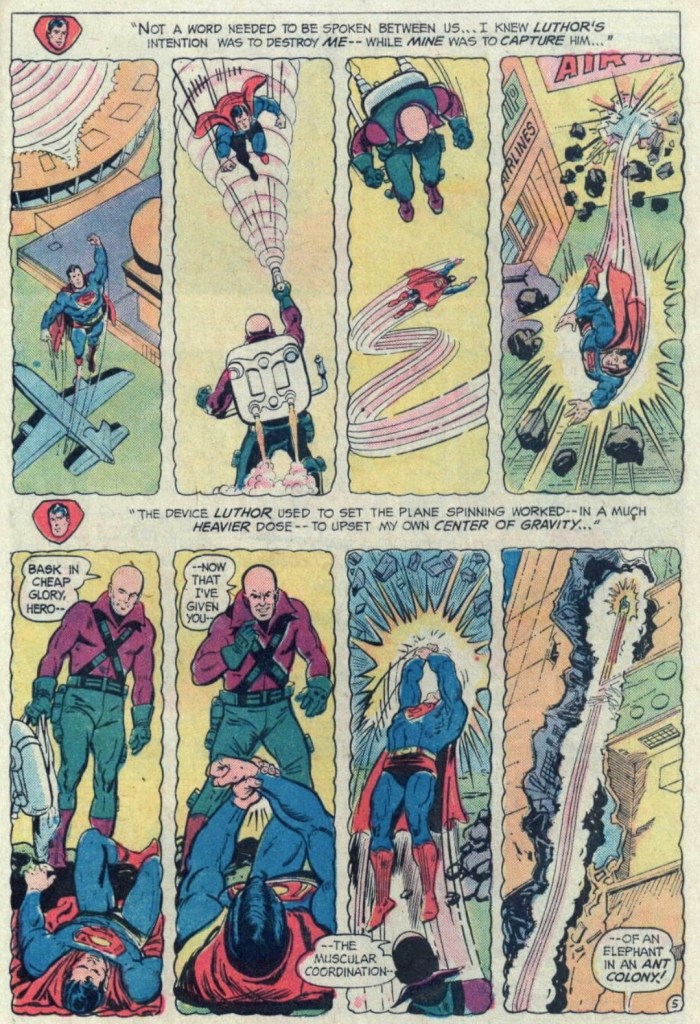
This battle between Superman and criminal mad scientist Luthor should resonate with comic book fans who love the pre-Crisis era of DC Comics.

Considering the way the main story was crafted, Superman #292 (1975) is technically an origin story of Luthor who went from an ambitious young student into a criminal mad scientist. This should surprise readers who remained unaware of the shared past between Luthor and Superman before Crisis on Infinite Earths happened. In relation to what was mentioned earlier in the review, the Superboy-Luthor conflicts here looked dynamic. There is a good amount of entertainment here to see and it should resonate with long-time comic book readers who miss the pre-Crisis era of DC Comics.

Overall, Superman #292 (1975) is recommended.

+++++

Thank you for reading. If you find this article engaging, please click the like button below, share this article to others and also please consider making a donation to support my publishing. If you are looking for a copywriter to create content for your special project or business, check out my services and my portfolio. Feel free to contact me with a private message. Also please feel free to visit my Facebook page Author Carlo Carrasco and follow me on Twitter at  @HavenorFantasy as well as on Tumblr at https://carlocarrasco.tumblr.com/ and on Instagram at https://www.instagram.com/authorcarlocarrasco
A Look Back at The Man of Steel #4 (1986)

Welcome back superhero enthusiasts, 1980s culture enthusiasts and comic book collectors! Today we go back to the mid-1980s to explore a part of the DC Comics shared universe through a tale of the iconic Superman.

Shortly after the end of the original multiverse of DC Comics, the publisher organized a massive reboot of its superhero franchises and universe. To reboot and modernize the iconic Superman, DC hired John Byrne and backed him up with a solid creative team. The result was the 6-part comic book mini-series The Man of Steel. Previously, I reviewed The Man of Steel #1 and #2 which collectively established Superman and Lois Lane as the iconic superhero and the definitive supporting character of the post-Crisis age respectively. Of course, the super villain opposite the post-Crisis Superman had to be established.

With those details laid down, here is a look back at The Man of Steel #4, published in 1986 by DC Comics with a story written and illustrated by John Byrne.

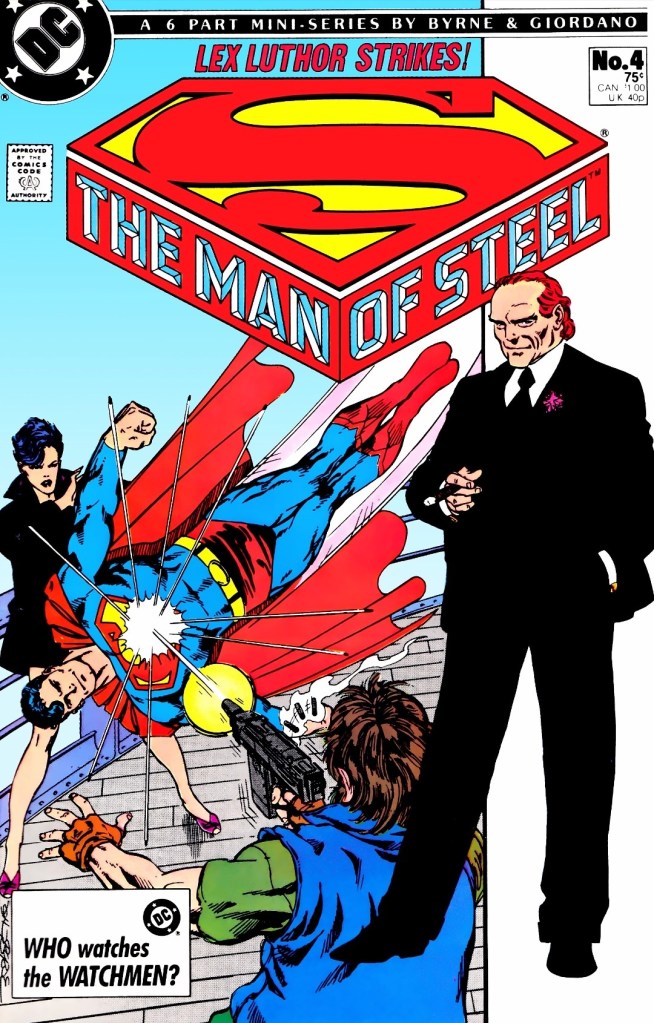
The cover.

Early story

The story begins when a daringly dressed Lois Lane arrives at the apartment of Clark Kent who has not even fully prepared himself for their trip to an extravagant gathering. It turns out, Lois’ ride picked her up earlier than expected which explains her early arrival.

After entering Clark’s apartment, she slowly begins to discover what he looked like in school and who his parents are. By this time, it has been almost eighteen months since Clark beat her to the first-ever Superman news story at the Daily Planet.

Afterwards, Lois and Clark took a surprising helicopter ride going to the luxurious ship of the powerful tycoon Lex Luthor…

Quality

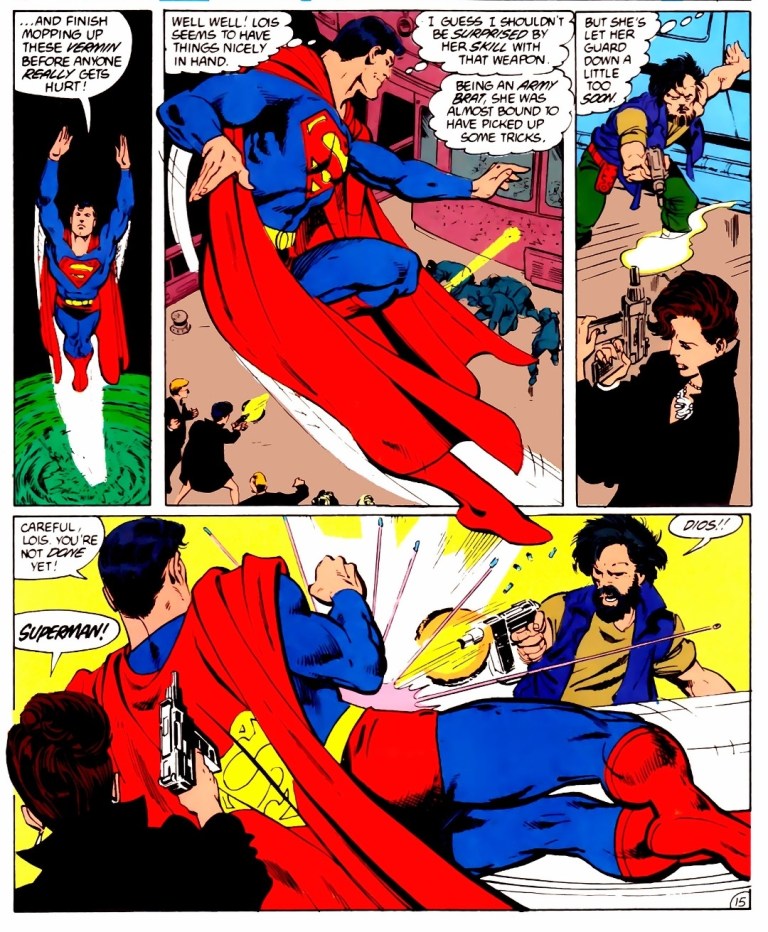
Superman intervenes to protect Lois Lane from one of the terrorists.

To make things clear, this issue is all about John Byrne presenting a new version of Superman’s definitive rival Lex Luthor with the 1980s in mind. Instead of a mad scientist, the post-Crisis Luthor is a billionaire whose corporation (Lexcorp) has an interest in virtually every business in Metropolis and his immense wealth makes him a very powerful figure. This new version of Luthor was clearly done to be more grounded with reality, specifically with regards to the rise of tycoons in America in the 1980s. In short, Luthor was the ruthless and powerful businessman before Michael Douglas even got to play Gordon Gekko in 1987’s Wall Street.

While the effort of making a really new version of Superman’s arch-rival is clear, Luthor here does not appear too menacing at first. The story and impact of Luthor’s evil really started to materialize as soon as the South American terrorists appeared, but not in a way that you might expect. As mentioned above, Luthor here is more grounded with reality and that means you won’t see him oppose Superman with science and technology. Instead, Luthor simply has wealth, the power and resources to go against the Man of Steel. The tycoon also knows that the American-born Kryptonian would not dare attack him as laws already exist.

Having read lots of Superman’s encounters with Luthor in the pre-Crisis era – particularly the 1970s up to the mid-1980s – it is clear to me that their first post-Crisis encounter turned out underwhelming and never dynamic. In fairness, I really enjoyed reading the 2nd encounter between Superman and Luthor as the words of the latter were filled with anger and tension. It should be noted that Byrne’s visual approach on showing the city and the people as Luthor’s dialogue went on was a great touch.

When it comes to the storytelling, it is quite simple which is not surprising because it was crafted to make way for post-Crisis Luthor to be introduced and dramatized. As for the character development, there is indeed progress with regards to the chemistry between Clark Kent and Lois Lane who are portrayed as friends living with a journalistic competition between them. It was also in this comic book where you will see Superman follow the law and the command of Metropolis’ highest official.

Speaking of law, you will notice what kind of impact Luthor has on others when he really does things his own way. This is something you should read in this comic book.

Conclusion

This is John Byrne’s version of Lex Luthor in the form of a powerful tycoon. A complete departure from the mad scientist Luthor of the pre-Crisis era of DC Comics.

While the first-ever conflict between Superman and Luthor in the post-Crisis age was indeed underwhelming, it was John Byrne’s in-depth writing and portrayal of events that made The Man of Steel #4 (1986) a worthy read. Don’t expect to see a lot of action here nor anything spectacular with Superman. Clearly, the tycoon Lex Luthor is the feature character of this tale and the start of his hatred towards Superman is really worth reading. In retrospect, Luthor’s ruthlessness and evil got stronger and clearer after the end of this comic book (for reference, click here).

Overall, The Man of Steel #4 (1986) is recommended.

+++++

Thank you for reading. If you find this article engaging, please click the like button below, share this article to others and also please consider making a donation to support my publishing. If you are looking for a copywriter to create content for your special project or business, check out my services and my portfolio. Feel free to contact me with a private message. Also please feel free to visit my Facebook page Author Carlo Carrasco and follow me on Twitter at  @HavenorFantasy as well as on Tumblr at https://carlocarrasco.tumblr.com/ and on Instagram at https://www.instagram.com/authorcarlocarrasco
Retro Gaming Ads Blast – Part 27

Welcome back readers, fellow geeks and electronic gaming fans!

In this edition of the Retro Gaming Ads Blast (RGAB) series, we will take a look at another batch of retro gaming print ads – including arcade flyers – from the 1980s and to the year 2000.

For the newcomers reading this, Retro Gaming Ads Blast (RGAB) looks back at the many print ads of games (console, arcade, computer and handheld) that were published in comic books, magazines, flyers, posters and newspapers long before smartphones, social media, the worldwide web and streaming became popular. To put things in perspective, people back in the 1980s and 1990s were more trusting of print media for information and images about electronic games and related products.

With those details laid down, here is the newest batch of retro gaming print ads for you to see and enjoy…

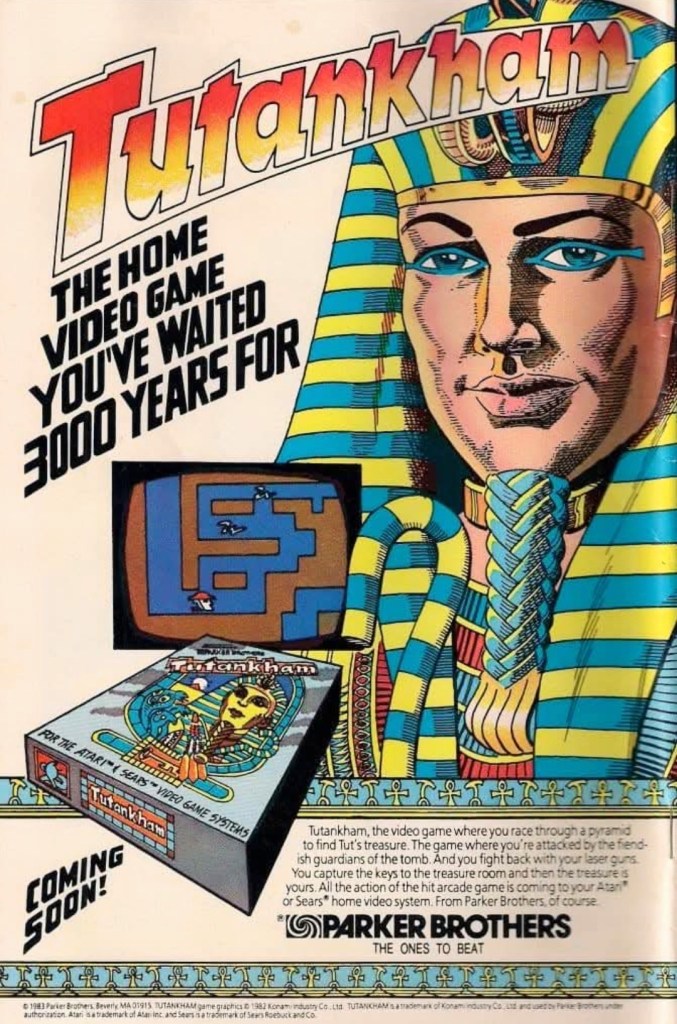
1. Tutankham print ad

This print ad appeared in several comic books in 1983.

First released in the arcades in 1982, Tutankham is a 2D adventure game that had a mix of shooting, maze exploration and puzzle-solving with Egyptian settings and concepts. It made its way to the Atari 2600 published by Parker Brother, and it was this specific version I played. This game print ad appeared in comic books I read in 1983, and the people who made it implemented a hand-drawn art of the Egyptian pharaoh Tutankhamun dominating the space to emphasize the Egyptian setting. In fact, this ad made me think more of Egypt and left little to give me an idea of the game design.  

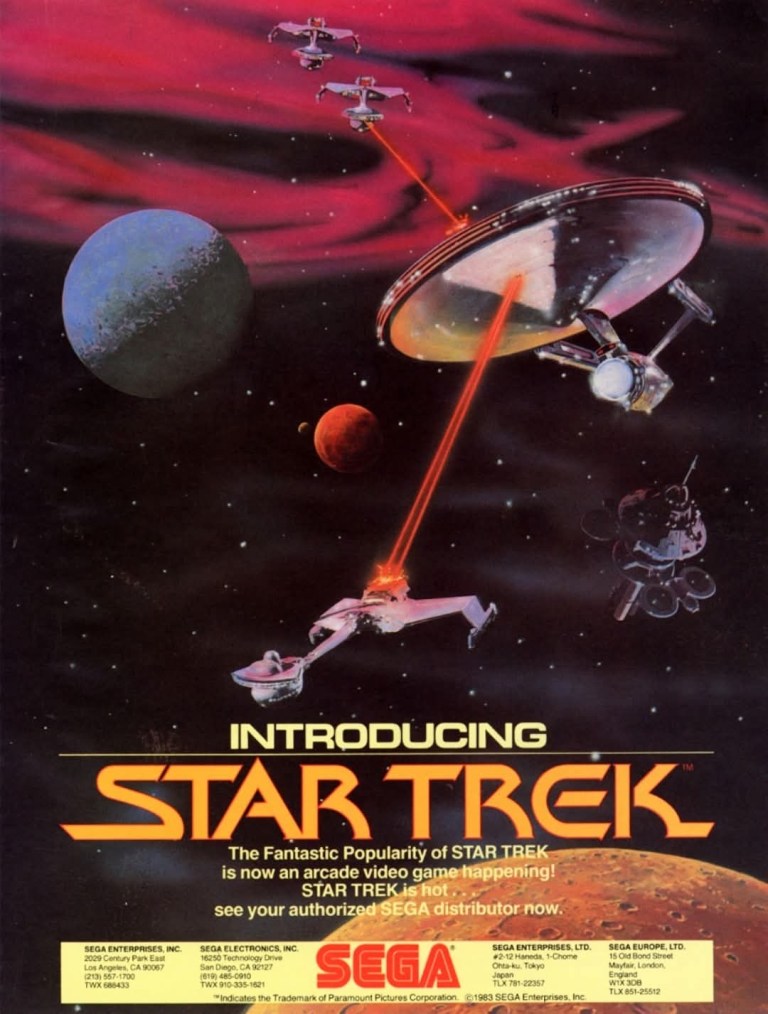
2. Star Trek arcade flyer

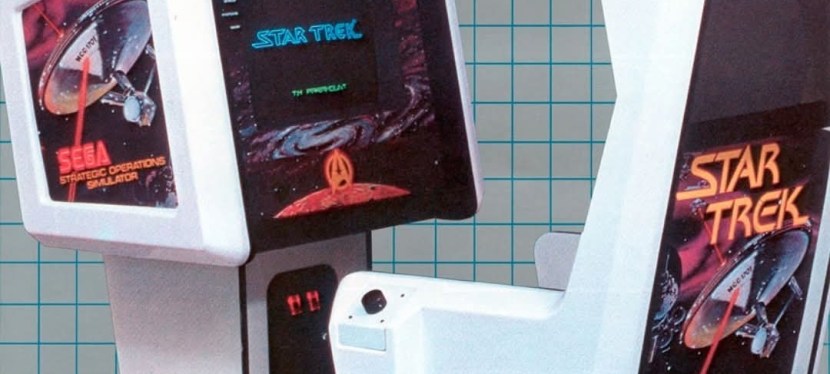
The clever use of classic Star Trek imagery was used in this initial flyer by Sega.
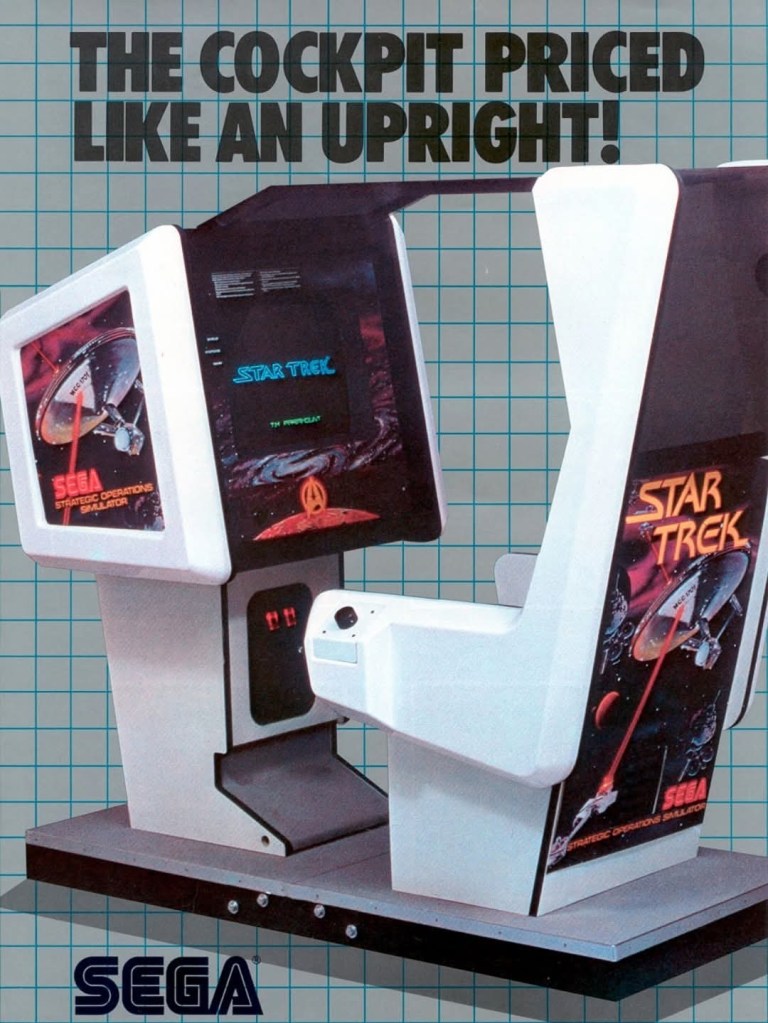
Back in the 1980s, a futuristic design for an arcade machine like this one was mind-blowing.

I never played the Star Trek arcade game (full title: Star Trek: Strategic Operations Simulator) Sega released in 1983. I only saw its graphics and gameplay during an episode of Starcade. With its game design and visual presentation, Star Trek was a very ambitious arcade project for its time and Sega really went in to promote it. The initial arcade flyer (first one above) was meant to grab the attention of both gamers and arcade operators. The next arcade flyer (2nd one above) showed the ambitious design of the arcade machine made with player immersion in mind.

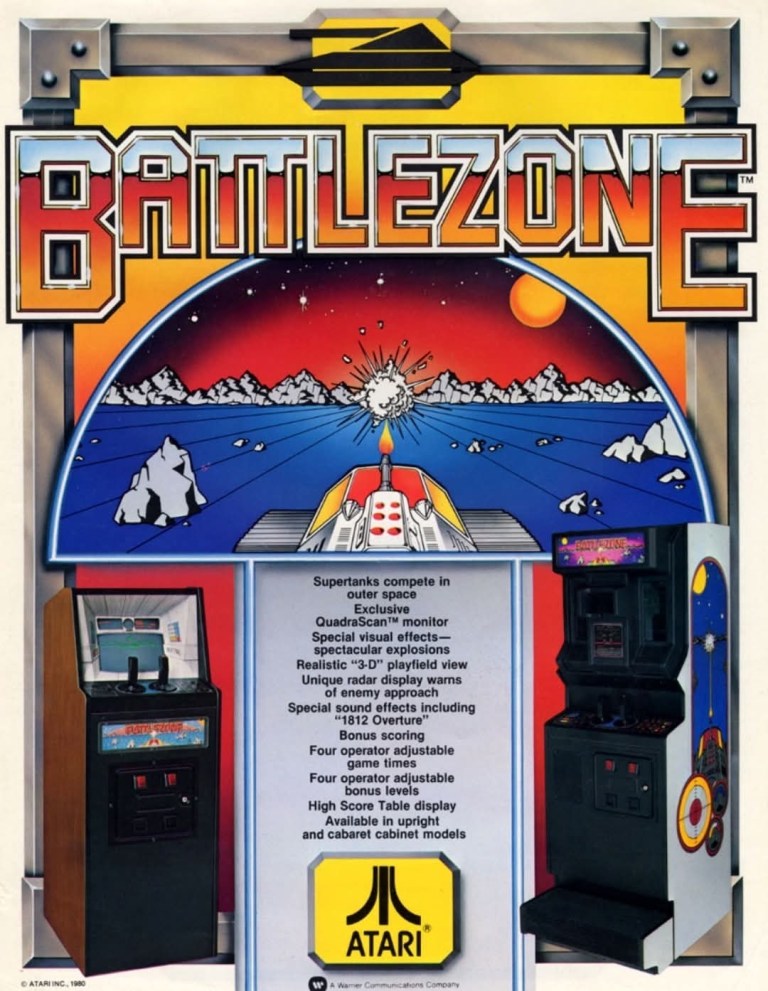
3. Battlezone arcade flyer

While the hand-drawn artwork was too detailed for the arcade game’s graphics, it still emphasized strongly the concept of the game.

In the history of video games, Battlezone was a groundbreaking game both visually and with game design. It was designed to give gamers an immersive experience of driving a tank with 3D graphics, fun gameplay and a first-person view. Its own history is worth researching. Atari knew it had to heavily promote their ambitious game and the arcade flyer above featured nice hand-drawn artwork while also showing the two types of Battlezone machines that arcade operators can choose from. Battlezone went on to become a highly influential arcade game.

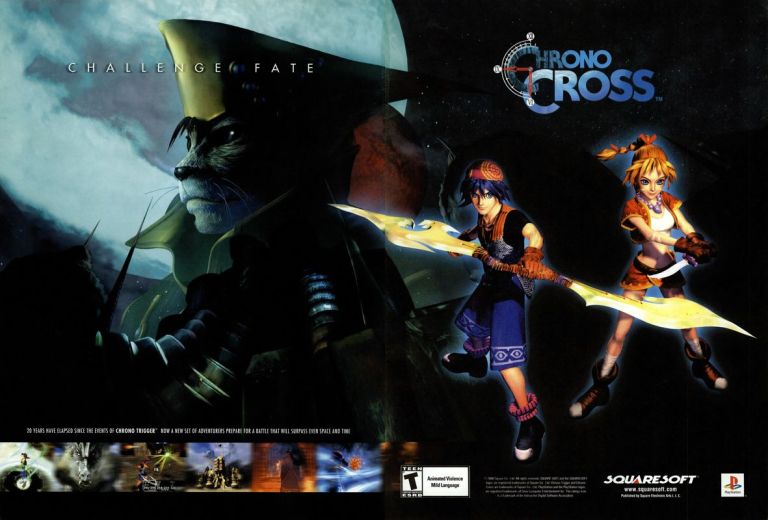
4. Chrono Cross North American print ad

Arguably, this print ad was aimed at RPG enthusiasts, Chrono Trigger fans and gamers looking for something adventurous to play.

First released on PlayStation in Japan, Chrono Cross made its way to the said console in America just a few months before the PlayStation 2 launched there. While there was a risk that came with releasing the ambitious follow-up to the classic Chrono Trigger so late in the PlayStation’s life, Squaresoft (now Square Enix) still went on to aggressively promote Chrono Cross in America. This 2-page print ad that appeared in many gaming magazines remains captivating to look at. As typical of the time, 3D polygonal models and the epic-looking art were used in dominating fashion leaving the small space (lower-left corner) to display a few gameplay screenshots and other 3D art. Still it a fun game to play and this should remind you that Chrono Cross was recently remastered for modern consoles.

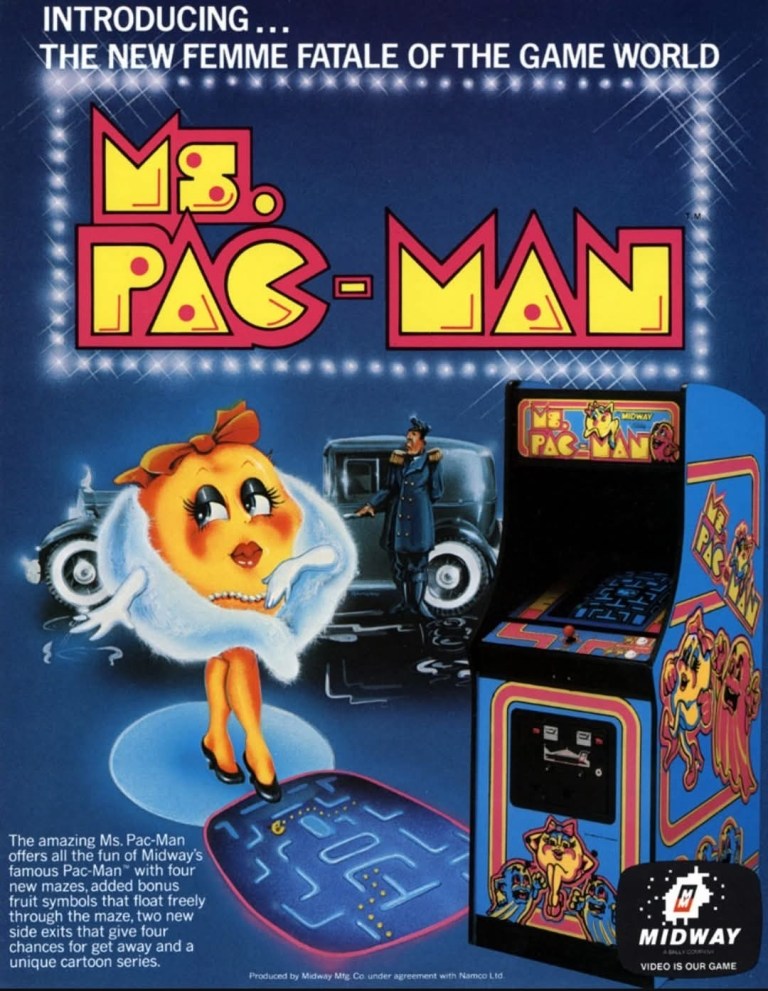
5. Ms. Pac-Man arcade flyer

The wife of Pac-Man and the machine.

Given the fact that Pac-Man was so massively successful, it was not surprising that a sequel had to be made and released on as many arcades as possible. Ms. Pac-Man was the sequel and it was released in arcades in 1982 eventually achieving huge commercial and critical success. To promote the game, Midway’s ad makers came up with an ad showing unique art of Pac-Man’s wife looking glamorous (with a driver and a vehicle in the background) and a photograph of the arcade machine on the right. This also was one of the early arcade flyers to use the words “femme fatale”.

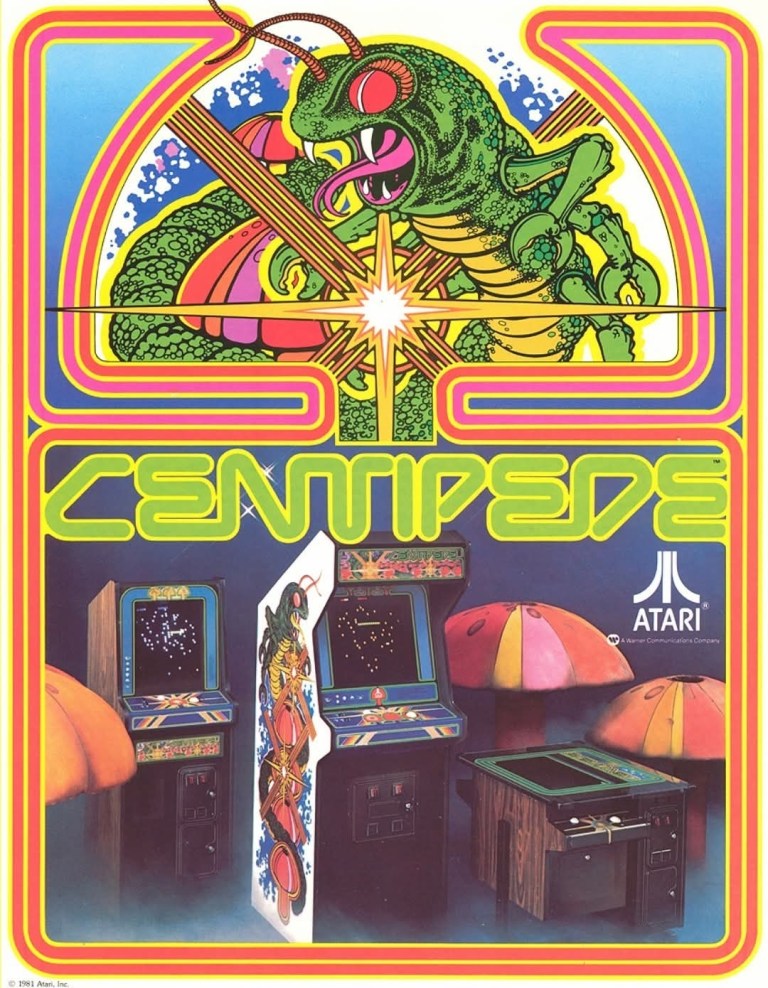
6. Centipede arcade flyer

Three machines of Centipede for arcade operators to choose from.

Centipede is another arcade classic from Atari. Released in 1981, a lot of players enjoyed the game’s simplistic and yet addicting design of shooting an incoming centipede and its remaining portions that move down the field. Similar to the Battlezone arcade flyer, this game’s flyer had nice art of a centipede on the top and images arcade machines. Even by today’s standards, this flyer remains eye-catching.

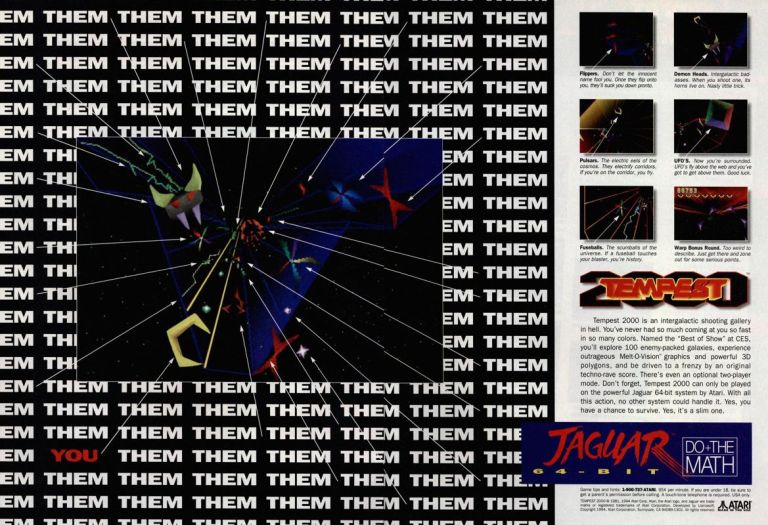
7. Tempest 2000 print ad

This 2-page print ad of Tempest 2000 is still captivating to look at.

Back in the 1990s, Atari went on to release their Jaguar console which was promoted as a 64-bit machine. At a gaming convention, the company met with prospective game developers over Jaguar projects and one of the developers volunteered to do Tempest (a memorable Atari arcade game). This resulted in the development of Tempest 2000 which was a remake of the classic.

As a Jaguar-exclusive game, Atari came up with an eye-catching 2-page ad showing off the 3D visual presentation (6 gameplay screenshots and one original artwork) while boasting in the text description that Tempest 2000 was named the “Best of Show” at the Consumer Electronics Show (CES). The game was released in 1994 attracting mostly positive reviews from game critics and was one of the best-selling Jaguar games (note: Tempest 2000 can now be played in the Atari 50 collection). With the Atari legacy and presentation combined, this print ad remains captivating to look at.

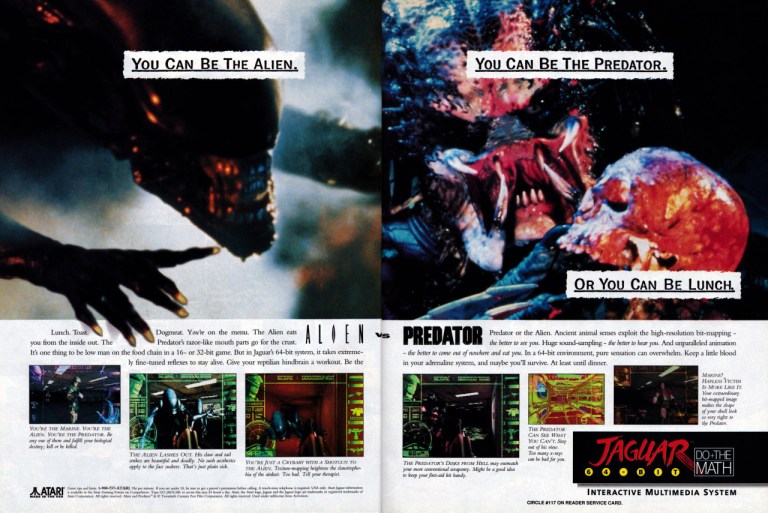
8. Alien vs Predator print ad

Arguably the most defining and most entertaining game on the Atari Jaguar.

If there is any game that truly defined enjoyment and the technological features of the Atari Jaguar, it is the 1994 first-person shooter Alien vs Predator. At the time of its release, it was one of the most immersive games of the Alien vs. Predator crossover franchise and it allowed players to experience what fighting the Predator or the Xenomorph was like. The game also allowed gamers to play as a Colonial Marine (human soldier).

To sell the game, Atari came up with a 2-page ad highlighting the Aliens on one page and the Predator on the other. As the Predator was shown with a grotesque human skull, the use of photographs (most likely sourced from the movies) strongly emphasize the game was aimed at the mature audience among gamers. Six screenshots of gameplay were displayed by the ad makers who were clearly aware of the high popularity of first-person shooting games. Alien vs Predator was a critical and commercial success, and its print ad is arguably the most memorable one of any Atari Jaguar game ever made.

+++++

Thank you for reading. If you find this article engaging, please click the like button below, share this article to others and also please consider making a donation to support my publishing. If you are looking for a copywriter to create content for your special project or business, check out my services and my portfolio. Feel free to contact me with a private message. Also please feel free to visit my Facebook page Author Carlo Carrasco and follow me on Twitter at  @HavenorFantasy as well as on Tumblr at https://carlocarrasco.tumblr.com/ and on Instagram at https://www.instagram.com/authorcarlocarrasco
Marvel vs. Capcom Fighting Collection: Arcade Classics is now available on Xbox Series X|S and Xbox One

Welcome back Xbox fans, geeks, retro gaming enthusiasts, fighting game enthusiasts and other gamers!

With the current Xbox-exclusive fantasy role-playing game Avowed coming out on February 18, I’m supposed to be excited about what Team Xbox has prepared this year. Of course, there were disappointments not only with certain Xbox first-party releases but also with the way things have been changing on the part of Team Xbox.

Times like these, retro gaming on Xbox is the answer for fans who want to experience a lot of fun and Capcom just released Marvel vs. Capcom Fighting Collection: Arcade Classics for Xbox Series X, Xbox Series S and even Xbox One users to enjoy. Watch and learn from the official Xbox trailer below.

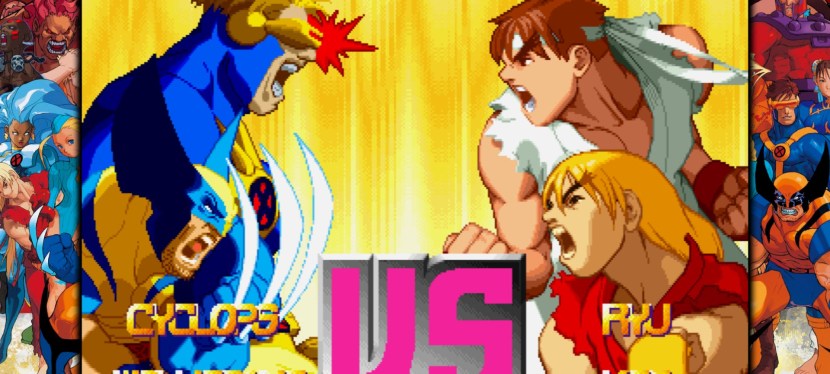
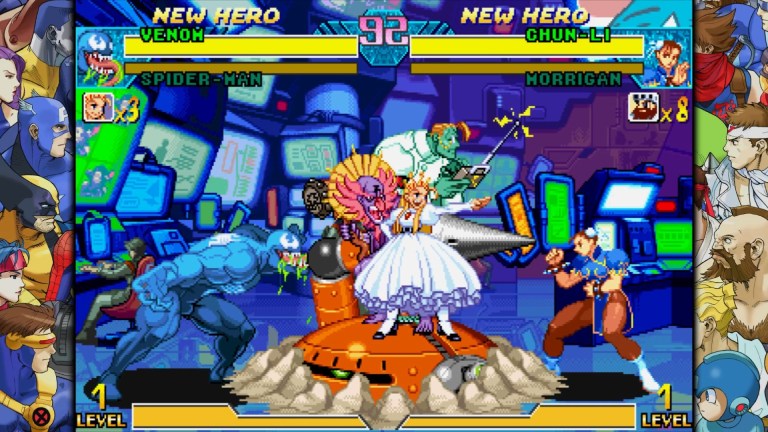
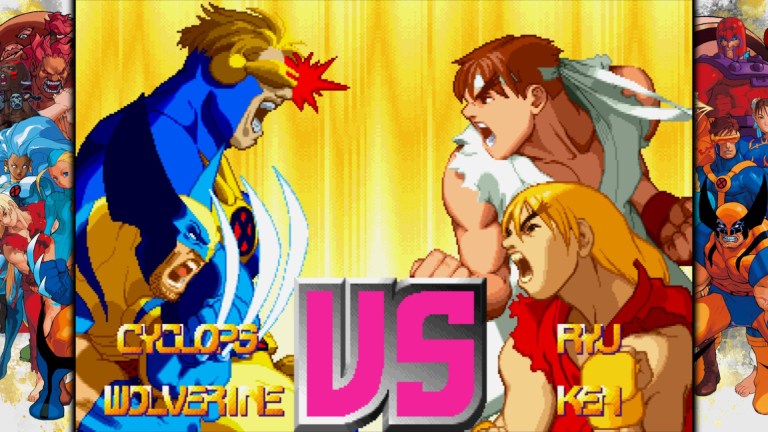
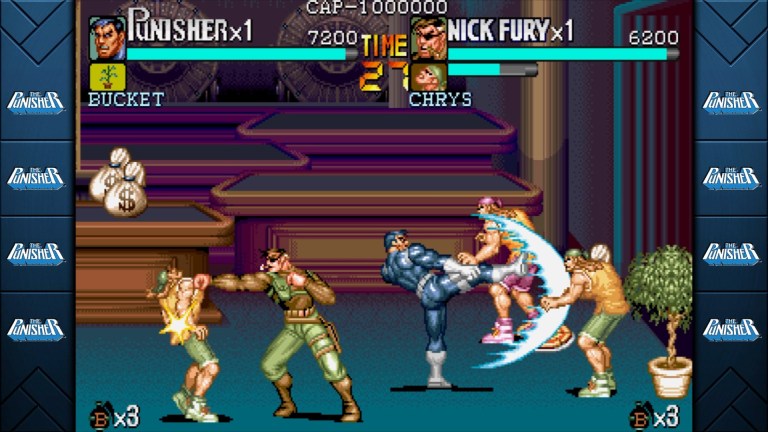
For the newcomers reading this, the said collection comes with the following video games Capcom released long ago with an emphasis on crossovers with Marvel’s intellectual properties: X-Men: Children of the Atom (1994), Marvel Super Heroes (1995), X-Men vs. Street Fighter (1996), Marvel Super Heroes vs. Street Fighter (1997), Marvel vs. Capcom: Clash of Super Heroes (1998), Marvel vs. Capcom 2: New Age Of Heroes (2000) plus The Punisher (1993).

Wow! That’s a collection of very fun and popular games Capcom released from 1993 to 2000. With the exception of The Punisher arcade game (a 2D adventure game), I played them all in the arcades decades ago and I can say that having them in a single collection for the modern Xbox consoles is indeed a blessing for long-time Xbox gamers who love 2D fighting games and retro gaming. The way I feel right now, Marvel vs. Capcom Fighting Collection: Arcade Classics looks really enticing to purchase.

Marvel vs. Capcom: Clash of Super Heroes is not just a lot of fun to play but also will please those who love the characters. With Wolverine, Spider-Man, Venom, Captain America from Marvel’s side included, there is something that will bring both geeks and gamers together.

I have fond memories of Capcom 2D fighting games that carried Marvel’s intellectual properties. X-Me: Children of the Atom was enjoyable to play with and it resonated with me as I was already an X-Men comic book reader back in the 1990s. Marvel Super Heroes was also fun to play and it somewhat reminded me of The Infinity Gauntlet storyline. X-Men vs. Street Fighter was the most intriguing crossover fighting game at the time of its release and it really raised the bar for fast-and-furious style gameplay complete with a quick character swap during the heat of battles. Marvel Super Heroes vs. Street Fighter was the follow-up which came with changes that were not well received by the fans.

Then came the two Marvel vs. Capcom crossover fighting games which really built upon the foundation of X-Men vs. Street Fighter for more team battles with speed and impact in mind. I could not forget the inclusion of Resident Evil characters, Mega Man and others.

X-Men vs. Street Fighter is a classic tag-team, crossover-oriented video game! Fast and furious action ensured!
The Punisher arcade game is the only non-fighting game of the collection. Punisher fans should look at this.

Adding further zest to the collection is online play that allows casual matches, ranked matches, custom matches. Think about how your skills or your scoring will compare with those of other players from around the world.

That being said, Marvel vs. Capcom Fighting Collection: Arcade Classics is a retro gaming package that deserves attention as it carries some of the finest video games Capcom ever made.

To purchase Marvel vs. Capcom Fighting Collection: Arcade Classics for Xbox, click https://www.xbox.com/en-us/games/store/marvel-vs-capcom-fighting-collection-arcade-classics/9nwfm3hdjc94

+++++

Thank you for reading. If you find this article engaging, please click the like button below, share this article to others and also please consider making a donation to support my publishing. If you are looking for a copywriter to create content for your special project or business, check out my services and my portfolio. Feel free to contact me with a private message. Also please feel free to visit my Facebook page Author Carlo Carrasco and follow me on Twitter at  @HavenorFantasy as well as on Tumblr at https://carlocarrasco.tumblr.com/ and on Instagram athttps://www.instagram.com/authorcarlocarrasco

Lunar Remastered Collection scheduled for release on Xbox Series X|S and Xbox One on April 18, 2025

Welcome back Xbox fans, geeks, retro gaming enthusiasts, RPG enthusiasts and gamers!

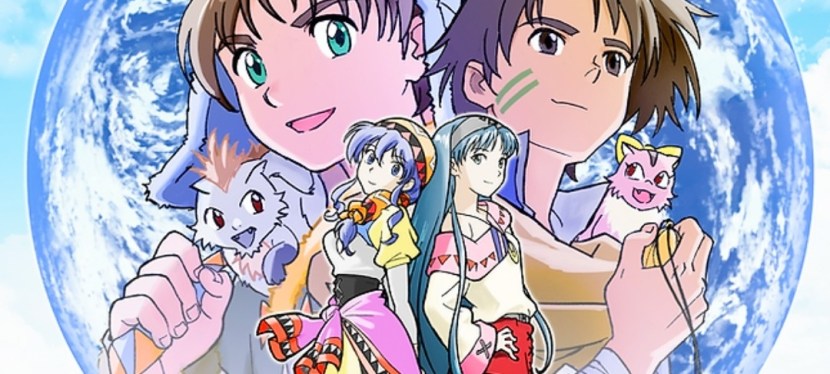
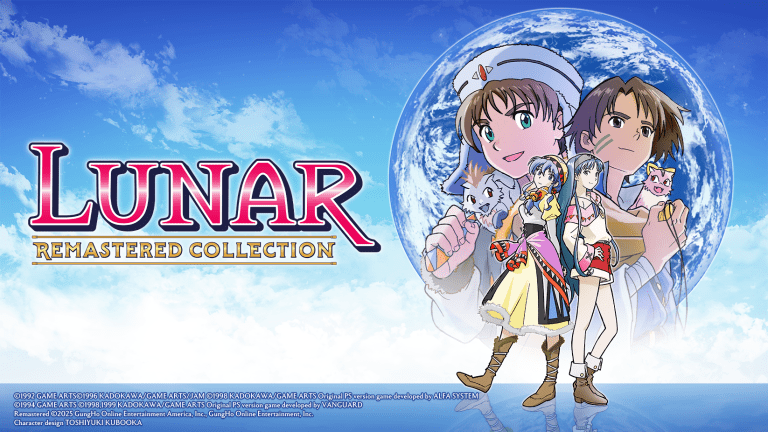
GungHo Online recently announced the release date of the anticipated retro Japanese role-playing games (JRPGs) collection Lunar Remastered Collection which is April 18, 2025.

For the newcomers reading this, the said collection contains the two memorable fantasy role-playing games (fantasy RPGs) which are Lunar: Silver Star Story Complete (enhanced version of Lunar: The Silver Star) and Lunar 2: Eternal Blue Complete (enhanced version of Lunar: Eternal Blue). Since the releases of the original versions in the 1990s, the Lunar RPGs have been released on a variety of consoles such as Sega CD, PlayStation and Sega Saturn.

Lunar Remastered Collection will be the first-time the Lunar RPGs will be released on Xbox consoles. It will launch on April 18, 2025.

For the JRPG-loving Xbox fans, the said Lunar Remastered Collection is indeed coming to Xbox Series X|S and the aging Xbox One. Strangely enough, as of this writing, the said collection has yet to appear on the Xbox online store.

While GungHo confirmed there will be physical copies of Lunar Remastered Collection coming out, it is uncertain if such copies of the Xbox version will be released. The press release mentioned that physical editions “will be available exclusively through Amazon for $54.99 USD” for the North American market. As for the European market, only the PlayStation 4 (PS4) and Nintendo Switch will have physical copies through Clear River Games.

If you are an Xbox fan who loves Lunar and JRPGs in general, are you discouraged about the potential lack of physical copies of Lunar Remastered Collection? If you really want it badly, better express your opinions and questions directly to Team Xbox and GungHo via Twitter, or by email.

For updates about Lunar Remastered Collection, visit https://www.lunarremastered.com/

+++++

Thank you for reading. If you find this article engaging, please click the like button below, share this article to others and also please consider making a donation to support my publishing. If you are looking for a copywriter to create content for your special project or business, check out my services and my portfolio. Feel free to contact me with a private message. Also please feel free to visit my Facebook page Author Carlo Carrasco and follow me on Twitter at  @HavenorFantasy as well as on Tumblr at https://carlocarrasco.tumblr.com/ and on Instagram athttps://www.instagram.com/authorcarlocarrasco

Retro Gaming Ads Blast – Part 26

Welcome back readers, fellow geeks and electronic gaming fans!

In this edition of the Retro Gaming Ads Blast (RGAB) series, we will take a look at another batch of retro gaming print ads – including arcade flyers – from the 1980s and 1990s.

For the newcomers reading this, Retro Gaming Ads Blast (RGAB) looks back at the many print ads of games (console, arcade, computer and handheld) that were published in comic books, magazines, flyers, posters and newspapers long before smartphones, social media, the worldwide web and streaming became popular. To put things in perspective, people back in the 1980s and 1990s were more trusting of print media for information and images about electronic games and related products.

With those details laid down, here is the newest batch of retro gaming print ads for you to see and enjoy…

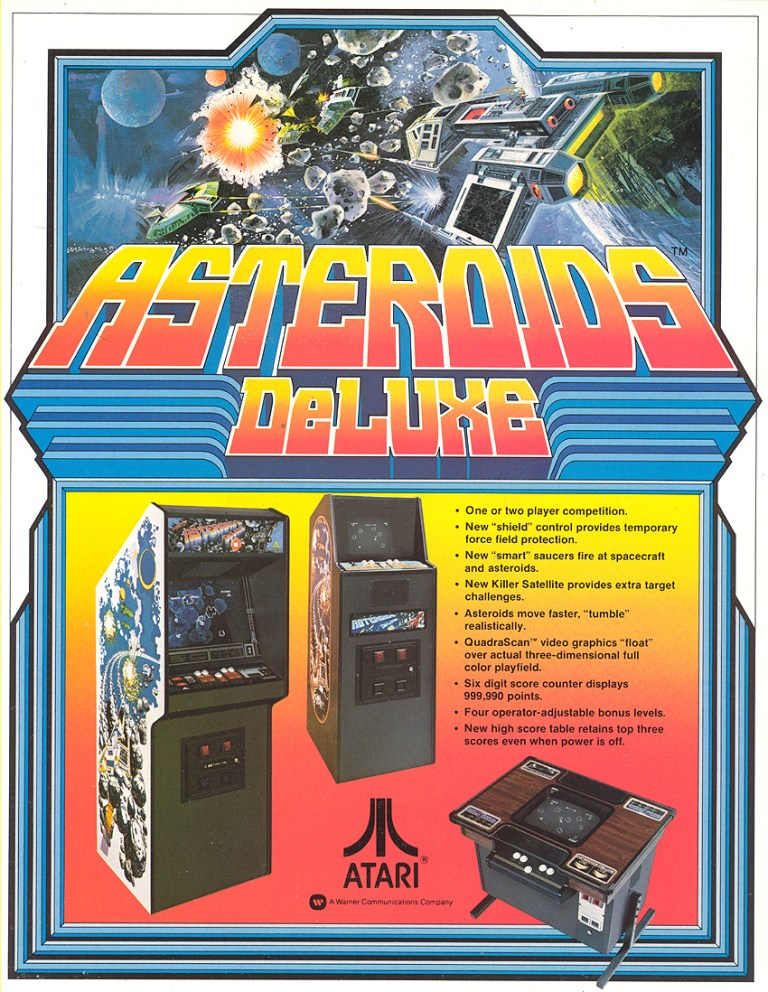
1. Asteroids Deluxe arcade flyer

The arcade flyer for North America.

Given the fact that Asteroids was a massive hit for Atari in the arcades, it was not surprising that a sequel was made called Asteroids Deluxe. In preparation for its 1981 release, Atari made this Asteroids Deluxe arcade flyer showing three machine that arcade operators can choose from complete with technical details displayed. They even emphasized the QuadraScan video graphics as a technological advancement with regards to graphics. By today’s standards, this arcade flyer is still sensible with regards to promoting the game to both arcade operators and players.

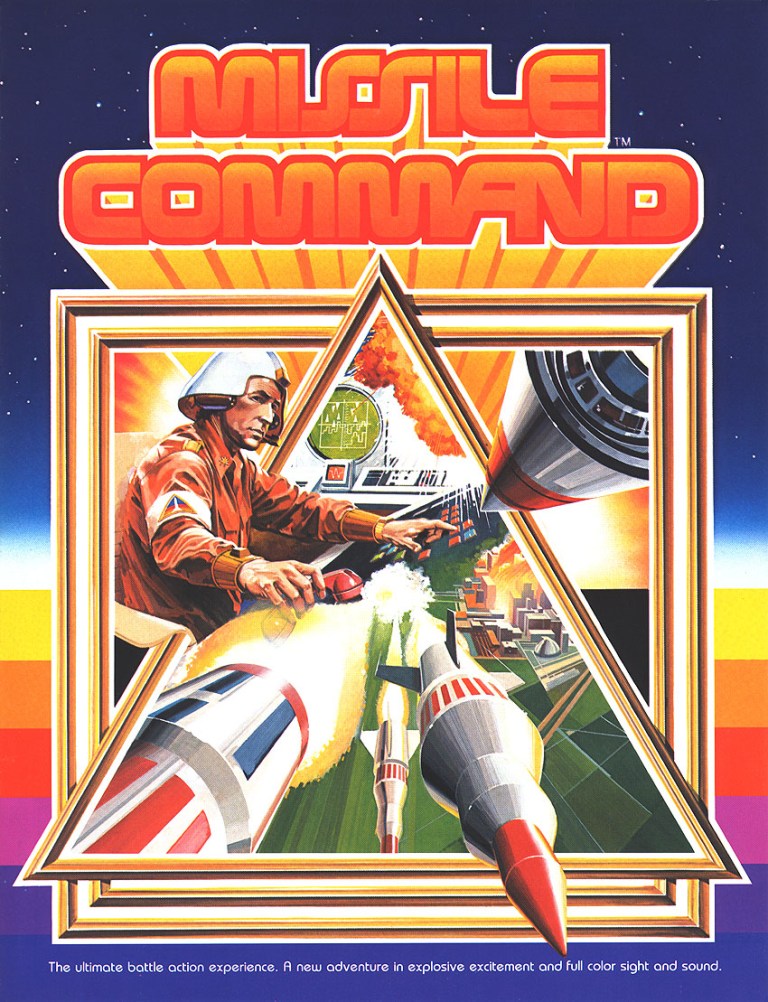
2. Missile Command arcade flyer

Engaging art work on display at the front of the arcade flyer.

Released in the arcades in 1980, Missile Command is a classic game from Atari and its concept of defending cities from incoming enemy missiles proved to be relevant with people living with the fear of a nuclear missile attack during the days of the Cold War. In my experience, I mainly played the Atari 2600 version and it was only recently I finally started playing the arcade classic on my Xbox Series X using the Atari 50 Collection software. As for the arcade flyer itself, Atari simply used highly detailed painted art for the front which clearly emphasized the science fiction portrayal of a military officer using a console inside a base to come up with defensive response to incoming ballistic missiles. The game was a massive hit in the arcades and in my view, Atari’s simply yet direct way of promoting the concept of Missile Command with the arcade flyer remains compelling to look at.

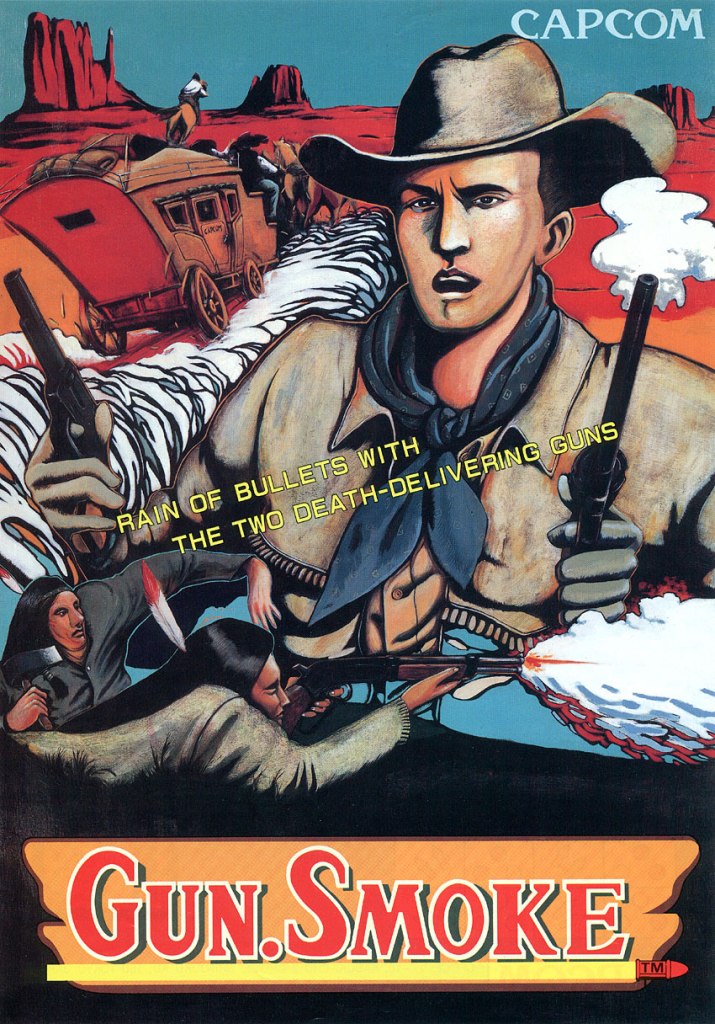
3. Gun.Smoke European arcade flyer

Nice art on the front of this arcade flyer for the European market.

Long before they struck gold with Street Fighter II, Japanese company Capcom scored a hit with gamers in the arcades with 1985’s Gun.Smoke. It was a vertically scrolling run-and-gun game with an Old West setting and it was designed by Yoshiko Okamoto (Final Fight and Street Fighter II). To promote the game for European arcades, Capcom simply used hand-drawn artwork for the arcade flyer’s front which emphasized the Wild West setting, and an American Cowboy and bounty hunter named Billie Bob who is the playable character gamers got to play. In my view, the artwork gave the game a strong Wild West image that is also memorable.

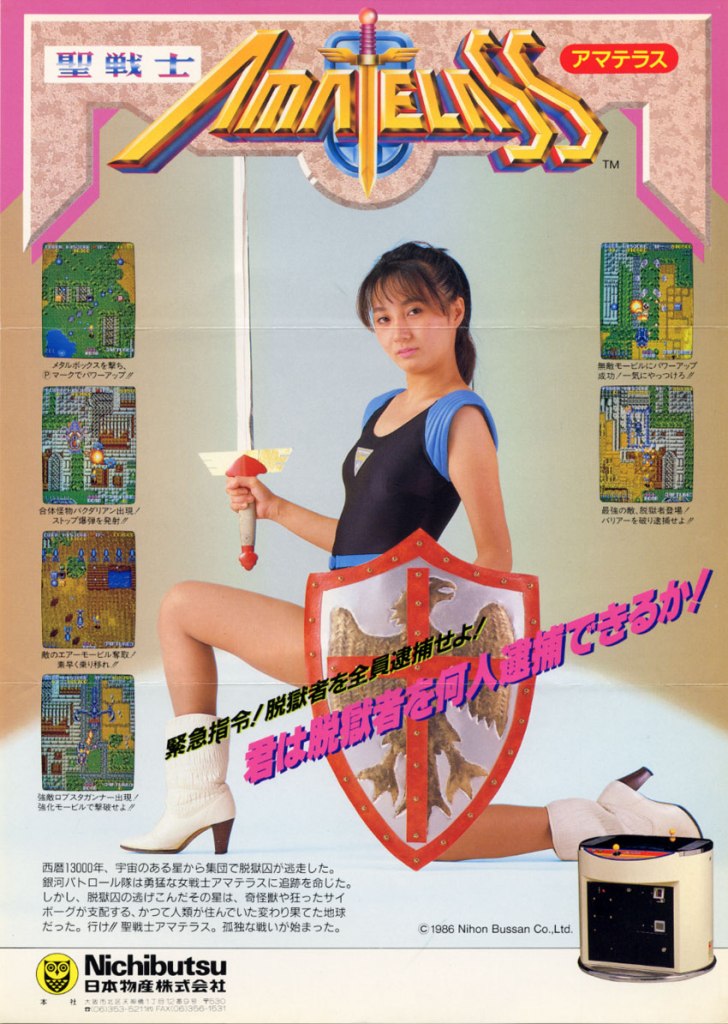
4. Sei Senshi Amatelass arcade flyer

Does the model look sexy or tough?

Released in Japanese arcades in 1986 by Nichibutsu, Sei Senshi Amatelass is a vertical scrolling run-and-gun game with a science fantasy concept. To promote the game and really sell its concept, Nichibutsu hired a model posing with a sword and a shield in fantasy inspired costume. Using the remaining spaces of the flyer, some screenshots and an image of the arcade machine were displayed. This flyer showed the company exerting effort to sell Sei Senshi Amatelass with a touch of beauty and subtle sexiness.

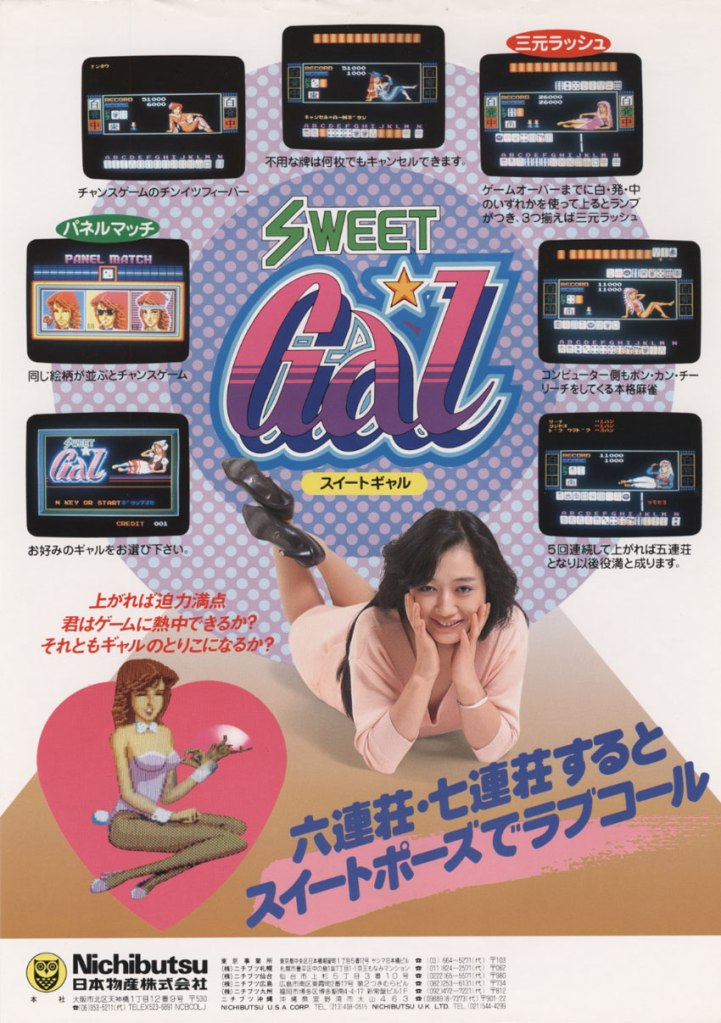
5. Sweet Gal arcade flyer

Seriously, are you interested in playing mahjong in digital form?

Here is another digital mahjong arcade game from Nichibutsu…Sweet Gal. As typical of the company, a model was hired to add subtle sexiness into the promotion of the game and they even added a digital image of a sexy girl. Sweet Gal clearly was promoted to attract men who enjoy playing mahjong in electronic format and there were some arcade spots in Japan that catered to such mahjong enthusiasts.

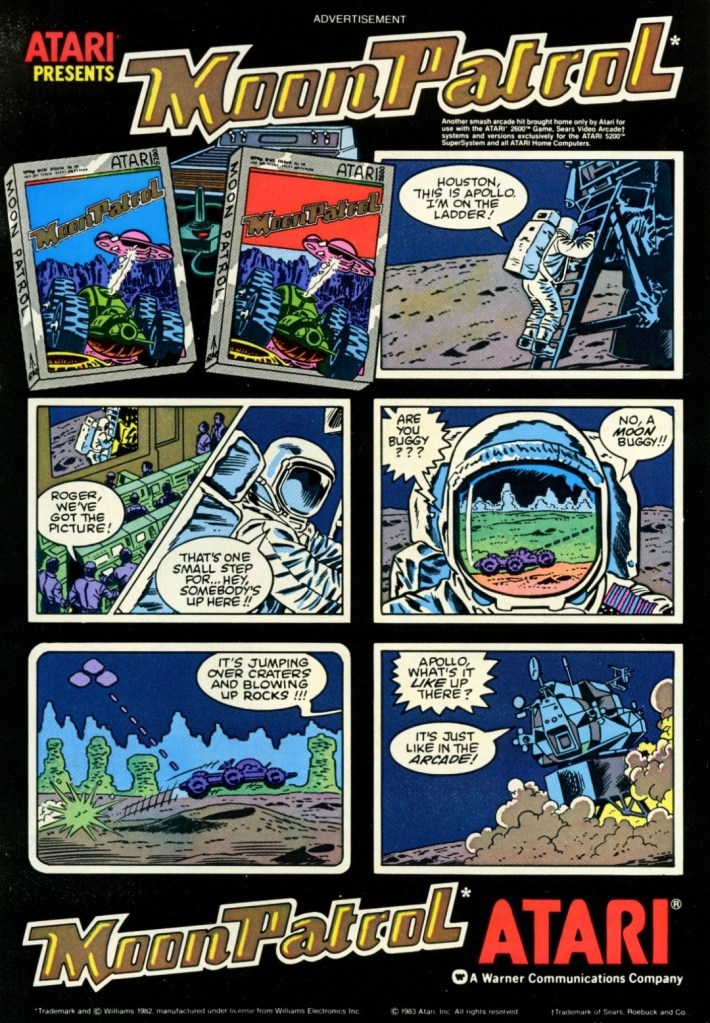
6. Moon Patrol print ad

This is a fun-looking, comic book style way of promoting a video game.

Here is one of those video game print ads I saw while reading comic books back in the early 1980s. Moon Patrol is a sci-fi, side-scrolling game by Atari known for introducing full parallax scrolling in side-scrolling games. Instead of showing screenshots of the console versions of the game, this print ad used nice looking hand-drawn artworks presented with a comic book-inspired style to emphasize the concept. I still remember how captivating this ad and its super short story was the first time I saw it. It was enough to make me interested in the game.

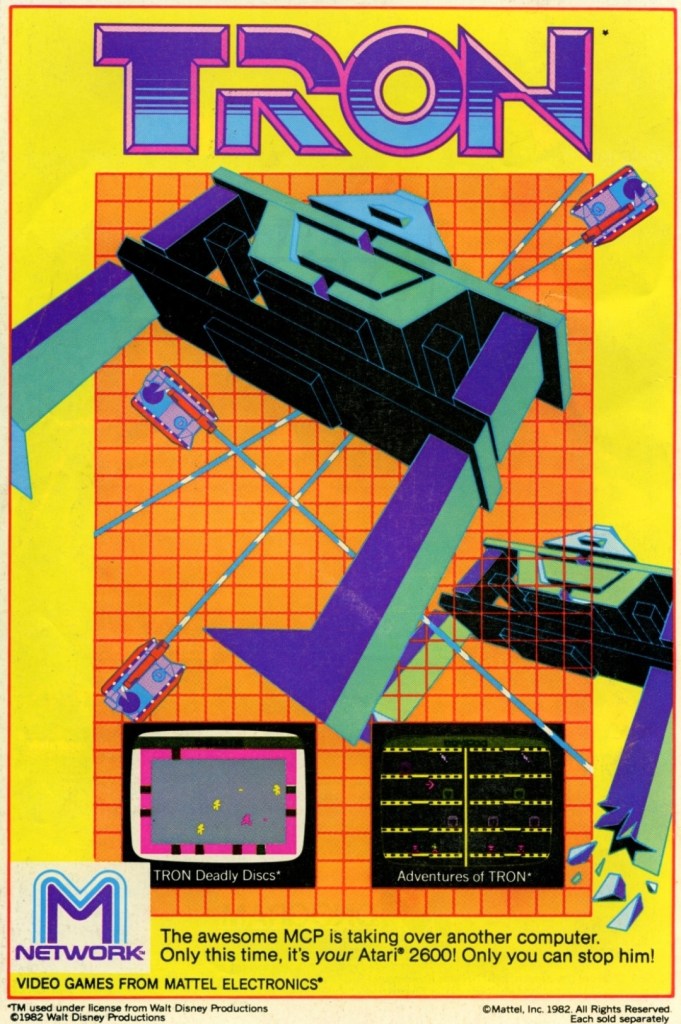
7. Tron Atari 2600 games print ad

Calling all Tron fans to look at this.

I was very captivated by the 1982 sci-fi movie Tron which I saw on home video. It had very flashy computer-generated visuals, a very memorable story and the fine performance by Jeff Bridges. Tron was also very reflective about the video game culture of its time. When I first saw this print ad while reading a comic book, I was really excited. If you look closely, it had nice artwork dominating the space and screenshots that each promoted the games Tron: Deadly Discs and Adventures of Tron. Even though the graphics were primitive, I still recognized the Tron-related images which added to my excitement.

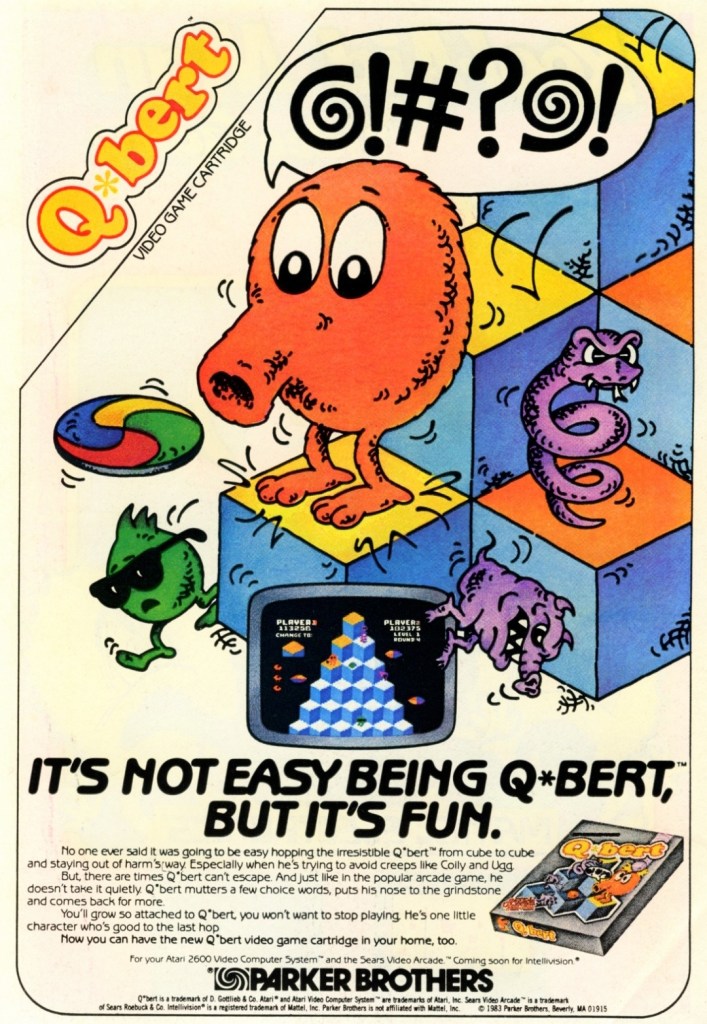
8. Q*bert print ad

This print ad by Parker Brothers really captured the essence of the game.

The puzzle-oriented 2D action game Q*bert became an arcade hit in America shortly after its 1982 release and even went on to become one of the highest grossing arcade games in 1983. Q*bert is one of those 2D games that cleverly blended puzzle play with 3D-like movement and avoidance of both obstacles and enemies. As expected, the game made its way into gaming console and this particular print ad had artwork that strongly captured the very essence of the game complete with the very catchy line “It’s not easy being Q*bert, but it’s fun.”

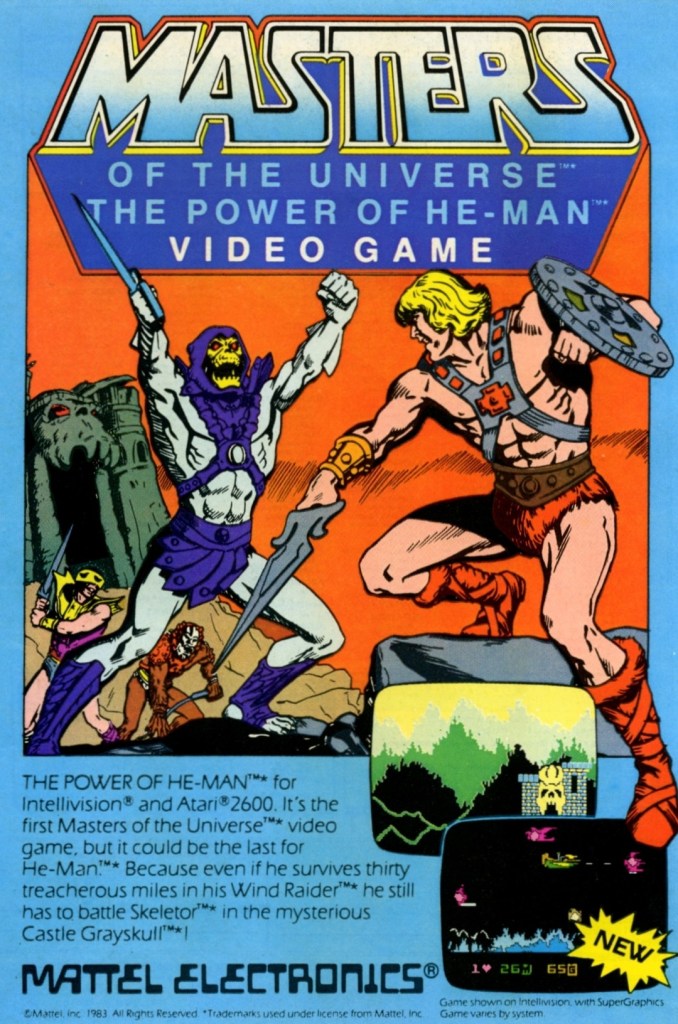
9. Masters of the Universe: The Power of He-Man print ad

Calling all He-Man fans.

I saw this print ad of Masters of the Universe: The Power of He-Man (for Atari 2600 and Intellivision) while reading a comic book long ago. Like the Tron games ad, this made me excited as I was fond of watching the He-Man cartoon series of the 1980s. While the selected screenshots caught my attention, it was the hand-drawn art of He-Man facing off with Skeletor and his minions that captivated me simply because it reminded me of the animated series. This is a fine example of promoting a video game that would instantly resonate with fans of He-Man and the Masters of the Universe franchise.

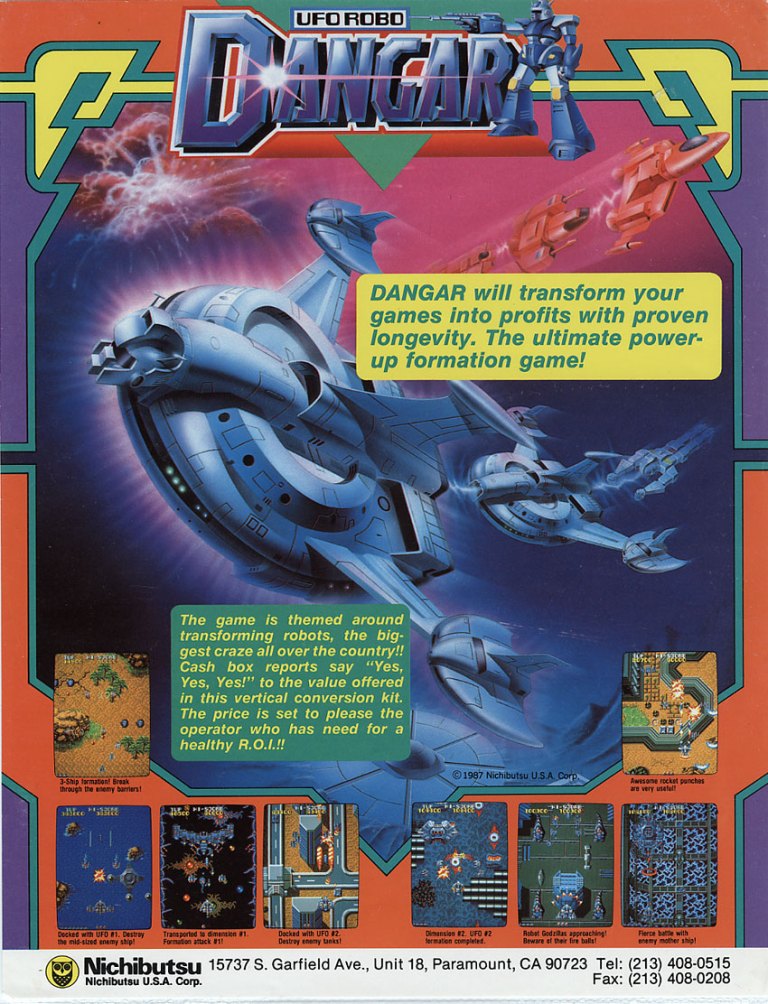
10. UFO Robo Dangar North American arcade flyer

The giant robot concept of this game gave some viewers the impression that it was based on some giant robot anime series from Japan even though the art work used does not suggest it.

Here is another arcade game from Nichibutsu but for the North American market and without the use of a model and without the subtle sexiness. UFO Robo Dangar is a 2D vertically scrolling science fiction shooting game and players get to control a giant robot (composed of flying vehicles that merged into one mechanical body) that has to go through countless waves of enemies in order to advance from one level to another. The arcade flyer used nice looking sci-fi art of ships with the game’s title having a robot and several screenshots of the game. The flyer even made a hard pitch towards arcade operators that UFO Robo Danger will transform their games into profits with proven longevity.

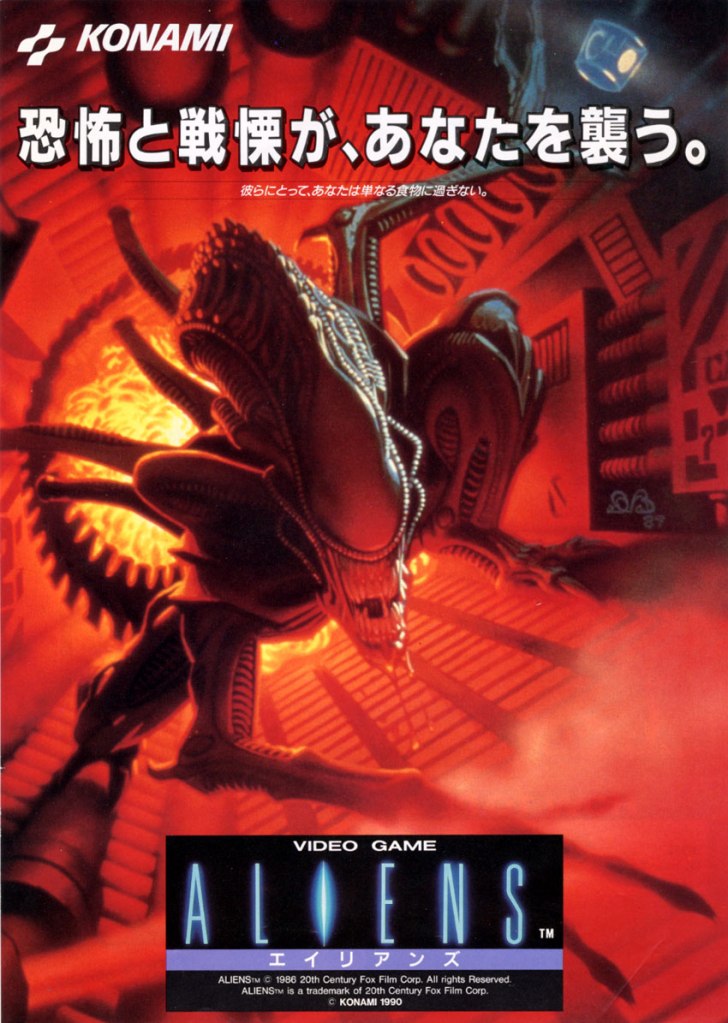
11. Aliens Japanese arcade flyer

The front.
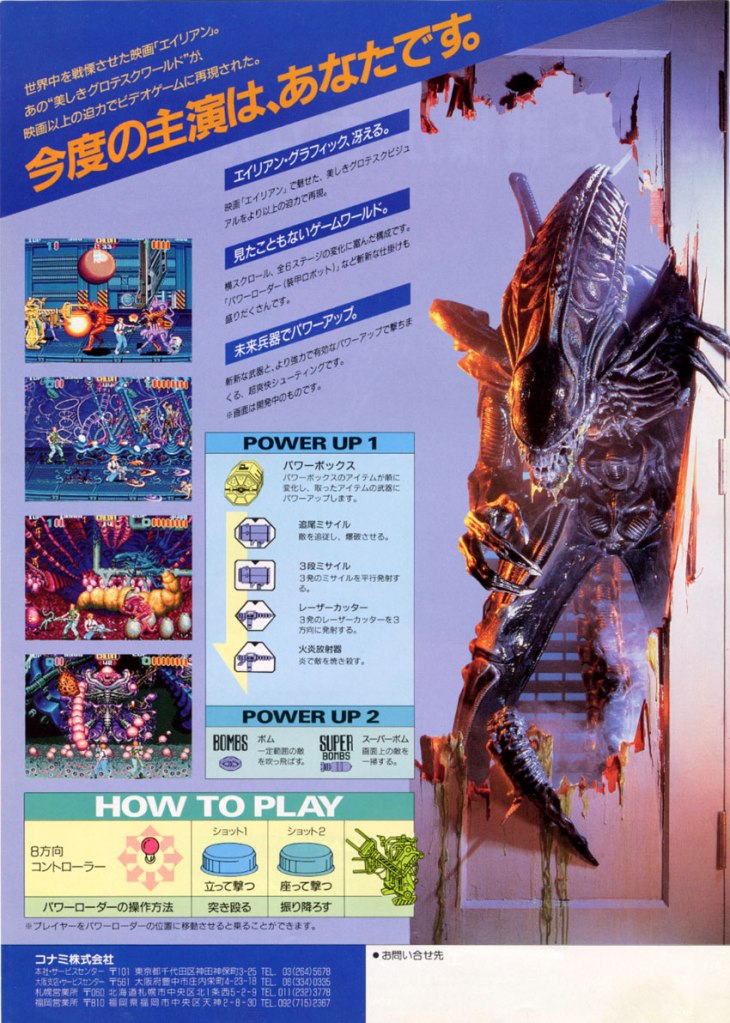
The other side of the flyer of the 1990 arcade hit Aliens.

Quite arguably, Konami’s 1990 arcade hit Aliens is the best video game of any game design to be based on the 1986 film directed by James Cameron. Not only was Aliens a big hit in the arcades, it also won an award from the American Amusement Machine Association (AAMA). Aliens was released in Japanese arcades in February of 1990 and Konami released an arcade flyer that was much more visually striking than its North American arcade flyer. The front had detailed artwork of the Xenomorph while the rear had the instructions and screenshots presented in an orderly manner. The photograph of the Xenomorph alien was added intensity on selling the game. This is still a great looking arcade flyer.

+++++

Thank you for reading. If you find this article engaging, please click the like button below, share this article to others and also please consider making a donation to support my publishing. If you are looking for a copywriter to create content for your special project or business, check out my services and my portfolio. Feel free to contact me with a private message. Also please feel free to visit my Facebook page Author Carlo Carrasco and follow me on Twitter at  @HavenorFantasy as well as on Tumblr at https://carlocarrasco.tumblr.com/ and on Instagram at https://www.instagram.com/authorcarlocarrasco
Retro Gaming Ads Blast – Part 25

Welcome back readers, fellow geeks and electronic gaming fans!

In this edition of the Retro Gaming Ads Blast (RGAB) series, we will take a look at another batch of retro gaming print ads – including arcade flyers – from the 1980s and 1990s.

For the newcomers reading this, Retro Gaming Ads Blast (RGAB) looks back at the many print ads of games (console, arcade, computer and handheld) that were published in comic books, magazines, flyers, posters and newspapers long before smartphones, social media, the worldwide web and streaming became popular. To put things in perspective, people back in the 1980s and 1990s were more trusting of print media for information and images about electronic games and related products.

With those details laid down, here is the newest batch of retro gaming print ads for you to see and enjoy…

1. Defender arcade flyer

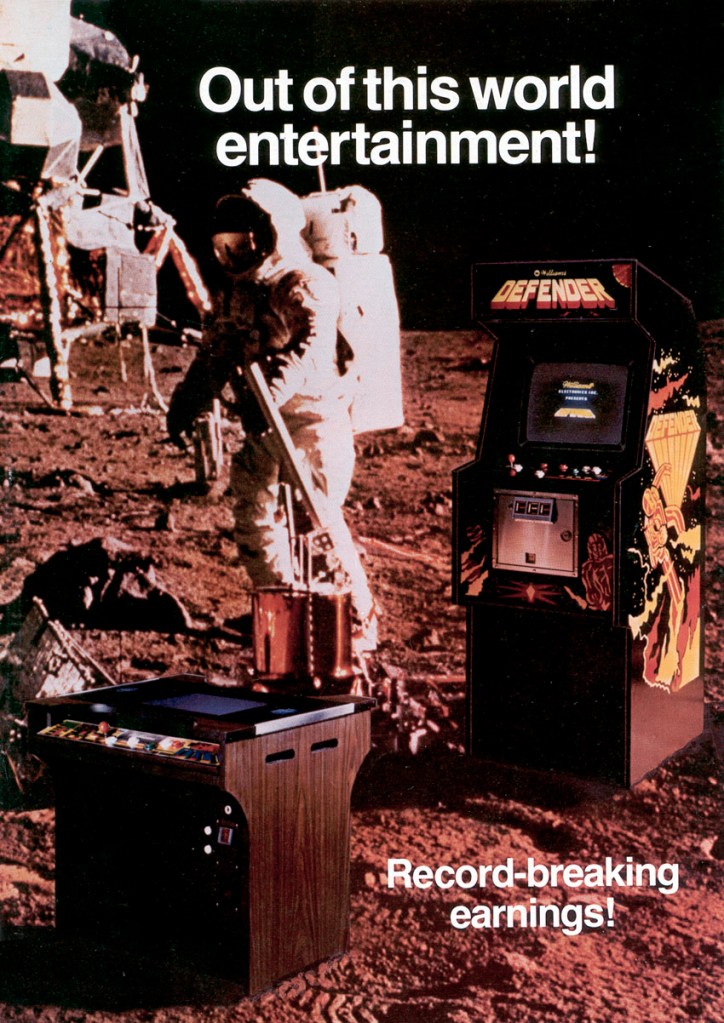
Perhaps Atari did not have enough original artwork of Defender to be used in this arcade flyer. So they ended up using footage of an astronaut on the moon.

Very long ago, I played the classic game Defender a lot on the Atari 2600. Strangely enough, I never played its arcade version as my visits to arcades were quite limited as I was so young back then. When it comes to the arcade flyer of Defender, I find the use of stock footage of an astronaut on the moon as the artistic backdrop baffling because the game’s concept was all about fighting back alien invaders and protecting the citizens. Ironically, the image blended well with the photos of two arcade machines showcased.

2. Amidar Atari 2600 print ad

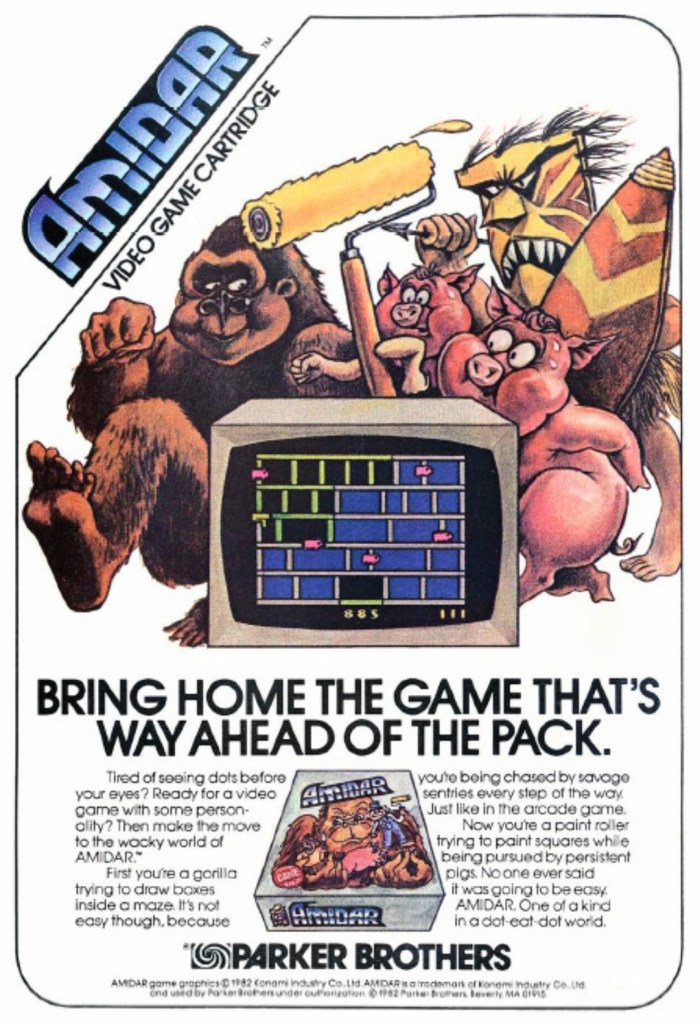
Does this ad make you think about King Kong or animals?

When I was a young boy, I saw this Parker Brothers print ad of Amidar appear in many superhero comic books I read. I never played the game on the Atari 2600 nor in the arcades. Each time I saw this ad, I always wondered how the game played and what its creative concept was all about. The constant showing of a giant gorilla on the game box cover reminded me of King Kong.

3. Reactor Atari 2600 print ad

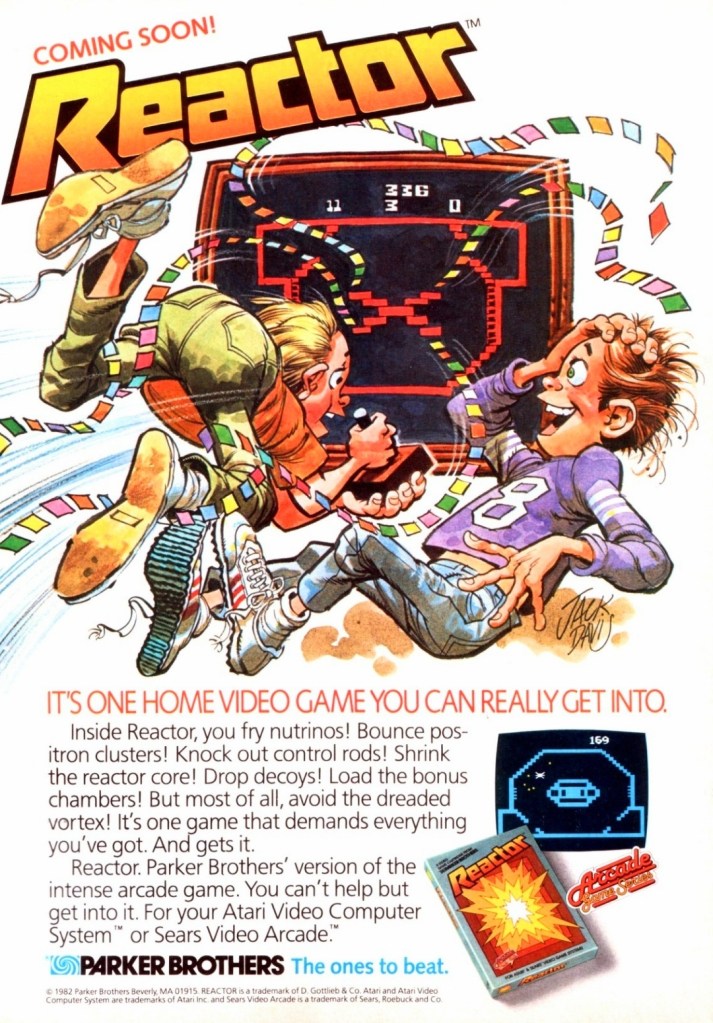
Parker Brothers made this ad imagining gamers getting very engaged with reactor once they start playing it.

Reactor was one of those video games that was somewhat influenced by the subject of nuclear technology, particularly about the nuclear reactors. This is another game I never played on console nor in the arcades. This Reactor print ad by Parker Brothers for the Atari 2600 has a visual style and creative concept that I still find fascinating to look at.

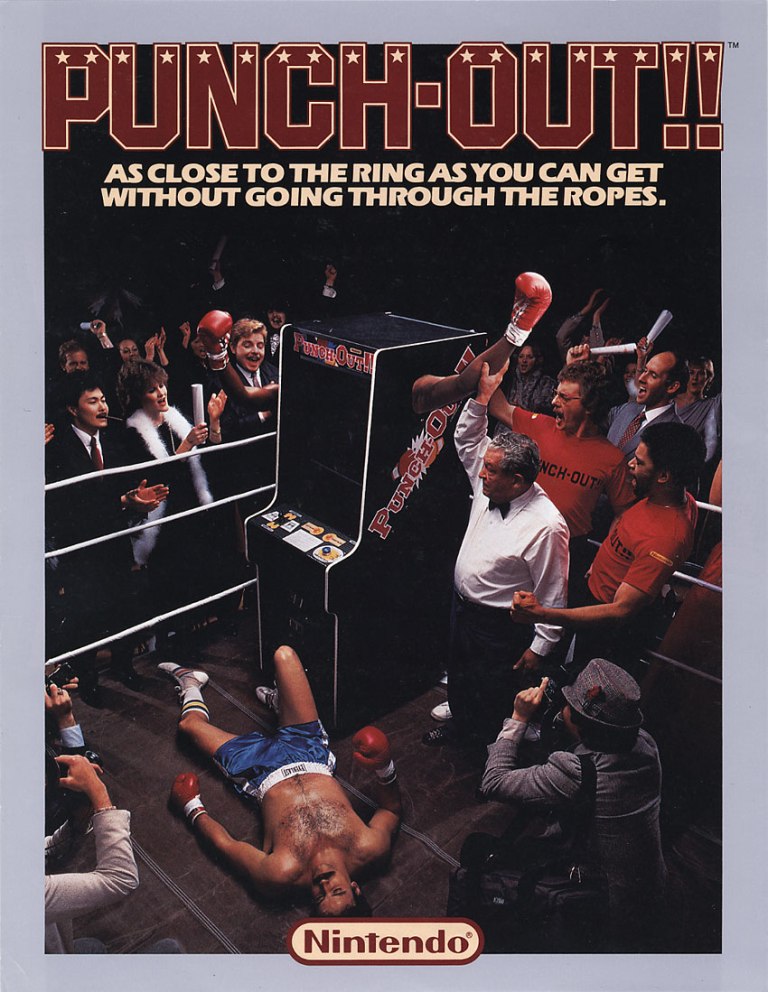
4. Punch-Out!! arcade flyer

This was years before Nintendo hired Mike Tyson to endorse the console version of Punch-Out!!

In 1984, Nintendo released the original Punch-Out!! game in the arcades and literally punched its way through to the top of American arcades that year while also scoring big in other arcades around the world. While the game proved to be very playable and a lot of fun, it could be argued that the intriguing image Nintendo used for the North American arcade flyer – a boxer down after literally getting beaten by the Punch-Out!! machine – made an impact on both gamers and arcade operators.

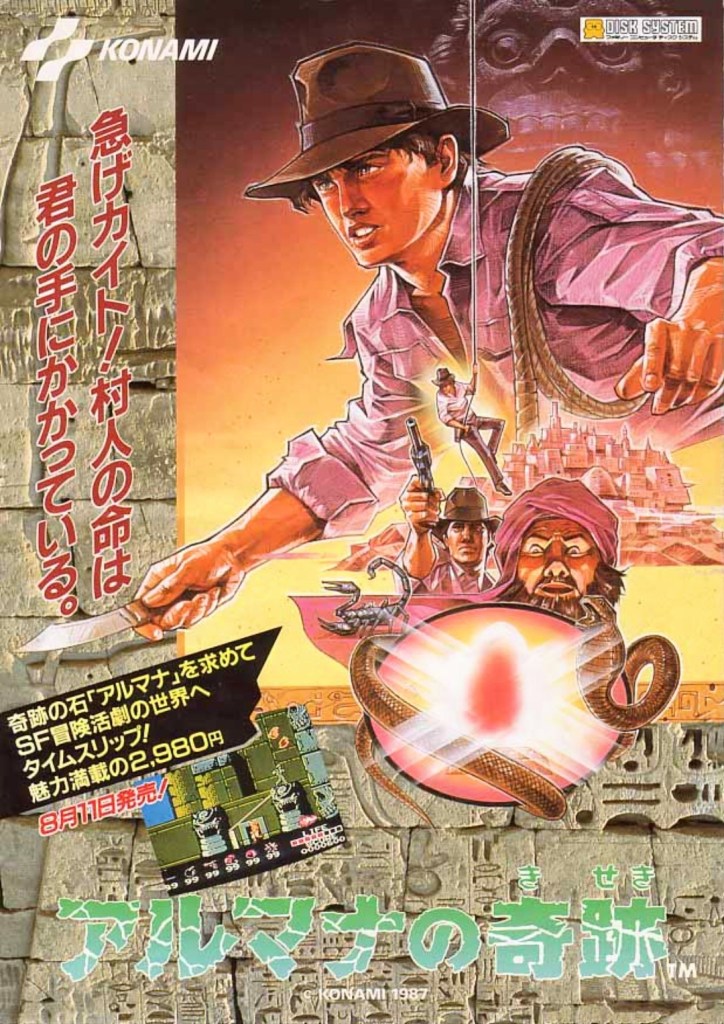
5. Arumana no Kiseki flyer

Is the famous Indiana Jones theme music playing inside your mind right now as you look at this art?

Released in 1987 on the Disk System of the Nintendo Family Computer (Famicom) in Japan, Arumana no Kiseki was one of the many 2D adventure games Konami released that entertained gamers. When compared to Castlevania – strongly influenced by American horror movies – this game was very influenced by the Indiana Jones movies of Steven Spielberg which is very evident in this promotional flyer.

In fact, some gamers who could not read the Japanese title actually thought this was an official Indiana Jones video game because the artwork was so suggestive. Having played and finished the game myself, I can say that Arumana no Kiseki was simply an Indiana Jones-inspired adventure game that had its own creative concept and unique settings and characters.

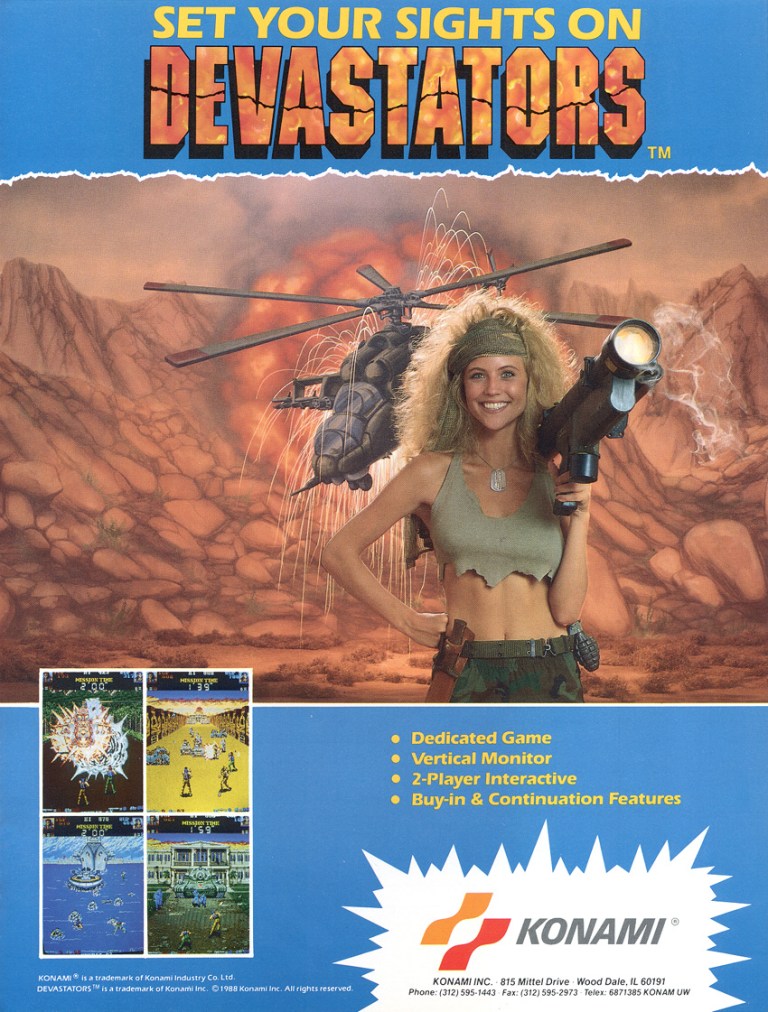
6. Devastators arcade flyer

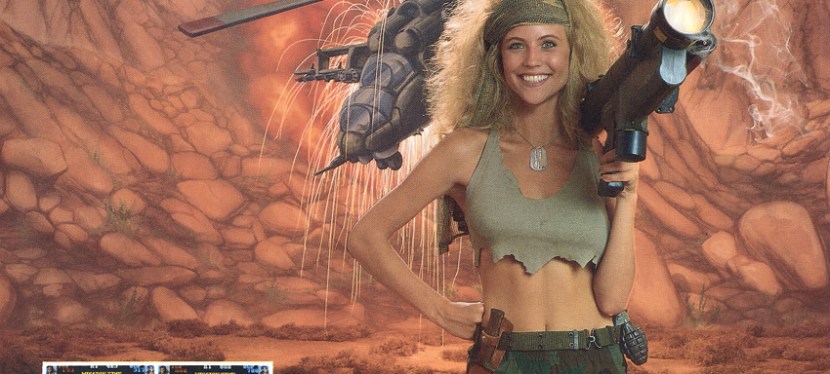
The 1980s female Rambo smiling towards you.

By looking at the track record of Konami closely, you will notice that many of their games in the 1980s were influenced by Hollywood movies and they hired pretty or sexy models for their arcade flyers. This arcade flyer of Devastators is no exception and you can clearly see the Rambo-inspired lady smiling while carrying a weapon. Devastators itself had strong Rambo vibes for its concept.

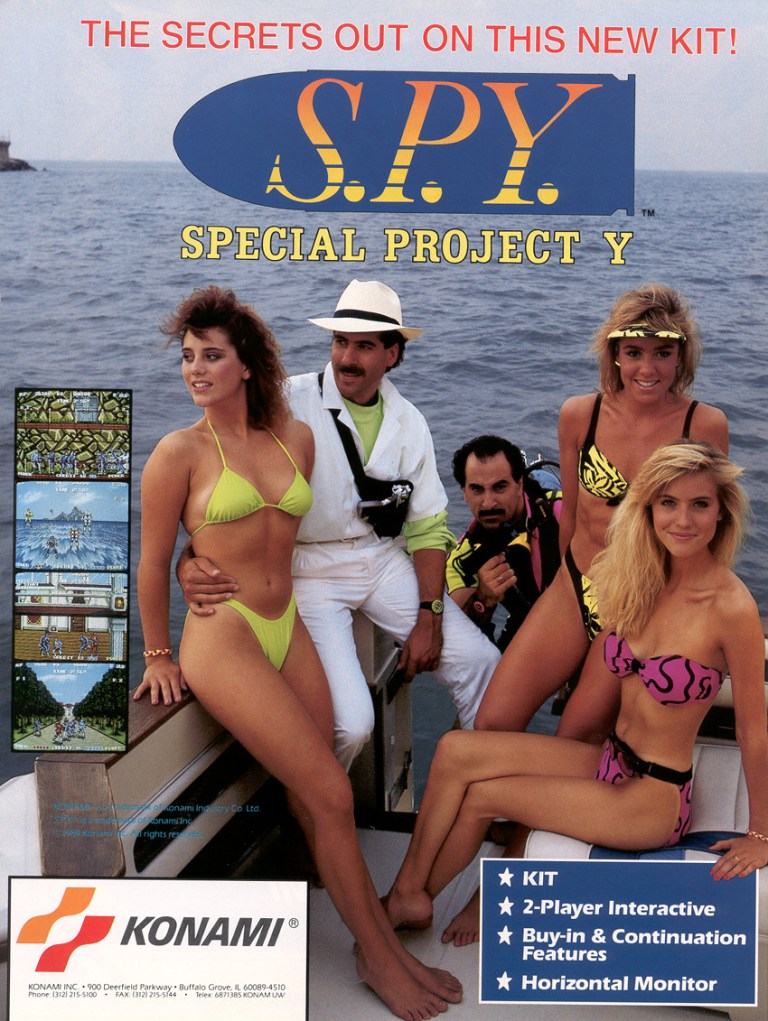
7. S.P.Y. Special Project Y arcade flyer

Somehow the picture of this flyer reminds me of Miami Vice.

Still with Konami, S.P.Y. Special Project Y is 1989 arcade game that featured action sequences in which players fight against countless enemies in order to progress with the minimal story. This game had certain spy movie elements and to promote it, Konami came up with this arcade flyer showcasing three sexy women wearing swimwear accompanied by two men who looked more like operators or schemers. Can you imagine yourself as an arcade operator looking at this flyer trying to decide to buy the game?

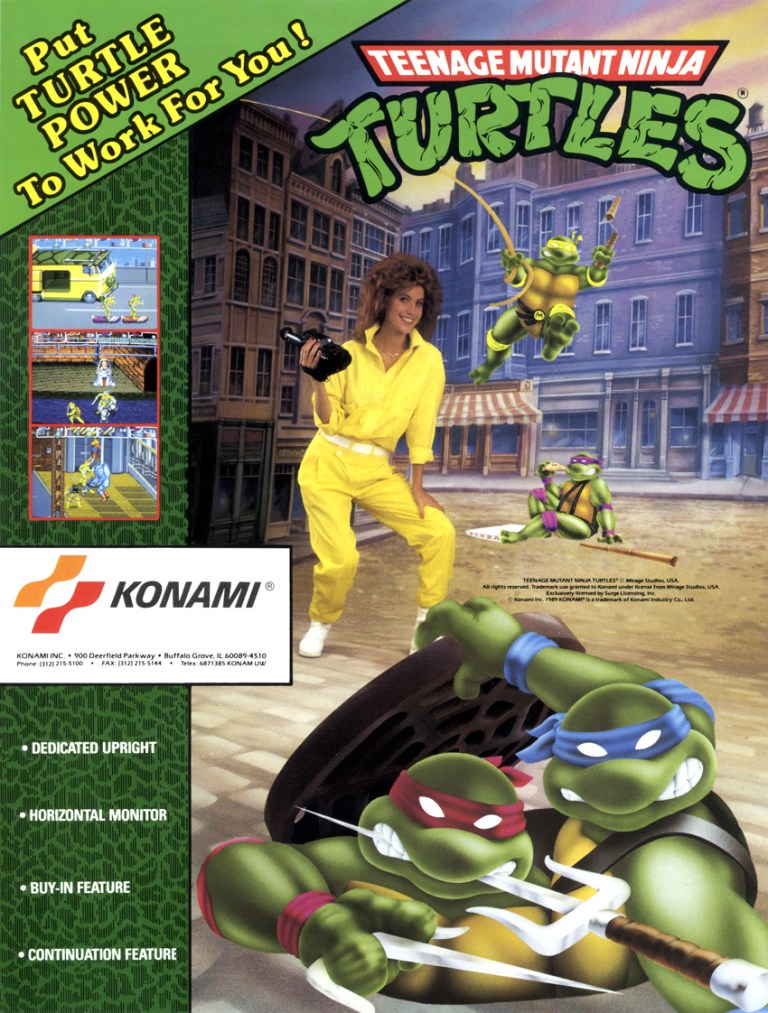
8. Teenage Mutant Ninja Turtles arcade flyer/poster

This arcade flyer is still great and exciting to look at, even if your not a TMNT fan.

Now this is one of the most definitive arcade games Konami ever made. Released in late 1989, Teenage Mutant Ninja Turtles became a massive arcade hit in North America constantly attracting lots of fans and casual gamers to play at each machine. The demand was so great, Konami had no choice but to hire a company to manufacture more machines. When it comes to promoting the game, Konami cleverly used a mix of artworks for the TMNT characters and fantasy environment while having a hired model playing April O’Neil blending in smoothly.

Having seen the 1980s animated series myself, I can say that the ad makers struck gold when it came to making a promotional image that Teenage Mutant Ninja Turtle fans can easily recognize and go to the arcade to play the game.

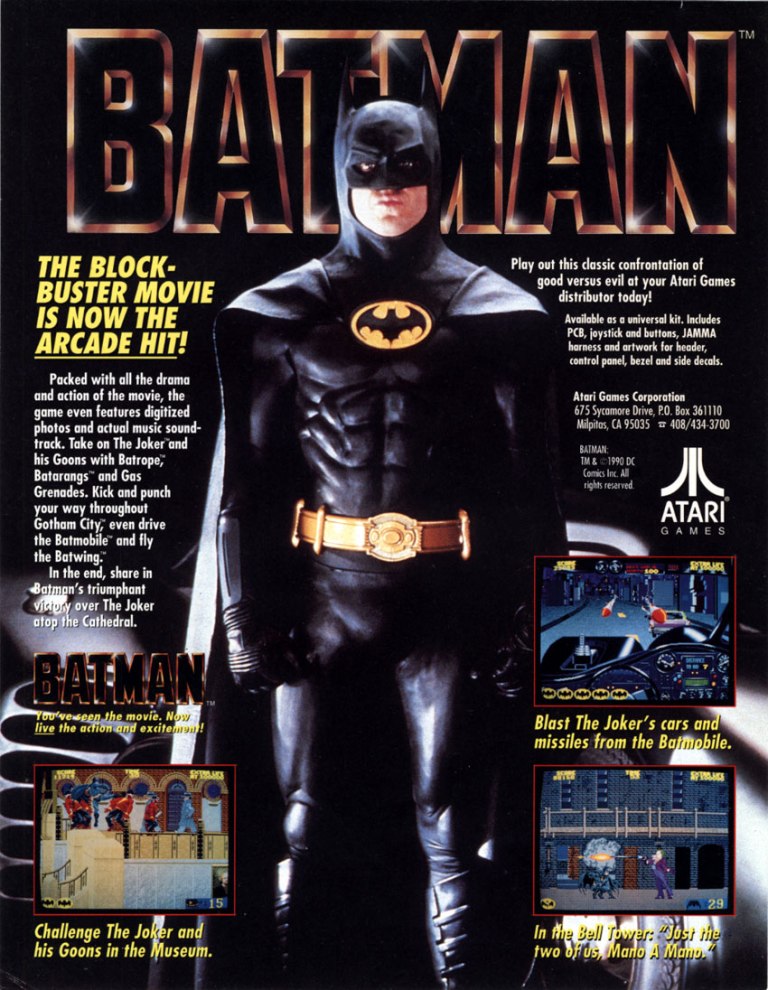
9. Batman arcade flyer

If you saw the 1989 movie, did you play this in the arcade?

The live-action Batman movie of 1989 was simply inescapable as there was so much hype, merchandising and promos connected with it. When it came to video games, it was not surprising that a lot of companies talked with Warner Bros. and eventually Atari made the official arcade game based on the movie (for insight on the production, watch PatmanQC’s video by clicking here). This early-1990s arcade flyer had a simplistic approach showing a few screenshots and descriptive text while having the live-action Batman (note: Michael Keaton in costume) dominating in the middle. Simplistic yet effective in telling gamers and arcade operators what to expect.

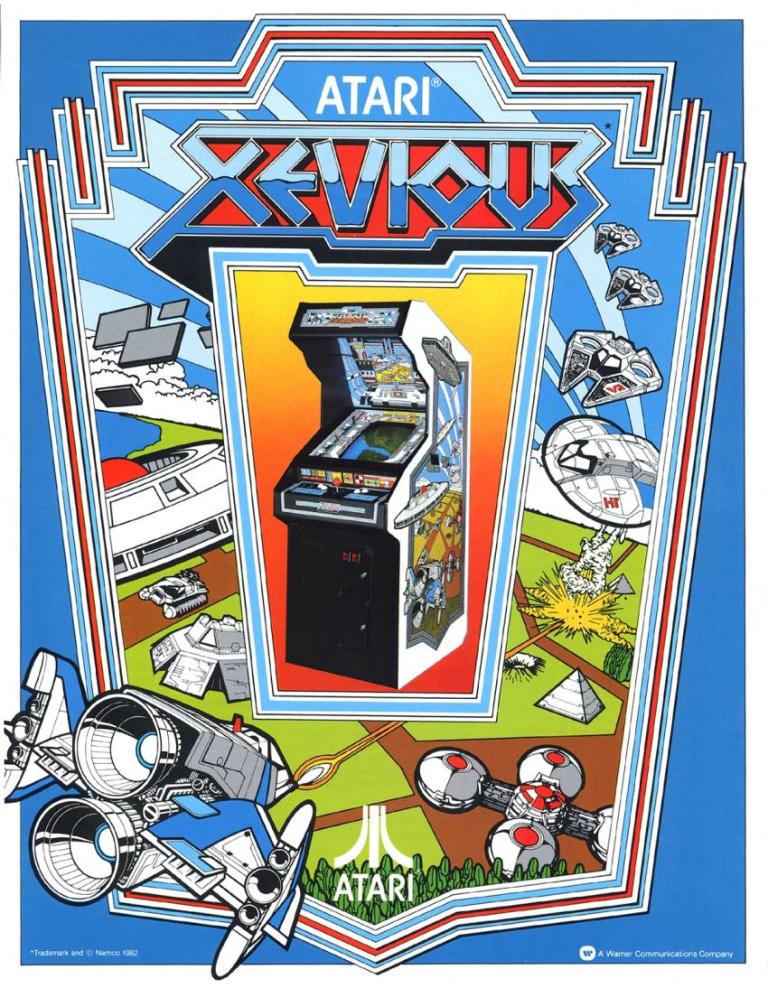
10. Xevious arcade flyer

This arcade flyer is exciting and creative to focus on.

Xevious is a long-running series of video games owned by Namco. Since the early 1980s, several Xevious video games were released on arcades, consoles and mobile devices. Believe it or not, the original Xevious game was published by Atari for North American arcades and the company came up with this dynamic looking flyer to promote it. The arcade flyer really looks dynamic due to the hand-drawn art surrounding the photo of the machine. Even by today standards, this flyer still looks modern and energetic.

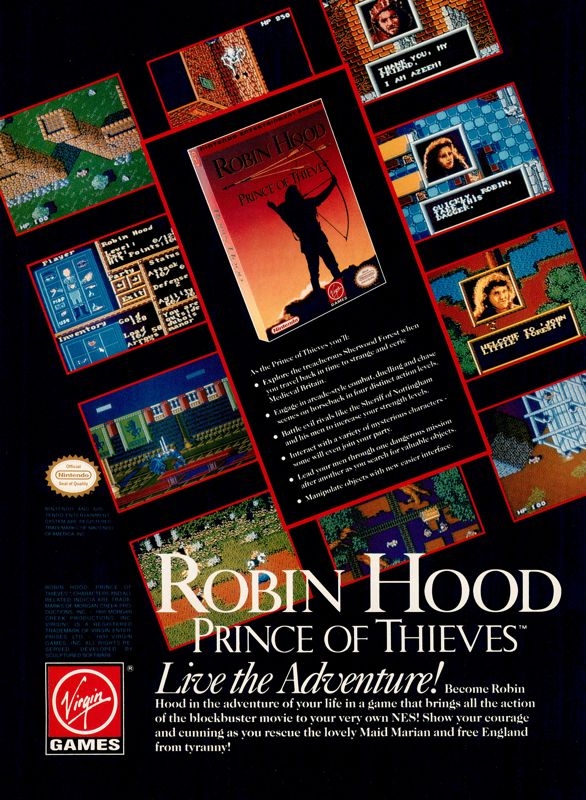
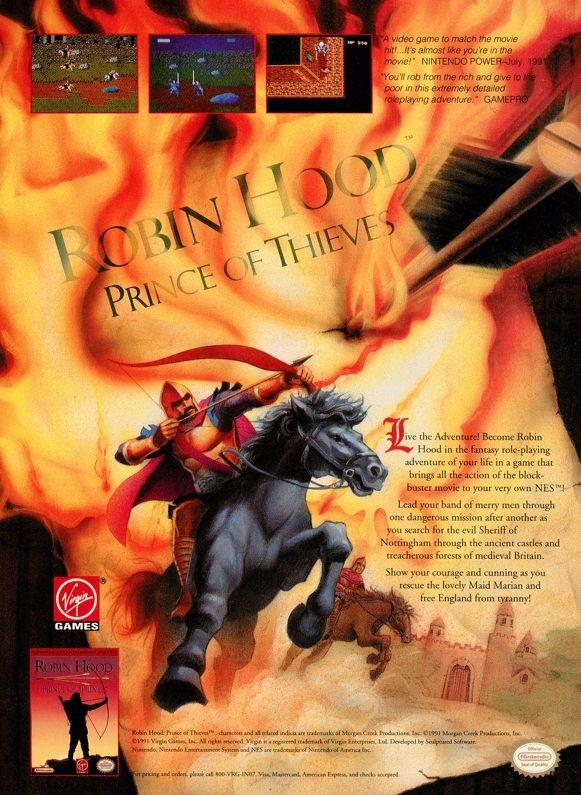
11. Robin Hood: Prince of Thieves print ads

Tell me if this ad makes you want to play the game.
Original artwork here was meant to immerse viewers into the fantasy setting of the game based on the movie.

If you saw the 1991 movie Robin Hood: Prince of Thieves, were you able to play the video game adaptation? Robin Hood: Prince of Thieves on the Nintendo Entertainment System (NES) was notable for being specially featured in the Nintendo Power magazine and its game design was truly ambitious at the time. To promote the game and take advantage of the movie’s popularity, Virgin Games came out with two print ads targeting movie fans and NES gamers.

The first print ad above had lots of selected screenshots surrounding the game’s box and crammed the descriptive text. The 2nd print ad had original artwork to emphasize the fictional setting and used only three screenshots. Looking at both print ads, it was clear that the ad makers had no permission to use the likeness of Kevin Costner as Robin Hood. The same with other actors and their characters. Regardless, the ads still reminded me enough of the movie while keeping me informed about the video game.

+++++

Thank you for reading. If you find this article engaging, please click the like button below, share this article to others and also please consider making a donation to support my publishing. If you are looking for a copywriter to create content for your special project or business, check out my services and my portfolio. Feel free to contact me with a private message. Also please feel free to visit my Facebook page Author Carlo Carrasco and follow me on Twitter at  @HavenorFantasy as well as on Tumblr at https://carlocarrasco.tumblr.com/ and on Instagram at https://www.instagram.com/authorcarlocarrasco
What to watch on YouTube right now – Part 47

Welcome back, my readers, YouTube viewers and all others who followed this series of articles focused on YouTube videos worth watching. Have you been searching for something fun or interesting to watch on YouTube? Do you feel bored right now and you crave for something to see on the world’s most popular online video destination?

I recommend you check out the following topics and the related videos I found.

#1 You, Me and the Movies react to 1984’s Runaway – When it comes to the works of the late Michael Crichton, you might be familiar with Jurassic Park, The Andromeda Strain, Congo, Sphere and Westworld. Way back in 1984, Runaway was released in cinemas and it was directed by Crichton himself. The result was a very unique way of telling a crime story with a heavy touch of techno thriller. Hollywood has not made another movie like Runaway. To discover more about Runaway, watch the reaction video of You, Me and the Movies.

#2 Minty Comedic Arts’ look at The Indian in the Cupboard – I remember way back in the mid-1990s when I was inside a local movie theater anticipating a movie to start playing. As I waited, a few movie trailers were shown and the one trailer that really caught my attention was that of The Indian in the Cupboard. Apart from having an interesting concept (based on the 1980 children’s book), the trailer even showed a few but special seconds of Darth Vader and RoboCop in motion. I never saw the movie but there is a lot of interesting stuff to learn about it. Watch the video by Minty Comedic Arts.

#3 The incompetence and delusions of super woke Canadian Prime Minister Justin Trudeau – Let’s be very clear here. Justin Trudeau, who has been Canada’s Prime Minister since 2015, is living with a very distorted view of reality and his fellow Canadians are already suffering economically and socially. A proud feminist, Trudeau recently attacked Americans for rejecting his fellow Communist and American counterpart Kamala Harris in the 2024 US Presidential Election. Trudeau’s recent speech only proved his delusional views and lack of common sense. Most likely, he is panicking already over US President-elect Donald Trump’s plan to impose tariffs on Canada. Watch the Sky News Australia video to find out more.

#4 The sinister truth about the Electric Vehicle (EV) industry that the mainstream news media is not telling you – I already said it before – electric vehicles (EVs) are dangerous and can harm you and your local community. There really is a conspiracy between the electric vehicle industry players, the mainstream news media and the climate change zealots. Together, those sinister forces are hiding the dark truth about EVs and they will do anything to get your money. Watch the Piston Pundit video now.

#5 More videos about Planet of the Apes (1968)  – Did you notice that every time a new Planet of the Apes movie got released, there is the temporary revival of interest in the original movie of 1968? By today’s standards, Planet of the Apes of 1968 has little spectacle as it was more philosophical, more suspenseful and more about shock. If you want to discover more about the Planet of the Apes film that starred Charlton Heston, watch the selected videos below.  

#6 PatmanQC’s look back at The Combatribes – The Combatribes was a hit in the arcades both in Japan and America way back in 1990. Unsurprisingly, the game was ported to the Super Nintendo Entertainment System (SNES) in 1992. Believe it or not, the company behind The Combatribes also made the Double Dragon games. If you wish to learn more about the history of The Combatribes, watch PatmanQC’s in-depth video.

#7 Decker Shado’s video review of City Hunter (1993) – Believe it or not, the 1993 Jackie Chan-led action comedy movie City Hunter was a live-action adaptation of the City Hunter manga series (which was adapted into an anime TV series). I never saw City Hunter when it was played in cinemas here in the Philippines in 1993 but I heard so much feedback from my friends as the claimed to laughing so hard inside the cinema. Years ago, YouTuber Decker Shado had a series of retro video reviews of Jackie Chan films and his City Hunter video review is entertaining.

#8 Slope’s Game Room’s Dino Crisis series retrospective – I can hardly believe it has been 25 years since I first played Dino Crisis on the PlayStation which was a memorable game as it was directed by Resident Evil creator Shinji Mikami. A lot of gamers called Dino Crisis “Resident Evil meets Jurassic Park” but in my view, it was daring creative choice by Mikami who led a team that worked so hard to animate dinosaurs while using a game engine that rendered full polygonal environments for players to explore. To my surprise, Dino Crisis 2 was released a little over year later and it had radically different gameplay that emphasized more of speed, shooting and scoring. A few years later, I played Dino Crisis 3 on a rented Xbox console and it was a very disappointing experience. To find out more about the history of the Dino Crisis games, watch Slope’s Game Room’s retrospective.

+++++

Thank you for reading. If you find this article engaging, please click the like button below, share this article to others and also please consider making a donation to support my publishing. If you are looking for a copywriter to create content for your special project or business, check out my services and my portfolio. Feel free to contact me with a private message. Also please feel free to visit my Facebook page Author Carlo Carrasco and follow me on Twitter at  @HavenorFantasy as well as on Tumblr at https://carlocarrasco.tumblr.com/ and on Instagram athttps://www.instagram.com/authorcarlocarrasco