Welcome back my readers, YouTube viewers and all others who followed this series of articles focused on YouTube videos worth watching. Have you been searching for something fun or interesting to watch on YouTube? Do you feel bored right now and you crave for something to see on the world’s most popular online video destination?
I recommend you check out the following videos I found.
#1 Tremors Revisited And Explained – By today’s standards, Tremors is a classic among monster movies (AKA creature features) Hollywood released. With the way it was written and presented, Tremors is always fun to watch again. I have seen it many times and yet it is worth repeating from start to finish. Behind the scenes, there were a lot of stuff, adjustments and unexpected developments that happened during production. If you wish to see such stuff, watch and learn from the Tremors videos of Represent This below.
#2 A Look At Excalibur In Las Vegas –I never had the opportunity to visit Excalibur in Las Vegas. During its first several years of operation, Excalibur welcomed countless tourists with its fantasy-themed atmosphere, designs, facilities and entertainment. Imagine having a meal while watching two knights riding horses and performing a joust in front of you. Imagine seeing members of the hotel staff wearing fantasy costumes. Like Circus Circus Hotel and Casino, Excalibur was a fine hotel that catered to families while still having casinos for gamblers. To learn more about what Excalibur was and what made it stand out among the hotels of Las Vegas, watch the video below.
#3 Meals At The Expressway In Japan – How often do you stop for a meal when traveling along a major highway? In many parts of the world, highways or expressways have clusters of gas stations, convenience stores, groceries and restaurants for travelers who need some relief from the stress of long travel. For many travelers, traveling far while being hungry can be a problem. In recent times, Nippon TV posted a video about meals and food items that travelers can find along expressways and the variety is interesting to see. Watch and learn from the video below.
#4 Cleopatra Movie Revisited – Way back in 1963, the movie Cleopatra starring Elizabeth Taylor and Richard Burton was released. The historical epic was made at a staggering cost of $44 million which was almost three times more expensive than 1959’s Ben-Hur. Behind the scenes, 20th Century Fox was in very deep financial trouble and many hard business risks were taken to make Cleopatra. Elizabeth Taylor, who signed a record-setting $1 million contract for the film, had health problems that added to the delay of the production. The film even lost its original movie director. To learn more about the history and the behind-the-scenes intrigue of Cleopatra, watch the video below.
#5 Innerspace Revisited – Innerspace (stylized as InnerSpace) from 1987 is a fun movie to watch and it has fine performances from Dennis Quaid, Meg Ryan and Martin Short. That said, it is not surprising to see Innerspace featured in reaction videos and retrospective videos by YouTubers. For your enjoyment, watch the videos below.
#6 Breath Of Fire Retrospective – When Breath of Fire was first released in 1993, it was a surprising Japanese role-playing game (JRPG) as it had a somewhat fresh concept and it was released by Capcom (already famous for fighting games). The first game was successful enough to convince Capcom to make sequels (released on other game consoles as technology evolved) achieving varying degrees of critical and commercial success. Going back to the original game, some wondered what made it notable and how the game came to be. To find out the history of Breath of Fire and what its story was about, watch the video below.
Welcome back my readers, YouTube viewers and all others who followed this series of articles focused on YouTube videos worth watching. Have you been searching for something fun or interesting to watch on YouTube? Do you feel bored right now and you crave for something to see on the world’s most popular online video destination?
I recommend you check out the following videos I found.
#1 Dawn Of The Dead Remake Revisited – Back in 2004, I saw the Dawn of the Dead remake inside a cinema located inside a shopping mall here in the Philippines. The Zack Snyder-directed film only inspired me to look for the 1978 original version of Dawn of the Dead directed by the late George Romero. The only thing the two films have in common is the concept of desperate people taking refuge inside a shopping mall during a zombie apocalypse. Zack Snyder’s film was more about violent action with horror elements blended with it. As Snyder went on to direct high-profile DC Comics superhero movies and produced other such projects of Warner Bros., it was natural for film buffs to gravitate to 2004’s Dawn of Dead which was his directorial debut. To learn more about the said remake and see the cinematic elements that formed the style of Snyder, watch the videos below.
#2 Premium Sushi, Hearty Tempura And Wagyu Beef For Breakfast In Japan –If you were traveling overseas, how hungry do you get when you start the day? Would you go for a simple and affordable breakfast or would you want something special in the morning? In Tokyo, there are these food joints that offer customers a luxurious breakfast with Wagyu beef, special tempura and premium sushi to name some. Already, local and foreign tourists are flocking to such food joints for the premium breakfast experience and you can learn more from the Nippon TV videos below.
#3 The Different Versions Of Final Fantasy VI – Among all the many Final Fantasy games released since 1987, Final Fantasy VI is still my favorite of them all. I first played the classic Japanese role-playing game (JRPG) on Super Nintendo Entertainment System (SNES) in 1994 which was titled “Final Fantasy III”, and it has a great epic story, a huge cast of playable characters, lots of unique gameplay features and great game design. Through the decades, Final Fantasy VI was ported to many consoles, mobile devices and even on personal computer. You might be wondering which version of Final Fantasy VI is the best in terms of visual quality, which one is the most available and which one is the most updated version. That said, you can find out by watching the video below.
#4 Castlevania II: Simon’s Quest Revisited – When Castlevania II: Simon’s Quest was first released on the Nintendo Entertainment System (NES) in 1987, many fans who enjoyed the first game were alienated by how different the sequel felt, looked and played. It still was horror-themed 2D adventure game with Simon Belmont as the playable protagonist again but the creative team of Konami implemented role-playing elements and open-world exploration into the gameplay. Major game design changes aside, Castlevania II still has a lot more than meets the eye and you can find out by watching the video below. Surely it will challenge what you know about Simon Belmont and the Castlevania lore.
#5 Why Feminists Support Islam – Let’s be very clear here. Islam is a truly ugly religion and it is incompatible not only with Western democracy and values, but also with several other cultures around the world. The strange thing is that modern-day feminists actually support Islam even though the ugly religion itself goes against women’s rights, against personal liberty and against freedom as we know it. In the video below, Ayaan Hirsi Ali explains in detail why mainstream feminists today support Islam, why feminism today is very twisted and why feminists even aligned themselves with Islamic terrorists.
Welcome back my readers, YouTube viewers and all others who followed this series of articles focused on YouTube videos worth watching. Have you been searching for something fun or interesting to watch on YouTube? Do you feel bored right now and you crave for something to see on the world’s most popular online video destination?
I recommend you check out the following videos I found.
#1 Timecop Revisited – I am not a fan of Jean-Claude Van Damme but his 1994 movie Timecop managed to entertain me when I first saw it on home video. After watching it, I learned that it was based on the Timecop literary property and stories published by Dark Horse Comics. Directed by Peter Hyams, Timecop ended up as one of the better movies of JCVD and it even has its own fanbase. If you want to discover more about the cinematic Timecop, watch the videos posted below.
#2 Inhumanoids Revisited –I remember seeing some episodes of the animated TV series Inhumanoids on local TV and I can say it was easily the most bizarre and even shocking thing to watch. Inhumanoid has a very dark and even cynical tone, and it had gruesome scenes which were really disturbing to see. Behind the scenes, Inhumanoids was animated by Japan-based Toei and involved Hasbro, Sunbro and even Marvel Productions. To find out what made Inhumanoids so disturbing, watch the video below and pay attention to the details.
#3 Luxurious Breakfast Spots In Tokyo – Have you ever thought about having a luxurious breakfast while traveling overseas? In Tokyo, Japan’s most famous city, there are indeed places where visitors can have breakfast with the premium experience. These luxurious places have something unique to offer to customers who have more than enough money to spend for the morning meal. Watch and learn from the Nippon TV video below.
#4 Remember The Rotoscoped Lord Of The Rings – Decades before Peter Jackson and his team rocked the world of moviegoers with memorable Lord of the Rings film trilogy, an animated LOTR was actually made. I am talking about the 1978 rotoscoped animated film The Lord of The Rings directed by Ralph Bakshi which I first saw on home video after seeing Peter Jackson’s LOTR. I found the 1978 LOTR a really unique animated viewing experience and it definitely involved a lot of production work without any use of computers. To find out more about the animated LOTR film, watch the video below.
#5 You, Me and The Movies React To Can’t Hardly Wait – When Can’t Hardly Wait was shown in cinemas in 1998, it faded away as not enough moviegoers were attracted watch it. However, the movie did not fade into obscurity and it actually got new fans as it was discovered on home video, cable TV, pay-per-view and streaming. More importantly, the movie itself was pretty funny the cast led by Jennifer Love Hewitt delivered fine performances as teenagers. Slowly but surely, new retrospective videos about Can’t Hardly Wait are emerging on YouTube and the most entertaining video is the reaction by You, Me and The Movies which I encourage you to watch right now.
#6 Square Enix In The 2000s – Back in the 1990s, Squaresoft and Enix were separate Japanese gaming companies that released a lot of Japanese role-playing games (KRPGs) which entertained many millions of gamers. Square was famous for the best-selling Final Fantasy games while Enix had the wildly popular Dragon Quest franchise. In the 2000s, a series of changes happened in the video game industry and the two companies merged into Square Enix. Since then, a lot of Final Fantasy and Dragon Quest games with evolved designs and styles of presentation were released under a single publisher. There is a lot more to discover what happened behind the scenes as documented in the in-depth video below from Gaming Broductions.
Welcome back readers, fellow geeks and electronic gaming fans!
In this edition of the Retro Gaming Ads Blast (RGAB) series, we will take a look at another batch of retro gaming print ads from the 1980s to the 1990s, particularly on role-playing games (RPGs) from the East and the West. This is the RPG Special!
For the newcomers reading this, Retro Gaming Ads Blast (RGAB) looks back at the many print ads of games (console, arcade, computer and handheld) that were published in comic books, magazines, flyers, posters and newspapers long before smartphones, social media, the worldwide web and streaming became popular. To put things in perspective, people back in the 1980s to the 1990s were more trusting of print media for information and images about electronic games and related products.
With those details laid down, here is the newest batch of retro gaming print ads for you to see and enjoy…
1. Phantasie North American and Japanese Print Ads
The North American print ad.
The Japanese print ad.
Released by Strategic Simulations in the mid-1980s, Phantasie was a fantasy role-playing game that became a huge commercial success paving the way for not only ports on other computer systems of the time but also sequels later. The ad they came up with for the North American market had strong fantasy vibes and the screenshots gave readers the impression that it looked playable or user friendly. For the Japanese market, Phantasie was ported to the MSX system and they came up with an ad using radically different art work that had a horror vibe.
2. Phantasy Star Japanese Print Ad
Phantasy Star in the Japanese print ad sharing the spotlight with After Burner.
In the 1980s, role-playing games started gaining popularity with Japanese console gamers and there were game developers who were inspired by established RPGs from the West. Enix released two Dragon Quest games and each of them sold a lot of copies on Nintendo’s Family Computer (Famicom). At the time, Sega already had the Master System (called the SG-1000 and its variants with revisions) in the console market and they were way behind Nintendo on hardware sales. Knowing there is a market for console RPGs, Sega went on to make their exclusive RPG Phantasy Star. In 1987, a print ad was released showing Phantasy Star sharing the spotlight with Sega’s blockbuster game After Burner in the background. While the ad felt a bit disorienting to see, the game achieved much-needed success for Sega which in turn brought the game to the Master System in America in 1988. The game sold more and eventually led to sequels in the years that followed.
3. Ultima III Japanese Print Ad
Remember the old days when anime or comic book-style artwork was used to promote games in the Japanese print media?
Released in Japan under the title Ultima: Kyoufu no Exodus, Ultima III: Exodus was a breakthrough for the series as the Famicom version marked the first console release for Japanese gamers (note: the game was also offered for MSX and other computer systems in the country). The anime-style artwork used for the print ad is the same virtually the same with the front cover of Famicom version. Very notably, the art on the covers of the PC-88 and PC-98 versions were different.
4. Lunar: The Silver Star Japanese Print Ad
Game Arts’ Lunar: The Silver Star as advertized in Japanese magazines.
By the 1990s, console RPGs were very popular as franchises like Dragon Quest and Final Fantasy each released sequels that sold a lot of copies. The company Game Arts decided to make a role-playing game which can tell stories better using animation with voiceovers and music while being very playable and enjoyable. They came up with Lunar: The Silver Star and released it on the Mega-CD add-on (connected with the Mega Drive console of Sega) in 1992. As such, it was not surprising to see the print ad having anime-style artwork as the game itself had several minutes of anime cutscenes complete with audio. As most Japanese role-playing games (JRPGs) did not have playable anime cutscenes for storytelling, Lunar: The Silver Star really stood out. Sometime later, the small American company Working Designs would handle the game’s English version and start a healthy business relationship with Game Arts.
5. Dungeons & Dragons: Warriors of the Eternal Sun North American Print Ad
A print ad that strongly appealed to both Sega Genesis gamers as well as fans of Dungeons & Dragons.
By the year 1992, the fantasy games franchise Dungeons & Dragons was wildly popular as players around the world kept enjoying the tabletop RPG modules (using dice, pen paper) as well as many computer and video games already available. Sega acquired a D&D license and eventually released Dungeons & Dragons: Warriors of the Eternal Sun exclusively on their Genesis console in 1992. To promote it, Sega produced a 2-page print ad that had one half showing the game’s box placed with jewelry while using the other half to show the screenshots, descriptive text and other details. The way it was presented, the print ad was cleverly structured to attract the attention of Sega Genesis gamers as well as Dungeons & Dragons fans. The game ended up as the first and only official D&D product for the console.
6. Shadow Sorcerer North American Print Ad
This is one of many Dungeons & Dragons computer games released. The use of painted art for marketing was done many times.
In the history of the Dungeons & Dragons franchise and electronic gaming, it was on computers where the more ambitious and more intricate licensed games were played by many fans. In 1991, the Advanced Dungeons & Dragons (AD&D) electronic game Shadow Sorcerer was released on MS-DOS PC, Amiga and the Atari ST. The painted artwork used on the print ad was virtually the same as that on the box covers of the MS-DOS and Amiga versions. I can only guess that the ad markers must have paid a lot of money on the painted art and decided to use it for both marketing and packaging since it looked so detailed.
7. Estopolis Denki Japanese Print Ad
The 2-page Japanese print ad of Estopolis Denki.
In 1993, a brand-new Japanese developer called Neverland was established and its first project was the fantasy role-playing game Estopolis Denki for the Super Family Computer (Super Famicom). That same year, publisher Taito released the game and they promoted it with a 2-page print ad that featured a whimsical looking hand-drawn art work on one half and utilized the other half with details, screenshots and part of the art that was used on the game’s Super Famicom box cover. While Japanese game sales are not available, it seems Estopolis Denki sold enough to convince the publisher to release the game in North America as Lufia & The Fortress of Doom.
8. Lufia & The Fortress of Doom North American Print Ad
If you were able to play Lufia & The Fortress of Doom on the SNES, were you able to see this ad in a comic book or in a magazine?
Upon release in America in late 1993, Taito scored gold as Lufia & The Fortress of Doom on the Super Nintendo Entertainment System (SNES or Super NES) became a critical and commercial success. In fact, it literally gained steam during the early months of availability and ended up as the top-selling SNES game in America for the month of February of 1994. Take note that at this particular point of time, RPGs on game consoles in America were not yet in high demand as gamers’ tastes were different. When it comes to the marketing, Taito came up with a single-page print ad showing fantasy artwork, the game’s box cover and the published quotes from game critics who gave the game positive reviews. This is smart marketing on the part of Taito.
9. Record of Lodoss War Japanese Print Ad
The Japanese print ad of Record of Lodoss War for Super Famicom.
Have you ever heard of the Record of Lodoss War fantasy franchise? That one started as a series of fantasy novels by Ryo Mizuno who previously worked on an RPG project. Record of Lodoss War was eventually adapted into comics, anime and video games. One of those games was released on the Super Famicom in December 1995 published by Kadokawa Shoten which in turn made the one-page print ad for the Japanese market. Using established art from the anime OVA (original video animation) series was a strategic move by the publisher as millions of Japanese people viewed it. Unsurprisingly, the art on the ad is almost the same as the one displayed on the game box cover.
10. Fallout North American Print Ad
A gritty looking print ad of the original Fallout PC game.
In my gaming life, I played Fallout 3, Fallout 4 and Fallout: New Vegas on Xbox consoles. When the first-ever Fallout game was released in 1997, I did not notice it as I was more into console gaming than PC gaming. The above print ad appeared is several PC gaming magazines and it clearly shows what it offered which gamers eventually ended up enjoying a lot. The mechanical helmet – protection for the user during battles and from radiation in the nuclear wasteland – on the left side of the ad became a key symbol of the Fallout franchise as further games also featured mechanical helmets. Fallout was highly acclaimed for featuring open-ended gameplay and its immersive post-apocalyptic setting. It sold enough copies to convince publisher Interplay to proceed with a sequel and the rest was history.
11. Xenogears Japanese and North American Print Ad
Japanese advertisement of Xenogears.
This North American print ad of Xenogears clearly showed the main character, a robot, the sci-fi setting and the visual style of the game.
Xenogears was a sci-fi JRPG I played on the PlayStation in 1998 but I was unable to finish it. Before it was released in America, there was speculation that Squaresoft would not be able to produce an English version for international release due to its religious content. The game was highly challenging to translate into English due to religious themes and psychological elements. Regardless, the game achieved successes commercially and critically in both Japan and America. Xenogears has since been considered by many as a classic JRPG and to play it today is pretty challenging as an existing PlayStation One, PlayStation 3 or PlayStation Vita is required as well as the physical PlayStation disc itself (note: digital copy of Xenogears for PS Vita). Square Enix – which previously remastered Chrono Cross and several Final Fantasy games for modern gaming platforms – has yet to remaster Xenogears for those with modern game consoles, mobile devices and the PC.
12. Final Fantasy Anthology Print Ad
I remember seeing this 2-page print ad in many gaming magazines I read.
By the year 1999, Squaresoft established itself as the best role-playing game company as they achieved critical and commercial success with Final Fantasy VII in 1997, Brave Fencer Musashi, Parasite Eve and Xenogears in 1998. For 1999, Squaresoft decided to bring ports Final Fantasy V and Final Fantasy VI – both games were released in cartridge format on Super Famicom/Super NES some years prior – to their fans who owned PlayStation consoles by releasing the collection called Final Fantasy Anthology. For the North American market, Squaresoft aggressively promoted the 2-game collection with the above 2-page print ad on several video game publications. One half featured exquisite artwork by Yoshitaka Amano and the other half showed the screenshots, descriptions and details. Clearly the ad was made with Final Fantasy fans in mind and it was also clever with the use of nostalgia.
13. Final Fantasy VII North American Print Ad
While it did not show any of the characters, this 2-page print ad of Final Fantasy VII appeared in many gaming magazines and ultimately made the public aware of the game which went on to sell millions.
There is no denying that Final Fantasy VII is the most defining Japanese RPG of the 1990s. Given its huge pre-release promotions, the critical acclaim and the tremendous sales achieved in North America and Europe, the game arguably made the JRPG sub-genre more popular among gamers and game publishers while also making the original PlayStation console the must-have machine for video gaming. The above print ad is one of several released through print media and even though it did not show any characters, the image of a futuristic looking city caught the attention of not just gamers but also others who loved entertainment.
Welcome back Xbox fans, geeks, RPG players, retro gaming enthusiasts and other gamers!
Published GungHo Online fulfilled what they promised before…Lunar Remastered Collection is now available for gamers to enjoy on Xbox Series X|S and the aging Xbox One console. Xbox gamers who love Japanese role-playing games (JRPGs) and retro games can order a digital copy of Lunar Remastered Collection by clicking here or the physical copy by clicking here.
To get things started, watch the official launch trailer of Lunar Remastered Collection below.
For the newcomers reading this, Lunar Remastered Collection’s release marks the first time ever that the Lunar role-playing game (RPG) series appeared on any Xbox console. The series developed by Game Arts first started way back in 1992 with Lunar: The Silver Star on the Sega CD (Mega CD in other markets) which was an add-on device on the Sega Genesis (Mega Drive). Lunar: Eternal Blue was released also on Sega CD in 1994.
During the 5th console generation, both games were remade – Lunar: Silver Star Story Complete and Lunar 2: Eternal Blue – were released on Sega Saturn and the PlayStation, taking advantage of each console’s capabilities for better presentations technically and artistically. The remade Lunar games each had technical enhancements and animated cutscenes. In case you are wondering, the stories of the two games are set around one thousand years apart.
As seen in the launch trailer above, Lunar Remastered Collection includes a lot of features to suit the tastes of gamers such as the option to choose between classic and remastered modes, adjustable battle speed, the option to choose between English and Japanese voice-overs, and more.
Remember this battle from Lunar: Silver Star Story Complete?
For those who want the best quality for viewing anime cutscenes, the remastered mode features enhanced visuals that make the anime footage look more presentable on HDTV. As for the English voice-overs, be aware that the voices of the characters and enemies are all new. This means that the previous English voice-over works produced by Working Designs (defunct since 2005) for the North American versions of Lunar: Silver Star Story Complete and Lunar 2: Eternal Blue are simply not available.
Unlike what happened in the Grandia HD Collection, the 2D sprites in the Lunar remastered games were not filtered. Their organic sprite look was maintained.
If you are a long-time JRPG enthusiast, or if you are an avid retro gamer, or if you are a long-time Lunar RPG fan who already owns a modern Xbox console, Lunar Remastered Collection is worth checking out. It is the latest retro gaming release this year that Xbox gamers can enjoy. Watch the YouTube video below for reference as to how the game looks on Xbox.
For the newcomers reading this, Suikoden I & II HD Remaster: Gate Rune and Dunan Unification Wars was released on March 6 and it contains Suikoden and Suikoden II (Japanese title: Genso Suikoden II). This is a cause for a celebration not only for fans of the Suikoden game franchise (created by the late Yoshitaka Murayama during his time at Konami) and JRPG enthusiasts but also for people who love retro gaming.
With Suikoden I & II HD Remaster: Gate Rune and Dunan Unification Wars now available on multiple platforms, gamers – both the veterans as well as the younger players – now have the golden opportunities to play the first two Suikoden games.
Suikoden on Xbox
A lot of characters got their share of the spotlight in short scenes like this in Suikoden.
As mentioned earlier, Suikoden is my most played game on my Xbox Series X since March 6. The release of Suikoden games on Xbox platforms is highly significant given the fact that the franchise has often been identified with PlayStation for so long. What many gamers do not know is the fact that Suikoden was also released on the Sega Saturn and Windows PC in Japan in the late-1990s.
As history showed, most Suikoden RPGs released by Konami from 1995 to 2006 mainly on the original PlayStation console (the first two games) and PlayStation 2 (the third, fourth and fifth games). Spin-off games were released on PlayStation, PS2, Game Boy Advance and Nintendo DS. That being said, there were absolutely no Suikoden games on the original Xbox console and Xbox 360.
The release of Suikoden I & II HD Remaster: Gate Rune and Dunan Unification Wars on Xbox Series X, Xbox Series S and the aging Xbox One is indeed a game-changer. There are lots of Xbox gamers who are fond of Japanese RPGs and there are also Suikoden fans who happen to own Xbox consoles. The Xbox ecosystem itself now has lots of role-playing games (RPGs) released in this current console generation and there are lots of Xbox players who love RPGs. As such, Konami made the right move bringing the Suikoden franchise to Xbox consoles.
Playing the first Suikoden again but in shinier form
The group battle in the game. The remastered work includes presentation in high-definition and a variety of visual enhancements. The frame rate is also stable.
Since the launch of Suikoden I & II HD Remaster: Gate Rune and Dunan Unification Wars, I have been playing the first Suikoden game a lot on my Xbox Series X. It has been a fun-filled nostalgic gaming experience on my part and I can also say that Konami – for the most part – did a good job remastering the game with high-definition visuals in mind.
Visually, this is the best the first Suikoden RPG ever looked! The in-game character sprites and creatures/monsters sprites from before have been preserved and because everything is in high-definition, the said sprites look larger and you can see the detailed pixels within them. When it comes to the visual effects to emphasize in-game magic and other spectacles, the new effects implemented resulted in a lot of pleasing eye candy.
Mini-games like this one added fun and variety to the game. If you keep winning in this one, you can make a lot of in-game money.
The occasional close-ups during group battles like this added to the spectacle of playing. The enhanced visuals also made this look better.
When it comes to the character portraits, they have been redrawn from scratch by Junko Kawano and each artwork per character looked clearer and more detailed than before. Some long-time Suikoden fans might find the new character portraits looking too clean and might make them miss the older artworks.
Suikoden’s story is about the Scarlet Moon Empire, political developments, corruption that goes beyond politics, and how they all affect the people. The playable protagonist is the son of the imperial general Teo McDohl, and through him you will witness political intrigue and unexpected twists that will compel you to stick closer with your family friends to escape the empire and form a new army of rebels by recruiting members across the land.
Even in subtle forms, the enhanced visuals made dramatic scenes like this look more lively.
While the storytelling is satisfactory at best, there is a wide variety of characters who collectively added colors to the narrative. This is due to the many types of personalities that the important characters have. Take for example Matthiu who is the calm and calculating strategist, Viktor is the brave and brash rebel, and Gremio is very dedicated to protecting the protagonist no matter what happens. Along the way, character development is truly limited which is not surprising because a lot of characters shared the spotlight.
In terms of game design and gameplay features, Suikoden has aged well. The battle systems – solo battle, group battle, army battle – are still functional, efficient and fun to do. While some grinding (leveling-up) is needed, it is not stressful to do because the auto-battle options make the group battles flow smoothly, especially when your characters (up to six) are collectively strong enough to overwhelm the enemies.
This is the formation of the members of your party. Those with short-range attacks should be placed on the front row but they need strong defense values to keep on fighting. Characters with long-range attacks are ideally placed in the back row.
Meet Odessa.
The gameplay is just as fun to do as before. I really like the fact that up to six characters can be part of my party/group as I went adventuring and focused on story scenes. The solo and army battles are understandably few but the payoff (in return to the build-up leading to them) was worth it. I should state that the unite attacks (limited to specific characters who are present in the party) are fun to watch and the creators’ approach on presenting the battle animations and spectacle are great to see.
A great, long border wall in the game.
While the gameplay is clearly fun, Konami’s remaster team did not fix one old problem the game had since the start – limited spacing of items per character. Each character has his/her/its own pieces of clothing to wear, specifically for the body, head and two accessories. The game counts those clothing items as part of the overall item spacing per character. Once you have the four items for a character to wear, the remaining spaces for carrying other items (examples: medicine, ore, anti-toxin) become severely limited for the character.
Along the way, there is the constant need for you to purchase stronger pieces of clothing to increase the defense value of the newest character who joined your army. That being said, you must earn a lot of money, take time to out purchase items, and equip them on new characters while dealing with limited storage per character. The item management problem is the one thing that prevented the gameplay from achieving perfection.
My long-time experience with the Suikoden franchise
Viktor is the brash and brave fighter who becomes part of the Liberation Army. He is an important supporting character which you will easily realize.
In my personal gaming history, I played and finished the original game on PlayStation way back in 1996. While I really enjoyed the game and its unique gameplay features, I never replayed it as my taste on PlayStation gaming kept changing in 1997. When Wild ARMs and Final Fantasy VII landed on PlayStation, I forgot about Suikoden until its sequel was released in English in 1999.
Fortunately, Suikoden II was so much bigger and better than its predecessor and it remains the most defining game of the entire Suikoden franchise (read my retro review by clicking here). That being said, I will start playing the remastered Suikoden II on my Xbox Series X soon.
Having played the remastered first game on my Xbox console, I can say that it was a fun-filled trip on my end. At the same time, I remembered scenes and several small character moments in between that I have forgotten long ago. Although a lot of characters were presented, following the narrative was still easy to do since it was light compared to what Suikoden II told.
Conclusion
A shot of a feast within the army of rebels with their leader Tir McDohl. The young McDohl is the playable protagonist.
With the first Suikoden alone, I can say I got really good value and enjoyment with my purchase of the digital copy of Suikoden I & II HD Remaster: Gate Rune and Dunan Unification Wars for my Xbox Series X. This is a fine example about retro gaming literally saving the day when Team Xbox failed to deliver the promised great fun with their own games.
For the newcomers reading this, the said collection contains the two memorable fantasy role-playing games (fantasy RPGs) which are Lunar: Silver Star Story Complete(enhanced version of Lunar: The Silver Star) and Lunar 2: Eternal Blue Complete (enhanced version of Lunar: Eternal Blue). Since the releases of the original versions in the 1990s, the Lunar RPGs have been released on a variety of consoles such as Sega CD, PlayStation and Sega Saturn.
Lunar Remastered Collection will be the first-time the Lunar RPGs will be released on Xbox consoles. It will launch on April 18, 2025.
For the JRPG-loving Xbox fans, the said Lunar Remastered Collection is indeed coming to Xbox Series X|S and the aging Xbox One. Strangely enough, as of this writing, the said collection has yet to appear on the Xbox online store.
While GungHo confirmed there will be physical copies of Lunar Remastered Collection coming out, it is uncertain if such copies of the Xbox version will be released. The press release mentioned that physical editions “will be available exclusively through Amazon for $54.99 USD” for the North American market. As for the European market, only the PlayStation 4 (PS4) and Nintendo Switch will have physical copies through Clear River Games.
If you are an Xbox fan who loves Lunar and JRPGs in general, are you discouraged about the potential lack of physical copies of Lunar Remastered Collection? If you really want it badly, better express your opinions and questions directly to Team Xbox and GungHo via Twitter, or by email.
Welcome back Xbox fans, geeks, retro gaming enthusiasts, RPG enthusiasts and gamers!
In case you missed the news, GungHo America announced that the remastered editions of the classic Japanese role-playing games (JRPGs) Lunar: The Silver Star and Lunar: Eternal Bluewill be released together in a single package titled Lunar Remastered Collection which is set for a Sprint 2025 release window (release date to follow) for multiple platforms, including Xbox Series X|S and the aging Xbox One!
Feeling excited or curious? Watch and learn from the official trailer of Lunar Remastered Collection released by GungHo (which is the same publisher behind the Grandia HD Collection).
To put things in perspective, posted below is an excerpt from the official press release of GungHo. Some parts in boldface…
The LUNAR Remastered Collection breathes new life into the beloved classics LUNAR: Silver Star Story Complete and LUNAR 2: Eternal Blue Complete (PlayStation 1 version), both originally developed by GAME ARTS. This revamped collection retains the charm of both titles while introducing exciting new enhancements and quality-of-life improvements!
Fans of the LUNAR series can wax nostalgic with 90s-esque animated cutscenes, iconic characters with the classic JRPG charm, and old-school turn-based combat with a twist. JRPG enthusiasts and long-time supporters of the series alike will undeniably be captivated by the game’s romantic storytelling and stunning soundtrack, and witness firsthand how LUNAR paved the way for generations of JRPGs to come.
Gameplay shot from Lunar: Silver Star Story Complete which was supposedly remastered with high-definition in mind (which could explain the blurry upper and lower portions of the screen).
The trailer of Lunar Remastered Collection showed this sharp and lively looking image of an anime sequence. Here is hoping all the anime cutscenes in the two games will be of the highest quality possible with high-definition in mind.
The key features announced are as follows:
Strategic Turn-Based Action: Play through two magical worlds in LUNAR: Silver Star Story Complete and LUNAR 2: Eternal Blue Complete as you fight it out in turn-based battle style, where each character’s speed, distance, position, and attack reach must all be accounted for.
Powerful Voices and Captivating Animated Sequences: Immerse yourself in battles with fully-voiced attacks and incantations in either Japanese or an all-new English voiceover by playable characters and enemies. Not to mention, the timeless and stylistic animated sequences that will still capture the hearts of players today.
Relive the Classic or Go Remastered: Choose between classic or remastered mode — an option that allows fans to travel back in time to the games’ PS1 releases, or see them in a new light with wide-screen support, revamped PS1 pixel art, and high-definition animated cutscenes.
Two New Language Options: LUNAR Remastered Collection not only includes Japanese and English subtitles and sound, but also two new subtitle language options, French and German.
Speed up Battle + Improved Strategy Settings: Save time and speed through battles with the flip of a switch! Additionally, new options have been added to the original strategy settings for streamlined combat.
For the newcomers reading this, Lunar: The Silver Star was developed by Game Arts (also the same team behind Grandia and Grandia II) and released on the Sega CD (Mega CD in other countries) add-on for the Genesis (Mega Drive) console in 1992. Years later, that game had a huge remake as Lunar: Silver Star Story Complete on Sega Saturn (1996), PlayStation (1998) and Windows PC (1999).
A similar approach of releases happened too with the sequel Lunar: Eternal Blue which started on Sega CD. Its remake was titled Lunar 2: Eternal Blue Complete which was released on Sega Saturn (1998) and PlayStation (1999).
Historically, Lunar: Silver Star Story Complete and Lunar 2: Eternal Blue Complete were published in America by Working Designs (closed down since 2005) with its very own stylized way of translating the Japanese content into English (note: localized as opposed to straightforward translation), in-depth approach to English dubbing, and elaborate packaging (with unique stuff) done with the fans and collectors in mind. Working Designs was also responsible for releasing the two Lunar RPGs’ original versions on Sega CD and the company established close ties not only with Sega of America but also Game Arts itself.
Lunar: Silver Star Story Complete for PlayStation print ad.
Lunar 2: Eternal Blue Complete for PlayStation print ad.
With regards to story concepts and characters, Lunar: The Silver Star tells the tale of Alex Noa – a young and resilient fighter who recently passed the White Dragon’s trial–as he embarks on his journey to become a Dragonmaster. As Alex revels in his success in passing the trial, a mysterious Magic Emperor unexpectedly enters the fold, aiming for world domination.
Lunar: Eternal Blue follows the story of Hiro, an inquisitive archaeologist, and friends as they journey to help a mysterious girl from the Blue Star, Lucia, to seek out the Goddess Althena and stop Zophar – a relentless and evil God of Destruction who plots the demise of Lunar – from wiping out their existence.
Watch out for the official 2025 release date of Lunar Remastered Collection.
As of this writing, Lunar Remastered Collection for Xbox Series X, Xbox Series S and Xbox One has yet to appear on the Xbox online store. For updates about the upcoming retro gaming collection of RPGs, visit https://www.lunarremastered.com/
Welcome back readers, fellow geeks and electronic gaming fans!
In this edition of the Retro Gaming Ads Blast (RGAB) series, we will take a look at another batch of retro gaming print ads from the 1980s and 1990s. In addition, there will be a few flyers of arcade games.
For the newcomers reading this, Retro Gaming Ads Blast (RGAB) looks back at the many print ads of games (console, arcade, computer and handheld) that were published in comic books, magazines, flyers and newspapers long before smartphones, social media, the worldwide web and streaming became popular. To put things in perspective, people back in the 1980s and 1990s were more trusting of print media for information and images about electronic games and related products.
With those details laid down, here is the newest batch of retro gaming print ads for you to see and enjoy…
1. Contra arcade flyer
A clever visual concept by Konami towards gamers and arcade operators.
Details on the other side of the flyer.
Before it established itself as a popular gaming franchise with console gamers, Contra truly started in the arcades in 1987. First released in Japan on February 1987, Konami went on to release the game in arcades in the United States a month later and the flyer you see here was the Americanized promotion they came up with. Instead of hiring male actors or models to play soldiers, they hired a slim lady to appear with a female Rambo look standing in front of a Contra arcade machine. On the other side of the flyer are details that players and arcade operators can learn from. By today’s standards, this arcade flyer of Contra is still eye-catching and even amusing to look at.
2. College Football’s National Championship print ad
This ad has a strong visual appeal to gamers who like football.
This is another one of those video game ads I saw while reading comic books in the 1990s. College Football’s National Championship was a Sega Genesis-exclusive American football video game published by Sega (with the Sega Sports brand) to capitalize on gamers who want college football to play with at home. This print ad has a nice visual presentation of the college teams’ logos, screenshots and details of what gamers could expect when they buy and play the game. College Football’s National Championship received mostly positive reviews and it must have sold well because Sega went on to release a sequel to this game.
3. Robotron X print ad
This Robotron game was made at a time when 3D polygons became common for making video games.
Having played the classic game Robotron: 2084 on PC back in the 1980s, I was very surprised to see this print ad in 1996 promoting a brand new Robotron game for PlayStation as well as Windows PC. For the newcomers reading this, Robotron: 2084 was a classic which heavily influenced game designers who went on make other fan-favorite games like Smash TV and Llamatron. What makes Robotron X notable apart from being an official follow-up to the classic game was the fact that it was made at a time when game developers did their stuff to modernize gaming with 3D polygons for visuals while trying to come up with gameplay inspired by the classics. While Robotron X did not make a major impact on gaming, the classic Robotron: 2084 went on to be released in several multi-platform compilations such as Williams Arcade’s Greatest Hits, Midway’s Greatest Arcade Hits, and Midway Arcade Treasures.
4. Space Jam game print ad
If you saw the movie in 1996, were you able to play this video game adaptation?
What makes 1996 a memorable year for basketball fans was the Michael Jordan’s return to prominence (having previously retired for less than two years before returning to the NBA in 1995) and leading a very powerful Chicago Bulls team to what was their 4th NBA championship title. In that same year, Jordan starred in the live-action/animated movie Space Jam which grossed an impressive $250 million worldwide. On the same month the movie came out, the Space Jam video game adaptation was also released on PlayStation and Sega Saturn. This print ad was part of the multimedia hype of the movie and the game itself had a very similar design and visuals concept with NBA Jam but ultimately it failed to become a hit with critics and gamers. Not even the combined visual might of Jordan and Warner Bros. characters could achieve success.
5. Magic Johnson’s Fast Break print ad
Still on basketball video gaming, the side-scrolling Magic Johnson’s Fast Break game was released on the Nintendo Entertainment System (NES) for console gamers to enjoy. Unsurprisingly, this ad had nice black-and-white art work of Magic Johnson as the dominant figure while leaving little space left to show the game box and only one screenshot. The real meat of this print ad are the details laid down in text description.
6. Virtua Fighter 2 for Sega Genesis print ad
Clearly a late effort by Sega to sell something to its many Genesis owners/fans in America at a time when PlayStation and Nintendo 64 started dominating 5th console generation sales.
In the history of arcade gaming and fighting games, Virtua Fighter 2 was a worthy follow-up to its groundbreaking predecessor. VF2 also made its way on the Sega Saturn which essentially maintained the great gameplay and 60 frames-per-second animation even though the 3D polygonal graphics were noticeably lower in quality compared to its arcade version. With VF2 in the arcades and on Saturn selling well, I was surprised to see this print ad of Sega releasing a totally different version of the game on the aging Sega Genesis console. Virtua Fighter 2 on Genesis had 2D graphics, sprites for the characters and a side-scrolling visual design. In fairness, the game developers exerted effort to recapture some of the gameplay elements within the Genesis limitations and 2D graphics. This print ad is a reminder of Sega’s American division selling a product to the remaining active Genesis owners.
7. Ring King print ad
Ring King itself clearly lacked promotional space in this ad.
In 1987, Data East released their arcade hit game Ring King on the Nintendo Entertainment System (NES) and prepared this print ad involving Ray Leonard, Jr. (on the foreground in boxing gear) and conveniently with the famous Sugar Ray Leonard and Thomas Hearns (with the promo of their first fight together in the background). Also conveniently, the company inserted their other games on the lowest part of the ad. Ultimately, the presence of Ring King itself was minimized only showing the game cover and two screenshots. This is clearly an eye-catching ad but there was not enough emphasis on the game itself.
8. Super Spacefortress Macross arcade flyer
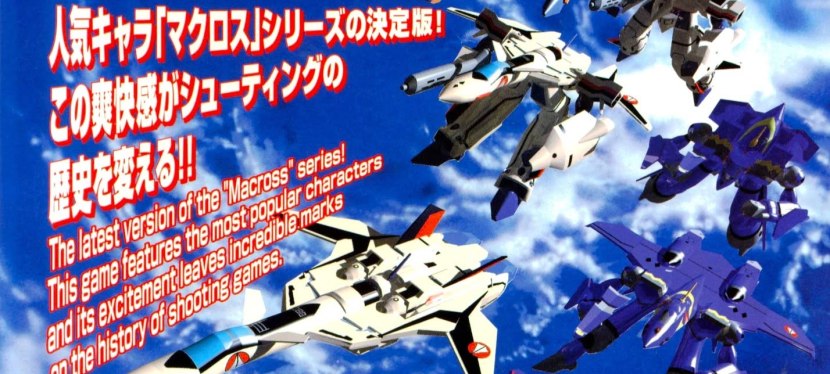
The arcade flyer released only in Japan.
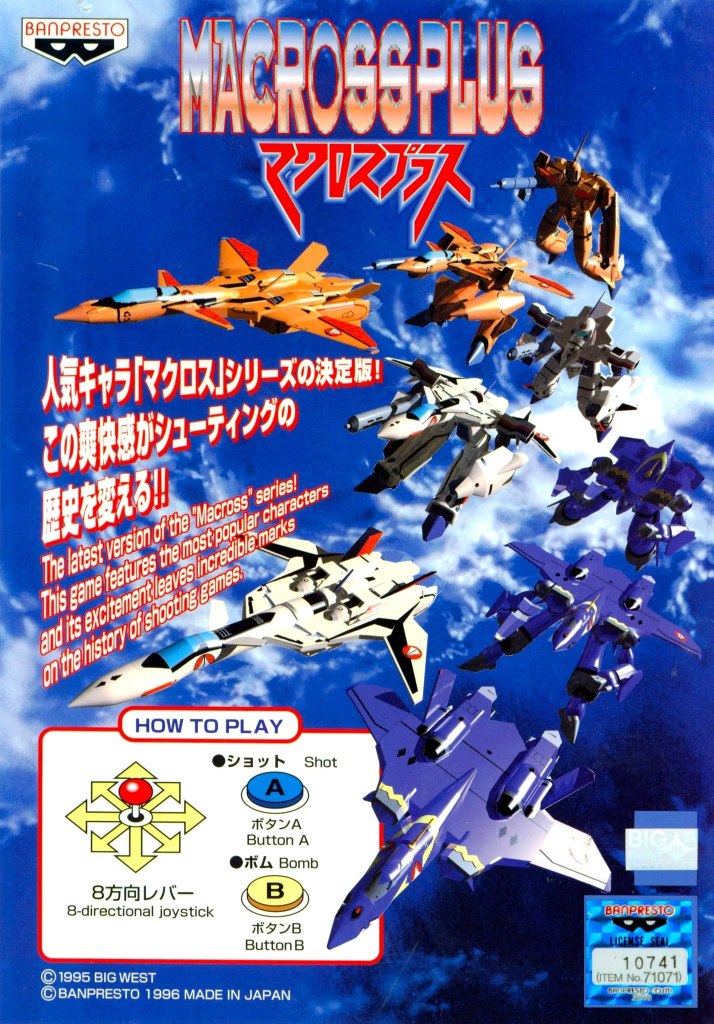
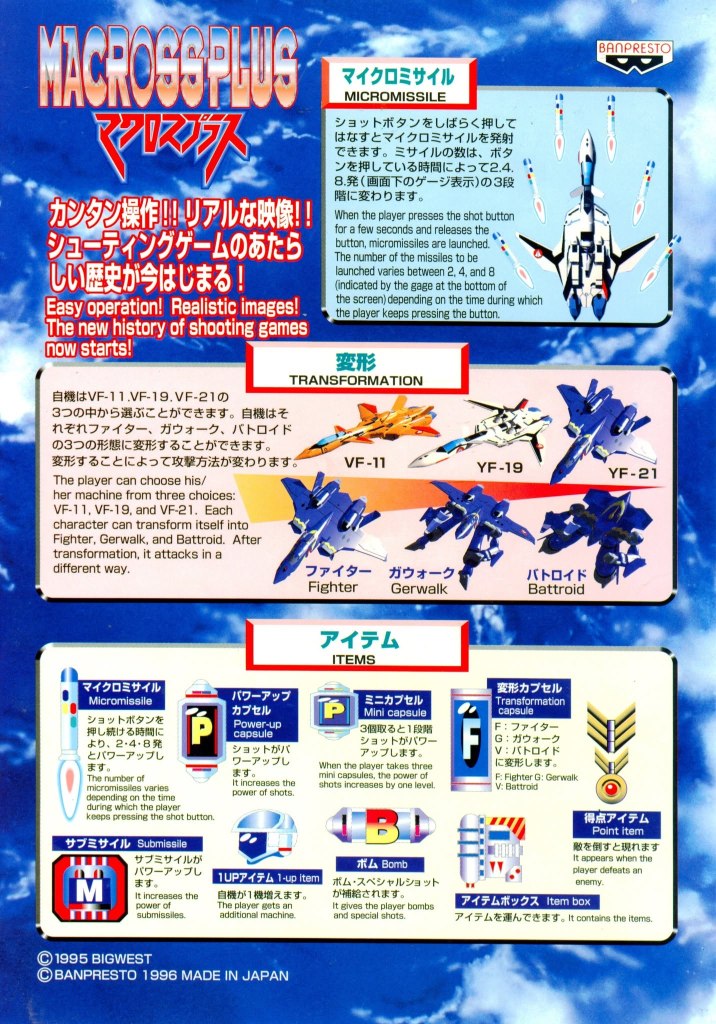
Have you ever seen the classic anime movie Macross: Do You Remember Love? I really love watching that movie and I played and finished the video game adaptation on PlayStation in 1999. What I never got to play was the arcade game adaptation of it which was released by Banpresto in Japan in 1992. This flyer promoting the game has a strong visual presentation thanks to the artwork made for it. Only one screenshot was shown as well as a clip from 1984 the animated movie (note: the arcade game itself has some images directly from the film plus some newly created ones added) but this ad still had what it takes to capture the attention of the many Macross fans in Japan. This arcade game was eventually released with an English translation in America and Australia.
9. 2-in-1 print ad featuring Super C and Snake’s Revenge
A memorable and intriguing print ad from Konami promoting sequels.
This is one of the ads that Konami came up with to promote at least two games using a single-page ad format. I saw this ad in many comic books I read decades ago and its visual concept always caught my attention especially since I played the console game Contra a lot. At the high end of the ad were two fictional newspaper headlines highlighting the respective conflicts of Snake’s Revenge (with a nuclear danger concept) and Super C (with emphasis on alien invaders). These two games were sequels to the classics Metal Gear and Contra, and Konami clearly knew how to take advantage of the older games’ success and do their best to sell the sequels to gamers who love action-packed gaming as well as fantasized armed conflicts. Like the 2-in-1 ad showcasing Contra and Jackal, this was Konami’s aggressive move to sell war-inspired games to the NES userbase which was mostly composed of children and teenagers.
10. True Lies game print ad
There is nothing like taking advantage of the imagery of a Hollywood superstar to promote a video game based on the related movie.
Here is a video game ad I saw in many comic books I read in 1994-1995. True Lies (starring Arnold Schwarzenegger) was one of the big summer season movie hits of 1994 and the video game was part of the business tie-ins with the film. The people who made this print ad made the smart moves of showing not just one but three images of Schwarzenegger to promote the game while leaving some space to show what the game looked like. The True Lies game even had stills from the movie to emphasize the flow of the plot.
Welcome back readers, fellow geeks and electronic gaming fans!
In this edition of the Retro Gaming Ads Blast (RGAB) series, we will take a look at another batch of retro gaming print ads from the 1980s and 1990s. In addition, there will be a few flyers of arcade games as well as promotional posters of a notable console game that was released only in Japan.
For the newcomers reading this, Retro Gaming Ads Blast (RGAB) looks back at the many print ads of games (console, arcade, computer and handheld) that were published in comic books, magazines, flyers and newspapers long before smartphones, social media, the worldwide web and streaming became popular. To put things in perspective, people back in the 1980s and 1990s were more trusting of print media for information and images about electronic games and related products.
With those details laid down, here is the newest batch of retro gaming print ads for you to see and enjoy…
1. M.I.A.: Missing in Action arcade flyer
This is an effective way of catching the attention of both players and arcade operators. I can imagine the woke, the SJWs and rabid feminists getting easily offended by this.
Konami was a very prominent producer of games back in the 1980s. Not only did the company produce high-quality and enjoyable military-themed games on consoles and computers, Konami also made its presence felt in the highly competitive sector of arcade games. In 1989, they released the arcade conversion kit of M.I.A.: Missing in Action and this flyer is the best know promotion of it. M.I.A.: Missing in Action is the follow-up to Konami’s hit game Rush’n Attack.
Visually, the flyer’s display of four screenshots combined with a dominating photographic image of prisoners of war (POWs) getting delightfully released by an attractive female Rambo-type rescuer were designed to catch the attention of young adult and adult gamers. The text descriptions (note: there were more details on the back of the flyer), however, were geared towards arcade operators who were looking for new games to acquire without the hassle of having to buy an entire arcade cabinet. That being said, this flyer was a clever way to appeal to arcade operators and the people who love playing arcade games.
2. Fonz arcade flyer
Simplistic yet effective to look at. If you are an arcade operator, this flyer conveniently has key information displayed.
Believe it or not, Sega was already active in arcade games way back in the 1970s. In this particular flyer, Sega’s arcade game Fonz (also called Moto-Cross, Man T.T.) offered players the unique experience of driving a digital vehicle using actual handlebars on the machine that were meant to create an immersive and realistic feel. If you look closely, the flyer has lots of details written with arcade operators and players in mind.
3. Haunted Castle arcade flyer
Indeed, this game is part of the Castlevania game franchise. It was one of the first Castlevania games released for arcades.
Arguably, Konami is best known for the Castlevania game series which covered handheld gaming devices, personal computers, video game consoles and even arcades. Haunted Castle (Japanese title: Akumajō Dracula) is the 2nd arcade game of the Castlevania franchise and it is not a port of any console game. Like the arcade flyer of M.I.A.: Missing in Action, this one was crafted to lure the attention (and money) of arcade operators looking for conversion kits to replace their old games. The visual presentation is eye-catching and even though the Castlevania brand was nowhere to be seen, Castlevania fans could tell this this arcade offering was part of their favorite game franchise.
4. The Super Dimension Fortress Macross: Do You Remember Love? flyer and poster
The poster promoting the release of the game for Sega Saturn in Japan.
The flyer promoting the Sega Saturn game’s 1997 release as well as the 15th anniversary of Macross.
In 1997, the 15th anniversary of the Macross multimedia franchise was celebrated in Japan and among the highlights was the release of The Super Dimension Fortress Macross: Do You Remember Love? on the Sega Saturn. To promote the game and the franchise itself, lots of flyers and posters were released in Japan. If you look at the illustrated images on the promotional materials closely, you will realize that they are not from the original 1982-83 Macross anime TV series but rather from the The Super Dimension Fortress Macross: Do You Remember Love? animated movie of 1984 (read my retro movie review by clicking here).
While it might be baffling to some as to why the original anime TV series was not used as the source material for the 15th anniversary celebration through gaming, the 1984 anime feature film was actually more adaptable for a video game project (read my retro review by clicking here). It is so obvious, you just have to ask yourselves this question – how can the game developers compress the entire concepts of the 36-episode Macross anime series into one game while ensuring fun gameplay? Regardless, the game was a lot of fun to play and I enjoyed playing the PlayStation version in 1999.
5. Venom/Spider-Man: Separation Anxiety print ad
A clear effort to sell the game to gamers as well as fans of Spider-Man and Venom.
In 1994, Acclaim released Spider-Man and Venom: Maximum Carnage (based on the 1993 comic book storyline Maximum Carnage) on Super Nintendo Entertainment System (SNES) and Sega Genesis ultimately becoming popular with comic book fans and gamers who enjoyed sidescrolling beat-them-up games.
Subsequently, Acclaim and develop Software Creations reunited to release the sequel Venom/Spider-Man: Separation Anxiety a year later on the two leading 16-bit consoles as well as on personal computer (PC). If there is anything notable about this eye-catching print ad, it is the fact that its visual presentation (with graphics on-par with the previous year’s game) cleverly hides the fact that it did not have much new to offer gamers with regards to gameplay and story cutscenes (which the previous game prominently had). Eventually, this game attracted weaker reviews from game critics and has since been forgotten.
6. Tecmo Super Bowl SNES print ad
From the time when Tecmo was still a strong producer of sports video games.
In 1991, Tecmo Super Bowl was released on the aging Nintendo Entertainment System (NES) and because its game design greatly entertained gamers, it became a tremendous commercial success. Not even the very high launch price of $54.99 stopped it from selling a lot.
To keep the commercial success and public interest going, Tecmo announced a new version of the game for the more powerful SNES console with the simple title of Tecmo Super Bowl. If you look closely at the print ad, you will notice that gameplay screenshots were not used at all. Instead, they showed images of the nicely illustrated art works they prepared as eye candy for the game with the intention of making it look cinematic. This is very curious because gameplay itself was the main selling factor of the NES version of Tecmo Super Bowl. I can only guess that Tecmo was not ready to show gameplay images by the time this print ad was made.
7. X-Men 2: Clone Wars print ad
The art used is too alienating for promoting this game.
During the age of the 16-bit consoles, there was a variety of X-Men video games released and produced by different companies. In 1993, an X-Men game published by Sega was released exclusively on the Genesis console which turned out to be fun for gamers and received mostly positive reviews from the critics. Sega went on to publish the sequel X-Men 2: Clone Wars and this print ad caught my attention because of how exaggerated the characters looked. It’s so strange, it’s as if the artist took visual reference from a somewhat blocky 3D polygonal portrait then tried to make them look hand-drawn. I wonder if anyone from Sega regretted this.