Welcome back my readers, YouTube viewers and all others who followed this series of articles focused on YouTube videos worth watching. Have you been searching for something fun or interesting to watch on YouTube? Do you feel bored right now and you crave for something to see on the world’s most popular online video destination?
I recommend you check out the following videos I found.
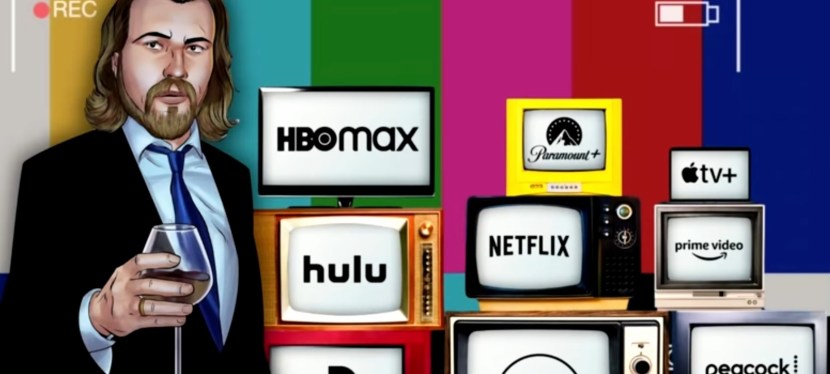
#1 Streaming wars cost Hollywood a lot – Just years ago, Hollywood companies made heavy bets on streaming believing it would be the new gold standard of business as well as a new gold mine waiting to release immense profits. Today, Hollywood ended up collectively losing a lot of money and their streaming moves added a lot of complexity and new problems to their business. Along the way, millions of customers stopped subscribing to the streaming services of Hollywood. What happened behind the scenes and who were the only business winners in the middle of the streaming wars? Find out in Midnight’s Edge in-depth analytical video below.
#2 Retrospective look at Timerider: The Adventure of Lyle Swann – As a young boy, I saw the sci-fi Western adventure movie Timerider: The Adventure of Lyle Swann and I ended up getting intrigued about its story and the ending. Even by today’s standards, this film’s core concept remains very weird or totally unique as it had lots of motorcycle thrills, cowboys with their guns, and a very unusual approach on time-travel and its consequences. To find out more about the 1982 movie, watch the selected videos below.
#3 You, Me and the Movies react to The Punisher (1989) – Remember when Dolph Lundgren played The Punisher in a low budget movie released in 1989? Even though a lot of people rejected it, the film remains important as it helped the Marvel Comics assassin start entering mainstream entertainment. Two more Punisher movies were released in the 2000s and then a TV series about The Punisher was established. To find out how Dolph Lundgren performed as The Punisher, watch the reaction video of You, Me and the Movies below.
#4 Ashleigh Burton reacts to Lethal Weapon 3 – When Lethal Weapon 3 was released in cinemas here in the Philippines in 1992, it unsurprisingly became big hit with local moviegoers and Mel Gibson was already popular among Filipinos. I missed out on the film’s cinematic run but managed to watch it on home video. If you want an enjoyable look back at Lethal Weapon 3 but you don’t have time to watch it entirely, watch Ashleigh Burton’s fun reaction video.
#5 PatmanQC examines Hook – Were you able to watch the Steven Spielberg film Hook when it was first released in cinemas in 1991? I missed out on its theatrical run (note: it opened in February 1992 here in the Philippines) but managed to watch it on home video and later played the video game adaptation on the Super Nintendo Entertainment System (SNES). That’s right! Hook had video games back then and if you want to discover more about them, watch the in-depth retro gaming video of PatmanQC below.
#6 Hamas misinformation debunked! – Let me remind you all the truth about Palestinian terrorist group Hamas…they are terrorists funded and supported by Iran and Qatar, they committed genocide against Israel and foreigners on October 7, 2023, and they are pure evil, greedy and barbaric. Hamas is also responsible for the suffering of the Palestinians (who did not join their terrorism activities) living in the Gaza strip. As America and Israel joined forces to provide humanitarian aid directly to the Gaza residents, Hamas became desperate with their tactics, lied about what happened, and they have the Islamo-Leftist mainstream news media outlets to propagate the deception worldwide. Fortunately, the misinformation of Hamas has been debunked. Watch the CBN video below.
Welcome back Xbox fans, geeks, retro gaming enthusiasts, fighting game enthusiasts and other gamers!
With the current Xbox-exclusive fantasy role-playing game Avowedcoming out on February 18, I’m supposed to be excited about what Team Xbox has prepared this year. Of course, there were disappointments not only with certain Xbox first-party releases but also with the way things have been changing on the part of Team Xbox.
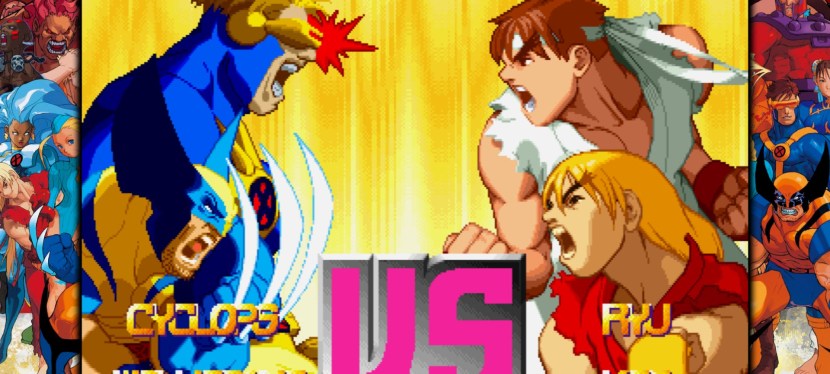
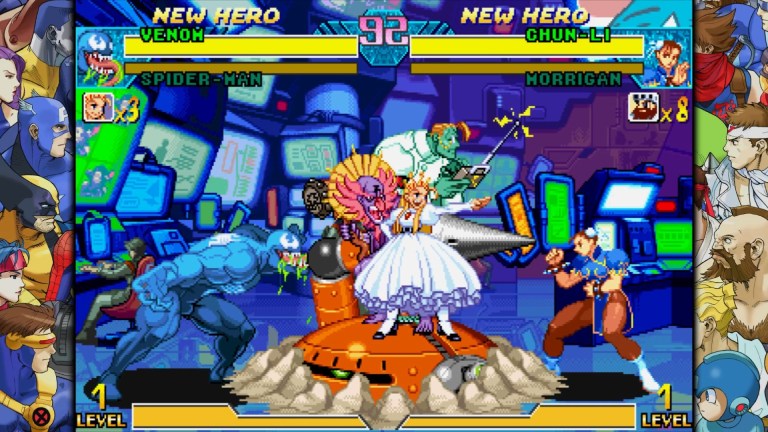
Wow! That’s a collection of very fun and popular games Capcom released from 1993 to 2000. With the exception of The Punisher arcade game (a 2D adventure game), I played them all in the arcades decades ago and I can say that having them in a single collection for the modern Xbox consoles is indeed a blessing for long-time Xbox gamers who love 2D fighting games and retro gaming. The way I feel right now, Marvel vs. Capcom Fighting Collection: Arcade Classics looks really enticing to purchase.
Marvel vs. Capcom: Clash of Super Heroes is not just a lot of fun to play but also will please those who love the characters. With Wolverine, Spider-Man, Venom, Captain America from Marvel’s side included, there is something that will bring both geeks and gamers together.
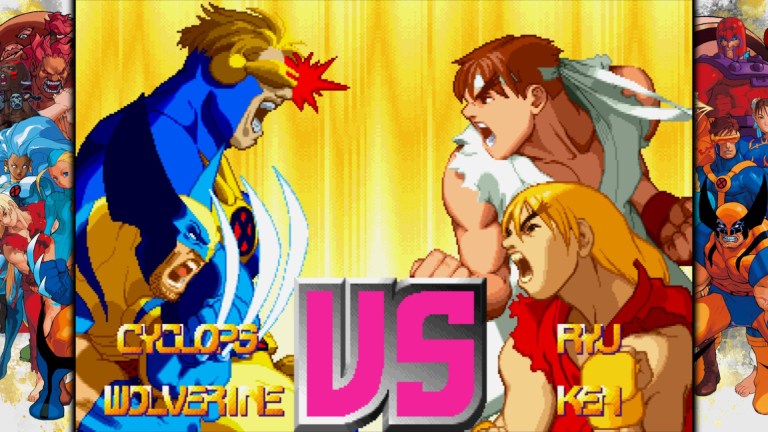
I have fond memories of Capcom 2D fighting games that carried Marvel’s intellectual properties. X-Me: Children of the Atom was enjoyable to play with and it resonated with me as I was already an X-Men comic book reader back in the 1990s. Marvel Super Heroes was also fun to play and it somewhat reminded me of The Infinity Gauntlet storyline. X-Men vs. Street Fighter was the most intriguing crossover fighting game at the time of its release and it really raised the bar for fast-and-furious style gameplay complete with a quick character swap during the heat of battles. Marvel Super Heroes vs. Street Fighter was the follow-up which came with changes that were not well received by the fans.
Then came the two Marvel vs. Capcom crossover fighting games which really built upon the foundation of X-Men vs. Street Fighter for more team battles with speed and impact in mind. I could not forget the inclusion of Resident Evil characters, Mega Man and others.
X-Men vs. Street Fighter is a classic tag-team, crossover-oriented video game! Fast and furious action ensured!
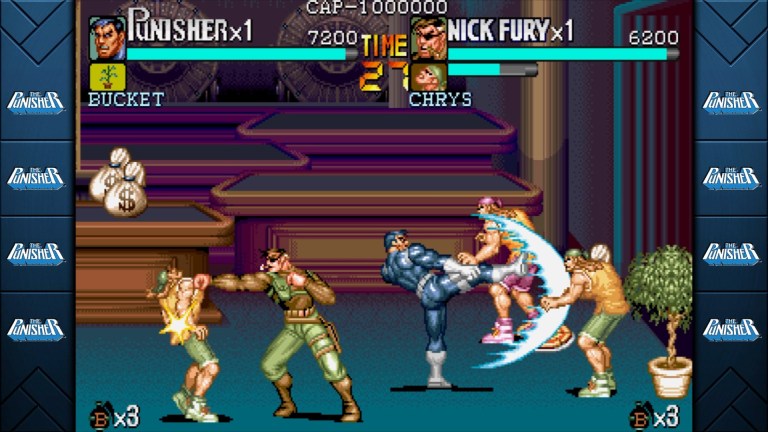
The Punisher arcade game is the only non-fighting game of the collection. Punisher fans should look at this.
Adding further zest to the collection is online play that allows casual matches, ranked matches, custom matches. Think about how your skills or your scoring will compare with those of other players from around the world.
That being said, Marvel vs. Capcom Fighting Collection: Arcade Classics is a retro gaming package that deserves attention as it carries some of the finest video games Capcom ever made.
Welcome back readers, fellow geeks and electronic gaming fans!
In this edition of the Retro Gaming Ads Blast (RGAB) series, we will take a look at another batch of retro gaming print ads from the 1980s and 1990s.
For the newcomers reading this, Retro Gaming Ads Blast (RGAB) looks back at the many print ads of games (console, arcade, computer and handheld) that were published in comic books, magazines, flyers and newspapers long before smartphones, social media, the worldwide web and streaming became popular. To put things in perspective, people back in the 1980s and 1990s were more trusting of print media for information and images about electronic games and related products.
With those details laid down, here is the newest batch of retro gaming print ads for you to see and enjoy…
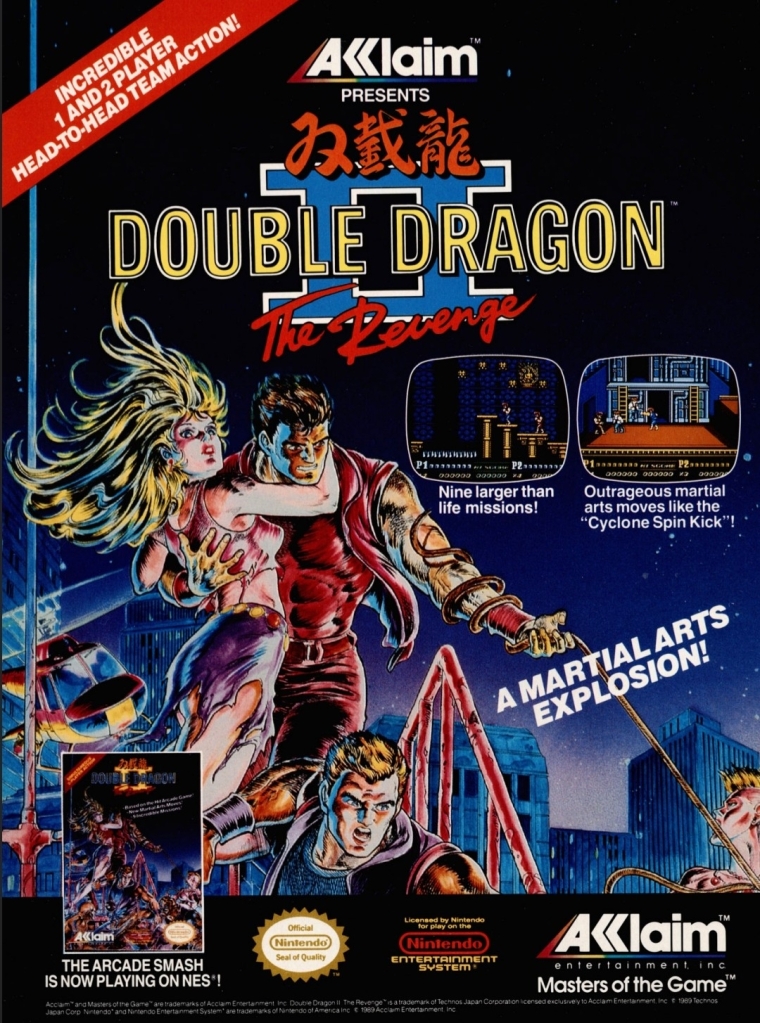
1. Double Dragon II: The Revenge print ad
Nice looking art used to promote the game.
The beat-them-up sub-genre of gaming was already popular in the 1980s and one of the most defining game franchises of this type of game was the Double Dragon series which proved to be popular with Nintendo Entertainment System (NES in America) and Family Computer (Famicom in Japan) gamers. As the first game was a very big hit on Nintendo’s consoles, the sequel Double Dragon II: The Revenge was promoted in America with strong confidence on the part of publisher Acclaim that it would become another massive hit. This print ad had a very nice looking comic books-style art that not only captured the concept of the game but also visualized the heroes Billy and Jimmy with enough details to focus on. I can say this was an eye-catching ad.
2. X-Men: Children of the Atom print ad
Great looking ad but the line “100% direct conversion” is not true at all.
Developed by Capcom in cooperation with Marvel, X-Men: Children of the Atom was a huge hit in the video arcades and it was not surprising that it got released on the Sega Saturn by Acclaim. Acclaim organized an aggressive promotional campaign by pouncing on the fans’ love and knowledge of the X-Men and the high fun factor of Capcom’s game. What this print ad got wrong, however, was the line “100% direct conversion of the #1 arcade smash!” which was wrong and misleading. In reality, the Sega Saturn version of the game had about one-third of the animation frames cut due to the console’s smaller RAM capacity.
As the years passed by, the Sega Saturn became the more suitable console for home ports of Capcom’s further 2D fighting games as Sony’s PlayStation had even more severe limitations and a graphics processor that was not suitable for 2D graphics. By the end of 2000, Capcom’s 2D fighting games on PlayStation all were inferior to the Sega Saturn versions.
3. Sky Shark NES print ad
This is an effective looking ad.
Released in Japan as Flying Shark, Sky Shark was released on multiple platforms in 1988 and there was an NES version of it which this particular print ad promoted. The American branch of Taito wisely used positive quotes from media outlets to promote the game while coming up with an engaging text description and displayed NES screenshots. And then there was that very engaging painted cover art that gave this print ad a lot of punch. An effective ad overall.
4. Conflict print ad
This is a very captivating artwork for advertising.
There is no denying the fact that the Cold War was a strong influence on arcade games and video games. Titles like Contra, Jackal, Metal Gear, Operation Wolf, Cabal and Rush’n Attack were militaristic games that entertained millions of gamers from the young adults to the little children. In 1990, Vic Tokai released the game Conflict on the NES which had a military theme but an unusual game design composed of digital maps with hexagons in which gamers will play with strategy to win battles. That being said, this print ad’s visual concept was very captivating yet also misleading. If you see how the game is played, you will know what I mean.
5. College Slam print ad
Were you ever interested in college basketball video games?
This is one of the more eye-catching print ads I’ve seen due to the artist’s illustration of a basketball with a mouth biting the basketball rim which dominates the space. For the newcomers reading this, College Slam was a basketball video game that was actually a repacked version of the popular NBA Jam with focus on NCAA basketball players. With the biting basketball at the center, it was easily an attraction and the screenshots implemented were larger than usual which easily gave gamers a clear look at what the game looked like. While this print ad is eye-catching, it did not help sell College Slam and there never was a follow-up.
6. Tecmo Super Baseball print ad
From the time when Tecmo was prolific with video games about sports.
Long before it started the Dead or Alive game franchise, Tecmo was once heavily invested in making sports video games. Tecmo Super Baseball was their first American pro baseball video game released for Super Nintendo Entertainment System (SNES) and Sega Genesis, and it was notable that the publisher secured only the Major League Baseball Players Association (MLBPA) which resulted in the game featuring real-life players but the teams had no names and no logos. Regardless, this print ad showed how aggressive Tecmo was in trying to attract consumers’ attention by showing ten screenshots with short text descriptions each. The ad’s write-up boasted realism as well as the promise of gaming quality.
7. The Punisher print ad
Marvel’s vigilante firing at someone.
In the early 1990s, Capcom and Marvel Comics started their partnership resulting in the releasing of the arcade game The Punisher. Developed by Capcom, the said arcade game became a big hit with gamers as it featured fun gameplay, multiple enemies appearing on screen simultaneously and other fun elements. Unsurprisingly, the game was ported (note: Sculptured Software was the lead developer) to the Sega Genesis with significant downgrades in terms of graphics, sound, enemy variety and other related elements due to technical limitations. That being said, this print ad used detailed art of the Punisher (with Col. Fury in the background) in a clever way to promote the Sega Genesis version while keeping their attention away from the obvious visual downgrades of the two screenshots displayed. The Punisher on Genesis was poorly received.
8. Stargate print ad
If you did not enjoy the movie, were you able to play the video game adaptation on Sega Genesis or Super NES?
Remember the sci-fi movie Stargate (1994)? The film was a surprise box office hit and eventually video game adaptations of it were made for the SNES, Sega Genesis, Game Gear and the GameBoy. This particular print ad, however, showed screenshots of the SNES and Genesis versions which is made obvious with the side-scrolling adventure plus 3D flying sequence (one screenshot showed it). Combined with images sourced from the movie poster plus an insert of the movie in home video format (lower-right corner), this print ad was obviously an aggressive way to promote the film with the post-theatrical business in mind. In case you are wondering, the cinematic Stargate is not related at all with the early 1980s video game (a follow-up to the classic game Defender) of the same name.
9. Aerobiz Supersonic print ad
For a simulation game released on consoles, Aerobiz Supersonic is pretty deep and a lot of fun to play.
The airline simulation game Aerobiz Supersonic is a highly addictive and surprisingly fun game that I enjoyed playing on the SNES (read my retro review by clicking here) and strangely enough I first learned about not through its print ad but by reading a preview published by Electronic Gaming Monthly (EGM) magazine. As for this print ad made by Koei’s American team, this is really odd to look at due to the ad makers’ choice of showing a not-so-attractive flight meal. In contrast to that, the ad makers did a good job describing the game creatively and showed three screenshots that were strategically selected in my view. Having played the game many times, I can say that this print ad is very truthful.
Disclaimer: This is my original work with details sourced from reading the comic book and doing personal research. Anyone who wants to use this article, in part or in whole, needs to secure first my permission and agree to cite me as the source and author. Let it be known that any unauthorized use of this article will constrain the author to pursue the remedies under R.A. No. 8293, the Revised Penal Code, and/or all applicable legal actions under the laws of the Philippines.
Welcome back superhero enthusiasts, 1970s arts and culture enthusiasts, Marvel Comics fans and comic book collectors! Today we go back to the year 1974 to examine a highly significant tale from Marvel Comics’ shared universe – the first appearance of the Punisher and his first-ever encounter with Spider-Man.
To put things in perspective, Punisher’s literary debut was told within the Amazing Spider-Man comic book series and it happened not too long after the legendary tragedy of Gwen Stacey. During the 1970s, Hollywood made and released several action movies and crime thrillers that were violent, gritty and highlighted vigilantes and assassins. Some of that influence somehow made it into Marvel’s shared universe which was symbolized creatively through the Punisher who debuted as an assassin.
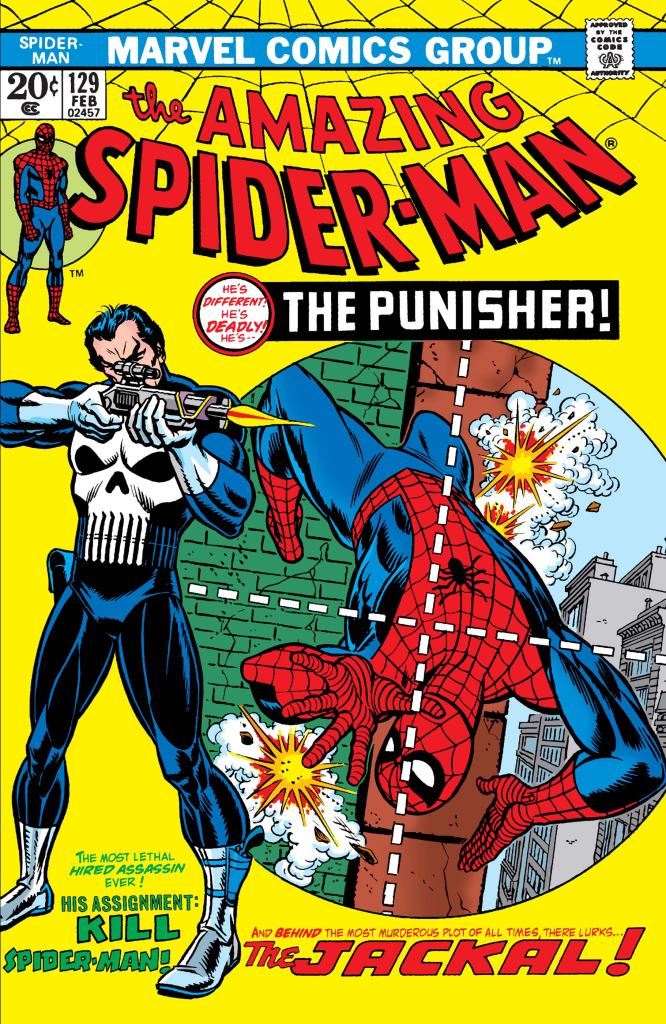
With those details laid down, here is a look back at Amazing Spider-Man #129, published in 1974 by Marvel Comics with a story written by Gerry Conway and drawn by Ross Andru (the same creative duo behind Superman vs. The Amazing Spider-Man crossover).
The cover.
Early story
The story begins inside a private facility an assassin wearing black with a huge skull on his upper body heavily damages a solid statue of Spider-Man using a powerful rifle. This impresses the hideous villain called the Jackal who tells him that if he does well with the real Spider-Man, he would have performed a great service for the world. Knowing he impressed the Jackal, the Punisher states that he will only kill those who deserve killing and he expresses his belief that the webslinger deserves to die.
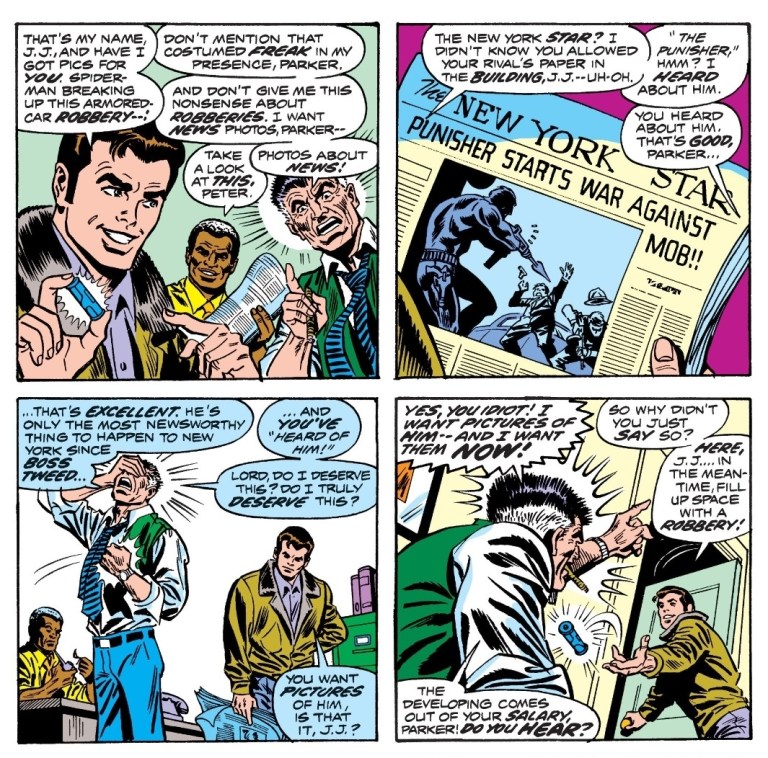
Elsewhere, Spider-Man swings into action and successfully stops an armed robbery from happening. Along the way he managed to capture photographs, changes into his civilian clothes and enters the Daily Bugle’s office ready to submit the roll of film as Peter Parker. Unfortunately, his superior J. Jonah Jameson disregards Parker’s submission and points out that the Punisher made waves with New York’s readers via the Bugle’s competitor The New York Star. For Jameson, the Punisher is only the most newsworthy thing to happen to New York and tells Parker he wants photos of the assassin…
Quality
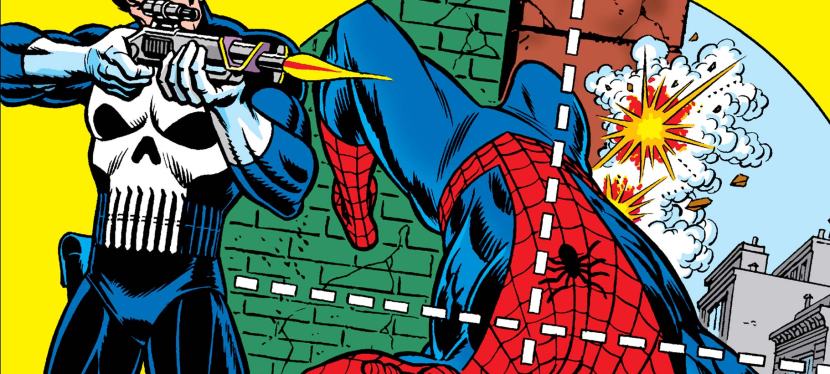
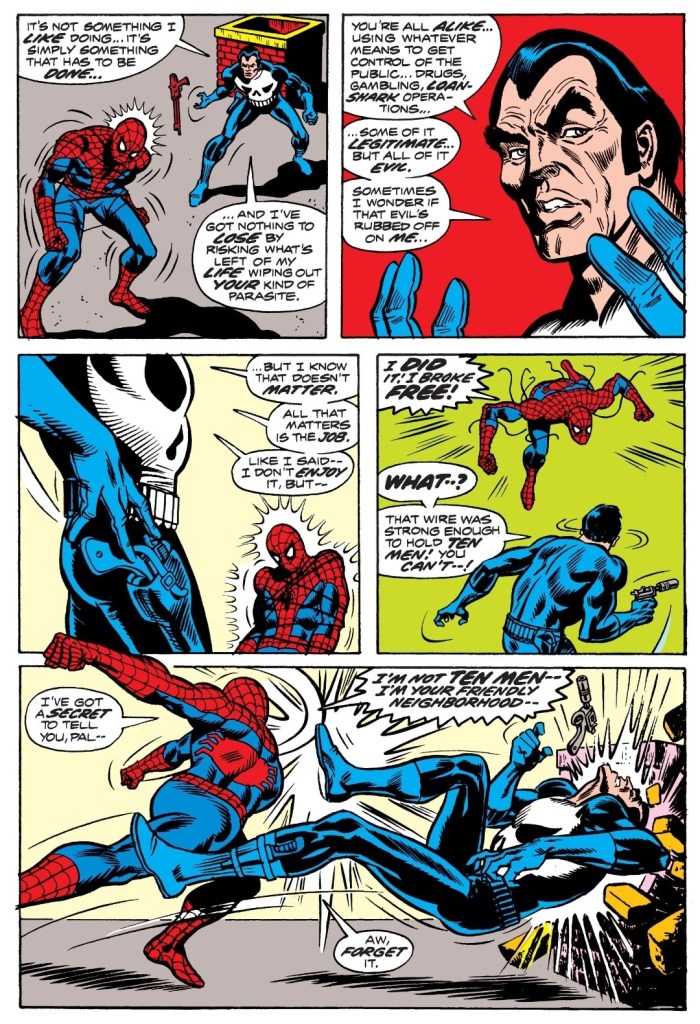
This is a scene from the first of two encounters between Spider-Man and the Punisher who was introduced as an assassin.
To make things very clear about storytelling without spoiling plot details, this is a tale about intrigue and the darker side of society that involves vigilantes and murdering. The Punisher here did not debut as a crime-busting vigilante but rather an assassin who accepts assignments from clients as long as the jobs fall in line with his personal philosophy that focuses on taking the lives of those who deserved to be killed. That being said, it is clear that Hollywood’s vigilante flicks of the 1970s influenced the presentation and I can say that whenever the story focuses on the Punisher, there definitely is a grim tone which contradicts the tone of Spider-Man’s scenes.
Spider-Man here continues to struggle somewhat with his personal life having recently lost Gwen Stacey while remaining disturbed about the identity of the Green Goblin. The webslinger also has to live with the heavy situation in which a lot of people in New York were convinced that he killed Norman Osborne which was the result of his own boss’ handling of the Daily Bugle. These elements along with his civilian involvement with his newspaper creatively added to the build-up of Spider-Man’s eventual encounters with the Punisher. The build-up was structured nicely and the pay-off was worth it.
There was also the introduction of Jackal. While he has a hideous appearance, his participation was more about scheming than action which contrasted him with the Punisher. For the newcomers reading this, Jackal is actually Miles Warren in a more monstrous form. From this comic book, it was clear that Jackal was created to be a recurring for of Spider-Man and this was strongly executed in the controversial Clone Saga of the 1990s.
Going back to the Punisher, he symbolically uses guns with designs that were more grounded in reality (inspired by real-life guns in looks) instead of taking influence from science fiction. As an assassin living with a strong code, the Punisher is truly determined to eliminate Spider-Man whom he even referred to as a murderer. The perception of Spider-Man as a criminal on the part of the Punisher clearly reflected the defamation caused by the Daily Bugle on the webslinger. Gerry Conway established the assassin to be a strong believer in fighting evil by using violence and killing.
The build-up of the Punisher is very solid and the pay-off in the form of battles with Spider-Man is tremendous and very satisfying to read. There is a lot of action to enjoy here and most notably Gerry Conway maintained a strong narrative throughout.
Conclusion
Have you ever worked in a newspaper before?
I can say out loud that Amazing Spider-Man #129 (1974) is truly a great read and a true illustrated literary classic of Marvel Comics. This tale alone added a touch of darkness and grit (in the form of vigilante and assassins cultures) into the Spider-Man legacy. Apart from its status as a comic book classic, this one paved the way for the rise of the Punisher in terms of more comic book appearances and the publishing of new comic book series featuring him. While the Punisher’s legacy as a killer is obviously not something worth believing in, Marvel Comics took the risk of having him as one of their primary characters in the decades that followed. This particular story is so significant, Marvel Comics revisited it with What If #58 (1994). Check out my other Punisher-related retro reviews by clicking here, here, here, here and here.
Overall, Amazing Spider-Man #129 (1974) is highly recommended!
Disclaimer: This is my original work with details sourced from reading the comic book and doing personal research. Anyone who wants to use this article, in part or in whole, needs to secure first my permission and agree to cite me as the source and author. Let it be known that any unauthorized use of this article will constrain the author to pursue the remedies under R.A. No. 8293, the Revised Penal Code, and/or all applicable legal actions under the laws of the Philippines.
Welcome back superhero enthusiasts, 1990s culture enthusiasts and comic book collectors! Today we go back to the year 1996 and explore a part of the Marvel 2099 comics universe through a tale of the Punisher 2099 monthly series.
In my previous retro review, the futuristic Punisher moved on from the deaths of his family members. Influenced strongly by the writings of the late Punisher Frank Castle, Jake Gallows begins operating as a vigilante even though he still has a full-time career as a law enforcer with Private Eye. Not only that, he gets opportunities to face off once again with Kron Stone (Venom 2099 himself) who is responsible for the deaths of Jake’s family.
With those details laid down, here is a look back at Punisher 2099 #3, published in 1993 by Marvel Comics with a story written by Pat Mills and Tony Skinner, and drawn by Tom Morgan.
The cover.
Early story
The story begins on one snowy night within the city. A lady who has grown very addicted with Total Reality makes a deal with a sinister merchant and makes her escape out of reality and into a living digital realm without caring about the consequences she will physically experience.
A black ambulance arrives and out comes the Punisher who hits the merchant hard enough with his weapon for a quick knockout. He then takes off the lady’s optical device (note: this should remind you somewhat of Microsoft’s HoloLens in terms of physical similarities) which brings her back to reality. Gallows knows fully well that Total Reality can actually kill users who do not practice any restraint, and he then crushes the lady’s device. Instead of thanking the Punisher, she expresses her frustration and anger to him before leaving.
Afterwards, Gallows brings the merchant into the black ambulance and puts him on stretcher. There are sharp devices nearby that can kill the merchant if he makes any attempt to escape…
Quality
Among his colleagues at work, Jake Gallows simply acts as he himself is the Punisher captured on video (but his face has been protected digitally).
While the first two issues of this monthly formed the origin and establishment of Punisher 2099, this comic book shows him doing vigilante work and acting as judge, jury and executioner all together. Going back to issue #1, the creative team made it clear that in 2099, justice can be bought and punishment for criminals is much softer compared to how it was in the 20th century. This alone serves as a powerful motivation for Jake Gallows to bring back old-fashioned, harsh punishment for criminals even if it means he has to do it by himself outside of the law. This is the core concept of this comic book and along the way, there is this build-up of the villain Fearmaster and his henchman Multi-Fractor.
More on the story, the creative team took their time to develop Jakes Gallows and emphasize how his mind functions each time he works secretly as a vigilante (who cannot be identified visually) and privately as a Private Eye cop (the organization’s psychologist noticed something about him). More on his secret as the Punisher, it turns out Gallows was able to establish a secret prison complex, equipment for crime-fighting and even a deadly chair underground.
As he continues to be obsessed with fighting criminals with the harsh ways of the past, the futuristic Punisher symbolically becomes a questionable protagonist. On face value, he seems to be good by simply opposing crime and yet he seems to be evil as he commits acts outside of 2099’s laws.
Conclusion
Clearly acting out of the law, the Punisher of the future imprisons criminals and acts as judge, jury and executioner without hesitation. This also shows his dark side.
With its simply concept, Punisher 2099 #3 (1993) succeeds in defining the futuristic Punisher’s motives, intentions and execution. Compared to Frank Castle Punisher, Jake Gallows lives in a society which has laws that are so weak to push back against crime, justice becomes hollow and even laughable. That being said, this comic book is very socially relevant (note: Leftists in America weakened laws which benefited criminals, supported illegal immigrants at the expense of citizens, and have varied movements of arrogant protesters and activists who intimidated people and caused serious damage around the country) and what has been happening in America under the influence of the Democrats makes the dark future of 2099 looking like it could happen. At the same time, the Punisher in this story incidentally became somewhat unlikable as his crime-fighting obsession is gradually turning him into becoming as bad as the bad guys. This is a lively reminder that even in a society that is plagued with crime and weak justice, vigilantism is still a big no-no and it is also very destructive. To be a vigilante means becoming wicked.
Disclaimer: This is my original work with details sourced from reading the comic book and doing personal research. Anyone who wants to use this article, in part or in whole, needs to secure first my permission and agree to cite me as the source and author. Let it be known that any unauthorized use of this article will constrain the author to pursue the remedies under R.A. No. 8293, the Revised Penal Code, and/or all applicable legal actions under the laws of the Philippines.
Welcome back superhero enthusiasts, 1990s culture enthusiasts and comic book collectors! Today we go back to the year 1993 to take a close look at the second issue of the second Venom comic book mini-series Venom: Funeral Pyre.
In my previous review, the Punisher and Venom encountered each other for the first time ever and along the way Gray – who is secretly a journalist with a mission – struggles to maintain his composure and his sanity as he finds himself in the middle of a very violent gang war in Oakland, California. The more time Gray spends time with the crime gang he joined, the tougher the situation becomes for him.
With those details laid down, here is a look back at Venom: Funeral Pyre #2, published in 1993 by Marvel Comics with a story written by Carl Potts and drawn by the late Tom Lyle.
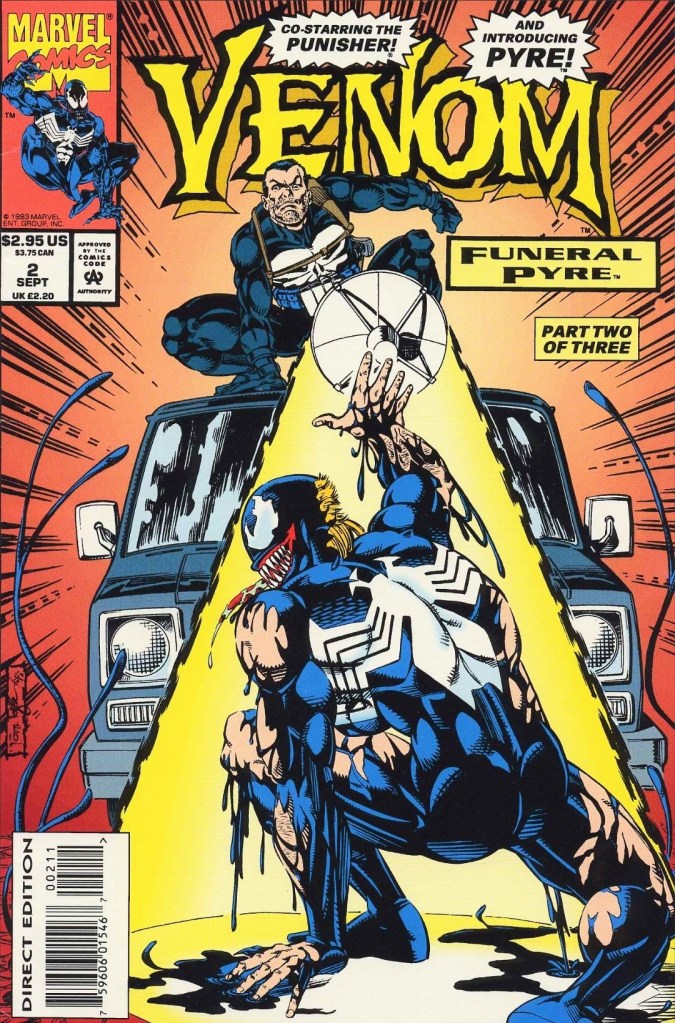
The cover.
Early story
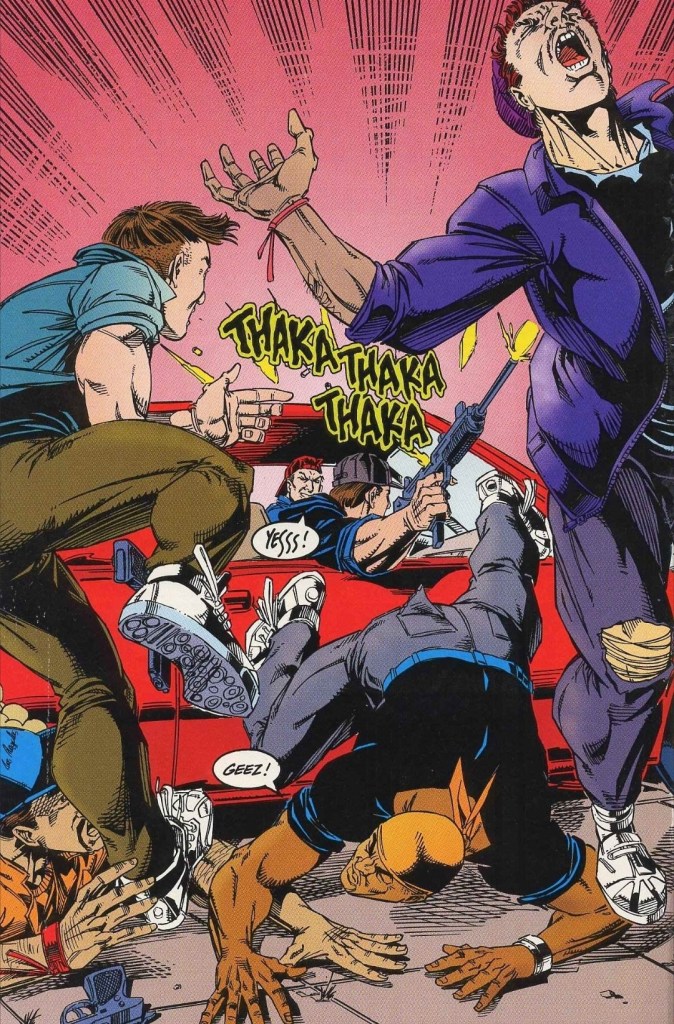
The story begins with Gray and his gang companions riding a car approaching a group of people on the street. The gang leader pressures Gray to use his weapon to kill them. Gray is deeply worried not only because he has to prove his worth to the gang by killing other, but also because the rescue attempt he was waiting for had not yet happened.
Meanwhile, Venom finds himself trapped on the doorway of a building with the metal gate locked and with rays of microwave from the Punisher’s van radiating him painfully. As the Punisher leaves them behind, Venom manages to use the symbiote to reach into the van and smash the control panel inside which disabled the microwave rays.
Immediately, he recovers and breaks out to continue his mission: to rescue Gray…
Quality
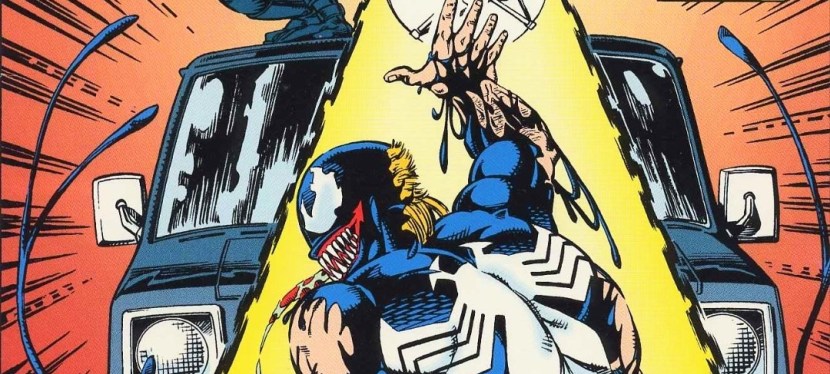
The murderous Venom actually helped the Punisher.
When it comes to the storytelling, there are some improvements that made this comic book more readable than issue #1. For one thing, the exposition has been reduced which allowed the pace of the story to move faster. Most of the exposition here has been limited to Gray who at this stage of the mini-series was clearly bound to become the central object of the Funeral Pyre concept. Another thing is that the story’s structure here is simpler and easier to follow as Venom and Punisher moved on their own struggles separately before predictably getting together again.
While the mini-series has clearly been a tale of a city gang war – with a pretentious and unwilling gang member who expected to be rescued before things become too chaotic – that happened to pull the Punisher and Venom in for different reasons, Carl Potts added some elements that would resonate with Marvel Comics fans who are familiar with HYDRA and the Super Soldier aspects of the Marvel Comics universe history. Not only that, there is a science fiction-inspired setting near the end of the story that added variety to the in-story environment.
Like the first issue, this one is packed with a good amount of action scenes and that means Punisher and Venom fans have a lot of stuff to enjoy. Tom Lyle really is good with showcasing the respective spectacle of the vigilante and the symbiote-wearing murderer, and when he has the two together, his visual creativity intensifies.
Conclusion
Grey shooting blindly at the targets while riding the car of the gangsters he joined.
Venom: Funeral Pyre #2 (1993) is clearly an improved reading experience over issue #1 mainly because of the reduced information dump, the simpler plot structure and the creative showcase of Venom and the Punisher. While Gray remains uninteresting, his late-stage transformation turned out to be somewhat surprising and it was only near the end of this comic book that the Funeral Pyre concept became clear.
Overall, Venom: Funeral Pyre #2 (1993) is satisfactory.
Disclaimer: This is my original work with details sourced from reading the comic book and doing personal research. Anyone who wants to use this article, in part or in whole, needs to secure first my permission and agree to cite me as the source and author. Let it be known that any unauthorized use of this article will constrain the author to pursue the remedies under R.A. No. 8293, the Revised Penal Code, and/or all applicable legal actions under the laws of the Philippines.
Welcome back superhero enthusiasts, 1990s arts and culture enthusiasts, Marvel Comics fans and comic book collectors! Today we go back to the year 1993 and explore a part of Marvel Comics’ universe through the first-ever limited comic book series featuring one of Marvel’s most iconic supervillains – Venom.
Previously, I wrote about Venom with his appearances in What If comic books (click here and here) as well as in issues of Venom: Lethal Protector (click here and here). Venom also appeared in the disappointing crossover comic book Spider-Man Meets Spider-Man 2099.
Moving back to the year 1993, the Venom: Lethal Protector limited series ended and Marvel went on to release a 2nd limited series composed of three issues complete with an all-new creative team. That series was Venom: Funeral Pyre and the most notable thing is that Venom gets to be with the Punisher (read my other retro reviews that include the character here, here, here and here).
With those details laid down, here is a look back at Venom: Funeral Pyre #1 published in 1993 by Marvel Comics with a story written by Carl Potts and drawn by the late Tom Lyle.
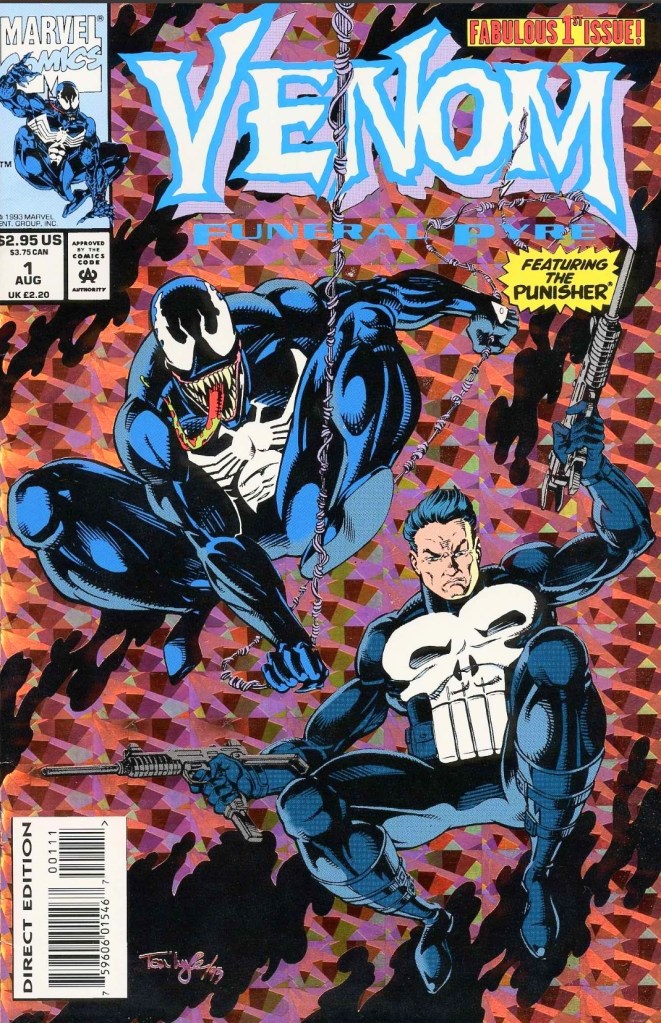
The cover.
Early story
The story begins on the streets of Oakland, California. There, a young guy named Gray Russell watches gang members severely beat up another guy which disturbs him deeply. He is part of the gang. A short time later, he rides with the gang in a car which hits a man (who managed to have his young nephew move out of harm’s way).
Somehow the man survived and moves to another direction deliberately to lure the gang away from his nephew. As the gangsters move towards a local building, Gray separates from his harsh companions to find a phone booth. Gray finds Calvin (the nephew of the man who got hit) nearby and decides to comfort him. From a distance, they heard the gangsters beat Calvin’s uncle to death.
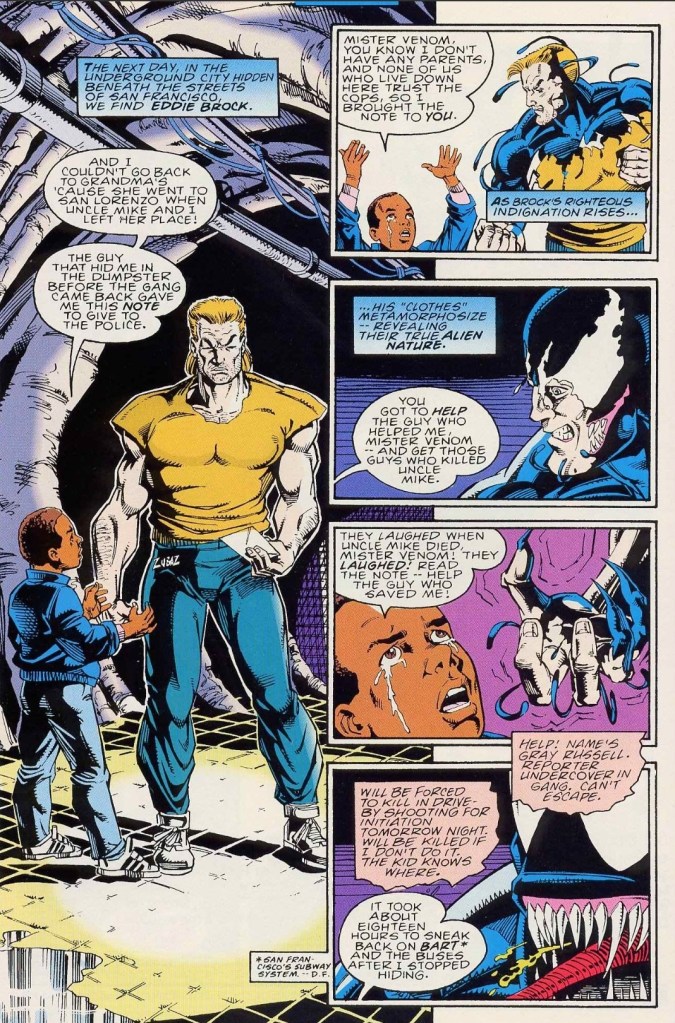
The next day in the underground city beneath San Francisco, Calvin meets Eddie Brock and hands him a note meant for the police. As Calvin reveals more details, Eddie gradually turns into Venom with his alien costume covering up his body. After learning of the death of Calvin’s uncle and hearing the young boy’s plea for help for Gray (an investigative reporter in secret within the gang), Venom agrees to help him as it is their mission to save the innocent and destroy the guilty…
Quality
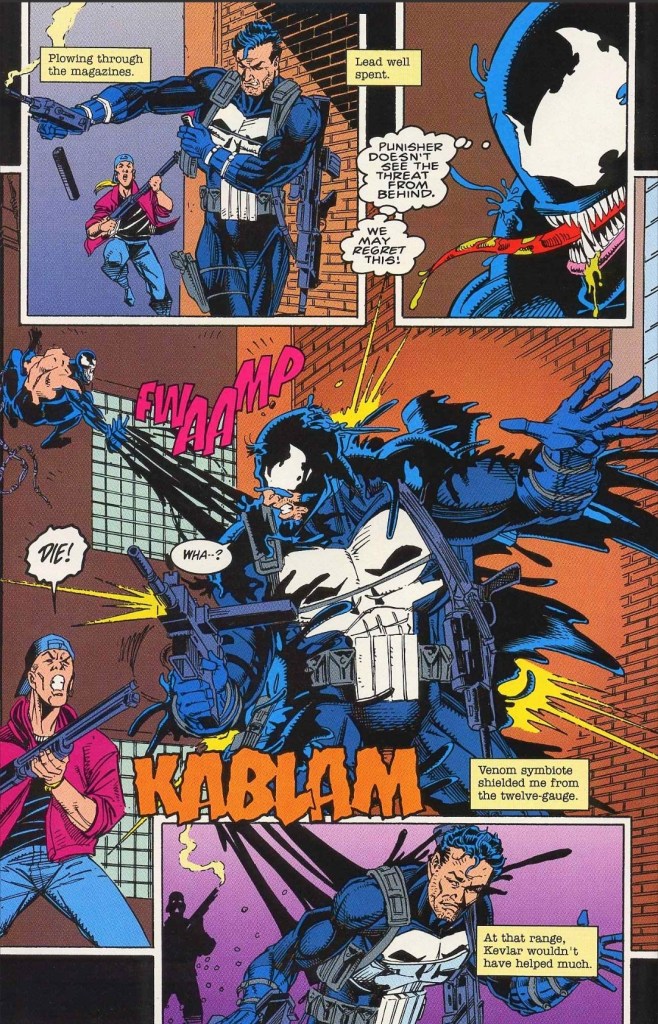
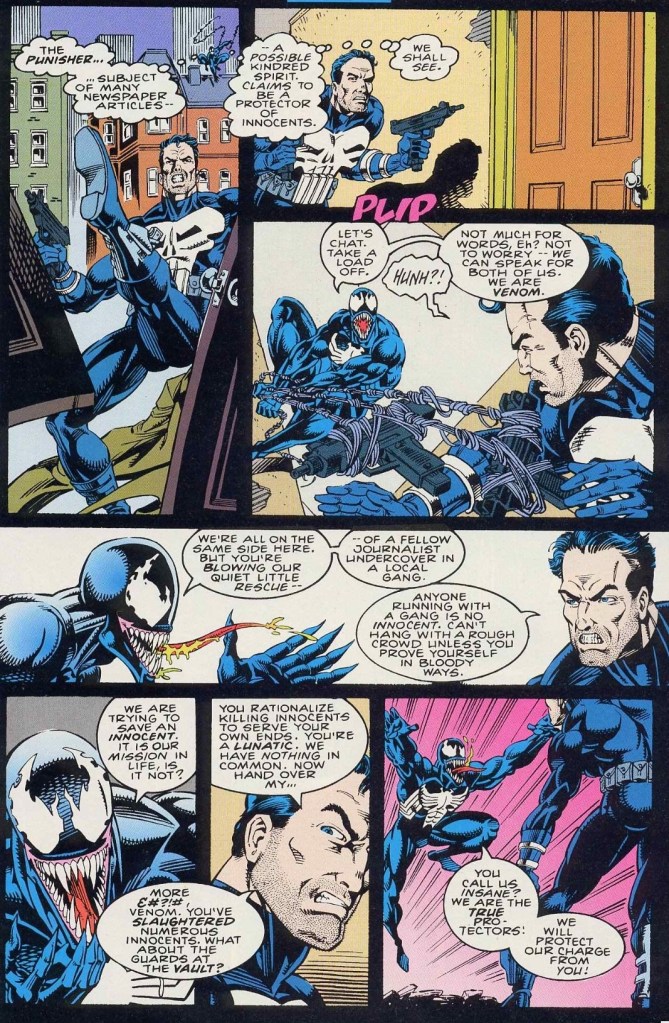
Punisher and Venom’s first-ever encounter with each other.
I want to start first the with the overall presentation crafted by the Potts-Lyle creative duo. In terms of story and setting, this comic book has a very strong urban crime vibe which is not a surprise given the fact that Carl Potts wrote lots of stories of the Punisher and his personal war against criminals. That being said, the tone is very different compared to what was shown in Venom: Lethal Protector and other Venom tales that got published before this comic book. Very clearly, this story is dark, gritty and even disturbing to read due to the subject matter of crime and senseless violence caused by people who are obsessed with violence. The fantasy elements of Venom: Lethal Protector are unsurprisingly absent here.
Carl Potts’ take on Venom’s personality is technically an extension of what was established previously. Venom, who is truly a murderer on the loose, continues to live with his very distorted code by helping the innocent by means of using violence and death on others he personally views as guilty. His getting involved in the turf of crime here is, however, a fresh approach on the super villain now acting “heroic” helping Calvin who lost his uncle. Being a former journalist himself, Eddie Brock “relates” with the investigative journalist involved with the gang.
The other major character – the Punisher – is his typical self in this story. He gets involved in the conflict in Oakland not purposely but accidentally as he was just passing by in his weapons-filled van as he heard the local police communication on local crime. The only thing notable about the way the Punisher is portrayed here is his first-ever interactions with Venom which is a crossover scene filled with a decent amount of hard action.
Gray, the investigative journalist, is presented here as technically the third major character of the story. In some ways, he even overshadows Venom and the Punisher in key parts of this comic book. He is not really an interesting character himself but there are some interesting Marvel universe details shown from his personal memories. What is clear about this uninteresting character is that the creative team planned something with him in a key role within the core concept of this mini-series.
As for the plot itself, it clearly has a dark and gritty concept of street crime in 1990s Oakland which itself plays a big part of the build-up of the story and the eventual crossover between Venom and the Punisher. The problem is that the build-up has an uninteresting character with Gray involved and there is a lot of exposition to go through before the Venom-Punisher encounter.
The encounter between Venom and the Punisher here came with the superhero comics crossover trope of the players misunderstanding the situation and each other, and getting into a conflict very early on. Both characters have their respective obsessions and so-called codes of purposes, which predictably leads them into conflict as they stayed hard-headed towards each other. While it is flawed, the Venom-Punisher crossover here is the highlight as well as the relief from having to read all the exposition and build-up.
Conclusion
A scene like this could inspire Black Lives Matter terrorists, SJWs, woke activists and North American socialists to become violent and cause havoc around America.
Venom: Funeral Pyre #1 (1993) is a flawed comic book that happens to highlight the Punisher and Spider-Man’s greatest nemesis of the time. It delivered on its promise of showcasing the two characters – a cold-hearted anti-crime vigilante and an alien costume-equipped murderer – in a crossover but the pay-off was barely enough when you take into account the build-up, the exposition and the involvement of the uninteresting third player named Gray. Compared to what was shown in Venom: Lethal Protector, this comic book clearly has an urban crime flavor which Carl Potts strongly implemented. As for the art, Tom Lyle showed he is really good in visualizing Venom, the Punisher and street gang wars.
Overall, Venom: Funeral Pyre #1 (1993) is serviceable. Definitely this is not the fabulous 1st issue described on the foil cover.
Disclaimer: This is my original work with details sourced from reading the comic book and doing personal research. Anyone who wants to use this article, in part or in whole, needs to secure first my permission and agree to cite me as the source and author. Let it be known that any unauthorized use of this article will constrain the author to pursue the remedies under R.A. No. 8293, the Revised Penal Code, and/or all applicable legal actions under the laws of the Philippines.
Welcome back superhero enthusiasts, 1990s culture enthusiasts and comic book collectors! Today we revisit the future of 2099 through the Punisher 2099 monthly series.
For the newcomers reading this, Punisher of 2099 is Jake Gallows who works during the day as a law enforcer which is a nice contrast to the concept of the classic Punisher identified as Frank Castle. In Punisher 2099 #1 (1993), Jake Gallows witnesses the demise of his family that got attacked by a gang of killers led by Kron Stone who is not only the son of Alchemax’s Tyler Stone but also became the deadliest nemesis of Spider-Man 2099.
With those details laid down, here is a look back at Punisher 2099 #2, published by Marvel Comics in 1993 with a story written by Pat Mills and Tony Skinner, with art by Tom Morgan.
The cover.
Early story
The story begins with a funeral of Jake Gallows’ lost family members held at the church of Thor. In accordance to the traditions of the Thor religion, the dead bodies were placed on a burning boat floating on the water just outside the church building. As he and his fellow law enforcers watch the ritual happen, Jake confirms that he and the church of Thor do not believe in forgiveness and he himself believes in revenge.
When he is not on duty, Jake goes out as the Punisher hunting and killing criminals in his own brutal ways. Even as he does not wear a mask nor a helmet, his face is digitally covered from detection of security cameras thanks to a special technology he uses to protect his identity.
Meanwhile at an amusement park, lots of children enjoy floating in the air within an anti-gravity chamber. Kron Stone and his fellow killers arrive as they attempt to murder the children. Punisher suddenly comes out and successfully kills Stone’s companions, leaving them together in a standoff…
Quality
The Punisher has someone assisting him.
While the sub-par issue #1 was composed mostly of the build-up and emphasis of the futuristic Punisher, this story is pretty much a big pay-off to it. Quite predictably, Jake gets to meet with the gang leader responsible for the death of his family in this issue not once but twice. Along the way, the comic book writers got to emphasize Kron Stone’s wickedness more as well as his continued disregard of human life. This time, Stone’s willingness to kill many children is very disturbing and Tom Morgan’s art style clearly emphasized the villain’s evil.
Within this comic book is a visual tour of the Gallows residence which has a large underground facility and pieces of technology that Jake uses for his campaign against crime (this makes Punisher 2099 becoming similar with Batman and his Bat Cave). He also has a technology oriented partner named Matt who helps him establish a working base of operations.
There is also a sub-plot about the side of crime with the introduction of the Fearmaster who, like Tyler Stone, is with Alchemax and has influence over Public Eye. Unsurprisingly, his introduction is short.
Conclusion
Jake Gallows and Kron Stone (AKA Venom 2099) meet again, only this time the former is now in his form as the Punisher.
The best way to describe Punisher 2099 #2 (1993) is that its plot really thickened and unlike issue #1, this one has a more interesting story and the presentation done by the creative team has some entertainment value. While this is unsurprisingly the natural progression of defining the futuristic Punisher to readers, it is also a successful way of expanding his own part of the 2099 universe complete with the introduction of a new villain and conspiracy that connects to both criminals and law enforcers. To be clear, this is far from being an excellent comic book but it is clear that this one is an improvement over issue #1. In retrospect, the one thing that adds weight to this comic book is not Punisher himself nor the creative concepts involved, but rather the presence of Kron Stone who later on became Venom 2099 (read my retro reviews involving him in Spider-Man 2099 issues #35, #36, #37, #38 and #39).
If you are seriously planning to buy an existing hard copy of Punisher 2099 #2 (1993) be aware that as of this writing, MileHighComics.com shows that the near-mint copy of the regular edition costs $90 while the near-mint copy of the newsstand edition costs $200.
Overall, Punisher 2099 #2 (1993) is satisfactory.
+++++
Thank you for reading. If you find this article engaging, please click the like button below and also please consider sharing this article to others. If you are looking for a copywriter to create content for your special project or business, check out my services and my portfolio. Feel free to contact me with a private message. Also please feel free to visit my Facebook page Author Carlo Carrasco and follow me on Twitter at @HavenorFantasy as well as on Tumblr at https://carlocarrasco.tumblr.com/
Disclaimer: This is my original work with details sourced from reading the comic book and doing personal research. Anyone who wants to use this article, in part or in whole, needs to secure first my permission and agree to cite me as the source and author. Let it be known that any unauthorized use of this article will constrain the author to pursue the remedies under R.A. No. 8293, the Revised Penal Code, and/or all applicable legal actions under the laws of the Philippines.
Welcome back, superhero enthusiasts, 1990s culture enthusiasts and comic book collectors! Today we revisit Marvel Comics’ What If monthly series through the 51st issue. Its subject matter was about the Punisher becoming Captain America.
For the newcomers reading this, the Punisher in comics started when Vietnam War veteran Frank Castle lost his family to a gang of criminals who attacked them. Being the only survivor, Castle became obsessed with punishing others by means of assassination and waging a personal war against criminals. Captain America, meanwhile, was serving his country along with his teammates in the Avengers. The story in this reviewed issue of What If diverges from the events told in Captain America #212.
With those details laid down, here is a look back at What If #51, published by Marvel Comics in 1993 with a story written by Simon Furman and drawn by Paris Cullins.
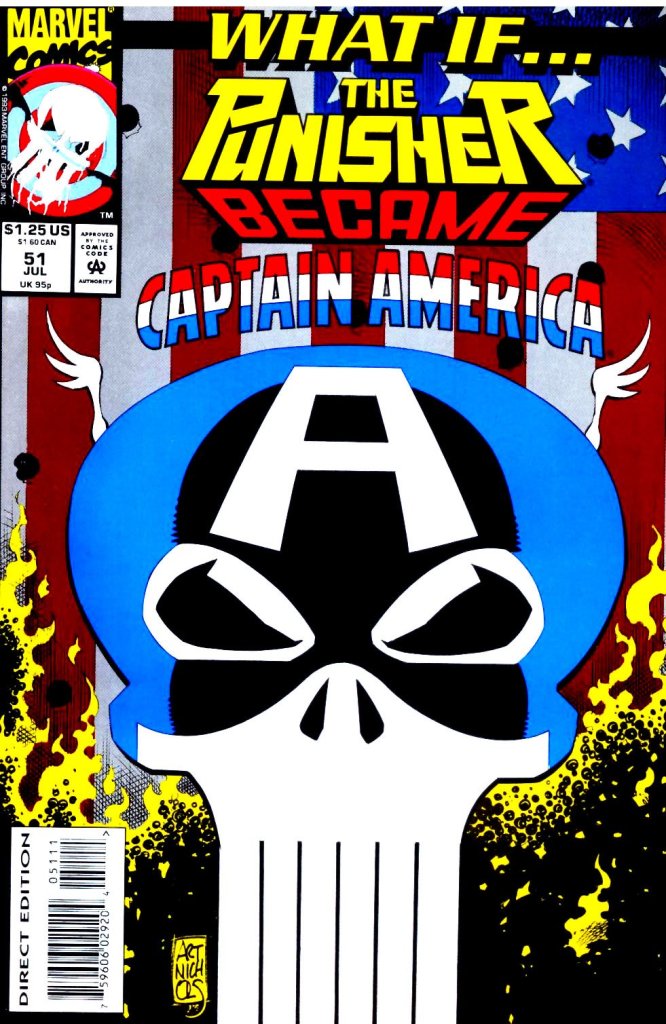
The cover.
Early story
The story begins inside a military hospital deep beneath the Pentagon. Steve Rogers/Captain America was still recovering from his previous mission (told in Captain America #212) when Nick Fury and Falcon arrive. Steve tells Fury that there must be a Captain America again with someone strong to wear the flag.
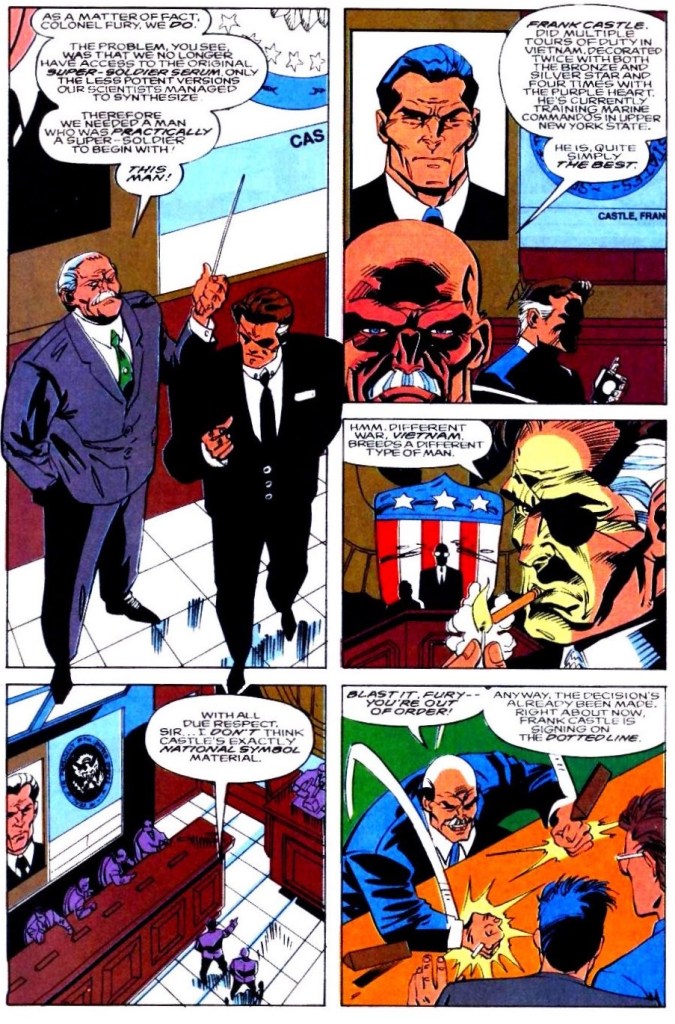
Shortly after, top secret discussions about replacing Steve Rogers commence with a select committee at work and some representatives present. Due to the lack of real access to the original super soldier serum that enhanced Steve Rogers into becoming Captain America, it was announced that decorated Vietnam War hero Frank Castle was their pick to replace Rogers. Nick Fury expresses his reservation.
At a military camp, Frank Castle refuses to become Captain America expressing that he has served his country already through military operations and he barely has any time left for his wife, son and daughter. As far as he is concerned, his war is over…
Quality
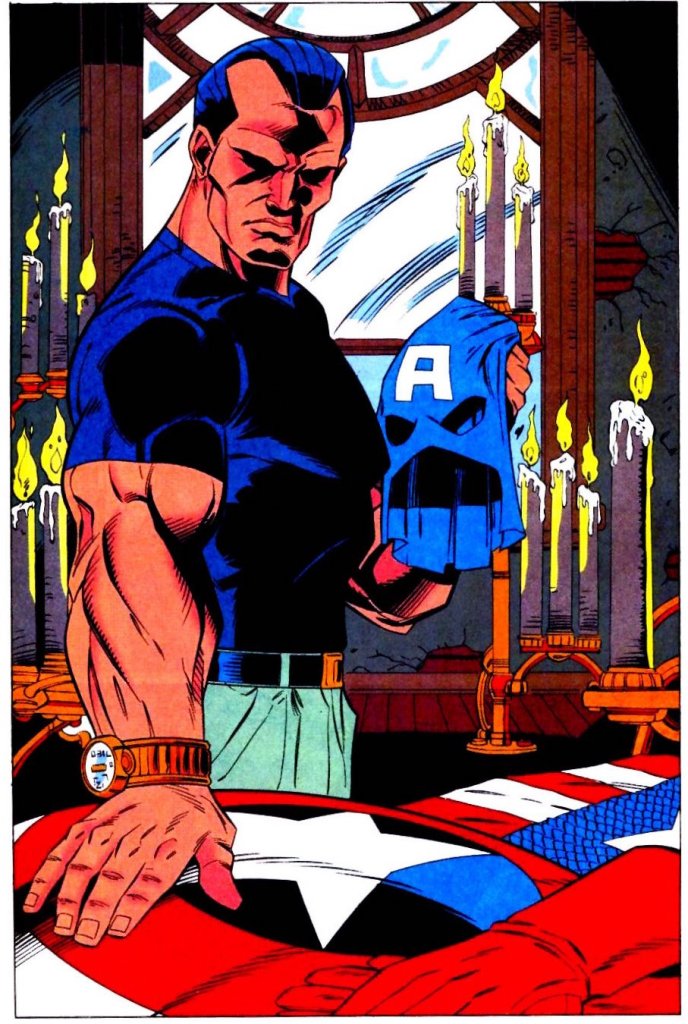
The Punisher as the new Captain America!
On face value, the concept about the Punisher becoming the new Captain America is intriguing and that alone could lead to different outcomes. The story written by Simon Furman clearly shows what kind of Captain America Frank Castle would be. While he does not have the super human abilities of Steve Rogers, Castle’s intense drive to punish others makes his Captain America an effective weapon against not only America’s enemies but also the opposition that the Avengers themselves face. Of course, Castle’s obsession on punishing the opposition is not limited to his role as America’s iconic instrument as he still has a personal desire on bringing down America’s criminals.
The story tackles some of the ethics behind the role and symbolism that comes with being Captain America, and it shows certain elements that Frank Castle lacks when it comes to living up to his higher role. This comic book also serves as a reminder about how valuable it is for Americans, whether fictional or factual, to serve their nation and love it. In today’s era of unrelenting socialism, Communism, Marxism, Critical Race Theory (CRT), unrestrained political correctness, widespread diversity delusions and Leftist activism damaging America which in turn has Joe Biden as a President prioritizing socialism and illegal immigrants over his fellow Americans, this comic book carries a lot of weight about what it means to be an American who is ready to serve and love America. Its meaning will easily offend the social justice warriors (SJWs) in America.
Without spoiling the plot, I can say that the final encounter and conclusion were powerful and sentimental in a good way.
Conclusion
Frank Castle the pick to replace Steve Rogers as Captain America.
What If #51 (1993) could have been another issue that ended disappointingly. It is actually an engaging read and provides readers deep insight about what a Frank Castle Captain America would be like within the Marvel Comics universe of the 1990s. It’s got a good amount of action, several moments of intrigue and it shows a different type of Punisher (note: check out my other retro reviews involving the Punisher by clicking here, here and here) while still retaining some of his classic character background elements. The visuals and art style in this comic book could have been better.
If you are seriously planning to buy an existing hard copy of What If #51 (1993) be aware that as of this writing, MileHighComics.com shows that the near-mint copy of the regular edition costs $60 while the near-mint copy of the newsstand edition costs $180.
Overall, What If #51 (1993) is recommended.
+++++
Thank you for reading. If you find this article engaging, please click the like button below and also please consider sharing this article to others. If you are looking for a copywriter to create content for your special project or business, check out my services and my portfolio. Feel free to contact me with a private message. Also please feel free to visit my Facebook page Author Carlo Carrasco and follow me on Twitter at @HavenorFantasy as well as on Tumblr at https://carlocarrasco.tumblr.com/
Disclaimer: This is my original work with details sourced from reading the comic book and doing personal research. Anyone who wants to use this article, in part or in whole, needs to secure first my permission and agree to cite me as the source and author. Let it be known that any unauthorized use of this article will constrain the author to pursue the remedies under R.A. No. 8293, the Revised Penal Code, and/or all applicable legal actions under the laws of the Philippines.
Welcome back, superhero enthusiasts, comic book collectors, fans of 1990s culture, and fans of both Marvel Comics and Archie Comics! Today, I have a retro review of one of the most wild ideas for a comic book crossover that actually got published in 1994. Back then I was still in college and ramping up my comic book collection. Then one day, I saw a print ad for the Marvel-Archie special project about the iconic Archie Andrews crossing over with the Punisher!
That’s right! The unthinkable concept pushed through and way back in 1994, I ordered in advance a copy of the comic book (note: this was actually one comic book published respectively by Marvel Comics and Archie Comics but with their own packaging and slight adjustments to the title) and eventually got to read it.
Behind the scenes, the management of Archie Comics wanted to take part in the wildly popular trend of intercompany crossover comic book publishing not just to boost their sales but also establish a stronger presence in comic book specialty stores. Back then, Marvel Comics editor-in-chief Tom DeFalco and Archie Comics editor Victor Gorelick were good friends (note: DeFalco entered comic book publishing while working for Archie Comics) and sometimes they would joke with each other about potential crossover concepts between their companies. Gorelick eventually had lunch with independent comic creator Batton Lash and talked about Archie wanting to get involved with crossovers. The Archie editor told Lash about he and DeFalco joking about Archie encountering the Punisher, and in response the independent creator stated that they should really push through with it.
Lash went on to make a pitch for the series and Gorelick sent it to DeFalco. Marvel’s editor-in-chief loved it and eventually the concept was approved complete with strategic involvement in the production by key talents from both Archie and Marvel. For the artwork, Archie’s Stan Goldberg and Marvel’s John Buscema worked together to maintain different tones by means of drawing settings and characters that are specific with their respective companies. The inkwork was done by Tom Palmer.
Now you must be wondering…was the crazy crossover any good? We can find out in this look back at The Punisher Meets Archie #1, published by Marvel Comics in 1994 with a story written by Batton Lash and drawn by Punisher artist John Buscema and Archie artist Stan Goldberg.
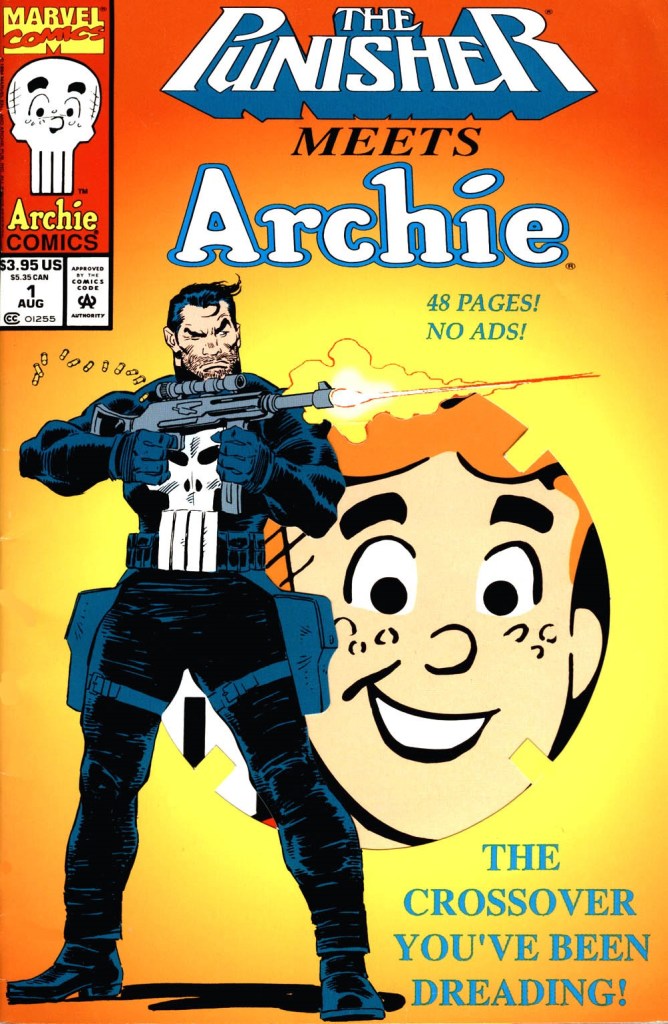
The cover with a die-cut design.
Early story
The story begins in a city where a man (in a trench coat and a cap) is seen running away from someone chasing him. As he hurriedly climbs over a wall, he hears the chaser’s gun click and responds by firing some bullets at him. The chaser climbs over the wall and he turns out to be Frank Castle, the Punisher. The Punisher notices that his target left his cap on the floor, and look at the nearby station full of people.
Inside the said station, the man who got away from the Punisher has red hair and a sinister looking face. He buys a ticket going to Riverdale.
The next day in the town of Riverdale, Archie Andrews rings the bell of the front door at the luxurious residence of the Lodge family. A little boy named Leroy (cousin of Veronica Lodge) surprises him and makes him wet using a water-filled plastic gun. In response, Archie grabs the hose nearby and unleashes water. He accidentally hits Veronica who got so angry, she decided to cancel her date with him.
Still wet, Archie walks down the sidewalk being followed by a car…
Quality
See your favorite Archie characters among them?
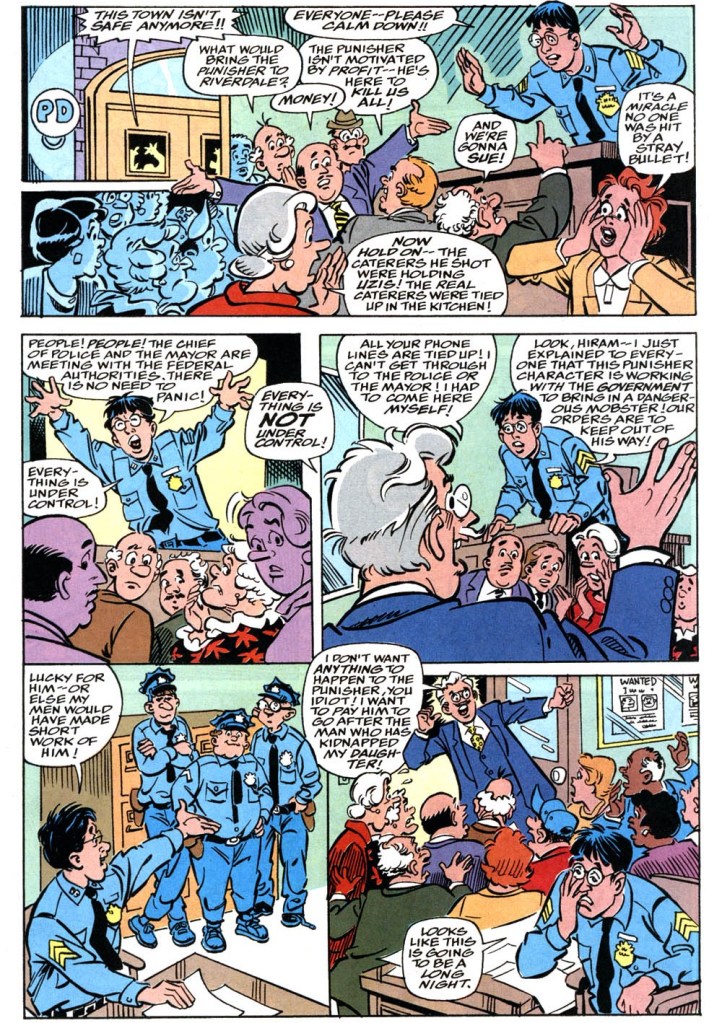
I’ll start with the story written by Batton Lash. To be clear, this comic book has a dominant Archie Comics tone meaning it is wholesome and fun, and at the same time never childish. The Punisher-focused scenes showed lots of signs of restraint meaning in order to connect well with the overall wholesome tone of the comic book, adulterated stuff and violent concepts related to the Punisher are absent. For me, having an overall wholesome tone works given the fact that most of the story is set in Riverdale and there are tremendously more Archie characters than there are Marvel characters.
More on the story, the concept by Batton Lash is wonderful and the way the plot was structured not only ensured a fun story but also made sense. The plot itself is pretty believable and the story is full of nice and interesting moments to read. There certainly were no boring scenes at all!
To have Punisher encounter Archie without ever using the now overuses versus-battle-type approach here was believable, sensible and even impressive. For the most part, as reflected in portrayals and dialogue, Lash captured the essence of the Archie characters and anyone who loves stories about Archie and the gang (plus Josie and the Pussycats and Katy Keene) will have a lot to enjoy here. Even the disruption in Riverdale caused by the gang of crooks and the Punisher has that strong Archie-tone and never went overboard.
Punisher, Micro Chip, the local cops and a familiar face from the Riverdale high school’s cafeteria.
With regards to Lash presenting Marvel’s vigilante, the Punisher here is subdued in terms of seriousness. While he is not portrayed to be gritty (note: he’s also less violent), he is still rugged and you will still see him firing guns during the right moments. With the reduction of violent action, Punisher does a lot more detective work and has his companion Microchip with him. While rugged, the Punisher is not as snobbish as one might think here. In fact, there are a few pleasant surprise moments in the story with regards to his encountering certain supporting characters of Archie. These moments, although they make Punished look like he’s out of character, I still find pretty delightful.
More on the characters, there is a whole bunch of them here! As the story is set in Riverdale, it comes to no surprise that supporting characters of Archie Comics are present and for the most part they were presented to delight those who love Archie and the gang. Mr. Weatherbee, Mr. Lodge, Reggie Mantle, Betty Cooper, Jughead Jones, Pop Tate, Svenson, Ms. Grundy, Professor Flutesnoot and others are here and they don’t just make mere appearances.
As this is a special project between Marvel Comics and Archie Comics, there is a lot of fan service here and there leaning towards the interests of Archie fans. For the most part, these fan service elements (note: there are some from Marvel Comics) were actually fun to look at and I personally did not find them distracting.
Conclusion
Punisher and Micro Chip explore Riverdale as Jughead and Archie are in Pop’s place.
While it is essentially an Archie comic book in terms of storytelling and visuals and lacks the kind of adulterated stuff that Punisher fans love, The Punisher Meets Archie #1 (1994) is still a very enjoyable crossover to read, and it sure is fun from start to finish. For one thing, the concept about Archie meeting with Punisher with Riverdale as the main setting works wonderfully even by today’s standards. What was an unbelievable concept got executed nicely into a believable and fun product. I should state that this kind of intercompany crossover comic book is still one-of-a-kind and its literary value (as opposed to financial value) is undeniably high. No doubt about, this crossover is a comic book classic!
If you are seriously planning to buy an existing hard copy of The Punisher Meets Archie #1 (1994), be aware that as of this writing, MileHighComics.com shows that the near-mint copy of the regular edition costs $53 while the near-mint copies of the deluxe newsstand edition and the direct edition cost $105 and $70 respectively.
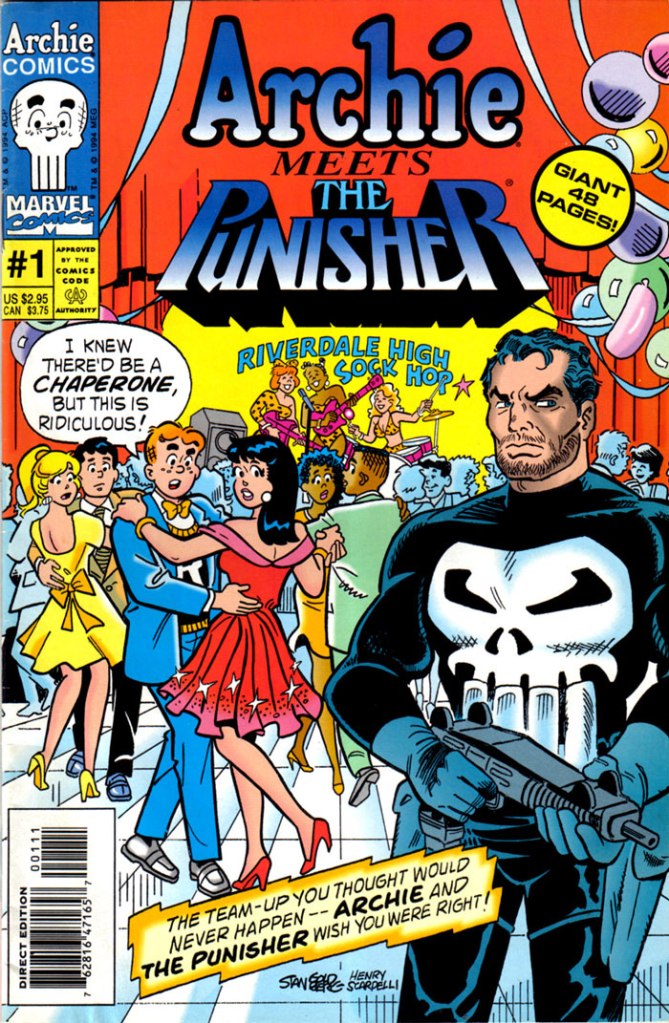
If you prefer the Archie Comics-published version – Archie Meets The Punisher #1 (1994) – be aware that the near-mint copy of the comic book costs $70 according to Mile High Comics as of this writing.
The cover of the Archie Comics-published version of the same crossover. This one is more eye-catching than that of the Marvel version.
Overall, The Punisher Meets Archie #1 (1994) is highly recommended!
+++++
Thank you for reading. If you find this article engaging, please click the like button below and also please consider sharing this article to others. If you are looking for a copywriter to create content for your special project or business, check out my services and my portfolio. Feel free to contact me as well. Also please feel free to visit my Facebook page Author Carlo Carrasco and follow me at HavenorFantasy@twitter.com











 Author Carlo Carrasco