Wow! That was a powerful presentation of 1st party video games at the 2024 Xbox Games Showcase (also referred to as Xbox Showcase) that happened in America very recently. Not only was it better and more exciting than the Xbox showcase of 2023, it made this year’s State of Play and Summer Game Fest look even more lackluster and more unsatisfying. Already there are PlayStation 5 (PS5) fans who begged Sony to do better with their showcase of games because this year’s Xbox showcase – which is also the first of the new age of Microsoft-owned Activision-Blizzard-King – energetic and exciting.
For this post, I will be focusing on one of highlights of the Xbox showcase…the first-ever reveal of gameplay and features of the Perfect Dark reboot (for my previous posts, click here and here). For starters, watch the gameplay showcase video below…
Wow! The Perfect Dark presentation exceeded my expectations on gameplay and it looks like The Initiative (Xbox game studio) and Crystal Dynamics (the studio responsible for many Tomb Raider games over the past several years) really got their creative forces combined to make something unique.
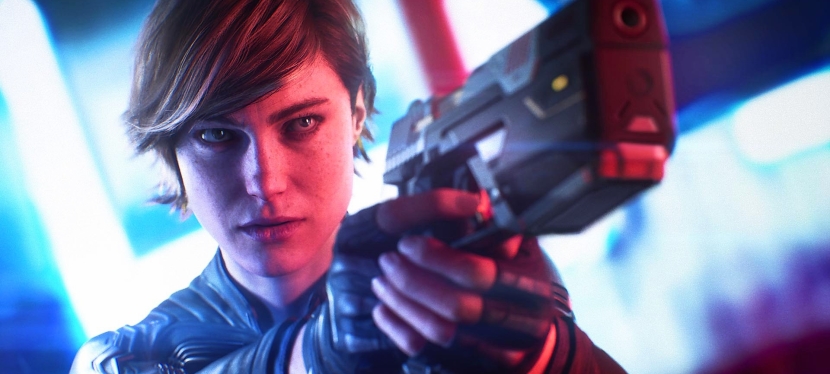
Like the previous games that preceded it, the new Perfect Dark utilizes a first-person viewpoint for immersive gameplay and it has a new version of Joanna Dark introduced featuring the likeness of model Elissa Bibaud. Strangely enough, the new agent Dark does not look too attractive. Perhaps more new images of her will be unveiled someday.
The new Joanna Dark featuring the likeness of model Elissa Bibaud.
Elissa Bibaud’s picture from her Instagram.
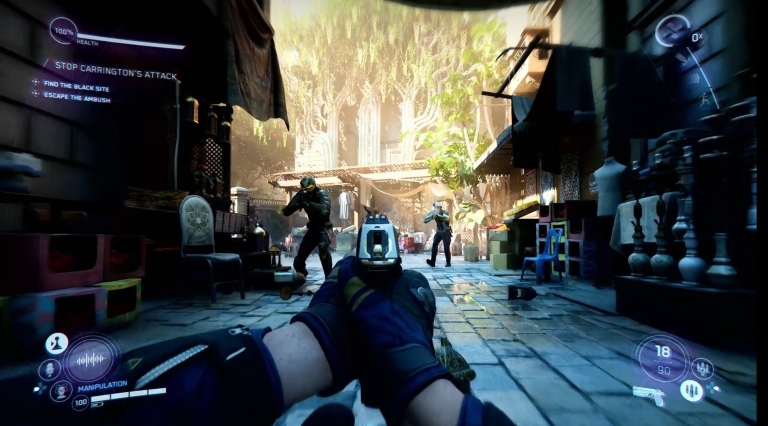
The Initiative and Crystal Dynamics must have brainstormed a lot and worked long to modernize the gameplay for this new game (officially the 4th Perfect Dark game for consoles played at home). What was shown during the video presentation were moments when Joanna Dark used gadgets to do thermal scanning, extract data wirelessly, generate voice-prints and create deepfake audio. Not only that, Joanna is capable of climbing wall pipes, sliding on surfaces and doing wall-running.
Without spoiling the concept of the video too much, I can say that Joanna Dark is already an agent who goes to Garden City in Cairo to find the wanted criminal Daniel Carrington and discover what he has been scheming. With all the details made available by the video and the Xbox Wire piece, Perfect Dark is really a first-person adventure that allows players to figure out what to achieve as they work their way through in missions. This is not just an action-packed first-person shooter.
Perfect Dark is a first-person adventure game laced with sci-fi and espionage elements. Players will be offered opportunities to overcome obstacles in creative ways such as using gadgets to infiltrate places.
Considering what was shown, I can only hope that the game developers will be able to create wide and vertical maps that will allow players to explore a lot more as they take on missions. By today’s standards, linear level designs just won’t cut it anymore. I know for a fact that making an open-world environment will take too much time and effort to complete Perfect Dark, so having wide and vertical maps will be good enough to offer players exploration opportunities.
Strangely enough, the video presentation does not specify which Xbox consoles Perfect Dark will be released for. What was confirmed is that the upcoming game will launch on day one on the Game Pass service which means it will eventually be released on Xbox Series X, Xbox Series S and Windows PC. That being said, Xbox Series X and Xbox Series S owners who are subscribing to Xbox Game Pass (XGP) and Windows PC gamers subscribed already to PC Game Pass will be able to play the new Perfect Dark on launch day someday. I doubt a version of the game will be released for the aging Xbox One consoles.
In this game, you can accomplish your mission objectives by using stealth or by engaging with the enemies directly with guns and other high-tech weapons.
Welcome back readers, fellow geeks and electronic gaming fans!
In this edition of the Retro Gaming Ads Blast (RGAB) series, we will take a look at another batch of retro gaming print ads from the 1980s and 1990s.
For the newcomers reading this, Retro Gaming Ads Blast (RGAB) looks back at the many print ads of games (console, arcade, computer and handheld) that were published in comic books, magazines, flyers and newspapers long before smartphones, social media, the worldwide web and streaming became popular. To put things in perspective, people back in the 1980s and 1990s were more trusting of print media for information and images about electronic games and related products.
With those details laid down, here is the newest batch of retro gaming print ads for you to see and enjoy…
1. Double Dragon II: The Revenge print ad
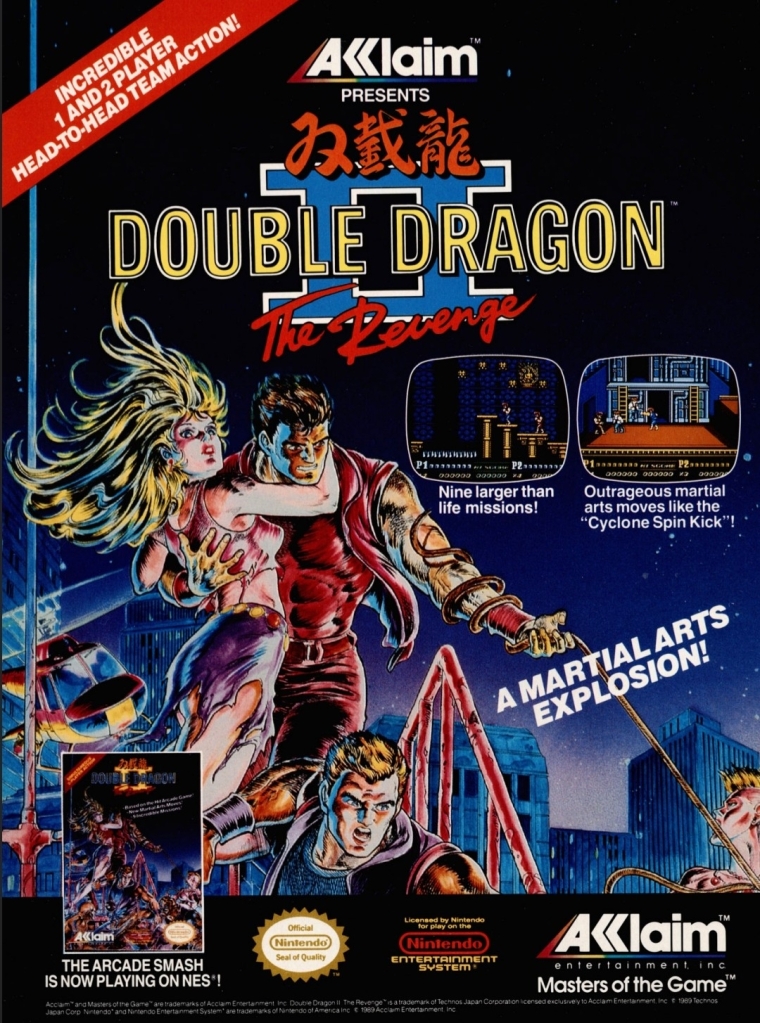
Nice looking art used to promote the game.
The beat-them-up sub-genre of gaming was already popular in the 1980s and one of the most defining game franchises of this type of game was the Double Dragon series which proved to be popular with Nintendo Entertainment System (NES in America) and Family Computer (Famicom in Japan) gamers. As the first game was a very big hit on Nintendo’s consoles, the sequel Double Dragon II: The Revenge was promoted in America with strong confidence on the part of publisher Acclaim that it would become another massive hit. This print ad had a very nice looking comic books-style art that not only captured the concept of the game but also visualized the heroes Billy and Jimmy with enough details to focus on. I can say this was an eye-catching ad.
2. X-Men: Children of the Atom print ad
Great looking ad but the line “100% direct conversion” is not true at all.
Developed by Capcom in cooperation with Marvel, X-Men: Children of the Atom was a huge hit in the video arcades and it was not surprising that it got released on the Sega Saturn by Acclaim. Acclaim organized an aggressive promotional campaign by pouncing on the fans’ love and knowledge of the X-Men and the high fun factor of Capcom’s game. What this print ad got wrong, however, was the line “100% direct conversion of the #1 arcade smash!” which was wrong and misleading. In reality, the Sega Saturn version of the game had about one-third of the animation frames cut due to the console’s smaller RAM capacity.
As the years passed by, the Sega Saturn became the more suitable console for home ports of Capcom’s further 2D fighting games as Sony’s PlayStation had even more severe limitations and a graphics processor that was not suitable for 2D graphics. By the end of 2000, Capcom’s 2D fighting games on PlayStation all were inferior to the Sega Saturn versions.
3. Sky Shark NES print ad
This is an effective looking ad.
Released in Japan as Flying Shark, Sky Shark was released on multiple platforms in 1988 and there was an NES version of it which this particular print ad promoted. The American branch of Taito wisely used positive quotes from media outlets to promote the game while coming up with an engaging text description and displayed NES screenshots. And then there was that very engaging painted cover art that gave this print ad a lot of punch. An effective ad overall.
4. Conflict print ad
This is a very captivating artwork for advertising.
There is no denying the fact that the Cold War was a strong influence on arcade games and video games. Titles like Contra, Jackal, Metal Gear, Operation Wolf, Cabal and Rush’n Attack were militaristic games that entertained millions of gamers from the young adults to the little children. In 1990, Vic Tokai released the game Conflict on the NES which had a military theme but an unusual game design composed of digital maps with hexagons in which gamers will play with strategy to win battles. That being said, this print ad’s visual concept was very captivating yet also misleading. If you see how the game is played, you will know what I mean.
5. College Slam print ad
Were you ever interested in college basketball video games?
This is one of the more eye-catching print ads I’ve seen due to the artist’s illustration of a basketball with a mouth biting the basketball rim which dominates the space. For the newcomers reading this, College Slam was a basketball video game that was actually a repacked version of the popular NBA Jam with focus on NCAA basketball players. With the biting basketball at the center, it was easily an attraction and the screenshots implemented were larger than usual which easily gave gamers a clear look at what the game looked like. While this print ad is eye-catching, it did not help sell College Slam and there never was a follow-up.
6. Tecmo Super Baseball print ad
From the time when Tecmo was prolific with video games about sports.
Long before it started the Dead or Alive game franchise, Tecmo was once heavily invested in making sports video games. Tecmo Super Baseball was their first American pro baseball video game released for Super Nintendo Entertainment System (SNES) and Sega Genesis, and it was notable that the publisher secured only the Major League Baseball Players Association (MLBPA) which resulted in the game featuring real-life players but the teams had no names and no logos. Regardless, this print ad showed how aggressive Tecmo was in trying to attract consumers’ attention by showing ten screenshots with short text descriptions each. The ad’s write-up boasted realism as well as the promise of gaming quality.
7. The Punisher print ad
Marvel’s vigilante firing at someone.
In the early 1990s, Capcom and Marvel Comics started their partnership resulting in the releasing of the arcade game The Punisher. Developed by Capcom, the said arcade game became a big hit with gamers as it featured fun gameplay, multiple enemies appearing on screen simultaneously and other fun elements. Unsurprisingly, the game was ported (note: Sculptured Software was the lead developer) to the Sega Genesis with significant downgrades in terms of graphics, sound, enemy variety and other related elements due to technical limitations. That being said, this print ad used detailed art of the Punisher (with Col. Fury in the background) in a clever way to promote the Sega Genesis version while keeping their attention away from the obvious visual downgrades of the two screenshots displayed. The Punisher on Genesis was poorly received.
8. Stargate print ad
If you did not enjoy the movie, were you able to play the video game adaptation on Sega Genesis or Super NES?
Remember the sci-fi movie Stargate (1994)? The film was a surprise box office hit and eventually video game adaptations of it were made for the SNES, Sega Genesis, Game Gear and the GameBoy. This particular print ad, however, showed screenshots of the SNES and Genesis versions which is made obvious with the side-scrolling adventure plus 3D flying sequence (one screenshot showed it). Combined with images sourced from the movie poster plus an insert of the movie in home video format (lower-right corner), this print ad was obviously an aggressive way to promote the film with the post-theatrical business in mind. In case you are wondering, the cinematic Stargate is not related at all with the early 1980s video game (a follow-up to the classic game Defender) of the same name.
9. Aerobiz Supersonic print ad
For a simulation game released on consoles, Aerobiz Supersonic is pretty deep and a lot of fun to play.
The airline simulation game Aerobiz Supersonic is a highly addictive and surprisingly fun game that I enjoyed playing on the SNES (read my retro review by clicking here) and strangely enough I first learned about not through its print ad but by reading a preview published by Electronic Gaming Monthly (EGM) magazine. As for this print ad made by Koei’s American team, this is really odd to look at due to the ad makers’ choice of showing a not-so-attractive flight meal. In contrast to that, the ad makers did a good job describing the game creatively and showed three screenshots that were strategically selected in my view. Having played the game many times, I can say that this print ad is very truthful.
Welcome back readers, fellow geeks and electronic gaming fans!
In this edition of the Retro Gaming Ads Blast (RGAB) series, we will examine print ads of Sega from the 1990s which was a notable period of time when they went from being a prominent video game company into a desperate, struggling entity by the end of the decade. All the Sega ads in this edition are promotions of their own video games that were exclusive to their consoles during the 1990s.
For the newcomers reading this, Retro Gaming Ads Blast (RGAB) looks back at the many print ads of games (console, arcade, computer and handheld) that were published in comic books, magazines, flyers and newspapers long before smartphones, social media, the worldwide web and streaming became popular. To put things in perspective, people back in the 1980s and 1990s were more trusting of print media for information and images about electronic games and related hardware.
With those details laid down, here is the newest batch of retro gaming print ads for you to see and enjoy…
1. Phantasy Star IV print ad
This was the last single-player Phantasy Star game released. There is no sign of Sega revisiting the franchise for another single-player experience.
Long before the emergence of online console gaming that involved a high number of players, Sega released Phantasy Star IV for the Genesis console in America in 1994 which was praised by gamers and critics. This one also turned out to be the last single-player role-playing game (RPG) of the Phantasy Star series as Sega eventually turned it into a series of online RPGs since the year 2000.
This print ad is significant because a lot of gamers today are not aware that Phantasy Star started as a series of single-player RPGs the same year Final Fantasy debuted in Japan. Anyone interested to play Phantasy Star IV on a modern console should buy the Sega Genesis Classics collection.
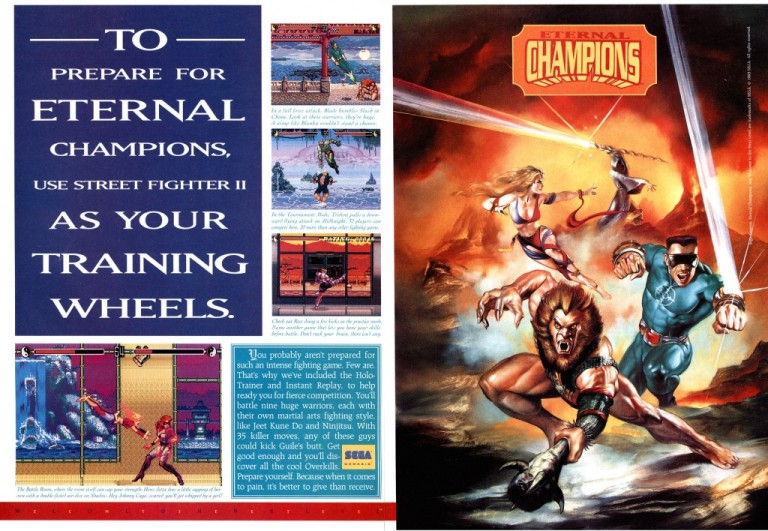
2. Eternal Champions print ad
This 2-page print ad appeared in many comic books and some magazines that I read long ago.
Back in the 1990s, the fighting game genre became wildly popular with gamers at the arcades and on consoles at home. Capcom literally sparked a wild fire with the Street Fighter II game and its upgraded editions, and other companies went on to make their own 2D fighting games to cash in. Sega was one of them and they released their own 2D fighting game Eternal Champions for the Sega Genesis console.
Unsurprisingly, the game was marketed aggressively and this 2-page print ad really stood out as it had the great looking painted art on the right, screenshots and details of the game, and most notably made a sarcastic reference to Street Fighter II. Eternal Champions sold enough copies, it led to the release of the sequel Eternal Champions: Challenge from the Dark Side and two spin-off games. I can only guess that referencing Street Fighter II was helpful in achieving commercial success.
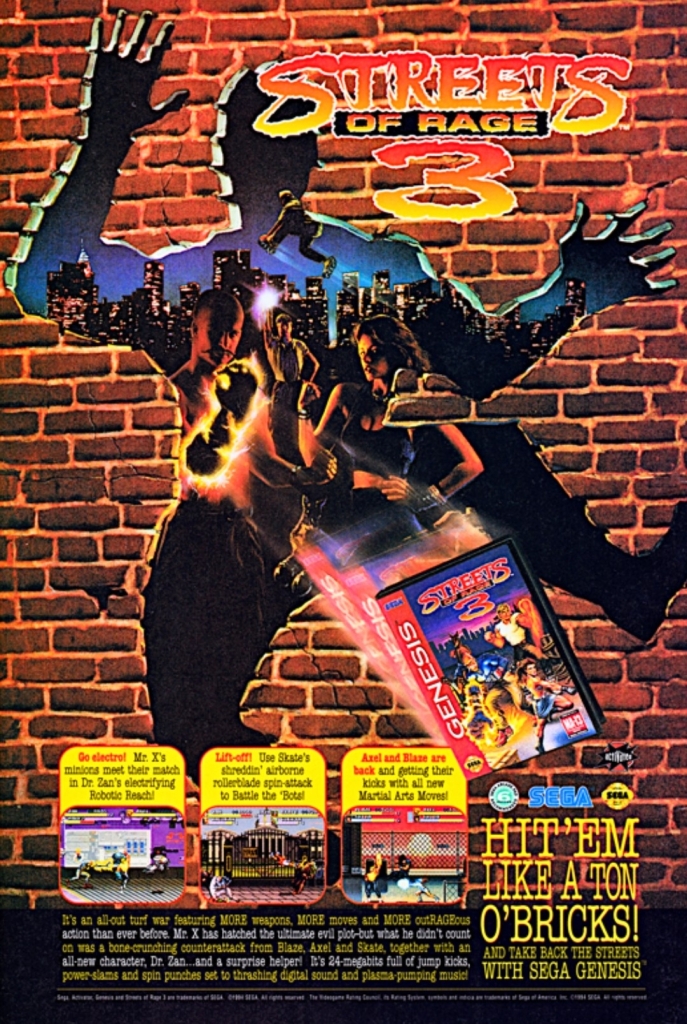
3. Streets of Rage 3 print ad
This ad caught my attention easily when I saw it in comic books I read.
Streets of Rage (Japanese title: Bare Knuckle) was one of the most defining game franchises Sega came up with and it started on the Sega Genesis console. It was a series of side-scrolling, 2D beat-them-up games that ensured action and excitement for gamers. As the first two games were critically and commercially successful, Sega was confident in aggressively marketing Streets of Rage 3 and the print ad seen had a very attention-grabbing artwork.
The artistic style emphasized power and intensity as it shows a damaged wall with the shape of a human body (symbolizing that someone was thrown through it) and then there were images of people on the other side. The game went on to attract mostly positive reviews although it paled in comparison to its predecessors in terms of sales.
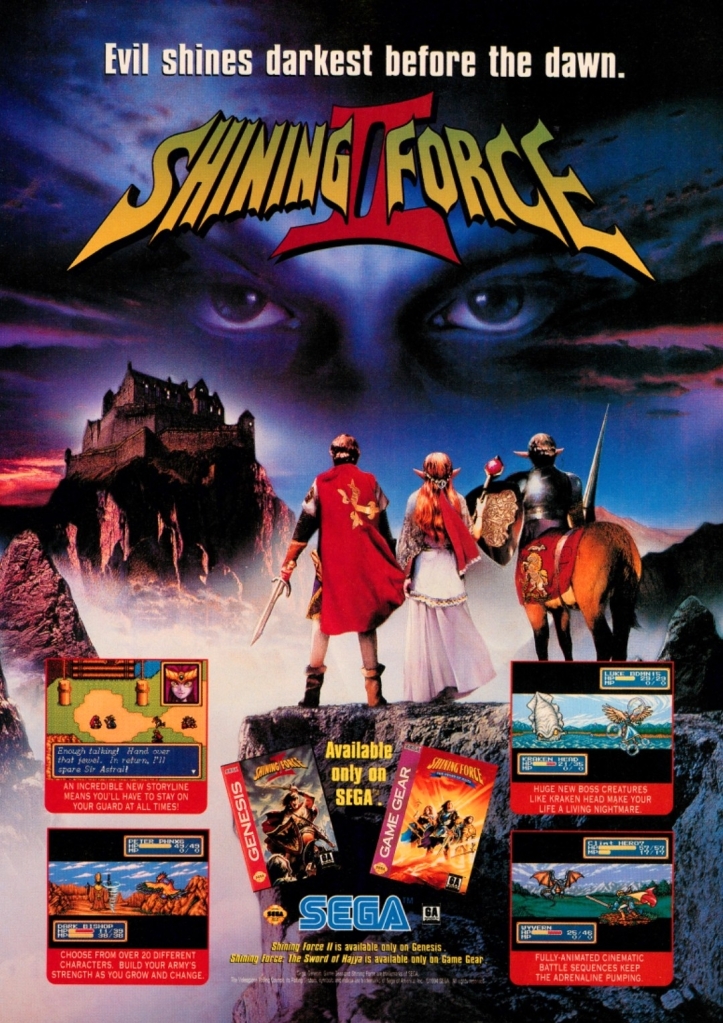
4. Shining Force II print ad
The first time I saw this ad, it made me interested to buy a Sega Genesis console to play it.
As Sega was so prolific with making and releasing games across different genres, they had their own tactical role-playing game series with Shining Force and the first game released on the Sega Genesis was a critical and commercial success. That being said, the company was confident with releasing Shining Force II on the same console more than a year later achieving critical and commercial success.
The North American print ad of the game had a visual presentation that closely captured the foreground-background style (characters facing the distance) used in-game, and the advertising team use photographic imagery to achieve a fantasy look. Very cleverly, Sega inserted the Sega Game Gear title Shining Force Shining Force: The Sword of Hajya into the ad. This print ad made me interested in acquiring a Sega Genesis for Shining Force II.
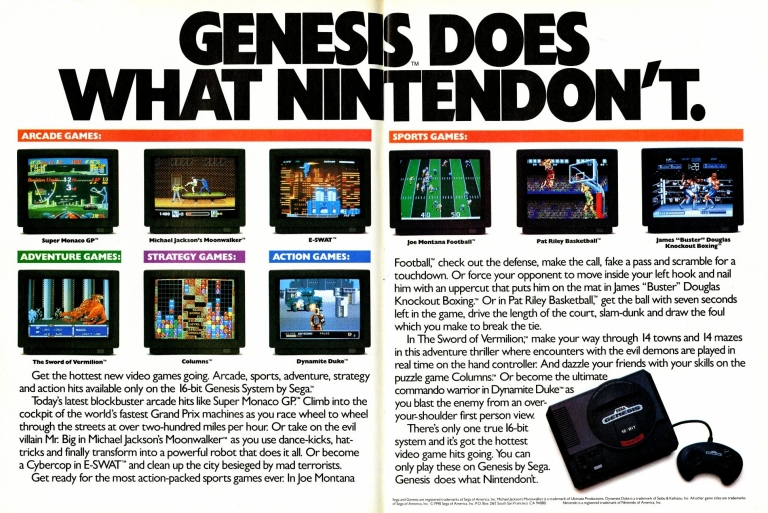
5. Genesis does what Nintendon’t print ad
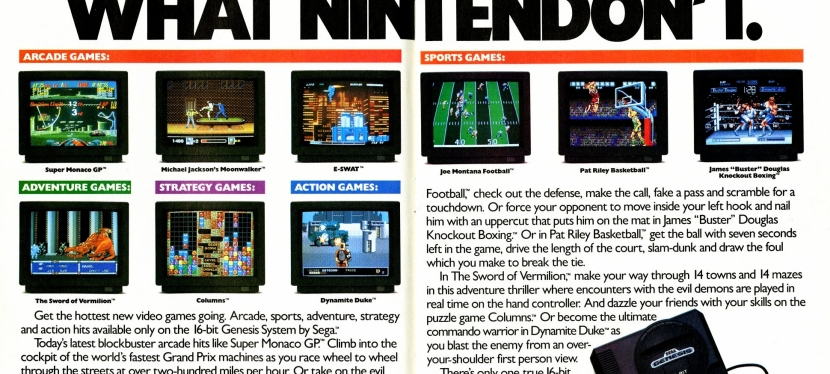
With the famous line heavily emphasized, this print ad showed how bullish Sega really was in competing with Nintendo.
Now this print ad of Sega’s has the most definitive and best-known advertising line in the so-called 16-bit console generation: Genesis does what Nintendon’t. This was Sega’s aggressive marketing push to convince gamers to buy the Genesis console to play games and experience thrills of fun that they would not find on a Nintendo console at the time. Genesis was launched in America in 1989 with “16-bit” emphasized a lot, and the technological rival Super Nintendo Entertainment System (SNES) was released in the same market more than two years later.
The 2-year advantage helped Sega establish the Genesis as the next-gen machine for gaming at home and there were years in the 1990s when Sega’s console outsold Nintendo’s in America during the so-called 16-bit war. The Genesis also had lots of exclusive games plus strong software support from third-parties. While the SNES would eventually outsell the Genesis in other parts of the world, it was in America where Sega proved to be very competitive and successful.
6. Knuckles’ Chaotix print ad
Sega was aggressive with marketing this game for the 32X.
In late 1994, Sega released in America and in Japan the 32X which was an add-on device for the Sega Genesis designed enhance its power while serving as a transition (a warm-up) into the so-called 32-bit era of console gaming. The 32X was the result of corporate decisions involving the American and Japanese executives of the company.
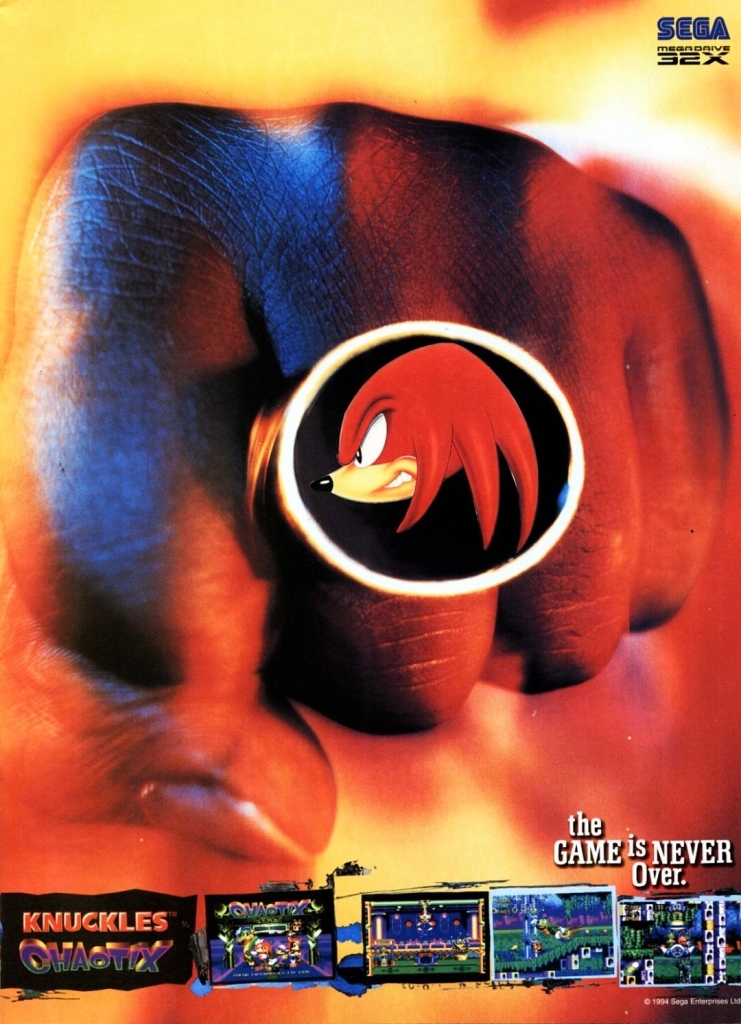
To keep 32X customers happy and boost hardware sales, Sega adjusted the development of Knuckles’ Chaotix (a Sonic spin-off) from being a Sonic project 32-bit console Sega Saturn into a standalone game for the add-on device. Even though Sega knew the game’s development was rushed, they went on to strongly promote the game and the print ad shown here was quite eye-catching.
The image of a fist with a ring showing the character Knuckles (a character from the Sonic games) emphasizes power and the colors used seem to express intensity. Then there were the selected screenshots shown without descriptive text. Although Sega tried hard, Knuckles’ Chaotix (launched in 1995) received mixed-to-positive reviews and sadly sold poorly. Unsurprisingly, the sales of the 32X dropped further and by then a lot of consumers knew that the Sega Saturn (the true successor to the Genesis) was all set to launch in America and Europe within 1995.
7. Sonic 3D Blast for Sega Saturn print ad
Too bad Sega and its teams failed to make the true Saturn Sonic game.
Back in the 1980s and 1990s, having a high-quality, console-exclusive game featuring a company mascot was crucial to sell game consoles while keeping dedicated fans happy. Like what Nintendo did with their icon Mario, Sega achieved great commercial success with the three Sonic the Hedgehog games they released exclusively on the Sega Genesis console and this naturally created expectations they would make new Sonic games on the Saturn console. Unfortunately, Sega and its teams failed to complete development of the Saturn-exclusive game Sonic X-treme and the company cancelled it which sent shockwaves through the games industry news.
With the 1996 holiday shopping season too crucial to ignore, Sega commissioned a Saturn version of the game Sonic 3D Blast which was originally made for the Genesis console. Sonic 3D Blast on the Saturn took seven weeks to make and there were some graphical enhancements implemented. While Sonic 3D Blast’s Genesis version attracted a positive reception from critics (and sold 700,000 copies), the reception for the Saturn version was mixed. This print ad of Sonic 3D Blast on Sega Saturn is a reminder of the company’s failed attempt to take their icon to the next-generation. They never replicated the big success they had with Sonic on the Genesis.
8. Die Hard Arcade print ad
Each time I saw this print ad, it easily reminded me of the classic action film of 1988.
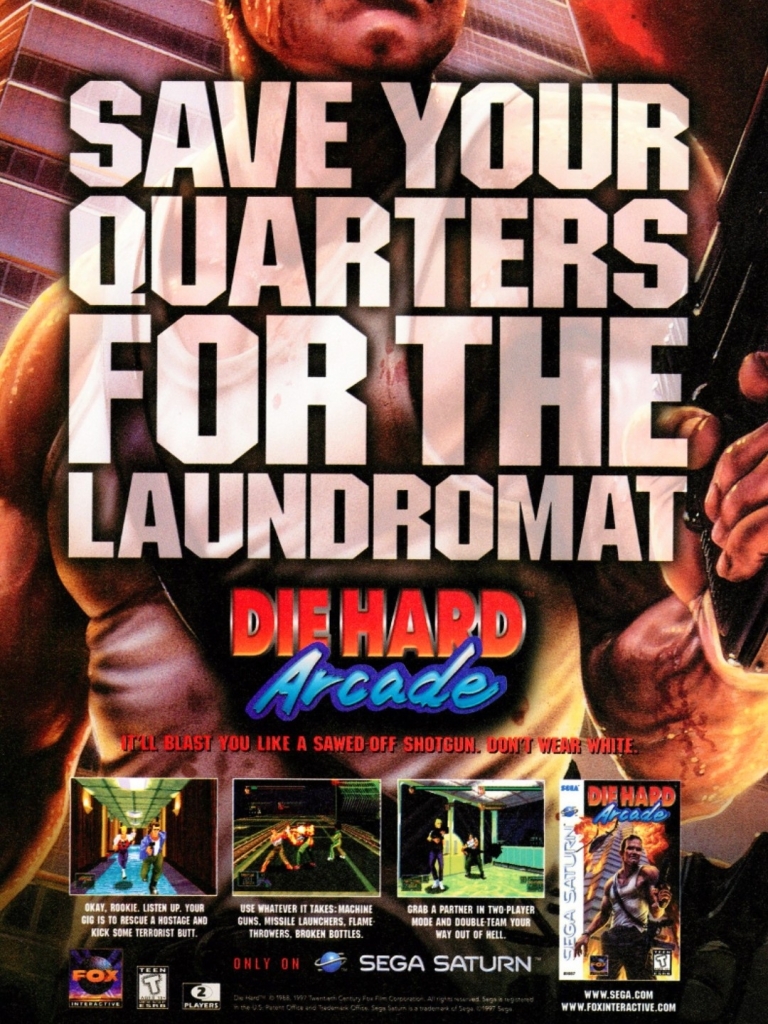
Like many other movie franchises, Die Hard has many video game adaptations released through the decades. In 1997, Sega released Die Hard Arcade (Japanese title: Dynamite Deka) on the Sega Saturn and the game critics praised it for its fun gameplay as well as its flawless conversion of the arcade version (released in 1996). To say the least, the development history of Die Hard Arcade is not as straightforward as many would think. To get the details and explanations of the development of the game, click here.
As for the print ad itself, this one cleverly used official game art as the background with imagery which instantly reminded me of what I saw in the classic 1988 movie that starred Bruce Willis. This ad made me interested to buy a Sega Saturn or find a place to rent it to play the game.
9. Shenmue Japanese print ad
Simplistic with presentation and yet engaging to look at. The Dreamcast-exclusive Shenmue sold over a million copies in Japan alone.
When Shenmue was released exclusively on the Sega Dreamcast in Japan on December 29, 1999, it turned out to be a very mind-blowing experience for many gamers due to its ambitious game design, the intense attention to detail implemented, very high production values, in-depth exploration and very immersive gameplay.
It was the open-world game released at a time when “open-world” was not even a standard gaming term. Often called the masterpiece of the legendary game designer Yu Suzuki, Shenmue sold over 1.2 million copies in Japan and went on to be released worldwide in the months that followed. Sadly, the game failed to make a profit due to its very high budget of $70 million (which Suzuki himself said in English during an interview) and the fact that the number of Dreamcast units already sold to gamers was not massively high.
The Japanese print ad of Shenmue had a simplistic looking visual concept and yet it was engaging to look at because the way the characters appeared was how they appeared in the game during gameplay which was astounding. Take note that back in the 1990s, it was common for video game marketing materials to show human characters in high detail but in reality the polygonal models of those characters appeared looking blocky and much less detailed during gameplay.
Welcome back readers, fellow geeks and electronic gaming fans!
In this edition of the Retro Gaming Ads Blast (RGAB) series, we will examine print ads from the 1980s and the 1990s that caught my attention and I will explain why they are worth look back at.
For the newcomers reading this, Retro Gaming Ads Blast (RGAB) looks back at the many print ads of games (console, arcade, computer and handheld) that were published in comic books, magazines, flyers and newspapers long before smartphones, social media, the worldwide web and streaming became popular. To put things in perspective, people back in the 1980s and 1990s were more trusting of print media for information and images about electronic games.
With those details laid down, here is the newest batch of retro gaming print ads for you to see and enjoy…
1. Star Wars: Rebel Assault print ad
This print ad was strong enough to capture Star Wars fans’ attention and make them interested with the Sega CD.
If there is anything notable about the Sega CD (Mega CD in other parts of the world) platform, it is the fact that the machine was an add-on to be connected with the Sega Genesis (Sega Mega Drive elsewhere) console. That being said, LucasArts included the Sega CD as one of several platforms for the multiplatform release of their 1993 game Star Wars: Rebel Assault. The above print ad caught my attention with its use of 9 screenshots (emphasizing a wide look at the game’s Star Wars concept) and text description (emphasizing multi-media features connected with gameplay), and for a time it made me interested in the Sega CD. Looking back at the game’s marketing, Star Wars: Rebel Assault was designed to not only give gamers sessions of play to enjoy but also opportunities to immerse themselves deeper into the realm of Star Wars. The game even had selected video clips from the original Star Wars trilogy movies.
2. Cloak & Dagger print ad
This print ad could have used at least two screenshots from the arcade game…
In 1984, there was a movie titled Cloak & Dagger (read my retro movie review by clicking here) which was not only the 4th cinematic adaptation of the short story “The Boy Cried Murder” (written by Cornell Woolrich) but also had the real-life electronic game Cloak & Dagger as a crucial plot element. To make things clear, there was a Cloak & Dagger game released in the arcades (as emphasized in the above print ad) from Atari. Behind the scenes, the filmmakers and Atari worked together which explains the video game tie-in with the movie. While the above arcade conversion kit print ad does not show screenshots of gameplay, the four images of the playable protagonist Agent X shown were from the game’s short transition sequences (moving from one level to another) which were also displayed in the 1984 movie. Those images were enough to remind me about the movie I enjoyed.
More on the Atari connection, the movie had a cleverly presented short scene showing the young protagonist Davey (played by Henry Thomas) playing Cloak & Dagger on his Atari 5200 console with spliced gameplay footage of the arcade version shown within cuts. In real life, however, Atari never released a version of Cloak & Dagger for any console nor computer in the 1980s. Today, you can play the game on the Atari 50 collection on consoles.
3. BurgerTime print ad
This BurgerTime print ad was entertaining to look at and easily reminded viewers about food and the popular game coming home.
Back in 1982, BurgerTime (Japanese title: Hamburger) was released in the video arcades and turned out to be a big hit in both Japan and America. Seeking to capitalize on the game’s success, Mattel Electronics acquired the rights of the game from Data East and went on to release versions of it for the Intellivision, Atari 2600, Apple II and the IBM personal computer. Mattel went on to market the game for consoles and computers by coming up with a print ad (the one above) that had comic book-style hand drawn art of the playable protagonist chef Peter Pepper running away from walking versions (anthropomorphic figures) a hotdog, an egg, and a pickle. The ad showed a single screenshot which was sufficient enough to show readers the concept of the game clearly. In my experience, I never got to play BurgerTime in the arcades but I first learned about its existence thanks to the eye-catching print ad above which appeared in comic books I read. In addition, the print ad also does an effective job to remind readers about food.
4. SOS print ad
This print ad made me interested in the game as I was already aware of the historical sinking of the Titanic, and I already saw the disaster film The Poseidon Adventure.
Moving back to the 1990s, I saw the above print ad of the video game SOS for the Super Nintendo Entertainment System (SNES) while reading a comic book. The nice artwork caught my attention as it easily reminded me of the disaster movie The Poseidon Adventure (1972) as well as the real-life tragedy of the Titanic. Then I saw the screenshots on the print ad and they made me interested on the game which I later played on a rent-by-the-hour game joint. Looking back at the text description of the print ad, it did not describe what the technical and graphical features of SOS were. That being said, I was surprised to experience the game’s use of the SNES Mode 7 effects which enabled the scaling and rotating of the in-game environment which affected gameplay in many ways. Read my retro review of SOS by clicking here.
5. Star Trek: The Next Generation – Future’s Past print ad
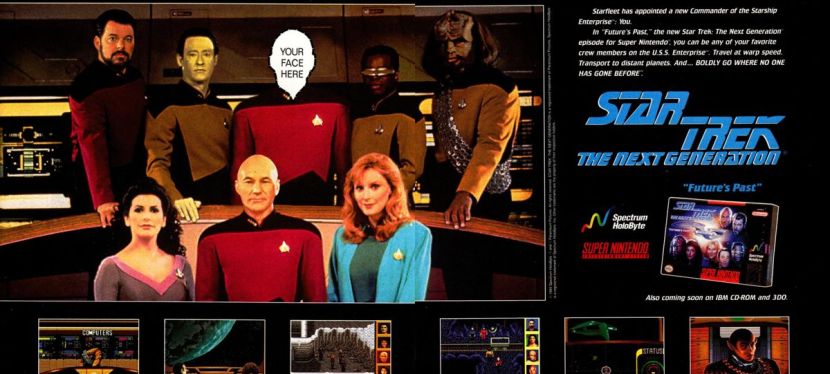
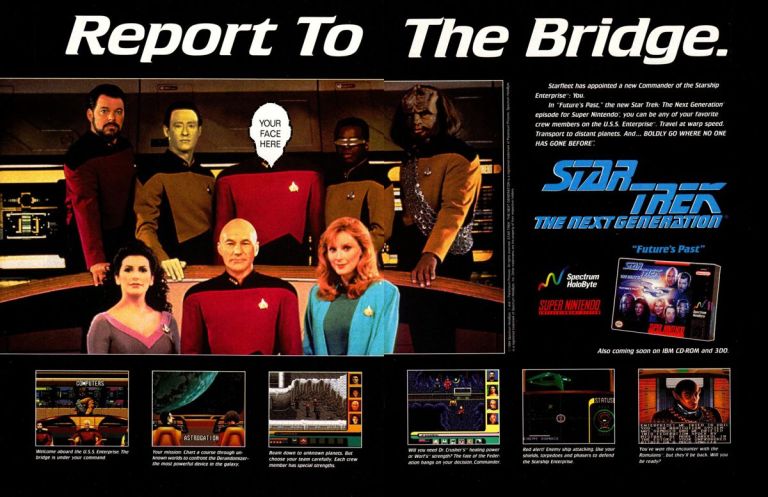
This 2-page print ad was strong enough to invite readers to literally join the Star Trek: TNG crew and go where no man has gone before. By the way, when was the last time you saw Marina Sirtis or Gates McFadden on a video game ad?
Long before wokeness ruined Star Trek in this modern age, the sci-fi franchise reached a tremendous high in popularity and projects in the 1990s as that decade had Star Trek: The Next Generation (most of its TV seasons and three movies were released within the decade), Star Trek: Deep Space Nine and Star Trek: Voyager that kept fans entertained.
Considering its high popularity, it was not surprising that a video game adaptation of Star Trek: TNG was released in 1994 titled Star Trek: The Next Generation – Future’s Past (the version for Super Nintendo Entertainment System) and I saw the above print ad while reading a gaming magazine. Using a slightly altered version of the TNG group photo, the print ad emphasized its concept that the player will be able to lead the crew of the Starship Enterprise and take part in a series of missions in different parts of space with the likes of Captain Picard, Commander Riker, Data, Worf, Dr. Crusher, Deanna Troi and La Forge. While I was never a Star Trek fan, the above print ad caught my attention with its concept, the group photo and the screenshots gave me an idea of what the game has to offer. It should be noted that Star Trek: The Next Generation – Future’s Past was released between the end of Star Trek: TNG’s final season and the theatrical release of Star Trek: Generations.
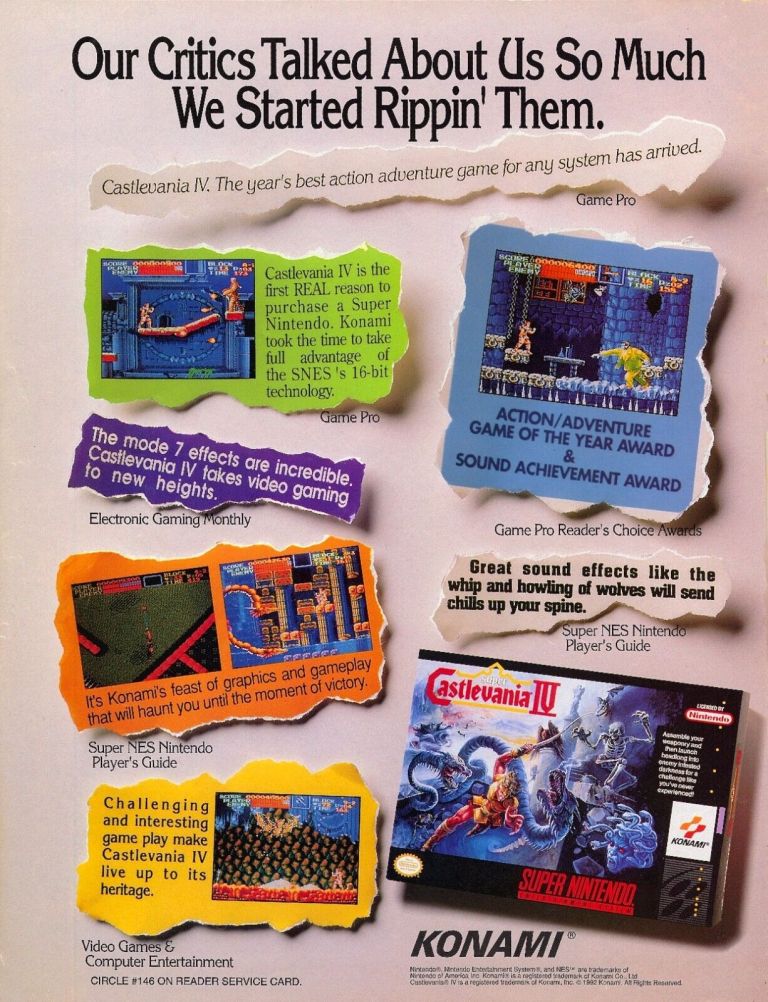
6. Super Castlevania IV print ad
This was one of the most eye-catching print ads I’ve seen about a Konami video game.
The jump in technology from one console generation to the next can be beneficial for gamers if game developers harnessed the advantages of new technologies to make new games that turned out to be more engaging and more enjoyable. Such was the case with Super Castlevania IV for the Super Nintendo Entertainment System (SNES) in 1991. The above print showed Konami highlighting the positive feedback their game received from different gaming media outlets and used screenshots to give gamers and long-time Castlevania fans exciting stuff to see. I got to play the game on the mini SNES console and I can say that in terms of visuals, controls and gameplay, Super Castlevania IV truly lived up to its title and it remains fun to play to this day.
Finally, an old wish of mine came true as GungHo Online Entertainment America, Inc. (GOEA) officially announced that the Grandia HD Collection – which contains the classic Japanese role-playing game Grandia and its sequel Grandia II – will be released on Xbox consoles on March 26, 2024. For the newcomers reading this, the said collection of the two Grandia RPGs was previously released for the Nintendo Switch and on PC in 2019. Grandia HD Collection has been listed on the Xbox store.
This surprise development is definitely much more exciting and better than Team Xbox’s releasing four Xbox-original games on PlayStation and Nintendo consoles. For your excitement and enlightenment, watch the latest Grandia HD Collection announcement and trailer below…
To understand what the collection contains, posted below is an excerpt from the official announcement by GOEA. Some parts in boldface…
The GRANDIA HD Collection features two genre-defining role-playing games: GRANDIA and GRANDIA II. These games send players on epic adventures with protagonists Justin and Ryudo, respectively, to explore the worlds of GRANDIA and protect them from the forces of evil.
Two Nostalgic Stories: Fans can follow both iconic journeys in the world of GRANDIA with various upgrades once more. Discover what lies beyond the End of the World with the young adventurer Justin in GRANDIA and, eons later, protect the world from eternal darkness with mercenary Ryudo in GRANDIA II.
Modernized Visuals: This version of GRANDIA and GRANDIA II includes enhanced UI, sprites, and texture art that brings the iconic look of the retro classics to contemporary standards, including widescreen support and visually enhanced original cinematics.
A battle from Grandia.
This is what a battle looks like in Grandia II which had fully polygonal graphics.
Classic Old-School Combat: The GRANDIA series features classic RPG combat, with physical attacks and elemental spells in a battle system that combines real-time and turn-based mechanics. The addition of Hard Mode gives players a memorable challenge as they explore the world of GRANDIA II.
Language Support: The GRANDIA HD Collection includes Japanese and English audio options, as well as language support for English, French, German, Japanese, Korean, and Chinese (simplified and traditional).
I am really delighted that Grandia HD Collection is coming to Xbox (note: made for the Xbox One console which is fully compatible with Xbox Series X and Xbox Series S consoles) as I played and enjoyed the original Grandia game on PlayStation way back in 1999.
I do remember Grandia having a very imaginative fantasy world with a story cleverly structured to take players from one location to another to visit new places, meet new characters or tribes of people, and engage in quests. Playing that game was a whole lot of fun because developer Game Arts (the same team behind the Lunar RPGs) crafted a battle system that is highly playable and addicting. As I played Grandia, I saw the playable characters really develop not just with their personalities but also their battle and magic abilities.
Not only that, the music written by Noriyuki Iwadare was great to listen as I played. I also love the artistic approach applied on Grandia which had 2D sprites for the characters and monsters, nicely textured 3D polygonal environments, and very imaginative artworks (including those in animated cutscenes).
Grandia had characters and monsters in 2D sprite forms, as well as detailed textures on the 3D polygonal environment.
Of course, the many quests gradually built-up the tension of the main plot which turned out to be a grand event. Game Arts knew how to execute handsome pay-offs in relation to the build-up that preceded them. That being said, Grandia’s conclusion was really memorable to see.
If there is anything I hope to see within the Grandia HD Collection, it would be improvements on the English translation and the voice acting of the characters because the PlayStation version of Grandia that I played was lackluster with those mentioned elements. Clearly Sony Computer Entertainment (the publisher of Grandia on PlayStation) did not aim high with quality for the game’s American release.
As for Grandia II, I never got to play it as I never had a Sega Dreamcast nor a PlayStation 2 (PS2) console. I do remember some Dreamcast gamers expressing fondness and high enjoyment of the game and there were even a few who enjoyed it more than its predecessor. That being said, Grandia II’s inclusion in the Grandia HD Collection is an added incentive for me to purchase the collection for my Xbox Series X.
A mini-game in Grandia II. The sequel went all-in with 3D polygons which made it a big showcase of art and graphics on the Sega Dreamcast. The PlayStation 2 version of this game reportedly had inferior graphics.
In recent times, Team Xbox and their studios officially confirmed that the Xbox-original (read: previously Xbox-exclusive) games Pentiment, Hi-Fi RUSH, Grounded and Sea of Thieves are heading to consoles of Sony and Nintendo. This is the result of what was discussed during the podcast (note: “the four games”) that had top Xbox officials updating people about their business plan and current direction. In case you missed that, watch the podcast right below…
To make things clear for the newcomers reading this, Team Xbox itself has already been publishing games on non-Xbox platforms for several years now. I’m talking about established titles like Minecraft and, in very recent times, the many games of Bethesda. By adding the newly acquired Activision-Blizzard into the Xbox family of companies, you can see Team Xbox’s publishing side has grown even bigger and the business impact should be felt over the next few years.
That being said, I should state that Phil Spencer and his Xbox team leaders should NOT neglect Xbox fans even as the business is moving towards multi-platform publishing and the “console-less” future in the 2030s.
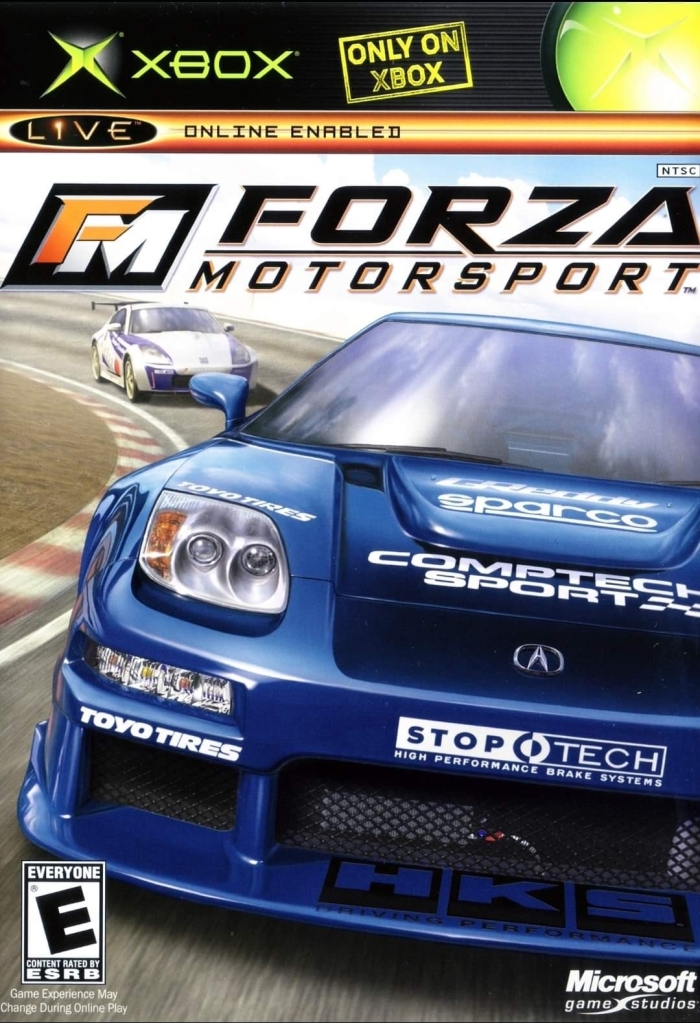
In relation to what Spencer said during the podcast, the single-player games his team heavily invested in such as Starfield, Forza Motorsport (2023), Forza Horizon 5, Senua’s Saga: Hellblade II, Avowed, Indiana Jones and the Great Circle are still exclusive on Xbox consoles plus Windows PC and Xbox Game Pass (the popular subscription service itself will not be made available on non-Xbox platforms anytime soon).
There are also more Xbox-exclusive titles that have yet to be released such as Towerborne, South of Midnight, Clockwork Revolution, The Outer Worlds 2, the Fable reboot plus the very delayed ones such as Perfect Dark and Everwild.
While it is true that those are a lot of Xbox-exclusive games that fans and other gamers (who are seeking fun and unique games to play that are NOT available on PlayStation and Nintendo consoles) can look forward to over the next few years, I still say that Team Xbox should invest more to make even more exclusive games and become more aggressive.
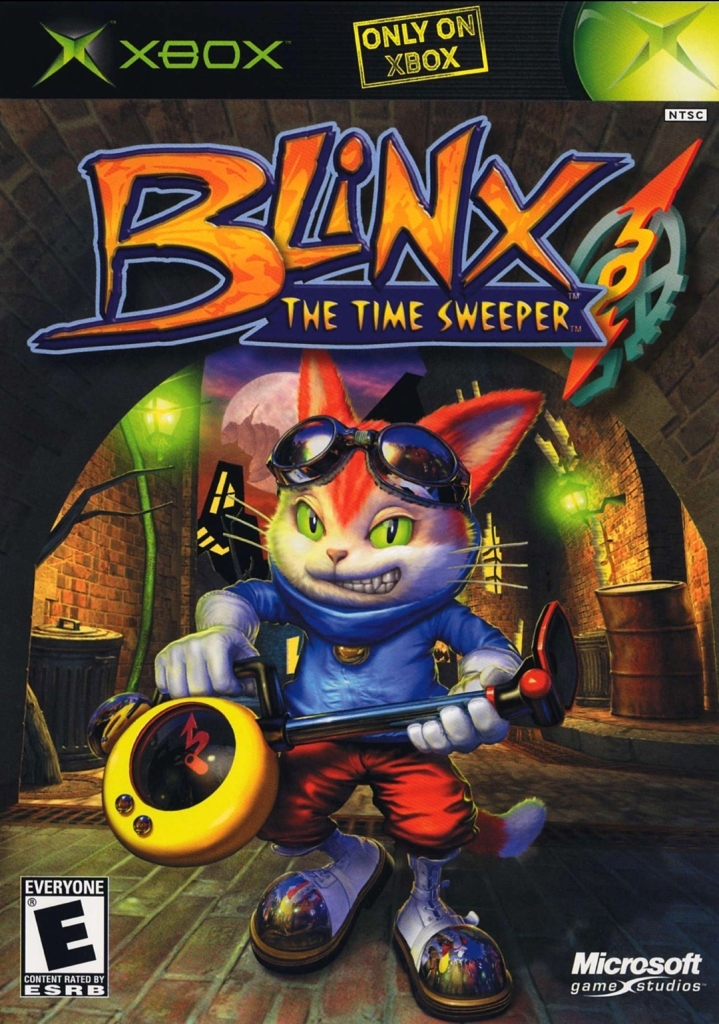
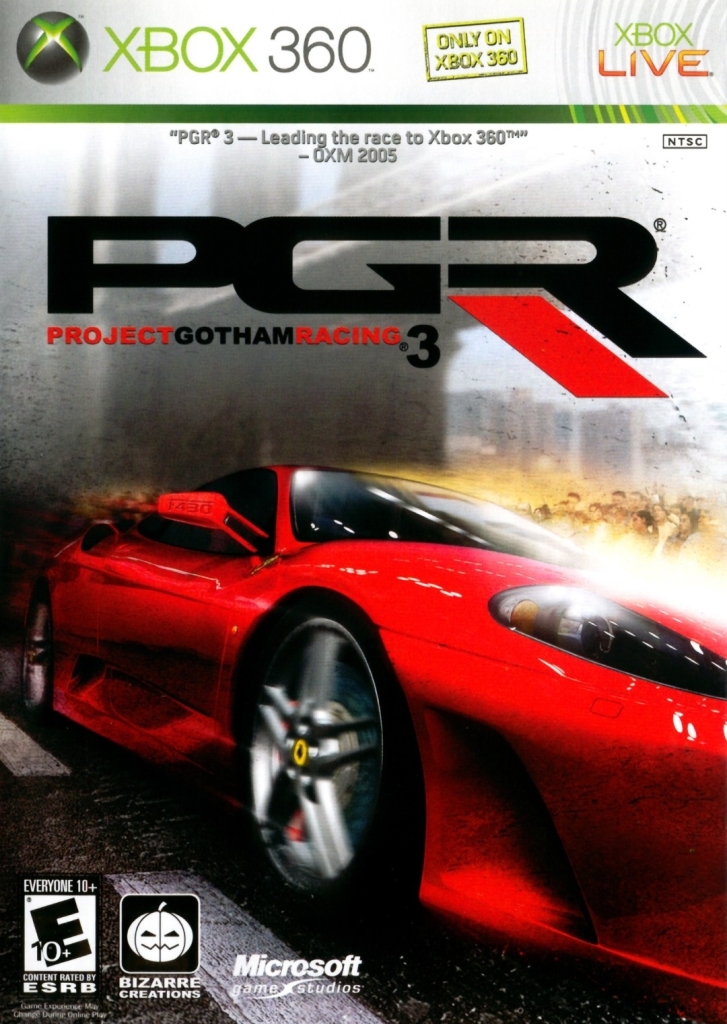
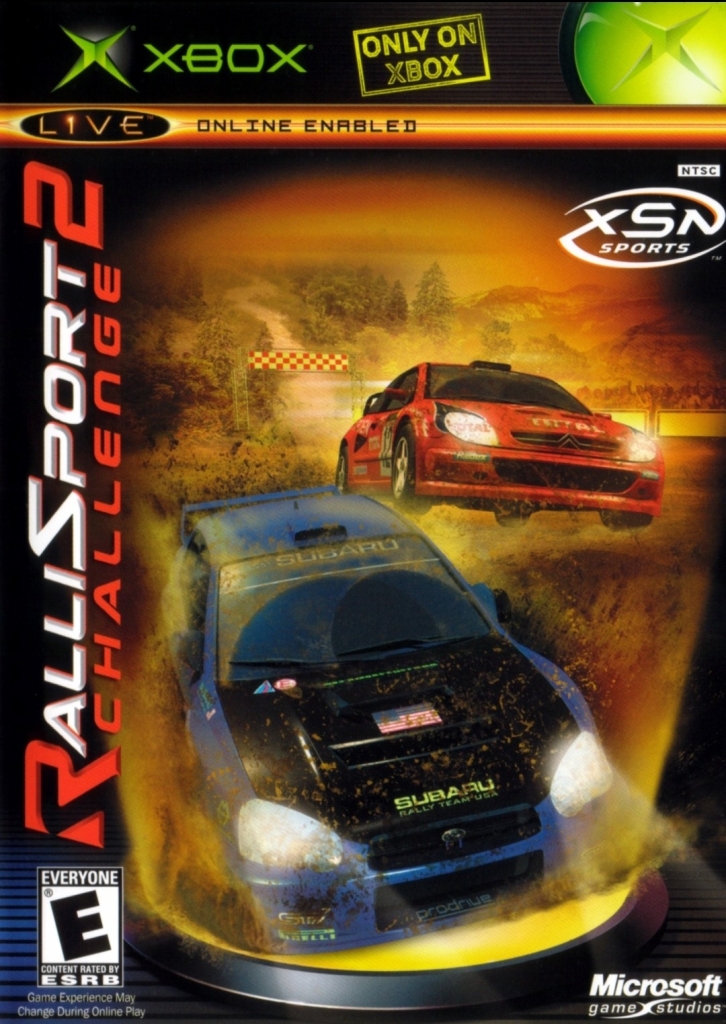
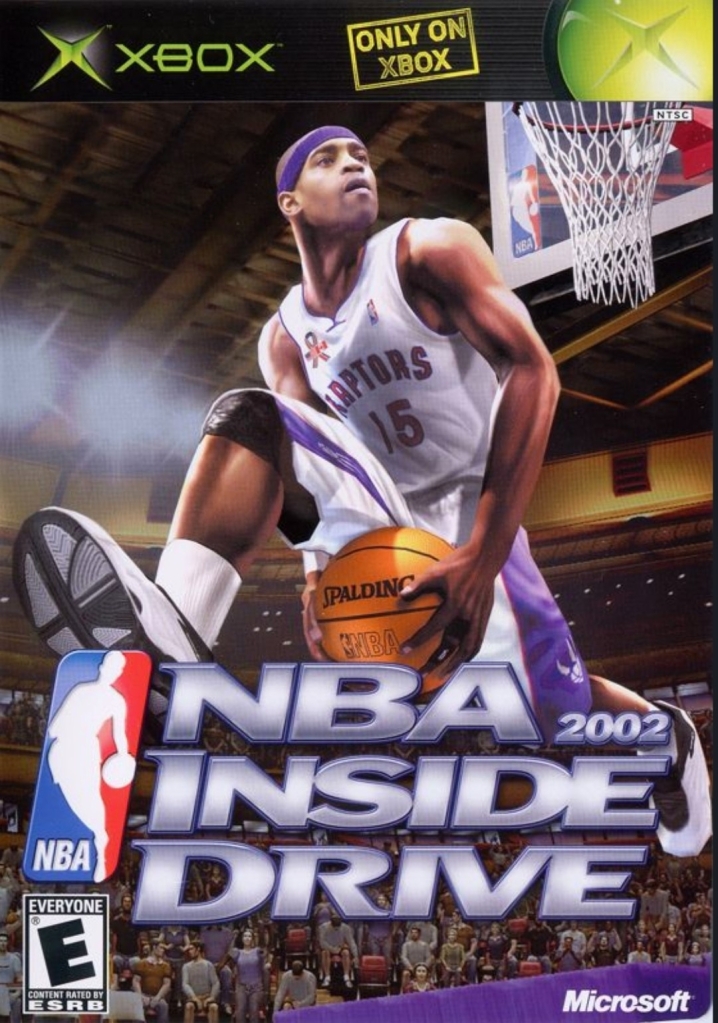
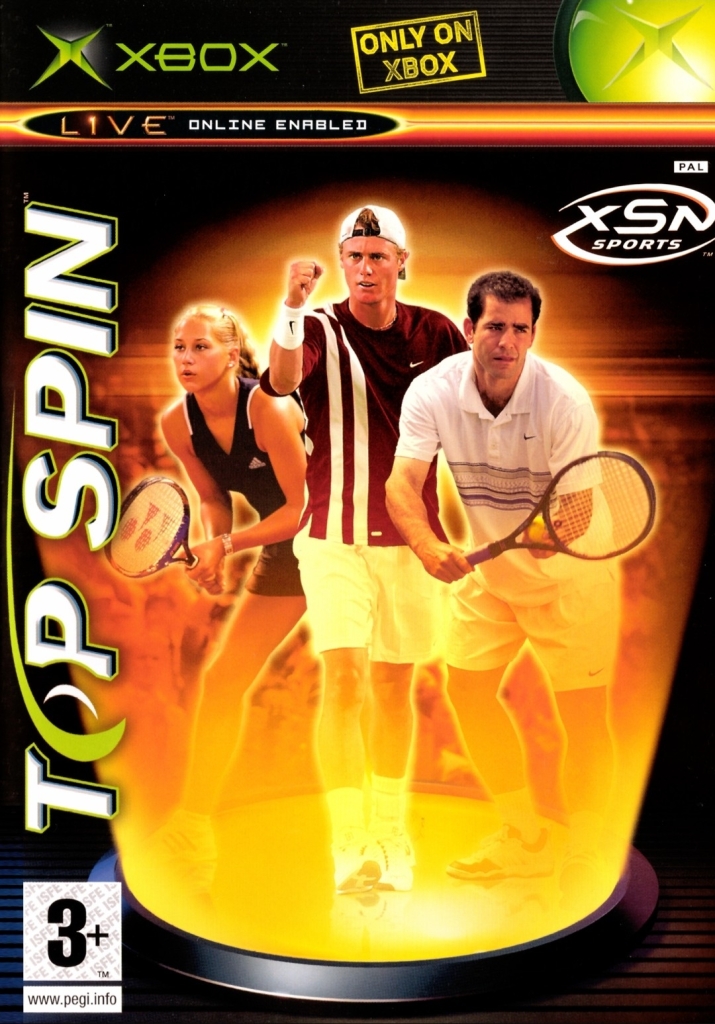
In the previous Xbox console generations, there were these exclusive games that had “Only on Xbox” placed on the front covers of their respective boxes. Check out the games below…
The start of something great!
Way back in 2002, this was the exclusive adventure and platform game to enjoy on the original Xbox console! It was flawed but still had fun.
If you are a long-time Xbox fan, were you able to buy this for your Xbox 360 console?
This exclusive game on Xbox 360 is a classic shooter to enjoy!
And, yes, there was a time when Team Xbox invested a lot to make exclusive sports video games under their Xbox Sports Network (XSN) franchise. Even the Top Spin game series actually started on the original Xbox console under the XSN label.
During the weeks leading to the launch of the original Xbox console in late 2001, I played NFL Fever 2002 on an Xbox kiosk. This was Microsoft’s exclusive NFL video game.
An exclusive racing game on the original Xbox that is rarely talked about. This game received many positive reviews at the time of its release.
The exclusive NBA basketball of Team Xbox from 2002.
It is absolutely true that Top Spin started as an Xbox-exclusive tennis video game made to entertain gamers on the console while also serving as a suitable competitor against Sega’s Virtua Tennis and Nintendo’s Mario Tennis.
Indeed, “Only on Xbox” in the old days had a very strong meaning – something fun and unique (if not special) was prepared for gamers and the only platform to play was on the Xbox console!
Going to the present leadership of Team Xbox, they seriously need to refocus on the exclusive games and confirm their dedication to all Xbox fans as well as the gamers seeking something fun and special to play on Xbox consoles or on Windows PC. A lot of people spent so much money to buy an Xbox Series X, Xbox Series S or a new PC for their entertainment needs and having more exclusive games will add even more value into the ecosystem of Microsoft.
I really wish to see Phil Spencer and his team move aggressively to produce even more Xbox-exclusive games not just for this current console generation but also for the next generation and even further. Perhaps Team Xbox should explore making exclusive sports video games (note: challenging 2K and Visual Concepts’ dominance on NBA video games could do good for the gamers and the industry) or make games on genres they have been ignoring.
Whether Team Xbox utilizes its own game studios or make deals with independent studios through their Xbox Game Studios Publishing, making more exclusive games is crucial and when it is well executed, Xbox fans and other gamers will benefit. Seriously, the shift to releasing Xbox-original games to PlayStation and Nintendo consoles should not be the main goal because it clearly does NOT justify betraying Xbox fans around the world.
Disclaimer: This is my original work with details sourced from playing the video game and doing personal research. Anyone who wants to use this article, in part or in whole, needs to secure first my permission and agree to cite me as the source and author. Let it be known that any unauthorized use of this article will constrain the author to pursue the remedies under R.A. No. 8293, the Revised Penal Code, and/or all applicable legal actions under the laws of the Philippines.
Welcome back retro gaming fans, collectors and readers!
Today, we will go back to the early 1980s to examine one particular video game I played many times on the Atari 2600 and it has a science fiction concept inspired by a certain dream that the late game designer Alan McNeil had.
With those details laid down, here is a look back at Berzerk, developed and published by Atari, Inc. on the Atari 2600 in 1982.
Cover of the Atari 2600 game package.
Game concept
Based on the official description of the game, players play a lone, armed human character who is a prisoner on an alien planet that is made up of mazes that have electrified walls. Several armed robots are actively hunting the human has no choice but shoot them and somehow surpass them to survive. There is, however, a more powerful villain called Evil Otto lurking nearby…
Gameplay and quality
When firing so close to a robot, be aware that it will fire at you without hesitation. To avoid getting hit, be aware of your character’s position, distance and the ability to move.
As typical with console games during the early 1980s, Berzerk’s design is pretty simple. Using the Atari 2600 joystick (which has only one button), you have to move your character around while avoiding touching the robots and electrified walls, and find your way out going to the next level. When it comes to in-game action, using the joystick, you are also able to shoot laser blasts in different directions (including diagonal).
From time to time, the level of challenge and gameplay intensity rises whenever the robots stand or move randomly on certain spots of the floor and when the random locations of the walls make it challenging to move around. In situations like these, I was compelled make quick decisions on when to move, which robots to shoot, and analyze if it is safe to move to another spot without getting electrified by a wall.
Adding further to the challenge is the sudden entrance of Evil Otto (who appears in the game as a digital smiley face) who is indestructible and passes through walls (note: this happens as long as you did not adjust the console to make the game easier). Once Evil Otto comes in (after you spent a certain amount of time in the level), I had to move my character out of the level even if there were still some robots remaining and shooting at me. Evil Otto even destroys robots that got on its way which symbolically shows how powerful he is.
In a situation like this, you will have to think fast on when to move, when to fire and how much distance do you need to be safe. That being said, you must also avoid touching the walls which are all electrified.
As mentioned earlier, there is an option available on the Atari 2600 version of the game that makes encounters with Evil Otto a bit easier. This allows players to blast Evil Otto to remove him for a temporary period of time and he comes back afterwards. In my experience with this game, I preferred the more challenging settings as the gameplay was already engaging with it. I should also state that while there are many robots walking around and ready to blast you, their intelligence is pretty low as you will see a few of them walk straight to the wall and get destroyed. There were also times when a robot simply walks straight into a fellow robot which destroys them both. Also there were times when a robot’s laser blast destroys another robot that got in the way. That being said, the option for easier gameplay on the Atari 2600 was unnecessary for me.
While the game design is simple, there is a ton of depth in terms of new levels you will find yourself in after exiting the previous level. Avoiding robots and Evil Otto to get out might look like the only goal for playing but in reality there is incentive to shoot as many robots as you can as scoring highly will reward you an additional life for ever number of points earned. There is no story ending at all as the game will go on and on for as long as you keep enjoying playing.
In relation to the gameplay, there is no music at all and that creates an immersion with emphasis on the excellent sound effects the game has. The sounds of the laser blast, the explosion of the robot, and the electrifying of your human character’s body still sound great and they have a strong futuristic, sci-fi touch.
Conclusion
The digital smiley face here is Evil Otto. Don’t let the smile fool you because it will go after you to destroy you, and not even the walls nor the robots can block its way.
Berzerk (1982) on Atari 2600 is still a fun game to play after all these decades. Its design is simple and yet there is depth within the gameplay. There is no story to complete but the game will keep on going as long as you enjoy blasting robots for more points to gain additional lives as rewards which should motivate you to keep on playing. Considering how simple the game’s design has always been, the sound effects really made playing it an immersive experience. This game is truly a classic that has to be played if you have the means to do so.
Welcome back readers, fellow geeks and electronic gaming fans!
In this edition of the Retro Gaming Ads Blast (RGAB) series, we will examine print ads from the 1980s and 1990s that caught my attention and I will explain why they are worth look back at.
For the newcomers reading this, Retro Gaming Ads Blast (RGAB) looks back at the many print ads of games (console, arcade, computer and handheld) that were published in comic books, magazines, flyers and newspapers long before smartphones, social media, the worldwide web and streaming became popular. To put things in perspective, people back in the 1980s and 1990s were more trusting of print media for game details and images.
With those details laid down, here is the newest batch of retro gaming print ads for you to see and enjoy…
1. Japanese print ad of Super Star Wars: The Empire Strikes Back
Do you know any Star Wars fan who is aware of the error in this Japanese print ad of Super Star Wars: The Empire Strikes Back?
Back in 1993, the sequel Super Star Wars: The Empire Strikes Back was released on the Super Nintendo Entertainment System (SNES) in the West and on the Super Famicom in Japan. Having played all three Super Star Wars game, I can say that this sequel was a huge improvement over its predecessor technically and also with gameplay (read my retro review by clicking here).
Like its predecessor, the game was released in Japan by JVC Musical Industries and in the above Japanese market print ad, the marketing team wisely used the game’s official artwork to give gamers a clear view of the concept derived from the 1980 movie plus a few screenshots showing gameplay. What I find hilarious to read is the line (highlighted in red and all capitalized no less): MAY THE FORCE WITH YOU. Clearly someone from the Japanese marketing team who prepared that line lacked English proficiency or might not have watched the movies dubbed in English. In the 1977 movie, Han Solo said to Luke, “May the Force be with you.”
2. Spider-Man (Atari 2600) print ad
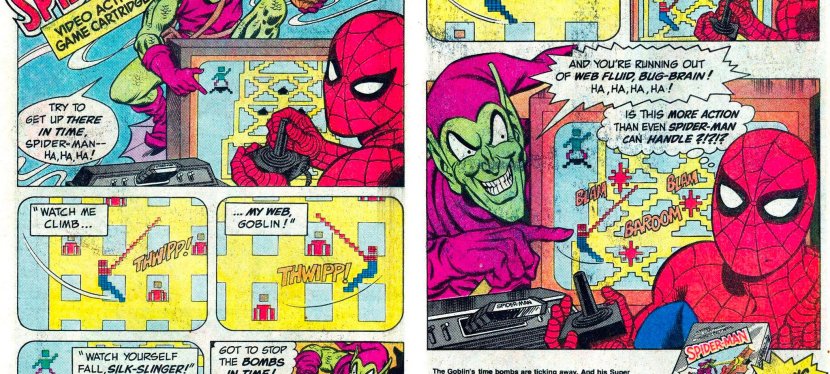
This is an entertaining way to promote a video game based on a comic book icon.
We are back again with the Parker Brothers company and their promotion of the Spider-Man video game for the Atari 2600 which I myself played long ago. Unlike before, the print ad this time was mainly about the Spider-Man game and somehow Parker Brothers coordinated with Marvel Comics to make a comic book-inspired ad. In the above print ad, Spider-Man was shown playing the game about him with an Atari 2600 controller and console, and the Green Goblin taunts him as he plays. This type of ad is a stroke of genius because it shows the Marvel Comics’ icon as a player and the gameplay was emphasized accurately. Even if viewers are not too fond of video games, they can still find themselves interested in reading the literary adventures of Spider-Man.
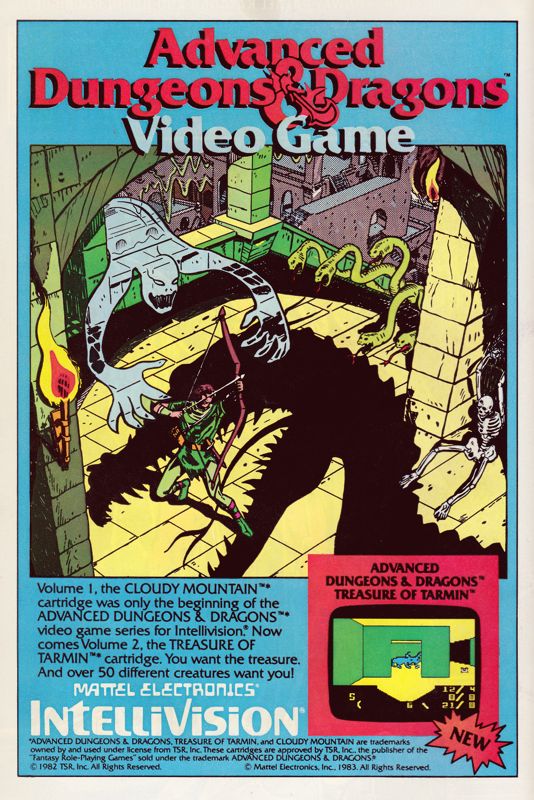
3. Advanced Dungeons & Dragons: Treasure of Tarmin print ad
Apart from emphasizing the fantasy concept of the Dungeons & Dragons franchise, this print ad’s hand-drawn art was strong enough to spark viewers’ curiosity and make them interested in the game or even in the Intellivision console.
Here is a print ad I saw many times while reading comic books in 1983. The game at hand is Advanced Dungeons & Dragons: Treasure of Tarmin released on the Intellivision, and it is the sequel to Cloudy Mountain. Like the ad of its predecessor, the above print ad relied heavily on the spectacle of fantasy (and even a bit of horror) by having hand-drawn art as the eye candy promoting Advanced Dungeons & Dragons: Treasure of Tarmin. If you look closely, only one screenshot from the game was shown and it was enough to tell gamers that the new game has a completely different visual presentation from that of Cloudy Mountain. Considering the primitive nature of computer graphics and game design of the era, having detailed comic book-inspired artwork was effective to grab viewers’ attention with the intention to make them interested in buying the game. In today’s age of computer graphics and social media, this type of ad for video games is rare to see.
4. G.I. Joe: Cobra Strike print ad
The G.I. Joe: A Real American Hero franchise’s early entry into video games.
Going back to Parker Brothers, the company developed and published the first-ever licensed game of the G.I. Joe franchise – G.I. Joe: Cobra Strike for the Atari 2600. In promoting the game, a 2-page ad was released with comic book-style art work (featuring Cobra Commander and Duke representing different sides) dominating the space, with descriptive text and a hand-drawn illustration of the gameplay (read: not a real screenshot) as well as the game box flling the remaining space. In my personal experience, I saw this ad before I even got to watch an episode of the popular G.I. Joe: A Real American Hero animated TV series, and before I got to read an issue the related comic book series (which started before the TV series). Looking back at the above print ad, I can still remember the time when I was puzzled by the two characters simply because I was not yet familiar with them. Take note that the video game and the ad were released at a time when the G.I. Joe: A Real American Hero started rising quickly in popularity on toys, comic books and animation.
5. Alien 3 (SNES) print ad
This print ad appeared in several comic books I read in 1993.
Way back in 1992, I had one of the most depressing cinema viewing experiences with Alien 3 which had a very troublesome production and lacked a solid foundation behind its creativity. Then in the summer of 1993, print ads of the video game Alien 3 for Super Nintendo Entertainment System (SNES) appeared in several comic books I read at the time. The above print ad was actually entertaining to look at. For one thing, the ad makers used three wide layers of screenshots from the game depicting different areas. Then I noticed the details which showed there were more aliens for gamers to encounter (versus only one in the movie) and the playable lead character Ellen Ripley was armed with guns (versus no guns in the movie) being able to fight the monsters. Not only that, the ad makers knew the specific details from the Alien film franchise which is reflected in the ad referencing the Face-hugger aliens, the acid from the creatures and, of course, the alien eggs. To this day, there are old-time gamers who found the Alien 3 SNES game more entertaining than the movie.
Once the anticipated Japanese role-playing game (Japanese RPG) Eiyuden Chronicle: Hundred Heroes finally comes out on April 23, 2024, the absence of the main creator will be felt by many players as the Japan-based Rabbit & Bear Studio announced very recently that its head Yoshitaka Murayama passed away on February 6. For the newcomers reading this, Murayama is also the creator of the Suikoden RPG series of Konami where he used to work at. For my previous blog posts of Eiyuden Chronicle: Hundred Heroes, click here, here, here and here).
To put things in perspective, posted below is the excerpt from the official announcement by Rabbit & Bear Studios. Some parts in boldface…
Hello everyone,
It’s with a heavy heart and deep sadness we must inform you that the scenario writer and head of Rabbit& Bear Studios, Yoshitaka Murayama, has passed away on February 6th due to complications with an ongoing illness.
Murayama first began this journey of the creation of Eiyuden Chronicle: Hundred Heroes in 2020
through the support of his very loving fans on Kickstarter. Throughout the three-plus-year-development of the game, it was always the passion from his fans that continued to drive his creative vision and motivate him to put his all into the project.
His hard work on Eiyuden Chronicle as scenario writer was finished but as his co-workers and friends, it saddens us to know that he won’t get to see the reactions from his fans.
However, even with those feelings we need to accept the reality that he is no longer with us and continue to push his dream forward by releasing Eiyuden Chronicle to the world.
We want to maintain his legacy and vision with this game and know that he would have wanted the rich world he has created with Eiyuden Chronicle to live on.
His family sincerely appreciates your prayers and support but asks for privacy and that no flowers, mail, or other offerings be sent.
We will have more information on organizational changes to Rabbit & Bear as well as changes to some of the Kickstarter rewards in the near future.
So there you have it. The developer behind Eiyuden Chronicle: Hundred Heroes made it clear that they will not give up with fulfilling the dream of the late Murayama and there is no stopping the launch of the game (which was supposed to have been released in 2023).
More on the previous works of the late Murayama, I played Suikoden and Suikoden II (read my retro review by clicking here) on the PlayStation console in the 1990s and I had enjoyable times with them. For me, Suikoden II was the not only the best Suikoden RPG of the 1990s but also one of the best RPGs on any platform during the decade. It’s just too bad that the 1999 North American launch of Suikoden II was overshadowed by another company’s JRPG on PlayStation that same year. Considering the many Japanese RPGs that were released on PlayStation in 1999, Suikoden II was the most enjoyable one I played.
Even during his days as a young man working for Konami in the 1990s, Murayama had a very unique vision for digital role-playing and adventuring, as well as fantasy storytelling.
“Eiyuden Chronicle is really (an) evolution of my many design experiences. The many games I’ve made have helped create the foundation for this title. Since I draw my experience from previous games I’ve worked on, of course you will see a little bit of those elements in Eiyuden Chronicle,” Murayama said in response to a question that mentioned Eiyuden Chronicle and Suikoden titles.
With Murayama gone, the spotlight on the April 2024 launch of Eiyuden Chronicle: Hundred Heroes will be more crucial than before. I myself will be playing the RPG on my Xbox Series X console as soon as it launches. To get yourselves oriented with the said JRPG, watch the videos below (the last one shows Murayama and his fellow creators as special guests at an event in Taipei)…
Watch out for Eiyuden Chronicle: Hundred Heroes on Xbox Series X, Xbox Series S, Xbox One and Windows PC plus Xbox Game Pass (XGP) on April 23, 2024. For more about the JRPG, visit https://www.xbox.com/en-US/games/eiyuden-chronicle
Palworld, the wildly popular online open world game developed and published by Japan-based Pocket Pair, became a massive hit on Xbox Series X|S, Xbox One, Windows PC, Xbox Game Pass (XGP) and PC Game Pass attracting more than seven million players and establishing itself as the biggest 3rd party game launch in the history of Game Pass, according to the official announcement by Team Xbox.
For the newcomers reading this, watch the Xbox video of Palworld below…
To put things in perspective, posted below is the excerpt from the Xbox.com announcement. Some parts in boldface…
It’s no secret that Palworld has been sweeping the gaming world since its Early Access launch earlier this month – and we’re happy to announce that, in its first ten days as part of Xbox Game Preview, Xbox players have made it the biggest 3rd party Game Pass launch in history! You’ve also helped Palworld to become the most-played 3rd party day one launch on Xbox Cloud Gaming with Game Pass Ultimate.
Across console and Windows PC, Palworld has welcomed more than 7 million players, and has recently reached a peak of nearly 3 million daily active users on Xbox, making it the most-played game on our platforms at that time.
Speaking to Xbox Wire, CEO of developer Pocketpair, Takuro Mizobe, said: “The response from fans has been tremendous and it’s incredible to see the millions of players around the world enjoying Palworld. This is just the beginning for us and Palworld, and the feedback we’re gathering while in Game Preview will allow us to continue to improve the experience for Pal Tamers across all platforms.”
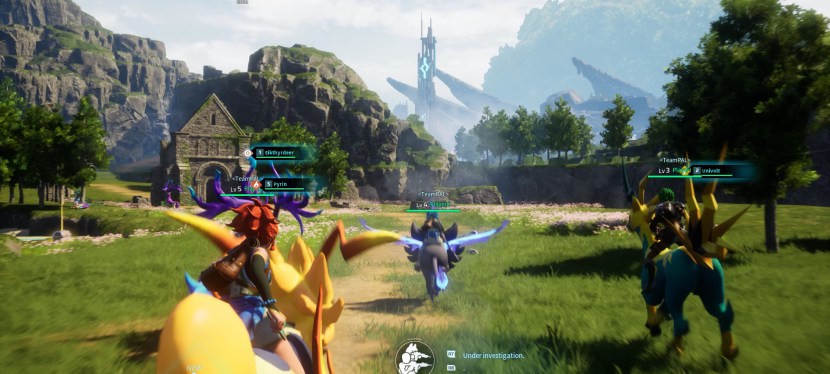
For those yet to become a Pal Tamer themselves, Palworld is an online open world game that sees players dropped into a mysterious land and given the ability to capture over 100 Pals, monsters with a range of abilities – both in battle, and in surviving in a hostile world. Battling, crafting, building are all a part of the experience, and it’s proven a huge draw for players across the world.
Palworld is available in the Xbox Game Preview program, meaning there’s much more to come as Pocketpair refine the experience ahead of a full 1.0 release. Developers are listening to player feedback, and have started applying their learnings to the game already – and they know cross-play is one of the largest requests from fans, and are working quickly to address it.
On Xbox’s part, we’re working with Pocketpair to help provide support for Xbox versions of the game. We’re providing support to enable dedicated servers, offering engineering resources to help with GPU and memory optimization, speeding up the process to make Palworld updates available for players, and working with the team to optimize the title for our platform.
If you are an Xbox gamer who has yet to subscribe to Xbox Game Pass, then Palworld just might convince you to do so.
Honestly, I never anticipated Palworld to launch with a massive number of players and establish new records with regards to the Xbox ecosystem and overall player count. Going to what was achieved, attracting over seven million players across different systems connected to the Xbox ecosystem is clearly incredible. Not only that, Palworld as of now is not even available (yet) on the PlayStation ecosystem nor that of Nintendo’s.
That being said, the successful launch connected with the Xbox ecosystem not only added to the credibility of Xbox but also will resonate with other game developers of online open-world games looking for potential business partnerships and ideal ecosystems (with millions of active players and subscribers) to launch their games on.























 Author Carlo Carrasco