Welcome back fellow geeks, Blu-ray collectors and movie buffs!
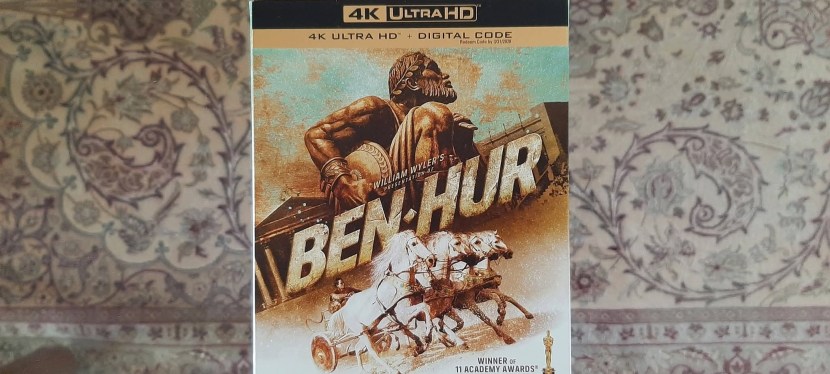
I previously blogged about what was back then the upcoming release of the 4K Blu-ray of the classic and multi-awarded movie Ben-Hur (1959). In recent times, my copy of Ben-Hur 4K Blu-ray arrived and having replayed the movie using my Xbox Series X console, I can say that I had a grand experience watching it and it looks better than ever!
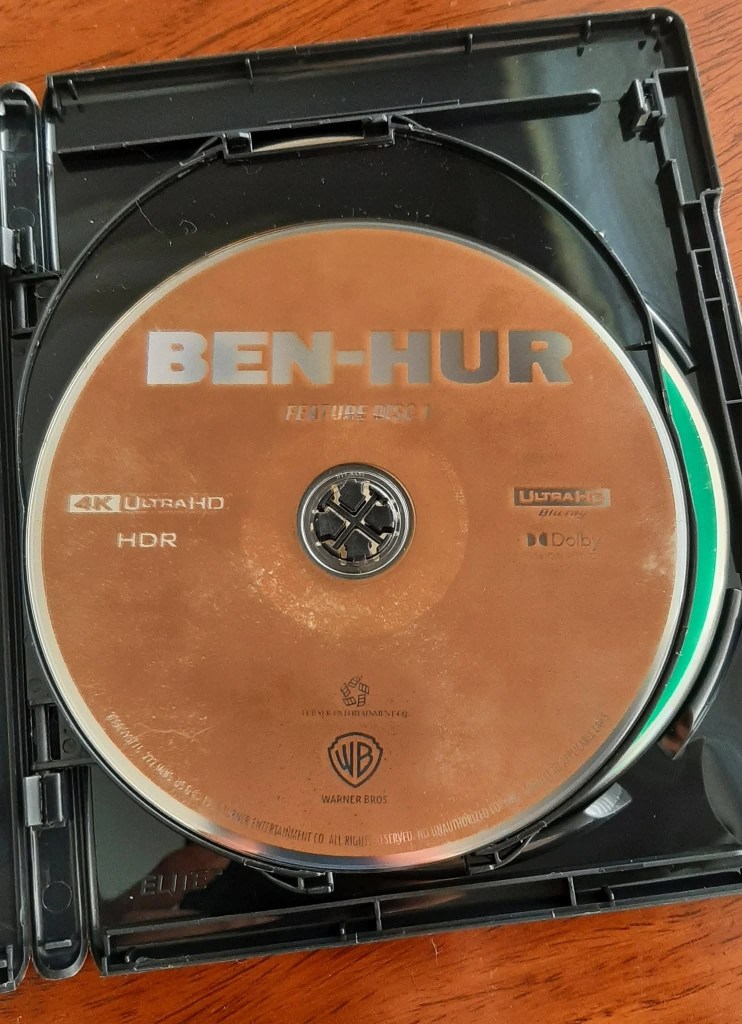
To begin with, my set came with two 4K Blu-ray discs (one disc with 100 Gigabytes and the other with 66 Gigabytes in capacity) that carried the movie in two parts in native 4K visuals (there was an intermission in the film itself). The other disc (50 Gigabytes) contained mainly the special features and extras which should delight the long-time fans and moviegoers who want to learn more about the movie, who was who and what the film’s history was about.
This is the first 4K Blu-ray disc which contains the first portion of the movie of 2 hours and 20 minutes. Behind it is the 2nd 4K Blu-ray disc and the special features-only disc (green).
With regards to my personal viewing experience, I can say that Ben-Hur looks very stunning in native 4K visuals. With the 4K resolution, I was able to spot some tiny details I did not notice before. The colors look more vibrant compared to what I saw on DVD and on cable TV, and the same can be said about the clarity (the lighting and contrasting were adjusted with better visuals in mind). There is also a boost on the sharpness.
I did not spot any visual blemishes and the all the way until the very end, the film looked more lively than ever before. That said, the famous chariot scene is at its greatest in native 4K. Not only that, the great cinematography captured by the team of director William Wyler also looks better than ever. For a preview of how much an improvement Ben-Hur 4K Blu-ray is over the previous Blu-ray disc release, watch the video below and look closely at the still images compared.
Adding more impact to the visuals, unsurprisingly, are the very solid performances of Charlton Heston as Judah Ben-Hur, Stephen Boyd as the antagonistic Messala of the evil Roman Empire, Haya Harareet as Esther and Hugh Griffith as the loud Arab to name a few. The actors’ performances deserve your attention, especially when it comes to following the story and remembering the personal directions each character took and how they developed over time.
It is now safe to say that the visuals of Ben-Hur 4K Blu-ray are truly excellent and the extra stuff provide good enough value for those who want more from the movie. I am very happy with Ben-Hur 4K Blu-ray and I will replay it again soon. Viewing the classic movie in native 4K and with lively colors is a grand experience which streaming cannot match! It is easily one of the very best movies in my 4K Blu-ray collection now!
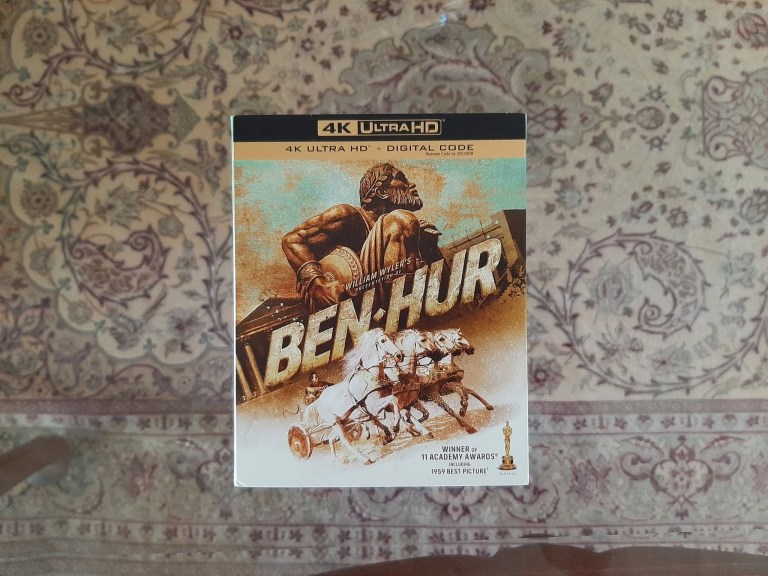
This is my copy of Ben-Hur 4K Blu-ray. It is easily one of the very best in my personal collection of 4K Blu-ray movies!
If you wish to join a group of movie enthusiasts and talk about cinema, cinematic trends, Blu-ray releases and more relevant stuff, visit the Movie Fans Worldwide Facebook group at https://www.facebook.com/groups/322857711779576
Welcome back fellow geeks, Blu-ray collectors and movie buffs!
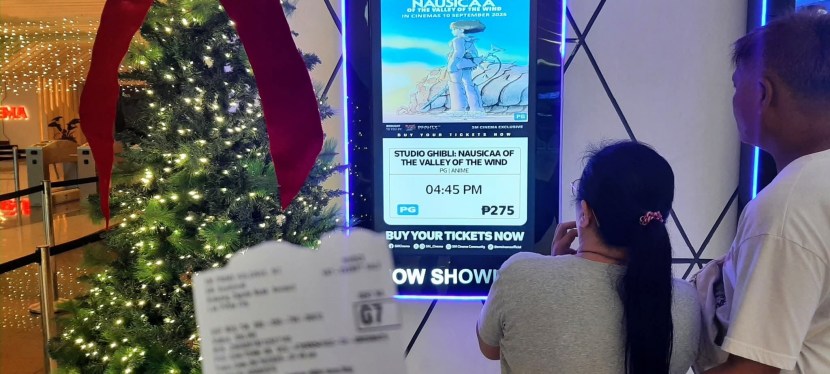
I finally did it! After having seen it many times on home video, cable TV, local TV and DVD, I finally viewed Nausicaä of the Valley of the Wind inside the local cinema here in the Philippines. I saw it on September 17 at SM Cinema inside SM Southmall in Las Piñas City. This was also the first time in two years since I last saw any movie inside the cinema (I last saw Sound of Freedom).
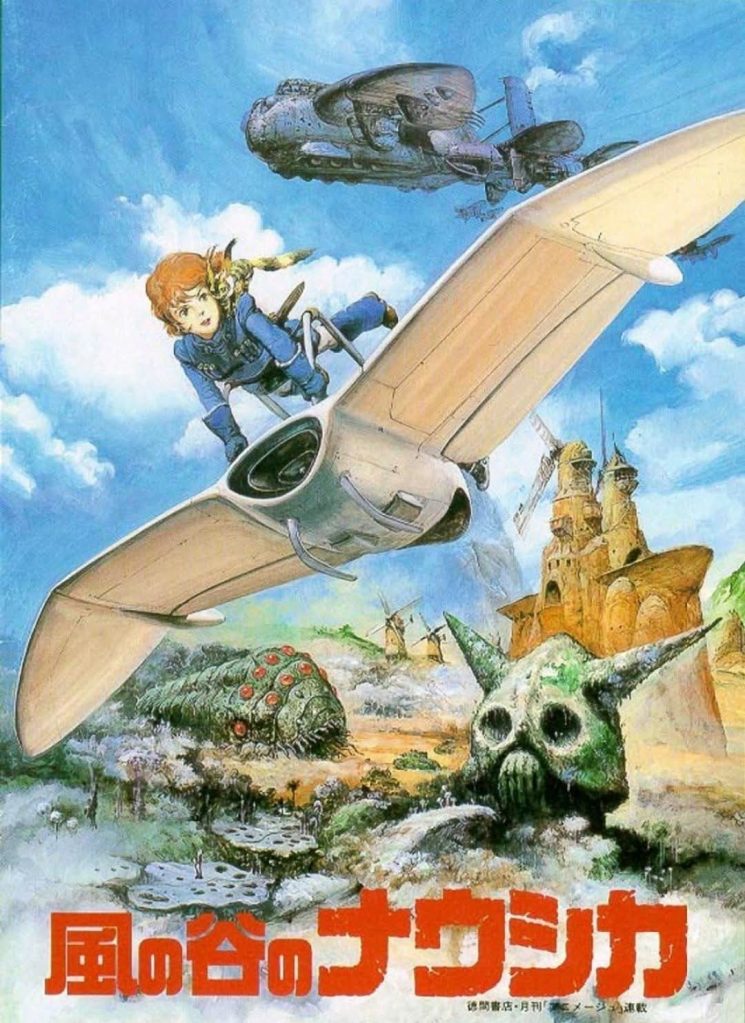
An old movie poster of Nausicaä Of The Valley Of The Wind.
For the newcomers reading this, Nausicaä Of The Valley Of The Wind was part of the Studio Ghibli Fest 2025 which was exclusive to SM Cinema (the largest cinema chain in the country). While the said fest ended on September 16, there were still screenings of Studio Ghibli anime feature films shown in SM Cinema branches from September 17 to 23.
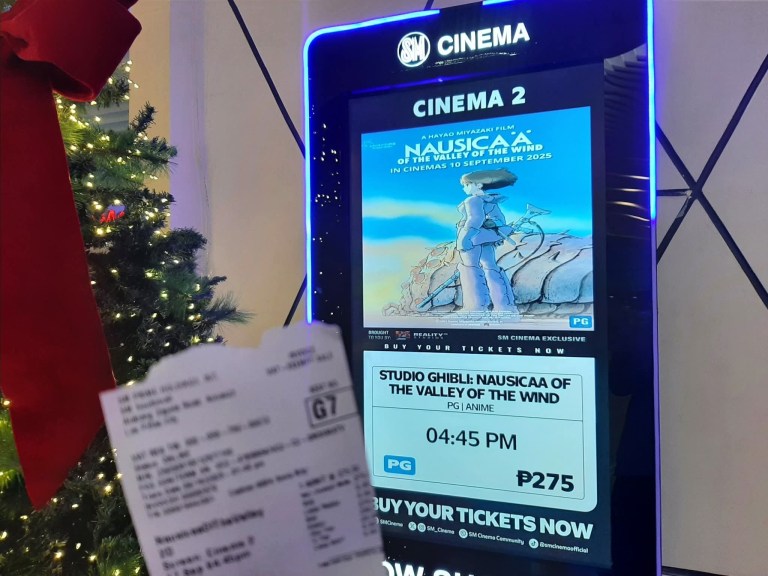
I paid P275 (US$4.72 according to the foreign exchange as of this writing) for my SM Cinema ticket and it includes a free drink. I entered the cinema carrying my ticket, drink and popcorn feeling excited and nostalgic to see Nausicaä Of The Valley Of The Wind on the big screen for the first time ever. What was shown was the English-subtitled version with Japanese voiceovers (Sumi Shimamoto as Nausicaä, Gorô Naya as Yupa, Yoshiko Sakakibara as Kushana, Yôji Matsuda as Asbel, and more)
We were only seven people inside the cinema and there were lots of vacant seats beside, behind and in front of me. I was sitting very comfortably waiting for the screening to begin. At the same time, nobody had a noisy smartphone during the screening. As for me, I deliberately turned my smartphone off to ensure no communication-related distractions would happen.
Eventually Nausicaä Of The Valley Of The Wind finally started playing on the big screen. After the short animated opening scene, the music by Joe Hisaishi started playing as the opening credits went on. At that moment, I was immersed into Hayao Miyazaki’s anime classic immediately and I knew I made the right decision to see it inside the theater.
As the film went on, I adjusted myself to reading the subtitles while maintaining focus on the plot as well as the development of characters. Visually, the film turned out to be really spectacular on the big screen even though it had no computer-generated images at all (note: it is purely hand-drawn animation that was done with so much hard work by Miyazaki and the animators). With the higher resolution on the big screen, I saw a lot more tiny visual details here and there and the facial expressions of the characters became more lively than before. Very clearly, Nausicaä Of The Valley Of The Wind is meant to be seen in the movie theater.
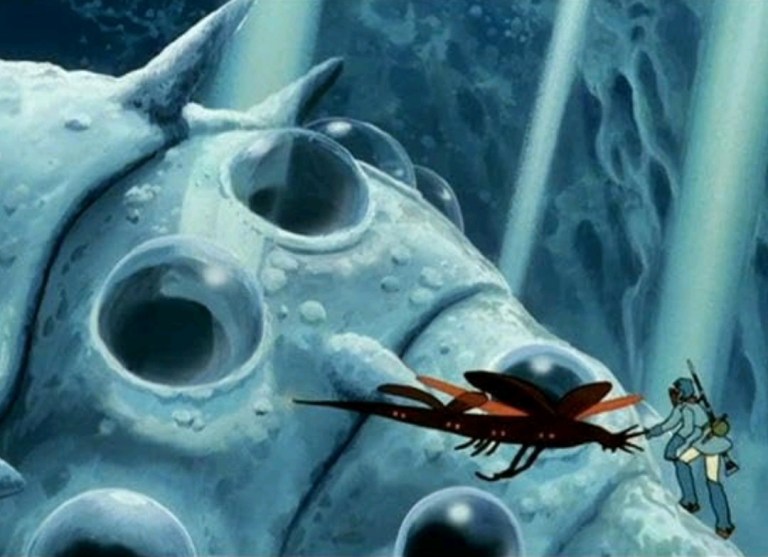
The sense of visual scale in scenes like this one is best viewed on the big screen in the movie theater. (photo source – IMDB.com)
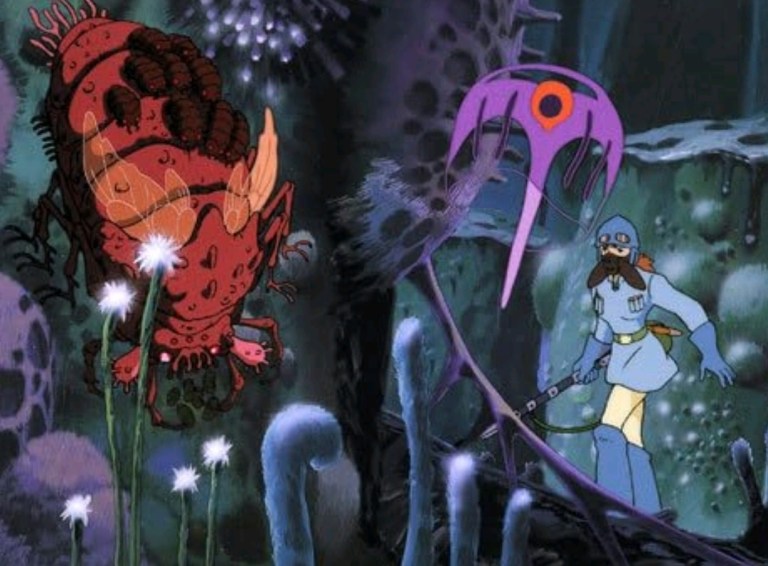
There is nothing like exploring a very polluted forest filled with huge, mutated insects. (photo source – IMDB.com)
After about two hours – the end credits includes animated scenes showing what happened after the climax – of watching, I left the cinema feeling very satisfied and entertained even though I saw Miyazaki’s 1984 masterpiece many times over the decades. The fact that the English-subtitled version was shown gave me an idea of what Japanese moviegoers saw inside their cinemas in 1984, and I can say that the Japanese voiceovers were engaging to listen to. The big screen experience alone made watching Nausicaä Of The Valley Of The Wind worth it.
That being said, I want to express out loud to local movie theater operators reading this to consider showing more of the classic anime feature films as well as classic motion pictures during film festivals or special theatrical events. Personally, I want to see Casablanca, Macross: Do You Remember Love?, Metropolis (2001), Tron, Total Recall (1990) and Akira in the local cinemas.
I am very glad to have seen the 1984 classic anime movie inside the movie theater.
Going back to Nausicaä Of The Valley Of The Wind, I am very glad to have seen inside the cinema and if ever your local cinema will have it screened, I encourage you to go for it. There is absolutely no way that that the screens of your smartphone, your tablet, your PC monitor and your high-definition TV could match the grand visuals of Miyazaki’s film on the cinema’s big screen. Truly the cinema is better than streaming.
If you wish to join a group of movie enthusiasts and talk about cinema, cinematic trends, Blu-ray releases and more relevant stuff, visit the Movie Fans Worldwide Facebook group at https://www.facebook.com/groups/322857711779576
For more South Metro Manila community news and developments, come back here soon. Also say NO to fake news, NO to irresponsible journalism, NO to misinformation, NO to plagiarists, NO to reckless publishers and NO to sinister propaganda when it comes to news and developments. For South Metro Manila community developments, member engagement, commerce and other relevant updates, join the growing South Metro Manila Facebook group at https://www.facebook.com/groups/342183059992673
Disclaimer: This is my original work with details sourced from reading the video game and doing personal research. Anyone who wants to use this article, in part or in whole, needs to secure first my permission and agree to cite me as the source and author. Let it be known that any unauthorized use of this article will constrain the author to pursue the remedies under R.A. No. 8293, the Revised Penal Code, and/or all applicable legal actions under the laws of the Philippines.
Welcome back retro gaming enthusiasts, Atari fans, geeks and others who are passionate about video games!
Today we go all the way back to the year 1980 when Atari released in arcades a game that strongly resonated with people who were concerned about a potential nuclear conflict between the United States and Russia during the Cold War…Missile Command.
Designed by Dave Theurer and programmed by Rich Adam with Theurer, Missile Command is a 2-dimension shoot ‘em up arcade game that had a trackball to allow players to control a crosshair to defend six existing cities. The arcade also had three buttons players could use to launch surface-to-air missiles from the three missile bases to protect the cities from incoming ballistic missiles that came from an unseen enemy.
With those details laid down, here is a look back at the Missile Command arcade game of 1980 developed and published by Atari.
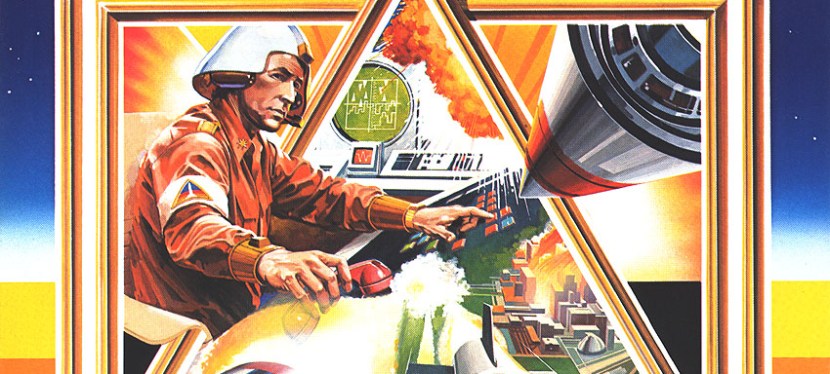
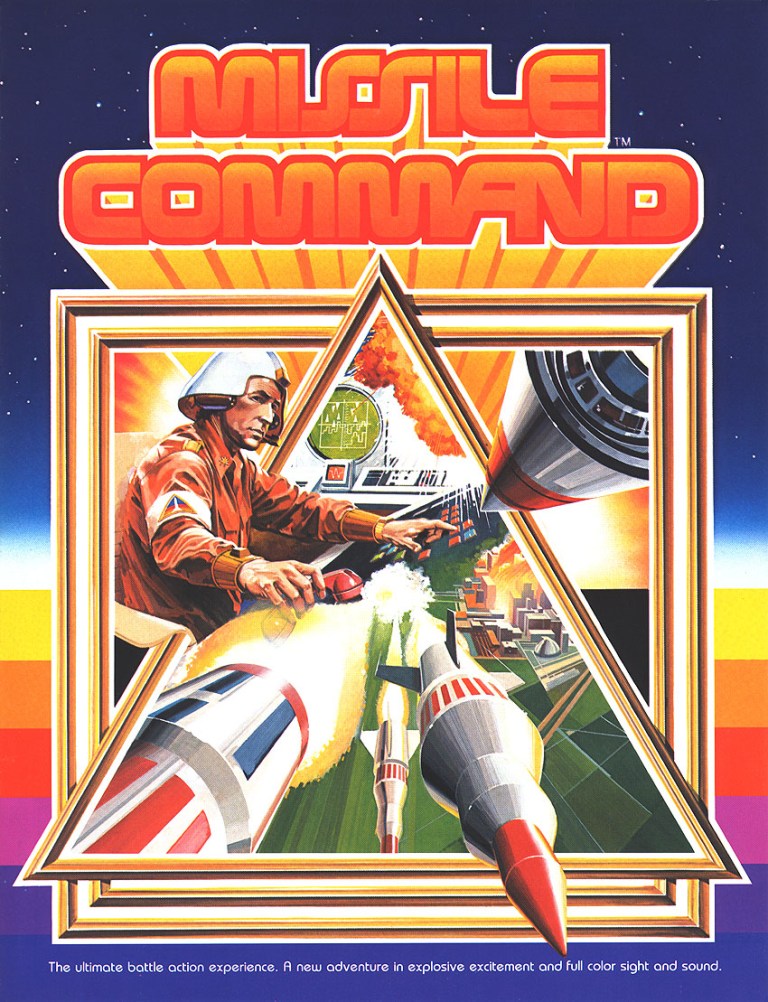
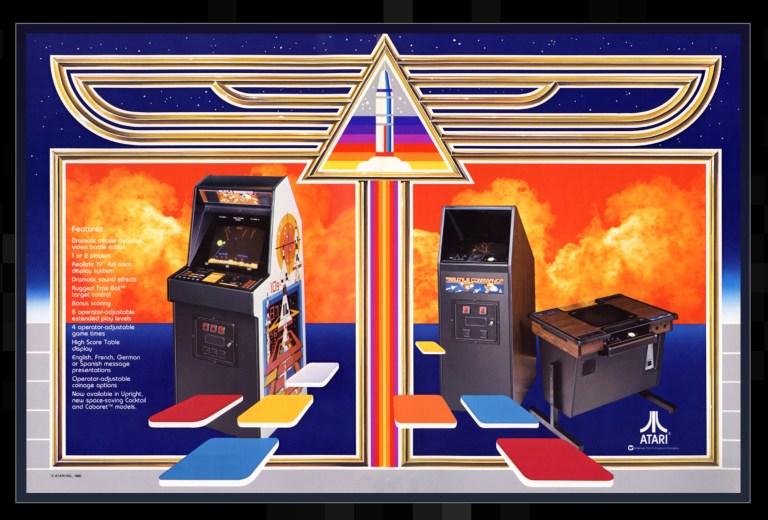
The arcade flyer with a great looking painted artwork. This one really resonated with gamers who lived during the Cold War.
Game design
As the commander of three missile bases (each armed with 10 defense missiles), the player is tasked to protect six existing cities from waves of ballistic missiles (launched by an unnamed enemy) coming down. From time to time, the enemy deploys bombers, satellites/drones and smart bombs to overwhelm your defense and test your precision and decision making.
You have three missile bases that each has its own supply of defense missiles. There are cities between each base which you have to defend from the endless assault of enemy missiles, smart bombs, war planes and satellites/drones.
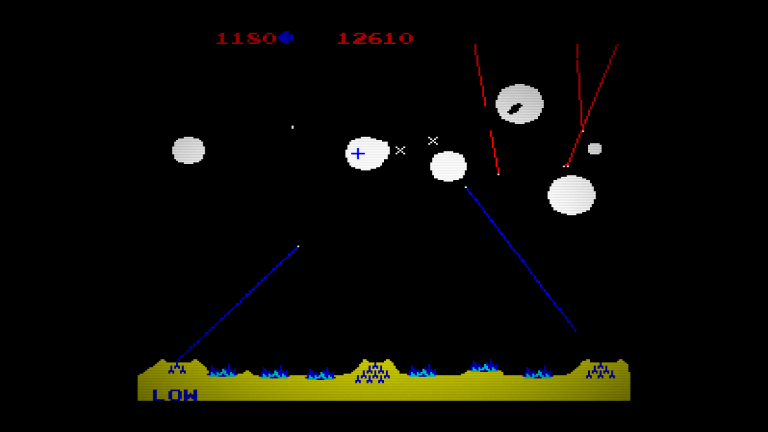
When your defense missile detonates in the air, it creates an explosion which serve as a shield to destroy enemy missiles, war planes and satellite/drones when contact is made. If any projectiles from the enemy manages to get through the aerial explosion, you will have to quickly launch more defense missiles from the near base you have.
Players use a single crosshair which designates which part of the sky a defense missile can be fired at. Once the defense missile reaches its destination (placed by the crosshair) in the sky, it will explode and cause a growing flame lasting seconds. The said flame serves as a shield that can destroy the enemy’s ballistic missiles, smart bombs, war planes and satellites/drones upon contact. Defense missiles can be launched consecutively into selected spots in the sky in anticipation of the incoming weapons of the enemy.
To proceed from one level to another, the player must have at least one city remaining intact. Once all the six cities have been destroyed and the player no longer has any unused missiles (and no new cities earned by reaching certain high scores that justify rewards), the game will end with a “Game Over” screen with an explosion in the background.
Quality
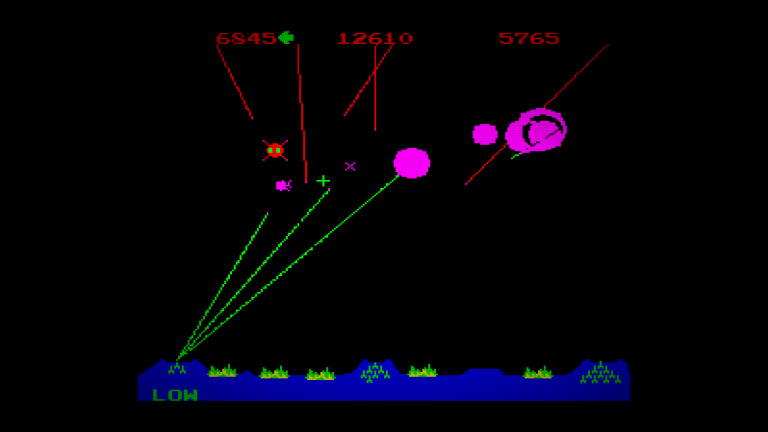
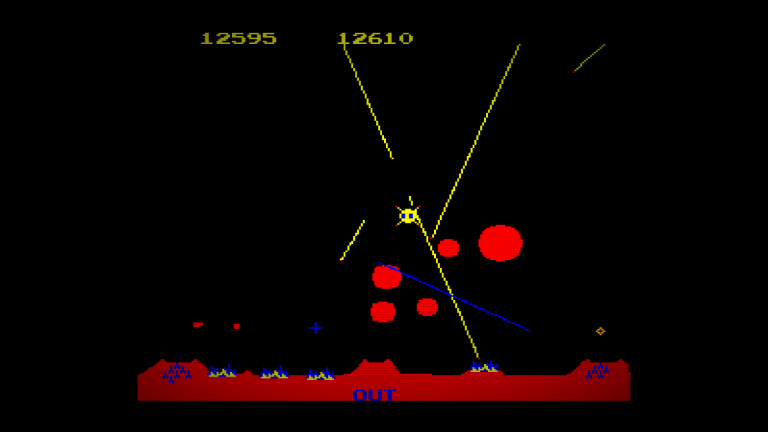
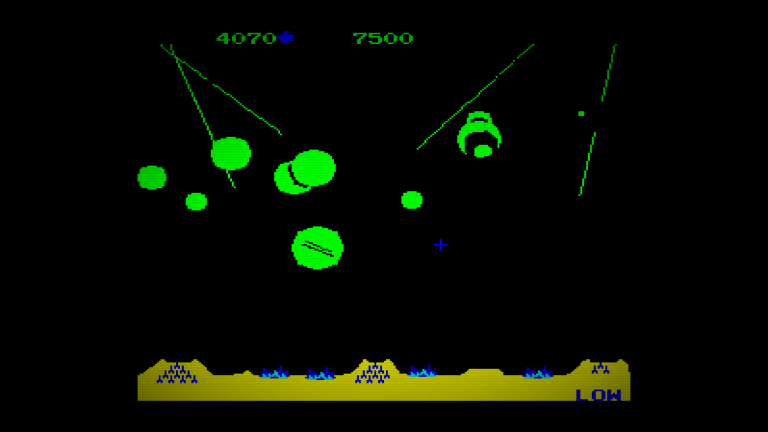
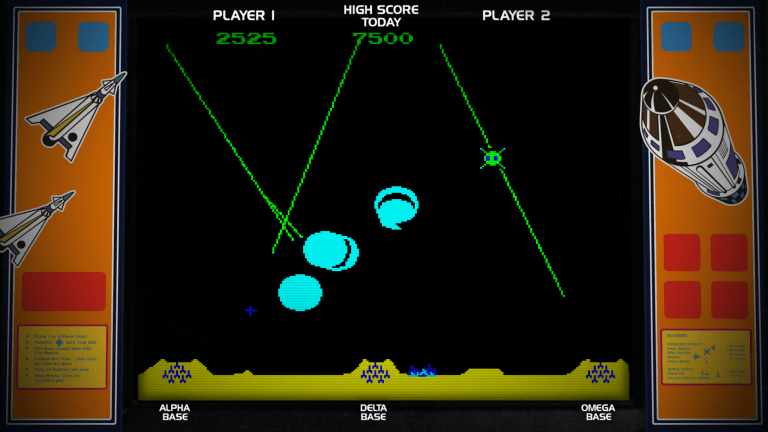
In this screenshot, the enemy’s satellite/drone is floating while a smart bomb is about to hit the missile base at the lower-right. Smart bombs can be challenging to intercept because it reacts by avoiding the aerial explosion of defense missiles.
This arcade game – which is currently available for modern console owners to play via the Atari 50: The Anniversary Collection – remains very engaging and a lot of fun to play with after all these decades. As a player, my only objective was to defend the six existing cities and three missile bases from the waves of enemy ballistic missiles (and smart bombs in later levels) coming from the sky. Given the way the game was designed, this is strongly emphasized and the only times I could attack the enemy is by launching my own missiles towards the enemy’s bombers and satellites/drones (note: both of these are capable of launching more missiles at you).
If any of the enemy’s weapons hits one of your missile bases, it and the remaining supply of defensive missiles will be wiped out. Enemy missiles that hit a city will result in total destruction. Considering the intentional increase in challenge with each new level of play started, the enemy’s ballistic missiles move faster, the warplanes and/or satellite/drones appear more and the smart bomb – which is the most difficult to intercept as it deliberately avoids the aerial flames caused by your defense missiles – get launched against you.
When intercepting enemy missiles, you have to think quick where to aim (ahead of incoming missiles), which missile base to use to launch defense missiles and remember how much missiles do you have left per base.
That being said, the game deliberately becomes harder which compelled me to be more watchful of enemy weapon movements, and to be more strategic using my defense missiles while keeping a quick eye on the remaining supply of missiles per base. While the in-game difficulty intensifies per level, the game never became frustrating to play nor did it ever turn into a chore on my part. I just keep playing because I found the increasing challenges actually fun to take on.
The game’s visuals are still good to look at. It’s still engaging to see streaks of missile trails (both your defense missiles and the enemy’s ballistic missiles) fill the air above the cities and the flashing light effects that simulate explosions are still effective as eye candy. Along the way, the game’s sound effects worked perfectly with the visuals and they added a lot to the immersion.
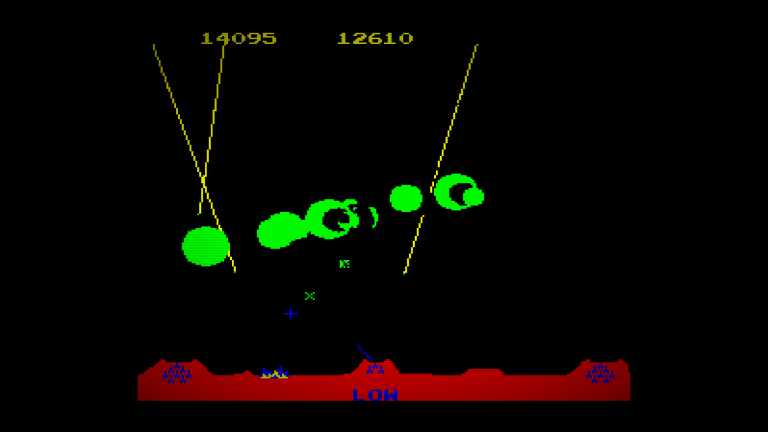
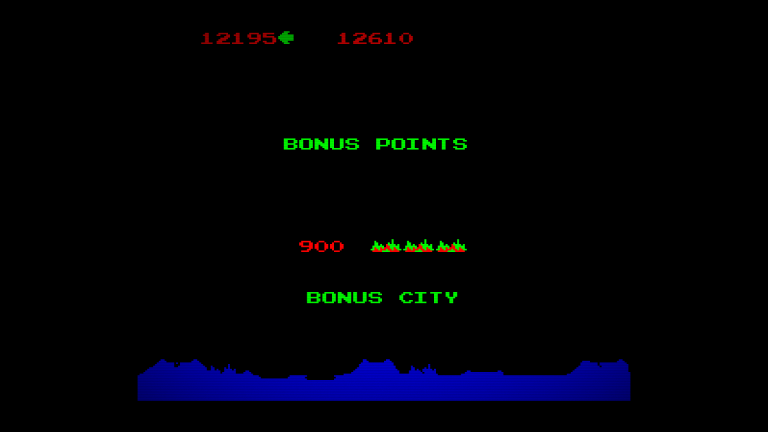
When you score enough points, the game will reward you with a bonus city.
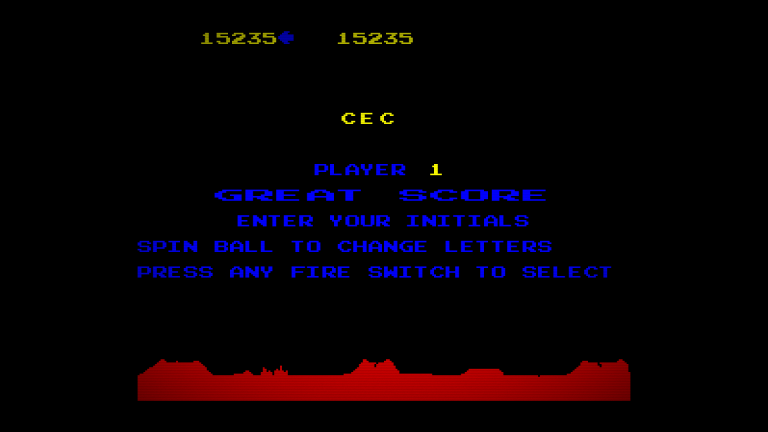
Me putting my initials after achieving a great score in Missile Command.
Considering its simplicity and the way it was designed, there clearly is no way for players to win at all. Rather, the game will challenge your precision, decision-making and ability to defend your cities and bases. That being said, the greater challenge is to survive and be able to move on to the next level with missile bases and whatever cities remaining you still have to defend. As with other games of the past, achieving the high possible score – which reflects your endurance, skill and progress – is a goal here. Achieving certain high scores also result in an extra city for you.
Cultural relevance
Missile Command’s legacy as one of the greatest arcade games ever released is undeniably real. Not only that, this game resulted in a lot of ports for consoles, portable gaming devices and home computers through the decades. This classic was re-released in several compilations from Atari and the Xbox-listed Missile Command contains the arcade version. In 2020, a remake called Missile Command: Recharged was released as part of the Atari Recharged series of games.
The different Missile Command arcade machines.
Missile Command even appeared for a few seconds in Terminator 2: Judgment Day which added more to the film’s concept of nuclear war.
With regards to arcade gaming, Missile Command is notable for having a trackball on its machine as a way for arcade players to control the crosshair during game sessions.
Conclusion
Apart from being the commander of missile defense, try imagining yourself being on of the citizens living in one of those cities. Can you imagine watching real-life missiles get intercepted in sky above you?
The Missile Command (1980) arcade game is a true video game classic and it remains compelling and enjoyable at the same time. It can also be an intriguing game experience since it does not let players complete the game by winning. All players can do is perform the best defense they could, survive to the next round and keep playing until their defense gets overwhelmed by the enemy and the rising in-game difficulty.
As a result of the game design, playing Missile Command is actually moral because the concept of defending your people using powerful yet limited resources is very strong all the time. Even with progressive difficulty, the game never became frustrating to play and I actually enjoyed the challenges knowing that defense and survival are main goals. Achieving the highest possible score is the other goal as reflected by video gaming of the era. Missile Command simply delivers bouts of fun and you cannot go wrong with playing it. It is not surprising that this game became a massive hit and established itself as a true classic among video games.
Overall, Missile Command (1980) highly recommended and the best way to play it on console today is to avail of Atari 50: The Anniversary Celebration compilation.
Welcome back Xbox fans, geeks, retro gaming enthusiasts and other gamers!
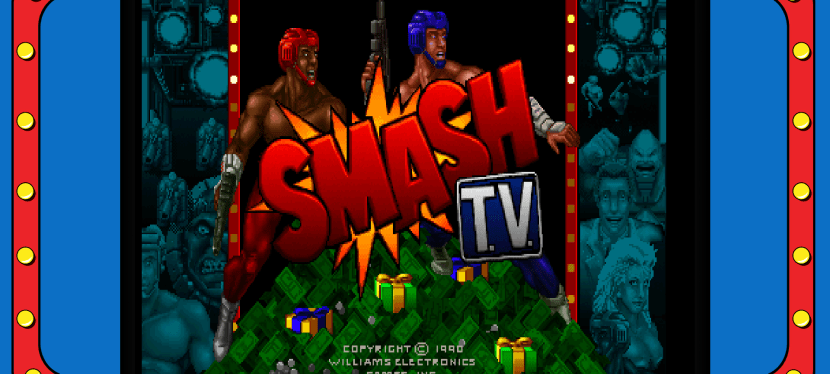
I finally did it! I finally played the arcade version of the classic game Smash T.V. as I recently purchased Midway Arcade Origins (Xbox 360) on the Xbox store. Thanks to backward compatibility, Midway Arcade Origins operated smoothly on my Xbox Series X and it comes with more than thirty arcade games owned or published by Midway Games from the early 1980s to the early 1990s.
My history of playing Smash T.V. is awkward. The very first time I played the game was not in the arcade but with the Smash T.V. port released on the Super Nintendo Entertainment System (SNES).
The classic game debuted in arcades in 1990 and during that precise point of time, I rarely visited arcades here in the Philippines. I started visiting arcades more starting in 1992 as the fighting game craze started luring new gamers driven by the popularity of Street Fighter II. To the best of my memory, I saw very few arcade machines of Smash T.V. and never got to play the game. In fact, there were very few arcade machines that had the dual joystick control set-up which was exactly required to play Smash T.V.
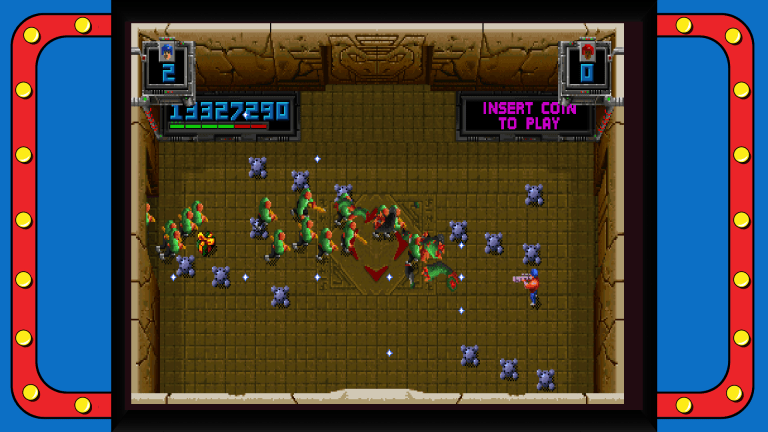
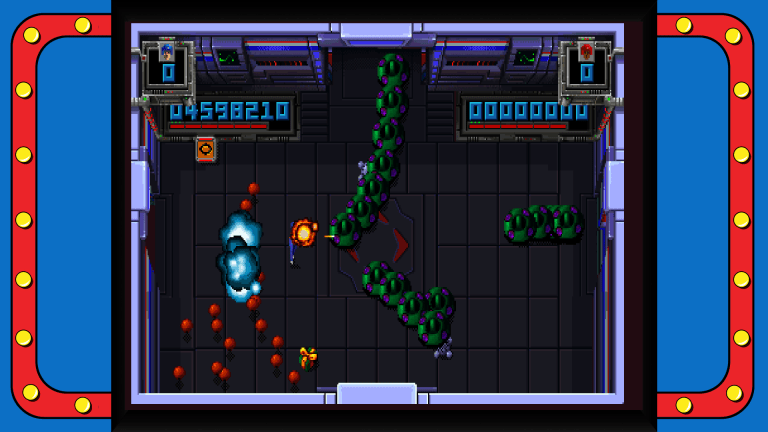
The 2D sprite activity and action can get pretty wild and intense on-screen during battle. Expect lots of waves of enemies coming in before you proceed to the next room.
To make things clear, arcade games were already popular here in the Philippines and there were lots of local arcades particularly in shopping malls. As for playing Smash T.V. on the SNES, it was fun but the SNES control pad was not ideal for the immense in-game shooting.
Going back to Midway Arcade Origins, I played Defender first and had some bouts of fun with it. After that, I went back to the main selection and scrolled through the many other games offered until I saw Smash T.V. and selected it. As soon as I started playing, I was immediately engaged as the fun kept growing as I played.
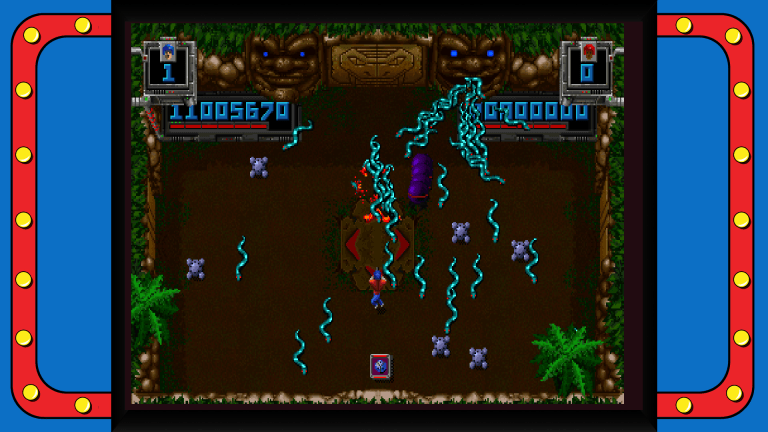
Apart from dealing with dangerous enemies, you will also encounter in-game hazards such as this room releasing snakes a lot.
Firstly, the game made fine use of the two analog sticks of the Xbox controller which was the closest thing to matching the dual joysticks set-up of the original arcade game. The left analog stick was for movement while the right analog stick allowed me to shoot in different directions. The severe limitations on shooting on the controller of the SNES were completely gone, and as I played the game more on Xbox, I found myself moving around enemies and obstacles while being able to fire at directions where shooting was needed.
Secondly, Smash T.V. on Midway Arcade Origins is the genuine arcade experience from the controls to the functionality, gameplay, the visual design and 2D sprites that dominated the screen. For those who don’t have the original arcade machine, this is the closest thing to enjoying the arcade fun of Smash T.V. in the comfort of home. I can also say that the game ran smoothly on my Xbox Series X and not a single case of slowdown nor any cases of visual distortions ever happened!
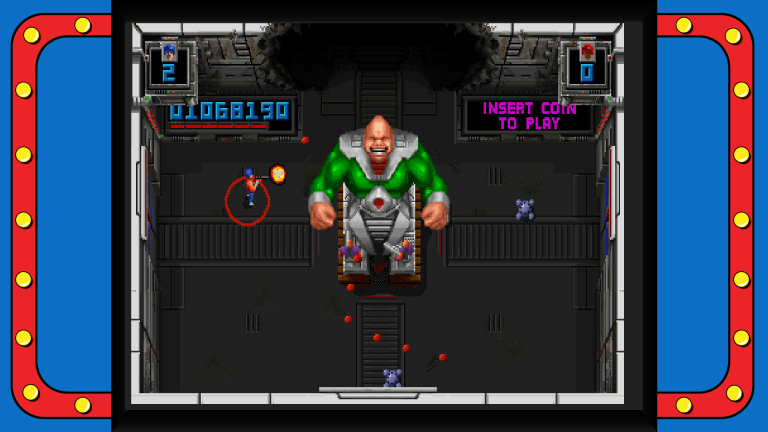
To really defeat an end-of-level boss like this one, you need to use whatever special weapons or power-ups that appeared during battle. Be mindful of the enemy’s powerful defense and attacks.
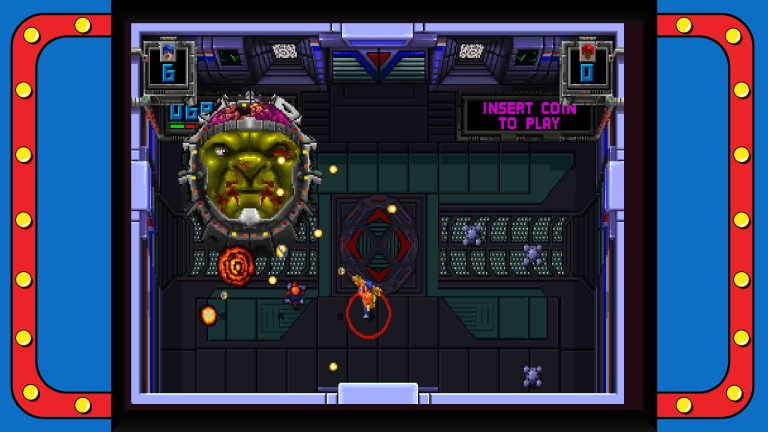
This face particular end-of-level boss deteriorates further as I kept on attacking him with special weapons.
More on the gameplay, it is undeniably challenging as many enemies enter and their different abilities to attack you ensures lots of intense moments of action and struggle to survive. The on-screen action is often intense and still the gameplay did not grow tiresome to me. More on the combat, there are always huge and powerful enemies (end-of-level boss) at the conclusion of each level and defeating them will push you to use special weapons as soon as they pop up.
Lastly, there is also the prize aspect of the game (which has a dystopian TV concept inspired by the 1987 film The Running Man starring Arnold Schwarzenegger) which allows you to collect prizes (in cash or prize items) while playing. The prizes can add a lot to your score and even your potential entry into the online leaderboards (see below).
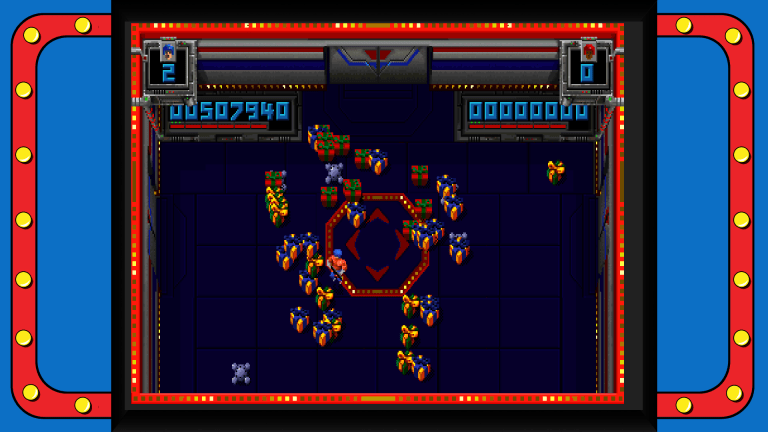
There is nothing like collecting prizes in the game! It is as thrilling as the action.
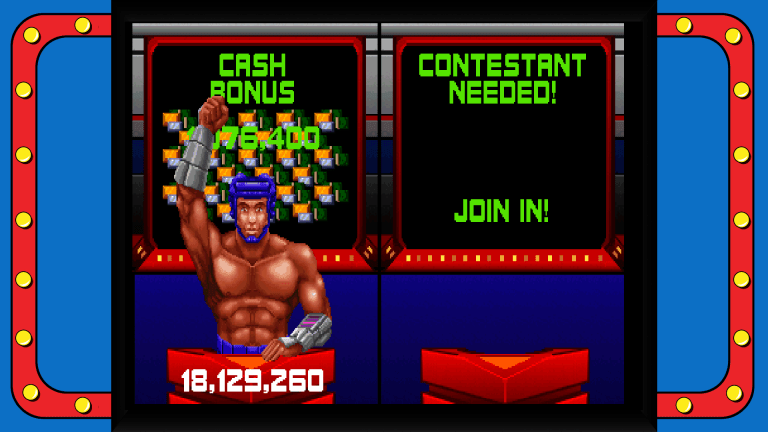
Between the levels are the bonus segments in which the value of the prizes you collected will be added to your overall score (technically in-game money earned).
Thirdly, I really like the online leaderboards and score attack mode that came with Midway Arcade Origins. For Smash T.V., the score attack challenge is to score as many points as you could using only one turn (which comes with the initial six in-game lives). Score attack does not allow any continues (that is for free play mode) and this was enough to make me focus on my skills, moves and timing when it comes to fighting waves of several enemies that entered the in-game arenas.
I was able to make my presence felt online as the servers for the leaderboards are still functioning and recording in-real time the scores achieved.
Every time you encounter new enemies, you have to observe how they move, attack and behave.
Smash T.V. is a classic not only because of its immense fun gameplay, entertainment impact and timeless game design, but also because it was a creative wonder from significant game creators such as Eugene Jarvis (Defender, Robotron 2084), John Tobias (Mortal Kombat) and Mark Turmell to name a few. The game borrowed elements from The Running Man and the creators made their own concept that mixed well with the game design they came up with. The result is a highly playable, challenging and ultimately enjoyable video game. To learn more about the creation and history of Smash T.V., watch the in-depth videos of PatmanQC and Slope’s Game Room below.
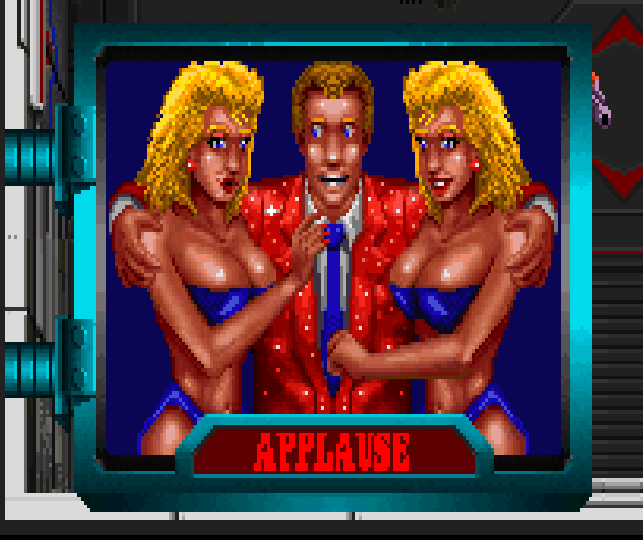
“Big money! Big prizes! I love it!”
Smash T.V. is a lot of fun and its gameplay never gets old. It is currently my favorite of all the games in Midway Arcade Origins and it is an excellent addition to my retro gaming experience on my Xbox Series X.
Welcome back fellow geeks, Blu-ray collectors and movie buffs!
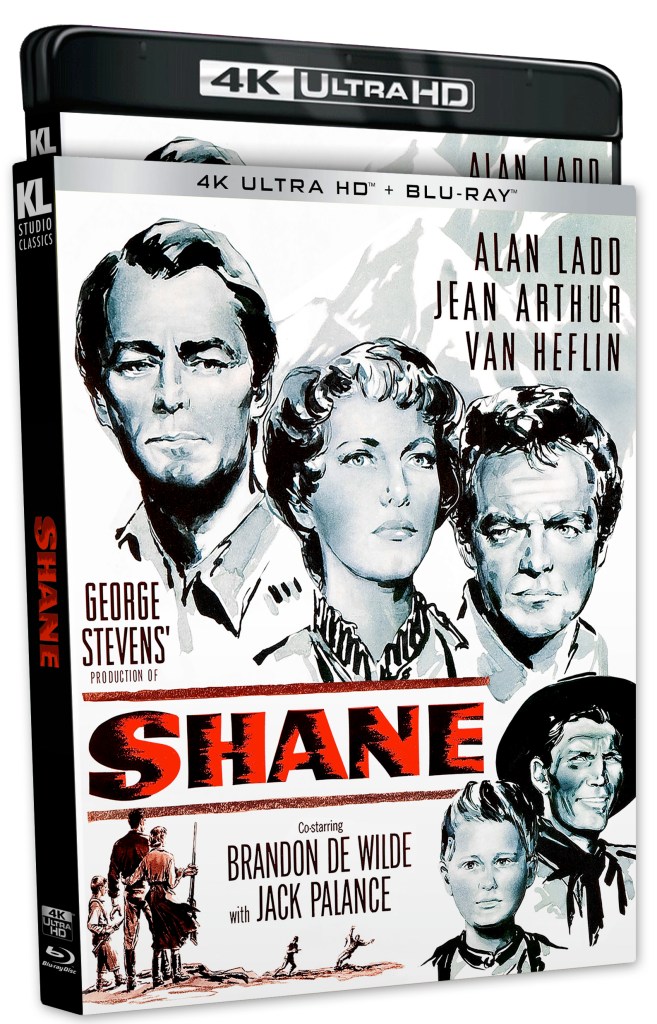
Shane, the classic Western film from 1953 directed by George Stevens, is all set for a 4K Blu-ray release on July 15, 2025 and already the publisher Kino Lorber is already accepting orders online.
Shane 4K Blu-ray from Kino Lorber.
Posted below are the technical details of the Shane 4K Blu-ray sourced from its Blu-ray.com page. For the 4K visuals enthusiasts reading this, Shane will be in native 4K resolution.
Discs – 4K Ultra HD, Blu-ray Disc, Single disc (1 BD-100, 1 BD-50), Digital – Digital copy included
Packaging – Slipcover in original pressing
Playback – 4K Blu-ray: Region free, 2K Blu-ray: Region A
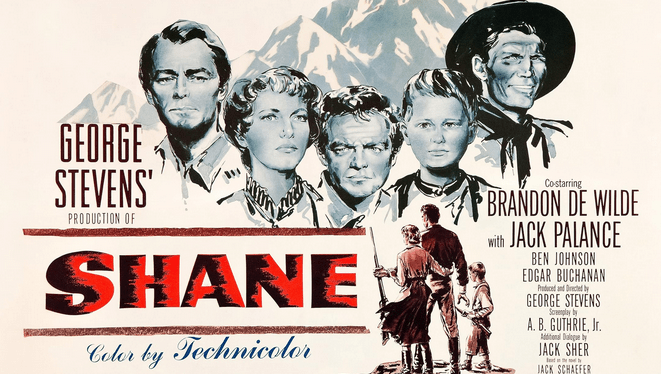
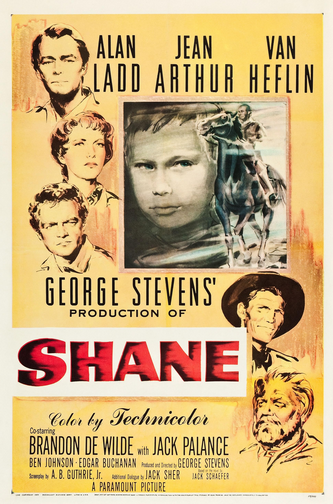
The movie poster of Shane.
Personally, I have not seen Shane in full. Apart from seeing selected scenes of it within the 2017 superhero film Logan, I saw Shane partially on cable TV a few times. I am personally interested to watch Shane entirely in native 4K and for this reason alone, Shane 4K Blu-ray is a future purchase for me. I am also aware that the 1953 film was based on the novel from 1949, and in 1993 the movie was selected for preservation in America’s National Film Registry by the Library of Congress as being “culturally, historically, or aesthetically significant”.
As for the Western genre of American films, my interest in Westerns from the 1950s, 1960s and 1970s has grown over time. I am not interested anymore in modern movies pumped out by Commiewood (note: woke stuff here and there) and I did not even see a single new movie in the cinemas in 2024. That being said, Shane is something I want to watch in 4K in the comfort of home soon. Here is hoping that the film restoration and remastering will be of top-notch quality.
If you have decided already to order Shane 4K Blu-ray this early, you can do it through Kino Lorber by clicking here.
Welcome back fellow geeks, Blu-ray collectors and movie buffs!
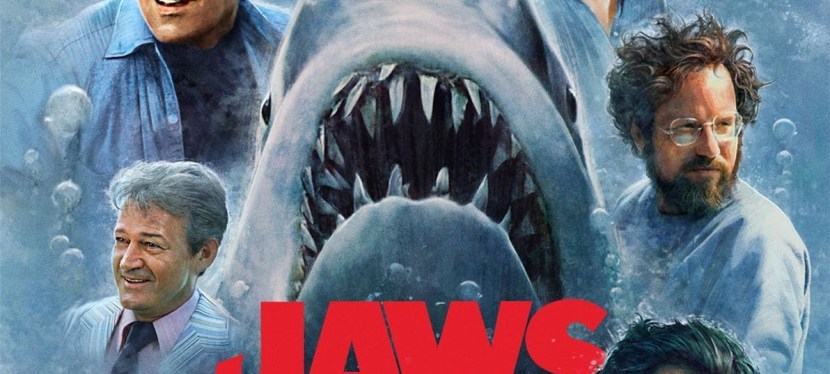
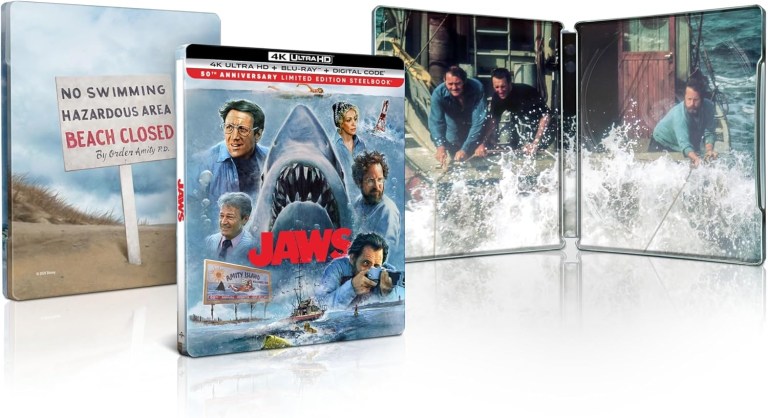
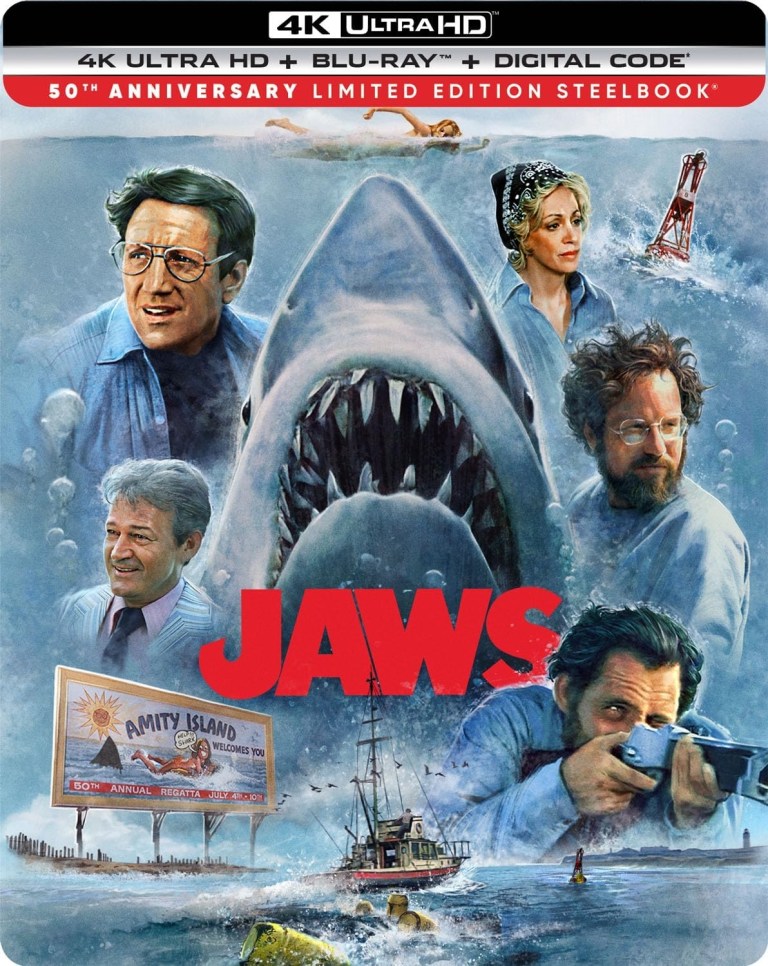
If you love Steven Spielberg’s classic film Jawsand if you are determined to collect the latest thing about it, be aware that the Jaws 50th Anniversary 4K Blu-ray SteelBookwill be released commercially on June 17, 2025. In relation to that, customers are welcome to order it in advance by clicking here.
This is the 4K Blu-ray SteelBook set of Jaws. (photo source – Amazon)
Posted below are the technical details of the Jaws 50th Anniversary 4K Blu-ray SteelBook sourced from its Blu-ray.com page,
Video
Codec: HEVC / H.265 (70.80 Mbps)
Resolution: Native 4K (2160p)
HDR: Dolby Vision, HDR10+
Aspect ratio: 2.35:1
Original aspect ratio: 2.39:1
Audio
English: Dolby Atmos
English: Dolby TrueHD 7.1 (48kHz, 24-bit)
English: DTS 2.0 Mono
French: DTS-HD HR 7.1
Spanish: DTS 5.1
Subtitles – English SDH, French, Spanish
Discs – 4K Ultra HD, Blu-ray Disc, Three-disc set (1 BD-100, 2 BD-50), Bonus View (PiP), BD-Live
D-Box, Social network features
Digital – Digital copy included
Packaging – SteelBook, inner print
Playback – 4K Blu-ray: Region free, 2K Blu-ray: Region A
Although I never saw Jaws inside the movie theater, I saw it multiple times from local TV to cable TV, and DVD. It truly still is one of Steven Spielberg’s best works to this day and it should be stated that filmmakers encountered a lot of problems during production at the time. To animate the killer shark, they used physical stuff while shooting on the ocean extensively. Computer-generated graphics and digital editing were not the standard back then. I have yet to view the classic film on high-definition and it should be stated that the Jaws 4K Blu-ray has been available for years now.
Mark your calendars for June 17, 2025. (photo source – Amazon)
If you have decided already to order the more affordable and simpler 4K Blu-ray copy of Jaws, click here. If you really want the upcoming 4K Blu-ray SteelBook edition, click here.
Welcome back Xbox fans, geeks, retro gaming enthusiasts and all gamers from around the world!
I was born in the mid-1970s. My video gaming experience started with the arcade games. A few years later, my console gaming experience started with the Atari 2600 console (which was our first console at home) and for about five years my friends (who also had the same console in their respective homes) and I enjoyed playing games on it.
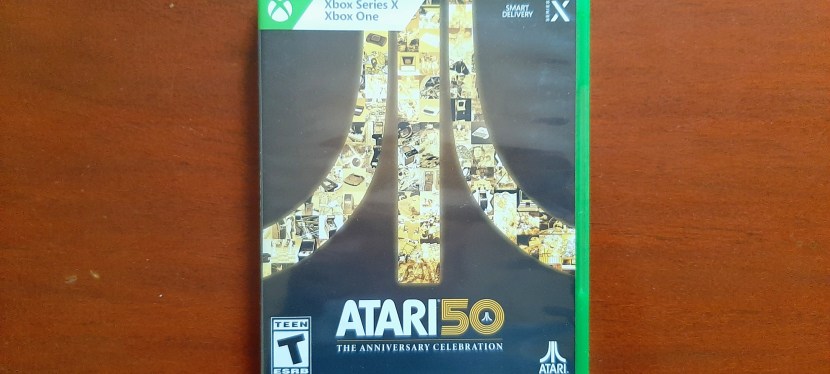
Also this year, I bought myself a physical copy of Atari 50: The Anniversary Celebration to add even more retro gaming fun on my Xbox Series X and it has been an enjoyable experience so far. There is absolutely nothing like replaying the Atari 2600 games I enjoyed plus being able to play other games released on other Atari consoles I never had. I also love the fact that the collection (you can by the physical Xbox copy by clicking here) also has Atari’s own arcade games. This is truly a blast of retro gaming fun!
From my play session of the arcade version of the classic Missile Command.
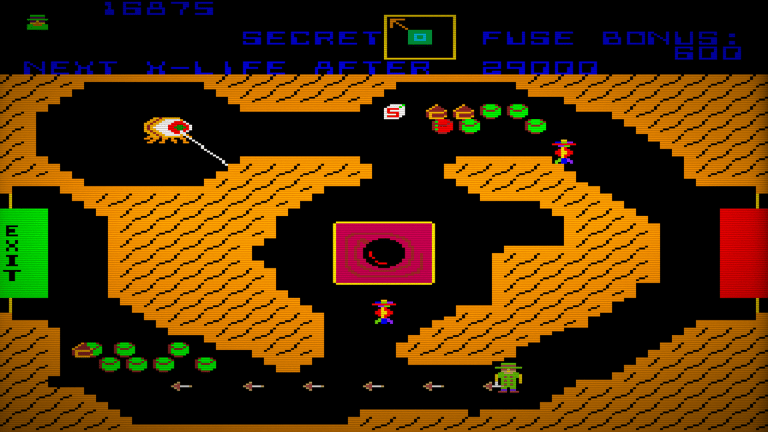
Thanks to the Atari 50: The Anniversary Celebration, I finally got to play the Cloak & Dagger arcade game that was featured in the 1984 movie.
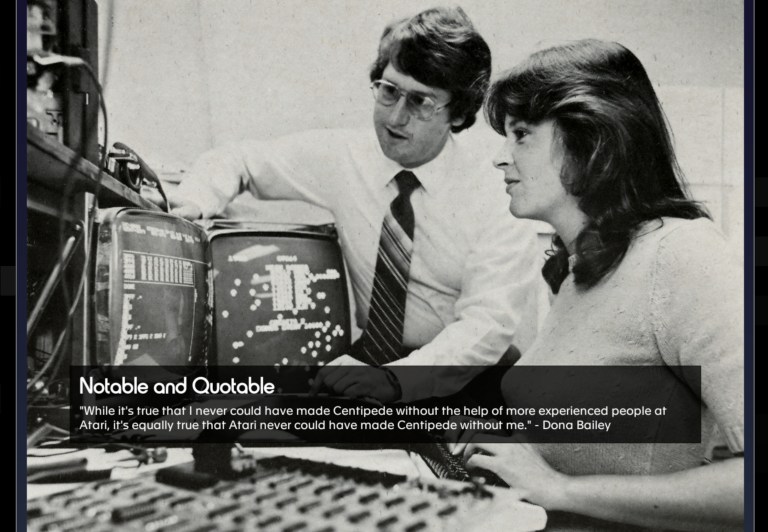
Historical insight about the classic game Centipede.
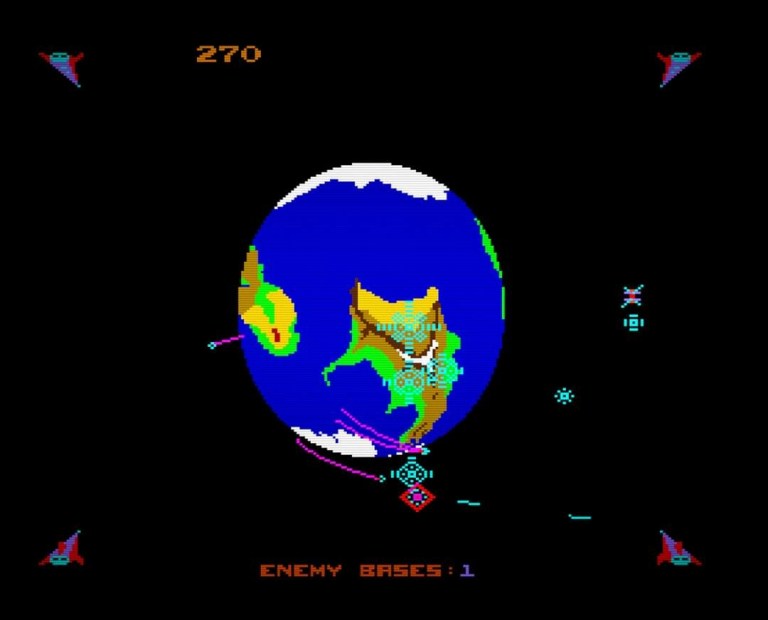
Atari’s arcade game Liberator.
Content from the arcade flyer of Missile Command now viewable in high-definition!
Atari 50: The Anniversary Celebration is not just a collection of video games from the past. It has a stylish presentation that makes it an interactive museum which allows you to look at the arcade flyers, the print ads, the official artworks of games, historical highlights and most notably lots of videos showing interviews of surviving Atari creators/producers who reveal very important details about what they went through, what the company culture was like, and more.
Those who were interviewed include Nolan Bushnell (who established Atari, Inc.), David Crane, Jerry Jessop, Bill Rehbock, Owen Rubin, Allan Alcorn, Tod Frye, Wade Rosen, Eugene Jarvis, and Howard Scott Warshaw. These are the guys who not only established Atari as a major gaming industry leader but also laid the foundations of console gaming as a crucial part of home entertainment in general. Also discussed was Atari’s efforts of bringing their arcade games to the consoles at home.
Adding further insight to Atari’s history were video interviews of Ed Fries (a key figure behind the establishment of Xbox), Cliff Bleszinski (Gears of War trilogy) and Tim Schafer (Psychonauts games).
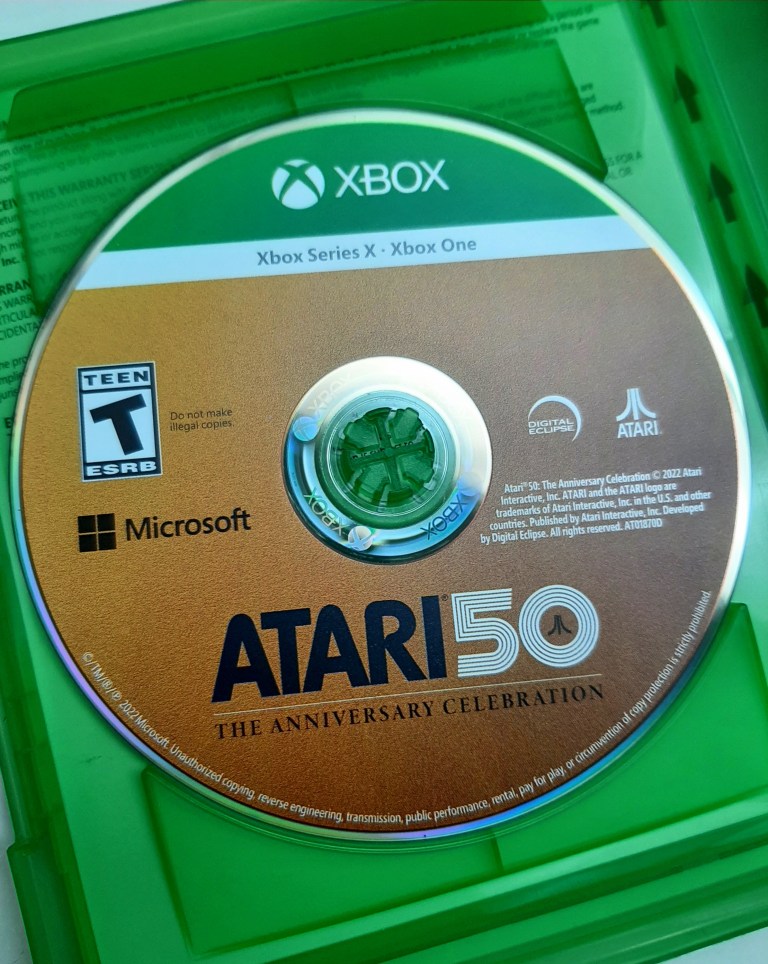
My physical copy of Atari 50: The Anniversary Celebration which I enjoyed a lot on my Xbox Series X.
Disclaimer: This is my original work with details sourced from reading the comic book and doing personal research. Anyone who wants to use this article, in part or in whole, needs to secure first my permission and agree to cite me as the source and author. Let it be known that any unauthorized use of this article will constrain the author to pursue the remedies under R.A. No. 8293, the Revised Penal Code, and/or all applicable legal actions under the laws of the Philippines.
Welcome back superhero enthusiasts, 1980s arts and culture enthusiasts, Marvel Comics fans and comic book collectors! Today we go back to the year 1984 to examine a small part of the Marvel Comics universe through a tale of the Amazing Spider-Man monthly series.
By now, you readers should be aware that I reviewed a lot of comic books about Spider-Man and his deadliest enemy Venom. It is already established through comic book history that the iconic webslinger is responsible for the establishment of Venom as he brought into the world the alien costume (the symbiote) coming from deep space (as told in the Secret Wars limited series), and he also became responsible for the destruction of Eddie Brock’s career in journalism. Of course, Venom did not debut immediately after Spider-Man’s return from Secret Wars and there was a lot more about the symbiote when it was with Peter Parker.
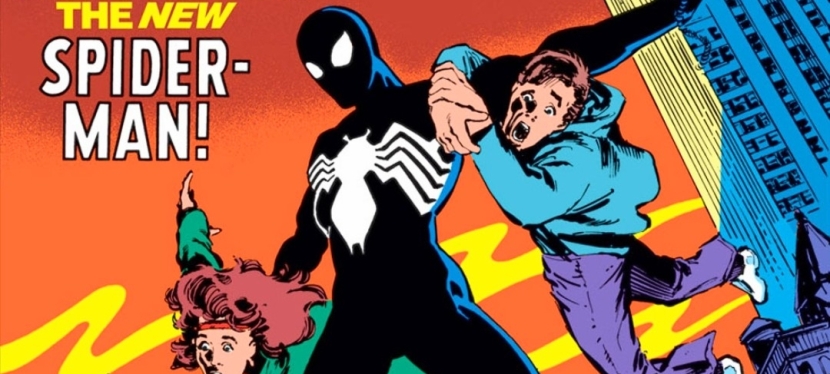
With those details laid down, here is a look back at Amazing Spider-Man #252, published in 1984 by Marvel Comics with a story written by Roger Stern and Tom DeFalco, and drawn by Ron Frenz. This comic book marked the first appearance of the alien costume.
The cover.
Early story
The story begins inside the New York headquarters of the Daily Bugle. It has been observed that several superheroes such as Captain America, Thor, Spider-Man, Iron Man, the X-Men and the Avengers have been missing this resulted in a rise of crime. Publisher J. Jonah Jameson and editor-in-chief Joe Robertson discuss the newest edition of their newspaper.
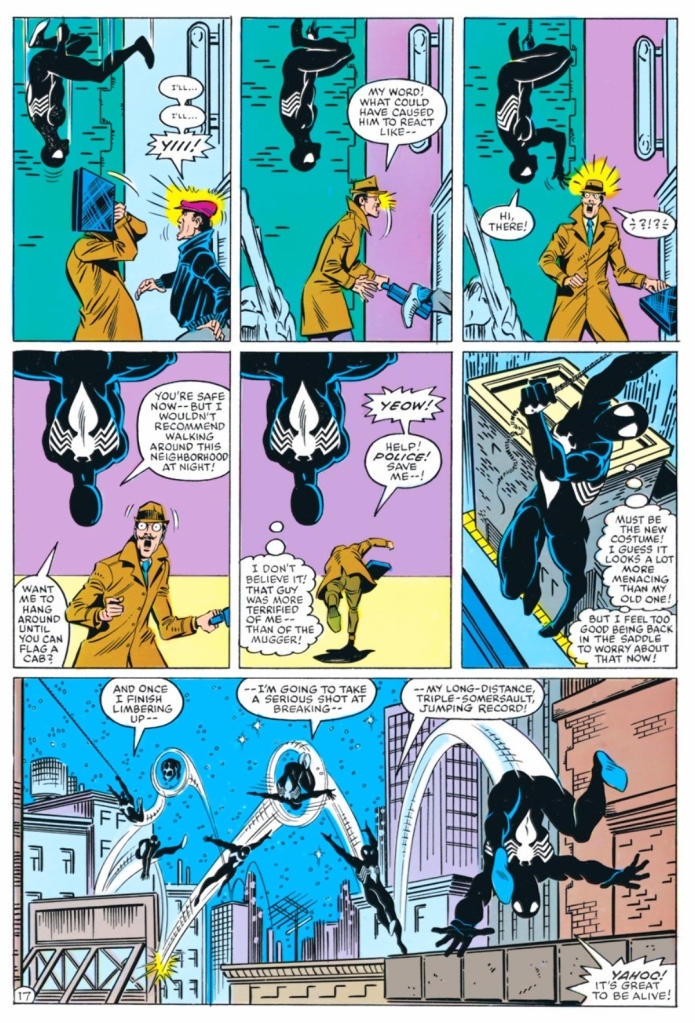
Meanwhile over at Central Park where police officers and others stand by an area that was closed off, a physical structure suddenly appears spreading bright light to onlookers. Suddenly Spider-Man (wearing a new dominant black costume) leaps out of the structure carrying Dr. Connor (the Lizard) surprising the people.
After realizing they have returned home at last after spending lots of time and struggle in deep space (Secret Wars), Spider-Man could not help but feel jubilant to be home. As the police officers don’t realize that they are talking with the same webslinger due to the new costume, one of them was about to draw his gun which prompted the superhero to use his web on him.
Suddenly, the Avengers, Captain America, Thor and Iron Man emerge from the physical structure which provided Spider-Man relief as he thought that only he and Dr. Connors made it home. With the people focusing on the other superheroes, Spider-Man and Dr. Connors slowly exited. Connors asked him what are they going to tell the world about all they have seen and experienced in deep space…
Quality
Spider-Man’s first night in New York wearing the alien costume .
I really like this story. I first read this a long time ago and I re-read it all over again for this retro review, and still this story engaged me a lot. There is a lot of richness in the script and you will get to see Peter Parker transitioning into a series of major changes that await him. Without spoiling the plot, there is no hero-versus-villain element here at all. It is all about Spider-Man who just arrived home from a major conflict (and also one of the most significant comic events ever published by Marvel Comics) and the alien costume saga truly began right here. The Venom debut did not happen until a few years later in reality.
In accordance to what was established in Secret Wars (not to be confused with the 2015 series of the same name) and the standards of then editor-in-chief Jim Shooter, the creative came up with a tale that not only showed a different Spider-Man but also portrayed him in ways that defied the tropes and creative ideas the preceded this comic book.
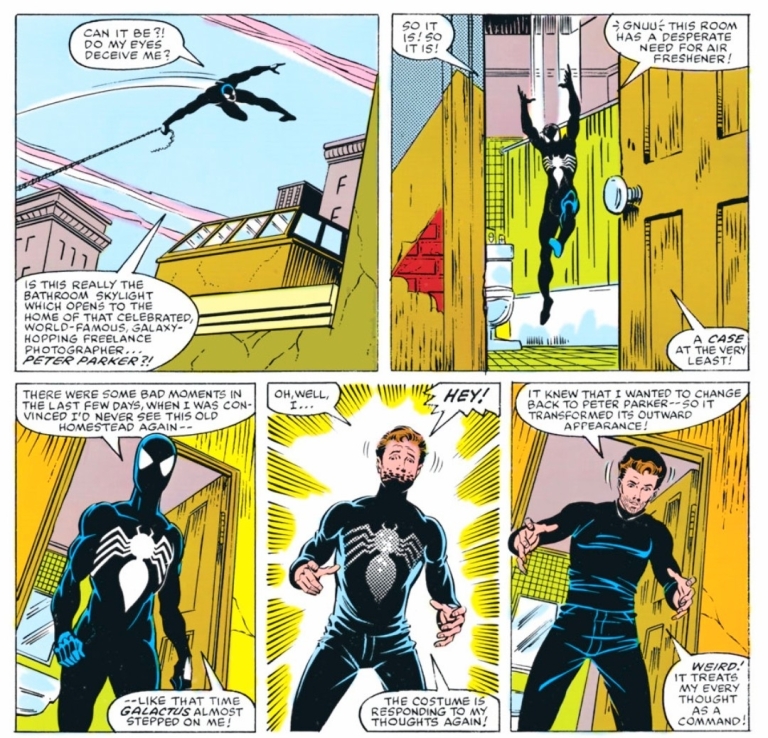
For one thing, Peter Parker is literally like a fish out of water here. As far as the whole world is concerned, only days passed when the superheroes went to deep space. But for the webslinger, a lot more time passed as so many battles, discoveries and intriguing events took place for him along with the others. That being said, Peter Parker’s perception of reality and track of time really got messed up and the weight of Secret War’s events really turned out overwhelming on him. This was well dramatized in the scene wherein Peter – who realized that so much time had passed – he had to call his aunt May fearing that she must be worried sick over him. There was also the moment when by walking down the street, he realized how much he missed not only his home but also the local surroundings.
It was also in this comic book when Peter started getting more oriented with the alien costume he first got in Secret Wars #8 (which was actually published after this comic book) and started to enjoy the benefits with the way it responds to his thinking. Of course, at this stage, he has yet to realize the unfortunate truth about the living costume he brought home and this story really kicked off a new and profound stage in the comic book history of Spider-Man
Conclusion
When Spider-Man finally arrived home after spending so much time during Secret Wars.
Amazing Spider-Man #252 (1984) is still a great comic book to read all over again. This was released during the time when Secret Wars (1984) was still being published and years before Venom’s big debut in the series’ 300th issue. In my view, the alien costume saga was a big turning point in the literary history of Spider-Man and the creators who got involved in this comic book really sowed the seeds of compelling and intriguing events that followed. What is intriguing is that all of these significant developments started when a Marvel Comics reader from Illinois came up with the idea of a new costume for Spider-Man, wrote to them and the publisher responded to acquire his idea for over $200 (click here).
This comic book is also a reminder of how significant Jim Shooter’s rule at Marvel Comics really was and I can say that the Marvel’s literary universe of the 1980s should not be ignored.
Disclaimer: This is my original work with details sourced from playing the video game and doing personal research. Anyone who wants to use this article, in part or in whole, needs to secure first my permission and agree to cite me as the source and author. Let it be known that any unauthorized use of this article will constrain the author to pursue the remedies under R.A. No. 8293, the Revised Penal Code, and/or all applicable legal actions under the laws of the Philippines.
Welcome back retro gaming fans and readers!
Today, we will go back to the late 1980s to examine one of the most significant console games of the decade…Konami’s Contra. To put things in perspective, Contra started in the arcades in 1987 and went on to become a big hit. Konami went on to make a version of the game for Nintendo Entertainment System (NES) in the West and the Family Computer (Famicom) in Japan that resulted in different looking graphics (both artistically and technically), reworked stages, and different and extended level designs that were done within the consoles’ limitations. In short, the home version of Contra was pretty different from the arcade version but still was made to be fun and exciting on its own.
In my personal experience, my discovery of Contra has always been on the Famicom and some time later on the NES. For this retro review, I replayed Contra (both Famicom and NES versions) via the Contra Anniversary Collection on my Xbox Series X.
With those details laid down, here is a look back at Contra, developed and published by Konami for the NES and Famicom in 1988. The NES version was released one week ahead of the Famicom version in February 1988.
The start screen of the NES version of Contra. The commando with dark hair was deliberately made to resemble Sylvester Stallone somewhat.
Game concept
In the far future, an alien army from space – Red Falcon – arrived on Earth inside a meteorite that landed on the Galuga archipelago. There, Red Falcon established an extensive high-tech base for their operations and eventually brainwashed a local human army to do what they want. Red Falcon plots to wipe out human civilization on the planet.
With the information about Red Falcon collected, the Earth Marine Corps send Contra unit members Bill Rizer and Lance Bean to the island to destroy the opposition and find out what Red Falcon has been doing…
Gameplay and quality
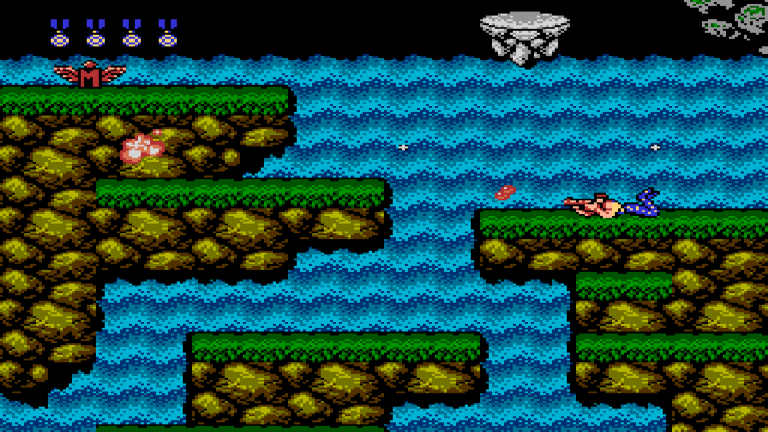
Contra is an action-packed 2D side-scrolling game with strong sci-fi and military influences.
To begin with, Contra of 1988 was made to be a nicely-paced, action-packed, side-scrolling adventure game that has some 3D-like levels in between. The game design and levels Konami came up with was done to immerse gamers into actual participation in the military campaign against the aliens and their brainwashed human soldiers. This campaign not only includes battles through the forest of the Galuga archipelago but also through the interiors of Red Falcon’s high-tech facilities, going up an elevated location with waterfalls, the snowy area and further deep into the rest of the enemy’s mechanical base.
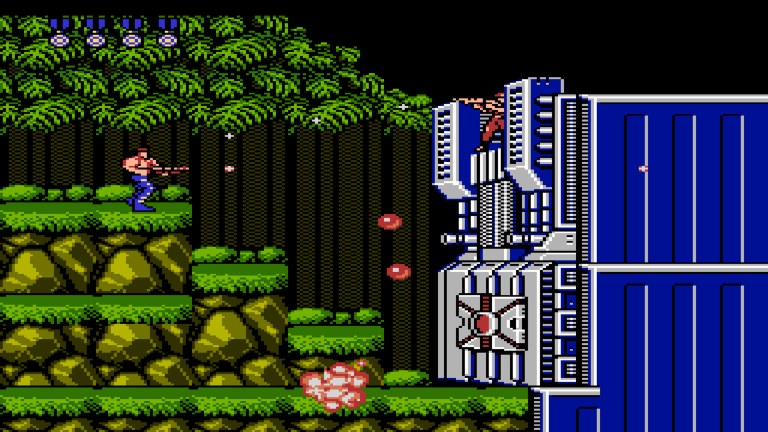
For the most part, you play as a commando armed with a rifle with unlimited ammunition. As you shoot enemies and make your way through the 2D side-scrolling level, there will be the occasional flying capsules that you can shoot down to gain new weapons/ammunition (S for Spread Shot, M for Machine Gun, L for Laser) or some power-up (temporary invincibility or the rare ability to eliminate all enemies present on-screen) to help yourself as the wave of opposition from Red Falcon is relentless (which is reason enough to compel you to keep progressing and fighting). There are also times when the mentioned enhancements suddenly pop out after killing an enemy.
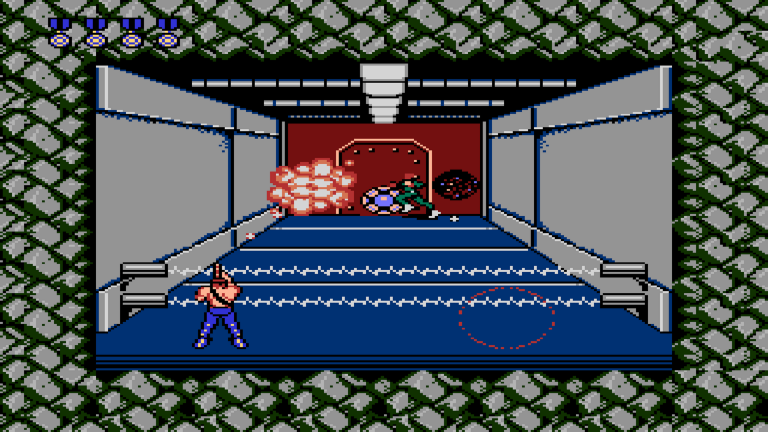
To prevent the game from getting too old with side-scrolling, Konami implemented these stages in which players face the front to attack enemies, overcome obstacles and move forward with 3D-like effects going into the next place.
By default, this game is brutally hard. Not only do the enemies keep appearing (with some of their teammates being strategically placed to fire at you), the obstacles will compel you to take your time overcoming them. In this game, one-hit death is the norm and there are many moments in which falling to your death becomes a huge risk. You get hit, you not only lose one life, you will lose whatever powerful weapons you gained.
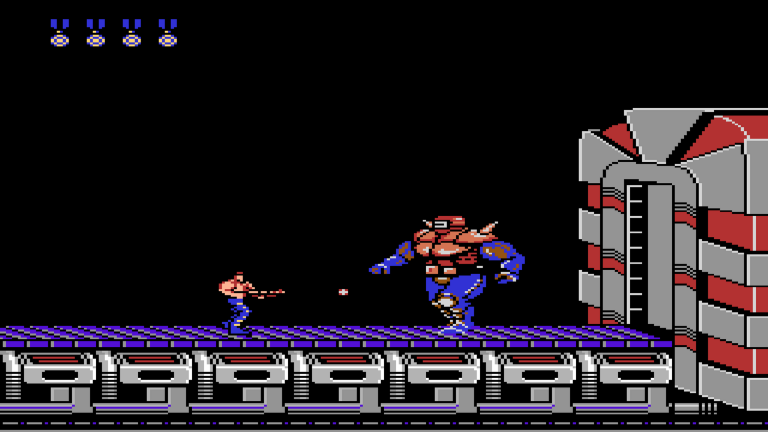
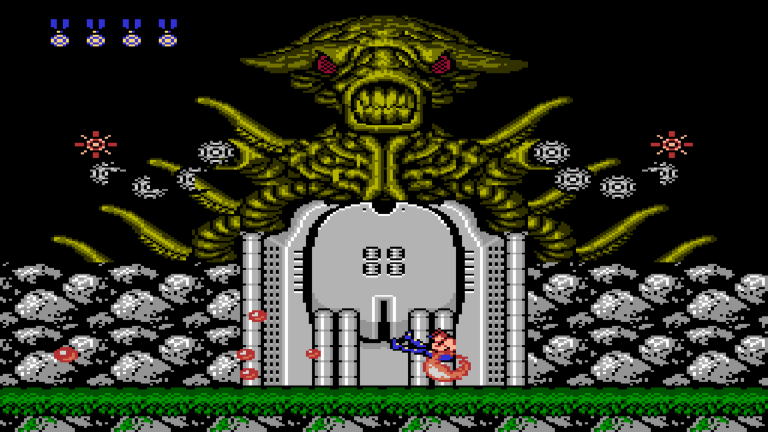
There are also stage bosses (powerful enemies that await you at the end of a level) that will challenge you so much, you will have to adjust your strategy, pay attention to the movements and timing of the enemy, and then adjust your way fighting.
Only the Famicom version of Contra has this sequence.
I really love the sci-fi elements the game developers came up with for this classic game. There are lots of high-tech stuff to see here and this robotic enemy is just one of them.
Fortunately for us players, the controls are really tight and very responsive. You can move your characters to overcome obstacles, avoid getting hit by enemies and even move down from one platform if the space below is safer. I still remember how precise and responsive the controls were on the NES and Famicom versions, and I can say that all the responsiveness made it on the Xbox controller when I replayed Contra on Xbox Series X with the Contra Anniversary Collection I downloaded. In fact, the high precision of the controls added to the fun of shooting enemies or obstacles with the Spread Shot while moving to the right as it was meant to be.
Considering the intense difficulty of the game, players who do the famous Konami Code (Up, Up, Down, Down, Left, Right, Left, Right, B, A, and Start) will be reward with 30 lives when they start playing Contra. For Xbox gamers reading this, there is a slight difference with the Konami Code when playing Contra on Xbox consoles.
Apart from shooting, there are lots of platform gaming elements to experience here. The difficulty is very brutal and the famous Konami Code will grant you 30 lives when you do the code correctly.
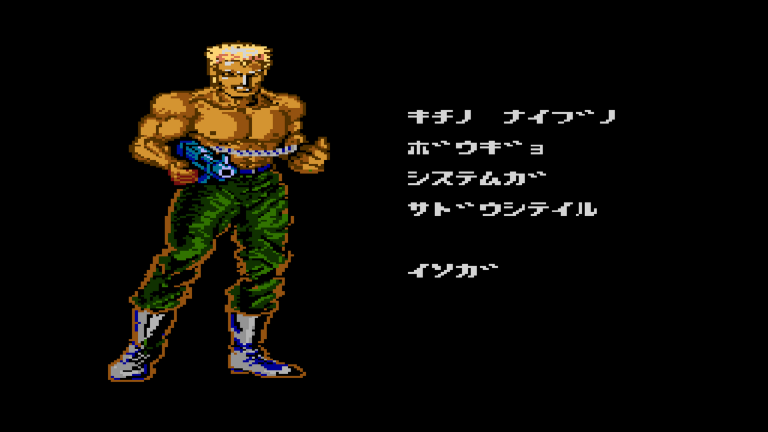
This cut-scene is only available in the Famicom version.
With regards to game design, the Konami developers did a really fine job creating the levels, placing the challenges and setting up memorable boss battles for action/adventure-hungry gamers to indulge in. The developers also cleverly implemented the fictional/fantasy concepts into the game design which resulted in me getting immersed in the Contra team’s mission against the Red Falcon at their secret base.
Another highlight with playing Contra is the 2-player option and the above-mentioned Konami Code added to the fun and accessibility of. I still remember the old days of playing in a 2-player session (cooperative play essentially) of Contra at a friend’s house on a Famicom. Since my friends and I were already enthusiasts of 1980s Hollywood action movies, playing Contra was enjoyable even though the difficulty was brutal.
This is one of the touch stage bosses you will encounter in the game.
If there are any notable differences between the two versions of Contra of 1988, it would be the fact that the Japanese (Famicom) version has storytelling emphasized through cutscenes (with Japanese text displayed), a technical overview of the Red Falcon base at Galuga with maps displayed before you start a new level, in-game art, an additional scene that spiced up the ending and, most notably, more background/environmental animation. The additional animation on the Famicom version made the adventuring look and feel more lively and this is most evident in the final stage (lair of the alien).
Conclusion
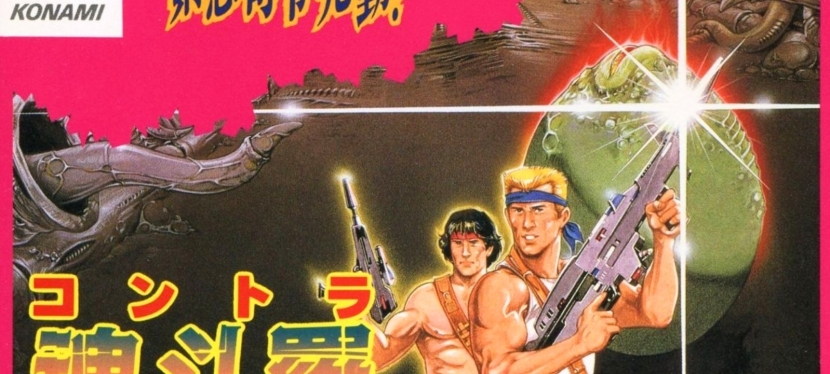
The Japanese cover art of Contra on Famicom. The Rambo-like character and the alien egg are obvious inspirations from Hollywood action movies of the 1980s.
There is no doubt in my view that after all the decades that passed since I first played it, Contra (1988) is still very engaging and a lot of fun to play whether you choose the Famicom version or the NES version. The developers who made this game succeeding in making something very enjoyable for millions of gamers and it is very clear that the makers were inspired by Hollywood action movies of the decade. In my view, the most obvious military inspirations are Aliens (1986), Commando (1985) and Rambo: First Blood Part II (1985).
Historically speaking, Contra (1988) was released at a time when militarism inspired many other game designers to come up with enjoyable games in different forms such as Cabal, Jackal, Rush’n Attack, Operation Wolf, Operation Thunderbolt to name some. Considering the overall quality and high fun factor Konami established, it is safe to say that this game is one of the finest among its militaristic gaming counterparts of its decade.
I had a grand time replaying Contra (1988) on my Xbox Series X in preparation for this review. Having played both NES and Famicom versions, I can say that the latter is the more complete and more immersive version to play. That does not necessarily mean the NES version is totally inferior. In fact, the NES version is more straightforward with the pick-up-and-play approach, and the gameplay itself is nearly identical (note: Famicom version is slightly more challenging) and very much fun to experience. If you are the player who really wants to be more immersed into the lore of Contra and absorb the military sci-fi concept Konami prepared, then the Famicom version is the one to play. That being said, now is a good time to purchase and download Contra Anniversary Collection.
Overall, Contra (1988) is highly recommended! It truly is a retro gaming gem!
Disclaimer: This is my original work with details sourced from playing the video game and doing personal research. Anyone who wants to use this article, in part or in whole, needs to secure first my permission and agree to cite me as the source and author. Let it be known that any unauthorized use of this article will constrain the author to pursue the remedies under R.A. No. 8293, the Revised Penal Code, and/or all applicable legal actions under the laws of the Philippines.
Welcome back retro gaming fans, collectors and readers!
Today, we will go back to the early 1980s to examine one particular video game I played many times on the Atari 2600 and it has a science fiction concept inspired by a certain dream that the late game designer Alan McNeil had.
With those details laid down, here is a look back at Berzerk, developed and published by Atari, Inc. on the Atari 2600 in 1982.
Cover of the Atari 2600 game package.
Game concept
Based on the official description of the game, players play a lone, armed human character who is a prisoner on an alien planet that is made up of mazes that have electrified walls. Several armed robots are actively hunting the human has no choice but shoot them and somehow surpass them to survive. There is, however, a more powerful villain called Evil Otto lurking nearby…
Gameplay and quality
When firing so close to a robot, be aware that it will fire at you without hesitation. To avoid getting hit, be aware of your character’s position, distance and the ability to move.
As typical with console games during the early 1980s, Berzerk’s design is pretty simple. Using the Atari 2600 joystick (which has only one button), you have to move your character around while avoiding touching the robots and electrified walls, and find your way out going to the next level. When it comes to in-game action, using the joystick, you are also able to shoot laser blasts in different directions (including diagonal).
From time to time, the level of challenge and gameplay intensity rises whenever the robots stand or move randomly on certain spots of the floor and when the random locations of the walls make it challenging to move around. In situations like these, I was compelled make quick decisions on when to move, which robots to shoot, and analyze if it is safe to move to another spot without getting electrified by a wall.
Adding further to the challenge is the sudden entrance of Evil Otto (who appears in the game as a digital smiley face) who is indestructible and passes through walls (note: this happens as long as you did not adjust the console to make the game easier). Once Evil Otto comes in (after you spent a certain amount of time in the level), I had to move my character out of the level even if there were still some robots remaining and shooting at me. Evil Otto even destroys robots that got on its way which symbolically shows how powerful he is.
In a situation like this, you will have to think fast on when to move, when to fire and how much distance do you need to be safe. That being said, you must also avoid touching the walls which are all electrified.
As mentioned earlier, there is an option available on the Atari 2600 version of the game that makes encounters with Evil Otto a bit easier. This allows players to blast Evil Otto to remove him for a temporary period of time and he comes back afterwards. In my experience with this game, I preferred the more challenging settings as the gameplay was already engaging with it. I should also state that while there are many robots walking around and ready to blast you, their intelligence is pretty low as you will see a few of them walk straight to the wall and get destroyed. There were also times when a robot simply walks straight into a fellow robot which destroys them both. Also there were times when a robot’s laser blast destroys another robot that got in the way. That being said, the option for easier gameplay on the Atari 2600 was unnecessary for me.
While the game design is simple, there is a ton of depth in terms of new levels you will find yourself in after exiting the previous level. Avoiding robots and Evil Otto to get out might look like the only goal for playing but in reality there is incentive to shoot as many robots as you can as scoring highly will reward you an additional life for ever number of points earned. There is no story ending at all as the game will go on and on for as long as you keep enjoying playing.
In relation to the gameplay, there is no music at all and that creates an immersion with emphasis on the excellent sound effects the game has. The sounds of the laser blast, the explosion of the robot, and the electrifying of your human character’s body still sound great and they have a strong futuristic, sci-fi touch.
Conclusion
The digital smiley face here is Evil Otto. Don’t let the smile fool you because it will go after you to destroy you, and not even the walls nor the robots can block its way.
Berzerk (1982) on Atari 2600 is still a fun game to play after all these decades. Its design is simple and yet there is depth within the gameplay. There is no story to complete but the game will keep on going as long as you enjoy blasting robots for more points to gain additional lives as rewards which should motivate you to keep on playing. Considering how simple the game’s design has always been, the sound effects really made playing it an immersive experience. This game is truly a classic that has to be played if you have the means to do so.







 Author Carlo Carrasco