Disclaimer: This is my original work with details sourced from reading the comic book and doing personal research. Anyone who wants to use this article, in part or in whole, needs to secure first my permission and agree to cite me as the source and author. Let it be known that any unauthorized use of this article will constrain the author to pursue the remedies under R.A. No. 8293, the Revised Penal Code, and/or all applicable legal actions under the laws of the Philippines.
Welcome back superhero enthusiasts, 1980s arts and culture enthusiasts, Marvel Comics fans and comic book collectors! Today we go back to the year 1984 to examine a small part of the Marvel Comics universe through a tale of the Amazing Spider-Man monthly series.
Between the developments of 1980s Secret Wars limited series and the debut of Venom was the time when Peter Parker wore a black new costume as Spider-Man which happens to be the alien costume he gained while spending time with other superheroes in deep space (refer to Secret Wars #8). There was this gradual approach done by the creators to tell new tales of Spider-Man who has the symbiote attached to him most of the time.
With those details laid down, here is a look back at Amazing Spider-Man #255, published in 1984 by Marvel Comics with a story written by Tom DeFalco and drawn by Ron Frenz.
The cover.
Early story
The story begins when a black costumed figure arrives at the balcony of a tall building during night time in New York City. He carefully makes an unlawful entry into the place to steal something. The figure was the Black Fox who intends to take valuables not to feed his greed but to properly subsidize his retirement. When he touches an exquisite-looking vase, it disappears and suddenly a monstrous ape appears from nowhere surprising him. Soon enough, he finds himself surrounded by more apes and faces their human leader (one who referred to the apes as pets).
Meanwhile at his apartment, a very tired Peter Parker washes his black costume (the symbiote), reflects on recent events he went through and then goes to bed. During the night, the black costume comes to life and slowly slithers its way into the bedroom wrapping itself on the sleeping Peter…
Quality
The sneaky Black Fox has no chance of escaping Spider-Man (wearing the alien costume that would later lead to the start of Venom).
I want to start with the force of opposition the creative team came up with. This is about the powerful villain the Red Ghost who has super-apes under his control and vast wealth and resources to organize criminal activities. Red Ghost here is not your typical villain as he is actually strategic, smart and even philosophical clearly knowing what he is doing and what he needs to keep on doing crime. The retiring old thief Black Fox happens to be the very criminal that Red Ghost needs for a special task involving the machine called the Cosmicizer which is essential to his need of vastly increasing his cosmic-ray induced powers.
The Red Ghost is struggling with certain limits which are related to his need of the Black Fox to accomplish something for him with the assistance of the super apes. That being said, the presentation of evil awaiting Spider-Man in this tale is a clever move by DeFalco and Frenz.
As for the iconic webslinger, you will see more of Peter Parker’s personal struggles balancing his life between real-world living and performing as Spider-Man to help people and solve problems. In this tale, his personal life is at a low point and it does not help that his has a strained link with his Aunt May. Even though he has the alien costume that is capable of aiding him a lot, there are still problems that the superhero simply cannot solve. The dramatization here is pretty good and the way the final conflict with the main villain turned out was a pretty nice pay-off.
Conclusion
Peter Parker’s sleep has been disorderly since he brought home with him the symbiote.
Amazing Spider-Man #255 (1984) is an entertaining and intriguing read. The creative team’s decision to have the established Fantastic Four foe Red Ghost as the definitive villain for Spider-Man turned out to be a smart move and what they did was fun to read. The presence of Black Fox (note: this comic book is his debut) added a layer of depth to the plot and his declared desire to retire from the life of crime made him an intriguing addition to the Spider-Man list of villains.
Disclaimer: This is my original work with details sourced from reading the comic book and doing personal research. Anyone who wants to use this article, in part or in whole, needs to secure first my permission and agree to cite me as the source and author. Let it be known that any unauthorized use of this article will constrain the author to pursue the remedies under R.A. No. 8293, the Revised Penal Code, and/or all applicable legal actions under the laws of the Philippines.
Welcome back superhero enthusiasts, 1980s arts and culture enthusiasts, Marvel Comics fans and comic book collectors! Today we go back to the year 1984 to examine a small part of the Marvel Comics universe through a tale of the Amazing Spider-Man monthly series.
By now, you readers should be aware that I reviewed a lot of comic books about Spider-Man and his deadliest enemy Venom. It is already established through comic book history that the iconic webslinger is responsible for the establishment of Venom as he brought into the world the alien costume (the symbiote) coming from deep space (as told in the Secret Wars limited series), and he also became responsible for the destruction of Eddie Brock’s career in journalism. Of course, Venom did not debut immediately after Spider-Man’s return from Secret Wars and there was a lot more about the symbiote when it was with Peter Parker.
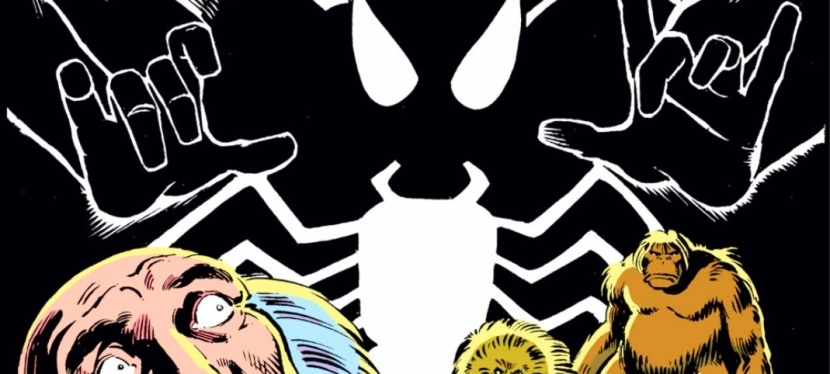
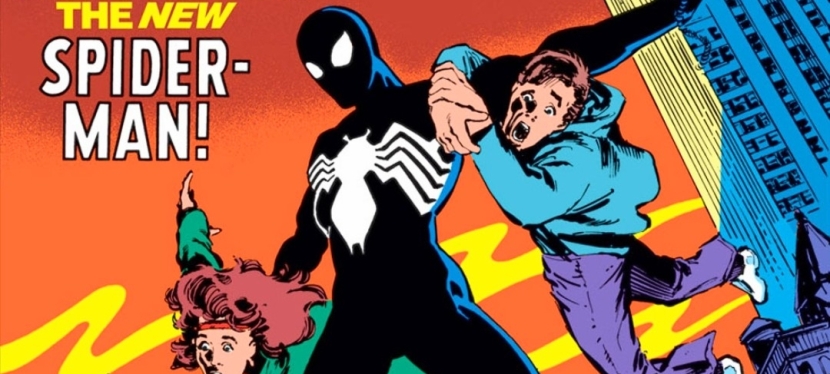
With those details laid down, here is a look back at Amazing Spider-Man #252, published in 1984 by Marvel Comics with a story written by Roger Stern and Tom DeFalco, and drawn by Ron Frenz. This comic book marked the first appearance of the alien costume.
The cover.
Early story
The story begins inside the New York headquarters of the Daily Bugle. It has been observed that several superheroes such as Captain America, Thor, Spider-Man, Iron Man, the X-Men and the Avengers have been missing this resulted in a rise of crime. Publisher J. Jonah Jameson and editor-in-chief Joe Robertson discuss the newest edition of their newspaper.
Meanwhile over at Central Park where police officers and others stand by an area that was closed off, a physical structure suddenly appears spreading bright light to onlookers. Suddenly Spider-Man (wearing a new dominant black costume) leaps out of the structure carrying Dr. Connor (the Lizard) surprising the people.
After realizing they have returned home at last after spending lots of time and struggle in deep space (Secret Wars), Spider-Man could not help but feel jubilant to be home. As the police officers don’t realize that they are talking with the same webslinger due to the new costume, one of them was about to draw his gun which prompted the superhero to use his web on him.
Suddenly, the Avengers, Captain America, Thor and Iron Man emerge from the physical structure which provided Spider-Man relief as he thought that only he and Dr. Connors made it home. With the people focusing on the other superheroes, Spider-Man and Dr. Connors slowly exited. Connors asked him what are they going to tell the world about all they have seen and experienced in deep space…
Quality
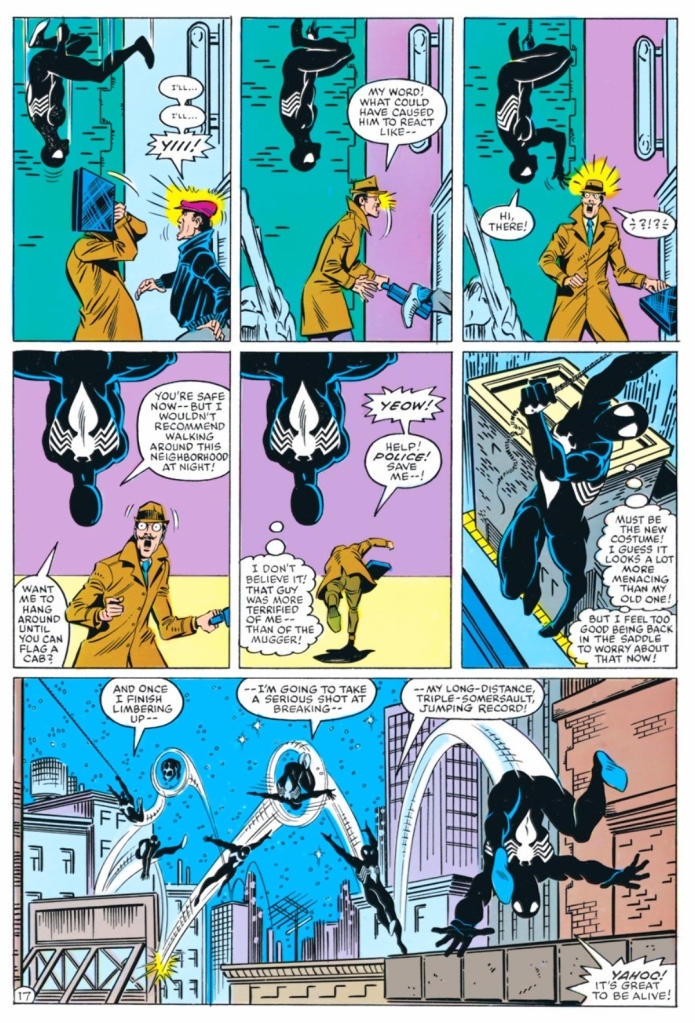
Spider-Man’s first night in New York wearing the alien costume .
I really like this story. I first read this a long time ago and I re-read it all over again for this retro review, and still this story engaged me a lot. There is a lot of richness in the script and you will get to see Peter Parker transitioning into a series of major changes that await him. Without spoiling the plot, there is no hero-versus-villain element here at all. It is all about Spider-Man who just arrived home from a major conflict (and also one of the most significant comic events ever published by Marvel Comics) and the alien costume saga truly began right here. The Venom debut did not happen until a few years later in reality.
In accordance to what was established in Secret Wars (not to be confused with the 2015 series of the same name) and the standards of then editor-in-chief Jim Shooter, the creative came up with a tale that not only showed a different Spider-Man but also portrayed him in ways that defied the tropes and creative ideas the preceded this comic book.
For one thing, Peter Parker is literally like a fish out of water here. As far as the whole world is concerned, only days passed when the superheroes went to deep space. But for the webslinger, a lot more time passed as so many battles, discoveries and intriguing events took place for him along with the others. That being said, Peter Parker’s perception of reality and track of time really got messed up and the weight of Secret War’s events really turned out overwhelming on him. This was well dramatized in the scene wherein Peter – who realized that so much time had passed – he had to call his aunt May fearing that she must be worried sick over him. There was also the moment when by walking down the street, he realized how much he missed not only his home but also the local surroundings.
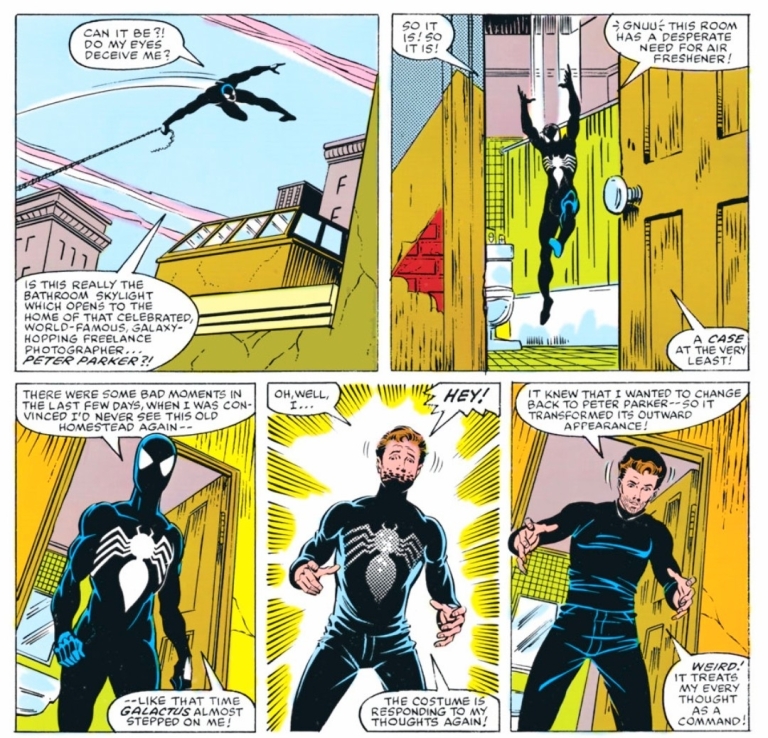
It was also in this comic book when Peter started getting more oriented with the alien costume he first got in Secret Wars #8 (which was actually published after this comic book) and started to enjoy the benefits with the way it responds to his thinking. Of course, at this stage, he has yet to realize the unfortunate truth about the living costume he brought home and this story really kicked off a new and profound stage in the comic book history of Spider-Man
Conclusion
When Spider-Man finally arrived home after spending so much time during Secret Wars.
Amazing Spider-Man #252 (1984) is still a great comic book to read all over again. This was released during the time when Secret Wars (1984) was still being published and years before Venom’s big debut in the series’ 300th issue. In my view, the alien costume saga was a big turning point in the literary history of Spider-Man and the creators who got involved in this comic book really sowed the seeds of compelling and intriguing events that followed. What is intriguing is that all of these significant developments started when a Marvel Comics reader from Illinois came up with the idea of a new costume for Spider-Man, wrote to them and the publisher responded to acquire his idea for over $200 (click here).
This comic book is also a reminder of how significant Jim Shooter’s rule at Marvel Comics really was and I can say that the Marvel’s literary universe of the 1980s should not be ignored.
Welcome back readers, fellow geeks and electronic gaming fans!
In this edition of the Retro Gaming Ads Blast (RGAB) series, we will take a look at another batch of retro gaming print ads from the 1980s and 1990s.
For the newcomers reading this, Retro Gaming Ads Blast (RGAB) looks back at the many print ads of games (console, arcade, computer and handheld) that were published in comic books, magazines, flyers and newspapers long before smartphones, social media, the worldwide web and streaming became popular. To put things in perspective, people back in the 1980s and 1990s were more trusting of print media for information and images about electronic games and related products.
With those details laid down, here is the newest batch of retro gaming print ads for you to see and enjoy…
1. Konami’s 3-in-1 sports games print ad
Long before the advent of major league sports video games, Konami was prolific with sports video games.
Back in the 1980s, Konami was a prominent gaming company as they released a lot of games that became hits in the arcades, on home computers and gaming consoles. Considering the limited amount of games publishers were allowed to release on the Nintendo Entertainment System in America, what Konami released were really fun games to play and their contributions of sports-based video games on the NES were significant. Possibly due to a lack of marketing budget at the time, they promoted Blades of Steel, Double Dribble and Track & Field II with this single-page ad showing the game box covers and screenshots. Ultimately, this print ad was sufficient in giving gamers a clear idea of what to expect with the three games.
2. The Adventures of Bayou Billy print ad
Bayou Billy looks inspired by the cinematic hero Crocodile Dundee. This video game even had a comic book adaptation published by Archie Comics.
Still with Konami, the Japanese publisher released in America the non-military adventure game The Adventures of Bayou Billy for the NES which was a revised version of their 1988 Family Computer game titled Mad City (see the differences by clicking here). This game really looked like it was influenced by Hollywood action/adventure movies of the era and it provided gamers gameplay styles of light gun shooting, beat-them-up action and racing. The titular hero looks very inspired by the cinematic hero Crocodile Dundee. This print ad is very stylish and also eye-catching. I think it has done a good job to make viewers interested in the video game.
3. Krull Atari video game print ad
I never got to play this Krull video game on Atari 2600, nor its arcade game.
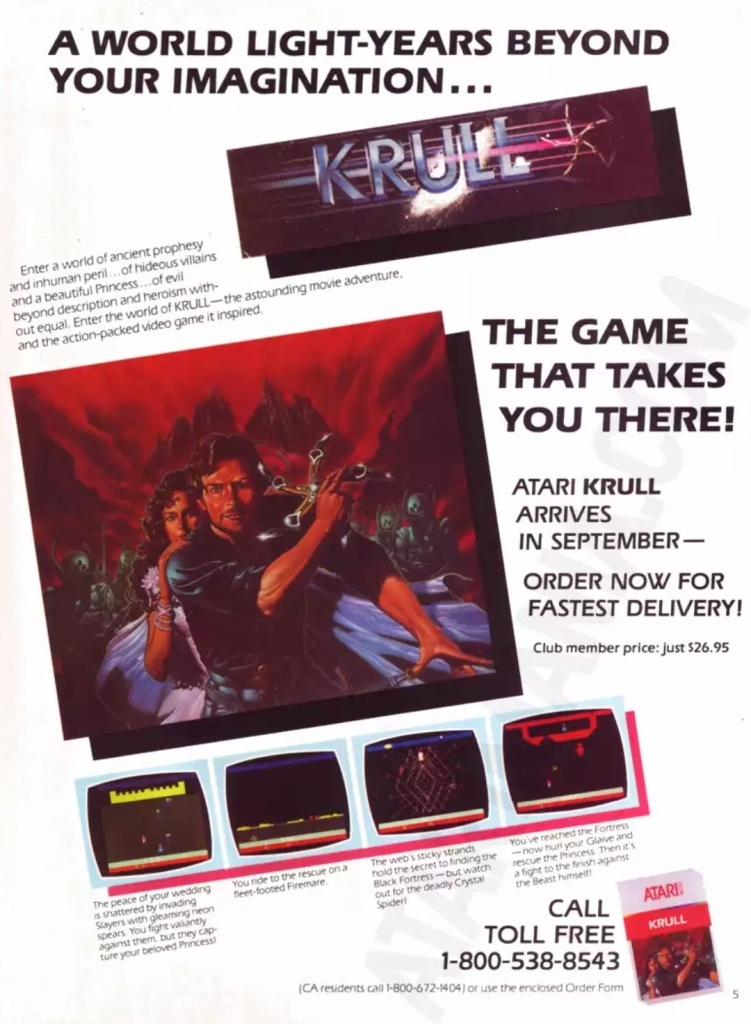
Way back in 1983, I was fortunate to see the science fantasy movie Krull inside the movie theater here in the Philippines. When I saw this print ad, I easily got excited for the Atari 2600 video game adaptation but never got to play it. This print ad does its job showing what Krull’s game looked like and the ad makers cleverly used painted art reflecting the movie’s characters and the armored enemies from space. I should add that between the time I saw the movie and the time I first saw this print ad, I became aware of the existence of the Krull arcade game by watching an episode of Starcade on TV.
4. Rocket Ranger NES print ad
Really great and detailed painted artwork in this print ad.
When Rocket Ranger on the Amiga in 1988, it had fancy visuals and a strong cinematic vibe that worked smoothly with the game design. This game was developed by Cinemaware which developed a reputation of releasing games based on classic film genres. In 1990, a version of Rocket Ranger for the NES was published by Kemco/Seika and print ads using painted art were made to promote the game. This particular print ad made heavy use of painted art which was captivating to look at while conveniently keeping people’s minds off the downgraded visuals of the NES version.
5. Michael Jordan: Chaos in the Windy City print ad with contest entry
Some gamers thought this was a basketball video game.
Yes, it was all true. There definitely was a video game that NBA legend Michael Jordan endorsed. First released on Super Nintendo Entertainment System (SNES) in America in 1994, Michael Jordan: Chaos in the Windy City was a side-scrolling action game in which gamers play a digital version of Jordan who has to save his friends, fight enemies and move from one location to the next in order to progress. The fact that an image of Michael Jordan holding two balls was used in this print ad (as well as on the game cover) in a dominating fashion made some gamers think this was a basketball game. The display of screenshots was so small, it did not help the situation. Lastly, the available of a contest entry form in this print ad was meant to promote not only the game but also GamePro magazine.
6. Gun.Smoke print ad
Gun.Smoke was indeed a fun game to play on NES. Therefore, the promotion is justified.
This print ad of the NES port of Gun.Smoke has strong imagery and literary descriptions the strongly emphasize the Old West concept and setting. The screenshots displayed are too small but the descriptions more than made up for it. Ultimately, what this print ad emphasized was realized as the NES version of Gun.Smoke itself captured the continuous action and excitement of the arcade version and the graphical limitations of the console did not matter much. I myself played this game and it was a lot of fun.
7. Spider-Man and Venom: Maximum Carnage print ad
This add appeared in my comic books and magazines I read in 1994.
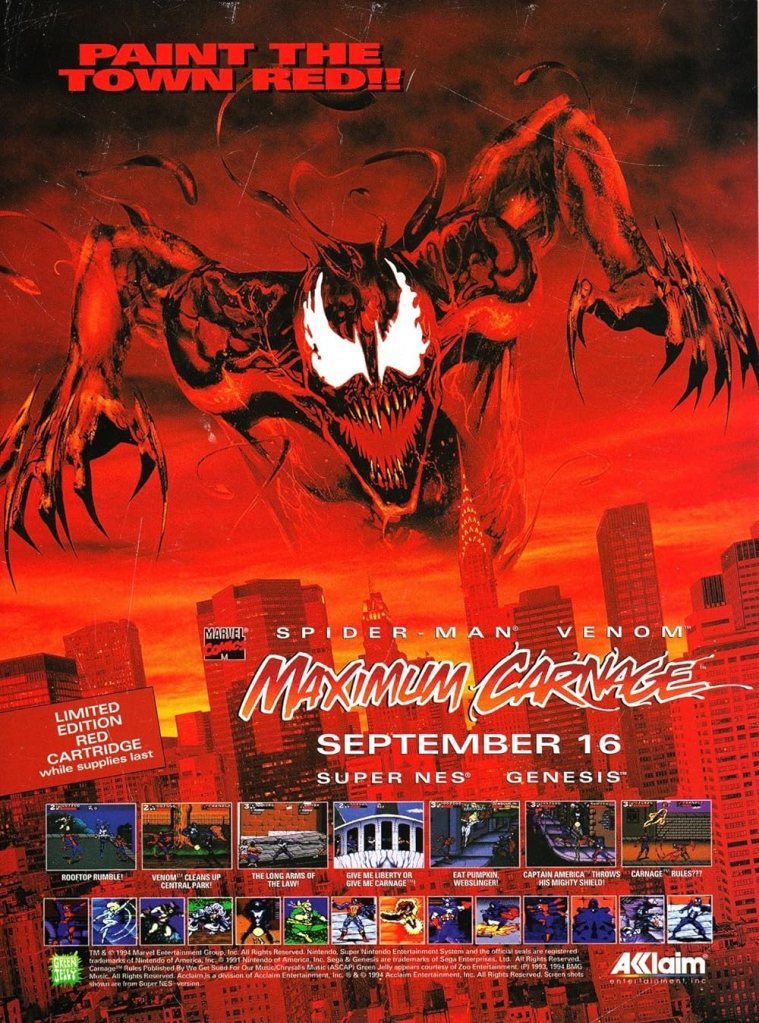
Back in 1993, Marvel Comics published the huge Maximum Carnage crossover storyline which covered many issues of the four monthly Spider-Man comic books and two issues of the quarterly Spider-Man Unlimited series. Considering the high popularities of Venom and Carnage at the time, it was not surprising that Marvel took advantage by having Maximum Carnage licensed to Acclaim to create a video game adaptation in the form of a beat-them-up.
Spider-Man and Venom: Maximum Carnage was released for SNES and Sega Genesis in 1994, and game developer Software Creations really adapted story to fit with their side-scrolling game design. Between playable stages are cutscenes that actually were digitized versions of actual comic book panels. This red-colored print ad had a dominating image of Carnage and screenshots with text descriptions. The ad makers even went the extra mile by inserting screenshot cut-outs showing individual characters such as Firestar, Venom, Spider-Man, Carnage, Cloak and Dagger, Iron Fist, Captain America and more. Whatever your opinion is about the Maximum Carnage storyline or the video game adaptation, there is no denying that this was a very eye-catching print ad.
Disclaimer: This is my original work with details sourced from reading the comic book and doing personal research. Anyone who wants to use this article, in part or in whole, needs to secure first my permission and agree to cite me as the source and author. Let it be known that any unauthorized use of this article will constrain the author to pursue the remedies under R.A. No. 8293, the Revised Penal Code, and/or all applicable legal actions under the laws of the Philippines.
Welcome back superhero enthusiasts, 1990s arts and culture enthusiasts, Marvel Comics fans and comic book collectors! Today we go back to the year 1993 and examine a small part of the Marvel Comics universe through a tale of the Amazing Spider-Man monthly series.
In my previous retro comic book review, the insane murderer Venom returned to antagonize Spider-Man by targeting his parents. While it was a fact that Venom – who knew Spider-Man’s true identity – got into close contact with Aunt May (symbolizing the danger he poses on the Peter Parker’s family) a few years prior, going after the mother and father of Peter really raised the stakes.
With those details laid down, here is a look back at Amazing Spider-Man #375, published in 1993 by Marvel Comics with a story written by David Michelinie and drawn by Mark Bagley. This comic book marked the 30th anniversary of Amazing Spider-Man #1 (1963).
The cover.
Early story
The story begins inside one of the facilities of the closed amusement park in Brooklyn. In his vicious form, Venom tells Richard and Mary Parker (both restrained) that they belong to him and declares that he would protect them from Spider-Man.
When Richard Parker asked why would he think that they would have anything to do with Spider-Man, Venom realizes that the couple does not even know their son is the webslinger. Venom tells the couple that their innocence is what he is sworn to preserve.
Over at Manhattan, Spider-Man swings back to the Daily Bugle building and discreetly changes his clothes before moving in as photographer Peter Parker. Inside one of the offices, J. Jonah Jameson reaches out to Silver Sable by telephone…
Quality
Peter Parker had to commit a crime by trespassing into Anne Weying’s residence. His disguise as Spider-Man does not protect him from the law.
I have mixed feelings about this follow-up to the great story of the previous issue. For one thing, David Michelinie’s script had a completely different tone and direction even though he intended this comic book to conclude what issue #374 started. Another thing is that this story has even more characters added in which clearly diluted the intensity of the Venom-Spider-Man rivalry that was so intense in the previous issue.
There are two sub-plots – one of which deals with someone from Eddie Brock’s past – that were emphasized with sufficient details and the creative team integrated them into the main story. It seems that the creators intended to make the main story look grander in scope while sacrificing the very elements that made issue #374 a great and intense reading experience.
Remember the suspense and danger that came with Venom targeting the older Parker couple? Those elements are almost totally absent in this comic book even though this story concluded the previous issue’s conflict build-up. Richard and Mary Parker are both present as captives of Venom but there really is no tension nor any sense of danger here due to the drastic change of tone and direction in the script.
I should also stress that the introduction of Anne Weying (previously Anne Brock) as Eddie Brock’s ex-wife looked and felt like an afterthought inserted into the story. While Anne’s presence brought out some traces of humanity and sanity from Venom during the 2nd half of the story, it did not add much impact on the conflict between the webslinger and the symbiote-wearer murderer. Ultimately, the creative team had to do something to explain the story build-up on Venom’s part leading into the Lethal Protector limited series which is set in the city of San Francisco.
And then there was the presence of Silver Sable’s team called the Wild Pack. The Wild Pack is the result of J. Jonah Jameson’s agreement with Silver Sable with the objective of achieving a journalistic exclusive for the Daily Bugle. This particular sub-plot is really lousy and not even the dynamic looking action sequences involving the Wild Pack could hide lousiness.
If there is anything symbolic about the script, it is the emphasis on family as well as the impact that comes with elements of the past emerging unexpectedly. In this very comic book, you will get to see Eddie Brock/Venom react like a sane person in response to the sudden re-appearance of his former wife. No matter what the creative team did here, I can say that the Spidey/Venom conflict did not really intensify (note: the dynamic action scenes did not solve the shortcomings) and there was no reason to worry about the captive Parker couple.
Conclusion
The insane murderer Venom with the parents of Peter Parker.
Considering the great stuff and raised stakes that made issue #374 a very compelling read, Amazing Spider-Man #375 (1993) is clearly a disappointing conclusion. This is not a terrible comic book as it has some good stuff for fans to enjoy but the overall presentation of the creators here is not too great due to their approach with the storytelling (with two sub-plots that did not add much). Overall, I am glad I never bought this comic book (with flashy cover and more pages) at full price in 1993.
Disclaimer: This is my original work with details sourced from reading the comic book and doing personal research. Anyone who wants to use this article, in part or in whole, needs to secure first my permission and agree to cite me as the source and author. Let it be known that any unauthorized use of this article will constrain the author to pursue the remedies under R.A. No. 8293, the Revised Penal Code, and/or all applicable legal actions under the laws of the Philippines.
Welcome back superhero enthusiasts, 1990s arts and culture enthusiasts, Marvel Comics fans and comic book collectors! Today we go back to the year 1990 to take a close look at the comic book adaptation of the movie RoboCop 2 (1990).
Before getting to the new retro comic book review, I should state that my friends and I had a fun time watching RoboCop 2 in the cinema shortly after it opened here in the Philippines. Back then, I was not yet a comic book collector and I rarely visited comic book specialty stores. That being said, I was unaware that Marvel Comics actually published an adaptation in the form of a 3-issue mini-series.
With those details laid down, here is a look back at RoboCop 2 #1, published in 1990 by Marvel with a story written by Alan Grant and drawn by Mark Bagley based on the movie screenplay by Frank Miller and Walon Green.
The cover.
Early story
The story begins in Detroit where the cops are run by corporations and the streets have turned into red-alert war zones. Crime is overwhelming the city and the highly addictive narcotic poses the greatest threat facing societies. The surgeon general who made the public warning about nuke was killed and the crime boss Cain (leader of a cult of nuke addicts and pushers) claims responsibility. Through the news media, Cain tells the public that nuke will make people’s problems go away and people want its paradise.
Under the management of Omni Consumer Products (OCP), several of Detroit’s police officers go on strike demanding better terms from their employer. The City Government of Detroit under Mayor Kuzak missed a payment (in relation to them owing $37 million) and OCP begins to move to foreclose the city and its assets in accordance to the terms of the contract. Mayor Kuzak accuses OCP of engineering the police strike which made crime rampant.
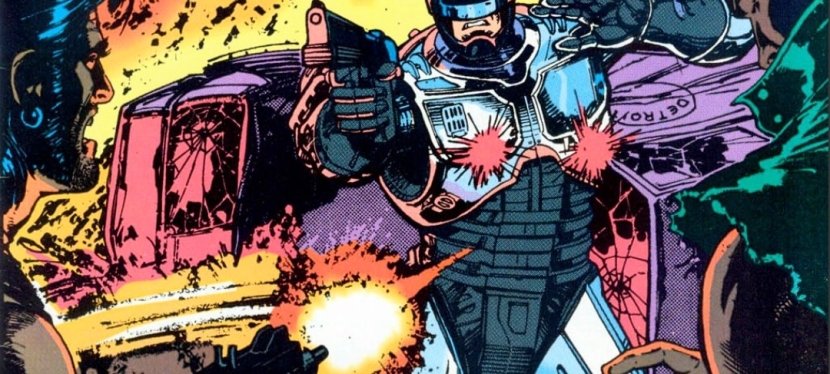
Elsewhere in the evening, the cruel activities of the thugs got disrupted by the arrival of a police car. Even though the police car got destroyed by the thugs, RoboCop emerges and begins to fight back…
Quality
There is simply no holding back for RoboCop when it comes to doing police work at a time when many police officers are on strike while crime has turned more rampant in Detroit.
This opening issue of the mini-series sticks close the basic plot of the movie (right until after Cain’s gang dismantled RoboCop) although there were a few notable differences with the sequence of events and there were scenes that showed the creative team took liberties to make the story suitable with the literary format in mind. That being said, don’t expect to see the key moments of the movie look exactly the same in this comic book and don’t expect to see the characters here looking like the actors who played them on the big screen. In terms of visual and literary presentation, this adaptation has a lot in common with the Total Recall comic book adaptation which coincidentally was released the same year.
For me, this is indeed a really readable comic book that has its stylized approach on telling the movie’s concept. OCP is the most powerful entity in the story while Cain and his gang are clearly the force of evil that strongly pose danger not only to Detroit’s people but even to the very divided police force. Nuke as the dangerous object of the plot clearly was inspired from elements of the real life war against drugs in 1980s America which made this story socially relevant.
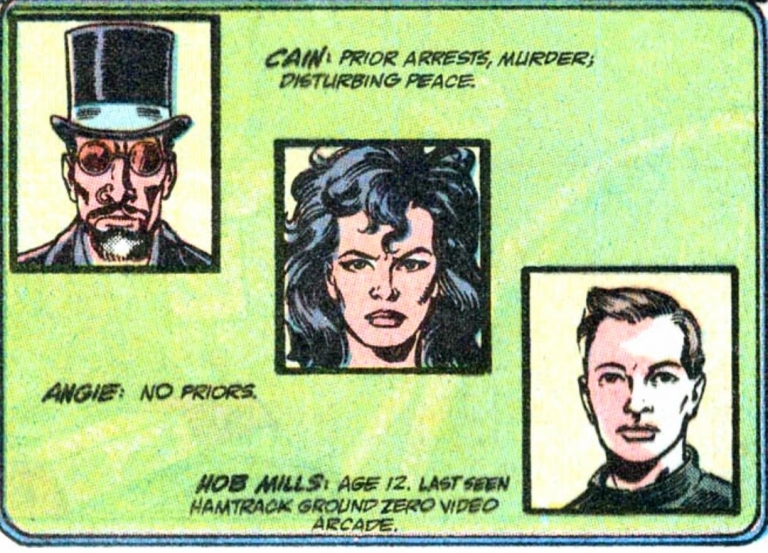
Very clearly these villains look nothing like actors Tom Noonan, Galyn Görg and Gabriel Damon.
Like in the movie, RoboCop here performs his law enforcement duty in an uncompromising manner even though memories of his past life as officer Murphy re-emerged deep inside. That being said, there are a few moments in which you might sympathize with the titular hero as this comic book pays close attention to the conflict between humanity and technology.
The action scenes here are sufficient but clearly don’t come anywhere close to the intensity of the film in terms of violence. Still, there is enough action for readers to enjoy.
When it comes to the visuals, the artwork done by Mark Bagley eerily looks comparable with Tom Lyle’s art in the Total Recall comic book of 1990. For the newcomers read this, Bagley became a popular artist through the Amazing Spider-Man monthly series and the Venom: Lethal Protector comic books that were released after years after this one. Having seen many of Bagley’s works published in 1992 to 1995, I can hardly recognize his art style in this comic book adaptation. The way he drew people’s faces in this comic book looks very different from those seen in Amazing Spider-Man issues. At the same time, Bagley’s own take on RoboCop has that balanced approach on depicting humanity with machinery while also making the hero look less bulky compared to the movie’s version.
Conclusion
Julie Faxx of OCP sure talks like a woke nut and rabid feminist in this scene.
RoboCop 2 #1 (1990) is clearly not a faithful adaptation of selected parts of the movie but that’s not necessarily a bad thing. This is more about the Grant-Bagley team doing their own visual presentation of the movie script copy they had and ultimately they succeeded in making this comic book a stylized and worthy reading experience. This is indeed a surprisingly entertaining read and I can say that I am looking forward to reading the next issue.
Disclaimer: This is my original work with details sourced from reading the comic book and doing personal research. Anyone who wants to use this article, in part or in whole, needs to secure first my permission and agree to cite me as the source and author. Let it be known that any unauthorized use of this article will constrain the author to pursue the remedies under R.A. No. 8293, the Revised Penal Code, and/or all applicable legal actions under the laws of the Philippines.
Welcome back superhero enthusiasts, 1990s arts and culture enthusiasts, Marvel Comics fans and comic book collectors! Today we go back to the year 1993 and examine a small part of the Marvel Comics universe through a tale of the Amazing Spider-Man monthly series.
In early 1993, the supervillain and murderer Venom was in very high demand among Marvel readers and comic collectors. The Venom: Lethal Protector mini-series launched with issue #1 selling a lot of copies and it portrayed Spider-Man’s greatest enemy as a very twisted and violent makeshift hero who dedicated himself to protecting what he (Eddie Brock specifically) to innocent people. As Venom was one of the few supervillains who knew Spider-Man’s true identity, the creative team behind the Amazing Spider-Man series decided to raise the stakes temporarily by having him encounter Peter Parker’s parents (the ones that appeared in Amazing Spider-Man #365).
With those details laid down, here is a look back at Amazing Spider-Man #374, published in 1993 by Marvel Comics with a story written by David Michelinie and drawn by Mark Bagley.
The cover.
Early story
The story begins inside the bunker beneath the grounds of the deserted Brooklyn amusement park. As Eddie Brock struggles to lift a very heavy piece of equipment, the symbiote forms over his body helping him lift it up above the head. Venom is obsessed with killing Spider-Man and Eddie Brock remains totally bitter over the webslinger’s responsibility on destroying his career. Eddie sees a page of the Daily Bugle on the wall and it contains a news photo of Peter Parker with his mother and father.
At New York’s famous Central Park, Peter, wife Mary Jane and his parents enjoy quality time skating on ice. Aunt May is standing on a wooden platform watching them…
Quality
Lots of intense action scenes in this comic book for fans and readers to be entertained with. The action scenes are not mindless as they serve as reflections of Venom’s powerful quest for revenge.
To begin with, I can say that this tale by David Michelinie is a very intense and dramatic read and it added a new layer of depth into the enduring rivalry between Spider-Man and Venom. At this point in Marvel Comics’ shared universe history, the two icons have encountered each other so many times, the time was right for Michelinie to raise the stakes and have the elderly Parkers (note: Aunt May excluded) as the new targets of Venom (already made obvious on the cover which in turn added tremendous stress on the part of Spider-Man and his wife.
For the newcomers reading this, Eddie Brock’s journalistic career was destroyed over the Sin-Eater story as a result of Spider-Man’s public revelation of Stanley Carter as the said figure (note: Brock’s Sin-Eater article series was based on interviews with Emil Gregg who actually turned out to be a delusional neighbor of Carter’s).
As Brock’s life went way downhill with his reputation destroyed, his hatred of Spider-Man grew and so did his quest for revenge. That being said, what happened in this particular comic book was a very reflective extension of what happened years prior. Anyone who has basic knowledge of the origin of Venom and early appearances of Brock in comics will be able to understand the intensified rivalry in this tale.
Apart from the great story, this comic book has lots of superhero spectacle for readers to enjoy. That being said, the smashing action of the fight between Spider-Man and Venom was clearly made to be more violent which suitably reflected the supervillain’s lust for revenge. Spidey, meanwhile, had no choice but to avoid causing any more damage or harm as Venom goes after him in public surrounded with lots of bystanders. Along the way, you will see a key moment of the insanity of Venom which served as a useful pause of the fight. Finally, when it comes to the art, this comic book has some of the finest artworks I have seen from Mark Bagley.
Conclusion
At the time of this comic book’s publication, Venom was one of the few supervillains who knew Spider-Man and Peter Parker are one and the same person. The inclusion of Peter’s parents only added to the raising of the stakes.
Amazing Spider-Man #374 (1993) is undeniably a great read complete with intense action scenes, lots of intrigue and, most notably, a rock solid development of the Spider-Man-Venom rivalry. This is the kind of story that will compel long-time Spider-Man fans to revisit Venom’s origin as well as Spider-Man’s involvement with the Sin-Eater. At the same time, this tale will help readers understand the insanity and murderous mind of Venom that took place not only in the Venom: Lethal Protector mini-series in also other mini-series about the symbiotic killer that Marvel published throughout the 1990s.
Have you been searching for something fun or interesting to watch on YouTube? Do you feel bored right now and you crave for something to see on the world’s most popular online video destination?
I recommend you check out the following topics and the related videos I found.
#1Movie reaction videos by You, Me and the Movies – When it comes to watching movie reaction videos, I enjoy what the YouTube channel You, Me and the Movies posted. Go watch the five videos of theirs that I selected for your enjoyment. I also encourage you to visit You, Me and the Movies’ YouTube channel.
#2 Minty Comedic Arts’ superhero trivia videos – In recent times, superhero movies from Hollywood became irrelevant and unexciting not because of the so-called superhero movie fatigue but because they are no longer made to be fun. That being said, now is a good time to look back at the enjoyable superhero movies from the past through Minty Comedic Arts’ trivia videos below. You will learn something new and do not forget to visit Minty Comedic Arts’ YouTube channel.
#3 Looking back at the Sega Dreamcast’s American launch and legacy – It has been almost 25 years since the Sega Dreamcast console launched in the United States. The American launch turned out highly successful with almost $100 million in sales revenue achieved during the first 24 hours. For the newcomers reading this, there was a time when Sega had consoles and the Dreamcast was the last one they had before going all-in with multiplatform publishing of games. That being said, watch these videos of the Dreamcast.
#4 Assorted videos of violations and reckless driving incidents of electric bikes (e-bikes) and electric tricycles (e-trikes) in the Philippines – For the international readers and newcomers reading this, the amount of electric bikes (e-bikes) and electric tricycles (e-trikes) here in the Philippines grew dramatically over the past ten years. Because of the many incidents as well as cases of careless or reckless driving of e-bikes and e-trikes that took place, authorities in the National Capital Region (NCR) or Metro Manila took action to have such electric vehicles regulated as well as banned from traveling along major roads and highways. Hopefully in the future, e-bike and e-trike riders will be required to have their electric vehicles registered and get themselves licensed to drive. To see the incidents, watch the videos below…
#5 Rita Panahi and the Leftists who embarrassed themselves – We now move on to the more serious and real-world stuff. I can say that Rita Panahi and her segment titled “Lefties losing it” is easily the most engaging one to watch on Sky News Australia. Here you will see varied videos showing the recklessness, the shamelessness and craziness of the Leftists as captured on social media and news media. Watch and listen to the videos below…
Welcome back readers, fellow geeks and electronic gaming fans!
In this edition of the Retro Gaming Ads Blast (RGAB) series, we will examine print ads from the 1980s and 1990s that caught my attention and I will explain why they are worth look back at.
For the newcomers reading this, Retro Gaming Ads Blast (RGAB) looks back at the many print ads of games (console, arcade, computer and handheld) that were published in comic books, magazines, flyers and newspapers long before smartphones, social media, the worldwide web and streaming became popular. To put things in perspective, people back in the 1980s and 1990s were more trusting of print media for game details and images.
With those details laid down, here is the newest batch of retro gaming print ads for you to see and enjoy…
1. Japanese print ad of Super Star Wars: The Empire Strikes Back
Do you know any Star Wars fan who is aware of the error in this Japanese print ad of Super Star Wars: The Empire Strikes Back?
Back in 1993, the sequel Super Star Wars: The Empire Strikes Back was released on the Super Nintendo Entertainment System (SNES) in the West and on the Super Famicom in Japan. Having played all three Super Star Wars game, I can say that this sequel was a huge improvement over its predecessor technically and also with gameplay (read my retro review by clicking here).
Like its predecessor, the game was released in Japan by JVC Musical Industries and in the above Japanese market print ad, the marketing team wisely used the game’s official artwork to give gamers a clear view of the concept derived from the 1980 movie plus a few screenshots showing gameplay. What I find hilarious to read is the line (highlighted in red and all capitalized no less): MAY THE FORCE WITH YOU. Clearly someone from the Japanese marketing team who prepared that line lacked English proficiency or might not have watched the movies dubbed in English. In the 1977 movie, Han Solo said to Luke, “May the Force be with you.”
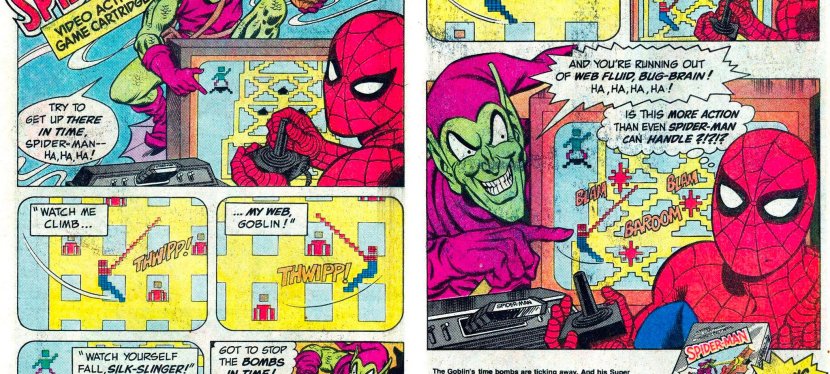
2. Spider-Man (Atari 2600) print ad
This is an entertaining way to promote a video game based on a comic book icon.
We are back again with the Parker Brothers company and their promotion of the Spider-Man video game for the Atari 2600 which I myself played long ago. Unlike before, the print ad this time was mainly about the Spider-Man game and somehow Parker Brothers coordinated with Marvel Comics to make a comic book-inspired ad. In the above print ad, Spider-Man was shown playing the game about him with an Atari 2600 controller and console, and the Green Goblin taunts him as he plays. This type of ad is a stroke of genius because it shows the Marvel Comics’ icon as a player and the gameplay was emphasized accurately. Even if viewers are not too fond of video games, they can still find themselves interested in reading the literary adventures of Spider-Man.
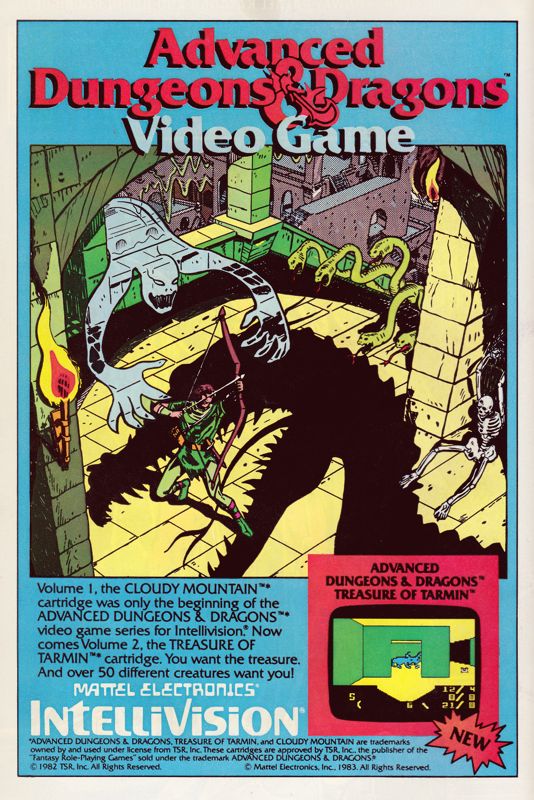
3. Advanced Dungeons & Dragons: Treasure of Tarmin print ad
Apart from emphasizing the fantasy concept of the Dungeons & Dragons franchise, this print ad’s hand-drawn art was strong enough to spark viewers’ curiosity and make them interested in the game or even in the Intellivision console.
Here is a print ad I saw many times while reading comic books in 1983. The game at hand is Advanced Dungeons & Dragons: Treasure of Tarmin released on the Intellivision, and it is the sequel to Cloudy Mountain. Like the ad of its predecessor, the above print ad relied heavily on the spectacle of fantasy (and even a bit of horror) by having hand-drawn art as the eye candy promoting Advanced Dungeons & Dragons: Treasure of Tarmin. If you look closely, only one screenshot from the game was shown and it was enough to tell gamers that the new game has a completely different visual presentation from that of Cloudy Mountain. Considering the primitive nature of computer graphics and game design of the era, having detailed comic book-inspired artwork was effective to grab viewers’ attention with the intention to make them interested in buying the game. In today’s age of computer graphics and social media, this type of ad for video games is rare to see.
4. G.I. Joe: Cobra Strike print ad
The G.I. Joe: A Real American Hero franchise’s early entry into video games.
Going back to Parker Brothers, the company developed and published the first-ever licensed game of the G.I. Joe franchise – G.I. Joe: Cobra Strike for the Atari 2600. In promoting the game, a 2-page ad was released with comic book-style art work (featuring Cobra Commander and Duke representing different sides) dominating the space, with descriptive text and a hand-drawn illustration of the gameplay (read: not a real screenshot) as well as the game box flling the remaining space. In my personal experience, I saw this ad before I even got to watch an episode of the popular G.I. Joe: A Real American Hero animated TV series, and before I got to read an issue the related comic book series (which started before the TV series). Looking back at the above print ad, I can still remember the time when I was puzzled by the two characters simply because I was not yet familiar with them. Take note that the video game and the ad were released at a time when the G.I. Joe: A Real American Hero started rising quickly in popularity on toys, comic books and animation.
5. Alien 3 (SNES) print ad
This print ad appeared in several comic books I read in 1993.
Way back in 1992, I had one of the most depressing cinema viewing experiences with Alien 3 which had a very troublesome production and lacked a solid foundation behind its creativity. Then in the summer of 1993, print ads of the video game Alien 3 for Super Nintendo Entertainment System (SNES) appeared in several comic books I read at the time. The above print ad was actually entertaining to look at. For one thing, the ad makers used three wide layers of screenshots from the game depicting different areas. Then I noticed the details which showed there were more aliens for gamers to encounter (versus only one in the movie) and the playable lead character Ellen Ripley was armed with guns (versus no guns in the movie) being able to fight the monsters. Not only that, the ad makers knew the specific details from the Alien film franchise which is reflected in the ad referencing the Face-hugger aliens, the acid from the creatures and, of course, the alien eggs. To this day, there are old-time gamers who found the Alien 3 SNES game more entertaining than the movie.
Disclaimer: This is my original work with details sourced from reading the comic book and doing personal research. Anyone who wants to use this article, in part or in whole, needs to secure first my permission and agree to cite me as the source and author. Let it be known that any unauthorized use of this article will constrain the author to pursue the remedies under R.A. No. 8293, the Revised Penal Code, and/or all applicable legal actions under the laws of the Philippines.
Welcome back superhero enthusiasts, 1990s culture enthusiasts and comic book collectors! Today we go back to the early 1990s and explore a part of the Marvel Comics shared universe through a tale of the Spider-Man monthly series.
In my previous retro review, Todd McFarlane told a tale of the iconic web-slinger with intense build-up leading to another rematch with his old nemesis the Lizard (Dr. Connors). While the writing was pretty weak, McFarlane still managed to tell a tale with a strong element of horror and supernatural stuff. McFarlane’s approach with visual violence and graphic stuff was clearly adulterated. What was presented daringly tested the limits allowed under the Comics Code Authority (CCA).
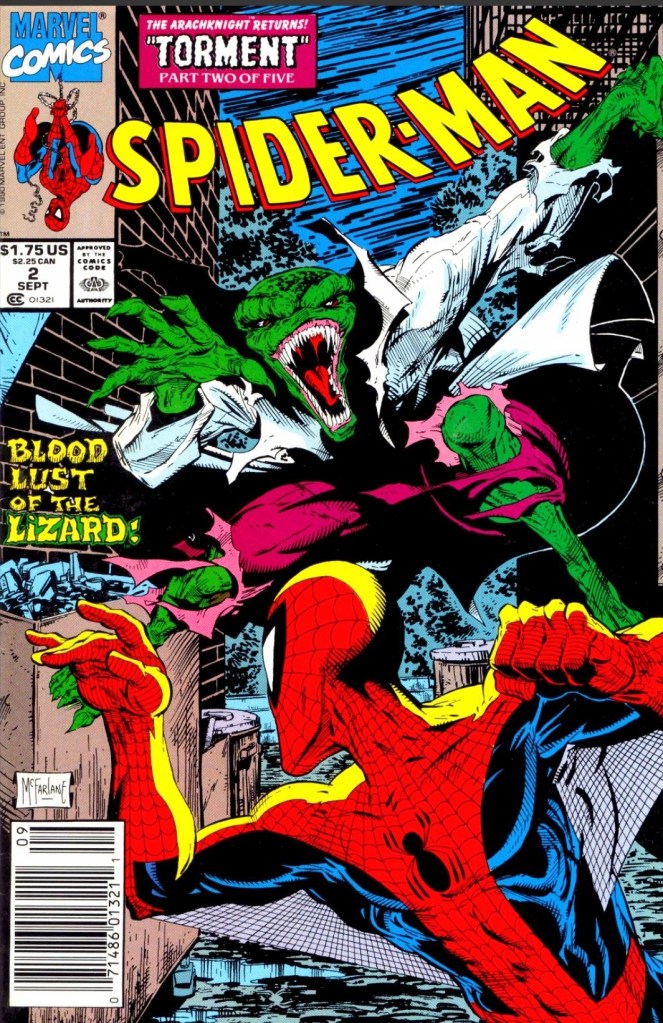
With those details laid down, here is a look back at Spider-Man #2, published in 1990 by Marvel Comics with a story written and drawn by Todd McFarlane. This is also the 2nd chapter of the Torment storyline.
The cover.
Early story
The story begins in New York City where two men got suddenly murdered by the Lizard in an alley during the night. The next morning Peter Parker reads the newspaper (showing the photograph and the news story of the Lizard’s murder of the two men) while having a breakfast moment with his wife Mary Jane. As soon as his wife mentions the word “monster”, Peter takes a 2nd look at the newspaper’s photograph and finally notices the bloody writing “CNNR” on the alley wall which makes him realize that the Lizard is back again.
Feeling very troubled, Peter leaves Mary Jane quietly and dresses up as Spider-Man to go out once again.
Elsewhere in the city, a sorceress uses her evil method of crafting a potion which creates an unrelenting sound of disturbance which Spider-Man hears. As the sound goes on, his focus and Spider Sense get overwhelmed…
Quality
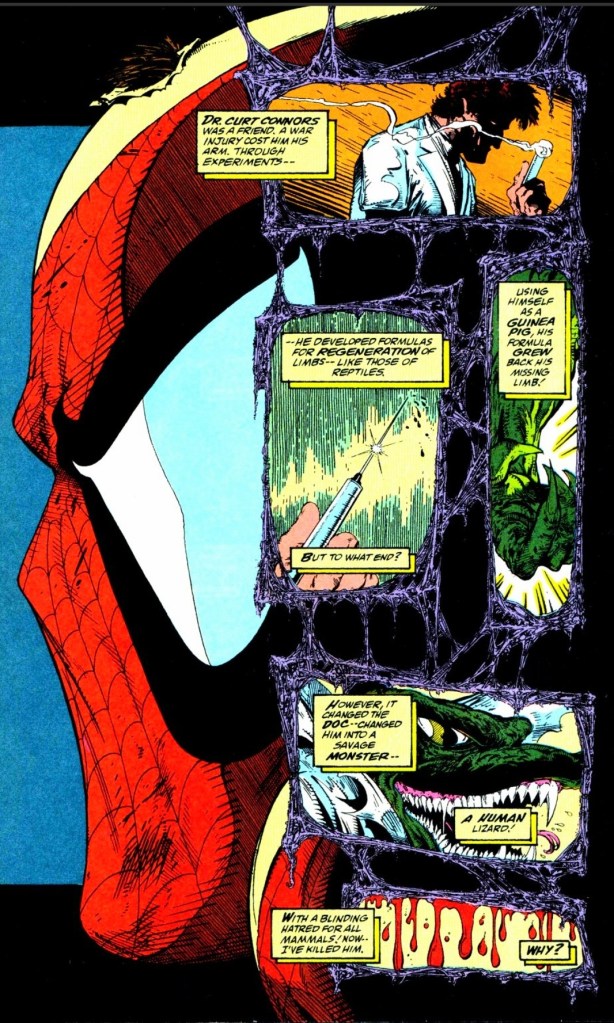
A quick look at the origin of the Lizard by McFarlane.
While the writing by McFarlane remains weak, he still succeeded in making this story a marginal improvement over the previous issue in terms of moving the plot forward, paying off a good chunk of the build-up in issue #1, and establishing his own visual corner (inspired by horror and adulterated stuff) within the Spider-Man franchise of comics of the time.
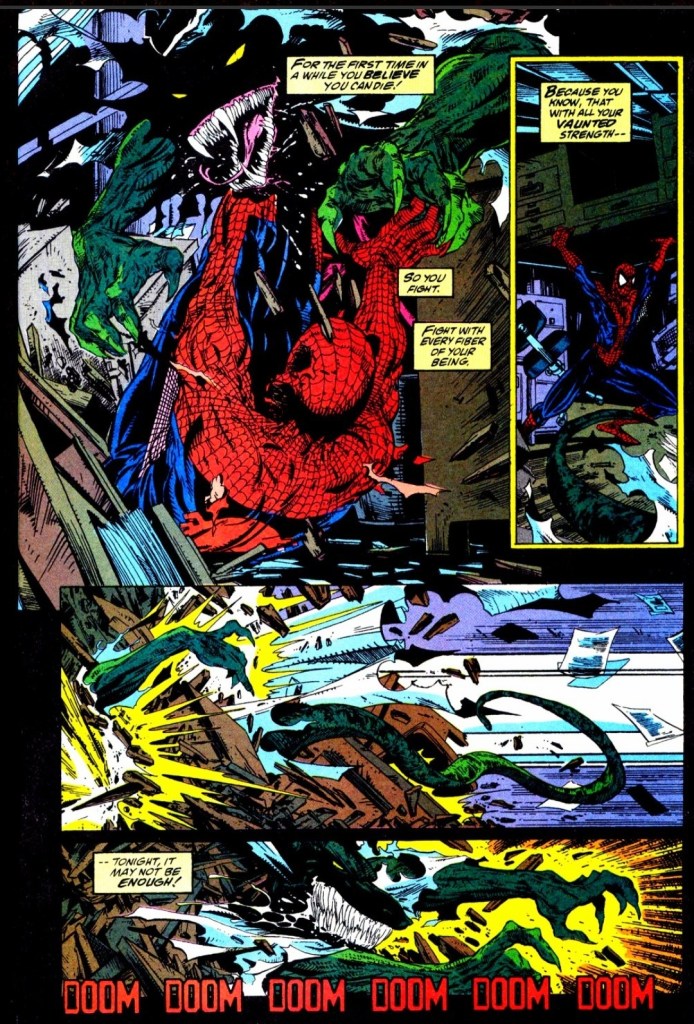
The biggest feature here is the physical conflict between Spider-Man and the Lizard. As expected, McFarlane drew the big fight with a lot of intense action, powerful violence (note: it was clear the editorial team recommended moves to tone down the graphic violence), suspense and a good amount of horror. Not only does the big fight move the story forward, it allowed McFarlane to dramatize Spider-Man as a vulnerable hero who not only has to cope with the disturbance from the sorceress far away, but also deal with the poison he got from the Lizard. That being said, Spidey also struggles with his sanity and the new fact that the Lizard has turned into a murder machine which disturbs him a lot as he personally knew Dr. Connors.
Considering what happened here and in the previous issue, there is still a greater force of evil that awaits Spider-Man and the Lizard happens to be an ultra-violent tool.
Conclusion
Many times Spider-Man finds himself in a disadvantage while fighting the Lizard.
Being the 2nd chapter of the Torment storyline, Spider-Man #2 (1990) is a slight improvement over the previous issue in terms of moving the story forward, spectacle and dramatization. While the big fight between Spider-Man and the murderous Lizard is clearly the big feature of the story, McFarlane does a good job portraying Spider-Man as vulnerable and on the edge towards defeat. McFarlane’s writing here is still weak but the other positive elements achieved outweighed the weakness.
Welcome back readers, fellow geeks and electronic gaming fans!
Today I am launching a brand-new series of articles titled Retro Gaming Ads Blast (RGAB) which will explore the many print ads and promotions of video games, computer games, arcade games and handheld games that were published through the decades.
For the newcomers reading this, print ads of games were widely popular and heavily relied on by gamers/players long before smartphones, social media, the worldwide web and online videos even started. Back in the old days, print media was the most common method for companies to market their games while also helping hardware (machines which played the games) reach potential buyers. Such ads appeared in magazines, comic books and newspapers. Not only that, there were several print ads of games that were made to look creative, compelling and even intriguing.
With those details laid down, here is the first batch of retro gaming print ads for you to see and enjoy…
1. Parker Brothers’ Spider-Man-led print ad
Does this ad look amusing?
Remember Parker Brothers? That was a company that started way back in 1883 founded with a strong focus on the enjoyment of games in the form of board games, cards and toys. In the late 1970s, Parker Brothers started making electronic versions of their popular board games and engaged in the video game development and publishing. They also went on to make home ports of popular arcade games in the early 1980 for several gaming platforms.
Parker Brothers was very active with making games for the Atari 2600 console which became the dominant machine for home gaming in North America in 1982. In the above print ad, their marketing heavily emphasize the Spider-Man video game for Atari 2600 and added two others games they also published – Tutankham and Amidar – which was a clever move to market multiple games. The ad’s focus on Spider-Man was amusing and even without showing a single screenshot of the game, it was enough to entice people to watch out for it. Be aware that the Spider-Man game’s development was done by Laura Nikolich who was hired by Parker Brothers at a job fair. Nikolich had full creative control on making the game and had no contact whatsoever with Marvel Comics.
2. Advanced Dungeons & Dragons: Cloudy Mountain print ad
An ad like this was strong enough to motivate gamers’ imagination and interest.
Back in 1982, Advanced Dungeons & Dragons: Cloudy Mountain was released on the Intellivision game console and I was fortunate enough to watch my next-door neighbor play it repeatedly. The above print ad – which simply referred to the game as Advanced Dungeons & Dragons – only had a few words which directly pointed to the main objective of the game…the golden crown. While only one screenshot of the game was displayed, the advertisers heavily relied on hand-drawn, comic book-style fantasy art work to sell the game.
For those who were born long after the 1980s, let me share with you that ads like these were really impressive for their time. It was common for advertisers to use art works (even though they may not accurately reflect the gameplay or game design) and post at least one screenshot to catch the viewer’s attention with the hope that it would even encourage him/her to anticipate the game. It should be noted that ads like these were strong enough to make gamers’ imagination or curiosity grow stronger.
3. Konami’s collective military video games advertising
Print ad of four games for IBM, Amiga and Commodore.
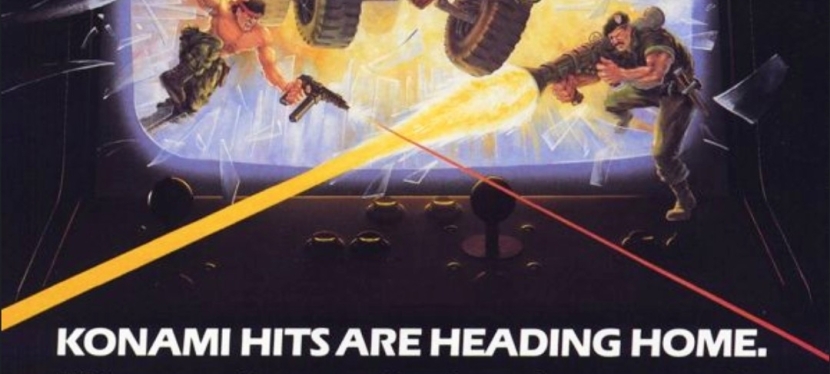
Print ad of Jackal and Contra for the NES.
Konami, the Japanese company that has long been known for Metal Gear, Suikoden and the controversial sacking of famous game designer Hideo Kojima, was aggressive in the gaming business in the 1980s and arguably the aggressiveness was reflected in their publishing of several games that emphasized militarism during the late stages of the Cold War. In short, they made the military look cool and their activities fun to do in digital form.
While Konami has always been identified with console gaming, they actually released Rush’n Attack, Contra, Jackal and Boot Camp on IBM, Amiga and Commodore computers (as seen in the first print ad above) which were popular in the 1980s. The said ad also have a very amusing visual concept emphasizing the excitement and fun of military action games coming to gamers at home for their computers.
The 2nd print ad above – Jackal and Contra for the Nintendo Entertainment System (NES) – was very intriguing to see. It was very clear back in the 1980s that the NES always had a wholesome audience (note: a lot of buyers were parents who wanted to entertain their kids at home) and that includes a lot of very young players. To see the collective ad of Jackal and Contra (for the NES platform) having battle-hardened men in military gear holding guns was openly aggressive to perceive and instantly reminded people about the Cold War (and the menace of Communists, socialists, Marxists and terrorists) and the cultural impact of the mega blockbuster film Rambo: First Blood Part II. This is the kind of ad that would drive today’s woke-minded people crazy and even cause them to panic and pretend to be victims of militarism and patriotism. If you look at the ad closely, you will realize there is simply no room for the garbage of political correctness and wokeness.
Lastly, I myself had played Contra and Jackal with my friends on the Nintendo Family Computer (the Japanese counterpart of the NES) and both military games were a lot of fun to play from start to finish!
4. Batman Returns SNES game ad
This print ad appeared in some comic books I read in the early 1990s.
Way back in 1992, Batman Returns (the sequel to the mega blockbuster Batman movie of 1989) was released in cinemas with intense marketing and merchandising reflecting Warner Bros. intention to replicate the commercial success they had in 1989. Along the way, there were several video game adaptations of Batman Returns that were released on different platforms. Among those many video games was the Super Nintendo Entertainment System (SNES) game of Batman Returns which was developed and published by Konami in 1993 the form of a side-scrolling beat-them-up game.
The above ad was visually appealing with hand-drawn, comic book-style art dominating the spaces while leaving room for some screenshots and a written description of the game. Having seen this ad on multiple comic books I read back then, I can say that the ad was entertaining to see and was effective in making me interested in the game. I played Batman Returns on the SNES but never got to finish it. Oh yes, the game’s audio were really good and there were also digitized images from the movie for the in-game narrative.
5. Flashy Sonic the Hedgehog Japanese print ad
A dazzling approach by Sega on selling Sonic the Hedgehog.
1991 will always be remembered as the year of Sonic who eventually became not only Sega’s most defining mascot but also a video game industry icon. That same year, Sega released Sonic the Hedgehog on the Sega Genesis (referred to as Sega Megadrive in other parts of the world) console and it became a massive success with consumers and the game critics.
In the above Japanese print ad, a very captivating display of light and energy rays dominated the space leaving a minority share left for Sega’s console, screenshots and even a UFO Catcher arcade machine picture. While I could not understand the Japanese text, it seems to me that the flashy visual concept of the ad reflected Sega’s high ambitions with Sonic. How many gamers in Japan bought a copy of Sonic the Hedgehog because of this ad remains undetermined.
6. Japanese Super Star Wars print ad
A long time ago in a galaxy far, far away…
Before Nintendo released its 16-bit game console (referred to as Super Nintendo Entertainment System in America, and Super Famicom in Japan), there were lots of Star Wars video games released on varied platforms and the arcade.
With Nintendo’s 16-bit gaming platform realized, lots of game designers and business partners saw opportunities to make new games with gameplay concepts and designs using the technological advantages of the time. For LucasArts and its partners, taking Star Wars gaming into the next level was inevitable and they made it all come true in 1992’s Super Star Wars video game.
Published in Japan by JVC Musical Industries for the Super Famicom, Super Star Wars was a major leap forward in game design, visuals, sound and enjoyment. Apart from the 2D side-scrolling run-and-gun gameplay, gamers were deeply immersed into Star Wars’ universe with the Mode 7 landspeeder and X-Wing fighter sequences, as well as the first-person trench run sequence.
The Japanese print ad above cleverly presented screenshots from the game while using official imagery from the Star Wars movie poster of 1977 (look at how young Harrison Ford, Mark Hammill and the late Carrie Fisher were back then). The ad is a fine example of combining the greatness of the classic George Lucas-directed film with the highly enjoyable design of Super Star Wars. Lastly, these should remind you that there was a time when Star Wars was not yet tainted by wokeness and the garbage values of the Satanic Leftists (read: woke Disney).






















 Author Carlo Carrasco