Welcome back readers, fellow geeks and electronic gaming fans!
In this edition of the Retro Gaming Ads Blast (RGAB) series, we will take a look at another batch of retro gaming print ads – including arcade flyers – from the 1980s and 1990s.
For the newcomers reading this, Retro Gaming Ads Blast (RGAB) looks back at the many print ads of games (console, arcade, computer and handheld) that were published in comic books, magazines, flyers, posters and newspapers long before smartphones, social media, the worldwide web and streaming became popular. To put things in perspective, people back in the 1980s and 1990s were more trusting of print media for information and images about electronic games and related products.
With those details laid down, here is the newest batch of retro gaming print ads for you to see and enjoy…
1. E.T. the Extra-Terrestrial Atari 2600 print ad
If you have seen Steven Spielberg’s 1982 movie, were you able to play the Atari 2600 video game? I did!
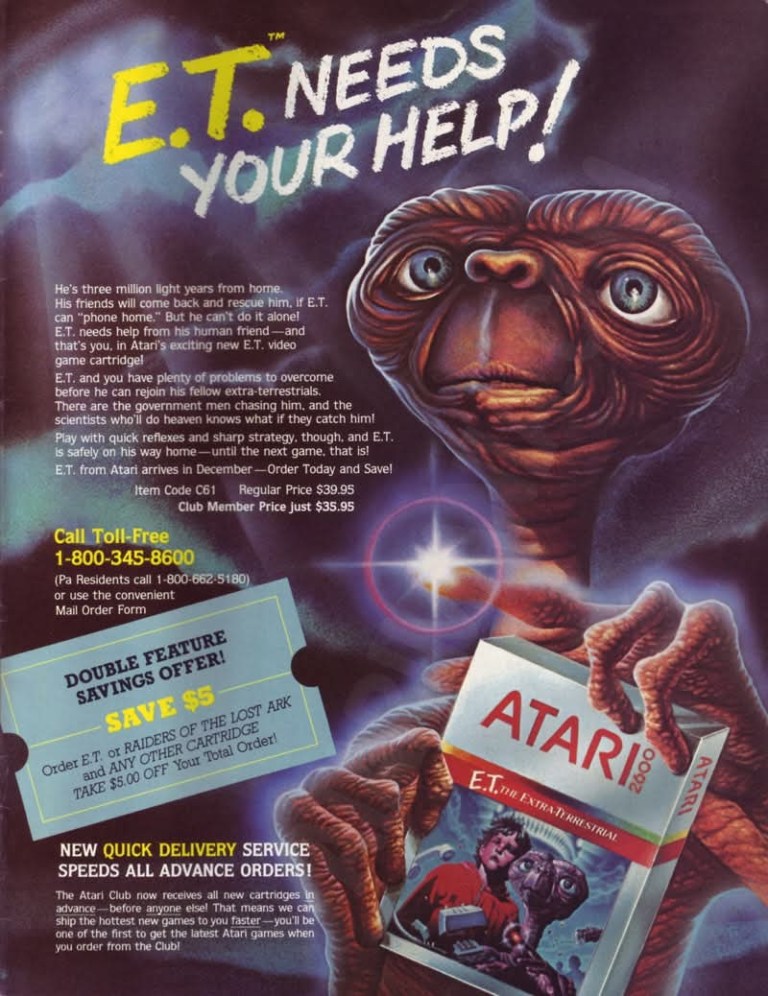
Atari invested a lot on its video game based on Steven Spielberg’s E.T. the Extra-Terrestrial as the film was a massive box office success. In addition to their Atari 2600 video game print ad showing E.T. with Elliot, they ran another print ad with a concept of the sci-fi character needing people’s help. They came up with original artwork showing E.T. holding a box of the Atari 2600 E.T. video game, then posted details about how to acquire a copy of the game (with prices for regular customers and club members) and posted a toll-free 1-800 phone number. They also offered a $5 discount for those who order the E.T. or Raider of the Lost Ark video game and another cartridge. This old ad had commerce written all over it.
2. Bulls vs. Lakers and the NBA Playoffs Sega Genesis print ad
Before NBA Live, there was this old NBA video games series by Electronic Arts.
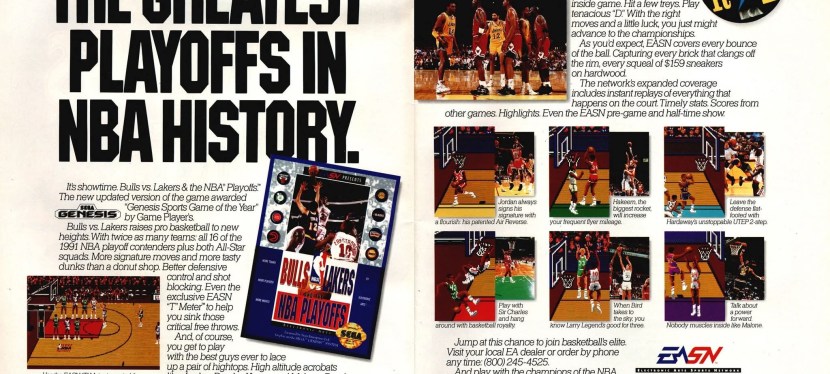
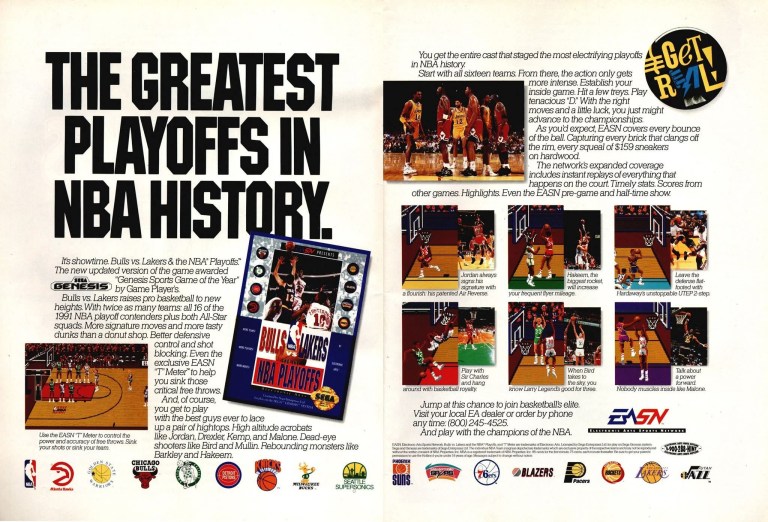
Based on the 1990-91 NBA season and the NBA finals match-up between the Chicago Bulls and the Los Angeles Lakers, Bulls vs. Lakers and the NBA Playoffs was Electronic Arts’ exciting game for the Sega Genesis which already had lots of sports-loving gamers. They made a 2-page print ad that was cleverly designed to make both gamers and NBA fans excited. It is not an accident that the ad showed comparative images (in-game footage and real-life basketball photos) of NBA superstars like Larry Bird, Michael Jordan, Karl Malone and Charles Barkley on the right. With the strong visual presentation, emphasis on popular NBA players and other details posted, this old ad is still fun and exciting to look at.
3. Japanese Smash T.V. print ad
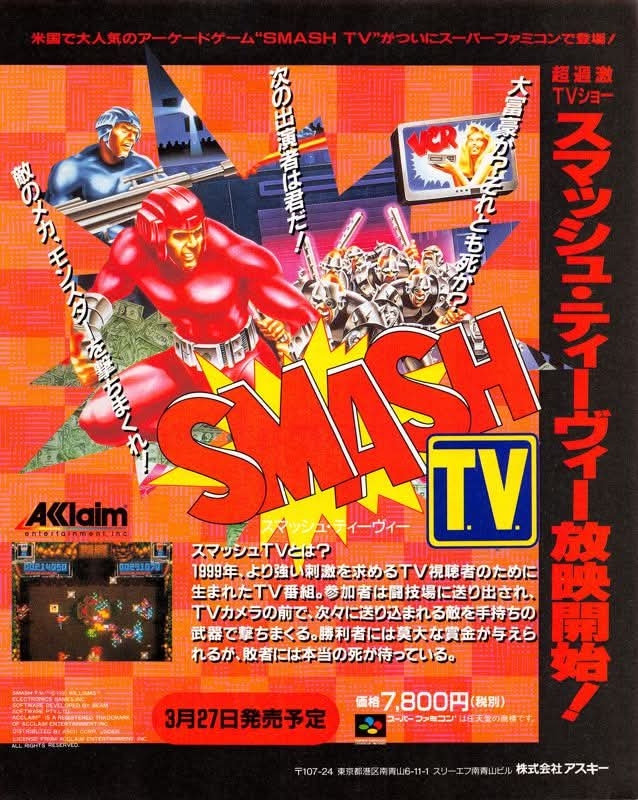
The Japanese print ad of Smash T.V.
Yes, it is true! The console port of the arcade classic Smash T.V. was released on the Super Family Computer (Super Famicom) in Japan back in the 1990s. While I cannot understand the Japanese text shown on the ad above, it still looks exciting as the official artwork plus a screenshot of the game were displayed. The revealed retail price of 7,800 Yen is alone eye-catching as there were many games in Japan launched below that price in the next console generation. I can only wonder how many gamers in Japan bought and enjoyed Smash T.V.
4. U.S. Championship V’Ball arcade flyers
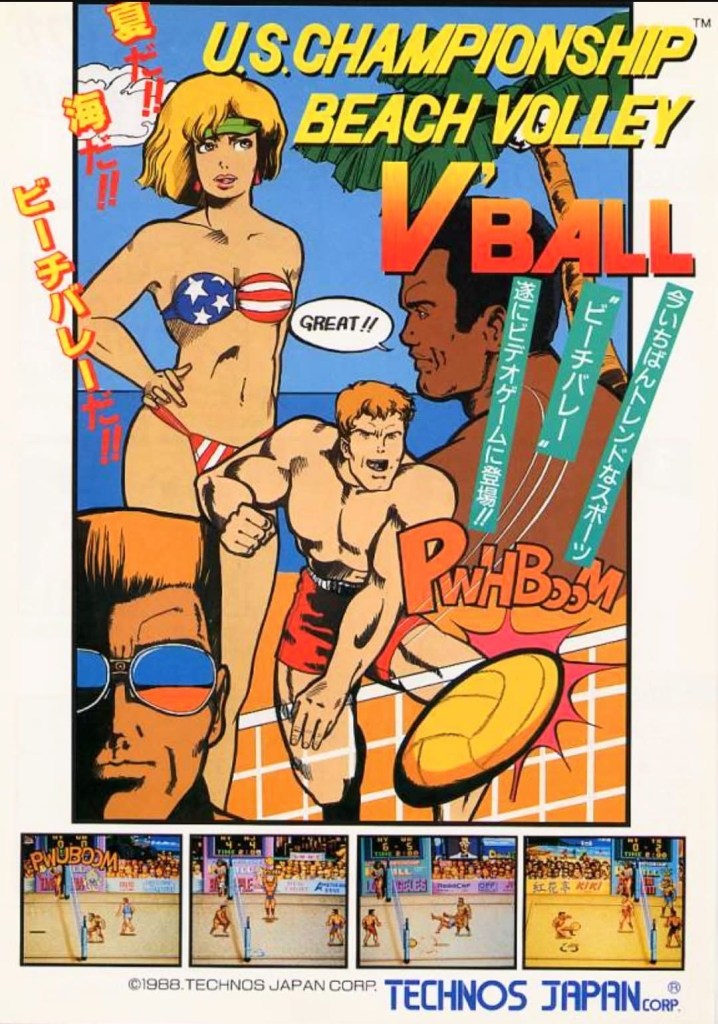
The very colorful and striking arcade flyer for the Japanese market.
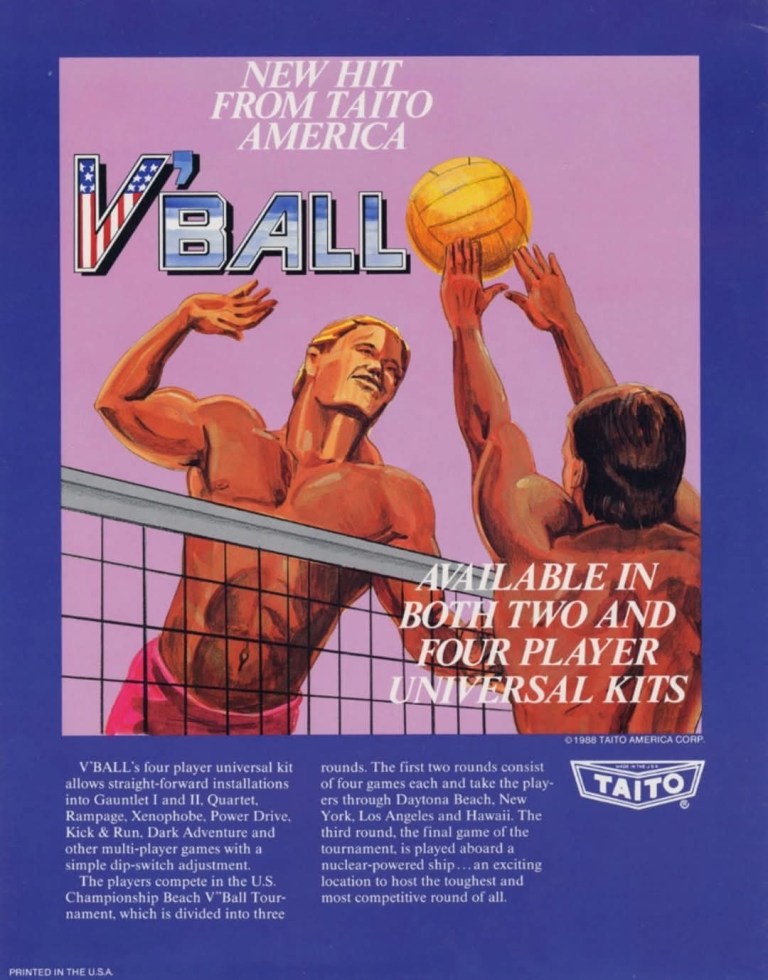
The American arcade flyer.
In 1988, Technos – the company behind the Double Dragon video games – released U.S. Championship V’Ball in video arcades in Japan and in America. The way it was promoted in Japan, Technos came up with an arcade flyer that had a comic-inspired hand-drawn artwork that easily gave viewers a strong American beach volleyball vibe. For the American arcade market, Taito (licensed by Technos) used different artwork showing two men in action. If you ask me, the Japanese arcade flyer is more dynamic to look at. Regardless of art style and presentation, both arcade flyers emphasized beach volleyball to gamers clearly.
5. Pitfall 3D: Beyond the Jungle print ad
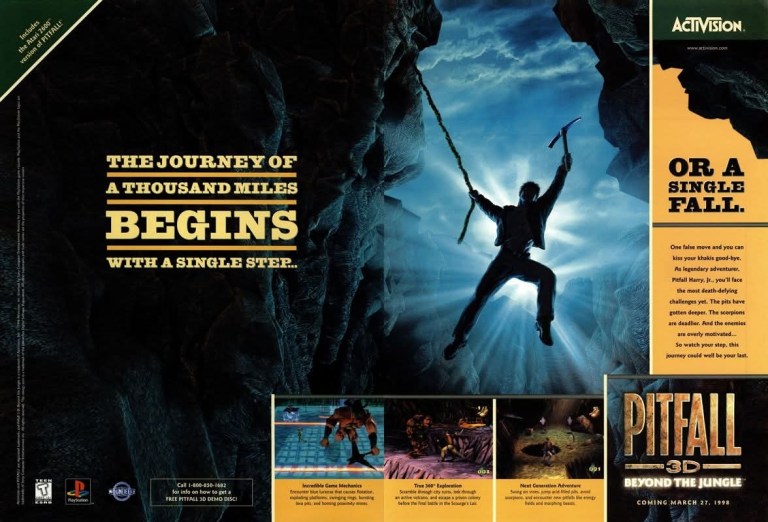
The 2-page print ad of Pitfall 3D: Beyond the Jungle.
When Activision decide to make a new Pitfall video game with polygonal graphics and with 3D platform gameplay, it was not surprising at all as this was the trend that defined 1990s gaming. In 1998, Pitfall 3D: Beyond the Jungle was released for the PlayStation and it received a divisive reception from the critics. If you look closely at the print ad, the words “Next Generation Adventure” was written in the lower-right part and it was clear the game’s quality did not justify them.
6. Atari 2600 and games print ads
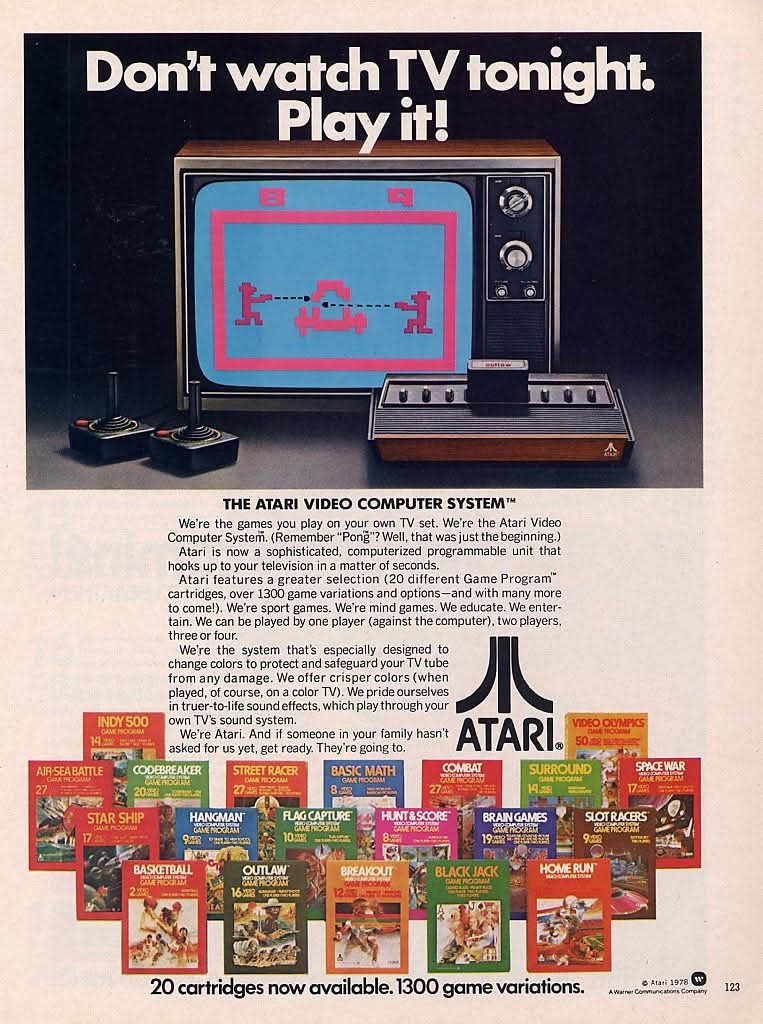
Our household had an Atari 2600 console and many games.
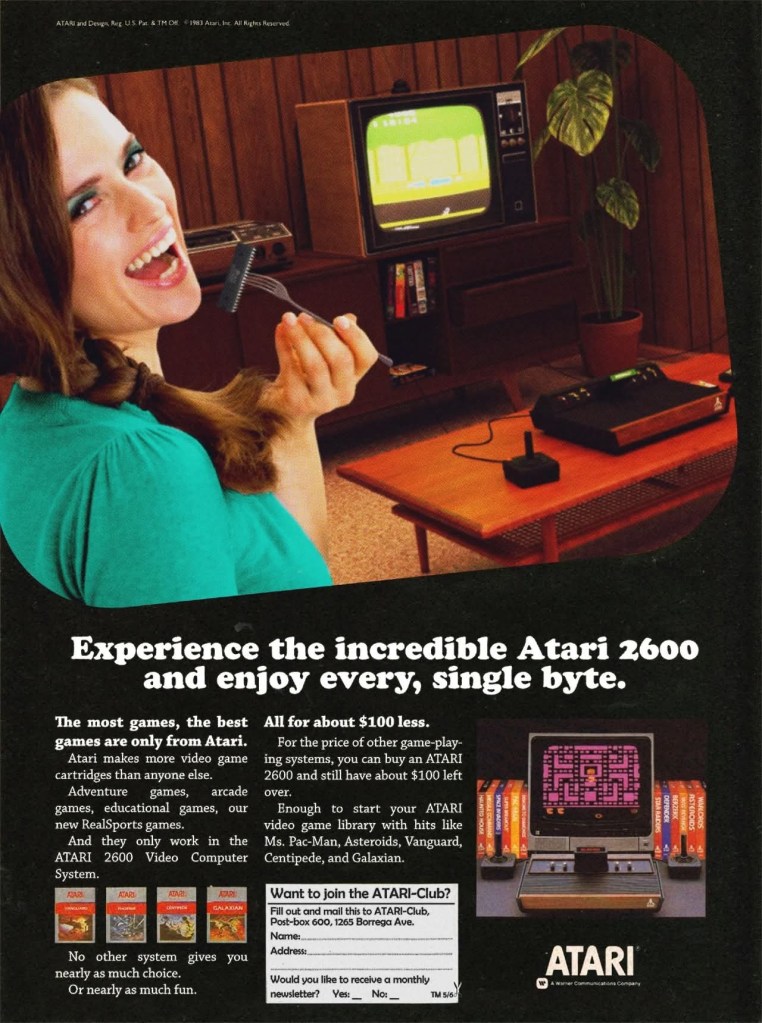
Atari’s promotion of its console, the games and interactive entertainment with the TV.
For a number of years decades ago, Atari dominated the video game console market in America with the Atari 2600 sold in the millions. While Atari today is no longer the video game giant it used to be, there is no denying the fact that they really changed the way people enjoyed the use of their television sets in American homes by offering them lots of video games for the Atari 2600 console. By looking at the above print ads, you can see that the company was not only aggressive with their marketing but also made interactive electronic entertainment more acceptable to countless families.
7. Burning Rangers North American print ad
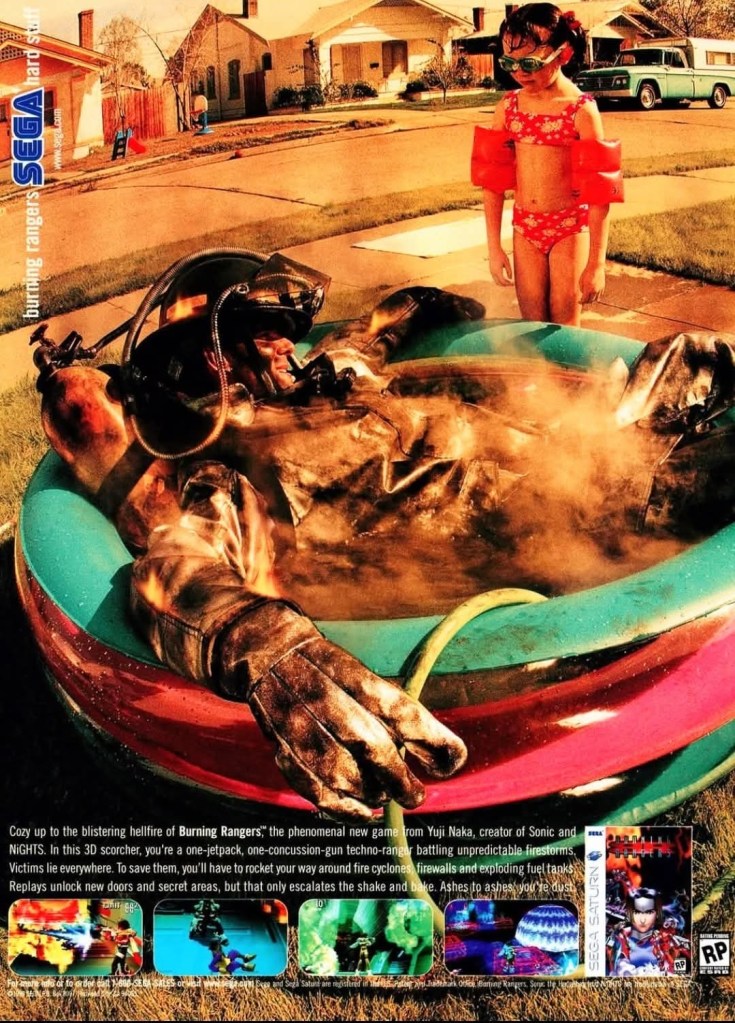
I remember this ad from video game magazines I read in 1998.
Released in 1998 for the Sega Saturn, Burning Rangers was a high-quality exclusive game. To promote it in America, Sega came up with the print ad showing a few screenshots and a dominating image of a fire fighter cooling down on a kid’s personal pool. The image emphasized the element of fire in the game even though it lacked the more sci-fi elements used on the characters and setting. It should be noted that by 1998, the Sega Saturn was no longer in high demand in America as gamers overwhelmingly chose PlayStation and Nintendo 64 (N64) consoles and games. In retrospect, this was one of Sega’s final hard marketing moves done with a Saturn game.
Welcome back Xbox fans, geeks, retro gaming fans and other gamers!
If you are disappointed with modern console gaming and if you don’t like what the console makers are doing, retro gaming will restore the fun and help you forget about the disappointment.
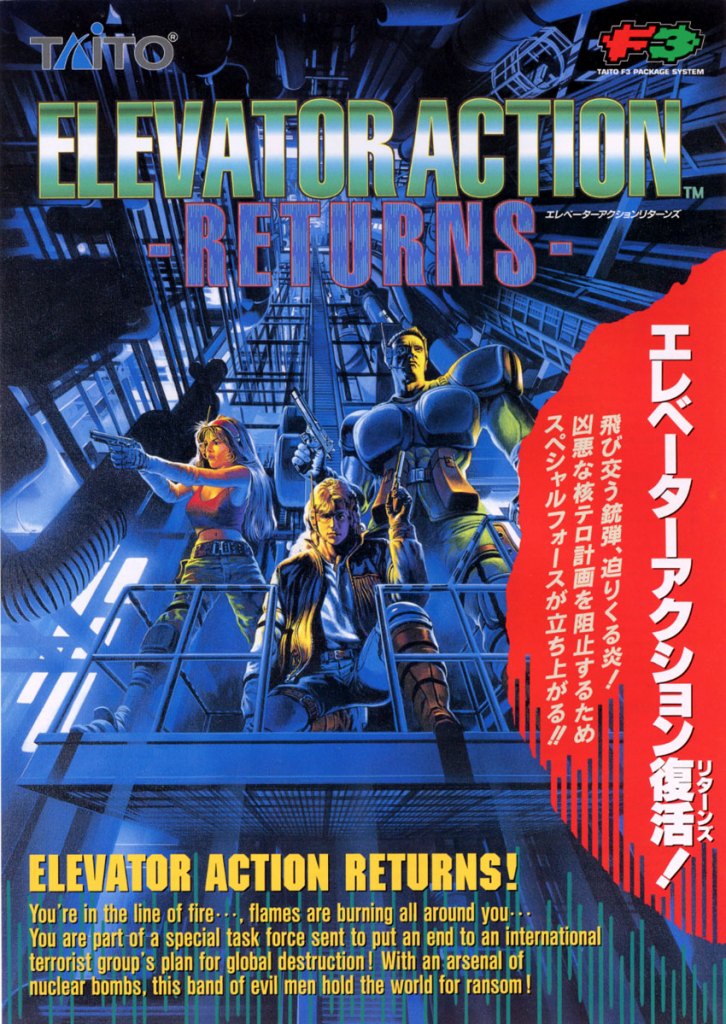
I recently purchased a copy of Elevator Action Returns S-Tribute for my Xbox Series X because I wanted to play Elevator Action Returns again but in the comfort of home. For the newcomers reading this, Elevator Action Returns (also titled as Elevation Action II in some markets overseas) was first released in Japanese arcades in 1994.
The Japanese arcade flyer of Elevator Action Returns.
In my experience here in the Philippines, I played the original Elevator Action on the Nintendo Family Computer (Famicom) in 1986 and I played its sequel for the first time at the arcade of X-Site Amusement Center inside Festival Mall in Alabang in 1998. Upon playing Elevator Action Returns arcade version, I was instantly hooked as it was pretty playable, exciting and fun to play. To the best of my memory, I replayed Elevator Action Returns a number of times at X-Site Amusement Center until early 2001. Today, the game is no longer available in X-Site’s arcade selection which is a bummer.
In recent times, I’ve been replaying Elevator Action Returns and the original Elevator Action on my Xbox Series X thanks to the Elevator Action Returns S-Tribute digital copy I purchased. What I am writing here is not a game review but more of an observation about the mid-1990s game in general and how it played using the Xbox controller.
Game design and gameplay
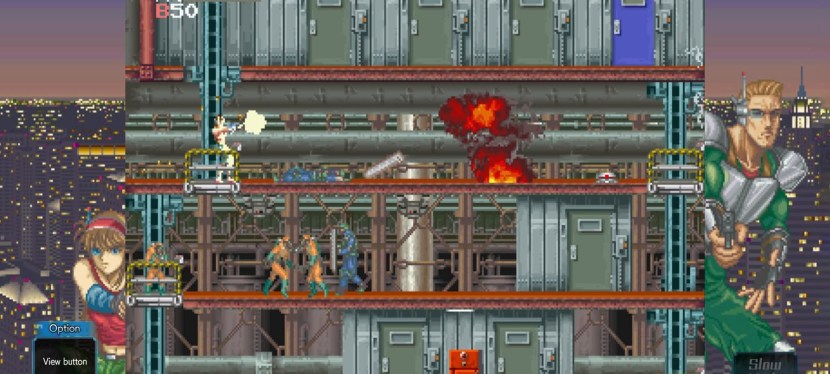
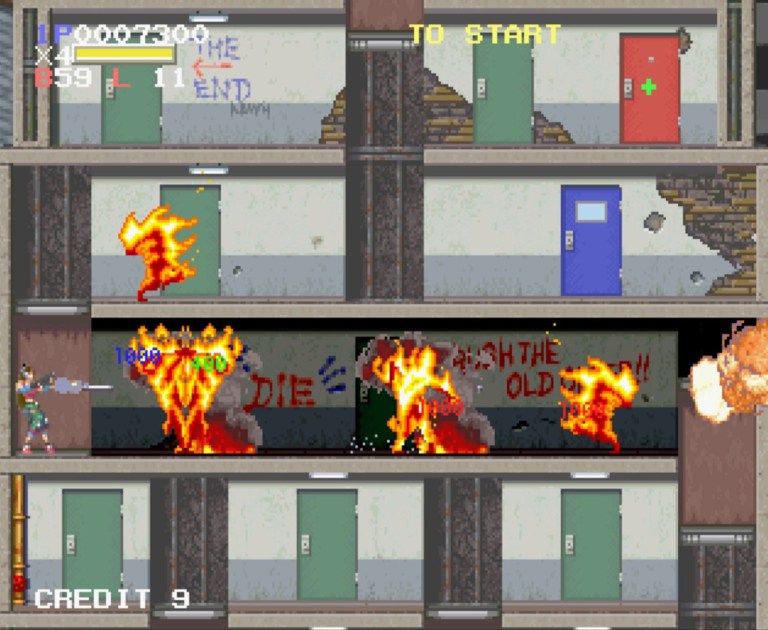
Developed by Taito, Elevator Action Returns was built up on the foundation it inherited from its 1980s predecessor. The game has a 2D visual design and with more detailed sprites and artistic elements of the time. The game was designed with a joystick and two action buttons (one for shooting and the other for jumping) arcade control set up in mind.
The first level is a creative remake of what was presented in the original Elevator Action game. Only this time, the action is more intense, faster and more explosive.
Players will have to make their way through the floors in each level (six in total), shooting the enemies (the in-game terrorist group), entering all the red-colored door to retrieve something essential, survive and then making your way to the exit point of the level. As the game has a designated health meter or life bar for the player, this allows players to keep enduring the challenges without worrying about any one-hit deaths.
As players make their way through each level, they can pick up new weapons like machine guns or launchers. Players can also enter doors to pick up not only new weapons but also health boosters or points.
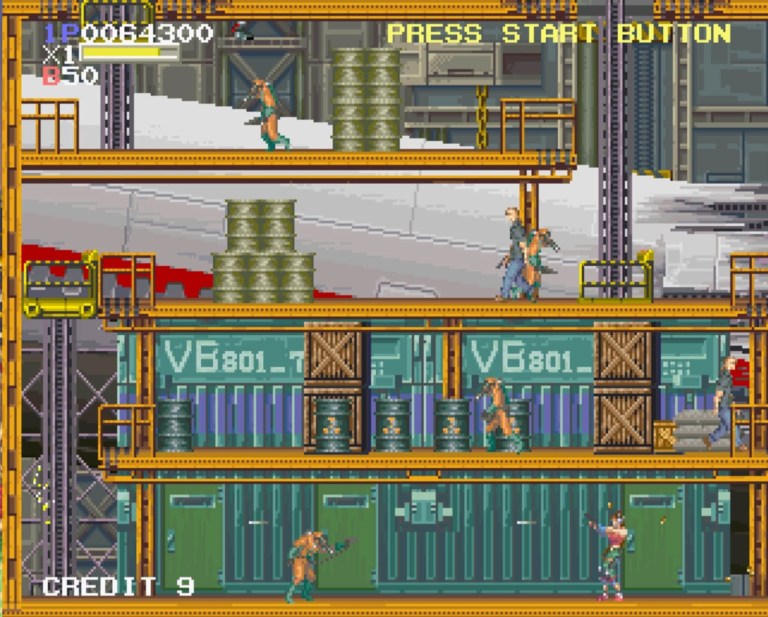
The 2D sprite work and animation are fantastic to look at. The artistic details in the background and foreground added visual dept.
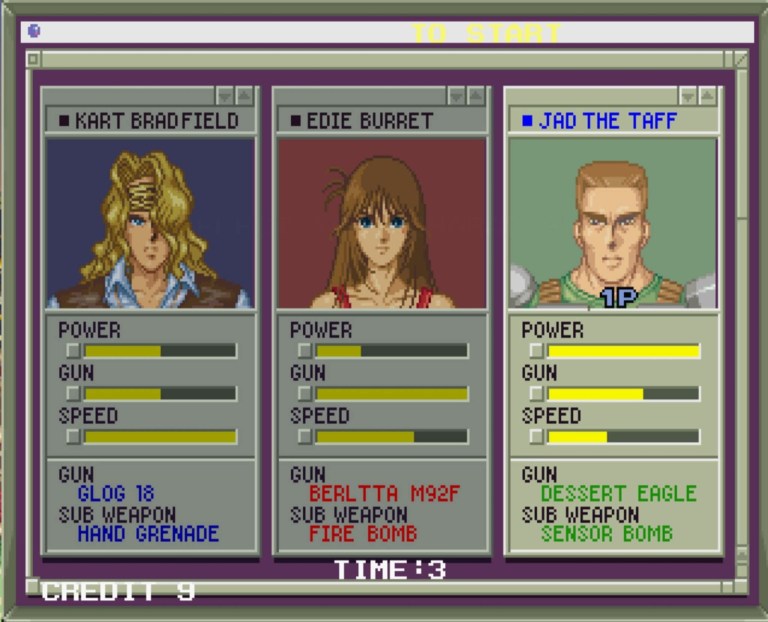
You can pick one of three characters to play as.
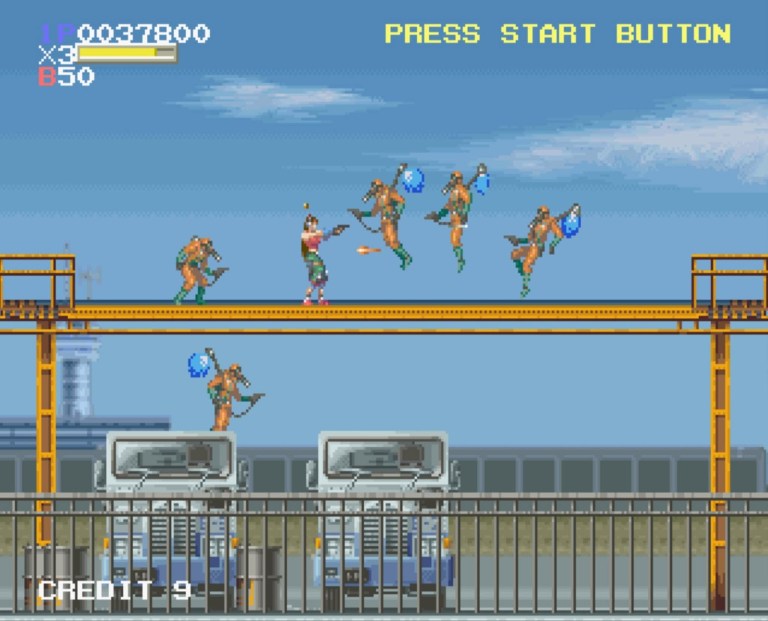
When compared to the original Elevator Action, the sequel comes with good variety per level prepared. The first level was traditional in design like the previous game as players have to move down a tall building by floors, accomplish with the red door and conclude the level at the ground floor. The other levels are more horizontal in design and players will definitely be moving more sideward fighting the terrorists while avoiding environmental hazards. There also will be times when players will have to climb up one floor to the next by escalator or by elevator depending on the level designed.
When it comes to the constant opposition, the terrorists are many and players should be aware of them appearing when they are least expected. What it noticeable is that the terrorists become more aggressive and relentless the longer players take to finish a level. I promise you readers, you will do a lot of shooting, jumping, and even melee attacks when fighting the bad guys.
Levels like this one allowed for more sideway movement as well as opportunities to climb up or down a floor in order to accomplish your objective.
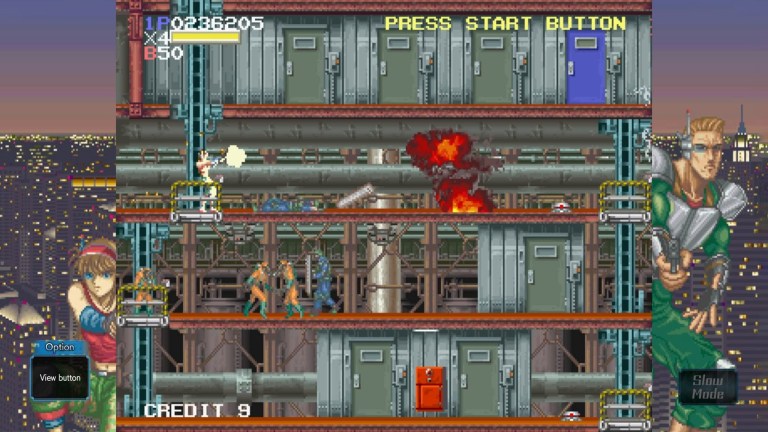
With a health meter implemented, you can endure more damage as you fight the bad guys and make your way through. Beware of environmental hazards along the way.
As for the controls, the arcade control set-up of a single joystick and two buttons remains the best way to play it. Elevator Action Returns is playable enough with the Xbox controller. While the left analog stick of the Xbox controller works well in moving the character, I ended up using the directional pad (D-pad) a lot more because it works much better and allows me to make more precise moves. This game can be played in single-player or in 2-player co-op.
A sequel released at the right time
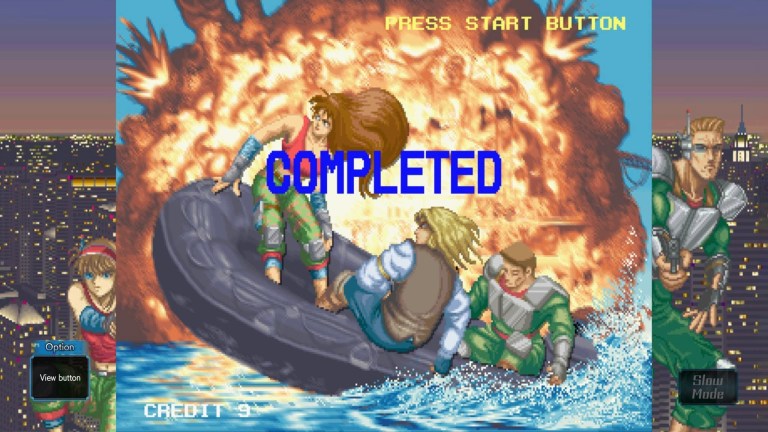
I like the artwork the game developers prepared highlighting your mission accomplishment and survival. A lot of effort was invested on making the artwork displayed here.
Being a mid-1990s game made with more advanced visual elements, better hardware and a modern approach to gameplay, the action in Elevator Action Returnsis unsurprisingly faster, more action-packed and more explosive than its predecessor. Indeed, this is a high-quality sequel and a true evolution of the classic Elevator Action formula. As Islamic terrorism became a major problem in global affairs in the 1990s, the terrorism theme of the game’s story was timely and fitting as the fictional terrorist group is obsessed with causing destruction and death worldwide. As such, the game allows players to pick one of three character of a counter-terrorism unit, and each character has differences with regards to speed, armor, firing speed, health and sub-weapons. The levels are plentiful and the same can be said about the varied action which makes the game worth replaying from start to finish. I should state that the 2D sprite work is great and timeless to look at.
Elevator Action Returns is a classic and it ensures a lot of fun for anyone who loves retro gaming and the Elevator Action series in general. This is one of the best arcade games of the 1990s now available for playing on modern consoles.
Welcome back Xbox fans, geeks, RPG players, retro gaming enthusiasts and other gamers!
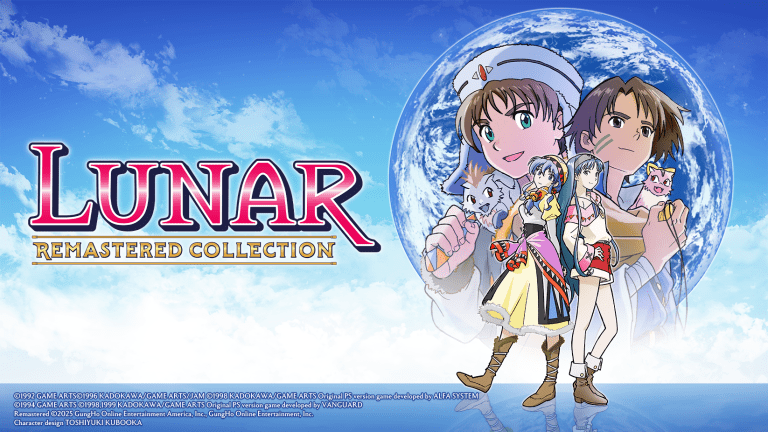
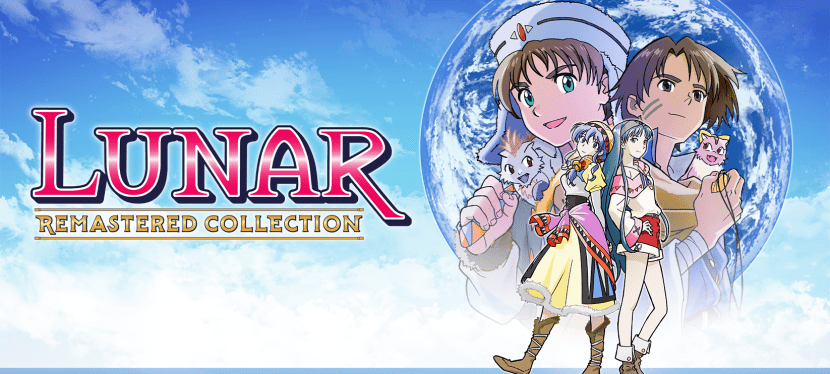
Published GungHo Online fulfilled what they promised before…Lunar Remastered Collection is now available for gamers to enjoy on Xbox Series X|S and the aging Xbox One console. Xbox gamers who love Japanese role-playing games (JRPGs) and retro games can order a digital copy of Lunar Remastered Collection by clicking here or the physical copy by clicking here.
To get things started, watch the official launch trailer of Lunar Remastered Collection below.
For the newcomers reading this, Lunar Remastered Collection’s release marks the first time ever that the Lunar role-playing game (RPG) series appeared on any Xbox console. The series developed by Game Arts first started way back in 1992 with Lunar: The Silver Star on the Sega CD (Mega CD in other markets) which was an add-on device on the Sega Genesis (Mega Drive). Lunar: Eternal Blue was released also on Sega CD in 1994.
During the 5th console generation, both games were remade – Lunar: Silver Star Story Complete and Lunar 2: Eternal Blue – were released on Sega Saturn and the PlayStation, taking advantage of each console’s capabilities for better presentations technically and artistically. The remade Lunar games each had technical enhancements and animated cutscenes. In case you are wondering, the stories of the two games are set around one thousand years apart.
As seen in the launch trailer above, Lunar Remastered Collection includes a lot of features to suit the tastes of gamers such as the option to choose between classic and remastered modes, adjustable battle speed, the option to choose between English and Japanese voice-overs, and more.
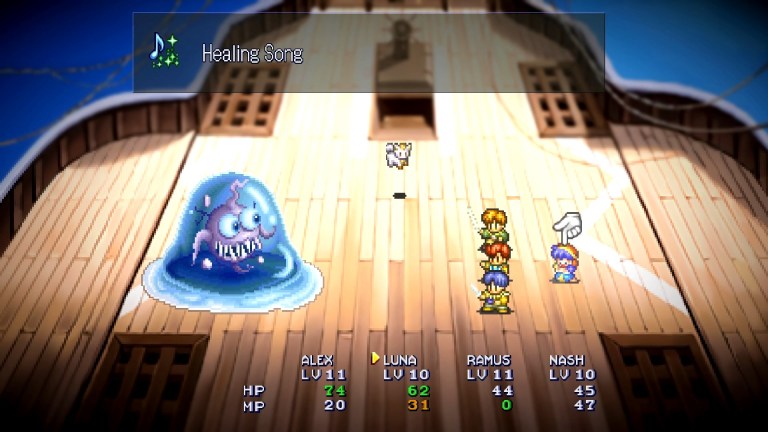
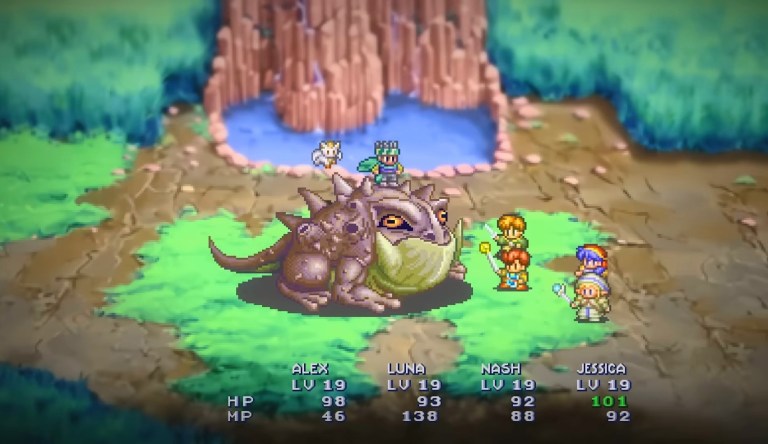
Remember this battle from Lunar: Silver Star Story Complete?
For those who want the best quality for viewing anime cutscenes, the remastered mode features enhanced visuals that make the anime footage look more presentable on HDTV. As for the English voice-overs, be aware that the voices of the characters and enemies are all new. This means that the previous English voice-over works produced by Working Designs (defunct since 2005) for the North American versions of Lunar: Silver Star Story Complete and Lunar 2: Eternal Blue are simply not available.
Unlike what happened in the Grandia HD Collection, the 2D sprites in the Lunar remastered games were not filtered. Their organic sprite look was maintained.
If you are a long-time JRPG enthusiast, or if you are an avid retro gamer, or if you are a long-time Lunar RPG fan who already owns a modern Xbox console, Lunar Remastered Collection is worth checking out. It is the latest retro gaming release this year that Xbox gamers can enjoy. Watch the YouTube video below for reference as to how the game looks on Xbox.
Welcome back my readers, YouTube viewers and all others who followed this series of articles focused on YouTube videos worth watching. Have you been searching for something fun or interesting to watch on YouTube? Do you feel bored right now and you crave for something to see on the world’s most popular online video destination?
I recommend you check out the following topics and the related videos I found.
#1 Ashleigh Burton reacts to Mr. Holland’s Opus – If there is anything that comes to my mind about the actor Richard Dreyfuss, it is his involvement in Steven Spielberg’s classic films Jaws and Close Encounters of the Third Kind. He is truly is a great actor and appeared in many films through the decades. Then in 1995, his name become prominent again in Mr. Holland’s Opus and his performance in that film earned him the nomination for the Academy Award of Best Actor. Recently I saw Ashleigh Burton’s reaction video of the said movie and it is a must-see.
#2 Radiant Silvergun revisited – In 1998, the sci-fi shooter Radiant Silvergun was released in arcades and on the Sega Saturn console, and it turned to be a very cleverly designed game which resulted in a positive reception with both players and game critics. The game made its debut in the West through Xbox Live Arcade in the form of an Xbox 360 port. Recently The SEGAGuys posted an in-depth, retrospective video about Radiant Silvergun which retro gaming enthusiasts should watch.
#3 Popcorn in Bed reacts to 1991’s JFK – With the recent release of previously confidential documents related to the 1963 assassination of US President John F. Kennedy, it is not surprising that a resurgence of public interest in the 1991 movie JFK happened. I saw that film on DVD a number of times and by today’s standards, it has not aged well and it is historically flawed. The movie’s biggest selling point is not the star Kevin Costner but its concept that Kennedy was the target of a conspiracy by certain forces within the US government at the time. Recently, YouTuber Popcorn in Bed posted a reaction video and the movie has its moments of engaging her.
#4 You, Me and the Movies react to The Andromeda Strain – Do you enjoy watching science fiction thrillers from the 1970s? The Andromeda Strain was one of those films from the said decade that was designed to intrigue viewers with its concept and style of presentation. It is also one of the early cinematic works written by the late Michael Crichton. It was directed by the late Robert Wise who would later direct Star Trek: The Motion Picture. You, Me and the Movies recently posted their reaction video of it and it is entertaining to see.
#5 A warning about the next Spider-Man movie becoming woke – YouTuber Ranting for Vengeance recently posted a video warning us that there are signs that the next Spider-Man live-action movie starring Tom Holland will turn out woke. If that happens, I definitely will stay away from it and I certainly will not spend time and money on any woke crap produced by Communist Hollywood (Commiewood). Ranting for Vengeance hit all the points precisely and he has in-depth explanations for each. Watch the video and share it to others. Thanks.
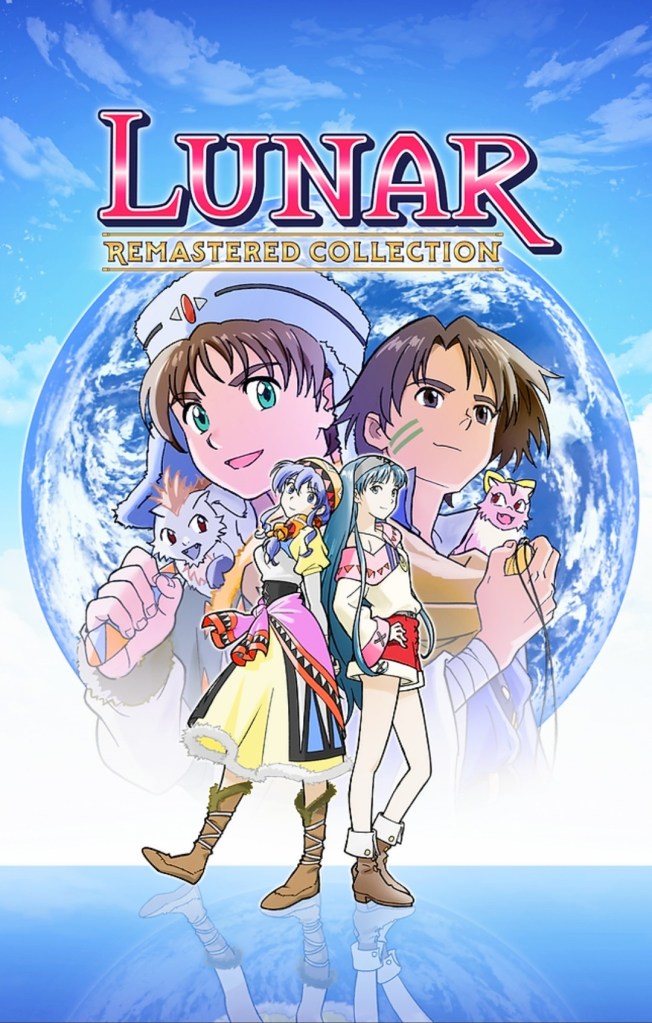
For the newcomers reading this, the said collection contains the two memorable fantasy role-playing games (fantasy RPGs) which are Lunar: Silver Star Story Complete(enhanced version of Lunar: The Silver Star) and Lunar 2: Eternal Blue Complete (enhanced version of Lunar: Eternal Blue). Since the releases of the original versions in the 1990s, the Lunar RPGs have been released on a variety of consoles such as Sega CD, PlayStation and Sega Saturn.
Lunar Remastered Collection will be the first-time the Lunar RPGs will be released on Xbox consoles. It will launch on April 18, 2025.
For the JRPG-loving Xbox fans, the said Lunar Remastered Collection is indeed coming to Xbox Series X|S and the aging Xbox One. Strangely enough, as of this writing, the said collection has yet to appear on the Xbox online store.
While GungHo confirmed there will be physical copies of Lunar Remastered Collection coming out, it is uncertain if such copies of the Xbox version will be released. The press release mentioned that physical editions “will be available exclusively through Amazon for $54.99 USD” for the North American market. As for the European market, only the PlayStation 4 (PS4) and Nintendo Switch will have physical copies through Clear River Games.
If you are an Xbox fan who loves Lunar and JRPGs in general, are you discouraged about the potential lack of physical copies of Lunar Remastered Collection? If you really want it badly, better express your opinions and questions directly to Team Xbox and GungHo via Twitter, or by email.
Welcome back Xbox fans, geeks, retro gaming enthusiasts, RPG enthusiasts and gamers!
In case you missed the news, GungHo America announced that the remastered editions of the classic Japanese role-playing games (JRPGs) Lunar: The Silver Star and Lunar: Eternal Bluewill be released together in a single package titled Lunar Remastered Collection which is set for a Sprint 2025 release window (release date to follow) for multiple platforms, including Xbox Series X|S and the aging Xbox One!
Feeling excited or curious? Watch and learn from the official trailer of Lunar Remastered Collection released by GungHo (which is the same publisher behind the Grandia HD Collection).
To put things in perspective, posted below is an excerpt from the official press release of GungHo. Some parts in boldface…
The LUNAR Remastered Collection breathes new life into the beloved classics LUNAR: Silver Star Story Complete and LUNAR 2: Eternal Blue Complete (PlayStation 1 version), both originally developed by GAME ARTS. This revamped collection retains the charm of both titles while introducing exciting new enhancements and quality-of-life improvements!
Fans of the LUNAR series can wax nostalgic with 90s-esque animated cutscenes, iconic characters with the classic JRPG charm, and old-school turn-based combat with a twist. JRPG enthusiasts and long-time supporters of the series alike will undeniably be captivated by the game’s romantic storytelling and stunning soundtrack, and witness firsthand how LUNAR paved the way for generations of JRPGs to come.
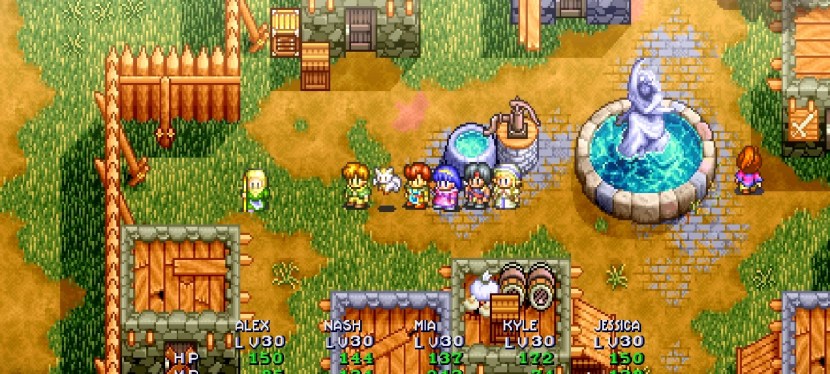
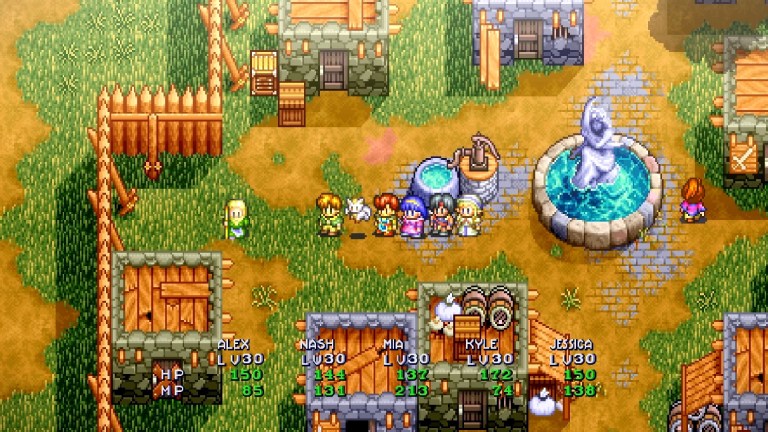
Gameplay shot from Lunar: Silver Star Story Complete which was supposedly remastered with high-definition in mind (which could explain the blurry upper and lower portions of the screen).
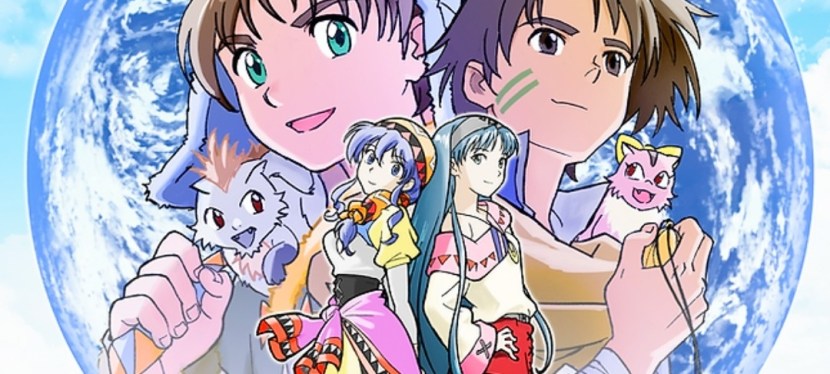
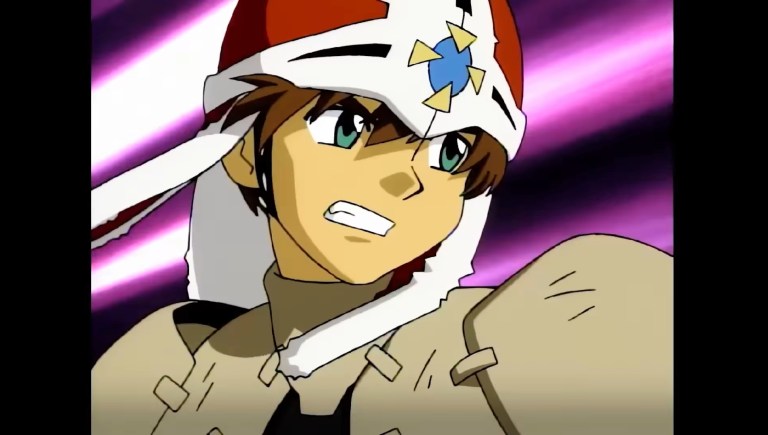
The trailer of Lunar Remastered Collection showed this sharp and lively looking image of an anime sequence. Here is hoping all the anime cutscenes in the two games will be of the highest quality possible with high-definition in mind.
The key features announced are as follows:
Strategic Turn-Based Action: Play through two magical worlds in LUNAR: Silver Star Story Complete and LUNAR 2: Eternal Blue Complete as you fight it out in turn-based battle style, where each character’s speed, distance, position, and attack reach must all be accounted for.
Powerful Voices and Captivating Animated Sequences: Immerse yourself in battles with fully-voiced attacks and incantations in either Japanese or an all-new English voiceover by playable characters and enemies. Not to mention, the timeless and stylistic animated sequences that will still capture the hearts of players today.
Relive the Classic or Go Remastered: Choose between classic or remastered mode — an option that allows fans to travel back in time to the games’ PS1 releases, or see them in a new light with wide-screen support, revamped PS1 pixel art, and high-definition animated cutscenes.
Two New Language Options: LUNAR Remastered Collection not only includes Japanese and English subtitles and sound, but also two new subtitle language options, French and German.
Speed up Battle + Improved Strategy Settings: Save time and speed through battles with the flip of a switch! Additionally, new options have been added to the original strategy settings for streamlined combat.
For the newcomers reading this, Lunar: The Silver Star was developed by Game Arts (also the same team behind Grandia and Grandia II) and released on the Sega CD (Mega CD in other countries) add-on for the Genesis (Mega Drive) console in 1992. Years later, that game had a huge remake as Lunar: Silver Star Story Complete on Sega Saturn (1996), PlayStation (1998) and Windows PC (1999).
A similar approach of releases happened too with the sequel Lunar: Eternal Blue which started on Sega CD. Its remake was titled Lunar 2: Eternal Blue Complete which was released on Sega Saturn (1998) and PlayStation (1999).
Historically, Lunar: Silver Star Story Complete and Lunar 2: Eternal Blue Complete were published in America by Working Designs (closed down since 2005) with its very own stylized way of translating the Japanese content into English (note: localized as opposed to straightforward translation), in-depth approach to English dubbing, and elaborate packaging (with unique stuff) done with the fans and collectors in mind. Working Designs was also responsible for releasing the two Lunar RPGs’ original versions on Sega CD and the company established close ties not only with Sega of America but also Game Arts itself.
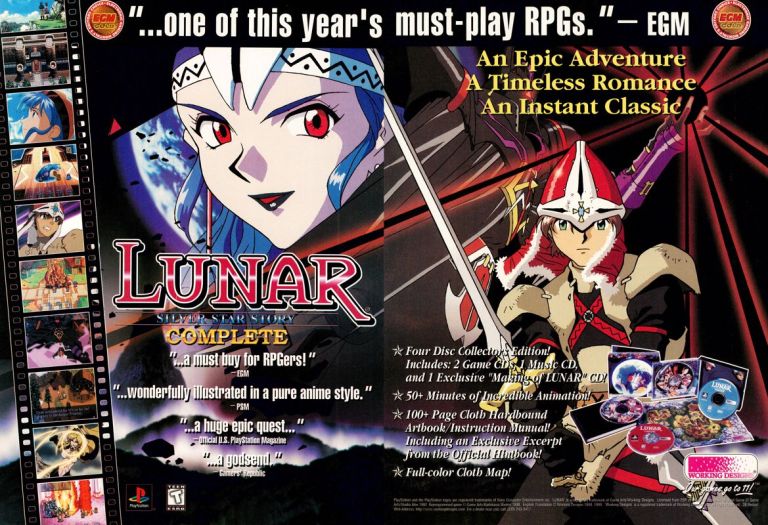
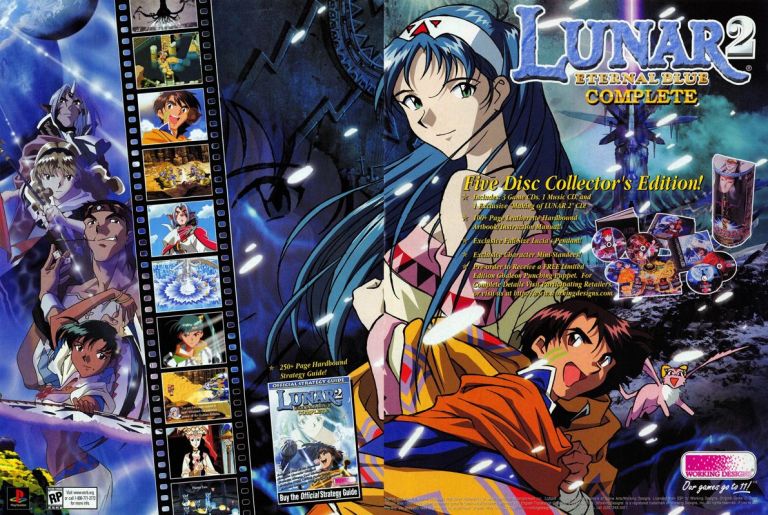
Lunar: Silver Star Story Complete for PlayStation print ad.
Lunar 2: Eternal Blue Complete for PlayStation print ad.
With regards to story concepts and characters, Lunar: The Silver Star tells the tale of Alex Noa – a young and resilient fighter who recently passed the White Dragon’s trial–as he embarks on his journey to become a Dragonmaster. As Alex revels in his success in passing the trial, a mysterious Magic Emperor unexpectedly enters the fold, aiming for world domination.
Lunar: Eternal Blue follows the story of Hiro, an inquisitive archaeologist, and friends as they journey to help a mysterious girl from the Blue Star, Lucia, to seek out the Goddess Althena and stop Zophar – a relentless and evil God of Destruction who plots the demise of Lunar – from wiping out their existence.
Watch out for the official 2025 release date of Lunar Remastered Collection.
As of this writing, Lunar Remastered Collection for Xbox Series X, Xbox Series S and Xbox One has yet to appear on the Xbox online store. For updates about the upcoming retro gaming collection of RPGs, visit https://www.lunarremastered.com/
Welcome back readers, fellow geeks and electronic gaming fans!
In this edition of the Retro Gaming Ads Blast (RGAB) series, we will take a look at another batch of retro gaming print ads – including arcade flyers – specifically about fighting games that were released in the 1990s. The said decade marked the time when Street Fighter II became a massive hit in the video arcades (and on game consoles) which sparked a wave of new fighting games from business competitors. In that same decade, 3D polygonal fighting games were also released which added greater choices of fighting games at the arcades and on game consoles that players could choose from.
For the newcomers reading this, Retro Gaming Ads Blast (RGAB) looks back at the many print ads of games (console, arcade, computer and handheld) that were published in comic books, magazines, flyers, posters and newspapers long before smartphones, social media, the worldwide web and streaming became popular. To put things in perspective, people back in the 1980s and 1990s were more trusting of print media for information and images about electronic games and related products.
With those details laid down, here is the newest batch of retro gaming print ads for you to see and enjoy…
1. Dead or Alive Japanese arcade flyer
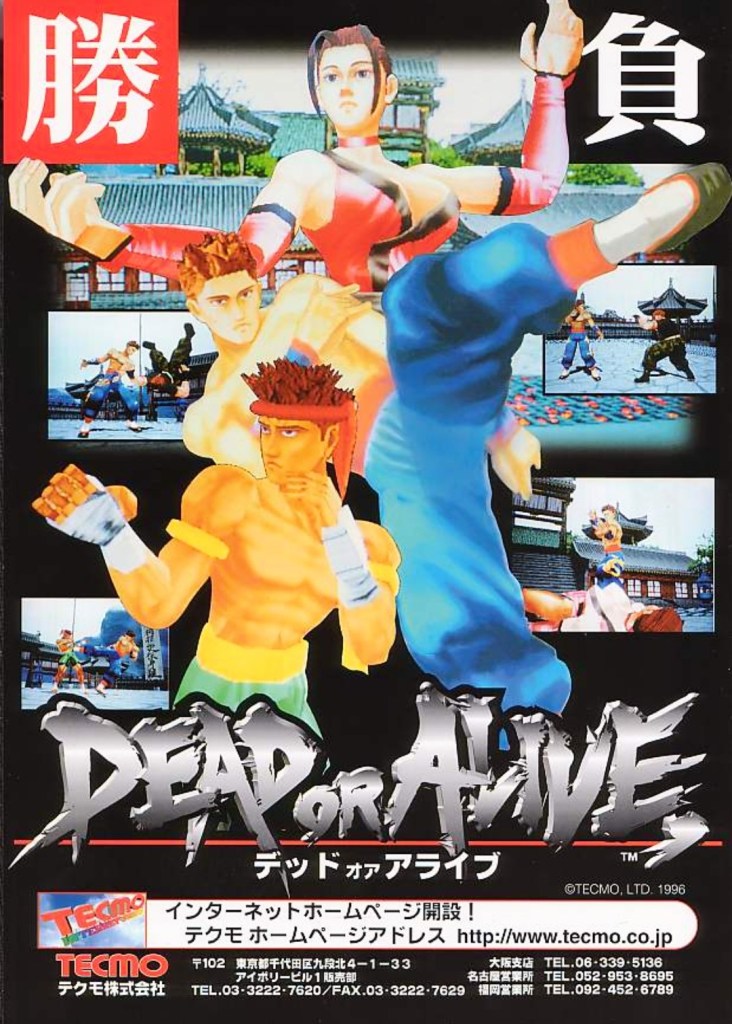
Dead or Alive was the start of new success that impacted the direction of Tecmo in the gaming industry.
The above arcade flyer of Dead or Alive gave Japanese arcade operators and gamers a taste of what to expect with the game. While the screenshots showed some resemblance with what gamers saw in Virtua Fighter 2, the character designs Tecmo and its developers came up with were unique.
Before Dead or Alive was released in Japanese arcades in 1996, company Tecmo was in financial trouble and they asked Tomonobu Itagaki to make a fighting game similar to Sega’s polygonal blockbuster Virtua Fighter. A breakthrough for Tecmo happened when Sega announced they were licensing their Model 2 arcade to third-party companies which paved the way for Itagaki’s team to make Dead or Alive with it. The game became a big hit and it paved the way for Tecmo to release it on Sega Saturn and PlayStation, and the sequels that followed years later.
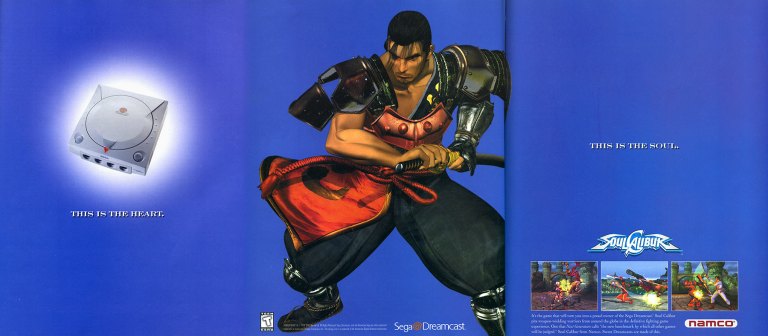
2. North American Soulcalibur Dreamcast version print ad
Namco came up with a creative approach to emphasize heart-and-soul promoting their game and the Dreamcast.
On September 9, 1999, Sega launched their Dreamcast console in America. With a gap of around ten months between the Japanese launch (November 1998) and the American launch, Sega had time to prepare Dreamcast’s release to American gamers with a huge lineup of games (both Sega’s games and from other publishers). Fortunately for Sega, they had Namco (their rival on arcade games) supporting their console.
Behind the scenes, Namco’s developers worked hard to not only port their arcade hit Soulcalibur to the Dreamcast, but to enhance the graphics using the console’s more advanced technology. The visual enhancements include rendering all of the games stages (and backgrounds) into full 3D polygonal environments. Namco also implemented different game modes and added even more content to ensure satisfaction to Dreamcast gamers.
The above 3-page print ad of Soulcalibur on Dreamcast was undeniably strategic and captivating to look at. The ad described the console as the heart, showed Soulcalibur character Mitsurugi (one of the game’s most popular characters) in the middle and then described the game (with 3 screenshots of game rendered with Dreamcast graphics) as the soul. It was a strong way to promote both the game and the console. In the years that followed, Soulcalibur grew into a popular fighting game franchise and the Dreamcast version will always be remembered as the crucial turning point.
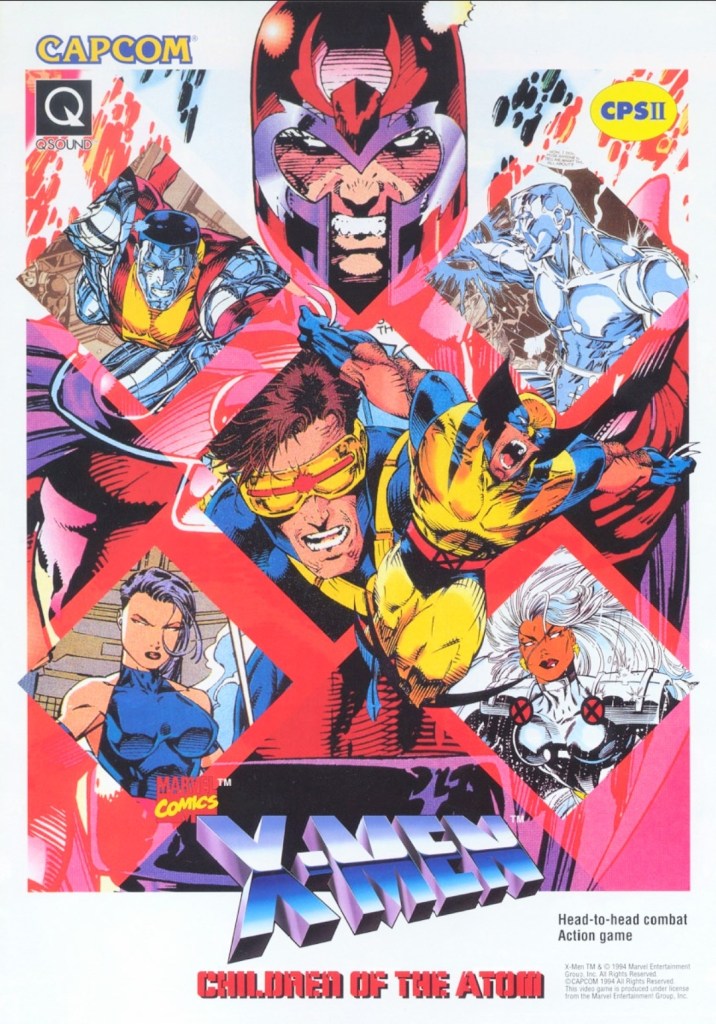
3. X-Men: Children of the Atom arcade flyer
Anyone who read lots of X-Men comic books in the 1990s should be able to tell which character was drawn by which artist.
When Capcom first released X-Men: Children of the Atom in the arcades in the mid-1990s, I was surprised because I did not anticipate the day would come when the company behind Street Fighter II would actually make a 2D fighting game showcasing the Marvel’s mutants. Even more intriguing was the X-Men art Capcom used for the arcade flyer to promote the game. I recognize Jim Lee’s artworks of Magneto, Cyclops and Colossus. The art of Wolverine shown was drawn by Andy Kubert. It was a wise move for Capcom (with Marvel as a business partner) to use established X-Men comic book artworks instead of having their internal illustrator draw the characters. That being said, this arcade flyer still looks great and captivating to look at.
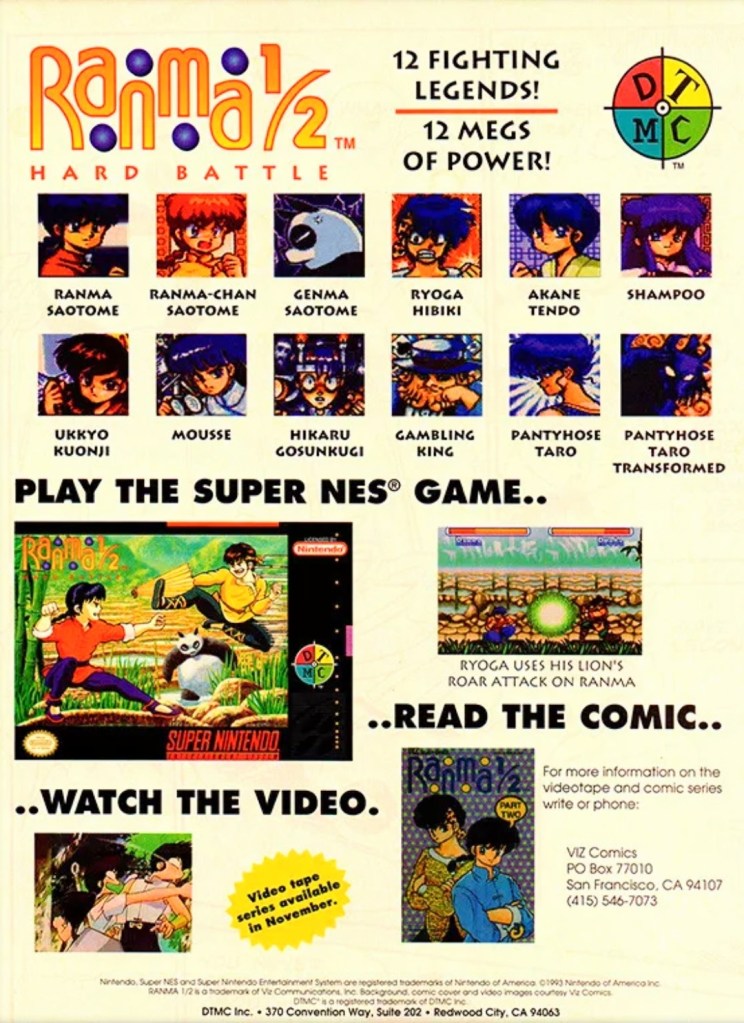
4. North American Ranma ½: Hard Battle print ad
A print ad promoting the game while saving some space to promote the anime and comic books.
By 1993, Street Fighter II and its upgraded follow-ups were wildly popular both in the arcades and on game consoles around the world. At the same time, there were many other 2D fighting games released to compete with and cash-in on Street Fighter II’s success. Believe it or not, the established anime franchise Ranma ½ saw a video game adaptation in the form of a 2D fighting game – Ranma ½: Hard Battle.
The North American print ad above published by DTMC (in cooperation with Viz Communications) promoted the game (one screenshot, the SNES game box and images of the characters as they appeared in the game) as well as Ranma ½ on anime videos and comic books. The way it was presented, the print ad promoted Ranma ½: Hard Battle without much heart nor passion.
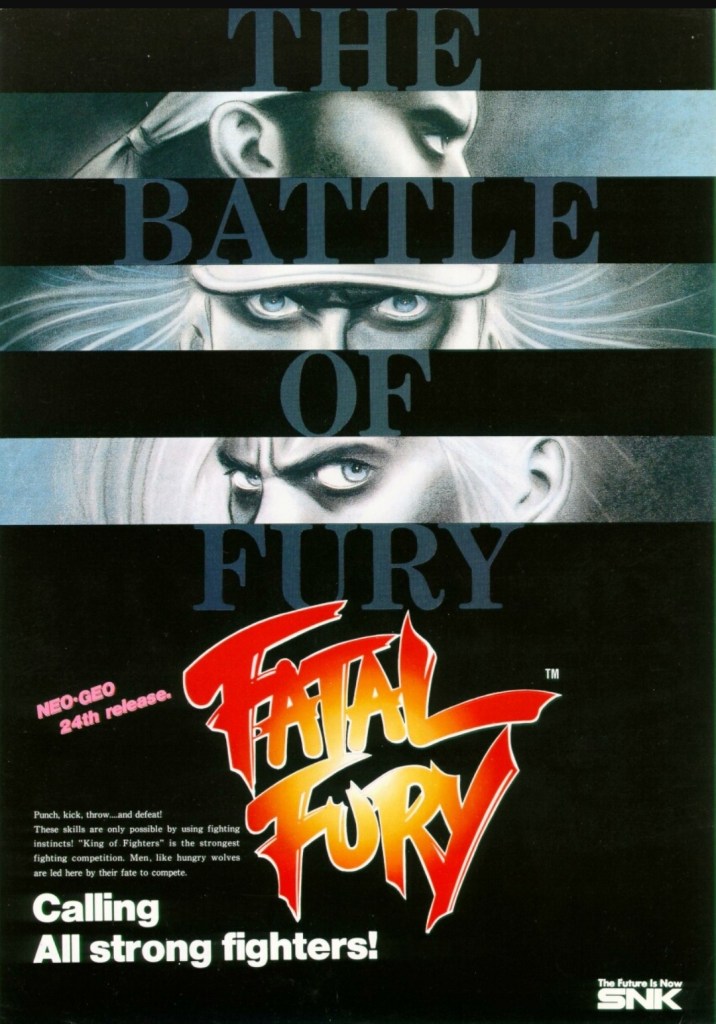
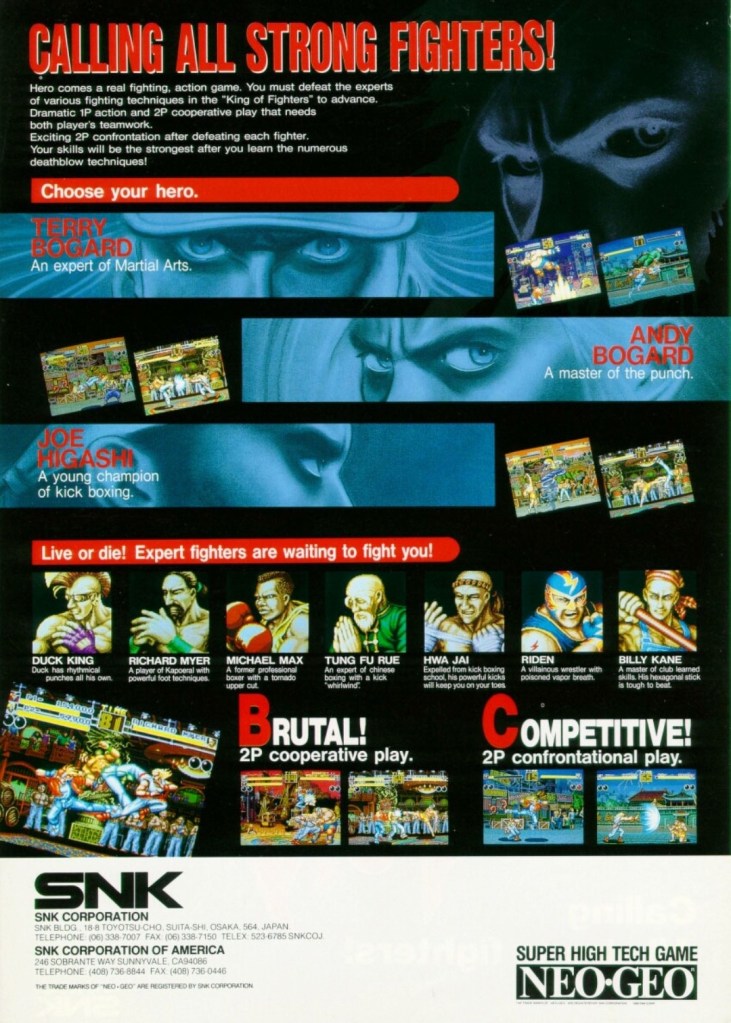
5. Fatal Fury: King of Fighters arcade flyer
An intriguing visual presentation on the front.
You get to know the characters and what the game features are.
There is no doubt that Fatal Fury: King of Fighters is the most significant game that SNK made. Apart from being the company’s first fighting game for the Neo Geo system, it established the fictional “king of fighters” tournament that became the core concept for The King of Fighters series of games in the years that followed. Fatal Fury itself is notable for being designed by Takashi Nishiyama, a former Capcom employee who created the original Street Fighter game. What Nishiyama could not do with Street Fighter, he accomplished while making SNK’s fighting game. Compared with the combo-oriented approach of Street Fighter II, Fatal Fury was designed to emphasize the timing of special moves, confrontational play, cooperative play and the 3D-like spacing between characters (background row and foreground row in each stage) while telling a story in a solid way.
The above arcade flyer of Fatal Fury has this unique looking artwork on the front showing stylized rectangular shots of the major characters Terry Bogard, Andy Bogard and Joe Higashi. On the other side of the flyer are the details that emphasized the creative concept of the game, who the characters are and what they could expect with regards to gameplay features. This flyer is still captivating to look at and it could entice you to try playing the original Fatal Fury game before trying out the sequels and spin-offs.
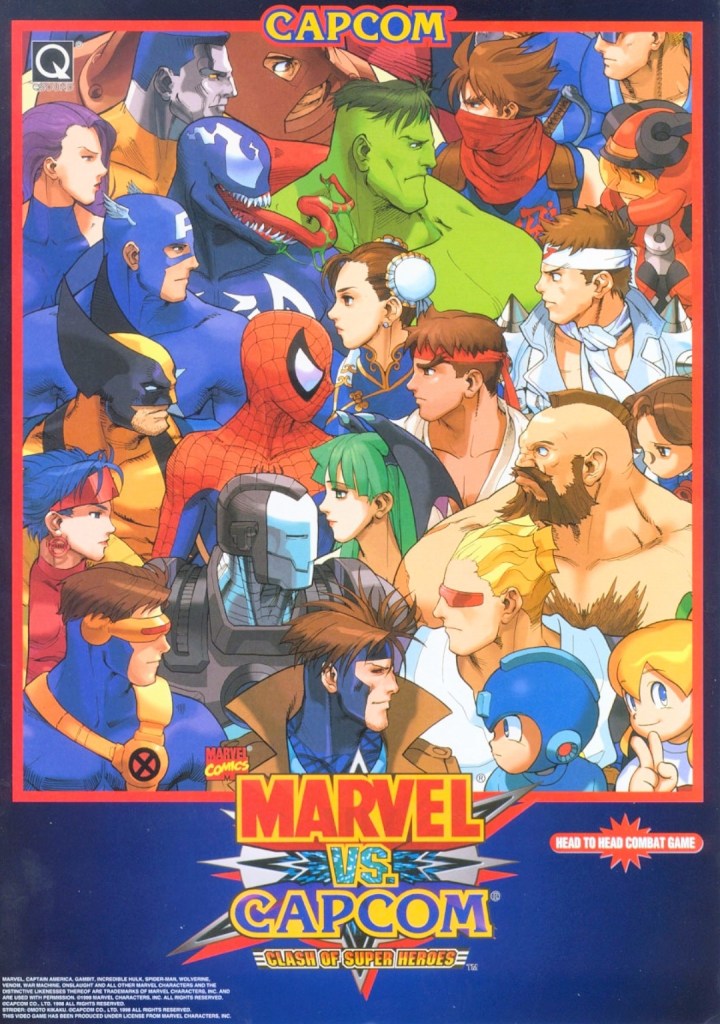
6. Marvel vs. Capcom: Clash of Super Heroes arcade flyer
This is NOT a comic book crossover.
If there is anything that truly emphasizes the essence of a fictional crossover in terms of visuals, it’s the art that Capcom and Marvel agreed to for Marvel vs. Capcom: Clash of Superheroes which is evident on the front of the above arcade flyer. By looking at how the Marvel characters were drawn, it looks like someone at Capcom illustrated the artwork as the Capcom characters still maintained that particular art style seen in the artworks of the Japanese company’s other games like Street Fighter, Darkstalkers, Mega Man and Strider. Regardless, the artwork still is amusing to look at.
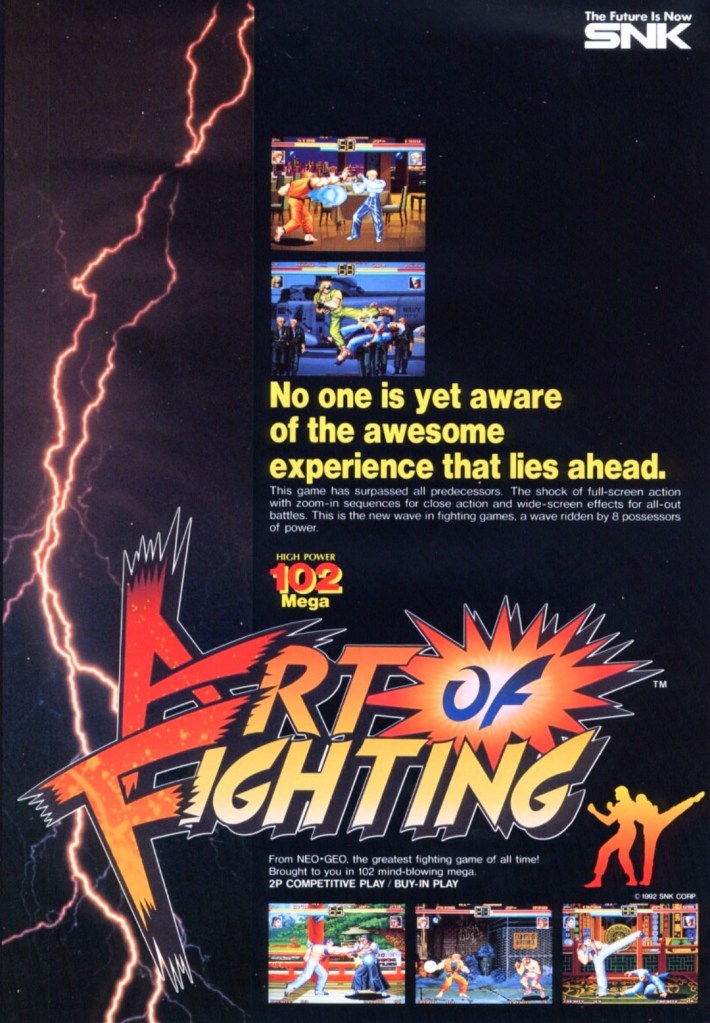
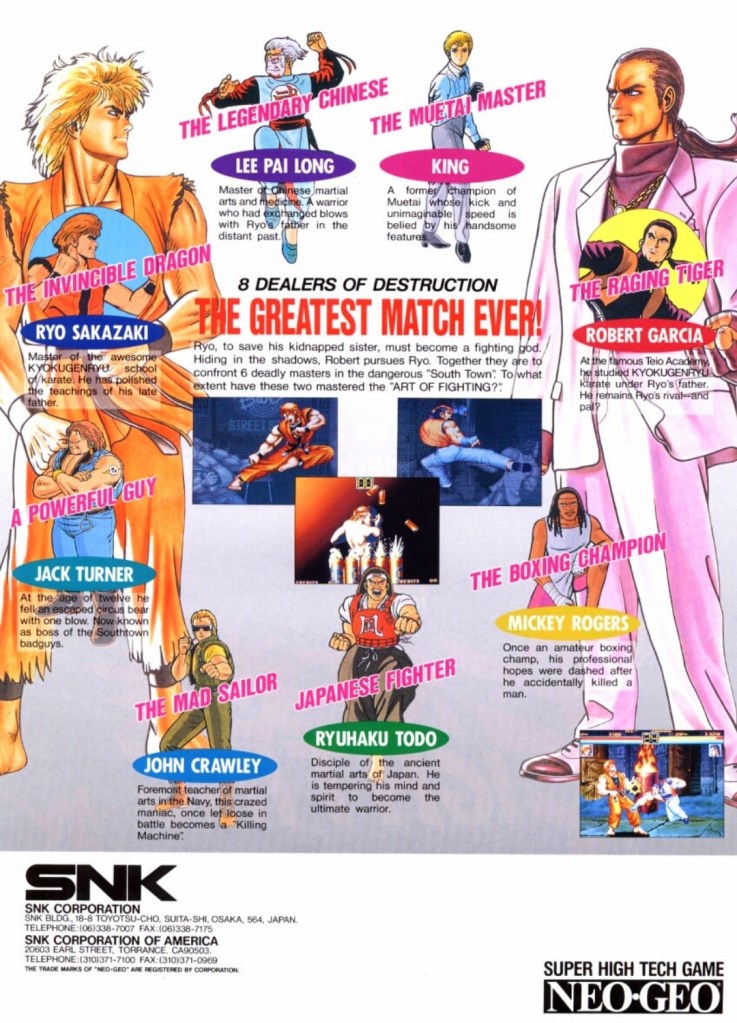
7. Art of Fighting arcade flyer
The front of the flyer.
The cast of characters showcased on the other side of the flyer.
Following the success of Fatal Fury, SNK went on to release Art of Fighting in arcades in 1992 and it became successful enough for the company to make sequels. With regards to the realm of fantasy, Art of Fighting was part of the same fictional universe as Fatal Fury and The King of Fighters, and there were times when its own characters appeared in other SNK games.
Art of Fighting’s arcade flyer had an energetic visual concept on the front with a rectangular lightning portion on the left balanced with five screenshots of the game itself. Once you get to the other side of the flyer, you will see really nice art of the characters with Ryo Sakazaki and Robert Garcia as the most dominating figures. Sakazaki and Garcia are the major characters of the Art of Fighting series. This flyer confidently introduced the characters and succeeded in making them look interesting.
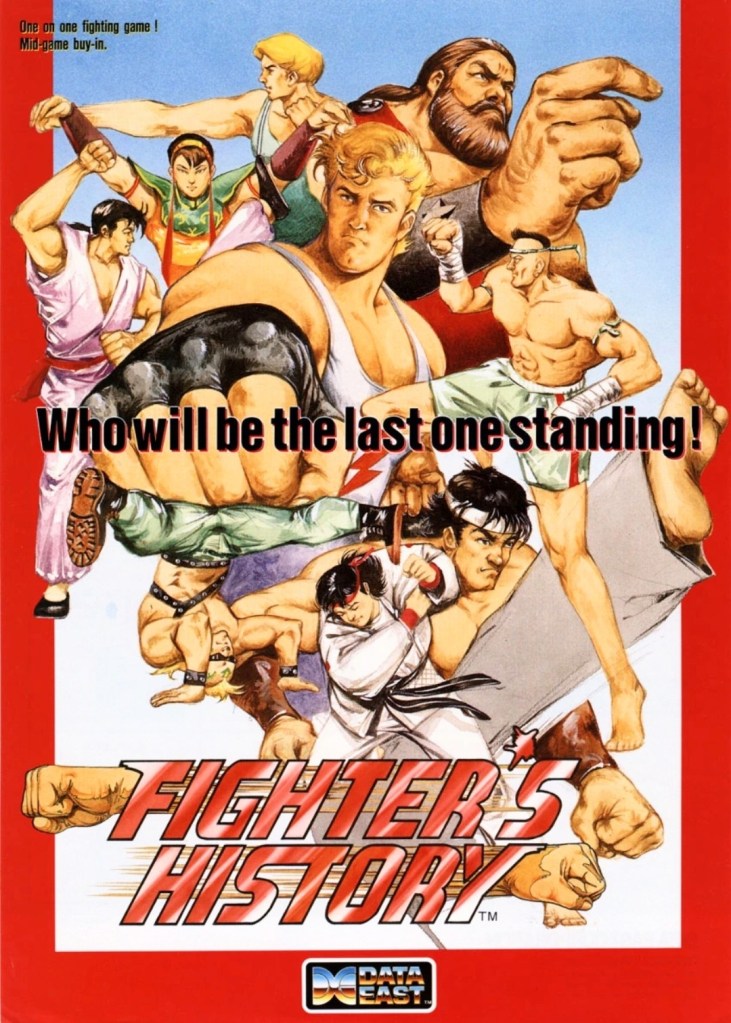
8. Fighter’s History arcade flyer and print ad
Great looking front artwork showing the game’s characters, posing and some action.
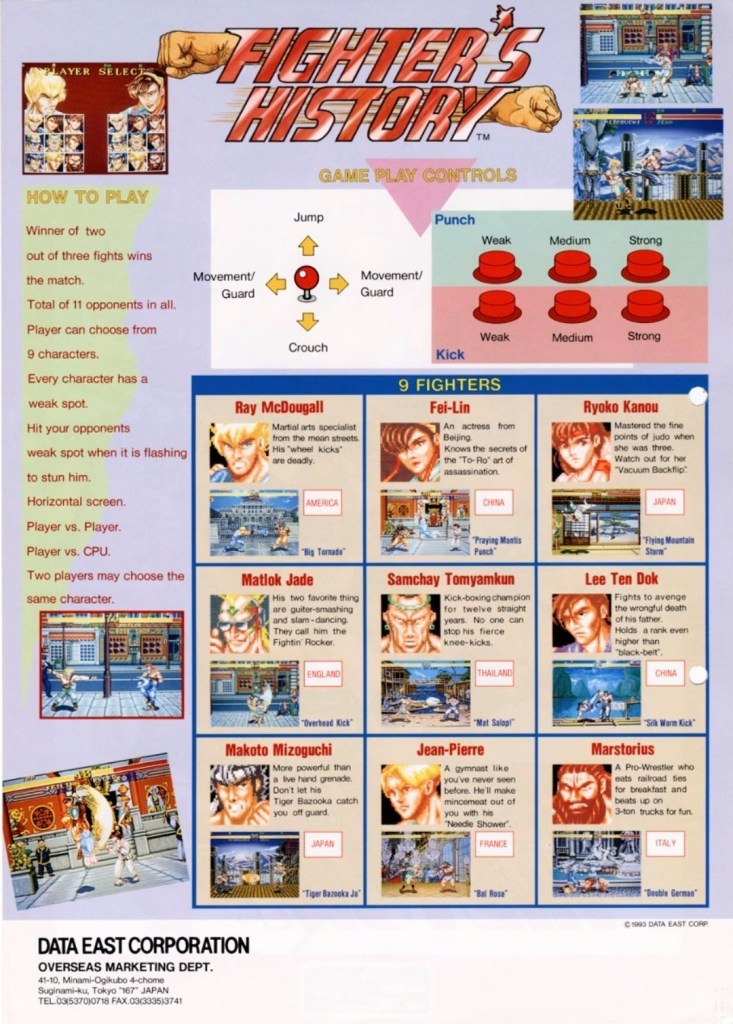
If you look closely at the controls, you will see the six-button layout and functions which are the same with those used in Street Fighter II.
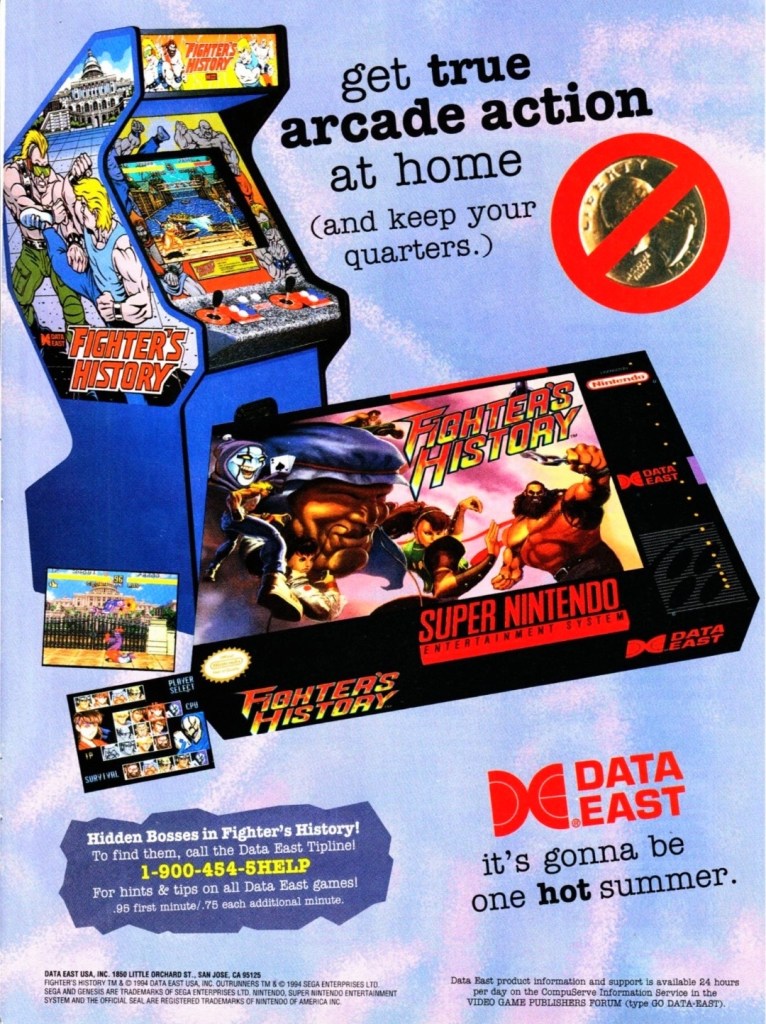
Data East offered two ways for gamers to enjoy Fighter’s History – pay a high price for the SNES version or gamers can go play the game in the arcade by dropping a few coins.
In 1993, Data East released their fighting game Fighter’s History in the arcades around the world. Along the way, the company released their arcade flyer which had a very captivating art work on the front featuring their characters and some action. The other side of the flyer showed the technical details on how to play, how the control works and who the characters are. Fighter’s History was nicely received in the arcades and the success led Data East into porting the game for the Super Nintendo Entertainment System (SNES). If you look at the print ad above, you can see how clever Data East was promoting the SNES version of the game while keeping an image of the arcade machine which serves like a subtle reminder that the same game is still available in video arcades.
Shortly after the release of Fighter’s History in the arcades, there were gamers who noticed that it had certain visual and gameplay elements that made it so familiar with what Street Fighter II had. When Capcom became aware of the similarities, they sued Data East claiming that Fighter’s History was too similar to their game and that copyright infringement was committed. Capcom lost the case ultimately and Data East went on to release two more Fighter’s History games.
9. Virtua Fighter 3 arcade flyer
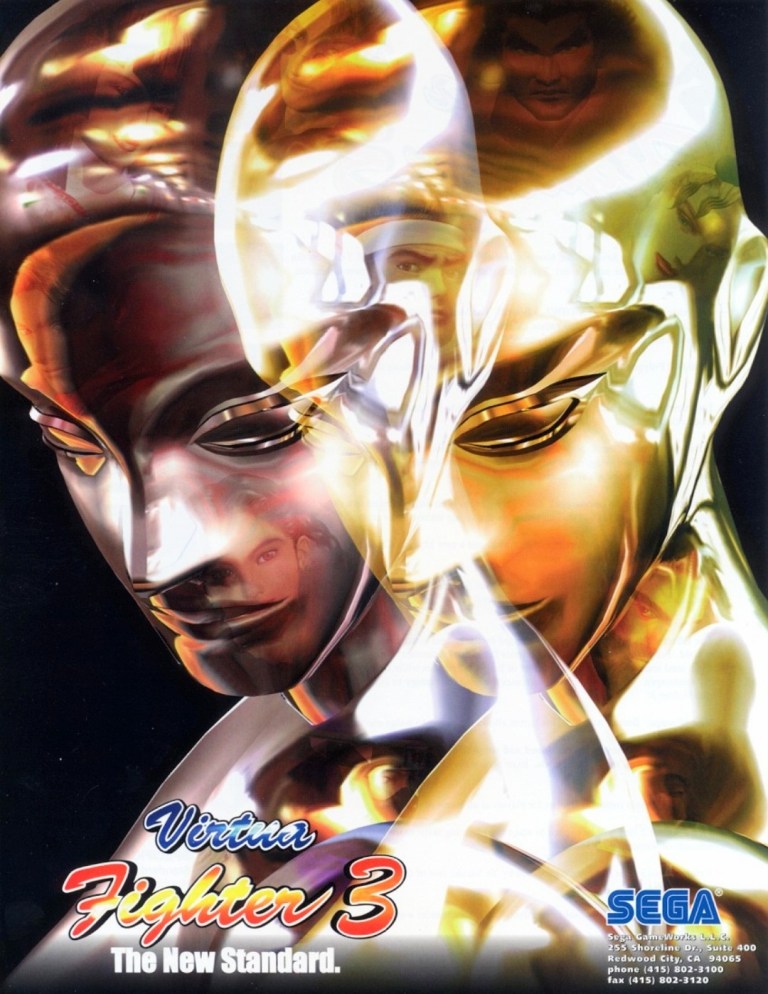
Virtua Fighter 3 truly raised the standards for arcade game graphics back in 1996.
When it comes to gaming innovation and standing out among the rest, Sega did exactly those when they released Virtua Fighter 3 in arcades in 1996 and it had the best-looking and really mind-blowing graphics at the time. Developed by AM2 (led by Yu Suzuki) on the very expensive Model 3 arcade hardware, Virtua Fighter 3 broke new ground on graphics as it moved over 1 million polygons per second, had highly detailed visuals on the characters and surroundings, realistic reflection effects, detailed shining, parallel lighting and high-specular Gouraud shading to name some. Even the characters’ eyes followed the opponent’s position.
The Virtua Fighter 3 arcade flyer showcased their reflective, metallic character Dural who in turn was part of the graphical showcase (emphasizing reflections, smooth animation and liquid metal effects) when the game was previewed in the 1996 AOU event in Japan. The words “The New Standard” written on the lower-left corner of the front of the flyer was justified and truthful.
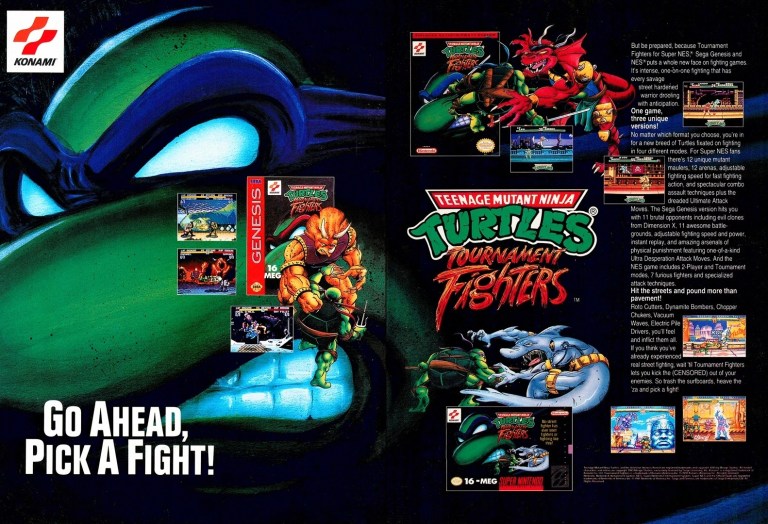
10. Teenage Mutant Ninja Turtles: Tournament Fighters print ad
This print ad had a nice visual presentation and was easily recognizable to the many TMNT fans.
In 1989, the Teenage Mutant Ninja Turtles (TMNT) franchise made quite a splash on video games which is not surprising as the multimedia franchise was already a popular in the West. More video game adaptation of TMNT were released in the early 1990s providing fans and gamers a lot of fun gameplay at the arcades (click here) and on consoles. Konami had the video game rights of TMNT and in a clear response to the sudden popularity of fighting games, they released Teenage Mutant Ninja Turtles: Tournament Fighters on the most popular game consoles of the time achieving varying levels of success critically and commercially (note: the SNES version stood out as the best). This print ad of the fighting game was effective in visually promoting the three console versions and the displayed text contained enough information to lure the attention of both fans and gamers.
If you are an Xbox fan who is fond of Japanese role-playing games (JRPGs), then I encourage you to buy Grandia HD Collection which is available for Xbox online. I am saying this because recently I enjoyed replaying the classic JRPG Grandia on my Xbox Series X a lot and I finished it once again (my 2nd time overall including my 1999 completion of the game on PlayStation). This is not a game review of Grandia but a commentary of replaying it from start to finish.
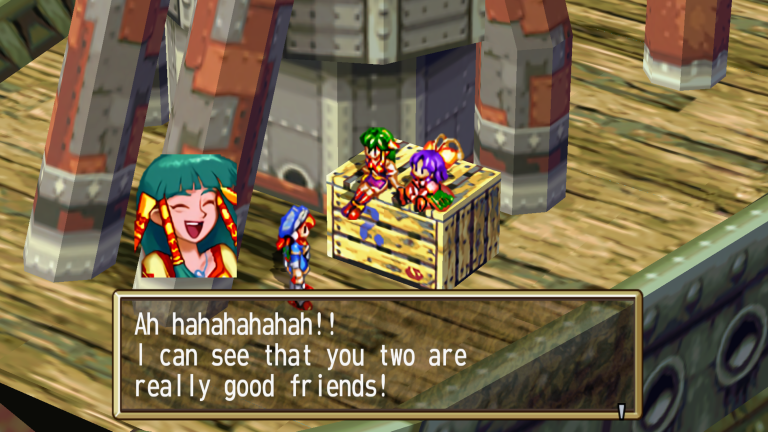
Feena and Justin are very memorable protagonists. The writers of Game Arts really did their jobs developing and defining the personalities of the characters.
For the newcomers reading this, Grandia HD Collection contains Grandia and the sequel Grandia II. Grandia was originally released on the Sega Saturn in Japan in 1997 and was ported to PlayStation shortly after. It was on the PlayStation when Grandia was translated and dubbed into English and released to gamers in the West. Grandia II was released originally on the Dreamcast console in both Japan and America in 2000. Eventually the sequel was ported to the PlayStation 2 and Windows PC in 2002.
Going back to the original Grandia, the game has visuals that were remastered and made clearer to look at while still maintaining the vibrant colors of its late-1990s version. It took me a little over fifty hours to complete on my Xbox Series X and I can say that the entire replay experience was indeed a lot of fun to do. I’m so happy and satisfied with finishing Grandia, I already got my money’s worth with the entire Grandia HD Collection. I’m currently playing Grandia II and so far I’ve been enjoying it.
Game Arts was exceptional with their work on the graphics and art style.
Without spoiling the story, I can say that Grandia was written and made to emphasize the wonders and risks of adventuring while managing to dramatize a tale of epic fantasy proportions. Along the way, the game has a memorable cast of characters – Justin and Feena are clearly the leads – and the creative team of Game Arts really ensured that their personalities got developed (as the story moved on) and became worth caring for.
The gameplay is also fun to go through once again. There is a satisfying room for exploration whenever I visited a new location and the battle system is still top-notch in terms of mechanics, presentation and functionality. I should say that the battles are not too stressful to do and that means it is more doable to do some grinding to make your characters stronger and their abilities better.
After finally defeating the main villain and completing the last conflict, it was really nice to see the story’s ending (told with a labor of love by the game developers) as well as the follow-up cut-scene that played after the end credits rolled (read: post-credits ending). It’s like 1999 all over again but with much better visuals and the benefits of playing the game on Xbox Series X connected to our 4K TV. This is both retro gaming and fantasy role-playing of great quality and deep enjoyment!
By finishing Grandia and enjoying it a lot, I already got my money’s worth with Grandia HD Collection.
There is no doubt that Grandia is the best gaming experience I’ve had on Xbox this year. That being said, I encourage you fellow Xbox gamers as well as those who love JRPGs to seriously consider buying Grandia HD Collection while it is still available.
Welcome back readers, fellow geeks and electronic gaming fans!
In this edition of the Retro Gaming Ads Blast (RGAB) series, we will take a look at another batch of retro gaming print ads – including arcade flyers – from the 1980s and 1990s.
For the newcomers reading this, Retro Gaming Ads Blast (RGAB) looks back at the many print ads of games (console, arcade, computer and handheld) that were published in comic books, magazines, flyers and newspapers long before smartphones, social media, the worldwide web and streaming became popular. To put things in perspective, people back in the 1980s and 1990s were more trusting of print media for information and images about electronic games and related products.
With those details laid down, here is the newest batch of retro gaming print ads for you to see and enjoy…
1. X-COM: UFO Defense print ad
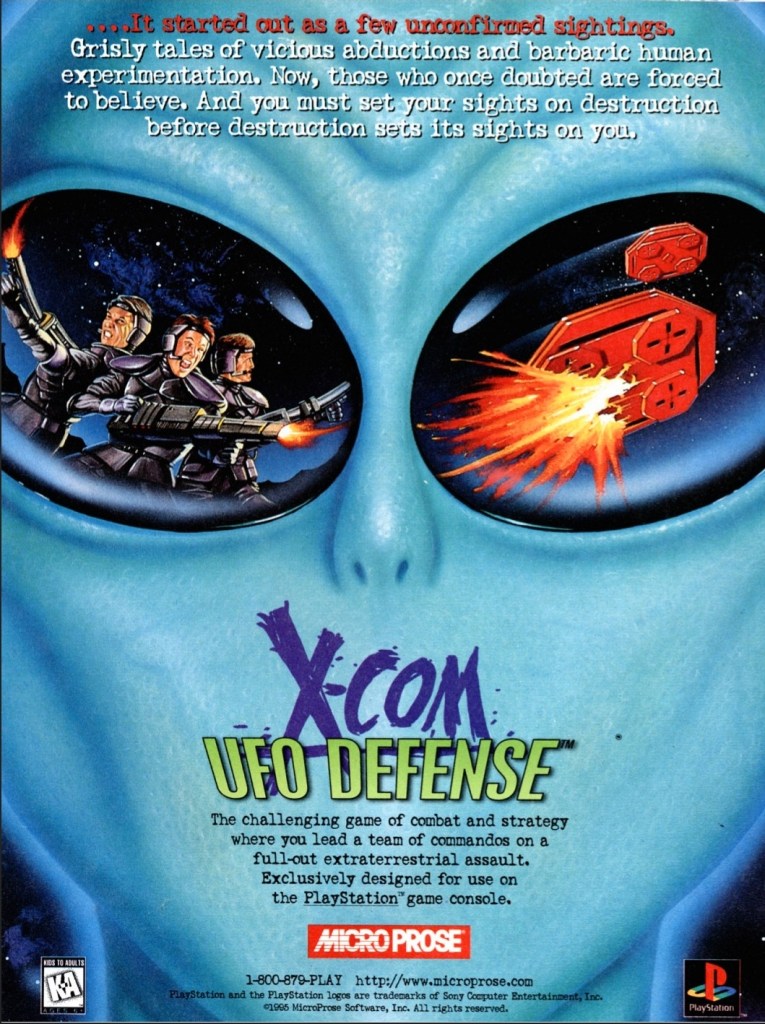
While there were no screenshots of the game for PlayStation, the art here was enough to catch your attention.
Back in 1994, X-COM: UFO Defense (original European title: UFO: Enemy Unknown) became an unexpected hit with PC gamers as it gathered lots of positive reviews from the critics and sold a lot on the PC DOS (disk operating system) format. In an obvious attempt to continue the commercial success, a port of the game was released for the PlayStation console in 1995. Publisher MicroProse and its marketing partners came up with this eye-catching print ad to promote the PlayStation version. While no screenshots were shown, the artwork used turned out to be effective in catching attention while emphasizing the sci-fi concept of the game.
2. Star Command print ad
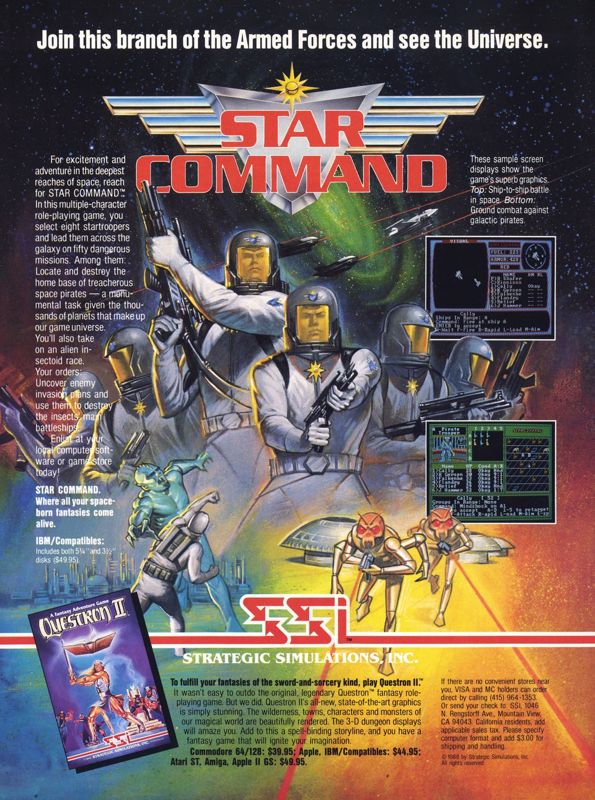
Long before Starfield, there was Star Command.
Way back in 1988, I first saw my friends play the sci-fi role-playing game (sci-fi RPG) Star Command on the PC DOS format. A short time later, I played the game on our home computer and finished the single-player campaign. This print ad, which has lots of descriptive text, has a strong visual presentation that entices players to play the game and discover the vast amount of content (space travel, missions, battles, encounters with aliens) that the game developers prepared. For its time, the Star Command print ad was captivating to look at.
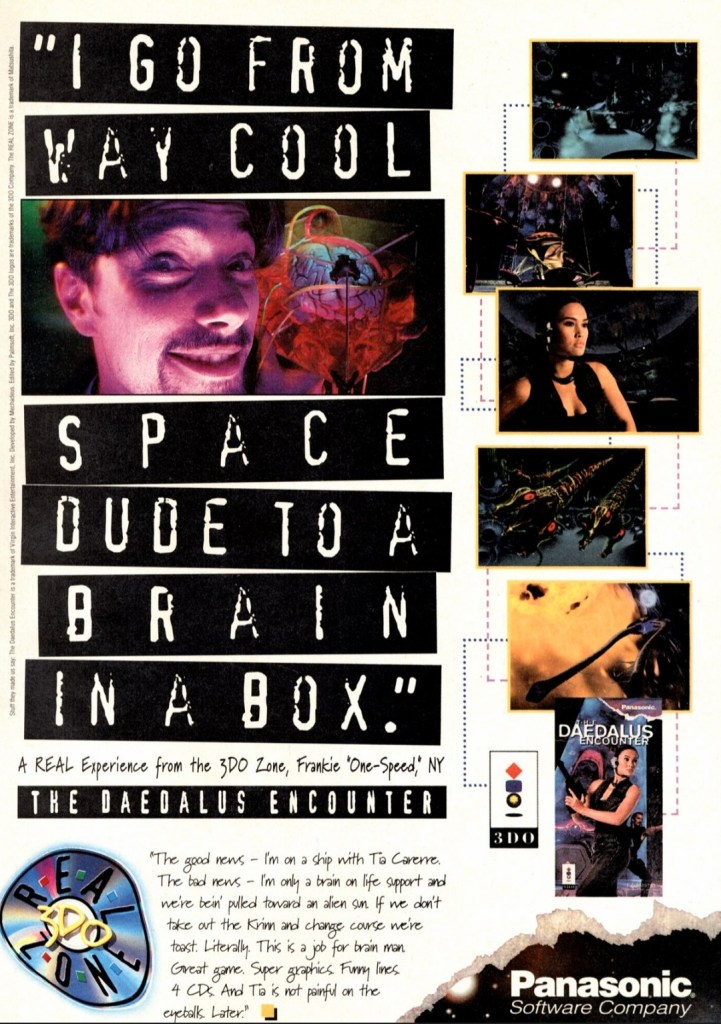
3. The Daedalus Encounter print ad
This print ad was an attempt to catch the attention of both gamers and people who want to watch live-action spectacle.
Released on PC, Macintosh and the 3DO game console in 1995, The Daedalus Encounter was a sci-fi video game that worked as an interactive movie (with puzzles) starring Tia Carrere. To promote the 3DO version, publisher Panasonic came up with an ad that emphasized the sci-fi concept and the cinematic experience (including a few stills of cutscenes) leaving little room about how the game plays. Take note that this game was released at a time when the CD-ROM format started gaining popularity as a reliable optic media format which opened opportunities for game companies to include full-motion videos.
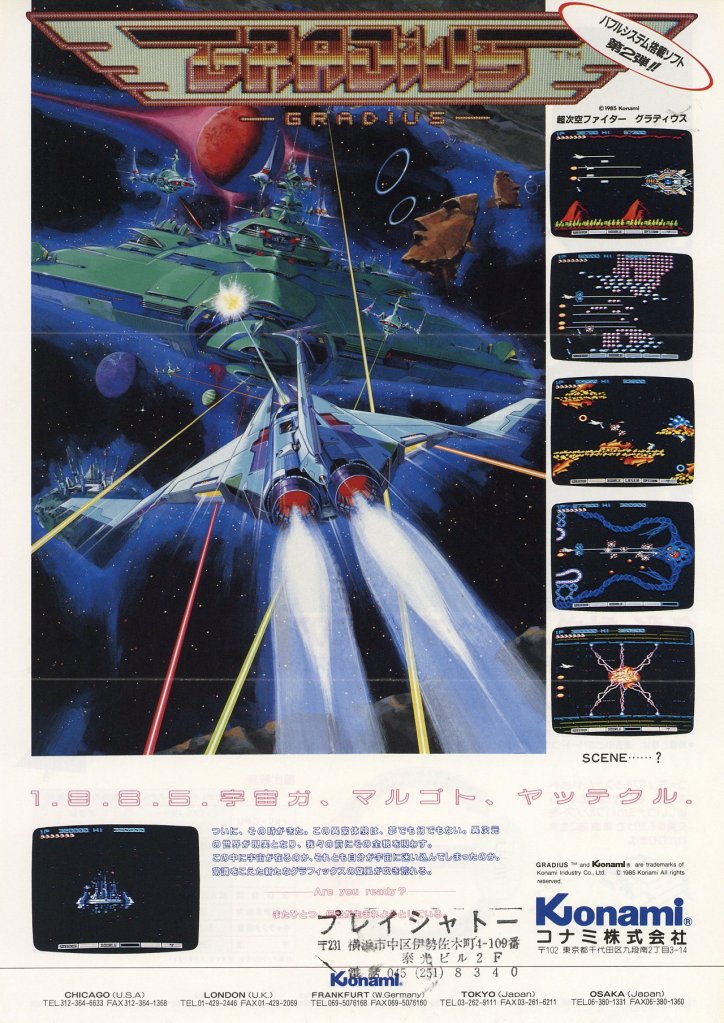
4. Gradius Japanese arcade flyer
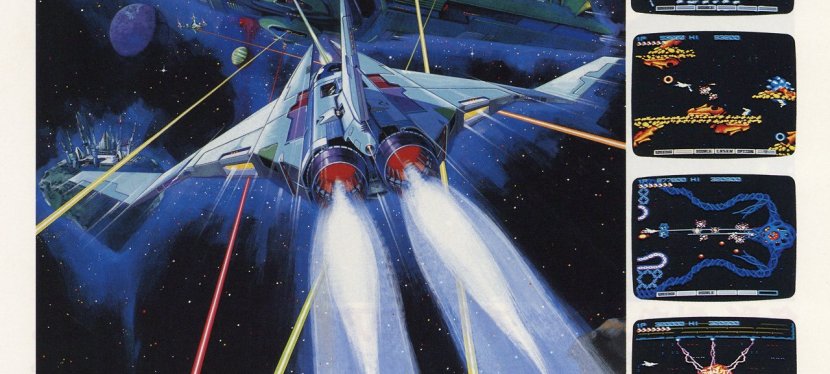
The original Gradius has always been fun to play and the enjoyment also made it on game consoles as more games were released.
Still on the realm of sci-fi, Konami launched their 2D side-scrolling shooter Gradius in the arcades in Japan in 1985. The arcade flyer here used a huge amount of space for the game’s official artwork which is very captivating to look at as it clearly emphasized the sci-fi concept. On the side are five screenshots that tell gamers what to expect when playing. The promotions paid off nicely for Konami as Gradius became an instant hit in Japanese arcades and eventually found strong commercial success in the arcades in Europe and America. By today’s standards, this game is a classic and the Gradius game franchise has produced several sequels and spin-offs released on multiple platforms.
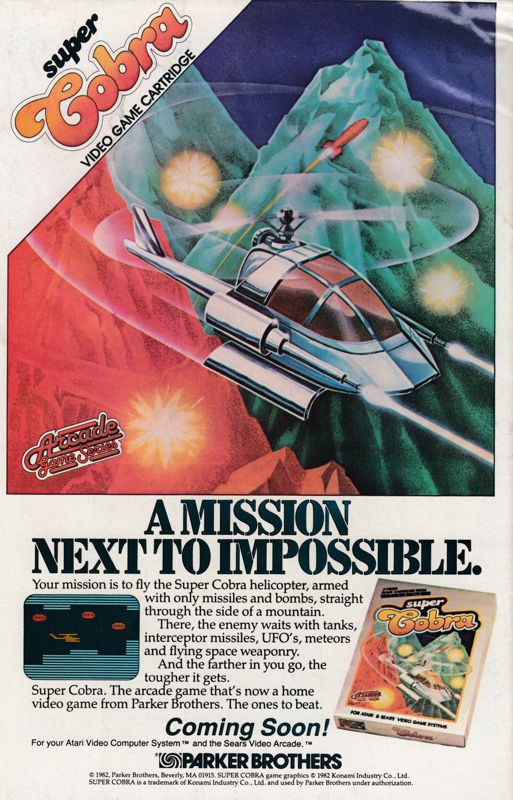
5. Super Cobra print ad
This ad I saw while reading comic books long ago. The game itself was fun.
Here is a game I played on the Atari 2600 over forty years ago. Super Cobra was a 2D side-scrolling game in which players control an armed helicopter that has to move from left to right, attacking enemies, and avoiding enemy projectiles while maintaining the fuel supply. This ad, which appeared on some comic books I read, utilized the game art that was used on the box cover although the single screenshot displayed looks exaggerated when compared to what I saw and played.
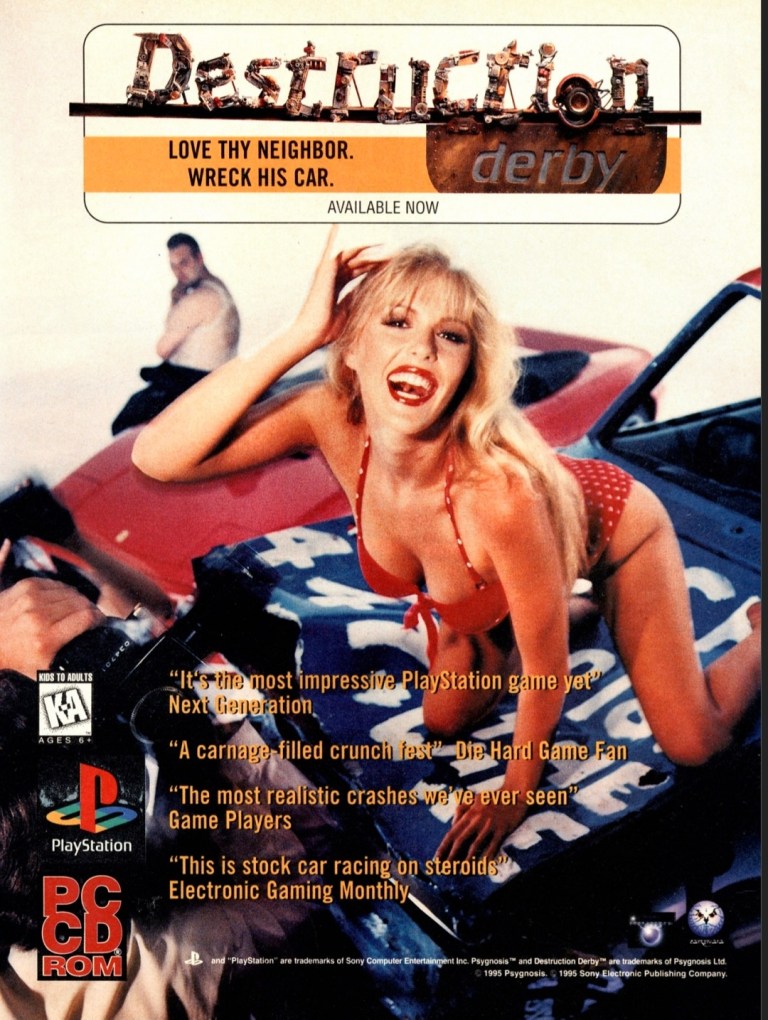
6. Destruction Derby print ad
The Destruction Derby print ad that had no screenshots of the game.
In 1995, Sony launched the PlayStation console in America and in Europe. In Europe, publisher Psygnosis promoted their ambitious game Destruction Derby (a 3D polygonal racing game that emphasized vehicular damage) for both PlayStation and the PC that same year. As this Destruction Derby print ad did not show any screenshots, Psygnosis and their marketing team or partner decided to pounce on positive gaming media quotes and the sexy model to promote their game. Their marketing move paid off nicely as over a million copies of Destruction Derby were sold by August 1996.
7. Virtua Cop 2 print ad
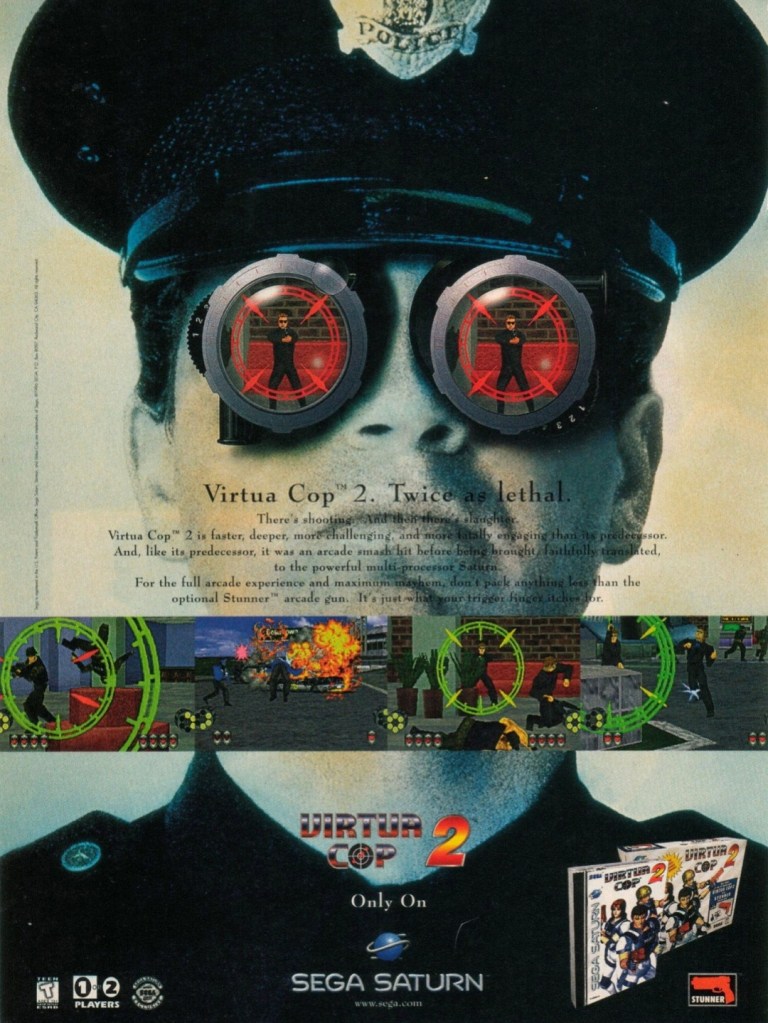
A lot of people found this Virtua Cop 2 print ad looking very weird.
When Sega of Japan forced its American division to launch the Sega Saturn console in the United States in 1995 without any pre-release marketing, it resulted in a series of disappointments that include low sales, too few games launched and strained ties with their business partners. In 1996, Sega started to become more aggressive to sell more Saturn units and more 1st party exclusive games such as Virtua Cop 2 (for the Saturn) which itself was a big hit arcade hit. As the company clearly aimed to make the console version of Virtua Cop 2 a hit, they approved this print ad which had a very intriguing visual concept showing video game images reflected on the glasses on the police man. As Virtua Cop 2 required a light-gun peripheral to be played accurately like in the arcade, this print ad utilized very little space for the Sega Saturn Stunner.
8. Contra: Legacy of War print ad
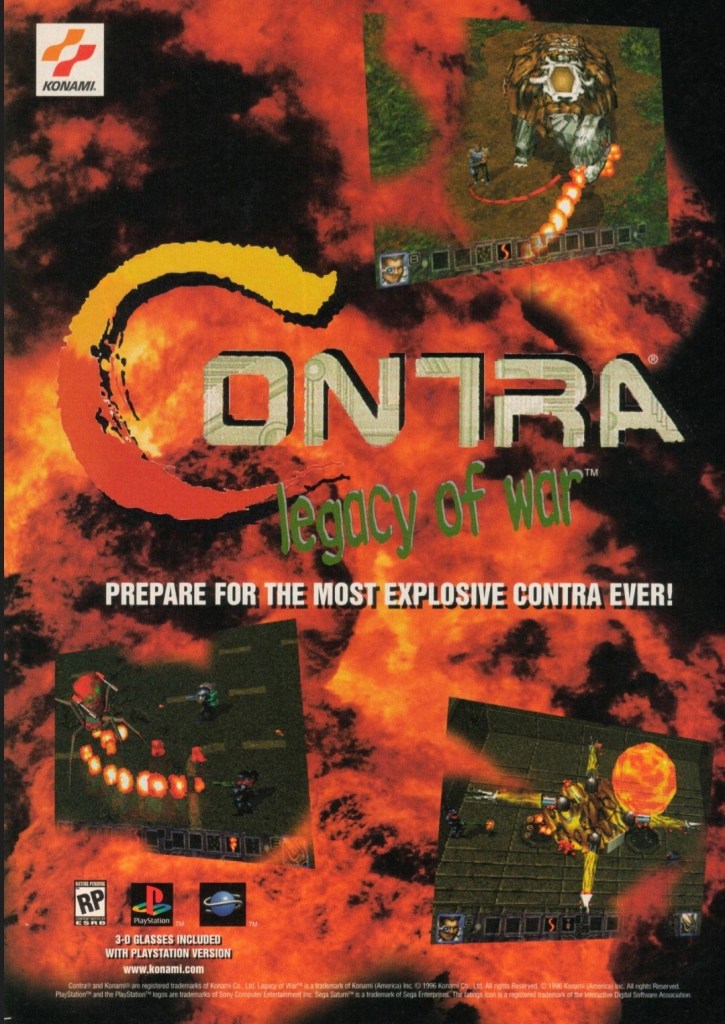
The print ad of Contra: Legacy of War.
When I first heard that a brand new game of Contra would be released on the still-new PlayStation and Sega Saturn in the mid-1990s, I was excited as I always enjoyed the original game I played on the Family Computer. This print ad of Contra: Legacy of War brought my excitement way down as it showed that the game no longer utilized the 2D side-scrolling design and came up with a design that emphasized 3-dimensional environments and polygons. The change in design was too alienating for me as all the previous Contra games had the 2D side-scrolling format as the main designs (leaving little room for the occasional sprite-scaling 3D sequences in some games). I finally played Contra: Legacy of War on PlayStation on November 1996 and it was a huge letdown!
9. Out Run arcade flyers
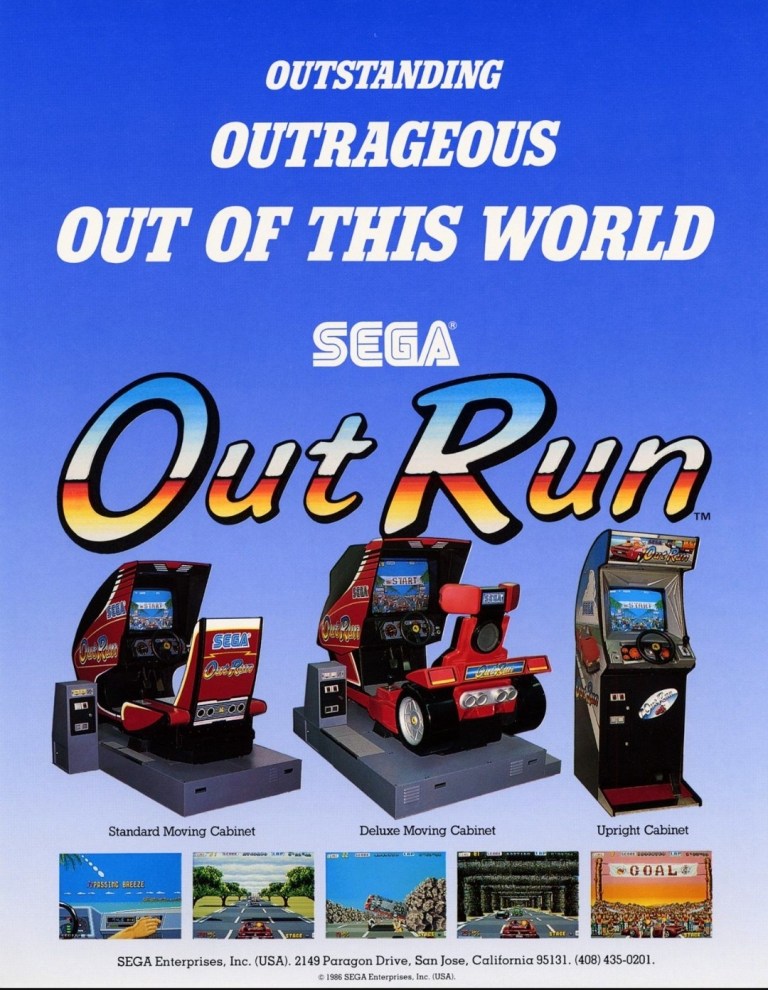
Sega Out Run arcade machines in different forms.
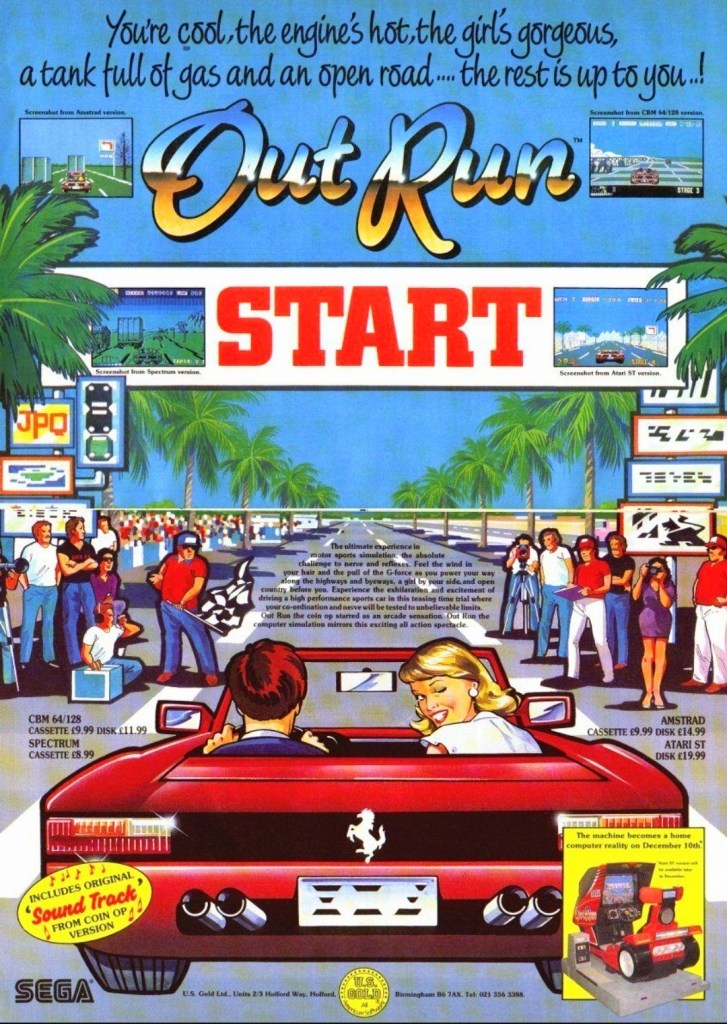
This Out Run flyer really has nice art.
In the history of arcade games, Sega’s Out Run was a massive success not only in Japan but also in America and Europe. Designed by Yu Suzuki (Virtua Fighter, Shenmue), Out Run was a pseudo-3D driving game in which players get to drive a Ferrari Testarossa convertible (which is always visible to the player) from one scenic destination to the next avoiding traffic as much as possible. This was indeed a labor of love on the part of Yu Suzuki who himself spent time in Europe to gain inspiration on designing the game. As Out Run was a hit, Sega made different types of machines of the game that arcade operators can choose from depending on how much space their respective arcades have left and how the local players prefer to play it. It should be noted that in one of the flyers above, the original sound track was promoted as well.
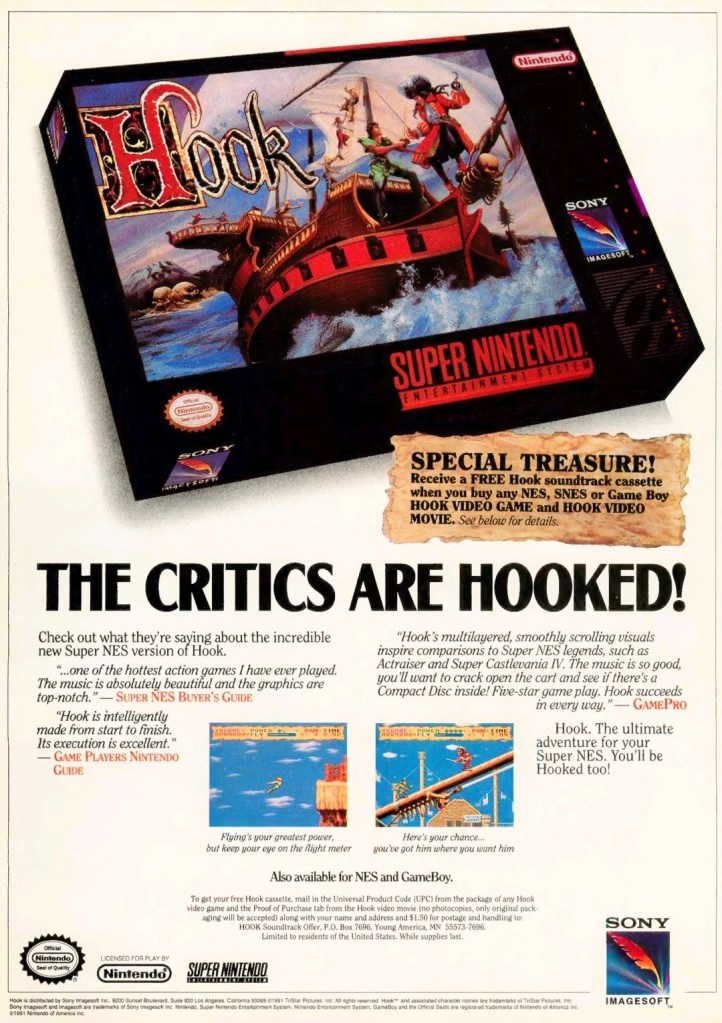
10. Hook SNES version print ad
If you look closely at the SNES box front cover art, you will notice that Peter Pan and Captain Hook looking nothing like the actors who portrayed them in Steven Spielberg’s movie.
In late-1991, Steven Spielberg’s movie Hook was released in cinemas and revived public interest in the fairy tale of Peter Pan. Typical of the entertainment business of the time, video games based on the movie were released on different platforms in 1992 and among them was a version on the Super Nintendo Entertainment System (SNES). Apart from showing the game’s box, the print ad of Hook on SNES cleverly included positive quotes from GamePro, Game Players Nintendo Guide and the Super NES Buyer’s Guide to convince readers that the game is worth their time.
After enjoying the big reveals and surprises of the Xbox Games Showcase this past June, things went downhill in recent times. For one thing, I really don’t like the changes Microsoft is implementing on Xbox Game Pass (click here and here to learn the details). With regards to new Xbox stuff this year, the fantasy role-playing game Avowed has been delayed to February 2025 while Indiana Jones and The Great Circle still has no firm 2024 release date as of this writing.
When it comes to games I’ve been playing a lot with my Xbox Game Pass (XGP) subscription, Eiyuden Chronicle: Hundred Heroes was recently patched but it still did not solve the game crashing and shutdown on my Xbox Series X. Rabbit & Bear and 505 Games still have a lot more work to be done to significantly fix and improve Eiyuden Chronicle: Hundred Heroes on Xbox Series X.
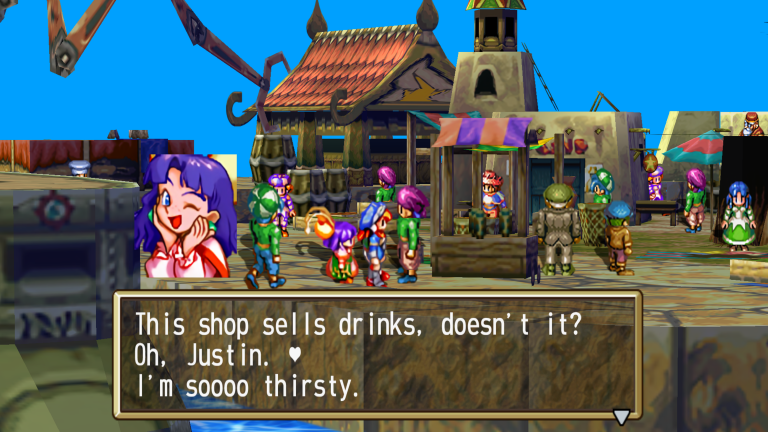
My Xbox enjoyment improved when I started playing the original Grandia after purchasing Grandia HD Collection on the Xbox online store. For the newcomers reading this, Grandia HD Collectioncontains Grandia (released on PlayStation and Sega Saturn) and Grandia II (released on Dreamcast and PlayStaion 2) and those games have remastered visuals with high-definition TVs (HDTVs) in mind. In my experience, I played and finished Grandia on the original PlayStation console way back in 1999. I never played its sequel but will do so some time later.
As soon as I downloaded Grandia HD Collection on my Xbox Series X, I started playing Grandia for the first time in decades but with HD visuals and other refinements.
Developer Game Arts did amazing work creating the fantasy world and visual concepts that made Grandia a special game to play.
After watching a nice introduction (in animation), the story started with a short scene introducing Mullen, Lieutenant Leen and their superior General Baal. After that, the game’s focus shifted to the port town of Parm with a stylish floating camera sequence showcasing in real-time the polygonal location and the inhabitants (presented as detailed 2D animated bitmap sprites). Shortly after, the youngling Sue and the aspiring adventure Justin got introduced.
As of this writing, I played Grandia for several hours and already surpassed the End of the World (the wall that separated the initial world from the mysterious other. I already have Justin, Sue, Feena and Gadwin in my party.
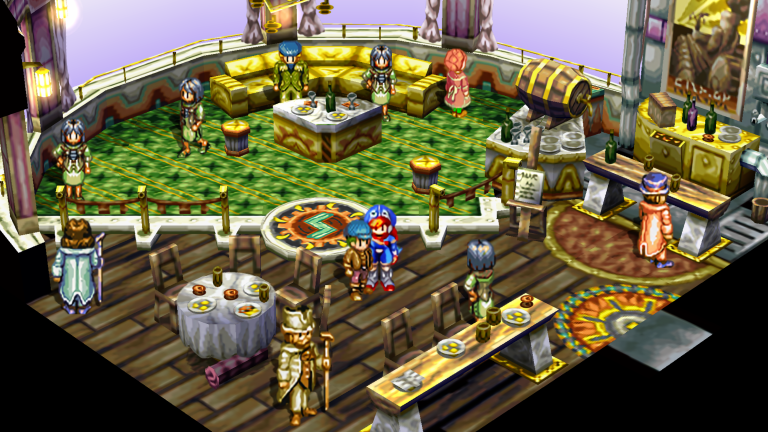
This is the lounge for the upper class passengers on board a ship. Grandia is a fine example of combining 2D sprites with detailed polygonal environments.
Much early during my playthrough – specifically before witnessing Feena’s first appearance – I had fun rediscovering the unique locations Game Arts created. The town of Parm is a pretty unique location to start the game with. The Sult Ruins were designed with with sneaking and adventuring in mind. Through these and other locations, you will see how creative the game developers really were when it came to world-building as well as giving each location its own unique style and feel.
Because it had been so long since I finished this old Japanese role-playing game (JRPG), I had to orient myself with the game’s functions using the Xbox Series X controller and the technical options that came with the software. I quickly got used to the way the characters’ moved (in response to the controller), the way I was able to move the in-game camera around and how the functions responded to the buttons pressed. In just a few minutes, the Grandia gameplay familiarity came back to me.
Battles are always fun to play and grinding (playing many battles to gain experience points to level up) is not as stressful when compared to other JRPGs.
Game Arts came up with clever views of a local community like this to give gamers a unique look of this part of the game’s world.
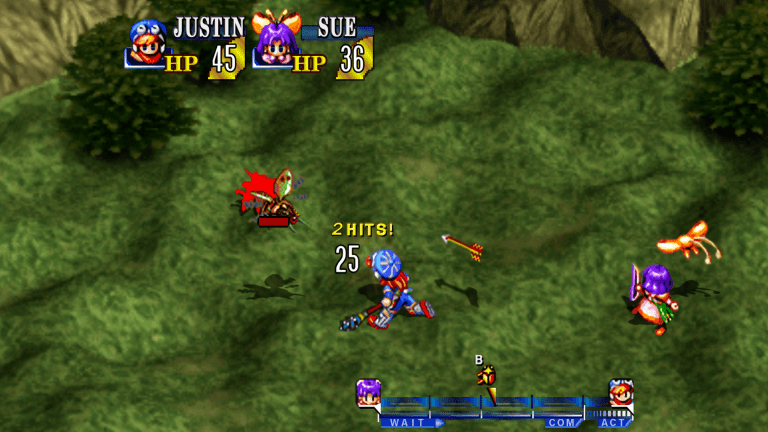
Oh yes, the battles are still a lot of fun to play! During battles, there is this bar on the lower part of the screen showing the icons of your characters and monsters/enemies moving from left to right. Once the icon reaches a crucial point at the right, the game will enable you to take your turn and decide which action to execute. Once you made your choice of action, your character will be animated accordingly. It should be noted that striking enemies will not only reduce their hit points but also delay the flow of their icons on the bar. As such, battles can be strategic with regards to the actions you take and which enemy you targeted.
With regards to leveling-up, you don’t just gain experience points to develop and improve your playable characters. You will also improve their use of weapons and magic as they involve leveling-up. Along the way, you will get opportunities to acquire weapons and armor, and you can have different types of magic implemented into your character with the use of the Mana Eggs. The freedom of choice is clearly evident in the gameplay.
In addition to enjoying the gameplay and options, I appreciate the Game Arts’ approach on telling the story, the light-hearted way of presenting the characters and how they implemented creative pay-offs to the build-ups that preceded them. I also enjoyed the many visual concepts the developers came up with to make Grandia’s fantasy world, cultures and people come to life.
While I am still several hours away from finishing Grandia again, I can say that my current enjoyment of is literally returning with a vengeance and it helped me forget about the Xbox-related disappointments.
Right now, I am enjoying Grandia in HD and I intend to finish it again.
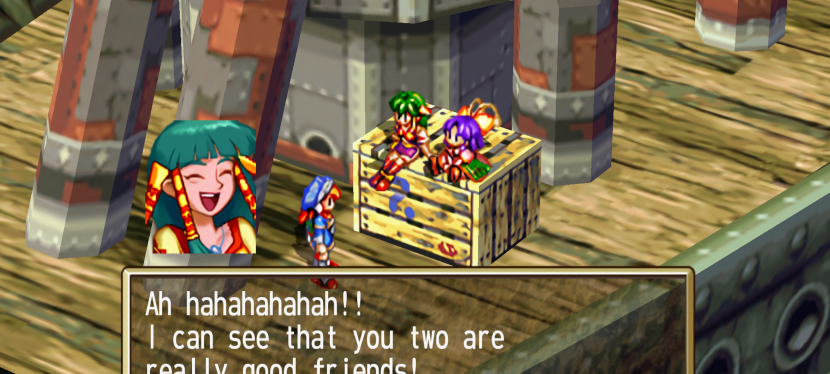
Feena with Sue and Justin. These characters are memorable and amusing to watch.