Welcome back my readers, YouTube viewers and all others who followed this series of articles focused on YouTube videos worth watching. Have you been searching for something fun or interesting to watch on YouTube? Do you feel bored right now and you crave for something to see on the world’s most popular online video destination?
I recommend you check out the following videos I found.
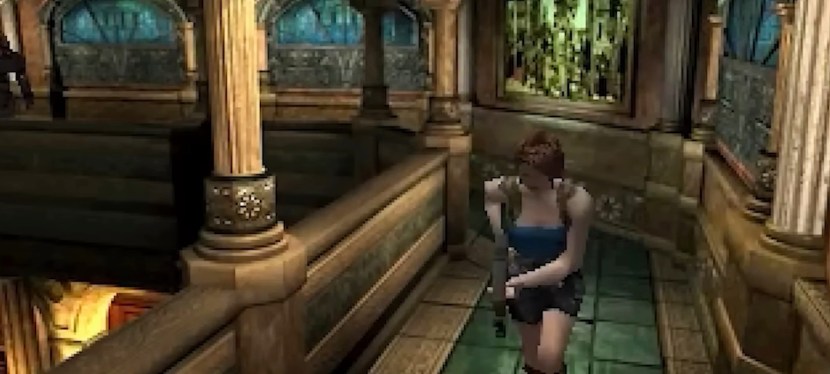
#1 Resident Evil 3: Nemesis Revisited – Looking back in the years 1998 and 1999, the Resident Evil franchise of games became wildly popular and was even considered by some as Capcom’s most important franchise. The huge success of Resident Evil 2 convinced Capcom to approve a line of several Resident Evil-related projects for release on different platforms. One of those projects was Resident Evil 3: Nemesis which was actually a side-story game released in late-1999 and eventually sold in the millions for the company. The reception from the fans was mixed…some fans felt it was a worthy follow-up to RE2 while others felt it was unsatisfying. To understand how RE3 came to be, which content got cut and what exactly happened behind the scenes, watch the retrospective video below.
#2 The Many Scams And Rip-offs In Las Vegas –Las Vegas can be a fun place to visit if only you have enough money, you know where to go and if you have the knowledge to prevent yourself from getting scammed or paying for the wrong things. Every day, a lot of people got fooled into paying questionable products/fees/services and getting cheated by different types of people in Las Vegas. To protect yourself and do the right things before visiting Las Vegas, watch and learn from the video below.
#3 Escape From New York Revisited – What can there be said about the 1981 movie Escape From New York? On face value, it looks like an action movie with a terrifying portrayal of New York City but it was something else. Director John Carpenter wrote the film as his reaction to the Watergate scandal, and their team hired Kurt Russell to play Snake Plissken. Even though it was never a massive blockbuster film, Escape From New York has some socially relevant themes and entertained people in different ways which explains why it has become the subject of many YouTube videos. Posted below for you are selected reaction videos plus one trivia video of the movie.
#4 The Hidden Villages Of Japan – When it comes to exploring Japan, there are a lot of places to visit way outside of the metropolitan areas. Nippon TV recently posted a video about Japanese villages that have been hidden in the mountains of the central part of the country. These places have been well preserved and the same can be said about their culture and traditions. There is also the famous “Samurai Road” that is scenic and should interest people who enjoy traveling along mountain trails. Watch and enjoy the video below.
#5 A Look Back At Stardust Of Las Vegas – The first time I visited Las Vegas was in 1989, and I saw the Stardust Resort and Casino while riding the car. I never had the chance visit Stardust but I noticed its appearances on TV and movies. Opened in 1958 and closed in 2006, Stardust was indeed a lively establishment of the Las Vegas trip having attracted lots of tourists and gamblers. Its legacy, however, is not very pretty as there were lots of criminal elements and scandals that happened behind the scenes. To learn about the history of Stardust, watch the video below.
Welcome back my readers, YouTube viewers and all others who followed this series of articles focused on YouTube videos worth watching. Have you been searching for something fun or interesting to watch on YouTube? Do you feel bored right now and you crave for something to see on the world’s most popular online video destination?
I recommend you check out the following videos I found.
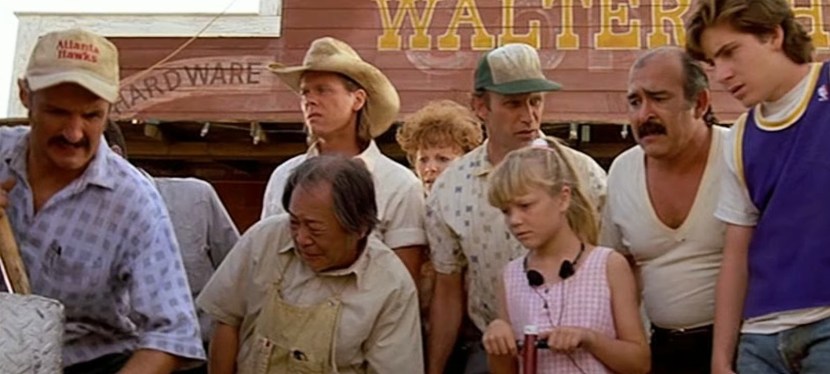
#1 Tremors Revisited And Explained – By today’s standards, Tremors is a classic among monster movies (AKA creature features) Hollywood released. With the way it was written and presented, Tremors is always fun to watch again. I have seen it many times and yet it is worth repeating from start to finish. Behind the scenes, there were a lot of stuff, adjustments and unexpected developments that happened during production. If you wish to see such stuff, watch and learn from the Tremors videos of Represent This below.
#2 A Look At Excalibur In Las Vegas –I never had the opportunity to visit Excalibur in Las Vegas. During its first several years of operation, Excalibur welcomed countless tourists with its fantasy-themed atmosphere, designs, facilities and entertainment. Imagine having a meal while watching two knights riding horses and performing a joust in front of you. Imagine seeing members of the hotel staff wearing fantasy costumes. Like Circus Circus Hotel and Casino, Excalibur was a fine hotel that catered to families while still having casinos for gamblers. To learn more about what Excalibur was and what made it stand out among the hotels of Las Vegas, watch the video below.
#3 Meals At The Expressway In Japan – How often do you stop for a meal when traveling along a major highway? In many parts of the world, highways or expressways have clusters of gas stations, convenience stores, groceries and restaurants for travelers who need some relief from the stress of long travel. For many travelers, traveling far while being hungry can be a problem. In recent times, Nippon TV posted a video about meals and food items that travelers can find along expressways and the variety is interesting to see. Watch and learn from the video below.
#4 Cleopatra Movie Revisited – Way back in 1963, the movie Cleopatra starring Elizabeth Taylor and Richard Burton was released. The historical epic was made at a staggering cost of $44 million which was almost three times more expensive than 1959’s Ben-Hur. Behind the scenes, 20th Century Fox was in very deep financial trouble and many hard business risks were taken to make Cleopatra. Elizabeth Taylor, who signed a record-setting $1 million contract for the film, had health problems that added to the delay of the production. The film even lost its original movie director. To learn more about the history and the behind-the-scenes intrigue of Cleopatra, watch the video below.
#5 Innerspace Revisited – Innerspace (stylized as InnerSpace) from 1987 is a fun movie to watch and it has fine performances from Dennis Quaid, Meg Ryan and Martin Short. That said, it is not surprising to see Innerspace featured in reaction videos and retrospective videos by YouTubers. For your enjoyment, watch the videos below.
#6 Breath Of Fire Retrospective – When Breath of Fire was first released in 1993, it was a surprising Japanese role-playing game (JRPG) as it had a somewhat fresh concept and it was released by Capcom (already famous for fighting games). The first game was successful enough to convince Capcom to make sequels (released on other game consoles as technology evolved) achieving varying degrees of critical and commercial success. Going back to the original game, some wondered what made it notable and how the game came to be. To find out the history of Breath of Fire and what its story was about, watch the video below.
Welcome back my readers, YouTube viewers and all others who followed this series of articles focused on YouTube videos worth watching. Have you been searching for something fun or interesting to watch on YouTube? Do you feel bored right now and you crave for something to see on the world’s most popular online video destination?
I recommend you check out the following videos I found.
#1 Dawn Of The Dead Remake Revisited – Back in 2004, I saw the Dawn of the Dead remake inside a cinema located inside a shopping mall here in the Philippines. The Zack Snyder-directed film only inspired me to look for the 1978 original version of Dawn of the Dead directed by the late George Romero. The only thing the two films have in common is the concept of desperate people taking refuge inside a shopping mall during a zombie apocalypse. Zack Snyder’s film was more about violent action with horror elements blended with it. As Snyder went on to direct high-profile DC Comics superhero movies and produced other such projects of Warner Bros., it was natural for film buffs to gravitate to 2004’s Dawn of Dead which was his directorial debut. To learn more about the said remake and see the cinematic elements that formed the style of Snyder, watch the videos below.
#2 Premium Sushi, Hearty Tempura And Wagyu Beef For Breakfast In Japan –If you were traveling overseas, how hungry do you get when you start the day? Would you go for a simple and affordable breakfast or would you want something special in the morning? In Tokyo, there are these food joints that offer customers a luxurious breakfast with Wagyu beef, special tempura and premium sushi to name some. Already, local and foreign tourists are flocking to such food joints for the premium breakfast experience and you can learn more from the Nippon TV videos below.
#3 The Different Versions Of Final Fantasy VI – Among all the many Final Fantasy games released since 1987, Final Fantasy VI is still my favorite of them all. I first played the classic Japanese role-playing game (JRPG) on Super Nintendo Entertainment System (SNES) in 1994 which was titled “Final Fantasy III”, and it has a great epic story, a huge cast of playable characters, lots of unique gameplay features and great game design. Through the decades, Final Fantasy VI was ported to many consoles, mobile devices and even on personal computer. You might be wondering which version of Final Fantasy VI is the best in terms of visual quality, which one is the most available and which one is the most updated version. That said, you can find out by watching the video below.
#4 Castlevania II: Simon’s Quest Revisited – When Castlevania II: Simon’s Quest was first released on the Nintendo Entertainment System (NES) in 1987, many fans who enjoyed the first game were alienated by how different the sequel felt, looked and played. It still was horror-themed 2D adventure game with Simon Belmont as the playable protagonist again but the creative team of Konami implemented role-playing elements and open-world exploration into the gameplay. Major game design changes aside, Castlevania II still has a lot more than meets the eye and you can find out by watching the video below. Surely it will challenge what you know about Simon Belmont and the Castlevania lore.
#5 Why Feminists Support Islam – Let’s be very clear here. Islam is a truly ugly religion and it is incompatible not only with Western democracy and values, but also with several other cultures around the world. The strange thing is that modern-day feminists actually support Islam even though the ugly religion itself goes against women’s rights, against personal liberty and against freedom as we know it. In the video below, Ayaan Hirsi Ali explains in detail why mainstream feminists today support Islam, why feminism today is very twisted and why feminists even aligned themselves with Islamic terrorists.
Welcome back my readers, YouTube viewers and all others who followed this series of articles focused on YouTube videos worth watching. Have you been searching for something fun or interesting to watch on YouTube? Do you feel bored right now and you crave for something to see on the world’s most popular online video destination?
I recommend you check out the following videos I found.
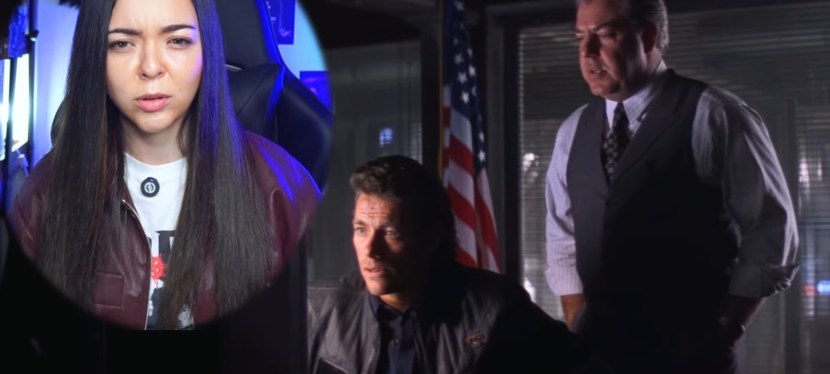
#1 Timecop Revisited – I am not a fan of Jean-Claude Van Damme but his 1994 movie Timecop managed to entertain me when I first saw it on home video. After watching it, I learned that it was based on the Timecop literary property and stories published by Dark Horse Comics. Directed by Peter Hyams, Timecop ended up as one of the better movies of JCVD and it even has its own fanbase. If you want to discover more about the cinematic Timecop, watch the videos posted below.
#2 Inhumanoids Revisited –I remember seeing some episodes of the animated TV series Inhumanoids on local TV and I can say it was easily the most bizarre and even shocking thing to watch. Inhumanoid has a very dark and even cynical tone, and it had gruesome scenes which were really disturbing to see. Behind the scenes, Inhumanoids was animated by Japan-based Toei and involved Hasbro, Sunbro and even Marvel Productions. To find out what made Inhumanoids so disturbing, watch the video below and pay attention to the details.
#3 Luxurious Breakfast Spots In Tokyo – Have you ever thought about having a luxurious breakfast while traveling overseas? In Tokyo, Japan’s most famous city, there are indeed places where visitors can have breakfast with the premium experience. These luxurious places have something unique to offer to customers who have more than enough money to spend for the morning meal. Watch and learn from the Nippon TV video below.
#4 Remember The Rotoscoped Lord Of The Rings – Decades before Peter Jackson and his team rocked the world of moviegoers with memorable Lord of the Rings film trilogy, an animated LOTR was actually made. I am talking about the 1978 rotoscoped animated film The Lord of The Rings directed by Ralph Bakshi which I first saw on home video after seeing Peter Jackson’s LOTR. I found the 1978 LOTR a really unique animated viewing experience and it definitely involved a lot of production work without any use of computers. To find out more about the animated LOTR film, watch the video below.
#5 You, Me and The Movies React To Can’t Hardly Wait – When Can’t Hardly Wait was shown in cinemas in 1998, it faded away as not enough moviegoers were attracted watch it. However, the movie did not fade into obscurity and it actually got new fans as it was discovered on home video, cable TV, pay-per-view and streaming. More importantly, the movie itself was pretty funny the cast led by Jennifer Love Hewitt delivered fine performances as teenagers. Slowly but surely, new retrospective videos about Can’t Hardly Wait are emerging on YouTube and the most entertaining video is the reaction by You, Me and The Movies which I encourage you to watch right now.
#6 Square Enix In The 2000s – Back in the 1990s, Squaresoft and Enix were separate Japanese gaming companies that released a lot of Japanese role-playing games (KRPGs) which entertained many millions of gamers. Square was famous for the best-selling Final Fantasy games while Enix had the wildly popular Dragon Quest franchise. In the 2000s, a series of changes happened in the video game industry and the two companies merged into Square Enix. Since then, a lot of Final Fantasy and Dragon Quest games with evolved designs and styles of presentation were released under a single publisher. There is a lot more to discover what happened behind the scenes as documented in the in-depth video below from Gaming Broductions.
Welcome back my readers, YouTube viewers and all others who followed this series of articles focused on YouTube videos worth watching. Have you been searching for something fun or interesting to watch on YouTube? Do you feel bored right now and you crave for something to see on the world’s most popular online video destination?
I recommend you check out the following videos I found.
#1 CinePals react to Predator 2 – I saw Predator 2 a number of times since the 1990s. I even reviewed the first issue of its 2-part comic book adaptation. Predator 2 was essentially a police story with science fiction elements mixed in and it was a worthy sequel. That being said, I saw a lot of Predator 2 reaction videos on YouTube and in my view, the reaction video by CinePals is the most entertaining one yet. Watch the video below.
#2 How AMD overtook Intel – Do you own a personal computer that has an AMD chip inside it? Mine does not but our Xbox Series X console has. In the world of business, the rivalry between AMD and Intel on CPUs has lasted for decades. While Intel led the industry for a very long time, it has gradually lost market share to AMD over the past several years. The company behind Ryzen and Athlon CPUs bounced back significantly under the leadership of Lisa Su and their alliance with TSMC was a great gamble that paid off well. Watch and learn from the video below.
#3 Do You Like Japanese Pork Cutlet? – When was the last time you had a pork cutlet for a meal? In Japan, their pork cutlet called Tonkatsu is popular and there are lots of food joints that offer it to customers. Tonkatsu is composed of a breaded, deep-fried pork cutlet, and historically it started during the Meiji era in the late 20th century. I recently discovered a YouTube video about one particular Japanese food joint that offer Tonkatsu that look large. Watch and enjoy the video below.
#4 Clash of the Titans (1981) Reaction Videos by Rhetorical Thrill and You, Me and The Movies – As a very young boy, I was fortunate enough to have seen the fantasy film Clash of the Titans inside the movie theater. The 1981 film was also the final work of stop-motion visual effects legend Ray Harryhausen and it had Burgess Meredith (the same actor who played Rocky’s trainer in the first 3 Rocky movies) in a key supporting role. I found two entertaining movie reaction videos of Clash of the Titans (1981) from You, Me and the Movies and Rhetorical Thrill. I encourage you to watch their respective videos below.
#5 Get To Know IMAX Better – You may have seen some movies inside an IMAX theater but are you aware of what IMAX really is apart from the experience of seeing a movie on a very large screen? IMAX is a brand, a special film format, a series of large cameras, a chain of special cinemas and an enterprise to say the least. Among the Hollywood directors, Christopher Nolan is the most prominent one who uses IMAX cameras in films like Dunkirk, Interstellar, Oppenheimer and his two last Batman movies. You can learn more about what makes IMAX different from the rest by watching the video below.
#6 Ashleigh Burton Reacts to Iron Eagle – What is there to say about the movie Iron Eagle? A movie about fighter planes and American military culture, the film was released the same year as the more famous Top Gun. I only saw the film on home video but in 1986, I had friends who were raving about Iron Eagle. That said, you should watch Ashleigh Burton’s reaction video about the old movie.
#7 A Look At Silent Hill 2 – Back in 2001, I still remember there was a lot of pre-release hype for the video game Silent Hill 2. Released on the PlayStation 2 and the original Xbox console (Silent Hill 2: Restless Dreams), the game went on to achieve big commercial and critical success. To this day, a lot of gamers called Silent Hill 2 as the most definitive game of the entire Silent Hill game franchise. To know more about the history and production of Silent Hill 2, watch the video below.
Welcome back my readers, YouTube viewers and all others who followed this series of articles focused on YouTube videos worth watching. Have you been searching for something fun or interesting to watch on YouTube? Do you feel bored right now and you crave for something to see on the world’s most popular online video destination?
I recommend you check out the following videos I found.
#1 Christine Grace Smith Reacts To A Video About Society Impacted When No Men Are Working – There is something new and engaging to learn about society whenever Christine Grace Smith posts a new video. Recently, she shared her own reaction to a video that explores what would happen to society if men stopped working. This is something that the woke and rabid modern-day feminists do not want you to see. I urge you all to watch her video now.
#2 Metal Gear Games Revisited – In connection with the recent release of Metal Gear Solid Δ: Snake Eater, it was not surprising that a lot of YouTube videos revisiting past Metal Gear games got published by different YouTubers. Some of those videos I found were entertaining to watch while others were reflective or even intriguing. For the newcomers reading this. The Metal Gear game franchise of Konami started in the late 1980s under Hideo Kojima when he was very young. That being said, I urge you all to take a look at the selected Metal Gear-related videos I shared below.
#3 How Alan Moore And Watchmen Spread The Wokeness Disease In Comics – YouTuber Ranting for Vengeance is back, and this time he strikes hard at author Alan Moore not personally but for sowing the seeds of wokeness in superhero comics with Watchmen as the turning point. By today’s standards, wokeness is the unfortunate new normal in superhero comics and it is a fact that Alan Moore is an anarchist and a Leftist as well. Watch and learn from the video below.
#4 Robin Hood: Men in Tights Revisited – Long ago, there were several comedy films made by Mel Brooks which delivered bouts of humor to moviegoers and raked in varying amounts in ticket sales. In the 1990s, he directed Robin Hood: Men in Tights which my friends enjoyed watching inside the movie theater. While the film is not a classic by any means – not even within the comedy genre – it still managed to entertain YouTubers through their reaction videos. Watch the selected reaction videos below.
#5 The Traditional Types of Food of Japan – While you may have enjoy varied types of food of Japan served through the many Japanese restaurants around the world, are you aware that there certain meals or delicacies of the nation that were simply not made available through those places? That being said, it would be enlightening – and even tasty – for you to visit Japan and try out the more traditional types of food the nation has to offer. Indeed, there are the 100-year food declared in Japan and you can learn more about them by watching the video below.
Welcome back Xbox fans, geeks, retro gaming fans and other gamers!
If you are disappointed with modern console gaming and if you don’t like what the console makers are doing, retro gaming will restore the fun and help you forget about the disappointment.
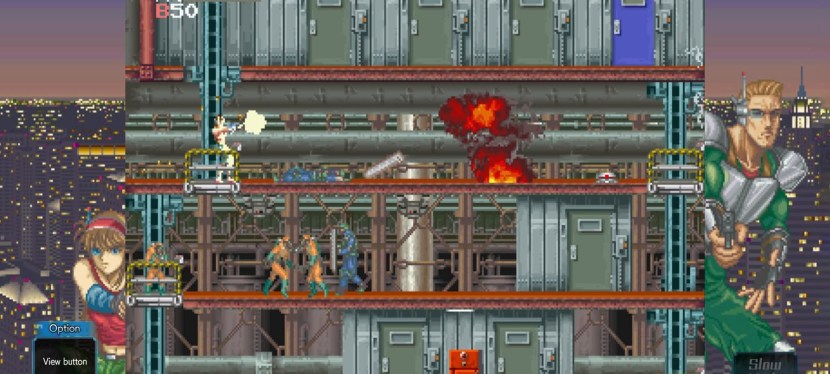
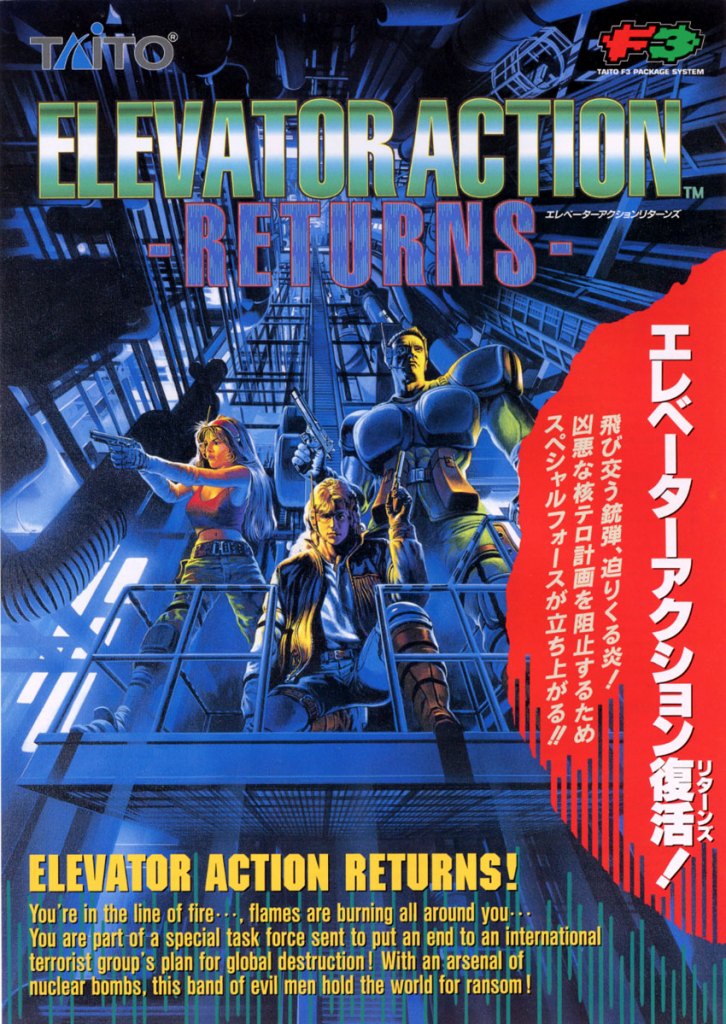
I recently purchased a copy of Elevator Action Returns S-Tribute for my Xbox Series X because I wanted to play Elevator Action Returns again but in the comfort of home. For the newcomers reading this, Elevator Action Returns (also titled as Elevation Action II in some markets overseas) was first released in Japanese arcades in 1994.
The Japanese arcade flyer of Elevator Action Returns.
In my experience here in the Philippines, I played the original Elevator Action on the Nintendo Family Computer (Famicom) in 1986 and I played its sequel for the first time at the arcade of X-Site Amusement Center inside Festival Mall in Alabang in 1998. Upon playing Elevator Action Returns arcade version, I was instantly hooked as it was pretty playable, exciting and fun to play. To the best of my memory, I replayed Elevator Action Returns a number of times at X-Site Amusement Center until early 2001. Today, the game is no longer available in X-Site’s arcade selection which is a bummer.
In recent times, I’ve been replaying Elevator Action Returns and the original Elevator Action on my Xbox Series X thanks to the Elevator Action Returns S-Tribute digital copy I purchased. What I am writing here is not a game review but more of an observation about the mid-1990s game in general and how it played using the Xbox controller.
Game design and gameplay
Developed by Taito, Elevator Action Returns was built up on the foundation it inherited from its 1980s predecessor. The game has a 2D visual design and with more detailed sprites and artistic elements of the time. The game was designed with a joystick and two action buttons (one for shooting and the other for jumping) arcade control set up in mind.
The first level is a creative remake of what was presented in the original Elevator Action game. Only this time, the action is more intense, faster and more explosive.
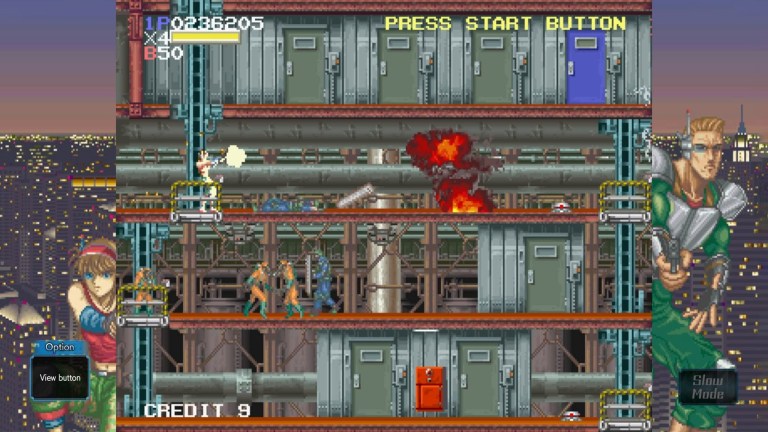
Players will have to make their way through the floors in each level (six in total), shooting the enemies (the in-game terrorist group), entering all the red-colored door to retrieve something essential, survive and then making your way to the exit point of the level. As the game has a designated health meter or life bar for the player, this allows players to keep enduring the challenges without worrying about any one-hit deaths.
As players make their way through each level, they can pick up new weapons like machine guns or launchers. Players can also enter doors to pick up not only new weapons but also health boosters or points.
The 2D sprite work and animation are fantastic to look at. The artistic details in the background and foreground added visual dept.
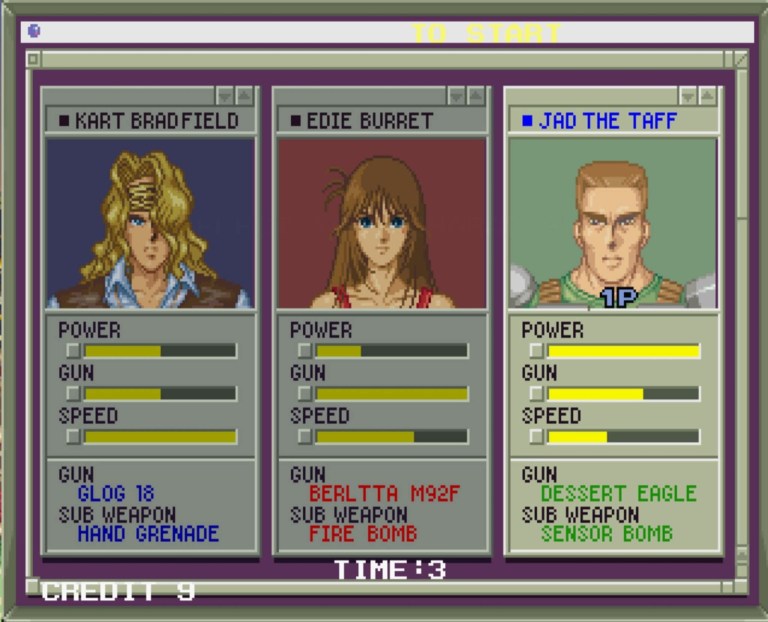
You can pick one of three characters to play as.
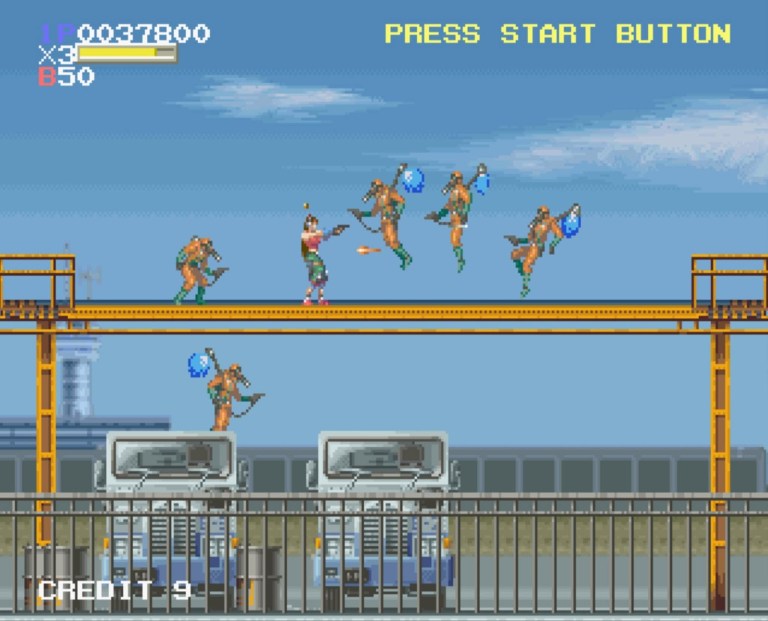
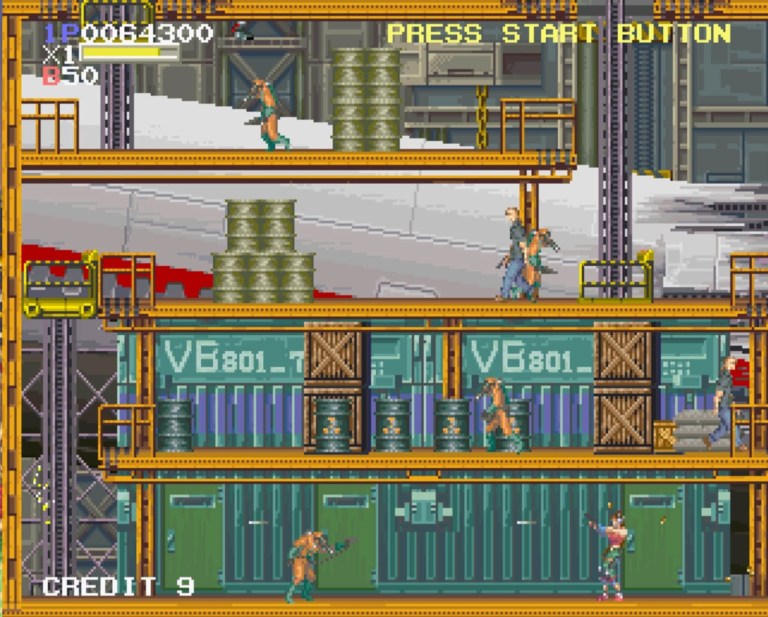
When compared to the original Elevator Action, the sequel comes with good variety per level prepared. The first level was traditional in design like the previous game as players have to move down a tall building by floors, accomplish with the red door and conclude the level at the ground floor. The other levels are more horizontal in design and players will definitely be moving more sideward fighting the terrorists while avoiding environmental hazards. There also will be times when players will have to climb up one floor to the next by escalator or by elevator depending on the level designed.
When it comes to the constant opposition, the terrorists are many and players should be aware of them appearing when they are least expected. What it noticeable is that the terrorists become more aggressive and relentless the longer players take to finish a level. I promise you readers, you will do a lot of shooting, jumping, and even melee attacks when fighting the bad guys.
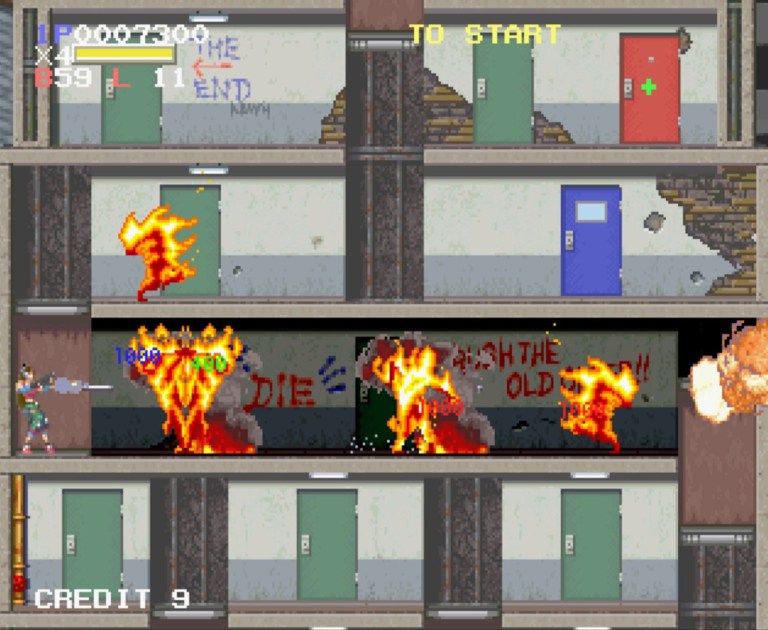
Levels like this one allowed for more sideway movement as well as opportunities to climb up or down a floor in order to accomplish your objective.
With a health meter implemented, you can endure more damage as you fight the bad guys and make your way through. Beware of environmental hazards along the way.
As for the controls, the arcade control set-up of a single joystick and two buttons remains the best way to play it. Elevator Action Returns is playable enough with the Xbox controller. While the left analog stick of the Xbox controller works well in moving the character, I ended up using the directional pad (D-pad) a lot more because it works much better and allows me to make more precise moves. This game can be played in single-player or in 2-player co-op.
A sequel released at the right time
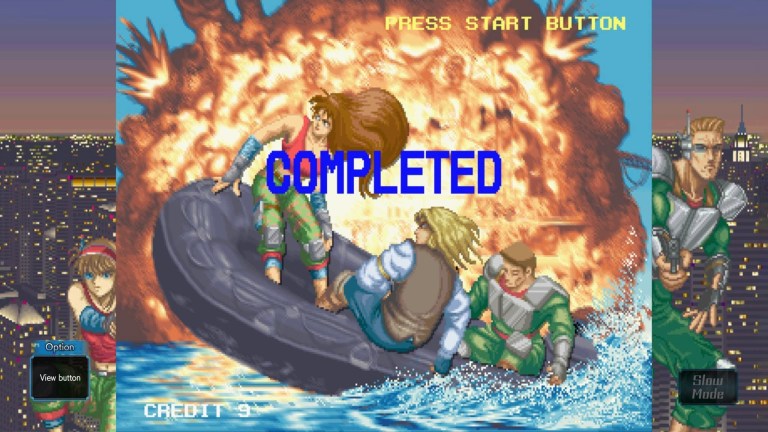
I like the artwork the game developers prepared highlighting your mission accomplishment and survival. A lot of effort was invested on making the artwork displayed here.
Being a mid-1990s game made with more advanced visual elements, better hardware and a modern approach to gameplay, the action in Elevator Action Returnsis unsurprisingly faster, more action-packed and more explosive than its predecessor. Indeed, this is a high-quality sequel and a true evolution of the classic Elevator Action formula. As Islamic terrorism became a major problem in global affairs in the 1990s, the terrorism theme of the game’s story was timely and fitting as the fictional terrorist group is obsessed with causing destruction and death worldwide. As such, the game allows players to pick one of three character of a counter-terrorism unit, and each character has differences with regards to speed, armor, firing speed, health and sub-weapons. The levels are plentiful and the same can be said about the varied action which makes the game worth replaying from start to finish. I should state that the 2D sprite work is great and timeless to look at.
Elevator Action Returns is a classic and it ensures a lot of fun for anyone who loves retro gaming and the Elevator Action series in general. This is one of the best arcade games of the 1990s now available for playing on modern consoles.
For the newcomers reading this, Suikoden I & II HD Remaster: Gate Rune and Dunan Unification Wars was released on March 6 and it contains Suikoden and Suikoden II (Japanese title: Genso Suikoden II). This is a cause for a celebration not only for fans of the Suikoden game franchise (created by the late Yoshitaka Murayama during his time at Konami) and JRPG enthusiasts but also for people who love retro gaming.
With Suikoden I & II HD Remaster: Gate Rune and Dunan Unification Wars now available on multiple platforms, gamers – both the veterans as well as the younger players – now have the golden opportunities to play the first two Suikoden games.
Suikoden on Xbox
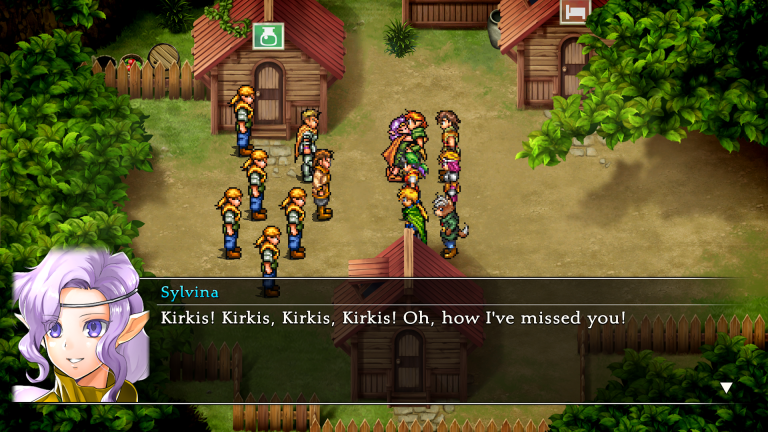
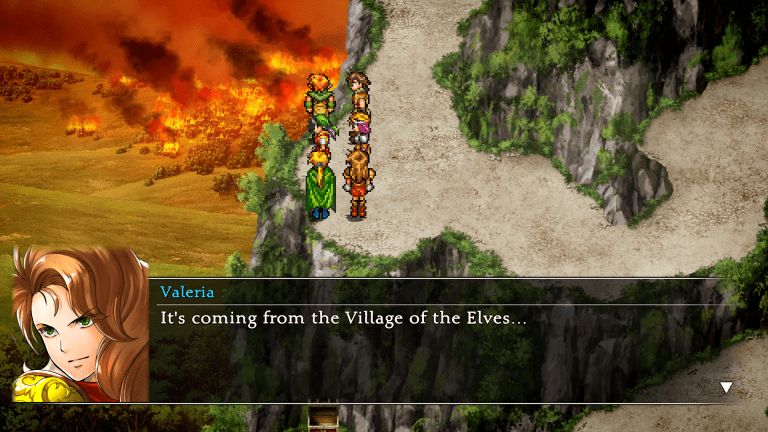
A lot of characters got their share of the spotlight in short scenes like this in Suikoden.
As mentioned earlier, Suikoden is my most played game on my Xbox Series X since March 6. The release of Suikoden games on Xbox platforms is highly significant given the fact that the franchise has often been identified with PlayStation for so long. What many gamers do not know is the fact that Suikoden was also released on the Sega Saturn and Windows PC in Japan in the late-1990s.
As history showed, most Suikoden RPGs released by Konami from 1995 to 2006 mainly on the original PlayStation console (the first two games) and PlayStation 2 (the third, fourth and fifth games). Spin-off games were released on PlayStation, PS2, Game Boy Advance and Nintendo DS. That being said, there were absolutely no Suikoden games on the original Xbox console and Xbox 360.
The release of Suikoden I & II HD Remaster: Gate Rune and Dunan Unification Wars on Xbox Series X, Xbox Series S and the aging Xbox One is indeed a game-changer. There are lots of Xbox gamers who are fond of Japanese RPGs and there are also Suikoden fans who happen to own Xbox consoles. The Xbox ecosystem itself now has lots of role-playing games (RPGs) released in this current console generation and there are lots of Xbox players who love RPGs. As such, Konami made the right move bringing the Suikoden franchise to Xbox consoles.
Playing the first Suikoden again but in shinier form
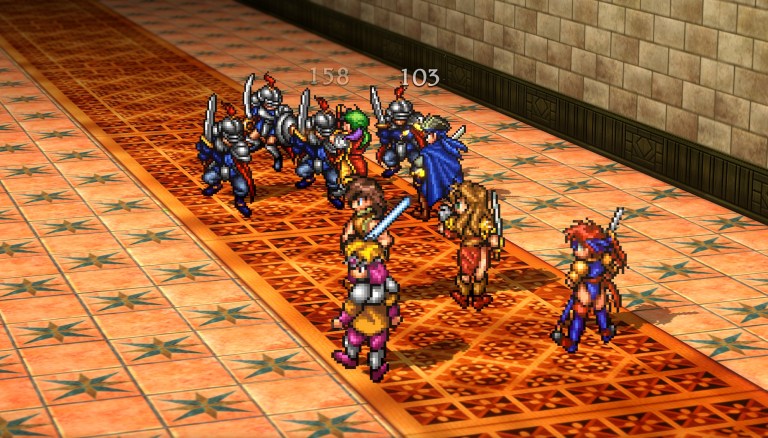
The group battle in the game. The remastered work includes presentation in high-definition and a variety of visual enhancements. The frame rate is also stable.
Since the launch of Suikoden I & II HD Remaster: Gate Rune and Dunan Unification Wars, I have been playing the first Suikoden game a lot on my Xbox Series X. It has been a fun-filled nostalgic gaming experience on my part and I can also say that Konami – for the most part – did a good job remastering the game with high-definition visuals in mind.
Visually, this is the best the first Suikoden RPG ever looked! The in-game character sprites and creatures/monsters sprites from before have been preserved and because everything is in high-definition, the said sprites look larger and you can see the detailed pixels within them. When it comes to the visual effects to emphasize in-game magic and other spectacles, the new effects implemented resulted in a lot of pleasing eye candy.
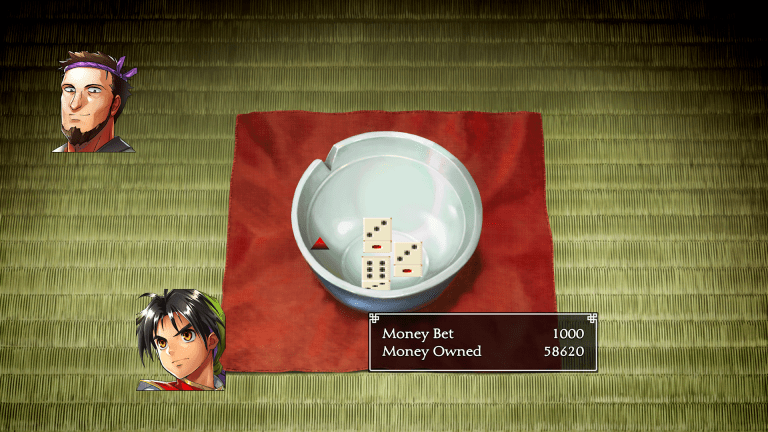
Mini-games like this one added fun and variety to the game. If you keep winning in this one, you can make a lot of in-game money.
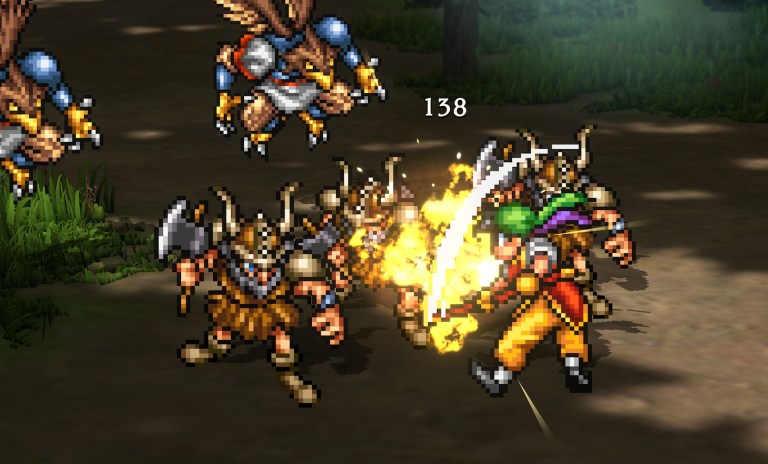
The occasional close-ups during group battles like this added to the spectacle of playing. The enhanced visuals also made this look better.
When it comes to the character portraits, they have been redrawn from scratch by Junko Kawano and each artwork per character looked clearer and more detailed than before. Some long-time Suikoden fans might find the new character portraits looking too clean and might make them miss the older artworks.
Suikoden’s story is about the Scarlet Moon Empire, political developments, corruption that goes beyond politics, and how they all affect the people. The playable protagonist is the son of the imperial general Teo McDohl, and through him you will witness political intrigue and unexpected twists that will compel you to stick closer with your family friends to escape the empire and form a new army of rebels by recruiting members across the land.
Even in subtle forms, the enhanced visuals made dramatic scenes like this look more lively.
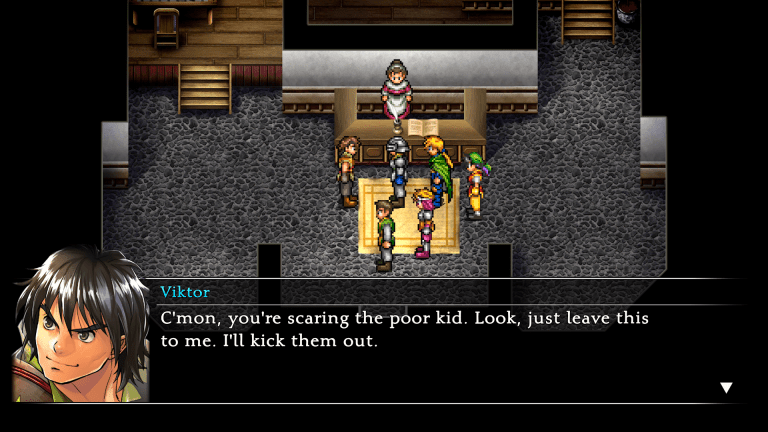
While the storytelling is satisfactory at best, there is a wide variety of characters who collectively added colors to the narrative. This is due to the many types of personalities that the important characters have. Take for example Matthiu who is the calm and calculating strategist, Viktor is the brave and brash rebel, and Gremio is very dedicated to protecting the protagonist no matter what happens. Along the way, character development is truly limited which is not surprising because a lot of characters shared the spotlight.
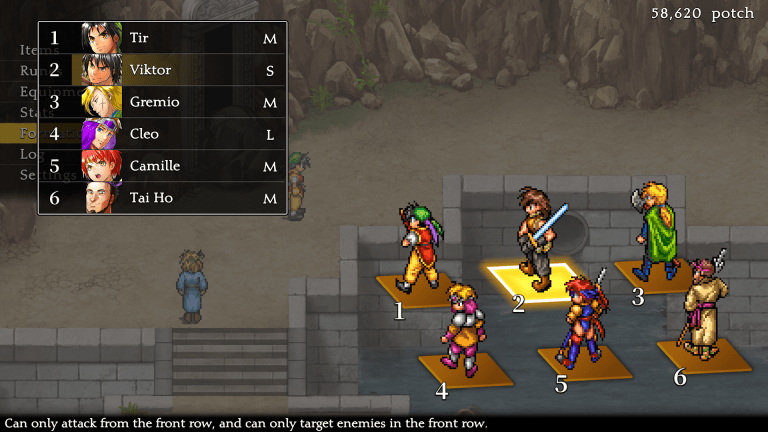
In terms of game design and gameplay features, Suikoden has aged well. The battle systems – solo battle, group battle, army battle – are still functional, efficient and fun to do. While some grinding (leveling-up) is needed, it is not stressful to do because the auto-battle options make the group battles flow smoothly, especially when your characters (up to six) are collectively strong enough to overwhelm the enemies.
This is the formation of the members of your party. Those with short-range attacks should be placed on the front row but they need strong defense values to keep on fighting. Characters with long-range attacks are ideally placed in the back row.
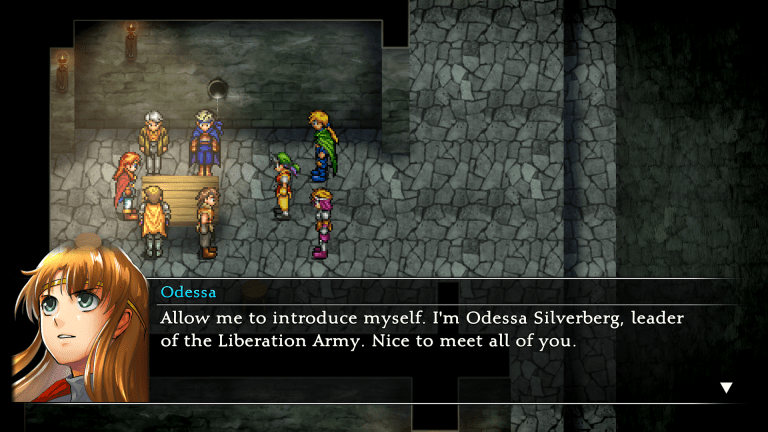
Meet Odessa.
The gameplay is just as fun to do as before. I really like the fact that up to six characters can be part of my party/group as I went adventuring and focused on story scenes. The solo and army battles are understandably few but the payoff (in return to the build-up leading to them) was worth it. I should state that the unite attacks (limited to specific characters who are present in the party) are fun to watch and the creators’ approach on presenting the battle animations and spectacle are great to see.
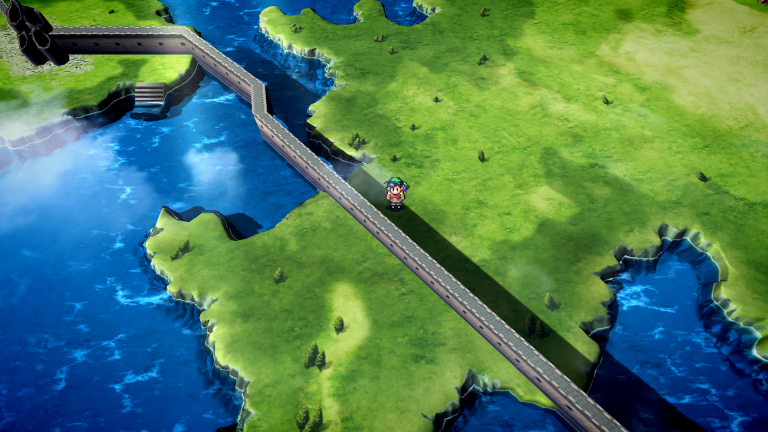
A great, long border wall in the game.
While the gameplay is clearly fun, Konami’s remaster team did not fix one old problem the game had since the start – limited spacing of items per character. Each character has his/her/its own pieces of clothing to wear, specifically for the body, head and two accessories. The game counts those clothing items as part of the overall item spacing per character. Once you have the four items for a character to wear, the remaining spaces for carrying other items (examples: medicine, ore, anti-toxin) become severely limited for the character.
Along the way, there is the constant need for you to purchase stronger pieces of clothing to increase the defense value of the newest character who joined your army. That being said, you must earn a lot of money, take time to out purchase items, and equip them on new characters while dealing with limited storage per character. The item management problem is the one thing that prevented the gameplay from achieving perfection.
My long-time experience with the Suikoden franchise
Viktor is the brash and brave fighter who becomes part of the Liberation Army. He is an important supporting character which you will easily realize.
In my personal gaming history, I played and finished the original game on PlayStation way back in 1996. While I really enjoyed the game and its unique gameplay features, I never replayed it as my taste on PlayStation gaming kept changing in 1997. When Wild ARMs and Final Fantasy VII landed on PlayStation, I forgot about Suikoden until its sequel was released in English in 1999.
Fortunately, Suikoden II was so much bigger and better than its predecessor and it remains the most defining game of the entire Suikoden franchise (read my retro review by clicking here). That being said, I will start playing the remastered Suikoden II on my Xbox Series X soon.
Having played the remastered first game on my Xbox console, I can say that it was a fun-filled trip on my end. At the same time, I remembered scenes and several small character moments in between that I have forgotten long ago. Although a lot of characters were presented, following the narrative was still easy to do since it was light compared to what Suikoden II told.
Conclusion
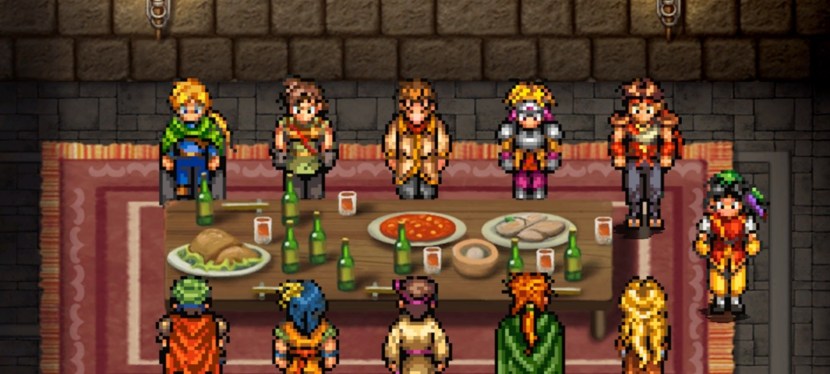
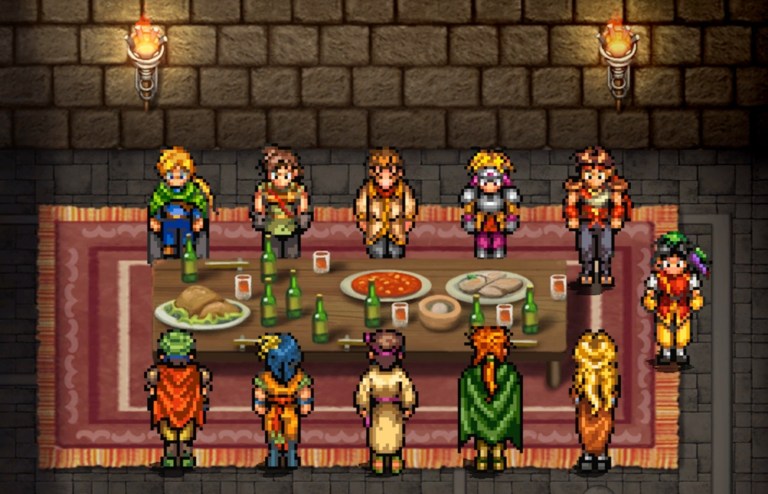
A shot of a feast within the army of rebels with their leader Tir McDohl. The young McDohl is the playable protagonist.
With the first Suikoden alone, I can say I got really good value and enjoyment with my purchase of the digital copy of Suikoden I & II HD Remaster: Gate Rune and Dunan Unification Wars for my Xbox Series X. This is a fine example about retro gaming literally saving the day when Team Xbox failed to deliver the promised great fun with their own games.
Welcome back readers, fellow geeks and electronic gaming fans!
In this edition of the Retro Gaming Ads Blast (RGAB) series, we will take a look at another batch of retro gaming print ads – including arcade flyers – from the 1980s and 1990s.
For the newcomers reading this, Retro Gaming Ads Blast (RGAB) looks back at the many print ads of games (console, arcade, computer and handheld) that were published in comic books, magazines, flyers, posters and newspapers long before smartphones, social media, the worldwide web and streaming became popular. To put things in perspective, people back in the 1980s and 1990s were more trusting of print media for information and images about electronic games and related products.
With those details laid down, here is the newest batch of retro gaming print ads for you to see and enjoy…
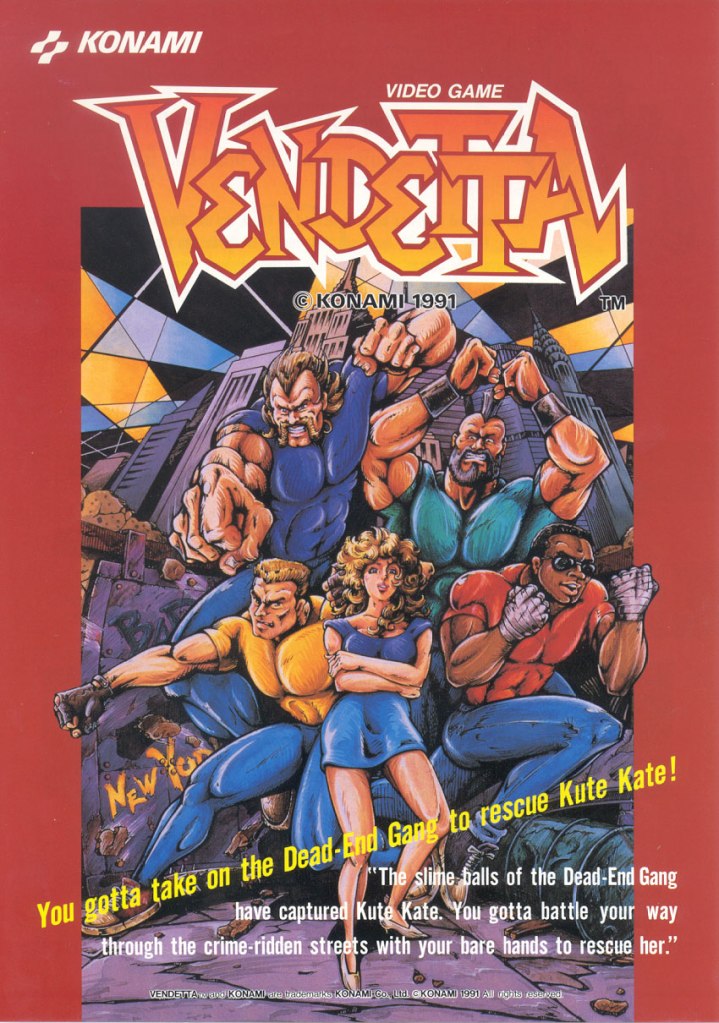
1. Vendetta UK and North American arcade flyers
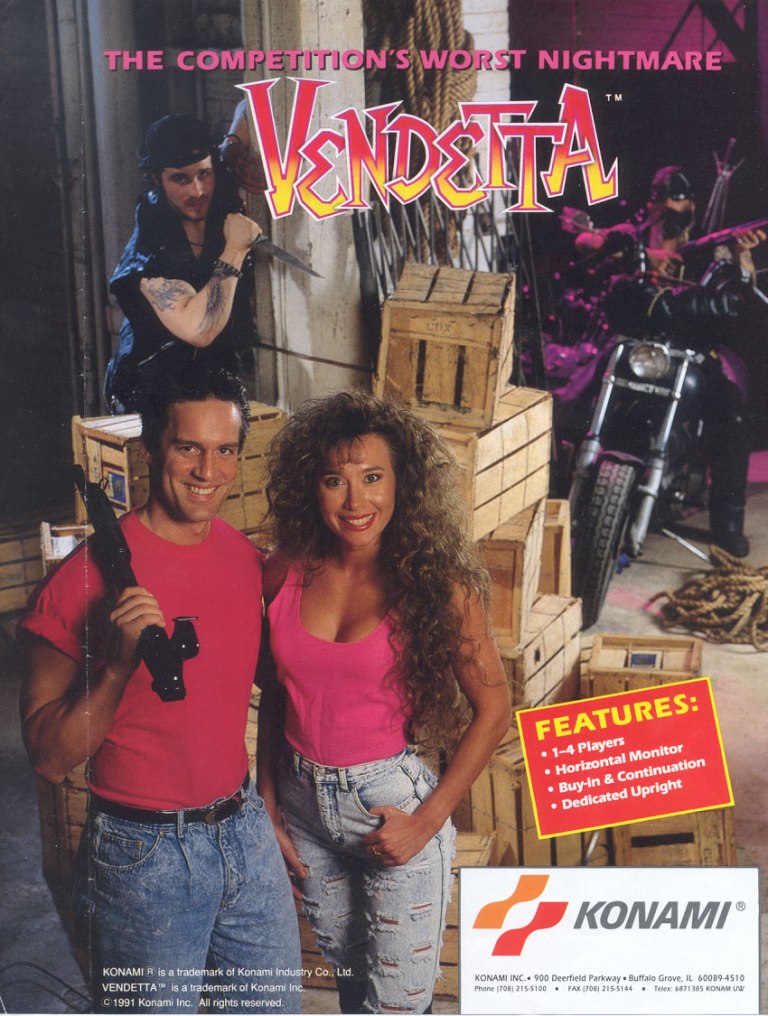
Vendetta arcade flyer for North America
Vendetta arcade flyer for the UK.
In 1991, Konami released the 2D side-scrolling beat-them-up game Vendetta in arcades around the world achieving commercial success. While it is hard to tell if the promotions helped the game commercially, there is no doubt that the arcade flyers for the North American and United Kingdom (UK) markets were indeed very eye-catching.
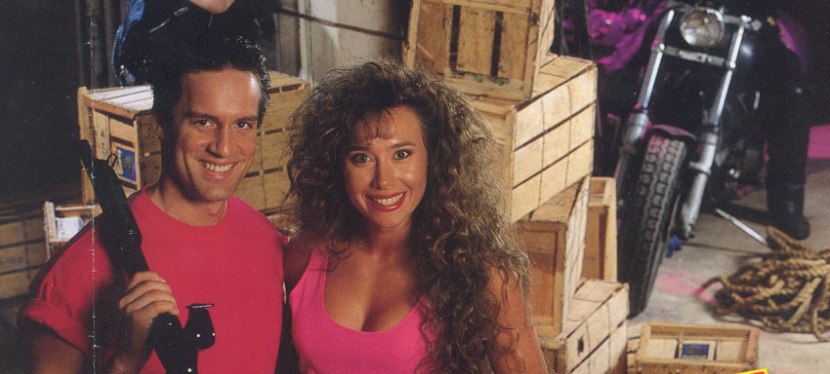
The North American Vendetta arcade flyer had a photographic approach showing models playing characters supposedly representing the Cobras gang and the Dead End gang. The display of wooden boxes and the rope was done to symbolize the rough city environments of the game. On the other hand, the UK arcade flyer has illustrated artwork that captured the look of the Cobras gang from the game.
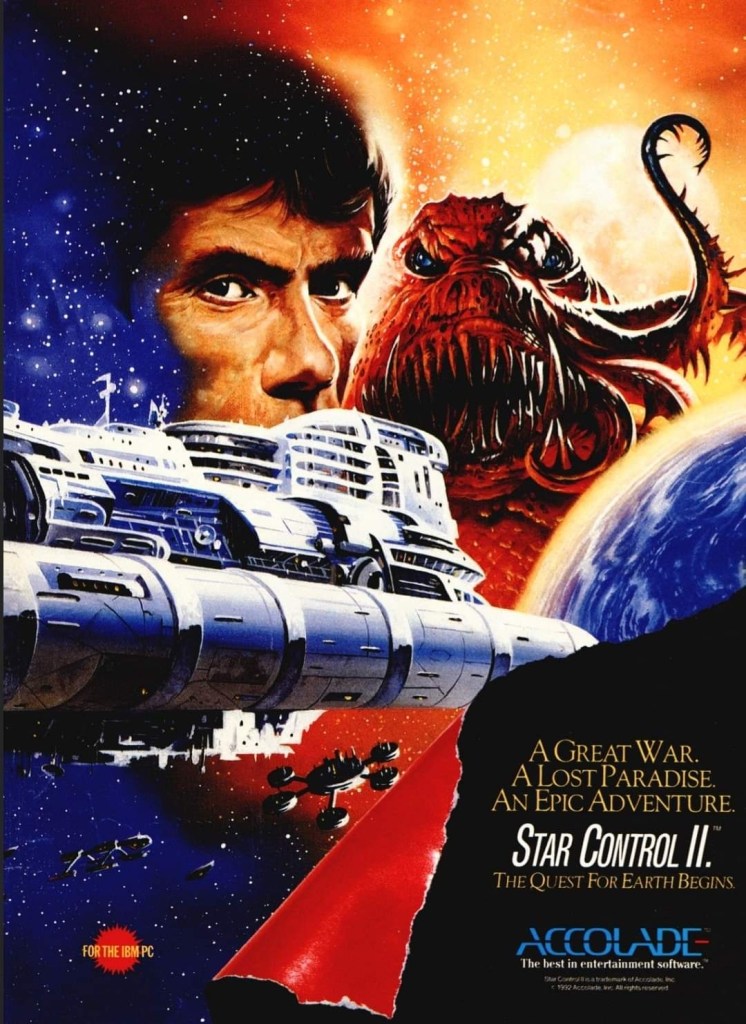
2. Star Control II: The Ur-Quan Masters print ad
This ad has great art that strongly emphasizes its science fiction concept.
This print ad of Star Control II: The Ur-Quan Masters (PC version) really caught my attention when I read gaming magazines in the early 1990s. The painted artwork showing a human and a hideous alien in the background with a planet, space ships and space stations filling the rest of the space was very captivating to look at. So captivating, it enticed me to search for the game but our PC at home had really low specs. Strangely enough, I played another version of Star Control II on a rented 3DO Interactive Multiplayer console in 1995. For the newcomers reading this, the game was critically acclaimed and was declared as one of the very best PC games ever made. Enjoy looking at the print ad above.
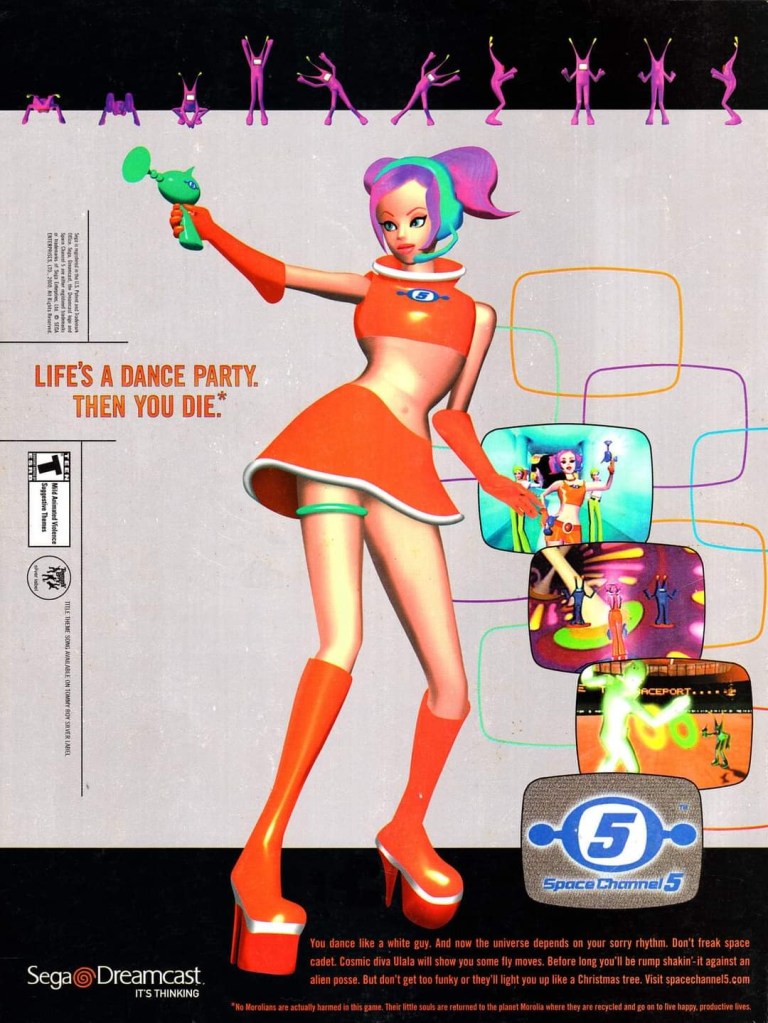
3. Space Channel 5 print ad
The visual style and character designs are the result of the game designer’s research that includes interviews with lots of young girls over their interests and tastes in video games.
When Sega launched their Dreamcast console in Japan in late-1998, their financial health was already in a very bad state and the future looked grim. Even as they faced tremendous odds, Sega still went on to aggressively sell Dreamcast consoles with exclusive games and Space Channel 5 was one of them.
First released in Japan in 1999, Space Channel 5 was a musical, puzzle-oriented game that was the result of Tetsuya Mizuguchi’s work backed with research he did that included interviewing young girls to find out what their tastes in gaming are. The print ad showing the highly stylized protagonist Ulala and a few screenshots really caught the attention of gamers and kept the Dreamcast in their minds. While the game did not achieve commercial success as a Dreamcast-exclusive, Sega went on to release a version of Space Channel 5 on the PlayStation 2 console, plus sequels.
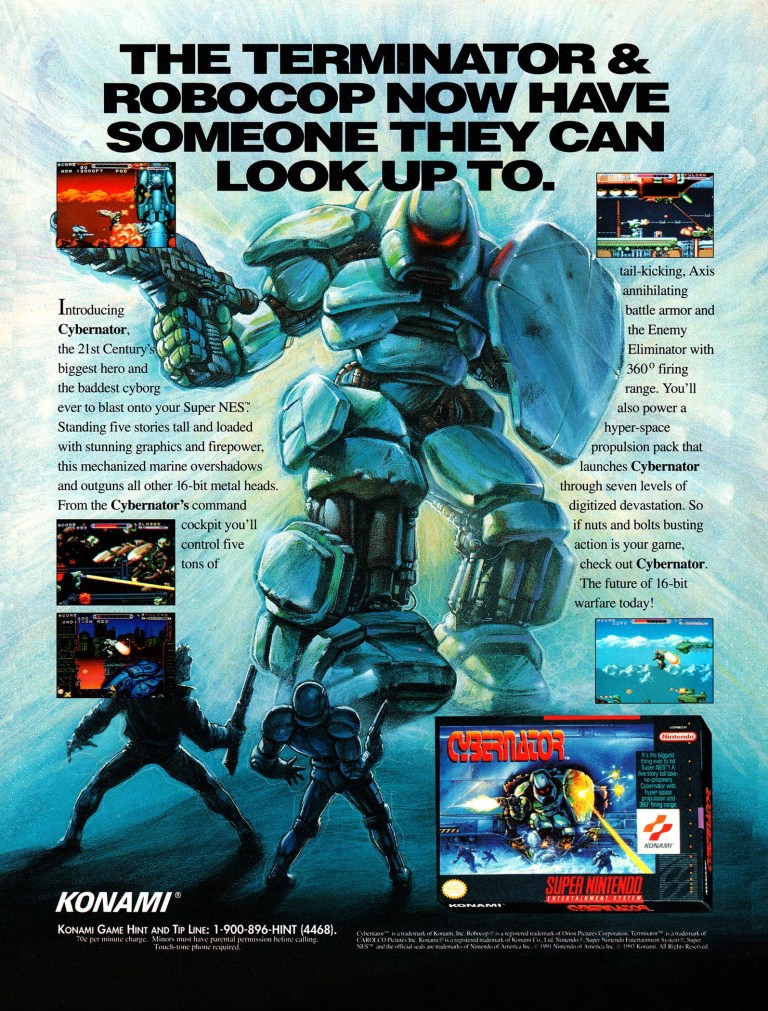
4. Cybernator print ad
The mention of Terminator and RoboCop rivaled the artwork when it comes to grabbing people’s attention.
I remember seeing the print ad of Konami’s Cybernator (Japanese title: Assault Suits Valken) in several comic books I read back in 1992. I never got to play it but the print ad’s artwork was memorable as I was fond of robots in anime, movies and video games back then. What was arguably the most memorable aspect of the print ad was the line that mentioned RoboCop and the Terminator in a comedic way. This is a creative way to market the game.
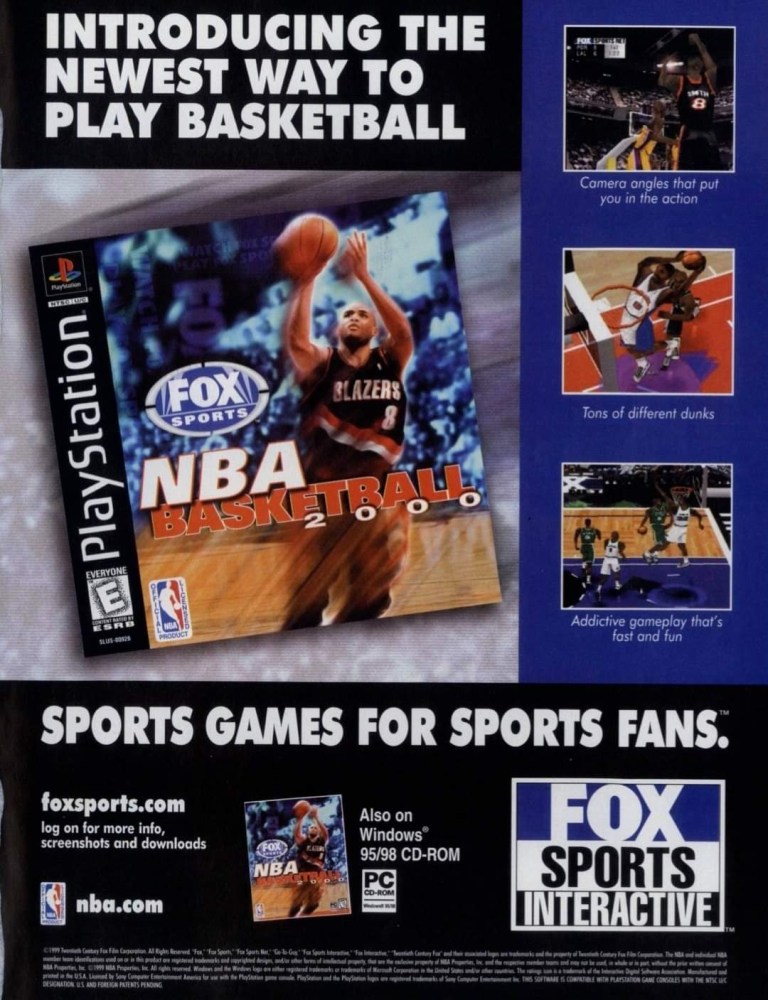
5. NBA Basketball 2000 print ad
There were a lot more NBA video games back in the 1990s.
NBA Basketball 2000 was one of those basketball videos games of the 1990s that was not published by EA Sports nor published by the other established game publishers like Sega, PlayStation and Konami. In fact, the one thing on the ad that caught my attention was Fox Sports Interactive which published some sports videos games during the decade. The print ad also served as a reminder that there were a lot more NBA video games for gamers to choose from during the 1990s.
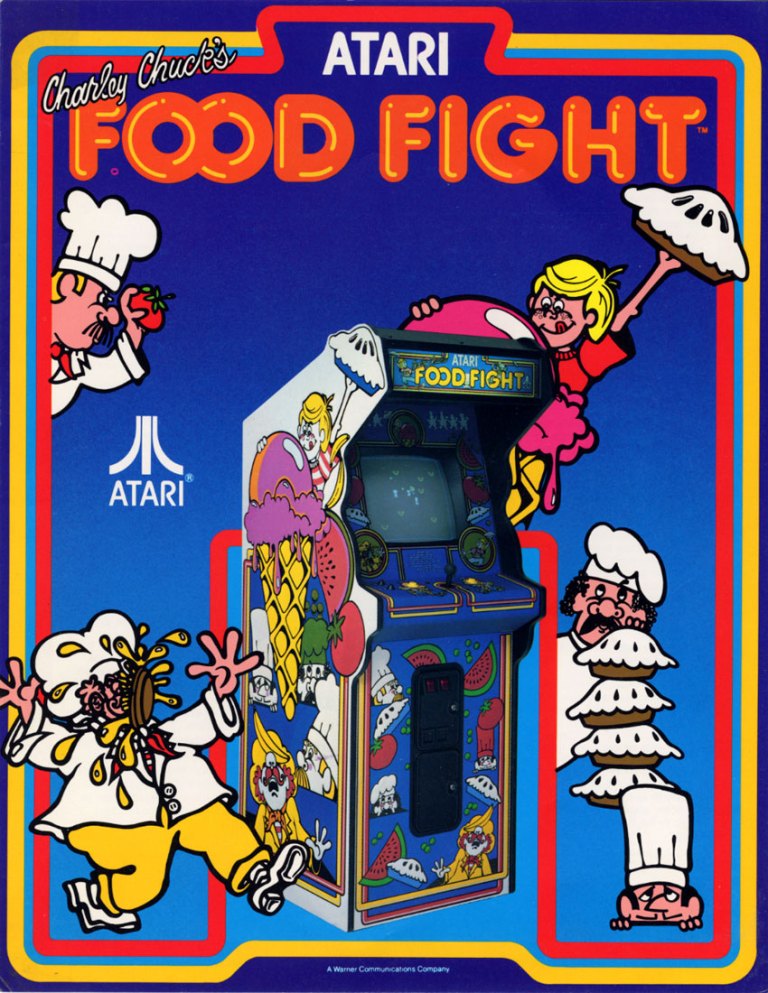
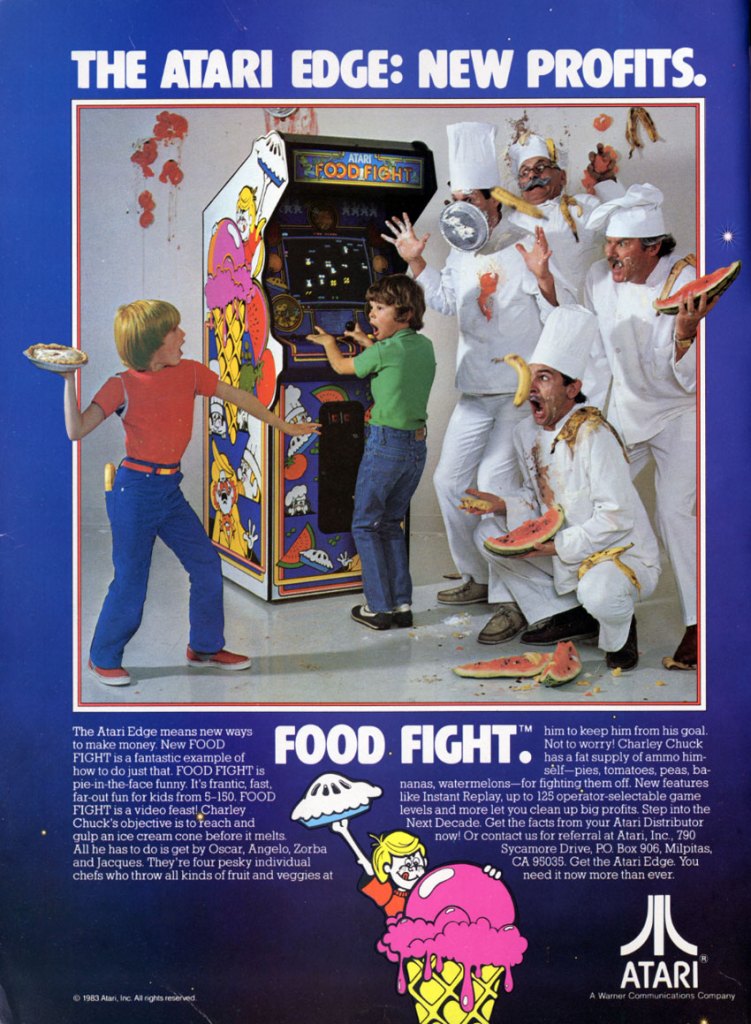
6. Food Fight arcade flyers
Food Fighter arcade flyer with illustrated artworks.
Food Fight arcade flyer with a photographic touch and actors.
I never got to play the 1980s game Food Fight in the arcades nor did I ever had the opportunity to play it on Atari consoles and Xbox 360. Released in 1983 in the arcades by Atari, Food Fight was designed to allow players to control a character moving through a 2D field to consume an ice cream on a cone (placed on the opposite end of the field) before it melts while avoiding the chefs who are out to chase and block the player.
The arcade flyer with illustrated artwork on the characters interacting with the arcade machine is really amusing to look at. Equally amusing is the other arcade flyer that had a photographic approach showing two kids (one playing the arcade machine and the other about to throw a pie) and four chefs. Considering the nice visual concepts Atari came up with for the arcade flyers, Food Fight actually never became a commercial hit selling only a few thousand arcade units.
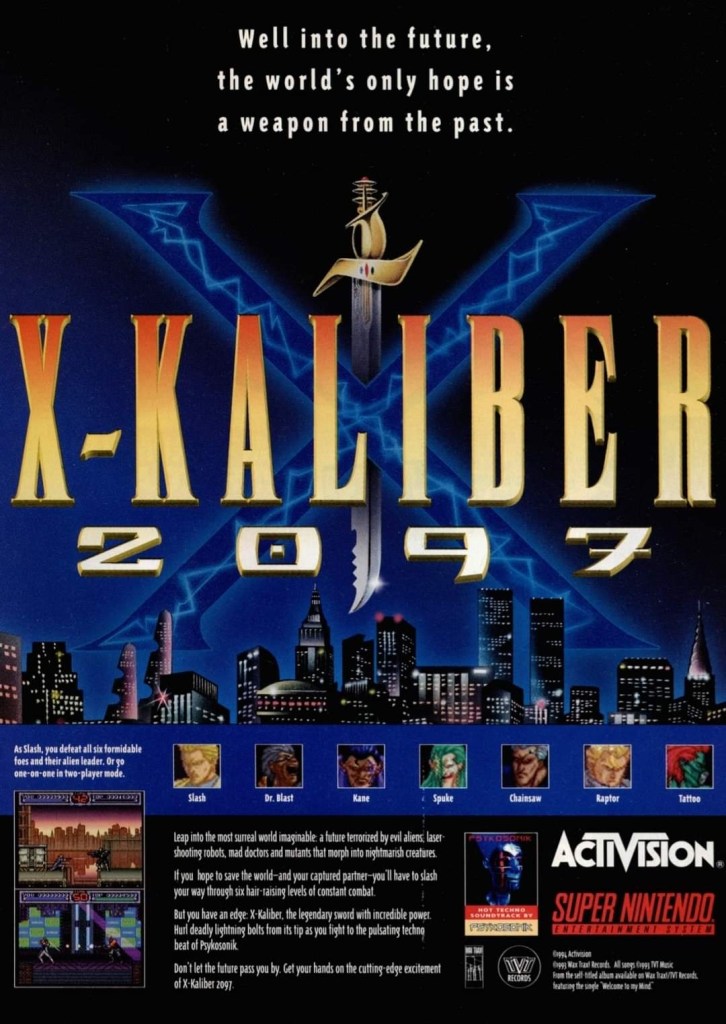
7. X-Kaliber 2097 print ad
This print ad from the 1990s had a nice visual style.
The Super Nintendo Entertainment System (SNES) had plenty of 2D side-scrolling adventure games and among them was X-Kaliber 2097 released by Activision (now a Microsoft-owned company and integral part of Xbox) in America in 1994. The game had a really interesting story concept about a chaotic far future society plagued by overwhelming crime and violence. The print ad showed a mild taste about the game’s concept and gameplay, but it was more effective when it comes to showing the formidable foes that await the playable protagonist Slash. This print appeared in several comic books I read and was eye-catching.
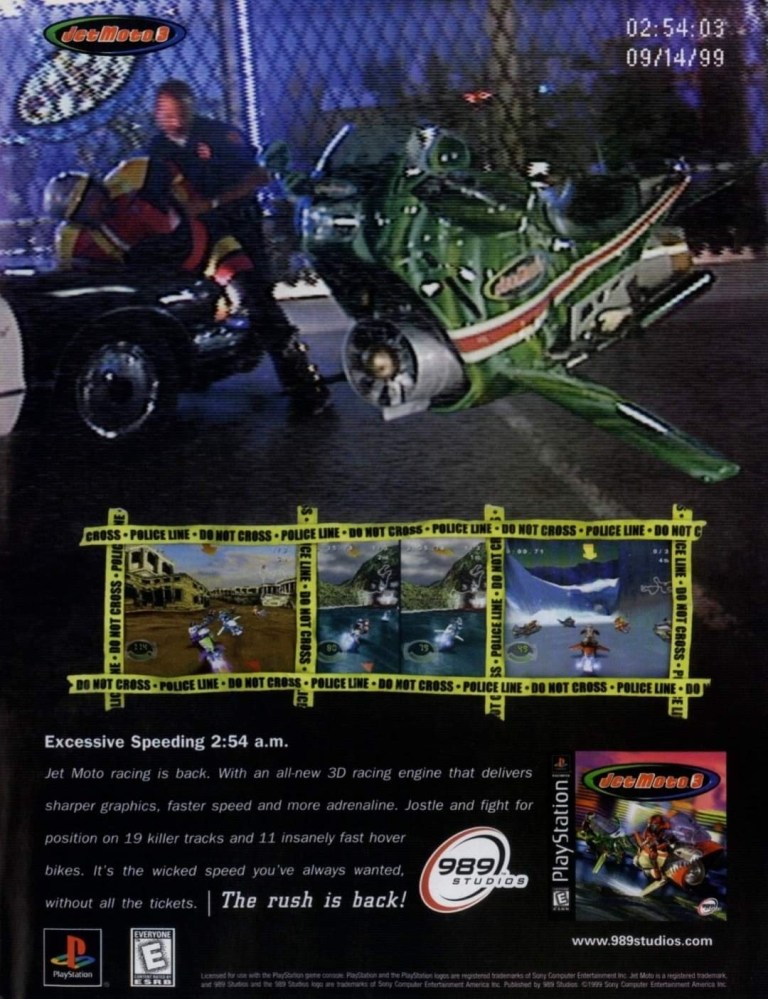
8. Jet Moto 3 print ad
When was the last time the police caught you for over-speeding?
This print ad for Jet Moto 3 had a clever concept of showing a police officer apprehending a jet biker for over-speeding. The visual presentation was done in photo-realistic fashion to make the sci-fi aspect of the video game look real. The ad made me interested enough to do some research of Jet Moto 3 a few months before finally buying it for my PlayStation console.
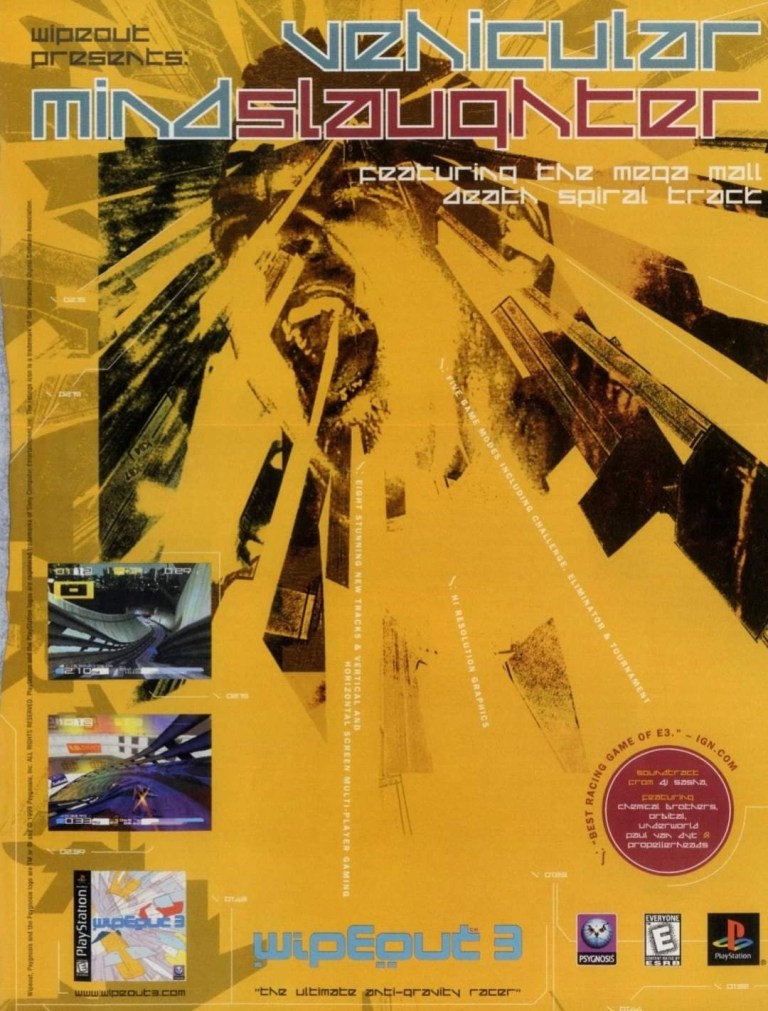
9. Wipeout 3 print ad
Were you fond of futuristic racing and techno music back in 1999?
Released in 1999, Wipeout 3 was one of those video games that showcased what the PlayStation (originally launched in Japan in 1994) could do in terms of visual fidelity, special effects and frame rates. The print ad, which had a radical visual concept emphasizing intensity and energy, had style listing down vertically the technical details of the game which required a close look in order to be read. With only two screenshots displayed, the ad makers smartly included the E3 acclaim of “Best Racing Game of E3” as well as the names of artists behind the game soundtrack on the lower-right corner. This print ad was cool and intriguing to look at.
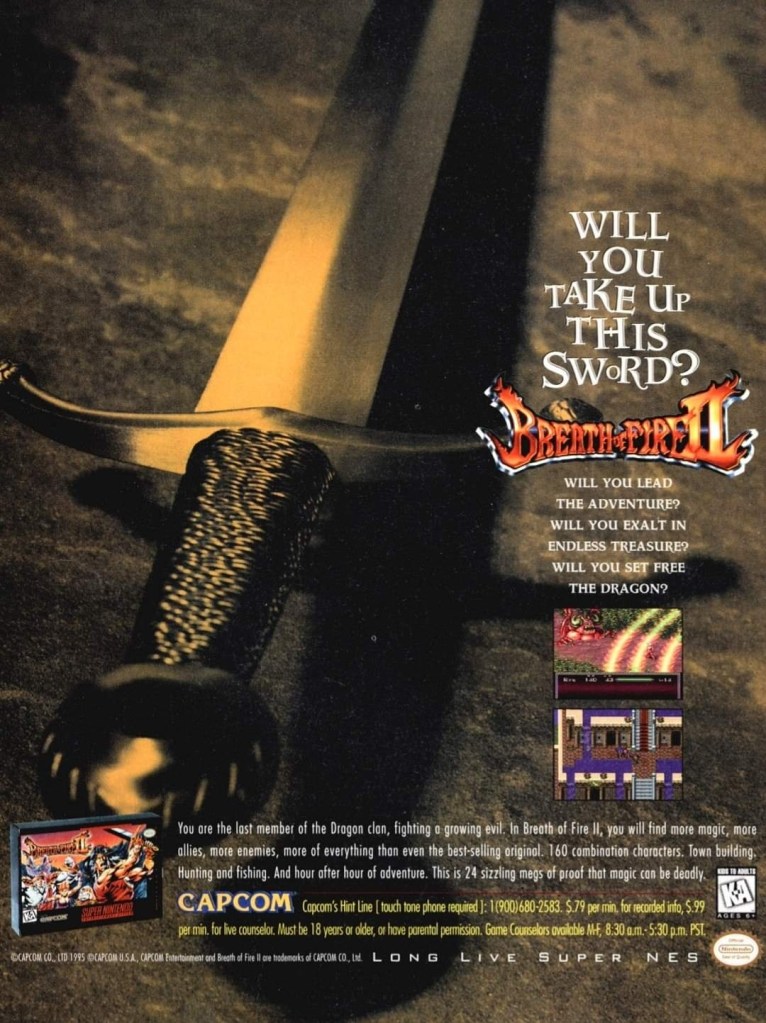
10. Breath of Fire II print ad
This was a good effort to lure American gamers to buy and play Breath of Fire II.
When Breath of Fire II was released on the SNES in America in late 1995, Japanese role-playing games (JRPGs) were not yet wildly popular among American gamers. To grab the attention of gamers, Capcom and the ad makers came up with the eye-catching image of a sword and posted key questions to emphasize the fantasy aspect of Breath of Fire II. While the game received mixed reviews upon its North American release, Nintendo Power listed it as 171st best game in its Top 200 Games chart published in 2006.
If you are an Xbox fan who is fond of Japanese role-playing games (JRPGs), then I encourage you to buy Grandia HD Collection which is available for Xbox online. I am saying this because recently I enjoyed replaying the classic JRPG Grandia on my Xbox Series X a lot and I finished it once again (my 2nd time overall including my 1999 completion of the game on PlayStation). This is not a game review of Grandia but a commentary of replaying it from start to finish.
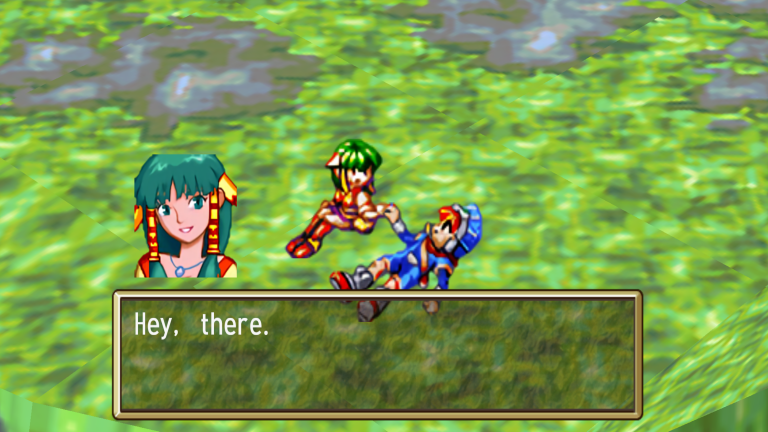
Feena and Justin are very memorable protagonists. The writers of Game Arts really did their jobs developing and defining the personalities of the characters.
For the newcomers reading this, Grandia HD Collection contains Grandia and the sequel Grandia II. Grandia was originally released on the Sega Saturn in Japan in 1997 and was ported to PlayStation shortly after. It was on the PlayStation when Grandia was translated and dubbed into English and released to gamers in the West. Grandia II was released originally on the Dreamcast console in both Japan and America in 2000. Eventually the sequel was ported to the PlayStation 2 and Windows PC in 2002.
Going back to the original Grandia, the game has visuals that were remastered and made clearer to look at while still maintaining the vibrant colors of its late-1990s version. It took me a little over fifty hours to complete on my Xbox Series X and I can say that the entire replay experience was indeed a lot of fun to do. I’m so happy and satisfied with finishing Grandia, I already got my money’s worth with the entire Grandia HD Collection. I’m currently playing Grandia II and so far I’ve been enjoying it.
Game Arts was exceptional with their work on the graphics and art style.
Without spoiling the story, I can say that Grandia was written and made to emphasize the wonders and risks of adventuring while managing to dramatize a tale of epic fantasy proportions. Along the way, the game has a memorable cast of characters – Justin and Feena are clearly the leads – and the creative team of Game Arts really ensured that their personalities got developed (as the story moved on) and became worth caring for.
The gameplay is also fun to go through once again. There is a satisfying room for exploration whenever I visited a new location and the battle system is still top-notch in terms of mechanics, presentation and functionality. I should say that the battles are not too stressful to do and that means it is more doable to do some grinding to make your characters stronger and their abilities better.
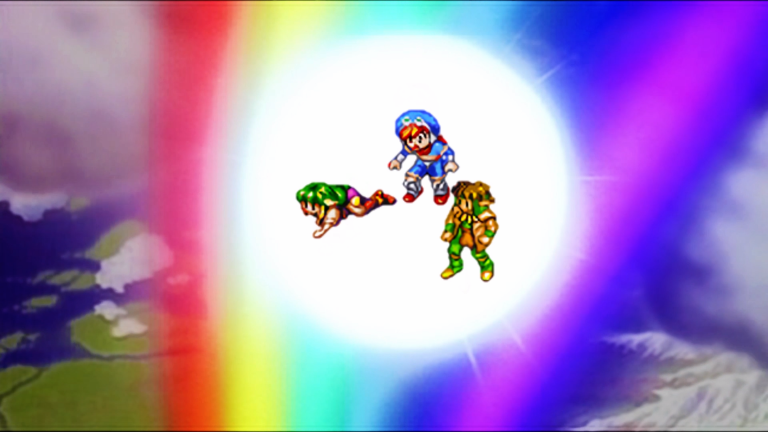
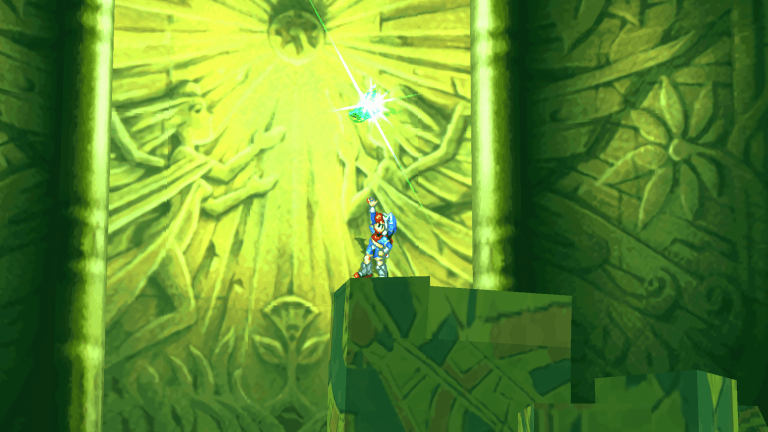
After finally defeating the main villain and completing the last conflict, it was really nice to see the story’s ending (told with a labor of love by the game developers) as well as the follow-up cut-scene that played after the end credits rolled (read: post-credits ending). It’s like 1999 all over again but with much better visuals and the benefits of playing the game on Xbox Series X connected to our 4K TV. This is both retro gaming and fantasy role-playing of great quality and deep enjoyment!
By finishing Grandia and enjoying it a lot, I already got my money’s worth with Grandia HD Collection.
There is no doubt that Grandia is the best gaming experience I’ve had on Xbox this year. That being said, I encourage you fellow Xbox gamers as well as those who love JRPGs to seriously consider buying Grandia HD Collection while it is still available.






 Author Carlo Carrasco