With the huge spotlight on electric bikes (e-bikes) and electric tricycles (e-trikes) in recent times here in the Philippines, it is clear that such vehicles have caused public disturbances and already local and national authorities are working in response to them. Within the city of Manila, an incident happened recently as an e-trike driver, who caught the attention of the local police with illegal parking, got arrested after cursing the police, according to a Manila Bulletin news report.
To put things in perspective, posted below is an excerpt from the Manila Bulletin news report. Some parts in boldface…
An electric tricycle or e-trike driver who illegally parked his vehicle was arrested for direct assault after shouting and cursing police in Tondo, Manila on Saturday, Feb. 17.
The Manila Police District (MPD) identified the arrested suspect as Abraham Fernandez, 31, a resident of Barangay 123 in Tondo, Manila.
Before the suspect’s arrest, MPD personnel patrolled when they saw the suspect parked his e-trike in a no-parking zone along Juan Luna Street, Barangay 9, Zone 1 in Tondo, at around 4:20 p.m.
The authorities approached the suspect and told him to remove his vehicle blocking the road, which could cause traffic.
However, instead of cooperating, the suspect resisted, shouted, and cursed at the authorities in front of the public, which resulted in his arrest.
Let me end this piece by asking you readers: What is your reaction about this recent development? Did you notice e-bike or e-trike drivers drive recklessly within your local community? Are there any minors who drove e-bikes or e-trikes in your local community? Are you hoping that the local government and the nation government agencies will ban e-bikes and e-trikes on major roads and have all the vehicles required for registration?
Disclaimer: This is my original work with details sourced from reading the comic book and doing personal research. Anyone who wants to use this article, in part or in whole, needs to secure first my permission and agree to cite me as the source and author. Let it be known that any unauthorized use of this article will constrain the author to pursue the remedies under R.A. No. 8293, the Revised Penal Code, and/or all applicable legal actions under the laws of the Philippines.
Welcome back superhero enthusiasts, 1990s arts and culture enthusiasts, Marvel Comics fans and comic book collectors! Today we go back to the mid-1990s to explore the adaptation of the start of the second season of the X-Men animated series in the form of the X-Men Adventures comic book series.
Before getting to the retro comic book review, I want to address the recent controversy and criticism of the new animated series X-Men ’97, a continuation of the popular 1990s series that turned out to be woke by featuring the so-called non-binary presentation of people. In my view, this is not surprising given the fact that the very woke Disney company has owned Marvel Entertainment for many years now and its wokeness has infected the animated X-Men franchise along with the most recent movies and shows of the Marvel Cinematic Universe (MCU). Wokeness and Leftist beliefs continue to ruin entertainment and established properties as we know it. It’s the culture of Communist-filled Hollywood (Commiewood).
So how do you reject X-Men wokeness apart from avoiding X-Men ’97? You simply go back to the X-Men animated series of the 1990s as well as the comic books that adapted the stories.
With those details laid down, here is a look back at X-Men Adventures Season II #1, published in 1994 by Marvel Comics with a story written by Ralph Macchio and drawn by Andrew Wildman.
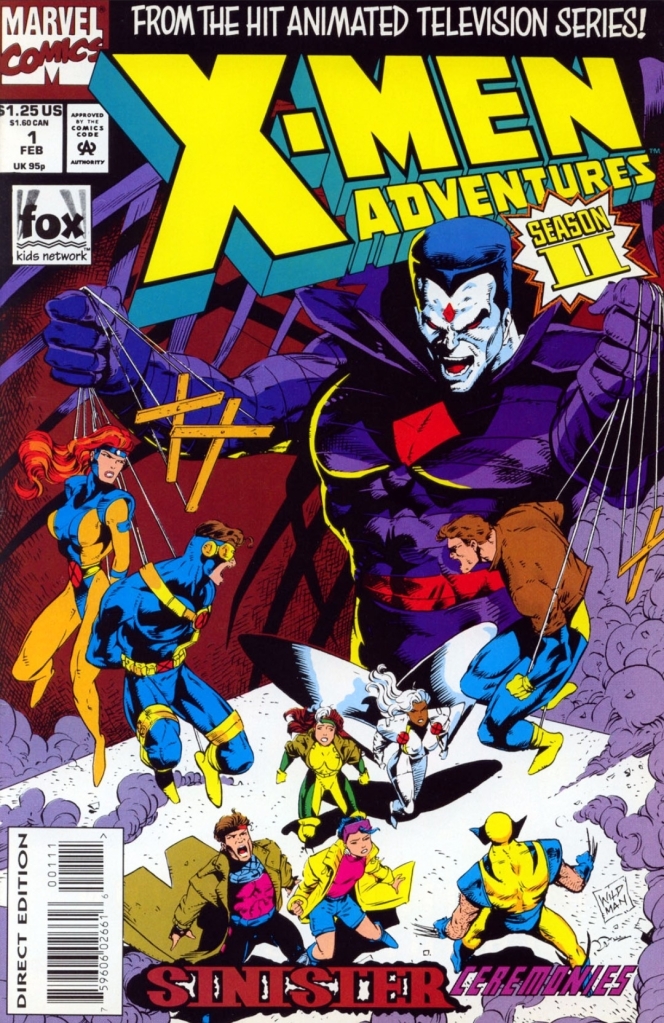
The cover.
Early story
The story begins with the cosmic being the Watcher carefully examining the flow of events on Earth and what has changed for the X-Men since then. Robert Kelly, who previously had an anti-mutant agenda when he was a U.S. Senator, has since been elected as the President of the United States and openly pushes for a policy of conciliation with mutants. His action sparks social unrest.
Meanwhile inside a small church far away from the nation’s capital, the wedding of Jean Grey and Scott Summers pushes through with several members of the X-Men in attendance. Very notable was the absence of Wolverine who turned out to be inside the Danger Room (deep within Charles Xavier’s estate) fighting a giant-sized version of Cyclops…
Quality
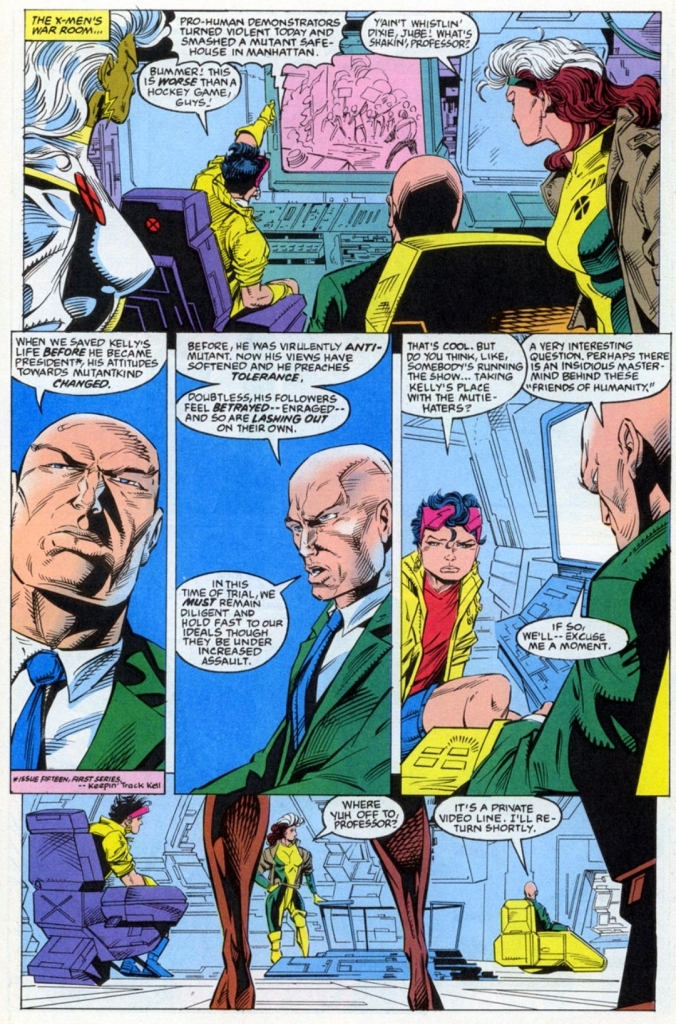
The X-Men are troubled by the anti-mutant wave happening in public.
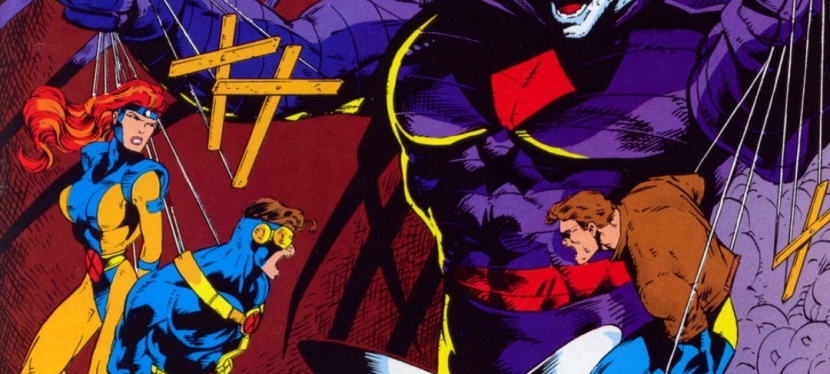
As the opening issue of the second volume of the X-Men Adventures comic book series, this comic book carefully sets up the tone and the plot of a series of future challenges for the X-Men which is clearly reflected on the front cover with Mister Sinister displayed prominently. The story mainly highlights X-Men’s new struggle with the wave of anti-mutant rage in the public while dealing with the absence of their leader Cyclops (on honeymoon with his new wife Jean) while leaving space for potential sub-plots such as the attraction between Jean and Wolverine, the moves of the anti-mutant radicals and, most notable of all, the secretive return of Morph (thought to have died in issue #2 of the first season).
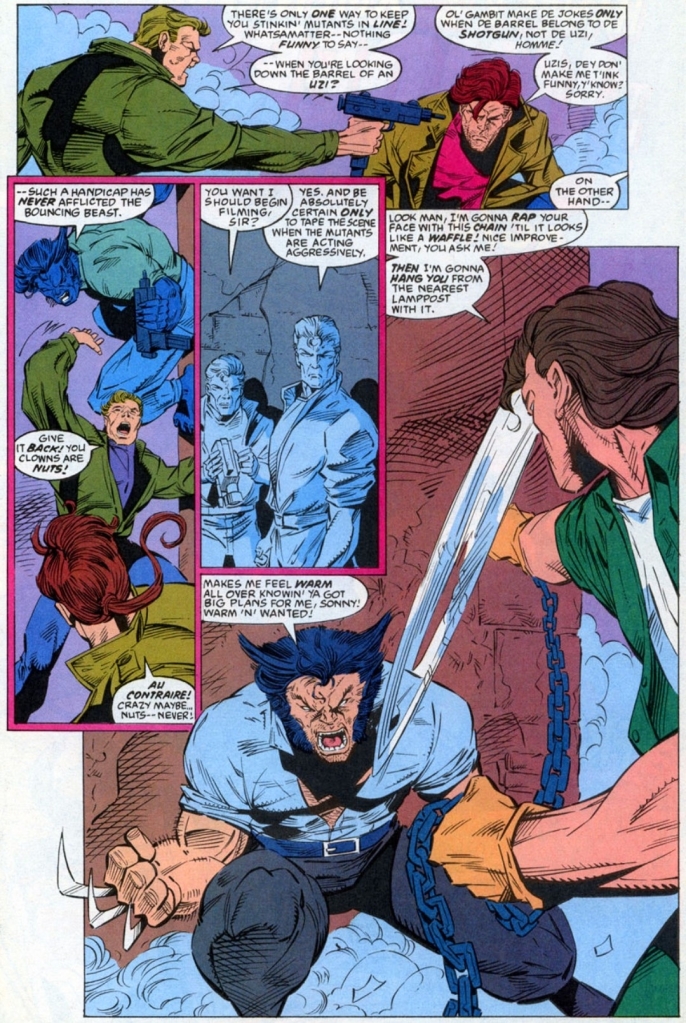
As expected, build-up is the main approach taken by the creators on telling the story and there were some bouts of superhero spectacle (action) that spiced up the reading experience for me. Considering what has been happening in different parts of the world in recent years, the sub-plot of the rabid anti-mutant activists using tactics to destroy the X-Men’s credibility with violence and misinformation magnified through the news networks is very socially relevant.
What the rabid anti-mutant people committed in this comic book reminds me of the October 7, 2023 attacks on Israel organized by the Palestinian terrorist group Hamas in which violence, destruction and selective images of terror spread through news networks and social media were done. Similarities aside, the wave of evil is clear here and the intent of the anti-mutant believers and Palestinian terrorists obviously expresses intentions of genocide against another particular group of people.
When it comes to weaknesses of this comic book, I cannot help but find Andrew Wildman’s art looking very rushed. There is a lack of precision and detail of his art here when compared directly to his works in the first volume of X-Men Adventures.
Conclusion
The anti-mutant radicals in this comic book have a lot in common with Palestinian terrorists, the pro-Palestine activists, the Black Lives Matter activists and other members of woke mobs. Violence, arrogance, rage and misinformation are their values.
X-Men Adventures Season II #1 (1994) incidentally works well as an adaptation of the animated series, as a standalone comic book as well as being a socially relevant tale in today’s age of social media. While the concept of evil remains in X-Men lore, what was told here shows different layers of it. The X-Men themselves also looked fragile and the return of Morph is a key part of the story clearly designed with future events in mind. Finally, this comic book is a lively reminder of the era when X-Men stories were made for the fans, not the woke mob.
Overall, X-Men Adventures Season II #1 (1994) is recommended.
As some of you are already aware, I fully stand with Israel which is directly connected with my uncompromising faith in the Lord. I keep on praying to Him for Israel to overwhelm its enemies, rescue the hostages and recover from the effects of the October 7, 2023 terrorist attacks committed by the Palestinian terrorist group Hamas. I can assure all of you that nobody from the evil Islamo-Leftist mob, nobody from the pro-Palestine zealots and nobody from any evil society would stop me from supporting and loving Israel.
Now, on with the news.
IDE Technologies Group, a water treatment company based in Israel, is looking for expansion opportunities in the Philippines, according to a BusinessWorld news report.
To put things in perspective, posted below is an excerpt from the BusinessWorld news report. Some parts in boldface…
ISRAEL-BASED water treatment company IDE Technologies Group is eyeing expansion opportunities in the Philippines, the company’s chief executive officer (CEO) said on Wednesday.
“We’re focusing on a specific project, but that project is kind of a very interesting opening for us because it will involve creating a local entity of IDE with mostly local people as employees,” IDE CEO Alon Tavor said during a media briefing.
“We have teamed up with several local partners to come up with very interesting projects,” he added.
IDE is a water company that specializes in the development, engineering, construction, and operation of enhanced desalination and industrial water treatment plants.
Desalination is the process of removing salt from seawater to make it potable, safe for human consumption.
Founded in 1965, it has headquarters in Israel, with offices in the USA, China, India, Chile, and Australia, facilitating client partnerships across the globe. The company has over 400 plants spanning 40 countries.
“We don’t only sell projects. A lot of the time, we own the plant, we operate it, and we simply sell water as a solution,” Mr. Tavor said.
Investing in projects typically starts at “a few hundred thousand dollars for a very small project and can go up to hundreds of millions of dollars for large projects,” he also said.
“We see the fact that the Philippines realizes the level of water issues that need to be managed as an interesting opportunity for us, and therefore we’re here.”
Israeli Ambassador Ilan Fluss said they are looking into bringing more companies to the Philippines to share their best practices and technologies.
IDE’s focus on the Philippines is indeed a blessing for the nation as water is truly essential for all Filipinos. Experiencing water supply shortages is a constant problem nationwide and to this day, the Philippines still has yet to achieve breakthrough to not only improve access to water but also increase the water supply. IDE’s expertise on desalination could be crucial in helping us Filipinos solve our water problems which will be helpful in building up the national economy.
We should also be thankful to the Lord that even as Israel remains busy fighting the terrorists not only in Gaza but also across the border with Lebanon (Hezbollah), the Jewish state is working to bring more Israeli companies into the Philippines. That being said, Israel-Philippines ties are still essential.
To my fellow Filipinos reading this, I encourage you to accept the truth that Israel is the land God designated specifically for the Jewish people (read Genesis 35:10-12) and His command must be followed without hesitation. If you want to be blessed further by the Lord, do so by loving and blessing the Jewish people (Genesis 12:1-3). I did my part when I was in Israel. Also, let me remind you all that the ties between the Jews and Christians are truly biblical!
We live in a very divided world. Around the world, Leftist forces have been supporting evil forces like the current regime of Iran which is known for supplying and arming the Palestinian terrorists and other terrorist groups around the Middle East. Leftist forces have been supporting the Palestinian Authority and other enemies of Israel. The Leftists and terrorists always go together and their anti-Semitism is clearly obvious. Hamas is purely evil and they are being protected by not only their fellow terrorists but also by mainstream news media outlets who are linked with Leftist forces and people who hate Israel and the Jewish people. Beware of the evil union of the Islamo-Left which is wicked deep within.
With all that said, I encourage you all to pray to the Lord God in support of Israel and believe that He will guide the Israeli forces to another victory which means finishing off Hamas, crushing Hezbollah and force Iran and its terror proxies to give up. Read Joshua 11:1-20 in the Holy Bible for relevance and truth.
Disclaimer: This is my original work with details sourced from reading the comic book and doing personal research. Anyone who wants to use this article, in part or in whole, needs to secure first my permission and agree to cite me as the source and author. Let it be known that any unauthorized use of this article will constrain the author to pursue the remedies under R.A. No. 8293, the Revised Penal Code, and/or all applicable legal actions under the laws of the Philippines.
Welcome back superhero enthusiasts, 1990s culture enthusiasts and comic book collectors! Today we go back to the early 1990s and look at the official comic book adaptation of the 1992 superhero movie Batman Returns.
Way back in 1992, I managed to watch Batman Returns in a movie theater here in the Philippines. It was entertaining but I noticed it had an even darker tone, more violence (although the quality of physical action went down) and was more adulterated compared, at least, with its 1989 predecessor. What really stood out for me in the Tim Burton-directed movie were the great performances of Danny DeVito as the Penguin and Michelle Pfeiffer as Catwoman.
Even though I was already visiting comic book stores back then, I was not even aware that an official comic book adaptation of the movie was released by DC Comics. It was only recently I finally got to read a copy.
With those details laid down, here is a look back at Batman Returns: The Official Comic Book Adaptation of the Warner Bros. Motion Pictured published in 1992 by DC Comics with the adapted story written by Dennis O’Neil and drawn by Steve Erwin.
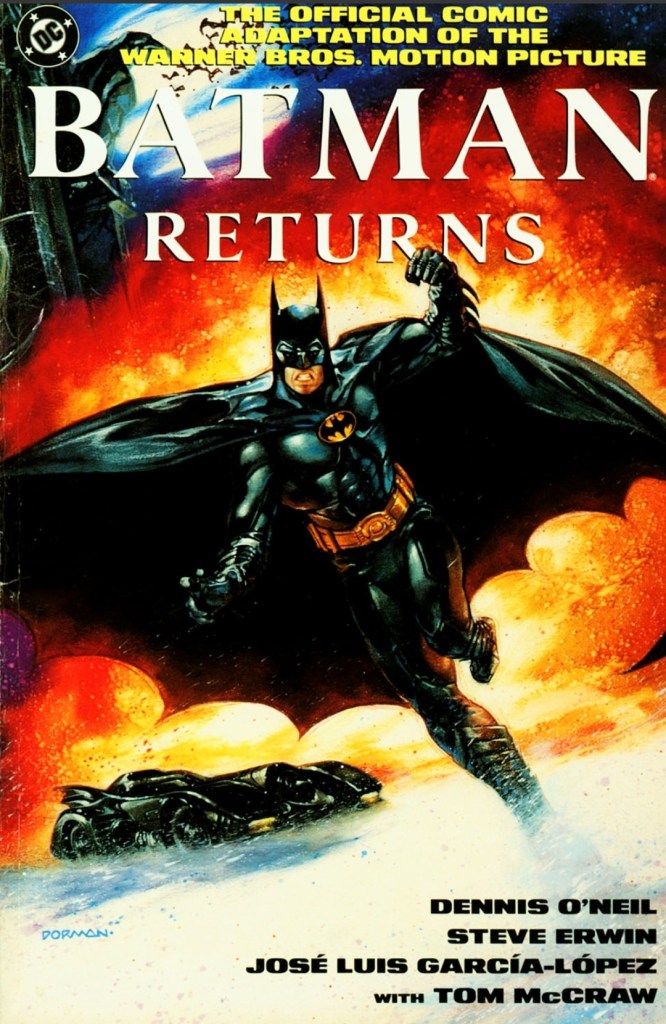
The cover.
Early story
The story begins decades into the past in Gotham City. A wealthy couple (Cobblepot family) decide to reject and abandon their infant son (Oswald/Penguin) as he was born with freakish features. They placed their son into a metal container (which itself is contained in a large makeshift basket) and dropped it on a local waterway that leads deep into the city’s sewers. At the end of the journey, large penguins find the container.
Decades later in Gotham City, tycoon Max Schreck talks to the mayor about his planned power plant project that needs permits and tax incentives from the local government to be realized. The mayor is doubtful about the project as he believes that the city has more than enough energy sources to sustain growth into the next century. Schreck insists that the local government’s analysts don’t realize the big picture about energy and economic growth. Then Chip Schreck (Max’s only heir) arrives with Selina Kyle (Catwoman) carrying coffee near him.
Minutes later, Max, Chip and the mayor arrive at Gotham Plaza for the local Christmas tree lighting. Even though he forgot to bring his speech, Max Schreck delivers remarks pretending to be caring and charitable to others. As his speech ends, two over-sized objects looking like giant gift boxes arrived nearby giving the mayor the false impression that those are clever gimmicks by Schreck.
As soon as Schreck says that those objects were not his, the oversized gift box opens violently as thugs wearing circus costumes and masks suddenly come out causing violence and hysteria to the unprepared people.
The local police activate the Bat Signal to call Batman for his assistance. Nearby, the Penguin sees it and says, “Ooh, Batman. I’m trembling…”
Quality
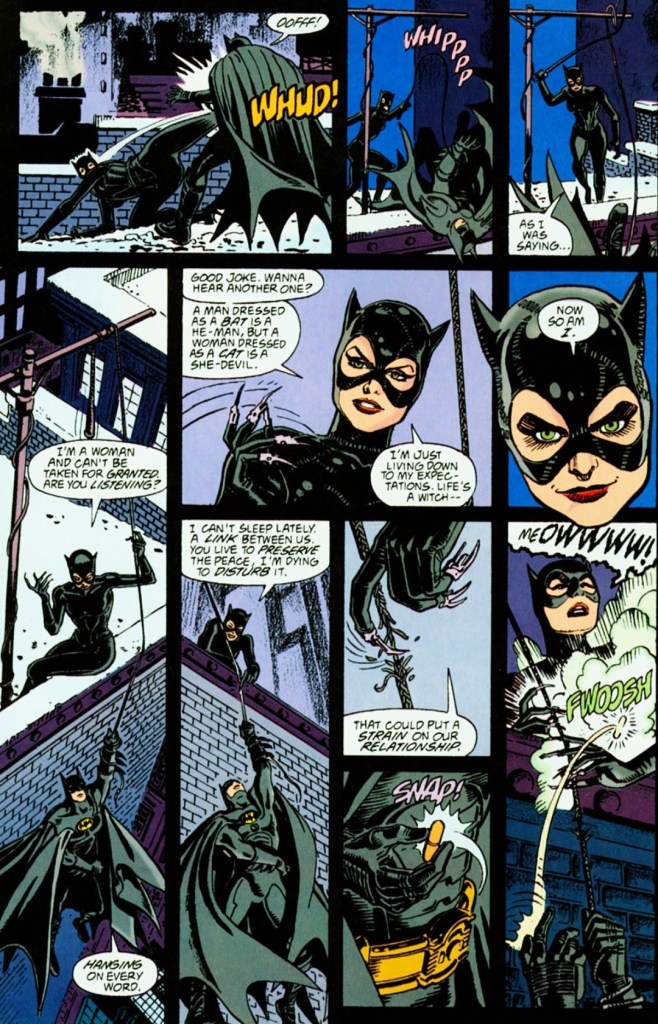
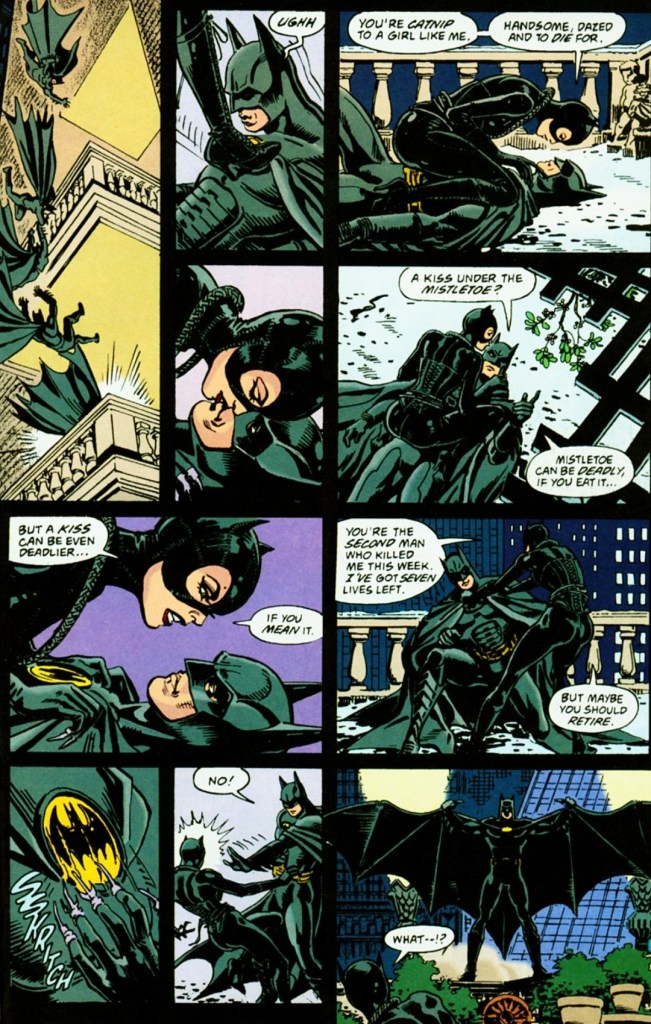
Moments from Batman’s first fight with Catwoman.
To get straight to the point regarding the narrative, this comic book adaptation does have the same basic plot and concept of the movie but with noticeable differences (whether technical or creative) that happened here and there. For the most part, Dennis O’Neil captured the concept of the movie but with less of the flavor of Tim Burton’s creative touches (which should not be surprising).
Having seen the movie, it is clear that the comic book creators reduced the dialogue and took shortcuts on adapting scenes from the film not just for the sake of brevity but to ensure they could fill the limited amount of pages to work with. That being said, I can say that the reduced dialogue from the first conversation between Penguin and Max Schreck severely weakened the impact when compared to what was executed in the film. Speaking of dialogue, the comic creators had to down key words (think of it as creative censorship) to avoid offending readers.
This is a unique, alternate portrayal at the aftermath of Selina Kyle’s fall from the high window. When compared to the movie itself, this adaptation emphasizes how far the Schrecks would go to avoid being held accountable for crimes committed.
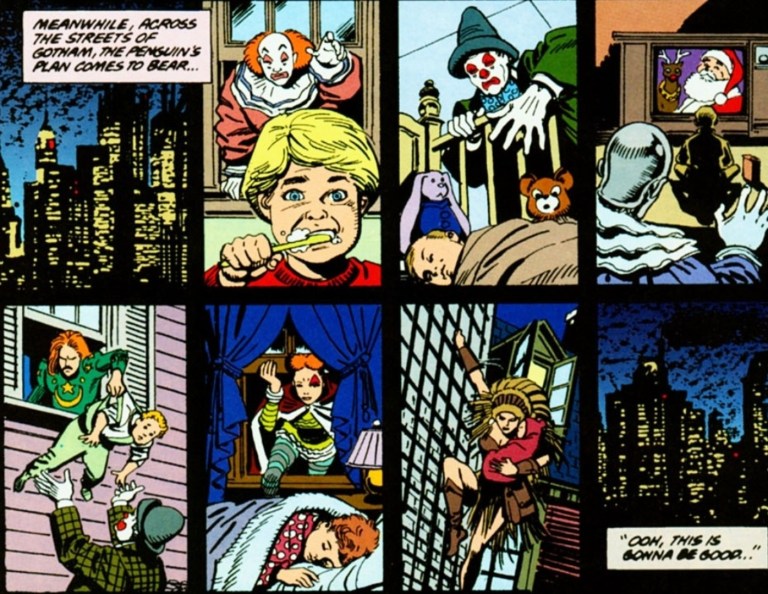
This particular scene did not appear in the movie at all. Perhaps it was based on an older version of the film script.
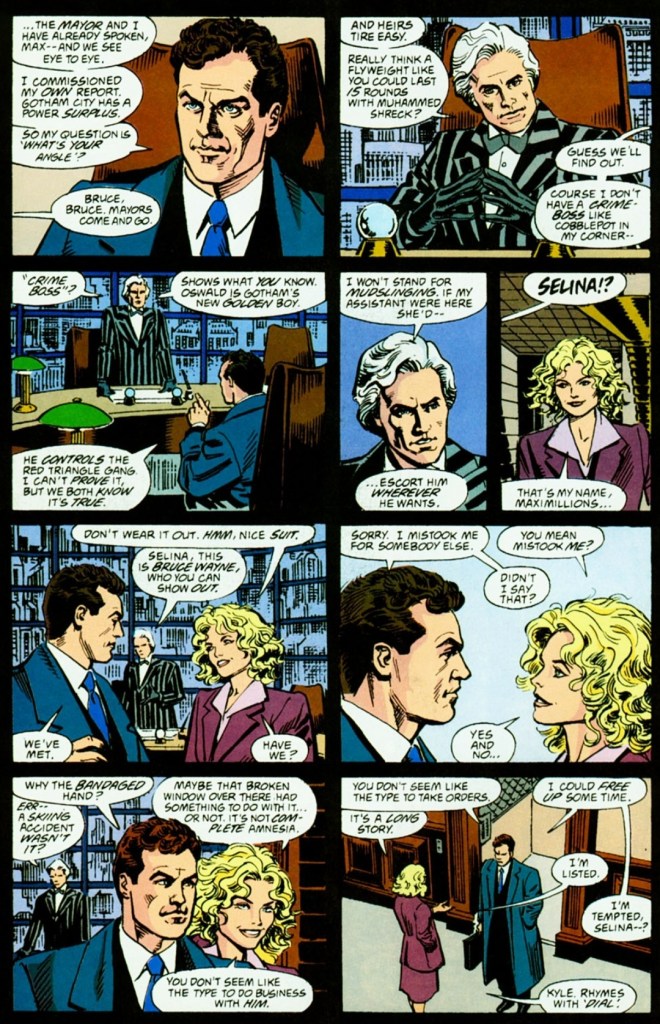
When it comes to scenes between the film and this comic book adaptation, I can say that the date between Bruce Wayne and Selina Kyle inside Wayne Manor does not appear in literary form at all. Ironically, there is one scene that appeared in this adaptation (the Penguin plotting chaos in Gotham while Catwoman mentions “An orgy of sex and violence,”) that never made the final cut in the movie itself. With regards to the aftermath of Max Schreck’s violent push of Selina Kyle through the high window, this adaptation showed Max’s son Chip present (implying he witnessed his father’s act just steps away) and he goes along with his father to ensure that none of them would be held accountable for Kyle’s fall (caused by “stress” and being “depressed”).
With the way the narrative was completed, this adaptation works well but much less of the theatrical touches of Tim Burton and without the power of the respective performances of Danny DeVito, Michelle Pfeiffer and Christopher Walken (Max Schreck). Ironically, I can easily imagine Bruce Wayne/Batman sounding like Michael Keaton through dialogue.
While artist Steve Erwin did not come close to capturing the likenesses of Christopher Walken as Max Schreck, and Michael Keaton as Bruce Wayne, his take on Selina Kyle is better as she somewhat resembles Michelle Pfeiffer.
With regards to the visuals by Steve Erwin, he does a good job drawing the locations and help establish geography (albeit in limited scopes) for readers to grasp. In fact, there were drawings in which Erwin literally copied location spots, objects and even camera angles from the film which suggests he had confidential access to the footage. When it comes to visualizing action, Erwin’s approach is pretty simplistic and limited. There simply was no dynamism with the action which theoretically means he had no artistic freedom (sticking closely to script while working within the limits of images per page) or he simply had no intention to make the action look spectacular.
With regards to violence connected with the action, the comic creators had to resort to creative censorship apparently to make this adaptation more acceptable with younger readers. The fall of Selina Kyle from the high window had severely reduced intensity in comic form and the horrific moments of her being surrounded by cats in the film were completely gone. Oh yes, Batman’s use of the Batarang against multiple thugs on the street was executed with a simplistic and not-so-violent (read: little impact) manner by Erwin.
Consider this as a late-20th century portrayal of diversity and inclusion in America. By today’s standards, there are hordes of SJWs (social justice warriors), woke nuts, socialists, Communists, Marxists, and liberals who believe in diversity (racism in reverse) and inclusion (exclusion actually) so much, they intend to destroy families starting with the children.
When it comes to drawing the major characters, Erwin really falls short here. His Bruce Wayne never came close to resembling Michael Keaton and the same can be said about Max Schreck (does not look much like Walken) and the Penguin (does not resemble Danny DeVito at all and with reduced facial details, he looks nowhere as scary as the cinematic villain). Ironically, Erwin’s take on Selina Kyle comes a bit close to looking like Michelle Pfeiffer. Erwin does, however, did a good job drawing Batman and Catwoman in their fully costumed, masked appearances.
Conclusion
Very clearly, Steve Erwin had access to footage of the movie when making this adaptation.
Considering its flaws and compromises, Batman Returns: The Official Comic Adaptation of the Warner Bros. Motion Picture (1992) still works as an entertaining read and I myself have seen the movie many times. It captures the plot and several shots of the 1992 movie, but it certainly lacks Burton’s theatrical flavor and the powerful performances of DeVito and Pfeiffer. To its credit, this adaptation has several visual and literary differences compared with the movie which adds to its entertainment value. If you really want the full impact, full fun factor and artistry of Batman Returns at all, watching the movie itself is the best way. That being said, consider this adaptation as a cheaper accessible counterpart.
Overall, Batman Returns: The Official Comic Adaptation of the Warner Bros. Motion Picture (1992) is satisfactory.
With renewed focus on the safety of travelers in mind, the Bureau of Immigration (BI) announced that registration with the eTravel system (electronic travel declaration system) is free of charge and people should avoid scammers who have been targeting travelers using fake websites, according to a Philippine News Agency (PNA) news article.
To put things in perspective, posted below is an excerpt from the PNA news article. Some parts in boldface…
The Bureau of Immigration (BI) on Wednesday warned travelers against scammers purportedly charging fees for the electronic travel declaration system or eTravel.
Commissioner Norman Tansingco clarified that registration in the eTravel platform is free of charge, thus travelers should be wary of unscrupulous elements who charges fees from passengers via fake websites.
“The eTravel registration process is absolutely free of charge. We, therefore, advise the traveling public to register only in the government’s official website at https://etravel.gov.ph,” he said in a statement.
Fees allegedly collected from the passengers amount to between PHP3,000 to PHP5,000 when converted to peso as the fees charged by the scammers are usually in US dollars.
The BI chief urged the public to beware of the such fraudulent websites or entities which require any form of online payment.
Likewise, he asked them to report to the Cybercrime Investigation and Coordinating Center (CICC) via its website at https://cicc.gov.ph/report/.
Tansingco issued the warning following reports of passengers at the airports who claim they have already registered in the eTravel platform and “paid” the supposed fees that were charged to them.
BI officers at the Ninoy Aquino International Airport (NAIA) have reported instances of many passengers who were surprised when informed that they have to register in the eTravel as the digital QR code they presented could not be accessed in the system.
“It is only when they encounter our officers at the airport that these passengers would realize they have been duped by these fraudsters and scammers in the internet,” he added.
The eTravel was launched earlier this year, and serves as the single data collection platform for arriving and departing passengers. It establishes an integrated border control, health surveillance and economic data analysis.
It is a joint project of the agency with the Department of Tourism (DOT), the Department of Information and Communications Technology (DICT), the Bureau of Quarantine (BOQ), the Bureau of Customs (BOC), the Department of Health (DOH), the Department of Transportation (DOTr), the Department of Justice (DOJ) and the National Privacy Commission (NPC).
The project abolished the paper-based arrival and departure cards, as well as the quarantine form.
Let me end this piece by asking you readers: What is your reaction to this recent report? Does this latest development make you feel safer to be online? If you had traveled overseas and came back home within the past six months, how was your experience registering with the eTravel system? Did you encounter any scammer online?
Recently in the City of Parañaque, a man was shot dead in front of a restaurant in Barangay Baclaran, according to a Manila Bulletin news report. As captured on CCTV footage, the suspect walked away in a casual manner and is still on the loose.
To put things in perspective, posted below is the excerpt from the Manila Bulletin news report. Some parts in boldface…
A man was shot dead while waiting for his dinner to be served in front of a restaurant in Parañaque City, Thursday night, Feb. 15.
The victim, identified as alias Jun, was shot dead at around 7:45 p.m. in front of a restaurant located along E. Rodriguez St., Barangay Baclaran, Parañaque City.
Parañaque City police chief Col. Reycon Garduque said the victim reportedly ordered food and was waiting for it to be served when an unidentified man approached him and shot him twice at the back of his head.
Garduque said the victim died on the spot due to two gunshot wounds.
He said the victim was reportedly working as an E-Trike driver. He was previously detained for his alleged involvement in illegal drug activities.
The gunman was reportedly wearing a black jacket, black cap, and shorts.
Let me end this piece by asking you readers: What do you think about this recent development? If you are a resident of Parañaque, are you concerned that there could be carriers of illegal firearms who could cause more shootings in public places? Do you think the victim could have been in a personal conflict with the suspected gunman? Do you think the police could find and apprehend the suspect soon?
For more South Metro Manila community news and developments, come back here soon. Also say NO to fake news, NO to irresponsible journalism, NO to misinformation, NO to plagiarists, NO to reckless publishers and NO to sinister propaganda when it comes to news and developments. For South Metro Manila community developments, member engagements, commerce and other relevant updates, join the growing South Metro Manila Facebook group at https://www.facebook.com/groups/342183059992673
Disclaimer: This is my original work with details sourced from reading the comic book and doing personal research. Anyone who wants to use this article, in part or in whole, needs to secure first my permission and agree to cite me as the source and author. Let it be known that any unauthorized use of this article will constrain the author to pursue the remedies under R.A. No. 8293, the Revised Penal Code, and/or all applicable legal actions under the laws of the Philippines.
Welcome back superhero enthusiasts, 1990s culture enthusiasts and comic book collectors! Today we go back to the mid-1990s to explore a part of the Ultraverse through a tale of Mantra, the male eternal warrior Lukasz who died during battle then returned in the body of a woman named Eden.
It has been a few years since the last time I reviewed a Mantra comic book. For the newcomers reading this, the Ultraverse was a franchise of superhero comic books launched by Malibu Comics in 1993 which produced a lot of fun, intriguing and memorable tales made by a variety of really talented creators. Mantra was one of the pioneering characters of the Ultraverse and the related comic book series lasted more than twenty issues. Along the way, a standalone story of Mantra was published in the form of a 2-part mini-series.
With those details laid down, here is a look back at Mantra: Spear of Destiny #1 published in 1995 by Malibu Comics with a story written by Mike W. Barr and drawn by Paul Abrams.
The cover.
Early story
The story begins when Mantra arrives at a museum to start her attempt (in her civilian identity as Eden Blake) to obtain the Spear of Destiny. While wearing a revealing outfit to distract the men, Mantra gets close to the highly prized spear to observe it and see how the security personnel guard it.
At a different spot within the museum, Mantra decides to start obtaining the spear in magical outfit and with a mask. As Mantra arrives at the room where the Spear of Destiny, already there are monsters overwhelming the men guarding the Spear of Destiny…
Quality
Eden Blake/Mantra reporting to work at Aladdin.
Having read most of the stories of the Mantra comic book series, I can say that Mike W. Barr came up with a fresh concept that emphasizes the quest to gain possession of a highly valuable item while also creating a new approach on presenting Mantra…by engaging in espionage (spying and infiltration).
As I am already used to seeing the eternal warrior Lukasz/Mantra using magic in many struggles or missions, the concept of having the protagonist getting disguised and becoming an impostor on a spy mission is a very inspired move by the writer. The preparations taken by Mantra to becoming a certain blonde woman for the mission were nicely structured and detailed enough to make the transformation. As if that was not enough, a certain piece of technology was implemented which made using magic a huge risk for the eternal warrior. That being said, the story smoothly transitioned from magic-filled fantasy into a convincing spy thriller
Along the way, this comic book also emphasizes the darkness of the secret society Aladdin which Mantra (as Eden Blake) works for. Aladdin’s operations were dramatized several times in other Ultraverse comic books but this one has a more explicit portrayal of them.
Conclusion
Mantra got hold of the Spear of Destiny but for how long?
Mantra: Spear of Destiny #1 (1995) is really entertaining and compelling to read. This is easily one of the more creative and more unique tales of the Ultraverse character ever told and I can say that I am eager to find out what would happen next. This is also the one tale in which Mantra became a spy and gets into a dangerous mission in which the use of magic is too risky. The writing by Mike W. Barr is really strong with this one.
Overall, Mantra: Spear of Destiny #1 (1995) is recommended.
Welcome back readers, fellow geeks and electronic gaming fans!
Today I am launching a brand-new series of articles titled Retro Gaming Ads Blast (RGAB) which will explore the many print ads and promotions of video games, computer games, arcade games and handheld games that were published through the decades.
For the newcomers reading this, print ads of games were widely popular and heavily relied on by gamers/players long before smartphones, social media, the worldwide web and online videos even started. Back in the old days, print media was the most common method for companies to market their games while also helping hardware (machines which played the games) reach potential buyers. Such ads appeared in magazines, comic books and newspapers. Not only that, there were several print ads of games that were made to look creative, compelling and even intriguing.
With those details laid down, here is the first batch of retro gaming print ads for you to see and enjoy…
1. Parker Brothers’ Spider-Man-led print ad
Does this ad look amusing?
Remember Parker Brothers? That was a company that started way back in 1883 founded with a strong focus on the enjoyment of games in the form of board games, cards and toys. In the late 1970s, Parker Brothers started making electronic versions of their popular board games and engaged in the video game development and publishing. They also went on to make home ports of popular arcade games in the early 1980 for several gaming platforms.
Parker Brothers was very active with making games for the Atari 2600 console which became the dominant machine for home gaming in North America in 1982. In the above print ad, their marketing heavily emphasize the Spider-Man video game for Atari 2600 and added two others games they also published – Tutankham and Amidar – which was a clever move to market multiple games. The ad’s focus on Spider-Man was amusing and even without showing a single screenshot of the game, it was enough to entice people to watch out for it. Be aware that the Spider-Man game’s development was done by Laura Nikolich who was hired by Parker Brothers at a job fair. Nikolich had full creative control on making the game and had no contact whatsoever with Marvel Comics.
2. Advanced Dungeons & Dragons: Cloudy Mountain print ad
An ad like this was strong enough to motivate gamers’ imagination and interest.
Back in 1982, Advanced Dungeons & Dragons: Cloudy Mountain was released on the Intellivision game console and I was fortunate enough to watch my next-door neighbor play it repeatedly. The above print ad – which simply referred to the game as Advanced Dungeons & Dragons – only had a few words which directly pointed to the main objective of the game…the golden crown. While only one screenshot of the game was displayed, the advertisers heavily relied on hand-drawn, comic book-style fantasy art work to sell the game.
For those who were born long after the 1980s, let me share with you that ads like these were really impressive for their time. It was common for advertisers to use art works (even though they may not accurately reflect the gameplay or game design) and post at least one screenshot to catch the viewer’s attention with the hope that it would even encourage him/her to anticipate the game. It should be noted that ads like these were strong enough to make gamers’ imagination or curiosity grow stronger.
3. Konami’s collective military video games advertising
Print ad of four games for IBM, Amiga and Commodore.
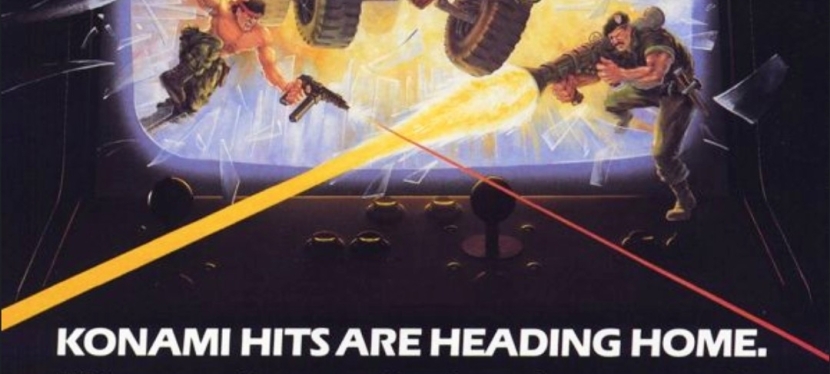
Print ad of Jackal and Contra for the NES.
Konami, the Japanese company that has long been known for Metal Gear, Suikoden and the controversial sacking of famous game designer Hideo Kojima, was aggressive in the gaming business in the 1980s and arguably the aggressiveness was reflected in their publishing of several games that emphasized militarism during the late stages of the Cold War. In short, they made the military look cool and their activities fun to do in digital form.
While Konami has always been identified with console gaming, they actually released Rush’n Attack, Contra, Jackal and Boot Camp on IBM, Amiga and Commodore computers (as seen in the first print ad above) which were popular in the 1980s. The said ad also have a very amusing visual concept emphasizing the excitement and fun of military action games coming to gamers at home for their computers.
The 2nd print ad above – Jackal and Contra for the Nintendo Entertainment System (NES) – was very intriguing to see. It was very clear back in the 1980s that the NES always had a wholesome audience (note: a lot of buyers were parents who wanted to entertain their kids at home) and that includes a lot of very young players. To see the collective ad of Jackal and Contra (for the NES platform) having battle-hardened men in military gear holding guns was openly aggressive to perceive and instantly reminded people about the Cold War (and the menace of Communists, socialists, Marxists and terrorists) and the cultural impact of the mega blockbuster film Rambo: First Blood Part II. This is the kind of ad that would drive today’s woke-minded people crazy and even cause them to panic and pretend to be victims of militarism and patriotism. If you look at the ad closely, you will realize there is simply no room for the garbage of political correctness and wokeness.
Lastly, I myself had played Contra and Jackal with my friends on the Nintendo Family Computer (the Japanese counterpart of the NES) and both military games were a lot of fun to play from start to finish!
4. Batman Returns SNES game ad
This print ad appeared in some comic books I read in the early 1990s.
Way back in 1992, Batman Returns (the sequel to the mega blockbuster Batman movie of 1989) was released in cinemas with intense marketing and merchandising reflecting Warner Bros. intention to replicate the commercial success they had in 1989. Along the way, there were several video game adaptations of Batman Returns that were released on different platforms. Among those many video games was the Super Nintendo Entertainment System (SNES) game of Batman Returns which was developed and published by Konami in 1993 the form of a side-scrolling beat-them-up game.
The above ad was visually appealing with hand-drawn, comic book-style art dominating the spaces while leaving room for some screenshots and a written description of the game. Having seen this ad on multiple comic books I read back then, I can say that the ad was entertaining to see and was effective in making me interested in the game. I played Batman Returns on the SNES but never got to finish it. Oh yes, the game’s audio were really good and there were also digitized images from the movie for the in-game narrative.
5. Flashy Sonic the Hedgehog Japanese print ad
A dazzling approach by Sega on selling Sonic the Hedgehog.
1991 will always be remembered as the year of Sonic who eventually became not only Sega’s most defining mascot but also a video game industry icon. That same year, Sega released Sonic the Hedgehog on the Sega Genesis (referred to as Sega Megadrive in other parts of the world) console and it became a massive success with consumers and the game critics.
In the above Japanese print ad, a very captivating display of light and energy rays dominated the space leaving a minority share left for Sega’s console, screenshots and even a UFO Catcher arcade machine picture. While I could not understand the Japanese text, it seems to me that the flashy visual concept of the ad reflected Sega’s high ambitions with Sonic. How many gamers in Japan bought a copy of Sonic the Hedgehog because of this ad remains undetermined.
6. Japanese Super Star Wars print ad
A long time ago in a galaxy far, far away…
Before Nintendo released its 16-bit game console (referred to as Super Nintendo Entertainment System in America, and Super Famicom in Japan), there were lots of Star Wars video games released on varied platforms and the arcade.
With Nintendo’s 16-bit gaming platform realized, lots of game designers and business partners saw opportunities to make new games with gameplay concepts and designs using the technological advantages of the time. For LucasArts and its partners, taking Star Wars gaming into the next level was inevitable and they made it all come true in 1992’s Super Star Wars video game.
Published in Japan by JVC Musical Industries for the Super Famicom, Super Star Wars was a major leap forward in game design, visuals, sound and enjoyment. Apart from the 2D side-scrolling run-and-gun gameplay, gamers were deeply immersed into Star Wars’ universe with the Mode 7 landspeeder and X-Wing fighter sequences, as well as the first-person trench run sequence.
The Japanese print ad above cleverly presented screenshots from the game while using official imagery from the Star Wars movie poster of 1977 (look at how young Harrison Ford, Mark Hammill and the late Carrie Fisher were back then). The ad is a fine example of combining the greatness of the classic George Lucas-directed film with the highly enjoyable design of Super Star Wars. Lastly, these should remind you that there was a time when Star Wars was not yet tainted by wokeness and the garbage values of the Satanic Leftists (read: woke Disney).
Disclaimer: This is my original work with details sourced from reading the comic book and doing personal research. Anyone who wants to use this article, in part or in whole, needs to secure first my permission and agree to cite me as the source and author. Let it be known that any unauthorized use of this article will constrain the author to pursue the remedies under R.A. No. 8293, the Revised Penal Code, and/or all applicable legal actions under the laws of the Philippines.
Welcome back superhero enthusiasts, 1990s culture enthusiasts and comic book collectors! Today we go back to the early 1990s and explore a part of the Valiant Comics shared universe through a tale of the Turok: Dinosaur Hunter series.
While issue #1 turned out to be entertaining enough, the Indian protagonist Turok was not too engaging. The story worked primarily due to the combined creative works of David Michelinie and Bart Sears.
With those details laid down, here is a look back at Turok: Dinosaur Hunter #2, published in 1993 by Valiant Comics with a story written by David Michelinie and drawn by Bart Sears.
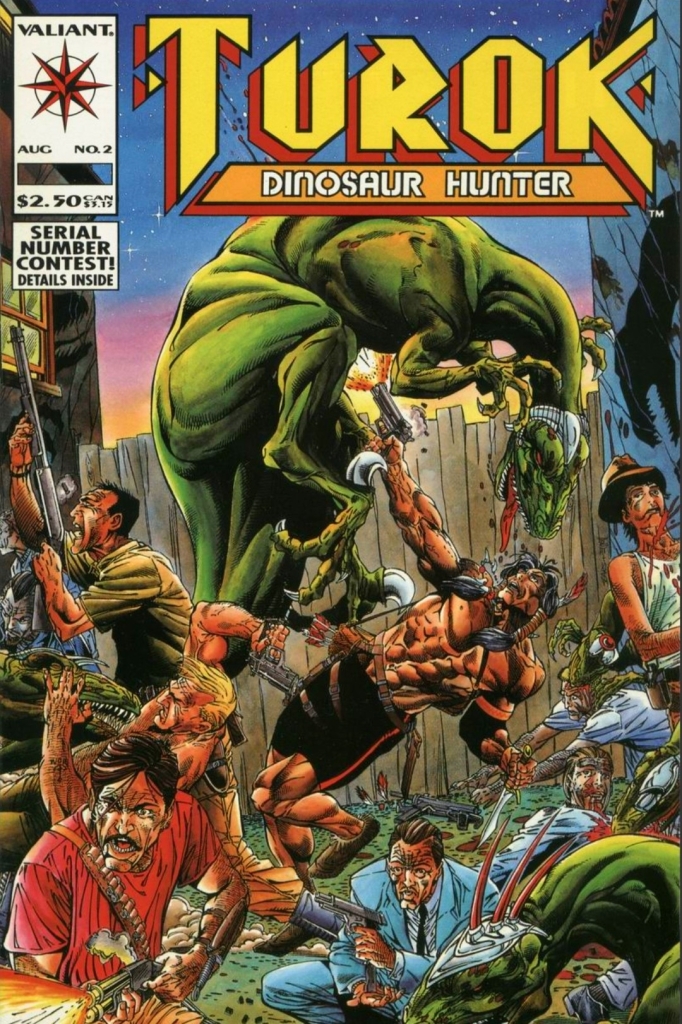
The cover.
Early story
The story begins in Colombia in 1987. Set some time after he left the village of Serita (a Colombian lady he connected with), Turok finds himself in the middle of a fight with multiple intelligent dinosaurs that serve his rival and target Mon-ark. Turok recently started using locally produced poison for his arrows as part of his unrelenting hunt for dinosaurs.
Meanwhile in another part of Colombia, the drug lord Comacho holds a private meeting and express his frustration over the decimation of his drug shipments. It turns out, the couriers were slaughtered and eaten by the dinosaurs. Upon learning of the presence of an Indian who makes it his business to hunt dinosaurs, Comacho gives an order to find him…
Quality
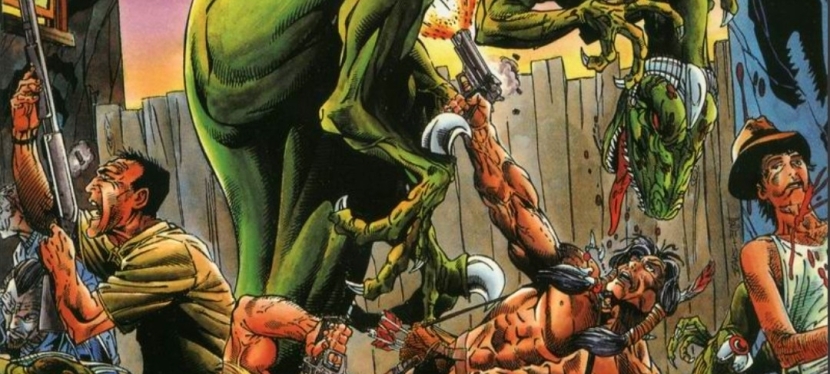
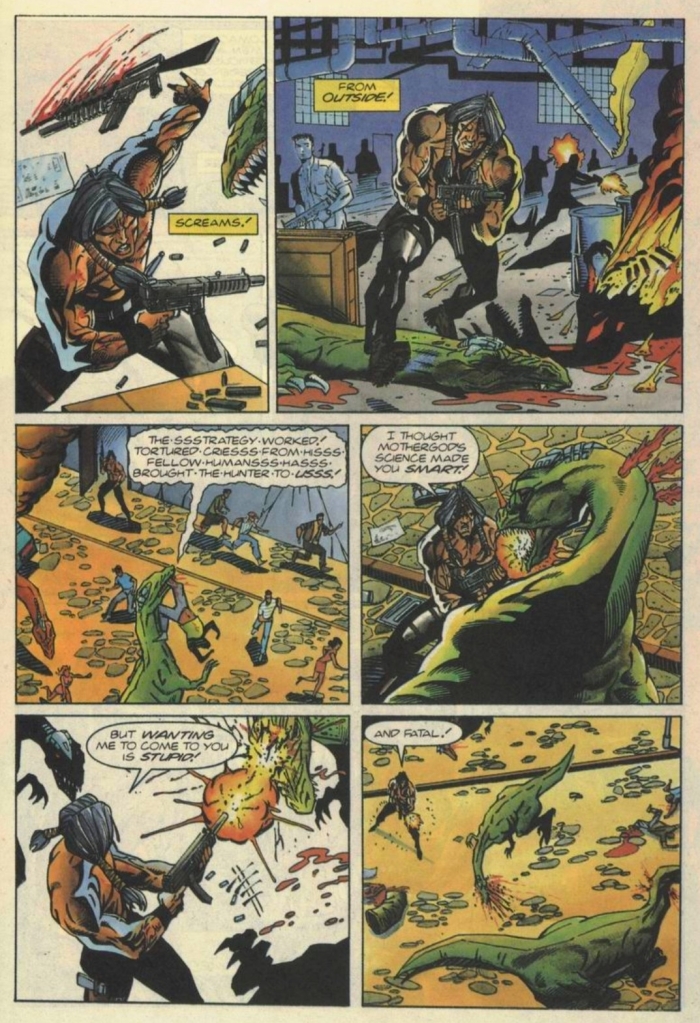
You will see Turok in a lot of action scenes fighting these intelligent and savage dinosaurs.
As the follow-up to the 1st issue, this is a story about Turok really hunting dinosaurs as part of his effort to get to Mon-ark (the leader of a pack of dinosaurs present in Colombia) in relation to what happened during the Unity storyline. In addition, you will get to see the protagonist get involved the Colombia drug lord who really needs him as the dinosaurs tremendously disrupted the shipment of illegal substances. As a newcomer in this particular time and place within the shared universe of Valiant Comics, Turok here does not care much about the reputation of Comacho as he is obsessed with hunting dinosaurs.
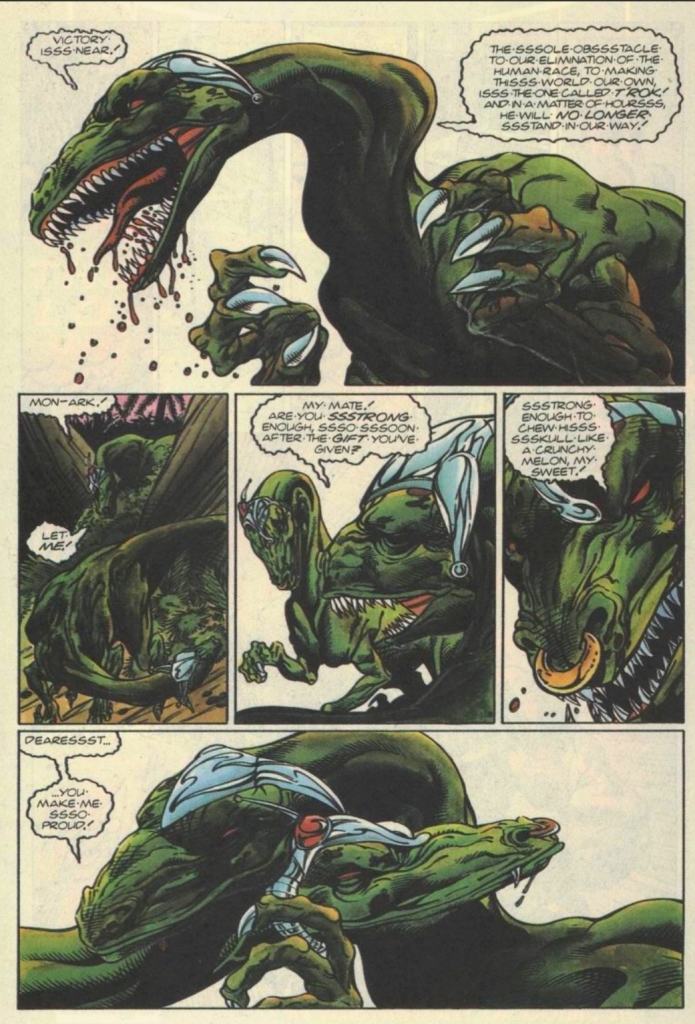
Speaking of the dinosaurs (who were granted human-like intelligence by the Mothergod), you will get to see Mon-ark have his own share of the spotlight and see him being a leader of his fellow dinosaurs. The showcase of his ruthlessness was expectedly done here to symbolize the element of evil in a violent way.
The plot by Michelinie is nicely structured and the narrative moved in a smooth enough pace leading to an obvious new direction.
Like in the previous issue, Bart Sears drew the art but with the involvement of Bernard Chang. For the most part, I recognized Sears’ work and there were some subtle visual differences here and there. The good news here is that if you enjoyed the gritty look as well as the uncompromised approach to violence in issue #1, then you will find those here as well.
Conclusion
A look at the intelligence and interaction between these two evil dinosaurs in love. There’s no homosexuality here nor anything related to transgender or the disease called wokeness.
Turok: Dinosaur Hunter #2 (1993) is entertaining and compelling enough to read. It further explores Turok’s story as a man lost in time who simply would not run away from the dinosaurs as he is obsessed with eliminating Mon-ark. The tale, however, involves a Colombian drug lord as well as his private army which adds depth to the narrative as well as Turok’s place within Valiant’s shared universe of the time. Lastly, this one nicely sets up a big conflict between the Indian and his dinosaur rival.
Overall, Turok: Dinosaur Hunter #2 (1993) is recommended.
In recent times, Philippine President Ferdinand “Bongbong” Marcos, Jr., signed into law the Ease of Paying Taxes Act (officially referred to as Republic Act Number 11976 or RA11976), according to a news article by the Philippine News Agency (PNA).
To put things in perspective, posted below is an excerpt from the PNA news article. Some parts in boldface…
President Ferdinand R. Marcos Jr. signed into law Republic Act (RA) 11976 or the Ease of Paying Taxes Act which aims to modernize and increase the efficiency and effectiveness of tax administration and strengthen taxpayer rights.
In a statement on Sunday, the Presidential Communications Office (PCO) said the Ease of Paying Taxes Act is one of the priority legislations mentioned during the State of the Nation Address in 2022 and 2023.
“The law allows the government to capture as many taxpayers as possible into the tax net by streamlining the system and minimizing the burden on taxpayers, increasing the country’s revenue collection in the long run,” the PCO said.
The new law, signed on Friday, introduces administrative tax reforms and amendments to several sections of the National Internal Revenue Code of 1997.
It also updates the Philippine taxation system, adopts best practices and replaces antiquated procedures.
Among RA 11976’s salient features are classification of taxpayers into micro, small, medium, and large; electronic or manual filing of returns and payment taxes either to the Bureau of Internal Revenue (BIR), through any authorized agent bank or authorized tax software provider; option to pay internal revenue taxes removal to the City or Municipal Treasurer; elimination of the distinction between documentation and basis of sales of goods and services; and classification of value-added tax (VAT) refund claims into low, medium and high-risk.
The law ensures the availability of registration facilities to non-Philippine resident taxpayers; promoting and assisting taxpayers in tax processes; streamlining; reducing documentary requirements; and digitalizing BIR services through the development of the Ease of Paying Taxes and Digitalization Roadmap.
The law likewise imposes 180 days to act on claims for refund of erroneous or illegal tax collection and increases the amount for the mandatory issuance of receipts for each sale and transfer of goods and services from PHP100 to PHP500.
According to PCO, the law mandates the BIR to adopt an integrated digitalization strategy by providing end-to-end solutions for the benefit of taxpayers.
These include adopting integrated and automated system for facilitating basic tax services, setting up electronic and online system for data and information exchange between offices and departments, streamlining of procedures by adopting automation and digitalization of BIR services, and building up BIR’s technology capabilities.
RA 11976’s implementing rules and regulations shall be promulgated 90 days from the effectivity of the Act after the consultation of the Finance Secretary with the BIR and the private sector.
Let me end this piece by asking you readers: What is your reaction to this recent development? Do you think this new law will positively impact the nation’s taxation system? Do you think the new law’s impact will be felt within the next two years?












 Author Carlo Carrasco